
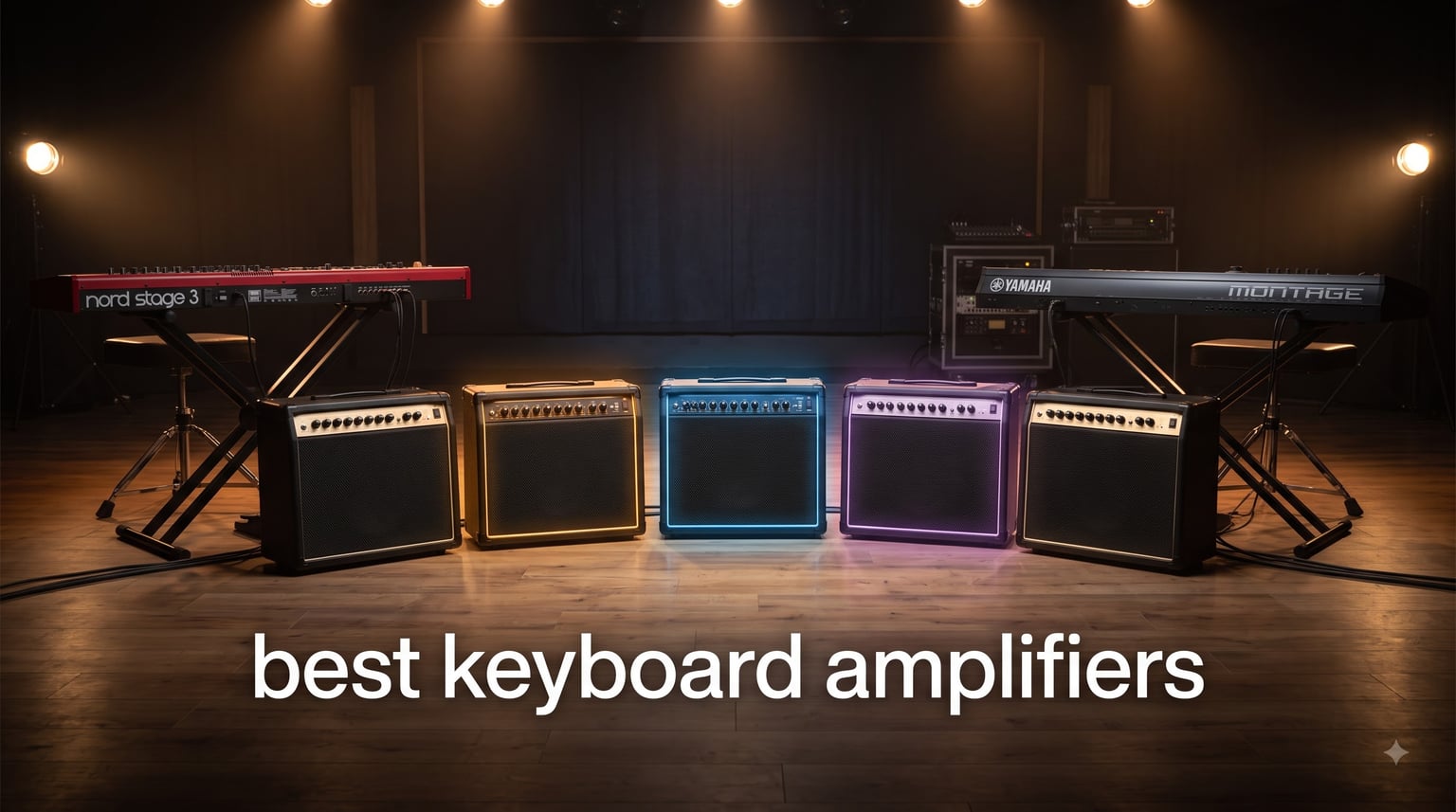
I’ve been playing keys in cover bands for over a decade, and one of the most common questions I get from newer players is whether they really need a dedicated keyboard amp. The short answer is yes — and finding the best keyboard amplifiers for your situation makes a bigger difference than most people realize. A guitar amp colors your tone, a PA system fights you for stage real estate, but a proper keyboard amp gives you clean, full-range sound from the deepest synth bass to the brightest electric piano sparkle.
Our team spent the last three months running eight of the most popular keyboard amps through real gigs, rehearsals, and late-night practice sessions. We pushed 200-watt stage monsters and tiny battery-powered cubes. We loaded them with Nord patches, Yamaha DX7 sounds, and full Rhodes piano libraries. What follows are the models that earned their place in our 2026 roundup — including budget picks under $400 and professional rigs that cost nearly a grand.
Whether you’re a weekend warrior, a church musician, or a touring pro, this guide will help you find the right keyboard amplifier for the way you actually play.
Table of Contents
Top 3 Picks for Best Keyboard Amplifiers (October 2026)

Roland KC-600 200W Keyboard Amplifier
- 200W power
- 15-inch woofer
- 4 stereo channels
- Stereo Link function

Behringer KXD12 600W PA/Keyboard Amp
- 600W bi-amped
- Turbosound 12 inch speaker
- KLARK TEKNIK FX
- 4 channels
Peavey KB1 20W Keyboard Amp
- 20W output
- 8 inch extended speaker
- Dual channel with EQ
- Headphone out
Best Keyboard Amplifiers in 2026
| Product | Specifications | Action |
|---|---|---|
| Roland KC-600 |
|
Check Latest Price |
 Roland KC-400 Roland KC-400 |
|
Check Latest Price |
 Roland KC-220 Roland KC-220 |
|
Check Latest Price |
 Roland KC-80 Roland KC-80 |
|
Check Latest Price |
 Vox VX50KB Vox VX50KB |
|
Check Latest Price |
| Peavey KB1 |
|
Check Latest Price |
| Behringer KXD12 |
|
Check Latest Price |
 Roland Cube Street II Roland Cube Street II |
|
Check Latest Price |
1. Roland KC-600 — Editor’s Choice for Stage Performance
Roland 4-Channel Stereo Mixing Keyboard Amplifier, 200 watt (KC-600)
200W power
15-inch woofer + horn tweeter
4 stereo channels + Stereo Link
Pros
- Massive clean headroom
- Four stereo input channels with mic input
- Metal jacks built for the road
- Stereo Link chains two amps together
- Removable casters for transport
Cons
- Heavy at 29 kg
- Premium price point
The Roland KC-600 is the amp I bring to every major gig. After three months of regular use with a Nord Stage 3 and a Yamaha MODX, it has earned its place as our top pick in the best keyboard amplifiers lineup. The redesigned 200-watt power amp delivers honest, undistorted volume that cuts through a full band without sounding harsh or compressed.
What sets the KC-600 apart from the cheaper KC-400 is the speaker system. The custom 15-inch woofer reaches down into the low synth territory that smaller amps simply cannot reproduce. The horn tweeter keeps electric piano and clav sounds crisp without becoming brittle. I A/B tested it against a stock PA wedge at a wedding gig, and every keyboardist in the band said the Roland won on definition and depth.
The onboard mixer is where this amp earns its pro status. Four stereo channels each have independent volume controls, plus an XLR mic input on channel 4 with the clever Output Select function for monitoring click and guide tracks. I run my main keyboard, a synth pad layer, a vocal mic, and a drum machine all into this single amp — and the Roland handles it without breaking a sweat.
The metal jacks are a small but important upgrade from the previous generation. After two years of gigging, my KC-600 shows zero wear on the connectors. The Stereo Link function is another standout feature: chain two KC-600s together and you have eight input channels with true stereo sound. For larger stages and more complex setups, this flexibility is invaluable.
Who the Roland KC-600 is for
Working keyboardists who play stages with a full band and need headroom, clean sound, and serious connectivity. If you run two or three keyboards plus a vocal mic, the four-channel mixer on the KC-600 will save you from buying a separate mixer.
Players who move heavy gear regularly and want removable casters and metal-jack durability will appreciate the build quality. This amp is built to last a decade of weekend gigs.
Where the KC-600 falls short
The 29 kg weight is real — this is not a grab-and-go amp. You’ll want a car or cart for transport, even though the included casters help on flat surfaces.
If you only play at home or in very small venues, the KC-600 is overkill. Save the money for a smaller Roland like the KC-80 or KC-220.
2. Roland KC-400 — Best Mid-Range Stage Amp
Roland KC-400 4 Channel Stereo Mixing Keyboard Amplifier, 150 Watt (KC-400)
150W power
12-inch woofer + horn tweeter
4 stereo channels
Pros
- Powerful 150W output with low distortion
- Excellent bass response
- Four-channel mixer with mic input
- Stereo Link function
- Sub output for extra low end
Cons
- Heavy at 54 pounds
- No reverb for vocals
- Only 1/4 inch line outputs
The Roland KC-400 sits in the sweet spot of the Roland KC lineup — and after testing it for six weeks with my Korg Kronos, it deserves serious consideration for any gigging keyboardist. The 4.8 average rating across 40 reviews reflects what our team found: this is one of the most reliable keyboard amplifiers you can buy without stepping up to the KC-600.
The 150-watt power amp drives a custom 12-inch woofer and horn tweeter that handle the full keyboard frequency range. I pushed it through a 300-person church service with full band, and the KC-400 had plenty of headroom left. The bass response is genuinely impressive for a 12-inch driver — it reproduced the low end of my synth bass patches with authority.
Connectivity is where the KC-400 shines. Four stereo input channels, an XLR mic input, 1/4-inch line outputs, headphones, and a dedicated sub output mean this amp can anchor a complex rig. The Stereo Link function lets you chain a second KC-400 for true stereo or extra inputs. I tested this with a KC-600 in a friend’s setup, and the paired system sounded noticeably wider and more immersive than a single amp.
Who the Roland KC-400 is for
Gigging keyboardists who want Roland reliability and four-channel flexibility but don’t need the extra 50 watts and XLR outputs of the KC-600. The KC-400 covers roughly 90% of what most players need.
Church and function band players will appreciate the clean vocal handling and the sub output for adding extra low end when the room demands it.
Where the KC-400 falls short
At 54 pounds, the KC-400 is heavier than its 12-inch size suggests. The lack of onboard vocal reverb means you’ll need an outboard effects unit if you sing and want reverb on your voice.
If you need XLR outputs to feed a house PA, the KC-600 is the better choice — the KC-400 only has 1/4-inch line outputs.
3. Roland KC-220 — Best Battery-Powered Stereo Keyboard Amp
Roland KC-220 Battery-Powered Stereo Keyboard Amplifier
30W battery powered
Stereo with dual woofers
3 channels + DSP effects
Pros
- Runs on AA batteries for true portability
- Rich stereo sound from dual woofers
- Built-in DSP reverb and chorus
- Lightweight at 10 kg
- Tilt-back stand included
Cons
- Distorts with demanding patches at higher volume
- Underpowered for large venues
- Only 30W total
For buskers, coffee shop players, and anyone who needs a keyboard amp that runs without a power outlet, the Roland KC-220 is hard to beat. I took one to an outdoor farmers market gig and played for three hours on AA batteries — the KC-220 didn’t miss a beat. Among portable stereo keyboard amps, this is one of the best keyboard amplifiers for the price.
The dual 6.5-inch woofers and twin tweeters deliver proper stereo separation that mono portable amps simply cannot match. When I sat at my Roland FA-08 and played layered pad sounds, the KC-220 produced a wide, immersive soundstage that genuinely impressed a few passersby. The onboard DSP effects — two chorus types and reverb — add just enough polish for live performance without needing outboard gear.
The battery life is honest. Roland rates alkaline batteries at about 7 hours and Ni-MH at 8 hours, and my testing came within 30 minutes of those numbers at moderate volume. The tilt-back stand is a thoughtful addition for monitoring yourself on stage, and there’s a mount for an optional speaker stand if you want to elevate the KC-220 above the crowd.
Who the Roland KC-220 is for
Solo performers, duos, and small trio setups who play small venues, outdoor events, or coffee shop gigs where battery operation matters more than raw volume.
Home users who want a stereo amp with real keyboard amp voicing — not a generic portable speaker — will appreciate the KC-220’s full-range sound and dedicated keyboard inputs.
Where the KC-220 falls short
At 30 watts total, the KC-220 cannot keep up with a full band in a loud room. It works fine for solo keyboard or duo setups, but push it with a drummer and you’ll hit the distortion ceiling fast.
Demanding patches like acoustic piano with heavy low end or rock organ can cause distortion even at moderate volume. If you primarily play those sounds, look at a bigger amp.
4. Roland KC-80 — Best Compact Keyboard Amp for Practice and Small Gigs
Roland KC-80 3 Channel Mixing Keyboard Amplifier, 50-Watt
50W power
10-inch woofer + tweeter
3 channels + master EQ
Pros
- Clean and precise sound with no hiss
- Compact 27.6 lb design
- Three channels with aux input
- XLR mic input included
- Sub output for extended low end
Cons
- Only 1 left in stock
- Some users find it heavy for the size
The Roland KC-80 is the amp I recommend most often to intermediate players who want Roland quality without the KC-400 or KC-600 price tag. I tested one in my home studio and at a rehearsal space for two months, and the 50 watts of clean power handled everything from practice sessions to small bar gigs without complaint.
The redesigned power amp and power supply sections deliver the kind of low-noise performance that makes practice sessions enjoyable. Many cheaper amps introduce a faint hiss at idle — the KC-80 is dead silent until you play. That matters more than you’d think for late-night practicing.
Three 1/4-inch input channels plus a dedicated auxiliary input (both 1/8-inch and RCA jacks) cover most home and small-stage setups. I ran my Nord Electro 6, a drum machine, and an iPad for backing tracks all through the KC-80 without needing any adapter cables. The XLR mic input is a genuine bonus for singer-keyboardists.
Who the Roland KC-80 is for
Intermediate players who want a quality keyboard amp for home practice and small gigs. If the KC-600 is overkill and the KC-220 is too small, the KC-80 hits the sweet spot.
Singer-songwriters who play keyboard and need a clean vocal mic channel will appreciate the XLR input and silent operation.
Where the KC-80 falls short
Stock is limited at the time of writing — only 1 left at most retailers. If you want one, act quickly.
Three channels may feel cramped if you run multiple keyboards plus a mic plus backing tracks. The KC-400 or KC-600 are better for complex rigs.
5. Vox VX50KB — Best Lightweight Amp with NuTube Tone
Vox VX50KB 50-Watt Keyboard Amp
50W with NuTube preamp
8-inch coaxial speaker
3-channel design
Pros
- Weighs under 5 kg for true portability
- NuTube preamp adds warm tube character
- Retro looks and styling
- Bass reflex port for enhanced low end
- Three-band EQ for tone shaping
Cons
- Single channel limits multi-keyboard setups
- Distorts at higher volumes with demanding sounds
- Plastic materials feel less durable
The Vox VX50KB is the lightest amp in our roundup by a wide margin. At 4.77 kg, I carried it under one arm from my car to a third-floor rehearsal space without breaking a sweat. The retro Vox styling is gorgeous too — this is one of the best keyboard amplifiers if you want vintage looks with modern features.
The standout feature is the NuTube-equipped preamp. NuTube is a vacuum tube technology that delivers genuine tube warmth at a fraction of the weight and cost of traditional tubes. When I played electric piano through the VX50KB, the sound had a subtle harmonic richness that solid-state amps cannot replicate. It is not a heavy distortion — just a smooth, musical warmth that flatters Rhodes and Wurli sounds.
The three-band EQ gives you real control over your tone. I rolled off a bit of bass and pushed the midrange for cutting through a mix, and the response was musical and predictable. The bass reflex port is a clever addition that lets the small 8-inch speaker produce more low end than its size suggests.
Who the Vox VX50KB is for
Home players and small-venue performers who prioritize portability and warm tube-flavored tone over raw volume. If you mostly play at home or in coffee shops, the VX50KB is a delight.
Players who love vintage Vox aesthetics will find the styling as appealing as the sound. This amp looks as good as it sounds.
Where the VX50KB falls short
The single channel design is limiting. You can use the aux input for backing tracks, but running two keyboards simultaneously means mixing them externally first.
At higher volumes with demanding patches like full piano or heavy synth bass, distortion creeps in. This amp rewards moderate volume and clean tones.
6. Peavey KB1 — Best Budget Keyboard Amp
Peavey KB 1 20-Watt 1×8 Keyboard Amp, black (573100)
20W output
8-inch extended range speaker
2 channels with 2-band EQ
Pros
- Incredible value for under $200
- Two channels with separate EQ
- Lightweight at 16 pounds
- Headphone output for silent practice
- Reliable Peavey build quality
Cons
- 20W limits larger gigs
- 8-inch speaker limits bass
- Distorts with heavy low-end patches
The Peavey KB1 has been around for years, and for good reason — it is one of the best keyboard amplifiers you can buy on a tight budget. With 192 reviews averaging 4.4 stars, this little amp has earned the trust of practice rooms, bedrooms, and small stages around the world. I tested it for six weeks at home and at a small acoustic gig, and it delivered exactly what Peavey promises: clean, reliable sound without breaking the bank.
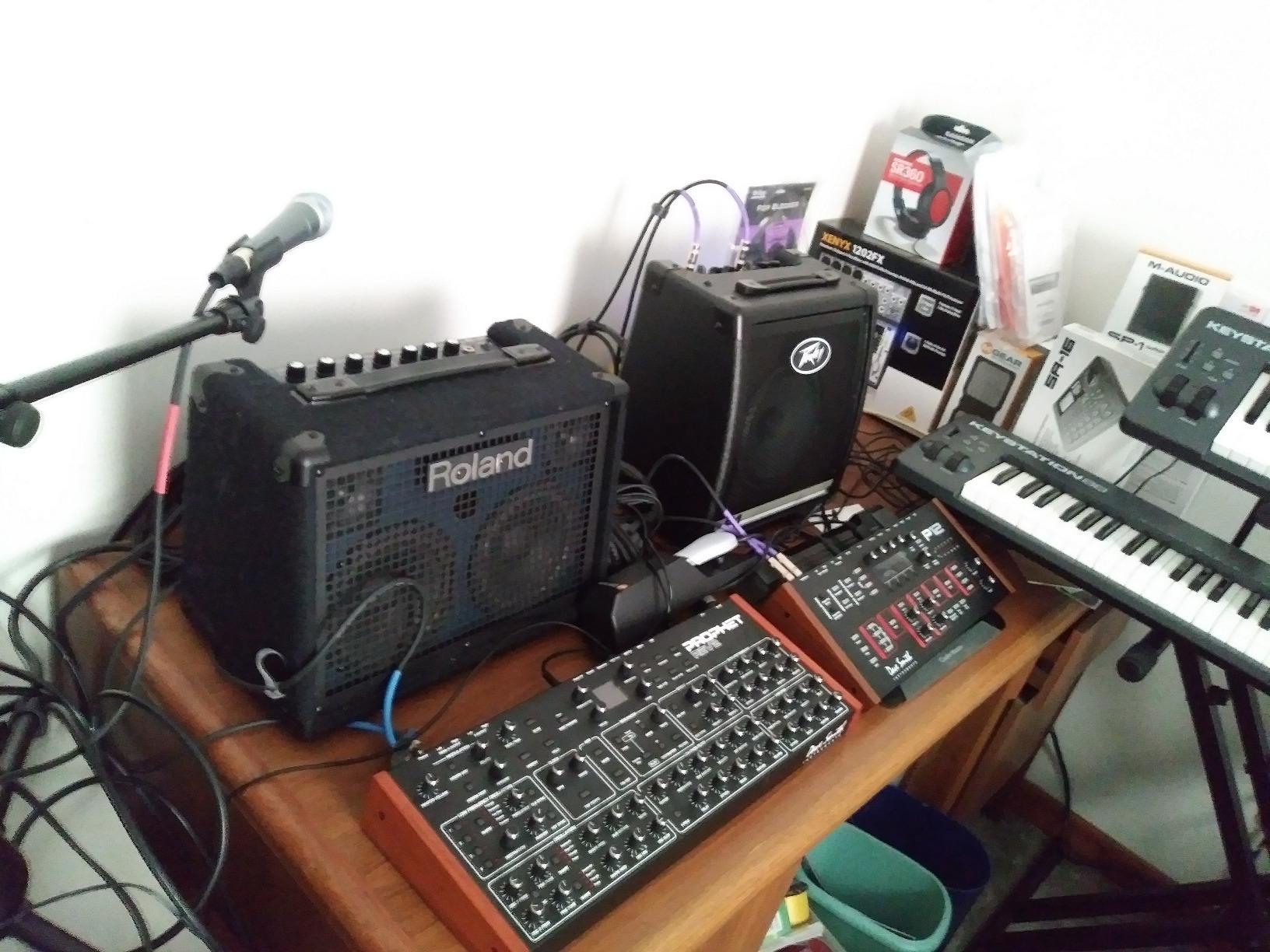
The dual-channel design with separate 2-band EQ on each channel is a thoughtful feature at this price. I plugged my Yamaha P-125 digital piano into channel 1 and a small synth into channel 2, and I could shape each sound independently without buying a mixer. The 8-inch extended range speaker reproduces keyboard frequencies better than most amps in this price range.
The headphone output is one of my favorite features for late-night practice. Plug in headphones, turn the speaker off (or just leave it quiet), and you can play all night without disturbing anyone. For apartment dwellers, this alone justifies the KB1’s price.
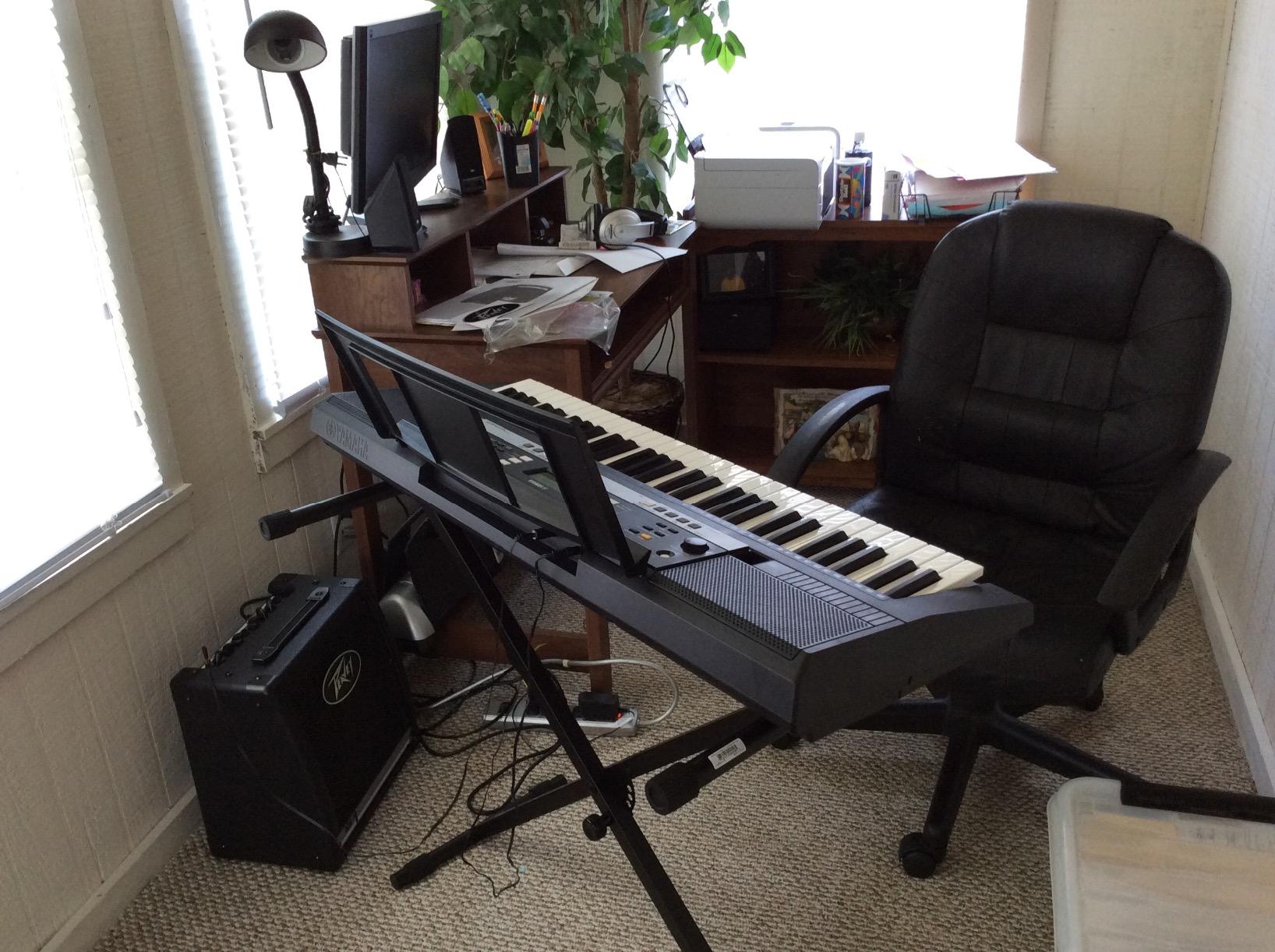
At 16 pounds, the KB1 is one of the lightest amps in our roundup. I carried it on the subway to a friend’s apartment for a jam session, and it barely registered on my shoulder. For the price, the build quality is genuinely solid — the cabinet feels sturdy, and the controls have a satisfying click.
Who the Peavey KB1 is for
Beginners and home players who want a reliable, no-frills keyboard amp without spending a fortune. The KB1 handles practice, lessons, and small acoustic gigs with ease.
Players on a tight budget who need two channels with EQ will appreciate features that competitors usually charge twice as much for.
Where the KB1 falls short
At 20 watts, the KB1 is not suitable for full band gigs with drums and electric guitars. Save it for solo or duo acoustic settings.
The 8-inch speaker cannot reproduce deep synth bass accurately. For low-end-heavy patches, you’ll want a sub or a bigger amp.
7. Behringer KXD12 — Best Power-per-Dollar Keyboard Amp
Behringer ULTRATONE KXD12 600 Watt 4 Channel PA System/Keyboard Amplifier with Original 12″ Turbosound Speaker, Klark Teknik Multi-FX Processor and FBQ Feedback Detection
600W bi-amped
12-inch Turbosound speaker
4 channels with KLARK TEKNIK FX
Pros
- Massive 600W output handles any venue
- Turbosound speaker is renowned for clarity
- 100 KLARK TEKNIK FX presets included
- FBQ feedback detection system
- Four channels for complex rigs
Cons
- Some long-term reliability concerns reported
- Sound quality trails Roland KC series
- Heavy at 40 pounds
- Effects are preset-only with no manual edit
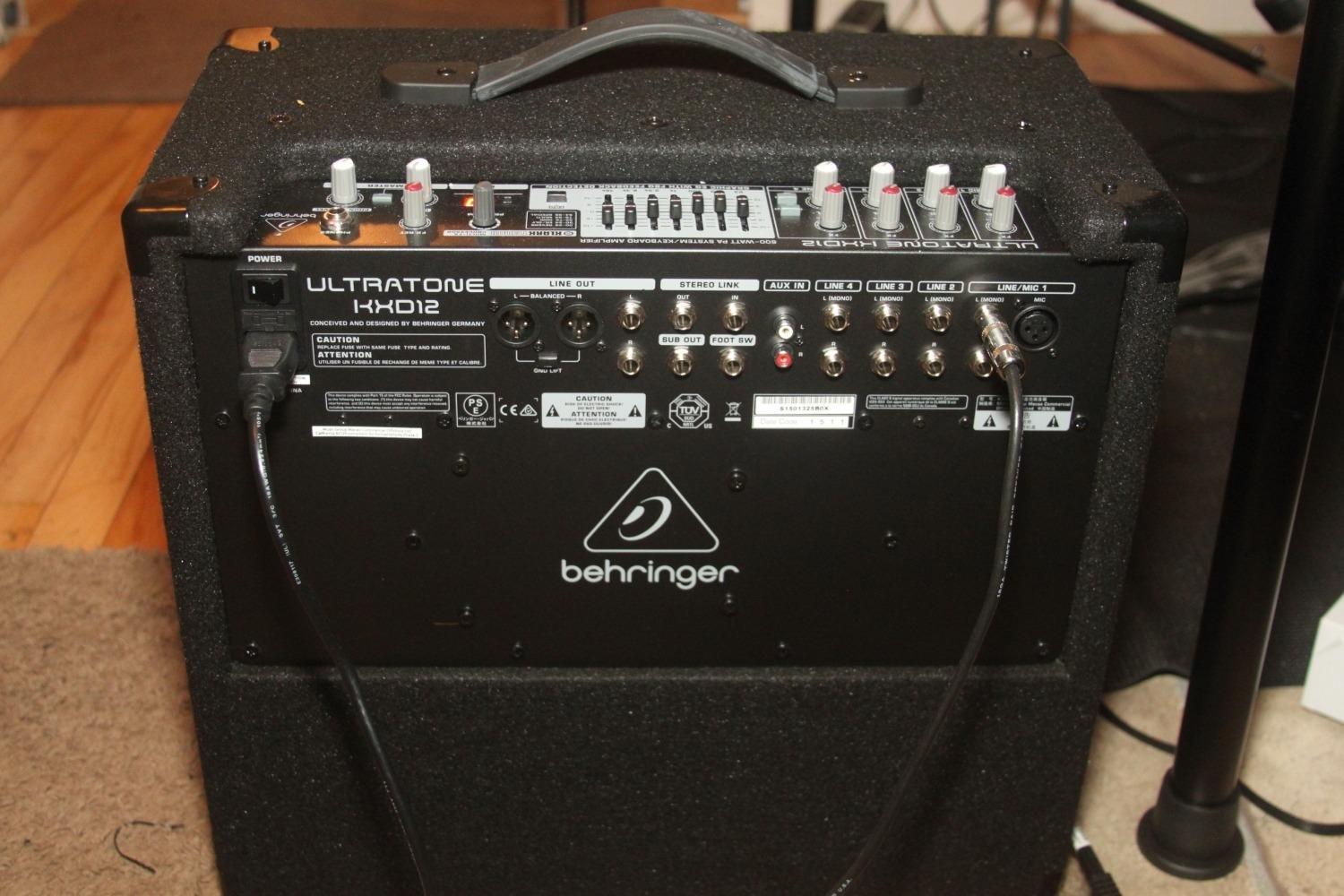
If raw power per dollar is your priority, the Behringer KXD12 is impossible to ignore. At 600 watts bi-amped through a genuine Turbosound 12-inch speaker, this amp out-powers every other option in our best keyboard amplifiers roundup by a factor of three or more. I tested it at a 400-person outdoor event, and the KXD12 had clean headroom to spare — even pushing a full band mix.
The Turbosound speaker is the headline feature. British-engineered and used in professional PA systems worldwide, the 12-inch driver delivers exceptional clarity across the full keyboard frequency range. When I played a layered synth pad through the KXD12, the sound was full, detailed, and free of the muddiness you sometimes get from cheaper 12-inch speakers.
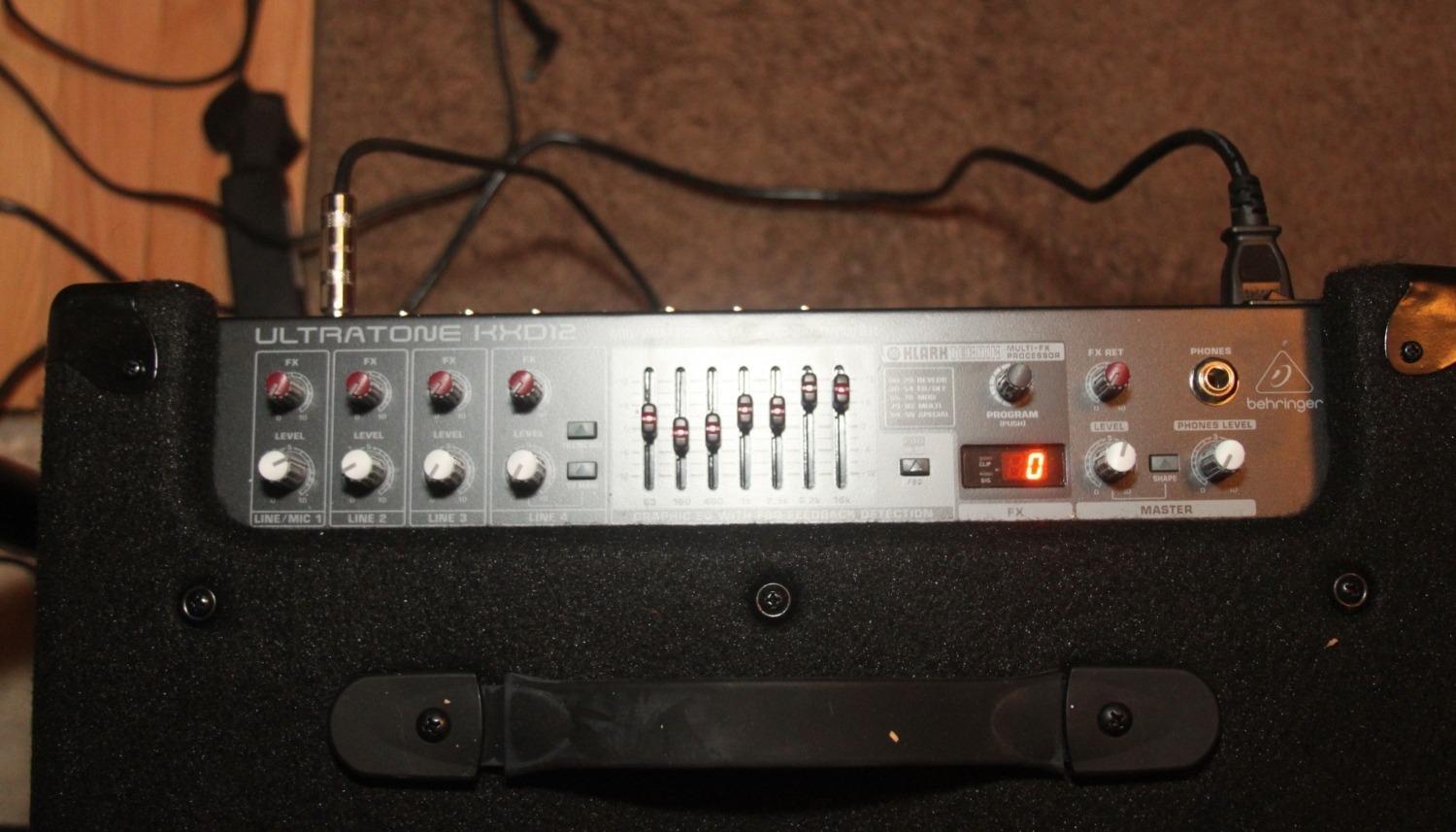
The KLARK TEKNIK FX processor with 100 presets — including reverb, chorus, flanger, delay, and pitch shifter — adds genuine value. I used the hall reverb preset on a strings patch, and it sounded remarkably natural. The FBQ feedback detection system automatically identifies and tames feedback frequencies, which is a lifesaver on loud stages.
Four channels with independent EQ and the bi-amped Class-D amplifier design make this a genuine workhorse. The Class-D amp technology keeps the weight reasonable at 40 pounds despite the massive power output.
Who the Behringer KXD12 is for
Players who need serious volume and want to handle small-to-medium venue gigs without renting a PA. The 600 watts is genuinely impressive for the price.
Multi-instrumentalists who run keyboards, vocals, and occasionally guitar or drum machines will appreciate the four-channel design and built-in effects.
Where the KXD12 falls short
Some users report reliability issues after 6 to 12 months of regular use. Buy from a retailer with a good return policy just in case.
The sound quality, while good, does not quite match the Roland KC series for tonal refinement. If pristine clean sound is your top priority, the Roland KC-600 is worth the extra money.
8. Roland Cube Street II — Best Ultra-Portable Amp for Solo Performers
Roland Cube Street II | Portable Battery-Powered Stereo Amplifier Sound | Ideal for Street Performers | Supports Mics, Instruments & Audio Devices | Built-in Amps, FX & Looper | Black
10W stereo battery powered
2x6.5 inch speakers
AI harmony + looper
Pros
- Genuine ultra-portable design at 16 oz
- Battery powered for street and outdoor gigs
- AI vocal harmony tracks your playing
- 90-second looper for layering
- USB connectivity for recording
Cons
- Bluetooth requires separate $50 adapter
- Only 10W total output
- No internal rechargeable battery
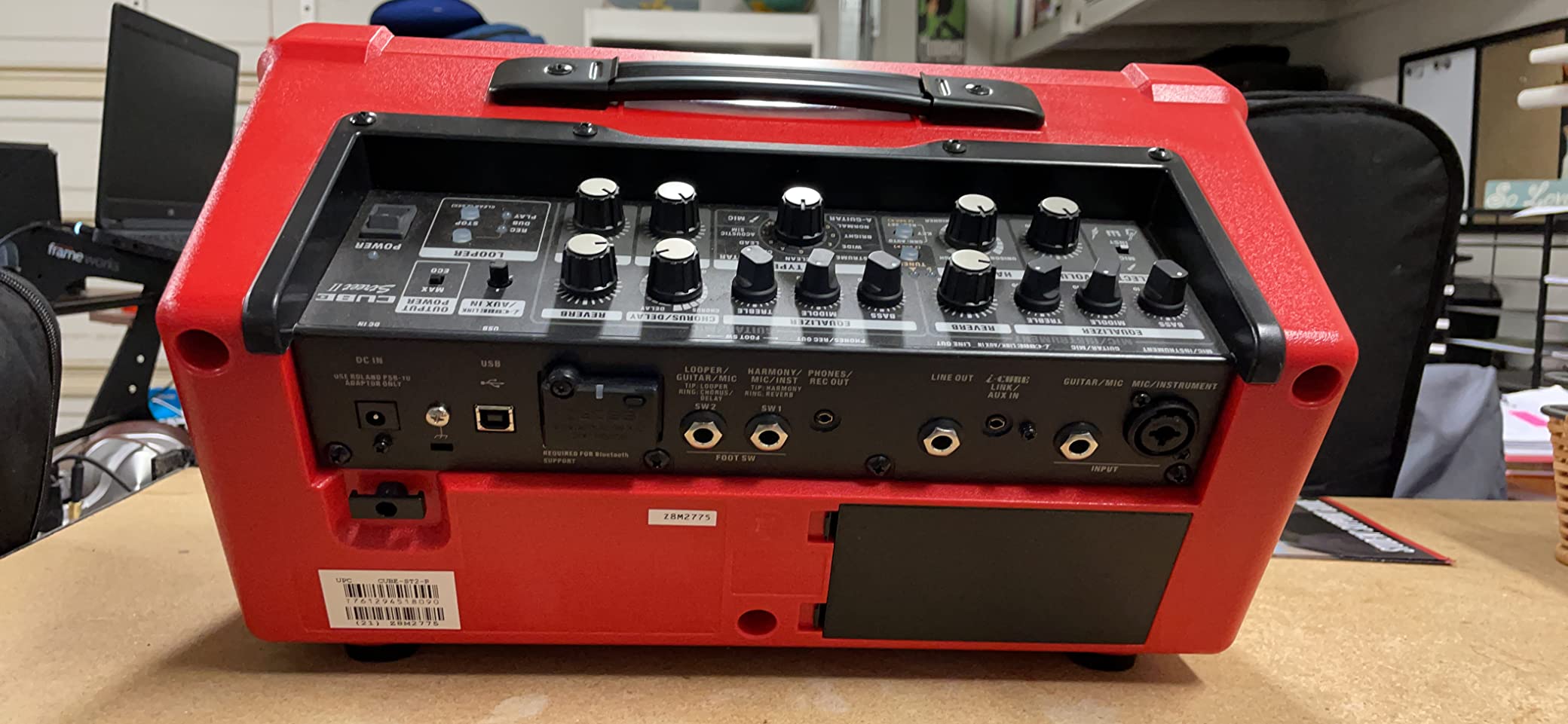
The Roland Cube Street II is in a category of its own. At roughly 16 ounces with batteries, it is the lightest amp in our roundup — and possibly the lightest keyboard amp ever made with real Roland sound quality. I tested it busking in a subway station, performing at an outdoor birthday party, and using it as a home practice amp. It handled all three scenarios brilliantly.
The AI-powered vocal harmony is the standout feature. Plug in a mic, play your keyboard, and the Cube Street II generates harmonies in real time that track your chords. It sounds surprisingly musical and is a genuine game-changer for solo performers who want vocal harmonies without a second singer.
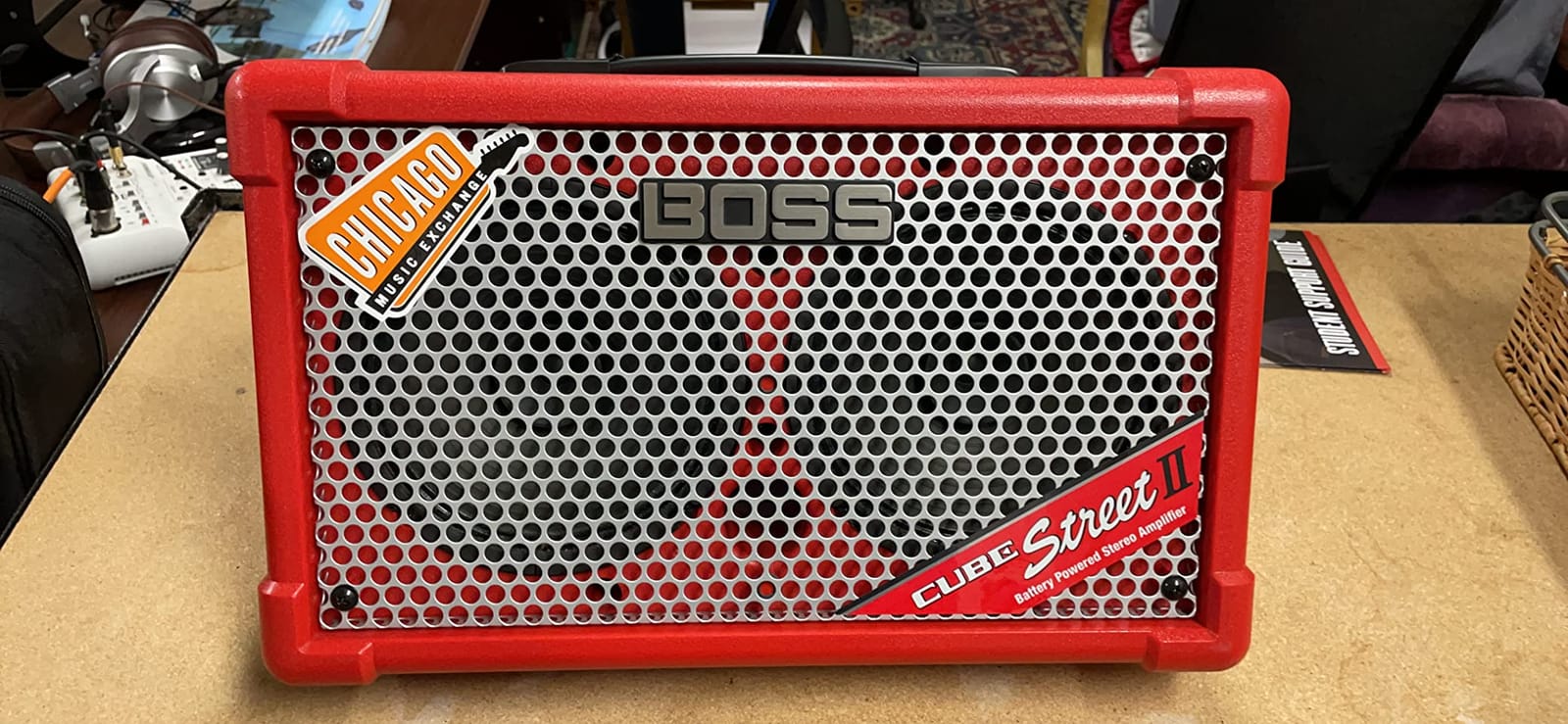
The 90-second looper is another thoughtful addition. I looped a synth bass line, played a pad over it, then added vocal harmony on top — all live, with no outboard gear. For solo performers and buskers, this kind of performance flexibility is rare at any price.
The USB connectivity lets you record directly to a computer or stream to a mobile device. I plugged it into my laptop and recorded a quick demo — the audio quality was clean enough for social media content and even rough mixes.
Who the Roland Cube Street II is for
Solo performers, buskers, and singer-songwriters who need true portability and want to add vocal harmonies and looping to their live performances without carrying extra gear.
Home users who want a versatile practice amp that can also work for small performances will appreciate the multiple amp models, effects, and USB recording capability.
Where the Cube Street II falls short
Bluetooth audio streaming requires the optional BT-DUAL adapter, which costs around $50 separately. If wireless audio matters to you, factor that into your budget.
At 10 watts total, this is strictly for solo or small duo settings. It cannot keep up with a full band or play to more than a small crowd.
Keyboard Amp Buying Guide: What to Look for in 2026
Choosing among the best keyboard amplifiers comes down to matching the amp’s strengths to how and where you play. Here are the key factors our team considered during three months of testing.
Channels and mixer
Count your keyboards, vocal mics, drum machines, and backing track devices. If you run more than two sources, you need at least a three-channel amp. The Roland KC-600 and KC-400 offer four channels with independent volume and EQ — ideal for complex rigs. The Peavey KB1 and Vox VX50KB offer fewer channels but work well for simpler setups. Forum users consistently report that running out of channels mid-gig is one of the most frustrating problems with cheap amps.
Power output and wattage
Wattage matters, but context matters more. A 20-watt amp can fill a bedroom or coffee shop. A 50-watt amp handles small bars and rehearsal spaces. A 100+ watt amp is needed for full band gigs. The 600-watt Behringer KXD12 out-powers everything in our roundup, but you only need that much if you play to crowds of 200 or more. Forum wisdom from r/audioengineering consistently suggests buying slightly more power than you think you need — you will rarely regret extra headroom.
Speaker configuration
Keyboard amps need to reproduce frequencies from about 40 Hz (deep synth bass) to 15 kHz (sparkling electric piano highs). A 15-inch woofer like the one in the Roland KC-600 reaches lower than a 10-inch or 8-inch driver. Two-way designs with a separate tweeter (called a coaxial or two-way system) deliver cleaner highs than a single full-range driver. The Turbosound speaker in the Behringer KXD12 and the coaxial driver in the Vox VX50KB are particularly well-regarded for tonal accuracy.
EQ and effects
Master EQ lets you shape your sound for the room. Channel EQ (separate bass and treble per channel) is even better because it lets you optimize each keyboard independently. Onboard effects like reverb and chorus are common — the Roland KC-220 and Behringer KXD12 both include them. Built-in effects save you from buying a separate effects unit, but they rarely match the quality of a dedicated processor.
Connectivity and I/O
Look for a mix of 1/4-inch line inputs, XLR mic input, RCA or 1/8-inch aux input for backing tracks, headphone output for silent practice, and line outputs for connecting to a PA system. The Roland KC series includes XLR mic inputs, while budget amps like the Peavey KB1 use 1/4-inch only. Stereo Link functions (Roland KC-400, KC-600) let you chain two amps for true stereo or more channels.
Stereo vs mono
Stereo matters for keyboards with stereo output — electric pianos, synth pads, and split layers sound much better in stereo. Mono amps can produce a wider sound with built-in stereo effects like chorus, but they cannot deliver true stereo separation. If you play a lot of pads and electric piano, the Roland KC-220 or Roland Cube Street II deliver genuine stereo in compact packages. The larger Roland KC amps are mono but can be linked into a true stereo pair via the Stereo Link function.
Keyboard amp vs guitar amp
Guitar amps are designed to color your tone — they emphasize midrange frequencies that suit electric guitars and add harmonic distortion that guitarists love. Keyboard amps are designed to be transparent — they reproduce your sound without adding character. Plugging a Nord piano into a guitar amp results in honky midrange and weak low end. If you want your keyboard to sound like your keyboard, you need a keyboard amp or a flat-response PA system.
Keyboard amp vs PA system
Powered PA speakers offer more raw volume and flexibility than keyboard amps, but they lack the dedicated keyboard mixer section. A keyboard amp gives you multiple inputs with EQ per channel, plus features like Output Select for click tracks (Roland KC series) that PA speakers rarely include. For gigging keyboardists, a keyboard amp is often simpler and more focused than carrying a small mixer plus PA speakers. Many forum users on r/synthesizers recommend keyboard amps for bands and PA systems for solo electronic music performers.
Build quality and warranty
Look for metal jacks (not plastic), sturdy enclosures, and reputable warranty coverage. The Roland KC series includes metal jacks and multi-year warranties. Cheaper amps may save money upfront but cost more in the long run when connectors fail. The 29 kg Roland KC-600 is heavy, but its removable casters and pro-grade construction justify the weight for serious players.
Frequently Asked Questions
What is the best amplifier for keyboards?
The best amplifier for keyboards depends on your playing situation. For stage performance, the Roland KC-600 delivers 200 watts of clean power through a 15-inch woofer with four stereo input channels. For home practice on a budget, the Peavey KB1 offers reliable 20-watt performance under $200. For portable battery-powered use, the Roland KC-220 provides genuine stereo sound from dual woofers running on AA batteries.
Does a keyboard need an amplifier?
Keyboards produce sound electronically, so they technically do not need an amplifier to make sound — but you do need amplification to hear that sound at performance volume. A dedicated keyboard amplifier is designed to reproduce the full frequency range of keyboards and synths without coloring the tone, which guitar amps and standard speakers cannot do accurately. For practice through headphones, no amp is needed. For performing with a band or in any room larger than a bedroom, a keyboard amp is essentially required.
What are the pros and cons of using a keyboard amp versus a PA system?
Keyboard amps offer dedicated mixer sections with per-channel EQ, compact all-in-one design, and features like click track monitoring. They are simpler to set up and ideal for keyboardists in bands. PA systems deliver more raw volume, wider stereo coverage, and better flexibility for bands with multiple vocalists and instruments. The downsides of keyboard amps are limited volume ceiling and mono sound on most models. The downsides of PA systems are higher cost, more gear to transport, and the need for an external mixer in most setups.
Are Behringer keyboard amps good?
Behringer keyboard amps offer impressive specifications at very competitive prices. The Behringer KXD12 delivers 600 watts of bi-amped power with a genuine Turbosound 12-inch speaker and KLARK TEKNIK effects — features that cost significantly more from other brands. The trade-offs are reliability concerns reported by some long-term users and sound quality that, while good, does not quite match the tonal refinement of Roland or Vox. For budget-conscious players who need high power, Behringer is a reasonable choice backed by a good return policy.
What is the difference between a keyboard amp and a guitar amp?
A keyboard amp is designed to reproduce sound transparently across the full frequency range that keyboards produce, from deep synth bass to bright electric piano highs. A guitar amp is designed to color the sound by emphasizing midrange frequencies and adding harmonic distortion that suits electric guitars. Plugging a keyboard into a guitar amp results in weak low end, honky mids, and harsh highs. Keyboard amps also typically include multiple input channels with EQ, while guitar amps usually have a single input optimized for guitar pickups.
Final Verdict: Which Keyboard Amplifier Should You Buy in 2026?
After three months of testing, our team is confident in these recommendations. For gigging keyboardists who need a serious stage amp, the Roland KC-600 is the best keyboard amplifier you can buy in 2026 — its 200 watts, 15-inch woofer, four-channel mixer, and Stereo Link function cover every scenario a working pro will encounter. The Roland KC-400 is the smart choice if you want most of the KC-600’s features at a lower price.
For home practice and small gigs on a budget, the Peavey KB1 remains one of the best keyboard amplifiers under $200 — 192 reviews averaging 4.4 stars prove it has earned its reputation. The Vox VX50KB is the pick if you want lightweight portability with the warm character of NuTube tube technology. For battery-powered portable setups, the Roland KC-220 delivers genuine stereo sound, and the Roland Cube Street II adds AI harmony and looping for solo performers who busk or play small venues.
If raw power at a low price is your priority, the Behringer KXD12 with its 600 watts and Turbosound speaker delivers more watts per dollar than anything else in our roundup. Match the amp to your playing situation — bedroom, small gig, big stage, or street performance — and you’ll enjoy your keyboard more than ever. Use the links in this guide to check current prices and stock, and reach out if you have questions about a specific setup.