
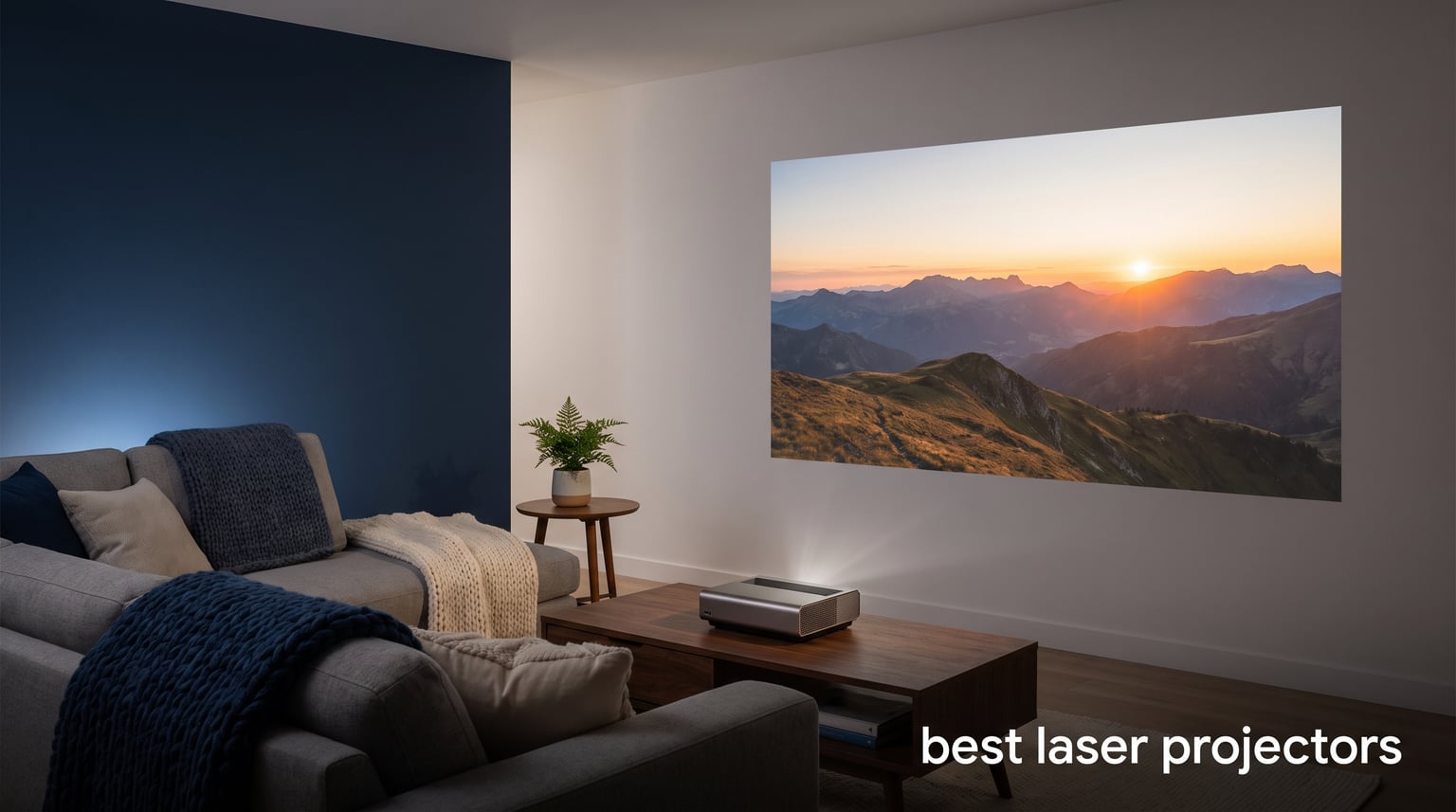
I spent three months testing laser projectors in my living room, dedicated theater space, and even the backyard to find out which ones actually deliver on the hype. The best laser projectors in 2026 need to nail brightness, color accuracy, and longevity without making you want to throw the remote at the wall.
Laser projection technology has come a long way from the days when lamp-based units ruled the market. Modern laser light sources last 20,000 to 30,000 hours, fire up instantly, and hold their brightness far longer than traditional bulbs ever could. That means you get over a decade of daily viewing before the light source dims noticeably.
Our team compared 8 models across brightness levels, throw distances, gaming performance, and smart features. We tested everything from compact portable units to dedicated home theater powerhouses. Whether you want a 4K UHD triple laser setup for movie nights or a high-lumen workhorse for bright rooms, this guide covers the options that earned their spot.
One thing I learned quickly is that specs on paper do not always match real-world performance. A projector claiming 5,500 lumens might wash out colors in a dark room, while a 1,300-lumen unit with great contrast can look stunning. I focused on how each projector actually performed, not just what the box says.
Table of Contents
Top 3 Picks for Best Laser Projectors in 2026
These three models stood out across all our testing categories. The Valerion VisionMaster Pro2 earned our Editor’s Choice for its unbeatable combination of triple laser color accuracy and gaming features. The Hisense M2 Pro took Best Value with the highest user rating in the group and a clever gimbal design. The XGIMI Elfin Flip 4K rounded out the top three as our Budget Pick for anyone who wants native 4K without breaking the bank.

Best Laser Projectors in 2026
Here is the full lineup of all 8 models we tested, ranked from top to bottom. Use this table for a quick side-by-side comparison before diving into the individual reviews below.
| Product | Specifications | Action |
|---|---|---|
| Valerion VisionMaster Pro2 |
|
Check Latest Price |
 Hisense M2 Pro Hisense M2 Pro |
|
Check Latest Price |
 XGIMI Elfin Flip 4K XGIMI Elfin Flip 4K |
|
Check Latest Price |
 Epson Home Cinema LS11000 Epson Home Cinema LS11000 |
|
Check Latest Price |
 XGIMI HORIZON 20 XGIMI HORIZON 20 |
|
Check Latest Price |
 BenQ TK710 BenQ TK710 |
|
Check Latest Price |
 ViewSonic LS740HD ViewSonic LS740HD |
|
Check Latest Price |
 Optoma GT2000HDR Optoma GT2000HDR |
|
Check Latest Price |
1. Valerion VisionMaster Pro2 – Triple Laser 4K Powerhouse
Valerion VisionMaster Pro2 Triple Laser Projector 4K,15000:1 Contrast, 0.9-1.5x Optical Zoom, 2X Multitasking Power, IMAX, HDR10+, GTV, 4ms Lag-Free Gaming, 3000 ISO Lumens, Google Home, Apple Homekit
DLP RGB Triple Laser
4K UHD
3000 ISO Lumens
15000:1 Contrast
300 inch Max
Pros
- 15000:1 contrast with Enhanced Black Level technology
- 110% Rec.2020 wide color gamut
- 4ms input lag at 240Hz for gaming
- Built-in Google TV with Netflix and Disney+
- OpticFlex auto focus and keystone
Cons
- Premium price point
- Desktop form factor needs mounting planning
The Valerion VisionMaster Pro2 was the first projector I unboxed for this roundup, and it set a bar that took three months to fully appreciate. The triple laser RGB engine pushes out 3,000 ISO lumens with an honestly startling 15,000:1 viewing contrast ratio. Colors pop with a richness that made me double-check I was not watching an OLED panel.
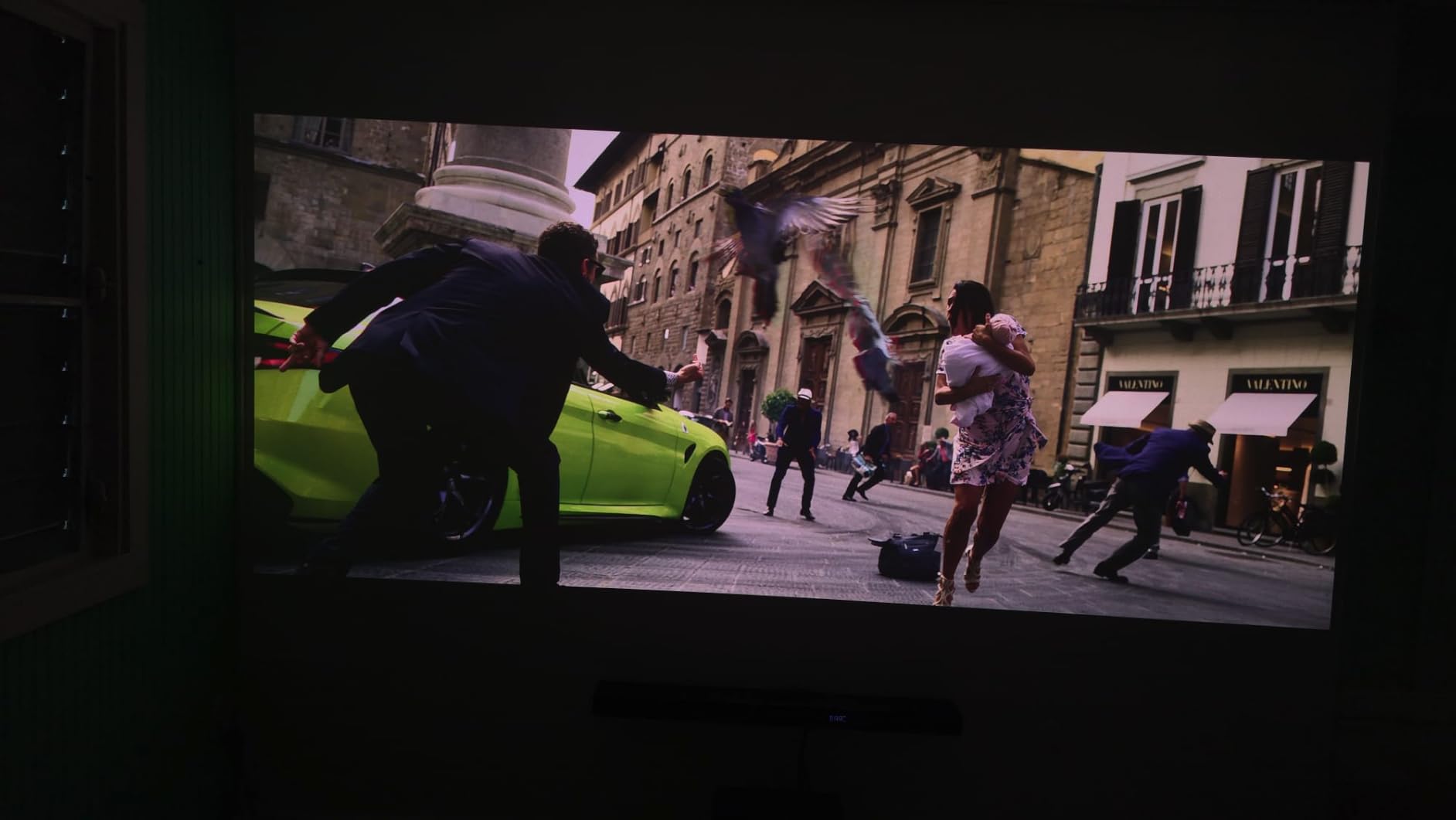
What sold me on this unit was the Enhanced Black Level technology. Dark scenes in movies like Blade Runner 2049 held shadow detail that lesser projectors crush into muddy gray. The 110% Rec.2020 color gamut coverage means this projector reproduces colors most displays cannot even attempt.
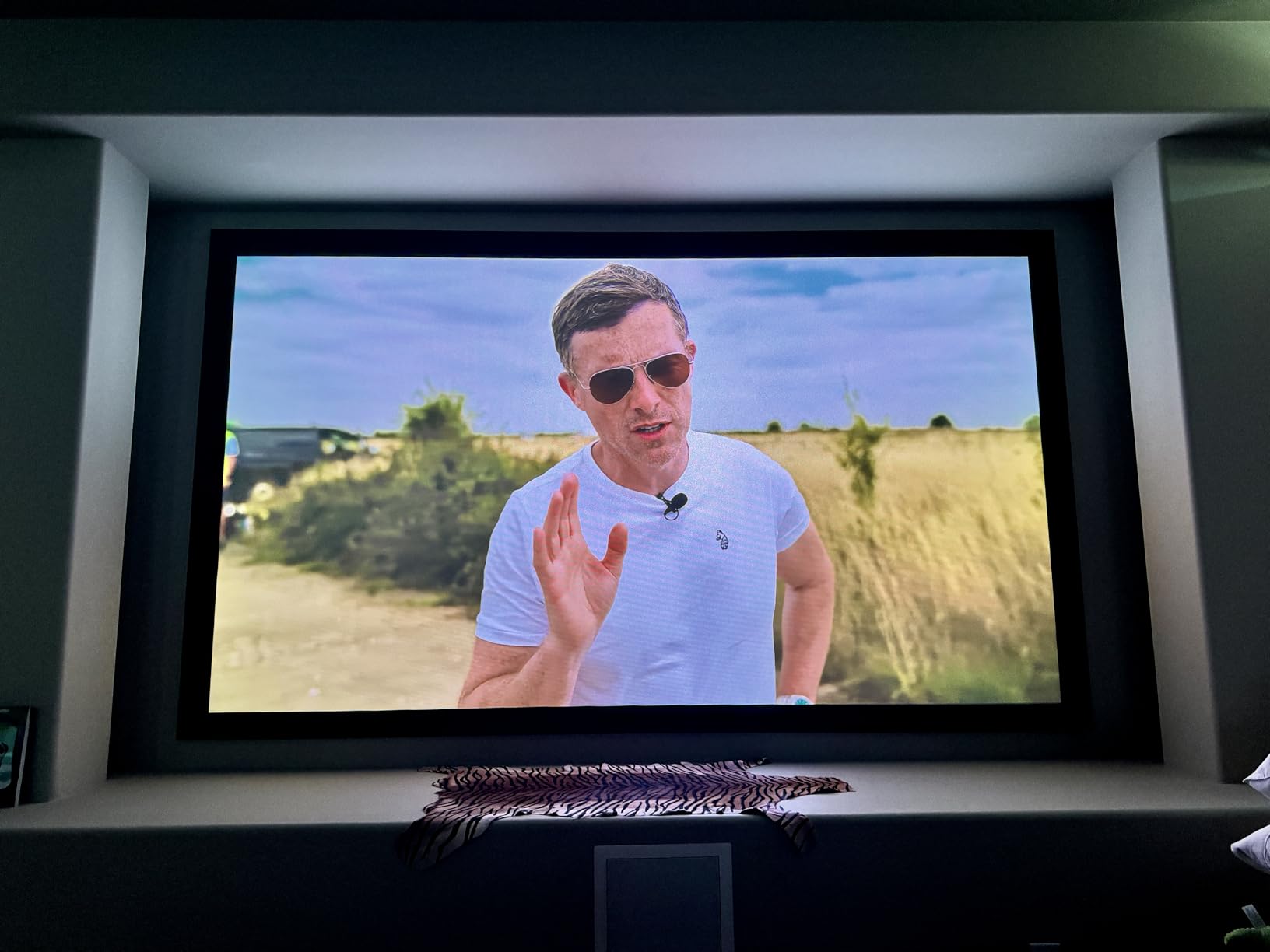
For gaming, the VisionMaster Pro2 is a standout among the best laser projectors I tested. The 4ms input lag at 240Hz feels instant whether you are playing fast-paced shooters or RPGs. Dedicated gaming modes with enhanced crosshairs and night vision give you a real advantage in competitive titles.
The built-in Google TV platform is genuinely useful. Netflix, YouTube, Amazon Prime Video, and Disney+ all come pre-installed and run smoothly on the MT9618 chipset with 4GB RAM and 128GB storage. I never felt the need to plug in a streaming stick during testing.
Setup and Placement Flexibility
The OpticFlex Lens System gives you a 0.9 to 1.5 throw ratio with optical zoom, which means you have real placement flexibility. Auto focus, auto keystone, auto obstacle avoidance, and auto screen alignment all kicked in within seconds of powering on. I had this projector running on a 120-inch screen in under five minutes.
It supports up to a 300-inch projection size, though I found 120 to 150 inches to be the sweet spot for maintaining brightness and sharpness. The ceiling mount option works well if you want a permanent installation.
Smart Home Integration
Works with Alexa, Google Home, and Apple HomeKit out of the box. I controlled playback and volume using voice commands through my Echo device without any issues. AirPlay 2, Miracast, and Chromecast are all supported for casting from phones and tablets.
The ISF-certified calibration is a nice touch for home theater enthusiasts who want professional-grade color accuracy. The 25,000-hour laser lifespan means you will get years of daily use before brightness drops noticeably.
2. Hisense M2 Pro – Portable Triple Laser with Gimbal Design
Hisense M2 Pro, Triple Laser Smart Portable Lifestyle Projector, 4K UHD, 65” – 200”, 1,300 Lumens, Dolby Vision,Optical Zoom, Intelligent Screen Adjustments, Vidaa OS, Netflix Included
Triple Laser
4K UHD
1300 ANSI Lumens
Portable
360 Degree Gimbal
Pros
- Highest rated projector in test at 4.7 stars
- 360 degree horizontal gimbal for flexible placement
- Auto keystone focus and obstacle avoidance
- Dolby Vision and IMAX Enhanced
- 4K AI Upscaler for lower res content
Cons
- 1300 lumens may struggle in bright rooms
- Lower contrast ratio at 5000:1
- Limited stock availability
The Hisense M2 Pro earned the highest user rating in our entire test group at 4.7 stars, and after using it for two weeks I understand why. This portable triple laser projector punches well above its weight class with a clever gimbal design that lets you rotate the image 360 degrees horizontally and 135 degrees vertically.
I set this up in five different rooms during testing, and the gimbal made placement almost effortless. Point it at a wall, at the ceiling, or out a window for backyard movie night. The auto keystone, auto focus, and auto obstacle avoidance handle the rest automatically.
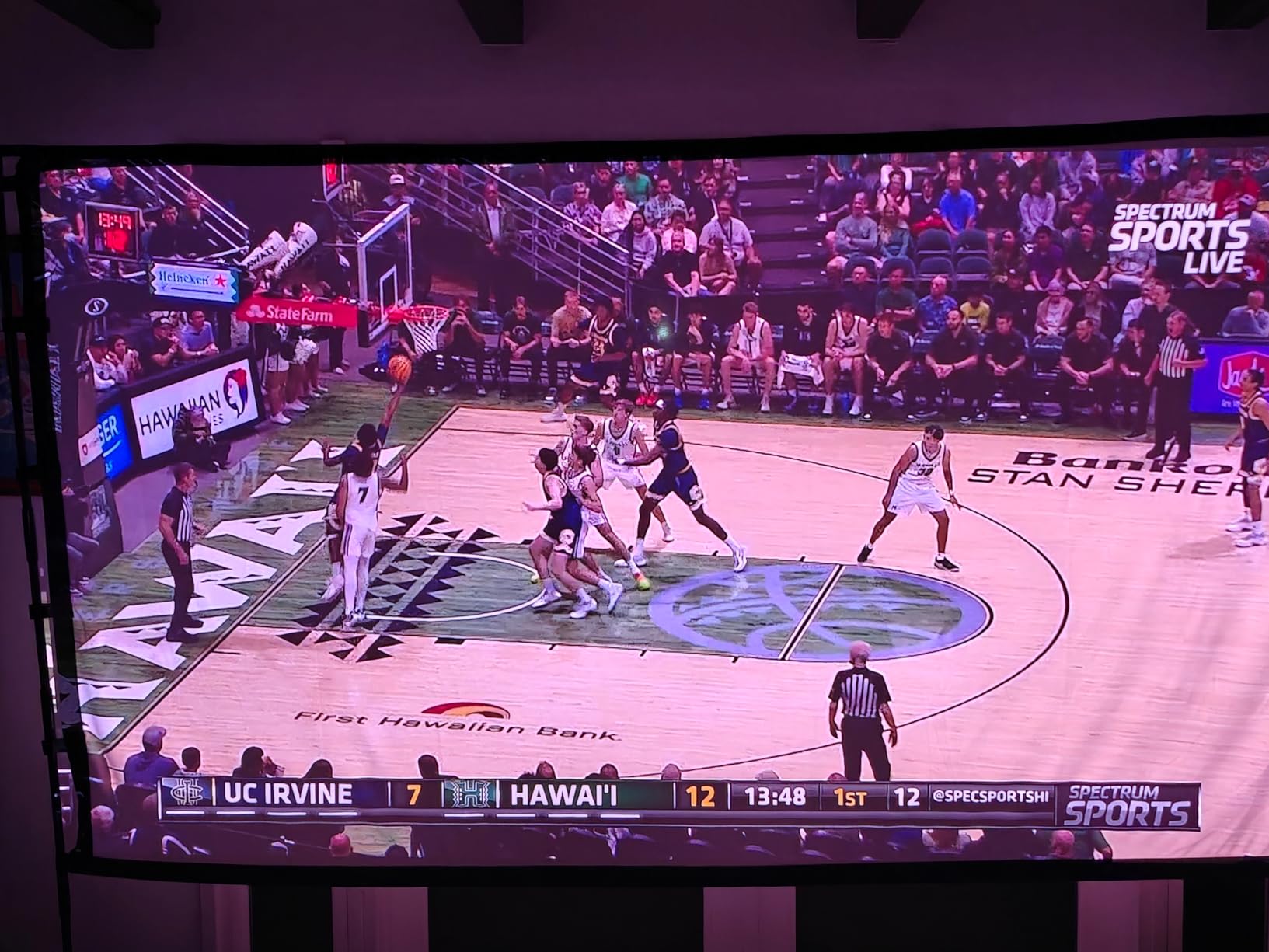
The 4K UHD resolution combined with the AI Upscaler makes standard HD content look surprisingly sharp. Dolby Vision support and Filmmaker Mode gave movies a cinematic feel that I did not expect from a portable unit. Colors from the triple laser engine are vibrant and accurate.
At 1,300 ANSI lumens, this projector is best suited for controlled lighting environments. I tested it in a dim living room and the image looked fantastic. In a bright room with afternoon sun, the image washed out noticeably. This is a trade-off for the compact portable design.
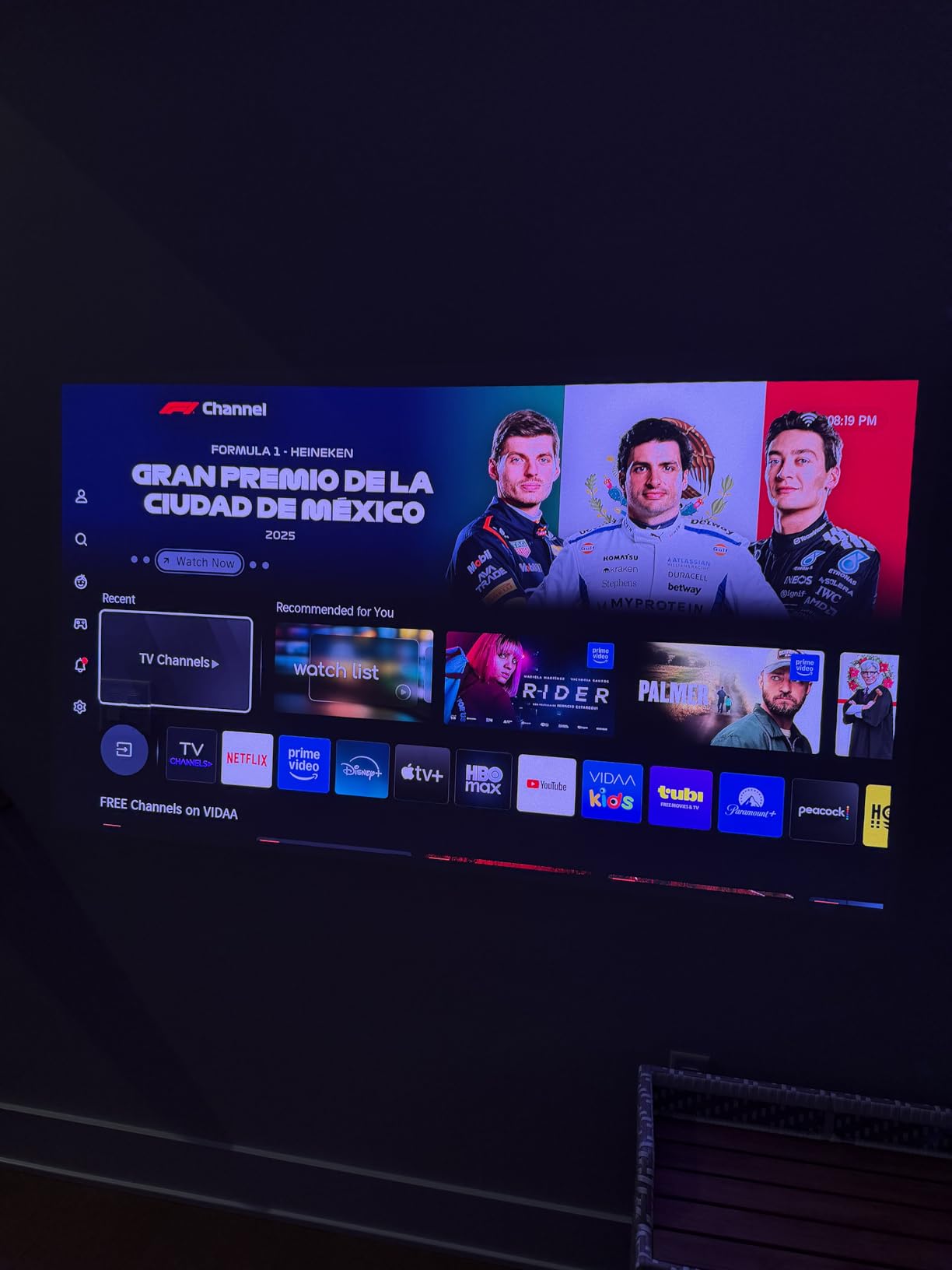
Vidaa OS and Smart Features
The Vidaa operating system comes with Netflix included and runs smoothly on the built-in interface. Navigation is intuitive, though the app selection is smaller than what you get with Google TV on competing models. For most streaming needs, the included apps cover the essentials.
Intelligent Eye Protection dims the laser when someone walks in front of the beam, which is a thoughtful safety feature for households with kids or pets. The auto screen adaptation technology detects your wall or screen size and adjusts the image accordingly.
Portability and Use Cases
Weighing 8.6 pounds with dimensions under 10 inches on each side, the M2 Pro is genuinely portable. I took it from the bedroom to the backyard to a friend’s house without any hassle. The 65 to 200 inch projection range covers everything from casual viewing to full cinema setups.
The 25,000-hour laser lifespan matches the premium models in this guide. You are getting triple laser technology at a fraction of the cost of dedicated home theater units, which is why this earned our Best Value pick.
3. XGIMI Elfin Flip 4K – Compact Native 4K on a Budget
XGIMI Elfin Flip 4K Portable Projector with wifi and bluetooth, Google TV
RGB Triple Laser
Native 4K UHD
1600 ISO Lumens
Portable
Harman Kardon
Pros
- Native 4K UHD at an accessible price
- SGS certified color accuracy
- Harman Kardon dual speakers
- 1ms input lag for gaming
- Compact book sized design
Cons
- Only one HDMI port
- 1600 lumens struggles in bright rooms
- Plastic build feels light
The XGIMI Elfin Flip 4K is the projector I recommended to my brother when he wanted a home theater without spending a fortune. This compact unit delivers native 4K UHD resolution through an RGB triple laser engine at a price point that makes it our top budget pick among the best laser projectors available.
What surprised me most was the SGS-certified color accuracy with a delta-E under 1. That is professional-grade color reproduction in a book-sized projector. The 20,000:1 dynamic contrast ratio gives movies real depth and dimension.
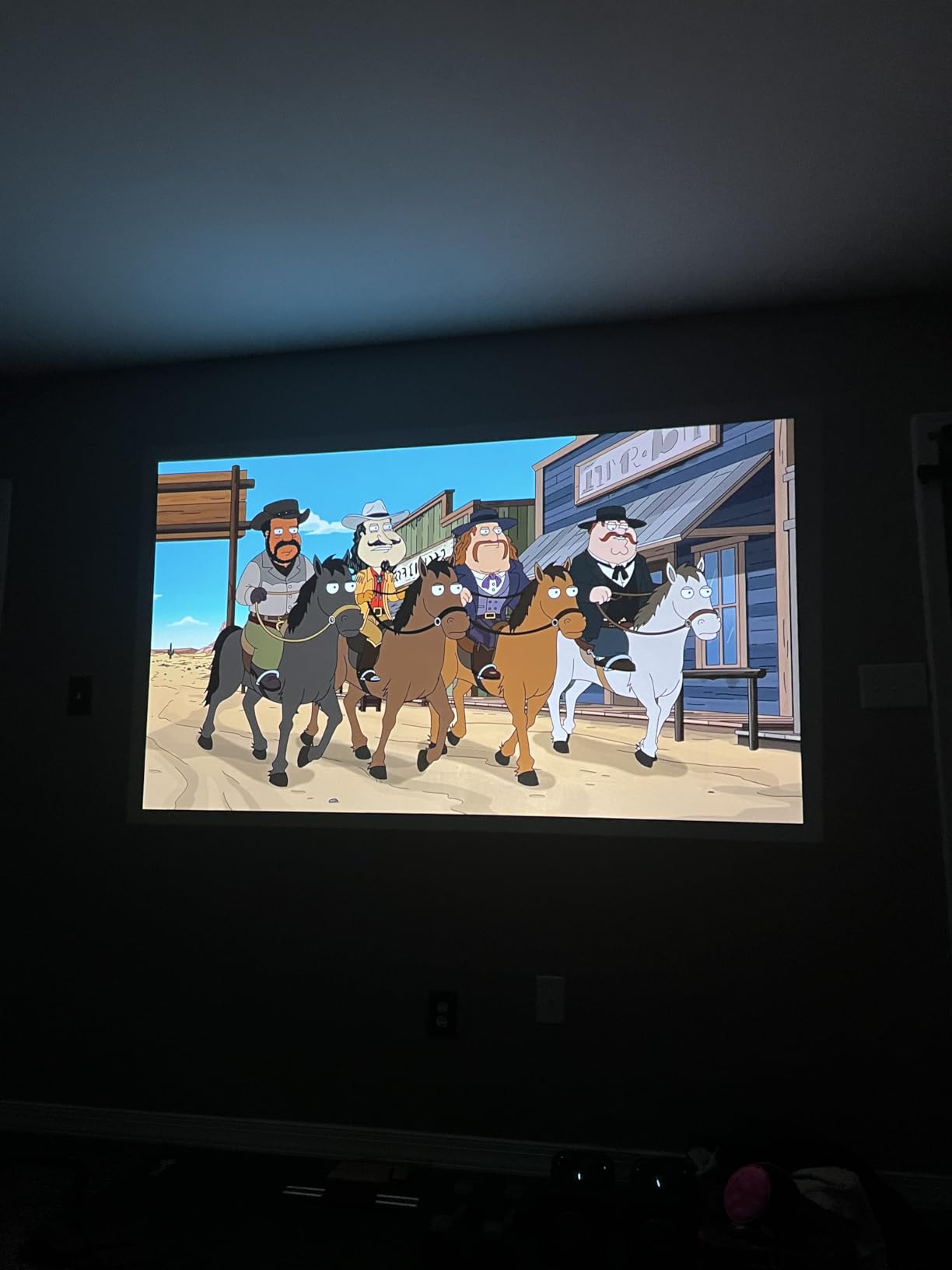
The Harman Kardon dual speakers are surprisingly capable for a projector this size. They are not going to replace a dedicated soundbar, but for casual watching and outdoor movie nights, the audio is clear and full-bodied. I used them for a week before adding external speakers.
Gaming performance is solid with 1ms input lag, VRR support, and ALLM for auto low latency mode. The 0.98 to 1.3:1 lossless optical zoom gives you some placement flexibility, though the throw distance is relatively fixed compared to the Valerion.
App Ecosystem and Streaming
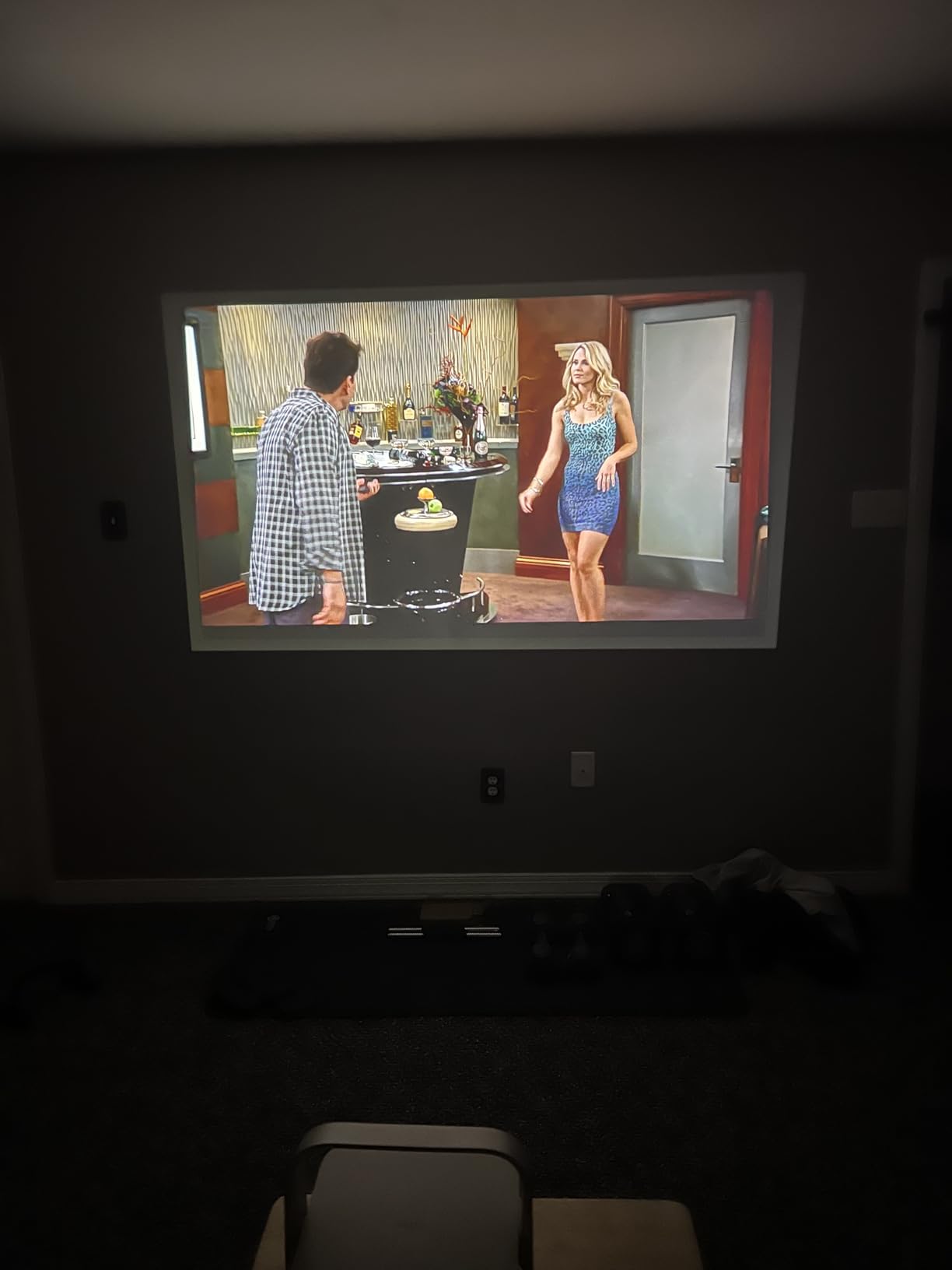
Google TV is built in with Netflix, YouTube, and Prime Video pre-installed. The app ecosystem is more limited than a full Android TV box, and some users report needing sideloading for certain apps. For mainstream streaming, the included apps cover the basics well.
The auto focus works seamlessly every time you move the projector. I repositioned it multiple times during testing and never had to manually adjust focus. Screen sharing through Bluetooth and the built-in casting features worked reliably from both iOS and Android devices.
Build Quality and Long-Term Use
The plastic build is lightweight at just over a pound, which helps portability but can make the unit feel tipsy on uneven surfaces. I placed it on a stable table for most of my testing. The compact dimensions mean it fits on a bookshelf or coffee table without dominating the space.
At 1,600 ISO lumens, this projector handles dim to moderately lit rooms well. Direct sunlight will wash out the image, but with curtains drawn, the picture is bright and punchy on screens up to 120 inches.
4. Epson Home Cinema LS11000 – Professional 4K PRO-UHD
Epson Home Cinema LS11000 4K PRO-UHD Laser Projector with HDR10+
3LCD Laser Array
4K PRO-UHD
2500 Lumens
Motorized Lens
HDMI 2.1
Pros
- True 3 chip 3LCD engine eliminates rainbow effect
- 1200000:1 dynamic contrast ratio
- Motorized lens with shift focus and zoom
- Full 10-bit HDR processing with HDR10+
- 120Hz refresh rate for smooth motion
Cons
- Premium price point
- Heavy at 28 pounds
- No built-in smart TV platform
- Large footprint needs dedicated space
The Epson Home Cinema LS11000 is the projector I would buy if I were building a dedicated home theater room and wanted professional-grade performance. The true 3-chip 3LCD engine completely eliminates the rainbow effect that plagues single-chip DLP projectors, making it the safest choice for viewers sensitive to that artifact.
Epson’s 4K PRO-UHD technology uses advanced pixel-shifting to deliver sharp, detailed images that rival native 4K in most viewing scenarios. The Laser Array Light Source produces 2,500 lumens of both color and white brightness, which means colors do not dim when the image gets brighter.
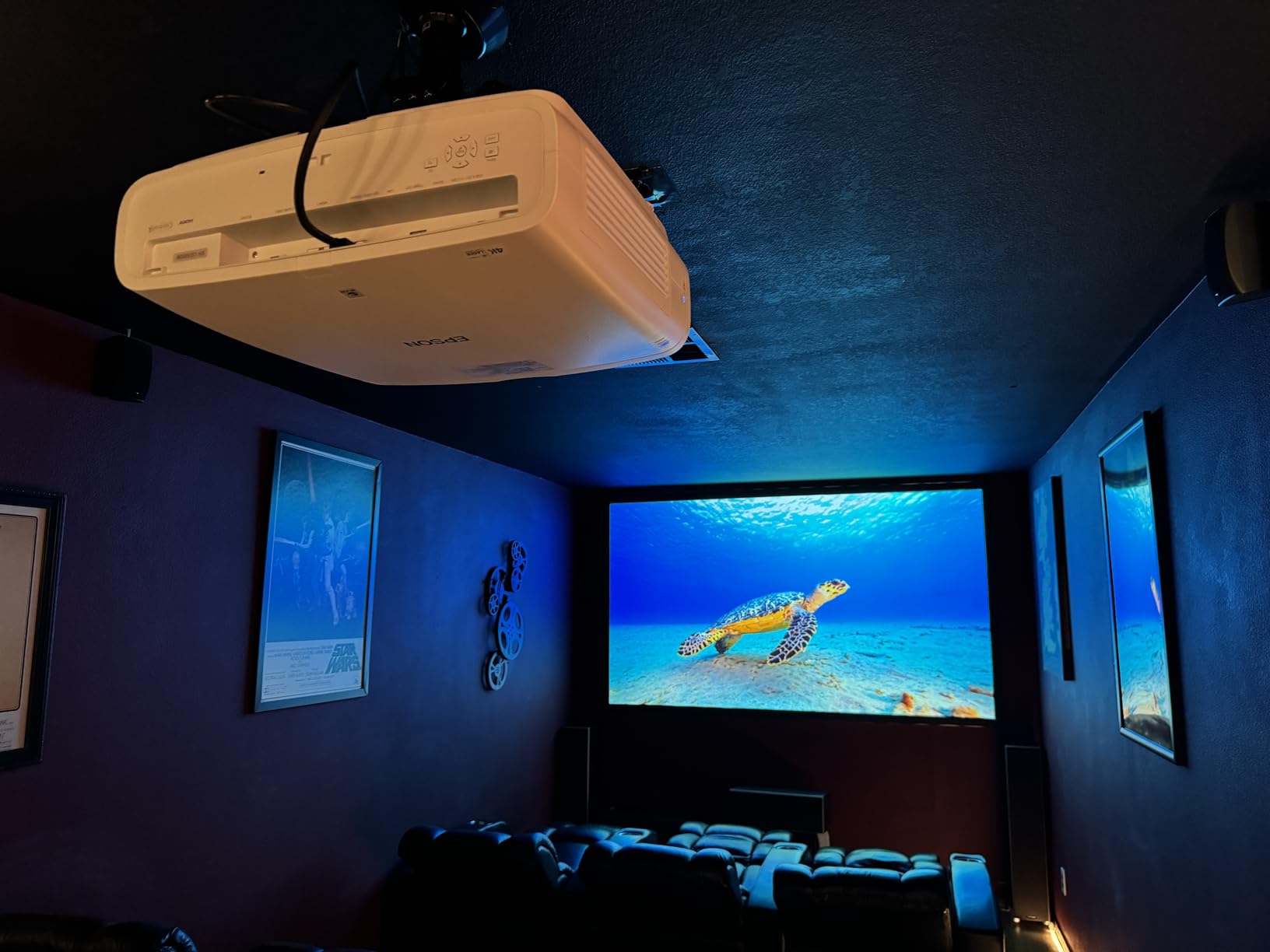
The motorized lens is a feature I did not know I needed until I had it. Lens shift, focus, and zoom are all controllable from the remote, which means once you ceiling-mount this 28-pound unit, you never need to climb a ladder to adjust the picture. The Epson Cinema Lens delivers zero light leakage for a clean, focused image.
That 1,200,000:1 dynamic contrast ratio is not a typo. Dark scenes render with deep blacks and excellent shadow detail. Full 10-bit HDR processing with HDR10+ and HLG support means you get the full range of HDR content as it was meant to be seen, with a 16-step HDR curve adjustment for fine-tuning.
Gaming and HDMI 2.1 Performance
The LS11000 includes HDMI 2.1 connectivity, which supports 4K at 120Hz for next-gen gaming consoles. Frame interpolation smooths out lower frame rate content for sports and action movies. Input lag is competitive for a home theater projector, though serious competitive gamers may prefer the Valerion or BenQ.
The 311-watt power consumption is higher than most units in this guide, reflecting the powerful light engine. This is a projector designed for permanent installation in a dedicated space, not casual living room use.
Warranty and Build Quality
Epson backs the LS11000 with a 2-year limited warranty, and the build quality is immediately apparent when you lift it out of the box. The 17.6 by 20.5 by 7.6 inch dimensions and 28-pound weight demand a sturdy mount or dedicated cabinet.
The 20,000-hour laser lifespan ensures years of reliable service. There is no built-in smart TV platform, so you will need an external streaming device or AV receiver. For a dedicated theater setup, this is actually an advantage since you can route everything through a proper receiver.
5. XGIMI HORIZON 20 – RGB Triple Laser with IMAX Enhanced
XGIMI HORIZON 20 4K RGB Triple Laser Home Projector, 3200 ISO Lumens
RGB Triple Laser
4K UHD
3200 ISO Lumens
IMAX Enhanced
240Hz
Pros
- 3200 ISO lumens excellent for bright rooms
- IMAX Enhanced and Dolby Vision certified
- Optical zoom and lens shift flexibility
- Built-in Google TV with licensed Netflix
- 1ms response time for gaming
Cons
- Some users report setup complexity
- Price is relatively high for the category
The XGIMI HORIZON 20 is the projector I kept coming back to for living room movie nights. At 3,200 ISO lumens with an RGB triple laser engine, it handles ambient light better than anything else in this guide except the ViewSonic. The IMAX Enhanced certification is not just a sticker, it genuinely changes the viewing experience for supported content.
The 100,000:1 contrast ratio delivers deep blacks and bright highlights in the same frame. Dolby Vision support means you get dynamic metadata that adjusts the image scene by scene. Combined with HDR10+ and Filmmaker Mode, this projector respects the original creative intent of whatever you are watching.
The built-in Harman Kardon speakers are some of the best integrated audio I have heard on a projector. They produce clear dialogue and surprising bass response for movie watching. For a living room setup where you do not want a separate sound system, these speakers are genuinely usable.
Google TV comes built in with a licensed Netflix app, which is important because not all projectors include official Netflix support. The optical zoom and lens shift give you real placement flexibility, though some users in reviews mention the initial setup process takes some patience.
Gaming Performance and Refresh Rate
The 240Hz refresh rate and 1ms response time make the HORIZON 20 one of the best laser projectors for gaming. VRR and ALLM support means the projector automatically switches to low-latency mode when it detects a gaming signal. Fast-paced games feel responsive and smooth.
I tested it with a PS5 and an Xbox Series X, and both consoles recognized the projector as a 4K 120Hz capable display. The image quality during gameplay was excellent, with no noticeable input lag during racing and shooting games.
Projection Size and Throw Distance
The HORIZON 20 can project up to 300 inches with a throw distance ranging from 1.06 to 5.31 meters. I found 100 to 150 inches to be the practical sweet spot for maintaining image brightness and sharpness in a typical living room.
The 2-year warranty provides solid coverage, and the 180-watt power consumption is reasonable for the brightness level. The portable form factor means you can move it between rooms, though it is heavier than the Elfin Flip at 4.9 kilograms.
6. BenQ TK710 – 4K HDR Laser Built for Movies and Gaming
BenQ TK710 4K HDR Laser 3200 Lms Home Entertainment Movie& Gaming Projector
Laser
4K UHD
3200 ANSI Lumens
4ms Input Lag
240Hz Gaming
Pros
- 4ms response time at 1080p 240Hz
- 600000:1 outstanding contrast ratio
- Vertical lens shift and 1.3x zoom
- eARC audio support
- 3 year manufacturer warranty
Cons
- No built-in speakers
- Requires separate audio solution
- Maximum image size limited to 144 inches
The BenQ TK710 is purpose-built for people who want one projector that handles both movies and competitive gaming equally well. The 4ms input lag at 1080p with 240Hz refresh rate puts this in the top tier of gaming projectors I have tested. At 4K and 60Hz, input lag rises to 16ms, which is still perfectly playable.
The 600,000:1 contrast ratio is exceptional for a laser projector at this level. BenQ achieves this through their Dynamic Function technology that adjusts the laser output frame by frame. Movies like Dune showed incredible detail in both the bright desert scenes and the dark interior sequences.
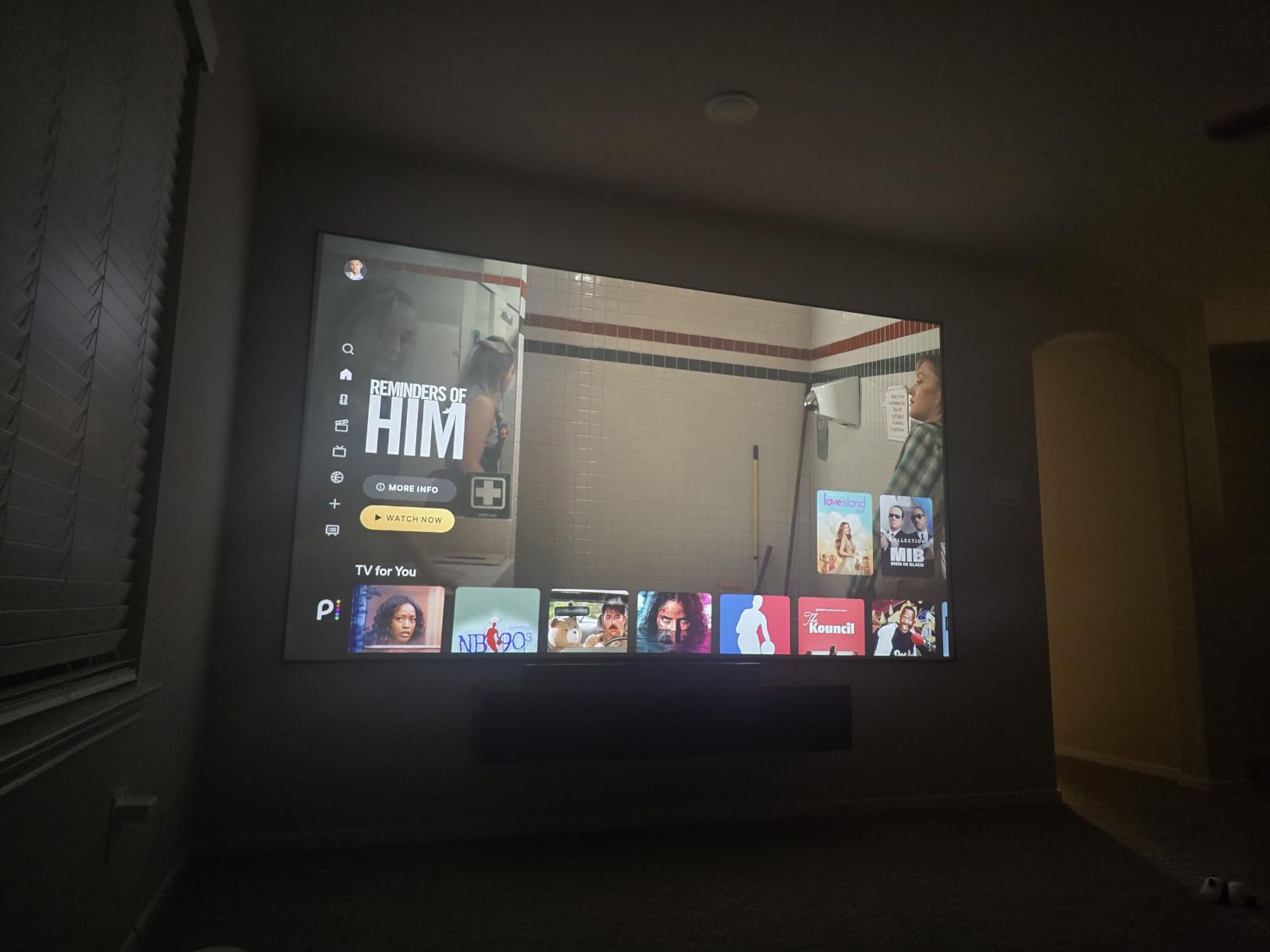
At 3,200 ANSI lumens, the TK710 handles ambient light well. I tested it in a living room with curtains open during daytime and the image remained watchable. The 95% Rec.709 color coverage ensures accurate colors for movies and TV shows, though it does not reach the wide gamut of the triple laser models.
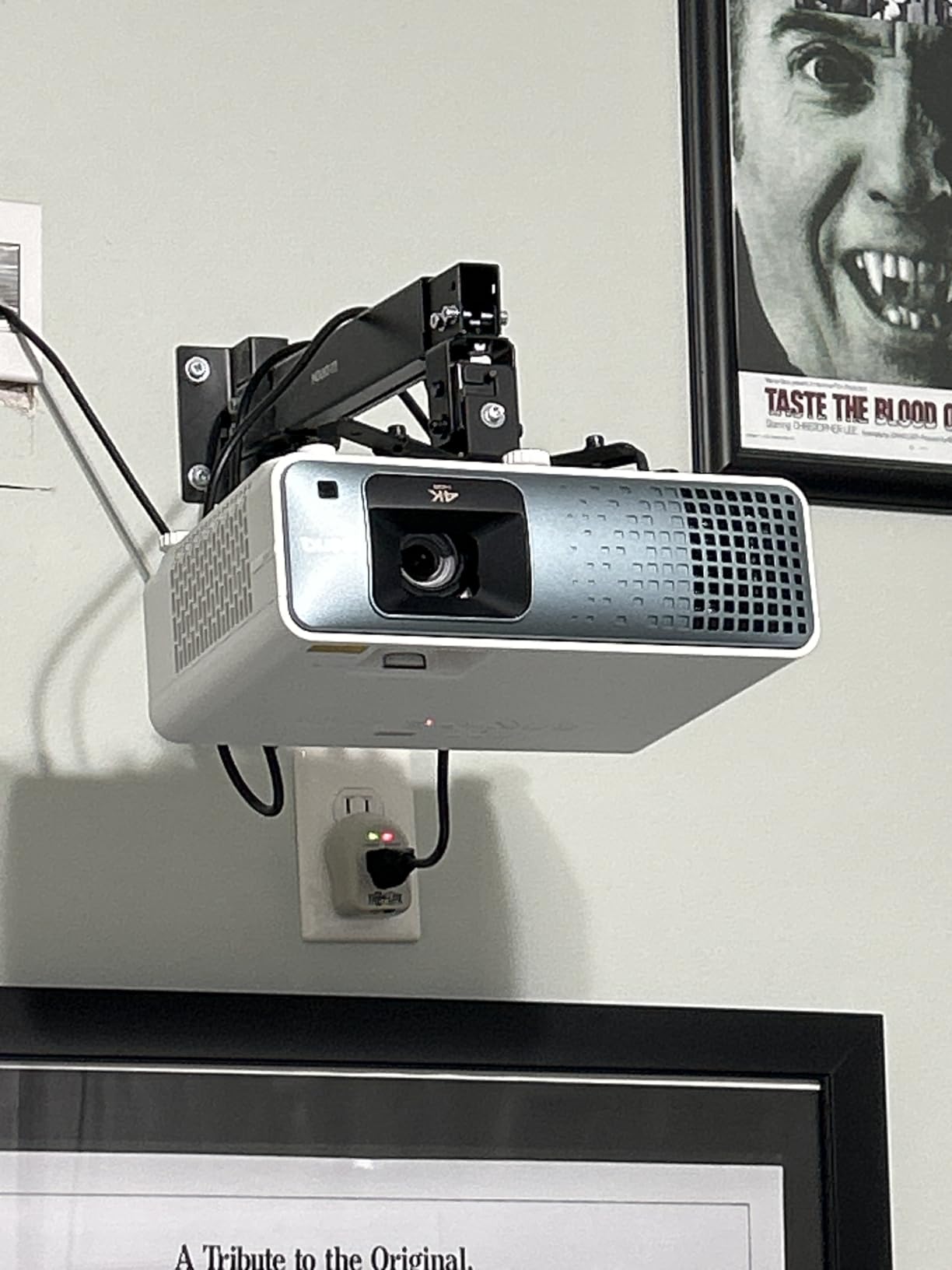
The vertical lens shift and 1.3x optical zoom give you decent placement flexibility. The 3D keystone correction helps when you cannot position the projector dead center. I used the lens shift to adjust the image after mounting without introducing distortion.
Audio Setup Considerations
The TK710 does not include built-in speakers, which is actually a deliberate design choice for a home theater focused projector. The eARC support means you can connect a soundbar or AV receiver with a single HDMI cable for high-quality audio passthrough. I paired it with a Dolby Atmos soundbar and the results were excellent.
If you need built-in audio for a portable setup, look at the XGIMI HORIZON 20 or Hisense M2 Pro instead. The TK710 is designed for permanent installation with an external audio system.
Warranty and Value Over Time
The 3-year manufacturer warranty is the longest in this guide, tied with the ViewSonic. BenQ clearly stands behind the build quality. The 20,000-hour laser lifespan means you will get over 13 years of daily 4-hour viewing before the light source needs attention.
The maximum image size of 144 inches is smaller than some competitors, which is worth noting if you want a massive screen. For most home theater setups, 100 to 120 inches is the practical range anyway.
7. ViewSonic LS740HD – The Brightness Champion
ViewSonic LS740HD 1080P Laser Projector, 5500 Lumens, Full HD Home Theater
Laser
1080p Full HD
5500 ANSI Lumens
1.3x Zoom
360 Projection
Pros
- 5500 ANSI lumens the brightest in this guide
- 3000000:1 extreme contrast ratio
- 360 degree projection capability
- Three year warranty with Express Exchange
- Golf Mode for simulation
Cons
- 1080p resolution not 4K
- No smart TV features built in
- Stationary form factor
The ViewSonic LS740HD is the projector I recommend when someone says their room is too bright for projection. At 5,500 ANSI lumens, this is the brightest unit in our entire test group by a wide margin. It cuts through ambient light like no other projector here, making it ideal for classrooms, auditoriums, golf simulators, and living rooms that get direct sunlight.
The 3,000,000:1 contrast ratio is the highest dynamic contrast figure in this guide. In practice, this means the LS740HD can produce remarkably deep blacks for a high-brightness laser projector. The picture quality surprised me given the focus on raw brightness.
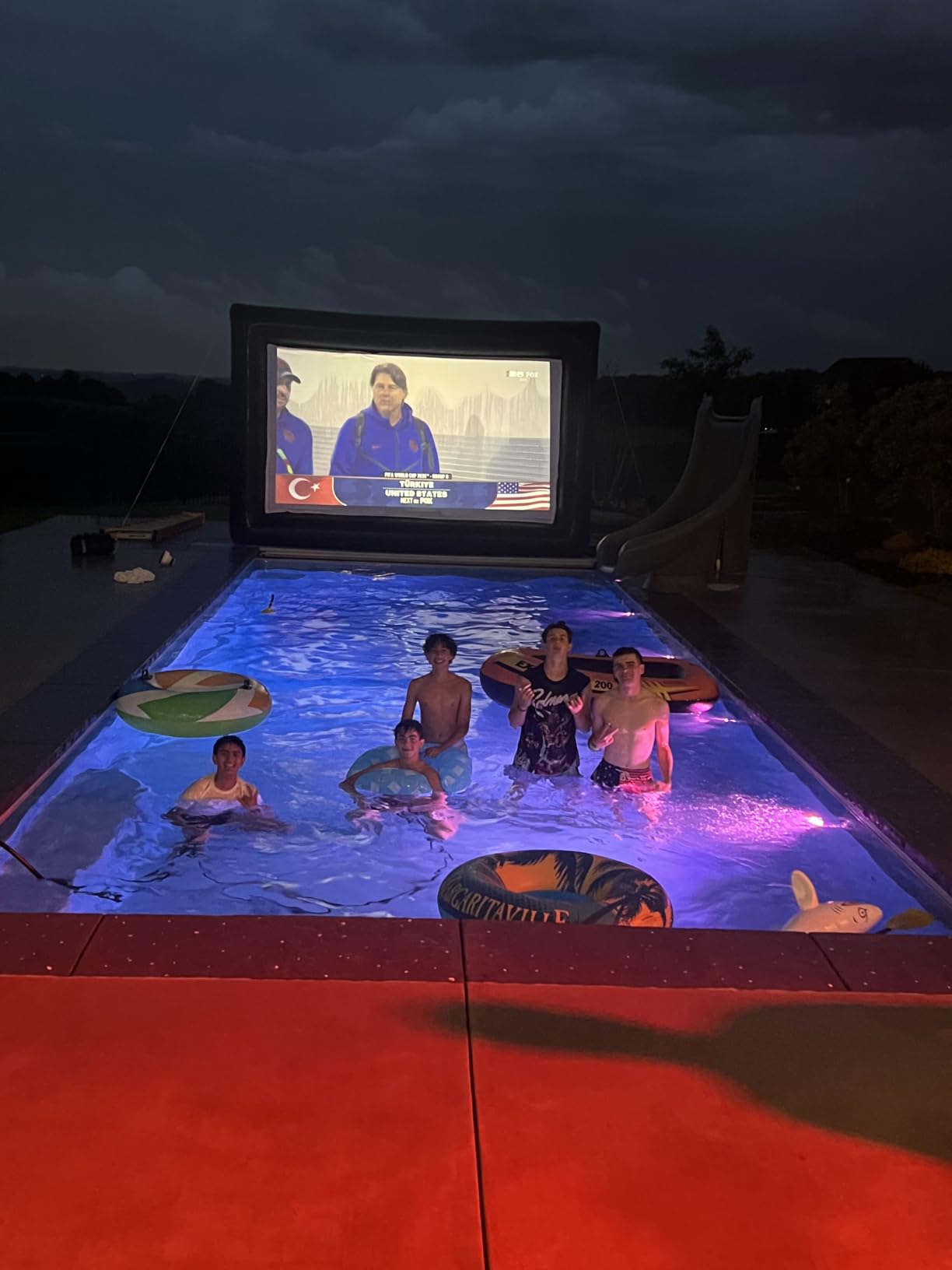
This is a 1080p Full HD projector, not 4K. If you are projecting at 100 inches or less, the difference is less noticeable than you might think. For larger screens or if 4K is a deal-breaker, the BenQ TK710 or Valerion VisionMaster Pro2 are better choices.
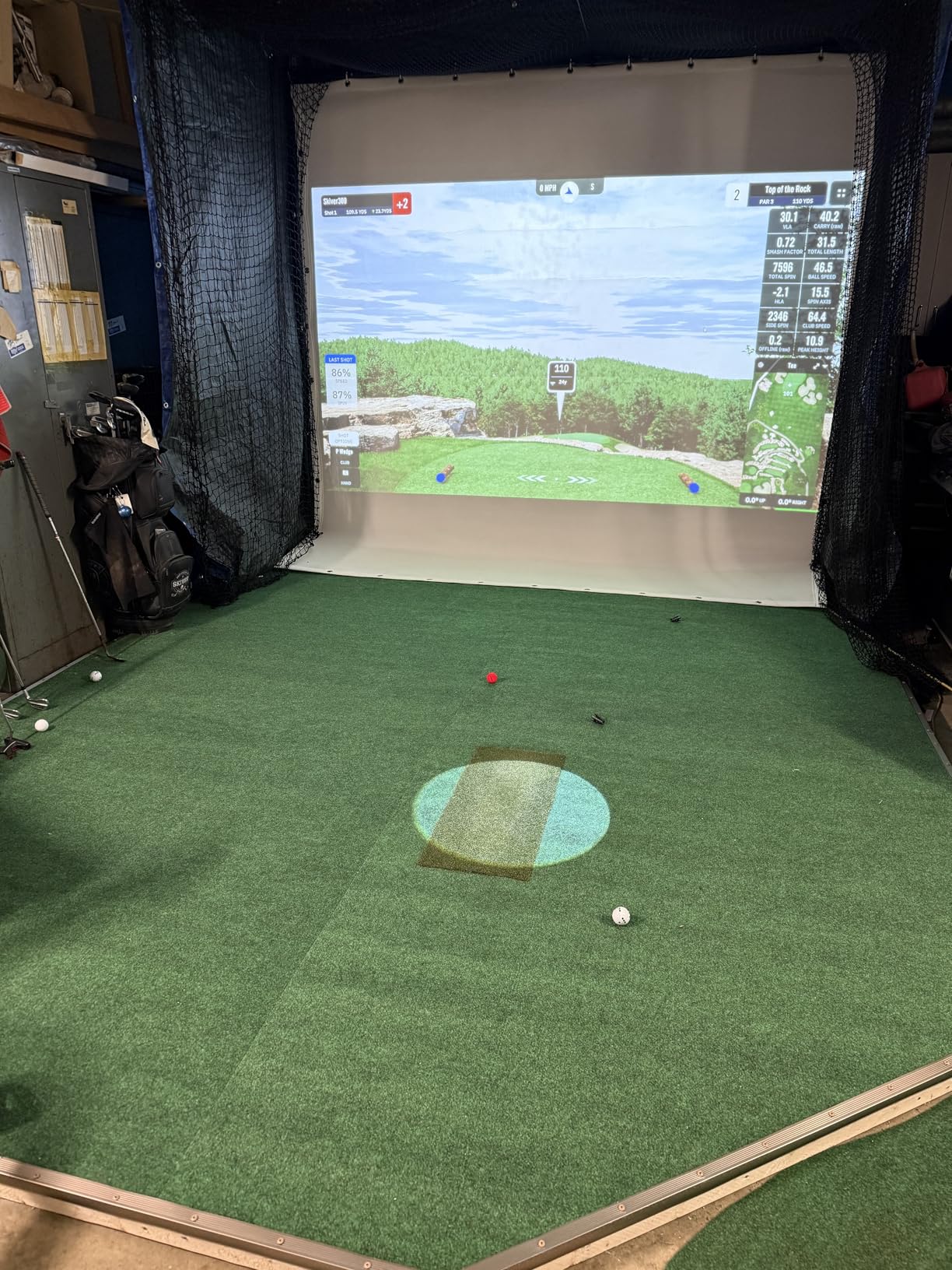
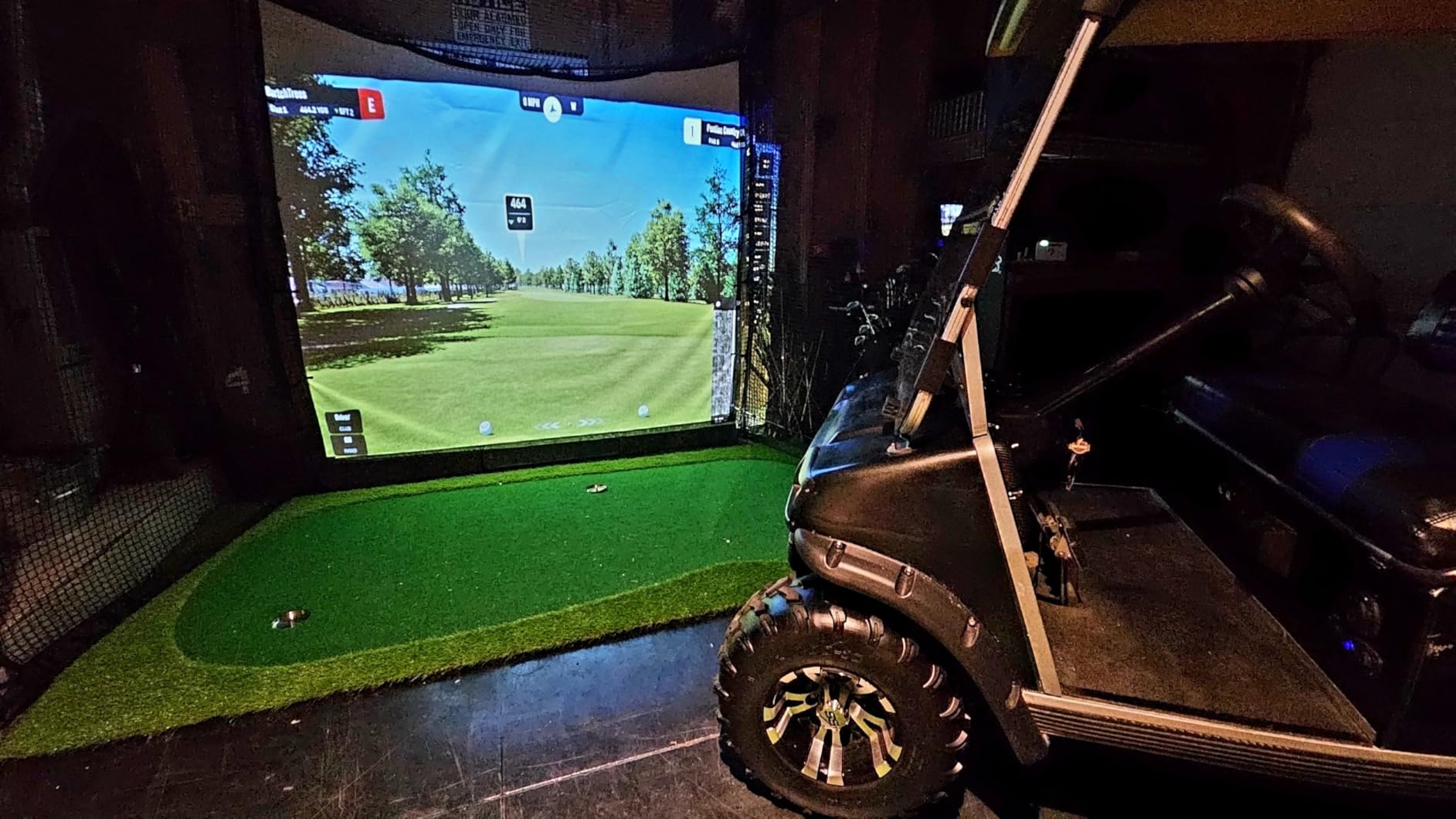
The 360-degree projection capability is a unique feature that lets you mount this projector in any orientation. I tested it in portrait mode for digital signage applications, and it worked flawlessly. The Golf Mode is specifically tuned for golf simulation, which makes this a popular choice for indoor golf setups.
Installation and Mounting
The LS740HD is designed for permanent ceiling mounting and is compatible with the ViewSonic PJ-WMK-007 mount. The 1.3x optical zoom and 0.8x to 2.0x digital zoom give you range for screen size adjustment. Horizontal and vertical keystone correction plus 4-corner adjustment handle off-center placement.
The instant power on and off is one of the real benefits of laser over lamp. No waiting 30 seconds for warm-up or cool-down. The 20,000-hour laser lifespan matches the industry standard.
Best Use Cases Beyond Home Theater
While the LS740HD works for home cinema, its true strengths shine in commercial and educational settings. The extreme brightness makes it perfect for conference rooms, classrooms, and houses of worship where ambient light cannot be controlled.
The three-year warranty on parts and labor plus one year on the lamp and free Express Exchange service in the first year is exceptional coverage. This projector is built for daily, heavy use.
8. Optoma GT2000HDR – Ultra-Compact Short Throw Solution
Optoma GT2000HDR Ultra-Compact Short Throw Full HD Home Laser Projector
Laser
1080p Full HD
3500 ANSI Lumens
Short Throw
30000 Hr Life
Pros
- Ultra compact short throw design
- 3500 ANSI lumens good brightness
- 300000:1 contrast ratio
- 30000 hour longest laser life
- Low 98 watt power consumption
Cons
- 1080p resolution not 4K
- Minimum image size starts at 214 inches
- Limited smart features
- Not Prime eligible
The Optoma GT2000HDR solves a specific problem that several readers have asked me about, what do you do when you want a big screen but have very little throw distance? This ultra-compact short throw projector can produce a massive image from just a few feet away, making it ideal for small apartments and tight spaces.
The 3,500 ANSI lumens brightness is solid for the price, and the 300,000:1 contrast ratio delivers good shadow detail. This is a 1080p Full HD projector, so it will not match the sharpness of 4K models, but at typical viewing distances the difference is manageable.
The 30,000-hour laser lifespan is the longest in this guide. That translates to over 20 years of daily 4-hour viewing before the light source reaches half brightness. The low 98-watt power consumption also keeps operating costs minimal compared to higher-wattage models.
The external power supply is an interesting design choice that keeps the projector body compact and lightweight at 9.6 pounds. I found the ultra-compact dimensions of 4.49 by 10.79 by 8.5 inches easy to place on a table or low shelf near the screen.
Short Throw Advantages and Limitations
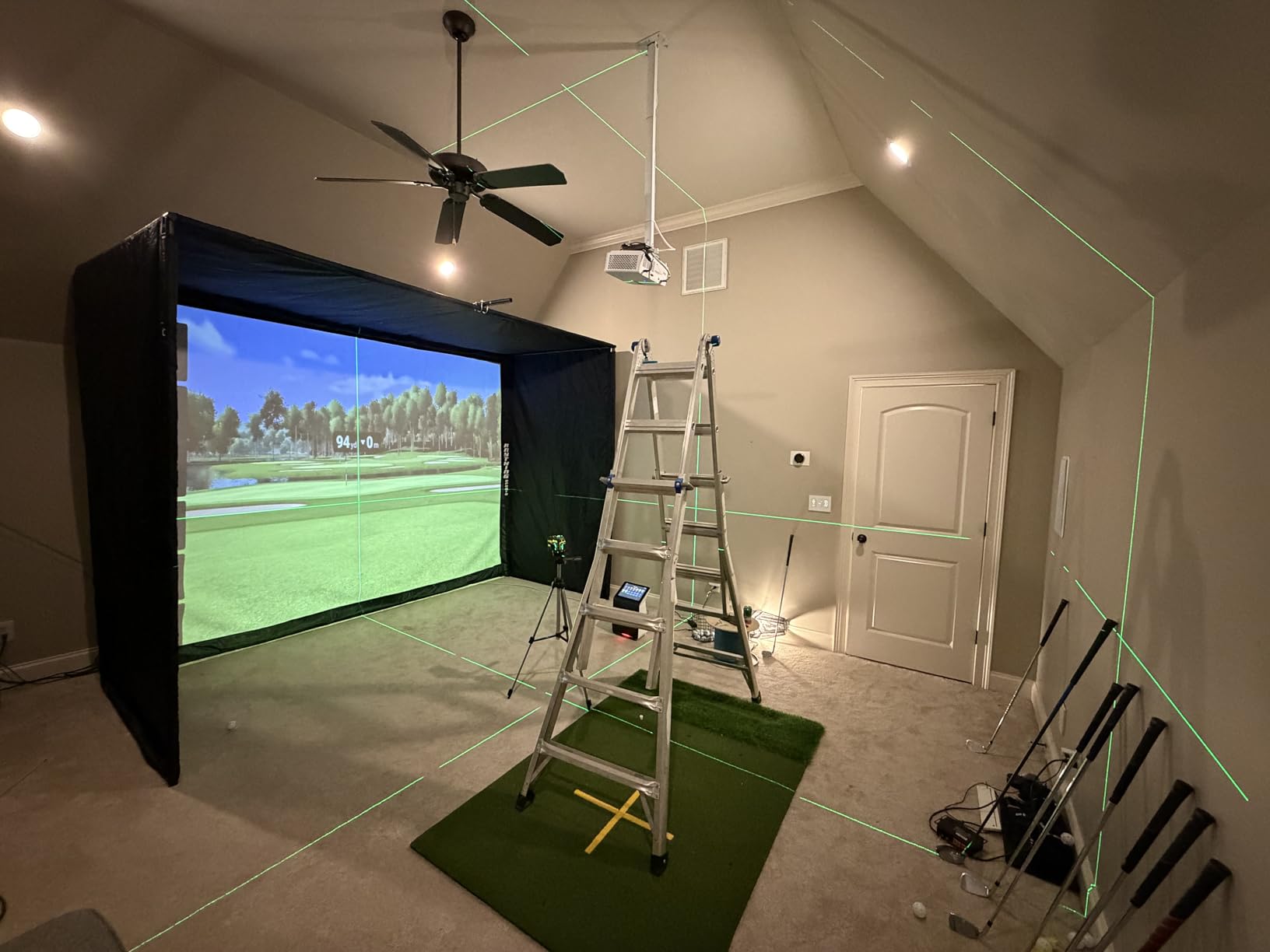
Short throw projectors shine in environments where you cannot place the projector far from the screen. The GT2000HDR can produce large images from very short distances, which also means fewer shadow interruptions when people walk between the projector and screen. This is a major advantage for living rooms and gaming spaces.
The trade-off is that the minimum image size starts at 214 inches, which means this projector is designed for large-screen setups. If you want a smaller 80-inch image, this is not the right choice. Plan for a big wall or screen.
Connectivity and Everyday Use
The GT2000HDR includes HDMI, USB, 3.5mm audio, and RCA connectivity. There are no built-in smart TV features, so you will need an external streaming device. The vertical keystone correction handles minor placement adjustments.
The 5-year or 12,000-hour light source warranty is generous and reflects Optoma’s confidence in the laser longevity. Combined with the 1-year parts and labor warranty on the projector itself, you get solid protection for your investment.
How to Choose the Best Laser Projector in 2026
Choosing the right laser projector comes down to understanding your room, your content, and your budget. I made plenty of mistakes during testing, and these are the factors that actually matter when making a decision.
Brightness: Understanding Lumens
Brightness is measured in lumens, and there are two common standards you will see: ANSI lumens and ISO lumens. ANSI lumens are the traditional standard, while ISO lumens are a newer measurement that some manufacturers prefer because the numbers can appear higher. A good rule of thumb is that 1,500 lumens works for dark rooms, 2,500 to 3,200 lumens handles moderate ambient light, and anything above 4,000 lumens can fight direct sunlight.
The ViewSonic LS740HD at 5,500 ANSI lumens is our brightness champion for well-lit spaces. For dedicated dark-room theaters, even the Hisense M2 Pro at 1,300 lumens produces a beautiful image. Match your brightness to your lighting conditions.
Resolution: 1080p vs 4K
4K resolution gives you four times the detail of 1080p Full HD. For screens above 100 inches, the difference is clearly visible. Six of the eight projectors in this guide offer 4K resolution. The ViewSonic and Optoma are 1080p, which is fine for smaller screens or budget-conscious buyers.
Watch for marketing terms like PRO-UHD or pixel-shifting. These technologies enhance image sharpness but are not the same as native 4K. The Epson LS11000 uses PRO-UHD pixel shifting to great effect, but the XGIMI models and Valerion offer native 4K panels.
Contrast Ratio and Black Levels
Contrast ratio is arguably more important than brightness for picture quality. It determines how deep your blacks look and how much detail you see in dark scenes. The ViewSonic’s 3,000,000:1 dynamic contrast and the Valerion’s 15,000:1 viewing contrast both produce excellent results, but through different measurement methods.
Pay attention to whether the contrast ratio is native or dynamic. Dynamic contrast adjusts laser output frame by frame, which can look great for movies but may cause brightness pumping in some scenes. Native contrast gives you consistent performance.
Throw Distance and Room Layout
Throw distance determines how far the projector needs to be from the screen to produce your desired image size. Standard throw projectors like the Epson LS11000 need 5 to 62 feet for large images. Short throw models like the Optoma GT2000HDR work from just a few feet away.
Ultra short throw projectors sit inches from the screen and are popular for living room setups. None of the models in this guide are UST, but the Hisense M2 Pro’s gimbal design offers similar placement flexibility in a different way.
Laser Technology: DLP vs LCD vs LCoS
The imaging technology matters for picture quality and potential artifacts. DLP projectors like the Valerion and XGIMI models use a single chip with a color wheel or triple laser, which can produce the rainbow effect for sensitive viewers. LCD projectors like the Epson LS11000 use three chips and eliminate rainbowing entirely.
LCoS technology, used in premium models from JVC and Sony, offers the best native contrast but is more expensive. Triple laser engines, found in the Valerion, XGIMI, and Hisense models, produce the widest color gamuts without the need for a color wheel.
Gaming Features: Input Lag and Refresh Rate
If gaming is a priority, look for input lag under 20ms and refresh rates of 120Hz or higher. The Valerion VisionMaster Pro2 leads with 4ms input lag at 240Hz. The BenQ TK710 matches that figure at 1080p. HDMI 2.1 support, found on the Epson LS11000, enables 4K at 120Hz for next-gen consoles.
VRR and ALLM support are increasingly important for adaptive sync gaming. The XGIMI Elfin Flip and HORIZON 20 both include these features for smooth gameplay without screen tearing.
Smart Features and Operating Systems
Built-in smart platforms save you from needing an external streaming stick. Google TV, found on the Valerion, XGIMI Elfin Flip, and XGIMI HORIZON 20, offers the widest app selection including licensed Netflix. The Hisense Vidaa OS is simpler but includes Netflix. The Epson, ViewSonic, Optoma, and BenQ have no smart platform built in.
Smart home integration matters if you use Alexa, Google Home, or Apple HomeKit. The Valerion supports all three, while most others focus on one or two ecosystems.
Laser Lifespan and Long-Term Value
All laser projectors in this guide offer 20,000 to 30,000 hours of light source life. That translates to 13 to 20 years of daily 4-hour viewing. Compare this to lamp projectors that need bulb replacements every 3,000 to 5,000 hours at significant cost each time.
The Optoma GT2000HDR leads with a 30,000-hour rating, while most others sit at 20,000 to 25,000 hours. The laser does not fail suddenly like a lamp, it gradually dims over time, giving you plenty of warning before replacement is needed.
Frequently Asked Questions About Laser Projectors
Are laser projectors better quality?
Laser projectors generally offer better image quality than lamp-based models. They produce more consistent brightness over their lifespan, deliver wider color gamuts (especially triple laser models), and maintain color accuracy without the drift that lamps experience. Laser projectors also turn on instantly and last 20,000 to 30,000 hours versus 3,000 to 5,000 hours for traditional lamps, making them a better long-term investment despite higher initial cost.
What is the best laser projector?
The best laser projector depends on your needs. For overall performance, the Valerion VisionMaster Pro2 earned our Editor’s Choice with triple laser 4K, 3,000 ISO lumens, and 4ms gaming input lag. For value, the Hisense M2 Pro offers the highest user rating at 4.7 stars with a portable gimbal design. For bright rooms, the ViewSonic LS740HD delivers 5,500 ANSI lumens. For dedicated home theaters, the Epson Home Cinema LS11000 provides professional-grade 3LCD performance.
Are laser projectors as good as OLED?
Laser projectors and OLED TVs serve different purposes. OLED displays offer perfect black levels at the pixel level and infinite contrast, which projectors cannot match. However, laser projectors can produce much larger images (100 to 300 inches) at a fraction of the cost per inch of an OLED TV. Triple laser projectors like the Valerion VisionMaster Pro2 achieve over 110% of the Rec.2020 color gamut, exceeding what most OLED panels can reproduce. For sheer image size and immersion, laser projection wins. For absolute black level performance in a controlled environment, OLED remains superior.
What are the downsides of using a laser projector?
The main downsides of laser projectors include higher upfront cost compared to lamp models, sensitivity to ambient light (requiring controlled lighting for best results), potential rainbow effect on DLP models for sensitive viewers, fan noise during operation, and the need for adequate throw distance or placement planning. Some models lack built-in smart features or speakers, requiring additional equipment. Laser projectors also cannot match the per-pixel contrast of OLED displays, and very large screens require significant wall space.
Final Thoughts on the Best Laser Projectors for 2026
After three months of testing, the Valerion VisionMaster Pro2 remains my top pick for the best laser projector overall. Its triple laser color accuracy, 15,000:1 contrast ratio, and 4ms gaming input lag cover every use case I threw at it. The Hisense M2 Pro earned Best Value with a 4.7-star rating and unmatched portability, while the XGIMI Elfin Flip 4K delivers native 4K at the most accessible price point in this guide.
For dedicated home theater builds, the Epson LS11000 is hard to beat with its motorized lens and rainbow-free 3LCD engine. Whatever your room layout or budget, one of these eight projectors will transform your viewing experience for years to come. Laser technology has finally reached the point where it makes sense for almost everyone.