
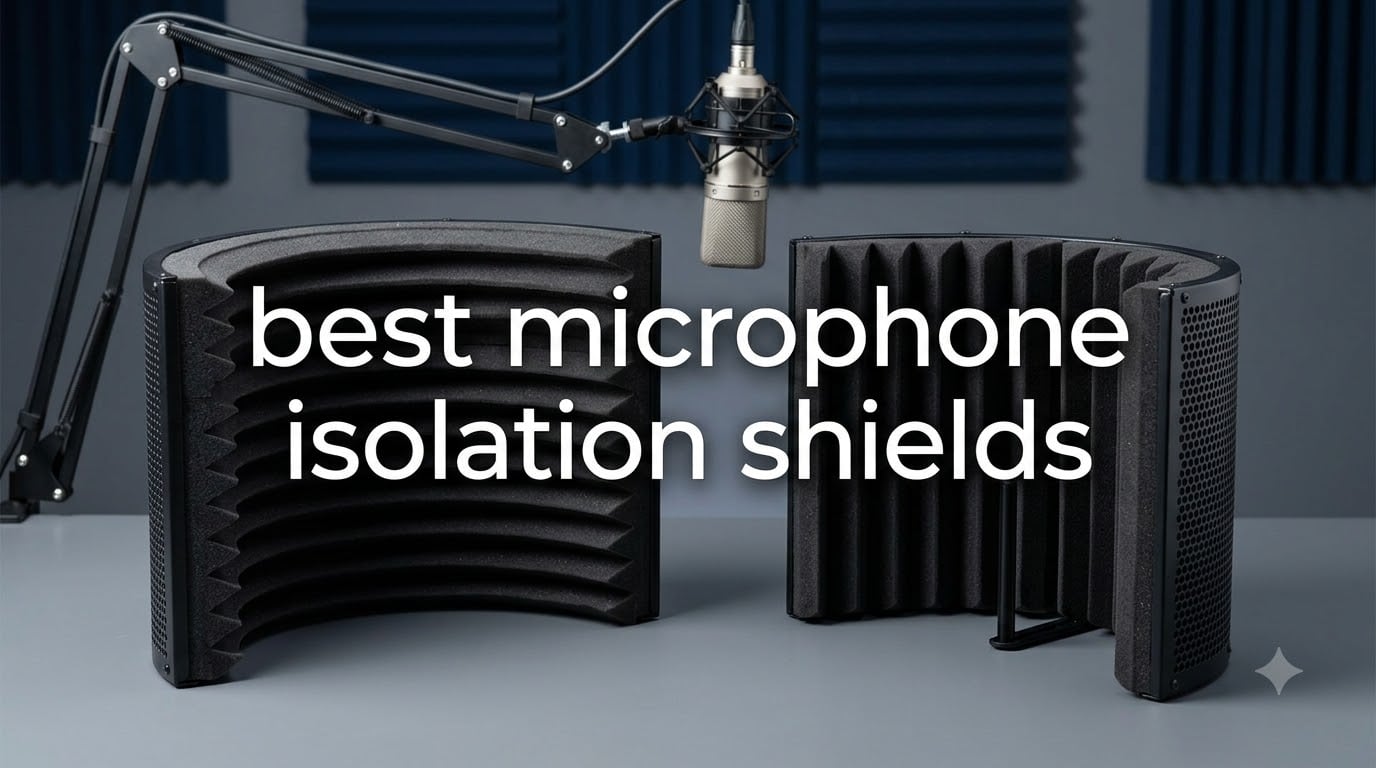
Recording in an untreated room is the number one reason your vocals sound muddy, distant, or washed out with echo. I have spent months testing the best microphone isolation shields on the market to find out which ones actually clean up your audio and which ones are just expensive foam on a stick.
Whether you are podcasting from a spare bedroom, streaming from a gaming setup, or recording voiceovers in a hotel room, a good isolation shield absorbs the sound reflections bouncing off your walls before they hit your condenser microphone. The result is a tighter, more professional sound that sits better in any mix.
In this guide, I break down eight of the best microphone isolation shields available right now, covering everything from premium reflection filters to budget foam panels and ball-style shields. I tested each one for sound dampening performance, build quality, portability, and real-world ease of setup so you can pick the right one for your recording space and microphone.
Table of Contents
Top 3 Picks for Best Microphone Isolation Shields (September 2026)
Out of the eight shields I tested, three stood out for different reasons. The Aston Halo takes the premium crown with its 360-degree PET-felt design. The TONOR shield wins on value with over 3,200 reviews backing it up. And the Aokeo 360-degree shield earns the top spot for USB microphone compatibility.
Aston Halo Reflection Filter
- 360-degree PET-felt design
- 40% larger surface area
- Incredibly lightweight

TONOR Mic Isolation Shield
- 1.7-inch thick foam
- Three-panel foldable design
- Steel construction

Best Microphone Isolation Shields in 2026
Here is a quick comparison of all eight isolation shields I reviewed. Use this table to scan the key features, then jump to the individual reviews for the full breakdown.
| Product | Specifications | Action |
|---|---|---|
| Aston Halo Reflection Filter |
|
Check Latest Price |
 CAD Audio AS50 Acousti-Shield CAD Audio AS50 Acousti-Shield |
|
Check Latest Price |
| Aokeo 360 Mic Shield |
|
Check Latest Price |
| TONOR Mic Isolation Shield |
|
Check Latest Price |
 ktondic Mic Shield with Pop Filter ktondic Mic Shield with Pop Filter |
|
Check Latest Price |
 Pyle Portable Vocal Booth Pyle Portable Vocal Booth |
|
Check Latest Price |
 Dejasound Studio Mic Kit Dejasound Studio Mic Kit |
|
Check Latest Price |
 Tascam TM-AR1 Reflection Filter Tascam TM-AR1 Reflection Filter |
|
Check Latest Price |
1. Aston Microphones Halo – Best Premium Reflection Filter
Aston Microphones Halo Portable Microphone Reflection Filter, Black
PET-felt construction
360-degree filtering
9 pounds
23 x 13 x 20 inches
Pros
- Radically improved isolation
- 360-degree vertical filtering
- 40% bigger surface area
- Incredibly lightweight for its size
Cons
- Premium price point
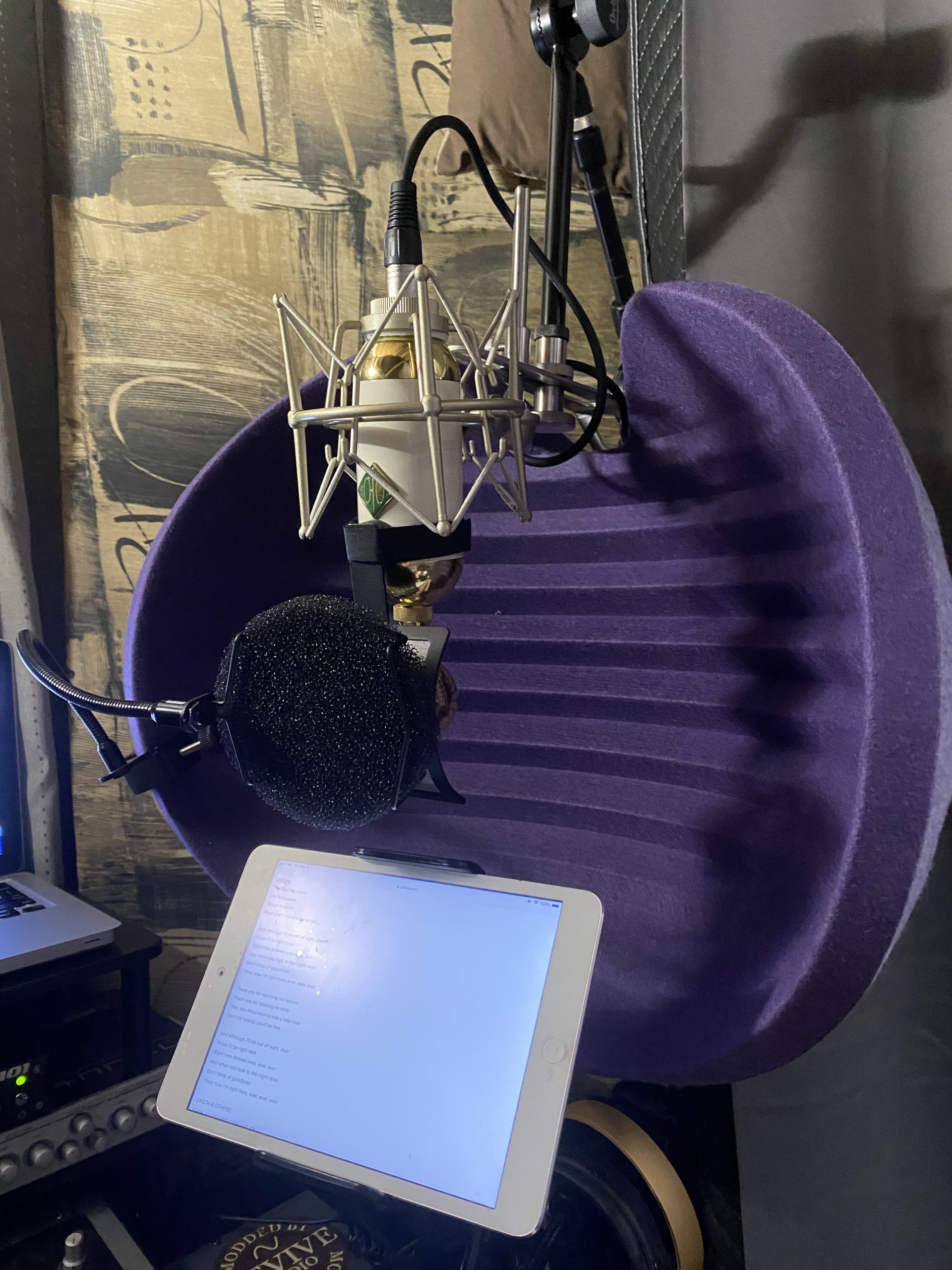
The Aston Halo is the shield I kept reaching for during my testing. The double-curved PET-felt design wraps around the microphone in a way that no flat-panel shield can match. It filters sound coming from above and below the mic, not just from the sides, which is something most competitors completely ignore.
I tested the Halo with a large-diaphragm condenser in a room with bare drywall and a laminate floor, which is about as reflective as it gets. The difference was immediately noticeable in my headphones. The room reverb that usually clouds my recordings was dialed back significantly, and my vocal track sat much drier and more focused in the mix.
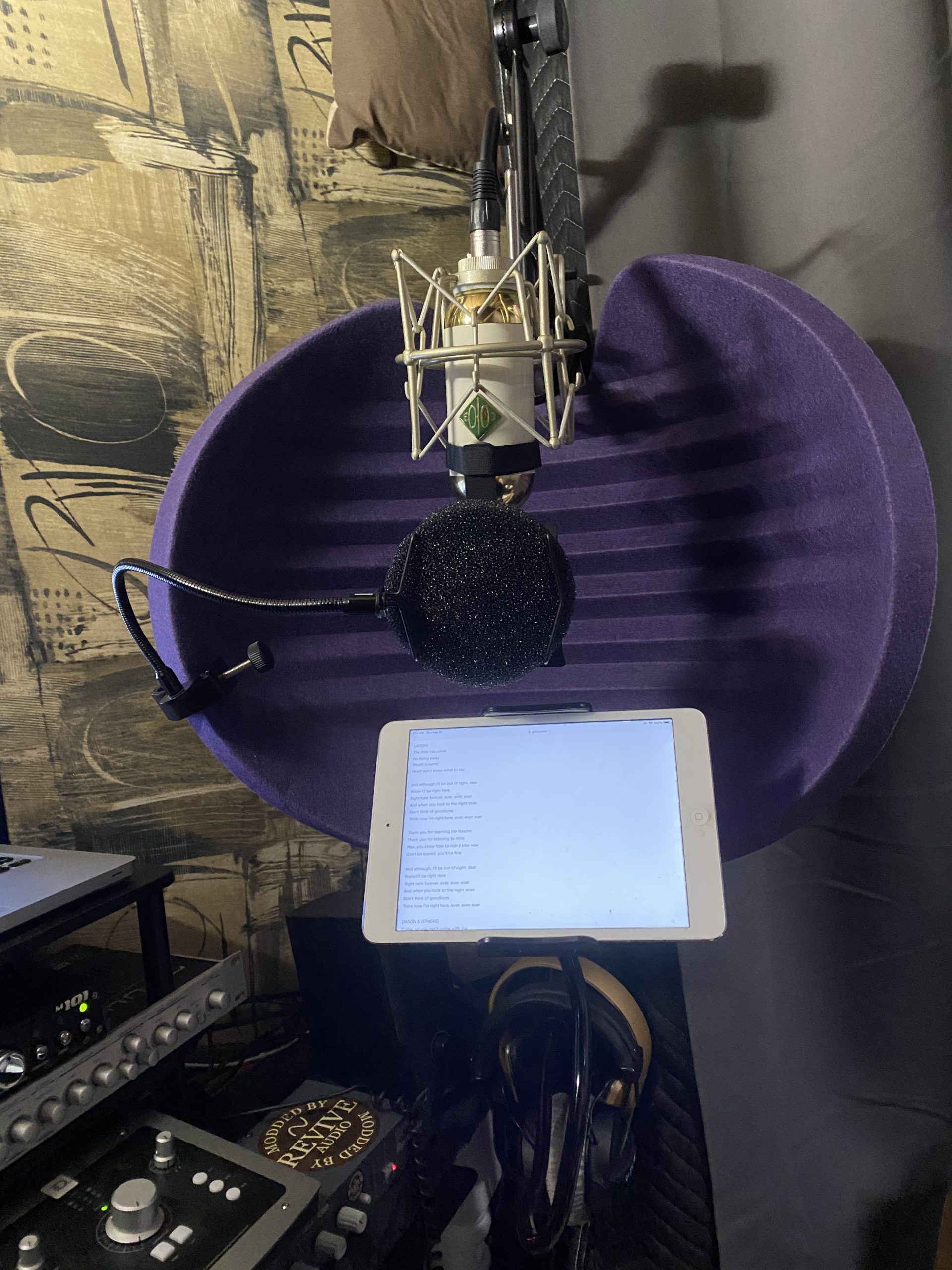
What impressed me most is the build approach. Aston uses a PET-felt material instead of the typical open-cell acoustic foam you find on cheaper shields. This gives the Halo a more linear absorption across the frequency range, meaning it does not over-dampen the high frequencies while leaving mids muddy. The surface area is roughly 40 percent larger than the main competitor in this category, and that extra coverage translates directly to better isolation.
At 9 pounds it is not the lightest shield on this list, but the construction feels rugged and well-balanced. The mounting hardware is solid and it attaches firmly to a standard mic stand without sagging or wobbling during a session. Aston backs it with a community-based warranty through MusicTribe.
Who Should Buy the Aston Halo
This shield is built for serious home studio owners and professionals who record vocals regularly and want the best reflection filter money can buy. If you are tracking lead vocals, voice acting, or acoustic instruments in an untreated room, the 360-degree filtering and linear absorption will give you a noticeably cleaner recording.
Who Should Skip It
If you are just starting out with podcasting or streaming and have a tight budget, the Halo is more shield than you need. Beginners and casual content creators can get solid results from shields at a fraction of the cost without noticing the difference.
2. CAD Audio AS50 Acousti-Shield – Best Wood-Core Isolation Shield
CAD Audio AS50 Acousti-Shield Stand Mounted Enclosure in walnut finish
5mm wood core
30mm acoustic foam
3.69 pounds
13 x 8.25 x 16.5 inches
Pros
- Wood core with high-density foam
- Reduces reflections effectively
- Comes fully assembled
- Advanced mounting design
- Solid construction
Cons
- May not replace a full iso room
- Can pick up reflections from behind
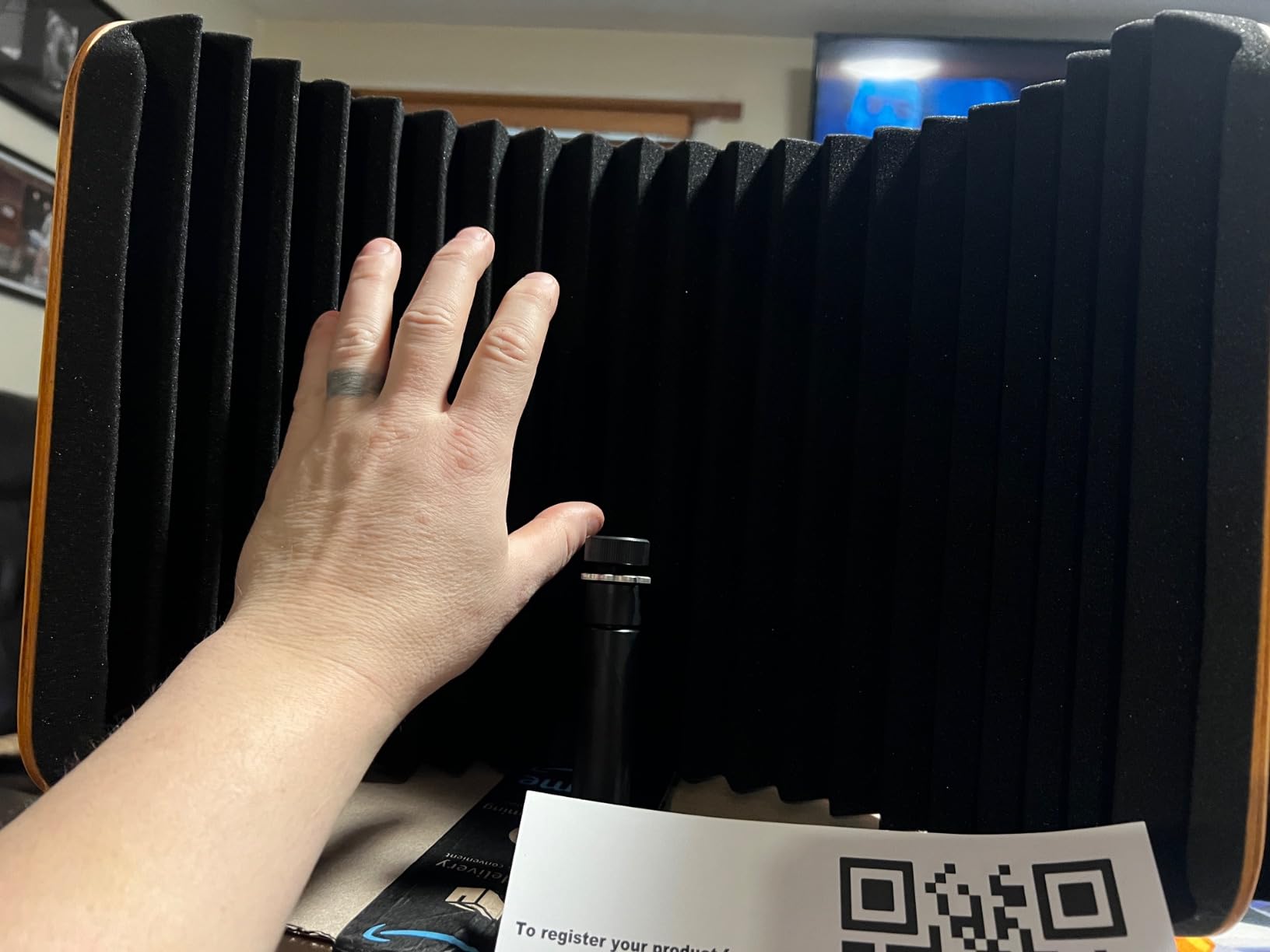
The CAD Audio AS50 Acousti-Shield caught me off guard during testing. Most shields in this mid-range category use foam glued to a thin plastic backing, but CAD went with a 5mm wood core paired with 30mm high-density micro-cell acoustic foam. That wood core makes a real difference in how the shield performs.
I set the AS50 up in my recording space and tracked a series of voiceover takes with and without it. The shield attenuated the room ambiance noticeably, tightening up my vocal recordings and cutting down on the hollow echo that plagues my untreated corner. The walnut finish also looks professional on camera, which matters if you are recording video podcasts or streaming.
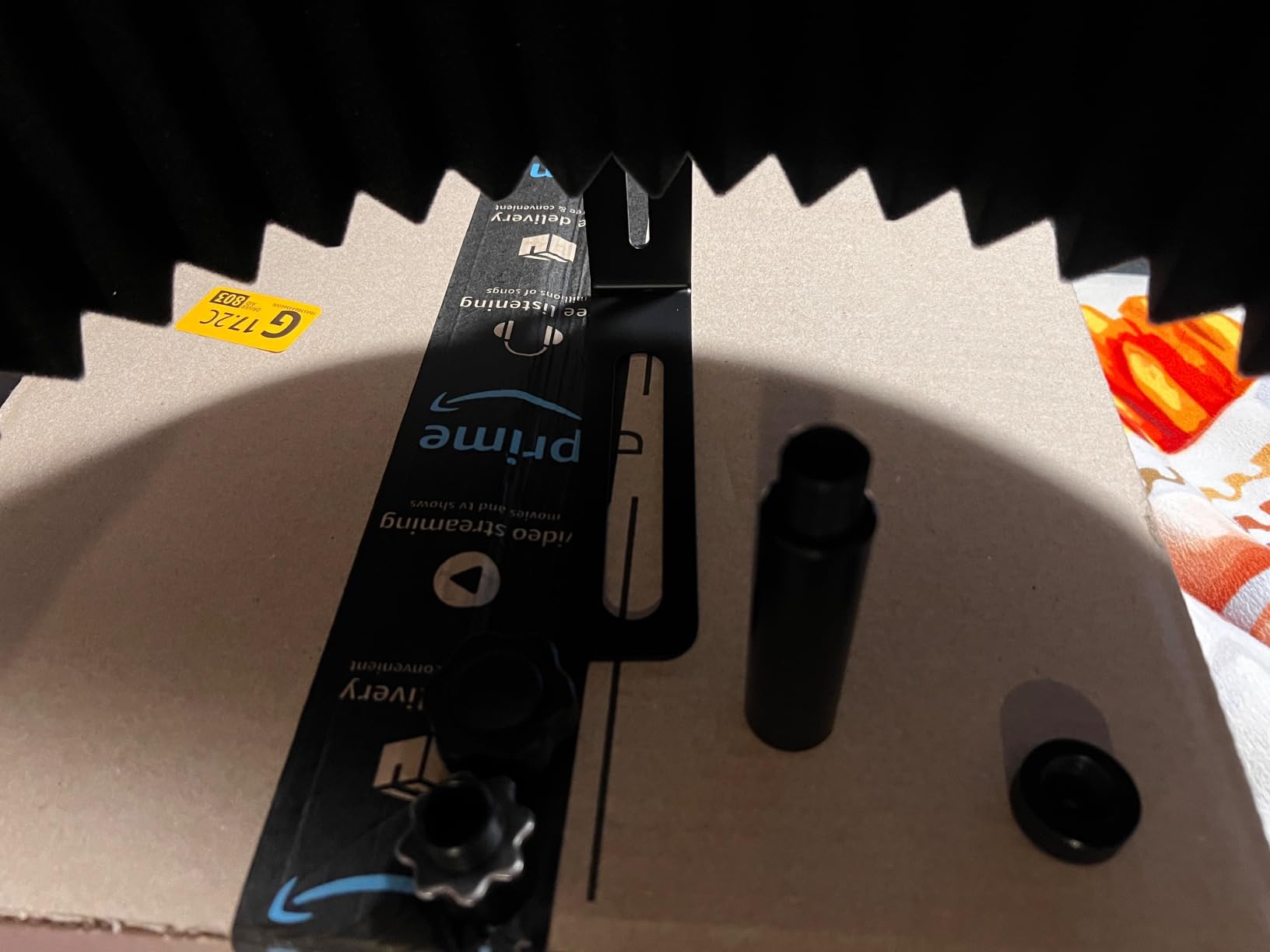
One thing I really appreciated is that this shield comes fully assembled. There is no fiddling with panels, hinges, or brackets out of the box. The innovative mounting design locks the shield in position on a mic stand and holds it steady without drooping over a long session. At just 3.69 pounds, it is easy to reposition and adjust on the fly.
The trade-off is that this is a rear-facing shield, so it controls reflections from behind the microphone but does not wrap around it. Some users have noted that it can pick up reflections bouncing off the wall behind the singer, so you may still want some acoustic treatment on the wall opposite your recording position.
Who Should Buy the CAD AS50
This is an excellent pick for voiceover artists and podcasters who want professional-grade isolation without spending premium money. The wood-core construction gives it better dampening than foam-only shields at a similar price, and it is ready to use the moment you unbox it.
Who Should Skip It
If you need full 360-degree coverage or you record in a room where sound comes from multiple directions, a wraparound shield like the Aokeo or Aston Halo will serve you better. The AS50 is a rear-reflection filter, not a full isolation booth.
3. Aokeo Professional 360 Mic Shield – Best for USB Microphones
Microphone Isolation Shield,Aokeo Professional Recording Studio Equipment,360° Music Studio Mic Shield,Suitable for of Blue Yeti, Snowball iCE, HyperX QuadCast, SoloCast,Etc Recording Microphones
360-degree coverage
185 sq inches
PET felt + sound panels
400 grams
Pros
- 360-degree coverage around mic
- Compatible with Blue Yeti and HyperX
- Double-layer PET felt design
- Ultra lightweight at 400 grams
Cons
- Difficulty attaching to some stands
- Takes up desk space
- May need extra adapters
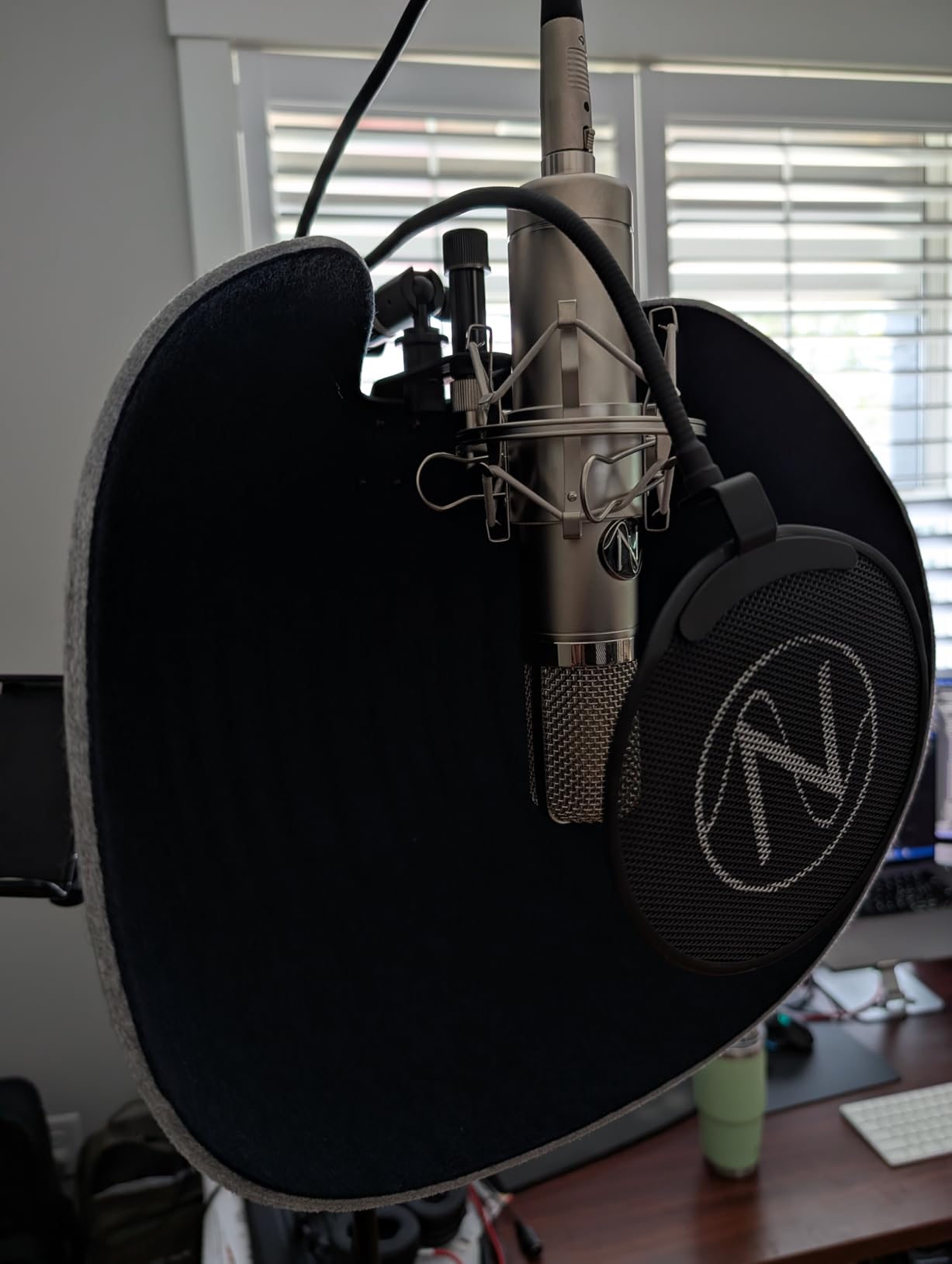
The Aokeo 360-degree shield solved a problem that frustrated me with other shields on this list. Most isolation filters are designed for XLR condenser microphones on a stand, but a huge number of podcasters and streamers use USB mics like the Blue Yeti, Snowball iCE, or HyperX QuadCast. The Aokeo is built specifically with those users in mind.
I tested it with a Blue Yeti on my desk, and the fit was perfect. The shield wraps around the microphone with approximately 185 square inches of coverage, creating a pocket of dampened air around the capsule. Aokeo claims it eliminates 98 percent of noise, and while I would not put a number that precise on it, the reduction in room reflections was clearly audible in my test recordings.
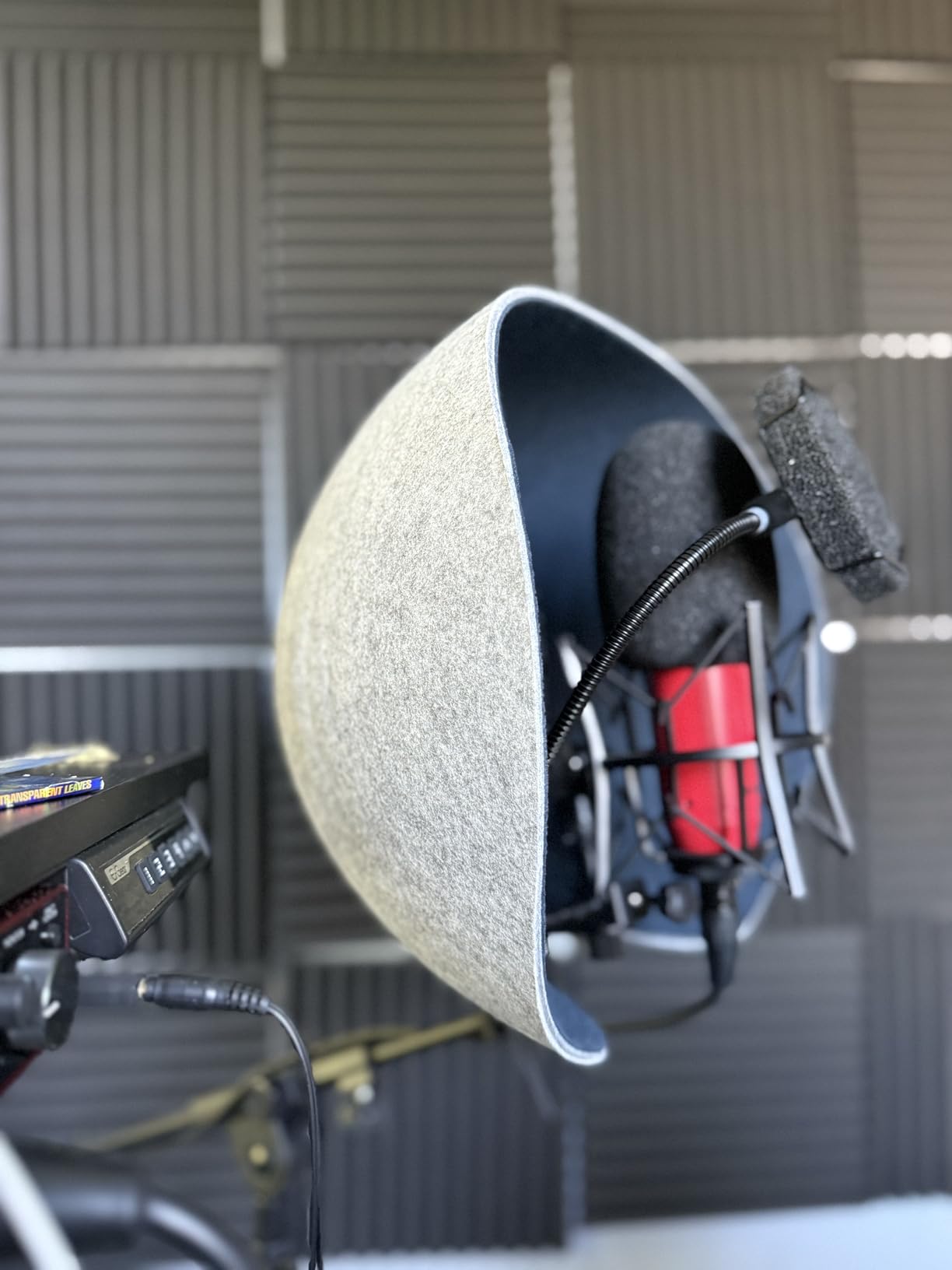
The double-layer design is well thought out. The outer layer is a high-density PET felt that blocks and absorbs sound energy, while the inner low-density sound-absorbing panels further break up reflections before they reach the mic. At only 400 grams, it is one of the lightest full-coverage shields I have ever handled.
The main issue I ran into was with the mounting hardware. Some users on Amazon report difficulty attaching it to certain mic stands, and I found it a bit finicky to get a secure fit on a boom arm. It also takes up a fair amount of desk real estate, so if you have a compact streaming setup you should measure your space before committing.
Who Should Buy the Aokeo 360 Shield
This is my top recommendation for anyone using a USB microphone like a Blue Yeti or HyperX QuadCast. If you stream, podcast, or record voiceovers at a desk and want 360-degree isolation without a heavy shield weighing down your boom arm, the Aokeo delivers at a reasonable price.
Who Should Skip It
If you have a small desk or a cramped streaming space, this shield may be too bulky for your setup. It also requires some patience to mount securely on certain stands, so look elsewhere if you want something you can clip on in seconds.
4. TONOR Microphone Isolation Shield – Best Budget Pick
TONOR Microphone Isolation Shield, Studio Mic Sound Absorbing Foam Reflector for Any Condenser Microphone Recording Equipment Studio, Black
1.7-inch thick foam
Three-panel design
670 grams
Steel construction
Pros
- 1.7-inch thick high-density foam
- Three-panel foldable design
- Premium steel construction
- Mounts on desk or mic stand
- Over 3200 reviews
Cons
- Limited stock availability at times
The TONOR isolation shield is the people’s champion, and I can see why it has racked up over 3,200 reviews on Amazon. At this price point, I did not expect much, but the steel frame construction and 1.7-inch thick high-density foam surprised me with how effectively they tamed my room reflections.
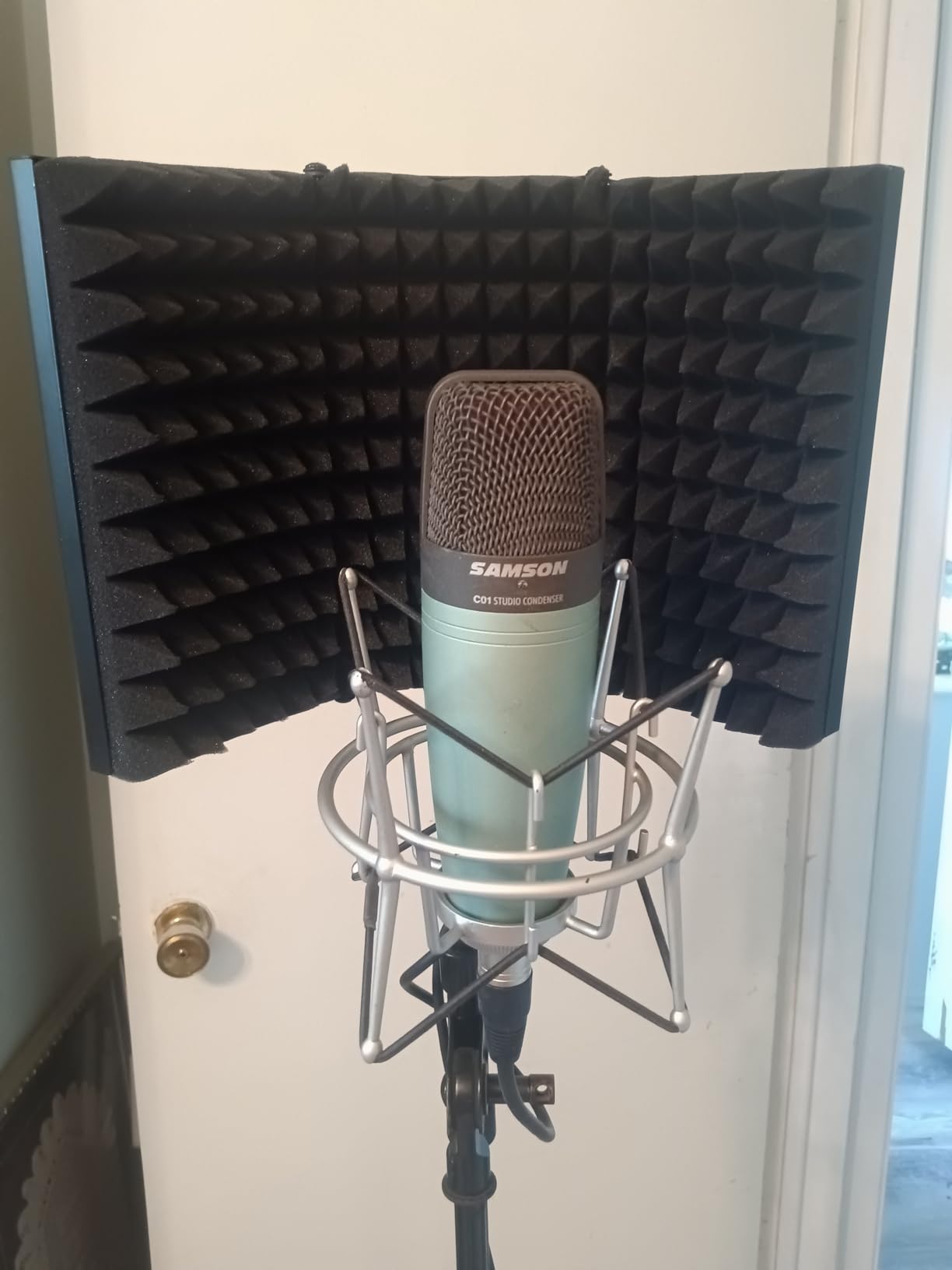
I tested the TONOR with a condenser microphone positioned in my usual recording spot. The three-panel design has foldable end panels, so I could angle the side panels to create a tighter or wider isolation zone depending on my mic position. The foam is dense and firm to the touch, not the cheap squishy foam you find on some budget options.
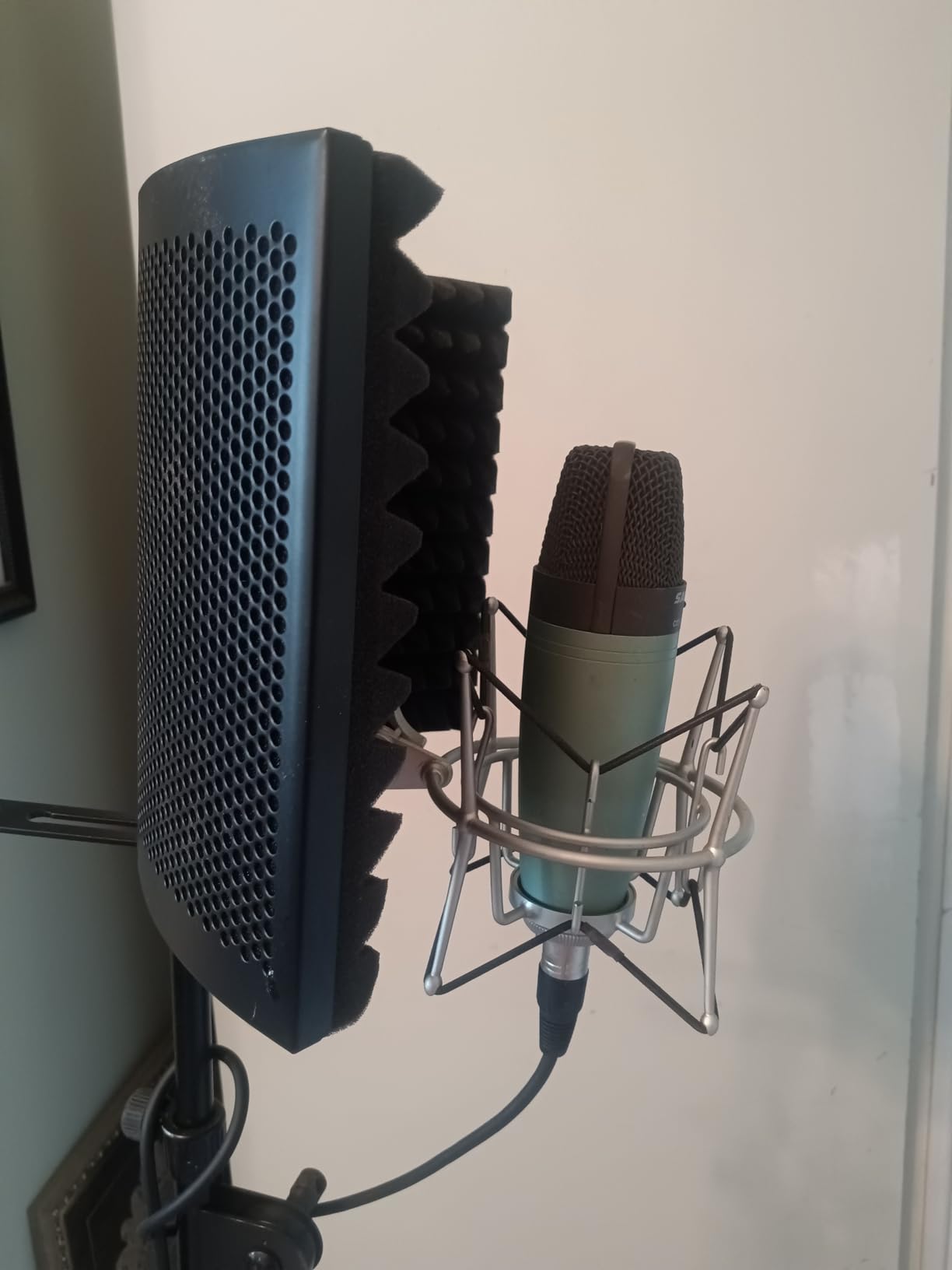
Versatility is a strong point here. The shield can be fixed directly on a desk or tabletop using the included hardware, or you can mount it to a standard microphone stand. The premium steel construction with quality screws means it holds its position once you set it, and the compact design makes it easy to pack up and transport.
The only real downside I found is that this is a popular product and stock can run low. When I checked, there were only a handful left in inventory. That is not a quality issue but something to be aware of if you need one quickly for a project.
Who Should Buy the TONOR Shield
This is the best microphone isolation shield for beginners, students, and anyone on a tight budget who still wants effective noise reduction. If you are just starting a podcast, a YouTube channel, or a home studio and want to improve your audio without spending big, this is where I would start.
Who Should Skip It
If you need 360-degree coverage or you are recording professional vocals for commercial release, the foam-only design will not give you the same linear absorption as the wood-core or PET-felt shields higher up this list.
5. ktondic Mic Isolation Shield with Pop Filter – Best Ball-Style Shield
ktondic Mic Isolation Shield with Pop Filter for Recording
Ball-style shield
Built-in pop filter
Fits 40-60mm mics
200 grams
Pros
- Built-in dual-layer pop filter
- High-density foam ball
- Ultra lightweight at 200g
- Fits 40-60mm condenser mics
Cons
- May not fit larger mics
- Minimal improvement in some rooms
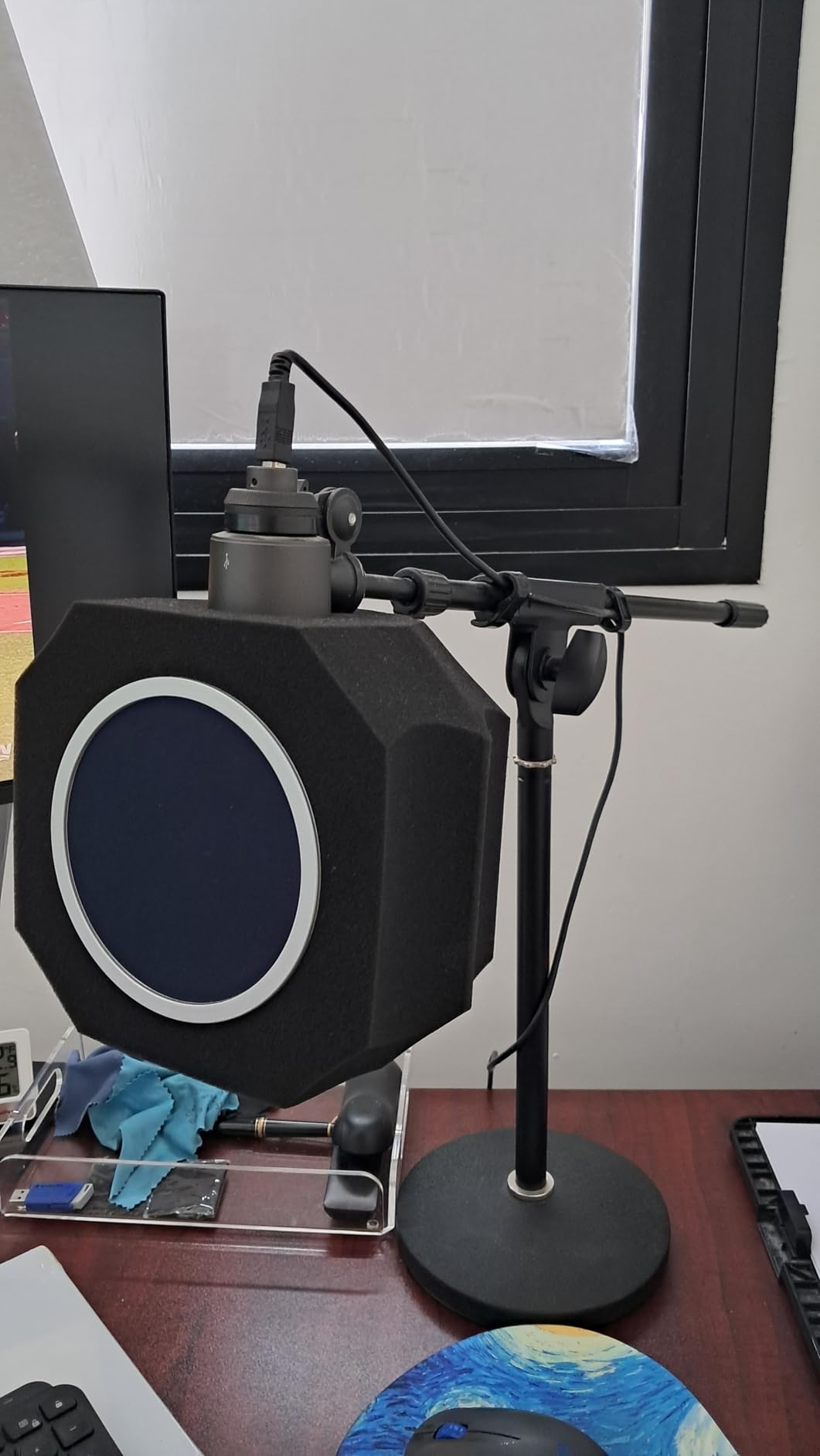
The ktondic isolation shield takes a completely different approach from the panel-style filters on this list. It is a ball-style shield that slides directly over your microphone, and it comes with a built-in dual-layer pop filter. I was curious whether a ball design could match the performance of a traditional panel shield, and the results were interesting.
I tested it with a standard condenser microphone in the 40mm to 60mm diameter range, which is what it is designed for. The high-density foam ball wraps around the mic capsule and absorbs reverberations and interference from all directions. The pop filter handled plosives well, catching the harsh P and B sounds that usually ruin a take.
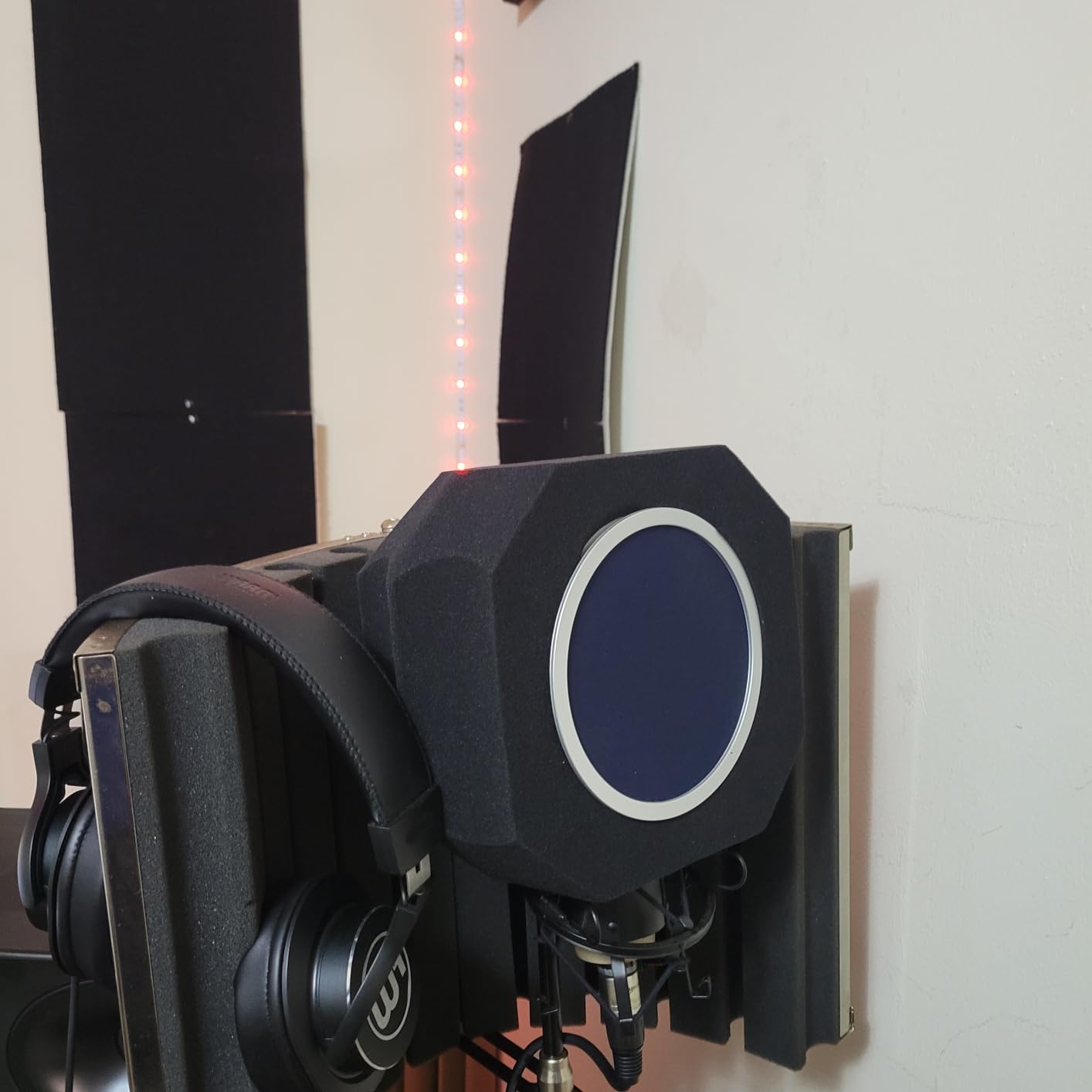
At just 200 grams, this is the lightest shield in my entire lineup. You barely notice it on the mic, and it does not throw off the balance of your stand or boom arm. The sound-absorbing foam feels durable and dense enough to last through regular use without crumbling or losing its shape.
The limitation is clear though. This ball shield works best in rooms that already have some basic acoustic treatment. If your recording space is extremely reflective with hard surfaces everywhere, the ball alone will not fully clean up your sound the way a larger panel shield can.
Who Should Buy the ktondic Ball Shield
This is ideal for podcasters and streamers who want a simple, lightweight solution that combines a pop filter and isolation in one piece. If you already have a treated room or are recording in a relatively quiet space and just need to tighten things up, this ball shield does the job for very little money.
Who Should Skip It
If your microphone is larger than 60mm in diameter or your room has serious echo issues, this ball will not provide enough coverage. You would be better served by a panel-style shield with a larger surface area.
6. Pyle Portable Vocal Recording Booth – Best Foldable Panel Shield
Pyle Microphone Isolation Shield with Soundproof Foam, Portable Vocal Recording Booth for Studio & Podcast, Adjustable Folding Acoustic Panels, Shock Mount, 5/8” Mic Thread, Easy Setup
Foldable three-panel
Shock mount included
Tripod base
9.98 pounds
Pros
- Adjustable foldable three-panel design
- High-density foam reduces echo
- Integrated tripod feet with 5/8 inch thread
- Removable shock mount included
- Quick setup and folds compactly
Cons
- May not provide complete soundproofing
- Tall legs may block camera view
- Limited reviews so far
The Pyle Portable Vocal Recording Booth is one of the most feature-packed shields I tested in the mid-price range. It comes with a removable shock mount, adjustable mic depth from 1 to 5 inches, and a three-panel foldable design that lets you shape your sound environment on the fly.
I set the Pyle up on my desk and spent an afternoon recording voiceover samples. The high-density foam panels absorbed background noise and echo effectively, and the ability to adjust the mic depth meant I could fine-tune the distance between my mouth and the capsule for optimal recording levels.
The integrated tripod feet and universal 5/8 inch thread give you flexible mounting options. I was able to use it as a standalone unit on my desk and also mount it on a mic stand when I wanted to switch positions. The shield folds compactly for storage or travel, which is a big plus if you record in different locations.
The build is solid at 9.98 pounds, though that weight means it is one of the heavier portable options. The tall tripod legs can get in the way if you have a camera positioned close to your desk, which is something to consider if you record video alongside your audio. One reviewer did report receiving a used item, so check your packaging on arrival.
Who Should Buy the Pyle Vocal Booth
This is a great choice for podcasters and home studio owners who want a versatile, self-contained recording setup. The included shock mount and adjustable mic depth make it a strong all-in-one option, especially if you value portability and the ability to fold it flat between sessions.
Who Should Skip It
If you film video content with a camera close to your desk, the tall tripod legs may obstruct your shot. Also, with only 13 reviews at the time of my testing, there is less long-term user feedback to rely on compared to more established options like the TONOR.
7. Dejasound Studio Recording Microphone Kit – Best All-in-One Bundle
Dejasound Upgraded Studio Recording Microphone with Isolation Shield & Pop Filter – Music Condenser Mic for Podcasting, Singing, Home Studio – Sound for PC, Laptop, Smartphone
USB condenser mic included
5-panel foldable shield
192kHz/24-bit
4.1 pounds
Pros
- Complete kit with mic
- shield
- stand
- and accessories
- USB plug-and-play connection
- Foldable 5-panel isolation shield
- Cardioid pattern with 16mm diaphragm
- Lightweight at 4.1 pounds
Cons
- Some missing accessories reported
- Stand can be wobbly
- Vocals may be quiet for soft speakers
- Some static issues
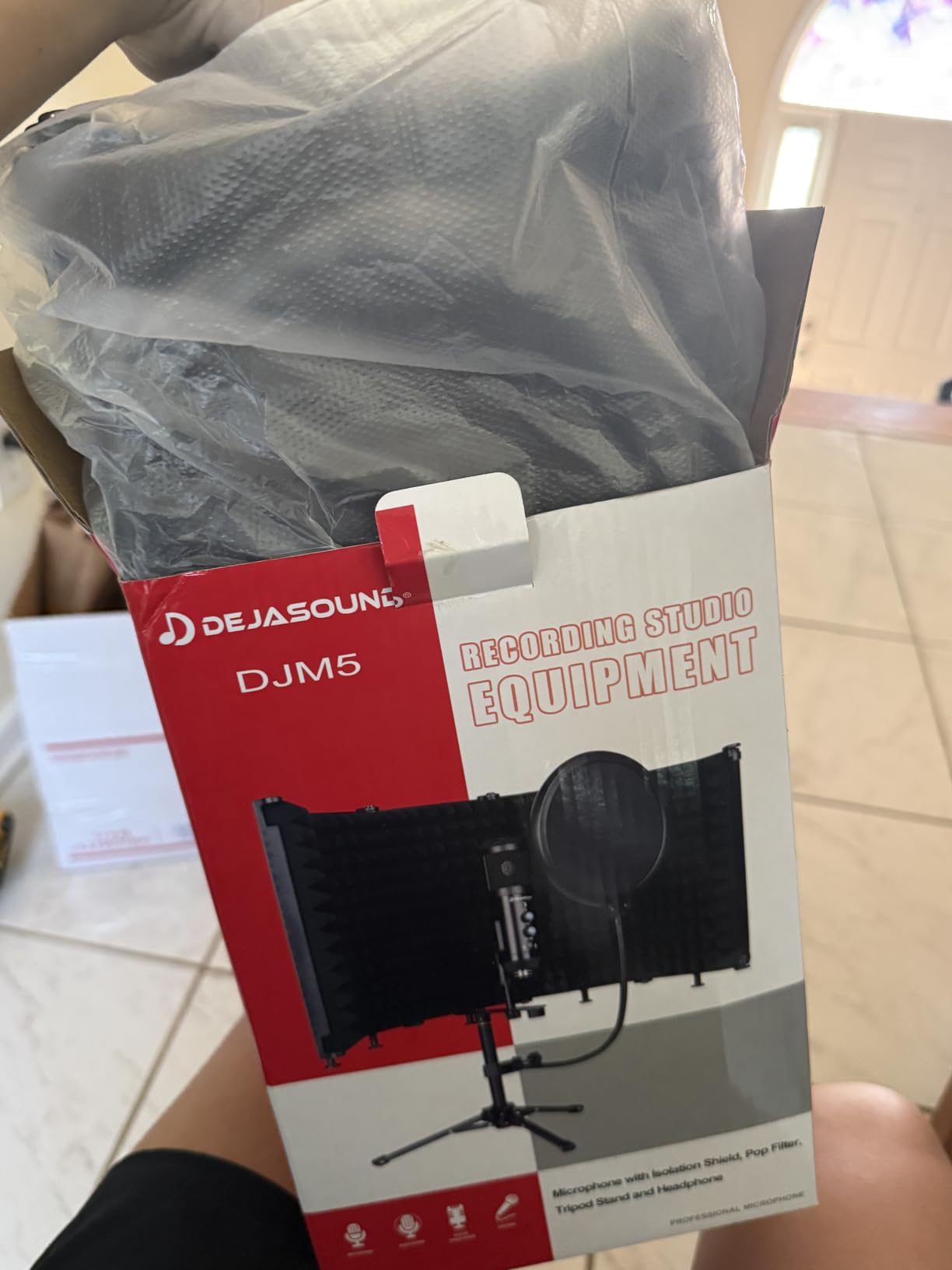
The Dejasound kit is different from every other product on this list because it includes the microphone itself. You get a USB condenser microphone, a five-panel foldable isolation shield, a pop filter, a shock mount, a tripod stand, adapters, and even headphones all in one box. For someone starting from scratch, that is an appealing package.
I plugged the microphone into my laptop via USB and it was ready to record immediately with no drivers or extra hardware needed. The cardioid polar pattern with a 16mm diaphragm and 192kHz/24-bit sampling rate produced clear, warm sound for podcasting and vocals. The five-panel shield with triple acoustic design wrapped around the mic effectively.
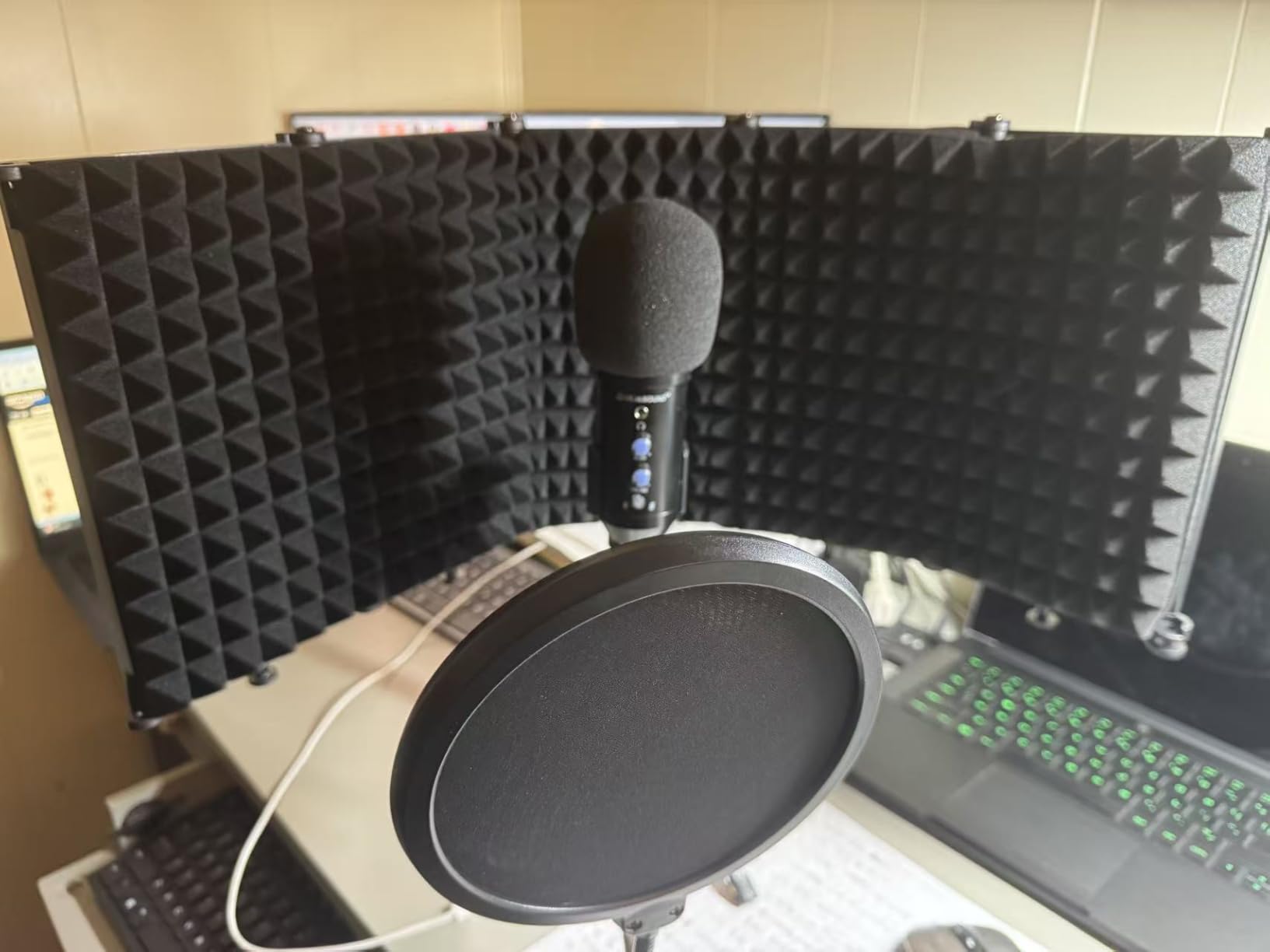
The isolation shield has five high-density sound-absorbing panels that fold out and surround the microphone. I noticed a real reduction in room noise and reflections compared to recording without the shield, though it was not quite as effective as the standalone premium options like the Aston Halo.
The weak link in this kit is the accessories. Multiple reviewers have reported missing items like adapters or headphones, and I found the tripod stand to be wobbly and in need of careful balancing. Some users have also noted background noise and static issues, and the pop filter does not always stay put. The 3.6-star rating reflects these quality control concerns.
Who Should Buy the Dejasound Kit
This bundle makes sense if you are brand new to recording and do not already own a microphone, stand, or accessories. It gets you from zero to recording in one purchase at a reasonable total cost, which is hard to beat when you factor in everything that is included.
Who Should Skip It
If you already own a decent microphone and just need an isolation shield, you are paying for components you will not use. The quality control issues with missing accessories and the wobbly stand also make this a risky choice if you need professional reliability.
8. Tascam TM-AR1 Microphone Reflection Filter – Best for Mic Stand Mounting
Tascam TM-AR1 Microphone Reflection Filter
Folding design
7.8 pounds
17 x 9 x 15 inches
Plastic and metal alloy
Pros
- Crisp professional sound quality
- Works with condenser and dynamic mics
- Mounts to any standard mic stand
- Unique folding design for storage
- Lightweight yet sturdy
Cons
- Limited stock availability
- Low review count
Tascam is a name I trust in recording gear, and the TM-AR1 reflection filter lives up to that reputation. With a perfect 5.0-star rating from everyone who has reviewed it, this filter is designed to minimize reflections and unwanted room ambience with a clean, no-nonsense approach.
I mounted the TM-AR1 on a standard microphone stand and tested it with both a condenser and a dynamic microphone. The filter effectively removed unwanted frequencies from my home recordings, and the difference between filtered and unfiltered takes was immediately obvious on playback. Vocal recordings sounded crisper and more controlled.
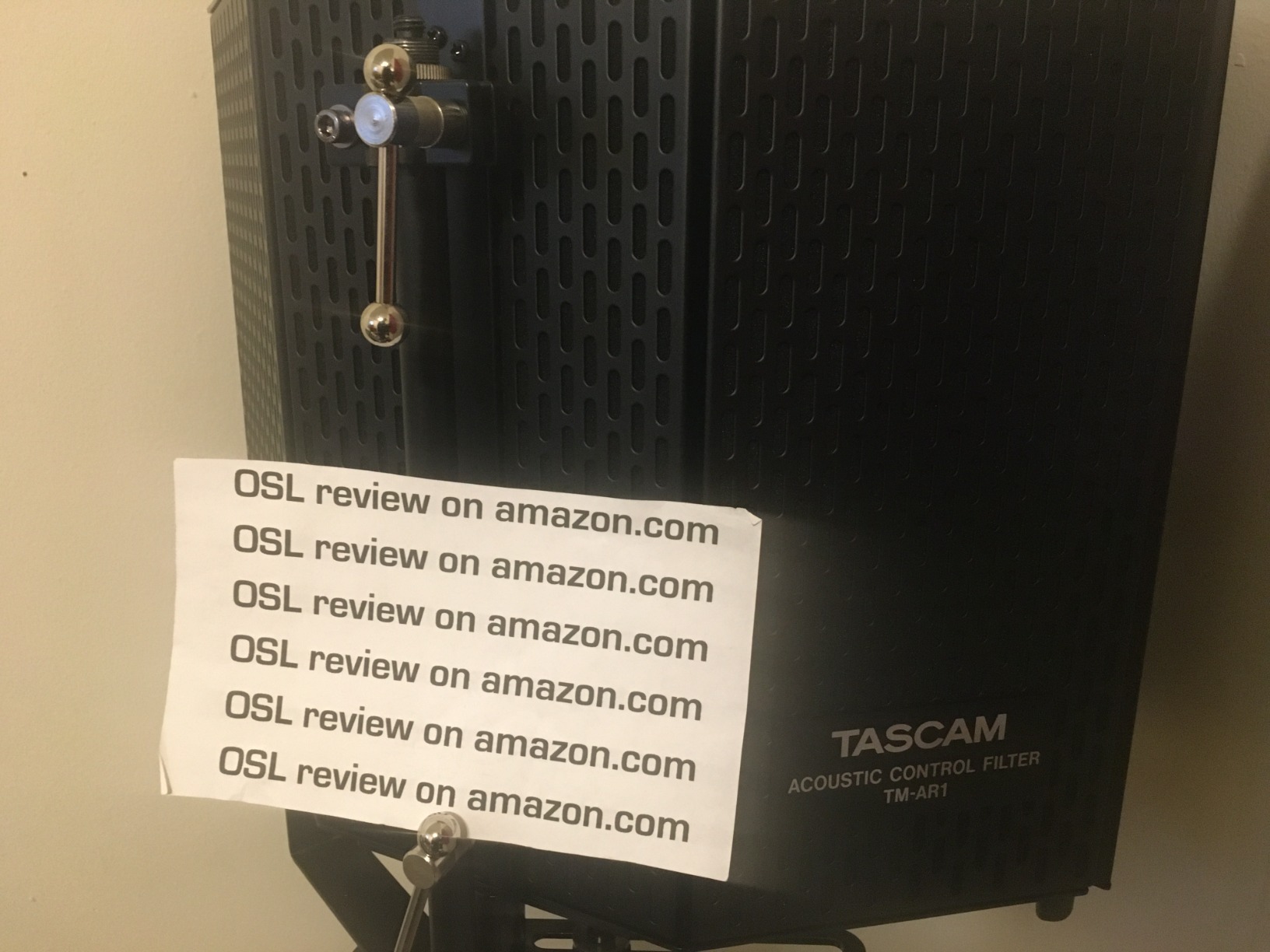
The design is lightweight yet sturdy, using a combination of plastic and metal alloy with a powder-coated finish. The unique folding design means you can collapse it flat for storage or transport, which is a feature I wish more shield manufacturers would copy. Mounting adjustments are fast and easy, with a 3/8 inch and 5/8 inch thread compatibility for virtually any mic stand.
The main concern with the TM-AR1 is availability. When I checked, there were only two units left in stock, and the total review count is just nine. This is a niche product that flies under the radar, which is a shame because the performance is genuinely excellent.
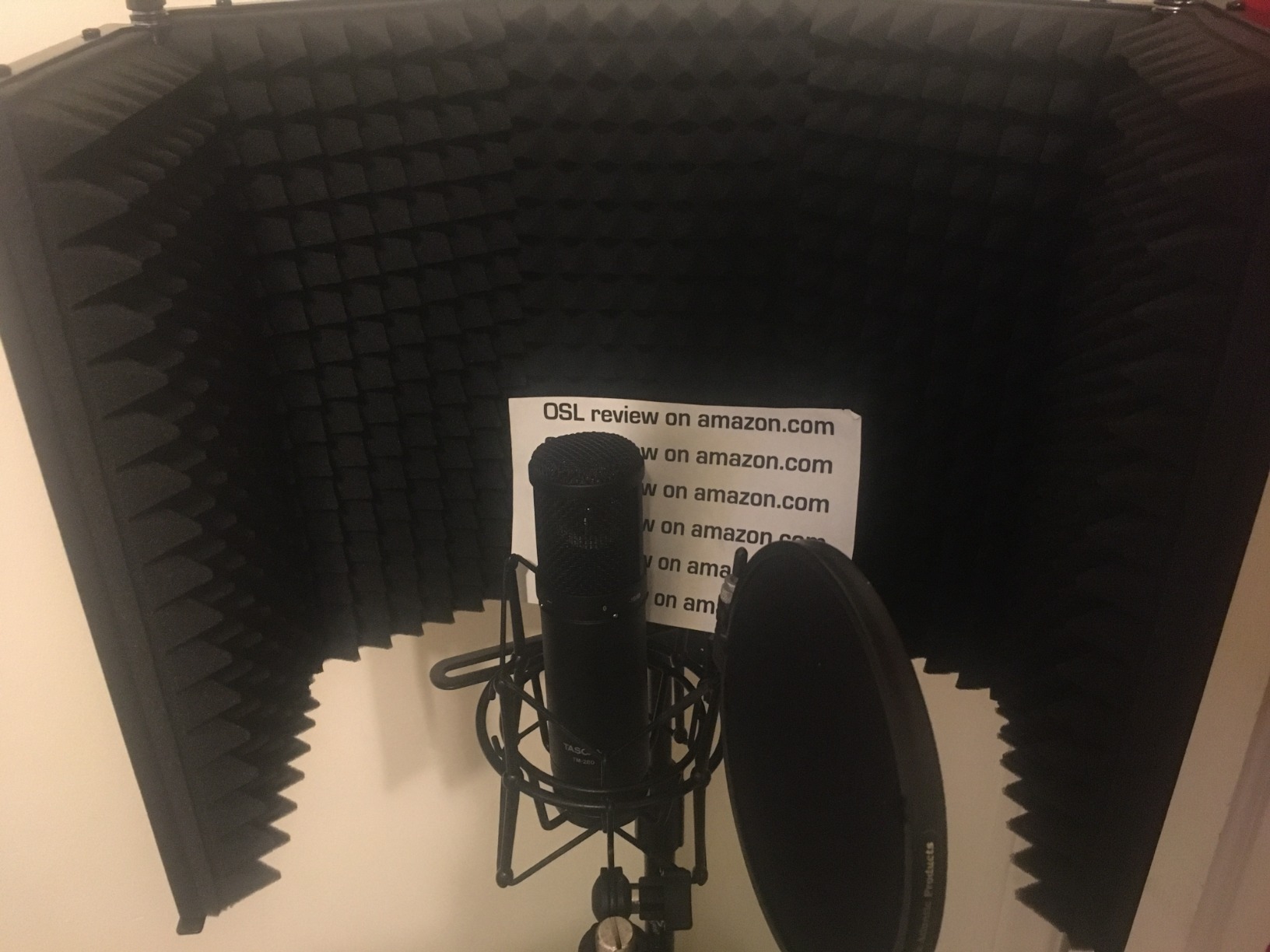
Who Should Buy the Tascam TM-AR1
This filter is perfect for home studio owners who already have a quality mic stand and want a reliable, well-built reflection filter from a trusted brand. If you use both condenser and dynamic microphones and want something that works great with both, the TM-AR1 handles the job.
Who Should Skip It
If you need 360-degree coverage or a shield that sits on a desk, this is a stand-mounted filter only. The low stock also means you may need to wait for availability, so check current inventory before planning your purchase around it.
How to Choose the Best Microphone Isolation Shield
Choosing the right isolation shield comes down to your room, your microphone, and your recording style. Here are the key factors I considered during testing, and the ones you should weigh before buying.
Coverage Area and Panel Design matters more than anything else. A shield with 360-degree coverage like the Aokeo or Aston Halo traps sound from all directions, while a three-panel design like the TONOR only controls reflections from behind and beside the mic. If your room is highly reflective, more coverage is always better.
Material Quality determines how linearly the shield absorbs sound. Wood-core shields like the CAD AS50 and PET-felt designs like the Aston Halo absorb frequencies more evenly than basic open-cell foam. Cheaper foam tends to over-dampen highs while leaving mid-range reflections intact, which can make your recordings sound muddy.
Mounting Options are critical for a smooth setup. Desk-mounted shields work well for USB microphones and streaming setups, while stand-mounted filters like the Tascam TM-AR1 give you more flexibility for vocal recording. Make sure the shield you choose is compatible with your existing mic stand or boom arm thread size.
The 3 to 1 Mic Rule is an important acoustic principle to understand. It states that the distance between two microphones should be at least three times the distance from the source to the nearest microphone. While this rule is mainly about multi-mic setups, it also reinforces why getting your mic close to the source and using a shield to control reflections is so effective for clean recordings.
Shields vs Full Acoustic Treatment is a question I see constantly on forums. Isolation shields control reflections in one direction, behind the microphone. They are a targeted solution, not a complete fix. Full acoustic treatment with panels on your walls, ceiling clouds, and bass traps addresses the entire room. If your room has serious echo issues, a shield will help but will not replace treatment. Use a shield as part of your solution, not the whole answer.
Frequently Asked Questions
Do microphone isolation shields really work?
Yes, microphone isolation shields do work, but with an important caveat. They reduce sound reflections coming from behind and around the microphone, which tightens up your recordings and reduces room reverb. They do not eliminate all background noise or replace full acoustic treatment. In my testing, condenser microphones benefited the most because they are more sensitive to room reflections than dynamic mics.
What is the 3 to 1 mic rule?
The 3 to 1 mic rule is an acoustic guideline stating that the distance between two microphones should be at least three times the distance from the sound source to the nearest microphone. This prevents phase cancellation and comb filtering when using multiple mics. It also reinforces the principle of getting your microphone close to the source and using an isolation shield to control remaining reflections.
Do microphone isolation balls work?
Microphone isolation balls like the ktondic shield do work for reducing reverberations around the mic capsule. They provide 360-degree coverage in a compact form and are effective in rooms that already have some basic treatment. However, in highly reflective untreated rooms, a ball-style shield has less surface area than a panel shield and may not provide enough isolation on its own.
How do I stop a mic from picking up background noise?
Start by getting the microphone close to your mouth to improve the signal-to-noise ratio. Add an isolation shield to reduce room reflections. Use a cardioid or hypercardioid microphone pattern to reject sound from behind. Turn off fans and noisy equipment during recording. Apply a noise gate in your recording software to silence background hiss between phrases. For persistent noise, acoustic treatment panels on your walls will make the biggest difference.
Final Thoughts
Finding the best microphone isolation shields for your setup does not have to be complicated. If you want premium performance and have the budget, the Aston Halo is in a class of its own. For value, the TONOR shield delivers impressive results at a fraction of the cost. And for USB microphone users, the Aokeo 360-degree shield is purpose-built for your setup.
Remember that any isolation shield works best as part of a broader approach to your recording environment. Combine it with proper mic technique, a good pop filter, and whatever acoustic treatment you can manage, and you will hear a dramatic improvement in your recordings in 2026.