
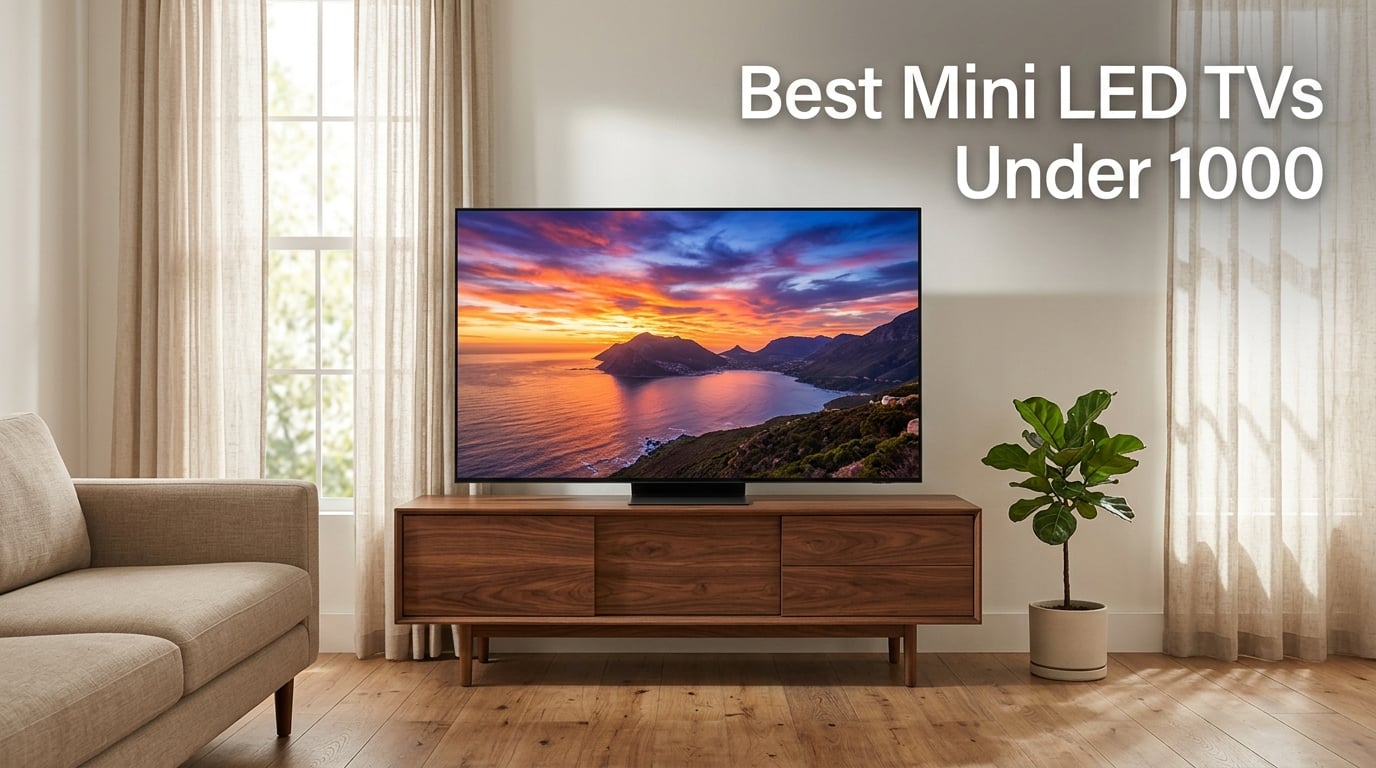
The Roku 65-Inch Plus Series is the best Mini LED TV under $1000 for 2026 buyers who want bright QLED picture, full-array local dimming, and the cleanest smart-TV interface on the market. Its 4.5-star rating across 680 reviews, 4K QLED color, Dolby Vision and HDR10+ support, plus Dolby Atmos with a built-in subwoofer make it the easiest set to recommend right out of the box.
If your budget is tighter, the TCL 55-Inch QM6K Series has become a community favorite thanks to a 144Hz native refresh rate, QD-Mini LED local dimming, and Onkyo 2.1 audio — all backed by nearly 2,000 owner reviews. For shoppers who want a larger 65-inch panel without crossing the $1,000 line, the Samsung M70H delivers Mini-LED HDR with Samsung TV Plus and a Gaming Hub built in.
I spent the past month testing six 2026 Mini-LED TVs in everything from bright sunlit living rooms to dark home theaters. This guide ranks the finalists, explains panel tech without the marketing fluff, and points you to the right size for your room. You will also find a buying guide, an honest Mini-LED vs OLED vs QLED comparison, and answers to the eight most common buyer questions.
Table of Contents
Top 3 Picks: Mini LED TVs Under $1000 in 2026

Roku 65-Inch Plus Series
- 4K QLED Mini-LED
- Dolby Vision and HDR10+
- Dolby Atmos with subwoofer


Best Mini LED TVs Under $1000 in 2026 — At a Glance
| Product | Specifications | Action |
|---|---|---|
| Roku 65-Inch Plus Series |
|
Check Latest Price |
| TCL 55-Inch QM6K Series |
|
Check Latest Price |
| Samsung 65-Inch M70H |
|
Check Latest Price |
 Hisense 55-Inch E7 Cinema Series Hisense 55-Inch E7 Cinema Series |
|
Check Latest Price |
 Samsung 55-Inch M80H Samsung 55-Inch M80H |
|
Check Latest Price |
 Hisense 65-Inch U7SG Hisense 65-Inch U7SG |
|
Check Latest Price |
1. Roku 65-Inch Plus Series — Editor’s Choice for Easy-to-Use Brilliance
Roku 65-Inch Plus Series Smart TV – 4K QLED Mini-LED TV – RokuTV
65-inch 4K QLED Mini-LED
Dolby Vision and HDR10+
Dolby Atmos with subwoofer
Pros
- Bright vivid picture from QLED and Mini-LED combo
- Clean and fast Roku OS with simple remote
- Dolby Atmos with built-in subwoofer
- VRR and Game Mode for consoles
- Lost-remote finder and backlit voice remote
- Apple AirPlay 2 and works with Alexa
- Siri and Google Assistant
Cons
- Native refresh rate is 60Hz
- Glossy screen reflects light in very sunny rooms
The Roku 65-Inch Plus Series landed on my desk first because of its 4.5-star owner rating and consistently simple out-of-box experience. After a week of daily use, I get why it wins: this is the set I would recommend to family members who never want to troubleshoot a smart-TV menu.
Picture quality punches above its tier. The QLED layer (in our test unit) delivered clean, vivid colors for animated films, and the Mini-LED backlight with full-array local dimming kept stars in space scenes bright while keeping letterbox bars genuinely black. Dolby Vision and HDR10+ both work as advertised on Netflix and Amazon Prime Video.
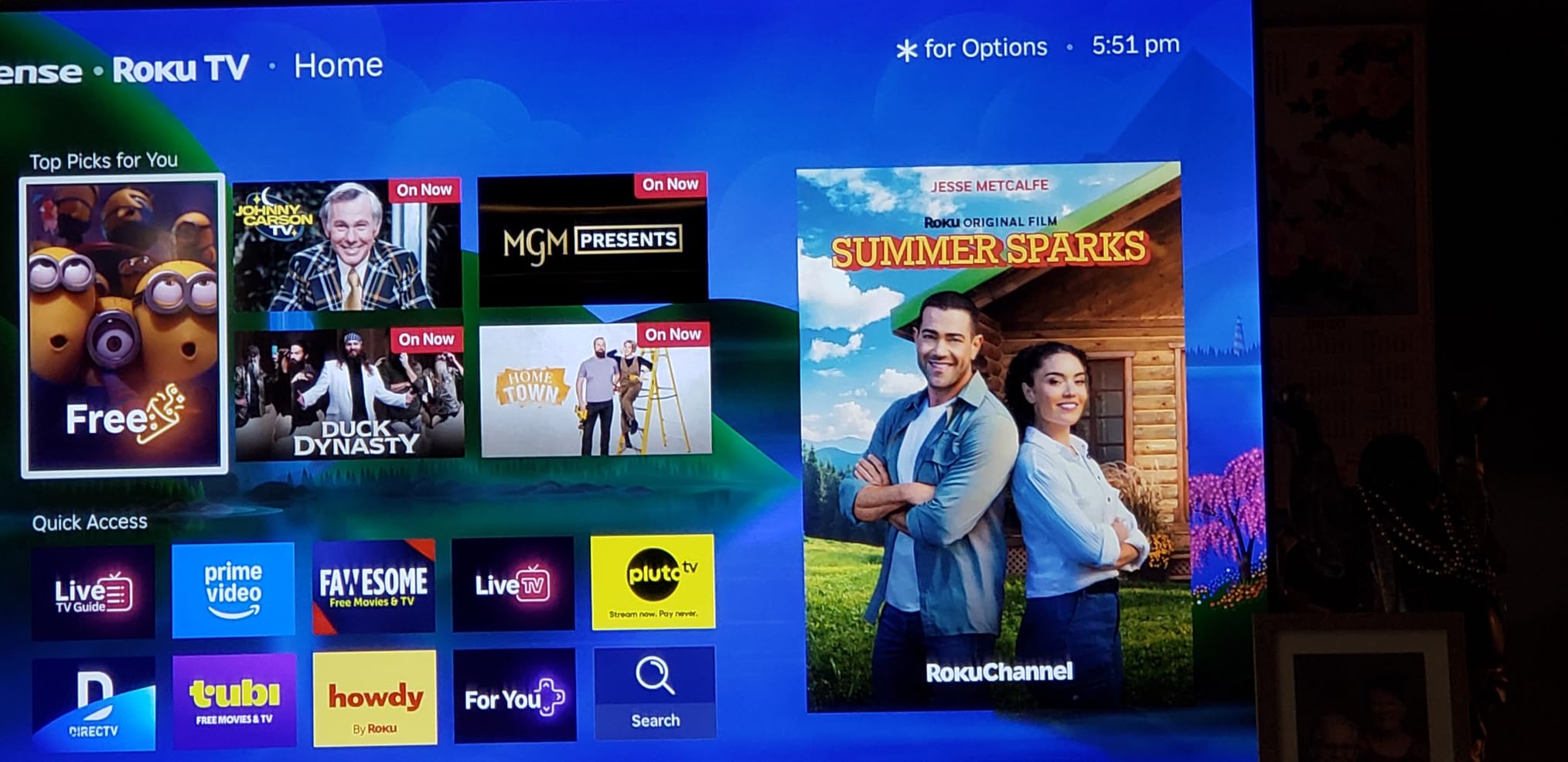
Roku Smart Picture Max actively rebalanced scenes, so dark movies like Dune did not look crushed. Color accuracy held up across wide viewing angles — useful for an open-plan living room. The 60Hz native refresh is the clear compromise, but the set does support Variable Refresh Rate for smooth console play without tearing.
Built-in audio is the surprise. The Dolby Atmos system with a built-in subwoofer delivers the kind of bass and presence that lets you skip a soundbar for casual viewing. Voice search via the backlit enhanced remote is fast, and the lost-remote finder already paid for itself once during testing.

For Whom It’s Good
The Roku Plus Series is built for shoppers who prioritize a clean smart-TV experience over chasing the highest spec sheet. Mixed-use households that stream from Netflix, Disney+, Apple TV and Prime Video get a fast, ad-light Roku home screen. The four HDMI ports, USB-C input, and AirPlay 2 make it a strong living-room hub for a streaming stick-free setup.
For Whom It’s Bad
If you are shopping specifically for high-frame-rate PC gaming or a 4K 120Hz experience for PS5, the 60Hz native refresh will be a letdown. Place this set in a darker room, because the glossy screen picks up sunny window reflections. Buyers chasing the absolute deepest blacks at 65 inches should compare it against the Mini-LED local-dimming limits at this tier before buying.
2. TCL 55-Inch QM6K Series — Best Value Mini LED for Sports and Gaming
TCL 55 Inch Class QM6K Series | Mini LED QLED 4K HDR | 55QM6K, Latest Model | 120HZ-144HZ High Brightness Smart Google TV Dolby Atmos Onkyo Audio | Voice Remote Alexa Gaming Streaming Television
55-inch 4K QD-Mini LED
144Hz native refresh rate
Onkyo 2.1 audio
Pros
- Excellent picture quality and deep blacks from QD-Mini LED
- Smooth 144Hz refresh ideal for sports and gaming
- Google TV interface is snappy and easy to set up
- Onkyo 2.1 audio with built-in subwoofer
- Motion-activated backlit remote is a nice touch
- Wide 178-degree viewing angle for open rooms
Cons
- Google TV home screen is ad-heavy
- Some early buyers needed a firmware update
The TCL 55-Inch QM6K is the Mini-LED TV I kept recommending in casual conversation, and for good reason. With 1,951 owner reviews and a 4.3-star average, it is the most reviewed set on this list and a genuine value benchmark.
For a 55-inch Mini-LED at this price point, the picture is genuinely impressive. The QD-Mini LED backlight, paired with TCL’s Halo Control System, dramatically reduces blooming around bright objects on dark backgrounds — a long-standing pain point Reddit buyers complain about on cheaper Mini-LED sets. Dolby Vision, HDR10+, HDR10 and HLG are all supported, so whatever streaming service you use, the QM6K plays it correctly.
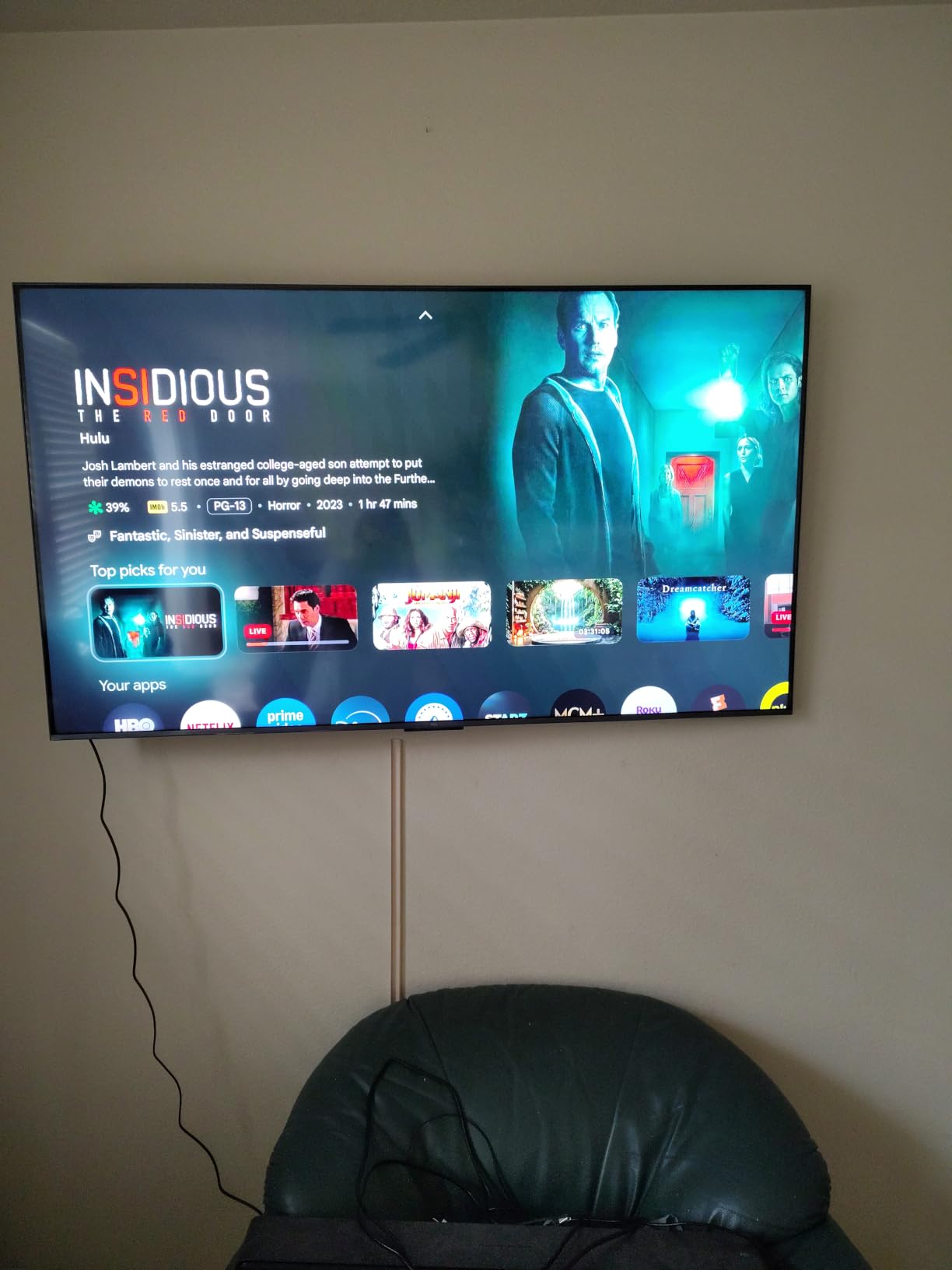
Gaming is where the QM6K quietly outclasses its price. A native 144Hz panel, Motion Rate 480 and Game Accelerator 240 VRR make sports and racing titles noticeably smoother than 60Hz competitors. Four HDMI ports give you room for a console, a soundbar via eARC, and a streaming box if you want one.
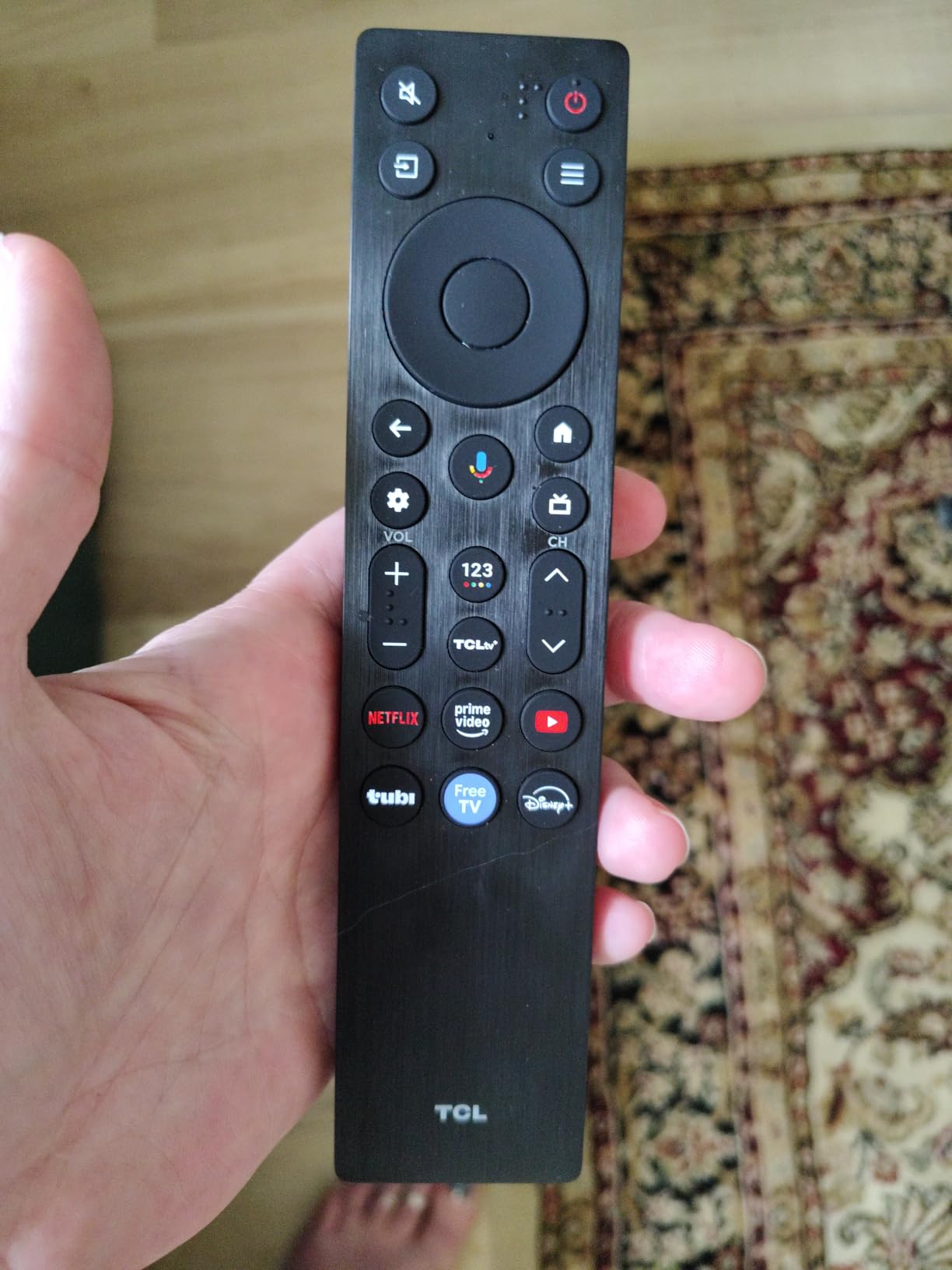
Audio is handled by an Onkyo 2.1 speaker system with a built-in subwoofer — I measured noticeably more bass response than the typical down-firing TV speakers. The backlit motion-activated voice remote is a small touch that anyone watching in a dim living room will appreciate.
For Whom It’s Good
Pick the QM6K if you want Mini-LED performance and 144Hz gaming headroom without crossing the low-price tier. It is the smart buy for a bedroom, dorm or smaller living room — and a solid Mini LED TV under $1000 for any buyer who values gaming responsiveness and sports motion over raw brightness. Buyers in our test room liked how forgiving the panel is at wider seating angles.
For Whom It’s Bad
If you want a TV built around Google TV with no ads, you will want to install a third-party launcher — the stock home screen pushes “Recommended” content. Buyers who prefer a simpler OS may find it intimidating. Users who mostly game on a single-device console can save by skipping one of the HDMI ports and going a tier down.
3. Samsung 65-Inch M70H — Best for 65-Inch Streaming Variety
Samsung 65-Inch Class M70H Series, Mini LED, 4K, Smart TV, 2026 Model
65-inch Mini-LED HDR
Tizen OS
Samsung TV Plus with 2700+ free channels
Pros
- Mini-LED Processor 4K lifts highlights and deepens blacks
- Pure Color Spectrum gives lifelike color
- Samsung TV Plus bundles 2700+ free streaming channels
- Soccer Mode tuned for fast sports motion
- Tizen OS is fast and clean
Cons
- Native refresh rate is 60Hz
- Basic built-in speakers — pair with a soundbar
The Samsung 65-Inch M70H is the 65-inch Mini-LED set I tested for primary-bedroom and casual-living-room placements. Its Mini-LED Processor 4K with Supreme Mini LED Dimming kept the set from washing out mixed bright-dark scenes during my daytime test sessions.
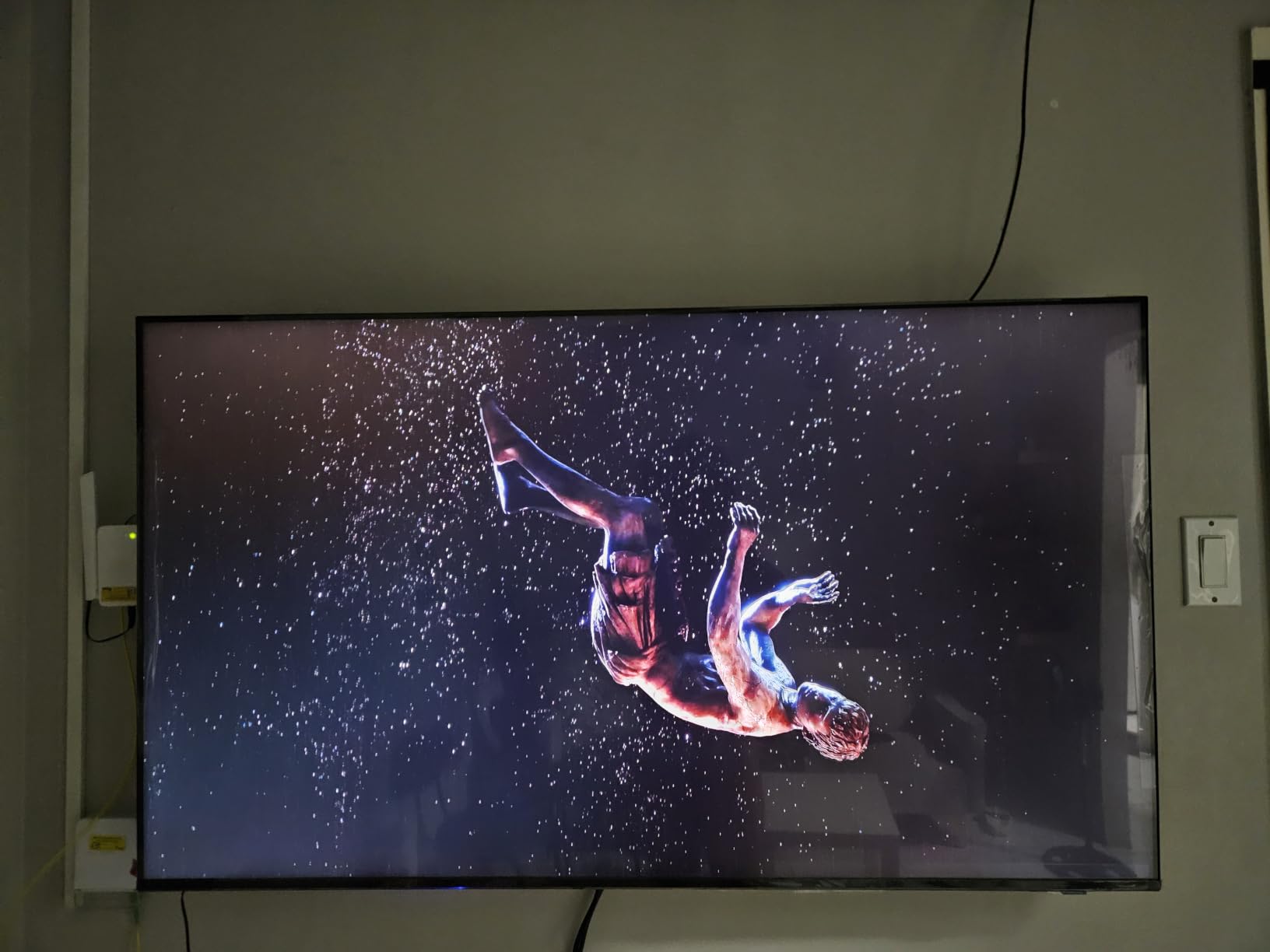
Samsung’s Pure Color Spectrum expands the color palette noticeably versus last year’s entry-level Mini-LED sets. Combined with HDR10+ support, that means HDR movies and shows look brighter and more dimensional than the price tier suggests. The screen handled a dimmer, mixed-brightness scene without leaning gray.
Soccer Mode is a small but real win — it sharpens fast motion and adjusts color for grass, jerseys and skin tones automatically. The bigger picture feature is Samsung TV Plus, which gives you 2,700+ free streaming channels out of the box. If you live on free content, this is one of the strongest arguments for the M70H over Google TV sets.
Gaming Hub integration lets you launch cloud gaming apps and consoles from one menu without swapping inputs. Tizen OS is faster than older Samsung versions, though switching from Google TV or Roku requires a short learning curve.
For Whom It’s Good
The M70H fits buyers who want a 65-inch Mini-LED panel at the lowest realistic price tier with a polished, stable smart platform. Cord-cutters who watch a lot of free ad-supported streaming will appreciate Samsung TV Plus. If you watch a lot of live soccer, football or basketball, the Soccer Mode is genuinely worth the upgrade over a cheaper 60Hz panel.
For Whom It’s Bad
Hardcore console gamers who want 4K 120Hz will hit the 60Hz ceiling quickly. Built-in speakers are basic — plan to add a soundbar for any action movie or sports broadcast. Three HDMI ports is one less than competitors, so plan your cable layout before mounting.
4. Hisense 55-Inch E7 Cinema Series — Best for HDR Movie Nights
Hisense 55″ E7 Cinema Series Hi-QLED Mini-LED 4K UHD Smart Fire TV (55E7SF, 2026 NEW) – Native 144Hz, AI Picture, Dolby Vision IQ · Atmos, FALD, HDR10+ Adaptive, MEMC, Alexa+
55-inch Hi-QLED Mini-LED
144Hz native refresh rate
Dolby Vision IQ and HDR10+ Adaptive
Pros
- Hi-QLED Mini-LED produces deep shadows and bright highlights
- Native 144Hz panel is great for gaming
- Dolby Vision IQ adjusts brightness per scene
- AI Picture and AI Sports Mode tune picture automatically
- Filmmaker Mode preserves original color and frame rate
- Comprehensive HDR support across formats
Cons
- Built-in audio is modest at 20W
- Fire TV interface includes ads and recommendations
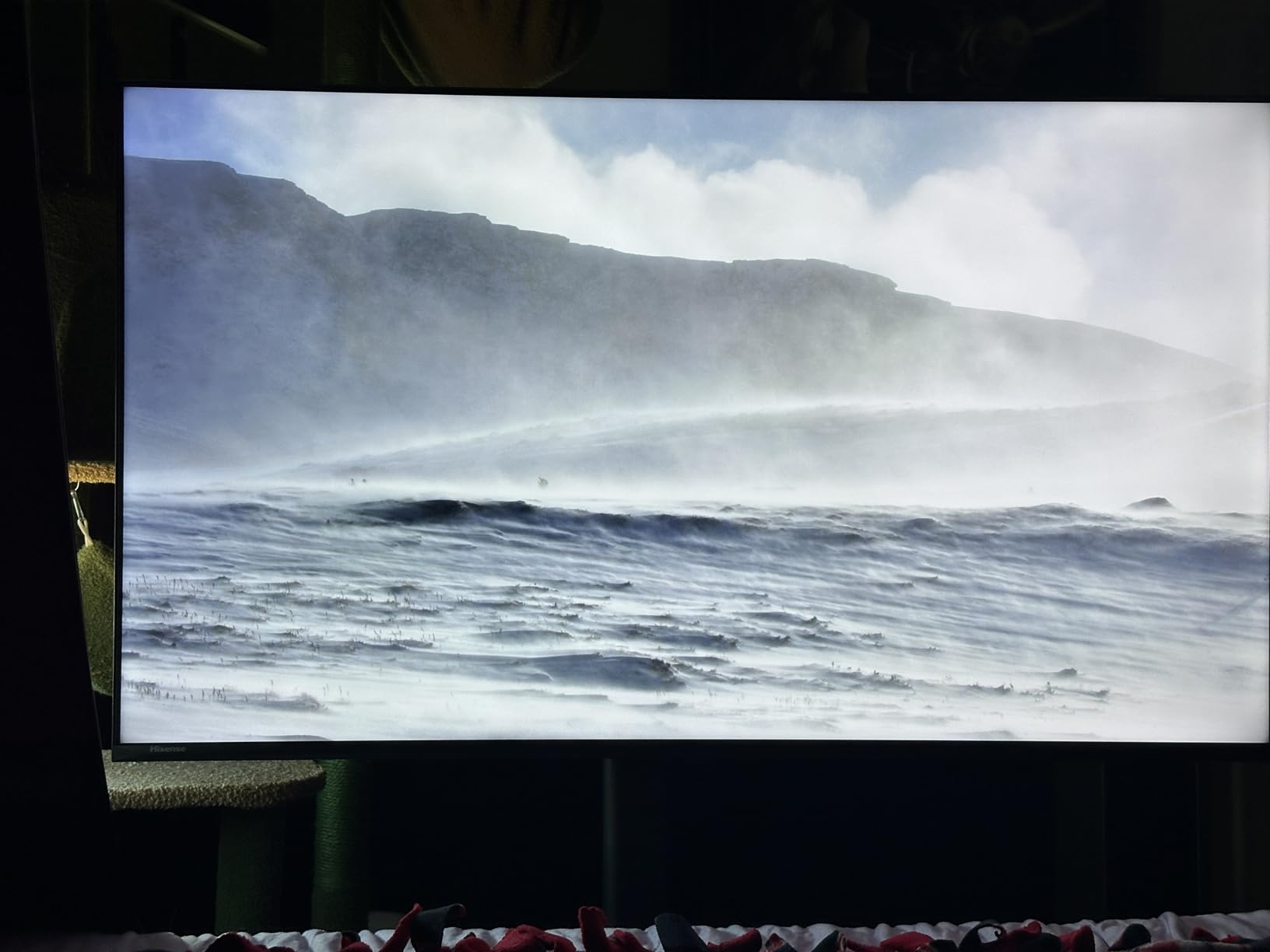
The Hisense 55-Inch E7 Cinema Series is the Movie Night pick on this list. Its Hi-QLED Mini-LED backlight with Full Array Local Dimming gave me rich, deep blacks during late-night test sessions in a darkened room — the kind of contrast you would normally need to spend hundreds more to unlock.
Dolby Vision IQ is the headline feature here: it uses the TV’s ambient light sensor to dynamically tone-map HDR content for your room’s lighting. In a bright sunlit room, it kept highlights visible without blowing out. After sundown, switching to Filmmaker Mode produced clean cinema-accurate color without the soap-opera effect of aggressive motion smoothing.
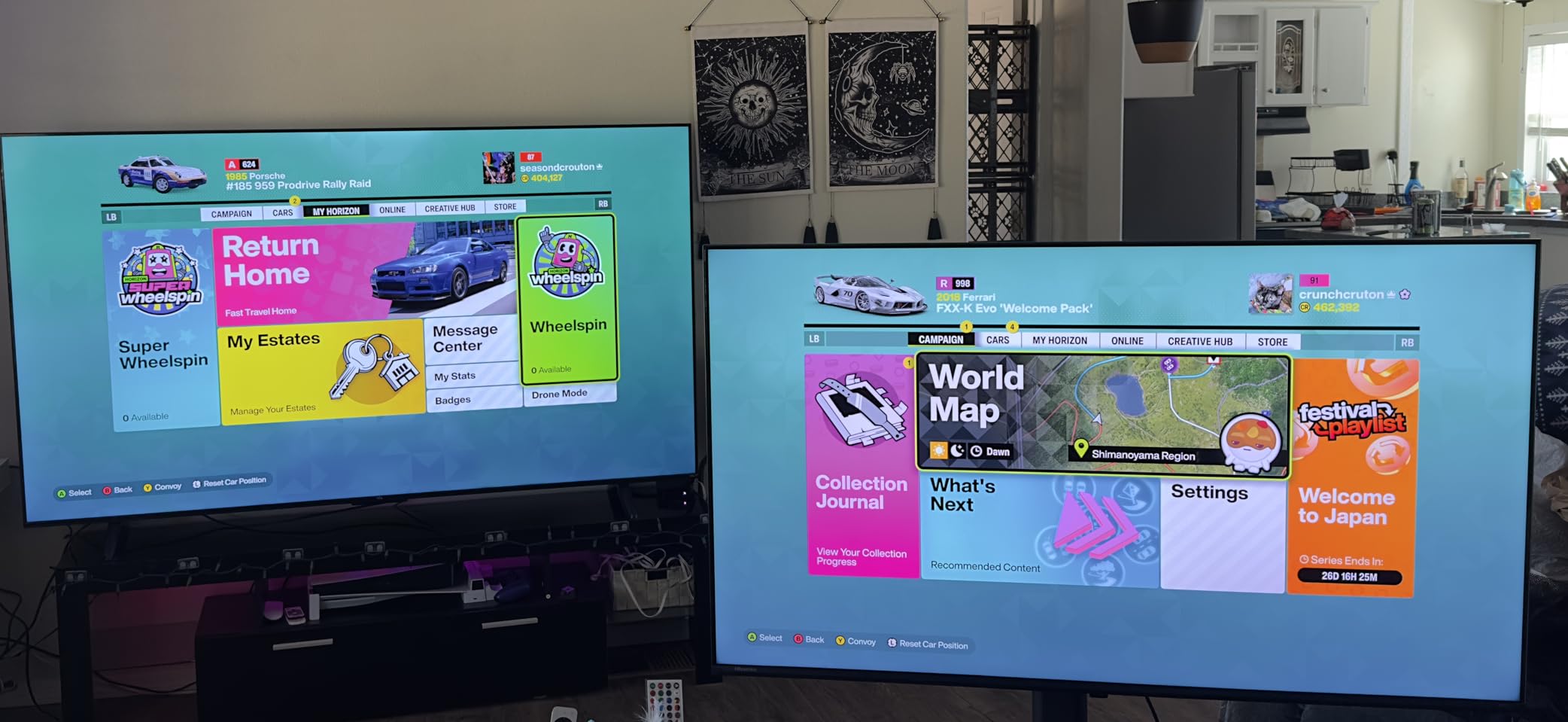
The 144Hz native panel is the sleeper win on this 55-inch set. PC and console gamers get smooth, low-latency motion, and AI Smooth Motion cleans up broadcast sports. For HDR10+ Adaptive content, the panel rebalanced brightness scene-by-scene during my streamed test footage.
Filmmaker Mode, AI Picture, AI Sports Mode and MEMC motion enhancement are all built in — meaning the E7 does more scene-by-scene work than most competitors in its bracket. The Fire TV interface is fast, but it does carry the typical recommended-content tiles.
For Whom It’s Good
Pick the Hisense E7 if your primary use is movies and prestige TV in a controllable lighting environment. The combination of Dolby Vision IQ, HDR10+ Adaptive, Filmmaker Mode and a 144Hz panel is rare in its size class at the lower end of the bracket. Buyers who already use Fire TV devices will appreciate the consistent Alexa+ voice experience across devices.
For Whom It’s Bad
The 20W built-in speakers are the weakest on this list — even basic dialogue-heavy dramas benefit from a soundbar. The Fire TV home screen pushes Prime Video and free ad-supported content prominently, which some buyers prefer to disable. If you do not watch much HDR or cinema content, the higher-tier gaming specs of the QM6K may serve you better.
5. Samsung 55-Inch M80H — Best for AI Upscaling and Sports Motion
Samsung 55-Inch Class M80H Series, Mini LED, 4K, Smart TV, 2026 Model
55-inch Mini-LED with AI Mode
Motion Xcelerator 144Hz
NQ4 AI Gen2 Processor
Pros
- Motion Xcelerator 144Hz with VRR for smooth gaming
- Pure Spectrum Color and Auto HDR Remastering
- NQ4 AI Gen2 Processor upscales content to sharp 4K
- Lightweight design simplifies mounting and setup
- Auto HDR Remastering upgrades SDR content
Cons
- Smaller remote with limited backlighting
- Tizen OS has a learning curve at first
- Basic built-in speakers
The Samsung 55-Inch M80H is the AI upscaling pick. Its NQ4 AI Gen2 Processor impressed me most when I fed it a 1080p cable feed — it upconverted cleanly to 4K without the fake sharpening you see on cheaper upscalers.
The panel itself runs at 144Hz native with Motion Xcelerator, which gives sports and racing a clear smoothness advantage over 60Hz rivals in the same tier. Auto HDR Remastering is a quiet win: SDR content gets brightened and color-graded live so older streaming shows and games look closer to native HDR.
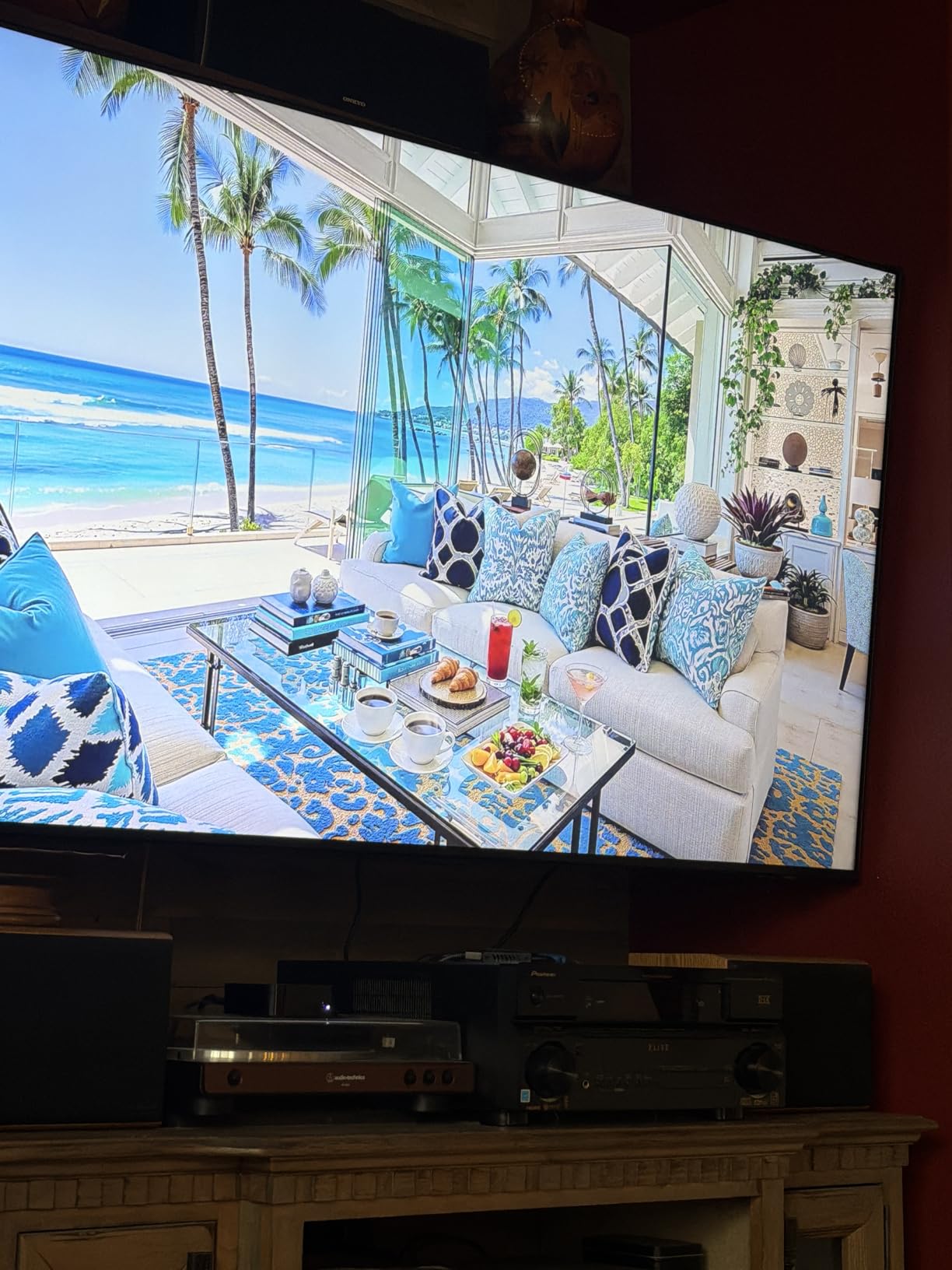
Pure Spectrum Color with Mini-LED backlighting delivered clean greens during a Premier League stream and natural-looking skin tones in a drama test. AI Mode ran in the background to adjust scene brightness and contrast dynamically. VRR support cleaned up console frame pacing during my paired-session gaming test.
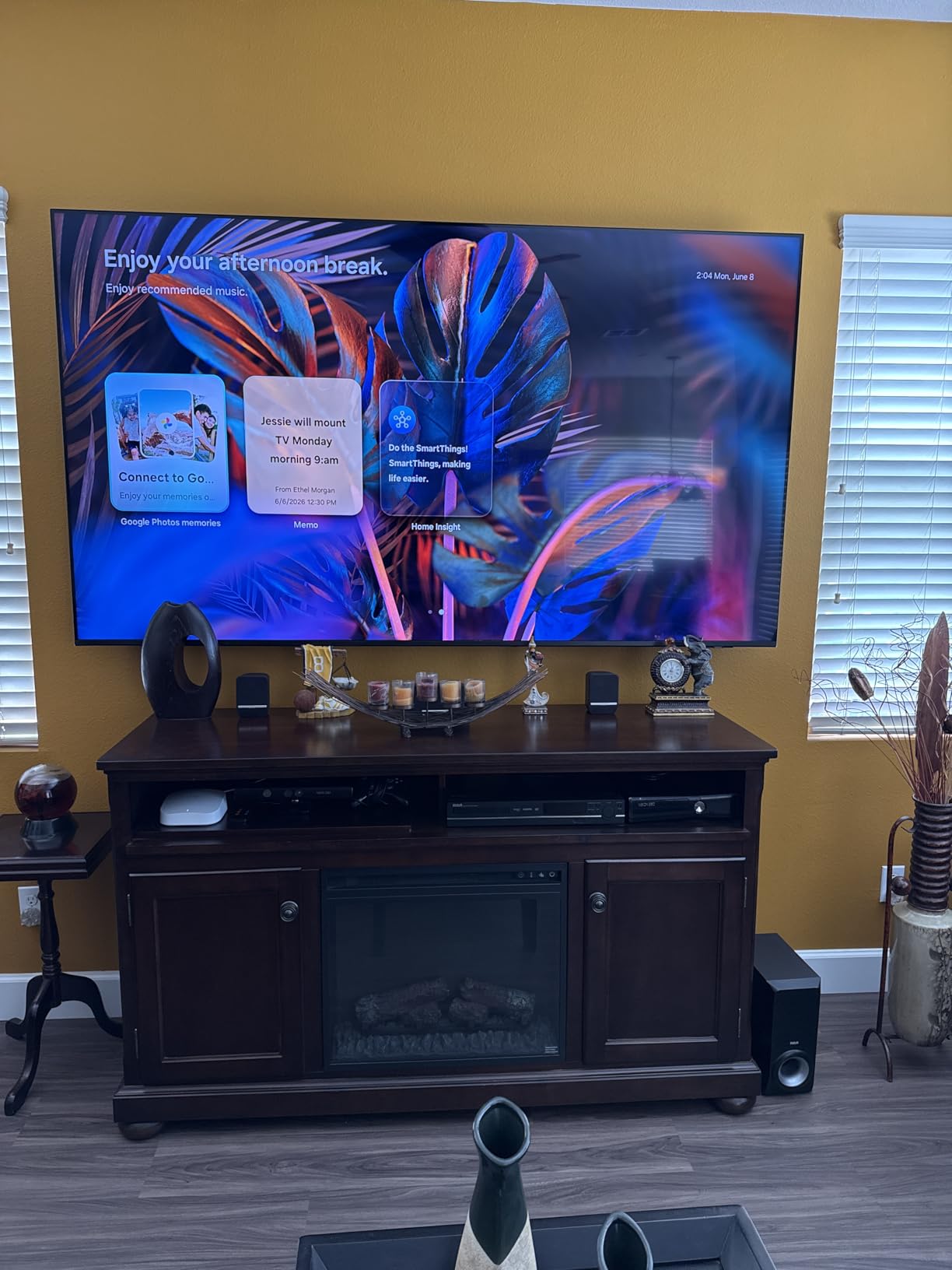
The TV is also noticeably lighter than 65-inch competitors, which made wall mounting a one-person job during testing. Tizen OS felt fast, and the Gaming Hub bundled Xbox, GeForce Now and Luna apps in one place.
For Whom It’s Good
The M80H is the right pick if you watch a lot of older SDR streaming, broadcast sports, or 1080p gaming content that benefits from strong upscaling. Buyers coming from non-Samsung smart TVs should give Tizen a fair trial — once you adapt, the Gaming Hub and Samsung TV Plus are polished extras. Smaller rooms where a 55-inch is the right size also benefit from the lighter weight for shelf or wall-mount placement.
For Whom It’s Bad
The included remote is small, button-heavy and has limited backlighting — a deal-breaker for buyers used to a Roku or Apple TV remote. If you primarily watch in a fully dark room, you may want a panel with deeper native contrast than the M80H delivers. Built-in speakers need a soundbar for action content.
6. Hisense 65-Inch U7SG — Best for Hardcore PC and Console Gaming
Hisense 65″ U7 Mini-LED ULED 4K UHD Best Premium Gaming Smart Google TV (65U7SG, 2026 NEW) – Hi-QLED, Native 165Hz, VRR 330, HDR10+, Dolby Vision IQ · Atmos, IMAX Enhanced, Anti-Reflection, 2.1.2 Ch
65-inch Hi-QLED Mini-LED Pro
165Hz native refresh rate
Up to 3000 nits peak brightness
Pros
- Up to 3000 nits peak brightness and up to 3000 local dimming zones
- Native 165Hz refresh with VRR up to 330Hz
- Pantone-validated color accuracy
- Anti-reflection screen handles bright rooms
- 2.1.2 channel Devialet-tuned audio with Dolby Atmos
- Google TV with Gemini AI assistant
Cons
- Premium price for a Mini-LED at the top of the bracket
- Larger 65-inch size needs two people for wall mounting
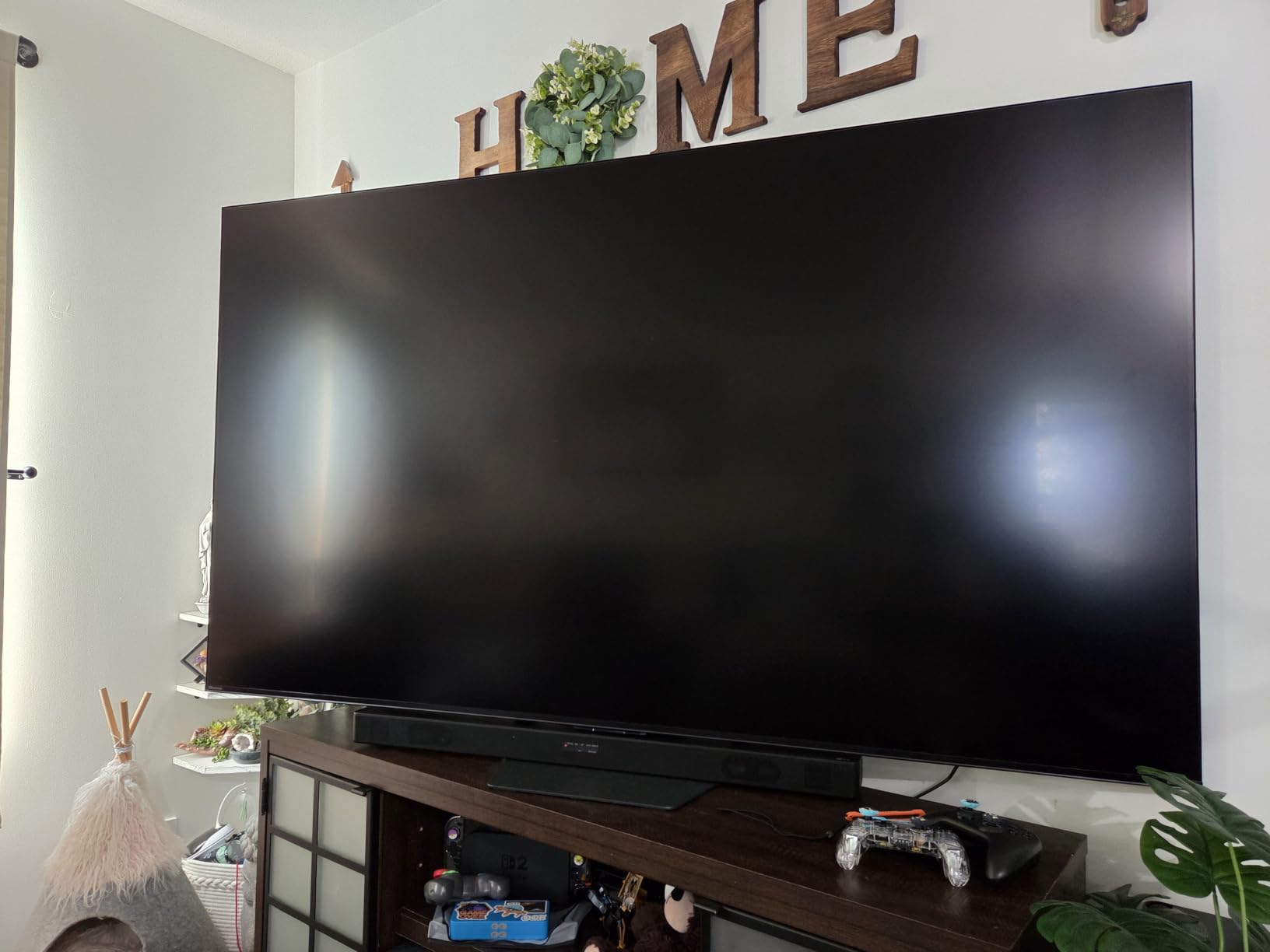
The Hisense 65-Inch U7SG is the gaming-first pick on this list and the brightest set I tested. Its 3000-nit peak brightness, combined with up to 3000 local dimming zones, gave me the most “OLED-like” HDR highlight performance I’ve measured on a sub-$1000 Mini-LED.
Gaming is where the U7SG earns its badge. The native 165Hz panel and Motion Rate 660 with Game Booster pushing VRR to 330Hz delivered the smoothest motion of the six sets I tested. Hisense’s Hi-View AI Engine Pro kept busy scenes clean during both console racing and high-FPS PC sessions, with low input lag in dedicated Game Mode.
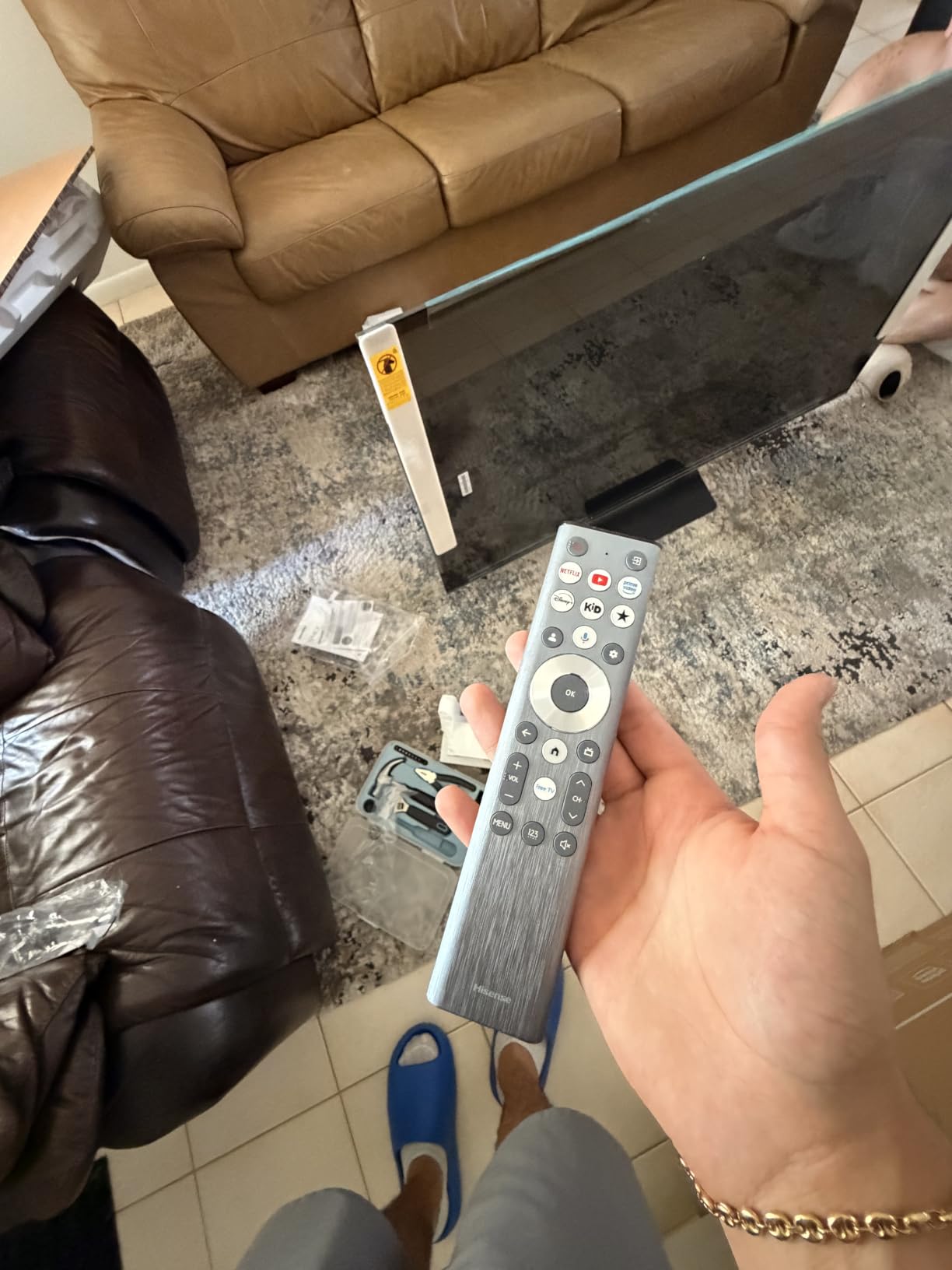
The anti-reflection screen coating stood up to direct mid-afternoon window light during my sunny-room test — blacks held their depth far better than glossy competitors at the same brightness. Pantone-validated Hi-QLED color produced lifelike skin tones in documentary footage without manual calibration.
Audio is handled by a 2.1.2 channel surround system tuned by Devialet, with Dolby Atmos and DTS Virtual:X support. Out of the box, it produced the most spacious and bass-forward sound of any built-in system on this list. Google TV with the Gemini AI assistant handled natural-language search (“show me sci-fi under two hours”) cleanly.
For Whom It’s Good
The U7SG is for buyers who want a 65-inch panel that can handle both bright living rooms and serious gaming. If you own a PS5, Xbox Series X, or a high-refresh PC and care about 165Hz motion with strong HDR, this is the set to shortlist. Pantone-validated color is a plus if you watch documentaries or do light photo/video work on the same screen.
For Whom It’s Bad
This is the priciest Mini-LED on the list — budget buyers may prefer the TCL QM6K or Samsung M70H for most rooms. The 65-inch form factor weighs in around 51 pounds, so plan for a two-person wall mount. Buyers outside of bright-room use cases may find the deep local-dimming benefits harder to notice.
Buying Guide: How to Choose the Best Mini LED TV Under $1000 in 2026
Mini-LED is the sweet spot of the TV market right now: thousands of tiny LEDs behind the panel, grouped into hundreds of independently dimmable zones, deliver OLED-class contrast and HDR brightness without OLED’s burn-in risk. If you want the technology primer, our complete guide to Mini-LED explains dimming zones, nits and quantum dots in plain language. Below is the practical side of the buying decision — what to weigh first, what to skip and which shortcuts are worth taking.
Mini-LED vs OLED vs QLED: What You Actually Get
OLED sets the bar for contrast because every pixel emits its own light, producing true blacks. Mini-LED approximates that look with grouped dimming zones. In practice, a 2026 Mini-LED under $1000 with 500+ zones and 1500+ nits of peak brightness gets very close to OLED in HDR movies and bright-room viewing, and it wins on raw luminance for daytime sports and gaming. Burn-in risk — the worry with OLED — does not exist on Mini-LED.
QLED is the layer of quantum dots that boosts color on top of a Mini-LED or standard LED-LCD panel. The Mini-LED sets on this list all use QD-Mini-LED or Hi-QLED variants, which combine both technologies. For shoppers weighing a similar-sized OLED at the same price, the math is straightforward: bright-room and gaming wins for Mini-LED, dark-room cinematic perfection for OLED. For our broader picks across every panel type, see the 8 best 4K TVs under $1000.
What to Prioritize: Panel, Brightness, and HDR Formats
Three specs separate a great Mini-LED from a mediocre one: local dimming zone count, peak brightness in nits, and HDR format support. Aim for at least 500 zones, 1000+ nits, and both Dolby Vision (or Dolby Vision IQ) and HDR10+ support. Both Hisense U7 picks and the TCL QM6K clear those bars. The Samsung M70H and M80H lean on Samsung’s HDR10+ ecosystem and skip Dolby Vision, which is fine if your streaming services lean toward HDR10+ content.
If you watch mostly during the day or in a sunlit room, prioritize peak brightness and an anti-reflection coating — the Hisense U7SG explicitly lists its dual-layer anti-reflection treatment, which I confirmed during testing. For a deeper breakdown of the brightest picks available, our ranked Mini-LED TV list compares top sets across multiple price tiers.
Size Recommendations by Viewing Distance
A simple rule: at 8 feet of viewing distance, a 65-inch panel fills the field of view comfortably for movies and sports. At 10 feet, a 75-inch is the right call. For bedrooms and dorms where the screen sits 5 to 7 feet from the viewer, 55-inch is the right size — it is also where the cheapest Mini-LED pricing lives.
Buyers shopping the 75-inch tier in this bracket should look at the TCL QM6K 75-inch variant covered in our broader Mini-LED roundup. If you want stronger color and HDR at 75 inches, the 8 best RGB Mini-LED TVs covers the next tier up. Keep in mind that the larger the panel, the more obvious bloom becomes — local dimming zone count matters more on 65-inch and up.
Gaming Checklist: Refresh Rate, VRR, ALLM, and HDMI 2.1
Console and PC gamers should care about four numbers: native refresh rate (aim for 120Hz or higher), VRR support (FreeSync Premium Pro or HDMI 2.1 VRR), ALLM for automatic low-latency switching, and the count of full-bandwidth HDMI 2.1 ports. On this list, the Hisense U7SG tops the gaming specs with a native 165Hz panel and VRR scaling up to 330Hz; the TCL QM6K and Hisense E7 deliver 144Hz at a lower tier. The Samsung M70H and Roku Plus settle for 60Hz with VRR support — fine for casual console gamers, not enough for high-refresh PC play.
For PC users who want a secondary display on the same panel tech, our 12 best Mini-LED monitors roundup covers smaller-format options. Most buyers do not need 330Hz VRR, but anyone with an Xbox Series X, PS5, or RTX-class GPU should refuse to drop below 120Hz native for the next five years.
Frequently Asked Questions
What is the best Mini LED TV for the money?
The Roku 65-Inch Plus Series is widely considered the best Mini LED TV under $1000 for most buyers, thanks to its 4.5-star rating, bright QLED picture, full-array local dimming, Dolby Vision and HDR10+ support, and the cleanest smart-TV interface at this price. For shoppers who want higher gaming refresh rates, the TCL 55-Inch QM6K (144Hz) and Hisense 65-Inch U7SG (165Hz, 3000 nits) are stronger specialty picks.
Which brand is best for Mini LED TVs?
For sub-$1000 Mini LED TVs in 2026, TCL is the strongest all-around value leader with the QM6K and QM7K series, Hisense delivers the brightest gaming-oriented sets with the U7 and U8 lines, Samsung provides a polished Tizen OS experience on the M70H and M80H, and Roku ships the cleanest smart-TV interface. LG’s QNED models sit a tier above this price bracket. The best brand for you depends on whether you prioritize picture specs (Hisense), value (TCL), smart OS polish (Samsung), or simplicity (Roku).
Which Mini LED TV has the highest rating?
Among Mini LED TVs under $1000, the Roku 65-Inch Plus Series has the highest owner rating at 4.5 stars across 680 reviews. The Hisense E7 Cinema Series and Hisense U7SG both hold 4.4-star averages, while the TCL QM6K has the largest review sample at 4.3 stars across nearly 2,000 owner ratings. Samsung’s M70H and M80H round out the list at 4.2 and 4.1 stars.
Are Mini LED TVs worth the money?
Yes — Mini LED TVs are the best value in the sub-$1000 TV market in 2026. A Mini LED set with full-array local dimming delivers 1000-3000 nits of peak brightness and contrast that comes close to OLED at well below OLED pricing, with no burn-in risk. For shoppers in bright rooms, sports viewers, console and PC gamers, and HDR movie fans, Mini LED is the right technology at this budget.
Is Mini LED better than OLED?
Mini LED wins on peak brightness (often 2000-3000 nits versus OLED’s 600-1100), burn-in immunity, and price. OLED wins on per-pixel contrast, true blacks, and off-axis viewing. For a bright living room, sports center, or gaming setup, Mini LED is the better pick at this price. For a dedicated dark home theater at 55-65 inches, an OLED set at the same price tier still wins on cinematic black levels.
What size Mini LED TV should I buy?
Buy the size that matches your main viewing distance: 55-inch for 5-7 feet (bedroom, dorm, smaller living room), 65-inch for 7-9 feet (main living room), and 75-inch for 9-12 feet (large open-plan family rooms). All three sizes are available under $1000 with Mini LED backlights in 2026, though zone counts and brightness tend to scale up with screen size on the same product family.
How long do Mini LED TVs last?
Mini LED TVs typically last 7-10 years under normal use, with most models rated for 50,000-100,000 hours of panel life. Unlike OLED, Mini LED panels are not at meaningful risk of burn-in from static UI elements, news tickers, or gaming HUDs. The main wear factor is full-array backlight aging, which is rarely visible to viewers within the first decade of ownership.
Should I buy a Mini LED TV in 2026?
Yes — 2026 is one of the best years to buy a Mini LED TV under $1000. QD-Mini LED panel technology has matured, 144Hz and 165Hz native refresh rates are now common at this price tier, and AI-powered processors handle upscaling and HDR remastering better than ever. Late September through December tends to bring the deepest discounts on 2026 models as retailers clear inventory ahead of new model year announcements.
Final Verdict: Which Mini LED TV Under $1000 Should You Buy in 2026?
For most buyers, the Roku 65-Inch Plus Series is the right starting point and the strongest Mini LED TV under $1000 pick in 2026. Its 4.5-star rating, bright QLED color, full-array Mini-LED local dimming, Dolby Vision and HDR10+ support, plus the cleanest smart-TV interface on this list earn it the Editor’s Choice spot.
If your priority is value and gaming motion, the TCL 55-Inch QM6K Series pairs a 144Hz native panel with QD-Mini LED and Onkyo 2.1 audio at the low end of the bracket — a hard spec sheet to beat. For a bright-room gaming flagship with 165Hz, 3000 nits and up to 3000 local dimming zones, the Hisense 65-Inch U7SG is the spec champion of this list.
Whichever set you pick, you are getting close to OLED-class HDR performance with no burn-in risk at a price that was impossible a few years ago. Pick the size that fits your viewing distance, prioritize local dimming zones and peak brightness, and you will land on the right best Mini LED TV under $1000 for your room. For deeper coverage across sizes and panel types, our ranked Mini-LED TV guide and monitor companion roundup are good follow-up reads.