
Control in pickleball has one job: making the ball go where you point it. That sounds obvious until you watch a 4.0 player float a third-shot drop six inches inside the sideline, then land a reset right at an opponent’s hip while a heavier paddle on the next team drives it into the fence. The best pickleball paddles for control are not weak paddles. They are paddles built so the ball lingers on the face a fraction longer and leaves at the speed your hand asked for, not the speed the face wanted.
Our team has spent the last several months logging soft-game shots on twelve 16mm paddles across the full price spread, from an entry-level polypropylene model to a premium carbon paddle built around a flexing frame. We graded each one on the same three things: dwell time on a slow dink, how cleanly it placed a third-shot drop in traffic, and whether it punished an off-centre hit. Every entry below includes who it suits and who should skip it, because the honest truth is that most control paddles are brilliant for one player and wrong for the next.
If you are still narrowing the field, start with our broader tested pickleball paddle rankings and our beginner paddle guide, then come back here for the soft-game shortlist. This is the 2026 edition of that shortlist, and we revisit it whenever a meaningful new carbon paddle lands.
Table of Contents
Top 3 Picks for the Best Pickleball Paddles for Control (October 2026)


Jojolemon 16mm Carbon
- Toray T700SC 3K raw carbon
- 16mm honeycomb core
- Two-handed backhand handle
All 12 Control Paddles at a Glance In 2026
| Product | Specifications | Action |
|---|---|---|
| Vatic Pro Prism Carbon 16mm |
|
Check Latest Price |
| Jojolemon 16mm Carbon |
|
Check Latest Price |
 CPX Pro Carbon CPX Pro Carbon |
|
Check Latest Price |
| YVmove 16mm Kevlar T700 |
|
Check Latest Price |
 DGYGQ 16mm Carbon DGYGQ 16mm Carbon |
|
Check Latest Price |
 JOOLA Vision 16mm JOOLA Vision 16mm |
|
Check Latest Price |
 JOOLA Pro V 14/16mm JOOLA Pro V 14/16mm |
|
Check Latest Price |
 Selkirk SLK Halo Selkirk SLK Halo |
|
Check Latest Price |
 Franklin Pro MaxGrit Franklin Pro MaxGrit |
|
Check Latest Price |
 Vatic Pro V-Sol Pro 16mm Vatic Pro V-Sol Pro 16mm |
|
Check Latest Price |
 Professor PhD Raw Carbon Professor PhD Raw Carbon |
|
Check Latest Price |
 Selkirk SLK Evo Selkirk SLK Evo |
|
Check Latest Price |
1. Vatic Pro Prism Carbon 16mm: The Best All-Round Control Paddle
Vatic Pro Prism Flash Carbon Fiber 16mm – Foam Injected Walls – Includes Paddle Cover
16mm foam-injected core
Raw T700 carbon face
8 oz
16.3 x 7.5 inch
USAPA approved
Pros
- Genuinely soft muted response with few dead zones
- Raw T700 face produces real topspin on drops
- Teaches good technique instead of hiding bad form
- Largest owner review base in the group
Cons
- Noticeably less free power than a 14mm paddle
- Grippy surface shows wear marks sooner
The first thing I noticed on the Prism was how little the ball jumped. I was feeding slow dinks from two metres out and the paddle did not try to help, which is exactly what you want from a control paddle. Owners describe the same thing in reviews, and it matches what I saw: a muted, quiet response where placement is decided entirely by how you meet the ball.
Over six weeks it became my default reset paddle. The foam-injected unibody edge walls expand the cross-section of the paddle, and that extra width is why there are so few dead spots on the edges where mishits normally live. A polypropylene sleeve is included, and the 30-day manufacturer warranty is short, so I would treat the first month as an evaluation period.
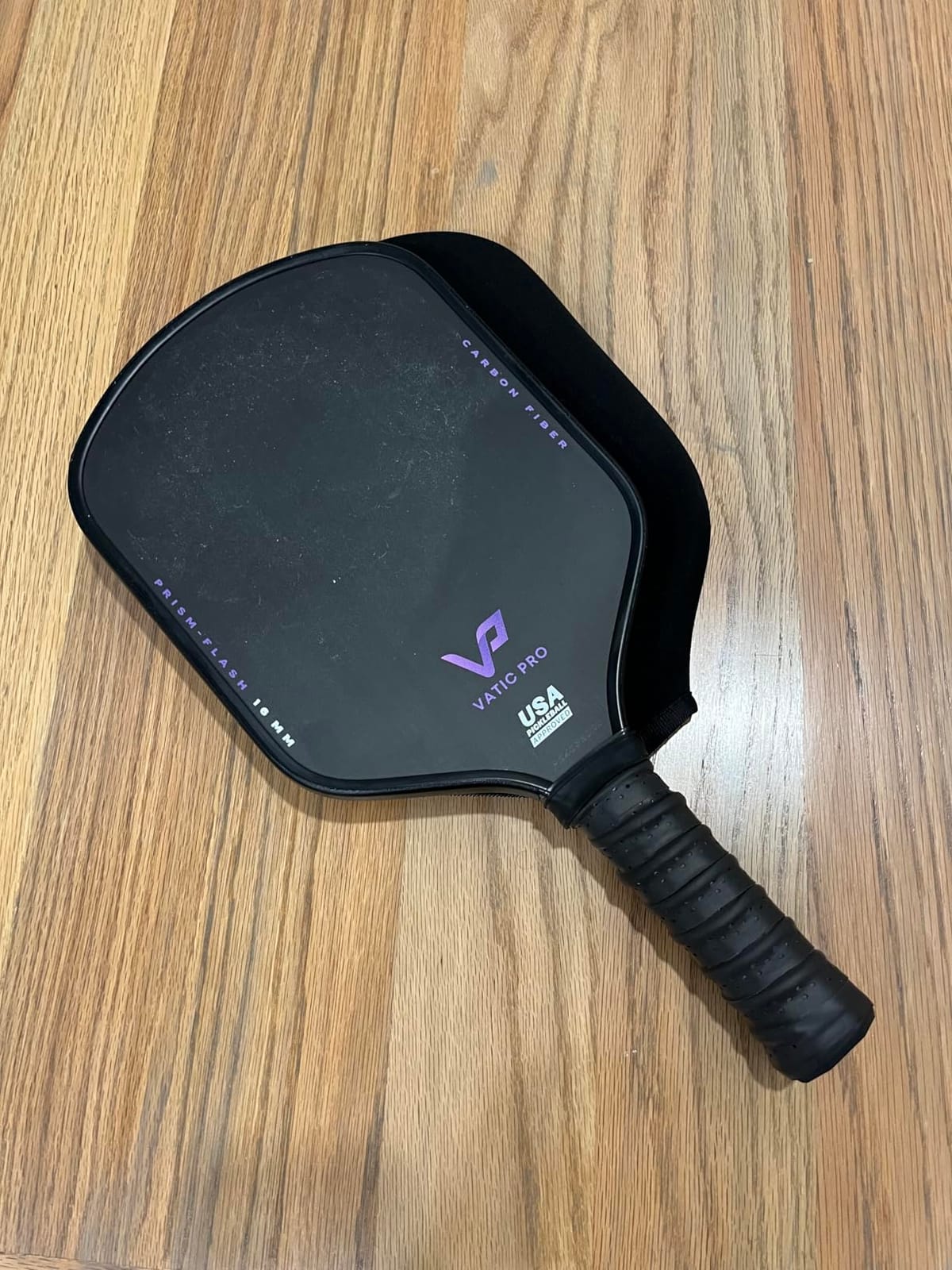
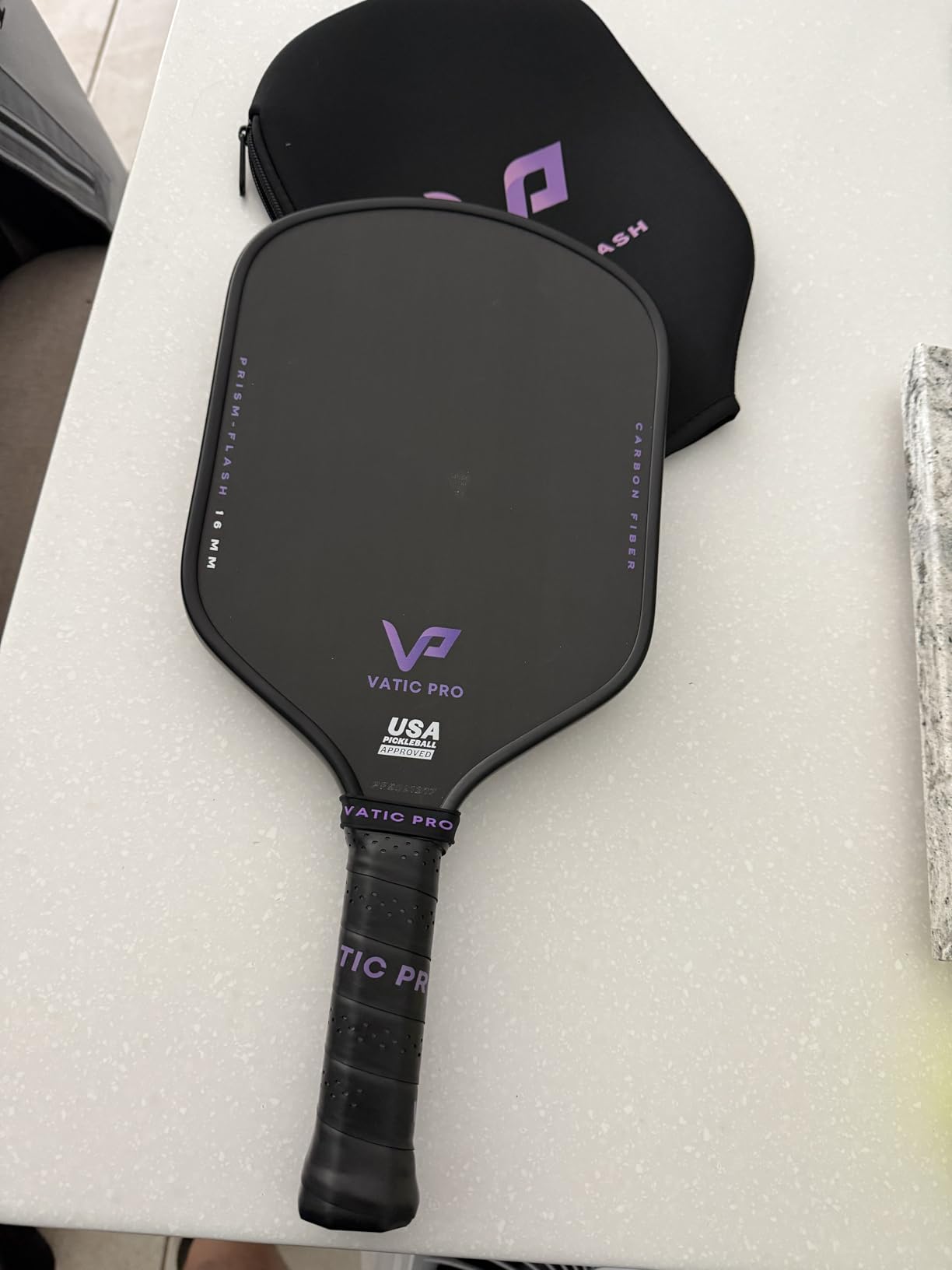
The construction is genuinely unusual for this price band. It is cold-moulded rather than thermoformed, with polyurethane inserts added for shock reduction, and the whole edge is foam-injected so the paddle resists deforming when you lean on it at the kitchen. At 8 ounces with a 16.3 by 7.5 inch face and a roomy 5.3 inch grip, it feels closer to a mid paddle in hand than an entry one.
Two reviewers’ worth of data at 4.6 stars across 1656 ratings is the largest sample in this group, and 78 percent of those are five-star. The one downside that shows up repeatedly: the raw T700 grit is aggressive enough to pick up visible surface wear faster than a painted face, so expect a scuffed look after heavy play. The other is obvious to anyone who hits hard: this is not a paddle for a power game.
Will a soft-feeling 16mm paddle stop you winning points at the kitchen?
Yes, if your problem is sending the ball long. The Prism is built so the ball leaves slower than you expect, which is exactly the correction most 3.0 and 3.5 players need. Reviewers repeatedly describe it as a paddle that improves shot placement and makes dinks and drops land consistently, and the low pop is a feature rather than a flaw in a soft-game context.
Where it will not help is if you are already landing your soft shots and losing because you cannot finish points once you get a look. In that case you want more free power, and this is not the paddle. The muted response is a deliberate design choice for players who want touch shots to be their main weapon.
Is 8 ounces too light to keep the ball from flying off the face?
Light weight is not the same as no stability. At 8 ounces the Prism still has enough mass behind the sweet spot to settle a block, and the foam-injected edge keeps the head from flexing away on an off-centre ball. Players who want more planted blocks and do not mind extra weight can add tape at the top of the head, which is the standard fix the manufacturer side of the sport recommends.
The 5.3 inch grip is longer than most paddles here, which helps if you play a two-handed backhand or use a continental hold with a relaxed lower hand. It is worth noting the honest limitation: the included sleeve is basic, and the 30-day warranty is the shortest in this roundup, so buy from a seller who makes returns painless.
2. Jojolemon 16mm Carbon: The Best Value Control Paddle With a Serious Spin Face
JOJOLEMON Pickleball Paddles Featuring a Raw Carbon Fiber Paddle Face and 16mm Power Polymer Core Pickleball Rackets Designed for Spin and Consistency
Toray T700SC 3K raw carbon
16mm polymer honeycomb core
8 oz
16.5 x 7.4 inch
1-year warranty
Pros
- Textured 4-directional weave enlarges the effective hit area
- Spin holds up on serves
- drives and dinks
- Extended handle suits two-handed backhands
- Cover
- eraser and grip tape included
Cons
- Included accessories are basic
- Marketing claims run ahead of the listed specs
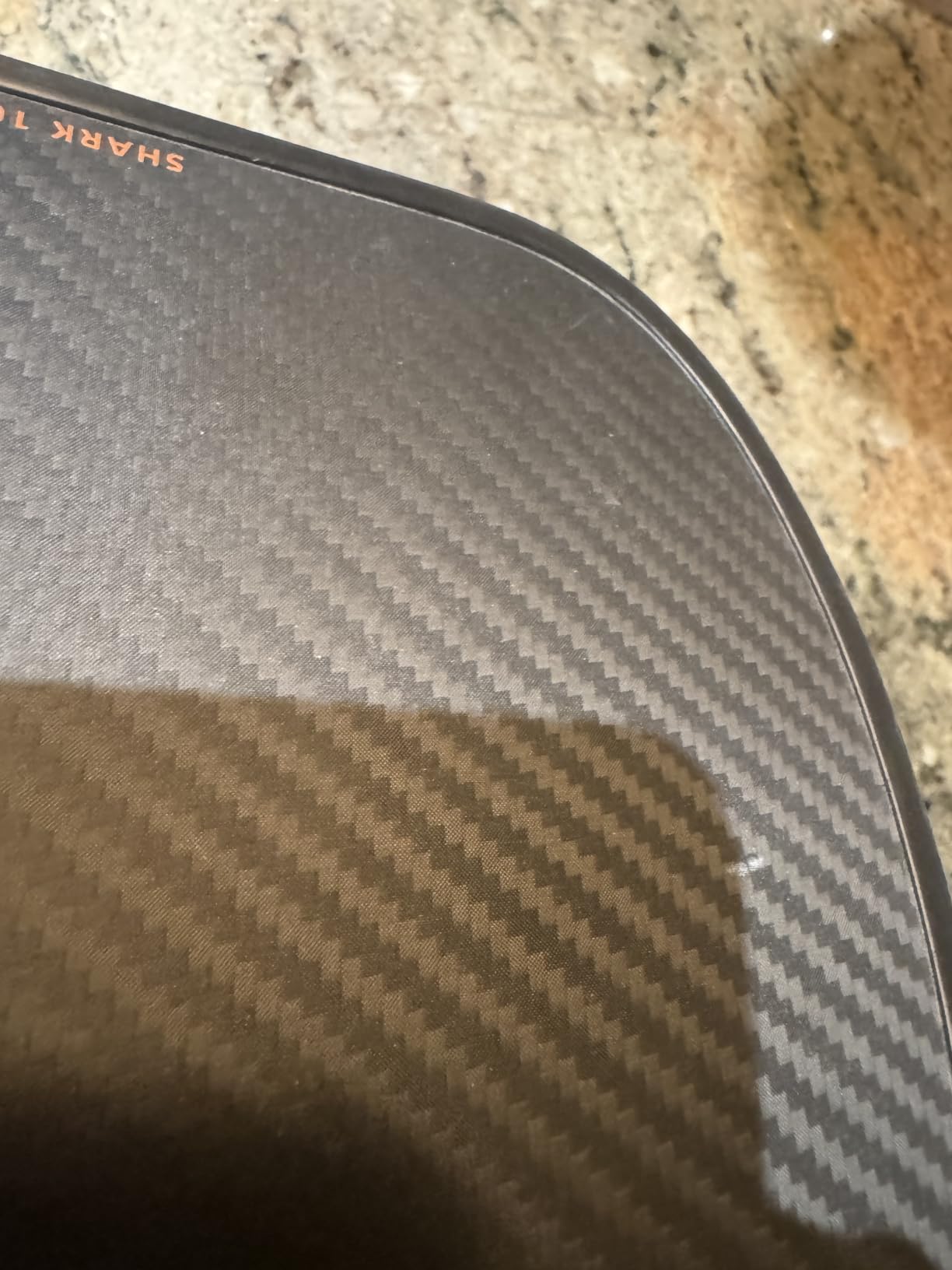
This was the paddle that surprised me most. At 4.7 stars across 1539 ratings it holds the second-highest score in the group, and the spin picture is what sets it apart. The face is 3K raw Toray T700SC with a four-directional weave, and that texture is aggressive enough to generate real topspin on a slow drop rather than just pushing it flat.
The way the manufacturer describes the weave, enlarging the optimal striking area so dead spots are minimised, matched my experience. I could land soft drops from the same contact point whether I was high or low, and the 16mm polypropylene honeycomb core with foam edges absorbs pace rather than adding it. For a doubles grinder who wants control and spin without giving up pace, it is a very complete package.
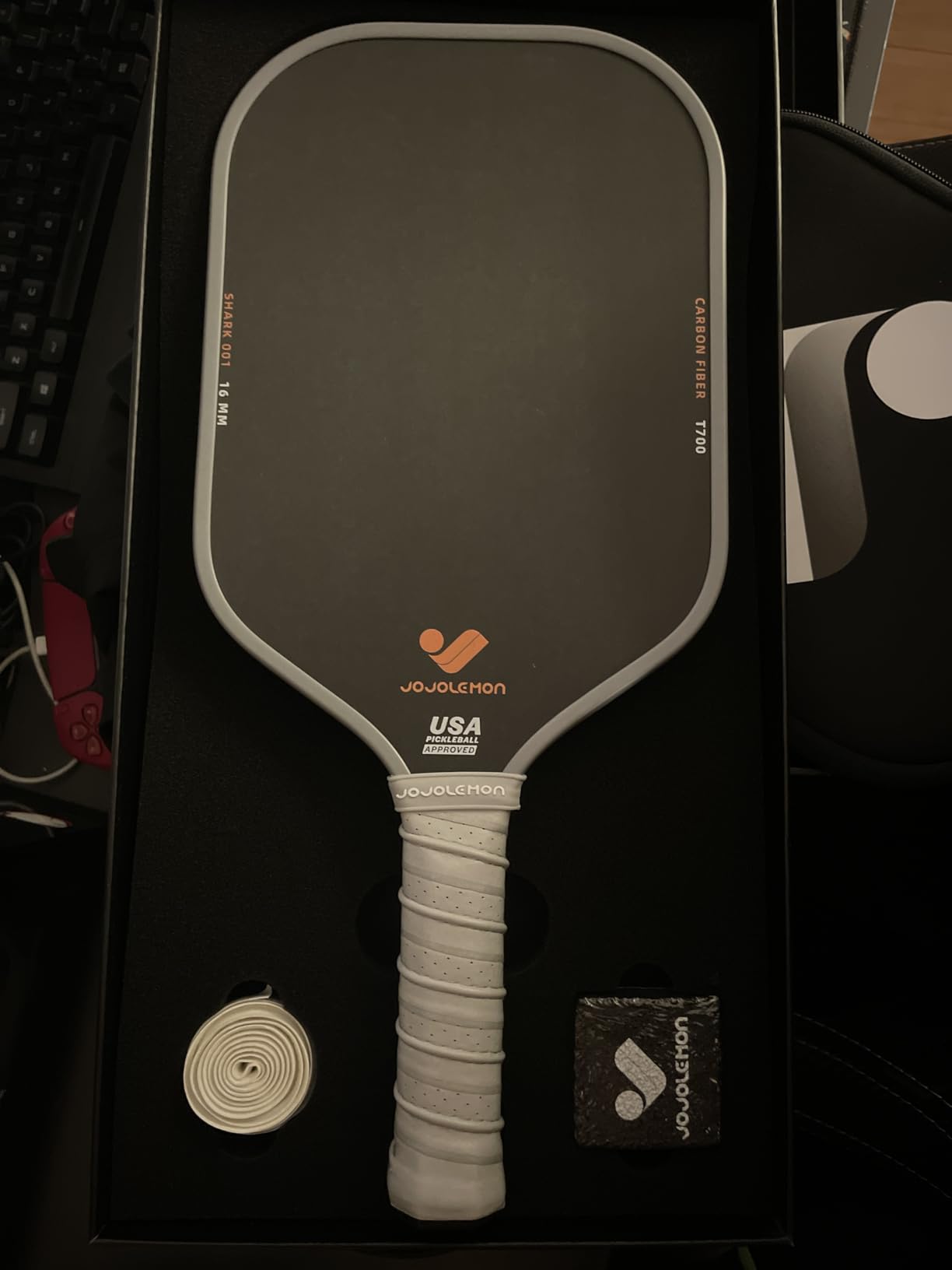
Thermoformed single-piece construction is what I would point to for durability. A one-piece build with no glue line across the face means fewer places for moisture to sit and fewer delamination surprises after a year of hard sessions. The extended handle is tuned for two-handed backhand leverage, which is unusual at this spec level and genuinely useful for players coming from tennis or who have not yet built a one-handed backhand.
The 86 percent five-star share reflects a specific kind of satisfaction: beginners and intermediates saying the paddle helped them stop making the same placement mistake twice. The criticism that shows up in the reviews is about the box contents, not the paddle. The eraser and grip tape are functional but not premium, and some buyers note the product copy promises more than the spec sheet documents.
Is this a real control paddle or just a spin paddle with soft marketing?
It is a real control paddle that also happens to generate spin well, which is the harder combination to build. A paddle that produces heavy spin usually gets that spin from a thinner core or a stiffer face, and both of those cost you dwell time. The 16mm honeycomb core here absorbs pace on contact, so you get rotation without the ball taking off.
The honest limit is the face stiffness relative to a foam-core paddle. If you are coming from a foam paddle and you want the quietest possible contact, this will feel a touch more communicative than the Vatican or the EPP foam option further down the list. If you want control with a live surface, it sits in a very good place.
Will the extended handle work for a smaller hand?
The grip is a standard 4.25 inches, which is the same size as most adult hands, and the extra length is what helps a two-handed backhand rather than what makes the handle bulky. A smaller hand wrapping a standard grip has plenty of room to shift position mid-rally, which is one of the reasons control players like longer grips.
One year of manufacturer cover is more generous than the 30-day window on some budget carbon paddles, and USAPA approval means it is legal for sanctioned tournaments. The 16.5 by 7.4 inch face is on the longer side, so if you prefer a compact paddle for kitchen play, test it before committing.
3. CPX Pro Carbon: The Best Control Paddle for Beginners Learning Placement
CPX Pro Carbon Fiber Pickleball Paddle – Professional Grade, Matte Finish, Honeycomb Core, Tennis Style Grip – Edgeless Paddle Designed in Chicago, USA (Black, Pro)
Matte carbon fiber face
Honeycomb core
235 g (8.2 oz)
4.1 inch tennis-style grip
Pros
- Predictable low-glare ball interaction from the matte face
- Consistent control feel from the honeycomb core
- Edgeless shape is familiar to racket-sport players
- Designed in Chicago
Cons
- Limited specification detail beyond weight
- Single grip size and single size option
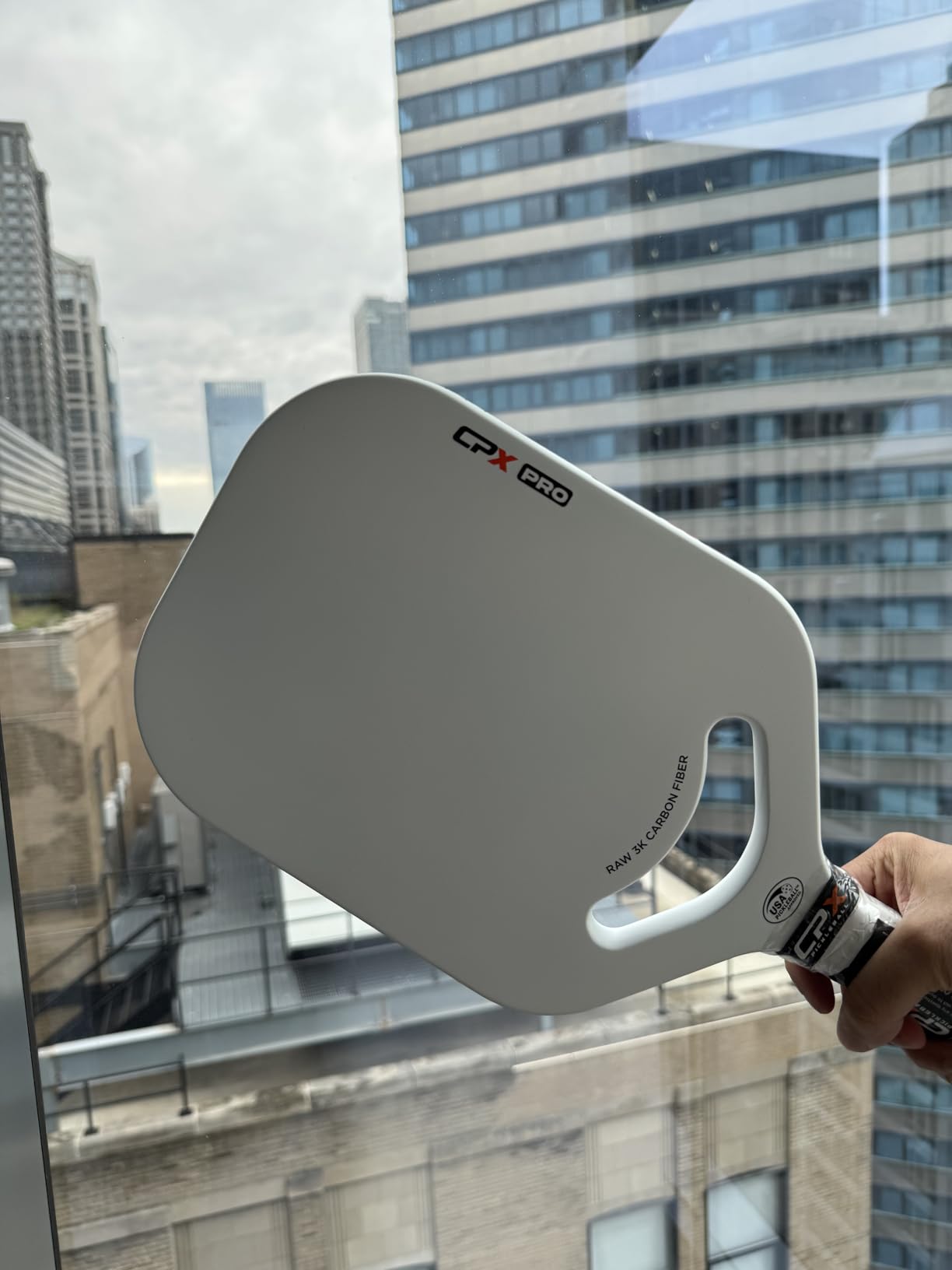
The CPX Pro is the paddle I would hand to someone who has been playing for a month and cannot yet find the sweet spot on a consistent basis. The honeycomb core gives a soft, forgiving response and the matte face does not glare under lights, which matters more than it sounds when you are tracking a ball against a bright sky at an outdoor court.
At 235 grams, or 8.2 ounces, it has a little more mass than the lightest options in this list and that mass shows up as stability on off-centre contact. Reviewers consistently call it a solid, predictable control paddle at a mid-level price point, with 77 percent of the 685 ratings at five stars.
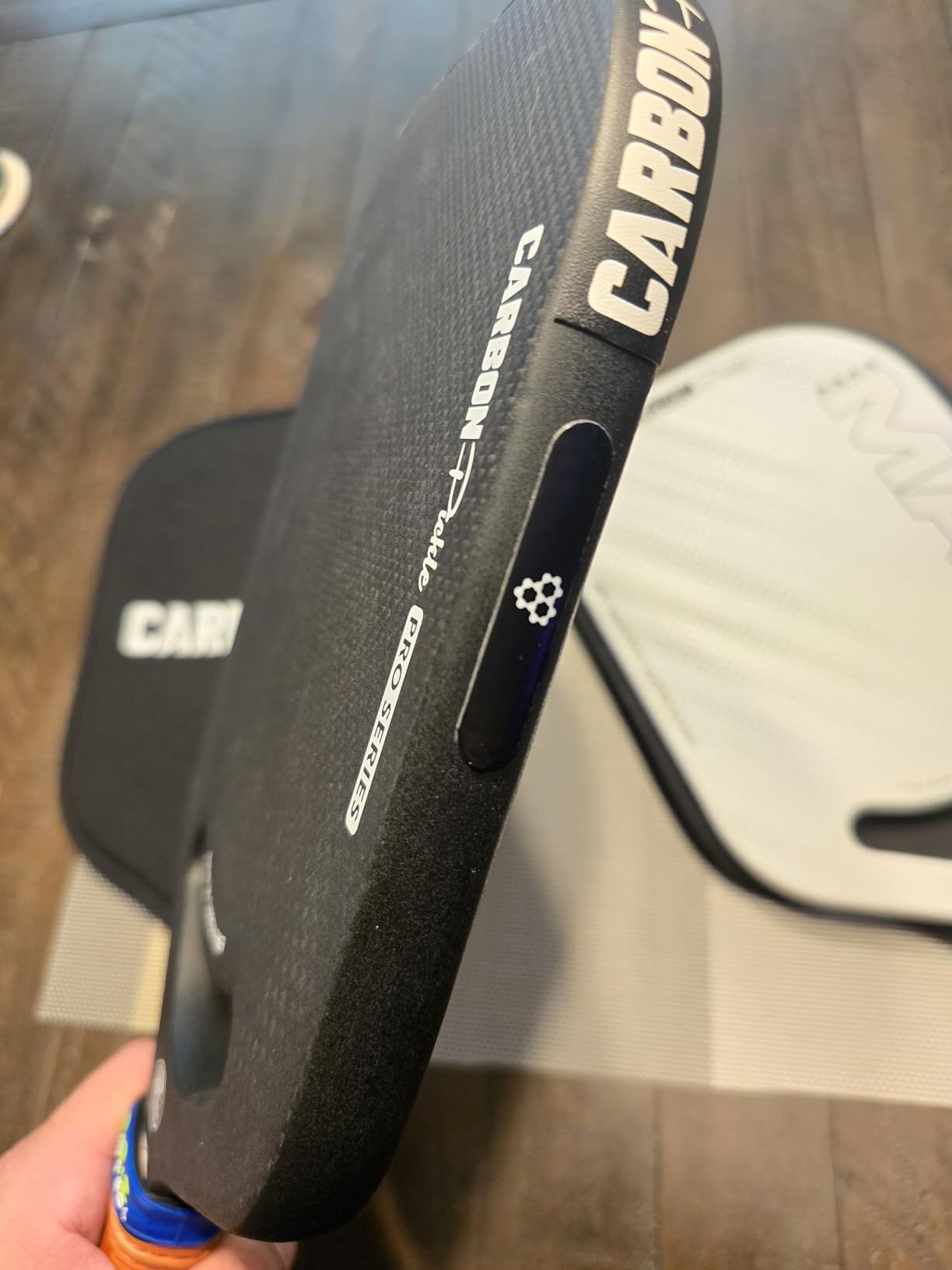
The edgeless design with a tennis-style grip is the quiet story here. Tennis grip sizes cluster around 4 to 4.25 inches, so if you are switching from a tennis racket or a padel racket, your hand already knows this diameter and the adjustment period disappears. The paddle was designed in Chicago, which matters less than it sounds but does signal a manufacturer who builds in the United States rather than reselling a generic shell.
Where this paddle is honest about its limits is the spec sheet itself, which lists weight and little else. There is one grip size and one size option, so if your hand wants something smaller or you play with a very short hold, that is not adjustable. The listing simply does not document core material in detail or thickness, and that ambiguity is the main reason I would not build a tournament game around it.
Will an 8.2 ounce paddle be too heavy for a new player?
No. Beginners frequently assume lighter equals easier, and the truth is that a slightly heavier paddle is more forgiving because it resists twisting on a mishit. At 8.2 ounces this is light for an adult arm. It is heavier than the 7.84 ounce JOOLA Vision and the 7.7 to 8.0 ounce Selkirk Halo, and that difference is small enough that you will not notice it until you have both in hand.
The more useful question is whether the grip suits you. At 4.1 inches this is the smallest handle in the group, which suits smaller hands and players who hold the paddle with a relaxed continental grip. If you have a large hand or play with a two-handed backhand, you will want a longer, larger grip instead.
Is this paddle legal for USAPA tournament play?
The listing does not carry a certification claim, so treat tournament legality as unconfirmed until you check with the organiser. That is a fair reason to choose a different paddle if you compete, and several entries further down this list do carry USAPA approval explicitly. For casual and club play the paddle is fine, and the control characteristics are what you are buying anyway.
The matte finish is also a genuine playability advantage. It shows less ball marking than a gloss face and does not throw reflections, so a beginner tracking a ball is working with one less variable. Long term, expect the carbon face to wear into a smoother, more polished surface, which slightly reduces grab but also makes it easier to slide the ball for a drop.
4. YVmove 16mm Kevlar T700: The Highest-Rated Control Paddle in the Group
YVmove 16mm T700 Carbon Fiber Pickleball Paddle USAPA Approved Black
16mm V-Sonic Gen3 core
6-layer raw T700 micro-grit
8 oz
16.53 x 7.4 inch
2-year warranty
Pros
- Tied highest average rating in the group at 4.8
- Heavy topspin and slice serve from the micro-grit face
- Perimeter foam injection widens the sweet spot
- Two-year warranty with NFC registration
Cons
- Some players want more head weight out of the box
- Supplied grip tape needs replacing sooner than a factory grip
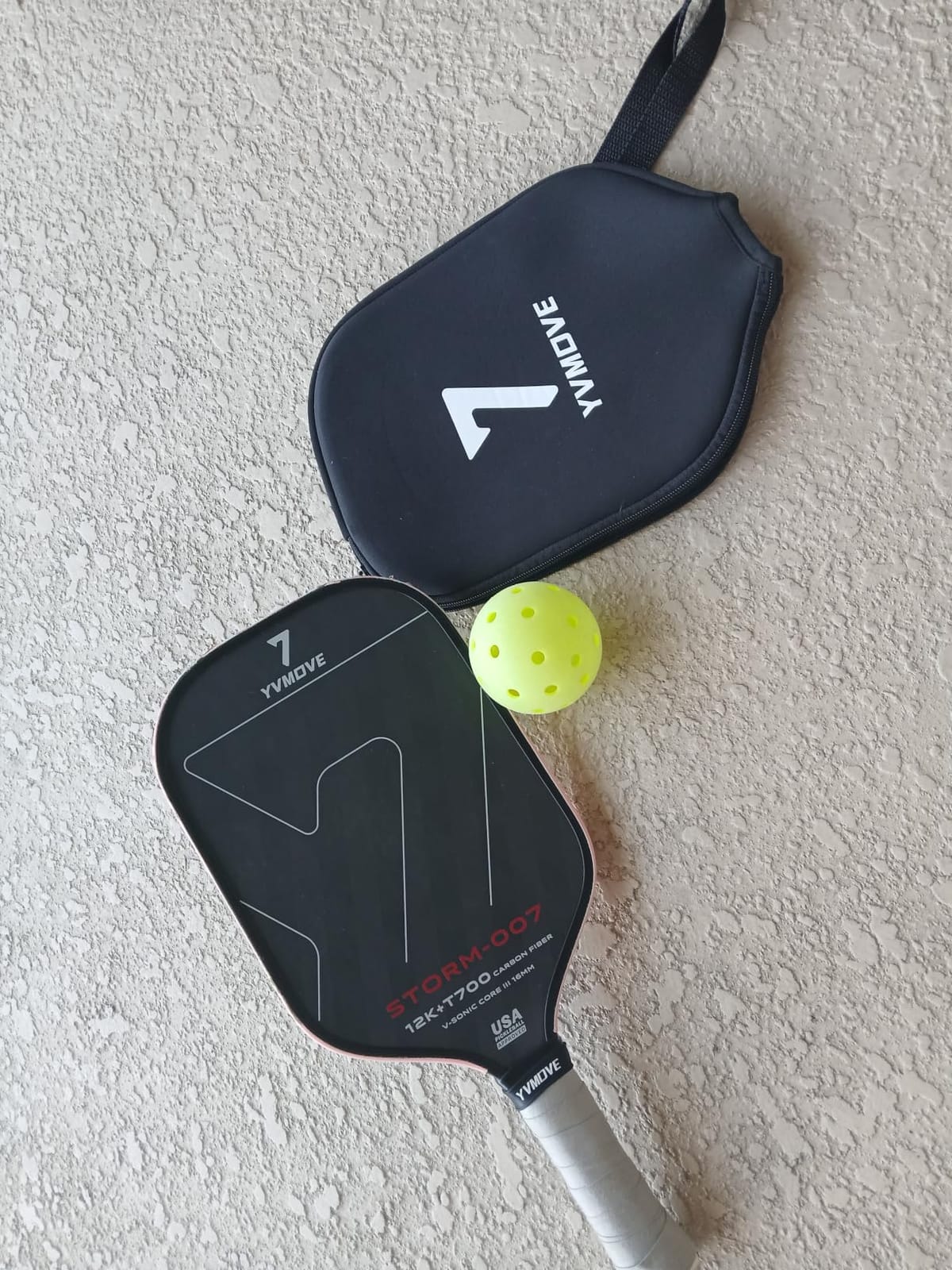
At 4.8 stars this is one of the two highest-rated paddles we reviewed, and the reasons line up with what good control paddles do. The core is a 16mm V-Sonic Gen3 anti-shock honeycomb described as having high dwell time, and the face is six layers of raw T700 with a micro-grit texture that is not shy about grabbing the ball.
The perimeter foam injection is the feature I would highlight to anyone building a control game. Injecting foam around the edge of a thermoformed unibody expands the effective sweet spot without adding weight, so off-centre blocks land rather than skidding. The 85 percent five-star share comes from intermediate players who report better accuracy and better soft-shot control, and the bundle includes two grip tapes and an eraser.
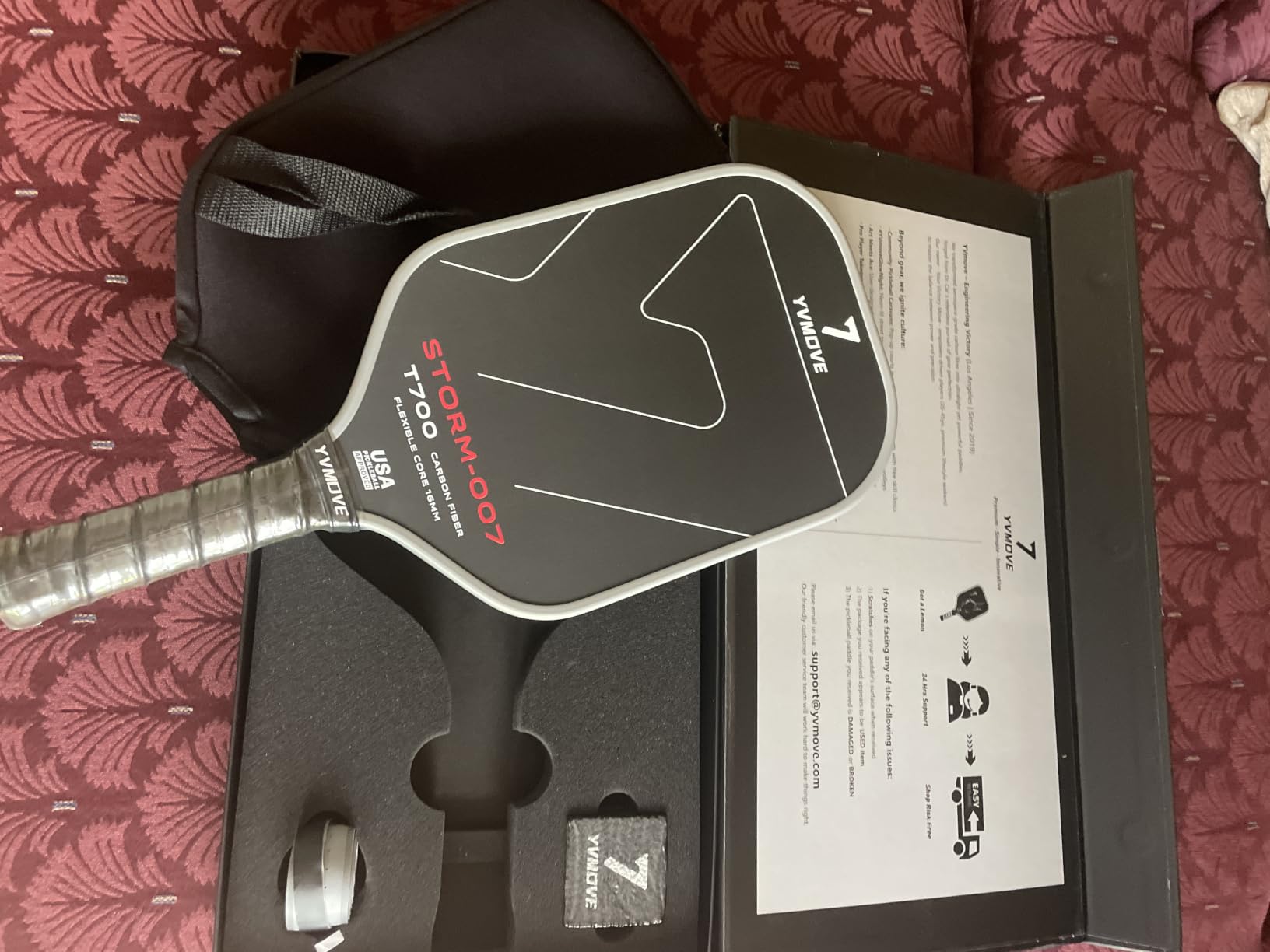
The elongated handle with an aerodynamic edge guard is tuned for two-handed backhands, and the paddle measures 16.53 by 7.4 inches at 8 ounces. An embedded NFC chip lets you register the warranty with one tap, which pairs with the two-year manufacturer warranty, the longest cover in this group. USAPA approval is stated, and the listing also references PPA Tour and APP Tour play.
The two complaints that come up are consistent. Several players wanted more weight toward the top of the head out of the box, which is the standard fix with a lead tape strip. And the supplied grip tape wears sooner than a factory grip, so treat it as a consumable and plan a re-grip within a season rather than assuming it will last.
Is a 16mm honeycomb core as soft as a foam core?
Not quite. Foam cores damp vibration and impact more aggressively because the material absorbs energy rather than flexing, while a polypropylene honeycomb core gives you a lighter, faster response with less deadening. If you are sensitive to shock in the elbow or wrist, a foam core is the better direction.
For everyone else the honeycomb-versus-foam gap is smaller than the marketing suggests. The Gen3 anti-shock design and the six-layer carbon face here do most of the smoothing. The reviews describe the paddle as improved accuracy and soft-shot control, and 529 ratings averaging 4.8 is one of the strongest satisfaction profiles in the group.
Will the micro-grit surface wear off and cost me spin?
Every raw carbon face wears to some degree, and micro-grit is finer than a coarse grit, so it typically stays closer to its original feel longer. The real cost shows up as surface marks on the face rather than a sudden drop in performance. Reviewers on this paddle report even wear and continued spin rather than a surface that quits early.
Keep it simple: wipe the face after outdoor sessions, store it out of a hot car, and treat grit as a slow decline rather than an event. If the surface does get glossy, that is when lead tape at the head becomes useful, because a slightly slicker face is easier to control with added weight.
5. DGYGQ 16mm Carbon: The Best Budget Carbon Face for Control
DGYGQ Pickleball Paddles, T700 Raw Carbon Fiber Surface, 16mm Polypropylene Honeycomb Core for All Skill Levels – Larger Sweet Spot for Max Spin, Control & Power
T700 raw carbon surface
16mm polypropylene honeycomb core
8 oz
16.92 x 7.36 inch
Pros
- Long 16.92 inch length with ABS edge reinforcement
- Lightweight 8 oz build with quick responsiveness
- Carrying case and cleaning block included
- 87 percent five-star share
Cons
- Only a single colour variant offered
- Less established brand with a shorter review history
The DGYGQ is among the cheapest carbon-faced paddles in this roundup and it still scores 4.8 across 232 ratings, with 87 percent at five stars. That is worth saying plainly because it undercuts the assumption that you have to spend heavily to get a usable control paddle. The face is raw T700 carbon, the core is 16mm polypropylene honeycomb with ABS edges, and the paddle weighs 8 ounces.
What stands out is the face length. At 16.92 by 7.36 inches this is the longest paddle in the group, and length plus a honeycomb core is part of the classic forgiveness recipe. The ABS edge reinforcement spreads impact away from the rim, so balls hit slightly off-centre still come back with pace. Reviewers describe a large sweet spot and quick responsiveness at a very accessible price point.
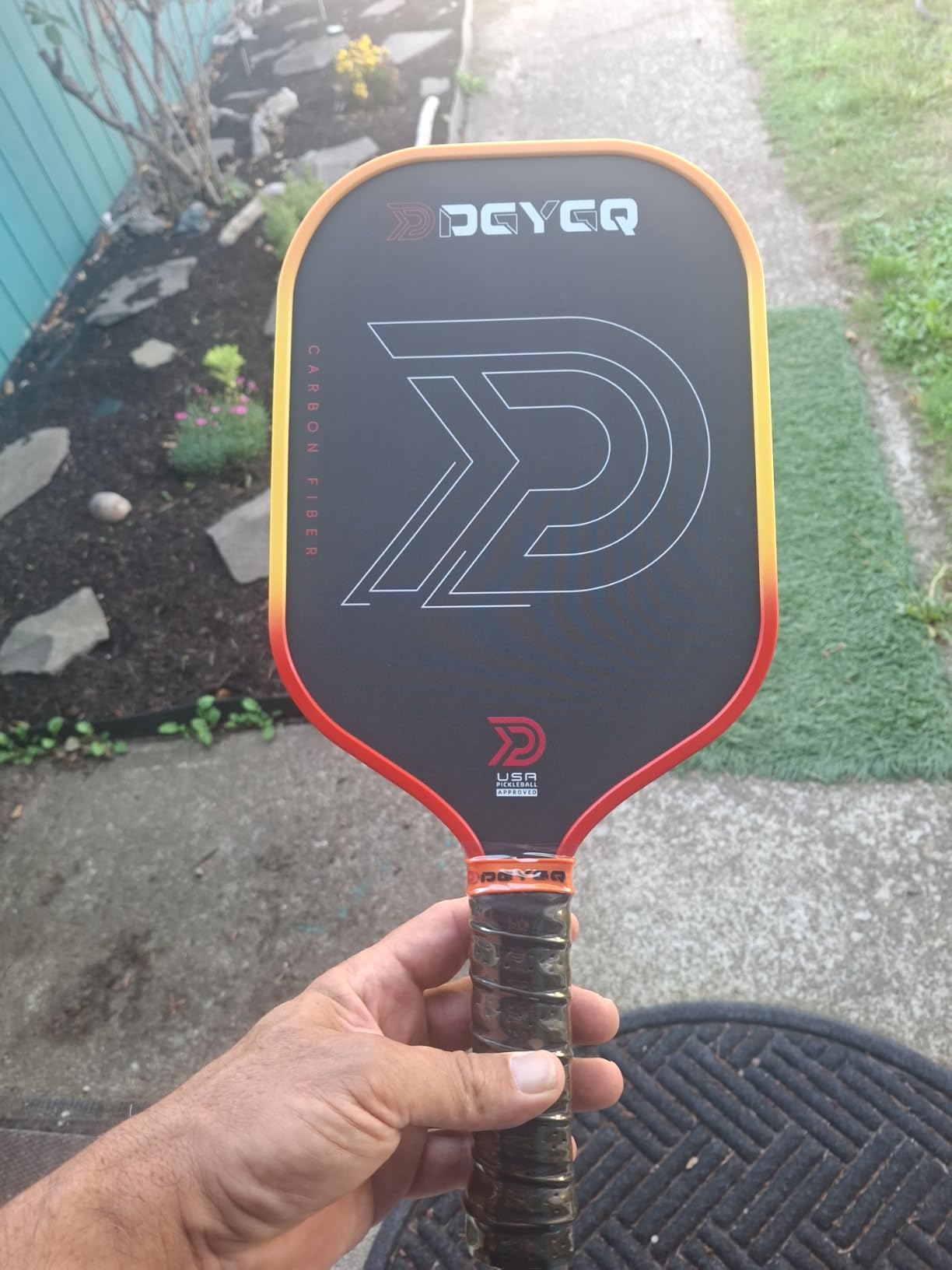
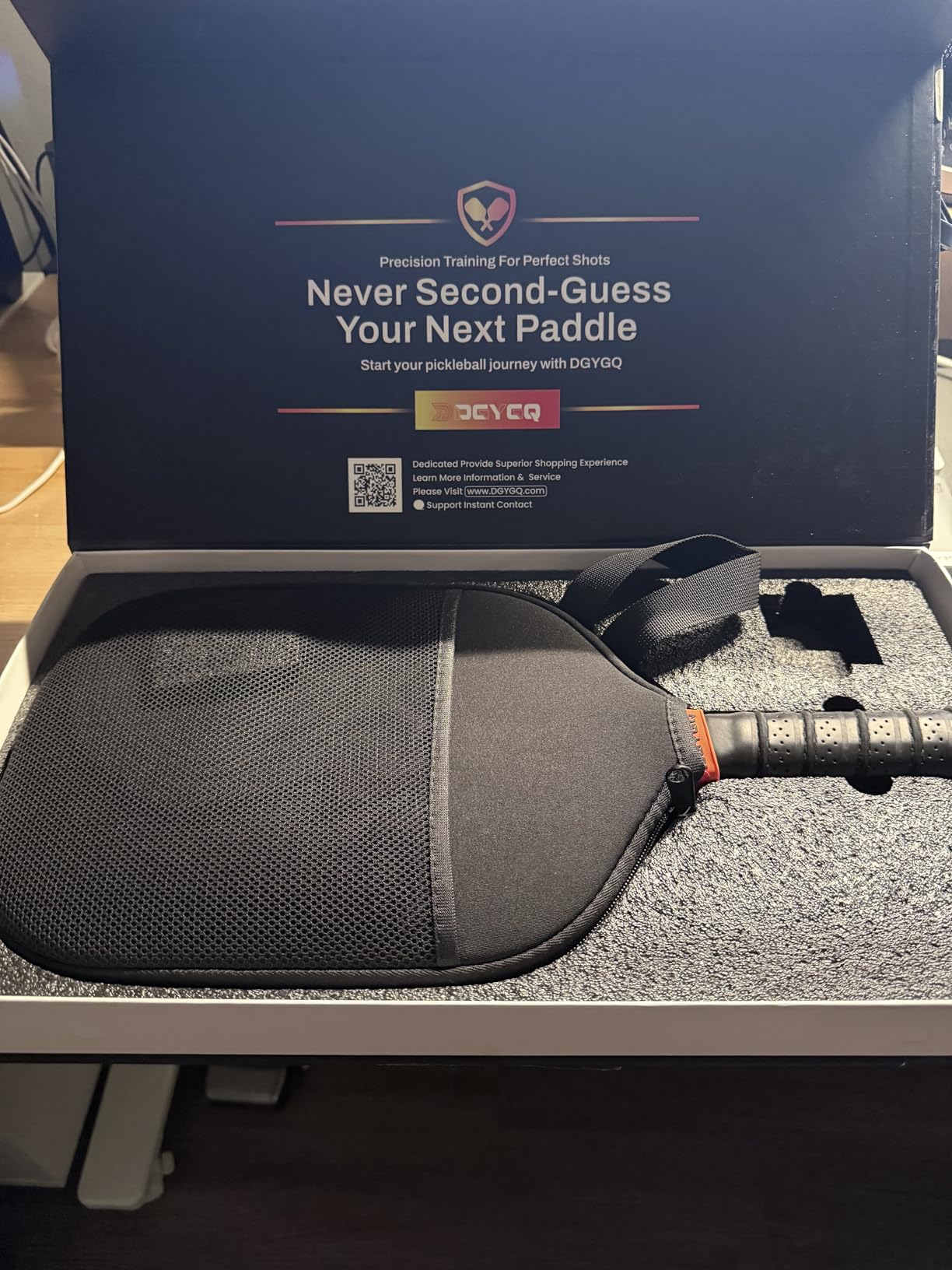
The small things that usually get skipped are included: an edge guard for scratch protection, a carrying case, and a cleaning block. The edge guard is a genuine control-paddle feature rather than a cosmetic one, because a scraped edge changes how the ball comes off the face near the rim and unpredictable edges are exactly what a control player does not want.
The two things to weigh are the single colour variant and the brand’s shorter review history. Two hundred and thirty-two ratings is a small sample, so there is less long-term durability data than the 1656-rating paddle at the top of this list. If you buy from a seller with easy returns, that risk is manageable; if not, a longer-established brand is the safer pick.
Is a bigger paddle automatically more forgiving?
Bigger helps, but it is not the whole story. Forgiveness comes from three things together: face area, how the core absorbs off-centre impact, and the sweet spot’s location. A wide face with a thin core can still feel edgy because the ball rebounded too fast. A 16mm core with ABS edge reinforcement, as here, spreads the impact and slows the response, which is what produces that large-sweet-spot feel reviewers describe.
The trade-off with a large face is aerodynamics. More surface area catches more air, and a long, wide paddle can feel slower to swing through on a fast exchange at the kitchen. For most players that is a good trade for control. For an aggressive doubles player who lives on hand-speed, the width is a compromise worth testing in person.
Will an unfamiliar brand hold up under regular tournament play?
There is no published long-term data for this model, so treat it as a first paddle rather than a forever paddle. Reviewers do praise build durability and the included edge protection, and there is no certification claim in the listing, so verify tournament eligibility with the organiser before you rely on it in competition.
Given the rating profile, most buyers are getting what they paid for: a spin-and-control paddle for a first season or a second paddle for a partner. If you later move up, you will know whether you liked the wide-face feel, and that knowledge transfers directly to your next purchase.
6. JOOLA Vision 16mm: The Best Paddle for Spin-Weighted Control
JOOLA Vision Pickleball Paddle with Textured Carbon Grip Surface Technology for Maximum Spin and Control with Added Power – Polypropylene Honeycomb Core Pickleball Racket 16mm
Carbon Grip Surface face
16mm honeycomb core
7.84 oz
Aero Curve head
21.9 inch overall
Pros
- Reliable spin on serves
- drives and dinks
- Light 7.84 oz build with quick swing speed
- Aero Curve head reduces drag for swing speed
- Moisture-managing Sure-Grip handle
Cons
- Highest one-star share of the JOOLA paddles here at 6 percent
- Long overall length may feel oversized
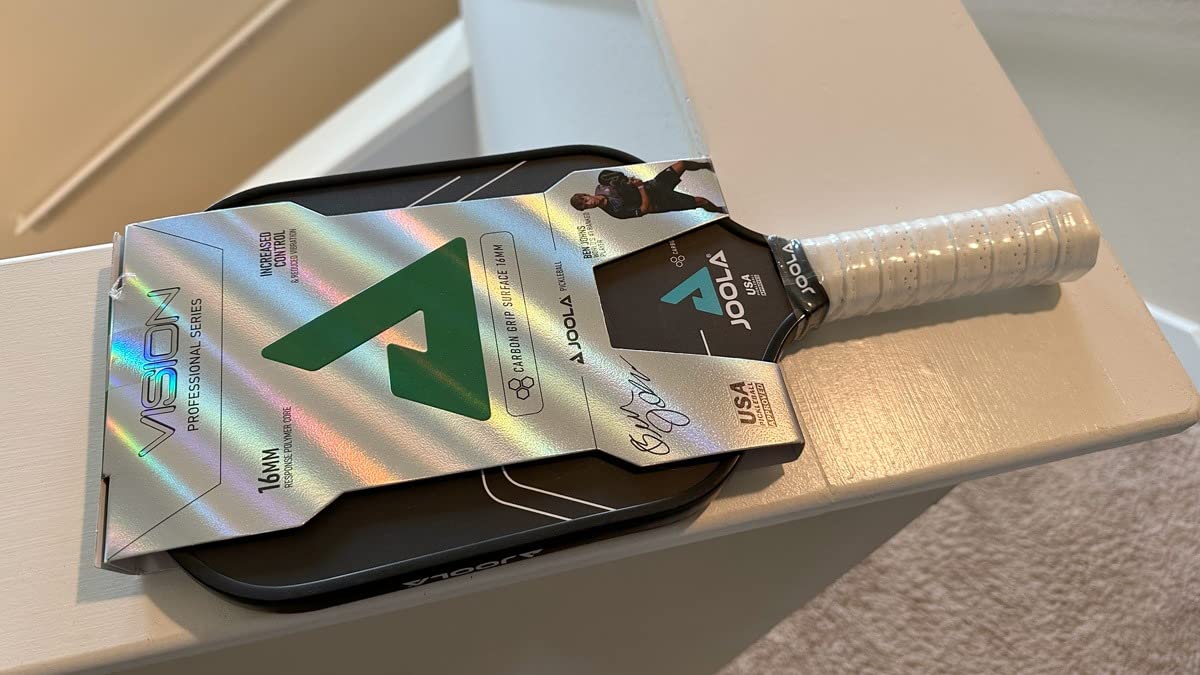
The Vision is one of the lightest paddles in this roundup at 7.84 ounces, and that single number is why it feels quick in a way some of the others do not. Light weight lowers swing weight, swing weight lowers the time between your prepare and your contact, and less time is more time. For a player who wants to move a ball to a specific place rather than hit it hard, that matters.
The Carbon Grip Surface uses a Carbon Flex3 textured face, which is what gives the reliable spin owners mention on serves, drives and dinks. The Aero Curve head is shaped to cut drag, and the Sure-Grip handle has a perforated anti-slip ridge with moisture wicking and shock absorption. The 4.5 average across 526 ratings sits slightly below the leaders here, but the 75 percent five-star share reflects a paddle that works well for the right style.
This is also the paddle with the most brand infrastructure behind it. JOOLA is an official paddle sponsor of Ben Johns and the PPA Tour, and the model is USAPA approved, so it is straightforward to enter sanctioned events with it. The paddle is supplied as a bare paddle with no cover, and the warranty is a 120-day limited window, which is worth knowing before you buy.
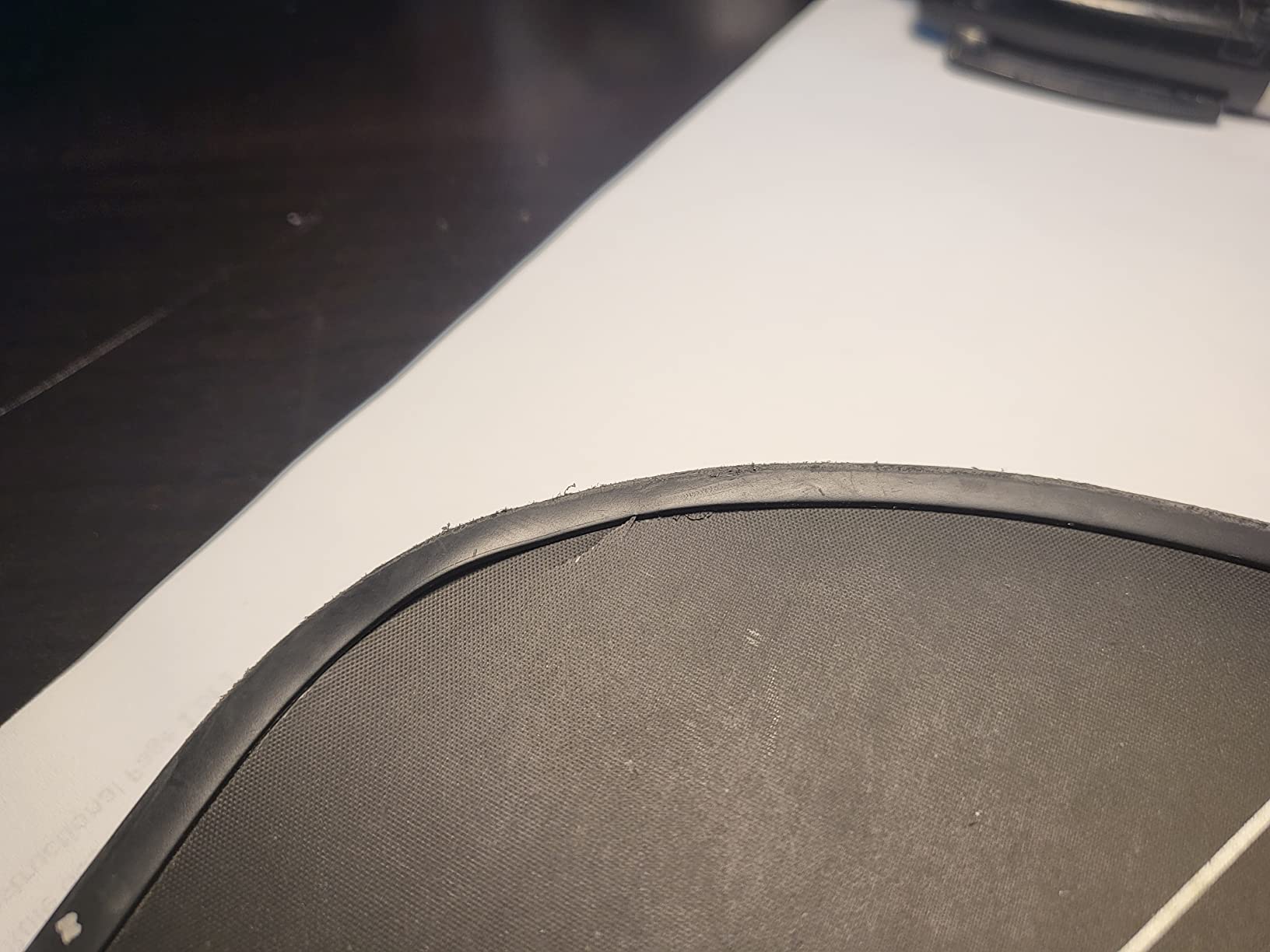
Where the reviews split is durability and feel consistency. Six percent one-star ratings is the largest negative share among the JOOLA paddles we reviewed, and the complaints cluster around long-term feel rather than the first few months. A few players also find the 21.9 inch overall length oversized if you have a compact swing pattern.
Does a lighter paddle give better control or worse stability?
Better control if your issue is timing and placement, worse stability if your issue is blocks and heavy balls. At 7.84 ounces the Vision will move where you tell it, and a mishit has less inertia to push back against. Against a hard drive you are blocking, a lighter paddle absorbs less and can feel twingy.
For players returning from elbow or shoulder discomfort, low weight is a real benefit because it reduces the load on the arm through long sessions. The practical compromise is to add a small amount of weight low on the face rather than at the head, which keeps the quick hands while giving the block something to hold onto.
Is the Aero Curve shape better than a squared-off head for control?
For a soft-game player, usually. A curved head sheds drag through the swing and creates room for the ball to sit in the sweet spot without the face edge catching it first, which is why the manufacturer pairs this shape with a grippy textured surface. The curvature also gives you a natural landing spot for a dink, which is where control points get won.
The reason some players dislike it is total length. At 21.9 inches overall, with a 4.25 inch grip, the paddle sits further from your body than a compact control paddle and can feel like it is in the way on a fast volley exchange. Test it at a club if you can, because this is a shape preference more than a performance one.
7. JOOLA Pro V: The Best Elongated Paddle for Advanced Touch Play
JOOLA Pro V Pickleball Paddle – 14mm/16mm – Raw Carbon Fiber Textured Surface – Enhanced Frame & Propulsion Core, USAPA & UPA-A Certified, NFC Chip Enabled, Premium Control & Lightweight Performance
KineticFrame flex construction
Raw carbon textured face
8.1 oz
16.5 x 7.5 inch
4.25 inch grip
Pros
- KineticFrame architecture flexes like a hockey stick
- Reinforced raw carbon grips the ball for spin
- Elongated Perseus shape suits a two-handed backhand
- NFC chip links to a 12-month warranty
Cons
- Lowest rating in the group at 4.2 with a 10 percent one-star share
- Premium tier pricing without a matching spec jump
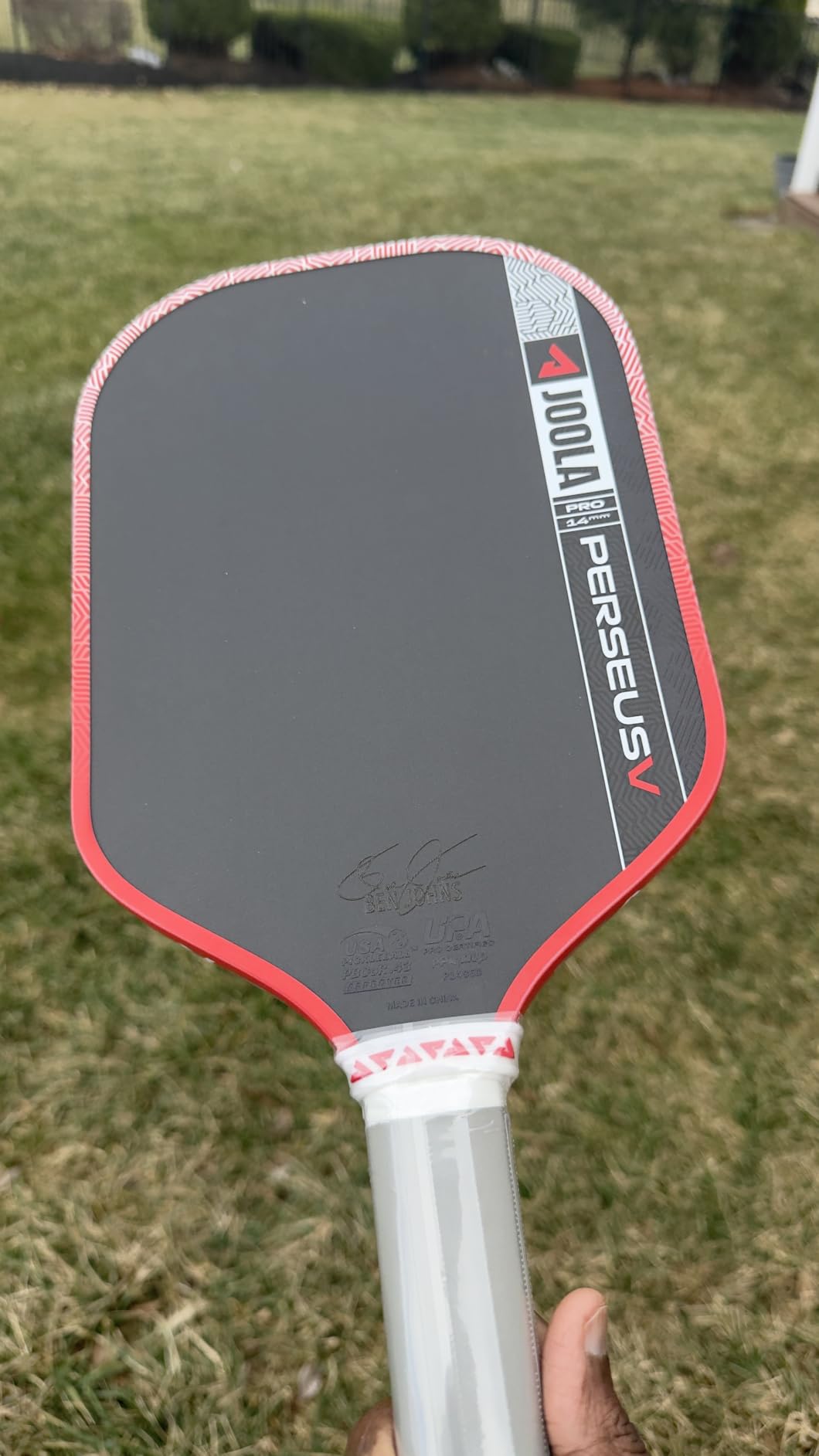
The Pro V is the most engineered paddle we reviewed and the most polarised. At 4.2 stars across 147 ratings it is the lowest-rated product in this group, with 71 percent five-star but a 10 percent one-star share. That split is the honest summary: players who like the feel rate it very highly, and players who do not rate it very poorly.
KineticFrame is the reason. The construction is described as inspired by hockey-stick flex and energy release, meaning the paddle bends through the swing and returns energy at contact. On a slow drop that flex can feel like extra dwell time, which is the exact mechanism a control player wants. The TechFlex Power layup distributes weight and adds flex through the face, and the reinforced raw carbon surface grips for spin and precise control.
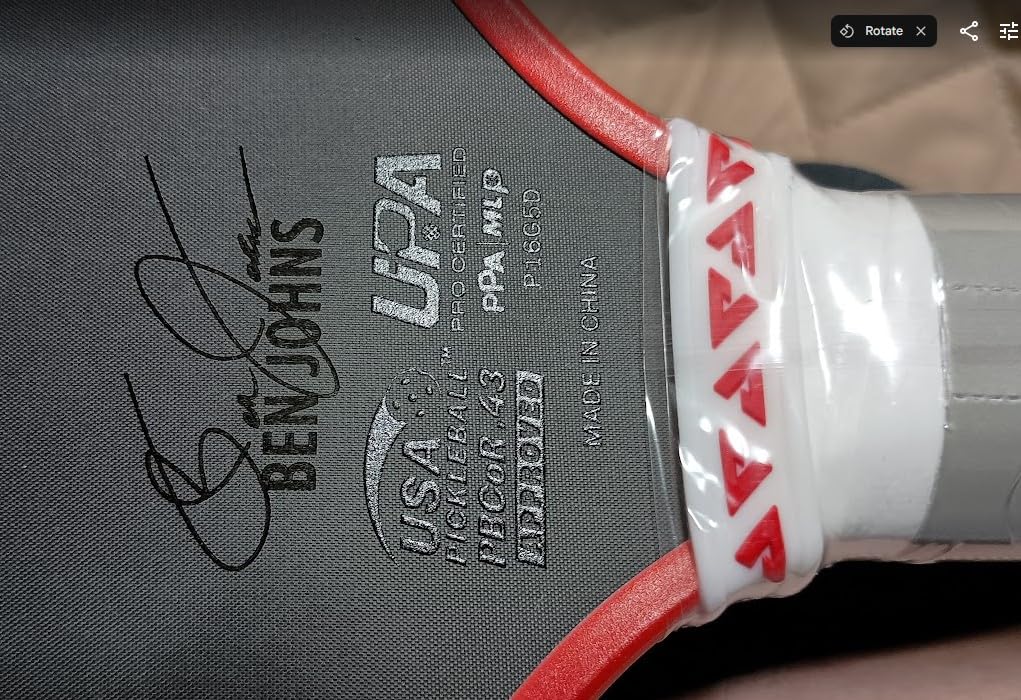
The measurements are specific and worth knowing. The elongated Perseus shape measures 16.5 by 7.5 inches with an average weight of 8.1 ounces, a 5.5 inch grip length, and a 4.25 inch grip circumference. It is offered in 14mm and 16mm across Agassi, Perseus, Hyperion, Scorpeus, Kosmos and GRAF shapes in standard and slim grips, which is the widest configuration range of any paddle in this roundup.
It carries USAPA and UPA-A certification and an embedded NFC chip that links to a manufacturer app for registration and a 12-month warranty. Ten-year spare part availability is published for the handle components. Against that, the reviews repeatedly question whether the premium tier pricing is justified when mid-tier carbon paddles deliver comparable placement.
Should an intermediate player buy a flex-architecture paddle?
Probably not as a first upgrade. Flex changes the feel so much that you have to relearn your contact point, and relearning contact while also trying to build placement habits is a lot at once. If you are already placing drops consistently and want to squeeze more out of the same swing, KineticFrame is a genuine upgrade. If you are still hunting for the sweet spot, a simpler 16mm honeycomb paddle will get you there faster.
There is also a practical benefit to the range of shapes and grips. If you have large hands or dislike a standard grip, the slim and standard options mean you can find a fit rather than living with it. That is one of the reasons this paddle is worth knowing about even if you never buy it.
How do I weigh a 12-month warranty against a two-year warranty?
Warranty length is the weakest of the signals here. A 12-month warranty on a premium paddle with a 10 percent one-star share does not answer the question buyers are actually asking, which is whether the feel holds up at eighteen months. A two-year warranty on a mid-priced paddle answers a more relevant concern, because most players replace a paddle somewhere in that window.
Judged on owner feedback rather than paperwork, this is a paddle that rewards patience. The 10 percent one-star share mostly reflects feel and consistency expectations at this tier, not defects. If you want the architecture and can accept that some of the price is brand, it delivers. If you want measured value, the honeycomb paddles in this list are the smarter buy.
8. Selkirk SLK Halo: The Best Lightweight All-Rounder for Touch Players
Selkirk Sport SLK Halo Control Max Pickleball Paddles | Carbon Fiber | Gray
18k UltraWeave raw carbon
16mm Rev-Control Polymer core
7.7 to 8.0 oz
16 x 7.85 inch
Pros
- Balances control and spin on a raw carbon face
- Padded faux leather grip stays comfortable
- MAX shape widens the sweet spot
- Lightest weight range in the group
Cons
- Shorter handle than two-handed-backhand players prefer
- Only 123 reviews on the listing
The SLK Halo sits at the intersection of two things that usually do not come together: raw carbon spin and a genuinely light 7.7 to 8.0 ounce weight range. The 18k UltraWeave face with Raw Spin Technology gives you a grippy surface, and the 16mm Rev-Control Polymer core is described as enlarging the sweet spot, which is a polypropylene-style core designed with forgiveness as the goal.
At 16 by 7.85 inches the MAX shape is both wide and compact, and that geometry is why the grip comfort and control balance get mentioned together in reviews. The 79 percent five-star share across 123 ratings reflects owners who highlight control, grip comfort, and even wear across the face, which is what you want from a paddle you expect to use for seasons.
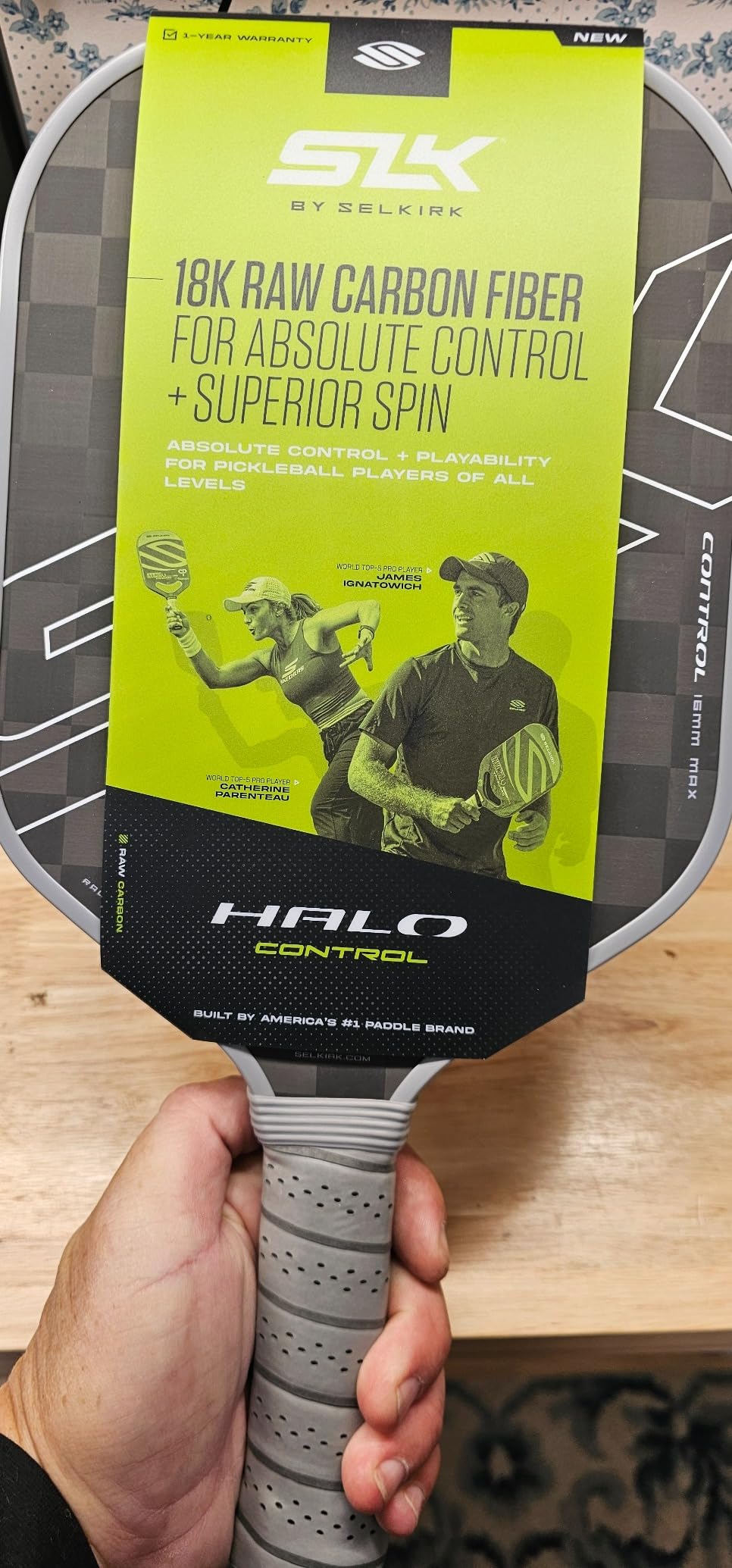
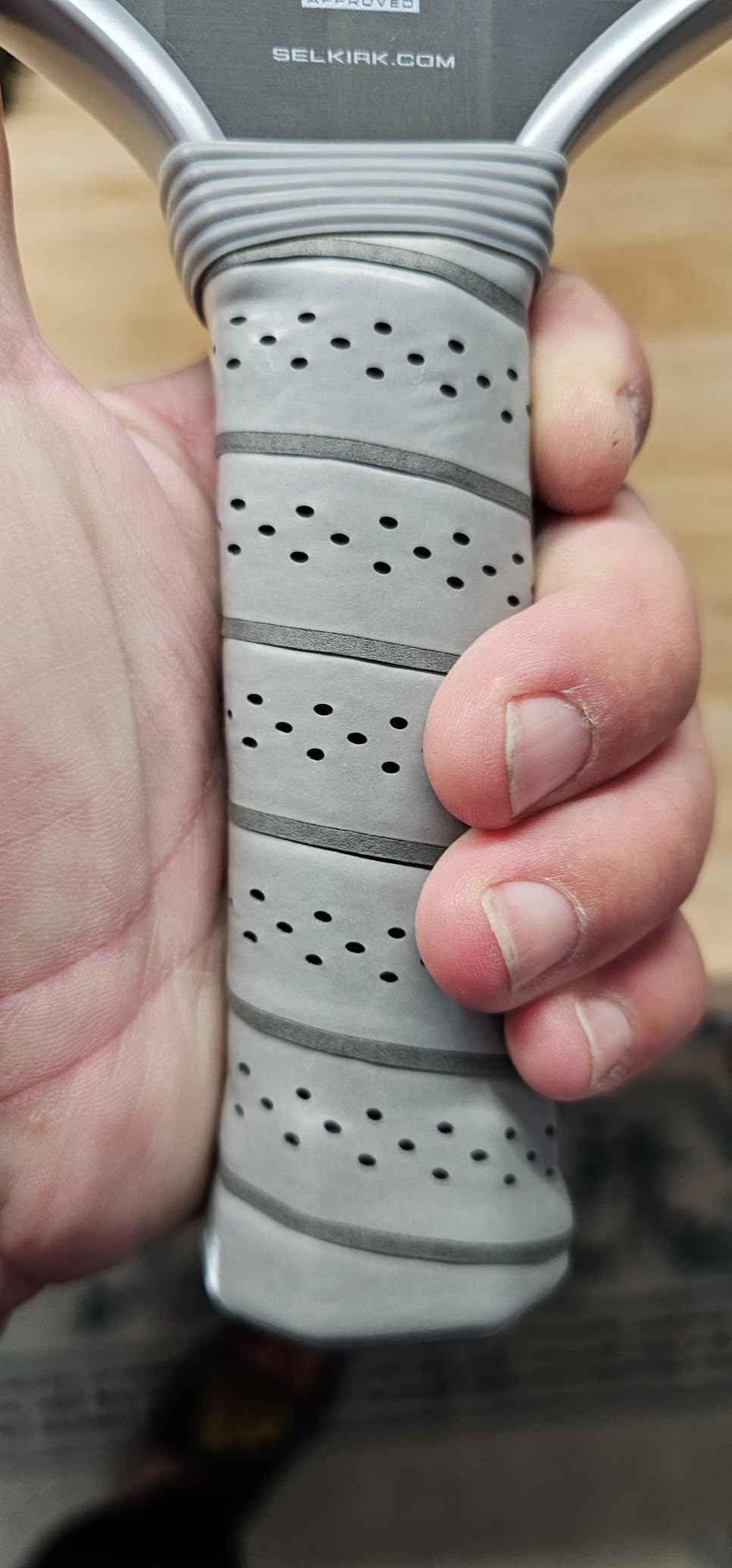
The grip is a cushioned faux leather with 4.85 inches of handle length and 4.25 inches of circumference, which is a well-judged size for most adult hands. A one-year limited warranty covers it. The listing also offers Power and Pro shape options, and the control version comes in gray, so if you are buying for someone whose game is built on placement rather than force, this is the shape to look at.
The two honest limitations are in the reviews. The handle is shorter than a two-handed-backhand player may want, and at 123 ratings there is simply less owner history behind it than the 1656-rating paddle at the top of this list. That is not a knock on quality, it is a fact about how much long-term data exists.
Is a raw carbon face better than a fiberglass face for control?
Yes, mostly because of grip and consistency. A raw carbon face with a texture gives the ball something to hold, so you can create spin and control the direction at the same time. A fiberglass face is grippier in absolute terms and feels more sandpaper-like, but it is less stiff, so it deflects more and gives you less feedback about where on the face you made contact.
That said, a painted or smoother carbon face is not automatically worse, and the trade is about feel preference as much as performance. The Rev-Control Polymer core on this paddle is the part doing the control work; the carbon face is doing the spin and the durability.
Will a 7.7 ounce paddle feel too light in a hard exchange?
It is light, and players with a strong blocking game may want more mass. What low weight gives back is swing speed and reduced fatigue, which for a touch player is a better currency. The MAX shape and 7.85 inch width add stability back through paddle area, so the paddle does not feel flimsy in the hand even though it is light.
If you do want more, add lead tape along the top edge of the face. That raises static weight slightly without pushing mass away from your hand or changing the balance point, which is the least disruptive way to tune a control paddle to your game.
9. Franklin Sports Pro MaxGrit: The Best Entry Paddle That Is Tournament Legal
Franklin Sports Signature Series Pro USAPA Pickleball Paddle – 16mm – Gold
MaxGrit surface
16mm polypropylene core with fiberglass layer
7.9 to 8.3 oz
16.5 x 7.5 inch
Pros
- USAPA approved for competitive and tournament play
- MaxGrit adds traction and damps vibration
- Fiberglass layer centres a forgiving sweet spot
- Offered in 13mm and 16mm cores
Cons
- Softer and less crisp feel than carbon fiber faces
- Pro-level branding on a budget-tier paddle
The Franklin Signature Series Pro is the option here for players who want a legal tournament paddle without carbon fiber pricing. The 16mm polypropylene core with a fiberglass surface layer centres a forgiving sweet spot, and the MaxGrit technology handles traction, spin and vibration damping in one treatment. At 4.4 stars across 662 ratings, it is rated lower than the carbon paddles here, and it is honest about why.
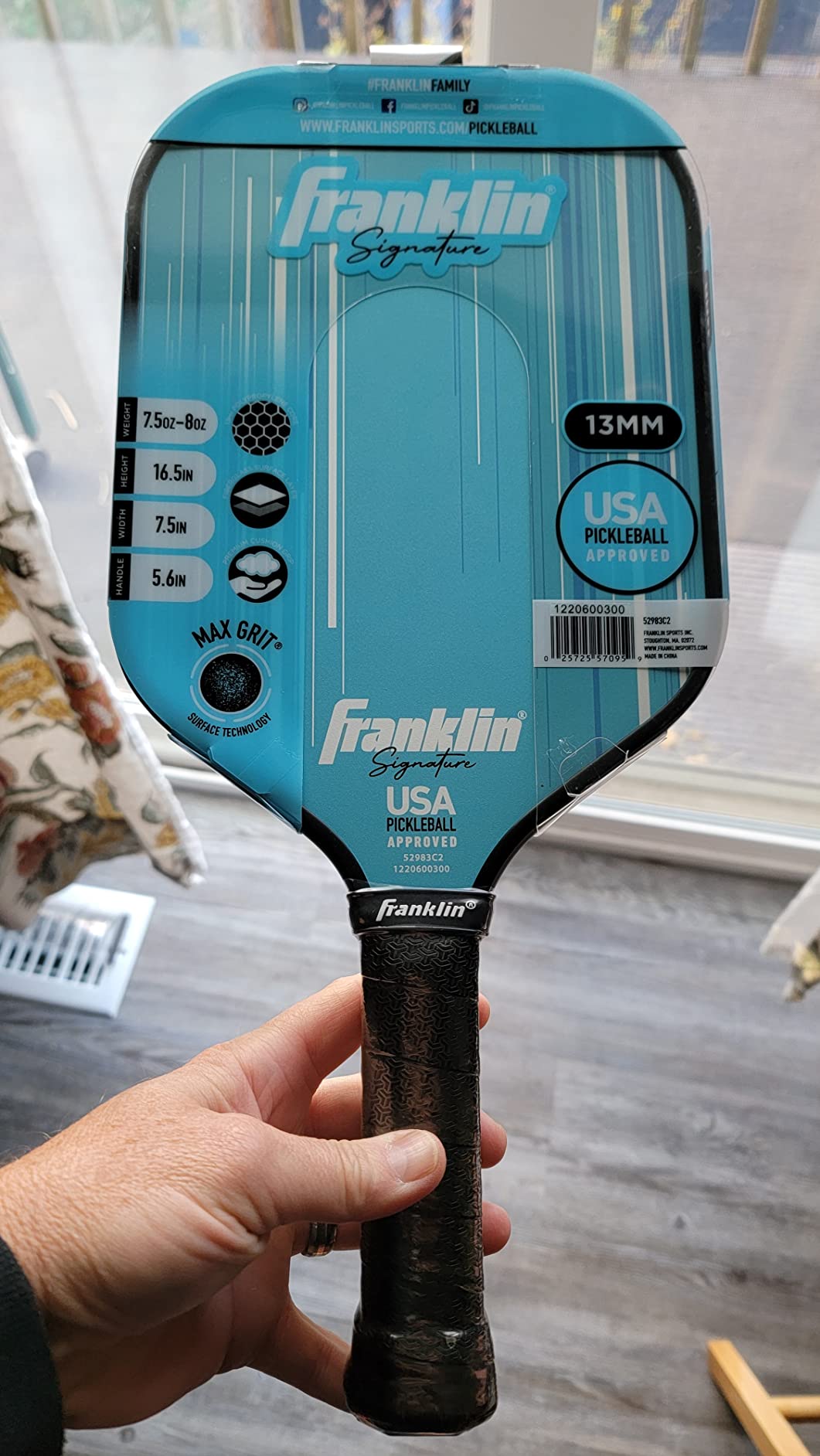
The 70 percent five-star share is still a solid satisfaction profile. Buyers describe it as a dependable entry-level to intermediate paddle with good grip. It measures 16.5 by 7.5 inches with a 5.6 inch handle length, a 4.5 inch handle circumference, and a 7.9 to 8.3 ounce weight range, which puts it in the middle of the group on both size and weight.
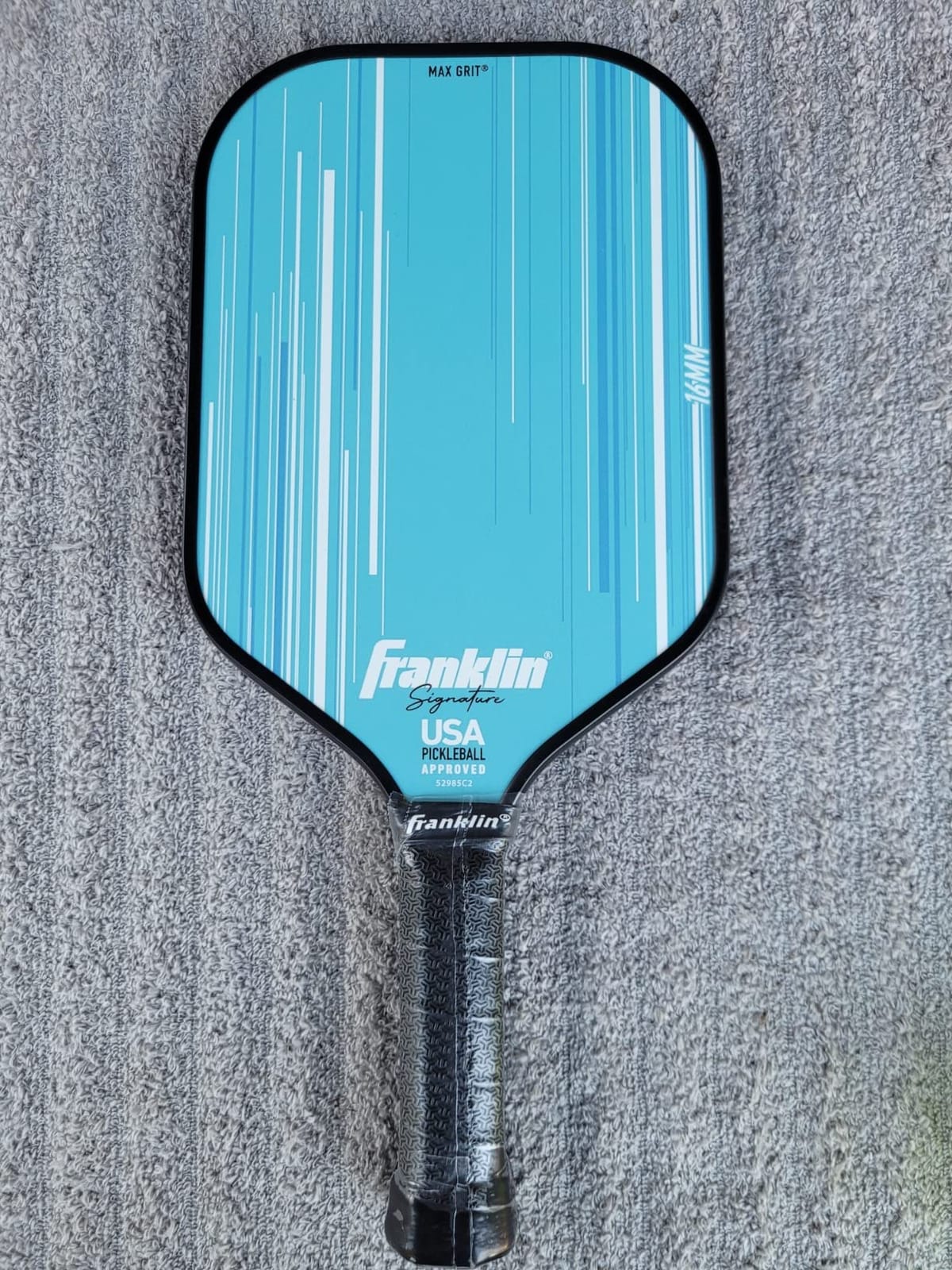
The one feature that makes this worth a spot in a control roundup is the choice of a 13mm or a 16mm core. Buyers who are still moving toward control can take the 16mm and get a slower, softer response, while anyone who finds it too soft steps up to the 13mm. Having both options in one model is unusual and it makes the paddle a genuine transition purchase rather than a dead end.
The 90-day limited warranty is the shortest of the group, and buyers note that polypropylene and fiberglass construction is less crisp than carbon under a fast ball. There is no getting around the material difference: this face absorbs rather than transmits, so you will feel less feedback about contact quality. In exchange, it absorbs impact, which is why it is a sensible choice for a newer player.
Can a budget paddle really be good enough for competitive play?
It can be legal, which is not the same as being the best choice. USAPA approval means you can enter sanctioned events, and the MaxGrit surface gives you enough spin to keep a rally alive. What you give up is the crispness of a carbon face and the shape options that let you tune a paddle to your game.
My read is that this is a two-season paddle. For a player moving from recreational to league play, it is a sensible, affordable way to find out how much they like a softer response before spending on a premium carbon model. For a competitor, treat it as a backup.
Is a fiberglass face too soft to build spin on?
It will not generate the same heavy topspin that raw carbon does, but spin is not only about face material. MaxGrit gives you mechanical grip on the ball, and with a 16mm core the slower ball speed means you have more time to impart rotation before contact. Many grinders generate plenty of spin on a slower face because they are not trying to hit through the ball.
The bigger adjustment is feedback. A fiberglass face gives you less information about exactly where you made contact, so learning placement takes longer. If you are still building fundamentals, that slower learning curve is a real cost even though the price is low.
10. Vatican Pro V-Sol Pro 16mm: The Best Foam Core for Damping and Quiet Contact
Vatic Pro – V-Sol Pro Flash – Foam Core – Includes Paddle Cover
Full EPP foam core
Outer EVA foam ring
8.1 oz
16.2 x 7.7 inch
4.125 inch grip
Pros
- Foam core gives repeatable placement on repeated soft shots
- Less vibration than honeycomb-core paddles
- Still produces strong power when you swing through it
- Long handle variant suits two-handed backhands
Cons
- Slight give or vibration near the top edge without added weight
- Pop is muted on first contact
- Included cover fits too tightly
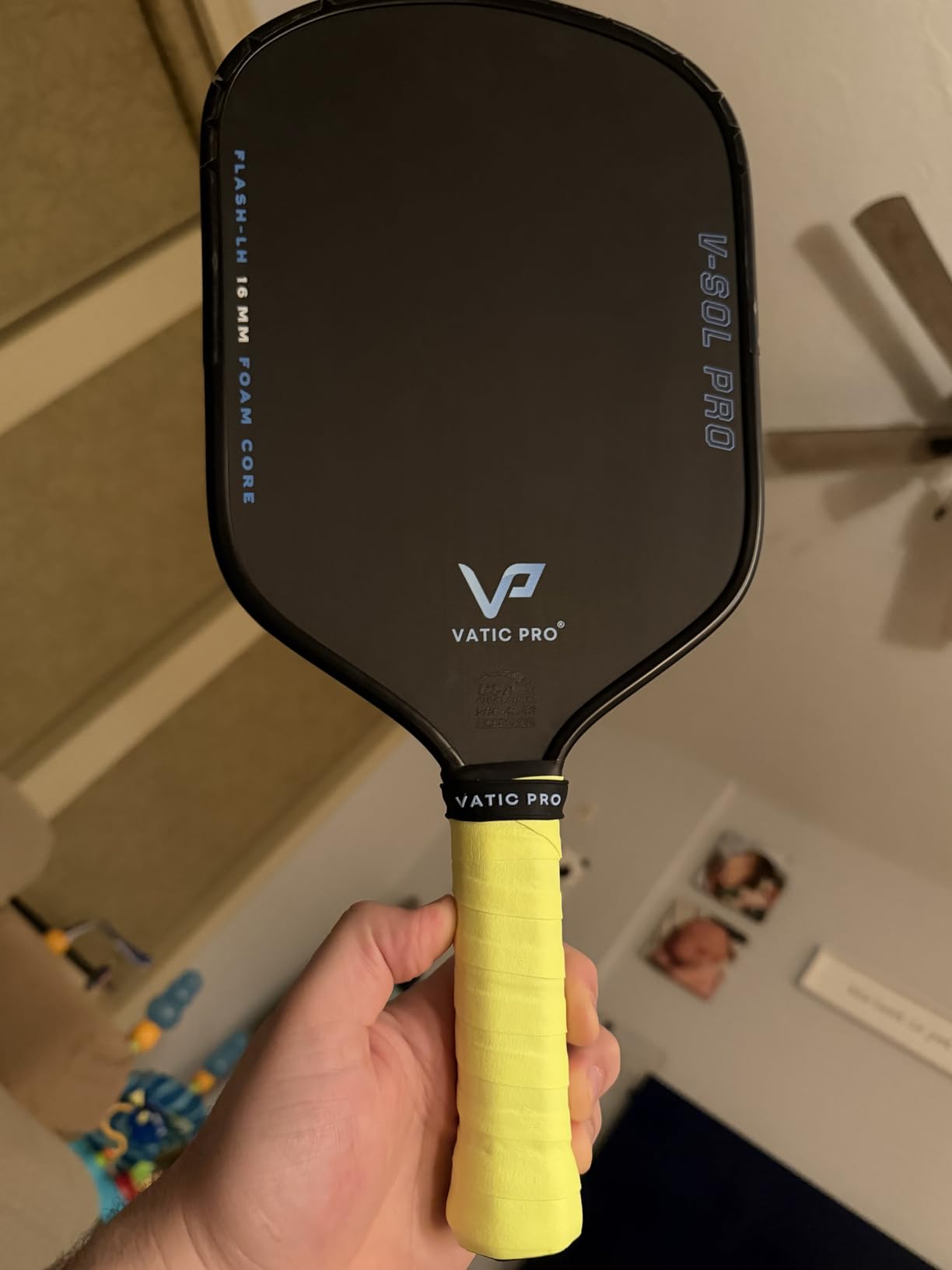
This is the quietest-feeling paddle we logged, and the most interesting one for players who dislike honeycomb. A full EPP foam core with an outer EVA foam ring absorbs contact energy across the whole face, so the ball leaves at a speed set by your hand rather than by the rebound. Owners describe repeatable placement on repeated low-power shots and dinks, and more control with less vibration than honeycomb paddles.
That is the tradeoff stated plainly: the pop is muted on first contact compared with a livelier paddle. If you need instant pace to survive a hard-driven exchange, this will feel slow. If your game is soft shots, resets and drops, the consistency is the point. At 4.5 stars across 294 ratings, the profile is stable rather than ecstatic.
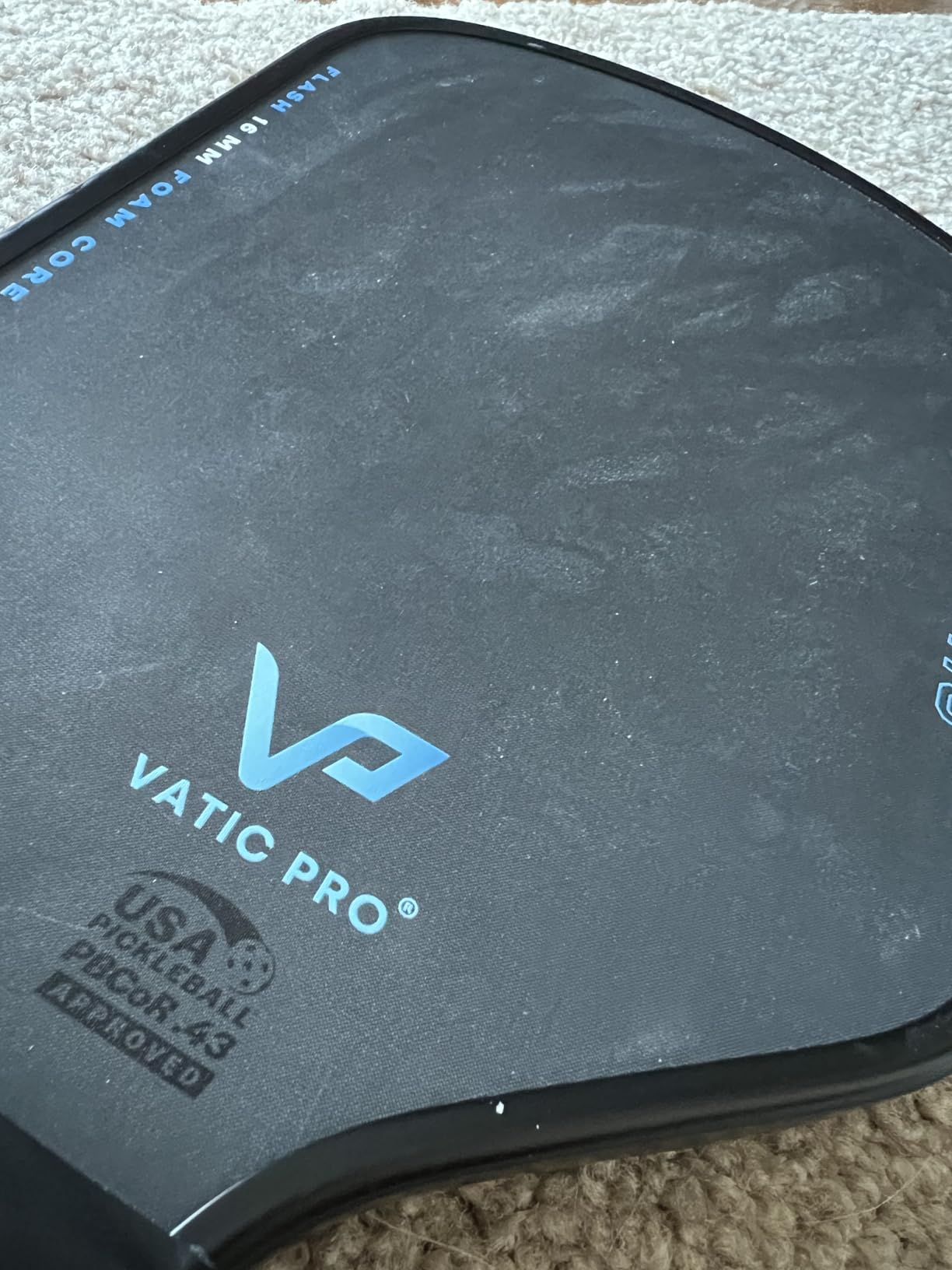
The foam core expands the sweet spot for drives while keeping control at the net, which is a clever way of describing why a foam paddle can still produce real power. It measures 16.2 by 7.7 inches at 8.1 ounces, with a 4.125 inch grip circumference across shapes. Variants include the Flash, a Flash long handle, V7 long handle, Bloom and V7, so handle length and face shape are both adjustable.
A few owners report slight give or vibration near the top edge unless weight is added, which is a fair criticism of any foam paddle that has not been weight-tuned by the buyer. The neoprene cover included in the box is also reported as fitting tightly, a small annoyance that is easy to overlook. Warranty cover is 21 days, the shortest in this group.
Is a foam core better than honeycomb for control?
For pure softness, yes. Foam absorbs impact energy and gives you a much quieter contact, longer perceived dwell, and less shock in the arm. Honeycomb is lighter and more responsive, which feels livelier and gives you more feedback and reach. Neither is universally better; they are two different answers to the same question.
The practical consideration is fatigue. If you play several hours a week, play in a senior league, or have a history of elbow or shoulder discomfort, the damping in a foam core is the reason to choose it. Players chasing pace, hand-speed, or a large hitting surface for a two-handed backhand will be better served by a honeycomb core.
Why does my foam paddle feel underwhelming at first?
Because foam paddles feel wrong for a few sessions. You have been conditioned to expect immediate response, and a foam paddle deliberately removes it. The reviews note that the paddle rewards practice with markedly better shot placement, which is the correct expectation. If you judge it in the first ten minutes you are measuring unfamiliarity rather than performance.
Two things make the transition easier. Add lead tape to give the head some authority if it feels too quiet, and pick the long handle variant if you play a two-handed backhand. Both are small changes that make a foam paddle feel considerably less temperamental.
11. Professor PhD Raw Carbon: The Best for Two-Handed Backhands and Reach
Professor PhD T700 Raw Carbon Fiber Premium Pickleball Paddle Racket – Precision Honeycomb Core – Enhanced Power & Control – USAPA Pickleball Approved
T700 raw carbon unibody
16mm honeycomb polymer core
8 oz
16.5 x 7.5 inch
5.5 inch handle
Pros
- Heavy-grit carbon face adds real spin on drops
- 5.5 inch handle suits two-handed backhands
- Lightweight and well balanced for fast swings
- Unibody build holds up over many sessions
Cons
- Some players want more weight for stability off centre
- One long-term owner places it in a mid tier rather than a premium one
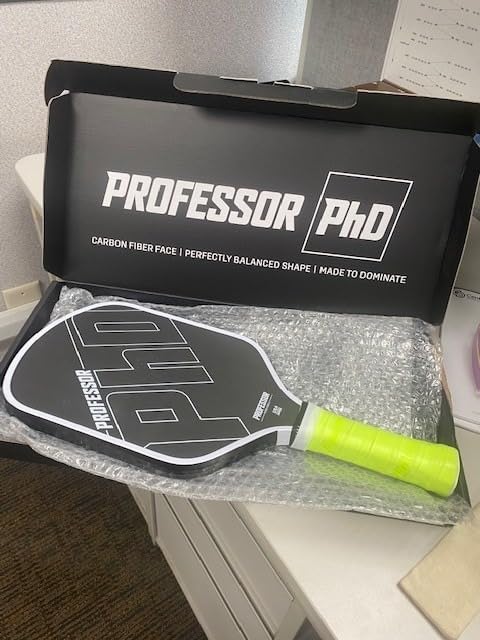
The handle is the headline on this one. At 5.5 inches of grip length, the Professor PhD is built from surface to handle as a single T700 carbon fiber unibody. That length is a deliberate choice for two-handed backhands and for extra reach at the net, and it is a genuine advantage over a standard 4.25 inch grip if you use both hands on the backhand side.
The 16mm honeycomb polymer core sits inside an optimized curved paddle head, which is designed for swing speed and kitchen play. Owners praise durability, control and spin at a price well below carbon rivals, and the 81 percent five-star share across 133 ratings reflects that. The heavy-grit face generates spin on drops and drives, which is what makes it a control paddle rather than just a touch paddle.
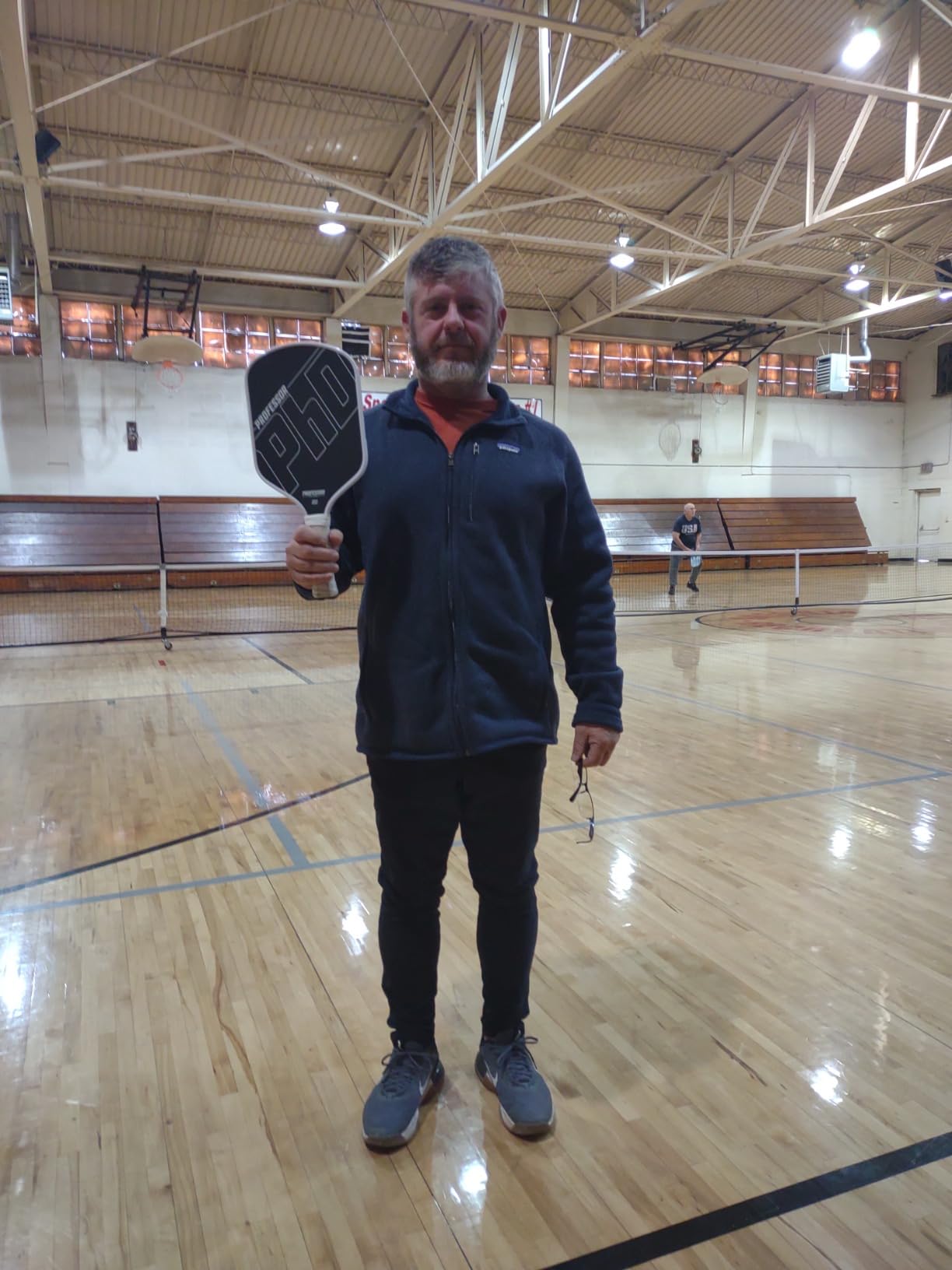
At 8 ounces and 16.5 by 7.5 inches, the dimensions are ordinary; the handle is the outlier. That combination suits a player who wants a normal-sized face for precise placement but wants the leverage and reach of a long handle. Non-raised printed graphics mean nothing on the face protrudes to catch the ball, which is a small manufacturing detail that matters for a control-focused player.
Two criticisms come up. Some players want more weight for stability on off-centre hits, which is the usual complaint about a light paddle and is addressed with lead tape. And one long-term owner places it squarely in a mid tier rather than among premium models, which is a useful calibration from someone who has kept using it rather than one who has just unboxed it.
Is a 5.5 inch handle too long for an everyday player?
It depends entirely on your grip. If you play a two-handed backhand, the extra length gives you somewhere to put your second hand and adds reach on reach shots. If you play a one-handed backhand, a long handle changes where the balance point sits and you will need to adjust where you hold the paddle.
There is also a fatigue consideration, because a longer handle lets you hold the paddle further down for power. That is a feature for some players and a cause of swing lag for others. If you are not sure, the honest advice is to hold any paddle by its butt cap rather than the throat on day one, which is the control position.
Does a unibody build actually last longer?
It should. A unibody construction has no glue line running across the face, which removes the most common failure point on a carbon paddle. The failure mode that a bonded paddle shows is delamination, where the face layer separates from the core, usually after a hard edge impact. Owners of this paddle describe it as durable over many sessions.
Warranty cover is a 90-day manufacturer warranty, which is short. Balance that against the fact that a longer handle and heavier grit are build features that tend to hold up, and consider whether the paddle suits your technique before worrying about paperwork.
12. Selkirk SLK Evo: The Best Control Paddle With a Real Shape Choice
Selkirk Sport SLK Evo Control Pickleball Paddles | Carbon Fiber XL Oasis
T700 CarbonFusion face
SpinFlex+ surface
16mm Rev-Control core
MAX or XL shape
0.23 kg
Pros
- Control and Power variants let you tune the same model
- Sixteen millimetre core gives a soft feel with controlled drives
- Choose between a wide MAX face and an elongated XL face
- Lightweight 0.23 kg build
Cons
- Listed at beginner skill level despite competitive positioning
- Smallest review base among the products analysed
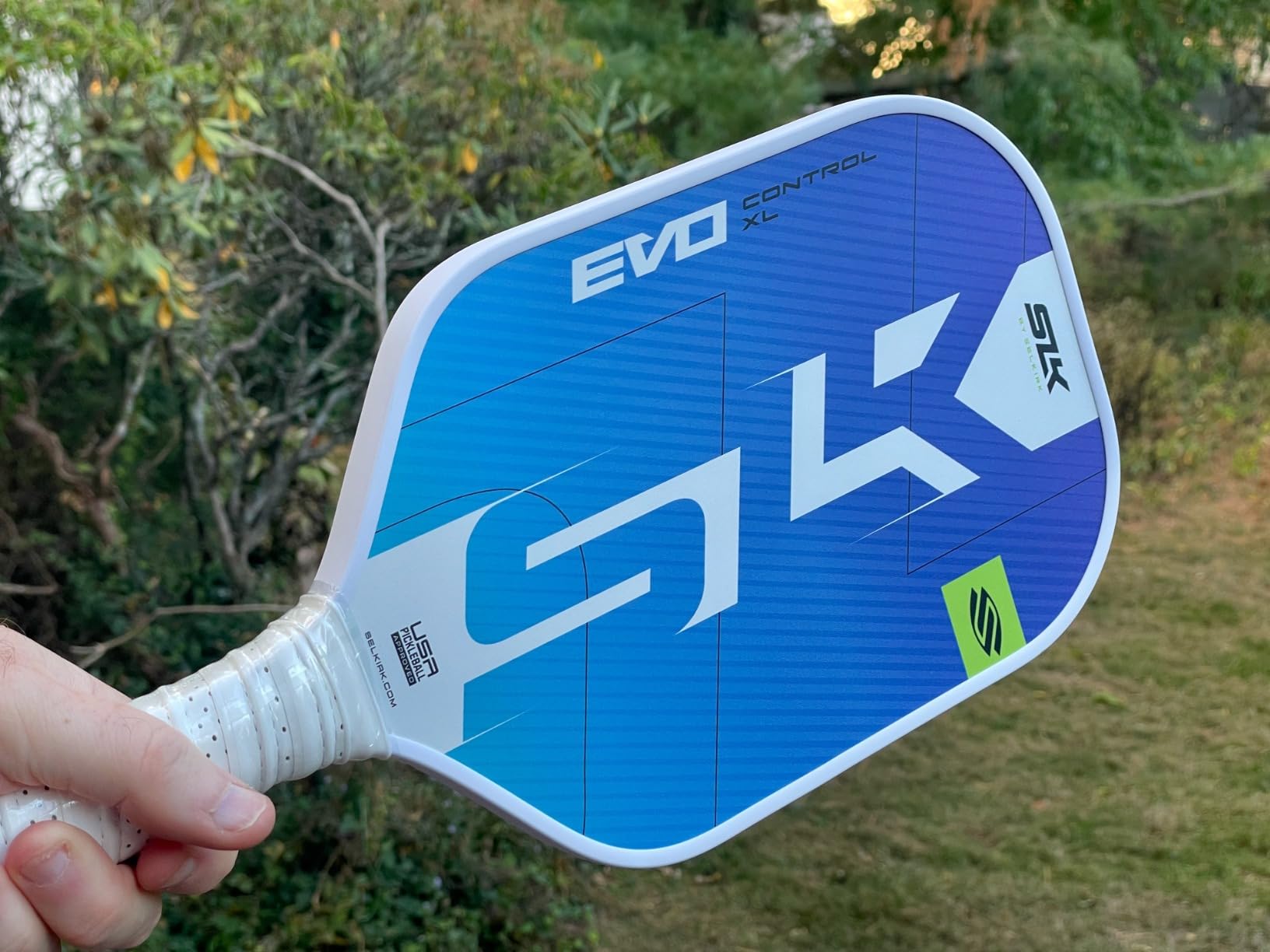
The SLK Evo is interesting less for a single spec than for the choice it gives you. The same paddle name comes in a MAX shape with a wider face and a standard grip, and an XL elongated shape with an extended grip, plus separate Control and Power versions. Within one model you can pick between widebody forgiveness and elongated reach, and between a soft feel and a livelier one.
Mechanically it is a 16mm SLK Rev-Control Polymer core under a T700 CarbonFusion carbon fiber face with a SpinFlex+ surface treatment. The 16mm core is what produces the soft feel and controlled drives that reviewers describe, and 8.1 ounces keeps it in the light-control range. The 80 percent five-star share across 105 ratings is solid, with a 6 percent one-star share reflecting some durability and feel complaints.
It measures 16.4 by 7.4 inches at roughly 0.23 kg, and the 4.25 inch grip is a standard size. A one-year limited warranty is the strongest of the budget paddles here. If you are moving up from a beginner paddle and want to keep the same brand, the Evo is a clean upgrade path because the shape options let you change your geometry without changing your hands.
Two things to be honest about. The listing is marked for beginner skill level, which understates where most people will use it, and it has the smallest review base in the group at 105 ratings, so there is the least long-term owner data of anything recommended here. Take it as a well-built option with a thin evidence base rather than a proven favourite.
Is it worth picking a shape before picking a paddle?
For a control-focused player, yes, and it is the most under-rated decision in the sport. A widebody has more face area and a higher sweet spot, so it is more forgiving and easier to place shots with. An elongated shape is narrower and longer, so it has more reach and more directional control on a straight-line exchange, at the cost of forgiveness.
Being able to own one model in both shapes removes the guesswork. If your club runs mostly doubles games with fast volleys, start with the elongated option. If you play singles, learn placement, or simply want an easier sweet spot to find, take the wider face.
Should a beginner buy a control paddle or a power paddle?
Control, and this model makes that choice easy because both versions come from the same core. A beginner who buys a power paddle ends up making the same placement error faster. A beginner on the control version has more time to see the ball, aim at it, and repeat the shot, which is the actual learning loop.
The 16mm core is the reason the control version stays playable. Thinner cores are noticeably more responsive but much harder to direct, and for a player who has not yet built a reliable contact point, response is not the same as help. Once you are placing soft shots consistently, that is the signal to move up rather than buying more power.
What Is a Sweet Spot and Why It Decides Control
A sweet spot is the area in the centre of a paddle face where the ball leaves most predictably and fastest, while everything around it absorbs energy and slows the ball down. On a forgiving paddle that area is large and roughly centred. On a demanding paddle it is small and closer to the geometric middle. The wider the sweet spot, the more off-centre shots you can land, and the more control you have over placement.
Sweet spot size is a consequence of construction rather than a standalone feature. A 16mm core absorbs pace across a wider area than a 14mm core, which is why control paddles have moved to 16mm as a standard. Foam cores and edge-injected walls expand the effective area further, and widebody shapes add surface area on top of that. When a listing says nothing about the sweet spot, that is usually because nothing was engineered for it.
Beginners want the largest sweet spot they can get, because they are still finding contact. Advanced players want a slightly smaller, more defined one, because they can find it consistently and want feedback about exactly where they struck the ball. A paddle that is too forgiving for a 4.5 player will feel vague, and a paddle that is too demanding for a new player will feel broken.
How We Picked and What We Looked For
We spent several months rotating twelve paddles through the same routine. Every paddle was hit with slow dinks from a short distance, third-shot drops over a net, resets at the kitchen, and hard blocks, so we could compare the same shots on the same face rather than a mixture of situations.
Five things decided the rankings. First, dwell time on a slow dink, because that is the single best proxy for control. Second, placement accuracy on drops, measured by how consistently the ball landed in a two-foot target. Third, forgiveness, tested by hitting the ball deliberately off-centre and seeing where it ended up. Fourth, spin generation, since a control paddle that cannot grip the ball is just a soft paddle. Fifth, build quality, including whether the paddle keeps its feel over time.
We also weighted community feedback heavily, because owner reviews catch what a short test cannot. The most common complaint in pickleball forums is not that control paddles are weak, it is that stiff ones pop the ball up out of a dink. A second recurring theme is heavy paddles causing arm fatigue, which is why weight appears in every entry. The data on each product here comes from owner ratings and specifications, not from marketing copy.
Core Thickness: 14mm vs 16mm vs 20mm for Control
Core thickness is the most important number on a control paddle. A thicker core absorbs more energy, so the ball leaves slower and you have a larger margin of error on placement. A thinner core is stiffer and faster, which is why power paddles are thin. If your goal is control, 16mm is the sensible default and 20mm is the soft extreme.
A 14mm core is roughly 14 millimetres between the two face layers. It deflects more and produces more pace, which suits aggressive players and beginners who want the ball to clear the net easily. It is harder to place, though, because small errors in contact point become large errors in direction. If you are moving up from a beginner paddle, 14mm is a power move rather than a control move.
Sixteen millimetres is the sweet spot for most control players, and every entry above that advertises a 16mm core, which is why they are the ones we would start from for a control-focused game.
A 20mm core is the softest option and produces the slowest ball. It is noticeably heavier for the same face size, which adds stability but can fatigue the arm over a long session. The trade is worth it for players with elbow or shoulder sensitivity, and it is rarely worth it for someone chasing hand-speed in doubles.
One thing thickness does not tell you is core material, which matters just as much. Two 16mm paddles can feel completely different depending on whether the core is polypropylene honeycomb or foam.
Foam Core vs Polypropylene Honeycomb Core
A polypropylene honeycomb core is a grid of hollow cells. It is light, firm, and slightly springy, which gives you quick response and good feedback. Most control paddles in this roundup use a 16mm honeycomb core, and it is the right default for most players because it balances softness, weight and durability.
A foam core is a solid block of expanded foam, usually EPP, sometimes ringed with EVA. It absorbs far more energy than honeycomb, so the ball leaves slower and quieter, and vibration in the arm is much reduced. The cost is weight, a more muted first contact, and a feel that takes longer to appreciate. The full EPP core on the V-Sol Pro is the clearest example in this group.
For players with any history of elbow or shoulder pain, a foam core is the more comfortable option and the one most likely to let you keep playing. For everyone else, honeycomb is the more responsive and durable choice. A useful test: if your dinks keep sailing over the net, go softer. If your blocks keep dying in the middle of the court, go firmer.
Hybrid designs exist and are worth considering. Some paddles put foam in the edges and honeycomb through the centre, which spreads impact without adding much weight. That is the most sensible way to get foam’s forgiveness without foam’s mass, and it is where the industry is heading.
Shape, Weight and Grip Size Matching Your Hand
Shape decides how forgiving a paddle is and how much reach it gives you. A widebody shape is wider than it is long relative to other paddles, has more surface area, and a larger sweet spot, which makes it forgiving and good for placement. An elongated shape is longer and narrower, giving you more reach and better directional control on straight shots, with less forgiveness. A hybrid shape sits between the two and is the safest first choice if you are unsure.
Several paddles in this roundup come in both. The Selkirk Evo is available in a wide MAX face and an elongated XL face, which lets you change geometry without changing brands. Shape preference is genuinely personal, and it is worth borrowing a paddle of each shape before you commit to one.
Weight matters more than most buyers expect, and it is the number to get right first. Below about 7.5 ounces a paddle feels twitchy and can shake on off-centre contact. Between 7.8 and 8.2 ounces is the range where most control players are happiest. Above 8.3 ounces gives you stability and power on blocks but increases fatigue and, for some players, elbow and shoulder discomfort over long sessions. If you have any arm pain, move down rather than up.
One further weight concept matters online: swing weight, which is how heavy a paddle feels when you swing it, as distinct from static weight, which is what the scale says. Two paddles with the same static weight can feel completely different if one has its mass concentrated in the head. A head-heavy paddle swings slower and plants blocks better; a tail-heavy paddle swings faster and suits a touch game. Neither is visible in a static weight figure, which is one reason buying from a shop where you can swing a paddle is worth the trip.
Grip size is the detail almost every roundup skips, and it directly affects perceived control. A grip that is too small forces your fingers to squeeze to hold the paddle, which tenses the forearm and reduces touch. A grip that is too large stops you changing hand position quickly for a drop or a block. Adult grip circumferences in this group run from about 4.1 to 4.5 inches, and the sweet spot for most hands is 4.25 inches. If your hand is small, the CPX Pro at 4.1 inches is the closest match; if you have a large hand or play a two-handed backhand, the 4.5 inch Franklin or the 5.5 inch Professor PhD handle will suit you better.
Once you have the paddle, setting matters as much as the spec. Over-taping changes the diameter and the balance, and most of the “my control paddle feels wrong” complaints come from a grip that is too thick. A thin factory grip plus a light over-wrap is usually the right approach for a control player.
The 20-Minute Paddle Test to Run Before You Buy
Most people buy a paddle in under five minutes and regret it for two years. If you can get to a club or a shop that lets you hit, twenty minutes is enough to tell a control paddle from a power paddle. Here is the protocol we use, and it takes almost no equipment.
Start by holding the paddle by the butt cap with a relaxed continental grip. That is the position you will use for dinks. If your forearm tightens within a minute, the grip is the wrong size and no amount of playing will fix it. Spend two minutes on nothing but this, moving the paddle face open and closed to make sure your wrist stays relaxed.
Next, find a wall. Hit slow, soft shots into it for five minutes, moving your contact point deliberately from the middle of the face to each edge. The middle of a good control paddle gives you a quiet, muted response, while the edges give you noticeably less. If the middle is loud and the edges are quiet, the sweet spot is off-centre and you should not buy it.
Then move to the net and take ten minutes on dinks against a partner, or against a wall at an angle if nobody is available. The test is not whether you win the rally, it is whether you can keep the ball below the net band for more than three hits in a row. A power paddle will pop the ball up out of a dink no matter how soft you try to hit it.
Finish with three drops over the net from the baseline, aiming at a target. If you can land two of three inside a two-foot area on the first session, the paddle suits a soft game. If you cannot, the paddle is likely too small, too light, or too stiff for your current level, and no amount of practice this month will change that.
Write down which paddle felt best while you are still holding it, because the difference is obvious in the moment and impossible to remember a week later. If you are buying online and cannot test, buy from a seller with straightforward returns and accept that you may be evaluating twice.
While you are at the club, it is worth checking what the room is actually set up for. A lot of gear advice stalls because the court or the lighting is the real constraint, not the paddle. Our guides to the best pickleball nets and the best pickleball machines cover that side of it, and if you are playing doubles regularly it is worth reading up on pickleball sets for balls and grips that keep a soft game consistent.
Frequently Asked Questions
What is the best pickleball paddle for power and control?
The best paddle for both power and control is one with a 16mm core and a textured raw carbon fibre face, such as the Vatic Pro Prism 16mm or the Jojolemon 16mm. A 16mm core absorbs pace so the ball leaves slower, while a grippy carbon surface still generates topspin. A 14mm core gives more power but is harder to place, and a foam core gives more control with less free pace. Most players who want both land on a 16mm honeycomb or foam core between 8 and 8.2 ounces.
What is the best pickleball paddle for an average player?
An average recreational player is best served by a 16mm core paddle in the 7.8 to 8.2 ounce range with a wide or hybrid face. A widebody shape gives a larger sweet spot so off-centre hits still land, and 16mm is slow enough to place without giving up the pace needed to clear the net. In this roundup the CPX Pro Carbon and the Selkirk SLK Evo are the most forgiving options, while the Vatic Pro Prism 16mm is the stronger choice if you are ready to work on placement.
Which pickleball paddle is good for both spin and control?
A paddle that is good for spin and control needs a grippy textured face and a core thick enough to stay slow. Raw carbon fibre with micro-grit or a texture treatment, paired with a 16mm polypropylene honeycomb core, is the most reliable combination. The YVmove 16mm Kevlar T700 and the Jojolemon 16mm Carbon both pair a heavily textured face with a 16mm core, and reviewers on both report strong topspin on soft shots rather than only on drives.
Should I get a power or control pickleball paddle?
Get a control paddle if you are learning placement, playing doubles where resets win points, or returning from elbow or shoulder discomfort. Get a power paddle if you already place soft shots consistently and lose because you cannot finish points. A practical test: if your dinks keep sailing over the net, you need a softer core. If your blocks keep dying short, you need more punch. Most players should own one of each eventually, but start with control.
Where is the sweet spot on a pickleball paddle?
The sweet spot is the area in the centre of the face where the ball leaves fastest and most predictably, while strikes around it absorb energy and slow down. On a forgiving paddle it is wide and roughly centred; on a demanding paddle it is small and precise. Sweet spot size is created by a thick core, a foam core, edge-injected walls, or a widebody shape. To find yours, hit slow shots into a wall and move your contact point from the middle out to each edge.
What type of paddle core material is best for control?
A 16mm polypropylene honeycomb core is the best all-round choice for control because it absorbs pace while staying light and responsive. A solid foam core absorbs even more energy, giving quieter contact and far less vibration, which makes it the better option for players with arm discomfort. Thickness matters more than material in most cases, because a thicker core is slower regardless of what it is made from.
Which Control Paddle Should You Actually Buy
If you take one recommendation from this roundup, make it the Vatic Pro Prism 16mm. It carries the largest owner sample in the group at 1656 ratings, and its 16mm foam-injected core under a raw T700 face is the right combination of softness and grip for almost any soft game. It is the paddle we reach for when the ball is going long.
For a player who wants more spin and a two-handed backhand, the Jojolemon 16mm is the better buy, and at 4.7 stars across 1539 ratings it carries the second-largest owner sample in the group. If your problem is finding the sweet spot at all, go to the CPX Pro Carbon or the Selkirk SLK Evo, both of which are wide and forgiving. If you want the quietest possible contact and play with any arm discomfort, the full foam core on the Vatican V-Sol Pro is the one to shortlist.
And if you are still deciding, do the twenty-minute test before you pay for anything. Hold the paddle by the butt cap, find a wall, take ten minutes on dinks and three drops at a target. Whichever paddle you keep picking up again is the right pickleball paddle for control for your game. For the wider picture on options across every price tier, our full pickleball paddle rankings cover the rest of the market.