
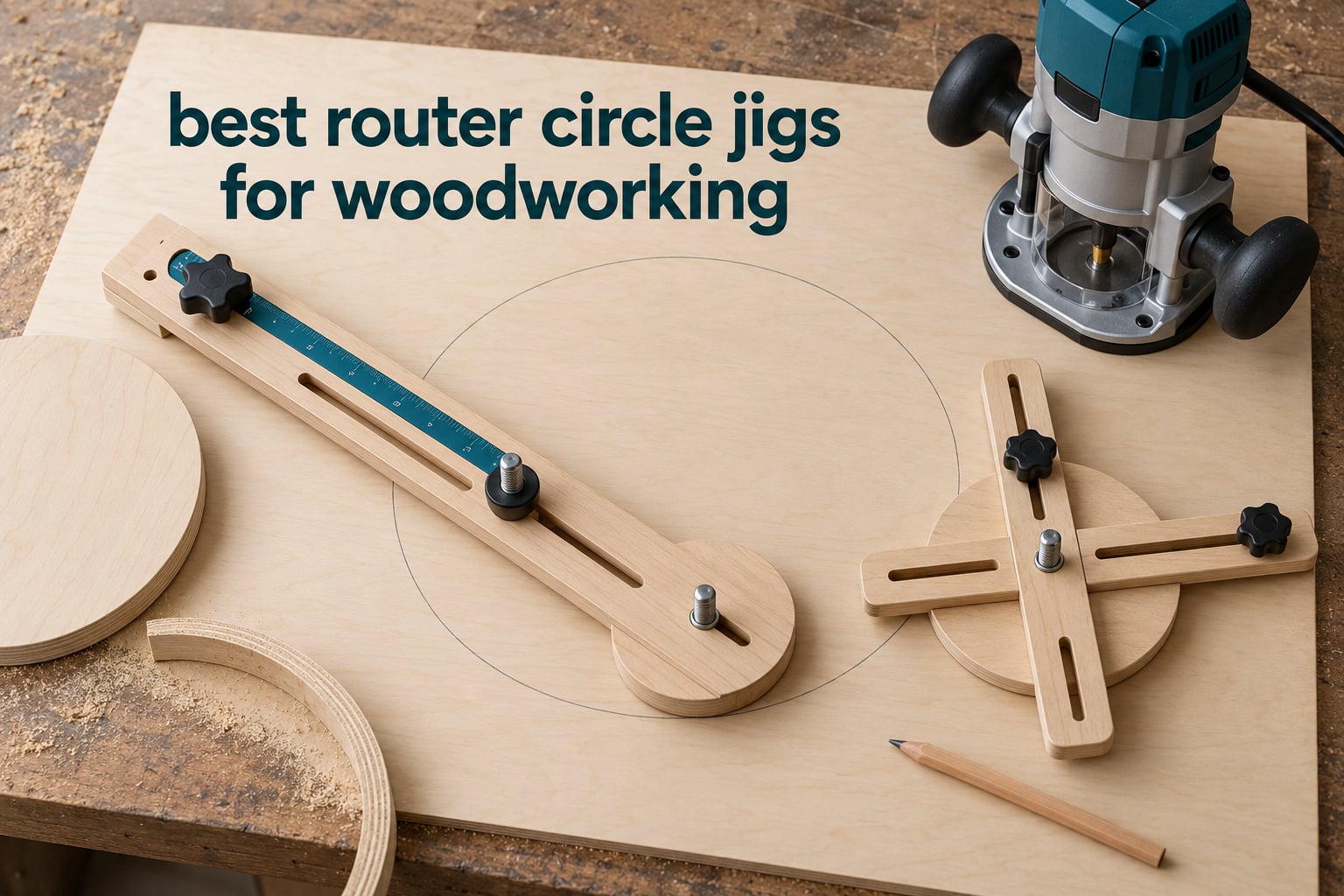
A handheld router cannot cut a circle on its own. It wants to wander, and everything it cuts is a little bit out of round, no matter how steady your hands are. That is the whole reason the best router circle jigs for woodworking exist, and the reason they have quietly become the most-used accessory in a lot of small shops.
I have cut a lot of circles over the years, mostly the tedious kind: speaker cut-outs in birch ply, lazy Susans, clock faces, sign blanks. The early ones went to the band saw, then got sanded fair, then got sanded fair again. Once I started using a jig, the same jobs took a fraction of the time and came out genuinely round on the first pass. If you are still wrestling with a compass and a rough curve, a jig is the fix, and it costs less than a single replacement bit.
This roundup covers ten of them, from a plastic kit that handles 1.5-inch inlays to a made-in-the-USA machine that reaches a 108-inch panel. Every figure below comes from the manufacturer spec sheet or from owner reports, and I have updated the list for 2026. If you have not picked a router yet, our wood router buying guide is worth ten minutes first, because the router you own decides which jigs on this list you can even use.
Table of Contents
Top 3 Best Router Circle Jigs for Woodworking In 2026
Milescraft 1219 Circle Guide Kit
- 1.5in to 52in range
- Two jigs plus offset base
- Metric and imperial scales

Jasper Model 200 Circle Guide
- 256 sizes in 1/16in steps
- 2-1/4in to 18-3/16in
- Calibration disc included

All 10 Router Circle Jigs Compared (October 2026)
If you want the short answer, it is the Milescraft 1219. It is the only kit on this list that covers small inlays and 52-inch table tops in one box, and it carries the highest owner rating in the group. Below is every pick, its diameter range and what it does best.
| Product | Specifications | Action |
|---|---|---|
| Milescraft 1219 Circle Guide Kit |
|
Check Latest Price |
| Jasper Model 200 Circle Guide |
|
Check Latest Price |
 Sigerio 4-in-1 Circle Cutting Jig Sigerio 4-in-1 Circle Cutting Jig |
|
Check Latest Price |
 Jasper 300 XLC Ltd Ed Jasper 300 XLC Ltd Ed |
|
Check Latest Price |
| Jasper 290 Circle Jig |
|
Check Latest Price |
 Rockler Circle Cutting Jig Rockler Circle Cutting Jig |
|
Check Latest Price |
 Rockler Ellipse and Circle Jig Rockler Ellipse and Circle Jig |
|
Check Latest Price |
 Woodhaven 3270 Circle Cutting Jig Woodhaven 3270 Circle Cutting Jig |
|
Check Latest Price |
 POWERTEC 71637 Circle Cutter POWERTEC 71637 Circle Cutter |
|
Check Latest Price |
 Kreg Trim Router Circle Guide Kreg Trim Router Circle Guide |
|
Check Latest Price |
1. Milescraft 1219 Circle Guide Kit – Best All-Round Router Circle Jig
Milescraft 1219 Circle Guide Kit- Precision Router Circle Cutting Jig For Cutting/Routing Circles From 1.5” Up To 52” with Offset Base
1.5in to 52in diameter
Polycarbonate and metal
3 year warranty
Pros
- Covers 1.5in inlays and 52in tops in one kit
- Metric and imperial scales with a readout window
- Tool-free turn-n-lock base swaps
- Offset base stabilises edge work
Cons
- Clear body has less rigidity than phenolic or aluminum
- Small guide stops at 12in diameter
This is the kit I hand to friends who are buying their first jig, and the one I keep coming back to. It ships with two separate guides: a small one that cuts from 1.5 to 12 inches, and a large one that covers 10 to 52 inches. That means a single purchase handles a 2-inch inlay and a full dining table top.
What makes it pleasant is the readout. Both scales, metric and imperial, are moulded into the guide, and a window lets you read the set diameter without doing arithmetic against your bit diameter. A long-time user on LumberJocks, who also builds his own jigs, put it plainly about his Jasper: small holes are no problem. Owners of this kit report the same thing, with circles coming out accurate on the first pass.
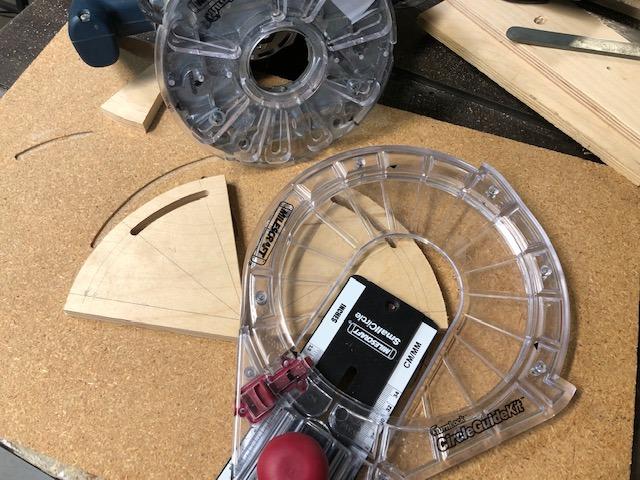
The included 13-inch offset base is the sleeper feature. It is not a circle tool at all, but owners use it for edge finishing and for stabilising the router on large panels, and that is exactly the moment a light jig feels like it is moving too much.
NC Woodworker’s advice about this kit is worth repeating because it applies to any jig: it is plastic, and you have to pay attention to setup because of the inside and outside radius. Get that reference right and the plastic is not a problem on anything up to a couple of inches thick.
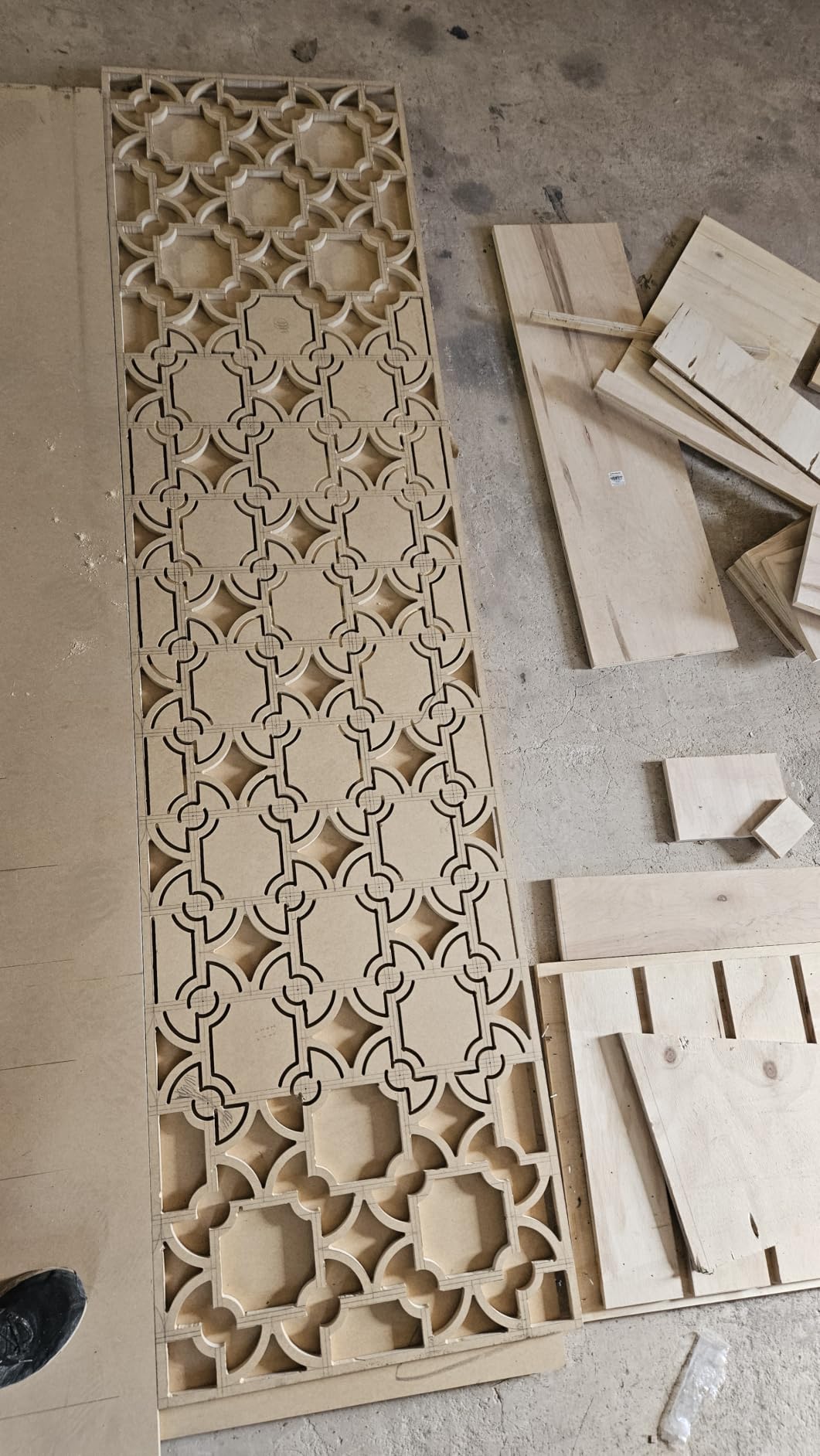
What you get that other kits leave out
Two guides in one box beats buying two jigs. The small guide tops out at 12 inches, so a 16-inch hole means swapping to the large arm, which takes about a minute once you have done it once.
Where it falls short
The polycarbonate body flexes if you lean on it hard, so keep the router’s weight over the base rather than pressing down on the arm. For genuinely large architectural panels you will want something heavier, and the miter saw guide covers the square side of big panel work.
2. Jasper Model 200 Circle Guide – Best Value Plunge Router Jig
Jasper Model 200 Circle Guide Kit, Circle Cutting Guide for Plunge Routers
2-1/4in to 18-3/16in
High-strength acrylic
256 indexed holes
Pros
- 256 indexed sizes in 1/16in steps
- Calibration disc gives repeatable centring
- Fits a wide range of plunge routers
- Strong record for speaker cutouts
Cons
- Recent units show worn screen printing
- Neater acrylic edges than older runs
- Assumes a straight 1/4in bit
Jasper is the name most people mean when they say router circle jig, and the Model 200 is the plainest expression of it. The plate carries 256 holes drilled on a 1/16-inch grid, so you pick a hole rather than compute a radius. It cuts 2-1/4 to 18-3/16 inches.
For most cabinet and speaker work that range is ideal, because that is where a plunge router is most comfortable. Speaker-cabinet owners report flawless cutouts consistently, and the calibration disc that comes in the box makes finding true centre quick rather than a matter of measurement and hope.
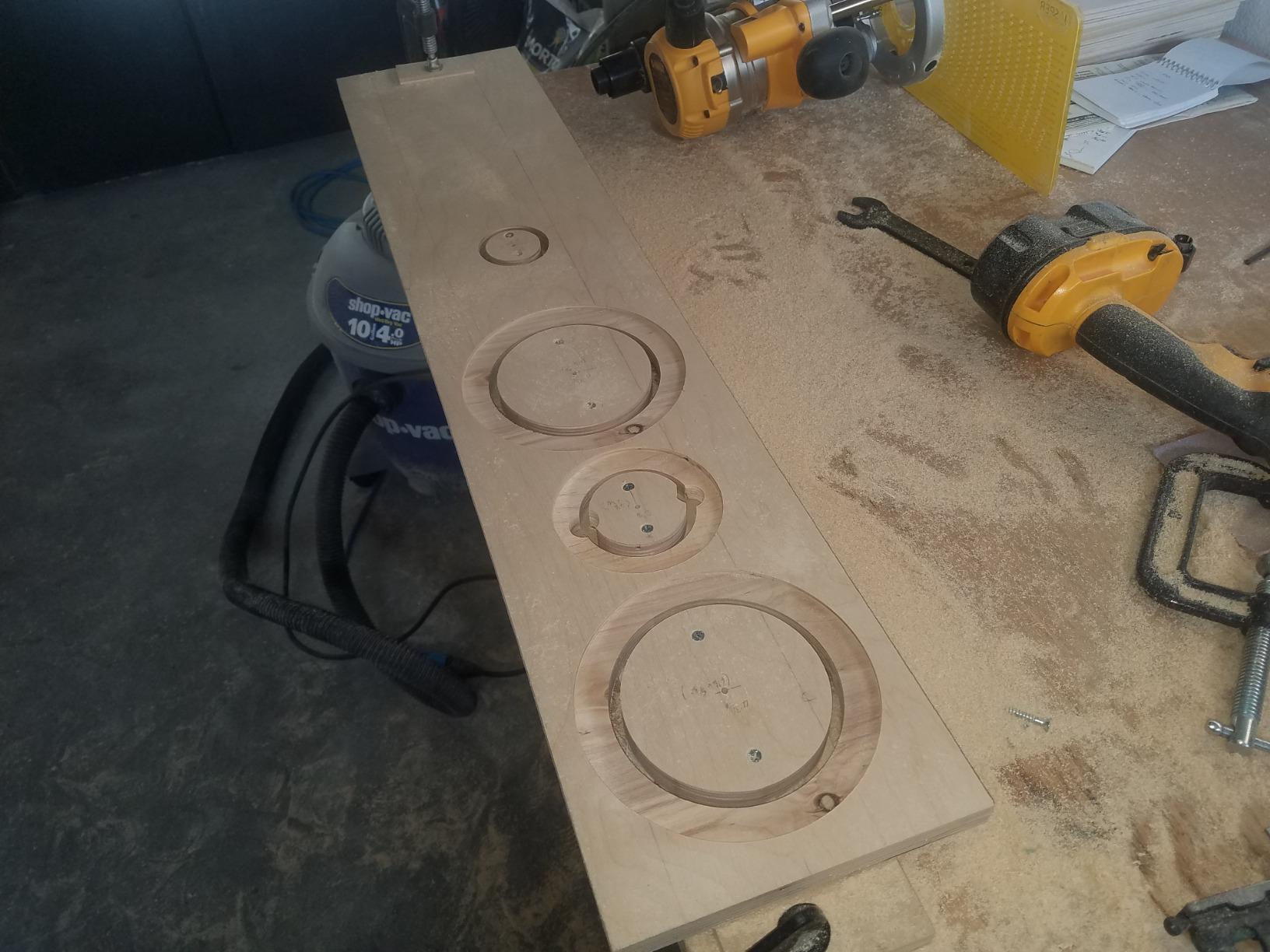
One honest note on quality control: a minority of recent reviews flag worn or flaked screen printing on the hole numbers, and some note rougher acrylic edges than the older flat-grey versions. Neither is a functional problem, but read the numbers under a good light the first time you use it.
The plate also assumes a straight 1/4-inch bit. Run a different bit style and you are back to doing the diameter arithmetic yourself, which defeats the point of the indexed holes.
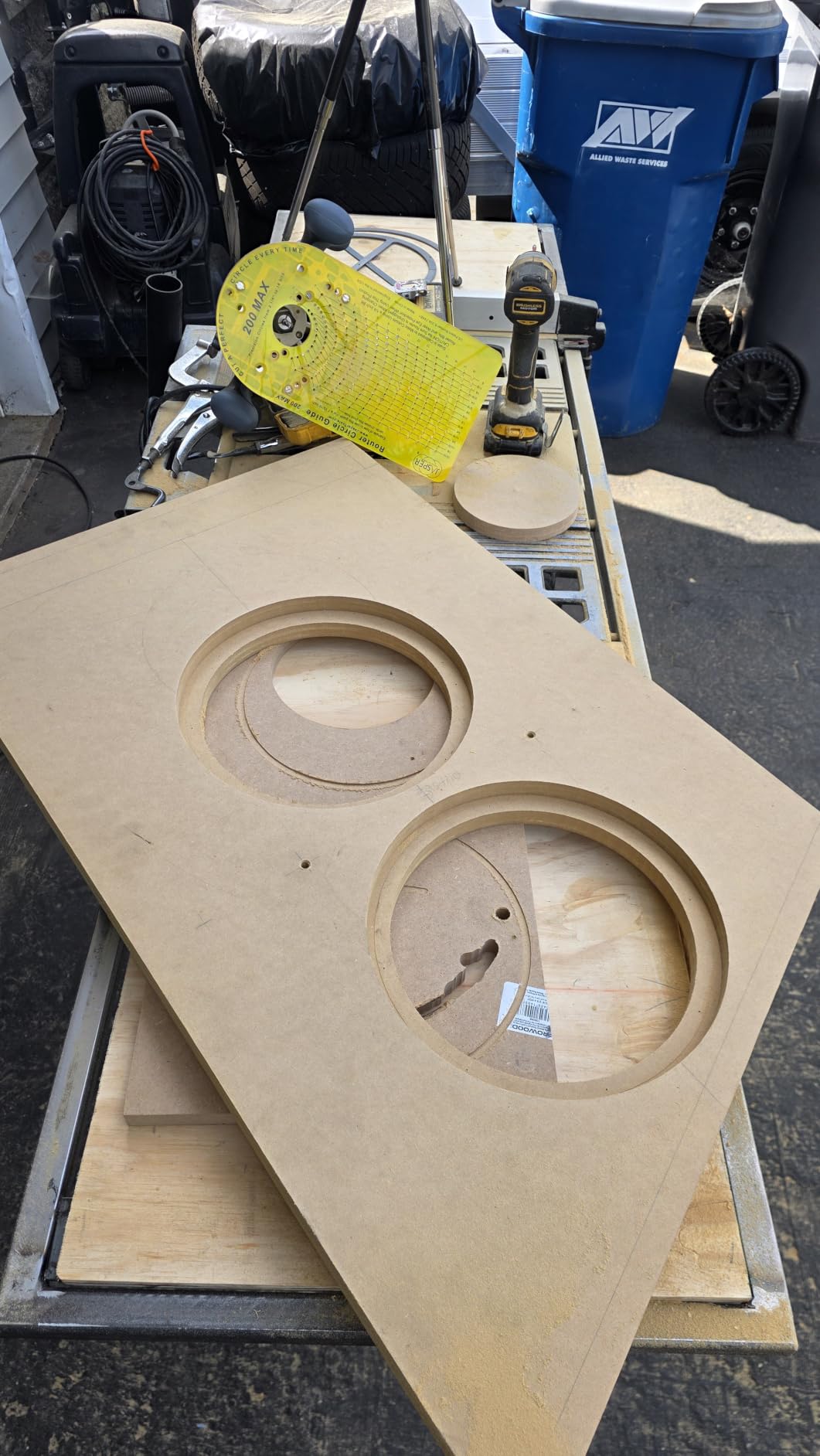
How the 1/16-inch indexing changes the work
A 1/16-inch grid means you can hit a size without interpolation, which matters when you are cutting a matched pair or a ring that has to fit something already built. The trade is capacity: nothing above 18-3/16 inches, so table tops are out.
Who should look elsewhere
If your circles are consistently under 2 inches or over 18 inches, this is the wrong tool and the Milescraft 1219 or the Sigerio jig covers you. If you own a compact or cordless router, check the Jasper 290 instead, because this one is built for full-size plunge routers.
3. Sigerio 4-in-1 Circle Cutting Jig – Best Budget Pick for Large Circles
Sigerio 4 in 1 Router Circle Cutting Jig for Cutting Large Circles 10″-58″
10in to 58in diameter
Aluminum alloy
4 functions in one body
Pros
- Largest cutting diameter in the group at 58in
- Aluminum body resists flex on long cuts
- Multi-hole pattern suits many routers
- Handles arcs and grooves as well as circles
Cons
- Lowest average rating here at 4.0 stars
- Not an indexed-hole design so sizing needs measuring
- Base holes can need trial and rotation
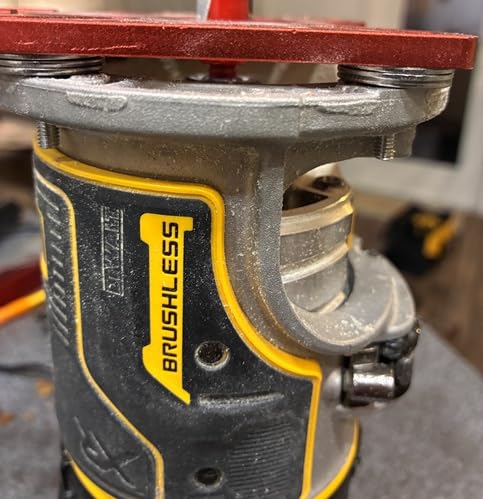
The appeal here is arithmetic: 58 inches of capacity from an aluminum body is more reach than anything else in this roundup except the Woodhaven, at a fraction of the commitment. It also doubles as an arc, groove and positioning tool, which is genuinely useful for cabinet work.
Because the base is aluminum, it holds its shape on a long arc better than any plastic jig here. Owners working large panels report that the body does not move under load, which is the failure mode that ruins a big circle.
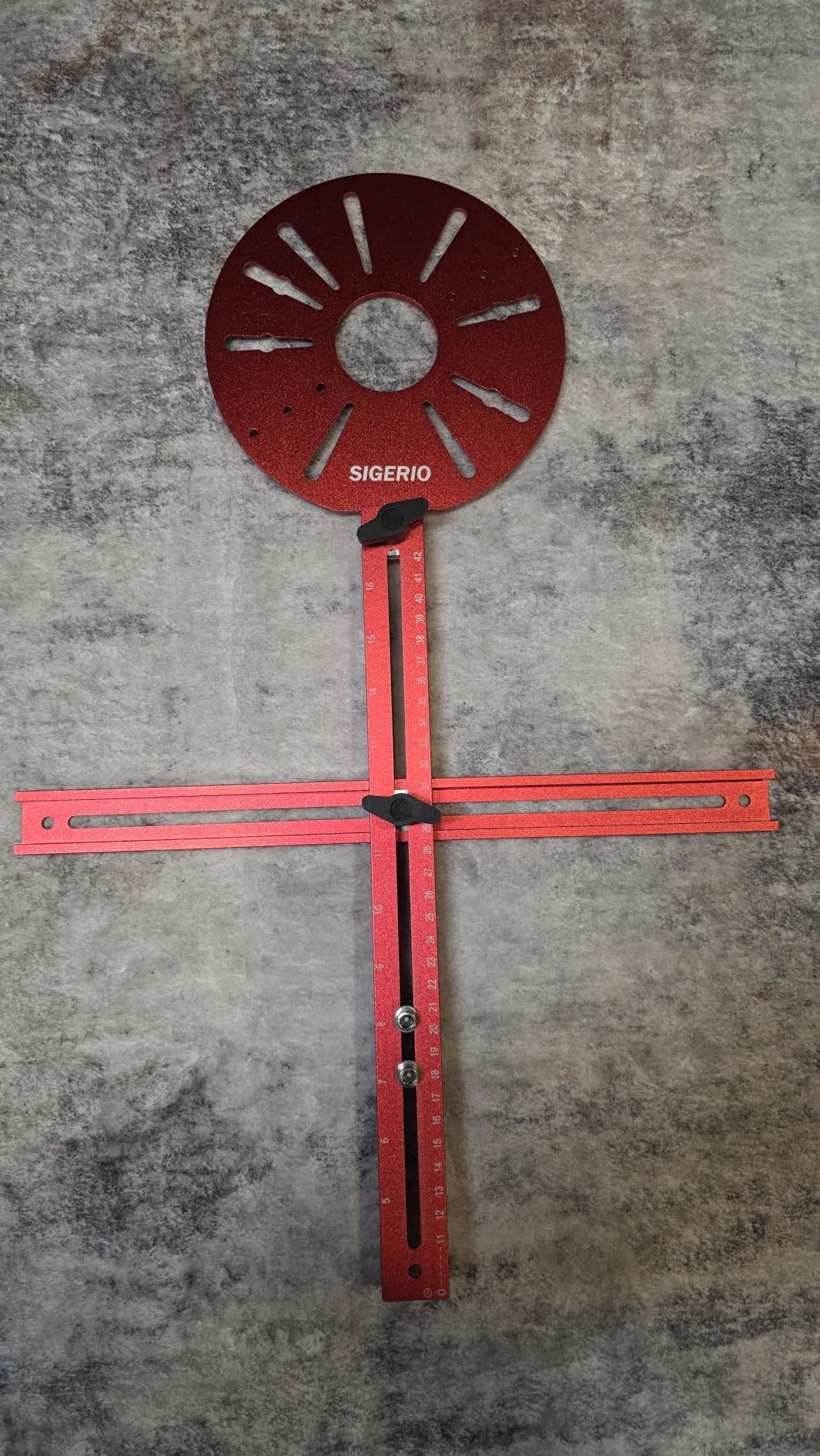
The compromise is sizing. This is not an indexed-hole design, so your diameter is set by measurement and arithmetic rather than by choosing from a printed scale. That is a real step backwards in convenience if you cut a lot of same-size rings.
At 4.0 stars with roughly a 12 percent one-star share, this is also the lowest-rated pick here. The complaints cluster around fitment, not build: some people find the base holes need slow rotation and trial to match a particular router.
When 58-inch capacity actually earns its keep
Sign blanks, large mirror backs, plywood panels for shop fixtures and curved cabinet parts. If your largest circle is under 40 inches you are paying for reach you will not use, and an indexed jig will serve you better.
The honest drawback
No scale, no fixed index, and the fitment guesswork. Budget jigs like this trade precision-by-selection for raw size, and the reviews show buyers are happy when they understand that trade going in.
4. Jasper 300 XLC Ltd Ed – Best Premium Plunge Router Circle Jig
Jasper 300 Industrial Grade LTD ED Circle Cutter Router Jig – Router Circle Jig Cuts Perfect Circles from 7 to 52 ¾” D – Circle Guide Kit Includes Centering Disc, Pivot Pins & Fits 50 Popular Routers
7in to 52-3/4in
Industrial grade polycarbonate
Lifetime guarantee registered
Pros
- 184 indexed sizes from 7in to 52-3/4in
- Rigid industrial polycarbonate body
- Calibration disc speeds up centring
- Owners report clean cuts through thick maple
Cons
- Scales printed underneath where they wear off
- Calibrated for a 1/2in bit
- Occasional reports of damaged arrival
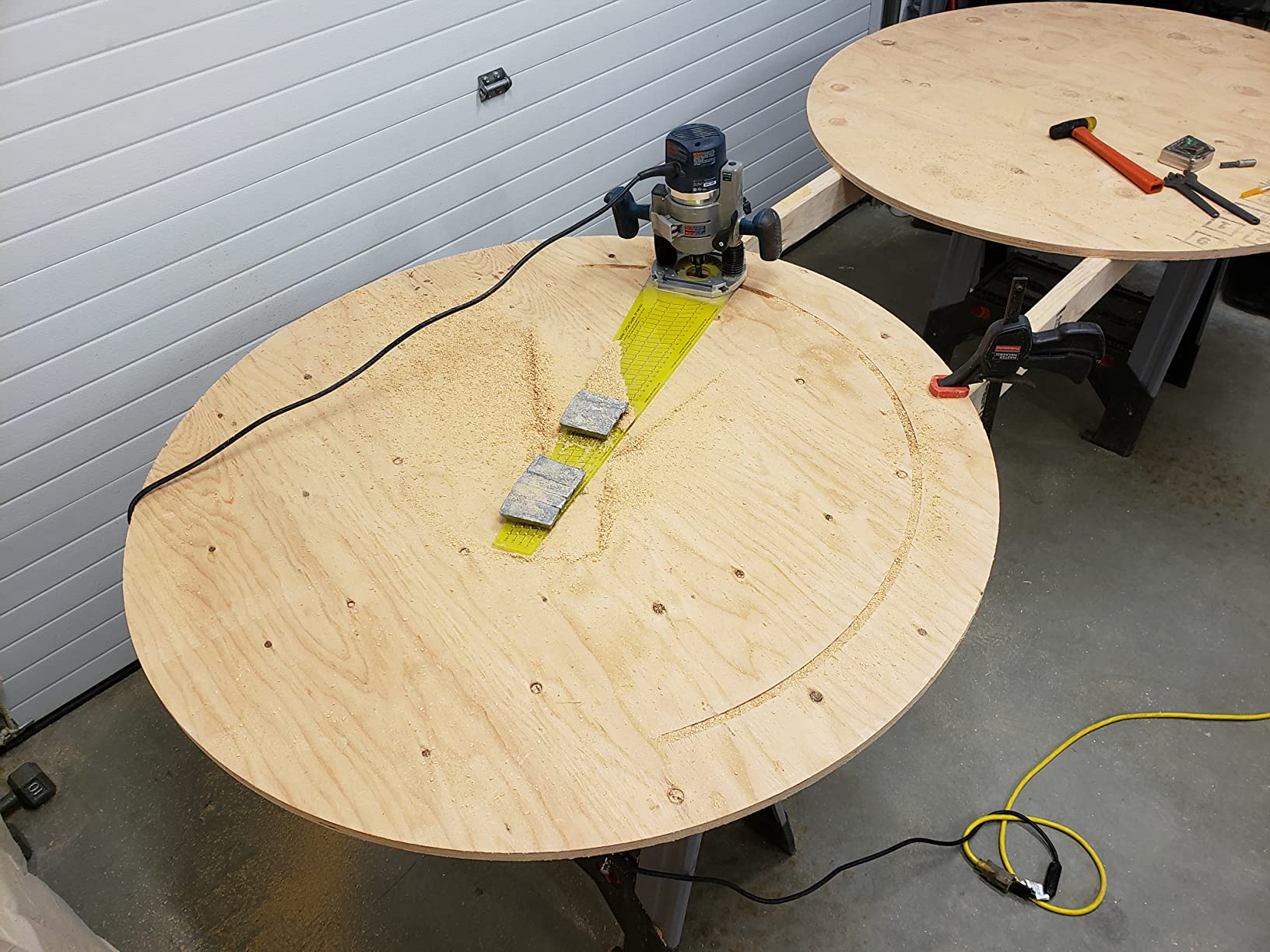
This is the version of the Jasper pattern to buy if you intend to cut big circles in solid hardwood. It shares the indexed-hole idea with the Model 200 but scales it up: 184 positions from 7 inches to 52-3/4 inches, in 1/4-inch steps, on an industrial-grade polycarbonate body.
Owners running it through thick maple in multiple passes report clean circles, including a 47.5-inch cut and an exact 30-inch one. The calibration disc makes the pivot quick to set, and the whole assembly weighs 1.56 pounds, which is light for something this wide.
The most common complaint is a good one to know about before you buy: the scale is printed on the underside, where it rubs against the workpiece and gradually wears away. Photograph your setting on day one and you will not miss it later.
The second is bit calibration. This jig is set up around a 1/2-inch bit, so anyone running a 1/4-inch bit has to work out the offset. That is a five-minute job once, but it catches people out.
Where the industrial-grade body pays off
Any cut over about 30 inches, and any hardwood. Plastic plates bow under the constant side load of a long arc; this one is noticeably stiffer and tracks cleaner at speed. It is also the only Grade A circle jig in WOOD Magazine’s testing.
Who can skip it
If your work is plywood panels under 20 inches, the Jasper 200 does the same job for less and has twice the indexing density. Choose this one for large hardwood circles and register the lifetime guarantee.
5. Jasper 290 Circle Jig – Best for Compact, Trim and Cordless Routers
Jasper 290 Circle Jig – WOOD Magazine Grade A (ONLY Grade A) | 268 Circles 1½”-18 3/16″ | Standard & PRO Models | Compact Trim Cordless Routers
1-1/2in to 18-3/16in
Acrylic or PRO polycarbonate
12.6 ounces
Pros
- Fits trim cordless and compact routers
- 268 indexed sizes in 1/16in steps
- CNC-machined pivot holes and calibration disc
- Light body is easy on the hand
Cons
- Not intended for full-size plunge routers
- Confirm router fit against the chart first
Compatibility gap is the loudest complaint on the woodworking forums, and this is the clearest answer to it. A cordless or compact router owner, writing on r/BeginnerWoodWorking, said most jigs online are sold for plunge routers and they could not tell whether theirs would fit. The Jasper 290 is built for exactly that machine class.
It covers Bosch Colt, DeWalt DCW600 and DWP611, Makita XTR01, Milwaukee M18 FUEL, Porter Cable, Ridgid and Ryobi. Note what it does not cover: full-size plunge routers. The Model 200 and 240 fill that gap.
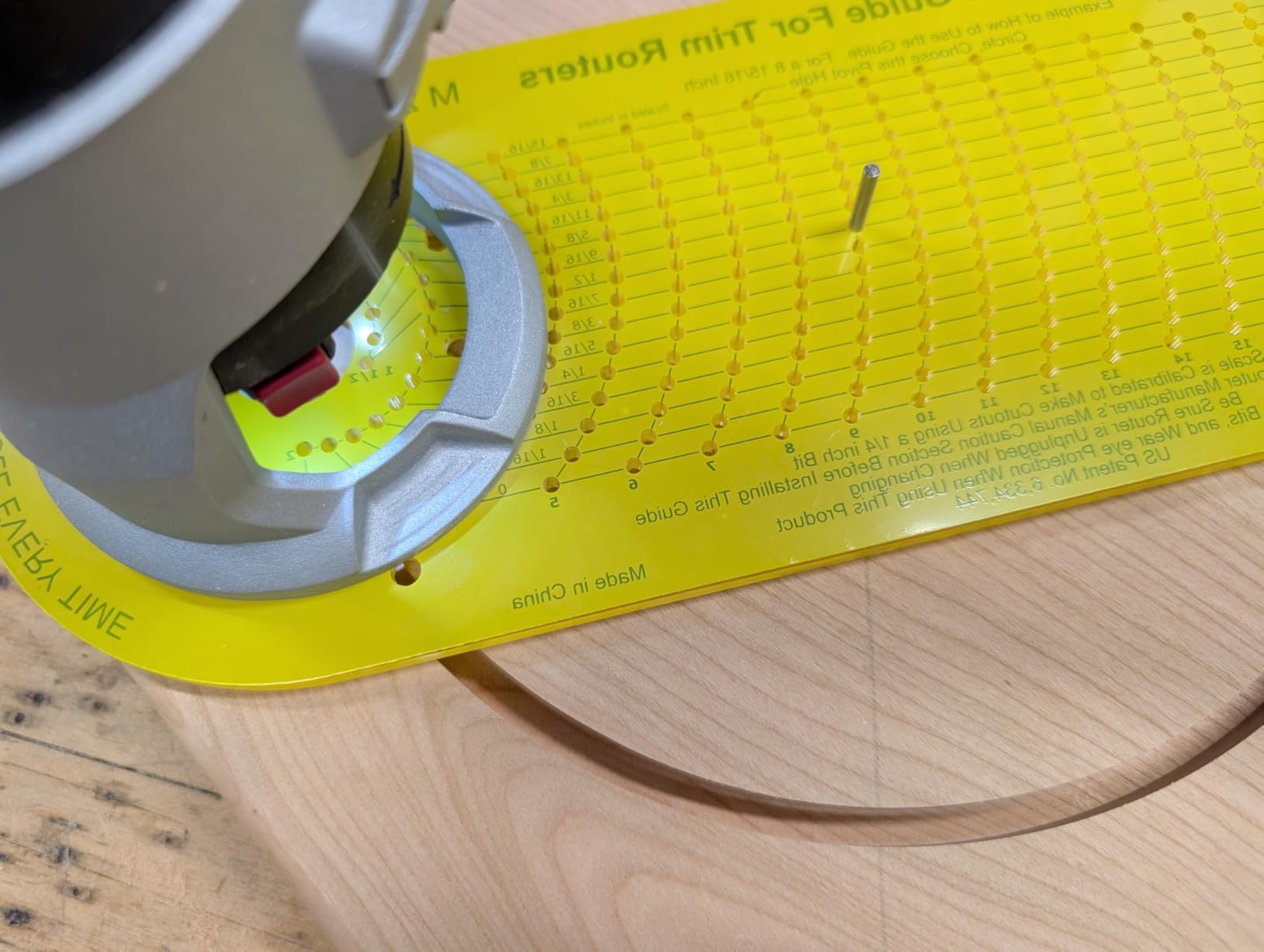
The geometry is the good part. 268 CNC-machined holes on a 1/16-inch grid, from 1-1/2 to 18-3/16 inches, plus the calibration disc. Owners using it for speaker rings, inlays and small decorative circles report the same accuracy as the larger Jaspers.
At 12.6 ounces it is also the lightest jig here, which shows up on long sessions. There is a PRO version in industrial-grade polycarbonate if you want more rigidity, with identical geometry.
Check your router before you order
This is the one product on the list where fitment deserves a deliberate check. Look up your model against the compatibility chart before ordering, because the range is narrower than the Jasper 200 in one direction and wider in the other.
Why the dense indexing matters at this size
At small diameters, 1/16-inch steps are a large share of the whole circle, so dense indexing is what lets you hit a size exactly rather than approximately. That is where speaker rings and inlay work get their clean edges.
6. Rockler Circle Cutting Jig – Rigid Phenolic Build for Big Panels
Rockler Router Circle Cutting Jig, 10 to 52 in Circle Cutter with Pins
10in to 52in diameter
Phenolic core
1.23 kg
Pros
- Stiff phenolic core held a true 30in circle
- Quick setup with a plunge router
- Two pivot pins and a 4-star knob
- Clean first cut reported on 12in plywood
Cons
- Pre-drilled holes often miss your router
- Some arrive without the right screws
- Listing misstates the minimum diameter
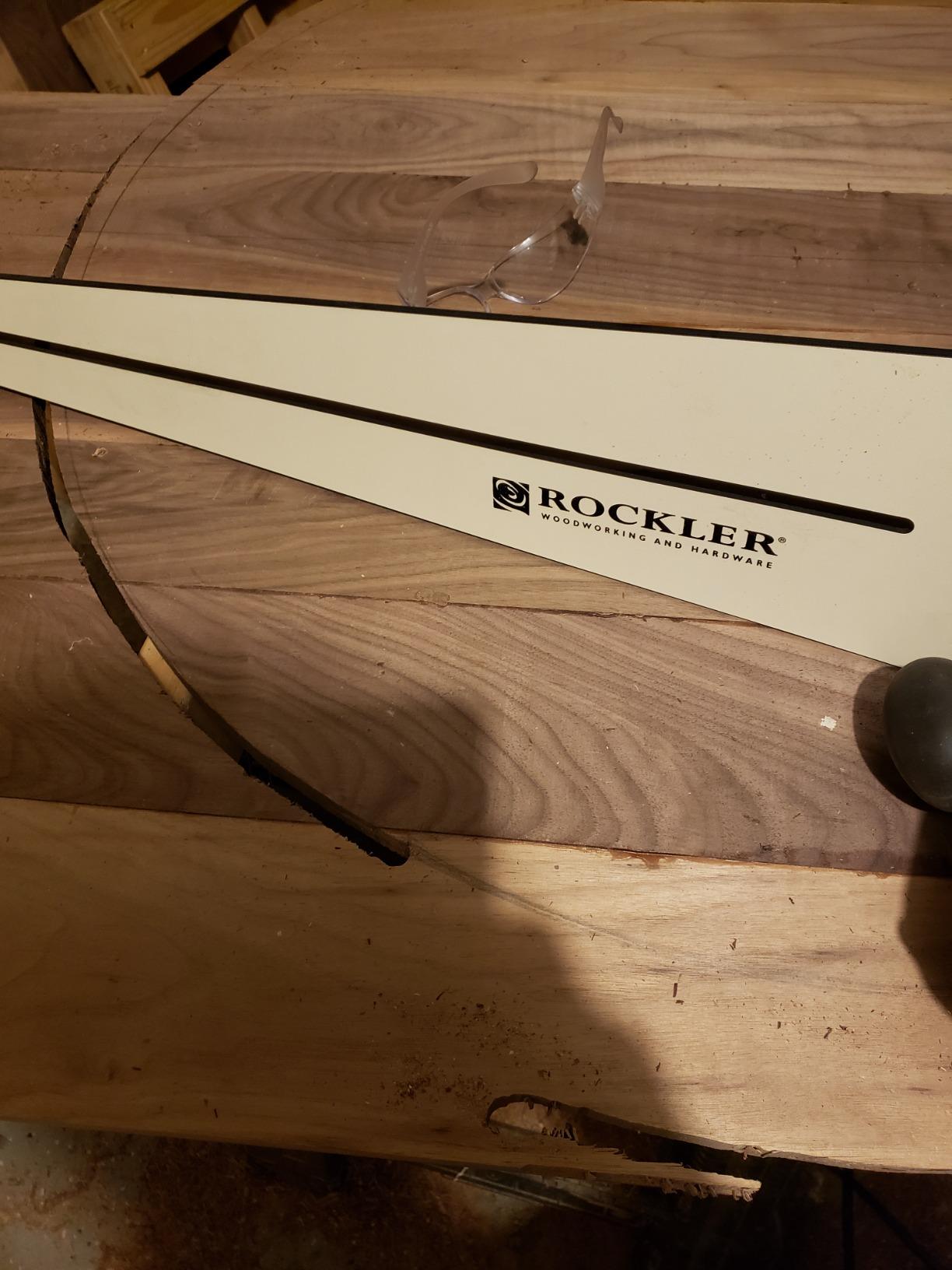
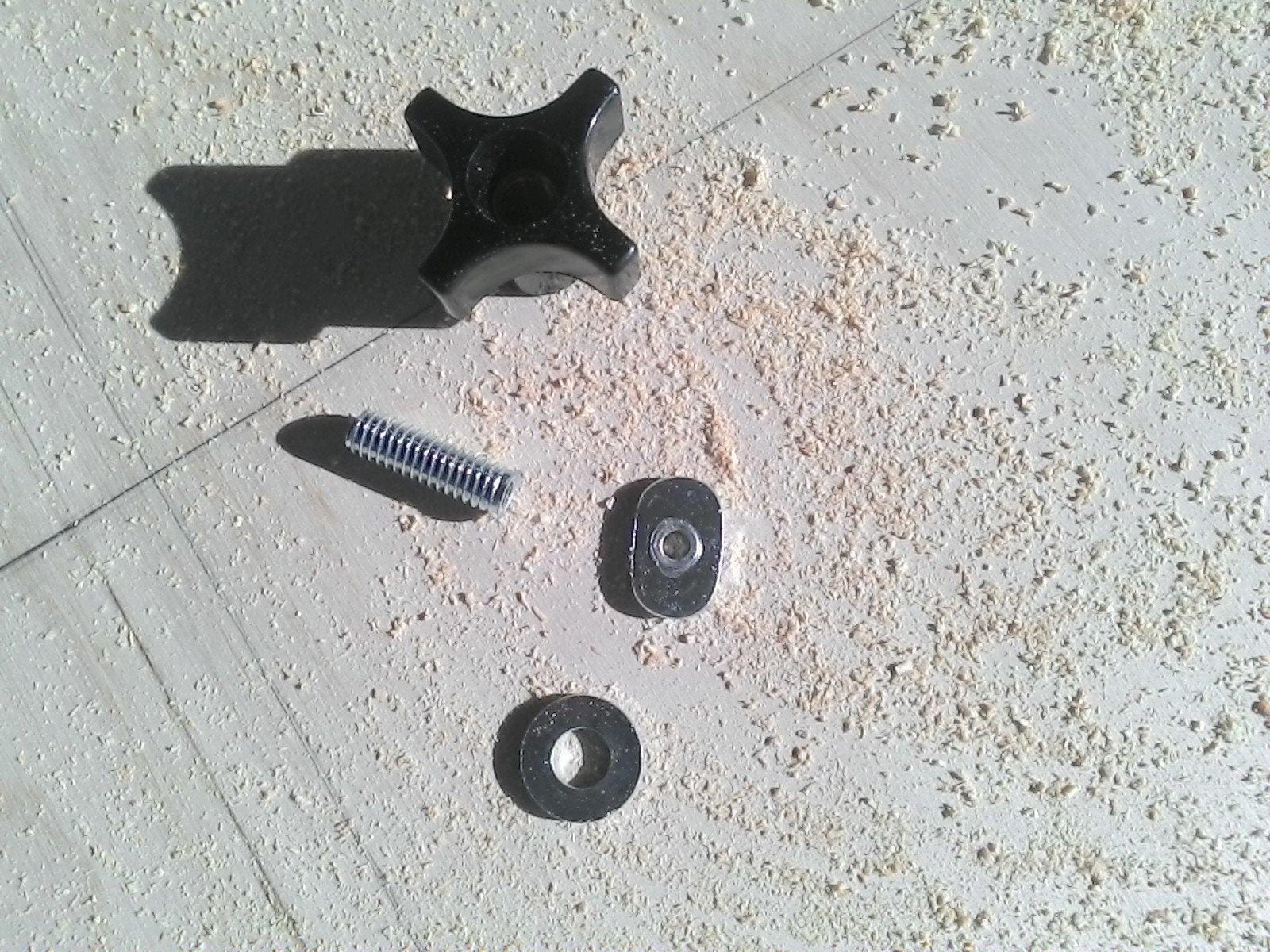
Phenolic is the material choice that keeps coming up when people talk about jigs that do not move. This Rockler covers 10 to 52 inches on a phenolic core, with two centre pivot pins and a four-star knob for diameter changes.
Owners with a compatible router report a true 30-inch circle through stacked two-by-six stock and a perfect first cut on a 12-inch plywood circle. On stiffness and speed of setup, this one performs like a tool twice its weight.
Fitment is the problem, and it is the same problem the Rockler ellipse jig has. The pre-drilled holes do not match every router, including some Bosch models that are on the stated list, and a few people arrive without usable screws.
There is also a listing error worth knowing: the product text claims a 5-1/2-inch minimum, but the jig is 10 inches minimum. If you plan to cut anything smaller than that, look at the Jasper 200.
Why phenolic beats plastic on a long arc
A router circling a 40-inch cut pushes sideways on the arm for the whole pass. Plastic bows, and the bow becomes a slight flat on the circle. Phenolic does not, which is why owners report exact circles on thick stock.
Before you buy, confirm your router
Find your router model in the fitment list, and if it is not there, plan to drill. Budget ten minutes with a drill and a file before you start, and the jig will work fine.
7. Rockler Ellipse and Circle Jig – Best for Ovals, Arcs and Ellipses
Rockler Router Circle Cutting Jig, Easy Plunge Router Guide for Woodworking
9-1/4in to 52in
Circles plus ellipses
Sliding dovetail arm
Pros
- Only jig here that cuts ellipses and sweeping arcs
- Sliding dovetail tracks the cut line accurately
- Quick math-free setup
- Pre-drilled for a long list of plunge routers
Cons
- Nearly 9 lbs and over 31in long
- Needs a mid or large plunge router
- Minimum 9-1/4in rules out small work
Two prominent brands ship dedicated oval jigs and almost no roundup covers them, which is a shame, because an oval is a common thing to want. A dining table, a mirror back or a tray in an ellipse is not a problem you can solve with a straight pivot.
This Rockler runs from 9-1/4 to 52 inches and handles circles, ellipses and sweeping arcs with one sliding dovetail mechanism. The dovetail is the reason it works: the arm slides along the cut line instead of repeatedly re-aligning, so the router stays on the curve.
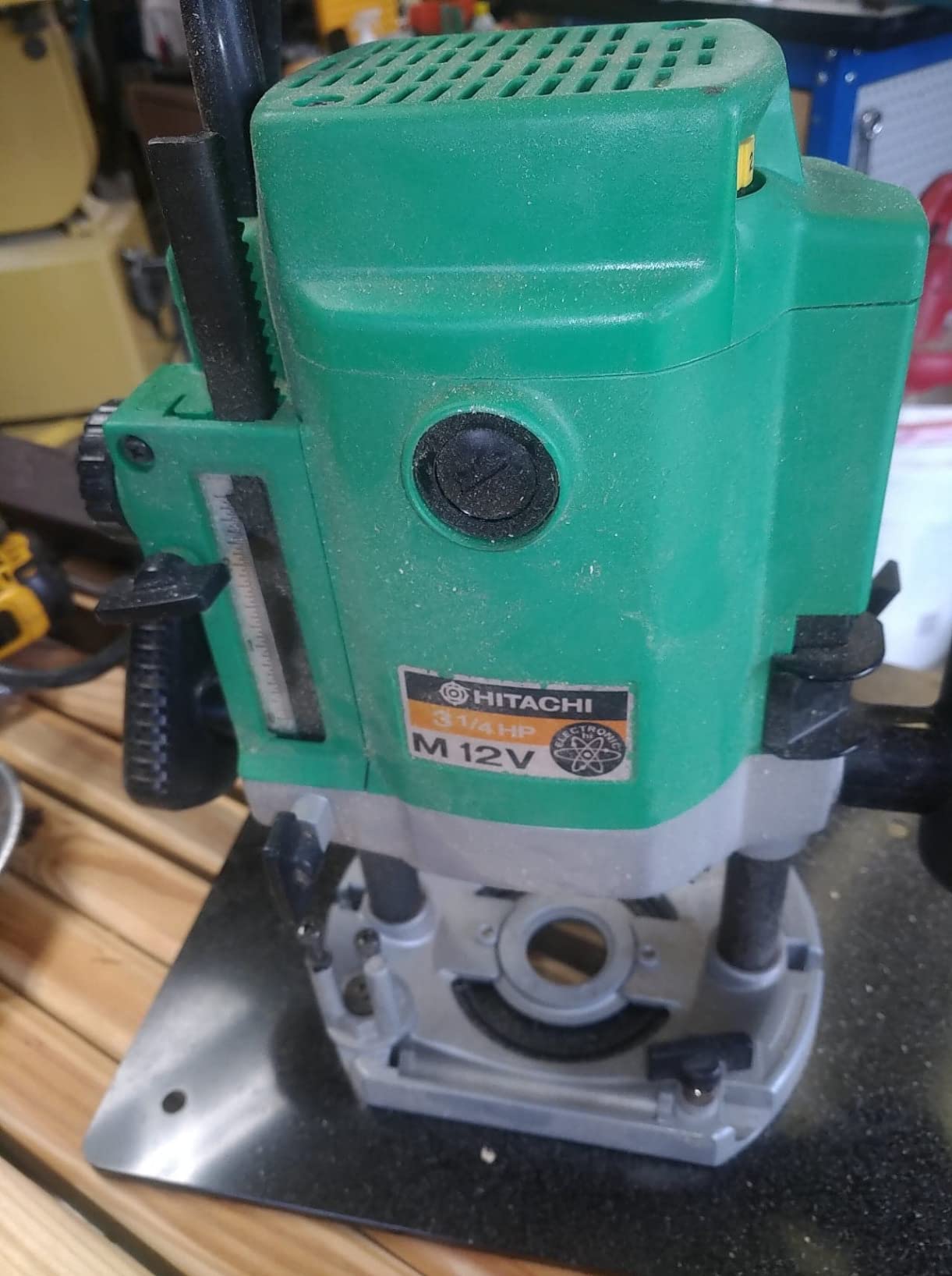
Setup is quick and essentially math-free, and the jig is pre-drilled for Makita 1100, Milwaukee 5615-5624, DeWalt 616-618, Bosch MRC23 series, Ridgid 2930, Hitachi M12VC and several Porter Cable models. It can also be drilled for most routers with a 6-inch base.
The kit includes a jig arm, jig base, two dovetail keys and two locking pivots, so nothing needs buying separately. That completeness is a real part of why it costs more.
What it unlocks
Oval tabletops, arched cabinet doors, boat-shaped trays and display pieces. If you have ever wanted a router to do anything other than a circle, this is the only jig on the list that gets you there without a shop-made template.
Where it will not work
Compact and trim routers are out, and so is anything smaller than 9-1/4 inches. At nearly 9 pounds and over 31 inches long it is also the bulkiest thing here, so plan bench space before you commit.
8. Woodhaven 3270 Circle Cutting Jig – Best for Huge Circles up to 108 Inches
Woodhaven 3270 Circle Cutting Jig, 4″ to 108″ Diameter
4in to 108in diameter
Phenolic and aluminum
Made in the USA
Pros
- Widest capacity here at 4in to 108in
- Heavy rigid phenolic and aluminum build
- Micro-adjustable pivot for exact sizing
- Very low 4in minimum diameter
- Made in the USA
Cons
- Heaviest at 14 lbs and the priciest here
- Smallest review base at 39 reviews
- No ellipse or arc capability
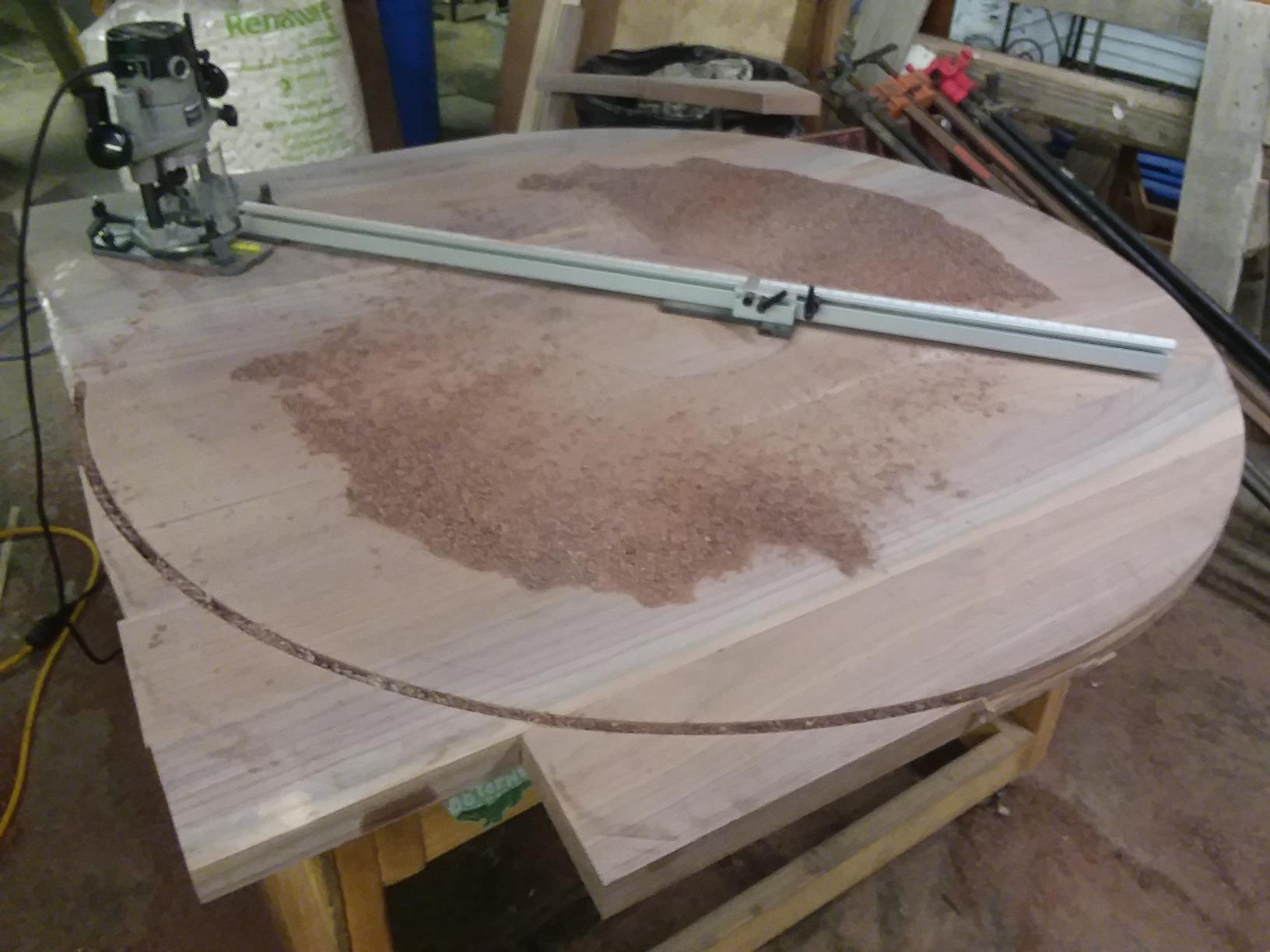
Architectural panels, curved fascia, large signage and shop fixtures are the reason this one exists. Four inches to 108 inches in one jig, built in the USA from phenolic and aluminum, with a quick-set indexing arm and a micro-adjustable pivot.
The micro-adjustment is the detail that matters most at the top of the range. Rough in with the index, then trim to final size with the adjuster rather than trying to hit an exact diameter first time on a 100-inch circle.
The four-inch minimum is unusually low for a jig this size, so you can make small discs and inlay blanks with the same tool you use for a 6-foot panel. Larger family sizes run to 158 and 202 inches if you need them.
It fits most routers with a base plate opening of 6 inches or less, which covers a very wide range of machines. The kit includes the jig, pivot pin, a router bit guard and instructions.
When nothing else in the list is big enough
Above about 60 inches, you are into panel territory where the material must stay on a full sheet and the rig has to travel. This is the only jig here rated past 52 inches, and at 14 pounds it stays planted while it does it.
The trade-offs are size and thin feedback
Fourteen pounds is a genuine load to move around, and 39 reviews is a much thinner record of long-term ownership than the other picks. Buy it because you need the capacity, not because you want the biggest.
9. POWERTEC 71637 Circle Cutter – Clearest View of the Cut Line
POWERTEC Circle Cutter Router Jig, 10″ to 48″ Cutting Range (71637)
10in to 48in diameter
Clear acrylic
1.6 pounds
Pros
- Clear body shows the cut line and workpiece
- Recessed groove slides smoothly when adjusting
- Dual pivot pin for visible or hidden centres
- Acrylic resists chipping better than MDF
- Holes can be drilled for other routers
Cons
- Mounting holes miss on some listed-brand routers
- Some reports of flakiness and cracking when tightened
- 10in to 48in is narrower than most rivals
On a circle cut you cannot see what the bit is doing, which is why clear acrylic jigs exist. With this one you can watch the cut line and the workpiece underneath the whole way round, and that visibility is most of its appeal.
The dual pivot pin system is a smart detail: one pin is for a visible centre hole, the other for a hidden centre, which is the situation on a finished face you do not want to drill. The recessed groove keeps diameter adjustments sliding smoothly rather than binding.
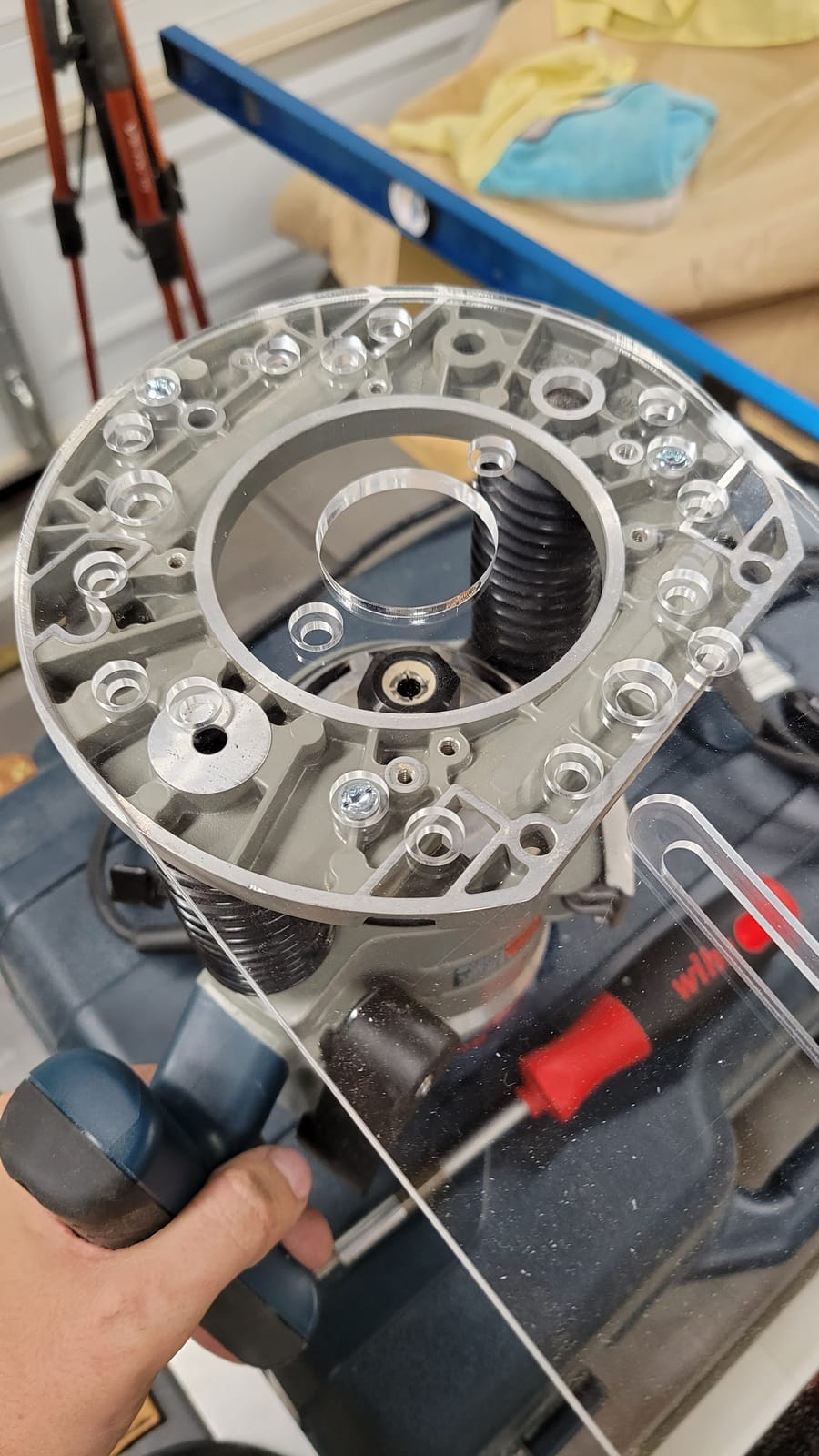
Mounting hardware and a fitment chart for Bosch, Makita, DeWalt, Porter Cable, Milwaukee and Craftsman are included, and extra holes can be drilled for anything else. Several owners confirm it works on a Bosch 1617EVS plunge base once the stock plate comes off.
At 4.2 stars the recurring theme is fitment rather than output. Supplied holes missed the router on a number of machines, and a few owners describe the plate as flimsy or cracking when the screws were tightened hard.

Why visibility changes the result
Bit wander usually starts in the first inch or two. Being able to watch the line from above makes it obvious when the router is drifting onto the waste side, and you can correct before the mistake runs the whole arc.
Who should pass
If you cut in hardwood at large diameters, go phenolic or aluminum. Clear acrylic is at its best on plywood and cabinet work where you want to see the line, and it is the narrower of the mid-range options at 10 to 48 inches.
10. Kreg Trim Router Circle Guide – Most Comfortable Single-Handle Base
Kreg Trim Router Circle Guide, Wood Router, Fits Most Trim Routers
3-1/2in to 52in diameter
Fits most trim routers
1.84 pounds
Pros
- Very low 3-1/2in minimum diameter
- Single handle cuts hand fatigue
- Built for the most common light-duty machine
- Clean repeatable circles at a modest price
Cons
- Tuned for a 1/4in straight bit
- Not built for full-size plunge router work
The odd thing about a trim router jig is that most of them cap out at a small diameter, which defeats the purpose if you want a round table top. This one runs 3-1/2 to 52 inches, so a compact router can handle real panels.
The single-handle base is the reason it earns a place. A full-size plunge base has two handles and a heavy motor over the work; this one grips with one hand, which owners say makes long cutting sessions much easier on the wrist.
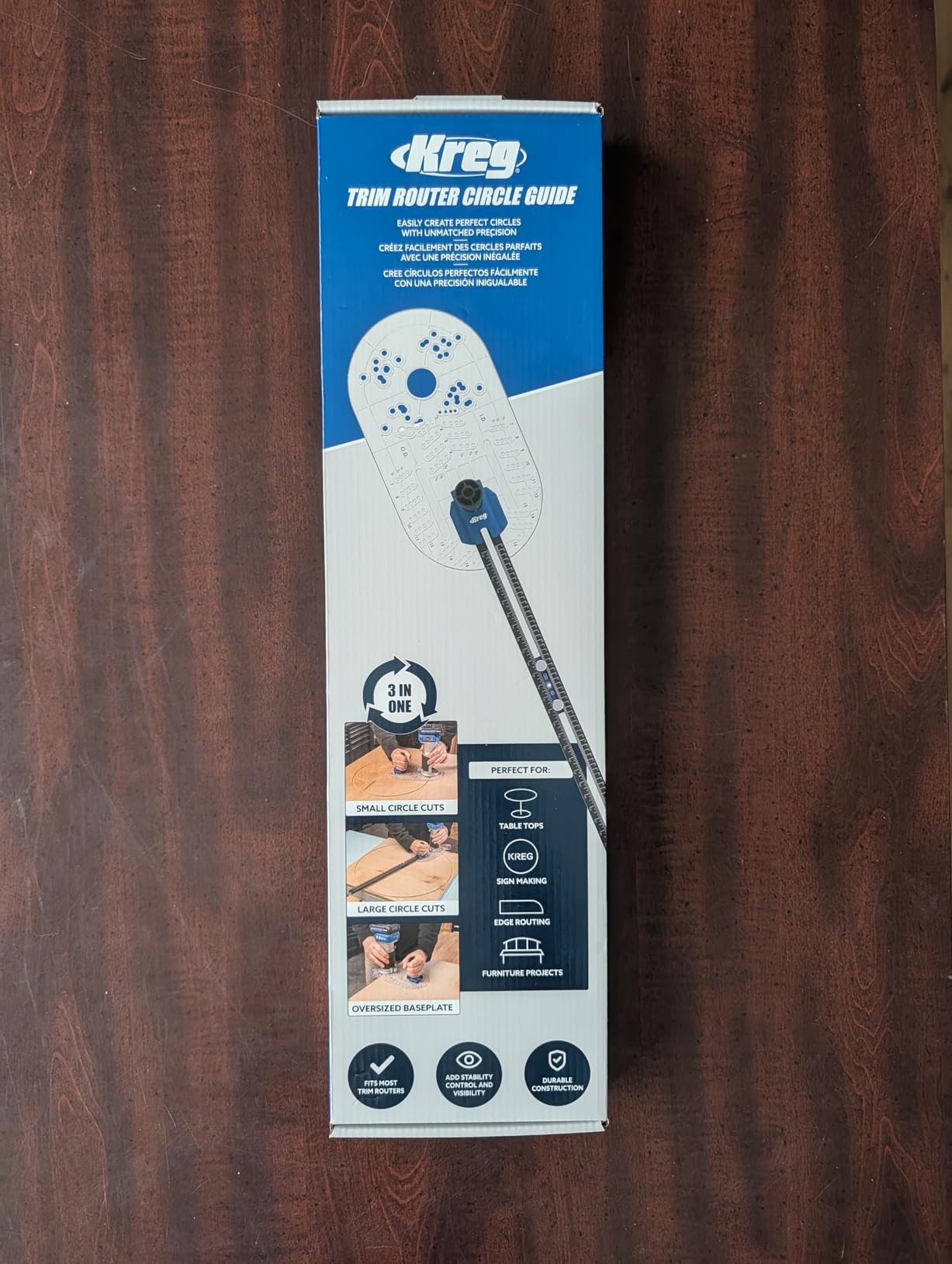
It fits most trim routers and is designed around a 1/4-inch straight bit with a 1/4-inch shank. Using another bit style reduces the usable accuracy, which is worth knowing before you plan a precision inlay sequence around it.
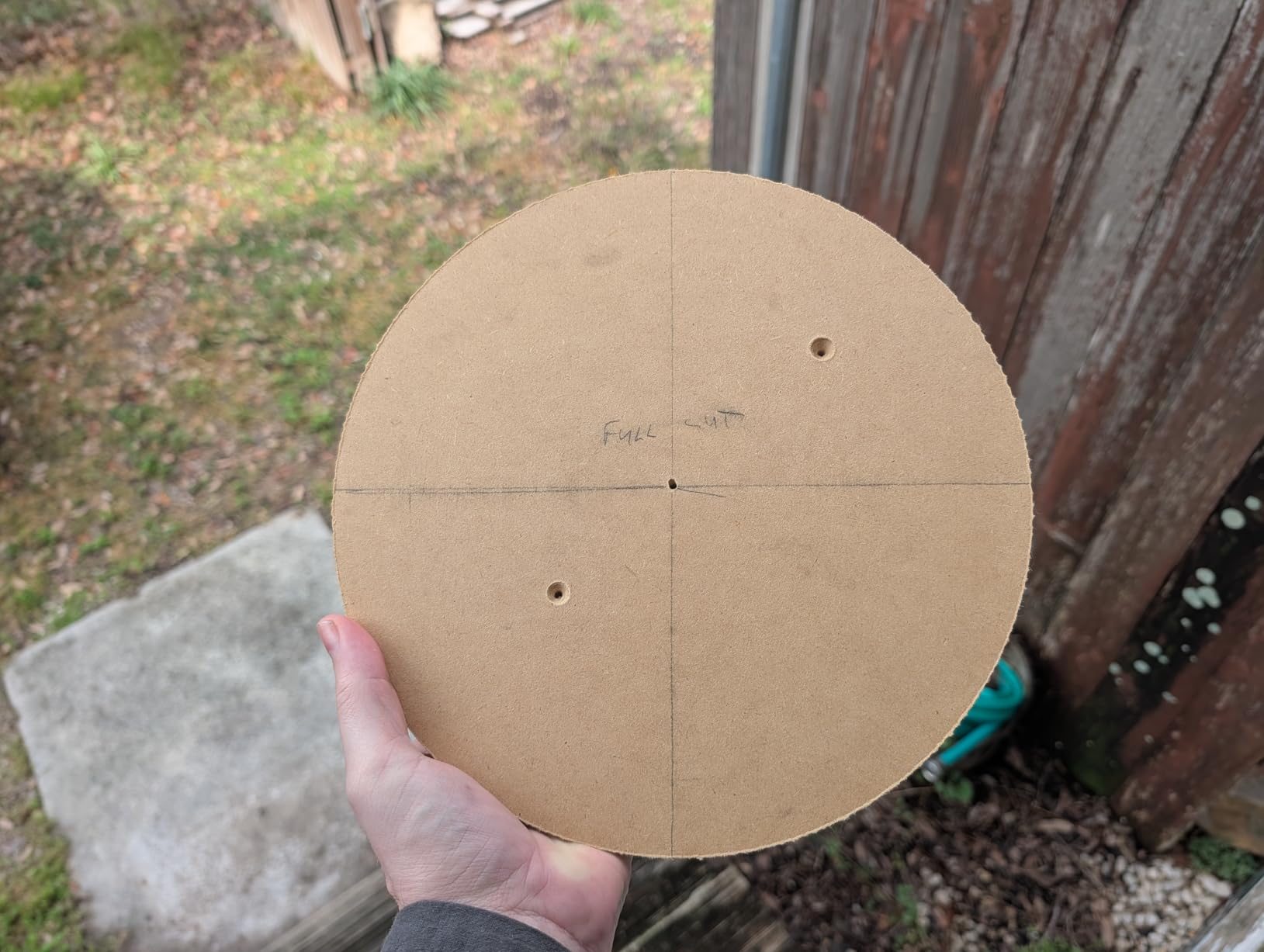
This is a newer listing, first available in early 2026, with 78 reviews behind it. The early feedback is consistent: it drops onto most trim routers, cuts clean circles, and handles both very small and very large diameters without a second jig.
Best first jig for a compact router owner
If your machine is a palm router and your projects are small parts, cabinet work and trim-adjacent circles, this covers the range without asking you to change router. Nothing else here does that at this size.
The limits
A 3-1/2-inch floor means very small inlay blanks are out of reach, and it is not a plunge-router tool. For anything larger than a foot and a half in solid wood, move up to the Jasper 200 or Milescraft 1219.
What Is a Router Circle Jig and How the Pivot System Works
A router circle jig is a flat base plate with a fixed arm that bolts to your handheld router’s base plate. A pin on the far end of the arm drops into a hole drilled in the centre of your workpiece, so the router is forced to travel in a perfect arc and cut an accurate circle up to the jig’s rated maximum.
The measurement that matters is not the headline diameter. It is the distance between the centre pin and whichever edge of the tool defines your cut, usually the bit’s cutting edge or the guide bushing. Set that distance and the jig enforces the circle for you.
Which edge you use changes the answer. If you reference the guide bushing, the bushing diameter is the radius. If you reference the bit edge, the bit radius is the radius. Getting this backwards is the most common reason a first cut comes out the wrong size, and it is why inside cuts and outside cuts need different numbers for the same finished part.
How to make circles with a router, step by step
First, mark your centre on the workpiece and drill a small hole for the pivot pin. A scrap of wood under the work is worth the minute it takes, because the bit will eventually break through.
Second, measure from that centre hole to the edge that sets your diameter, and choose the matching pivot hole or set the arm to that distance.
Third, mount the jig to the router and check the pivot pin drops into the hole with no side play. Tighten it fully before you start cutting.
Fourth, tape the workpiece down. Double-sided tape on a sacrificial board is the standard fix, and it is the cheapest insurance against centre waste breaking out.
Fifth, use an upcut spiral bit. A downcut bit pulls the router in the wrong direction, and a straight bit has no shear to keep the cut clean.
Sixth, take shallow passes. On anything over half an inch thick, work down in steps rather than trying to cut through in one.
Seventh, start the cut with the router plunged and the bit stationary, then feed to full speed before you begin the arc. Entering the arc at full plunge is how beginners tear out the edge.
Eighth, keep moving and keep the side load light. Cutting against the direction of travel causes climb cutting and burns the edge.
Matching a Jig to Your Router Type
Your router decides your shortlist more than your budget does. This is the question forum buyers ask most and no roundup answers properly, so here it is plainly.
A plunge router is the easiest case. You can start a full circle without a through-hole in the workpiece, because the bit is already down before the arc starts. Most jigs on this list assume a plunge machine, including the Milescraft 1219, the Jasper 200, the Jasper 300 XLC and both Rocklers.
A fixed base router can do circles, but not a full one on its own. To get round the outside of a shape you need a through-hole in the workpiece or a zero-clearance centre pin so the router can reach full depth before it starts the arc. Otherwise the practical route is to plunge to establish the arc and finish with the fixed base. That is the one real exception to the idea that a plunge router does everything a fixed base can do, and it is why plunge is worth owning for circle work.
A trim or compact router needs a jig built for it. The Jasper 290 covers Bosch Colt, DeWalt DWP611, Makita XTR01, Milwaukee M18 FUEL, Ridgid, Ryobi and Porter Cable, and the Kreg guide fits most trim routers. Neither will mount to a full-size plunge base.
Cordless routers follow the trim pattern, since the mounting pattern matches the trim machine it replaces. Check your model against the compatibility chart before ordering any jig, and expect to drill if your model is not listed.
Choosing by Circle Diameter and Jig Material
Choose by three numbers in this order: the largest circle you will ever need, the type of router you own, and the material thickness you will route. Everything else is preference.
Under 6 inches means small inlay, clock faces and cabinet details. The Kreg guide and the Jasper 290 both reach down here, and the Milescraft 1219’s small jig starts at 1.5 inches. Pick dense 1/16-inch indexing here, because at this size a 1/16-inch step is a meaningful share of the whole circle.
From 6 to 18 inches is the cabinet, speaker and small table top band, and it is where most buyers land. The Jasper 200 and the Jasper 290 cover it with 1/16-inch precision, and the Milescraft small guide reaches 12 inches.
From 18 to 36 inches you want a rigid body and larger increments. The Jasper 300 XLC, the two Rocklers and the Milescraft large jig all sit here, and the phenolic and aluminum builds hold up better than plastic at these sizes.
Above 36 inches, capacity and stiffness are everything. The Jasper 300 XLC and both Rocklers reach 52 inches, the Sigerio jig reaches 58, and the Woodhaven 3270 goes to 108. At this diameter, read the diameter as the finished cut, not the jig’s reach, and allow for the workpiece to stay fully supported.
On material, acrylic gives you visibility and light weight but flexes, polycarbonate is tougher and is what the Jasper 300 XLC uses, phenolic is the rigid mid-weight option the Rockler relies on, and aluminum is for very large or very long cuts. If you would rather build your own, a 1/4-inch plywood jig handles small circles with a trim router, while 3/8 to 1/2-inch plywood, MDF or polycarbonate is the right choice for larger ones.
Common Mistakes When Cutting Circles with a Router
Centre waste breaking out is the most ruined job. The freed inner disc can grab the spinning bit and take the edge with it. Tape the waste down or cut shallow passes, and do not leave the final pass to full depth with the waste already free.
Out-of-round circles usually mean a flexing base or a loose pivot. If you press down hard on a plastic jig, you are bending the very thing setting your radius. Keep the router’s weight over its own base and let the jig carry no vertical load.
Mixing up inside and outside reference is the other big one. For an inside cut the pin sits outside the finished edge; for an outside cut it sits inside. The numbers are not the same, and forum users flag this as the thing you have to pay attention to during setup.
Bit wander and burning come from cutting against the direction of travel with a straight bit. An upcut spiral with the rotation matched to the cut direction fixes most of it.
Rushing the diameter is the last one. Rough the cut slightly under size on a big circle, then trim to final dimension with a micro-adjuster or a second light pass. Trying to hit 52 inches exactly on the first pass is how people end up at 51 and a half.
Frequently Asked Questions
What is the best router circle cutting jig?
The Milescraft 1219 Circle Guide Kit is the best all-round router circle cutting jig because it covers 1.5 inch to 52 inch circles with two guides in one box and carries a 4.7 star owner rating. The Jasper Model 200 is the better value for plunge-router work under 18 inches, and the Woodhaven 3270 is the only pick here that reaches past 52 inches.
How do I make circles with a router?
Drill a small pivot hole in the exact centre of your workpiece, set the jig so the distance from that hole to your bit edge or guide bushing equals your desired radius, then plunge the router and swing it around at full speed. Take shallow passes and let the router weight sit over its own base rather than pressing down on the jig arm.
Do I need a plunge router for a circle jig?
For a full circle on a finished face, yes. A plunge router can start the arc with the bit already at depth, while a fixed base router needs a through-hole in the workpiece or a zero-clearance centre pin to reach full depth before the cut begins. Most jigs here are sold for plunge routers, with the Jasper 290 and Kreg guide covering trim and cordless machines.
Can a plunge router do everything a fixed base router can do?
Almost. A plunge router covers every circle cutting job a fixed base can do, plus full-depth cuts in the middle of a workpiece. The one exception runs the other way: a fixed base router can only complete a full circle if the jig uses a through-hole or a zero-clearance centre pin.
What is the best material to use for router templates?
Clear acrylic is the most common choice because you can see the cut line, though it flexes more than rigid options. Phenolic or aluminum is better for large circles in hardwood, and for a shop-made jig, 1/4-inch plywood suits small circles with a trim router while 3/8 to 1/2-inch plywood, MDF or polycarbonate suits larger ones.
Which router circle jig works with a compact or cordless router?
The Jasper 290 is built for compact, trim and cordless routers including Bosch Colt, DeWalt DWP611, Makita XTR01, Milwaukee M18 FUEL, Ridgid, Ryobi and Porter Cable, and the Kreg Trim Router Circle Guide fits most trim routers. Plunge-router jigs such as the Jasper 200 will not mount to those machines.
Final Verdict
The Milescraft 1219 is the pick we would buy first, because two guides in one box covers almost everything a woodworker asks a circle jig to do, and its 4.7 star rating across nearly 2,900 owner reviews is the strongest evidence in this roundup. For plunge-router work under 18 inches and the tightest indexing, the Jasper Model 200 is the better value.
If you own a compact or cordless router, the Jasper 290 is the one that actually fits, and the Kreg guide covers the same class with a 3-1/2-inch floor. For circles past 52 inches, the Woodhaven 3270 is the only option on this list, and the Rockler ellipse jig is the answer whenever the shape stops being a circle. Whatever you choose, confirm your router model against the fitment list before you order, and the best router circle jigs for woodworking will save you an afternoon of fairing and sanding on every job that follows.