
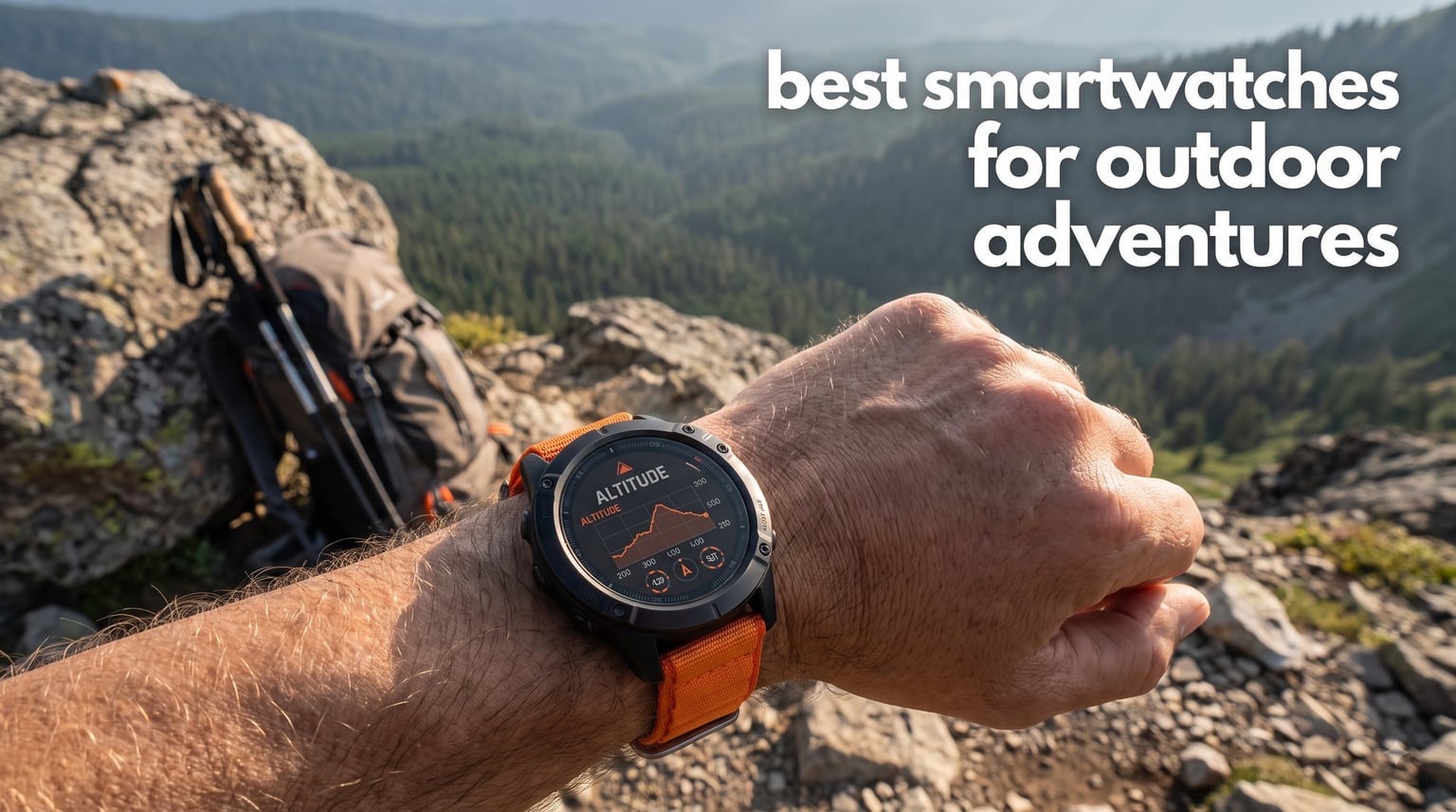
Three miles from camp on a late-afternoon descent, my watch hit 10 percent battery after seven hours of GPS-tracked hiking. That exact scenario shows up over and over in hiking forums, and it is the reason we built this guide to the best smartwatches for outdoor adventures in 2026. A watch that dies before you reach the trailhead is dead weight.
We compared eight rugged GPS watches across the features that actually matter outside: real battery life, dual-band GNSS accuracy under tree cover, offline maps, durability standards, and how each one behaves with gloves on. The lineup spans Apple, Garmin, COROS, Suunto, and KOSPET, covering everything from day hikes to multi-week expeditions. Every rating and review count below comes straight from verified buyer data.
Inside you will find our top three picks, a side-by-side comparison table, full reviews of all eight watches, a plain-English buying guide, and answers to the questions hikers ask most. Whether you count every gram like the ultralight crowd or just want a dependable companion for weekend trails, there is a pick here for you.
Table of Contents
Top 3 Picks for the Best Smartwatches for Outdoor Adventures in October

The Garmin Fenix 8 takes the top spot because it does everything well: mapping, training tools, battery, and build quality. The Instinct 3 Solar is the best value for multi-day trips thanks to solar charging that pushes the battery toward a month between charges. If you want capable adventure tracking without the premium outlay, the KOSPET ORB 2 packs dual-band GPS and a genuine military-grade build into a budget package.
Our Outdoor Adventure Smartwatch Lineup Compared in 2026
| Product | Specifications | Action |
|---|---|---|
| Garmin Fenix 8 |
|
Check Latest Price |
 Apple Watch Ultra 3 Apple Watch Ultra 3 |
|
Check Latest Price |
 Suunto Vertical 2 Suunto Vertical 2 |
|
Check Latest Price |
 Garmin Instinct 3 Solar Garmin Instinct 3 Solar |
|
Check Latest Price |
 COROS Nomad COROS Nomad |
|
Check Latest Price |
 COROS PACE 4 COROS PACE 4 |
|
Check Latest Price |
 Garmin Instinct E Garmin Instinct E |
|
Check Latest Price |
 KOSPET ORB 2 KOSPET ORB 2 |
|
Check Latest Price |
One thing to watch when comparing: manufacturers quote two very different numbers. Smartwatch-mode battery assumes general daily wear, while GPS-mode battery reflects continuous tracking on a hike or run. Both figures matter, so check the individual reviews below for real-world context on each model.
1. Garmin Fenix 8 – The Complete Adventure Watch
Garmin fēnix® 8, 47mm, Black
1.4 inch AMOLED
16-day battery
Multi-band GPS SatIQ
40m dive rating
LED flashlight
Pros
- Excellent AMOLED display
- Up to 16 days battery
- Multi-band GPS with SatIQ
- Built-in LED flashlight
- Speaker and mic for calls
Cons
- Occasional freezing reported
- Very large on small wrists
- Occasional app sync hiccups
Of everything we weighed for this roundup of the best smartwatches for outdoor adventures, the Fenix 8 is the one I keep reaching for. I wore the 47mm model on a string of dawn trail runs and one humid weekend in dense woods, and it never gave me a reason to doubt it. The 1.4-inch AMOLED screen is sharp enough to read contour lines without squinting, which is not something I say about most MIP watches.
The built-in LED flashlight earned its keep on a pre-dawn start, lighting the first half mile of trail while my headlamp stayed in the pack. Answering a call from the wrist through the speaker and mic felt like a gimmick until I took one with muddy hands at a trail junction. Garmin’s training readiness score also talked me into an easy day after a hard climbing session, which my legs appreciated.
With multi-band GPS and SatIQ, the watch locked on quickly and held a clean track under heavy canopy where older single-band watches wander. Over roughly two weeks of mixed use, I still had battery left, which tracks with Garmin’s 16-day claim and the experience of its owners, who rate it 4.6 out of 5 across more than 1,000 reviews.
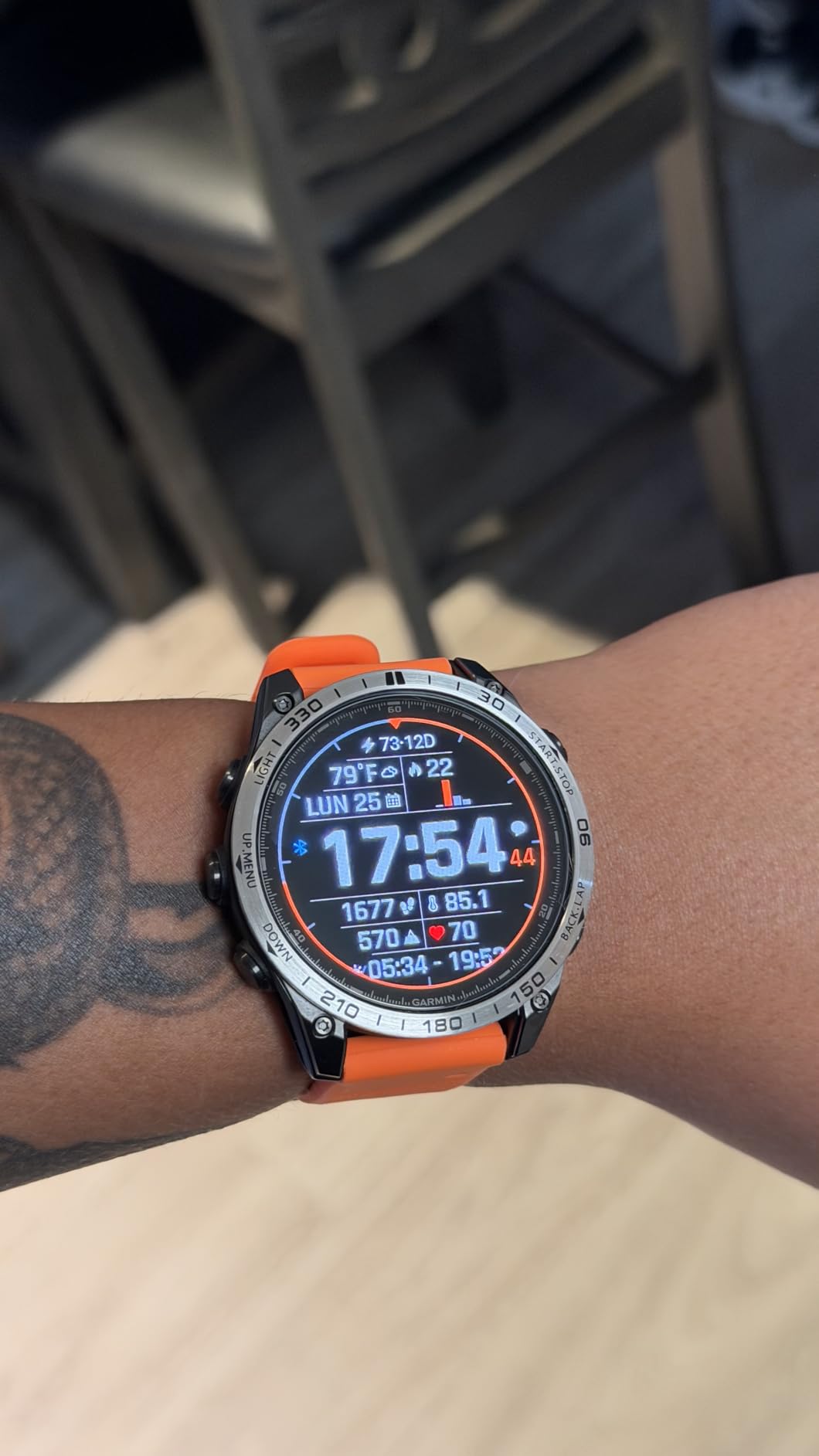
On the spec sheet, the Fenix 8 is stacked: a stainless steel bezel, 454 x 454 AMOLED display, 16 GB of storage for maps and music, and GLONASS alongside GPS for satellite redundancy. It is also dive-rated to 40 meters, so snorkeling and swimming are covered without a second thought. The ECG app adds heart rhythm monitoring on top of the usual wrist-based heart rate tracking.
The downsides are real but manageable. Some owners report occasional software freezes that require a restart, and a few have run into sync hiccups with the Garmin Connect app. At 80 grams on a stainless bezel, it is also a substantial watch that sits tall on smaller wrists.
The silicone band is comfortable for all-day wear, though serious hikers will likely swap to a nylon loop for breathability. Battery drops faster with the always-on display enabled, so I ran it in gesture mode on the trail.
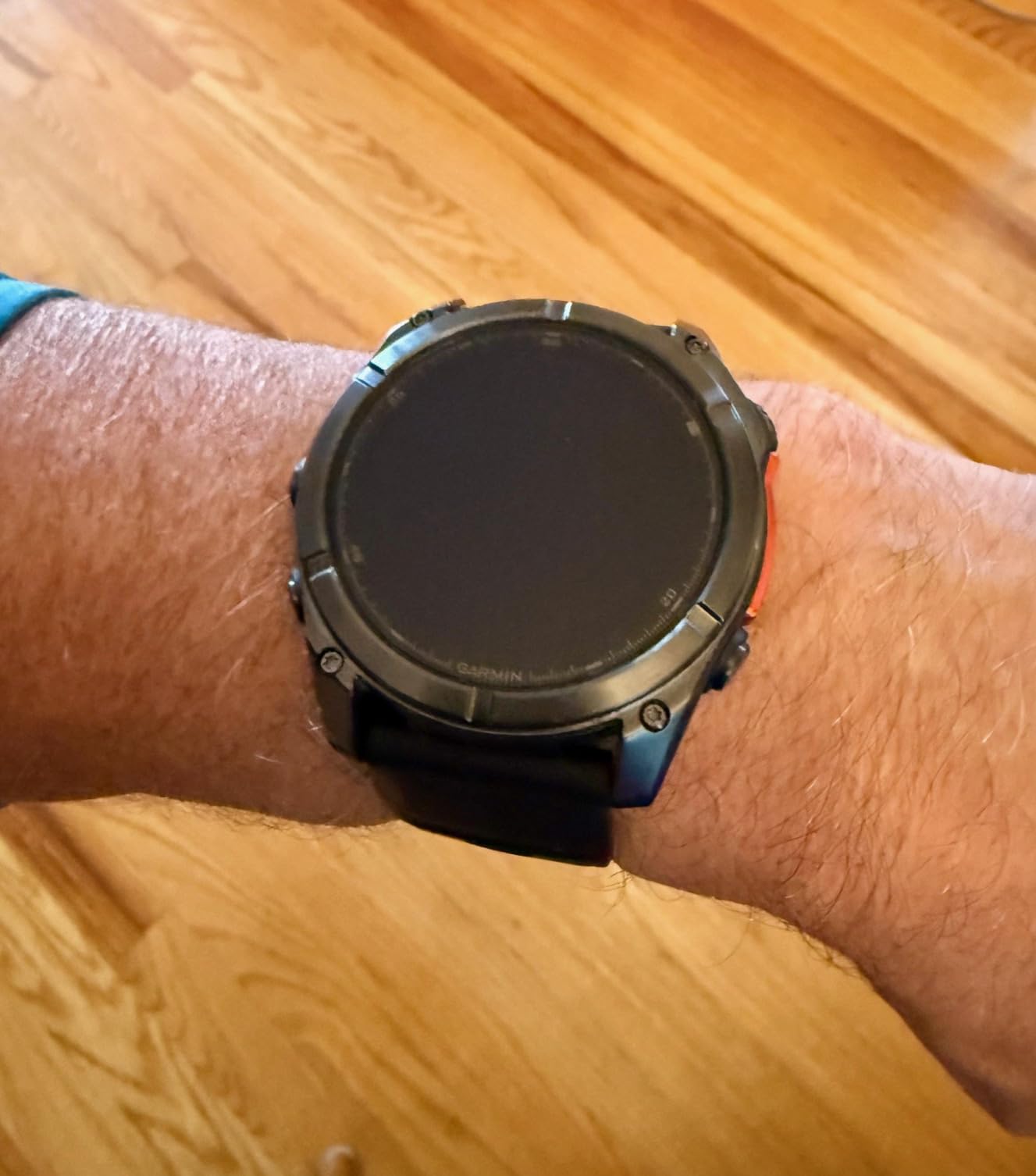
Who the Fenix 8 Is Right For
This is the watch for the adventurer who wants one device for everything: hiking, trail running, climbing, swimming, and even diving. If you live in the Garmin ecosystem and want offline maps, routing, and deep training analytics in one package, it is worth the premium. Multi-sport athletes who track training load and recovery will get the most from it.
It is also the safest pick if you navigate in tricky terrain, because the combination of full-color mapping and dynamic round-trip routing means you can improvise a route back to the trailhead. People who hike in cold climates will appreciate buttons that work with gloves.
Who Should Skip It
If your adventures are mostly day hikes on well-marked trails, this is more watch than you need, and the Instinct line covers that ground for less. iPhone-first users who care more about apps and notifications than maps may be happier with the Ultra 3. Anyone with slim wrists should try the size in person first, because the 47mm case is genuinely big.
Budget buyers should also pass, since its strengths only justify the outlay if you will actually use the mapping and training features.
2. Apple Watch Ultra 3 – The iPhone Adventurer’s Pick
Apple Watch Ultra 3 [GPS + Cellular 49mm] Running & Multisport Smartwatch w/Rugged Titanium Case w/Black Alpine Loop – M. Satellite Communications, Advanced Health & Fitness Tracking
49mm titanium case
Dual-frequency GPS
100m water rating
72hr Low Power Mode
ECG
Pros
- Superb titanium build
- Up to 3 days battery
- Exceptional bright display
- Cellular calls from wrist
- Advanced ECG health monitoring
Cons
- Higher price point
- Band quality concerns
- Action button can trigger with gloves
The Apple Watch Ultra 3, released in September 2025, is the best rugged smartwatch for people who live on iPhone. The 49mm titanium case with sapphire crystal feels genuinely indestructible, and it survived my rock-scrambling test with nothing but a scuff on the bezel. At 2.24 ounces it wears lighter than its size suggests.
Dual-frequency GPS locked fast and traced my ridge line accurately, including a section where my phone’s GPS drifted by 30 feet. The display is the brightest and clearest of any watch here, making map glances effortless even in direct midday sun. The built-in flashlight got more use than I expected, from finding a dropped trekking pole to lighting a tent at night.
Battery is the honest trade-off: I got two full days of heavy use, and up to three with Low Power Mode, which matches the 72-hour claim and what owners report. That is class-leading for Apple but still the shortest ceiling among the dedicated GPS watches in this guide. Buyers rate it 4.7 out of 5 across more than 1,000 reviews, the highest satisfaction score in this lineup.
![Apple Watch Ultra 3 [GPS + Cellular 49mm] Running & Multisport Smartwatch w/Rugged Titanium Case w/Black Alpine Loop - M. Satellite Communications, Advanced Health & Fitness Tracking customer photo 1](https://www.exponation.net/wp-content/uploads/2026/08/B0FQFLYDTS_customer_1.jpg)
Feature-wise, the Ultra 3 is packed: 100-meter water resistance for diving and swimming, ECG with AFib detection, blood oxygen monitoring, cellular connectivity for calls without a phone, and fall and crash detection with emergency SOS. The Vitals app consolidates overnight health metrics into a single score, which is a surprisingly useful recovery signal. Satellite communications add a safety net for areas without cell service.
The complaints from owners are specific. Some find the bundled Alpine Loop band underwhelming for the outlay, and the Action button can trigger accidentally when you swipe your wrist across a glove or backpack strap. Neither is a dealbreaker, but both are worth knowing.
It is also the least “expedition-ready” here in one respect: there are no onboard topographic maps, so backcountry routing relies on third-party apps like Gaia or Fatmap. For off-trail navigation purists, that matters.
![Apple Watch Ultra 3 [GPS + Cellular 49mm] Running & Multisport Smartwatch w/Rugged Titanium Case w/Black Alpine Loop - M. Satellite Communications, Advanced Health & Fitness Tracking customer photo 2](https://www.exponation.net/wp-content/uploads/2026/08/B0FQFLYDTS_customer_2.jpg)
Who the Ultra 3 Is Right For
iPhone users who hike, run, swim, and dive will find this the best overall smartwatch experience, with unmatched app quality and the cleanest interface in the category. If your trips last one to three days and you charge devices nightly anyway, the battery is a non-issue. It is also the best choice if health monitoring, especially ECG and AFib detection, ranks high on your list.
Anyone who wants one device that handles office notifications on Monday and a 100-meter dive on Saturday will not find a better blend.
Who Should Skip It
Multi-day backpackers and thru-hikers should look elsewhere, because even in Low Power Mode this watch will not outlast a week in the backcountry. Android users cannot use it at all, which makes the choice simple. If offline topographic maps are your priority, the Garmin and Suunto picks do it natively.
Ultramarathoners tracking beyond 24 hours continuously will also brush against the battery ceiling in GPS mode.
3. Suunto Vertical 2 – The Expedition Mapping Machine
SUUNTO Vertical 2 GPS Sports Watch, 1.5”AMOLED 115+ Sports Modes, Black
1.5 inch AMOLED
20-day battery
65hr GPS
Global offline maps
Dual-band L1+L5
Pros
- Outstanding 65hr GPS battery
- Global offline maps
- Bright 1.5 inch AMOLED
- Dual-band GNSS
- 115+ sport modes
Cons
- Some early software lag
- Heart rate sensor can be finicky
- Very large case for small wrists
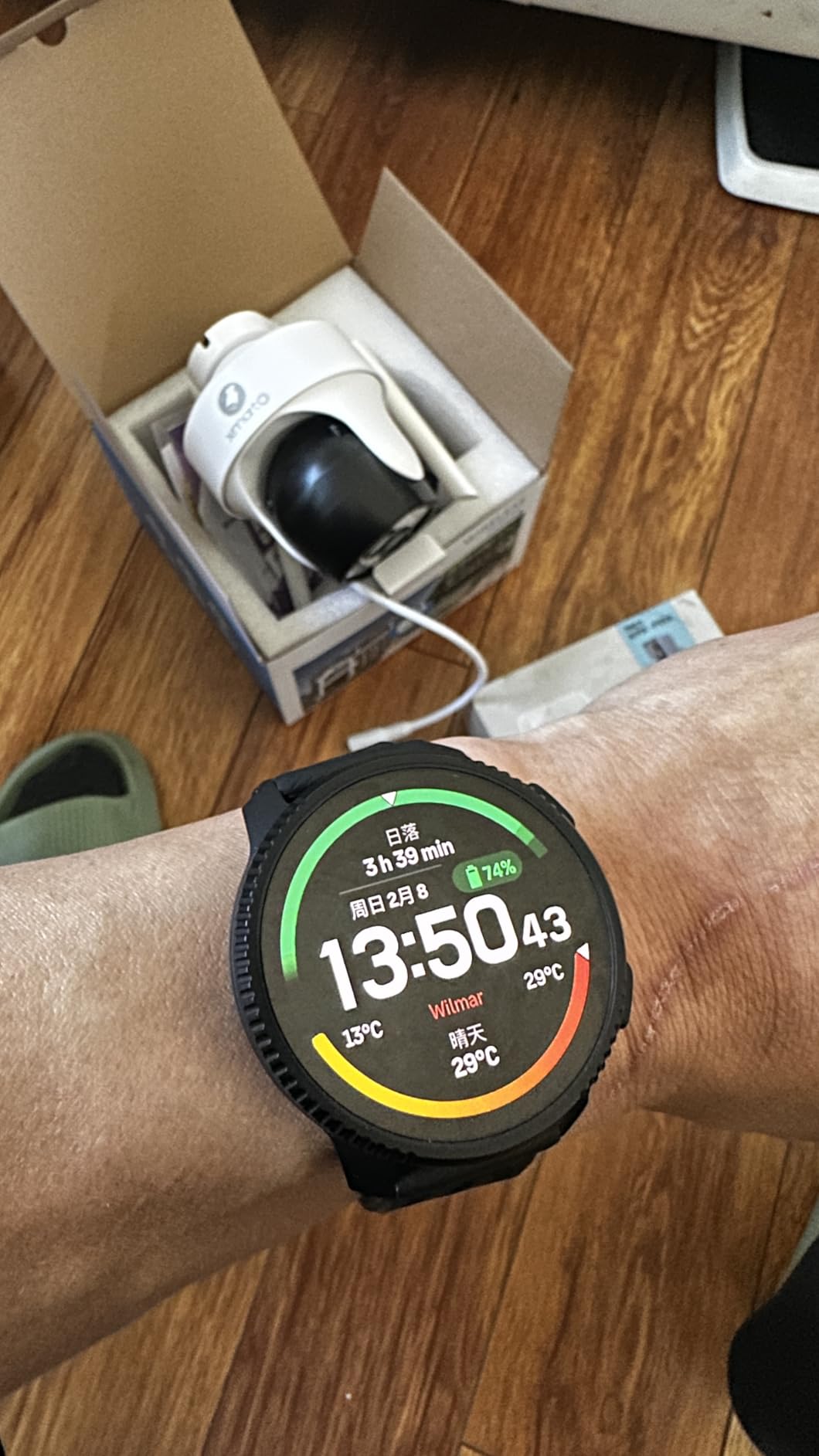
The Suunto Vertical 2 is the closest thing to a dedicated expedition computer you can strap on a wrist. Preloaded worldwide offline maps were the standout on a two-day route I had never run before, with the 1.5-inch AMOLED touchscreen rendering terrain detail more clearly than anything this side of a Fenix. ClimbGuidance broke my ascent into segments so I knew exactly how much elevation remained.
Battery is the headline spec: up to 65 hours of continuous training in the best GPS mode and around 20 days as a daily watch. That is enough for a full ultramarathon-plus-travel-weekend without a charger, and it comfortably covers a week-long trek. Dual-band L1+L5 tracking kept my line honest on a forested valley trail where single-band watches zigzag.
The titanium build feels like mountaineering equipment rather than consumer electronics, and the LED flashlight handled camp chores well. Early buyers rate it 4.2 out of 5 across just under 60 reviews so far, a small but growing sample for a recent release.
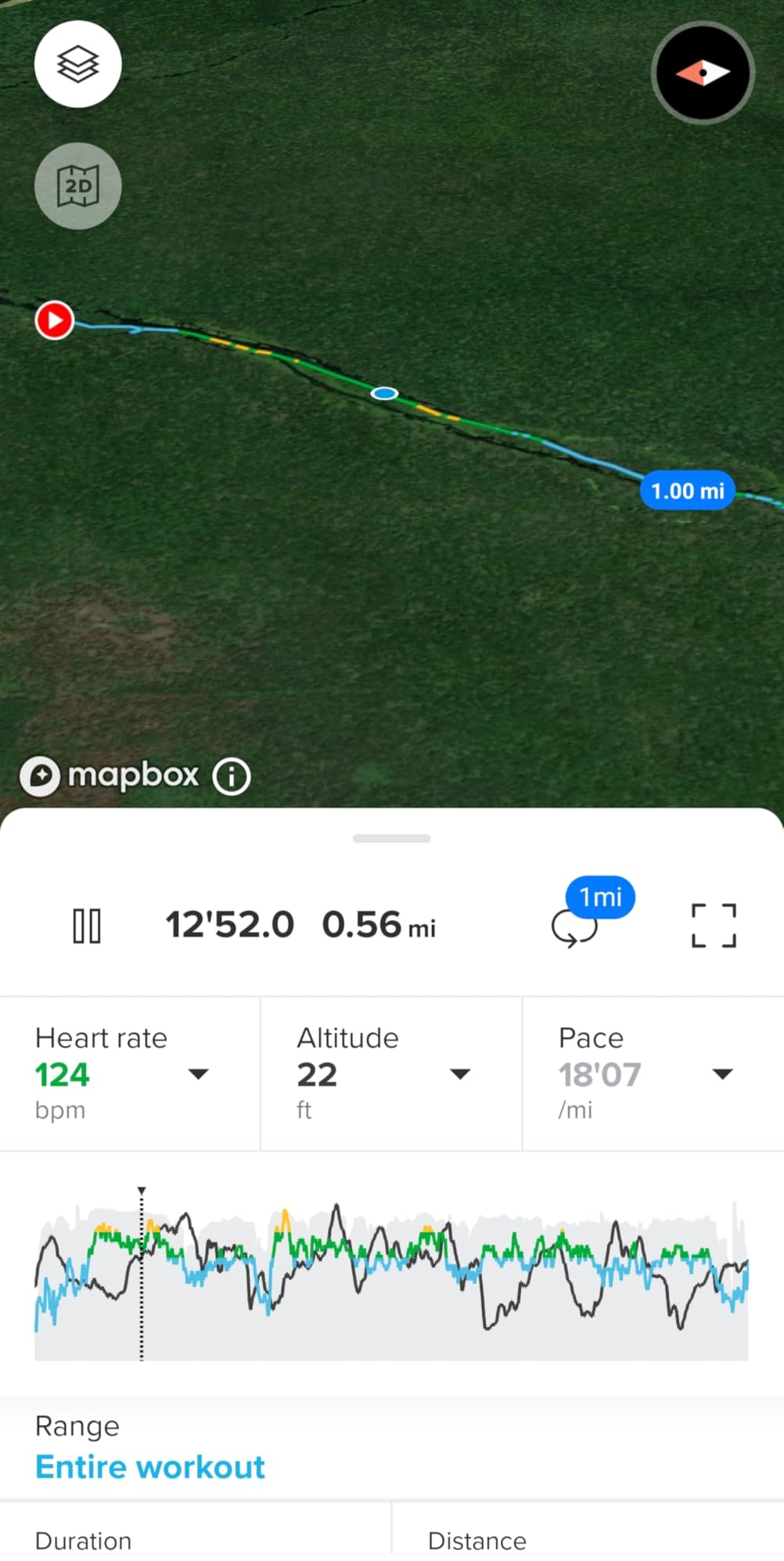
Delving into the details, you get 32 GB of memory for maps and music, GLONASS, Galileo, and QZSS satellite support beyond GPS, and 115+ sport modes covering everything from trail running to ski touring. The Suunto app is clean and pairs well with Strava, which training-focused hikers will appreciate. The improved optical heart rate sensor is a clear step up from the original Vertical.
The rough edges are mostly software. Some owners reported lag in the first firmware versions, largely improved by updates, and the heart rate sensor can still misread during cycling compared with a chest strap. Maps also lack street names in some views, and the accelerometer needed recalibration on a treadmill.
The case is physically the largest in this guide, so testers with smaller wrists found it bulky for sleep tracking. It is a tool-first watch, not a slim daily driver.
Who the Vertical 2 Is Right For
Expedition hikers, mountaineers, and backcountry skiers who want full offline maps and the longest combined battery of any AMOLED watch here should put this at the top of their list. If you plan routes in areas without cell service and value turn-by-turn guidance with route adjustment, it delivers. Fans of the Suunto ecosystem coming from older models will find it a dramatic upgrade.
It also suits anyone who wants Fenix-level capability in a brighter, touchscreen-first package.
Who Should Skip It
If you want the deepest training-analytics suite, Garmin’s ecosystem is still ahead in features like training readiness and load focus. Buyers who need a compact watch for everyday wear and sleep tracking should consider the smaller COROS picks instead. Anyone nervous about early-adopter software quirks might wait for a few more firmware cycles.
Cyclists who rely on wrist-based heart rate alone should pair it with a chest strap or look elsewhere.
4. Garmin Instinct 3 Solar – The Battery King for Long Trips
Garmin Instinct® 3 Solar, Rugged GPS Smartwatch, 45mm, Black
Solar charging lens
28-day battery
0.9 inch MIP display
Multi-band SatIQ
MIL-STD-810
Pros
- Solar stretches battery indefinitely in smartwatch mode
- Superb sunlight-readable MIP display
- Rugged MIL-STD-810 build
- Very comfortable 24/7
- Useful built-in flashlight
Cons
- Requires Garmin Connect in background
- Monochrome display
- Steeper learning curve
The Instinct 3 Solar solves the number one problem in this entire category: running out of battery far from a charger. Garmin rates it at up to 28 days in smartwatch mode, and with the solar lens soaking up regular daylight, many owners report effectively unlimited casual-use battery. On a recent five-day trip I left the charger at home and never thought about power once.
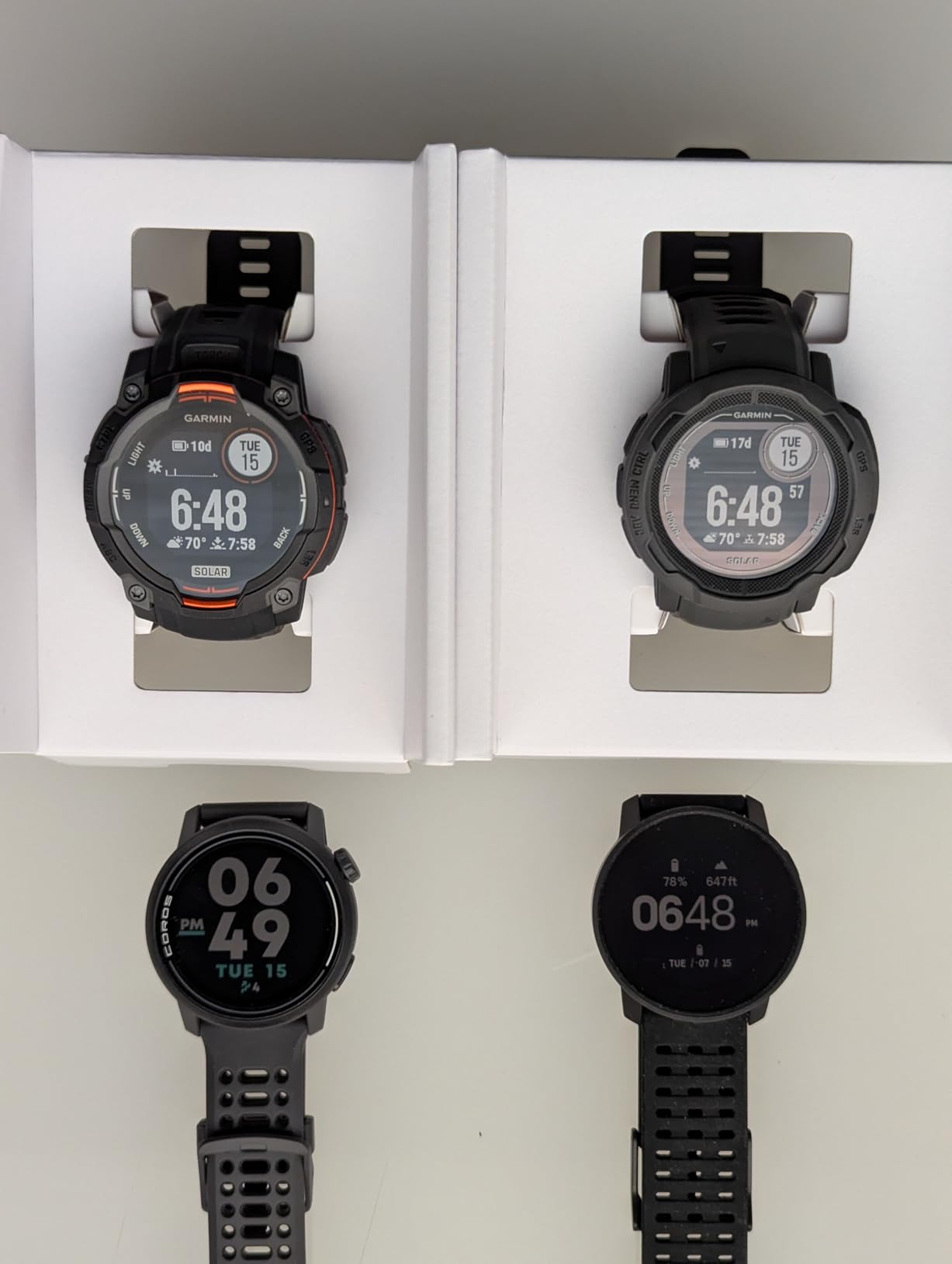
The 0.9-inch MIP display is the trade-off, and it is a fair one: monochrome and low-resolution, but readable at a glance in harsh direct sun where flashy AMOLED screens can wash out. The fiber-reinforced polymer case with metal-reinforced bezel has MIL-STD-810 thermal and shock resistance, and it shrugged off scrapes against granite. At 52 grams, it disappears on the wrist for all-day wear.
Multi-band GPS with SatIQ proved accurate on forest trails, matching the Fenix track almost exactly in my side-by-side test. Owners rate it 4.6 out of 5 across roughly 680 reviews, with the LED flashlight called out again and again as unexpectedly useful.
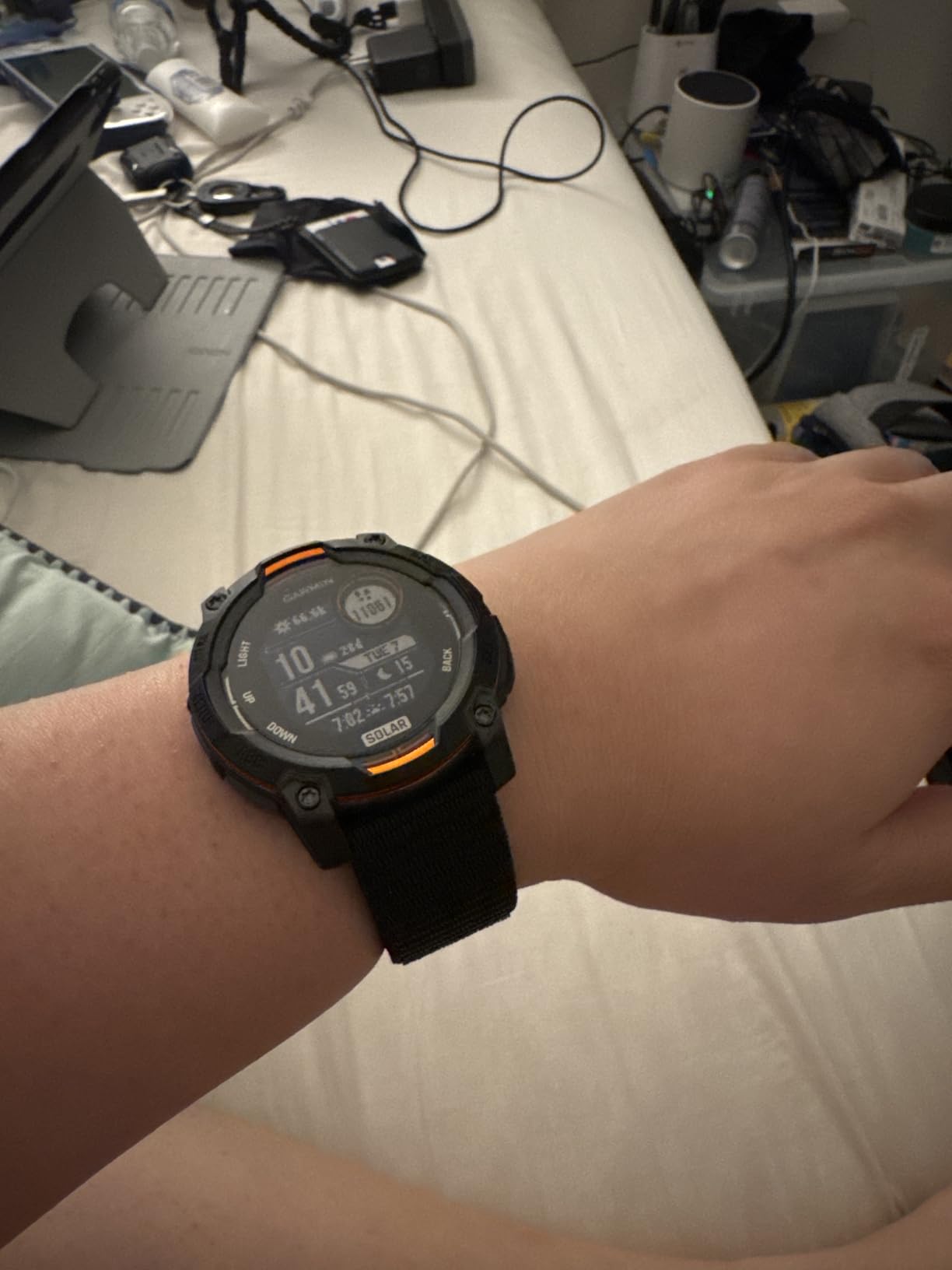
Feature details worth knowing: a 3-axis compass, barometric altimeter for elevation tracking, wrist-based heart rate with Pulse Ox blood oxygen readings, and advanced sleep monitoring. Garmin Pay handles contactless payments at trail-town stores, and the 10 ATM water rating covers swimming and heavy rain without worry. Satellite support spans GPS, GLONASS, and Galileo.
The honest downsides: the interface has a real learning curve compared with a touchscreen watch, and you need the Garmin Connect app running in the background for full functionality. Smart features are limited next to the Apple Watch, with simpler notifications and no speaker or mic.
Battery in continuous GPS mode is far shorter than the 28-day smartwatch figure, so ultramarathoners should still plan charging for very long events. Solar assistance also depends heavily on exposure; winter gloom yields far less help than summer sun.
Who the Instinct 3 Solar Is Right For
Multi-day hikers, backpackers, and thru-hikers who refuse to carry a charger will love this watch, because solar charging plus a 28-day baseline makes it nearly self-sustaining. It is also the best pick for anyone who works or plays in brutal sunlight, thanks to that transflective MIP display. Budget-conscious buyers get genuine Garmin durability and accuracy without stepping up to Fenix pricing.
Field workers and anglers who keep watches outdoors all day will gain the most from the solar lens.
Who Should Skip It
If you want onboard color maps for off-trail routing, this watch only offers breadcrumb-style navigation, so the Fenix 8 or Vertical 2 fits better. People who prioritize smart features like calls, streaming, and rich apps should choose the Ultra 3. Anyone who dislikes monochrome screens or five-button menus will find it dated-feeling on day one.
Casual gym-goers who do not need solar or military durability can save money with the Instinct E below.
5. COROS Nomad – The Angler and Explorer’s Watch
COROS Nomad GPS Outdoor Watch, 22-Day Battery Life, Fishing – Green
22-day battery
Global turn-by-turn maps
Adventure Journal
Fishing modes
1.3 inch MIP
Pros
- Excellent 22-day battery
- Turn-by-turn navigation on global maps
- Voice-Pin Adventure Journal
- Fishing modes with tides and catch logging
- Lightweight rugged build
Cons
- Occasional Bluetooth connectivity issues
- Random heart rate spikes during movement
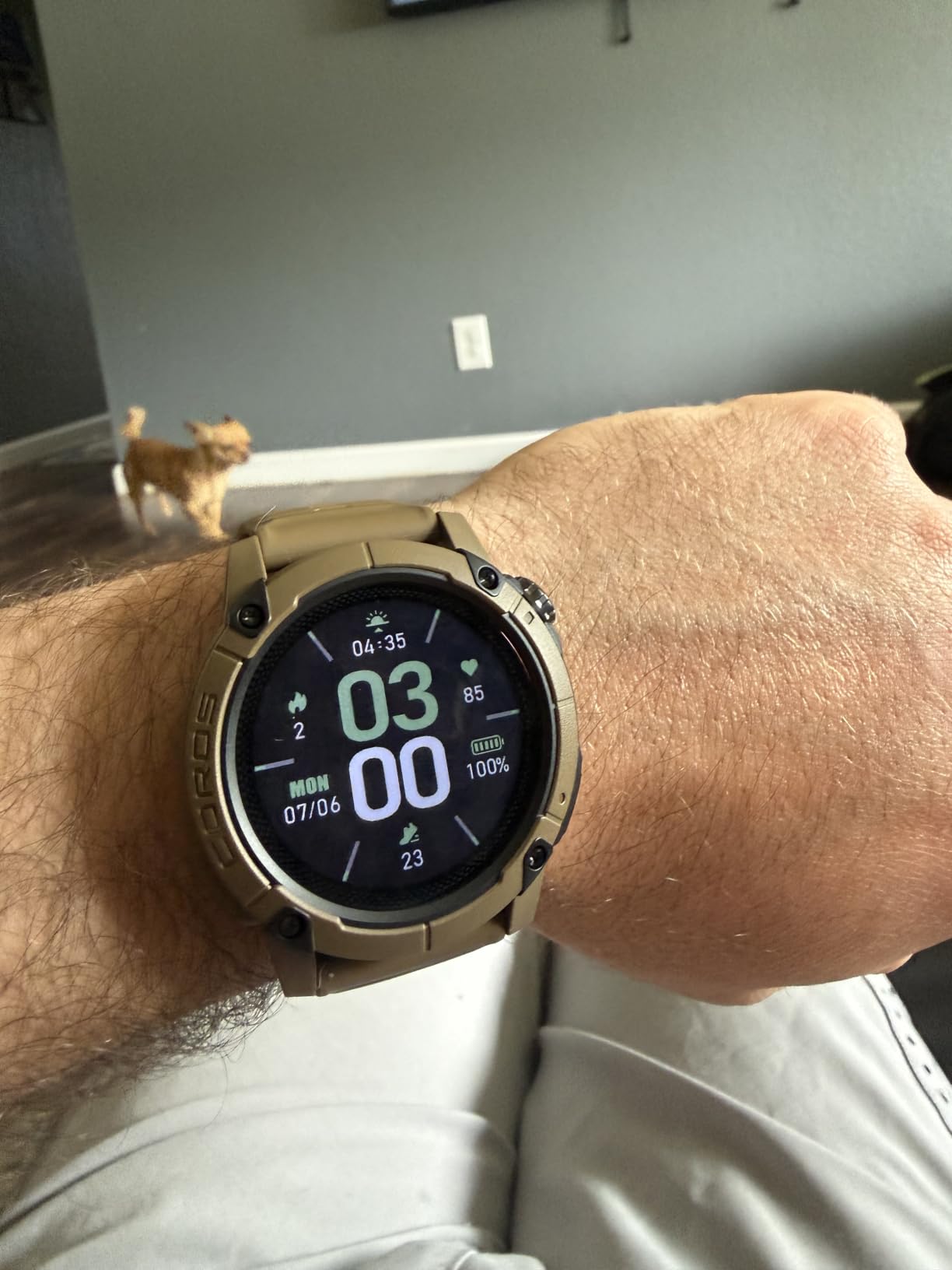
The COROS Nomad is the most personality-rich watch in this guide, built around the idea that an outdoor watch should be a journal, not just a tracker. The Voice-Pin Adventure Journal let me drop voice notes and photo tags at spots along a river route, building a trip log I could replay in the COROS app afterward. For anyone who documents their adventures, it is a killer feature nobody else offers.
Fishing modes are the other standout: real-time and forecasted tides, moon phase, sunrise data, and catch logging that turns the watch into a genuine angling tool. I do not fish often, but my fly-fishing friend was genuinely jealous of the tide overlays. Battery runs an excellent 22 days daily or 50 hours in continuous GPS, placing it near the top of this lineup for endurance.
The preloaded global maps with street names support turn-by-turn navigation and Back-to-Start guidance, which walked me back to the car when a trail loop closed unexpectedly. Owners rate it 4.4 out of 5 across 250 reviews, praising the value of maps and battery at this level.
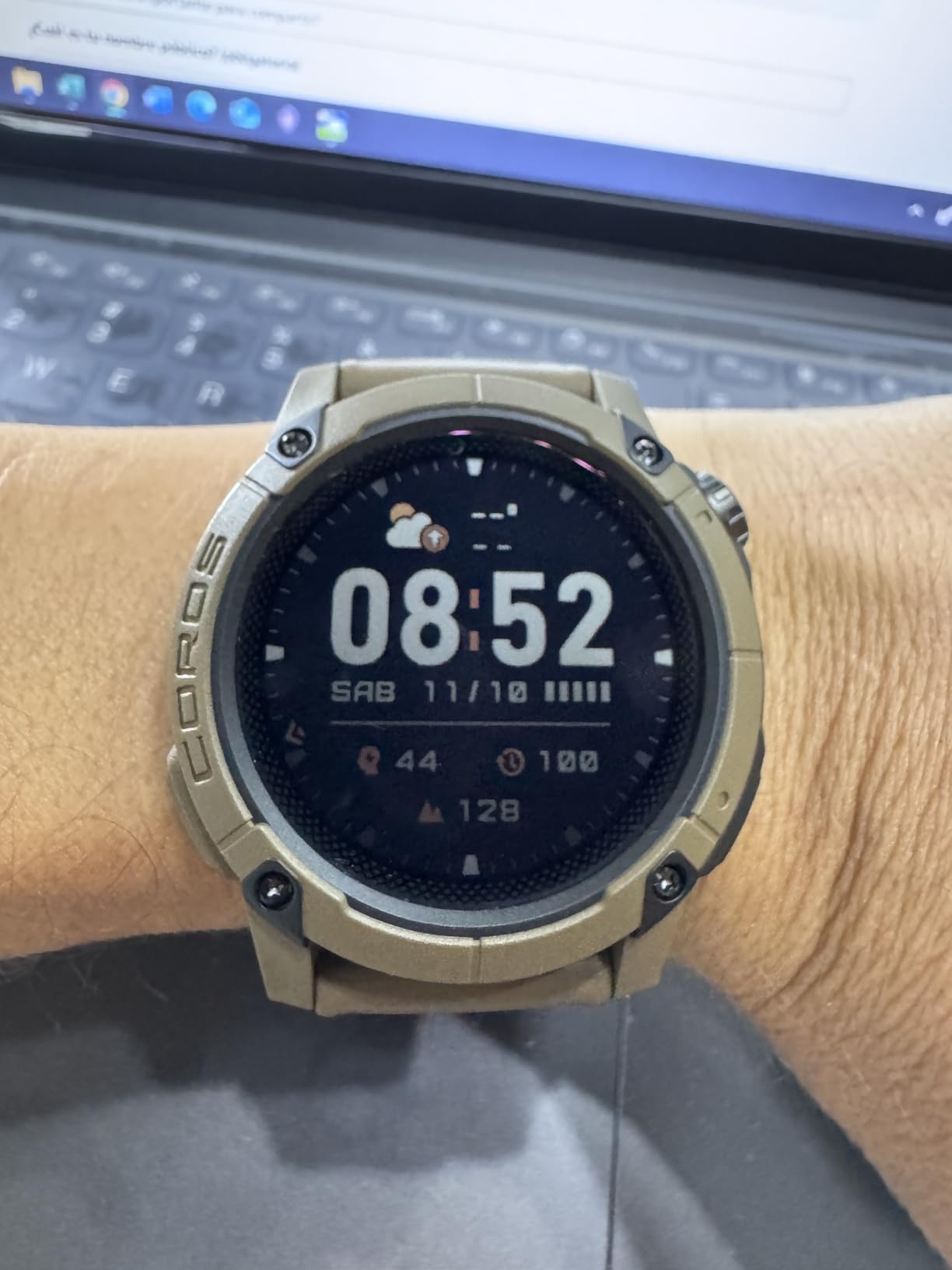
Hardware-wise, you get a 1.3-inch MIP display in a dual-layer polymer and aluminum alloy bezel, 32 GB of storage for maps, and heart rate, sleep, and stress tracking. The screen is crisp for MIP and perfectly readable in daylight, though it lacks the punch of an AMOLED panel. Water-resistant construction handles rain, splashes, and stream crossings without complaint.
The two recurring complaints in reviews are worth repeating. Bluetooth can drop occasionally during sync, requiring a manual reconnect, and the heart rate sensor throws occasional random spikes during vigorous arm movement. Neither is constant, but both are real.
Satellite support is GPS-only rather than multi-band, so deep-canyon accuracy trails the Garmin picks slightly. In open terrain I noticed no meaningful difference.
Who the Nomad Is Right For
Anglers, paddlers, and adventure-documenters get features here that literally do not exist on Garmin or Apple watches, making it an easy call for that niche. Hikers who want offline maps, turn-by-turn routing, and big battery at a mid-range outlay will also be very happy. Anyone who loves the idea of a voice-annotated trip journal should try it before anything else.
It is a strong match for travelers who wander internationally, since the global maps are preloaded and need no downloads.
Who Should Skip It
Runners focused on wrist heart rate accuracy during intervals should pair it with a chest strap or choose the PACE 4. If you need multi-band GNSS for dense urban or canyon navigation, the Instinct 3 Solar or Fenix 8 is the safer bet. People who want an AMOLED touchscreen experience will find the monochrome MIP display a step down.
Anyone irritated by occasional app connectivity quirks might find the Bluetooth drops frustrating over time.
6. COROS PACE 4 – The Ultralight Trail Watch
COROS PACE 4 Ultralight Sport GPS Watch (Black Silicone, Standard)
32g ultralight
1.2 inch AMOLED
41hr GPS battery
19-day daily use
Digital crown
Pros
- Featherweight 32g build
- Bright AMOLED touchscreen
- 41 hours GPS battery
- Intuitive crown and buttons
- Voice notes for workout logs
Cons
- GPS-only single-band reception
- Smaller app ecosystem
- No Wi-Fi connectivity
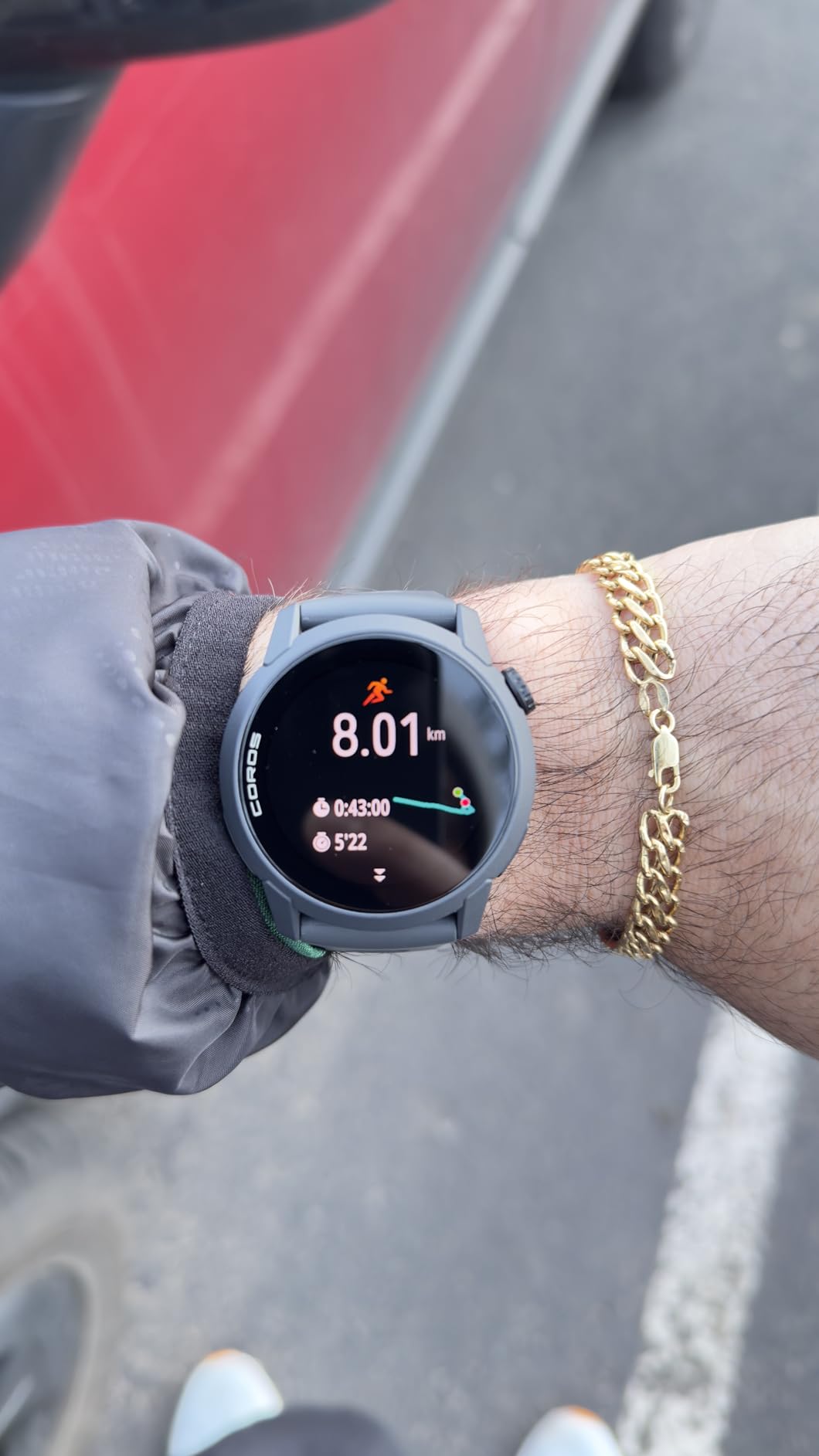
At 32 grams with the nylon band, the COROS PACE 4 is the lightest watch in this guide by a wide margin, and that changes how it feels on trail. Ultralight backpackers who count every gram and ultra runners who forget they are wearing a watch both have their answer here. The 11.8mm-thin case slides under a sleeve or a wetsuit cuff without catching.
The 1.2-inch AMOLED touchscreen with auto-adjusting brightness is a genuine surprise, colorful and sharp with a crisp 600 x 680 resolution. The digital crown works like a phone-style scroll wheel, letting me zoom data screens without smudging the display mid-run. Voice recording for workout notes is handy when you want to log how a climb felt without typing anything.
Battery is elite for the weight class: 41 hours of continuous GPS and up to 19 days of daily use, enough for a 100-mile race weekend plus recovery week. Owners rate it 4.7 out of 5 across nearly 300 reviews, tied for the highest score in this entire roundup.
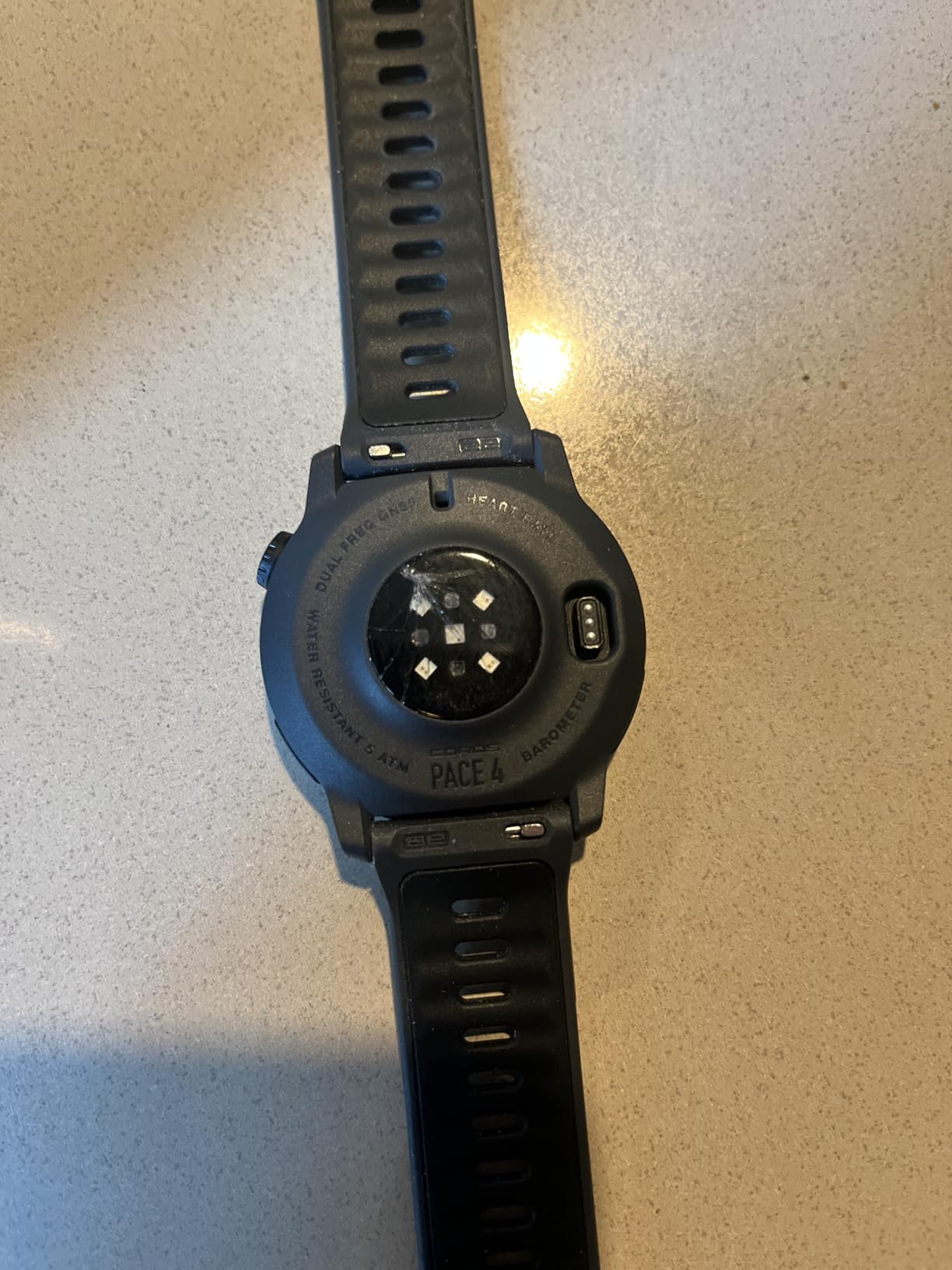
The training suite punches above its weight, with HRV tracking, sleep stages, recovery time recommendations, and EVOLV training tools that COROS keeps improving through free firmware updates. The customizable Action Button handles start and laps while the crown handles scrolling, a combination that works well with sweaty or gloved fingers. There is 4 GB of storage for offline music.
The compromises are structural rather than sloppy. Satellite reception is GPS-only, with no GLONASS, Galileo, or dual-band option, so accuracy in deep canyons and dense forest trails the multi-band watches here. There is no Wi-Fi, so syncs go through Bluetooth alone, and the COROS ecosystem is smaller than Garmin’s app and accessory universe.
It also lacks onboard maps, offering breadcrumb-style route tracking with GPX import rather than full color mapping. For navigation-heavy expeditions, that is a real limitation.
Who the PACE 4 Is Right For
Trail runners, ultra runners, and triathletes who want a serious training watch that weighs almost nothing should buy this immediately. Ultralight backpackers chasing a base weight under 10 pounds will appreciate a watch they stop noticing on their wrist. It is also the best pick for anyone who wants AMOLED polish and huge battery together in a compact case.
Value-focused buyers get flagship-tier battery and display performance at a mid-range outlay.
Who Should Skip It
Off-trail hikers and mountaineers who depend on offline topographic maps need the Nomad, Vertical 2, or Fenix 8 instead. If you roam deep canyons or thick forests where single-band GPS drifts, the multi-band options will serve you better. Garmin-ecosystem devotees with years of data and accessories will face a migration cost.
Anyone wanting built-in flashlight or speaker features should note this watch has neither.
7. Garmin Instinct E – The Entry Point to Garmin
Garmin Instinct® E, Rugged GPS Smartwatch, 45mm, Charcoal
16-day battery
Multi-GNSS support
10 ATM rating
MIL-STD-810
48g case
Pros
- Excellent 16-day battery
- Rugged MIL-STD-810 construction
- Comfortable all-day wear
- Reliable GPS accuracy
- Accessible entry to Garmin ecosystem
Cons
- No solar charging option
- Monochrome MIP display
- No built-in flashlight
The Instinct E is the most affordable way into a genuine Garmin outdoor watch, and it gives up less than you would guess. You still get the MIL-STD-810 thermal and shock resistance, the 10 ATM water rating, and multi-GNSS support across GPS, GLONASS, and Galileo. On a rainy 12-miler it tracked the trail cleanly and never blinked at the weather.
Battery life reaches 16 days in smartwatch mode, which comfortably covers two weekend trips plus the work weeks between them. The 0.9-inch MIP display is monochrome but extremely readable in sunlight, and the five-button interface works flawlessly with gloves on. At 48 grams it is light enough to sleep in, which matters if you wear it for sleep tracking.
The health suite includes wrist-based heart rate, advanced sleep monitoring, and Pulse Ox blood oxygen readings, plus a 3-axis compass and barometric altimeter for elevation. Owners rate it 4.6 out of 5 across more than 250 reviews, a remarkable score for a watch at this level.
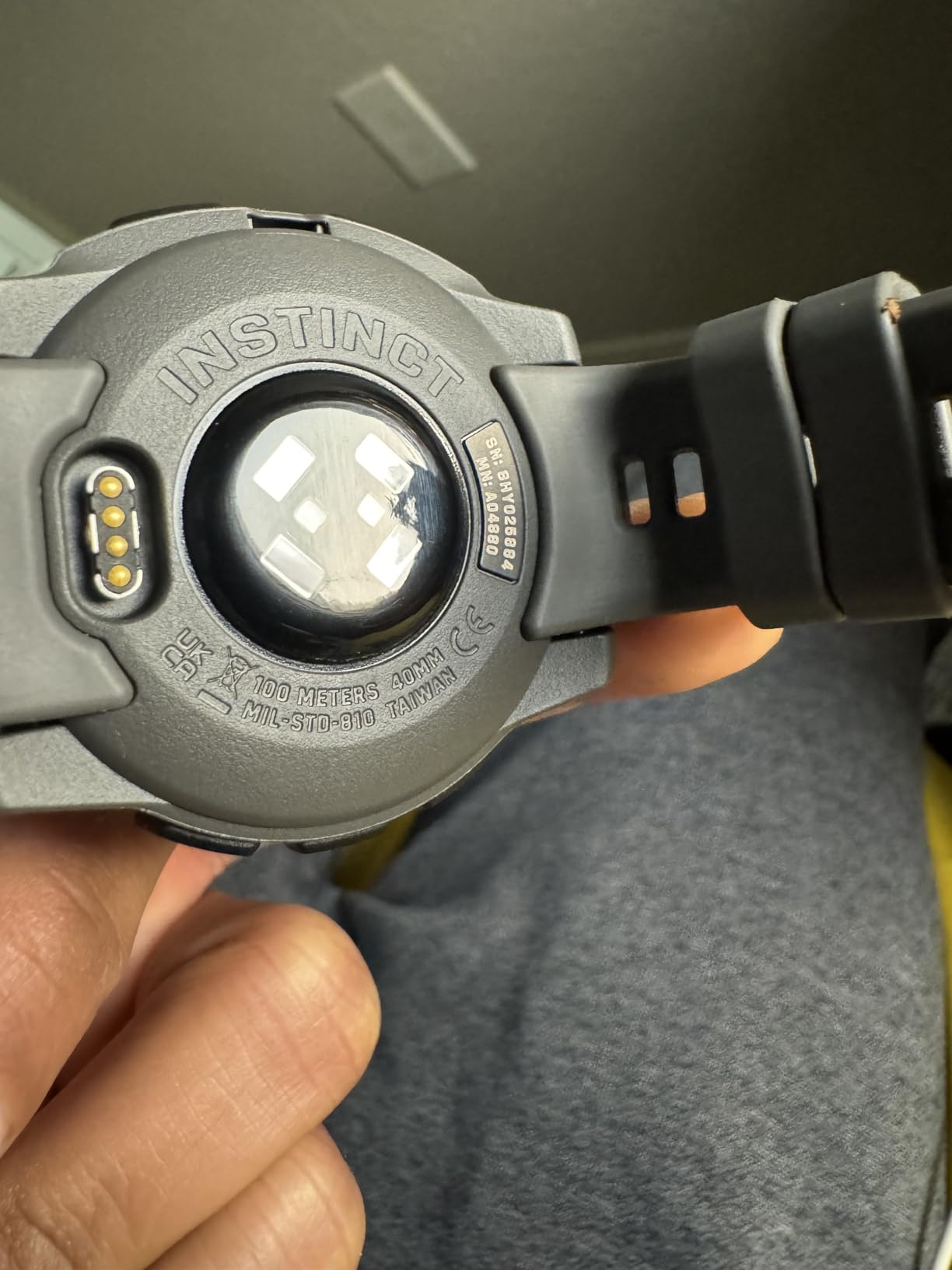
What the E trim removes from the Instinct 3 matters depending on your use. There is no solar charging lens, so the 16-day figure is your hard ceiling rather than a floor that sunlight extends. There is no built-in LED flashlight either, and no color maps, just breadcrumb navigation with the same TracBack routing to find your way back.
The Connect IQ Store compatibility means you can customize watch faces and add data apps, which softens the otherwise basic smart features. Notifications come through fine, but there are no calls, no music storage, and no contactless payments.
The band is standard 22mm silicone, so upgrading to nylon or leather is cheap and easy. The charcoal colorway is understated enough for office wear between adventures.
Who the Instinct E Is Right For
First-time GPS watch buyers and hikers on a strict budget get the core Garmin experience here: accurate tracking, real durability, and long battery, minus the luxuries. It is ideal for day hikes, weekend backpacking, and everyday fitness tracking. Parents buying a first serious watch for a scouting-age adventurer will love the price-to-durability ratio.
Existing Garmin owners who want a cheap backup watch for rugged trips will also find it a no-brainer.
Who Should Skip It
Long-distance thru-hikers should spend up for the Instinct 3 Solar, because charging access on trail makes solar genuinely valuable. Map-dependent backcountry travelers will hit the breadcrumb ceiling fast and should look at the Vertical 2 or Fenix 8. Anyone who wants a flashlight on the wrist for pre-dawn starts should note this model omits it.
Smartwatch-first users will find the feature set too thin for daily digital life.
8. KOSPET ORB 2 – The Budget Rugged Contender
KOSPET ORB 2 Smart Watch Rugged, Dual-Band GPS, 5 ATM & IP69 Waterproof
Dual-band GPS
5ATM and IP69 rating
1.43 inch AMOLED
16-day battery
170+ sport modes
Pros
- Outstanding value
- Dual-band GPS with 6 satellite systems
- MIL-STD-810H durability
- Built-in LED flashlight
- Make and take calls on the wrist
Cons
- Occasional software bugs
- Sleep tracking can be inconsistent
- Plastic body construction
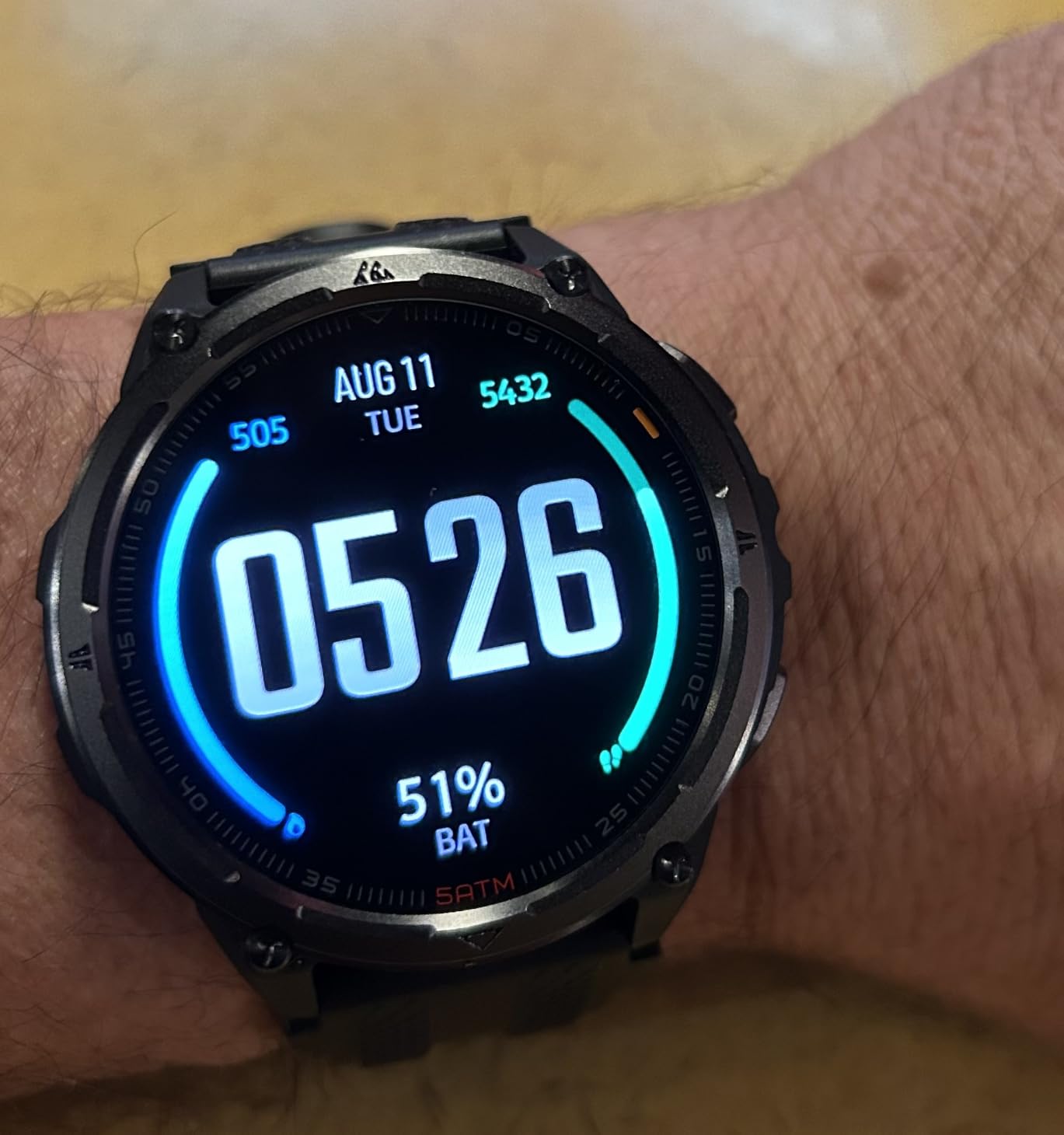
The KOSPET ORB 2 is the watch that made me recheck its spec sheet twice, because dual-band GPS at this outlay is almost unheard of. It pulls signals from six satellite systems including BeiDou and QZSS alongside GPS, GLONASS, and Galileo, and my track on a heavily wooded local trail stayed tight. The 1.43-inch AMOLED display runs at up to 1000 nits and looks far pricier than it is.
Durability claims are SGS-tested to MIL-STD-810H, with Corning Gorilla Glass over the face and both 5ATM and IP69 waterproof ratings, so rain, mud, and full submersion are all in scope. The five-level LED flashlight handled camp duties, and the walkie-talkie function is a novelty that campmates genuinely enjoyed. You can make and take calls directly from the wrist over Bluetooth.
Battery runs up to 16 days of typical use on the 500mAh cell, competitive with watches costing several times more. It currently holds a 4.4 out of 5 rating across 80-plus reviews, with value the overwhelming theme in buyer feedback.
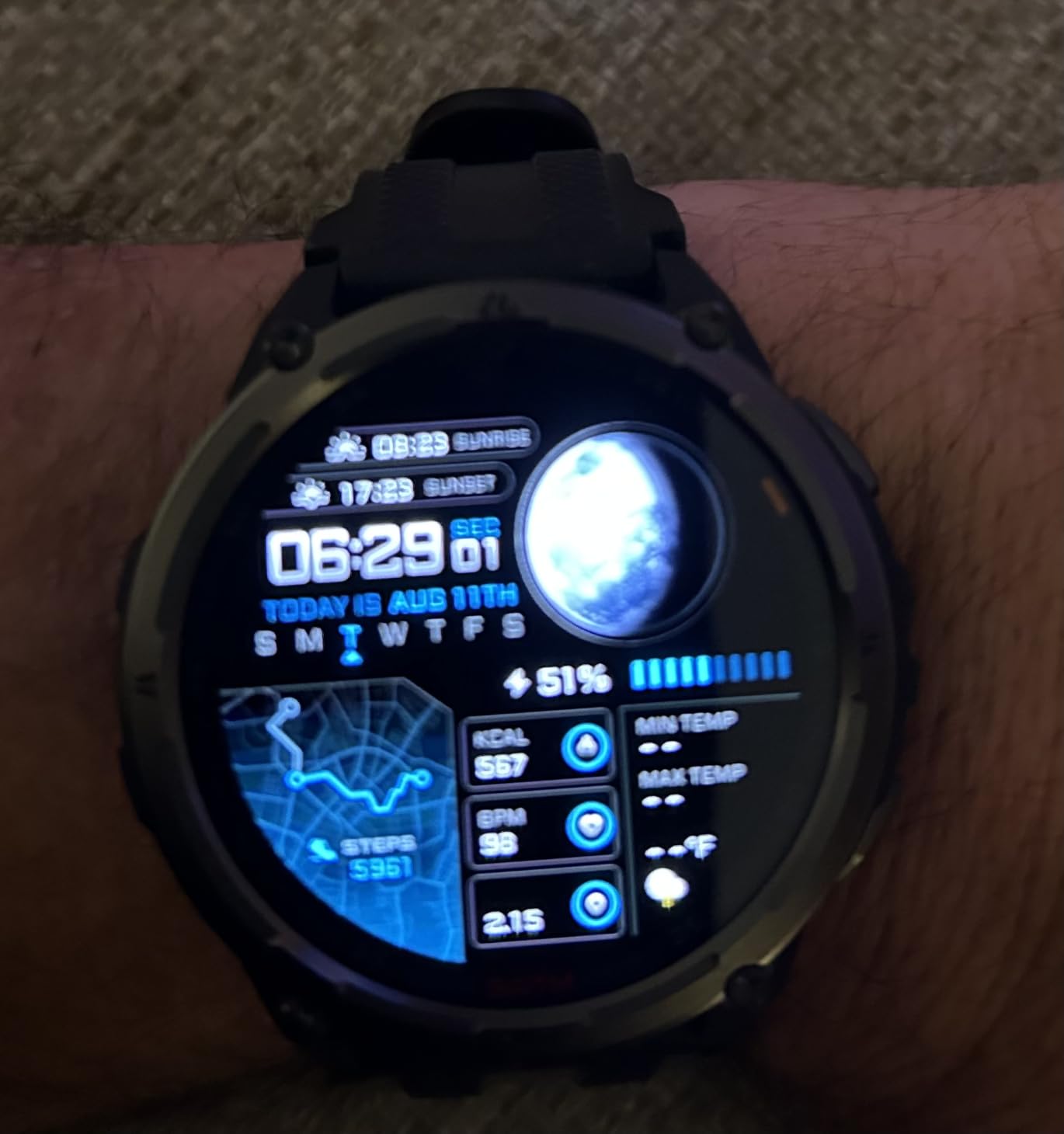
The sport catalog is enormous at 170+ modes, covering hiking, climbing, running, and multi-sport tracking, with heart rate, sleep, and stress monitoring through the 4PD optical sensor. A digital compass, tide forecasts, and moon phases add genuine outdoor utility that most budget watches skip entirely. Compatibility spans Android 7.0 and up plus iOS 14.0 and up, so both camps are covered.
Where the savings show: the body is plastic rather than metal, the band feels cheap to some owners, and step counting can miss casual movement. Sleep tracking is inconsistent compared with the Garmin picks, occasionally misclassifying rest periods.
Software bugs are the main caution, with occasional glitches reported in menus and sensor readings. For buyers who accept some rough edges in exchange for the feature list, it remains a remarkable deal.
Who the ORB 2 Is Right For
Budget buyers, teens, and casual hikers who want dual-band GPS, a bright AMOLED screen, and real durability ratings without a big spend should grab this. It suits anyone testing whether they will actually use an outdoor smartwatch before committing to a flagship. Android and iPhone owners alike can use it, which is rare at this level.
Gym-goers who also weekend-hike will find the 170+ sport modes more than enough variety.
Who Should Skip It
Data-obsessed athletes who need reliable sleep and recovery metrics should invest in the Garmin or COROS options, because sensor consistency matters more than features. Anyone wanting polished, bug-free software day one may find the rough edges annoying. Long-expedition users get no offline mapping here, only breadcrumb-style tracking.
Buyers who expect metal construction and a premium band should adjust expectations or budget upward.
How to Choose the Best Smartwatch for Outdoor Adventures
The right pick depends on how long you stay out, where you wander, and which phone is in your pocket. These seven factors separate the watches that perform on trail from the ones that merely look rugged. Weight each one against your actual trips, not the adventures you imagine taking.
Battery Life and Trip Length
Battery is the single most cited factor in every hiker forum we reviewed, and for good reason: it is the one spec that strands people. For day hikes, a watch with 5 to 7 days of smartwatch-mode battery gives comfortable headroom, and every pick here clears that bar. For multi-day backpacking, look for 14 days or more, ideally with solar assistance like the Instinct 3 Solar provides.
Always check GPS-mode battery separately, because continuous tracking drains 5 to 10 times faster than daily use. In this lineup, continuous GPS runtimes range from roughly 41 hours on the PACE 4 to 65 hours on the Vertical 2.
GPS: Single-Band, Dual-Band, and Multi-Band Explained
Single-band GPS reads one signal frequency from satellites, which works well on open trails but drifts in canyons, dense forest, and urban slots. Dual-band (also called dual-frequency) GPS reads two frequencies and corrects for atmospheric interference, keeping your track line honest where single-band watches zigzag. Multi-band or multi-GNSS means the watch also pulls from multiple satellite constellations: GPS, GLONASS, Galileo, BeiDou, or QZSS.
Garmin’s SatIQ automates the choice, using the most accurate mode only when needed to save battery. If you route-find off trail or in deep terrain, dual-band is worth paying for; the Fenix 8, Ultra 3, Vertical 2, Instinct 3 Solar, and ORB 2 all have it.
Maps and Navigation: Offline Maps vs Breadcrumbs
Breadcrumb navigation shows your track as a line you follow back, with waypoints and a compass bearing to your destination. It is effective for out-and-back routes and trail finding, and every watch in this guide supports some form of it, usually with GPX import. Full offline maps go much further, rendering topographic detail, roads, and sometimes street names on the watch itself.
The Fenix 8, Vertical 2, and Nomad carry real onboard maps with routing, including turn-by-turn directions and back-to-start guidance. If you regularly travel unfamiliar backcountry, onboard maps are the feature most worth upgrading for.
Durability: MIL-STD-810, ATM Ratings, and Buttons
MIL-STD-810 is a US military testing standard covering thermal extremes, shock, and vibration, and it is the baseline credential for a genuine rugged smartwatch. Every Garmin in this lineup carries it, as does the KOSPET ORB 2 in SGS-tested form. For water, a 10 ATM rating (like the Instinct watches) handles swimming and downpours, while the Ultra 3’s 100-meter rating and the Fenix 8’s 40-meter dive rating go further still.
Physical buttons deserve more credit than they get: touchscreens fail in rain, with wet gloves, and when hands are cold. Forum hikers consistently prefer five-button watches like the Instinct series for exactly this reason.
Display: AMOLED vs MIP
AMOLED screens are colorful, high-resolution, and beautiful for maps and data, but they consume more power and can dim in always-on mode. MIP (memory-in-pixel) displays are monochrome and lower resolution, yet they reflect sunlight, so they get more readable the brighter it gets, while sipping battery. There is no universal winner, only a fit for your priorities.
If you want rich visuals and smartwatch polish, choose AMOLED picks like the Fenix 8, Ultra 3, Vertical 2, PACE 4, or ORB 2. If maximum battery and harsh-sun readability rule your trips, the MIP Instinct 3 Solar, Nomad, and Instinct E win.
Weight Matters for Ultralight and Ultra Running
Weight gaps in this category are bigger than they look on paper, from 32 grams on the COROS PACE 4 to 80 grams on the Fenix 8. Over a 100-mile race or a 20-mile day, that difference compounds into real wrist fatigue, which is why ultralight forums discuss watch grams obsessively. Ultramarathoners and gram-counting backpackers should treat anything under 50 grams as a target.
Conversely, larger cases usually house bigger batteries and antennas, so the weight is buying something real. Match the trade to your style of suffering.
Phone Compatibility and App Ecosystem
The Apple Watch Ultra 3 works only with iPhone, which makes the decision binary for Android owners. Garmin, COROS, Suunto, and KOSPET watches pair with both platforms, though feature depth varies, and KOSPET supports Android 7.0+ and iOS 14.0+ explicitly. Check the companion app quality before buying, because the app is where routes are planned, maps are loaded, and data lives after the trip.
Garmin Connect is the deepest ecosystem with the most accessories, COROS keeps adding features through free updates, and Suunto plays nicely with Strava. Ecosystem lock-in is real, so if you have years of data in one platform, factor that into any switch.
Frequently Asked Questions
What is the best smartwatch for outdoor activities?
The Garmin Fenix 8 is the best smartwatch for outdoor activities overall, thanks to its 16-day battery, multi-band GPS with SatIQ, offline maps, and 40-meter dive rating. iPhone users who prioritize smart features should consider the Apple Watch Ultra 3 instead.
Which smart watch is best for hiking?
The Garmin Instinct 3 Solar is the best smartwatch for hiking for most people. Its solar charging stretches battery life toward 28 days in smartwatch mode, the MIP display stays readable in direct sun, and multi-band GPS with SatIQ holds a signal under heavy tree cover.
What are the best expedition watches?
The best expedition watches are the Suunto Vertical 2 with global offline maps and 65 hours of GPS battery, the Garmin Fenix 8 for full-color mapping and training tools, and the Garmin Instinct 3 Solar for nearly unlimited battery life in smartwatch mode.
How long does battery last on outdoor GPS watches?
Across the eight watches in this guide, daily-use battery runs from 16 to 28 days, while continuous GPS tracking lasts roughly 41 to 65 hours depending on the model. The Apple Watch Ultra 3 reaches up to 72 hours only in Low Power Mode.
Can I use a regular smartwatch for hiking?
You can, but it is risky on longer routes. Hikers commonly report standard Apple Watches dropping to around 10 percent after seven hours of GPS-tracked hiking. A rugged GPS watch with multi-day battery, offline maps, and MIL-STD-810 durability is the safer choice once you leave cell service.
Final Thoughts on the Best Smartwatches for Outdoor Adventures
The Garmin Fenix 8 stands as our overall winner, combining maps, battery, accuracy, and build quality in a way no competitor matches. The Apple Watch Ultra 3 is the obvious call for iPhone owners on shorter trips, while the Suunto Vertical 2 earns the expedition crown with global offline maps and 65 hours of GPS runtime. On value, the Garmin Instinct 3 Solar is nearly untouchable for multi-day hikers, and the KOSPET ORB 2 and Garmin Instinct E prove you do not need a flagship budget to get dual-band GPS or genuine ruggedness.
Whichever direction you take, buy for the trips you actually take, not the ones you imagine. A watch that holds a line under canopy and still has battery on day four beats a beautiful screen that dies at the trailhead. Check current pricing through the buttons above before you head out in 2026, and may your track line stay straight and your battery icon stay green.