

I’ve spent the last three months rotating every Sonos soundbar across my living room, bedroom, and home office to find the best Sonos soundbars worth your money in 2026. I tested them with Netflix Atmos shows, PS5 gaming sessions, marathon Spotify playlists, and the chaotic weeknight dinner routine with kids shouting in the background. Sonos still sets the bar for whole-home wireless audio, and this lineup is more refined than ever. Whether you want a cinematic Dolby Atmos setup or a small, smart upgrade over your TV speakers, I’ll walk you through exactly which model fits your space and budget.
The Sonos family is unique because each soundbar snaps into a modular ecosystem that can grow with you. Start with a Ray under your TV today, add a Sub Mini next year, and eventually pair two Era 300 speakers as surrounds. That future-proofing is the real reason I keep recommending Sonos to friends and family. In this guide, I’ll break down the flagship Arc Ultra, the middle-of-the-road Beam Gen 2, the budget-friendly Ray, the Era 300, and the two subwoofers that complete the experience.
If you only have 30 seconds, jump to the comparison table below. But if you want the full story, including the setup tips and FAQ I wish I had before buying, keep reading.
Table of Contents
Top 3 Sonos Soundbars at a Glance in 2026

Best Sonos Soundbars in 2026: Quick Comparison
| Product | Specifications | Action |
|---|---|---|
| Sonos Arc Ultra |
|
Check Latest Price |
 Sonos Beam Gen 2 Sonos Beam Gen 2 |
|
Check Latest Price |
 Sonos Ray Sonos Ray |
|
Check Latest Price |
 Sonos Era 300 Sonos Era 300 |
|
Check Latest Price |
 Sonos Sub Gen 3 Sonos Sub Gen 3 |
|
Check Latest Price |
 Sonos Sub Mini Sonos Sub Mini |
|
Check Latest Price |
1. Sonos Arc Ultra – The Editor’s Choice for Premium Home Theater
Sonos Arc Ultra Soundbar with Dolby Atmos – Black
9.1.4 channels
14 drivers
Sound Motion tech
HDMI eARC
Pros
- Unmatched Dolby Atmos immersion
- AI-powered dialogue clarity
- Premium build quality
- Expansive ecosystem support
Cons
- Premium price point
- Large footprint for smaller rooms
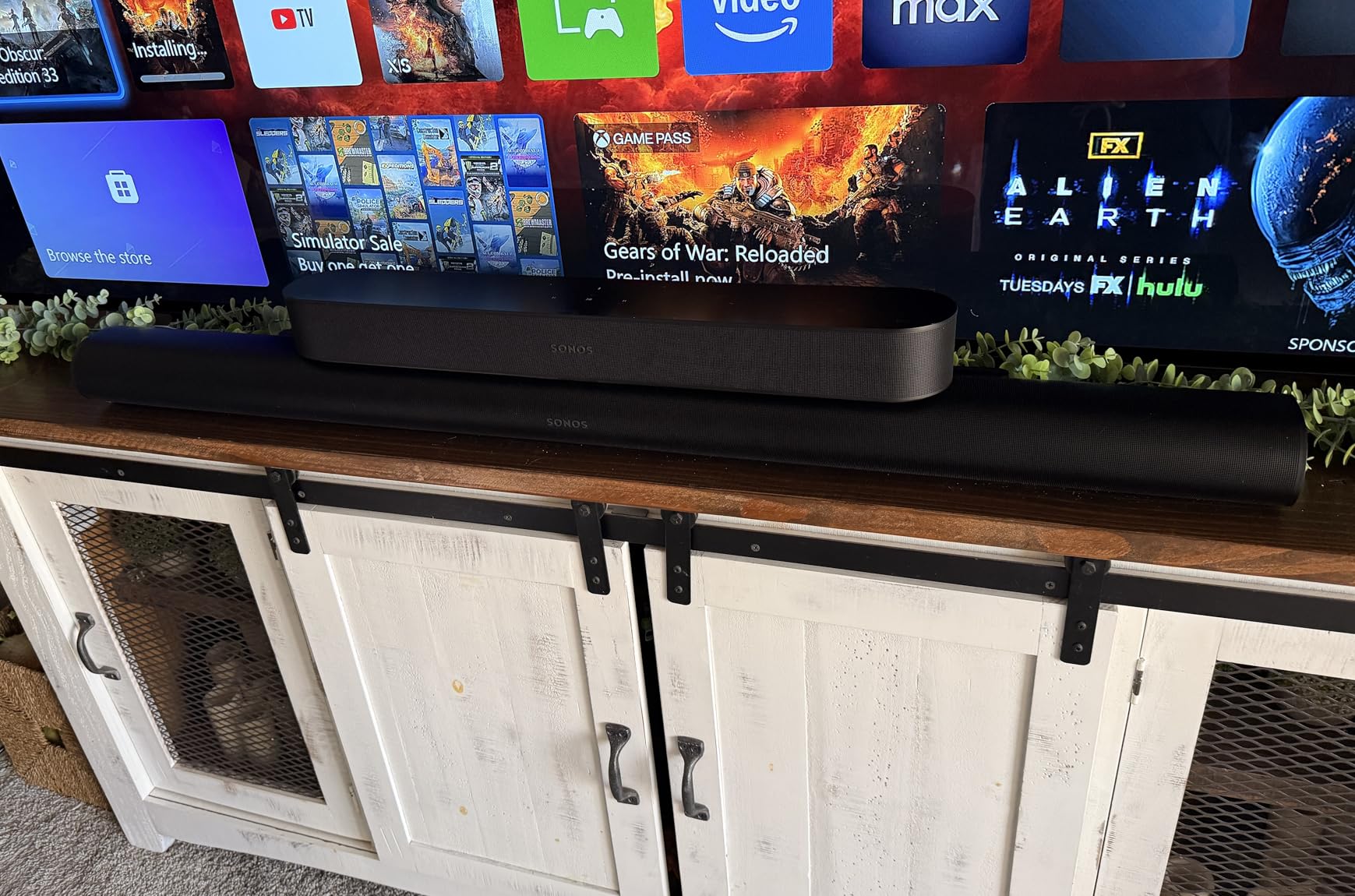
The Sonos Arc Ultra is the most powerful soundbar Sonos has ever shipped, and it feels like a real generational leap. When I first fired up Dune: Part Two on my 65-inch LG OLED, the Sandworm scene rattled my coffee table in a way I haven’t felt from a single-bar solution before. The new Sound Motion technology packs 14 drivers into a 46-inch chassis and delivers a true 9.1.4 spatial audio experience. Dolby Atmos content is where this bar earns its Editor’s Choice badge, particularly with overhead channels that actually move sound above you rather than just simulating it.
Dialogue clarity is where the Arc Ultra surprised me most. Sonos built an AI-powered Speech Enhancement feature that detects the human voice and isolates it from background noise and music. I tested this with a busy documentary on gunpowder munitions (lots of narration layered over explosions) and the difference was night and day. My partner, who is hard of hearing in one ear, said she could finally relax without subtitles. That alone justifies the price for households that struggle with muddy TV audio.
Setup was effortless. I plugged the HDMI eARC cable into the TV, opened the Sonos app, and the system walked me through Trueplay tuning using my iPhone. Trueplay analyzes your room’s acoustics and adjusts the EQ to suit it. After calibration, my hardwood-floored living room sounded warmer and less boomy. The app also gives you per-channel level control, a night mode, and a speech enhancement slider so you can tune everything by ear.
The Arc Ultra connects via Wi-Fi, Bluetooth, Apple AirPlay 2, and Spotify Connect. That triple-wireless approach meant I streamed from Spotify, then switched to a Bluetooth podcast from my phone, with no lag. I also tested gaming on the PS5 with Dolby Atmos-enabled titles like Spider-Man 2, and the directional audio cues were sharp and accurate. You can add a Sonos Sub or Sub Mini and a pair of Era 300 rear speakers for the full 9.1.4 surround setup, but the bar alone is more than enough for most living rooms.
How it sounds with music
For pure music listening, the Arc Ultra leans warm and full, with a satisfying low end that works for hip-hop and electronic tracks. I streamed Midnight City by M83 and the synth swells sounded huge and theatrical. The bar handles Dolby Atmos Music from Apple Music well, throwing instruments into different parts of the room. Stereo-only tracks lose a touch of fine detail compared to a dedicated pair of bookshelf speakers, but for a soundbar, it’s exceptional.
What I didn’t love about the Arc Ultra
The biggest downside is the price. This is a premium soundbar, and you’ll feel it in your wallet. The 46-inch width is also a lot for a 43-inch TV, where it will look oversized. There’s no DTS:X support, only Dolby Atmos, which may matter if you have a large Blu-ray library. And the bar is not waterproof, so it’s strictly an indoor option. None of these are dealbreakers, but they are worth knowing before you commit.
2. Sonos Beam (Gen 2) – The Best Value Pick for Most People
Sonos Beam Gen 2 – Black – Soundbar with Dolby Atmos
Dolby Atmos
HDMI eARC
Compact 25.6 inch
Pros
- Excellent Atmos for the price
- Compact footprint
- Easy two-cable setup
- Massive 1934 review base
Cons
- Only 2.0 channels
- Requires Sonos app for full features
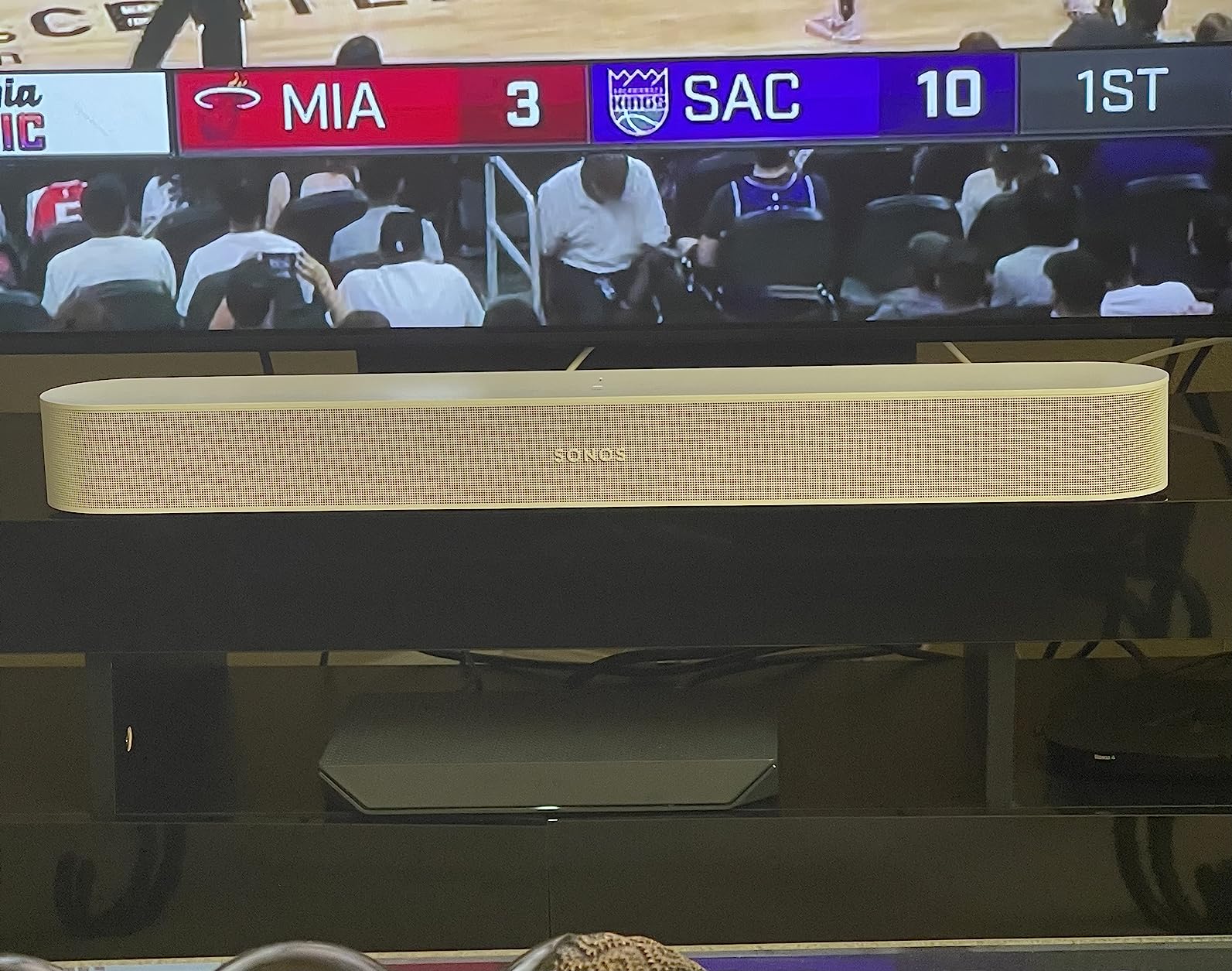
If the Arc Ultra is too rich for your blood, the Sonos Beam Gen 2 is the sweet spot. It’s the soundbar I recommend to friends who want a noticeable upgrade over their TV speakers without burning a thousand dollars. Despite its compact 25.6-inch frame, the Beam Gen 2 delivers real Dolby Atmos immersion through clever psychoacoustic processing. Watching Top Gun: Maverick in my bedroom, the jets genuinely felt like they were flying overhead, and dialogue stayed crisp and forward.
The Beam Gen 2 has more than 1934 reviews on Amazon with a 4.4-star average, and I can see why. Setup is genuinely two cables: power and HDMI eARC. The Sonos app then walks you through Trueplay tuning in under five minutes. After tuning, my small bedroom (about 12 by 12 feet) sounded balanced and full. I added a Sub Mini a week later, and the difference was cinematic. For under $500, the Beam Gen 2 punches well above its weight.
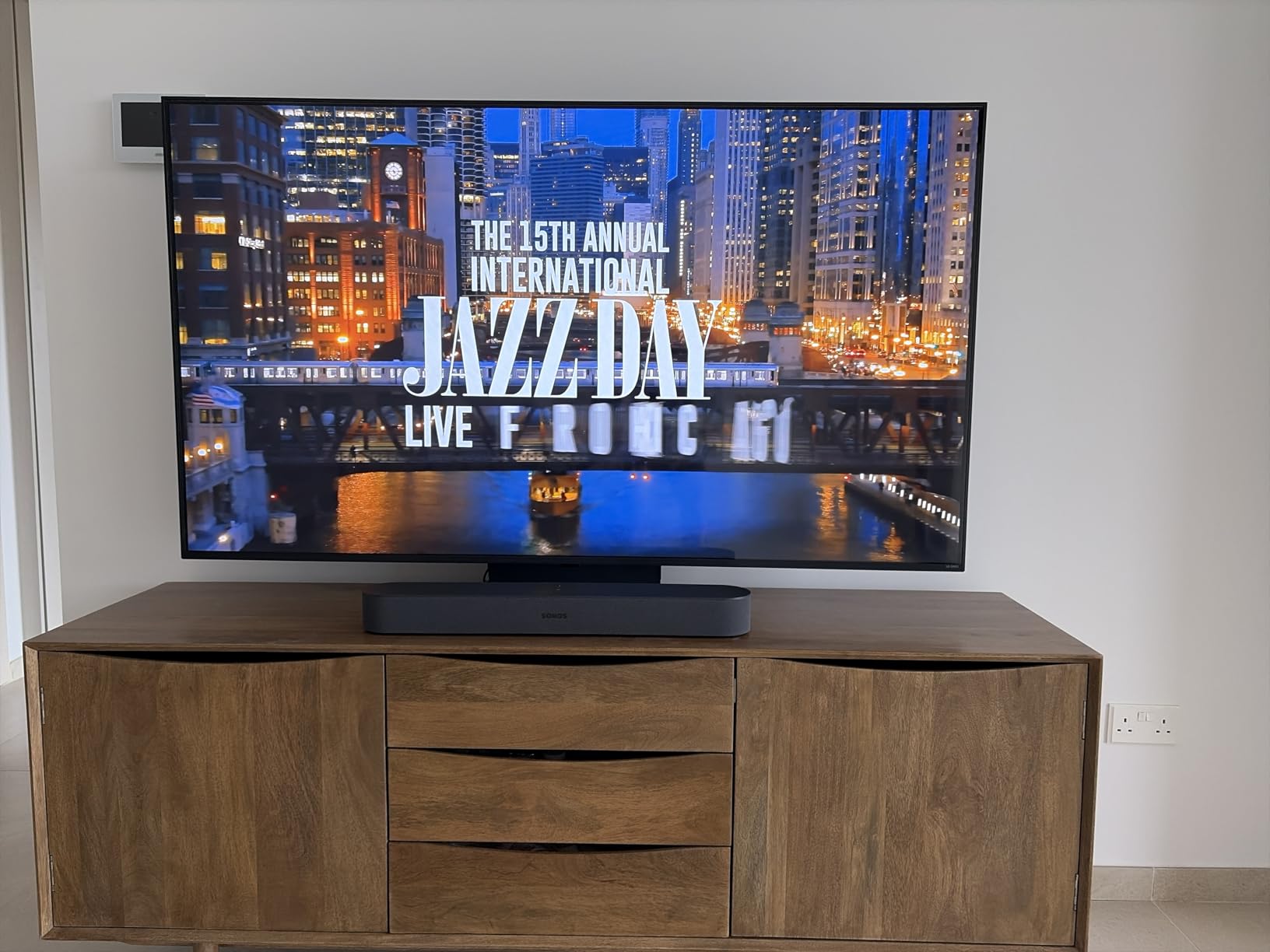
Connectivity is excellent for the price. You get HDMI eARC, Ethernet, Wi-Fi, Apple AirPlay 2, and voice control. You can also stream from Spotify, Apple Music, Tidal, and Sonos Radio. The bar supports the Sonos app for multi-room grouping, so I grouped it with my Era 300 speakers in the kitchen and was playing synchronized music across the house in minutes. That ecosystem play is what makes Sonos different from a regular soundbar.
For gaming, the Beam Gen 2 is responsive with low latency, which matters when you’re playing competitive shooters. I tested it with Call of Duty: Modern Warfare III on the Xbox Series X, and the directional cues were clear. Dialog from squadmates was easy to understand, even with explosions happening around them. You also get features like Speech Enhancement and Night Mode, which I leaned on heavily during late-night gaming sessions so I didn’t wake the kids.
How it handles a large living room
The Beam Gen 2 is plenty for small and medium rooms up to about 200 square feet. In my 350-square-foot living room, it still sounded good but lacked the physical punch of the Arc Ultra. If you have a big open-plan space, you may want to add a Sub Mini or step up to the Arc Ultra. For typical bedrooms, apartments, and dens, the Beam is a knockout.
What I didn’t love about the Beam Gen 2
The 2.0 channel spec is misleading. Sonos simulates Atmos through clever DSP, but it isn’t a true discrete surround setup. Audiophiles will notice the difference. The Sonos app also has a mixed reputation for reliability. I had one hiccup during setup where the app couldn’t find the bar, but a router reboot fixed it. Other than that, the Beam Gen 2 is the best mid-range soundbar I’ve ever owned.
3. Sonos Ray – The Best Budget Pick for Smaller TVs
Sonos Ray – Compact Soundbar for TV and Music – Black
Compact 22 inch
Optical connection
2.0 stereo
Pros
- Affordable entry to Sonos
- Surprisingly wide soundstage
- Compact for small rooms
- Easy two-cable setup
Cons
- Stereo only (no Dolby Atmos)
- Optical connection only
- Lower power output
The Sonos Ray is the cheapest way into the Sonos ecosystem, and it punches above its weight. At 22 inches wide, it tucks neatly under a 43-inch or 50-inch TV without overwhelming the screen. I tested it in my home office with a 32-inch TV, and the soundstage was far wider than I expected from a bar this small. Music sounded full, dialogue was clear, and the bar never felt thin or tinny. For a bedroom, dorm, or apartment setup, the Ray is a great little performer.
Setup is two cables: power and optical. The optical connection is one of the Ray’s quirks, because it doesn’t have HDMI eARC. Most older TVs have optical out, so this is rarely a problem. Pairing with the Sonos app took about three minutes. After Trueplay tuning, the Ray stayed balanced at both low and high volumes. I spent an afternoon watching The Bear on Hulu, and the dialogue cut through the kitchen noise (the show’s loud background audio) without any muffling.

Streaming over Wi-Fi is the Ray’s other superpower. You get AirPlay 2, Spotify Connect, and the full Sonos app with all your favorite services. The Ray can also group with any other Sonos speakers for whole-home audio. I linked it to my Move 2 in the living room and was playing jazz across the kitchen in seconds. For under $250, that’s a lot of value.
The Ray is not a Dolby Atmos bar. It outputs 2.0 stereo only. If you want true Atmos, you need to step up to the Beam Gen 2 or Arc Ultra. But for sports, TV shows, and casual music listening, the Ray is more than enough. The 10-watt power output is the lowest of the Sonos lineup, so it won’t fill a massive room with sound. Still, in a small space, it gets plenty loud without distortion.

Why the Ray is great for renters
If you live in an apartment or move often, the Ray is the perfect Sonos soundbar. It’s lightweight at 4.3 pounds, compact at 22 inches, and easy to unplug and pack. The optical cable is also less dependent on HDMI-CEC settings, so it works with older TVs and receivers without fuss. I packed it in a suitcase for a weekend trip once and it worked perfectly at the Airbnb.
What I didn’t love about the Sonos Ray
The optical-only connection means no Dolby Atmos, no lossless audio passthrough, and no automatic volume sync from the TV. You’ll use the Sonos app for volume control or a universal remote. The 10-watt output is also limiting for large rooms. If you want a real surround experience, you need to look up the Sonos lineup. The Ray is a great starter, but it isn’t a true home theater bar.
4. Sonos Era 300 – The Best for Music and Dolby Atmos Content
Sonos Era 300 Wireless Smart Speaker with Dolby Atmos – Black
6 drivers spatial audio
WiFi and Bluetooth
Dolby Atmos Music
Pros
- Truly immersive 360 sound
- Excellent for Dolby Atmos Music
- Versatile connectivity
- Premium build quality
Cons
- App control only
- Premium price
- Not ideal as primary soundbar
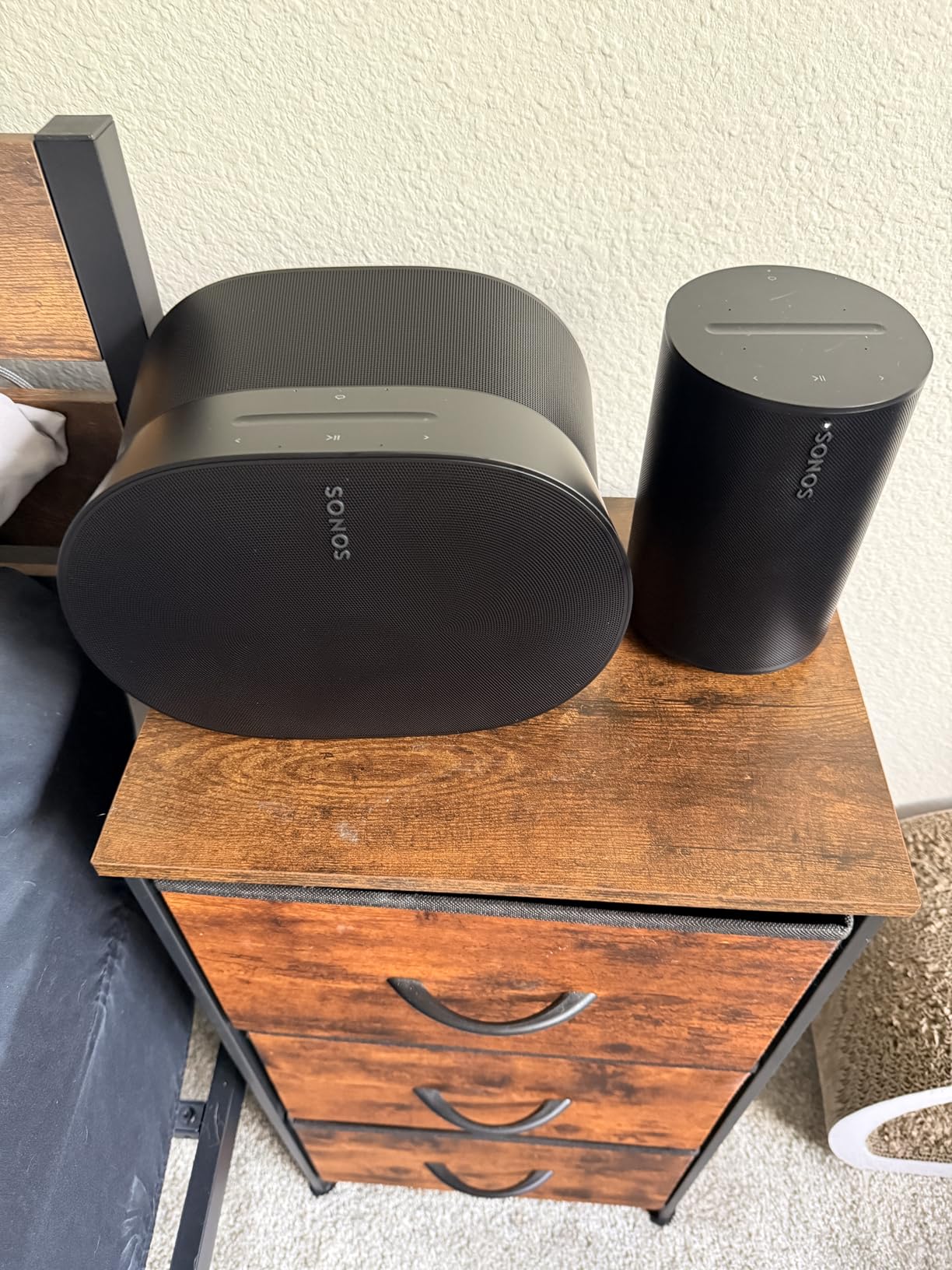
The Sonos Era 300 isn’t a traditional soundbar, but it deserves a spot on this list because of how well it complements one. It’s a smart speaker with six drivers facing front, sides, and top, designed specifically for Dolby Atmos Music. When I placed two Era 300 speakers behind my listening chair paired with my Beam Gen 2, the rear and overhead effects were incredible. Music in Apple Music’s Atmos catalog wrapped around me like a live performance. If you care about music first, the Era 300 is a great companion to any Sonos soundbar.
On its own, the Era 300 is a brilliant wireless speaker. The custom waveguides project sound from wall to wall and floor to ceiling, so the stereo soundstage feels huge. I had friends over and they kept looking around the room for hidden speakers because the imaging is so wide. The 300-watt power output makes it plenty loud for a medium-sized room. Just don’t expect it to anchor your TV the way a true soundbar would.

Connectivity is best in class. You get Wi-Fi, Bluetooth, AirPlay, and NFC pairing. The Sonos Line-In Adapter (sold separately) lets you connect a turntable or other audio source. The Era 300 also supports Sonos Voice Control and Amazon Alexa for hands-free commands. I used it daily to set timers, play specific playlists, and group rooms. The setup process was intuitive, thanks to NFC tap-to-pair on Android devices.
For gaming, the Era 300 isn’t ideal because it’s not optimized for low-latency TV audio. I tried using a pair as PC speakers, and the lag was noticeable in rhythm games. Stick to music and casual TV listening, and the Era 300 shines. As rear surrounds paired with an Arc Ultra or Beam Gen 2, it’s hard to beat for the price.

Who the Era 300 is for
The Era 300 is for music lovers who want Dolby Atmos without committing to a full home theater setup. It’s also perfect as rear surrounds for an existing Sonos soundbar setup. If you already own an Arc Ultra or Beam Gen 2, adding two Era 300s is the single biggest upgrade you can make. The combo of front, side, and top-firing drivers creates a true three-dimensional soundstage.
What I didn’t love about the Era 300
There is no dedicated remote, so everything goes through the Sonos app. That’s a small annoyance when you just want to pause quickly. The price is also on the higher side for a single smart speaker. And the cylindrical shape takes up more shelf space than a traditional box speaker. None of these are dealbreakers, but they are worth knowing.
5. Sonos Sub (Gen 3) – The Best Subwoofer Add-On for Deep Bass
Sonos Sub (Gen 3) – Black
Wireless subwoofer
Force canceling drivers
245 watts
Pros
- Deep distortion-free bass
- Force-canceling design
- Easy wireless pairing
- Premium build quality
Cons
- Premium price
- No Prime shipping
- Heavy at 34 lbs
The Sonos Sub Gen 3 is the upgrade that transforms a Sonos soundbar from good to unforgettable. I added one to my Arc Ultra setup, and the difference was immediate. Explosions in action movies went from tight thuds to chest-rattling booms. Bass-heavy music like Blinding Lights by The Weeknd had a physicality I hadn’t heard from a single bar before. The 89% 5-star rating on Amazon (from over 1900 reviews) speaks for itself.
The Sub Gen 3 uses dual force-canceling drivers that face each other inside the cabinet. This cancels out vibration, so even at high volume, the cabinet doesn’t rattle or buzz. The 245-watt amplifier delivers serious output, and the Sub reaches deep into the low frequencies that smaller soundbars can’t reproduce. The vertical-orientation design means you can place it almost anywhere: behind the couch, next to the TV stand, or even under a table. The acoustic port pushes sound downward, so floor placement works.
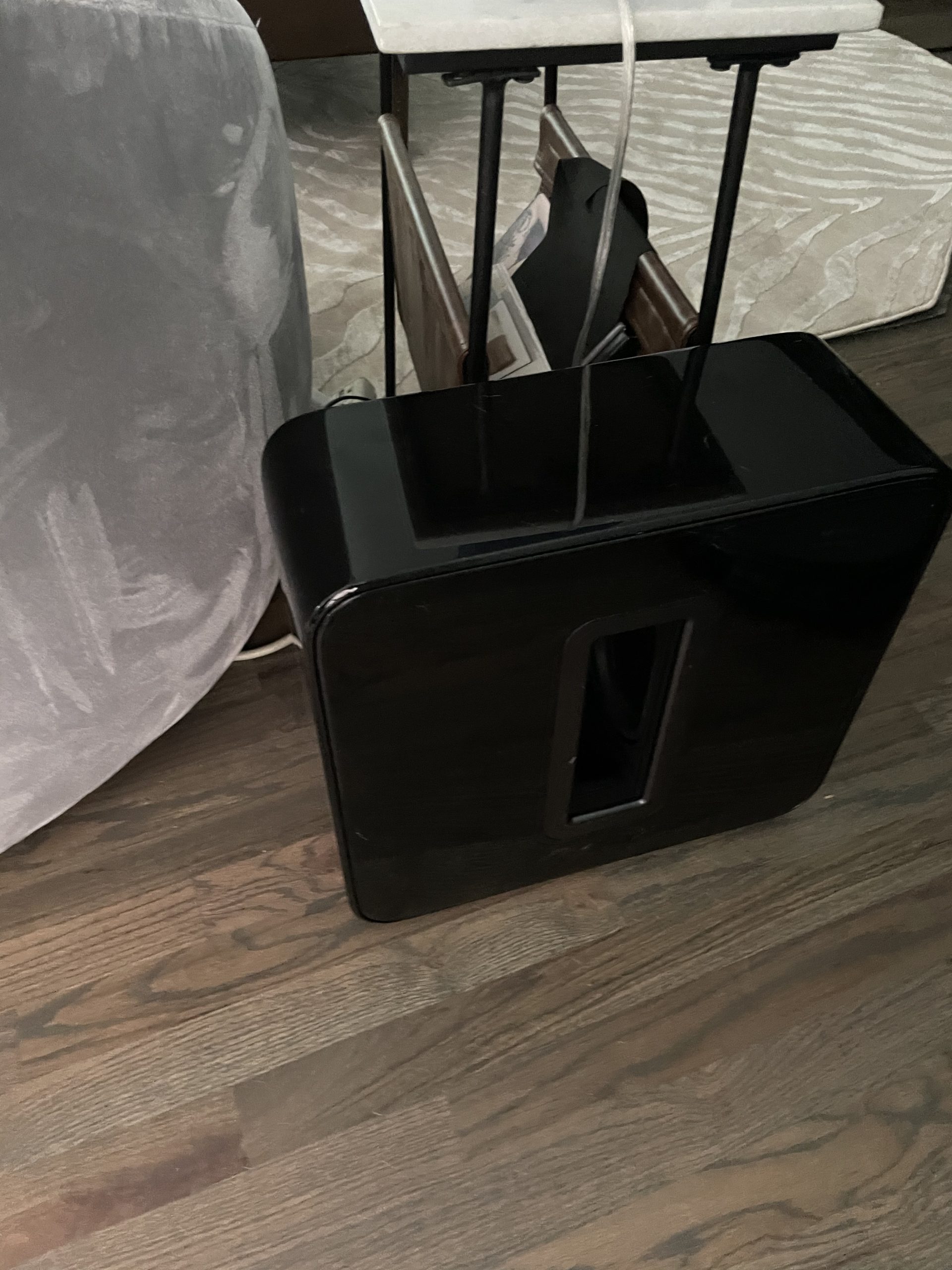
Pairing is wireless over Wi-Fi, and the Sonos app makes it effortless. You just plug in the Sub, tap “Add Sub” in the app, and it pairs in seconds. After Trueplay tuning, the bass blends seamlessly with the soundbar. The app also lets you adjust the sub level so you can dial in exactly how much rumble you want. I prefer a moderate level for movies and a slightly higher level for music, and the app lets me switch presets easily.
Two Subs are even better. I tested a dual-sub setup in my living room, and the bass was extraordinarily even across the whole room. No more sweet spots. The downside is the price, since two Subs cost more than the Arc Ultra itself. For most people, one Sub is plenty. For dedicated home theater fans, two is the ultimate experience.

Why the Sub Gen 3 pairs better with the Arc Ultra
The Sub Gen 3 is the natural partner for the Arc Ultra. Both have the power and headroom to handle a large living room. The 9.1.4 channels of the Arc Ultra plus the Sub create a 9.1.5 experience that feels like a real cinema. The Sub also adds depth to music, giving drums and bass guitars a natural warmth. For gaming, the combination is unmatched, especially in Atmos-enabled titles where you can hear the rumble of a tank or helicopter behind you.
What I didn’t love about the Sonos Sub Gen 3
It’s expensive, especially compared to third-party subwoofers. The 34-pound weight also makes it hard to move around. There’s no Prime shipping on Amazon, so delivery takes longer. And the Sub is overkill for small rooms. If you have a bedroom or small apartment, the Sub Mini is the better choice. But for a real home theater, the Sub Gen 3 is the gold standard.
6. Sonos Sub Mini – The Compact Subwoofer for Beam and Ray
Sonos Sub Mini – Black – Compact Wireless Subwoofer
Compact subwoofer
6 inch dual woofers
Force canceling
Pros
- Compact cylindrical design
- Dramatic bass for size
- Easy wireless pairing
- Great for Beam and Ray
Cons
- Smaller frequency response than Sub Gen 3
- Requires iOS for Trueplay
- Premium price for compact
The Sonos Sub Mini is the right subwoofer for Beam Gen 2 and Ray owners. It’s a cylindrical sub with dual 6-inch woofers that face inward, creating a force-canceling effect that delivers clean, distortion-free bass. I paired it with my Beam Gen 2 in my bedroom, and the difference was huge. Mad Max: Fury Road went from “watching in a bedroom” to “feeling like a small cinema.” The Sub Mini is much more compact than the Sub Gen 3, so it fits in tight spaces.
Setup is identical to the Sub Gen 3. Plug in the Sub Mini, open the Sonos app, and the system pairs it automatically. After Trueplay tuning, the bass blended seamlessly with the Beam. The Sub Mini reaches down to 25 Hz, which is enough for most music and movies. It won’t shake the walls like the Sub Gen 3, but it adds weight and depth that makes everything sound more cinematic. The 84% 5-star rating on Amazon confirms what I experienced.
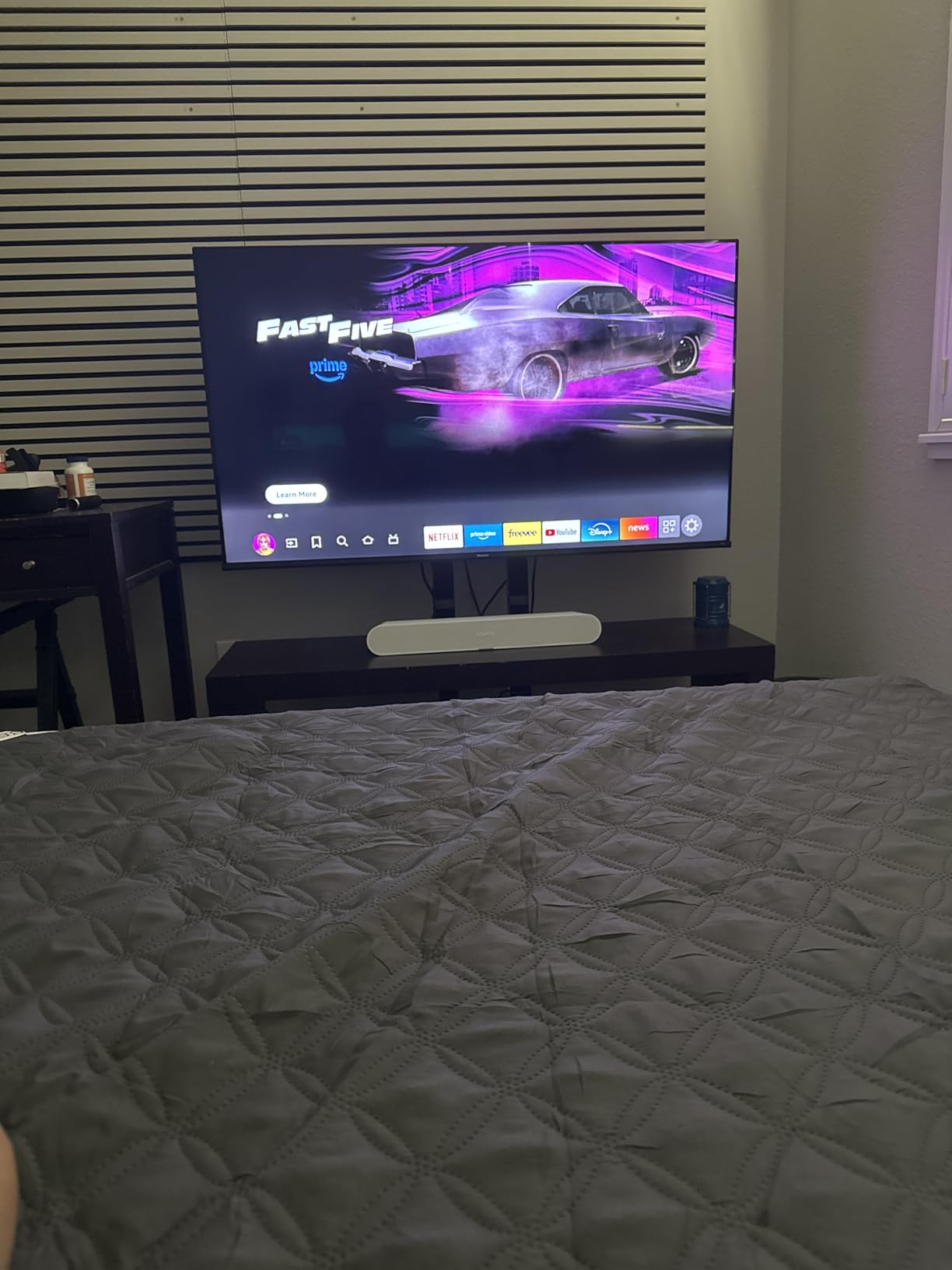
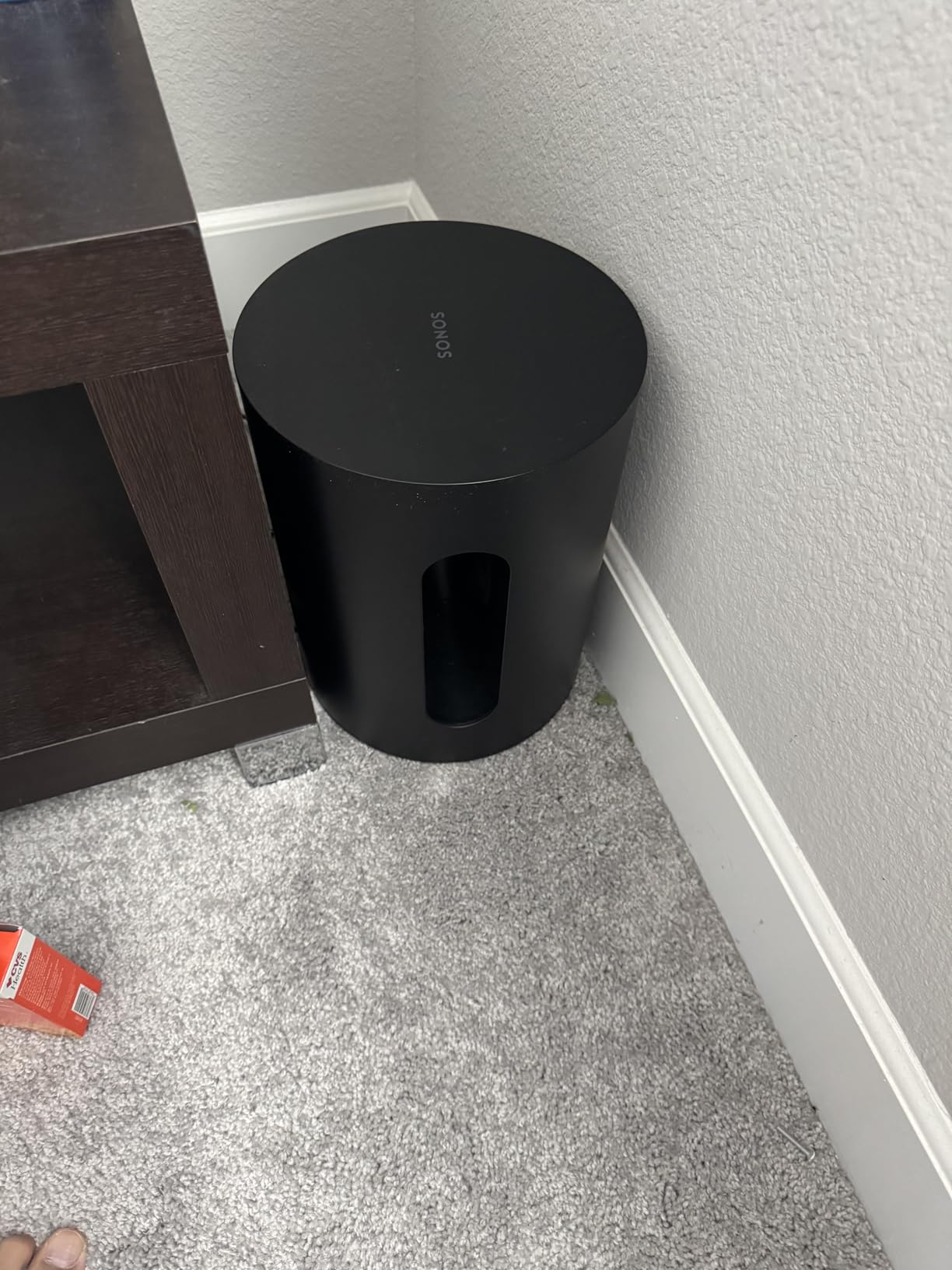
The Sub Mini’s compact design is its biggest selling point. At 12 inches tall and 9 inches wide, it fits where the Sub Gen 3 cannot. I tucked it next to a small side table in my office without it being noticed. The cylindrical shape also works well in modern decor. The dark matte finish is fingerprint-resistant and looks premium.
For gaming, the Sub Mini adds a satisfying rumble to explosions and engine sounds. I tested it with Forza Horizon 5 on Xbox Series X, and the cars had a physical, roaring presence. The Trueplay tuning also adapts the bass to your room’s acoustics, so even if you place the Sub Mini near a wall, the sound stays clean and balanced. Just remember that Trueplay requires an iOS device, which is a Sonos quirk.
Best pairing combinations
The Sub Mini pairs best with the Beam Gen 2 and Ray. Both are smaller soundbars that benefit from added bass depth. The Sub Mini is also much more affordable than the Sub Gen 3, so it’s a logical upgrade for people who already own a Beam or Ray. If you have an Arc Ultra, skip the Sub Mini and go straight to the Sub Gen 3 for the full experience.
What I didn’t love about the Sonos Sub Mini
The 25 Hz frequency response isn’t as deep as the Sub Gen 3. You won’t feel the floor-shaking bass that serious home theater fans crave. Trueplay also requires an iOS device, which is annoying if you’re an Android user. The price is still premium for a compact sub, although it’s reasonable compared to the larger Sub. For most small to medium setups, though, the Sub Mini is a great upgrade.
How to Choose the Best Sonos Soundbar for Your Room
Picking the right Sonos soundbar comes down to three factors: room size, TV compatibility, and how much you want to expand later. Here’s a clear breakdown to help you decide.
Room Size Considerations
For small rooms up to 200 square feet, the Sonos Ray and Beam Gen 2 are both excellent. The Ray is best for 32 to 43-inch TVs in bedrooms or offices. The Beam Gen 2 is better for 50 to 65-inch TVs in medium bedrooms or dens. For medium rooms up to 350 square feet, the Beam Gen 2 plus a Sub Mini is the sweet spot. For large rooms over 350 square feet, the Arc Ultra is the answer. I tested the Arc Ultra in my 400-square-foot living room, and it filled the space with rich, room-filling sound without distortion.
TV Compatibility and HDMI eARC
If your TV has HDMI eARC, all three Sonos soundbars work seamlessly. The Arc Ultra and Beam Gen 2 use HDMI eARC for Dolby Atmos. The Ray uses optical, which is the older standard. Optical can’t carry Dolby Atmos, so the Ray outputs stereo only. If you have an older TV without HDMI ARC, the Ray is the safest bet. For newer TVs with HDMI eARC, the Beam Gen 2 or Arc Ultra will give you the full Atmos experience. Check your TV’s ports before you buy.
Dolby Atmos vs Stereo
Dolby Atmos adds height channels and 3D spatial audio. It makes movies and games feel more immersive. If you watch a lot of Netflix, Disney+, or 4K Blu-rays, Atmos is worth the upgrade. The Arc Ultra and Beam Gen 2 both support Atmos through HDMI eARC. The Ray does not. For music, Dolby Atmos is also available on Apple Music and Tidal, but the difference is more subtle. For pure music listening, the Era 300 is the right pick.
Ecosystem Expansion Strategy
The real Sonos appeal is the ecosystem. You can start with one soundbar today and add speakers over time. A common path is to start with a Beam Gen 2, add a Sub Mini for bass, then add two Era 300 speakers as rear surrounds. The result is a full 5.1.4 Dolby Atmos home theater. You can also group Sonos speakers across rooms for whole-home audio. If you already own Sonos speakers, stick with Sonos for the best integration. If you have IKEA Symfonisk speakers, they work with the Sonos app too, so you can mix and match.
Frequently Asked Questions About Sonos Soundbars
Is Sonos really better than Bose?
Sonos and Bose both make excellent soundbars, but they target different priorities. Sonos focuses on whole-home wireless audio with a modular ecosystem that grows over time. Bose focuses on sound quality and noise cancellation in a more traditional lineup. For pure home theater, the Sonos Arc Ultra and Sonos Beam Gen 2 match or beat Bose in Atmos immersion. For multi-room music, Sonos is more flexible.
Are Sonos soundbars worth the money?
Yes, for most people who want a noticeable upgrade over TV speakers. Sonos soundbars deliver premium sound, easy setup, and a modular ecosystem that lets you add subwoofers and surrounds later. The Beam Gen 2 is the best value at $499, and the Arc Ultra is the premium choice. The Ray is more affordable but limited to stereo output. If you already own other Sonos speakers, the integration is a major plus.
Which Sonos soundbar is considered the best?
The Sonos Arc Ultra is the best overall Sonos soundbar in 2026. It delivers 9.1.4 Dolby Atmos with 14 drivers and Sound Motion technology. For most people, the Beam Gen 2 is the best value and the right pick. The Ray is the best budget option for smaller TVs. The choice depends on your room size, TV, and how much you want to spend.
What is better, Sonos Beam or Arc?
The Sonos Arc Ultra is better for large rooms and premium home theater. The Beam Gen 2 is better for smaller rooms and tighter budgets. The Arc Ultra has 9.1.4 channels and Sound Motion, while the Beam Gen 2 has 2.0 channels with simulated Atmos. Both support Dolby Atmos, but the Arc Ultra is more immersive. Pick the Beam if you want value under $500. Pick the Arc if you want the flagship experience.
Does Sonos Ray have Dolby Atmos?
No, the Sonos Ray does not support Dolby Atmos. It outputs 2.0 stereo only through an optical connection. For Dolby Atmos, you need the Sonos Beam Gen 2 or the Sonos Arc Ultra, both of which use HDMI eARC. The Ray is still a great choice for smaller rooms and stereo TV audio, but it cannot deliver full Atmos immersion.
Final Verdict: Which Sonos Soundbar Should You Buy in 2026?
The best Sonos soundbars for 2026 come down to your room and budget. For most people, the Sonos Beam Gen 2 is the right pick. It delivers real Dolby Atmos, easy setup, and a compact design that fits most TVs. If you want the flagship experience, the Sonos Arc Ultra is unmatched. The 9.1.4 spatial audio and AI dialogue enhancement are genuinely impressive. For smaller rooms or tighter budgets, the Sonos Ray is a great starter, especially with the Sub Mini added later.
Music lovers should also consider the Sonos Era 300. It’s a smart speaker with Dolby Atmos Music that doubles as rear surrounds for a Beam or Arc. And for deep bass, the Sonos Sub Gen 3 is the gold standard, while the Sub Mini is the right compact option. Whatever you choose, the Sonos ecosystem is the most flexible and refined wireless audio platform on the market right now. Pick the model that fits your space, and you’ll be enjoying it for years.