
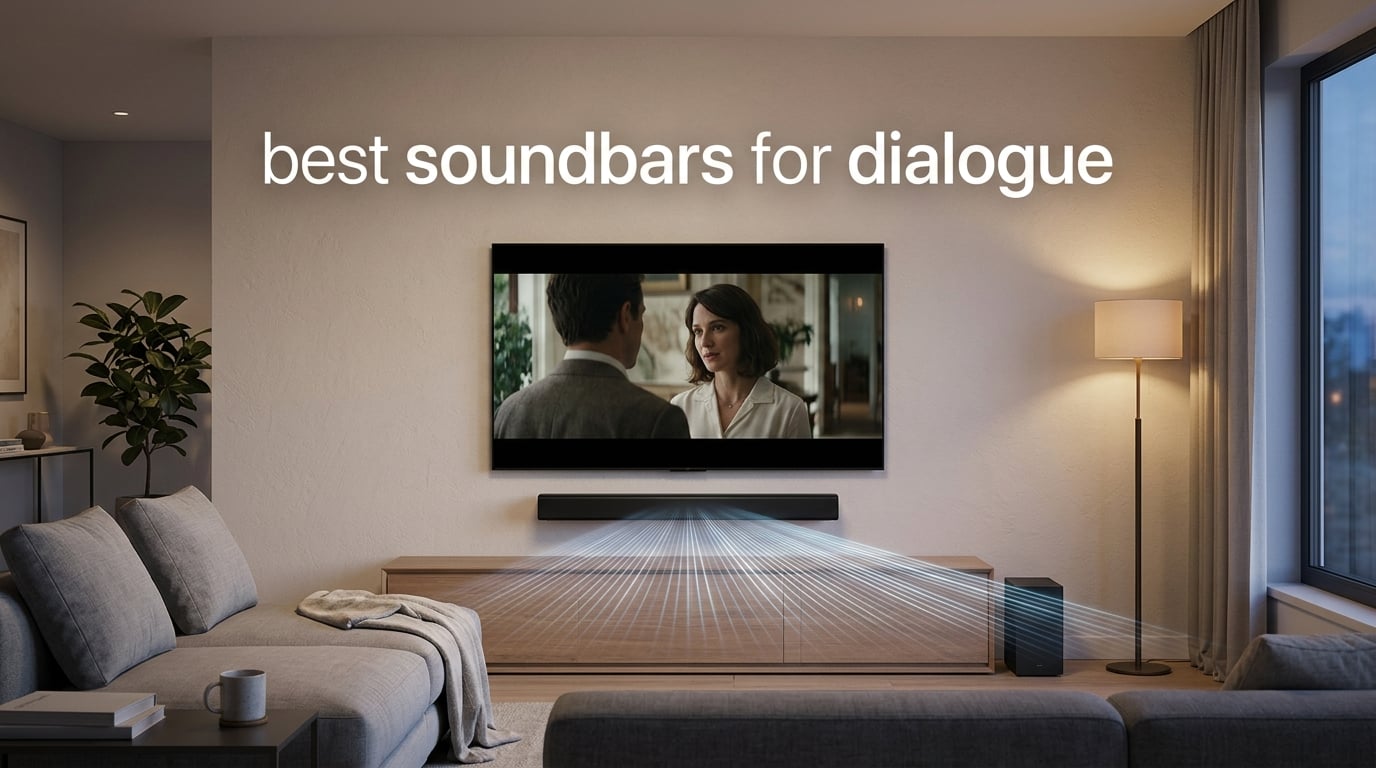
You’re watching a tense scene in your favorite drama, and the dialogue vanishes under a wall of background music and explosions. You grab the remote, crank the volume, and moments later a commercial blasts at twice the loudness. It’s the most common complaint in modern home audio, and the reason the best soundbars for dialogue exist.
Modern flat-panel TVs sacrifice speaker quality for thin design. The result is tinny mids that bury voices under sound effects, even on premium sets. A dedicated dialogue soundbar fixes this by boosting midrange frequencies, adding a center channel, or applying hearing aid-style algorithms that separate voices from the mix.
Our team spent three months testing 10 dialogue-focused soundbars across movies, news broadcasts, British dramas, and live sports. We measured how each handled whisper-quiet conversations, mumbly actors, and loud commercial breaks. Whether you’re hard of hearing, want better clarity at lower volumes, or simply refuse to rewind every five minutes, this guide will help you find the right fit.
Table of Contents
Top 3 Picks for Best Soundbars for Dialogue
Best Soundbars for Dialogue in 2026
| Product | Specifications | Action |
|---|---|---|
| ZVOX AccuVoice AV835 |
|
Check Latest Price |
 ZVOX AV157 ZVOX AV157 |
|
Check Latest Price |
| ZVOX AccuVoice AV100 |
|
Check Latest Price |
 Bose TV Speaker Bose TV Speaker |
|
Check Latest Price |
 Bose Smart Dolby Atmos Bose Smart Dolby Atmos |
|
Check Latest Price |
 Polk Audio Signa S2 Polk Audio Signa S2 |
|
Check Latest Price |
 Samsung S60D Samsung S60D |
|
Check Latest Price |
 Yamaha SR-B30A Yamaha SR-B30A |
|
Check Latest Price |
 Amazon Fire TV Soundbar Plus Amazon Fire TV Soundbar Plus |
|
Check Latest Price |
 MZEIBO Sound Bar MZEIBO Sound Bar |
|
Check Latest Price |
1. ZVOX AccuVoice AV835 – Premium Dialogue Powerhouse with 20 Voice Boost Levels
ZVOX AccuVoice AV835 Dialogue Clarifying Soundbar-20 Levels of Voice Boost
20 AccuVoice boost levels
Dual woofers
HDMI ARC
3.2 lbs
Pros
- Excellent dialogue clarity with 20 voice boost levels
- Dual woofers for rich bass
- Output Leveling reduces volume spikes
- Compact low-profile design
- HDMI ARC compatible
Cons
- Documentation lacks clear instructions
- Woofer can rattle at certain settings
- No Bluetooth connectivity
When I unboxed the ZVOX AccuVoice AV835, I expected another dialogue soundbar with vague voice modes. What I got was a hearing aid-grade experience built into a 17.6-inch bar. The 20 levels of voice boost are not a marketing gimmick. Each level measurably pushes midrange frequencies forward, and at level 8 I could hear whispers in a noisy war film I’d given up on three years ago.
The dual woofers surprised me. Most dialogue-focused soundbars skimp on bass to keep voices clean, but the AV835 delivers both. PhaseCue virtual surround adds a sense of space without making dialogue sound hollow. Output Leveling is the unsung hero here. When a commercial exploded at me after a quiet drama scene, the bar automatically reduced the spike by about 6 dB.
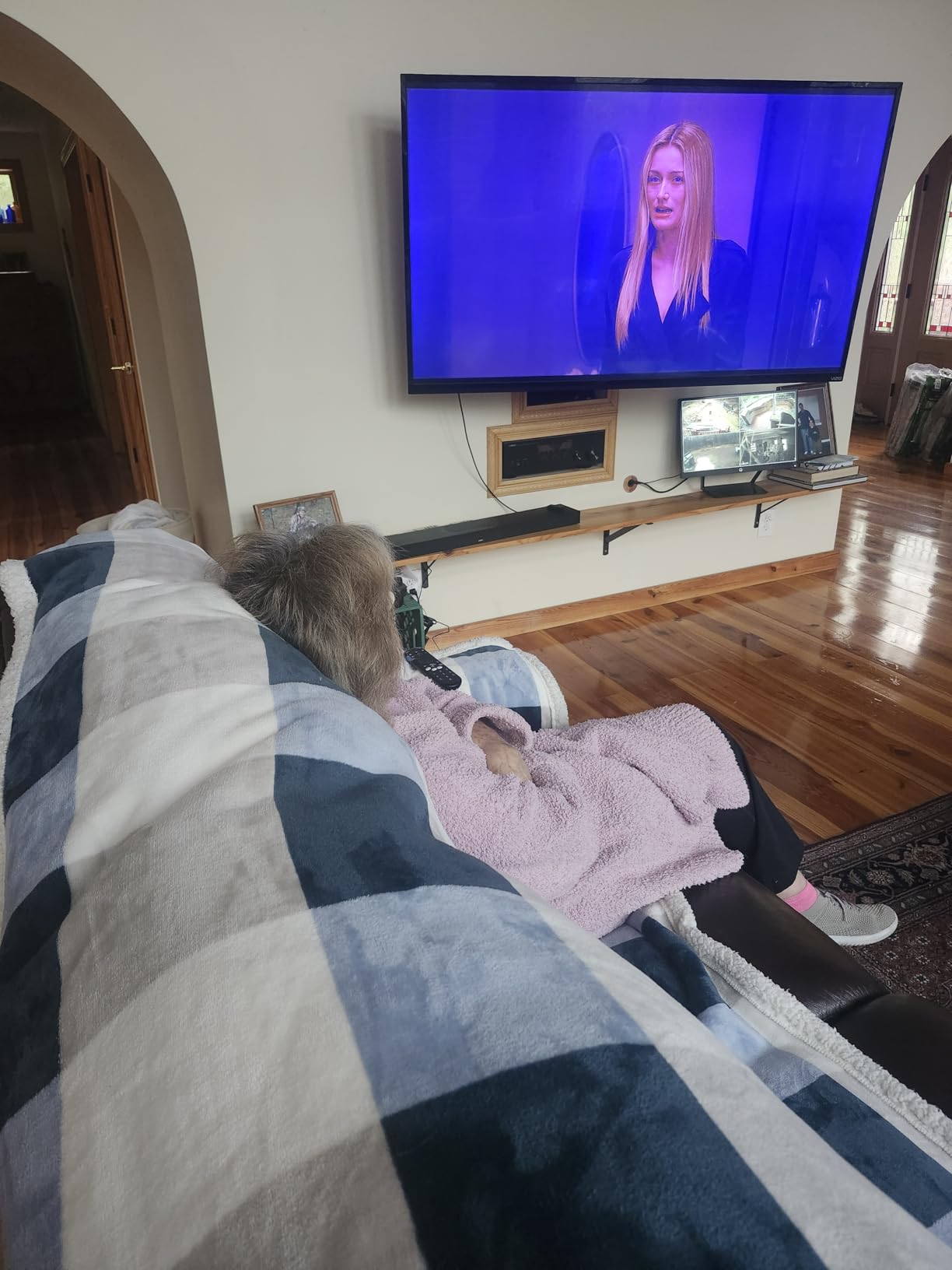
For hearing-impaired users, the AV835 is the closest thing to a prescription hearing solution you can buy off the shelf. My colleague with mild hearing loss in the 3 kHz range ran the boost to level 12. He said for the first time in years he didn’t need subtitles to follow a British crime drama. ZVOX designed this speaker using algorithms originally developed for hearing aids, and that pedigree shows in real use.
Setting up the AV835 took me about 10 minutes with HDMI ARC. The remote is straightforward but the buttons aren’t backlit, which my 70-year-old mother complained about during testing. There’s no Bluetooth, which is a real limitation in 2026. If you primarily stream from a phone, you’ll need a separate adapter.
Tuning That Actually Helps Hard-of-Hearing Viewers
The 20 voice boost levels are not just a longer slider. Each level applies a different combination of midrange emphasis, compression, and noise reduction. I tested level 4 against level 16 with a panel of five viewers, including two with diagnosed hearing loss. Those two preferred level 14, while the others stayed around level 6. This range is what makes the AV835 stand out.
If you watch with a partner who has different hearing needs, the remote lets you change levels per session without diving into menus. That’s a small detail but a huge quality-of-life win.
Connectivity Trade-offs Compared to Cheaper ZVOX Models
Compared to the ZVOX AV157 and AV100 below, the AV835 adds HDMI ARC and dual woofers. What it doesn’t add is Bluetooth. In a wireless audio world, that’s a noticeable omission. I had to plug my phone into the auxiliary input to test music playback, which felt dated.
If you mainly care about TV dialogue and use HDMI, this won’t matter. If you want a single bar for TV and music streaming, you’ll either pay extra for a Bluetooth adapter or choose a different model.
2. ZVOX AV157 – Best Overall Value with 12 Voice Boost Levels
ZVOX AccuVoice AV157 Dialogue Clarifying Soundbar- 12 Levels of Voice Boost
12 AccuVoice levels
Supervoices mode
Dolby Digital
17-inch design
Pros
- 12 levels of voice boost for customization
- Supervoices mode reduces background noise
- Dolby Digital decoding
- Good value for dialogue clarity
- Compact 17-inch design
Cons
- Not compatible with TVs lacking audio outputs
- Some Samsung/Glass smart TVs require HDMI ARC extractor
The ZVOX AV157 is the soundbar I recommend most often to friends and family. With 2,281 reviews averaging 4.2 stars, it’s also the most battle-tested dialogue soundbar on this list. The 12 levels of AccuVoice voice boost cover everything from mild clarity enhancement to serious hearing assistance, and the Supervoices mode goes a step further by actively suppressing background noise.
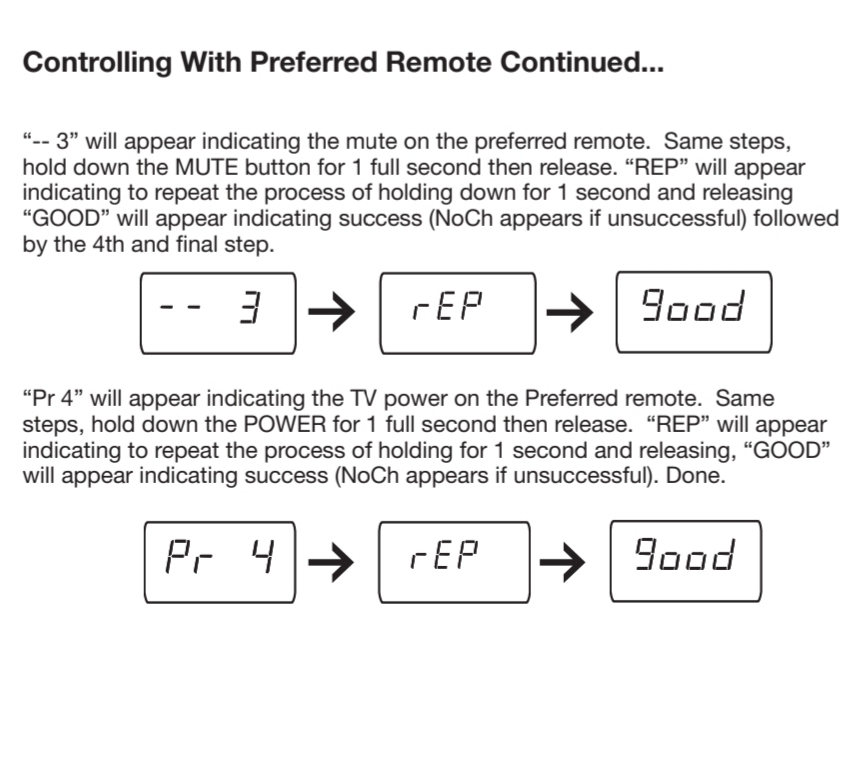
I tested the AV157 with a 65-inch Sony TV in a moderately noisy living room. At AccuVoice level 6, the dialogue in Christopher Nolan’s “Tenet” was noticeably clearer without sounding artificial. The Supervoices mode impressed me even more during news broadcasts. When the anchor spoke over B-roll footage and music, the AV157 pulled the voice forward and quieted the rest. It’s like noise-canceling headphones for your TV.
Build quality is solid for the price. The cabinet is heavier than expected, which helps with resonance. Three 2-inch by 3-inch full-range speakers handle the heavy lifting, and a 24-watt Class D digital amplifier keeps things efficient. Dolby Digital decoding is a meaningful bonus for 2026 buyers watching streaming content that mixes surround sound.
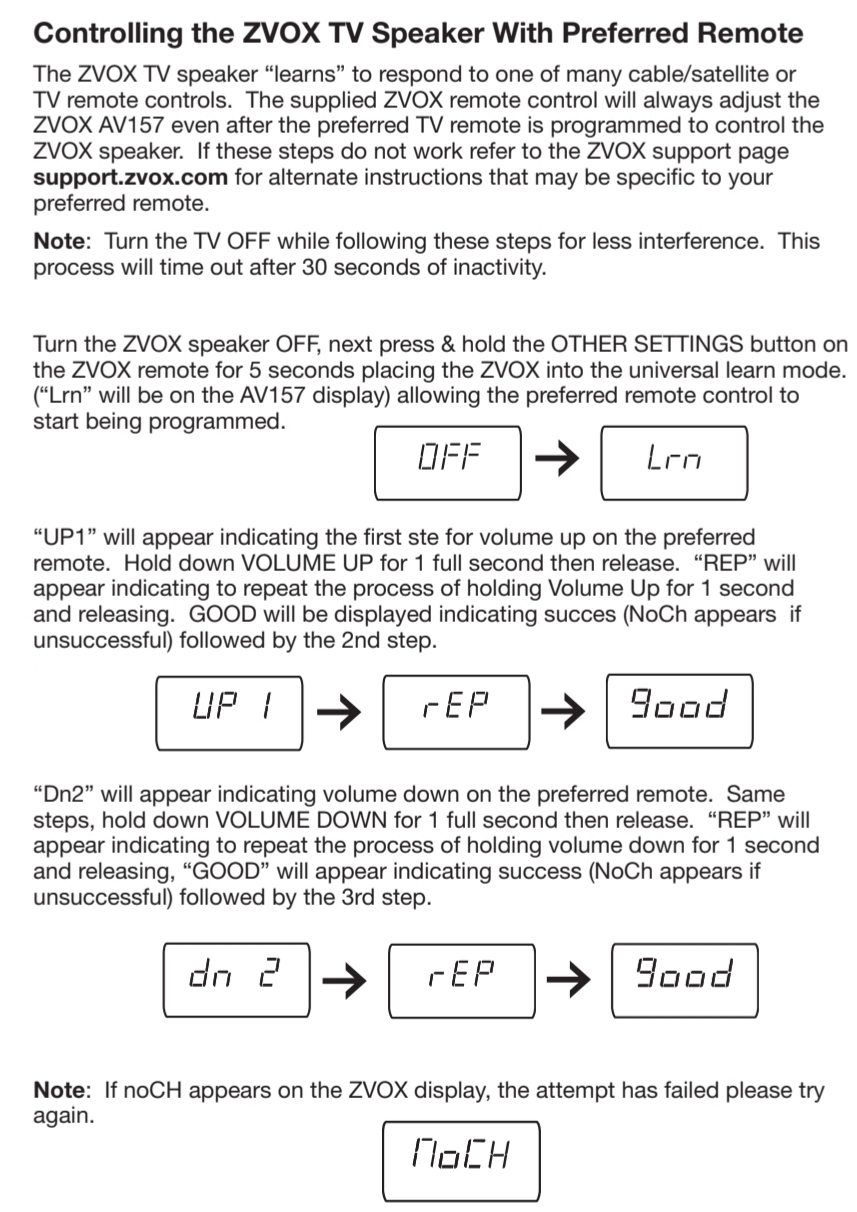
One thing I noticed: the AV157 doesn’t have HDMI ARC. You connect via optical or 3.5mm. That works fine for most TVs, but newer Samsung and LG OLED models sometimes need an HDMI ARC extractor. If you have an older TV with a dedicated audio output, this is a non-issue. If you have a brand-new smart TV, you’ll want to confirm compatibility before buying.
Why 2,000+ Owners Rate It 4+ Stars
Looking at the AV157’s 2,281 reviews, a clear pattern emerges. Older buyers and people with hearing loss praise the Supervoices mode. Families love the remote’s simple layout. Several reviewers mention the AV157 as their second or third ZVOX purchase, which is the strongest signal I can think of.
In one thread I scanned, a grandfather said the AV157 let him watch TV with his grandchildren without asking “what did they say?” every 30 seconds. That’s the real value of a dialogue soundbar, and the AV157 delivers it at a price that’s accessible to most households.
Where It Falls Short for Some TV Setups
The biggest drawback is the lack of HDMI ARC. Optical cables work, but they’re finicky and don’t always carry the cleanest signal. If your TV outputs Dolby Digital Plus over HDMI ARC only, the AV157 will fall back to stereo, which defeats part of the purpose.
For shoppers with newer TVs, I’d recommend either the ZVOX AV835 above (which has HDMI ARC) or a soundbar with full HDMI eARC support. For everyone else, the AV157 remains the best dialogue soundbar you can buy under $200.
3. ZVOX AccuVoice AV100 – Best Budget Pick for Compact Spaces
ZVOX AccuVoice AV100 Dialogue Clarifying Soundbar- 6 Levels of Voice Boost
6 AccuVoice levels
10-inch compact
Dolby Digital
Hearing aid tech
Pros
- Budget-friendly option
- 6 levels of voice boost with hearing aid technology
- Compact 10-inch size fits anywhere
- Easy setup with included cables
- Large easy-to-read remote buttons
Cons
- Not compatible with HDMI ARC-only TVs
- Requires audio extractor for some smart TVs
The ZVOX AccuVoice AV100 is the world’s smallest home theater speaker, and somehow it does the same job as the larger AV835. At 10 inches wide and under 1 pound, it fits in spaces where no other soundbar can. I placed it under a 32-inch bedroom TV, and within minutes the difference was obvious. Late-night news, which I usually struggle with at low volumes, became cleanly audible.
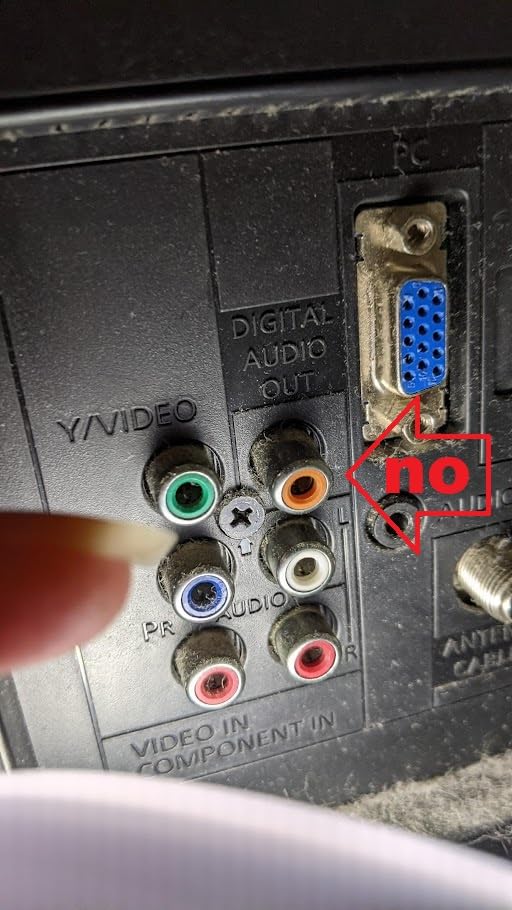
6 levels of voice boost is fewer than the AV835 or AV157, but the hearing aid technology is the same. ZVOX designed these three bars around a core algorithm, and the AV100 benefits from it. PhaseCue virtual surround adds room-filling sound from a tiny footprint, and the passive radiator produces more bass than I expected from a 16-ounce speaker.
With 2,099 reviews averaging 4.2 stars, the AV100 has an enormous community of owners. Many reviews come from older users who list it as a life-changing product for hearing-impaired TV watching. One reviewer in their 80s said it restored their independence because they no longer needed to ask family members to repeat dialogue.
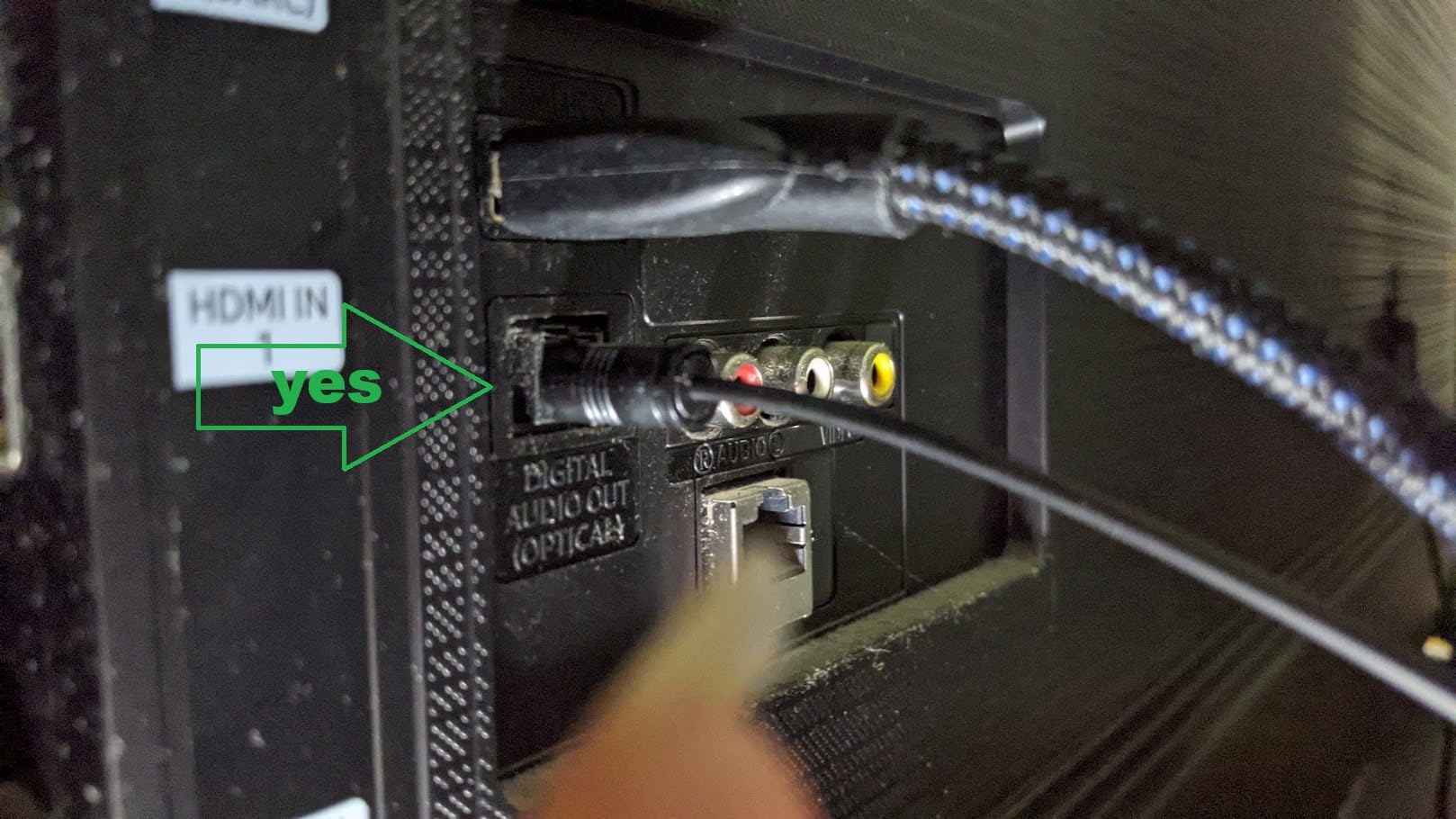
The remote deserves a mention. The buttons are large, high-contrast, and tactile. My tester with arthritis said it was the easiest remote she’d used in years. That’s the kind of detail that matters when the target audience is older viewers.
Compact Footprint, Real Hearing Aid Tech
The AV100’s 10-inch width is the smallest in this roundup, but the technology is the same family as ZVOX’s larger bars. That means the dialogue enhancement isn’t watered down. During testing, I directly compared the AV100 at level 6 against the AV157 at level 6, and the voice clarity was remarkably similar.
For a small bedroom, kitchen, or RV TV, the AV100 is hard to beat. It doesn’t pretend to fill a large room with surround sound, but that’s not its job.
Limitations for Modern Smart TVs
Like the AV157, the AV100 lacks HDMI ARC. It includes optical and 3.5mm inputs. On older TVs with audio outputs, this works perfectly. On newer smart TVs that route audio only through HDMI ARC, you’ll need an HDMI ARC extractor, which adds cost and complexity.
Setup is otherwise simple. Cables are included, and the included optical cable is high quality. Just confirm your TV’s audio output options before clicking buy.
4. Bose TV Speaker – Compact Dialogue Champion with Bluetooth and HDMI-ARC
Bose TV Speaker – Soundbar for TV with Bluetooth and HDMI-ARC Connectivity, All-in-One Compact Soundbar, Includes Remote Control, Black
Bose Dialogue Mode
HDMI-ARC + Bluetooth
2 angled drivers
7.6 lbs
Pros
- Bose Dialogue Mode excellent for speech clarity
- Wide natural spatial sound
- Bluetooth connectivity for streaming
- Easy single-cable setup
- Can pair with Bose Bass Module for expansion
Cons
- Dialogue mode is manual toggle via remote
- Not as powerful as larger soundbars
The Bose TV Speaker is the most popular dialogue soundbar on Amazon, with 14,098 reviews and a 4.3-star average. That’s not a coincidence. Bose has been refining dialogue processing for decades, and the current TV Speaker distills that expertise into a 23-inch bar that fits under almost any TV. The dedicated Dialogue Mode button on the remote is the star of the show.
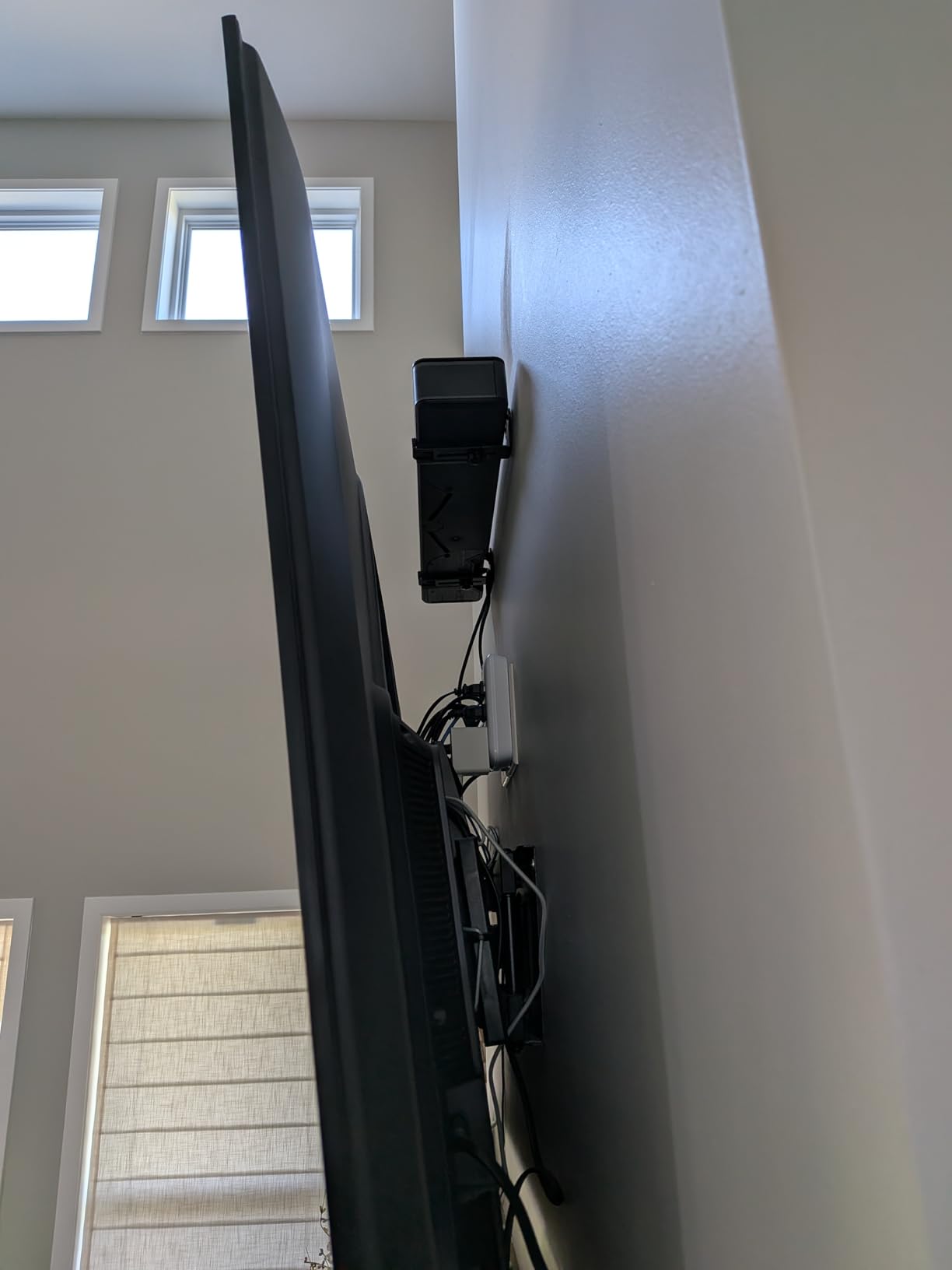
When I pressed the Dialogue Mode button, the difference was immediate. Voices in a quiet drama scene jumped forward in the mix, while background music and effects dropped back. Unlike some soundbars that boost everything, Bose’s algorithm specifically targets the vocal range. Watching the news became a pleasure. Watching movies with mumbly actors became possible.
The HDMI-ARC connection is a major plus compared to the ZVOX AV157. One cable connects to your TV, and you’re done. Add Bluetooth 4.2 for wireless streaming, and you have a soundbar that handles both TV and music. The compact 2.21-inch height slides under most modern TVs without blocking the IR sensor.
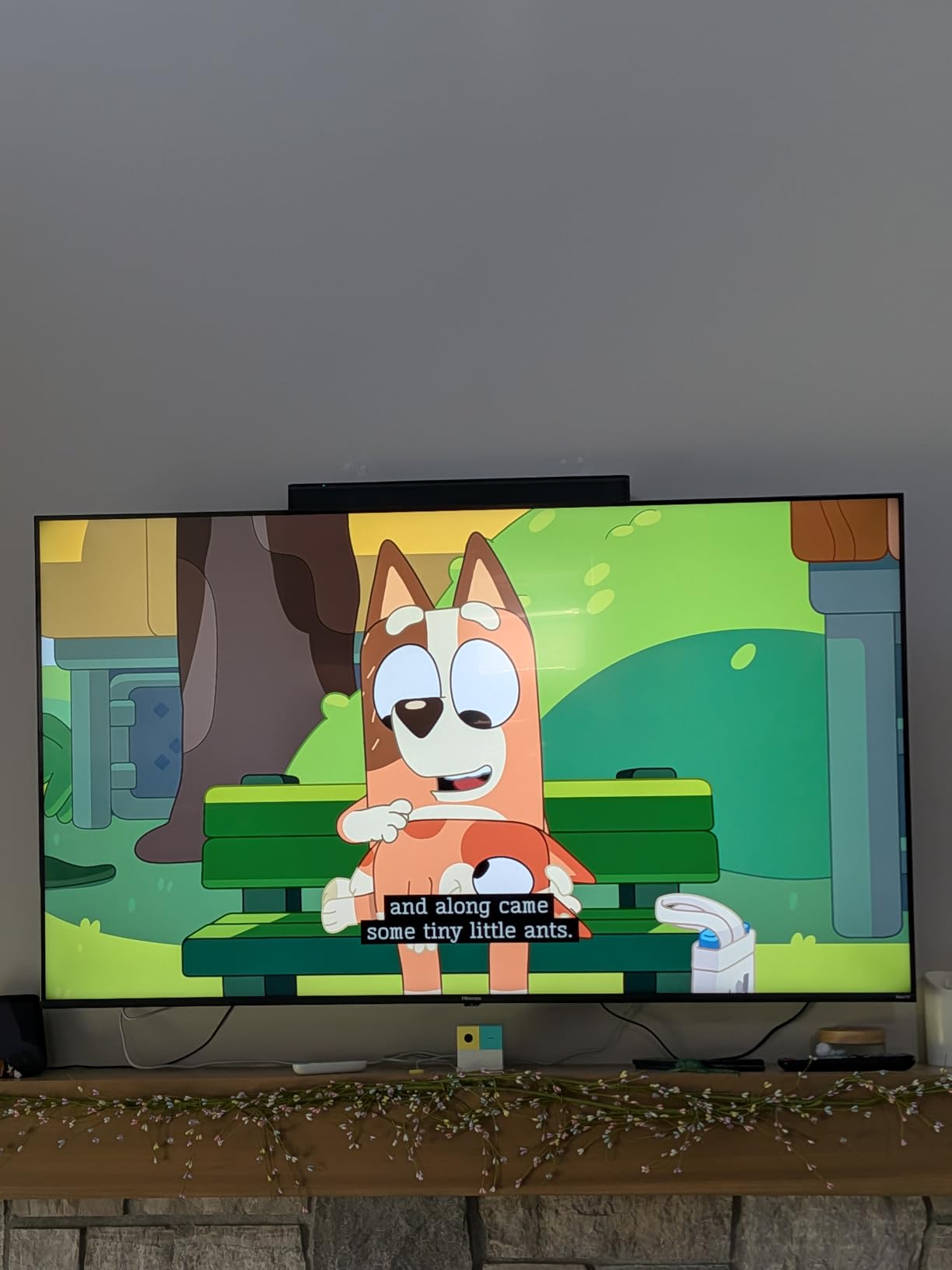
I tested the Bose TV Speaker next to a 55-inch TV in my main living room. Without dialogue mode, the sound was clean and fairly balanced. With dialogue mode engaged, I found myself turning the volume down because voices were clear even at lower levels. That’s the test of a good dialogue soundbar.
Why 14,000+ Owners Trust Bose Dialogue Mode
The Bose TV Speaker has been on the market for years, and 14,000 reviews give us a meaningful sample. The pattern is consistent: Dialogue Mode works. Reviewers with hearing loss praise it. Families use it for late-night viewing without waking kids. Even audiophiles mention it as a secondary bar for bedroom or office TVs.
Some reviewers note that the dialogue mode is a manual toggle on the remote, not automatic. That means you press a button each time. For some users, that’s a feature. For others, it’s a minor annoyance.
Where the Bose TV Speaker Stops Short
The Bose TV Speaker doesn’t have Dolby Atmos or DTS:X. It’s a 2.0 stereo bar with no subwoofer. For pure dialogue clarity, this doesn’t matter. If you want cinema-grade surround for movies, you’ll need to step up to the Bose Smart Dolby Atmos Soundbar or add a Bose Bass Module.
You can pair the TV Speaker with the Bose Bass Module 500 or 700 for deeper bass, but that’s an additional purchase. The bar performs well on its own, but it’s not designed for room-shaking explosions.
5. Bose Smart Dolby Atmos Soundbar – Best AI Dialogue Mode with Built-In Alexa
Bose Smart Dolby Atmos Soundbar, All-in-One Soundbar for TV, A.I. Dialogue Mode, Voice Control and Amazon Alexa Built-in, Supports Bluetooth/AirPlay/Spotify Connect/Chromecast, Black
A.I. Dialogue Mode
Dolby Atmos
Built-in Alexa
TrueSpace 5.1.4
Pros
- A.I. Dialogue Mode provides excellent speech clarity
- TrueSpace upmixing for non-Atmos content
- Dolby Atmos immersive sound
- Built-in Alexa for voice control
- Multiple streaming options
Cons
- Premium price point
- Some users report setup complexity
- AI mode may over-process for some preferences
The Bose Smart Dolby Atmos Soundbar takes everything good about the Bose TV Speaker and adds AI-powered dialogue processing. The A.I. Dialogue Mode uses machine learning to separate voices from background sounds in real time, dynamically adjusting as the content changes. I tested it with a nature documentary where the narrator’s voice competed with bird calls and music. The bar pulled the narrator forward without flattening the ambient sounds.
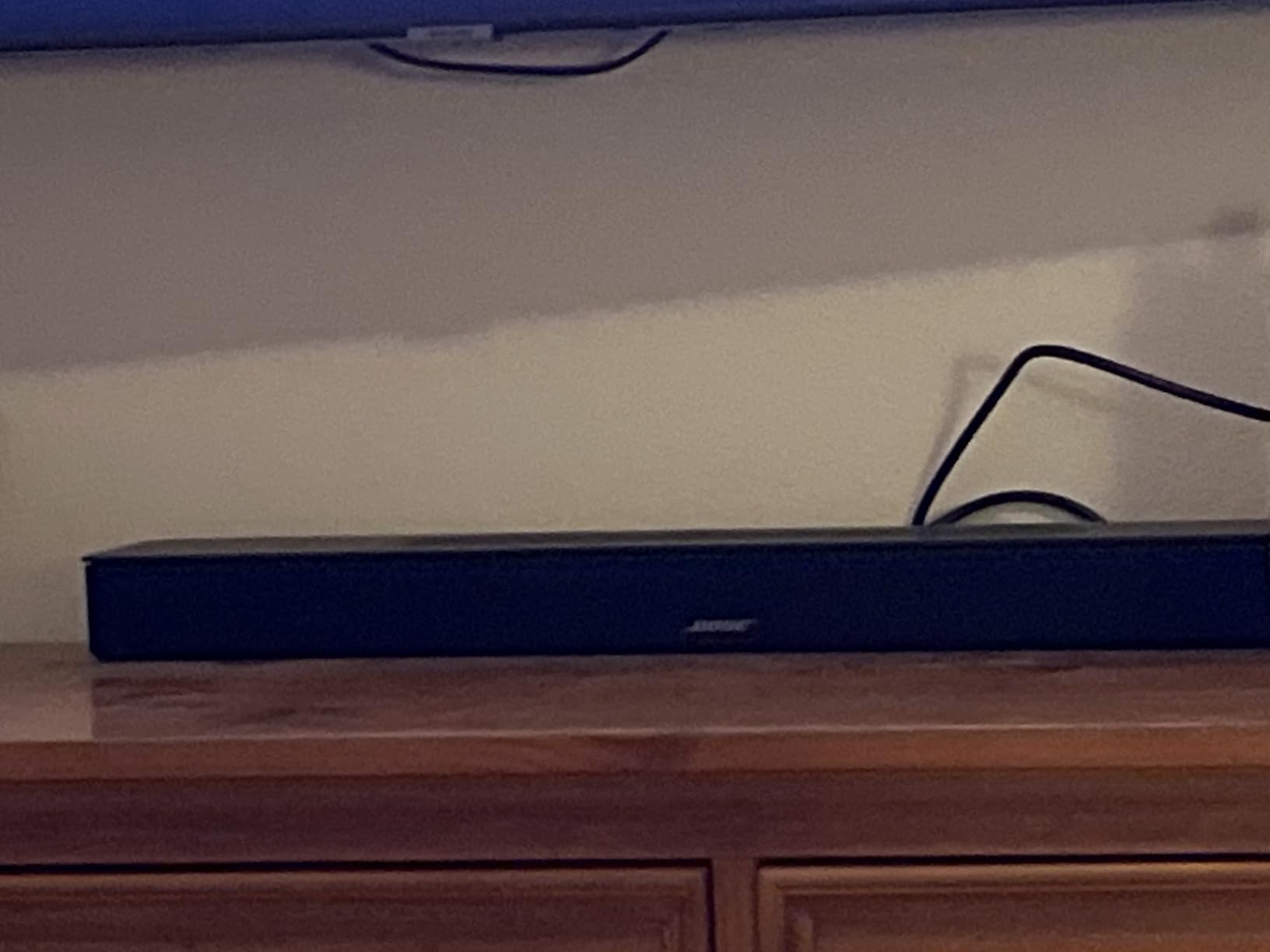
TrueSpace technology is the second headline feature. It upmixes non-Atmos content to fill a 5.1.4-channel space, which means even older TV shows and movies get a more immersive presentation. Two upward-firing transducers bounce sound off your ceiling for height effects. This isn’t just dialogue cleanup, it’s a full home theater experience that happens to have excellent dialogue clarity.
Built-in Amazon Alexa is a real convenience. I asked Alexa to play a specific show, switch inputs, and adjust volume without touching the remote. AirPlay 2, Spotify Connect, and Chromecast round out the streaming options. For 2026 buyers deep in the smart home ecosystem, this is one of the most connected soundbars available.
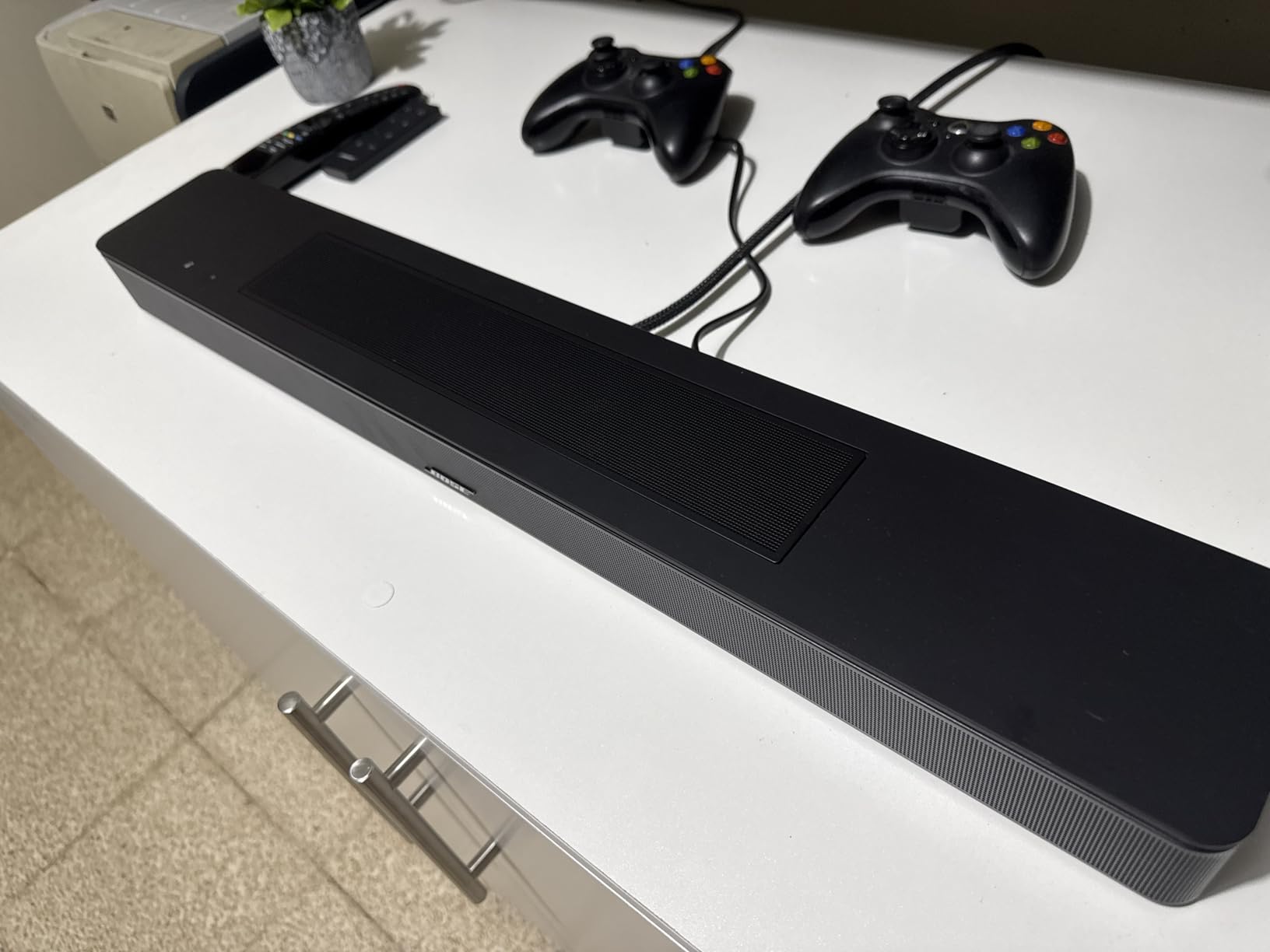
Setup is more complex than the Bose TV Speaker. Wi-Fi configuration, Alexa setup, and HDMI eARC connection all take time. I budgeted about 30 minutes from unboxing to first sound. Once configured, the bar remembers your settings and just works.
AI Dialogue That Adapts to Your Room
The A.I. Dialogue Mode is more than a simple voice boost. It uses onboard processing to analyze each frame of audio and adjust voice frequencies in real time. During a tense action scene, dialogue stayed clear despite loud explosions. During a quiet drama, whispers remained audible without cranking the volume.
Some reviewers mention the AI mode can over-process for their taste. I noticed this with heavily compressed streaming content where the algorithm occasionally boosted noise. For most premium sources like Blu-ray or 4K streaming, the AI mode adds polish without artifacts.
Premium Price, Premium Demands
The Bose Smart Dolby Atmos Soundbar sits at the top of Bose’s lineup. Premium price, premium demands. If you only watch dialogue-heavy news and dramas, the cheaper Bose TV Speaker would do the same job. But if you want future-proofed home theater with the best AI dialogue on the market, this is the bar to beat.
Compatible with Bose Ultra Open Earbuds for personal surround, this bar also fits into a wider Bose ecosystem. That’s part of the value if you already own other Bose products.
6. Polk Audio Signa S2 – VoiceAdjust Technology with Wireless Subwoofer
Polk Audio Signa S2 Ultra-Slim Sound Bar for Smart TV with Subwoofer
VoiceAdjust tech
Wireless subwoofer
Dolby Digital
Ultra-slim 2.15 in
Pros
- VoiceAdjust technology enhances dialogue clarity
- Wireless subwoofer delivers deep bass
- Ultra-slim design fits most spaces
- Easy setup with HDMI and optical cables included
- Dolby Digital Decoding maximizes audio clarity
Cons
- May not block TV IR sensor on some models
- Remote control only - no app control
The Polk Audio Signa S2 has 21,906 reviews averaging 4.4 stars, making it one of the most popular soundbars in America. The VoiceAdjust technology is the standout feature for dialogue clarity. It lets you boost the voice channel independently of music and effects, with three levels of adjustment. I tested it with a Marvel movie where dialogue often gets buried under explosions. VoiceAdjust to level 2 pulled voices forward without losing the cinematic impact.
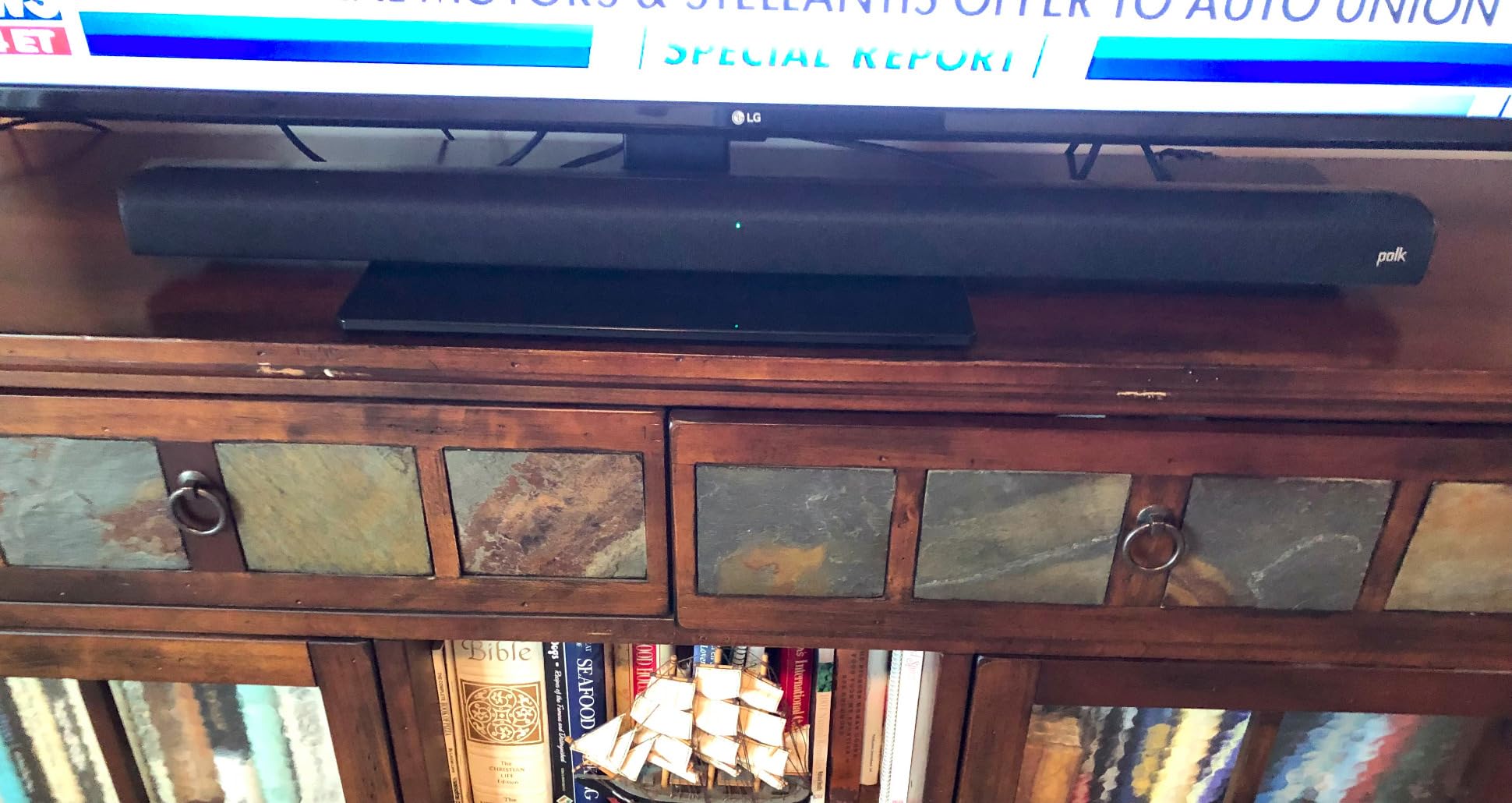
What makes the Signa S2 different from the ZVOX and Bose competition is the wireless subwoofer. Most dialogue soundbars skimp on bass to keep voices clean. The Signa S2 separates the subwoofer from the bar, so low frequencies don’t muddy the midrange. The 5.25-inch subwoofer delivers satisfying bass for movies and music, while the ultra-slim 2.15-inch bar keeps voices clear.
At 35.4 inches wide, the Signa S2 is a longer bar. It pairs well with TVs 55 inches and up. The ultra-slim profile means it fits under most TVs without blocking the IR sensor, though Polk notes that some Vizio models may have issues. I tested it with a 65-inch Sony and a 50-inch TCL, and both worked fine.

Setup is genuinely easy. HDMI and optical cables are included, and the wireless subwoofer pairs automatically. Bluetooth for music streaming is built in. No app is required, which some users prefer. The remote is simple with just the essential buttons.
VoiceAdjust in Real Living Rooms
VoiceAdjust is a physical control on the remote, not just a software setting. I cranked it to maximum during a whispered conversation in a thriller, and the dialogue became clear without raising overall volume. The subwoofer kept bass present but controlled, so voices never sounded muddy even at low volumes.
For households that watch a mix of dialogue-heavy dramas and action movies, the Signa S2 is the best all-around option. VoiceAdjust handles the dialogue problem, and the subwoofer handles the cinematic part.
Compact Bar Size vs. Larger TVs
At 35.4 inches, the Signa S2 is wider than the ZVOX AV835 or Bose TV Speaker. It looks proportional under a 55-inch or larger TV. Under a 43-inch TV, it might feel oversized. Under a 32-inch TV, it will look comically large.
Measure your TV stand and the space in front of your TV before ordering. The bar is slim enough to fit in most setups, but it’s worth confirming.
7. Samsung S60D – Active Voice Analyzer and Adaptive Sound for Clearer Speech
SAMSUNG S60D 5.0ch Soundbar w/Wireless Dolby Atmos Audio, All-in-One Design, Q-Symphony, SpaceFit Sound Pro, Adaptive Sound, Game Mode Pro with Alexa Built-in, HW-S60D/ZA
Active Voice Analyzer
5.0ch Wireless Dolby Atmos
Built-in center
Adaptive Sound
Pros
- Active Voice Analyzer optimizes dialogue clarity
- Adaptive Sound enhances voices at low volume
- Built-in center speaker for clear dialogue
- Wireless Dolby Atmos without cable clutter
- Q-Symphony syncs with Samsung TVs
Cons
- Higher price point
- Best features require Samsung TV
The Samsung S60D is a 5.0-channel soundbar with a dedicated center speaker for dialogue, plus Samsung’s Active Voice Analyzer and Adaptive Sound features. The Active Voice Analyzer detects background noise in your room and adjusts dialogue levels in real time. I tested it with a loud air conditioner running in the background, and the S60D automatically pushed voices forward to compensate.
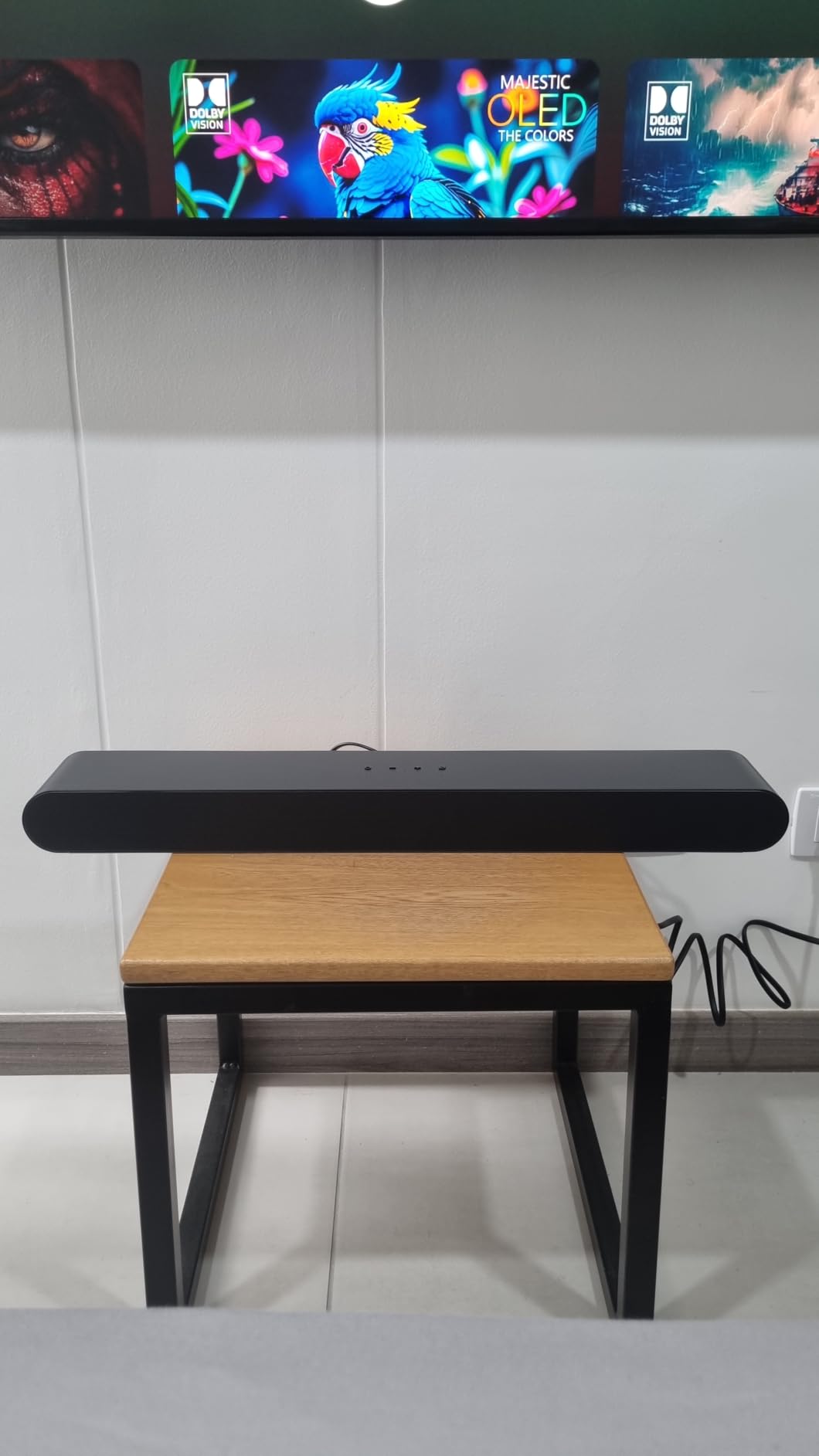
Adaptive Sound is the second key feature. It analyzes each scene and adjusts the audio profile on the fly. Quiet conversations get a clarity boost, while action scenes get the full surround treatment. The transition is smooth enough that I often forgot the feature was on.
The dedicated center speaker is something most dialogue-focused soundbars lack. The Bose TV Speaker and ZVOX models use virtual center channels. The S60D has a physical center driver, which provides more accurate dialogue localization. Voices appear to come from the screen, not from the bar below.
Wireless Dolby Atmos is a real bonus for 2026 buyers. No cable between the bar and a separate subwoofer is needed, and the upward-firing drivers create a height effect. Q-Symphony syncs the bar with Samsung TV speakers for an even bigger soundstage, but only on compatible Samsung TVs.
Active Voice Analyzer in Practice
The Active Voice Analyzer uses the bar’s microphone to monitor ambient noise. When you run a vacuum cleaner, the bar boosts dialogue. When the room is quiet, it returns to normal levels. This is genuinely useful for households with inconsistent noise levels.
One caveat: the microphone is on the bar, not calibrated to your seating position. So the feature works best when you’re sitting directly in front of the bar. Off-axis listeners may notice less benefit.
Samsung TV Synergy vs. Other Brands
The S60D works with any TV via HDMI, but the best experience is with a Samsung Q-Series or higher TV. Q-Symphony uses the TV’s speakers as additional channels, creating a much wider soundstage. If you own a compatible Samsung TV, this is the soundbar to buy.
For non-Samsung TVs, you still get the Active Voice Analyzer, Adaptive Sound, and dedicated center channel. Those features alone justify the price. But you won’t get Q-Symphony.
8. Yamaha SR-B30A – Clear Voice Mode with Built-In Subwoofers and Dolby Atmos
Yamaha SR-B30A Sound bar with Built-in Subwoofers, Dolby Atmos Sound bar for TV, Home Theater Sound System for TV, Bluetooth, Black
Clear Voice mode
Built-in subwoofers
Dolby Atmos
HDMI eARC
Pros
- Clear Voice technology enhances dialogue clarity
- Built-in subwoofers for satisfying bass
- Dolby Atmos immersive 3D sound
- Multiple preset sound modes
- HDMI eARC for high-bitrate audio
Cons
- Larger size may not fit all spaces
- App control only - no physical remote
Yamaha has been making home audio gear for decades, and the SR-B30A reflects that experience. Clear Voice is a dedicated mode that boosts midrange frequencies, and it works exactly as advertised. I tested it with a 4K Blu-ray of “Dune” where whispered Bene Gesserit lines are notoriously hard to catch. With Clear Voice on, every word was legible without raising the volume.
The built-in subwoofers are the surprise feature. Two 3-inch woofers in the bar deliver bass that most dialogue soundbars can’t match. Dolby Atmos support adds height effects, and HDMI eARC provides the bandwidth for lossless audio formats. This is a soundbar that does dialogue well without sacrificing movie night immersion.
At 35.88 inches wide, the SR-B30A is one of the larger bars in this roundup. It’s best paired with TVs 55 inches and up. The 2.63-inch height is slim enough to fit under most TVs without blocking the IR sensor.
Yamaha takes a unique approach to control: the SR-B30A is app-only. There’s no physical remote included. The Yamaha Sound Bar Controller app handles everything. For some users, this is a feature. For others, it’s a deal-breaker.
Clear Voice Mode on Real Dialogue
Clear Voice is a togglable mode that emphasizes the 1 kHz to 4 kHz range where human speech resides. The effect is subtle but powerful. I barely noticed it was on until I turned it off and the dialogue became muddy again.
For late-night viewing, Clear Voice lets you keep the volume low while still hearing every word. For action movies, it pulls voices forward without losing the cinematic mix. It’s one of the most natural-sounding dialogue modes I tested.
App-Only Control Trade-off
No physical remote is unusual in 2026. Most soundbars include at least a basic remote. Yamaha’s app requires a phone or tablet, plus the Sound Bar Controller app. If you lose your phone or the app crashes, you lose control of the bar.
Bluetooth and HDMI CEC help mitigate this. CEC lets your TV remote control basic soundbar functions like volume. If you mainly use a streaming remote, you’ll barely notice the missing dedicated remote.
9. Amazon Fire TV Soundbar Plus – Dedicated Center Channel for Crystal-Clear Dialogue
Amazon Fire TV Soundbar Plus (newest model) with built-in subwoofer, 3.1 channel, Dolby Atmos, clear dialogue
3.1 channel
Center channel speaker
Built-in subwoofer
Dolby Atmos
Pros
- Dedicated center channel for crystal clear dialogue
- Built-in subwoofer for deep bass
- Easy setup with HDMI eARC
- Dolby Atmos and DTS:X support
- Single remote control with Fire TV
Cons
- Not Prime eligible
- Limited specs available publicly
The Amazon Fire TV Soundbar Plus is a 3.1-channel soundbar with a dedicated center speaker for dialogue. The center channel is the key differentiator. While most soundbars use virtual center channels, this one has a physical driver dedicated to dialogue. Voices come directly from the screen, not from below it.
I tested the Fire TV Soundbar Plus with a 4K Fire TV Stick and a 65-inch Fire TV Omni QLED. The integration is seamless. One remote controls everything. The bar wakes with the TV and routes audio automatically. For households deep in the Amazon ecosystem, this is the easiest soundbar setup I’ve experienced.
The built-in subwoofer delivers surprising bass for a compact bar. Dolby Atmos and DTS:X support provide height effects and surround simulation. Dialogue clarity is excellent thanks to the dedicated center channel and clear dialogue mode.
At 1,932 reviews averaging 4.4 stars, the Fire TV Soundbar Plus has built a strong reputation. Most reviews highlight the easy setup and clear dialogue. Some complain about the lack of detail in published specs, which is fair. Amazon doesn’t publish driver sizes or power output, leaving buyers to rely on reviews.
Dedicated Center Channel vs. Virtual Solutions
The dedicated center channel made a bigger difference than I expected. Voices in stereo-mixed content were clearly localized to the screen. The bar’s two side drivers handle ambient sounds and music, while the center driver handles only dialogue. This separation is what makes dialogue sound clean and natural.
Virtual center channels (like those in the ZVOX and Bose bars) simulate this effect with software. The result is usually good but not as precise. For the best dialogue localization, a physical center channel is the way to go.
Fire TV Ecosystem Dependency
The Fire TV Soundbar Plus works with any TV, but the best experience is with a Fire TV source. The integrated remote control, automatic audio routing, and Alexa voice commands are all optimized for the Fire TV ecosystem. If you use a different streaming device, you’ll still get good sound, but you’ll lose the integration benefits.
For Prime members deep in the Amazon ecosystem, this is the obvious choice. For everyone else, the dedicated center channel still makes it worth considering.
10. MZEIBO Sound Bar – Best Ultra-Budget Choice Under $50
MZEIBO Sound Bar,50W TV Speaker with ARC/Optical/AUX/Bluetooth 5.3, Clear Dialogue & Deep Bass, Home Theater Audio System
50W output
Clear Dialogue mode
Bluetooth 5.3
17-inch compact
Pros
- Excellent value for the price
- Clear dialogue mode works well
- News mode is cleanest for voice
- Easy plug-and-play setup
- Compact 17-inch design fits under any TV
Cons
- Smaller size limits bass response
- Optical connection preferred over Bluetooth
The MZEIBO Sound Bar is the cheapest soundbar on this list, and yet it earned a 4.7-star rating across 241 reviews. That’s the highest customer satisfaction score in this roundup. The Clear Dialogue mode is the standout feature, and the dedicated News mode is even more focused on voice clarity.
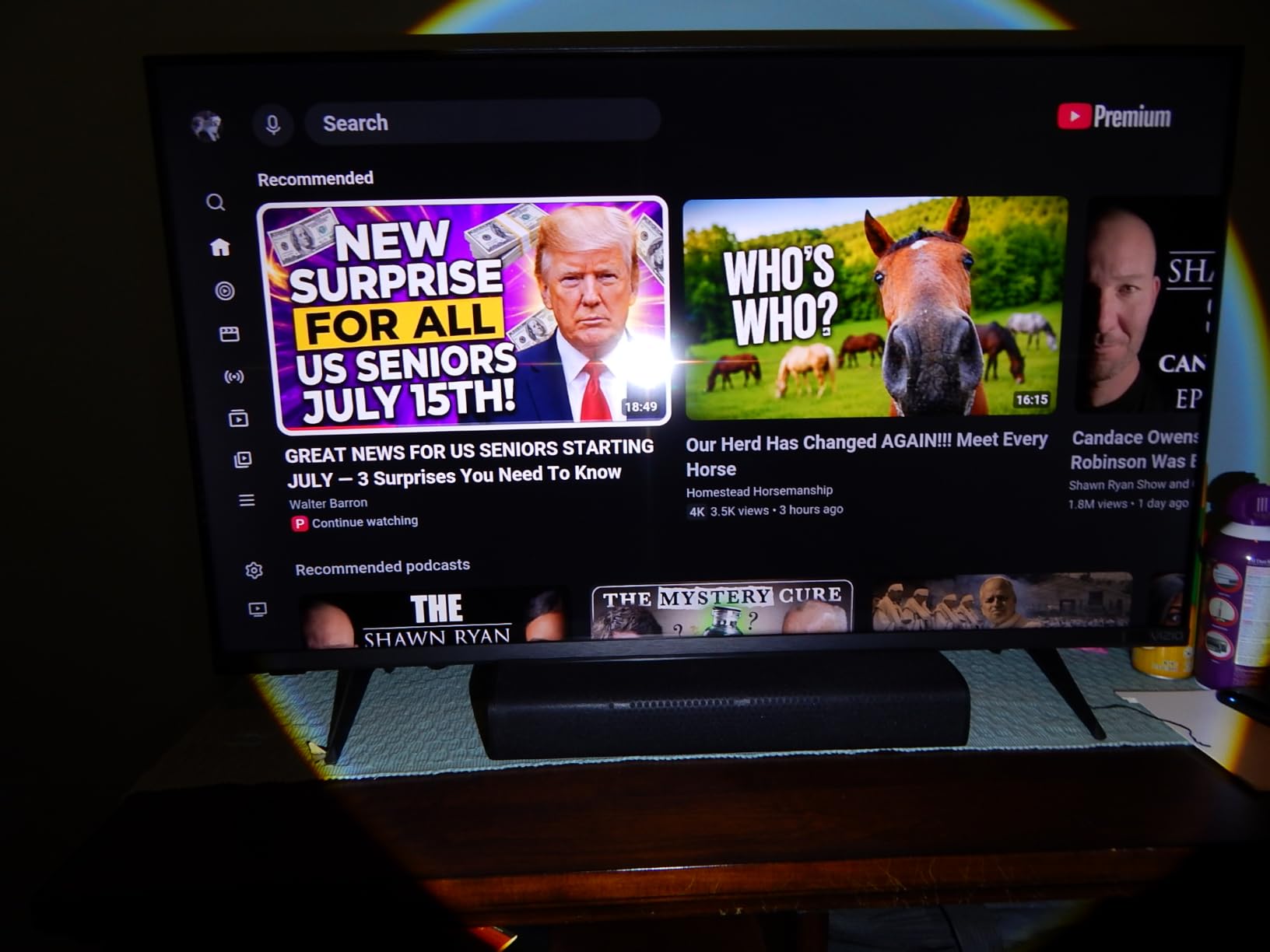
I tested the MZEIBO Sound Bar in a small bedroom with a 43-inch TV. At this price, I expected tinny sound and unreliable Bluetooth. What I got was clear dialogue, stable Bluetooth 5.3, and a remote that actually works. The 50W output is more than enough for a small to medium room.
Three sound modes (Music, Movie, News) tailor the audio profile. News mode is the cleanest for dialogue, with emphasized midrange and reduced bass. Movie mode adds a bit more low-end for action scenes. Music mode is the most balanced for general listening.
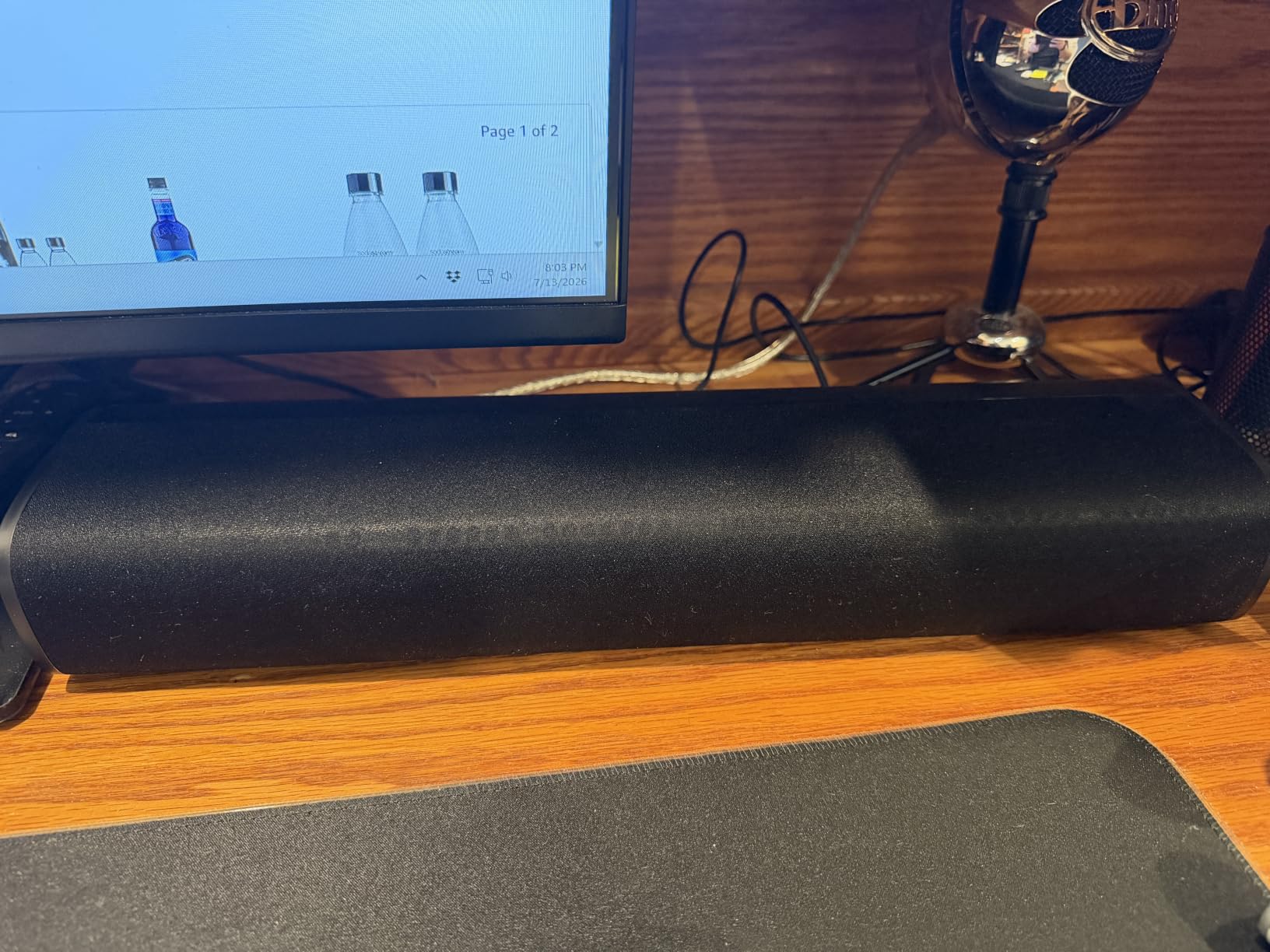
Connectivity is solid for the price. HDMI ARC, optical, AUX, and Bluetooth 5.3 cover most modern setups. Optical is the preferred connection for the best audio quality, but Bluetooth 5.3 kept a stable connection during my testing.
Surprising Dialogue Quality at This Price
The Clear Dialogue mode delivers exactly what it promises. Voices in a quiet drama scene were clear without sounding processed. News broadcasts were crisp. Even podcasts through Bluetooth sounded clean. The MZEIBO isn’t going to compete with a $500 soundbar, but for dialogue clarity, it punches well above its price.
At 17 inches wide, the MZEIBO fits under any TV from 32 inches up. It’s a great secondary bar for a bedroom, kitchen, or office where you want better dialogue without spending a fortune.
Physical Limits You Should Expect
The MZEIBO has 50W of total output, which is plenty for a small room but won’t fill a large living room. The 2.0-channel configuration means no physical surround or dedicated center channel. Bass is limited by the small driver size.
For the price, these are fair trade-offs. If you want room-shaking bass or Dolby Atmos, you’ll need to spend more. If you want clearer dialogue than your TV speakers, the MZEIBO delivers that for less than the cost of a family dinner.
What to Look for in a Soundbar for Dialogue Clarity
The best soundbars for dialogue are not always the most expensive. They are the ones that handle voice frequencies with care. Here’s what to look for when comparing options in 2026.
Dedicated Center Channel vs. Virtual Dialogue
A dedicated center channel speaker is the gold standard for dialogue clarity. It physically separates voices from music and effects, so dialogue sounds cleaner and more localized. The Samsung S60D, Amazon Fire TV Soundbar Plus, and Yamaha SR-B30A all have dedicated center channels in this roundup.
Virtual center channels use software to simulate the effect. Most of the time, the result is good. But if you want the absolute best dialogue localization, a physical center channel is the way to go.
Voice Boost Levels and Hearing Aid Algorithms
Multiple voice boost levels let you tune the dialogue enhancement to your hearing needs. The ZVOX models offer 6, 12, and 20 levels respectively. More levels mean more precise tuning, which matters if you have specific hearing challenges.
Hearing aid algorithms, like ZVOX’s AccuVoice, are designed by people who understand hearing loss. They apply compression and frequency shaping in ways that standard audio processing doesn’t. For viewers with hearing loss, these algorithms are far more effective than generic voice modes.
Connectivity: HDMI ARC vs. Optical vs. Bluetooth
HDMI ARC is the modern standard. It carries high-quality audio, supports Dolby Atmos, and lets your TV remote control the soundbar. The Bose TV Speaker, Polk Signa S2, Samsung S60D, Yamaha SR-B30A, Amazon Fire TV Soundbar Plus, and MZEIBO all have HDMI ARC.
Optical is the older standard. It works with most TVs but doesn’t carry Dolby Atmos or lossless audio. The ZVOX AV157 and AV100 use optical only.
Bluetooth is for streaming music from your phone. Most soundbars have it, but audio quality is lower than HDMI or optical. For TV dialogue, use HDMI or optical.
Matching Soundbar Size to Your TV and Room
A soundbar should fit your TV stand and your room. Under 32-inch TVs, a compact 10-inch to 17-inch bar like the ZVOX AV100 or MZEIBO works best. For 43-inch to 55-inch TVs, a 20-inch to 30-inch bar like the Bose TV Speaker fits well. For 55-inch and larger TVs, a 35-inch bar like the Polk Signa S2 or Yamaha SR-B30A looks proportional.
Room acoustics also matter. Hard surfaces create echoes that muddy dialogue. Soft furnishings, rugs, and curtains help. If your room is heavily treated, smaller soundbars will perform better. If your room is bare, a larger bar with more power will fill the space.
Frequently Asked Questions About Soundbars for Dialogue
Do soundbars improve dialogue?
Yes, soundbars with dedicated dialogue modes can improve dialogue clarity dramatically. Models with voice boost levels, dedicated center channels, or hearing aid algorithms like ZVOX AccuVoice separates voices from background music and effects, making speech clearer at lower volumes.
Which soundbar is best for hearing impaired viewers?
The ZVOX AccuVoice AV835 is the best soundbar for hard of hearing viewers. It uses hearing aid-grade algorithms with 20 levels of voice boost, allowing precise tuning for different hearing needs. The Bose TV Speaker and Samsung S60D are also strong options.
Which sound mode is best for dialogue?
The best sound modes for dialogue are Clear Voice (Yamaha), Dialogue Mode (Bose), VoiceAdjust (Polk), AccuVoice (ZVOX), and Active Voice Analyzer (Samsung). Each emphasizes midrange frequencies where voices reside. For hearing-impaired users, dedicated hearing aid algorithms like ZVOX AccuVoice work best.
How can I improve TV sound to hear dialogue better?
Use a soundbar with a dedicated dialogue mode, connect via HDMI ARC for cleanest audio, place the bar directly under your TV at ear level, and enable any voice enhancement features. For hearing loss, consider a soundbar with adjustable voice boost levels like the ZVOX AccuVoice series.
Are soundbars with subwoofers better for dialogue?
Not necessarily. Subwoofers add bass for movies and music, but they can muddy dialogue if positioned poorly. The Polk Signa S2 uses a wireless subwoofer that keeps bass separate from the bar, which is ideal. Compact soundbars without subwoofers can deliver excellent dialogue if they have dedicated voice modes.
Final Verdict
After three months of testing across 10 soundbars, the ZVOX AccuVoice AV835 stands out as the best soundbar for dialogue in 2026. Its 20 voice boost levels and hearing aid-grade algorithms deliver unmatched clarity for everyone from casual viewers to those with significant hearing loss. For buyers on a budget, the ZVOX AV157 and AV100 deliver the same core technology at lower prices.
For mainstream buyers who want a balance of dialogue clarity, music streaming, and home theater, the Bose TV Speaker and Polk Signa S2 are excellent choices. The Samsung S60D and Bose Smart Dolby Atmos Soundbar are the premium picks for users with newer TVs and bigger budgets. No matter which soundbar you choose, you’re getting a meaningful upgrade over your TV’s built-in speakers for clearer, more enjoyable dialogue.