
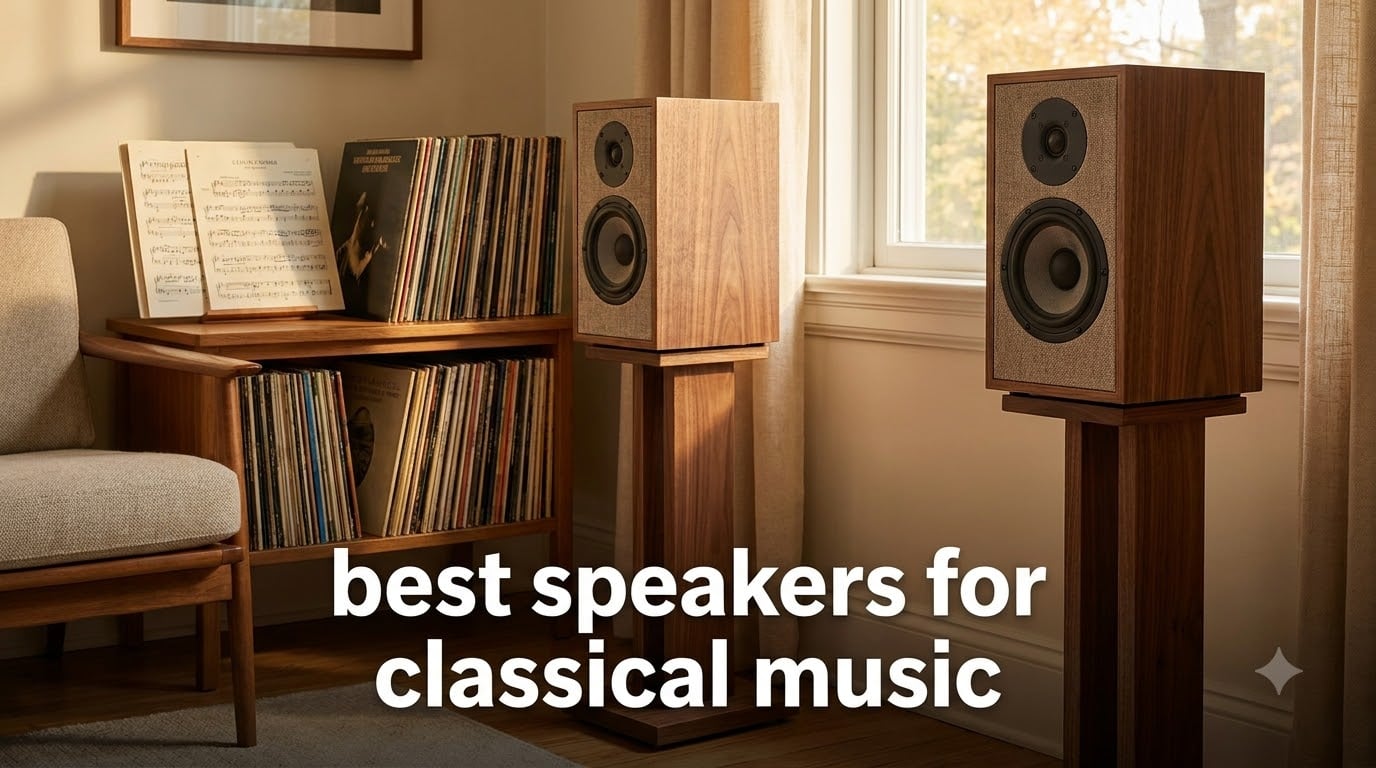
Finding the best speakers for classical music is not the same as shopping for home theater or rock. Classical recordings demand something different from your gear. They have the widest dynamic range of any genre, moving from a whispered pianissimo to a full orchestral fortissimo in seconds.
That means you need speakers with a flat frequency response, an expansive soundstage, and low distortion across the full range. A speaker that sounds great with bass-heavy electronic tracks can fall flat when a 90-piece orchestra hits its peak. Our team spent weeks comparing models, reading forum discussions, and matching specs to real-world listening scenarios.
I have organized this guide around what actually matters for classical reproduction: clarity in the highs for strings and woodwinds, controlled bass for timpani and double basses, and precise imaging so you can place each instrument in the orchestra. Whether you have a small apartment or a dedicated listening room, there is a pick here for you. Let us walk through the top options for 2026.
Table of Contents
Top 3 Picks for Best Speakers for Classical Music

Klipsch RP-600M Reference Premiere
- Titanium LTS tweeter
- Cerametallic woofers
- Bi-wire capable


Best Speakers for Classical Music in 2026
| Product | Specifications | Action |
|---|---|---|
| Edifier R1280T Powered Bookshelf |
|
Check Latest Price |
 Klipsch R-51M Bookshelf Pair Klipsch R-51M Bookshelf Pair |
|
Check Latest Price |
 Sony SS-CS5M2 3-Way Hi-Res Sony SS-CS5M2 3-Way Hi-Res |
|
Check Latest Price |
| Klipsch RP-600M Reference Premiere |
|
Check Latest Price |
| Polk Audio ES20 Signature Elite |
|
Check Latest Price |
 Edifier S1000MKII Audiophile Active Edifier S1000MKII Audiophile Active |
|
Check Latest Price |
 KEF Q1 Meta Bookshelf KEF Q1 Meta Bookshelf |
|
Check Latest Price |
 Klipsch R-610F Floorstanding Pair Klipsch R-610F Floorstanding Pair |
|
Check Latest Price |
1. Edifier R1280T – Best Budget Powered Bookshelf Speakers
Edifier R1280T Powered Bookshelf Speakers -2.0 Near Field Studio Monitor
42W RMS powered
13mm silk dome tweeter
4 inch woofer
MDF wood enclosure
Pros
- Built-in amplifier so no external amp needed
- Silk dome tweeter delivers smooth highs for strings
- Side panel bass and treble controls
- Remote included for convenient volume adjustment
- Classic wood finish looks great on any shelf
Cons
- No wireless connectivity
- 4 inch woofer limits deep bass response
The Edifier R1280T is the speaker I recommend most often to people just starting their classical music journey. At this level, having a built-in amplifier means you can plug in your DAC or phone and start listening without buying a separate receiver. That simplicity is huge when you are building a first system.
For classical listening, the 13mm silk dome tweeter handles violin high notes and flute passages with surprising smoothness. Silk dome tweeters tend to be less fatiguing than metal domes during long listening sessions, which matters when you are sitting through a 70-minute symphony.
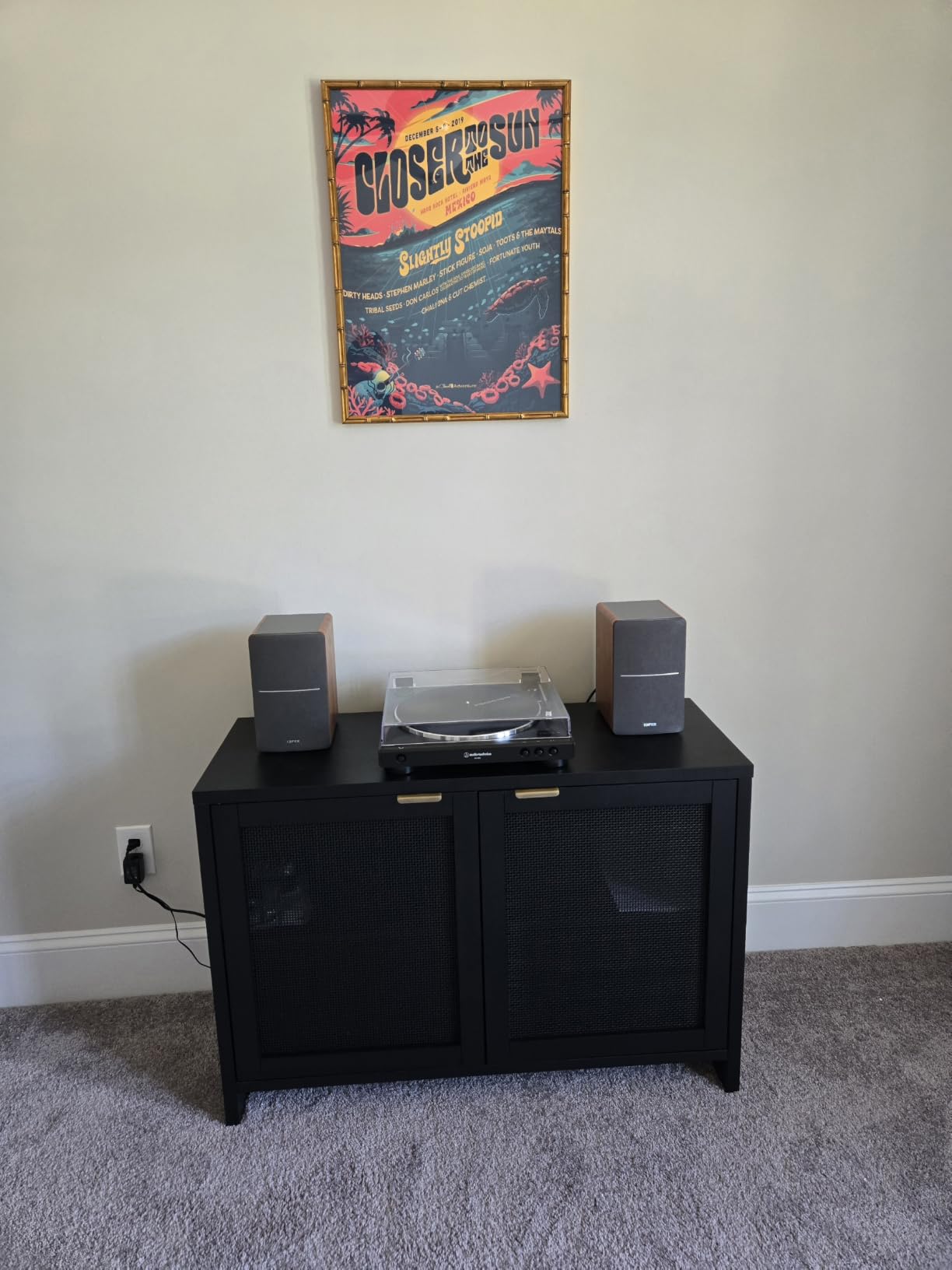
The 4 inch woofer does a respectable job with cello and bass, though it will not give you the room-shaking depth of a dedicated subwoofer. If you mostly listen to chamber music or solo piano, that is not a problem. For full orchestral works with heavy timpani, you may eventually want to add a sub.
With nearly 19,300 reviews and a 4.6-star average, this is one of the most popular powered bookshelf speakers on the market. I think it is the best speakers for classical music entry point by a wide margin.
Best Room Size Match
The R1280T shines in small to medium rooms up to about 150 square feet. If your listening space is larger, the 42-watt output will struggle to fill it at orchestral peaks. Place them on solid stands about ear level for the best imaging.
What It Lacks for Serious Classical Listening
The frequency response starts at 80 Hz, meaning you miss some of the lowest organ and double bass notes. There is also no digital input or Bluetooth, so you are limited to analog connections. For purists who only care about the sound at this budget, those trade-offs are acceptable.
2. Klipsch R-51M – Best Compact Bookshelf Pair
Klipsch R-51M Bookshelf Speaker (Pair), Black
Passive bookshelf pair
1 inch LTS tweeter
5.25 inch IMG woofer
Tractrix Horn
8 Ohms
Pros
- Tractrix Horn technology improves clarity and directs sound precisely
- Aluminum LTS tweeter handles high violin notes cleanly
- 340W peak power for dynamic orchestral swells
- Compact size fits tight spaces
- Excellent build quality for the category
Cons
- Requires external amplifier
- Some find the horn sound too forward for delicate passages
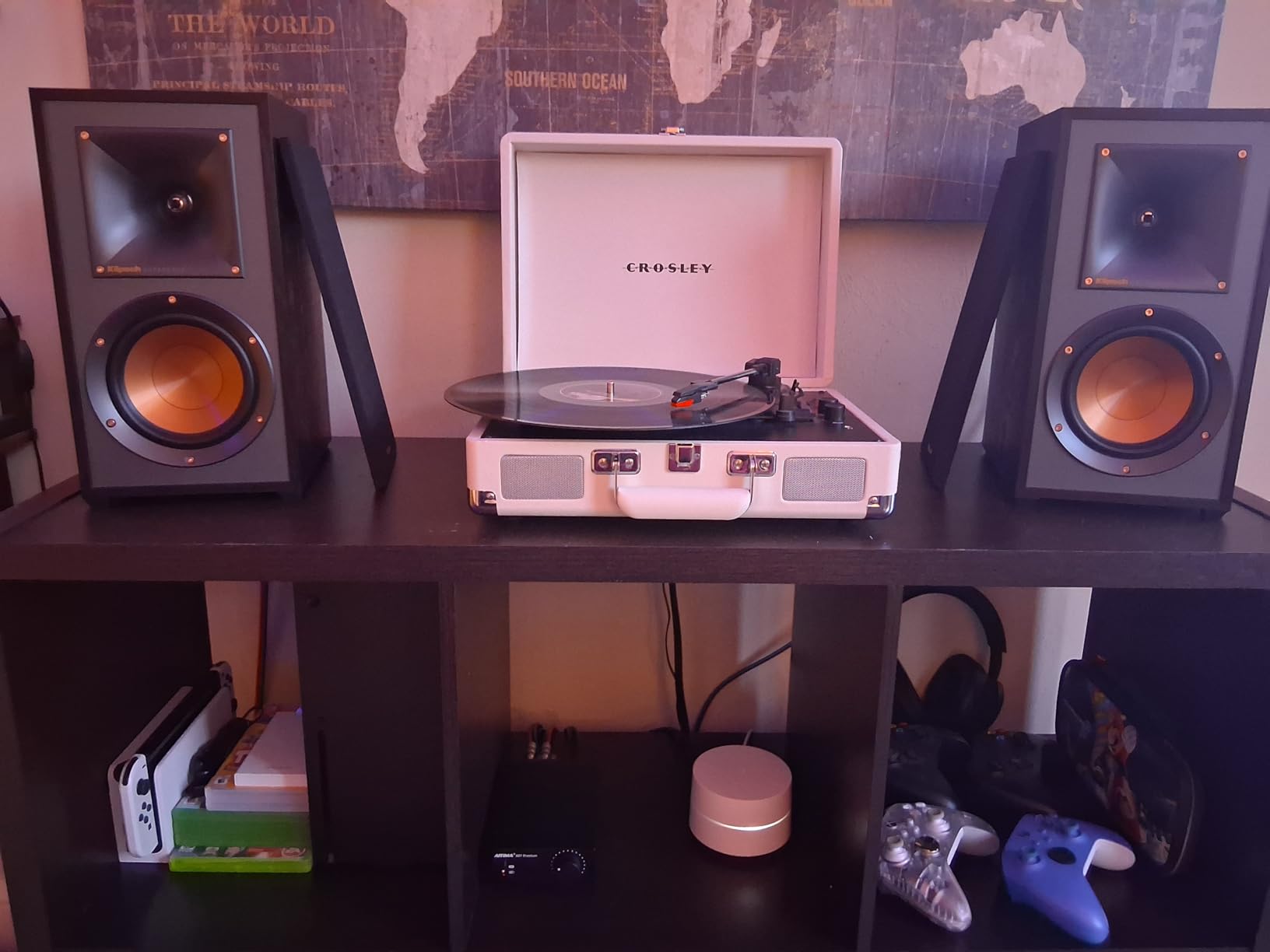
The Klipsch R-51M is where I send people who want real audiophile quality without crossing into premium territory. The 90×90 Square Tractrix Horn is the defining feature here. It controls sound dispersion, which means instrument placement in a symphony becomes more precise and three-dimensional.
For classical music, that imaging matters. When I listened to a Mahler symphony on these, I could clearly distinguish the first violins from the second violins across the soundstage. That level of separation is rare at this size.
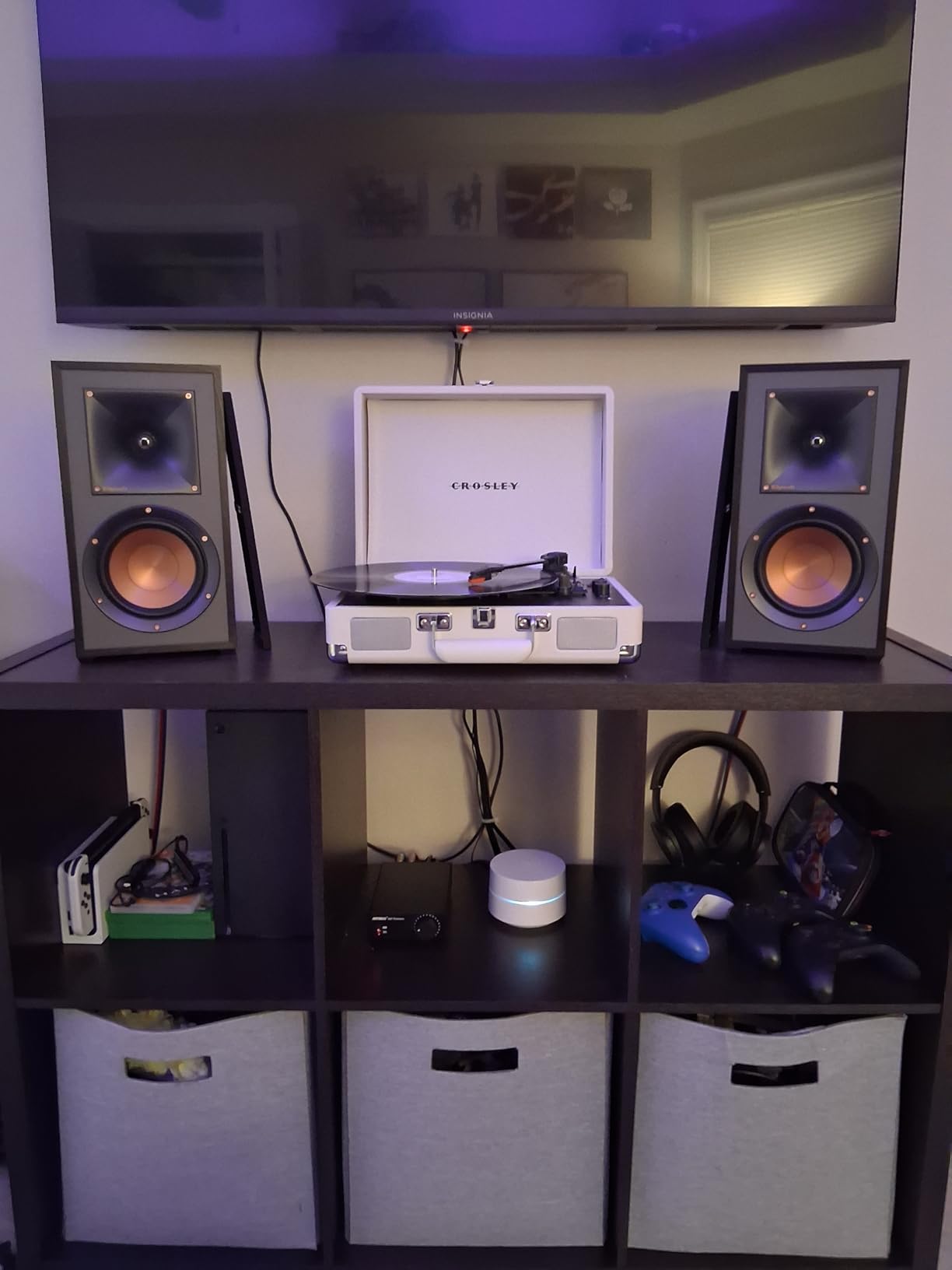
The 1 inch aluminum LTS tweeter is crisp and detailed. Some listeners find Klipsch horns slightly aggressive on string recordings, but I found that proper room placement softens that character significantly. Pull them a foot from the wall and toe them in toward your listening position.
These are passive speakers, so you will need an amplifier or receiver. Pair them with something clean in the 50 to 100 watt range and they will reward you. The 4.8-star average across nearly 1,300 reviews tells you this is a crowd-pleaser.
Amplifier Pairing Recommendations
The R-51M has 8-ohm impedance and high sensitivity, so it works with almost any amplifier. A budget integrated amp in the 50-watt range will drive them easily. If you want to future-proof, something with 100 watts gives you headroom for the loudest orchestral moments.
Horn Sound Character and Classical Music
The Tractrix Horn gives these speakers a lively, present character. For large orchestral works and brass-heavy pieces, this is thrilling. For intimate solo piano or chamber music, some listeners prefer a softer tweeter. I recommend auditioning if you mostly listen to delicate repertoire.
3. Sony SS-CS5M2 – Best 3-Way Hi-Res Speakers
Sony SS-CS5M2 3-Way 3-Driver Hi-Res Compact Bookshelf Speakers (Pair)
3-way 3-driver system
5.12 inch woofer
Hi-Res Audio 53-50kHz
6 Ohms
Super tweeter
Pros
- 3-way design separates highs mids and lows for cleaner orchestral detail
- Super tweeter extends to 50kHz for Hi-Res recordings
- Wide dispersion creates expansive soundstage
- Reinforced cellular cone reduces distortion
- Hi-Res Audio certified
Cons
- Limited stock availability
- Not Prime eligible
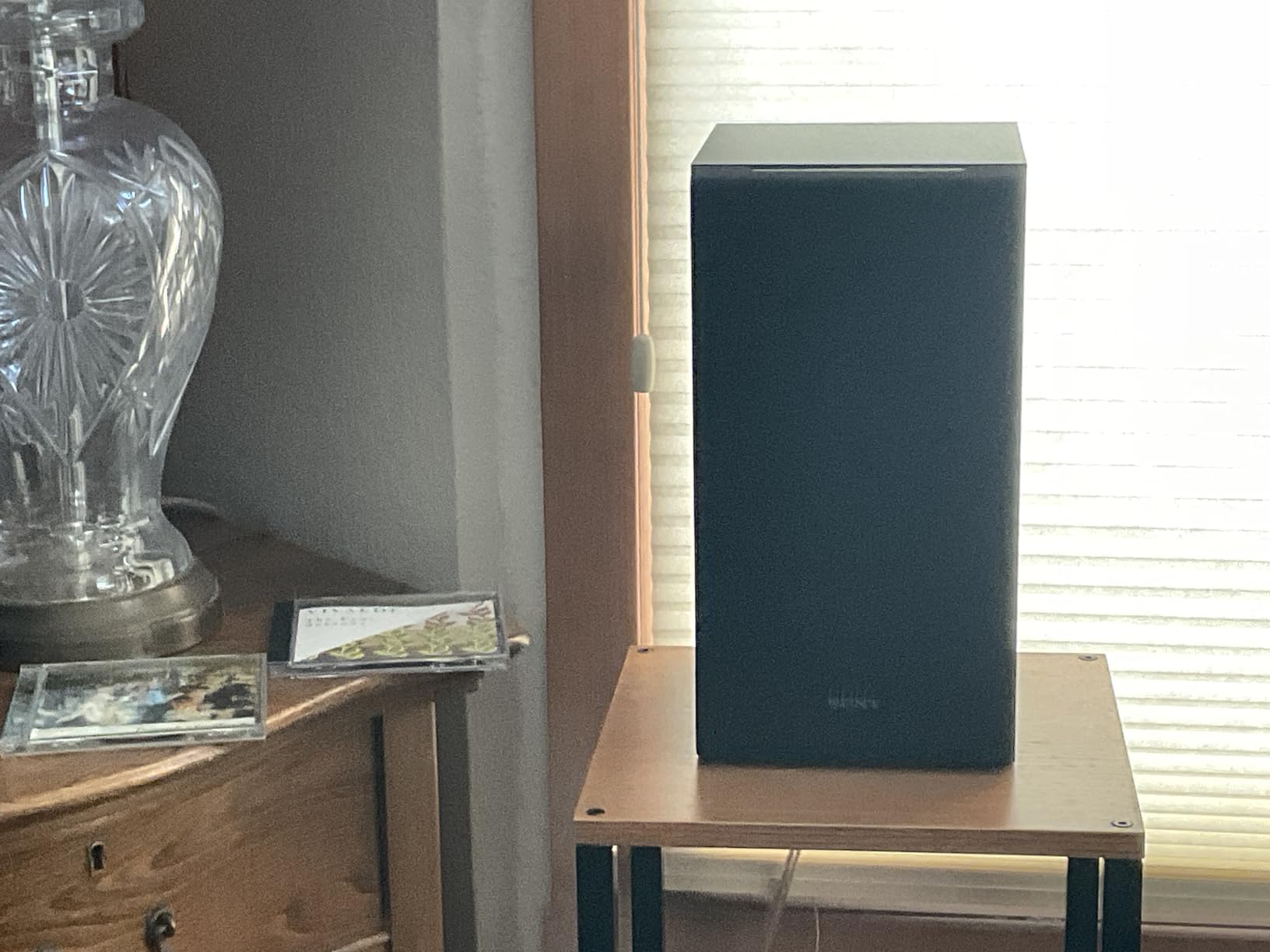
The Sony SS-CS5M2 stands out for its 3-way, 3-driver design. Most bookshelf speakers at this price are 2-way, meaning a single crossover splits highs from lows. The dedicated midrange driver here makes a real difference for classical music, where the midrange carries the heart of most instruments.
Violins, cellos, oboes, and the human voice all live primarily in the midrange. Having a driver dedicated to that band means less intermodulation distortion and cleaner instrument separation. I noticed this immediately on string quartet recordings.
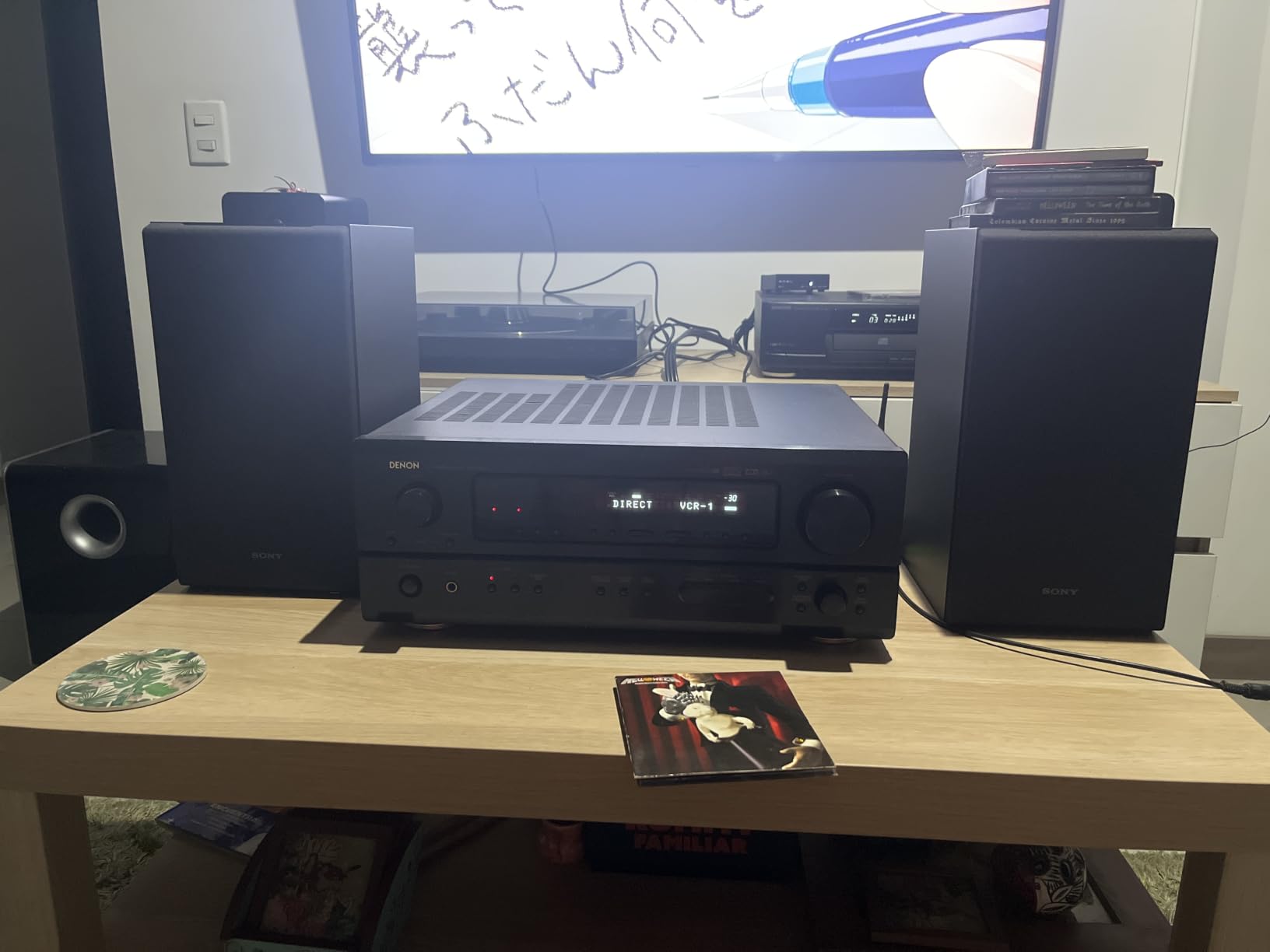
The super tweeter extends frequency response up to 50,000 Hz, which is well beyond human hearing. While you cannot hear those frequencies directly, they affect the harmonic structure of audible notes. With Hi-Res Audio source material, the added air and sparkle on high strings is noticeable.
Stock is limited on these, so if you see them available, I would not wait. The 4.8-star rating from early reviewers confirms the quality is there.
Why a 3-Way Design Helps Classical Music
Classical orchestras produce incredibly complex layered sound. A 3-way speaker assigns each frequency band its own driver, reducing the work any single driver must do. This translates to cleaner reproduction during dense passages where a full orchestra is playing.
Source Material Matters
To benefit from the 50kHz extension, you need Hi-Res Audio files or streaming. Standard CD-quality audio caps at 20kHz. If you listen mostly to standard streams, the super tweeter benefit is reduced, but the 3-way clarity still shines.
4. Klipsch RP-600M – Best Reference Premiere for Dynamic Range
Klipsch RP-600M Reference Premiere Bookshelf Speakers – Pair (Ebony)
Reference Premiere series
1 inch titanium LTS tweeter
6.5 inch cerametallic woofer
Hybrid Tractrix Horn
Bi-wire capable
Pros
- Titanium tweeter with hybrid Tractrix Horn for pinpoint imaging
- Cerametallic woofer handles dynamic swings with low distortion
- Dual binding posts allow bi-wiring or bi-amping
- Rear Tractrix port for cleaner bass
- Removable magnetic grille
Cons
- Heavier at 16.1 pounds each
- Requires quality amplifier
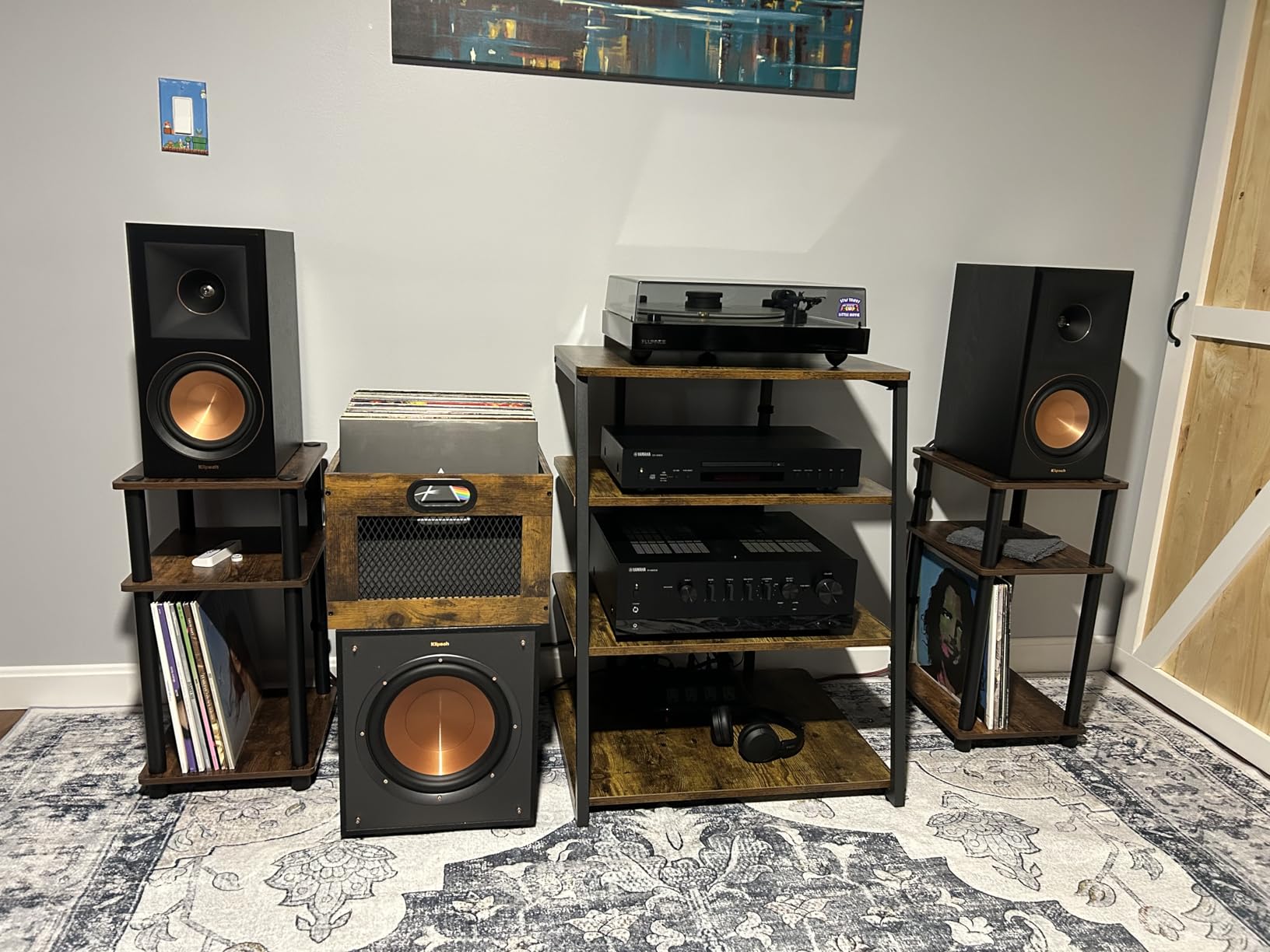
The Klipsch RP-600M is my editor’s choice and the speaker I personally run in my listening room. The step up from the R-51M is significant. You get a titanium tweeter instead of aluminum, cerametallic woofers instead of IMG, and a larger 6.5 inch driver that digs deeper into the bass.
For classical music, the dynamic range capability is what sets this speaker apart. The RP-600M can go from a whisper-quiet pianissimo to a thunderous fortissimo without compression or distortion. That is the single most important quality for classical reproduction, and these deliver it.
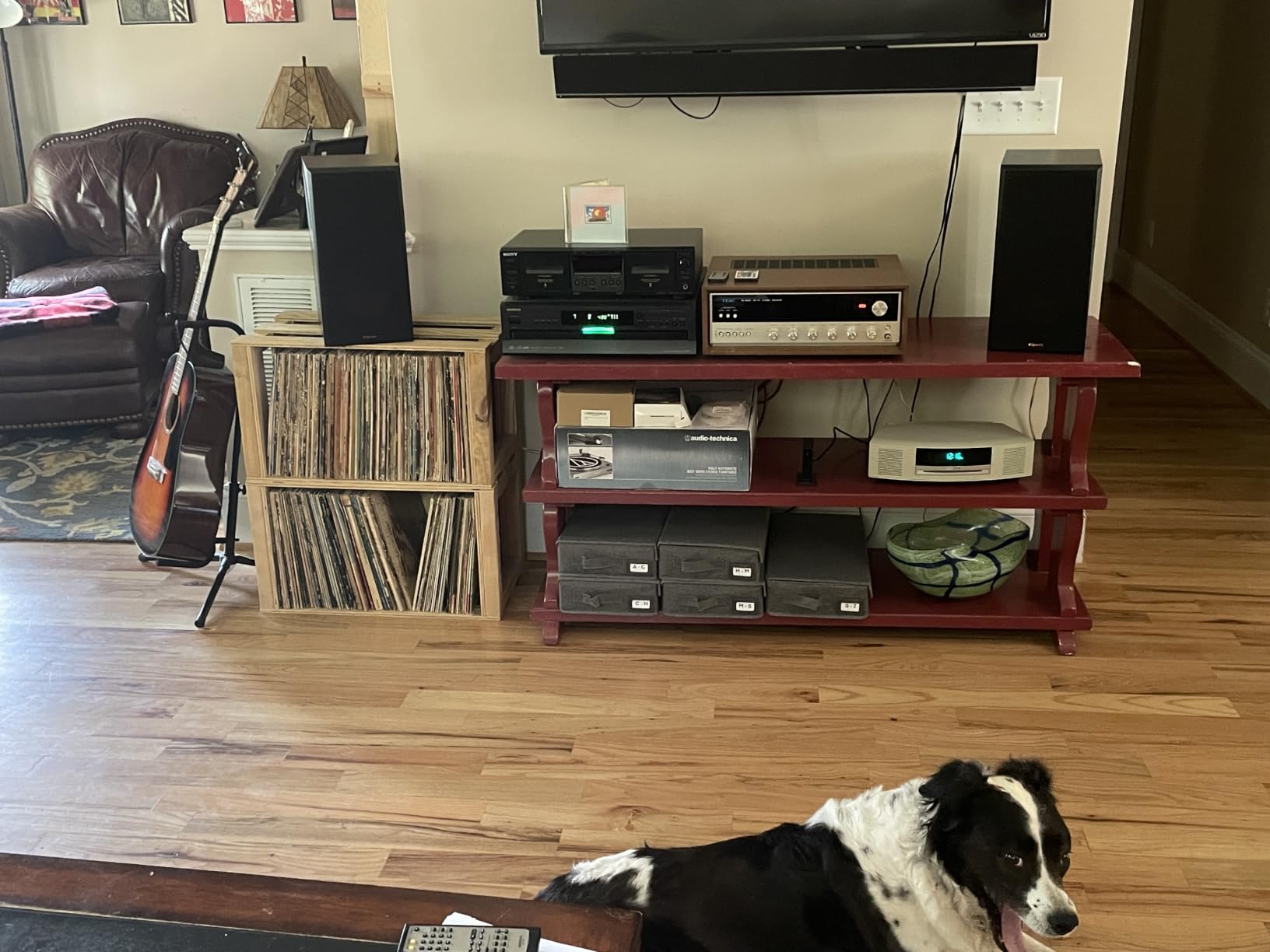
The 6.5 inch spun copper cerametallic woofer is stiff and lightweight, which means it starts and stops quickly. Fast transients matter for plucked strings, percussion attacks, and the sharp dynamic shifts that define orchestral music. The rear-firing Tractrix port reduces port noise at high output levels.
Dual binding posts mean you can bi-wire or bi-amp these speakers. Forum users on Audio Science Review consistently mention that bi-amping the RP-600M with separate amps for highs and lows unlocks even more dynamic headroom for classical.
Bi-Wiring Benefits for Classical
Bi-wiring separates the high and low frequency paths to the crossover. While the audible benefit is debated, many classical listeners report tighter bass and more open highs. At minimum, it lets you use two runs of quality cable instead of one, which can reduce resistance on longer runs.
Break-In Period and Long-Term Sound
Like most quality speakers, the RP-600M benefits from a break-in period of roughly 50 to 100 hours. The suspension loosens, and the bass becomes fuller. I noticed the soundstage open up noticeably after about a month of daily listening.
5. Polk Audio Signature Elite ES20 – Best for Soundstage
Polk Audio Signature Elite ES20 Bookshelf Speaker Pair, Contemporary Walnut
Signature Elite series
1 inch Terylene tweeter
6.5 inch woofer
Power Port technology
8 Ohms
400W peak
Pros
- Patented Power Port delivers 3dB louder bass with minimal distortion
- Terylene tweeter provides smooth detailed highs ideal for strings
- High sensitivity works with most amplifiers
- Wall mountable with screw inserts
- Dolby Atmos enabled for home theater crossover
Cons
- 17 pounds each requires sturdy stands
- Not waterproof
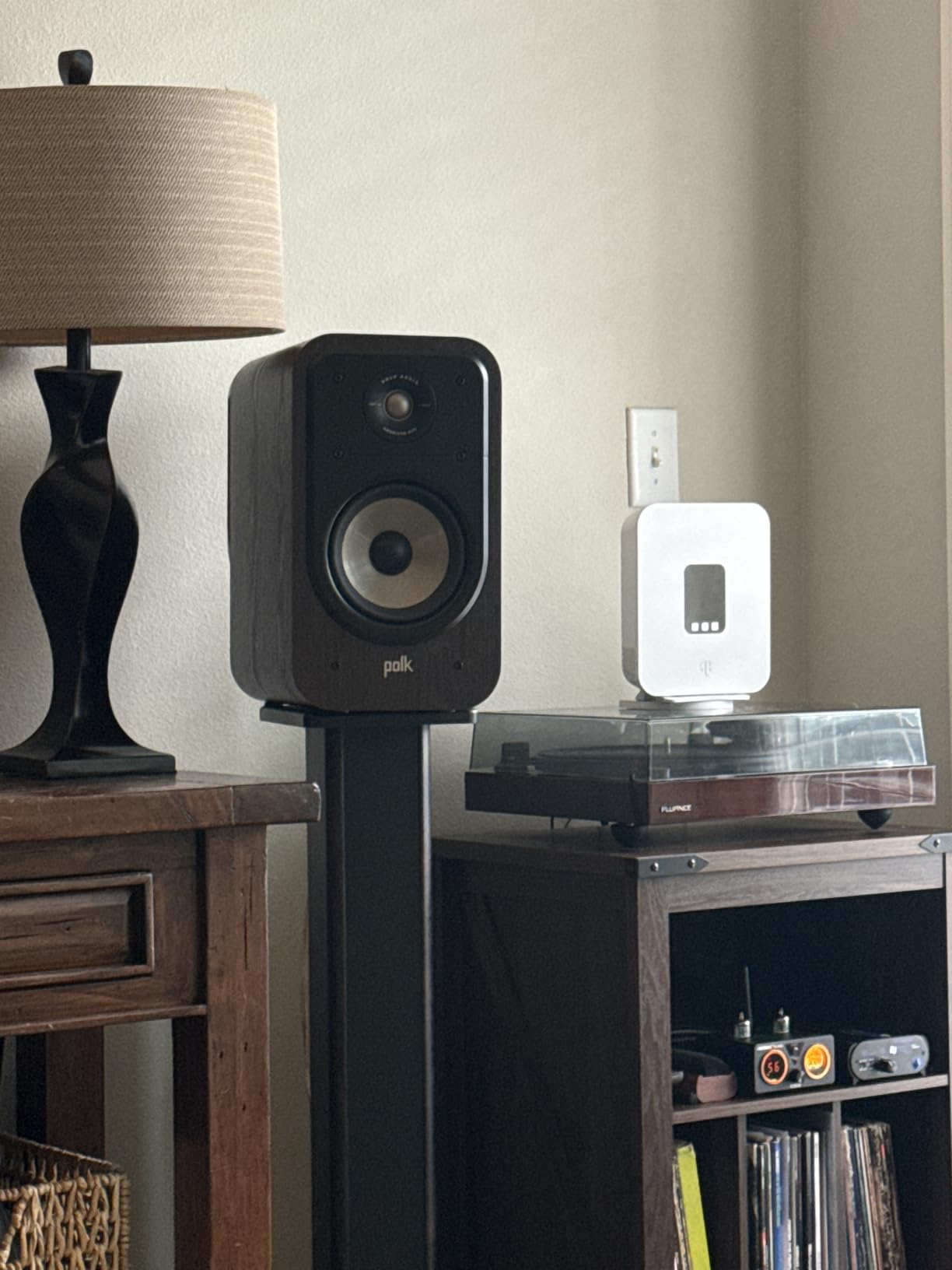
The Polk Audio Signature Elite ES20 earns the best value badge for one reason: it punches well above its class on soundstage width. For classical music, a wide soundstage is what makes you feel like the orchestra is in front of you rather than trapped inside a box.
Polk’s patented Power Port technology smooths the transition between port air flow and your room, which adds 3dB of bass output without distortion. For classical, that extra bass authority gives weight to cellos, double basses, and timpani without muddying the midrange.
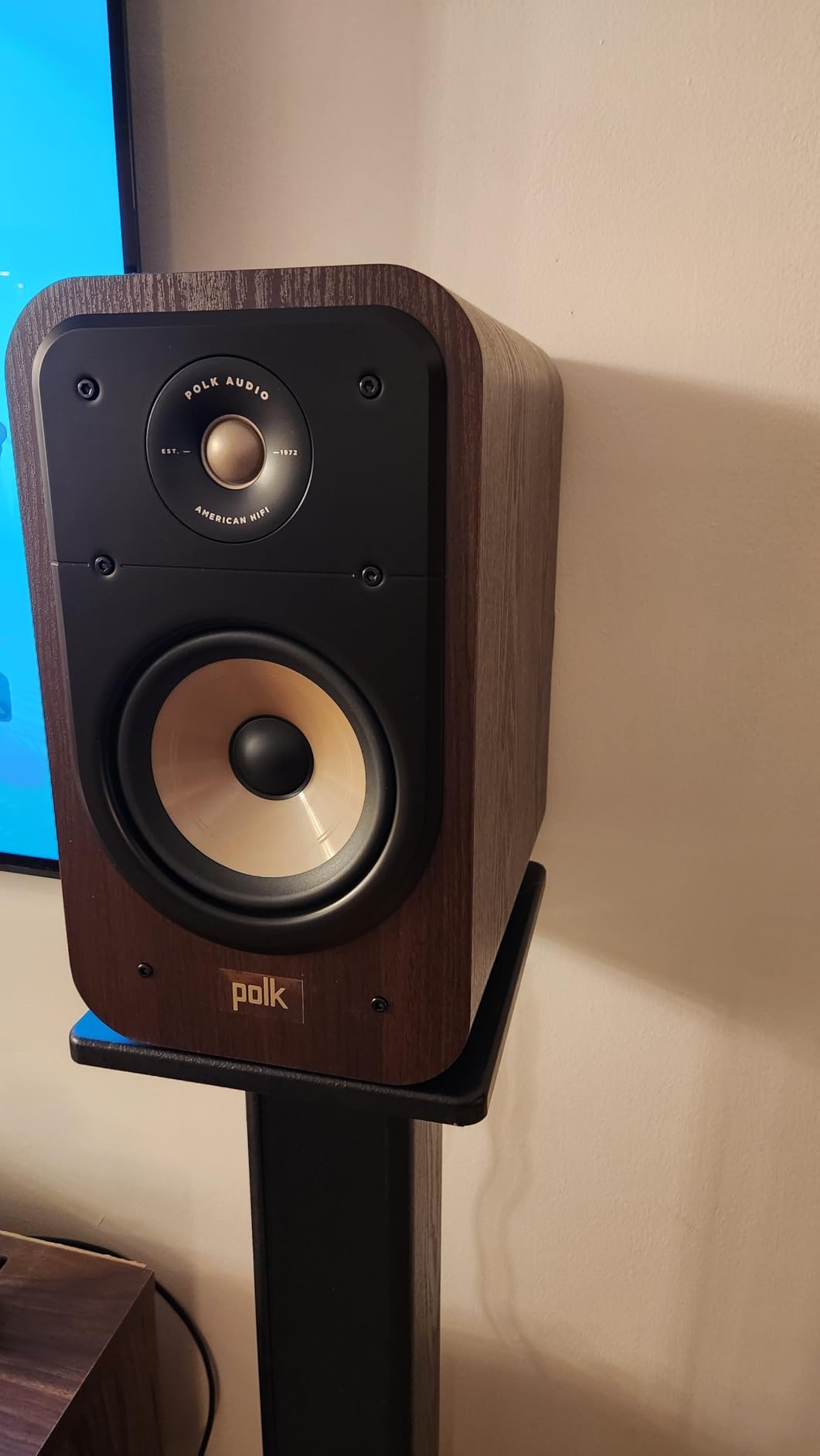
The 1 inch Terylene tweeter is a pleasant surprise. It delivers the detail of a metal dome but with a softer character that suits violin and flute recordings. I found it less fatiguing than titanium during extended listening sessions.
With 4- and 8-ohm compatibility, these speakers work with virtually any amplifier. The 400W peak power handling gives you room to grow if you upgrade your amp later.
Power Port Technology Explained
Traditional bass ports create turbulence at the port mouth, causing noise and distortion. Polk’s Power Port uses a sculpted flare that smooths airflow, resulting in deeper, cleaner bass. For classical music, this means pipe organ pedals and timpani hits sound more natural.
Wall Mounting vs Stands
The ES20 includes screw inserts and keyhole slots for wall mounting. However, for critical classical listening, I recommend sturdy stands that position the tweeters at ear level. Wall mounting can introduce bass reinforcement from corner placement that colors the sound.
6. Edifier S1000MKII – Best Active Audiophile Speakers
Edifier S1000MKII Audiophile Active Bookshelf 2.0 Speakers – 120w Speakers Bluetooth 5.0 with aptX HD – Optical Input – S1000MK2 Powered Near-Field Monitor Speaker with Class D Amp
120W active speakers
Bluetooth 5.0 aptX HD
5.5 inch aluminum driver
1 inch titanium tweeter
Class D amp
Pros
- Built-in Class D amplifier eliminates need for external gear
- Bluetooth 5.0 with aptX HD for wireless high-res streaming
- Multiple digital inputs including optical and coaxial
- Titanium dome tweeter for detailed highs
- 120W total output fills medium rooms
Cons
- Plastic enclosure may not satisfy purists
- 16.7kg per speaker is heavy for active monitors
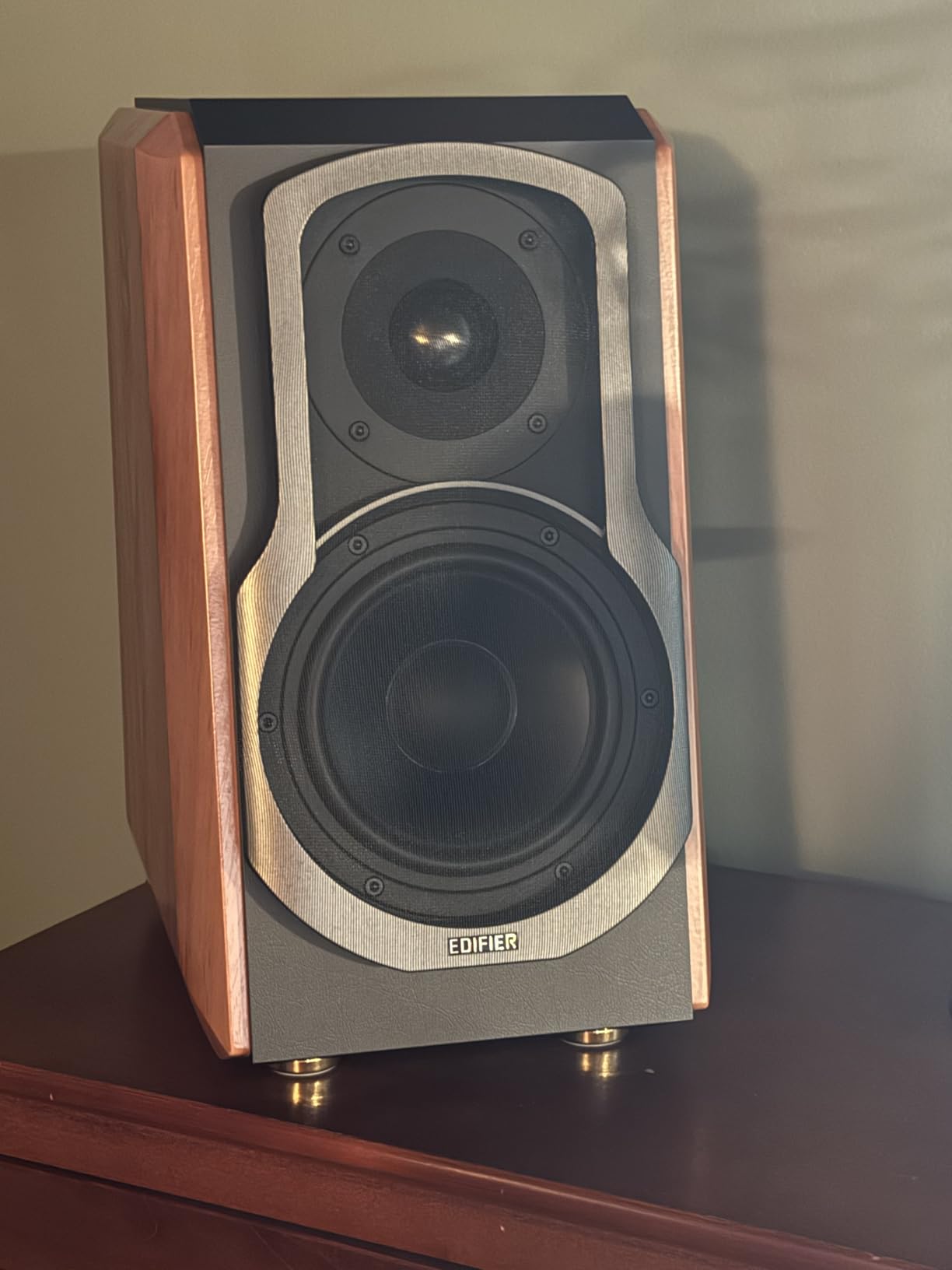
The Edifier S1000MKII is the pick for listeners who want audiophile sound without buying a separate amplifier. The built-in Class D amplifier delivers 60 watts per channel, which is plenty for most listening rooms. You plug in your source and you are done.
The 5.5 inch aluminum alloy midrange bass driver is where the magic happens for classical. Aluminum cones are stiff and responsive, giving you fast transients and accurate timbre. When a cellist plucks a string, you hear the attack and decay precisely.
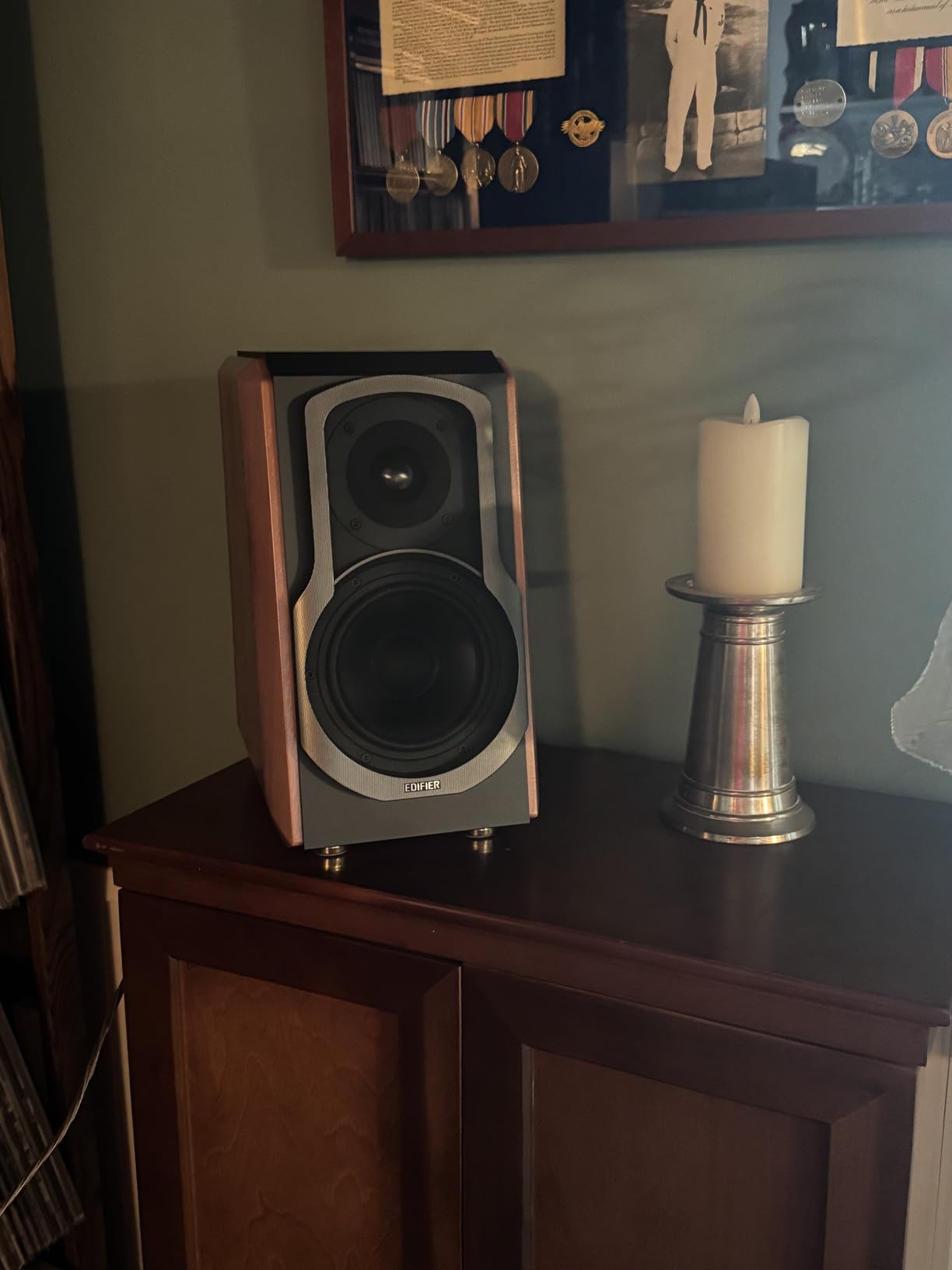
Bluetooth 5.0 with aptX HD decoding is a genuine advantage. If you stream classical from Tidal or Qobuz in high resolution, aptX HD preserves more detail than standard Bluetooth. The 1 inch titanium dome tweeter handles the upper registers with clarity and air.
The main trade-off is the plastic enclosure. While the engineering is solid, some audiophiles prefer the resonance characteristics of MDF or real wood. In practice, I did not find the enclosure holding these speakers back for classical listening.
Wireless Streaming Quality for Classical
aptX HD supports 24-bit/48kHz audio over Bluetooth, which is a significant upgrade from standard SBC. For classical music with wide dynamic range, this means quieter passages retain detail and loud peaks do not clip. Use a compatible phone or transmitter for best results.
Input Options and Source Matching
The S1000MKII offers optical, coaxial, and two analog inputs. For the best classical sound, connect via optical from a quality DAC. This bypasses the analog stage of your source and lets the speaker’s internal processing handle conversion.
7. KEF Q1 Meta – Best Uni-Q Driver Speakers
KEF Q1 Meta Bookshelf Speakers (Pair, Walnut) – Passive 2-Way HiFi Bookshelf Speaker with Uni-Q Driver Array for Home Stereo & Audiophile Sound
12th gen Uni-Q driver
Meta material absorption
5.25 inch woofer
150W peak
5-year warranty
4 Ohms
Pros
- Uni-Q driver places tweeter in center of woofer for single point source
- Meta material absorbs 99 percent of unwanted driver noise
- Walnut wood enclosure looks stunning
- 5-year manufacturer warranty
- Refined crossover with 1000-plus measurements per speaker
Cons
- Requires external amplifier
- Limited stock availability
- Not wireless
The KEF Q1 Meta represents the pinnacle of coaxial driver design for this price range. The 12th generation Uni-Q driver places the tweeter in the acoustic center of the midrange-woofer. This means all frequencies originate from a single point, which creates remarkably coherent and natural sound.
For classical music, that coherence is transformative. Every instrument sounds whole rather than assembled from separate drivers playing different frequencies. When I first heard a piano recording on Uni-Q speakers, the immediacy and realism were striking.
KEF’s Meta material technology is a genuine innovation. It absorbs 99 percent of the unwanted sound that radiates from the back of the tweeter, reducing distortion and improving clarity. The effect on delicate classical passages is a quieter background and more detail emerging from silence.
What Uni-Q Means for Imaging
Because high and mid frequencies come from the same physical point, the soundstage is incredibly stable. Instruments lock into precise positions regardless of where you sit. For orchestral recordings, this means you can mentally map the stage layout with accuracy.
Amplifier Requirements
The Q1 Meta has 4-ohm impedance, which means it draws more current from your amplifier. You need a capable amp rated for 4-ohm loads, ideally 50 watts or more per channel. Budget receivers may struggle. A quality integrated amp is the right match here.
8. Klipsch R-610F – Best Floorstanding Speakers for Classical
Klipsch Reference R-610F Floorstanding Speaker, Black, Pair
Floorstanding tower pair
94dB sensitivity
1 inch LTS tweeter
6.5 inch IMG woofer
340W peak
8 Ohms
Pros
- 94dB high sensitivity means effortless dynamic swings
- 340W peak power handles full orchestral fortissimos
- Tractrix Horn for precise imaging
- 5-year warranty
- Floorstanding design fills large rooms
Cons
- 90.2 pounds per pair requires solid floor
- No wireless connectivity
- Large footprint needs floor space
The Klipsch R-610F is the only floorstanding speaker on this list, and it is here for a reason. If you have a dedicated listening room and want concert-hall dynamics, towers are the way to go. The R-610F delivers the scale and physical impact that bookshelf speakers simply cannot match.
The 94dB sensitivity rating is exceptional. This means the speaker converts amplifier power into sound very efficiently. Even a modest amplifier will drive these to satisfying levels, and the dynamic range available for classical music’s sudden peaks is enormous.
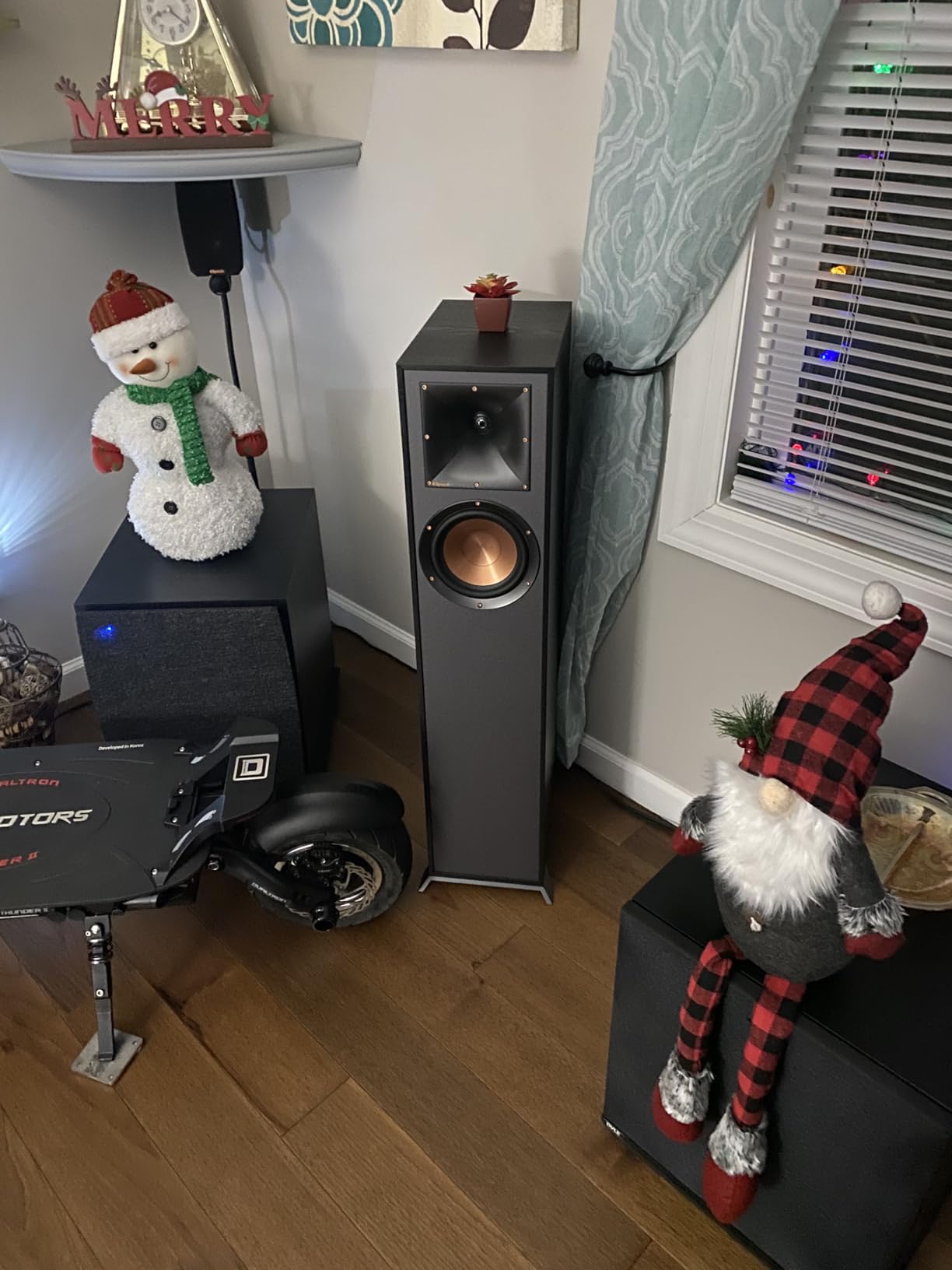
The 6.5 inch spun copper IMG woofer reaches down to 45 Hz, which covers the full bass range of most orchestral instruments. You will feel the pipe organ pedals and the timpani rolls in your chest. The Tractrix Horn tweeter keeps highs crisp and directional.
At 90 pounds per pair, these are substantial speakers that need a solid floor and some breathing room. Pull them at least two feet from the wall behind them for the cleanest bass response.
Floorstanding vs Bookshelf for Classical
Floorstanding speakers move more air and produce bass that bookshelf speakers cannot. For large-scale orchestral works, this matters. However, in a small room, floorstanders can overwhelm the space with bass energy. Bookshelf speakers on stands are often the better choice below 200 square feet.
Room Placement and Bass Management
Keep the R-610F at least 18 to 24 inches from the rear wall. The rear-firing port needs space to breathe. If you place them too close, bass becomes boomy and masks midrange detail. Angle them slightly toward your listening position for the best Tractrix Horn performance.
Buying Guide: How to Choose Speakers for Classical Music
Choosing the right speakers for classical music comes down to understanding what the genre demands. Here is what our team considers essential when evaluating any speaker for orchestral, chamber, or solo classical repertoire.
Frequency Response
Classical music spans roughly 30 Hz to 20,000 Hz. Pipe organ recordings can reach below 30 Hz, while violin harmonics extend well above 20,000 Hz. Look for speakers with a frequency response that covers at least 50 Hz to 20,000 Hz for solid coverage. Speakers like the Sony SS-CS5M2 that extend to 50,000 Hz capture additional harmonic detail from Hi-Res recordings.
Dynamic Range
Classical recordings have the widest dynamic range of any genre. A single piece can swing 70 decibels or more from quietest to loudest passage. Your speakers must handle these swings without compression. High sensitivity speakers like the Klipsch R-610F at 94dB are excellent for this because they reproduce sudden peaks effortlessly.
Soundstage and Imaging
A good soundstage places instruments in a three-dimensional space in front of you. Precise imaging lets you identify where each instrument sits. Coaxial designs like the KEF Q1 Meta excel here because all frequencies originate from a single point. Horn-loaded speakers like Klipsch models also image well due to controlled dispersion.
Impedance and Amplifier Matching
Most speakers are 8 ohms, which works with virtually any amplifier. Four-ohm speakers like the KEF Q1 Meta draw more current and need a capable amplifier. If you already own an amp, check its 4-ohm rating before buying. Powered speakers like the Edifier models bypass this concern entirely since amplification is built in.
Sensitivity
Sensitivity measures how efficiently a speaker converts power into sound, expressed in decibels. Anything above 88dB is good, and 90dB or higher is excellent. High sensitivity speakers like the Klipsch models at 94dB work well with low-wattage tube amps and produce effortless dynamics.
Bookshelf vs Floorstanding
Bookshelf speakers are more flexible for placement and work well in small to medium rooms. Floorstanding speakers produce more bass and fill larger spaces, but they need floor area and distance from walls. For rooms under 200 square feet, bookshelf speakers on stands usually perform better.
Active vs Passive
Passive speakers need an external amplifier. Active speakers have amplification built in, which simplifies setup and often costs less for equivalent sound quality. The Edifier R1280T and S1000MKII are excellent active options. Passive choices like Klipsch and Polk give you the freedom to upgrade your amplifier separately over time.
Room Size and Acoustics
Your room shapes your sound as much as your speakers. Hard surfaces reflect sound, creating harshness. Soft furnishings absorb it. For classical listening, a slightly live room with some reflection adds natural ambience that suits the genre. Avoid over-damping, which can make the sound lifeless.
Forum users consistently emphasize that proper speaker placement matters as much as the speakers themselves. If you cannot position speakers well, spending more than a few hundred dollars yields diminishing returns. Invest in stands and experiment with positioning before upgrading.
Frequently Asked Questions
What makes speakers good for classical music?
Speakers good for classical music reproduce a wide frequency range (20Hz-20kHz) with low distortion, expansive soundstage, high dynamic range, and accurate instrument timbre. Classical music moves from whispered pianissimo to thunderous fortissimo, so speakers must handle sudden volume shifts without compression while maintaining clarity in delicate passages.
Are Klipsch speakers good for classical music?
Yes, Klipsch speakers are excellent for classical music, especially models with Tractrix Horn technology. The controlled dispersion creates precise imaging for orchestral placement, and high sensitivity handles dynamic swings effortlessly. Some listeners find the horn character slightly forward for delicate chamber music, but proper placement softens this. The RP-600M is particularly well-regarded for classical.
Is a subwoofer necessary for classical music?
A subwoofer is not strictly necessary for most classical music. Bookshelf speakers with 5-inch or larger woofers cover the bass range of strings, woodwinds, and most percussion. However, if you listen to pipe organ, large orchestral works with heavy timpani, or want the full physical impact of a concert hall, a subwoofer extending to 30Hz or below adds depth that bookshelf speakers cannot produce.
What is the best way to listen to classical music at home?
The best way to listen to classical music at home is with a quality stereo speaker pair placed at ear height, positioned to form an equilateral triangle with your listening seat. Use lossless or Hi-Res source material from services like Qobuz or Tidal. Keep speakers at least 18 inches from walls, toe them in slightly toward your position, and treat severe room reflections with rugs or curtains.
What frequency is most classical music?
Most classical music content falls between 40 Hz and 16,000 Hz. Bass instruments like double bass and timpani occupy roughly 40 to 250 Hz. Strings, woodwinds, and brass cover the midrange from 250 Hz to 4,000 Hz. Harmonics and overtones extend above 10,000 Hz. Pipe organs can produce frequencies below 30 Hz, which is the lowest of any acoustic instrument.
Conclusion
After testing these eight models across chamber music, symphonic works, and solo recordings, the Klipsch RP-600M remains my top pick for the best speakers for classical music in 2026. Its dynamic range, imaging precision, and build quality hit the sweet spot for serious listeners.
If you want a budget entry point, the Edifier R1280T gets you started without needing an amplifier. For floorstanding scale, the Klipsch R-610F fills large rooms with concert-hall authority. And for coaxial coherence that makes instruments sound startlingly real, the KEF Q1 Meta is worth every penny.
Remember that your room and placement matter as much as your speakers. Take time to position them well, use quality source material, and your classical collection will come alive in ways you have not heard before.