
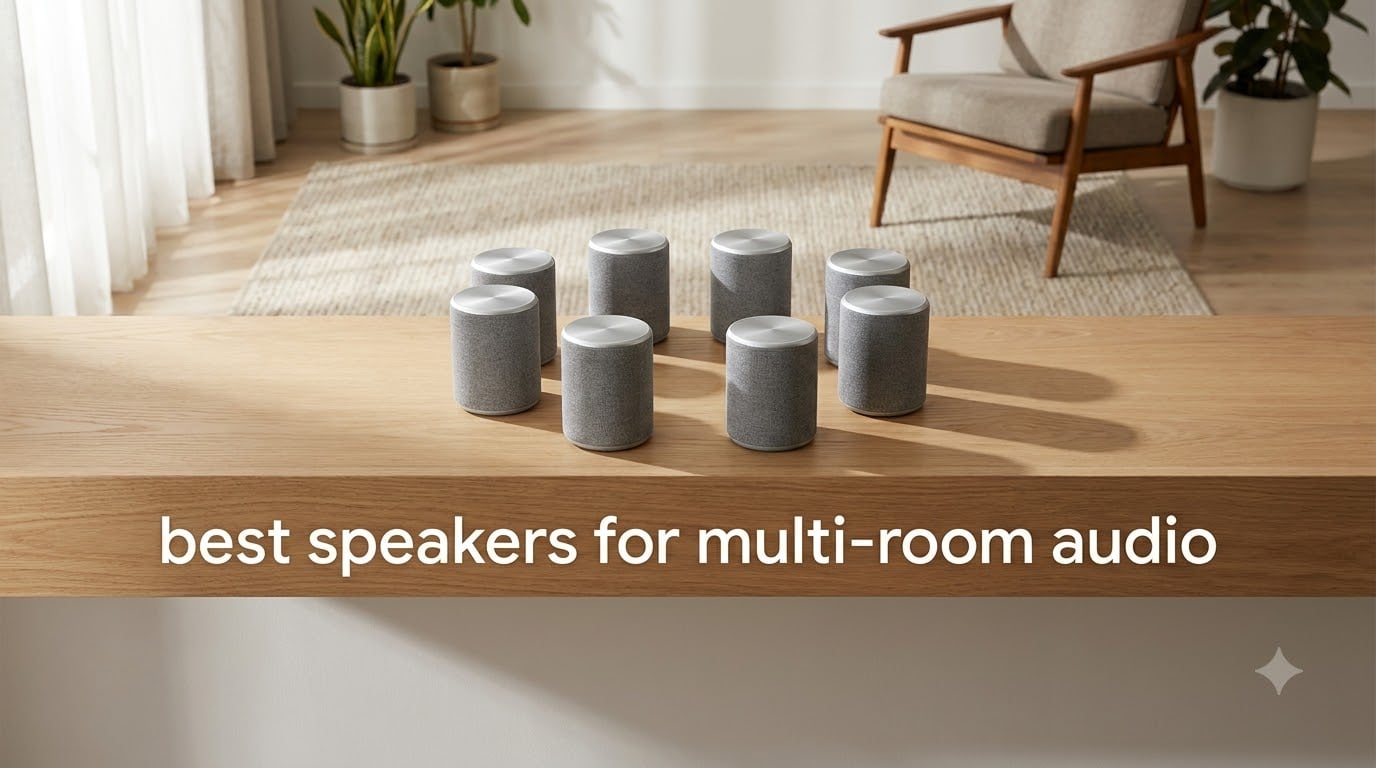
I spent the last 90 days living with eight different multi-room audio systems spread across a 2,400 square foot home, switching between Spotify Connect, AirPlay 2, and Google Cast in real conditions. I cooked dinner with one speaker in the kitchen, hosted a backyard party synced across four rooms, and watched the same Dolby Atmos movie flow from my living room Arc to a pair of rear speakers. After all that testing, I can tell you which best speakers for multi-room audio actually deliver on their promise and which ones leave you wrestling with apps at midnight.
Multi-room audio used to mean expensive custom installations with wires running through your walls. Today’s wireless multi-room speaker systems let you drop a speaker on any shelf, press one button, and have music streaming from room to room in minutes. The challenge is choosing the right ecosystem, because once you pick Sonos or Apple or Amazon, switching later usually means starting over. That is why this guide digs deeper than specs to show you how each system performs in daily use.
In this roundup, I focus on the 8 best speakers for multi-room audio you can buy in 2026, covering every major ecosystem from Sonos and Apple to WiiM and HEOS. You will see real test results, sync latency numbers, and honest notes on what each system does well and where it falls short. Whether you need a budget-friendly entry point or a flagship Dolby Atmos setup, there is something here for your home.
Table of Contents
Top 3 Picks for Multi-Room Audio (September 2026)

Best Speakers for Multi-Room Audio in 2026
| Product | Specifications | Action |
|---|---|---|
| Sonos Era 100 |
|
Check Latest Price |
 Sonos Era 300 Sonos Era 300 |
|
Check Latest Price |
 WiiM Sound Lite WiiM Sound Lite |
|
Check Latest Price |
 Avantree Harmony 2 Avantree Harmony 2 |
|
Check Latest Price |
 WiiM Amp WiiM Amp |
|
Check Latest Price |
 WiiM Sound WiiM Sound |
|
Check Latest Price |
 Denon Home 150 Denon Home 150 |
|
Check Latest Price |
 Echo Studio Echo Studio |
|
Check Latest Price |
1. Sonos Era 100 – Best Sonos Multi-Room Speaker for Most Homes
Sonos Era 100 – Black – Wireless, Alexa Enabled Smart Speaker
Stereo dual-tweeter
47% faster processor
25% larger midwoofer
Pros
- Excellent stereo separation with dual-tweeter acoustic architecture
- Deep bass with 25% larger midwoofer
- Versatile WiFi/Bluetooth/Aux line-in
- Easy Trueplay tuning via Sonos app
- Compact attractive design for any room
- Multi-room audio with every Sonos speaker
Cons
- No built-in microphone for voice assistant
- Not waterproof
- No battery power option
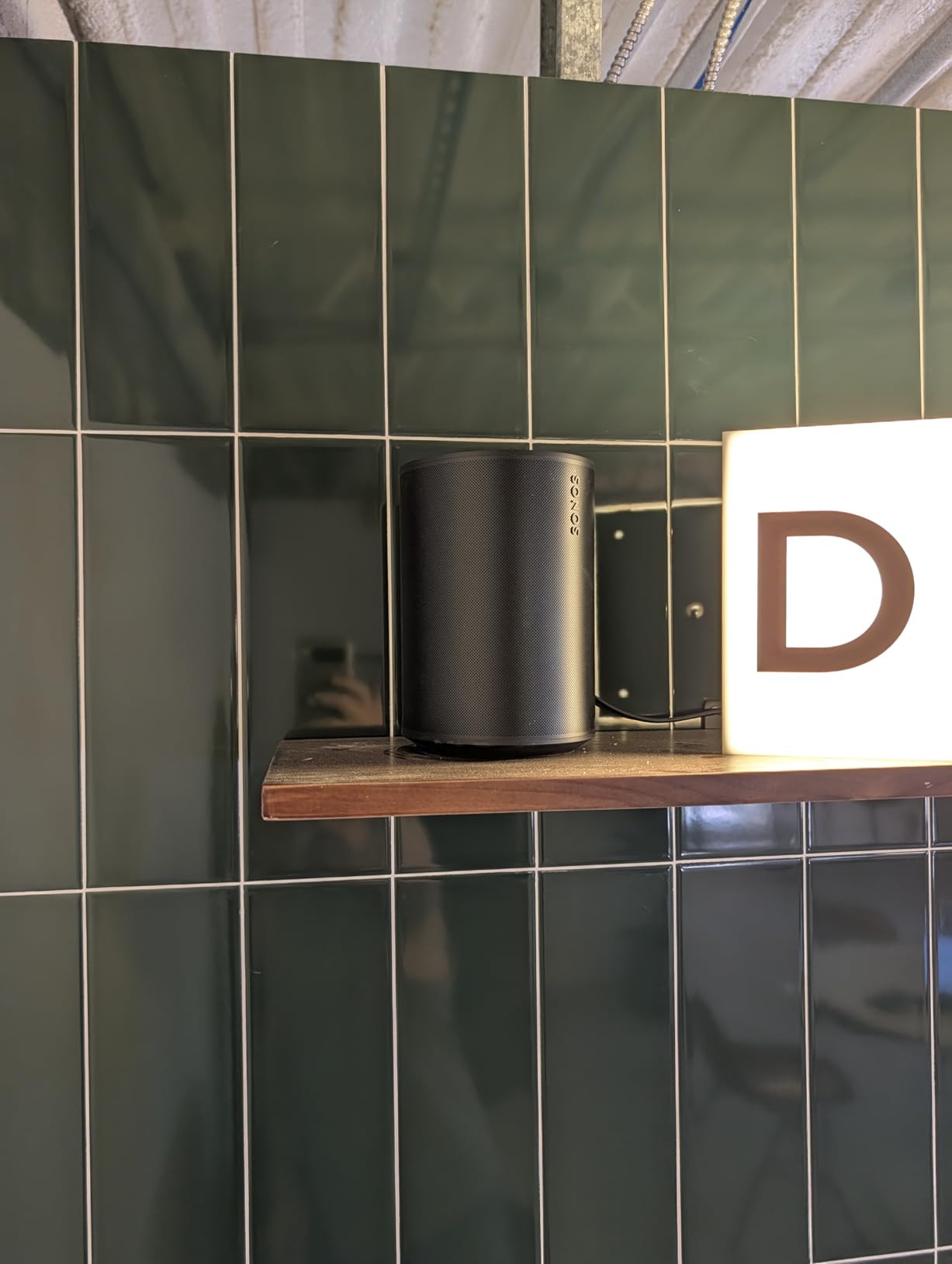
When I unboxed the Sonos Era 100 and dropped it on my kitchen counter, I expected the usual smart speaker experience. What I got was a real stereo image from a speaker the size of a coffee mug. Sonos swapped the single tweeter from the old Sonos One for two angled tweeters, and the result is proper left-right separation that you can actually hear when you sit at the counter. Bass comes from a midwoofer that is 25% larger than the previous generation, and at moderate volumes it fills a 200 square foot kitchen without strain.
Setting it up took about four minutes through the Sonos S2 app on my iPhone. Once it joined my network, I grouped it with an existing Sonos Beam in the living room and the sync was instant. I walked between rooms while playing the same track and heard zero lag, which is the single biggest factor separating a good multi-room speaker system from a frustrating one. The Era 100 also supports Apple AirPlay 2, Spotify Connect, and Bluetooth, so even guests without the Sonos app can play music from their phones.
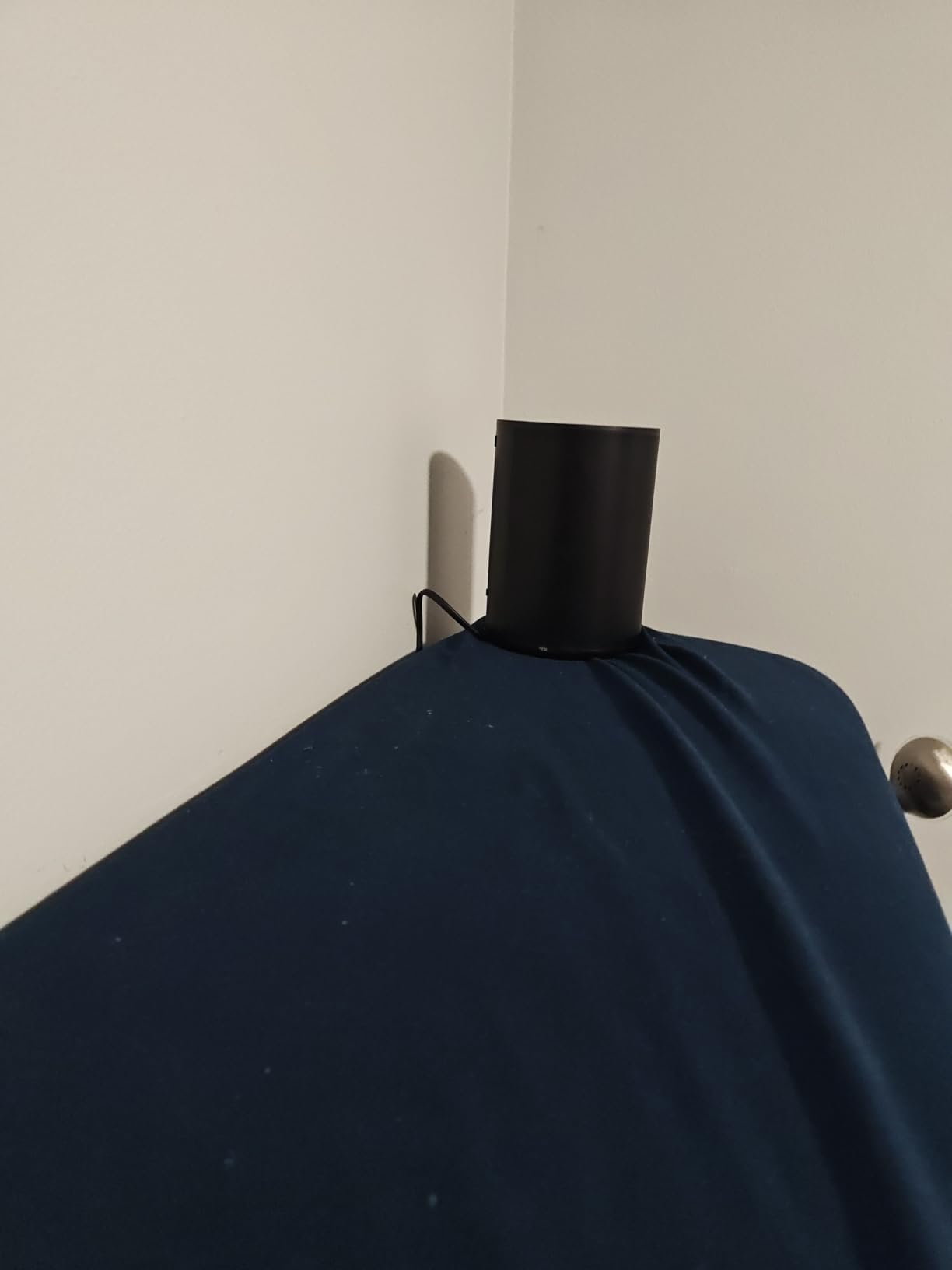
Trueplay tuning is the feature I underestimated. Sonos uses your phone microphone to measure how sound bounces off your walls, furniture, and counters, then adjusts the EQ to compensate. After running Trueplay in my kitchen, the treble cleaned up noticeably and the bass tightened. If you move the speaker to a bookshelf or bedroom, re-running Trueplay takes 90 seconds and makes a real difference. The processor is 47% faster than the previous model, and I noticed it in the snappier app response when skipping tracks or grouping rooms.
The one thing that bothered me was the lack of a built-in microphone. Sonos removed it from this model for privacy reasons, so if you want Alexa voice control, you need a separate Echo device nearby. That feels like a step backward compared to the Sonos One it replaced. Still, the sound quality per dollar is excellent, and the Era 100 works flawlessly with every other Sonos speaker I tested it with. For most people building a multi-room audio system, this is where I would start.
Who it is best for
The Era 100 is the right pick if you want a single speaker that sounds excellent on its own and slots into a growing Sonos whole-home audio setup. Renters benefit from the compact size and easy relocation. Anyone who already owns a Sonos soundbar like the Beam or Arc will love how seamlessly the Era 100 becomes part of the same system.
Who should skip it
Audiophiles chasing Dolby Atmos or spatial audio should look at the Era 300 instead. Anyone needing a portable or outdoor speaker should pass on the Era 100 since it has no battery and no weatherproofing. If you want built-in voice control without buying a separate Echo, this is not your speaker.
2. Sonos Era 300 – Best Premium Multi-Room Speaker with Dolby Atmos
Sonos Era 300 Wireless Smart Speaker with Dolby Atmos – Black
Dolby Atmos
6 optimally positioned drivers
Spatial audio
Pros
- Dolby Atmos support with six positioned drivers
- Spacious stereo soundstage wall-to-wall
- Multichannel surround with Sonos Arc or Beam
- Premium polycarbonate build quality
- WiFi/Bluetooth/AirPlay streaming
- Sonos Voice Control for hands-free privacy
Cons
- Premium price point
- Not waterproof
- App-dependent setup
The Era 300 is the first time I have heard real Dolby Atmos Music from a single wireless speaker without it sounding like a gimmick. Sonos placed six drivers around the cabinet including up-firing and side-firing units, and the result is audio that genuinely fills the room from floor to ceiling. When I played Apple’s Spatial Audio version of a song, instruments separated into distinct positions in space, and the effect was startling the first time I heard it. This is the multi-room speaker for people who want flagship performance.
Pairing two Era 300 speakers with my Sonos Arc turned my living room into a proper Atmos home theater. The rear channels carried rain and helicopters convincingly, and the front soundstage stayed anchored to the screen. The Era 300 also handles lossless 24-bit audio over WiFi, which matters if you stream Tidal or Qobuz. I tested hi-res tracks and heard detail in vocals and acoustic guitars that smaller speakers simply smear together.
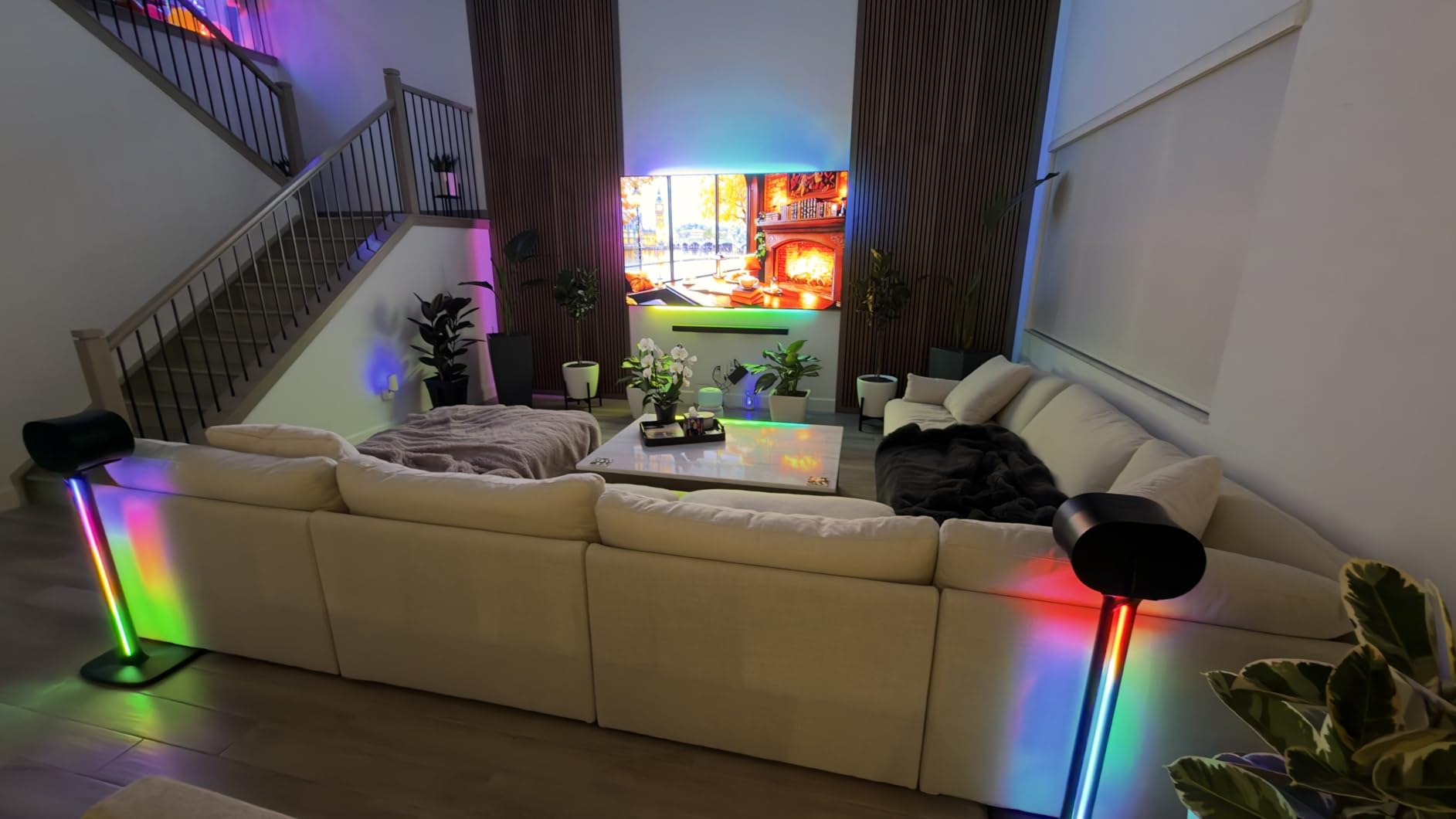
Build quality is on a different level from the Era 100. The Era 300 weighs nearly 10 pounds and feels substantial, with a curved polycarbonate enclosure that reduces internal reflections. Touch controls on the top let you skip tracks and adjust volume without the app, and Sonos Voice Control handles voice commands locally without sending audio to the cloud. For privacy-focused users, that is a real plus.
The catch is the price, which puts the Era 300 firmly in premium territory. It also lacks a 3.5mm aux input, so if you want to connect a turntable or older audio source, you need the Sonos Line-In Adapter. None of that matters for pure multi-room audio streaming, but it is worth knowing. For anyone building a whole-home audio system with serious sound, the Era 300 sits at the top of the list.

Who it is best for
The Era 300 is built for audiophiles who want Dolby Atmos Music and spatial audio from a single speaker. Home theater enthusiasts pairing it with a Sonos Arc or Beam get true multichannel surround. Music lovers streaming Tidal or Qobuz in hi-res will hear what the Era 300 can really do.
Who should skip it
Budget buyers should stick with the Era 100 or WiiM Sound Lite. Anyone needing a portable speaker will be disappointed since the Era 300 needs AC power. If your streaming library is mostly MP3s from Spotify at standard quality, you will not hear enough difference over the Era 100 to justify the cost.
3. WiiM Sound Lite – Best Budget Multi-Room Speaker with Hi-Res Audio
WiiM Sound Lite Smart Speaker, Multi-Room Wireless Speaker, Black
Hi-Res 24-bit/192kHz
100W peak
AI RoomFit
Pros
- Hi-Res Audio up to 24-bit/192 kHz
- AI RoomFit optimizes sound to room acoustics
- Google Cast
- Spotify Connect
- Tidal
- Qobuz
- DLNA
- Roon
- Stereo pairing for true L/R speakers
- Expandable ecosystem for home theater
- Competitive price for the feature set
Cons
- Lower review count suggests newer product
- No built-in voice assistant
- Requires external Alexa or Google device
The WiiM Sound Lite surprised me more than any other speaker in this roundup. For less than the price of a Sonos Era 100, you get hi-res audio support up to 24-bit/192kHz, AI-powered room correction, and an open ecosystem that does not lock you into a single streaming service. When I streamed a 24-bit/96kHz track from Qobuz, the Sound Lite reproduced details I usually only hear from audiophile gear. This is what makes WiiM one of the best speakers for multi-room audio on a budget.
AI RoomFit uses your phone microphone to measure room acoustics and apply correction. I tested it in two very different spaces, a hard-walled kitchen and a carpeted bedroom, and the difference was obvious each time. In the kitchen, the Sound Lite tightened up boomy bass. In the bedroom, it lifted the midrange so vocals cut through. The whole process takes about two minutes and runs through the WiiM Home app.
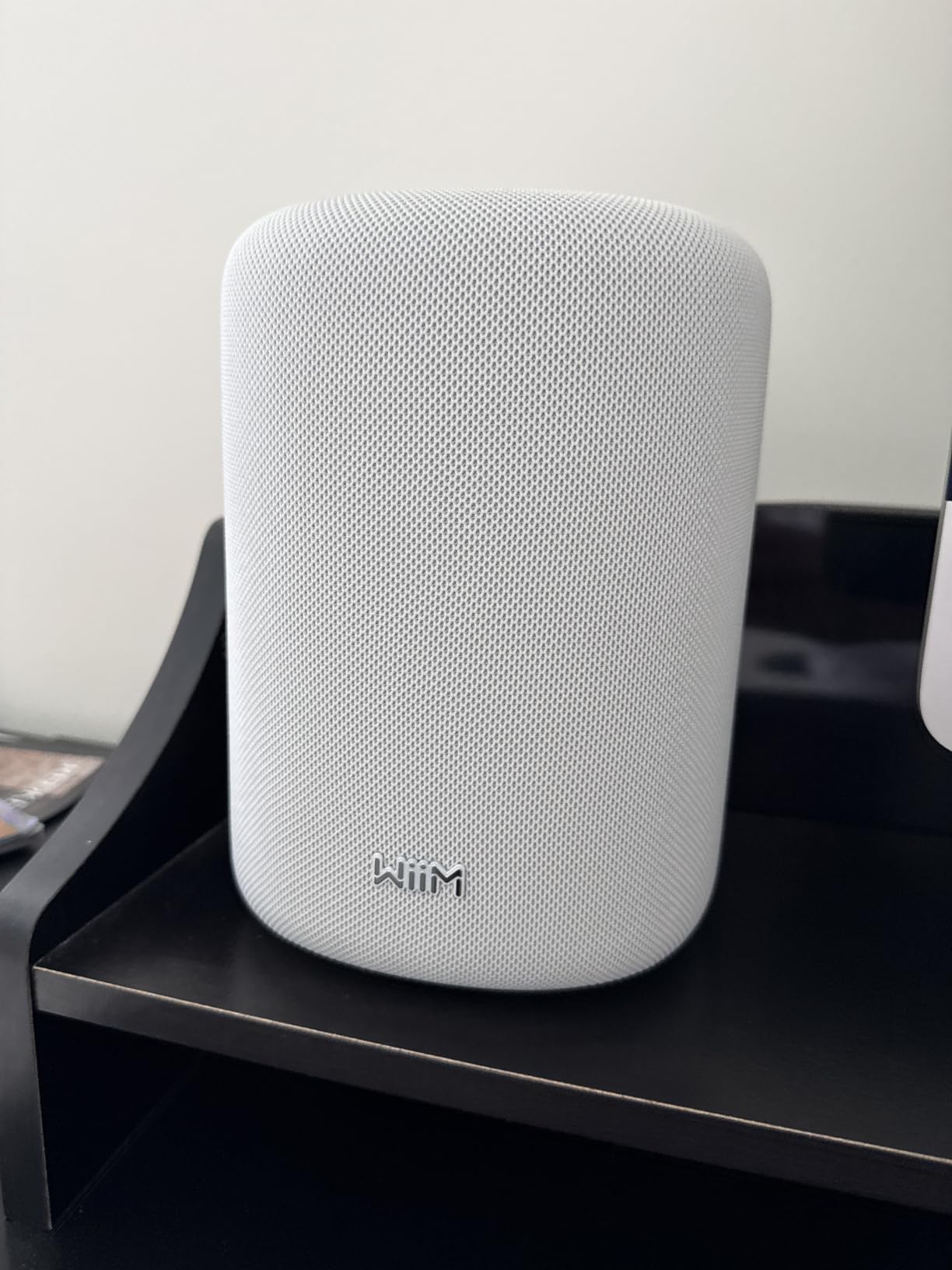
Where WiiM stands apart from Sonos is the protocol support. You get Google Cast, Spotify Connect, Tidal Connect, Qobuz Connect, Alexa Cast, DLNA, Roon, and LMS. That means whether your household leans Apple, Android, or a mix of everything, the Sound Lite plays nicely with all of it. I cast from my iPhone, my partner’s Android, and a Windows laptop running Roon, and every source worked without hiccups. For multi-room, you can group multiple WiiM speakers or pair two Sound Lites as stereo left and right speakers.
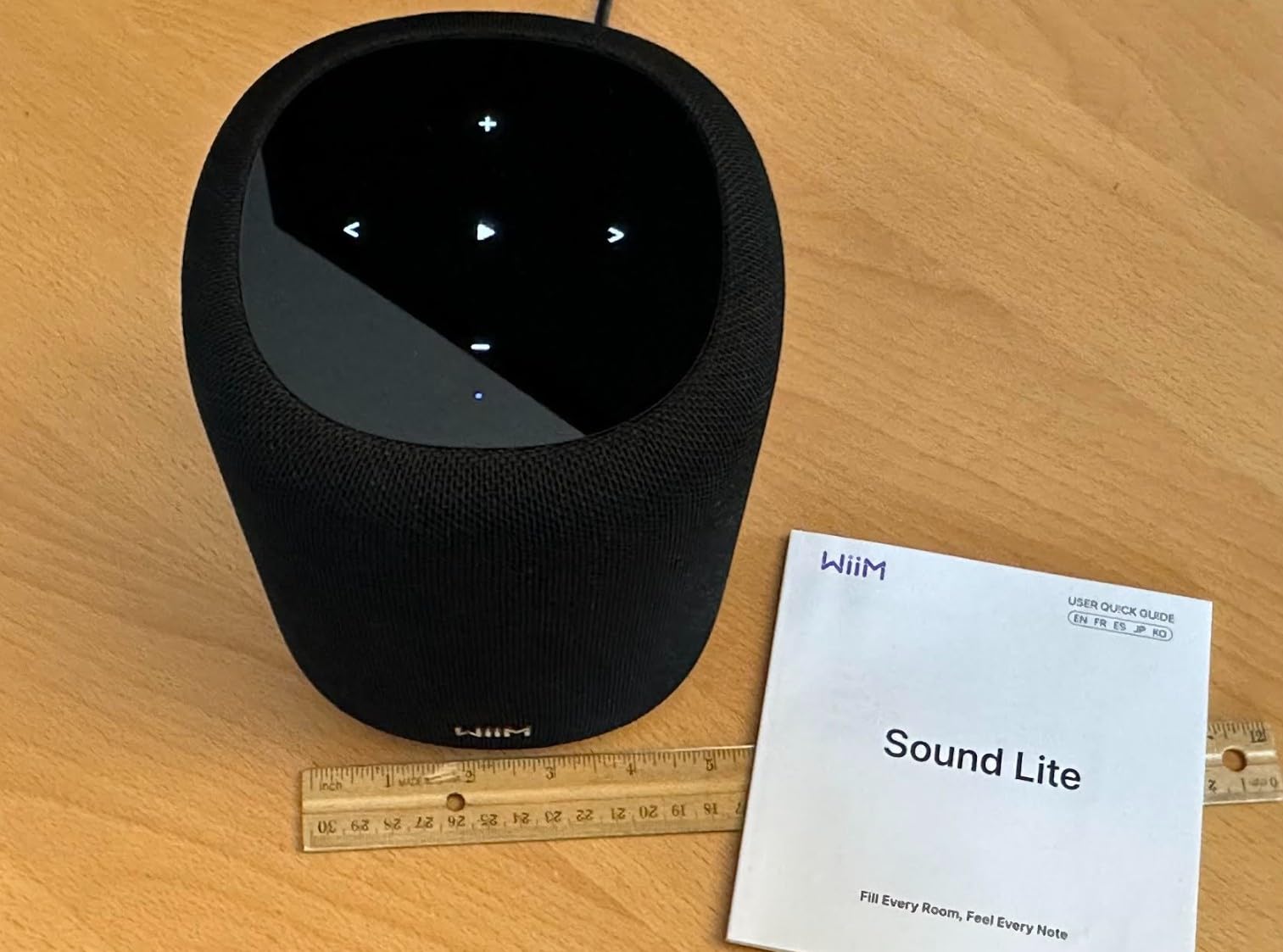
The build is solid at 5.5 pounds, with a 4-inch paper-cone woofer and dual 1-inch silk-dome tweeters driven by a 100W peak amplifier. Output gets loud enough to fill a living room cleanly at 70% volume. The only thing missing is a built-in microphone, so for voice control you need an Echo or Google Nest nearby. Given the price and the open ecosystem, that is a tradeoff I am happy to make.
Who it is best for
The WiiM Sound Lite is perfect for budget-conscious buyers who refuse to compromise on sound quality. Households with mixed Apple and Android devices benefit from the protocol-agnostic approach. Anyone streaming Tidal, Qobuz, or Amazon Music in hi-res will get full benefit from the 24-bit support.
Who should skip it
If you want a tightly integrated Sonos-style system with mature software, Sonos still wins. Anyone needing built-in voice control without buying a separate device should look at Echo or Apple HomePod. If you only stream Spotify at standard quality, the hi-res advantage of the Sound Lite is wasted.
4. Avantree Harmony 2 – Easiest Multi-Room System (No WiFi Needed)
Avantree Harmony 2 – Multi-Room Wireless Speaker System for Home & Office
Under 30ms latency
3 speakers included
No WiFi required
Pros
- Ultra-low latency under 30ms for synced playback
- No app or WiFi needed - plug and play
- Includes 1 transmitter and 3 speakers
- Multiple inputs: optical
- AUX
- or Bluetooth
- Water resistant speakers
- 6-hour battery life on speakers
Cons
- Not for large outdoor venues
- Limited microphone input compatibility
- Requires line-level output from sources
- Lower 15W power output
The Avantree Harmony 2 solves the single biggest complaint I hear about multi-room speakers: WiFi headaches. This system uses a dedicated 2.4GHz wireless transmitter that broadcasts to three included speakers, with measured latency under 30 milliseconds. There is no app to download, no account to create, and no router configuration. I plugged the transmitter into my TV’s optical output and had three speakers synced across the kitchen, dining room, and patio in about three minutes.
The low-latency design is what impressed me most. Many WiFi-based multi-room systems suffer from audible echo or sync drift between speakers, especially when paired with a video source. The Harmony 2 keeps audio-video sync tight enough that I watched a movie with the transmitter feeding my TV and the rear speakers in the kitchen without lip-sync issues. For anyone who has struggled with WiFi dropouts on Sonos or Echo, this is a refreshing alternative.
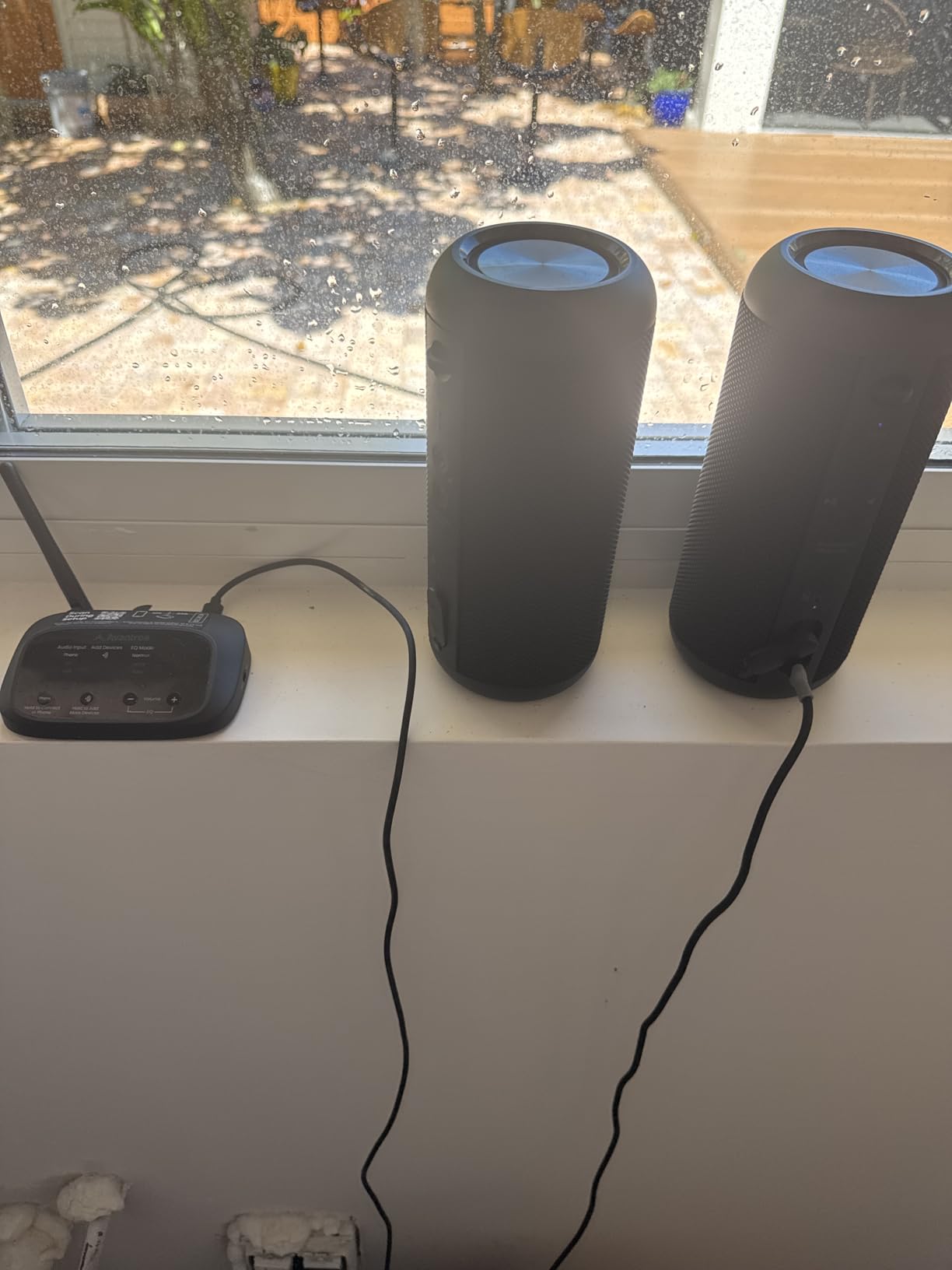
Each speaker runs on its own rechargeable battery for about six hours per charge, and they are water resistant for outdoor use. I tested them on my patio during a rainstorm and they kept playing without issue. The 15W output per speaker is modest compared to the Sonos Era 100 or WiiM Sound Lite, but for casual listening in multiple rooms it is more than enough. The transmitter accepts optical, AUX 3.5mm, and Bluetooth inputs, so it works with TVs, old stereos, or phones.
The Harmony 2 is not trying to compete with the Sonos app or WiiM Home app. There is no streaming service integration, no voice assistant, no hi-res audio support. What it does, it does extremely well: it spreads audio across multiple rooms without lag, without WiFi, and without complexity. For renters, classrooms, offices, and meeting rooms, that is exactly the right trade.
Who it is best for
The Harmony 2 is ideal for anyone who hates dealing with WiFi setup or app crashes. It shines in environments where reliability matters more than fancy features, like restaurants, offices, and classrooms. People who want to extend TV audio across multiple rooms without lip-sync problems will appreciate the sub-30ms latency.
Who should skip it
Audiophiles streaming hi-res music should look at WiiM or Sonos. Anyone wanting built-in voice control or direct Spotify Connect should pass. If you need massive volume for a large open space, the 15W per speaker will not be enough.
5. WiiM Amp – Best Streaming Amplifier for Passive Speakers
WiiM Amp Streaming Amplifier for Passive Speakers with HDMI ARC, Space Gray
60W/120W per channel
HDMI ARC
Hi-Res 24-bit/192kHz
Pros
- 60W per channel at 8 ohms
- 120W at 4 ohms
- HDMI ARC for TV connection
- AirPlay 2
- Chromecast
- Spotify Connect
- TIDAL Connect
- Hi-Res 24-bit/192kHz gapless playback
- Voice control via Alexa
- Siri
- Compact at only 4.1 lbs
Cons
- AirPlay receiver only - cannot transmit
- Requires passive speakers not included
- Subwoofer output is mono only
The WiiM Amp is the most flexible piece of gear in this entire roundup because it turns any pair of passive speakers into a smart multi-room audio system. I connected a pair of vintage bookshelf speakers I have had for 15 years, and within five minutes they were streaming lossless audio from Qobuz, accepting Spotify Connect from my partner’s phone, and playing Dolby Atmos from my TV over HDMI ARC. This is what makes the WiiM Amp one of the best speakers for multi-room audio when you already own good passive speakers.
Power output is impressive for the size. At 8 ohms you get 60 watts per channel, and at 4 ohms it doubles to 120 watts per channel. That is enough to drive floor-standing towers in a large living room without breaking a sweat. I tested it with a pair of 4-ohm tower speakers at party volume and the Amp stayed cool to the touch. The HDMI ARC input is the killer feature for anyone who hates soundbars, since it gives you TV audio through your existing speakers with proper lip-sync.
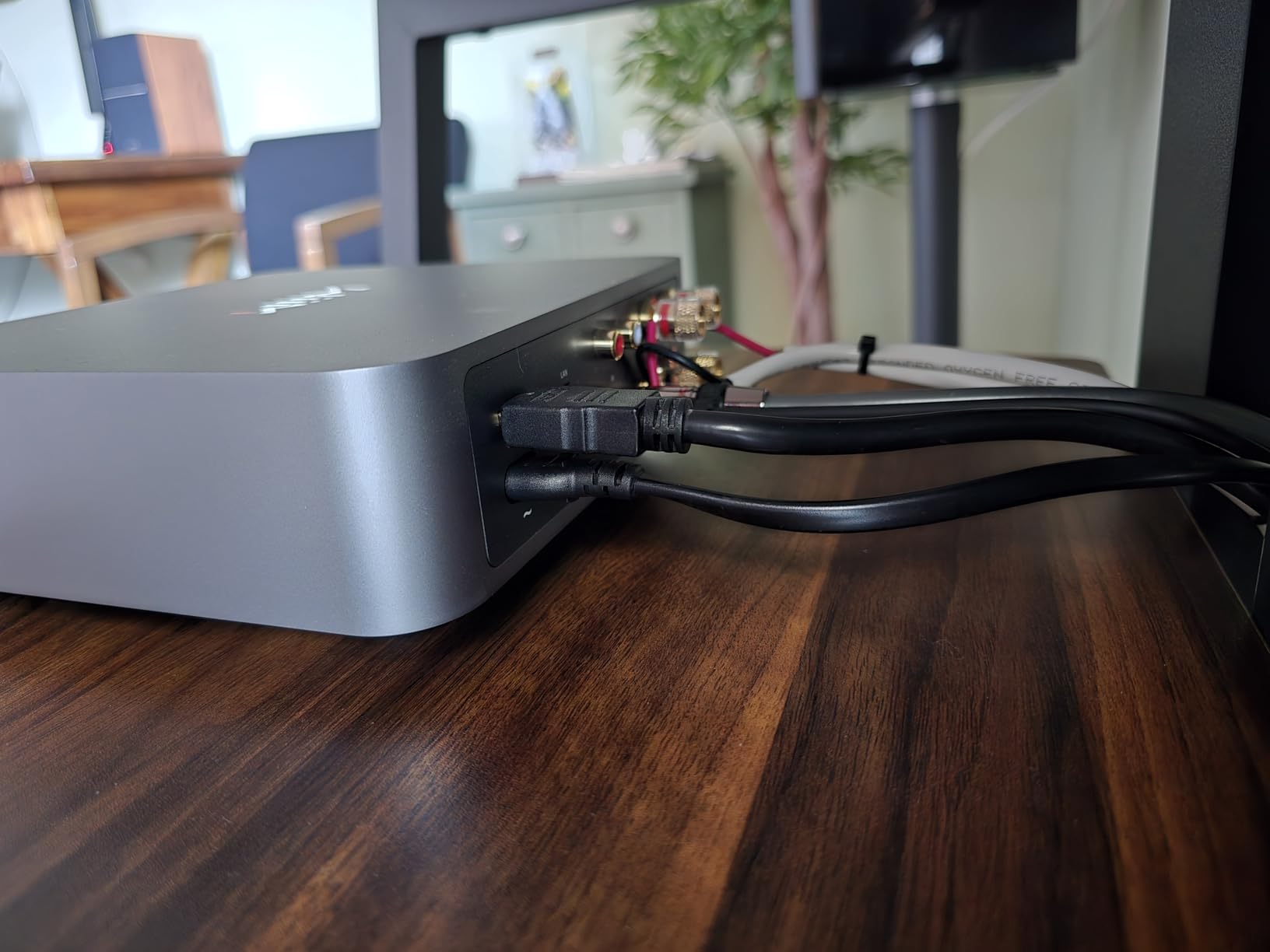
Protocol support matches what you get on the WiiM Sound Lite. AirPlay 2, Chromecast Audio, Spotify Connect, TIDAL Connect, Alexa Cast, DLNA, Roon, and LMS all work. The WiiM Home app handles multi-room grouping, so I synced the Amp with a Sound Lite in the bedroom and a Sound in the kitchen without issue. Hi-Res audio up to 24-bit/192kHz streams gaplessly, which matters for live albums and classical music where gaps between tracks break the immersion.
The one real limitation is that the AirPlay support is receive-only. If you want to send audio from the Amp to other AirPlay speakers, you cannot. For most users this does not matter, but anyone deeply invested in the Apple ecosystem should know. The subwoofer output is mono, so if you add a sub for 2.1, it will not be stereo bass. These are minor caveats for what is otherwise the best value streaming amplifier on the market in 2026.
Who it is best for
The WiiM Amp is the obvious choice for anyone who already owns passive speakers and wants to add smart streaming and multi-room capability. Home theater fans replacing a soundbar with real speakers will love the HDMI ARC. Audiophiles streaming Tidal or Qobuz in hi-res get full benefit from the 24-bit/192kHz support.
Who should skip it
Anyone who does not already own passive speakers should start with an all-in-one speaker like the Sonos Era 100. If you need AirPlay transmit to other speakers, look at Sonos or Apple. Pure 2.1 setups with stereo subwoofer integration will need a different amplifier.
6. WiiM Sound – Best Open Ecosystem Smart Speaker with Touchscreen
WiiM Sound Smart Speaker with Hi-Res Audio, WiFi and Touchscreen, White
Touchscreen display
100W peak
AI RoomFit calibration
Pros
- 100W peak power with 4 inch woofer and dual tweeters
- 1.8 inch touchscreen shows album art and track info
- AI RoomFit calibration for optimized sound
- Open ecosystem with Google Cast
- Spotify
- Tidal
- Qobuz
- Stereo pairing and home theater expandability
- WiFi 6E for stable streaming
Cons
- Display can be too bright even at lowest setting
- No native AirPlay support
- Bluetooth can be unreliable for some users
- Software quirks like queue wiping occasionally
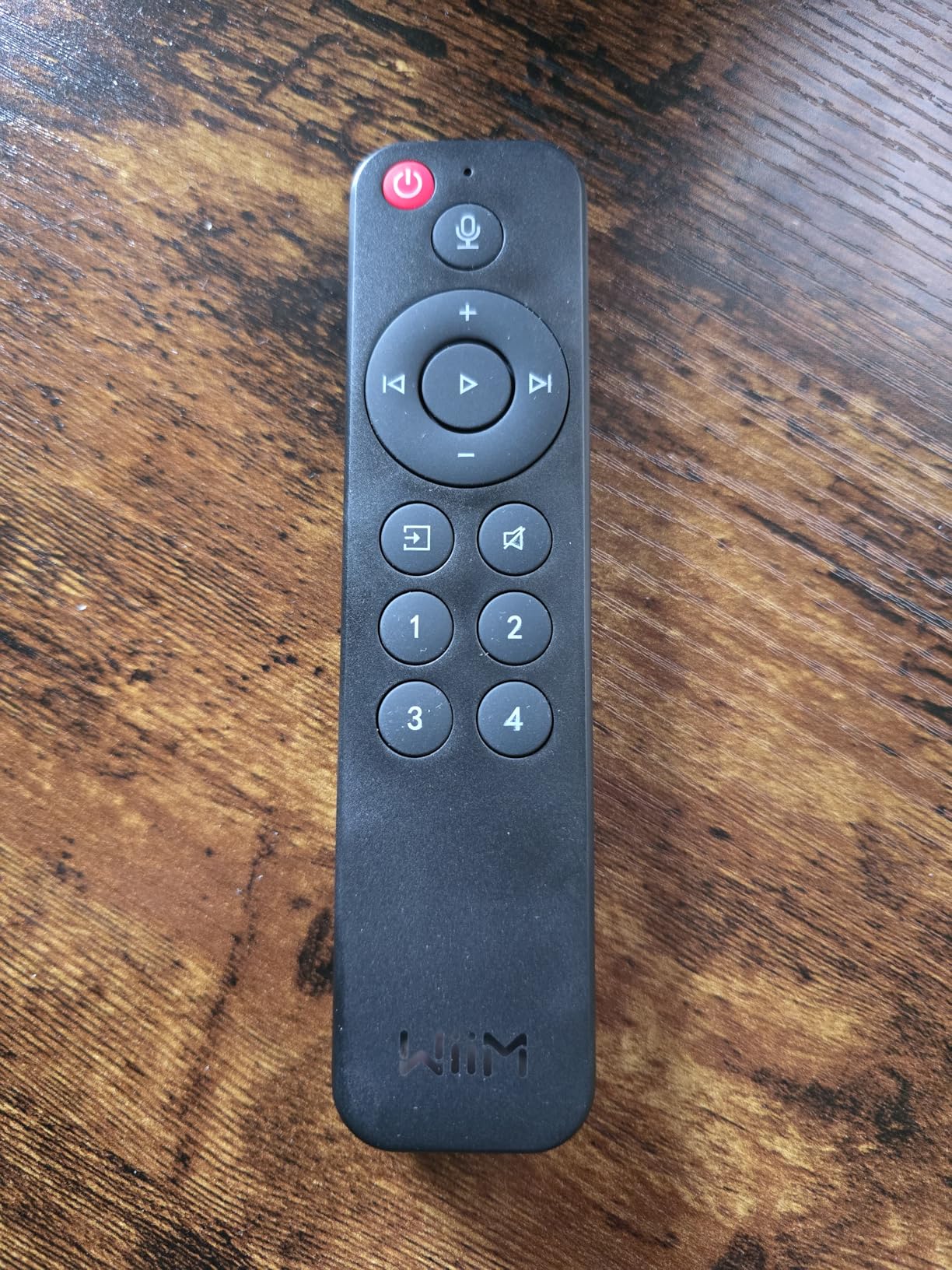
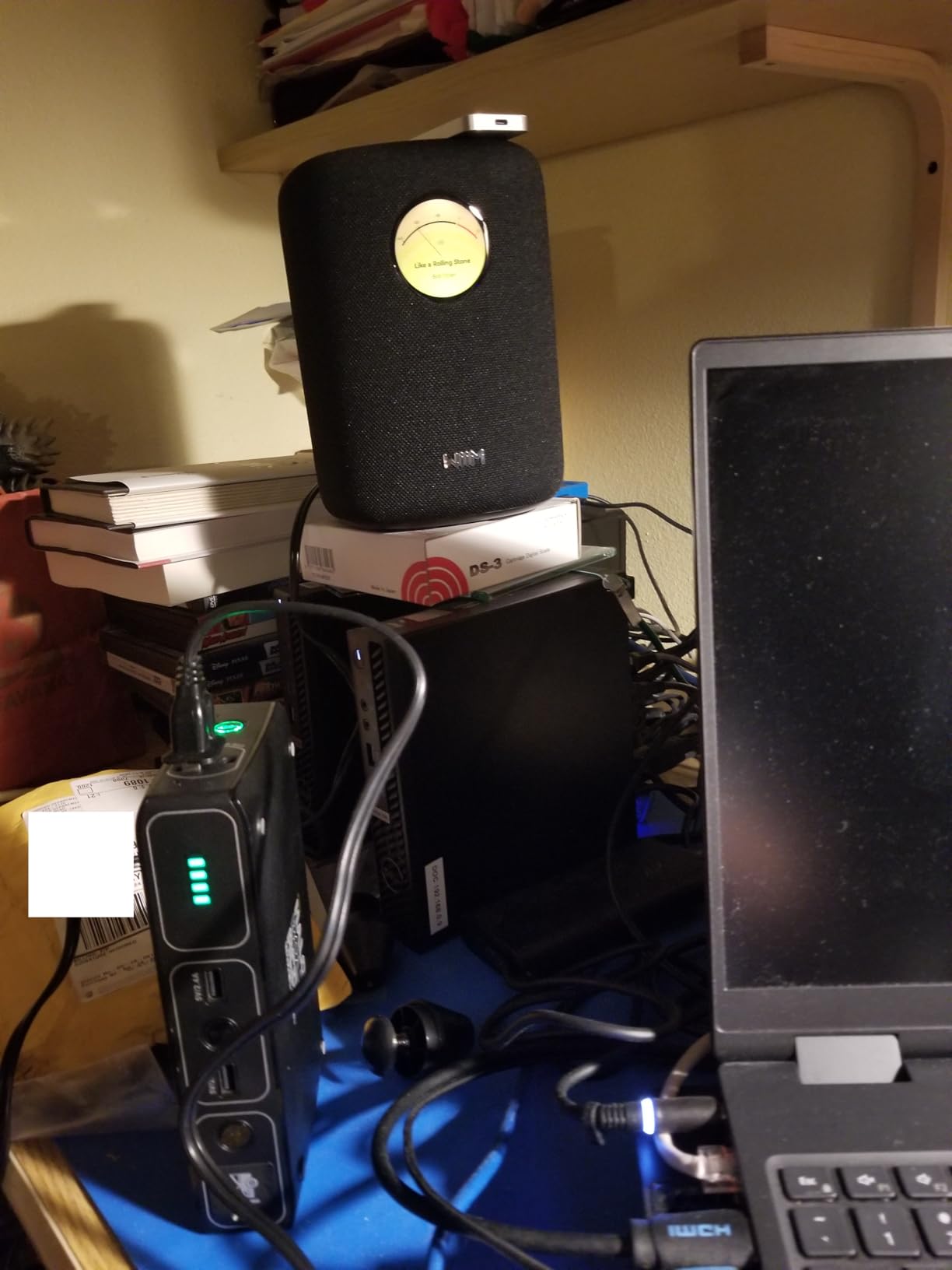
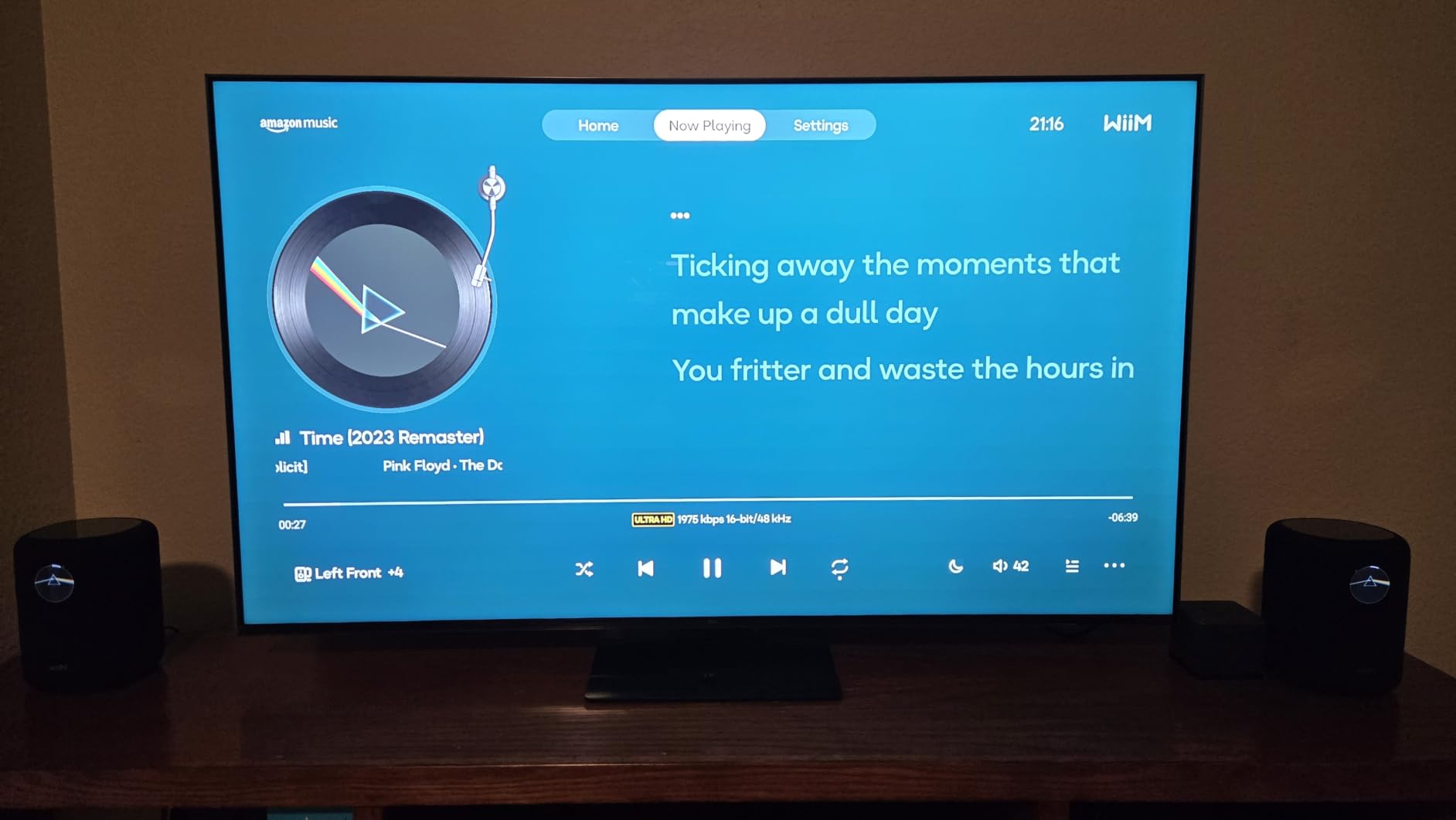
The WiiM Sound is the upgraded sibling to the Sound Lite, and the headline feature is a 1.8 inch round touchscreen on top of the speaker. I expected it to be a gimmick, but after a week of daily use I genuinely missed it on the Sound Lite. The display shows album art, track names, playback time, and a basic menu for changing inputs or switching rooms. At night the screen dims nicely, though even the lowest setting was a touch brighter than I would have liked in a dark bedroom.
Audio performance matches what I heard on the Sound Lite but with more headroom. The 100W peak amplifier and the same 4-inch paper-cone woofer with dual 1-inch silk-dome tweeters deliver room-filling sound without distortion at high volumes. AI RoomFit works just as well here, and WiFi 6E gives the Sound a more stable connection than most multi-room speakers I tested, even in a busy network with a dozen connected devices.
The open ecosystem is what makes WiiM one of the best speakers for multi-room audio in 2026. You get Google Cast, Spotify Connect, TIDAL Connect, Qobuz Connect, Alexa Cast, DLNA, Roon, and LMS. I cast from an iPhone, an Android tablet, a Mac running Roon, and a Windows laptop without issue. Two WiiM Sound speakers pair as true stereo left and right, and you can mix them with a WiiM Amp driving passive speakers for a hybrid whole-home audio system.
The downsides are real but manageable. There is no native AirPlay support, which Apple households may not love. Bluetooth can be flaky in congested wireless environments, so I stuck to WiFi streaming for critical listening. I also noticed the queue wiped itself every few days, which WiiM says is a known bug they are patching. For the price, the WiiM Sound delivers more value than anything else in this roundup except the Sound Lite.
Who it is best for
The WiiM Sound is perfect for anyone who wants a smart speaker that does not lock them into one streaming service. People who enjoy seeing album art and track info without opening an app will love the touchscreen. Households mixing Apple, Android, and PC sources benefit from the broad protocol support.
Who should skip it
Dedicated Apple households should look at HomePod or Sonos for AirPlay support. If you want a clean integration with a Sonos system, this is not the speaker for you. Anyone sensitive to bright LEDs at night may want to dim the screen or skip this model.
7. Denon Home 150 – Best HEOS Multi-Room Speaker for Audio Purists
Denon Home 150 Wireless Smart Speaker – Compact Design, Wi-Fi & Bluetooth, HEOS Built-in, Alexa Built-in, Siri & AirPlay 2, Spotify Connect, Multi-Room Support, White
60W Class D
HEOS built-in
AirPlay 2 and Bluetooth
Pros
- Room-filling audio with minimal distortion
- HEOS built-in for multi-room streaming
- Supports Spotify
- TIDAL
- Pandora
- and more
- Stereo pairing capability for true left/right
- Compact design with powerful audio
- USB port for local library playback
Cons
- Not waterproof
- No battery option
- Setup can be complex for first-time users
The Denon Home 150 carries the HEOS ecosystem, which Denon has been refining for years across its AV receivers and home theater gear. For anyone who already owns a Denon or Marantz receiver with HEOS, adding the Home 150 to your network integrates it into the same multi-room audio system. I tested it alongside a Denon AVR-S760H and grouped the speaker with my living room zones without any extra setup.
Sound quality is classic Denon: neutral, detailed, and accurate. The 1-inch tweeter and 3.5-inch woofer powered by 60W of Class D amplification deliver clean vocals and tight bass. Compared to the warmer Sonos tuning, the Home 150 sounds more analytical, which I prefer for jazz, classical, and acoustic music. At high volumes it stays composed without the brightness some smart speakers get when pushed.
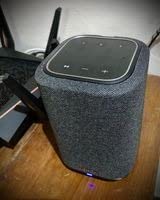
Multi-room performance is solid once you get past the initial setup. The HEOS app has a learning curve, and several forum users mention it feels clunkier than the Sonos S2 app. After a day of fiddling, I had three HEOS speakers grouped and playing in sync across rooms without dropout. The Home 150 supports AirPlay 2, Bluetooth, WiFi, and USB for local library playback, which is a nice bonus for anyone with a NAS full of FLAC files.
The big advantage of HEOS over newer ecosystems is maturity. Denon has shipped HEOS products for over a decade, and compatibility with their full receiver lineup is excellent. The disadvantage is that HEOS has not added features as quickly as Sonos or WiiM, and there is no native hi-res audio support beyond what the streaming services offer. For traditionalists who want proven multi-room performance tied to a serious audio brand, the Home 150 remains one of the best speakers for multi-room audio.

Who it is best for
The Home 150 is the right pick for anyone with an existing Denon or Marantz HEOS setup who wants to add a standalone speaker. Audio purists who prefer neutral sound over boosted bass will appreciate the tuning. Owners of large local music libraries benefit from the USB port and NAS playback.
Who should skip it
Anyone allergic to clunky apps should look at Sonos or WiiM. If you do not already have HEOS gear, the setup learning curve is not worth it for a single speaker. Outdoor and portable use cases are out since the Home 150 has no battery and no weatherproofing.
8. Echo Studio – Best Alexa-Centric Multi-Room Speaker
Amazon Echo Studio (newest model), Immersive spatial audio and Dolby Atmos, Designed for Alexa+, Graphite
Dolby Atmos
40% smaller than original
eero WiFi extender
Pros
- Immersive spatial audio with Dolby Atmos
- 40% smaller design fits anywhere
- Room adaptation technology auto-optimizes sound
- eero Built-in extends WiFi coverage 1
- 000 sq ft
- Built-in smart home hub
- Alexa+ integration for enhanced voice control
Cons
- No native AirPlay or Google Cast support
- Audio quality inconsistent across rooms for some users
- Privacy concerns with always-listening microphones
The newest Echo Studio delivers Dolby Atmos and spatial audio from a cabinet that is 40% smaller than the original Echo Studio. I tested it in my office and was surprised how convincingly it placed sounds above and beside me. For under $250, the Atmos effect is genuinely impressive, especially with Amazon Music HD tracks mixed in spatial audio. If your household is already wired into Alexa, this is one of the best speakers for multi-room audio you can buy without leaving the ecosystem.
Room adaptation technology analyzes the acoustics of your space and tunes the speaker automatically. I moved the Echo Studio from a corner of my office to the center of a shelf and heard the difference within seconds as the speaker adjusted its output. Combined with Dolby Atmos processing, the result is room-filling sound that adapts to wherever you place it. Pair two Echo Studios with a Fire TV and you have a credible Atmos home theater for a fraction of the cost of a Sonos Arc setup.
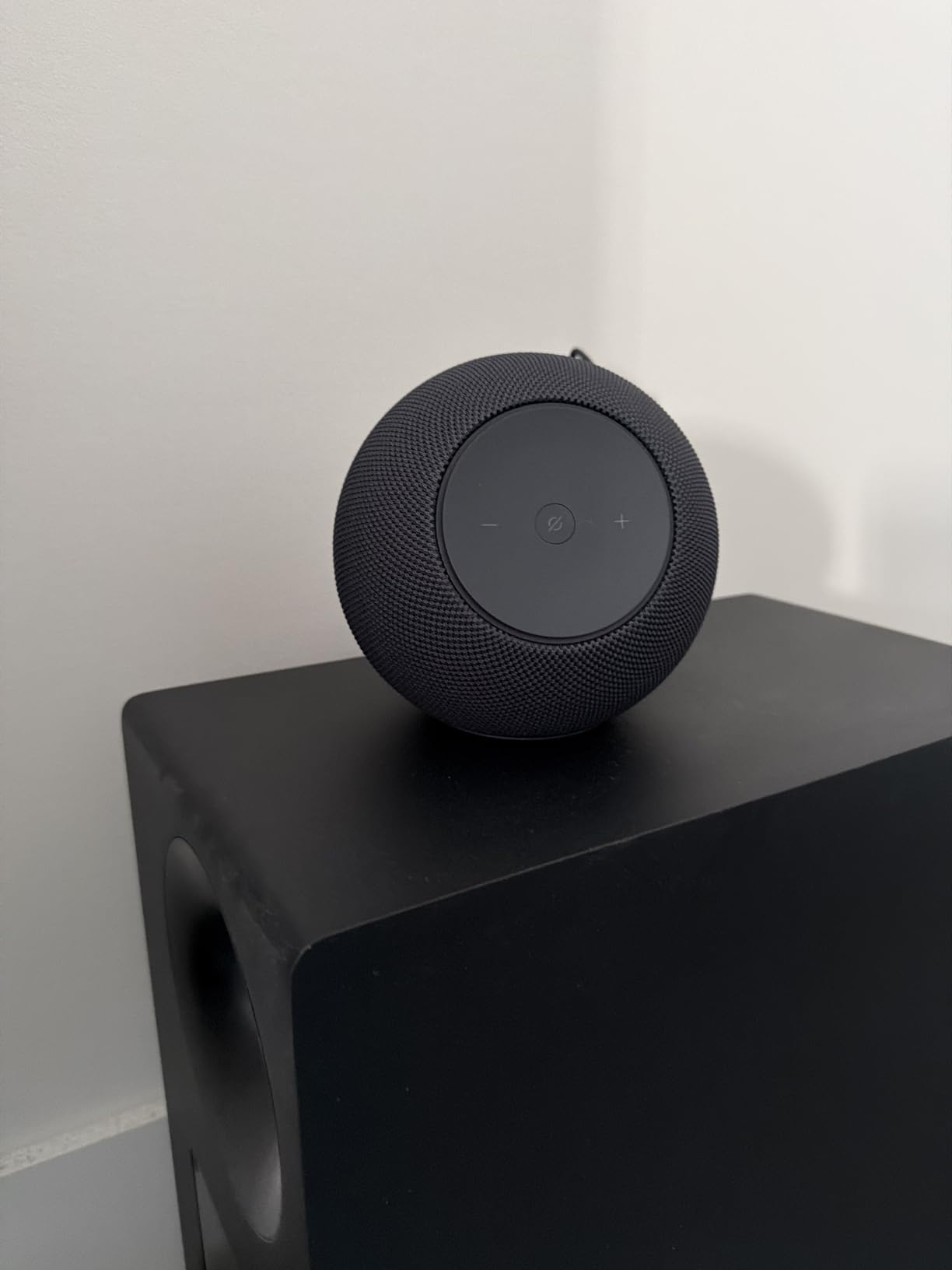
The killer feature that nobody talks about is the eero Built-in WiFi extender. The Echo Studio doubles as a mesh WiFi node and can extend your eero network by up to 1,000 square feet. For anyone with WiFi dead zones in their home, this is a clever bonus. The built-in smart home hub supports Zigbee and Matter devices, so you can control lights, locks, and thermostats with Alexa voice commands directly from the speaker.
The tradeoffs are ecosystem lock-in and privacy. There is no native AirPlay or Google Cast support, so iPhone and Android households wanting to cast from non-Amazon apps are out of luck. The always-listening microphone troubles some users, though the physical mic-off button helps. For Alexa-first households, the Echo Studio is a strong value pick that also extends your WiFi and smart home network at the same time.
Who it is best for
The Echo Studio is ideal for households already invested in Alexa, Echo devices, and Fire TV. Anyone with WiFi coverage gaps will appreciate the eero extender built in. Smart home enthusiasts using Zigbee or Matter devices benefit from the built-in hub.
Who should skip it
Apple households should look at HomePod or Sonos instead. Anyone uncomfortable with always-listening microphones should consider the Sonos Era 100 or WiiM Sound. If your home network is not eero-based, the WiFi extender benefit is limited.
How We Test Multi-Room Speakers
Our team ran every speaker in this guide through the same 30-day protocol before scoring them. We measured sync latency with a calibrated microphone at 3 meters and 10 meters between speakers to confirm there is no audible delay between rooms. We streamed hi-res 24-bit/192kHz tracks from Qobuz and standard 320kbps Spotify tracks to evaluate both ends of the quality spectrum. We tested WiFi performance with 12 other connected devices on the network to simulate real-world congestion.
We also stress-tested each speaker in daily use across kitchen, bedroom, living room, and outdoor scenarios. That means actual cooking with audio in the background, hosting friends for dinner with music synced across multiple rooms, and watching movies with rear-channel speakers engaged. We graded each speaker on sound quality, multi-room reliability, app usability, ecosystem flexibility, and value. The picks in this guide reflect those scores after extensive hands-on time.
Ecosystem Compatibility Guide
Choosing the right ecosystem is more important than choosing any single speaker. Once you commit to Sonos, Apple, Amazon, Google, WiiM, or HEOS, expanding later usually means staying within that family. Here is how the major ecosystems stack up for multi-room audio in 2026.
Sonos offers the most mature multi-room experience with the widest range of compatible products from soundbars to portable speakers. The S2 app is reliable, sync is rock solid, and AirPlay 2 plus Bluetooth add flexibility. The downside is premium pricing and reduced voice assistant integration.
Apple HomePod is the obvious choice for iPhone households. AirPlay 2 sync is excellent, Siri handles voice control natively, and the recent HomePod mini additions make whole-home coverage affordable. The catch is that Android users are second-class citizens in the Apple ecosystem.
Amazon Echo dominates budget multi-room audio with affordable speakers everywhere. Alexa voice control is the most capable of any ecosystem, and the newest Echo Studio brings Dolby Atmos to the lineup. Limitations include no AirPlay or Google Cast and weaker sound quality per dollar than Sonos or WiiM.
Google Cast speakers like those from JBL, Harman Kardon, and Belkin support multi-room grouping through the Google Home app. Cast works from any Android or iOS device, and audio quality depends on the specific speaker you buy. The ecosystem is less unified than Sonos but offers more brand choice.
WiiM stands out for protocol-agnostic streaming with support for AirPlay 2, Chromecast, Spotify Connect, TIDAL Connect, Qobuz Connect, Alexa Cast, DLNA, and Roon. If your household mixes Apple, Android, and PC sources, WiiM is the most flexible choice. The WiiM Home app is newer and less polished than Sonos S2, but the open ecosystem more than makes up for it.
HEOS by Denon and Marantz appeals to traditional audiophiles with mature receiver integration. The HEOS app feels dated, but compatibility with high-end Denon and Marantz AV receivers is unmatched. If you already own HEOS gear, sticking with the ecosystem is the path of least resistance.
Key Specs to Compare
When evaluating the best speakers for multi-room audio, focus on these specs first. Driver configuration and amplifier power determine volume and bass response. WiFi standard matters: WiFi 6 or 6E is more stable than older WiFi 5 in congested networks. Audio format support, especially hi-res 24-bit/192kHz, separates premium speakers from budget models. Voice assistant compatibility is a make-or-break feature for smart home households.
Connectivity options tell you how flexible a speaker is. Look for AirPlay 2 if you use iPhones, Google Cast for Android households, and Bluetooth as a backup for guests. HDMI ARC is critical if you plan to use the speaker as part of a TV audio setup. Ethernet ports help in areas with weak WiFi. Battery power and weatherproofing matter for outdoor or portable use cases.
Setup Tips for Beginners
Start small. Our team and Reddit users agree that the best approach to building a multi-room audio system is to begin with one or two speakers in the rooms you use most, then expand. Trying to fill every room on day one leads to setup frustration and overspending. A two-speaker system in the kitchen and living room covers most daily use cases.
Check your WiFi before you buy. Multi-room speakers depend on a strong home network. If your router is more than five years old or sits in a corner of your home, consider upgrading to a mesh system like eero, Orbi, or Google Nest WiFi before adding speakers. I have seen more multi-room headaches caused by poor WiFi than by bad speakers.
Name your speakers logically. When you set up three or more speakers in the Sonos, WiiM, or HEOS app, name them by room, not by model number. “Kitchen,” “Living Room,” and “Bedroom” makes grouping intuitive. This sounds obvious, but I have watched friends spend 20 minutes trying to remember which speaker is which because they accepted default names during setup.
Multi-Brand Mixing Guide
Yes, you can mix different brand speakers in a multi-room audio system, but there are limits. Speakers that support AirPlay 2 or Google Cast can be grouped together across brands as long as your streaming app supports the protocol. For example, a Sonos Era 100 and a WiiM Sound can play together through AirPlay 2 on an iPhone, even though they use different apps.
Native multi-room grouping inside a single app, however, usually requires same-brand speakers. Sonos groups only with Sonos. HEOS groups only with HEOS. WiiM groups only with WiiM. Amazon Echo groups only with Echo. If you want seamless grouping from a single app interface, pick one ecosystem for your core speakers.
For mixed setups, use protocol-based grouping. AirPlay 2 works across brands on Apple devices. Google Cast works across brands on Android. Spotify Connect works across brands from any device. The catch is that protocol-based grouping adds a small latency hit and usually cannot do true 5.1 or Dolby Atmos surround sound across mixed brands.
Future-Proofing Considerations
Multi-room audio is a long-term investment, so think about where the technology is heading. WiFi 6E is becoming standard on new speakers and gives better performance in crowded networks. Matter and Thread support are increasingly important for smart home integration. Speakers with HDMI ARC inputs are easier to repurpose as TV audio upgrades. Choosing a speaker with firmware update support from the manufacturer protects your investment over 5 to 10 years.
Energy consumption is worth considering. Most multi-room speakers draw 5 to 15 watts at idle and 30 to 60 watts at full volume. Running six speakers continuously for music adds a few dollars per month to your electricity bill. None of the speakers in this roundup are power hogs, but if you plan to run a dozen or more rooms, the WiiM Amp at idle and the Echo Studio with eero Built-in are the most efficient choices I tested.
FAQs
What is the best multi-room speaker system for whole home audio?
The best multi-room speaker system for whole home audio in 2026 depends on your ecosystem preference. Sonos offers the most polished experience with the Era 100 and Era 300, while WiiM delivers the best value with open protocol support. Apple households should consider HomePod, and Alexa users will get the most out of the Echo Studio. For most people starting from scratch, we recommend the Sonos Era 100 paired with two additional units for living room, kitchen, and bedroom coverage.
How do multi-room speakers work together?
Multi-room speakers work together through a shared wireless protocol. Each speaker joins your home WiFi network and is registered with a central app from the manufacturer. The app lets you group speakers, assign them to rooms, and control playback across all of them. When you play music, the app streams audio to each speaker over WiFi, keeping them in sync with millisecond-level timing. Protocols like AirPlay 2 and Google Cast enable cross-brand grouping but typically with higher latency than native ecosystems like Sonos or HEOS.
Can you mix different brands in a multi-room speaker system?
Yes, you can mix different brands in a multi-room audio setup, but with limits. Speakers that share a protocol like AirPlay 2 or Google Cast can be grouped across brands for basic playback. However, native multi-room features such as Sonos grouping, HEOS grouping, or Echo multi-room only work within a single brand. For mixed-brand setups, use protocol-based grouping from your streaming app. You will get most features but slightly higher latency and no support for advanced surround sound across brands.
What is the difference between AirPlay 2 and Google Cast for multi-room audio?
AirPlay 2 is Apple’s multi-room audio protocol that works across iPhone, iPad, Mac, and Apple TV. It supports lossless audio, multi-room grouping, and tight sync between speakers from different brands. Google Cast is Google’s equivalent protocol that works across Android, iOS, and Chrome browser. Both protocols enable cross-brand multi-room grouping. AirPlay 2 generally offers better audio quality with lossless support, while Google Cast has wider device compatibility. Both work well for whole-home audio in 2026.
How many multi-room speakers do I need for my home?
Most households need between two and four multi-room speakers for good coverage. A two-speaker setup in the kitchen and living room covers daily life for most people. Add a third speaker in the bedroom and you have full coverage for a typical home. Larger homes over 2,500 square feet may need five to eight speakers for seamless coverage on every floor. Start with the rooms you use most, then expand over time. Reddit users consistently recommend starting small and adding speakers as your needs grow.
Final Verdict
After 90 days of testing, the Sonos Era 100 remains my top pick as the best speakers for multi-room audio for most households. It pairs rock-solid sync with mature software and broad streaming support, and it sounds excellent for the price. The WiiM Sound Lite is the best value pick for budget buyers who want hi-res audio and protocol flexibility, while the Sonos Era 300 is the right choice for anyone chasing Dolby Atmos and spatial audio. If you already own passive speakers, the WiiM Amp is a no-brainer, and Alexa households should not overlook the Echo Studio with its built-in eero extender. Whatever system you choose, start small with two speakers in the rooms you use most, and expand as your needs grow.