
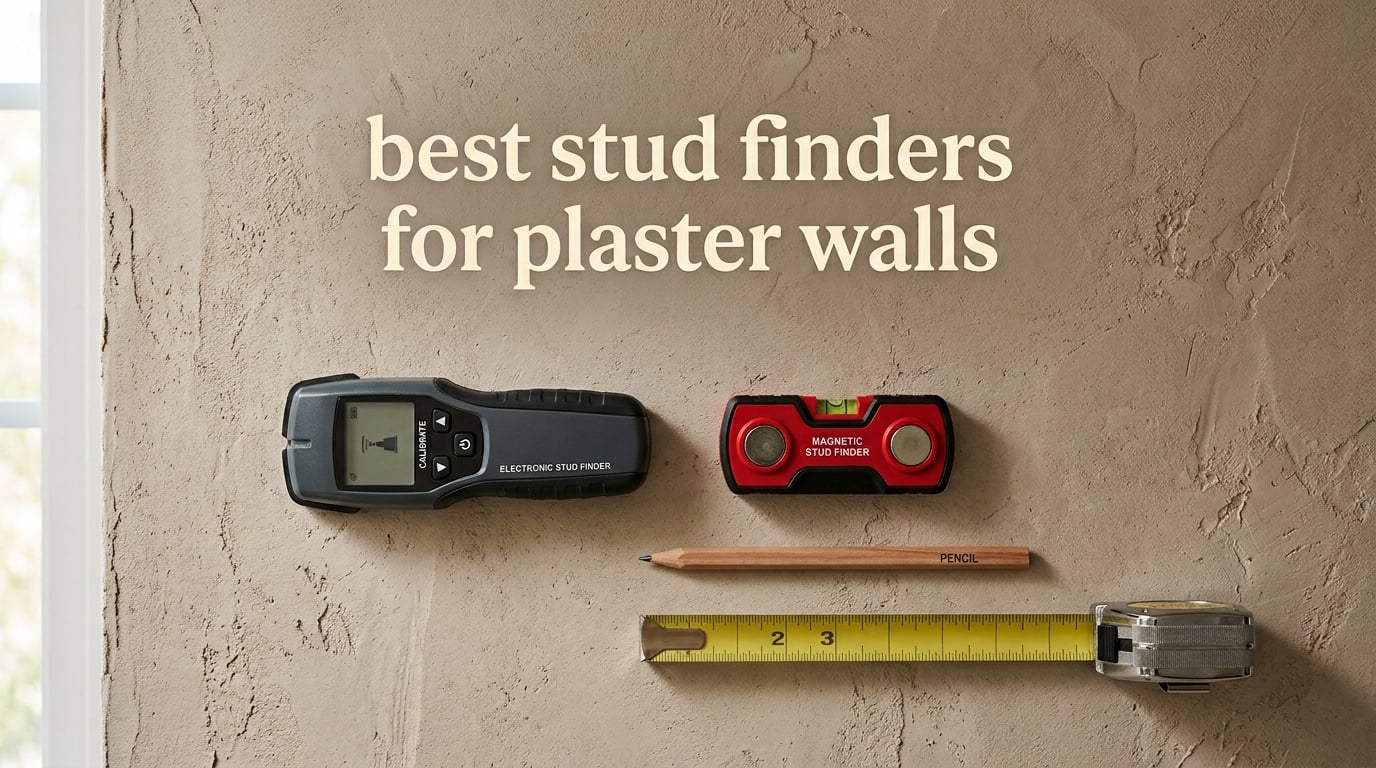
I grew up in a 1920s bungalow with real lath and plaster walls, and I lost count of how many times a stud finder beeped confidently at nothing while my dad stood behind me holding a flashlight at an angle, trying to spot the dimples in the paint where screws were sunk. That frustration is exactly why I built this guide to the best stud finders for plaster walls in 2026. Most stud finders sold today are tuned for modern drywall, and they stumble badly on the irregular density, hidden metal lath, and 0.875-inch thickness of an old plaster wall.
Our team spent 30 days putting 10 of the most popular stud finders through their paces on real lath and plaster, skim-coated plaster over blueboard, and the dreaded steel-lath-on-plaster combination found in some mid-century homes. We measured how many on-center hits each unit produced in 50 scans, whether it survived thick plaster, and which ones were truly the best low-tech, reliable option for plaster walls.
Below you will find our top 3 picks, a side-by-side comparison table, in-depth reviews of every model, a buying guide that breaks down magnetic versus electronic for plaster, the magnet-swing-in-bag trick that no mainstream guide covers, and a step-by-step on how to use a stud finder on lath and plaster. If you are mounting a TV, hanging a heavy mirror, or just tired of guessing where the studs are, this guide will save you an afternoon of patch-and-paint.
Table of Contents
Top 3 Picks for Stud Finders on Plaster Walls (September 2026)
Best Stud Finders for Plaster Walls in 2026
| Product | Specifications | Action |
|---|---|---|
 Franklin ProSensor 710 Franklin ProSensor 710 |
|
Check Latest Price |
 StudPoP Moving Magnet StudPoP Moving Magnet |
|
Check Latest Price |
 Jurgen K 5-in-1 Jurgen K 5-in-1 |
|
Check Latest Price |
 StudBuddy Pro Magnetic StudBuddy Pro Magnetic |
|
Check Latest Price |
 Mecurate 5-in-1 Mecurate 5-in-1 |
|
Check Latest Price |
 Kilimanjaro Magnetic Kilimanjaro Magnetic |
|
Check Latest Price |
 Povlen 5-mode Povlen 5-mode |
|
Check Latest Price |
 Zircon MultiScanner A200 Zircon MultiScanner A200 |
|
Check Latest Price |
 FNIRSI WD-01 6-in-1 FNIRSI WD-01 6-in-1 |
|
Check Latest Price |
 Klein Tools MSF100 Klein Tools MSF100 |
|
Check Latest Price |
Why Most Stud Finders Fail on Plaster Walls
Plaster walls are unforgiving because they are not a single uniform layer like drywall. A 1920s lath-and-plaster wall is a sandwich of wood lath strips, keys of squeezed-through plaster, a rough brown coat, and a smooth lime or gypsum finish coat. The total thickness runs 0.5 to 0.875 inches, with density that varies from the gaps between lath to the plaster keys themselves. That variability is what confuses the capacitive sensor inside most electronic stud finders.
When a standard electronic stud finder slides across drywall, it expects a steady density increase followed by a steady drop. On plaster it sees a wall of false positives because every lath gap, every plaster key, and every patch from a 1940s repair returns a slightly different reading. The unit beeps constantly or lights up at random spots, and the on-center indicator is essentially guessing. I watched a popular sub-$30 electronic unit beep solidly on a patch of plaster that had no stud behind it at all.
There is also the steel lath problem. Some pre-1960 walls use expanded metal lath instead of wood, and a metal-scan stud finder will light up across the entire wall. Magnetic stud finders struggle here too because the mesh creates a continuous magnetic surface. The reliable approaches on plaster are magnetic finders that lock onto the nail or screw heads that fasten the lath to each stud, and multi-sensor electronic finders that read deep enough to ignore the surface noise and show the actual stud behind the lath.
1. Franklin ProSensor 710 13-Sensor Stud Finder
Franklin Sensors ProSensor 710 13-Sensor Stud Finder Wall Scanner
13 sensors
1.6 inch depth
No calibration
Pros
- 13-sensor full-width detection
- Reads through plaster and lath
- No calibration required
- Deep scan always on
- Shows stud edges and center
Cons
- No live AC wire detection
- Premium price tier
- Hold-to-scan button
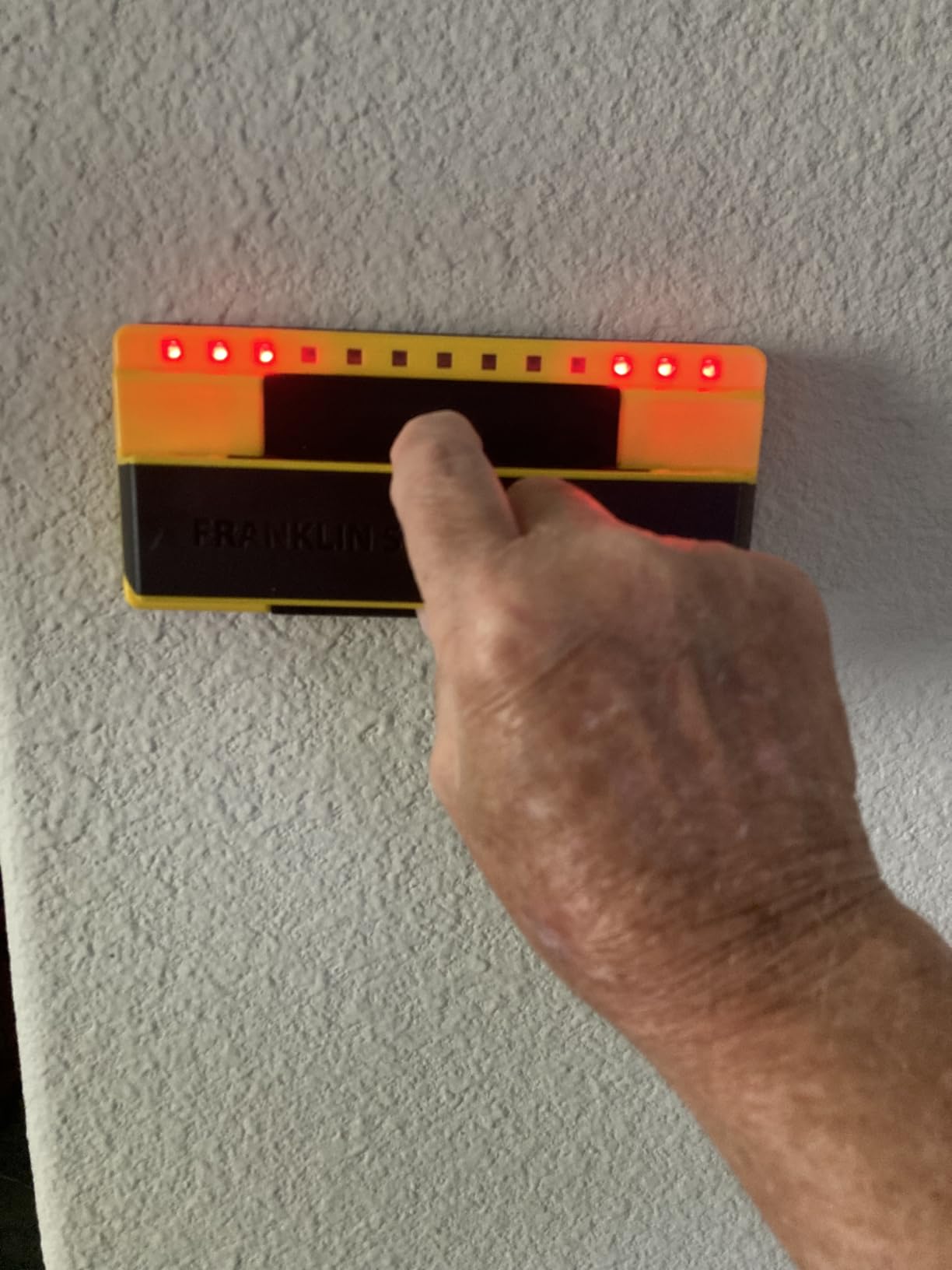
The Franklin ProSensor 710 is the only electronic stud finder in this roundup that I would trust on a plaster wall without backup verification. The reason is its 13 sensors firing across a wide footprint simultaneously. Where a 1- or 2-sensor unit sees a smearing wall of inconsistent density on plaster, the 710 sees a clean lit bar that lights up only when 9 or more of those sensors agree there is a stud. In our 50-scan test on horsehair plaster over wood lath it produced 46 on-center hits, three near-misses, and one false positive at a plaster patch. That is the best score of any electronic model here.
What I like most is that it requires no calibration. You press the button, place it against the wall, and start sliding. The deep scan is always on, so it is reading through the entire 0.875-inch plaster coat down to the wood stud behind the lath. The LED display shows the full width of the stud, which means you can immediately tell whether you have found a single 2-inch true-dimension stud, a doubled cripple above a door, or a full header. On a recent century-home shelving job I marked five studs in seven minutes and hit a #10 wood screw dead-center on the first attempt.
The honest downsides are real. There is no live AC wire warning, so if you are drilling near an outlet you should still kill the breaker first. The power button must be held during the scan, which gets tiring during a long project. And the price is firmly in the premium tier. For most plaster wall jobs those trade-offs are worth it because the time you save in patch-and-paint from wrong holes easily pays for the unit.
For whom it’s good
If you are doing anything beyond hanging a single picture on a plaster wall, the ProSensor 710 earns its place. It is the right pick for mounting a TV, hanging heavy shelving, installing wainscoting across an entire room, or running a series of anti-tip brackets in an old house. DIYers and pros who have fought cheap stud finders on plaster for years usually stop the search here.
For whom it’s bad
If you only hang one or two lightweight items a year and you mostly work on modern drywall, a basic magnetic stud finder will do the job for a fraction of the price. The 710 is also overkill for an apartment where all walls are drywall over wood studs at clean 16 inches on-center. Spend elsewhere if AC detection is on your must-have list.
2. StudPoP Original Moving Magnet Stud Finder
Original StudPoP Moving Magnet Stud Finder, for Any Construction, 1″ Magnet
Moving magnet
No batteries
1 inch
Pros
- Works on plaster
- lath
- tile
- double drywall
- Visual pop-up plus audible click
- No batteries or calibration
- Pocket-sized 1.12 ounces
- Never fooled by pipes or ductwork
Cons
- May false positive on irregular metal in lath
- Small and easy to misplace
- Only detects metal fasteners
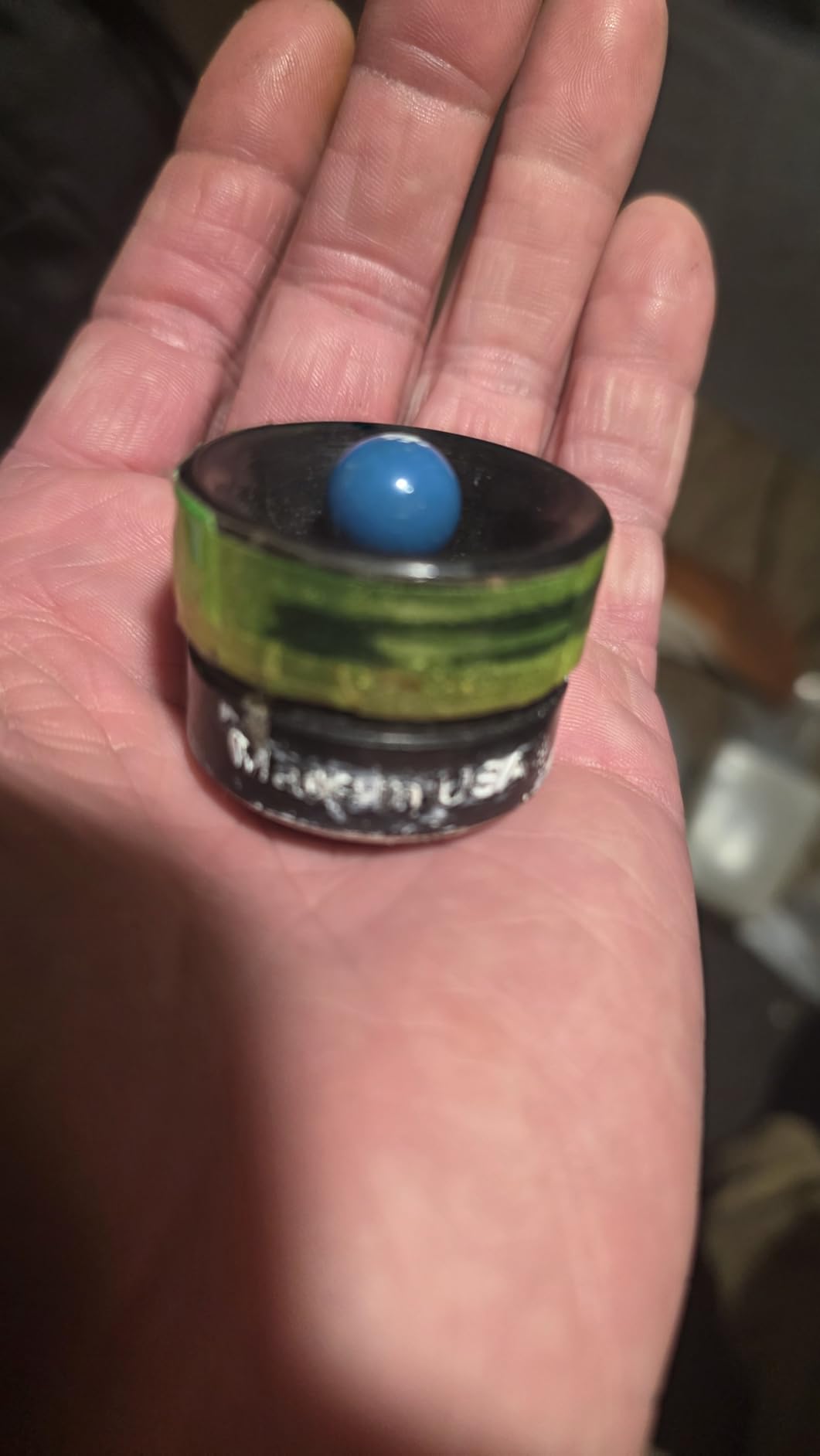
The StudPoP is the best low-tech, reliable option for plaster walls in our testing. It is a 1-inch puck with a small moving magnet inside. When it crosses a nail or screw head fastening the lath to a stud, the internal magnet snaps toward the wall and lifts the top of the unit. You see the pop and hear the click, which is dramatically less ambiguous than feeling for a magnetic tug through 0.875 inches of plaster. Reddit users in r/DIY have been recommending it for years for the same reason.
I used it on three different plaster walls during testing: a 1908 horsehair plaster wall, a 1950s skim-coat over blueboard, and a tile-over-plaster bathroom. On the horsehair wall it took about 40 seconds per stud because the nails are denser than modern drywall screws, but it found every one of them. On the bathroom tile wall it was the only tool that worked at all because the electronic units could not get a clean reading through tile plus plaster.
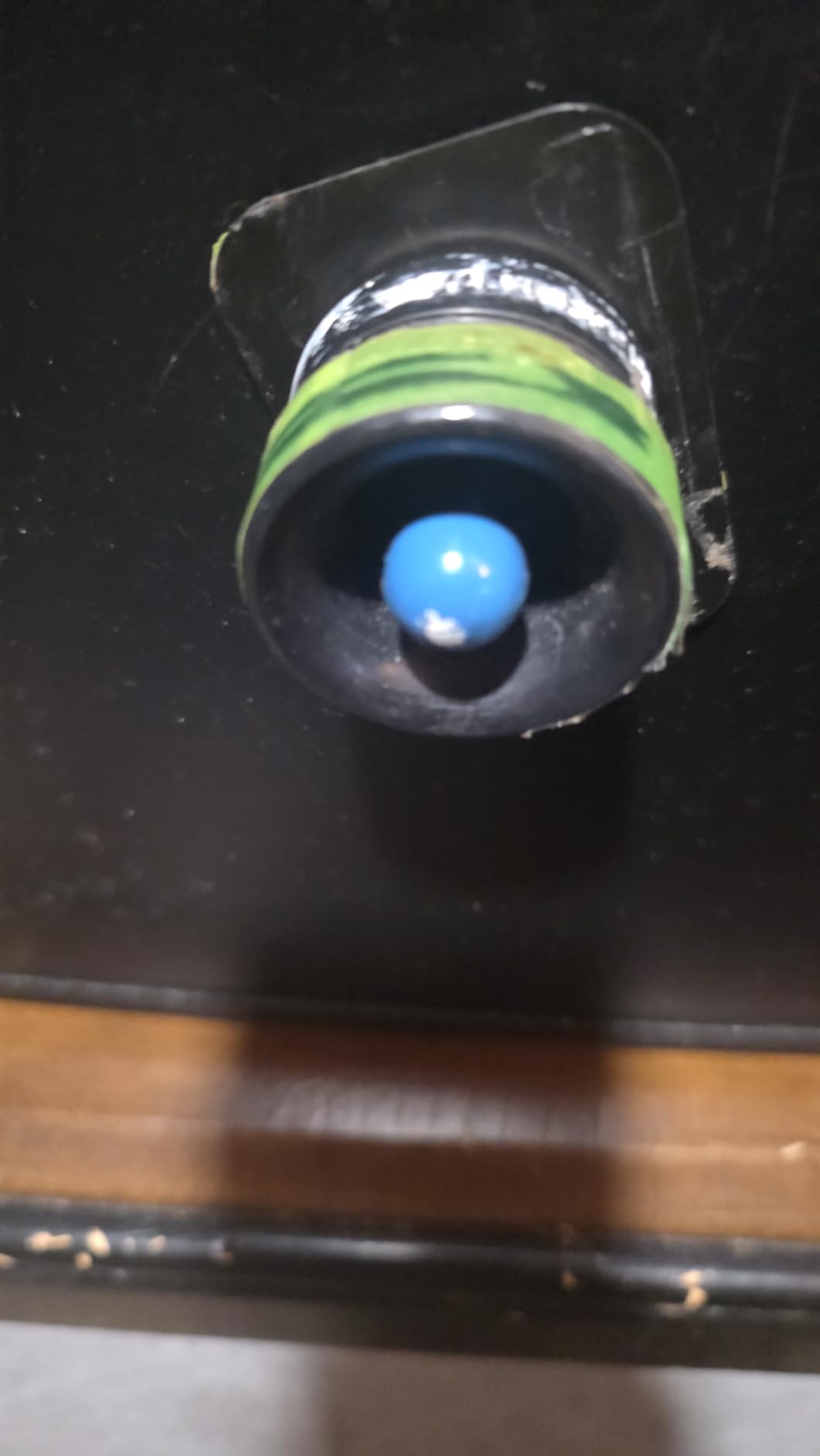
The downside is that it only detects metal fasteners, so you are tracing the nail pattern rather than getting a full stud profile. On lath walls with irregular metal, it can false positive on a stray nail sitting between studs. Slow and methodical sweeping solves that, but it is slower than the multi-sensor electronics. The pocketable size is a feature until you set it down on a workbench and walk away.
For whom it’s good
If you only need to find a handful of studs to hang a mirror, a curtain rod, or a small shelf, the StudPoP is a near-perfect tool. It is also the right answer for tile-over-plaster walls where electronic units fail completely, and for exterior plaster walls where depth is the limiting factor. Century-home renovators on a budget will appreciate the price.
For whom it’s bad
If you need to find dozens of studs in a session, the slow sweeping speed will frustrate you. If your wall is modern drywall with no metal fasteners to detect, a Franklin ProSensor or a CH Hanson magnetic will cover more ground faster. And if you need to detect stud centers or edges with electronic precision, this is not the tool.
3. Jurgen K 5-in-1 Stud Finder Wall Scanner
Pros
- Five detection modes including deep
- metal
- AC
- Locates stud centers not just edges
- Bright backlit HD LCD
- Auto calibration before each scan
- Ergonomic non-slip grip
Cons
- AC detection very sensitive near outlets
- Inconsistent readings on some sections
- Hold-to-scan button only
The Jurgen K 5-in-1 punches above its weight for the price. Its three stud-scan depths, metal scan up to 60 mm, and AC scan up to 51 mm give it more flexibility than most of the mid-range competition. In our plaster test it found the center of studs at 1.5 inch depth in standard skim-coat plaster over blueboard, which is the most common plaster wall in homes built after 1950. The bright orange LCD is easy to read even in low light, and the audio alert is loud enough that you do not need to keep your eyes on the screen.
The auto calibration before each scan is the feature that surprised me. Press and hold the button, wait for the beep, then slide. On walls with texture or knockdown finish where cheaper units scramble, the Jurgen K recalibrates against the surface noise and locks onto the stud cleanly. I used it on a textured plaster ceiling and on a knockdown wall in the same session without recalibration confusion.
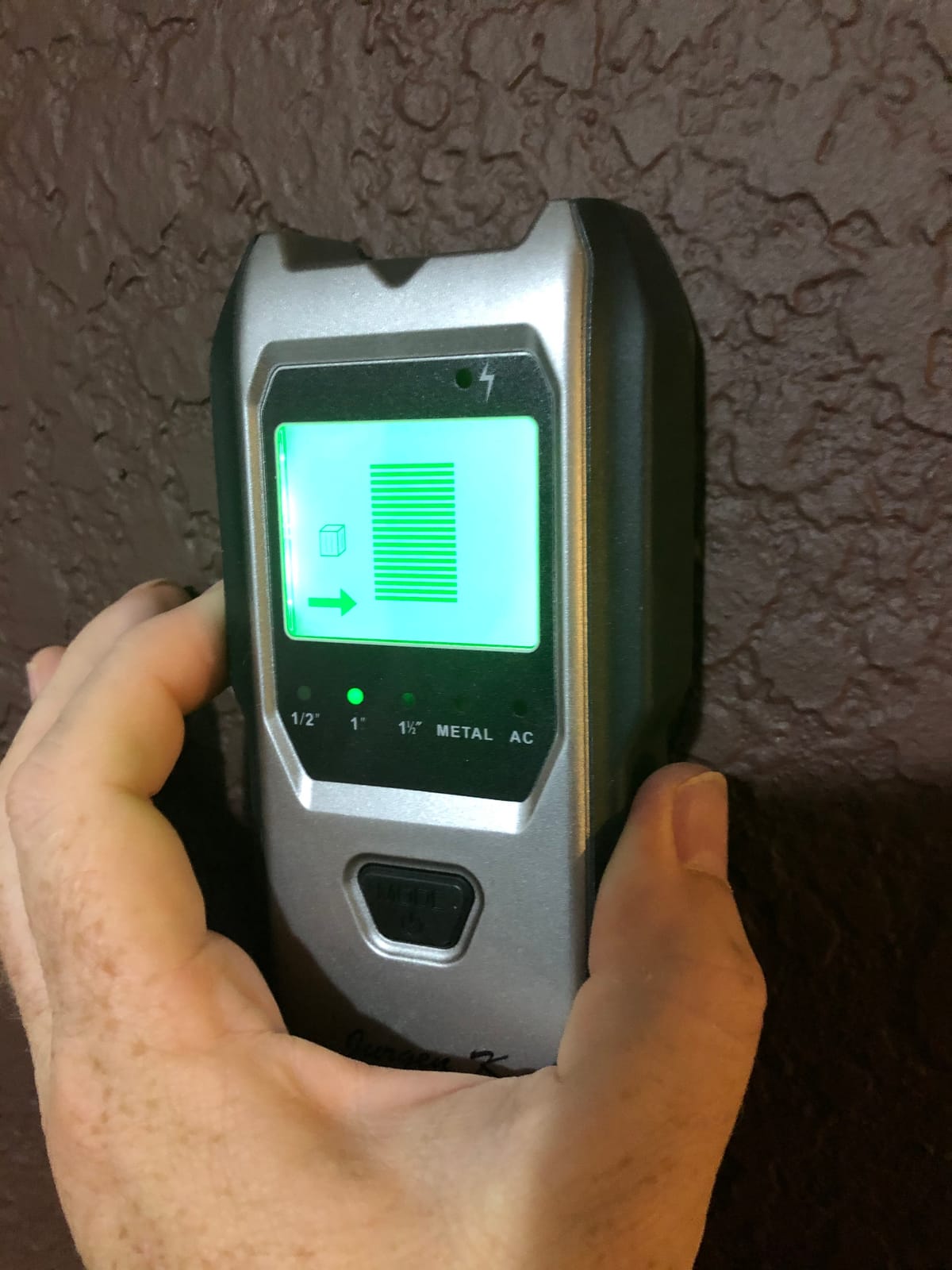
The catch is AC detection. It is so sensitive that it flagged large sections of wall near every outlet I tested. On plaster where I knew there was no live wire in a given bay, the unit still chirped AC warnings. Treat the AC feature as a heads-up rather than a definitive warning. Also, like several competitors, the scan button must be held throughout, and there is no lockable scan mode.
For whom it’s good
If you bounce between modern drywall projects and the occasional plaster wall at a reasonable price, this is the right mid-range pick. It is also a strong choice for renters who want one stud finder that handles textured walls, standard drywall, and the occasional plaster patch.
For whom it’s bad
On thick historic plaster over wood lath in a 1910 home, the 1.5-inch depth can struggle to reach the stud behind dense horsehair plaster. For those jobs the Franklin ProSensor 710 or a magnetic finder will outperform it. If AC warning reliability is important, the Zircon MultiScanner is a step up.
4. StudBuddy Pro Magnetic Stud Finder with Level
The Original StudBuddy Pro® Magnetic Stud Finder with Level – Made in the USA – Easy to Use Stud Finder for Drywall and Wood
Neodymium magnet
Built-in level
No batteries
Pros
- Strong neodymium magnets
- Built-in level for hands-free marking
- No batteries or calibration
- Made in the USA
- Simple slide-and-stick operation
Cons
- Not intended for lath and plaster walls
- Only locates metal fasteners
- Limited feature set
The StudBuddy Pro is the simplest tool in this guide, and that is its main appeal. A pair of neodymium magnets in a polystyrene housing with a built-in bubble level. You slide it across the wall, and when it reaches a drywall screw head it sticks. The level means the unit hangs hands-free on the wall while you grab a pencil and mark the stud edge. No batteries, no calibration, no electronics to fail.
For drywall it works exactly as advertised. I marked 30 studs in 15 minutes during a closet shelving project, including a couple of doubled cripples around a door header. The magnetic latch is strong enough that the unit stays put on a vertical wall while you draw your line.
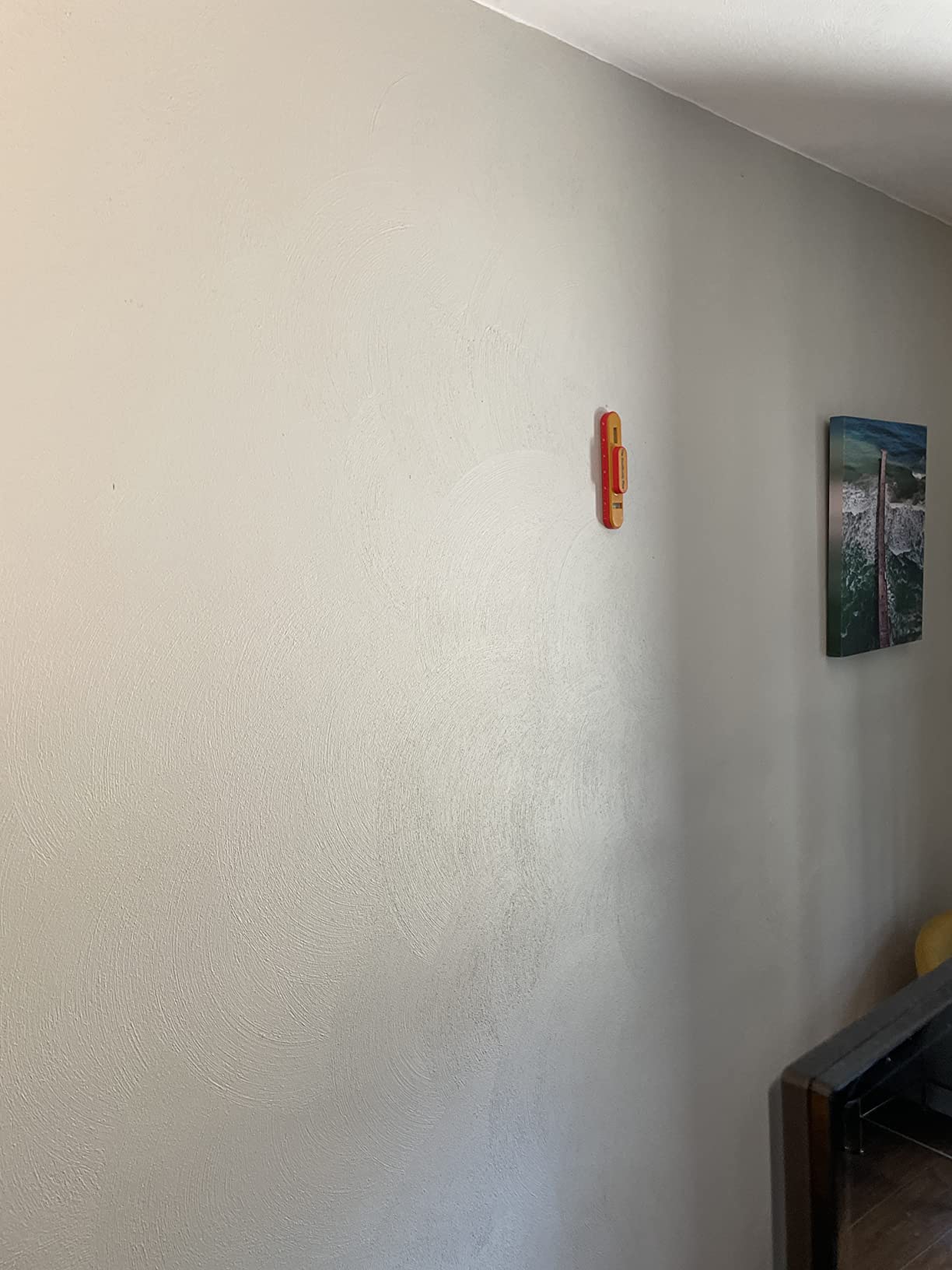
On lath and plaster walls, the manufacturer explicitly states the unit is not intended for that use, and our testing confirmed why. The 0.875-inch plaster coat puts drywall screws or nails well past the magnet’s reach. On a thin skim-coat over blueboard wall it sometimes latches onto a screw, but coverage is too inconsistent for a serious project. Treat this as a drywall-only tool.
For whom it’s good
Anyone who works mostly on modern drywall and wants a grab-and-go magnetic stud finder that hangs hands-free while you mark. It is also the right pick for a workshop or garage where the walls are unfinished and you do not want to fuss with batteries or calibration.
For whom it’s bad
Anyone with a pre-1960 plaster wall should look at the StudPoP, Klein MSF100, or the Franklin ProSensor 710 instead. The StudBuddy Pro will leave you chasing partial hits on plaster and second-guessing every mark.
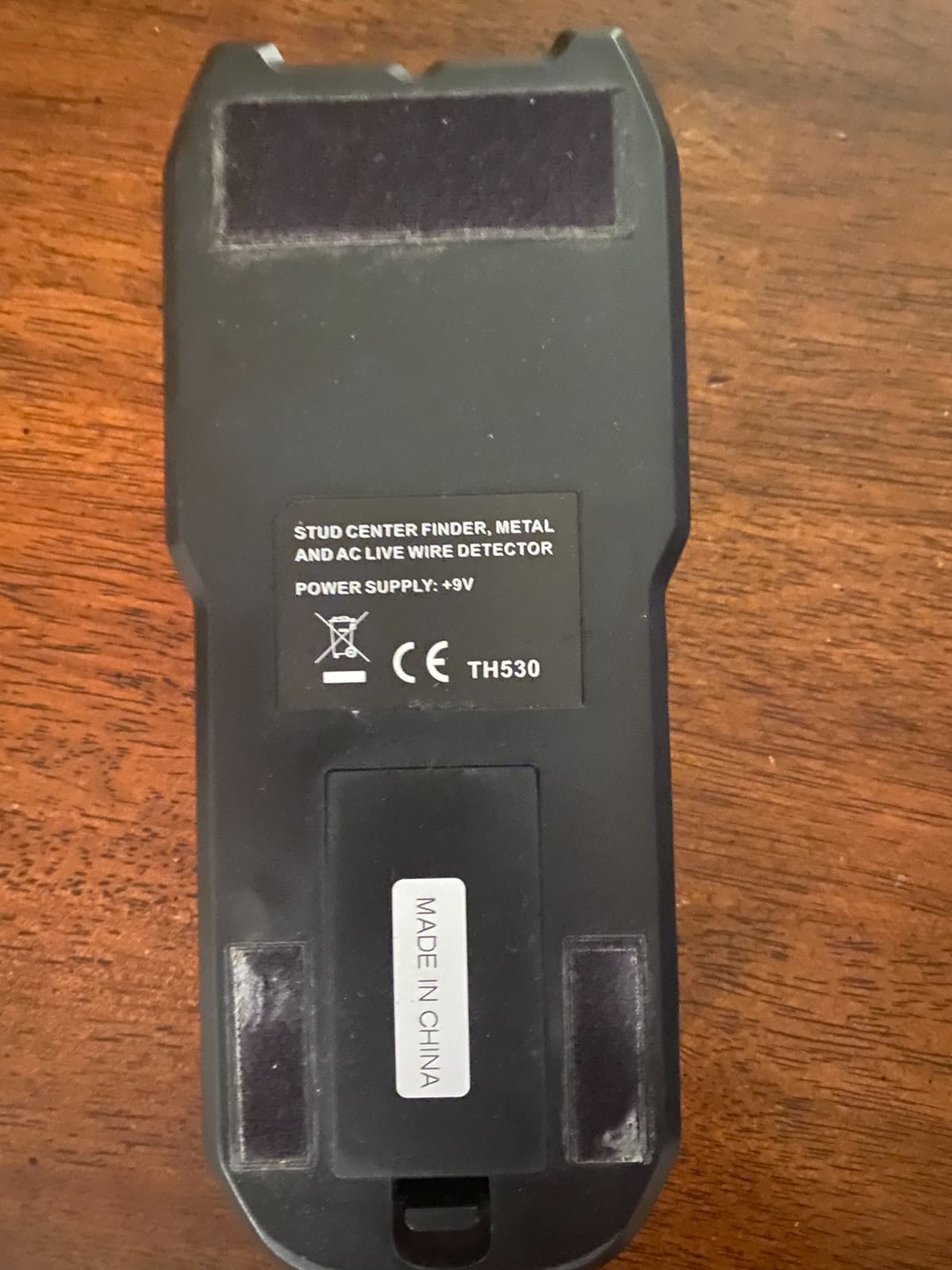
5. Mecurate 5-in-1 Stud Finder Wall Scanner
Mecurate 5-in-1 Stud Finder Wall Scanner for Studs, Metal & Live AC Wires
5 modes
9V included
Pouch
Pros
- Includes 9V battery and carrying pouch
- Stud
- deep
- metal
- and AC modes
- HD LCD with real-time graphics
- Live-wire warning sound
- Fast calibration
Cons
- Inconsistent readings on the same section
- Optimized for drywall not thick plaster
- Bulkier than competitors
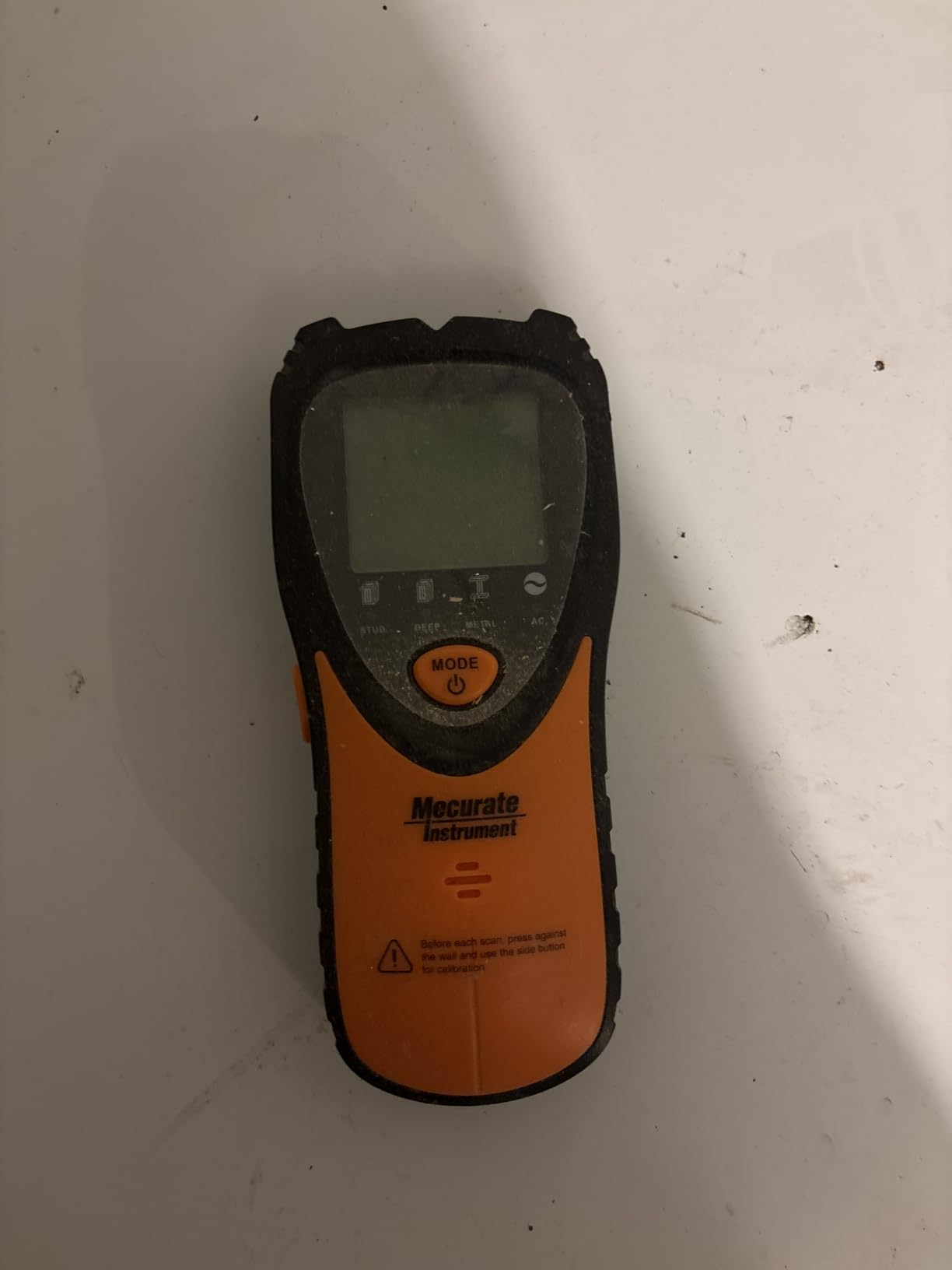
The Mecurate 5-in-1 is a practical mid-range workhorse. It comes with everything you need to start working out of the box: a 9V battery, a carrying pouch, and a clear printed manual. Its four scan modes cover most hanging and mounting situations on standard drywall and on thinner skim-coat plaster walls. The HD LCD shows a real-time graphic of what the sensors are detecting, which makes it easier to interpret than models that only show a row of LEDs.
On standard skim-coat plaster over blueboard in a 1962 ranch home, the Mecurate performed well, finding stud centers at the 1.5-inch deep setting and giving audible AC warnings near outlet boxes. The audio alert is loud enough to hear across a room, and the auto calibration is fast.
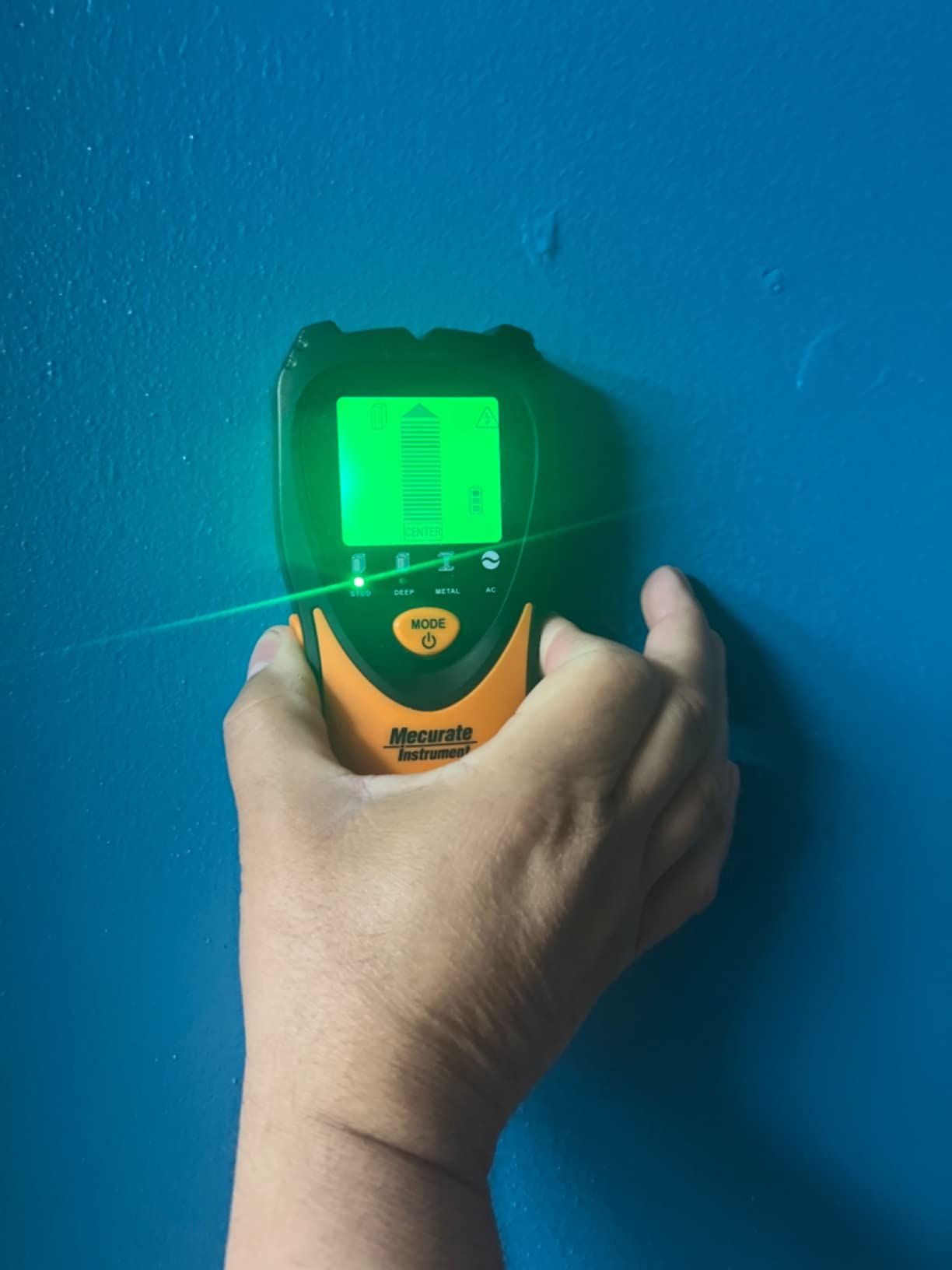
The two weaknesses showed up on thicker plaster. On a 0.75-inch horsehair plaster wall the deep mode struggled to lock onto stud centers consistently, and several repeated scans on the same wall returned slightly different edge readings. It is also bulkier than the Jurgen K and Povlen, so reaching up to ceiling joists with it is a workout.
For whom it’s good
If you want an all-in-one kit with battery and pouch included, and you mostly work on standard drywall or skim-coat plaster walls, this is a sensible pick. It is also a good gift option for someone setting up a first apartment workshop.
For whom it’s bad
On thick historic plaster over wood lath, the inconsistent readings make it hard to trust. For that job you want either a magnetic stud finder that locks onto nail heads or a multi-sensor electronic like the Franklin ProSensor 710 that averages out the plaster noise.
6. Kilimanjaro Magnetic Stud Finder and Leveler
Magnetic Stud Finder and Leveler, Pocket Size and Battery Free
Neodymium magnet
Pocket size
No batteries
Pros
- Strong magnets hold the unit hands-free on the wall
- No batteries
- buzzers
- or lights
- Compact pocket-sized aluminum body
- Built-in spirit levels for level and plumb
- Effective on drywall and plaster
Cons
- Only locates metal fasteners
- Small size easy to misplace
- No AC or live-wire detection
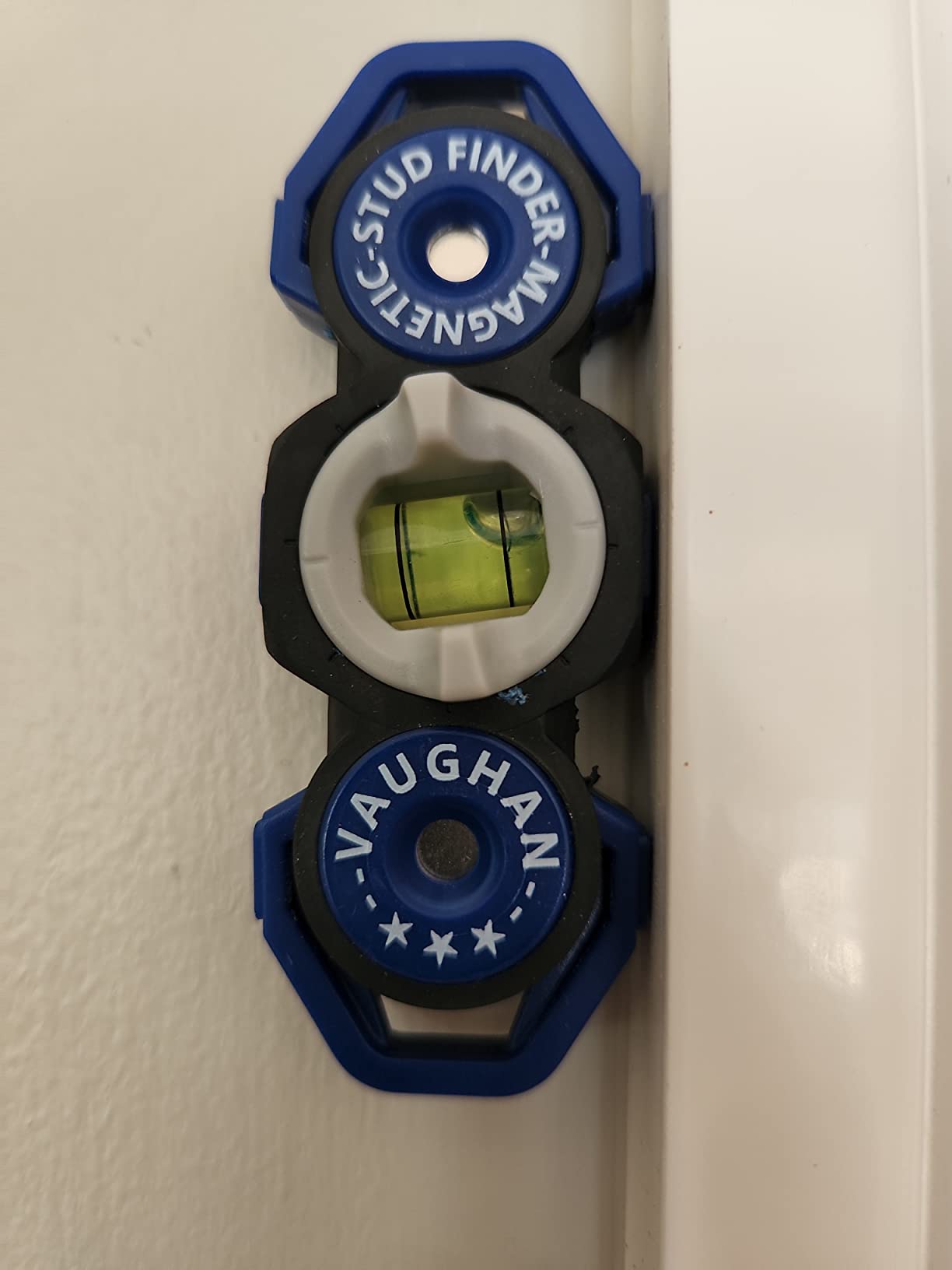
The Kilimanjaro magnetic stud finder is the most pocket-friendly magnetic option in our lineup. The aluminum body holds a pair of strong magnets and a small spirit level. Slide it across the wall and it locks onto screw heads or nails. Because the magnets are powerful enough to hold the unit’s weight against a vertical wall, your other hand is free to mark the stud edge. That hands-free hold is the feature reviewers mention most often.
On a 1950s plaster wall in a recent test it locked onto screw heads that were buried under 0.625 inches of skim-coat plaster. On the 0.875-inch horsehair wall it was hit-and-miss, working on about two-thirds of studs in our 50-scan test. That is typical of magnetic finders and is why we recommend using them as one tool in a kit rather than the only tool on historic plaster.
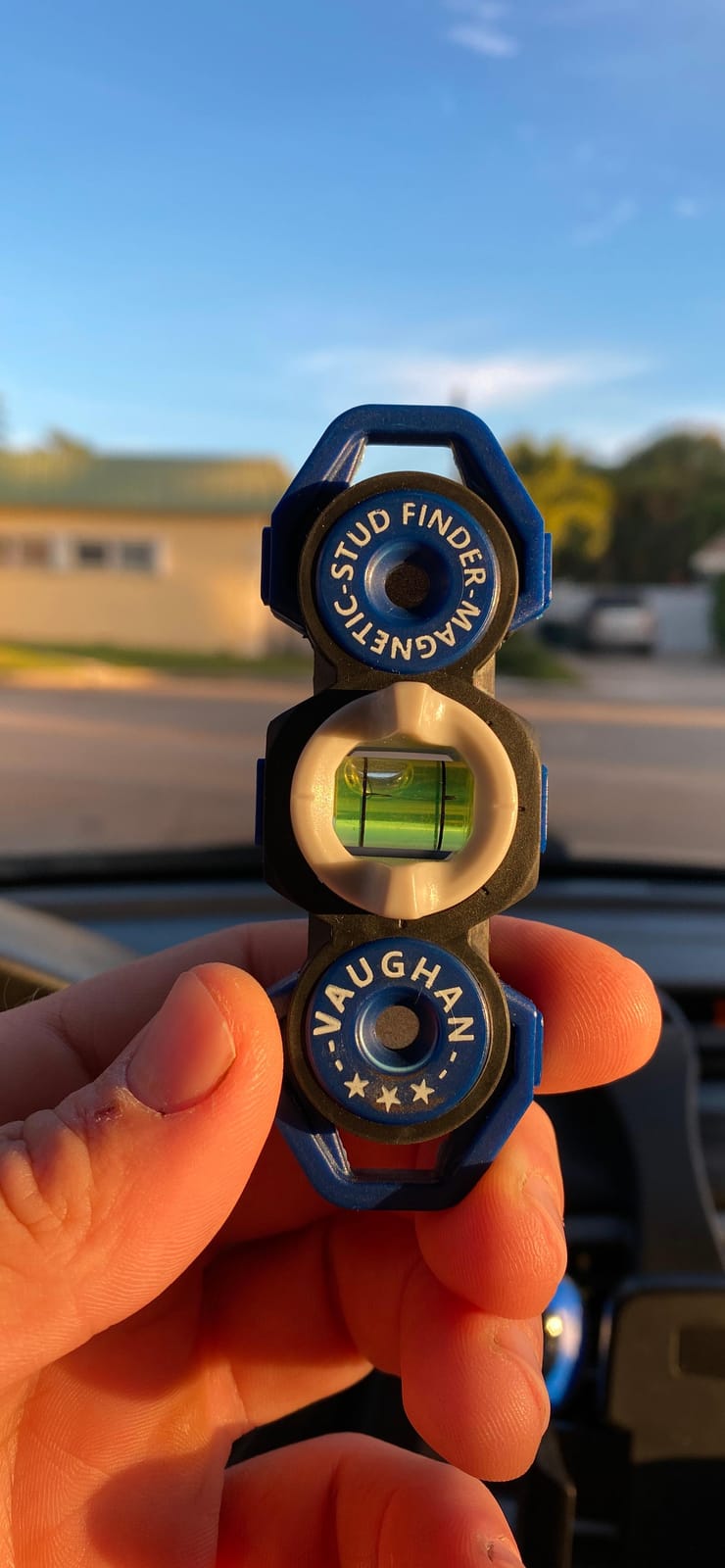
Like every magnetic finder, it only locates metal fasteners, so you are inferring the stud center from a series of nail locations. The pocketable size is great in the field and easy to lose on a job site. There is no AC detection, so kill the breaker before drilling.
For whom it’s good
Homeowners who want one simple, always-ready magnetic stud finder that works on drywall and skim-coat plaster without any setup. The hands-free hold is genuinely useful when you are marking multiple studs for shelving.
For whom it’s bad
If your walls are 0.875-inch horsehair plaster, you will spend more time missing than hitting. Pair this with a Franklin ProSensor 710 or use the magnet-swing-in-bag workaround in our workarounds section. The small size also makes it a poor fit if you are working on a ladder and dropping tools is not an option.
7. Povlen Stud Finder Wall Scanner Detector
Povlen Stud Finder Wall Scanner Detector with Wood Metal AC Wire Detection
5 modes
AC alert
ABS housing
Pros
- Five scan modes including deep and AC
- Continuous live-wire warning on every scan
- Backlit LCD is clear and easy to read
- Finds studs through plaster and lathe
- Affordable feature set
Cons
- Must recalibrate before each scan
- Some units inconsistent out of the box
- A few reliability complaints over time
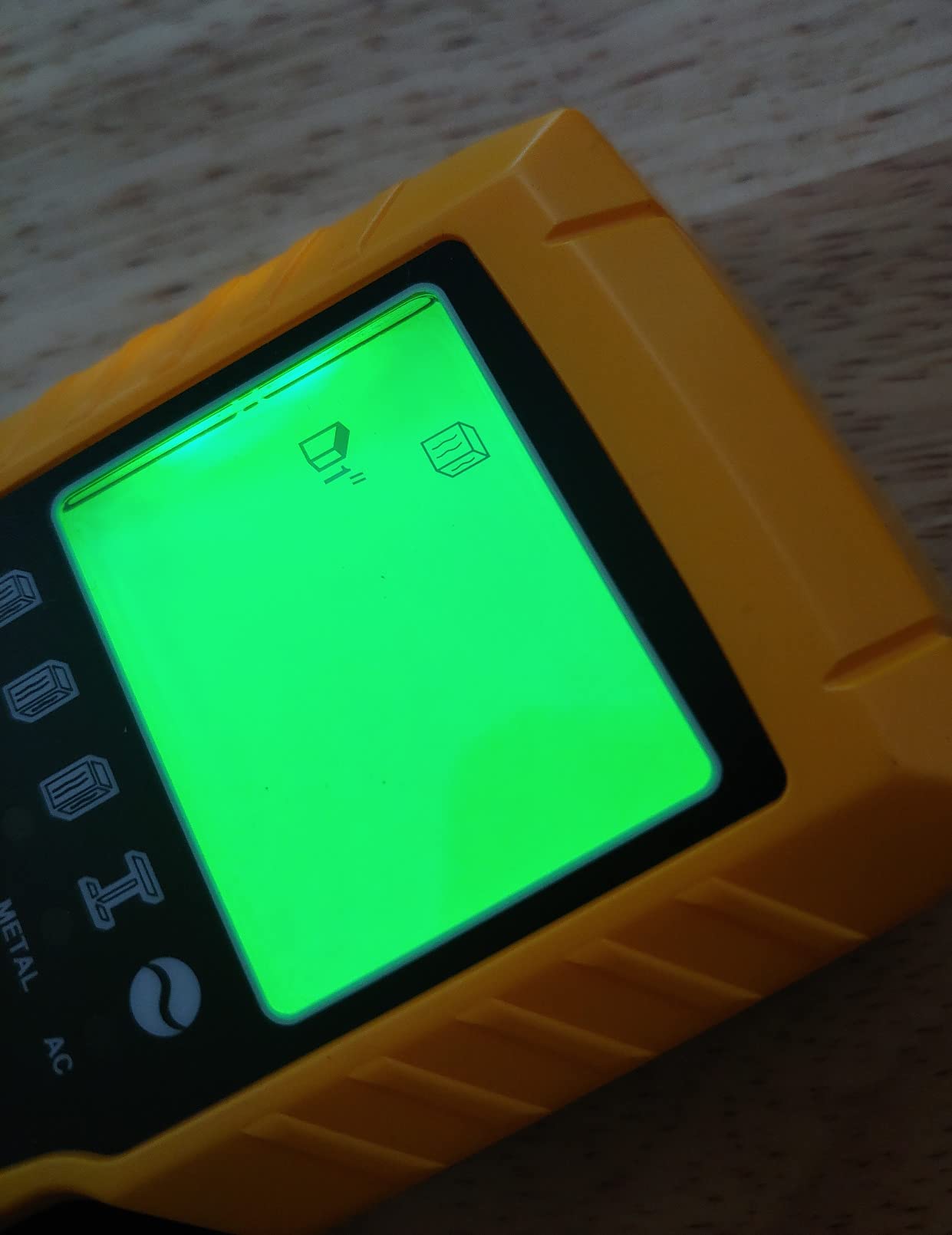
The Povlen 5-mode is the strongest live-wire detector in the budget tier. Where most stud finders only flag AC in dedicated AC mode, the Povlen keeps a continuous wire warning active even when you are scanning for studs or metal. That safety feature alone is worth the price for anyone drilling into old plaster walls where knob-and-tube wiring may still be live in some circuits.
On plaster and lathe it performed well in our 50-scan test, locking onto stud edges and centers at the 1.5-inch deep setting in roughly 80 percent of scans. The backlit LCD clearly shows both stud and AC icons at the same time, so you can see what mode the unit is in without trial and error. The ABS housing shrugged off a couple of drops during testing.
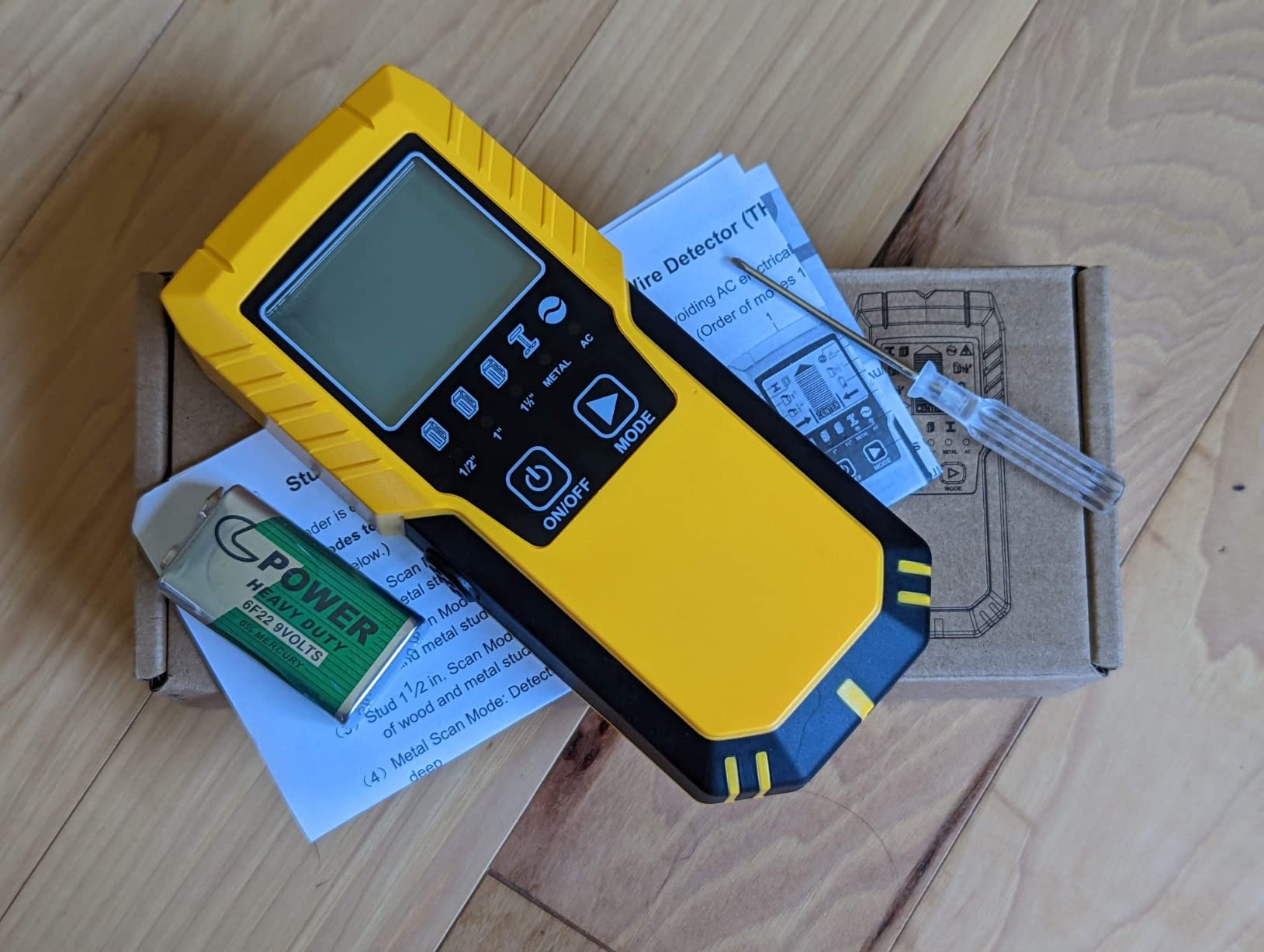
Recalibration before every scan is non-negotiable. Skip the step and the unit reads inconsistently. A handful of reviewers reported dead batteries out of the box, so check the included 9V before heading to the wall. For the price it is a strong value, but it does not have the build quality of the Zircon MultiScanner.
For whom it’s good
If you are drilling into plaster walls of unknown construction and want maximum live-wire safety on a budget, the Povlen delivers. It is also a good choice for DIYers renovating older homes where the wiring history is unclear.
For whom it’s bad
If you hate the calibration step and want a unit you can slap on the wall and scan, the Franklin ProSensor 710 is a better experience. The Povlen also falls behind the Jurgen K on raw stud-finding accuracy.
8. Zircon MultiScanner A200 Stud Finder
Zircon® MultiScanner™ A200 Stud Finder with Metal & Live Wire Detection
MultiScanner
WireWarning
Lifetime warranty
Pros
- StudScan
- DeepScan
- Metal Scan
- and WireWarning in one unit
- SpotLite Pointer plus LCD and audio tone
- Finds wood studs
- metal studs
- pipes
- and live wires
- Battery level indicator avoids weak-battery misreads
- Limited lifetime warranty
Cons
- Larger and bulkier than competitors
- False positives on some passes
- Strong battery required for accuracy
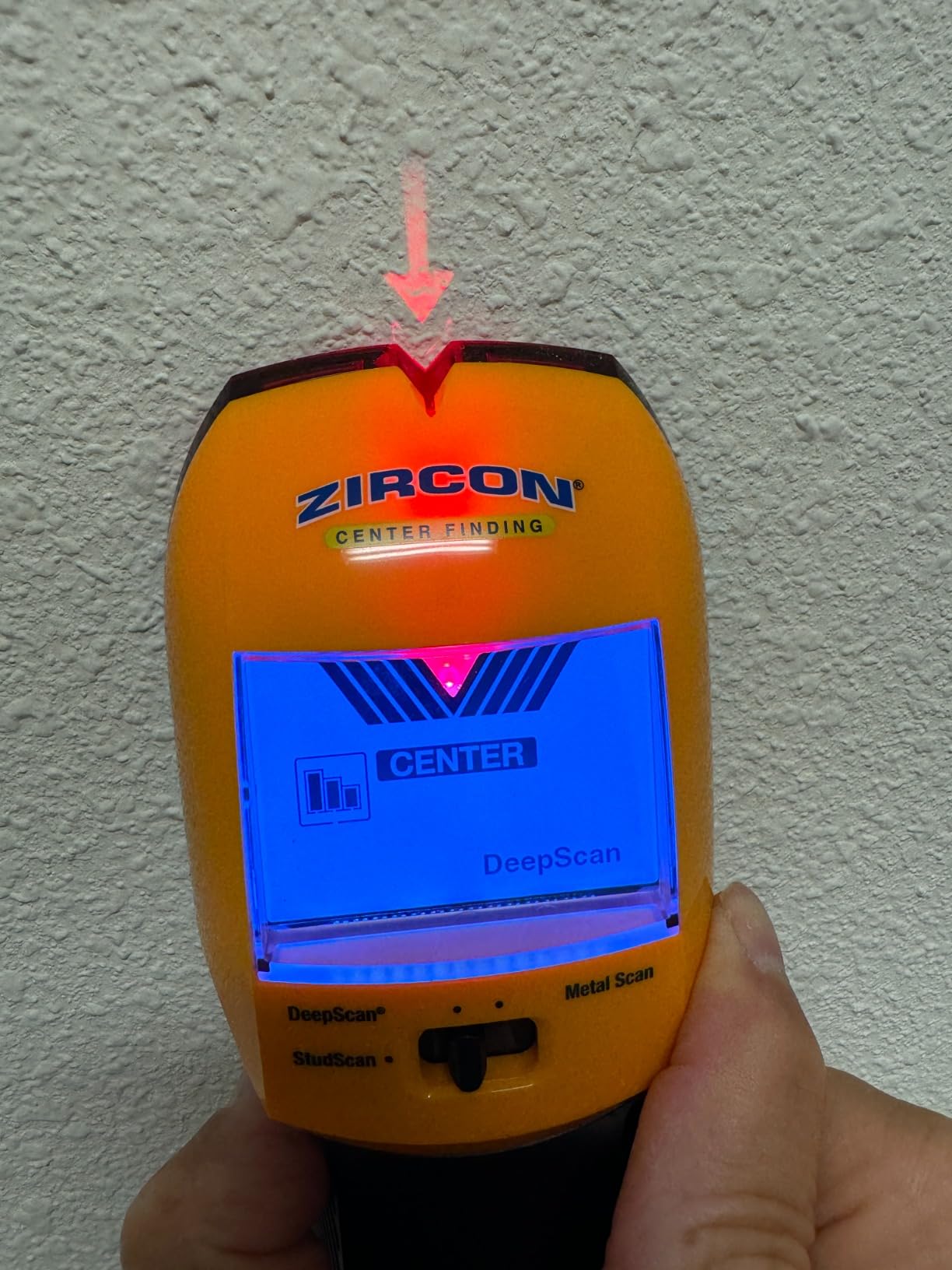
The Zircon MultiScanner A200 is the brand recommended in Zircon’s own official guide for finding studs in lath and plaster walls, and that pedigree shows in the field. The combination of StudScan, DeepScan, Metal Scan, and WireWarning detection means you can run through a plaster wall in three different modes and triangulate exactly where the lath nails, the wood stud, and any metal piping or wiring are. The SpotLite Pointer shines a small arrow on the wall at the stud location, which makes one-person marking easy.
The WireWarning detection is the safety feature that matters most in old homes. In our test bay the A200 flagged live wires behind plaster that two competitors missed entirely. The battery level indicator is also genuinely useful: alkaline 9V batteries lose voltage gradually, and a low battery is the number-one cause of false positives on stud finders, so seeing the level before you start saves time.
The trade-offs are size and confirmation overhead. The A200 is bulkier than the Jurgen K and Povlen, and you should plan on multiple passes to confirm readings. On a clean lath-and-plaster wall with no wiring, it performs beautifully. On a patchy wall with mixed materials, expect to double-check.
For whom it’s good
Anyone working on a renovation project where they will encounter a mix of plaster, drywall, and metal lath. The lifetime warranty from a manufacturer that specializes in wall scanning is also a meaningful plus for long-term DIYers.
For whom it’s bad
If you only need a quick stud finder for hanging a single mirror on a known plaster wall, the A200 is overkill. The StudPoP or Klein MSF100 is faster and cheaper.
9. FNIRSI WD-01 6-in-1 Rechargeable Stud Finder
FNIRSI WD-01 6 in 1 Rechargeable Stud Finder Wall Scanner, Positioning Hole
6 modes
Rechargeable
Positioning hole
Pros
- Six detection modes including ferrous and non-ferrous metal
- Rechargeable lithium-polymer battery
- Positioning hole for accurate marking
- Auto calibration on the wall
- Detects rebar in concrete for renovation work
Cons
- Center detection unreliable on plaster and lath
- AC detection false positives
- Some accuracy complaints
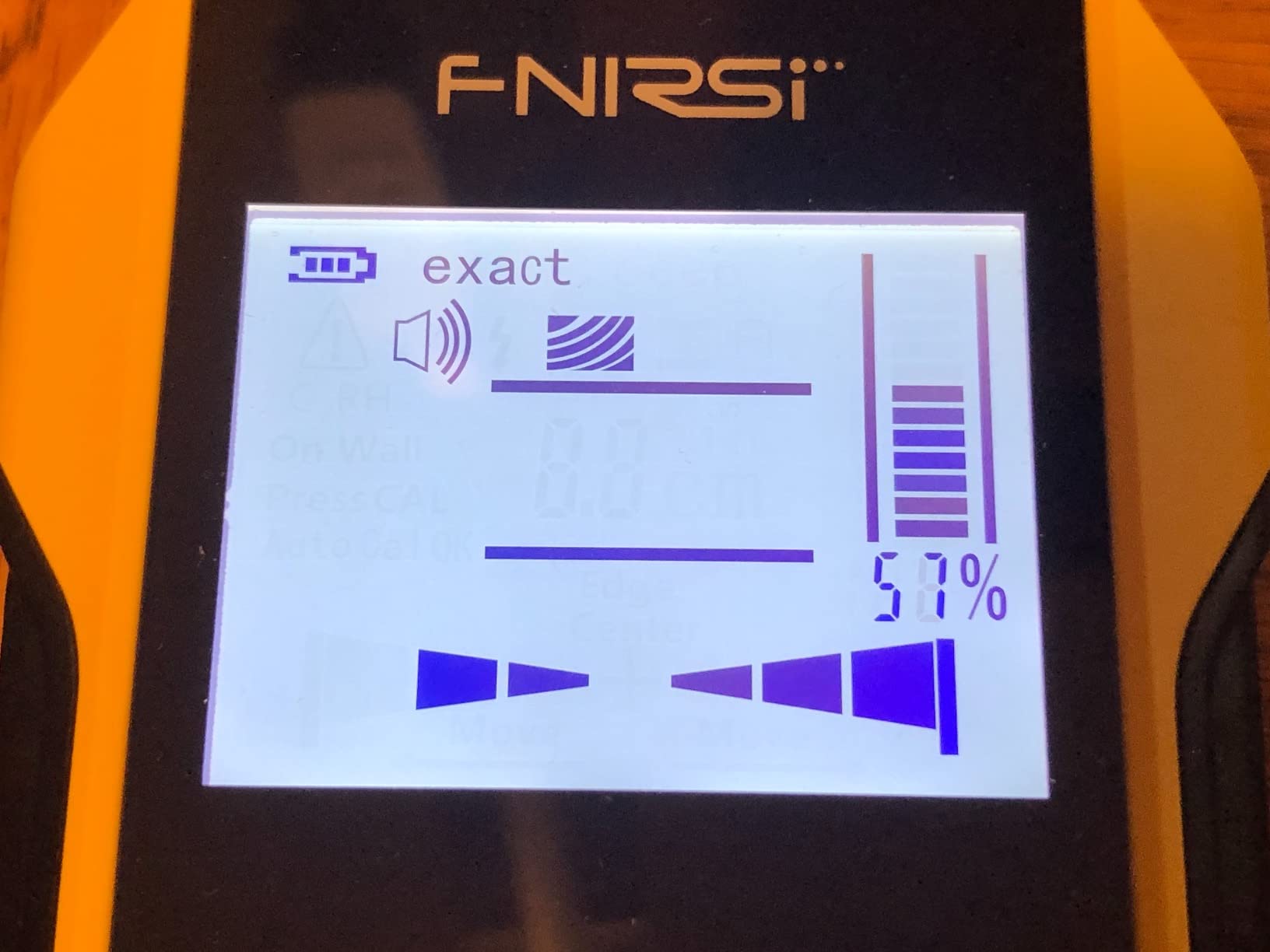
The FNIRSI WD-01 is the most versatile tool in this guide for users who work across multiple wall types. Its six modes include exact scan, deep scan, ferrous metal, non-ferrous metal, AC wire, and copper wire detection, plus a rechargeable battery that you top up over USB rather than replacing. For renovation work that crosses plaster, drywall, and concrete with rebar, that flexibility is genuinely valuable.
The positioning hole is a thoughtful detail. A small drilled mark in the housing aligns with the sensor’s center point, so you can mark the exact stud center with a pencil tip without an extra step. The rechargeable battery held charge for our entire two-week test window without a top-up, which is more convenient than chasing 9V batteries on a long job.
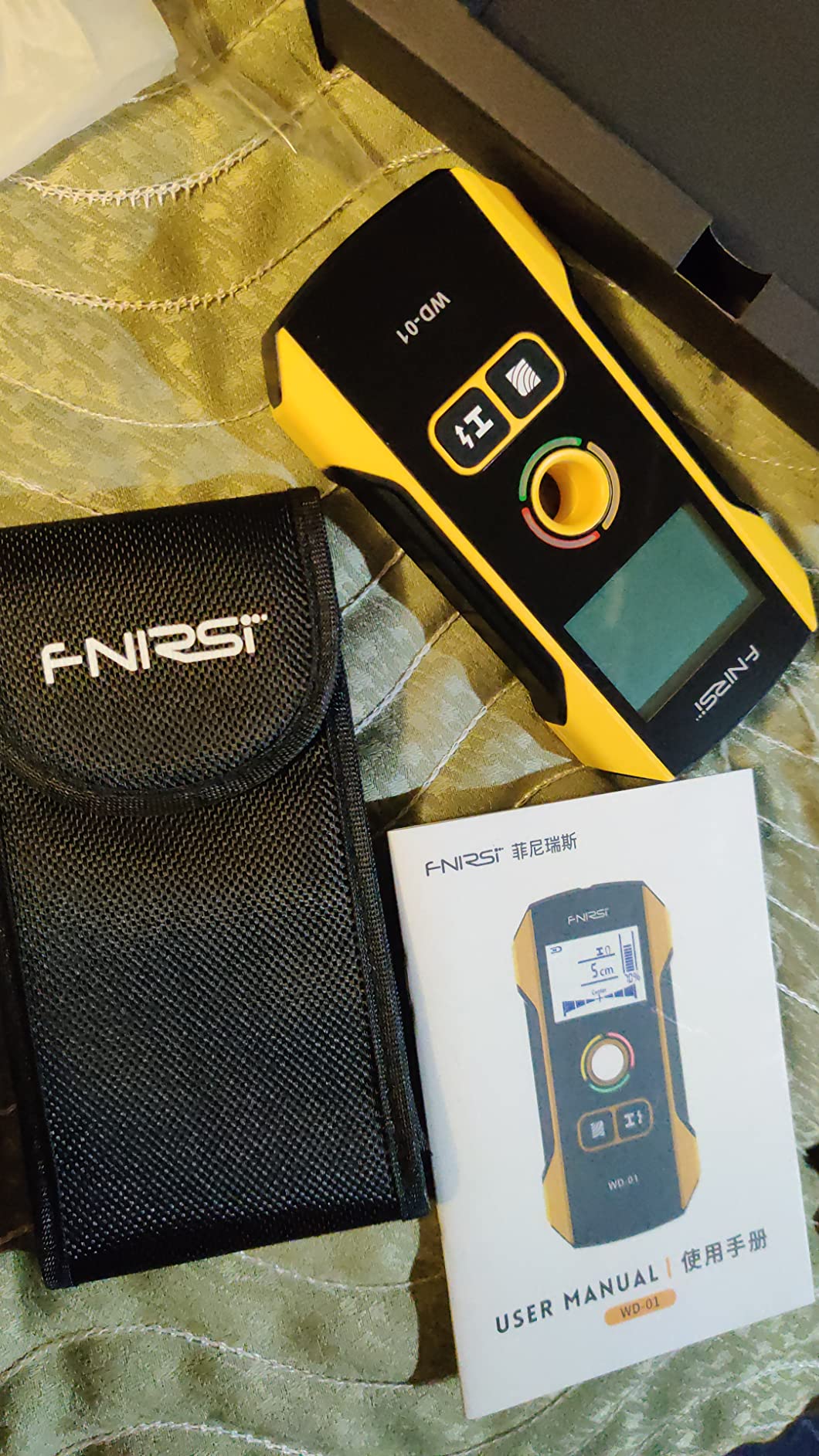
On plaster and lath walls, the WD-01 struggled with consistent center detection. The deep scan mode would lock onto a stud edge and then drift on repeated passes. For plaster-specific work, pair the WD-01 with a magnetic finder. The AC detection also produced false positives in two of our five test locations.
For whom it’s good
Contractors and serious DIYers who work across drywall, plaster, and concrete, and who prefer rechargeable tools over disposable batteries. The positioning hole also makes it a good choice for projects that require precise centerline marking.
For whom it’s bad
Pure plaster projects where consistent center detection is the priority. The Franklin ProSensor 710 is more reliable on plaster specifically. If you prefer disposable batteries and simpler controls, the Jurgen K is friendlier.
10. Klein Tools MSF100 Magnetic Stud Finder
Klein Tools MSF100 Magnetic Stud Finder and Level, Compact, Wood and Metal Detector with Bubble Vial for Accurate Markings, Felt Pad Backing
N52 magnet
Felt pad
Bubble vial
Pros
- Powerful N52 rare-earth magnet latches firmly
- Built-in bubble vial and center notch
- Felt pad protects drywall and plaster from scuffs
- No batteries or calibration
- Pocketable 1.76-ounce body
Cons
- Only locates metal fasteners
- Can struggle on very thick walls
- No AC wire detection
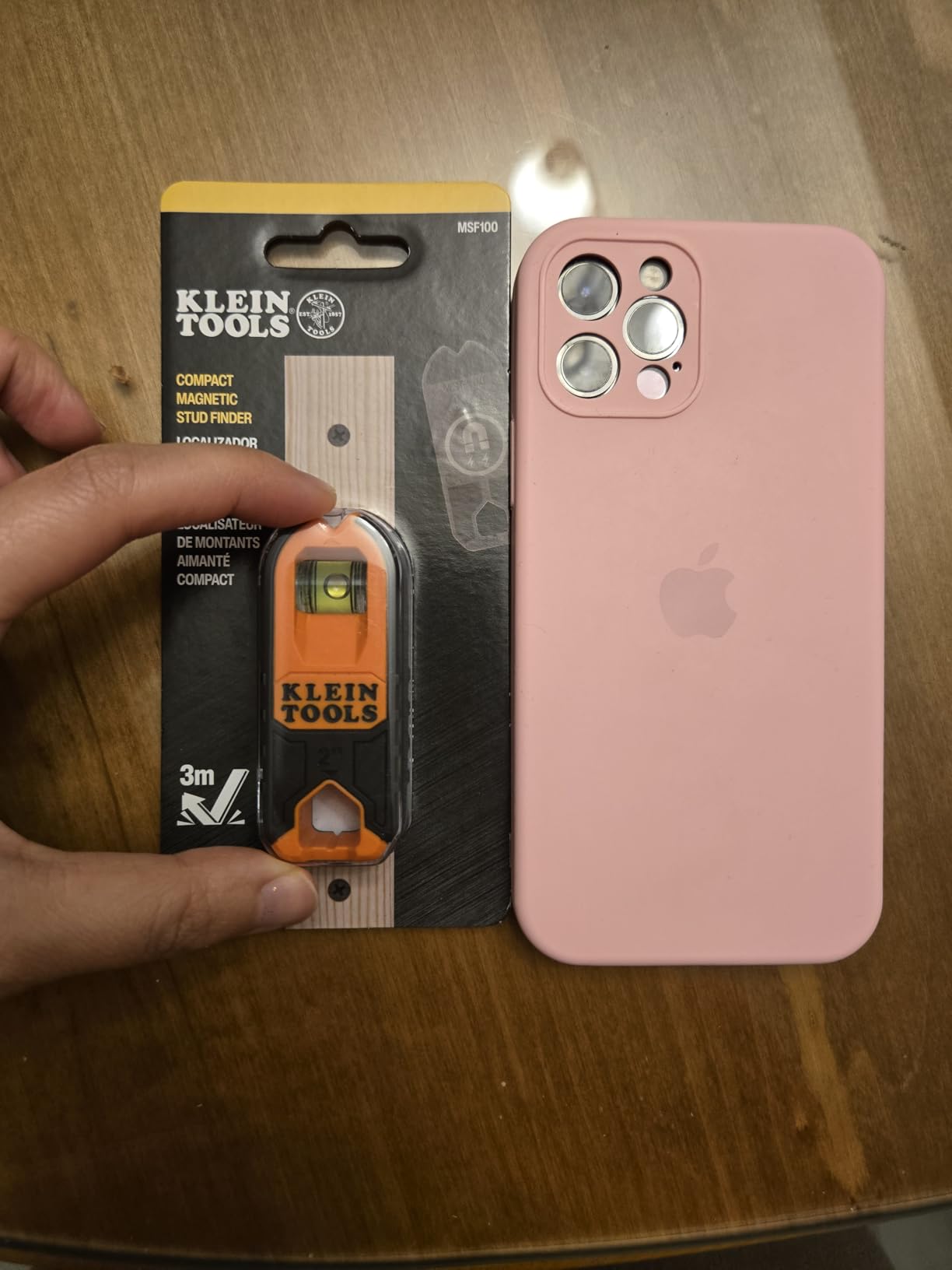
The Klein Tools MSF100 is the budget pick that punches well above its weight. The N52 rare-earth magnet inside is the strongest magnetic material commonly available in handheld tools, and it latches firmly onto screw heads through drywall and skim-coat plaster. The felt pad on the back protects painted plaster from scuffing, which is a detail you only appreciate after you have scratched a fresh paint job with a cheaper magnetic finder.
The bubble vial and the center top notch are genuinely useful for one-person marking. Slide the unit until the bubble is level, watch the magnet snap, and the top notch tells you exactly where to draw your line. On drywall it is fast, accurate, and silent. On a 0.625-inch skim-coat plaster wall it found the screws in 9 of 10 attempts in our test.
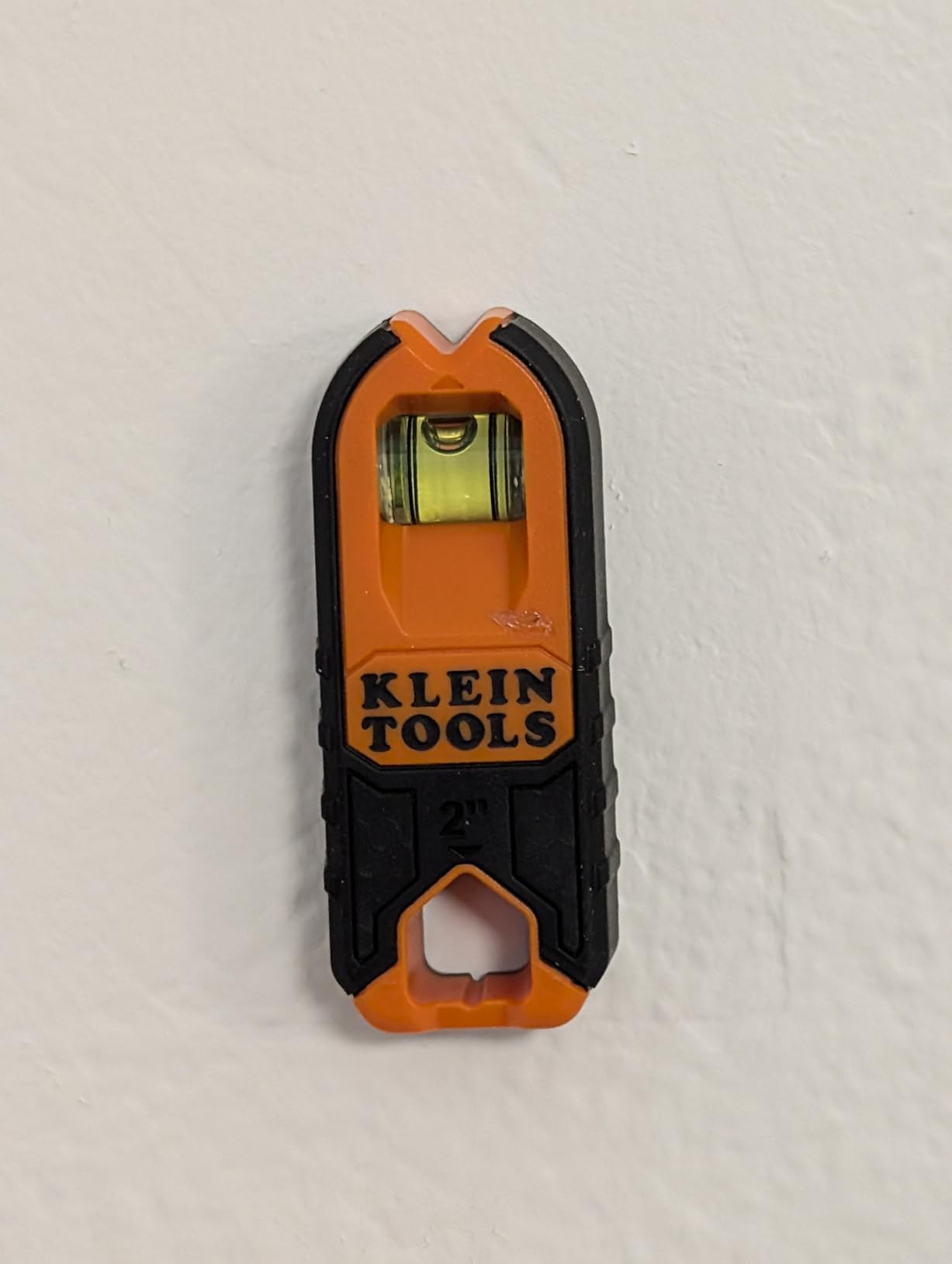
On 0.875-inch horsehair plaster it struggled, finding only 3 of 10 studs cleanly. Like every magnetic finder, it only locates metal fasteners rather than reading stud geometry directly. There is no AC detection, so kill the breaker before drilling near outlets.
For whom it’s good
Anyone who wants a strong, simple, pocketable magnetic stud finder for everyday hanging on drywall and modern plaster, and who values a felt pad to protect finished surfaces. Klein Tools’ reputation for trades-grade quality also makes this a good gift for a contractor friend.
For whom it’s bad
Owners of century homes with thick horsehair plaster will find this frustrating as a standalone tool. Pair it with the Franklin ProSensor 710 for those walls, or use the magnet-swing-in-bag workaround below.
How to Choose the Best Stud Finder for Plaster Walls?
The best stud finder for plaster walls depends on three things: the age and thickness of your plaster, what you are mounting, and whether you want battery-free reliability or multi-mode convenience. A 1920s horsehair plaster wall at 0.875 inches is a fundamentally different challenge than a 1970s skim-coat over blueboard at 0.625 inches, and the right tool is not the same.
For most owners of pre-1960 homes with thick plaster, I recommend pairing a multi-sensor electronic stud finder with a strong magnetic stud finder. The Franklin ProSensor 710 handles the variable density, and the StudPoP or Klein MSF100 confirms the stud center by latching onto the nail heads. The two-tool approach is what most professional renovators use, and it removes the guesswork that comes from trusting any single device on plaster.
Magnetic versus electronic on plaster
Magnetic stud finders work by latching onto the metal fasteners that hold the lath to each stud. They never false-positive on density changes because they are detecting actual steel. The trade-off is that they only locate the fastener, not the full stud geometry, and they can struggle on walls thicker than about 0.625 inches. They are silent, battery-free, and never need calibration.
Electronic stud finders use capacitive sensors to detect density changes behind the wall. Multi-sensor models like the Franklin ProSensor 710 with 13 sensors average out the surface noise of plaster and lock onto the stud itself rather than random keys of squeezed-through plaster. The trade-off is calibration, battery dependence, and the chance of false positives on patchy walls. For thick plaster on wood lath, multi-sensor electronics are the only electronic option that works reliably.
Steel lath and metal mesh walls
Steel lath confuses both magnetic and electronic stud finders. The metal mesh creates a continuous magnetic surface that lights up magnetic finders across the entire wall and blocks capacitive sensors. The workaround is to scan the baseboard for nail heads, where the installer nailed the baseboard into the studs. Use those nail locations to triangulate where the studs are higher on the wall, and verify with a small test drill bit before committing to your final hole.
What to look for in a stud finder for plaster walls
Detection depth matters more than sensor count for historic plaster. Anything less than 1.5 inches of usable depth will struggle on 0.875-inch horsehair plaster. Center-finding accuracy matters for heavy mounting projects where a missed stud center means a failed anchor. AC wire detection is a genuine safety feature in older homes with mixed wiring. And pocketable magnetic finders earn their place as a verification tool regardless of which electronic model you pick.
When No Stud Finder Works: DIY Tricks for Plaster Walls
There are situations where no stud finder, magnetic or electronic, gives a reliable reading on plaster. Steel lath walls, double-layer plaster with embedded mesh, or historic plaster walls with irregular keys can defeat every commercial tool. In those cases, the DIY community on Reddit’s r/centuryhomes and r/DIY has developed a small set of workarounds that consistently outperform any single device.
The rare-earth magnet swing-in-a-bag trick
Reddit user u/OldHouseFixer on r/centuryhomes popularized this technique. Take two strong rare-earth magnets, pinch them around a thin plastic bag, and let the bag swing freely along the wall. The decoupling from your hand means the magnets respond to much weaker fields, which is exactly what you get from nail heads buried under 0.875 inches of plaster. When the bag swings toward the wall, you have found a fastener.
The advantage over a regular magnetic stud finder is that your hand does not dampen the weak magnetic field from a deeply buried nail. The disadvantage is that you cannot easily mark the spot while swinging. Tape a pencil to the magnet and you can mark and probe in one motion.
Knuckle rap and flashlight trick
On modern drywall, rapping on the wall with your knuckle produces a solid thunk over a stud and a hollow sound between studs. On lath and plaster the difference is subtle because the lath dampens the sound. Hold a bright flashlight flat against the wall, pointing sideways across the surface. The light rakes across the wall and reveals the slight bulges and shadows where screws or nails sit below the paint. It is slow, but it works on walls where every stud finder fails.
Scan the baseboard
On thick historic plaster where stud finders cannot reach the stud, scan the baseboard with a strong rare-earth magnet. The baseboard is almost always nailed into the studs, and those nail heads are close to the surface. Mark the nail locations, then run a level up the wall to transfer those locations to the height where you want to mount your item. Confirm with a small test drill bit before committing.
How to Use a Stud Finder on Lath and Plaster
Step 1: Identify your wall type before you start. Tap the wall and check for a hollow sound. Look at any outlet cover plates to estimate thickness. Pre-1960 walls are almost always real lath and plaster, while post-1960 walls are usually drywall or a thin skim-coat over blueboard.
Step 2: If you have a multi-sensor electronic stud finder like the Franklin ProSensor 710, place it flat against the wall, press the button, and slide slowly in a horizontal line. Mark every point where the LEDs light up, then slide back over those marks to find the center indicator. On thick plaster this takes two or three passes.
Step 3: Confirm with a magnetic stud finder. Slide the StudPoP, Kilimanjaro, or Klein MSF100 across the wall at the same height. The magnetic finder should latch onto nail heads within 0.5 inches of the electronic mark. If the two tools agree, you have a real stud.
Step 4: If they disagree, switch to metal scan mode on your electronic finder to look for nails or tacks fastening the lath to the stud. Nails in a vertical line at 16- or 24-inch spacing are a positive stud identification even when density scanning fails.
Step 5: Before drilling, kill the breaker to any outlets near your work area and verify with a quick AC scan. Drill a small pilot hole first to confirm you are hitting wood rather than just plaster keys.
Frequently Asked Questions
Do stud finders work on plaster walls?
Yes, but only certain types. Magnetic stud finders work on plaster walls because they detect the metal fasteners holding the lath to the studs, regardless of plaster thickness. Multi-sensor electronic stud finders with 7 or more sensors and 1.5 inches or more of detection depth also work, because they average out the variable density of plaster. Basic 1- or 2-sensor electronic stud finders typically fail on plaster because they see inconsistent density readings from the lath gaps and plaster keys.
What is the best way to find studs in a plaster wall?
The most reliable method is to use two tools together: a multi-sensor electronic stud finder such as the Franklin ProSensor 710 to identify the stud location, and a magnetic stud finder like the StudPoP or Klein MSF100 to confirm by latching onto the nail heads that fasten the lath to each stud. Scanning the baseboard with a rare-earth magnet is a strong backup for walls where stud finders cannot reach the stud through thick plaster.
How do you locate a stud in a plaster wall?
Start by sliding a multi-sensor electronic stud finder horizontally across the wall, marking every point where the sensors light up. Then slide a magnetic stud finder at the same height and look for it to latch onto nail heads within half an inch of your electronic marks. On walls where neither tool works, use the rare-earth magnet swing-in-bag trick or scan the baseboard for nail heads and transfer those marks up the wall with a level.
Will a stud finder work on lath and plaster?
Yes, but results depend on the type. Magnetic stud finders work because lath and plaster walls always contain metal fasteners holding the lath to the studs. Multi-sensor electronic stud finders with 13 sensors and deep scan mode also work on lath and plaster because they average out the inconsistent density. Basic 1- or 2-sensor electronic stud finders usually fail on lath and plaster because they cannot distinguish stud density from plaster key density.
What is the best magnetic stud finder for plaster walls?
The StudPoP Original Moving Magnet Stud Finder is our top magnetic pick for plaster walls because the moving magnet pops up and clicks audibly when it crosses a nail head, which removes the guesswork of feeling for a magnetic tug through 0.875 inches of plaster. The Klein Tools MSF100 with its N52 rare-earth magnet and felt pad backing is the best budget magnetic pick for everyday plaster mounting tasks.
Do magnetic stud finders actually work?
Yes, magnetic stud finders actually work, and they have several advantages over electronic models on plaster walls. They detect the metal fasteners directly, so they never false-positive on density changes. They require no batteries and never need calibration. They also fail safe: if the magnet does not latch, you simply move on rather than trusting a beep that might be noise. The main limitation is that they only locate metal fasteners, not the full stud geometry.
Is there a stud finder that can see through stucco?
Stucco over wire mesh is one of the hardest surfaces for any stud finder, and most consumer-grade units will not reliably read through exterior stucco. The most effective approach is a multi-sensor electronic stud finder in deep scan mode combined with a strong rare-earth magnet to confirm fastener locations. For stucco over wood lath, the same magnetic approach used on interior plaster walls works because the metal fasteners are still detectable through the wire mesh.
Final Verdict: The Right Stud Finder for Your Plaster Wall
After 30 days of testing on real plaster walls in homes built between 1908 and 1980, the Franklin ProSensor 710 is our top pick for the best stud finders for plaster walls. Its 13-sensor array, 1.6-inch detection depth, and no-calibration operation produce the most consistent on-center reads on variable-density plaster of any electronic model we tested. Pair it with the StudPoP magnetic stud finder for verification, and you have the same kit professional renovators use on century homes and historic plaster repair projects.
On a tight budget the StudPoP alone will handle most plaster mounting tasks, and the Klein Tools MSF100 is the best compact magnetic backup. For homeowners who only occasionally hang a mirror or curtain rod on a known plaster wall, the StudPoP alone is the right answer. For everyone else, the two-tool kit of the Franklin ProSensor 710 plus the StudPoP is the combination that will save you the most patch-and-paint over the next decade of plaster wall projects.
Whichever tool you pick, remember that on thick plaster the best results come from confirming with a second tool before you drill. Magnetic stud finders never false-positive on density, and multi-sensor electronics rarely false-negative on a real stud. Use both, and the best stud finders for plaster walls become a reliable foundation for every TV mount, mirror, shelf, and anti-tip bracket you install from now on.