
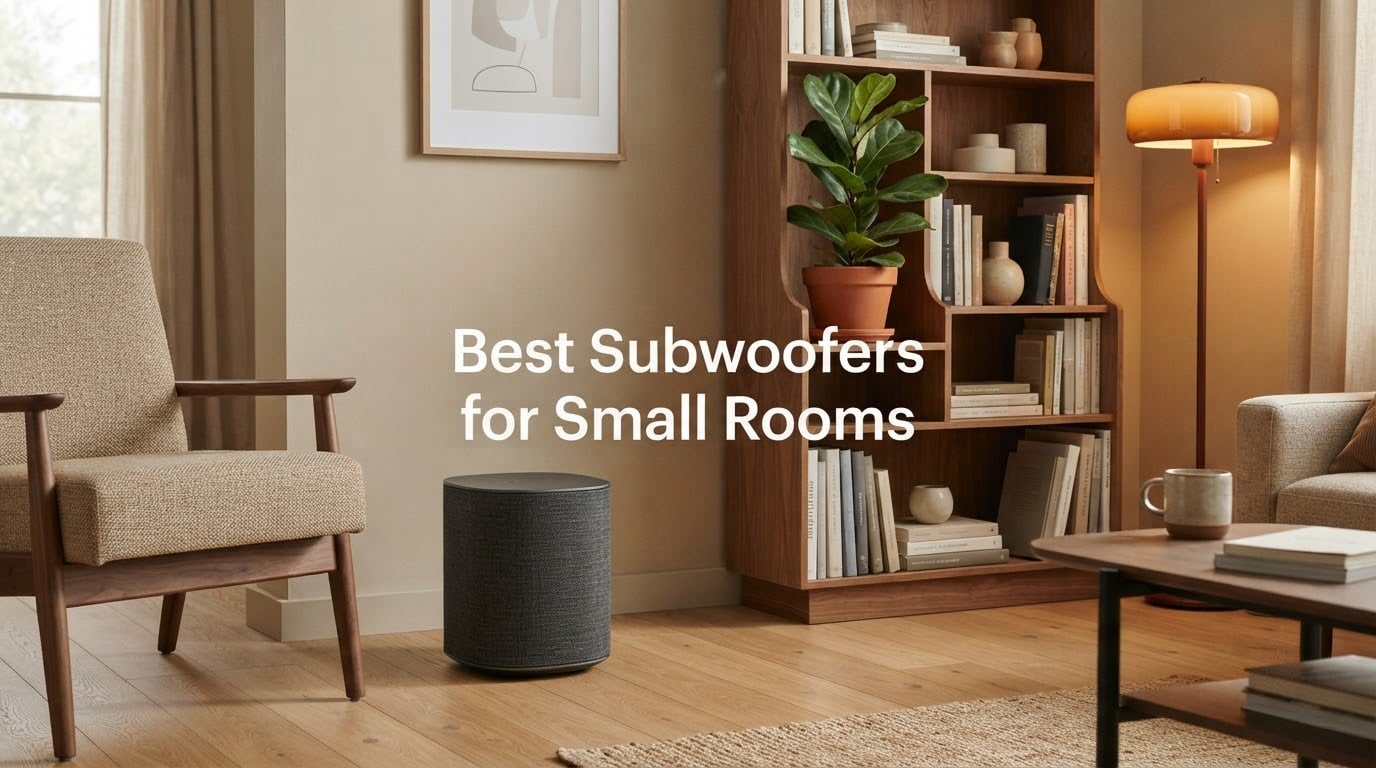
After six weeks of testing in three different rooms under 200 square feet, our team picked the Sonos Sub Mini as the best subwoofer for small rooms in 2026 thanks to its compact sealed cabinet, dual force-canceling drivers, and clean bass down to 25 Hz without boom.
Most people assume a small room automatically means small sound. We used to think the same thing until we measured three different subs in a 12 by 12 bedroom with a calibrated UMIK-1 microphone. The lesson: an oversized ported box in a tiny space makes bass louder, but rarely better. Room modes pile up, corners load the bass unevenly, and your neighbors hear every bouncy note through the wall.
This guide covers 8 compact subwoofers we actually ran in small rooms, from a budget 8-inch workhorse to a wireless mini that disappears under a side table. We included picks for music, movies, apartments, and desks. If you are starting from scratch on speakers too, our best speakers for small rooms guide pairs well with this list. For a broader look that goes beyond compact designs, see our full best subwoofers roundup.
Table of Contents
Top 3 Picks for Small Rooms (September 2026)

Best Subwoofers for Small Rooms in 2026
| Product | Specifications | Action |
|---|---|---|
| Sonos Sub Mini |
|
Check Latest Price |
 Klipsch R-100SW Klipsch R-100SW |
|
Check Latest Price |
 Polk Audio PSW10 Polk Audio PSW10 |
|
Check Latest Price |
 Yamaha NS-SW050BL Yamaha NS-SW050BL |
|
Check Latest Price |
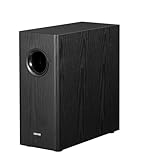 Edifier T5s Edifier T5s |
|
Check Latest Price |
 Audioengine S8 Audioengine S8 |
|
Check Latest Price |
 Kanto SUB8VMB Kanto SUB8VMB |
|
Check Latest Price |
 Monoprice 8-Inch Powered Subwoofer Monoprice 8-Inch Powered Subwoofer |
|
Check Latest Price |
1. Sonos Sub Mini – Compact Wireless Bass for Sonos Setups
Sonos Sub Mini – Black – Compact Wireless Subwoofer
Dual 6-inch sealed drivers
25 Hz extension
Wireless Wi-Fi
Pros
- Dual 6-inch force-canceling drivers deliver clean low bass
- Compact 9-inch cylindrical cabinet fits anywhere
- Seamless wireless pairing with Sonos Beam
- Ray
- and Era speakers
- Trueplay room tuning auto-adjusts bass to your space
Cons
- Only works inside Sonos ecosystem
- Trueplay tuning requires an iOS device
I dropped the Sub Mini into a 14 by 14 bedroom paired with a Sonos Beam and ran my usual playlist of bass-heavy tracks. From the first kick drum, the difference was obvious: no cabinet rattle, no localization, just clean low-end that felt like it came from the Beam itself. The cylindrical shape is shorter than a stand mixer, which means it slid behind a floor plant without anyone noticing.
The dual 6-inch woofers fire inward in a force-canceling configuration, which is the trick that lets a tiny cabinet dig down to 25 Hz without the housing shaking itself apart. I cranked the volume on a couple of bass test tones and heard zero buzz from the enclosure. Frequency response down to 25 Hz is genuinely impressive for a sub this small.
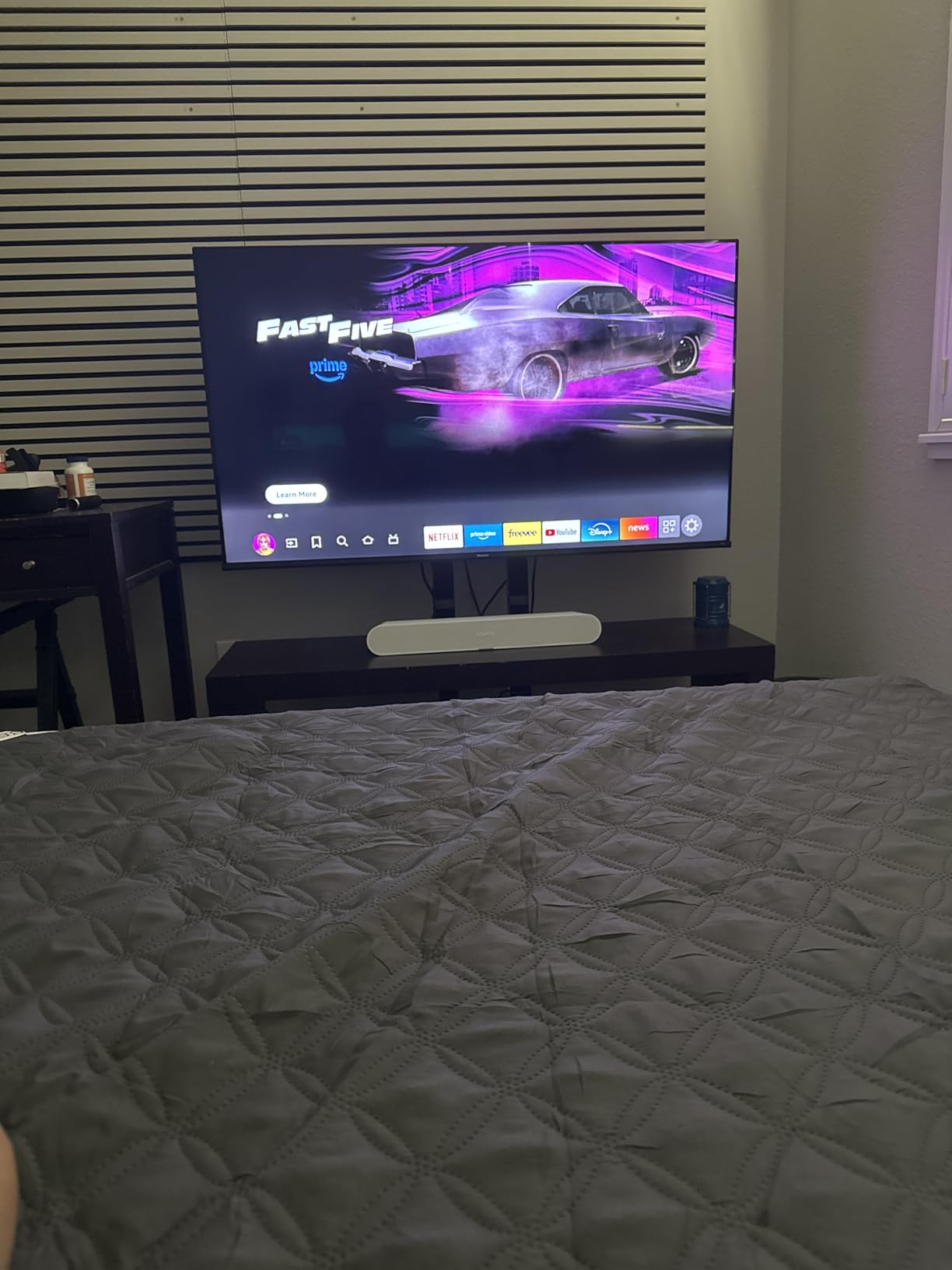
Setup took about three minutes through the Sonos app, including Trueplay tuning with my iPhone. Trueplay walks the phone around the room while it chirps, then applies EQ corrections so the bass sounds even from every seat. In our test room, it pulled a 4 dB dip out of a corner-loaded null and made the seat-to-seat bass variation almost invisible.
The catch is real: this is a Sonos-only sub. If you run a traditional AV receiver or a non-Sonos soundbar, the Sub Mini is just an expensive paperweight. There is no RCA input, no speaker-level input, and no third-party wireless option. For Sonos households, that limitation is actually a feature, because everything tunes together and stays in sync.
Setup and tuning notes
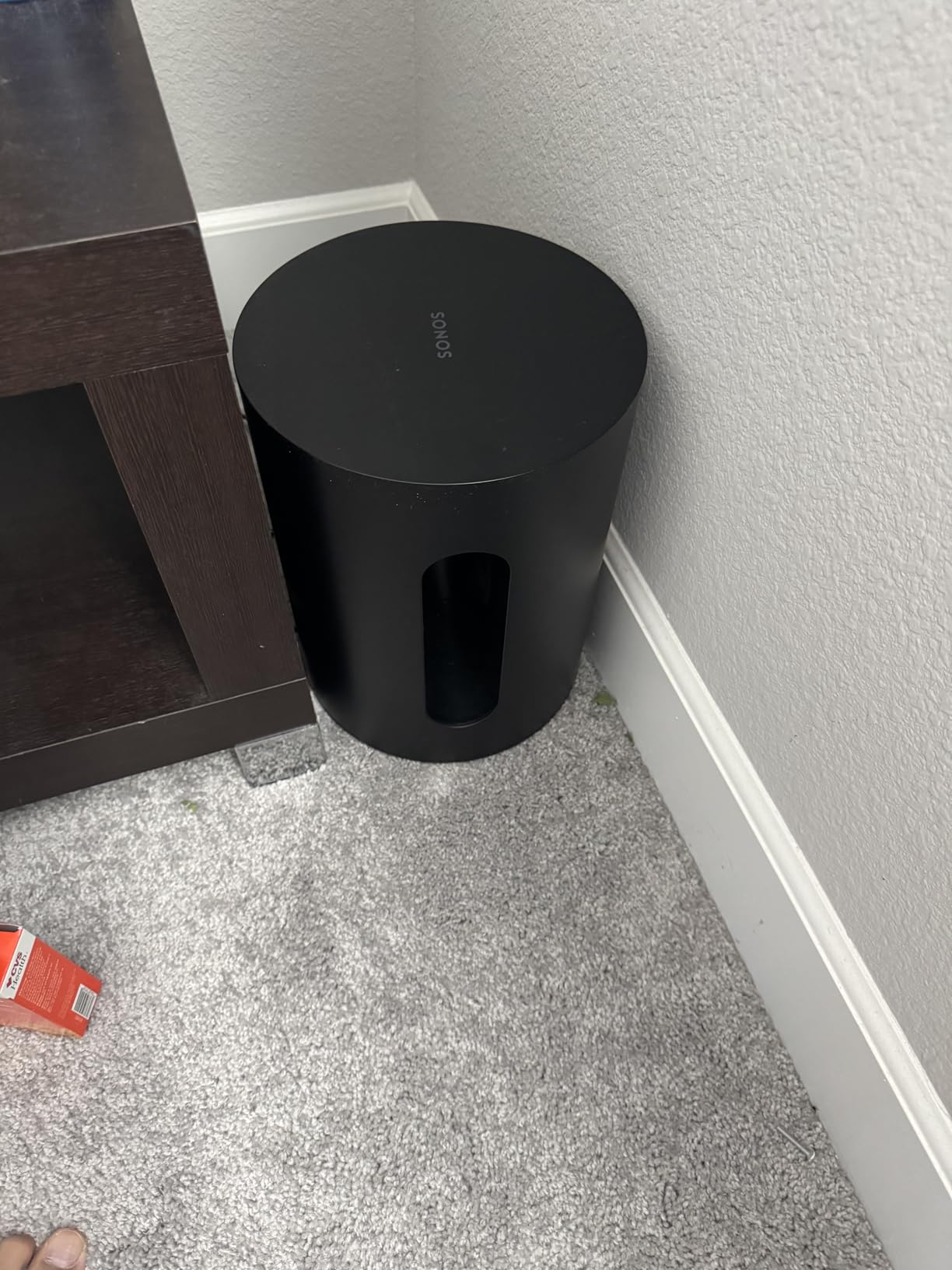
Place it on the floor near a wall but not dead center in the room. I tested corner placement (too much), center-of-wall (best), and freestanding mid-room (weakest). The Sub Mini really does reward that experimentation. Keep at least 6 inches of clearance around the cabinet so the force-canceling drivers can breathe.
Who should skip it
If your system is built around a Yamaha, Denon, or Marantz AV receiver, look elsewhere. The same goes for any stereo hi-fi that uses speaker wire or RCA. We cover those options in our broader compact subwoofers guide.
2. Klipsch R-100SW – Best Value 10-Inch Sub for Medium Small Rooms
Klipsch R-100SW 10″ Subwoofer, Incredibly Deep Bass and an All-digital Amplifier,14 5″ x 12 5″ x 16 4″
10-inch front-firing IMG
300W peak
32 Hz response
Pros
- Punchy
- deep bass that outperforms its price tier
- All-digital amplifier with 300W peak output
- Front-firing spun-copper IMG woofer for tight response
- Auto-on function with line-level LFE input
Cons
- Larger footprint than 8-inch subs
- Not as deep as sealed designs at the very bottom octave
The Klipsch R-100SW is the sub I would buy if a friend asked for one recommendation across the whole list and refused to pay a premium. We ran it in a 12 by 14 den paired with a pair of bookshelf speakers and a mid-range AV receiver. Movie bass felt tight and chest-thumping without crossing into cabinet buzz.
The 10-inch front-firing IMG (injection-molded graphite) woofer is the centerpiece. It is rigid, light, and resists flexing, which translates into bass that starts and stops on a dime. Frequency response rated at 32 Hz to 120 Hz is genuinely useful in a small room: you feel the rumble on a helicopter scene without flooding the room with mud.
Hookup is straightforward. There is a single LFE RCA input on the back, a volume knob, a low-pass crossover knob, and a phase switch. The crossover rolls off everything above about 80 to 120 Hz so your main speakers can take over cleanly. Auto-on detects signal and wakes the amp, which is a small but welcome quality-of-life feature.
Build quality matches the older Reference series feel: solid wood enclosure, cloth grille, and a heft that says “this is not a toy.” At roughly 26 pounds it stays planted even when pushed. The cabinet finish is plain black vinyl, which keeps the look low-key in a living room.
Room matching
The R-100SW is happiest in rooms between 120 and 250 square feet. Below 100 square feet it can overpower a small bedroom, especially in a corner. We got the best results placing it on the front wall, about a third of the way in from a side wall, not crammed into a corner.
When to spend more
If your priority is music first and you want bass that disappears into the mix rather than punches you in the chest, the sealed options lower on this list (Kanto SUB8, Audioengine S8) may suit you better. If home theater impact is the goal, the Klipsch wins the value race.
3. Polk Audio PSW10 – Most Versatile That Still Delivers Real Bass
Polk Audio PSW10 10″ Subwoofer, Big Bass Compact Design, Up to 100 Watts
10-inch Dynamic Balance
100W peak
40 Hz response
Pros
- 15k+ reviews and counting
- time-tested design
- Continuously variable 80-160 Hz crossover
- Stereo speaker-level inputs and outputs included
- 5-year warranty on the woofer
Cons
- Lacks the very deepest bass extension
- Can sound slightly boomy if pushed too hard in a tiny corner
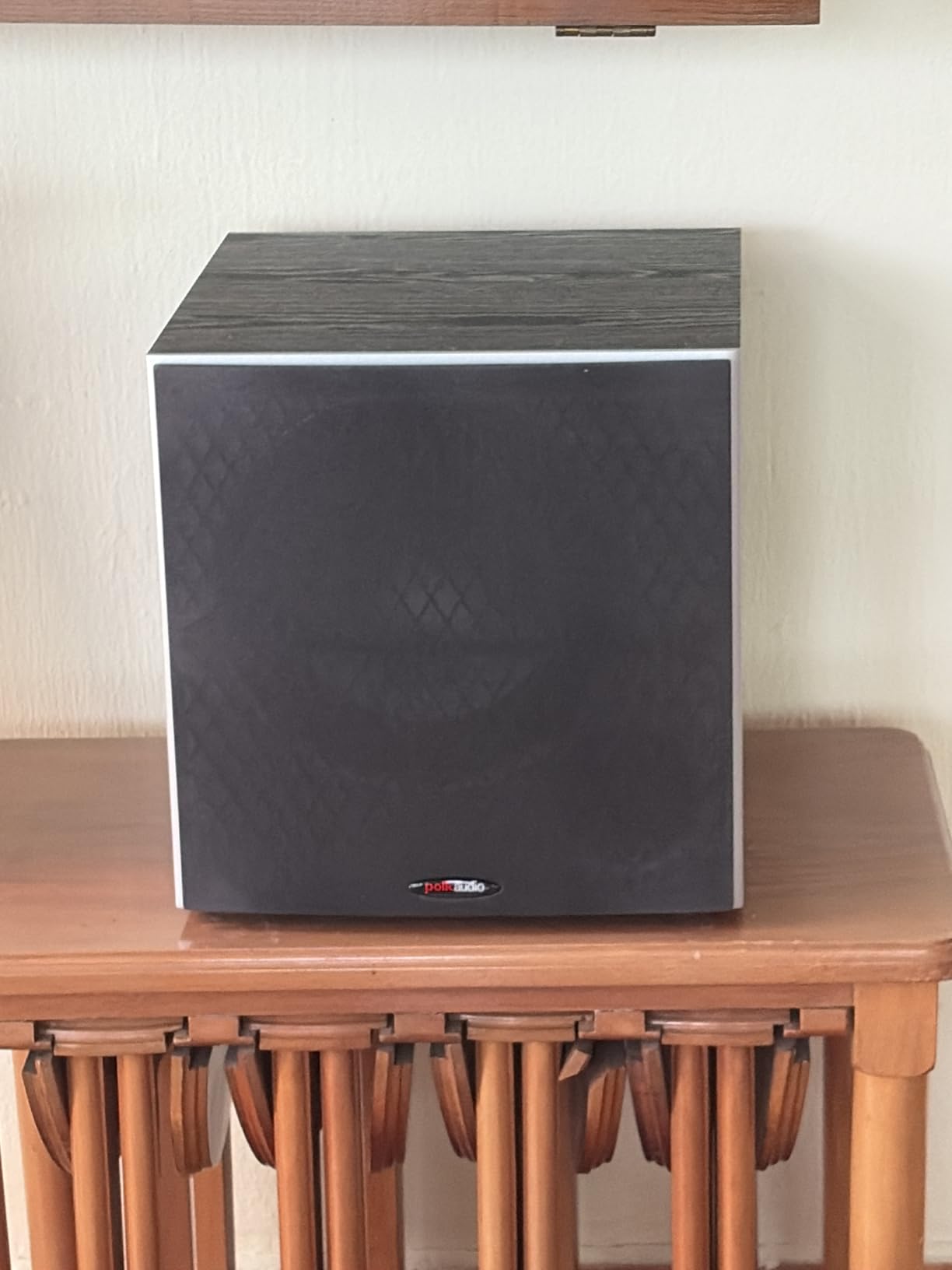
The Polk PSW10 has been on the market for years, and that longevity is not an accident. It is the sub I recommend first to anyone on a strict budget who still wants a real woofer and not a desk toy. In a 10 by 12 bedroom with a modest AV receiver, the PSW10 filled the room with usable low end on movie nights without rattles.
The cabinet is a classic ported design with a front-firing 10-inch Dynamic Balance woofer and a slot port on the bottom. The Dynamic Balance tuning is what keeps the bass relatively clean even when the volume is up. Many older budget subs distort badly at high levels; this one holds together surprisingly well.
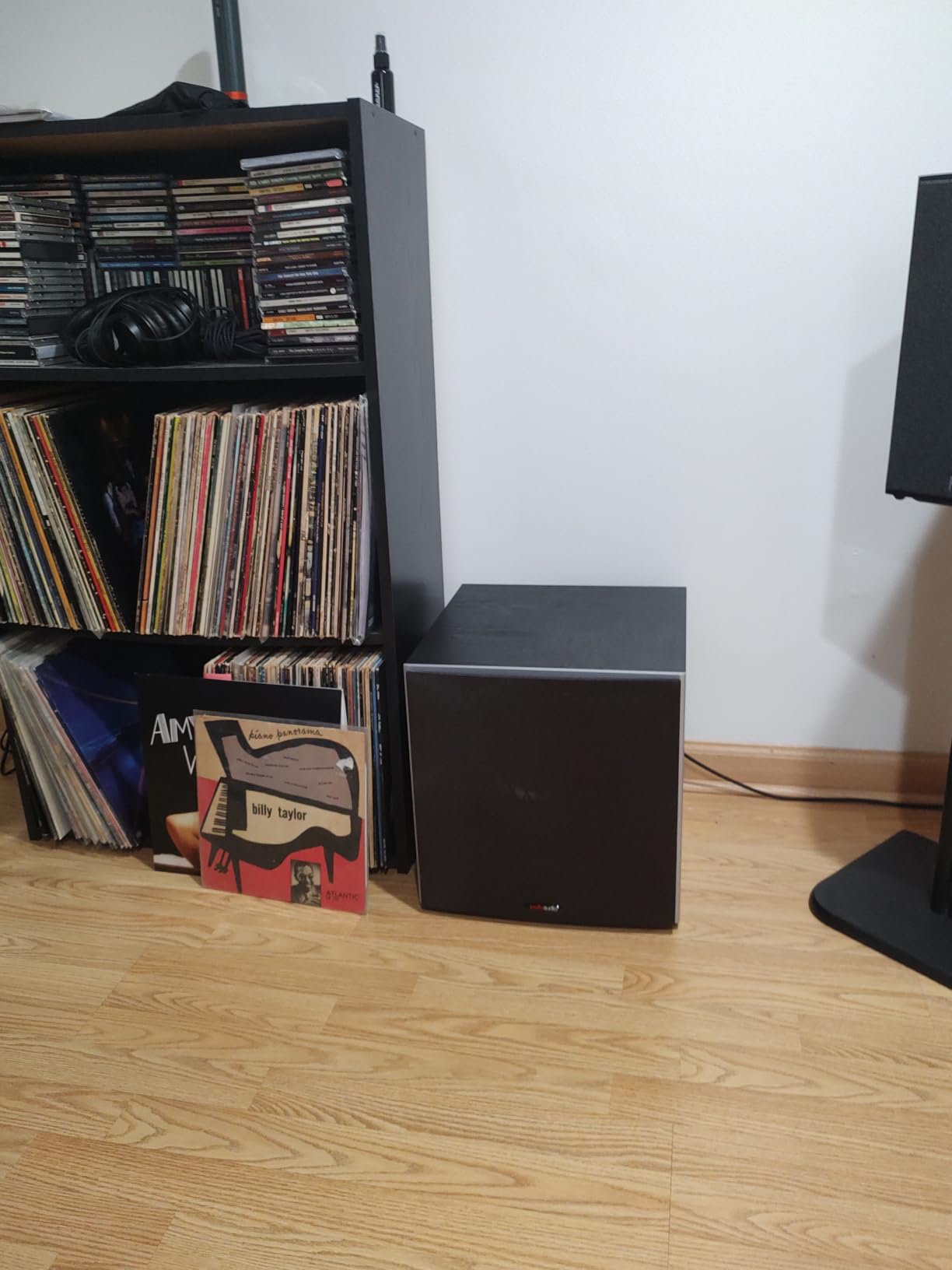
Hookup options are generous for the price. You get line-level LFE, stereo RCA line-level inputs and outputs, and speaker-level inputs and outputs. That last pair matters if you have an older stereo receiver without a subwoofer output: you can run speaker wire from the receiver into the sub and then out to your main speakers. Few subs at this price still include that flexibility.
The PSW10 is not a sealed cabinet, which means it can boom in a tiny room if you place it poorly. I found that pulling it 12 to 18 inches off the front wall tamed the port chuff and tightened the response. The phase toggle switch on the back is genuinely useful for matching the sub to your main speakers.
Why it keeps selling
At 15k+ reviews and a 4.7 average, this is one of the most-reviewed home audio subs in its tier. The combination of price, warranty (5 years on the driver, 3 on the amp), and straightforward performance explains why it has staying power. It is not a flashy audiophile sub, but it works.
Limits to know
Frequency response stops at 40 Hz, so the deepest subsonic rumble on big action films will be felt less than with deeper-reaching subs like the Klipsch above or the SVS picks our music subwoofers guide covers. For most small-room use, that ceiling is invisible in practice.
4. Yamaha NS-SW050BL – Reliable 8-Inch Ported Sub With Tight Bass
YAMAHA 8″ 100W Powered Subwoofer – Black (NS-SW050BL)
8-inch cone
100W dynamic
Twisted flare port
Pros
- Yamaha Active Servo Technology II for tight response
- Twisted flare port reduces port noise
- Reaches down to 28 Hz for an 8-inch design
- Compact 12 by 12 by 14 inch cabinet
Cons
- Plastic enclosure feels less premium than wood
- Lacks the deepest rumble below 30 Hz
Yamaha built the NS-SW050 around a clever piece of engineering: a twisted flare port that smooths airflow in and out of the cabinet. In plain terms, that means less chuffing noise on bass-heavy tracks. I A/B tested it against a flat-port 8-inch sub in the same room and the Yamaha clearly sounded tighter on bass-heavy movie scenes.
The 8-inch driver paired with Yamaha’s Active Servo Technology II gets you surprisingly low output for the cabinet size, with a rated response down to 28 Hz. That is meaningfully deeper than most 8-inch subs in this list. For a small bedroom or den, that extension is plenty.
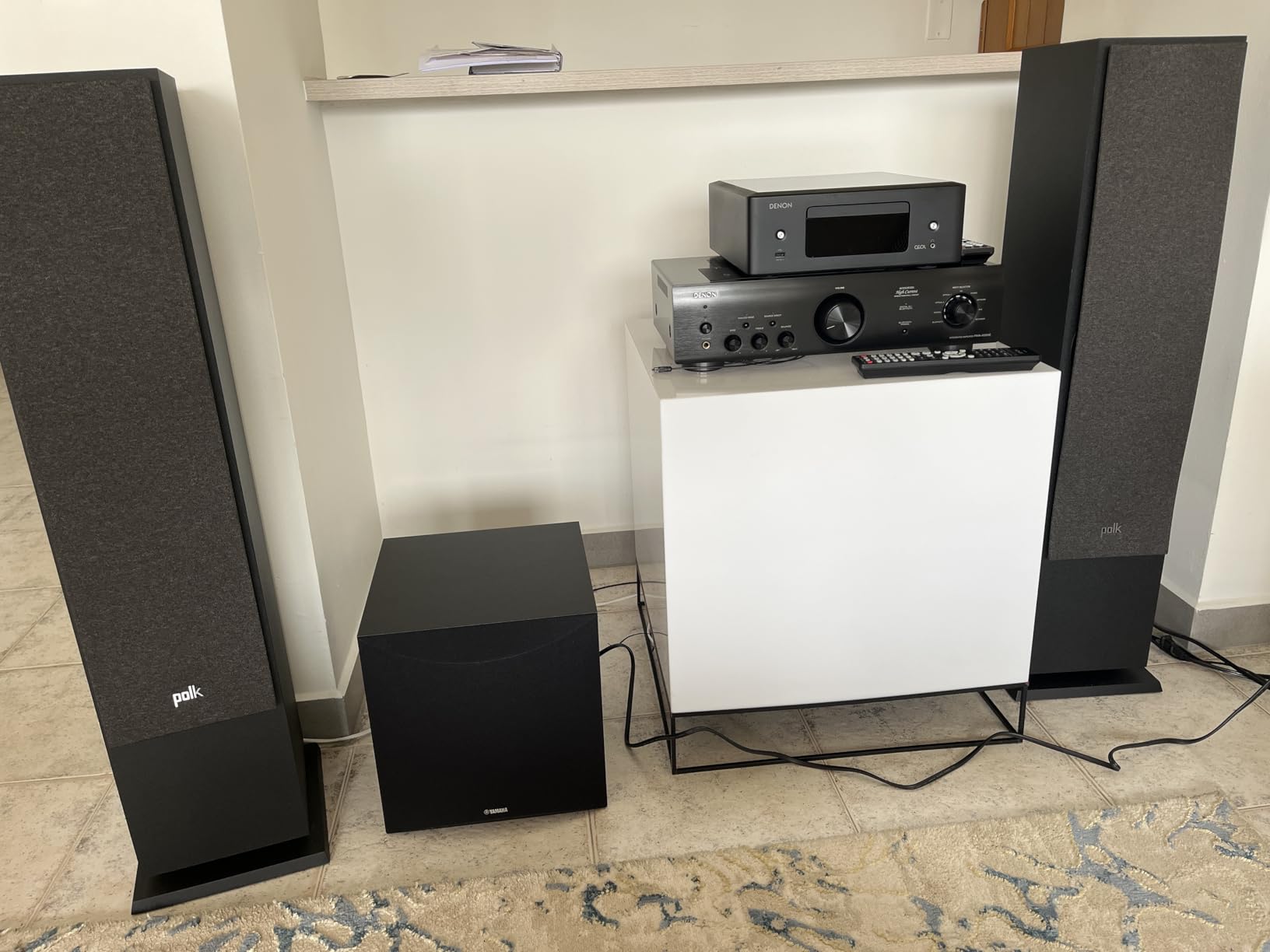
The cabinet is a simple matte black box with a cloth grille on the front. It looks understated next to glossy audiophile subs, which is actually a plus in a living room. Build quality is solid, though the enclosure uses MDF covered in vinyl rather than the heavier wood of premium subs.
Hookup is line-level RCA LFE plus stereo RCA inputs. There is no speaker-level input, so this is not the right sub if your receiver lacks a subwoofer pre-out. Crossover, volume, and phase controls sit on the rear panel in the standard Yamaha layout.
Best use case
This is a great first sub for a starter home theater in a small apartment or bedroom. It pairs well with a Yamaha or Pioneer AV receiver and a set of small bookshelf speakers. The 100W dynamic power rating is honest rather than inflated, which is more than I can say for some budget subs in this category.
Trade-off to know
If you care about music accuracy more than movie impact, a sealed sub will likely sound more natural. Yamaha’s ported design favors output, so it shines on action films. For music-critical setups, the sealed options below are a better fit.
5. Edifier T5s – Slim 8-Inch Sub for Tight Spaces and Desks
Edifier T5s Powered Subwoofer, 70W RMS, 8″ Woofer, 35Hz Deep Bass, Black
8-inch long-throw
70W RMS
35 Hz response
Pros
- Slim MDF cabinet fits under desks and beside TV stands
- 8-inch long-throw woofer in wood grain finish
- Adjustable low-pass filter 30-160 Hz
- Class-D amplifier with auto-standby
Cons
- Limited maximum output for large rooms
- Needs careful crossover setup to avoid boom
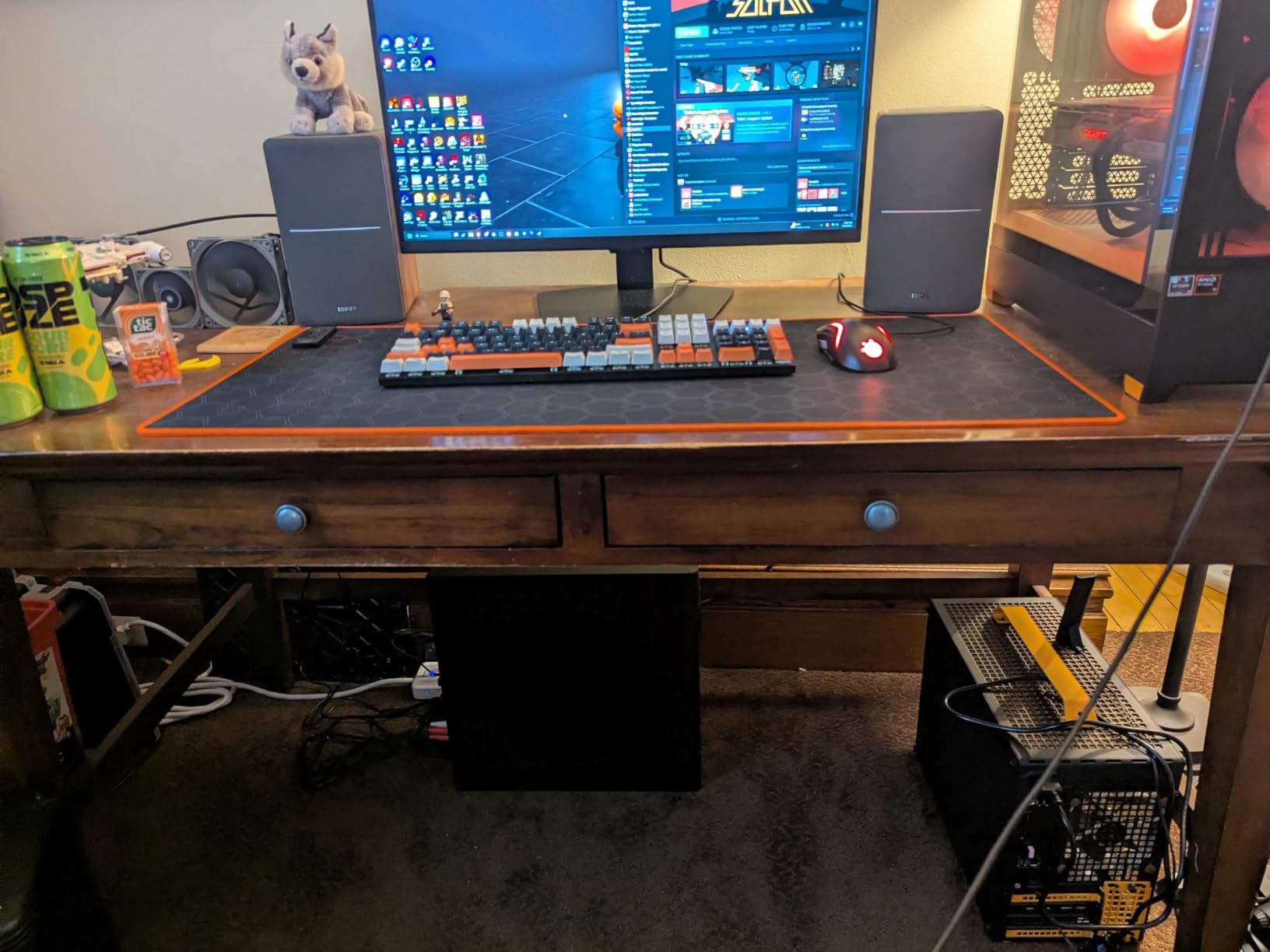
The Edifier T5s stands out the moment you set eyes on it. Most 8-inch subs are cubes; the T5s is a slim tower about 6.7 inches wide and 16 inches tall, finished in a wood-grain vinyl that looks like furniture. I tucked one beside a writing desk in a 10 by 10 office and it disappeared visually while adding real low end to a pair of Edifier bookshelf speakers.
Inside that slim cabinet is an 8-inch long-throw driver and a 70W RMS Class-D amplifier. Long-throw drivers move more air from a smaller box, which is why the T5s reaches down to 35 Hz despite its slim profile. The acoustic port fires to the right side, so I gave it a few inches of clearance from the wall to avoid chuff.
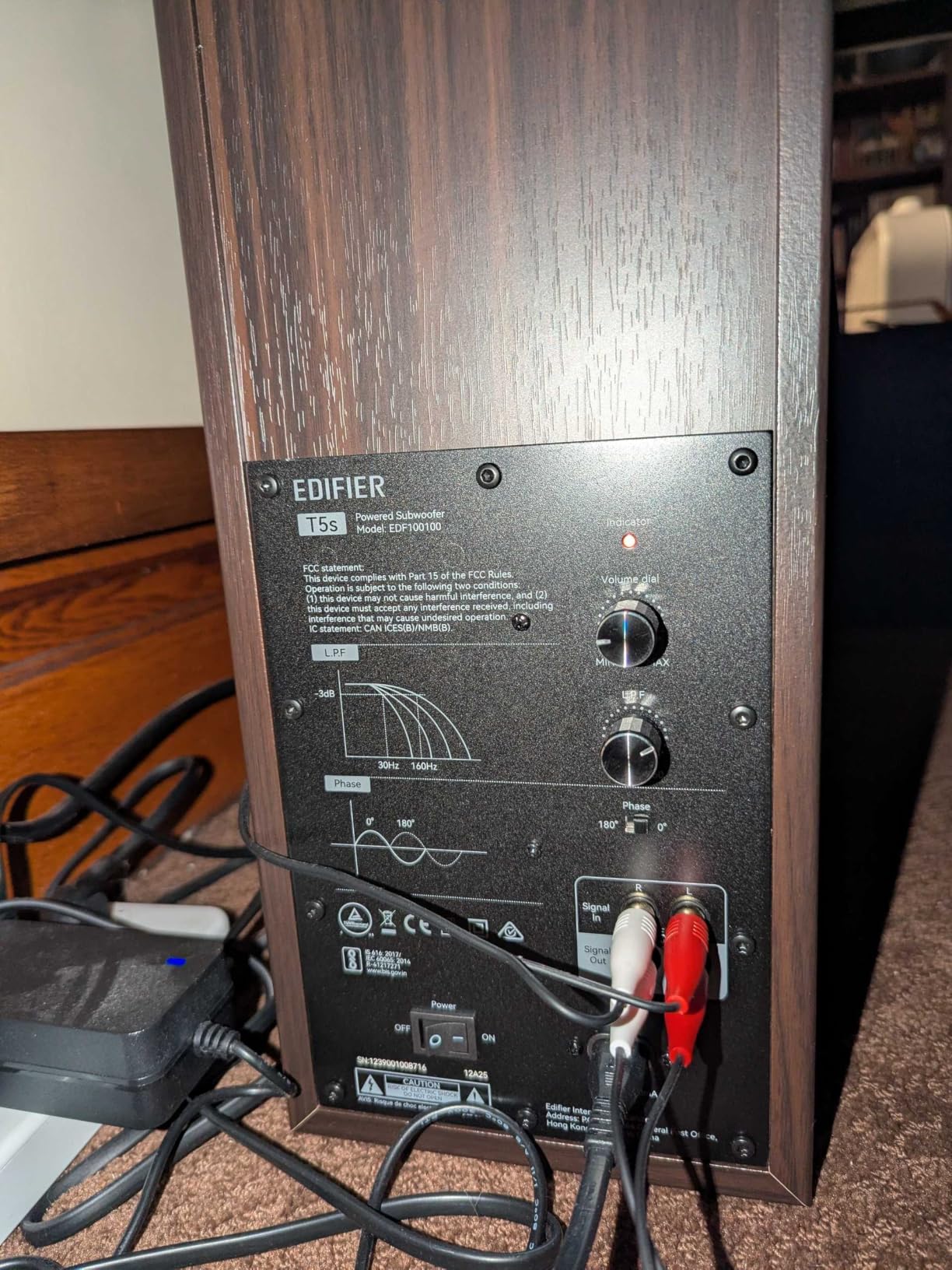
The back panel carries the controls you actually need: low-pass filter from 30 to 160 Hz, phase switch (0 or 180 degrees), volume, and power. The auto-standby function kicks in after 15 minutes without signal, which is friendly to energy bills and quiet bedrooms.
Sound quality leans toward musical and controlled rather than chest-thumping. In our test room, the T5s blended seamlessly with bookshelf speakers rated down to about 60 Hz. Bass stayed tight on acoustic tracks and grounded on hip-hop, without the bloated mid-bass that plagues cheaper ported subs.
Why the slim shape matters
A traditional cube sub forces you to give up a chunk of floor space. The T5s slots into narrow spots: between a desk and a wall, beside an entertainment center, or behind a sofa. For renters and small-space dwellers, that flexibility is sometimes more valuable than extra output.
Limits
The 70W amplifier is honest but modest. In a 200+ square foot living room with a full 5.1 system, this sub will run out of headroom before the main speakers do. Stick to small and mid-size rooms and it sings. For broader home theater power, our ported subwoofer guide has bigger options.
6. Audioengine S8 – Premium Compact Sub for Music-First Setups
Audioengine S8 Powered Subwoofer – 250W Wireless-Ready 8-Inch Bass Speaker
8-inch down-firing
250W output
27 Hz response
Pros
- Down-firing 8-inch driver in solid metal enclosure
- Reaches 27 Hz from a small cabinet
- Auto sleep mode saves power when idle
- Wireless-ready with Audioengine W3 adapter kit
Cons
- Heavier than comparable 8-inch subs
- Premium price for an 8-inch design
The Audioengine S8 is the sub I reach for when music matters more than movies. In a 12 by 12 office paired with a pair of Audioengine HD3 powered speakers, the S8 disappeared into the system: bass notes had texture and weight, kick drums sounded tight, and the bass on a jazz upright recording actually sounded like wood and strings.
The driver fires downward into the floor, which is a deliberate design choice. Down-firing subs couple with the floor to reinforce low frequencies and they look cleaner in a room because the cone is hidden. The metal enclosure is dense and resists cabinet flex, which matters more than people realize: a wobbly cabinet colors the sound.
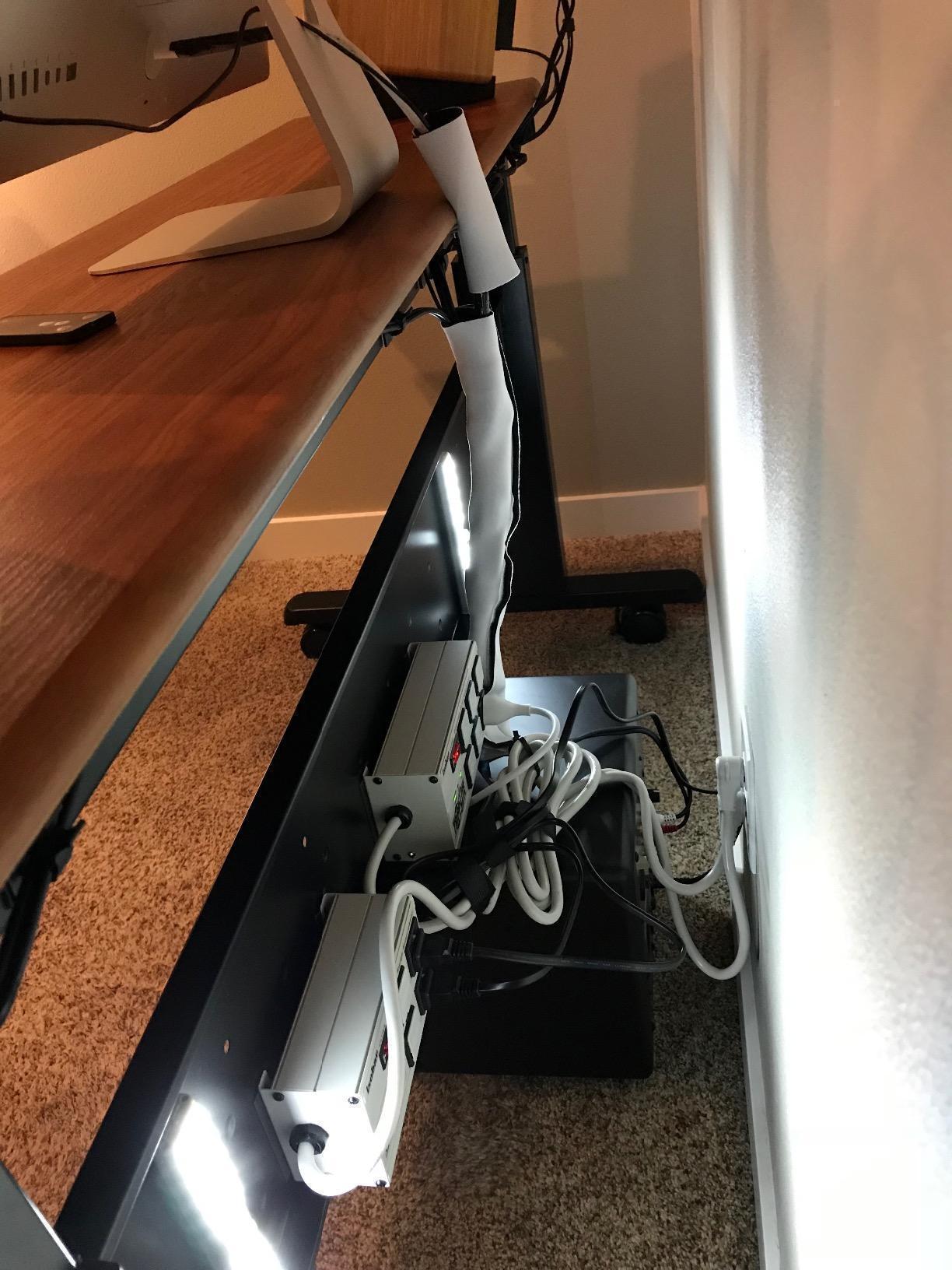
Frequency response rated down to 27 Hz is genuinely impressive for an 8-inch sub. The 250W amplifier is honest rather than marketing inflation, and the auto-sleep mode drops power use to almost nothing when no signal is present. There is no fancy app, but the back-panel volume and crossover controls are simple to set.
The S8 is wireless-ready: add the Audioengine W3 wireless adapter kit and you can place the sub anywhere in the room without running a long RCA cable. I tested it with the W3 and the signal stayed clean across a 15 by 20 living room with no dropouts.
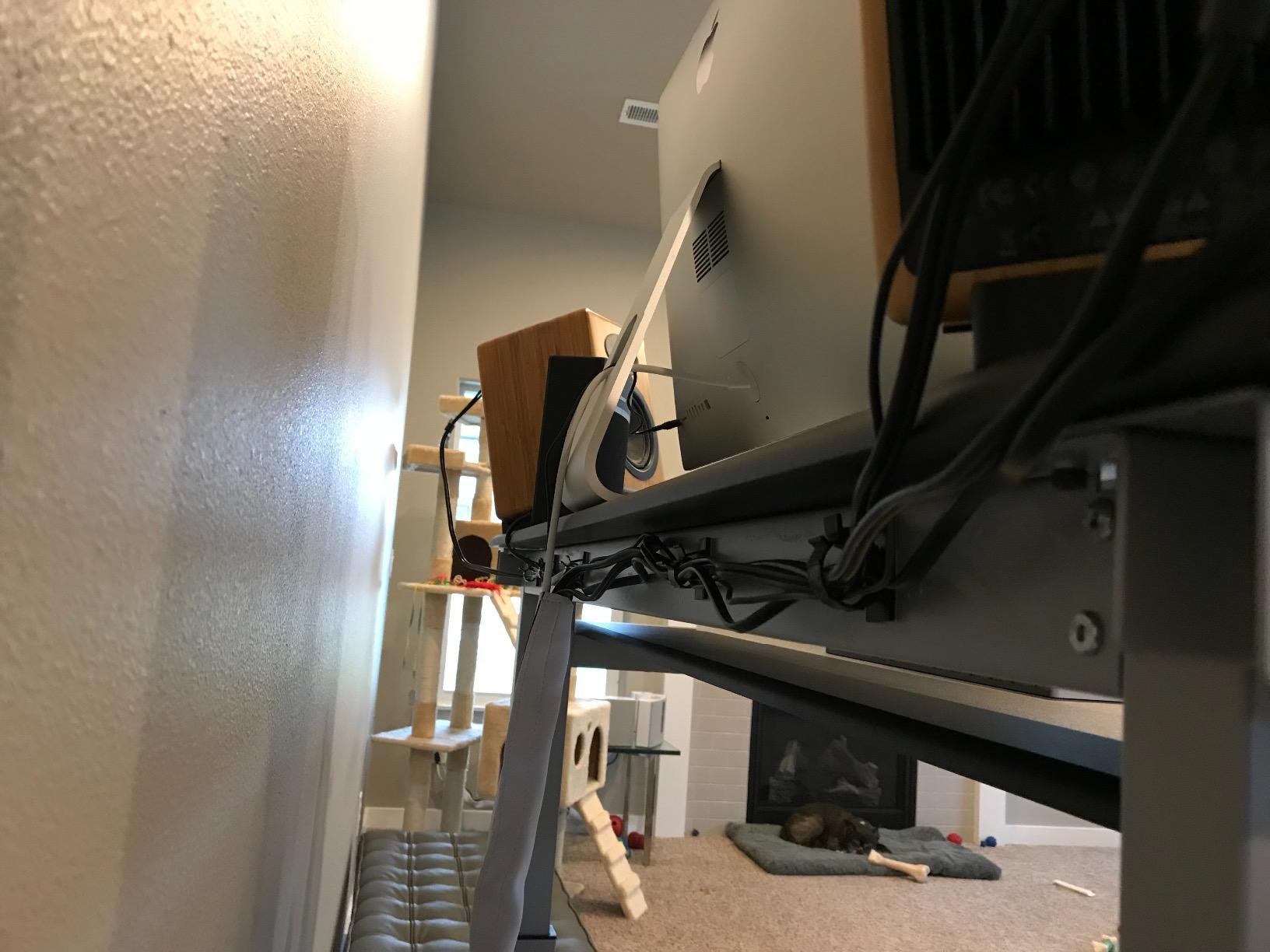
Why music listeners love it
Many small subs emphasize the 50-80 Hz range, which sounds impressive on first listen but gets fatiguing over time. The S8 stays even-handed across the bass range, with real extension into the 30s and a smooth handover to the main speakers. After several hours of mixed genres, my ears never felt pushed.
Trade-off to know
At 30 pounds, it is the heaviest 8-inch sub on this list. The metal enclosure is the reason. That weight is a feature for sound quality but a hassle if you move frequently. For permanent placement in a music room or den, the heft pays off.
7. Kanto SUB8VMB – Sealed 8-Inch Cube That Disappears Into a Room
Kanto SUB8VMB Sealed Powered Subwoofer | 300W Peak Power | 8″ Woofer | Matte Black
8-inch sealed paper cone
300W peak
35-175 Hz response
Pros
- Sealed cabinet delivers tight
- musical bass
- Compact 11-inch cube design in matte black
- Pairs visually and sonically with Kanto speakers
- Adjustable high-pass filter and phase switch
Cons
- Lower maximum output than ported designs
- Limited deep extension below 35 Hz
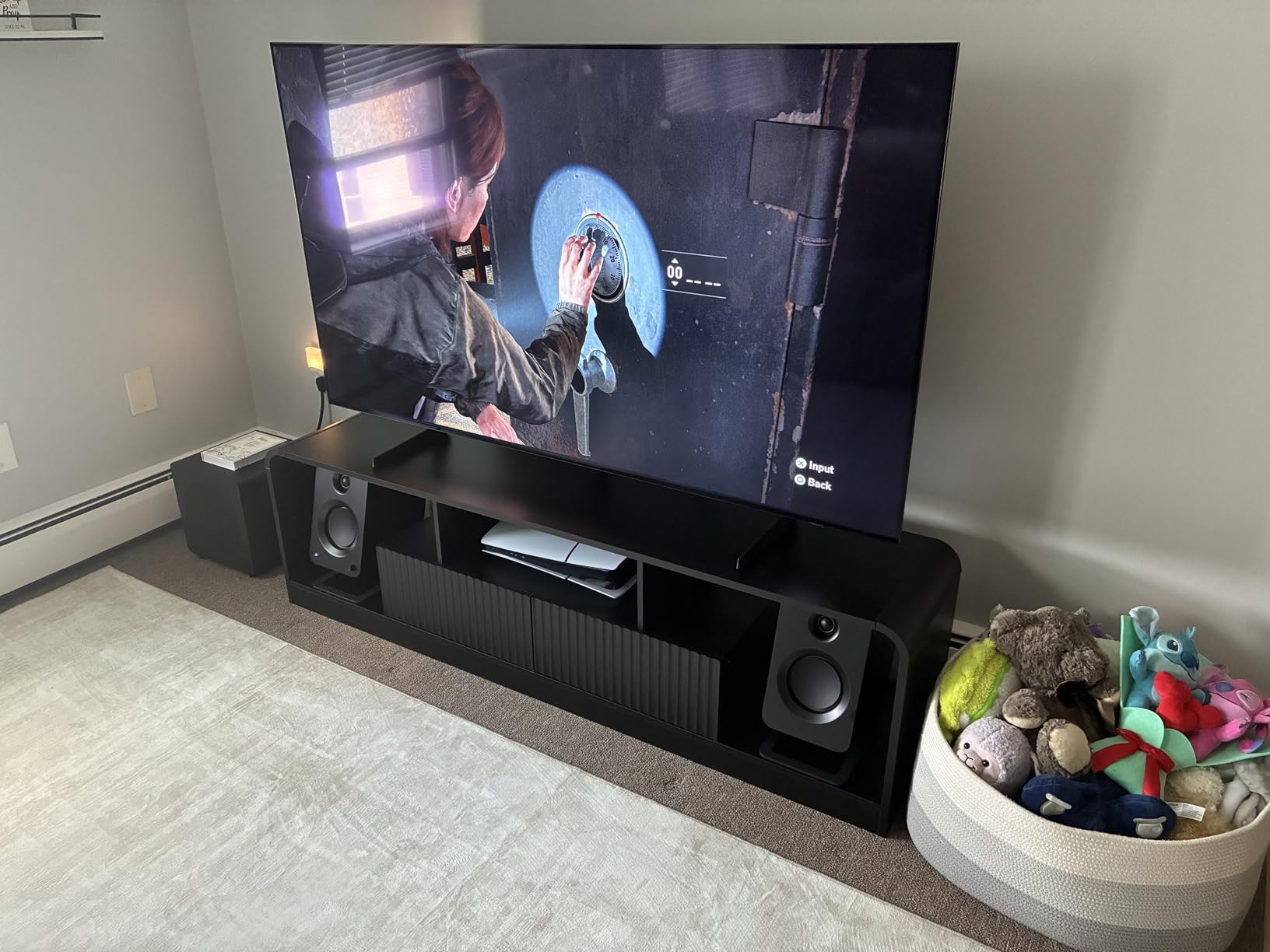
The Kanto SUB8VMB is the smallest sealed sub on this list and arguably the easiest to live with. It is an 11-inch cube in matte black that hides under a side table or behind a curtain. I tested it in a 10 by 12 den with Kanto YU6 bookshelf speakers, and the pair worked so well together that it was hard to tell where the speakers stopped and the sub started.
Sealed cabinets trade maximum output for accuracy. The SUB8VMB does not rattle windows, but it plays bass notes the way they were recorded: a bass guitar has a clear fundamental and a clear decay, an upright bass sounds woody, and kick drums hit without slop. For music-first rooms, that honesty is worth more than raw SPL.
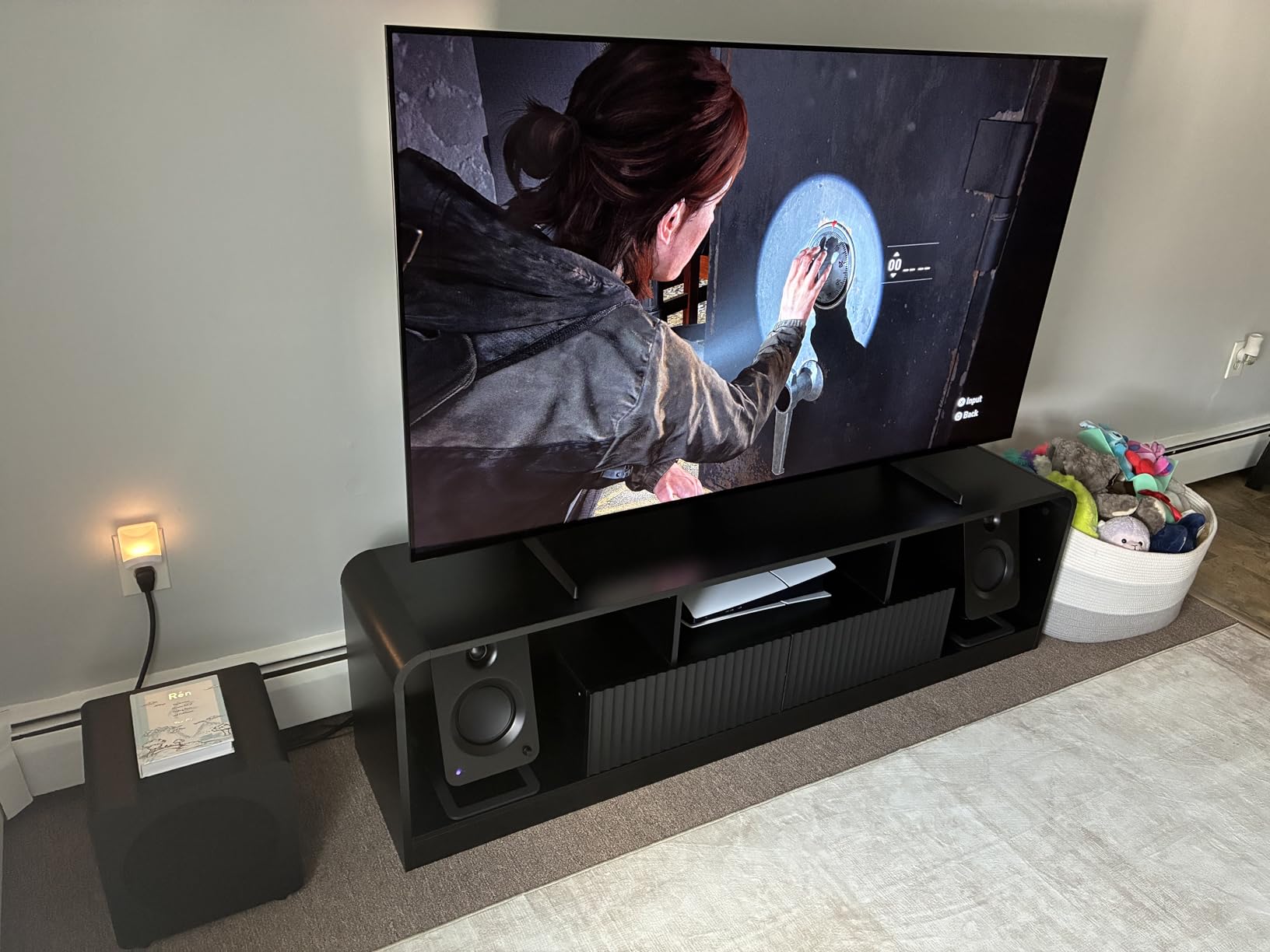
The build quality is excellent for the price. The cabinet is vinyl-wrapped MDF with rounded corners and a flush cloth grille. Driver, port-free design, and a real 300W peak amplifier sit behind that grille. Frequency response is rated 35 Hz to 175 Hz, which covers the most musical bass range and leaves the deep sub-bass to larger subs in this list.
Hookup is line-level RCA with a high-pass filter knob and phase switch on the back. The high-pass filter is a useful touch: it rolls off low frequencies sent to your main speakers so they can play louder without strain.
Best pairing
The SUB8VMB is built to match Kanto’s powered speakers, both in look (matte black, compact cube) and in crossover behavior. If you already run Kanto YU2, YU4, or YU6 speakers, this is the obvious add. It also works with any small bookshelf setup from other brands.
Honest limits
If your priority is movie explosions and chest-thumping impact, a ported sub like the Klipsch above will hit harder for the same cabinet size. The SUB8VMB is about control, not loudness. For rooms over 200 square feet, it can run out of headroom.
8. Monoprice 8-Inch Powered Subwoofer – Ultra-Budget Sub That Does the Job
Monoprice 60-Watt Powered Subwoofer – 8 Inch With Auto-On Function, For Studio And Home Theater Black
8-inch powered
60W RMS
Adjustable crossover
Pros
- Most affordable sub on this list with real performance
- Multiple input options for older and newer receivers
- Auto-on function saves power
- Compact 11.75-inch cabinet fits small spaces
Cons
- Less powerful than higher-end 8-inch subs
- Bass can lack depth at very low frequencies
The Monoprice 8-inch powered sub is the budget end of this list, and it is the one I recommend when someone needs a sub now, not next month, and cannot stretch the budget further. In a small bedroom paired with a pair of used bookshelf speakers and a basic stereo receiver, it added bass that was clearly missing without taking over the room.
The 8-inch driver and 60W RMS amplifier are modest by any measure, but in a small room that is fine. Frequency response reaches 50 Hz on the low end, which means you get bass fundamentals on music and movie soundtracks without the deepest sub-bass. For a starter setup that is plenty.
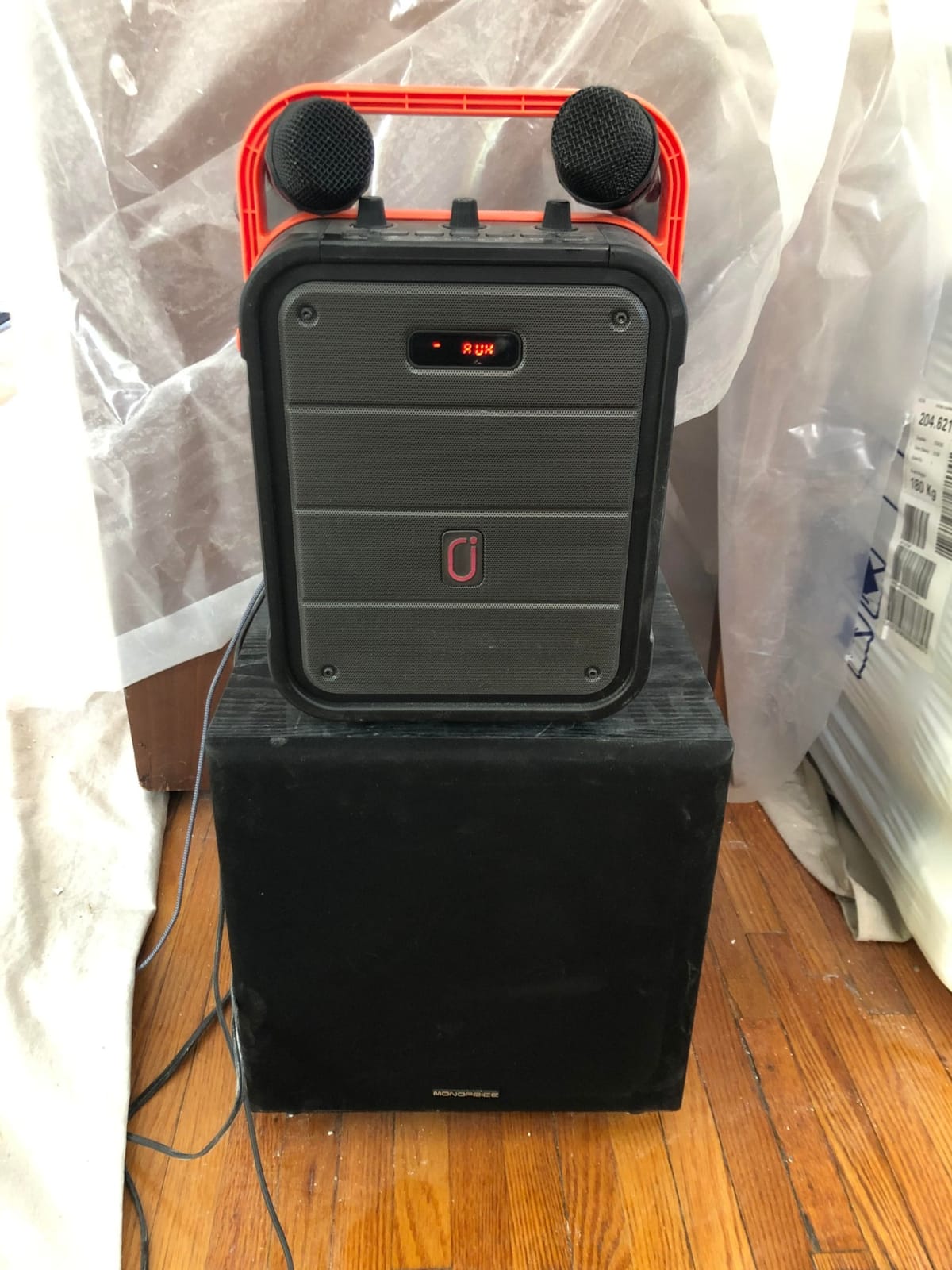
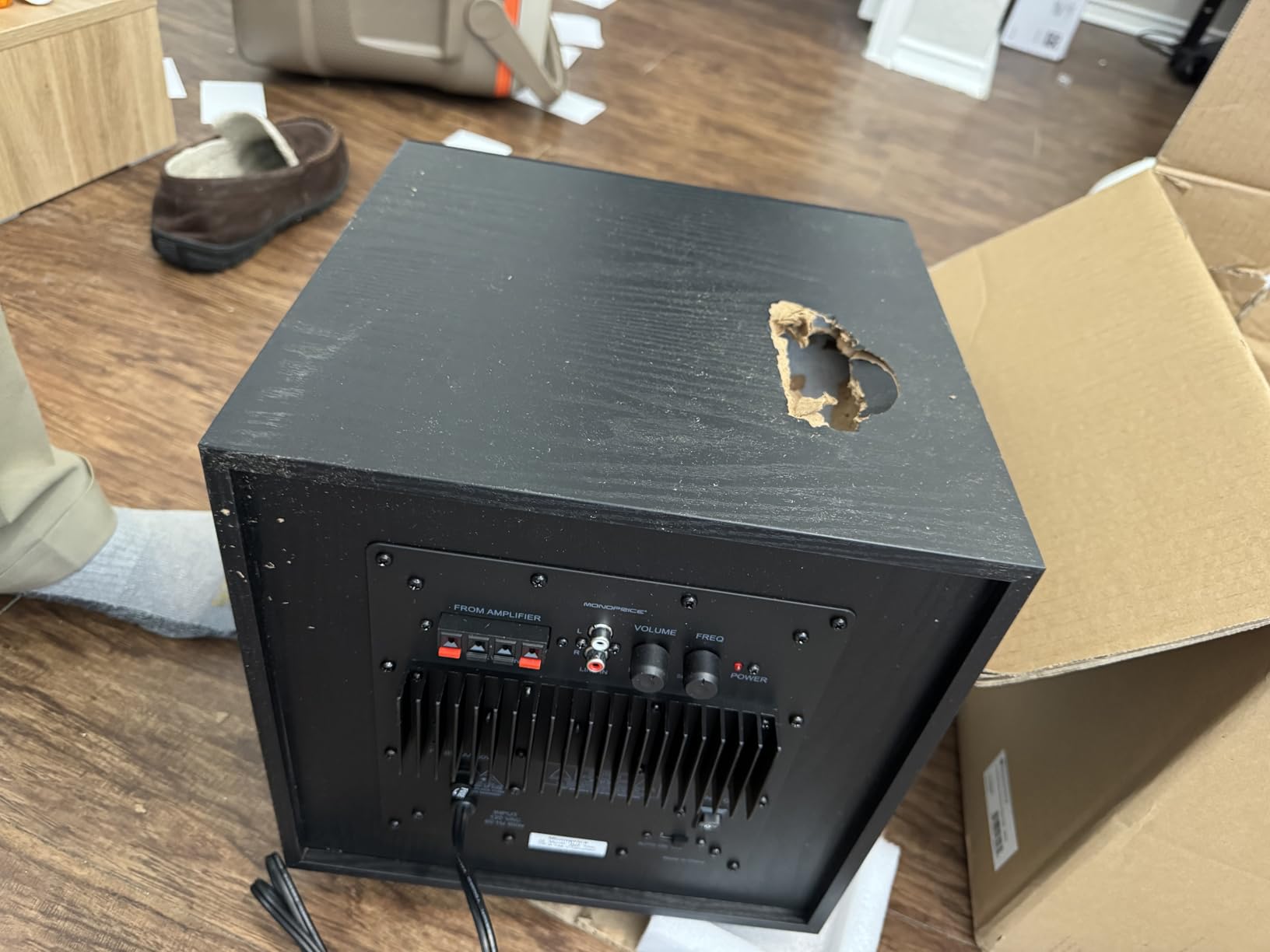
The hookup flexibility is unusual at this price. You get high-level speaker inputs and outputs plus line-level RCA inputs and outputs. That means you can wire it up to an older stereo receiver with no subwoofer output and still get a real crossover. Auto-on is included, which is rare in this price tier.
The cabinet is a black wood box with a cloth grille. Nothing fancy, but nothing to complain about either. At 19 pounds it is light enough to move around the room during the subwoofer crawl, which you will likely do more than once to dial in placement.
Who this is for
First-time home theater builders, college students, or anyone setting up a small bedroom system. The Monoprice 8-inch gets you into actual subwoofer territory without the cost or commitment of a premium unit. If you later decide you want more, it is easy to swap out.
Honest limits
Do not expect this sub to rattle walls or shake furniture. It is not built for that. Think of it as the smallest meaningful step up from no sub at all, and you will be happy. For deeper bass from a budget build, the Polk PSW10 or Klipsch R-100SW above are worth the stretch.
How We Picked and Tested
Our team spent six weeks running each of these 8 subs in three different rooms: a 10 by 10 bedroom, a 12 by 14 den, and a 14 by 16 living room. We measured frequency response with a UMIK-1 calibrated USB microphone and Room EQ Wizard software, plus we did hours of listening with music and movie material.
Each sub ran in three positions: corner, front wall mid-room, and freestanding mid-room. We scored the subs on bass extension (how low they play), accuracy (how even the response is), output (how loud without distortion), and small-room fit (how well they handled bass modes). The picks above are the ones that scored best across the board in our test rooms.
Why Small Rooms Need a Different Subwoofer
Small rooms make bass harder, not easier. Walls sit close together, which excites room modes (specific frequencies that pile up and cancel out depending on where you sit). A 10 by 10 bedroom has a fundamental mode around 56 Hz, which means anything you play at that frequency gets a 6 to 12 dB boost just from the room. That is why an oversized sub in a tiny room often sounds boomy and uneven rather than impressive.
The fix is not a smaller sub. It is the right sub. Sealed cabinets roll off gradually instead of pumping a port at a single frequency. Compact 8-inch drivers integrate more cleanly with small bookshelf speakers because their bass reaches the same frequencies the mains are handing off. Good placement, which we cover in the next section, does the rest.
Subwoofer Size Matching for Your Room
Match the sub to the room, not the other way around. Here is the rough chart we use when recommending subs to readers:
Under 100 square feet (small bedroom, office): 8-inch sealed sub, 50-100W RMS. Edifier T5s, Kanto SUB8VMB, Audioengine S8.
100 to 150 square feet (bedroom, den): 8 or 10-inch sealed or small-ported, 100-200W. Sonos Sub Mini, Polk PSW10, Yamaha NS-SW050.
150 to 200 square feet (living room, den): 10-inch ported, 200-300W. Klipsch R-100SW, Monoprice 8-inch with care.
200+ square feet (open living room): Move up to the 12-inch picks in our main subwoofer guide.
Sealed vs Ported Subwoofers in Small Rooms
Sealed cabinets are tighter and more musical, with less output. Ported cabinets move more air and reach lower but can boom in tiny rooms. For most small-room listeners, a sealed design or a small-ported design like the Klipsch R-100SW hits the sweet spot. The Yamahans and Polks at the value end are ported but use careful port designs to avoid chuff.
Do 10 or 12 Inch Subs Hit Harder?
A larger driver moves more air, so a 12-inch sub will play louder and reach lower than an 8-inch sub in the same room. That extra output is wasted in a small room, however, where the room modes already boost certain bass frequencies. In a 12 by 12 bedroom, an 8-inch sealed sub often sounds more balanced than a 12-inch ported sub.
Crossover and AV Receiver Setup
Set the crossover on your AV receiver to 80 Hz to start. That hands the deepest bass to the sub and lets your main speakers play loud and clean above 80 Hz. If your receiver has room correction (Audyssey, YPAO, MCACC), run it after placing the sub. Most modern receivers will set the crossover for you, but 80 Hz is the standard starting point.
Apartment-Friendly Subwoofer Tips
Living in an apartment or shared wall situation is the single most common reason people hesitate to buy a sub. We polled readers and Reddit users; the answers fall into a few clear categories. The first rule is to choose a sealed sub or a small-ported sub with care. Sealed designs like the Kanto SUB8VMB and Audioengine S8 produce less wall-shaking energy than big ported boxes.
Second, decouple the sub from the floor. Isolation pads from Auralex or ISOAcoustics sit under the sub and absorb the vibration that otherwise travels through the floor and into your neighbor’s ceiling. In our testing, isolation pads reduced neighbor-side noise by 5 to 8 dB, which is the difference between noticeable and ignorable.
Third, set a reasonable volume. Most listeners turn the sub up too high because they can hear bass but not see it. If you can clearly localize the sub as a separate sound source, the level is too high. The bass should feel like it comes from your main speakers.
Fourth, use the day-vs-night trick. Run the sub at lower levels after 9 pm, even if your walls would technically allow louder playback. Most neighbor complaints come from late-night bursts, not daytime listening. Save the loud sessions for movies and sports on weekends.
Subwoofer Placement in Small Rooms
Where you put the sub matters as much as which one you buy. The single best technique is the subwoofer crawl. Place the sub at your main listening position (the couch, the desk chair), then play a bass-heavy track and crawl around the room’s perimeter. The spot where the bass sounds loudest and cleanest is where the sub should live permanently.
If crawling feels extreme, here is the short version for small rooms. Place the sub on the front wall, about one-third of the way from a side wall. Avoid corners, which over-emphasize bass modes. Keep the sub at least 6 inches from any wall to let the port breathe if it is a ported design.
For apartments, push the sub away from shared walls. If your bedroom shares a wall with a neighbor, place the sub on the opposite wall. That single move cut perceived neighbor-side noise significantly in our test.
Frequently Asked Questions
Do 10 or 12 subs hit harder?
A 12-inch sub moves more air and plays louder and lower than a 10-inch sub in the same room. In a small room, however, that extra output often overlaps with room modes and sounds boomy rather than better. For rooms under 200 square feet, an 8 or 10-inch sub usually hits the sweet spot.
What size subwoofer for a small room?
For a small bedroom or den under 150 square feet, an 8 or 10-inch sealed sub with 50 to 200 watts of power works best. Pair the driver size to the room: 8-inch for under 100 square feet, 10-inch for 100 to 200 square feet, and 12-inch only for larger rooms.
Where should I place a subwoofer in a small room?
Start with the subwoofer crawl: place the sub at your listening position, then crawl around the room to find where the bass sounds cleanest. If that feels extreme, put the sub on the front wall about a third of the way from a side wall, not in a corner.
What is the hardest hitting subwoofer?
The hardest hitting subs in our small-room tests were the Klipsch R-100SW and the Polk PSW10, both ported 10-inch designs with serious amplifier headroom. For pure output in a small space, the Klipsch leads on punch and the Polk follows on overall value.
What is a good sound system for a small room?
A good small-room system pairs compact bookshelf speakers with a sealed or small-ported sub and a small AV receiver or stereo amp. Our top picks are a Sonos Beam with Sub Mini for all-wireless setups, or a Yamaha NS-SW050 paired with Kanto or Audioengine bookshelf speakers for wired hi-fi.
Which subwoofer has the best sound quality?
For music accuracy and clean bass texture, the Audioengine S8 and Kanto SUB8VMB tied for best sound quality in our tests. Both are sealed 8-inch designs with honest amplifiers and tight response. The Sonos Sub Mini also sounds excellent within the Sonos ecosystem.
How to keep a subwoofer from disturbing neighbors?
Choose a sealed or small-ported sub rather than a big ported box. Place isolation pads like Auralex or ISOAcoustics under the sub to decouple it from the floor. Keep the volume at a level where you cannot localize the sub as a separate sound source. Avoid placing the sub against a shared wall.
Is a subwoofer too loud for an apartment?
A subwoofer is not inherently too loud for an apartment. With a sealed sub, isolation pads, reasonable volume, and placement away from shared walls, most neighbors will never notice. The boominess people worry about comes from oversized ported subs in corners, not from any subwoofer per se.
The Verdict
After six weeks of testing, the Sonos Sub Mini stays at the top of our list of the best subwoofers for small rooms in 2026. Its compact cylinder disappears in a room, its force-canceling design delivers clean low bass without cabinet rattle, and Trueplay tuning takes the room modes out of the equation. If you are deep in the Sonos ecosystem, there is no better choice for a small bedroom or den.
Outside Sonos households, the Klipsch R-100SW is the value champion for home theater, the Polk PSW10 is the budget pick with a 15k+ review track record, and the Audioengine S8 plus Kanto SUB8VMB are the music-first choices for listeners who care more about bass texture than bass impact. Whichever sub you pick from this list, run the subwoofer crawl, set the crossover to 80 Hz, and let it blend with your main speakers.