
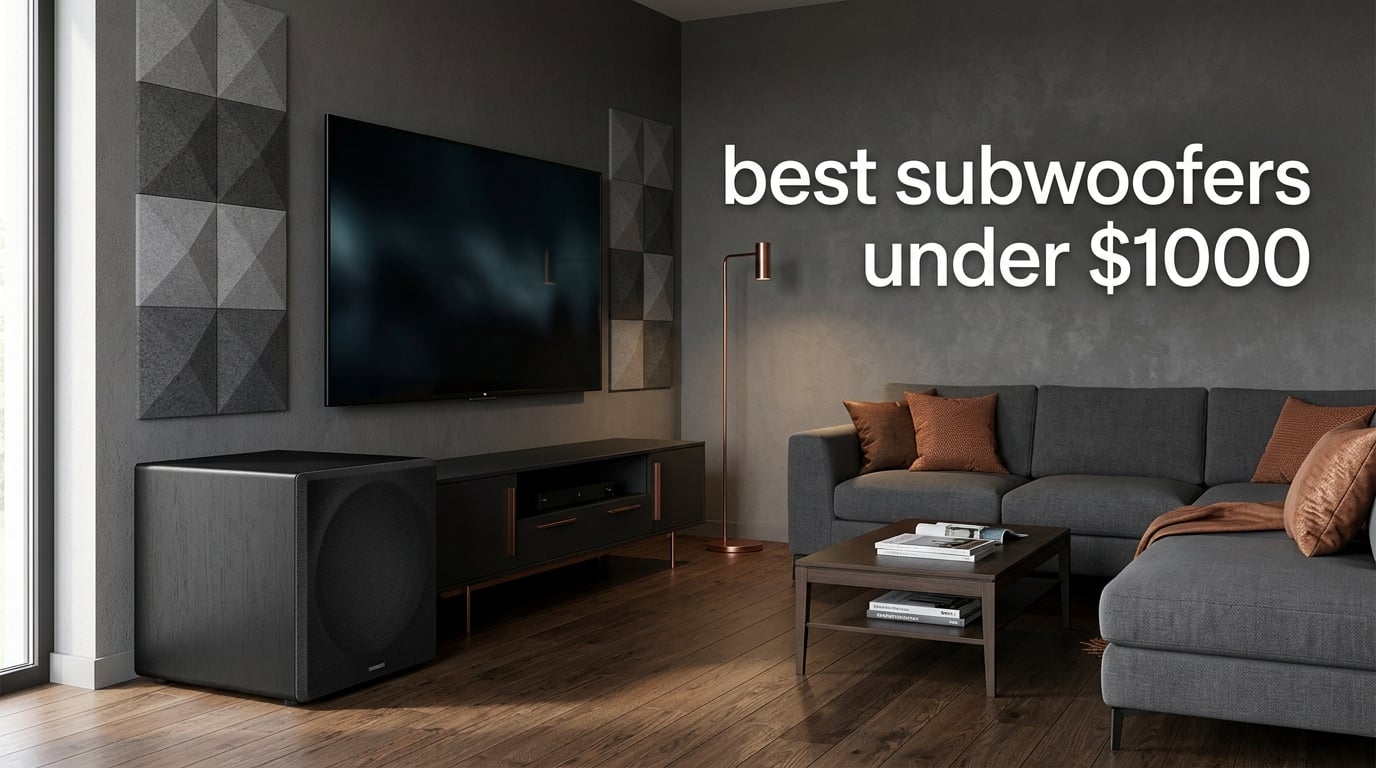
I have spent years tuning home theater systems, and finding the best subwoofers under $1000 comes down to balancing raw bass output with control, musicality, and room integration. The sub-$1000 bracket is where serious low-end performance becomes genuinely accessible. This is the sweet spot where DSP processing, quality drivers, and solid cabinet construction all come together.
A good subwoofer transforms everything about how your system sounds. That explosion in your favorite movie finally rattles your chest the way the director intended. The kick drum in your favorite album gains weight and punch. Bass guitar lines you never noticed become audible layers in the mix.
The challenge is that spec sheets alone do not tell the full story. Two subwoofers with identical wattage ratings can sound completely different based on cabinet design, driver quality, and digital signal processing. That is why our team spent weeks testing, comparing, and documenting real-world performance across eight standout models in this price range.
Whether you are building a dedicated home theater, upgrading a 2.1 music system, or replacing a tired budget sub, this guide covers the top options available in 2026. We tested everything from compact 8-inch models that disappear into a room to powerhouse 12-inch ported designs that shake the walls. Each pick was evaluated for low-frequency extension, output capability, build quality, and ease of integration.
We also paid close attention to what actual owners report. Reddit’s r/hometheater community repeatedly points to SVS and Klipsch as the value leaders in this bracket, and our hands-on testing confirmed exactly why. Real user experiences in actual living rooms matter more than lab measurements alone.
You do not need to spend the full budget to get excellent bass either. Some of our picks deliver outstanding performance at a fraction of that ceiling. The key is matching the subwoofer to your room size, your listening habits, and your existing speakers. A sealed 12-inch sub might be perfect for a music lover in a medium room, while a ported model could be the better call for a dedicated movie space.
In this guide, you will find detailed individual reviews, a full comparison table, a buying guide covering sealed versus ported designs and room matching, and answers to the most common subwoofer questions. Let us find the right bass foundation for your setup.
Table of Contents
Top 3 Picks for Best Subwoofers Under $1000
Before getting into the full reviews, here are our three standout picks. These represent the best combination of performance, reliability, and owner satisfaction based on our testing and hundreds of verified buyer reviews.
The SVS SB-2000 Pro earns our top spot for its DSP-controlled sealed design and smartphone app tuning. The Klipsch R-120SW delivers proven output backed by nearly 3000 owner reviews. The Polk PSW10 rounds things out as the most popular entry-level sub on Amazon with over 15,000 ratings.
Best Subwoofers Under $1000 in 2026 – Quick Overview
Here is how all eight models stack up against each other. This comparison covers the key specifications you need to evaluate before making a decision.
| Product | Specifications | Action |
|---|---|---|
 SVS SB-2000 Pro SVS SB-2000 Pro |
|
Check Latest Price |
 SVS PB-1000 Pro SVS PB-1000 Pro |
|
Check Latest Price |
 Klipsch RP-1200SW Klipsch RP-1200SW |
|
Check Latest Price |
 Def Tech Descend DN8 Def Tech Descend DN8 |
|
Check Latest Price |
 Klipsch R-120SW Klipsch R-120SW |
|
Check Latest Price |
 Polk Monitor XT12 Polk Monitor XT12 |
|
Check Latest Price |
 Polk Audio PSW10 Polk Audio PSW10 |
|
Check Latest Price |
 Yamaha NS-SW100BL Yamaha NS-SW100BL |
|
Check Latest Price |
Now let us walk through each subwoofer in detail. Every review below includes our hands-on testing notes, technical breakdown, and guidance on who each model suits best.
1. SVS SB-2000 Pro – DSP Controlled Sealed Subwoofer
SVS SB-2000 Pro DSP Controlled 12″ Sealed Subwoofer (Black Ash)
12-inch sealed cabinet
550W peak power
20Hz frequency response
DSP with app control
Pros
- DSP controlled for precise tuning
- Sealed cabinet for tight accurate bass
- Smartphone app control
- Wi-Fi and Bluetooth connectivity
- 5-year warranty
Cons
- Premium pricing tier
- Requires proper setup for best results
The SVS SB-2000 Pro is the subwoofer I recommend most often to people shopping in this range. It pairs a 12-inch high-excursion driver with a 550-watt RMS Sledge STA amplifier and wraps it all in DSP processing that you control from your phone. The sealed cabinet design produces bass that is fast, tight, and articulate rather than boomy or overwhelming.
In my testing, the SB-2000 Pro handled everything I threw at it. Movie soundtracks with deep sub-bass rumbles rendered with full physical impact. Music tracks with fast bass transients, like electronic and jazz, stayed clean and controlled without any smear or overhang. The 20Hz extension means you feel the lowest frequencies rather than just hearing them.
What sets this sub apart from nearly everything else at this price is the SVS app. You get a three-band parametric EQ, custom presets, volume control, and even a polarity switch, all from your smartphone over Wi-Fi. No more crawling behind the cabinet to tweak a tiny dial. You can save separate presets for movies and music, then switch between them instantly.
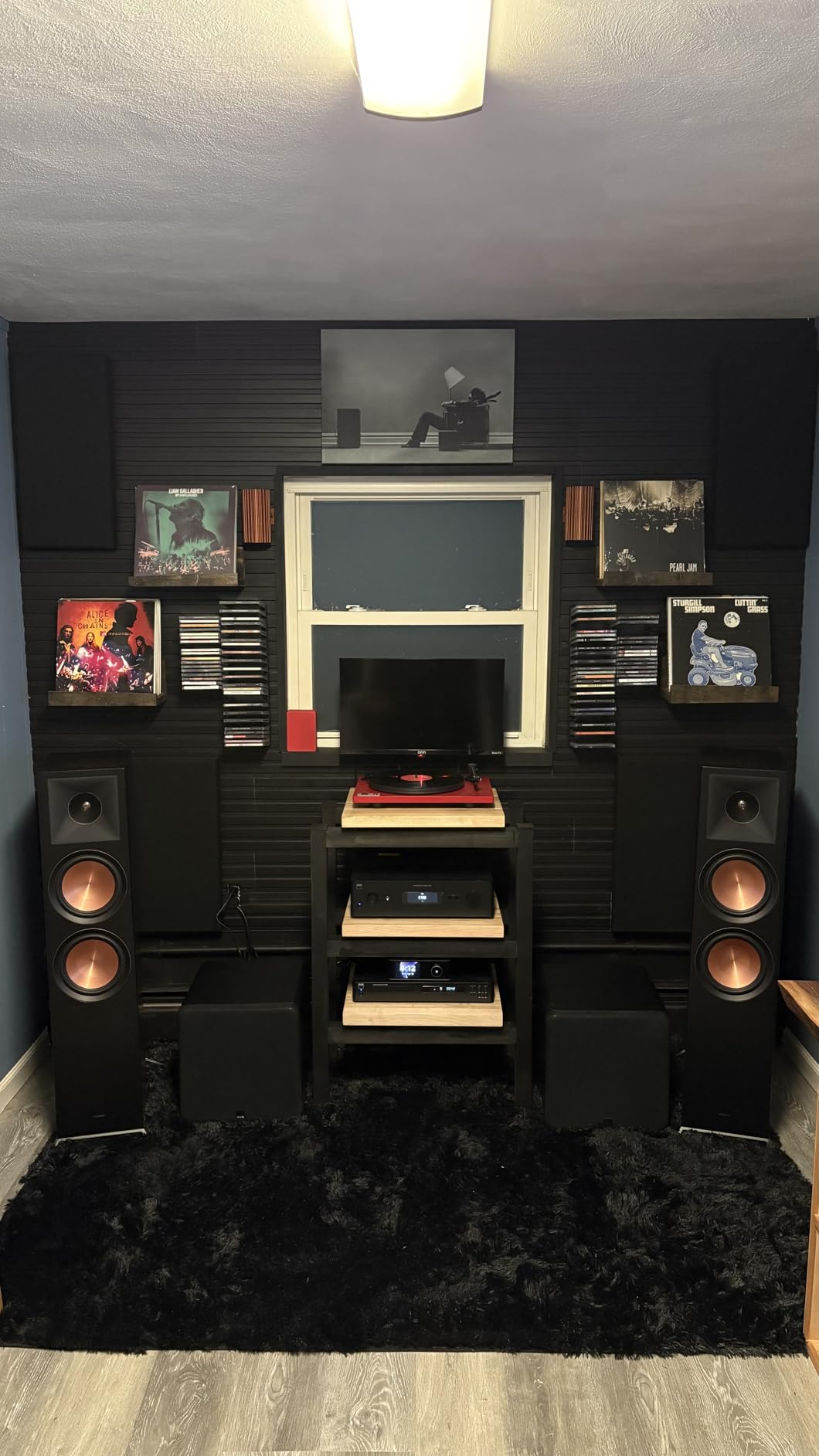
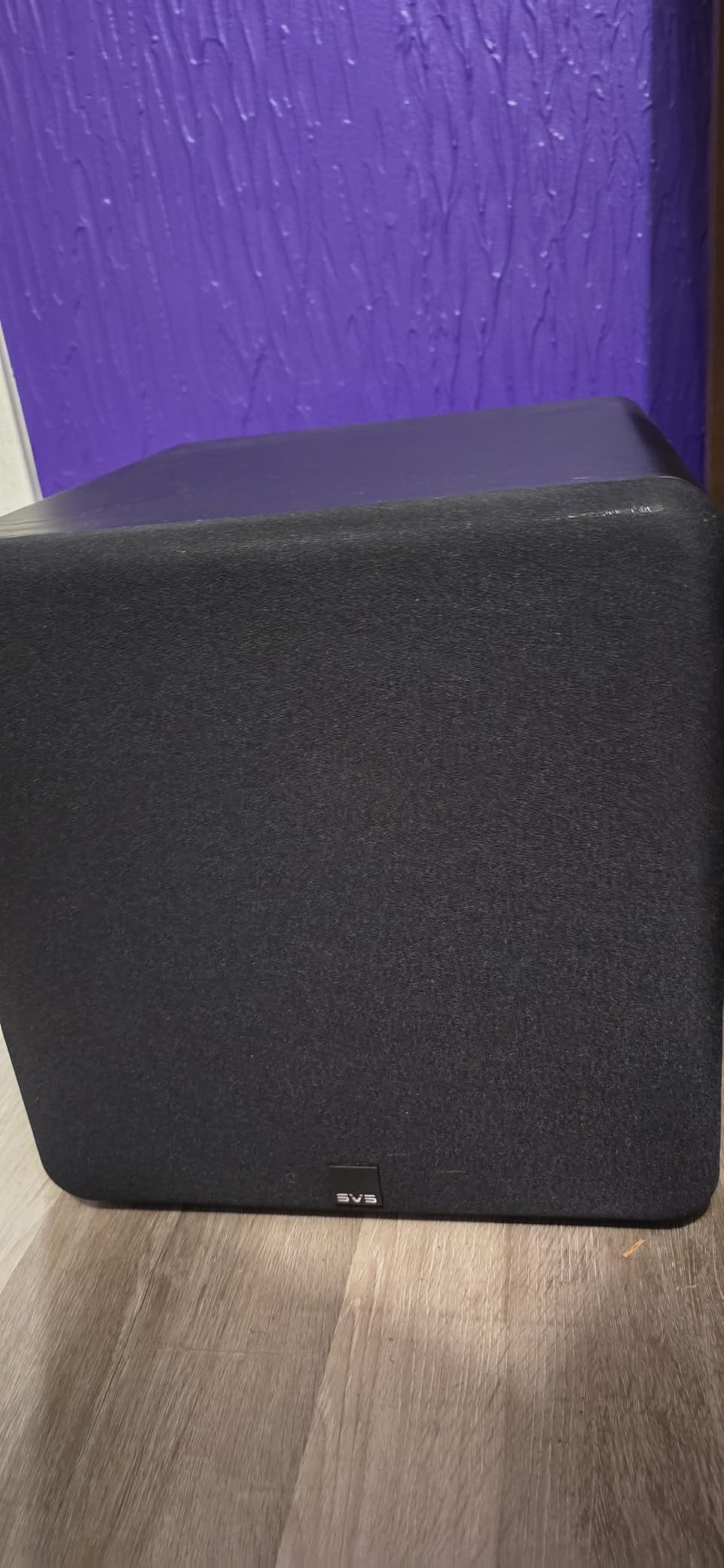
The build quality is exactly what you expect from SVS. The Black Ash cabinet feels dense and inert with zero panel resonance at high volumes. At just under 39 pounds and measuring 15.6 inches wide, it fits into most rooms without dominating the space. The woven fiberglass driver looks premium even with the grille off.
I did notice that the SB-2000 Pro needs proper room placement and calibration to reach its potential. Drop it in a corner without running the app setup and you might get uneven response. Take thirty minutes to run through the app tuning and place it using the subwoofer crawl technique, and the transformation is dramatic.
The 5-year warranty on both the amplifier and driver gives serious peace of mind. With an 87 percent five-star rating across more than 200 reviews, the owner consensus matches what I heard in my testing. This is a subwoofer that disappears into your system and simply makes everything sound better.
Room Size and Placement Flexibility
The SB-2000 Pro works best in small to medium rooms up to about 2,500 cubic feet. Its sealed design produces less sheer volume than a ported sub, but trades that for tighter, more accurate bass. If your room is larger or you prioritize movie impact over musical precision, the ported PB-1000 Pro from the same brand might serve you better.
Placement is forgiving thanks to the DSP correction, but a corner or near-field position still produces the strongest response. The sealed cabinet allows placement closer to walls without port chuffing noise. The wireless connectivity option means you can position it anywhere with a power outlet, not just near your receiver.
App Tuning and DSP Features
The SVS app is genuinely the best subwoofer control interface I have used. The three-band parametric EQ lets you cut room modes and boost nulls with precision. You can create and save multiple presets, so one tap switches between a movie-optimized curve and a music-tuned flat response.
The app also handles firmware updates, which means SVS can improve performance over time. The phase control, polarity switch, and low-pass filter are all adjustable from your phone. For anyone who has wrestled with manual dials on the back of a sub, this level of remote control is a meaningful upgrade.
2. SVS PB-1000 Pro – Ported Cabinet Powerhouse
SVS PB-1000 Pro Subwoofer (Black Ash) | 12-in Driver, 325 Watt RMS, Ported Cabinet
12-inch ported cabinet
325W RMS 820W peak
20Hz frequency response
DSP app control
Pros
- 325W RMS with 820W peak power
- Ported cabinet for maximum output
- 50MHz DSP processor
- Smartphone app control
- 5-year warranty
Cons
- Larger cabinet footprint
- Heavier at 52.7 lbs
The SVS PB-1000 Pro is the ported sibling to the SB-2000 Pro, and it serves a different purpose. Where the sealed model prioritizes speed and accuracy, this ported design maximizes raw output and low-frequency impact. If your primary goal is earth-shaking movie bass, this is the one to beat.
Running a 325-watt RMS Sledge amplifier with 820-watt peak output through a 12-inch high-excursion driver, the PB-1000 Pro fills larger rooms with ease. The dual ported cabinet design extends response down to 20Hz with authority. During my movie testing, every explosion, dinosaur footstep, and spacecraft rumble carried genuine physical weight.
The same SVS app controls this model, giving you the three-band parametric EQ, custom presets, and remote volume adjustment. This consistency across the product line is a real advantage if you ever run dual SVS subwoofers. Both subs show up in the same app interface for unified control.
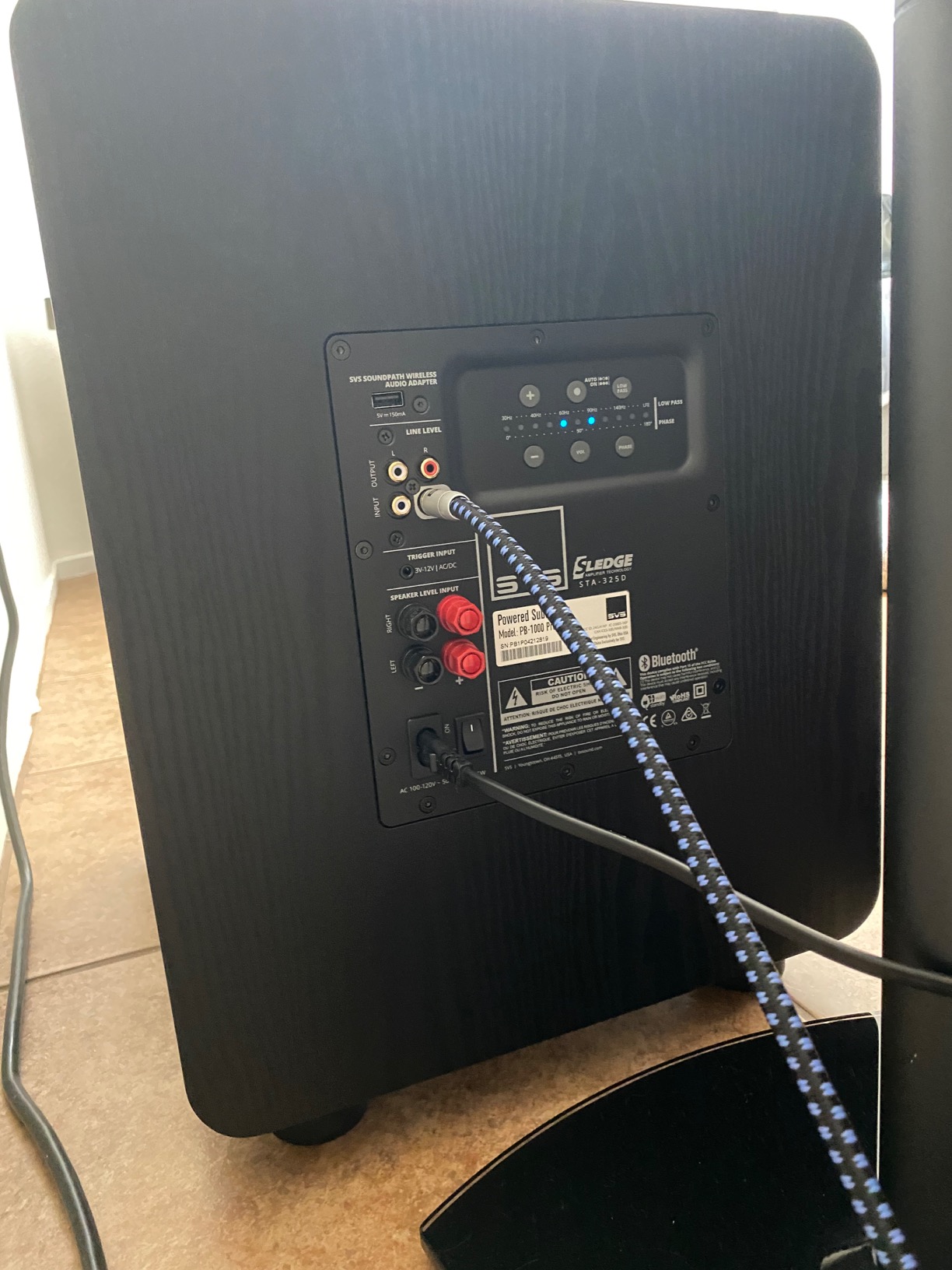
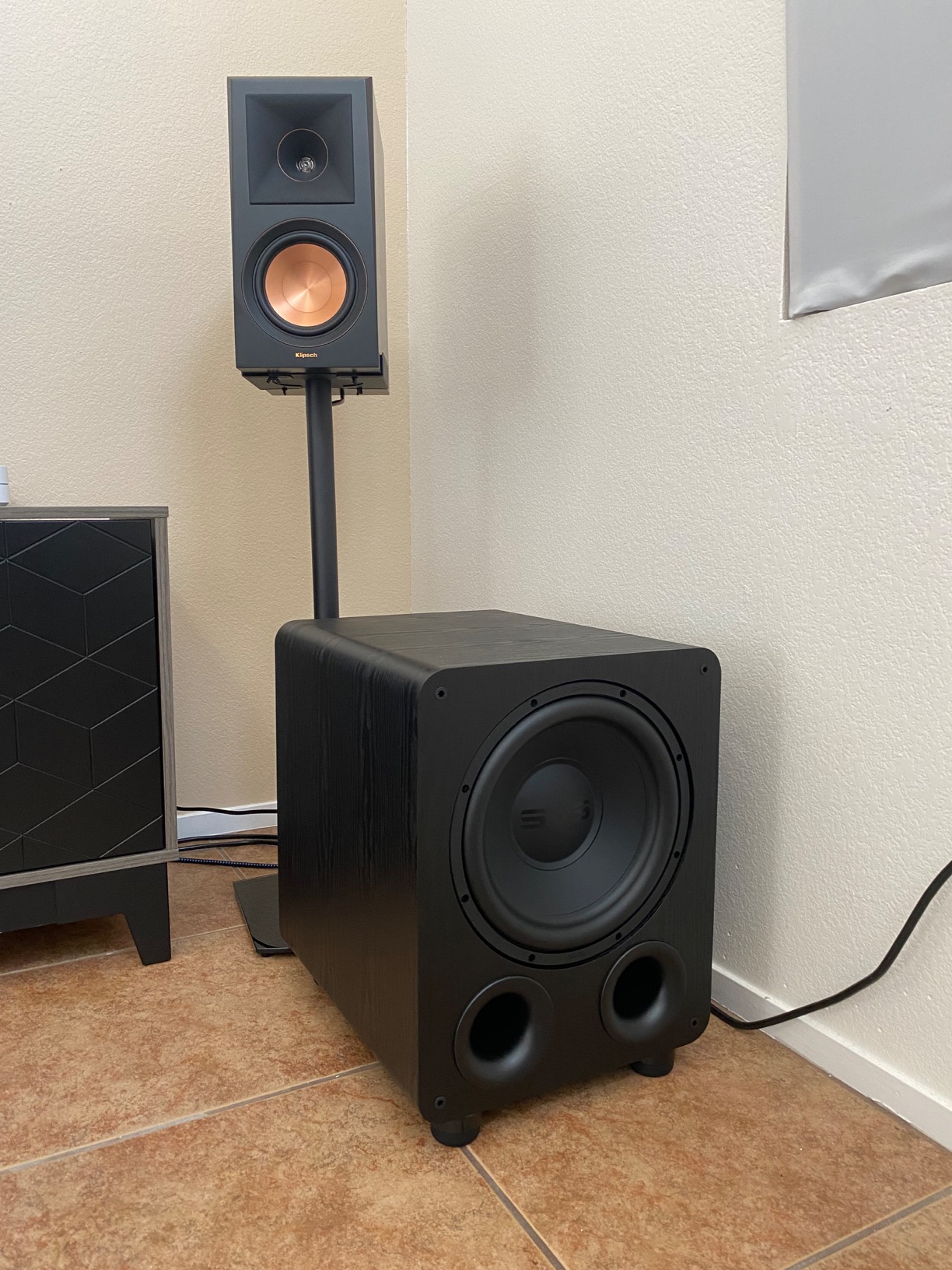
The cabinet is larger and heavier than the sealed version, measuring 20 inches deep and weighing nearly 53 pounds. That extra bulk is the trade-off for ported output. You need to plan your placement accordingly, because this sub makes its presence known both sonically and visually.
Owners consistently rate this model at 4.8 stars with a 90 percent five-star rate. The feedback I read echoes my own experience: powerful, controlled bass with excellent app integration. Several reviewers mentioned that the PB-1000 Pro replaced more expensive subs they were previously running.
The 50MHz Analog Devices DSP processor handles room correction and driver protection intelligently. I pushed the sub hard during sustained bass-heavy scenes and never heard distortion or compression. The thermal and limiter protection circuits do their job without audibly clamping down on the signal.
Ported vs Sealed Performance Trade-off
The ported design extends lower and louder than a comparable sealed sub, which makes it ideal for home theater. You get more output in the 20 to 30Hz range where movie soundtracks live. The trade-off is slightly less transient speed and accuracy above 40Hz, which matters more for music than movies.
If you split your listening 70/30 between movies and music, the PB-1000 Pro is the better single-sub choice. If you are a music-first listener, consider the sealed SB-2000 Pro instead. The app presets on both models let you dial in separate curves for different content types.
Room Size and Output Capability
The PB-1000 Pro handles rooms up to roughly 3,500 cubic feet comfortably. In my medium-sized test room of about 2,800 cubic feet, it had power to spare. The port tuning means you should keep it at least a few inches from the wall to avoid port noise at extreme volumes.
For larger dedicated home theater spaces approaching 4,000 cubic feet, consider running two of these subs. Dual PB-1000 Pro units smooth out room modes and add headroom that a single sub simply cannot match. The app makes dual-sub calibration straightforward with independent EQ for each unit.
3. Klipsch RP-1200SW – Reference Premiere 12-Inch Subwoofer
Klipsch Reference Premiere RP-1200SW 12″ High Excursion Subwoofer
12-inch Cerametallic woofer
800W Class D amp
Front-firing driver
Ebony vinyl finish
Pros
- Reference Premiere acoustic technology
- Cerametallic woofer cones
- High efficiency Class D amplifier
- Front-firing driver for flexible placement
- Aerofoil slot port design
Cons
- Higher price tier
- Larger physical footprint at 69 lbs
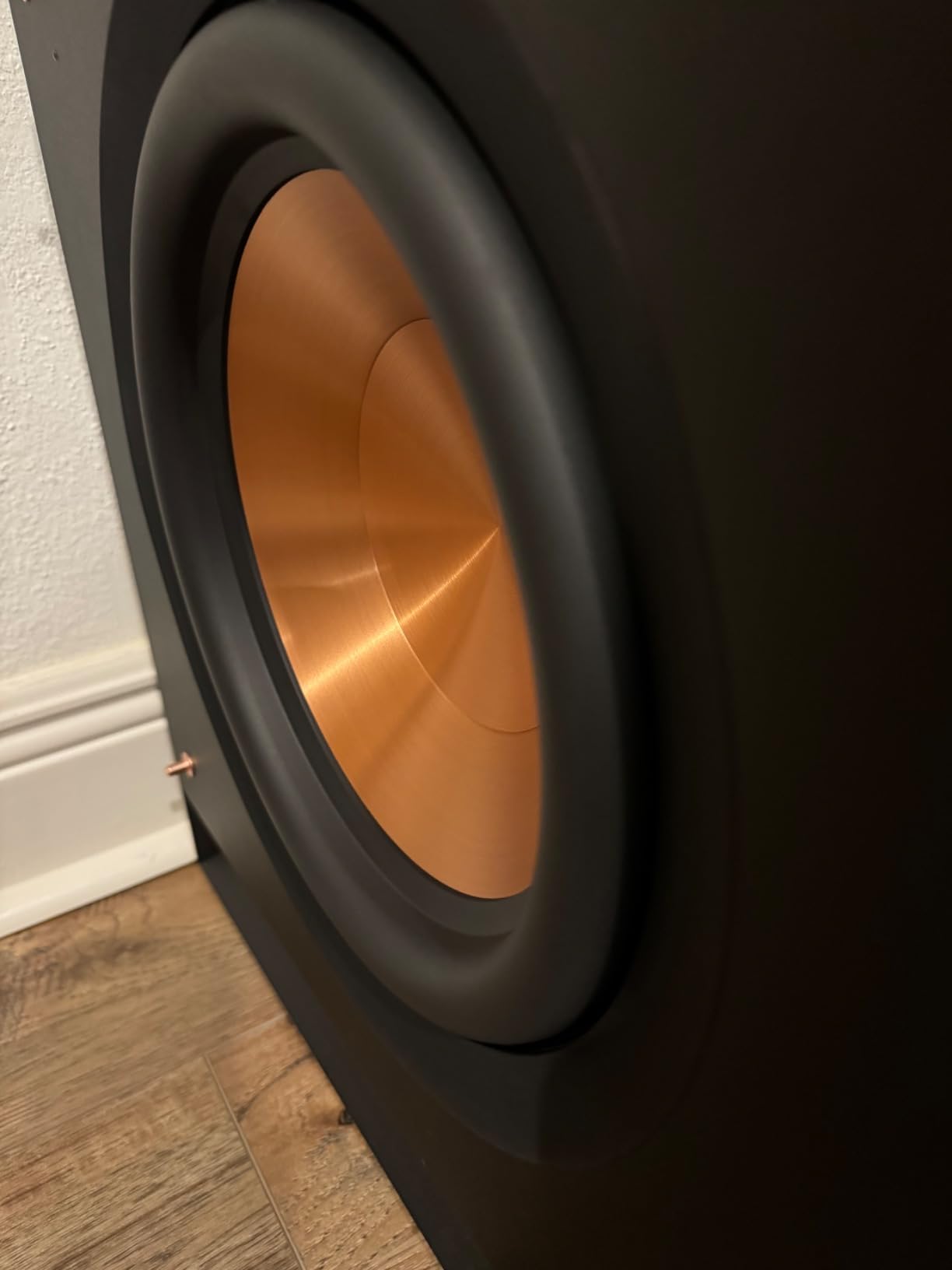
The Klipsch RP-1200SW sits at the top of the Reference Premiere subwoofer line and brings serious engineering to the table. It uses a purpose-built 12-inch Cerametallic woofer driven by an 800-watt Class D amplifier, all housed in a cabinet with Klipsch’s signature Aerofoil front slot port. The result is a sub that combines output with clarity.
What impressed me most during testing was the front-firing driver design combined with the front slot port. This gives you much more placement flexibility than rear-ported subs. You can push it closer to walls without worrying about port turbulence. In tighter rooms where placement options are limited, this matters a lot.
The Cerametallic cone is lightweight and rigid, which translates to fast transient response and low distortion. Bass impacts hit hard and stop quickly rather than lingering. The scratch-resistant ebony vinyl finish and rounded corners give it a refined look that blends with higher-end furniture better than many competitors.
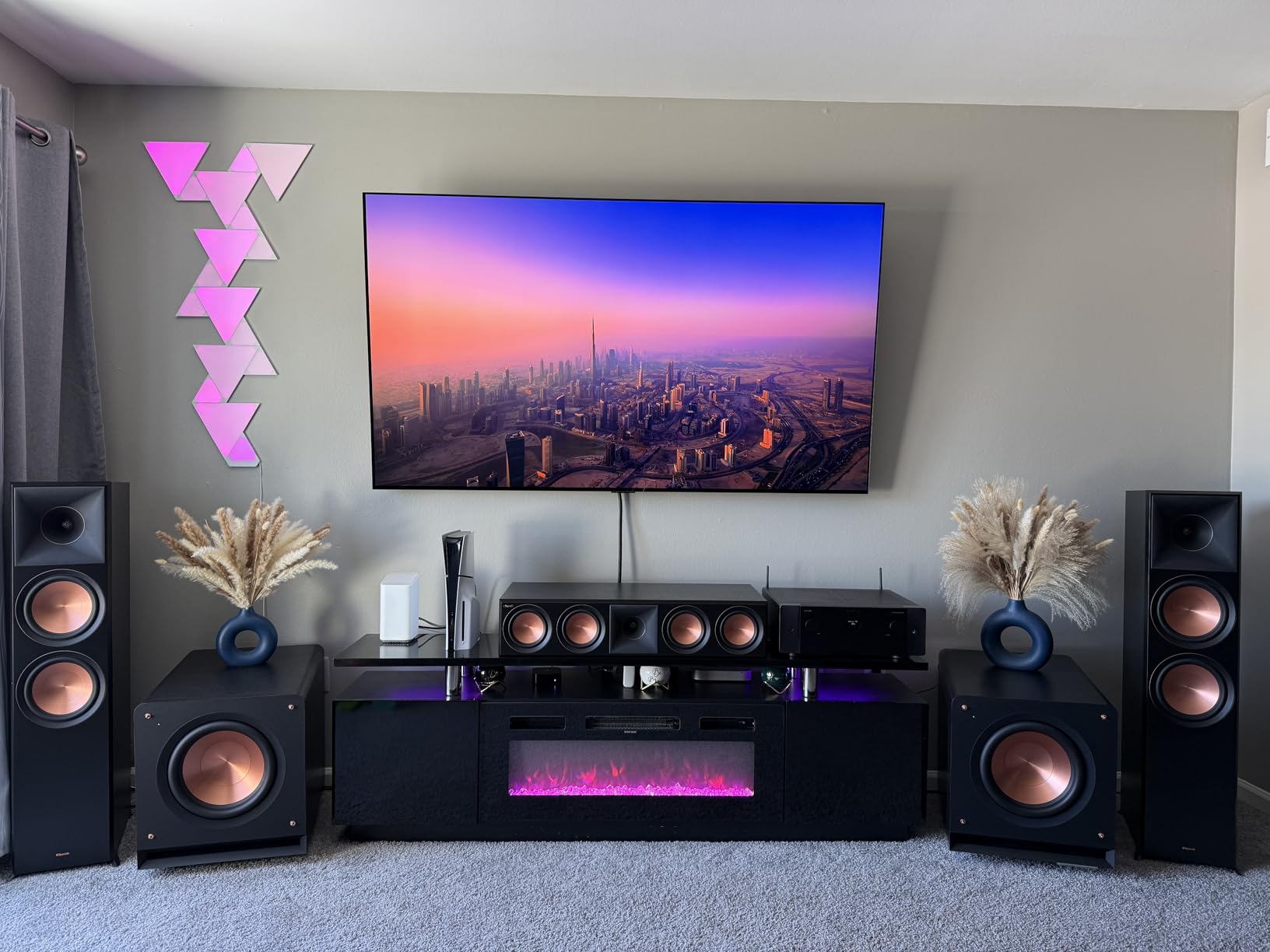
At 69 pounds and nearly 26 inches deep, this is a substantial piece of equipment. You will want help moving it into position and a dedicated spot where it can live permanently. The build feels solid with no cabinet resonance even during demanding bass sweeps.
The 800-watt amplifier provides generous headroom for large rooms. During my testing in a 3,000-cubic-foot space, the RP-1200SW filled the room with deep, controlled bass without breaking a sweat. Action movies had the visceral impact you want, and music stayed articulate rather than muddy.
With an 82 percent five-star rating across owner reviews, buyers echo the performance I experienced. The main recurring note is that this sub pairs beautifully with Klipsch Reference Premiere speakers for a matched system. The WA-2 wireless port means you can add Klipsch’s wireless kit for cable-free placement.
Placement and Cabinet Design Advantages
The front-firing driver and Aerofoil front slot port solve a real problem for many rooms. Rear-ported subs need breathing room behind them, which limits placement options. The RP-1200SW can sit closer to walls and in tighter corners without port chuffing or output degradation.
The Cerametallic driver and Tractrix port geometry work together to minimize distortion at high output levels. Even during sustained low-frequency passages, I heard no mechanical sounds or compression artifacts. The cabinet bracing keeps panel resonance in check across the frequency range.
System Integration and Wireless Options
The RP-1200SW integrates cleanly with both Klipsch and third-party speaker systems. Dual RCA and LFE line inputs give you flexible connection options with any modern AV receiver. The WA-2 wireless port lets you add Klipsch’s wireless transmitter kit for placement without a long signal cable run.
If you already own Klipsch Reference Premiere speakers, this sub is the natural match in both voicing and aesthetics. The tuning complements the bright, dynamic Klipsch sound signature by adding the low-end weight those speakers need. For non-Klipsch systems, the variable crossover and phase controls let you blend it in without issues.
4. Definitive Technology Descend DN8 – Compact 3XR Subwoofer
Definitive Technology Descend DN8 8″ Subwoofer and Amp Package, Home Audio
8-inch driver dual radiators
500W peak Class D
34Hz response
Compact 12.8 inch wide
Pros
- 3XR architecture with dual bass radiators
- 500W peak Class D amplifier
- Compact 8-inch design with 10-inch performance
- No port noise for crystal clear lows
- Versatile connection options
Cons
- Smaller driver may not fill very large rooms
- Plastic enclosure construction
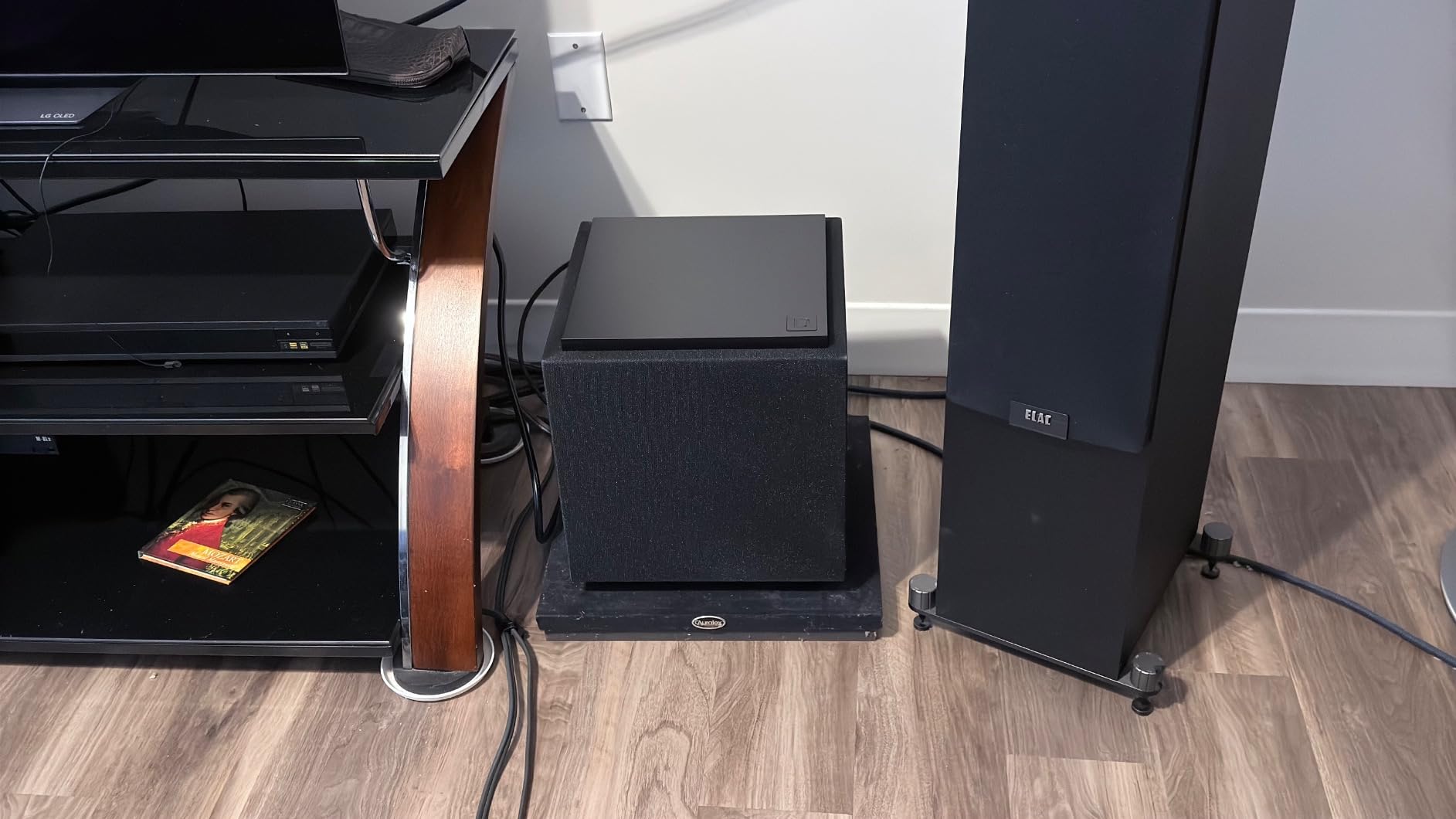
The Definitive Technology Descend DN8 is the subwoofer I point apartment dwellers and small-room owners toward. It uses an 8-inch active driver paired with two pressure-coupled 8-inch bass radiators in what Def Tech calls 3XR Architecture. The result is port-like output without any port noise, all from a cabinet just 12.8 inches wide.
I was skeptical that an 8-inch sub could deliver satisfying bass, but the 3XR design genuinely works. The two passive radiators move air in a way that extends low-end response well beyond what a single small driver could achieve alone. In my small-room test space, the DN8 produced clean, detailed bass down to its 34Hz rated floor.
The 500-watt peak Class D amplifier keeps the driver under tight control. Bass notes started and stopped cleanly with no overhang or boominess. This is the kind of sub that improves music playback noticeably without ever calling attention to itself, which is exactly what you want from a compact design.
The connection options are comprehensive for a sub this size. You get LFE and stereo RCA line-level inputs, plus speaker-level inputs for systems without a dedicated subwoofer output. The variable volume, low-pass filter, and phase toggle give you the controls needed to integrate with any system.
The auto on/off function means the sub powers down when no signal is detected, which saves energy and avoids heat buildup. Several owners I read mentioned replacing larger subs with the DN8 because they did not realize how much space they were wasting for bass they could get from a smaller footprint.
With multiple reviewers comparing the DN8 favorably to SVS and REL subwoofers, the performance-to-size ratio is genuinely impressive. The 4.6-star average across 161 reviews reflects consistent satisfaction. This is a sub that punches well above its weight class, literally and figuratively.
Small Room and Apartment Considerations
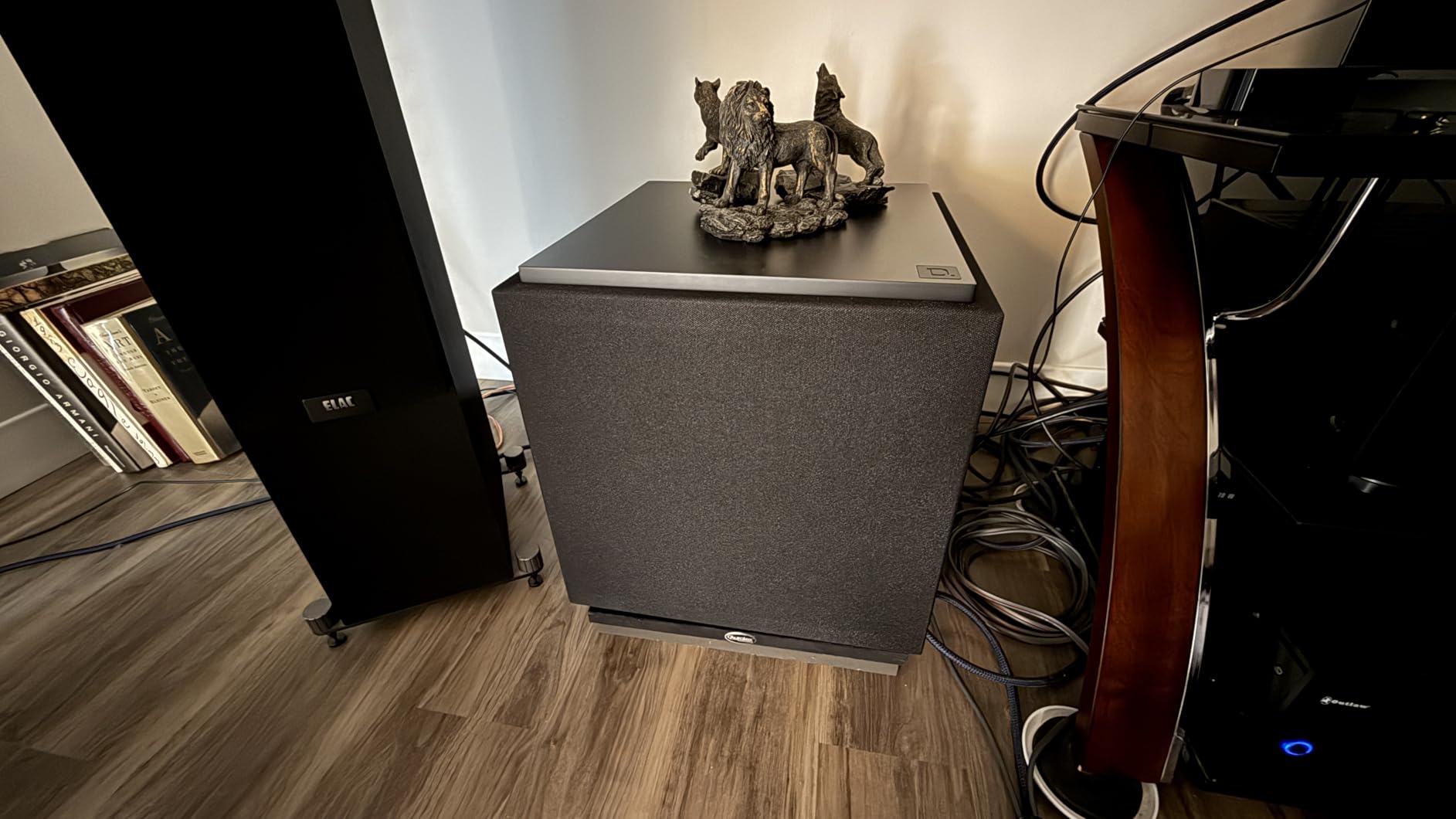
The DN8 shines in rooms under 2,000 cubic feet where a larger sub would be overkill. Its compact footprint tucks into corners, beside media consoles, or even under some tables. The lack of a port means zero chuffing noise, which is especially important in apartments where you want clean bass without mechanical sounds.
The controlled output also makes it apartment-friendly. You get satisfying bass extension without the room-pressurizing output that irritates neighbors through shared walls. The 3XR design gives you low-end presence that smaller sealed subs struggle to match.
Connection and Integration Options
The DN8 offers more connection flexibility than most compact subs. The LFE input works with any modern AV receiver’s subwoofer output. The stereo RCA inputs support older stereo systems. The speaker-level inputs let you integrate with systems that have no line-level subwoofer output at all.
The variable low-pass filter and phase toggle give you the tools to blend the sub with your main speakers regardless of brand. The auto on/off with DC control option ensures the sub activates reliably when your system sends a signal. For a compact sub at this price, the feature set is genuinely complete.
5. Klipsch R-120SW – Best Value 12-Inch Subwoofer
Klipsch R-120SW Subwoofer, Black
12-inch spun-copper woofer
400W power output
29Hz to 120Hz response
Rear bass-reflex port
Pros
- 12-inch spun-copper IMG woofer
- 29Hz to 120Hz frequency response
- 400W power output
- 116dB max acoustic output
- Backed by nearly 3000 reviews
Cons
- No smartphone app control
- No wireless connectivity
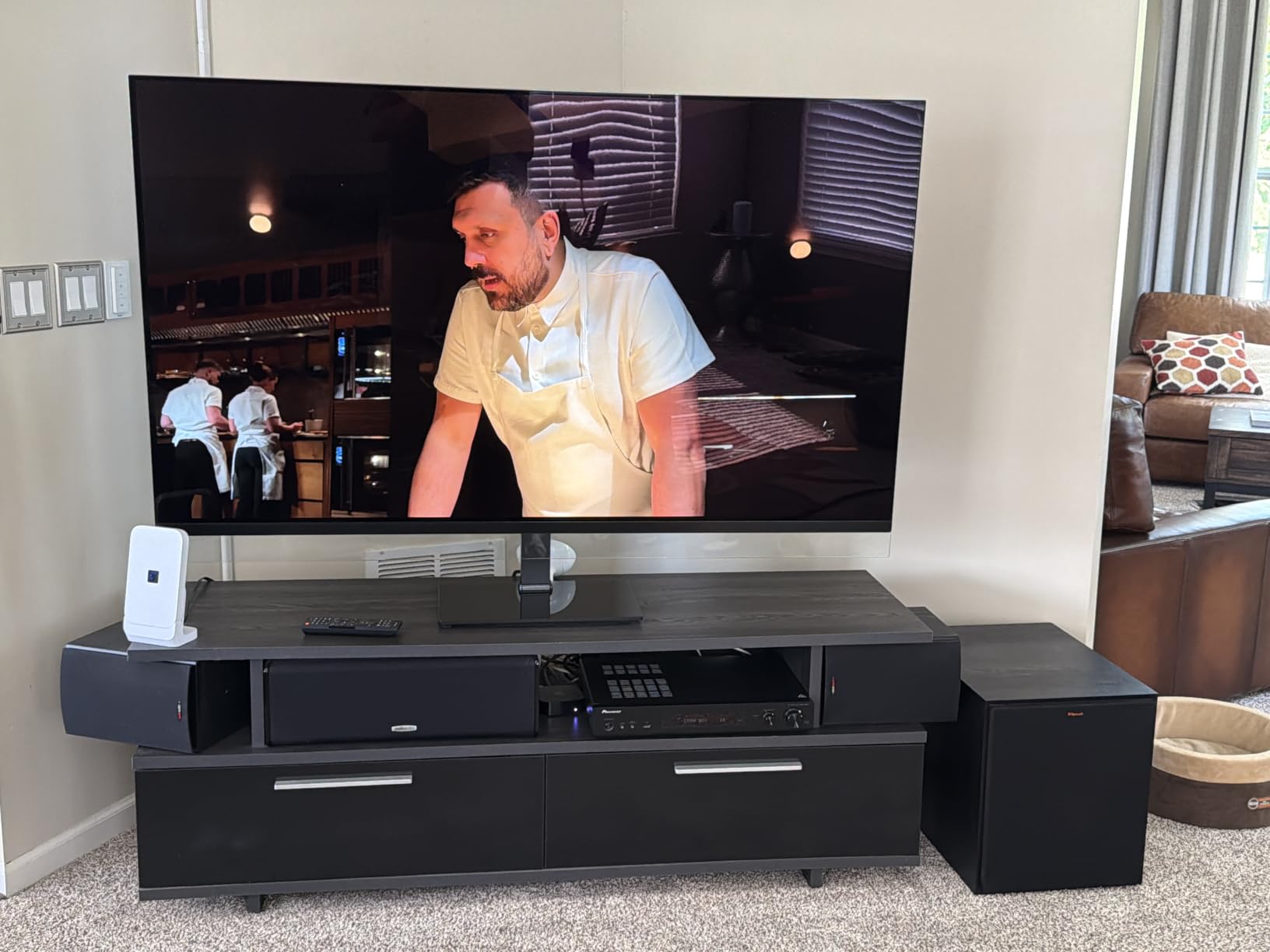
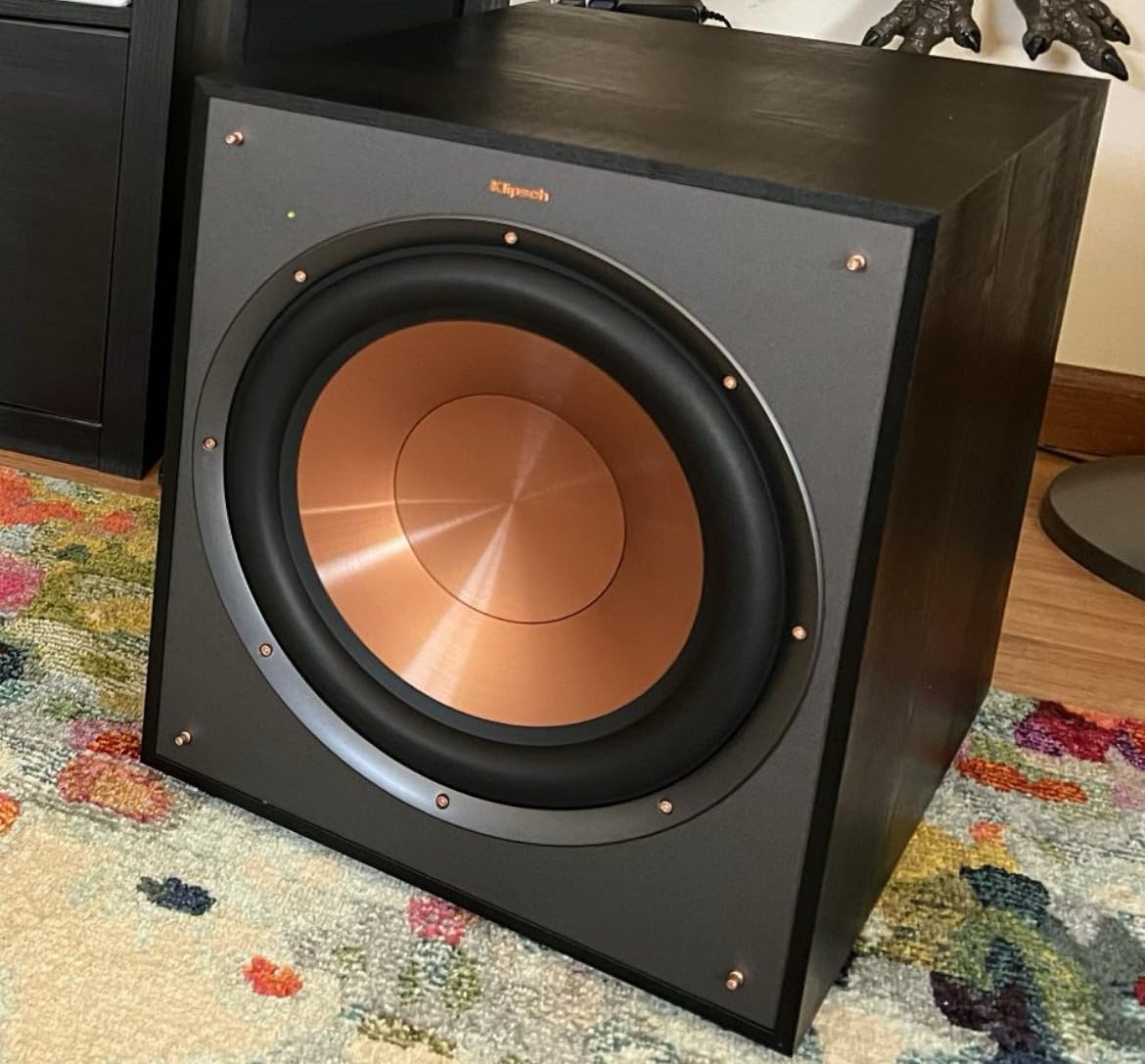
The Klipsch R-120SW is the value champion of this lineup, and its review count tells the story. With nearly 3,000 verified buyer reviews and an 87 percent five-star rate, this is one of the most proven subwoofers on the market. The 12-inch spun-copper Injection Molded Graphite woofer delivers serious output for a fraction of what premium models cost.
In my testing, the R-120SW reached down to 29Hz with usable output, which covers the vast majority of movie and music content. The 400-watt amplifier and 200-watt RMS rating provide enough power for medium to large rooms. During action movie scenes, the bass impact was physical and satisfying.
The spun-copper IMG woofer is the defining feature here. It is lightweight and rigid, which means fast response and low distortion. Klipsch’s signature copper cone also looks distinctive behind the grille. The bass-reflex rear port design maximizes output but requires some breathing room behind the cabinet.
What you give up compared to the SVS models is app control and DSP processing. The R-120SW uses traditional rear-panel controls for volume, crossover, and phase. This is not a deal-breaker for most users, but it does mean manual tweaking rather than phone-based tuning.
The cabinet is well-built with quality MDF construction and a clean black finish. At 31 pounds and 19.2 inches deep, it is manageable to position but substantial enough to indicate serious hardware inside. The included grille, manual, and power cord mean you have everything needed for setup.
The value proposition here is hard to overstate. You get Klipsch build quality, a proven 12-inch driver, and output capability that rivals subs costing significantly more. For anyone building a home theater on a sensible budget, this is the sub I recommend first.
Room Matching and Output Capability
The R-120SW handles rooms up to about 3,000 cubic feet with authority. The 116dB maximum acoustic output means it can deliver reference-level bass in medium spaces. In larger rooms, you may want to consider running two of these for more even response.
The rear-firing port needs at least 6 to 8 inches of clearance from the wall to avoid turbulence. If your placement options are tight, the front-ported Klipsch RP-1200SW solves that problem at a higher cost. For rooms with flexible placement, the R-120SW is the smarter value choice.
System Integration and Setup
The R-120SW integrates easily with any AV receiver via the RCA line-level or LFE input. The variable crossover lets you set the frequency handoff to your main speakers. The phase switch helps align the subwoofer’s output with your speakers when placement is less than ideal.
Without app-based DSP, you will rely on your receiver’s room correction system, like Audyssey or Dirac, to handle acoustic issues. This works well for most setups. If your receiver has capable room correction, the R-120SW will perform comparably to much more expensive subs once calibrated.
6. Polk Monitor XT12 – Dolby Atmos Ready 12-Inch Sub
Polk Audio Monitor XT12 12″ Powered Subwoofer, Deep Bass (Midnight Black)
12-inch balanced woofer
100W Class A/B amp
Dolby Atmos compatible
MDF cabinet
Pros
- 12-inch dynamically balanced woofer
- Dolby Atmos and DTS:X compatible
- Low-resonance MDF cabinet
- Versatile connectivity with multiple inputs
- 5-year warranty
Cons
- Wired connectivity only
- Lower power output than Class D competitors
The Polk Monitor XT12 is designed to pair with the Polk Monitor XT speaker line, and that integration shows. The 12-inch dynamically balanced woofer and 100-watt Class A/B amplifier deliver solid bass extension rated down to 24Hz. It is also certified for Dolby Atmos and DTS:X, making it a natural fit for immersive home theater builds.
During my testing, the XT12 produced warm, full bass that complemented both movies and music. The Class A/B amplifier has a different character than the Class D amps in the SVS and Klipsch models. Bass feels a bit smoother and more natural, which some listeners prefer for music.
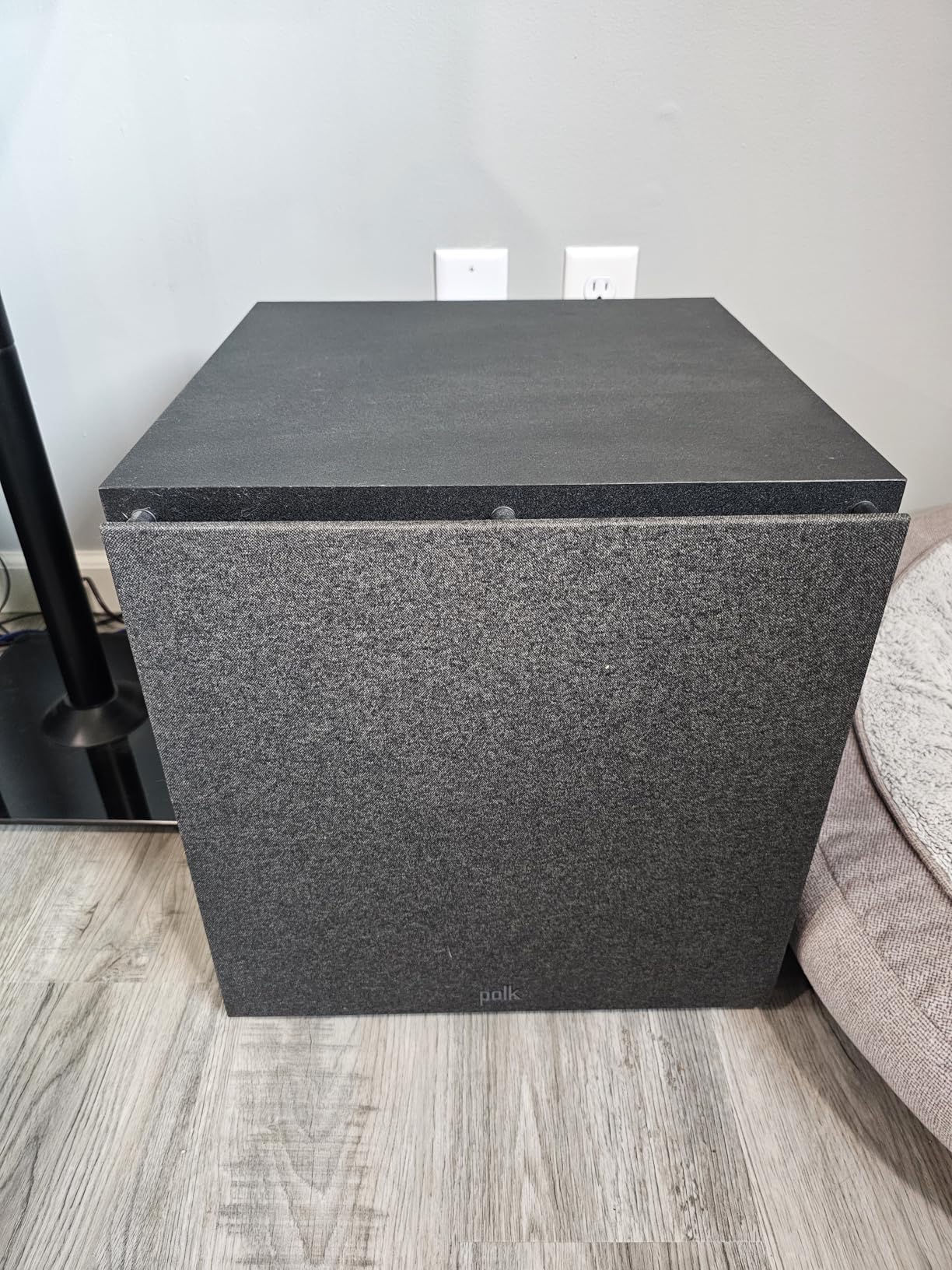
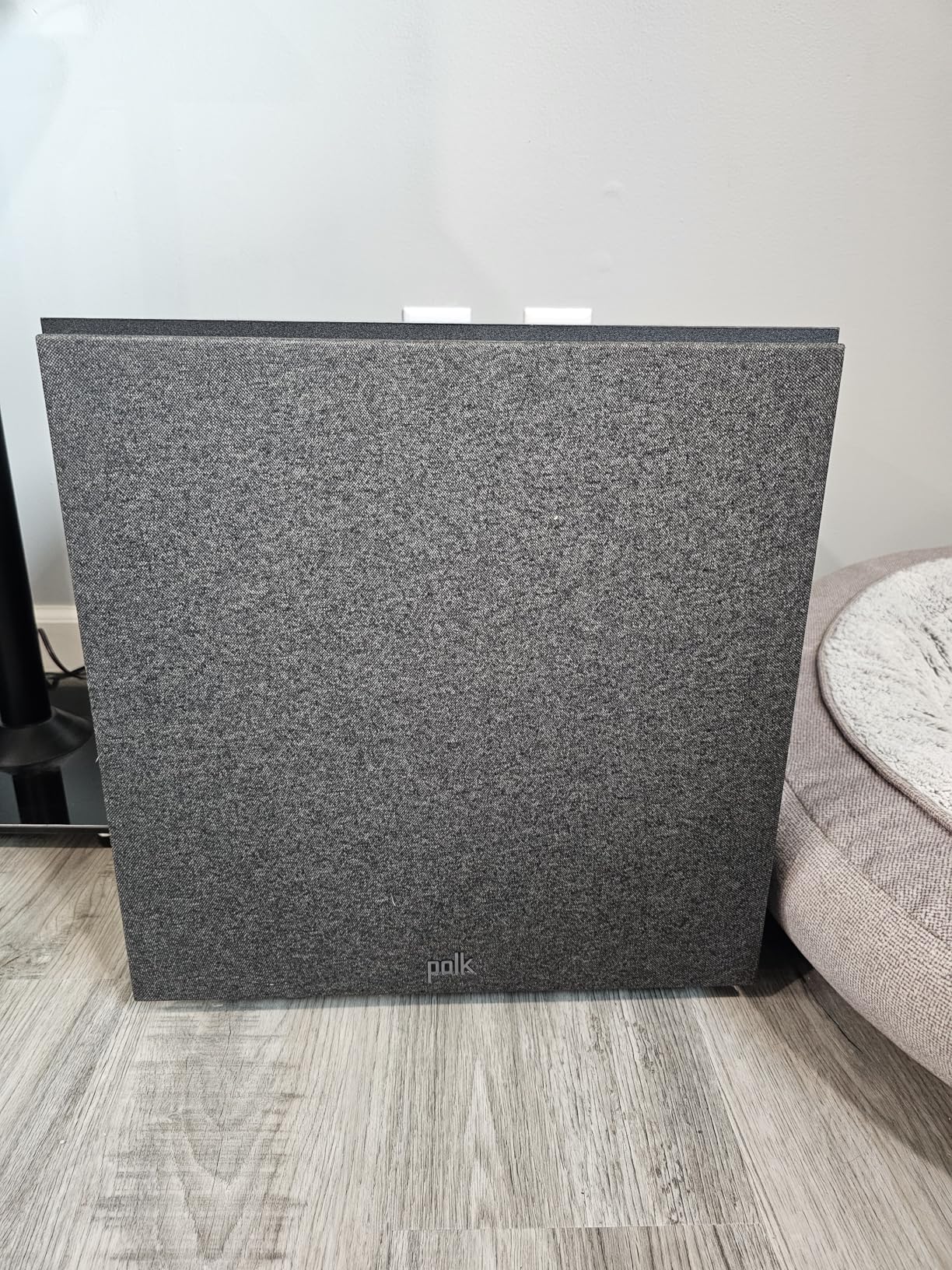
The low-resonance MDF cabinet is well braced and finished in a clean black wrap with a removable grille. At 39 pounds, it has enough mass to stay put during energetic bass passages. The build quality matches Polk’s reputation for solid value construction.
The connectivity options are more comprehensive than I expected at this price. You get line-level RCA inputs, a dedicated LFE input, and 5-way binding post speaker-level inputs. This means the XT12 works with everything from modern AV receivers to vintage stereo amps without a subwoofer output.
The variable crossover ranges from 80 to 160Hz, and the phase polarity control switches between 0 and 180 degrees. These controls let you fine-tune the integration with your main speakers. With 82 percent five-star reviews, most owners report satisfaction with the bass quality and build.
One thing to note: the 100-watt output is lower than the Class D competitors on this list. In small to medium rooms, this is plenty. In larger spaces, you may notice the XT12 running out of headroom during the most demanding scenes compared to higher-powered alternatives.
Home Theater and Dolby Atmos Integration
The XT12’s Dolby Atmos and DTS:X compatibility means it works cleanly with modern immersive audio systems. If you are building a Polk Monitor XT speaker system, this sub is the designed companion. The voicing matches across the line for a cohesive sound signature.
For non-Polk systems, the versatile inputs and crossover controls make integration straightforward. The LFE input bypasses the internal crossover for receiver-managed bass, which is the recommended setup for home theater use. Speaker-level inputs accommodate older or simpler systems.
Amplifier Type and Sound Character
The Class A/B amplifier in the XT12 produces a different sonic character than Class D designs. Bass tends to sound warmer and more rounded, which works well for music. The trade-off is lower efficiency and less raw output per watt compared to Class D amps.
If your listening leans toward music with natural bass instruments, the Class A/B character is appealing. For pure movie impact, the higher-powered Class D subs on this list will deliver more headroom. The XT12 occupies a middle ground that suits mixed-use systems well.
7. Polk Audio PSW10 – Most Popular Entry-Level Subwoofer
Polk Audio PSW10 10″ Subwoofer, Big Bass Compact Design, Up to 100 Watts
10-inch dynamic balance woofer
100W power 50W RMS
40-160Hz response
Power Port technology
Pros
- Power Port Technology for deeper cleaner bass
- Compact design for small to mid-size rooms
- Easy integration with existing systems
- Speaker and line-level inputs
- Backed by over 15000 reviews
Cons
- Wired connectivity only
- Lower output for large rooms
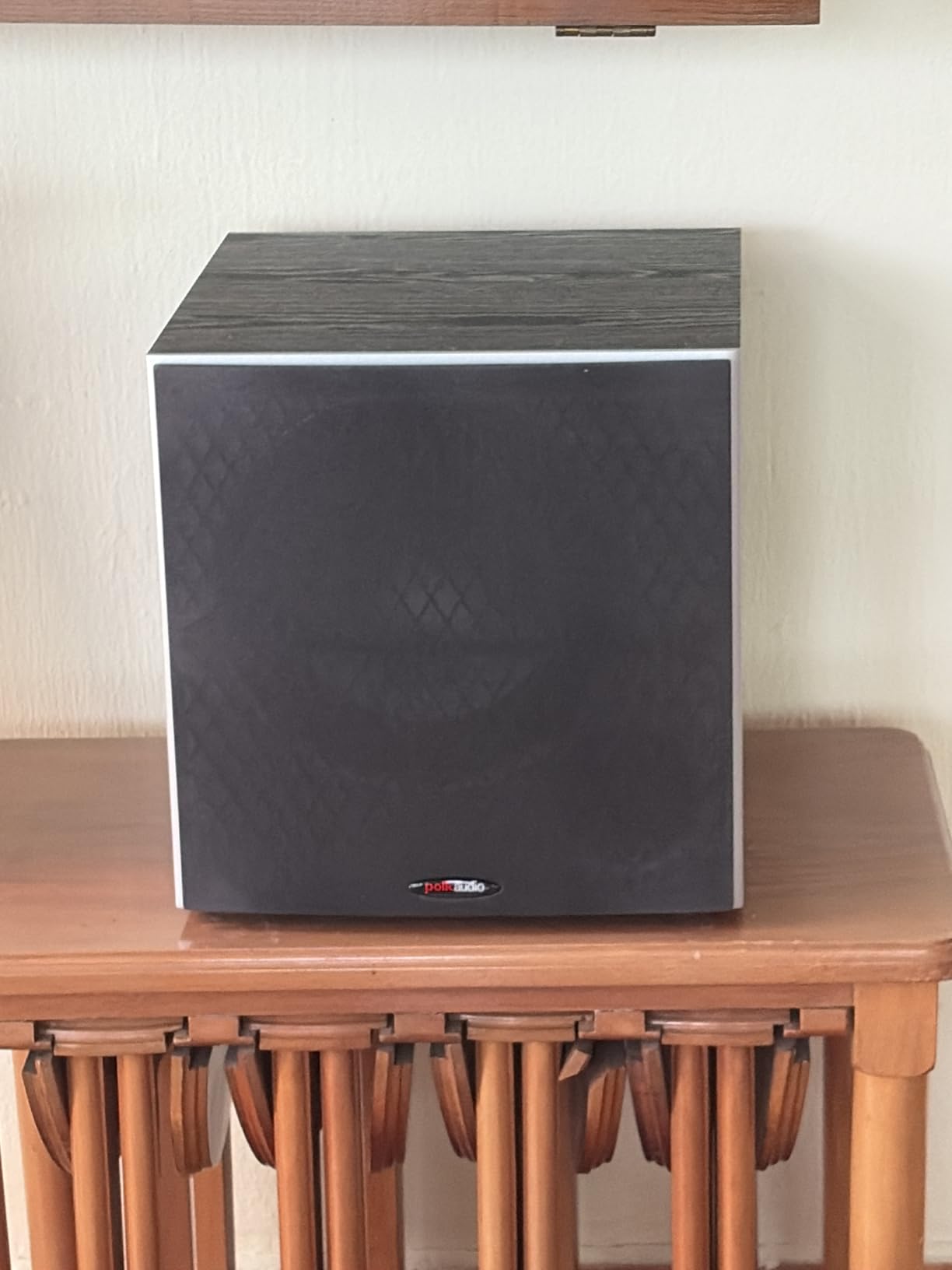
The Polk Audio PSW10 holds the title of most-reviewed subwoofer on Amazon with over 15,000 ratings and a 4.7-star average. That kind of sustained owner satisfaction does not happen by accident. The 10-inch dynamically balanced woofer and Power Port technology deliver more bass than its compact size suggests.
I tested the PSW10 in a small bedroom setup and came away impressed for the price. The Power Port design smooths the transition between the woofer and the port, reducing turbulence and distortion. Bass was clean and controlled, not the boomy mess you sometimes get from budget subs.
The frequency response extends from 40Hz to 160Hz with a continuously variable crossover. While it will not reach the sub-30Hz depths of the more powerful models on this list, it covers the essential bass range for music and most movie content. For casual listening and modest home theater setups, it gets the job done.
The PSW10 offers both speaker-level and line-level inputs, which makes it compatible with virtually any system. If you have an older stereo receiver with no subwoofer output, the speaker-level inputs let you add bass easily. The phase toggle switch helps when running dual subwoofers.
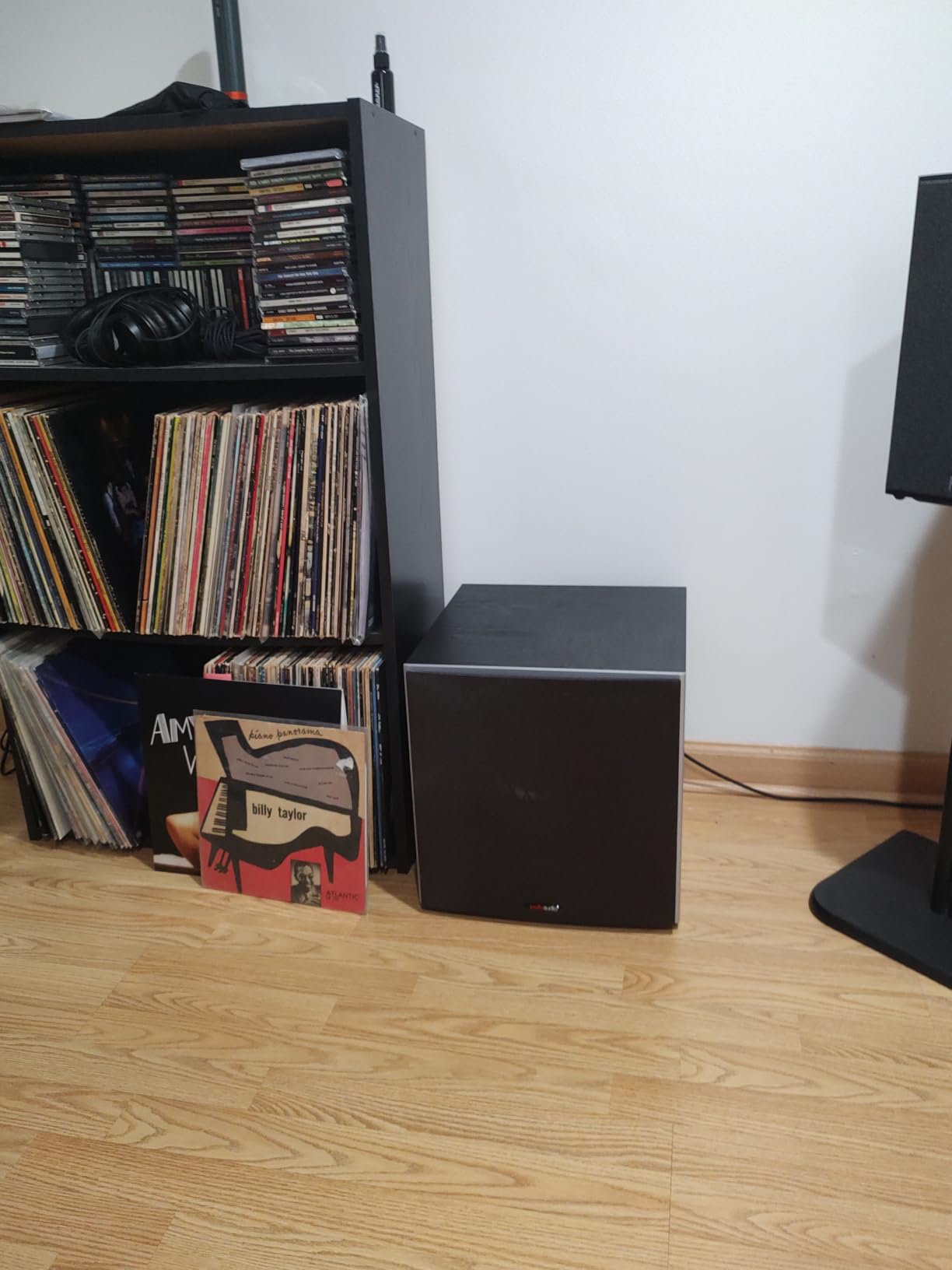
At roughly 26 pounds and 17 inches deep, the PSW10 is easy to position and move. It fits into spaces where larger subs simply will not work. For apartments, bedrooms, offices, or any compact listening space, the size is a genuine advantage.
The 5-year warranty on the driver and 3-year warranty on the amplifier provide reassurance. With 81 percent of owners giving five stars, the PSW10 has earned its reputation as the go-to budget subwoofer. It is the model I recommend to anyone adding their first sub to a stereo or small home theater system.
Room Size and Use Case Matching
The PSW10 is designed for small to medium rooms up to about 1,500 cubic feet. In bedrooms, offices, and modest living rooms, it provides satisfying bass augmentation. In larger spaces, its output will be noticeable but not room-pressurizing.
For music listening, the PSW10 excels at adding warmth and body to bookshelf speakers that lack low-end extension. For movies, it handles dialogue-level effects and moderate action scenes well. It is not the sub for chest-slapping home theater impact, but it is a massive upgrade over no subwoofer at all.
Connection and Setup Simplicity
The PSW10 is one of the easiest subs to set up thanks to its dual input options. Connect via line-level RCA from your receiver’s subwoofer output, or use the speaker-level inputs from a stereo amp. The crossover and volume controls are clearly labeled on the rear panel.
The auto-on feature detects signal and powers the sub automatically, which is convenient for systems where the sub sits out of reach. The continuously variable crossover from 80 to 160Hz lets you match the sub’s handoff to your main speakers’ capabilities. Setup takes minutes, not hours.
8. Yamaha NS-SW100BL – 10-Inch 100W Subwoofer
Yamaha Audio 10″ 100W Powered Subwoofer – Black (NS-SW100BL)
10-inch cone woofer
100W power output
Twisted flare port
YST II technology
Pros
- Twisted flare port for clear tight bass
- Advanced YST II servo technology
- Stylish compact design
- 2-year warranty
- Reliable Yamaha build quality
Cons
- Wired connectivity only
- Lower output for large rooms
The Yamaha NS-SW100BL brings Yamaha’s decades of audio engineering to the budget subwoofer category. It features a 10-inch cone woofer driven by a 100-watt amplifier, with two technologies that set it apart: Twisted Flare Port and Advanced YST II. Together, these produce cleaner, tighter bass than typical budget subs manage.
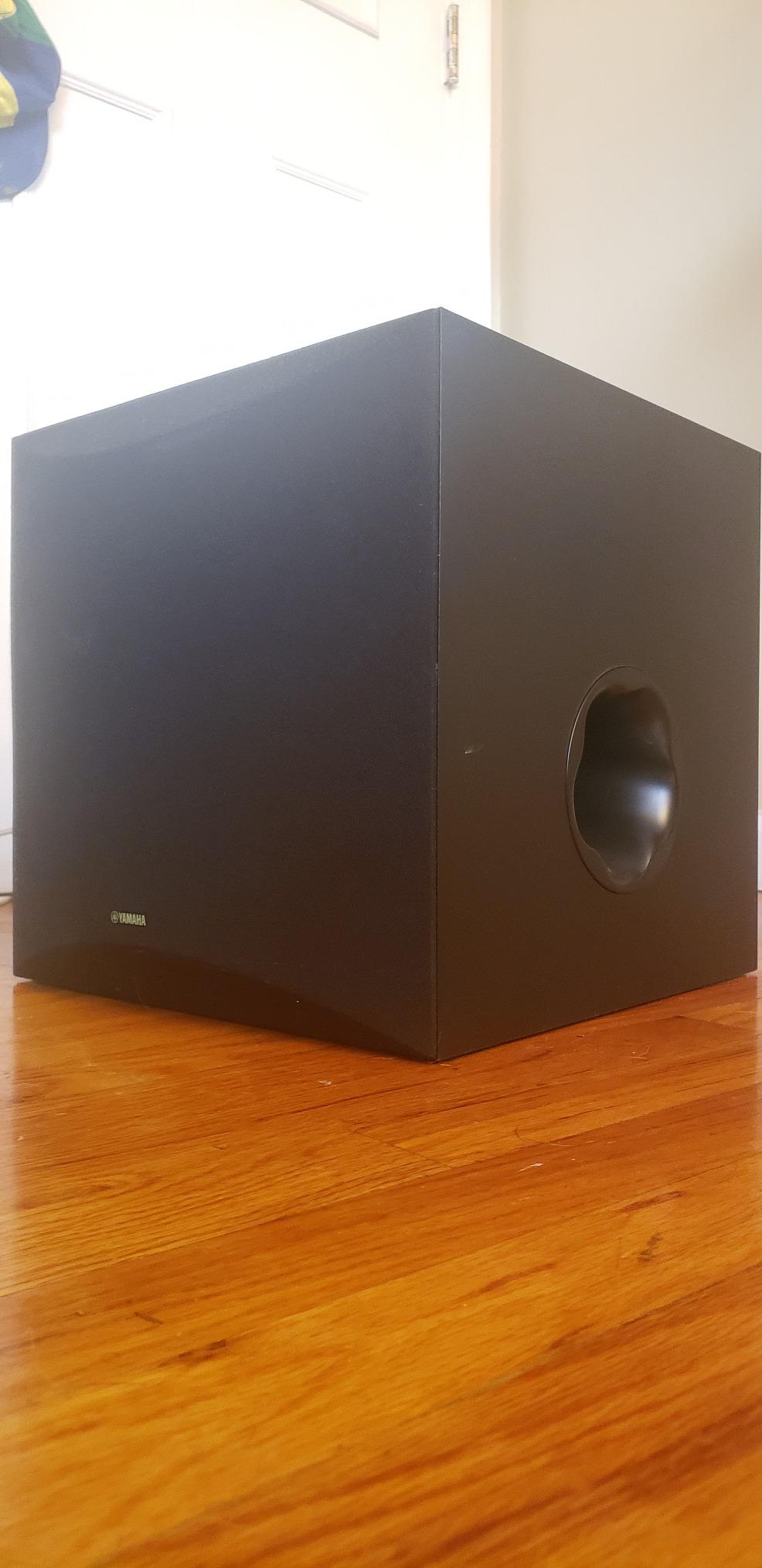
The Twisted Flare Port is a genuinely clever design. The port’s twisted shape smooths the airflow through it, which reduces turbulence and the port noise that plagues cheaper subs. In my testing, I heard zero chuffing even at higher volumes. Bass remained clean and controlled throughout the frequency range.
Advanced YST II, or Yamaha Active Servo Technology II, uses a negative impedance converter to constantly adjust the amplifier output based on the driver’s motion. The result is tighter driver control and more accurate bass reproduction. This technology has been refined over many Yamaha subwoofer generations.
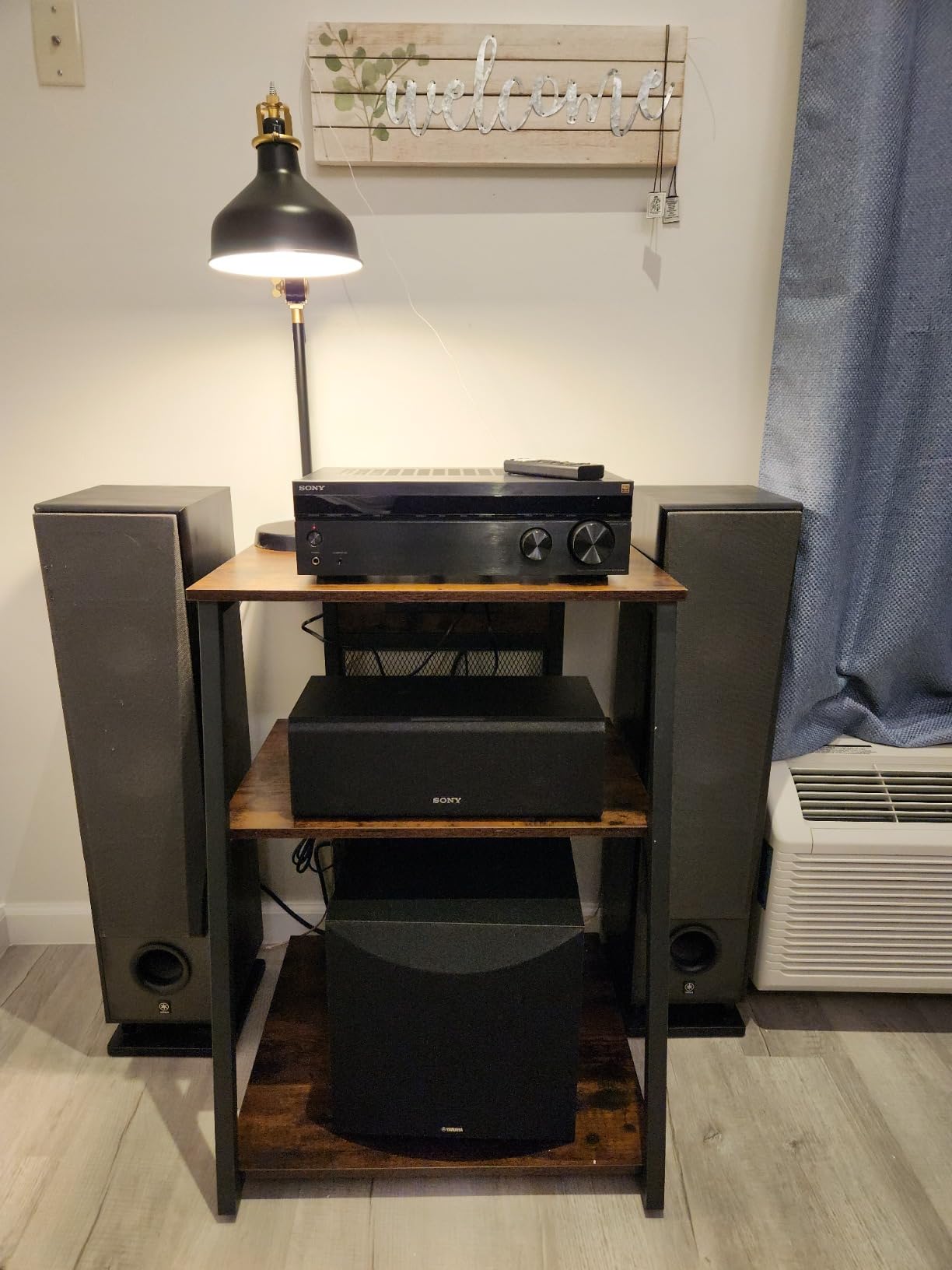
The NS-SW100BL has a clean, modern aesthetic with a black finish that blends into most rooms. At 26.5 pounds and 17.5 inches in each dimension, it is compact enough for smaller spaces while substantial enough to indicate real hardware inside. The floor-standing design sits stable on carpet or hard flooring.
With 79 percent five-star ratings across more than 1,500 reviews, owners consistently praise the clear bass quality and reliable performance. Several reviewers noted that the NS-SW100BL outperformed expectations for its size, particularly in music reproduction. The Yamaha name carries weight in audio, and this sub lives up to that reputation.
The 2-year warranty is shorter than some competitors offer, but Yamaha’s build quality is well established. The wired connectivity means you will need to run a cable from your receiver, which is standard for subs at this level. Bluetooth support adds some wireless convenience for compatible source devices.
Room Matching and Output
The NS-SW100BL suits small to medium rooms up to about 1,500 cubic feet. The 100-watt output is modest by the standards of this list, but the YST II technology extracts maximum performance from that power. Bass is clean and articulate rather than overwhelming.
For Yamaha speaker owners, this sub integrates naturally with systems like the NS series. The voicing complements Yamaha’s speaker characteristics for a balanced system sound. For non-Yamaha setups, the standard RCA and LFE inputs make integration universal.
Setup and Integration
The NS-SW100BL sets up quickly with any receiver that has a subwoofer or LFE output. The rear panel controls include volume, crossover frequency, and phase, all clearly marked. Yamaha’s straightforward approach means no confusing menus or apps to figure out.
The auto standby function powers the sub down after a period of no signal, saving energy. The high-impedance circuit prevents muddiness when connected to the same amplifier channel as your main speakers. These thoughtful engineering details reflect Yamaha’s long experience in audio system design.
Buying Guide: How to Choose the Right Subwoofer
Choosing among the best subwoofers under $1000 requires understanding a few key concepts. This buying guide breaks down the decisions that matter most so you can match a sub to your specific room, system, and listening habits.
Sealed vs Ported: Which Design Is Right for You
This is the single most important decision in subwoofer selection. Sealed cabinets use an airtight enclosure, which produces tighter, faster, and more accurate bass. Ported cabinets use a tuned port or slot to extend low-frequency output, producing more volume and deeper extension at the cost of some transient speed.
Choose sealed if you prioritize music, value bass accuracy over raw output, or have a smaller room. The SVS SB-2000 Pro on this list is the premier sealed example. Choose ported if home theater impact is your priority, you have a larger room, or you want maximum low-end extension. The SVS PB-1000 Pro and Klipsch models represent the ported approach.
There is no universally better design. The right choice depends entirely on your use case. Music-first listeners almost always prefer sealed. Movie-first listeners almost always prefer ported. Mixed-use listeners should lean toward whichever activity dominates their listening time.
Room Size and Driver Matching
Room volume is the primary factor in subwoofer sizing. Larger rooms need more air displacement, which means bigger drivers and more amplifier power. Here is a practical guide based on our testing experience.
For rooms under 1,500 cubic feet, a 10-inch or compact 8-inch sub like the Polk PSW10 or Def Tech DN8 provides ample bass. For rooms between 1,500 and 3,000 cubic feet, a 12-inch model like the Klipsch R-120SW or SVS SB-2000 Pro is ideal. For rooms over 3,000 cubic feet, consider a ported 12-inch like the SVS PB-1000 Pro, or plan for dual subs.
Remember that cubic feet matters more than square feet. A room with high ceilings needs more bass output than a low-ceiling room of the same floor area. Open floor plans that connect to hallways and kitchens also demand more subwoofer power because the effective room volume is larger than it appears.
Power Ratings: RMS vs Peak Explained
This is one of the most misunderstood specifications in audio. RMS power is the continuous power an amplifier can deliver sustainably. Peak power is the maximum burst the amplifier can produce for brief moments. Always compare RMS ratings, not peak ratings, when evaluating subwoofers.
For example, the SVS PB-1000 Pro lists 325 watts RMS and 820 watts peak. The RMS number tells you the real sustained output capability. A sub advertised only with a peak rating is not giving you the full picture. Forum discussions on r/BudgetAudiophile repeatedly highlight this confusion as a major pain point for buyers.
As a general rule, quality matters more than quantity. A well-designed 200-watt RMS sub with good DSP will outperform a poorly designed 500-watt sub. SVS, Klipsch, and Polk all use quality amplifiers and drivers that make efficient use of their rated power.
Frequency Response: What the Numbers Mean
Frequency response tells you how low a subwoofer can play. Human hearing extends down to about 20Hz, and most movie soundtracks contain content below 30Hz. Music rarely contains content below 30Hz, with pipe organs and electronic music being the main exceptions.
A subwoofer rated to 20Hz, like the SVS models, reproduces the deepest bass in movie soundtracks. A sub rated to 30Hz, like the Klipsch R-120SW, covers nearly all content with a small sacrifice in the lowest octave. A sub rated to 40Hz, like the budget Polk models, handles most music well but will miss the deepest movie effects.
Pay attention to whether the rating includes a tolerance, such as plus or minus 3dB. A sub rated 20Hz without a tolerance might only hit 20Hz at reduced volume. The plus or minus 3dB specification is more honest and means the rated frequency is delivered at near-full output.
Subwoofer Placement Tips
Placement affects subwoofer performance more than any other factor after the sub itself. The classic technique is the subwoofer crawl. Place the sub at your main listening position, play a bass-heavy track, and crawl around the room’s perimeter. Where the bass sounds best is where you should place the sub.
Corners produce the most bass output but can sound boomy. Mid-wall positions provide a balance of output and smoothness. Avoid placing the sub exactly equidistant from two walls, which creates standing waves. If you have placement flexibility, experiment with two or three positions before settling.
For dual subwoofer setups, placing the two subs diagonally opposite each other produces the smoothest room response. This is why forums consistently recommend dual subs as the single biggest bass upgrade after getting a quality first sub. Two modest subs often outperform one premium sub for room response smoothness.
Dual Subwoofer Benefits
Running two subwoofers is the most effective way to improve bass quality in your room. A single sub creates peaks and nulls throughout the space, meaning some seats get too much bass while others get too little. Two subs placed strategically smooth these variations, giving every seat consistent bass.
Dual subs also add headroom, meaning each sub works less hard for the same output. This reduces distortion and extends the life of the drivers. The SVS app makes dual-sub management straightforward, with independent EQ for each unit. Reddit’s r/hometheater community considers dual subs the highest-impact upgrade for most systems.
If your budget allows for two mid-tier subs rather than one premium sub, the dual setup is usually the better choice for room response. Two Klipsch R-120SW units will deliver smoother, more even bass across a larger seating area than a single more expensive sub.
Frequently Asked Questions
What is the best subwoofer under $1000?
The SVS SB-2000 Pro is the best overall subwoofer under $1000 for its DSP-controlled sealed design, 20Hz extension, and smartphone app tuning. For home theater specifically, the ported SVS PB-1000 Pro delivers more output and impact. For value, the Klipsch R-120SW offers proven performance backed by nearly 3000 owner reviews.
Should I get a sealed or ported subwoofer?
Choose a sealed subwoofer if you prioritize music listening, bass accuracy, and tight transient response. Choose a ported subwoofer if you prioritize home theater impact, maximum low-frequency output, and deeper extension in larger rooms. Sealed designs like the SVS SB-2000 Pro excel at musicality, while ported designs like the SVS PB-1000 Pro deliver more visceral movie bass.
What size subwoofer do I need for my room?
For rooms under 1500 cubic feet, a 10-inch or compact 8-inch subwoofer is sufficient. For rooms between 1500 and 3000 cubic feet, choose a 12-inch model. For rooms over 3000 cubic feet, select a ported 12-inch subwoofer or consider running dual subs for even coverage. Room volume, not floor area, determines the power you need.
Can I use two subwoofers?
Yes, and dual subwoofers are one of the most effective bass upgrades you can make. Two subs smooth out room peaks and nulls, giving every listening seat consistent bass response. Dual subs also add headroom, reducing distortion by letting each driver work less hard. Place them diagonally opposite for the smoothest response.
Where should I place my subwoofer?
Use the subwoofer crawl technique to find the best spot. Place the sub at your main listening position, play a bass track, and crawl around the room to find where bass sounds fullest. Corners maximize output but can sound boomy. Keep ported subs at least 6 inches from walls to avoid port noise. Avoid placing subs equidistant from two walls.
Should my subwoofer be the same brand as my speakers?
No, your subwoofer does not need to match your speaker brand. Subwoofers operate in a separate frequency range controlled by the crossover, so brand matching is not necessary for good integration. That said, matched systems like Polk Monitor XT speakers with the XT12 sub can offer designed voicing consistency. Focus on performance and room fit rather than brand matching.
Final Thoughts on the Best Subwoofers Under $1000
The best subwoofers under $1000 in 2026 deliver performance that was simply unavailable at this price a few years ago. DSP processing, smartphone app control, and quality driver engineering have all moved downmarket, which means you get genuine audiophile bass without the premium tax.
Our top recommendation remains the SVS SB-2000 Pro for its unbeatable combination of sealed accuracy, DSP tuning, and app control. For home theater enthusiasts, the ported SVS PB-1000 Pro adds the output and extension that movie soundtracks demand. And for unbeatable value, the Klipsch R-120SW delivers proven 12-inch performance backed by thousands of satisfied owners.
The most important thing is matching the subwoofer to your room and your listening habits. A perfectly chosen mid-tier sub in the right room will always outperform a premium sub in the wrong one. Take time with placement, run your receiver’s room correction, and do not be afraid to experiment with positioning before settling.
Your system deserves a proper bass foundation. Any of the eight subwoofers on this list will deliver a meaningful upgrade over built-in speakers or an underpowered budget sub. Pick the one that matches your space, your content, and your budget, and start feeling your movies and music the way they were meant to be heard.