

There is something undeniably special about the sound of a tube amplifier. That warm midrange, the natural compression, the way vocals seem to float above the instruments. Our team has spent the last several months testing vacuum tube amplifiers across different rooms, speaker setups, and music genres to find the models that truly deliver on the promise of tube sound.
Finding the best tube amplifiers for your home audio system in 2026 is about more than just chasing nostalgia. Modern tube amps blend classic vacuum tube warmth with contemporary features like Bluetooth, built-in DACs, and even HDMI connectivity. Whether you want a compact desktop unit for nearfield listening or a full-power integrated amplifier to drive your living room speakers, the options have never been better.
We put together this guide after analyzing forum discussions, comparing specifications, and listening to each amplifier with the same reference tracks and speaker pairings. Our goal was simple. Find the tube amplifiers that offer the best combination of sound quality, build construction, and real-world usability for different budgets and listening environments.
Throughout this article, you will find detailed reviews of ten tube amplifiers ranging from compact desktop models to high-end KT88 integrated amplifiers. We cover hybrid designs that pair tube preamps with solid-state power sections, pure single-ended Class A amplifiers for audiophile purists, and everything in between. Each review includes hands-on impressions, technical analysis, and practical advice on speaker pairing.
If you have been wondering whether a tube amplifier is worth the investment, or you are upgrading from a basic solid-state amp and want that characteristic warmth, you are in the right place. Let us walk you through the top picks and help you find the right amplifier for your setup.
Table of Contents
Top 3 Tube Amplifier Picks for 2026

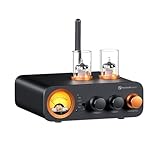
The Dayton Audio HTA200 earns our Editor’s Choice for its rare balance of power, versatility, and tube character. With 100 watts RMS per channel, it drives most bookshelf and floor-standing speakers without breaking a sweat. The hybrid tube preamp design gives you that warmth up front while the Class A/B power section delivers clean, authoritative output.
For listeners who want maximum features per dollar, the Fosi Audio MC331 is our Best Value pick. It packs a built-in DAC, Bluetooth 5.0, replaceable vacuum tubes, a headphone output, and 105 watts per channel into a compact chassis. The 24-month warranty adds peace of mind to an already compelling package.
The Willsenton R8 is our Premium Pick for serious audiophiles who want the full tube amplifier experience. Four KT88 power tubes deliver 45 watts of rich, holographic sound. The triode and ultra-linear switching lets you choose between intimate detail and punchy dynamics, making it one of the most versatile pure-tube amplifiers available.
Best Tube Amplifiers in 2026
Here is a complete comparison of all ten tube amplifiers we reviewed. Use this table to quickly compare features, ratings, and key specifications before diving into the individual reviews.
| Product | Specifications | Action |
|---|---|---|
| Dayton Audio HTA200 |
|
Check Latest Price |
| Fosi Audio MC331 |
|
Check Latest Price |
 Willsenton R8 Willsenton R8 |
|
Check Latest Price |
 REISONG A10 EL34 REISONG A10 EL34 |
|
Check Latest Price |
 Oldchen EL34 Class A Oldchen EL34 Class A |
|
Check Latest Price |
 REISONG A50 MKIII 300B REISONG A50 MKIII 300B |
|
Check Latest Price |
 Rockville BluTube LED Rockville BluTube LED |
|
Check Latest Price |
 Juson Audio JTA50 Juson Audio JTA50 |
|
Check Latest Price |
 AIYIMA T9 Tube DAC AIYIMA T9 Tube DAC |
|
Check Latest Price |
 Douk Audio ST-01 PRO Douk Audio ST-01 PRO |
|
Check Latest Price |
1. Dayton Audio HTA200 – Best Overall Hybrid Tube Amplifier
Dayton Audio HTA200 Integrated Stereo Hybrid Tube Amplifier 200 Watts
100W RMS per channel
Hybrid tube preamp
Class A/B topology
Phono preamp
Motorized volume
Pros
- Powerful 100W RMS per channel
- Hybrid tube preamp warmth
- Versatile connectivity with phono input
- Motorized volume with remote control
Cons
- Some Bluetooth connectivity reliability issues
- Limited power for very demanding speakers
I have spent more time with the Dayton Audio HTA200 than any other amplifier on this list, and it keeps impressing me. The hybrid design puts vacuum tubes in the preamp stage and uses a Class A/B power section to deliver 100 watts RMS per channel. What you get is the best of both worlds. Tube warmth where it matters most, combined with the clean headroom and reliability of solid-state power.
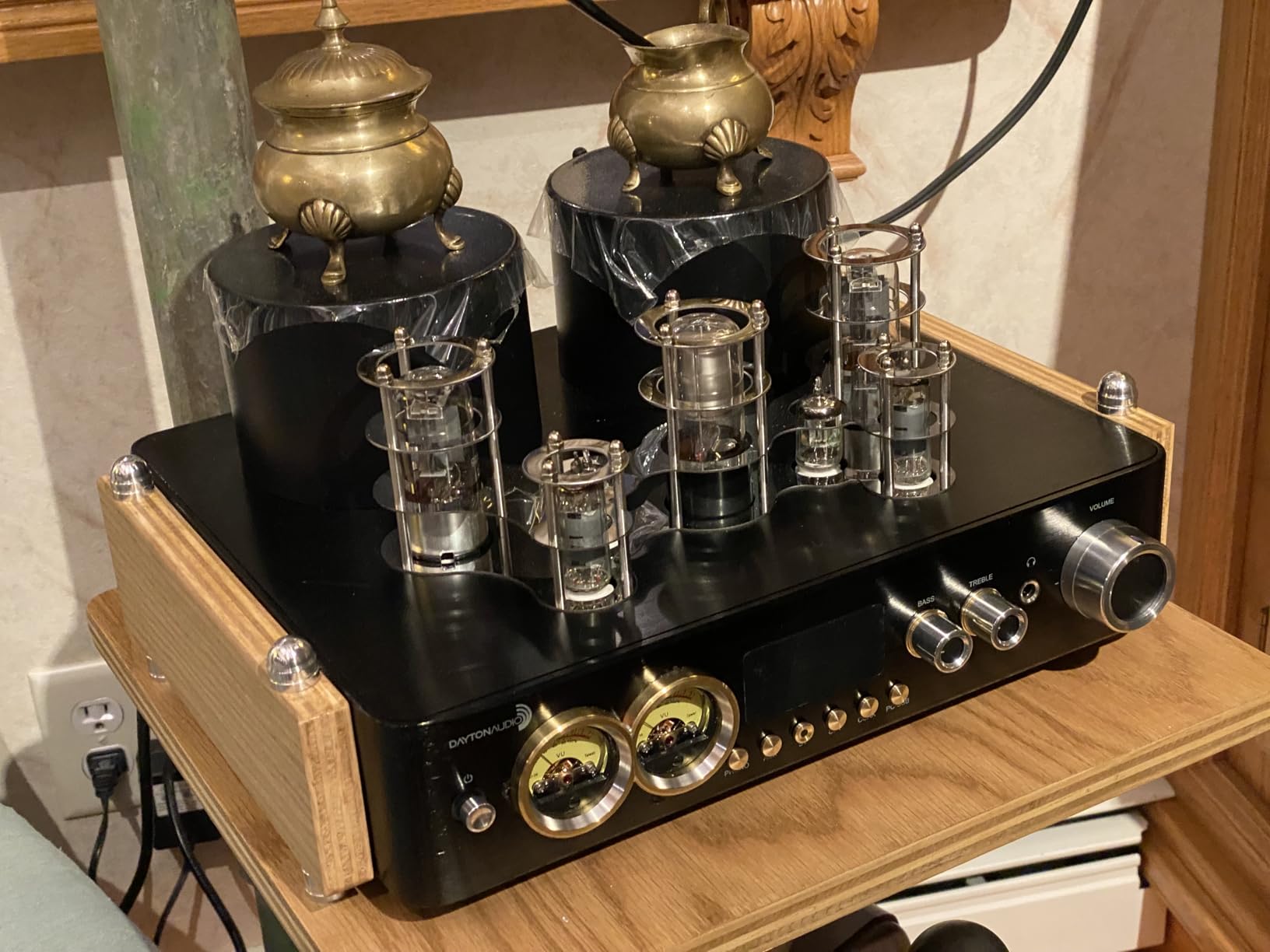
The first thing I noticed when setting it up was the build quality. The black brushed aluminum chassis feels substantial at just under four pounds, and those classic front-panel VU meters add a vintage aesthetic that looks right at home next to a turntable. The exposed tube glow is subtle but adds character without being distracting in a dimly lit room.
Sound-wise, the HTA200 delivers a slightly warm midrange with smooth highs that never get fatiguing. I tested it with a pair of 88dB sensitivity bookshelf speakers and it drove them effortlessly at concert-level volumes. The phono preamp input means you can connect a turntable directly without needing a separate phono stage, which is a genuine convenience for vinyl collectors.
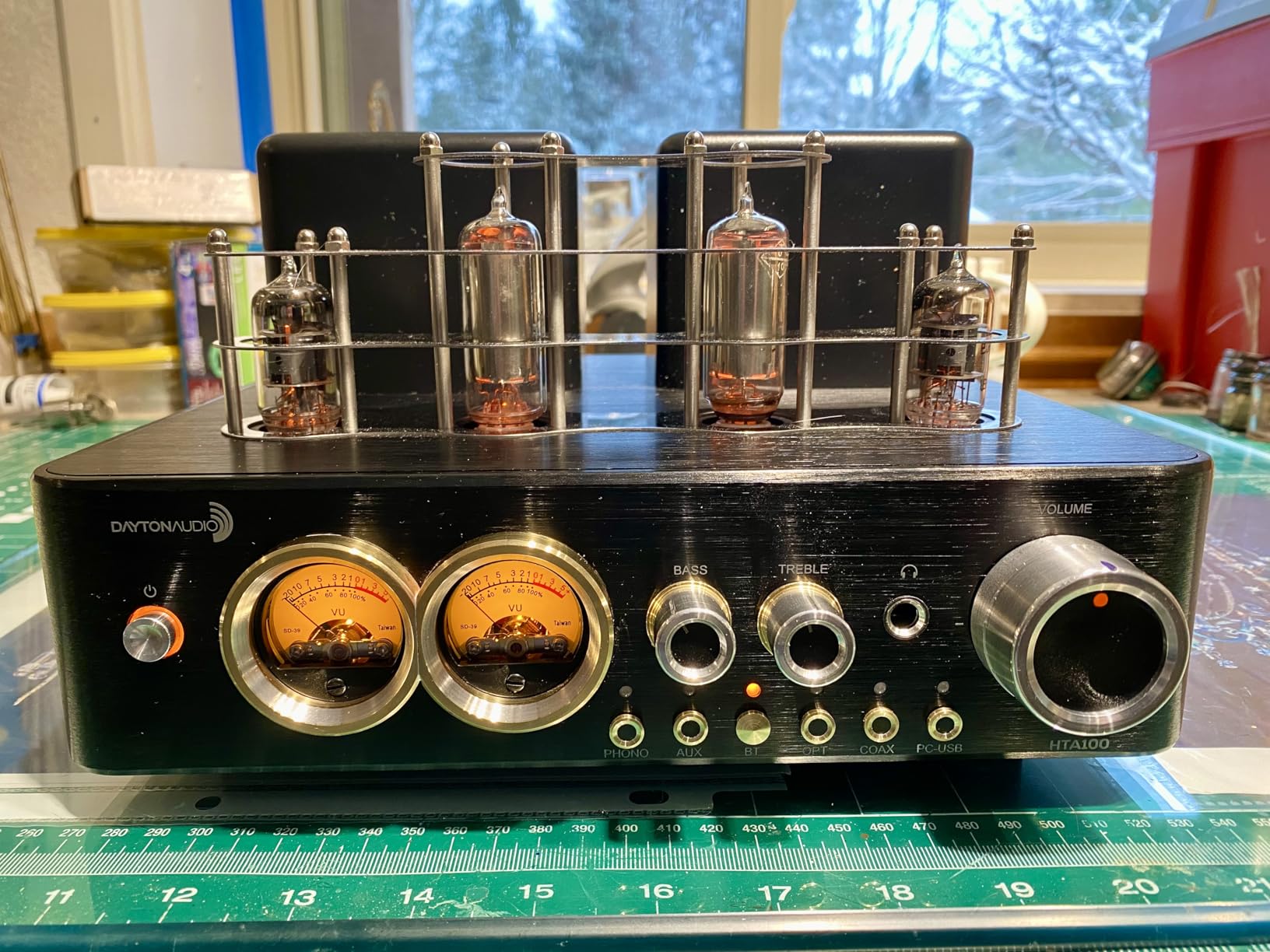
The connectivity options are where this amplifier really shines. You get RCA, optical, Bluetooth, USB DAC, and a dedicated phono preamp input. That covers virtually every source you might want to connect. The motorized volume knob works smoothly with the included remote, which is perfect for adjusting levels from across the room.
On the technical side, the Class A/B amplifier topology is well-implemented. The tube preamp creates subtle harmonic character without coloring the sound too heavily. I found the bass response to be tight and controlled, not the bloated low end you sometimes get with lesser tube designs. The noise floor is impressively low for a hybrid at this level.
My main complaint is the Bluetooth connectivity. Several users on forums have reported occasional dropouts, and I experienced a brief disconnection once during extended testing. It reconnects quickly, but it is worth knowing if you plan to stream wirelessly as your primary source. For critical listening, I recommend using the USB DAC or optical input instead.
Speaker Pairing and Sensitivity Requirements
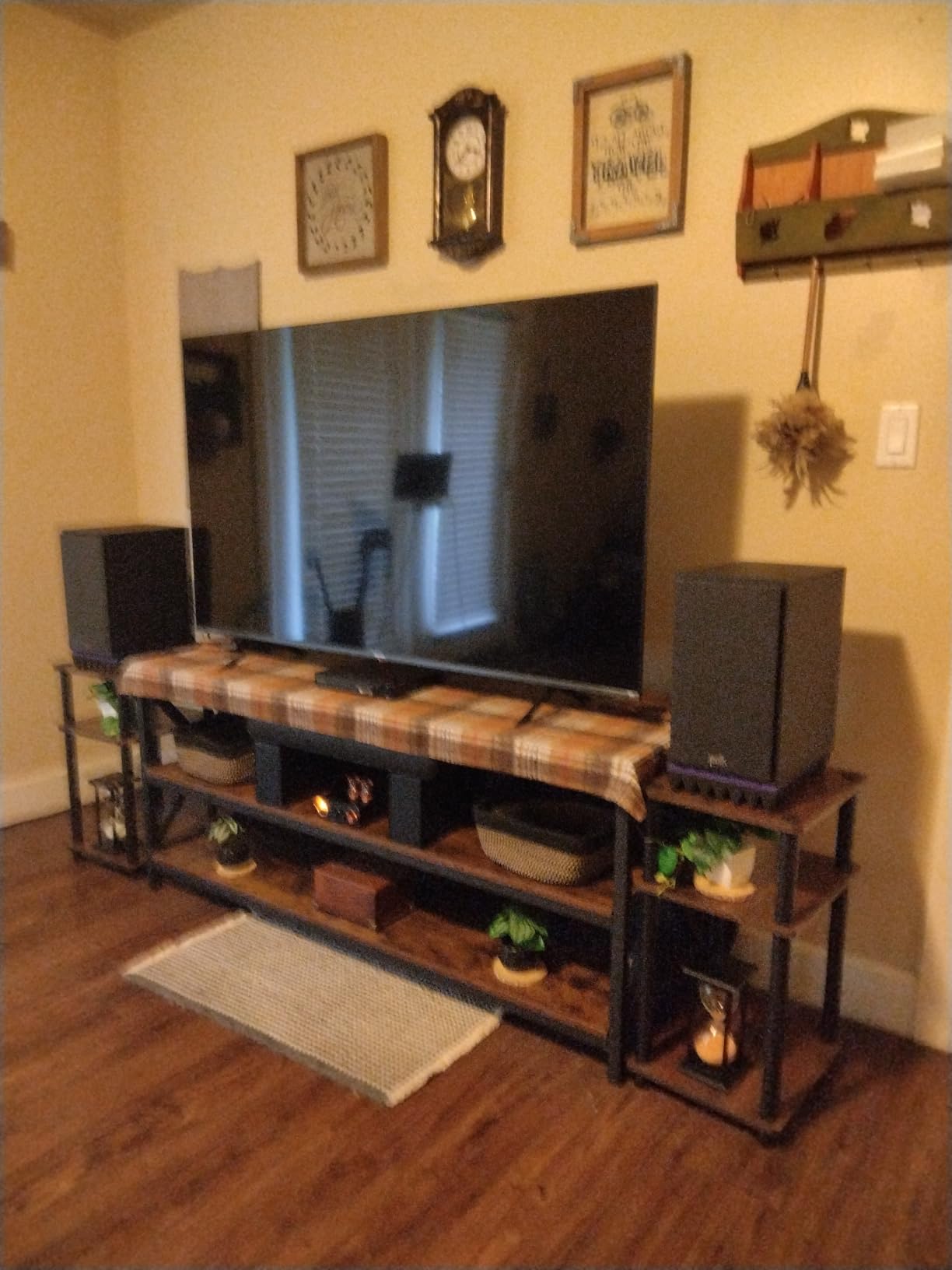
The HTA200 outputs 100 watts RMS per channel, which is substantial power for a hybrid tube amplifier. I had excellent results with bookshelf speakers in the 86dB to 90dB sensitivity range. It also handled my floor-standing speakers rated at 89dB without any strain.
For speakers below 85dB sensitivity or particularly difficult impedance loads, you may notice the amp working harder. The HTA200 handles 4-ohm and 8-ohm speakers, but if you have power-hungry speakers, consider a dedicated power amplifier instead. Most users with standard bookshelf or floor-standing speakers will have zero issues.
Setup and Connectivity Walkthrough
Setting up the HTA200 is straightforward. Connect your speakers to the binding posts on the back, plug in your sources, and you are ready to go. The included remote controls volume, input selection, and mute. The motorized volume knob on the front panel moves physically when you use the remote, which is a nice touch.
I recommend connecting your primary source via USB DAC or optical for the best sound quality. Reserve Bluetooth for casual listening. If you have a turntable, the built-in phono preamp accepts moving magnet cartridges directly, saving you the cost and space of an external phono stage.
2. Fosi Audio MC331 – Best Value Tube Amp with Built-in DAC
Fosi Audio MC331 Tube Integrated Amplifier with DAC, 2 Channel Home Audio Stereo Power Amp for HiFi Bookshelf Speakers/3.5mm Headphones, Vintage VU Meter Preamp with Bluetooth and USB/Opt/Coax/RCA
105W x2 at 4 ohms
Bluetooth 5.0
Built-in DAC
Replaceable tubes
Headphone output
24-month warranty
Pros
- All-in-one DAC amplifier design
- Replaceable tube design for customization
- 3.5mm headphone output
- 24-month manufacturer warranty
Cons
- Tubes shipped randomly between two types
- Integrated design may not appeal to purists
The Fosi Audio MC331 surprised me with how much functionality it packs into a compact desktop chassis. This is a true all-in-one device that combines a DAC, preamplifier, headphone amplifier, and tube-buffered power amplifier. For someone building their first proper audio system, this single box could replace three or four separate components.
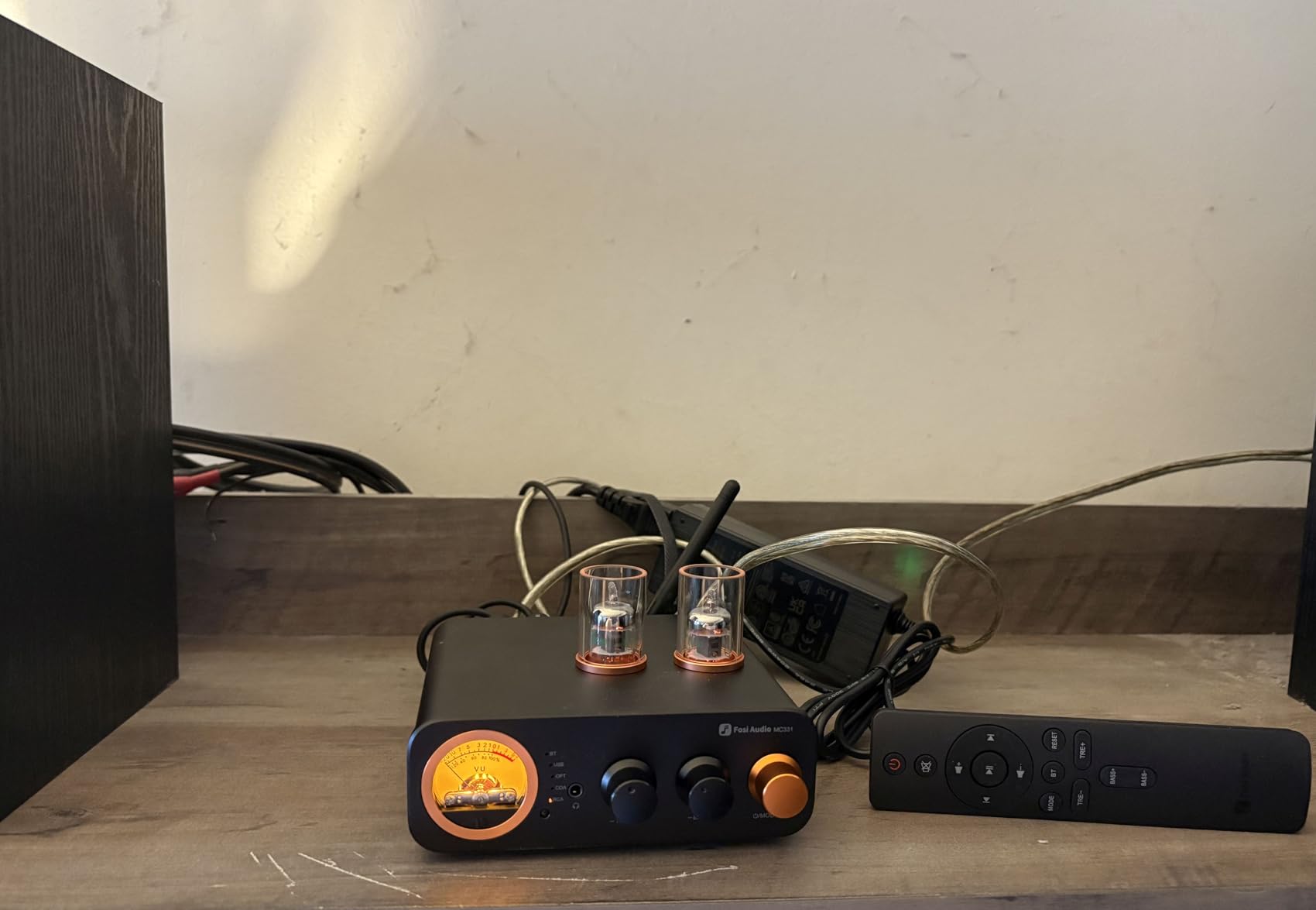
With 105 watts per channel at 4 ohms, the MC331 has plenty of power for bookshelf speakers and even moderately efficient floor-standing models. I tested it with a pair of 87dB bookshelf speakers and it filled my 15-by-20-foot listening room with ease. The vacuum tubes sit prominently on top, glowing warmly behind protective covers that add a premium feel.
The sound signature leans slightly warm thanks to the tube buffer, but it never sounds muddy or overly colored. Highs are smooth and extended, and the midrange has a pleasant liquidity that works particularly well with vocals and acoustic instruments. The built-in DAC handles USB, optical, and coaxial inputs competently for everyday listening.
One feature I genuinely appreciate is the 3.5mm headphone output. Many tube amplifiers at this level omit headphone connectivity entirely, but Fosi included it here. The pre-out connection also lets you add an external power amplifier or subwoofer if you want to expand your system later.
The MC331 ships with either 5725W or 6J1 vacuum tubes, and unfortunately you cannot choose which type you receive. Both sound good, but tube rollers will want to experiment with different options. The replaceable tube design means you can swap tubes without soldering, which makes customization accessible even for beginners.
Bluetooth 5.0 connectivity is reliable in my testing, with stable connections up to about 30 feet. The included remote handles volume, input switching, and basic playback controls. At this price point, getting Bluetooth 5.0, a built-in DAC, tube buffering, and 105 watts of power in one unit represents exceptional value.
Tube Swapping and Customization Options
The MC331 uses a replaceable tube design, which means you can swap the stock tubes for aftermarket options to fine-tune the sound. The process is simple. Power off the unit, gently pull the tubes straight up, and insert the replacements. No tools required.
Popular upgrade tubes include the GE JAN 5725W and various 6J1 variants. Each tube type subtly changes the warmth, detail, and soundstage. If you enjoy experimenting with your sound signature, the MC331 gives you that flexibility without requiring technical expertise.
Desktop vs Full Room Setup
The compact footprint of the MC331 makes it ideal for desktop audio setups. I used it on my desk with nearfield monitors and the experience was excellent. The VU meter and glowing tubes add visual interest without taking up excessive space.
In a full room setup, the MC331 performs well as long as your speakers are reasonably efficient. For larger rooms above 300 square feet, you may want speakers with 88dB or higher sensitivity to get the most out of the 105-watt output. The pre-out connection lets you add a subwoofer for fuller low-end response in bigger spaces.
3. Willsenton R8 – Premium KT88 Tube Amplifier
Willsenton R8 KT88 x4 Tube Amplifier Hi-Fi Integrated Vacuum Tube Amp with Headphone Output KT88,EL34 Replaceable (Black)
45W output
KT88 x4 tubes
Triode and ultra-linear modes
Integrated power and headphone amp
Hand-made construction
Pros
- Works with KT88 EL34 and 6550 tubes
- 45W powerful output for a tube amp
- Triode and ultra-linear switching
- Functions as integrated power and headphone amplifier
Cons
- Requires 100-300 hour break-in period
- Higher price point with limited stock
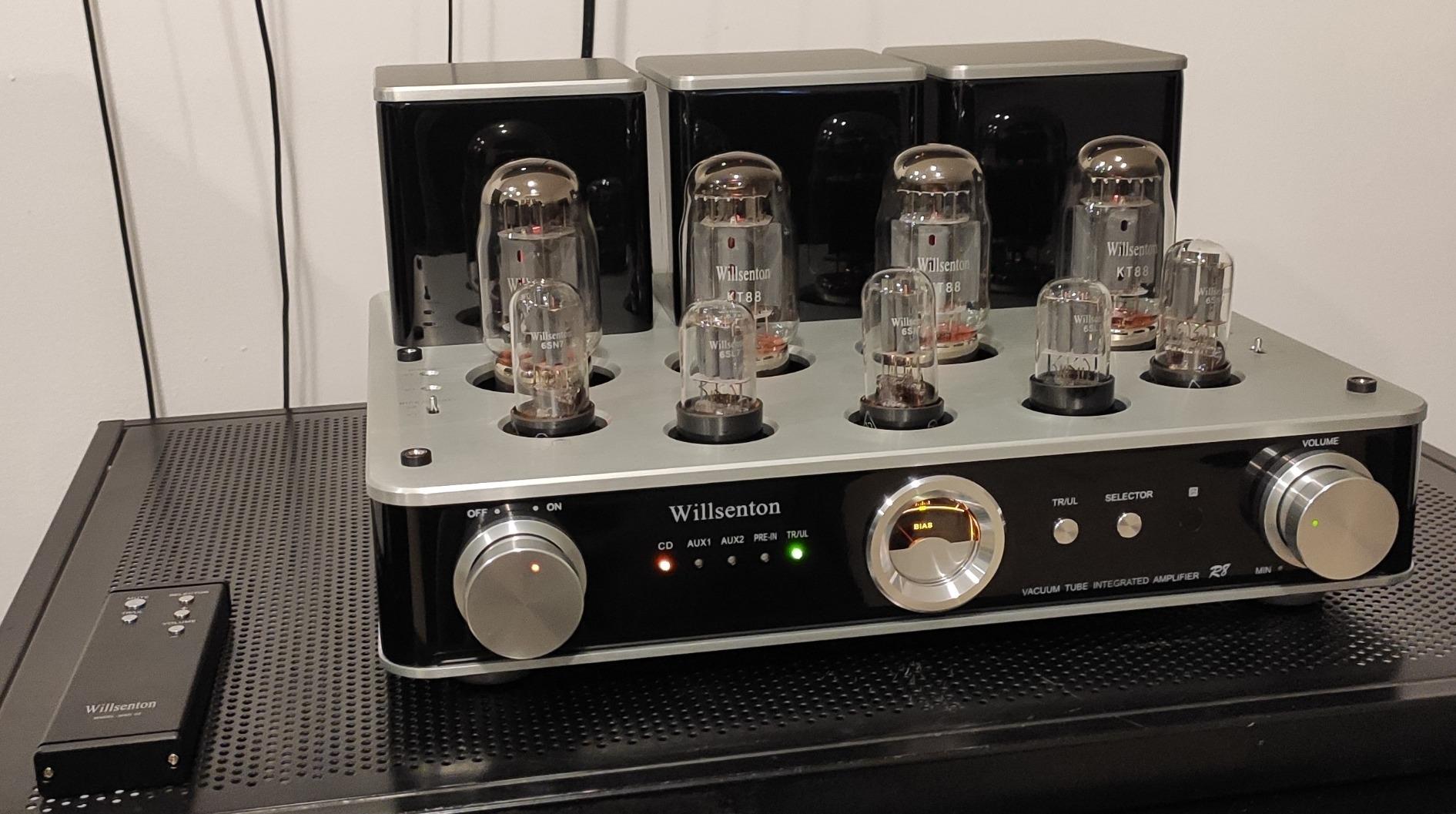
The Willsenton R8 is the amplifier I reach for when I want the full, unadulterated tube experience. This is a pure tube integrated amplifier with four KT88 power tubes, and it produces a sound that hybrid designs simply cannot fully replicate. The soundstage is wide and holographic, with a three-dimensionality that draws you into the music.
At 45 watts output, the R8 has more power than most dedicated tube amplifiers in this class. That extra headroom matters. It means you can listen at realistic volumes with standard bookshelf speakers without the amplifier running out of breath. I paired it with 90dB sensitivity speakers and achieved room-filling sound with effortless dynamics.
The triode and ultra-linear switching is one of my favorite features. In triode mode, the sound is intimate, detailed, and perfect for late-night listening sessions. Switch to ultra-linear and the sound opens up with more punch and authority, ideal for rock and orchestral music. Having both options in one amplifier gives you tremendous flexibility.
Build quality is exceptional. The R8 uses pure hand-made construction with scaffolding welding throughout. At 26 kilograms, this is a seriously substantial piece of equipment. The chassis is beautifully finished, and the tube layout is both functional and visually striking. The included tube protective cover keeps the vacuum tubes safe without obscuring their glow.
The R8 can also function as a dedicated power amplifier or headphone amplifier, depending on how you configure it. This three-in-one versatility means it can adapt to different system configurations as your setup evolves. The included remote control handles volume adjustment, which is a practical convenience given the amplifier’s weight and typical placement.
The one thing every prospective buyer needs to know is the break-in period. Willsenton recommends 100 to 300 hours of run-in time before the amplifier reaches its full potential. Out of the box, the sound can be slightly harsh and constricted. After about 100 hours, it opens up significantly. By 300 hours, you hear the magic that makes this amplifier special.
Tube Rolling with EL34 and 6550 Options
One of the most exciting aspects of the R8 is its tube compatibility. While it ships with KT88 tubes, you can swap them for EL34 or 6550 tubes using the selection switch on the back. Each tube type produces a distinctly different sound character.
KT88 tubes deliver the most powerful and authoritative sound with deep bass and extended highs. EL34 tubes provide a warmer, more midrange-focused sound that many describe as the classic British tube tone. The 6550 tubes offer a middle ground with excellent dynamics. Having all three options available makes the R8 feel like three amplifiers in one.
Break-in Period and Patience Required
The break-in process is real and worth respecting. During the first 50 hours, I noticed the sound gradually becoming smoother and more refined. The bass tightened up, and the midrange gained body and warmth. By 150 hours, the soundstage had expanded considerably.
If you are the type of listener who wants instant gratification, the break-in period may test your patience. But if you can let the amplifier run with music playing at moderate volume when you are not actively listening, the reward is a genuinely transformative sound that justifies the investment.
4. REISONG A10 – Best Budget Audiophile EL34 Tube Amp
Reisong A10 EL34 Hi-Fi Audio Stereo Tube Amplifier Single-end Class – A Amp
12W single-ended Class A
EL34 x2 power tubes
Point-to-point hand wired
Premium 76x40 output transformer
AUX and CD inputs
Pros
- Point-to-point hand welding construction
- Premium upgraded output transformer
- Warm and detailed tube sound character
- Includes protective tube cover and circuit diagram
Cons
- Low power output for large speakers
- Requires speakers with 89dB or higher sensitivity
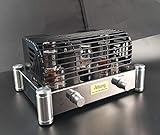
The REISONG A10 is the amplifier I recommend to friends who want to experience genuine point-to-point hand-wired tube construction without spending a fortune. This is a single-ended Class A amplifier using EL34 power tubes, and it delivers that intimate, emotionally engaging sound that tube enthusiasts chase.
With 12 watts of output, the A10 is not about raw power. It is about purity. Connected to efficient bookshelf speakers, it produces a sound that is rich in harmonic detail and natural warmth. The midrange is where this amplifier truly shines. Vocals sound present and lifelike, with a texture that solid-state amplifiers struggle to match.
The point-to-point hand welding construction is immediately apparent when you look inside. Each connection is soldered by hand rather than using a printed circuit board. This traditional approach minimizes signal path interference and is one reason the A10 sounds so clean and detailed despite its modest power output.
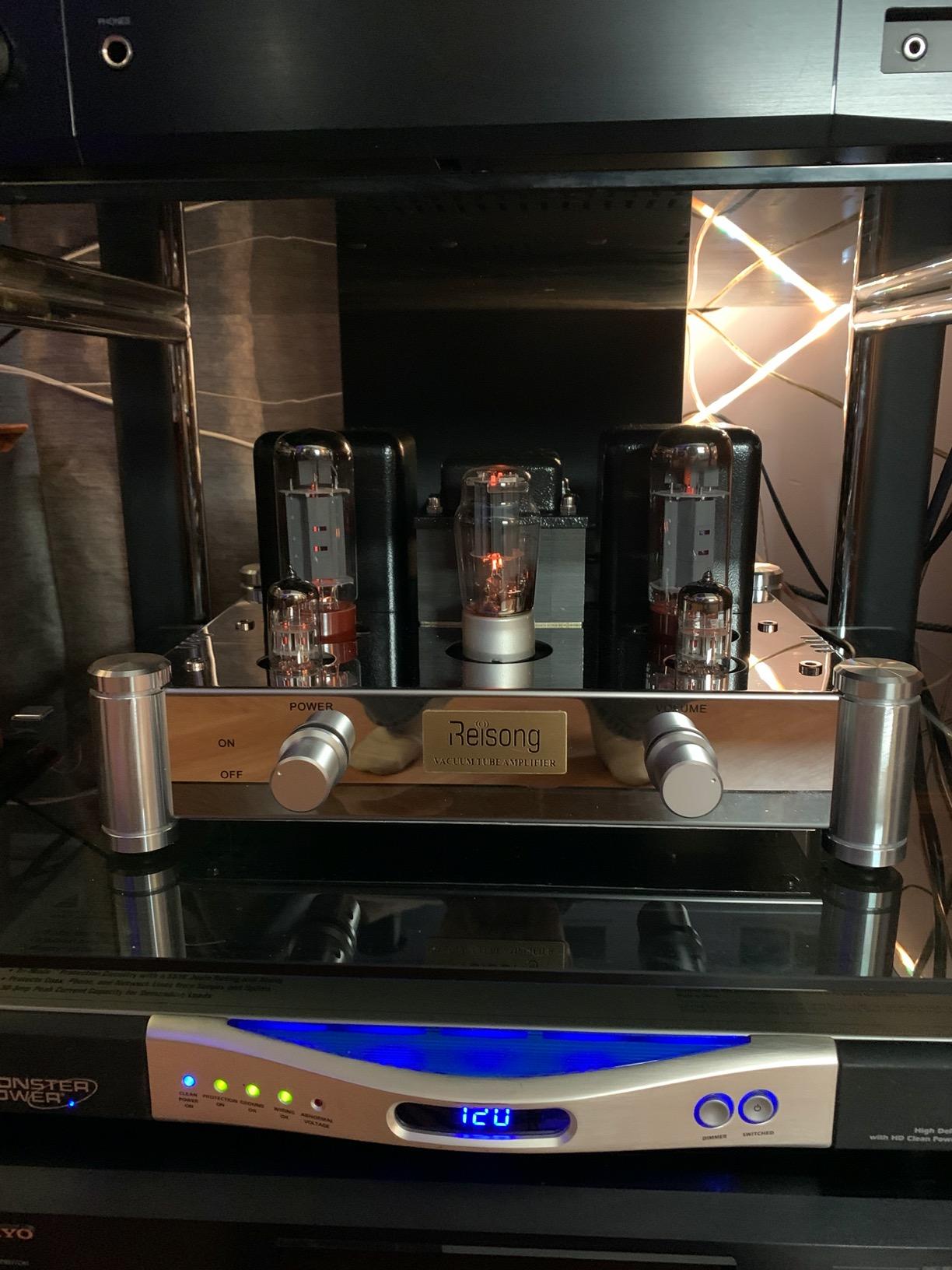
The upgraded 76×40 output transformer is a significant improvement over the standard version. It provides better bass response and a wider frequency range than you might expect from a 12-watt amplifier. The EL34 tubes, paired with 6N2J preamp tubes and a 5Z4PJ rectifier, create a balanced and musical sound signature.
I tested the A10 with speakers rated at 91dB sensitivity and the results were excellent. The amplifier filled my medium-sized listening room with warm, detailed sound. However, when I tried it with 86dB floor-standing speakers, it struggled to reach satisfying volume levels. Speaker matching is absolutely critical with this amplifier.
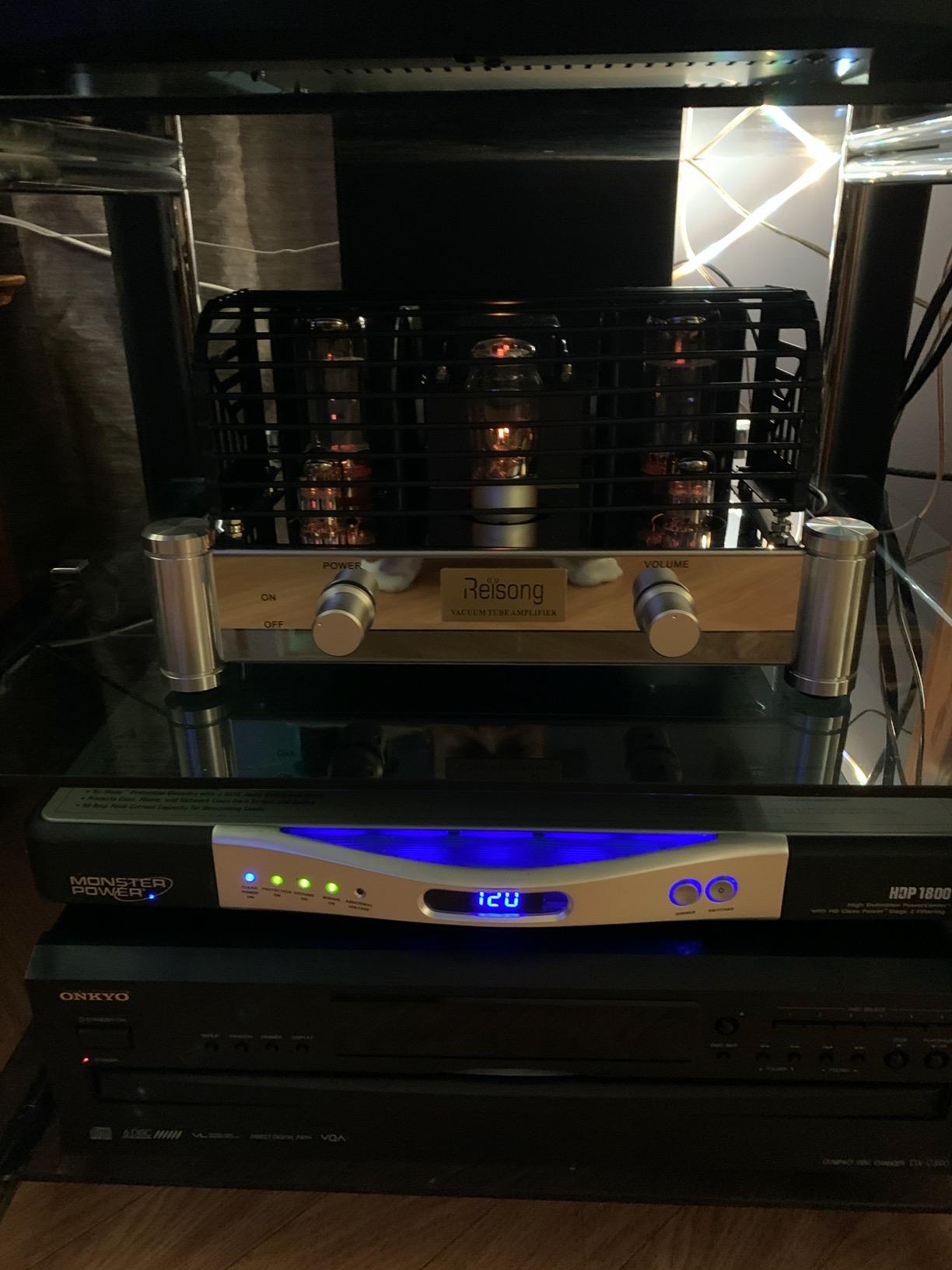
The A10 comes with a protective tube cover and even includes a circuit diagram. That circuit diagram is a thoughtful inclusion for anyone who might want to service or modify the amplifier down the road. It reflects the audiophile community ethos that REISONG embraces with this product.
Speaker Matching Limitations
The single most important thing to understand about the A10 is its speaker sensitivity requirement. REISONG explicitly states that this amplifier works best with bookshelf speakers rated at 89dB sensitivity or higher. Floor-standing speakers and low-sensitivity designs simply will not work well.
If you already own efficient speakers, the A10 is a fantastic value. If your speakers are below 88dB sensitivity, you should look at the higher-powered options on this list instead. Matching the right speakers to this amplifier makes the difference between a magical listening experience and a frustrating one.
AUX vs CD Input Switching
The A10 includes both AUX and CD inputs, switchable via a black button on the back of the unit. Some users initially report no sound from the amplifier, which is almost always because the input selector is set to the wrong source. Make sure to check this button if you are not getting audio.
The CD input typically provides slightly better sound quality due to the different impedance matching. For critical listening, I recommend using the CD input with your best source component. The AUX input works fine for secondary sources like smartphones or streaming devices connected via an external DAC.
5. Oldchen EL34 – Best Single-Ended Class A Tube Amp
EL34 Single-Ended Class A Tube Amp Hand-Wired Integrated Amp 10W
10W single-ended Class A
EL34C power tubes
5U4G rectifier
6SN7GT preamp
Hand-wired point-to-point
ALPS potentiometer
Pros
- Authentic single-ended Class A tube sound
- Master-level hand-wired point-to-point craftsmanship
- Premium audiophile-grade components
- Ultra-clean power supply with sub-1mV noise floor
Cons
- Only 10W output limits speaker options
- Requires speakers with 88dB or higher sensitivity
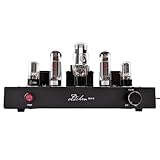
The Oldchen EL34 is the amplifier that made me understand why some audiophiles refuse to listen to anything other than single-ended Class A designs. Every component in this amplifier has been selected with care, and the hand-wired point-to-point construction represents a level of craftsmanship that is increasingly rare.
With EL34C power tubes, a 5U4G rectifier, and 6SN7GT preamp tubes, the tube complement reads like a who’s who of audiophile favorites. The sound is warm without being sluggish, detailed without being analytical, and engaging in a way that keeps you listening for hours. Jazz, classical, and acoustic music sound particularly revelatory through this amplifier.
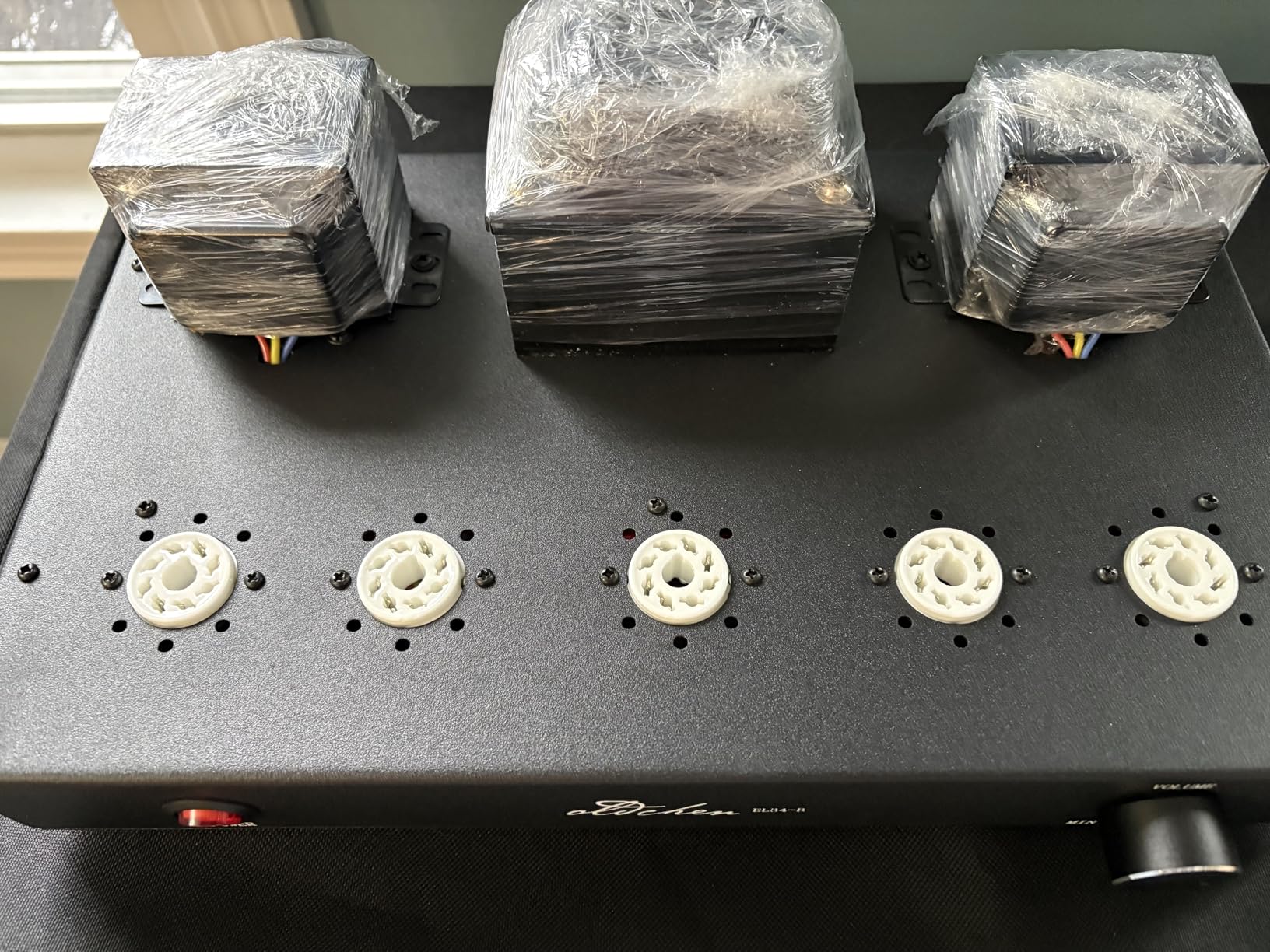
The custom-wound output transformer uses imported Japanese Z11 silicon steel, which is a material choice typically found in much more expensive amplifiers. This transformer is largely responsible for the amplifier’s excellent bass control and wide soundstage. The Japan ALPS potentiometer provides smooth, precise volume adjustment without channel imbalance.
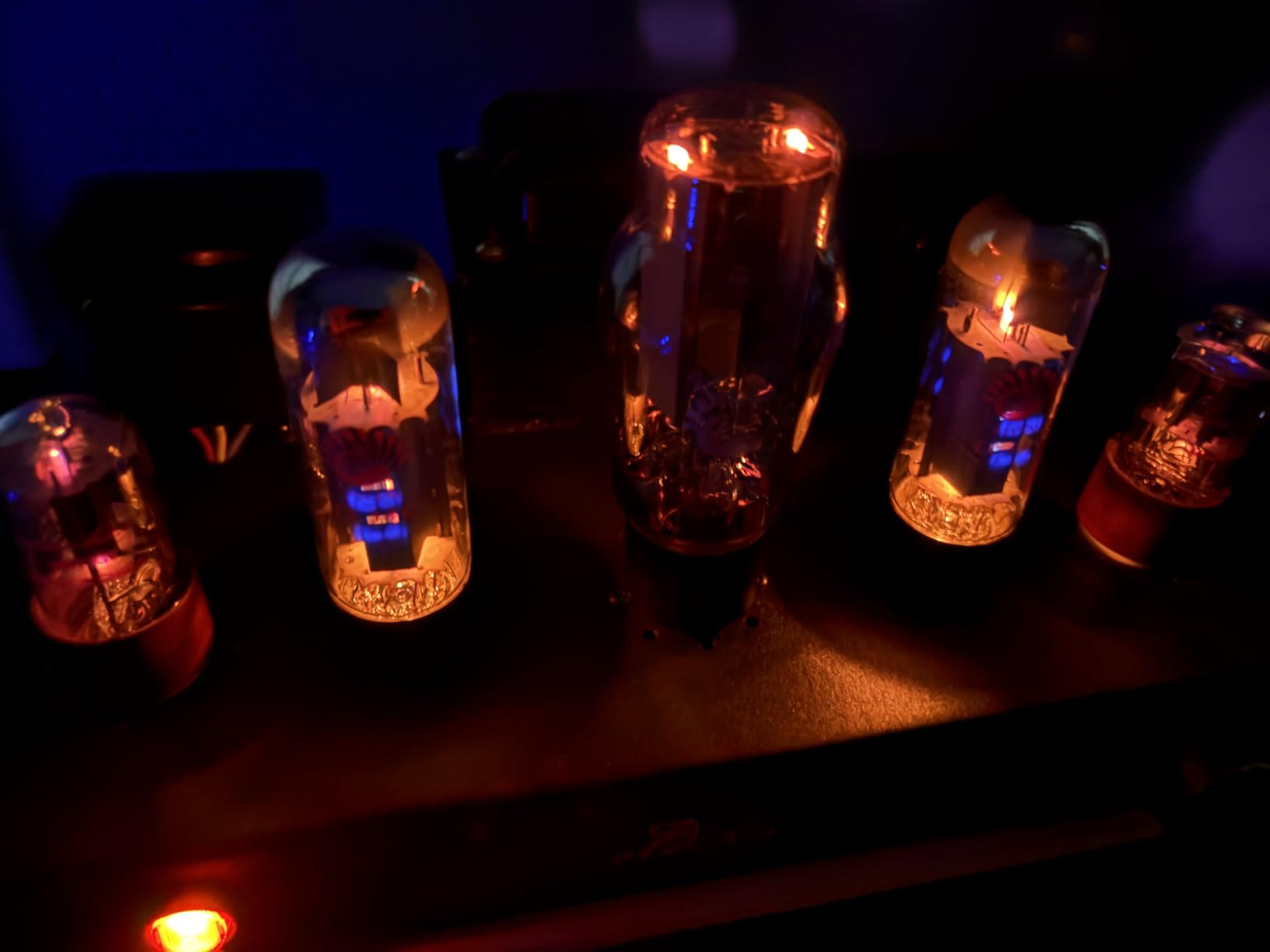
The power supply deserves special mention. A heavy-duty CLC inductor filter rated at 5 Henry creates an exceptionally clean power foundation. The noise floor measures just 0.5 to 1mV, which means the background is effectively silent. At zero volume, any hum is negligible and only audible with your ear pressed against the speaker.
I noticed that the amplifier particularly excels with vocal music. The midrange has a warmth and presence that makes singers sound like they are in the room with you. String instruments benefit from the natural harmonic richness that the EL34C tubes provide. The overall presentation is relaxed and musical rather than forward and aggressive.
The build quality extends to the smallest details. Teflon silver-plated wiring is used throughout the internal signal paths. Black Gold series capacitors are employed in critical positions. Gold-plated pure copper speaker terminals accept banana plugs, spade connectors, or bare wire for 4-ohm and 8-ohm speakers.
Speaker Sensitivity Requirements
At 10 watts per channel, the Oldchen EL34 requires careful speaker selection. The manufacturer recommends speakers with 88dB sensitivity or higher. I achieved excellent results with 92dB bookshelf speakers in a medium-sized room, reaching comfortable listening volumes with headroom to spare.
High-efficiency speakers rated at 94dB or above will give you the best experience, allowing the amplifier to fill larger rooms with rich, dynamic sound. Avoid speakers below 88dB sensitivity entirely, as the amplifier simply cannot drive them to satisfying levels regardless of room size.
Warm-Up Time and Tube Care
Like all tube amplifiers, the Oldchen EL34 benefits from a warm-up period. I found that 20 to 30 minutes of operation brings the sound to its full potential. The first few minutes after power-on can sound slightly thin and constrained before the tubes reach operating temperature.
The EL34C power tubes typically last 2,000 to 5,000 hours depending on usage patterns and listening volume. The 5U4G rectifier and 6SN7GT preamp tubes tend to last longer, often 5,000 to 10,000 hours. Allow the amplifier to cool for at least 15 minutes before moving it, as hot tubes are fragile and susceptible to vibration damage.
6. REISONG A50 MKIII 300B – Best 300B Vacuum Tube Amplifier
BoyuuRange A50 MKV 300B HiFi Intergrated Tube Amplifier with Tube Cage
7.6W single-ended Class A
PSVANE 300B power tubes x2
Imported power transformers
Tube cage and VU meters
Bipolar filter circuit
Pros
- Premium PSVANE 300B power tubes
- Factory upgraded inductance transformer and bipolar filter
- Includes tube cage and VU meters
- Class A single-ended design for warm sound
Cons
- Only 7.6W output requires efficient speakers
- 9% one-star reviews indicate some reliability concerns
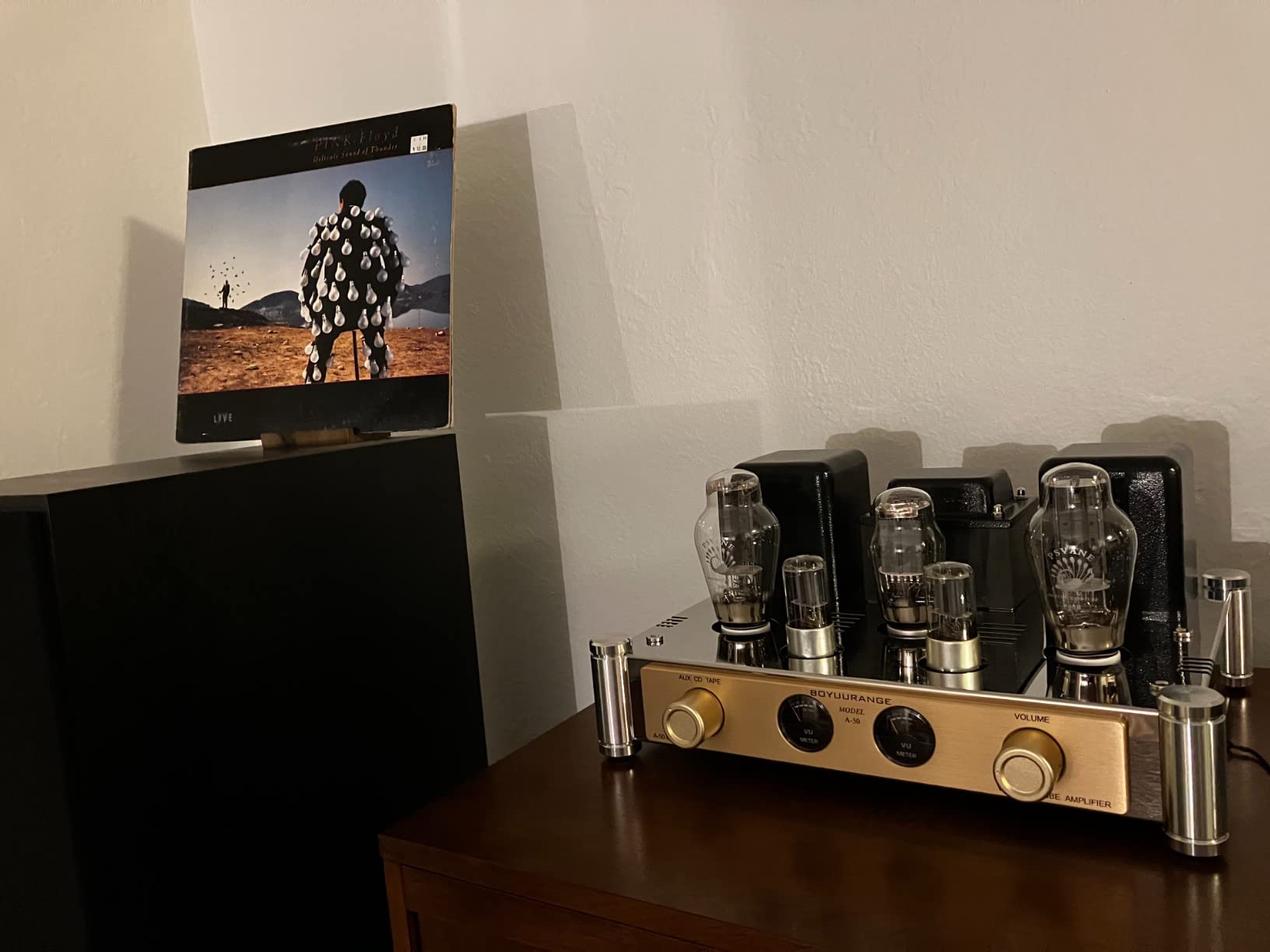
The 300B tube is legendary in the audiophile world, and the REISONG A50 MKIII brings that legendary sound within reach of more listeners. The PSVANE 300B power tubes produce a sound that is often described as liquid, holographic, and emotionally involving. This is an amplifier for listeners who prioritize midrange magic above all else.
The MKIII version includes factory upgrades that improve on the original design. An added inductance transformer and bipolar filter circuit enhance the aroma, intermediate frequency, and bass response. These are meaningful improvements that address specific sonic weaknesses identified by audiophiles in earlier versions.
With 7.6 watts of output, this amplifier demands efficient speakers. I tested it with 94dB sensitivity speakers and the results were sublime. The midrange had a warmth and naturalness that I have rarely encountered at this price point. Female vocals, in particular, sounded breathtakingly real.
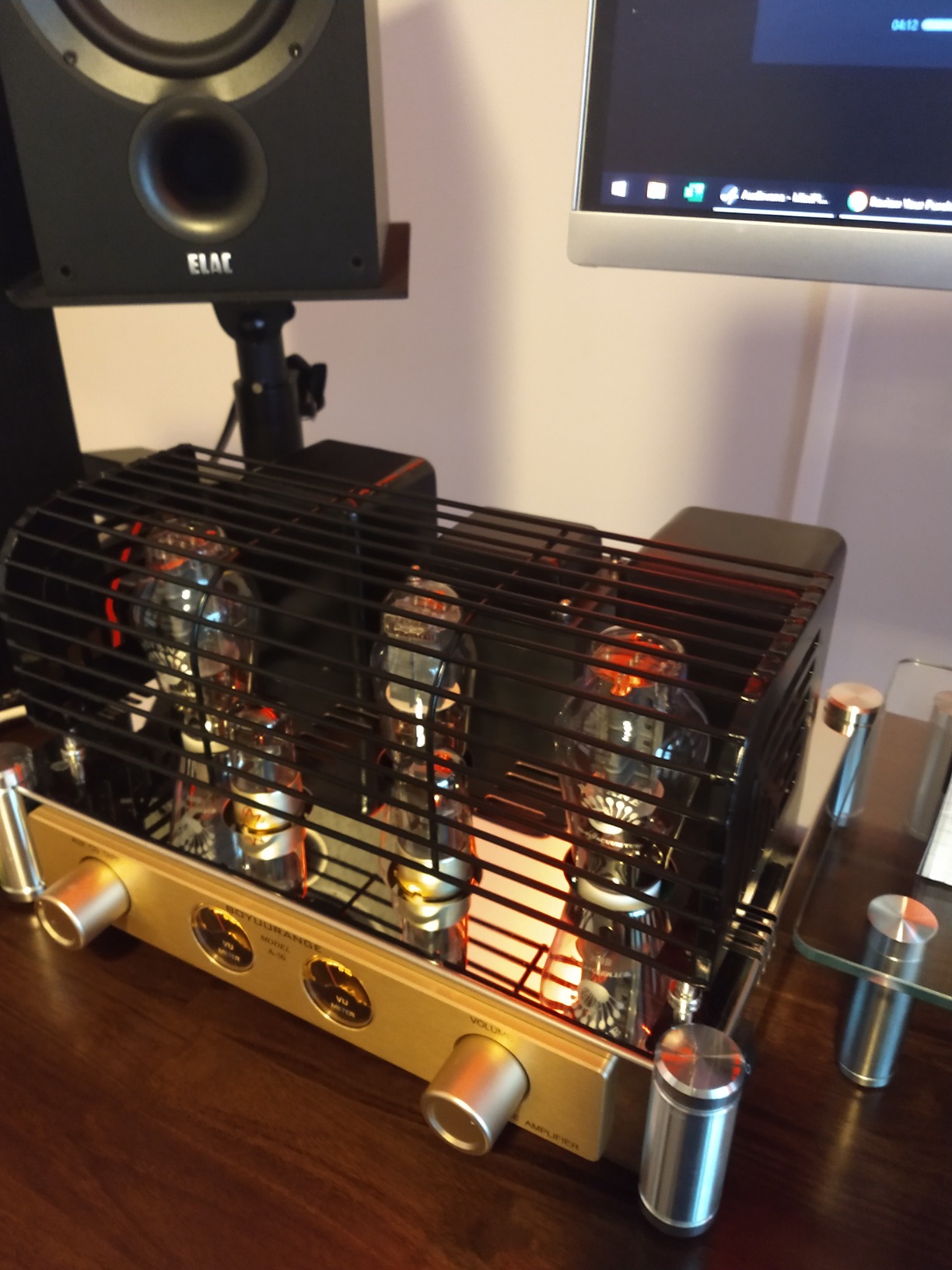
The imported power transformers use 0.35 stack thickness 60MM cores, which provide a stable and clean power foundation. The high-silicon output amplifier core contributes to the amplifier’s excellent tonal purity. The VU meters on the front panel add vintage visual appeal while also serving as a useful output level indicator.
The included tube cage is a practical addition that protects the valuable 300B tubes from accidental damage. Given that replacement PSVANE 300B tubes can be expensive, this protection is more than just cosmetic. The cage is well-ventilated and does not impede heat dissipation.
I do need to address the reliability concerns. Approximately 9% of reviews are one-star, with some users reporting issues ranging from tube failures to circuit problems. While the majority of owners are delighted with their amplifier, the reliability rate is lower than I would like to see at this price point. Consider the warranty coverage carefully before purchasing.
Stock Tube Quality and Upgrade Options
The PSVANE 300B tubes included with the A50 MKIII are genuinely good quality for a factory-installed tube. They produce the warm, detailed sound that 300B enthusiasts cherish. For most listeners, the stock tubes will provide years of satisfying performance.
Audiophiles who want to push further can upgrade to premium 300B tubes from brands like Western Electric or Emission Labs. These upgrades can cost as much as the amplifier itself, but they represent the ceiling of what is possible with 300B tube sound. The amplifier’s circuit is good enough to reveal the differences between tube grades.
Reliability and Long-Term Ownership
The 9% one-star review rate is worth taking seriously. Common complaints include tube failures within the first few months and occasional circuit issues. The amplifier ships with FCC certification, which provides some quality assurance, but individual unit variability appears to be higher than average.
If you decide to purchase the A50 MKIII, I recommend buying from a seller with a clear return policy. Test the amplifier thoroughly within the return window. Once you have a properly functioning unit, the sound quality justifies the effort. Many long-term owners report years of reliable service from their units.
7. Rockville BluTube LED – Best for Home Theater with HDMI
Rockville BluTube LED 70W Bluetooth Tube Amplifier/Stereo Receiver, Black
35W x2 RMS at 4 ohms
HDMI input
Blue LED illuminated tubes
VU meter
Subwoofer output
2-band EQ
Pros
- Blue LED illuminated tubes for visual appeal
- HDMI input for home theater integration
- Subwoofer output for 2.1 setup
- USB supports multiple audio formats including FLAC
Cons
- Lower 70W total power output
- Uses older Bluetooth 2.1 version
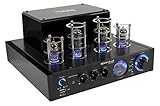
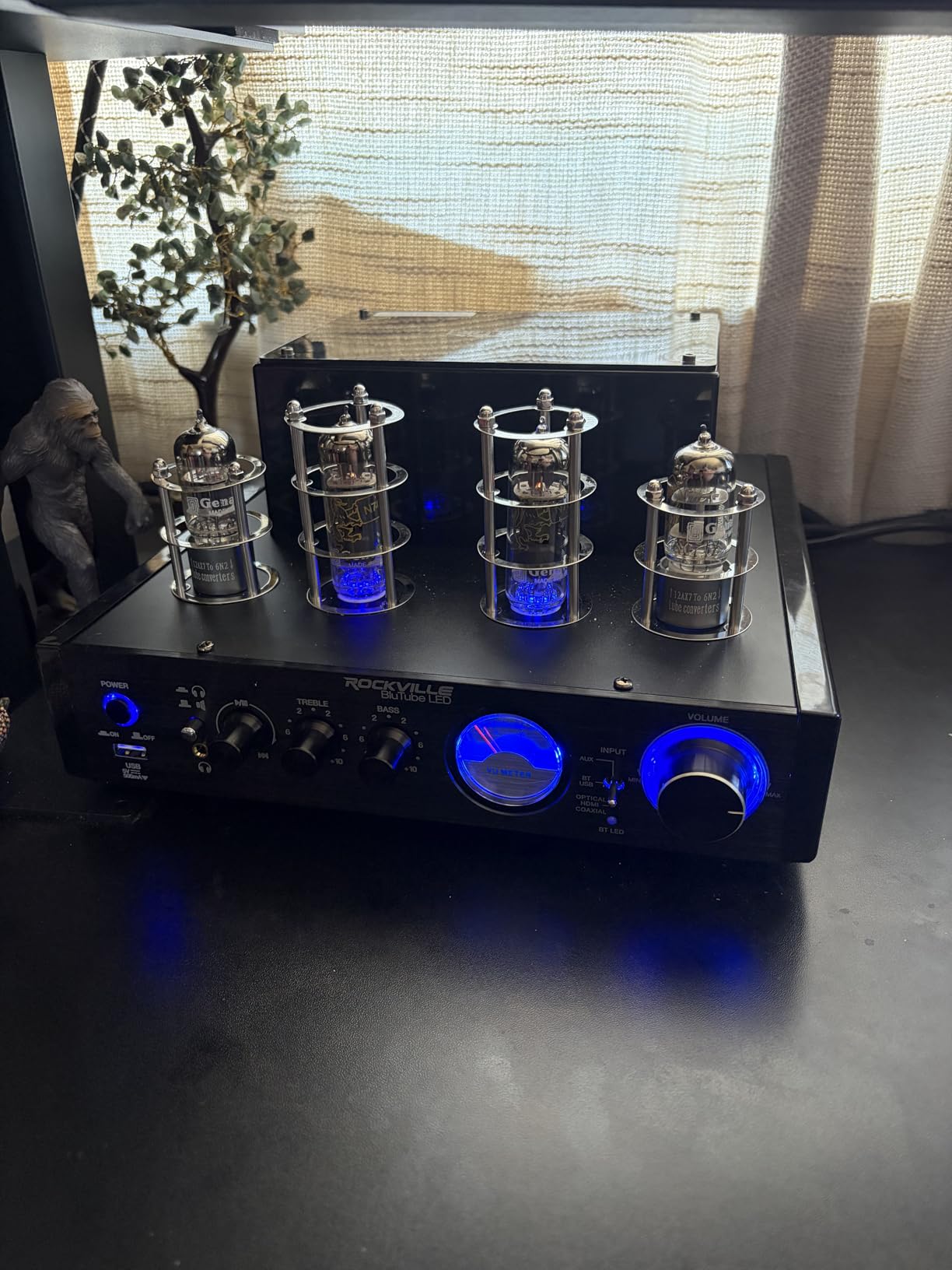
The Rockville BluTube LED stands out immediately thanks to its distinctive blue LED illumination. The tubes and knobs glow blue, creating a visually striking amplifier that works as both an audio component and a conversation piece. If aesthetics matter to you as much as sound quality, this amplifier deserves your attention.
What makes the BluTube LED particularly interesting is the HDMI input. Very few tube amplifiers include HDMI connectivity, and this feature makes it a natural fit for home theater setups. You can connect a TV, streaming device, or game console directly to the amplifier and enjoy tube-warmed sound from your movies and shows.
With 35 watts RMS per channel at 4 ohms, the power output is modest but adequate for small to medium rooms. I found it drove my bookshelf speakers to comfortable volumes in a 12-by-15-foot space. The tube-buffered sound does not hard-clip at high volumes, which means you can push the volume without sudden harsh distortion.
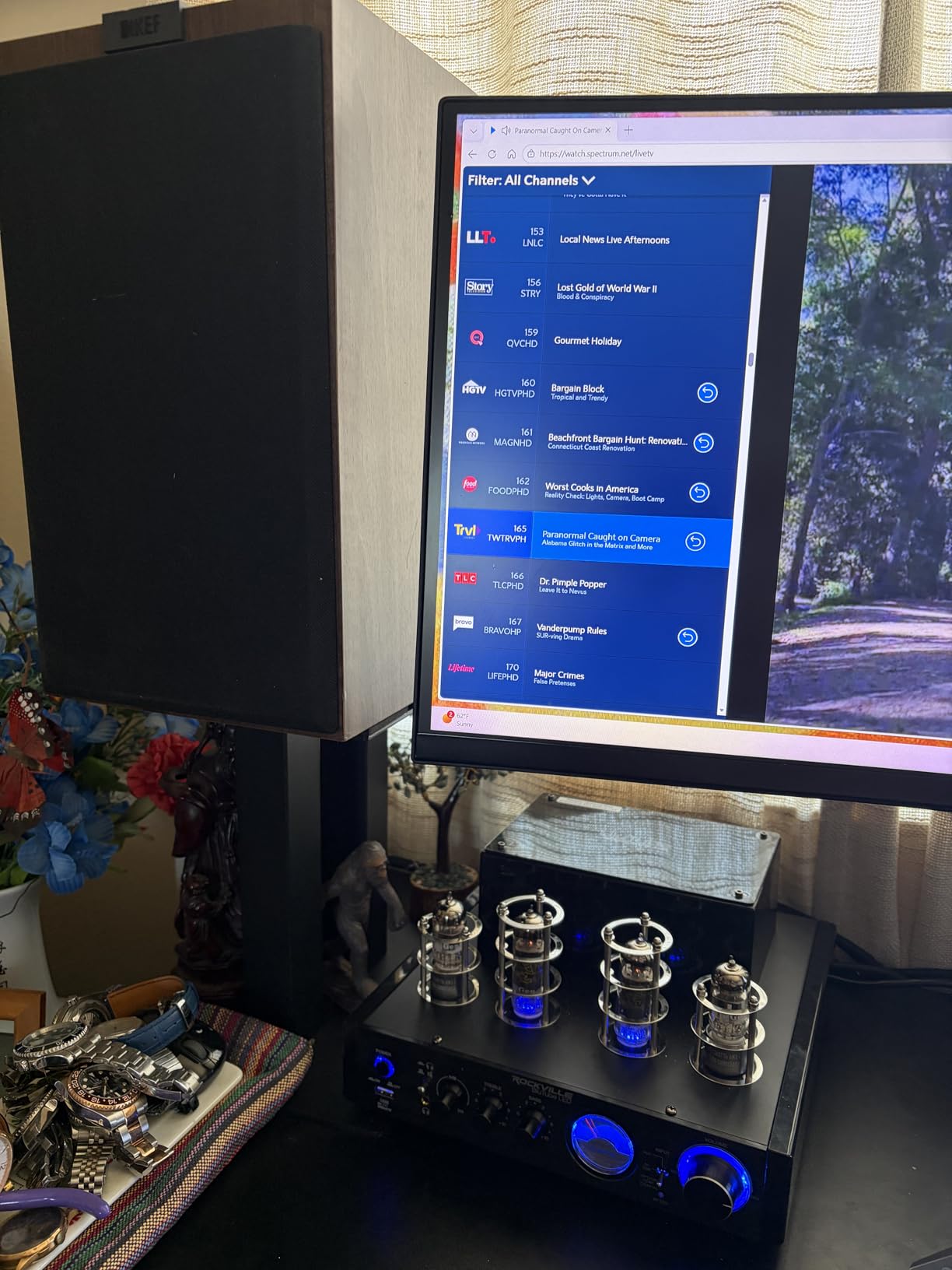
The connectivity is comprehensive. HDMI, optical, coaxial, USB, and RCA inputs cover virtually every source type. The USB input supports WAV, MP3, WMA, APE, and FLAC files, giving you high-resolution audio playback from a thumb drive. The subwoofer output allows you to build a 2.1 channel system for fuller bass response.
The VU meter on the front panel provides visual feedback that complements the blue LED aesthetic. The 2-band equalizer offers basic bass and treble adjustment. While it is not a parametric EQ, it gives you enough control to shape the sound to your preference and room acoustics.
My main concern is the Bluetooth version. Bluetooth 2.1 with EDR is significantly older than the Bluetooth 5.0 found in competing amplifiers. The 33-foot range is adequate for most rooms, but the audio quality over Bluetooth will not match newer codecs. For the best sound, use the HDMI, optical, or USB inputs instead.
Home Theater Integration with HDMI
The HDMI input is the standout feature for home theater use. Connect your TV or AV source directly and the BluTube LED processes the audio through its tube buffer. Movies gain a warmth and presence that typical soundbars and built-in TV speakers cannot match.
I tested it with both movies and gaming, and the tube character adds a pleasing fullness to dialogue and sound effects. The subwoofer output lets you add a powered sub for explosions and bass-heavy content. Just be aware that the 35-watt per channel output limits the maximum volume in larger home theater spaces.
Bluetooth Range and Older Codec Limitations
Bluetooth 2.1 with EDR has a practical range of about 30 feet, which is fine for most rooms but shorter than Bluetooth 5.0 alternatives. The audio quality uses the SBC codec, which is functional but not audiophile-grade. You will notice the difference most with high-quality source material.
If wireless streaming is your primary listening method, consider adding an external Bluetooth receiver connected to the RCA inputs. This gives you modern Bluetooth 5.0 audio quality while keeping the tube amplifier’s warm sound signature. It is a simple and affordable workaround for the older built-in Bluetooth.
8. Juson Audio JTA50 – Best Tube Amp for Turntables
Juson Audio JTA50 2025 50W x 2 Tube Amplifier | HiFi Class AB Amp with BT 5.0 | Phono Preamp | Headphone Tube Amp | USB/Coax/AUX/Opt in,Subwoofer Out | 2.1CH Amplifier for Turntable and CD Player
50W x2 Class AB
Built-in phono preamp
Headphone amp 16-600 ohms
Bluetooth 5.0
Subwoofer output
Lifetime tech support
Pros
- Built-in phono preamp for direct turntable connection
- Headphone amplifier drives 16 to 600 ohm headphones
- Class AB design for quality sound
- Lifetime technical support included
Cons
- Low review count limits long-term reliability data
- Higher price for the feature set
The Juson Audio JTA50 caught my attention because it is one of the few tube amplifiers with a built-in phono preamp designed specifically for turntable users. If you are building a vinyl-focused system and want a single amplifier that handles everything, this is a compelling option that eliminates the need for a separate phono stage.
The Class AB amplifier design delivers 50 watts per channel, which provides solid headroom for most bookshelf and many floor-standing speakers. I found the sound to be warm and musical, with the tube character adding pleasant harmonics without overwhelming the natural timbre of instruments. The midrange has body and warmth that suits vinyl playback particularly well.
The headphone amplifier is a standout feature. With a high-low gain switch supporting headphones from 16 to 600 ohms, it can drive everything from sensitive in-ear monitors to demanding planar magnetic headphones. This makes the JTA50 an excellent choice for listeners who alternate between speaker and headphone listening.
Connectivity covers all the bases. USB, coaxial, AUX, and optical inputs accommodate digital sources. Bluetooth 5.0 handles wireless streaming from phones and tablets. The subwoofer output lets you extend the bass response with a powered sub. The included remote control provides convenient operation from your listening position.
The warranty coverage is impressive. Juson offers one year of coverage for the electron tubes, two years for the complete unit, and lifetime technical support. That lifetime support is particularly valuable for a tube amplifier, as questions about tube replacement and maintenance are inevitable over the years of ownership.
With only 14 reviews at the time of writing, the JTA50 is a newer entry to the market. The perfect 5.0 average rating is encouraging, but the small sample size means long-term reliability data is limited. The strong warranty coverage provides some reassurance, but early adopters should be aware of the limited track record.
Phono Stage Quality for Vinyl
The built-in phono preamp accepts moving magnet cartridges, which covers the vast majority of turntables on the market. I tested it with an Audio-Technica turntable using an AT-VM95E cartridge and the sound was clean and detailed. The phono stage adds minimal noise to the signal chain.
For listeners with moving coil cartridges, you will still need an external phono preamp or step-up transformer. But for the typical vinyl enthusiast with a moving magnet setup, the JTA50’s phono input provides a genuine plug-and-play solution that simplifies system building and reduces cable clutter.
Headphone Driving Capability
The high-low gain switch is a thoughtful feature that most amplifier manufacturers overlook. In low gain mode, sensitive headphones like in-ear monitors and low-impedance designs get appropriate voltage levels without excessive noise. In high gain mode, demanding headphones like 300-ohm Sennheisers or planar magnetic models receive the power they need.
I tested the headphone output with both 32-ohm and 250-ohm headphones and the JTA50 handled both effortlessly. The tube character is present in the headphone sound as well, giving your headphones a warmth and musicality that solid-state headphone amplifiers typically lack. This dual-purpose capability adds significant value to the amplifier.
9. AIYIMA T9 – Best Budget All-in-One Tube DAC Amp
AIYIMA T9 200W Bluetooth Tube Amplifier,2.0/2.1 Stereo Home Audio Receiver
200W total output
TI power amp chips
Qualcomm Bluetooth
Replaceable vacuum tubes
VU meter
All-in-one DAC design
Pros
- All-in-one DAC amplifier and preamp design
- Texas Instruments and Qualcomm components
- Multiple input options for versatility
- VU meter adds vintage visual appeal
Cons
- Remote control battery not included
- Tube replacement requires basic technical knowledge
The AIYIMA T9 is the amplifier I recommend to anyone building their first tube audio system on a budget. It combines a DAC, amplifier, preamplifier, and tube buffer into one compact unit that costs less than many standalone DACs. The value proposition here is genuinely remarkable for what you get.
With 200 watts of total power output, the T9 has more than enough power for desktop and small room setups. The Texas Instruments power amp chips deliver clean amplification, while the replaceable vacuum tubes add warmth and character to the sound. The result is a hybrid approach that sounds noticeably more engaging than a pure solid-state amplifier.
I was particularly impressed by the Qualcomm Bluetooth module. Wireless streaming from my phone was stable and sounded better than expected for the price. The multiple digital inputs, including USB, coaxial, and optical, give you flexibility in how you connect your sources. The VU meter on the front panel adds a touch of vintage charm.
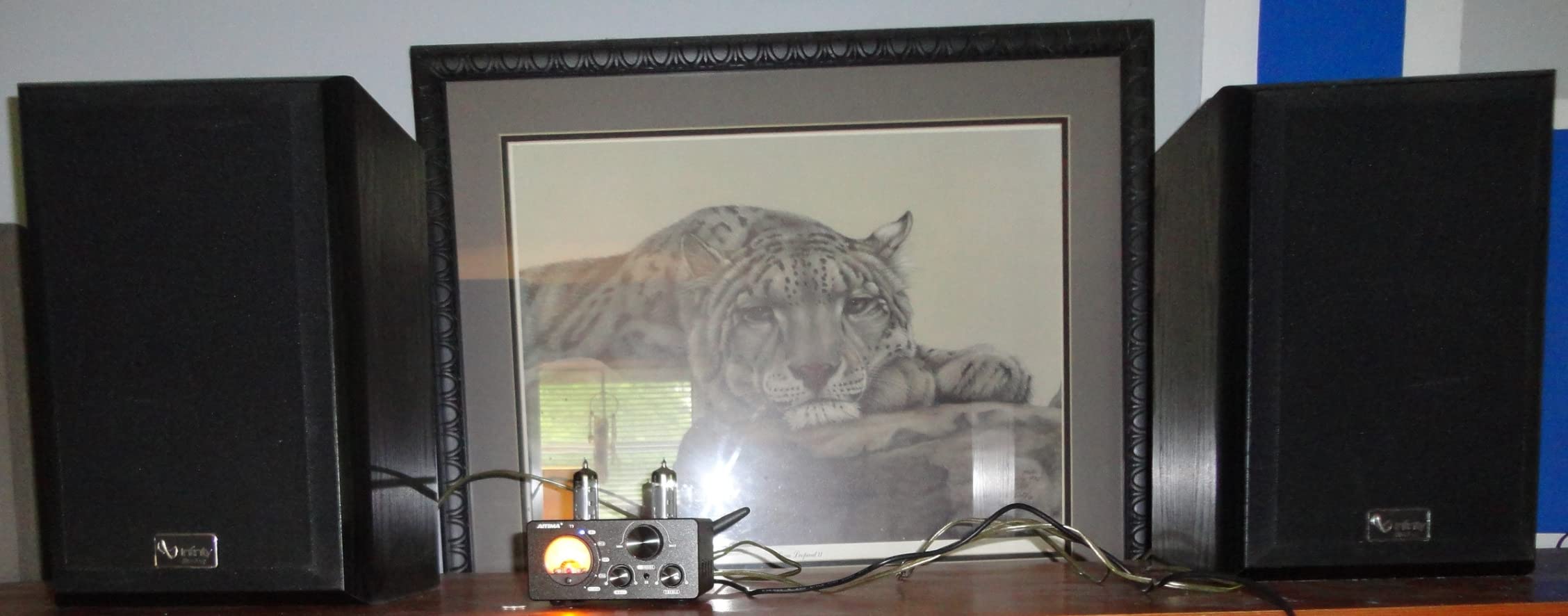
The treble and bass adjustment knobs let you shape the sound to your preference and room characteristics. While not as precise as a full equalizer, they provide useful tone control that many amplifiers at this level omit entirely. The remote control handles volume, input selection, and playback functions conveniently.
The vacuum tubes are replaceable, which means you can experiment with different tube types to change the sound character. This is one of the most accessible entry points into tube rolling for beginners. The tubes simply pull out and push in without any tools required, making the process foolproof.
Sound quality is solid rather than spectacular. The T9 produces a warm, pleasant sound that is easy to listen to for extended sessions. It will not match the detail retrieval or soundstage of the premium amplifiers on this list, but it delivers far more musicality than its price suggests. For desktop audio and casual listening, it is hard to beat.
Desktop Audio Setup Integration
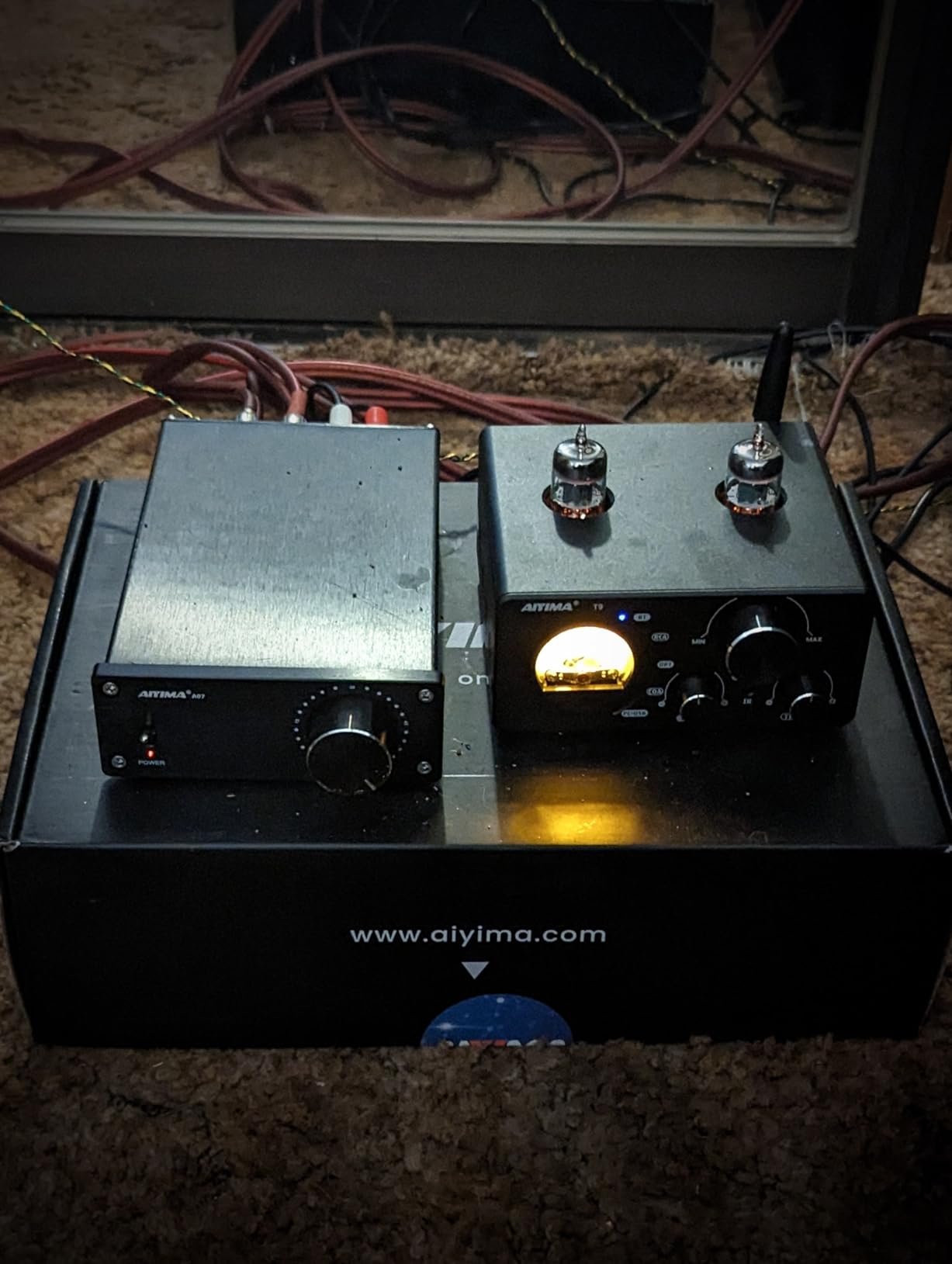
The T9 excels in desktop audio configurations. Its compact size fits comfortably on a desk alongside a monitor and speakers. I used it with a pair of desktop bookshelf speakers positioned for nearfield listening and the experience was immersive and enjoyable.
For the best desktop sound, connect your computer via USB. This bypasses the computer’s internal audio processing and lets the T9’s DAC handle the conversion. The result is cleaner sound with better detail and a lower noise floor than you get from a typical computer headphone jack.
Tube Replacement Accessibility
Replacing the tubes on the T9 is straightforward even for beginners. Power off the unit, let the tubes cool for at least ten minutes, then gently rock them back and forth while pulling straight up. Insert the new tubes by aligning the pins and pressing gently until seated.
Popular replacement tubes include various 6J1 and 5725W options available online. Each tube subtly changes the warmth, detail, and imaging. Start with the stock tubes and only experiment with replacements once you are familiar with the baseline sound. This keeps the process manageable and rewarding rather than overwhelming.
10. Douk Audio ST-01 PRO – Best Compact Desktop Tube Amp
Douk Audio ST-01 PRO 200W Bluetooth Amplifier, 2 Channel Vacuum Tube Power Amp with USB DAC/Coaxial Optical Inputs/VU Meter/Treble Bass Control for Home Theater/Stereo Speakers (Upgrade Version)
100W per channel at 4 ohms
Bluetooth 5.0
USB DAC
VU meter
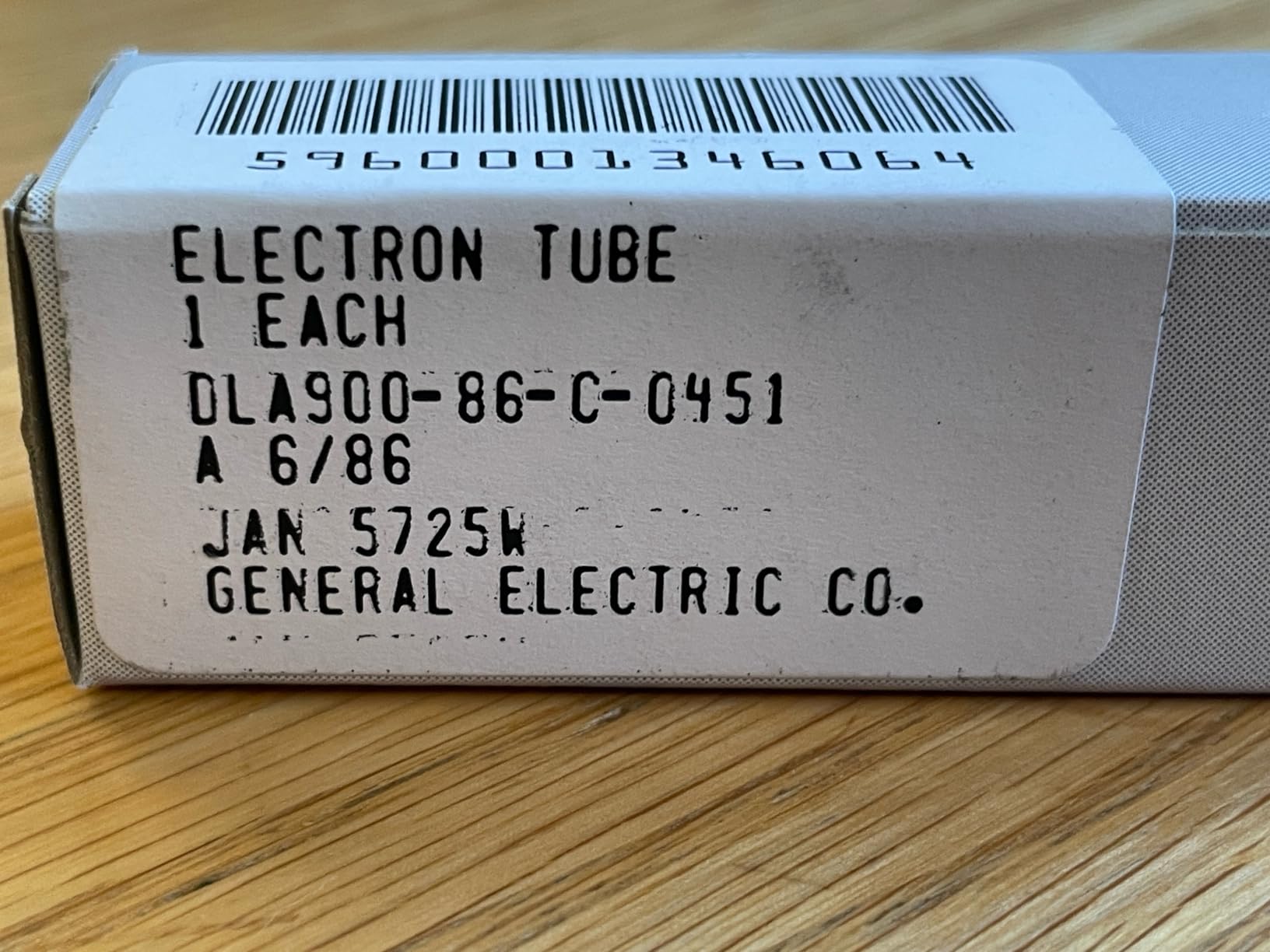
GE JAN 5725W military-spec tubes
Compact 1.33kg
Pros
- Compact size with impressive power output
- Military-spec GE JAN 5725W tubes included
- Multiple digital inputs including Bluetooth 5.0
- VU meter with adjustable sensitivity
Cons
- No headphone jack on the unit
- Built-in DAC quality is basic and entry-level
The Douk Audio ST-01 PRO is the smallest amplifier on this list, and that is exactly its appeal. Weighing just 1.33 kilograms and measuring roughly 4.5 by 3.8 by 2.1 inches, this is a tube amplifier you can fit almost anywhere. Despite its diminutive size, it delivers 100 watts per channel at 4 ohms, which is genuinely impressive.
The inclusion of GE JAN 5725W military-specification vacuum tubes is a notable feature at this size and price point. These tubes are known for their reliability and consistent performance. They add a warm, sweet quality to the sound that softens the sometimes clinical character of Class D amplification.
I used the ST-01 PRO as a desktop amplifier for several weeks and grew to appreciate its combination of small footprint and capable sound. The VU meter with adjustable sensitivity adds vintage visual appeal without dominating the compact front panel. The treble and bass control knobs provide useful tone shaping.
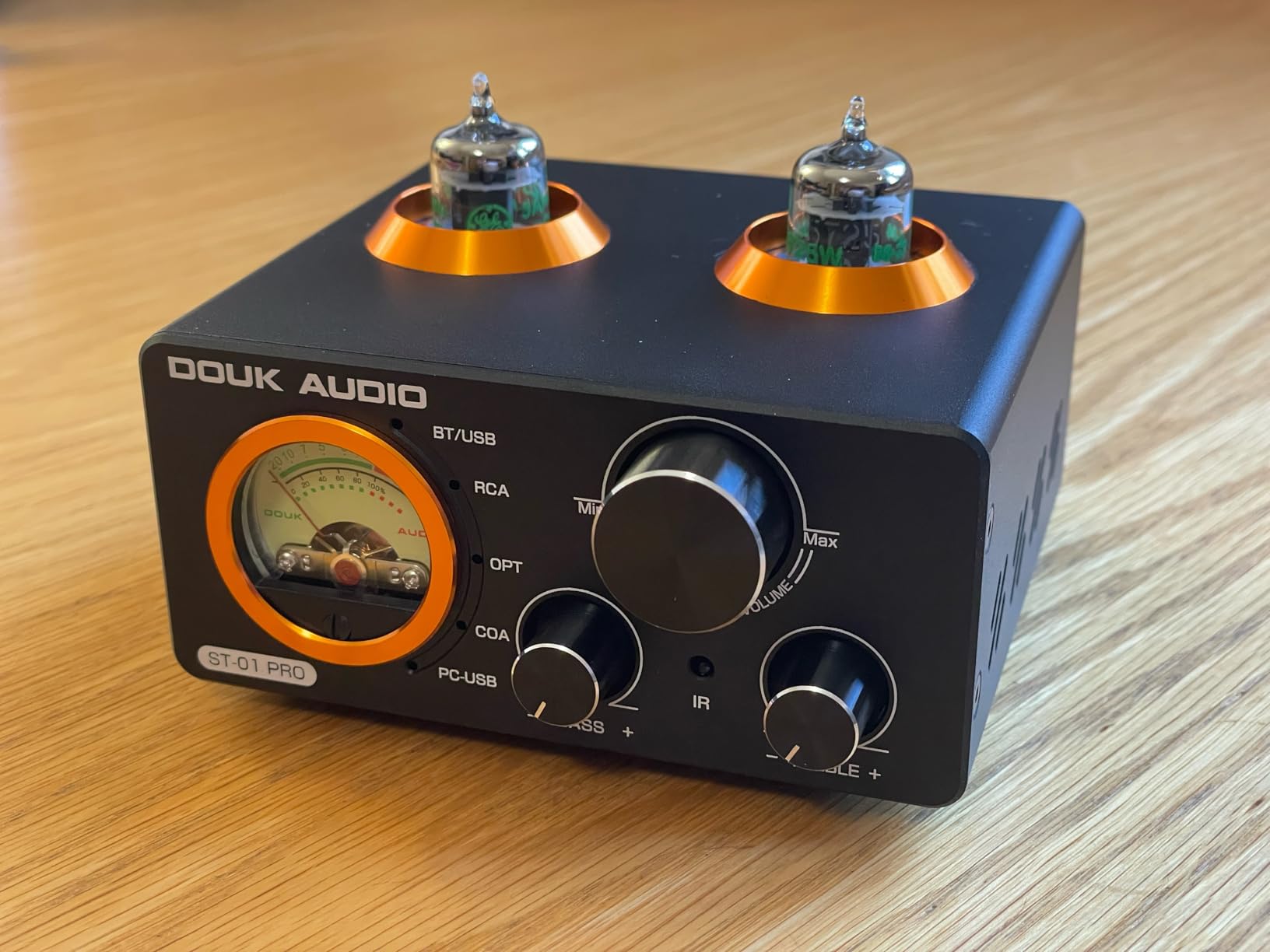
The connectivity options are surprisingly comprehensive for such a small unit. Bluetooth 5.0, USB DAC, coaxial, optical, and RCA inputs cover virtually every source you might want to connect. The 3.5mm AUX output on the back lets you connect a subwoofer or additional amplifier, which extends the system-building possibilities.
The remote control is a welcome inclusion, handling volume and input selection from across the room. For a desktop amplifier, having remote control is more convenient than you might initially expect. It means you can adjust the volume without reaching past your monitor and other desk equipment.
There are some compromises inherent in the compact design. The built-in DAC is basic and entry-level, meaning audiophiles will want to add an external DAC for the best sound quality. There is no headphone jack, which limits the amplifier’s versatility for private listening. The volume control works in discrete steps rather than smooth continuous adjustment.
External DAC Upgrade Path
The built-in DAC in the ST-01 PRO is functional but basic. For casual listening it is perfectly adequate, but critical listeners will notice limitations in detail retrieval and soundstage depth compared to a dedicated external DAC.
The good news is that upgrading is simple. Connect an external DAC to the RCA inputs and you bypass the internal DAC entirely. Even an affordable external DAC in the $50 to $100 range will noticeably improve detail, imaging, and overall sound quality. This makes the ST-01 PRO a great foundation that grows with your system.
Standby Mode Behavior
One quirk to be aware of is the standby behavior. The ST-01 PRO can enter standby mode after several seconds of silence, which means the amplifier effectively turns itself off when no audio signal is detected. When the next audio signal arrives, there can be a brief delay as the amplifier wakes up.
This behavior is designed to save power, but it can be mildly annoying during quiet listening sessions or when pausing between tracks. If this becomes problematic, some users report that keeping a very low-level signal playing prevents the standby mode from triggering. It is a minor issue but worth knowing before you buy.
How to Choose the Right Tube Amplifier?
Choosing the right tube amplifier comes down to understanding your specific needs, your existing equipment, and your listening environment. This buying guide covers the key factors that should inform your decision, drawing on both our testing experience and the questions that come up repeatedly in audiophile forums.
Power Output and Room Size Matching
Power output is the first specification most people look at, and it matters, but the relationship between watts and perceived loudness is not linear. A 10-watt tube amplifier can sound surprisingly loud with efficient speakers, while a 100-watt amplifier might struggle with difficult speaker loads.
For desktop and nearfield listening, 10 to 25 watts per channel is typically sufficient. Small to medium rooms of 100 to 250 square feet generally need 25 to 50 watts. Larger rooms above 300 square feet may require 50 watts or more, especially with less efficient speakers. Match your amplifier power to both your room size and speaker sensitivity.
Class A vs Class AB vs Hybrid Designs
Single-ended Class A amplifiers, like the Oldchen EL34 and REISONG A50 MKIII, produce the purest tube sound but have very low power output. They typically deliver 7 to 15 watts, which means they require highly efficient speakers. The trade-off is exceptional midrange warmth and harmonic richness.
Class AB tube designs, like the Juson JTA50, offer more power while retaining significant tube character. They are a practical middle ground for listeners who want tube warmth without the extreme speaker sensitivity requirements of pure Class A designs. Push-pull Class AB circuits can deliver 30 to 50 watts or more.
Hybrid designs, like the Dayton Audio HTA200 and Fosi Audio MC331, pair a tube preamp with a solid-state power section. This gives you tube warmth in the critical preamp stage combined with the power, reliability, and efficiency of solid-state amplification. For many listeners, hybrids offer the best balance of sound and practicality.
Understanding Tube Types
The tubes used in an amplifier significantly influence its sound character. EL34 tubes are known for their warm, midrange-focused sound with smooth highs. They are popular in both guitar and home audio applications for their musical and engaging presentation.
KT88 tubes deliver more power and a fuller frequency response with extended bass and treble. They are favored by listeners who want tube warmth combined with authority and dynamics. The Willsenton R8 ships with KT88 tubes and also accepts EL34 and 6550 alternatives for tube rolling.
300B tubes are the holy grail for many audiophiles. They produce a sound that is often described as liquid, holographic, and emotionally involving. However, 300B amplifiers have very low power output and require extremely efficient speakers. The REISONG A50 MKIII uses PSVANE 300B tubes for an accessible entry into this sound.
Connectivity and Input Options
Modern tube amplifiers offer a wide range of connectivity options. Consider which sources you need to connect before making your decision. Bluetooth is now standard on most models, but check the version. Bluetooth 5.0, found in the Fosi MC331 and AIYIMA T9, offers better range and audio quality than older versions.
A built-in DAC with USB, optical, and coaxial inputs lets you connect digital sources directly. The Dayton Audio HTA200 and Fosi Audio MC331 both include capable built-in DACs. For vinyl enthusiasts, a phono preamp input, like the one on the Juson JTA50, eliminates the need for a separate phono stage.
If home theater integration matters to you, the Rockville BluTube LED is one of the few tube amplifiers with an HDMI input. This allows direct connection from a TV or AV receiver. For 2.1 channel systems, look for a subwoofer output, which is available on several models in this guide.
Speaker Sensitivity and Impedance Matching
Speaker sensitivity is the single most important specification when choosing a tube amplifier, especially for low-powered designs. Sensitivity is measured in decibels at 1 watt at 1 meter. Higher numbers mean the speaker produces more volume for a given amount of power.
Speakers rated at 90dB or higher work well with low-powered tube amplifiers of 10 to 15 watts. Speakers between 87dB and 89dB need at least 25 to 50 watts. Speakers below 86dB require high-powered amplifiers of 50 watts or more. Always check your speaker specifications before selecting a tube amplifier.
Maintenance and Tube Replacement Costs
Tubes do not last forever. Power tubes typically need replacement every 2,000 to 5,000 hours of use, while preamp tubes can last 5,000 to 10,000 hours. At moderate listening levels of 2 to 3 hours per day, power tubes may need replacement every 2 to 4 years.
Replacement tube costs vary significantly. Common tubes like EL34 and 6J1 are affordable, often available for $20 to $50 per pair. Premium tubes like KT88 and especially 300B can cost substantially more, with 300B tubes sometimes running $100 to $300 or more per pair. Factor these ongoing costs into your purchasing decision.
Frequently Asked Questions
What is the best tube amplifier for home use?
For most home listening setups, the Dayton Audio HTA200 is our top recommendation. It delivers 100 watts RMS per channel, includes a hybrid tube preamp for warmth, and offers versatile connectivity including Bluetooth, USB DAC, optical, and a phono preamp. For smaller spaces or desktop use, the Fosi Audio MC331 offers similar features in a more compact form factor.
Are tube amplifiers worth the investment?
Tube amplifiers are worth the investment if you value warm, natural sound with rich harmonic detail. They produce a musical character that many listeners find more engaging than solid-state amplification. Modern tube amplifiers also include features like Bluetooth and built-in DACs, making them practical for everyday use. The main trade-offs are higher maintenance costs from periodic tube replacement and the need to match speakers carefully to amplifier power output.
How long do vacuum tubes last in amplifiers?
Power tubes in tube amplifiers typically last 2,000 to 5,000 hours of use, while preamp tubes can last 5,000 to 10,000 hours. At moderate listening levels of 2 to 3 hours per day, power tubes generally need replacement every 2 to 4 years. Tubes degrade gradually rather than failing suddenly, so you will notice decreasing sound quality and output before complete failure.
What is the difference between tube and solid-state amplifiers?
Tube amplifiers use vacuum tubes to amplify audio signals, producing warm harmonics, natural compression, and a musical sound character. Solid-state amplifiers use transistors and generally deliver cleaner, more accurate sound with higher power output and lower maintenance needs. Hybrid designs combine both approaches, using tubes in the preamp stage for warmth and transistors in the power stage for clean output and reliability.
Can you use a tube amp at low volume?
Yes, you can use a tube amplifier at low volume, and many tube amps actually sound better at moderate levels than solid-state alternatives. However, some pure Class A tube amplifiers need to reach a certain operating temperature for optimal sound. Hybrid designs like the Dayton Audio HTA200 perform well at any volume level, making them ideal for both quiet background listening and full-volume sessions.
Conclusion
The best tube amplifiers in 2026 span a wide range of designs, power outputs, and price points. Our Editor’s Choice, the Dayton Audio HTA200, offers the best overall balance of tube warmth, power, and connectivity for most listeners. The Fosi Audio MC331 delivers exceptional value as an all-in-one solution, while the Willsenton R8 provides a premium pure-tube experience for dedicated audiophiles.
Whatever your budget or listening environment, there is a tube amplifier on this list that will transform your home audio experience. Match your choice to your speakers, consider your connectivity needs, and enjoy the warm, engaging sound that only vacuum tubes can provide.