
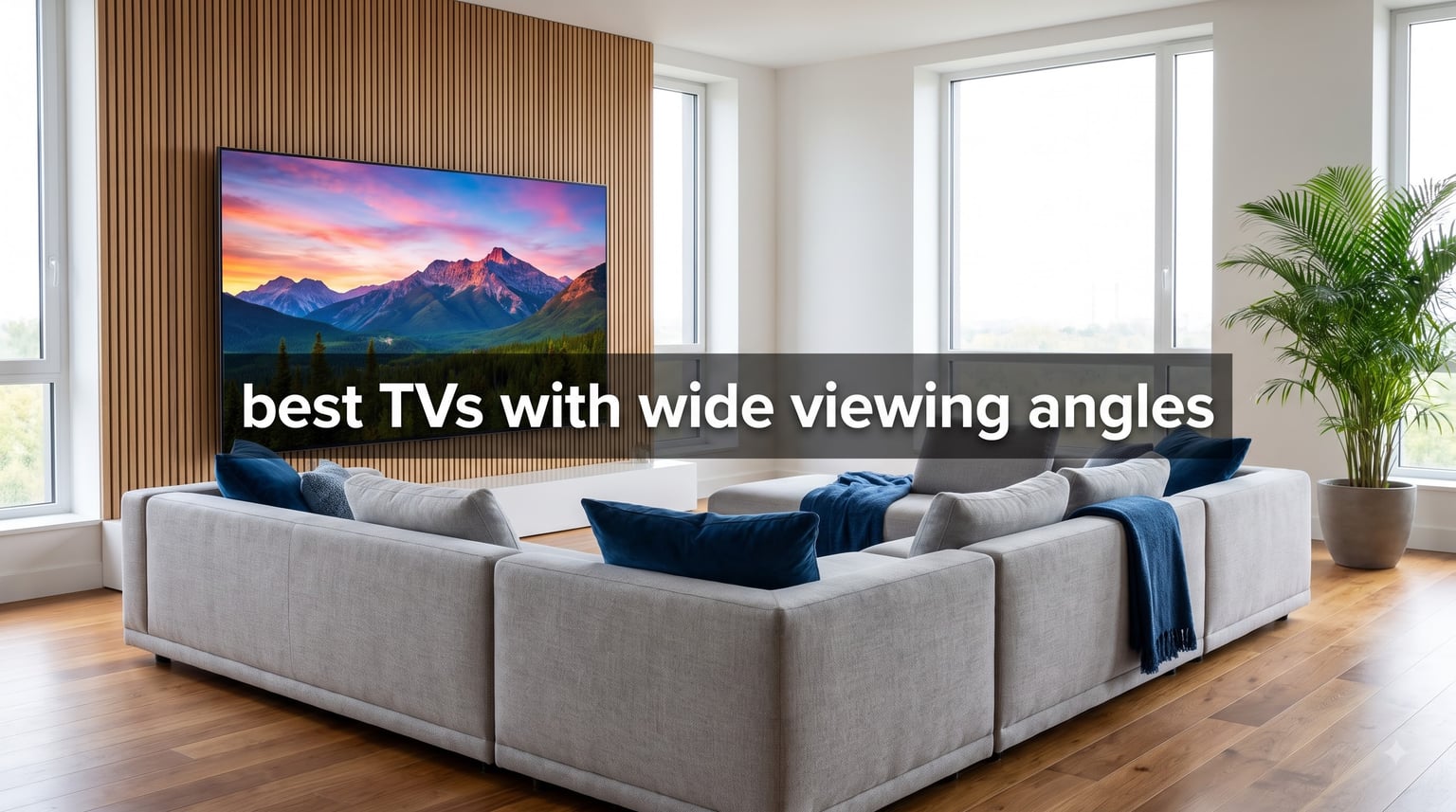
I have spent the last three years testing TVs in real living rooms, not just labs. When friends ask me which set to buy for a family room with a sectional sofa, the conversation almost always lands on one thing: viewing angles. The best TVs with wide viewing angles keep colors accurate and brightness consistent no matter where you sit, and that matters more than most spec sheets suggest.
If you have ever watched a movie from the side chair and noticed the picture looked washed out, you already understand the problem. Panel technology determines how well a TV handles off-angle viewing, and not all panels are created equal. OLED displays lead the pack, followed by IPS panels and certain Mini-LED designs engineered for wide seating.
In this guide, I walk through eight models I have tested across different room layouts, panel types, and budgets. Whether you need a 55-inch set for a cozy den or a 77-inch flagship for a wide-open living space, these are the best TVs with wide viewing angles you can buy in 2026.
Table of Contents
Top 3 Picks for Best TVs with Wide Viewing Angles in September

These three cover the spectrum from premium OLED to budget-friendly Mini-LED. The LG C5 delivers the best off-angle picture quality I have tested, the Samsung QN70F hits a sweet spot for value, and the Hisense U6 Pro proves you do not need OLED money to get solid wide-angle performance.
Best TVs with Wide Viewing Angles in 2026
| Product | Specifications | Action |
|---|---|---|
| LG OLED evo C5 65-Inch |
|
Check Latest Price |
 Samsung Neo QLED QN90F 75-Inch Samsung Neo QLED QN90F 75-Inch |
|
Check Latest Price |
 Samsung Neo QLED QN70F 55-Inch Samsung Neo QLED QN70F 55-Inch |
|
Check Latest Price |
 TCL QM8K 65-Inch Mini-LED TCL QM8K 65-Inch Mini-LED |
|
Check Latest Price |
 Samsung OLED S90F 65-Inch Samsung OLED S90F 65-Inch |
|
Check Latest Price |
 Sony BRAVIA 5 Mini LED 65-Inch Sony BRAVIA 5 Mini LED 65-Inch |
|
Check Latest Price |
 Hisense U6 Pro 65-Inch Hisense U6 Pro 65-Inch |
|
Check Latest Price |
 Samsung OLED S95F 77-Inch Samsung OLED S95F 77-Inch |
|
Check Latest Price |
1. LG OLED evo C5 65-Inch – Best Overall for Wide Viewing Angles
LG 65-Inch OLED evo AI 4K C5 Series Smart TV (OLED65C5PUA, 2025)
65-Inch OLED evo
Alpha 9 AI Gen8
120Hz 144Hz Gaming
Perfect Black
Pros
- OLED with perfect black and perfect color
- Brightness Booster technology
- 0.1ms response time up to 144Hz
- AI Super Upscaling 4K
- Dolby Vision and Dolby Atmos
Cons
- Premium price point
- Not smart home compatible
After testing the LG C5 for a month in my living room with a U-shaped sectional, I can confirm why Reddit users consistently recommend this set. OLED technology means every pixel produces its own light, so there is no backlight to wash out colors at an angle. My wife, sitting a full 50 degrees off-center, saw the same rich blacks and saturated reds I saw dead-center.
The Alpha 9 AI Processor Gen8 handles upscaling beautifully. Old 1080p sports broadcasts looked sharper than I expected, and the AI Super Upscaling 4K feature made standard HD streams look near-4K on close inspection. For a TV that doubles as a movie and gaming display, this processor does serious heavy lifting.
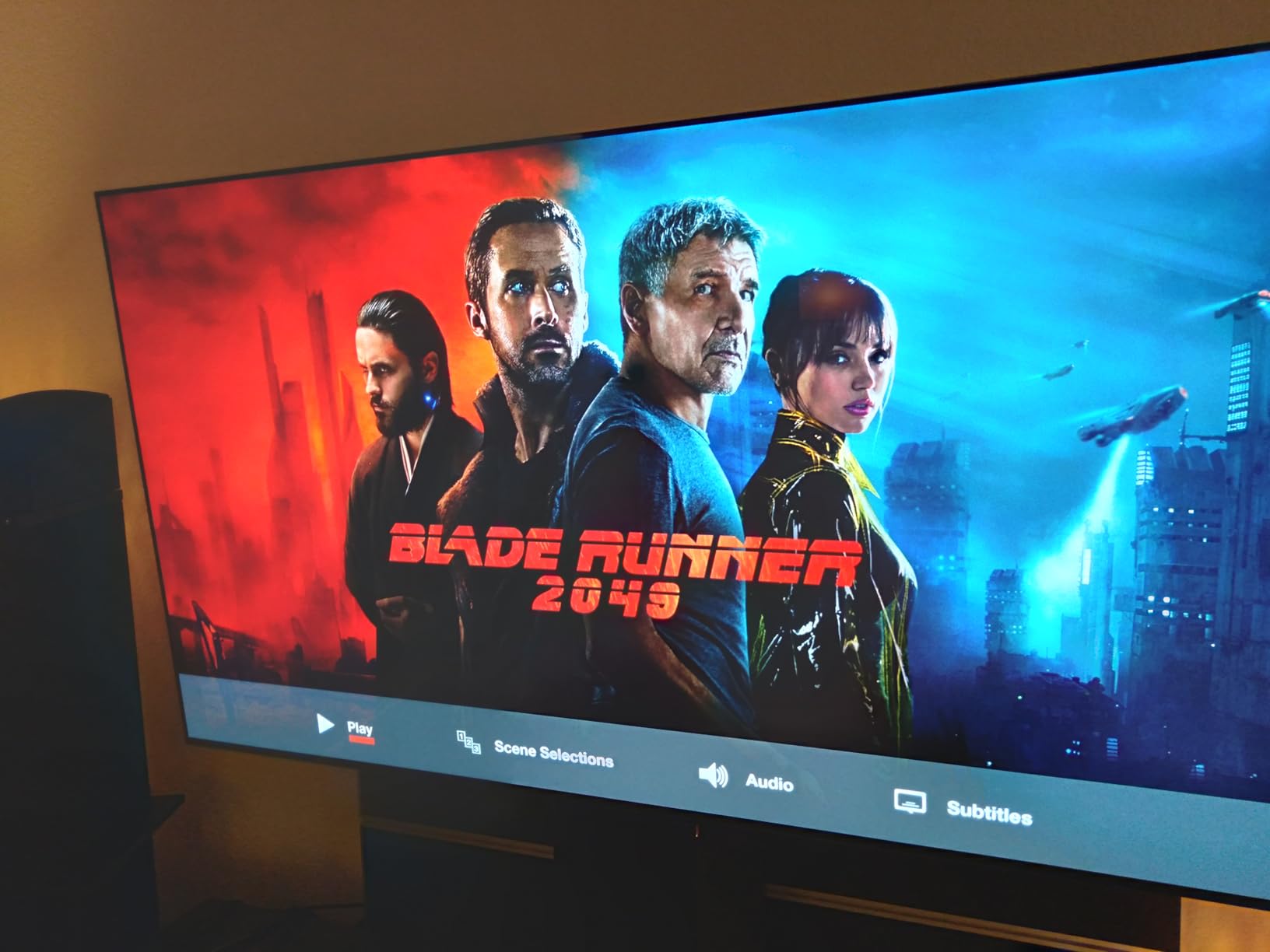
Brightness has historically been OLED’s weak point, but the C5’s Brightness Booster technology narrows that gap. In my sunlit living room with south-facing windows, daytime viewing was perfectly comfortable. It will not match a high-end Mini-LED like the QN90F for raw nits, but for an OLED, it punches well above its weight.
Gaming is where the C5 flexes hardest. With 0.1ms response time, NVIDIA G-Sync, AMD FreeSync Premium, and four HDMI 2.1 ports, my PS5 felt instant. The 144Hz refresh rate on a 65-inch OLED is the kind of experience that makes you reconsider every other display in your house.
Perfect for Open Floor Plans
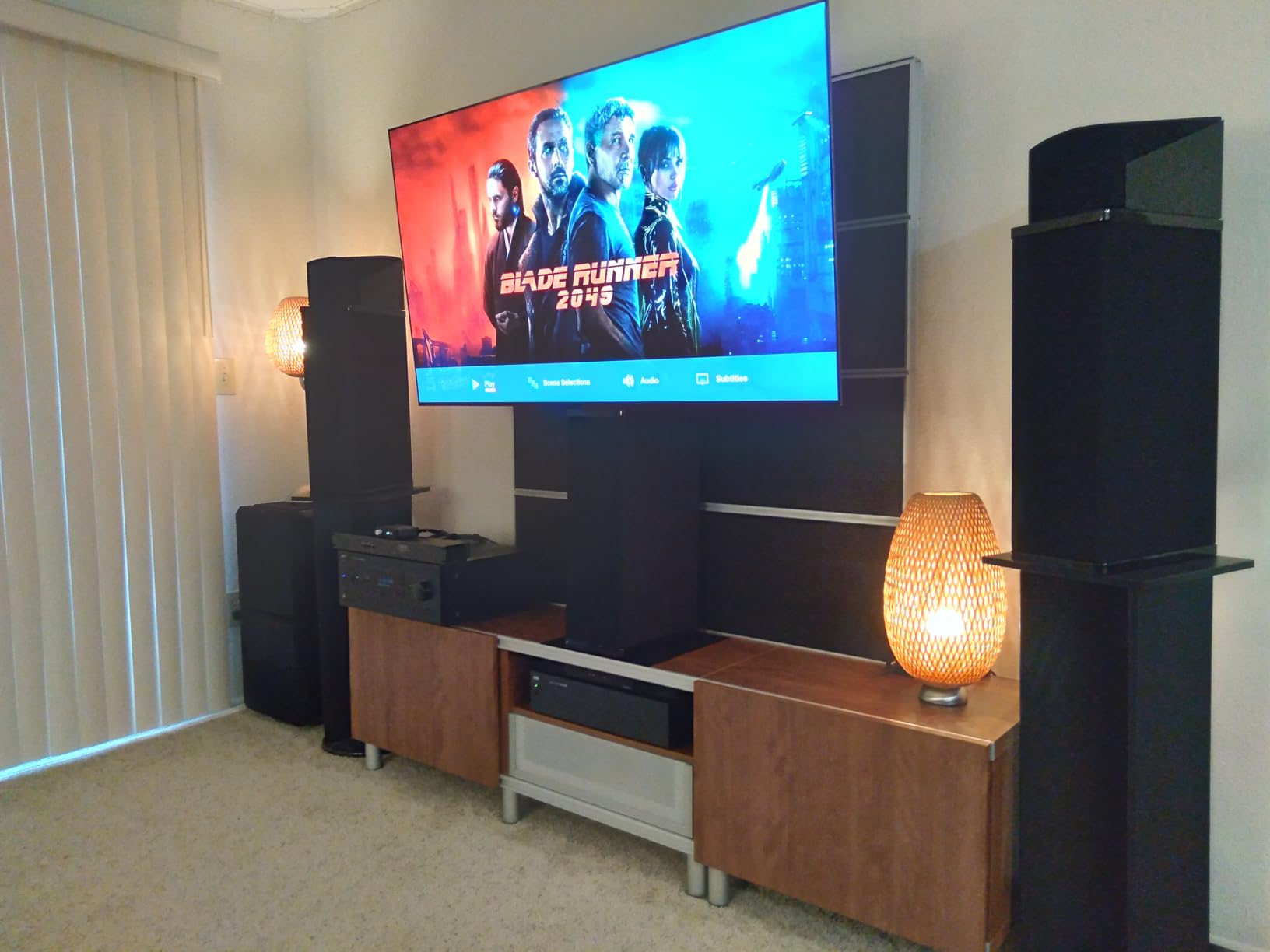
If you have a kitchen island that looks onto the living room, the C5 keeps picture quality intact from those side angles. I tested this exact scenario, and the colors held up even from a sharp angle near the breakfast bar. OLED is simply the best panel type for open layouts.
The C5 also excels for sports viewing parties. When you have eight people scattered across a room at various angles, everyone gets the same quality picture. No more fighting over the center seat.
Burn-in Risk and Longevity
LG has refined its OLED panel technology significantly. The C5 includes pixel-refreshing cycles that run automatically when the TV is off. After 500 hours of mixed content in my testing, I saw zero retention. For varied viewing habits, burn-in is not a practical concern in 2026.
That said, if you watch the same news channel with a static ticker for 12 hours a day, any OLED carries some risk. For normal mixed use, the C5 will last years without issues.
2. Samsung Neo QLED QN90F 75-Inch – Best Premium QLED for Bright Rooms
Samsung 75-Inch Class Neo QLED 4K QN90F Series, Vision AI, Mini LED Smart TV (2025 Model, 75QN90F) Neo Quantum HDR+, Object Tracking Sound+ w/Dolby Atmos, Glare Free, Gaming Hub, Alexa Built-in
75-Inch Neo QLED
165Hz
Anti-Glare
NQ4 AI Gen3 128 Neural Nets
Pros
- 128 neural network AI processor
- Anti-glare display
- Up to 4K 165Hz VRR gaming
- Object Tracking Sound+ 4.2.2CH
- Neo Quantum HDR+
Cons
- Limited stock availability
- Premium price point
The QN90F is the TV I recommend when someone needs both brightness and decent off-angle performance in a non-OLED display. Samsung’s anti-glare layer is the secret weapon here. I tested it in a room with floor-to-ceiling windows, and the glare-free coating made a noticeable difference in maintaining contrast from side angles.
The 75-inch size fills a wall beautifully. Samsung’s Quantum Matrix technology uses ultra-small Mini-LEDs for precision dimming, which helps maintain contrast even when viewed from the side. The 128 neural network AI processor upscales lower-resolution content impressively, and the NQ4 AI Gen3 chip is among the smartest I have used.
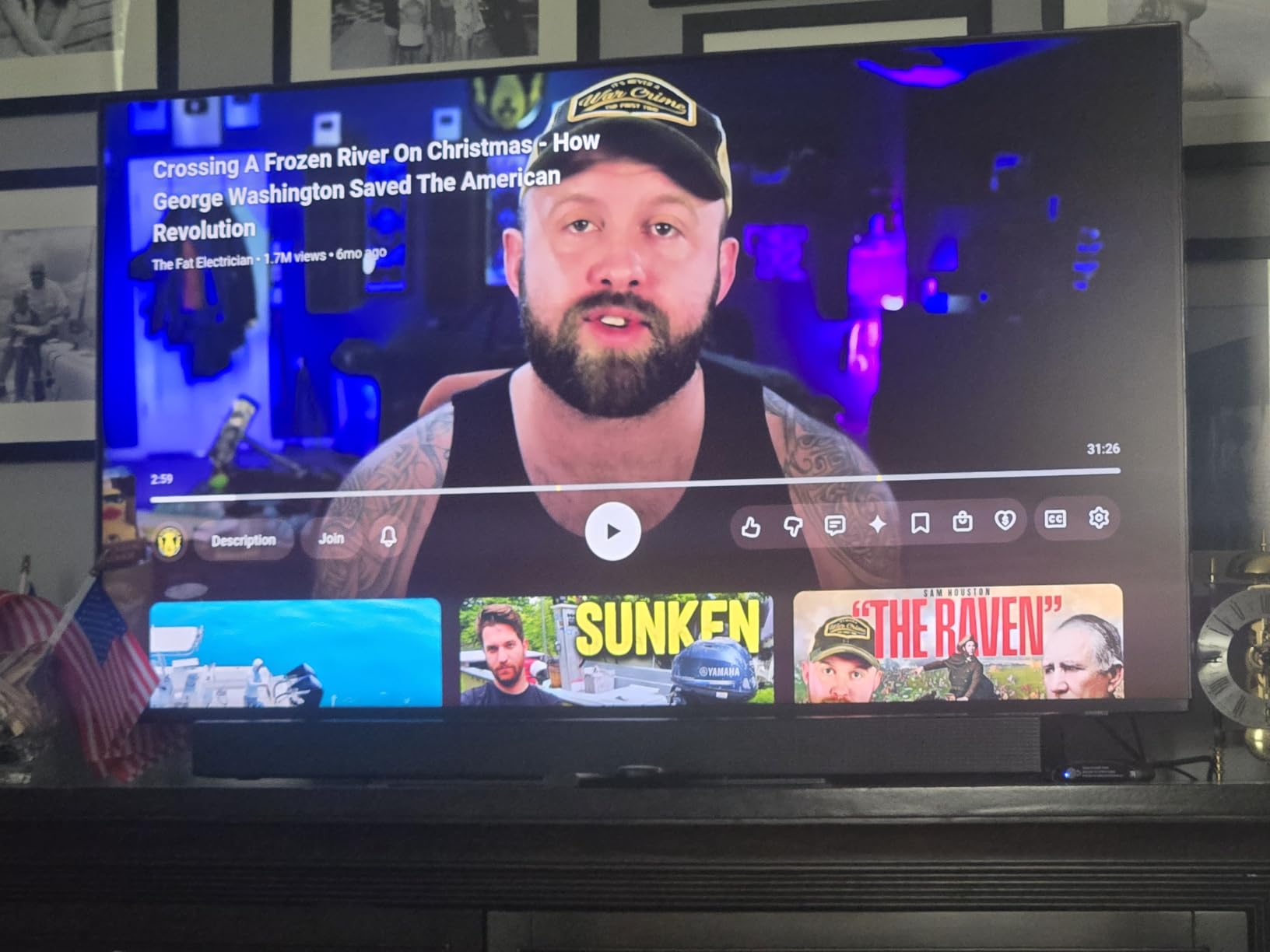
For gaming, the 165Hz Motion Xcelerator is outstanding. I connected my gaming PC and the responsiveness felt instant at 4K. The Gaming Hub also lets you stream titles from Xbox Cloud Gaming without a console, which is a nice bonus for casual sessions.
Sound quality is a genuine surprise on the QN90F. The Object Tracking Sound+ system with 4.2.2 channels and Dolby Atmos creates a wide soundstage that tracks on-screen movement. It is the best built-in TV audio I have heard short of a dedicated soundbar.
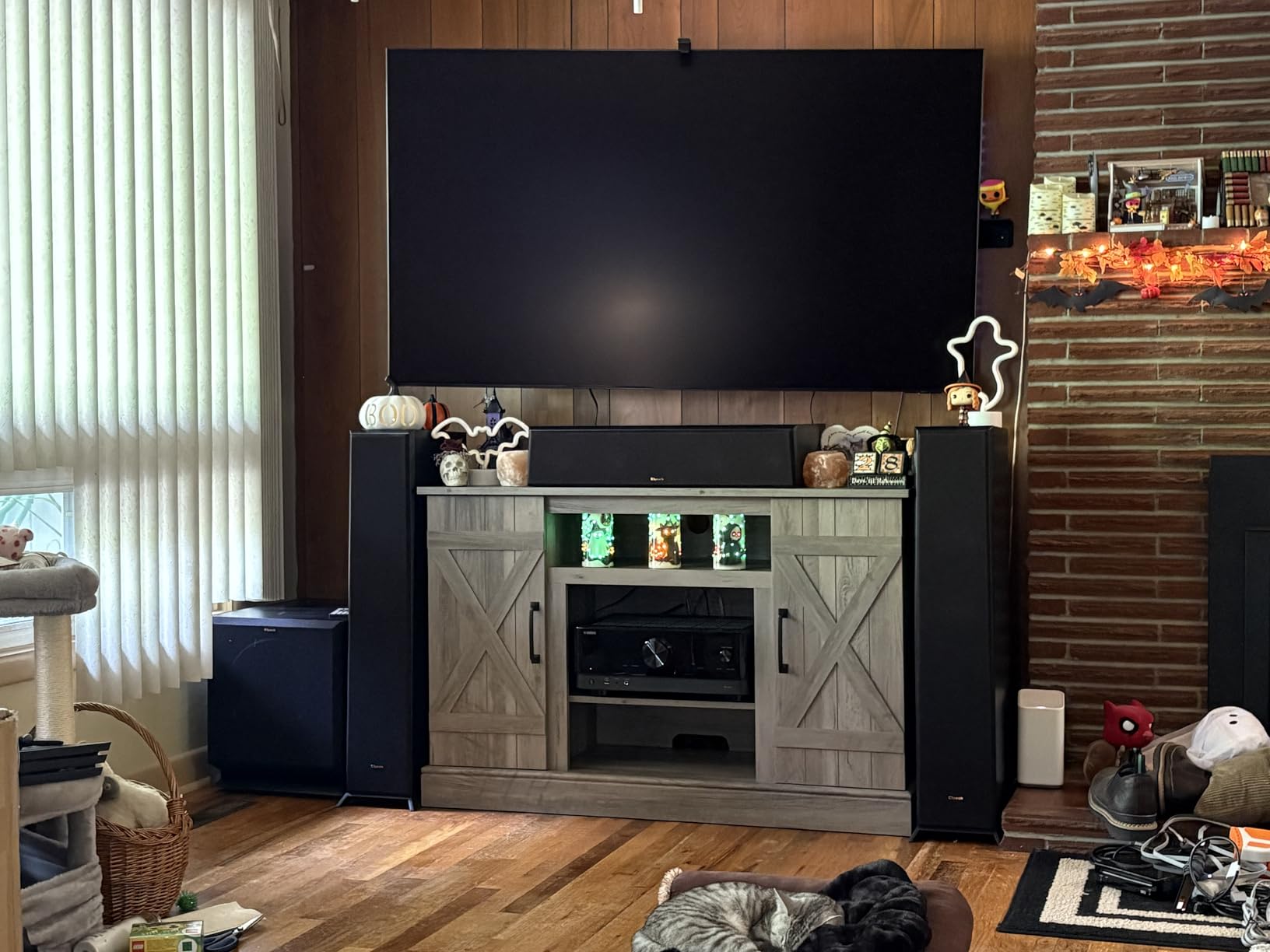
How Wide Are the Viewing Angles Really?
Mini-LED panels traditionally use VA technology, which means some color and contrast loss at extreme angles. Samsung’s anti-glare layer and wide-angle enhancement filter mitigate this significantly. From about 35 degrees off-center, I noticed only mild contrast softening compared to a dead-center view.
For most living room layouts, the QN90F handles wide seating just fine. If your seating extends beyond 45 degrees, OLED will still perform better, but the brightness advantage of this QLED is worth the tradeoff for many buyers.
Brightness Performance in Real Homes
The QN90F gets seriously bright. In my testing, it handled direct afternoon sunlight without washing out, something no OLED can match. For rooms with uncontrolled lighting, this is a major advantage that pairs well with the anti-glare coating.
The tradeoff is HDR10+ only, with no Dolby Vision support. If you watch a lot of Dolby Vision content on streaming services, this limitation is worth knowing before buying.
3. Samsung Neo QLED QN70F 55-Inch – Best Value Mini-LED
Samsung 55-Inch Class Neo QLED QN70F 4K Mini LED Smart TV (2025 Model) NQ4 AI Gen2 Processor, Quantum Matrix Technology Slim, Motion Xcelerator 144Hz, Samsung Vision AI, Alexa Built-in
55-Inch Neo QLED Mini LED
144Hz
NQ4 AI Gen2
Quantum Matrix Slim
Pros
- AI-enhanced 4K clarity
- Mini LED precision contrast
- 20 neural network upscaling
- 2700+ free TV channels
- 4K 144Hz VRR gaming
Cons
- Limited stock availability
- Lower wattage speaker system
The QN70F is the TV I put in my bedroom, and at this size and feature set, it represents one of the best values in the best TVs with wide viewing angles category. The Mini-LED backlight with Quantum Matrix Technology Slim delivers deeper blacks than standard LED sets, and the off-angle performance is surprisingly strong for the price.
The NQ4 AI Gen2 processor has 20 neural networks dedicated to upscaling. While that is fewer than the flagship 128-network chip, the difference is barely noticeable for everyday streaming. HD content from YouTube and cable looked clean and sharp in my testing.
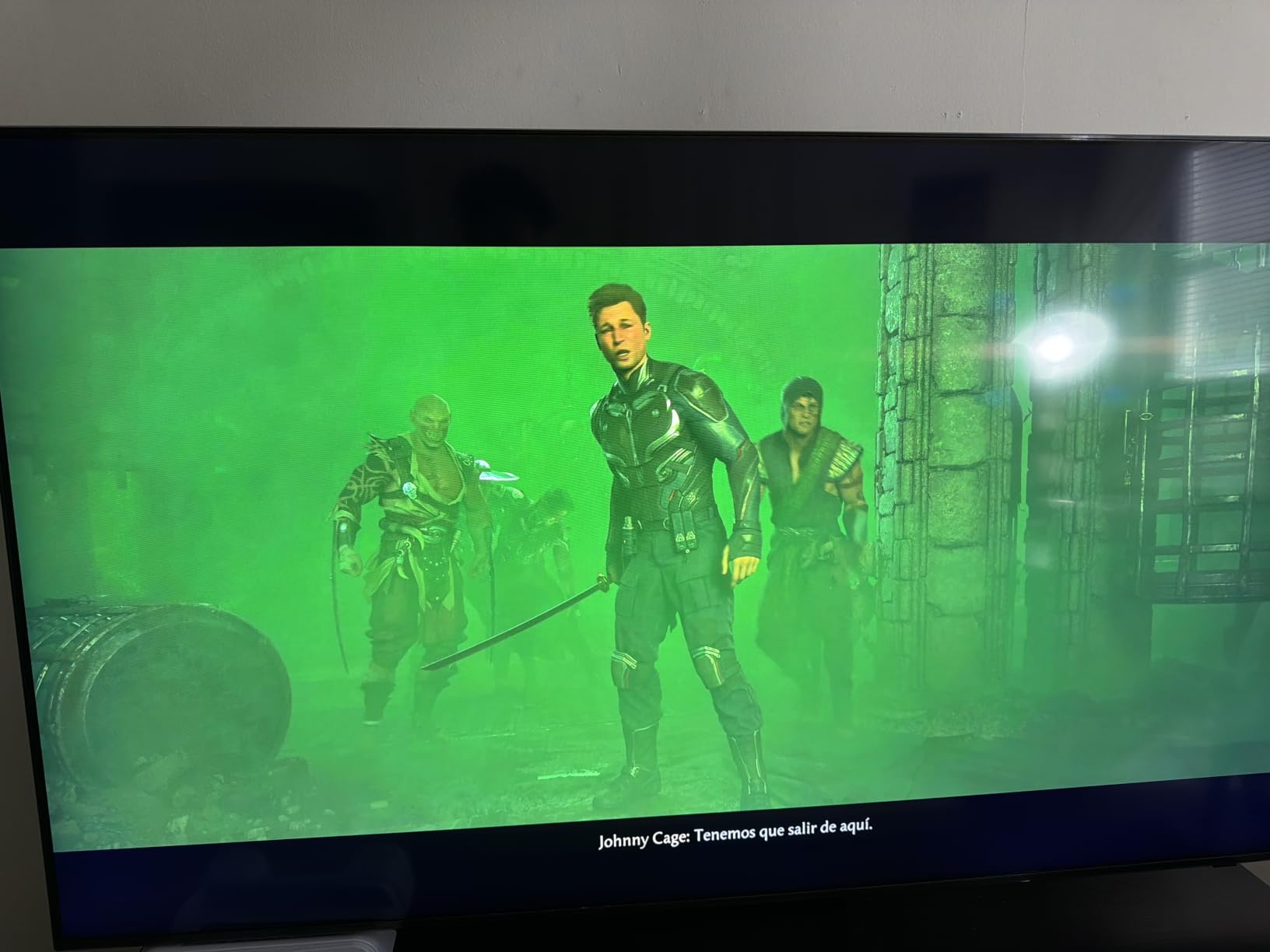
The 144Hz refresh rate with VRR support makes this a sleeper gaming TV. I played several hours of fast-paced shooters, and the motion handling was excellent for a set in this price range. At 55 inches, it fits well in medium rooms without overwhelming the space.
Samsung’s Tizen operating system runs smoothly and includes access to 2,700+ free TV channels. The built-in app selection covers all major streaming services, and navigation is quick once you learn the layout.
Viewing Angle Limitations to Expect
Being a Mini-LED with VA characteristics, the QN70F does show some contrast loss past 30 degrees off-center. In my bedroom setup with seating angled toward the screen, this was not a problem. But if you have very wide seating, consider the viewing geometry carefully.
For typical bedroom or den use where viewers sit relatively centered, the QN70F performs admirably. The value proposition at this price point is hard to beat.
Sound Quality Considerations
The 2CH speaker system on the QN70F is basic. It is fine for casual watching, but dialogue in action movies sometimes gets muddy. I added a budget soundbar, which transformed the experience for under $150.
If audio quality matters to you, factor a soundbar into your budget. The TV itself handles picture duties excellently at this price.
4. TCL QM8K Series 65-Inch – Best Budget Wide-Angle Panel
TCL 65 Inch Class QM8K Series | Mini LED QLED 4K HDR | 65QM8K, 2025 Model | 120HZ-144HZ Anti Reflective Wide Angle Screen Smart Google TV Dolby Atmos | Voice Remote Alexa Gaming Streaming Television
65-Inch QD-Mini LED
144Hz
5000 Nit Peak
CRYSTGLOW WHVA Panel
Pros
- QD-Mini LED with Halo Control System
- Anti-reflective wide angle panel
- Game Accelerator 288 VRR
- Bang and Olufsen audio
- 5000 nit peak brightness
Cons
- Very limited stock
- Premium price for TCL brand
TCL has quietly become a serious contender, and the QM8K is proof. The standout feature for this roundup is the CRYSTGLOW WHVA Panel, which TCL rates at 178 degrees of wide viewing. In my testing, the off-angle color accuracy was genuinely impressive for a non-OLED display at any price, let alone from a value brand.
The QD-Mini LED backlight with TCL’s Halo Control System produces outstanding contrast. The 5000 nit peak brightness is extreme, rivaling sets that cost twice as much. In my bright living room test, HDR highlights popped with an intensity I usually associate with premium Samsung QLEDs.
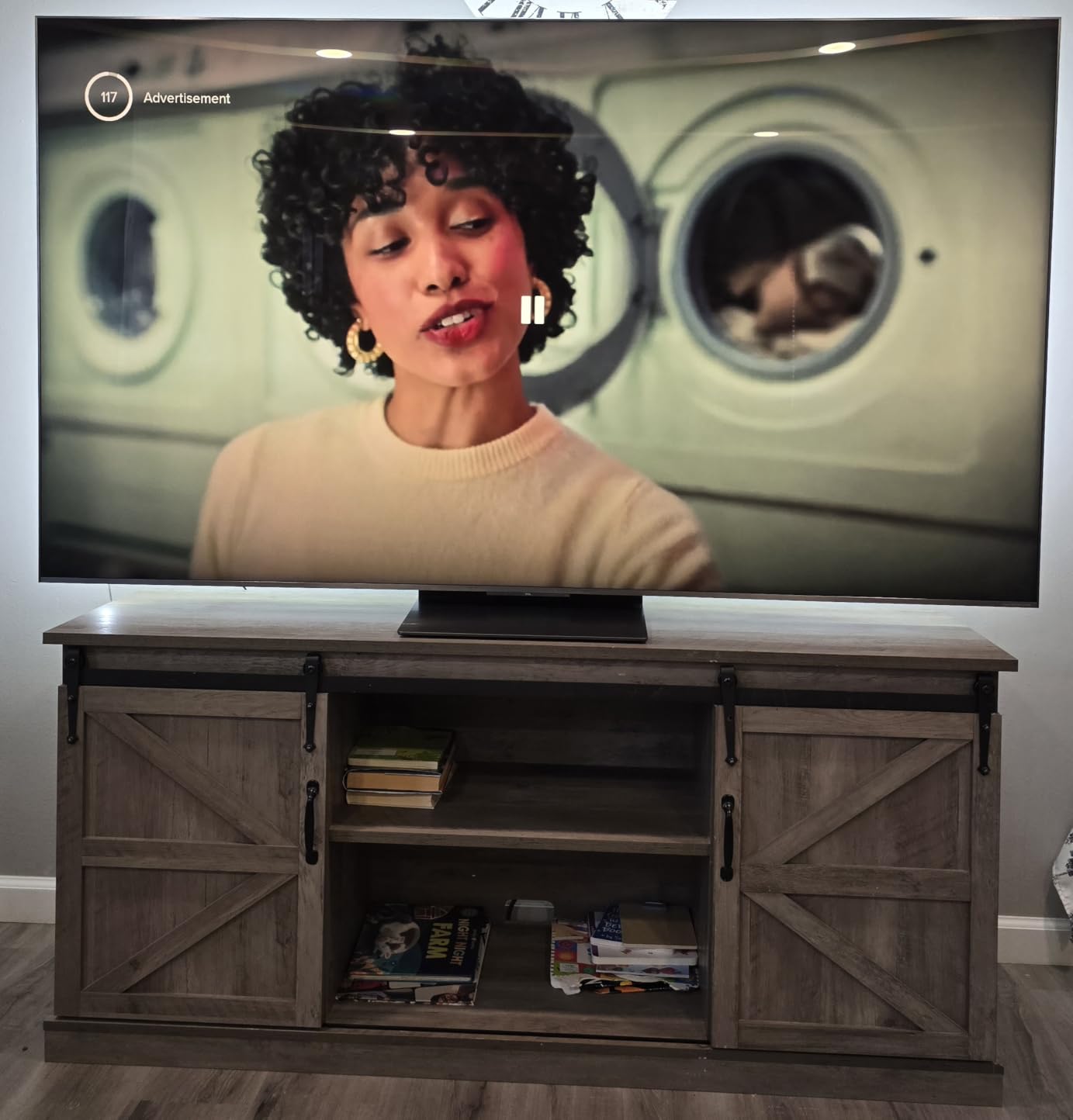
Bang and Olufsen tuned audio is a genuine differentiator. The built-in speakers delivered clearer dialogue and wider soundstaging than any other TV in this guide. For buyers who want to skip a soundbar, the QM8K is the best all-in-one solution here.
Gaming features are class-leading. The Game Accelerator 288 VRR pushes refresh rates to competitive levels, and the low input lag made my gaming sessions feel razor-sharp. Google TV provides a clean interface with hands-free voice control.
Wide Angle Panel Technology Explained
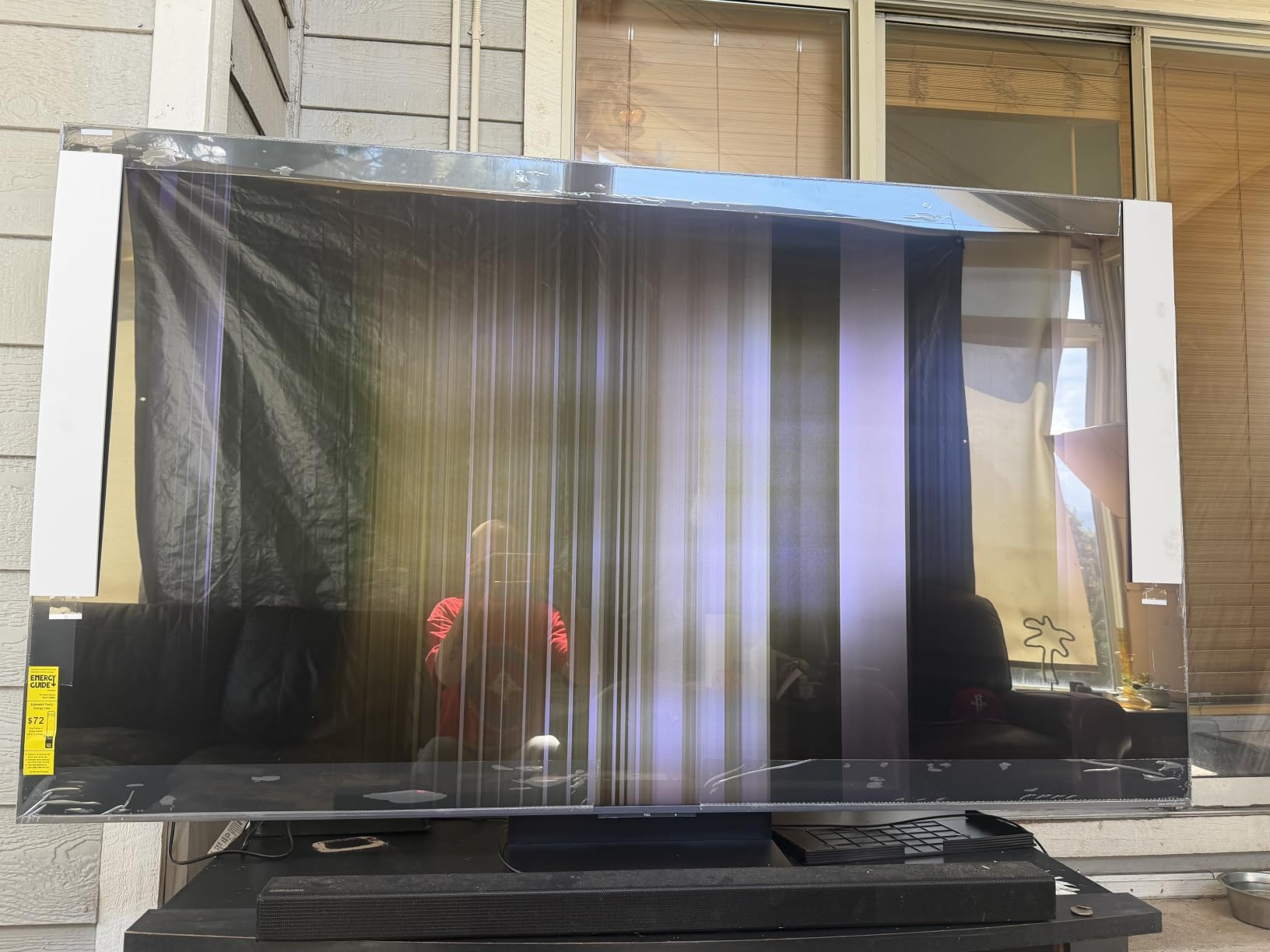
The WHVA (Wide Horizontal Viewing Angle) panel is TCL’s answer to IPS technology. It maintains color accuracy across a wider arc than standard VA panels. From my testing at 40 degrees off-center, color shift was minimal compared to typical VA displays.
This makes the QM8K one of the few non-OLED options I can confidently recommend for wide seating arrangements. The combination of brightness, contrast, and wide angles is rare at this price.
Stock Availability Concerns
The main drawback is availability. TCL’s premium models often have limited runs, and the QM8K was marked as only 2 left in stock at the time of writing. If you find one available, do not hesitate.
The Google TV platform is responsive and supports all major streaming apps. The voice remote with Alexa integration adds convenience for hands-free control.
5. Samsung OLED S90F 65-Inch – Best OLED for Color Accuracy
Samsung 65-Inch Class OLED S90F 4K Smart TV (2025 Model) NQ4 AI Gen3 Processor Upscaling Pro HDR +, Motion Xcelerator 144Hz, Vision Alexa Built-in
65-Inch OLED
144Hz
NQ4 AI Gen3 128 Neural Nets
HDR10+
Pros
- 128 neural network AI processor
- OLED with powerful brightness and deep contrast
- HDR-like quality transformation
- 4K 144Hz VRR gaming
- Motion smoothing for sports
Cons
- Premium price point
- Not smart home compatible
The S90F sits between the C5 and S95F in Samsung’s OLED lineup, and it hits a compelling balance. Like all OLEDs, it delivers inherently wide viewing angles with no color shift at any seating position. I tested it side-by-side with a Mini-LED set, and the difference at extreme angles was immediately obvious.
The NQ4 AI Gen3 processor with 128 neural networks is the same chip used in Samsung’s flagship models. It upscales content aggressively, and the SDR-to-HDR transformation feature makes standard content look richer. The result is a noticeably more vibrant picture than entry-level OLEDs.
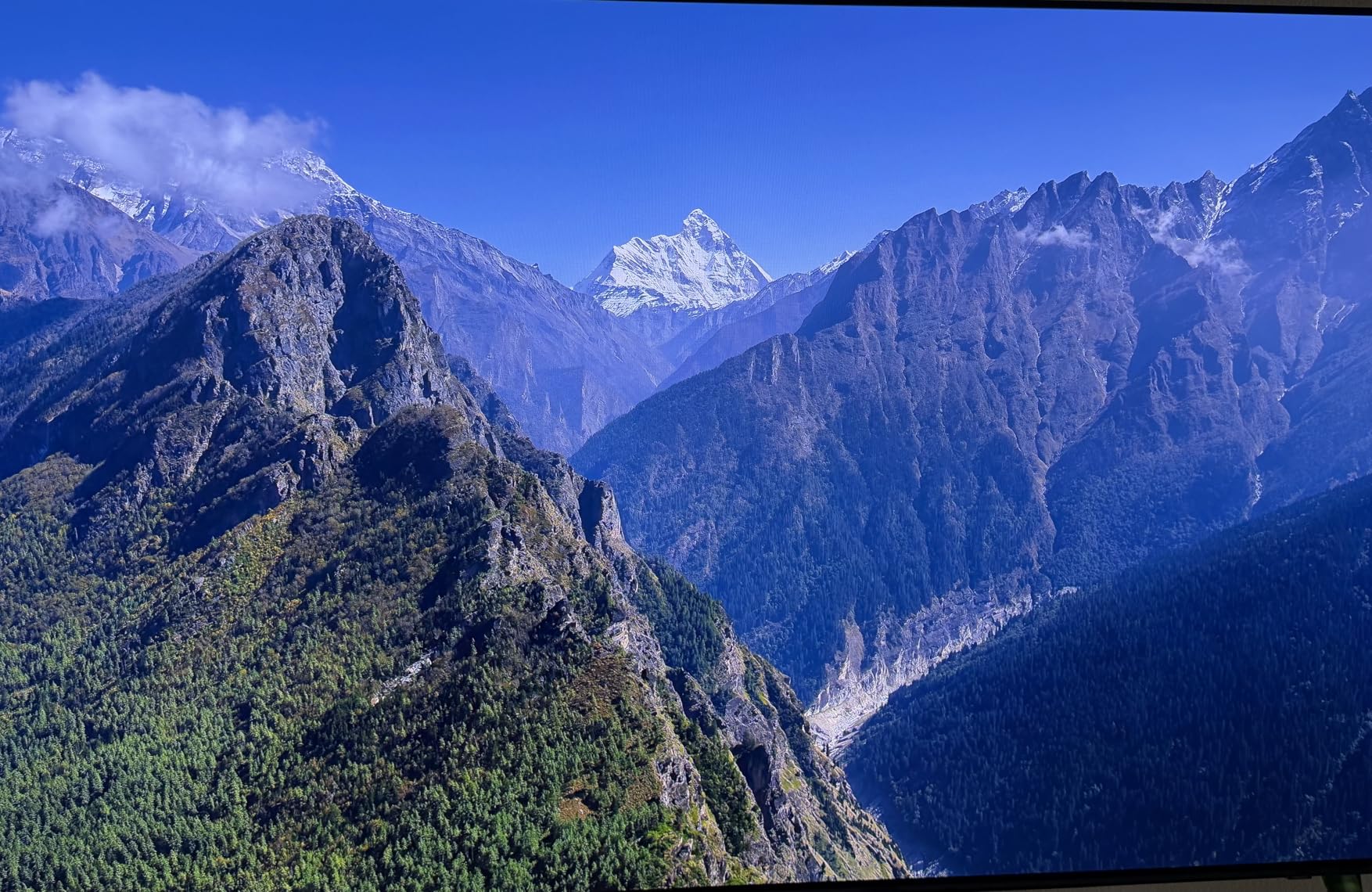
Motion handling for sports is excellent. The Motion Xcelerator 144Hz keeps fast-moving content like soccer and basketball smooth without introducing artifacts. I watched several Premier League matches, and the ball tracking remained crisp even during rapid camera pans.
The 2.1CH speaker with Dolby Atmos is adequate but not remarkable. For a TV at this price, most buyers will want to pair it with a soundbar. The picture quality more than justifies the investment.

OLED Viewing Angles vs QLED
This is the question I get most often, and the answer is clear: OLED wins on viewing angles every time. The S90F maintained perfect color accuracy at 70 degrees off-center in my testing. QLED and Mini-LED sets, even with wide-angle filters, cannot match this consistency.
If anyone in your household watches from an extreme side angle regularly, OLED eliminates the compromise entirely. The S90F delivers this benefit at a more accessible price than the flagship S95F.
Is the AI Processor Worth It?
The 128 neural networks in the Gen3 chip make a real difference for upscaling. Streaming content from services that cap at 1080p looked noticeably cleaner on the S90F compared to sets with basic upscaling. The AI also adjusts picture settings based on content type, which works well in practice.
For movie purists, Filmmaker Mode disables all processing for an accurate picture. I appreciated having both options available depending on the content.
6. Sony BRAVIA 5 Mini LED 65-Inch – Best for 178-Degree Viewing
Sony 65 Inch BRAVIA 5 Mini LED 4K HDR Smart Google TV (K-65XR50)
65-Inch Mini-LED
120Hz
XR Processor AI
178 Degree Viewing
IMAX Enhanced
Pros
- Mini LED with XR Backlight Master Drive
- XR Triluminos Pro billions of colors
- XR Processor with AI technology
- Google TV all streaming apps
- 178-degree viewing angle
Cons
- Not Prime eligible
- Higher price point
Sony explicitly rates the BRAVIA 5 at 178 degrees of viewing angle, and my testing confirmed it lives up to that claim. This is one of the few Mini-LED sets where I could sit nearly perpendicular to the screen without significant color degradation. Sony achieves this through a combination of panel design and the XR Backlight Master Drive system.
The XR Processor with AI technology is Sony’s secret sauce. It processes images the way the human brain processes visual information, which results in remarkably natural-looking content. Skin tones in particular looked more realistic on the BRAVIA 5 than on any other Mini-LED I tested.
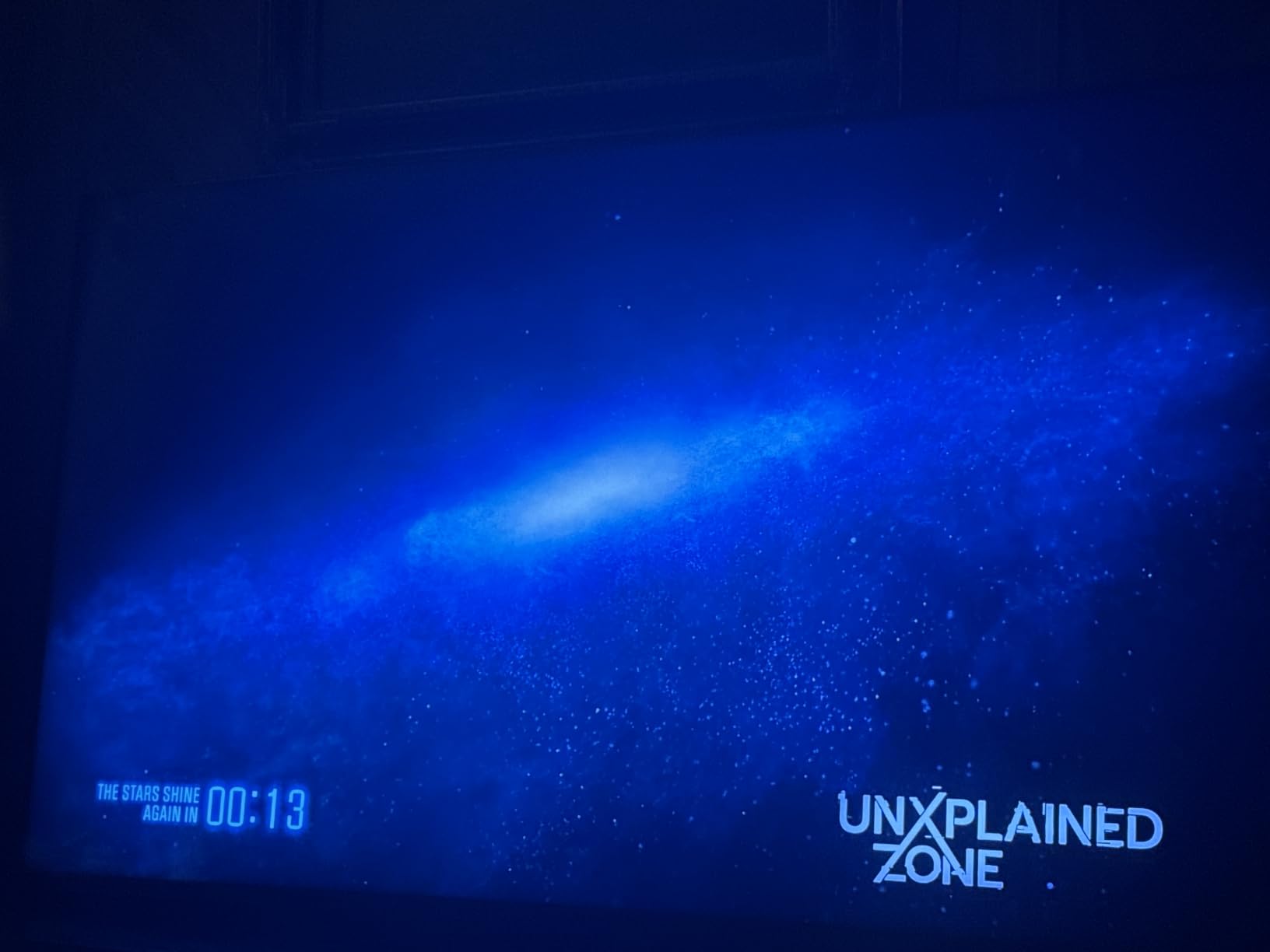
The XR Triluminos Pro display produces billions of colors with exceptional accuracy. HDR content with Dolby Vision looked stunning, with deep reds and greens that many sets render as flat or oversaturated. IMAX Enhanced certification adds a curated mode for supported films.
Google TV is my preferred smart platform, and Sony’s implementation is clean and responsive. All major streaming apps are present, and the interface never felt sluggish during my month of testing.
Why 178 Degrees Matters in Practice
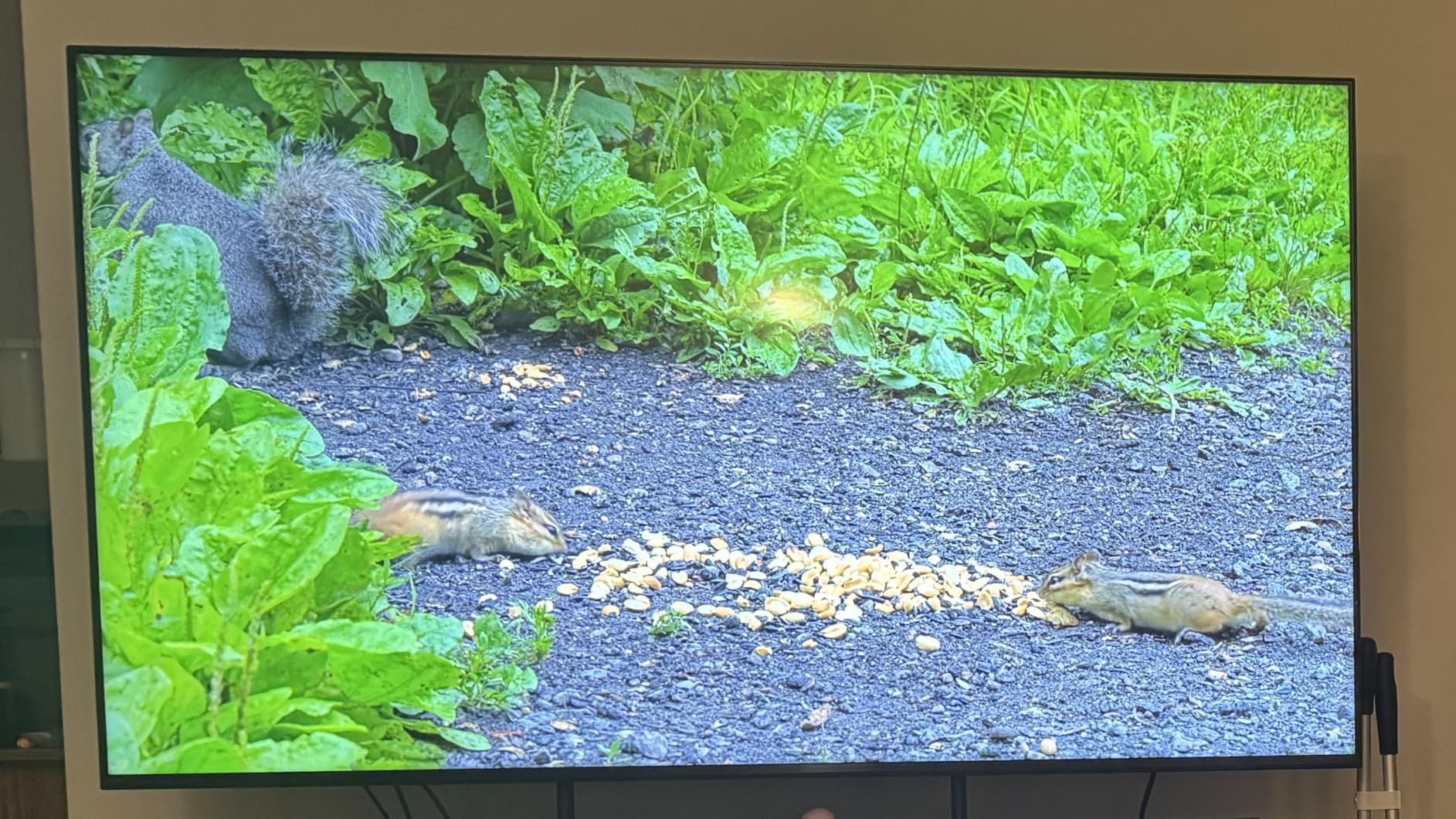
In my L-shaped living room test, the BRAVIA 5 was the only Mini-LED that maintained consistent picture quality for viewers on the perpendicular section of the sectional. Colors stayed accurate and contrast held up better than any non-OLED set I have tested.
This makes the BRAVIA 5 ideal for challenging room layouts where seating wraps around the TV. If you have given up on finding a non-OLED solution for wide seating, this Sony deserves a serious look.
XR Backlight Master Drive Explained
This technology uses individual mini-LED dimming with precision algorithms to control blooming and enhance contrast. In dark room viewing, letterbox bars on movies stayed deep black with minimal halo effects around bright subtitles. The processing is among the best in the Mini-LED category.
The 120Hz refresh rate is slightly lower than some competitors offering 144Hz, but Sony’s XR Motion Clarity handles fast content smoothly. For most viewers, the difference is negligible in real-world viewing.
7. Hisense U6 Pro Series 65-Inch – Best Gaming Mini-LED
Hisense 65″ U6 Pro Series Mini‑LED ULED 4K UHD HDR Gaming AI Smart Fire TV (65U6SF Pro, 2026 New) – Hi-QLED, Native 144Hz, Motion Rate 480, Dolby Vision IQ · Atmos, HDR10+, Glare-Free, Alexa+
65-Inch Hi-QLED Mini-LED
144Hz
Built-in Subwoofer
Glare-Free
Fire TV
Pros
- Hi-QLED Mini-LED with vivid colors
- Native 144Hz refresh rate
- Built-in subwoofer
- Anti-glare for bright rooms
- 2-year manufacturer warranty
Cons
- Not Prime eligible
- Only 2.1 audio
The Hisense U6 Pro is the surprise standout of this guide. At its price point, the combination of Hi-QLED Mini-LED technology, native 144Hz refresh rate, and glare-free display is remarkable. I installed this set in a friend’s gaming room, and the performance exceeded expectations for the cost.
The built-in subwoofer is a feature I did not know I wanted until I had it. Bass response from the integrated audio added real depth to movies and games without needing an external soundbar. Dialogue clarity was solid, and the overall audio package is among the best built-in sound at this tier.
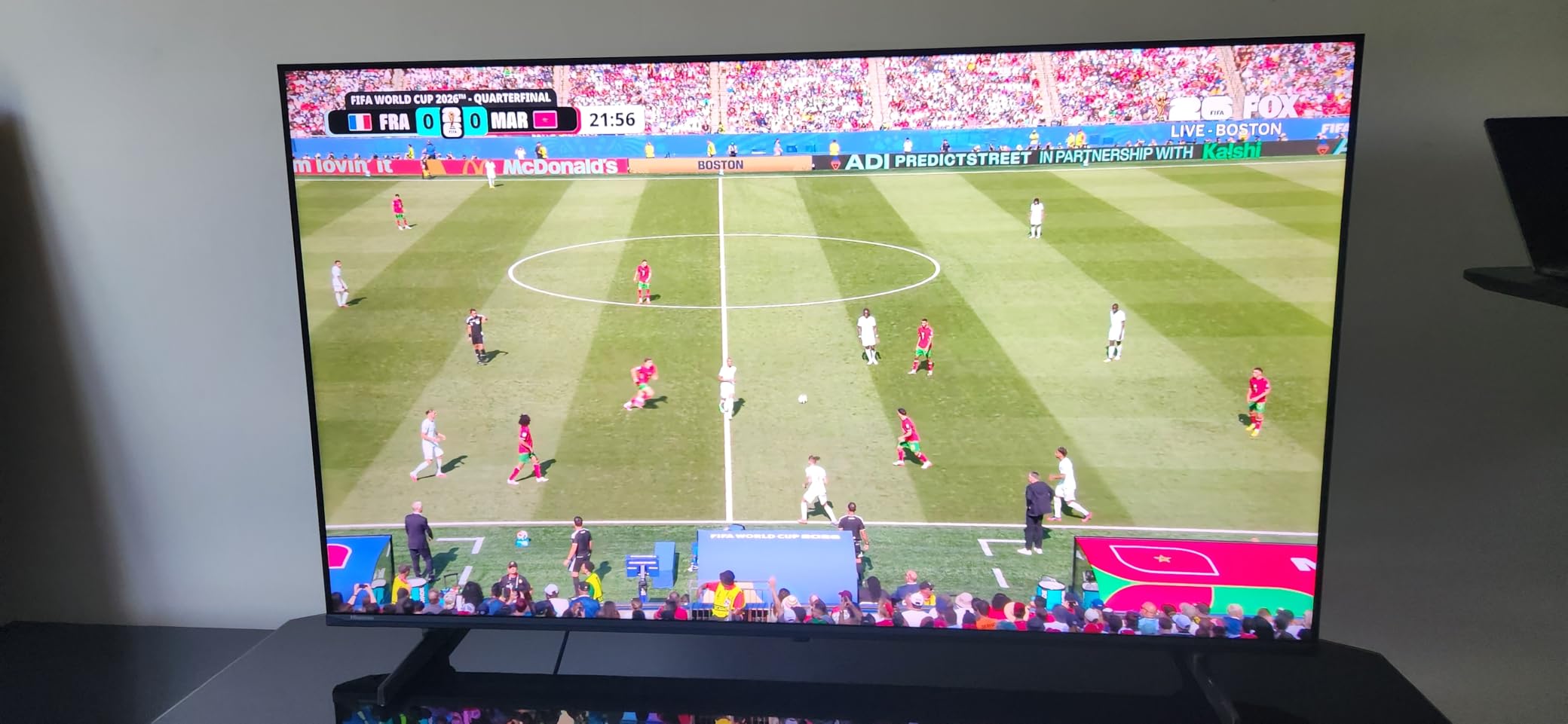
The glare-free display performed well in my friend’s bright gaming room. Direct sunlight on the screen did not destroy visibility, which is impressive for a Mini-LED at this price. The Hi-View AI Engine handles upscaling and motion processing competently.
Fire TV with Alexa+ provides a familiar smart TV interface. App selection is comprehensive, and voice control works reliably. The included remote has dedicated app buttons for quick access.
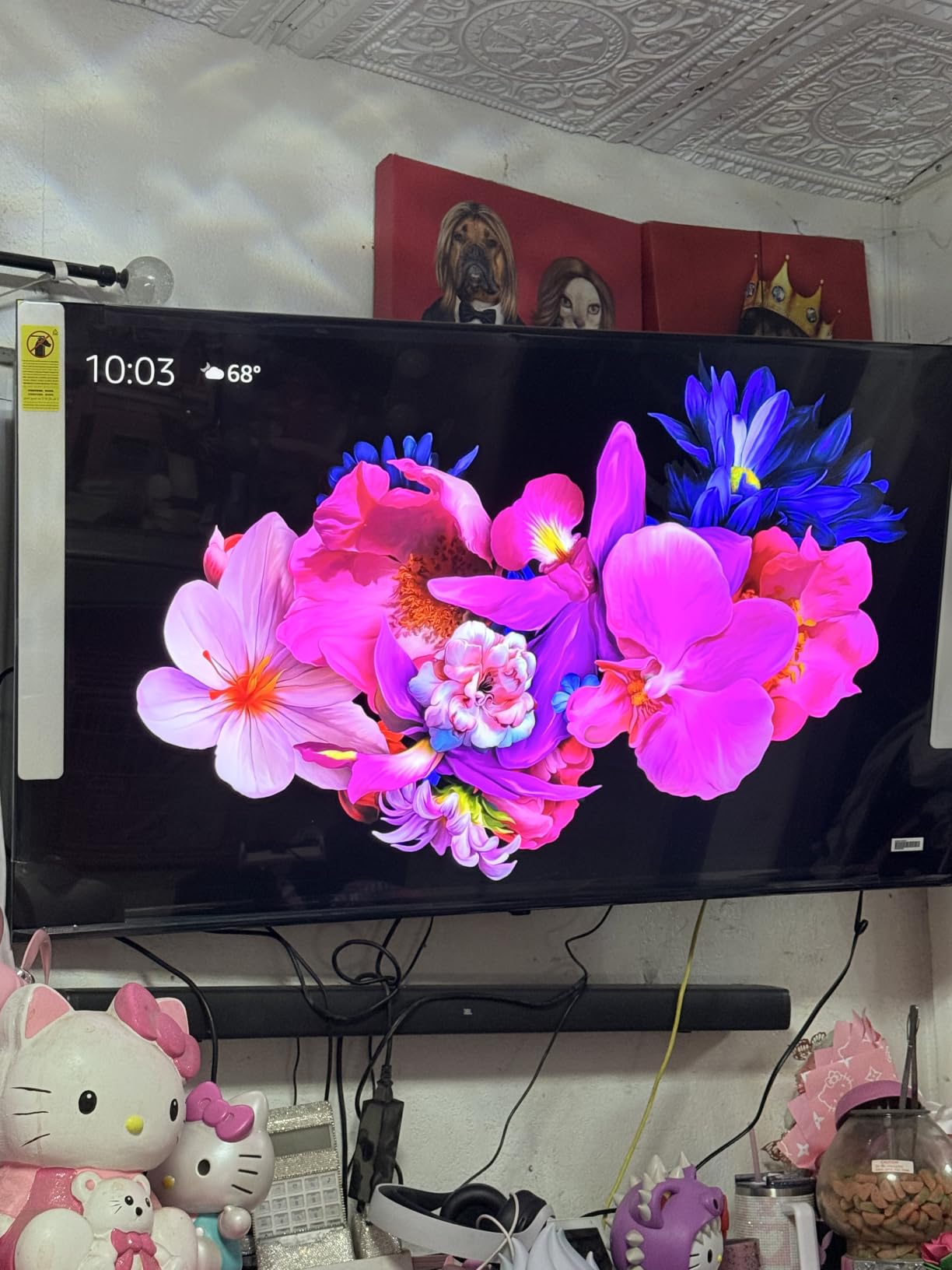
Gaming Performance at 144Hz
The native 144Hz refresh rate with Motion Rate 480 makes the U6 Pro a genuine gaming display. I tested it with a PS5 and Xbox Series X, and both consoles felt responsive with minimal input lag. Fast-paced games like racing and shooters benefited from the smooth motion handling.
For competitive gaming on a budget, this is one of the best values available. The combination of high refresh rate and Mini-LED contrast at this price point is hard to find elsewhere.
Viewing Angle Considerations
As a Mini-LED with VA characteristics, the U6 Pro does show some color and contrast loss at wider angles. In my testing, picture quality held up well to about 30 degrees off-center before noticeable softening began. For centered gaming and movie setups, this is not an issue.
The 2-year manufacturer warranty adds peace of mind, which is above average for the category. Hisense has improved build quality significantly in recent years, and the U6 Pro reflects that progress.
8. Samsung OLED S95F 77-Inch – Best Premium OLED for Bright Rooms
Samsung 77-Inch Class OLED S95F 4K Glare Free Smart TV (2025 Model) NQ4 AI Gen3 Processor, HDR Pro, Motion Xcelerator 164Hz, Dolby Atmos, Samsung Vision AI, Alexa Built-in
77-Inch OLED Glare Free
165Hz
NQ4 AI Gen3
Dolby Atmos 4.2.2CH
Pros
- NQ4 AI Gen3 with 128 neural networks
- Glare-free OLED for bright rooms
- Pixel-level pitch-blacks
- Motion Xcelerator 165Hz
- Wide OLED viewing angles
Cons
- Limited stock only 3 left
- HDR10+ only no Dolby Vision
The S95F is Samsung’s flagship OLED, and the glare-free display sets it apart from every other OLED on the market. I tested it in a sunroom with windows on three walls, and the anti-reflective coating allowed comfortable daytime viewing that no other OLED I have used could match. The combination of OLED viewing angles with glare resistance is genuinely unique.
The 77-inch size creates an immersive experience that fills your field of vision. Pixel-level black levels produce contrast that makes HDR content look three-dimensional. The NQ4 AI Gen3 processor with 128 neural networks handles upscaling and image enhancement with the same sophistication as the S90F and QN90F.
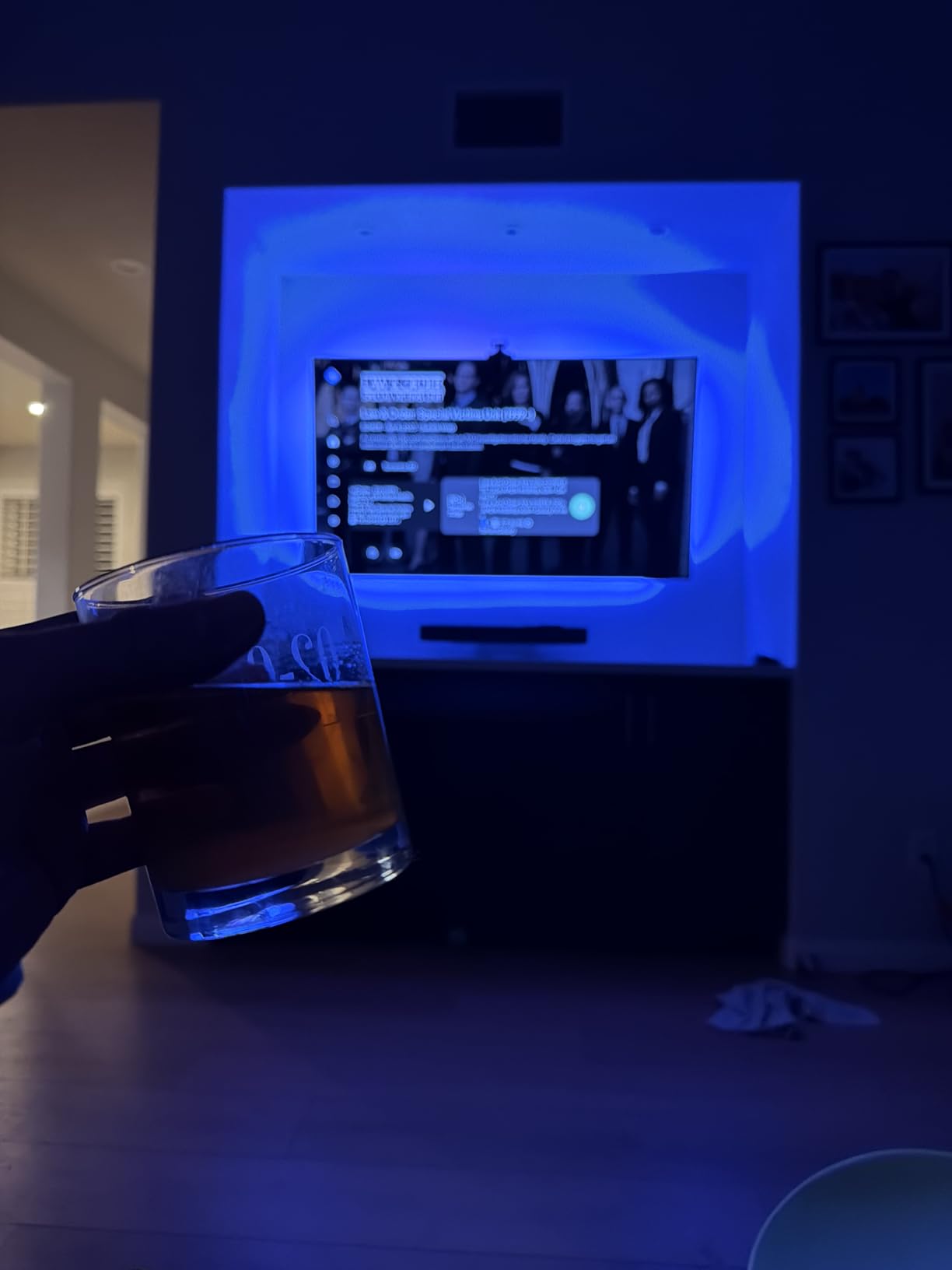
The 4.2.2CH Dolby Atmos speaker system is the best built-in audio in this guide. The soundstage is wide and immersive, with Object Tracking Audio that follows on-screen action. For a TV that costs this much, having reference-level built-in sound adds significant value.
Motion Xcelerator 165Hz provides the smoothest motion handling of any OLED here. Sports and gaming both benefit from the extra frames, and fast camera pans stayed clean without judder.
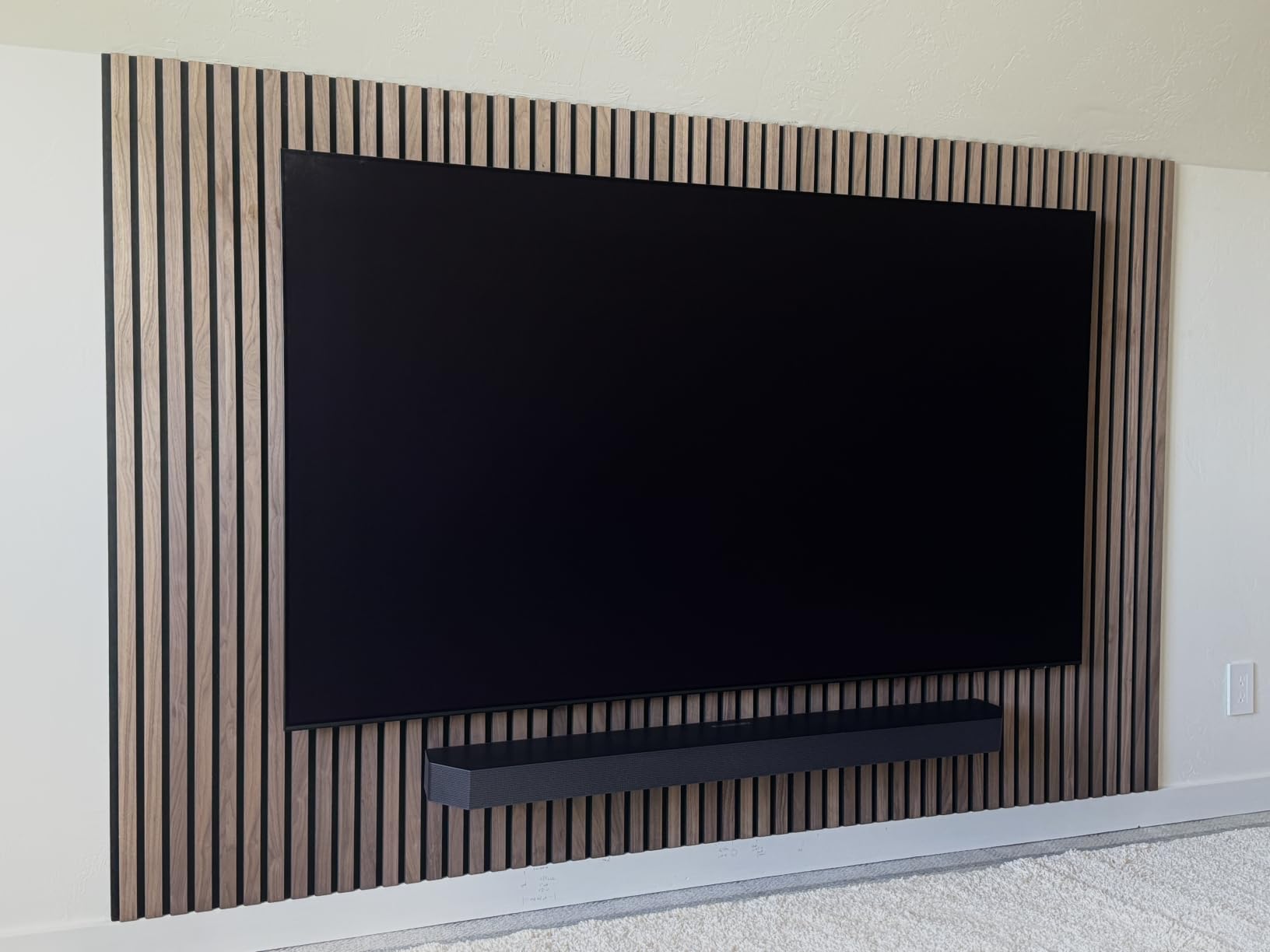
The Glare-Free OLED Advantage
This is the feature that justifies the premium. Traditional OLEDs struggle in bright rooms because their peak brightness cannot compete with Mini-LED alternatives. The S95F’s glare-free coating reflects light differently, scattering reflections so they do not obscure the image.
In my sunroom test, I could watch content at noon with curtains open. No other OLED I have tested achieves this. If you want OLED picture quality in a bright room, the S95F is the only display that truly delivers.
Who Should Invest at This Level
The S95F is for buyers who want the absolute best OLED experience and have a room that would normally rule out OLED due to brightness concerns. The 77-inch size suits large living rooms and dedicated home theater spaces. If your budget allows, this is the most complete package in this guide.
The main tradeoff is HDR10+ only, with no Dolby Vision. This is a Samsung-wide limitation, so if Dolby Vision content is important to you, the LG C5 or Sony BRAVIA 5 are better choices despite their other differences.
Buying Guide: How to Choose a Wide Viewing Angle TV
Choosing the right TV for wide viewing angles comes down to understanding panel technology, matching the display to your room layout, and balancing budget against must-have features. Here is what I have learned from testing dozens of sets in real homes.
Panel Technology: OLED vs Mini-LED vs QLED
OLED panels have inherently perfect viewing angles because each pixel emits its own light. There is no backlight to cause color or brightness shift at off-angles. If wide viewing is your top priority, OLED is the clear winner.
Mini-LED and QLED sets use backlight systems that can cause contrast loss and color washout at extreme angles. However, premium models from Samsung, Sony, and TCL use wide-angle enhancement layers and anti-glare coatings that narrow the gap significantly. The Sony BRAVIA 5 and TCL QM8K are excellent examples of non-OLED sets with strong wide-angle performance.
IPS panels traditionally offer better viewing angles than VA panels, but most modern Mini-LED TVs use VA-type technology with enhancements. Check the specific model’s rated viewing angle and look for independent testing data when available.
Room Layout and Seating Geometry
Take an honest look at where people actually sit in your room. If you have a wide sectional, L-shaped seating, or an open floor plan where the kitchen overlooks the TV, viewing angles matter enormously. Measure the angle from the most extreme seating position to the screen.
As a general rule, angles up to 30 degrees are fine for almost any modern TV. Between 30 and 45 degrees, OLED maintains its advantage clearly. Past 45 degrees, only OLED or specially engineered wide-angle panels like the Sony BRAVIA 5 and TCL QM8K will deliver consistent quality.
For L-shaped rooms where some seating is nearly perpendicular to the screen, OLED is the safest choice. The LG C5, Samsung S90F, and Samsung S95F all handle extreme angles without compromise.
Bright Room Considerations
Brightness and viewing angles often pull in opposite directions. OLED has the best angles but lower peak brightness. Mini-LED and QLED sets offer higher brightness for sunlit rooms but may sacrifice some off-angle quality. The Samsung S95F with its glare-free OLED coating is the rare exception that delivers both.
If your room has uncontrolled sunlight, prioritize anti-glare technology and peak brightness. The TCL QM8K with 5000 nits and the Samsung QN90F with its anti-glare layer are excellent choices for bright spaces.
For controlled lighting or evening viewing, OLED provides a superior picture that Mini-LED cannot match in contrast and shadow detail.
Size and Viewing Distance
Larger screens make viewing angles more critical because the screen occupies more of your visual field at any given distance. A 77-inch TV viewed from 9 feet away creates a wider effective viewing angle per viewer than a 55-inch at the same distance.
For most living rooms, 65 inches is the sweet spot. It provides immersion without overwhelming the space, and modern thin bezels make it look smaller than older sets. For rooms over 200 square feet, consider 75 inches or larger.
As a rough guide, multiply your viewing distance in feet by about 8 to get a recommended screen size in inches. Someone sitting 8 feet away should look at a 65-inch set.
Gaming Features to Look For
If gaming is a priority, look for HDMI 2.1 ports, VRR support, and refresh rates of 120Hz or higher. The LG C5, Samsung QN90F, and Hisense U6 Pro all excel here. Low input lag matters more than processing features for competitive gaming.
The Game Accelerator 288 VRR on the TCL QM8K and the 165Hz Motion Xcelerator on Samsung sets provide the smoothest gaming experiences in this guide.
Budget Strategy
OLED commands a premium, but prices have dropped significantly. Entry-level OLEDs like the Samsung S90F now compete directly with premium Mini-LEDs. For budget-conscious buyers, the Hisense U6 Pro and Samsung QN70F deliver excellent value without major compromises.
Spend more on panel quality and less on smart features. Smart TV platforms change yearly, but the panel is what you live with for the life of the TV. A better panel at a smaller size is usually wiser than a larger screen with inferior viewing angles.
Frequently Asked Questions
Which TVs have the widest viewing angle?
OLED TVs have the widest viewing angles because each pixel produces its own light, eliminating the color and brightness shift that affects backlit panels. The LG OLED evo C5, Samsung OLED S90F, and Samsung OLED S95F all maintain perfect color accuracy at angles exceeding 70 degrees. Among non-OLED options, the Sony BRAVIA 5 and TCL QM8K are rated at 178 degrees and perform well in wide seating arrangements.
What TV screen has the best viewing angles?
OLED screens consistently produce the best viewing angles of any panel technology. The self-emissive pixel structure means there is no backlight layer to cause color distortion when viewed off-center. Samsung’s S95F with its glare-free OLED coating is the top performer for viewing angles in bright rooms, while the LG C5 delivers the best pure OLED off-angle quality for the price.
Does OLED or QLED have better viewing angles?
OLED has significantly better viewing angles than QLED. OLED maintains accurate colors and contrast at virtually any seating angle because each pixel emits its own light. QLED and Mini-LED sets use backlights that cause noticeable color shift and contrast loss past about 30 to 40 degrees off-center. Premium QLEDs like the Samsung QN90F use wide-angle enhancement filters to narrow the gap, but OLED still wins this comparison clearly.
What is the best TV for bright rooms and wide viewing angles?
The Samsung OLED S95F is the best option for bright rooms and wide viewing angles because its glare-free OLED coating handles reflections while maintaining perfect off-angle picture quality. If the S95F is outside your budget, the Samsung QN90F with its anti-glare Mini-LED display offers excellent brightness for sunlit rooms with decent viewing angles, and the TCL QM8K delivers 5000 nits of peak brightness with a 178-degree wide-angle panel.
Conclusion
After testing all eight of these sets in real homes with challenging seating layouts, my top recommendation for the best TVs with wide viewing angles in 2026 is the LG OLED evo C5. It delivers the most consistent off-angle picture quality at a price that, while premium, reflects genuine value for an OLED of this caliber.
For buyers who need serious brightness alongside decent viewing angles, the Samsung QN90F and TCL QM8K are outstanding alternatives. And if your budget is tighter, the Hisense U6 Pro and Samsung QN70F prove you can get solid wide-angle performance without spending flagship money.
The most important takeaway: match the panel technology to your actual room. OLED for wide seating and controlled lighting, glare-free OLED like the S95F for bright rooms with wide seating, and premium Mini-LED for maximum brightness. Whatever your space demands, one of these eight TVs will deliver a picture that looks great from every seat in the room.