
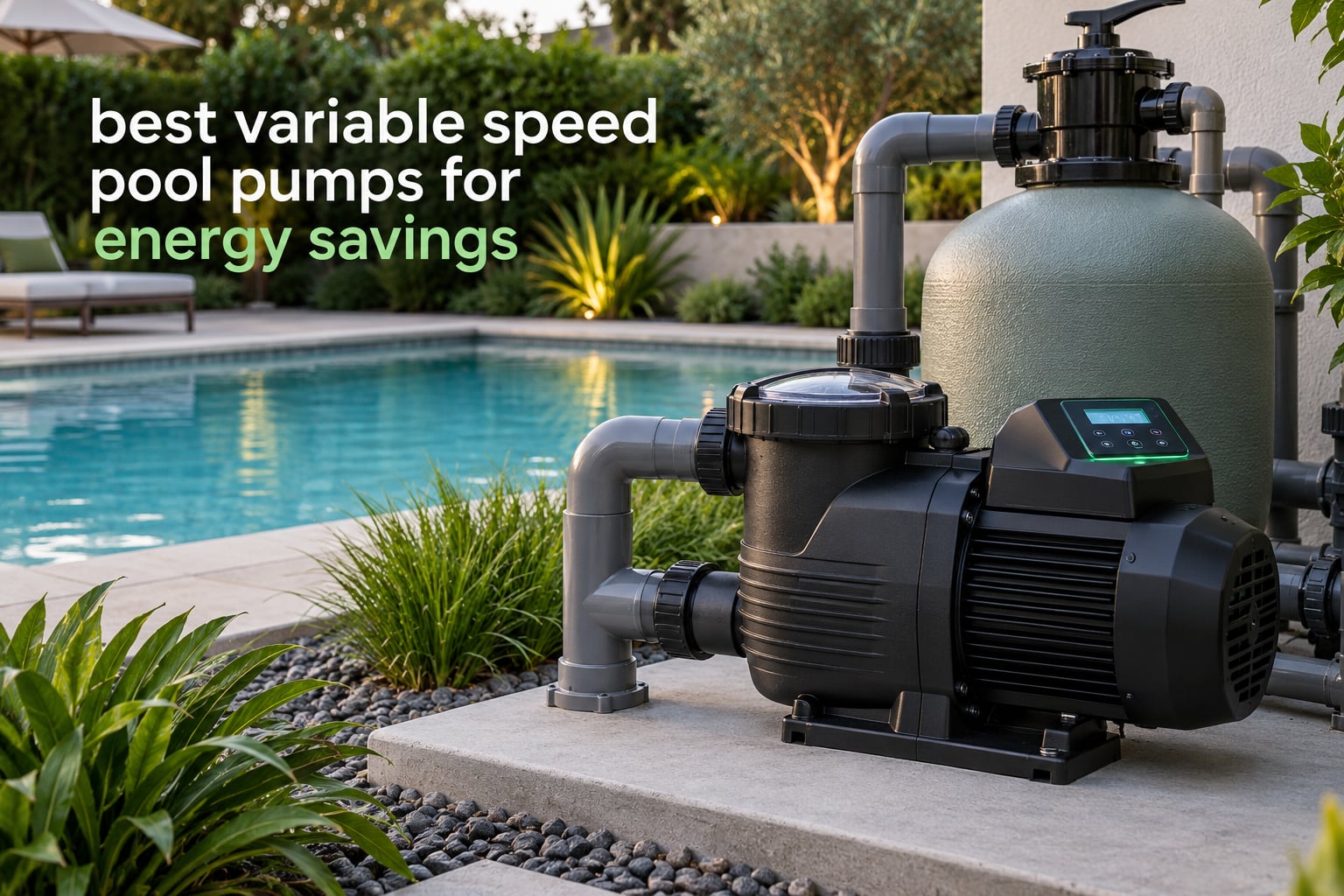
The pool pump is the second-largest electricity load in most homes with a pool, and it is the one most owners never think about again after the install day. That is the whole argument for hunting down a variable speed pool pump in 2026: a single-speed motor runs at one fixed speed for every hour it is on, while a permanent magnet motor lets you dial circulation down to a fraction of that draw and leave it there for longer stretches.
Before I get into the models, one housekeeping note. Exponation earns a commission when you buy through the links on this page, at no extra cost to you. That arrangement does not change what I rank, but it does mean I try to be specific about who should skip each pump rather than presenting ten winners.
I have spent the last few months reading spec sheets, owner reviews and long-running forum threads on this category, because the interesting part of a variable speed pool pump is not the horsepower. It is whether you can program it properly and whether the electronics survive five seasons. The research community on Reddit, specifically r/pools and r/PoolPros, has the most honest reliability data available anywhere on pool pumps, and I have leaned on it heavily here. I also pulled in what utility rebates and the federal pool pump efficiency rule mean for payback.
Below are ten variable speed pool pumps covering the full price and quality spectrum, from a mainstream Pentair drop-in to a budget 115V unit for above-ground pools. If you want the short answer: the Pentair SuperFlo VS is the one most inground pool owners should end up with, the Hayward TriStar VS is the highest rated, and the Pentair IntelliFlo VS is the pick when you have the budget and a Pentair control system already in place.
Table of Contents
Top 3 Best Variable Speed Pool Pump Picks for 2026

Pentair SuperFlo VS 1.5 HP
- TEFC permanent magnet motor
- Three speeds plus Quick Clean
- 115V-230V universal
- RS-485 automation ready

Hayward TriStar VS 1.85 HP
- Permanent magnet TEFC motor
- Replaces full-rate pumps to 2.0 HP
- Extra-large rib-free basket
- 24-hour programmable clock

Pentair IntelliFlo VS
- Drops into Pentair housings
- Programmable speed profiles
- Large reported energy savings
- 2-year pro-install warranty
Best Variable Speed Pool Pumps at a Glance (October 2026)
The table below lists all ten pumps with the details that decide whether they fit your equipment pad. Wattage and speed range matter more than horsepower once you are past the sizing step, and the short feature list under each pump is the part worth reading twice, because it tells you whether a swap will be an afternoon or a weekend.
| Product | Specifications | Action |
|---|---|---|
| Pentair SuperFlo VS 1.5 HP |
|
Check Latest Price |
 VIVOHOME 2.0HP 115V VIVOHOME 2.0HP 115V |
|
Check Latest Price |
| Hayward TriStar VS 1.85 HP |
|
Check Latest Price |
 Hayward MaxFlo VS 1.65 HP Hayward MaxFlo VS 1.65 HP |
|
Check Latest Price |
 VARMINPOOL 1.8 HP 220V VARMINPOOL 1.8 HP 220V |
|
Check Latest Price |
| Pentair IntelliFlo VS 011028 |
|
Check Latest Price |
 Pentair IntelliFlo VS+SVRS 3HP Pentair IntelliFlo VS+SVRS 3HP |
|
Check Latest Price |
 LINGXIAO 2HP Smart 115/230V LINGXIAO 2HP Smart 115/230V |
|
Check Latest Price |
 BLACK+DECKER 1.5HP WiFi BLACK+DECKER 1.5HP WiFi |
|
Check Latest Price |
 LINGXIAO 3HP 10800 GPH LINGXIAO 3HP 10800 GPH |
|
Check Latest Price |
Do Variable Speed Pool Pumps Really Save Money?
Yes, but only when you reprogram them. The typical saving quoted across this category lands somewhere between 50 and 80 percent of the pump’s energy cost, and that range collapses toward zero if you leave the pump on the factory default high-speed setting and run the same eight hours you always have. The motor is the reason, and it comes down to a physics rule called the affinity laws.
Put simply: flow, head and power all scale with speed, and power scales with the cube of speed. Run your pump at half the RPM and it moves roughly half the water while drawing about one eighth of the watts. That is why the correct answer is not “run it faster for less time.” It is “run it slower for longer.”
Here is the practical version. A single-speed pump might run eight hours a day at full flow. A properly programmed variable speed pump runs the same pool 12 to 16 hours at a low filtration speed plus a shorter high-speed cleaning block, and the high-speed block is the only expensive part of the day. Owners on the pumps below report bill reductions of roughly 30 to 50 percent during swim season, with several mentioning local utility rebates landing in the same month as the install and shortening the payback window a great deal.
Federal policy pushed everyone in the same direction. The US Department of Energy Dedicated Purpose Pool Pump rule effectively ended the sale of new residential single-speed circulation pumps, which is why a single-speed replacement is now a clearance-bin item rather than a buying decision. Nobody in this roundup is recommending you go back to fixed speed.
The counter-argument you will meet on forums is that variable speed pumps do not save anything. That claim comes from people who swapped in a variable speed unit, kept the old eight-hour schedule, and left it on high. The physics is not unambiguous, so I treat that objection as a programming problem rather than a fact. It is the same behaviour-change problem we cover in our guide to how energy payback actually works: the hardware is only half the result.
1. Pentair SuperFlo VS 1.5 HP — The Best Overall Variable Speed Pool Pump
Pentair EC-342001 – SuperFlo VS Variable Speed Pool Pump, 1.5 HP
1.5 HP
230V rated,115V-230V universal
3 speeds plus Quick Clean
TEFC motor
112 gpm listed flow
Pros
- Very quiet at low RPM
- Measurable bill savings reported
- Three-wire install is straightforward
- RS-485 automation ready
Cons
- Full warranty needs professional installation
- Older Pentair control panels may need rewiring
- Housing bolts can loosen over time
This is the pump I keep coming back to. Across 1836 ratings it sits at 4.4 stars, which tells you something important about this category: nobody scores a pool pump above mid-four digits of reviews unless it is genuinely doing its job for a wide range of pool configurations. The motor is TEFC, the digital keypad stores three speeds plus a Quick Clean mode, and the listed flow rate of 112 gpm is plenty for the average 15,000 gallon residential pool.
The 115V-230V universal input is quietly the most useful spec on the sheet. Plenty of existing pads have a 20 amp circuit that will not take a 230V-only pump, and this one will run on either without a rewiring conversation. Combined with the housing dimensions that match older Hayward and Pentair single-speed units, it makes this the least disruptive swap in the list for most people.
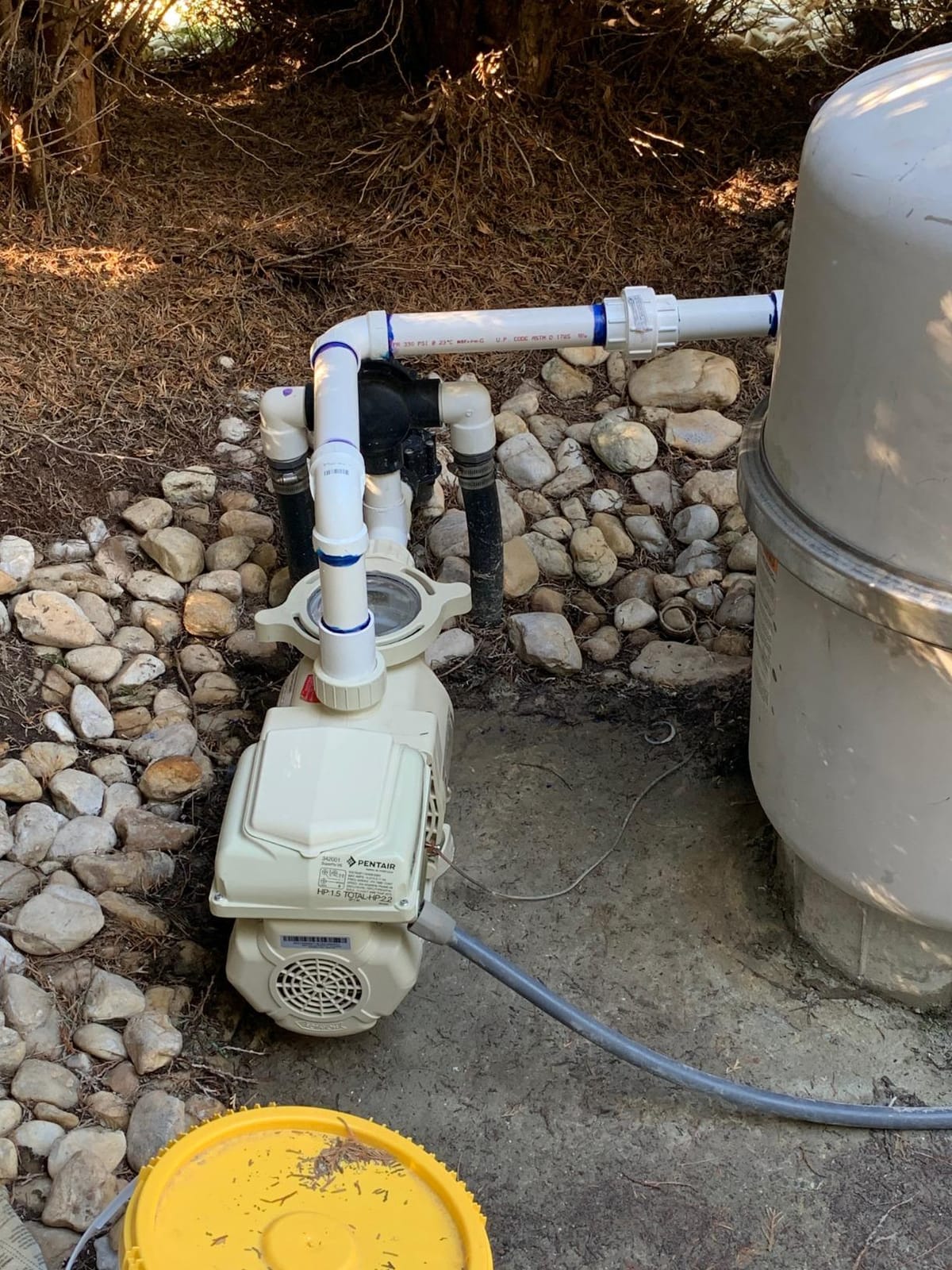
Owners talk about the same three things: near silence at low speed, a genuine drop in the electricity bill, and a keypad that is easy to program once you accept that it replaces your old mechanical timer. Several mention local utility rebates in the same review thread, which is worth checking before you buy anything else in this list.
The reliability picture is solid too. The failure mode people report on this platform is not the motor, it is the mechanical seal and the housing bolts that can loosen over time. A drop of thread-locking compound on those four bolts at install prevents the rattle. Owners who came from earlier-generation IntelliFlo units report that this generation is markedly quieter and has lasted longer for them.
What HP and speed do you actually get
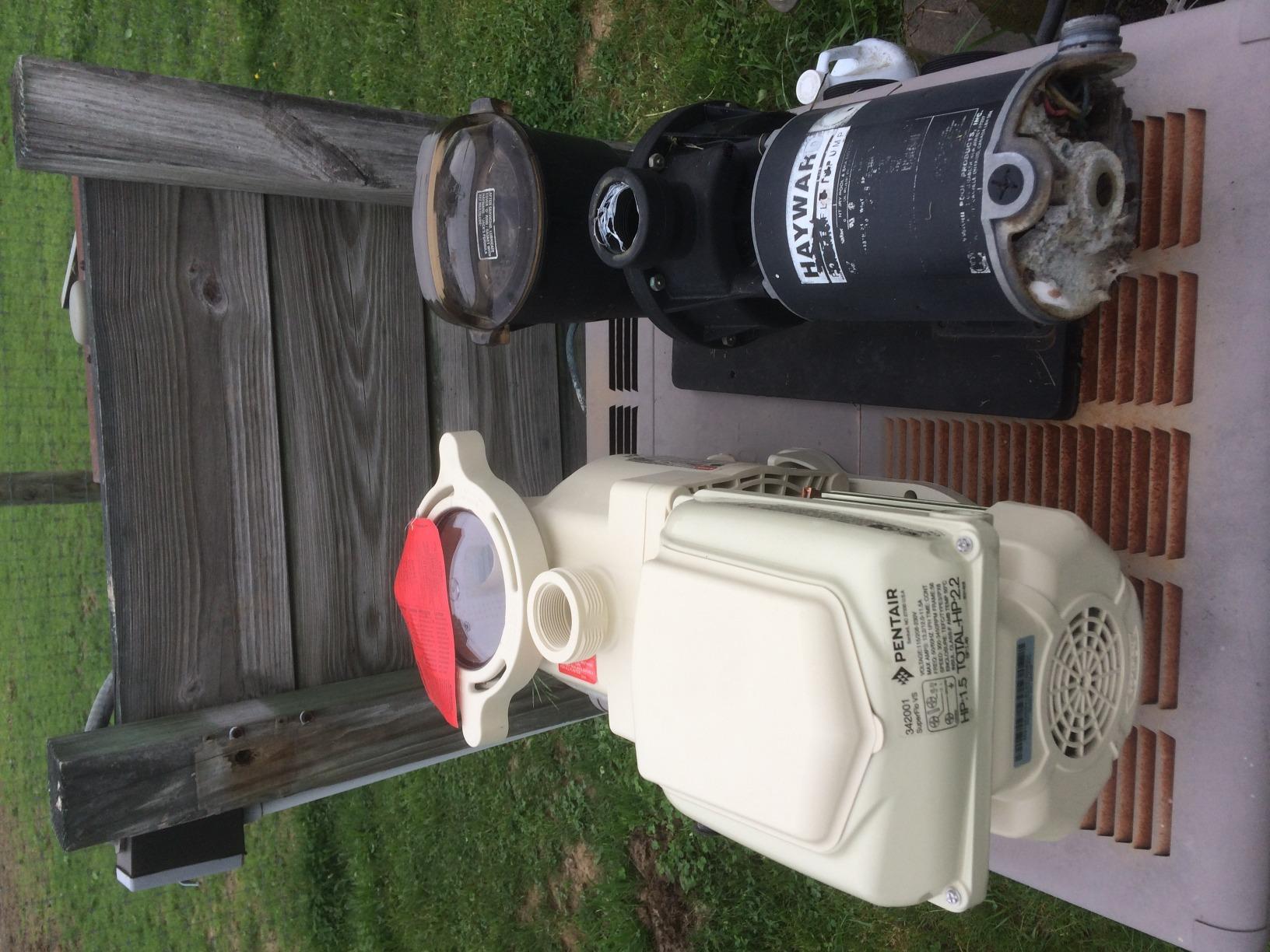
The manufacturer rating here is 1.5 HP, and the listings note 0.5 hp in the detailed field, which is the low-speed output rather than a contradiction. In practice you run three stored speeds: a low filtration speed in the 1,200 to 1,800 RPM band for overnight circulation, a middle speed for combined filtration and heating or salt cell operation, and high speed for vacuuming and water features. Maximum rated lifting height is listed at 5 meters, which is roughly 16 feet, so it suits typical residential head without strain.
Who should skip the SuperFlo VS
Skip it if your pad sits right next to a bedroom wall and you cannot accept any mechanical sound at all, since owners do report a higher-pitched whine at maximum RPM than the fixed-speed pumps it replaces. Also skip it if you want WiFi from day one, because the RS-485 port needs a cable and a compatible control system that this listing does not include. If a Pentair EasyTouch panel older than the current generation is already in your pad, plan on replacing that panel too.
2. VIVOHOME 2.0HP 115V — Best Variable Speed Pump for Above-Ground Pools
VIVOHOME 2.0HP 115V Variable Speed in/Above Ground Pool Pump
2.0 HP
115V
Three speeds at 1980/5460/5700 GPH
67 ft max head
1-year warranty
Pros
- Very low entry cost
- Quiet at low speed
- Strong flow for above-ground use
- Adapters included
Cons
- Support and warranty service reported unresponsive
- Button programming is confusing
- May need reducer adapters for 2-inch returns
At 4.0 stars across 1187 ratings this is one of the highest-reviewed pumps in the roundup, and that tells you exactly what it is: the entry point into variable speed ownership. It runs on 115V, which means no new breaker and no electrician for anyone whose above-ground pool already runs off an existing circuit. Three speeds, a built-in timer, and a touchscreen that shows live numbers.
The flow numbers are the reason it works for its intended job. It lists 1980, 5460 and 5700 GPH across the three speeds with a 67 foot maximum head, and 5700 GPH moves a typical above-ground pool through turnover in well under four hours on the middle setting. The body is corrosion-resistant reinforced thermoplastic with a stainless steel motor, and the listing states it handles saltwater systems and thermal protection for longer service life.
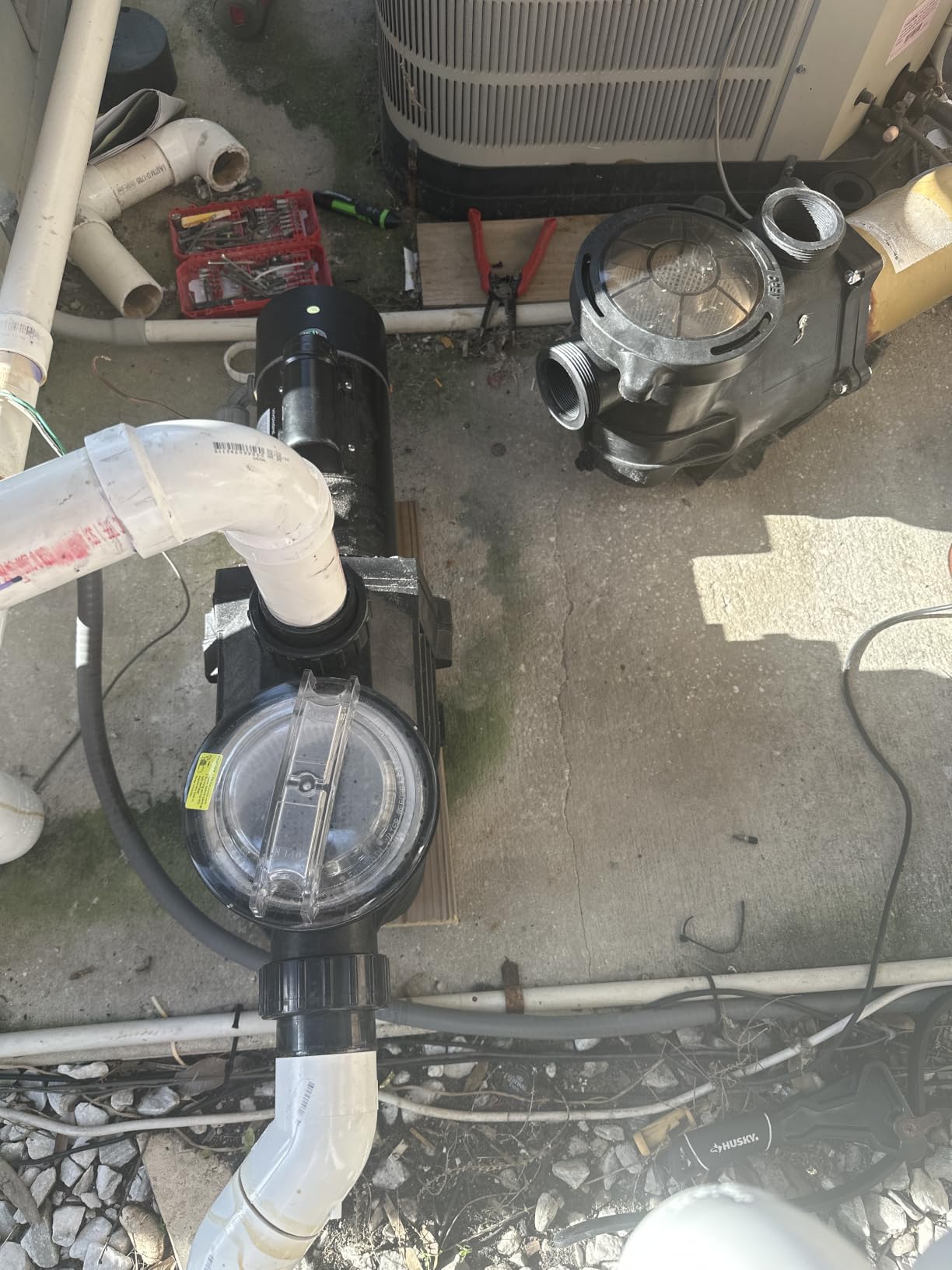
Owners report roughly a 30 minute install on standard plumbing, with O-rings and hose connection adapters in the box. Low-speed circulation is genuinely quiet, and several buyers say it is the first pump they have owned that does not wake the household. The unit is 31.3 pounds and fairly compact at 11.6 by 9.7 by 6.3 inches, which matters when pad space is tight.
The complaints cluster in one place, and it is worth being blunt about it. After-sales service is the weak point, with multiple owners reporting difficulty getting responses around leaks and returns. The remote and button combination is also confusing until you learn it, and a few units reportedly arrived leaking or looking used. The warranty is 1 year, which is the shortest in this roundup by a wide margin.
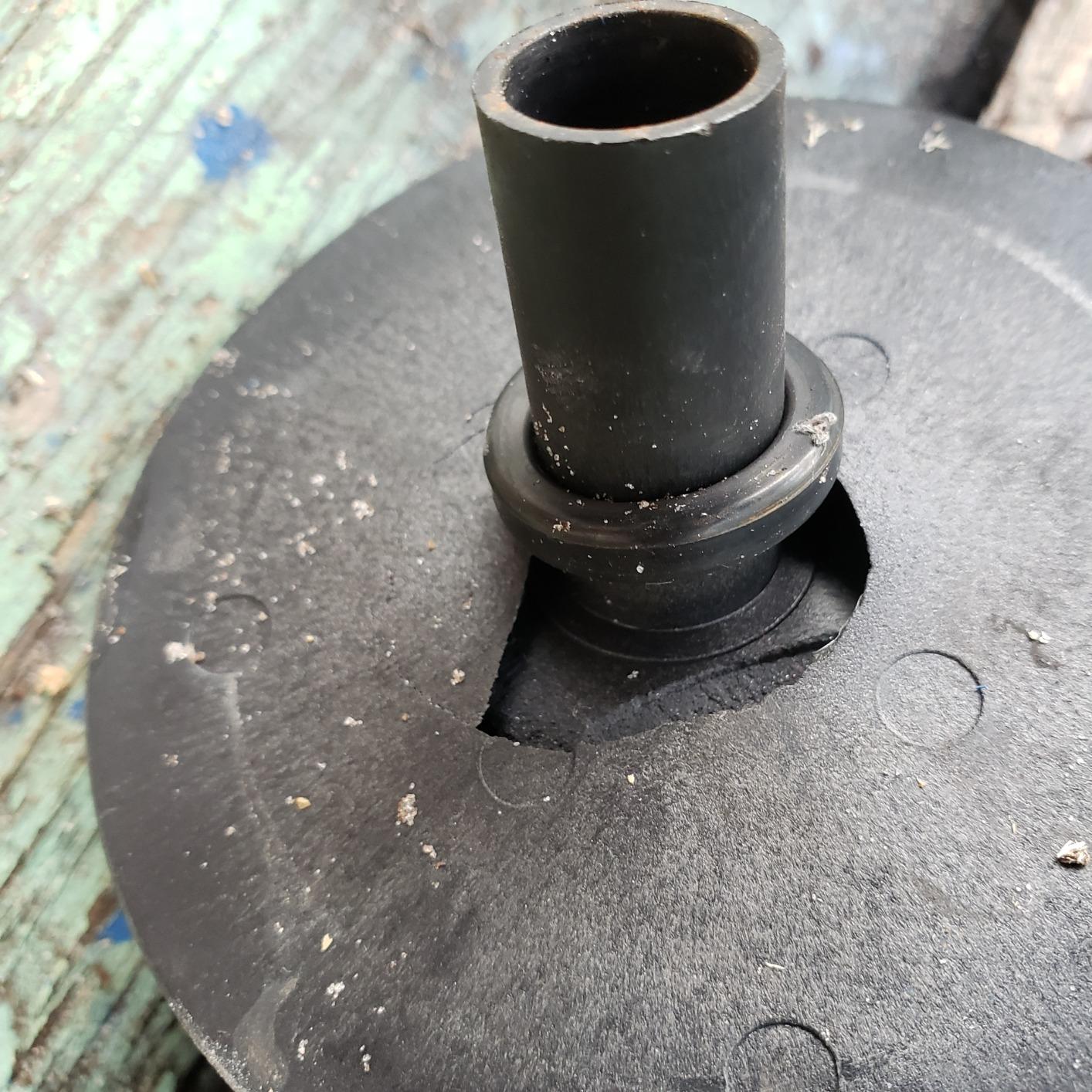
Is 115V enough head for your setup
The 67 ft maximum head rating gives it real headroom for above-ground pools with modest plumbing runs. If your setup has a long underground line, a deep skimmer, or a solar loop feeding back into the return, that number starts to matter and a 230V unit with more head will serve you better. Check your total dynamic head before assuming 115V is enough, because a pump fighting too much head runs hot, runs loud, and trips itself out.
Who should skip the VIVOHOME
Skip it if you live outside a large metro area and would struggle to find parts, since thin service networks are the real cost of a value pump and that cost only shows up in year three. Also skip it if you have a saltwater cell, a heater, or a suction cleaner that needs a dependable long-life motor, because the 1-year warranty means you are gambling on year-one performance alone.
3. Hayward TriStar VS 1.85 HP — The Highest Rated Pump in the Lineup
Hayward TriStar VS Variable Speed Pool Pump for In-Ground Pools, 1.85 HP
1.85 HP
230V
Permanent magnet TEFC motor
40 gpm listed flow
24-hour clock
Pros
- Highest average rating at 4.7 stars
- Quiet enough to make owners double-check
- Easy Hayward drop-in swap
- Large rib-free basket
Cons
- Automation connector cable sold separately
- Printed instructions unclear
- Debris found in impeller on one delivery
At 4.7 stars this is the highest-rated variable speed pool pump in the roundup, and it earns that on the quiet dimension more than any other. Multiple owners say they walk up to check whether the pump is even running. The permanent magnet, totally enclosed fan-cooled motor is paired with hydraulics that keep noise down at lower speeds, which is exactly where the pump lives most of the day.
The engineering case is the flow range. Hayward rates it as a replacement for full-rate pumps up to 1.5 full-rate HP and 2.0 max-rate HP, which covers a huge share of residential pads, and the listed flow of 40 gpm at rated conditions pairs with a 1.85 HP motor for high-head systems. It is the model pool professionals in our research named when they described pumps they trust with long plumbing runs and water features.
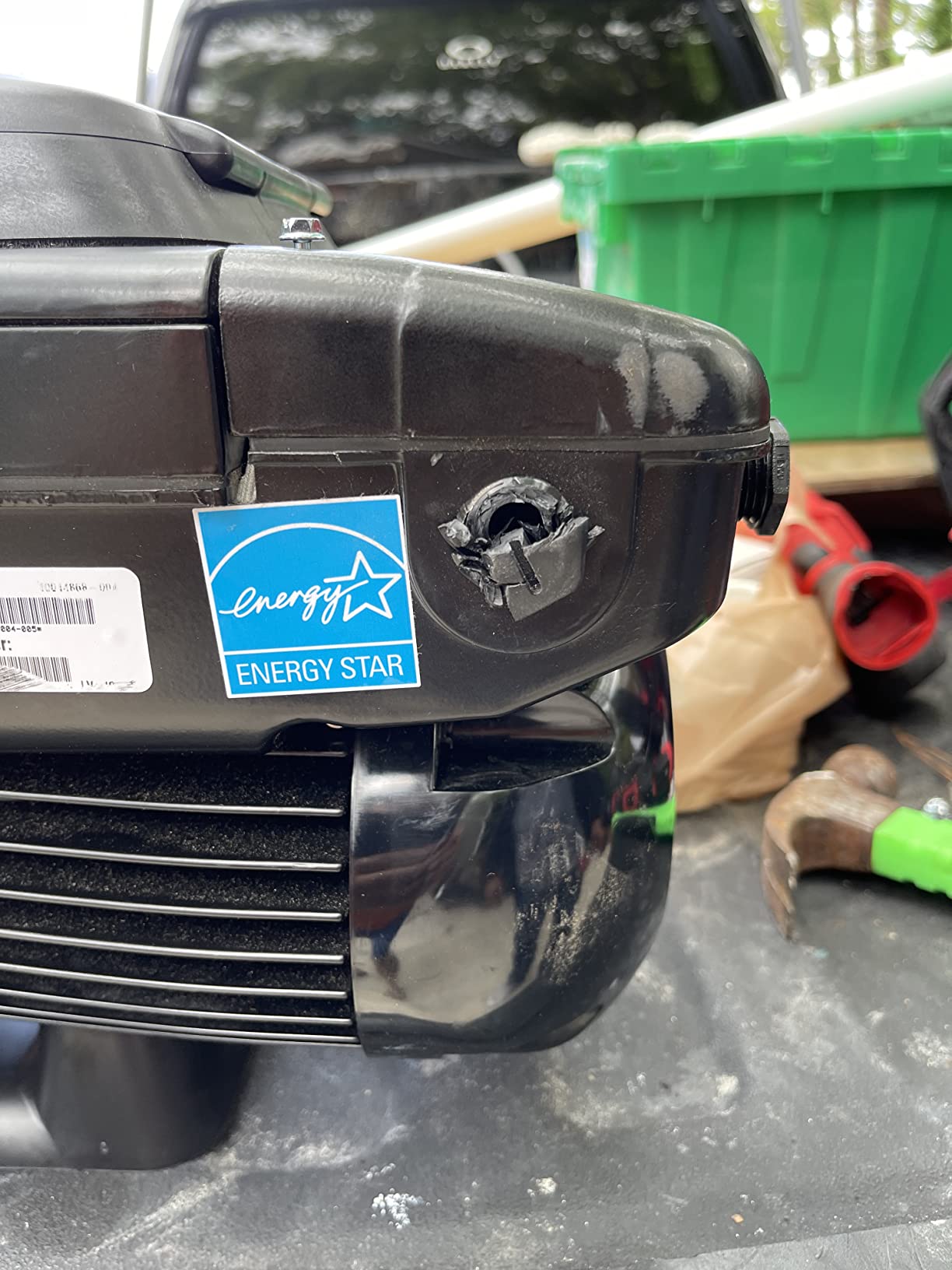
Those same professionals rank reliability by platform, and the consensus we found was that the Pentair IntelliFlo 3 has the fewest problems, followed by WhisperFlo or SuperFlo, then MaxFlo or TriStar VS. That ordering puts this pump near the back of a very strong group, and it is still a group with no widespread failure pattern. The rib-free extra-large filter basket is a quiet practical win, extending the gap between cleanings.
Owners replacing older Hayward single-speed units call it an easy swap and report real utility bill savings, with several also picking up rebates. Model number is W3SP3202VSP. The unit is 52 pounds, so it is a two-person lift, and the printed installation documentation is not the clearest thing on the market, which is worth knowing before you start.
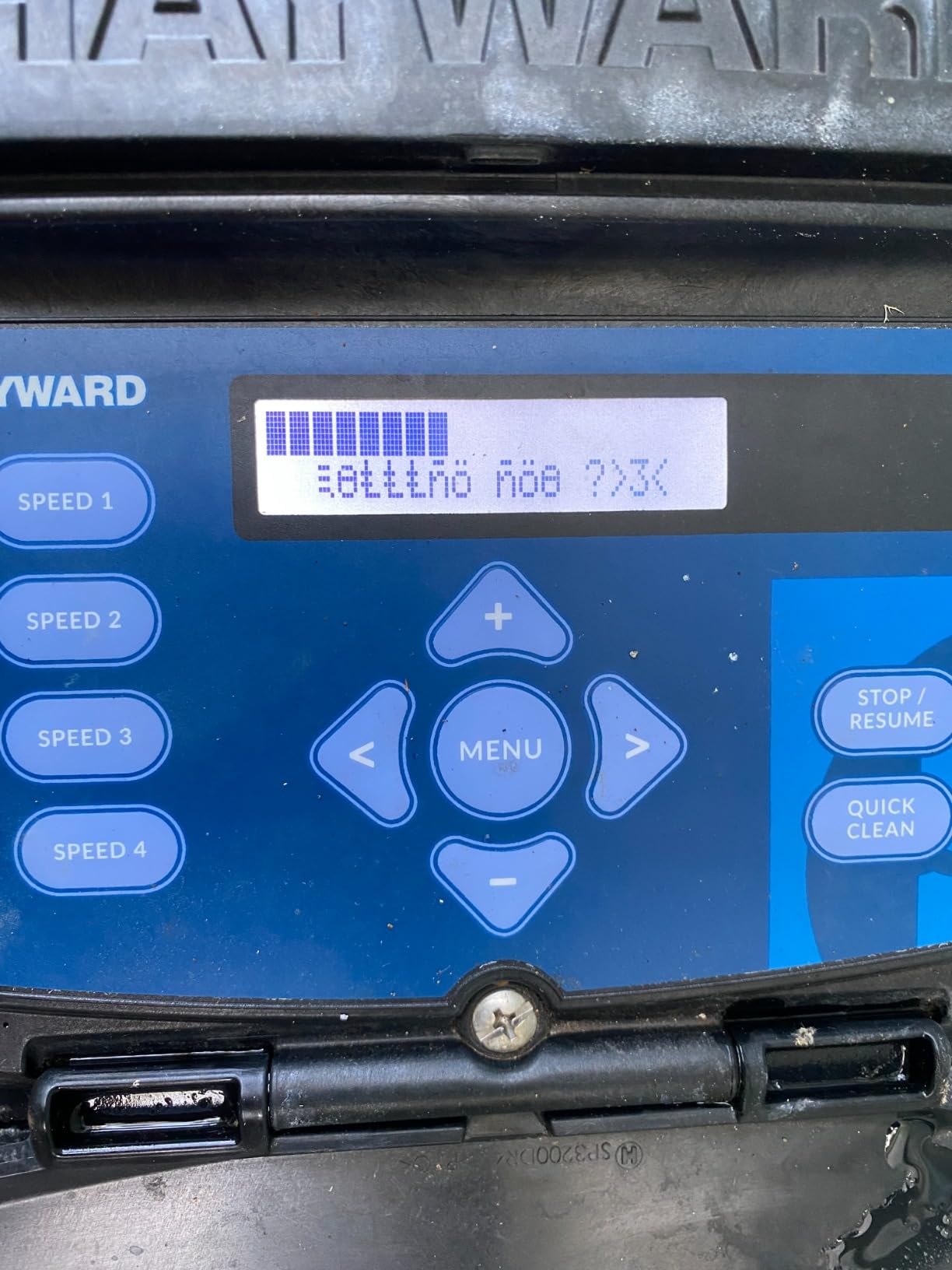
Where the TriStar VS outruns cheaper options
This is the pump to shortlist when your head is genuinely high, meaning long runs, a solar loop, a spa spillway, or water features that need real pressure at high speed. It also holds up best as a drop-in for existing Hayward installations because the family replaced full-rate units in the same footprint. At 30.1 inches long it needs a genuine pad rather than a shelf.
Who should skip the TriStar VS
Skip it if you need app-based control out of the box, because the OnCommand connector cable has to be purchased separately and the automation ecosystem is an extra step. Skip it if quietness under any load is the deciding factor and you are on a tight budget, since lower-cost options in this list match it in practice for standard residential head. It is also the wrong pick for above-ground pools, where its frame size and weight are wasted.
4. Hayward MaxFlo VS 1.65 HP — Best Drop-In Upgrade With ENERGY STAR Certification
Hayward W3SP2303VSP MaxFlo VS Variable-Speed Pool Pump, Black
1.65 HP
230V
ENERGY STAR certified
Permanent magnet TEFC motor
160 gpm listed flow
Pros
- ENERGY STAR certified
- Low noise at lower speeds
- Works standalone or on automation
- Drop-in upgrade path
Cons
- Review text on this listing is thin
- Weighs 45 pounds
- Automation needs extra hardware
This is one of the explicitly efficiency-certified pumps in the roundup. The listing states it is the most efficient pump of its kind per EPA ENERGY STAR third-party testing, and that claim is the reason to pay attention: certification means an outside lab measured it, not that a marketing department estimated it. It is also listed as eligible for local utility rebates.
Everything else follows the same logic. A permanent magnet TEFC motor, advanced hydraulic design aimed at low noise at lower speeds, and a drop-in upgrade path that works standalone or inside an automation system. Listed flow is 160 gpm, which covers a large residential pool with room to spare, and the motor is 1.65 HP.
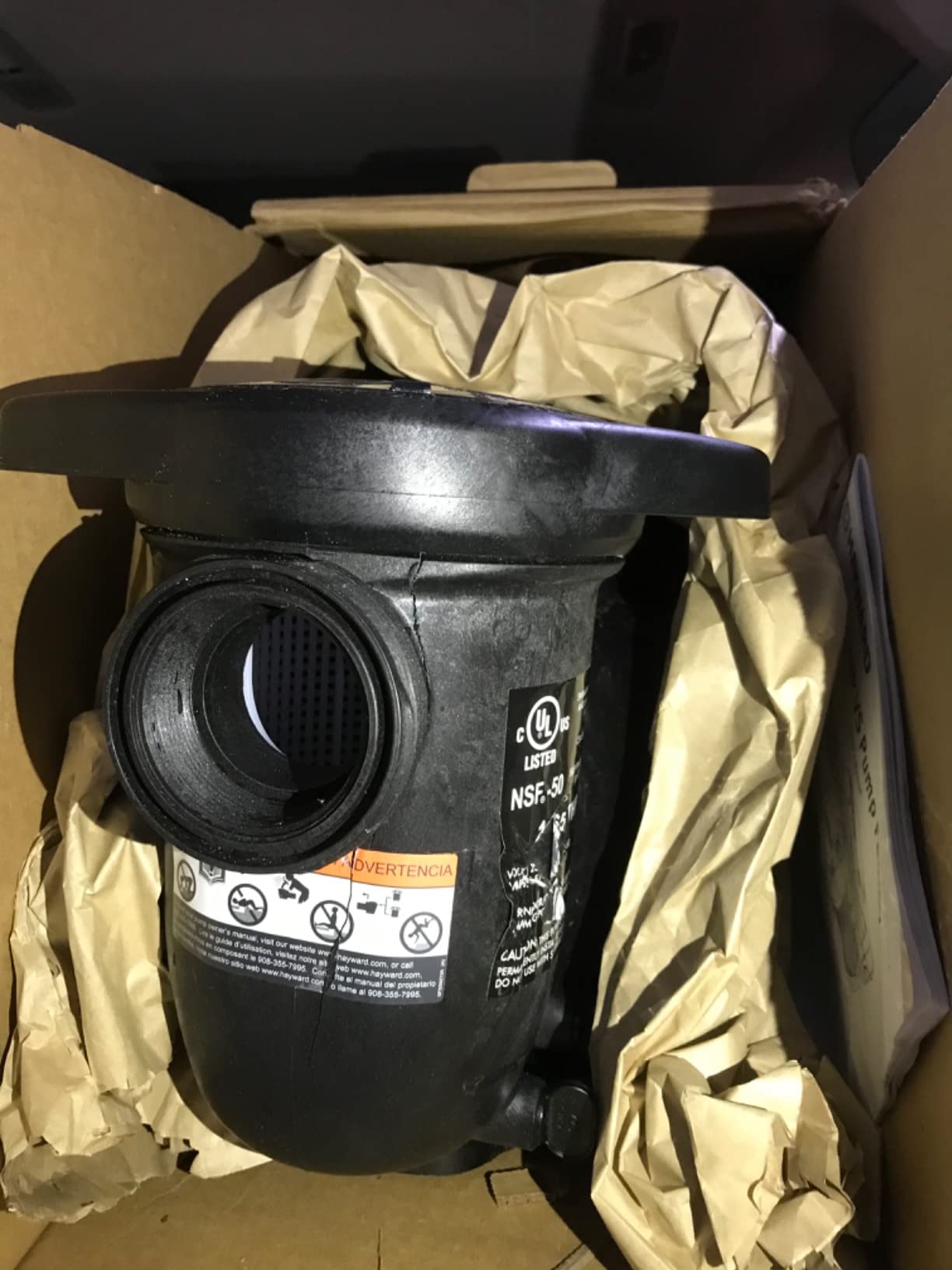
I want to be straight about the evidence here. This listing shows 4.3 stars from 303 ratings with a 75 percent five-star share, but it surfaced very little individual written review text, so the pros come largely from the documented feature set and rating distribution rather than from long owner write-ups. That is a real difference from the SuperFlo and TriStar entries above, and if you rely on detailed peer reports, read the reviews yourself.
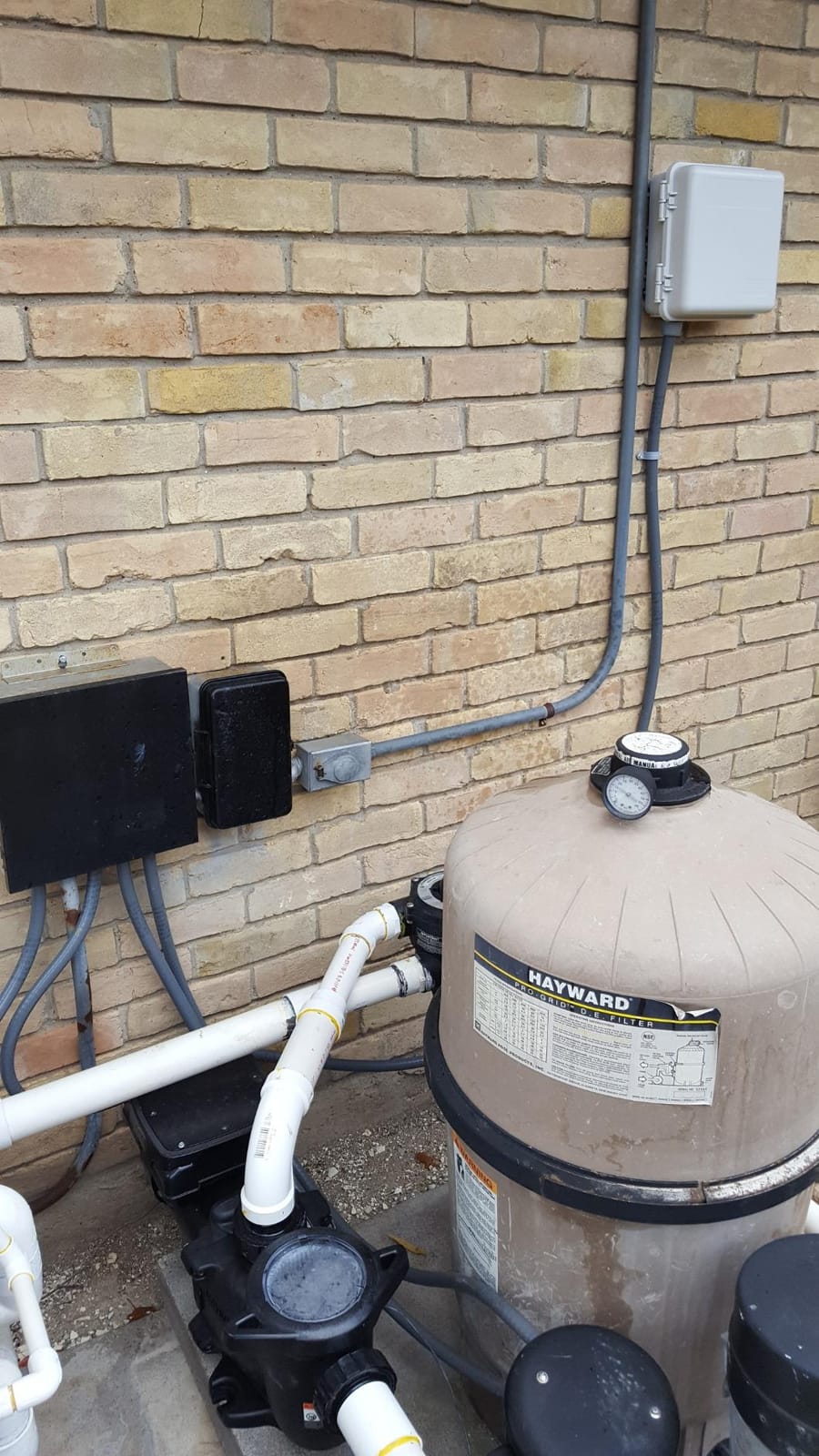
For most inground owners, though, the feature set carries the decision. Energy Star certification, a manufacturer claim of up to 80 percent energy cost savings versus single-speed units, and a hydraulics package tuned for low-speed quiet all line up with the two things that matter. Model number W3SP2303VSP, weighing 45 pounds at 27.8 inches long.
Does Energy Star certification actually pay you back
Certification is the piece of paper that utility rebate programs ask for, so in many regions it is worth more than a small difference in wattage between two otherwise comparable pumps. Combined with the rebates that owners of the pumps in this roundup report receiving, the certification can shift the effective cost substantially. Check your utility’s current program terms before purchase, because eligibility rules change and not every state includes this class.
Who should skip the MaxFlo VS
Skip it if you want a deep library of written owner reports to guide your choice, because the review text on this listing is thin. Also skip it if you are replacing a Pentair pump rather than a Hayward one, since the drop-in story is brand-specific. And skip it if your priority is the highest rated or the quietest platform available; this is the efficient, certified option, not the enthusiast one.
5. VARMINPOOL 1.8 HP 220V — Best High-Flow Value for Standard Residential Pools
VARMINPOOL 1.8 HP Variable Speed Pool Pump for Above & Inground Pools, Up to 9114 GPH, 220V Inverter Pool Pump with Permanent Magnet Motor, Energy Efficient, Saltwater Compatible
1.8 HP
220V
1200-4000 RPM inverter
9114 GPH max flow
64 ft max head
Pros
- Exceptionally quiet in owner reports
- Sub-one-hour install with supplied couplings
- Strong flow at low speed
- Responsive customer service
Cons
- Schedule override needs the timer disabled
- One report of controller buttons failing
- Protective lid may clash with flex conduit
This is the pump that made me reconsider how much the big names are worth. It is a 1.8 HP inverter-driven unit with a permanent magnet motor running 1200 to 4000 RPM, listed at up to 9114 GPH and 64 feet of maximum head. That is serious hydraulic capability from a brand nobody has heard of, and it holds a 4.4 rating from 186 reviews.
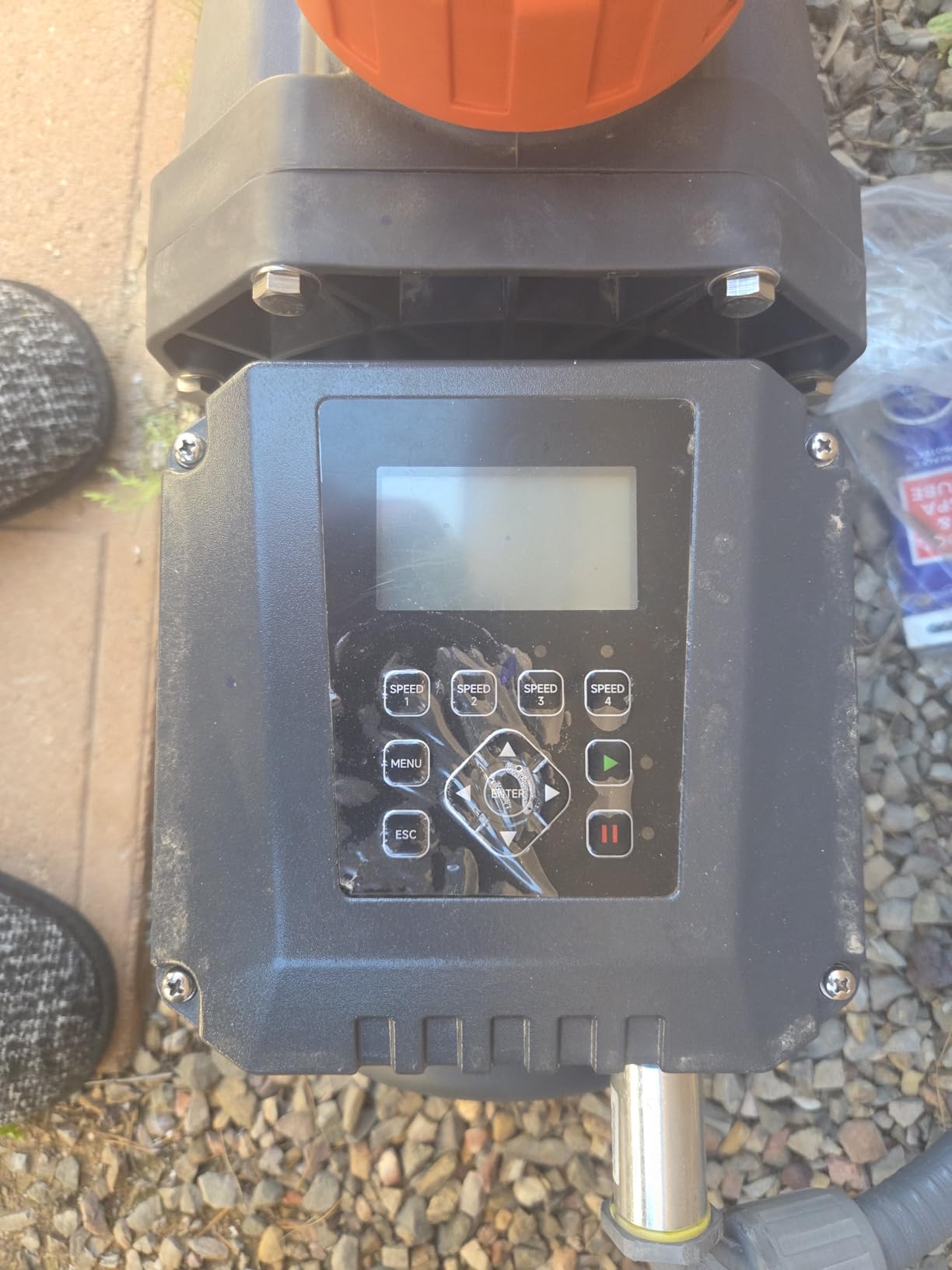
The flow chamber is reinforced polymer rated against saltwater and pool chemicals, the controller panel has a built-in timer with four preset speeds, and the unit carries an IPX5 waterproof rating. At 28.2 pounds it is lighter than most of the premium pumps here, and the included conversion couplings mean most installs finish inside an hour.
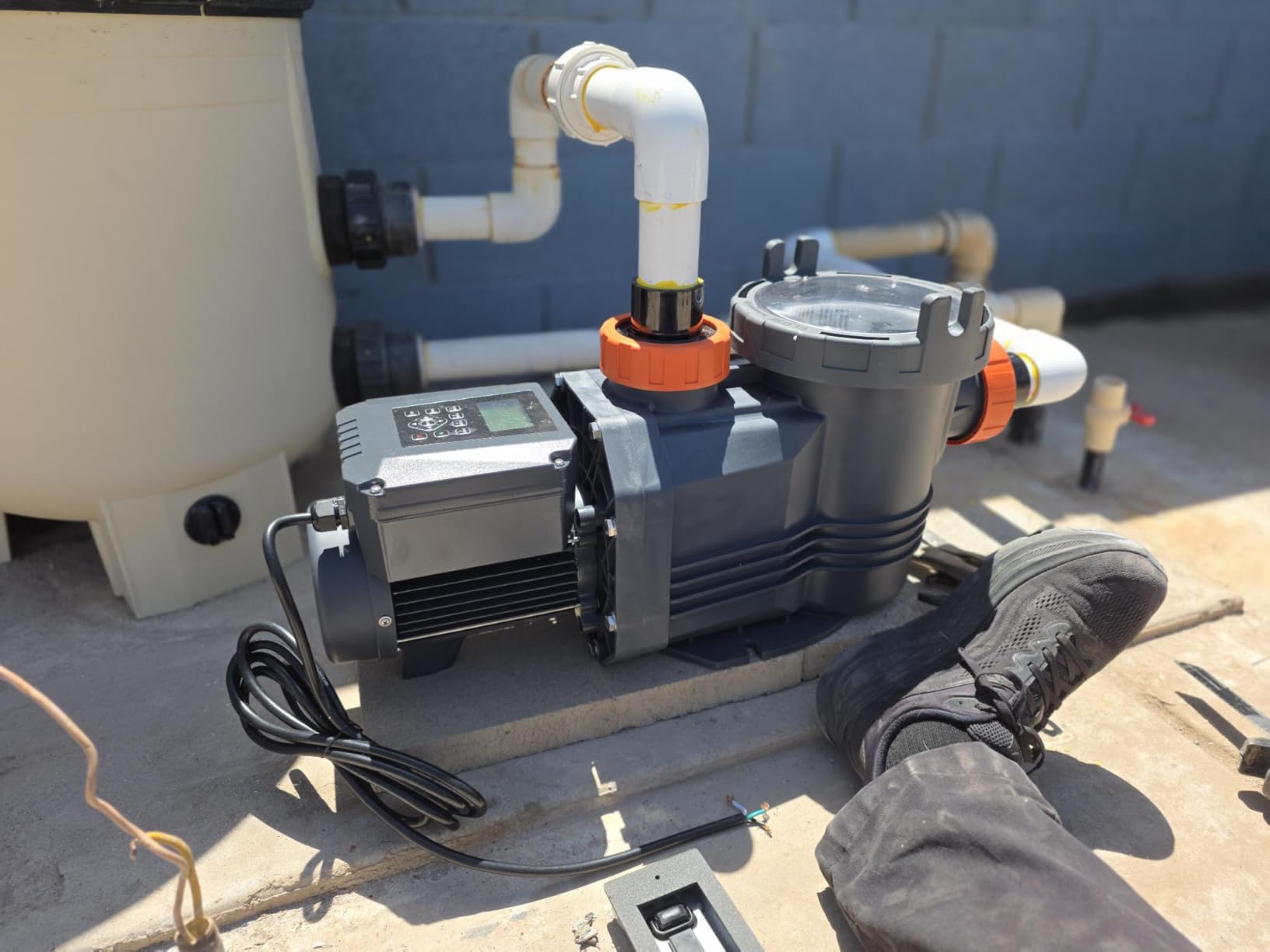
What owners notice first is noise. One reviewer described it as the quietest pump he had seen as a pool tech, and that is consistent with the rest of the feedback. Several also point out that it works well with salt cell generators even at the lowest speed setting, which is the flow question most people only discover after a mistake. Others report measurable power bill savings and plan to buy a second unit for a hot tub.
The genuine downsides are narrow but real. You cannot override a running schedule with a quick button press; you have to disable the schedule first, which annoys people who want to bump speed while vacuuming. One owner reported controller buttons failing after about five months. And if you route wiring through flex conduit, the protective lid may not fit over it.
Does 9114 GPH matter for a normal backyard pool
For a 15,000 gallon inground pool, that number is far more than you need on the top speed, and excess flow is exactly what creates noise and wasted watts. What matters is the bottom of the range. The 1200 RPM floor here is what makes long overnight filtration possible, and the 2.5 inch inlet and outlet give you more plumbing flexibility than most residential pads are plumbed for.
Who should skip the VARMINPOOL
Skip it if you need a long service relationship with a dealer, since off-brand support is thinner outside major metro areas and a failed controller is the most likely long-term failure. Skip it if you are installing over a 2-inch line without checking, because the fittings are 2.5 inch and you may need adapters you do not have. Anyone wanting a documented brand warranty rather than a two-year replacement promise should look elsewhere.
6. Pentair IntelliFlo VS 011028 — The Premium Pick for Pentair-Equipped Pads
Pentair 011028 IntelliFlo VS Pool Pump, Almond
Aluminum body
220V
Fits existing Pentair housings
Scheduling module
2-year pro-install warranty
Pros
- Owners report large energy savings
- Markedly quieter than single-speed units
- Plumbs into existing Pentair fittings
- Simple programming module
Cons
- Highest cost in the roundup
- Warranty requires professional installation
- Extra union fittings often needed
If your pad already has Pentair plumbing and a Pentair control system, this is the cleanest upgrade in the roundup. The IntelliFlo VS fits the housing dimensions of existing WhisperFlo and IntelliFlo units, so the swap involves the motor side of the pad rather than reworking the whole plumbing. A scheduling module handles the programmable speed profiles.
The savings reports here are the most striking in the lineup. One owner describes a 90 percent cut in consumption after replacing a single-speed pump, and the wider feedback repeats the theme: much lower noise, clearer water within weeks of switching, and an easy-to-use programming module. At 4.6 stars from 194 reviews, it holds a higher average rating than anything except the TriStar VS.
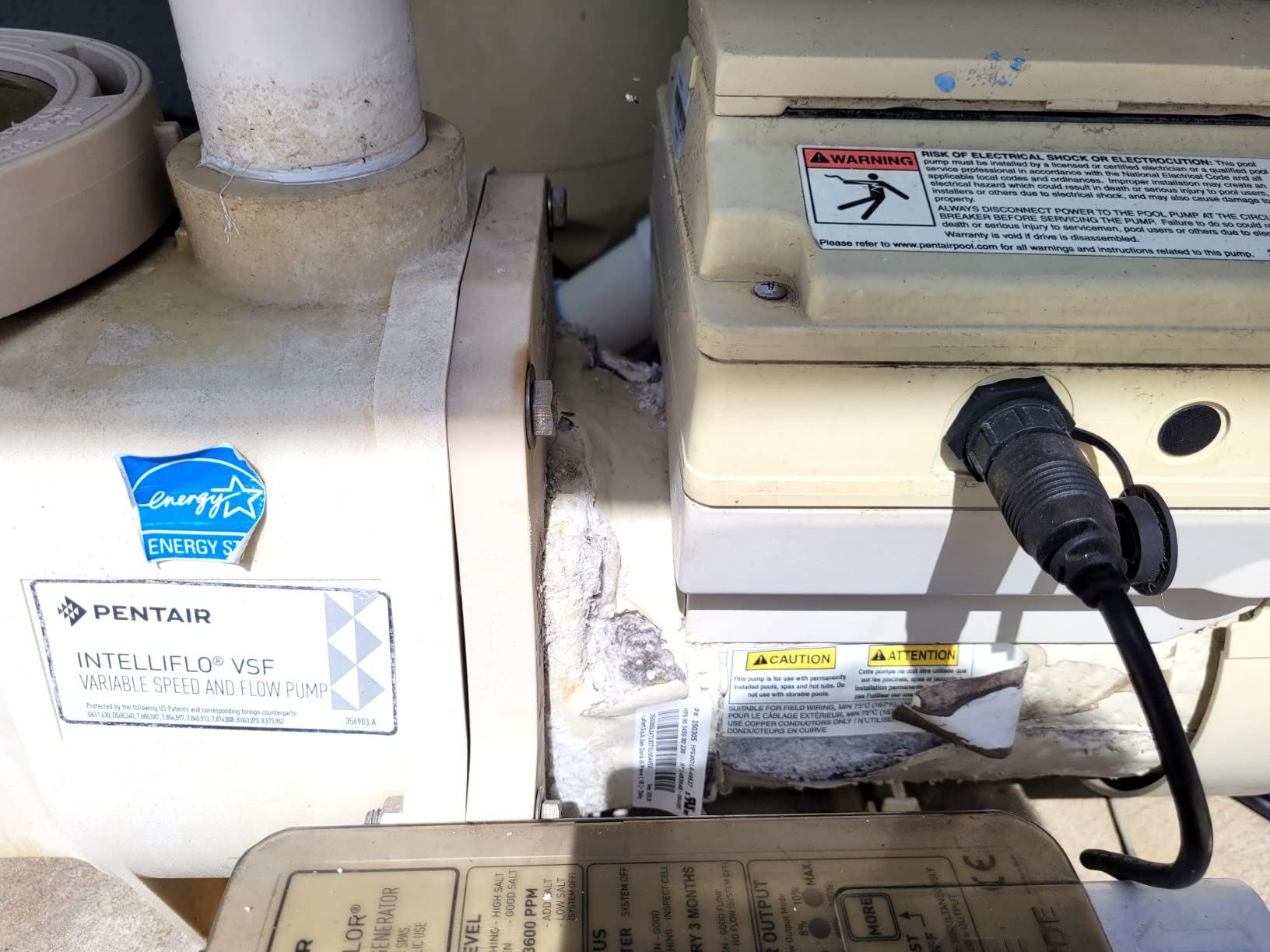
Reliability sentiment among buyers who plumbed it in themselves is positive over multiple seasons, and this platform’s long track record is the reason r/PoolPros professionals ranked the Pentair IntelliFlo family first for fewest problems in our research. That community consensus is the strongest reliability signal available for this category, because those threads run for years rather than weeks.
The reasons to hesitate are cost and paperwork. This is the most expensive unit we reviewed, and the 2-year manufacturer warranty applies only when a pool professional installs it. Some buyers had to buy additional union fittings that were not included. At 28 inches long with an aluminum body, it also needs a solid pad and two hands.
What the scheduling module actually changes day to day
The module is where the energy savings come from, because it stores the speed profiles you would otherwise set by hand every time. Owners typically program a low overnight filtration speed, a mid speed that also serves the heater or salt cell, and a high block for vacuuming and water features. Once that is stored, the pump is a set-and-forget appliance, which is also how you avoid the factory-default trap that erodes most of the promised savings.
Who should skip the IntelliFlo VS
Skip it if your plumbing is Hayward or Jandy, because none of the housing advantages apply and you would be paying for a platform you cannot use as designed. Skip it if nobody can install it professionally, since the warranty depends on it. And skip it if you are an above-ground pool owner, since there is no housing to fit.
7. Pentair IntelliFlo VS+SVRS 3HP — Best for Safety Vacuum Release and Large Systems
Pentair EC-011057 – IntelliFlo VS+SVRS Variable Speed Pool Pump 3HP
3 HP
230V
Safety Vacuum Release System
Cam and ramp lid
Energy Star certified
Pros
- Added entrapment protection with SVRS
- Cam and ramp lid simplifies inspection
- Program-and-forget controls
- Energy Star certified
Cons
- Some units faulted just after the 90-day window
- Hayward automation integration undocumented
- Constant alarm reported on one unit
- 52 pounds is a hard lift
The differentiator on this one is the Safety Vacuum Release System, a drain lid that opens if it senses an entrapment event. That matters for entrapment protection compliance in residential and commercial settings, and it is the reason this model exists as a separate product from the standard IntelliFlo VS. The cam and ramp lid also makes weekly inspection genuinely easy, which sounds minor until you have cleaned a conventional lid by hand.
Three horsepower with an on-board control system, programmable speeds, VGB compliance, and Energy Star certification. It is built to be a program-and-forget appliance, and the part number exchange path is straightforward if you are replacing an older unit with a matching part number.
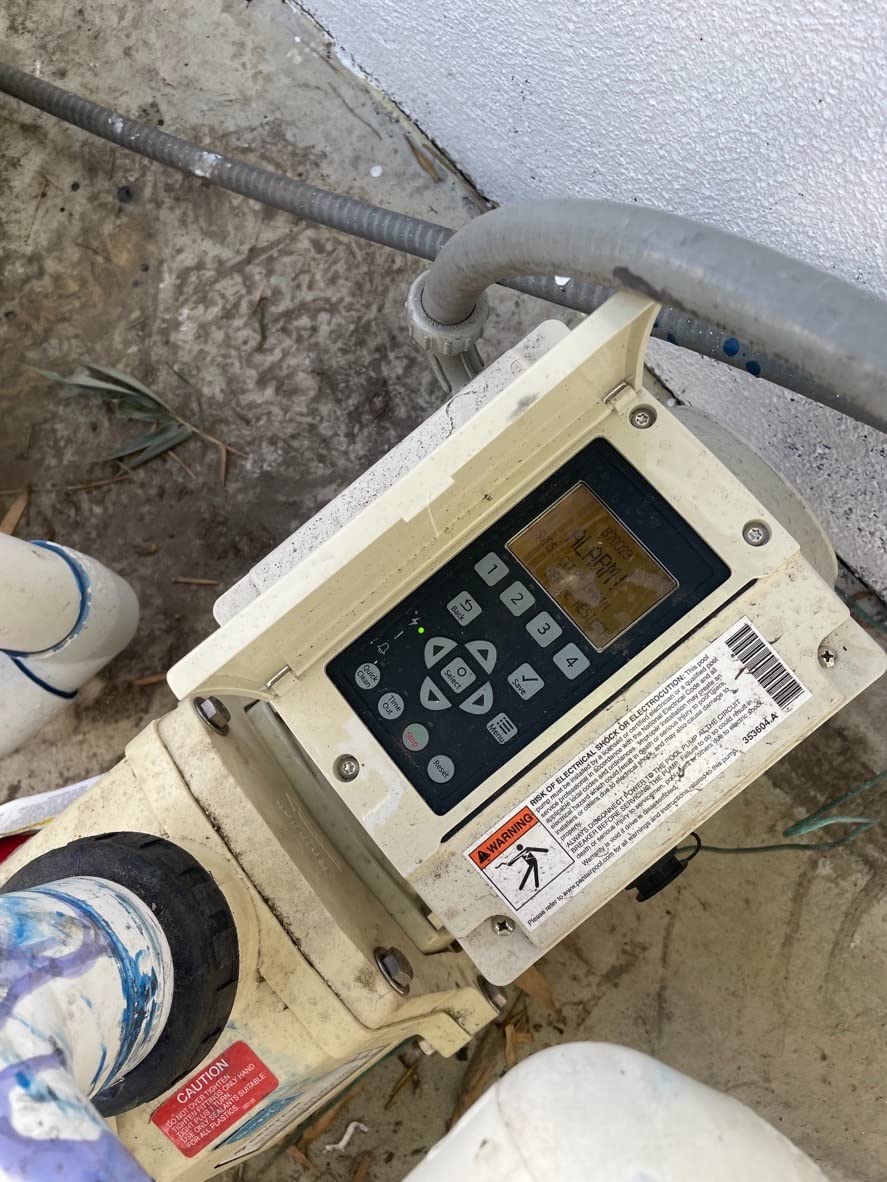
The feedback here is genuinely split, and I would rather show you that than smooth it over. Some owners have multi-season trouble-free service and value both the SVRS feature and the easy exchange. A smaller group reports pumps that developed faults or alarms shortly after the 90-day warranty window expired, including one constant alarm that stops the pump after a few minutes. At 4.2 stars from 77 reviews, that minority pulls the average down noticeably.
Automation compatibility is the other friction point. Owners trying to integrate with Hayward pool automation systems report that the documentation does not cover it, and buying into a closed Pentair ecosystem is the price of the surrounding features. At 52 pounds and 28 inches long, installation is physically demanding.
Do you actually need the safety vacuum release system
For most residential pools, no. SVRS is a response to a specific entrapment risk category and it is genuinely valuable in commercial settings, on large drains, and where code or insurance requires extra protection. For a standard backyard pool with a skimmer-dominated circulation system, you are paying for a feature you will rarely trigger, and the same money buys more useful range in a different pump.
Who should skip the IntelliFlo VS+SVRS
Skip it if you have a modest residential pool where 3 HP is oversized, because over-sizing is the most common and most expensive mistake in this category. It produces noise, wasted watts, and flow problems while offering nothing. Also skip it if you run Hayward automation and want documented integration, or if your priority is a strong warranty window, since the 90-day coverage is thin compared with the multi-year coverage on other pumps here.
8. LINGXIAO 2HP Smart 115/230V — Best for App-Controlled Setups
LINGXIAO Smart Variable Speed Pool Pump 2 HP, 115/208-230V, In/Above Pool Pump With Smart Life APP Control, Energy Star Certificate, High Flow & Self Priming – (2025 New Upgrade)
2 HP, 2.2 total HP
115V or 208-230V
8100 GPH
Smart Life app control
2-year replacement
Pros
- App control for schedule
- RPM and GPM
- Both 1.5 and 2 inch fittings included
- SuperFlo-compatible dimensions
- Self-priming design
Cons
- RS485 automation cable not included
- App is less refined than native platforms
- Modest 63-review base
Phone-first control is the pitch here, and it is more complete than most. The Smart Life app handles scheduling, RPM, flow rate in GPM, and an independent Quick Clean mode, which means you can change speed from the patio without walking to the pad. Under the cover it is a 2 HP motor rated at 2.2 total horsepower, 8100 GPH, and a dual-voltage 115V or 208-230V supply.
The installation details are unusually well thought out. Both 1.5-inch and 2-inch connectors are in the box, so existing plumbing can be reused without a trip back to the hardware store, and the listed dimensions are compatible with Pentair SuperFlo series pumps. It is self-priming, tested for outdoor rain and sunlight exposure, and includes a 2-year full replacement protection rather than a parts-only warranty.
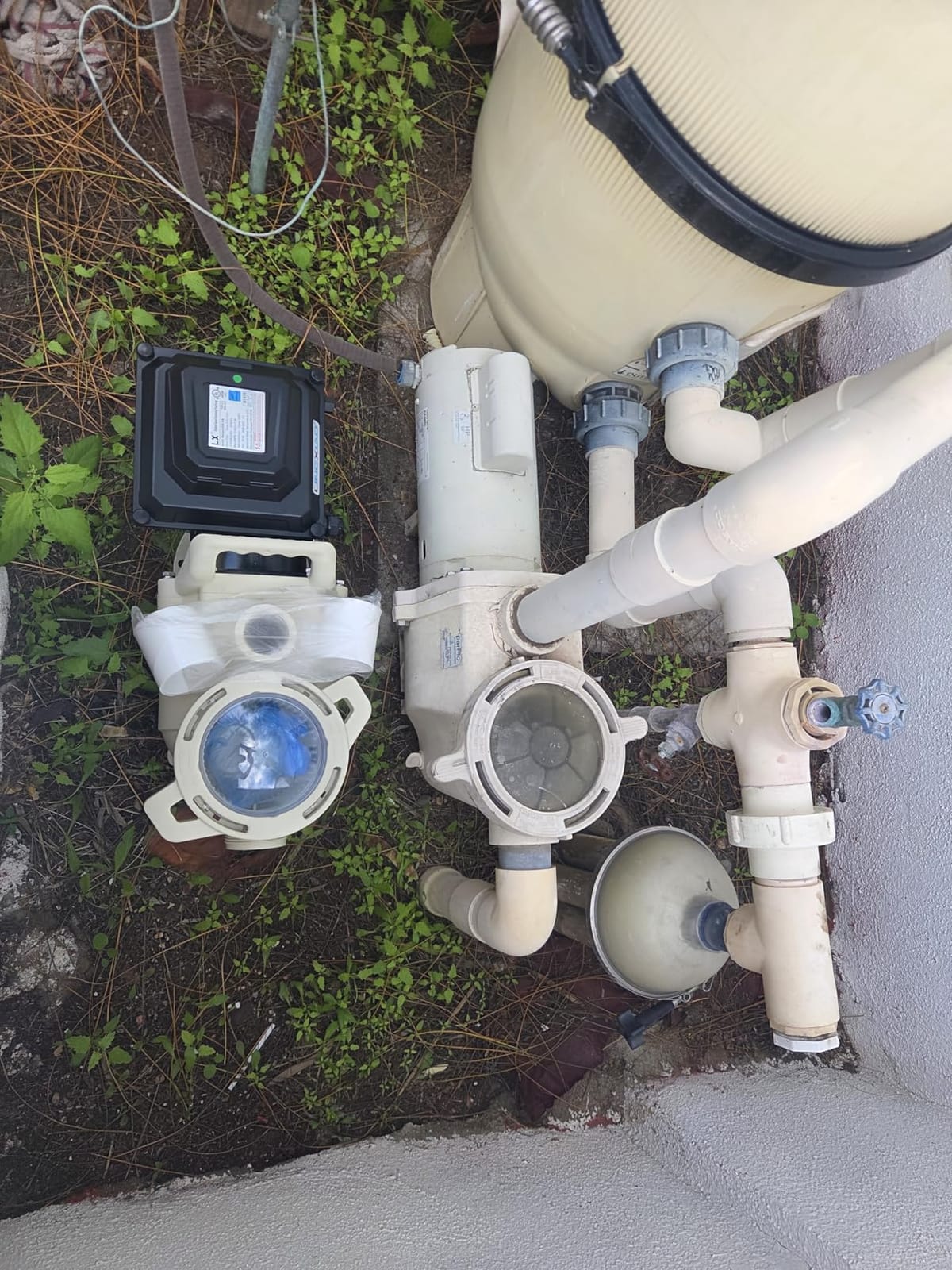
At 4.4 stars from 63 ratings with a 76 percent five-star share, the sentiment is positive across the board: app-based scheduling, the dual fitting inclusion, Energy Star specification that may qualify for local rebates, and a footprint that simplifies retrofits. The most repeated caveat is an odd one, because it has to do with ordering rather than the pump: the RS485 signal cable for OEM automation is not in the box and has to be requested separately after you order.
Keep that in mind if your plan involves hooking into an existing control system. If you just want the pump on your phone, you never need the cable. And the honest caveat on the app itself is that it is functional and more basic than the native manufacturer platforms, which have had years of firmware refinement. For the wider picture on managing connected equipment, our overview of energy management in smart buildings covers the same scheduling logic.
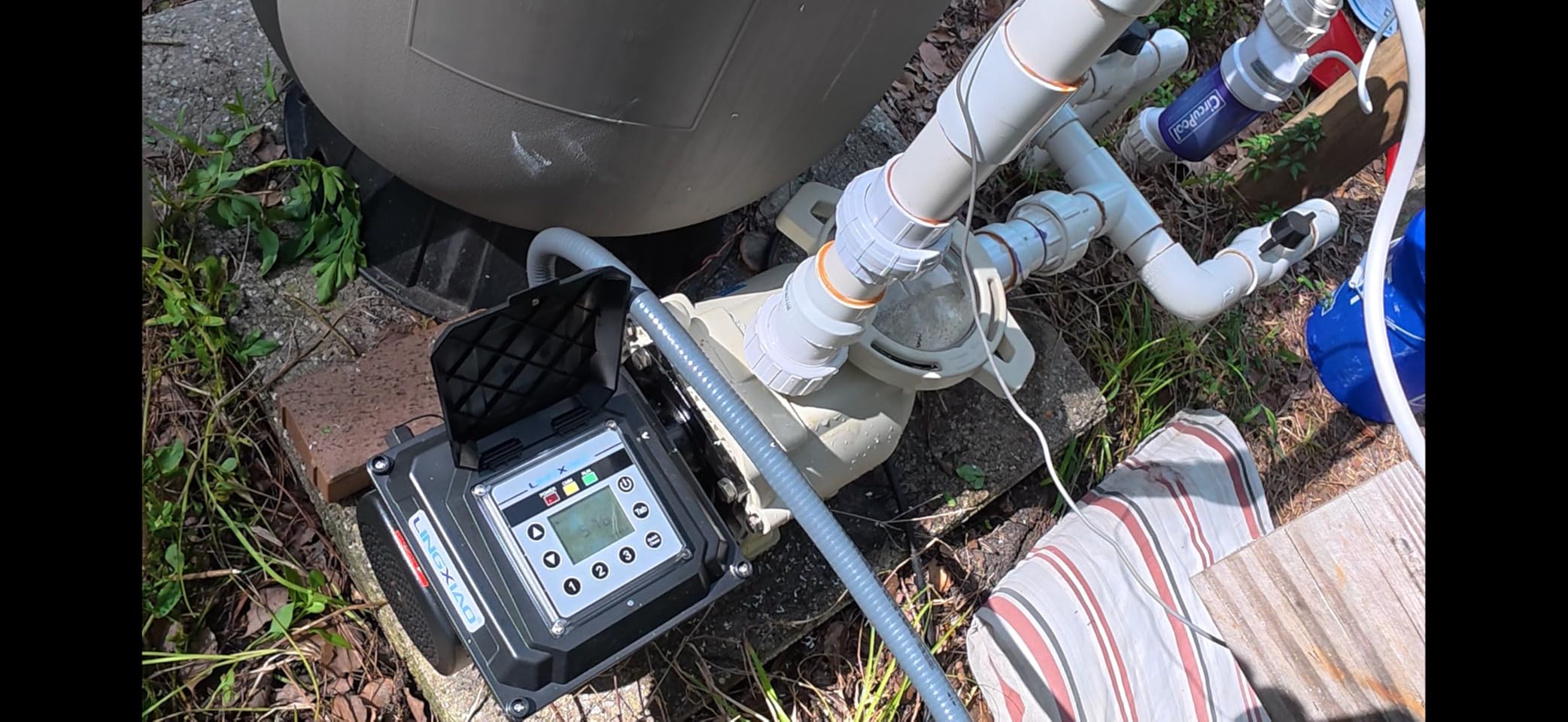
Is app control worth it over an onboard keypad
It is worth it if you actually change settings often, travel, or run water features on a schedule you do not want to walk out to change. It is not worth paying a premium for if you set your schedule once and never touch it, because the onboard keypad on cheaper pumps does the same job without a phone, a network, or another device that can fail. That is also a mild data privacy consideration for anything connected.
Who should skip the LINGXIAO 2HP Smart
Skip it if you want long-term parts support from an established dealer network, because two years of replacement coverage does not equal a service relationship. Skip it if you plan to integrate with an existing Pentair or Hayward control panel, since the RS485 cable is a separate request and the integration is not the selling point here. Anyone who needs a deeply reviewed, high-volume product should note the small review base.
9. BLACK+DECKER 1.5HP WiFi — Longest Warranty and Dual Voltage Sensing
BLACK+DECKER 1.5 HP Variable Speed Above Ground Pool Pump – WiFi Enabled, Energy Star Certified
1.5 HP
110V
Energy Star certified
WiFi enabled
Self-diagnostics
5-year warranty
Pros
- Five-year warranty
- WiFi and app control
- Self-diagnostics for troubleshooting
- Automatic 115V-230V sensing
Cons
- Lowest rating here at 4.0 stars
- Highest one-star share among premium picks
- Above-ground focused
Warranty is the reason this pump earns a spot. A 5-year warranty is the longest coverage in this roundup, and on a component that lives outdoors next to a wet pad for a decade, the length of that promise is a real asset. It is Energy Star certified, which also means it qualifies for utility rebates in select states.
The feature set is competitive too. A self-priming permanent magnet motor with low-speed settings, exclusive self-diagnostics for performance monitoring, a touchpad programming interface, and automatic smart dual voltage sensing that handles 115V and 230V without you choosing. Both 1.5-inch and 2-inch ports are included. WiFi is enabled for phone and smart device control, and the pump is manufactured by Blue Torrent Pool Products.
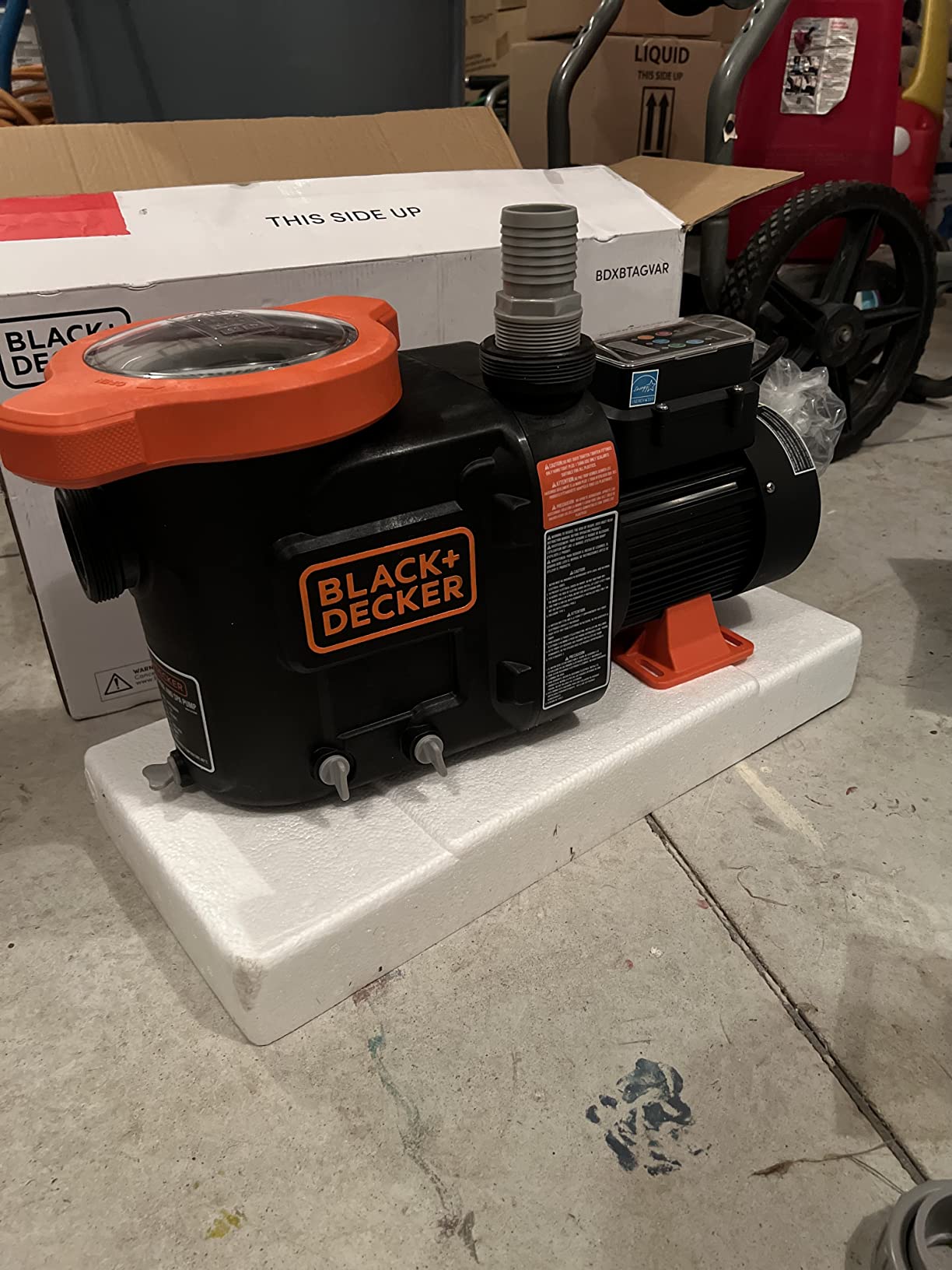
Now the honesty part. It carries a 4.0 rating from 66 reviews with a 59 percent five-star share, the weakest spread among the premium-tier pumps here, and 11 percent one-star reviews. That pattern usually signals inconsistency in fit, finish, or first impressions rather than one specific defect, but it does mean you should read the recent negative reviews for your use case before ordering.
The listed flow rate is 57.5 gpm at 1.5 HP on 110V, which is sized for above-ground pool maintenance rather than a large inground system. The automatic dual voltage sensor is genuinely convenient if you are unsure which circuit you have, and the self-diagnostics feature is something most competitors at this level do not offer at all.
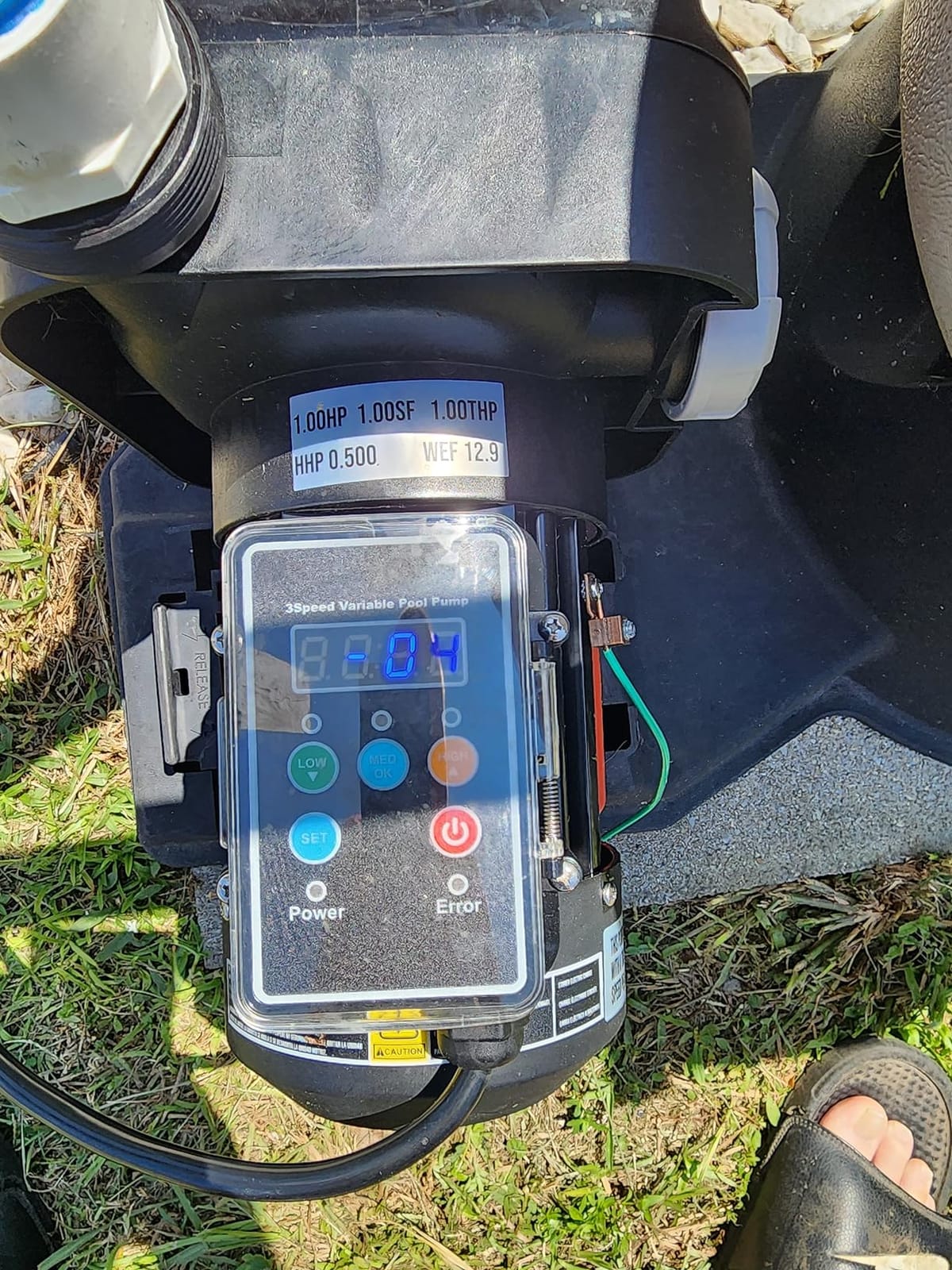
What self-diagnostics actually tells you
It watches pump performance and reports deviations, which usually means underflow, a blockage, or a suction air leak instead of the usual silent symptom of a pool that stops clearing. In practice that turns a multi-hour diagnostic visit into a two-minute check at the keypad. It does not replace cleaning a saturated filter, but it will tell you that is what you are dealing with before you tear the plumbing apart.
Who should skip the BLACK+DECKER pump
Skip it for a large inground pool, since 57.5 gpm and the above-ground design target do not leave room for a big circulation demand or a salt cell that needs steady flow. Also weigh carefully if quietness is your top criterion. The warranty is the headline, but a five-year promise on a pump with a weaker review spread is worth weighing against the proven platforms where the community has multi-season data.
10. LINGXIAO 3HP 10800 GPH — Best for Large Inground Pools
LINGXIAO 3HP Variable Speed Pool Pump – Energy Star Certified Smart Inground Pool Pump, 208-230V Self-Priming Pump Motor, 10800 GPH High Flow, Waterfall Pool Pumps with Filter Basket & 2-Inch Fittings
3.9 HP, 3 HP rated
208-230V
10800 GPH
Three speed plans
2-inch unions included
Pros
- High flow at a fraction of premium cost
- Quiet relative to its output
- Rotatable panel with magnetic closure
- Fast replacement service
Cons
- RS485 cable not included
- Plumbing and wiring sides differ from Pentair
- One report of breaker trips
- App is basic
For a genuinely large pool, this is the value play of the roundup. Listed at 3.9 HP and 10,800 GPH maximum flow, it is aimed at inground pools from roughly 9,000 to 50,000 gallons, and owners frame it as a strong alternative to a comparable Pentair IntelliFlo 3 at a fraction of the cost. It runs on 208-230V, connects to 2-inch plumbing, and includes 2-inch unions and a fitting in the box.
The details that impressed owners are physical rather than electronic. Build quality and appearance get described as on par with Pentair, the rotatable control panel with a magnetic closure is a feature Pentair units do not offer, and after-sales service stands out: fast replacement of defective products plus a free extended warranty. There is a built-in smart timer with three speed plans, and the listed claim is up to 80 percent savings versus single-speed pumps.
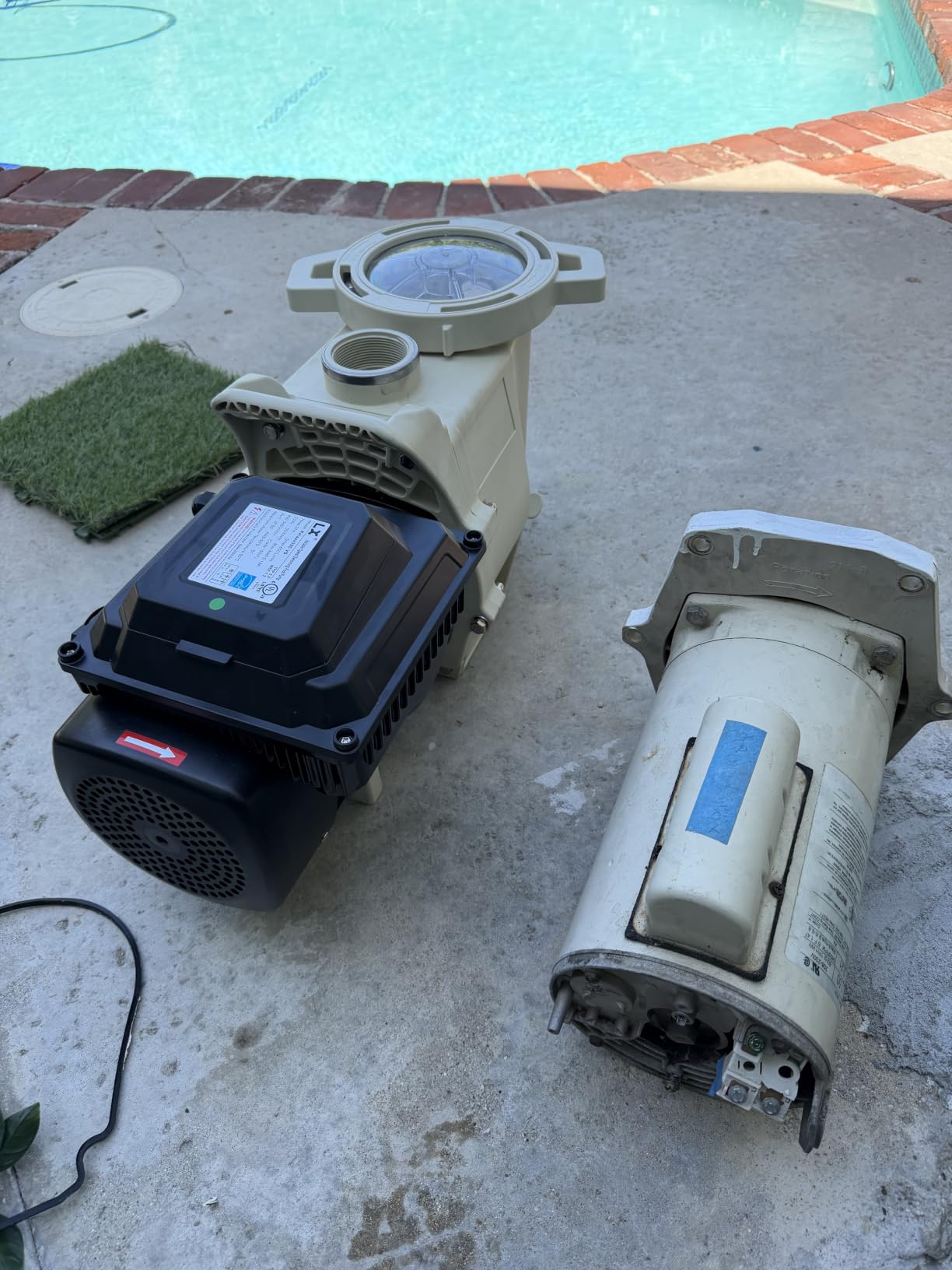
Owners also report that it improves flow to spa jets, which is the kind of result you only see when a pool was previously under-circulated. The pump is self-priming, carries an Energy Star specification, and the listing notes rebates through local utility rebate programs. It carries a 2-year full replacement protection.
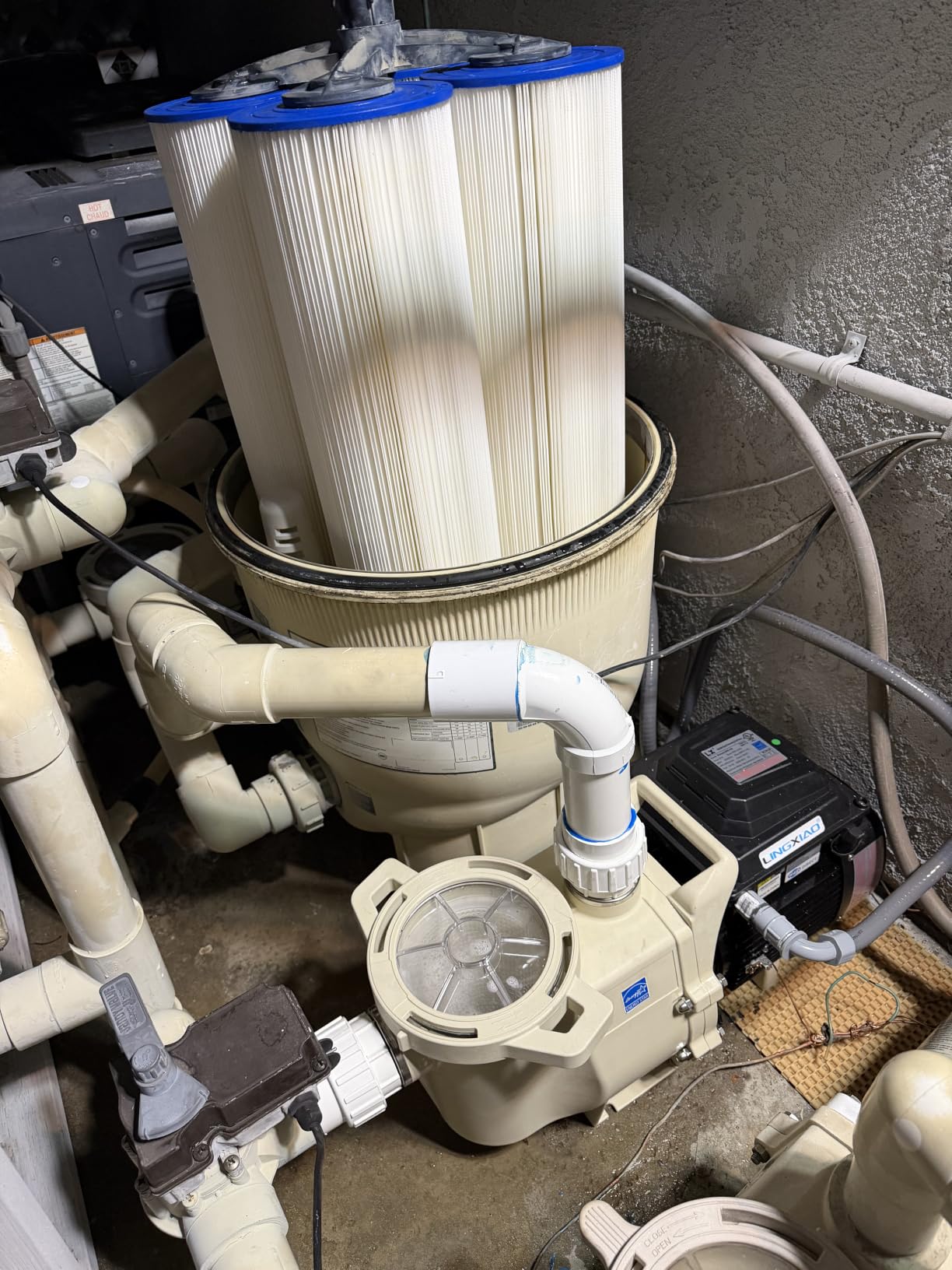
The recurring frictions are compatibility details. The RS485 data cable is not included and has to be requested after purchase, even though the unit supports Pentair LP4 and PLS4 control systems through it. It is not an exact copy of a Pentair footprint, so existing piping may need adapting, and the 240V whip connection sits on the opposite side from the Pentair unit it replaces. One owner reported repeated breaker trips and a replacement unit that did not suction properly.
How to size a 3 HP pump without over-shooting
Start with your total dynamic head, not the gallon count. Three horsepower is justified when you have genuinely high head: long plumbing runs, multiple water features, a spa spillway, a solar loop, or a commercial-style main drain system. If you do not, a 1.5 to 1.85 HP pump will move the same water, run quieter, and cost less to operate. Over-sizing is the number one mistake in this category.
Who should skip the LINGXIAO 3HP
Skip it if your pool is an ordinary size and you are matching an existing Pentair footprint precisely, because the plumbing and wiring differences turn a clean swap into a project. Skip it if you need documented brand-level warranty service from a local dealer. Anyone sensitive to smart device integration should know the app here is functional but basic, and the automation cable is a separate request.
How to Choose a Variable Speed Pool Pump Without Regret
Five decisions account for nearly every mistake I see in this category. Work through them in order and the product choice becomes obvious, because only a few pumps will satisfy all five.
Work out total dynamic head first
Total dynamic head is the total resistance your plumbing presents to the pump, measured in feet of head. It comes from vertical lift, pipe length and diameter, and the number of elbows and fittings along the way. Two-inch plumbing and swept elbows reduce head dramatically compared with 1.5-inch lines and 90 degree elbows, and that difference often matters more than any brand decision. Match your pump to the head your system actually produces, then find the point on the flow curve where it delivers the gallons per minute you need.
Pick horsepower as total horsepower, not nameplate
A pump rated 1.5 HP nominal often delivers 2.0 or more total horsepower. Manufacturers rate on this basis for a reason: the older full-rate horsepower the pump replaces is the meaningful comparison. Hayward rates the TriStar VS as replacing full-rate pumps up to 1.5 full-rate or 2.0 max-rate HP, and that rating is the number to compare against the pump on your pad today.
Match voltage and breaker to your panel
Most residential variable speed pool pumps are single phase 230V, and many also accept 115V through universal input, which is why the Pentair SuperFlo VS and the LINGXIAO 2HP are easier drop-ins than their spec sheets suggest. A 230V pump typically needs its own circuit sized to its running current, and moving from a 115V circuit to 230V means new wiring and often a licensed electrician. That cost belongs in your replacement math even though nobody quotes it in the product listing.
Check plumbing and unions before ordering
Union size and connection diameter decide whether the install takes an afternoon or a weekend. Some listings include both 1.5-inch and 2-inch fittings, which is genuinely helpful on a retrofit. Others are close to a Pentair footprint but not identical, so check the suction and discharge orientation, not just the dimensions. This is the most common reason a returned variable speed pump comes back.
Decide about app control and automation honestly
App control is convenient, not essential. The control panel on any pump in this roundup stores your schedule on board, so a phone adds value when you change settings often or travel. Automation integration, by contrast, is a real commitment: RS485 cables are sold separately on several of these units, and mixing ecosystems is where compatibility complaints come from. Match the ecosystem you already own, or commit to owning none. Our breakdown of how smart lighting and building IoT work together to cut energy costs covers the same ecosystem-versus-device tradeoff in a different category.
What RPM Should You Run Your Variable Speed Pool Pump At?
Run your pump at the lowest speed that still moves the water your equipment needs. That single sentence resolves most programming errors, because the two common mistakes are running high all day for no reason and running low enough to starve a salt cell, a heater, or a suction cleaner.
Filtration is the long-running task. A low to mid speed in roughly the 1,200 to 1,800 RPM band, running 12 to 16 hours a day, is the standard recommendation, and owners report visibly clearer water and steadier chlorine on that schedule compared with a short blast at full speed. Because power scales with the cube of speed, most of your daily cost is decided by this one setting.
Vacuuming and cleaning is the opposite case. High speed is correct here because you want strong suction to lift debris and to move water fast enough to keep the filter clear. A Quick Clean cycle on the Pentair SuperFlo VS, or a scheduled high-speed block on any of the others, handles this in a couple of hours rather than all day.
Minimum flow is the constraint people miss. A salt chlorine generator needs a steady flow rate to produce chlorine, and a heater needs adequate flow to transfer heat without tripping a high-pressure switch. Both mean you cannot leave the pump on minimum speed when those devices are running. Set a mid speed for the hours the salt cell or heater is active, and drop to low speed only for plain overnight circulation. Suction cleaners have their own flow requirements too, which is another reason the high-speed block exists.
Where Variable Speed Pool Pumps Fall Short
The honest list of disadvantages is short and worth reading before you buy. First, electronics and control boards are the leading long-term failure mode on otherwise solid pumps, which shows up as an alarm or as a unit that stops responding rather than a motor failure. Second, the savings are entirely conditional on programming, so an unprogrammed unit performs badly and disappoints. Third, the wiring cost of moving to 230V is real and often unbudgeted.
Fourth, over-sizing is easy and expensive, and it is the mistake most often caused by good advice found online. A 3 HP pump on a modest plumbing system is quieter in the store than in the yard, and it wastes watts doing nothing. Fifth, app and automation ecosystems create lock-in in a way mechanical pools never did, and several pumps in this roundup require a separately purchased cable to join one.
That is also why every profile above includes a who-should-skip line. The most useful buying guide is not the one that says every product is great, it is the one that tells you which pump does not belong in your pad.
Frequently Asked Questions
Do variable speed pool pumps really save money?
Yes, but only once you reprogram them. Because pump power scales with roughly the cube of speed, halving the RPM cuts power draw by about 85 percent. Run 12 to 16 hours a day at a low filtration speed instead of 8 hours at full speed and most owners report a 30 to 50 percent reduction in pool pump energy cost during swim season. Leaving the pump on factory default high speed erases almost all of that.
Which pool pump uses the least electricity?
A low-speed permanent magnet motor run for many hours uses the least. Among the pumps reviewed, the Pentair SuperFlo VS and the Hayward MaxFlo VS are the strongest picks for efficiency per watt, with the MaxFlo VS carrying ENERGY STAR third-party certification. At the budget end, any correctly programmed inverter unit such as the VARMINPOOL 1.8 HP runs far below a single-speed pump for a fraction of the watts.
What should I set my variable speed pool pump at?
Run the lowest speed that still meets your equipment’s flow needs. For plain filtration that means roughly 1200 to 1800 RPM for 12 to 16 hours a day. Use a higher speed while vacuuming, running water features, heating, or feeding a salt chlorine generator, since those all need more flow. Programming a high block and a low block on the onboard timer handles this automatically.
Can a pool pump run too slowly?
Yes. A salt chlorine generator will not produce proper chlorine levels without enough flow, a pool heater can trip its high-pressure switch at low flow, and a suction cleaner needs strong suction to pick up debris. The fix is a middle speed during the hours those devices run, and a low speed only for plain overnight circulation.
What are the disadvantages of variable speed pumps?
Control board and electronics failures are the leading long-term complaint. The energy savings depend entirely on correct programming, so an unprogrammed unit disappoints. Moving to 230V can require new wiring and an electrician, a 3 HP pump is easy to over-size onto modest plumbing, and app or automation ecosystems create lock-in, sometimes with a separately purchased RS485 cable.
Which variable speed pool pump is the most reliable?
Based on community consensus rather than lab data, Pentair platforms come out ahead. In r/PoolPros threads, professionals ranked the Pentair IntelliFlo 3 as having the fewest problems, followed by WhisperFlo or SuperFlo, then MaxFlo or TriStar VS. For value, r/pools readers repeatedly point to the Sta-Rite Supermax VS as enough for most standard pools.
Final Verdict: Which Variable Speed Pool Pump Should You Buy?
For most inground pool owners, the Pentair SuperFlo VS is the variable speed pool pump to buy. It runs quiet, it runs on either voltage, it fits the housing most people already have, and it has the deepest body of real owner feedback in this roundup. If your system has genuinely high head, take the Hayward TriStar VS, which is the highest rated pump here and rated by Hayward as replacing full-rate pumps up to 2.0 max-rate HP. If your pad is already Pentair from the plumbing up, the IntelliFlo VS is the shortest path to the biggest savings.
Budget owners should not feel excluded. The VARMINPOOL 1.8 HP is the strongest value pick in the group on flow, quietness, and salt cell compatibility at low speed, and the VIVOHOME 2.0 HP is a reasonable way into variable speed ownership on 115V for above-ground pools. Check your utility’s rebate program before you order, since several of these are Energy Star specified and the rebate can meaningfully shorten the payback.
Whichever one you choose, the money comes from programming it. Set a low filtration speed for long hours, a higher speed for vacuuming and heating, and give the salt cell its required flow. A variable speed pool pump that stays on the factory default setting saves you very little. If you are also planning upgrades to the rest of your equipment, our guide to pool heat pumps covers the other half of a pool’s running cost, and our piece on how energy payback works explains the same math applied outside the pool pad.
This roundup was last updated in 2026. Pump specifications, warranty terms, and rebate programs change, so confirm voltage, union size, and warranty conditions against the current manufacturer manual before you buy.