
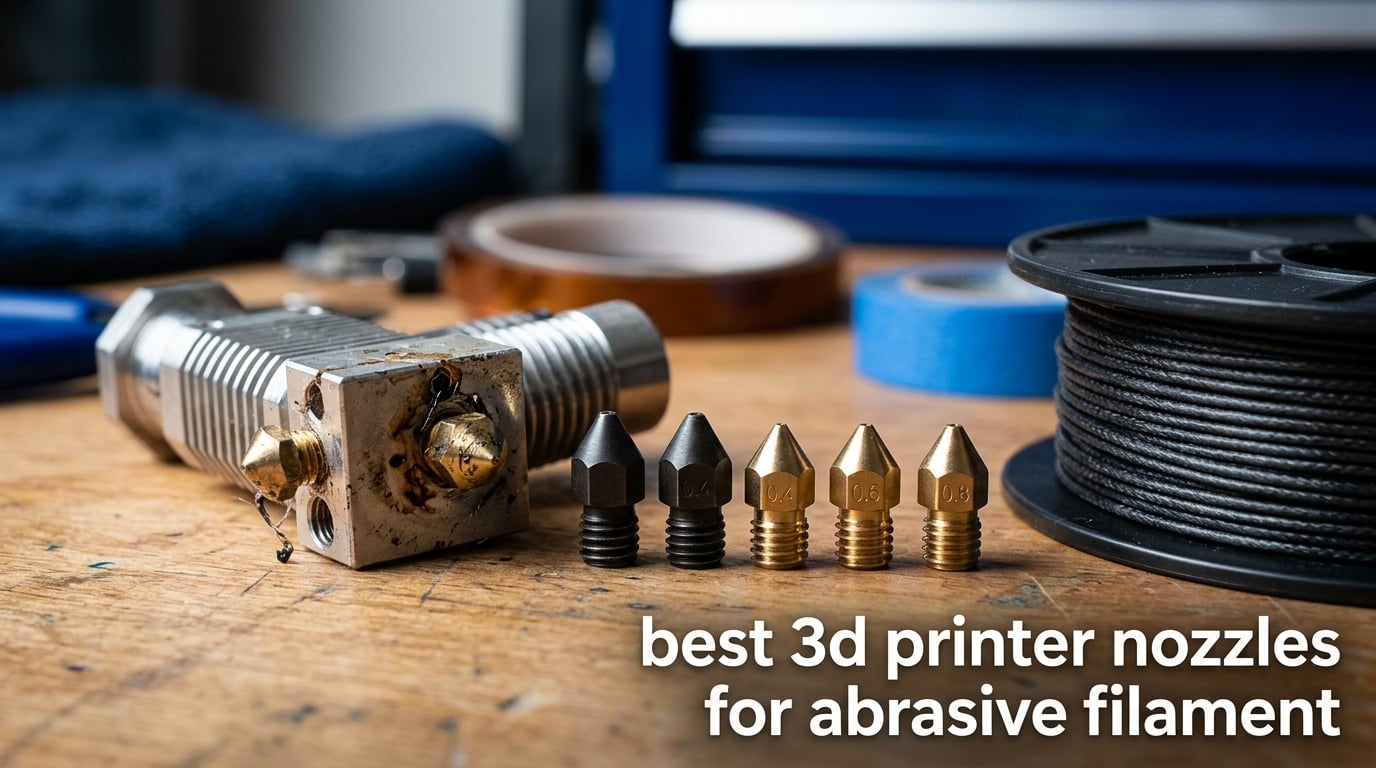
A nozzle for abrasive filament is a hotend nozzle machined from a hard material such as hardened tool steel, tungsten carbide, ruby, or diamond instead of soft brass, so it survives the carbon fiber, glass fiber, metal, and glow-pigment particles that grind away an ordinary nozzle. Abrasive filaments carry hard filler that physically abrades the orifice every time filament is pushed through it, so the hole slowly widens, extrusion falls short of the commanded amount, and layer lines lose definition. The right pick from our roundup of the best 3d printer nozzles for abrasive filament depends on which hotend you own and how much abrasive filament you push through it each month.
We spent weeks comparing specs, ratings, and owner reports across twelve nozzles that all claim to handle abrasive filament, then grouped them by the job they actually do. Two of them failed us on fit rather than wear, which is the thing most roundups skip. Everything below is written for 2026 machines and reflects what buyers report, not what the packaging promises.
Short answer for the impatient: the Mudder 5-pack of MK8 hardened tool steel nozzles is the one we would put in an Ender or CR-10 without hesitating, Micro-Swiss plated A2 tool steel is the cleanest finished part in the group, and if you run a Bambu Lab A1, A1 Mini, or A2L the HzdaDeve kit is the direct fit. Jump to the table below if you want all twelve side by side, or keep reading if you want to know why hardness alone is not the whole answer.
Table of Contents
Top 3 Picks for Abrasive Filament Nozzles in 2026
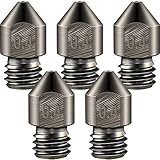
Mudder Hardened Steel MK8 5-Pack
- Hardened tool steel
- 0.4mm orifice
- Five nozzles per pack
- MK8 and Prusa i3 fit


HzdaDeve Bambu A1 Hardened Kit
- Hardened steel nozzle
- 350C rated
- Bambu A1 and A1 Mini fit
- Two pack
Those three cover the two ecosystems most people are printing on today. The Mudder pack wins on sheer owner volume, with well over two thousand reviews backing a 4.4 star average, and its MK8 format also happens to fit Prusa i3 and several Reprap-derived hotends. The Micro-Swiss nozzle is the machined-and-plated option, and it carries one of the strongest review bases in the group at 4.6 stars across 800 reviews. The HzdaDeve kit exists because Bambu Lab’s A1 family uses a removable threaded nozzle that most generic MK8 and V6 parts simply do not fit.
Best 3D Printer Nozzles for Abrasive Filament in October
| Product | Specifications | Action |
|---|---|---|
| Mudder Hardened Steel MK8 5-Pack |
|
Check Latest Price |
| HzdaDeve Bambu A1 Hardened Steel Kit |
|
Check Latest Price |
| Micro-Swiss MK8 Plated A2 Tool Steel |
|
Check Latest Price |
 POLISI3D Hardened Steel V6 4-Pack POLISI3D Hardened Steel V6 4-Pack |
|
Check Latest Price |
 E3D Nozzle X V6 0.40mm E3D Nozzle X V6 0.40mm |
|
Check Latest Price |
 POLISI3D Volcano Hardened Steel 0.4mm POLISI3D Volcano Hardened Steel 0.4mm |
|
Check Latest Price |
 Micro-Swiss MK8 Plated M2 High Speed Steel Micro-Swiss MK8 Plated M2 High Speed Steel |
|
Check Latest Price |
 POLISI3D MK8 Plated Copper 500C POLISI3D MK8 Plated Copper 500C |
|
Check Latest Price |
 MOD3DP Ruby Volcano High Flow 0.6mm MOD3DP Ruby Volcano High Flow 0.6mm |
|
Check Latest Price |
 Dawnblade Tungsten Carbide MK8 0.4mm Dawnblade Tungsten Carbide MK8 0.4mm |
|
Check Latest Price |
 Micro-Swiss CM2 HighFlow Volcano Micro-Swiss CM2 HighFlow Volcano |
|
Check Latest Price |
 Diamondback Volcano Diamond Tip 0.4mm Diamondback Volcano Diamond Tip 0.4mm |
|
Check Latest Price |
Two columns in that table deserve attention before anything else. First, five of these twelve are MK8-format parts, so the hotend you own decides more than the material does. Second, the two Volcano options in the lower half sit at opposite ends of the range, and both are the right call for very different users.
1. Mudder 5 Pcs Hardened Steel Nozzles 0.4mm MK8
Mudder 5 Pcs Hardened Steel Nozzles 0.4mm Mk8 3D Printer Nozzles
Hardened tool steel
0.4mm orifice
5 pack, MK8 thread
Bore error under 0.02mm
Pros
- Holds 0.4mm bore under abrasive loads
- Direct drop-in for the factory Ender nozzle
- Five spares for constant swapping
- Works with carbon and glow filament
Cons
- Only two flats so a socket will not grip it
- A minority of nozzles clogged badly
- One report of molten filament leaking at the sides
Our top pick is the least glamorous part in the roundup, a five-pack of black MK8 hardened tool steel nozzles from Mudder, and that is exactly why it works for most people. The listing states a hardened tool steel body with a smooth inner wall and a diameter error under 0.02mm, and owners back that up: one buyer ran roughly 1.5kg of high-temperature carbon PLA blend plus several kilos of regular PLA with no measurable wear, and several others checked the bore with a needle gauge and inspected it under magnification without finding burrs.
For an abrasive filament roundup, the fit story matters as much as the wear story, and this one slots into a factory Creality Ender or CR-10 all-metal hotend without changes. Owners report no hot end temperature changes required relative to the factory brass part, which is not something you can say for every nozzle in this list. The compatibility claim printed on the listing covers MK8 hotends on Ender-2, Ender-3, Ender-3 Pro, and Ender-5 machines, the CR-10 all-metal hotend, Prusa i3, Anet A8, and Reprap.
The weakness here is mechanical rather than material. The body has only two flats rather than a full hex, so a socket wrench will not grip it and you tighten with pliers, carefully, while the hotend is still hot. One owner blames that body shape for poor results of his own. A small number of reviews also report severe clogging that forced a return to brass, and one buyer saw molten filament leaking around the nozzle sides after fitting it.
Because steel conducts heat less well than brass, expect to nudge temperatures up slightly for glow-in-the-dark filament. Several buyers mention exactly this adjustment. It is a minor retune in your slicer, and it is the same trade-off every hardened nozzle in this list asks you to make.
Is the bore actually going to hold 0.4mm?
This is the part that decides whether carbon fiber prints stay sharp. If the orifice widens, your slicer keeps commanding a line width the nozzle no longer delivers, and you get under-extrusion that looks like inconsistent layer bonding rather than a worn part. Owners who measured the Mudder bore report it still sitting at a true 0.4mm after heavy carbon and glow filament use, which is the number you want to see.
Cheap verification is possible without a microscope. A set of 0.4mm acupuncture-style cleaning needles passes freely through a healthy 0.4mm nozzle and will not pass a widened one. If a needle drags on the way in, the hole has already opened up and it is time to swap.
Who should skip this nozzle?
Skip it if your hotend is a V6 or a Volcano, because the thread pattern and tip geometry do not match those blocks. Also skip it if you print engineering polymers at 400C and above, since the listing does not claim the heat tolerance those materials need, and consider the tungsten carbide option further down if ultra-high heat is a daily requirement rather than an occasional experiment.
One more caution before you fit it. Tighten with pliers only while the hotend is still warm, and never lever against the tip. If prints are clean with brass and bad with the new nozzle, the nozzle is the variable, not your filament or temperature settings.
2. HzdaDeve 0.4mm Hardened Steel Hotend Kit for Bambu Lab A1 and A1 Mini
2 Pack 0.4mm A1 Mini/A1/A2L Hotend Kit Hardened Steel Nozzle for Bambu Lab
Hardened steel
0.4mm nozzle
350C rated
Bambu A1, A1 Mini, A2L
Pros
- True drop-in for the A1 family hotend
- Handles carbon and glow filament
- Threaded nozzle swaps without hotend replacement
- Silicone nozzle sock included
Cons
- Some nozzles shed flakes and jammed on first use
- One report of both nozzles damaging the heater block
- Larger sizes need flow recalibration
If your printer is a Bambu Lab A1, A1 Mini, or A2L, this is the only nozzle in the roundup designed for it. The A1 family uses a threaded, removable nozzle seated in a hotend assembly, so a V6 or MK8 part physically will not go in. This two-pack of hardened steel nozzles slots straight into the factory assembly with no printer modifications, and the listing states the threads and flat sealing face are cut for a leak-proof seal. Owners repeatedly describe the fit as perfect and the print quality as matching or beating the stainless steel nozzle Bambu ships with.
Several buyers switched from the original stainless part specifically to print carbon fiber and glow filament, which is the exact use case in question. The steel is rated to operate reliably up to 350C, which covers ABS, ASA, PETG, PA, and PC according to the listing. Because the nozzle is threaded and removable, you can swap between filament types without replacing the whole hotend.
Quality control is the real story in the reviews. Two strong dissenting reports describe nozzles that jammed almost immediately, produced plastic flakes, and in one case dislodged the retaining magnet and required replacing the entire hotend assembly. That is a rare failure but a costly one, so the practical move is to buy the two-pack and keep the working nozzle on hand rather than committing your only hotend to a new part on day one.
A second quirk shows up if you move up in size. Because this nozzle uses a larger, non-standard diameter, the printer needs the nozzle diameter set manually and the flow rate recalibrated. At 0.4mm most owners report no fussy setup, but reviewers running 0.6mm and 0.8mm variants on Kobra Max-class machines call the calibration step out explicitly.
Does it actually seal, or does filament leak around the thread?
This is the question that matters most on a sealed hotend like this one, and the pattern in the reviews is good. Buyers installing the nozzle report clean first layers without the ooze around the heater block that plagues a badly seated nozzle. The sealing surface on this part is machined flat by design, which is what stops molten filament wicking up the thread and carbonizing there.
Install it at temperature and tighten it against the block, not to a fixed torque. Over-tightening a non-standard-diameter nozzle is what leads to the thread galling complaints you sometimes see on A1 hotends, and the thread is small enough that it does not tolerate brute force.
Who should look elsewhere?
Look elsewhere if you own a Bambu Lab X1C or P1P, because this kit is built around the A1 family hotend and does not carry the X1C or P1P assembly. If you are on an X1C or P1P, the print head there uses a different fitting, and you need a nozzle sold specifically for that unit instead of adapting a generic M6 part.
Also weigh it against the two-nozzle strategy some experienced operators use. If you alternate between clean PLA and carbon fiber often, swapping this nozzle back and forth means repeating the Z-offset check each time, and a second hardened nozzle is cheaper than the frustration of a re-level on every material change.
3. Micro-Swiss MK8 Plated A2 Tool Steel Wear Resistant Nozzle
Microswiss MK8 Plated A2 Tool Steel Wear Resistant Nozzle (MakerBot, CraftBot, Creality, CR10, Ender 3, Ender 5, Tevo Tornado) .4mm
A2 tool steel
TwinClad XT plating
0.4mm orifice
Made in USA
Pros
- Plating cuts build-up on filled filaments
- Single piece avoids assembly weaknesses
- Largest well-documented review base
- Available in 0.4mm
- 0.6mm
- 0.8mm
Cons
- Costs more than generic hardened steel
- Plating is the wear layer so damage shows fast
- Size range varies by variant
The Micro-Swiss MK8 nozzle in A2 tool steel carries a 4.6 star average across 800 reviews, the largest well-documented review base in the group, and the design is the reason. Rather than a bare hardened steel cone, it carries a TwinClad XT plating over A2 tool steel, which adds a slick, low-friction surface on top of the wear resistance. For abrasive filament that combination does two jobs at once: the steel handles the carbon and glass particles, and the plating keeps molten plastic from welding itself to the cone and dragging with every layer change.
It is a single-piece design, which matters more than it sounds. Screw-together nozzles have a thread joint and a shoulder that can leak, and that seam is exactly where filled filament sneaks in and carbonizes. Eliminating it removes the most common long-term failure mode on abrasive prints. The listing states the part fits MK8 extruders, the Creality CR-10, Tevo Tornado, MakerBot, CraftBot, and BQ Witbox, and is made in the USA.
Be clear-eyed about what you do not get from this listing. The written review text available for this ASIN was thin, so the pattern here rests on a large aggregate score distribution rather than a wall of individual reports, and the honest takeaway is that the plating and the single-piece construction are the selling points rather than a documented multi-kilogram wear test. Treat it as a strong, well-regarded MK8 upgrade and verify the bore yourself after your first spool.
Sizes matter too. The version reviewed here is 0.4mm, and the manufacturer also offers 0.6mm and 0.8mm plus a value pack of all three. For carbon fiber and glass-filled work we would start at 0.4mm for surface finish, then step up if clogs become a repeated interruption rather than an occasional event.
Is plated steel or bare hardened steel the safer buy?
For a moderate amount of abrasive printing, both hold up, and the plating adds a real benefit on adhesion-prone filled filaments. Bare hardened steel is cheaper and has no coating to damage, so it is the better value when you are grinding through filament rather than refining a surface. Plated wins when you print frequently, switch materials often, and would rather not scrub carbonized plastic off the cone every few prints.
The catch with any plated nozzle is that the coating is the sacrificial layer. Abrasive cleaning pads, scraping with a metal tool, and hard knocks all damage it, and once the plating wears through the corrosion protection goes with it. Clean it the way the manufacturer suggests, with a soft brass brush and heat, and you will keep the low-friction surface far longer.
Which printers is this the wrong pick for?
Wrong pick for any V6 hotend, including the Prusa MK3S, MK4, Prusa Mini, and Anycubic Mega, and wrong for every Volcano machine such as the Kobra Max, Vyper, or Sidewinder. The MK8 screw pattern is short and blunt, and forcing it into a V6 heat break leaves you with an unstable thread and a bad thermal contact that shows up as inconsistent extrusion long before it shows up as a leak.
If you are still choosing a printer, our beginner printer picks cover machines that pair well with an abrasive-ready hotend, and it is worth filtering for V6 or Volcano compatibility before you buy a nozzle you cannot use.
4. POLISI3D 4-Pack Hardened Steel V6 Nozzles 0.4mm
4pcs Hardened Steel Nozzles V6 Nozzle 0.4mm Compatible with V6 Hotend Prusa i3 MK3 MK3S Prusa mini Anycubic Mega 3D Printer Printing PEI PEEK or Carbon Fiber Filament (4×0.4mm)
CNC-machined hardened steel
0.4mm orifice
V6 hotend fit
4 pack
Pros
- CNC machining gives a consistent bore
- Smooth extrusion on carbon fiber nylon
- Covers machines with no official hardened nozzle
- Four spares in one pack
Cons
- Sits slightly shorter than factory parts
- One report of internal rust and repeated jams
- Size is marked only by dots
The V6 thread is the most common fitting in the hobby world, and this four-pack of CNC-machined hardened steel nozzles covers it. Owners running Prusa MK3S and Prusa Mini, LulzBot Taz6, and Flsun T1 Pro machines report smooth extrusion across PETG, PLA, and carbon fiber nylon with no clogging, and describe the parts as noticeably more durable than the factory brass. For machines where the manufacturer never offered a hardened nozzle, that alone justifies the purchase.
Size identification is by dot markings, and 0.4mm carries three dots. It is a workable system once you know it, but it is easy to misread at a glance, so check before you install. The listing states a 0.4mm orifice for 1.75mm filament, and the nozzles are sold in packs of four so you have spares when one wears down or a thread strips.
Two real complaints show up. The nozzles run a fraction shorter than factory parts, so Z-offset has to be increased after the swap, and a buyer who skipped that step blamed the nozzle for poor first layers. The second is a single detailed report of internal rust that caused repeated clogs, with the buyer doubting the steel was genuinely hardened, plus one fulfilment order that arrived with three nozzles and offcuts instead of four.
Rust on a hardened steel nozzle is unusual but not impossible when a part sits in a warm, slightly damp environment for a long stretch between prints. Storing your nozzles in a sealed bag with a desiccant pack costs nothing and removes the question entirely, which is a sensible habit with any steel nozzle rather than only this one.
Why does the Z-offset move after this swap?
Because nozzle length is not standardized. The tip of a nozzle is a separate length dimension from the thread, and a machined replacement that is even a fraction of a millimeter shorter pushes the whole nozzle down when it bottoms out against the heat break. Lower nozzle means the effective Z-offset moves, and the first layer either squashes or lifts.
The fix is quick. Re-run your printer’s Z-offset or paper-thin first layer procedure after every nozzle change, and re-check it if you swap materials. Experienced operators on the Prusa forums treat this as a fixed part of the changeover rather than something to diagnose later, which is exactly the mindset that keeps a swap painless.
Is this the right pick for someone printing mostly abrasive filament?
Yes, if you own a V6 hotend and want the simple, low-cost entry. Hardened steel is the standard workhorse answer across the printing forums, and the common practice there is to keep a handful of cheap hardened nozzles on hand rather than treating the nozzle as a single precious part. This four-pack fits that pattern, and owners on machines with no official support confirm it works.
Step up only when you measure real wear. If after several kilograms of carbon fiber the bore has opened beyond a 0.4mm needle gauge and your layer consistency has gone with it, the economics change and a coated or carbide part below starts to make more sense than swapping identical steel forever.
5. E3D Nozzle X V6 1.75mm x 0.40mm
Genuine E3D Nozzle X – V6-1.75mm x 0.40mm (V6-NOZZLE-4TC-175-400)
Slick coated V6 nozzle
1.75mm and 0.40mm
M6 or M7 thread
Single metal piece
Pros
- Very little build-up on filled filaments
- Filament wipes off instead of carbonizing
- Works with existing temperature profiles
- Claimed to rival ruby and tungsten for life
Cons
- Premium cost versus generic hardened steel
- Coating is damaged by paper towel and cold pulls
- One buyer received a 0.2mm instead of 0.4mm
The E3D Nozzle X is the pick for anyone who is tired of cleaning carbonized mess off the cone. Its slick coating is designed around exactly the problem abrasive filament creates: molten material that would normally bond to brass and build up layer by layer instead wiping away. The listing names less build-up on sticky and filled materials, easier cleaning because adhered material leaves a very clean nozzle, reduced stringing versus standard brass, and better first-layer reliability since the nozzle drags less at sharp corners.
On wear, carbon fiber, glass, ceramic, and glow-in-the-dark users report essentially no visible wear, and one reviewer goes further, claiming it lasts as long as or longer than ruby, diamond, and tungsten nozzles in abrasive use. We treat that as a single data point rather than a settled result, but the pattern across reviews is that this nozzle holds its diameter well on abrasive jobs.
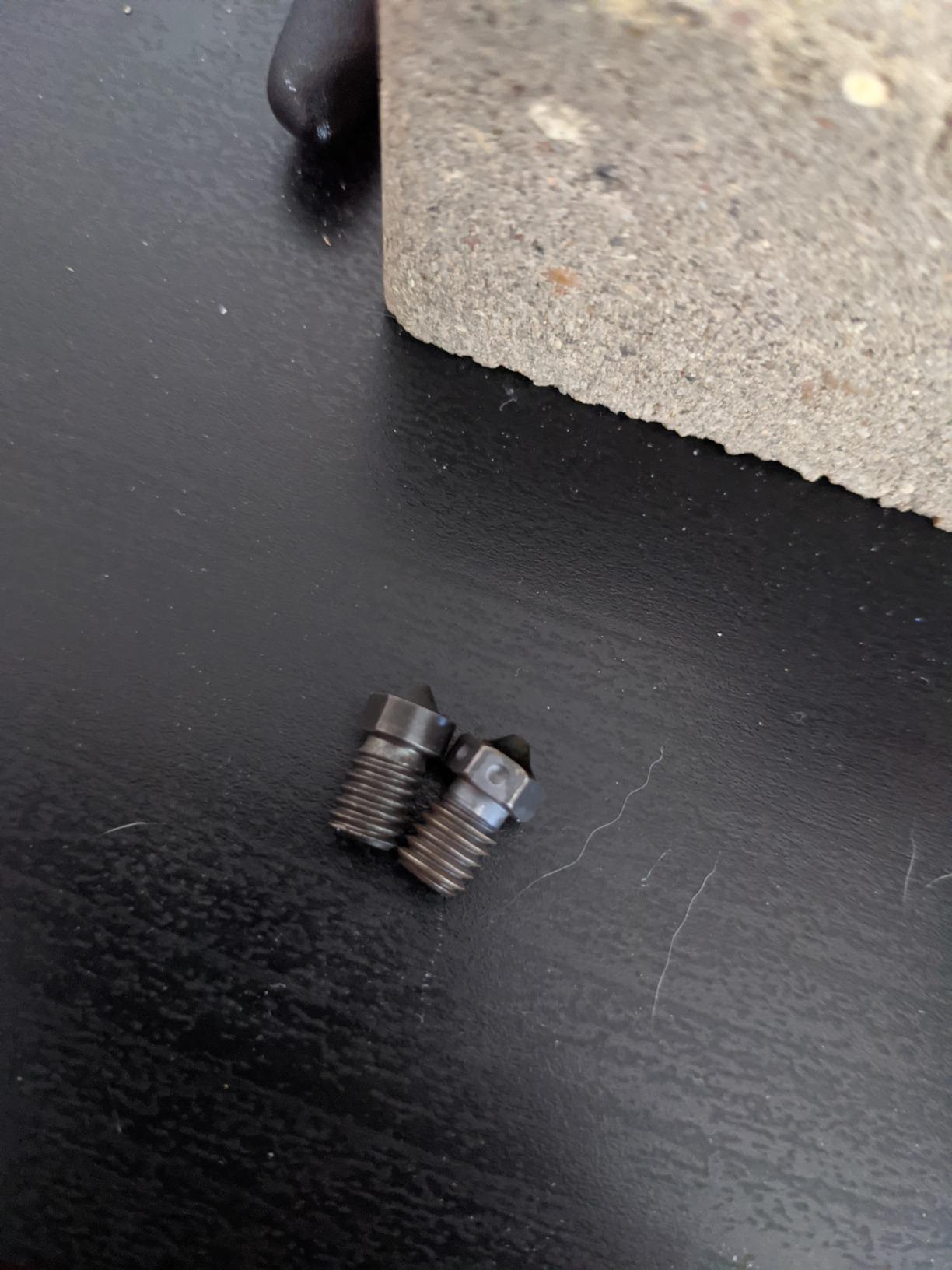
The specification worth noting is the thread. The listing states M6 or M7, which is unusual phrasing and reflects that E3D hotends have used both over the years, so this part covers more of the V6 lineage than a strictly M6 nozzle. It is a single metal piece rather than a screw-together assembly, which again removes a leak point. No hot end temperature changes are needed from standard profiles, which saves you the retune that other hardened nozzles force.
The trade-offs are price and coating fragility. A paper towel wipe is exactly the wrong tool here, and cold pulls will abrade the non-stick layer, so cleaning has to be done with the soft brass brush and heat the manufacturer recommends. One buyer also received a 0.2mm nozzle in place of a 0.4mm order and spent months troubleshooting the resulting clogs, so measure the orifice before you trust it.
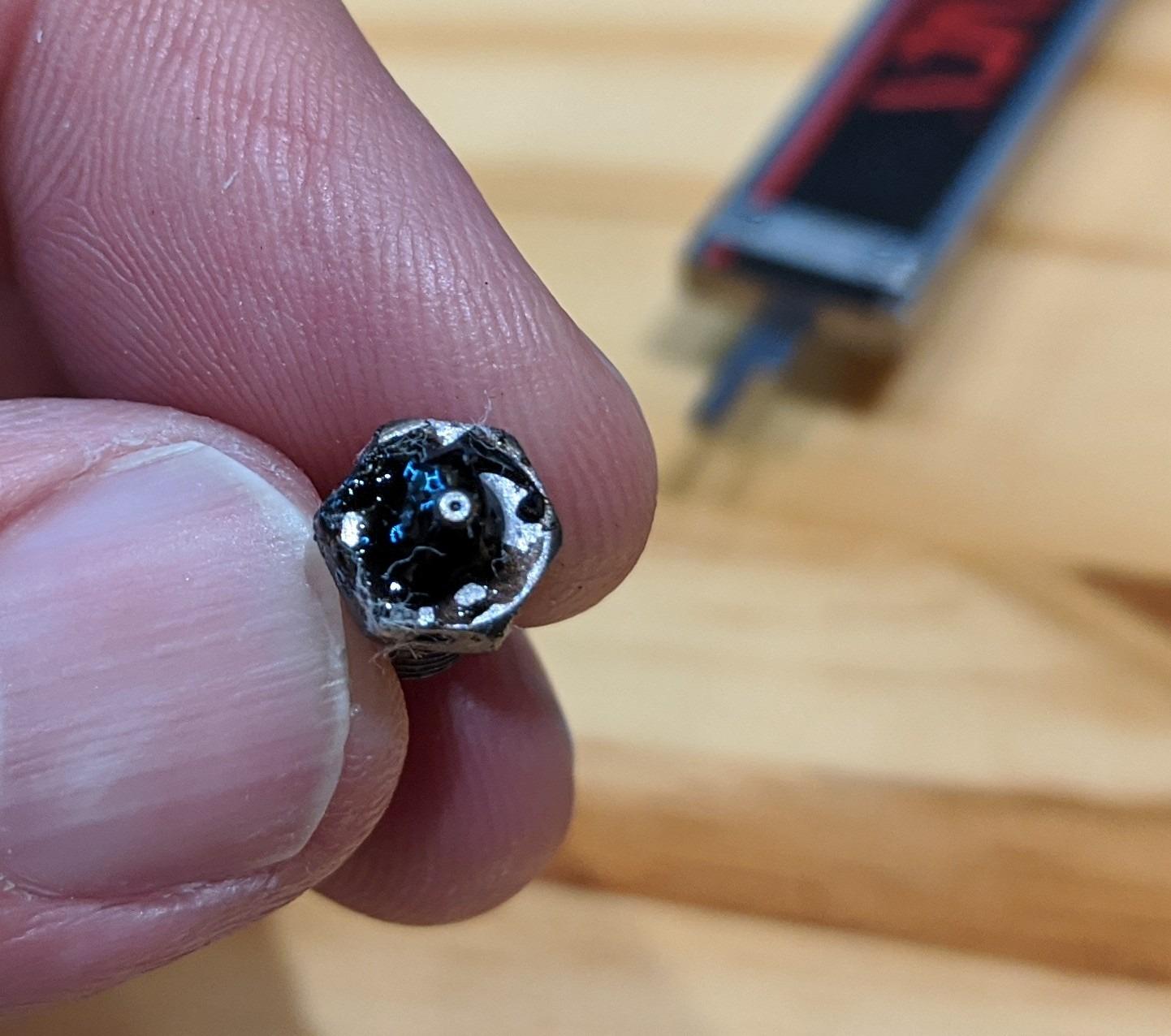
Is the slick coating worth the extra cost over hardened steel?
It depends on how often you change materials and how much you clean. If you run one abrasive spool for weeks at a time, build-up is a minor issue and the coating adds little. If you alternate between carbon fiber, PETG, and glow PLA on a weekly basis, the low-adhesion surface saves real time and cuts the stringing that otherwise gets blamed on your retraction settings.
There is also a case for the coating on high-temperature work. On a 300C-plus print a silicone sock is not always an option, and a non-stick surface becomes the only practical way to keep the cone clean. Buyers using this nozzle for engineering polymers report that the coating handles the heat without degrading quickly.
Will this fit my printer?
It fits V6-family hotends, which covers a very large share of hobby printers including the Prusa MK3S, the MK4, Prusa Mini, and many Anycubic models. It will not fit MK8 extruders, Volcano heat blocks, or the Bambu Lab A1 family. The part number in the listing, V6-NOZZLE-4TC-175-400, is the one to match against your hotend before you order.
If you are still assembling a machine, our beginner-friendly printer guide covers the V6-style machines that pair cleanly with this nozzle, and our miniatures picks cover setups where small orifices matter more than throughput.
6. POLISI3D M6 High Flow Hardened Steel Volcano Nozzle 0.4mm
M6 High Temperature High Flow Hardened Steel Nozzle 0.4mm Compatible with 1.75mm 3D Printer Volcano Hotend Heat Block Sidewinder X1 X2 AC Vyper Kobra Max Print PEI PEEK Carbon Fiber (0.4mm)
Hardened tool steel
0.4mm orifice
Volcano heat block fit
High temperature rated
Pros
- No wear after a full roll of glass and carbon fill
- True 0.4mm bore with no burrs
- Handles wood and carbon fiber smoothly
- Low entry cost
Cons
- Cone sits 2-3mm longer than stock nozzles
- Closer to the bed so a missed levelling gouges
- Not a true hex body
- One Kobra Max owner could not feed
This is the lowest-rated item in the roundup at 4.0 stars from 216 reviews, and the reason is worth being upfront about. It is not a wear problem. Owners who have it running report no wear after a full roll of glass and carbon filled filament, solid build quality with no burrs, and a true 0.4mm opening on inspection. The rating is driven by fit and geometry, and that is entirely fixable if you know to expect it.
The Volcano geometry gives it a long cone, and this cone measures roughly 2-3mm longer than a factory Volcano nozzle. That means a fresh Z-offset and bed levelling job every time you swap it in, and because the tip sits closer to the bed, a levelling mistake gouges the print surface instead of merely printing badly. Several reviewers mention needing a fan duct adapter as a result of the extra length.
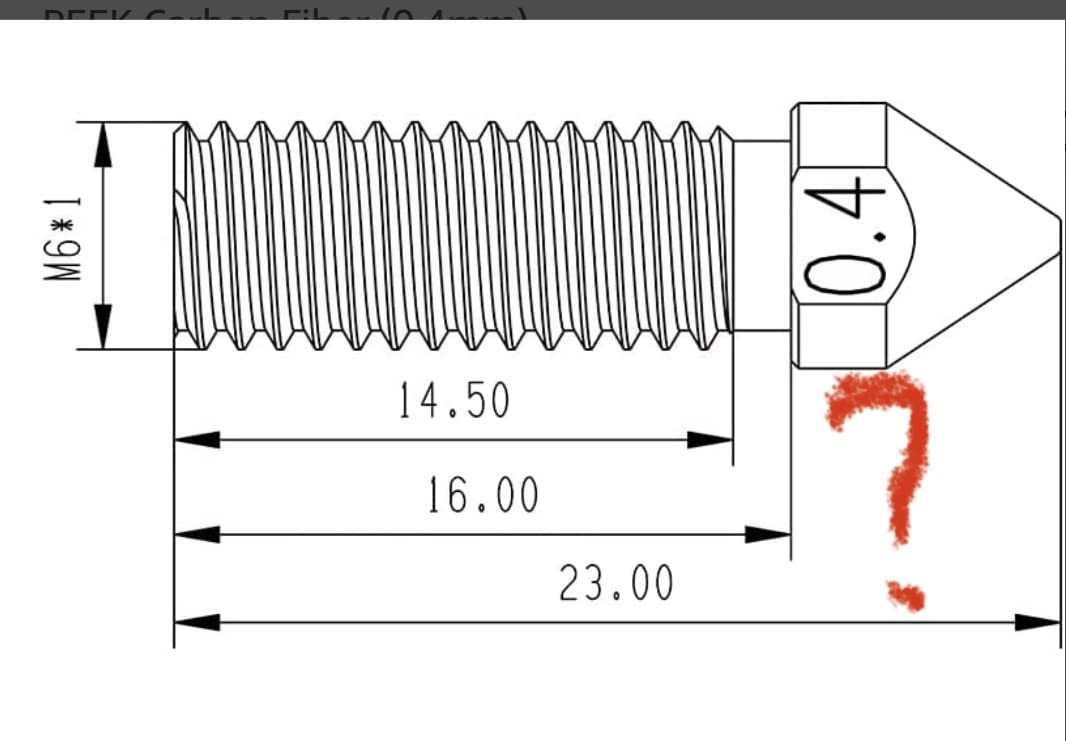
Hardware compatibility is the other split point. It works in the Flsun V400 and Artillery X1 according to buyers, and one enthusiastic user loves the print quality it produces. One Kobra Max owner could not get it to feed at all and reverted to the factory nozzle. The listing names the Creality Sidewinder X1 and X2, Anycubic Vyper, and Kobra Max as the target machines, with 0.6mm and 0.8mm versions also offered.
One reviewer also notes the last thread is not cut true to the photographs, and the body is not a true hex, so an open-ended wrench is required rather than a socket. This part is listed for PEI, PEEK, and carbon fiber filaments, so the thermal side is up to the job once the geometry is accounted for.
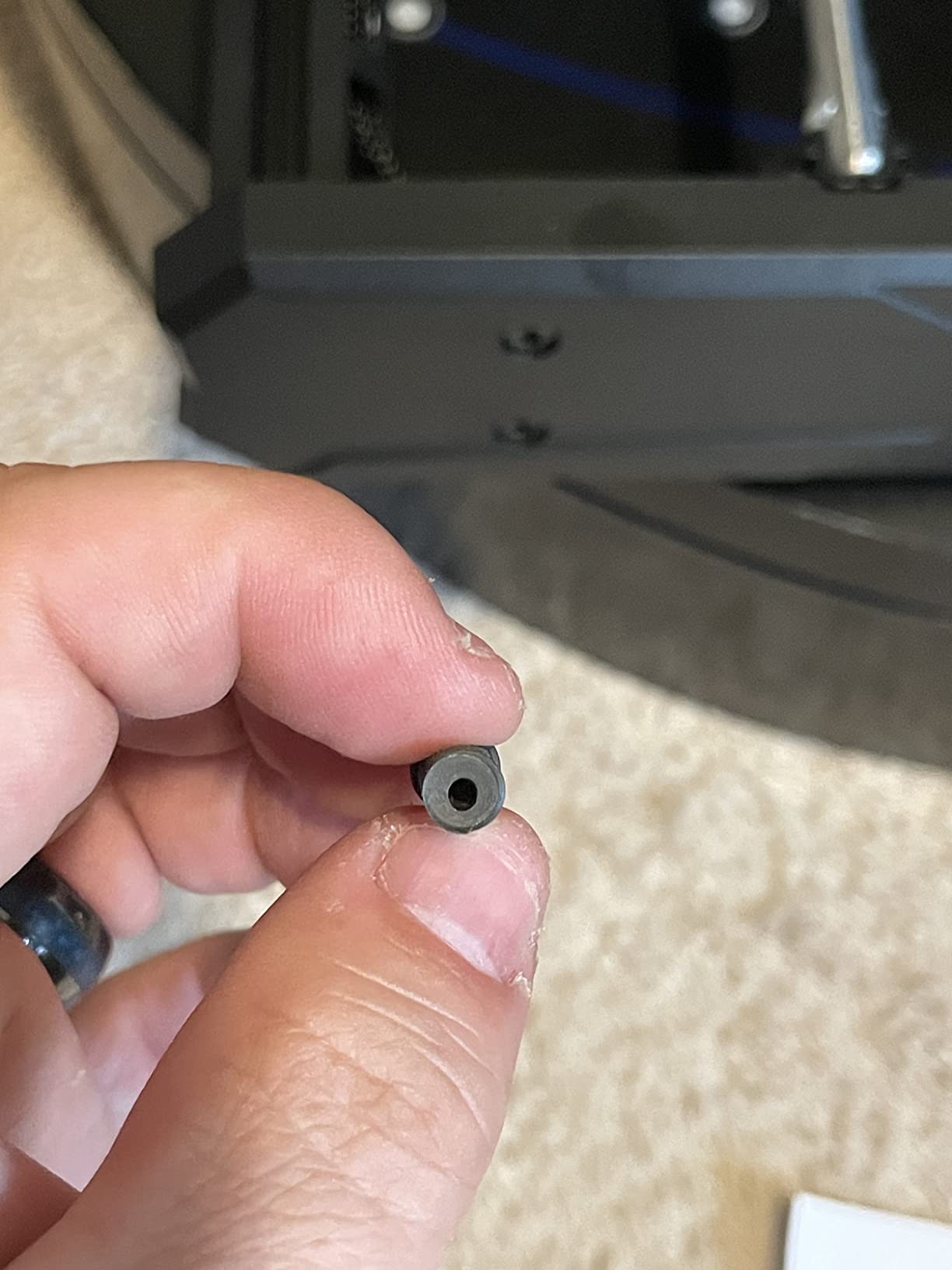
Is a longer cone actually a problem?
Only at install time, and only if you ignore it. Once the Z-offset is set and the bed is levelled against this nozzle, prints are normal, and the wear performance owners report is solid. The risk is a rushed swap, where you install the nozzle, run a print, and blame the result on the material instead of the geometry.
Budget fifteen minutes for the changeover: re-level, re-run the offset, and print a single-layer test before committing to a long job. On Klipper-firmware machines you also want to confirm the configured max Z height accommodates the extra tip length, because a hard stop partway into a tall print is a genuinely bad afternoon.
Should I buy the 0.6mm or 0.8mm version instead?
For heavy abrasive work where clogs interrupt you repeatedly, yes. A larger orifice is far more forgiving with carbon fiber and glass fill, and the same manufacturer offers those sizes for exactly that reason. The trade-off is surface finish and detail, so a 0.6mm is the sensible general-purpose choice and 0.8mm is for structural parts where strength matters more than the top surface.
Do not go smaller than 0.4mm with this part for abrasive filament. Small orifices are the first thing carbon fiber clogs, and a nozzle that is already asking you to re-level on every install is not the place to add a clogging problem.
7. Micro-Swiss MK8 Plated M2 Hardened High Speed Steel Nozzle
Microswiss MK8 Plated M2 Hardened High Speed Steel Nozzle (.4mm)
M2 hardened high speed steel
Electroless nickel plating
WS2 coating
0.4mm orifice
Pros
- Harder base steel than the A2 model
- Nickel plating resists corrosion
- WS2 coating cuts build-up
- Limited lifetime wear warranty
Cons
- Costs more than A2 plated model
- Single size in the reviewed listing
This is Micro-Swiss’s premium answer to abrasive filament, and the difference from the A2 model in the same range is the base steel. M2 hardened high speed steel sits above A2 tool steel on the hardness scale, which is what you want when the material being extruded is carrying carbon fiber or glass particles through the orifice on every single layer. The electroless nickel plating underneath adds corrosion resistance, and the WS2 coating on top gives the low-friction, low-build-up surface.
It scores 4.6 stars from 177 reviews with 80 percent five-star and only 4 percent one-star, which is the cleanest rating distribution of anything we looked at. The written review text for this listing was limited, so the pattern draws on the aggregate scores and the published specification rather than long individual accounts, and that is worth keeping in mind as you weigh it.
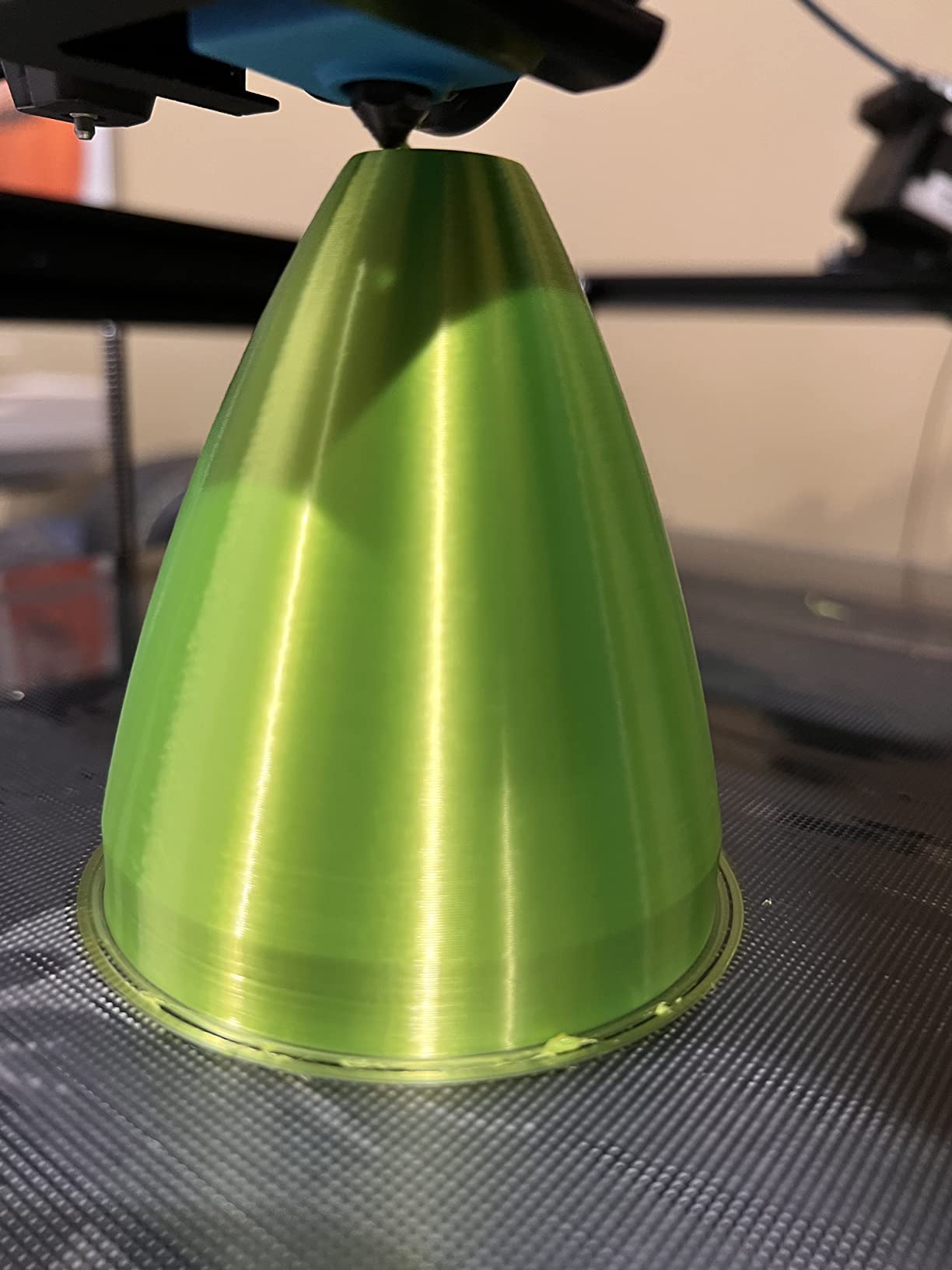
The feature that genuinely sets it apart is the warranty. The listing states a limited lifetime warranty against wear, and for a consumable that is usually consumed, a manufacturer standing behind the wear claim changes the calculation. It is also made in the USA, fits MK8 extruders along with Creality, Tevo Tornado, MakerBot, CraftBot, and BQ Witbox, and comes in 0.4mm, 0.6mm, 0.8mm, and a value pack.
Against that, the honest limitation is the size range. The version reviewed here is 0.4mm only, so if you want a coarse high-flow option you are choosing a different variant, not a different quantity of the same one. And you are paying more than generic hardened steel for a part whose benefit shows most clearly over many hours of abrasive printing rather than in a single weekend test.
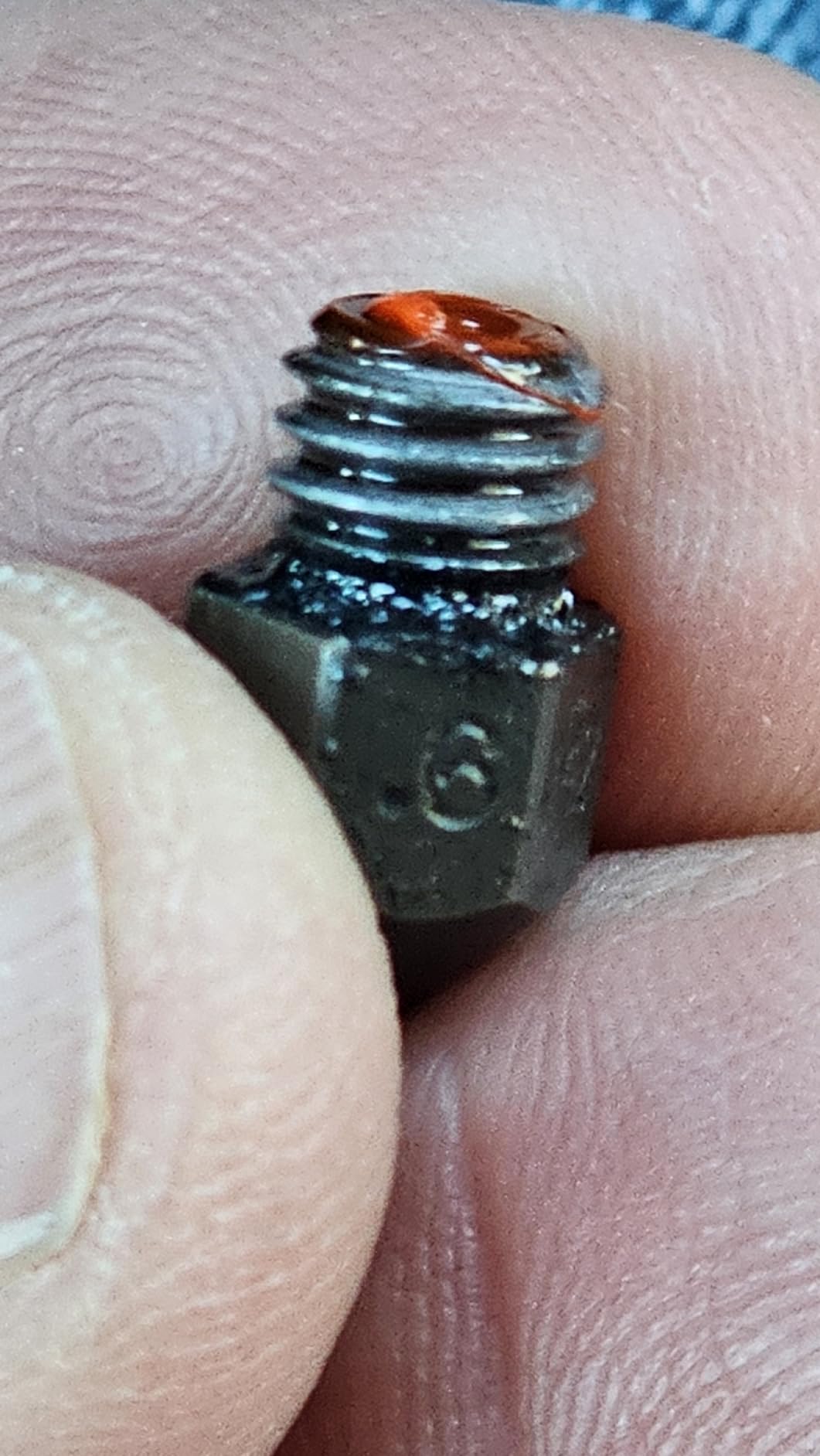
Is M2 steel worth the step up from A2?
For volume abrasive printing, often yes. The base steel is harder, the plating stack is corrosion-resistant and low-friction, and the wear warranty shifts the risk onto the manufacturer. If you are running a small number of abrasive parts a month, a plain hardened steel nozzle and a spare in the drawer is the more sensible allocation of money.
The clearest case for it is a print farm or a small business where a clogged nozzle means a missed delivery. At that point the question stops being about cost per nozzle and becomes about cost per successful print, and the coating that reduces build-up attacks the most common cause of an interrupted job.
How does it compare with the tungsten carbide option?
Different tiers rather than competing answers. Tungsten carbide is harder still and tolerates far higher temperatures, which is why it appears later in this roundup for PEEK and ultra-high-heat work. This plated M2 nozzle is for the everyday abrasive range, where the filament sits well below what would damage the coating.
Choose tungsten carbide when your nozzle temperature regularly exceeds what a plated surface is built for. Choose this one when you are under that ceiling and want the cleanest extrusion experience day to day.
8. POLISI3D MK8 Plated Copper Nozzle Rated to 500C
POLISI3D High Temperature 500℃ Non-Stick Sharp MK8 Plated Copper Nozzle 0.4mm Durable Compatible with Ender 3 V2 Pro / 5 Pro CR10 S4 S5 Anet A8 ET4 Voxelab Aquila 3D Printer (0.4mm)
Copper alloy to 500C
Nickel non-stick plating
Over 3x brass conductivity
0.4mm orifice
Pros
- Handles heat far above engineering polymer needs
- Plating stops adhesion above 300C
- Tighter temperature control than brass
- Fits a wide range of MK8 printers
Cons
- Copper is softer than hardened steel or ruby
- Not the right nozzle for carbon fiber
- Longer heat-up times
Be clear about what this nozzle is and is not. It is a high-temperature part, not a high-wear part. The special copper alloy has a softening point well above 500C and carries more than three times the thermal conductivity of brass, which gives tighter temperature control and better heat-up behaviour on engineering polymers. The nickel-based plating reduces adhesion of plastic to the nozzle, which is the important detail above 300C where a silicone sock is not usable.
For abrasive filament, copper is the wrong material. Copper is softer than hardened steel and softer than a ruby tip, so the carbon fiber particles that pass through the orifice will wear it faster than the hardened parts in this roundup. Buyers frame this listing as the temperature and clean-up specialist, and that framing is accurate.
Where it does earn its place is the two-nozzle strategy that experienced operators describe on the printing forums. Keep a plated copper or brass nozzle for clean PLA, PETG, and ABS prints where conductivity and finish matter, and a hardened nozzle for abrasive jobs. Switching between materials then means swapping nozzles, but each nozzle is doing the job its material suits, and neither gets worn out by the other’s filament.
Compatibility is broad for an MK8 part. The listing names Ender 3 V2 Pro, Ender 5 Pro, CR-10 S4 and S5, Anet A8, ET4, Voxelab, and Aquila hotends, with a 0.4mm size here and a 0.6mm also available. Note that the conductivity advantage carries a small cost: higher conductivity means slightly longer heat-up time, which is negligible on a big part and noticeable on frequent small jobs.
Should I skip this entirely if I only print carbon fiber?
Yes. If abrasive filament is the majority of what you run, a harder tip is the correct purchase and this one will be the first nozzle you replace. The hardness of the orifice material, not the conductivity of the body, determines how long the hole stays at 0.4mm, and that is the whole game with abrasive printing.
The only reason to own both is material variety. A mixed workload where you alternate high-temperature engineering polymers with clean consumer filaments and occasionally a spool of carbon fiber is exactly the case where two nozzles make more sense than one compromise part.
Does the plating survive high temperatures?
The plating is the reason to choose this over a bare copper nozzle, and it is specifically designed for adhesion reduction at temperatures where socking the hotend is not possible. The alloy itself is hardened and treated to reduce oxidation at high heat, so the two protections work together rather than one carrying the other.
Store it clean and dry between prints regardless. Copper alloys and plated surfaces both benefit from being wiped before they cool into a carbonized layer, and a warm nozzle with a soft brass brush takes ten seconds and prevents the buildup that turns into a clog.
9. MOD3DP Ruby Volcano High Flow Nozzle 0.6mm
Ruby Volcano Nozzle Abrasion Wear Resistant High Flow 0.6 Sidewinder 1.75mm Hardened (Volcano, 0.6mm)
Genuine ruby tip
Bass body
0.6mm high-flow orifice
Volcano fit
Pros
- Ruby tip outlasts stainless nozzles
- Reported clean over roughly 3kg of fiber fill
- Polished funnel bore reduces dead corners
- Direct fit for Kobra Max and Vyper
Cons
- Ruby insert can chip or detach from the body
- One tip broke during tightening with pliers
- Inconsistent results on the Vyper
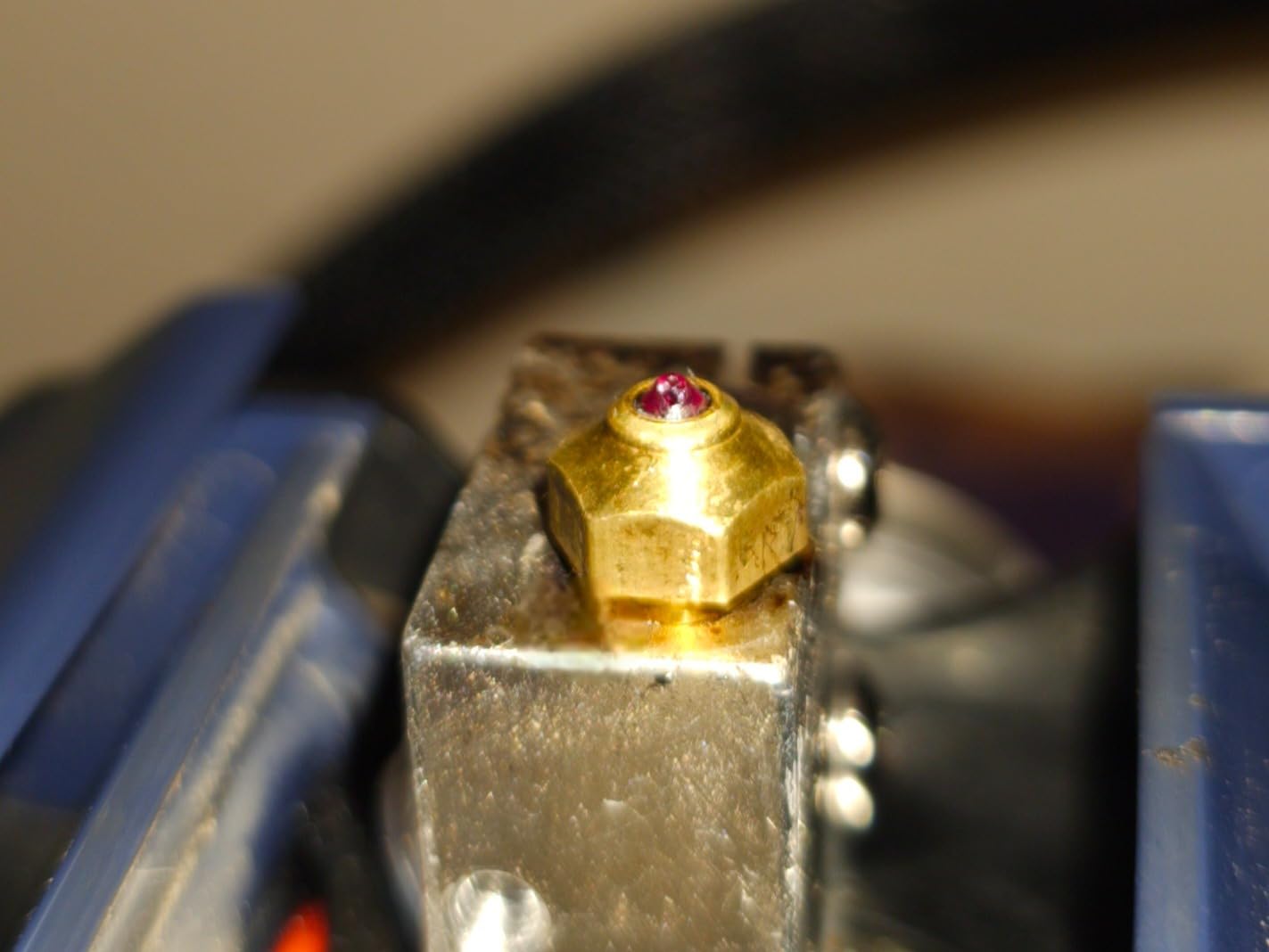
Ruby is a genuine step above hardened steel on the hardness scale, and at this price it is the cheapest way into that tier. The tip is genuine ruby set into a brass body, and the brass body does the job brass is good at, which is carrying heat from the heater block down to the tip efficiently. The result is a nozzle that keeps its bore through abrasive filament and still responds quickly to temperature changes.
Owners report the tip outlasting multiple stainless steel nozzles, and one user ran roughly 3kg of fiber-filled prints with no clogs and no print quality issues. The 0.6mm high-flow orifice is a sensible choice for abrasive work in its own right, since a larger hole is more forgiving with carbon fiber and glass fill, and the funnel-shaped body is carefully cut and polished to avoid material collecting in dead corners where it would carbonize into a blockage.
Now the warning, and it is a real one. The recurring failure mode here is mechanical rather than wear-related: the ruby insert has broken off both during use, with one owner losing it after three carbon PETG prints and needing a hotend replacement, and during installation with pliers, leaving threads stuck in the hotend. Handle it gently, tighten it against the block at temperature rather than levering on a cold part, and treat pliers near the tip as a last resort.
Fit is also inconsistent across machines. The nozzle works well on the Kobra Max and FLSUN according to buyers, and one Vyper owner could not get consistent quality even after full Klipper calibration and went back to brass. Several users also note the nozzle sits about half a millimetre low, requiring re-levelling or a printer.cfg height adjustment on Klipper machines. The seller resolved one break-off case with a refund, which is worth knowing if you are deciding how much risk to accept.
Is a ruby tip worth the risk over hardened steel?
Yes if you print abrasive filament regularly and you are comfortable treating the nozzle as a consumable that can chip. Ruby resists wear far better than hardened steel, and the wear resistance is exactly what keeps your layer lines consistent on carbon fiber. The break-off reports are rare relative to the volume of positive wear reports, but they are expensive when they happen.
If you print abrasives occasionally, the hardened options in this roundup are the smarter purchase. The difference in wear only matters if you would otherwise buy a second and third replacement nozzle, and at low abrasive volume you will not get there for months.
Why is 0.6mm the right default here?
Because clogs, not wear, are what interrupt abrasive prints. A 0.6mm orifice gives particles more room to pass, prints faster for the same volumetric flow, and forgives the debris that a 0.4mm hole will eventually trap. The cost is surface detail, so this is the right choice for functional parts, brackets, and enclosures rather than display models.
Note the part is sold in 0.6mm, and that size also reduces the stress on the ruby insert during installation. If you need finer detail, do it with a second nozzle rather than forcing this one below its intended geometry.
10. Dawnblade Tungsten Carbide MK8 Nozzle 0.4mm
Tungsten Carbide MK8 Nozzle 0.4mm/1.75mm, Wear Resistant for 3D Printer
Tungsten carbide, 9 Mohs
550C rated
130 W/mK conductivity
M6 thread
Pros
- 9 Mohs hardness matches ruby
- Handles temperatures up to 550C
- High conductivity supports faster printing
- Low expansion for dimensional stability
Cons
- Costs more than hardened steel
- May need temperature adjustments
- Small review base for the listing
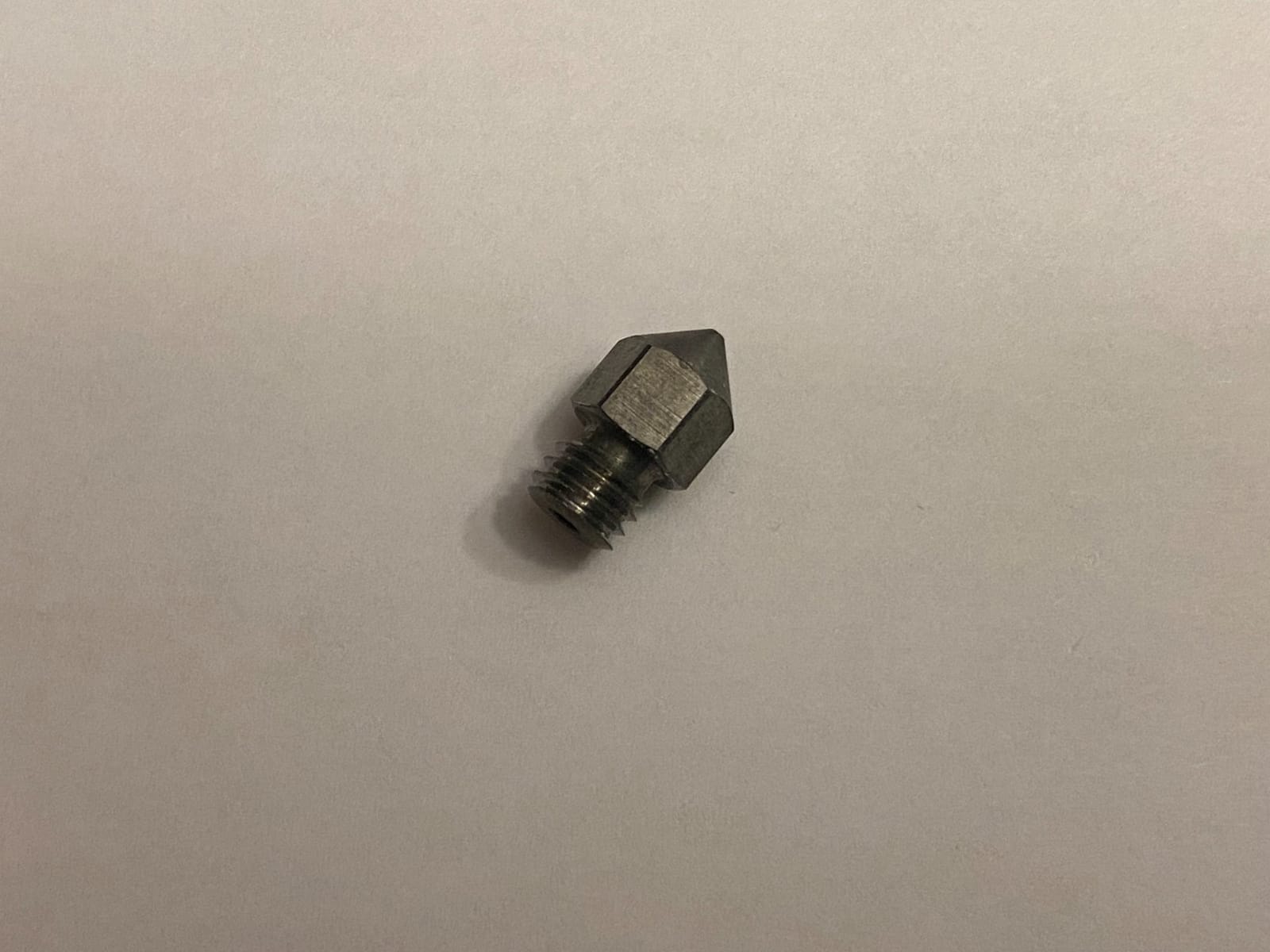
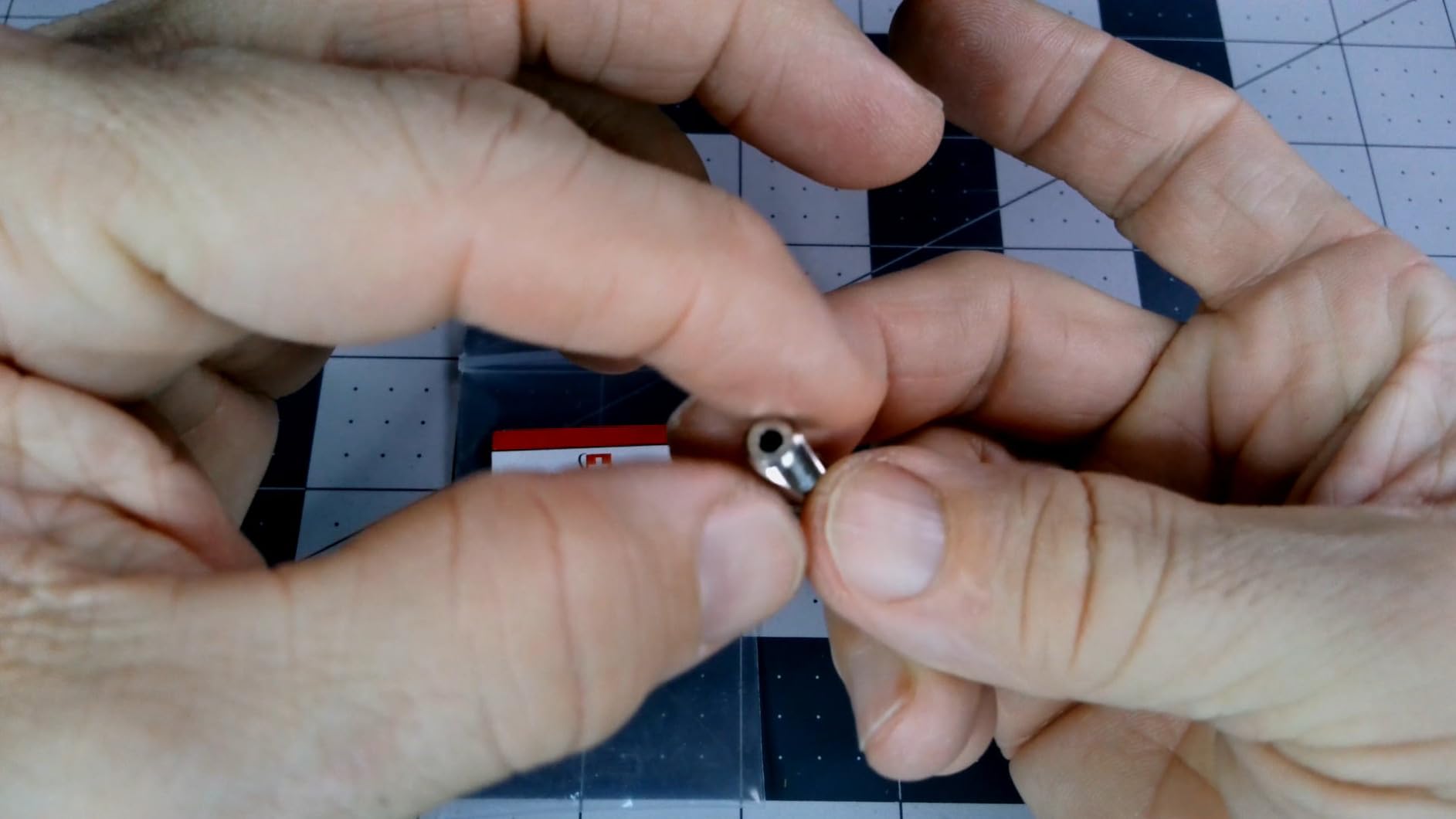
Tungsten carbide is the strongest material in this roundup that is not a diamond tip, and the numbers back the marketing. The listing states a hardness of 9 Mohs, which it claims is the same as a ruby nozzle, a temperature resistance up to 550C, thermal conductivity of 130 W/mK, and a low expansion coefficient of 4.5 micrometers per meter per degree Celsius for dimensional stability when hot.
That conductivity figure is unusually high, and it is the reason this nozzle suits fast printing. Good heat transfer into the melt zone means the filament plasticizes fully and consistently, which is what lets you hold a high print speed without underextruding. Users praise the durability for abrasive filaments like carbon fiber, and the heat tolerance is what makes it a genuine option for PEEK-class materials where brass would deform.
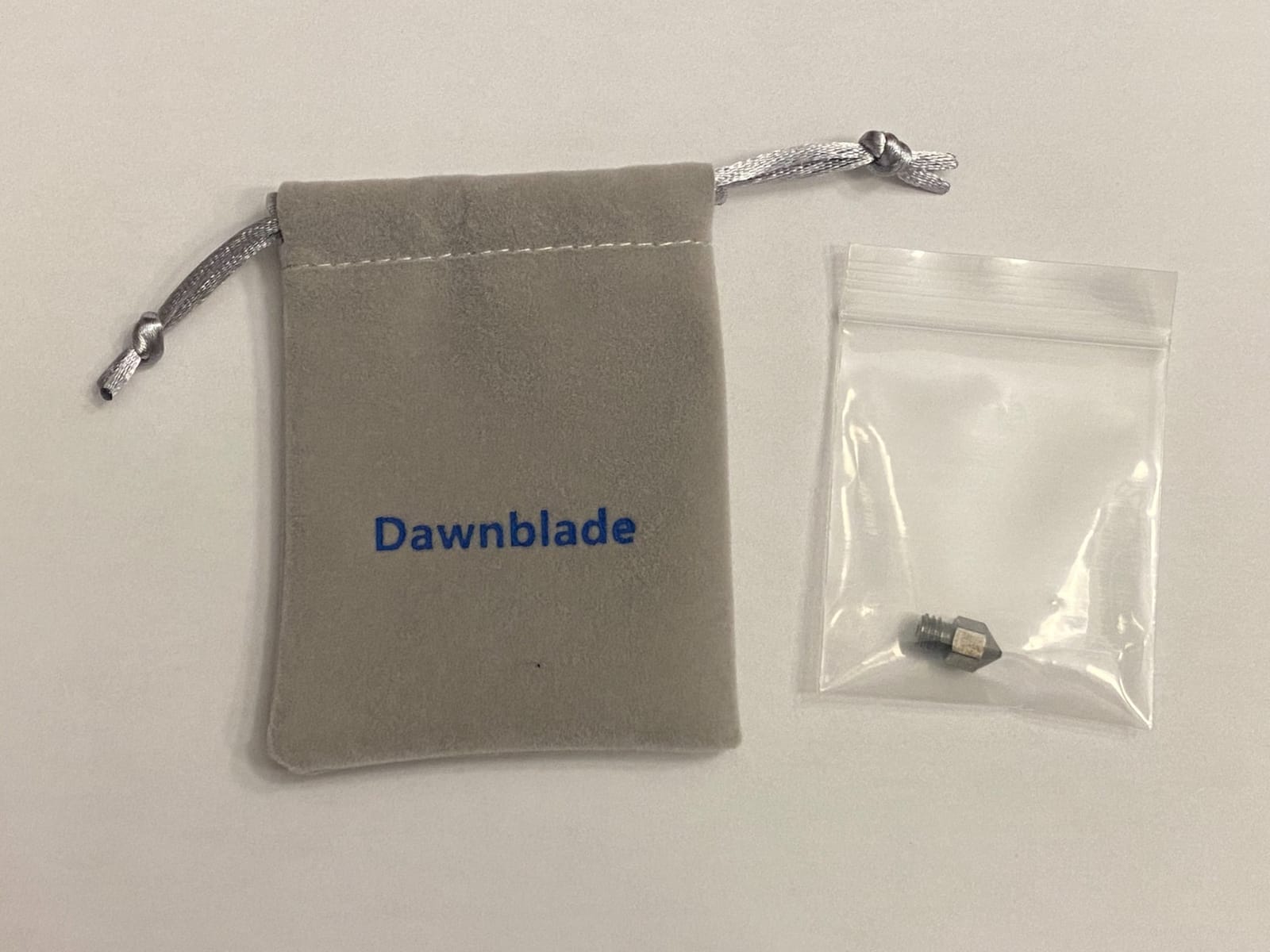
The fitting is standard M6 with a 6.35mm inlet, and the listing lists compatibility with the MK8 hotend of Ender and CR series machines plus the CR-10 all-metal hotend, Prusa i3, Anet A8, and Reprap. The 0.4mm orifice is for 1.75mm filament, and the exterior finish is nickel.
The honest caution is the review base. At 81 reviews this is the thinnest evidence in the roundup, so we are leaning on published specifications and the small number of written reports available, which note exceptional durability, good performance with high-temperature materials, and the bonus of faster printing from the conductivity. Reviewers also flag that temperature adjustments may be needed to hit your usual profile, which is the usual consequence of a harder, better-conducting tip.
Is tungsten carbide a good all-round abrasive nozzle?
It is an excellent one when you need heat tolerance, and a costly one when you do not. Carbide does not chip the way a ruby insert can, so it removes the single most common complaint attached to ruby-tipped nozzles, and it holds a 0.4mm bore through abrasive filament at a level only a diamond tip beats.
The case against is narrow but real. If you are printing standard abrasives well below the point where brass would soften, you are paying for headroom you will not use, and a coated hardened steel nozzle will deliver a similar service life at a lower cost. Buy carbide when the temperature rating is the deciding requirement, not just the wear rating.
Does it need different temperature settings?
Possibly, and this is a normal expectation rather than a fault. A highly conductive tip moves melt heat away from the heater block faster, so a profile tuned for brass can run slightly hot at the nozzle. The reports on this listing point to needing small adjustments for optimal printing, and the same behaviour shows up on the diamond nozzle further down.
Do the adjustment once, on a test print, and save it as a separate material profile. Users who switch filament types on a single profile end up fighting a temperature offset that is really a nozzle-material offset, and a dedicated profile removes the whole problem.
11. Micro-Swiss CM2 HighFlow Volcano Nozzle with M2 Hardened Steel Tip
Microswiss CM2 HighFlow Volcano 1.75 Nozzle for Artillery Sidewinder/Anycubic/FLSUN – Copper Core – M2 Hardened Steel Tip – Superior Thermal Performance – Exceptional Wear Resistance (.4mm)
Copper alloy core
M2 hardened steel tip
Nano WS2 coating
Volcano 1.75
Pros
- Copper core handles heat superbly
- Hardened tip resists abrasive wear
- Limited lifetime wear warranty
- Made in USA
Cons
- Volcano thread only
- Will not fit a standard MK8 hotend
- Premium price for the tier
This nozzle carries a 4.8 star average from 40 reviews, the highest rating in the roundup, though the sample is small, so treat that number with the context it deserves. The design is the interesting part: a copper chromium zirconium alloy core for thermal performance, an M2 hardened high speed steel tip for wear, electroless nickel plating on both, and a non-stick nano WS2 coating on the tip.
That combination targets the exact problem abrasive filament creates. The copper core solves heat transfer so the melt stays consistent under high flow, the hardened tip resists the carbon and glass particles, and the coating reduces filament build-up on the part that would otherwise carbonize into a clog. The listing states a limited lifetime warranty against wear and manufacture in the USA.
Compatibility is broad on the Volcano side. The listing names the Anycubic Kobra, Kobra Max, Kobra Plus, and Vyper, Artillery Genius Pro and Sidewinder X1 and X2, FLSUN Super Racer, FOKOOS Odin-5 F3, Lulzbot Taz MOARstruder, and Tevo Little Monster, with 0.4mm, 0.6mm, and 0.8mm variants available. It works with PLA, ABS, PETG, and TPU, and the Volcano format is what gives it the high-flow geometry the product name refers to.
The single limitation is also the single most important thing to check: this is a Volcano 1.75 threaded part and it will not fit a standard MK8 hotend. Buying it for an Ender or CR-10 without a Volcano conversion is a common and expensive mistake, so confirm your heat block before you order.
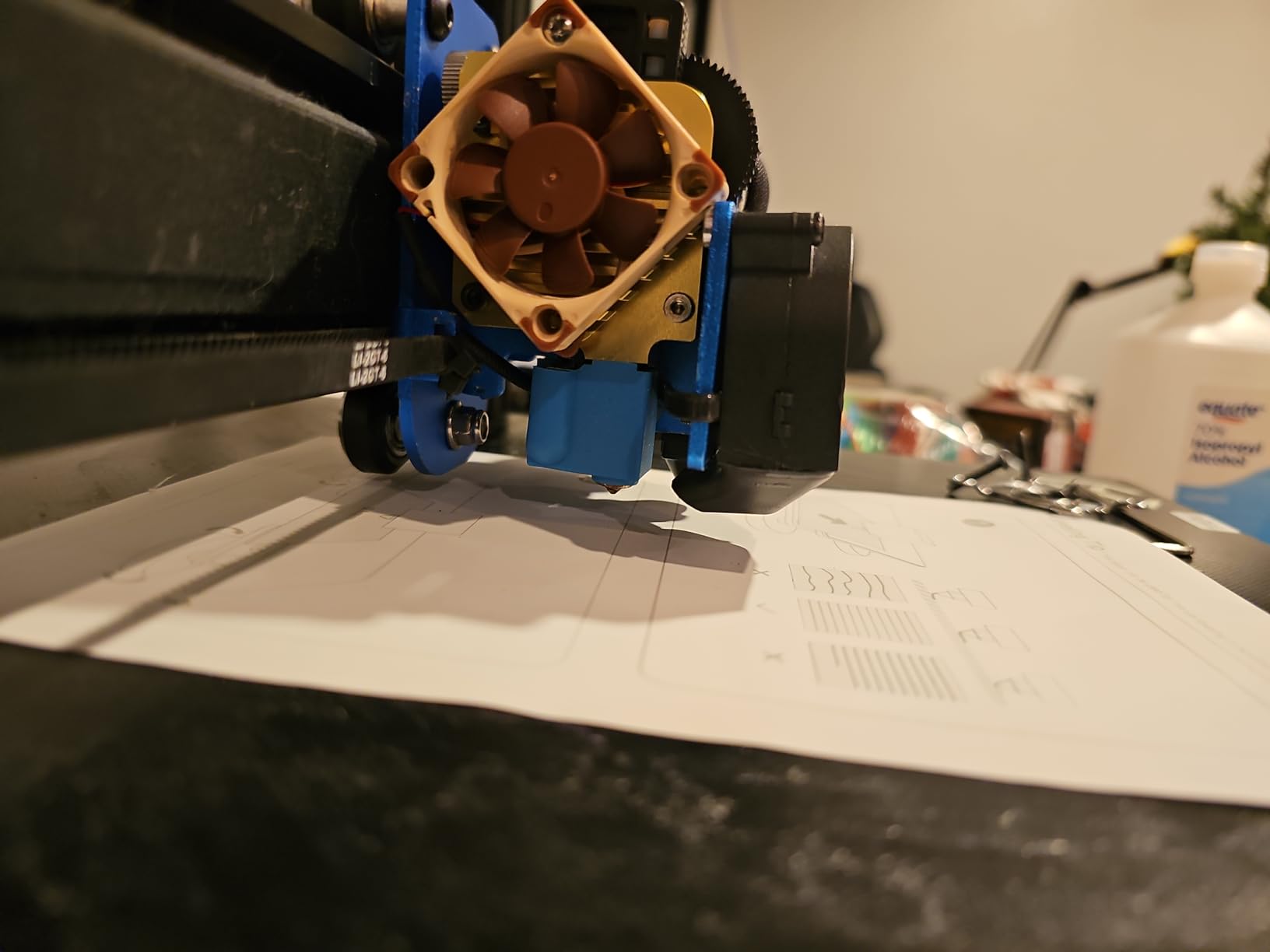
Do I need a high-flow nozzle for abrasive filament?
You need a larger orifice, and high flow is one way to get it. The practical reasons to want a high-flow nozzle are speed and material flexibility, since a longer melt zone moves more plastic per second and forgives a wider range of filaments. If you mostly print functional abrasive parts at moderate speeds, a standard 0.4mm or 0.6mm nozzle does the same job more cheaply.
Where high flow earns its place is a production workload printing large carbon fiber or glass-filled panels, where bottlenecking on melt rate rather than wear becomes the constraint. The hard tip keeps the bore open under that load, which is where the coated design and the warranty together start to make financial sense.
Why does the copper core matter here?
Because a hardened steel tip alone conducts heat poorly enough to affect your temperatures. The copper chromium zirconium core restores the heat path from the heater block, so you get a wear-resistant tip without giving up the temperature control you had with brass. That is the same reasoning behind the plated copper nozzle earlier in this roundup, applied to a nozzle that is also built to survive abrasives.
If you are assembling a machine rather than upgrading one, the printer roundups here cover both entry-level and detail-focused options, and checking the hotend type on the machine you want narrows the nozzle list considerably.
12. Diamondback Volcano Diamond Tip Nozzle 0.4mm
Diamondback Volcano Compatible 3D Printer Nozzle, Diamond Tip, 0.4mm
Solid polycrystalline diamond tip
Brass body
Volcano compatible
300C max
Pros
- Hardest tip material in the roundup
- Solid diamond rather than a coating
- Claimed 2-8x tool life over tungsten carbide
- Filament does not stick to the tip
Cons
- Premium cost for the tier
- Diamond tip is brittle and can chip
- Requires running 5-20C cooler
This is the top of the material ladder and near the bottom of the roundup’s ratings, and both facts come from the same place. The tip is solid polycrystalline diamond on a brass body, not a coating over steel, which makes it the hardest and most wear-resistant option here, with the listing claiming tool life 2-8 times tungsten carbide. Users report exceptional wear life on abrasive carbon fiber and note that filament does not stick to the diamond surface, which keeps the tip clean without aggressive cleaning.
Two technical notes matter before you consider it. The maximum rated temperature is 300C, which is lower than the tungsten carbide option in this roundup and lower than the plated copper nozzle’s 500C rating, so it is not the choice for PEEK-class work. And because the diamond conducts heat away efficiently, the listing states it requires running 5-20C cooler than a standard profile, which is a real adjustment rather than a rounding error.
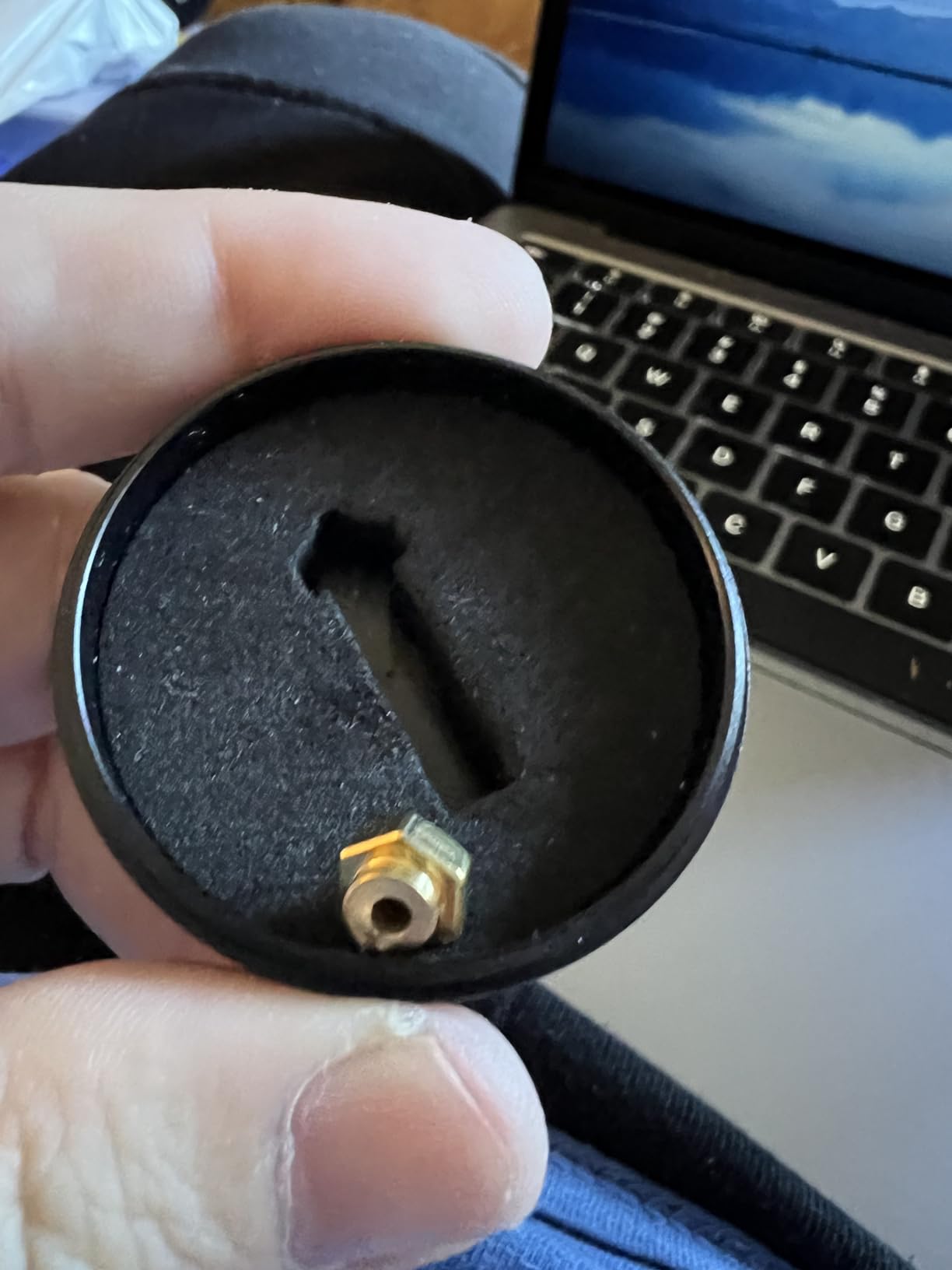
Brittleness is the recurring complaint. The tip can break if dropped or struck, and some users experienced breakage after several months of use, and separate reports mention customer service issues when a replacement was not sent. At 4.1 stars from 66 reviews, this is among the least proven products in the roundup as well as the priciest, and those two facts should be weighed together rather than separately.
What it does offer is the widest size range of any nozzle here, with 0.2mm, 0.25mm, 0.4mm, 0.6mm, 0.8mm, and 1.0mm options including high-temperature variants, all on the Volcano thread. The listing also claims reduced tip clogging and improved layer adhesion as a result of the tip’s thermal behaviour, which would make sense for high-flow abrasive production work.
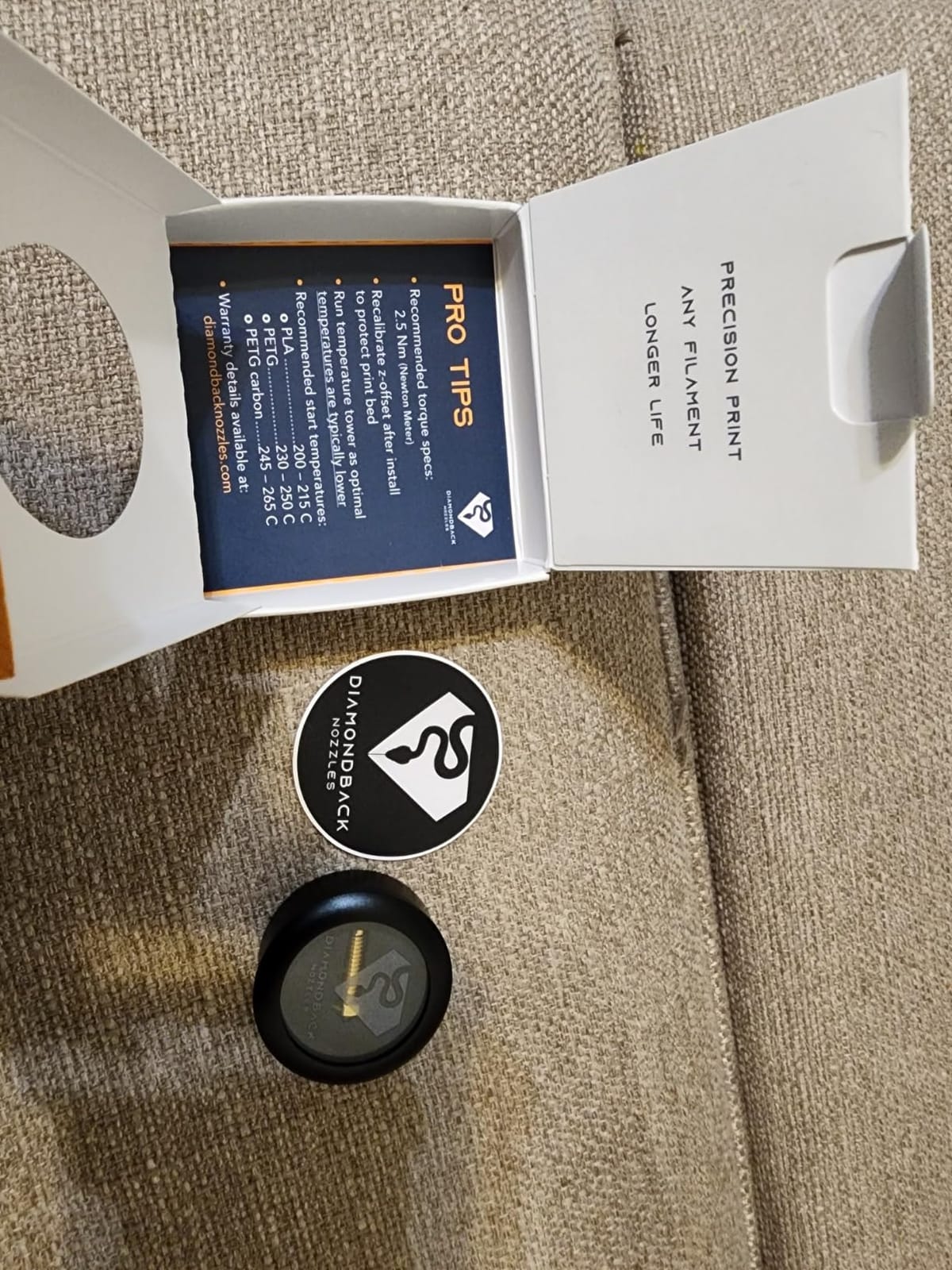
When does diamond actually pay for itself?
When you are printing abrasive filament every day and a nozzle change interrupts production. The claim of 2-8 times the tool life of tungsten carbide, if it holds in your workflow, means you replace the nozzle a fraction as often and you stop paying for spare nozzles sitting on a shelf. At that volume, the cost per kilogram printed drops sharply even though the cost per nozzle is the highest here.
It does not pay for itself on occasional use. If you run a spool of carbon fiber every few months, a hardened nozzle will still be in service years later and the diamond tip never earns its cost. The break-even is a function of abrasive filament throughput, not of print quality.
Is a brittle tip a problem in normal use?
Not if you treat it properly and not at all if you do not. Brittle means the damage comes from impact and lateral force rather than from heat or wear, so the habits that matter are tightening against the block at temperature, never using pliers on the tip, and storing the nozzle so it cannot be knocked off a bench.
Mount it correctly the first time. Use the wide flats on the brass body, tighten evenly, and confirm the Z-offset before the first print, because a nozzle seated at an angle puts uneven load on a tip that will not forgive it the way a steel cone would.
Nozzle Material Tiers Explained
The strongest nozzle material is diamond, and below it come ruby and tungsten carbide at essentially the same hardness, then vanadium alloys, then plated and hardened steel, then bare brass. That ranking matters, but it is not the only ranking. Conductivity, geometry, and coating decide as much in daily use as raw hardness does.
Two different hardness scales appear in this product category, and mixing them up causes most of the confusion. Rockwell HRC, the number attached to hardened tool steel, measures hardness by indenting a steel cone. Mohs, the number attached to ruby, diamond, and tungsten carbide, measures a material against a reference mineral on a 1 to 10 scratch scale. Mohs 9 from tungsten carbide is not the same claim as HRC 60 steel, and the two cannot be compared directly.
Why a nozzle wears out is mechanical. Abrasive filament carries filler particles that are harder than brass, and every pass through the orifice scours the wall like sandpaper on a hole. The wear rate depends on particle hardness and shape, on how much filament you push through, and on temperature. Keep the orifice at its true diameter and extrusion stays consistent; let it widen and your commanded line width no longer matches reality, which shows up as under-extrusion and poor layer bonding.
Forum consensus lines up with the specs. Across the printing communities, hardened steel is the practical default and the tier most people buy in quantity, ruby is ranked marginally above it, and diamond sits at the top, with price sensitivity keeping steel in place for most users. Many operators also run slower speeds on hardened steel, in the 60-80mm/s range, because the conductivity penalty largely disappears at lower flow.
The material tiers in plain terms
Diamond, solid polycrystalline tip: the hardest, longest-lived, brittle, and the most costly, rated to 300C on the model in this roundup.
Ruby, 9 Mohs: harder than steel and excellent against carbon and glass, but the insert can chip or detach from the body.
Tungsten carbide, 9 Mohs: matches ruby on hardness, tolerates 550C, conducts heat at 130 W/mK, and does not chip the way an insert can.
Vanadium alloy: sits between hardened steel and the carbide tier, though no vanadium nozzle appears in this roundup’s product set.
Hardened steel, typically HRC 60 class: the workhorse, cheapest to replace, and the answer most forums recommend.
Plated steel, including A2 tool steel with TwinClad XT or M2 with WS2: steel plus a low-friction and corrosion-resistant surface.
Plated copper alloy: superb conductivity and heat tolerance, but softer than steel, so it is a temperature part rather than a wear part.
Brass: the factory nozzle, excellent conductivity, and the wrong material for anything abrasive.
Will It Fit My Printer? Hotend Compatibility
Fit decides everything, and it is the number one source of wasted purchases. A nozzle is defined by its thread pattern and its cone length, and a part that is correct on paper can still print badly if the tip sits at the wrong height. Confirm the fitting before you buy anything else.
MK8 is the short, blunt screw pattern found on Creality Ender, CR-10, Anet, Voxelab, and Aquila machines, and it appears on five of the twelve nozzles here. V6 is the long M6 pattern used across Prusa machines, the Anycubic Mega, and many Reprap-derived hotends. M7 is a finer-pitch variant of the same family that some proprietary hotends use, which is why the E3D Nozzle X is listed as M6 or M7. Volcano is the long high-flow pattern used on the Kobra Max, Vyper, Sidewinder, and FLSUN machines.
Bambu Lab is where generic parts stop working. The A1, A1 Mini, and A2L use a threaded removable nozzle inside a hotend assembly, and the X1C and P1P use a different print head fitting entirely. If you own a Bambu machine, buy the nozzle sold for that model rather than adapting a V6 or MK8 part, because the sealing surface and retention differ and a forced fit leaks.
Volcano and MK8 are not interchangeable, and neither is a substitute for V6. A nozzle threaded for one block will not enter another, and forcing it produces a poor seal that shows up as inconsistent extrusion and ooze long before it becomes a leak. This is why the Volcano options in this roundup, including the ruby, diamond, and high-flow copper-core parts, are listed with their specific target machines.
What changes after a swap, every time
Z-offset. Nozzle length varies between manufacturers, and the hardened parts in this roundup are repeatedly reported as sitting a fraction shorter or a few millimetres longer than the factory part they replace. Re-run your offset procedure after every change, and re-check bed levelling if the cone length differs noticeably.
Temperature profile. Steel and carbide conduct heat differently from brass, and several owners of the Mudder and E3D nozzles report no change needed while others describe a small increase for glow filament. The coated copper and diamond options push the other way, with the diamond listing calling for 5 to 20C cooler running. Save a separate material profile per nozzle type and stop re-tuning.
Cleaning routine. Abrasive residue carbonizes if you leave it. A brass brush on a warm nozzle, or the soft cloth the coating manufacturers recommend, keeps a plated tip alive far longer than a paper towel or a metal pick ever will.
How to Choose an Orifice Size and Kit Contents
For a 0.4mm nozzle with 1.75mm filament, you get the best balance of detail and flow for general abrasive printing. Go to 0.6mm when you print carbon fiber or glass fill frequently and clogs interrupt you, because the larger hole is more forgiving and prints faster. Anything below 0.4mm is a detail choice, not an abrasive choice, and small orifices are the first thing filled filament clogs.
Answering the common question directly: 0.6mm is not universally better than 0.4mm. It is better when abrasive volume and print speed matter and surface finish does not. It is worse for small parts, fine features, and anything where layer height needs to drop. Most operators who print abrasives seriously keep a 0.4mm for finished parts and a 0.6mm for functional work, and swap between them.
On multipacks, the arithmetic favours them for abrasive work. A nozzle that wears every few kilos is a consumable, and a five-pack means you stop pausing mid-project to order a replacement. The Mudder five-pack and the POLISI3D four-pack are both structured this way, and owners of both describe keeping spares rather than treating the nozzle as a permanent part.
On the question of whether you need an all-metal hotend for carbon fiber: a PTFE-lined tube is a separate problem from nozzle hardness. Abrasive filament wears the nozzle; the PTFE risk comes from temperature, not abrasion. If your abrasives are standard polymers, your existing hotend is generally adequate, and the nozzle is where the money matters. If you are also printing high-temperature filled polymers, the temperature side of the hotend becomes the real constraint.
One habit beats any nozzle on this list. Check the orifice with a 0.4mm cleaning needle every few hundred grams of abrasive filament, and replace the nozzle the moment a needle no longer passes freely. A worn nozzle does not announce itself; it shows up as gradually worse layer adhesion, and by the time you notice on the finished part, the print that revealed the problem is already in the bin.
Frequently Asked Questions
What is the most abrasive filament?
Carbon fiber and glass fiber filled filaments are the most abrasive, with short, hard fibers that scour the nozzle bore on every pass. Metal-filled and glow-in-the-dark filaments are also abrasive, though usually less severely, because their pigment particles are softer. Wood-fill and standard fiber-reinforced nylons sit in between. Order of severity in our experience runs carbon fiber first, then glass fiber, then metal-filled, then glow, then wood-fill. Higher nozzle temperature also increases wear, so running cooler where the print allows reduces the damage.
Is a 0.6mm or 0.4mm nozzle better for abrasive filament?
A 0.4mm nozzle gives better surface detail and is the right default for finished parts. A 0.6mm nozzle is more forgiving with carbon fiber and glass fill because the larger hole resists clogging, and it prints faster for the same volumetric flow. Most operators keep both and swap according to the job. Neither size changes how fast the nozzle wears, since wear is driven by particle hardness and total filament volume, not by orifice diameter.
What is the strongest 3D printer nozzle material?
Solid polycrystalline diamond is the strongest, and it is the hardest tip in this roundup. Ruby and tungsten carbide sit just below it at 9 Mohs, with tungsten carbide also tolerating far higher temperatures and not chipping the way a ruby insert can. Vanadium alloys fall next, then hardened and plated steels, and brass is the softest. Hardness is only half the story, since thermal conductivity and cone geometry affect print quality just as much as wear resistance.
Can I use 1.75mm filament with a 0.4mm nozzle?
Yes. Every nozzle in this roundup is a 1.75mm filament nozzle, and the 0.4mm figure refers to the orifice diameter, which is the width of the deposited line. The two numbers describe different things and are not in conflict. What does matter is that abrasive filament must be 1.75mm to feed through a standard extruder at all, since the drive gear and the hotend are built around that diameter.
Do hardened steel nozzles reduce print quality?
Not permanently, but they do change your settings. Hardened steel conducts heat less well than brass, so a profile tuned for brass can run slightly cool at the tip and you may need a small temperature increase, particularly for glow-in-the-dark filament. A few users also report that replacement nozzles sit slightly shorter or longer than the factory part, which shifts your Z-offset. Re-run your offset after every swap and save a separate material profile per nozzle material.
How often should I replace a nozzle when printing carbon fiber?
There is no fixed schedule because wear depends on particle hardness, print temperature, and how much filament you push through. A practical rule is to check the orifice with a 0.4mm cleaning needle every few hundred grams and replace the nozzle as soon as a needle no longer passes freely. If you notice under-extrusion, inconsistent layer bonding, or a widening line width that the slicer did not ask for, the bore has opened and the nozzle needs replacing regardless of how recently you fitted it.
Bottom Line: Which Abrasive Nozzle Should You Buy?
For most people printing abrasive filament in 2026, the Mudder 5-pack of MK8 hardened tool steel nozzles is the safest starting point. It has the deepest owner history in this roundup, a bore that measurably holds 0.4mm through carbon and glow filament, and a direct fit on the Ender and CR-10 machines that dominate the hobby market. Buy a pack, keep the spares, and check the orifice with a needle every few hundred grams.
Match the ecosystem, not the marketing. Micro-Swiss plated A2 or M2 steel for MK8 machines, a V6 hardened pack or the E3D Nozzle X for Prusa and other V6 hotends, the HzdaDeve kit for a Bambu Lab A1 family hotend, and one of the Volcano options for the Kobra Max, Vyper, or Sidewinder. The high-flow copper-core and the ruby 0.6mm are the picks for a Volcano machine doing real abrasive volume, and the diamond tip is worth considering only once you are printing abrasives every single day and a nozzle change is costing you production time.
Avoid the plated copper nozzle for pure abrasive work despite its rating. It is an excellent high-temperature part, and it is the right companion to a hardened nozzle in a two-nozzle setup, but copper is softer than hardened steel and will wear faster on carbon fiber. Whichever you choose, the machine itself matters less than the habit of re-calibrating your Z-offset after the swap, and if you are still picking a printer, our monitor picks for 3D artists cover the finishing side of a carbon fiber part once it comes off the bed.