
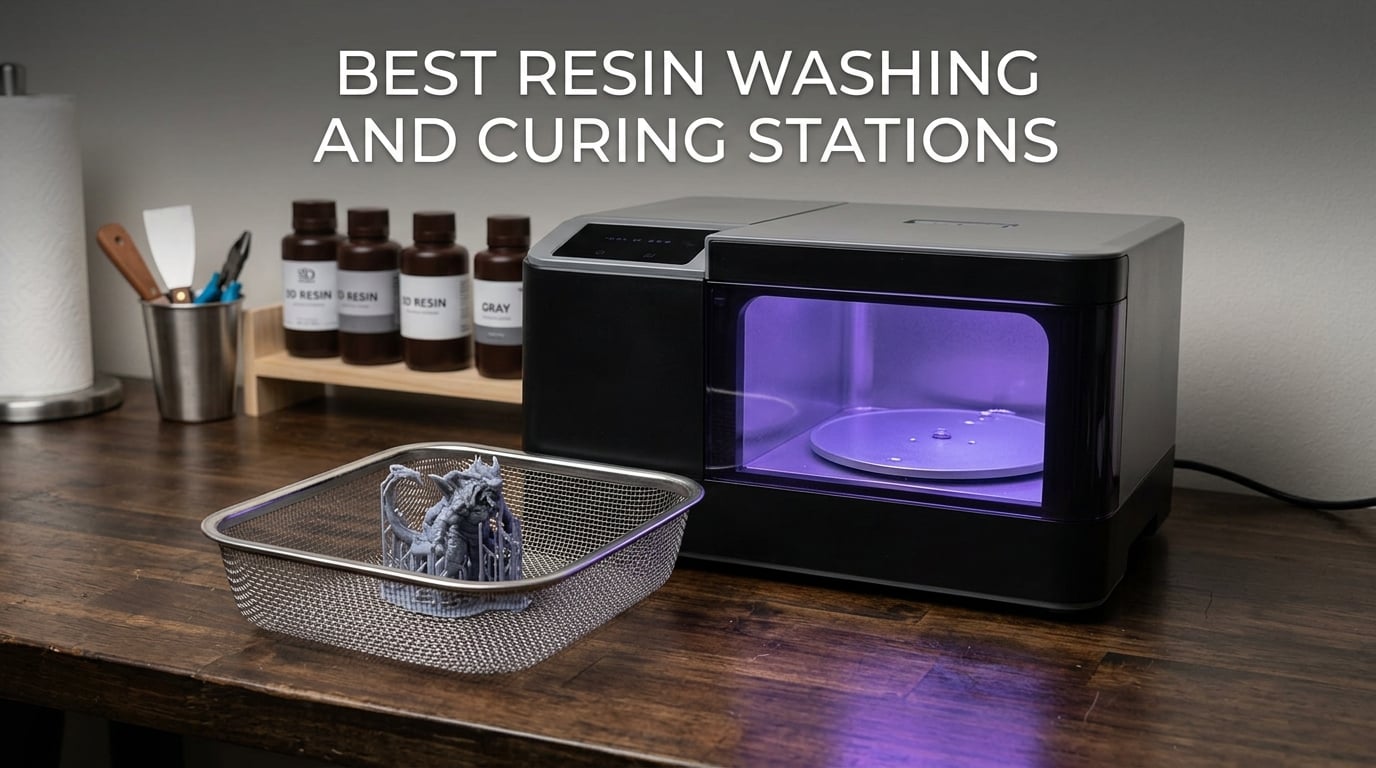
Short answer: the ANYCUBIC Wash and Cure 3 is the best all-round resin washing and curing station most people should buy in 2026, the ELEGOO Mercury Plus 2.0 is the smarter value buy, and the ANYCUBIC Wash & Cure Plus 3.0 is the one to get if your build plate is bigger than 7.3 inches. Below that, we break down six stations by wash capacity, plate fit, UV configuration and the workflow trade-offs you actually feel on a workbench.
A resin print is not finished when it leaves the printer. What comes off the build plate is still covered in uncured liquid photopolymer, and that film is sticky, structurally weak and a skin sensitiser. Washing removes it, curing turns it into hard inert plastic, and skipping either step leaves you with a part you cannot safely handle or paint.
Hand-washing in jars of isopropyl alcohol and curing on a windowsill technically works. It also produces inconsistent results, a workspace that smells permanently of solvent, and a lot more of your evening gone on scrubbing brushes. This roundup covers the machines that remove that friction, how to pick one for your printer, and how to get a clean part out of them.
Table of Contents
Do You Actually Need a Wash and Cure Station?
Yes, if you print weekly or in batches. If you print a few miniatures a month and enjoy the ritual, two jars of 99% isopropyl alcohol, a soft brush and a UV lamp will get the job done. A station earns its place the moment consistency, fumes and time start costing you more than the machine does.
That split is the honest core of this whole category. Experienced users on r/resinprinting still endorse the “poor man’s wash and cure” approach for low-volume printing, and they are right that it works. Where the DIY route falls apart is repetition: sunlight curing varies with cloud cover and window angle, and open jars of alcohol lose solvent to evaporation between sessions, so a part that cured last month tells you very little about the part on your bench today.
Two more things decide it. The first is plate size. Wash baskets are the real constraint, not tank volume, and a station that cannot swallow your build plate means detaching prints by hand anyway. The second is noise and smell. Wash motors and cure fans are audible, and IPA vapour is not something you want in a bedroom.
It is also worth knowing what the category looks like beyond the six machines here. The broader market splits into a budget 2-in-1 tier, a separate dual-unit tier, automated 3-in-1 machines with liquid fill and drain, large-format stations for 13.6-inch plates, and professional dental-grade systems. ELEGOO and Anycubic dominate the consumer end, Phrozen and Creality occupy the middle, and UniFormation, EIBOS and Formlabs cover the higher tiers. We kept this roundup to units that wash and cure, since a cure-only station solves half the problem.
Top 3 Picks for Resin Washing and Curing Stations (October 2026)

ANYCUBIC Wash and Cure 3
- 4L bucket and dual-height basket
- Flexicure gooseneck light adds 30000 uW/cm2
- Fits plates up to 7.3 inches
- 1-30 minute timer with one-click mode switching
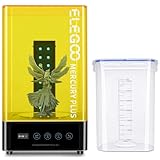
ELEGOO Mercury Plus 2.0
- 16 x 405nm UV LEDs with rotating turntable
- Anti-UV lid blocks 99.95% of UV
- Sealed wash lid slows alcohol loss
- Front TFT timing display

ANYCUBIC Wash & Cure Plus 3.0
- 12L bucket with 7.6L basket volume
- Handles plates up to 10.6 inches
- Gooseneck light cures tops and recesses
- Dual platform heights at 150mm and 250mm
Best Resin Washing and Curing Stations in 2026
| Product | Specifications | Action |
|---|---|---|
| ANYCUBIC Wash and Cure 3 |
|
Check Latest Price |
| ELEGOO Mercury Plus 2.0 |
|
Check Latest Price |
| ANYCUBIC Wash & Cure Plus 3.0 |
|
Check Latest Price |
 Creality Wash and Cure Station UW-01 Creality Wash and Cure Station UW-01 |
|
Check Latest Price |
 Phrozen Wash and Cure Kit Phrozen Wash and Cure Kit |
|
Check Latest Price |
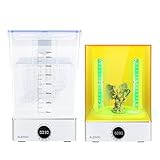 ELEGOO Mercury X Bundle ELEGOO Mercury X Bundle |
|
Check Latest Price |
1. ANYCUBIC Wash and Cure 3 – Best Overall for Most Printers
ANYCUBIC Wash and Cure 3 with Gooseneck Lights
4L bucket
42% larger basket than generation 2
Gooseneck light adds 30000 uW/cm2
1-30 minute timer
Pros
- Compact footprint suits a desk-side workflow
- Gooseneck light reaches fine detail on model tops
- Dual-layer basket saves alcohol and adjusts to two plate heights
- Single button switches between wash and cure
Cons
- Wide basket mesh can lose tiny mini parts
- Basket drips onto interior surfaces when latched
- Time knob is hypersensitive to light touch
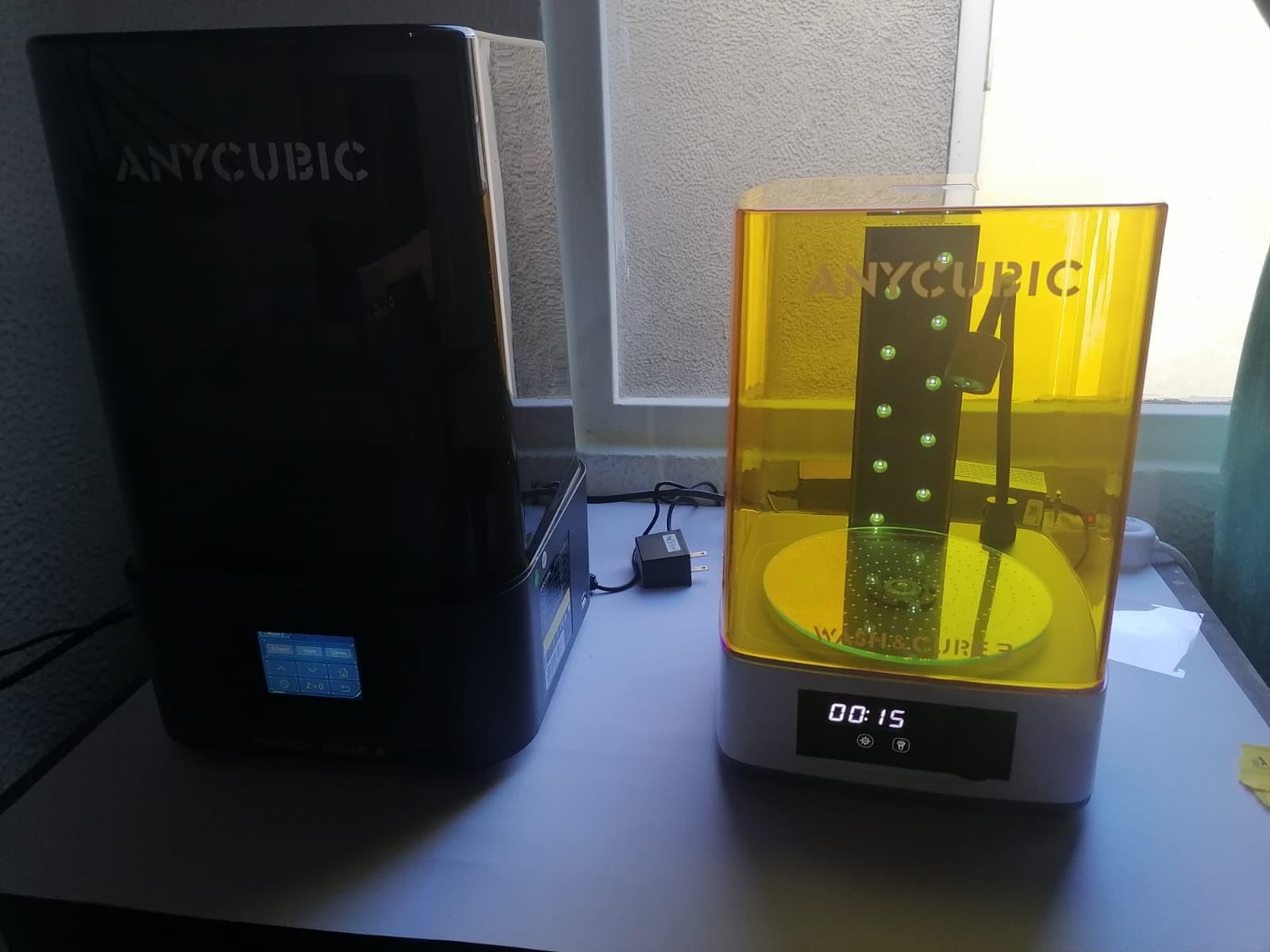
The Wash and Cure 3 is the machine we see recommended most often to people buying their first station, and after spending time with all six in this roundup it is the one we keep coming back to. The 4L bucket is smaller than some rivals here, but the working volume is well used and the whole thing stays compact enough for a desk-side setup.
The dual-layer polypropylene basket is the quiet hero. It adjusts to two heights, 100mm and 165mm, which lets you run a low fill for a handful of 28mm miniatures or raise the platform for taller parts without guessing at liquid level.
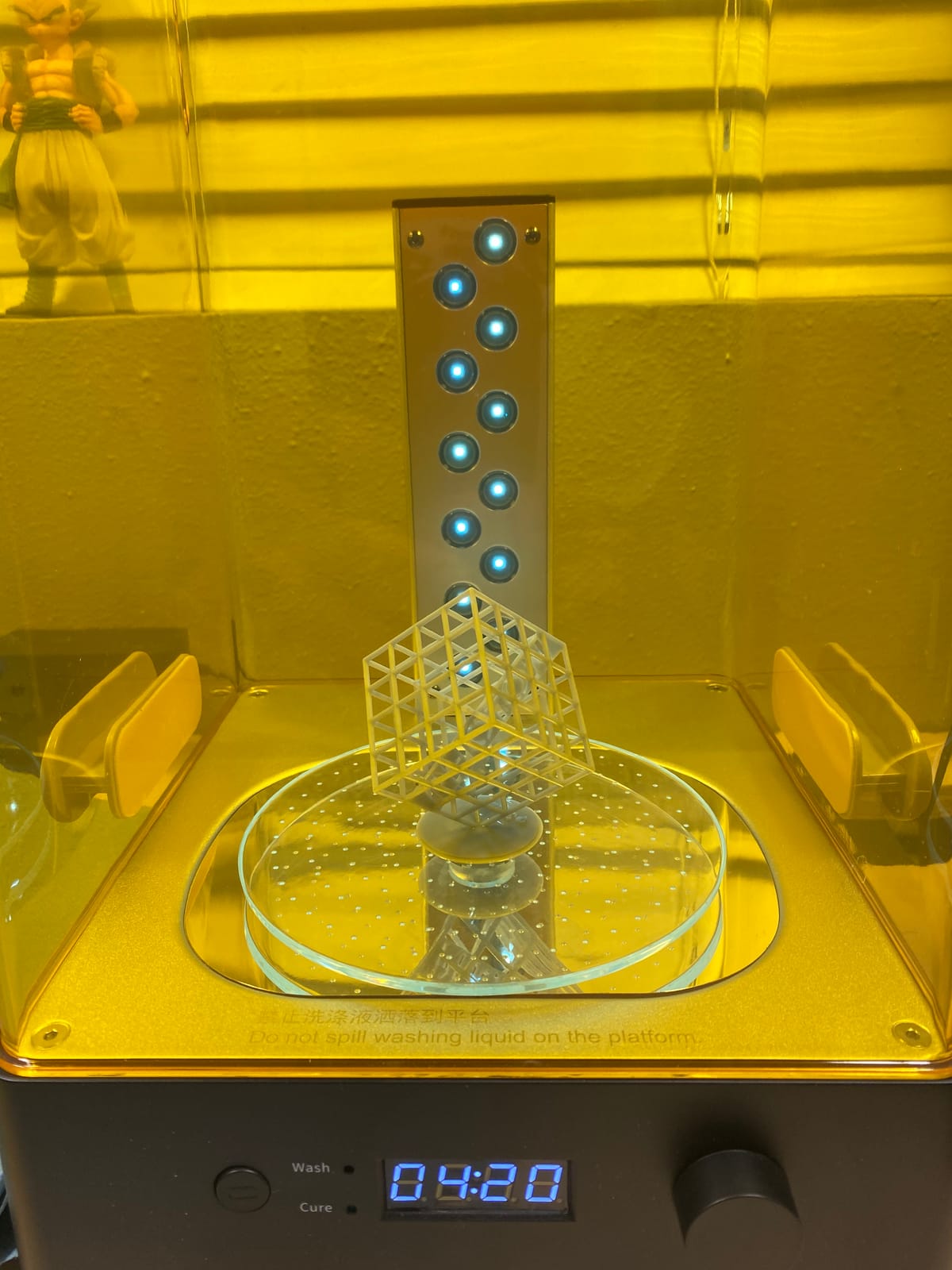
The Flexicure gooseneck light is the part people mention first once they have used it. It sits close to the part and adds 30000 uW/cm2 within a 1-3cm range, which is exactly the zone that a flat overhead panel struggles with. On a miniature with a recessed face or a raised crown, that targeted light is the difference between a fully hardened surface and a tacky one you have to send round again.
Curing uniformity is claimed 20% better than generation 2.0, following a change to the LED bead arrangement and lens light source, and the timer runs from 1 to 30 minutes with one-click switching between cleaning and curing modes.
What works well on the Wash and Cure 3
Miniature batches are where this machine earns its keep. Dual-height basket, gooseneck light, and a turntable that rotates the full 360 degrees during cure means a full board of 32mm figures comes out uniformly hardened rather than soft on the side facing away from the LEDs.
Reviewers also praise the quiet operation that followed the closed-structure and software rework, which matters if the station lives in a home office rather than a garage.
Where it falls short
The basket mesh openings are wide enough that very small parts can fall through, and it drips onto the interior walls as you lift it and latch it back in. The time-setting knob is overly sensitive to a light brush contact, so a sleeve catching the dial will change your cycle.
The tub is also awkward to empty by hand, which is a real chore every few weeks when the solvent clouds from dissolved resin.
2. ELEGOO Mercury Plus 2.0 – Best Value Dual-Tub Workhorse
ELEGOO Mercury Plus 2.0 Wash and Cure Station
16 x 405nm UV LEDs
99.95% UV blocking lid
Sealed wash lid
7.8 x 7.8 x 13.8 inches
Pros
- Sturdy powder-coated metal body for the class
- Washes a whole Mars-series build plate without removing prints
- TFT display shows set time and remaining time
- Interchangeable shroud footprint matches ELEGOO Mars printers
Cons
- Button beeps are loud and cannot be silenced
- Cooling fan and stepper motor whine on spin-up
- Wash bin plastic lid feels cheap
- Not suitable for water-washable resin
If you own an ELEGOO Mars-series printer, the Mercury Plus 2.0 is the default answer and the one most people will find in the wild. The build feels heavier than the price class suggests, with a powder-coated metal body weighing around 10 pounds, and that mass is the first sign that the internals are built to last.
Where it separates from the ANYCUBIC is the wash basket. The adjustable platform bracket lets you bring a full Mars build plate down into the wash tank with prints still attached, so you are not spending ten minutes popping supports off before the station even starts. Saturn owners, by contrast, find the plate far too large to fit.
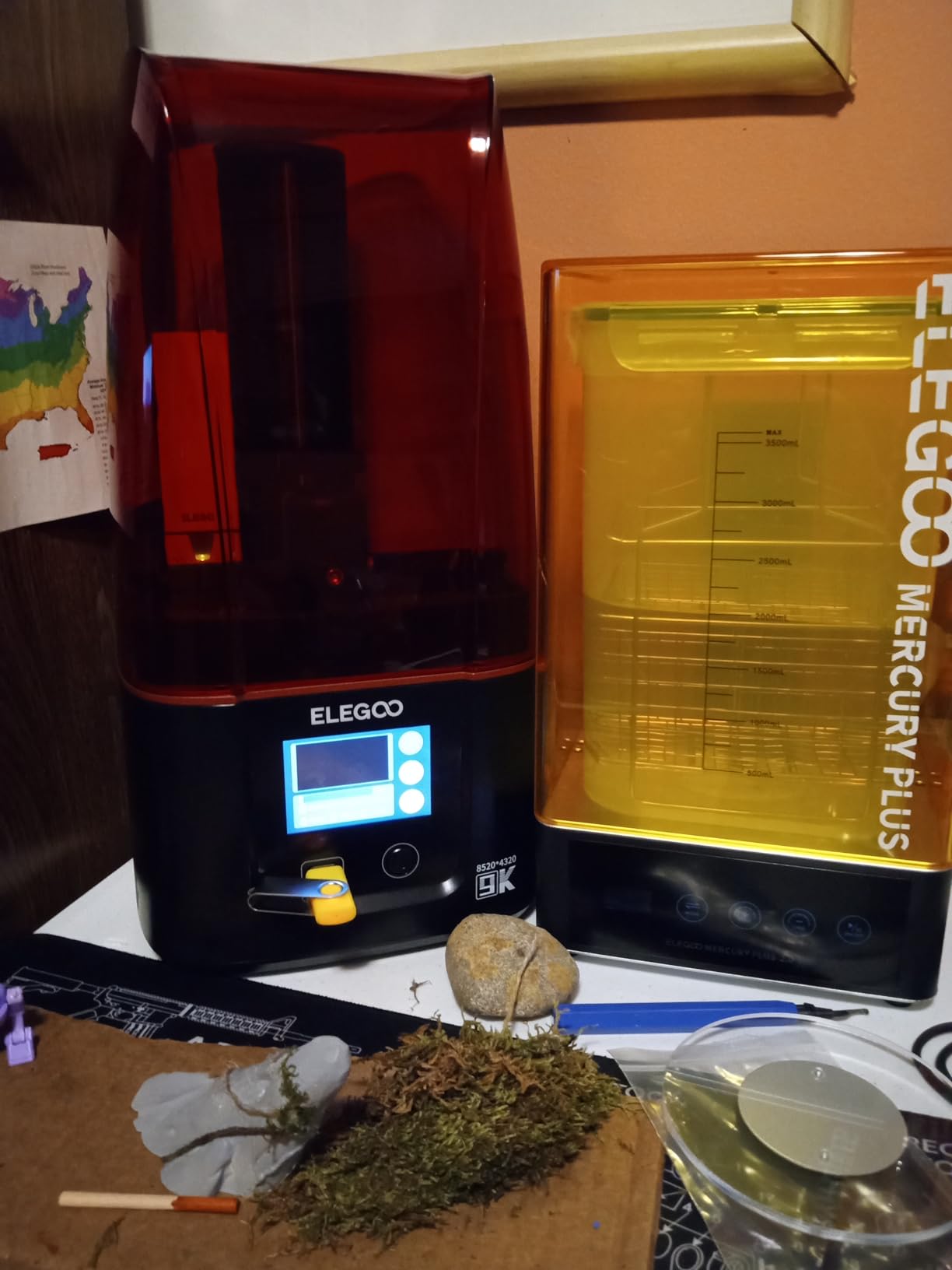
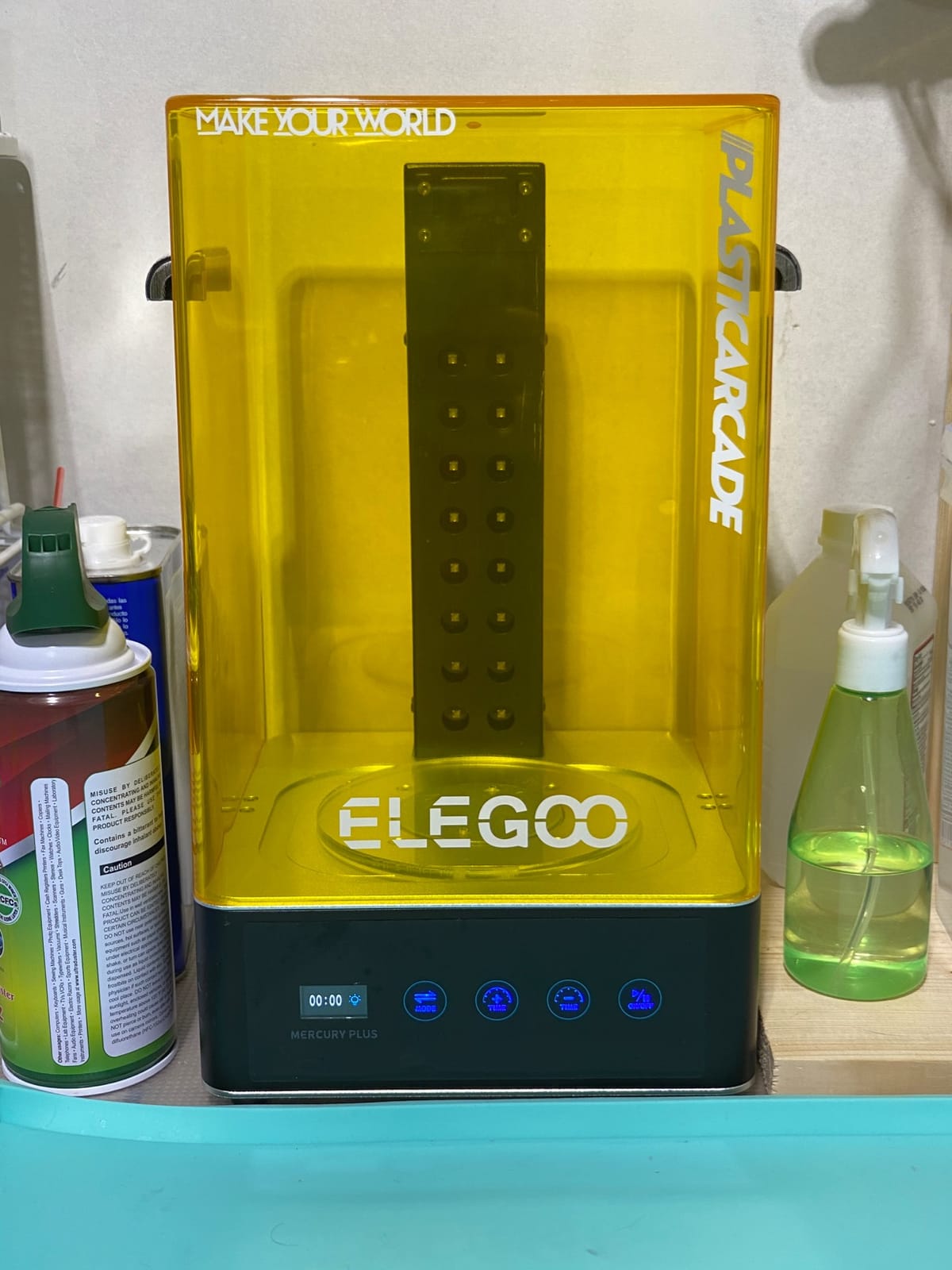
Cure performance comes from 16 pieces of 405nm UV LEDs arranged around a 360-degree rotating turntable, with timers running from 2 to 6 minutes in 30-second increments. The front TFT screen shows set time and remaining time, which sounds minor until you are running a batch and cannot see through the anti-UV lid.
Two details matter more than they sound. The sealed washing lid slows alcohol volatilisation, so you are not topping the tank up every session, and the anti-UV lid blocks 99.95% of ultraviolet rays, which is a real consideration if you are working next to the machine while it cures.
Best for Mars-series owners printing at home
Owners commonly report replacing a three-part setup of ultrasonic cleaner, magnetic stirrer and homemade cure box with this single unit, and say prints come out cleaner than hand brushing. A fan-less curing mode gives you a quieter cycle when the motor noise is the annoyance rather than the cure time.
If you print mostly miniatures, the whole-plate wash is a meaningful time saving. Detach, rinse, done.
Where it falls short
Noise is the dominant complaint in reviews. The button beeps are unusually loud and cannot be silenced, the cooling fan produces a high-pitch noise on spin-up, and the stepper motor whine is audible in wash mode at top speed. In a small room that adds up.
There is no second wash container, so you cannot keep dirty and clean solvent separate, and the machine is not suitable for water-washable resin, which needs running water rather than a bath.
3. ANYCUBIC Wash & Cure Plus 3.0 – Best for Large Build Plates
ANYCUBIC Wash & Cure Plus 3.0, Cleaning Volume 8.97”x5.03”x10.23”
12L bucket and 7.6L basket
Fits plates up to 10.3 inches
Gooseneck light at 30000 uW/cm2
Pros
- Handles 10.3 inch plates
- far beyond the 7.3 inch class standard
- Gooseneck light polymerises figure tops and recesses
- Two-level platform adjustment for small and large plates
- Large time display with one-click mode switching
Cons
- Tank needs a substantial volume of alcohol to fill
- Single basket can tint alcohol when curing dark resin
- Wide mesh can still drop very small parts
- Heavy and awkward to move when draining
This is the answer once you outgrow the 7.3-inch class. The Wash & Cure Plus 3.0 suits LCD printers of 10.6 inches and below, with a platform range of 6.6 to 10.3 inches, so it covers a Jupiter-class plate and still handles a small one.
Capacity is the headline: a 7.6L washing basket, roughly 13.4% larger than the previous model, inside a 12L total bucket. That extra volume does two things. It gives the agitation enough room to work on heavy supports, and it means you can wash a large cosplay helmet or armour piece rather than cutting it into sections.
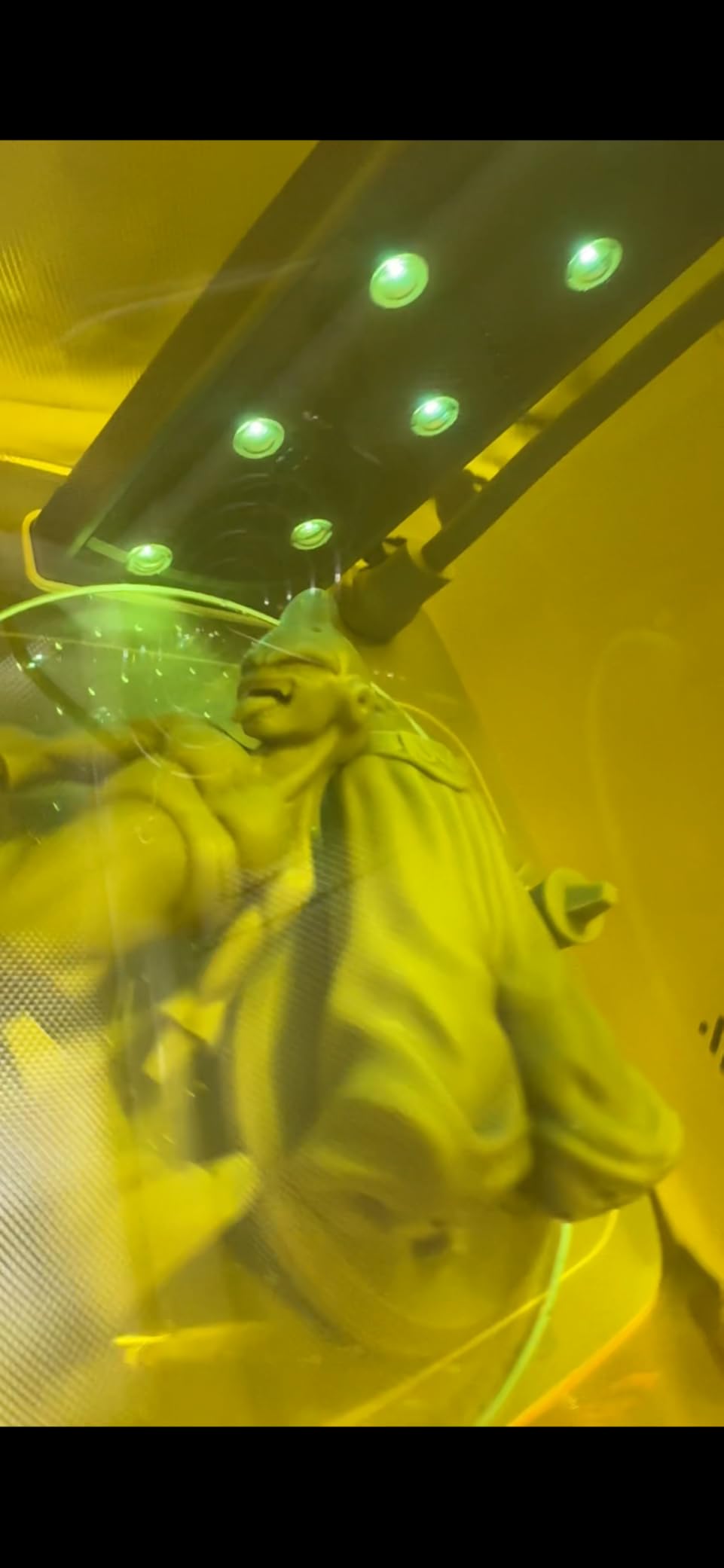
Anycubic carried the gooseneck Flexicure light forward from the smaller model, adding 30000 uW/cm2 over a 1-3cm range, and claims 20% better curing uniformity from a new lens light source. Reviewers pick this out specifically for curing the tops and recesses of figures, which is the classic failure point for flat-panel stations.
Two platform heights, 150mm and 250mm, handle both a small plate sitting near the surface for better agitation and a tall print needing full immersion. Timers run 1 to 30 minutes for both cleaning and curing.
Best for large-format and cosply work
This machine is the one to buy if you are printing helmets, masks, armour and other pieces too large for a 7.3-inch basket, or if you run a printer in the 10-inch class and want whole-plate washing. The wide tank has enough agitation to strip heavy supports without you brushing them by hand first.
For pure batch throughput on large plates, nothing else in this list matches it. The size is real and you will feel it on your bench.
Where it falls short
The 12L bucket needs a substantial volume of alcohol to fill, and that is an ongoing consumable cost rather than a one-off. The single-basket design can also tint the alcohol when you cure dark or multi-colour resin in the same session, which shortens how long the solvent stays usable.
The tub is heavy and awkward to move for draining, and the basket mesh remains wide enough to lose very small parts.
4. Creality Wash and Cure Station UW-01 – Best for Compact Printers
Creality Wash and Cure Station UW-01 2 in 1 Machine
18 UV LED beads in double rows
Reflective 360 degree platform
Cure area up to 165 x 200mm
Pros
- Reflective rotating platform gets more from the LEDs
- Sealed basin lid stores alcohol between sessions
- Curing stops immediately if the cover is lifted
- Three motor speeds and a 90-minute timer
- Spare impeller bearing included in the box
Cons
- Cure turntable spins fast enough to throw small parts off the plate
- Vibration walks parts toward the platform edge
- Working volume is small for anything Mars-class or larger
- LED output perceived as weaker than rivals
The UW-01 is the odd one out here, because it is built smaller than the ELEGOO and ANYCUBIC units it competes with. The curing platform tops out at 165 x 200mm and the wash container measures 190 x 154 x 200mm, which is plenty for jewellery, dice and small miniatures but short of anything Mars-class.
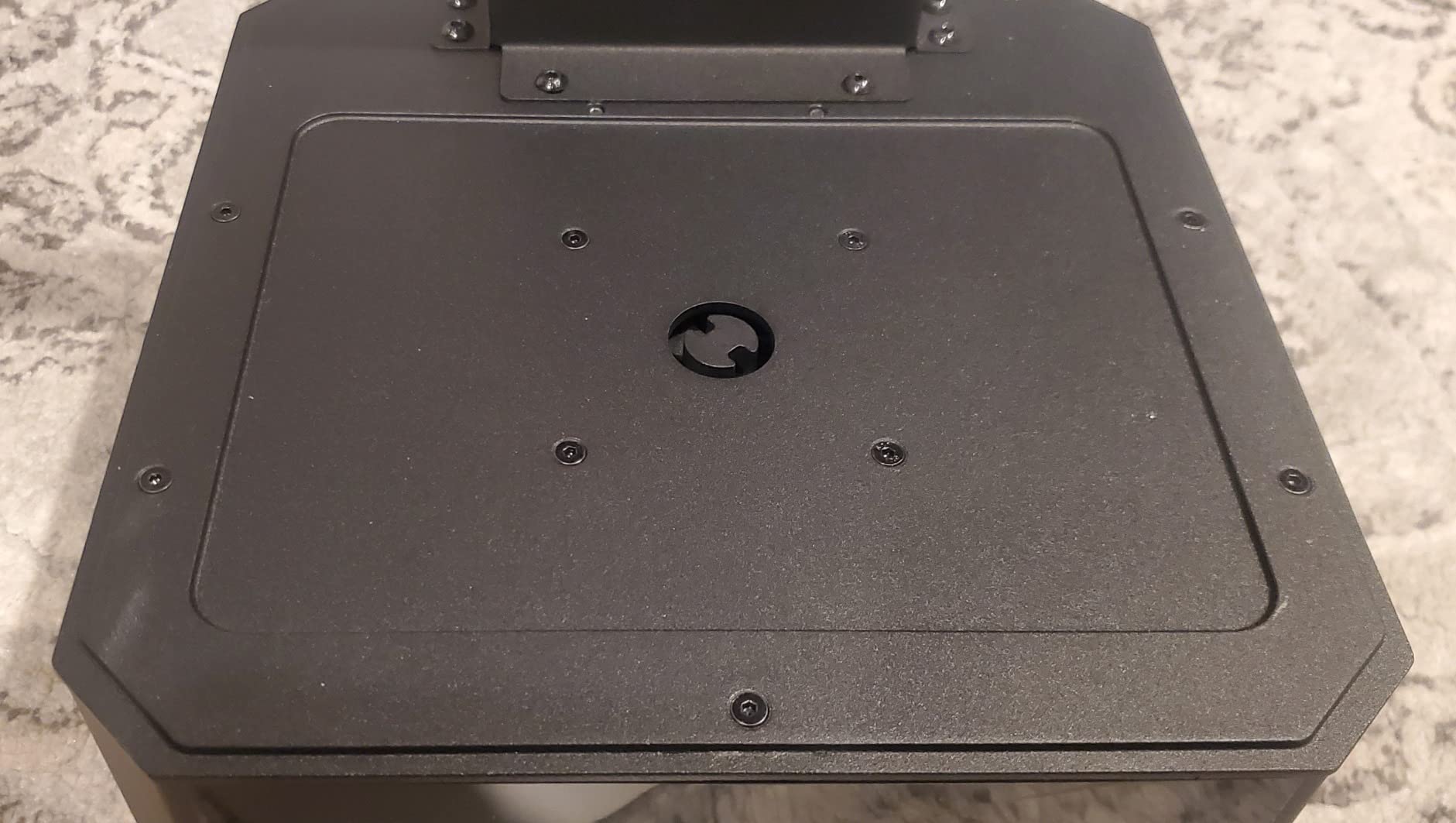
Inside that footprint there are some good decisions. The curing platform is magnetic, rotates 360 degrees and has a reflective mirror surface, so light that would otherwise fire past the print bounces back into it. Eighteen UV LED beads sit in a double-row, nine-bead configuration around the chamber.
The safety behaviour is a genuine highlight. Lifting the UV cover pauses curing immediately, which is better than most of the class, and the wash function will not start without the lid fitted. The wash basin itself seals tightly, so alcohol stays put between sessions rather than evaporating into the room.
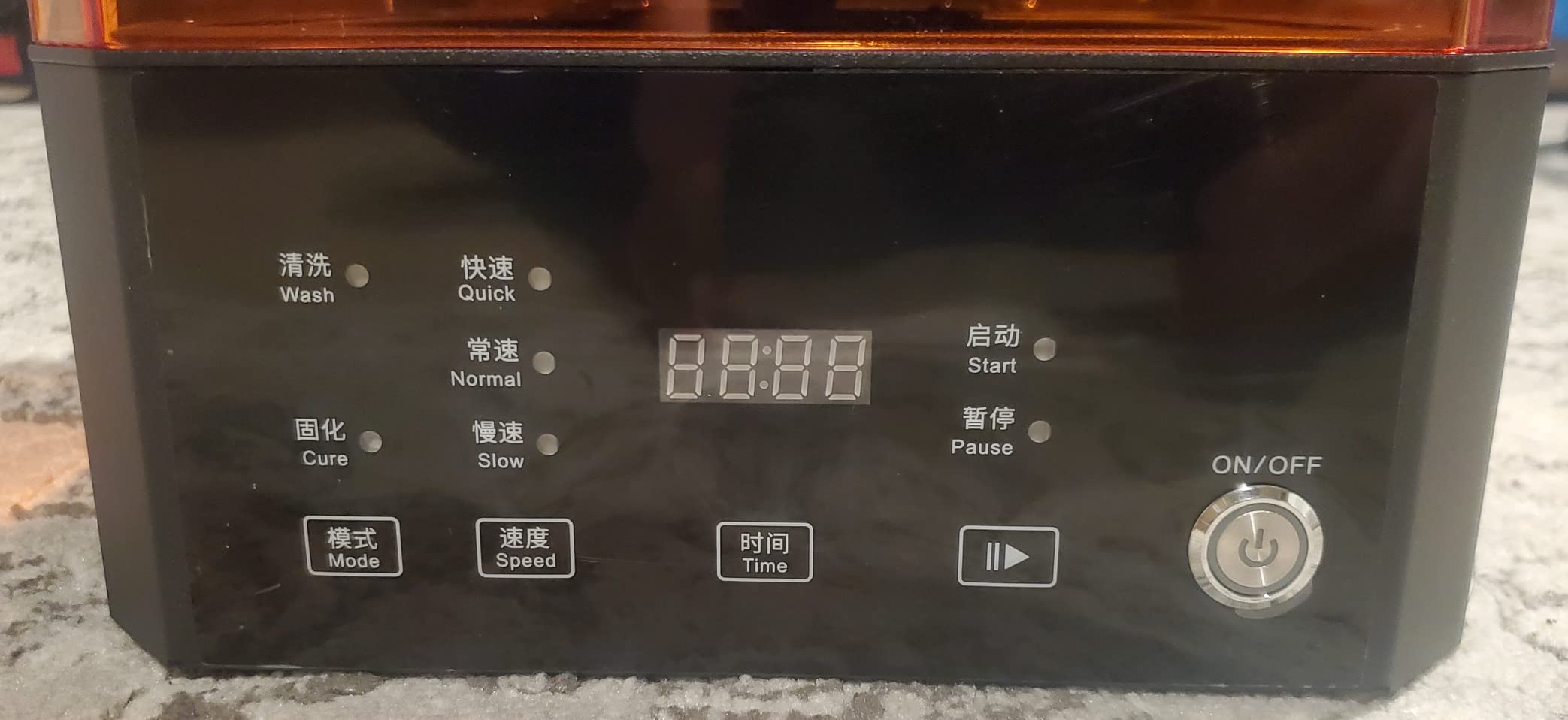
Controls are simple touch buttons with three motor speeds, slow, normal and quick, and a timer adjustable from 2 to 90 minutes in 5-minute increments. A spare impeller bearing in the box tells you the manufacturer expects that part to wear eventually.
Best for small-format work and tight desks
If you print small items, this machine is a sensible, compact choice. The reflective platform and the double-row LED layout do a lot with modest output, and owners praise the pause-on-lid-open behaviour and the sealed basin.
The 90-minute maximum timer also gives you room for long cure cycles on thick or transparent parts without wanting a longer machine.
Where it falls short
The cure turntable spins fast enough to throw small detail parts off the plate, and vibration slowly walks parts toward the edge. That is a real workflow cost for anyone doing fine jewellery or tiny detail miniatures, the exact work this machine is otherwise well suited to.
LED output is also perceived as weaker than competing stations, and the small basin holds roughly 3.5 litres of alcohol, so filling it still costs you.
5. Phrozen Wash and Cure Kit – Best Two-Piece Set for Batch Work
Phrozen Wash & Cure Kit, Fits Up To 10.3″ Build Plates
8L wash bucket
405nm under-platform light
Fan drying before cure
Build plates up to 10.3 inches
Pros
- Wash and cure run in parallel as separate pieces
- Fan drying strips surface solvent before UV
- Under-platform light cures the bottom face
- Handles build plates up to 10.3 inches
- Runs quietly with a simple touch interface
Cons
- Two housings take more bench space than a combined unit
- Plastic base stains easily from alcohol
- One owner needed a cable reseat after a few months
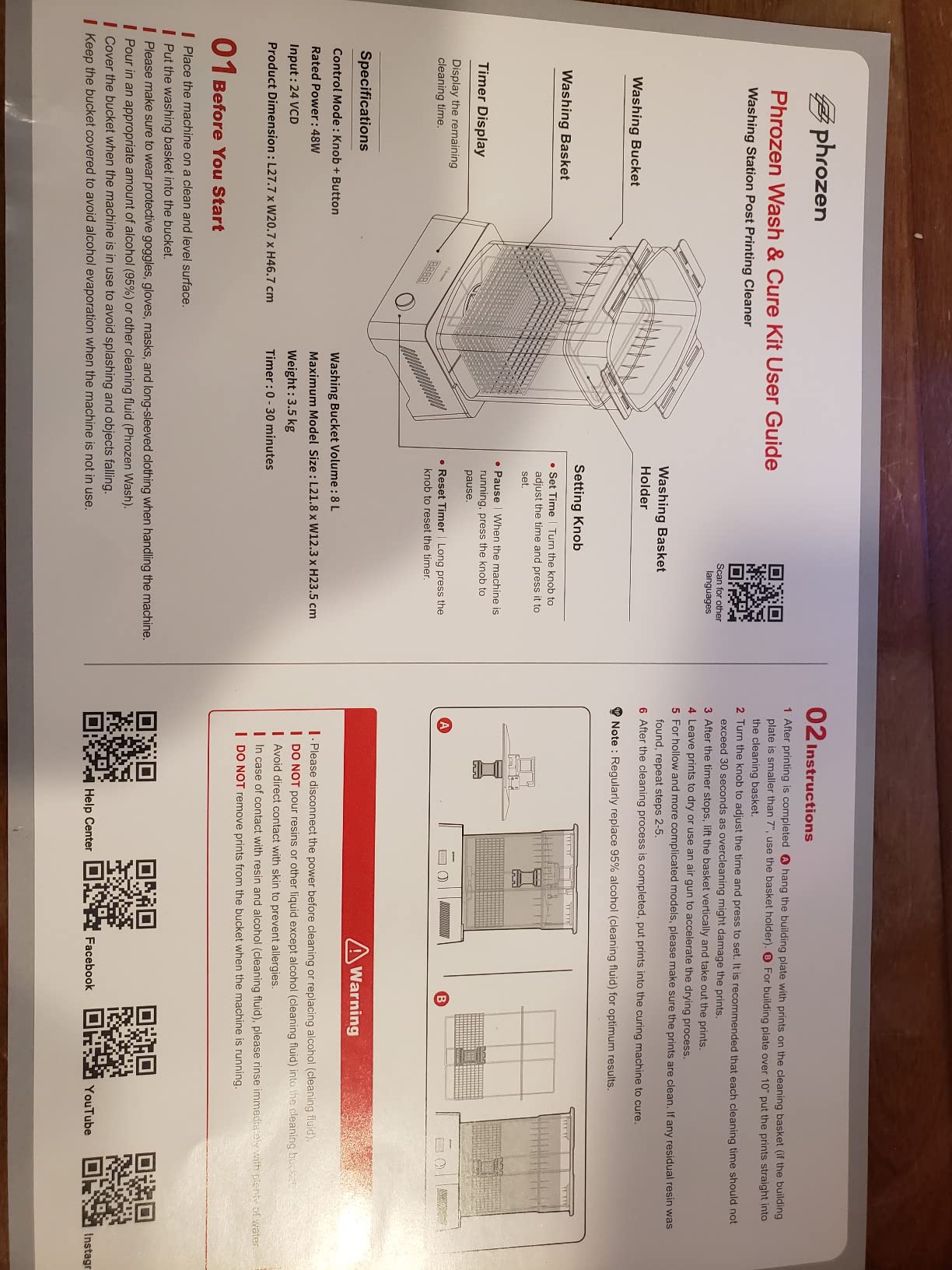
The Phrozen kit is the only genuinely two-piece system in this roundup, and that is its whole argument. You get a washing station and a curing station that sit side by side on the bench, so while one part cures the next part is already being washed. On a 2-in-1 machine those two steps are strictly serial.
Specs are generous. The wash bucket is 8L with 48W rated power and a 0-30 minute timer, and the max model size in the wash is 21.8 x 12.3 x 23.5cm. The cure station has a 19.6cm turntable, 405nm LEDs, and a timer that runs to two hours.
Two features set it apart from the single-box designs. There is an integrated fan drying mode that strips surface solvent before curing, and the UV lighting sits under the platform as well as around it, so the bottom face of a part cures properly instead of staying soft where it sat on the turntable.
A magnetic stirrer handles the wash, the interface is a straightforward touch panel, and the lids are leak-resistant with removable parts for cleaning. It runs on 24V DC at 2A and is UL and FCC compliant.
Best for batch production and small businesses
If you are printing fifty or more parts a week, the parallel workflow pays for itself in labour time alone. The fan-dry-then-cure sequence is also the one owners single out for producing fully hardened, tack-free parts, because you are not UV-polymerising a wet surface.
Owners also report a sturdy build that has held up over a year of regular use, which is worth something in a category where wash motors are the usual failure point.
Where it falls short
Two separate housings need more bench space than a combined unit, and if you are tight on room that is a real cost. The plastic base stains easily from IPA and benefits from being covered.
One owner also needed a cable reseat on the wash unit after a few months. Support handled the service well, but it is still a repair rather than a feature.
6. ELEGOO Mercury X Bundle – Best Match for Saturn-Class Plates
ELEGOO Mercury X Bundle Cure and Wash Large UV Curing Machine
Wash and cure run simultaneously
7L max wash capacity
Fresnel lens with bottom light
Pros
- Wash and cure run at the same time on one power adapter
- Large enough for a whole Saturn 8K build plate in the bucket
- Fresnel lens spreads UV more evenly across the area
- Bottom light source plus rotation cures every angle
- Single knob operation with a 30-minute maximum
Cons
- Plastic-on-plastic impeller bearing grabs cured resin and can jam
- Alcohol degrades the plastic base and can crack the magnetic coupler
- Printed manual does not explain the lid and controls well
The Mercury X Bundle is two stations, a Mercury X Wash and a Mercury X Cure, sharing a dual power adapter, and the point of the bundle is obvious: wash and cure happen at the same time. It is the same parallel argument as the Phrozen kit, sold with ELEGOO plate compatibility baked in.
Reviewers specifically confirm Saturn 8K and Mars 3 fit, with a whole build plate dropping into the wash bucket. Max washing size is 201 x 124 x 255mm without the platform, and the maximum fill is 7000ml, sealed with a rubber sealing strip that cuts solvent vapour escaping.
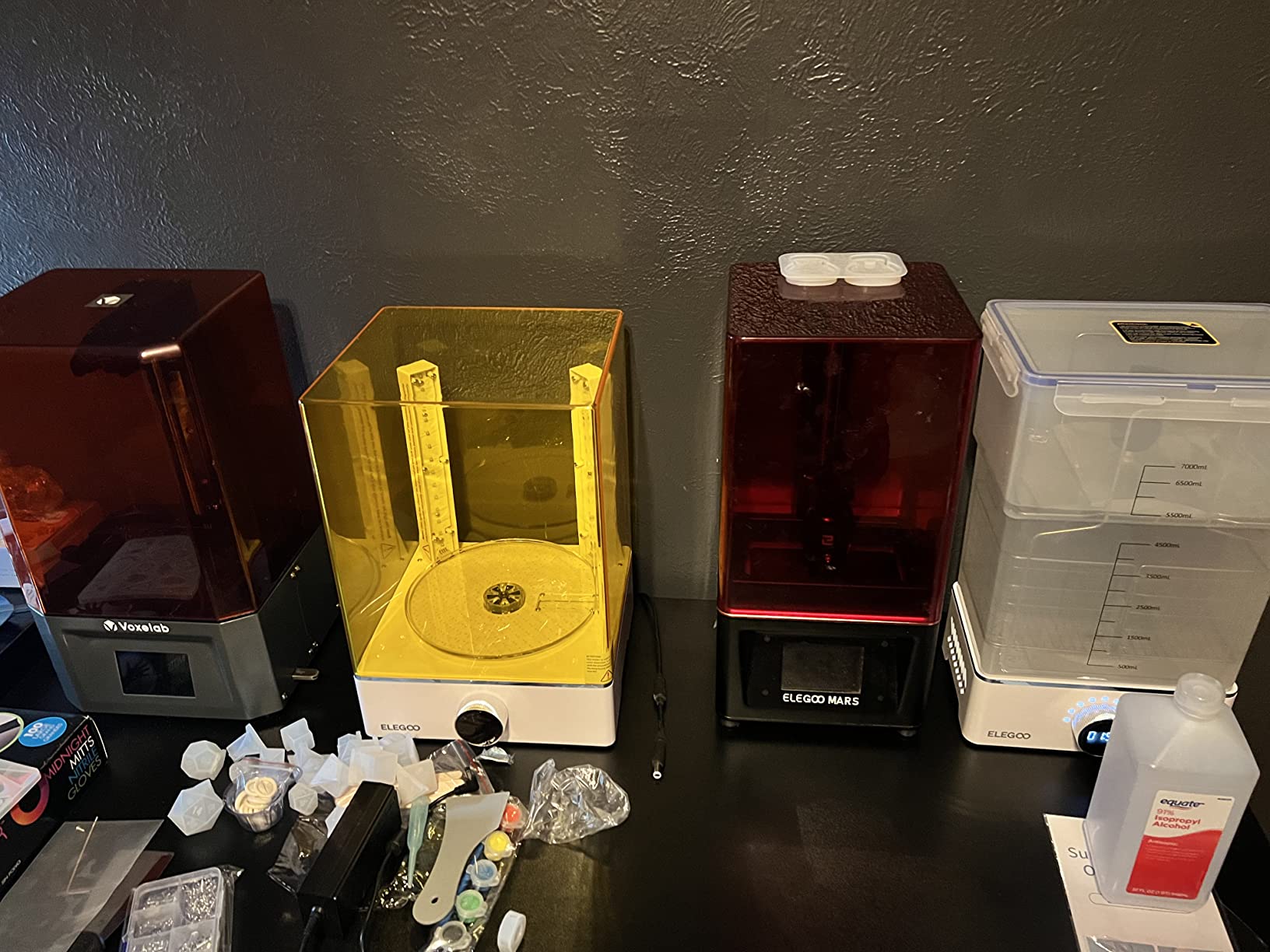
Cure performance is where the design thinking shows. A Fresnel lens spreads light more evenly across the effective area than a bare panel, and a bottom light source sits under the 360-degree rotating platform with a 200 x 260mm curing size, so the face that rests on the turntable is not left soft.
Operation is a single knob: press for three seconds to power on, then run up to 30 minutes. Fewer controls means fewer ways to set a wrong cycle, though the manual is thin on explaining the lid and the controls, so read it before your first batch.
Best for larger ELEGOO plates
If you print on a Saturn or a Mars 3, this is the ELEGOO option built for your plate, and reviewers confirm whole-plate washing in practice. It suits screens smaller than 9.1 inches, which covers a good share of the ELEGOO line.
The bottom light source and Fresnel lens combination cures consistently, and the rubber-sealed wash lid keeps the IPA smell contained, which is a genuine plus in a home workspace.
Where it falls short
Durability in the wash station is the concern people raise. The plastic-on-plastic impeller bearing can grab cured resin and jam, alcohol degrades the plastic base over time, and the magnetic drive coupler can crack. If you buy this, keep the base out of direct sunlight and expect to treat the impeller bearing as a consumable part.
Rubber on the bearing surface also creates noticeable friction even when everything is working correctly, and the two pieces plus the double power adapter occupy more space than a single combined unit.
How to Wash and Cure Resin Prints
Whichever station you own, the sequence matters more than the machine. Washing and curing are two separate steps and combining them, curing a part while it is still wet, binds unwanted resin to the surface instead of removing it.
Remove the print from the plate. Flex the build plate, let go near the base of the part, then pop the supports off with side cutters while the print is still attached. Wash the plate as well.
Wash for 2 to 4 minutes. Longer for deep recesses, hollow interiors or heavy support scarring, up to 6 to 8 minutes. Change the alcohol when it turns milky.
Drip and dry for 1 to 2 minutes. Let the part drip over the tub, then use the station’s fan drying mode or a clean air blower. Liquid resin under a UV pass will cure onto the surface as a skin.
Cure for 2 to 6 minutes. Start at 2 minutes and add time in 2-minute increments. A gooseneck light on stations that have one lets you spend a few extra seconds on faces and crowns.
Inspect and flip. Check for tacky patches, especially inside cavities and on the face that sat on the turntable. Flip and give it another short pass rather than doubling the first cycle.
Running cost: how much IPA you actually use
Solvent is the real ongoing cost of any station, and it is the number people are surprised by. A 4L bucket like the Wash and Cure 3’s is a full fill, and you only change it when it turns milky from dissolved resin. A 12L bucket on the ANYCUBIC Plus 3.0 or the 7L on the Mercury X costs proportionally more to fill, and a single-basket design can tint faster when you cure dark or two-part resin in the same session.
Two habits cut the cost noticeably. Keeping the sealed wash lid down between sessions slows evaporation, which is why the Creality UW-01’s tight-sealing basin and the Mercury Plus 2.0’s sealed lid are not just odour control. And rinsing in two stages, using one jar of dirty solvent for the first wash and a cleaner jar for the second, stretches the life of every litre far longer than most people expect.
Can you over-cure UV resin?
Yes, and it is the more common mistake than under-curing. Over-curing drives the photo-initiator conversion past useful, and the part turns brittle with a yellowing tint that does not sand out.
The rule is simple: start short and add time in 2-minute increments. A part that feels firm and no longer tacky is finished. If it is already firm after two minutes, extra minutes buy you nothing except colour shift.
How to Choose a Wash and Cure Station
1. Match the basket to your build plate, not the tank
Tank volume is marketing. Basket dimensions are the constraint. Check the maximum build plate size the station supports and compare it to the plate you actually print on, and remember that a station which cannot take your whole plate still leaves you hand-detaching prints.
The ANYCUBIC Wash and Cure 3 suits plates up to 7.3 inches. The Phrozen kit and ANYCUBIC Plus 3.0 reach roughly 10.3 inches and 10.6 inches respectively. The Mercury X Bundle covers screens smaller than 9.1 inches. The Creality UW-01 is the smallest here at a 165 x 200mm cure area.
2. 2-in-1 versus separate versus 3-in-1
A 2-in-1 puts the wash tub and cure chamber in one box, which is cheap and compact but strictly serial: you wash, then you move the basket, then you cure. The physical swap of the turntable insert is a workflow cost that adds up across a batch.
Separate pieces, like the Phrozen kit and the Mercury X Bundle, let you run both stages at once. That is the right choice if you print regularly or run a small batch business. Automated 3-in-1 units add liquid handling and drying, but none of the six machines in this roundup use that architecture, and at this price tier the complexity tends to show up as reliability problems.
3. Wash mechanism and solvent
Most of these use a magnetic stirrer or impeller to vortex the solvent so it reaches cavities. That works well. Isopropyl alcohol is still the dominant choice, and one recent community post recommends filling an ELEGOO station with 99% IPA for the most consistent results.
Water-washable resin is a different workflow. It rinses in tap water, which is cheaper and far less flammable, but it needs running water rather than a solvent bath. The Mercury Plus 2.0 is explicitly not suitable for it, so check compatibility before committing to that resin type.
4. UV coverage beats LED count
LED count is a poor proxy for cure quality. Look at whether the light comes from underneath as well as around, whether the platform rotates, and whether there is a lens array or gooseneck light reaching into recesses. The 18-bead Creality and the 16-LED Mercury Plus 2.0 do different jobs despite similar numbers.
Safety features count too. The Creality UW-01 stops curing the moment you lift the cover, and the Mercury Plus 2.0 lid blocks 99.95% of ultraviolet rays. Both matter if the station shares a room with people.
5. Build plate compatibility by printer
For a Mars 5 or Mars 3, the Mercury Plus 2.0 or the Mercury X Bundle both fit. For a Saturn-class plate, look at the Mercury X Bundle or move up to the Phrozen kit or the ANYCUBIC Plus 3.0. For a Jupiter or Photon Mono M7 Max in the 10-inch class, the ANYCUBIC Plus 3.0 and the Phrozen kit are the two that reach.
For small printers, the Creality UW-01 covers the plate but not much more.
6. Do you need a station, or is a DIY rig enough?
For occasional printing, the honest answer is that a bucket, a brush and a UV lamp is fine. The “poor man’s wash and cure” approach is actively endorsed by experienced users for low-volume work, and you can build a turntable rig from parts for less than a station costs.
Where DIY genuinely loses is consistency and safety. Open containers of alcohol lose solvent to evaporation, so your concentration drifts between sessions, and sunlight curing varies with cloud cover and window angle, leaving soft and hard spots on the same model. A sealed station with a fixed timer and a fixed light source removes that variable entirely.
7. How to tell if your UV LEDs are fading
Long-term users ask this constantly, and the honest answer is that LED output does drop over a few years of use with no user-facing test on most machines. Three practical checks:
Keep a test coupon. Cure a flat piece of the same resin for a fixed time when the station was new. Re-cure it now for the same interval and compare. If it stays tacky, output has dropped.
Look for edge yellowing. Over-exposed resin yellows fastest at the edges nearest the LEDs. Yellowing on a part that used to cure clear is a sign the exposure is now unbalanced.
Watch cure time creep. If a part that cured in two minutes needs six, something has changed before you conclude the resin is the problem.
8. Noise, footprint and shared rooms
Not every station suits every space, and the two numbers that decide it are sound and footprint. The Mercury Plus 3.0 measures 21.65 x 13.78 x 15.75 inches and weighs 6.71 pounds dry, then considerably more full of solvent. The Phrozen kit needs two housings, and the Mercury X Bundle adds a dual power adapter. A compact option like the Creality UW-01 at 8.8 x 8.8 x 14.1 inches fits a small desk corner far more easily.
On sound, the recurring complaint about the Mercury Plus 2.0 is the loud button beeps, the cooling fan on spin-up and the stepper motor whine at top wash speed. The Wash and Cure 3 is generally described as quieter after its closed-structure rework. If your station shares a room with a home office, a test cycle before you commit is worth ten minutes.
9. Not a printer owner? Resin craft use
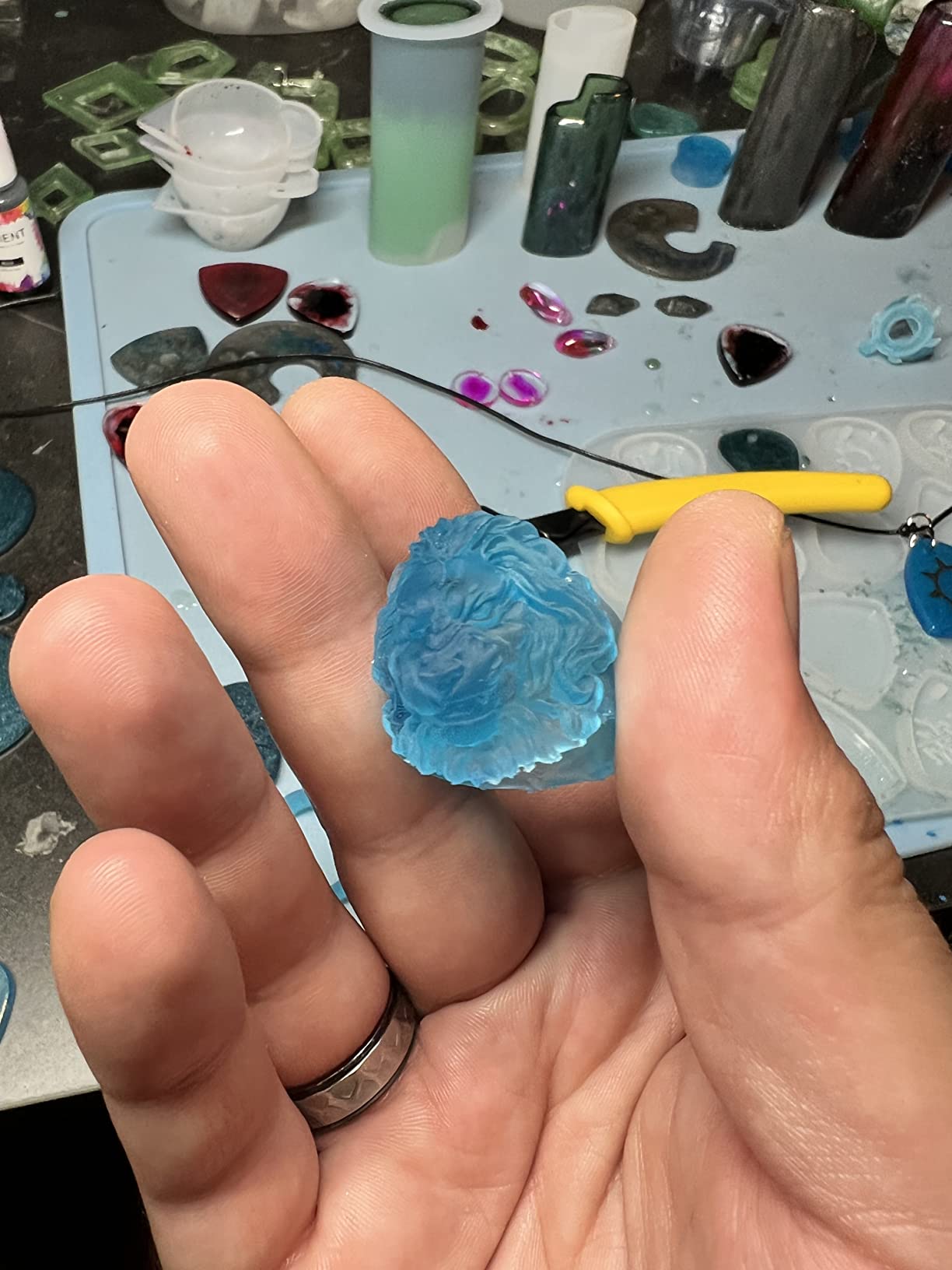
Cure stations are not exclusive to MSLA printing. Jewellery, dominoes, keychains, epoxy work and resin casting all use the same 405nm chemistry, and a station gives you a repeatable cure instead of a sunny windowsill. Our guides to resin casting kits and epoxy resin kits cover the material side of that, and you will still want one of the larger turntables here if your pieces are tall.
Whatever you are casting, the storage piece of the workflow matters. Cured parts that live somewhere warm and damp will tell on you faster than a bad cure ever will, so have a look at our resin storage guide for keeping finished work somewhere stable.
Safety: IPA, UV Exposure and Workspace Ventilation
Uncured resin is a skin sensitiser and isopropyl alcohol is flammable and fumes badly in a closed room. A few habits cover almost all of the risk.
Wear nitrile gloves. Every time you handle uncured resin, a fresh print, or the wash tank itself. Nitrile, not latex.
Ventilate the workspace. Keep the sealed wash lid closed during cycles, and run a small fan or a carbon-filter enclosure if you print indoors. IPA vapour accumulates faster than you notice.
Treat the UV side seriously. Do not look into an open cure chamber. Stations that pause on lid open, like the Creality UW-01, or block nearly all UV, like the Mercury Plus 2.0, are worth paying a little extra for in a shared room.
Never cure a wet print. Cured-on resin skin is permanent and has to be sanded off or cut away.
Dispose of spent alcohol properly. Let it settle, keep it in a closed labelled container, and follow local chemical waste rules. Do not pour it down a drain or set it alight.
Consider enclosure placement. If your printer lives in a resin tent, the station usually does not need to go inside it, and putting the wash tub in a sealed enclosure concentrates the fumes you are trying to control.
Frequently Asked Questions
Do I need a wash and cure station for resin printing?
Yes, if you print weekly or in batches. If you print a few miniatures a month, two jars of 99% isopropyl alcohol, a soft brush and a UV lamp will do the job. A station earns its place once consistency, fumes and time start costing you more than the machine does.
How long do I wash and cure a resin print?
Wash for 2 to 4 minutes, up to 6 to 8 minutes for deep recesses. Drip and dry for 1 to 2 minutes, then cure for 2 to 6 minutes. Start at 2 minutes on the cure cycle and add time in 2-minute increments only if the part is still tacky.
Can you over-cure UV resin?
Yes. Over-curing drives the reaction past useful and the part turns brittle with a yellowing tint that will not sand out. Start at the shortest cure time, check the part, and add two-minute increments rather than running one long cycle.
Should I remove supports before or after curing?
Before washing, while the print is still attached to the build plate. Flex the plate and let go near the base to pop the part off, then cut supports with side cutters. Wash the plate in the same cycle. Leaving supports on through the cure traps resin against the surface.
Is a 2-in-1 station enough or do I need separate wash and cure?
A 2-in-1 is enough for regular hobby printing and is cheaper and more compact. Separate wash and cure pieces, such as the Phrozen kit or the ELEGOO Mercury X Bundle, let both stages run at the same time and make sense if you print in batches or run prints as a small business.
What do I use to wash resin prints, and can I use water-washable resin?
Isopropyl alcohol, ideally 99%, is the standard wash solvent and remains the most consistent choice. Water-washable resin rinses in tap water instead, which is cheaper and less flammable, but it needs running water rather than a solvent bath and some stations are not compatible with it.
Final Verdict
For most people, the ANYCUBIC Wash and Cure 3 is the right first station in 2026. It is compact, it has the most review volume of anything we tested here, and the Flexicure gooseneck light is the feature that quietly fixes the most common problem, which is parts that come out tacky in the recesses.
Buy the ELEGOO Mercury Plus 2.0 instead if you own a Mars-series printer and want whole-plate washing, or if you would rather have a metal body and a display that shows remaining time. Move up to the ANYCUBIC Wash & Cure Plus 3.0 the day your plate exceeds 7.3 inches, and consider the Phrozen kit or the Mercury X Bundle if you print in batches and want washing and curing to run at the same time.
And if you are still printing occasionally, honestly? The jars and the UV lamp are fine. The station is worth it when you want every part off the plate fully hardened the first time.