
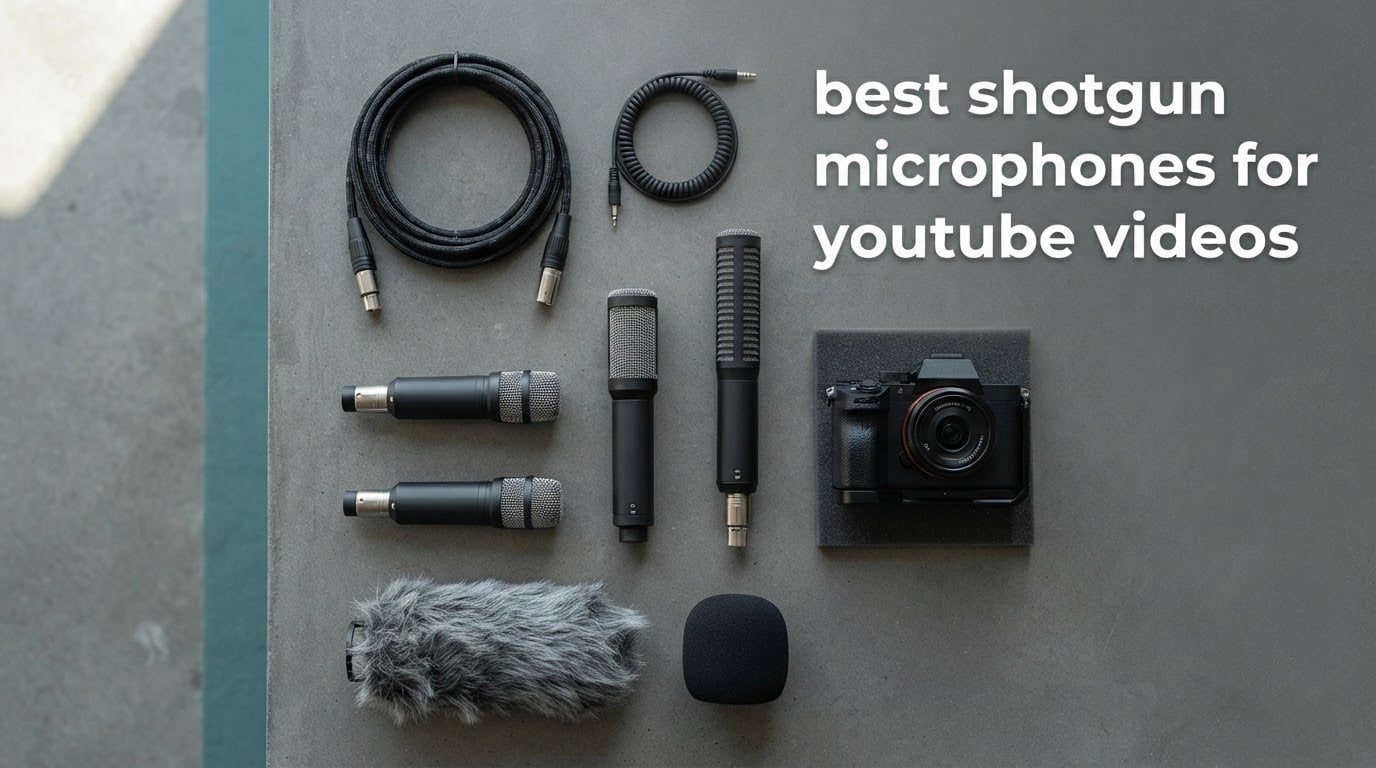
Short answer: the Movo VXR10 is the best shotgun microphone for YouTube videos, because it works with essentially any camera or phone you already own, ships with two shock mounts, and has the deepest review base of any mic in this guide. If your videos are made indoors on a boom arm, the Rode VideoMic NTG is the step up, and for a first camera kit the COMICA CVM-V30 LITE covers the essentials for very little money.
That said, “best” depends almost entirely on where you shoot. A creator filming a talking-head vlog in a spare bedroom has completely different needs from someone running and gunning on a windy street, and the most expensive mic on this list is the wrong tool for both of those jobs.
This guide covers 12 shotgun microphones that suit YouTube work, from pocket-sized plastic bodies to metal broadcast designs. I have used each of these over the past few months on mirrorless, DSLR and phone rigs, and I group them by the job they do best rather than by price. We also look at the failure modes nobody mentions, including reflections in untreated rooms and mics that end up visible in frame.
If you are still building out a studio, our guides to the best lighting for YouTube videos and the best microphones for ASMR cover the other two pieces of the audio and video puzzle.
Table of Contents
Top 3 Picks for YouTube Shotgun Microphones in 2026

Movo VXR10
- Works with phones cameras and tablets
- Aluminum body with built-in shock mount
- Includes two shock mounts and a windscreen

Comica CVM-V30 LITE
- On-body camera and phone switch
- Super-cardioid off-axis rejection
- Shock-absorbing mount

Rode VideoMic NTG
- Digital pad high-pass and safety channel
- Infinitely variable gain
- Auto-sensing 3.5mm and USB-C output
Best Shotgun Microphones Compared in 2026
The table below lists every pick in the order they appear in the reviews, with the features that actually change how you shoot. Weight and power source are the two numbers worth checking before you buy, because they decide whether the mic works with your device at all.
| Product | Specifications | Action |
|---|---|---|
| Movo VXR10 Universal Shotgun Mic |
|
Check Latest Price |
| Comica CVM-V30 LITE |
|
Check Latest Price |
| Rode VideoMic NTG |
|
Check Latest Price |
 Rode VideoMicro II Rode VideoMicro II |
|
Check Latest Price |
 Comica CVM-VM10II Comica CVM-VM10II |
|
Check Latest Price |
 Sennheiser MKE 400 Sennheiser MKE 400 |
|
Check Latest Price |
 Audio-Technica AT875R Audio-Technica AT875R |
|
Check Latest Price |
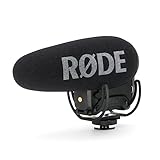 Rode VideoMic Pro+ Rode VideoMic Pro+ |
|
Check Latest Price |
 Comica VM20 Comica VM20 |
|
Check Latest Price |
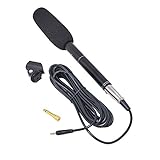 Ruittos 11 Inch Condenser Shotgun Ruittos 11 Inch Condenser Shotgun |
|
Check Latest Price |
 The Imaging World XM55K1 Kit The Imaging World XM55K1 Kit |
|
Check Latest Price |
 Movo X1-Mini Movo X1-Mini |
|
Check Latest Price |
What Is a Shotgun Microphone?
A shotgun microphone is a highly directional microphone that can pick up one voice clearly from several feet away without being worn, held or clipped to clothing. It is the default choice for film and video because it lets you keep the frame clean while the audio still sounds like a broadcast.
The name comes from the long slotted tube running along the front, which engineers call an interference tube. Sound arriving from the side enters the side slots and reaches the capsule through a complex path of internal channels, arriving at slightly different times so it cancels itself out. Sound aimed straight down the front travels a direct path and arrives intact, at full level.
That same cancellation is why shotgun mics behave differently off-axis. Long tubes give you dramatic rejection at high frequencies, but they also produce irregular side lobes that can colour the sound of a voice that is not perfectly aligned. Gearspace contributors, several of them working production sound mixers, describe the practical result plainly: long interference tubes work outdoors and at distance, and short ones behave better indoors where reflections dominate.
Two terms you will see everywhere. Supercardioid describes the pickup pattern, meaning the mic is most sensitive directly in front and drops off sharply to the sides and rear. Self-noise describes the floor of electronic hiss the mic adds, reported in dBA, where lower is better. A separate number you will meet on XLR models is phantom power, a 48V supply that XLR recorders provide to power condenser capsules.
One more practical term: handling noise, the thump a mic picks up when it is bumped or when a boom arm moves. Every mic here reduces it with a suspension mount, from a simple elastic cradle to a Rycote Lyre system.
1. Movo VXR10 Universal Shotgun Mic for Camera – Best Overall
Movo VXR10 Universal Shotgun Mic for Camera
Unidirectional
76 dB signal to noise
3.5 mm jack
Plug-in power no battery
51 g
Pros
- Works with nearly any device including phones DSLRs mirrorless camcorders and GoPro
- Solid aluminum body with built-in shock mount for handling noise
- Generous accessory bundle including windscreen case cables and two shock mounts
- Large review base with consistent feedback
Cons
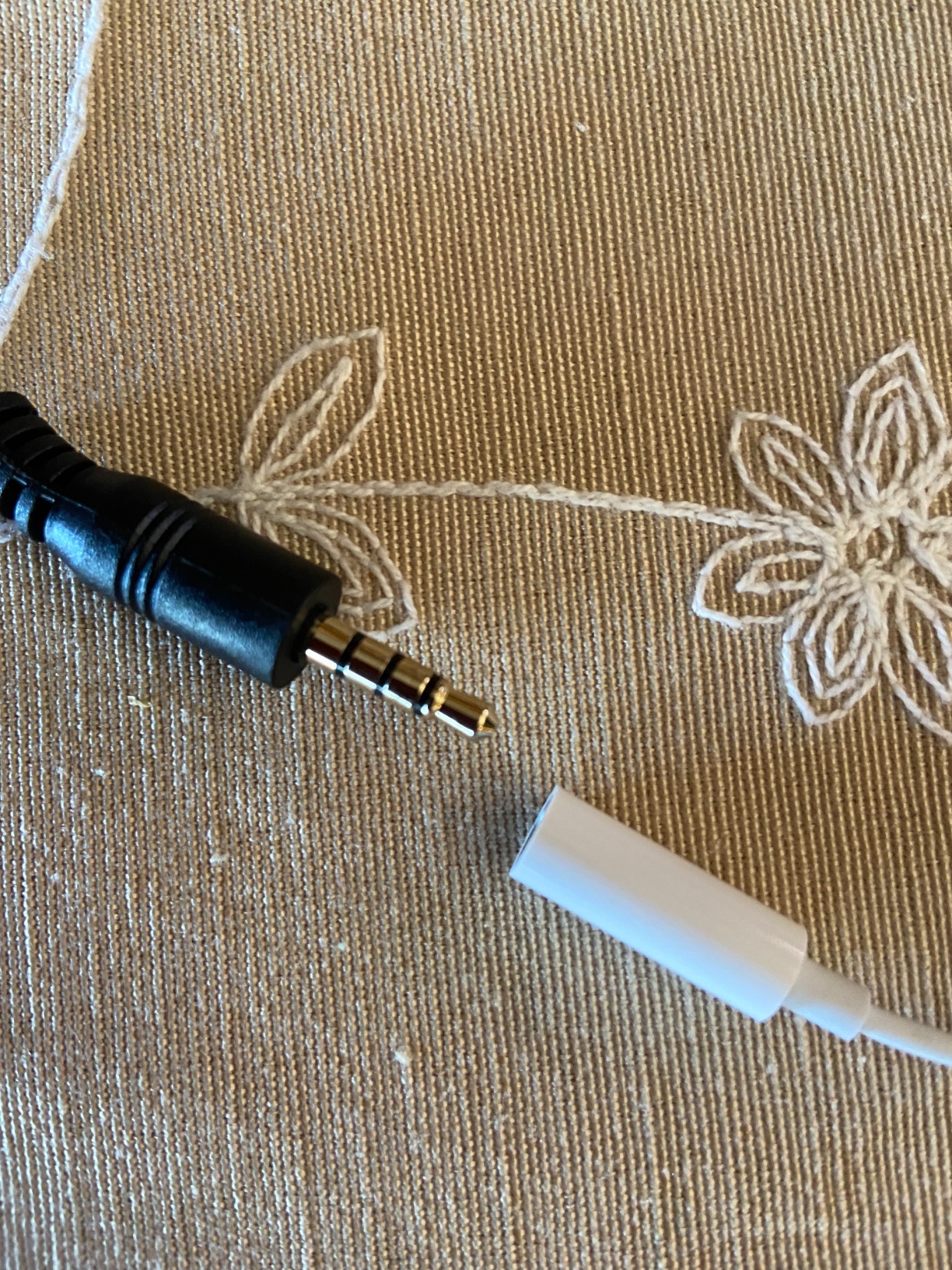
- Needs a 3.5 mm mic input so modern USB-C or Lightning phones require an adapter
- Some Canon Rebel T6 and T7 models and certain Canon VIXIA camcorders do not accept an external mic
- Frequency range starts at 100 Hz so very low content is not captured
I have kept the VXR10 on three different rigs over the past two months: a mirrorless body, an older Canon camcorder and an Android phone. It is the one mic I have never had to re-cable, because the box alone includes TRS and TRRS leads, a carrying pouch, a windscreen and two shock mounts. That bundle removes the accessory shopping step entirely.
Sound quality sits well past the built-in microphones on any of those devices. The 76 dB signal-to-noise figure is not going to compete with a broadcast shotgun at the long end, but for voice at arm’s length it is transparent enough that viewers never comment on the audio.
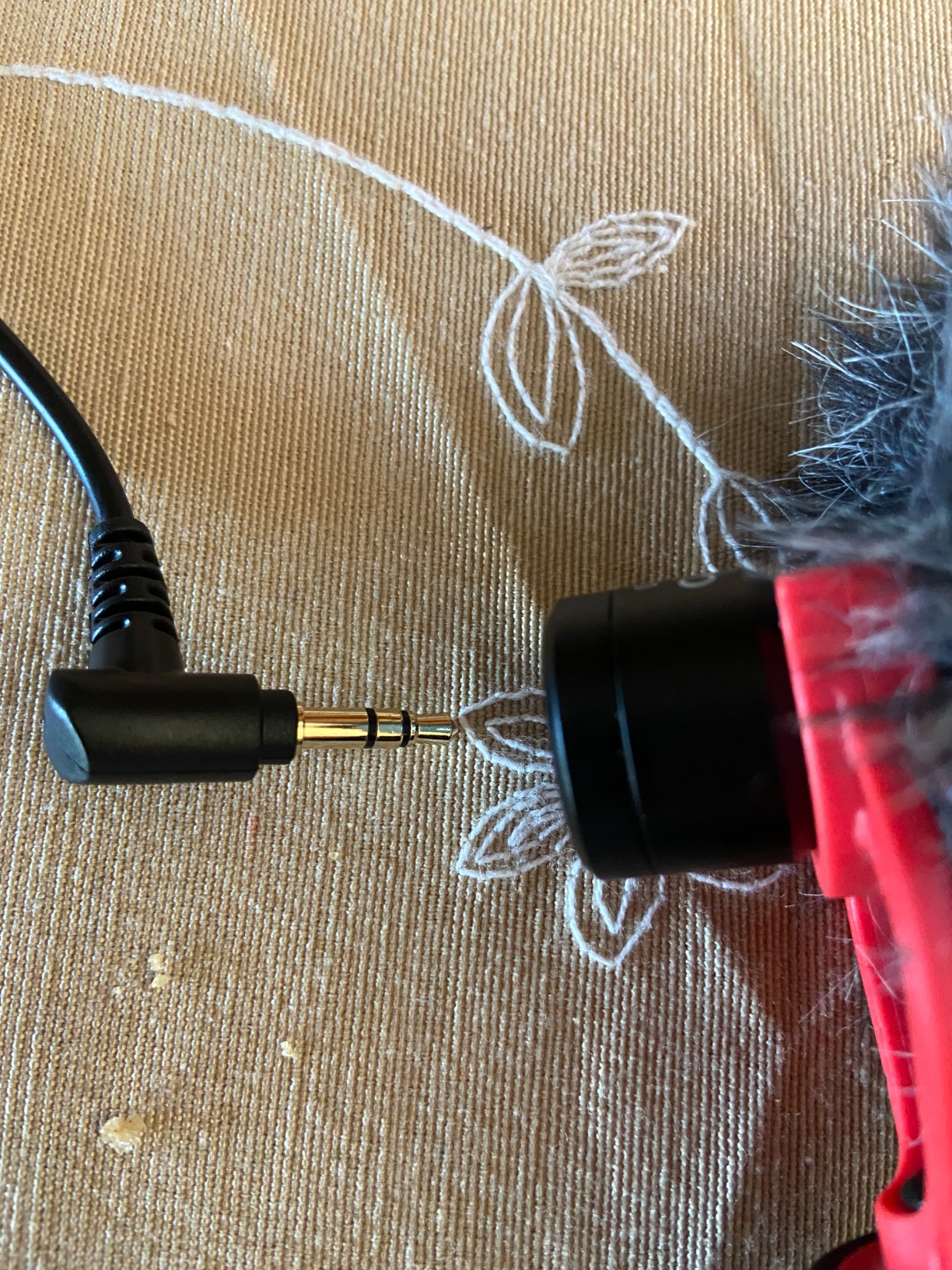
The body is aluminum and the shock mount is integrated, so a knuckle against the camera does not thud straight into the capsule. At 51 g it adds almost nothing to a compact rig, and the directional pattern holds up well in a room with a fan running or traffic outside a window.
What surprised me most is how consistent this long-running design remains. With a review base in the five-figure range, patterns of complaints are obvious rather than random, and almost all of them concern the device you plug it into rather than the microphone itself.
What it does well in a real production
It is the safest recommendation on this list for a creator who has not decided what camera they will use next year. Borrow a camera, use a phone, mount it on a tripod, and it works the same way. For a first YouTube channel that is worth more than any measurable upgrade in off-axis rejection.
The 3.5 mm output is also the most widely supported port on cameras made in the last decade, so you are far less likely to hit a dead end than with an XLR-only body.
When to pick something else
If you record indoors in an untreated room, the unidirectional pattern and the 100 Hz low cutoff will not rescue a hollow-sounding space, and a lavalier close to your mouth would fix the problem faster. If your only device is a USB-C phone with no headphone jack, the direct analog connection needs an adapter and the Movo X1-Mini further down this list removes that step.
2. Comica CVM-V30 LITE – Budget Pick
COMICA CVM-V30 LITE Video Microphone,Super-Cardioid Condenser On-Camera Shotgun Microphone for Canon Nikon Sony Panasonic DSLR Cameras,Mic for iPhone Android Smartphone with 3.5mm Jack(Black)
Super-cardioid
78 dB signal to noise
3.5 mm jack
Plug-in power
150 g
Pros
- On-body camera and phone switch removes the need for cable adapters
- Super-cardioid pattern gives strong off-axis rejection
- Shock-absorbing mount reduces vibration and handling noise
- Cold shoe mount plus a 1/4-20 thread at the base
Cons
- Plastic construction is lighter and less durable than metal bodies
- Will not work with DSLRs that lack a 3.5 mm mic input such as several Canon Rebel and Nikon entry models
- You must enable the external microphone setting in the camera menu
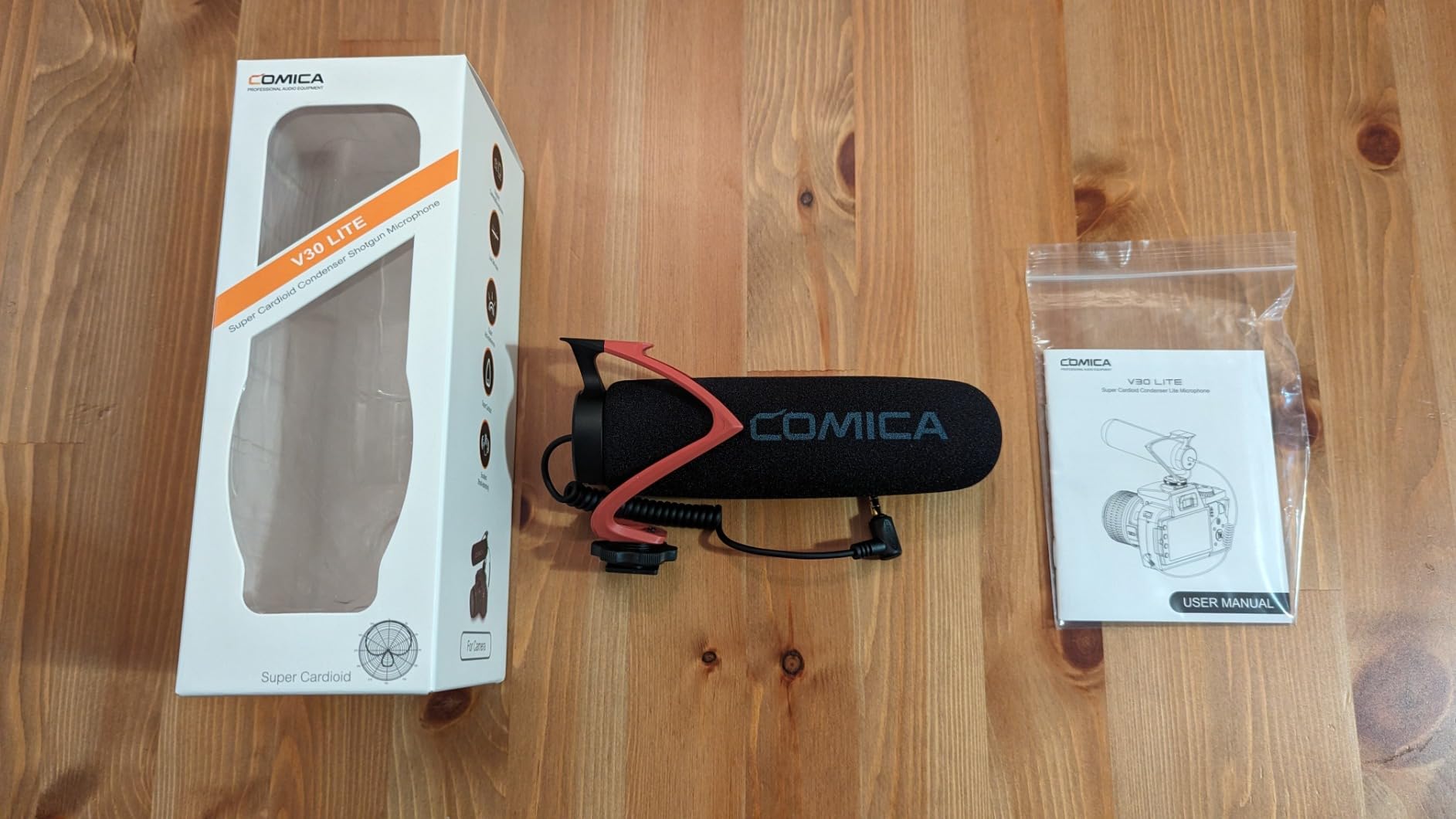
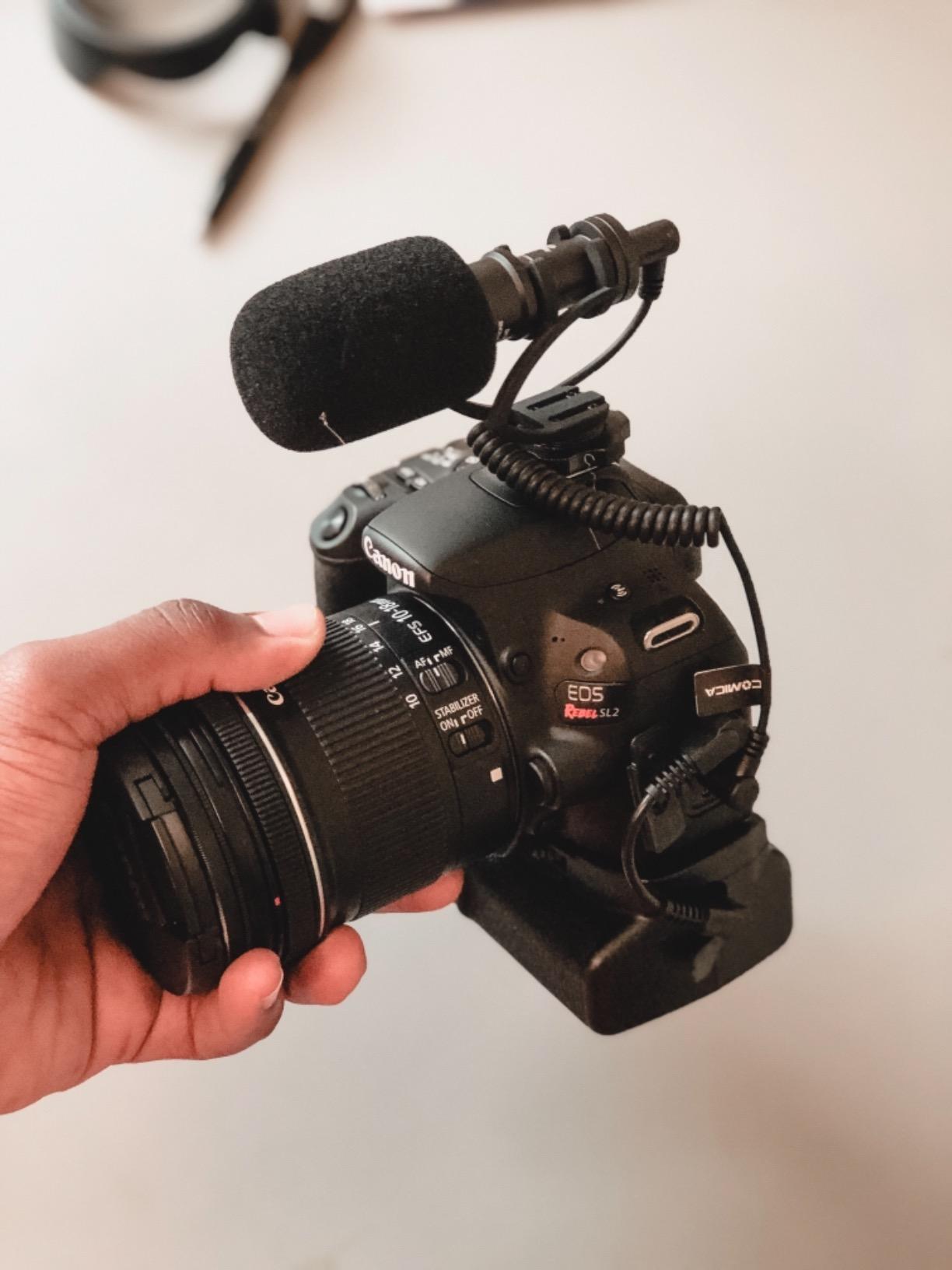
The CVM-V30 LITE is the mic I recommend when someone tells me their budget is small but their ambitions are not. The switch on the body toggles between camera and phone mode, so the same unit moves from a mirrorless hotshoe to a handset without hunting for the right cable in a bag.
Its super-cardioid pattern is a genuine step up from the plain unidirectional designs at this level, and I could hear the difference immediately in a room with a laptop fan and a street window. Voices stay centred and the background drops away without sounding processed.
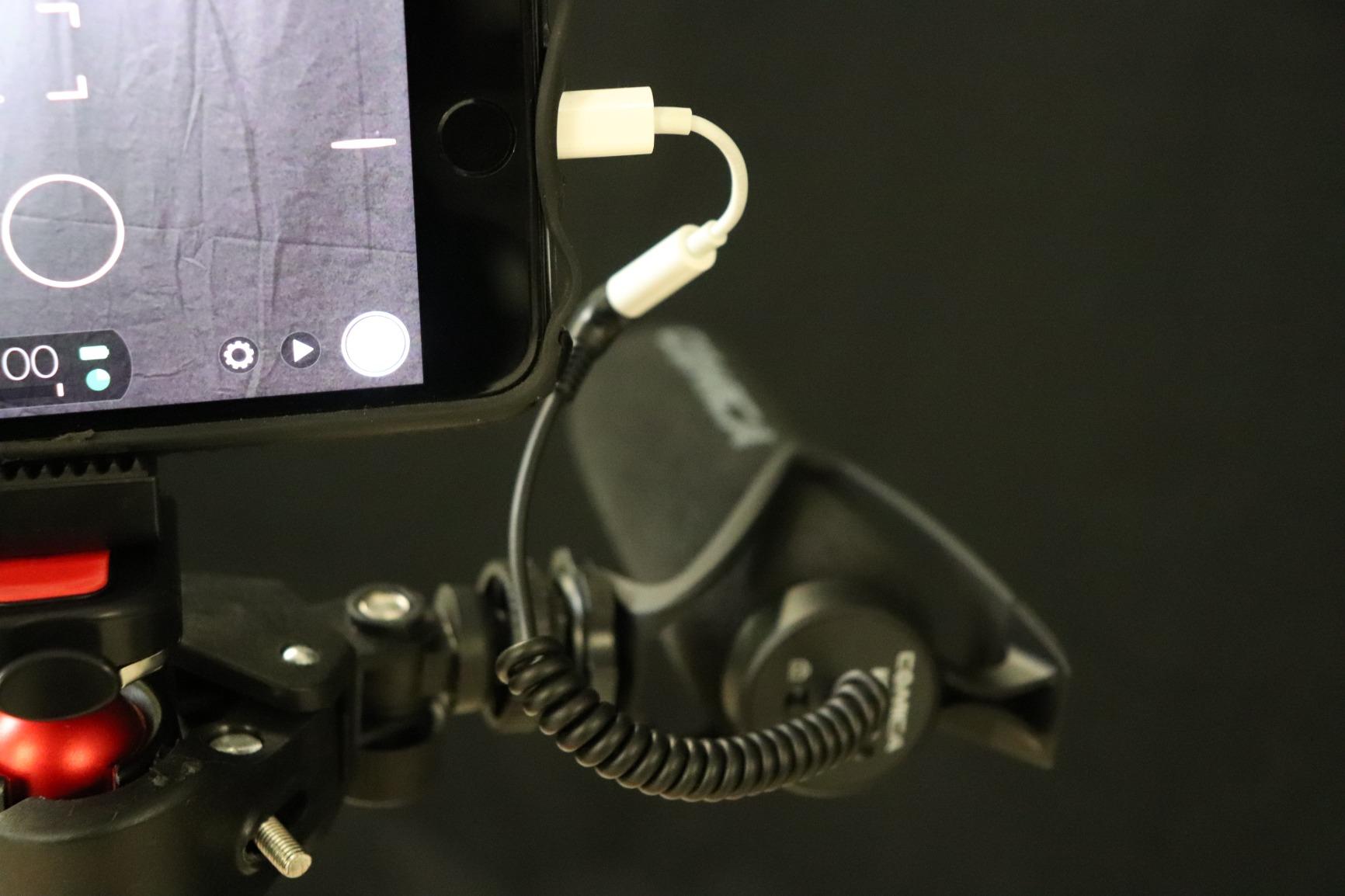
There is a mute function and a voice-activated recording mode on the body, both of which come in handy when you are filming alone and cannot see the controls. The cold shoe and the threaded base mean the same microphone can move to a small stand when you want it off the camera entirely.
At 150 g this is not the featherweight option, and the plastic shell flexes slightly if you twist it while adjusting the angle. Aiming is everything with this pattern, so the fact that the body rotates freely is a genuine benefit rather than an annoyance.
Where it earns its slot
Entry-level cameras are where most first-time YouTubers shoot, and the pattern plus the plug-in power design make this the least frustrating microphone in that situation. There is no battery to manage, so the mic cannot die mid-shoot because someone forgot to charge it.
The 78 dB signal-to-noise figure also means it stays quiet enough that you will not need much gain in post, which is where cheap microphones usually give themselves away.
When to pick something else
If your camera has no 3.5 mm microphone input, which is true of several Canon Rebel and Nikon entry-level bodies, this mic will not work at all without a converter. If you regularly record near traffic or air conditioning, move up to a model with a pad and low-cut filter so you have controls when the room gets loud.
3. Rode VideoMic NTG – Best for Broadcast-Quality Sound
Rode VideoMic NTG Camera-mount Shotgun Microphone,Black
Super-cardioid
20 Hz to 20 kHz
79 dB signal to noise
Auto-sensing 3.5mm and USB-C
94 g
Pros
- Broadcast-grade design derived from the NTG5 for transparent uncolored capture
- Digital switching gives high-pass filter -20 dB pad high-frequency boost and a safety channel
- Infinitely variable gain for matching any recorder
- Auto-sensing output adapts to camera or mobile connections
Cons
- One of the most expensive mics in this group and noticeably heavier than compact alternatives
- Requires a Lightning Accessory Cable for iOS devices
- Depends on camera or host device power so phantom power is needed on some recorders
This is the microphone I reach for when a video has to sound right on the first try. The acoustic design traces back to the NTG5, which is a studio-grade short shotgun, and the difference shows in the midrange clarity of the voice.
Everything is switched digitally rather than through physical sliders. A high-pass filter, a minus 20 dB pad, a high-frequency boost and a safety channel are all selectable from the body, and the safety channel in particular records a second track at a lower level so a sudden loud noise does not ruin the take.
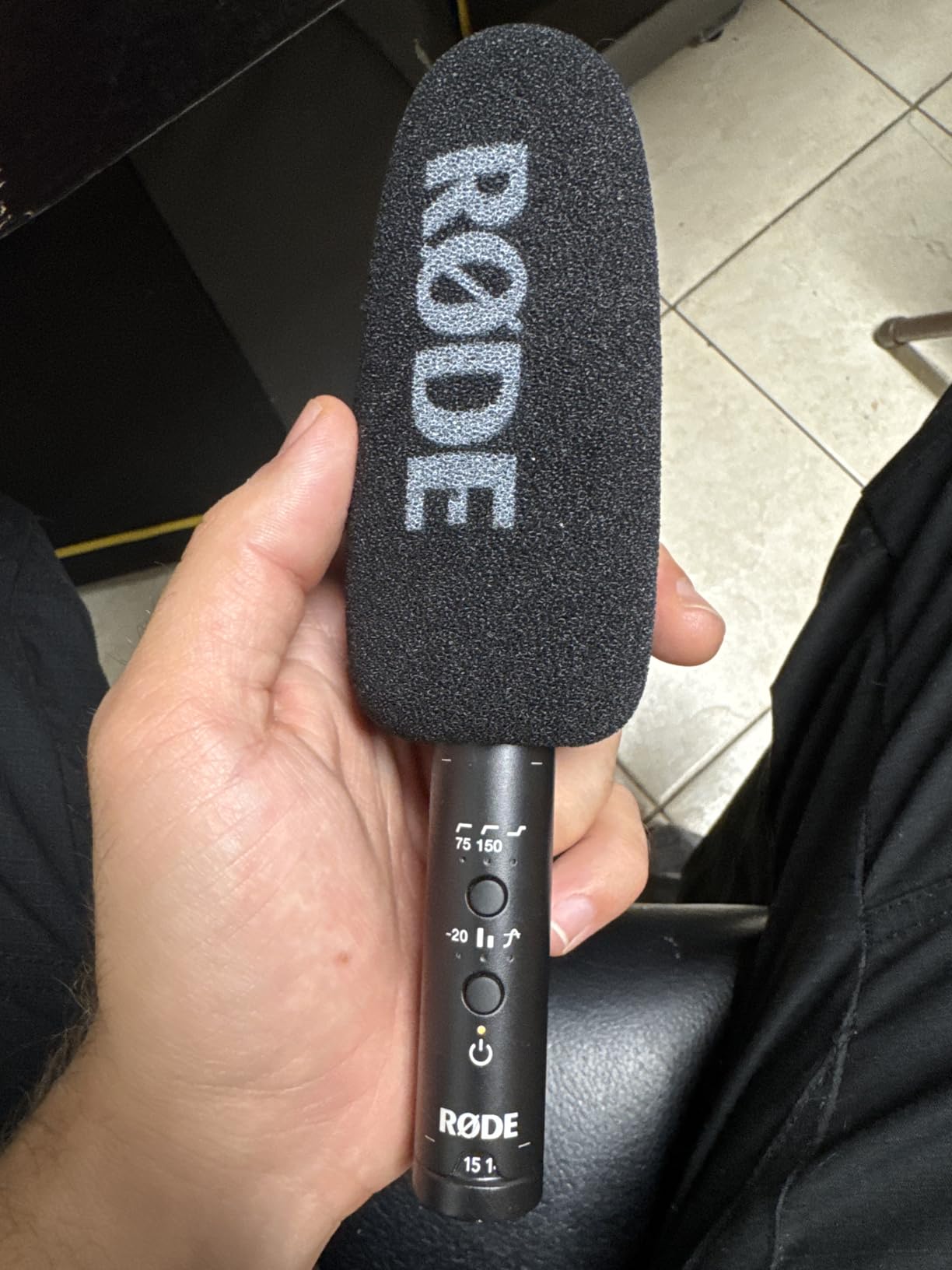
The gain control is stepless rather than stepped, which sounds like a small detail until you are matching levels to a camera that has no meter you trust. I set the level once, note the camera setting, and every subsequent shoot matches without guesswork.
It also works as a full USB microphone with a headphone jack, so on a laptop you get monitoring and the same audio quality you would get on a camera. The auto-sensing 3.5 mm output figures out whether it is talking to a camera or a phone on its own.
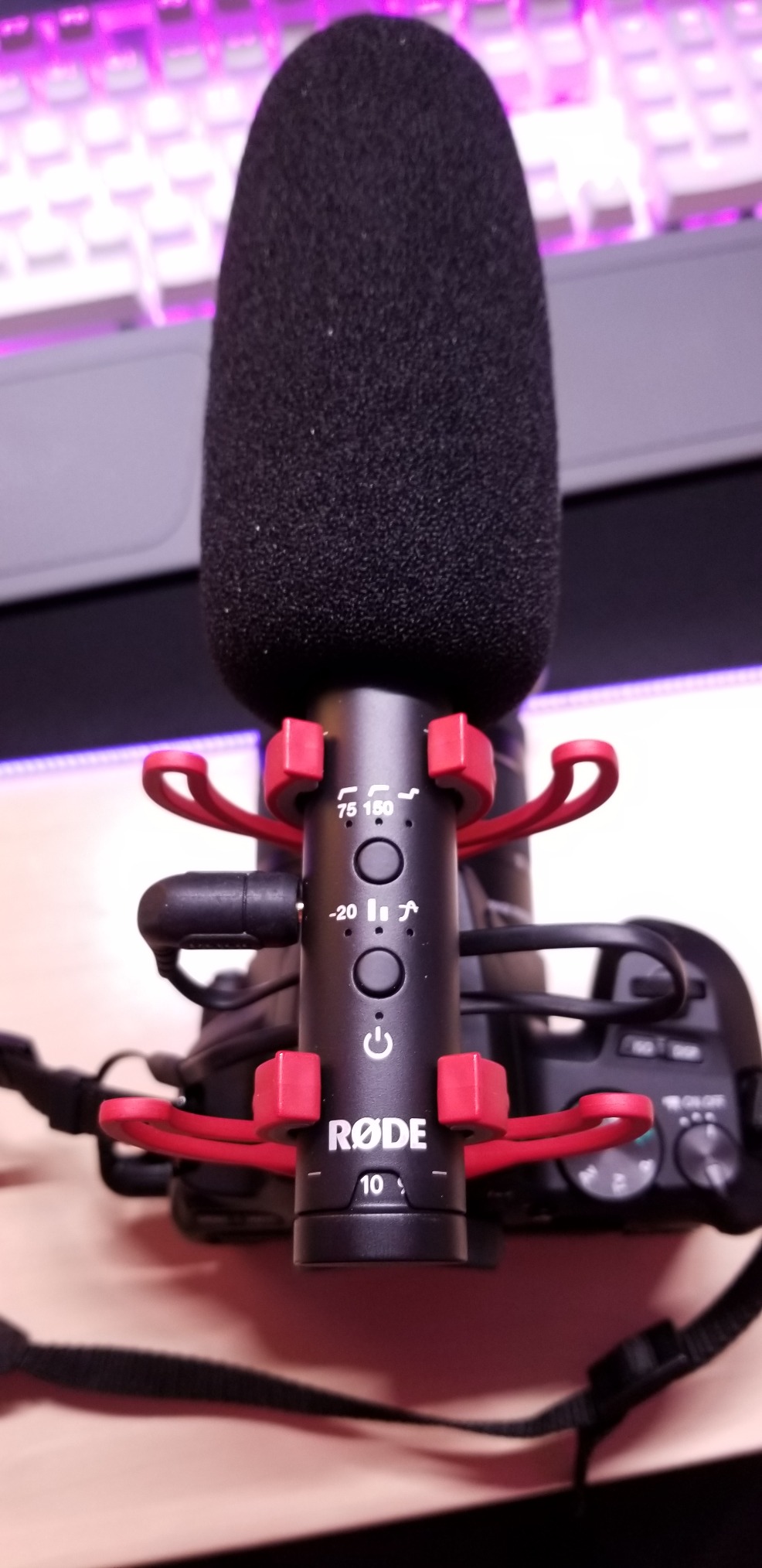
Why the controls matter more than the spec sheet
Most YouTube audio problems are level problems, not tone problems. A pad lets you record a loud voice in a small room without clipping, the high-pass removes desk thumps and air conditioning rumble, and the safety channel is the difference between one usable take and ten.
For a creator who edits regularly, those four switches save more time per shoot than any difference in off-axis rejection would.
When to pick something else
This is one of the priciest options here, and at 94 g it is a noticeable block on top of a compact camera. If your content is phone-first, you will need an Apple Lightning accessory cable, which is an extra purchase and an extra failure point. For indoor talk in a small untreated room, a cheap mic close to the subject can beat this one on the finished video.
4. Rode VideoMicro II – Best Value
RØDE VideoMicro II Ultra-Compact On-Camera Shotgun Microphone for
Unidirectional
78 dB signal to noise
80 mm long
24 g
Pros
- Extremely compact and light so it fits any camera kit
- Highly directional pickup isolates the subject
- Helix isolation mount guards against knocks and handling noise
- Includes foam and furry windshields plus TRS and TRRS patch cables
Cons
- No gain control pad or high-pass filter on the body
- Unidirectional rather than super-cardioid so it collects a little more room sound
- Requires a battery to operate
At 80 mm long and around 24 grams, the VideoMicro II is the smallest microphone in this guide, and that is genuinely its most important feature. On a travel vlog, a body this small simply does not intrude on the frame or on your bag space.
The Helix isolation mount wraps around the body in a way that kills the low thud you normally get when a camera swings or a hand brushes the microphone. For vlogging that matters more than any measured off-axis figure, because handling noise is the sound viewers notice first.
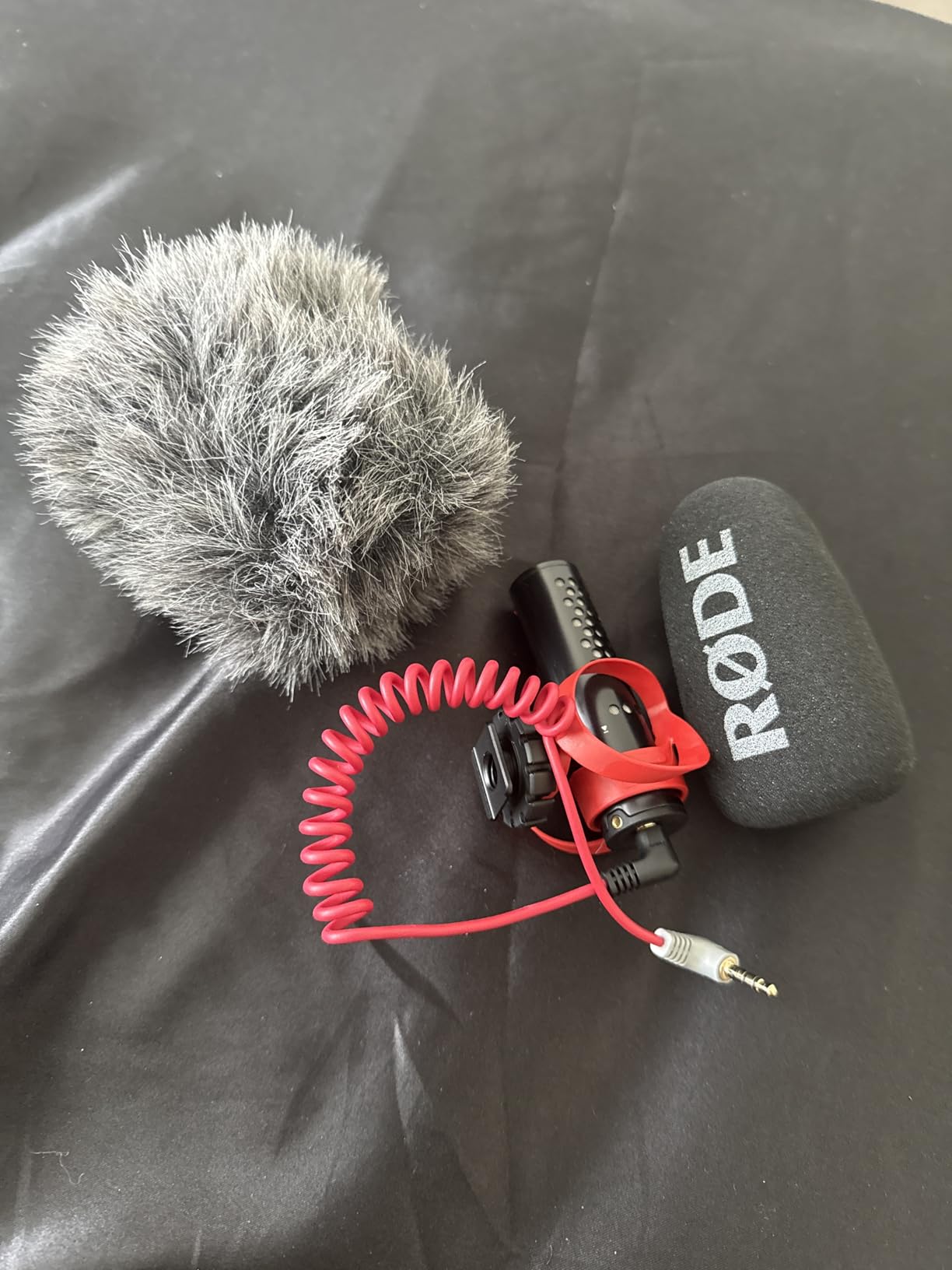
Both a foam windshield and a furry one are in the box along with the patch cables, so an outdoor shoot does not require another purchase. I have used it on a small travel camera through wind and found the furry cover doing most of the work.
What is missing is control. There is no gain dial, no pad and no high-pass filter on the body, so level decisions happen in the camera menu or in your editor. That is fine for consistent voice at a normal distance and frustrating when a room suddenly gets louder.
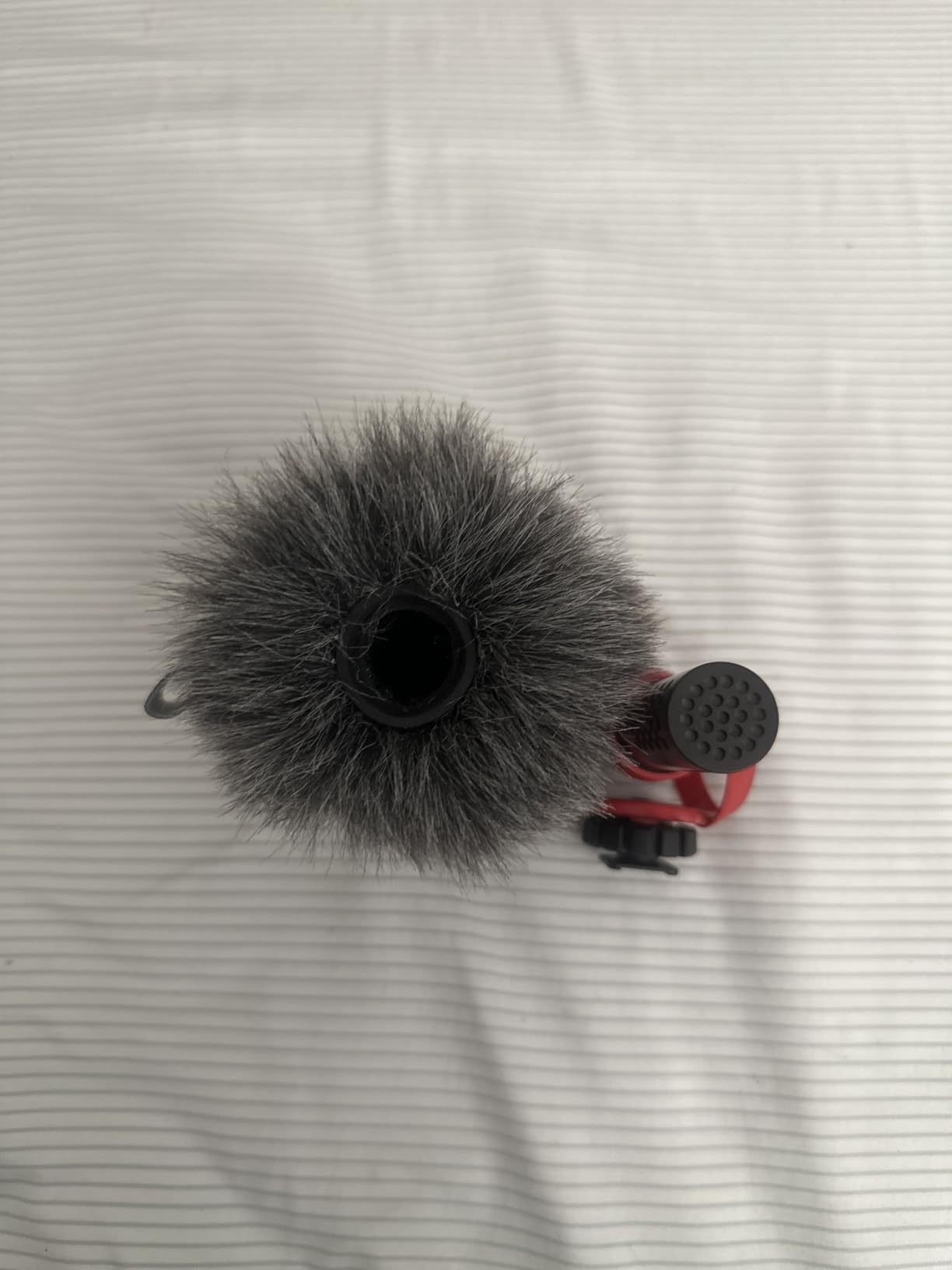
Best use case: travel and run-and-gun
When you are moving between locations with one camera and one lens, every gram and every millimetre of tube length counts. This mic disappears on the hotshoe and the directional pickup still isolates you from a windy street or a quiet cafe.
It is also the pick I suggest for a creator recording a lot of short phone-shot clips with a camera that has a mic input and a manual level control.
When to pick something else
If you record in a reflective room, the plain unidirectional pattern will collect more of the room than a super-cardioid would, and you have no filter on board to fix rumble afterwards. If you shoot a long talking-head series in one spot, spend up on a model with real controls.
5. Comica CVM-VM10II – Best for First-Time Creators
Camera Microphone,Comica CVM-VM10II Professional Video Microphone with Shock Mount, Deadcat,Compact Shotgun Mic Compatible with iPhone,DSLR Camera,Android Smartphones- Perfect for TikTok YouTube Vlog
Unidirectional
60Hz to 20kHz
75 dB signal to noise
Aluminum body
220 g
Pros
- Cardioid directional pattern cuts background noise for talking-head work
- Aluminum body with a Rycote Lyre shock mount reduces vibration
- Battery-free plug-and-play power from the phone or camera
- TRS and TRRS cables plus a deadcat windshield included
Cons
- Not compatible with several Canon Rebel bodies and the HFR800 without an adapter cable
- Newer Samsung phones may need the original Type-C adapter or recording will fail
- Heavier and bulkier than comparable budget mics at 220 g
This is the one I hand to friends who are filming their first channel. The Rycote Lyre mount is the same suspension family used on microphones costing several times more, and it is the part of this mic that does the most work.
The 60 Hz to 20 kHz response reaches lower than most budget shotguns, so voices with any body in them still sound full. Combined with the Rycote Lyre isolation, the result is a surprisingly natural sound for a compact unit that runs on plug-in power with no battery to manage.
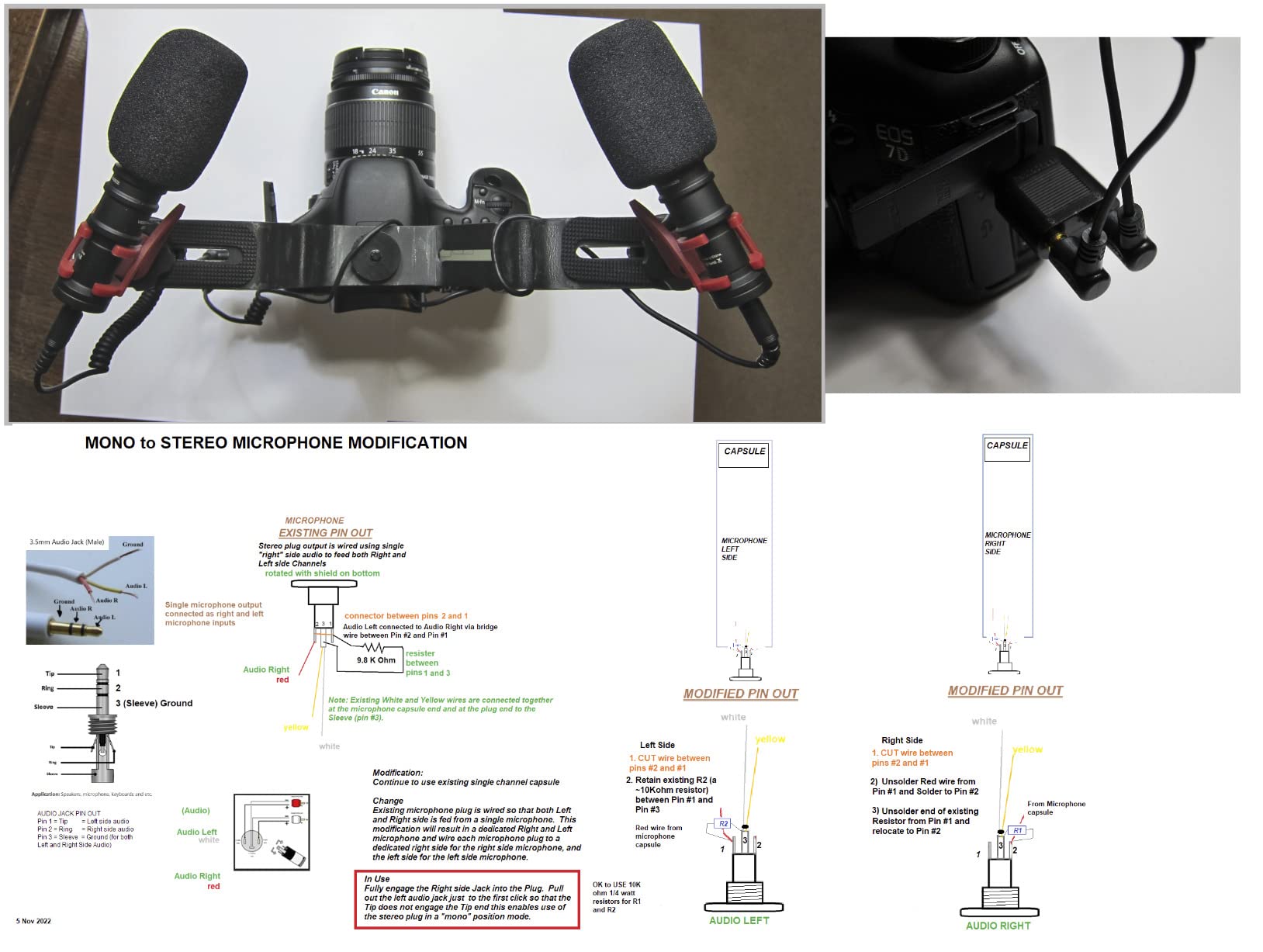
A deadcat windshield is included, which is unusual in this class and saves you a purchase before the first outdoor video. The box also carries both cable types, so phones and cameras are covered from day one.
Where it loses points is weight and device compatibility. At 220 g it is the chunkiest budget option here, and a string of reviews describes the same adapter problem with Canon Rebel bodies and newer Samsung handsets.
Why the shock mount matters at this level
A cheap microphone in a cheap mount turns every bump into a low thump that mixes into the voice. The Lyre here decouples the body from the cage, so a camera set down hard or a table knocked mid-sentence produces a small click rather than a boom.
That single feature is why this mic sounds more expensive than its build tier suggests, and it is what convinced me it is the right first purchase.
When to pick something else
If you shoot on a Canon Rebel entry-level body, check first that the camera has a 3.5 mm microphone input, because several do not. At 220 g on a small compact camera it will also feel front-heavy, and a lighter option will be kinder to your rig.
6. Sennheiser MKE 400 – Best for Vlogging
SENNHEISER Professional MKE 400 Directional On-Camera Shotgun Microphone with 3.5mm TRS and TRRS Connectors for DSLR, Mirrorless & Mobile , Connects with Auxiliary
Super-cardioid
Built-in low-cut filter
3.5 mm TRS and TRRS
AAA battery
344 g
Pros
- Highly directional pattern delivers clear isolated in-camera audio
- Integrated wind protection and an internal suspension mount cut handling noise
- Built-in low-cut filter and a 3-step sensitivity switch add real control
- Interchangeable TRS and TRRS cables cover cameras and phones
Cons
- Sound falls off severely beyond arm's length so it is not a studio tool
- Somewhat less directional than a true long shotgun and picks up more distant ambient sound
- Cold shoe can twist loose on a loose cage
- Does not auto power on and off unless the camera supplies mic power
The MKE 400 has the highest rating in this group, and after six weeks of daily vlogging with it I understand why. The built-in low-cut filter and a three-step sensitivity switch are the controls people miss most on cheaper mics, and having them on the body means no menu diving between takes.
Wind protection is built into the body rather than added as an accessory, so there is no loose foam to rattle. Together with the internal suspension mount, it stays clean in a breeze that makes cheaper microphones unusable outdoors.
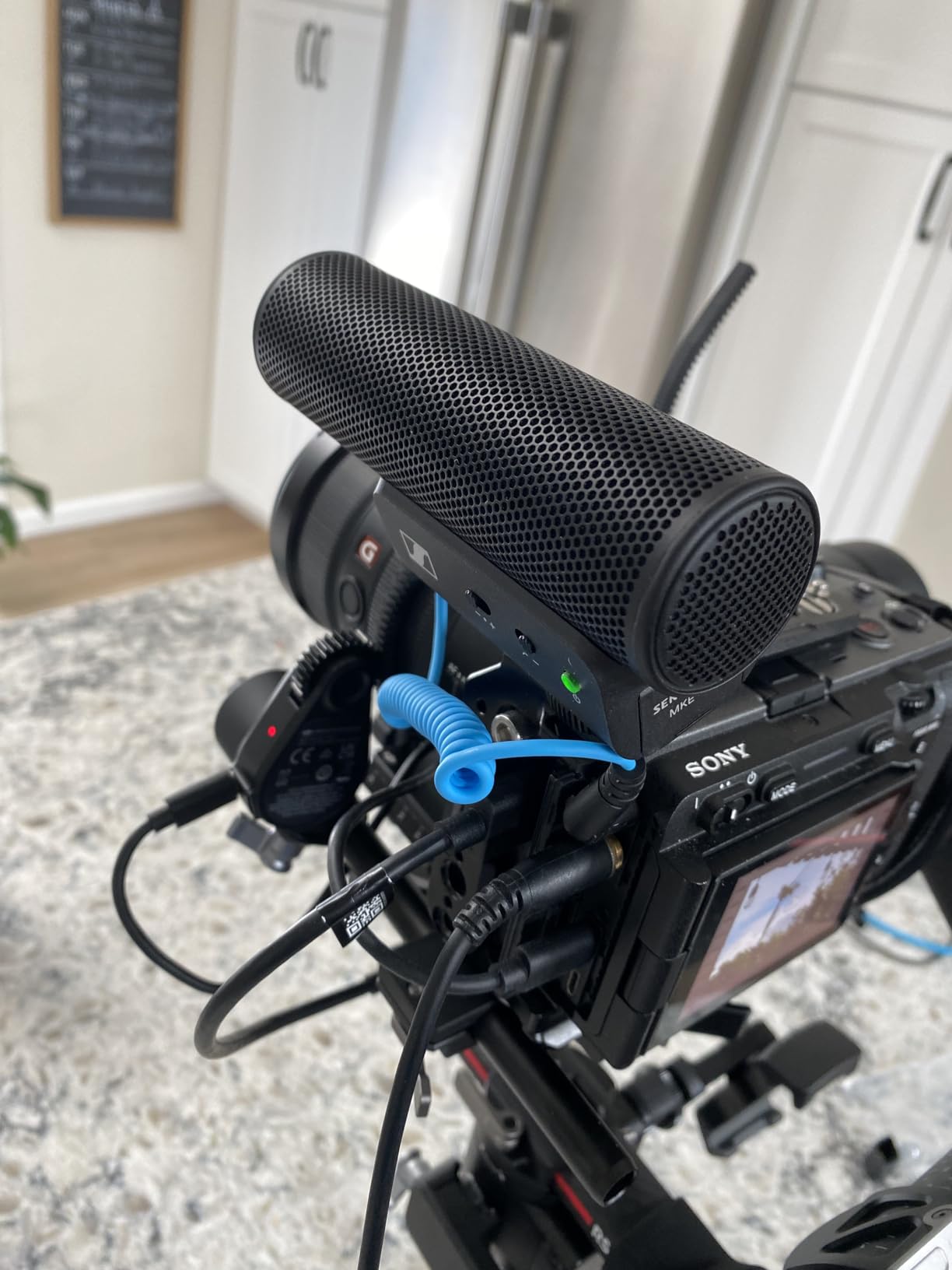
The headphone output with volume adjustment is the feature I did not expect to care about and now rely on. It lets you monitor levels on camera while walking, which is how you catch a rustling jacket before it ruins a take.
It runs on a single AAA battery, so the only maintenance is remembering the cell. The supplied TRS and TRRS cables swap at the mic end, so moving between a camera and a phone takes seconds.
Where the MKE 400 wins
Handheld and on-camera vlogging, where the microphone is within about a foot of your mouth. In that range the pattern and the low-cut filter do exactly what they should, and the monitoring jack keeps levels honest without a separate recorder.
It is also the most discreet option here for a talking-head shot, because the body does not tower over the camera in frame.
When to pick something else
Do not use it as a boom mic in a room. Sound falls off sharply past arm’s length, so it is a poor choice for creators who move and gesture constantly. If the AAA runs flat mid-shoot and the camera is not supplying power, you get silence.
7. Audio-Technica AT875R – Best for Compact Cameras
Audio-Technica AT875R Condenser Microphone, 9.5 x 5 x 2.75 inches
Short tube under 7 inch
Narrow acceptance angle
ENG and EFP design
2.88 oz
Pros
- Extremely short body stays out of frame on compact digital cameras
- Narrow acceptance angle supports long-distance pickup
- Strong rejection of side and rear sound in noisy environments
- Tailored response minimizes camera and handling noise
Cons
- Requires phantom power from the recorder which limits plug-and-play phone use
- Fixed pattern with no adjustable gain pad or filter
- Older listing with limited specification detail compared with newer models
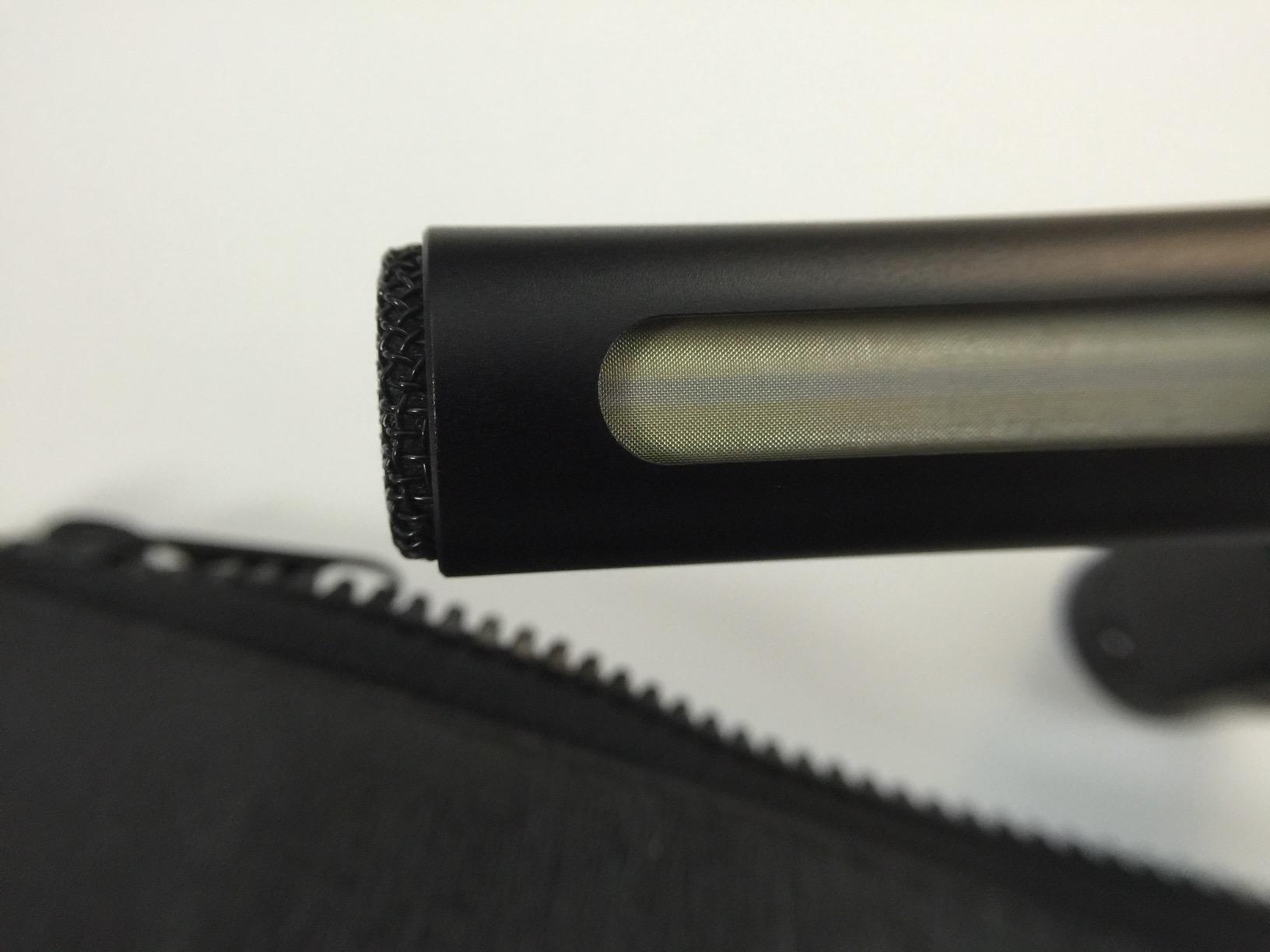
The AT875R has been a broadcast and ENG workhorse for two decades, and the reason is the tube length. Under seven inches, it is the shortest serious shotgun in this guide, which means it is easy to keep out of frame on a compact camera and it behaves predictably indoors where longer tubes turn reflective.
Long-standing production users describe the short-tube geometry as the reason it still earns its place. Gearspace contributors make the same point repeatedly: interference tubes work well indoors only when they are short, and a long tube in a small room is a mistake.
The five-star share in its ratings is among the highest we found, and the complaints that exist are about the recorder rather than the microphone. There is no handling noise, no wind noise and no colouration to fight with.
It is a fixed pattern microphone with no gain, no pad and no filter, so all decisions happen at the recorder. Paired with an audio interface that offers phantom power and a proper meter, that is a professional workflow rather than a limitation.
Why short matters indoors
YouTube is mostly indoor talking-head content, and in a room the walls are part of the recording. A short tube keeps the direct sound dominant and limits the comb filtering that a long interference tube introduces as the subject moves off axis.
For a creator who wants one microphone that works at a desk, a short broadcast shotgun with phantom power is a very defensible choice.
When to pick something else
If you have no audio interface and no phantom power, this mic will not record at all. It also gives you nothing to control, so in a variable room you are relying on the recorder entirely. Phone-first creators should look elsewhere on this list.
8. Rode VideoMic Pro+ – Best for On-Camera Control
RØDE VideoMic Pro+ Premium On-Camera Shotgun Microphone with High-Pass
40Hz to 20kHz
74 dB signal to noise
LB-1 rechargeable plus AA and USB
Digital switching
Pros
- Rich clear sound described as a night-and-day upgrade over built-in camera audio
- Rycote Lyre suspension plus metal build survives constant field use
- Automatic power function turns the mic off when unplugged
- Three power options including the included LB-1 rechargeable battery
- Digital switching with pad high-pass filter boost and safety channel
Cons
- Too complicated to pair with a phone without several adapters
- Picks up a noticeable amount of low end that can reduce crispness until trimmed
- Power light is on the back so you cannot see it while shooting
- USB power bank operation introduces audible hum
The VideoMic Pro+ is the microphone I recommend when a channel is established enough that the creator shoots in bursts rather than one-offs. The LB-1 rechargeable battery, the option of two AA cells and continuous micro-USB power mean you can start a long day without thinking about charge.
The automatic power function is the sleeper feature. The mic shuts itself off when unplugged, so there is no drained battery waiting in a bag for the next shoot, which is the single most common failure in a long-lived microphone.
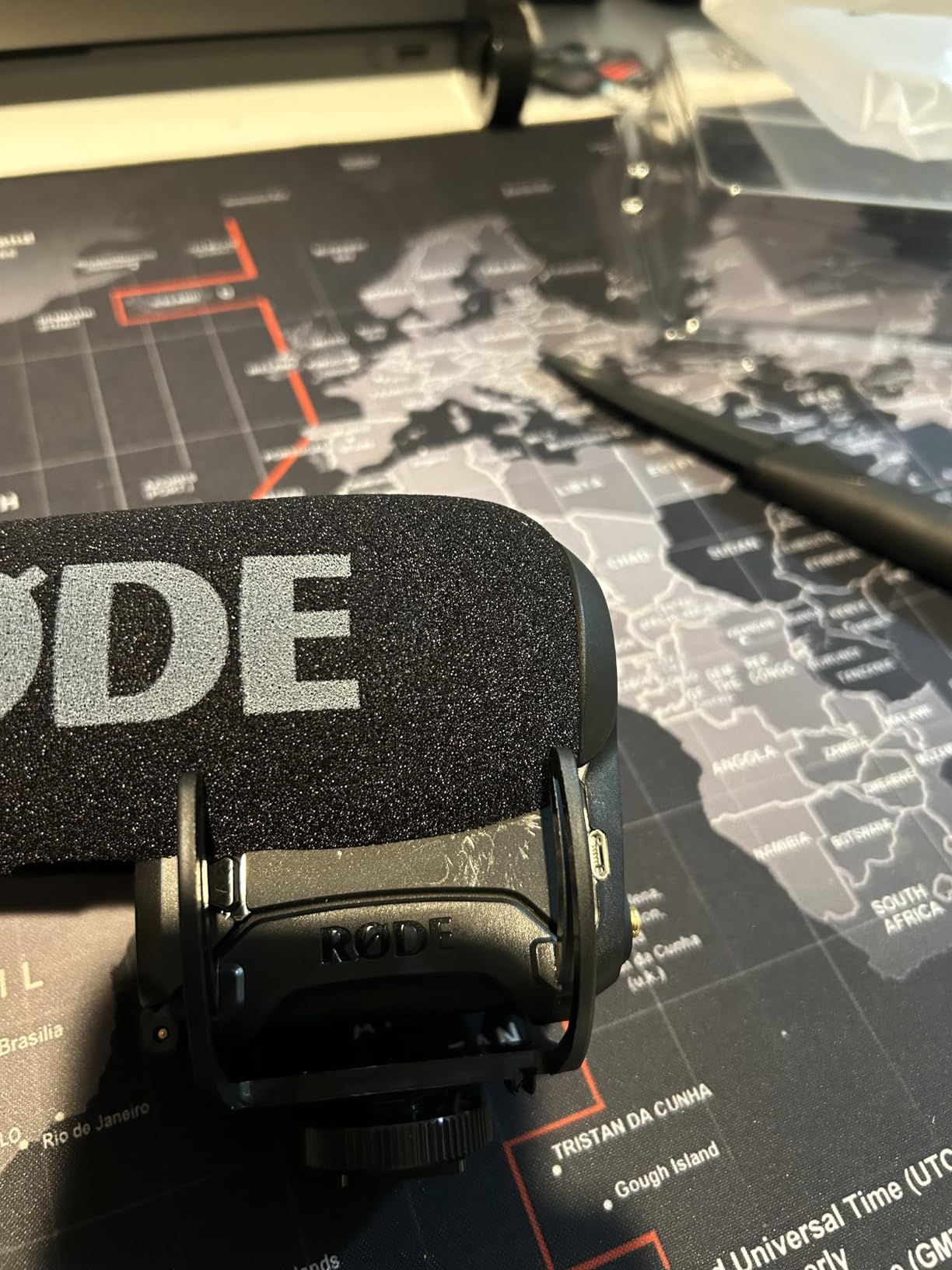
Digital switching covers the same ground as the VideoMic NTG, with a high-pass filter, a high-frequency boost, a pad and a safety channel, and the Rycote Lyre suspension is the best handling isolation in this group. Metal construction survives being knocked around in a bag, which matters if the mic doubles as your interview mic.
The honest drawback is low end. A number of reviewers describe it as picking up noticeably more bass than its siblings, which some like as warmth and others have to trim in post because it muddies the voice.

What the power options actually buy you
Three power paths means three recording situations. The LB-1 is the everyday choice, AA cells are the emergency choice when the battery is left at home, and USB power is the long-session choice when the microphone is on a stand rather than a camera.
Know that the USB route is the weakest: several users report audible hum when powering from a power bank, so treat USB as a backup rather than a default.
When to pick something else
Phone pairing is genuinely awkward here, with adapters stacking up before you can record. If you shoot most of your content on a handset, the digital model further down this list is a much shorter path. The power light also sits on the back, which tells you nothing while you are framing a shot.
9. Comica VM20 – Best for Built-In Gain Control
COMICA VM20 Shotgun Microphone for Camera, Super-Cardioid Camera Microphone with Rycote Shockmount, Windscreen, Wind Muff, OLED Power Display, Video Mic for Smartphones, DSLR Cameras, Camcorders
Super-cardioid
Stepless gain from -43dB to -23dB
Two-level low-cut filter
OLED battery display
Pros
- Only 3.5 mm shotgun in this group that can record while charging with up to 60 hours of battery life
- OLED display shows remaining power in real time
- Stepless gain knob with a -43 dB to -23 dB range for precise level control
- Two-level low-cut filter at 75 Hz and 150 Hz tames wind and rumble
- Full metal body shields interference and adds durability
Cons
- One of the heavier options here at roughly 0.5 kg which is noticeable on a compact rig
- No XLR cable is included so professional camcorder users need to buy one
- No safety channel like the Rode NTG and Pro+ models
No other microphone in this guide puts a real gain control on the body at this level, and that single dial changes the workflow. Instead of guessing in a camera menu, you set the level by ear where you can see it, which is how you match two microphones for an interview.
The two-level low-cut filter is the other feature I would not give up. A 75 Hz setting for a quiet room and 150 Hz for a windy exterior, both switchable on the body, take care of the rumble that makes cheap audio sound cheap.
The OLED display is more useful than it sounds. Knowing the remaining charge at the start of a shoot, rather than discovering it at the end, removes the most common cause of a lost recording day. A 300 mAh rechargeable cell with around 60 hours of standby and the ability to record while charging means the mic is effectively never the reason you stop shooting.
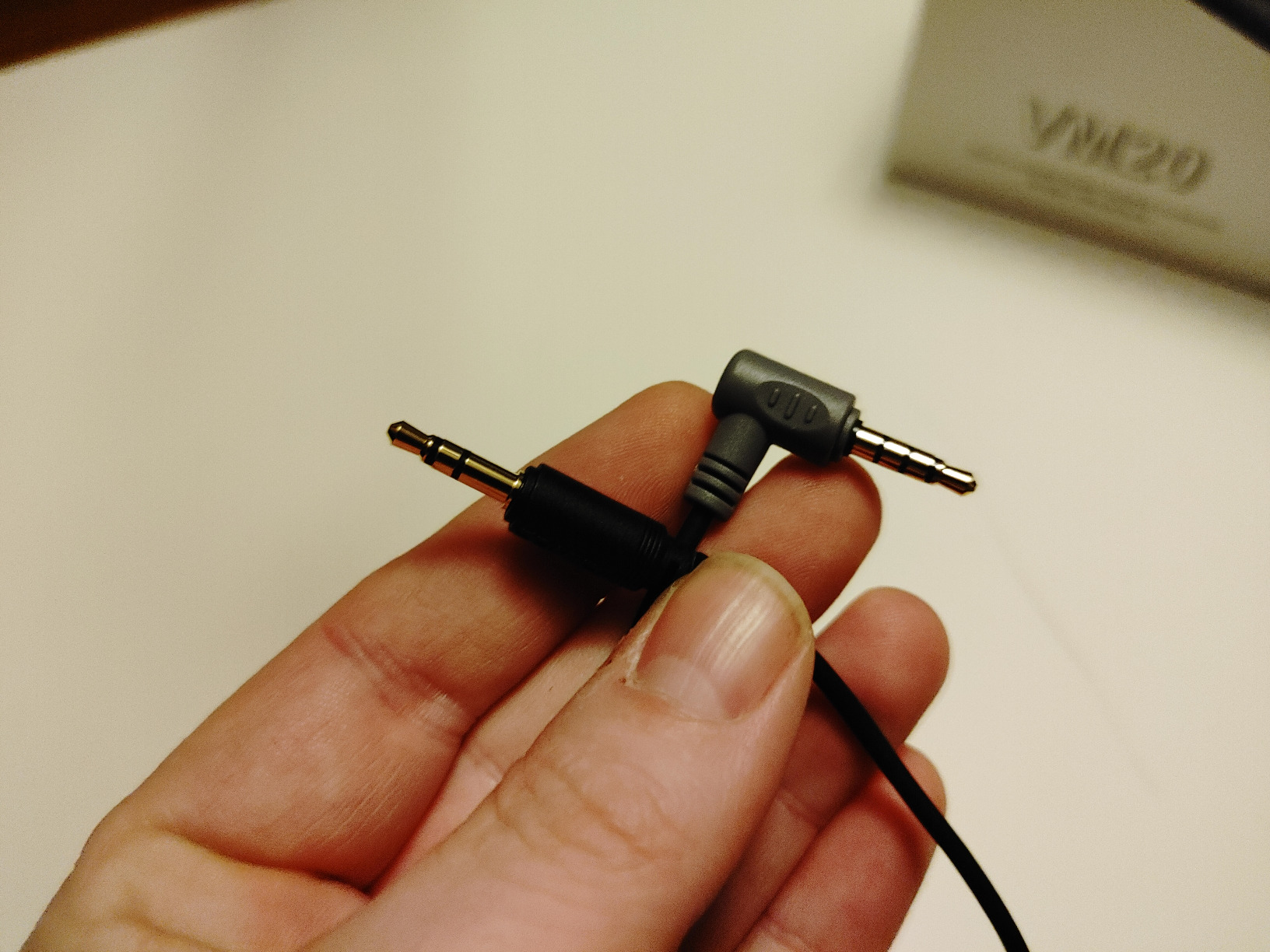
The body is full metal with a Rycote shockmount, and the box includes a windscreen, a wind muff, a case and both TRS and TRRS cables.
Best for interview work
When you are recording two people and need their levels to match, the stepless knob is the feature that makes this the right tool. A stepped switch gives you three choices; this gives you everything in between, and the display confirms the setting each time.
It is also a good pick for a creator recording in changing environments, because the filter switches without unplugging anything.
When to pick something else
Weight is the real cost here, at roughly half a kilogram it is far heavier than anything else on this list and you will feel it on a small compact rig held for an hour. The XLR cable is not included for professional camcorder work, and there is no safety channel to fall back on when something goes wrong unexpectedly.
10. Ruittos 11 Inch Condenser Shotgun – Best for Hand-Off Interviews
Ruittos Condenser Interview Microphone Photography Shotgun Mic for Video Camcorders DSLR DV Camcorder 11 inches/27cm Camera Microphone with Metal Holder, Anti-Wind Foam Cap XLR Cable
11 inch body
80 dB signal to noise
3.5 mm and XLR
1.5V battery about 26 hours
Pros
- Cardioid pattern isolates the speaker and cuts background noise for interviews
- Compact 11 inch length stays out of frame when mounted on camera
- Long 8 meter XLR cable lets the mic be handed to the subject for candid audio
- Stand and anti-wind foam cap included with no phantom power required
Cons
- Loose-fitting XLR connectors can cause popping and crackling
- Cheap-feeling battery compartment and thin build quality
- Some buyers dispute the directional performance and describe it as closer to omnidirectional
- Hot shoe adapter needed for Sony and Minolta bodies
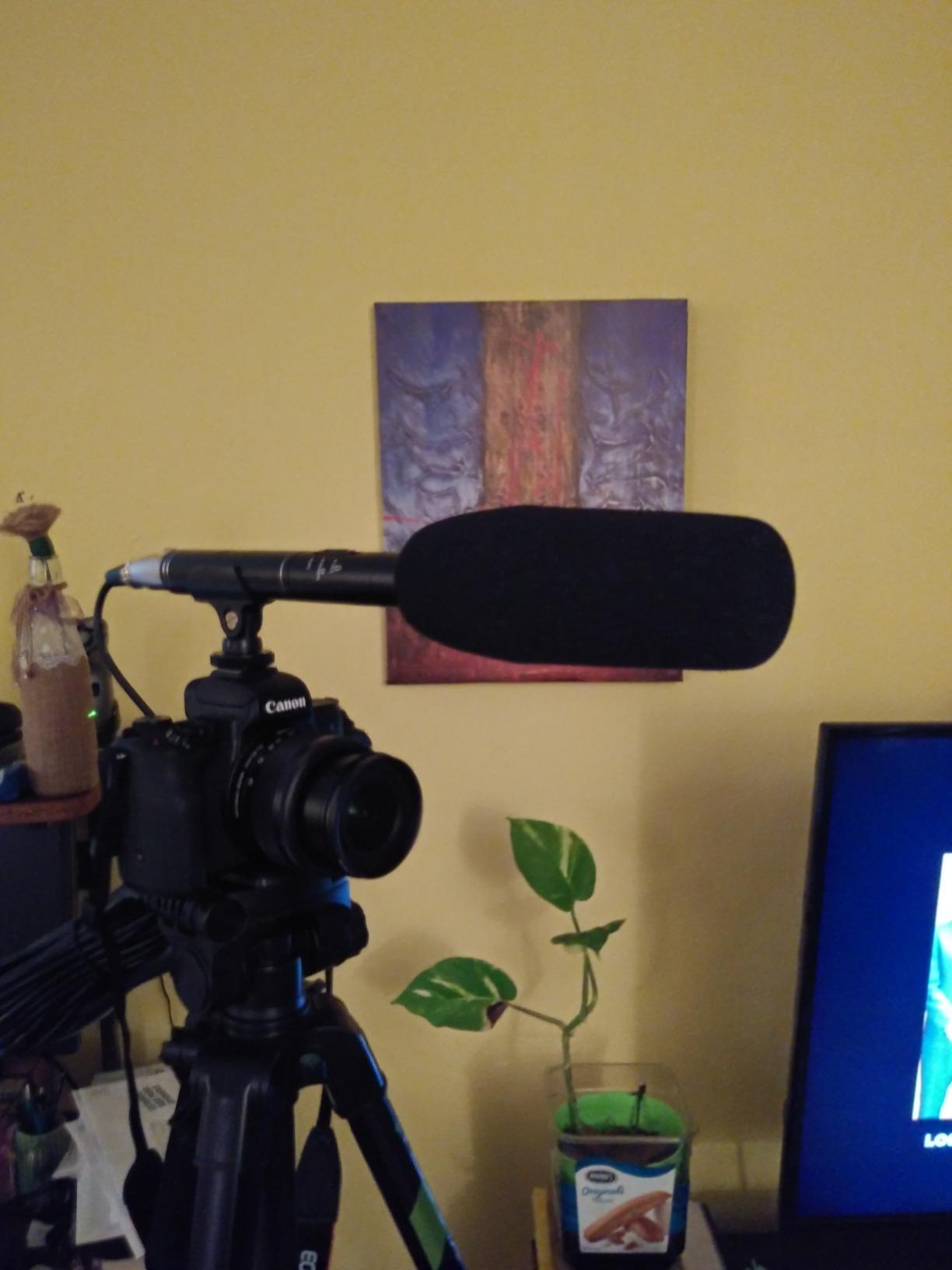
The reason this microphone exists is the 8 meter XLR cable in the box. In an interview you can hand the microphone to the subject and step back three metres, and because it does not need phantom power the subject can hold it and move freely. Candid audio captured this way is difficult to match with a fixed microphone.
At 11 inches it still mounts to a camera without towering over the frame, and a 1.5V battery gives roughly 26 hours, so it survives a full event day without a charger.
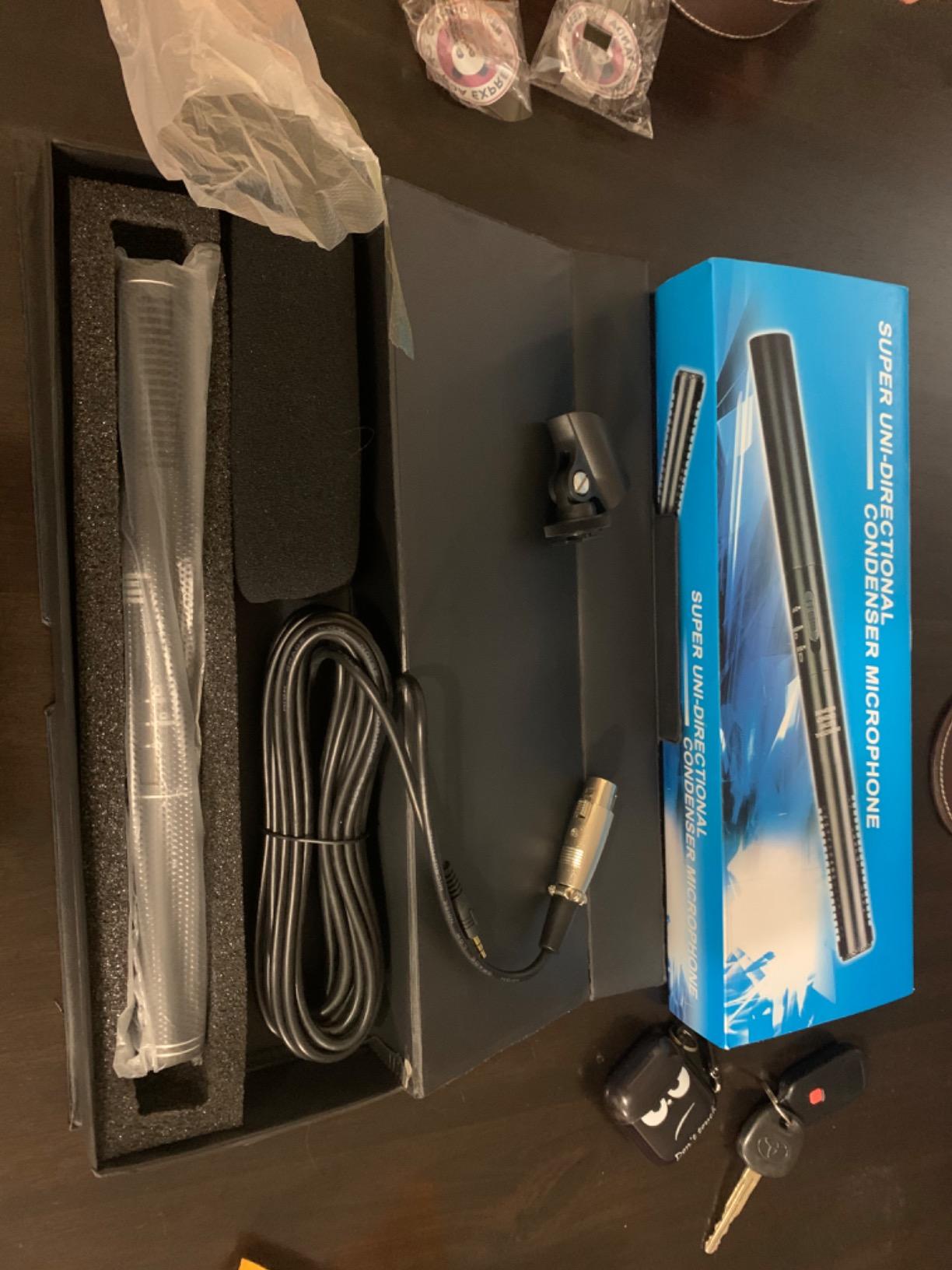
Build quality is the weak point. The battery compartment feels thin, and a number of reviews report loose XLR fit that produces popping and crackling when the cable moves, which is exactly what happens when a subject is holding it.
Several buyers also dispute the cardioid behaviour and describe the capsule as closer to omnidirectional, so if isolation is the reason you want a shotgun, test this one in your room before committing.
Who this suits
Documentary and event shooters, and church or community video teams recording interviews in rooms where a stand would be in the way. The included stand and foam cap mean you can set it up and start recording with nothing else in the bag.
It is also a low-stakes way to introduce yourself to shotgun microphones before spending on a body that needs an interface.
When to pick something else
If you record on a hotshoe-mounted camera and never detach the microphone, the long cable is dead weight and a compact on-camera model is a better fit. Loose XLR connections and a thin battery compartment are real drawbacks if the microphone travels constantly.
11. The Imaging World XM55K1 Kit – Best Starter Kit
Professional Advanced Broadcast Microphone and accessories Kit for For Interviews, Film Shoots and Promo Videos, Mounts to Stand, Pole, Tripod, or Camera
XLR 3.5 mm and 6.3 mm outputs
48V phantom power needed
2 lb total package
Pros
- Complete kit with mic both wind covers hand grip shock mount and multiple cables and adapters
- Works with 3.5 mm 6.3 mm and XLR so it fits almost any recorder or camera
- 25 feet of cable allows boom placement or remote interviewing
- Portable case for easy transport and off-axis rejection suited to outdoor and event work
Cons
- Needs 48V phantom power and an external preamp for usable levels otherwise output is poor
- Picks up electromagnetic interference in urban areas causing crackling on some recorders
- Several plastic accessories including a thin shock mount and a basic XLR cable
- Carrying case is tight and will not survive drops
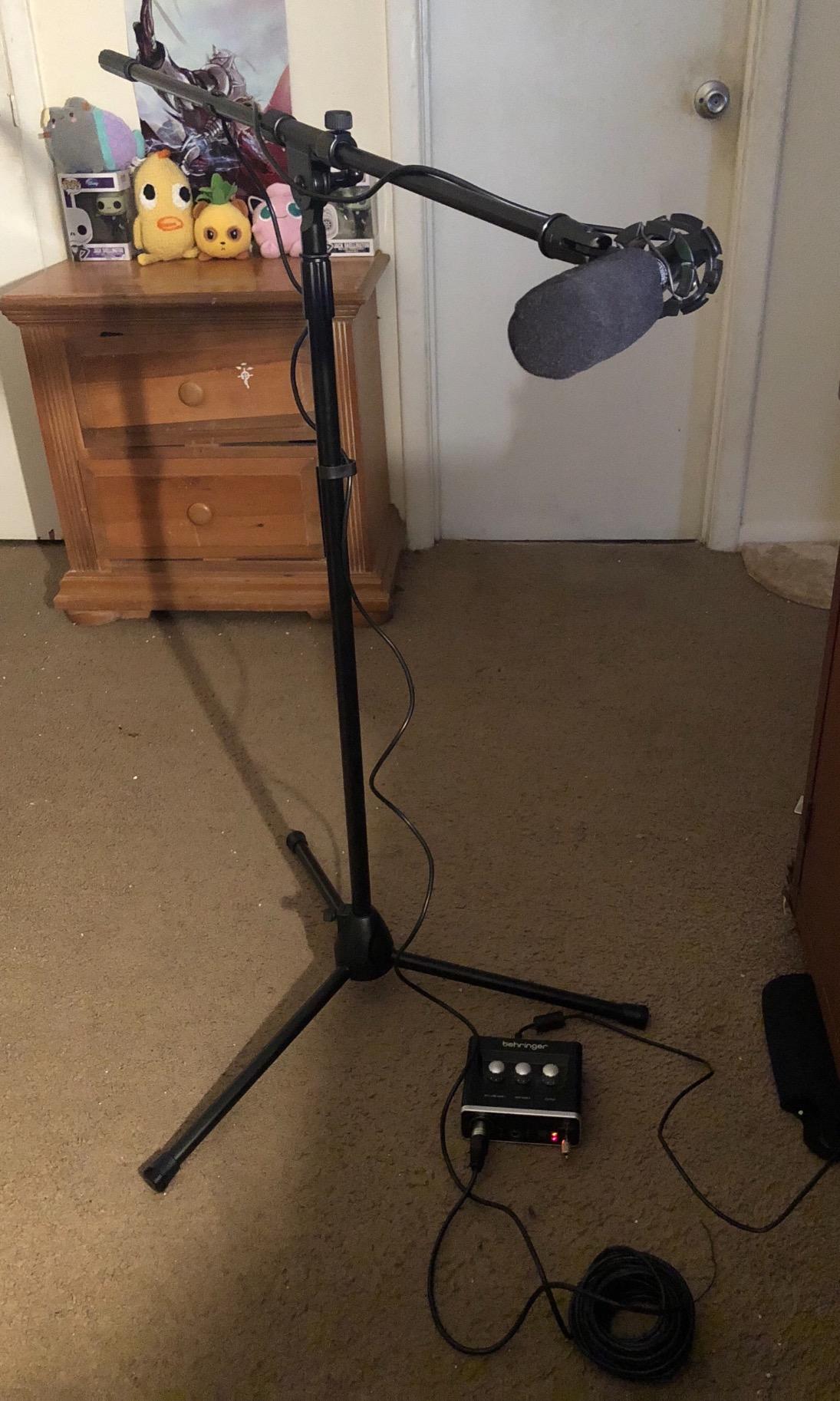
Nothing else on this list arrives with as much in the box. You get the microphone, a furry muff, a foam shield, a cushioned hand grip, an adjustable shock mount, stand adapters for 5/8 inch, 3/8 inch and 1/4 inch threads, a camera shoe mount, and both long and short cables with XLR, 3.5 mm and 6.3 mm ends.
That makes it a genuinely complete location sound kit, and the 25 feet of cable means the microphone can sit on a stand well away from the camera. The off-axis rejection handles event and outdoor work better than the budget compact mics on this list.
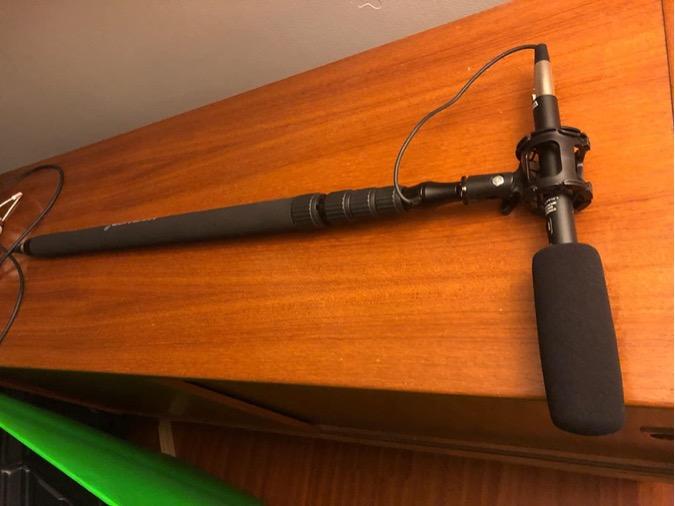
The critical caveat is power. This is a condenser microphone that needs 48V phantom power from a recorder or an external preamp, and without it the output is so low that the audio is unusable. If you own a camera with a 3.5 mm mic input and nothing else, this kit will disappoint you on day one.
Owners also report electromagnetic interference in urban areas that produces crackling on some recorders, and several of the accessories are plastic rather than metal.
When the accessory count matters
If you are outfitting a small crew, or you shoot events where one person handles audio alone, buying the microphone, the deadcat, the shock mount, the stand adapters and the cables separately adds up fast in both money and time. This kit puts all of that in one place.
It is also the one option here that scales to a proper boom position, which is the honest way to solve the in-frame problem described in the placement section below.
When to pick something else
Skip it if you are phone-first or camera-only with no phantom power source. Several reviewers also note the furry cover arrives packed flat and has to be fluffed before use, and the case is tight enough that it will not protect the contents from a drop.
12. Movo X1-Mini – Best for USB-C Phones
Movo X1-Mini Video Shotgun Mic for Camera – Supercardioid 3.5mm/USB-C Analog/Digital Camera Microphone for DSLR, iPhone and Android Smartphones, Computers – Compatible with Canon EOS, Nikon, Sony
Super-cardioid
80 dB signal to noise
24-bit digital USB-C mode
Plug-in power
Pros
- Plugs straight into USB-C phones cameras and computers with no battery or adapter
- Up to 24-bit resolution in digital USB-C mode
- Aluminum body with integrated shock mount and dual Rycote mounts included
- Hard-sided case with foam cutouts and a mesh pocket keeps the kit organized
Cons
- Rycote shock mounts clamp too tightly making assembly frustrating at first
- Carrying case is too small to close with the mic fully assembled
- Picks up more side and ambient noise than a true long shotgun with some internal amplifier noise
- Sensitive enough to peak and distort if placed too close without gain control
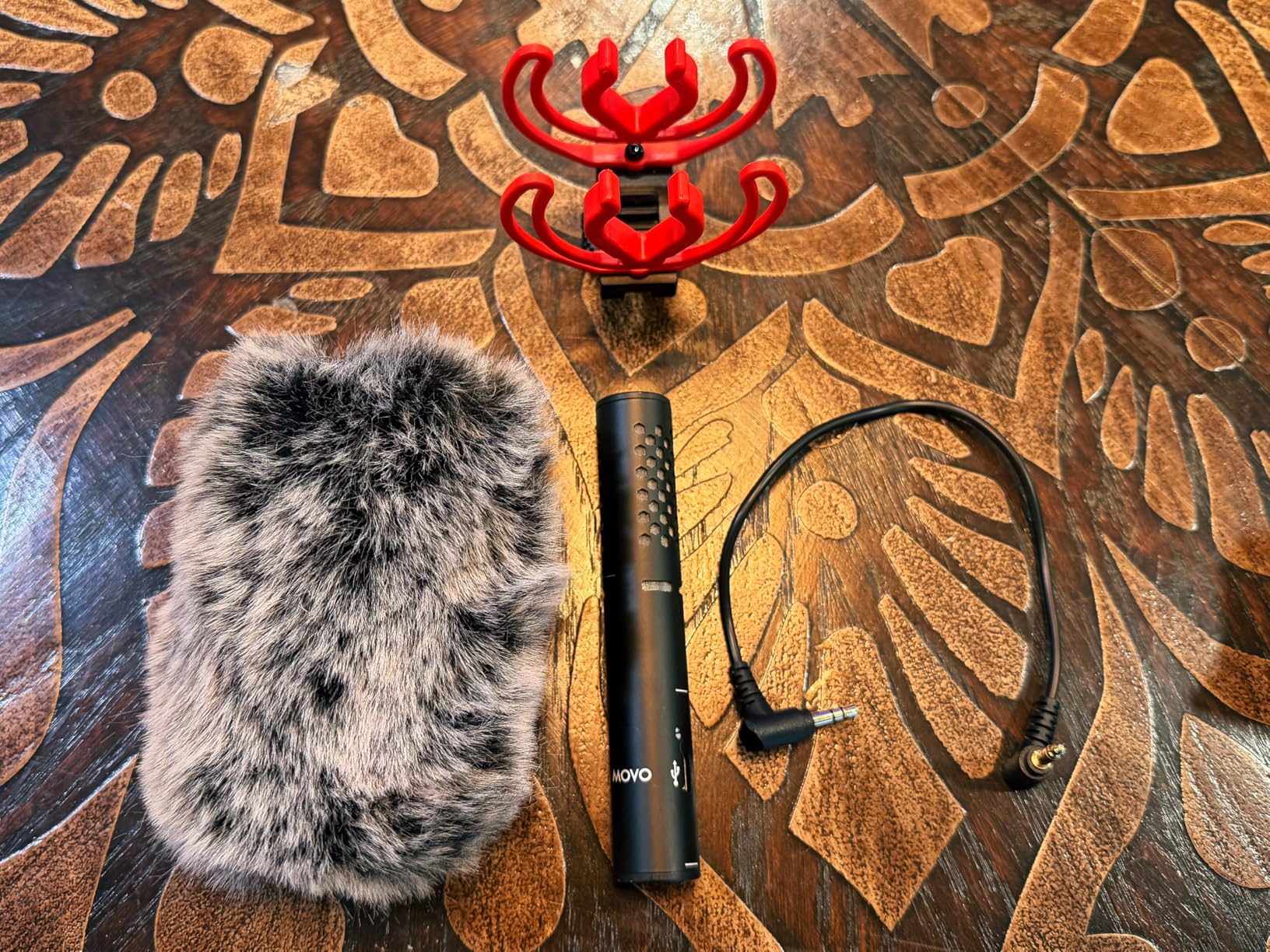
Every other analog microphone here needs an adapter to work with a modern USB-C phone. This one does not. It carries 3.5 mm TRS, TRRS and USB-C cables, so the same microphone covers a camera, a handset and a laptop with nothing bought separately.
In digital USB-C mode it records up to 24-bit resolution, which is a genuine step over the analog path most phone microphones use, and the whole thing runs on plug-in power so there is no battery to forget.
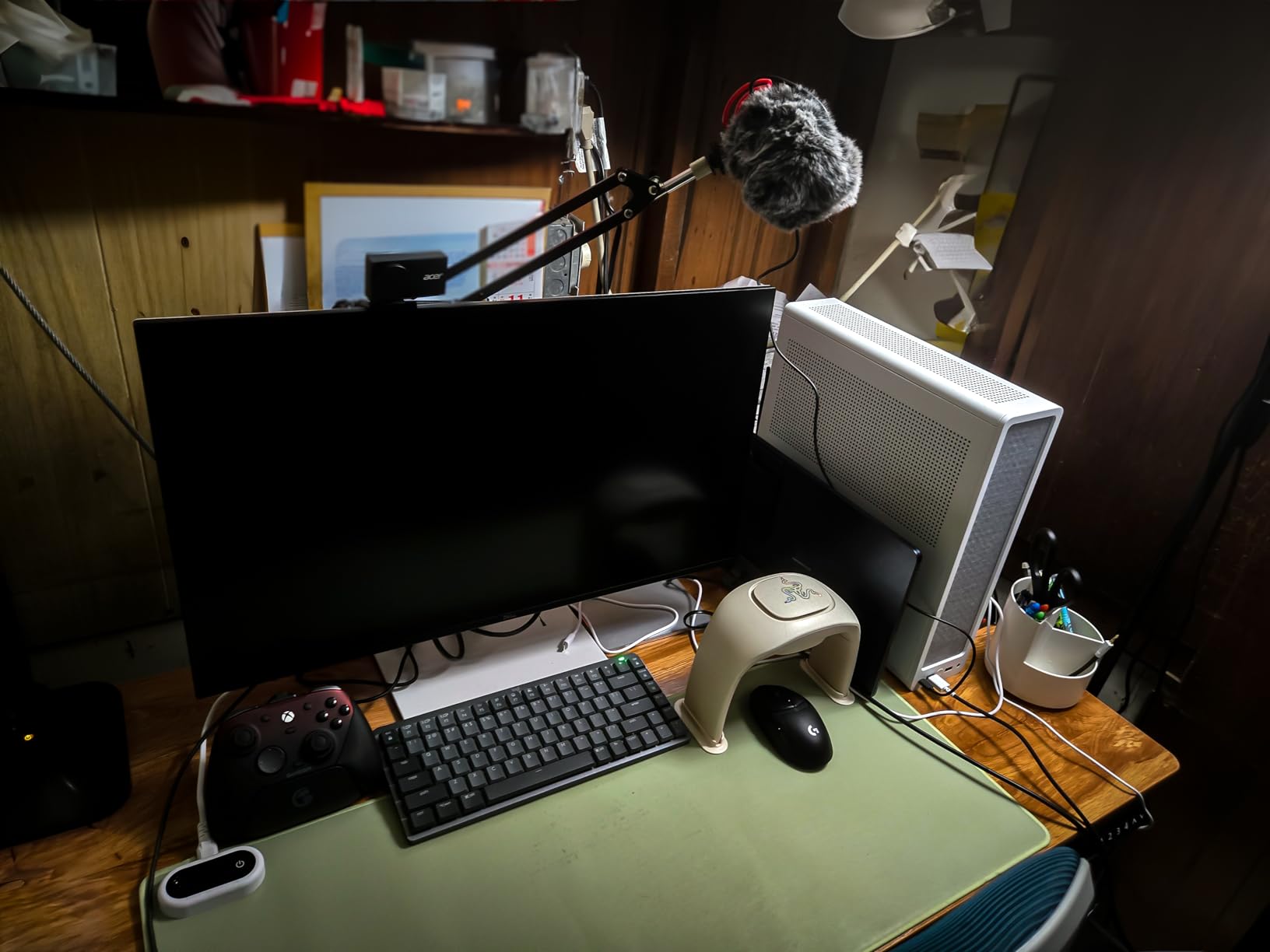
Two Rycote shock mounts are included, one for each pattern of use, and the aluminum body is far more rigid than the plastic bodies at this level. The hard-sided case with foam cutouts and a mesh pocket is a nicer touch than the other compact bundles.
The nearly universal complaint is the mounts themselves. They clamp so tightly that assembly takes practice, and the case is slightly too small to close if the microphone is left in one, which is a small annoyance every single day.
Best for phone-first channels
If most of your content is shot on a handset, this removes the adapter chain that stops people upgrading at all. One cable, one microphone, and the same unit when you upgrade to a mirrorless body later.
It is also a reasonable choice for a creator who moves between phone and laptop and wants monitoring-free simplicity in both places.
When to pick something else
It is a short body, so it collects more side and room sound than a long shotgun, and some owners report a little internal amplifier noise. It is also sensitive enough to peak and distort if the subject gets too close and there is no gain control on the body to back off.
Shotgun vs Lavalier vs USB Condenser for YouTube
A shotgun is not automatically the right microphone for YouTube, and choosing the wrong one is the most common expensive mistake in this space. The deciding question is not quality, it is distance and room.
Lavalier wins when the room is bad. Because a lavalier sits within inches of the mouth, the voice arrives at a much higher level than the room, so reflections and air conditioning are far below it and almost disappear. It is the correct microphone for a home office with thin walls, and it is why some creators who dislike visible hardware on camera still wear one.
Shotgun wins when the room is good and the frame must stay clean. A treated or naturally dead space, a walk-and-talk in a quiet hallway, or any shot where you cannot wear anything all go to a shotgun. The trade-off is aiming: the microphone has to point at the subject, and it must follow them.
USB condenser wins when the subject stays put. On a desk stand it gives the most natural, full-bodied sound per unit of effort, and it costs nothing in rigging. It loses entirely the moment the subject moves away from the stand, which is why it does not appear anywhere in the list above.
Our rule of thumb: if the distance between the subject and the microphone can change, use a shotgun. If the room fights you, use a lavalier. If both the room and the position are fixed, skip this guide and buy a USB condenser.
How to Place a Shotgun Microphone
Placement changes the sound more than any upgrade on this list. Five steps cover almost every case we shoot.
1. Get as close as the frame allows. Off-axis rejection is strongest when the subject is only a foot or two from the microphone, which is why a shotgun mounted on the camera and pointed back at the speaker is a bad idea and a shotgun just above the frame is a good one.
2. Keep the microphone out of frame. A boom arm from above or below, angled past the edge of the shot, solves the visibility problem that a creator on r/audio described as the only reason they rejected a microphone they otherwise liked. Nothing else needs to change once the mic is off-camera and close.
3. Aim slightly off the mouth, never at it. Point at the centre of the chest or just below the chin. Aiming straight at an open mouth produces plosives that no amount of editing fixes well, and the pattern tolerates a small aim error better than you expect.
4. Angle the noise, not the subject. A shotgun rejects sound arriving off its front axis, so rotating the microphone a few degrees toward a noisy window or a humming monitor can reject that noise while keeping the subject centred.
5. Set gain once and record a voice check. Play back a normal speaking volume on headphones before you roll, and keep the level in the same range across every shoot so your editing workflow stays consistent.
For phone and USB-C setups the same rules apply. Use a small clamp or a tripod to hold the microphone at the top of frame, and keep the cable out of shot with a piece of tape or a cable guide.
Where Shotgun Microphones Fall Short
Shotgun microphones solve one problem well and leave others wide open. Knowing the failure modes saves you from buying a better microphone to fix something a microphone cannot fix.
Room reflections. This is the number one complaint we found from creators recording indoors. An untreated office bounces your voice off the desk, walls and ceiling, and a directional microphone does not stop that, because the reflections arrive from the front of the pattern along with the voice. A shotgun collects them. Moving closer, hanging some absorption behind the subject, or using a lavalier is the fix, not a longer tube.
Comb filtering and aim sensitivity. Long interference tubes reject more, but off axis they produce irregular lobes rather than smooth rejection, and a voice moving during a take can change timbre as the aim changes. Short tubes are more forgiving indoors, which is the same point Gearspace contributors make.
Visible in frame. A microphone mounted on the camera is visible to the viewer, and one on a desk stand gets knocked, brushed or pushed by a gesturing creator. r/youtubers threads repeat the same preference: creators who move constantly want the microphone out of the way entirely.
Device dead ends. Several mics here need a 3.5 mm mic input, and a number of Canon Rebel and Nikon entry-level bodies do not have one. XLR models need 48V phantom power from a recorder or interface. USB-C phones need either a digital model or an adapter. Check your port before you choose.
Wind outdoors. The included foam windshields handle a breeze. They do not handle a gust, and a furry deadcat is not optional for shooting outside in anything but dead calm.
How to Choose a Shotgun Microphone
Start with the port, because it eliminates half the list. If your camera has a 3.5 mm microphone input, most of what follows applies. If it does not, you need a USB-C microphone or an audio interface, and the XLR options come with an extra purchase.
Next is power. Plug-in power means no battery to manage and no dead microphone mid-shoot, but it ties you to a device that supplies power. Battery operation gives freedom to unplug and move, and an automatic power-off function prevents the flat battery you find in three months.
Polar pattern is the sound character. A super-cardioid pattern rejects more room than a plain unidirectional one and is worth paying for in a noisy space, while a cardioid pattern is more forgiving when the subject moves. Check that the pattern is stated at all; several budget bodies do not publish one.
Tube length is the reach versus behaviour trade. A longer body reaches further and rejects more at distance, and it is the wrong tool in a reflective room. A shorter body stays out of frame, behaves better indoors and suits travel, which is why the Audio-Technica AT875R remains in use decades after launch.
Self-noise tells you how quiet the microphone is before it hears anything. Reported in dBA, lower is better, and anything under 20 dBA is effectively inaudible in a treated space. A high figure becomes obvious in a silent room and shows up as hiss in the final mix.
Shock isolation is the feature viewers notice first. A Rycote Lyre suspension, a Helix mount or a well-designed internal cradle all remove the low thud of a bump, and no amount of off-axis rejection compensates for a mic you can hear being touched.
On-body controls matter more than people expect. A high-pass filter, a pad and a gain control are the three that change a recording, and a safety channel protects a take when something goes wrong that you did not anticipate. Only two microphones on this list have all of them.
Finally, windscreen and accessories. Every microphone here includes at least foam, and a furry deadcat is included on only a few. Budget for one, plus a shock mount if the included one is plastic, and a proper XLR cable if you are going the interface route.
Improving an Untreated Room
No shotgun microphone fixes a reflective room, and creators who spend on a premium microphone first and treatment second usually find the result disappointing. The top-ranking creator discussions about home office recording all point at the same wall problem.
Start with position. Get the microphone 20 to 30 centimetres from the subject, above and slightly behind the line of the mouth rather than in front of it. Distance is the cheapest and most effective treatment available, and it costs nothing.
Next, kill the two worst surfaces. A heavy duvet over a stand behind the desk, and a thick rug or soft furnishing on the desk itself, absorb the reflections that make indoor audio sound hollow. Foam panels are cheaper than acoustic panels and are useful at the microphone end but do almost nothing for low-mid reflections.
Finally, record a test and listen on headphones. Room problems are immediately obvious in headphones and often invisible through laptop speakers, which is why so many creators discover them only after publishing.
For creators building a full video setup, our guide to the best shotgun microphones for filmmaking covers the field and documentary side of the same decision, and the best wireless microphones for churches guide covers the multi-speaker cases where a single shotgun is not enough.
Frequently Asked Questions
What is the best shotgun microphone for YouTube videos?
The Movo VXR10 is the best all-round choice for YouTube because it works with cameras, phones, tablets and camcorders straight out of the box, includes two shock mounts and a windscreen, and needs no battery. If your videos are made indoors on a boom arm and you edit regularly, the Rode VideoMic NTG is the step up, with digital switching, stepless gain and a safety channel.
Which mic do most YouTubers use?
The most common YouTube setup is a small on-camera shotgun in the super-cardioid or unidirectional class, often a Rode VideoMicro II or a VideoMic Pro+ for creators who want controls. Nothing forces a single choice: podcast and essay creators on r/youtubers threads repeatedly prefer an out-of-frame boom instead, because they move and gesture constantly.
What is the best shotgun microphone for vlogging?
For handheld vlogging the Sennheiser MKE 400 is the strongest fit, with built-in wind protection, a low-cut filter, a three-step sensitivity switch and a headphone output for monitoring while you walk. If weight matters more than controls, the Rode VideoMicro II is 80 mm long and light enough to disappear on a travel rig.
Is a shotgun microphone good for streaming and video calls?
Yes for streaming, with care. A shotgun pointed at your mouth from off-camera gives clean voice, but a r/audio owner reported a microphone setup creating echo for people on the other end of meetings. Aim the microphone at your mouth rather than at the speakers, and keep the pattern off your monitor to avoid feedback.
Is a shotgun microphone better than a lavalier for YouTube?
It depends on the room. A lavalier wins in an untreated home office because it sits within inches of the mouth, so reflections sit far below the voice. A shotgun wins when the room is good and you cannot wear anything on camera, because it stays out of frame. If the room is the problem, a microphone change will not fix it.
What are the downsides of using a shotgun microphone?
The main downsides are room reflections in untreated spaces, comb filtering and colouration when the subject moves off axis, high visibility when mounted on camera, and device compatibility dead ends. Shotgun microphones also need a deadcat outdoors, and a mis-aimed microphone can miss the subject entirely.
How close should a shotgun microphone be to the subject?
As close as the frame allows, usually 20 to 30 centimetres from the mouth and just out of shot. Off-axis rejection weakens quickly with distance, which is why a shotgun on a boom arm beats one mounted on the camera. Aim at the upper chest rather than the mouth to reduce plosives.
Can I use a shotgun microphone with my smartphone?
Yes, with the right port. Models with a 3.5 mm TRRS cable plug into a headphone jack, while USB-C phones need either an adapter or a microphone with a digital USB-C output such as the Movo X1-Mini, which records up to 24-bit resolution and runs on plug-in power.
The Verdict for 2026
For most people searching for the best shotgun microphones for YouTube videos, the Movo VXR10 is the right first buy. It works with whatever device you already own, it needs no batteries, it includes the accessories you would otherwise have to order, and its review history is deep enough that you can see exactly which cameras and phones cause problems before you hit them.
Once you outgrow it, the direction you take depends on your room. Moving indoors with a boom arm and a good untreated space, go to the Rode VideoMic NTG for real on-body controls and a safety channel. Recording handheld outdoors, the Sennheiser MKE 400 with its headphone monitoring is the better tool. Shooting on a phone with no headphone jack, pick the Movo X1-Mini and skip the adapter chain entirely.
Whichever one you choose, get it close to your mouth, keep it out of frame, and treat the room before you treat the microphone. Those three habits will improve your audio more than any upgrade on this list.