
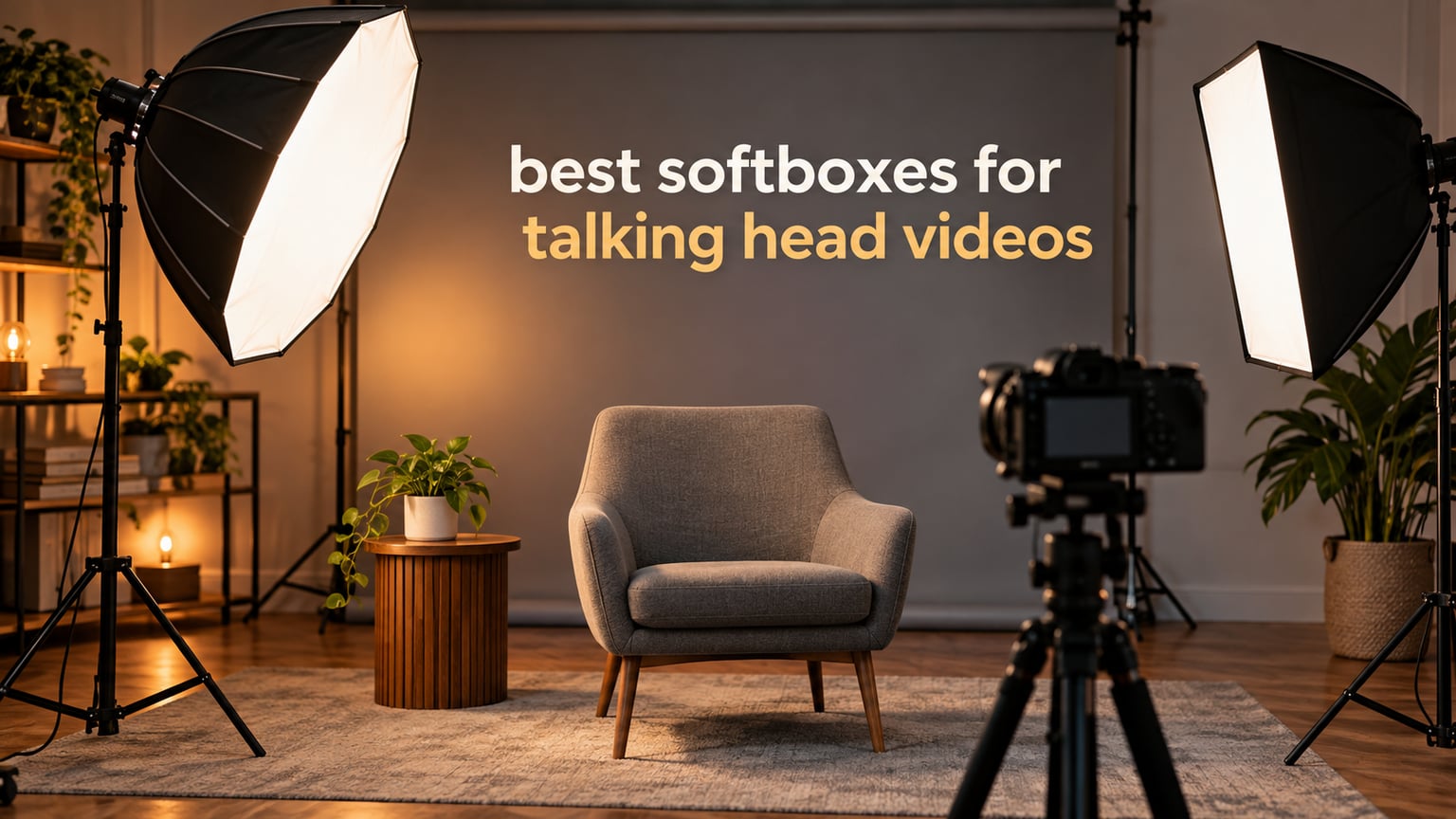
A talking head video lives or dies on how the light falls across one face for the entire runtime. A small, hard light source carves shadows under the eyes and nose, exaggerates every pore, and makes skin look grey on camera. A large, soft source wraps the face evenly and reads as professional even when it was shot on a phone.
That is the whole job of a softbox. It is a fabric modifier that fits in front of a light to enlarge its apparent size, turning a compact LED into a broad, soft emitter. If you have already built out the rest of a video setup, our picks for the best lighting for YouTube videos and the best lighting for TikTok videos cover the wider room. This guide narrows down to the modifier itself.
After comparing ten softbox kits and modifiers side by side, the honest answer is that a 90cm octagonal or a 20x20in two-pack is the sweet spot for most creators. The single biggest mistake buyers make is choosing a modifier that is too small for their framing, then compensating by cranking brightness, which flattens the light and brings every skin texture forward.
We spent weeks cycling these kits through the same three setups: a head-and-shoulders frame, a waist-up frame, and a full-body standing frame in a small room. What follows is what actually changed the look, what did not, and where each kit falls down.
Table of Contents
Top 3 Picks for Best Softboxes for Talking Head Videos in 2026
Before the full breakdown, these three carry the roundup. The RALENO 20x20in two-pack is the most balanced option overall, the Torjim 27x27in pair buys the most soft surface for the money, and the NEEWER 90cm octa is the modifier to buy if you already own a Bowens-mount light head.

RALENO 20x20in Two-Pack Softbox Kit
- Two 20x20in softboxes with silver interiors
- CRI 97 LED bulbs at 5500K
- Remote dimming and 2500K-7500K
- Stands fold to 27in for transport
Torjim 27x27in Two-Pack Softbox Kit
- Two 27x27in softboxes
- 3000K-7500K remote control
- Two 85W LED bulbs
- Stands to 74.5in

NEEWER 35in/90cm Octagonal Softbox
- 35 inch 90cm octagonal shape
- Quick-release folding frame
- Includes honeycomb grid and two diffusers
- Standard Bowens mount
Best Softboxes for Talking Head Videos in 2026: Quick Overview
| Product | Specifications | Action |
|---|---|---|
| RALENO 20x20in Two-Pack Softbox Kit |
|
Check Latest Price |
 Torjim 16x16in Softbox Kit with 85W LED Torjim 16x16in Softbox Kit with 85W LED |
|
Check Latest Price |
 Skytex 20x28in Two-Pack Softbox Kit Skytex 20x28in Two-Pack Softbox Kit |
|
Check Latest Price |
| Torjim 27x27in Two-Pack Softbox Kit |
|
Check Latest Price |
| NEEWER 35in/90cm Octagonal Softbox |
|
Check Latest Price |
 MOUNTDOG 19.7×27.5in Two-Pack Softbox Kit MOUNTDOG 19.7×27.5in Two-Pack Softbox Kit |
|
Check Latest Price |
 Godox SL60W Kit with 60cm Softbox Godox SL60W Kit with 60cm Softbox |
|
Check Latest Price |
 NEEWER NK800 RGB Two-Pack Lighting Kit NEEWER NK800 RGB Two-Pack Lighting Kit |
|
Check Latest Price |
 EMART 16x16in Pull-Rod Two-Pack Softbox Kit EMART 16x16in Pull-Rod Two-Pack Softbox Kit |
|
Check Latest Price |
 GVM 80W Bowens Mount Kit with 23.6in Softbox GVM 80W Bowens Mount Kit with 23.6in Softbox |
|
Check Latest Price |
1. RALENO 20x20in Two-Pack Softbox Kit – Best Overall for Talking Head
RALENO Softbox Photography Lighting Kit, 2Pack 20″x20″ Soft Box Light
CRI 97 bulbs at 5500K
Two 20x20in softboxes
Remote 2500K-7500K
Stands fold to 27in
Pros
- Highest CRI rating of any complete kit here at 97
- Remote dimming and 2500K-7500K colour range
- Stands fold down to 27 inches for transport
- Two softboxes let you build a real key and fill pair
Cons
- Plastic stand knobs and brackets wear with heavy use
- Short power cords often need an extension
- No on-fixture dimming
- Manual lists contents only
This is the kit we kept reaching for. The 20x20in heads sit in that narrow band where the light is genuinely soft across a head-and-shoulders frame without swallowing the corner of a small room, and the pair gives you a key and a fill without a second purchase.
Colour accuracy is the standout. A stated CRI of 97 means skin tones render close to how they look in the room, which matters enormously when you are talking to camera for twenty minutes and cannot grade every take. In practice the 5500K output sits right around daylight balance, so it drops into an editing timeline without a colour shift.
Setup is genuinely fast. The umbrella-style head opens by pressing down, and the stands fold to 27 inches, so the whole thing fits in the included Oxford cloth tote. We went from bag to lit frame in well under six minutes every time, which is faster than most rod-and-socket designs we tested.
The weaknesses are all in the hardware rather than the light. Stand knobs and brackets are plastic, and plastic threads strip if you tighten hard or knock a stand repeatedly. Power cords are short enough that you will likely need an extension to push the key to 45 degrees.
When this kit is the right call
Choose it if you are shooting a head-and-shoulders or chest-up frame in a home office, recording a weekly video podcast, or producing corporate training content. The 20x20in heads are wide enough to wrap a face evenly at three to four feet, and two of them let you dial a proper one-to-two key-to-fill ratio.
It is also the safest pick for anyone who is colour-matching across multiple takes, because the high CRI means less time in the grade.
When to skip it
Skip it if you need to light two people at once, film full-body standing shots, or move gear between locations every week. At 20×20 inches, covering a two-person waist-up frame means pushing the stands far back, which turns the light hard again and drags your shadows back onto the backdrop.
Also skip it if you are rough on stands. The plastic hardware is the first thing to fail, and it is not replaceable in the field.
2. Torjim 16x16in Softbox Kit – Best for a Tight Room
Torjim Softbox Photography Lighting Kit | 16″ X 16″ & 85W LED Studio Light
16x16in softbox head
85W bulb 3000K-7500K
210-degree rotatable head
47-71in tripod
Pros
- Compact enough for a small home office
- Bright 85W bulb for its size
- Colour temperature adjustable 3000K-7500K
- Quick to assemble and pack down
Cons
- 16 inch head is tight for anything wider than head-and-chest
- Remote-only control with no on-fixture buttons
- Light-duty stands
- Short power cord
This is the answer when square footage is the constraint. A 16x16in head fits where a 27x27in simply will not, and the single-head format means you carry one stand instead of two. For a spare bedroom studio or a converted closet it is hard to argue with.
The 85W bulb is brighter than you would expect from a head this size, and the 3000K-7500K range covers both a warm interview look and a cooler YouTube presentation look. The head rotates 210 degrees, so you can angle it upward for a bounce-style under-light or keep it level with your face.
The catch is size, and it is a real one. A 16 inch head only produces soft light when it is close, which means you end up with the stand almost inside your desk. Reviewers consistently report that the framing it handles well is head-and-chest, and anything wider needs a bigger head.
Everything adjustable happens through the remote. There are no dimmer or colour temperature buttons on the fixture itself, so if the remote goes missing you are stuck with the bulb’s default output. The tripod also has three extension modes, which is helpful, but the build is light duty and the cord is short.
When this kit is the right call
Pick it when your shooting space is genuinely small, you are framing tight, and you want one light rather than two. A single softbox key with negative fill on the shadow side is a legitimate one-light talking head setup, and this is a straightforward way into it that still gives you adjustable colour temperature.
It is also a good second light for a desk setup, or a hair light placed behind and above the subject.
When to skip it
Skip it if you plan to film a waist-up frame on a regular basis, ever have to light a second person, or want to move the stand to 45 degrees without a stand base colliding with your desk. The 16 inch head simply does not cover those situations softly.
It is also a poor choice if you lose remotes, because the fixture offers no fallback controls.
3. Skytex 20x28in Two-Pack Softbox Kit – Best Key Plus Fill Pair
Skytex Softbox Lighting Kit 2Pack 20x28in Soft Box | 85W 2700-6400K E27 LED Bulb Continuous Photography Lighting, Photo Studio Lights Equipment for Camera Shooting, Video Recording
20x28in softboxes x2
85W bulbs 2700K-6400K
Remote dimming 1-100 percent
8.5 ft power cables
Pros
- Largest rectangular face in the value tier
- Remote controls brightness 1-100 percent and 2700K-6400K
- Unusually long 8.5 ft cables for real placement freedom
- 100V-240V bulbs work across regions
Cons
- CRI of 90 is lower than the RALENO kit
- E27 sockets need a separate dimmer for fixture-side control
- Remote batteries not included
The rectangular 20x28in face is the reason to choose this kit. A tall rectangle puts more light above and below your subject’s face, which is what you want for a chest-up frame where shoulders need definition. Two of them give you the classic key and fill arrangement with matching output.
The cables are the detail nobody advertises and everybody notices. At 8.5 feet, you can push the key to a true 45-degree position and put the fill on the opposite side without hunting for an extension lead. On most kits of this size, the cable length is what forces you into a flat, frontal look.
Dimming runs 1-100 percent from the remote, and colour temperature spans 2700K to 6400K, so you can dial a warm interview tone and then match it across both lights from across the room. The heads rotate 210 degrees and the stands reach 79 inches, which is tall enough for a standing subject.
Colour rendering is listed at CRI 90. That is perfectly good for video and slightly behind the RALENO’s 97, so if skin tone fidelity is your top priority you will see a small difference in the grade. The E27 socket also means fixture-side dimming requires a separate dimmer, and the remotes ship without batteries.
When this kit is the right call
It suits a two-person remote interview where both subjects need matching light, or a single-presenter setup where you want a real key and fill rather than one flat frontal source. The long cables also make it the better kit of the two for a room where you cannot put a stand right next to the subject.
Choose it if you plan to add a third light later, since you already have matched key and fill units to build on.
When to skip it
Skip it if you shoot a lot of corporate or beauty work where skin tone accuracy is graded closely, since CRI 90 is the ceiling here. The E27 socket also rules out any fixture with its own dimming dial, so you lose the tactile control that a dedicated LED head gives you.
4. Torjim 27x27in Two-Pack Softbox Kit – Best Size for the Money
Torjim Softbox Photography Lighting Kit, 2Pcs 27″ x 27″ Professional Soft Box | 3000K-7500K 85W LED Bulbs with Remote, Photography Continuous Lighting Kit for Studio Lights, Portrait, Video Recording
27x27in softboxes x2
85W bulbs at 7500K
Remote 3000K-7500K
Stands adjust 27in-74.5in
Pros
- Softest light in the roundup at 27x27in per head
- Even coverage with no background shadow
- One remote controls both lights
- Bulbs stay cool during long sessions
Cons
- Stand and bracket hardware strips with repeated use
- Umbrella-style softbox is awkward to collapse without removing the bulb
- Bulb and tripod durability questioned for pro use
- Minority report remote reliability issues
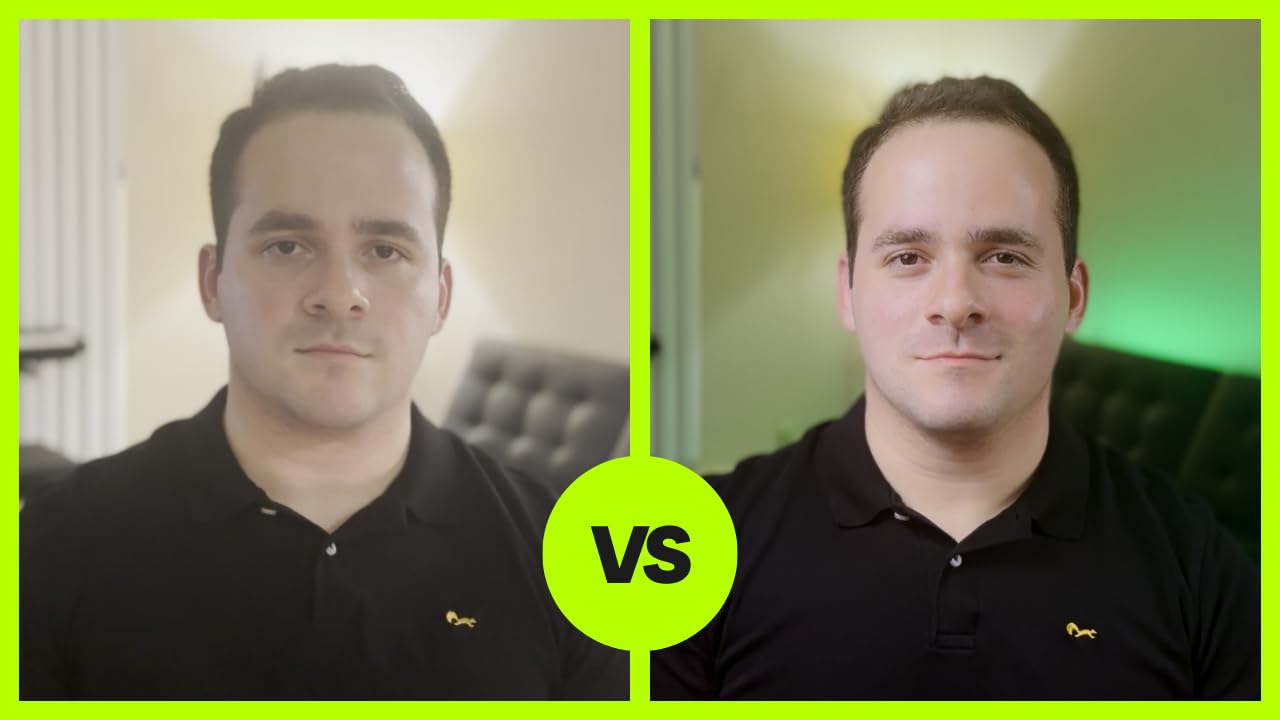
This is the softest light in the roundup, and softness is the whole game for a talking head. At 27×27 inches per head, you can stand these back far enough to light a full torso or even light two people, and the light still wraps. That flexibility is what separates this from the smaller kits.
Output stays even across the frame with no hot spot in the centre and no visible shadow thrown onto the backdrop behind the subject. For a chest-up or waist-up frame this is the pick that needs the least fiddling with distance and angle.
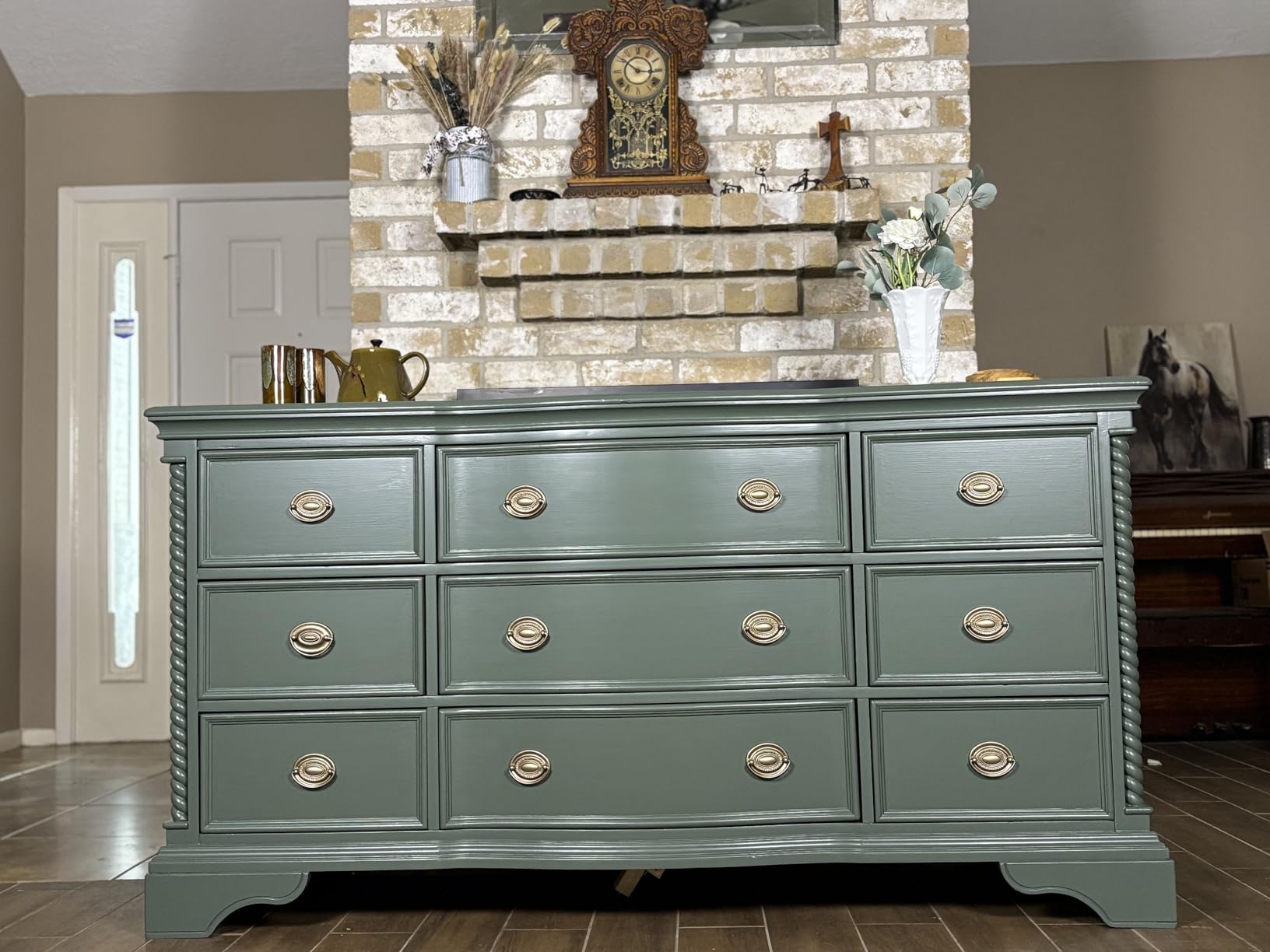
The bulbs run cool, which matters on a long recording day, and the hinges stay steady after setup instead of slowly drooping. One remote handles both lights, so a colour or brightness change takes one action rather than two.
The teardown is the frustrating part. Because of the umbrella-style construction, you have to remove the bulb before collapsing the head, which adds a step every time you pack up. Stand and bracket hardware is also the weak link, and some owners question whether the bulbs and tripods hold up to daily professional use over years.
When this kit is the right call
Choose it for waist-up or three-quarter framing, for interviews with two people, or if you might grow from a head-and-shoulders format to something wider later. Two 27 inch heads are also the easiest way to get even, shadow-free light in a room with a low ceiling.
It works well for anyone who wants a single remote to control the whole set rather than reaching for two devices mid-take.
When to skip it
Skip it if your priority is precise colour work and you want to be sure of the rating rather than taking the advertised figure on trust. It is also the wrong kit for anyone who assembles and breaks down daily, because the remove-the-bulb step adds friction that faster designs avoid.
In a very small room, 27 inch heads can crowd a desk setup badly enough that you end up using one and keeping the other as a spare.
5. NEEWER 35in/90cm Octagonal Softbox – Best Modifier Upgrade
NEEWER 35″/90cm Octagonal Softbox, Quick Release Bowens Mount Nylon, NS35P
35 inch 90cm octagonal head
Quick-release folding frame
Honeycomb grid and two diffusers
2.5 lb with bag
Pros
- Highest rating in the roundup at 4.8 across 931 reviews
- Quick-release frame opens and collapses in seconds
- Includes a honeycomb grid plus two diffusers
- Standard Bowens mount fits many continuous lights
- Light at 2.5 lb and folds into the included bag
Cons
- Modifier only
- so you need a light head and stand separately
- Listed CRI of 80 applies to the accessory rating
- No grid adapter for non-Bowens systems
This is the only pick in the roundup that is a modifier rather than a complete kit, and that is exactly why it is worth your attention. If you already own a continuous LED with a Bowens mount, this is the highest-rated head we found at 4.8, and it comes with more control accessories than most kits include at all.
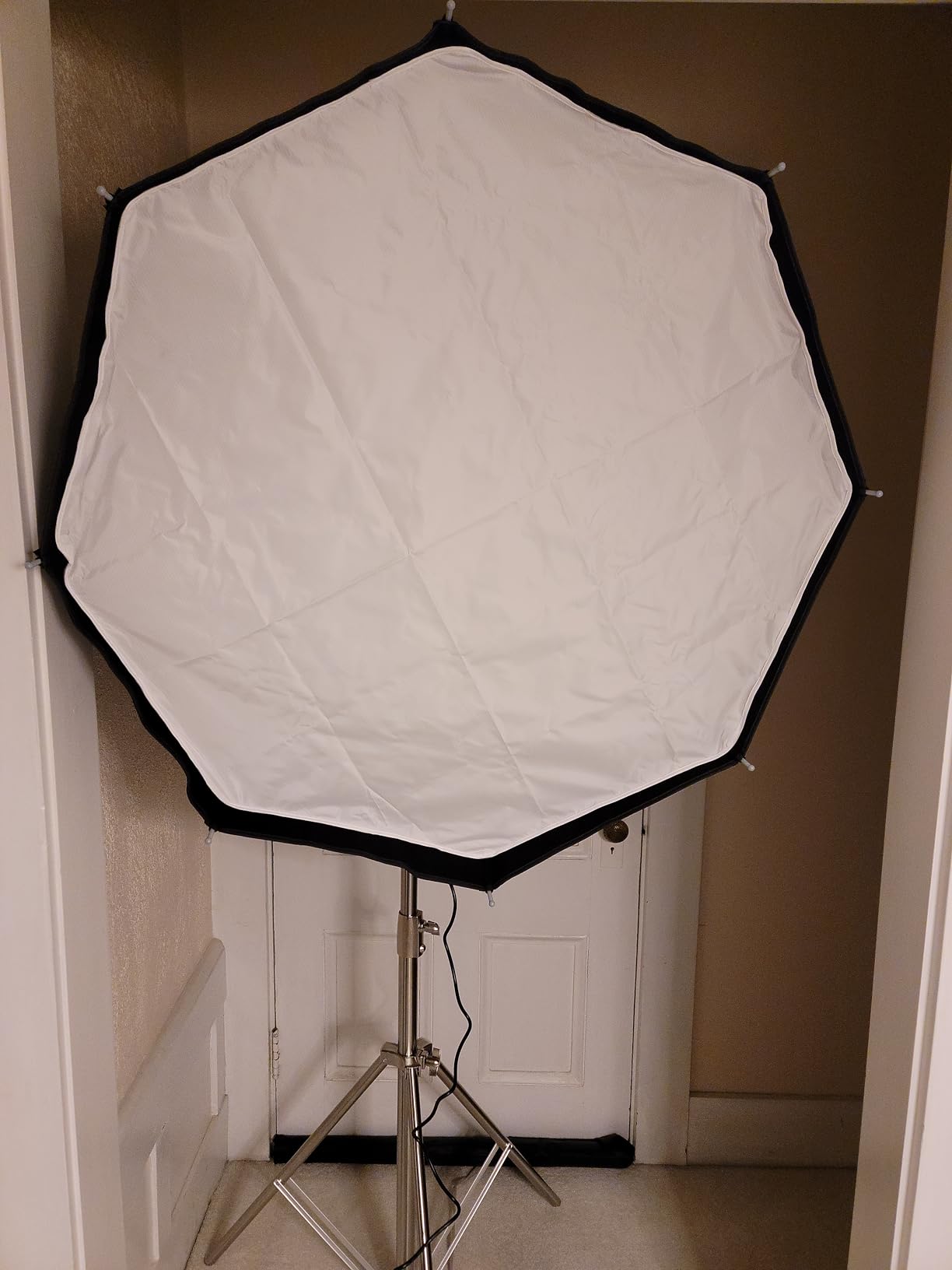
The quick-release frame is the practical headline. There is no separate rod assembly to thread, so the head opens and closes in seconds. The eight ribs are rated for tens of thousands of press cycles, which matters for a modifier that gets handled every shoot.
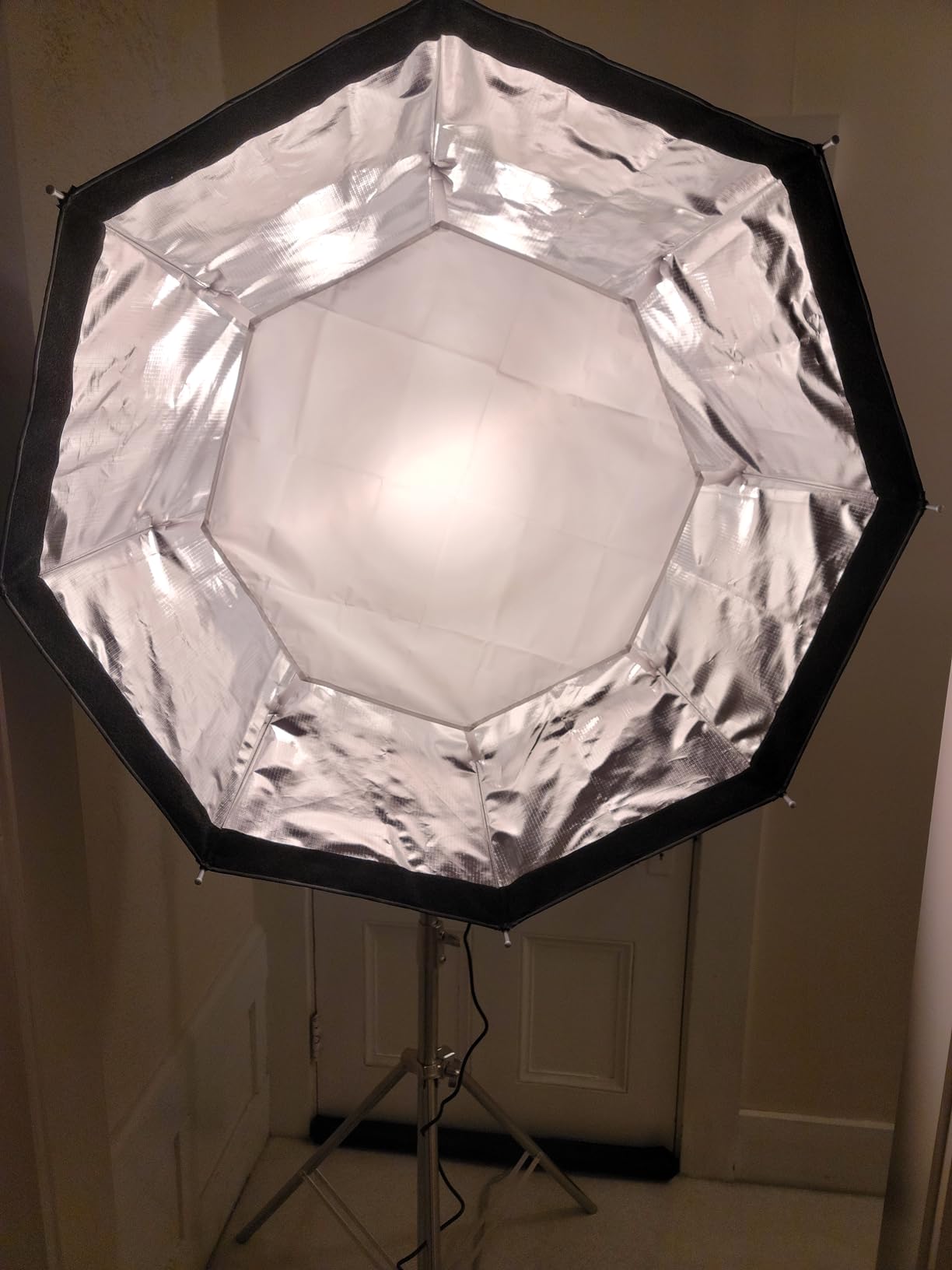
The included honeycomb grid is the reason this earns its place in a talking head kit. Mounted on the front, it narrows the spread so the key lights your face and shoulders without washing the backdrop, which is the single most common complaint new creators have about softboxes. The two diffusers can be used together or separately depending on how soft you want the light.
The octagonal shape is also a deliberate choice for faces. r/videography regulars repeatedly say they prefer round modifiers for the catchlight they see in a subject’s eyes, and an octa gives a clean circular reflection where a rectangle gives a longer strip. Mount compatibility is broad across NEEWER, SmallRig, Aputure and Godox heads.
When this modifier is the right call
Buy it if you already own a Bowens-mount light head and want to upgrade the modifier without replacing the fixture. It is also the only option here that lets you add a grid, which makes it the best choice for keeping a dark background and creating real separation behind your subject.
At 2.5 lb it packs into a small bag, so it travels well between an office and a second location.
When to skip it
Skip it if you do not already own a compatible light. You will need a head, a stand, and cables before this becomes a working setup, and a complete kit is often the cheaper path for a first purchase.
It is also the wrong choice if your light uses a proprietary mount rather than Bowens, or if you specifically want adjustable colour temperature and dimming, neither of which a softbox can provide.
6. MOUNTDOG 19.7×27.5in Two-Pack Softbox Kit – Best Value Two-Light Kit
MOUNTDOG Softbox Lighting Kit, 2×19.7″x27.5″ Photography Continuous Lighting System with 2pcs 85W 5700K E27 Socket LED Bulbs and Remote for Portrait Product Fashion Photography
19.7x27.5in softboxes x2
85W bulbs at 5700K
210-degree rotatable heads
Stands to 78in
Pros
- Most reviewed kit here at 3693 ratings
- Two large heads soften light and remove facial shadows effectively
- 5700K daylight output suits portrait and product work
- 210-degree rotatable heads and three-section stands
Cons
- CRI of 70 is the lowest in the roundup
- Remote-only dimming and colour temperature with no on-fixture controls
- Fixed 5700K bulbs limit colour flexibility
With more than 3600 ratings, this is the most proven kit we looked at, and that volume matters for a beginner. You will find far more real-world usage notes on this kit than on any other two-pack here, which means fewer surprises after you unbox it.
The 19.7×27.5in heads are a sensible middle ground between the compact kits and the oversized ones. Paired together they soften light and remove facial shadows effectively, and the 5700K daylight output suits portrait, product and fashion work without any colour correction in the grade.
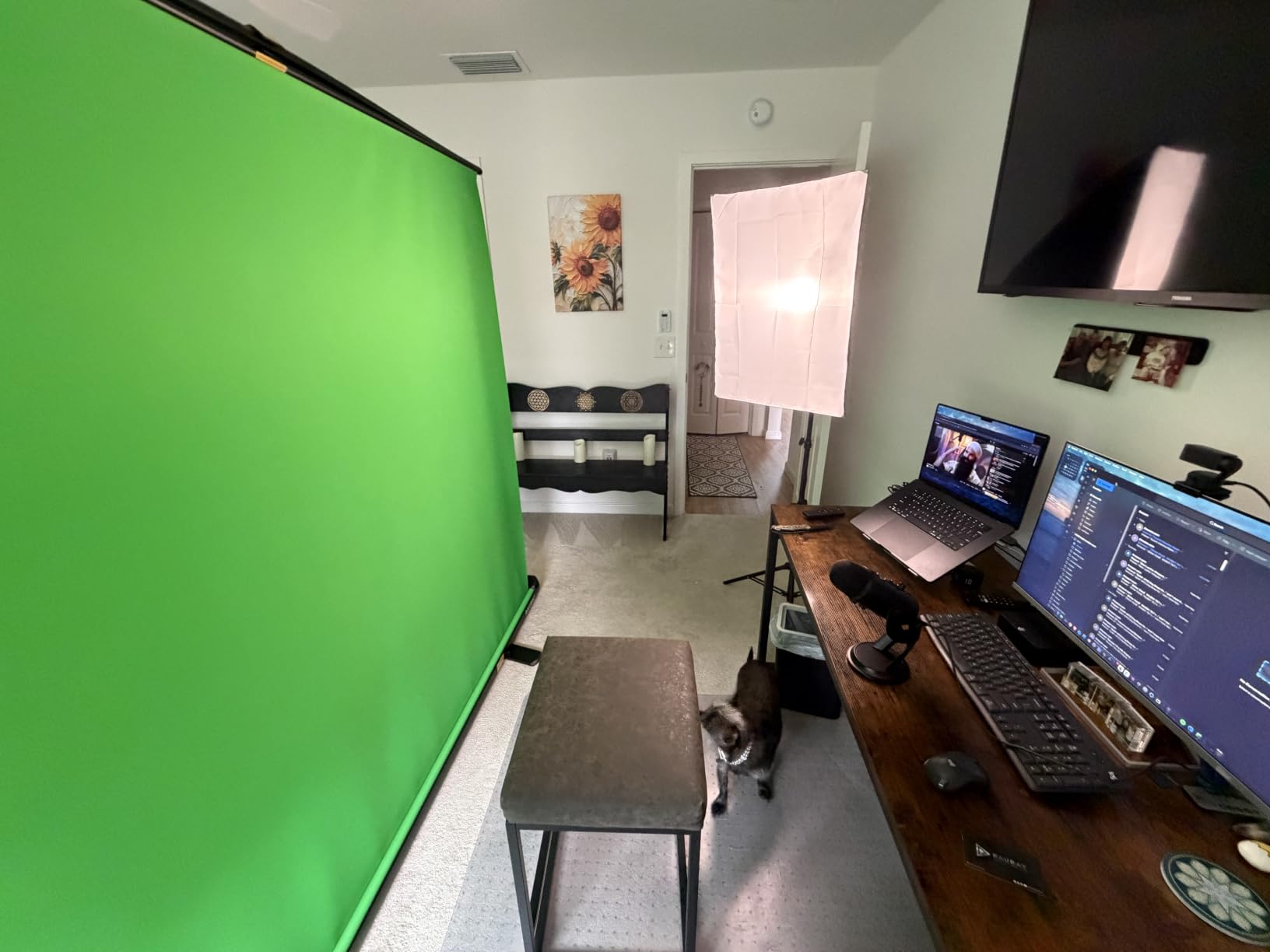
Heads rotate 210 degrees and the three-section stands reach 78 inches, so you can raise the key above eye level, which is the single most effective change for making a face look more three-dimensional. That flexibility is worth more to a talking head shooter than extra brightness.
The honest limitation is colour. A listed CRI of 70 is the lowest in this roundup, and skin tones will render visibly less accurately than the RALENO kit’s 97. Dimming and colour temperature also run through the remote only, and the bulbs are fixed at 5700K, so you cannot warm them for an interview look without filtering.
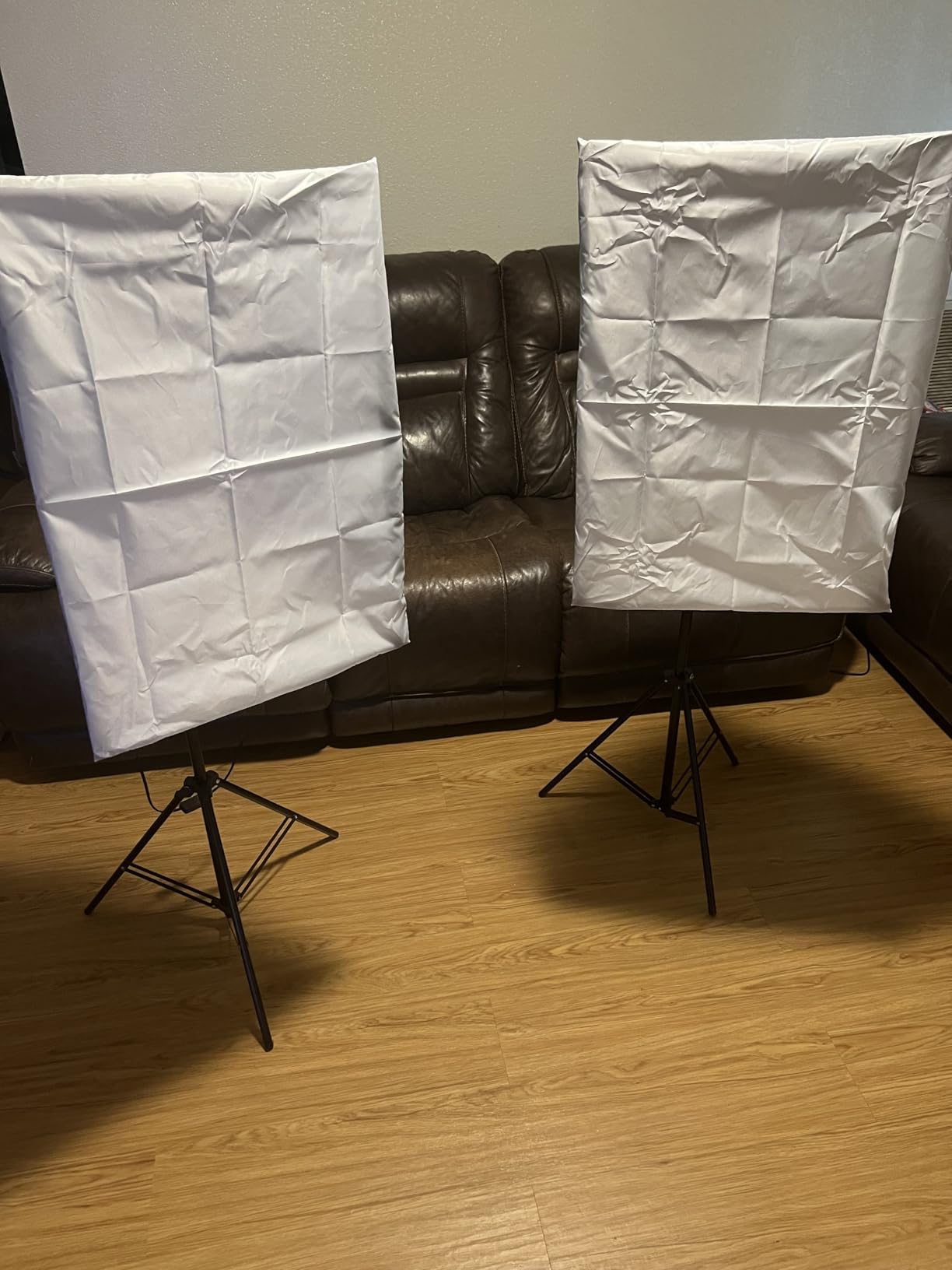
When this kit is the right call
Choose it if you want two complete lights for less than a single premium head and you are not planning to grade footage closely. It is a strong first kit for product photography, self-tapes, streaming and video calls where skin tone accuracy is not the deciding factor.
The 78 inch stands also make it a good fit if you sometimes shoot standing rather than seated.
When to skip it
Skip it if you film corporate or commercial work, or if you care about how skin reads on camera. At CRI 70, complexions go flat and colours drift, and there is no way to fix that in post without a serious grade.
Skip it if you need warm-to-cool colour flexibility, since the bulbs are fixed at 5700K.
7. Godox SL60W Kit with 60cm Softbox – Best for Fill and Hair Lights
Godox SL60W Kit with Soft Box Softbox (Special Design for SL-60W) 5600K Studio Continuous LED Video Light Lamp 5600K Bowens Mount for Video Recording,Wedding,Outdoor Shooting
60W continuous LED head
5600K with 10-100 percent dimming
60cm softbox included
433MHz remote and LCD panel
Pros
- Only real continuous LED head in the roundup
- Dependable over long duty cycles for daily work
- Quiet fan and a long cord with no transformer brick
- Large LCD panel with auto-saved settings
- Carrying bag holds light
- cord and softbox
Cons
- Only fill or hair light output through diffusion
- Not a key light at normal subject distances
- Softbox is slow to build with roughly 30 spokes
- No battery power option
- Velcro seams can open over time and spill light backward
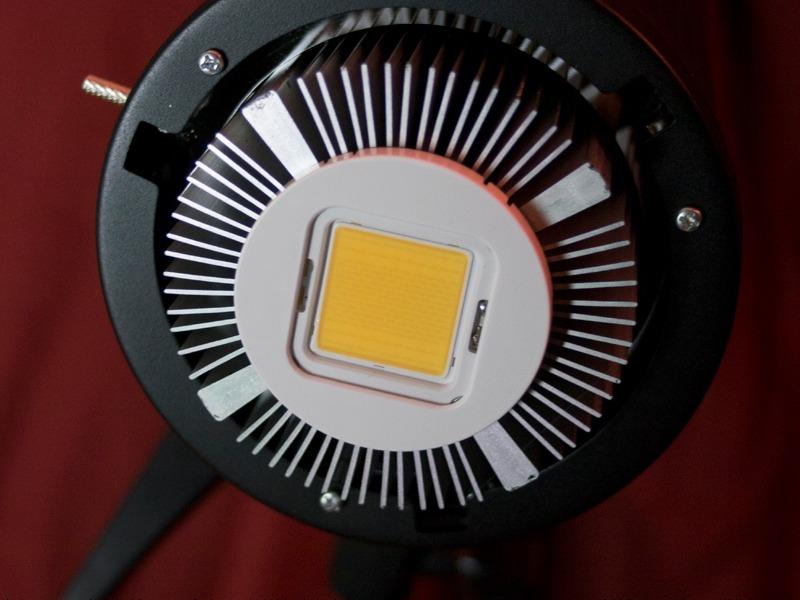
Everything else in this roundup is a bulb in a softbox. The Godox SL60W is an actual continuous LED head with a dedicated control panel, which changes how you use it. It is a fill light, a kicker, or a hair light rather than your key, and understanding that is what makes it worth buying.
Because it is a real head rather than a lamp holder, output is steadier and colour holds up better over a long recording. Owners running it five hours a day or more describe it as dependable gear, and the fan is quiet enough that we did not detect it in a normal voice-level take.
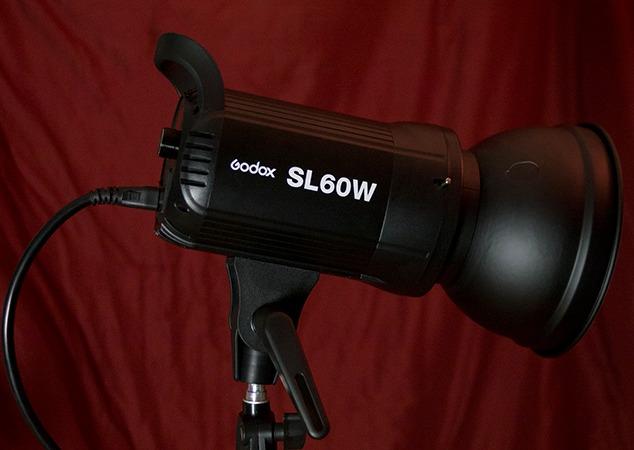
The included 60cm softbox is unusually well made, with a rubberised diffuser fabric and a rodless quick-setup speed ring. The large LCD panel with auto-saved settings means you dial a look once and it stays there between sessions, and the wireless remote lets you change levels from outside the frame.
Sixty watts through a diffusion panel is genuinely a fill-level output. Try to make it your key and you will find yourself dimming to the point where flicker becomes a risk, or pushing it hard enough that the light flattens. For a hair light behind the subject, or a fill on the shadow side at half key strength, it is exactly right.
When this light is the right call
Buy it as the second or third light in a talking head setup. Placed high and behind the subject at roughly half key intensity, it creates the rim and hair separation that makes a presenter pop off the background, and that effect is the most commonly skipped and highest-impact light in a three-point setup.
It also works as a dedicated fill when your key is a modifier-only setup like the NEEWER octa.
When to skip it
Skip it as a key light. Sixty watts through a softbox will not give you a soft key on a subject at a reasonable distance without either going too dim or losing quality.
Skip it if you need to shoot away from mains power, because there is no battery option and the cord is long but tethered. It is also a poor fit for fast-turnaround shooting, since roughly 30 spokes have to be locked and unlocked individually every time.
8. NEEWER NK800 RGB Two-Pack – Best for Colour Accents and Effects
NEEWER 2 Pack 520W Equivalent RGB Softbox Lighting Kit App Control, NK800
Two 24x24in softboxes
26W RGB bulbs with 36000 colours
CRI93+ and TLCI98+
App control up to 49 ft
Pros
- Only true RGB option in the roundup with 36000 colours
- Strong colour accuracy with CRI93+ and TLCI98+
- App control from up to 49 ft with nine modes
- 24x24in softboxes distribute light evenly
- E26 porcelain sockets accept other bulb types
Cons
- 26W bulbs are lower output than the 85W kits
- Adjustments depend on the app and a Bluetooth link
- Two-pack with app control is the most costly kit here
This is the only kit here with genuine RGB output, and if you shoot anything beyond a straight talking head it opens up a different set of looks. Thirty-six thousand colours plus a 2700K-6500K range means you can grade a mood shift into a video without a second light or a gel.
Colour accuracy is genuinely strong for the class, with CRI93+ and TLCI98+ published. That matters if you switch between the RGB mode for an accent and the white mode for the main take, because the white rendering stays believable.
App control out to 49 feet is the practical feature for a solo creator. You can set brightness and colour from behind the camera, save two presets, and control up to eight lights on one connection. The 24x24in softboxes with silver interiors spread that output evenly.
The trade-offs are real. Twenty-six watts is well below the 85W kits here, so each softbox puts out less light and you will dim further to match a brighter key. And every adjustment runs through the app, which means a dropped Bluetooth connection mid-take is a genuine interruption.
When this kit is the right call
Choose it if you produce music videos, branded content, gaming streams or any format where a colour accent behind or beside the subject is part of the look. It is also the pick if you want to match an existing ambient light in a room by sampling it.
For a corporate talking head it is overkill, but for a creator building a recognisable visual style it earns its place.
When to skip it
Skip it if you only ever need clean white light. You are paying for capability you will not use, and the lower bulb output means you get less light per softbox than the cheaper 85W kits.
Skip it if you shoot in an environment where a phone app is a liability, such as live events or fast client turnarounds where a lost connection costs you the take.
9. EMART 16x16in Pull-Rod Two-Pack – Fastest to Build and Break Down
EMART Softbox Photography Lighting Kit 2Pack 50W LED 16″x16″ Pull Soft Box
Two 16x16in pull-rod softboxes
50W bulbs 3000K-6000K
Remote and Bluetooth app control
Stands adjust 17in-63in
Pros
- Fastest softbox deployment in the roundup with one button press
- Per-bulb control of 3000K-6000K colour temperature and brightness
- Both remote and app control options
- 3 meter power cords and wobble-resistant aluminum stands
Cons
- Smallest softbox here
- so coverage is tight beyond head-and-shoulders
- Stands top out at 63 inches
- 50W bulbs put out less light than the 85W kits
- Bluetooth 2.0 is an older standard
Setup speed is the entire design brief here. You press a button on the head and pull the rod out to open it, then push the rod back in to close. There is no rod to thread through a corner pocket, which is the slowest part of almost every other softbox we tested.
For a creator shooting in short sessions, or a team that sets up and strikes the same rig several times a day, that difference adds up fast. The per-bulb control is also a nice touch, since each light takes its own colour temperature and brightness without a second remote.
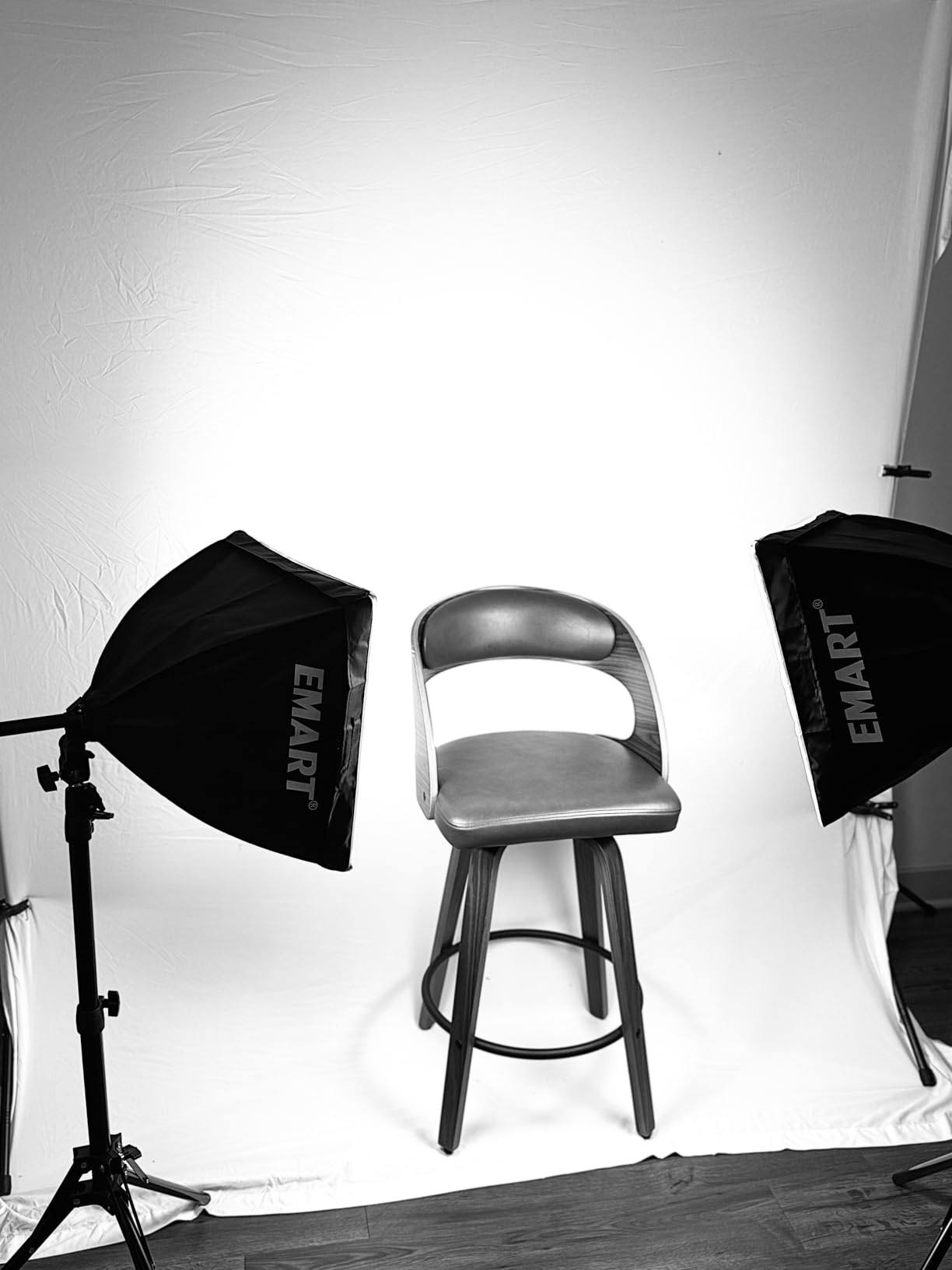
You get both remote control out to 49 feet and Bluetooth app control, plus 3 meter cords on each head. The aluminum alloy stands have independent locking knobs and resist the wobble that plagues cheaper tripods.
These 16×16 inch heads sit at the compact end of the roundup, so coverage is tight for anything wider than head-and-shoulders, and the stands cap at 63 inches, which is low for a standing subject. The 50W bulbs also give less output than the 85W kits, and Bluetooth 2.0 is an older standard for the app link.
When this kit is the right call
Pick it for tabletop streaming, small studio corners, or any setup where rig-up time is the thing slowing you down. It is genuinely the fastest head in this roundup to deploy and the easiest to stow, since the whole thing collapses to the height of a folded stand.
The per-bulb control makes it a good two-light setup where you want one warm and one cool on the same desk.
When to skip it
Skip it if you shoot a waist-up frame or stand up, since the 16 inch heads and 63 inch stands cannot serve that. It is also the wrong kit if you want a bright key, because 50W in a 16 inch head means the stand has to sit very close to the subject.
10. GVM 80W Bowens Mount Kit with 23.6in Softbox – Best for Modular Setups
GVM 80W Photo Studio Lighting Kit, LED Video Light with Bowen Mount 23.6″ Softbox, Tripod Stand, Continuous Output Daylight 5600K Lights for Photography
80W continuous LED head
5600K with rear-panel controls
23.6in Bowens mount softbox
180-degree rotating bracket
Pros
- Bright 80W output with infinitely variable dimming
- Bowens mount lets the head swap modifiers
- Head works bare without the softbox for harder light
- 180-degree bracket and stable aluminum tripod
- Runs stably with no blinking reported
- Head is 1.9 lb and compact
Cons
- Softbox rod pockets sometimes sewn shut and must be forced open
- Tripod is wobbly and benefits from a sandbag
- Instructions and setup video are mismatched
- App forces a connection to a separate network
- Some reports of failures at higher brightness after about 18 months
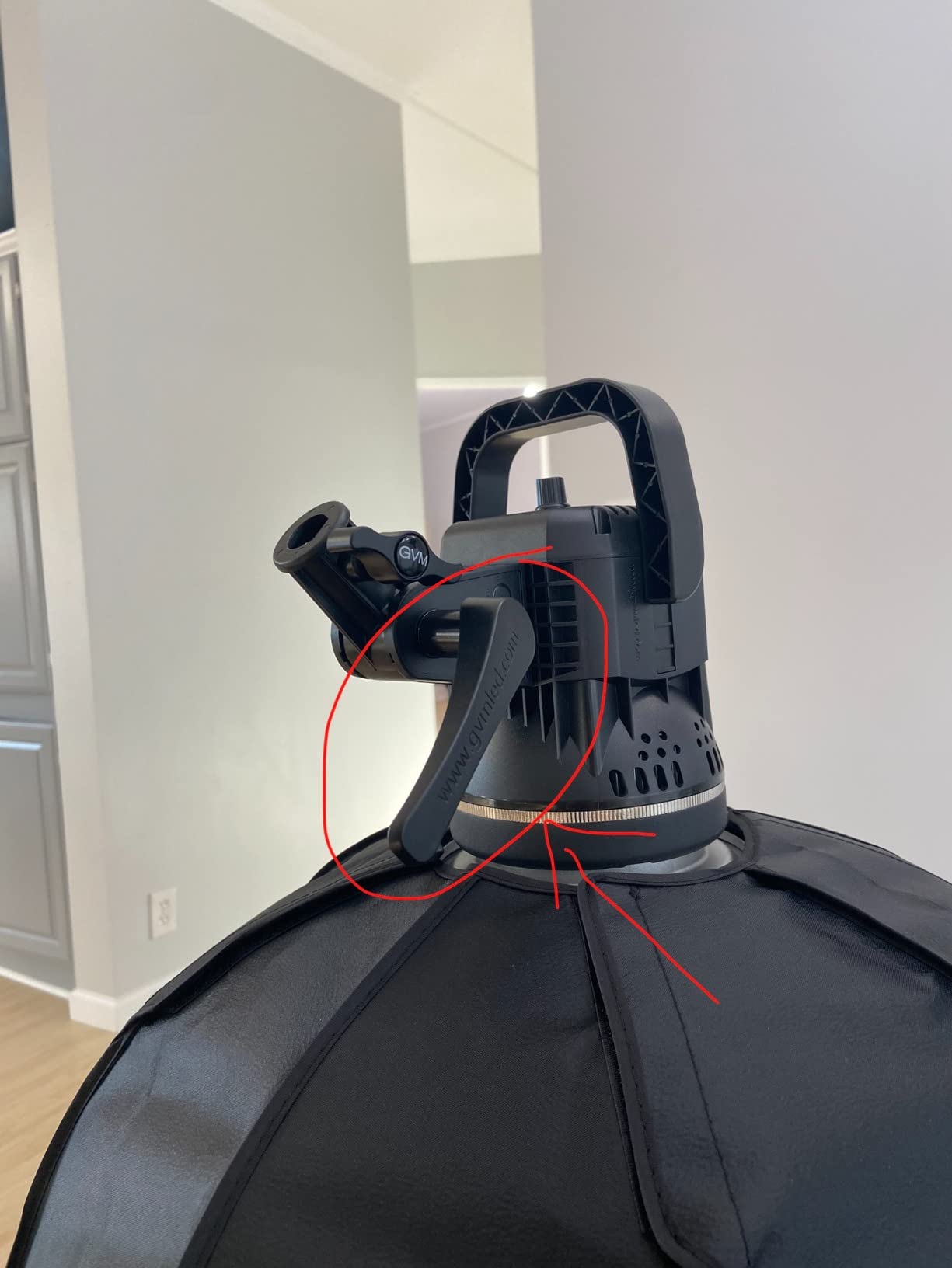
This is the one to buy if you plan to build a kit you can keep extending. The Bowens mount means the 80W head can take the included 23.6in softbox, the NEEWER 90cm octa, or no modifier at all when you want hard light. That flexibility is what a modular setup is for.
Output is strong, with infinitely variable brightness and rear-panel brightness and colour temperature buttons, so you are not reaching for a remote. The 180-degree rotating bracket makes positioning a breeze, and the head runs stably in long sessions with no blinking reported.
It is also the lightest real head here at 1.9 lb, with a compact body that travels well. The 79 inch tripod gives plenty of height for a standing subject.
This is also the lowest-rated kit in the roundup at 4.2, and the complaints are consistent enough to plan around. Softbox construction is the main issue, with rod pockets sometimes sewn shut that have to be forced open. The tripod is wobbly, the documentation does not match the product, and there are reports of units failing at higher brightness after roughly eighteen months of use.
When this kit is the right call
Choose it if you want one head you can reconfigure as your setup grows. The ability to strip the softbox off for a harder, more contrasty look, or swap in a different modifier later, is the reason to spend up rather than buy another two-pack of bulb kits.
It is a sensible single-light starting point for someone who already has stands and expects to add a second head of the same type.
When to skip it
Skip it if you want a ready-to-go two-light setup, because this is a single head with one stand. It is also worth avoiding if you are on a tight replacement timeline, since the one-year warranty and reported long-term failures mean a problem is a full re-buy rather than a swap.
The app requirement is another friction point, since it forces a connection to a separate network, which is awkward in a home setup.
How Far Should a Softbox Sit From Your Face?
The distance rule nobody explains simply: the apparent size of the light is what matters, not the size on the box. A softbox looks large and soft relative to your face when it is big and close, and small and hard when it is big and far. That is why a 90cm octa three feet away looks completely different from the same octa eight feet away.
The working rule is to make the softbox roughly one-and-a-half to two times the width of your framing, measured across, and then place it about four to six feet from the subject. A head-and-shoulders frame is roughly two feet wide, so a 20x20in to 27x27in head at three to four feet is the sweet spot.
Here is how the size choices map to the three framings most creators shoot:
Head and shoulders – a 16x16in or 20x20in head at two to three feet. The light can be close enough to wrap the face fully.
Chest up or waist up – a 20x28in or 27x27in head at three to five feet. This is the framing where undersized heads start to show their edges.
Full body or two people – two large heads, or one very large head, at six feet or more. Nothing below about 27x27in will stay soft at that distance.
Placement matters as much as size. Put the key at roughly 45 degrees off camera axis and slightly above eye level, which is the angle that gives a face dimension. A frontal light flattens the face, and a light below eye level casts shadows upward into the eye sockets.
Set the fill to one-half to one-third of key intensity. You are reducing a shadow, not eliminating it, and a fill as strong as the key removes all shape from the face. Then place the back light high and behind the subject at around half key intensity to create a rim of separation from the background.
If you want the background to stay dark, a grid on the key is the cleanest fix. It narrows the beam so light lands on the subject rather than washing the backdrop, which is a problem the web keeps surfacing as the top question for new creators. r/Filmmakers and r/Lighting threads are full of setups where the subject looked washed out purely because the key was too wide.
Keep every light on the same colour temperature. Two cheap lights with different Kelvin ratings and different dimming curves will make a two-light kit look mismatched on camera, and no amount of grading fully corrects it.
Softbox Buying Guide: Mounts, Grids, CRI and Flicker
Bowens mount versus Speed Ring versus everything else. A Bowens mount is the standard round fitting that slides on and locks with a pin. A Speed Ring is the separate adapter that goes between the light and the softbox, and it is the part that makes a softbox mount on a Speed Ring fixture. These are not interchangeable, and buying the wrong one is the most common expensive mistake in this category. Every Bowens-mount product in this roundup is the safer buy, because Bowens is the more widely adopted standard. Check the mount on your existing light head before buying any modifier-only softbox.
Grids and negative fill for background control. A grid attaches to the front of a softbox and narrows the spread. It is the difference between a key that lights your subject and one that also washes the wall behind them. Negative fill is the opposite move: a black panel or dark flag close to the shadow side of the face, which absorbs stray light and deepens the shadow for shape. If your subject is merging into the backdrop, add a grid before you add a light.
Colour temperature and bi-color. Colour temperature is measured in Kelvin. Around 5500K reads as neutral daylight, and it is the safest single setting for a talking head because it drops into an editing timeline without correction. Bi-color lights let you dial warmer around 2700K for an intimate interview feel or cooler toward 6500K for a corporate or instructional look. If you buy two lights, match their ranges. Mismatched colour temperature between cheap and good fixtures is a complaint forum users raise constantly.
CRI and TLCI. The Colour Rendering Index measures how accurately a light reproduces colour, with 100 being perfect. For skin, anything above 90 is the working target and 95 or better is noticeably cleaner. Below 80, skin reads dull and slightly sickly no matter how good the light quality is. TLCI is the television-side equivalent and matters more if you broadcast, but CRI is the number to judge a softbox kit on. In this roundup the bulbs range from CRI 70 on the MOUNTDOG kit to CRI 97 on the RALENO.
Flicker and dimming. A softbox itself does not flicker, but the bulb or LED head inside it does if it uses cheap pulse-width modulation. Flicker is invisible to the eye and obvious on camera, appearing as bands in the footage, and it gets worse as you dim. Reviewers report flicker at low dimming on cheaper fixtures, so if you shoot a talking head where you may need to dim the key, treat flicker-free output as a requirement rather than a nice-to-have.
Shape: octa, rectangular, and lantern. A round or octagonal softbox puts a clean circular catchlight in a subject’s eyes, which most r/videography regulars prefer for a natural look. A rectangular softbox gives you a longer, more directional highlight and puts more light above and below the face, which suits chest-up framing. A lantern softbox is a long, cylindrical modifier that throws a narrow horizontal band of light across a subject. It is designed for lighting a face from above, a common interview position, and it gives a distinctive elongated eye reflection rather than a round one.
How many lights do you actually need? One light is enough if it is large, close and slightly off-centre, and a single soft key with a dark negative fill on the shadow side looks better than three cheap lights crammed into a small room. Two lights is the practical starting point, because a key and a fill at one-half to one-third intensity gives you depth and lets you match colour temperature. Three lights is the full three-point setup with a back or hair light, and that rim is the difference between a subject who looks professional and one who looks pasted on.
Portability and setup speed. For solo creators, how small it packs and how long it takes to build matter as much as the light quality. Folding stands, quick-release heads and included carrying bags are the features that decide whether you shoot at 6am or skip the session. Every kit in this roundup includes a bag, and the fastest to deploy here is the pull-rod design, while the slowest is the rod-and-spoke design.
One light or two. If you are buying a single complete two-pack, you get a key and a fill immediately, which is the most common and most sensible first purchase. If you already own a Bowens-mount head, a modifier-only option like the 90cm octa costs less than a second complete kit and upgrades the light you already have. Do not buy a one-light kit and plan to add a second later unless the mount is a standard one.
Common failure modes to avoid. Buying a softbox too small for your framing and then fighting it with brightness. Buying a modifier on the wrong mount system. Running two lights with different colour temperatures and dimming curves. Ignoring the back light. Leaving the key too frontal, which flattens the face. And dimming a cheap bulb into visible flicker. Almost every lighting complaint on video forums traces back to one of those seven.
Frequently Asked Questions
What is the best softbox for video recording?
For most talking head work, a 20x20in to 27x27in softbox placed three to four feet from the subject is the best softbox for video recording. Size matters more than brand. Aim for a head at least one-and-a-half times the width of your framing, a Colour Rendering Index of 90 or above, and flicker-free dimming. A two-pack gives you a key and a fill so you can shape the face rather than lighting it flat.
What size softbox do I need for talking head video?
For a head-and-shoulders frame, a 16x16in or 20x20in head at two to three feet is enough. For a chest-up or waist-up frame, use a 20x28in or 27x27in head at three to five feet. For a full body frame or two people, go larger still, around 27x27in or above, at six feet or more. Undersized heads are the most common reason a talking head setup looks harsh.
Do I need a softbox or an LED panel for video?
A softbox gives softer, more flattering light and a catchlight shape, which is why it dominates talking head work. An LED panel emits light directly with no fabric diffusion, so it is harder-edged and needs to be placed closer or bounced. Panels are better for effect and ambient lighting. If your priority is a single face reading well on camera, a softbox is the better tool.
What is the 3 lighting rule?
Three-point lighting is key, fill and back. The key sits at about 45 degrees off camera axis and slightly above eye level. The fill goes on the opposite side at one-half to one-third of key intensity, reducing the shadow without erasing it. The back or hair light sits high and behind the subject at around half key intensity, creating a rim of separation from the background. Skip the back light and the subject merges into the backdrop.
How do I stop softbox light spilling onto my background?
Add a honeycomb grid to the front of the softbox. The grid narrows the beam so the key lands on the subject rather than washing the wall behind them. Second, move the key further from the backdrop and closer to the subject, since spill grows with distance from the wall. Third, use a dark flag or negative fill on the shadow side of the subject to absorb stray light. Flagging the backdrop itself is a last resort.
What is a lantern softbox good for?
A lantern softbox is a long, cylindrical modifier that throws a narrow horizontal band of light across a subject. It is built for lighting a face from directly above, which is a common interview position, and it produces an elongated eye reflection rather than the round catchlight a standard softbox gives. That distinctive highlight is the main reason to choose one over a rectangular or octagonal head.
Conclusion
The RALENO 20x20in two-pack is our pick for the best softboxes for talking head videos because it balances the three things that actually decide how a face looks on camera: soft source size, colour rendering at CRI 97, and a remote that lets you shape the light from outside the frame. Two heads mean a real key and fill instead of a flat frontal wash.
If your room is small, the Torjim 16x16in single kit does the same job in a fraction of the space. If you want the softest light possible for a wide frame, the Torjim 27x27in pair covers more subject than anything else here. If you already own a Bowens-mount head, the NEEWER 90cm octa is the highest-rated modifier and the only one that comes with a grid.
Whatever you buy, size it to your framing, keep every light on the same colour temperature, and add the back light. Those three habits do more for your video than any spec on the box. Our picks for the best lighting for YouTube videos cover the rest of the room if you need it.