
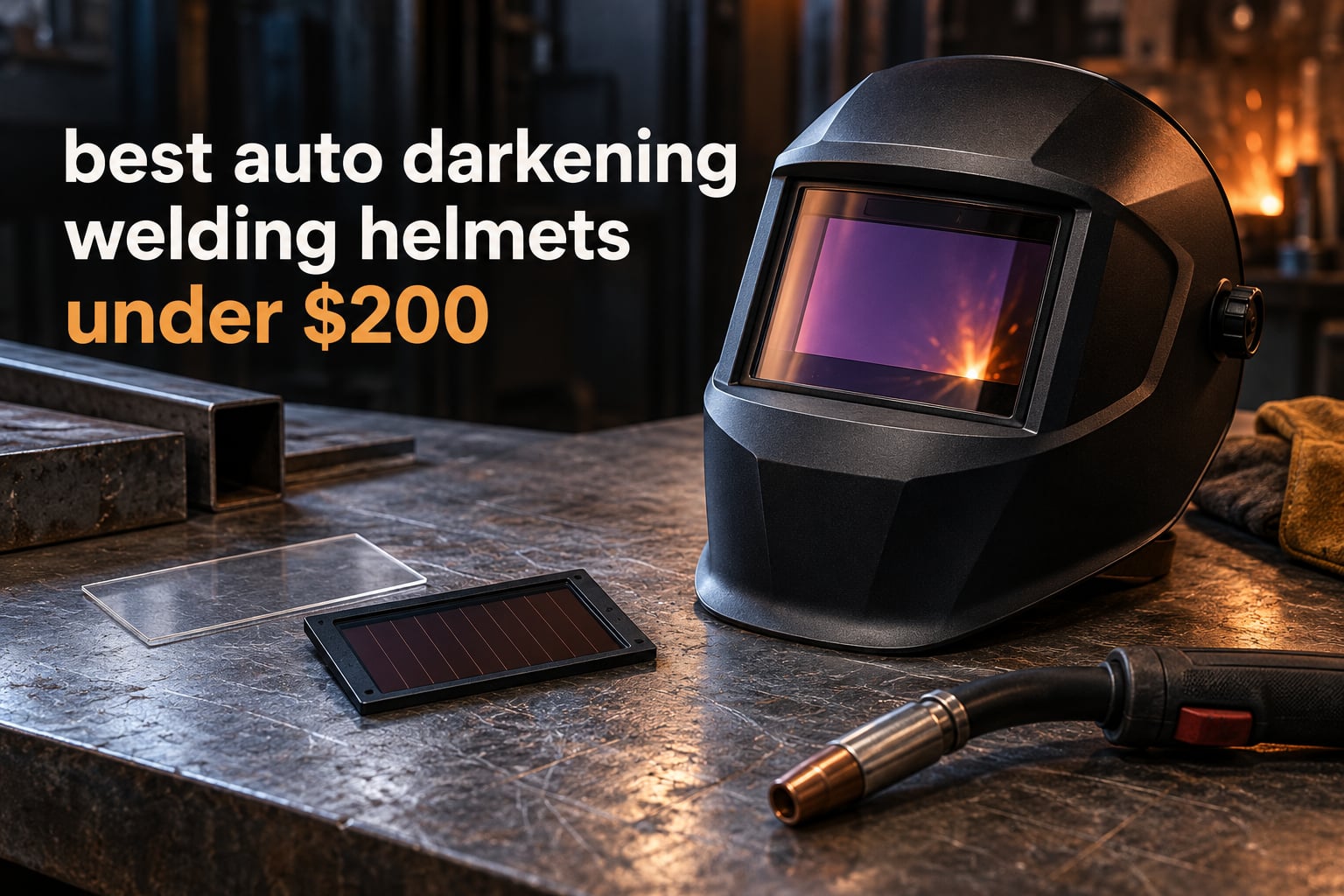
If you want the straight answer: the YESWELDER LYG-L600A is the best auto darkening welding helmet under 200 dollars for most people, thanks to 1/1/1/1 true color optics, switching in 1/30000 of a second and the deepest owner feedback base in this price range. Below, I break down ten helmets that all clear the minimum specs I would not go below.
We spent weeks reading owner reviews, comparing lens ratings, arc sensor counts and headgear complaints across ten models that all sit well inside a 200 dollar ceiling. Every helmet here has at least two arc sensors, a solar or battery power path, and a shade range that covers MIG, stick and grinding. None of them carry X-mode electromagnetic sensing, which is the first thing you give up at this budget.
A 200 dollar ceiling is not the budget it used to be. The sub-100 tier now ships helmets with 1/1/1/1 true color lenses and 1/25000 second switching, which used to be premium-only features. That shift is why the ten picks below cluster so tightly together on paper.
One theme ran through every forum thread I read: the lens is rarely the problem. Welders complain about headgear, headbands and tension knobs far more often than about optical clarity. A r/Welding poster put it plainly, noting that a cheaper Harbor Freight model worked fine while the step up in performance came with a big jump in clarity, and other owners on the same forum described budget helmets as perfectly adequate first purchases. Our broader welding helmet guide covers the brands that sit above this price ceiling.
Table of Contents
Top 3 Picks: Auto-Darkening Welding Helmets Under $200 Right Now (October 2026)
The LYG-L600A takes the overall spot because rating and review volume together beat everything else here. The LYG-M800H is the better buy if viewing area matters more than shell weight, and the LYG-Q800D is the only pick with a factory LED built into the shell.
Best Auto Darkening Welding Helmets Under $200 (October 2026)
| Product | Specifications | Action |
|---|---|---|
 YESWELDER LYG-L600A True Color Helmet YESWELDER LYG-L600A True Color Helmet |
|
Check Latest Price |
 YESWELDER LYG-Q800D Panoramic Helmet YESWELDER LYG-Q800D Panoramic Helmet |
|
Check Latest Price |
 YESWELDER LYG-M800H Large View Helmet YESWELDER LYG-M800H Large View Helmet |
|
Check Latest Price |
 DEKOPRO True Color Solar Helmet DEKOPRO True Color Solar Helmet |
|
Check Latest Price |
 ARCCAPTAIN HSH-S800 True Color Helmet ARCCAPTAIN HSH-S800 True Color Helmet |
|
Check Latest Price |
 TOOLIOM E600A-A Lightweight Helmet TOOLIOM E600A-A Lightweight Helmet |
|
Check Latest Price |
 TRQWH Helmet with USB LED Light TRQWH Helmet with USB LED Light |
|
Check Latest Price |
 ARCCAPTAIN XK-LY800H Large View Helmet ARCCAPTAIN XK-LY800H Large View Helmet |
|
Check Latest Price |
 Hobart 770890 PureColor Helmet Hobart 770890 PureColor Helmet |
|
Check Latest Price |
 Sunstac SS-A800D Helmet with Light Sunstac SS-A800D Helmet with Light |
|
Check Latest Price |
Read across the table and the pattern is clear. Arc sensors split into two and four sensor designs, switching speed clusters between 1/20000 and 1/30000 of a second, and viewing areas fall into a small-window group near 3.6 inches and a large-window group near 3.9 inches.
1. YESWELDER LYG-L600A True Color Helmet
YESWELDER Auto Darkening Welding Helmet 1/1/1/1 True Color, LYG-L600A
1/1/1/1 true color
1/30000s switching
2 arc sensors
3.64 x 1.67 inch view
Pros
- Clear true color view of the puddle
- Very fast reliable auto darkening
- Comfortable adjustable headgear
- Spare battery and lenses included
Cons
- Small viewing area versus panoramic models
- Light duty shell and headgear
- Needs precise alignment
I put the LYG-L600A at the top because the combination of a 4.6 average across more than thirteen thousand ratings and 1/1/1/1 true color optics is hard to argue with. It ranks near the very top of the welding helmet category, which tells you how much of the DIY and hobby market settles on this one model.
The lens is where the money went here. A 3.64 by 1.67 inch window with 1/1/1/1 optical clarity means good diffusion, good luminous transmittance, good angle dependence and good optical class, and switching happens in 1/30000 of a second. The shade range of 3 and 7 to 13 covers TIG, MIG, stick and grinding without a second filter.
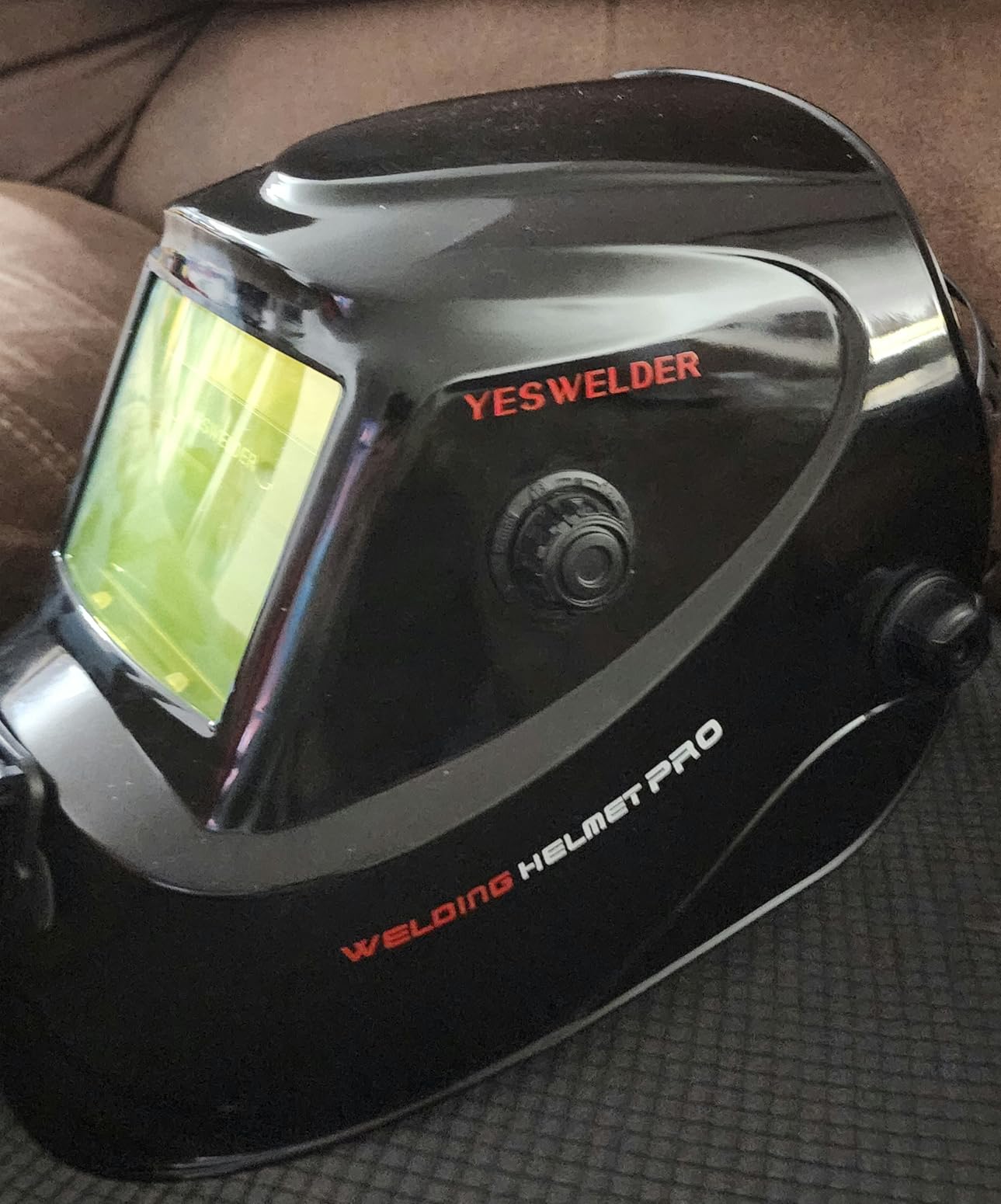
What I appreciate is the honest accessory list. You get a CR2450 battery, an inner replacement lens, two outer replacement lenses, a storage bag and a manual, and the power comes from a solar panel backed by that replaceable cell. Certification is listed to ANSI Z87.1 and CSA Z94.3, which is the baseline you want to see printed anywhere.
Two arc sensors is the one specification that gives me pause, because it is fewer than most of the field and it is the reason low-amperage DC TIG work can be frustrating. Sensitivity and delay are adjustable, which helps, but this is not the helmet you buy for thin stainless at 20 amps.
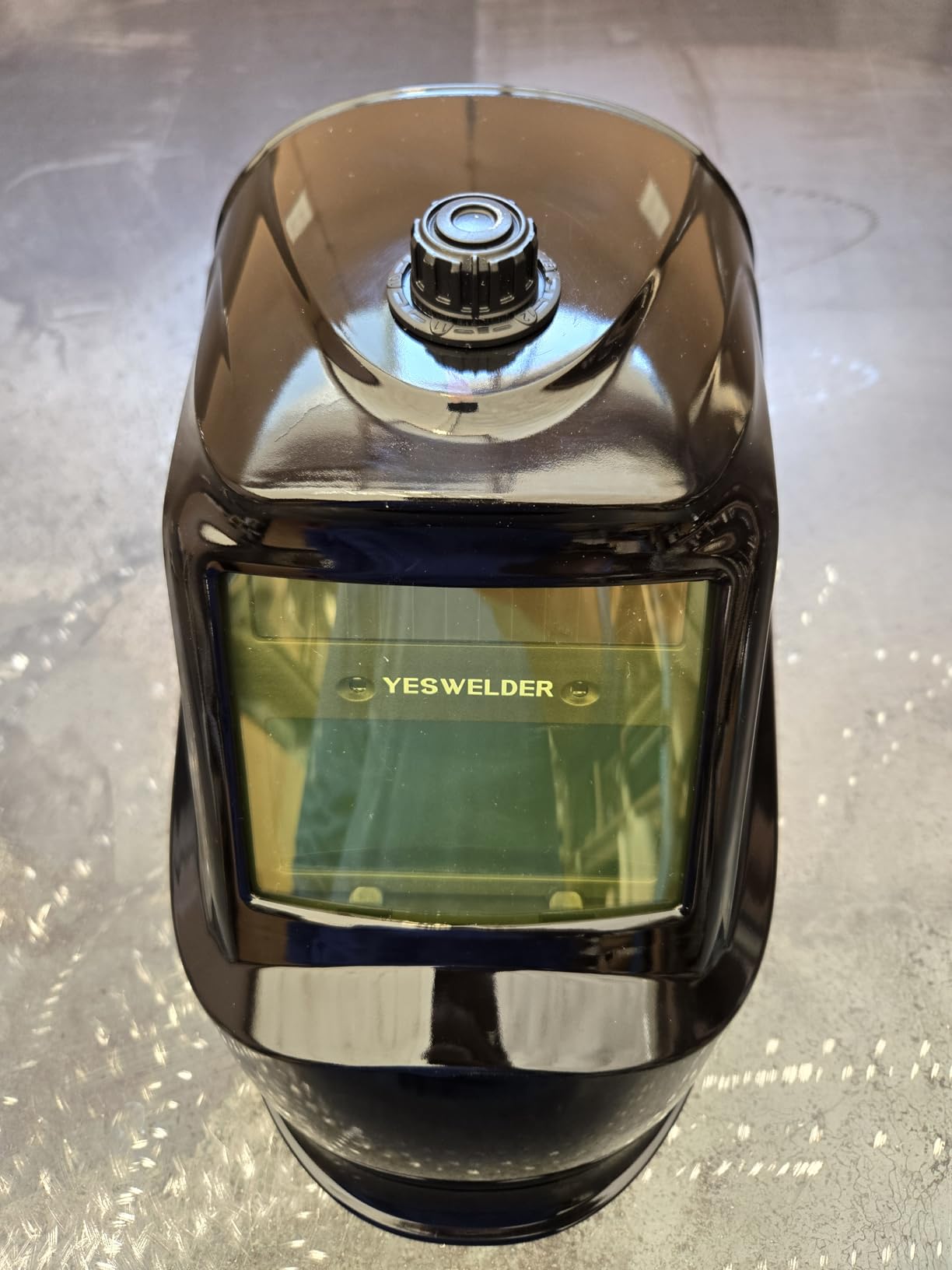
Is the small viewing window going to bother you?
Only if you position the helmet yourself and drift out of alignment. Owners who set the hood up once rarely mention it again, and the clear true color puddle view tends to outweigh the extra field of view a panoramic model gives you.
The shell is also lighter duty than a professional hood at around 16 ounces. That keeps it comfortable, but reviewers expecting a thick nylon shroud should manage expectations on long-term durability.
Who should skip this model?
Skip it if your main process is DC TIG below roughly 40 amps, or if you weld a lot of overhead work where every extra degree of head tilt matters. Two sensors can also false-trigger under bright LED shop lighting, so test it in your actual shop before you rely on it.
Otherwise this is the safest single purchase in the group, and it is the one we would hand to a first-time welder buying one helmet to learn on.
2. YESWELDER LYG-Q800D Panoramic Helmet
YESWELDER Auto Darkening Welding Helmet with LED, 180° View, LYG-Q800D
3.94 x 3.23 inch side view
1/1/1/1 true color
4 arc sensors
Built in LED
Pros
- Wide panoramic and side view
- Reliable four sensor arc detection
- Factory LED for dark spaces
- True color reduces eye strain
Cons
- Bulky and heavier than small view helmets
- Needs sensitivity tuning out of the box
This is the pick for anyone welding in a garage with the lights off or working inside a shed at night. The integrated LED work light is the feature that separates it from every other helmet on this list, and it is genuinely useful when you are trying to see the joint before you strike an arc.
The optics are 1/1/1/1 true color across a 3.94 by 3.23 inch window with a side view, so you get both a wider area and peripheral coverage. Four arc sensors switch in 1/30000 of a second, and the shade range of 3, 5 to 9 and 9 to 13 splits welding, cutting and grinding into separate stops.
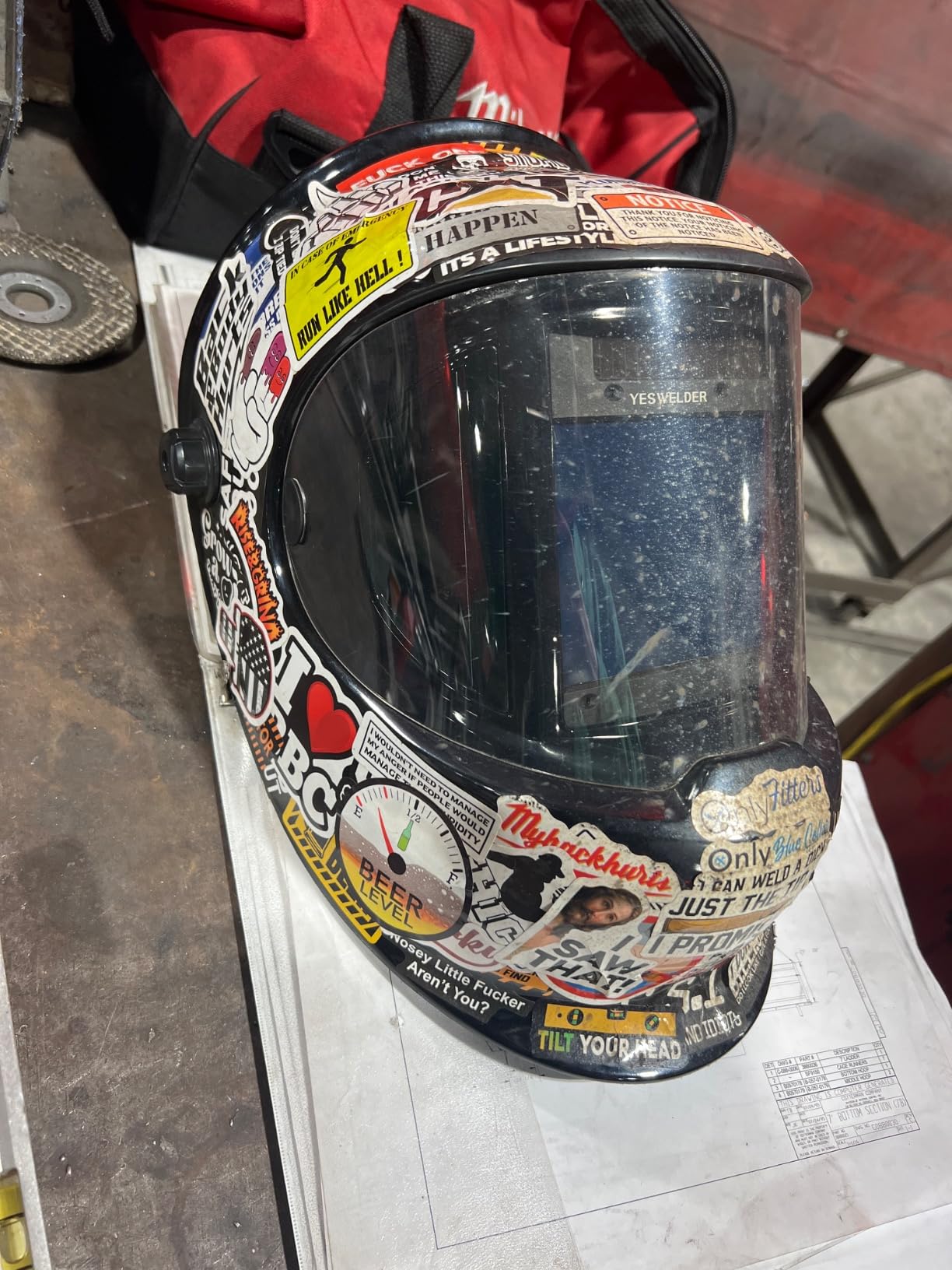
Power is a solar panel plus a replaceable CR2450 lithium cell, and the box includes that battery, a storage bag and three replacement lenses. Blue light blocking sits in the outer lens stack, which matters more than most buyers realize on long shifts.
At 2.2 pounds it is one of the heavier shells here, and that bulk is the trade you make for the panoramic glass. Owners also report spending time on the sensitivity control before it behaves the way they want.
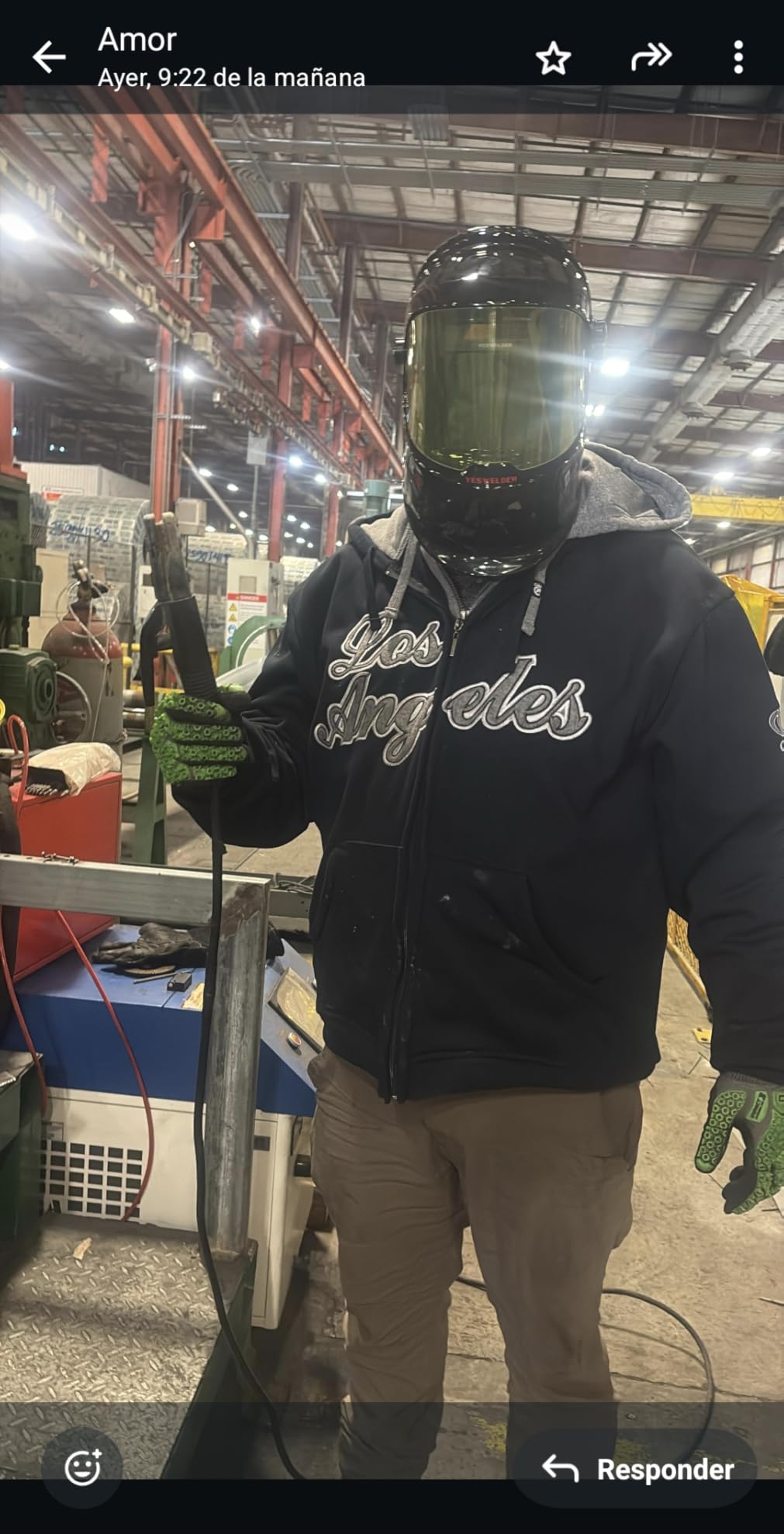
Is the added weight a problem on long shifts?
It depends on your headband. Most owners describe the pivot style headgear as adjustable enough to spread the load, and the padding does its job once you dial it in. Take a few minutes with it before a full day of work rather than assuming.
The bigger question is whether you will use the side view. If you weld plate and structural work where you need to see around a joint, this pays for itself quickly.
Who should skip this model?
Pass on it if you work in tight spaces or need to duck under a vehicle regularly, because the panoramic shell is larger than the compact designs. It is also not the cheapest way to get four sensors and a large view, since the LYG-M800H below does that without the LED.
3. YESWELDER LYG-M800H Large View Helmet
YESWELDER Auto Darkening Welding Helmet, Large View, LYG-M800H
3.93 x 3.66 inch view
1/1/1/1 true color
4 arc sensors
External mode controls
Pros
- Exceptionally large viewing area
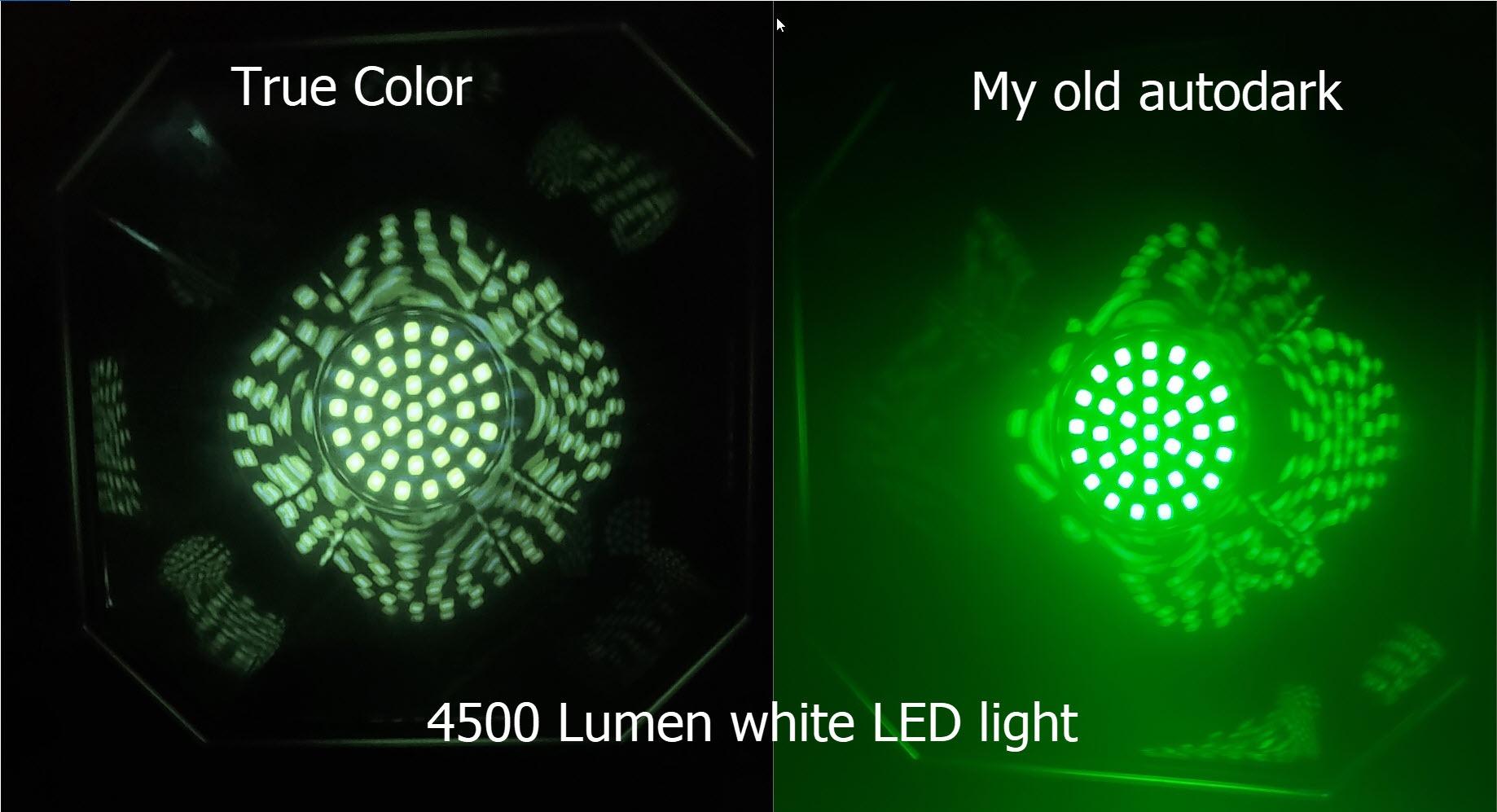
- Markedly clearer than green tinted lenses
- Consistent four sensor detection
- External weld cut grind controls
- Cheater lens compatible
Cons
- Thin plastic shroud and tension knobs
- Helmet needs tightening to stay raised
- Inner lens hard to grip
- Battery door is fiddly
This is the value pick. With more than eight thousand ratings behind it, a 3.93 by 3.66 inch 1/1/1/1 true color window and four arc sensors, it covers the same ground as pricier branded helmets while sitting near the bottom of the price range.
Owners consistently single out the viewing area as the feature that fixed their visibility problems, and several mention that the true color optics look markedly clearer than the green-tinted lenses they grew up with. Switching is 1/30000 of a second and the shade settings of DIN 3, 5 to 9 and 9 to 13 cover TIG, MIG, stick, cutting and grinding.
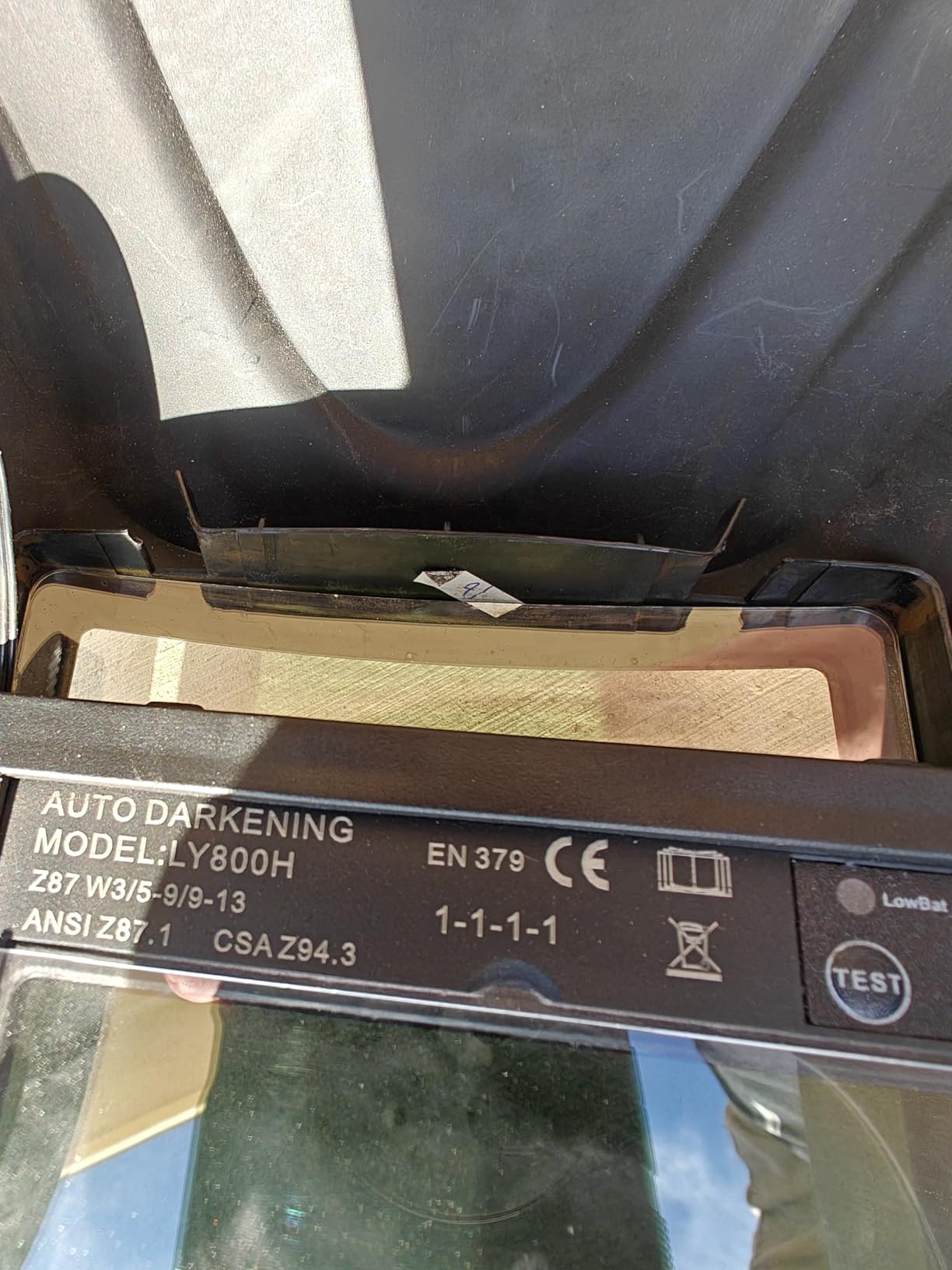
Two details make this more capable than its price suggests. External mode controls let you move between weld, cut and grind without lifting the hood, and the lens accepts a cheater lens for close work and fine TIG bead work.
Power comes from a CR2450 lithium battery with solar support, and the box includes a replacement battery, a storage bag, two outer lenses and an inner lens. That spare-parts list matters more over five years than the sticker price does.
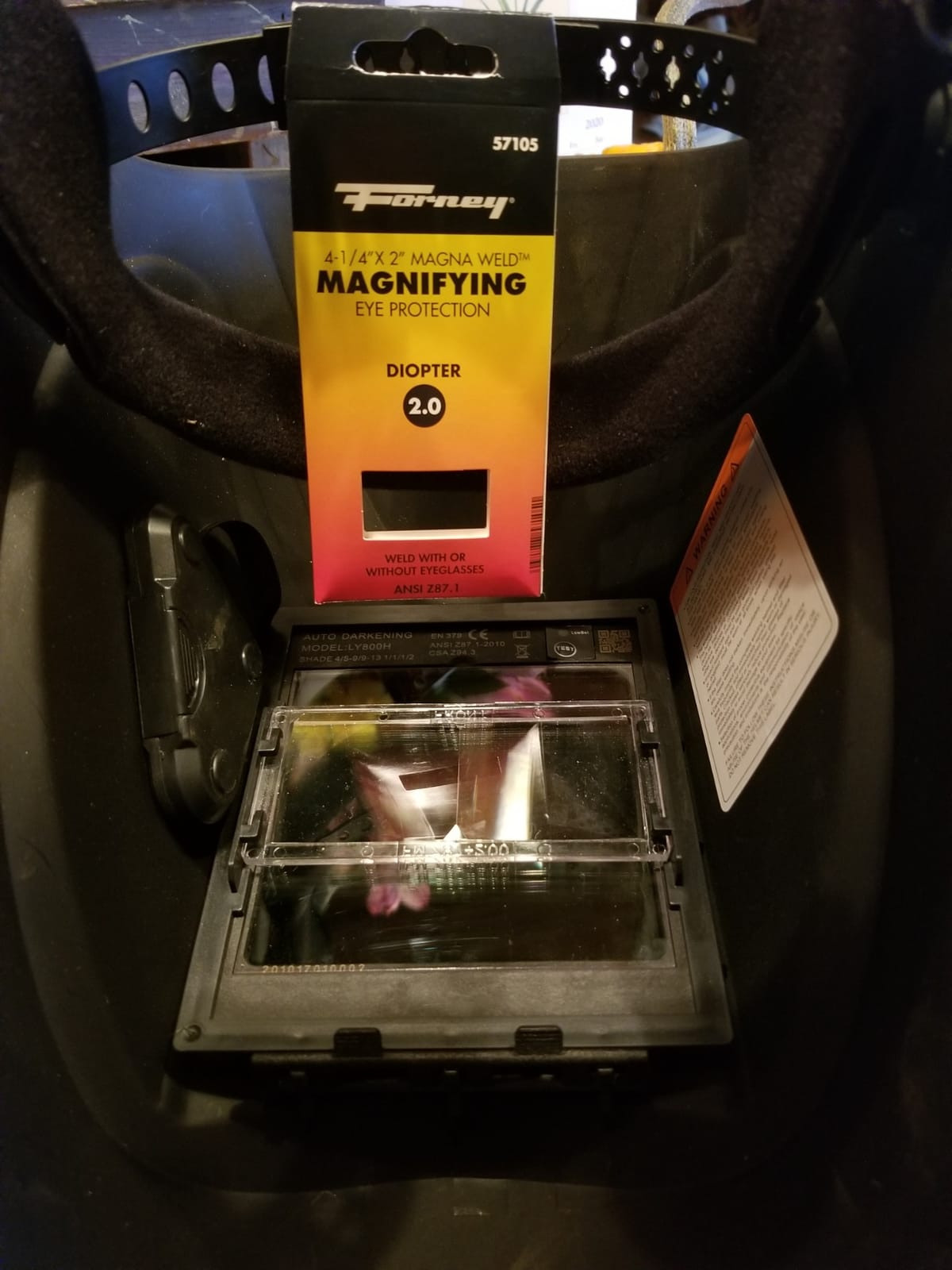
How bad is the plastic really?
This is the most repeated limitation in the reviews. The shroud, headband and flip-up tension knobs feel thin compared with a professional hood, and several owners expect those knobs to be the first failure point on a long-term buy.
Worth noting that a ratchet closure is part of the design, so the hood holds position better than a strap-and-knob shell. It still wants tightening before you flip it up.
Who should look elsewhere?
If you weld overhead for a living, a 2.2 pound plastic shell is the wrong tool, and this one is not rated for that kind of sustained heat exposure. Buyers who want integrated lighting should step up to the LYG-Q800D instead.
For weekend fabrication, garage work and learning TIG, though, the sheer size of that window is the reason this keeps selling.
4. DEKOPRO True Color Solar Powered Helmet
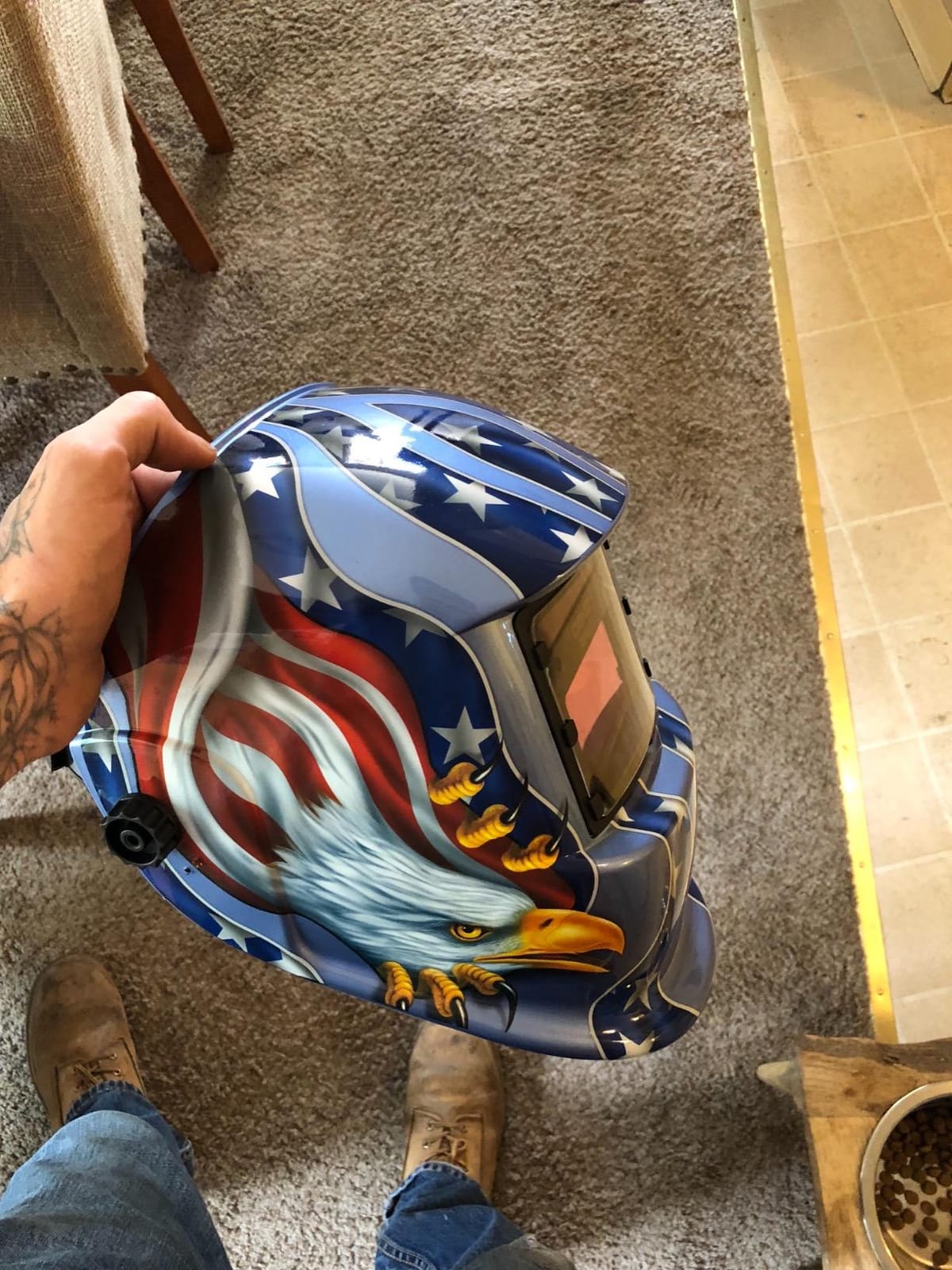
DEKOPRO Welding Helmet – Solar Power Auto Darkening Welding Helmet – Adjustable Shade Range 4/9-13 for Mig Tig – Arc Welder Mask (Blue Eagle)
1/25000s switching
Shade 4/9-13
EN 379 and ANSI Z87.1
1.2 lb shell
Pros
- Very light at about one pound
- Reliable dimming with no flicker
- Cheap and easy to find replacement screens
- Solar with battery backup
Cons
- Plastic headgear knob and strap can break
- Fiddly initial alignment
- May not fit very large heads
The DEKOPRO earns its place because of weight. At about 1.2 pounds it is the lightest shell in this group, and owners with multi-year service on a farm or in a home shop consistently say it stays comfortable through the day.
The filter is an ADFDX-500S unit switching in 1/25000 of a second, with a DIN 4 light state and a dark-to-bright time adjustable between 0.1 and 1.0 seconds. Shade 4 and 9 to 13 covers welding and grinding, and the certification listing to ANSI Z87.1-2010 and EN 379 puts it in good standing.
Sunlight and shop lighting both feed the solar panel, and a replaceable battery covers you on dark indoor days. Sensitivity and delay are both adjustable, which is more control than many competitors in this bracket give you.
Replacement screens being inexpensive and easy to find is a real long-term advantage. Off-brand helmets often have non-standard cover lens sizes, and this one is the exception on our list.
Will this fit a large head?
That is the single most repeated fit complaint. The buckle closure and adjustable strap handle a wide range, but some owners with very large heads report the adjustment running out of room. Measure before you commit.
The other recurring theme is the headgear knob itself, which reviewers describe as cheap plastic that can break after light use. It is the part of this helmet most likely to disappoint you.
Who should skip this model?
Skip it if you need a cheater lens holder or a large viewing window, because the 3.62 by 1.65 inch window is one of the smaller ones here. If you are welding thin material with DC TIG at low amperage, look for a four sensor helmet with better low-amp sensitivity.
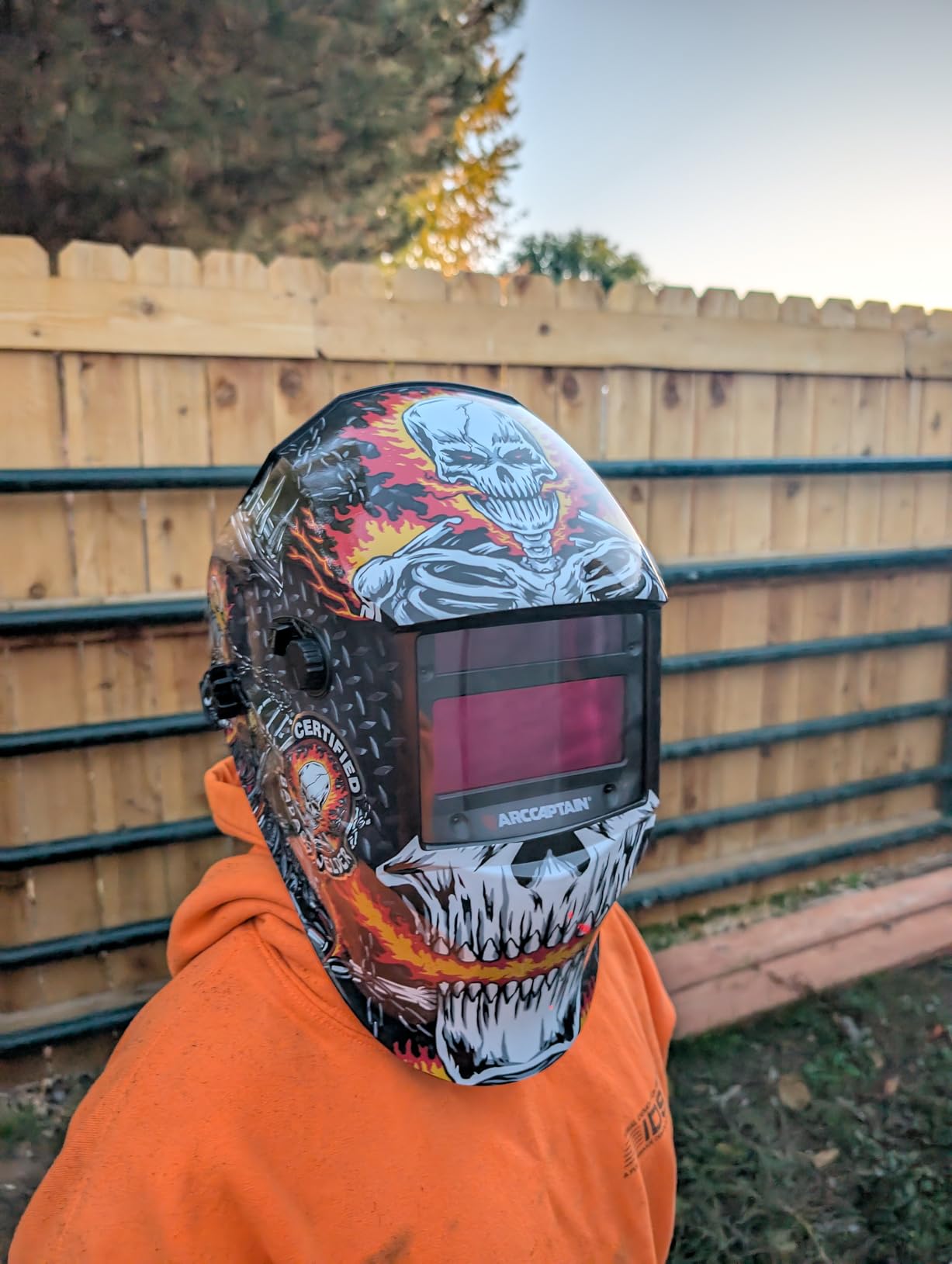
5. ARCCAPTAIN HSH-S800 True Color Helmet
ARCCAPTAIN Welding Helmet Auto Darkening, 1/25000s Response, Shade 4/9-13
1/1/1/1 true color
4 arc sensors
1/25000s switch
Shade 4/9-13
Pros
- Several welders call the lens the clearest they have used
- Fast reliable auto darkening
- Working grind mode
- Secure padded adjustable fit
- Three replacement lenses included
Cons
- Some buyers report slow initial response
- Occasional reports of filter performance fading
- Cheaper feel than professional hoods
This is the budget pick because the spec sheet punches above the price. Four arc sensors, 1/25000 second switching and a 1/1/1/1 true color lens across a 3.86 by 1.69 inch window is a combination you would have paid well above this tier for a few years ago.
Owners describe the lens as the clearest they have used, and several report buying more than one so they can keep working while a second sits in the truck. The dark state of DIN 4 and 9 to 13 handles welding and grinding, and grind mode works well enough that the helmet rarely comes off.
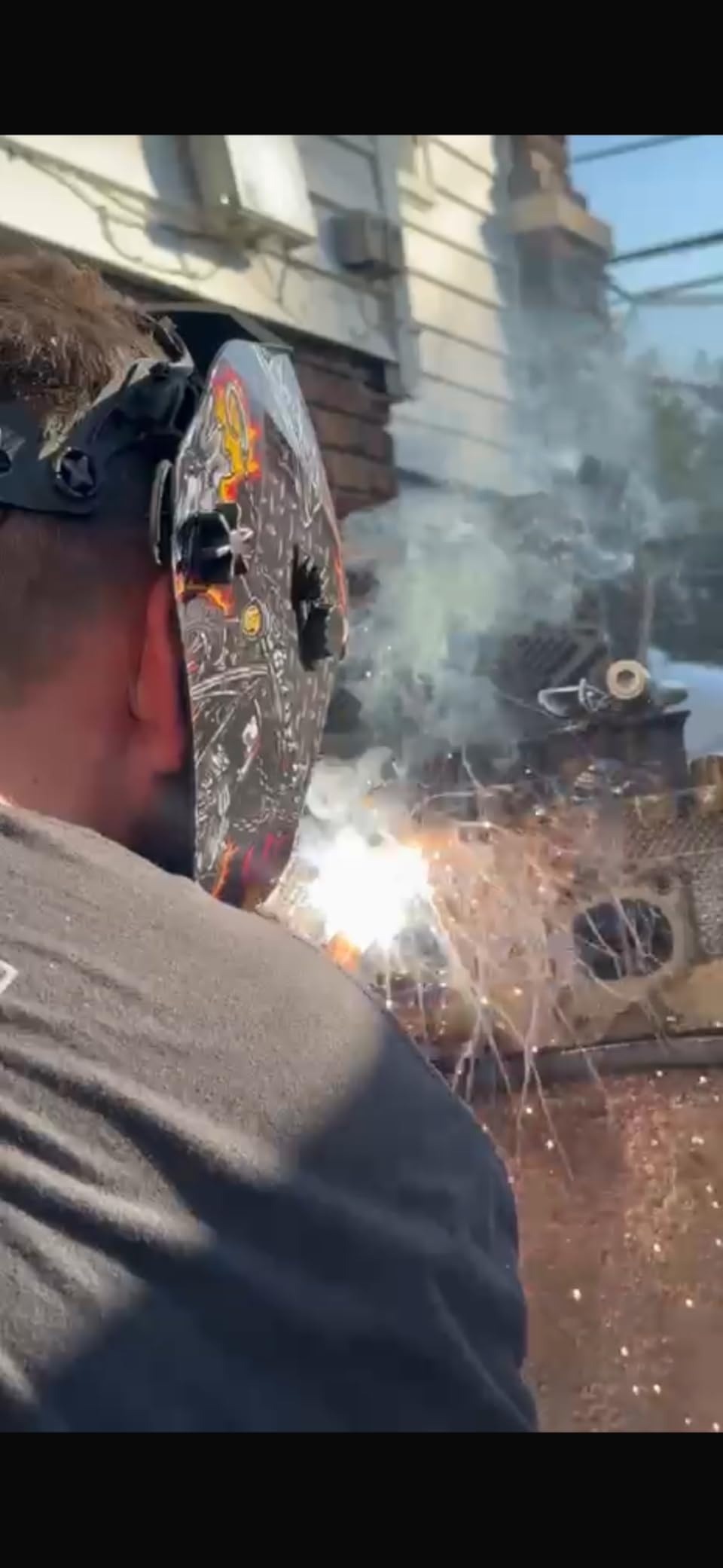
The shell is a PA material with a listed tensile strength up to 120 MPa, which is a better answer to the durability question than the thin ABS shells elsewhere in this roundup. The padded adjustable headband holds its position, and at roughly a pound the balance stays comfortable.
Certification covers ANSI/ISEA Z87.1-2010, CSA Z94.3, DIN EN 175 and DIN EN 379, and the 12-in-1 smart filter carries automatic DIN 16 UV and IR protection. You get three replacement lenses in the box.
Is the response speed an issue?
A minority of owners report slower response on their particular model which means a brief flash of arc light at strike. This is unit-to-unit variation rather than a design flaw, and it is the main reason to keep the return option open.
There are also occasional reports of the filter losing performance after several months. If you weld in corrosive environments or constantly grind, buy a spare cover lens and keep the original.
Who should skip this model?
Skip it if you weld aluminum or thin stainless where true color matters most and you cannot tolerate any lag at arc strike. The 1.69 inch viewing height is also short, so this is not a helmet for wide structural work.
For hobbyists and shop workers doing MIG and stick, it remains the strongest spec sheet per dollar on this list.
6. TOOLIOM E600A-A Lightweight Helmet
TOOLIOM Auto Darkening Solar Powered Welding Helmet for TIG MIG ARC with Light
1/25000s auto darkening
Shade 3.5/9-13
1.14 lb body
External grind knob
Pros
- Dims quickly with no flicker
- Very light for all day wear
- Solar charging suits intermittent shop use
- Adjustable fit across head sizes
- Blue light blocking lens
Cons
- Cheater lens slot too small for standard lenses
- Small screen dirties fast
- Manual skips the external controls
- Rear band can press on the head
The TOOLIOM is the one to buy if you cut more than you weld. Its shade range of DIN 3.5 and 9 to 13 is listed for TIG, MIG, stick and plasma cutting, and no other helmet here makes plasma cutting as explicit a part of the spec.
At 1.14 pounds with a sweatband and adjustable PE headgear, it is one of the few shells in this group you can genuinely forget you are wearing on a long shift. Auto darkening runs at 1/25000 of a second across a 1/1/1/1 true color window of 3.64 by 1.67 inches.
An external knob switches between weld and grind modes without opening the shell, and sensitivity and delay sit on internal controls. Solar power with a replaceable battery and a low battery indicator means you are not planning around a charger, and three replacement lenses come in the box.
The blue light blocking outer lens is a quiet benefit for anyone doing full production days. It is listed to ANSI Z89.1, so check that standard against your local requirements before you commit.
What does the cheater lens problem mean in practice?
The holder is a fraction of an inch too small for a standard 4.25 inch insert. If you rely on a cheater lens for detail TIG work, that is a dealbreaker and you should pick the LYG-M800H instead.
Otherwise the small screen is the main limitation, and it does dirty quickly in a smoky shop, so a lens cloth should live in your pocket.
Who should skip this model?
Skip it if you wear glasses under the helmet, since the rear band is reported as uncomfortable on the back of the head over long sessions. It is also not the helmet for a shop that expects a replaceable parts program.
For plasma cutting, occasional MIG work and anyone who wants the lightest shell here, it does the job cleanly.
7. TRQWH Helmet with USB LED Light
TRQWH Welding Helmet with Light True Color Auto Darkening Welding Helmets for Men Solar Powered Welding Hood with 2 Arc Sensor Wide Shade 4/9-13 for TIG MIG ARC Cool Welder Mask
1/1/1/2 true color
1/20000s switching
2 arc sensors
USB LED work light
Pros
- Very inexpensive with a clear true color view
- Quick reliable auto darkening
- Padded adjustable headband
- Rechargeable LED and spare batteries included
Cons
- Headband and shell feel flimsy
- Included lenses are thin
- Replacement shields sold separately are costly
- LED light quality is mediocre
The TRQWH is the cheapest capable helmet we would put in front of a beginner, and the rechargeable USB LED on the shell is a nice touch for a first garage setup. The lens is 1/1/1/2 true color rather than 1/1/1/1, which is the one step down from the rest of this list.
Switching is 1/20000 of a second on two arc sensors, which is the fastest reaction time here but from the smallest sensor count, so low-amperage work is the weak point. The DIN 4 light state and DIN 9 to 13 dark state cover welding, cutting and grinding.
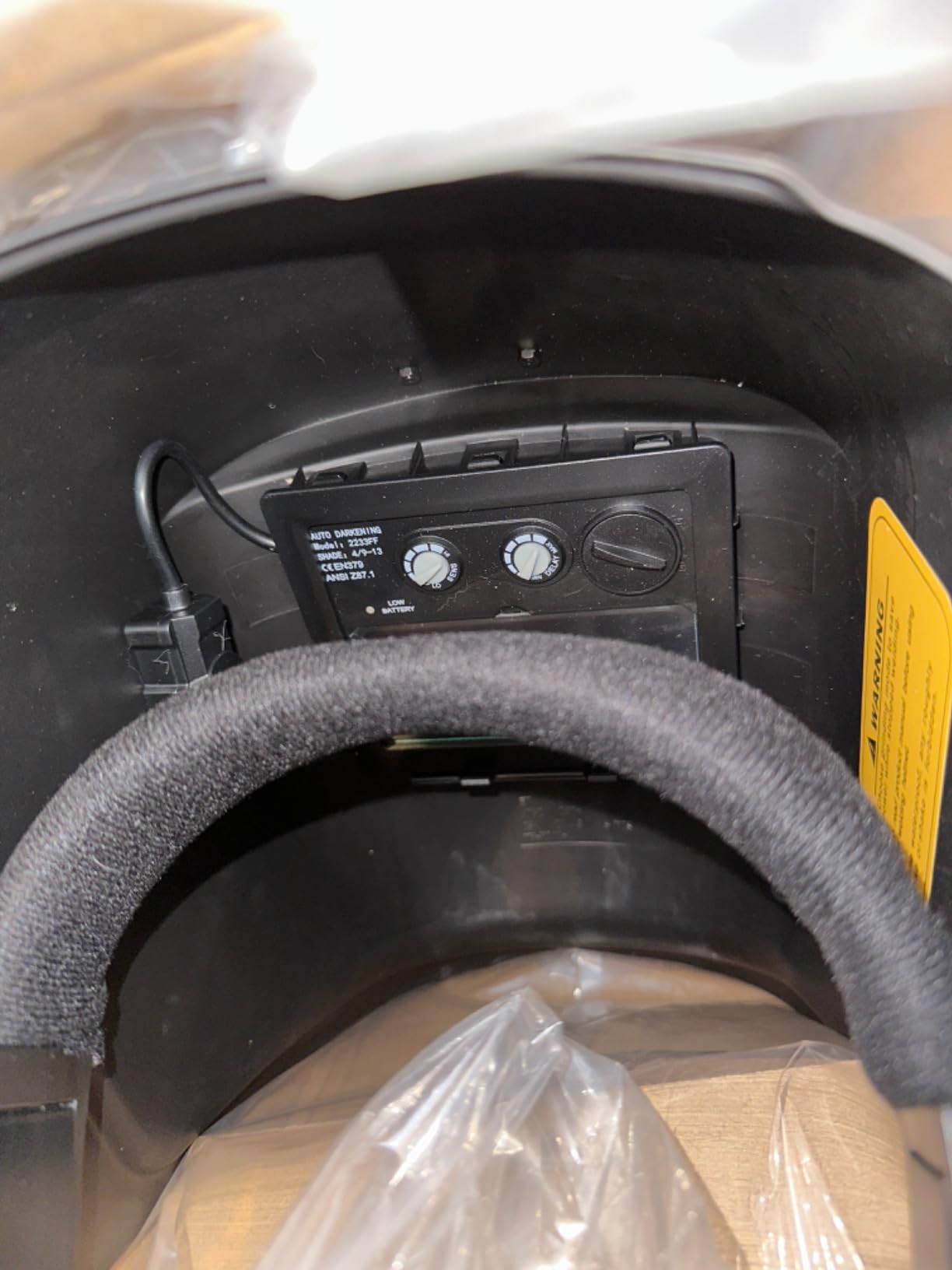
Power comes from solar cells backed by replaceable CR2032 lithium batteries, which is a rare and useful combination because the cells cost very little to swap. Compliance is listed to ANSI Z87.1, EN 379 CE and CSA Z94.3 across a PP shell.
The padded forehead and ear areas are worth noting, because headband padding is exactly what buyers in the forums complain about missing on most budget shells. Suited to plasma cutting, grinding, DC and AC TIG, MIG and MMA.
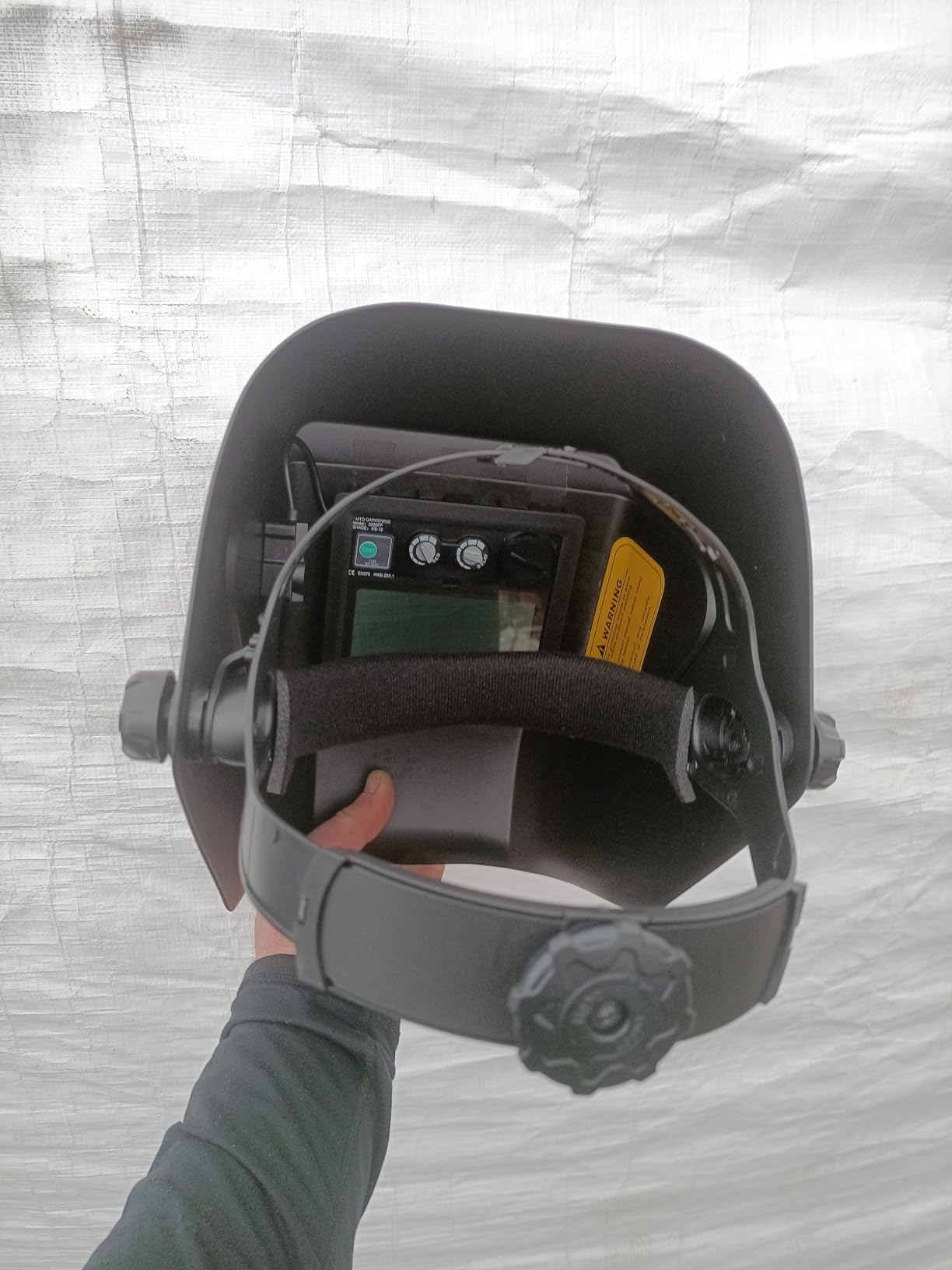
How do the thin lenses hold up?
Owners doing light hobby work get through them, but reviewers running heavy shop schedules report faster wear. Plan to buy replacement cover lenses rather than assuming the included ones last.
The headgear can also drop down when raised unless you tighten it hard, which is the same raised-position complaint that shows up across this entire price range.
Who should skip this model?
Skip it if you are buying one helmet for a career. The build is fine for learning and light fabrication, but a professional will replace the headgear long before the lens fails, and replacement shields are not sold as cheap consumables.
It is also worth pairing our pick with our multimeter buying guide since a first welder usually needs one for machine setup and troubleshooting.
8. ARCCAPTAIN XK-LY800H Large View Helmet
ARCCAPTAIN Auto Darkening Welding Helmet with Light, 3.94″X3.66″ Large View
3.94 x 3.66 inch view
1/1/1/1 true color
USB LED light
Dual solar panels
Pros
- Very large true color viewing area
- USB light has two brightness levels
- Fast four sensor arc sensing
- Breathable padding and light weight
- Three replacement lenses included
Cons
- LED light needs assembly before use
- Cheaper shell feel than professional hoods
- Mixed satisfaction compared with the smaller model
This is the pick when your shop is dark and you refuse to stop welding when the light goes off. The USB welding light offers two brightness levels and mounts to the shell, and unlike a small integrated LED it can be pointed where you need it.
The viewing area of 3.94 by 3.66 inches with 1/1/1/1 true color optics is among the largest in this group, and four arc sensors switch in 1/25000 of a second. Dark state levels of 4, 5 to 8 and 9 to 13 give you dedicated welding and cutting stops.
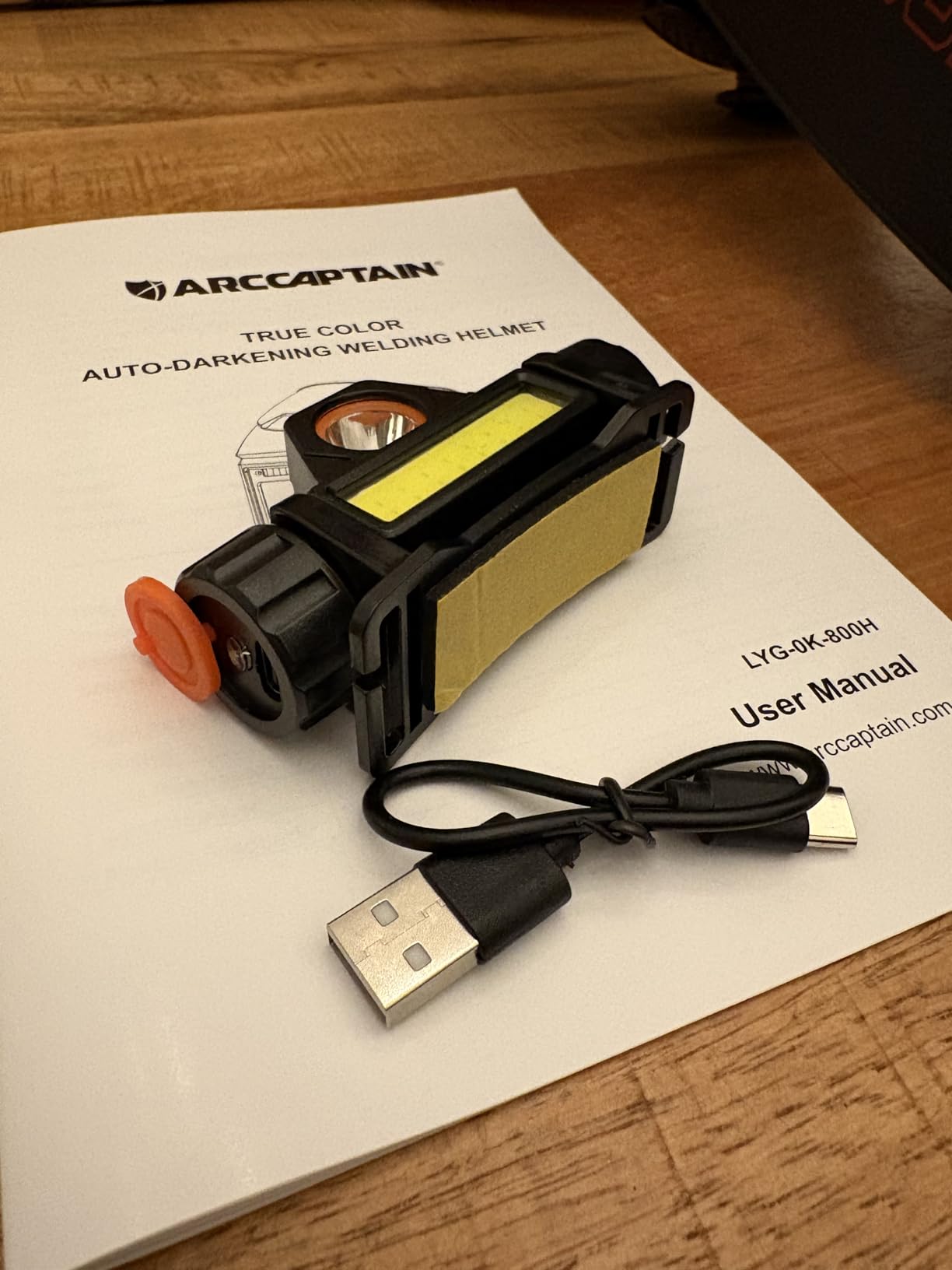
Dual solar panels sit alongside a CR2450 lithium battery that works down to a minimum of 5 amps, and the 12-in-1 smart filter carries automatic DIN 16 UV and IR protection. Certification covers ANSI Z89.1, CSA Z94.3 and DIN EN 379, with a 180 day warranty behind it.
At roughly one pound with breathable padding, it stays comfortable, and the box includes a replacement lithium battery plus three replacement lenses and a set of stickers to make it identifiable.
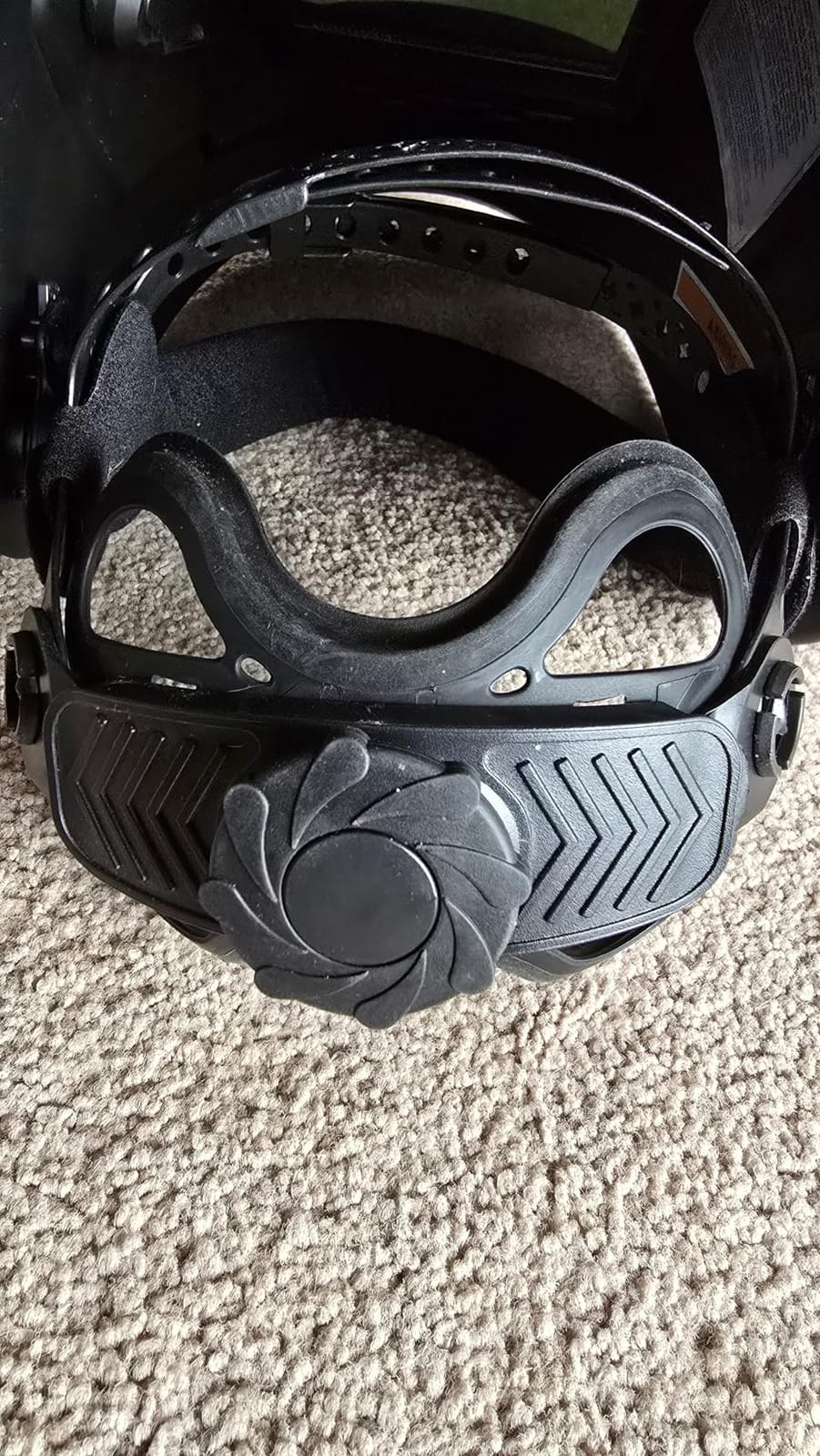
What does the light needing assembly mean?
You need to attach the light yourself before first use, which takes a couple of minutes and a screwdriver. Owners flag it because opening the box and expecting a working light leads to the most common one-star reviews on an otherwise well-liked helmet.
Its rating sits slightly below the brand’s smaller-window model, which suggests some buyers found the extra size less useful than they expected.
Who should skip this model?
Skip it if you weld outdoors in bright sun, where you will never use the LED and the shell adds weight for nothing. It is also not for TIG work at very low amperage, since the minimum rating of 5 amps is a floor rather than a promise.
For night shifts, basement shops and mobile repair work, the light alone justifies the choice.
9. Hobart 770890 PureColor Helmet
Hobart 770890 Auto-Darkening Welding Helmet, Large, Black
PureColor optics
9.3 inch widescreen view
4 arc sensors
Two year warranty
Pros
- Highest average rating in this group
- Accurate color and a wide viewing area
- Dependable four sensor detection
- Simple analog shade and delay knobs
- Limited two year warranty
Cons
- Viewing area claims differ from compact designs
- Analog knobs lack digital granularity
The Hobart is the only traditional welding brand on this list and the only one with a manufacturer warranty behind it. A limited two year warranty matters when you are buying the shell to last a decade rather than to learn on.
PureColor lens technology sits behind a 9.3 inch widescreen viewing area, and four independent arc sensors drive dependable detection. The shade, sensitivity and delay controls are analog knobs, which is a genuine advantage for most people because there is no menu to learn.
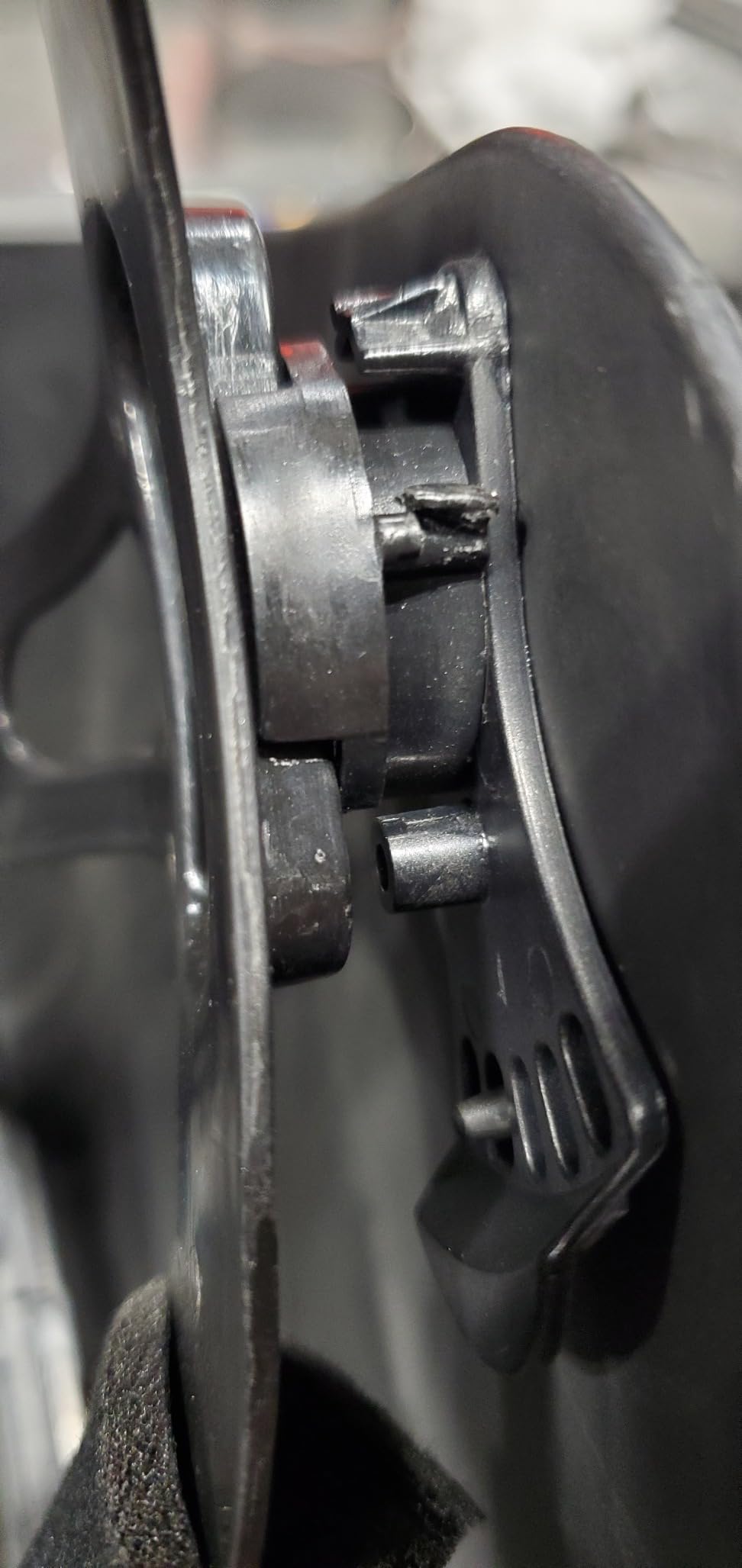
A weld to grind mode switch means you can change tasks without changing helmets, and auto-on and auto-off power control triggers at arc strike so the battery is never drained while the helmet sits on a shelf. A CR2 lithium battery and a protective lens kit are included.
The polyamide nylon shell weighs 1.25 pounds, and continuous UV and IR protection is active whether or not the filter is darkening. Owners credit the color accuracy and the wide screen for improved weld quality.
Why do viewing area claims vary so much?
The 9.3 inch figure describes the full widescreen panel rather than the rectangular viewport the cheaper compact designs quote, so the numbers are not directly comparable. In use, the difference is a wider image with better peripheral awareness, not a different class of lens.
Analog controls are less granular than digital interfaces, and if you like to fine tune sensitivity precisely for a specific process you will notice the difference. Most people find three knobs easier to live with.
Who should skip this model?
Skip it if true color and a large window are not important and you want the absolute lowest spend, because this sits at the top of the range covered here rather than the bottom. It is also the pick to avoid if you need cut mode with a dedicated mid shade for plasma work.
For a professional or a serious hobbyist who welds in the open, the warranty and the sensor reliability are the deciding factors.
10. Sunstac SS-A800D Helmet with Swivel Light
Sunstac Auto-Darkening Welding Helmet 3.94 x 3.27″ View with Light
3.94 x 3.27 inch view
1/1/1/1 true color
4 arc sensors
Shade 4/5-9/9-13
Pros
- Large view with no darkening lag
- Comfortable headband that holds position
- True color puddle view
- Adjustable swivel work light
- Cheaper than branded helmets
Cons
- Brief initial filter delay
- Fiddly battery compartment
- Delicate side tension buttons
- Deep head piece may not suit glasses
The Sunstac is the multi-process pick. Its shade 4, 5 to 9 and 9 to 13 range covers stick, TIG, MIG, cut, MMA and plasma with grinding features included, which is the broadest process coverage on this list.
The 3.94 by 3.27 inch screen runs 1/1/1/1 true color with 1/30000 second auto darkening across four arc sensors. Owners who upgraded from a pricier branded helmet frequently report finding this one clearer with a much larger viewing area and no darkening lag.
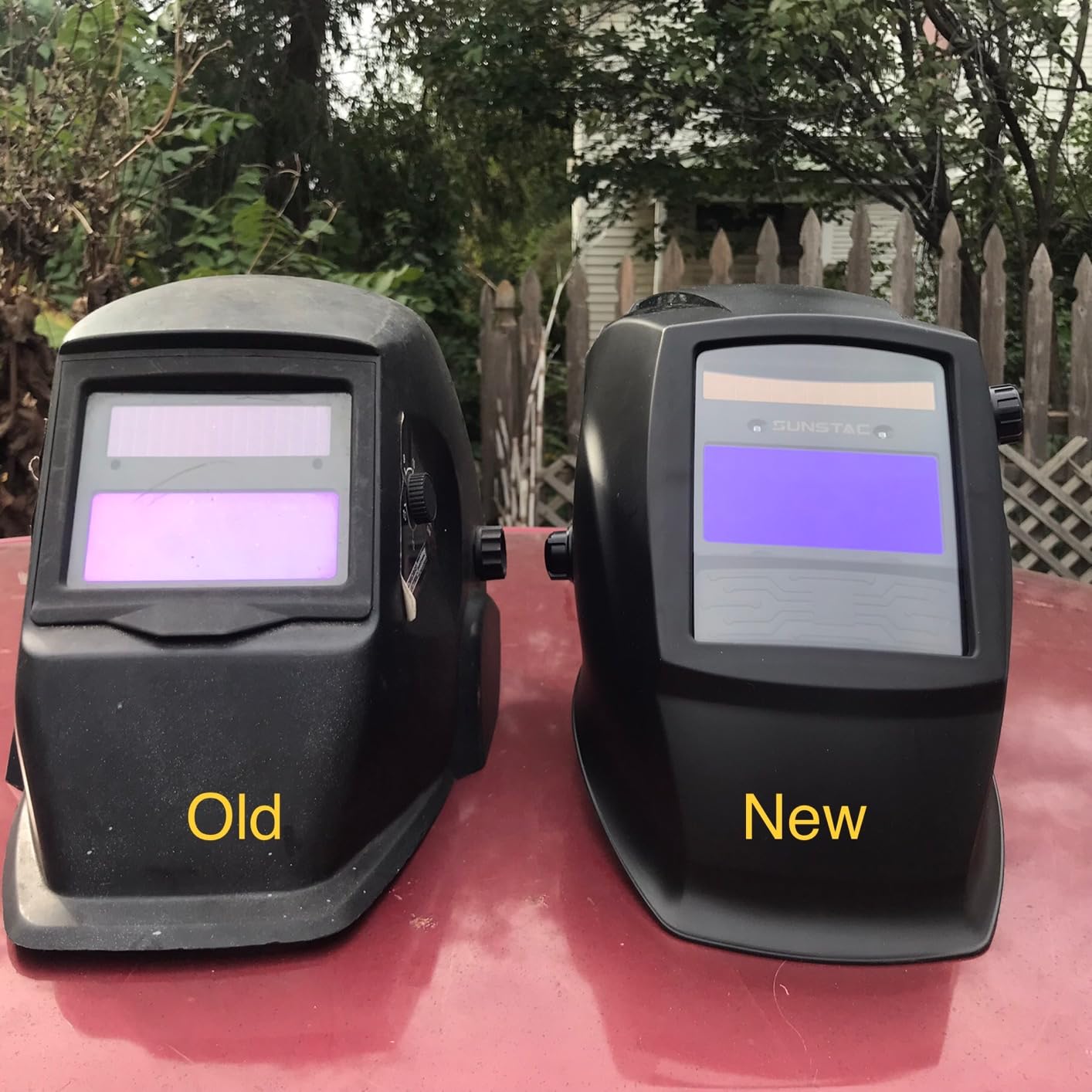
The rechargeable high brightness work light has two modes and an adjustable swivel angle, which is more useful than a fixed lamp when you are setting up a joint in a dark space. Dual power means a lithium battery or solar, and cheater lens compatibility is available separately.
Interior padding and multiple adjustment points give it the most secure fit of the large-view models here, though the head piece is deep and can interfere with glasses.
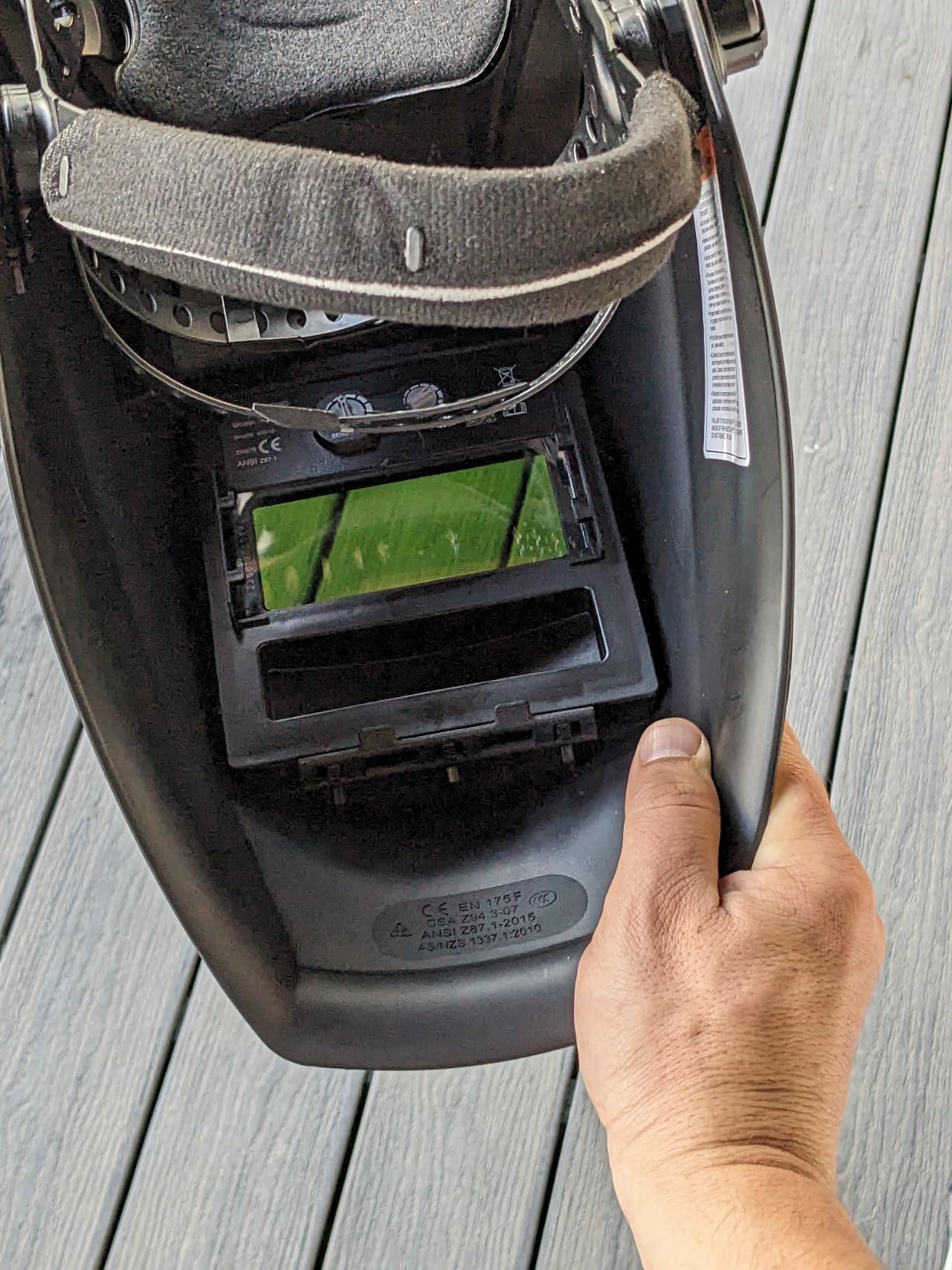
Is the initial filter delay a real fault?
Not in most cases. Owners describe a short delay on the very first strike that disappears as the filter warms, which reads as a problem the first time and not after that. Give it a practice pass before you judge it.
The side tension buttons are the part to watch, since owners report they feel delicate and can let the hood flop down.
Who should skip this model?
Skip it if you wear safety glasses, because the deep head piece will push against them and the listing does not call out clearance for eyewear. The battery compartment is also awkward to open, which is a daily annoyance for anyone who wants to swap cells weekly.
It is also worth noting the solar panel supplements the battery rather than fully charging it, so keep a spare lithium cell on hand.
How to Pick an Auto-Darkening Helmet Without Overspending
The auto-darkening filter is a light sensor in a helmet. Arc sensors detect the flash of an arc, send a signal to the filter, and the lens switches from a light resting shade to a dark welding shade in milliseconds. Everything else on the spec sheet is a variation on how well that happens.
Optical clarity and the EN 379 rating
Optical clarity is graded on four criteria under EN 379, where 1 is best and 3 is worst: optical class, optimal viewing area, luminous transmittance variation and angle dependence. A helmet listing 1/1/1/1 is the top grade, and 1/1/1/2 is close behind with a slightly weaker angle dependence rating.
This is the number I would never compromise on. Anything below 1/1/1/2 means you are trading real eye comfort for a feature you will not miss.
Arc sensors and switching speed
Two sensors can false-trigger under bright LED shop lighting and can miss a DC TIG arc at low amperage. Four sensors are the practical minimum at this price, and the ARCCAPTAIN HSH-S800, TOOLIOM, Sunstac, LYG-M800H and LYG-Q800D all clear that bar.
Switching speed figures cluster between 1/20000 and 1/30000 of a second. Anything at or faster than 1/16000 of a second is fine, and all ten picks here meet or beat it.
Viewing area and shade range
Viewing windows fall into a small group around 3.6 by 1.65 inches and a large group around 3.9 by 3.6 inches. The large group shows more of the joint, the puddle and your surroundings, which owners consistently credit with better bead work.
On shades, shade 3 handles grinding, shades 5 to 8 handle cutting, and shades 9 to 13 handle welding. A helmet covering shade 3 or 4 through 13 gives you every process in one unit.
Headgear comfort and weight
This is where budget helmets actually disappoint people. Owners consistently judge a helmet on its headband rather than its lens, and the most common complaints across forums are tension knobs that will not hold the hood up and rear bands that press on the head.
Weight matters more than it seems. Shells around one pound stay comfortable through a shift, while 2.2 pound shells get tiring when you are welding overhead for hours.
Power source, modes and upkeep
Solar panels with a replaceable lithium cell are the ideal arrangement, because solar handles outdoor and shop work while the cell covers dark indoor days. Battery-only units need a spare on hand, and solar-only units may never fully charge the cell between jobs.
Grind mode matters if you do any finishing work, since it drops the lens to a light shade without lifting the hood. Outer cover lens replacement is a consumable you will budget for, and non-standard sizes cost more in the long run.
What you give up below the premium tier
No helmet on this list uses X-mode electromagnetic sensing. That sensing method differentiates the arc from ambient light, which is why premium helmets are preferred for outdoor work and for low-amperage TIG. Everything here relies on optical sensors alone.
You also give up digital controls, integrated headgear systems, premium headband comfort and, in most cases, a meaningful manufacturer warranty. None of those are safety features, but they are quality-of-life differences you will feel daily.
Which helmet suits which job
For MIG and stick work in a garage, the LYG-L600A or the ARCCAPTAIN HSH-S800 cover everything you need. For TIG, especially thin material, choose a four sensor model with a large window, and expect to tune sensitivity before each job.
For grinding and cutting heavy, the TOOLIOM has the widest shade spread and names plasma cutting explicitly. For dark shops, the LYG-Q800D or the ARCCAPTAIN XK-LY800H solve the lighting problem outright. For overhead welding as a professional, look above this price range for a rated, heavier shell.
Frequently Asked Questions
What is the best welding helmet on a 200 dollar budget?
The YESWELDER LYG-L600A is our top pick for most people. It carries 1/1/1/1 true color optics, switches in 1/30000 of a second, covers shade 3 and 7 to 13, and has the largest volume of owner feedback in this price range. If you need a larger viewing window, the YESWELDER LYG-M800H is the value alternative.
Which brand of welding helmet is considered the best?
Brand reputation matters less than specifications at this budget. The Hobart 770890 is the only model here from a traditional welding manufacturer and it carries a limited two year warranty. YESWELDER, ARCCAPTAIN and TOOLIOM lead on specification value, with four arc sensors and 1/1/1/1 optics available well under the price ceiling.
Are cheap auto-darkening helmets safe?
Safety depends on certification rather than price. Look for ANSI Z87.1 or EN 379 compliance, which every helmet on this list carries, along with a shade range covering shade 9 to 13 for welding. Two arc sensors can miss very low amperage DC TIG arcs, so check the sensor count if TIG is your main process.
Can I TIG weld with a shade 9-13 helmet?
Yes, for most TIG work. A shade 9 to 13 range covers thin stainless, mild steel and most aluminum TIG jobs. Thin material at very low amperage needs a helmet with high sensitivity and four arc sensors, so bump the sensitivity setting up before striking an arc and use a cheater lens for detail work.
Do I need a helmet with grind mode?
Only if you grind or finish welds regularly. Grind mode drops the filter to a light shade so you can see your work without lifting the hood, which saves a lot of time on fabrication projects. Several models here, including the LYG-M800H and the Hobart, include a dedicated weld to grind switch.
How often should I replace the outer lens cover?
Replace it when spatter starts to pit the surface or when clarity visibly drops, which is usually every few months in heavy shop work and far less often for hobby use. Inner lenses last considerably longer. Keep a spare on hand, because non-standard cover lens sizes cost more than standard ones.
Final Verdict for Auto-Darkening Helmets Under 200 Dollars
The YESWELDER LYG-L600A takes our Editor’s Choice as the best auto darkening welding helmet under 200 dollars, pairing 1/1/1/1 true color optics with the deepest owner feedback base in this tier. The LYG-M800H is the value buy if viewing area is your priority, and the ARCCAPTAIN HSH-S800 runs the strongest specification sheet per dollar.
Whatever you pick, check the arc sensor count against your main process before you buy, and give the headband the same attention as the lens. Use the buttons below to check current pricing, and read our full welding helmet roundup if you are ready to move above this budget for X-mode sensing and premium headgear.