
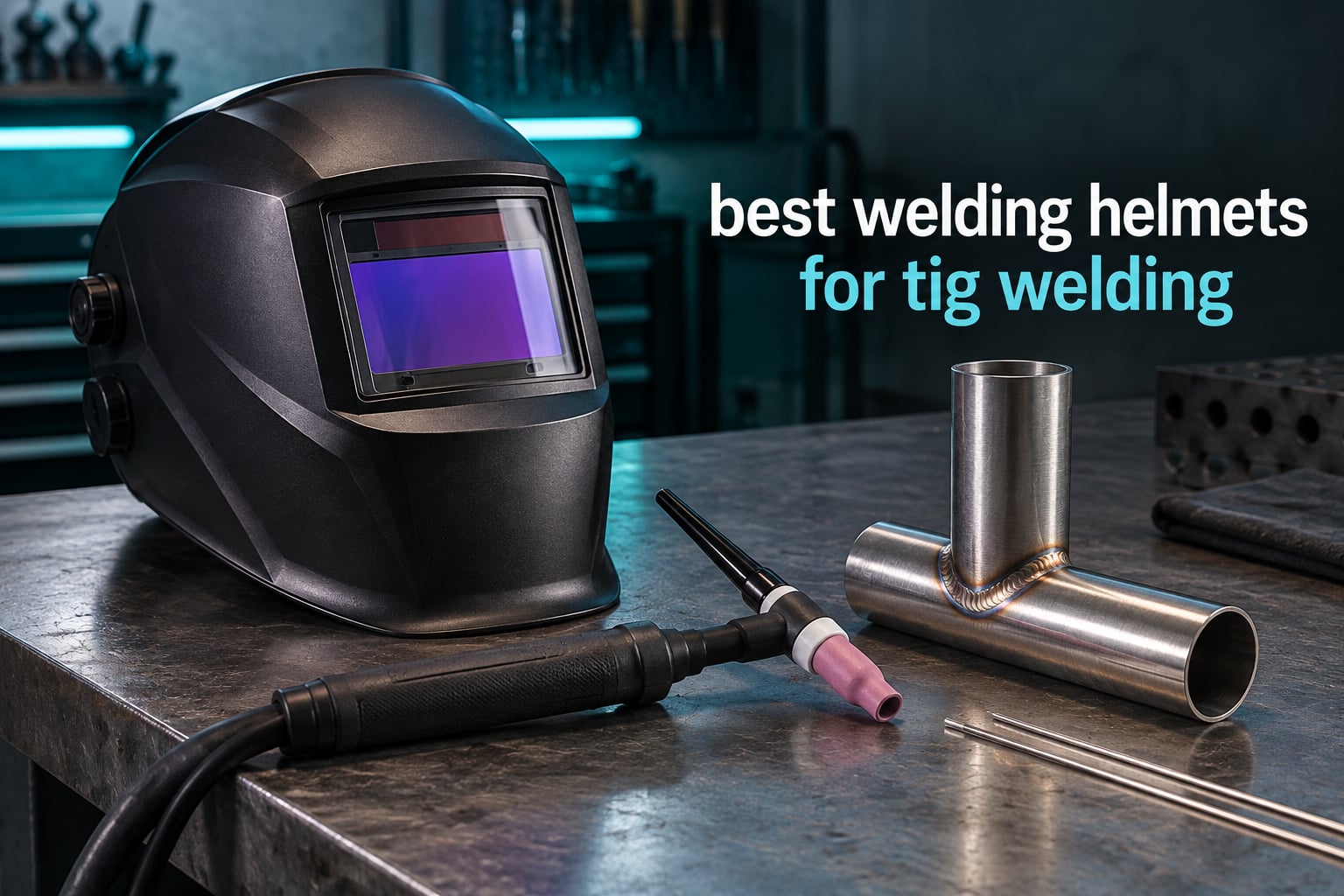
TIG welding punishes a welding helmet in a way MIG never does. The arc is quiet, thin and flickery, the current drops into single digits when you taper a bead, and there is no sustained flash to trip a lazy sensor. Buy a helmet that was only designed for stick and MIG work and you will spend an afternoon wondering why the lens stays clear at 4 amps, right up until the arc comes back.
That is why searching for the best welding helmets for TIG welding is not a shopping exercise, it is a spec check. Two numbers decide the outcome and they are completely separate from each other: TIG sensitivity, which is the lowest amperage at which the auto-darkening filter actually triggers, and optical clarity, which is how honestly the lens shows you the puddle, the filler rod and the joint. A helmet can be beautifully clear and still never darken on a low-current arc. Our full breakdown of general-purpose models is in our guide to the best welding helmets, but the picks below are filtered for TIG behaviour specifically.
One note on method before we start. This is a spec-based evaluation, not a claimed hands-on test. We compared published filter ratings, sensor counts, shade ranges, viewing areas, switch times and certifications, then weighed them against what buyers report in long-running use. We say so plainly because several of the highest-ranking guides for this keyword do the same, and because the alternative is a safety claim we cannot back up.
The fear that shows up most often on welding forums is not comfort, it is a filter that fails to darken and flashes you mid-bead. Every helmet below is rated ANSI Z87.1 or better, and each one carries a TIG amperage figure we state exactly as the manufacturer publishes it, because vague marketing language is how people end up with a helmet that will not trigger on thin stainless.
Table of Contents
Top 3 Picks for TIG Welding in 2026

YESWELDER LYG-L600A
- 1/1/1/1 true color optics
- 2 arc sensors at 1/30000s
- Shade 3/7-13 including a 3 light state
- ANSI Z87.1 and CSA Z94.3
YESWELDER LYG-M800H
- 3.93 by 3.66 inch viewing area
- 1/1/1/1 true color optics
- 4 sensors at 1/30000s
- Cheater lens compatible

ARCCAPTAIN HSH-S800
- 4 arc sensors at 1/25000s
- 3.86 by 1.69 inch true color lens
- DIN 16 UV and IR filter
- Cheater lens compatible
Those three cover the range most TIG work actually needs. The LYG-L600A wins on the combination of a shade 3 entry point, true colour optics and the largest review base of any helmet in this list. The LYG-M800H wins on viewing area, which is the single biggest quality-of-life gain for anyone tracking a puddle on thin tubing. The ARCCAPTAIN is here because four sensors at a budget tier is unusual, and the trade-offs are documented rather than hidden.
Best Welding Helmets for TIG Welding in October
| Product | Specifications | Action |
|---|---|---|
| YESWELDER LYG-L600A |
|
Check Latest Price |
| ARCCAPTAIN HSH-S800 |
|
Check Latest Price |
| YESWELDER LYG-M800H |
|
Check Latest Price |
 TOOLIOM E600A-A TOOLIOM E600A-A |
|
Check Latest Price |
 MIGVAN H-21 MIGVAN H-21 |
|
Check Latest Price |
 Lincoln Electric K4983-1 Lincoln Electric K4983-1 |
|
Check Latest Price |
 ESAB Sentinel A60 ESAB Sentinel A60 |
|
Check Latest Price |
 ESAB Savage A40 ESAB Savage A40 |
|
Check Latest Price |
 Hobart 770890 Hobart 770890 |
|
Check Latest Price |
 Miller Classic ClearLight Miller Classic ClearLight |
|
Check Latest Price |
A note on reading that table: shade ranges are listed the way each manufacturer lists them, so a shade 3/7-13 helmet gives you a very light state and a 7-to-13 dark range, while a plain 7-13 model starts darker. For TIG, that first number in the range matters as much as the amperage figure, because it decides whether you can see your joint while the helmet is down.
1. YESWELDER LYG-L600A: Best Overall TIG Helmet for Triggering and Clarity
YESWELDER Auto Darkening Welding Helmet 1/1/1/1 True Color, LYG-L600A
1/1/1/1 true color optics
2 arc sensors, 1/30000s switching
Shade 3/7-13 with a shade 3 light state
Solar plus CR2450 battery backup
16 ounce ABS and PP shell
ANSI Z87.1 and CSA Z94.3 certified
Pros
- Shade 3 entry point keeps the light state bright enough for fit-up and tacking
- 1/1/1/1 true color optics let you read the puddle and filler rod clearly
- 1/30000s switching is among the fastest figures published for a budget filter
- Ships with a spare battery and spare inner and outer lenses
- Works with a respirator thanks to the adjustable pivot headgear
Cons
- Viewing area is small next to panoramic or large-format helmets
- Shell and headgear feel lightweight duty for heavy shop use
- Inner auto-darkening lens is fiddly to remove when it needs replacing
The spec that makes this the one I keep recommending for TIG is the shade 3/7-13 range. A lot of cheap helmets start at shade 4 or 5, which sounds harmless until you are doing fit-up work on thin stainless with the hood down and everything in front of you is a grey smear. Shade 3 gives you a usable light state, and the 1/1/1/1 optical classification means no green cast and no distortion across the whole window.
Two arc sensors is fewer than most of the list, and on a mid-range helmet that would be a real concern. Here it is offset by the 1/30000-second switching figure, which is among the fastest published responses, and by the shade 3 start, which lets you raise sensitivity without living in a too-light filter.
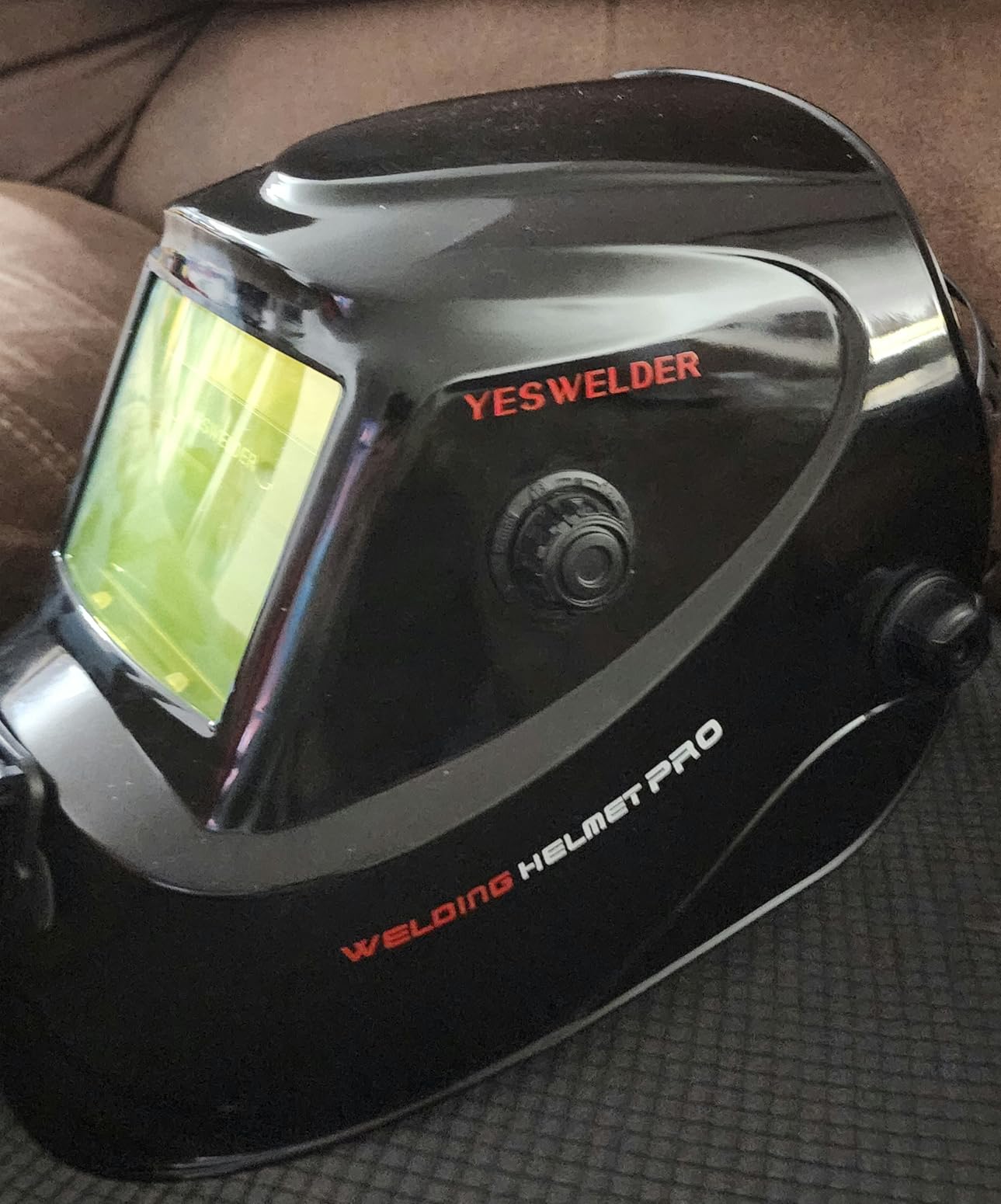
The 16-ounce weight matters more than it sounds. A shell that light stays in place when you drop your head to look at an outside corner joint, which is exactly the posture where budget helmets tend to swing forward and put your face into the work. The pivot-style headgear adjusts with gloves on and clears a respirator, so it works for anyone welding stainless in a shop with extraction.
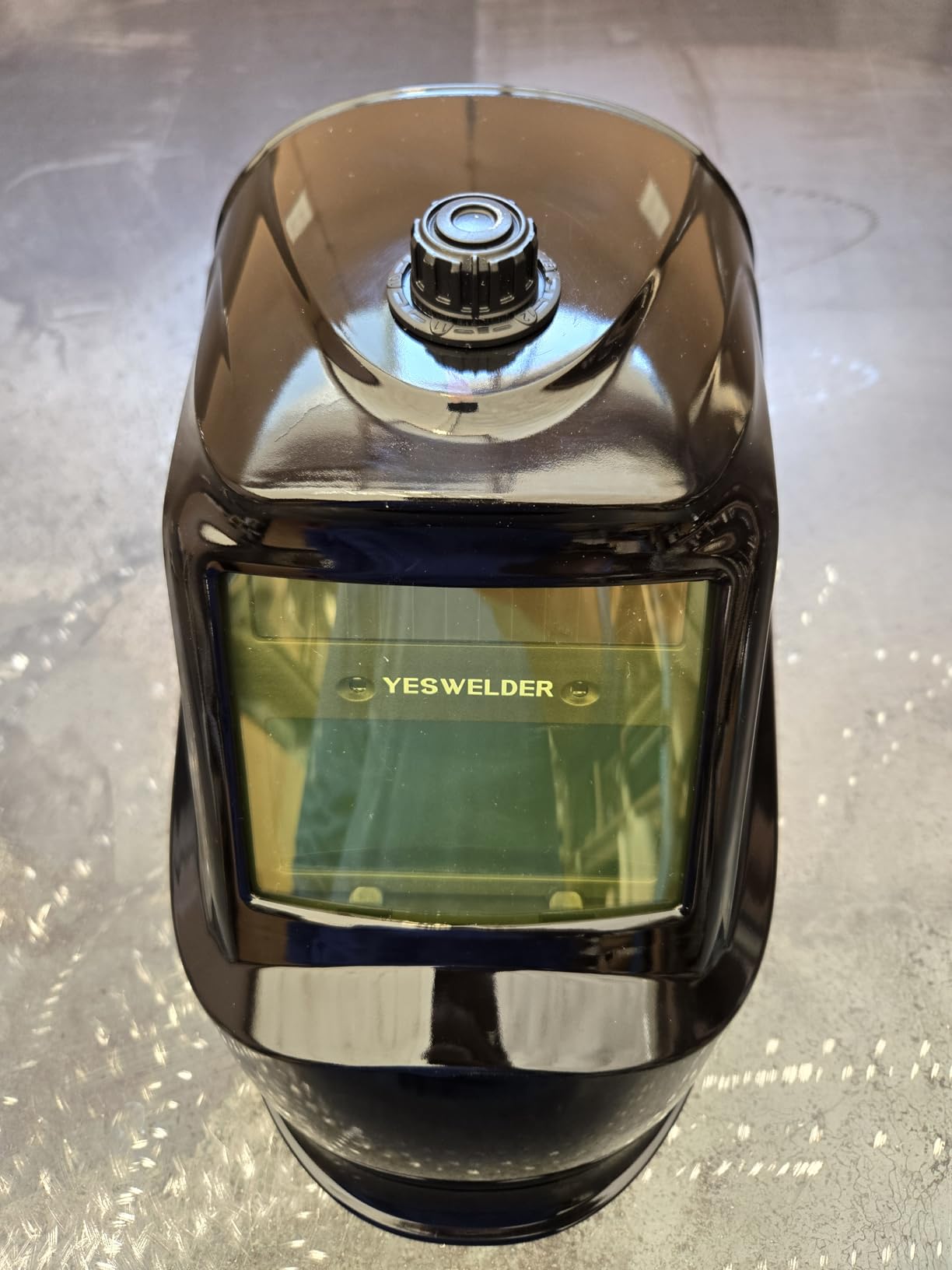
Where it works best for TIG
Thin stainless tube, small diameter pipe and 2 to 5 amp tacking, which is where a shade 3 light state and a fast sensor pay off most. Reviewers consistently single out the clarity as the reason bead quality improved for them, and the enormous review base makes that claim hard to dismiss.
It is also the helmet I would hand to anyone moving from stick and MIG to TIG as a first serious purchase, because the shade range covers TIG, MIG, MMA and grinding without reconfiguring anything.
Where it falls short
The 3.64 by 1.67 inch viewing window is the constraint. On a wide bead or an open outside corner you will be moving your head to find the edges, and that is the exact task where the M800H below pulls ahead.
Second, the shell is thin plastic. It will survive hobbyist and light shop use, but the headgear tension and side pivots are the parts that will need replacing eventually, and replacement headgear for budget models is not always easy to source. Buyers also report that swapping the inner lens is fiddly, so keep a spare on hand rather than planning to change it mid-project.
2. ARCCAPTAIN HSH-S800: Best Budget Helmet with Four Arc Sensors
ARCCAPTAIN Welding Helmet Auto Darkening, 1/25000s Response, Shade 4/9-13
4 arc sensors, 1/25000s switching
Shade 4/9-13
3.86 by 1.69 inch 1/1/1/1 true color lens
DIN 16 UV and IR filter
Solar plus CR2450 battery
ANSI/ISEA Z87.1-2010, CSA Z94.3, DIN EN 175
Pros
- Four arc sensors at a budget tier give reliable detection on low current arcs
- 1/1/1/1 true color lens for very little money
- Grind mode means you can keep the helmet down between tasks
- Lightweight padded headband stays comfortable in long sessions
- Cheater or magnifying lens compatible for close-up TIG work
Cons
- Some units report a slow initial response to the arc
- Occasional reports of the auto-darkening cutting out mid-weld
- Shell and finish feel inexpensive out of the box
Four arc sensors is the headline here. Most helmets in this bracket ship with two, and two sensors is exactly why cheap auto-darkening filters fail to trigger reliably at low amperage. More sensors means more chances to catch a thin, low-current TIG arc on the way up.
The other thing worth noting is the DIN 16 UV and IR protection filter rated at the 12-in-1 level, alongside ANSI/ISEA Z87.1-2010, CSA Z94.3 and DIN EN 175 certification. That is a properly certified shell rather than a decorative listing, and it matters more than any cosmetic feature when you are welding unknown material.
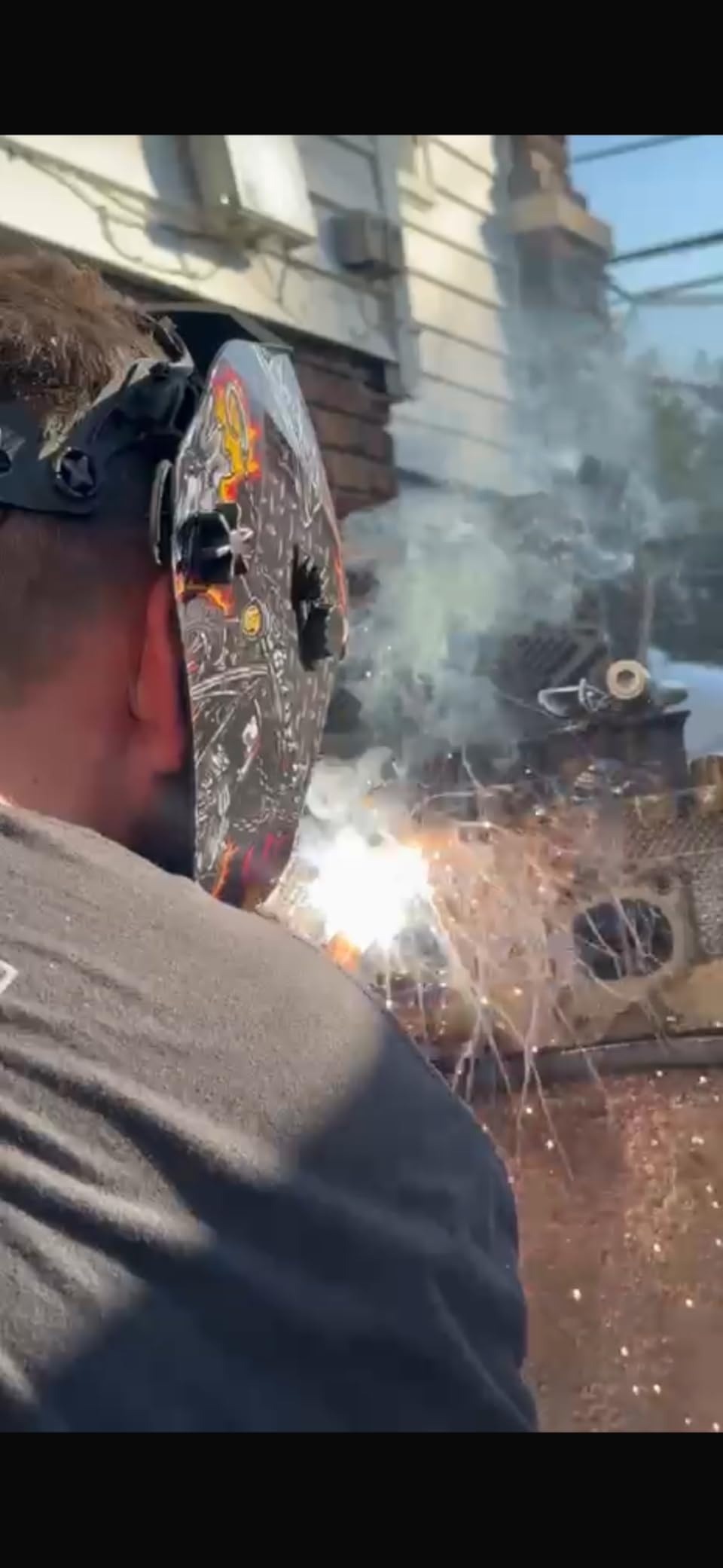
Reviewers treat this as a budget starter hood that performs like units costing several times more, and the grind mode gets singled out because it means you can leave the helmet down between welds instead of flipping it up and losing your setup. The cheater lens compatibility is a quiet TIG advantage for anyone doing 0.040 inch stainless.
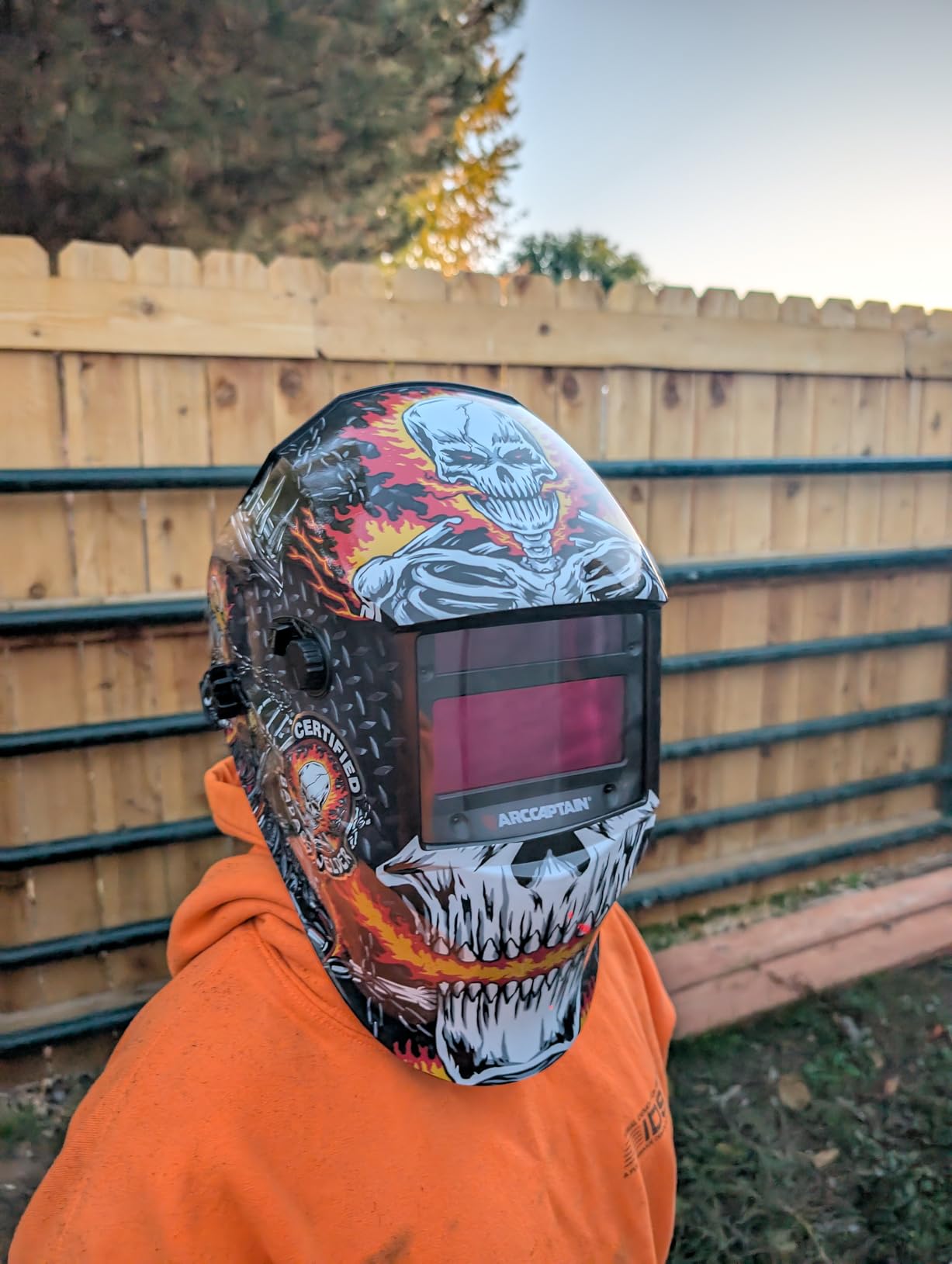
Where it works best for TIG
Hobbyist and student TIG on mild steel and stainless, plus anyone who wants a second helmet for a second bench so they are not swapping lenses. Four sensors and adjustable sensitivity handle routine 20 to 90 amp GTAW comfortably, and the light 1 pound weight keeps it comfortable while you are learning joint fit-up.
It is also the pick for anyone who wants a dedicated grinding hood as well, since the one-button grind mode is genuinely convenient between passes.
Where it falls short
Consistency of the electronics is the risk. A minority of reviews report slow initial response to the arc, and some report the auto-darkening cutting out mid-weld after a few weeks. That is the exact failure mode that concerns people most on welding forums, so if you buy this, test it on a scrap coupon before you rely on it.
The shade entry point of 4 is also darker than ideal for fit-up on thin material, and the plastics feel inexpensive the moment you pick it up. Treat it as a first helmet or a backup, not a shop-lifetime purchase.
3. YESWELDER LYG-M800H: Best Viewing Area for Joint Tracking
YESWELDER Auto Darkening Welding Helmet, Large View, LYG-M800H
3.93 by 3.66 inch viewing area
1/1/1/1 true color optics
4 arc sensors, 1/30,000s switching
DIN 3/5-9 and 9-13 shade settings
Cheater lens compatible
600 g per manufacturer copy
Pros
- Largest viewing area in this list makes joint tracking and puddle placement much easier
- 1/1/1/1 true color view replaces the old green tint
- Four sensors for reliable low-current detection
- All controls on the outside so you can adjust with gloves on
- Lightweight and balanced for long sessions
Cons
- Plastic shell and side tension knobs feel flimsy
- Helmet can slip forward when nodding unless tension is cranked very tight
- Inner lens and battery are difficult to remove by hand
- Sunlight tests are misleading so test by welding instead
Everything you can see, you see more of. The 3.93 by 3.66 inch window is roughly three times the area of the LYG-L600A, and for TIG that is not a cosmetic difference. When you are running a bead around an outside corner or holding a torch at an awkward angle, a bigger window means fewer blind spots and less head repositioning.
The design was aimed squarely at low amperage work, with four arc sensors switching in 1/30,000 of a second and an adjustable DIN 3/5-9 plus 9-13 shade layout. The DIN 3 setting gives you a genuinely light state, which is what you want while tacking thin material with the hood down.
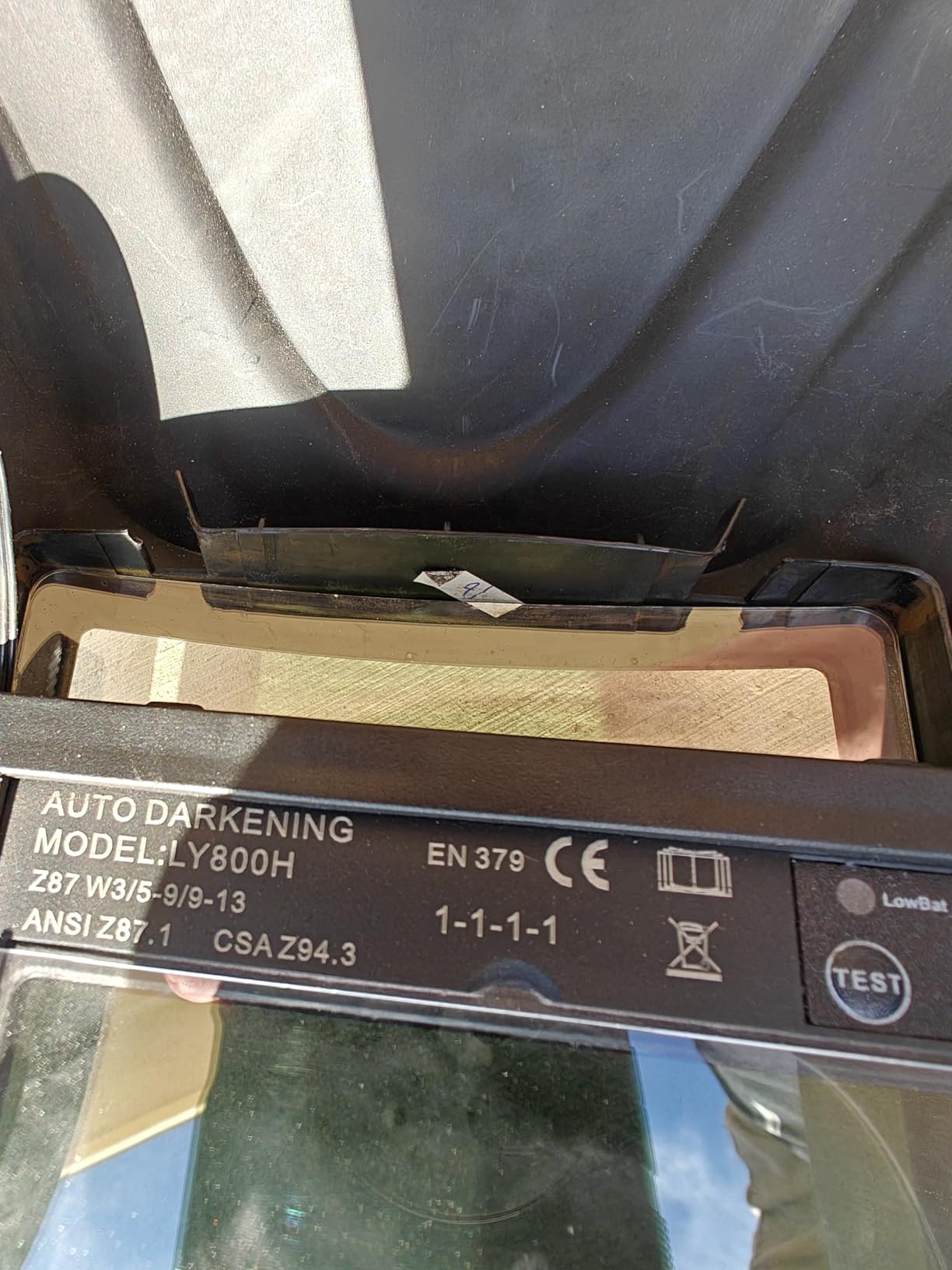
Reviewers credit the large clear window with a visible improvement in bead quality, and beginners in particular mention being able to see the puddle properly for the first time. Externally mounted controls mean you can change shade or sensitivity without taking the helmet off, which saves a lot of fumbling mid-job.
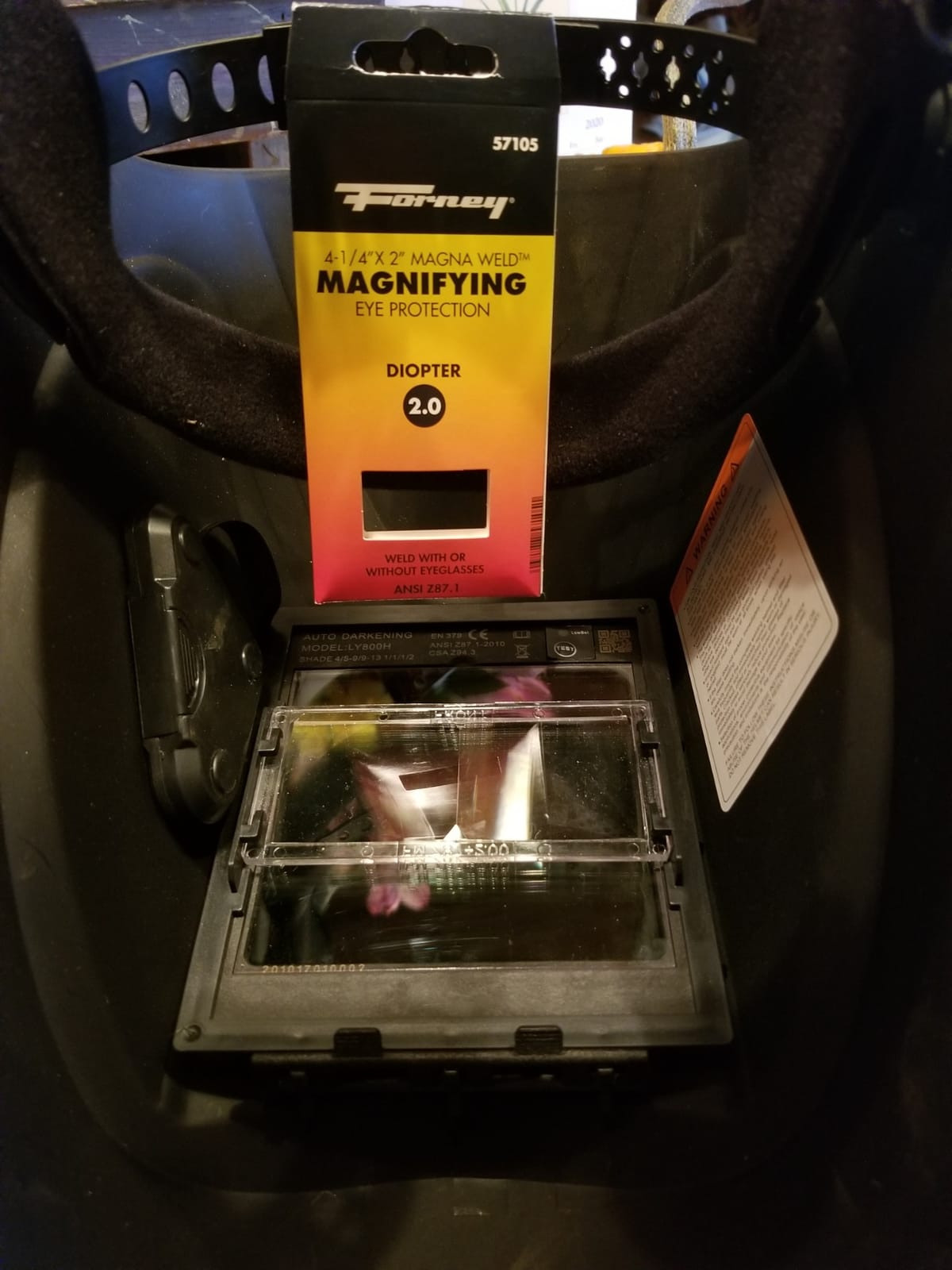
Where it works best for TIG
Thin wall stainless tubing, aluminium bicycle frames and anything where the puddle is small and the joint is hard to see. The cheater lens compatibility adds another layer of magnification for anyone doing fine detail work, and the 600 g weight keeps neck strain down on long sessions.
It also handles MIG, Stick, cutting and grinding from the same filter, so it works as an all-rounder if TIG is only part of what you do.
Where it falls short
The build quality of the headgear is the weak point. Side tension knobs and the strap feel flimsy, and reviewers report the helmet slipping forward when you nod unless the tension is wound very tight, which eventually becomes uncomfortable.
Removing the inner lens and the battery by hand is also difficult, so plan on a small screwdriver rather than expecting a tool-free swap. One more caution worth repeating: do not judge any auto-darkening helmet by a sunlight test. Only an actual arc strike tells you whether the sensors work, so weld a coupon.
4. TOOLIOM E600A-A: Best Lightweight Helmet for Long Sessions
TOOLIOM Auto Darkening Solar Powered Welding Helmet for TIG MIG ARC with Light
1/25,000s arc detection
DIN 3.5/9-13 shade range
1/1/1/1 true color at 3.64 by 1.67 inches
1.14 lb with adjustable headgear
Solar powered with low-battery indicator
Pros
- Lightest sensible option here at 1.14 lb with a breathable sweatband
- Holds position when welding inverted or in awkward positions
- True color view of the joint and puddle
- External grind mode knob and internal sensitivity and delay knobs
- Low-battery indicator so you are not surprised mid-weld
Cons
- Cheater lens holder is slightly too small for standard 4.25 inch lenses
- Side darkening knob has a narrow adjustment range
- Viewing screen is small and picks up spatter quickly
- Rear plastic band is not padded
This is the one to consider if neck fatigue is your limiting factor. At 1.14 lb with a breathable sweatband and adjustable headgear, it is one of the lightest helmets here, and owners specifically mention that it holds position when welding inverted or in awkward positions. That stability is what lets you concentrate on the arc instead of on the helmet slipping.
The 1/25,000-second detection speed and DIN 3.5/9-13 range cover TIG, MIG, MMA and plasma cutting, and the sensitivity and delay controls sit inside where you can reach them without flipping the hood. The low-battery indicator is a small touch that matters when the filter relies on a replaceable cell as its main power source.
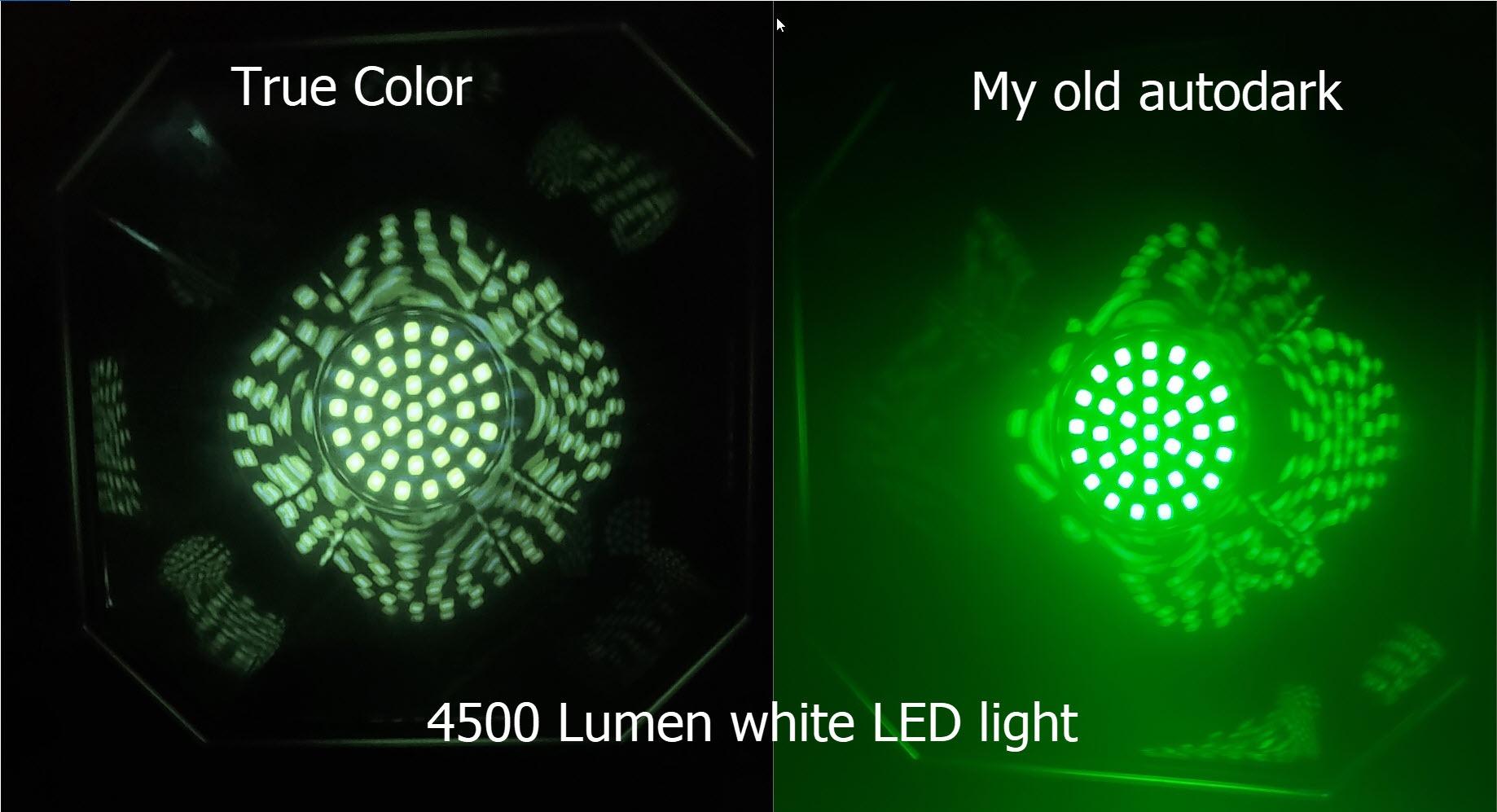
Reviewers describe it as a dependable budget hood that compares well to far more expensive units, particularly on weight and fit. There is also a decent amount of spare hardware in the box, including a replaceable battery and replacement lenses.
Where it works best for TIG
Long TIG sessions where you are under the workpiece a lot, and pipe or spool work where you are constantly changing body position. The light shell reduces the neck load that makes people flip the helmet up halfway through a project, which is also the fastest way to get a burn on your neck.
It suits hobbyists and students who want one helmet for TIG, MIG and stick without learning a complicated control panel.
Where it falls short
The viewing screen is small and collects spatter quickly, so you will be cleaning it more often than you would like, especially on stainless where spatter hides the joint. The cheater lens holder is also slightly too small for standard 4.25 inch lenses, which rules it out if you rely on magnification.
The side darkening knob has a narrow adjustment range, and the unpadded rear band bothers some wearers over a full shift. Documentation for the internal controls is thin, so expect some trial and error on your first setup.
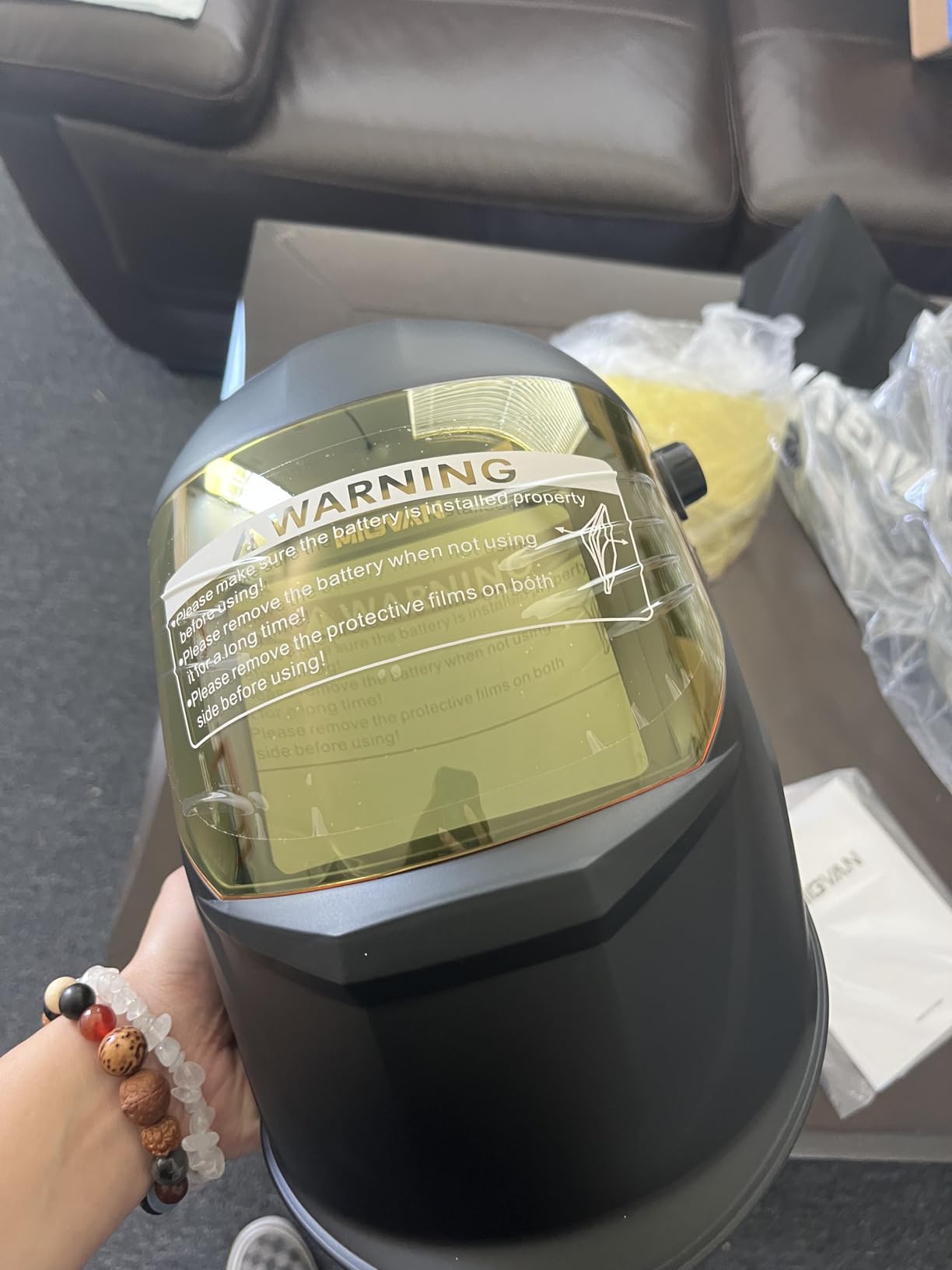
5. MIGVAN H-21: Best Golden True Color Optics in a Mid Package
MIGVAN Welding Helmet Auto Darkening True Color Large Viewing, Welding Hood Solar/Replaceable Battery Powered, Wide Shade 4/5-13 with 4 Arc Sensor, Optical Clarity Welding Mask for TIG MIG ARC Grind
Golden true color lens
4 arc sensors on a large viewing screen
1/10,000s activation
DIN4 light state with 5-9 and 9-13 dark states
Solar plus replaceable CR2450 battery
Inner and outer lenses user replaceable
Pros
- Golden true color lens gives a lifelike view of the weld pool
- Large viewing screen inside a mid-tier package
- Inner and outer lenses are user replaceable and spares are included
- Switches from a DIN4 light state to 5-9 and 9-13 dark states
- ANSI and CE certified with pivoting padded headgear
Cons
- Slower 1/10000s activation than the fastest filters here
- Smaller review base than the budget leaders
- Shell and headgear are basic plastic construction
The distinguishing feature is the golden true color lens, which reduces distortion and saturation relative to the usual green-grey cast. For TIG on aluminium that is genuinely useful, because the oxide colour you are watching tells you whether you are cleaning the surface properly or about to put porosity into the bead.
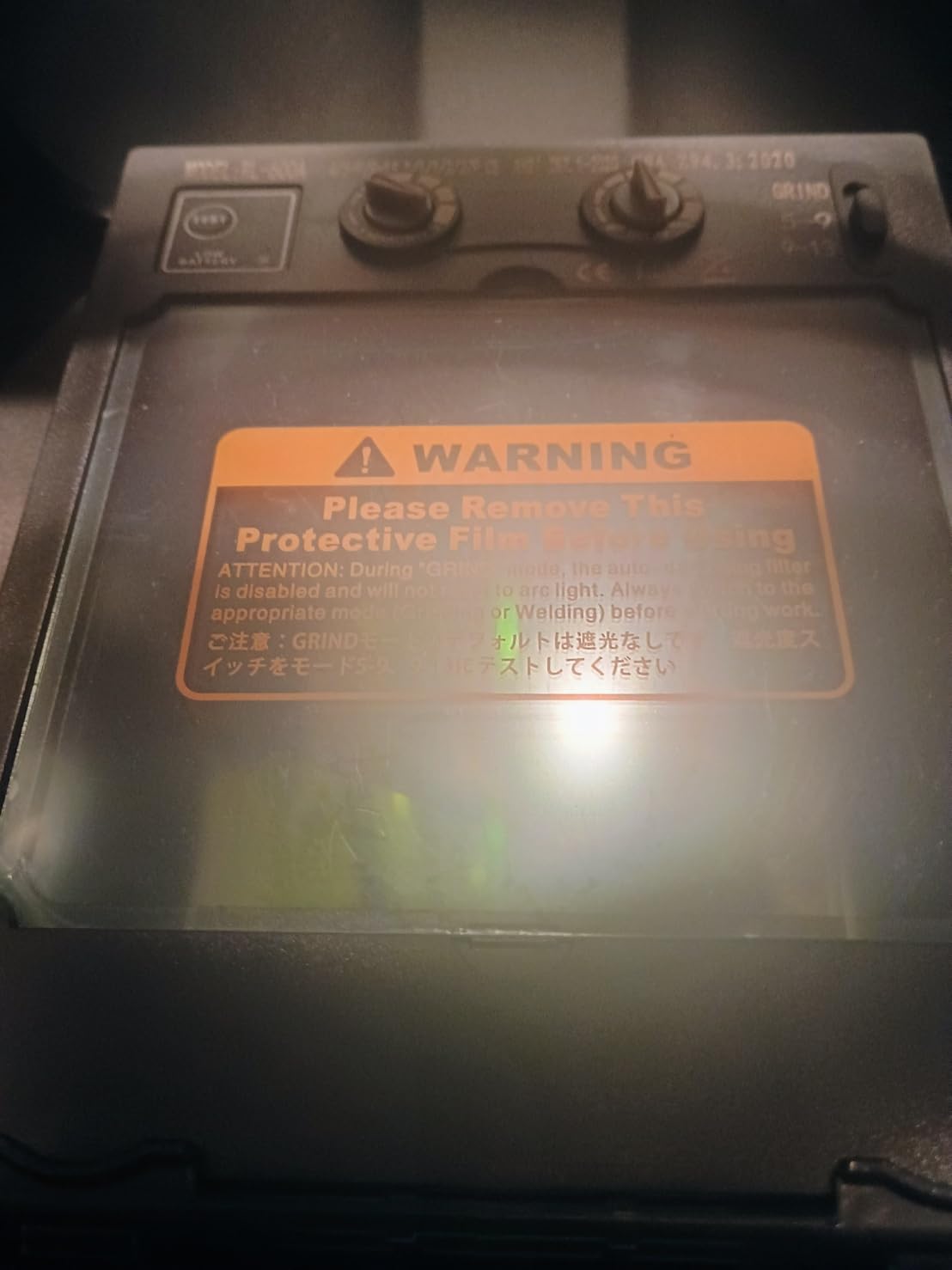
The light state arrangement is sensible for TIG too. It switches between a DIN 4 light state and DIN 5-9 or 9-13 dark states, so you can drop the hood for fit-up and inspection without losing the ability to run dark when the arc strikes. Both inner and outer lenses are user replaceable, and spares plus a storage bag are included.
The catch is the 1/10,000-second activation speed. That is still fast, but it is the slowest switch time in this group, and on very low amperage arcs it is the spec I would watch most closely. If you are doing a lot of 3 and 4 amp work, prioritise the 1/30,000 and 1/23,000 figures instead.
Where it works best for TIG
Aluminium and stainless work where colour accuracy drives your technique, and multi-process shops running TIG, MIG, stick, cutting and grinding from one helmet. The large viewing screen also helps when you are inspecting a bead between welds with the hood down.
It supports ARC, TIG, MIG, Stick, Cut and Grind, so the value is in not owning five separate hoods.
Where it falls short
The review base is smaller than the budget leaders at 789 reviews, so the long-term durability record is shorter. Owners also describe the shell and headgear as basic plastic, and 1.09 kg is heavier than the lighter options above without the premium build quality that would justify the weight.
For a first TIG helmet the slower activation speed is the reason I would choose another model. For an existing TIG welder upgrading their optics, it is a reasonable step.
6. Lincoln Electric K4983-1: Best Big-Brand Starter for Shops
Lincoln Electric No Rules No Limits Welding Helmet K4983-1, Auto Darkening, Lightweight Weld Headgear, Shade 7-13, Grind Mode, Use for Stick, TIG, Pulsed TIG, MIG, Pulsed MIG, Flux Core, Gouging
TIG rated at 5 amps and above
4.33 by 3.54 inch viewing area
Variable shade 7-13 plus grind mode
Solar powered with battery backup
17.5 oz with ratchet headgear
ANSI Z87.1 certified, hard hat compatible
Pros
- Backed by a major manufacturer with ANSI Z87.1 certification
- Coverage list names TIG
- pulsed TIG
- MIG
- pulsed MIG
- flux core
- stick and gouging
- Very light at 17.5 oz with an oversized absorbent sweatband
- Ratchet headgear and hard hat compatibility for site work
- Spare inside and outside lenses plus batteries included
Cons
- Shade 7 entry point is too dark for very low amperage TIG work
- 5 amp TIG rating is higher than the 2 amp class some thin-gauge work needs
- Nylon shell is basic compared with higher-end Lincoln models
- Only 119 reviews so far
This is the pick when your employer or your own risk assessment wants a recognised brand name on the certification plate. Lincoln Electric, ANSI Z87.1 certification and a manufacturer warranty behind it remove an argument that comes up constantly on welding forums, where cheap helmets are described as failing to darken and getting people flashed.
It is also the lightest helmet here at 17.5 ounces, with a ratchet headgear and an oversized absorbent sweatband that suits people welding for hours in a shop. Hard hat compatibility matters more than most spec sheets admit, because a lot of TIG work happens on structural steel in environments where you still need head protection.
The stated coverage is unusually broad for the price tier, naming stick, TIG, pulsed TIG, MIG, pulsed MIG, flux core and gouging, with variable shade 7-13 plus a dedicated grind mode.
Where it works best for TIG
Pulsed TIG and multi-process shop work on structural steel, pipefitting and heavier fabrication where you are running 5 amps and above. The wide 4.33 by 3.54 inch window and light shell make it a good all-day shop helmet, and battery backup means a dead solar panel does not end your shift.
It is also the sensible choice for a student or apprentice who will be handed a range of work and needs one hood that covers everything.
Where it falls short
The shade range starts at 7. That is a dark filter with no light state to speak of, and it is the specific reason this helmet cannot serve low amperage TIG. Owners confirm the narrower shade range is the main limitation for very low amperage users, and anyone welding 18 gauge stainless will feel it immediately.
The 5 amp TIG rating is also higher than the 2 amp class some purists look for on thin-gauge work. It is a fine helmet for its stated range, just not the right one if your thinnest material is your most common material.
7. ESAB Sentinel A60: Best Professional TIG Helmet for Fine Shade Control
ESAB® Sentinel™ A60 Welding Helmet, Black Low-Profile Design, High Impact Resistance Nylon, Large Viewing Area 4.65 in x 2.80 in
4.65 by 2.80 inch viewing area
ESAB OpTCS true color lens
DIN 3/5-13 in 0.5 increments with shade lock
4 arc sensors, 0.08 ms switching
Memory for up to 9 settings
16 oz low-profile nylon shell
Pros
- Half-shade adjustments from 3 to 13 let you match the filter precisely to thin TIG work
- Nine-setting memory makes repeatable setups fast across multiple jobs
- 0.08 ms switching with four sensors is confident on low-current arcs
- Very light and well balanced
- which reduces neck fatigue in overhead work
- Low-profile shape clears a respirator and works in tight spaces
Cons
- Ratchet headgear feels cheap and must be tightened firmly
- Lenses scratch easily if the helmet is set down face-first
- Flip-up lock does not reliably hold the helmet in the raised position
The half-shade increments are the reason professionals buy this. Going from DIN 5 to DIN 13 in 0.5 steps means you can match the filter to the exact amperage of the moment instead of guessing between two coarse steps, and on thin stainless the difference between a shade that lets you see the puddle and one that does not is a shade difference of half a number.
Nine-setting on-board memory is a bigger deal than it sounds. Shops running different jobs, different materials and different positions can store each setup and return to it instantly, rather than re-dialing sensitivity and delay at the start of every weld. Four sensors with 0.08 millisecond switching cover the low-current end comfortably.
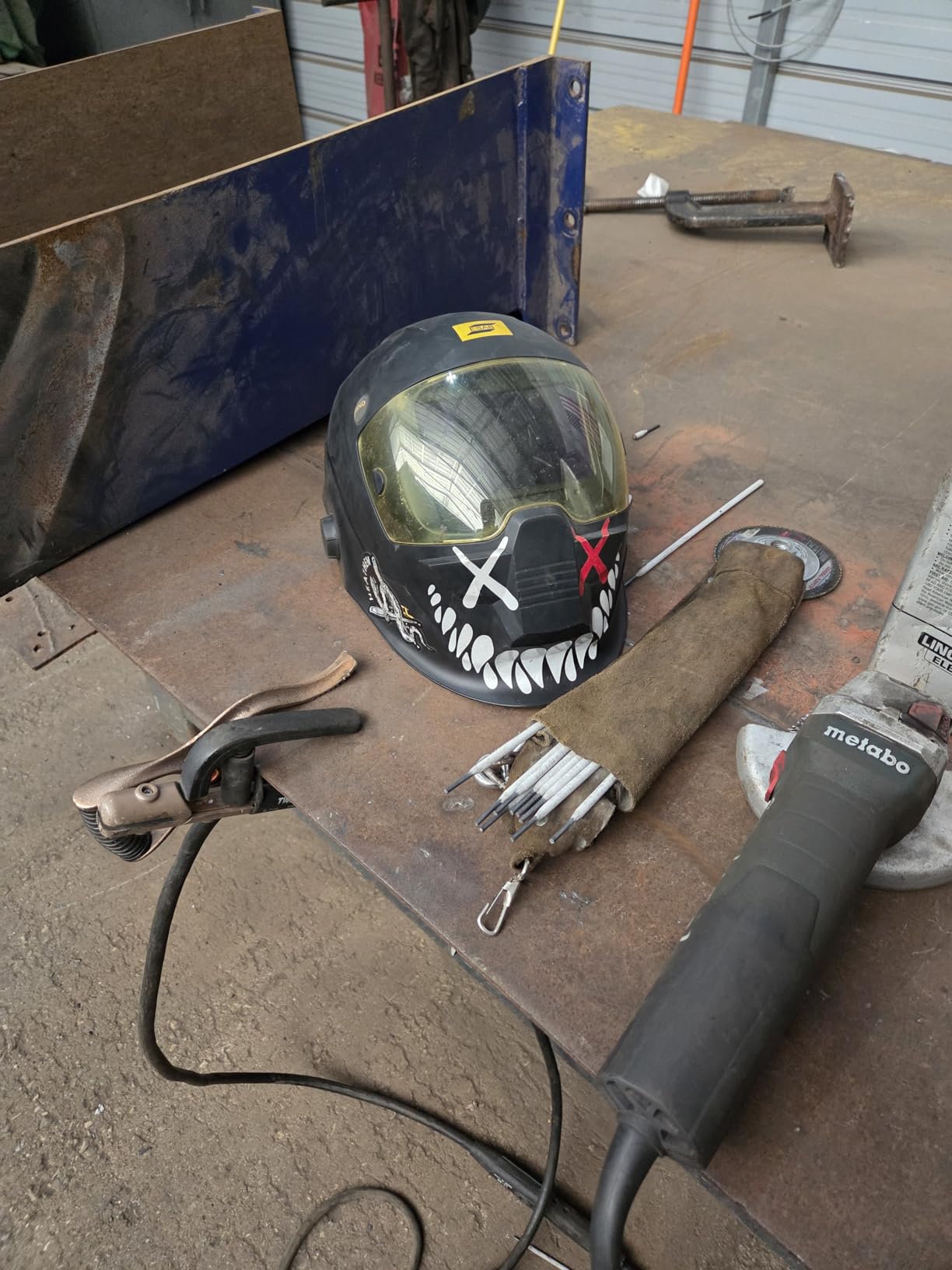
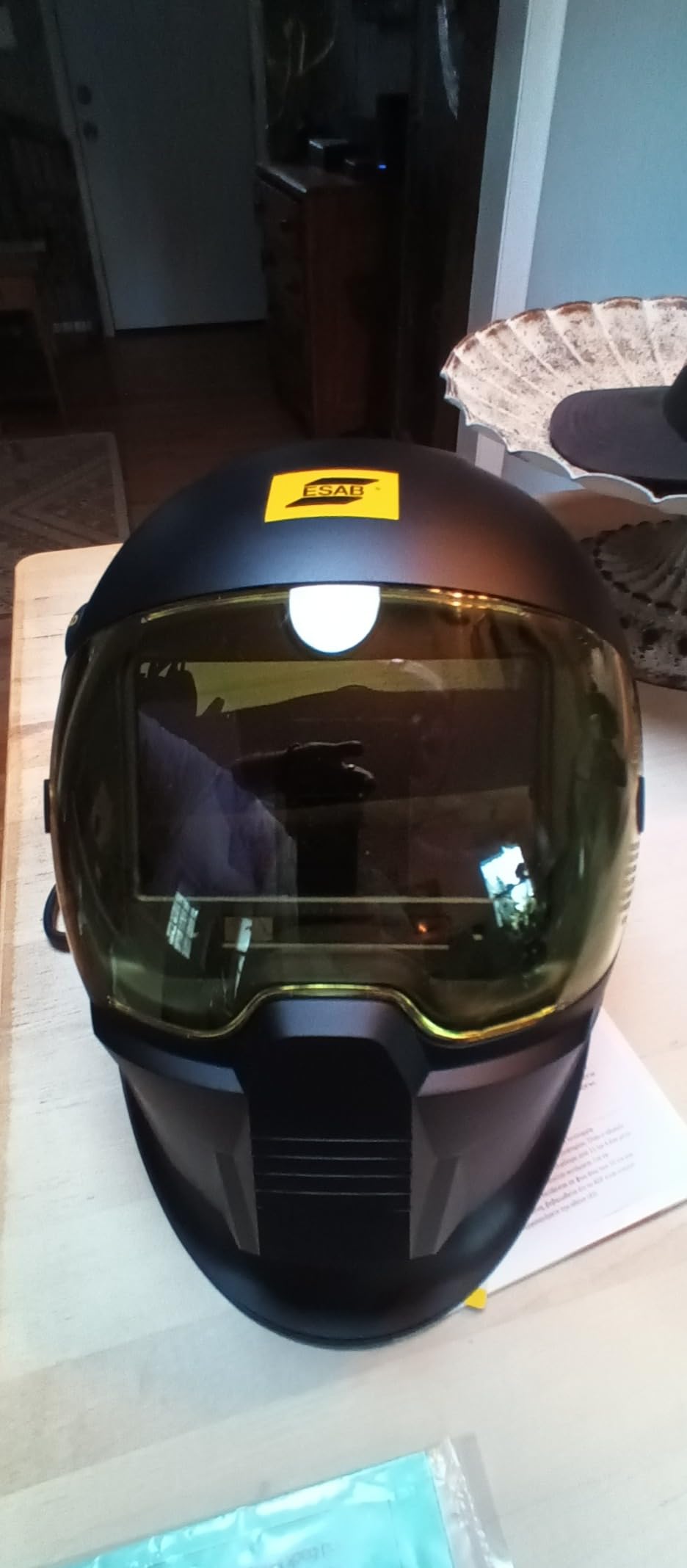
At 16 ounces with a low-profile shell, it stays comfortable overhead and fits into tight spaces where a taller hood catches. Several owners name it specifically as their TIG helmet, and the clarity is described as exceptional for puddle and joint visibility. The grind mode button is stiff enough that you will not trigger it by accident, which is a small safety detail that cheap helmets routinely get wrong. That swept-back shell shape is the same ergonomic thinking you see in the full-face designs we rank in our guide to the best motorcycle helmets: less shell in your field of view and fewer snags on straps and respirators.
Where it works best for TIG
Anyone who changes material or amperage constantly, which is most professional TIG work. Stainless, aluminium and pulsed TIG on thin wall all benefit from being able to fine-tune the filter rather than step it. The memory function also suits people running a mix of TIG, MIG and stick on the same machine.
If you weld overhead or in confined spaces, the 16-ounce low-profile shape is the differentiator that a heavier premium helmet would cost you in comfort.
Where it falls short
The complaints are mechanical rather than optical. The ratchet headgear feels cheap and needs tightening firmly, the lenses scratch easily if you set the helmet down face-first, and the flip-up lock does not reliably hold the helmet in the raised position, which is annoying when you are grinding or fitting up between welds.
It is also the least economical choice here for occasional work, and you pay a premium for filter control you may never use if you only ever run one material at one amperage.
8. ESAB Savage A40: Best for Learning TIG on a Budget
ESAB 0700000480 Black Savage A40 Welding Helmet
Sensitivity tuned for low amp TIG
4 arc sensors
Delay control for tacking and high amperage work
External one-button grind mode
True color lens
Cr2 battery included
Pros
- Sensitivity is specifically tuned for low amp TIG and a darker arc light
- True color lens owners describe as near-HD
- which speeds up learning
- Delay control lets you keep the lens dark through tacks
- One-button external grind mode works with gloves on
- Reported to hold up over four-plus years on a single battery change
Cons
- Shade knob sits on the upper left exterior and can be knocked in tight quarters
- Viewing area is smaller than premium models
- Cheater lens use can cause double vision for some wearers
- About 2.2 pounds as listed
This is the helmet most often recommended to people learning TIG, and the reason is specific rather than general. The sensitivity control is tuned for low amp TIG and darker arc light, which is exactly the situation a beginner creates: small current, hesitation, and a torch angle that produces less arc light than a confident weld.
The delay control is the other half of the learning experience. It sets how long the lens stays dark after the arc stops, so you can tack a joint, look at it with the hood still down, and start again without flipping anything. That single feature does more for a new welder’s progress than any optical upgrade.
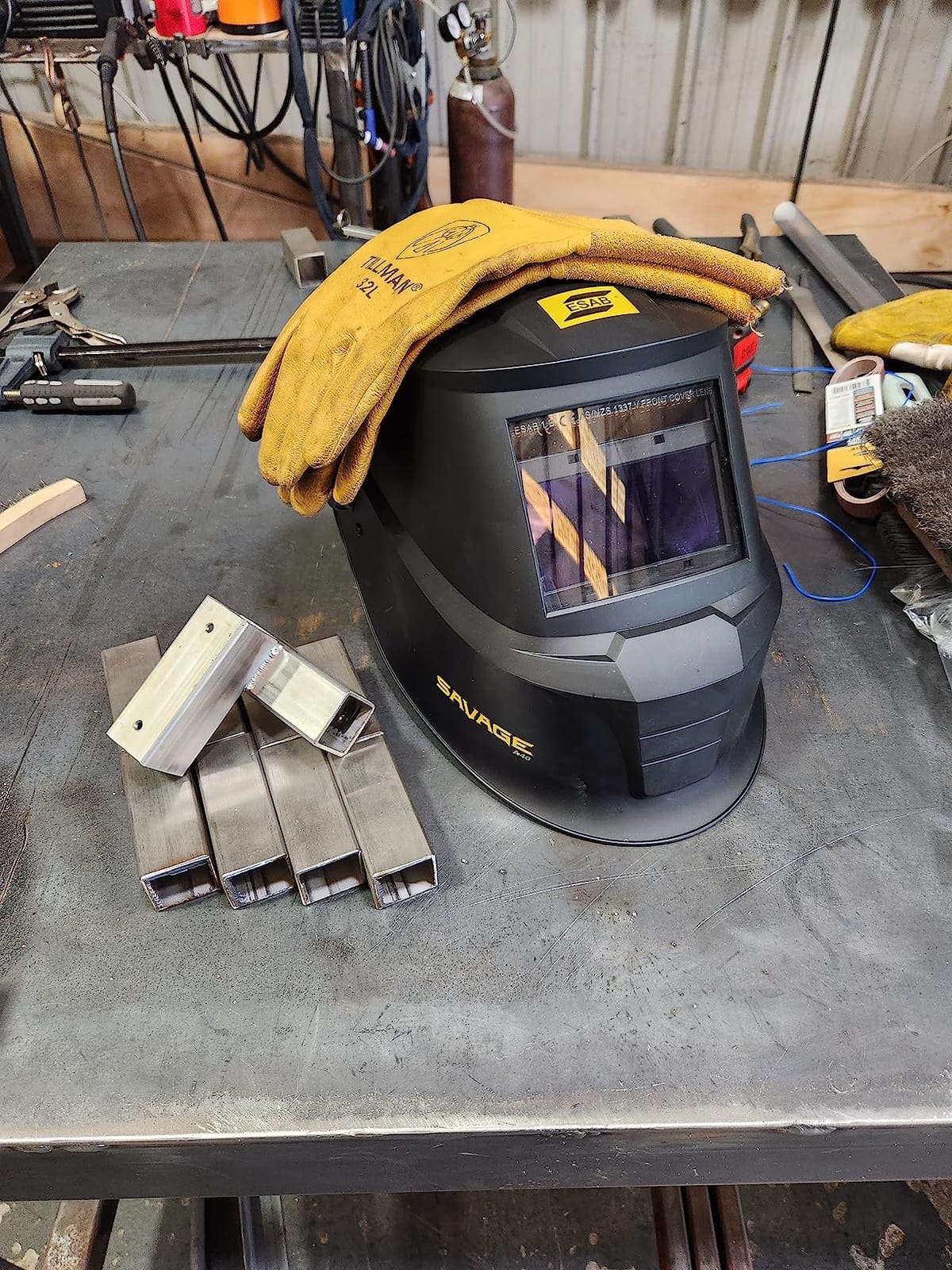
Owners repeatedly describe the lens as near-HD and say it dramatically improved their ability to learn and lay beads. Durability reports are strong too, with several people running the same helmet for four-plus years on one battery change, which is a good record for the money.
Where it works best for TIG
Students, hobbyists and anyone learning GTAW on mild steel or stainless. Four sensors and adjustable low-range sensitivity handle the amperage range beginners actually work in, and the true color view makes puddle control visible instead of guesswork.
It also suits mixed work, since the external grind mode button and four sensors cover MIG and stick in the same shell.
Where it falls short
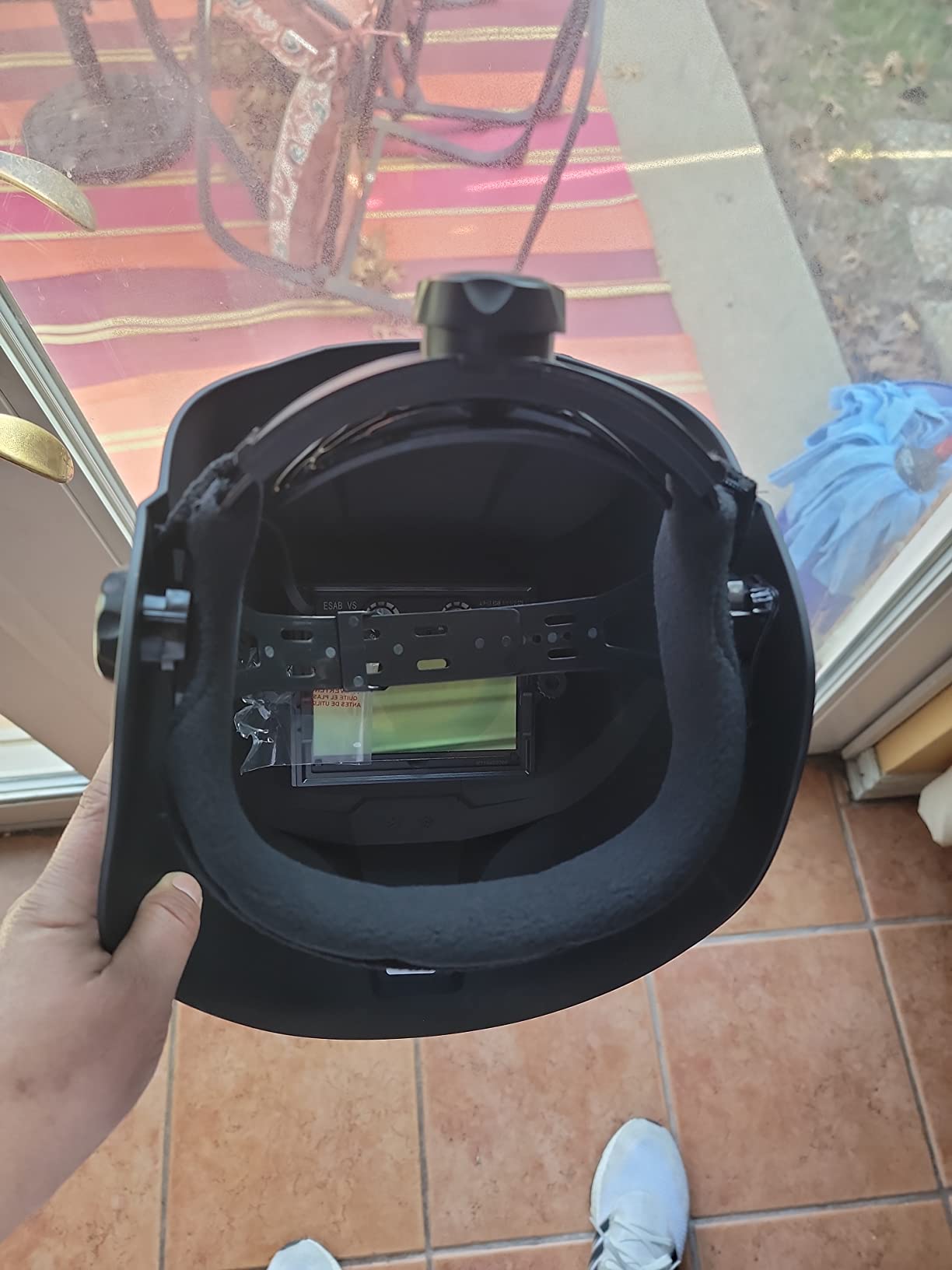
The shade knob on the upper left exterior is the most common complaint, because it is easy to knock in confined spaces or inside a pipe. If you work in tight quarters regularly, that is a real annoyance rather than a cosmetic one.
The viewing area is smaller than premium models, cheater lenses can cause double vision for some wearers, and at about 2.2 pounds as listed it is not the most comfortable option for long overhead sessions.
9. Hobart 770890: Best for a Wide Viewing Area at the Bench
Hobart 770890 Auto-Darkening Welding Helmet, Large, Black
9.3 inch widescreen viewing area
PureColor lens technology
4 independent arc sensors
Auto-on power at arc strike
Weld to grind mode switching
Analog shade sensitivity and delay knobs
1.25 pounds
Pros
- Very wide viewing area gives excellent situational awareness around the workpiece
- PureColor technology gives an accurate and natural colour view
- Simple analog knobs that are easy to set and adjust
- Solid four-sensor detection with reliable weld to grind switching
- Two-year manufacturer warranty for peace of mind
Cons
- Analog controls lack the on-board memory found on premium digital models
- Nylon shell is utilitarian rather than a lightweight modern design
- Viewing area figure is stated as widescreen rather than as a square inch measurement
Situational awareness is the word that comes up most in reviews of this one. The 9.3 inch widescreen viewing area is the largest viewing format in this group, and reviewers describe it as giving excellent situational awareness, which at a bench means seeing your hands, the torch angle, the incoming filler rod and the surrounding layout without turning your head.
The controls are analog, and that is a genuine advantage for some people rather than a downgrade. Three knobs for shade, sensitivity and delay can be set in the dark and remembered without any power, and there is nothing to navigate when you have a face shield on and no fingers to spare.
Four independent arc sensors handle detection, auto-on power control wakes the filter at arc strike, and a weld to grind mode means you do not change helmets between a weld and a cleanup pass.
PureColor lens technology is the other draw, giving an accurately coloured view rather than a heavily filtered one. At 1.25 pounds with a limited two-year manufacturer warranty, it is valued for simplicity and durability rather than advanced digital features, which is a fair description of where it sits.
Where it works best for TIG
Bench fabrication where you need to see the whole joint, the layout and your hands at once, and multi-process shops moving between TIG, MIG and grinding in a single session. The auto-on behaviour suits people who lift the hood constantly because it wakes the filter when you strike, not before.
It is also a good choice for anyone who finds digital menus frustrating to operate through a face shield.
Where it falls short
No on-board memory means every job starts with the same settings, and you will re-dial them whenever you change material or amperage. On a mixed TIG workload that becomes tedious fast, and it is the main feature the ESAB Sentinel A60 earns its money for.
The nylon shell is utilitarian rather than modern, and the 9.3 inch figure describes a widescreen shape rather than a measured square inch area, so compare it carefully against the rectangular windows on the other models here.
10. Miller Classic ClearLight: Best for Low-Current TIG at the Bench
Miller Classic Series Welding Helmet, ClearLight™, Shade 8-13, Black
ClearLight high-definition optics
6 square inch viewing area
Weld shades 8-13, cut 5-8, grind 3
Two arc sensors, 1/23,000s switching
Rated to weld at 5 amps or below
3.0 light state with auto-on power
ANSI Z87.1+, CSA and CE with 3-year warranty
Pros
- Rated to weld at five amps or below for low current TIG work
- 3.0 light state lets you keep the helmet down between welds
- ClearLight optics deliver a noticeably brighter and more detailed view of the puddle
- Digital controls for shade
- delay and sensitivity with ratchet headgear
- Three-year manufacturer warranty and ANSI Z87.1+ certification
Cons
- Two arc sensors are fewer than the four seen on most modern helmets
- Six square inch viewing area is small next to panoramic models
The 3.0 light state is the underrated part of this helmet. It is bright enough to see your joint and the layout with the hood down, so you are not flipping the helmet up between welds, which is the habit that leads to arc flashes and neck burns. Auto-on power control wakes the filter at arc strike.
ClearLight lens technology delivers the high-definition optics, and owners consistently rate this as a strong value within the Miller range with a noticeably brighter view of the puddle. It is rated to weld at five amps or below, which is the number that matters if you are doing thin material.
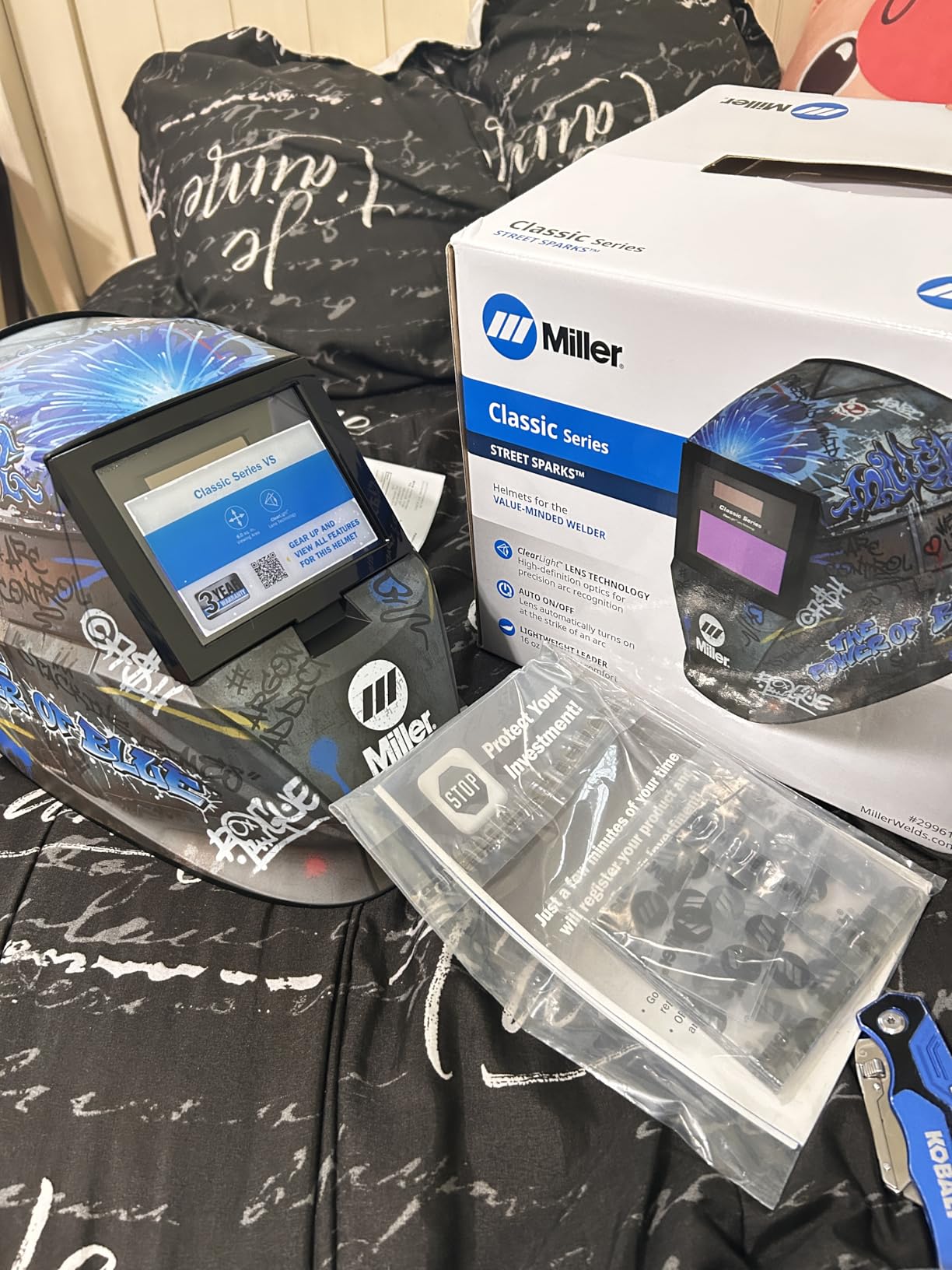
The warranty is worth noting. It meets ANSI Z87.1+, CSA and CE standards and carries a three-year manufacturer warranty, which is longer coverage than most of the budget models here offer and one more reason Miller owners on forums talk about long-term reliability.
Where it works best for TIG
Low current TIG on thin gauge material, and anyone who wants to wear the helmet down between welds instead of flipping it constantly. It also handles cut shades 5-8 and grind shade 3, so it covers MIG, flux core and cleanup work from the same shell.
For a Miller buyer who wants proven optics and warranty coverage without moving up to the full premium digital range, this is the sensible middle step.
Where it falls short
Two arc sensors is the honest weakness. Most modern helmets use four, and four sensors give a better chance of catching a weak, low-current arc before it reaches your eyes, which is precisely the TIG scenario you are reading this guide for.
The six square inch viewing area is also small next to panoramic models and smaller than the mid-tier helmets above. Choose this for optical quality and light state, and choose the LYG-M800H if you want to see more of the workpiece.
How to Set Sensitivity and Delay for TIG
Buy the right filter and then set it properly, because a well-tuned budget helmet beats a badly tuned premium one every time. Start with these values and adjust from there, changing one control at a time so you know what actually fixed it.
Set your shade first. Work out your amperage, then choose the shade for GTAW from your manual rather than guessing. Safety guidance for gas tungsten arc welding commonly starts around shade 8 for work up to 150 amps, but thin stainless and small current work usually runs lighter, and your manual will list the shade-to-amperage chart for your filter.
Start sensitivity at the middle. Most digital models default to a centre value. Raise it if the lens fails to darken on light arcs, lower it if the lens darkens when you are not welding or stays dark too long.
Set delay short for tacking, long for continuous work. Short delay clears quickly so you can see where you are placing the next weld. Long delay keeps the lens dark between beads so you do not have to flip the helmet up.
Use the light state as a guide. If you can barely see your joint with the hood down, either your light state is too dark or you have the wrong model for the amperage you are running.
Check the light state between welds. Before you rely on a new or used helmet, drop the hood, look at a printed page, and then strike an arc on a scrap coupon. A sunlight test tells you nothing about sensor behaviour.
One thing a longer delay cannot do is repair unreliable sensing. If the filter is slow to trigger, more delay only means it stays dark longer after it finally reacts, so diagnose sensitivity before reaching for the delay knob.
Miller or Lincoln for TIG?
The honest answer from the spec sheets is that it depends on which failure mode you fear. The Miller Classic ClearLight has ClearLight optics, a 3.0 light state, is rated to weld at five amps or below, and carries a three-year warranty. The Lincoln K4983-1 is lighter at 17.5 ounces, has a larger 4.33 by 3.54 inch viewing area, a wider shade range of 7-13 plus grind, hard hat compatibility and battery backup, and it is TIG rated at 5 amps and above.
For TIG specifically, the Miller’s lighter light state and lower amperage rating give it the edge on thin work. The Lincoln wins on viewing area, weight, multi-process coverage and site work. If your concern is a filter that never darkens, the three-year warranty and named-brand support on the Miller is worth more than the price gap.
Helmet Troubleshooting: Failure Modes and Fixes
Arc flash is the fear that comes up most on welding forums, and it is completely preventable. The pattern we see repeated is cheap auto-darkening helmets that would not reliably darken and got people flashed. These four symptoms cover almost every case.
The lens does not darken at all. The most likely cause is a dead solar cell or a depleted battery, since the filter has no power to drive the electronics. Replace the battery first, then cover the solar panel and confirm it wakes under a bright light. If it still fails, the electronics are gone.
The lens darkens slowly or only sometimes. This is usually sensor sensitivity set too low for a low-current TIG arc, or a dirty sensor window blocking the arc light. Clean the sensor window with a dry cloth and raise sensitivity one step at a time.
The lens darkens when you are not welding. Sensitivity is set too high, or a bright light source is tripping it. Lower sensitivity and keep the sensor window clean.
You get flashed during a weld. Stop welding and treat the filter as failed until proven otherwise. A longer delay will not fix a filter that does not trigger, so run a scrap coupon test before trusting it again, and never rely on a filter you have not verified.
Preventive maintenance is simple and mostly free. Clean the sensor window regularly, keep the outer cover lens free of spatter, and replace a cloudy outer lens rather than living with it, because a scratched or clouded outer lens costs you contrast across the whole viewing area.
Frequently Asked Questions
What is the best helmet for TIG welding?
The best welding helmet for TIG welding is one rated to trigger at low amperage with a bright light state and true colour optics. Our top pick is the YESWELDER LYG-L600A, which pairs shade 3/7-13 coverage with 1/1/1/1 optics and 1/30000 second switching. For professional shade control, the ESAB Sentinel A60 adds half-shade increments and nine-setting memory.
Can I use a MIG helmet for TIG welding?
Only if it is rated for low amperage. TIG runs at lower current than MIG, so a helmet specified at 5 amps or higher may not trigger on thin stainless or small joints, which leaves you exposed to arc flash. Check the minimum TIG amperage figure on the spec sheet before using any MIG-rated helmet for GTAW.
What is the best helmet setting for TIG welding?
Set shade from your manual’s GTAW amperage chart, start sensitivity at the middle of its range, and use a short delay for tacking with a longer delay for continuous work. Raise sensitivity if the lens fails to darken on light arcs, and lower it if the lens darkens when no arc is present.
Why does my welding helmet not darken on TIG?
Low amperage and low arc light are the usual reasons. Raise the sensitivity setting, clean the arc sensor window, and replace the battery because a depleted cell or dead solar panel leaves the filter with no power. If it still fails to trigger on a scrap coupon, treat the filter as failed rather than lengthening the delay.
Which welding helmet is better, the Miller or the Lincoln?
For TIG, the Miller Classic ClearLight has brighter optics, a 3.0 light state and a five-amp-or-below rating with a three-year warranty. The Lincoln K4983-1 is lighter, has a larger viewing area, wider shade coverage with grind mode, battery backup and hard hat compatibility. Choose Miller for thin work and warranty, Lincoln for weight and multi-process site use.
What is the rule of 33 in TIG welding?
It is a rough starting rule for steel: roughly one amp per thousandth of an inch of material thickness, so 33 amps for 0.033 inch steel. TIG and aluminium run cooler than that, so treat the rule as an upper starting point rather than a target, and confirm your amperage against your machine’s chart.
Conclusion
After comparing ten auto-darkening helmets on filter ratings, sensor counts, shade ranges and viewing areas, the YESWELDER LYG-L600A is the best welding helmet for TIG welding for most people, because a shade 3 light state and 1/1/1/1 true colour optics solve the two problems that trip up TIG welders on generic MIG hoods. Pick the YESWELDER LYG-M800H if you want a much larger viewing window, the ARCCAPTAIN if you want four sensors on a budget, and the ESAB Sentinel A60 if half-shade control and setting memory matter to your work.
Whichever one you choose, test it on a scrap coupon before you rely on it. That single habit is the difference between a filter that works and an arc flash in your eyes.