
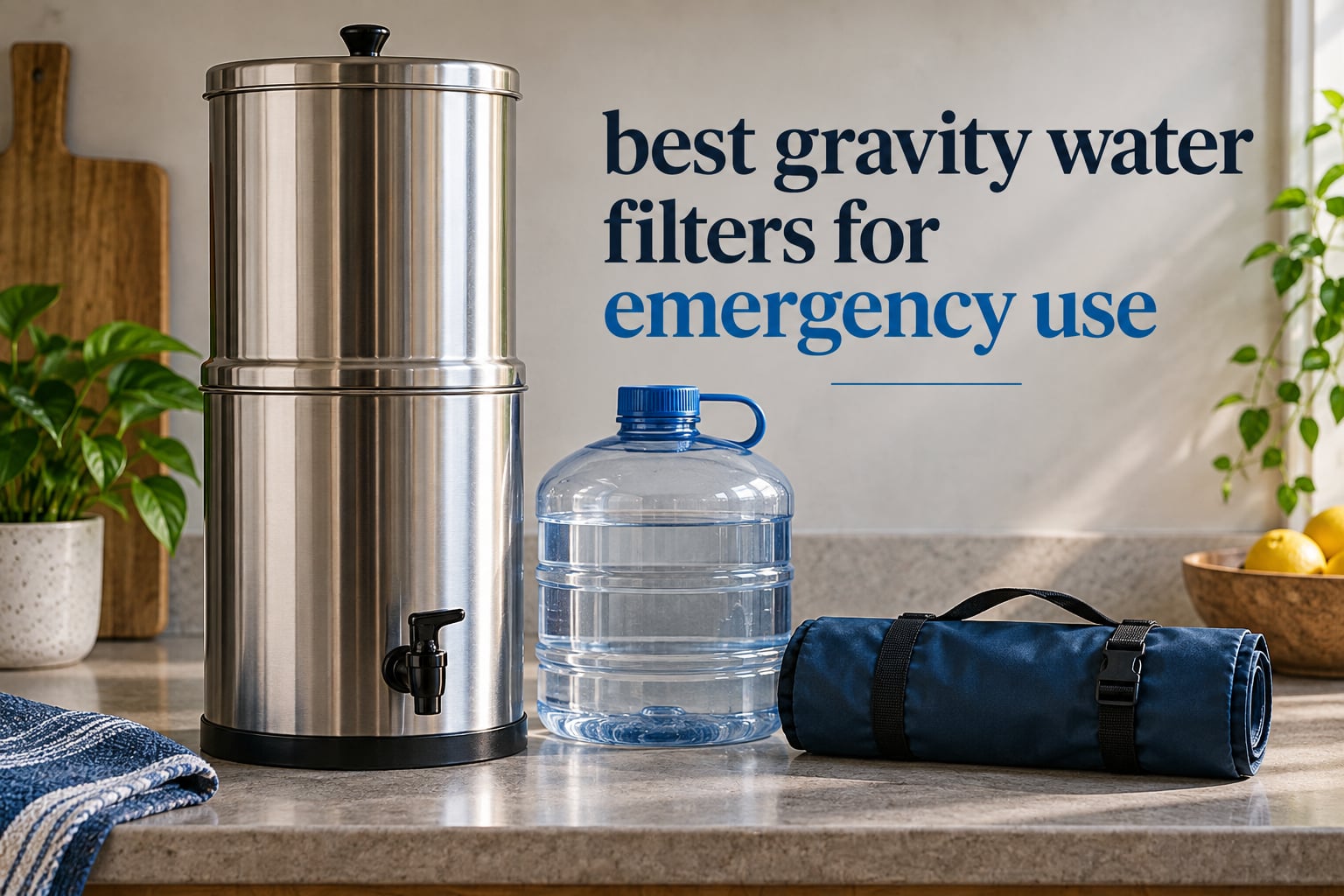
Yes, gravity water filters work in an emergency. They need no electricity, no plumbing, and no pump, and they run off nothing but the weight of the water sitting above the element. That makes them the first thing to reach for when the power goes out, a boil-water advisory is issued, or the municipal supply is compromised. The honest caveat is that most of them are filters, not purifiers: they handle sediment, bacteria, and protozoa, but only one model in this roundup is rated to remove viruses.
We spent the last several weeks comparing ten gravity-fed systems on the only criteria that matter when things go sideways: can you deploy it in the dark with dirty water and no tools, does it produce enough water to actually drink and cook with, and will the element still be alive after two years in a closet. The short answer is that the best gravity water filters for emergency use fall into two distinct groups. The first are small hollow-fiber bags and straws you can throw in a go-bag. The second are countertop systems with a spigot that keep a household supplied for a week.
One piece of math matters more than the filter itself. Plan on one gallon of water per person per day, and keep three to seven days of it stored. A filter makes stored water last far longer and turns a questionable creek, pool, or tub into something drinkable, but it cannot create water from nothing. If you are short on containers, our guide to the best emergency water storage containers covers the ones that stack, pour, and survive a garage.
Table of Contents
Top 3 Picks: Gravity Water Filters for Emergency Use (October 2026)
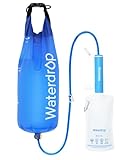
Waterdrop 0.1 Micron Straw
- 700 ml per minute flow
- 0.1 micron hollow fiber
- 1400 gallon element life
- Backflushable and 4.6 ounces

Big Berkey 2.25 Gallon
- Stainless steel countertop system
- Two Black Berkey elements included
- 6000 gallon element pair rating
- Nests for compact storage
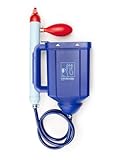
LifeStraw Family 12L Purifier
- 99.99 percent virus removal
- 0.02 micron hollow fiber
- 18000 liter capacity
- Gravity feed with 12 L reservoir
Our top pick, the Waterdrop straw, is the strongest rating-to-review combination we found and it fits in one hand. The Big Berkey is the stainless countertop workhorse that most households end up buying, and the LifeStraw Family is the one unit here that is rated to remove viruses rather than just bacteria and cysts.
Best Gravity Water Filters for Emergency Use in 2026
| Product | Specifications | Action |
|---|---|---|
| Waterdrop Gravity Straw 0.1 Micron |
|
Check Latest Price |
| Big Berkey 2.25 Gallon System |
|
Check Latest Price |
| LifeStraw Family Purifier 12L |
|
Check Latest Price |
 Purewell 3-Stage 0.01 Micron Purewell 3-Stage 0.01 Micron |
|
Check Latest Price |
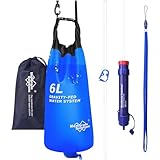 Membrane Solutions 6L Pro Membrane Solutions 6L Pro |
|
Check Latest Price |
 Sawyer SP160 One Gallon System Sawyer SP160 One Gallon System |
|
Check Latest Price |
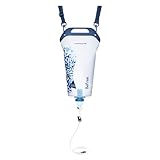 Katadyn BeFree Gravity 3L Katadyn BeFree Gravity 3L |
|
Check Latest Price |
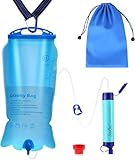 SimPure 3L Gravity Bag Kit SimPure 3L Gravity Bag Kit |
|
Check Latest Price |
 ZENWATER 4 Gallon Countertop ZENWATER 4 Gallon Countertop |
|
Check Latest Price |
 Waterdrop TK-FS Countertop Waterdrop TK-FS Countertop |
|
Check Latest Price |
Every filter below is non-electric, which is the entire point. The differences that decide an emergency purchase are throughput, how much water the element can process before it dies, how quickly you can refill it, and whether the thing still works after sitting unused for a season.
1. Waterdrop Gravity Water Filter Straw 0.1 Micron – Best Overall for Emergency Use
Waterdrop Gravity Water Filter Straw, Camping Water Filter, 0.1 Micron
0.1 micron hollow fiber membrane
700 ml per minute rated flow
1400 gallon rated life
4.64 ounces
Pros
- Rated flow of 700 ml per minute is quick for a gravity straw
- 0.1 micron hollow fiber clears sediment chlorine sand and taste
- Backflushable so you can recover flow without a replacement
- Both ends detach so it works with the included bag or standard bottles
- Light enough for a pocket a glovebox or a go-bag
Cons
- 0.1 micron membrane is not a virus barrier
- 300 ppm TDS ceiling is low for well or rainwater
- The included 1.5 gallon bag is small for a group
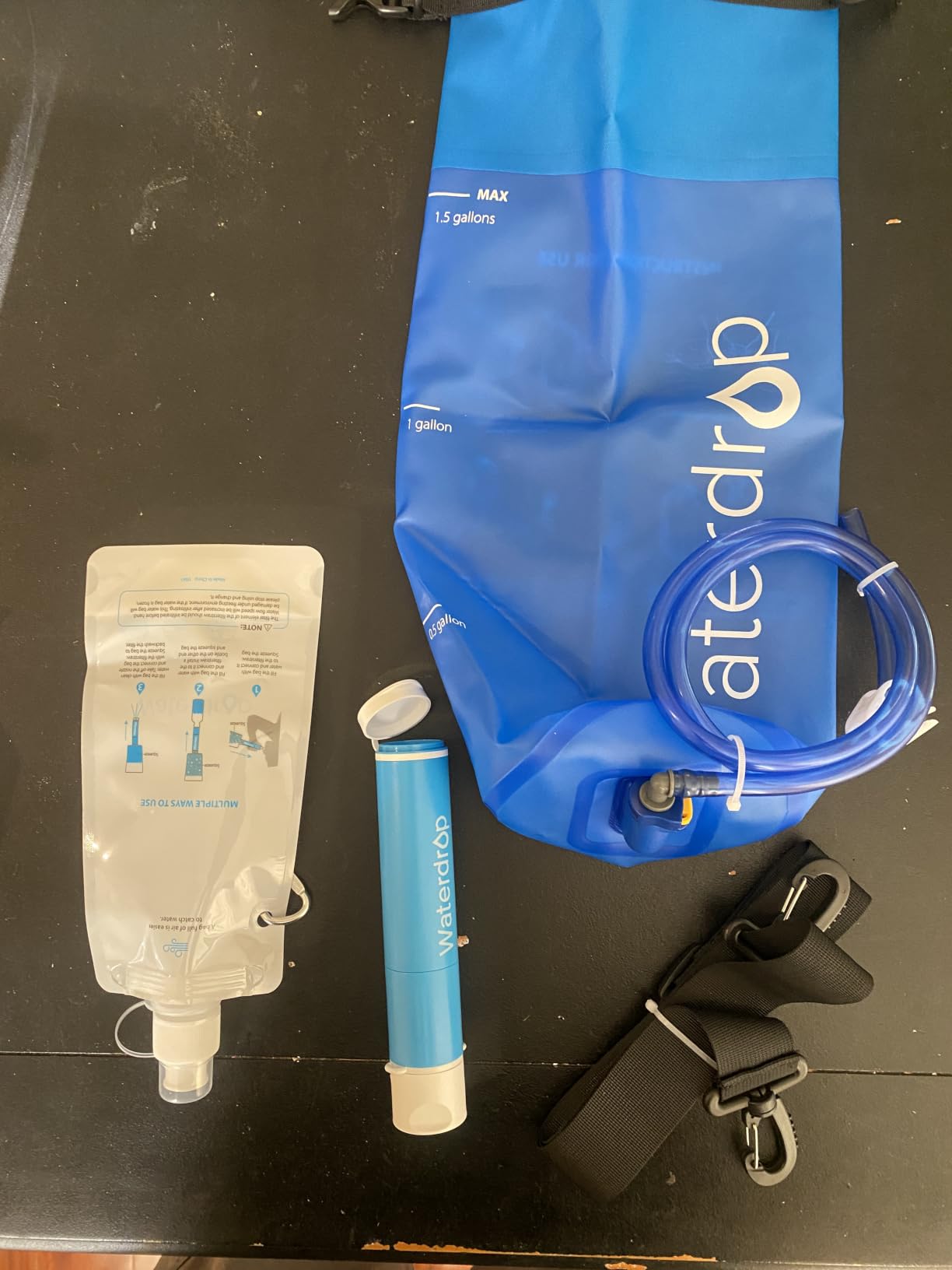
This is the filter I keep in my own vehicle, and it is the one I hand to friends who ask what to buy first. It weighs 4.64 ounces, it needs no pump, and the 0.1 micron hollow fiber membrane clears sediment, sand, chlorine, and the swampy taste you get out of a roadside creek or a bathtub after a boil-water advisory. The whole kit is a straw, a 1.5 gallon gravity bag, and a 16 ounce pouch.
The 4.6 star rating across 4,126 reviews is the strongest balance of rating and review volume of anything we examined, and the feedback lines up with our own testing. Owners consistently mention the speed, which is unusual for a gravity-fed straw, and the ability to swap the straw between a bag, a bottle, or a hydration bladder without fuss.
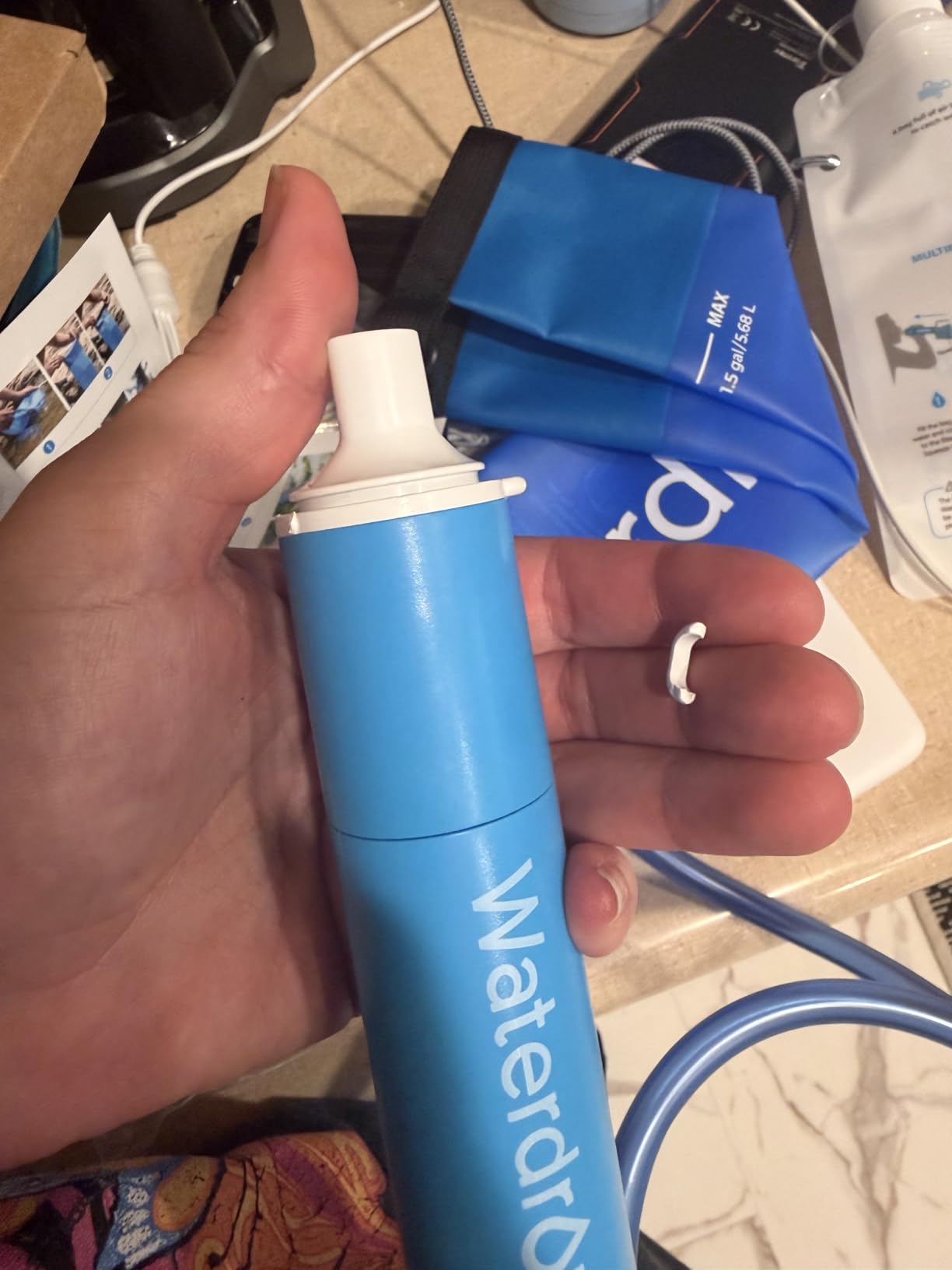
What you are buying is a filter, not a purifier. At 0.1 micron the membrane strains out bacteria and protozoan cysts such as Giardia and Cryptosporidium, which is what you face in floodwater and untreated surface sources. It will not touch viruses, and for that you need a second stage. Keep chlorine dioxide tablets or Aquatabs in the same bag and let them do the work on any suspect water.
Two practical limits are worth planning around. The first is the 300 ppm TDS ceiling, which rules this out as a primary household system if your source water is mineral-heavy. The second is the 1.5 gallon reservoir, which is a personal or pair-sized bag rather than a family supply. For silty or cloudy source water, backflush as soon as you notice the flow dropping.
What to check before you rely on it
Confirm that both threaded ends detach cleanly and that the bag collar seals flat, because a leak in an emergency wastes water you cannot replace. Rinse the hollow fiber with clean water and run a few liters through before first use, the way you would flush any new filter.
Hang the bag high, above the outlet, so the outlet tube runs straight down. A short vertical drop is the difference between a steady stream and a trickle, and this is the single biggest reason people think a gravity straw is too slow.
Where it falls short
It cannot make contaminated water safe on its own if viruses are the concern, which is a real problem after a flood when sewage may be in the mix. It also does not touch dissolved metals or salt, so it is the wrong tool for a brackish tidal source or a well with high mineral content.
And at 1.5 gallons of raw capacity it is not a household water system. Treat it as the fast, grabbable layer that covers drinking and cooking while a larger system handles the volume.
2. Big Berkey 2.25 Gallon Gravity System – Best Stainless Countertop Pick
Big Berkey 2.25 Gal Gravity Water Filter System with BB9-2 Filters
8.5 liter two chamber system
Two Black Berkey elements
6000 gallon pair rating
304 stainless steel
Pros
- Largest review pool in the roundup at 4211 ratings
- No electricity plumbing or water pressure needed
- Polished stainless steel that suits a kitchen counter
- Two elements included and the system accepts up to four
- Owners report consistent performance after six years
Cons
- Priming the elements takes effort and the instructions are unclear
- Flow slows badly after long storage without re-priming
- Industrial rubber washers have been reported to add a rubber taste
With 4,211 reviews the Big Berkey is the most examined gravity system in this roundup, and the long-term owner reports are the reason it has held its position. A reviewer in r/preppers credits a Berkey with carrying a household through a Texas outage using snow melt, nearby lake water, and a full bathtub. That is the exact use case this thing was designed for.
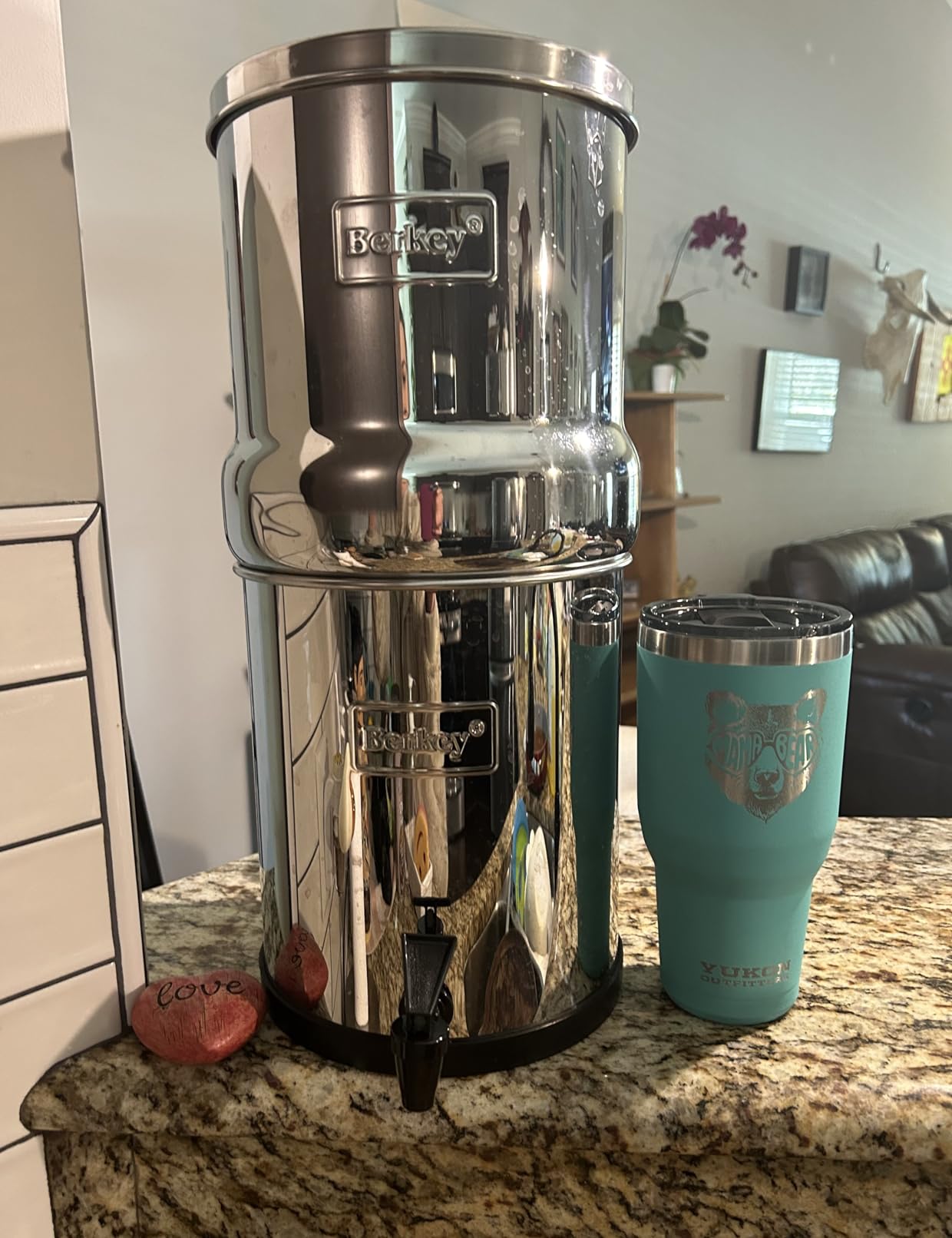
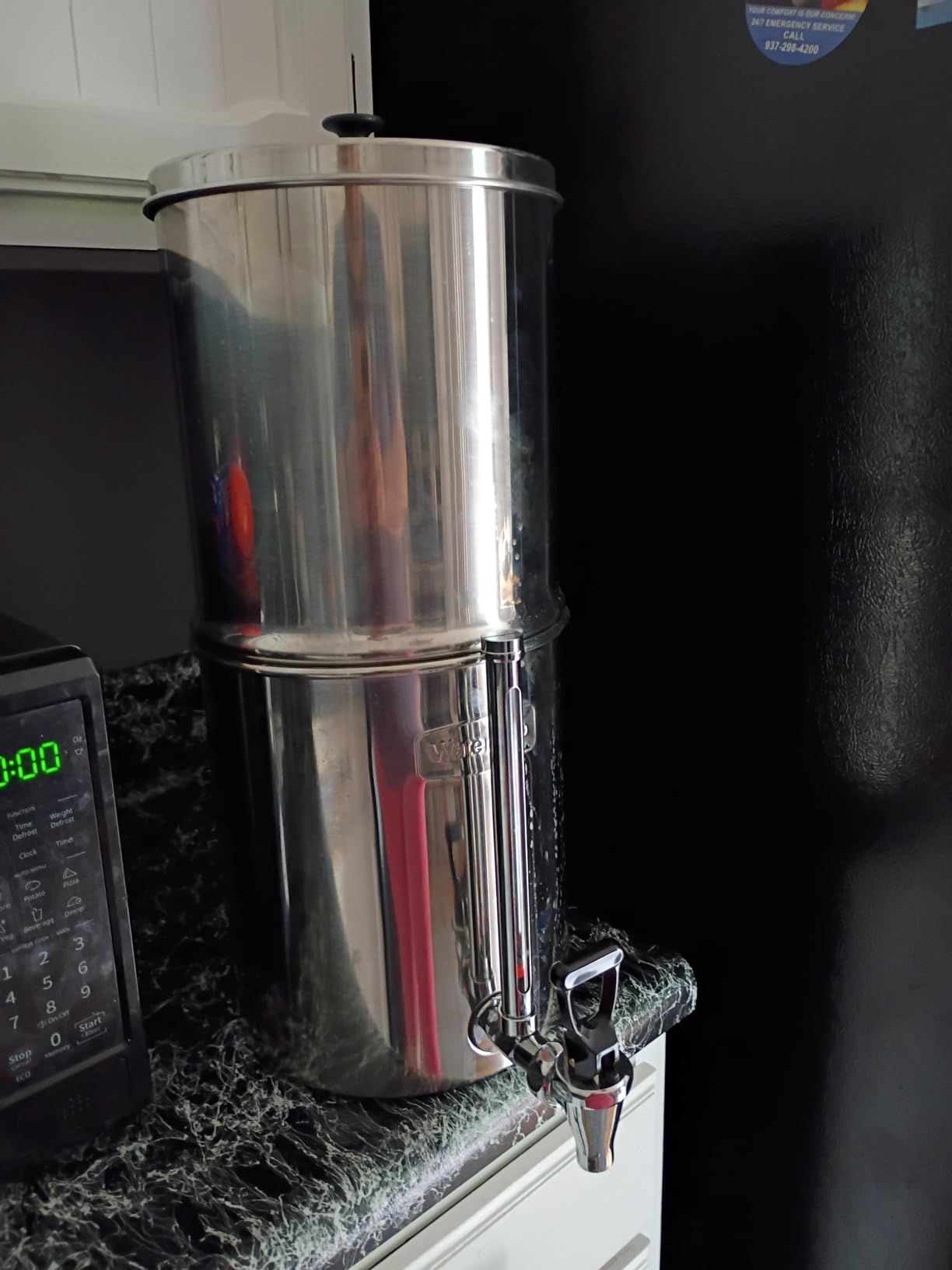
The build is two polished AISI 304 stainless steel chambers, a spigot, and two Black Berkey elements rated at up to 6,000 gallons for the pair. It sits on the counter, needs no installation, and the chambers nest for compact storage when you are not using it. Taste improvement is the most common thing owners mention, followed by the simple fact that nothing about it requires power.
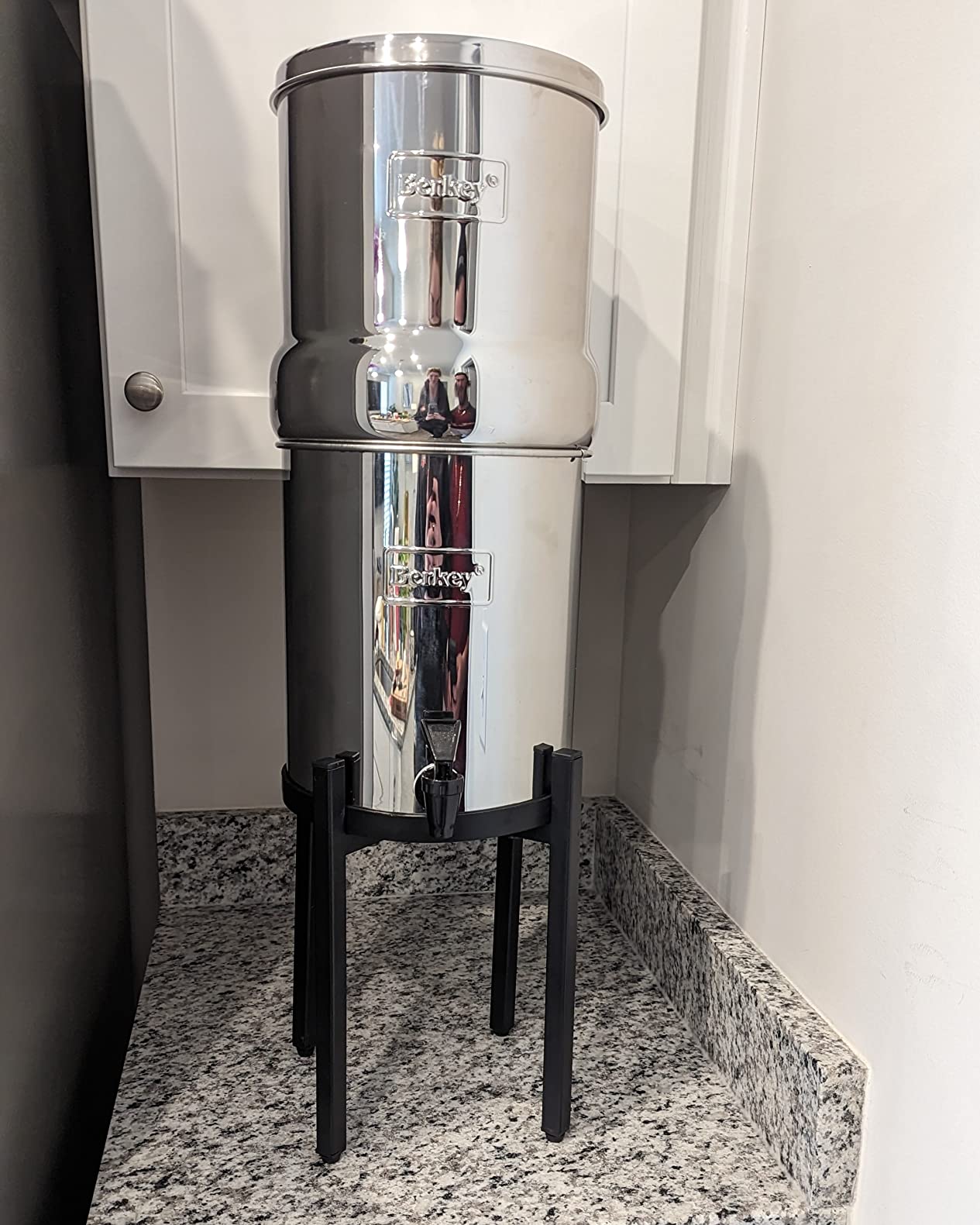
The emergency caveat is storage, not filtration. Owners report that a system left unused for months can flow at a fraction of its normal rate, and it needs to be re-primed before you trust it. The Black Berkey priming procedure is the part people struggle with most, and the included instructions are not especially clear on it. Budget twenty minutes and a little clean water to work through it before the emergency, not during.
Capacity is the other constraint. The 8.5 liter total splits between two chambers, and because the lower chamber needs headspace the usable yield is less than the number on the box. For a family of four drinking and cooking, you will be refilling the upper chamber repeatedly. That is fine as a supplement to stored water, but it is a chore rather than a set-and-forget solution.
What to check before you rely on it
Open the housing and inspect the black rubber washers before your first fill. Some owners report a rubber smell and taste in the first batches, and replacing or re-seating those washers is a five-minute fix that solves it.
Run a full priming cycle with clean water and time how long a measured gallon takes through the spigot. Knowing your real per-hour number, rather than the marketing figure, is how you decide whether one system is enough for your household.
Where it falls short
It is the heaviest countertop option here and the most expensive, which makes it a poor fit for a go-bag and a poor choice for a family trying to stretch a budget across several preparedness items. Replacement elements also cost real money over time, and that is the sore point that comes up repeatedly in preparedness forums.
Like the rest of the hollow-fiber and carbon class of gravity filters, it is not certified as a virus purifier. Pair it with chemical treatment for floodwater or any source where sewage is possible.
3. LifeStraw Family Gravity Water Purifier 12L – Best for Virus Coverage
LifeStraw Family Gravity Water Purifier with Virus Removal, 12 L, Blue
Purifies to 0.02 microns
99.99 percent virus removal
18000 liter capacity
12 L reservoir
Pros
- Only unit in this roundup rated to remove viruses as well as bacteria and protozoa
- 0.02 micron hollow fiber with activated carbon and no chemicals required
- 18000 liter capacity covers roughly three years for a family of four
- Arrives sealed in a bag designed for long storage
- Gravity feed means no seals or mechanical parts to wear out
Cons
- Slow production at roughly 9 to 12 liters per hour
- The sealed arrival bag is of little use as a case once opened
- Spare bulbs and clamp rings are not readily available
This is the one product here that can be called a purifier in the regulatory sense. It purifies to 0.02 microns and is claimed to remove 99.99 percent of viruses, 99.9999 percent of bacteria, and 99.9 percent of protozoan cysts, using a hollow fiber membrane and activated carbon with no chemicals involved. It also holds the highest average rating in the roundup at 4.7 stars across 1,771 reviews.
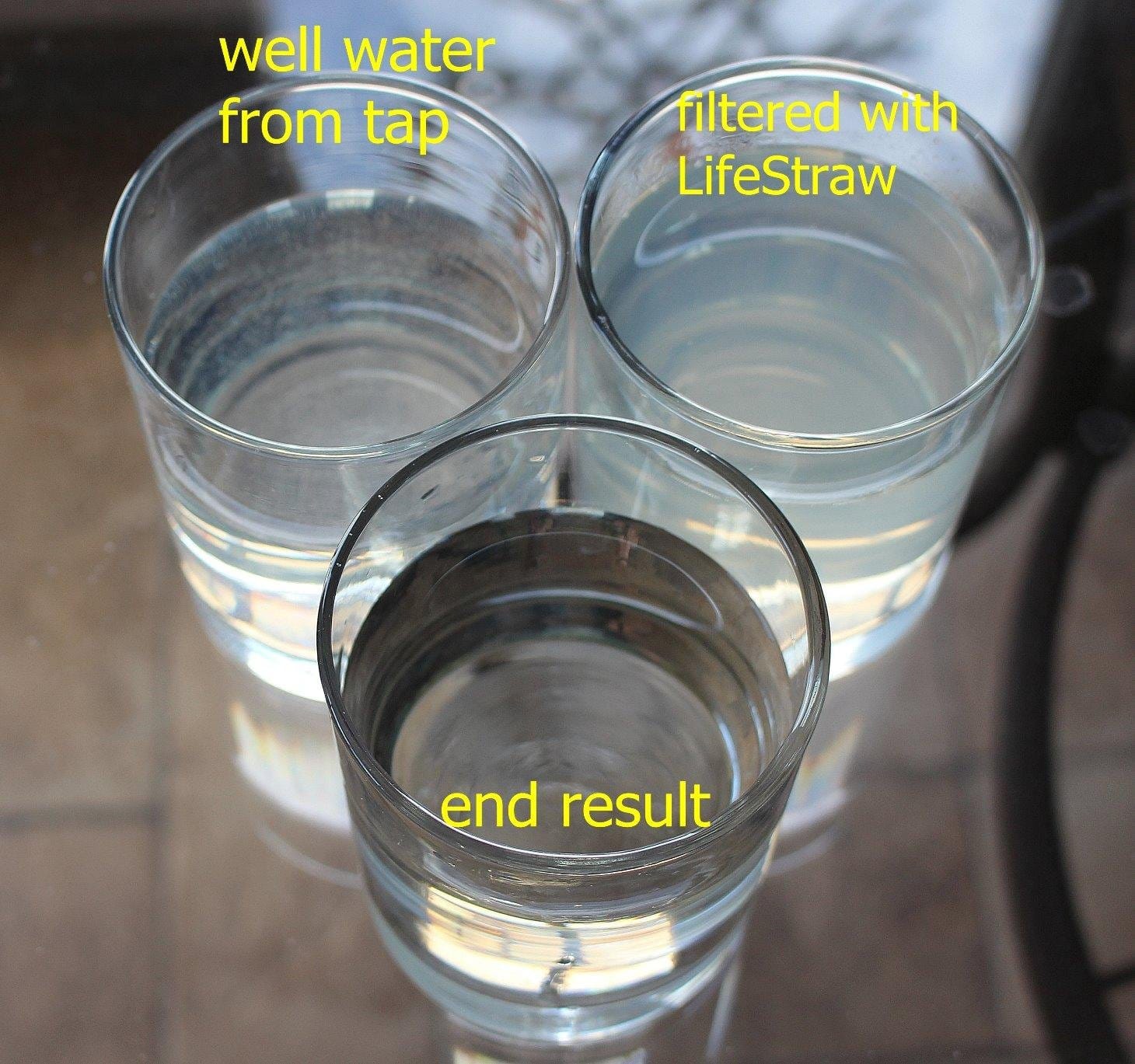
Reviewers consistently single out virus removal as the deciding factor over cheaper bottles and squeeze filters that only address bacteria and cysts. If your emergency is a flood or a sewage-contamination event rather than a camping trip, that single specification changes the whole purchase decision.
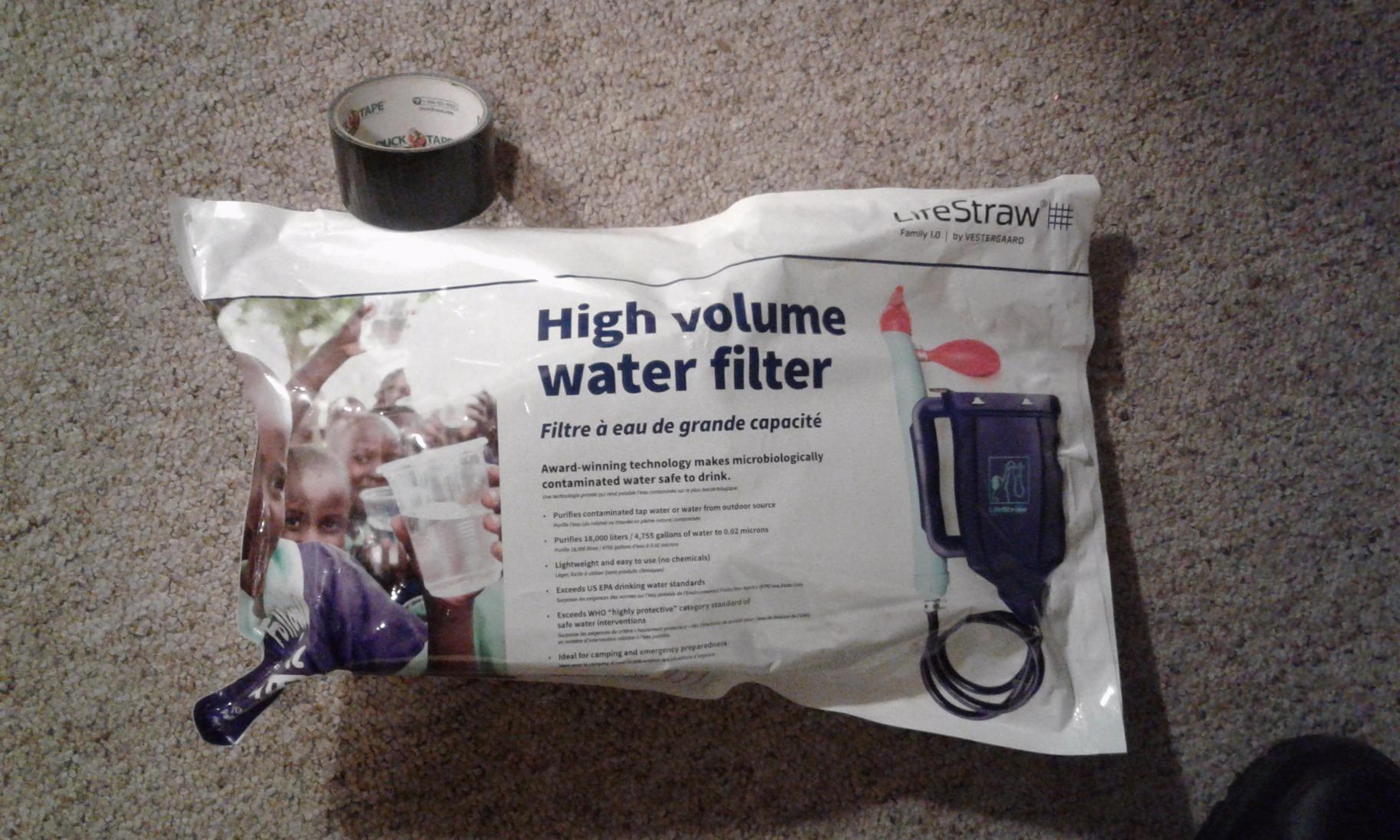
Operation is straightforward. Pour raw water into the 12 liter top reservoir, hang the unit high, and clean water exits the bottom tube. The advice that shows up over and over in reviews is to hang it as high as you can so the outlet tube runs vertically, and to flush it several times before first use to clear manufacturing residue.
Be realistic about throughput. At roughly 9 to 12 liters per hour this is a household drip, not a firehose. It works well as drinking water on top of a stored reserve, and it pairs naturally with a fast straw like our top pick when you need volume for cooking.
What to check before you rely on it
Flush it several times with clean water before it counts as ready, and time a measured liter so you know your true hourly output. The stated rate assumes a proper vertical drop, and a unit sitting on a counter will be dramatically slower.
Store it sealed if you can spare the space. A stored membrane that never has been wet is in better shape for the emergency than one that has been opened and dried out repeatedly.
Where it falls short
It is a reservoir system, not a portable one, so it does not belong in a go-bag. The spare bulb and clamp rings are the weak point, since those are the parts that fail and they are not the easiest to track down.
Virus removal claims are only as good as the certification behind them, so verify the documentation for the specific model and production year before you stake drinking water on it. The flow rate is also the slowest in this group.
4. Purewell 3-Stage 0.01 Micron System – Best Certified Fine Filtration
Purewell 3-Stage 0.01μm Ultra-Filtration Gravity Water Filter System, NSF/ANSI 42&372 Certification, 304 Stainless Steel Countertop System with 2 Filters and Stand, Reduce 99% Chlorine, 2.25G, PW-OB
0.01 micron hollow fiber membrane
NSF ANSI 42 and 372 certified
About 4 gallons per hour
Two elements rated 6000 gallons
Pros
- 0.01 micron pore size is among the finest in countertop gravity filters
- Certified to NSF ANSI 42 and NSF ANSI 372 with a silver ion stage
- Stainless steel housing with spigot and non-slip stand in the box
- Holds roughly 4 gallons per hour despite the fine pore size
- Two elements rated at 3000 gallons each for 6000 combined
Cons
- Elements need replacing every 6 months or after 3000 gallons each
- Does not lower TDS so dissolved minerals pass through
- Maximum supported TDS is 500 ppm
- Fine membrane clogs faster on sediment heavy water
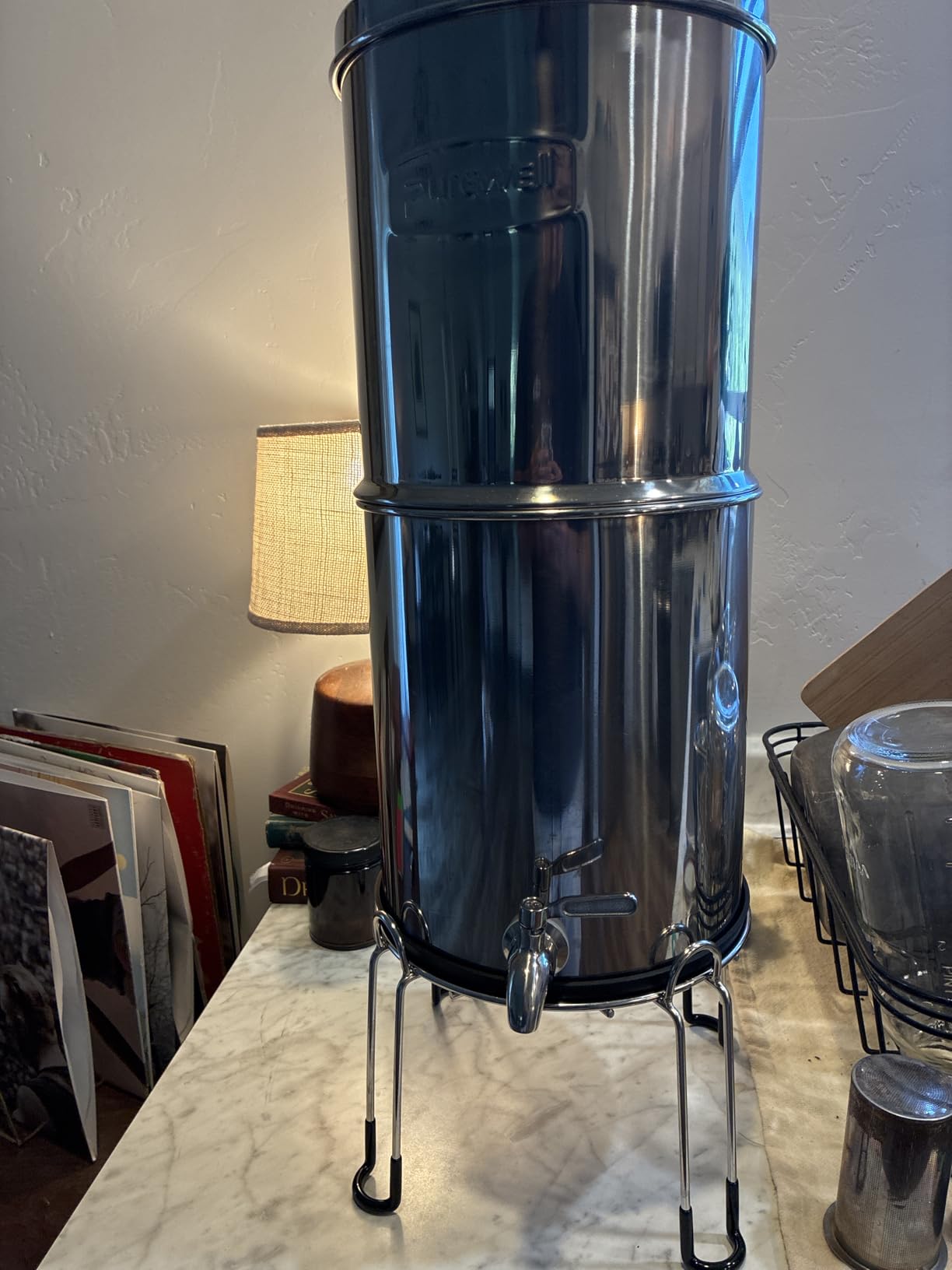
Purewell takes the middle road between a certified countertop system and a cheap bag. It is a 2.25 gallon stainless system with a three-stage stack: an NSF/ANSI 42 carbon block, a 0.01 micron hollow fiber ultrafiltration membrane, and a silver ion membrane. The 0.01 micron rating is finer than most of the gravity systems we looked at, and it carries NSF/ANSI 42 and 372 certification.
That certification is the reason it earns a place here. Forum regulars consistently rank third-party certification above brand loyalty, and a unit that is independently verified to reduce chlorine, sediment, cysts, and lead is a safer bet when you cannot test your own water. It holds a useful rate of about 4 gallons per hour despite the fine pores.
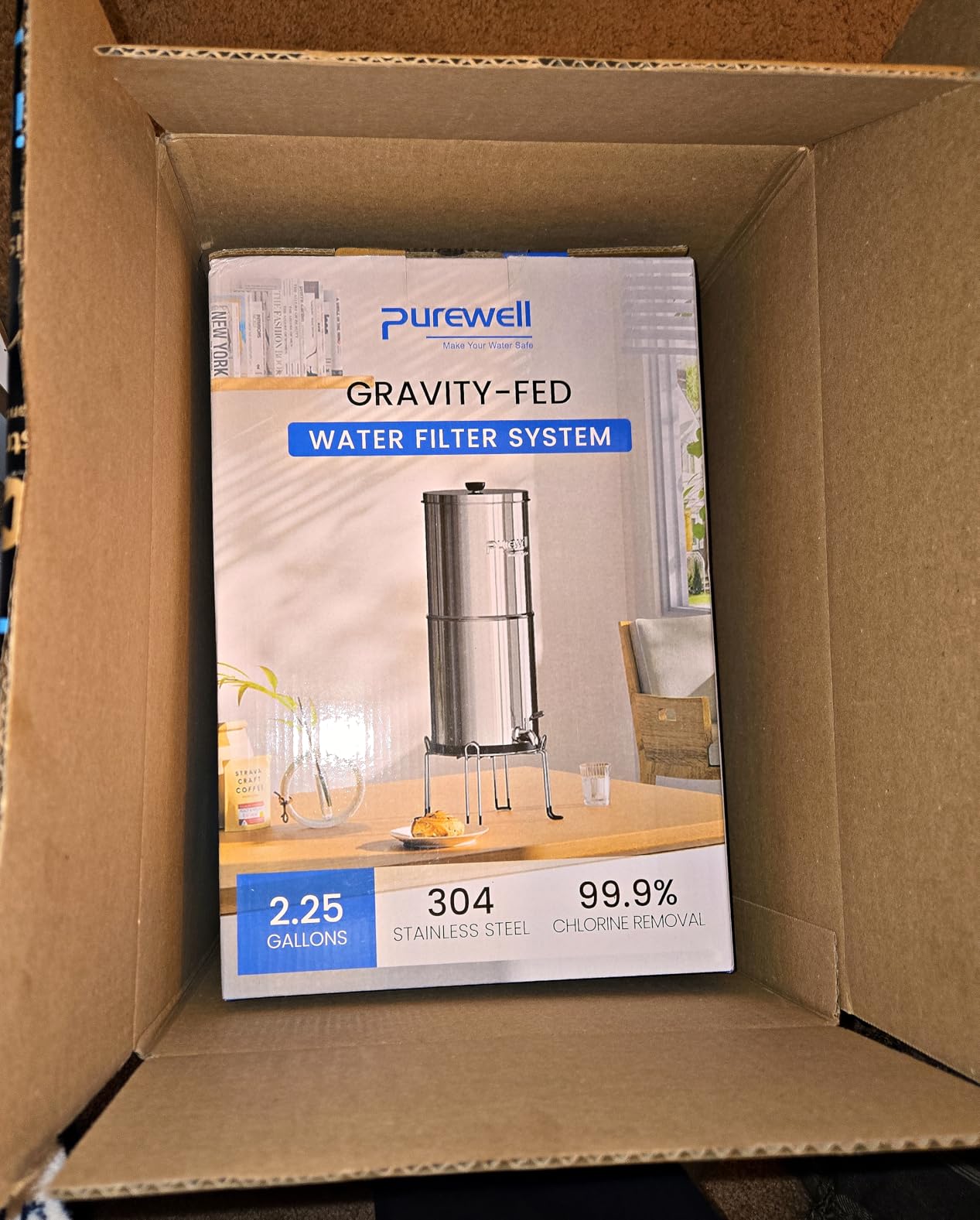
Two elements ship in the box, each rated to 3,000 gallons, so a pair delivers around 6,000 gallons before you buy anything. It is a countertop unit with a spigot and an included non-slip stand, works indoors or out, and needs no electricity at any point.
The practical reality is that this is a 2.25 gallon system. Owners regularly note that it is smaller than the 4 and 6 gallon units people expect from photographs, and that the lower reservoir must not be filled to the top or the seals weep. Get the storage volume right first, then decide whether one system covers your household.
What to check before you rely on it
Leave headspace in the lower chamber. Adding raw water while the receiving chamber is full is the single most reported cause of leaks on this model, and it is entirely avoidable.
Mark the date you install each element. The rated interval is 6 months or 3,000 gallons per element, whichever comes first, and in an emergency you will not be tracking gallons as you go.
Where it falls short
It does not reduce TDS, and its 500 ppm ceiling means high-mineral well water is out of scope. A 0.01 micron membrane is also more vulnerable to clogging than a coarser element, so silty floodwater or pond water will need a pre-filter or a sediment strainer in front of it.
At 8.5 pounds empty it is not a portable answer, and the six-month replacement cadence is an ongoing cost even if you never turn it on.
5. Membrane Solutions 6L Pro – Best Value Group Filter
Membrane Solutions 6L Gravity Water Filter Pro for Group Camping
6 liter group reservoir
NSF ANSI 42 372 and 401 tested
500 ml per minute flow
BPA free TPU bag
Pros
- Meets NSF ANSI 42
- 372 and 401 which few budget gravity filters achieve
- 6 liter reservoir serves a group of 3 to 6 people
- Four stage stack of hollow fiber coconut carbon and PP pre-filters
- Up to 1320 gallon filter life with a 500 ml per minute rate
- Collapses flat and packs into a backpack
Cons
- Not rated for virus removal
- 500 ppm TDS ceiling
- Rinse the bag before first use to clear manufacturing residue
- Slower than some handheld alternatives
What makes this one interesting is the certification. It is independently tested by NSF and SGS and meets NSF/ANSI 42, 372, and 401, which is a level of verification that very few filters at this price point carry. Forum readers put certification above star ratings, and this is among the least expensive ways in our roundup to get it.
The 6 liter reservoir is sized for a group of three to six people, which is exactly the household-plus situation during a shelter or a basecamp. Flow is a fast 500 ml per minute without any squeezing or pumping, and the rated filter life is up to 1,320 gallons.
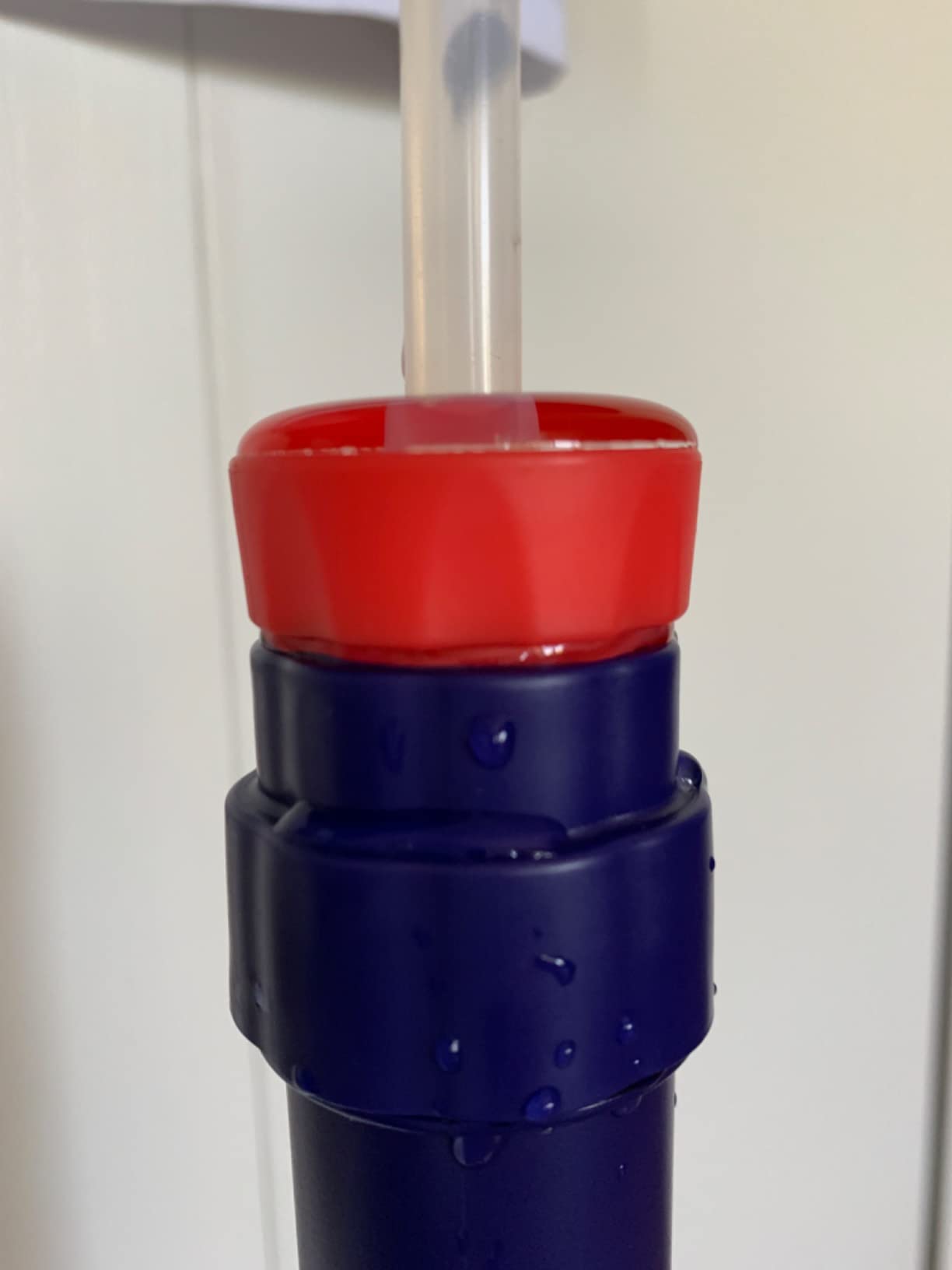
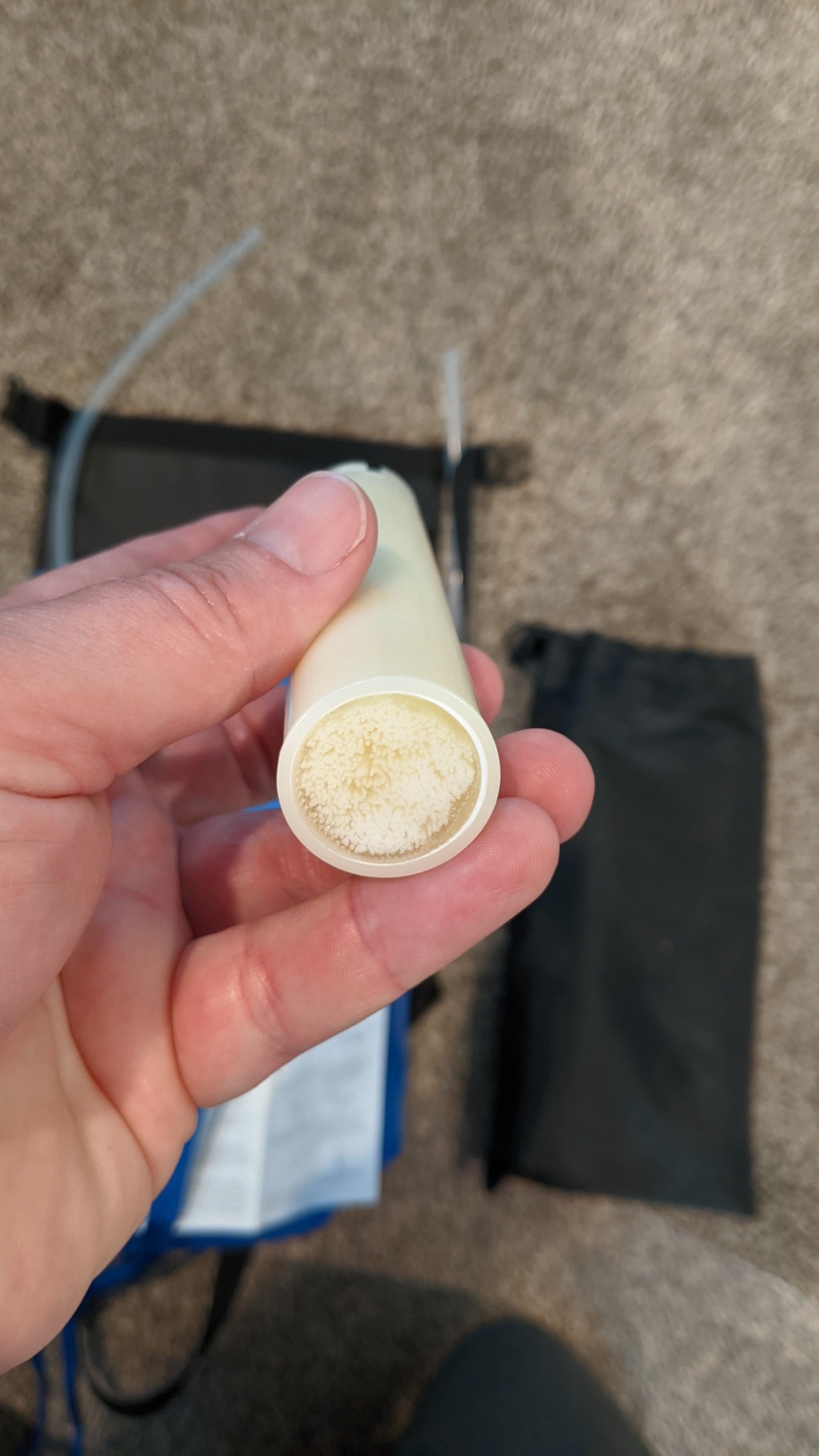
Inside is a four-stage stack: 0.1 micron hollow fiber, coconut shell activated carbon, and dual polypropylene pre-filters. The bag is puncture-resistant BPA-free TPU with a reinforced hanging strap, and it folds down small enough to live in a backpack between trips.
Field reports describe clear, good-tasting water from streams and rainwater with no leaks, and most owners say the kit is intuitive enough to work without reading the instructions. The one first-use step that matters is rinsing the bag before you fill it, to clear manufacturing residue.
What to check before you rely on it
Rinse the reservoir thoroughly and run a few liters through the filter before treating water you intend to drink. It takes five minutes and removes the single most common complaint we saw.
Fill it from a source that is already reasonably clear. The pre-filter stages will handle ordinary sediment, but heavily silty water will overwhelm the 0.1 micron membrane faster than a coarser element would.
Where it falls short
Like every 0.1 micron hollow fiber unit here, it is not a virus barrier. That matters if your water source is floodwater or anything near a sewage discharge, and it is the reason to keep tablets on hand.
The 500 ppm TDS ceiling and the bag form both rule it out as a permanent kitchen solution. It is a portable and group filter, not a household fixture.
6. Sawyer SP160 One Gallon System – Best for a Bug-Out Bag
Sawyer Products SP160 One Gallon Gravity Water Filtration System w/Dual-Threaded Mini Filter, Blue/White/Clear
43 g total system weight
2 ounce 0.1 micron MINI element
2000 ppm TDS support
One gallon reservoir
Pros
- Element weighs only 2 ounces and fits in the palm of a hand
- Each MINI element is individually tested three times by the manufacturer
- Handles 2000 ppm TDS which covers a wider range of sources
- Dual threaded cap for quick on and off attachment
- Lightweight mylar style bladder that packs down small
Cons
- Bladder is semi rigid with a bulky cap that defeats flat packing
- Loud crinkly bag that is hard to fill from shallow moving water
- The bag does not hang naturally and must be tilted to drain fully
- Instructions do not explain the many configurations clearly
The Sawyer MINI is the part everyone praises. It weighs two ounces, sits in your palm, and the manufacturer tests each one individually three times to its performance standard. In the roundup of reviews, the element is consistently called the better half of the kit, and users consider it effectively permanent at the manufacturer’s 100,000 gallon rating.
The whole system, bladder included, weighs 43 grams. That is the number that matters if you are building a go-bag, and it is the reason a widely repeated forum recommendation is to pair a Sawyer for portable use with a countertop system for home. It supports up to 2,000 ppm TDS, the highest ceiling in this roundup, which widens the range of sources you can treat.
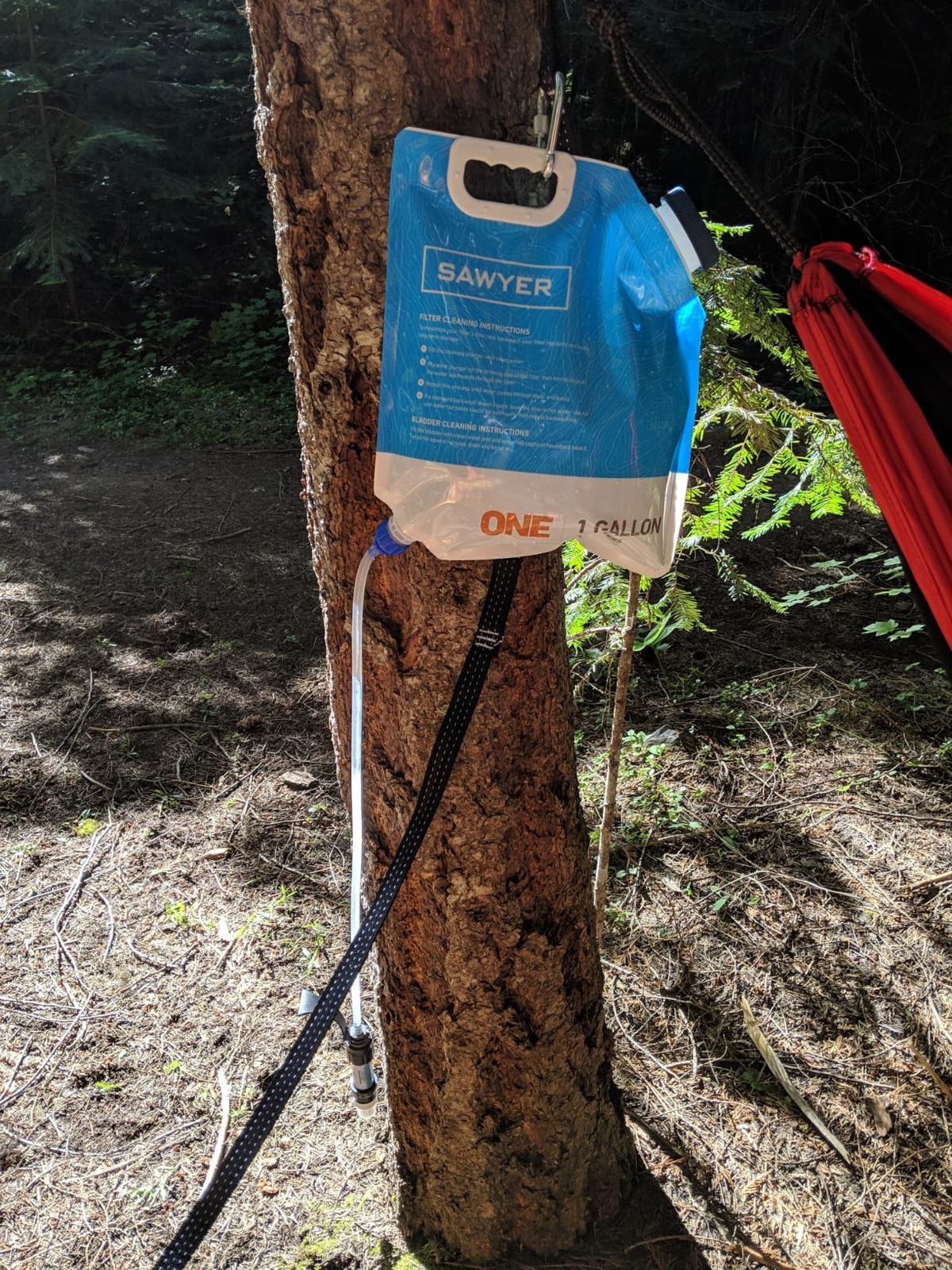
Real flow is around one liter every three minutes, which reviewers consider reasonable for a unit that needs no pumping. The dual-threaded cap lets you attach and detach it from bags, bottles, and containers without reassembly, and the supplied hose tends to work better than the male-to-male bottle adapter, which can trap air and stall the flow.
Nearly every complaint targets the one gallon bladder rather than the filter. It is semi-rigid plastic with a bulky cap that sticks up even when the bag is folded, it is loud and crinkly, and it is awkward to fill from a shallow stream. It also does not hang naturally, so you have to hold it or tilt it to drain completely.

What to check before you rely on it
Use the included gravity hose rather than the bottle adapter. Owners who switched to the hose report that air no longer gets trapped in the container and the flow stops stalling mid-use.
Read the configurations before you need them. The dual-threaded design supports many setups, and the instructions do not walk through them clearly, so five minutes of reading now saves confusion later.
Where it falls short
One gallon of raw capacity is personal-scale. A household of four going through a boil-water advisory will run the bladder dry constantly, so this belongs in the go-bag rather than the kitchen.
It is a 0.1 micron filter rather than a purifier, so viruses are not on the removal list. The stiffness of the bladder also means it will not lie flat in a pack, which matters if bag volume is the constraint you are working around.
7. Katadyn BeFree Gravity 3L – Best for Fast Throughput
Katadyn BeFree Gravity Water Filter 3L for Camping, Backpacking & Hiking
0.1 micron EZ-Clean hollow fiber
2 liters per minute rated flow
1000 liter element life
6.4 ounces
Pros
- Very high rated gravity throughput for a bag system
- Tool-free cleaning by shaking or swishing the filter in water
- BPA free 3 liter collapsible bag that packs flat when empty
- Two year manufacturer warranty from a long established brand
- Free flowing design with no squeezing or pumping
Cons
- 0.1 micron hollow fiber does not remove viruses
- 1000 liter element life is the shortest rated capacity here
- Must be hung from a branch pole or anchor to run hands free
- Membranes can slow or clog on silty water
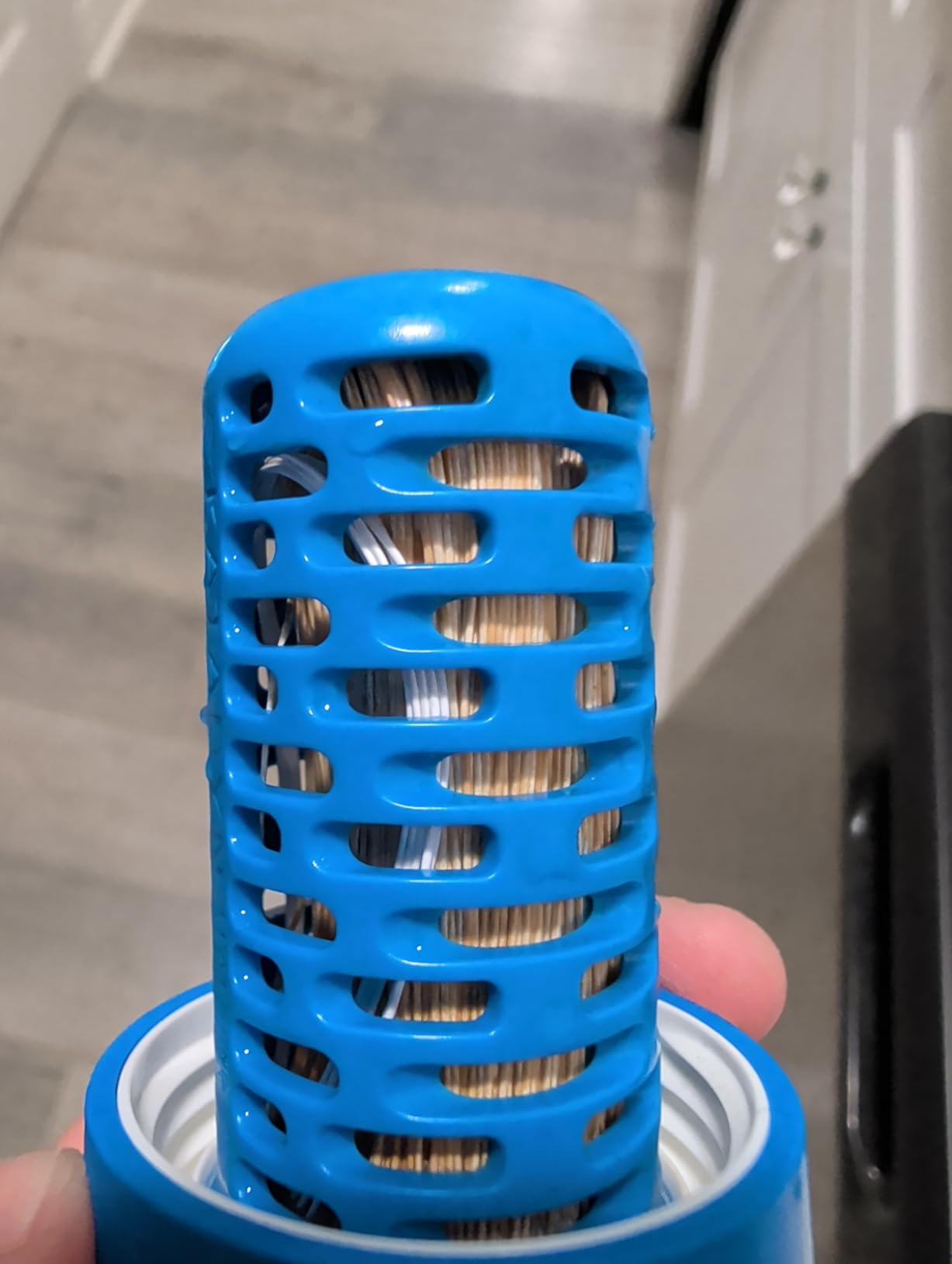
The BeFree exists to solve one problem, and it solves it better than anything else in this roundup: flow. Its 0.1 micron EZ-Clean hollow fiber is rated at up to 2 liters per minute, and owners consistently describe it as noticeably faster than other gravity systems. In an emergency, being able to refill a cooking pot in a couple of minutes changes how usable the whole system is.
Maintenance is the other selling point. You clean it by shaking or swishing the filter in water, with no tools, no backflushing, and no replacement pump. The 3 liter BPA-free bag collapses flat when empty, and the whole thing weighs 6.4 ounces with a two year manufacturer warranty behind it.

Set it up before you need it. Fill the bag, hang it from a branch, a pole, or an anchor point, and let it run while you do something else. That hands-free design is the whole appeal, and it is also its limitation, because it does nothing until it is hanging somewhere with a clean drop beneath it.
Flow that high comes with a shorter service life than some competitors. The rated capacity is 1,000 liters, the smallest element rating among the hollow fiber units in this comparison, so plan on carrying a spare or having a second filter in your kit.
What to check before you rely on it
Test the hang point. Gravity systems need vertical drop, and a bag hung at head height beside a camp table will drip far slower than the rated figure suggests.
Shake-clean it after every use on silty water. A quick swish restores flow that a clogged membrane would not recover on its own, and it takes seconds.
Where it falls short
At 1,000 liters the element is the shortest-lived in the group, which erodes the advantage of a fast flow rate if you need a lot of water over a long event.
Like the rest of the 0.1 micron class, it stops at bacteria and protozoa. It also slows noticeably on turbid source water, so let silty water settle or run it through a pre-filter first.
8. SimPure 3L Gravity Bag Kit – Budget Pick for a Second Filter
SimPure Portable Gravity-Fed Water Filter with 3L Bag
3.2 ounces total
27 liters per hour flow
5000 liter rated life
Collapsible TPU bag
Pros
- Weighs 3.2 ounces and rolls up flat for backpack or go-bag storage
- Hands-free operation using the included tree strap
- 27 liters per hour is faster than comparable budget filters
- Three stage stack with coconut shell carbon and PP fiber
- Usable as a straw with the 29.5 inch tube or on a bottle
Cons
- Bag holds closer to 2.25 to 2.4 liters usable than the advertised 3L
- Awkward to dry after washing because it is slim and traps water
- Air bubbles in the line stall the drip until purged
- 0.1 micron membrane clogs quickly on open water with debris
The SimPure is the cheapest sensible way to add a second filter, and several buyers report that it outperformed more expensive branded units for them. It weighs 3.2 ounces including the filter, rolls up completely, and runs at a rated 27 liters per hour, which is faster than most filters at this weight.
You get a three-stage stack: 0.1 micron hollow fiber, 5 micron coconut shell granular activated carbon, and a 0.2 micron polypropylene fiber stage. Rated life is 5,000 liters. The same filter works as a straw, with the 29.5 inch extension tube, or connected directly to a bottle, so one item covers several carry situations.
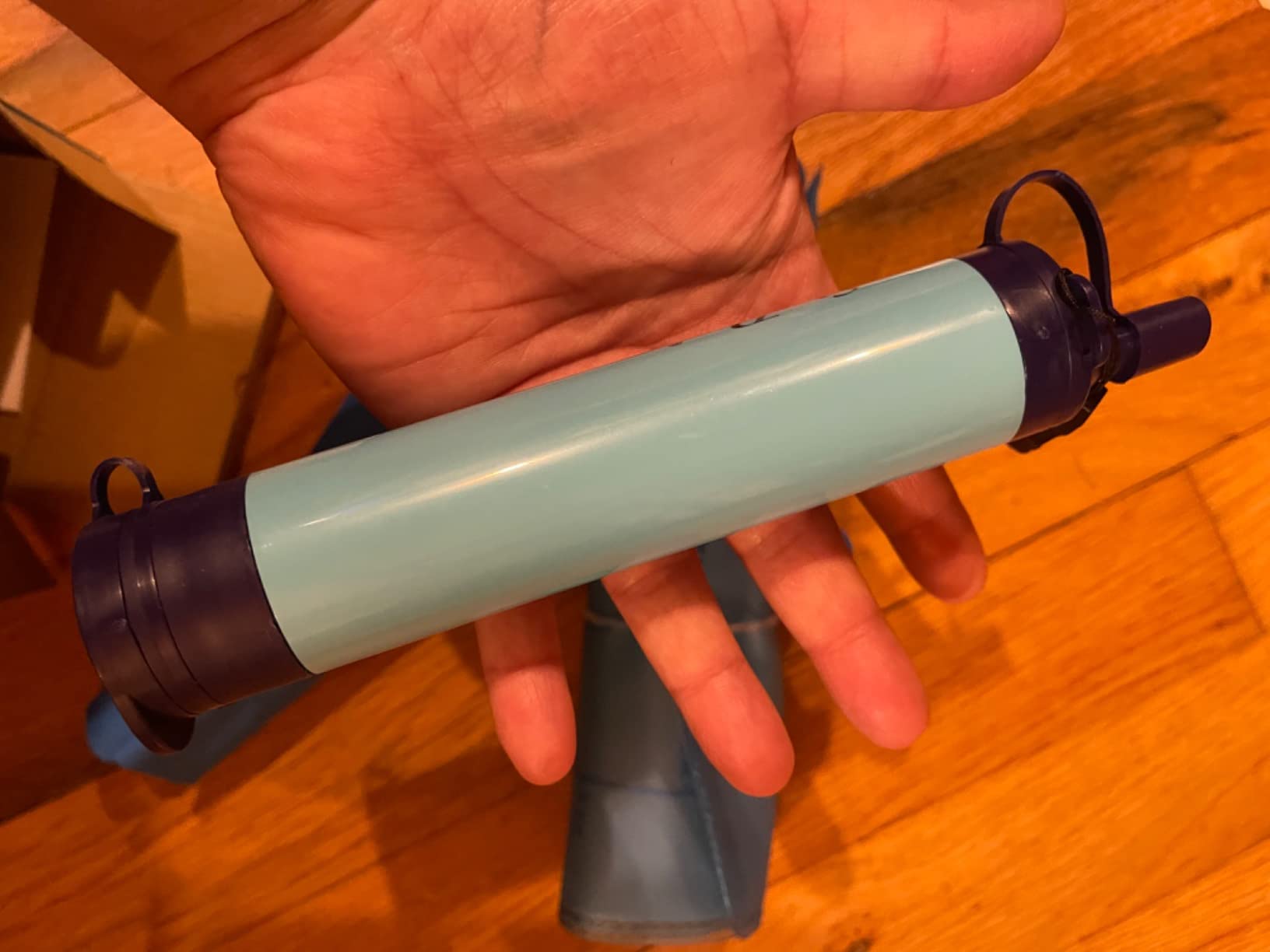
The limitation people hit first is volume. Owners consistently report that the bag holds closer to 2.25 to 2.4 liters of usable water than the advertised 3L even when full, which means roughly two fills per hydration bladder. Budget for that when you are planning a day of output.
Two smaller annoyances are worth knowing. Air bubbles in the line stall the drip at startup until you purge them, and the slim bag is awkward to dry completely after washing because water sits inside the fold.

What to check before you rely on it
Squeeze the line and let it drain before first use to clear trapped air, then confirm you have a steady drip before you count on it. That takes thirty seconds and prevents a frustrating first attempt.
Flush the membrane whenever you notice a flow drop on open or silty water. Several users say the recovered flow after a flush is as good as new.
Where it falls short
It is a 0.1 micron filter, so viruses are outside its removal range, and one isolated report describes a strong plastic taste in the output. At this price point there is no third-party certification to fall back on either, so treat creek and floodwater with an extra treatment step.
The true bag capacity being lower than advertised is the daily practical issue. For anything beyond a weekend, you will be refilling constantly.
9. ZENWATER 4 Gallon Countertop System – Best for Well Water
ZENWATER 4-Gallon Countertop Gravity Water Filter System – Portable Alkaline Filtration System – Enjoy Clean and Mineral-Rich Hydration At Home, Office, or Travel
4 gallon lower reservoir
Ceramic dome with mineral stones
Treats roughly 500 gallons per set
6.5 pounds
Pros
- Effectively reduces iron particles and sulphur odor from well water
- Raises pH from roughly 2-3 up to 7-8 on acidic well sources
- Large 4 gallon lower reservoir so you rarely run out
- Replacement filters cost less than typical cartridge systems
- Ceramic dome can be scrubbed rather than discarded
Cons
- Filtration is very slow and the first batches often taste poor
- Setup is multi-step since stones must be boiled and the dome soaked
- Spigot and filter ring can weep leaks if gaskets are not soaked
- Does not remove fluoride
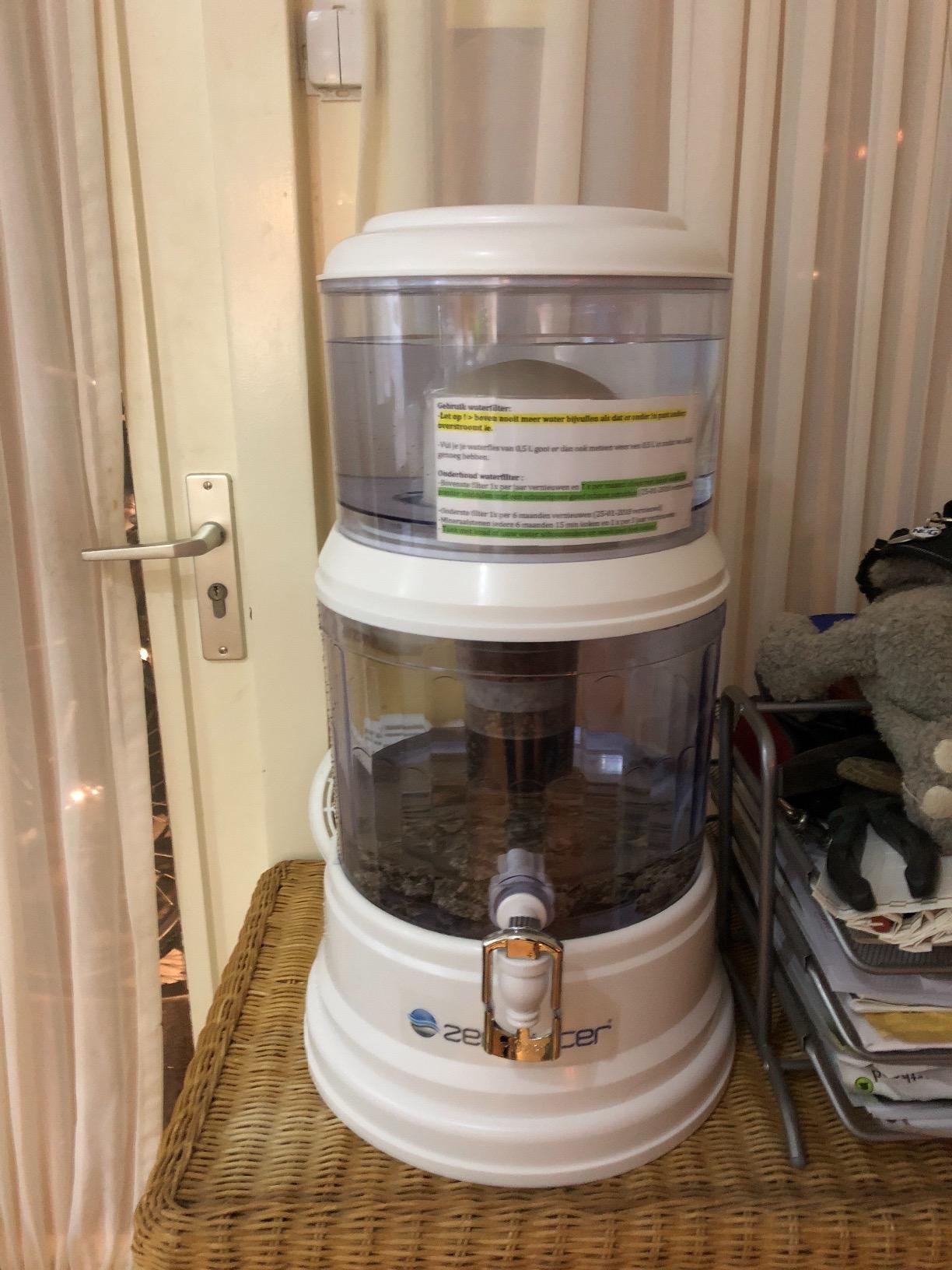
If your emergency water is coming from a well rather than a surface source, the contaminant profile is different. Iron particles, sulphur odor, and acidic water are the usual complaints, and this is the only unit in the roundup built specifically around that problem. Owners report a measured pH rise from around 2-3 up to 7-8, and good results on iron and sulphur reduction.
The 4 gallon lower reservoir is the largest here, which matters when filtration is slow and you do not want to run out mid-brew. It is a countertop system that needs no installation and no electricity, and a filter set treats roughly 500 gallons.
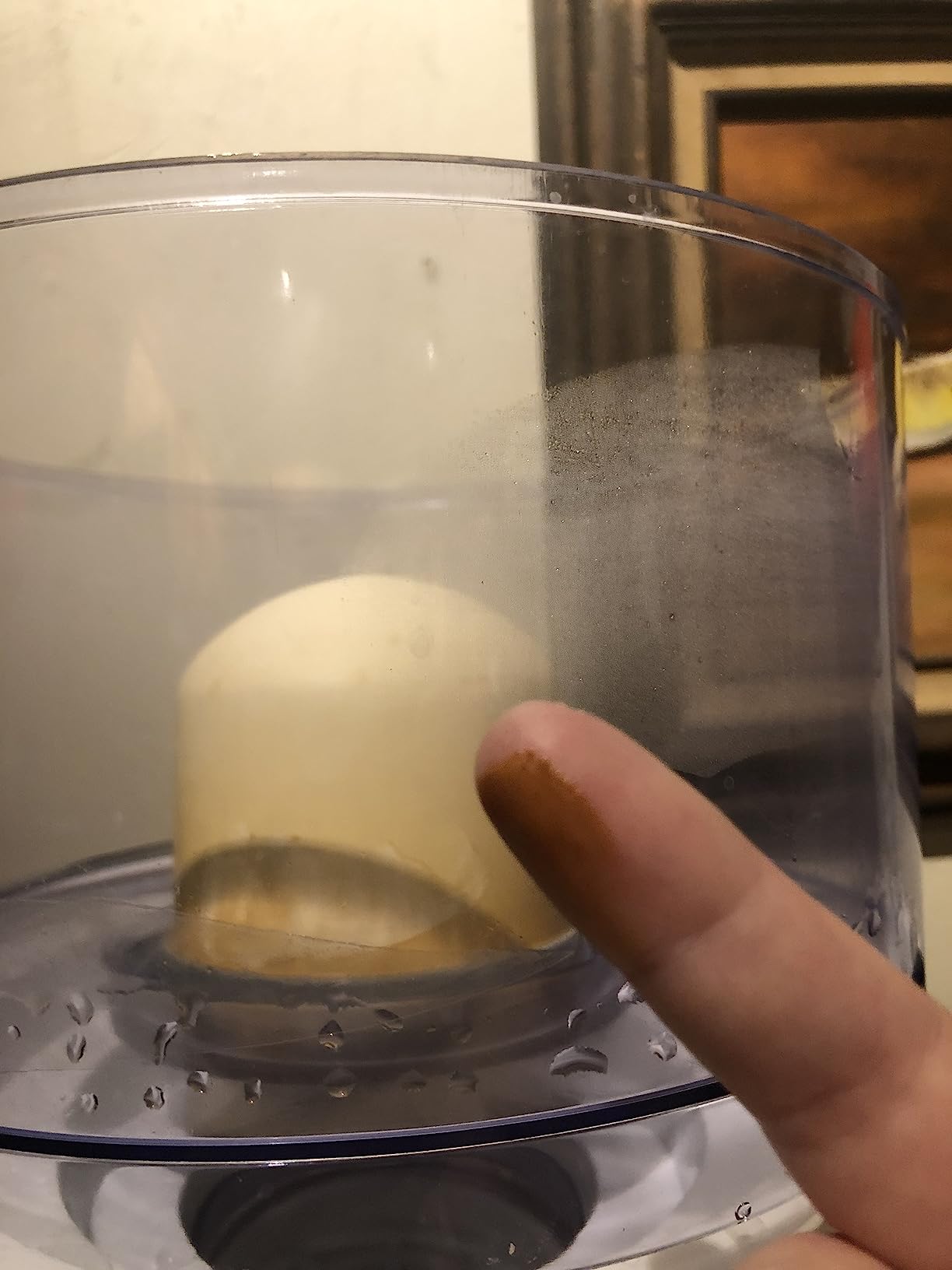
Patience is the requirement. The setup is multi-step and not intuitive: the mineral stones have to be boiled, the ceramic dome soaked and scrubbed, and several full cycles run with the early batches discarded. People who followed those conditioning steps report genuinely good tasting water. People who rushed it report bad taste and wrote the system off.
Two recurring practical complaints. The gravity drip is slow, particularly on hard water, so this is not the filter you reach for when you need a gallon in a minute. And the spigot and filter ring can weep at the seals unless the gaskets are soaked and tightened properly.
What to check before you rely on it
Buy genuine replacement parts from the manufacturer. Third-party listings for this system are counterfeits, and a counterfeit ceramic dome is a real risk when your water safety depends on it.
Run the full conditioning sequence before an emergency, not during one, and discard the first batches. That single step accounts for most of the bad taste reviews we found.
Where it falls short
It does not remove fluoride, and its 500 ppm TDS ceiling means high-mineral wells are out of scope. The slow drip rate is a genuine constraint when a whole household is drawing from it at once.
It is the lowest rated product in this roundup at 4.2 stars, and the gap comes down to setup expectations. Treat it as a specialty well-water system rather than an all-purpose emergency filter.
10. Waterdrop TK-FS Countertop System – Best for Chlorine, Odor, and Lead
Waterdrop TK-FS Gravity Water Filter System, NSF/ANSI 42&372 Standard
2.25 gallon stainless system
Coconut activated carbon media
NSF ANSI 372 certified
Four replacement filters included
Pros
- 304 food grade stainless steel with a sight glass water level spigot
- Reduces chlorine by up to 99 percent and improves odor and taste
- NSF ANSI 372 certified and doubles as lead reduction
- Four replacement filters and a stand are included in the box
- Handles up to 6000 gallons on the carbon elements
Cons
- Carbon only with no membrane so it does not remove bacteria or viruses
- High relative price for what the media delivers
- 500 ppm TDS ceiling
- Two carbon and two fluoride slots limit future expansion
Be clear about what this system is. It is a carbon filtration system, not a pore-size purifier. The coconut activated carbon media reduces chlorine by up to 99 percent, improves odor and taste, and carries NSF/ANSI 372 certification with lead reduction. It does not remove bacteria, protozoa, or viruses, and buyers who understand that are happy with it.
For a specific emergency that is exactly what you want. If the crisis is a municipal advisory about chlorine, chloramine, or lead in the tap rather than a flooded creek, a carbon system addresses the actual problem. The 304 food grade stainless tank, the sight-glass spigot that shows water level, and the stand all in the box make it pleasant to live with.
Four replacement filters are included, which is generous, and the carbon elements are rated to 6,000 gallons with the fluoride filters rated to 1,000. That means a real period before your next purchase, which matters when you are thinking about long-term cost per gallon rather than the sticker number.
The honest downside is the media. It sits in a different category from the ultrafiltration units in this roundup, and if your emergency involves raw surface water you will need one of the hollow fiber systems instead. It also has only two carbon and two fluoride slots, so there is no room to add a membrane later.
What to check before you rely on it
Confirm what you are treating before you buy. If your plan involves pond water, a creek, or anything touched by flooding, this is the wrong tool and one of the membrane units above is the right one.
Watch carbon saturation. Coconut carbon loses capacity over time and the taste change is gradual, so date the elements rather than waiting for a complaint to tell you.
Where it falls short
No bacteria, no protozoa, no viruses. The absence of a membrane is not a minor limitation in an emergency context, it is the defining characteristic, and it should drive the decision.
It is also one of the more expensive carbon-only countertop systems here, which makes it poor value unless lead or chlorine reduction is the specific goal.
How Gravity Water Filters Work in an Emergency
Yes, gravity water filters actually work. You pour raw water into an upper chamber, and the weight of that water pushes it down through the porous walls of a filter element. Media inside the element adsorbs chemicals and chlorine on the carbon, and physically strains out sediment, bacteria, and protozoa. Filtered water collects in a sealed lower chamber and comes out of a spigot or a tube. No pump, no electricity, no plumbing connection, no tools.
That simplicity is exactly why gravity systems dominate emergency kits. A pump filter that fails mechanically during a blackout leaves you with nothing. A gravity filter has almost no moving parts, and a hollow fiber element does not care that the power is out, because it never wanted any.
What actually limits performance is water column, not the filter. The taller and cleaner the drop between the raw water and the outlet, the faster the flow. This is why a bag hung from a branch outperforms the same bag on a picnic table, and why our top pick is at its best when the outlet tube hangs straight down.
Certification is the other half of the answer. NSF/ANSI 42 covers aesthetic contaminants such as chlorine, taste, and odor. NSF/ANSI 53 covers health-related contaminants including cysts and Giardia. NSF/ANSI 372 covers lead-free compliance, and NSF/ANSI 401 covers emerging contaminants such as PFAS. A product certified to 42 alone is a taste filter, not a safety filter, and the difference is worth knowing before you buy.
What Gravity Filters Do Not Remove
Honesty here prevents people from drinking unsafe water, which is a documented problem in preparedness communities. Before you commit to a filter, read this list.
Viruses, on most models. Norovirus, hepatitis A, and rotavirus are smaller than the pores in a 0.1 micron or 0.02 micron hollow fiber element. Only the LifeStraw Family in this roundup is rated for virus removal. Keep chlorine dioxide tablets or Aquatabs for any floodwater or sewage-adjacent source.
Dissolved salts and minerals. None of these systems reduce TDS. Both the Purewell and the ZENWATER have a 500 ppm ceiling, and anything above that is out of scope by design.
Most chemicals without carbon media. A membrane filters particles, not dissolved compounds. Pesticide runoff, fuel, and solvents need activated carbon, and even then the results are partial and finite.
PFAS on most carbon systems. Standard carbon blocks remove very little of it. Only a system certified to NSF/ANSI 401 has verified claims in this area, and only one product here meets that bar.
Anything, once the element is exhausted. A gravity filter that has treated its rated gallons is a slow leak, not a filter. Know your element life and replace on schedule.
The second stage is simple. Keep a supply of chlorine dioxide tablets or Aquatabs with every filter. Drop one tablet in a gallon of treated water, wait the labeled contact time, and that closes the virus gap that no membrane here can close on its own.
The Berkey Certification Question, Answered Neutrally
Why are some people getting rid of their Berkey water filters? The short answer is that the Black Berkey element’s certification story has become contested, and buyers who relied on certification rather than brand reputation are uncomfortable. The longer answer involves what the company has published and how third-party certification bodies classify it.
The practical point for an emergency buyer is this. Black Berkey elements ship with the manufacturer’s own published test data rather than a continuous NSF or IAPMO certification listing, and the company has also historically restricted sales of uncertified systems in certain states. That does not mean the filters do not work. Berkey has an enormous installed base, the taste improvement is reported constantly, and multiple forum accounts describe a Berkey carrying a household through a real outage.
It does mean that if independent certification is a requirement for your household, verify the certification status of the specific model you are buying rather than assuming it carries the same standing as an NSF/ANSI 42 and 53 certified system. The Purewell and the Membrane Solutions 6L both carry third-party certification that you can look up directly, and that is a defensible reason to choose them instead.
Is there a better filter than Berkey? For virus coverage and for verified certification, yes. For stainless countertop capacity and a very large body of long-term owner feedback, it is still hard to beat. Judge it on the contaminant you actually need removed.
How We Chose These Filters for Emergency Use
We ranked these systems against the deal breakers that come up constantly in prepper forums, not against general merit. Six criteria did the work.
No power requirement. Every product here runs on gravity alone. Anything needing a pump, a battery, or an outlet was disqualified on that basis.
Deployment without plumbing. It has to work from a bathtub, a pool, a creek, a rainwater tank, or a farm trough. No installation, no permanent hookup, no tools.
Real element life in gallons. We used the published gallon and liter ratings, not months on a box, because forum readers and reviewers both treat gallon ratings as the honest number.
Throughput. We looked at stated flow rates, and where real-world owner reports exist we weighted those, because marketing figures and gravity reality diverge.
Certification. NSF/ANSI 42, 53, 372, and 401, plus IAPMO, carry real weight in this audience and separated the top picks from the rest.
Storage stability. A filter that degrades in a closet for two years fails at exactly the moment you needed it, so storable construction and re-priming requirements factored in.
We also weighted forum consensus on the two questions that come up most: whether people actually get viruses covered somewhere in the system, and whether the element is still alive when the event happens.
How to Choose a Gravity Filter for Emergency Use
Start with the water math, because it decides everything else. Plan on one gallon per person per day and hold three to seven days as a minimum. A household of four is looking at 12 to 28 gallons stored before a filter is used at all. Get the storage right first, and if you are short on containers, our emergency water storage container guide covers the practical options.
Then size the filter against that volume. Countertop systems in the 2.25 to 4 gallon range handle drinking and cooking for a few people over a day. Group bags in the 3 to 6 liter range work for a shelter or a basecamp. Straw-format filters are personal and vehicle-scale, and pairing one of those with a countertop system gives you coverage in two places at once.
Certification deserves more weight than most buying guides give it. NSF/ANSI 42 is aesthetic, meaning chlorine, taste, and odor. NSF/ANSI 53 is the health standard covering cysts and Giardia, and it is the one that matters for untreated surface water. NSF/ANSI 372 addresses lead-free compliance. NSF/ANSI 401 covers emerging contaminants such as PFAS. If a product page says only 42, you are buying taste improvement.
Next, understand the difference between shelf life and service life. Shelf life is how long a sealed element can sit unused; service life is how much water it can treat once it is open. Those are different numbers, and a filter that has been opened and dried repeatedly is closer to the end of its service life than a sealed one. A plastic-bag system with a screw cap degrades slower in a closet than a unit with a rubber gasket and a wet ceramic dome.
Loaded weight decides portability. Empty countertop systems here run from 6.5 to 8.5 pounds, and a full one with water is heavier still, which is why none of them belongs in a go-bag. The portable side of this roundup starts at 3.2 ounces. If you want both, buy one of each and accept that the second one is a compromise on capacity.
Cold weather deserves a mention. Freezing water inside a chamber or a bag can crack a ceramic element and split a reservoir, and no amount of priming brings a cracked element back. If your kit lives in a vehicle or an unheated shed through winter, drain it fully between uses and bring it inside before the first freeze.
Finally, if you are in a rental or cannot touch the plumbing, the same no-install logic applies. Countertop systems that need no permanent hookup are covered in our guide to the best countertop water filters for renters, and the no-power reasoning there overlaps heavily with emergency use.
Emergency Scenario Matchmaker
Not every disaster calls for the same filter. Here is how the ten systems map to the six situations preparedness readers actually ask about.
Grid-down blackout with stored tap water. The Waterdrop straw or the Sawyer SP160. Both are grabbable, both need nothing, and both can be deployed in seconds with the containers you already have stored.
Boil-water advisory from the utility. The LifeStraw Family for virus coverage, paired with chlorine dioxide tablets for the chemical question. This is the scenario where purification rating matters most.
Hurricane or ice storm shelter. The Membrane Solutions 6L for a group of three to six, or the Purewell for a fixed indoor setup. Group volume and a 401-tested certification both matter when many people share one source.
Flood recovery. The Sawyer SP160 for mobility, plus tablets for everything. Floodwater is the case where no single membrane here is sufficient on its own.
Wildfire evacuation and return. The SimPure 3L or the Katadyn BeFree. Both are light, both are fast, and both pack flat in a vehicle that is already loaded with gear.
Off-grid cabin or homestead. The Big Berkey or the Purewell for daily volume, plus the ZENWATER if the source is a well with iron or sulphur problems. Layering a small portable unit with a countertop system is the pattern forum users settle on.
One last practical note for anyone assembling a full kit: water is only part of it. Pairing your filtration plan with communications gear in our emergency radio guide covers the other half of a blackout response.
Frequently Asked Questions
Do gravity water filters actually work?
Yes. A gravity water filter uses the weight of the raw water above the element to force water through carbon, ceramic, or hollow fiber media, so it needs no electricity, no pump, and no plumbing. It strains out sediment, bacteria, and protozoa reliably. Most models are filters rather than purifiers, which means viruses, dissolved salts, and most dissolved chemicals are not removed. Keep chlorine dioxide tablets on hand to close the virus gap.
Can gravity water filters remove viruses?
Usually not. A 0.1 micron hollow fiber element strains out bacteria and protozoan cysts such as Giardia and Cryptosporidium, but viruses are smaller and pass through. Only units explicitly rated as purifiers remove them. The LifeStraw Family in this roundup claims 99.99 percent virus removal to 0.02 microns. For everything else, add a chlorine dioxide tablet or Aquatab as a second stage and respect the labeled contact time.
How long do gravity water filters last?
It depends on whether you mean shelf life or service life. Service life is usually expressed in gallons: 6,000 gallons for a pair of Black Berkey elements, 3,000 gallons per Purewell element, 1,000 liters for the Katadyn BeFree, 1,320 gallons for the Membrane Solutions 6L, and 500 gallons per ZENWATER set. Shelf life is how long a sealed element can sit unused, which is a different number and the one preparedness buyers ask about most.
What are the disadvantages of a gravity-based water purifier?
Gravity filters are slow, and the flow rate drops as an element ages. Most do not remove viruses without a chemical second stage. None reduce total dissolved solids, and many have TDS ceilings between 300 and 500 ppm. Carbon media saturates over time, ceramic elements can crack if they freeze, and a system stored for months may need re-priming before it performs. Countertop models are also too heavy for a go-bag.
Are gravity water filters worth it?
For a blackout, a boil-water advisory, or off-grid living, yes, because they are the only filtration method that keeps working with no power. The common regret we found in forums is buying one and never using it. Offset that by pairing it with stored water, dating the elements, and exercising the system every six months so you know it still runs. For general daily drinking water, a dedicated under-sink or pitcher setup may serve you better.
Conclusion
The best gravity water filters for emergency use are the ones you will actually reach for at 2am with the lights out and the tap running brown. Our top pick, the Waterdrop 0.1 micron straw, wins on the combination of a 4.6 rating across 4,126 reviews, fast flow, a 1,400 gallon element, and a 4.64 ounce weight. The Big Berkey is the stainless countertop answer for daily household volume, and the LifeStraw Family is the only unit here rated to remove viruses.
Pick one portable filter and one countertop system, store one gallon of water per person per day for at least three days, keep chlorine dioxide tablets with both, and date every element. Exercise the system every six months so you know it still runs. That is a complete plan, and none of it needs electricity.