
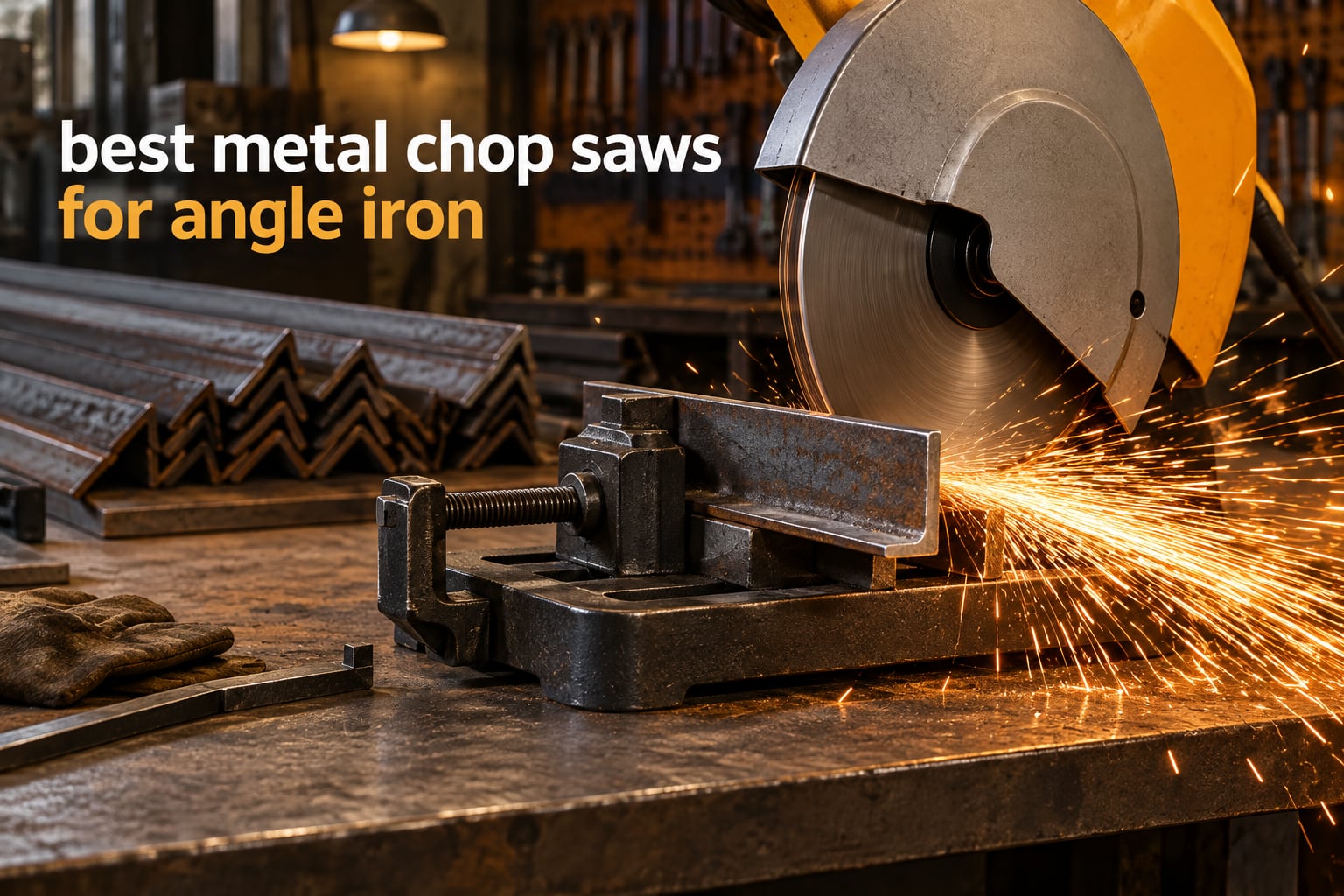
The best metal chop saw for angle iron is a cold cut saw running a tungsten carbide blade, because the teeth shear the steel instead of grinding it away, and the cut comes out cool, square and nearly burr free. Our top pick is the Evolution S355CPSL for most shops, the Makita LC1230 for fabricators cutting every day, and the Evolution R355CPS if you also cut wood and want one blade for everything.
That is the short version of a question a lot of people get wrong. Abrasive cut-off saws are cheaper to run and chew through hardened steel, but they throw a shower of hot sparks, leave a burr on every cut, and lose capacity as the wheel wears down. Cold cut saws flip that trade: the consumable costs many times more than a wheel, the cut is quiet and cool to the touch, and the edge needs one pass of a hand file before welding.
This roundup covers the 10 metal chop saws worth your attention in 2026, ranked for angle iron specifically rather than for general shop duty. We looked at blade type, cut capacity against real angle iron sizes, miter range, clamping rigidity, weight and the honest complaints in owner reviews, then matched each saw to the job it actually suits. We also built a size-by-size capacity guide so you can tell in ten seconds whether a given saw can handle the stock in front of you.
One note before we start. Every metal chop saw on this list throws sparks to some degree when it is new, burns off cutting oil, or catches a stray piece of grinding dust, and every one of them is loud enough to need hearing protection. If you are pairing a saw with other abrasive tools, our guide to the best cordless angle grinders covers the other half of a metal shop setup.
Table of Contents
Top 3 Picks: Best Metal Chop Saws for Angle Iron (October 2026)

Evolution S355CPSL
- 14 inch TCT cold cut blade
- 1800W and 1450 RPM
- 0-45 degree miter
- 3 year warranty

Makita LC1230
- 12 inch 60 tooth carbide blade
- 1300 RPM
- Tool-free quick release vise
- Cast aluminum table
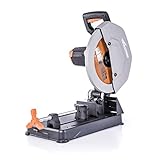
Evolution R355CPS
- 14 inch 32 tooth TCT blade
- One blade for wood and steel
- 1500W and 1550 RPM
- 120mm square capacity
Those three cover the range most buyers actually need. The S355CPSL is the all-rounder, the Makita is the heavy hitter for people who cut steel daily, and the R355CPS is the one to buy if your work is half steel and half lumber.
Best Metal Chop Saws for Angle Iron at a Glance (October 2026)
| Product | Specifications | Action |
|---|---|---|
| Evolution S355CPSL |
|
Check Latest Price |
 Evolution S14MCS Evolution S14MCS |
|
Check Latest Price |
| Evolution R355CPS |
|
Check Latest Price |
| Makita LC1230 |
|
Check Latest Price |
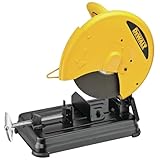 DEWALT D28730 DEWALT D28730 |
|
Check Latest Price |
 PORTER-CABLE PCE700 PORTER-CABLE PCE700 |
|
Check Latest Price |
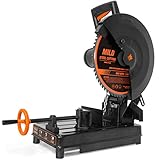 WEN CM1446 WEN CM1446 |
|
Check Latest Price |
 VEVOR 2300W Abrasive VEVOR 2300W Abrasive |
|
Check Latest Price |
 VEVOR J1G-ZB-355C-1 VEVOR J1G-ZB-355C-1 |
|
Check Latest Price |
 Yumark 933C Yumark 933C |
|
Check Latest Price |
Read that table as a map rather than a ranking. Five saws on it run cold cut blades and five run abrasive wheels, and that single distinction will affect your day-to-day experience more than any other spec.
1. Evolution S355CPSL – Best Overall Metal Chop Saw for Angle Iron
Evolution S355CPSL – Heavy Duty 14 Inch Metal Cutting Chop Saw W/ 14 Inch Carbide-Tipped Blade | Dry Cut | Miter 45° | Chop Saw For Cutting Metal – Accurate. Powerful. Reliable
1800W motor
1450 RPM
14 inch TCT blade
0-45 degree miter
3 year warranty
Pros
- Cool burr-free cuts on mild steel and angle iron
- Chip deflector keeps debris away from the operator
- Quick release cast steel vise
- Lightweight pressed steel base
- Works with the wider Evolution blade range
Cons
- Single direction miter head cannot compound
- Fence and miter set with an allen wrench
- Carbide blade cost for abrasive wheel owners
This is the saw we keep coming back to. The S355CPSL runs a 14 inch tungsten carbide tipped blade at 1450 RPM on an 1800 watt motor, and the difference between that and an abrasive saw is not subtle. The cut drop is barely warm seconds after you finish a pass through angle iron, and there is no spark shower to sweep up and no grinding dust on your clothes.
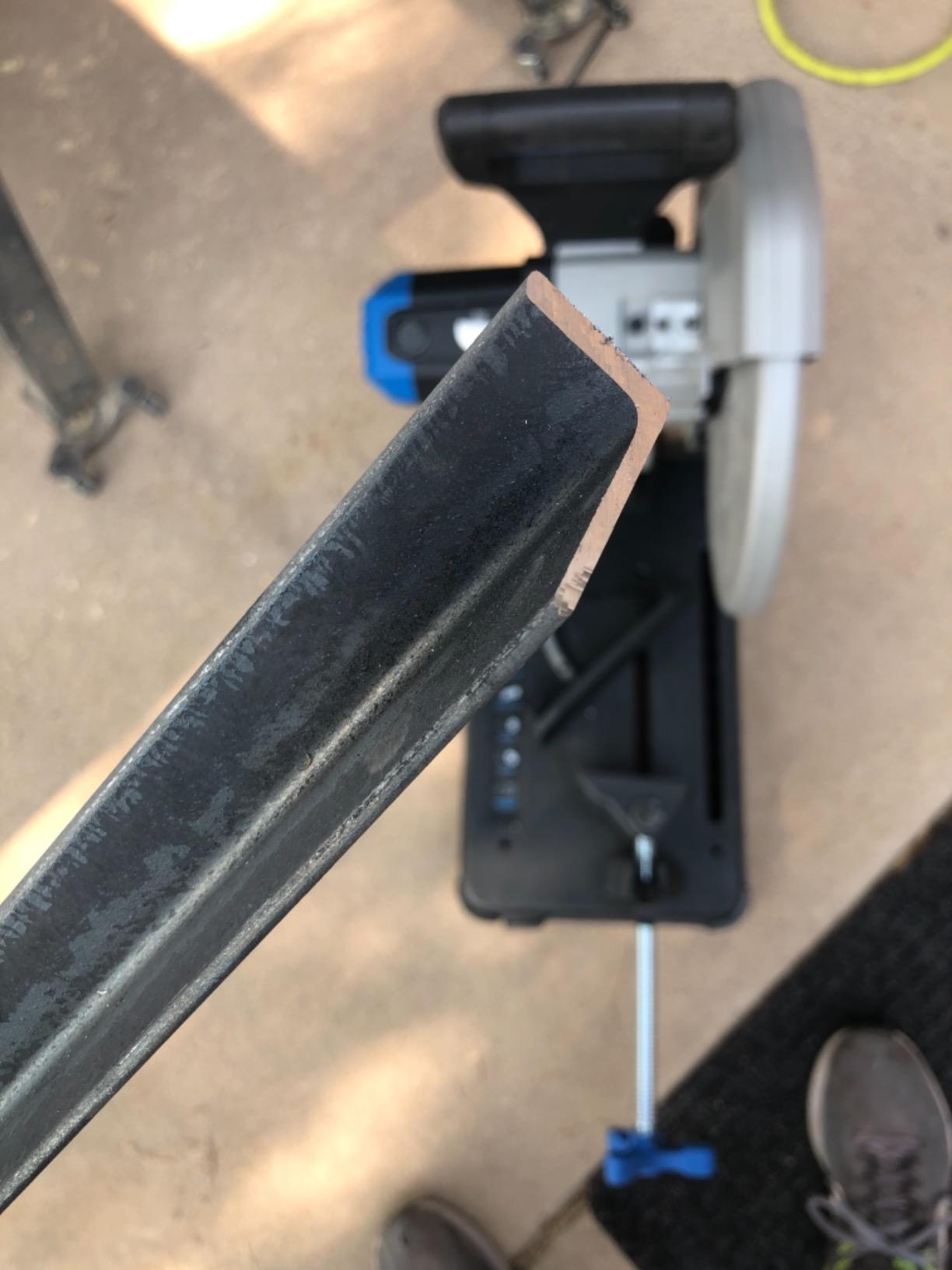
Owners consistently describe the finish in terms like mirror and coin-proof, and that claim holds up on mild steel angle. The blade shears rather than grinds, so the edge is square enough to weld to straight away and only needs a light deburr. A Garage Journal owner described cutting everything from EMT to 3 inch schedule 40 pipe on a dry cut saw and using it ten times more than his abrasive saw, which is the pattern most owners fall into.
The build is deliberately simple. You get a 15 amp motor, a lightweight pressed steel base that keeps the whole saw easy to carry to a job site, a quick release cast steel vise, and an integrated chip deflector that aims swarf away from you rather than across the table. Dimensions are 20.8 by 12.2 by 16.2 inches, so it lives on a bench rather than dominating it.
The miter head swings 0 to 45 degrees in one direction, with the cast steel vise and fence doing the work of holding the angle. It is not a compound machine, and if your frames need opposing angles in a single piece you will be flipping the stock and checking with a square. For fence posts, gussets, gate frames and square cutoffs, that is a non issue.
What the S355CPSL does well with angle iron
Square, repeatable 90 degree cuts on mild steel angle are this saw’s strongest suit, and the review data backs it up. At a 4.7 rating across 841 reviews with 84 percent five star, cut quality is not where the complaints land. The reservation that shows up most often is about miter capability, not about whether the cut is accurate.
There is also real value in blade compatibility. The same saw platform accepts Evolution blades for mild steel, thin steel, aluminum and stainless, so you are not locked into one consumable for every material you touch. A shop that occasionally cuts aluminum or stainless can swap the blade rather than buy a second saw.
Where it falls short
The single direction miter head is the main limitation, and experienced fabricators doing compound frame work will feel it. Fence and miter adjustments use an allen wrench rather than quick-set hardware, so setting a repeated angle takes a few extra seconds each time. And if you are coming from abrasive wheels, the carbide blade cost is a genuine step up in running expenses, even though owners almost universally say the saw earns it back in finish quality and shop cleanliness.
2. Evolution S14MCS – Best for Heavy Production Angle Iron Work
Evolution S14MCS 14″ Mitering Chop Saw | Cold Cut Steel Saw | EVOMAX Intelligent Motor & Blade | 3500+ Blade Life | Burr-Free Finish | Shadow Guide | +/-46° Miter | Soft Start | Reinforced Base
1800W motor
1100 RPM
80 tooth cermet blade
Plus or minus 46 degree miter
72.4 lb
Pros
- Rated 3500 plus cuts in 4 inch mild steel
- Detented plus or minus 46 degree mitering
- Electronic blade brake and soft start
- Ribbed alloy base with dual sliding clamps
- Zero airborne dust
Cons
- 72.4 lb makes it a two person move
- Highest ownership cost in the group
- Review base is still small at 73 ratings
The S14MCS is the only saw in this roundup built around a claim you can check against a number: the fitted EVOMAX cermet carbide blade is rated by the manufacturer for 3500 plus cuts in 4 inch mild steel. For a shop that cuts angle iron all day, that figure is the entire argument. The blade is handcrafted in Japan, and the tooth count is 80.
The motor is described as intelligent. It runs at 1100 RPM with active speed optimization, soft start, and an electronic blade brake that stops the blade rather than letting it coast. That brake matters more than it sounds, because a cold cut blade coasting to a stop under its own momentum is how carbide teeth get knocked loose, and the soft start is what keeps it from tripping a residential circuit on startup.
Where this saw separates itself is the miter head. It detents through plus or minus 46 degrees with a stainless steel gauge, so it is a true compound-capable mitering machine in the way the rest of this list is not. The reinforced fence, ribbed alloy base, and dual sliding clamps are built to hold heavy stock without flex, and 89 percent of ratings are five star.
Owners frame it as fabricator-grade equipment, and the recurring benefits they report are speed and cleanliness rather than just accuracy. The claim is roughly four times faster than an abrasive saw with weld-ready results and no airborne dust, which in a small shop with a door opening onto a driveway is worth real money.
Who this saw is for
If you cut angle iron daily, cut 3 inch and 4 inch stock, or build the same frame part over and over, the blade life rating is the number that justifies this machine. Nobody is claiming it is a better saw for a weekend project, because the mass and the consumable cost make it a poor fit for that.
The compound miter capability is the second reason. Shops doing handrails, stair stringers, or framed structures with opposing angles need both directions of tilt from one setup, and this is one of only two saws here that does it.
Where it falls short
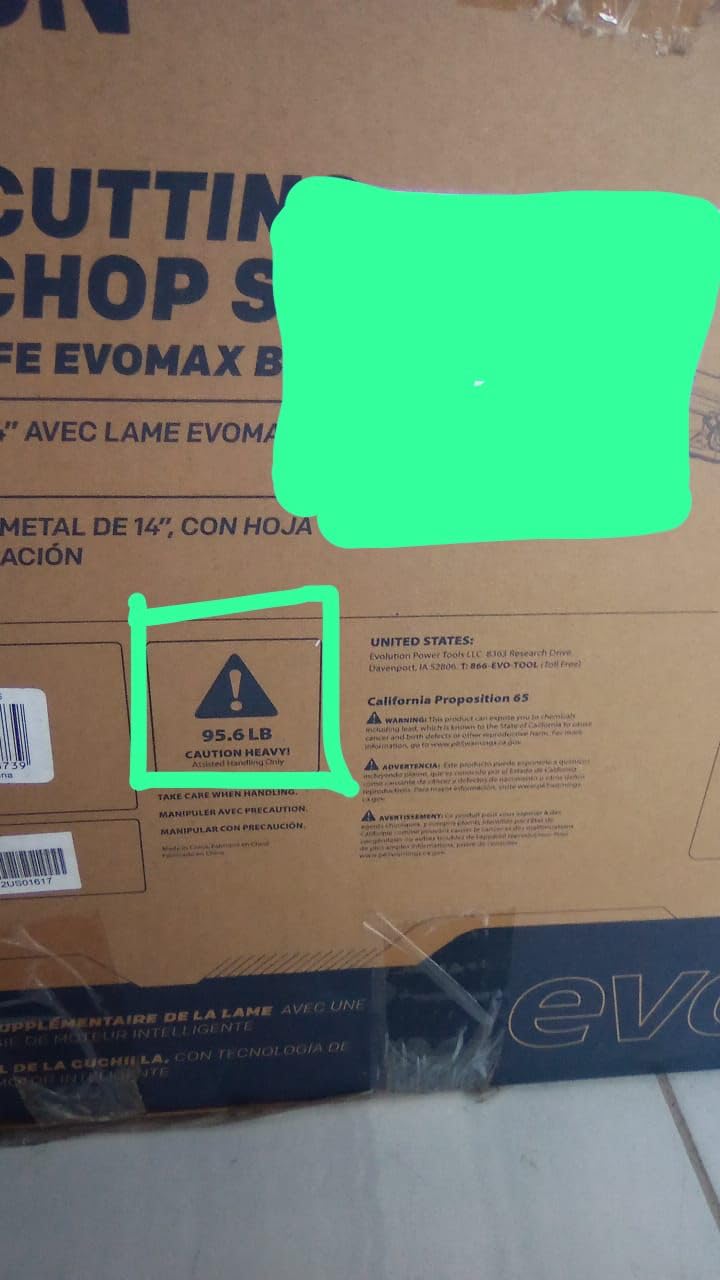
At 72.4 pounds and 17.5 by 27.75 by 21.6 inches, this is a two person move and it does not belong in a vehicle bed for a job site. The premium cost and the specialty cermet blade raise ownership expenses well above every other saw here. And with only 73 ratings behind it, there is not yet the long ownership history that buyers on forums say they trust, which is usually a five to ten year track record.
3. Evolution R355CPS – Best Value Cold Cut Saw for Angle Iron
Evolution Power Tools R355CPS 14-Inch Chop Saw Multi Purpose, Multi-Material Cutting Cuts Metal, Plastic, Wood & More Miter Cut up to 45˚ Degrees TCT Blade Included
1500W motor
1550 RPM
14 inch 32 tooth TCT blade
120mm square capacity
3 year warranty
Pros
- One blade cuts wood
- nail-bearing lumber
- decking
- steel and plastic
- Largest stated capacity in the value tier
- Quiet and near spark free on mild steel
- 15 amp motor rated for 160 hour minimum life
- Owners report mirror-like finishes on angle iron
Cons
- Fence can twist when clamping stock
- Clamp screw platen is light duty with some play
- Single direction miter only
The R355CPS answers a problem most roundups ignore. If you are building a garage or a fence, a large share of your cuts are dimensional lumber and composite decking, not steel. This saw ships with a 32 tooth tungsten carbide tipped multi-material blade that cuts wood, nail-bearing lumber, decking, mild steel and plastic with no blade change, and it still gives you a cold cut finish on angle iron.
The capacity figures are the best in the value tier. Maximum rectangle is 95 by 180mm, maximum square is 120 by 120mm, and maximum round is 130mm, which puts it comfortably past 1 inch angle and at the edge of 2 inch. A 15 amp high torque motor rated for a minimum 160 hour motor life backs it up, and there is a three year warranty.
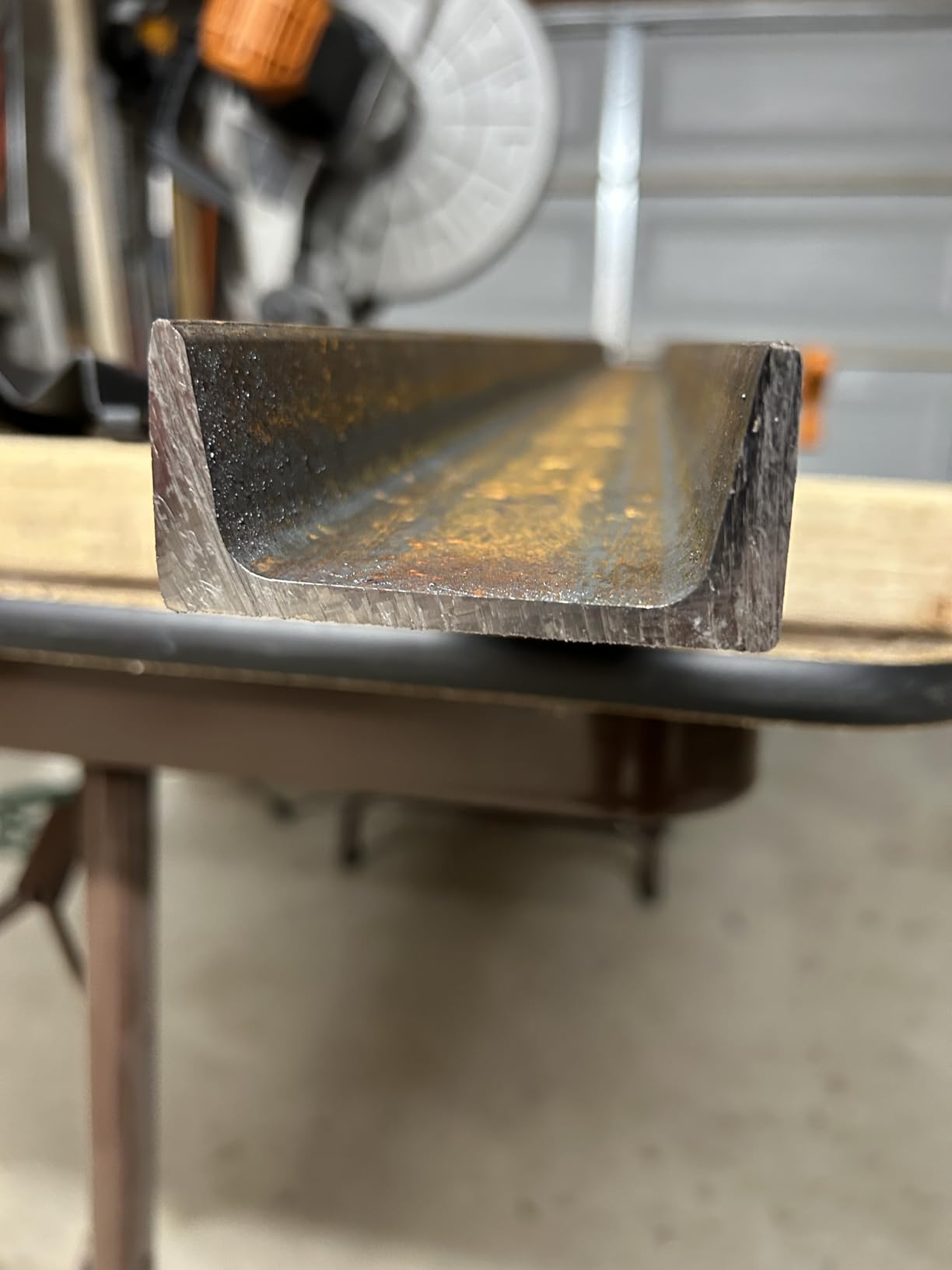
Reviewers repeatedly contrast this saw favorably with abrasive cut-off saws on quiet operation, minimal sparks, cool cuts and reduced shop debris. The learning curve that catches new owners is that the saw has to be allowed to work. Forcing the feed rate dulls the blade and generates heat, and several owners report fitting a premium steel blade once they move to steel-specific work.
At 4.6 across 352 reviews, it sits just behind the two picks above it on rating while undercutting both on scope. For a mixed-material shop this is the machine we would put in the middle of the floor.

What works well here
Cut finish on mild steel is the headline. Owners report mirror-like results on angle iron and near-silent cutting compared to abrasive wheels, and a fence-frame builder gets a square cut that a wood saw cannot produce at any price. Blade versatility means you are not maintaining two saws if you also frame with lumber.
It is also the easiest of the cold cut saws to justify on cost, because a single blade covers five material categories. That is the argument the R355CPS wins over the S355CPSL for part-time and hobby fabricators.
Where it falls short
The most common complaint is fence flex. When stock is clamped hard the fence can twist enough to introduce about a degree of angle error, so verify your miter with a square after any setup change. The clamp screw platen is lighter duty than you would like and has some play before it bites. And like the S355CPSL, it miters in one direction only, so compound cuts mean flipping the workpiece.
4. Makita LC1230 – Most Compact for Fabricators Who Cut Steel Daily
Makita LC1230 12″ Metal Cutting Saw
15A motor
1300 RPM
12 inch 60 tooth carbide blade
0-45 degree fence
42.5 lb
Pros
- Carbide blade claimed 50 times longer than abrasive wheels
- Rigid cast aluminum table and machined steel vise
- Tool-free quick release vise and fence
- Shaft lock for single wrench blade changes
- Owners report it still working after 10 years
Cons
- 12 inch blade limits capacity on larger angle and plate
- Carbide replacement blades are expensive
- Chip collector captures about half the shavings
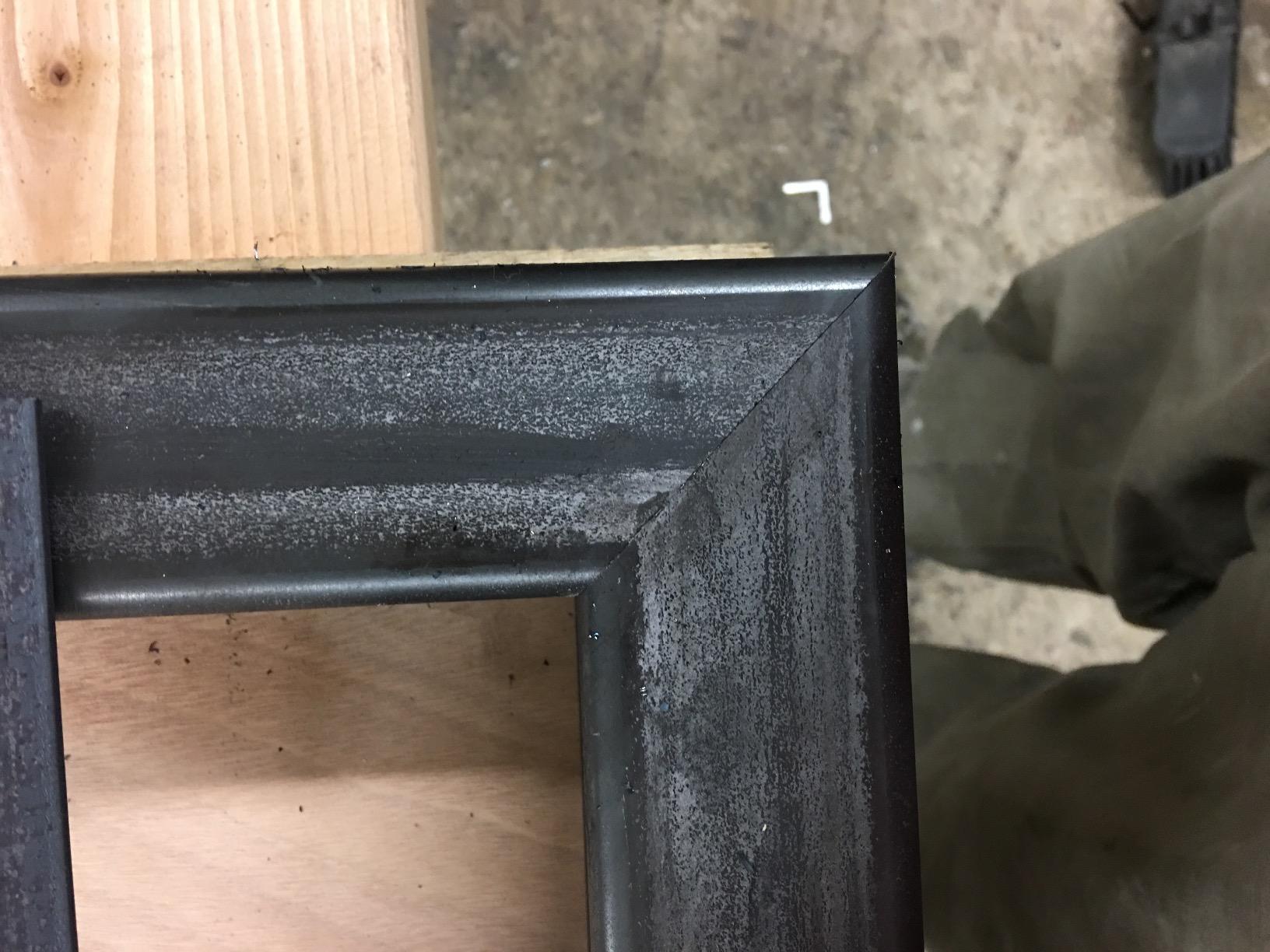
The LC1230 is the oldest design on this list and the one with the longest track record, and that history is its main argument. Owners describe fabricators and welders who bought it as a decisive upgrade from abrasive saws, and one long-term owner reports the saw still working after a decade of cutting tubing, channel and angle iron.
The blade is a 12 inch 60 tooth carbide tip rated by the manufacturer to last roughly 50 times longer than an abrasive wheel. At 1300 RPM on a 15 amp motor, it makes near-instant cold cuts with edges that are square and weld ready, and cool enough to handle right after the pass with minimal deburring.
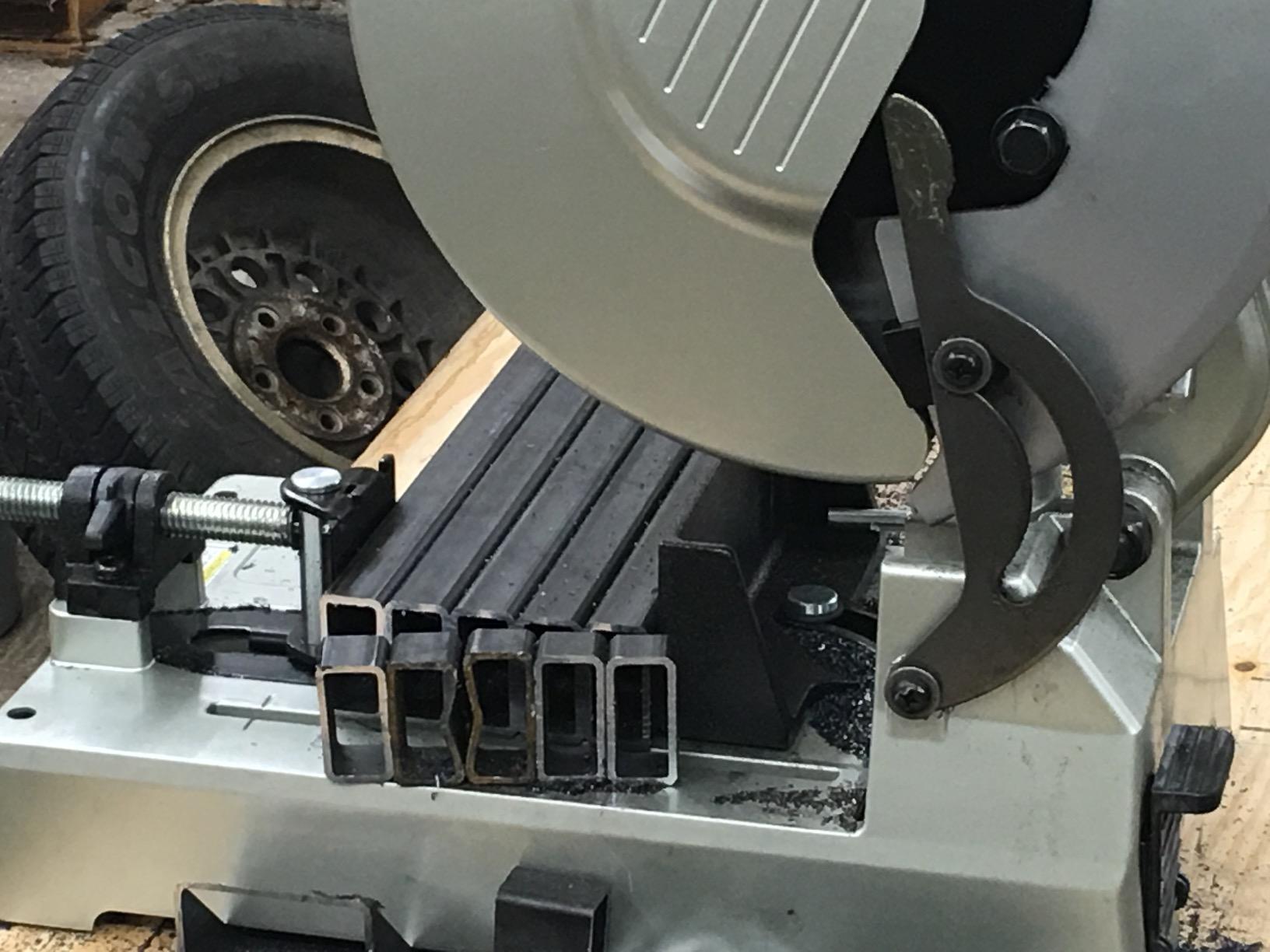
Build quality is where this saw separates itself. The cast aluminum table does not flex, the machined steel vise holds stock and miter angles under real load, and both the vise and the support fence release without tools, so a repeated cutoff setup is quick. A shaft lock means a blade change takes a single wrench, and the fence adjusts 0 to 45 degrees.
That said, the 12 inch diameter is a real constraint. A 14 inch saw simply reaches further past the outside corner of a leg, so the LC1230 is comfortable through 1 inch angle and workable at 1-1/2 inch, but 2 inch and up is where the 14 inch cold cut saws pull ahead.
Where it earns its place
Blade longevity is the reason fabricators keep buying this saw. A carbide blade that runs 50 times longer than a wheel changes the economics of consumables completely, and long-term owners treat blade cost as the only real downside rather than a dealbreaker. The rigid table and vise also hold angles better than pressed steel bases on lighter machines.
It is the pick for someone cutting steel every day at 1 inch or under, who values a rigid table and a decade of proven reliability over maximum capacity.
Where it falls short
Carbide replacement blades are expensive, and the stainless steel version in particular is reported as short-lived, so if you cut a lot of stainless you should price that consumable carefully. The chip collector captures only about half the shavings, which means a shop vacuum is still part of the workflow. Startup current can trip a residential breaker. And with a 12 inch blade, this is not the saw to buy if 2 inch and heavier angle is your regular work.
5. DEWALT D28730 – Straightforward Abrasive Saw for Light Shop Work
DEWALT Chop Saw, 14-Inch (D28730)
2300W motor
14 inch abrasive wheel
45 degree pivoting fence
Quick-lock vise
3 year warranty
Pros
- 2300W motor with overload protection
- Quick-lock vise for fast clamping on mixed stock
- 45 degree pivoting fence for accurate angle cuts
- Ergonomic metal handle reduces fatigue
- 3 year limited warranty
Cons
- Abrasive wheel runs hotter with more burr and debris
- Messier and slower than cold cut for repetitive work
- Needs eye and hearing protection plus shop cleanup
The D28730 is here for a specific situation: you cut angle iron occasionally, mostly in small batches, and you would rather not own a carbide consumable. A 2300 watt motor with overload protection and a 14 inch abrasive wheel will cut ferrous metal all day, and the quick-lock vise makes swapping between 1 inch angle and tube fast.
The 45 degree pivoting fence is the feature owners single out for accuracy on angled cuts, and the ergonomic metal handle is designed to reduce hand fatigue through repeated cutoffs. Those two things together are why this saw holds a 4.6 rating across 518 reviews despite being an abrasive machine.
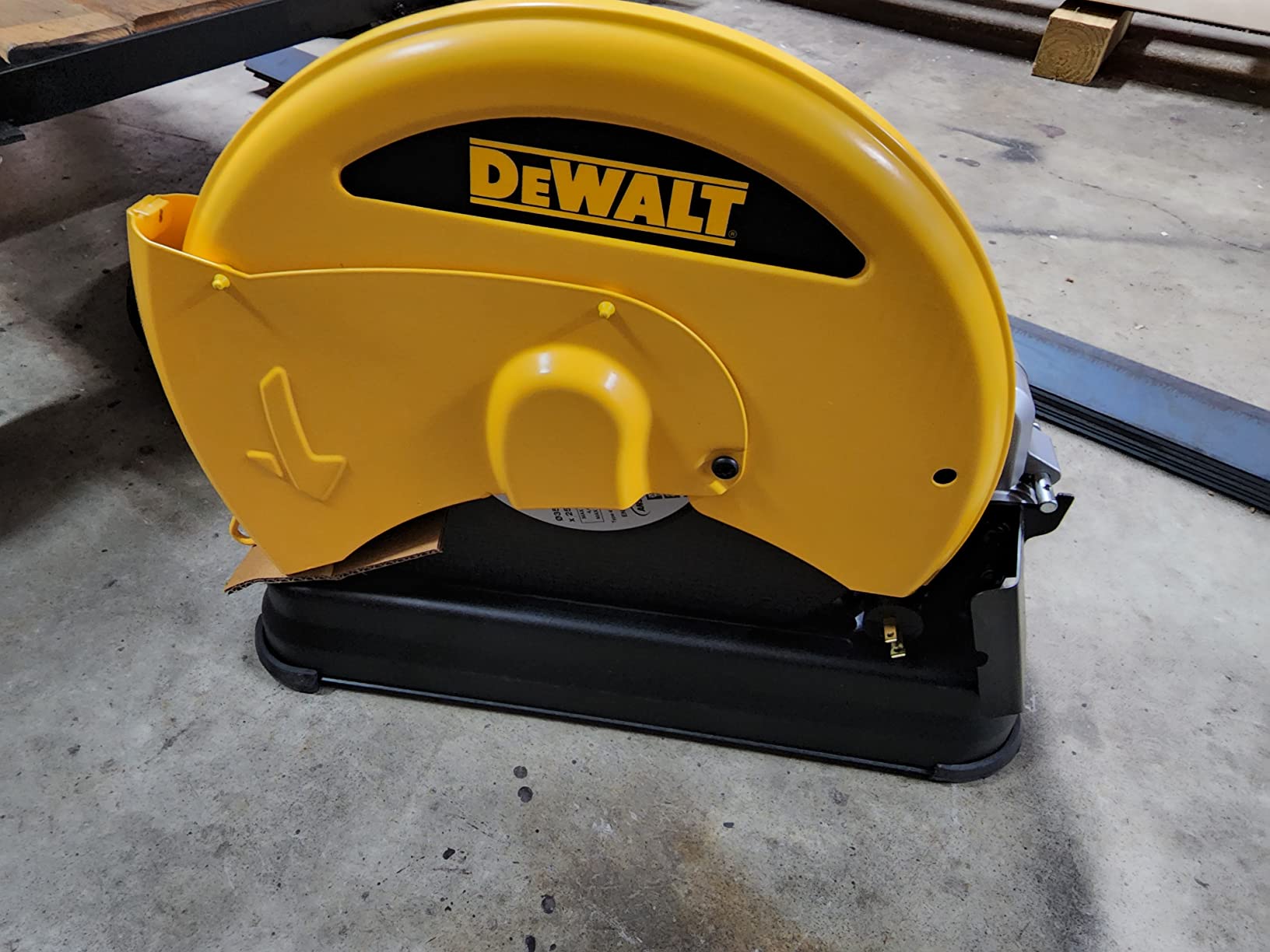
Be clear-eyed about what you are buying. Abrasive cutting grinds the steel away at high speed, so the cut runs hotter, throws more debris, and leaves a burr that needs a grinding wheel before welding. Forum owners on Wheel Horse and Practical Machinist both note the abrasive saw throws a shower of hot sparks that creates an injury and fire risk and a real mess in the shop, and that is the trade you accept here.
There is one practical upside to the abrasive format that gets overlooked. Wheels handle hardened and high speed steel far better than carbide teeth, and the Practical Machinist forum is full of people who keep an abrasive saw on hand specifically for occasional hardened stock. If that is part of your work, this saw serves a purpose no cold cut machine fills.
Who suits this saw
Weekend builders, occasional repair work, and anyone who wants familiar abrasive-wheel economics with a brand warranty behind it. The pivoting fence and quick-lock vise are genuinely well executed, and the 2300W motor has the headroom to keep the wheel from bogging on 1 inch angle.
Where it falls short
The cut quality ceiling is low. Cuts run hotter, with more burr and debris than a cold cut saw, and abrasive work is measurably messier and slower for repetitive cuts. You will need eye and hearing protection, a shop vacuum, and time to grind burrs off every cut before a weld fits. If your plan is production work, this is the wrong format.
6. PORTER-CABLE PCE700 – Most Versatile and the Most Reviewed Saw Here
PORTER-CABLE Chop Saw, 15-Amp, 14-Inch (PCE700)
15A motor
3800 RPM
14 inch abrasive wheel
45 degree miter
32 lb
Spark deflector
Pros
- Largest review base in the group at 2300 ratings
- Quick-release material clamp speeds setup
- Spark deflector protects the operator and the sight line
- Well established reputation for straight square cuts
Cons
- Abrasive wheel melts and burns the edge leaving an overhang and burr
- Included wheel is weak on flat-laid stock
- Miter angle markings are approximate and need an instrument
- Messy dusty operation
- Not suited to production work
With 2300 ratings the PCE700 carries far more owner history than anything else on this list, and that history is unusually consistent. Consensus treats it as a solid entry level metal chop saw for weekend and light shop work, and the reasons owners give are clamping speed, angle adjustment, and a 15 amp 3800 RPM motor with replaceable brushes.
The spark deflector is worth calling out. It sits behind the wheel, keeps burning embers off the operator, and keeps the cut line visible, which matters more on a cheap saw than it does on a premium one because the guards on budget machines are often the first thing simplified.
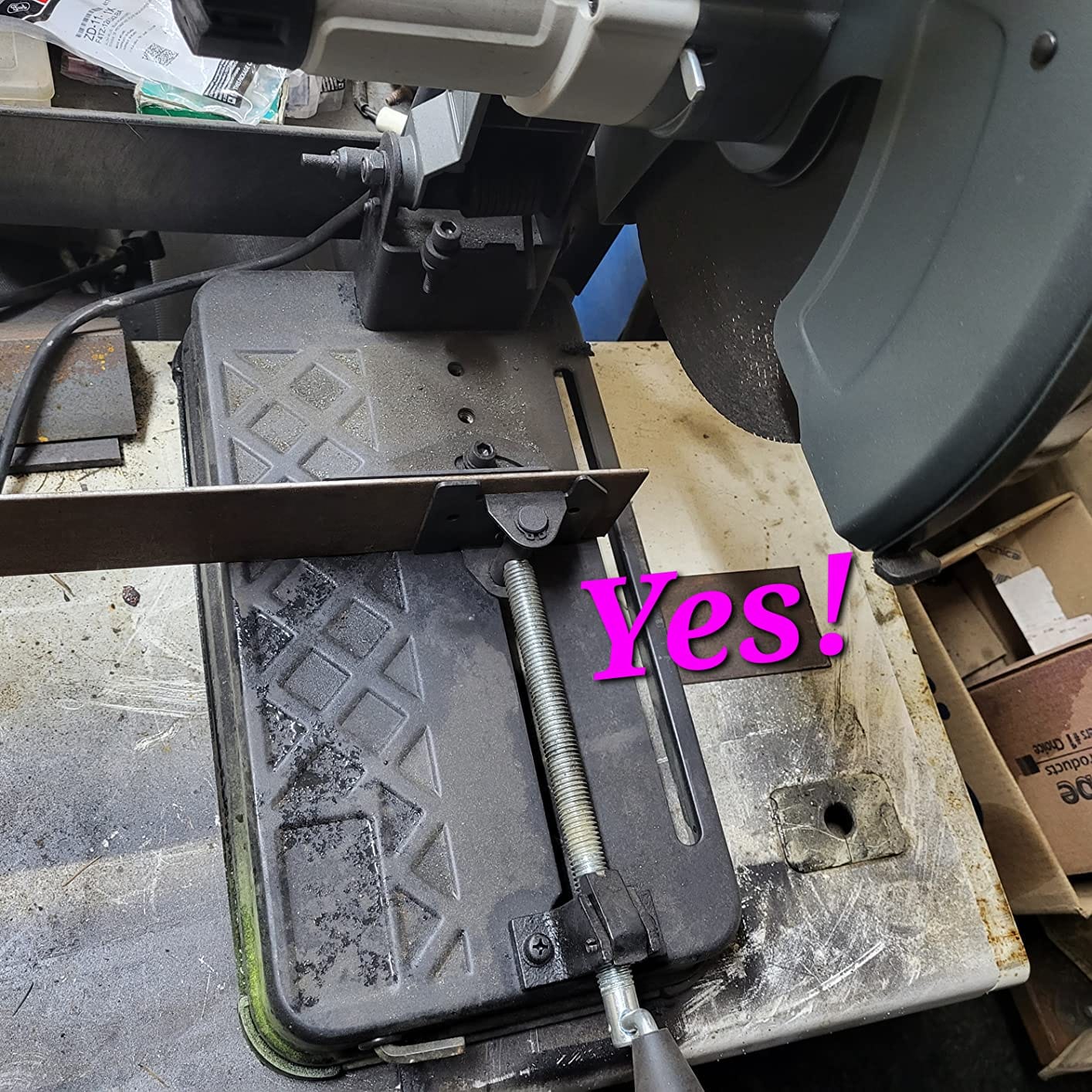
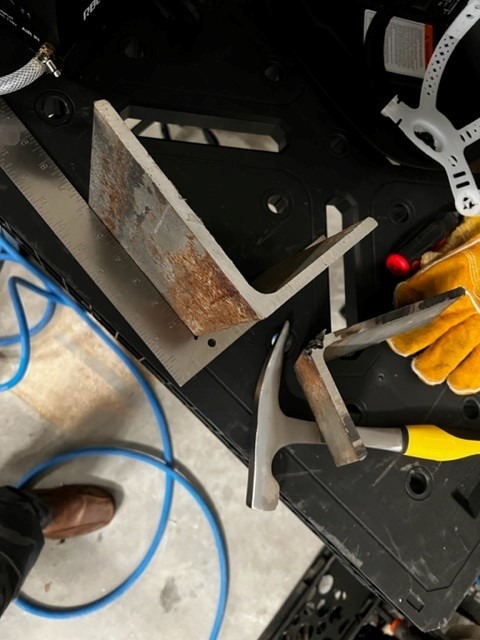
What owners repeatedly explain is that cut quality depends entirely on technique. Standing the stock on end and easing pressure so the wheel does the work produces a straight, square cut. Forcing the cut or laying the stock flat burns the material, breaks the disc, and leaves an overhang that has to be ground off.
That teaching point is the most useful thing in the reviews. It is also why so many owners swap the included wheel for a name brand disc shortly after buying, and why one of the most common notes is that the supplied wheel is weak on flat-laid stock.
Why this one keeps coming up
Review volume tells you something real about a tool. When 2300 people describe the same behavior, the failure modes are well known and the workarounds are well established. For a first metal saw, that predictability is worth more than a longer specification list.
The 32 pound weight and quick-release material clamp also make it the easiest machine here to move between the garage and a yard job, and the miter adjustment through 45 degrees covers frame work adequately.
Where it falls short
The abrasive wheel format is the whole story. It melts and burns the material and leaves an overhang and burrs that need deburring, the miter angle markings are approximate enough that you should verify with an instrument, and the dust and sparks mean a shop vacuum is mandatory. Owners are explicit that it is not suited to production work, and we would not put it near a 2 inch and up workload.
7. WEN CM1446 – Affordable Cold Cut Saw With a Blade Fitted
WEN CM1446 15-Amp 14-Inch Multi-Material Cut-Off Chop Saw with Carbide-Tipped Metal-Cutting Saw Blade
1800W motor
1450 RPM
14 inch 66 tooth carbide blade
3.75 x 7.25 inch rectangle
2 year warranty
Pros
- 66 tooth carbide blade pre-installed so it cuts mild steel out of the box
- One blade handles ferrous
- non-ferrous
- plastic and wood
- Generous capacity for the tier
- Hold-down chain plus steel plate base for stability
Cons
- 45 degree fence is the only mitering range with no compound capability
- Chain style hold-down is less rigid than a screw vise
- Smaller brand with limited long term field history
The WEN CM1446 exists because the most common complaint about cheap cold cut saws is arriving without a usable metal blade. This one ships with a 66 tooth carbide tipped professional mild steel blade, the BL1466, already installed, and it is designed to handle ferrous metals, non-ferrous metals, plastics and wood with that single blade.
Capacity is the surprise. The stated figures are a 3.75 by 7.25 inch rectangle, 5.125 inch round tube, and steel plate up to 0.5 inch thick, which on paper covers a great deal of the angle iron you would cut in a home shop. A 15 amp motor rotates the blade at up to 1450 RPM, the same band as the Evolution cold cut saws.
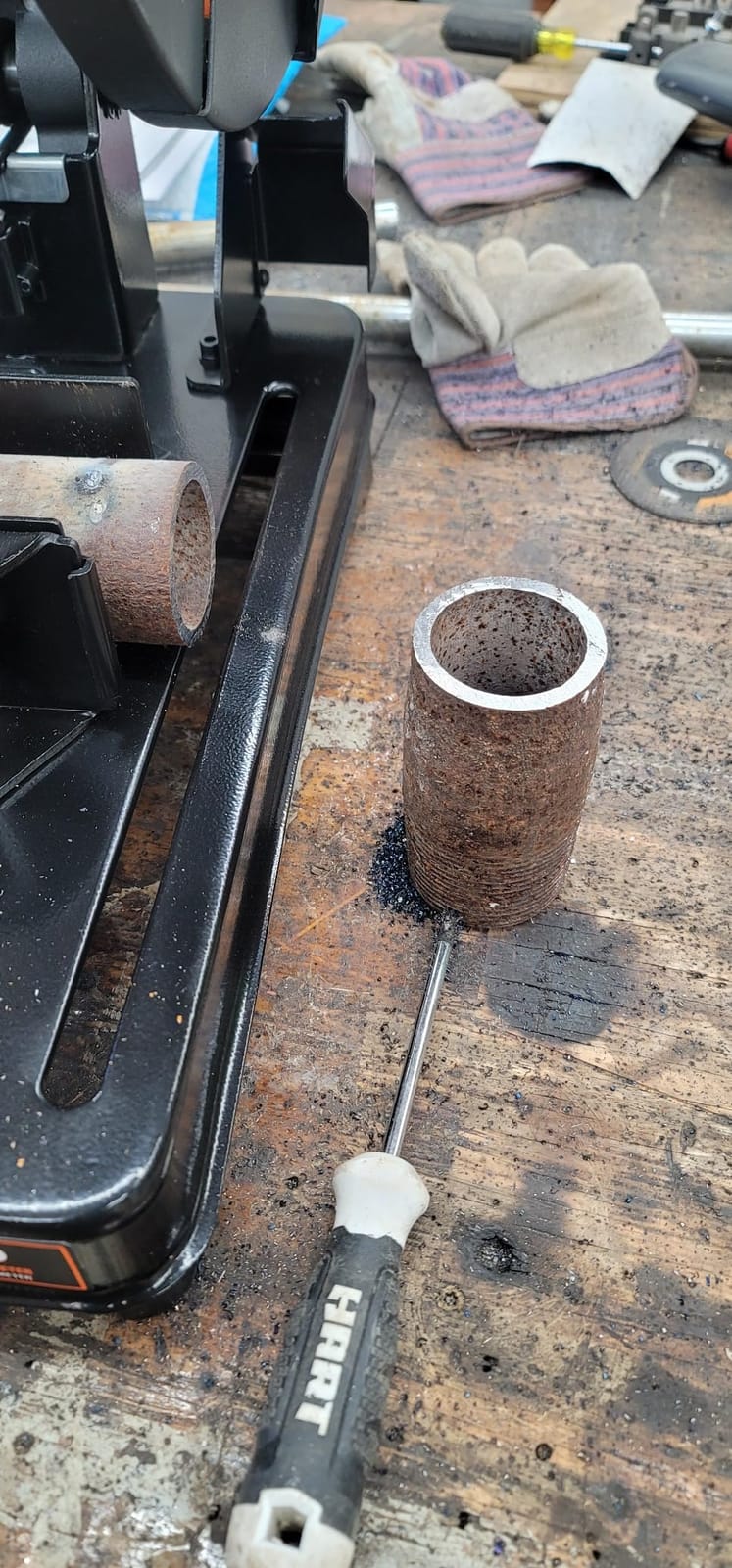
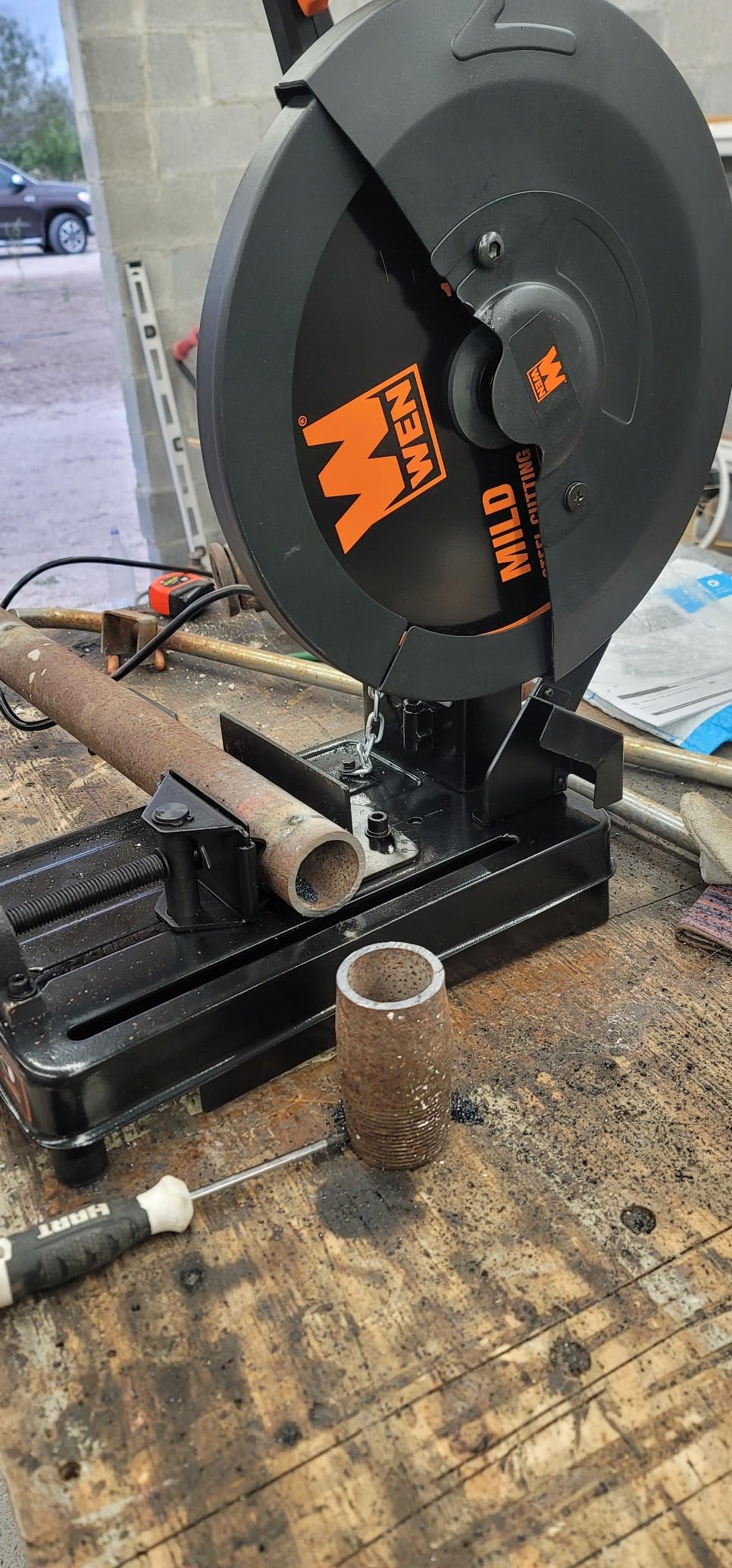
Owners value it as an affordable entry into cold cutting, and the carbide blade and single blade versatility are the draws. Sentiment is solidly positive with 68 percent five star ratings, and the relatively few complaints center on mitering range and clamping rigidity rather than on cut quality or power, which is the profile you want from a first metal saw.
The package includes a 45 degree adjustable fence, a hold-down chain, a steel plate base, and a two year warranty. That chain hold-down is the main compromise: it clamps lighter than a screw vise, so it is fine for square cutoffs on 1 inch angle and less comfortable holding a heavy section at a precise angle.
Where it fits
This is the saw for someone who wants cold cut quality without choosing Evolution, and it handles the 1/2 inch to 1 inch angle range that most garage and fence work is made of. The included blade removes the single biggest stumbling block for new buyers, and the 0.5 inch plate capability is genuinely useful for base plates and gussets.
Because it handles non-ferrous as well as ferrous material, it is a reasonable companion saw for a shop that occasionally cuts aluminum or copper without buying a dedicated blade for each.
Where it falls short
The 45 degree adjustable fence is the only mitering range, and there is no compound capability at all. Chain style clamping is less rigid than a screw vise when you want a precise miter held against a heavy workpiece. And with 95 ratings and a smaller brand name, you have far less long term field history than an Evolution or Makita machine, which is the kind of evidence forum buyers consistently say they trust.
8. VEVOR 14 Inch 2300W – Budget 2300W Abrasive Saw With Mixed Reviews
VEVOR Abrasive Chop Saw 14in/35cm Blade 2300W 3600RPM Steel Cutting Machine
2300W motor
3600 RPM
14 inch 80 tooth abrasive blade
0-45 degree tool-less fence
30 lb
Pros
- Thicker wave-pattern vise adds clamping friction and cuts wobble
- 80 tooth blade resists segment breakage
- Tool-less 0-45 degree fence adjustment
- Full protective spark guard wraps the blade on lift
- Arrives with the blade installed
Cons
- Thin sheet metal bases arrive bowed and out of square
- Fence is not square out of the box and the angle stop loses alignment
- Extended base has no clamping surface
- Low capacity limit at 1/4 inch thick tube
- Reports of motor brush and cord failures
The power in this saw is real. A 2300 watt motor at 3600 RPM delivers what owners describe as cold feeling cuts on 4mm steel and 28mm solid bar, and the thicker wave-pattern vise gives more clamping friction than most machines in this class, which reduces wobble at the cut.
Two design touches stand out. The fence adjusts 0 to 45 degrees with no tools at all, which is unusual at any price, and the full protective spark guard wraps the blade as it lifts rather than sitting off to one side. The 80 tooth wheel also resists segment breakage better than thinner wheels, and the saw arrives with the blade installed so there is no assembly.
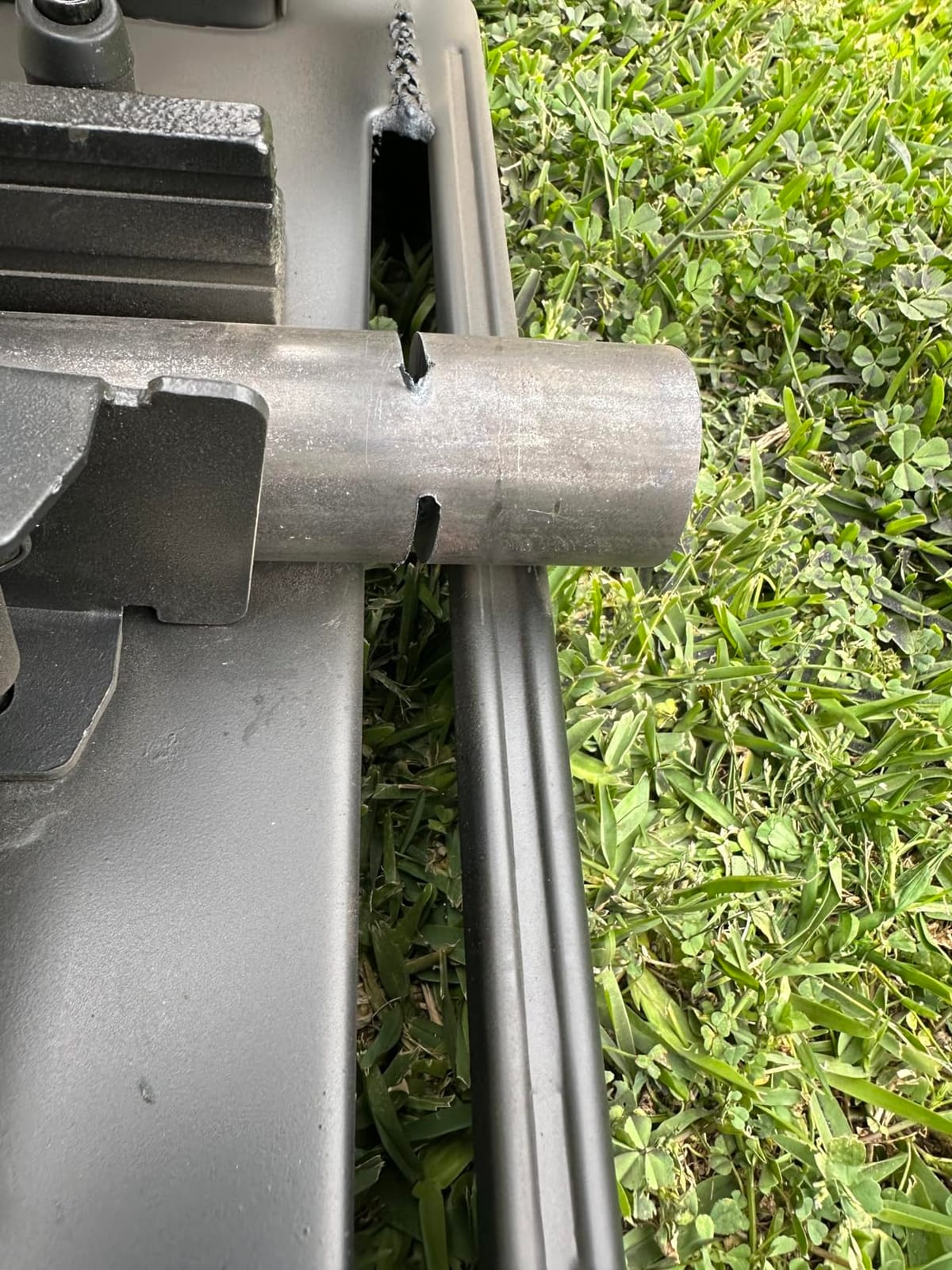
Reviews on this machine are sharply polarized, and the reason is the base. Multiple owners report thin sheet metal bases and extended bases arriving bowed and out of square, which pushes cuts out of true before you have made a single cut. The fence is also not square out of the box, and the built-in angle stop loses alignment after a few cuts, so plan on truing it on day one.
There are other physical limits worth naming. The extended base is a U profile with no clamping surface, so you cannot secure material to it. Capacity runs out at 1/4 inch thick tube, and the motor bogs and slows under heavy pressure. A minority of owners also report motor brush and cord failures within hours of use.
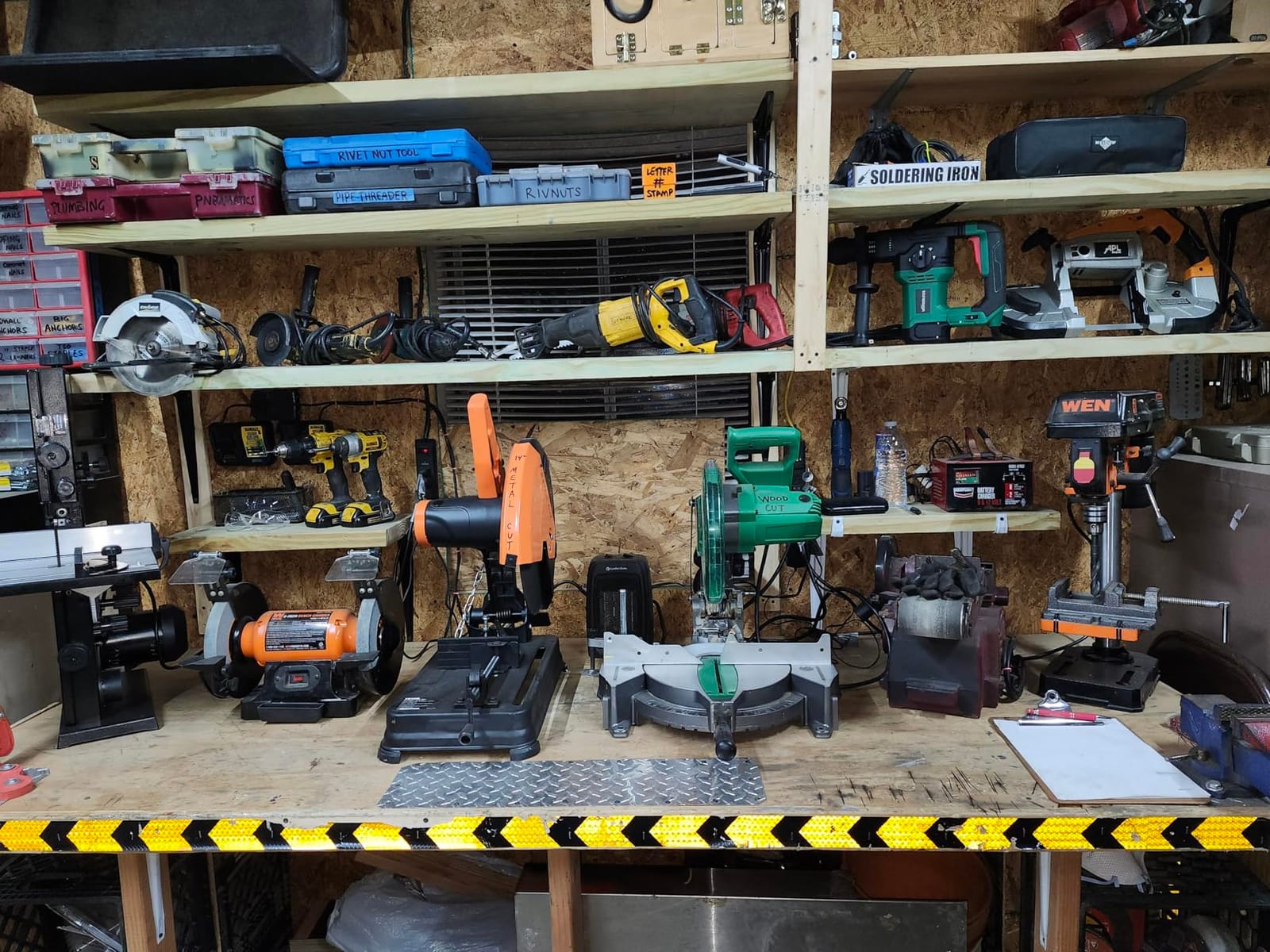
When it makes sense
If you buy this, buy it for light gauge work. Rebar, thin angle, 28mm solid bar, and general shop cleanup cutting are where the power and the tool-less fence shine. The spark guard is a genuine safety improvement over open-wheel budget saws, and for someone cutting small sections a few times a month that combination is workable.
The saw is also a teaching case in why you should check a base for flatness before your first cut. Several owners simply trued up the fence and then rated the machine highly, which tells you the underlying machine is fine once it is set up.
Where it falls short
Quality control is the key risk. The one and two star shares are the highest of any saw in this roundup, and the complaints cluster on bowed bases, out-of-square fences, and motor failures rather than on cut quality. The capacity ceiling is low for angle iron work, the awkward high grip at bench height is a real ergonomic complaint, and warranty support has been described as slow and unhelpful by some owners.
9. VEVOR J1G-ZB-355C-1 – Welded-Base Abrasive Saw That Runs Cool
VEVOR Chop Saw, 14-inch Abrasive Wheel, 2000 W Motor, 3500 r/min Speed, 0-45° Adjustable Cutting Angle, Metal Cutting Chop Saw for Metal Square and Flat Tubes, I-Shaped Steels, Channel Steels
2000W motor
3500 RPM
14 inch abrasive wheel
0-45 degree angle
Welded steel base
28.8 lb
Pros
- Welded steel base instead of a thin stamping
- 2000W motor at 3500 RPM with very little vibration
- Soft start prevents tripping a 15 amp circuit
- Welded vise with test cuts reported square from the box
Cons
- Zero degree fence stop needs fine tuning
- Angle scale is a cheap vinyl sticker
- Awkward handle and trigger placement
- Light gauge base still flexes enough to push offcuts around
This VEVOR is the better engineered of the two abrasive saws on this list, and the difference is the base. It uses a welded steel base rather than a stamped sheet, at 28.8 pounds, and owners consistently describe it as stable with minimal vibration compared to saws that share its general class.
The 2000 watt 15 amp motor runs at 3500 RPM and cuts heavy steel with a noticeable lack of vibration. Soft start is fitted, which stops it tripping a 15 amp circuit on startup, and the auto-return guard prevents accidental blade contact on the down stroke. Owners report test cuts coming out square from the box.
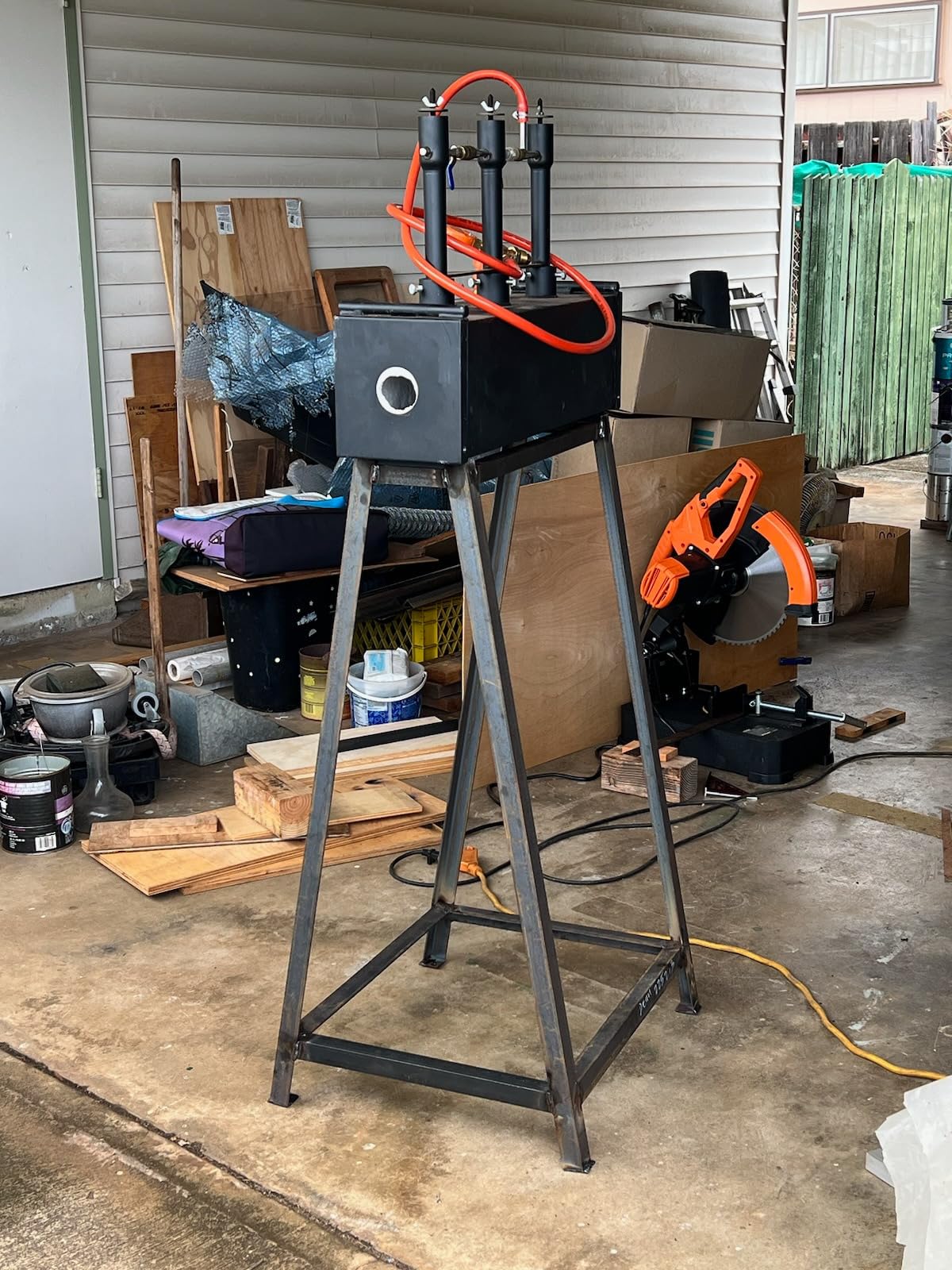
It also handles heavy gauge better than its abrasive siblings. The wheel is listed at a 6.3 inch cutting width and 3.94 inch thickness, which is a substantial abrasive wheel, and combined with the welded base it behaves more like a small industrial machine than a budget consumer saw.
The fix-it themes in reviews are consistent and all cosmetic or alignment related. The fence pivot bolt clearance means the zero degree stop is not perfectly square and needs fine tuning, the angle scale is a vinyl sticker already peeling rather than an engraved dial, and the fence has a sloppy tapered swivel guide hole that some owners machine a bushing to fix.
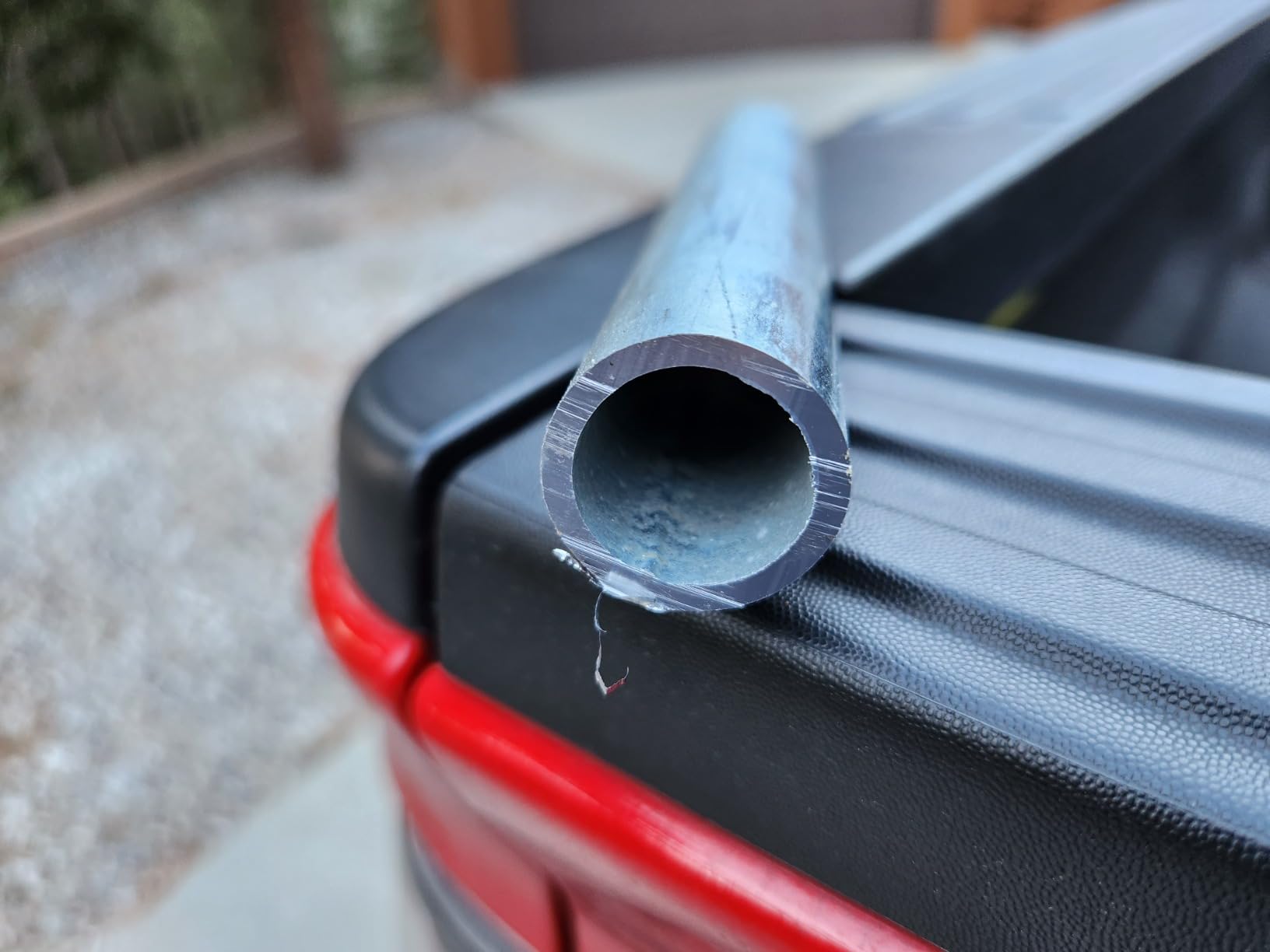
What works well
Stability is the whole pitch. A rigid base means the cut does not creep, the 3500 RPM wheel stays loaded instead of bogging, and the low vibration means you can work around it without bracing the machine with your body. For anyone who has used a flexing stamped base, that is the feature you notice most in the first hour.
It is listed for cutting metal square and flat tubes, I-beams and channel steel, which makes it a reasonable budget option for structural stock as well as angle.
Where it falls short
The handle and trigger placement is awkward, requiring two hands and reducing control, and that is the most common ergonomic complaint. The base, while welded, is still light gauge enough to flex and push cut-off pieces across the shop. And the fence assembly needs realign work before you trust an angle, which is a fifteen minute job you should budget for rather than discover mid-project.
10. Yumark 933C – Budget Angle and Rebar Saw for Occasional Work
Yumark Abrasive Chop Saw, 2200W 3800RPM Steel Cutting Machine, Metal Cutting Saw with 14in Blade for Rebar, Angle Steel, Hollow Pipe Cutting
2200W motor
3800 RPM
14 inch abrasive wheel
Cuts rebar angle and tube
Dual insulation
Pros
- 2200W motor with directional air exhaust for heat dissipation
- Non-slip base and stable clamping reduce wobble
- Lightweight and easy to carry between jobs
- Cuts rebar
- angle
- pipe and aluminum with the right wheel
Cons
- Does not ship with a blade
- A 14 inch wheel must be purchased separately
- Some units arrive damaged with a thin frame that bends
- Base flexes and cuts come out crooked
- Small unbranded manufacturer with limited support
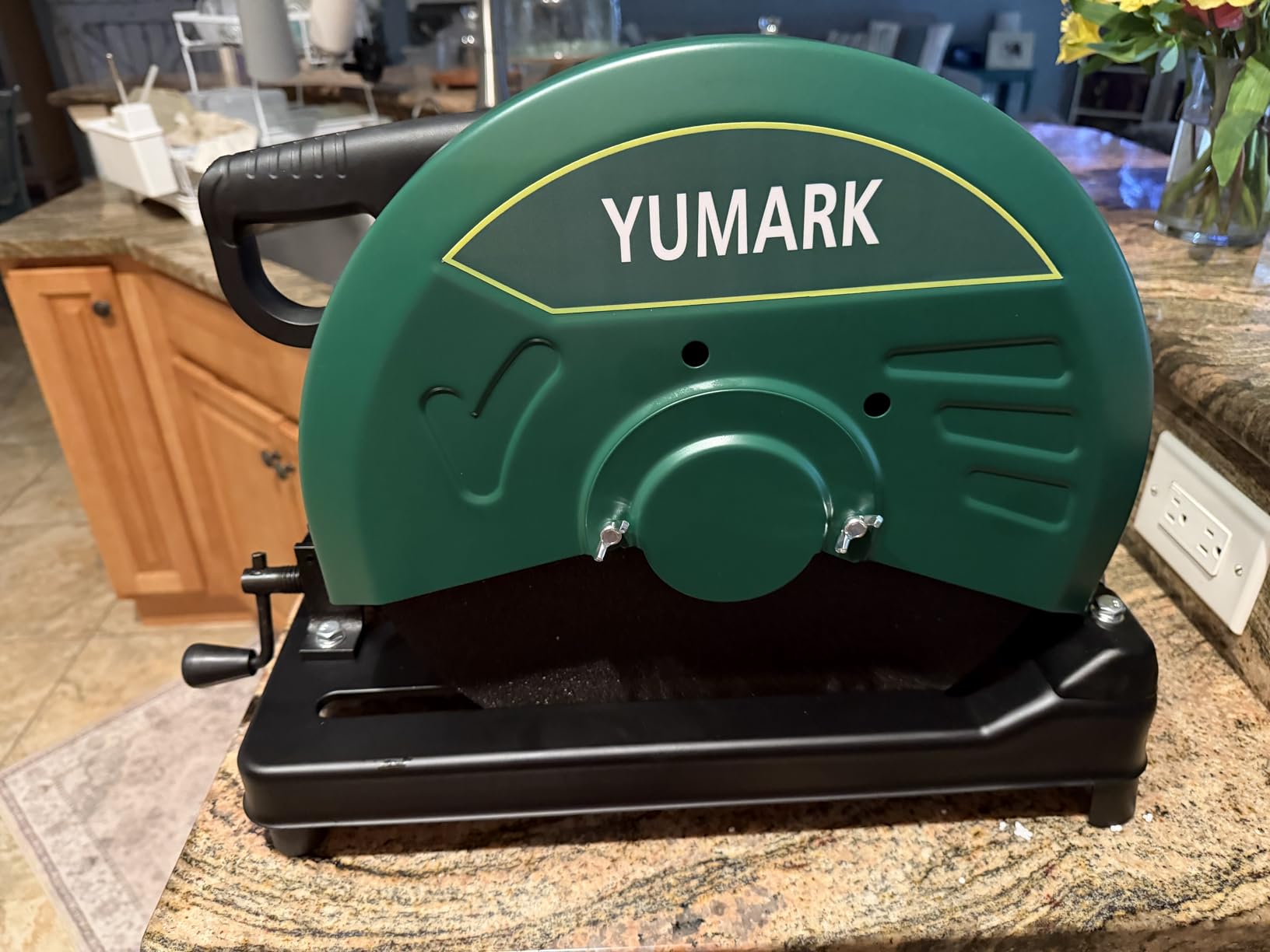
The 933C is the simplest machine here and the one with the least to go wrong, provided you buy it for the right reason. It is a 2200 watt 14 inch abrasive chop saw running at 3800 RPM, built for steel bars, rebar, solid round stock, angle steel, hollow tube and iron, and it is the lightest thing to carry between jobs on this list.
The motor has an upgraded design with directional air exhaust for better heat dissipation and overload resistance, and the saw uses a dual insulation structure for operator safety. The non-slip base and material clamping device are what keep it from wobbling during a cut, and at a 4.4 rating across 44 reviews owners describe clean, quick, accurate cuts on angle stock and rebar with a decent wheel fitted.
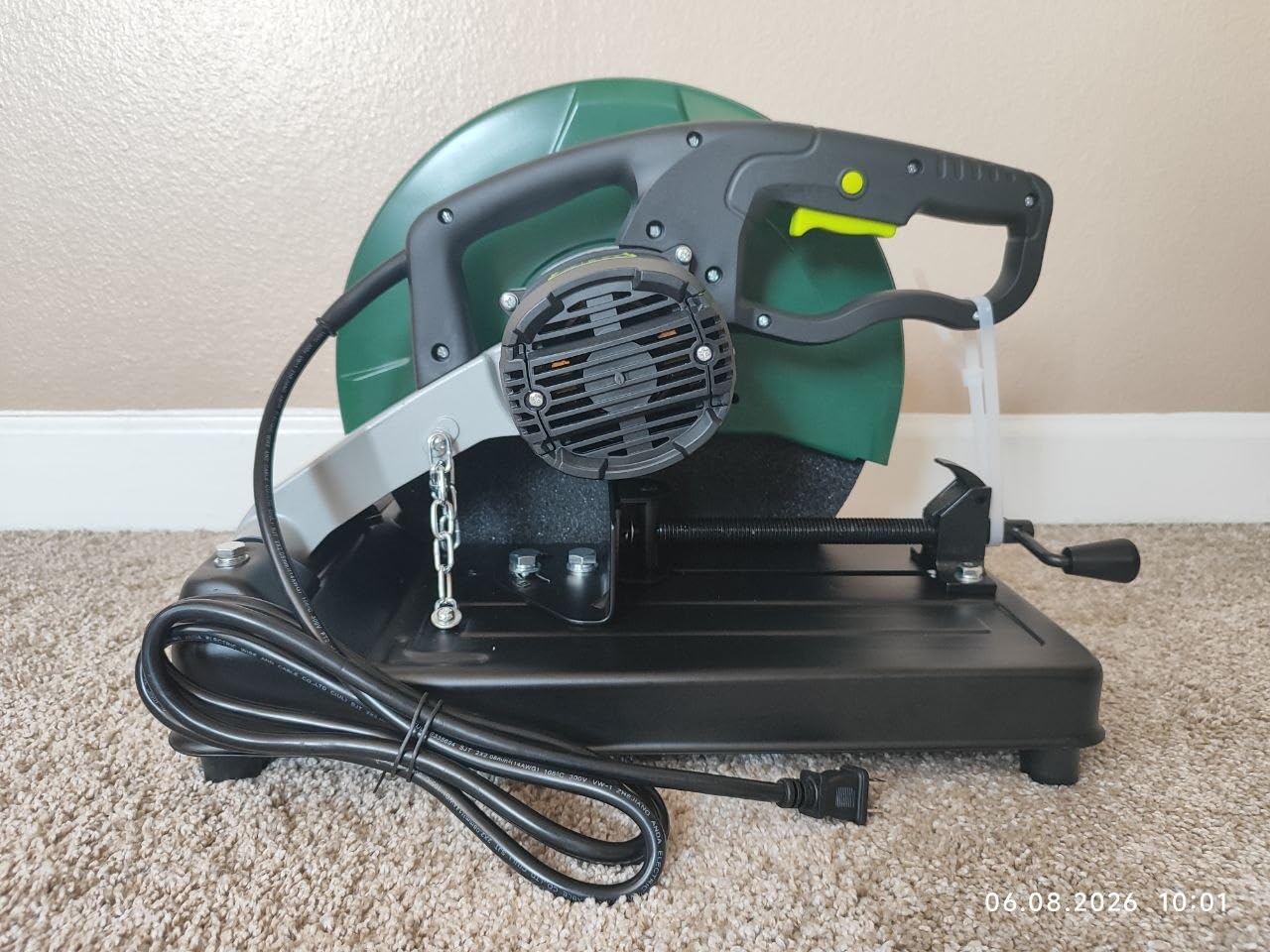
The important thing to know before you commit is that the blade is not included. A 14 inch wheel has to be purchased separately, and the wheels that do come with some units are reported as weak, with many owners replacing them with a name brand disc right away. Budget for the consumable in your planning.
Durability is the other concern. Several reports describe units arriving damaged with a thin, light frame that bends under load, and owners noting the base flexes so cuts come out crooked without truing adjustments. With a small unbranded manufacturer, support is limited, so mechanical failures are harder to resolve than they would be on a name brand machine.
When it makes sense
Occasional work is the honest use case. A few cuts of rebar, a gate repair, some angle for a small steel frame, and you do not want to think about carbide consumables. Most of the review base reflects first impressions from buyers who paired it with a better wheel, and they describe it as sturdy for the price and accurate on aluminum profiles, angle stock and PVC.
Portability is the real draw. At a small framed size of 10.3 by 23.2 by 21.3 inches, it moves between a garage and an outdoor job without a second person, which none of the heavy saws on this list can do.
Where it falls short
It ships without a usable blade, the included wheel on some units is weak, and the frame is light enough that owners report flex and crooked cuts. With 44 ratings and a small manufacturer, there is minimal long term data, so if you want a tool you can rely on every week, the extra you spend on a name brand machine is buying known failure modes rather than surprise ones.
How to Choose a Metal Chop Saw for Angle Iron
Start with blade type, because it decides almost everything else. A cold cut saw uses tungsten carbide teeth to shear mild steel at roughly 1100 to 1550 RPM, and it gives you a cool, quiet, burr-light cut with almost no sparks. An abrasive saw grinds the steel away at 3500 to 3800 RPM, throws hot sparks, leaves a heavier burr, and gets worse as the wheel wears down. The consensus across Garage Journal, Sawmill Creek, and Reddit r/Welding is that once you cut mild steel with a dry cut saw you will not go back to wheels, and that matches what we saw in the review data on every cold cut machine here.
That said, abrasive is the more forgiving tool on hard, thick, or unknown material. Cold cut teeth lose edges quickly on hardened or high speed steel, and the community rule of thumb is that dry cut struggles past about half an inch of wall thickness. If your material is reclaimed stock of unknown grade, an abrasive saw will keep cutting and a carbide blade will keep dying. Several owners on Practical Machinist keep an abrasive saw on hand specifically for occasional hardened work.
Next, size the blade to your leg length rather than to round tube capacity. A 14 inch saw handles angle iron more comfortably than a 12 inch because the blade has to clear the outer corner of the leg, and the difference is most visible at 1 inch and above. This is also the reason forum threads keep warning about small cold cut blades dulling quickly, and why every serious recommendation on the 1 inch angle question lands on a 14 inch machine.
Decide whether you actually need compound mitering. Most saws on this list tilt 0 to 45 degrees in one direction only, which is fine for square cutoffs, gate frames, and fence work. If you are building handrails or stair parts that need opposing angles in a single cut, you want a detented plus or minus miter head, and only the Evolution S14MCS in this roundup provides it.
Check the clamping system honestly. Quick release vises and dual sliding clamps save real time on repeated cutoffs, but a fence that flexes under clamping pressure will put a degree of error into a 45 degree cut. Chain style hold-downs like the one on the WEN are light, and fence twist is the most common complaint on the Evolution R355CPS. If your work is angle accuracy, spend your effort on the vise and base rather than on motor wattage.
Weigh the machine against your mobility needs. A 14 inch cold cut saw is often a two person move, and the Makita LC1230 and Evolution S355CPSL sit at opposite ends of that range because of their base construction. If your cuts happen in a driveway rather than on a bench, portability may matter more than the last inch of capacity, and the abrasive saws are lighter across the board.
Price the consumables before the saw, which is advice that runs through every forum thread on this topic. Abrasive wheels are cheap and wear down predictably, so cost per cut stays low but the saw degrades as the wheel shrinks. Cold cut blades cost many times more and last far longer, with the S14MCS blade rated for 3500 plus cuts in 4 inch mild steel and the Makita blade claimed to run 50 times longer than a wheel. Forum users treat honest cost-per-cut transparency as more useful than any headline figure, so do the arithmetic on your own workload before choosing.
Finally, plan for a second blade if you touch non-ferrous metal. An abrasive wheel that cuts steel beautifully will destroy itself on aluminum, brass, and copper, and Home Depot owners make exactly this point about needing a separate non-ferrous blade. Cold cut and multi-material platforms like the R355CPS and the WEN CM1446 handle both with the fitted blade, which is a quiet but real advantage in a mixed shop.
One last category question. If you are cutting more than a few lengths a week and your material is limited to ferrous stock, a small horizontal bandsaw is often the smarter purchase. Bandsaw owners on Garage Journal describe them as a cheaper complement to a chop saw for volume work, and the usual budget recommendation from forum users is a cheap abrasive chop saw plus a small bandsaw rather than one expensive saw. A chop saw wins on speed and setup simplicity; a bandsaw wins on blade cost and continuous production.
How to Cut Angle Iron Safely
Clamp the work every time, with no exceptions. A cut-off of angle iron under blade or wheel load will move, and a moving workpiece is the most common cause of serious injury on these saws. Firm consistent pressure beats force, and forcing a cold cut blade into the stock is what kills teeth and generates heat.
Wear a face shield rather than just glasses, plus hearing protection, and gloves for handling stock after the cut. A cold cut blade runs cool, but an abrasive wheel showers burning embers, and both throw chips regardless of type. If you own any kind of angle grinder, the same protective rules apply.
Let the blade reach full speed before the cut and maintain a steady feed rate. Slowing the blade into scrap stalls the cut, burns the material, and on an abrasive wheel it can cause segment breakage. Clear the offcut area, and remember that a spinning wheel or blade will throw offcuts further than you expect.
Frequently Asked Questions
What is the best thing to cut angle iron with?
A metal chop saw with a cold cut tungsten carbide blade is the best tool for angle iron, because the teeth shear the steel rather than grinding it, giving a cool, square, nearly burr free cut. Our top pick is the Evolution S355CPSL, with the Makita LC1230 for daily fabricator work and the Evolution R355CPS if you also cut lumber.
What type of saw is best for cutting angles?
For mild steel angle iron, a cold cut chop saw is best. Abrasive cut-off saws are cheaper to run and handle hardened stock better, but they throw hot sparks, leave a heavier burr, and lose capacity as the wheel wears. Pick cold cut for finish quality and quiet work, abrasive for hard or unknown material and low consumable cost.
Can you cut angle iron with a chop saw?
Yes, as long as it is a metal chop saw and the stock fits its capacity. A 14 inch saw handles 1 inch angle comfortably and reaches toward 2 inch, while 3 and 4 inch angle needs a machine with genuine large section capacity. Check the maximum square and rectangle figures against your leg length before you buy.
Do I need a special blade to cut angle iron?
You need either a cold cut tungsten carbide blade or an abrasive cut-off wheel, and the two are not interchangeable. Cold cut saws run roughly 1100 to 1550 RPM while abrasive saws run 3500 to 3800 RPM, so swapping one for the other is dangerous. A separate non-ferrous blade is also needed for aluminum, brass and copper.
Are Evolution chop saws any good?
Yes. The Evolution S355CPSL holds 4.7 across 841 ratings with 84 percent five star, and owners consistently praise the near mirror finish, square burr free cuts, low noise and zero vibration compared to abrasive saws. The S14MCS goes further with a blade rated for 3500 plus cuts in 4 inch mild steel and detented plus or minus 46 degree mitering.
What are the common problems with Evolution chop saws?
The most common issues are mechanical rather than cutting related. The S355CPSL and R355CPS have single direction miter heads that cannot compound, and the R355CPS fence can twist under clamping pressure, adding about a degree of angle error. Miter and fence adjustments on the S355CPSL use an allen wrench rather than quick-set hardware.
Is a cold cut saw better than an abrasive chop saw?
For mild steel angle iron, yes. Cold cut is quieter, runs cool, throws almost no sparks, produces no airborne dust, and leaves a cut that needs only one or two passes of a hand file. Abrasive saws are cheaper per cut and better on hardened or thick wall stock, but they burn the edge, leave an overhang, and get progressively worse as the wheel wears down.
What is the best metal chop saw for the money?
The PORTER-CABLE PCE700 is the most proven budget choice, holding 4.5 across 2300 ratings, the largest review base in this roundup. Among cold cut saws the WEN CM1446 and the Evolution R355CPS are the stronger buys, and the Evolution R355CPS is the pick if one blade needs to cover both lumber and steel.
Conclusion: The Best Metal Chop Saw for Angle Iron in 2026
For most people building garage frames, gates, handrails, or fencing, the best metal chop saw for angle iron in 2026 is the Evolution S355CPSL. It cuts cold on mild steel, holds a 4.7 rating across 841 reviews, weighs little enough to move, and covers 1 inch and 1-1/2 inch angle without drama.
Step up to the Evolution S14MCS if you cut steel daily or work past 2 inch, the Makita LC1230 if you want proven long term rigidity and blade life at 1 inch and under, and the Evolution R355CPS if your cuts are split between steel and lumber. If you are cutting only light gauge stock a few times a month, the PORTER-CABLE PCE700 gives you a well proven abrasive platform, though you should budget for a good wheel and a shop vacuum.
Whichever you pick, check the base for flatness, square the fence with a real square before your first angled cut, and always clamp the stock. That last habit is the difference between a tool that lasts years and an injury you do not need.