
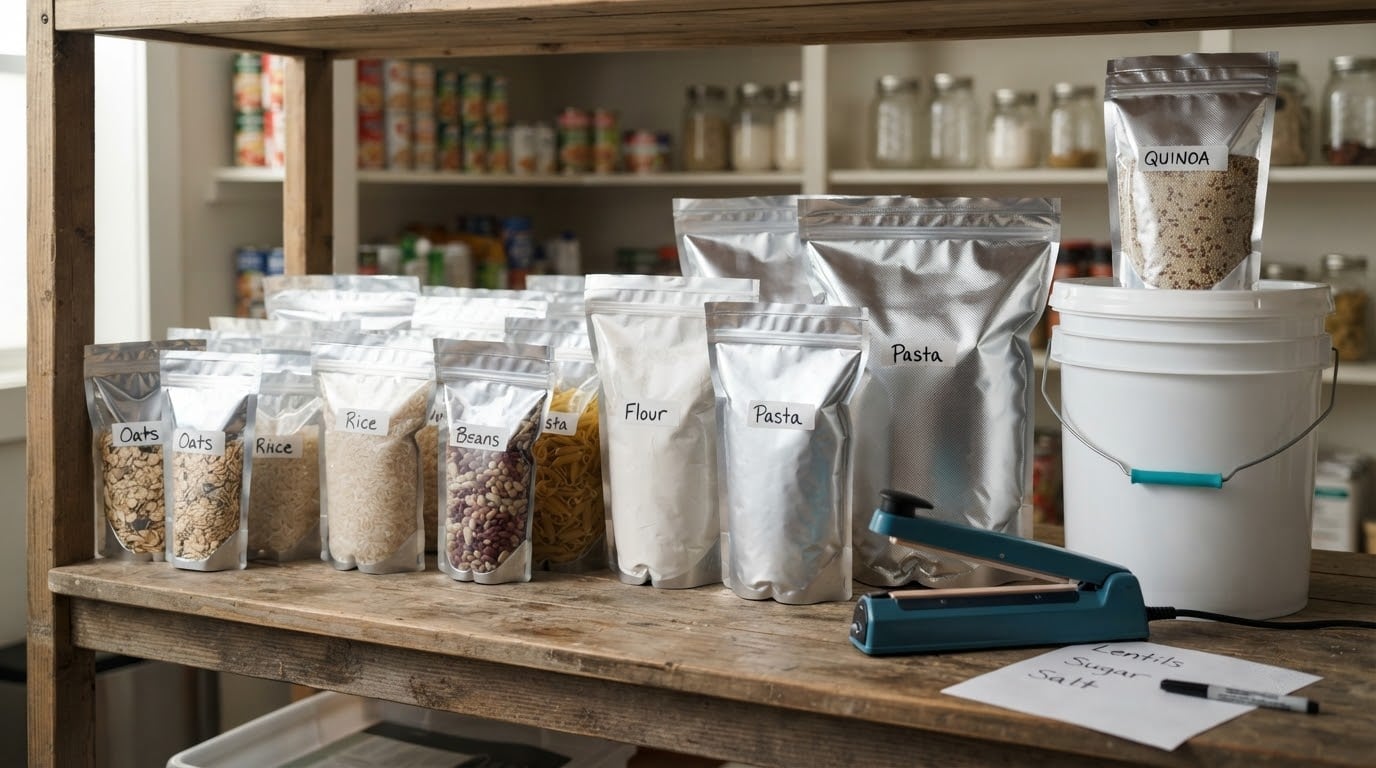
The best mylar bags for long term food storage are food-grade pouches with a true aluminum foil layer, at least 5 mil of thickness per side, and an oxygen absorber sized to the bag. Anything thinner or windowed belongs in short-term pantry storage, not a decade-long food cache.
Mylar is a multi-layer laminate, usually plastic bonded to a thin sheet of aluminum foil. The foil is what blocks oxygen, moisture and light, and heat-sealing the top traps the air inside while the absorber scrubs the remaining oxygen. That combination is what turns a bag of rice with a two-year pantry life into a 25-year one. To be clear about what this is not: a Mylar bag is not a Faraday bag and will not shield electronics from an electromagnetic pulse.
We compared 12 bags across thickness claims, absorber counts, bag sizes, closure types and construction layers, then matched each one to the food it actually suits. We also covered the traps that trip people up: listed thickness that means per side or total, bags that arrive thinner than advertised, and the four pantry staples that must never get an oxygen absorber. For the sealing side of things, our guide to the best vacuum sealers for food storage covers why a vacuum sealer alone will not do the job on Mylar.
Table of Contents
Top 3 Picks: Best Mylar Bags for Long Term Food Storage (October 2026)

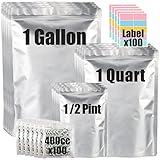
Wallaby 100-Pack Multi-Size Mylar Kit
- 100 bags plus 100 400cc absorbers and 100 labels
- Aluminum inner layer for puncture resistance
- BPA-free heat-sealable multi-size pack
SHXWELL 100pc 12 Mil Three-Size Kit
- 12 mil three-layer PET
- foil and PE film
- 150 vacuum-packed 400cc absorbers
- Stand-up gusset with zipper and heat seal

Home Sensei 15 Mil One-Gallon Bags
- 14.8 mil total with a 4.3 inch stand-up gusset
- 400cc absorbers in sealed packs of five
- Freezer safe from 0F to 183F
Best Mylar Bags for Long Term Food Storage in October
| Product | Specifications | Action |
|---|---|---|
| Wallaby 100-Pack Multi-Size Mylar Kit |
|
Check Latest Price |
 Sukerle 100 Pack with 300cc Absorbers Sukerle 100 Pack with 300cc Absorbers |
|
Check Latest Price |
| SHXWELL 100pc 12 Mil Three-Size Kit |
|
Check Latest Price |
 Leboduo 120 Bag Four-Size Set Leboduo 120 Bag Four-Size Set |
|
Check Latest Price |
 SYMYNELEC 100-Pack with 400cc Absorbers SYMYNELEC 100-Pack with 400cc Absorbers |
|
Check Latest Price |
| Home Sensei 15 Mil One-Gallon Bags |
|
Check Latest Price |
 Wallaby One-Gallon Gusset 50-Pack Wallaby One-Gallon Gusset 50-Pack |
|
Check Latest Price |
 PackFreshUSA Quart Bags with 300cc Absorbers PackFreshUSA Quart Bags with 300cc Absorbers |
|
Check Latest Price |
 ROYLO GLOBE 120 Bag Kit ROYLO GLOBE 120 Bag Kit |
|
Check Latest Price |
 PackFreshUSA 5-Gallon Bucket Bags PackFreshUSA 5-Gallon Bucket Bags |
|
Check Latest Price |
 Opalpros 60-Pack Three-Size Mix Opalpros 60-Pack Three-Size Mix |
|
Check Latest Price |
 Home Sensei 10 Mil Five-Gallon Bags Home Sensei 10 Mil Five-Gallon Bags |
|
Check Latest Price |
How We Chose the Best Mylar Bags
Four rules decided almost every ranking on this page. First, thickness has to be stated per side or as total laminate thickness, because a 12 mil bag described as 6 mil per side is the same bag described two ways, and comparing those two numbers against each other is how people end up disappointed.
Second, we only counted a bag as food-grade when the listing names the laminate layers or the material standard rather than saying nothing at all. Third, we scored the oxygen absorber math: a pack with 100 bags and 100 absorbers solves the sizing problem for you, and a pack with 100 bags and 55 absorbers makes you buy a second box.
Fourth, gussets and closures. A stand-up gusset makes filling a gallon bag with rice far easier, and a zipper plus a heat-sealable top gives you a bag that works both for daily snacks and for sealed long-term food. We did not lab-test oxygen transmission rates or run shelf-life trials, so every thickness figure below is the manufacturer-stated one, and we flag where buyers report a mismatch.
1. Wallaby 100-Pack Multi-Size Mylar Kit
Wallaby 10 Mil Thick Multi-Size Open Top Mylar Bags, Absorbers (100-pack)
100 heat-sealable bags in three sizes
100 400cc oxygen absorbers
100 sticker labels
Aluminum inner layer
Pros
- Bags and absorbers match one-for-one so sizing is solved
- Internal aluminum layer improves puncture resistance
- Absorbers vacuum sealed in sets of ten to hold potency
- BPA-free construction
Cons
- Open top means you need a separate heat sealer
- 5 mil is thinner than the heavy kits here
This is the kit we keep coming back to for a first serious food cache. The 100 bags arrive with 100 400cc absorbers and 100 labels, which removes the single most common mistake people make, which is buying bags and then realizing the absorbers do not cover them.
Buyers describe sturdy seals and no punctures on bulk dry goods like rice, sugar and flour. The aluminium layer inside the laminate resists a stray nail or a sharp grain end poking through from the neighbouring bag.
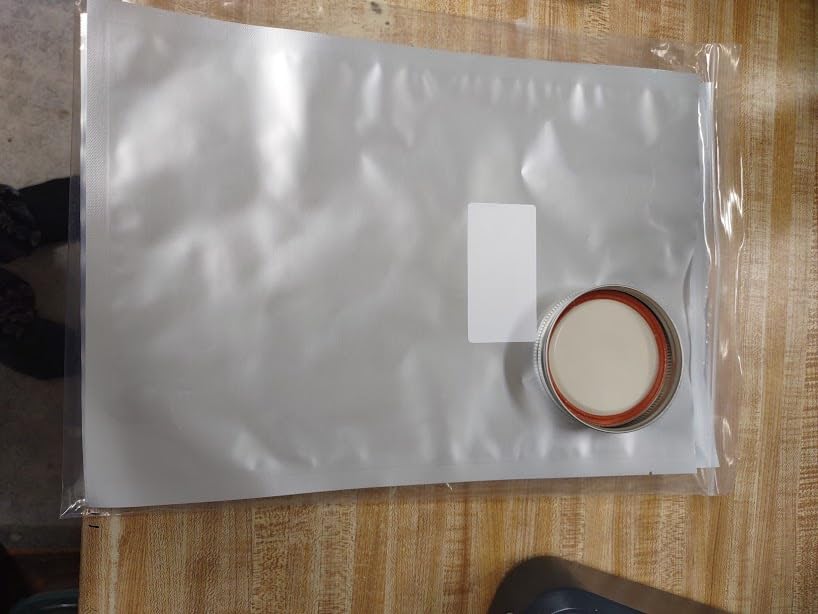
The 5 mil rating is the one real compromise here. It handles dry pantry staples without drama, but it is not the film you want for pasta elbows or bird seed. The bags are open-top, so a separate sealer is part of the cost of this system.
These bags do not shrink the way vacuum bags do, and the absorbers strip only the oxygen, which is 21 percent of air. The rest is already displaced by the food itself in a well-filled bag.
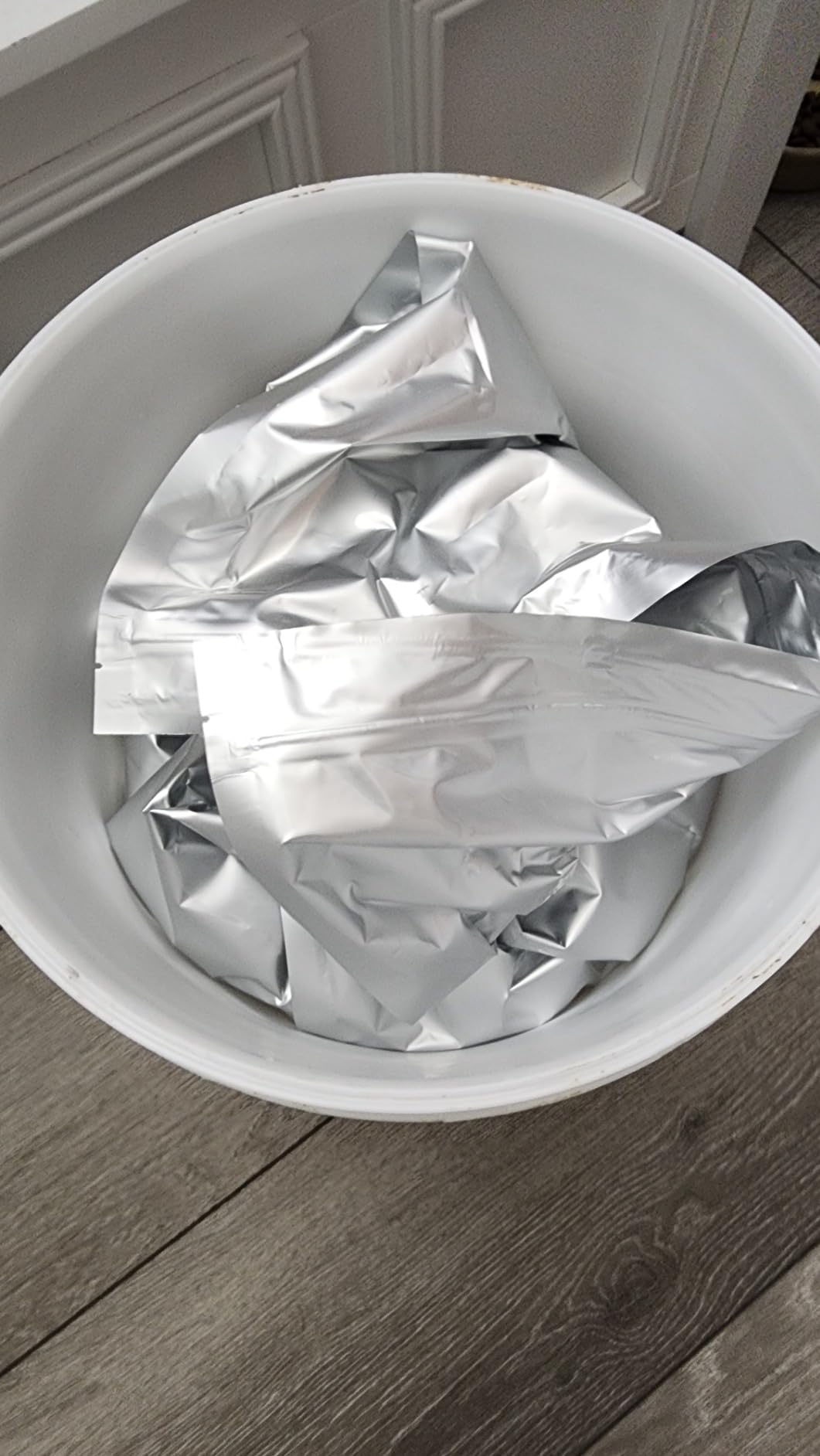
How to seal this pack properly
Fill to roughly two inches below the top, shake the bag to settle the contents and wipe the rim clean with a dry cloth. Lay the absorber flat on top of the food rather than burying it, then seal immediately.
Label after sealing. A permanent marker written across the seal line gets sliced in half the first time you open the bag, which turns the date and contents into a guess.
Where this pack falls short
If your food list is heavy with pasta, beans or anything abrasive, the heavier kits further down this page resist puncture better. And if you plan to store in five-gallon buckets, one-gallon bags inside buckets give you portion control you will thank yourself for later.
2. Sukerle 100 Pack with 300cc Absorbers
Sukerle 100 Pack Mylar Bags with 300cc Oxygen Absorbers for Food Storage
100 bags in gallon, quart and half-pint sizes
100 300cc absorbers
150 labels and 10 clips
9 mil foil laminate
Pros
- Three sizes covered in one pack
- Sealable from -50C to 120C
- Clips and labels included for organization
- Four pound pack weight feels substantial
Cons
- 300cc absorbers are small for gallon bags
- Seal quality varies between sizes
This pack is the value pick for a household that wants quart, gallon and half-pint bags without running three separate orders. Owners especially like that the absorber count matches the bag count, so nothing gets stored unprotected out of oversight.
The listed 9 mil applies to all three sizes, and the foil is rated from -50C to 120C, which covers both a freezing garage and a hot attic. Sealing works with an iron or a hair straightener, so you do not need to buy a sealer before you start.
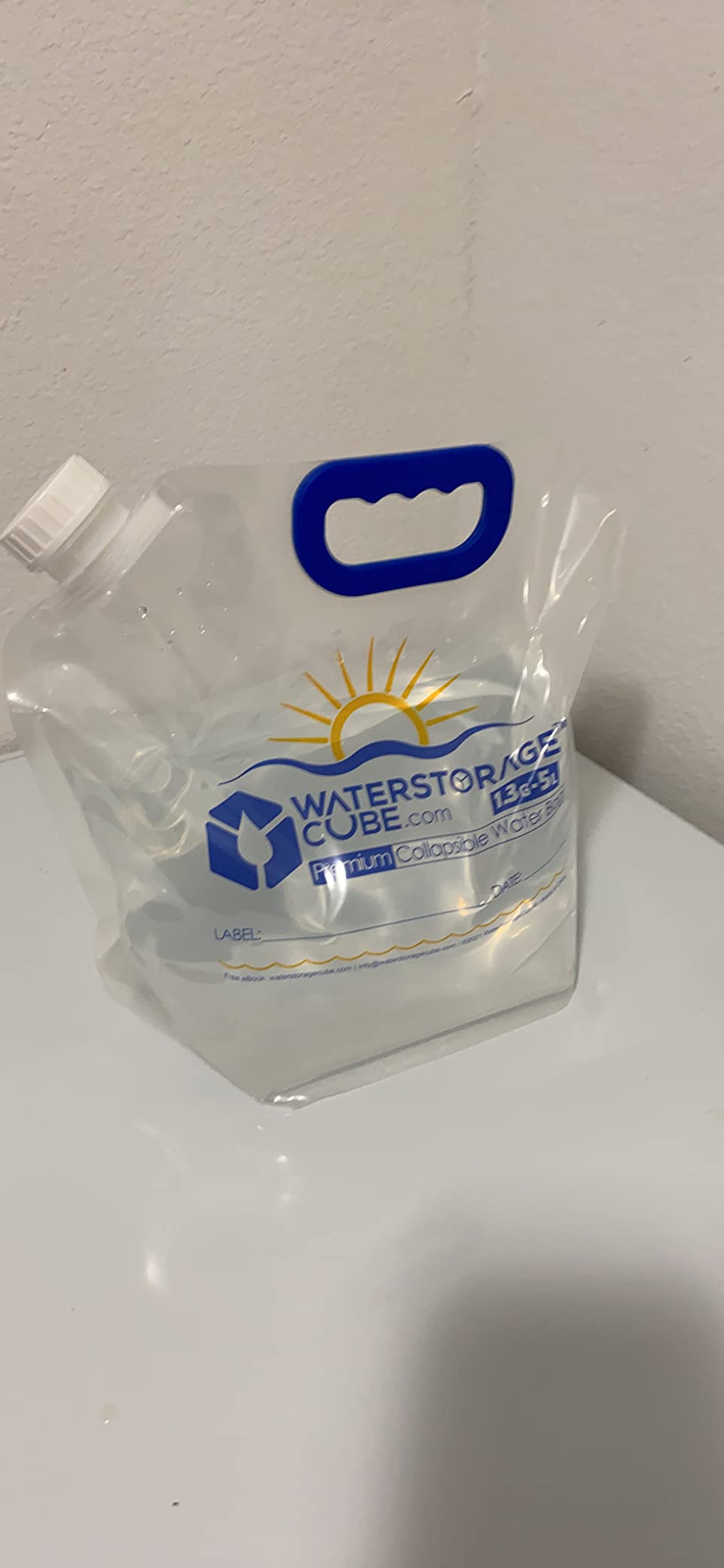
The recurring note from buyers is that zipper and seal quality varies by size, and the gallon bags earn the most praise. My read is that 300cc is undersized for a full gallon of rice, so plan to double up or pair this pack with a separate box of 500cc absorbers.
Ten sealing clips come in the box, which is a small touch that matters when you are portioning spices and small quantities into half-pint bags.
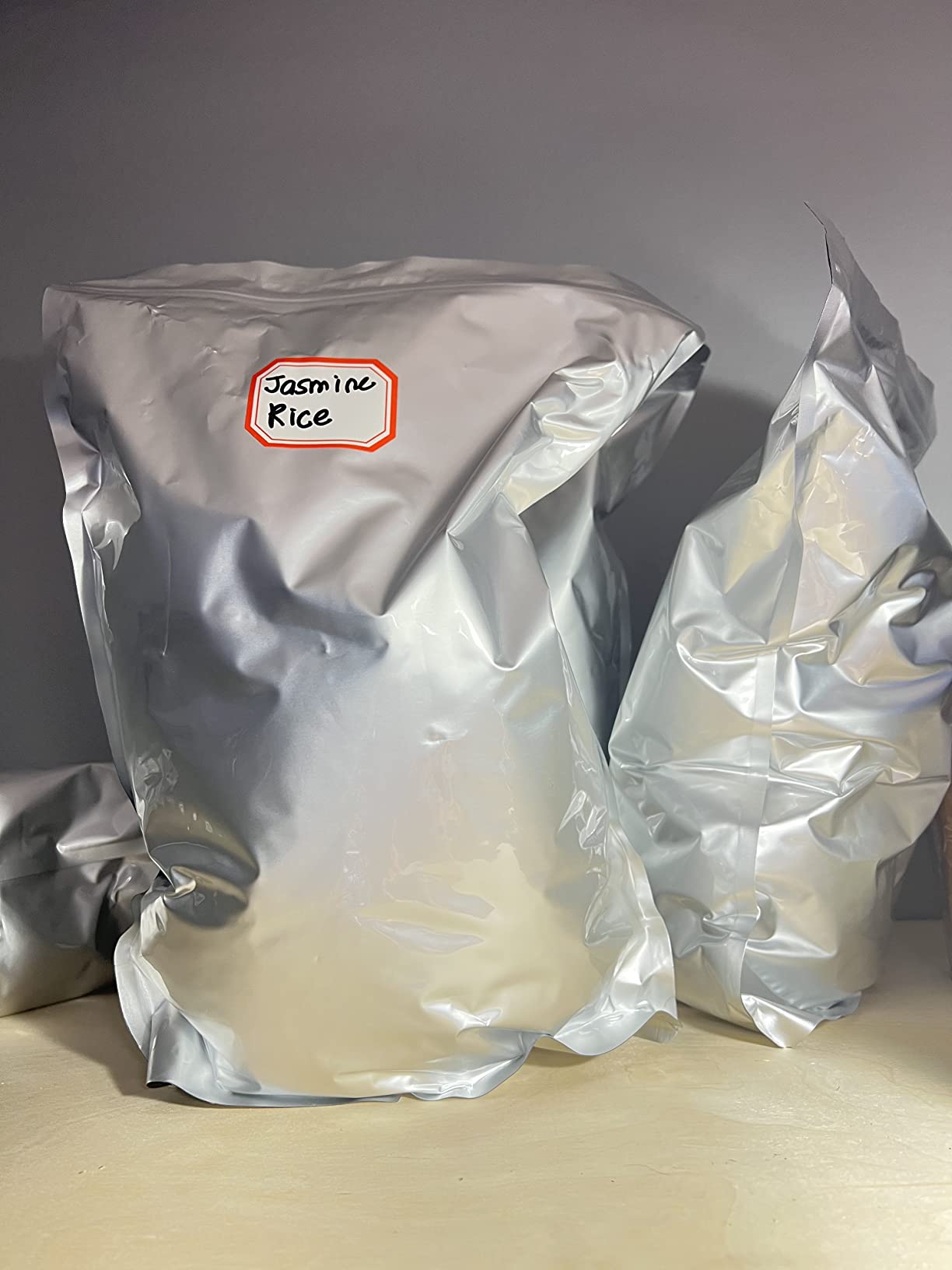
Best used for mixed portioning
The half-pint and quart sizes are where this pack earns its place. Freeze-dried output from a home freeze dryer fits neatly in the smaller sizes, and the gallon size handles rice and beans for a family of three or four.
Because the zipper is resealable, these work as daily-access bags for coffee beans, candy and pasta as well as sealed long-term bags.
What to watch for
Measure a bag with a caliper if you are relying on the thickness claim. If the film reads thin, keep the smaller sizes for soft foods and move sharp or bulky items to a heavier kit. Test the seal across the full width on your first bag before you trust the rest of the pack.
3. SHXWELL 100pc 12 Mil Three-Size Kit
100pcs Mylar Bags for Food Storage 12 Mil Thick with 150x400cc Oxygen Absorbers & Labels, 3 Sizes (1 Gallon, 1 Quart, 1/2 Pint) – Stand-Up, Resealable & Heat Sealable for Long Term Food Storage
Three-layer PET, aluminum foil and PE
12 mil total, 6 mil per side
150 vacuum-packed 400cc absorbers
Stand-up gusset
Pros
- Thick three-layer laminate with an internal foil layer
- No leak or puncture reports from buyers
- Absorbers arrive in sealed pouches of ten
- Zipper for short-term then heat seal for long-term
Cons
- 12 mil film needs more care with a sealer
- Absorbers carry no size marking so you match by guesswork
This is the bag we would hand someone storing pasta, rice and beans in a garage. Twelve mil total across three layers with an extra internal foil layer is the kind of construction that shrugs off a nail tip and a stack of heavier bags.
Reviewers call these among the sturdiest and tightest zipper Mylar bags they have used, with no reported leaks and a seal that holds. The 150 absorbers cover more bags than the pack contains, which is the reverse of the usual problem and worth something.

Two practical notes. The 12 mil film needs a real sealer and more dwell time than thinner bags, and a cheap mini sealer is where people get disappointed with this pack. And the absorbers arrive unlabelled, so sort them into marked containers by capacity before you start filling.
Many buyers use more absorbers than the listing suggests. That is not a defect; one absorber rated 400cc in a bag with a large air gap is doing more work than the number suggests.
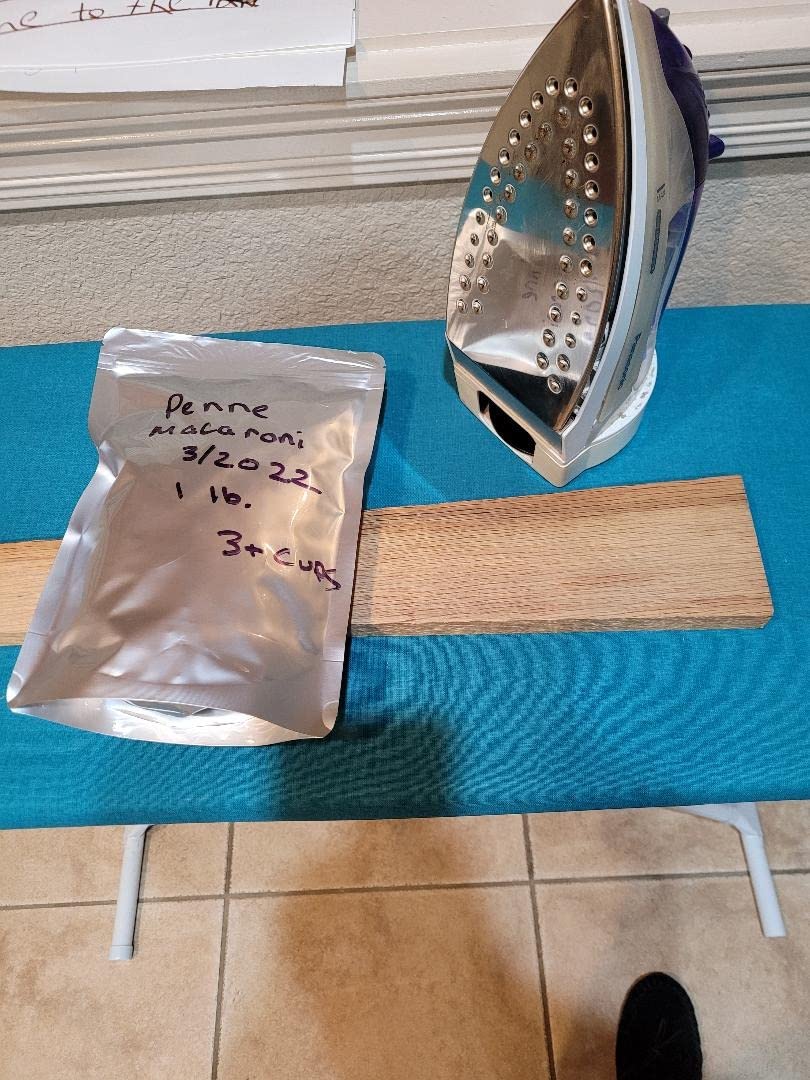
When thicker film earns its price
Rice, beans and pasta have sharp ends that work against a thin laminate over years. This pack is the pick when the food is abrasive rather than soft, and when bags will be stacked or handled repeatedly.
The stand-up gusset also means you can fill these on a counter without holding the bag open with one hand.
Where the trade-off bites
A 14.8 mil bag is thicker still, so this is not the thickest film on the page. Buyers also note the extra thickness means sealing needs attention; a crosshatch over the seal line after a pass is cheap insurance.
4. Leboduo 120 Bag Four-Size Set
Lebodu 120 Mylar Bags with 120 x 300cc Oxygen Absorbers for Food Storage
120 bags across four sizes
120 300cc absorbers and 125 labels
Three-layer PET, aluminum and PE
Up to 8 mil total thickness
Pros
- Four sizes give finer portioning than most kits
- Free of BPA
- BPS
- PVC
- latex
- vinyl and phthalates
- Zipper seal plus iron or vacuum sealer sealing
Cons
- Lightest film of the multi-size kits at 8 mil
- Flat bags need a stable surface while filling
- 300cc absorbers are small for the gallon size
Four sizes in one pack is the reason to buy this set. Twenty gallon, 25 two-quart, 35 quart and 40 half-pint bags cover everything from a spice portion to a family rice reserve, and 120 absorbers match the bag count.
The material declaration is the most thorough on this page, listing the absence of phthalates, latex, vinyl, mercury, lead, chloride, BPA, BPS and PVC. For households with small children or pets, that list matters when a punctured absorber could end up in reach.
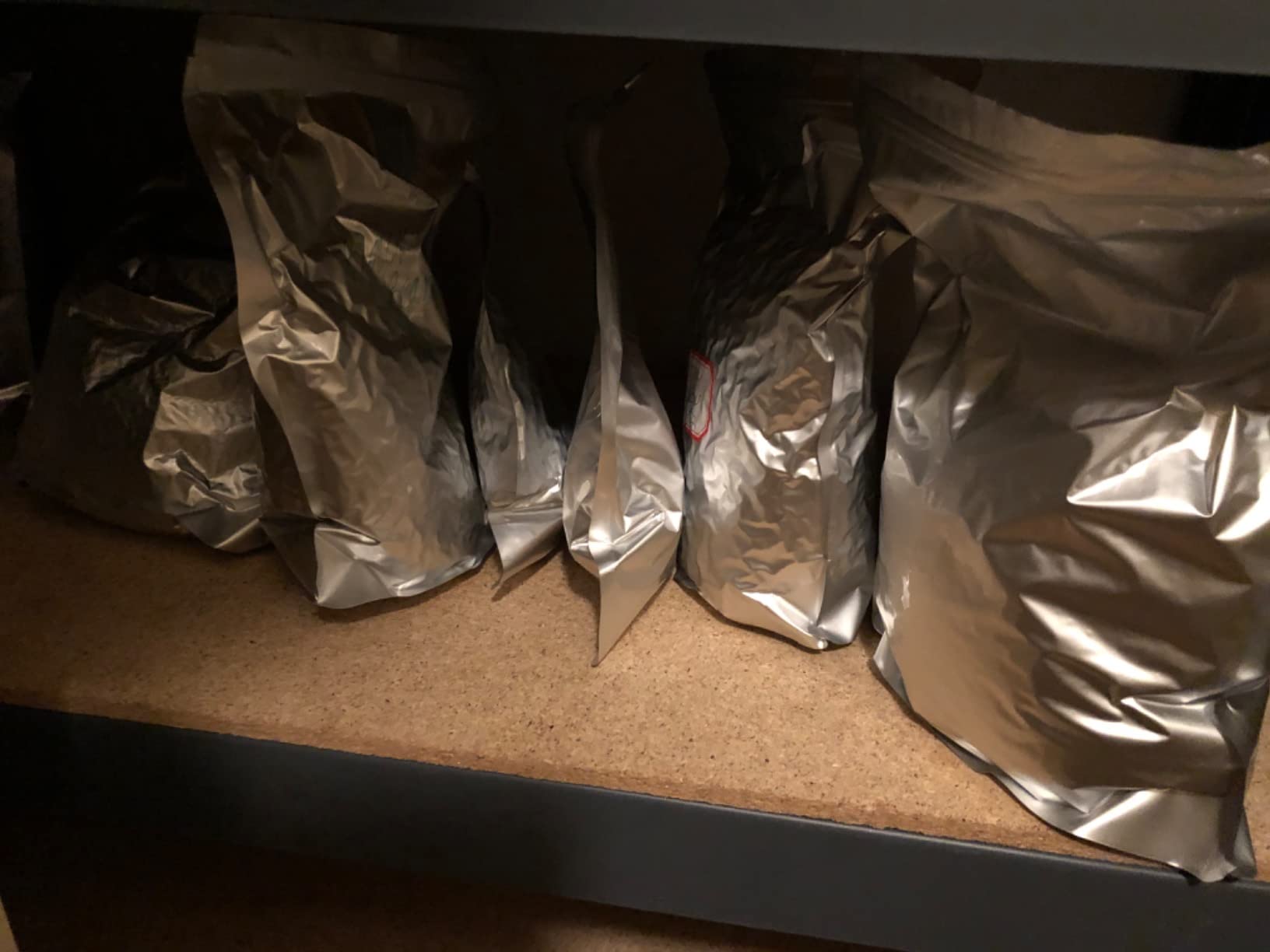
The 8 mil total is the lightest film among the multi-size kits, and buyers comparing against 12 to 15 mil options notice it. Keep the thinner bags for oats, coffee beans, tea and freeze-dried goods, and put pasta and rice into a heavier film.
These are flat rather than gusseted, so brace them against a wall or a bin while filling. The stated load capacity is 11.5 pounds, which lines up with the gallon size holding 6 to 7 pounds of rice with headroom.
Best for a well-labelled small pantry
Four sizes means you can stop improvising portion splits. A half-pint bag for a spice blend, a quart for a week of rice, a two-quart for oats, a gallon for the family reserve.
Zipper sealing lets you open and close a bag repeatedly while the food lasts, then heat seal it for the years you are not eating from it.
Why you might buy something else
If your food list is mostly sharp or bulky dry goods, thickness wins over size variety and the heavier kits are the better tool. The 300cc absorbers also undersize the gallon bags, so budget for a separate absorber box.
5. SYMYNELEC 100-Pack with 400cc Absorbers
SYMYNELEC 100-Pack Mylar Bags with 400cc Oxygen Absorbers for Food Storage
35 gallon, 45 quart and 20 half-pint bags
11.8 mil on the gallon bags
55 sealed 400cc absorbers
Food-grade PET, foil and PE
Pros
- Absorbers vacuum packed five at a time so the unused supply stays potent
- Free of BPA
- BPS
- lead
- PVC and phthalates
- Reclosable zipper plus stand-up gusset
- Three-layer construction with internal foil
Cons
- 55 absorbers do not cover 100 bags one-for-one
- Thickness differs between sizes rather than being uniform
This is the pick when you want a bag you can open without destroying. The zipper closure on a stand-up gusset makes it practical for food you actually eat regularly rather than food you open once in a decade.
The one-gallon bags are the thickest in the pack at 11.8 mil with an internal aluminium layer, while the quart and half-pint sizes step down. Owners report dependable seals and a size spread wide enough for real pantry organization.
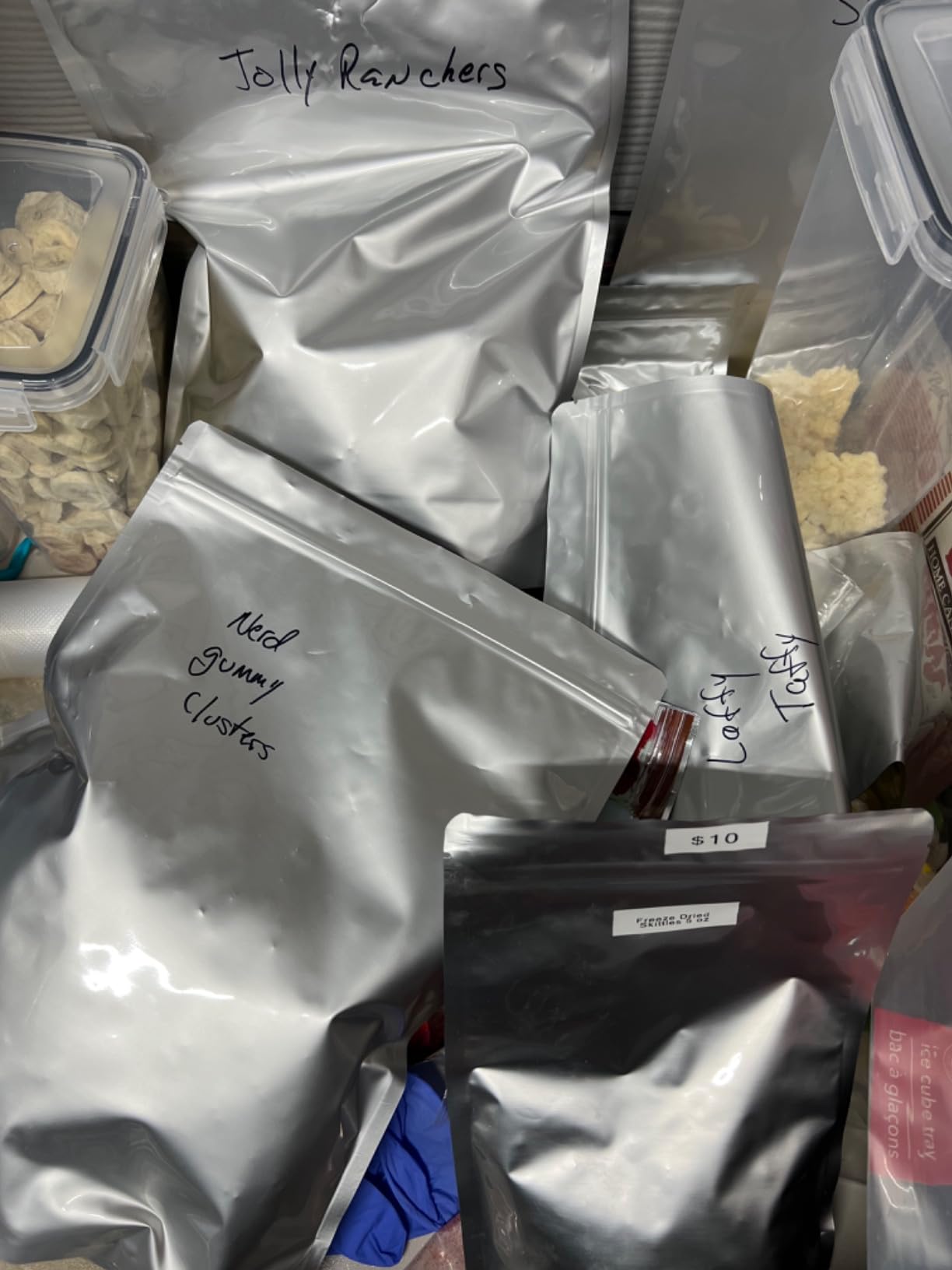
The main complaint is arithmetic: 55 absorbers for 100 bags means about half your bags have no protection until you buy more. Plan on a separate absorber order sized to the gaps, and this pack pairs well with a matched bag size you use less often.
Writing dates on the flat gusset face rather than the zipper keeps the label readable after repeated openings.
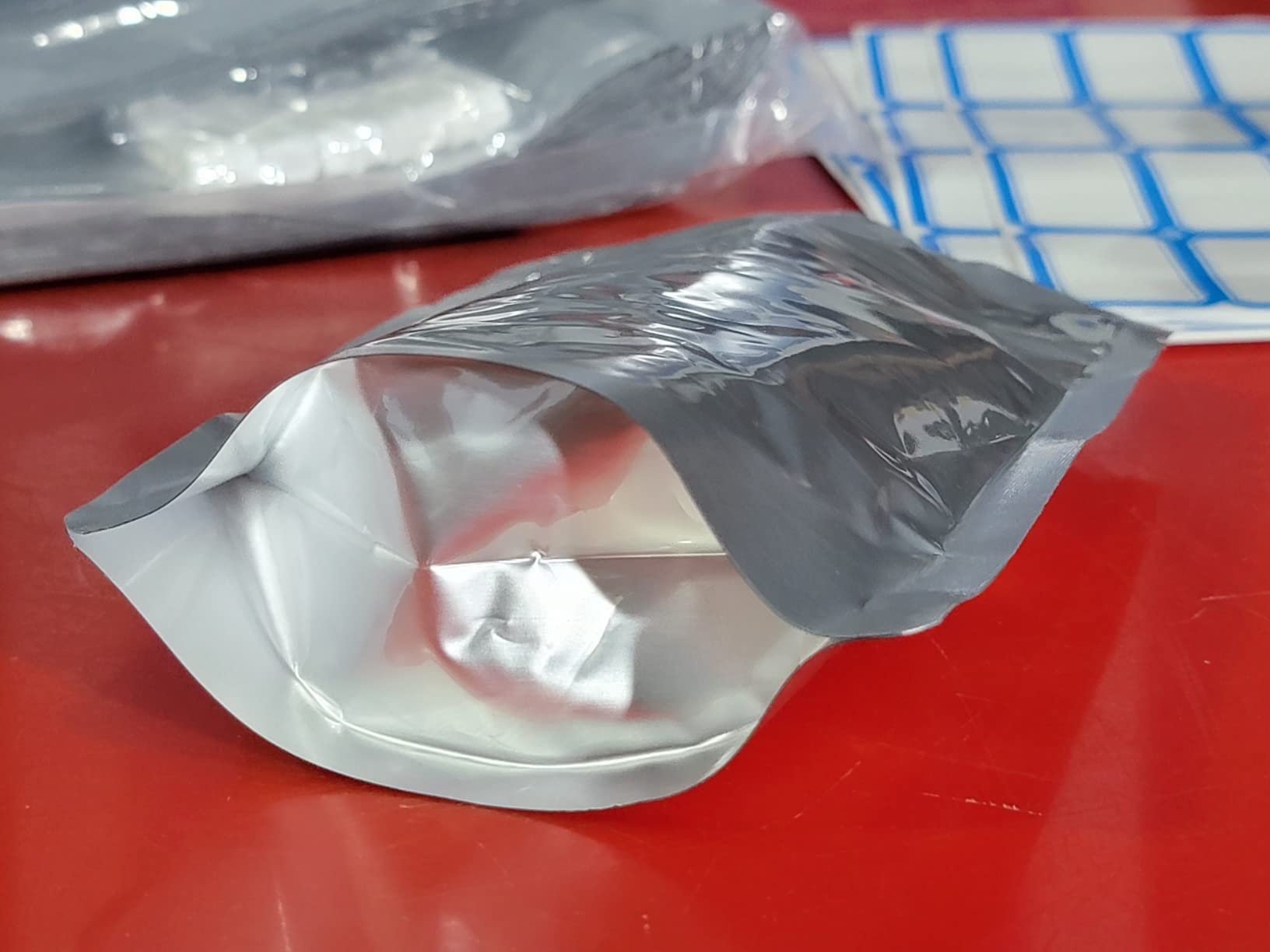
When zipper access is worth the discipline
Resealable bags suit coffee beans, candy, pasta and spices that cycle through the pantry. Keep the zipper closed between uses so the absorber keeps working on the remaining oxygen instead of air from the room.
When you decide a bag is not being eaten, heat seal it across the top and the zipper becomes irrelevant for the long haul.
The absorber shortfall
There is no way around the count. If you buy this pack for full coverage, either use the smaller bags without absorbers for short-term food or buy a bulk absorber box on the same day. Absorbers also lose potency once opened, so keep the unused supply sealed until the day you need them.
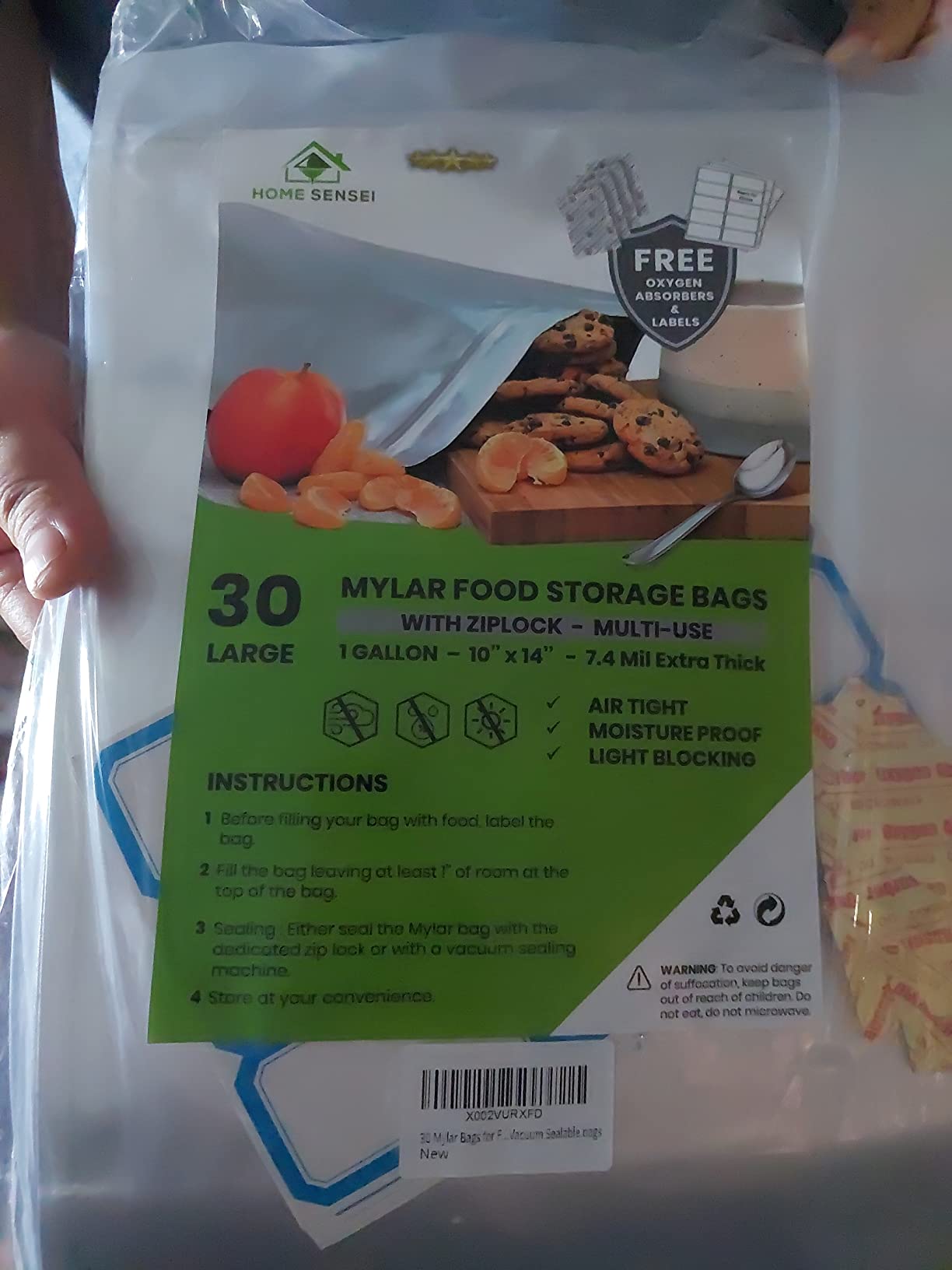
6. Home Sensei 15 Mil One-Gallon Bags
30 Mylar Bags for Food Storage 1 Gallon – Extra Thick 15 Mil – Long Term & Food Grade – Mylar Bags with Oxygen Absorbers 400cc- Zipper, Resealable, Stand-up Gousset – Bolsas Mylar con Abosrbentes
30 one-gallon 10x15 bags
14.8 mil total, 7 mil per side
30 400cc absorbers and labels
4.3 inch stand-up gusset
Pros
- Thick 14.8 mil film holds 2 to 3 lb of pasta without puncturing
- Deep 4.3 inch gusset stands up for filling and stacking
- Absorbers sealed five at a time
- Freezer safe across a 0F to 183F range
Cons
- Only 30 bags per pack so bulk buyers need more than one
- Absorber count does not always match across variants
Among the one-gallon bags here, this pairs some of the thickest film with the largest review count on the page. Fourteen point eight mil total with a 4.3 inch gusset means the bag stands on the counter while you fill it and holds a heavy load without slumping.
Long-standing reviews centre on sturdy, pest-resistant bags that seal well for pasta, flour and grain storage. The operating range of 0F to 183F means the same bag works in a freezer and in a warm garage without a separate product.
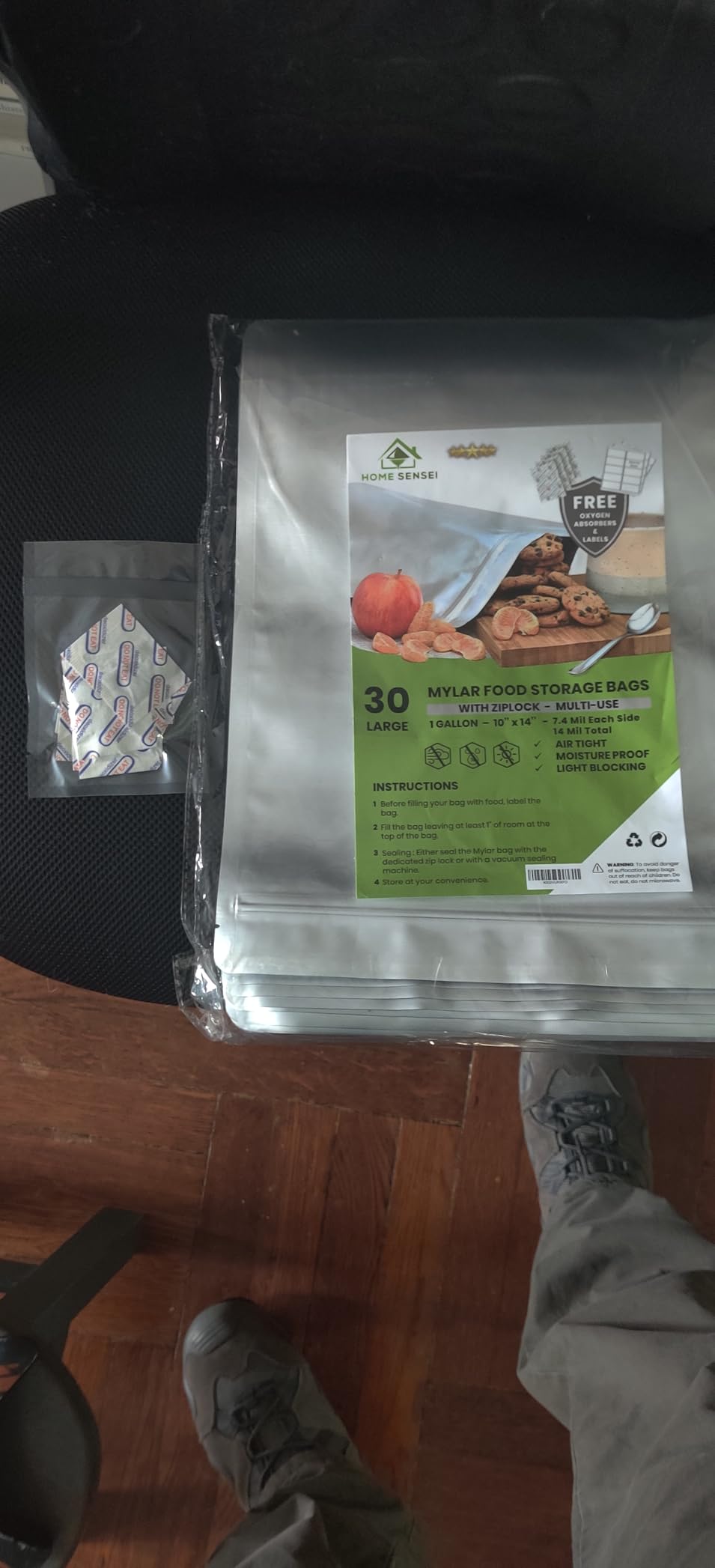
The 30-bag count is the constraint. A three-person household storing rice and beans will go through this pack quickly, and a few buyers report more bags than absorbers within a variant. Count before you fill.
Thick film has a sharp edge when cut, so trim the opening with scissors rather than tearing the top off. A short pair of kitchen shears keeps the fill station safe.
When the thickest film matters most
Pasta, beans, rice and anything stored where bags get stacked or bumped benefit most from 14.8 mil. The film also tolerates the freeze-thaw cycles that damage thin laminates by delaminating the layers.
Absorbers in sealed packs of five mean you open only what you use, which keeps the rest of your supply effective.
When 30 bags is not enough
Anyone building a multi-year food reserve for a whole household will fill 30 gallon bags in a single session. The same brand also makes a five-gallon version further down, and the family covers sizes from a quarter gallon up to five gallons.
7. Wallaby One-Gallon Gusset 50-Pack
Wallaby 1-Gallon Gusset 15 Mil Thick Mylar Bags, Zipper, Labels (50-Pack)
50 one-gallon gusseted bags
7.5 mil per side
50 labels included
Internal aluminum layer
Pros
- 7.5 mil per side with an internal aluminum layer
- Stand-up gusset makes filling and organizing straightforward
- Internal aluminum layer for puncture resistance
- BPA-free food-grade construction
Cons
- Oxygen absorbers are not included and must be bought separately
- One gallon only
- so no size variety in the pack
Half a hundred one-gallon bags at 7.5 mil per side is a focused bet on a single job, and it does that job well. Buyers single out seal quality and sturdiness, and treat the brand as a trusted name in emergency preparedness circles.
The gusset is what separates this from a flat bag. Fill it on the counter, settle the rice, and the bag stands while you seal the top.
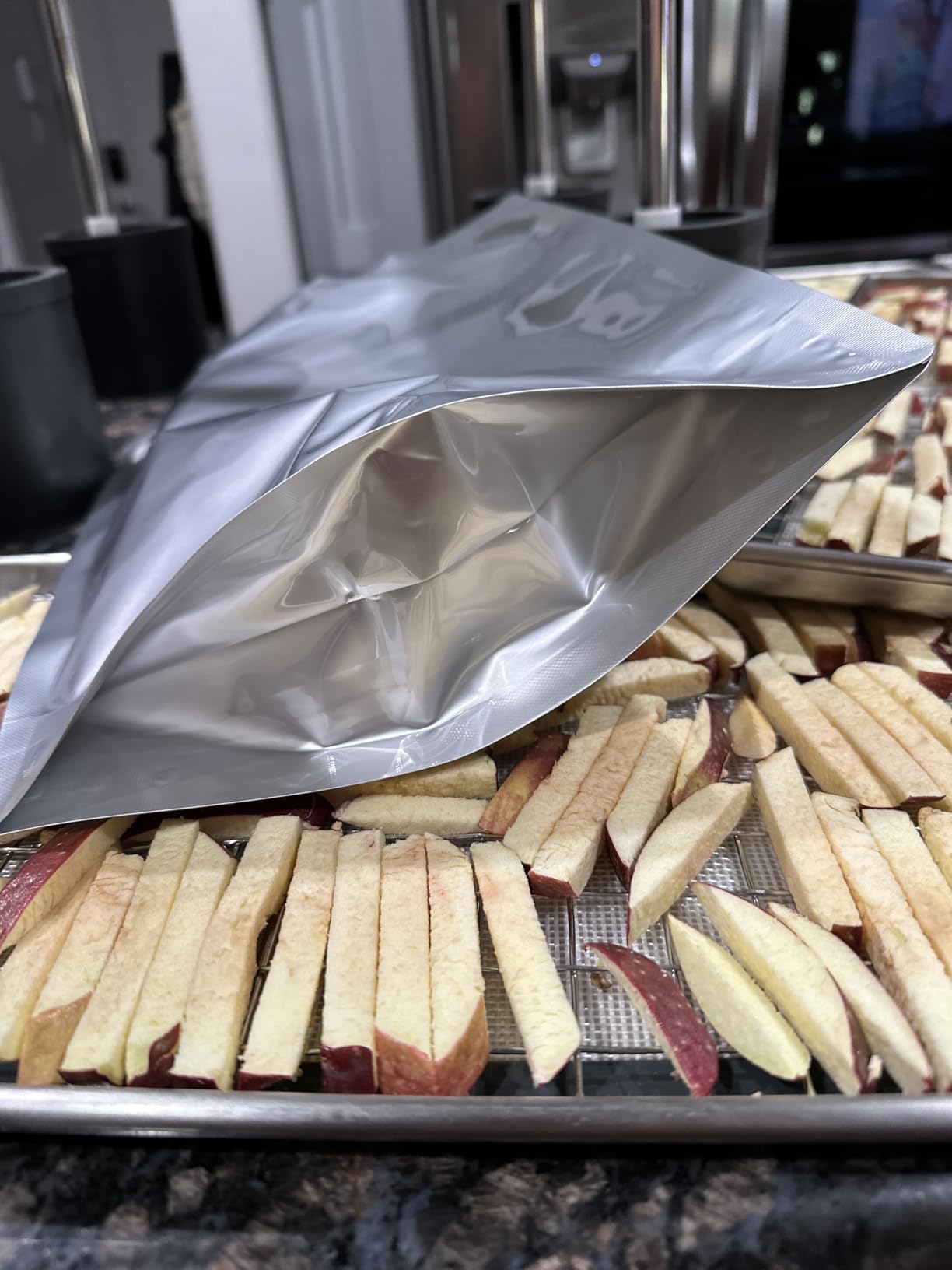
The catch is that this is bags and labels only. You will buy a box of 400cc absorbers separately, which is fine if you already have a supply and annoying if this is your first kit.
At 50 bags it sits between the small premium packs and the bulk mixes, which makes it a reasonable middle step for a household filling a pantry rather than a single weekend project.

Who this size actually suits
One gallon holds roughly 6 to 7 pounds of dry rice, which is about 20 servings. That makes these the right unit for a family of three eating from the bag over a few months before switching to a long-term reserve.
Keep a set of these inside five-gallon buckets as well, since one-gallon bags give you portion control that a single big bag does not.
Plan the extra purchase
Buy absorbers sized 400cc for these, matched to the gallon volume. A gallon of beans displaces less air than a gallon of rice, so one absorber per bag is the right count either way. Storing absorbers loose with children or pets in the home is worth avoiding.
8. PackFreshUSA Quart Bags with 300cc Absorbers
PackFreshUSA: Quart (8″ x 12″) AirTight Mylar Bags -300cc High-Capacity Oxygen Absorbers – Long-Term Food Storage – Genuine Standard Thickness – Heat Sealable – Free Guide – Pack of 100
100 quart bags at 3.5 mil per side
100 300cc absorbers in packs of ten
70 psi burst strength
Rounded corners and tear notches
Pros
- Absorbers sealed in packs of ten with a pink-to-blue exposure indicator
- Rounded corners avoid puncturing neighbouring goods
- Bags run slightly oversized so a full quart still seals
- Includes a long-term food storage guide
Cons
- 3.5 mil film suits only soft or low-abrasion foods
- Must be heat sealed rather than relying on a zipper
A quart bag holding one tray of freeze-dried output is the single most common home freeze-dryer storage pattern, and this pack is built for exactly that. Reviews praise the thoughtful packaging, the tear notches and the way absorbers are stored ten to a sealed pouch.
The exposure indicator is the detail that separates this pack. A pink patch that turns blue means oxygen has been exposed, so you can tell at a glance whether a seal failed.
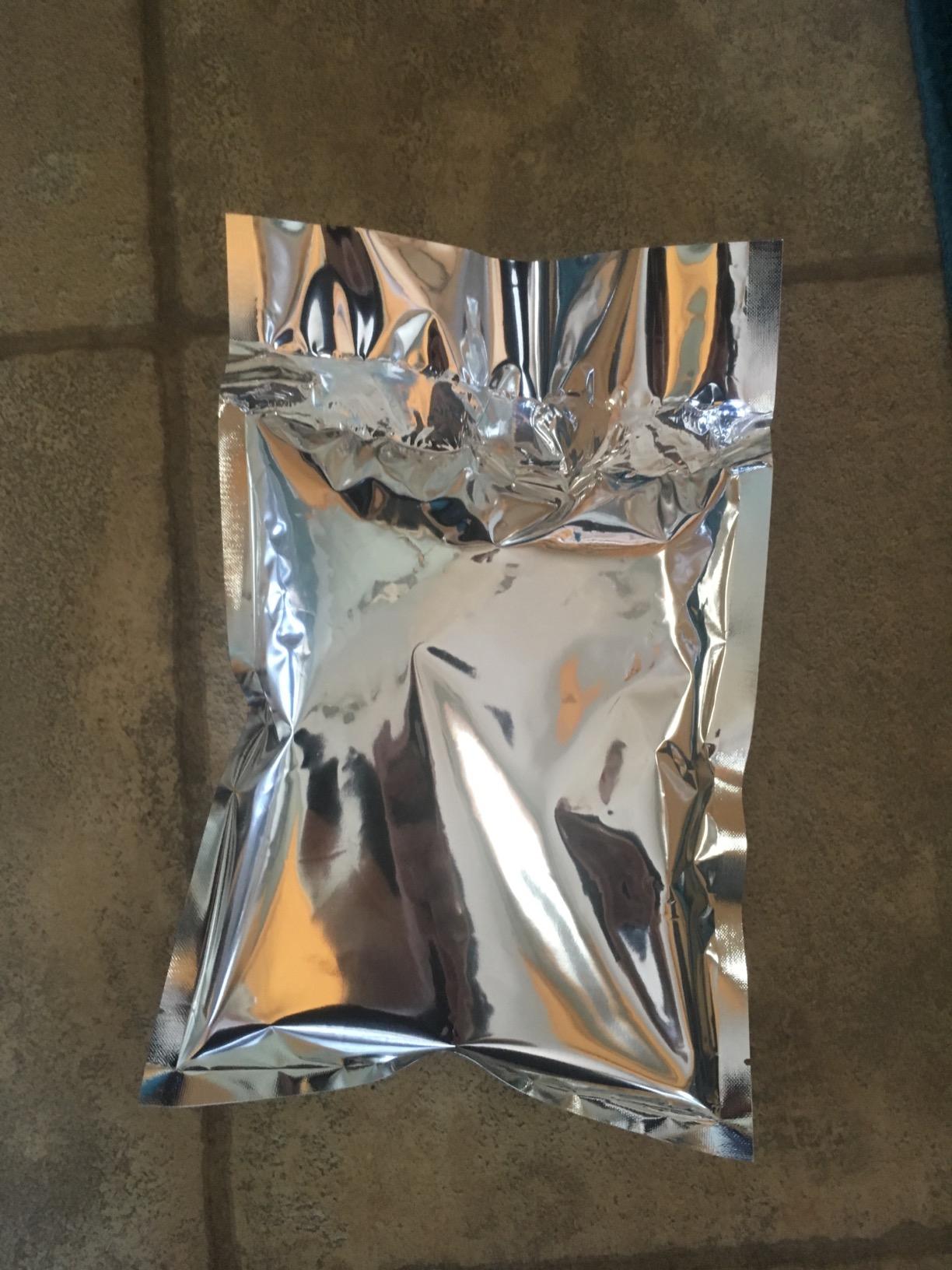
Three and a half mil per side is thin, and buyers who compare against the same brand’s 7 mil version consider these better suited to soft, low-abrasion foods. Freeze-dried fruit, vegetables and meals fit that brief, as do spices and sugar.
The manufacturer claims more than 25 years of protection when the bags are heat sealed and stored cool and dark. Sealing works with a vacuum sealer on seal-only mode, an iron or a hair straightener.

Why freeze-dryer owners pick this size
A quart bag is roughly the footprint of one freeze-dryer tray, so a full load becomes a predictable number of bags with a predictable fill. That simplicity is the reason the quart size sells hardest among home freeze-dryer owners.
Rounded corners matter more than you would think when a hundred bags are stacked in a shelf, because a square corner on one bag becomes a puncture on the one beneath it.
Where the thin film shows
Rice, beans and pasta will wear through 3.5 mil over decades if the bag flexes. Use the thin quart bags for freeze-dried output and soft goods, and put abrasive staples into a heavier film. Nothing here is wasted; it is simply doing a narrower job.
9. ROYLO GLOBE 120 Bag Kit
120 Mylar Bags with 150 Oxygen Absorbers-168 Labels & Stand-Up Reusable
120 bags across four sizes
150 absorbers in two capacities
168 labels and 15 clips
Three-layer PET, foil and PE
Pros
- Four sizes
- 150 absorbers
- 168 labels and 15 clips in a single kit
- Stand-up design makes filling and later access easier
- Absorbers supplied in packs of ten
- Reusable zipper closure
Cons
- Smaller sizes drop to 8.5 mil
- Film needs a proper heat sealer for an airtight result
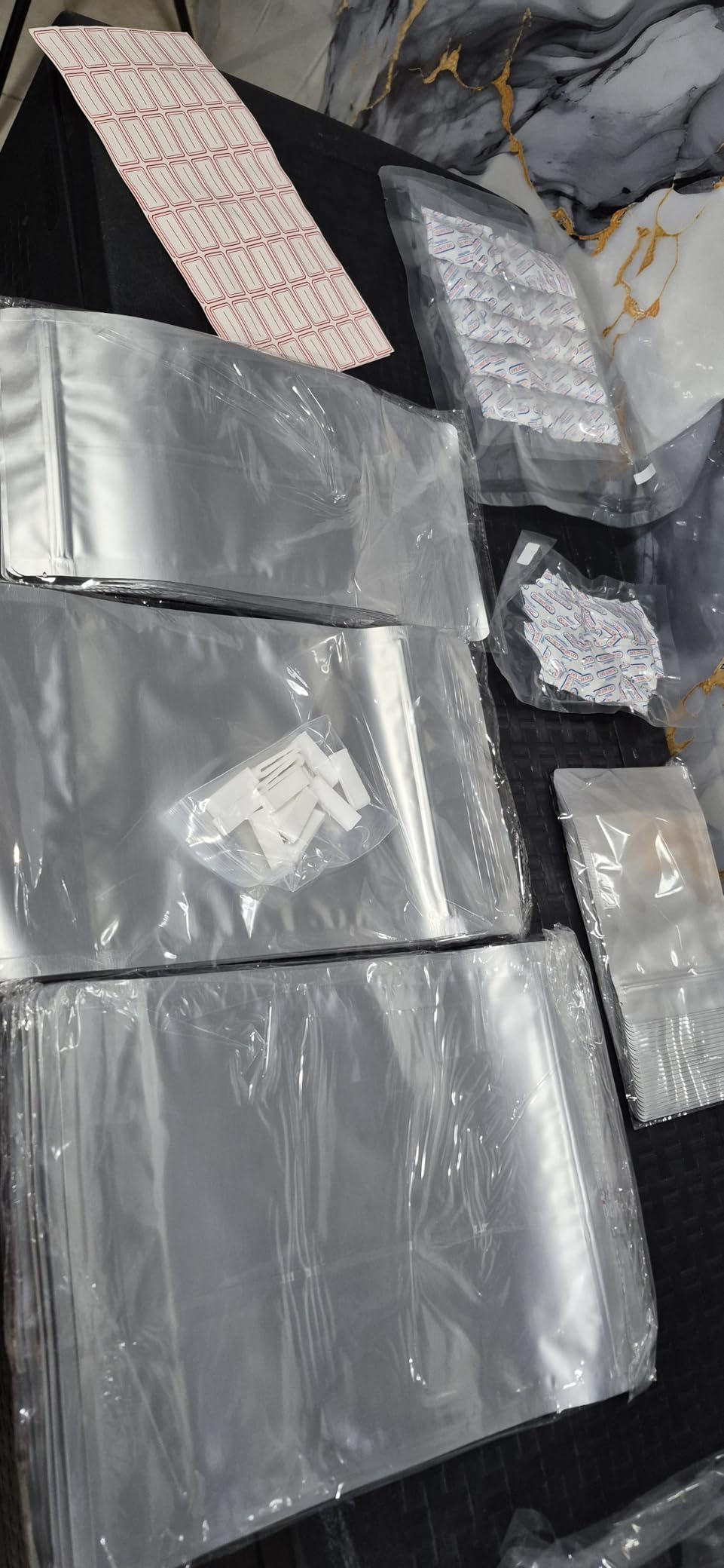
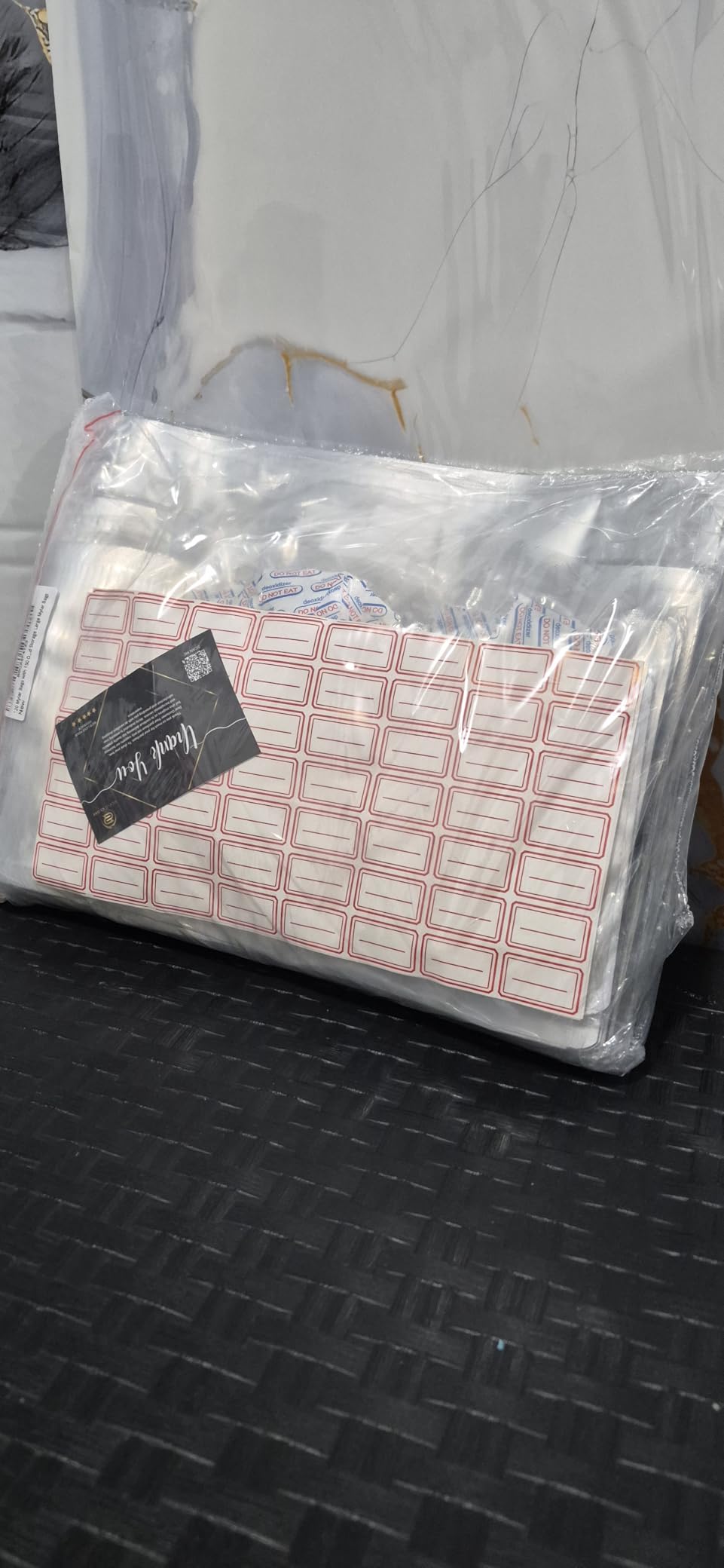
When we count the contents, this is the most complete kit on the page. Bags, absorbers in two capacities, labels and sealing clips all arrive in one box, so nothing else needs ordering before you can fill a first batch.
Buyers report long storage with no loss of flavour, with one reviewer describing dried fruit tasting the same at day 200 as at day one. Thickness runs 10 mil on gallon and quart bags, 10.5 mil on half gallon and 8.5 mil on the smallest size.
The most common practical note is that the film needs a real heat sealer rather than a cheap mini model to reach an airtight result. That is worth hearing before you buy, because a poor seal wastes both the bag and the absorber inside it.
Fifteen sealing clips mean you can keep partially used bags closed between openings without relying on the zipper alone.
What makes this the easiest kit to start with
Matching the absorber to the bag is the step people skip, and this kit ships 400cc and 500cc absorbers in quantities that roughly line up with its four bag sizes. Nothing gets left unprotected because you ran out.
It is also the easiest to organize because of the label count. A hundred and sixty-eight labels for 120 bags means every size gets its own consistent dating scheme.
Where it falls behind
At 8.5 to 10.5 mil, none of these sizes is as tough as the 14 to 15 mil bags. For abrasive staples stored for decades, pair this kit with a heavier film rather than assuming one kit covers every food.
10. PackFreshUSA 5-Gallon Bucket Bags
PackFreshUSA: 5-Gallon (20″ x 30″) AirTight Mylar Bags – 2000cc High-Capacity Single Sealed Oxygen Absorbers – Long Term Food Storage – HD 5.5 Mil (Per Side) – Heat Sealable – Food Grade – Pack of 10
Ten 20x30 inch five-gallon bags
5.5 mil per side
10 sealed 2000cc absorbers
Rounded corners
Pros
- 5.5 mil per side gives more puncture protection than standard film
- Individually sealed 2000cc absorbers with an indicator
- Sized to fit standard five-gallon buckets
- Three-layer foil laminate with low oxygen transmission
Cons
- Only 10 bags per pack
- Heat sealing is required for the claimed shelf life
- Large bags force you to open a lot of food at once
These are built around the bucket. At 20 by 30 inches they sit inside a standard five-gallon bucket, and owners using them for bucket stockpiling report strong seals and dependable oxygen indicators.
Each 2000cc absorber is individually sealed and carries an indicator, so you can confirm the packet has not been exposed before it goes into a bag. The 5.5 mil per side is heavier than the standard film in this category.
Ten bags per pack is the limitation. Feedback centres on that pack size suiting bucket caching rather than full pantry organization, and if you are lining ten buckets you will be back for more.
The bigger decision is portion discipline. Once a five-gallon bag is opened, the absorber is spent and you are facing a large quantity of food to use up. Many users split a 5-gallon bag’s worth of flour into two ten-pound portions for this reason.
When bucket lining is the right move
A liner bag protects the food from bucket walls, condensation and light while the bucket itself handles rodents and stacking damage. The two work together rather than one replacing the other.
Rounded corners on the bags keep them from cutting neighbouring liner bags when several sit in the same shelf.
Why many people skip the 5-gallon size
Once opened, a large bag is committed food. One-gallon bags inside the same bucket give you the same volume with far better control over how much you expose at a time, which is why that pattern comes up so often in prepper discussions.
11. Opalpros 60-Pack Three-Size Mix
60-Pack 14 Mil Mylar Bags with Oxygen Absorbers, Gusseted 5 Gallon(10), 1 Gallon(20) & 1 Quart(30) Bags with 2500cc, 500cc & 300cc OA – Resealable Mylar Bags for Food Storage with Colourful labels
10 five-gallon, 20 one-gallon and 30 quart bags
14 mil three-layer construction
Absorbers matched at 2500cc, 500cc and 300cc
70 colour-coded labels
Pros
- Absorbers sized to each bag rather than one size for all
- 14 mil three-layer PE
- PET and aluminum film
- Stand-up gusset with U-shaped tear notches
- Colour-coded labels simplify sorting
Cons
- A minority of buyers report micro-perforations found against a light
- 5 gallon bags can sit loosely inside a bucket and waste volume
This is the most correctly specified pack on the page. Three bag sizes arrive with absorbers matched to each one, 2500cc for the five-gallon bags, 500cc for the gallon and 300cc for the quart, which removes the sizing guesswork entirely.
Buyers consider the 14 mil film thicker and more puncture resistant than several leading brand names, and confirm that iron or straightener sealing works well on it.
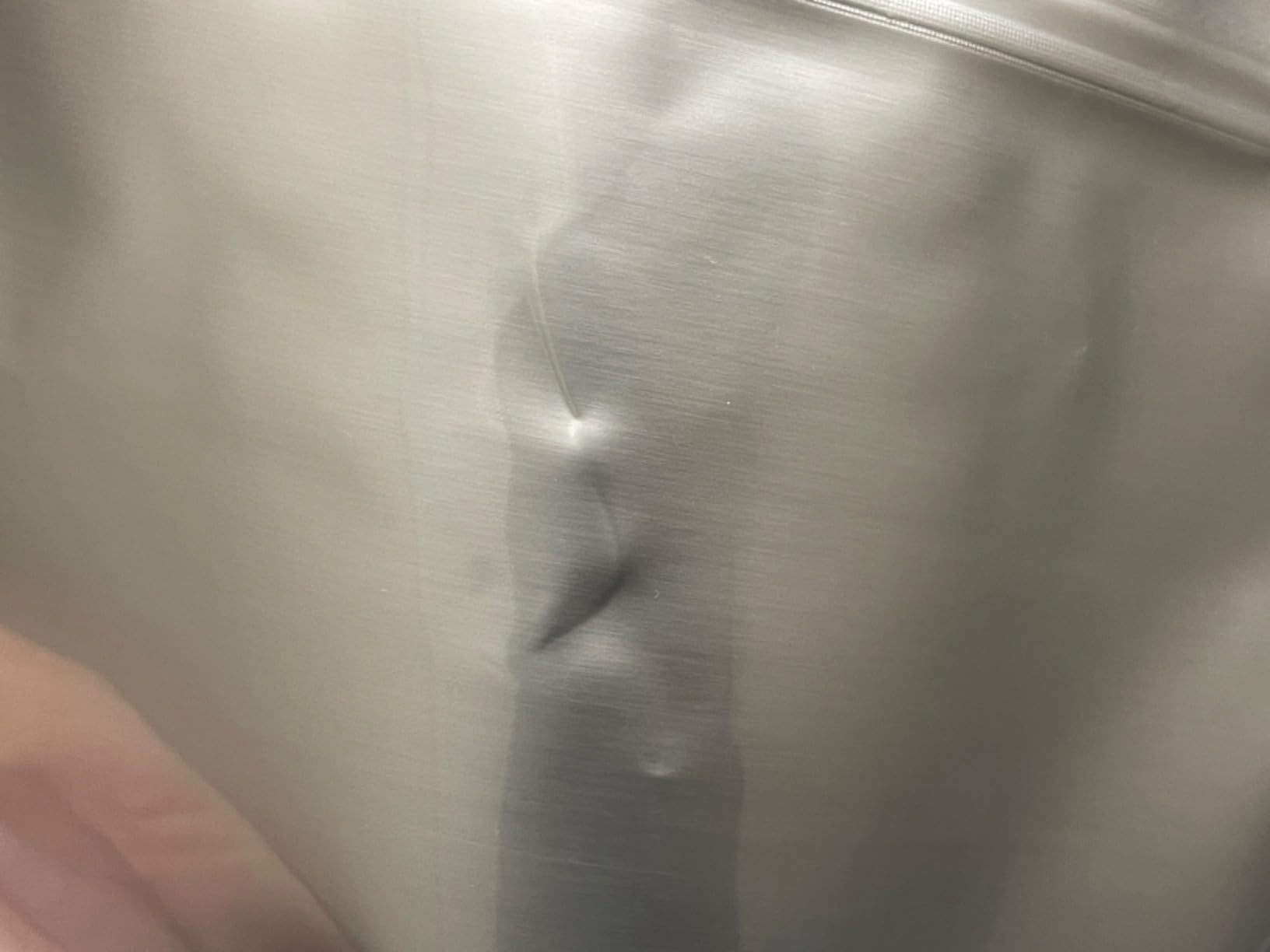
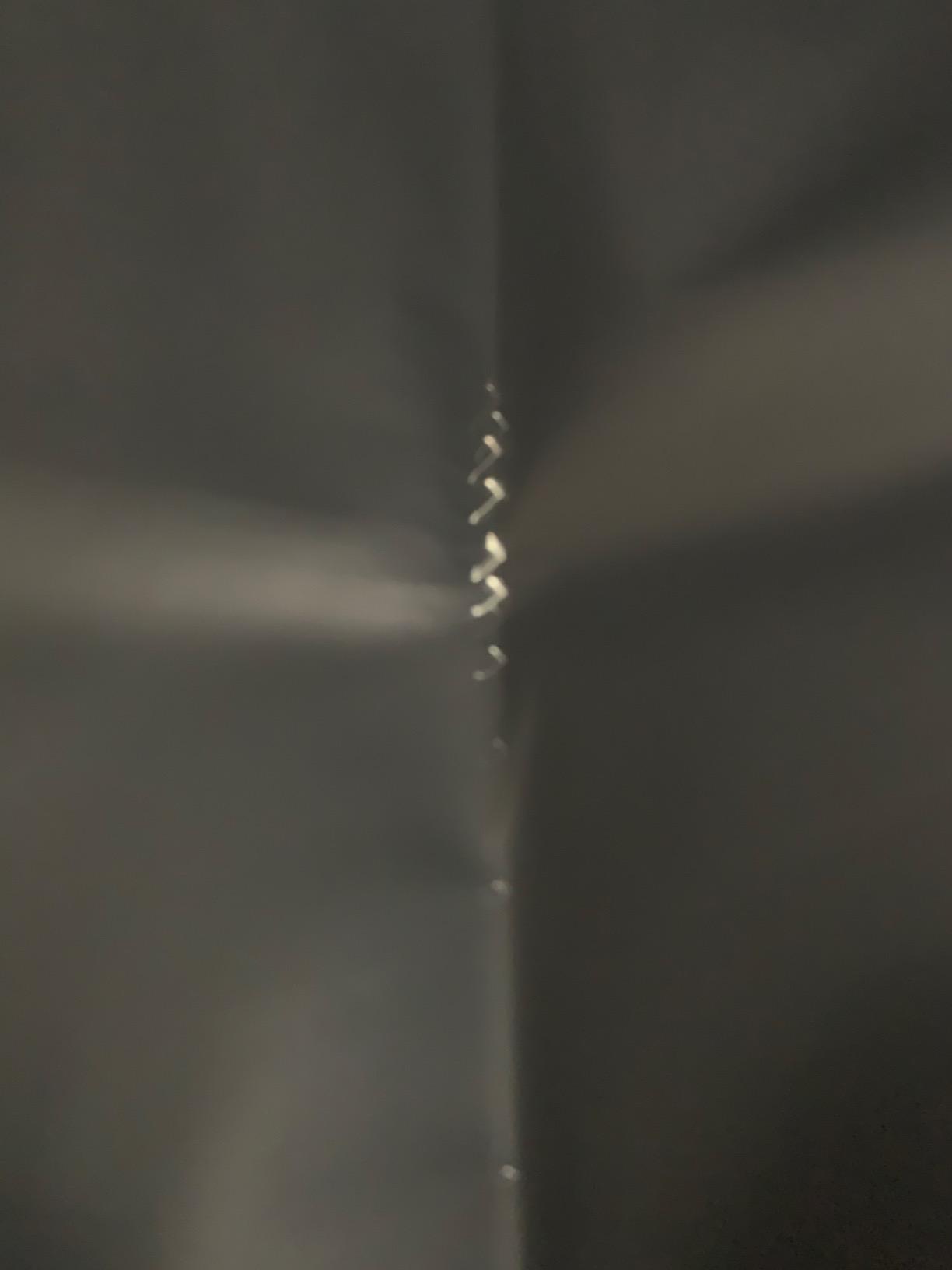
There is a minority of reports about occasional defects and missing absorbers, offset by responsive replacement from the seller. Hold a bag up to a bright light before filling it, and check the absorber count against the bag count when the box opens.
The five-gallon bags may sit loosely inside a bucket rather than filling it, which wastes usable volume. One-gallon bags sized to the bucket fit more snugly.
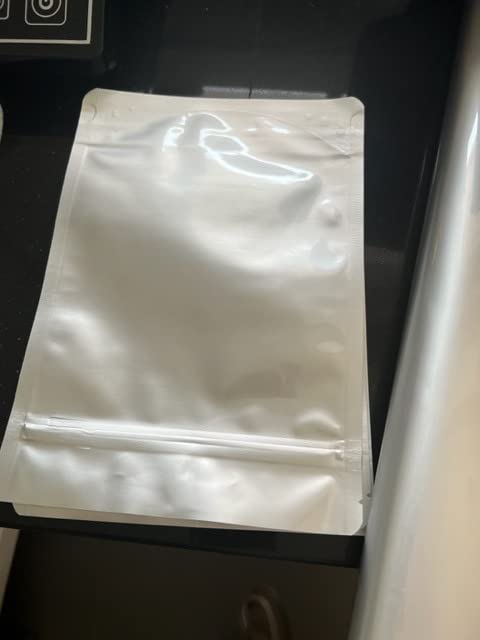
Why matched absorbers change the outcome
A 300cc absorber in a five-gallon bag does very little. Matching capacity to bag size is one of the highest-impact details in this whole guide, and this pack is the one that gets it right without you calculating anything.
Colour-coded labels also make rotation easier later, when you are checking a specific bag without opening twelve of them.
What to inspect on arrival
Light test two or three bags from each size before you commit a weekend to filling. Check for pinholes near the seams and along the gusset fold, and confirm the absorber count by size before you start.
12. Home Sensei 10 Mil Five-Gallon Bags
10pcs 5 Gallon Mylar Bags for Food Storage – 10 Mil Thick – Extra large bags 5 Gallon with Oxygen Absorbers 2500cc – Zipper Resealable Milar Bags – Bolsas Mylar 5 Galones
Ten 17x27 inch five-gallon bags
10 mil total, 5 mil per side
10 vacuum-packed 2500cc absorbers
U-shaped tear notch
Pros
- Sized to fit standard five-gallon buckets
- Absorbers vacuum packed individually to cut waste
- Three-layer PET and aluminum construction
- U-shaped tear notch makes repeated opening easy
Cons
- Thinner than 14 to 15 mil alternatives so sharp or bulky food needs care
- Only 10 bags per pack
For wheat berries, flour and pasta going into a bucket, this pack gets the job done with strong seals and a durable film. Users fill standard five-gallon buckets and report no problems over time.
The 2500cc absorbers come individually vacuum packed, so an unused one does not lose potency sitting next to a bucket in a damp shed for six months. The U-shaped tear notch opens the bag cleanly instead of tearing the seal.
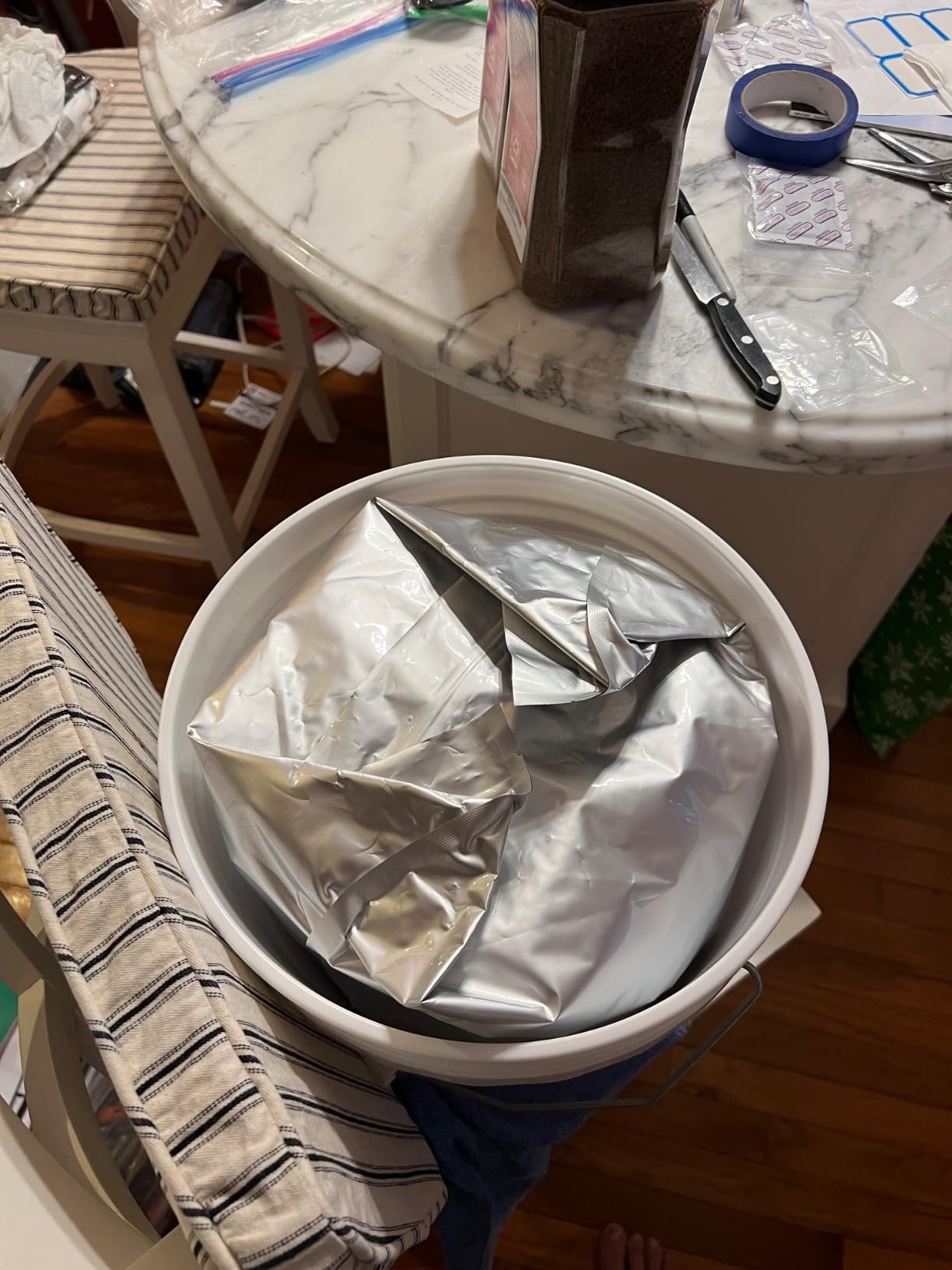
Ten mil total, which is 5 mil per side, is thinner than the heavier kits here. Thickness is the recurring tradeoff in reviews, and some buyers move to the 15 mil version in the same family once they see how it handles bulk staples.
At 17 by 27 inches these fit five-gallon buckets, which is the entire point of buying them in this size.
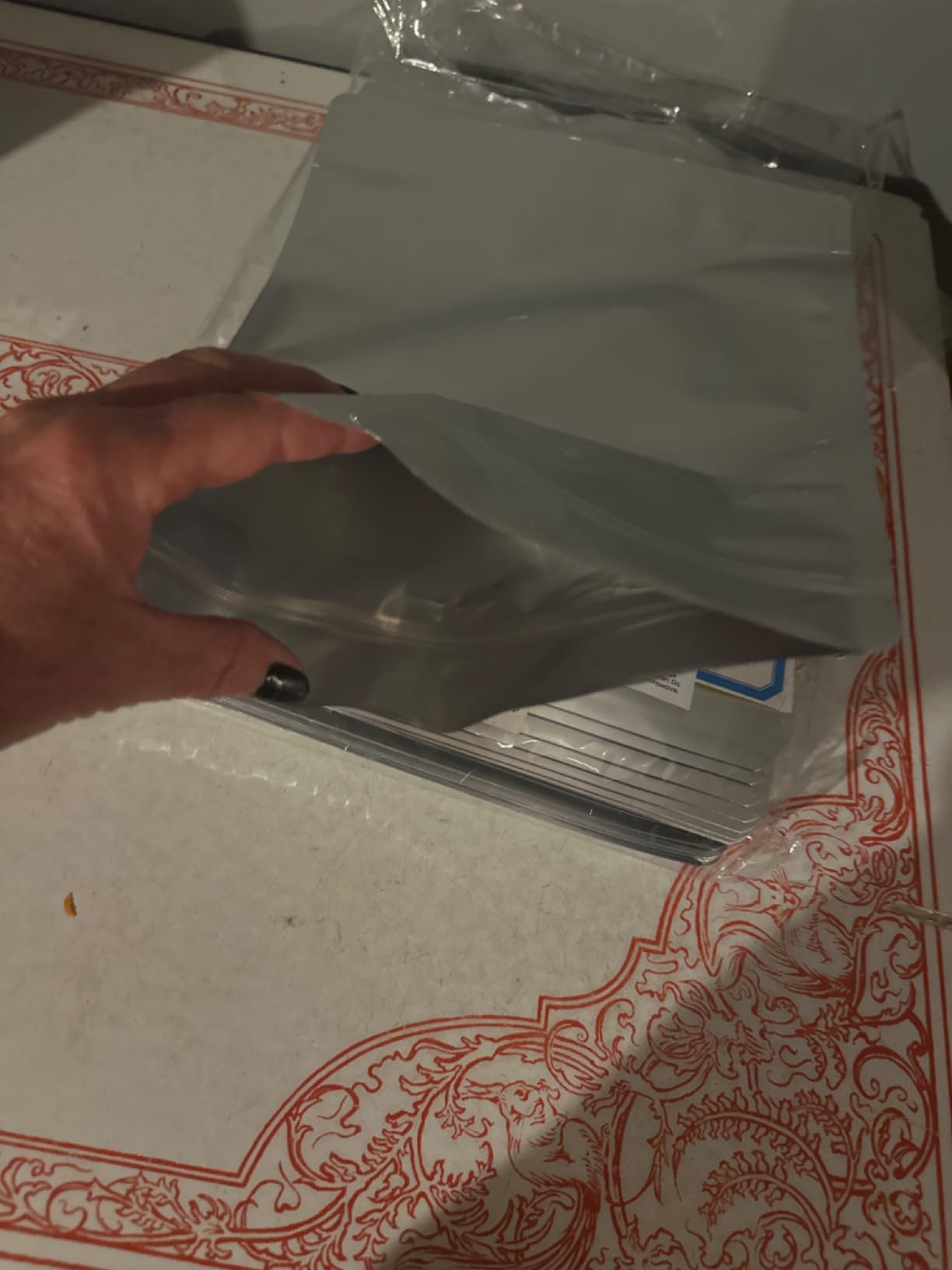
Best for a bucket-based reserve
One 5-gallon bucket of wheat berries or flour is a serious addition to a household food reserve. The liner bag handles moisture and light, and the bucket handles rodents, impact and stacking.
Use one-gallon bags inside buckets when you want to open only what you need at a time, and this size when you would rather fill a bucket once and take from it repeatedly.
The thickness decision
If your bulk goods include rice or beans rather than flour, move up in thickness. Sharp grain ends abrade film over decades, and the heavier kits resist that far better for a modest step up.
Key Features to Look For in Mylar Bags
Thickness: 5 to 7 mil per side. Five is the floor for anything you intend to keep for years, and 7 or more for sharp or abrasive dry goods like pasta and rice. Anything under 3.5 mil is short-term pantry storage.
Material: A true aluminum foil layer inside a multi-layer laminate, not a metallized plastic coating that looks metallic and passes air slowly. Listings that name the layers, such as PET, aluminum foil and PE, are describing real foil.
Oxygen absorbers: Matched to bag volume. One quart bag takes 100cc, a one-gallon bag takes 300 to 500cc, and a five-gallon bag takes 2000cc or more. One mil is 0.001 inch, so 7 mil is thinner than a fingernail and still blocks light completely.
What Mil Thickness Do You Actually Need?
Match the film to the food and to how long it stays sealed. Thin film fails from abrasion and handling, not from light, so soft low-abrasion foods are fine in a thinner bag for a shorter life.
3.5 mil per side: Freeze-dried output, spices, soft dried fruit. Fine for a few years sealed; buy the 300cc absorbers that ship with these.
5 mil per side: The minimum for long-term storage. Good for sugar, flour, oats and general dry pantry staples.
8 to 10 mil: Comfortable middle ground for mixed food lists, and the practical choice for five-gallon bucket liners holding bulk grain.
12 to 15 mil: For rice, beans, pasta, bird seed and anything stacked, bumped or stored in a garage. Expect sharper edges when cutting the opening.
How to Pick the Right Oxygen Absorber Size
The rule of thumb is simple: absorber capacity should roughly match bag volume in cubic centimetres. Undersizing leaves oxygen in the bag, which lets fats go rancid and lets insect eggs hatch.
Half-pint and quart bags: 100cc absorber. Plenty for freeze-dried meals and spices.
One-gallon bags: 300 to 500cc. One 400cc absorber per bag is the standard choice.
Two and a half gallon bags: 500 to 1000cc.
Five-gallon bags: 2000cc or more. One per bag, placed on top of the food before sealing.
Absorbers that arrive in vacuum-sealed pouches of five or ten keep unused supply effective far longer than loose packets. And four pantry staples should never get one at all: sugar, salt, baking soda and baking powder cake and clump because the absorber pulls moisture out of the food itself.
How to Fill and Heat Seal a Mylar Bag
Work in batches and seal as you go, because an absorber left sitting open loses its effectiveness within hours. Have your sealer, marker and labels ready before you start filling.
Dry the food fully first. Food above 10 percent moisture can support botulism in a sealed bag, which is the one genuine safety rule in this whole topic.
Fill to about two inches below the top. A completely full bag has no air for the absorber to work on.
Settle the contents by shaking or by pressing the sides so the food sits evenly and no air pocket remains at one end.
Wipe the rim of the bag with a dry cloth. Dust and oil on the sealing area is the most common cause of a failed seal.
Lay the correctly sized absorber flat on top of the food.
Heat seal immediately with an impulse sealer, an iron or a hair straightener. Run across the full width, then check for a continuous line with no wrinkles or gaps.
Label after sealing with a permanent marker, writing across the bag rather than only on the seal line.
Store cool, dark and pest-proofed, ideally with one-gallon bags inside a five-gallon bucket.
How to Avoid Thin or Mislabeled Mylar Bags
Thickness mislabelling is the most common complaint in buyer reviews, so verify before you commit a weekend of filling. One listing claims a mil figure that means total laminate thickness while describing it as per side, which halves the real number.
Read the thickness wording carefully. Twelve mil total across three layers is 6 mil per side, and a 15 mil bag described as 7.5 mil per side is the same object. Comparing a total figure against a per-side figure is how a bag feels thinner than the listing promised.
If you want to measure, a micrometer or digital caliper on the flat face of the bag away from the seam gives you a real number in seconds. If the delivered film reads well below the claim, contact the seller before filling anything.
A second issue worth knowing about: some listings ship a single pack in place of a multi-pack, and some omit the absorbers entirely while the images show them. Open the box, count the bags by size, and count the absorbers before you fill a single bag.
How Mylar Compares With Jars, Cans and Buckets
Mylar is not always the right container. Mason jars win for foods you will open often and for anything you can buy in bulk, and our guides to glass food storage containers and food storage container sets cover the everyday kitchen cases where glass beats foil.
Jars are reusable and re-sealable, which Mylar cannot match, but they are heavier, breakable and only available in fixed sizes. Number 10 cans are excellent for liquids, oil and commercially packed food. Five-gallon buckets protect against rodents and impact but do nothing on their own for light or oxygen, which is why a liner bag inside a bucket is the usual pairing.
Vacuum-sealed bags are the weakest option for decades. They can be re-sealed, but the plastic loses barrier properties faster than foil, and sugar has been reported hardening into a single block over two years inside one. If you already own a vacuum sealer, our ranking of the best vacuum sealers for food storage is still worth reading for everyday produce.
Frequently Asked Questions
Why did Amazon ban Mylar bags?
Amazon tightened enforcement on Mylar listings over quality complaints, especially thickness mislabelling and bait-and-switch packaging where a multi-pack arrived as a single pack. It is a listing-quality issue rather than a safety ruling about the material itself. Verify thickness on arrival and report any mismatch.
How thick do Mylar bags need to be for long-term food storage?
Five mil per side is the absolute minimum for storage measured in decades, and 7 to 7.5 mil is the better choice for sharp or abrasive dry goods such as pasta, rice and beans. Anything at 3.5 mil per side or thinner suits short-term storage or soft, low-abrasion foods such as freeze-dried output.
What size oxygen absorber do I need for mylar bags?
Match absorber capacity to bag volume. A half-pint or quart bag takes a 100cc absorber, a one-gallon bag takes 300 to 500cc, and a five-gallon bag takes 2000cc or more. Sugar, salt, baking soda and baking powder should never get an absorber because it pulls moisture out of the food and causes caking.
Can you reuse Mylar bags and can a vacuum sealer close them?
Zipped Mylar bags are reusable through the zipper, while a heat-sealed bag is effectively single-use for long-term storage once opened because its absorber is spent. A standard vacuum sealer will not draw air from smooth Mylar, since the surface seals before air is extracted; use an impulse sealer instead, or place a one-inch strip of textured vacuum bag in the opening as a workaround.
Are Mylar bags good for long-term food storage?
Yes. Properly heat-sealed food-grade Mylar at 5 mil or thicker, paired with a correctly sized oxygen absorber, stores dry foods such as rice and beans for 25 years or more. Keep moisture below 10 percent, never seal wet food, and store the filled bags cool and dark to reach that figure.
Our Verdict on the Best Mylar Bags for 2026
The Wallaby 100-pack multi-size kit takes our top spot because it solves the absorber sizing problem before you start, ships three bag sizes so portioning works, and carries enough review history to trust the seal quality. Add the Sukerle pack if you want four sizes on a budget, and the SHXWELL or Home Sensei kits if your food list is mostly rice, beans and pasta.
Whatever you choose, check thickness on arrival, match every absorber to bag volume, skip the absorber on sugar and salt, and store filled bags cool and dark inside a bucket. Used that way, the best mylar bags for long term food storage turn a pantry into a two-decade food reserve.