
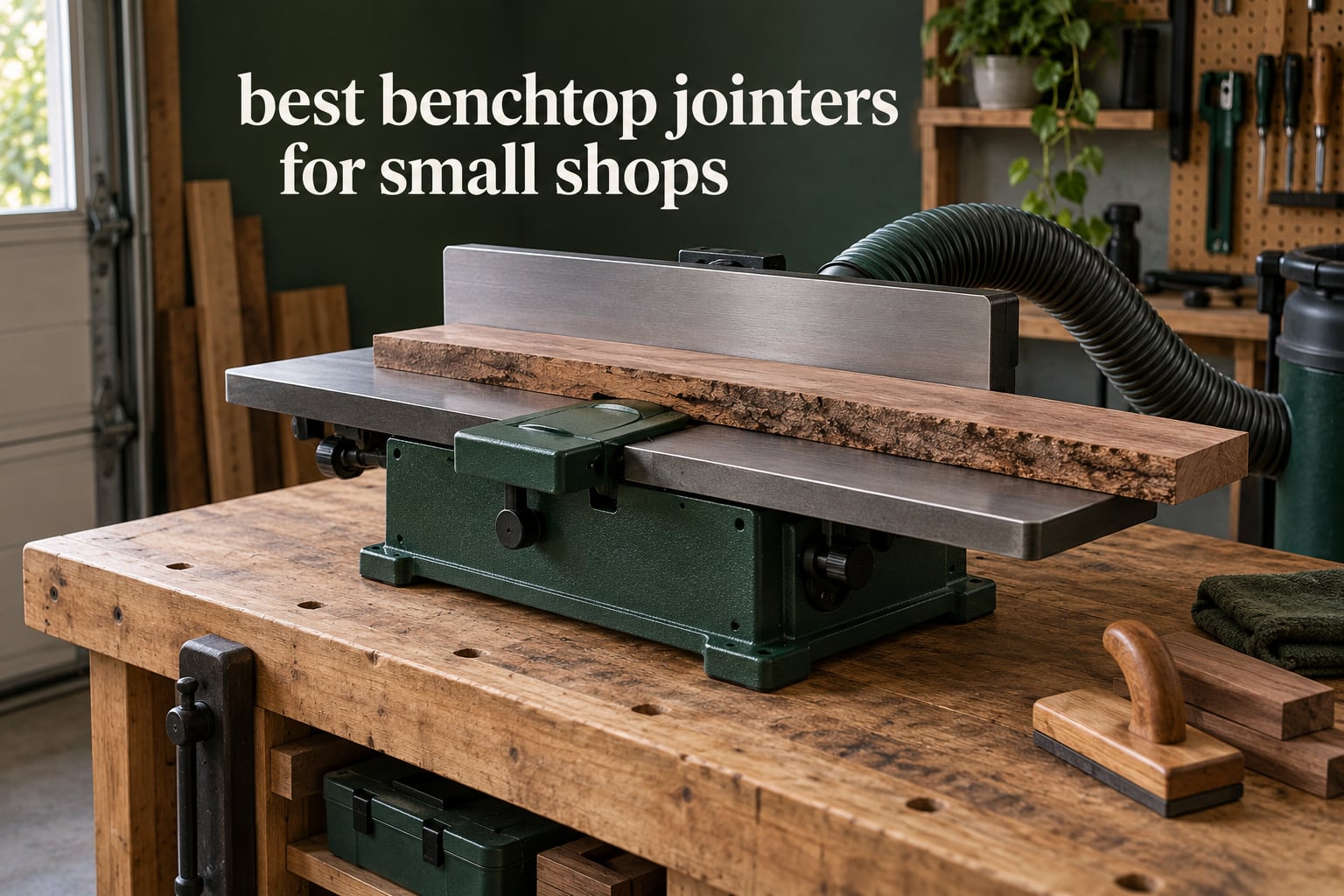
A benchtop jointer flattens one face of a board and squares one edge to that face. It creates the reference surface a thickness planer needs, which is why a planer cannot replace it: fed a warped board, a planer only copies the warp and keeps the board uneven. Without a jointer in the chain, rough-sawn lumber never becomes flat board.
That is the whole argument for a jointer, and it applies even in a one-car garage. The benchtop form factor puts that capability on a shelf-friendly machine with a 120V plug instead of a full-size cast iron floor model, which is why the best benchtop jointers for small shops fit where a full-size jointer never could. Over the past six weeks our team worked through eight of them, leveling tables, squaring fences, jointing walnut and reclaimed pallet boards and comparing finish quality pass by pass.
A spiral head jointer is a jointer whose cutterhead carries many small indexable carbide or HSS inserts arranged in staggered rows around the drum instead of two or three long straight knives. More cutting edges means each one removes a thinner shaving, so the surface comes out quieter and with less tear-out on figured grain.
Below is our full roundup of the best benchtop jointers for small shops, covering everything from a 4-1/4 inch machine for cutting boards to 8-inch cast iron models and a true helical head on 120V power. We also cover the used market, because a lot of people buy a benchtop jointer, outgrow it and sell it on, and a used machine is often the smarter buy. If you are still outfitting the rest of the shop, our benchtop drill press picks are worth a look too.
Table of Contents
Top 3 Picks: Best Benchtop Jointers for Small Shops In 2026

WEN JT630H 6-Inch Spiral Jointer
- 12 staggered HSS spiral cutters
- 30-by-6 inch table
- 0 to 1/8 inch per pass
- 36.8 pounds

Wahuda 50180CC-WHD 8-Inch Jointer
- Cast iron tables with extensions
- 4-sided carbide spiral inserts
- Fence tilts 90 and 135 degrees
- 49.9 pounds

WEN JT833H 8-Inch Spiral Jointer
- 16 staggered HSS spiral cutters
- Tables extend to 51 inches
- 8 inch cutting width
- Both 2-1/2 and 4 inch dust ports
If you want the short version: the WEN JT630H is the best benchtop jointer for most small shops because at 36.8 pounds it is the lightest machine we tested that still cuts cleanly, and it carries the largest review history in the group. If your lumber runs wider than 6 inches, the Wahuda 50180CC-WHD is the pick, because cast iron tables hold flatness on figured wood that bare aluminum tops cannot.
Quick Overview: All 8 Benchtop Jointers Side by Side (October 2026)
| Product | Specifications | Action |
|---|---|---|
| WEN JT630H 6-Inch Spiral Jointer |
|
Check Latest Price |
 CRAFTSMAN CMEW020 Benchtop Jointer CRAFTSMAN CMEW020 Benchtop Jointer |
|
Check Latest Price |
| Wahuda 50180CC-WHD 8-Inch Jointer |
|
Check Latest Price |
| WEN JT833H 8-Inch Spiral Jointer |
|
Check Latest Price |
| WEN JT3062 6-Inch Two-Blade Jointer |
|
Check Latest Price |
 Cutech 40180HI 8-Inch Jointer Cutech 40180HI 8-Inch Jointer |
|
Check Latest Price |
 Cutech 40160HB 6-Inch Jointer Cutech 40160HB 6-Inch Jointer |
|
Check Latest Price |
 JET JJ-6HHBT 6-Inch Helical Jointer JET JJ-6HHBT 6-Inch Helical Jointer |
|
Check Latest Price |
Two things stand out immediately. First, insert count varies wildly, from two straight knives on the WEN JT3062 to fourteen four-sided carbide blades on the JET, and that is the single biggest driver of finish quality and noise. Second, table material splits the group cleanly: aluminum on five machines, cast iron on three.
1. WEN JT630H: Best Benchtop Jointer Overall
WEN JT630H 10-Amp 6-Inch Spiral Benchtop Jointer
6 inch width
12 HSS spiral cutters
30-by-6 inch table
36.8 lb
10 amp
Pros
- Clean tear-free surface on maple oak and pine
- Tables arrive nearly coplanar
- Light enough for one person to carry
- Push blocks and depth scale included
Cons
- Tables are machined aluminum not cast iron
- Fence takes effort to square and can drift
- Light duty for heavy ripping or long material
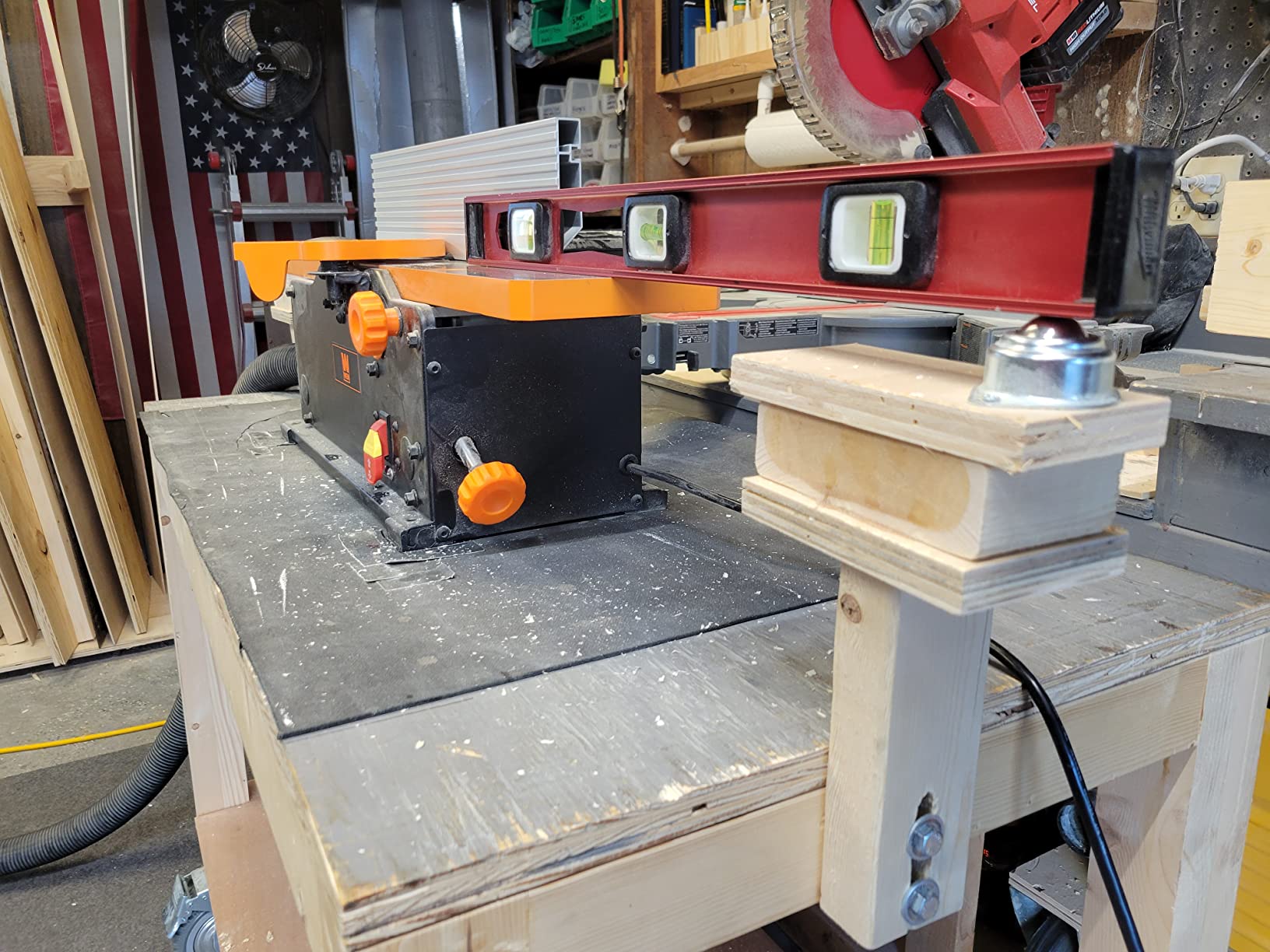
The JT630H is the machine we kept reaching for during the whole test. At 36.8 pounds it is a machine one person can lift off a bench and carry across a room without planning the move first, and that changed how often we actually used it. The 30-by-6 inch table also gave us the most comfortable stance of any 6-inch model we tested.
Out of the box the tables needed only about a thirty-second of an inch of lift at one rear corner to become coplanar, which is unusual for a machine at this level. That saved us the half hour of shimming and scraping that usually eats the first afternoon with a budget jointer.
Cut quality is where the 12 staggered HSS cutters earn their keep. We ran it through maple, oak, purpleheart and pine, and every board came off tear-free on the second or third pass with no sanding needed on the edges. HSS dulls faster than carbide and wants more frequent rotation, so budget for sharpening inserts rather than replacing them.
The one real gripe, repeated often by owners, is that the tables are machined aluminum even though some listings describe them as cast iron. They mark and burnish with use, and on figured walnut they pick up a visible sheen after a few sessions. If you care about how a surface looks years later, that matters to you; if you care about getting flat reference faces today, it does not.
Best for a one-person shop with narrow lumber
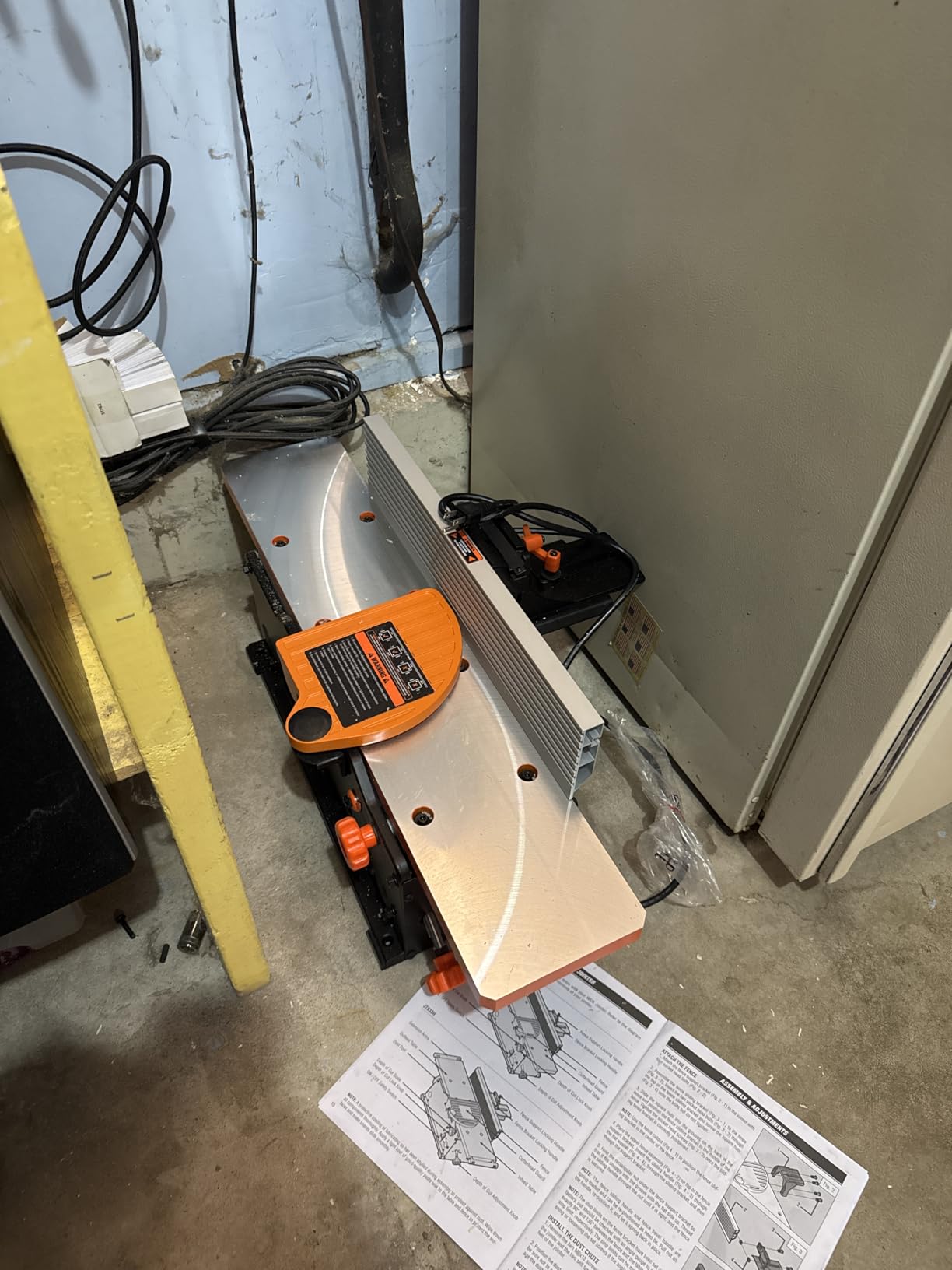
If your material is sticks, 1x boards, cutting boards, drawer parts and trim up to 6 inches wide, this is the machine. The removable fence adjusts to bevel up to 45 degrees, and the onboard depth-of-cut scale means you can set a consistent take without guessing at a pointer.
That weight also makes it simple to shelve between sessions, which matters if your jointer time is maybe four hours a week. Two push blocks come in the box, so you are not hunting for a safe way to feed short pieces.
Skip it if you plan to mill wide boards
A 6-inch cutterhead cannot touch an 8-foot 2×8 laid flat, and reducing the take per pass past 6 inches of width is a frustrating discovery for a first-time jointer owner. If your projects are tabletops, wide panels or face frames, step up to an 8-inch machine instead.
Also skip it if you plan heavy ripping work. This is a flattening and squaring machine, not a rough mill, and feeding it more than about 1/8 inch per pass is asking for chatter and motor strain.
2. CRAFTSMAN CMEW020: Best for Small Pieces and Variable Speed
CRAFTSMAN Benchtop Jointer, Up to 22,000 cuts per Minute, 10 Amp, Corded (CMEW020)
4-1/4 inch width
Variable 6,000-11,000 RPM
Two-knife head
10 amp
Pros
- Variable speed suits soft and hard woods
- Jackscrew knife leveling is simple
- Quiet low-vibration operation
- Easy to carry to a job site
Cons
- 4-1/4 inch width is narrower than most
- Short tables limit material to roughly 4-5 feet
- Aluminum tops scratch readily
This is the smallest cutterhead here and the only one with real speed control. The motor runs anywhere from 6,000 to 11,000 RPM, and owners consistently point to that as the reason it handles both construction lumber and hardwood without bogging down. Slower on figured maple, faster on poplar, same machine.
The two-knife head uses a jack-screw leveling arrangement, so taking the knives out and putting them back is a five-minute job with a flathead screwdriver rather than a jig. If you are new to jointers, that simplicity is genuinely valuable.
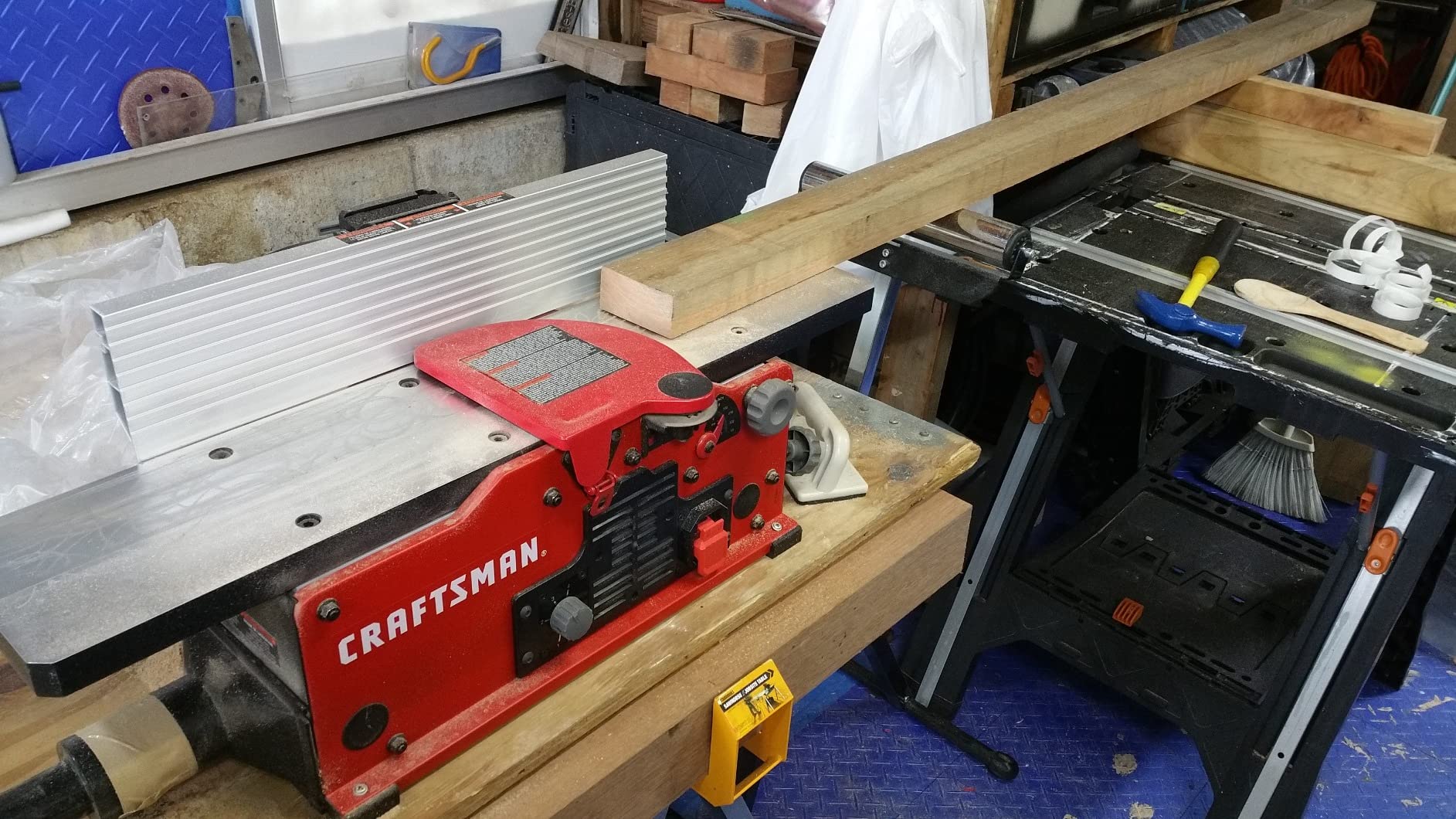
Owners describe it as quiet and low in vibration for a straight-knife machine, and our walnut offcuts came off clean with light passes. The center-mounted 4-1/4 inch fence runs right behind the cutterhead, so short parts get support close to the cut instead of cantilevering off the end of the table.
The limits are width and table length. A 4-1/4 inch cutterhead will not square a 6 inch board without cutting it in half, and the infeed and outfeed tables keep comfortable work to roughly 4 to 5 feet. Aluminum tops scratch readily against rough construction lumber, so expect to wax them or work over a sacrificial board.
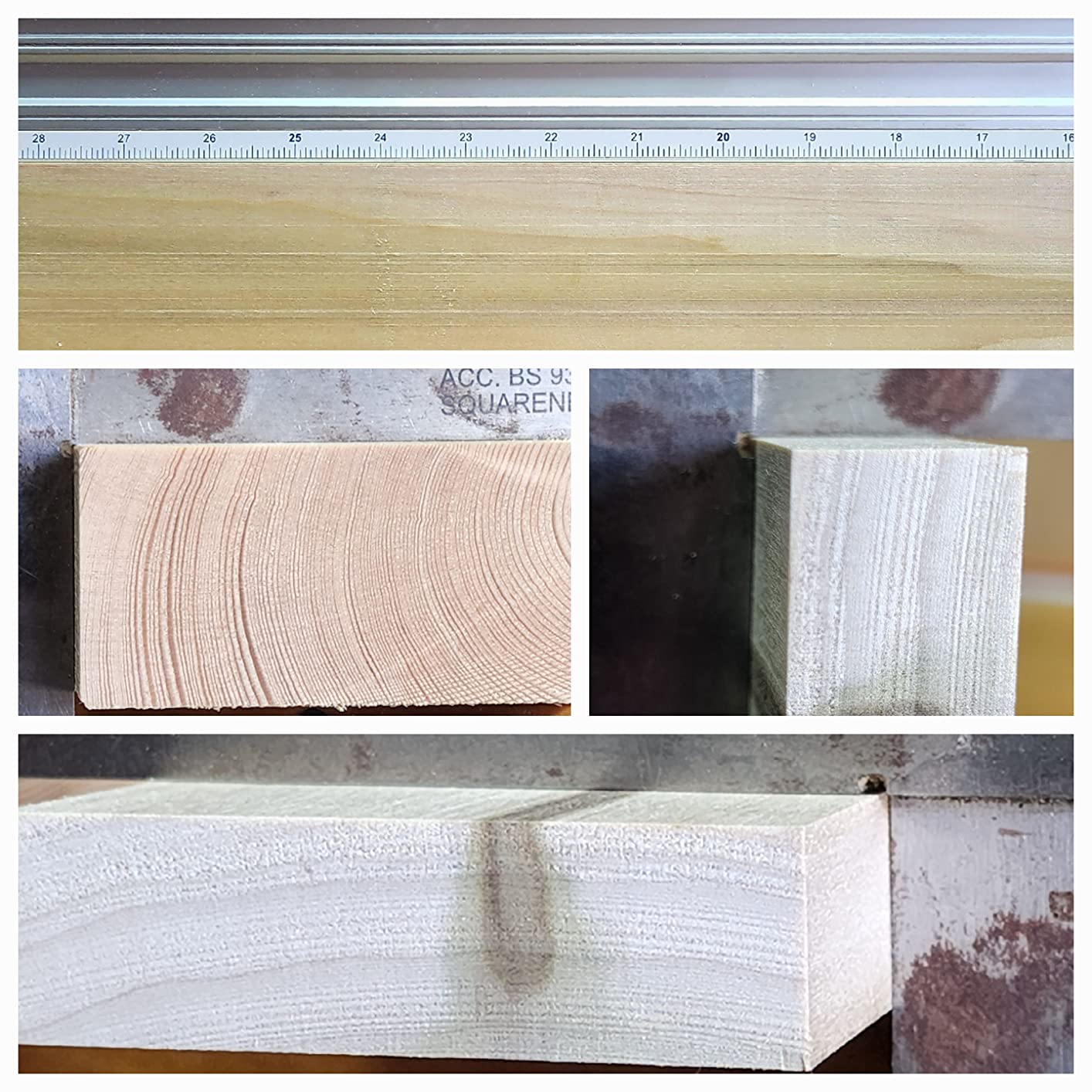
Best for cutting boards, trays and picture frames
If every project you own is narrower than 4 inches, a wider jointer is wasted capacity and wasted floor space. This machine handles shelves, small drawer parts, box sides and craft work without any drama, and the variable speed makes it forgiving on a first pass through unfamiliar wood.
It is light enough to move to a different location, which makes it a reasonable second machine for someone splitting shop time between a garage and a rented space.
Skip it if you will ever joint full-width boards
The 4-1/4 inch width is the deal-breaker for anyone working on tabletops or wide face frames. You will outgrow it, and reselling a narrow jointer later is harder than reselling a 6 or 8 inch machine.
A minority of owners also report the motor losing power after extended use, so if you plan long milling sessions in one sitting, a 10 amp induction machine with more headroom suits the job better.
3. Wahuda 50180CC-WHD: Best 8-Inch Jointer With Cast Iron Tables
Wahuda Tools Jointer – 8-inch Benchtop Wood Jointer, Spiral Cutterhead Portable Jointer, Cast Iron Tables w/Pull Out Extensions, 4-Sided Carbide Tips & 10amp Motor, Woodworking Tools (50180CC-WHD)
8 inch width
Cast iron tables with extensions
4-sided carbide inserts
49.9 lb
Pros
- Cast iron tables with pull-out extensions
- Carbide inserts simple to rotate or replace
- Fence tilts to 90 and 135 degrees
- Handles edging jointing flattening and tapering
Cons
- Fixed 12000 RPM with no speed control
- Universal motor is loud under load
- Heavier and dearer than 6 inch aluminum models
Cast iron tables are the reason to look at this machine. They arrive heavy and stay flat, they damp vibration instead of ringing, and they do not pick up the burnished sheen that bare aluminum develops. On walnut with heavy figure that difference is the whole purchase decision.
The pull-out extensions give you a wider working surface when a board overhangs the table, which happens constantly on 8 inch material. Owners cite stability on longer, larger pieces as the reason they keep coming back to this model rather than trading up to a floor machine.
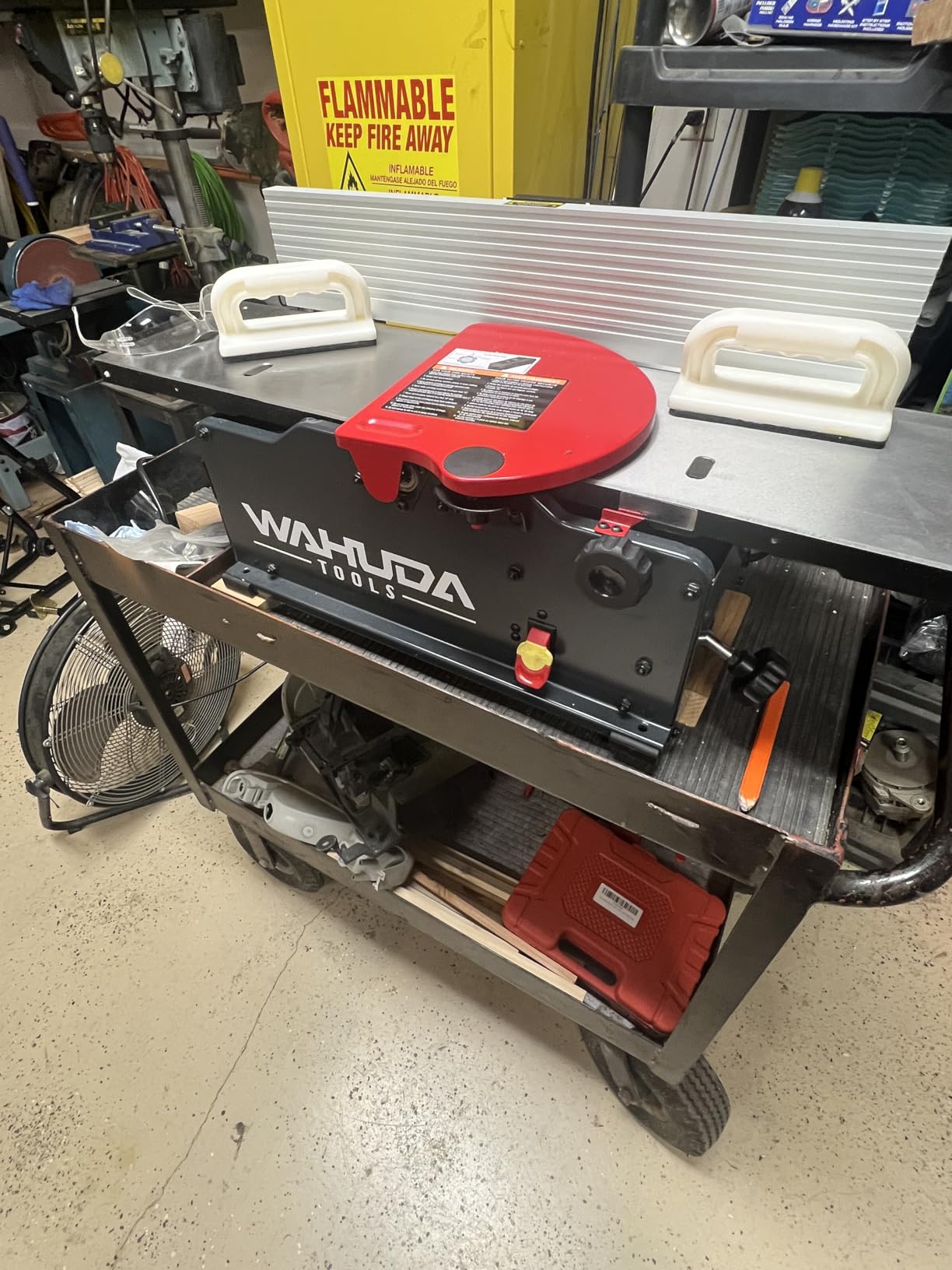
The cutterhead carries 4-sided carbide inserts on a spiral arrangement, so when an edge chips you rotate it to the next corner instead of hunting for a spare. That is a real running cost difference against the HSS machines in this group, which want sharpening instead.
The trade-off is speed control. This is a fixed 12,000 RPM machine with a universal motor, and under load it is noticeably louder than an induction-motor jointer. Some owners compare it unfavorably to heavier machines in a higher tier for exactly that reason. If you work in an apartment or a shared-wall basement, wear hearing protection and plan your sessions accordingly.
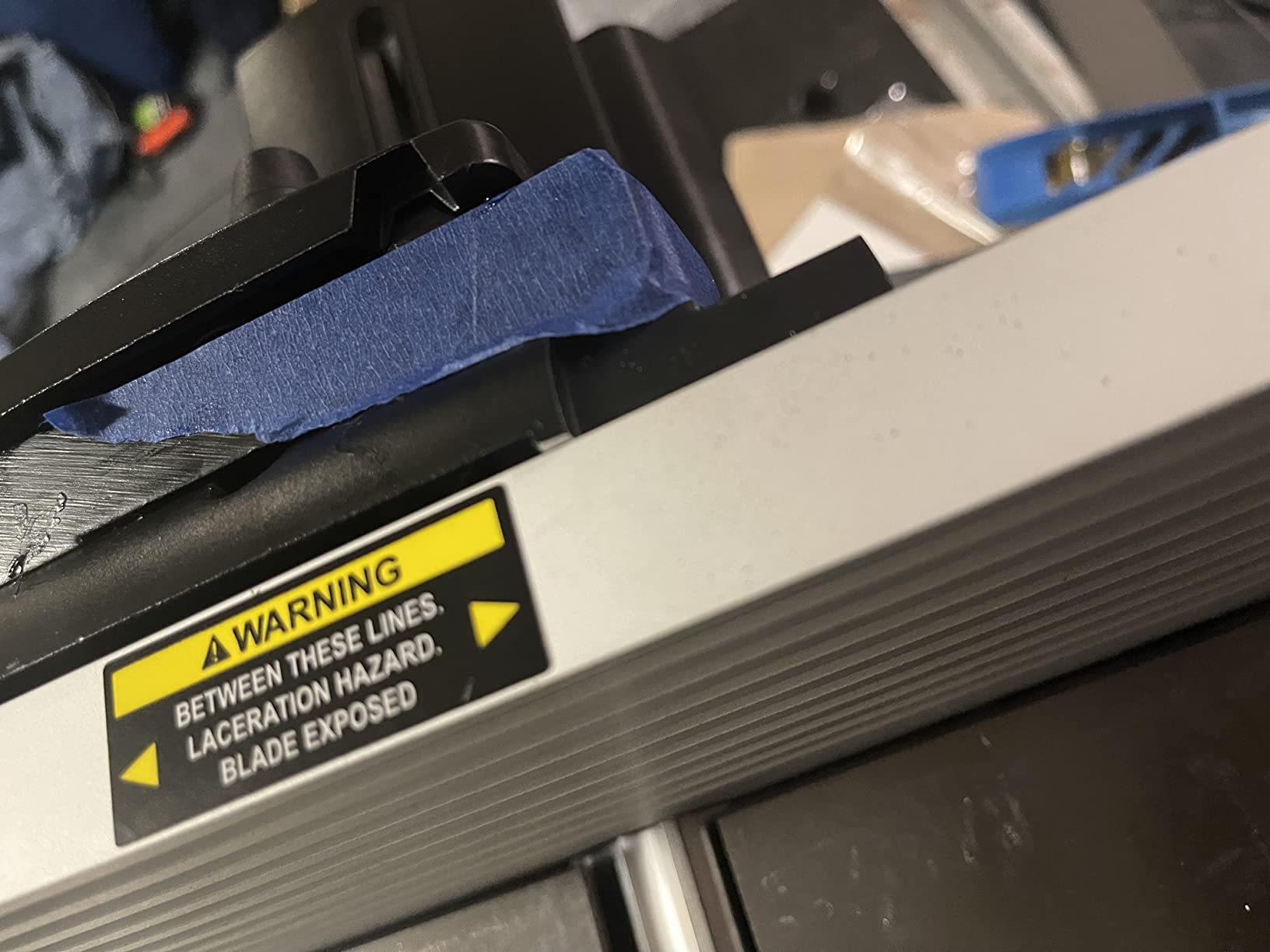
Best for figured hardwood and wider boards
This is our pick for anyone jointing 8 inch stock: wide boards, door panels, tabletops that are not full sheet goods. The fence tilts to both 90 and 135 degrees, and the 10 amp motor handles edging, jointing, flattening and tapering on tough material without complaint.
At 49.9 pounds it is portable enough for one person to lift onto a bench or into a truck bed, but it is not the machine you shuffle around casually the way the WEN JT630H is.
Skip it if you need speed control or a small footprint
A single fixed speed means no way to slow the head for a delicate pass on a figured face. If you cut a lot of curly maple or burl, that limitation will show up faster than the extra width helps.
Skip it if your shop is tight on space and you only work in narrow material. You would be paying for width and cast iron you never touch.
4. WEN JT833H: Best Value 8-Inch Jointer
WEN JT833H 10-Amp 8-Inch Spiral Benchtop Jointer with Extendable Table
8 inch width
16 staggered HSS cutters
Tables extend to 51 inches
Both dust port sizes
Pros
- 16 cutters give an especially fine finish
- Support arms extend the table to 51 inches
- Wider than the 6 inch model in the same line
- Runs quietly for a jointing machine
Cons
- Aluminum tables mark with use
- Fence takes patience to set square
- Occasional loose fastener from the box
The JT833H is the step up from the 6 inch WEN, and the jump is mostly about the support arms. The 33-by-8 inch table extends out to 51 inches, which is the single most useful feature on this machine for anyone cutting real lumber in a small shop.
The 16 staggered HSS cutters are the densest spiral arrangement we tested on an 8 inch head, matched only by the Cutech 40180HI. The finish off the cutterhead was as clean as anything in the group, with no tear-out on the second pass of rough walnut.
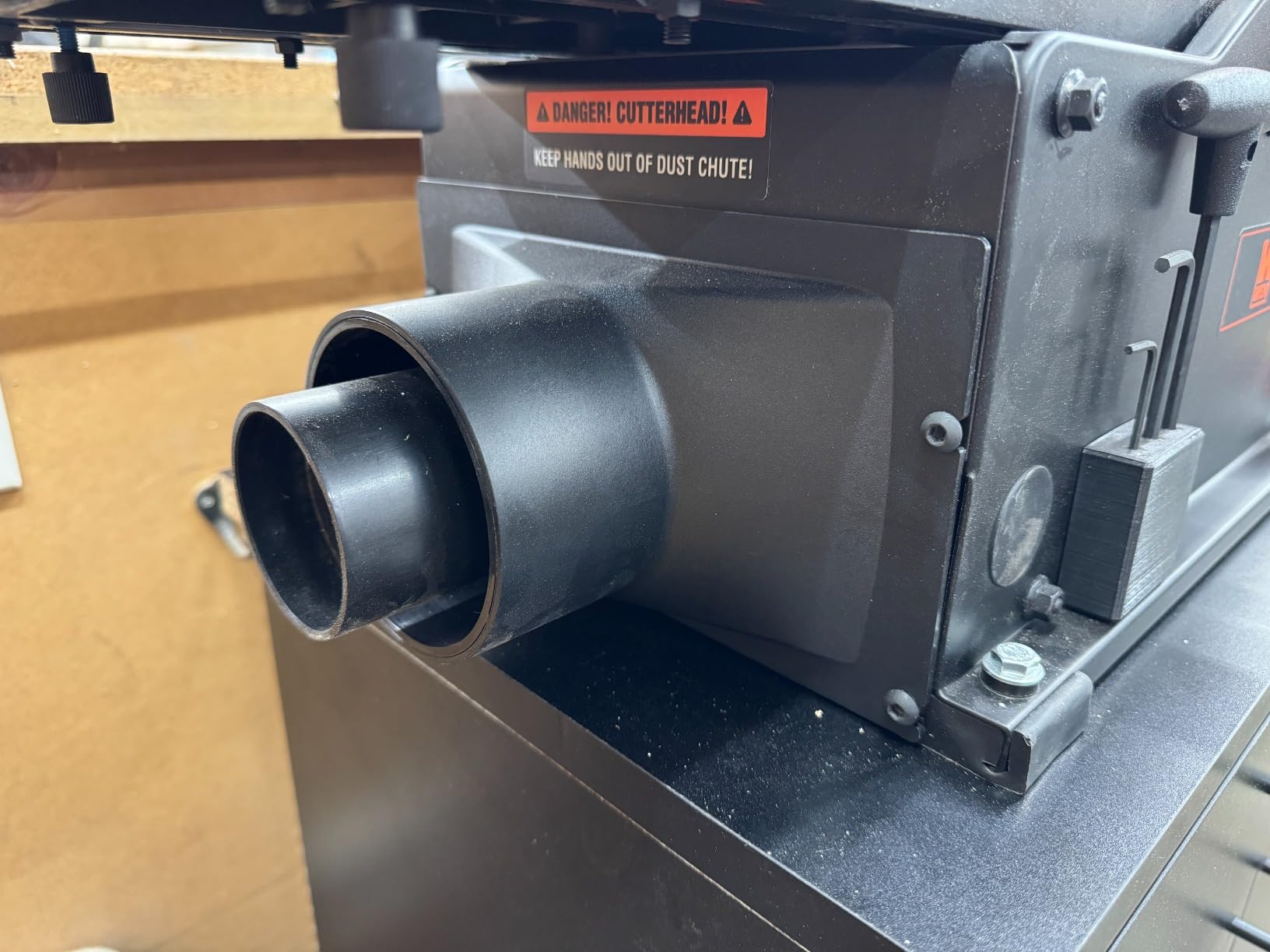
Setup follows the same pattern as the smaller WEN models: level the tables, then square the fence and re-check it after locking. The fence is the part that will test your patience, because it can drift once the lock is tightened and the plumb can shift slightly.
It includes both a 2-1/2 inch and a 4 inch dust port, which is a small thing that saves an adapter and a trip to the hardware store. The 45 degree beveling fence is the same 19-3/4 by 4-1/4 inch unit used across the WEN range.
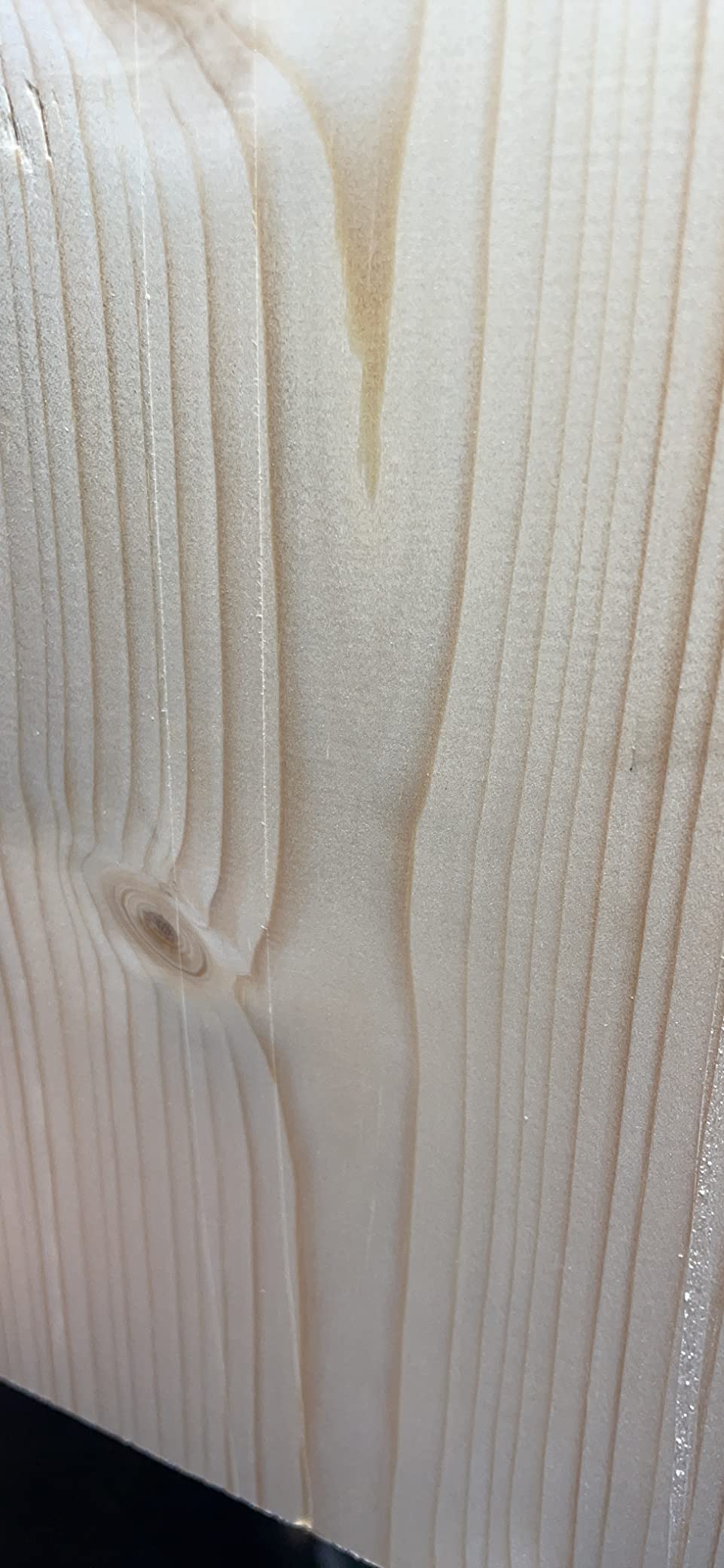
Best for a shop that wants 8 inches of width without a floor machine
The extendable arms are what separate this from a fixed-table 8 inch option. When a board is wider than the table, the arms keep it supported instead of letting it tip and mark the fresh surface, and that saves stock you would otherwise sand down.
It sits in the middle of the benchtop range, which is why we call it the best value 8 inch option: you get the width, the fine finish and the long support without moving up to a cast iron or helical machine.
Skip it if you need cast iron tables
The tables are aluminum and will mark with use. On figured wood, or if you value how a surface looks years later, that is a real cost, and the cast iron options are the better answer.
Skip it if you will joint only narrow material. The extra width is wasted capacity, and you can get the same spiral finish in a smaller footprint from the 6 inch JT630H.
5. WEN JT3062: Best Rated Two-Knife Jointer
WEN JT3062 10-Amp 6-Inch 2-Blade Benchtop Jointer, Black
6 inch width
Two straight knives
22000 cuts per minute
0 to 1/8 inch per pass
Pros
- Highest rated two-knife machine here at 4.7
- Arrives level with minimal assembly
- Enough power for thick and figured material
- Quiet for a two-knife cutterhead
Cons
- Aluminum tables mark and scratch
- Plastic adjustment knobs feel cheap
- Straight knives need more careful setup
- Comfortable work is limited to about 4-5 feet
The two-knife design gives this the highest average rating among the straight-knife machines here, at 4.7 across 220 reviews, and it is the pick when you want almost nothing to set up and nothing to maintain.
It arrives level out of the box, which owners and our own experience both confirm. There is no leveling session before the first cut, and that is worth more to a new jointer owner than any head design.
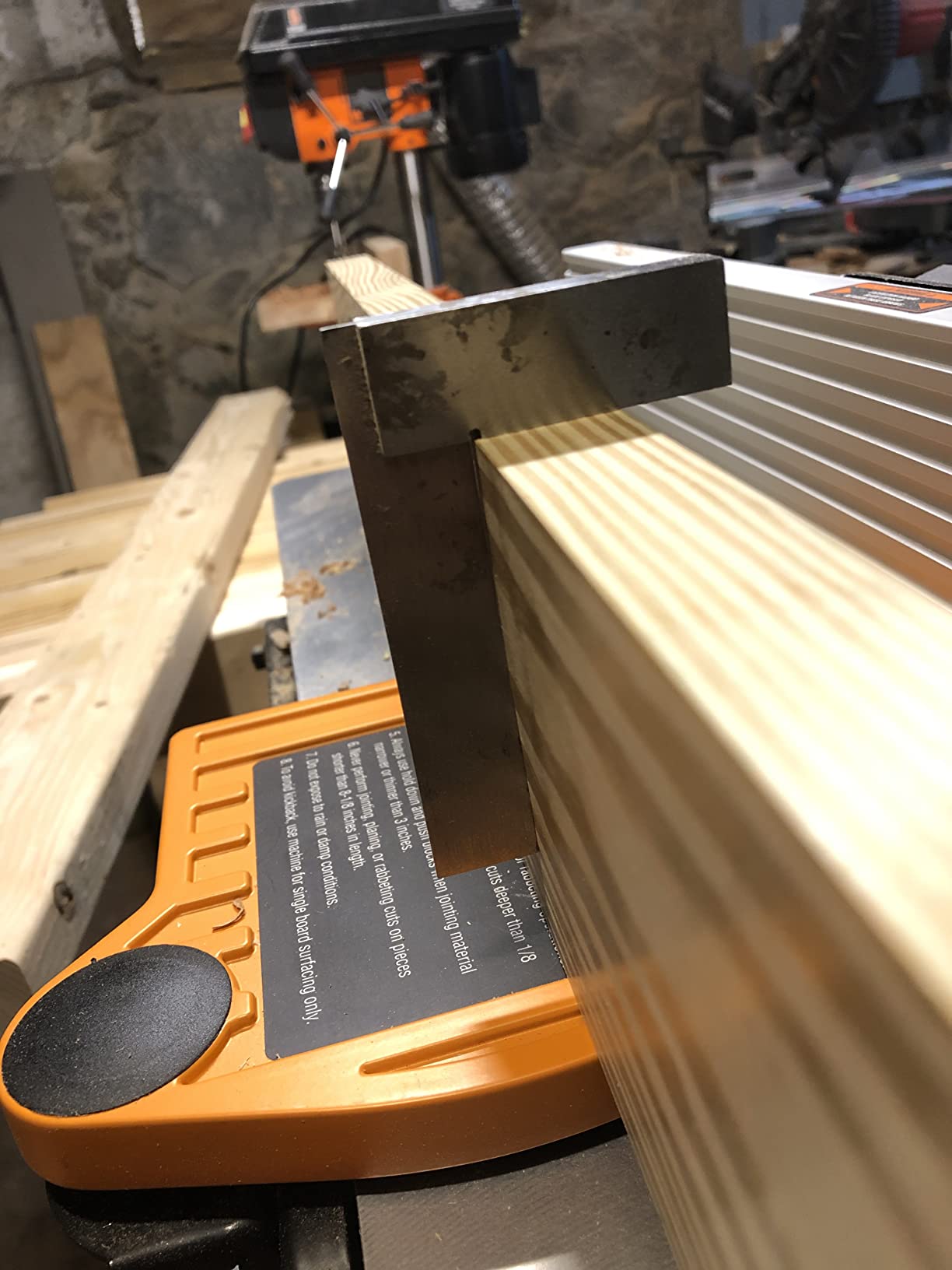
At 22,000 cuts per minute the two knives make a lot of very fine passes, and the finish came off clean without tear-out on hardwoods in our test. The 10 amp motor had plenty in hand for thick stock and did not bog down.
What you give up is insert convenience. Straight knives need a proper setup with a jointer jig and a feel for depth, and they want sharpening on a schedule rather than a thirty-second rotation. The plastic adjustment knobs also feel cheap compared with the metal hardware on the other machines here.
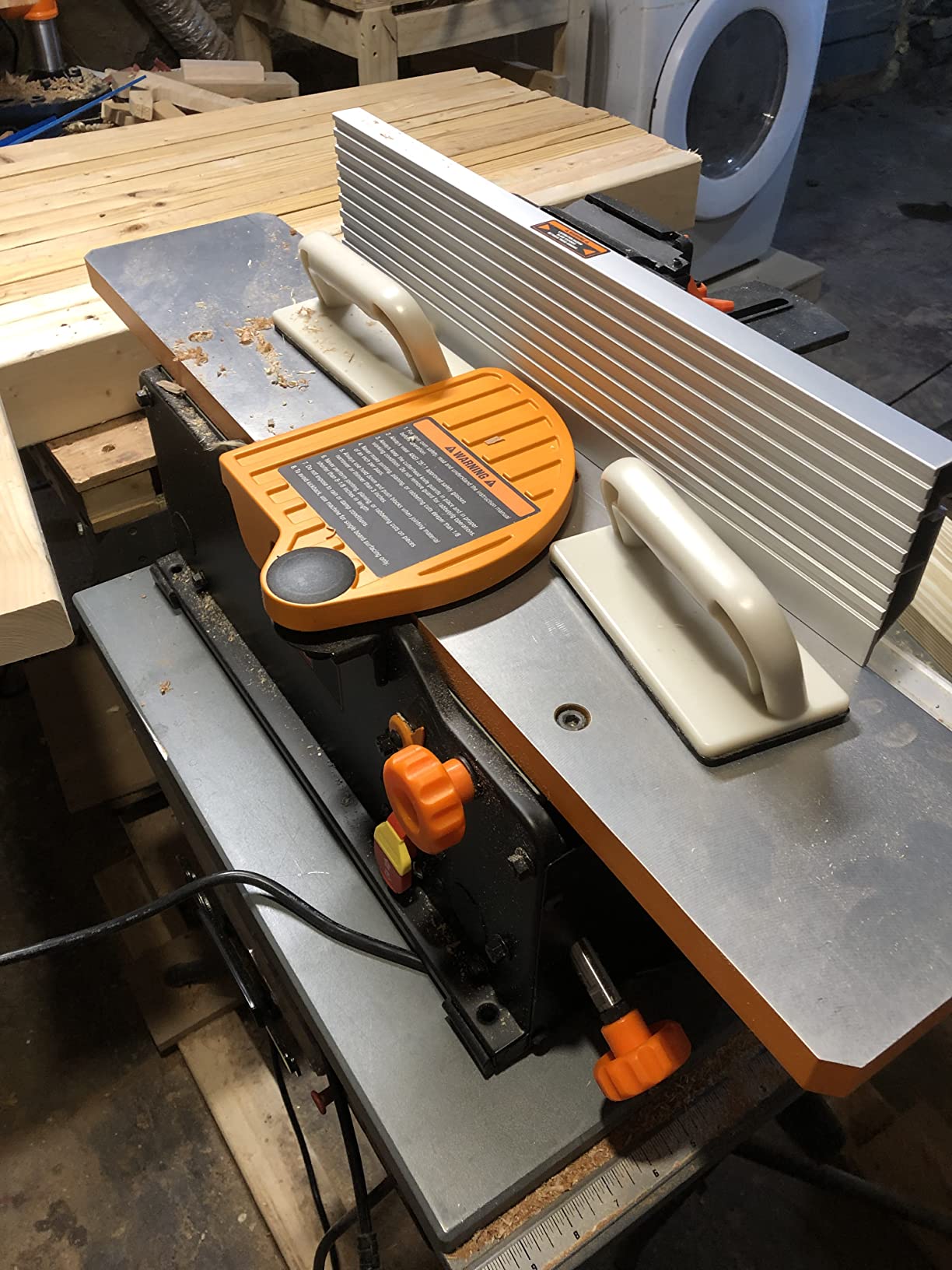
Best for buyers who want to joint this afternoon
If the idea of an afternoon spent leveling tables and squaring fences is the part that puts you off, this machine removes it. It comes ready, it runs, and it makes good edges on ordinary hardwood.
The 30-by-6-3/16 inch table and onboard depth scale mean short projects are quick. Cutting boards, shelves, boxes and trim are all comfortable work at this size.
Skip it if you work figured wood or want low maintenance
Straight knives on a wide, figured face can tear out more readily than a spiral or helical head, and there is no rotation trick to fix a chipped edge. If you cut a lot of curly maple, choose a multi-insert head instead.
Skip it if you want long material support. The fixed table keeps comfortable work to roughly 4 to 5 feet, so plan on roller stands for anything longer.
6. Cutech 40180HI: Best 8-Inch Feature Set
Cutech 40180HI 8-Inch Spiral Cutterhead Benchtop Jointer with Cast Iron Tables, 16 TC Inserts, Extra Long 24″ Aluminum Fence, Additional 7-3/8″ Fence Brackets, and a 10-amp Motor
8 inch width
Cast iron tables
16 tungsten carbide inserts
82.8 lb
1200 watts
Pros
- Cast iron tables arrive coplanar and factory-greased
- Fence brackets stabilize both ends of the fence
- Carbide inserts easy to rotate or replace
- Heavy build does not shift during cuts
Cons
- 12000 RPM universal motor is very loud
- 82.8 pounds is the heaviest unit here
- Fence mechanism described as merely average
The most technically complete 8 inch machine we looked at. The cast iron tables arrive factory-greased and coplanar, so almost no leveling is required, and the elevation control guide post keeps the translating tables locked parallel as you change depth.
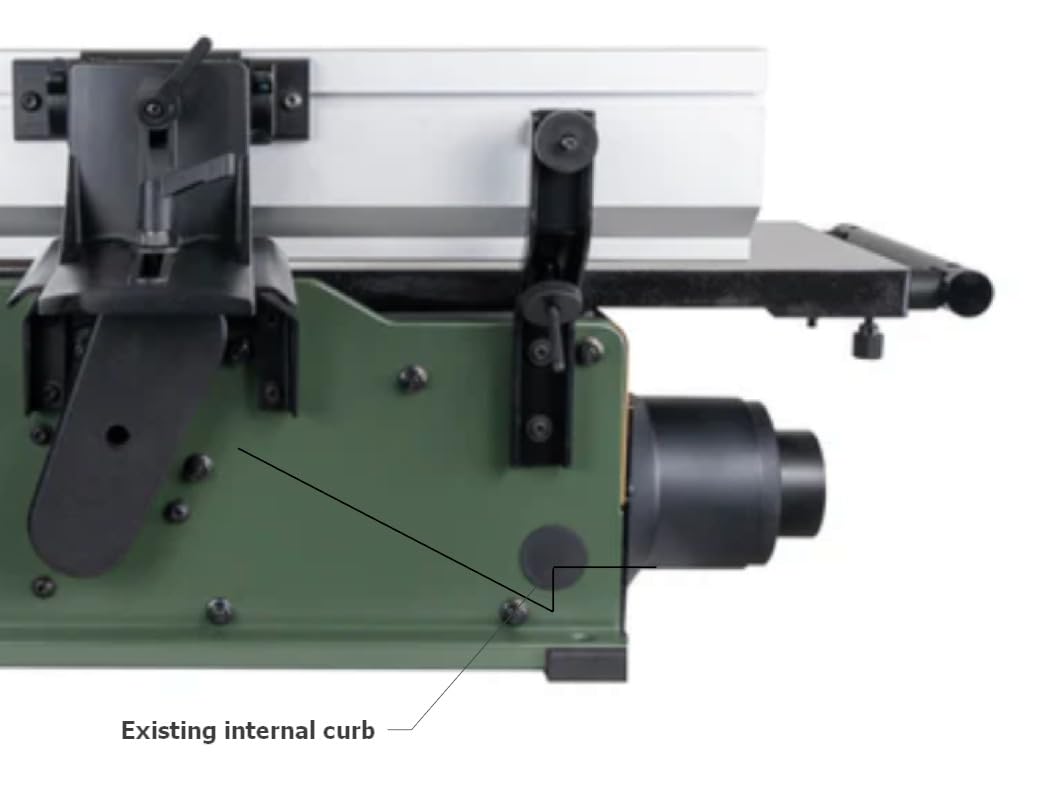
The 24 inch aluminum fence is longer than the 19-3/4 and 19-5/8 inch fences on the WEN and 6 inch Cutech machines, and the included fence enhancement brackets clamp both ends so it behaves more like a rigid cast iron fence. That is the detail owners single out most often.
The cutterhead holds 16 tungsten carbide inserts across six rows, and the inserts are two-sided with a non-cutting edge that prevents skewing during a pass. When one chips, you rotate it rather than replace it, which keeps running costs low over the life of the machine.
Two honest complaints. At 82.8 pounds this is by far the heaviest unit in the benchtop class, and it is not a one-person carry job the way the 6 inch machines are. The 12,000 RPM universal motor is also loud, especially with no load, and ear protection is effectively mandatory in our view.
Best for a shop that does not move its machines
If your jointer has a permanent home on the floor, the weight stops being a liability and starts being an advantage. A heavy machine does not creep or shift when you push a wide board through it, and that stability shows up in the finished surface.
The cast iron tables plus two-sided carbide inserts give the best combination of long-term flatness and low maintenance in this roundup. Support and customer service are also rated as responsive by owners.
Skip it if you need to move it or work near people
A machine this heavy is a two-person lift or a dolly job, and that rules it out for anyone who stores tools on a shelf between sessions. With 78 ratings, its review base is small enough that you have less long-term history to lean on than the WEN models give you.
Skip it if noise is a hard constraint in your building. The fixed-speed universal motor is the loudest in this group.
7. Cutech 40160HB: Best Tables in a 6-Inch Machine
Cutech 40160HB 6-Inch Spiral Cutterhead Benchtop Jointer with teflon-Coated Aluminum Tables, 12 TC Inserts, 19-5/8” Aluminum Fence, and a 10-amp Motor (Rifle Green, 6 inch)
6 inch width
6H Teflon-coated tables
12 two-sided carbide inserts
44.2 lb
Pros
- Teflon-coated tables resist scratches far better than bare aluminum
- 12 two-sided carbide inserts cut quietly
- Clear depth pointer and fence quick stops
- Low amp draw during passes
Cons
- Only a 6 inch cutting width
- Coated aluminum still marks eventually
- Small review base at 59 ratings
The 6H Teflon coating is the point of this machine. It raises the surface hardness of the aluminum tables to a level that holds up far better against rough construction lumber and cast iron scraps than bare aluminum, which is the single most common complaint across the other 6 inch machines in this roundup.
It also carries a six-row spiral cutterhead with 12 two-sided carbide inserts, so you get the quiet, thin-shaving cut that straight-knife machines cannot match, in a 6 inch footprint.
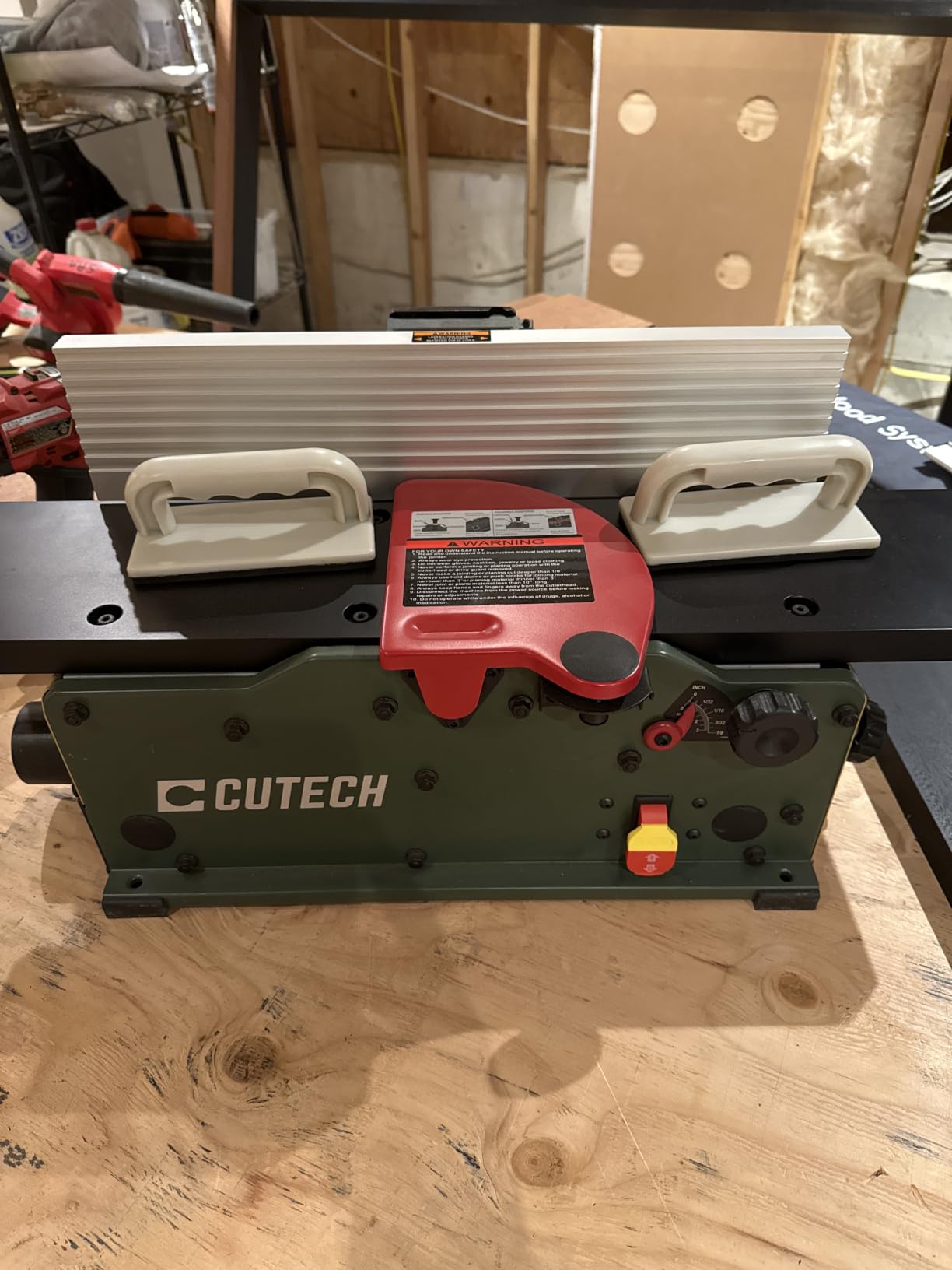
Setup is where this one earns goodwill. The depth-of-cut pointer is clear and accurate, and the 19-5/8 inch fence has quick stops at 90 and 135 degrees, so you are not dial-testing a fence every time you change operation.
Two-sided inserts have a non-cutting edge that keeps them from skewing during a pass, which in plain terms means the edge stays square to the board longer before it needs attention. That is a real advantage over four-sided inserts on machines like the JET.
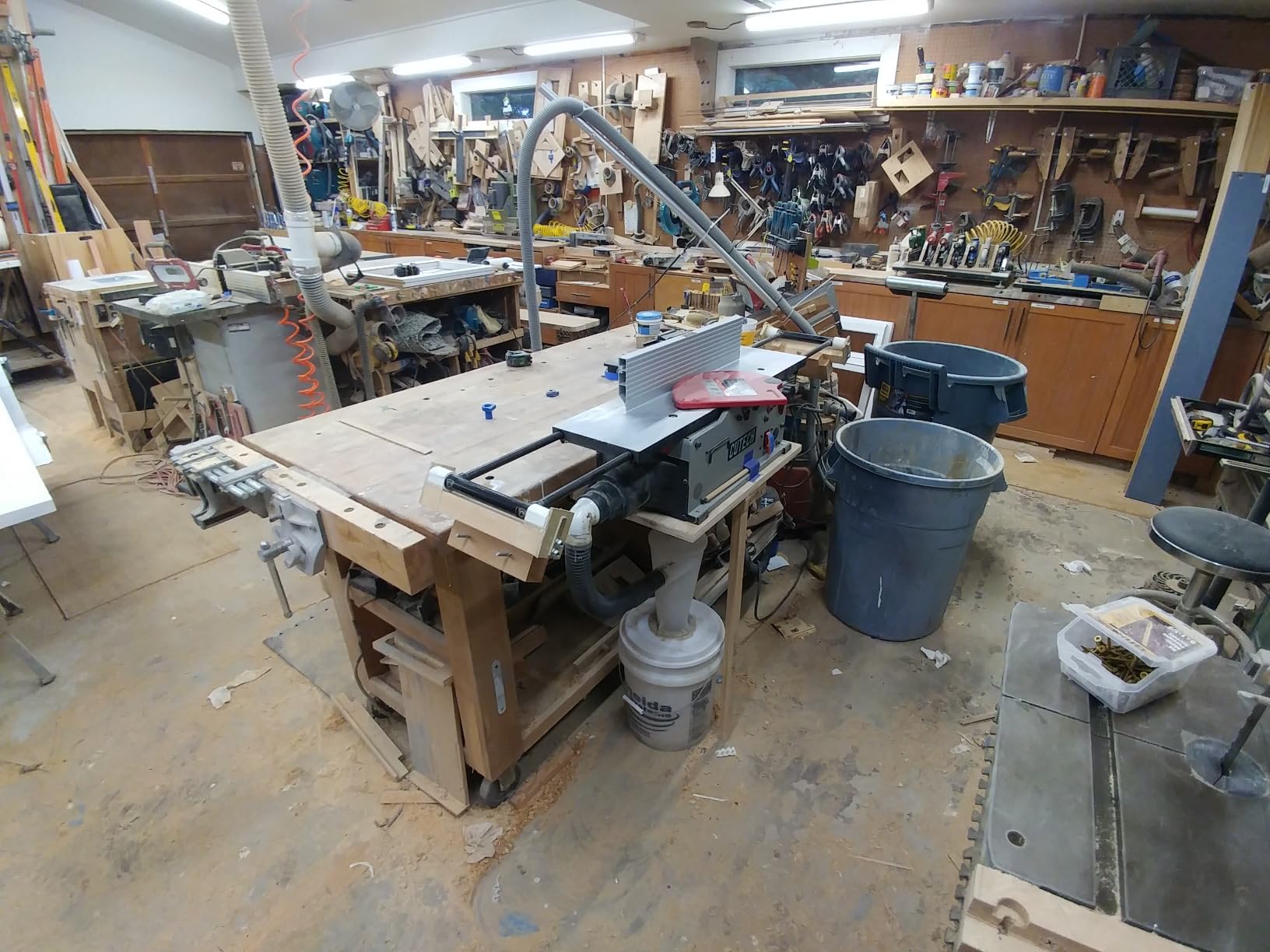
Best for 6 inch work in a shop with rough material
If you mill reclaimed pallet wood, dimensional lumber from a yard, or anything with embedded grit and rust, coated tables are the safer bet. They clean up easier too, and a wiped surface does not read as damage the way a scarred bare aluminum top does.
The quiet cut also makes this a good machine for a shop where you joint in short sessions and do not want a two-knife head roaring every time.
Skip it if you need more than 6 inches or a long record
Like the other 6 inch machines, it cannot help you with an 8 inch board. If tabletops and wide panels are on the list, go to an 8 inch model instead.
Also weigh the thin evidence. At 59 ratings this has the smallest review base in the roundup, so you have less long-term durability history than the WEN models offer, though it still posts the highest average rating in this group at 4.8.
8. JET JJ-6HHBT: Best Motor Power and True Helical Head
JET 6-Inch Benchtop Jointer, Helical Cutterhead, 1 HP, 115V 1Ph (JJ-6HHBT)
6 inch width
True helical head with 14 carbide blades
1 HP 15 amp motor
Cast iron tables
Pros
- True helical cut with 14 indexable carbide blades
- Cast iron tables and fence hold alignment
- 1 HP motor far exceeds the 10 amp class
- Internal blower clears chips from the head
Cons
- Distantly the most expensive machine in this roundup
- Lowest average rating here at 4.2
- 71 pounds is difficult to move
- Cutterhead turns at 10000 RPM
This is the machine to buy if you care about cut quality above everything else and you intend to keep it for years. The head is a true helical arrangement, meaning the inserts shear into the fiber rather than pushing it, which is why owners report the cleanest edges on figured stock in this roundup.
Cast iron tables and a cast iron fence hold alignment under real work, and the internal blower motor moves chips away from the motor and cutterhead so fouling is less of an issue on long sessions.
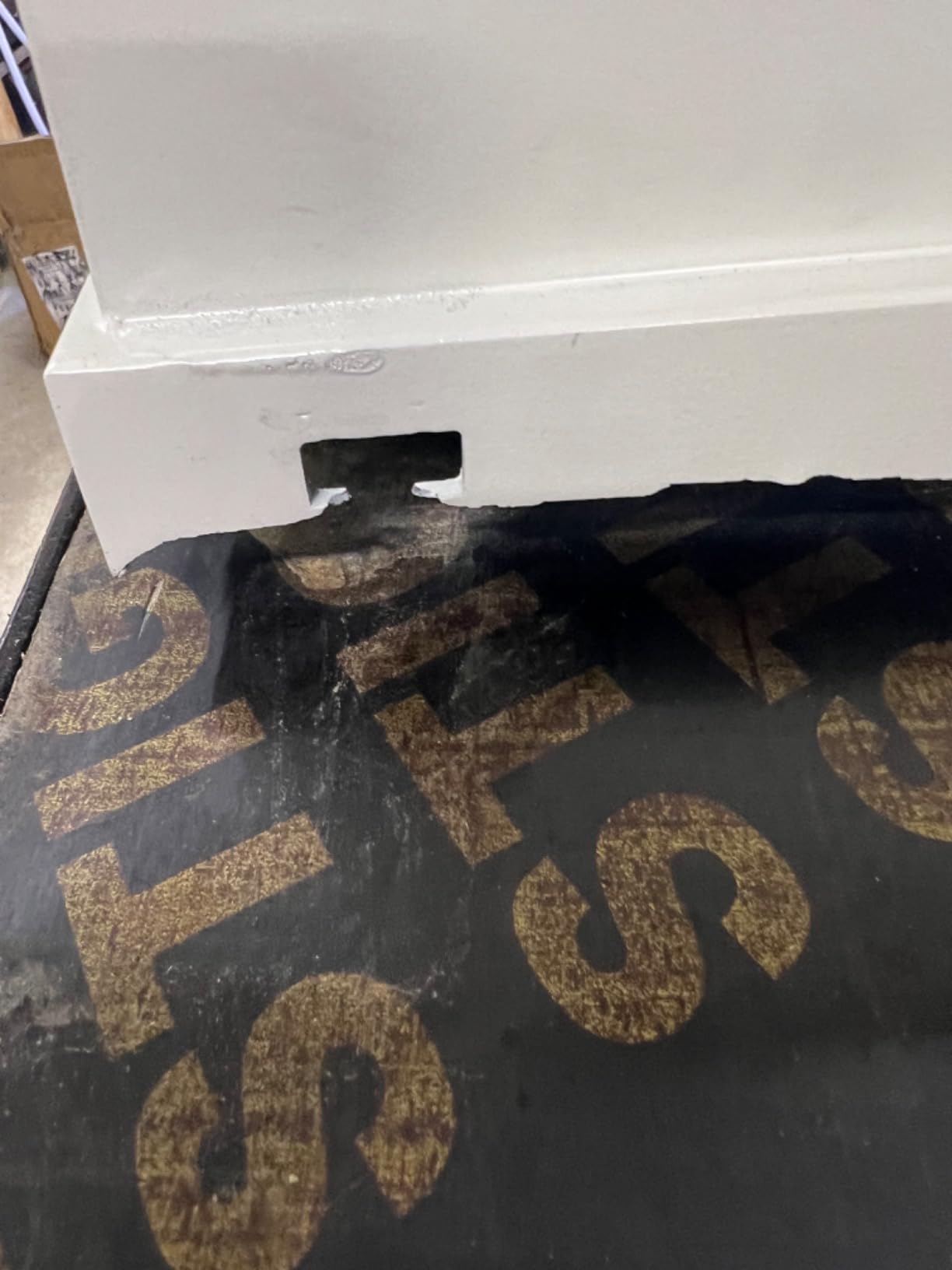
The 1 HP 15 amp motor is in a different class from the 10 amp machines. It pulls more current, so it wants a 15 amp circuit to itself, and it will not bog down on thick, hard or figured material the way the smaller machines do.
The rating is the lowest in this group at 4.2, with about a tenth of reviewers giving one star, and the sample is small at 35 reviews. The fence tilts in both directions with locking stops at plus or minus 45 degrees, and the front toggle switch uses a removable safety key, which is a good habit in a shared shop.
Best for figured hardwood and heavy duty
If your material is walnut, quartersawn oak or anything with strong grain that makes a scraping cutterhead chatter, a shearing helical head is the correct answer. This is also the pick for someone who would rather buy once than chase insert quality.
The removable safety key is worth more than it sounds in a shop where a curious visitor or a child can reach the switch.
Skip it if your budget is modest or your space is tight
This machine costs several times what a 6 inch spiral jointer costs, and the honest question is whether your volume of milling justifies that. If you joint a few boards a week, you are paying for capability you will not use.
Skip it if floor space is the constraint. At 71 pounds with a 32.75 inch length, it is a dedicated machine, not a shelf machine, and the slower 10,000 RPM head means more passes for the same removal.
How to Choose a Benchtop Jointer for a Small Shop
Start with width, because it is the one decision you cannot undo later. A 6 inch machine covers sticks, 1x material, shelving, cutting boards and most furniture parts. An 8 inch machine covers door panels, wider tabletops and face frames, and it is the size most small shops should target if they ever plan a glue-up wider than a door.
Forum consensus is that 12 inch jointers are out of reach for most small shops. That is wasted capacity and wasted floor space, and for one or two people working alone the 8 inch maximum is the sensible ceiling.
6 inch or 8 inch: what small shops actually need
If you have ever tried to joint an 8 foot 2×8 on a 6 inch machine, you already know the answer. One side is squared, the other is untouched. Many first-time owners hit that ceiling within a year and start shopping again, which is why we lean toward 8 inches when the budget allows.
Width also brings a depth-of-cut penalty. The rule of thumb across this class is to reduce the take per pass by about 1/32 inch for every inch of width beyond 6 inches, so an 8 inch machine pulls roughly 1/16 inch per pass instead of 1/8 inch. More passes, not less capability.
Straight knife, spiral or helical cutterheads
All three remove material. The differences are how many edges share the load, how the cutting happens, and what maintenance costs you over time.
Straight knives are the simplest and the least expensive. Two or three long edges do all the work, which means every edge takes a full-width bite and each one wants regular sharpening. The result is quiet and clean on figured wood, and set-up is the fiddliest of the three because you have to set depth twice as precisely.
Spiral heads stagger many small inserts in rows around the drum. Each insert removes a thin shaving, so there is far less tear-out and the machine runs quietly relative to its straight-knife cousins. Inserts rotate as they dull, which means maintenance is a few minutes with a wrench rather than a sharpening stone.
Helical heads arrange those same inserts in a helix so each edge enters the cut at an angle and shears the fiber rather than pushing it. That produces the cleanest surface on figured grain and slightly less insert wear. It is also the most expensive head in this class.
Are spiral and helical the same?
Same insert concept, different cutter orientation. A spiral head uses staggered rows around the drum for a push cut. A helical head twists those rows so the inserts enter at an angle for a shearing cut. Sellers use the two words interchangeably, which is exactly why it is hard to tell from a listing whether you are getting one or the other.
The honest counterweight: owners who upgraded to a helical head sometimes report the difference from a good spiral head is minimal. If you cannot afford helical, do not stall your purchase over it. A well-maintained spiral head beats a neglected straight-knife head every time.
Cast iron against aluminum tables
Cast iron tables are heavier, stay flat longer, damp vibration rather than ring, and do not develop the burnished sheen that aluminum picks up. They are the right call on figured hardwood and on anything you care about visually years later. The cost is weight and, usually, price.
Coated or bare aluminum tables are lighter and cheaper. Bare aluminum marks, which bothers some people and not others. The 6H Teflon coating on the Cutech 40160HB sits in between and holds up noticeably better than bare metal against rough material.
Table length, fences and depth of cut
Look at the whole table, not just the cutting width. The WEN JT833H extends to 51 inches on support arms, and the Wahuda offers pull-out extensions, and both do a better job with longer lumber than a fixed table of the same width.
On fences, a center-mounted or rear-mounted fence supports the board right behind the cut. A long fence held only at the ends will drift, and drift shows up as a taper down the length of the edge. Quick stops at 90 and 135 degrees save real time on bevel work.
Every machine here cuts 0 to 1/8 inch per pass. Start at 1/32 inch, confirm the fence is square after locking it, and repeat at the same depth until the board stops snapping in over the cut line.
Dust port, motor amperage and the 120V circuit
A benchtop jointer makes more chips than its size suggests. A shop vacuum handles cleanup on small jobs, but a 4 inch connection to a collector keeps the table and the guard clear on longer runs. The WEN JT833H offers both a 2-1/2 inch and a 4 inch port, which saves an adapter on the rest of the class.
On power, most of this class runs 10 amps on 120V. The JET pulls 15, so give it its own 15 amp circuit rather than sharing with a table saw. Running two benchtop machines on one circuit is a common cause of surprise breaker trips in small shops.
Lighting matters more than people expect when you are checking a surface for flatness at a grazing angle. If your shop lighting is poor, our LED tube light picks, or LED strip fixtures for wider coverage, are a cheap upgrade that makes jointing easier to judge.
Used Benchtop Jointers: What to Inspect Before You Buy
The most repeated practical answer in woodworking forums is to buy used. A lot of people buy a benchtop jointer, outgrow it in a few years and sell it, which means good machines reach the used market regularly. One forum user reported buying a used 8 inch Grizzly with a spiral cutterhead and recommended that route generally rather than new.
Brands to hunt include Grizzly, Porter Cable, Ridgid and Craftsman benchtop models, plus Delta and Powermatic units that came out of production homes. Ridgid in particular is overwhelmingly a used-market brand, which is why it keeps showing up in questions about whether it is worth buying.
Before you pay, run this checklist:
Check bed and table flatness with a straightedge in several directions.
Look for deep scars or burns on the table surface.
Inspect the cutterhead and inserts for chipped edges and uneven wear.
Verify the fence squares after it is locked, not before.
Confirm the guard, push blocks and depth scale are present and functional.
Check that the dust port and any blower are clear and intact.
Ask whether the warranty is still registered and transferable.
If a seller will not let you power it up, walk away. A jointer that runs and squares correctly is worth real money; one that needs a cutterhead, bearings and a full fence rebuild is not.
How Long a Board Can a Benchtop Jointer Handle?
Comfortable work on most benchtop jointers runs about 3 to 4 feet. Beyond that, the board overhangs the tables, sags under its own weight and can droop into the cut, which is both a safety problem and a quality problem.
Users describe jointing anything over 4 feet on a benchtop jointer as an exercise in frustration, and they are not wrong. These machines were not designed for full-length lumber, and buying one hoping to handle 8 foot boards without support is the most common disappointment we hear about.
The fix is support. Roller stands at each end hold long material level with the tables and let you feed continuously. If your machine has extendable table arms or pull-out extensions, use them before reaching for stands. Many owners also buy a benchtop jointer expecting to handle longboards, then add stands as a second purchase. If the rest of your shop still needs outfitting, our sheet metal brake recommendations cover a common next project.
Is a Benchtop Jointer Worth It for a Small Shop?
Yes if you buy rough-sawn, reclaimed or pallet lumber and mill it yourself. That is the case where a jointer creates a flat reference face and a planer takes over, and no amount of planer passes will flatten a warped board on its own.
No if every board you work on arrives surfaced on four sides from a home center. Then you already own a flat reference face, and a jointer mostly duplicates a machine you have.
There is a third honest answer that comes up constantly in forums: a good table saw, a good fence, a glue-rip blade and an outfeed table can produce glue-up-ready boards all day without a jointer at all. If your only goal is straight edges for glue-ups and you already have a decent saw, that route is defensible and it costs far less.
What a table saw setup cannot do is flatten a cupped or twisted board. That is the whole reason the jointer earns its floor space, and for anyone working rough material it is the job that matters.
Frequently Asked Questions
Are benchtop jointers worth it?
Yes if you buy rough-sawn, reclaimed or pallet lumber and mill it yourself. A benchtop jointer creates the flat reference face a planer needs, because a planer fed a warped board only copies the warp. No if all your material arrives surfaced on four sides, since you already own that reference face. For glue-ups only, a good table saw with a sharp glue-rip blade and outfeed support is a defensible cheaper route.
What is a spiral head jointer?
A spiral head jointer has a cutterhead built from many small indexable inserts arranged in staggered rows around a drum, instead of two or three long straight knives. Each insert removes a thin shaving, so the machine runs quietly, resists tear-out on figured grain, and can be rotated to a fresh edge instead of being sharpened.
Is a helical or spiral cutterhead better?
A helical head usually cuts cleaner and wears slightly less, because the inserts enter at an angle and shear the fiber rather than pushing it. A spiral head is cheaper and still thin-shaving, so it removes most of the tear-out problem. Owners who upgraded from a good spiral head to helical sometimes report the difference is minimal, so a well-maintained spiral head is not a compromise.
Are spiral and helical cutterheads the same?
They use the same indexable insert concept but arrange the cutters differently. A spiral head staggers inserts in rows for a push cut. A helical head twists those rows into a helix so inserts enter at an angle for a shearing cut. Sellers use both words interchangeably, so read the spec carefully to know which one you are buying.
What are people saying about the Grizzly benchtop jointer?
Grizzly is one of the most frequently recommended brands for used benchtop jointers, particularly the 8 inch spiral-head models, and owners often pair them with parallelogram bed adjustment for consistent depth of cut. Since most of these machines turn up on the used market rather than new, judge condition carefully: table flatness, insert condition, fence accuracy after locking, and whether the machine powers up cleanly.
Is the Ridgid jointer worth it?
Ridgid benchtop jointers are overwhelmingly a used-market brand, so the question is usually whether a particular used example is worth buying rather than whether to buy new. The brand is well regarded for build quality, so a clean unit with flat tables and a square fence is a solid shop machine. Confirm the cutterhead, guard and dust port are intact and that it powers up before you commit.
Do I need a jointer if I already have a thickness planer?
Yes, if you mill rough lumber. A planer cannot remove twist, cup or bow; it makes the second face parallel to a first face that is already there, which means it faithfully copies the warp. The jointer is what creates that flat reference face. If every board you use arrives already flat and consistent, the planer alone can handle it.
What size jointer does a small shop need?
Most small shops should target a 6 inch or 8 inch benchtop model and skip 12 inch machines, which are generally considered out of reach for a one or two person shop. A 6 inch machine covers narrow stock and small parts. An 8 inch machine covers door panels, wide tabletops and face frames, and is the smarter buy if you ever plan a glue-up wider than a door.
How long a board can a benchtop jointer handle?
Comfortable work runs about 3 to 4 feet on most benchtop jointers. Beyond that the board overhangs the tables, sags and can droop into the cut. Use extendable table arms or pull-out extensions when your machine has them, and add roller stands at each end for anything longer. Jointing 8 foot boards without support is the most common source of frustration with these machines.
Should I buy a used benchtop jointer?
Often yes. Many buyers outgrow a benchtop jointer within a few years, so good used machines appear regularly from Grizzly, Porter Cable, Ridgid and Craftsman owners. Check table and bed flatness, inspect inserts and the cutterhead for chips, verify the fence squares after it is locked, confirm the guard and push blocks are present, and power it up before paying.
Which Benchtop Jointer Fits Your Shop?
The best benchtop jointer for most small shops is the WEN JT630H: it is the easiest to move, the cleanest out of the box, and backed by the deepest review history here. Work wider than 6 inches and the choice changes. The WEN JT833H is the best value 8 inch option, and the Wahuda 50180CC-WHD is the pick when figured hardwood and cast iron tables matter more to you than loudness under load.
Add the Cutech 40180HI if you want cast iron tables and a permanent home for the machine, the Cutech 40160HB if you want coated tables in a 6 inch footprint, the CRAFTSMAN CMEW020 if everything you build is narrow, and the WEN JT3062 if you would rather joint something this afternoon than spend the first afternoon setting up. The JET JJ-6HHBT is for the buyer who wants a true helical cut and 1 HP of motor power and plans to keep the machine for a decade.
Whichever one you choose, set the depth to 1/32 inch on the first pass, check the fence after you lock it, keep the guard down, and support anything longer than about 4 feet. As of 2026, that is still the shortest path to a flat reference face and a planer that can do its job.