
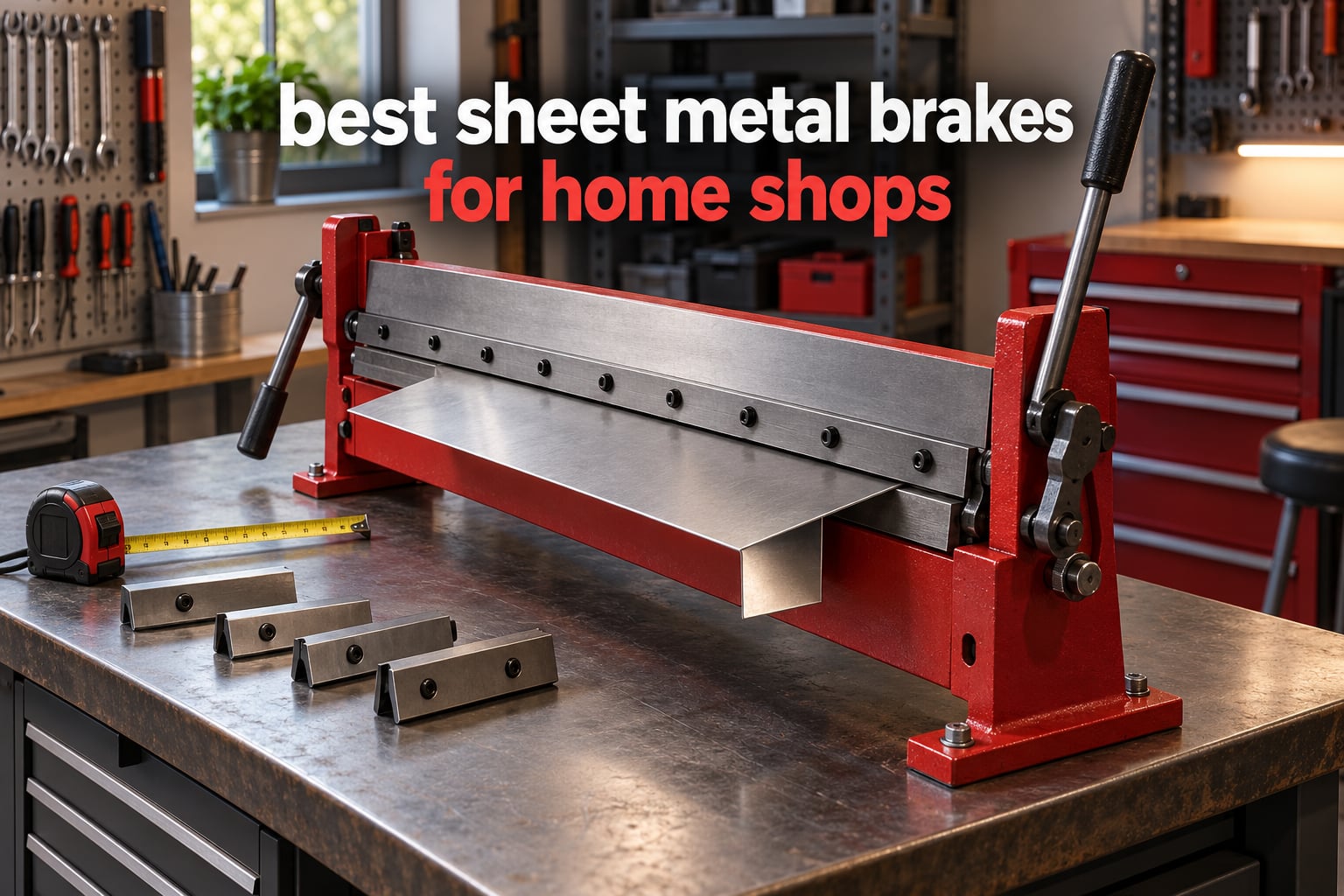
A sheet metal brake is the machine that turns a flat sheet into a box, a pan, a channel or a flashing strip by clamping the metal and swinging a hinged beam to a measured angle. For a home shop, that is the difference between bending a piece of 20 gauge steel in an afternoon and building an electrical enclosure, a duct transition or a trailer panel that never leaves the garage.
We spent weeks comparing the best sheet metal brakes for home shops, from portable mini brakes that fit in a car trunk to floor-standing 10 foot contractor units and press brake attachments that turn a hydraulic shop press into a bending machine. Twelve machines made the cut, and every rating and spec below comes from what buyers actually reported.
The short version: most home shops need a 24 inch box and pan brake for light-gauge work, a 48 inch model if you bend full sheets of roofing or siding, and something entirely different if your material is thicker than 10 gauge. A brake rated for 16 gauge across half its width is a very different machine from one that bends 16 gauge across the full width, and manufacturers bury that distinction in the spec sheet.
If you are outfitting the rest of the shop, our guides to the best plasma cutters for home shops and the best CO2 laser engravers cover the cutting and marking side of the same workflow.
Table of Contents
Top 3 Picks: Best Sheet Metal Brakes for Home Shops (October 2026)

Malco MB48A Mini Brake
- Bends 22 gauge to 135 degrees
- Made in USA
- Handles 4 foot wide sheet

VEVOR 48 Inch Box and Pan Brake
- 48 inch bending width
- 20 gauge low carbon steel
- Integrated press plate

These three cover the widest range of real shop work. The Malco is the pick if you want American-made construction and enough capacity for roof flashing and copper roofing. The VEVOR 48 is the pick if a full sheet of material has to fit across the fingers in one pass. The KASTFORCE is the pick if 18 gauge capacity in a compact 28 inch footprint matters more than either of those.
Best Sheet Metal Brakes for Home Shops in 2026
| Product | Specifications | Action |
|---|---|---|
| Malco MB48A 48 Inch Mini Brake |
|
Check Latest Price |
| VEVOR 48 Inch Box and Pan Brake |
|
Check Latest Price |
| KASTFORCE KF5002 28 Inch Folder |
|
Check Latest Price |
 Van Mark Mark II Trimmaster TM10 Van Mark Mark II Trimmaster TM10 |
|
Check Latest Price |
 12 Inch Press Brake Attachment 12 Inch Press Brake Attachment |
|
Check Latest Price |
 VEVOR 12 Inch 3-In-1 Shear Brake Roll VEVOR 12 Inch 3-In-1 Shear Brake Roll |
|
Check Latest Price |
 KASTFORCE KF5006 24 Inch Box and Pan KASTFORCE KF5006 24 Inch Box and Pan |
|
Check Latest Price |
 KASTFORCE KF5017 Press Brake Attachment KASTFORCE KF5017 Press Brake Attachment |
|
Check Latest Price |
 KAKA 3-IN-1/30 Shear Brake Roll KAKA 3-IN-1/30 Shear Brake Roll |
|
Check Latest Price |
 VEVOR 24 Inch Box and Pan Brake VEVOR 24 Inch Box and Pan Brake |
|
Check Latest Price |
 KAKA W-2420A 24 Inch Box and Pan Brake KAKA W-2420A 24 Inch Box and Pan Brake |
|
Check Latest Price |
 KAKA FB-4 4 Inch Bench Bender KAKA FB-4 4 Inch Bench Bender |
|
Check Latest Price |
Which Sheet Metal Brake Is Right for Your Home Shop?
Match the brake to the thinnest material you actually bend and the widest sheet you can fit on the bench, then buy the next step up in gauge. A 24 inch brake that handles 20 gauge mild steel across its full width covers flashing, duct transitions, small boxes and most shop furniture. A 48 inch machine earns its footprint when you bend full 4 by 8 foot sheets of 20 or 22 gauge roofing or siding. For anything thicker than about 10 gauge, a press brake attachment driven by a hydraulic shop press is the realistic route in a small shop, because a manual box and pan brake will fight you and the finger edges sooner or later.
Roofing and siding installers: you need width. A 48 inch mini brake or a 10 foot Trimmaster class machine keeps you from splitting a full sheet.
HVAC and duct fabricators: 18 to 20 gauge mild steel at 24 to 30 inches covers most transition work and shop-made plenums.
Automotive restorers: patch panels mean mild steel near 18 to 20 gauge, so a finger brake with shallow box depth is fine; thick body repair metal needs a press.
Electrical enclosure builders: shallow boxes and gussets on 18 to 20 gauge are quick work on any 24 inch finger brake.
Bracket and chassis makers: a 4 inch bench bender handling 3/16 inch mild steel does in minutes what a brake cannot do at all.
Two numbers decide more purchases than any other: the bending length and the gauge rating, and the gauge rating is the one most often misread. Always check whether the manufacturer states that rating for the full width or for half width.
1. Malco MB48A 48 Inch Portable Mini Brake – Best All-Round Pick for Home Shops
Malco Portable Mini Brake, 48 In, 22 Ga Capacity
Bends 22 gauge to 135 degrees
4 foot sheet width
Made in USA
58 lb
Pros
- Bends 22 gauge galvanized sheet up to 135 degrees
- Handles copper and aluminum roofing components
- American-made construction
- Portable enough for job-site fabrication
Cons
- Optional leg kit sold separately
- 58 lb is heavy to reposition
This is the brake we would put in a one-car garage that still needs to do real metalwork. It bends up to 135 degrees in 22 gauge galvanized sheet and accepts material up to 4 feet wide, which covers flashing strips, roof edge pieces and small plenums without splitting a sheet.
The reason it ranks first is the combination of rating depth and review volume: 4.4 stars across 295 reviews, with buyers consistently describing it as the long-running workhorse of portable mini brakes. Nobody is filing glowing reports about it being the most capable machine ever built. They report it never lets them down.
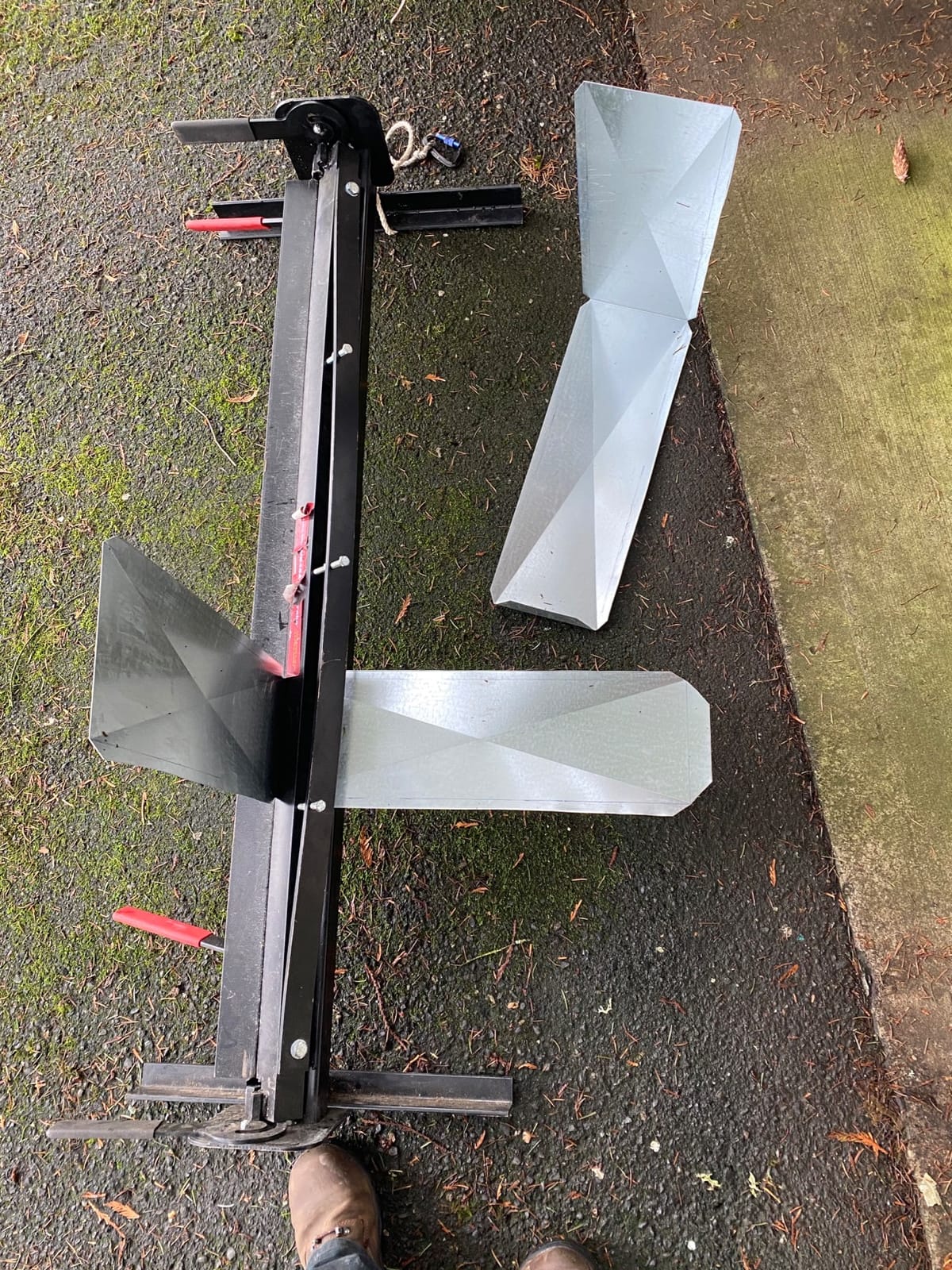
Buyers make compact fabrications as small as a 4-inch square with it, which matters when a transition fitting is needed on site rather than back at the bench. Adjustable strengthening ribs let you stiffen the frame for repetitive work.
The trade-offs are physical rather than functional.
At 58 pounds it is a two-hand carry, and the optional leg kit is sold separately, so plan for a stand or a permanent bench position. Made in the USA construction matters most here because it points to steel tooling rather than the cast iron finger sets that wear faster on mild steel.
What we like about the finger capacity
Twenty-two gauge is thinner than most home-shop brakes handle, and that extra headroom changes what you can make. Roof flashing, drip edge trim and copper or aluminum roofing components all fall into that range, which means one machine covers three common trades without a second purchase.
The 4-foot width is the practical sweet spot. It takes a full width of 24 inch roofing stock and most 4-foot sheet goods, while remaining small enough to carry out to the work.
Where it falls short
It cannot form deep pans. Maximum box depth on this class of machine is a couple of inches, so anything deeper needs a floor brake with a longer apron or a press brake attachment.
If you bend 16 gauge or thicker across a full width, this is the wrong tool. That work demands a heavier frame and more leverage than a 58 pound portable brake offers.
2. VEVOR 48 Inch Box and Pan Brake – Best for Full Sheets and Bench Mounting
VEVOR Box and Pan Brake, 48-Inch, 0-130 Degrees Sheet Metal Bending Brake
48 inch / 1220 mm width
20 gauge low carbon steel
0 to 135 degrees
Q235 steel, 61.7 lb
Pros
- Wide 48 inch capacity at an entry price point
- Integrated press plate needs no extra clamps
- Reinforced rib blade design
- Works with stainless copper aluminum and galvanized sheet
Cons
- 8 percent one-star and 6 percent two-star ratings
- Sand-cast finish is adequate rather than refined
This is the budget pick for a garage where a full 4 by 8 foot sheet has to go across the fingers. The 48 inch maximum bending width and 0.31 inch thick blade with reinforced rib design handle 20 gauge low carbon steel and 14 gauge aluminum, and the adjustable range runs from 0 to 135 degrees.
The integrated press plate is the detail we like most. It holds the sheet against the bending beam without separate clamps, so there is nothing extra to lose in the shavings and nothing to adjust between bends. It also mounts with screws to a workbench or carries between work locations.
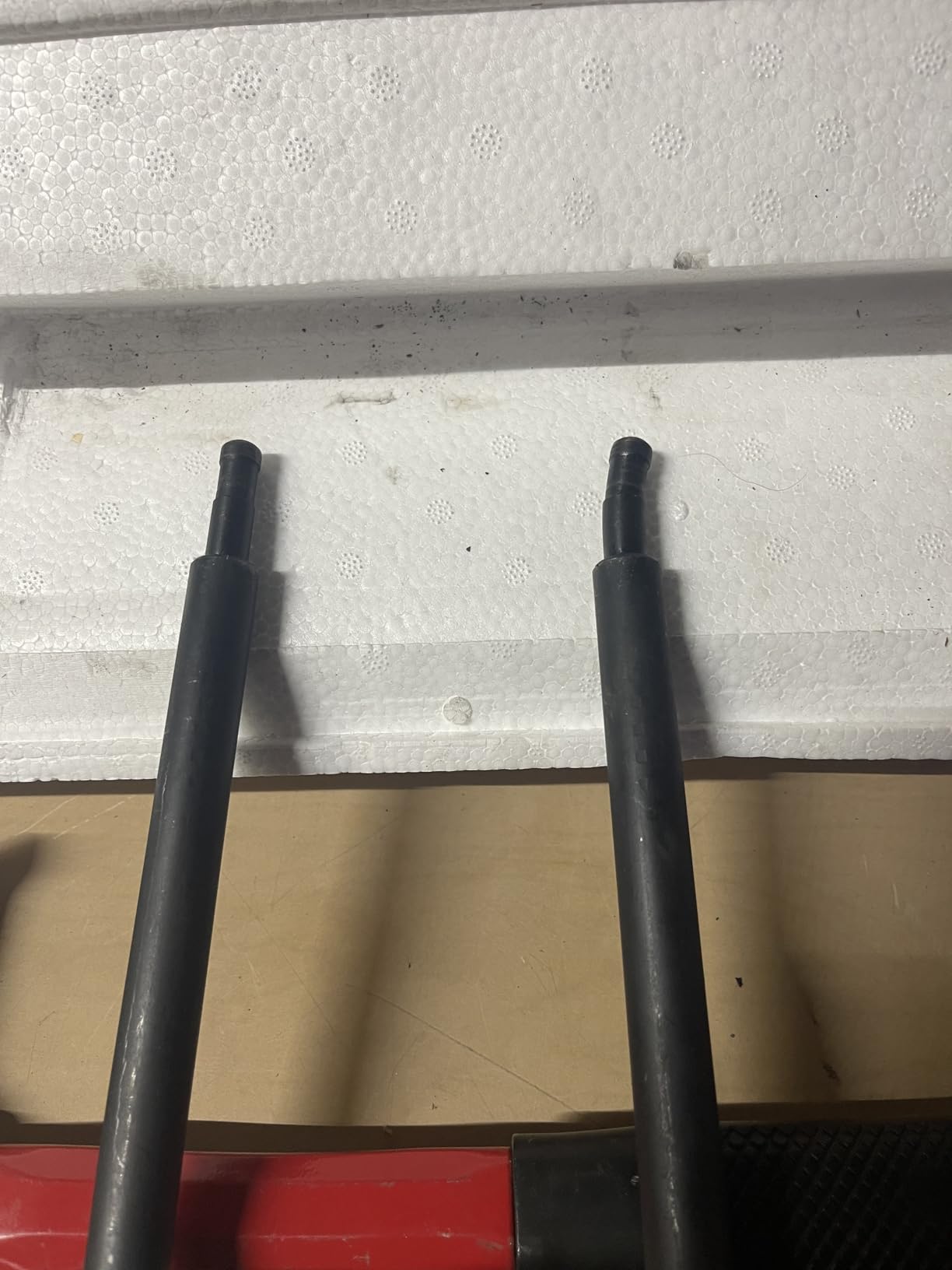
At 61.7 pounds and measuring 54.7 by 17.7 by 6.1 inches, this is a bench machine by design rather than a floor model. That keeps your floor clear in a shop that is also a parking space.
Quality is where the ratings split.
Buyers value the width and the clamping simplicity, but a noticeable share of one-star and two-star reviews point to consistency problems and a sand-cast finish that is functional rather than refined. Inspect the fingers and the frame alignment before your first real part.
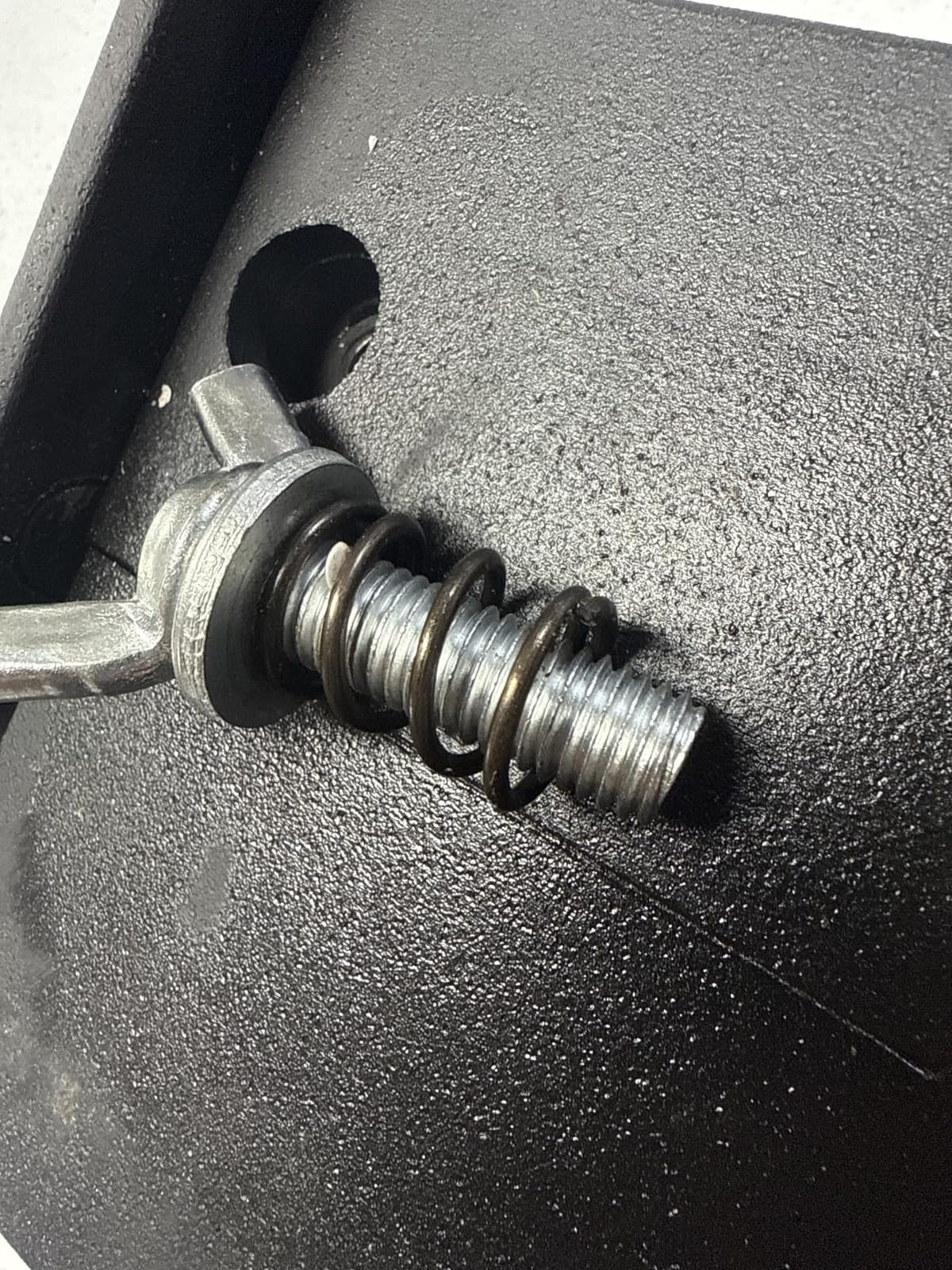
What the width buys you
Few home-shop brakes cover 48 inches at a reachable price, and width is what decides whether you can form a full-length piece of roofing trim or have to cut your material into shorter sections and lap it.
Because it handles stainless, copper, aluminum, iron and galvanized sheet, one machine covers roofing, HVAC and general fabrication without a second purchase.
Where it falls short
Twenty gauge low carbon steel is the honest capacity figure. Push toward 16 gauge and you will be fighting the handle at the end of the swing, with burrs appearing where the metal is pulling hardest.
There is no depth gauge or stop rod in the spec list, so repeat bends depend on marking each piece. For production runs of identical boxes, that is the piece you will miss most.
3. KASTFORCE KF5002 28 Inch Steel Bending Brake – Best Value for Duct and Shop Work
KASTFORCE KF5002 Sheet Metal Brake Steel Bending Brake Sheet Metal Bender Metal Folder 28 Inch (730mm) 18 Ga (1.2mm) Capacity for Steel Aluminum Copper
730 mm / 28 inch width
1.2 mm 18 gauge mild steel
0 to 135 degrees
44 lb
Pros
- Handles 18 gauge mild steel and 16 gauge aluminum
- Generous 0 to 135 degree range
- Rugged heavy-duty steel frame
- Only 2 percent one-star ratings
Cons
- 28 inch width is narrower than 48 inch models
- Loose tolerances mean test pieces on some bends
The KF5002 is the surprise of this list. It carries a 4.5 rating across 220 reviews with 71 percent five-star and only 2 percent one-star, and it does 18 gauge mild steel and 16 gauge aluminum across a 730 mm, or 28 inch, width. That is real capacity in a 44 pound frame.
The adjustable bending angle spans 0 to 135 degrees, so shallow flanges and deep hems are both on the table, and the heavy-duty steel frame is the sort of construction that does not feel underbuilt when you pull the lever.
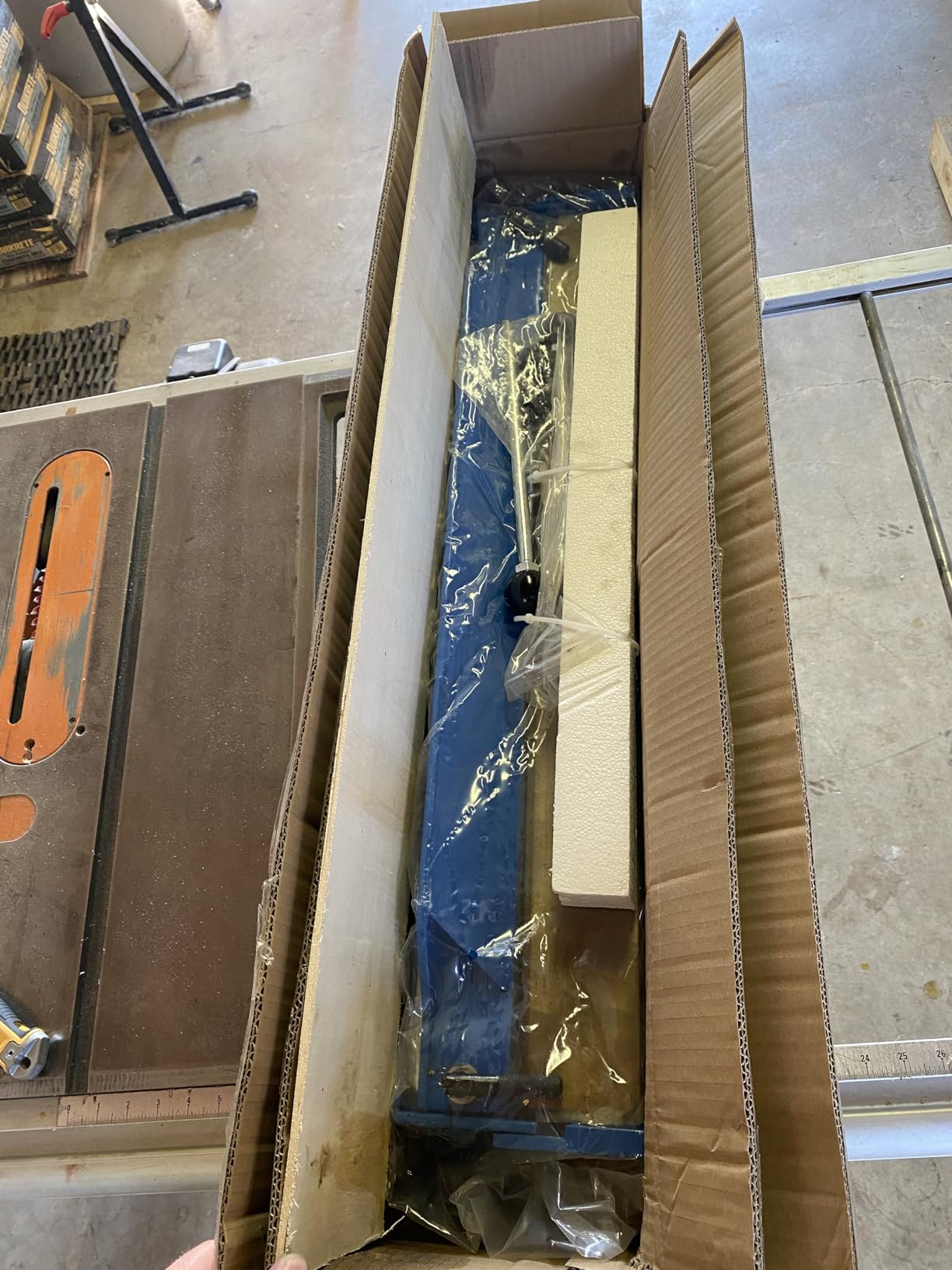
Buyers point at furnace ductwork, shutters and auto body projects as the common jobs. At 44 pounds it moves easily between a bench and a work stand, so it behaves like a shop machine rather than a display model.
The limitation to plan around is width.
At 28 inches you work with cut sheet rather than full panels, so long flashing runs need sectioned pieces. Buyers also recommend test pieces, because tolerance is loose enough on some machines that you should verify a 90 degree fold before cutting a part to size.
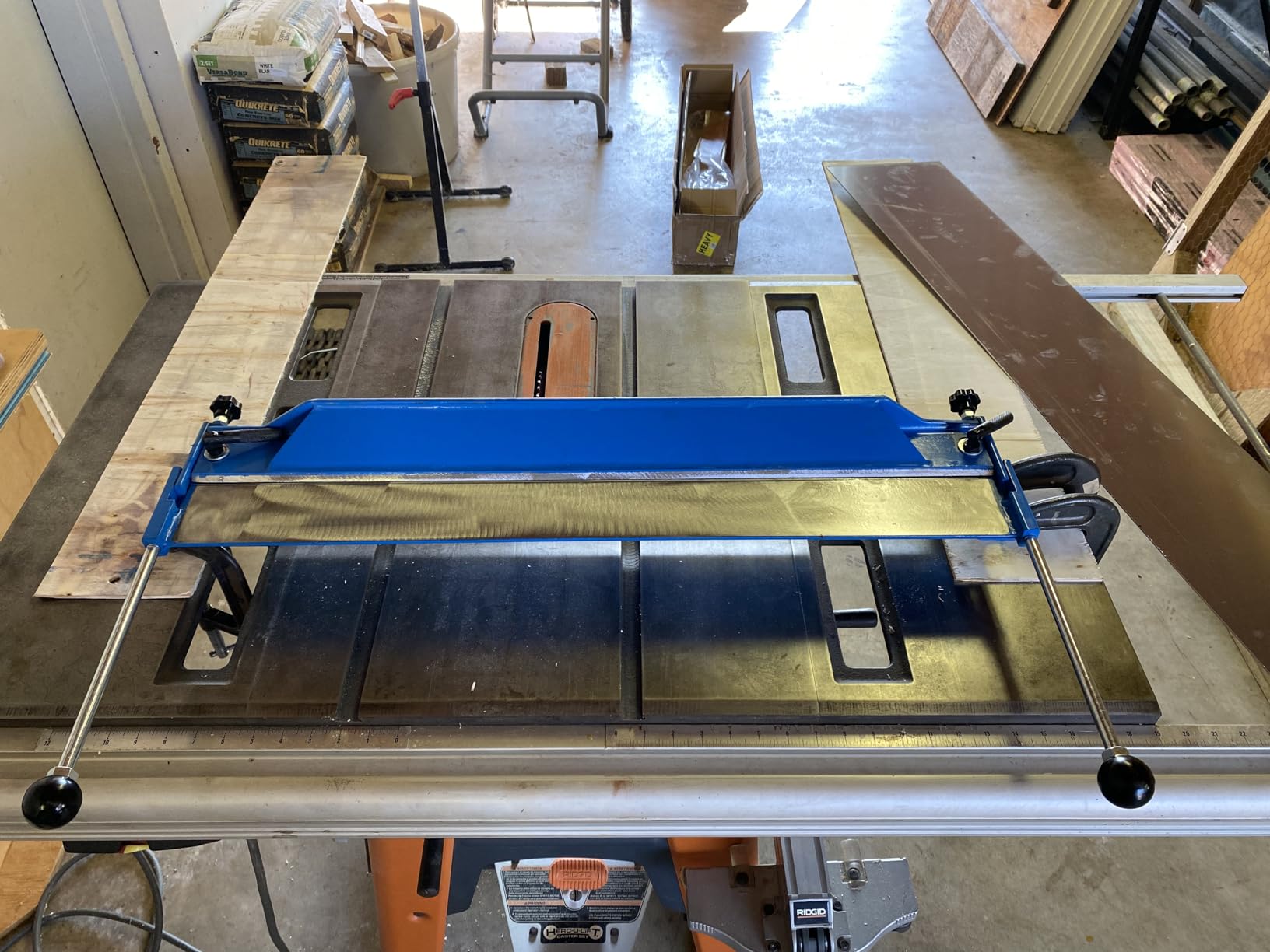
Why the 18 gauge rating matters
Most home-shop projects involve 18 or 20 gauge mild steel, and 18 gauge is the point where a light brake starts to feel weak. This machine crosses that threshold, which makes it useful for more than flashing.
Aluminum stretches less than steel, so the 16 gauge aluminum rating gives you a workable path for duct transitions even when the steel is marginal.
Where it falls short
Twenty-eight inches is short for full sheet work. If your projects regularly need 48 inch lengths, budget for the wider model instead of planning around splices.
There is no listing detail on finger assortment or box depth, so treat it as a folder for flat and flange work rather than a pan brake for deep boxes. Measure a test bend before you depend on it for formed bodies.
4. Van Mark Mark II Trimmaster TM10 – Best for Full Length Siding and Flashing
Van Mark Bending Brake Mark II W/Power Lock #TM10
10 ft 6 in size class
312 lb contractor frame
110 volt / 200 watt
1 year limited warranty
Pros
- Contractor-grade frame for full-length flashing work
- Two handles and 18 mounting holes for custom setups
- Reported lighter than expected for its 10 foot class
- Efficient for window capping
Cons
- Occasional transit damage and bent teeth
- One report of a missing handle pin on arrival
The Mark II Trimmaster is the machine for a roofer or a siding contractor who wants one full-length bend per piece. At a 10 foot 6 inch size class it covers a full sheet of siding or a full run of trim without a seam, and at 312 pounds the frame does not wander during a long pull.
Two handles and 18 mounting holes give you room to build custom jigs and stops, which is how repeat work actually gets repeatable on a machine of this class. It runs on 110 volts at 200 watts, so it fits ordinary shop wiring.
Buyers report 77 percent five-star ratings across 120 reviews, and repeat buyers often own more than one. Window capping and flashing fabrication are the tasks owners mention most, and several comment that it handles more easily than its weight class suggests.
What the size class unlocks
A full-length piece of siding with a hemmed bottom edge is the fastest way to see the difference this machine makes. On a 24 inch brake you would cut and lap; here you run the whole board.
The 18 mounting holes are the quiet feature. Once you start making the same flashing profile week after week, the ability to bolt a fixed stop changes your production time more than any motor would.
Where it falls short
This is not a garage machine. At 312 pounds it needs a dedicated floor area and a plan for getting it into position, and a residential delivery commonly requires lift gate service.
Transit handling is the main complaint in reviews: bent teeth and a missing handle pin show up often enough that you should inspect and square the teeth before the first part. The manufacturer’s warranty is a 1-year limited warranty.
5. 12 Inch Press Brake Attachment – Best Rated Option for Thicker Stock
12″ Press Brake Attachment/Press Brake Attachment For Standard 12/20 Ton Hydraulic Shop Presses
Fits 12/20 ton hydraulic presses
Max 12 inch width
3/16 in mild steel at full width
0 to 90 degrees
Pros
- Highest rated option here at 4.8 with 89 percent five-star
- Turns a hydraulic shop press into a press brake
- Bends 3/16 inch mild steel across the full 12 inch width
- Compact footprint
Cons
- Requires a separate 12/20 ton hydraulic press
- Limited to a 12 inch maximum bend width
Owners rate this attachment more highly than anything else in the group, at 4.8 stars with 89 percent five-star across 71 reviews. The reason is the capacity per inch: it bends 3/16 inch mild steel across the full 12 inch width, rising to 1/4 inch at 6 inches and 5/16 inch at 2 inches.
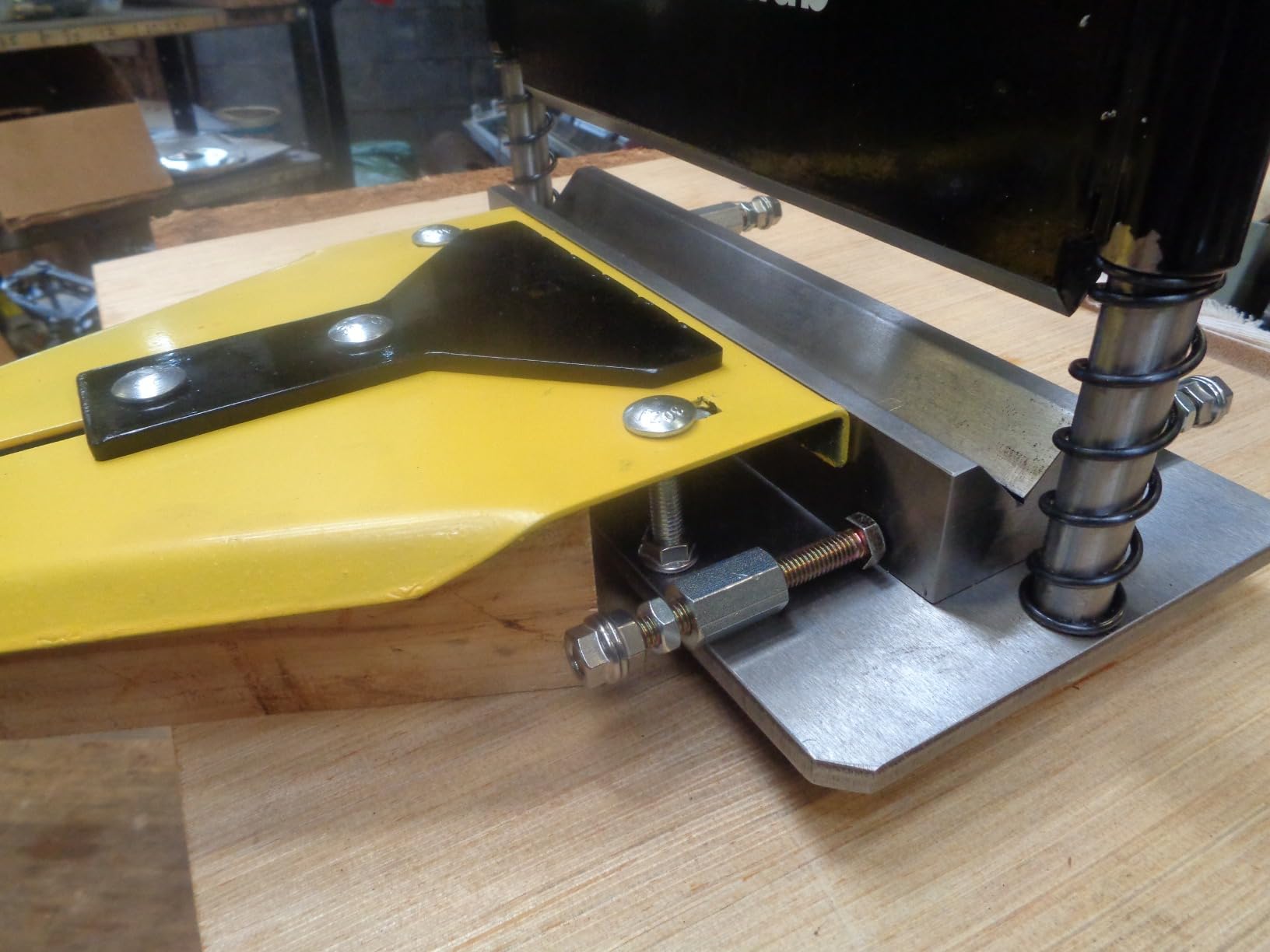
It mounts to most standard 12 and 20 ton hydraulic shop presses through an upper die cup with a 1-7/8 inch inside diameter, and the bending range is 0 to 90 degrees. If you already own a hydraulic press, this is the shortest path to bending material no manual brake in this roundup will touch.
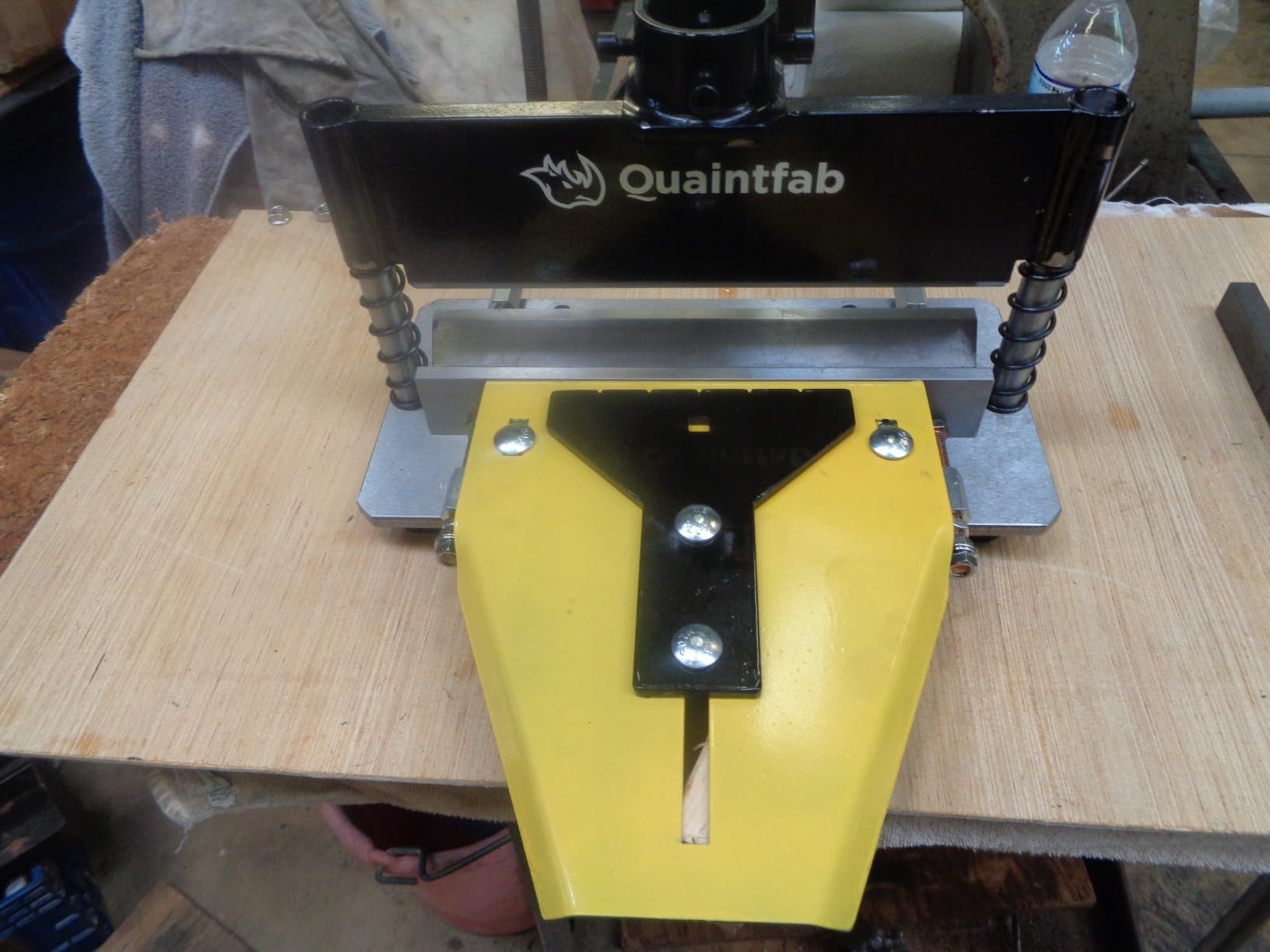
The proportions suit a small shop: 14.5 inches wide by 7.5 inches deep by 10 inches high, with a bottom die measuring 2.25 inches wide by 1.75 inches high, and 36.4 pounds on the scale.
The force comes from the press.
Owners describe clean, repeatable bends and the ability to form complex shapes that a finger brake cannot make, because a press brake forms a V shape rather than a box edge. The trade is effort: the ram supplies the muscle and the attachment supplies the geometry.
When a press attachment beats a finger brake
A press brake produces a single sharp V bend to 90 degrees, and it holds thick material flat on the die where a finger brake would fight the bend radius. For brackets, gussets and chassis tabs, that geometry is the whole point.
Because force comes from the press ram, material thickness is limited by press capacity rather than by lever length, which is why 3/16 inch mild steel appears in the spec sheet at all.
Where it falls short
Twelve inches is the maximum bend width, so this is a detail machine. Pan sides, duct transitions and box blanks are out of reach.
Without a 12 or 20 ton hydraulic press already on your bench, the attachment is only half a purchase. Plan the press and the attachment together.
6. VEVOR 12 Inch 3-In-1 Shear Brake Roll – Best Budget Multi-Function Machine
VEVOR Sheet Metal Brake, 12-inch, 3-In-1 Combination Shear Brake Roll Machine, 20-Gauge Capacity Shear Press Brake with 90° Max Bending Angle, Shears and Slip Roll Machine for Shear Bending Rolling
12 inch / 305 mm width
20 gauge capacity
90 degree max bend
HT200 cast body, 90 lb
Pros
- Shear
- brake and slip roll in one benchtop machine
- Five segment bending blades for complex shapes
- Processes aluminum brass copper lead and zinc
- Compact enough for a small workbench
Cons
- Several buyers say it will not cut or roll 20 gauge mild sheet as rated
- Cutter needs frequent re-adjustment
- Sand-cast finish is rough and heavy to uncrate
This is the machine to buy if your real constraint is bench space and budget rather than gauge capacity. It shears, bends and slip rolls in a single 12 inch frame, with a 20 gauge capacity rating and a 90 degree maximum bending angle.
The construction is heavier than its price suggests: an HT200 cast body, a T10 shearing blade, a 45# bending blade and roller, and blade clearance under 0.0027 inch. Five segment blades in 1 inch, 2 by 2 inch, 3 inch and 4 inch sizes let you form more complex shapes than a plain folder.
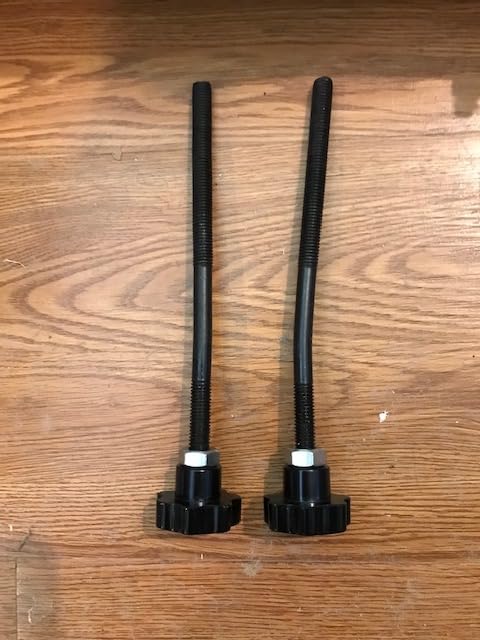
Material range is broad: low-carbon steel, aluminum, brass, copper, lead, plastic and zinc all process. The rollers carry external cylindrical grinding to reduce friction and scratching on finished sheet.
The ratings tell the same story.
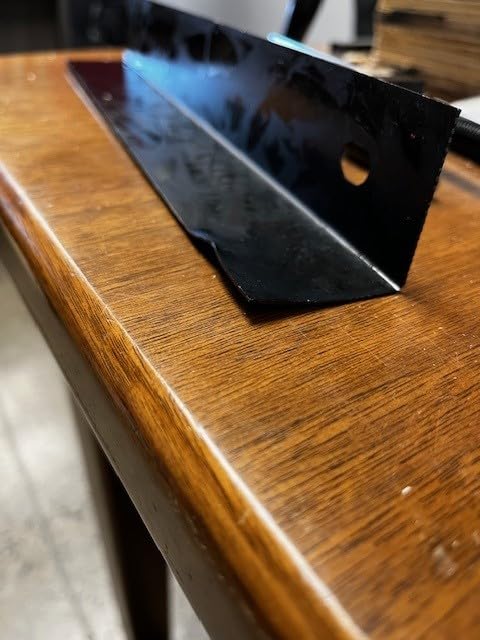
Hobbyist buyers like the space-saving all-in-one design and light-gauge aluminum work, while others report the 20 gauge rating is optimistic for cutting and rolling, plus bent adjustment knobs and non-functional parts on arrival.
What three functions in one frame saves
A shear, a brake and a slip roll are three machines a home shop would otherwise buy separately and store separately. At roughly 20 by 15 by 15 inches, this one stays on a bench that is doing double duty as a work surface.
The five segment blades are the quiet advantage. With 1 inch, 2 inch, 3 inch and 4 inch fingers you can set box corners and return flanges without a second setup, which matters when you are making several identical parts.
Where it falls short
The 20 gauge rating should be read as a ceiling for lighter materials. Multiple buyers report it will not cut or roll 20 gauge mild sheet as rated, and the cutter needs frequent readjustment between cuts.
At 90 pounds the uncrating is a two-person job, and the sand-cast finish means the first hour with a new unit is cleanup. Expect an 18 percent three-star share.
7. KASTFORCE KF5006 24 Inch Box and Pan Brake – Best for Real Box and Pan Work
KASTFORCE KF5006 Box and Pan Brake Sheet Metal Folder Bending Brake Metal Forming Machine Max Capacity 24 Inch (610mm) 20 Ga (1.0mm) with 5 Fingers 0-135 deg
24 inch / 610 mm width
20 gauge mild steel
Five finger sizes
1.5 inch max box depth
Pros
- Five finger sizes cover boxes pans and flanges
- 20 gauge mild steel across the full 24 inch width
- Full 0 to 135 degree bending range
- Highest KASTFORCE rating with zero percent one-star
Cons
- Maximum box depth of 1.5 inch limits deeper pans
- 4 percent 2-star reviews mention fit and finish
The KF5006 is the most conventional box and pan brake in the group, and for most home shops that is exactly right. It bends 24 inch wide material at 20 gauge mild steel across a 0 to 135 degree range, and the five finger sizes of 1, 2, 3, 8 and 10 inches cover boxes, pans, flanges and custom shapes.
With a 4.6 rating across 45 reviews and 72 percent five-star, buyer satisfaction is high and no one-star ratings appear in the distribution at all. Buyers single out the finger assortment and the 20 gauge capacity as the deciding factors.
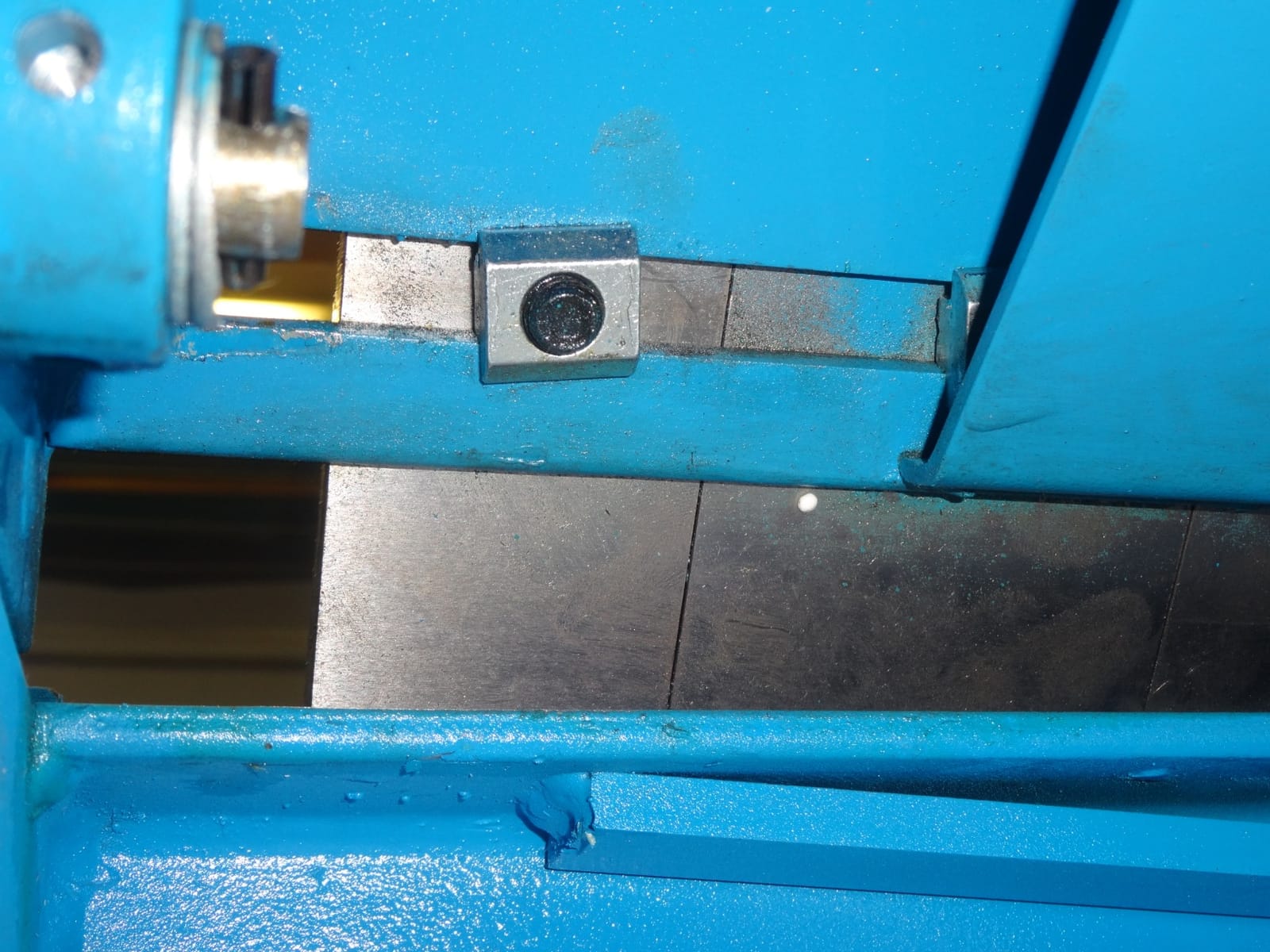
At 68.1 pounds and 31 by 13 by 10.5 inches as packaged, it is a bench-scale machine with real mass behind the beam. The steel construction holds its geometry better than the lightest imports do.
The constraint is box depth.
A 1.5 inch maximum means this builds covers, trays, brackets and shallow pans rather than deep fabricated bodies, so plan your parts around a shallow profile.
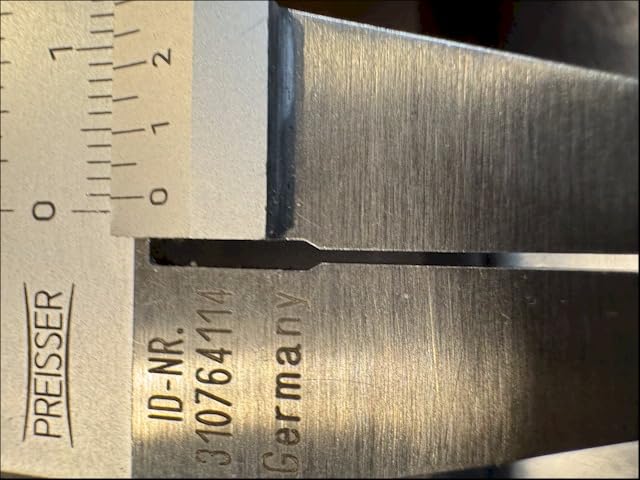
How the finger set shapes your part list
Finger segments are interchangeable, and each one sets the inside dimension of the fold you can make in a single pass. The 1, 2 and 3 inch fingers handle tight box corners and return flanges, while the 8 and 10 inch fingers build pan sides and wide hems.
That range is why a finger brake outperforms a plain folder for formed work: you are not limited to one bend radius or one flange size per machine.
Where it falls short
Deep pans are out of reach at 1.5 inch box depth. If your work is duct transition bodies or appliance panels with taller sides, look at a floor model with a longer apron.
Twenty gauge is the ceiling for mild steel. The frame will not stop you from trying heavier material, but it will deflect, and the bend radius will tighten past what the part needs.
8. KASTFORCE KF5017 Press Brake Attachment – Best for Shops That Already Own a Press
KASTFORCE KF5017 Press Brake Attachment for 12-20 Ton Hydraulic Presses Bending Brake, Metal Bending Machine, HRC35, Fits Most Standard Shop Presses
12 inch / 305 mm bend length
3/16 inch max thickness
HRC35 tooling
90 degree bend
Pros
- Rigid solid bottom block
- stiffer than angle-iron designs
- Fits standard 12 and 20 ton presses with no modification
- Heavy enough not to need clamping down
- Clean consistent bends on tougher material
Cons
- Not intended for plate beyond press capacity
- Rough surface finish may need light deburring
- Pin alignment can need extra leverage to seat the top die
Where the 12 inch press brake attachment emphasizes capacity, the KF5017 emphasizes rigidity. It attaches to most standard 12 to 20 ton hydraulic shop presses, bends up to 12 inches of length at 3/16 inch thickness, and works to 90 degree angles with HRC35 tooling.
Builders of resto-mods, race cars and brackets describe it as noticeably stiffer than angle-iron attachments, and heavy enough that they never clamp it to the press bed. That mass matters, because a light attachment deflects and puts a crown in your part.
The included rigid solid bottom block and bending die are the parts that do the work. Fitment is plug-and-play on Harbor Freight, VEVOR and other standard 12 and 20 ton presses with no modifications, and at 36.6 pounds it stays on the press when you are not using it.
Owners report clean, consistent bends even on tougher material.
Seventy percent five-star ratings across 41 reviews back that up. The recurring notes are cosmetic: a rough factory finish that wants a light deburr, and pin alignment that sometimes needs extra leverage to seat the top die.
Why stiffness changes the part
A press brake forms material over a V die. If the attachment frame flexes, the bend comes out crowned and the two ends no longer meet at a square corner. A rigid solid block is what keeps the angle honest across the 12 inch length.
For bracket sets where every hole has to line up, that consistency is worth more than any capacity figure on the box.
Where it falls short
Plate thicker than the press can push is out of scope. The 3/16 inch figure assumes a press operating within its own rated capacity.
It is an accessory, not a machine. If you do not already own a hydraulic shop press, this purchase does nothing on its own.
9. KAKA 3-IN-1/30 Shear Brake Roll – Best for Shops Doing Mixed Sheet Work
KAKA INDUSTRIAL 3-IN-1/30 Sheet Metal Brake, 30 in, 20 Gauge
30 inch width
20 gauge shear brake and roll
90 degree bend
Back gauge included, 300 lb
Pros
- Three functions in one 30 inch machine
- Back gauge aids repeat setup
- Six segment finger sizes
- Segment fingers from 1 to 10 inches
Cons
- 300 lb machine needs dedicated floor space
- 15 percent three-star ratings on finish and consistency
- Lift gate unloading may be needed for residential delivery
The KAKA 3-IN-1/30 combines a shear, a press brake and a slip roll in a 30 inch machine with a listed 20 gauge capacity and a 90 degree maximum bending angle. If your shop cuts, bends and rolls the same material, having one machine do all three removes an entire step in the workflow.
Two details make it more practical than a plain combination toy. The back gauge helps you repeat the same setup without re-marking every sheet, and the segment fingers come in 1, 2, 3, 6, 8 and 10 inch sizes, which is a wider assortment than most competitors at this width.
The slip roll has a 1.53 inch minimum rolling diameter, tight enough to form small radii in rod and narrow strip. Buyers report 55 percent five-star and 19 percent four-star ratings across 39 reviews.
Where the back gauge earns its keep
A back gauge sets the distance from the die line to the sheet edge, so the next identical part lands in the same place. On a 30 inch shear-brake-roll machine making a run of the same bracket, that removes the measuring step from every piece.
Six finger sizes from 1 to 10 inches also let you set up a large flange and a small return on the same machine without swapping hardware.
Where it falls short
At 300 pounds and 39 by 26 inches, this machine owns a patch of floor. Residential deliveries commonly need lift gate service, so factor the placement problem into your plan before ordering.
The 15 percent three-star share reflects mid-range finish and consistency rather than a capacity problem. Treat it as heavy equipment and give it a permanent home.
10. VEVOR 24 Inch Box and Pan Brake – Best for Fine Finger Control
VEVOR Box and Pan Brake, 24in, Portable Metal Bender with 0-135° Bending Angle, Capable of Handling 20 Gauge Low Carbon Steel & 14 Gauge Aluminum, with 5 Adjustable Fingers for Sheet Metal Bending
24 inch / 610 mm width
20 gauge steel, 16 gauge aluminum
Ten finger components
21 HRC body, 103.2 lb
Pros
- Ten modular fingers give fine control over box and pan bends
- 0.39 inch thick body at 21 HRC
- Bench-mountable yet portable
- 75 percent five-star ratings
Cons
- 11 percent one-star share
- the highest negative share here
- 103.2 lb is heavy for occasional benchtop work
- Listing title and spec section disagree on aluminum gauge
The most interesting thing about this 24 inch brake is the finger array: ten modular components in 1, 2, 3 and 4 inch sizes, which gives finer control over box and pan bends than a standard five-finger set. Combined with a 24 inch bending width and a 0.39 inch thick body at 21 HRC, it is a well-built compact machine.
Buyers rate it at 4.3 across 37 reviews with 75 percent five-star, and they consistently mention the finger array and the rigidity as the reasons. The Q235 steel construction screws to a workbench or travels between work locations.
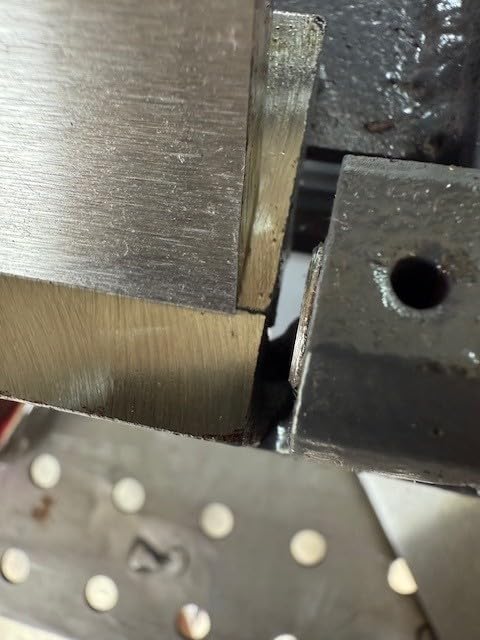
The spec section lists 20 gauge low carbon steel and 16 gauge aluminum, and the machine works with stainless, copper, aluminum, iron and galvanized steel. The listing title references 14 gauge aluminum, which is a discrepancy worth resolving with a test piece.
Two cautions from the review data.
The one-star share is the highest in this group at 11 percent, which points to quality and alignment complaints in a minority of the machines shipped. At 103.2 pounds it is heavier than other bench-scale 24 inch brakes, so bench mounting is the realistic setup.
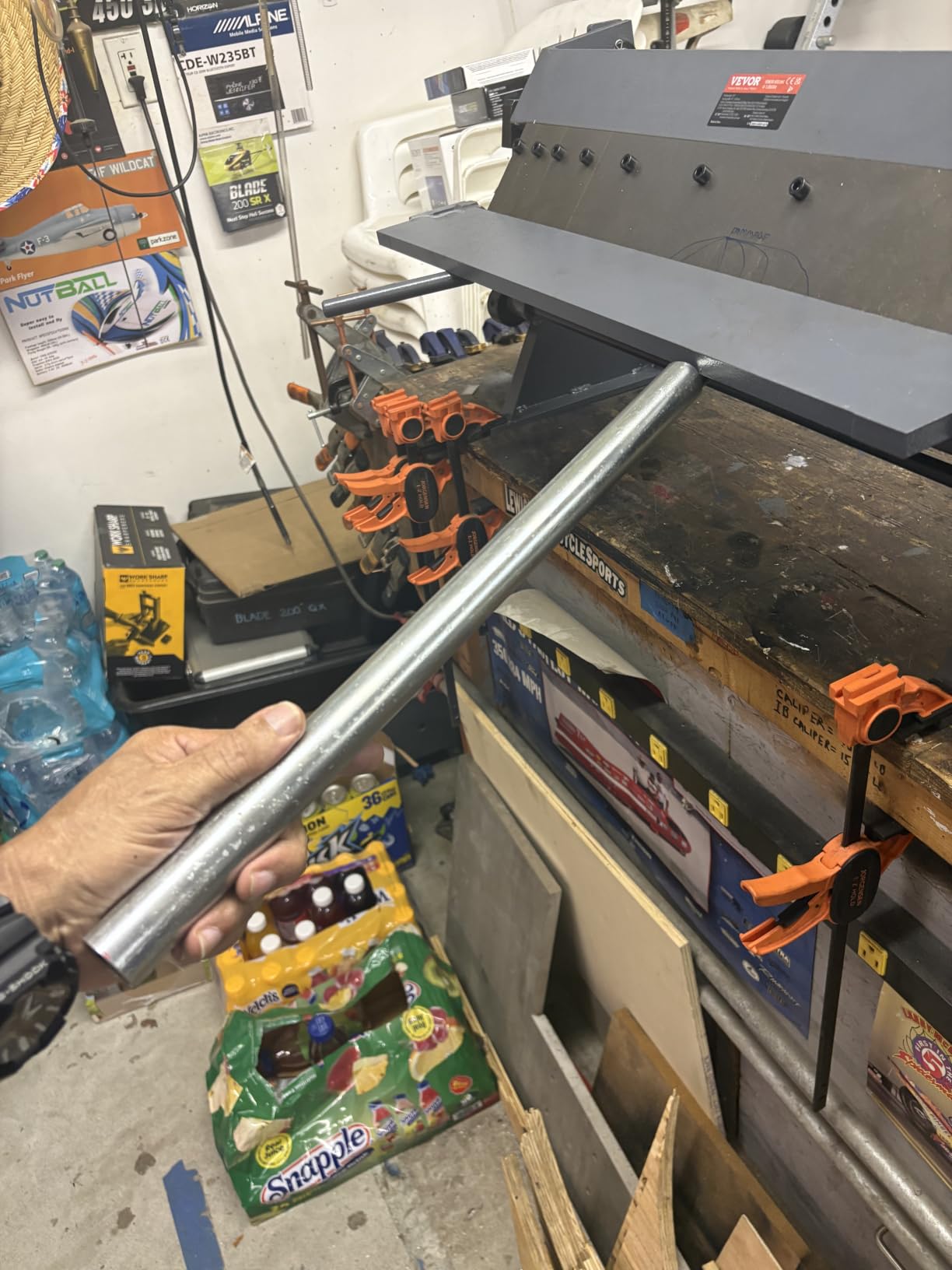
What ten fingers buy you
A five-finger brake gives you one position per finger. Ten components in four sizes means you can set a 2 inch box beside a 1 inch flange without stopping, which speeds up small batch work where parts change every few pieces.
For someone building control boxes, enclosures and shop drawers in short runs, that flexibility is the difference between one setup and four.
Where it falls short
Twenty gauge low carbon steel is the working limit. The frame is stiff but the leverage is fixed, so heavier material at full width will tire your arms.
Reconcile the aluminum rating yourself. Test 14 gauge and 16 gauge on a scrap piece before you commit a full sheet of material to a part.
11. KAKA W-2420A 24 Inch Box and Pan Brake – Best for HVAC and Garage Work
Box and Pan Brake, 24 in 20 Gauge, KAKA INDUSTRIAL W-2420A
24 inch wide at 20 gauge
0 to 135 degrees
Five removable fingers
Cast iron base, 95 lb
Pros
- Solid welded steel body with heavy truss rods
- Cast iron base gives a stable footprint
- Five removable fingers cover boxes pans and flanges
- Compact 30.3 inch footprint
Cons
- 95 lb limits portability
- 11 percent one-star share with alignment and finish complaints
- Freight delivery appointment required
The W-2420A is the heaviest bench-scale brake relative to its footprint in this group, at 95 pounds in a 30.3 by 16.7 by 14.6 inch package, and that mass is deliberate. A solid welded steel body, heavy truss rods and a cast iron base are what stop the beam from deflecting mid-bend.
The frame is the reason it feels stable.
A solid welded steel body, heavy truss rods and a cast iron base are what stop the beam from deflecting mid-bend. It bends 24 inch wide mild steel at 20 gauge across a 0 to 135 degree range with five removable fingers in 1, 2, 3, 8 and 10 inch sizes, and clamping pressure and finger position are both adjustable.
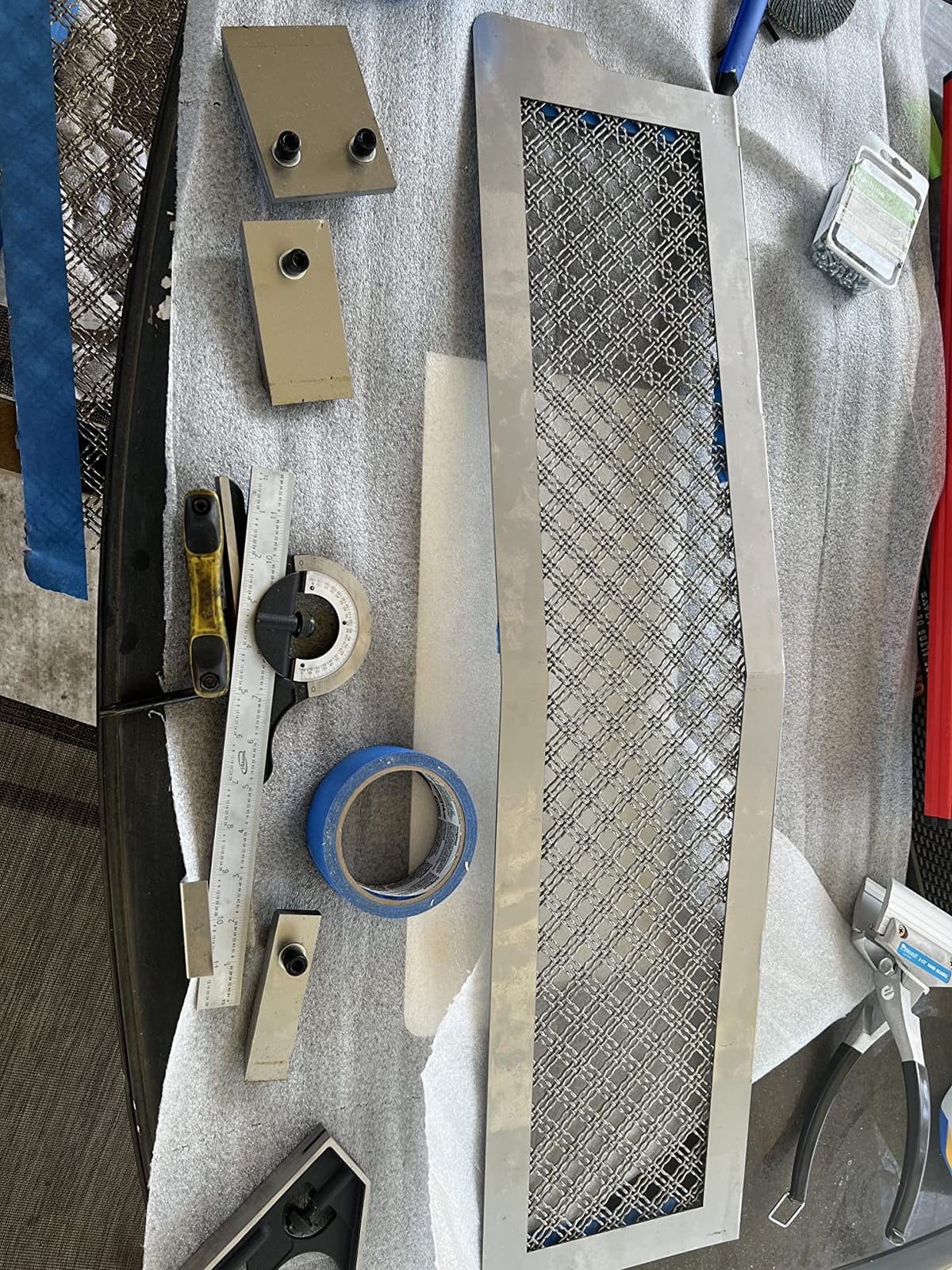
The dimensional details matter for real parts: minimum reverse bend of 0.47 inch, and maximum box bending depth of 1.38 inch. Buyers single out the base and truss rod stability, and the part list covers boxes, pans, brackets, gussets, fixtures, covers, trays and flanges.
HVAC shops and home garages both show up in the reviews.
Auto restorers, repair shops and schools are named too, which is a fair summary of who this machine suits. The 11 percent one-star share centers on alignment and finish, so check the fingers square before the first part.
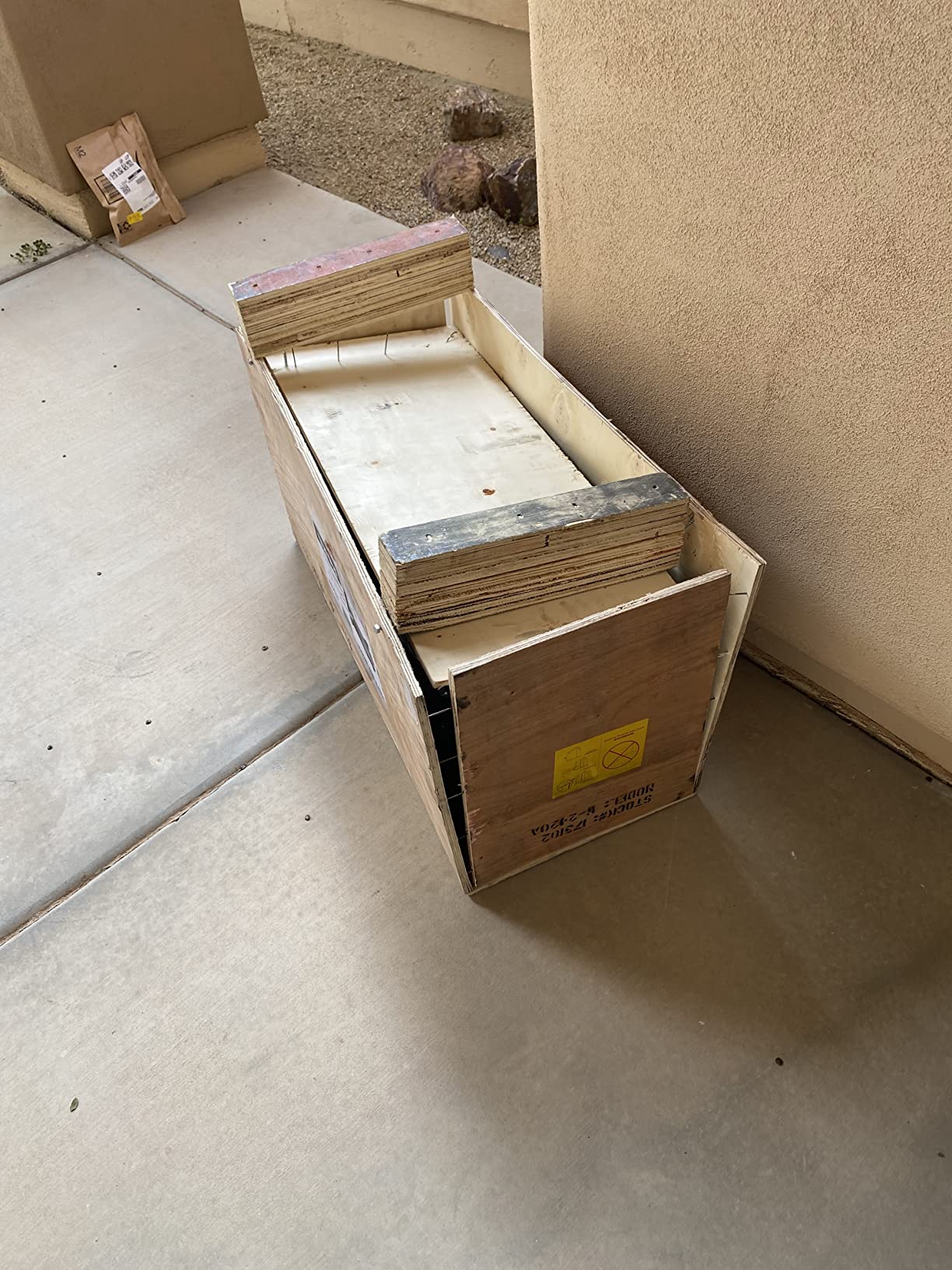
Why truss rods matter on a 24 inch brake
Deflection is the failure mode nobody plans for. Pull hard on a light frame and the beam bows, so the fold angle at the center of the sheet differs from the ends. Heavy truss rods and a cast iron base exist to prevent exactly that.
A stable base also matters for repeatability. If the machine shifts under load, your angle changes from part to part even when the setup is identical.
Where it falls short
At 95 pounds it is a floor-standing machine rather than something you carry to a job site. Plan the location first, and note that residential deliveries commonly need lift gate service.
A 1.38 inch maximum box depth again keeps you in shallow pans, covers and trays. Deeper transitions need a longer-apron machine.
12. KAKA FB-4 4 Inch Bench Bending Brake – Best for Small Brackets and Thick Plate
Manual Steel Bending Brake, 4 in Capacity KAKA INDUSTRIAL FB-4
4 inch capacity
3/16 in mild steel at full width
2.5 ton pressing force
19 lb bench mount
Pros
- Bends 3/16 inch mild steel at full 4 inch width
- Aluminum up to 3/8 inch thick
- Compact 19 lb bench-top mount
- Solid steel frame for long service
Cons
- Only one mandrel size included
- No adjustment for the blade gap
- One reviewer found the top strap installed upside down
The FB-4 solves a problem no finger brake in this roundup can: thick material in small pieces. Its 2.5 ton pressing force bends mild steel up to 3/16 inch thick at the full 4 inch width and aluminum up to 3/8 inch, producing clean, accurate 90 degree bends.
At 19 pounds with shipping dimensions around 17 by 7 by 8 inches, it mounts on a bench and can travel to a job site. The solid steel frame is simple, hand-lever operated and has been in production long enough that there is a large body of owner feedback.
Buyers use it for brackets, motor mounts, ornamental iron and automotive repair work. Fifty-five percent five-star plus 21 percent four-star ratings across 103 reviews reflect a machine people keep using rather than regret.
Understand what it is before buying.
The dies are rounded, so you get a larger bend radius than a true press brake, and the gap between the stationary portion and the blade can skew bends with no adjustment provided. Making multiple bends close together requires extra fixturing.
When a 4 inch bender is the right answer
Gussets, motor mounts, tabs and chassis brackets are short and thick, which is the exact opposite of what a wide finger brake is built for. A wide brake cannot hold 3/16 inch steel flat; this machine bends it in one clean stroke.
The 2.5 ton force also means the bend stays square on heavier material where hand pressure alone would leave a curve.
Where it falls short
Only one mandrel size ships with it, and additional sizes are not sold separately, so your bend radius choices are limited to what comes in the box.
The fixed blade gap can skew bends, and one reviewer reported the top strap installed upside down out of the box. Check assembly before you bend anything you care about.
How to Choose a Sheet Metal Brake for Your Shop
Box and pan brake vs hand bender vs siding brake
A box and pan brake uses interchangeable finger segments to create a box corner, pan side or flange in one stroke, which makes it the most versatile choice for a general home shop. A hand bender, or hand bender style bench unit, works on short pieces and clamps to a vise or bench, and trades width for the ability to handle thicker material in small sections. A siding brake is built wide and light for full-length hems on aluminum and copper roofing. A press brake forms a sharp V bend to 90 degrees using the force of a hydraulic ram rather than a lever.
If you are still deciding, the practical test is the part in front of you. Full-length roof trim points to a siding brake. Shallow boxes and covers point to a box and pan brake. Short thick brackets point to a hand bender bench unit. Sharp V bends in thicker steel point to a press brake attachment.
Bench mount or floor model
A bench-mount brake is lighter, cheaper and can be screwed down or carried outside. It needs a bench rated for its weight and it needs a stand, which is a separate purchase and a real part of your budget. A floor model arrives as a complete standing machine with its own base and takes up permanent floor space.
For most home shops, the bench-mount route wins if you can dedicate one bench and measure the height against your standing posture. Anything above roughly 100 pounds should be a floor machine.
Reading gauge ratings honestly
The number that matters is whether the rating applies to the full bending width or to half width. Brakes rated for 16 gauge at half width will fight you at full width, and manufacturers often place that detail in small print. Forum owners running 48 inch machines describe full-width 16 gauge bends as physically hard even on well-built machines.
Material derating matters as much as gauge. Mild steel is the reference. Stainless steel is roughly a third harder to bend than mild steel of the same gauge, so step down a gauge or two. Aluminum and copper bend more easily than steel of the same thickness, which is why several machines here list a heavier aluminum gauge than their steel rating.
Finger material and why it shows up in the reviews
Hardened and polished steel fingers last. Cast iron fingers and cast iron clamp parts, common on imported machines, get chewed up by burrs and dross on mild steel. That distinction comes up repeatedly in enthusiast forums and shows up in buyer complaints about finger wear and finish on budget units. It is also why the made-in-USA construction claim on the Malco is worth something.
What a home-shop brake costs across the tiers
Prices move constantly, so think in bands rather than figures. Entry-level imported bench folders and press brake attachments fall in the low hundreds. Mid-range bench machines with 20 to 18 gauge capacity and a full finger assortment sit in the several-hundred range. Floor models with cast bases and a 48 inch width move into the higher hundreds and low thousands. Contractor-grade machines in the 10 foot class sit in the low thousands, and the true cost of any of them includes the stand, the freight move and eventual finger replacement.
Owners also watch for two deal breakers more than price: alignment out of the box, and clamping teeth too soft for stainless. Both show up in review data across this group.
Once a machine is on the bench, shop lighting matters for reading your angle work. Our picks for the best LED tube lights for shops cover that. For larger parts, the best large format 3D printers for home shops pair well with jigs and drill guides for repeat bends.
First Bend Setup and the Mistakes That Waste Metal
Squaring the fingers first prevents most disappointment. Lay the bending beam on a flat surface, check the fingers against a machinist square, and confirm the leaf gap is even across the width. A brake that is out of square at the ends will produce a part that does not close.
Then cut a sacrificial test piece in the exact material and gauge you plan to use, and make the same 90 degree bend you need on the real part. Check the angle with a square rather than by eye, and measure the flange after the bend rather than before.
Make a straight stop reference on the clamping beam so repeat pieces land in the same position. On a manual brake, the operator’s hand is the only gauge you get, so a fixed stop saves real setup time.
Check bend angle with a square after every few pieces on material thicker than 20 gauge. Springback is real, and it shows up in stainless before it shows up in mild steel.
Two mistakes account for most ruined sheet. The first is pushing a brake past its rated gauge across the full width because half the width worked fine. The second is overbending past 90 degrees without support under the flange, which puts a crease in a part you cannot fix.
Work on the edge nearest the bend line, keep your fingers clear of the swing path, and wear eye protection. Every brake on this list is a lever moving a heavy steel beam through a short arc.
Frequently Asked Questions
What is the best metal brake?
For most home shops the best metal brake is a 24 inch box and pan brake rated for 20 gauge mild steel across its full width, with five removable finger segments and a 0 to 135 degree range. Move up to a 48 inch machine if you regularly bend full sheets of roofing or siding, and consider a press brake attachment if your material is thicker than 10 gauge.
What is a good hand bender for sheet metal?
A good hand bender is a bench-mount unit with a 2.5 ton pressing force that bends mild steel up to 3/16 inch thick at a full 4 inch width and aluminum up to 3/8 inch. It is the right pick for brackets, motor mounts and gussets, because it holds short thick pieces flat in a way a wide finger brake cannot.
How much does a sheet metal brake cost?
Home-shop sheet metal brakes fall into clear tiers. Entry-level imported folders and press brake attachments sit in the low hundreds. Mid-range bench machines rated for 20 to 18 gauge with a full finger assortment sit in the several-hundred range. Floor models with cast bases move into the higher hundreds and low thousands, and 10 foot contractor machines reach the low thousands.
How thick of metal will a siding brake bend?
A siding brake built for full-length work typically handles 22 gauge aluminum and copper and 20 gauge galvanized steel, which is what roofing and flashing require. Some wide models reach 18 gauge steel at half width. Check whether the gauge rating applies to the full bending length, because full-width ratings are usually lower.
Do I need a box and pan brake or a siding brake?
Buy a box and pan brake if you form boxes, pans, covers, brackets and custom shapes at bench scale. Buy a siding brake if your work is full-length hems on aluminum and copper roofing and siding stock. Many home shops start with a 48 inch box and pan brake, which covers both jobs within a few inches of sheet length.
The Best Sheet Metal Brake for Your Home Shop
The best sheet metal brake for most home shops in 2026 is the Malco MB48A, because it bends 22 gauge to 135 degrees across a 4 foot width on American-made tooling, and 295 buyers have already told you how it performs. The VEVOR 48 inch is the pick when full sheets must go across the fingers in one pass, and the KASTFORCE KF5002 is the value pick at 18 gauge in a 44 pound frame.
Match your pick to the material, not to the machine: 24 inch width and 20 gauge for general shop work, 48 inch width for roofing and siding, a press brake attachment for anything past 10 gauge, and the KAKA FB-4 when your parts are short and thick. Check the full-width gauge rating before you buy, then square the fingers and run a test piece before your first real part.