
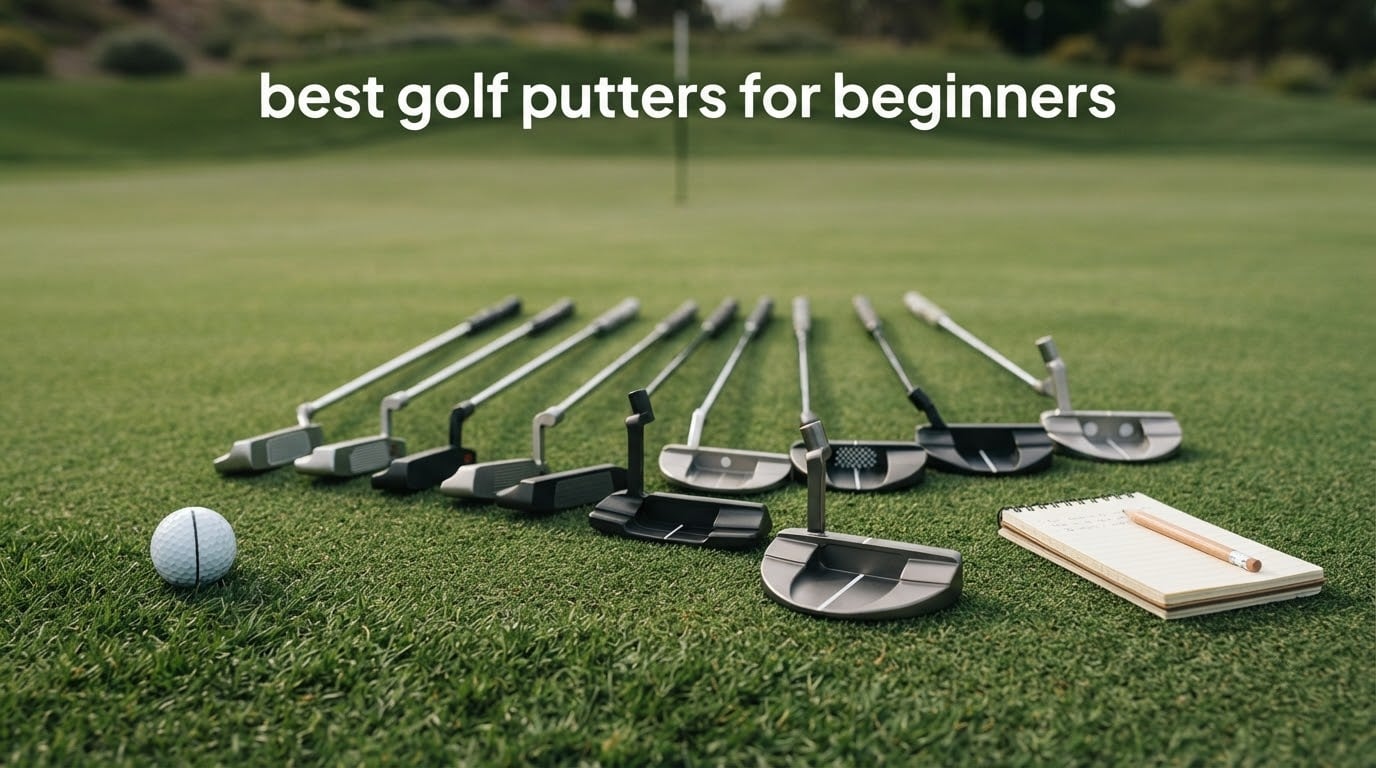
The best golf putters for beginners are high-MOI mallet and mid-mallet putters with clear alignment aids, because forgiveness, not feel, is what keeps a new golfer from three-putting. A perimeter-weighted head resists twisting when you catch the ball off the toe or heel, so misses keep rolling at close to the speed you struck them.
That is the whole argument. Everything else in this guide, from head shape to face balance to shaft length, exists to serve one goal: making your mistakes cost less. We put 12 putters side by side, weighed the forgiveness claims against what buyers actually report, and flagged the details beginners get wrong most often, including length and handedness.
New to the sport entirely? Start with our broader beginner golf club picks so the putter is not the only decision on your radar. If you already own a decent putter and just want an upgrade read, our best putters guide goes deeper on tour-level models.
Table of Contents
Top 3 Best Golf Putters for Beginners (October 2026)
These three cover the three ways beginners actually shop: maximum forgiveness, minimum cost, and a step up in construction. Our number one pick has the deepest review history in the group, which matters when you are choosing a club that spends most of its life off your sightline.

Orlimar Tangent T1 Mallet
- High MOI mallet head
- Plumber's neck hosel
- Soft TPU face insert
- Bi-color sightline

GoSports Classic Two-Way
- Ambidextrous two-way head
- 35 inch standard length
- Rubberized comfort grip

12 Best Golf Putters for Beginners at a Glance in 2026
Every pick below is written in the order we would hand them to a new golfer: forgiving shapes first, then the fit-specific and budget options. Head shape, balance style and length are the three columns that decide whether a putter suits your stroke, so those are the ones to scan first.
| Product | Specifications | Action |
|---|---|---|
| Orlimar Tangent T1 Mallet |
|
Check Latest Price |
| GoSports Classic Two-Way Putter |
|
Check Latest Price |
| TaylorMade Spider #3 |
|
Check Latest Price |
 Cleveland HB Soft 2 Putter Cleveland HB Soft 2 Putter |
|
Check Latest Price |
 Odyssey DFX 2025 Putter Odyssey DFX 2025 Putter |
|
Check Latest Price |
 Odyssey AI-One 2 Ball Odyssey AI-One 2 Ball |
|
Check Latest Price |
 Wilson Infinite Buckingham Wilson Infinite Buckingham |
|
Check Latest Price |
 PGM Anti-Twist Mallet PGM Anti-Twist Mallet |
|
Check Latest Price |
 PGM Notched Groove Blade PGM Notched Groove Blade |
|
Check Latest Price |
 Orlimar F80 Mallet Orlimar F80 Mallet |
|
Check Latest Price |
 Mile High Life E Blade Mile High Life E Blade |
|
Check Latest Price |
 Powerbilt TPS X-Type M900 Powerbilt TPS X-Type M900 |
|
Check Latest Price |
1. Orlimar Tangent T1 Mallet: The Best Golf Putter for Beginners Overall
Orlimar Tangent T1 Mallet Right Handed Putter for Men, 35 Inch
High MOI mallet head
Plumber's neck hosel
Soft TPU face insert
3 degree loft
Pros
- High MOI mallet head forgives off-center strikes
- Plumber's neck keeps hands ahead of the face
- Bi-color sightline makes aiming obvious
- Soft TPU insert adds feel at impact
- Deepest review history in this group
Cons
- Standard grip size suits few hands
- Basic headcover included
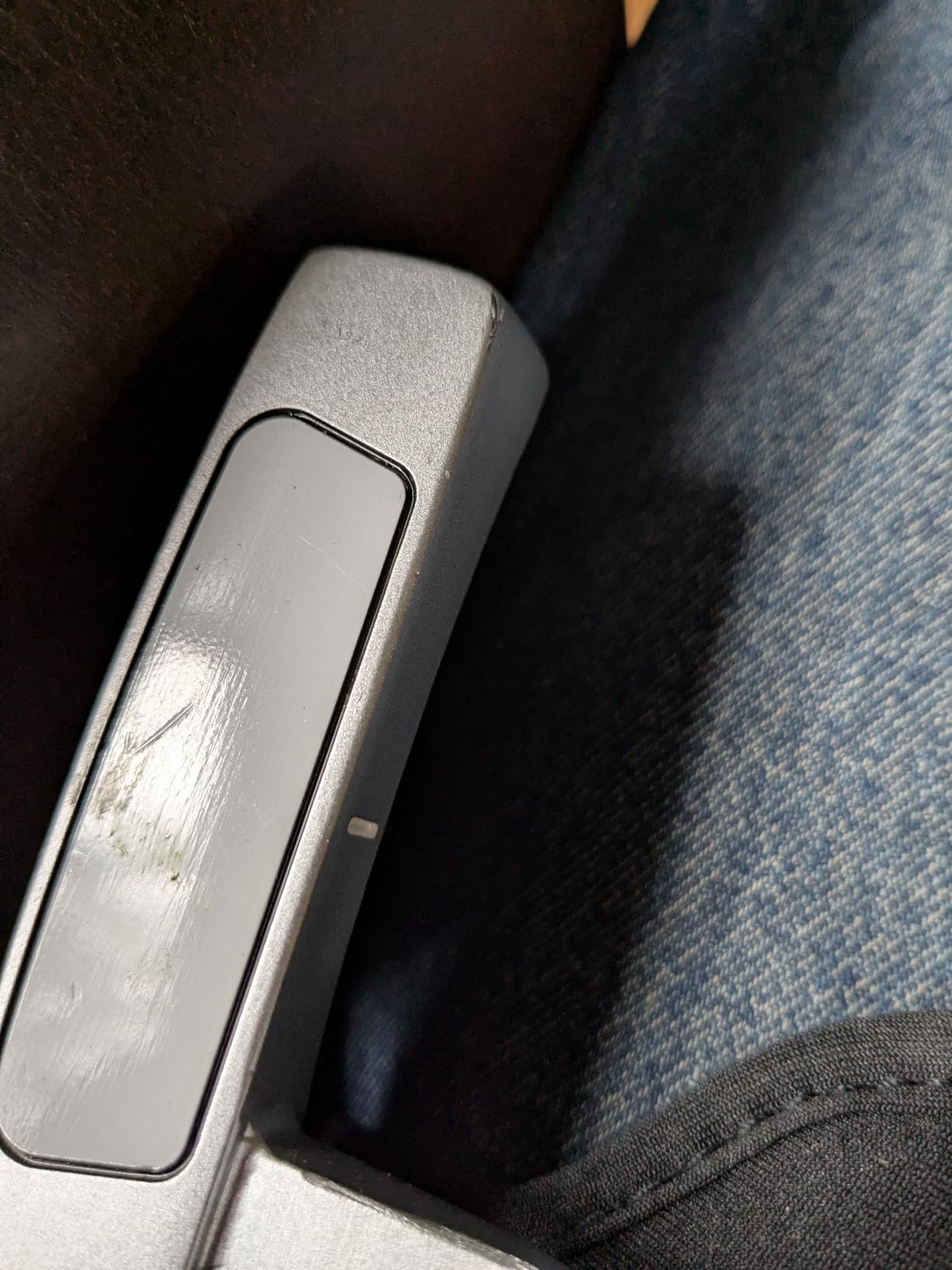
The Tangent T1 is the putter we keep handing to beginners, and the reason is unglamorous: it has more owner reviews than anything else on this list, at 1631, and a 4.5 average that has held steady across owners. Nobody buys a Tangent T1 for the logo, so the review pool is a real sample of golfers using it rather than admirers rating a badge.
What it does well is forgiveness. The high MOI mallet head carries weight around the perimeter, so a strike on the toe or heel produces less twist and less loss of speed than a compact blade would. For a player who misses the middle of the face as often as not, that difference is the whole game.
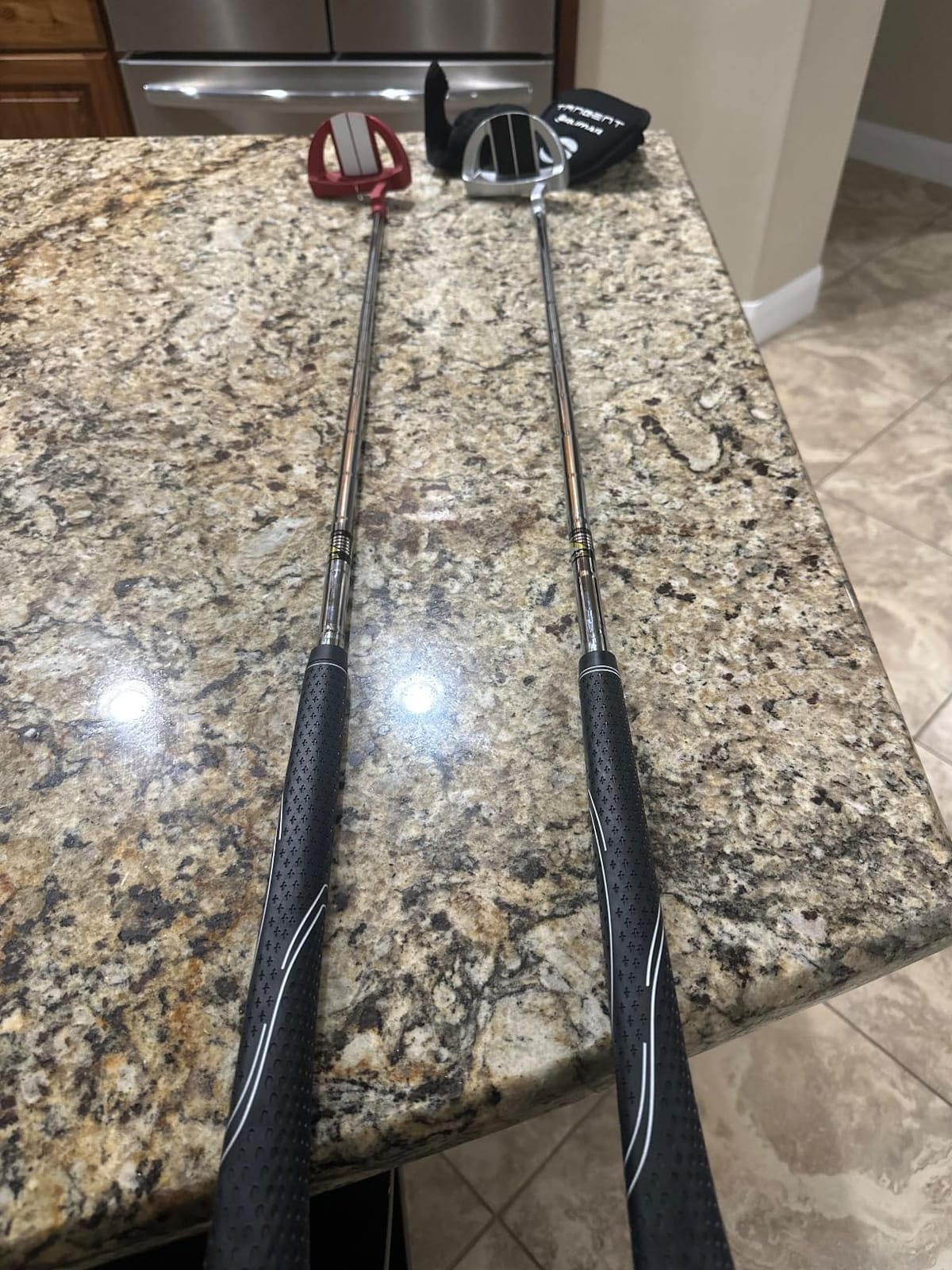
The plumber’s neck is the detail most beginners should not skip. That offset hosel holds your hands in front of the face at impact, which is exactly what most high-handicap strokes get wrong. A straight-back-and-through motion usually pairs naturally with this neck, and the T-shaped bi-color sightline does the aiming work for you on short putts where aim matters most.
The soft TPU face insert keeps impact from sounding and feeling like a hit on concrete, and the 3 degree loft is the standard that most of the putters on this list share. It is a 35 inch steel-shafted putter with a standard grip, which is where one limitation shows up: if your hands are small, the standard grip will feel crowded.
Who the Orlimar Tangent T1 suits
This fits a new golfer who wants the maximum margin for error and does not want to think about hosel geometry. If your misses are mostly tap-in misses, forgiveness matters more than feel, and this head gives you the widest safety net in the group.
It also suits anyone who wants a putter that cannot be fussy about length within reason, since 35 inch is the standard adult length and the setup looks natural on a neutral setup stroke. Pair it with a putting mat and a few rounds of short putts and you will see the forgiveness effect within a season, not a career.
Who should skip the Orlimar Tangent T1
Skip it if you have a strong arcing stroke and want a putter built to hold that arc, or if you are a very short player who needs something closer to 32 or 33 inches. The standard grip is also a real constraint for golfers with noticeably small or large hands.
And skip it if you are drawn to a blade. A cast mallet will never give you the toe-through feel or the compact head speed of a traditional blade, so buying one for looks leads to disappointment. Buy it for the forgiveness, which is a solid reason on its own.
2. GoSports Classic Two-Way Putter: The Best Budget Putter for Practice and First Rounds
GoSports Classic Golf Putter, Choose Between 2 Way or Blade Putter – 35″ Length with Premium Grip
Ambidextrous two-way cast head
35 inch length
Rubberized comfort grip
3.5 degree loft
Pros
- Works for golfers of either handedness
- Standard 35 inch adult length
- Solid one-piece cast construction
- Good grip for the money
- Useful at home and on the course
Cons
- No alignment aids beyond the head shape
- Lightweight feel reported by some
- Minimal vibration dampening
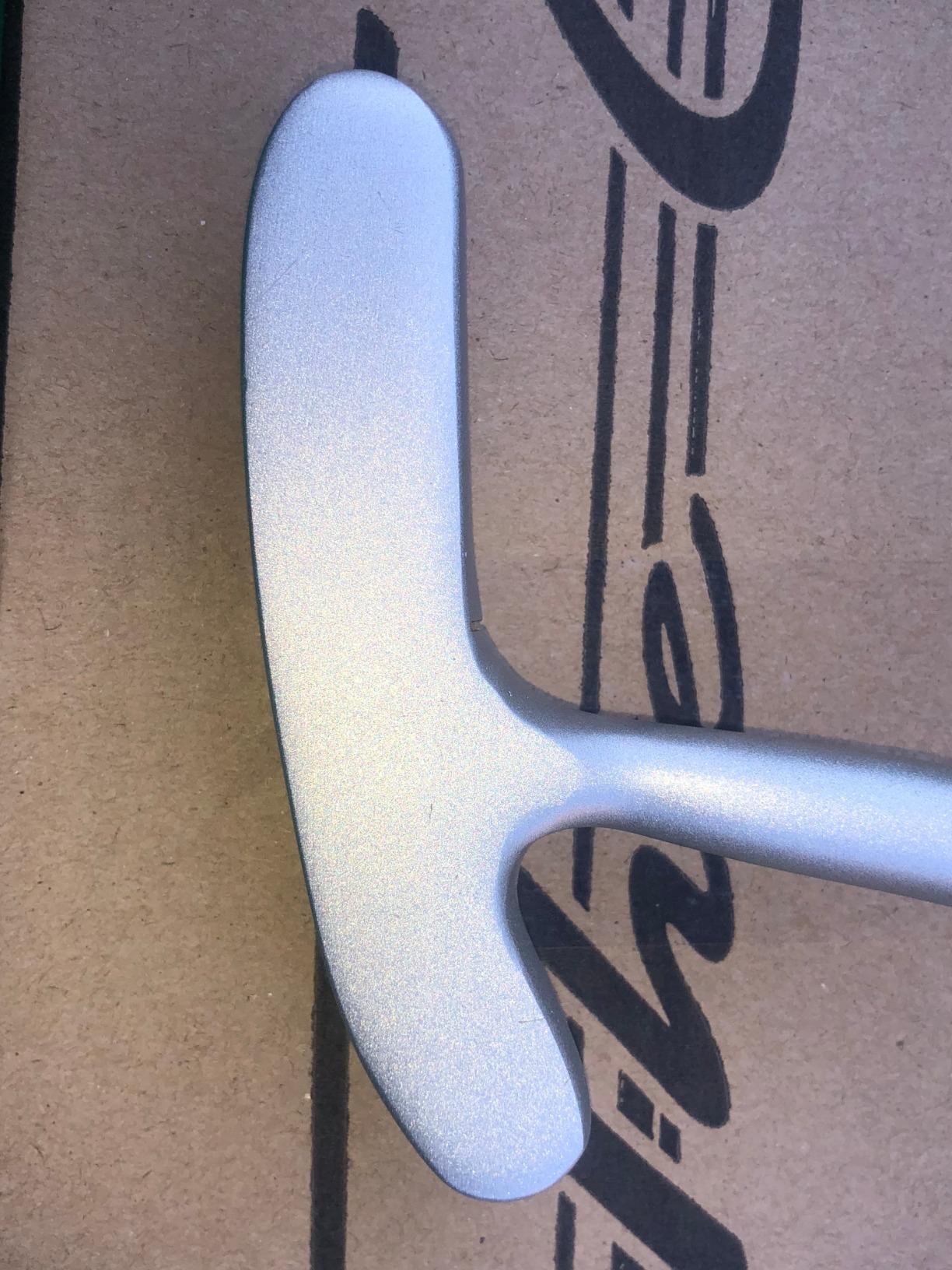
The GoSports Classic exists because putting is a contact sport, and a contact sport is learned by repetition. With 1557 reviews averaging 4.6, this is one of the most exercised beginner putters in the category, and a lot of those owners are using it on a mat in a spare room before they ever reach a green.
The two-way cast head is genuinely ambidextrous, which solves a problem many cheap putters create. If you are not yet sure which way your stroke naturally finishes, or if you are playing with a partner who putts the other way, one club covers both without buying a second putter.

It is a 35 inch standard adult length with a rubberized contoured grip, and the 3.5 degree loft is slightly higher than most of the picks here. The solid cast head with a powder-coated finish is the old-school recipe: heavy-ish, simple, and quiet enough not to embarrass you at the mini golf course.
What you give up is refinement. There is no insert, no sightline, and no perimeter weighting to speak of, so mishits cost more distance than they would with a modern mallet. For practice and casual rounds that is a fair trade, and it is why this is a first-club or spare-club choice rather than a forever putter.
Who the GoSports Classic suits
It suits a complete beginner who wants to practice putting at home this week, not next month. A dedicated putting mat and a repeatable putter is the cheapest putting lesson available, and this one is built for that job.
It also suits golfers of either handedness, golfers who share a bag, and anyone who wants a beater club that will not be mourned if it gets whacked in a cart or left on a green. A 35 inch length works for most adults without adjustment.
Who should skip the GoSports Classic
Skip it if you are playing competitive golf and care about how the club looks or sounds, because the cast head and plain finish are intentionally plain. Also skip it if your main problem is three-putting due to mishits, since forgiveness is not what this head is built to deliver.
Lightweight feel is the other warning. Some owners report it feels light compared with a steel-shafted mallet, and a putter that feels light in a slow stroke is hard to control. If you already putt with a consistent tempo, upgrade to a mallet instead.
3. TaylorMade Spider #3: The Best High-MOI Mallet for a Forgiving Upgrade
TaylorMade Golf Spider RED Putter #3
6061 aluminum core and 304 steel frame
Pure Roll insert
35 inch small slant neck
Pros
- High MOI frame resists twisting
- Multi-material build improves roll
- PU foam dampening improves sound
- Handles off-center hits well
Cons
- Highest cost in this group
- Small slant neck suits only some setups
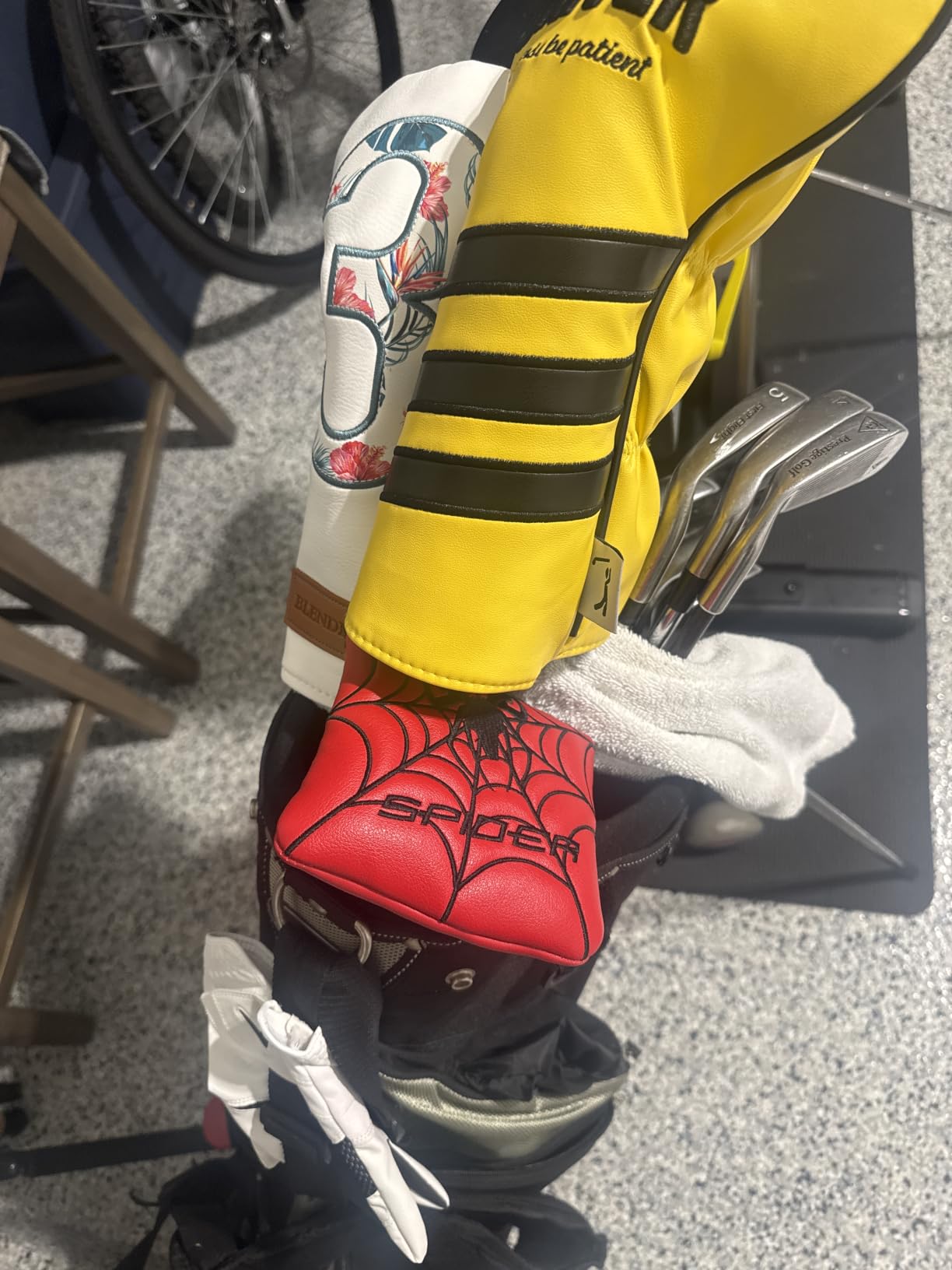
The Spider #3 carries the highest average rating in this group at 4.8, from 152 reviews. That is a smaller sample than most of the budget putters here, so read it as a strong signal rather than a settled verdict, but the consistency of what owners describe matches the spec sheet.
The construction is the story. A lightweight 6061 aluminum core is paired with a heavy 304 stainless steel frame, and that split between light center and heavy perimeter is how the head gets a high moment of inertia. In plain terms, the head barely twists when you miss the sweet spot.
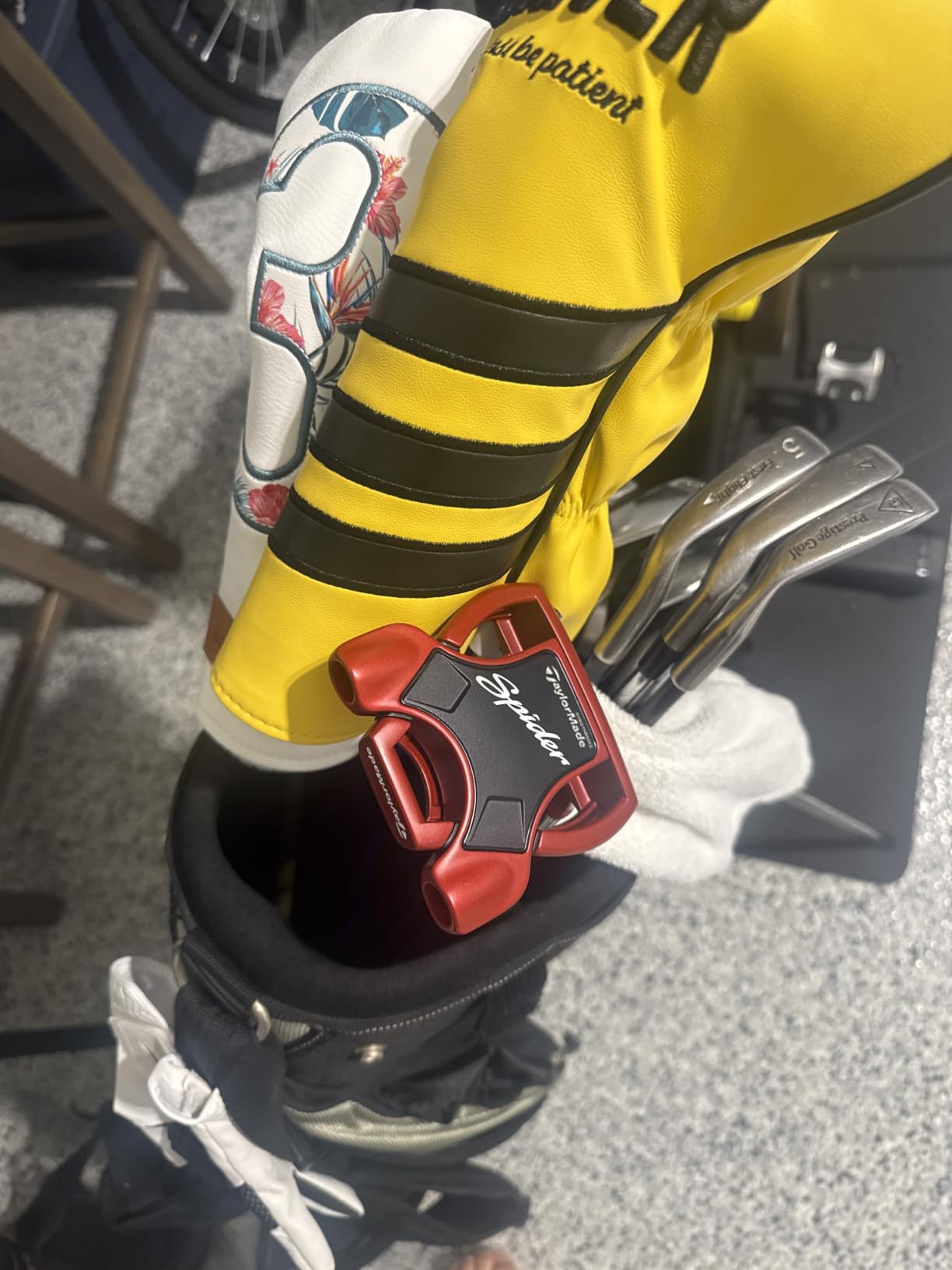
The Pure Roll insert is aimed squarely at a beginner problem: a putt that leaves the face, skids, and finishes short of where you expected. Owners report more topspin and a truer roll, which means better distance control on the putts that count most, the ones inside 10 feet.
PU foam sits between the body and frame to damp vibration, so impact sounds fuller and feels less harsh. At 35 inches with a small slant neck, this is a 3 degree loft mallet, and the slant neck suits players who naturally set up with their hands slightly forward.
Who the TaylorMade Spider #3 suits
It suits a beginner who can putt but is still hemorrhaging strokes to mishits, and who wants a putter that will not punish the miss. The stability on off-center strikes is the specific reason it made this list.
It also suits a golfer who notices they leave short putts short. The insert is designed to promote forward roll, and better roll on short putts is the fastest way to cut putts from two to one.
Who should skip the TaylorMade Spider #3
Skip it if budget is the deciding factor, because this sits at the expensive end of every beginner-friendly option and cheaper putters on this list do the forgiveness job adequately. It is also a 35 inch small slant neck configuration, so check the length against your height before committing.
And skip it if you want a putter you can grow into for decades at a level where feel and speed control matter as much as forgiveness. At that point the premium tier changes shape, and you are shopping for a different category of club.
4. Cleveland HB Soft 2 Putter: Best for New Golfers Who Want Alignment Built In
Cleveland Golf HB Soft 2 Putter (Model 11), Silver, 35″, Center Shafted – Oversized Grip, Right Hand
Center shafted design
Speed Optimized Face
4 1/4 inch oversized grip
3 degree loft
Pros
- Center shaft gives true alignment
- Oversized grip steadies shaky hands
- Dynamic milling normalizes ball speed
- Strong owner satisfaction at 4.5 stars
Cons
- Center shaft is wrong for a strong arc stroke
- Velcro headcover rather than magnetic
The HB Soft 2 is the name that comes up most often in r/golf threads when people ask for a good beginner putter under a couple of hundred dollars. That is not a marketing position, it is a repeat recommendation, and it lines up with what owners report after playing with it.
The center shafted design is the feature beginners underestimate. Instead of a hosel entering at the heel or the toe, the shaft enters at the center of the head, so the putter face hangs square with almost no conscious effort. For a player whose miss is mostly aim, that removes the problem rather than managing it.
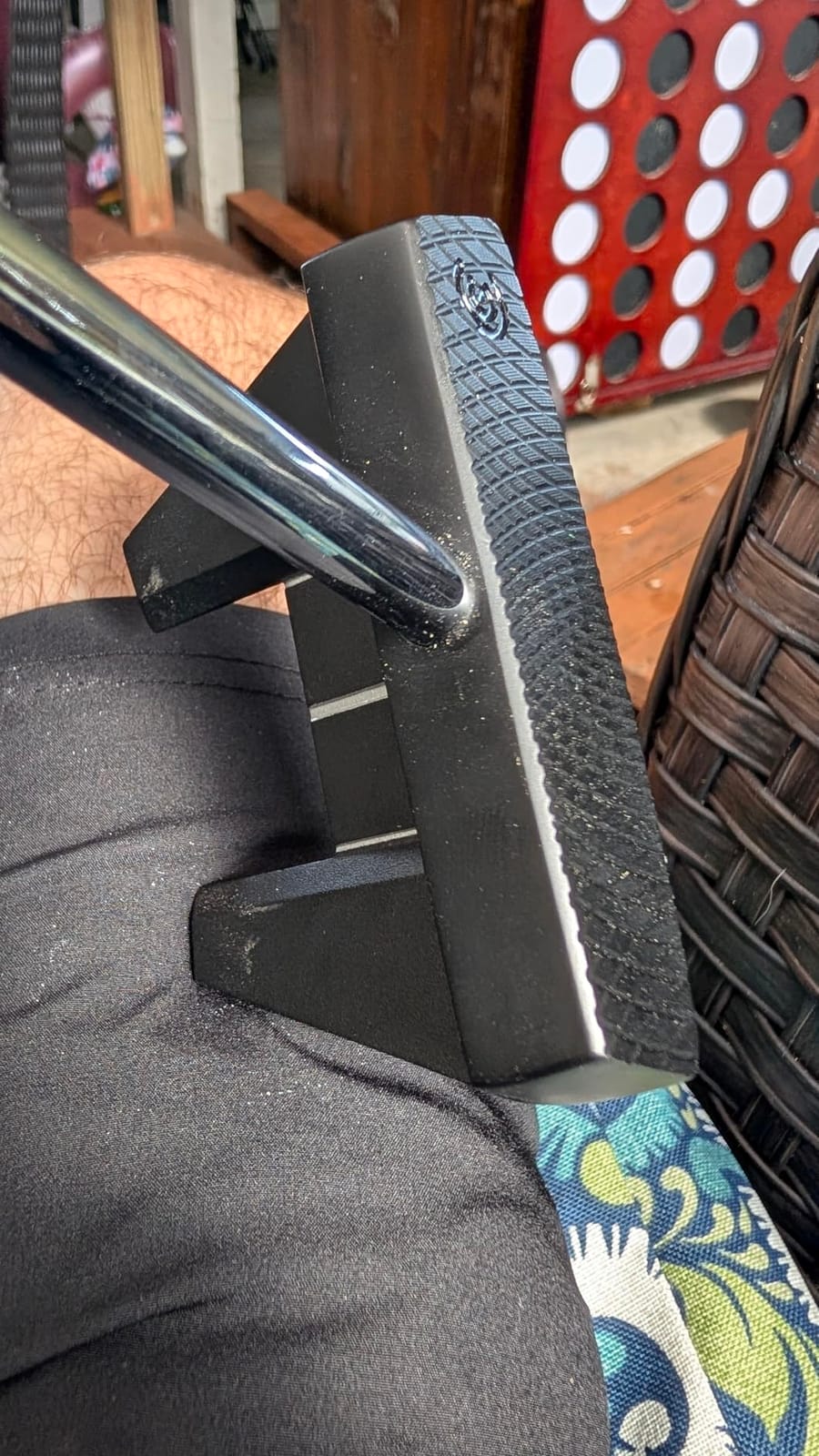
Speed Optimized Face Technology uses a dynamic groove milling pattern that normalizes ball speed across an enlarged striking area, which is forgiveness in a different form. Rather than keeping the ball on line, it keeps the ball at the same speed, so your distance control holds up even on off-center contact.
The oversized grip measures 4 1/4 inches, and owners with unsteady hands specifically credit it. Models at 35 inches and over also include a 20 gram weight in the butt end of the shaft, which keeps swing feel consistent across shaft lengths. That is a small detail most buyers never notice and every owner appreciates.
Who the Cleveland HB Soft 2 suits
It suits a high handicapper whose misses are mostly alignment misses rather than wild strike misses. If you roll the ball left or right of the hole and cannot tell why, center shafting is the fix you can feel on the first round.
It also suits golfers with hand stability issues, because the oversized grip gives you more surface to hold without gripping harder. The stroke-specific approach means there are versions matched to straight or slight arc motions, so pick the one that describes your natural roll.
Who should skip the Cleveland HB Soft 2
Skip it if you have a strong arc stroke. A center shaft wants a straighter, pendulum motion, and forcing an arc into this head feels wrong in a way that takes a few rounds to confirm. An armlock or single bend option suits that player better.
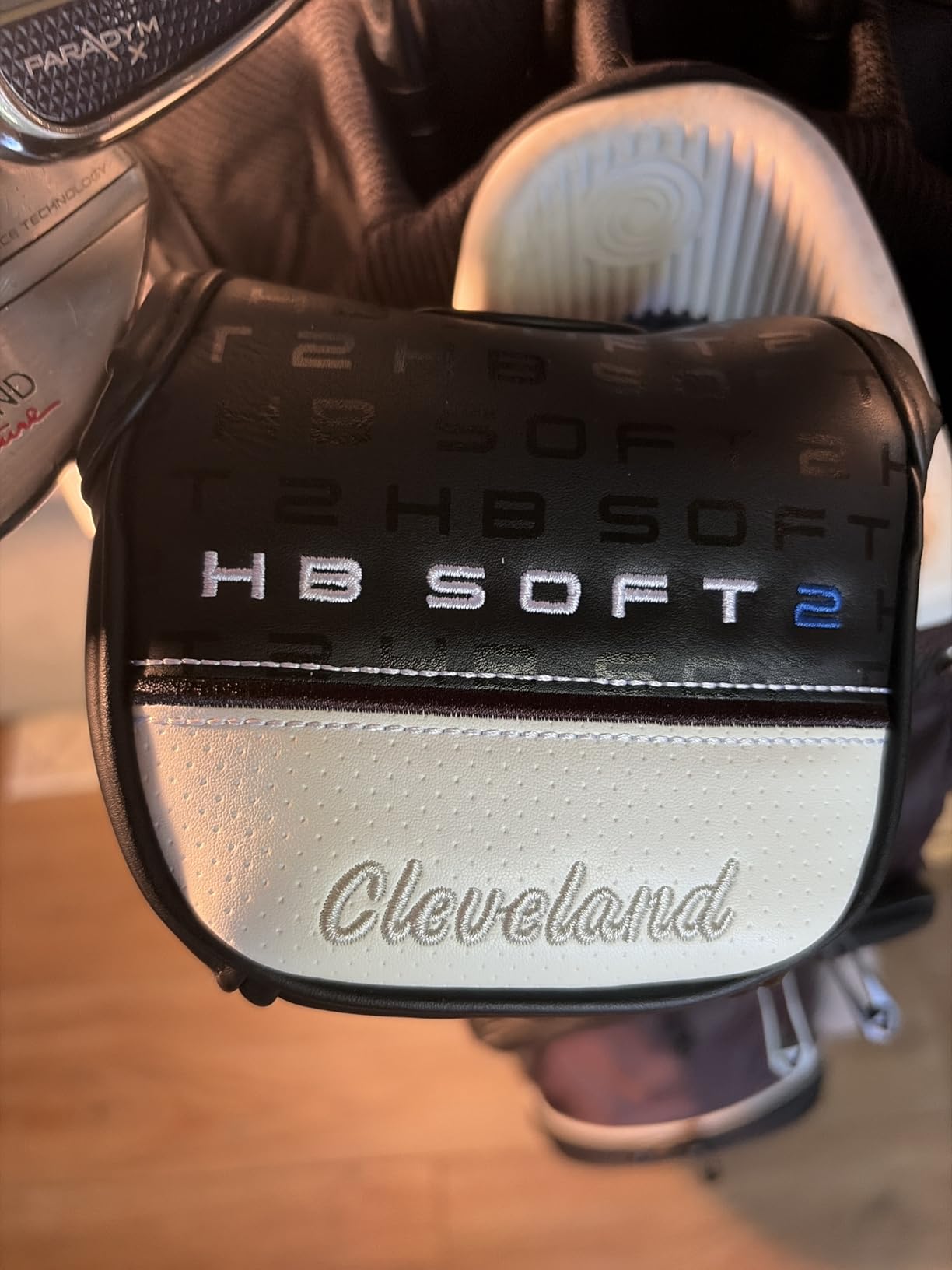
Some owners also find the head feels light through the stroke. Weight preference is personal, so if you like a heavier feel, spend a moment comparing before you commit. The Velcro headcover is a trivial complaint, but it is a reminder that this is a value putter, not a luxury one.
5. Odyssey DFX 2025 Putter: Most Versatile for a Softer, Quieter Strike
Odyssey Golf DFX Putter (Right Hand (2025), 35 Inches, V Line Fang, Oversized Grip)
DFX insert for soft feedback
Oversized grip
35 inch double bend
V-Line Fang head
Pros
- 4.7 star average from 157 reviews
- Soft feel owners prefer over harder inserts
- Oversized grip adds stability
- Charcoal finish reduces glare
Cons
- Lag putting needs an adjustment period
- Right-handed configuration only here
The DFX 2025 combines a 4.7 average with a 35 inch double bend shaft, which makes it the best-rated option among the mid-priced putters here. Buyers repeatedly single out the insert as the reason, with the DFX described as softer and more responsive than Odyssey’s harder-feeling alternatives.
Feel matters more than most guides admit. A putter that feels hard in the hands makes a beginner press down on the grip, and pressing down on the grip is the start of most bad short putts. A soft insert lets you stay relaxed through the impact and keep the stroke smooth.
The V-Line Fang is a classic Odyssey head shape, and the line itself does nothing. The charcoal finish surrounding it does plenty, because glare on a bright green is a real aiming problem for a player who is still learning to trust their start line.
Measured against the other putters here, the DFX is the pick for feel rather than for a specific geometric trick. There is no center shaft and no anti-twist claim, just a well-balanced double bend shaft, a soft insert and a grip sized for stability.
Owners report an improvement of three to five strokes once they stop adjusting their pace for the soft impact. That number is self-reported and unverified, but it points at something real: a putter that feels good gets putted with more confidence than one that feels harsh.
Who the Odyssey DFX 2025 suits
It suits a beginner who is sensitive to impact feel and wants a putter that discourages gripping pressure. The soft insert plus the oversized grip is a combination aimed at keeping the hands quiet on short putts, and that is where most of your strokes come from.
It also suits a golfer who plays on sunny courses and struggles to see the ball. Reduced glare and a clear sight line make the setup more repeatable, which quietly reduces putts lost to a bad start line.
Who should skip the Odyssey DFX 2025
Skip it if you dislike a lag-based stroke. Several owners note that a lag putting motion takes adjustment with this head, and if your instinct is to putt with a firming wrist, expect a few rounds of inconsistency. That is a temporary problem, not a permanent one, but beginners rarely want a temporary problem.
Skip it if you need a left-handed version or a shorter length than 35 inches, since this configuration is right-handed only. Those are exactly the constraints that push golfers toward the Orlimar models on this list instead.
6. Odyssey AI-One 2 Ball: Best for Golfers Who Need to See the Line
Odyssey Golf AI-ONE Putter (33 Inches, 2 Ball (Double Bend), Right Hand)
2-Ball white alignment system
AI-designed face pattern
White Hot insert
33 inch length
Pros
- Alignment system is visible from any setup position
- AI face pattern helps on mishits
- Counter-balanced feel
- 33 inch suits shorter players
Cons
- 33 inch is short for taller golfers
- Higher cost than most beginner picks
The 2-Ball alignment system is the reason this putter keeps appearing on beginner lists. Two white dots sit on either end of a line across the crown, and because the dots are round, you can frame the ball between them from almost any address position. A beginner does not need to find a sight line. The ball sits inside two white circles and the job is done.
That framing effect is why alignment aids get recommended so often in forum threads about short putt aim. You stop guessing whether the face is square to the target and start checking whether the ball is centered, which is a much easier question to answer under pressure.
Who the Odyssey AI-One suits
It suits a beginner whose misses are almost all aim misses, and especially a nervous short putter who second-guesses the face. The 2-Ball system removes the guesswork, and the 33 inch length is genuinely useful for golfers under 5 foot 9.
It also suits a player who wants an insert for feel along with forgiveness. The AI-designed face pattern is built to keep ball speed consistent on mishits, and the White Hot insert gives a soft, muted impact that most beginners prefer.
Who should skip the Odyssey AI-One
Skip it if you are tall. At 33 inches this is one of the shorter putters in the group, and a short putter for a tall player forces a crowded, upright setup that ruins the very aim this putter is supposed to help.
Skip it if your budget is the primary constraint, since cheaper putters on this list deliver forgiveness and a plain sight line. Buy it when your specific failure is aim and you are willing to pay for a solved problem.
7. Wilson Infinite Buckingham: Best for Golfers Who Need a Visual Focus Cue
Wilson 2024 Infinite Buckingham Golf Putter – Men’s Right Hand, 35″
Double-milled face
Three parallel alignment lines
35 inch
PVD anti-glare finish
Pros
- Three-line system gives a clear focus point
- Double milling holds roll and speed
- Midsize grip is comfortable
- Anti-glare finish reduces distraction
Cons
- Only 34 inch and 35 inch lengths
- Right-handed configuration
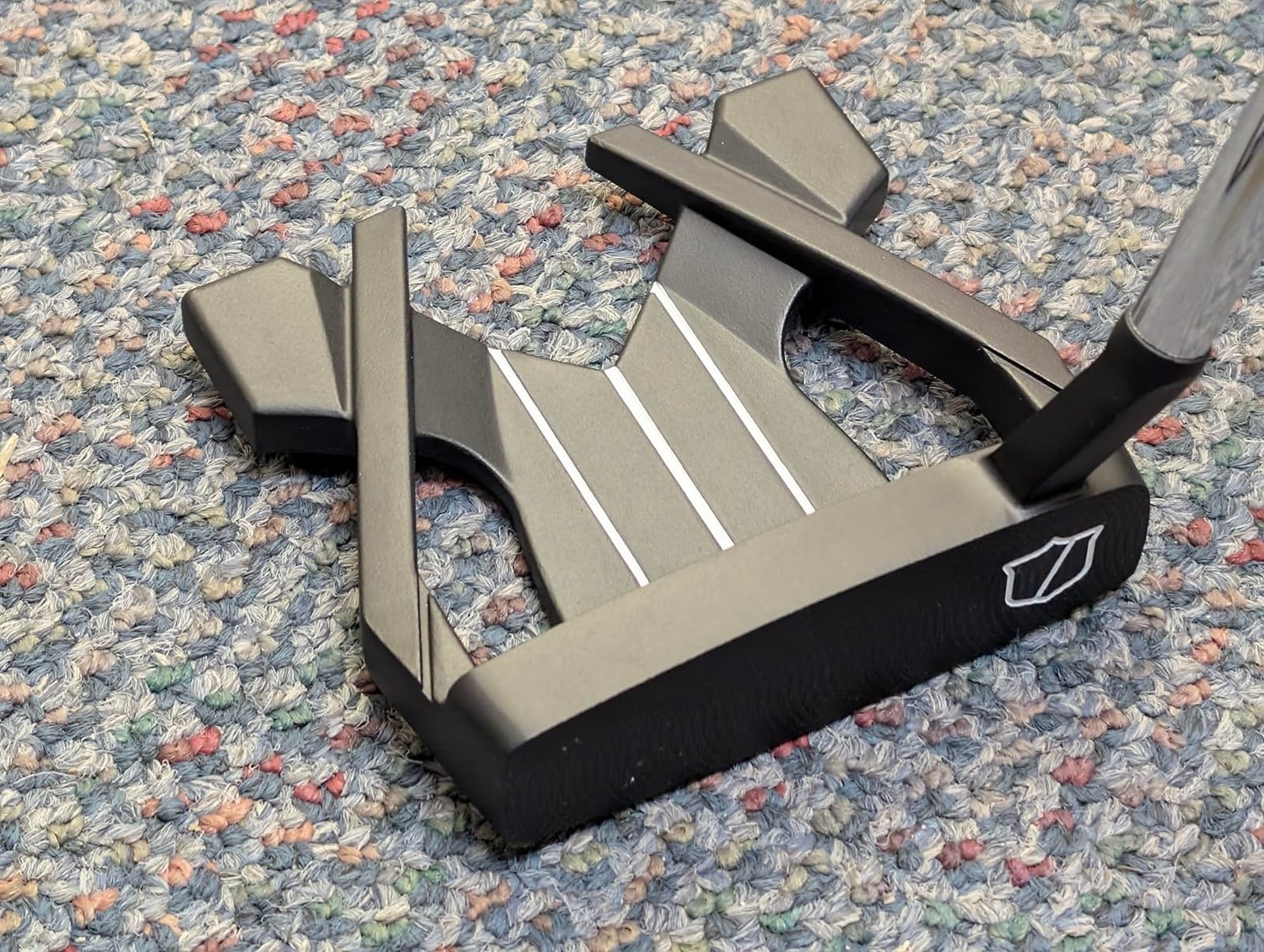
The Buckingham takes the alignment aid idea and expands it. Instead of a single line or a pair of dots, you get a thick center line flanked by two thinner support lines, so your eye has three references to square up against. Golfers who cannot find one line on a green often find three much easier.
Under the top plate, the face is double-milled for a consistent feel and roll no matter where you strike it. That is the quiet half of forgiveness. The loud half is the alignment system, and on a beginner putter the loud half usually does more work.
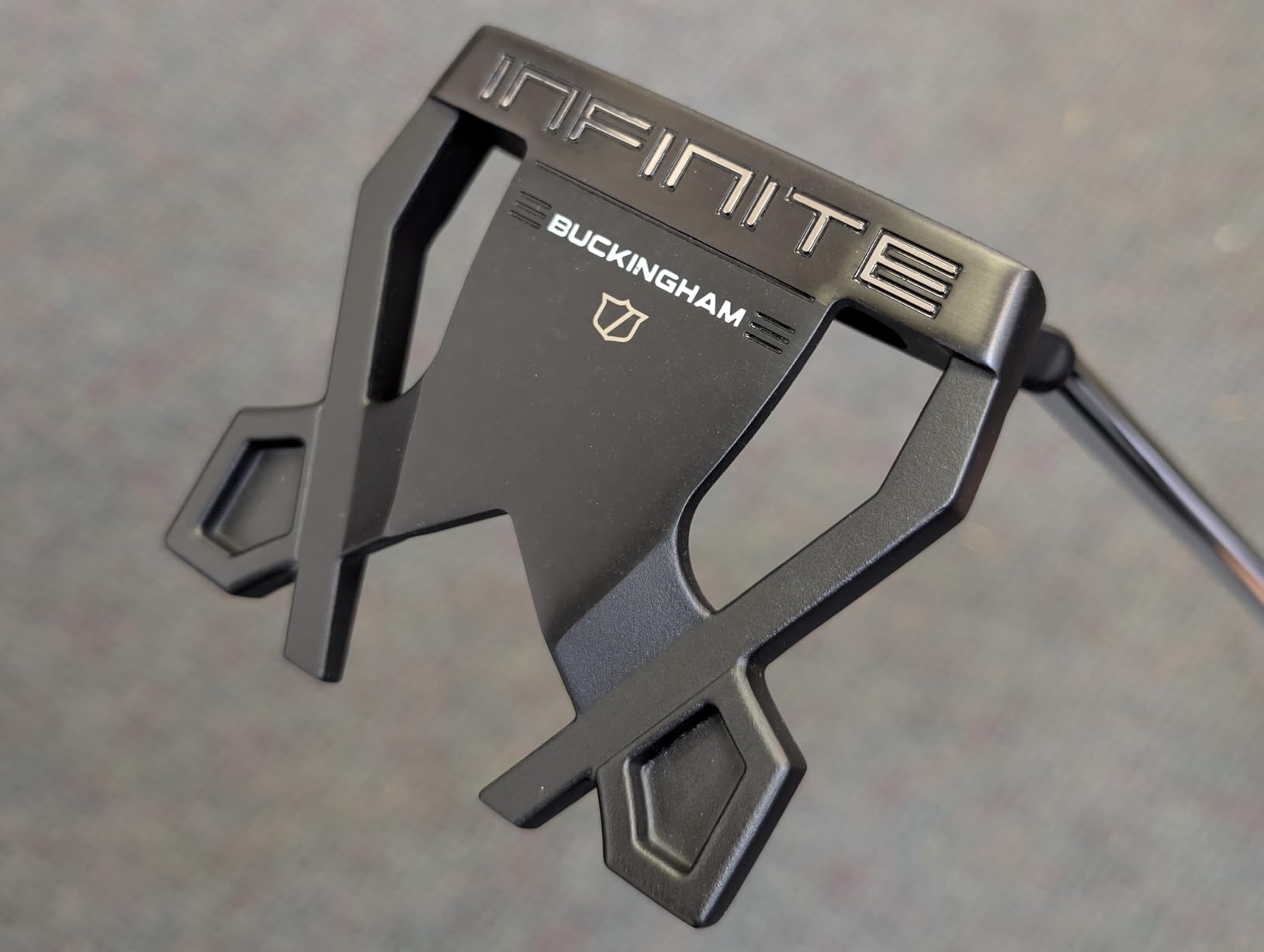
The anti-glare PVD finish matters more than it sounds, because a reflective top plate gives your eyes a second thing to look at on a sunny afternoon. A matte surface keeps the ball as the single brightest object in your address picture.
The midsize grip is a middle ground between the standard grips on the entry-level models and the fully oversized grips elsewhere in this guide. It suits hands that find a standard grip cramped without wanting a full oversize commitment.
Who the Wilson Infinite Buckingham suits
It suits a visual learner who aims by eye and needs structure at address. The anti-glare PVD finish matters here too, because a reflective top plate gives your eyes a second thing to look at on a sunny afternoon.
It also suits a mid-priced shopper who wants better materials than the entry tier. The midsize grip is a middle ground between the standard grips on the cheap models and the fully oversized grips elsewhere on this list.
Who should skip the Wilson Infinite Buckingham
Skip it if you are under about 5 foot 9, since 34 inches is the shortest this comes in and shorter players will want 32 or 33. Skip it if you are left-handed, because this configuration is right-handed only and there is no second version in this group.
It is also not the pick if you have very small hands. The midsize grip is not a small grip, and buying an oversized grip when you need a compact one creates the same tension problem as the wrong shaft length.
8. PGM Anti-Twist Mallet: Best Budget Mallet for a Reducing Curve Miss
PGM Golf Putter for Men and Women Right Handed – Anti-Twist Mallet Design with Alignment Guide & Stepped Shaft – Low Center of Gravity for Smooth, Accurate Putts – 35 inch
High-MOI mallet head
Stepped steel shaft
Low center of gravity
35 inch
Pros
- Anti-twist head fights face rotation
- Stepped shaft limits torque on impact
- Low center of gravity reduces skidding
- Single-line alignment is easy to read
Cons
- No insert
- so feel is firm
- Right-handed only in this configuration
Many beginners miss short putts because the face opens or closes during the stroke, and the ball curves away from a straight putt. This putter targets that failure directly. The anti-twist mallet head is built to hold its orientation through impact rather than rotating under the ball, and it ranks near the top of the putter bestseller chart as a result.
The stepped steel shaft is the second part of the story. Torque at impact is what bends the shaft and drags the face off line, and a stepped profile resists that twist. The low center of gravity pulls weight toward the ground to reduce skidding on the strike.
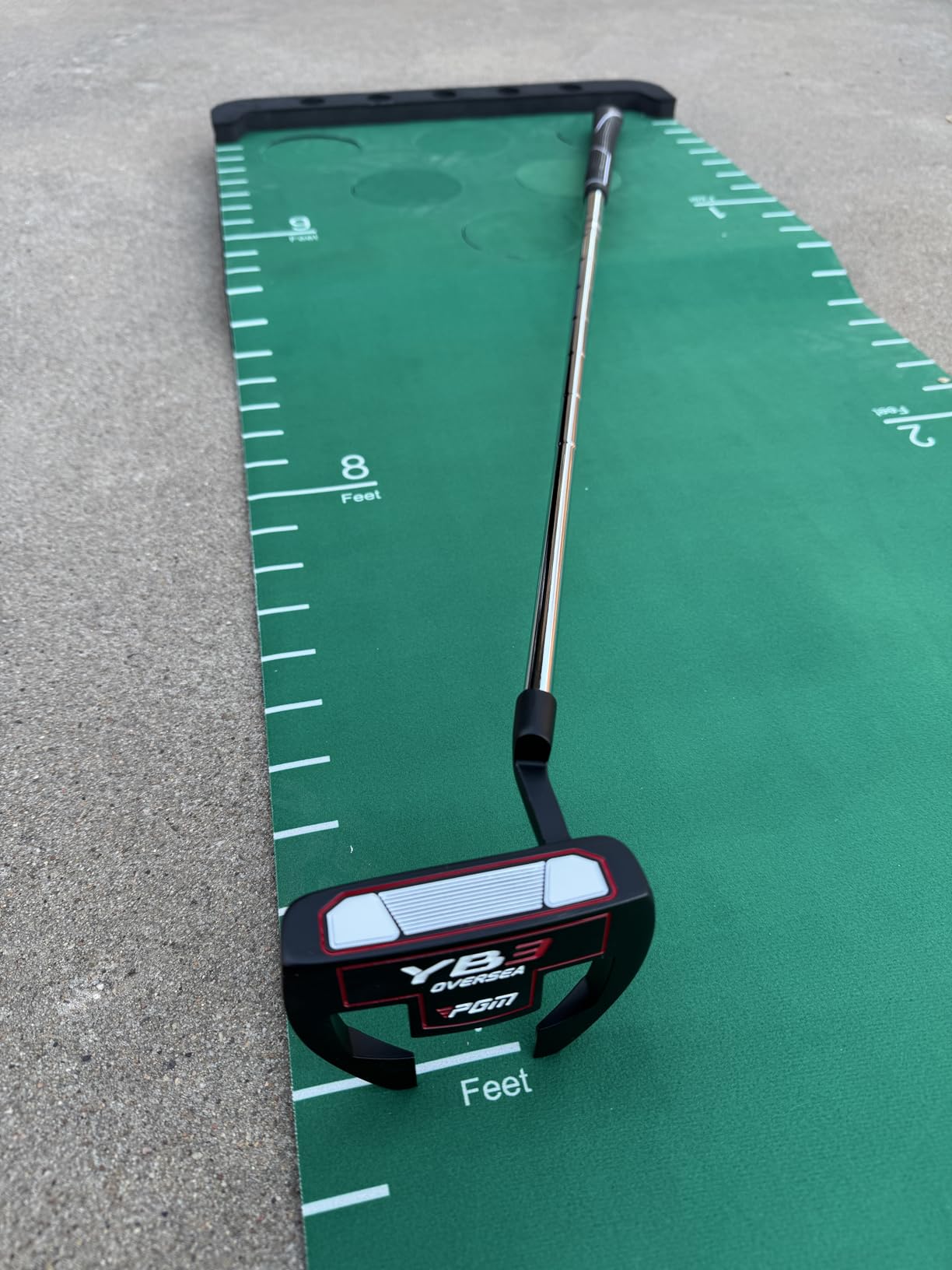
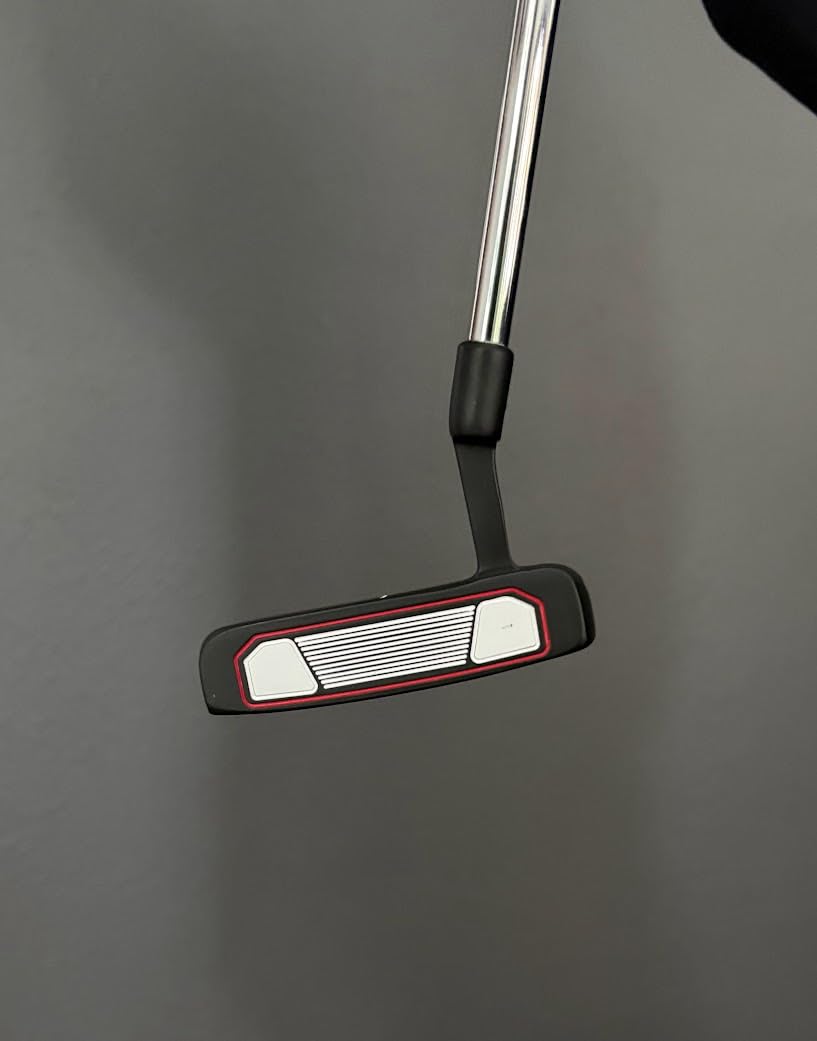
The head itself is a high moment of inertia design, which means it holds its shape when the ball lands away from the center. Combined with the anti-twist geometry, that is the difference between a putter that corrects a bad strike and one that amplifies it.
A single contrasting alignment line runs the length of the top plate. It is a restrained marking system, and restraint is a virtue here, because a beginner who is already fighting a curved miss does not need three competing sight lines to look at.
Who the PGM Anti-Twist Mallet suits
It suits a beginner whose miss has a consistent shape, particularly a pushed or pulled curve on medium and long putts. When the cause is face rotation, a head that resists rotation produces an immediate visible change, often within a handful of practice rounds.
It also suits a budget shopper who wants true mallet geometry. A single contrasting alignment line is easier to read than a full sight-line system, and the head is large enough to see clearly on a long putt across a green.
Who should skip the PGM Anti-Twist Mallet
Skip it if soft feel is your priority. There is no face insert listed here, so the impact is firmer than the Odyssey and Cleveland models, and players who associate golf with a muted sound may find it harsh.
Skip it if you play left-handed or need a length other than 35 inches. The configuration options are narrow, and buying the wrong length is the most common beginner mistake we see, more common than buying the wrong head shape.
9. PGM Notched Groove Blade: Best for Shorter Golfers Who Want Real Feedback
PGM Golf Putter – Blade Putters for Men & Women – Easy Flop Shots – Legal for Tournament Play- Right Handed – Graphite Shaft
34 inch length
350g head and 113g shaft
Notched groove face
71 degree lie
Pros
- 34 inch suits golfers under 5 foot 9
- Defined grooves give a solid strike feel
- Included headcover
- Top-ranked seller in the putter category
Cons
- Blade feel is firmer than an insert
- Right-handed only in this configuration
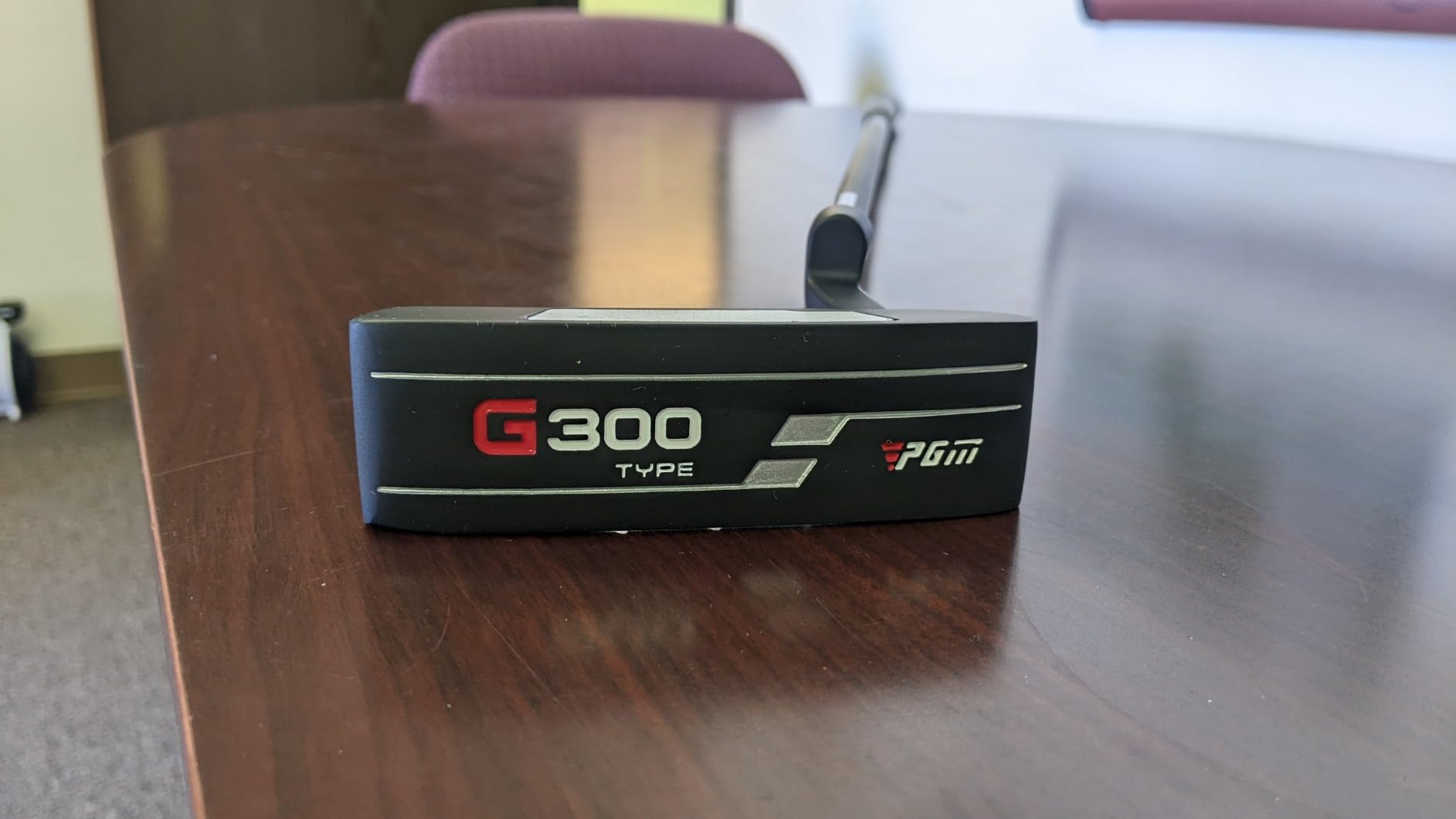
Most putters on this list are 35 inches. This one is 34, with a 350 gram head and a 113 gram shaft, which makes it the pick for golfers under about 5 foot 9 who would be cramped on a standard adult length. Short is not a compromise here, it is the correct answer for that height.
The notched groove face is a departure from the mallet heads elsewhere in this guide. Grooves are precision features, so you feel where the ball is landing on the face, and that feedback is genuinely useful while you are learning to hit the same spot every time.
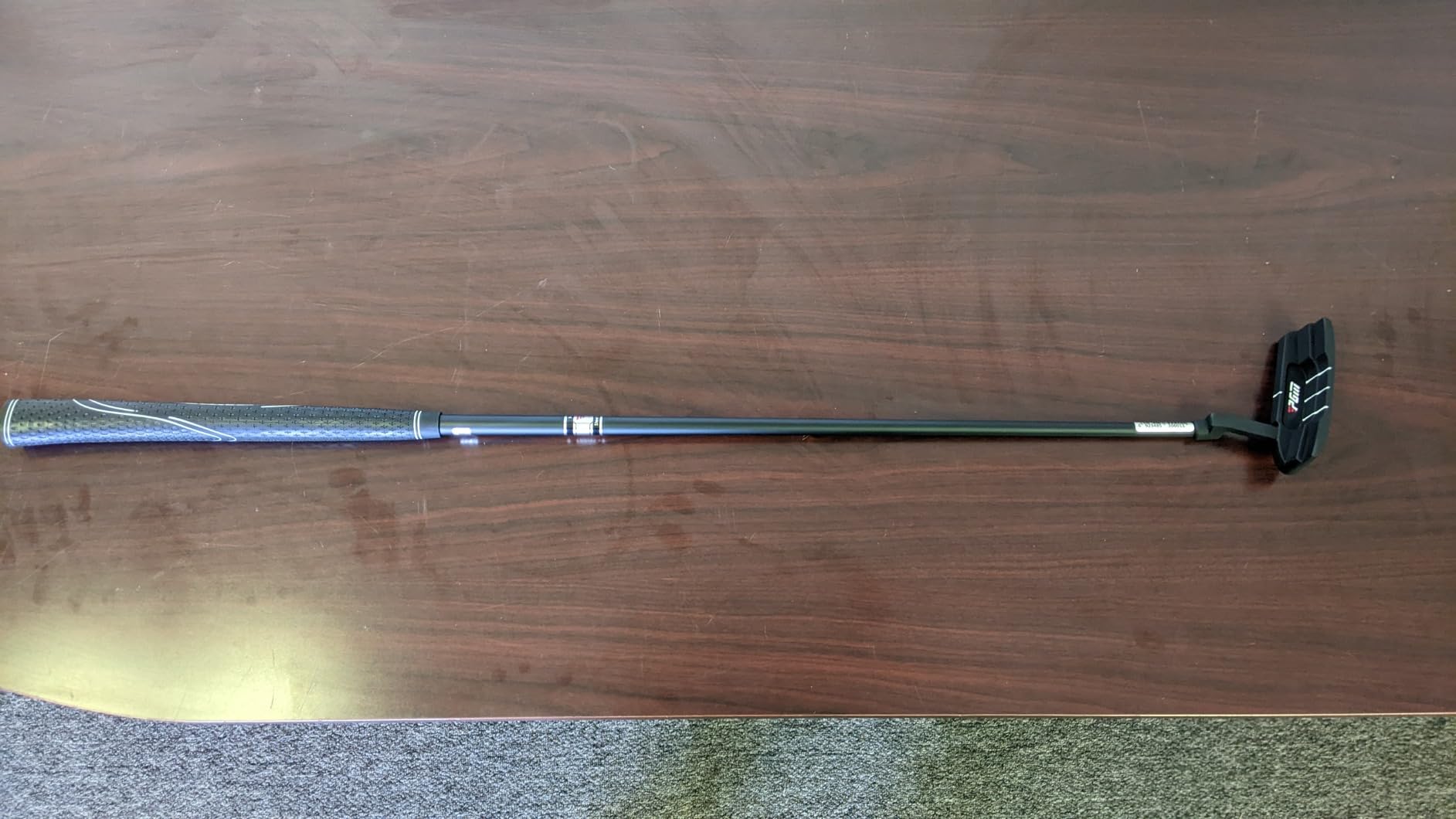
The fault tolerance is the part that keeps this blade beginner-friendly despite its compact shape. A well-struck putt feels crisp and quick through the ball, and a poorly struck one still finishes in roughly the right direction.
The straight tapered shaft keeps the face square more easily than a deep offset neck, and a 71 degree lie angle suits an upright setup. That combination makes it a forgiving short putter rather than a demanding one.
Who the PGM Notched Groove Blade suits
It suits a shorter player who has been bending over a 35 inch putter and feeling cramped at address. The straight tapered shaft keeps the face square more easily, and the 71 degree lie angle suits an upright setup, which is common for golfers who stand closer to the ball.
It also suits a beginner who wants a blade look without a blade penalty. The head is blade-shaped and compact, but the face and weighting are built for more tolerance than a tour blade, which keeps the styling benefit without the punishment.
Who should skip the PGM Notched Groove Blade
Skip it if you are tall. At 34 inches this is the second-shortest putter here, and forcing a long setup onto a short putter produces exactly the aim problems the shorter design was meant to fix.
Skip it if you want a soft, muted impact. A grooved blade face is firm and clicky by design, and if you are buying your first putter because a hard sound startles you, choose an insert model instead. This one rewards a player who wants to know exactly what they struck.
10. Orlimar F80 Mallet: Best Counter-Balanced Option for Unsteady Hands
Orlimar F80 Mallet Putter, Men Right Handed, Red/Black, 35”
Heel and toe weighting
Counter-balanced oversized grip
Soft face insert
3 degree loft
Pros
- Extra heel and toe weighting for forgiveness
- Oversized counter-balanced grip steadies hands
- Soft face insert for feel and muted sound
- T-shaped sight line
Cons
- Head cover not included
- Right-handed only
- Heaviest grip may crowd small hands
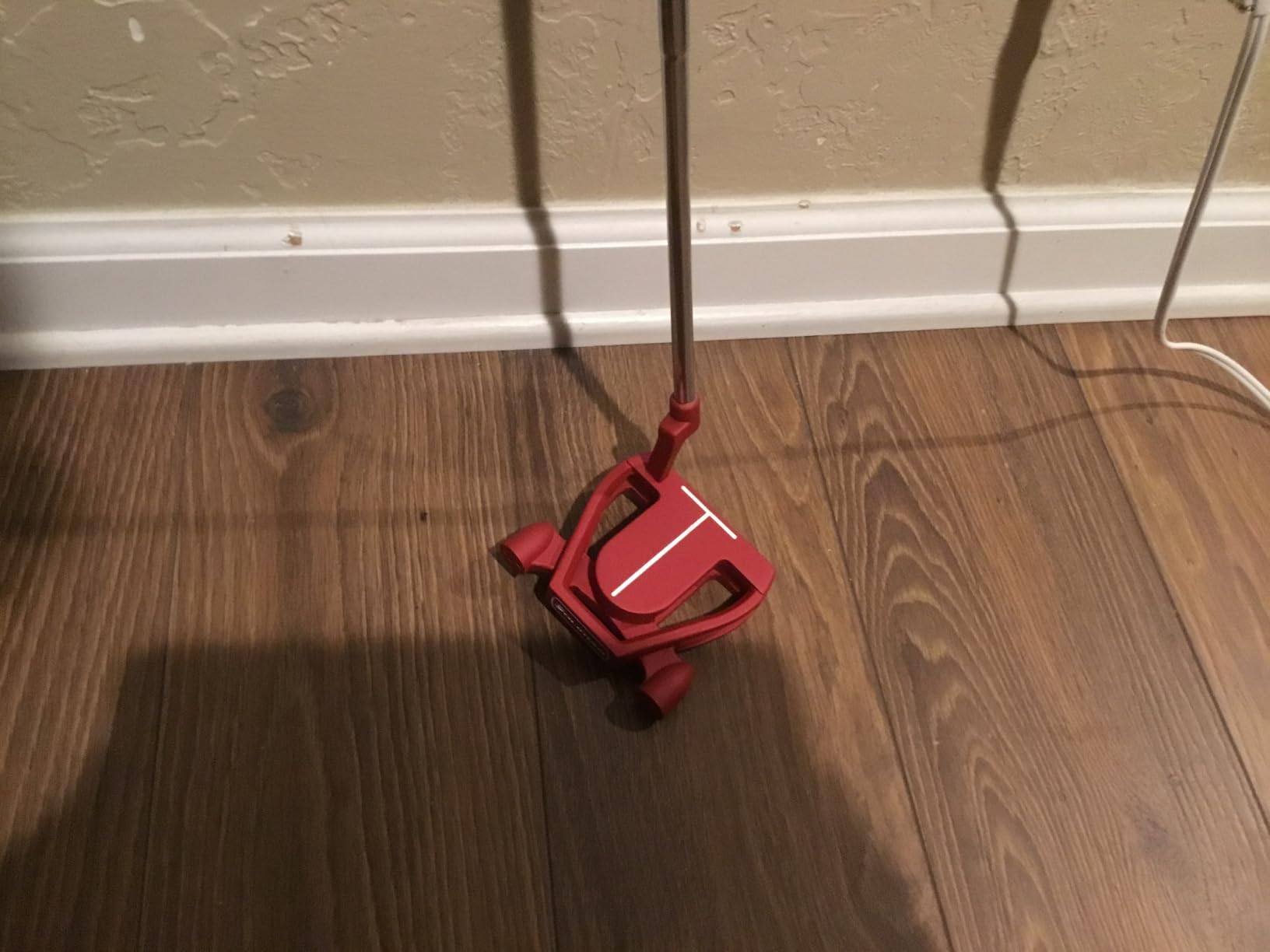
The F80 is built around one feature: the counter-balanced oversized grip. A heavy grip at the top of the shaft counteracts the head and reduces the twisting that causes pulled putts, and for a beginner whose hands get nervous over three feet, that stability is the point of the club.
Underneath, the head is a high MOI mallet with additional rear heel and toe weighting, so the forgiveness story is conventional and well understood. The soft face insert handles impact, and the T-shaped sight line gives you one line to set the face with.
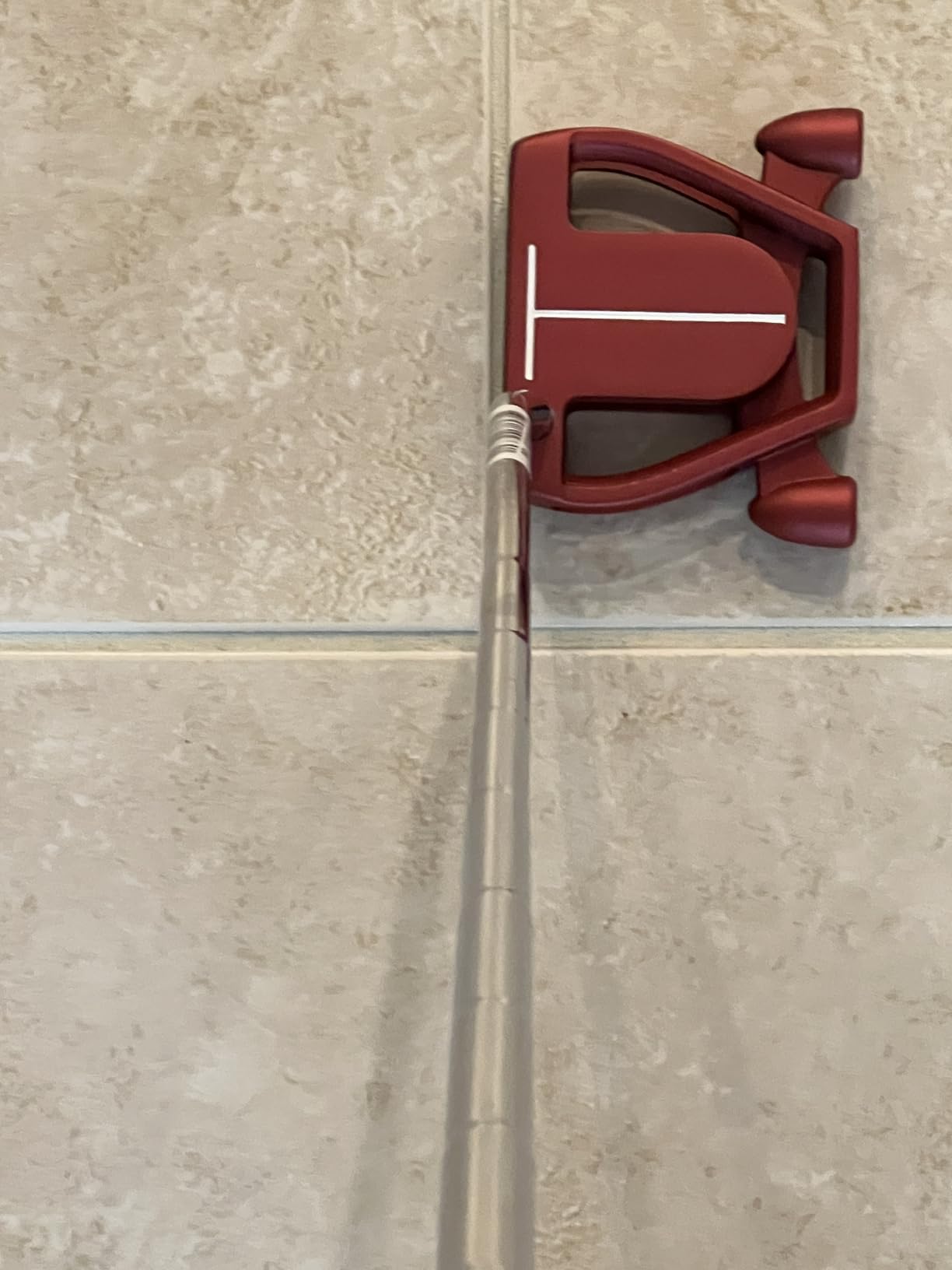
The double bend shaft also creates offset, holding your hands ahead of the face at impact. For a player who tends to leave the face open on the follow-through, that geometry is doing corrective work that the weighting alone would not.
The soft face insert is the feature that separates this from a bare-faced budget mallet. It mutes the sound at impact and adds a little feel, which matters more to a nervous player than the raw forgiveness numbers suggest.
Who the Orlimar F80 suits
It suits a senior or a golfer with hand stability issues who finds smaller grips stressful. The double bend shaft also creates offset, holding your hands ahead of the face at impact, which suits players who tend to leave the face open on the follow-through.
It also suits a budget shopper who wants insert feel plus mallet forgiveness. At 4.3 stars from 146 reviews it is not the highest rated here, but the feature set is unusually complete for the tier it sits in.
Who should skip the Orlimar F80
Skip it if you have small hands. The oversized grip is a commitment, and a grip larger than your hand can create tension that ruins the very stability it is supposed to deliver. Try a standard or midsize grip model instead.
Skip it if you play left-handed, since this one is right-handed only, and note that the head cover is not included. That is a small extra cost and a small inconvenience, not a deal breaker, but it should not be a surprise.
11. Mile High Life E Blade: Best Value Blade With Alignment Lines
Mile High Life Golf Putter Right-Handed Matte Black with Aim Line & Grip
Zinc alloy E-blade head
322g head weight
3 degree loft
72 degree lie
Pros
- Alignment lines help beginners square the face
- Matte black finish cuts glare
- Soft face absorbs impact
- Many head and grip variants
Cons
- Lightweight feel
- Zinc head is less firm than steel
- Right-handed only
This is a blade shape with beginner priorities built in. Most blades hide their weight and offer no aiming help, while this one puts alignment lines on the top plate and soft face technology inside the striking area. That combination is why it sits in this roundup despite sitting near the bottom of the price range.
The spec numbers are the ones that matter. A 322 gram head with a plus or minus 5 gram tolerance, 3 degree loft and a 72 degree lie angle puts it in the same window as the Cleveland and Orlimar models here, so it is a conventional setup putter rather than an experiment.
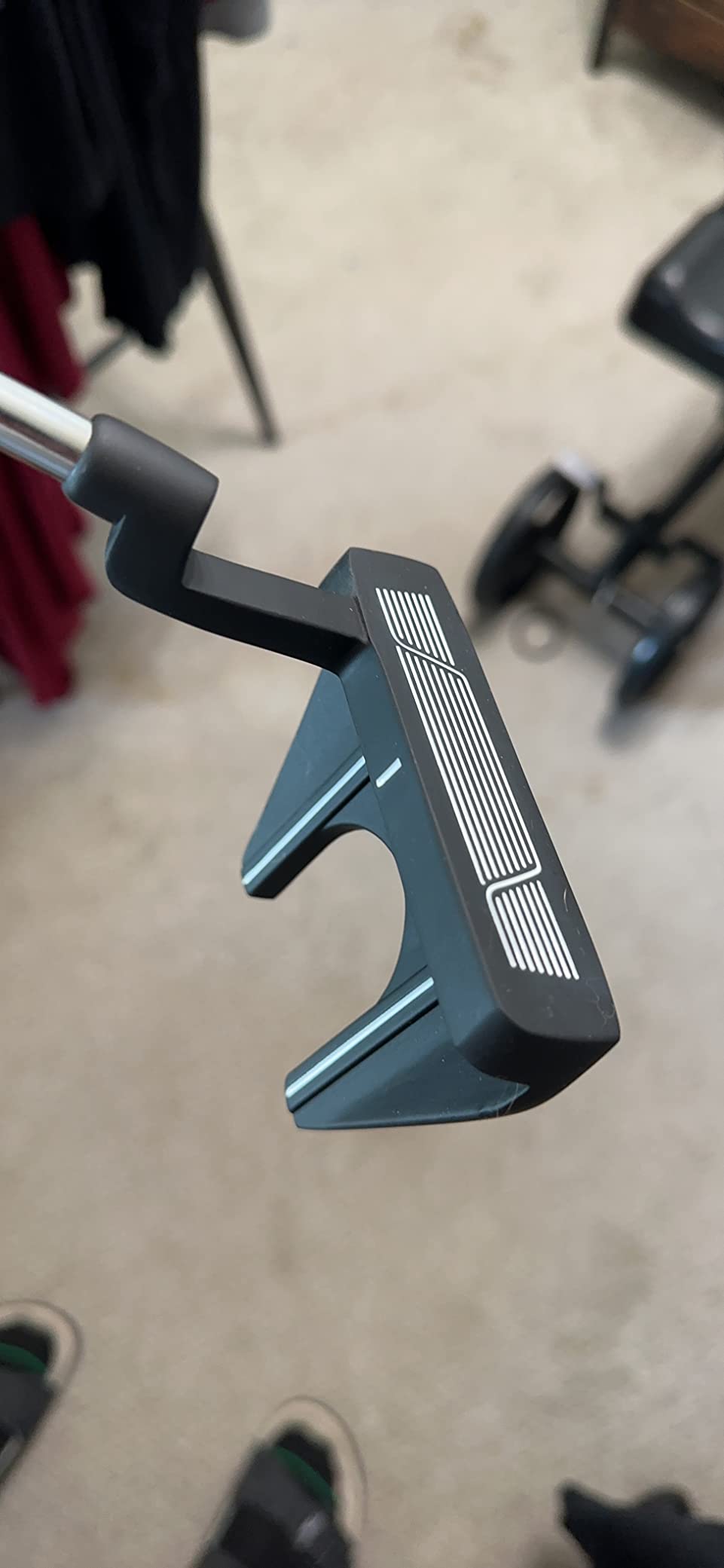
The matte black finish minimizes sunlight glare, which lets you keep your eye on the ball rather than on a reflective top plate. On a bright afternoon that is a small advantage that compounds over a full round.
A 35 inch premium iron shaft and a durable zinc alloy head complete a conventional build. The weight sits at the light end of this group, so if you prefer a heavier feel, this is the one to test carefully before committing.
Who the Mile High Life E Blade suits
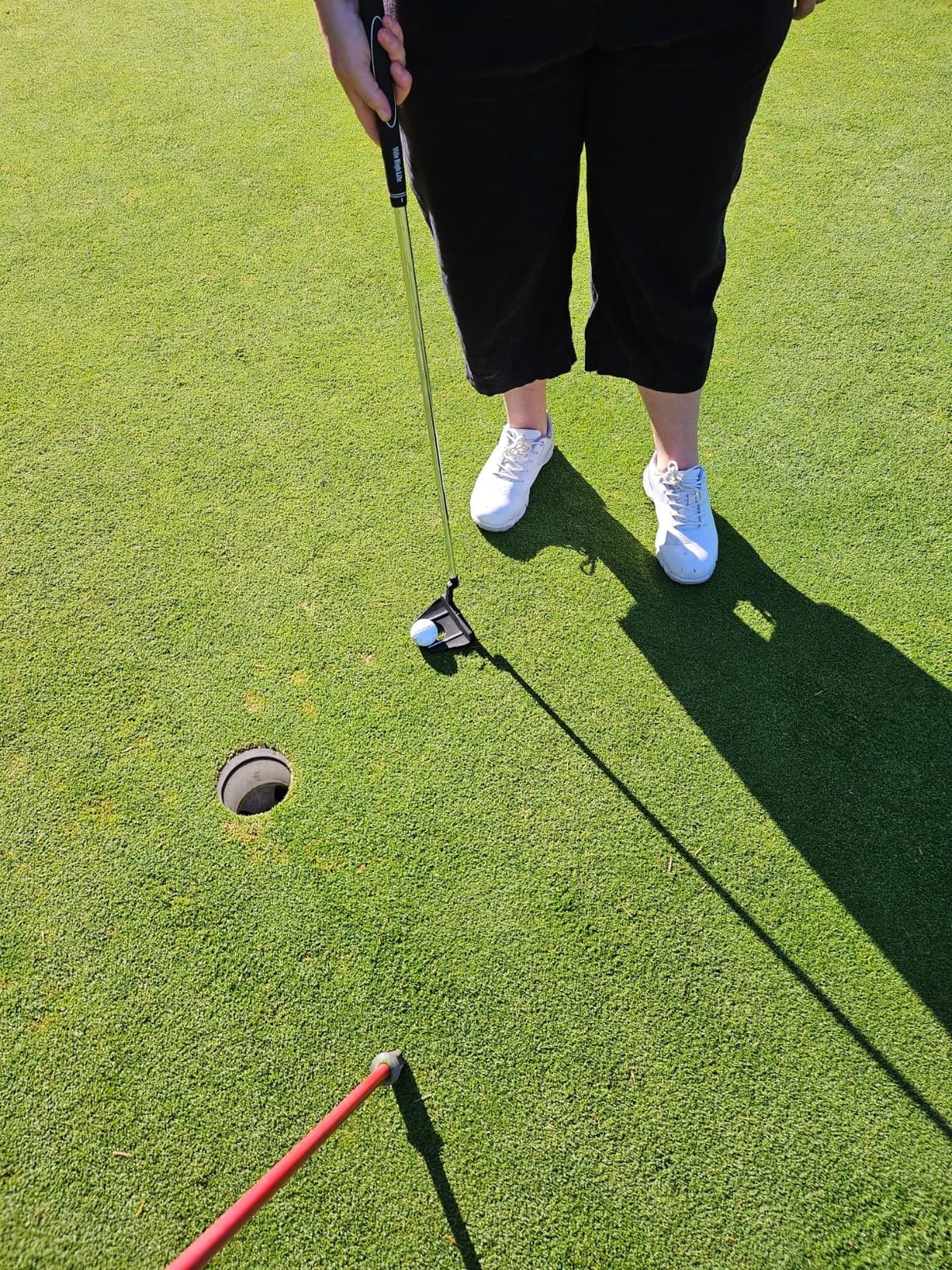
It suits a beginner who wants a traditional-looking club and insists on alignment help. The matte black finish is a genuine advantage for a player who loses track of the ball in bright light, and soft face technology takes the sting out of mishits.
It also suits a value shopper who likes having options. The range of head and grip combinations means you can find a variant that matches your hand size, which is more choice than most single-model putters in this range offer.
Who should skip the Mile High Life E Blade
Skip it if you want a heavy, solid feel. Several owners describe the putter as too light, and a 322 gram head is the lightest specified weight in this group. Lightweight is not a deal breaker, but it is a preference you should settle before buying.
Skip it if you play left-handed, since this is a right-handed entry-level design. Also skip it if you strike the ball hard and want the ball to run out. A soft zinc blade face is built for feel, not for maximum roll on a firm green.
12. Powerbilt TPS X-Type Series M900: Best Budget Offset Mallet
Powerbilt Golf TPS X-Type Series M900 Mallet Putter, 35″, Right Hand
Rear perimeter weighting
Soft grooved face insert
Compound double bend shaft
3 degree loft
Pros
- Rear perimeter weighting adds forgiveness
- Compound double bend holds hands ahead
- Soft grooved insert for feel and quiet
- Contrasting colors aid setup
Cons
- Head cover sold separately
- Older design aesthetic
- Right-handed only
The M900 is the simplest answer on this list to a specific beginner error: hitting the face too early. The compound double bend shaft is assembled as an offset putter, holding the hands ahead of the head at impact so the face is more likely to stay square to the path.
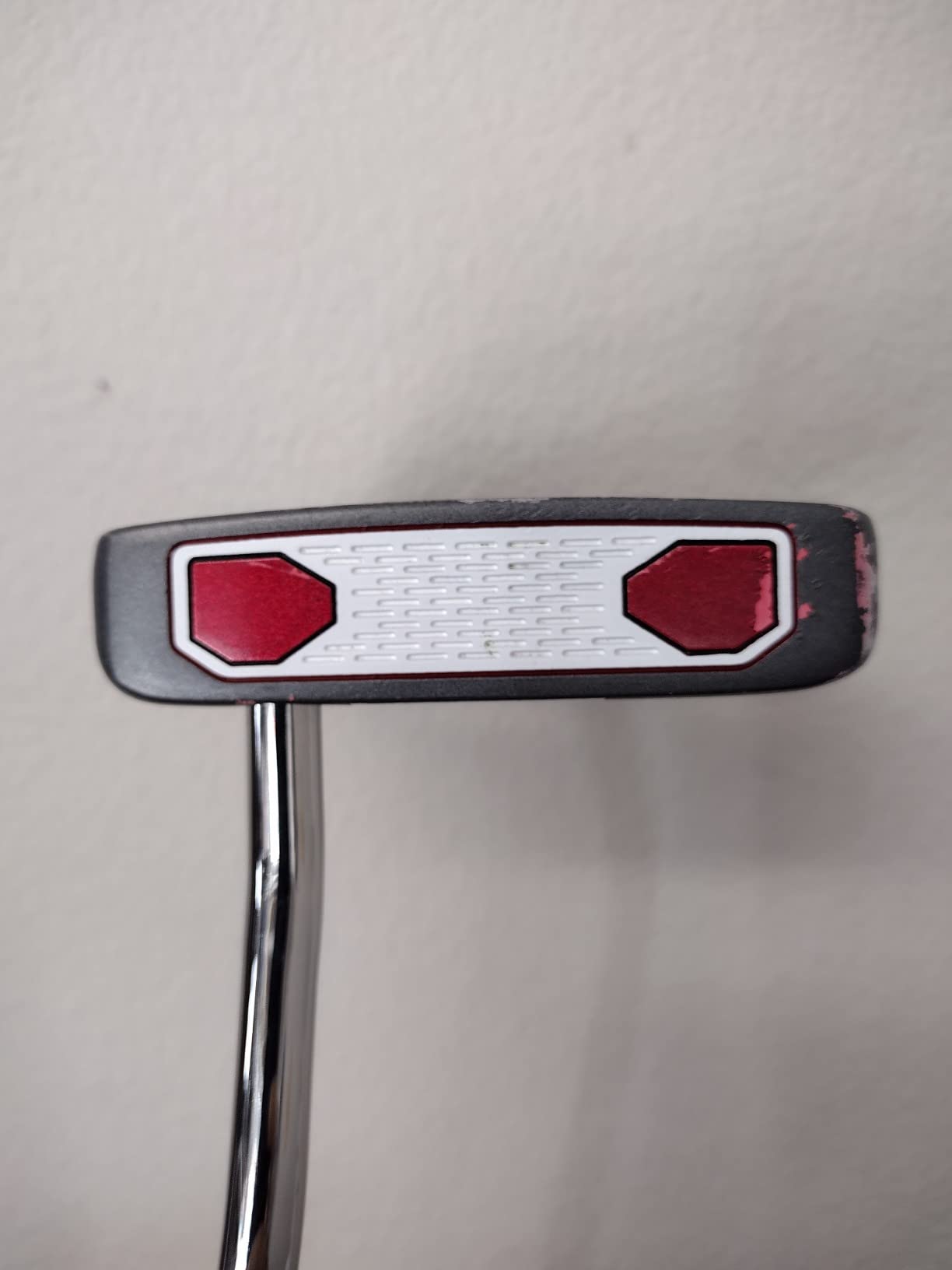
Forgiveness comes from rear perimeter weighting, which puts mass behind the strike point and increases stability on off-center contact. A soft grooved face insert handles the impact, and the contrasting color scheme makes both the setup alignment and the intended line visible at address.
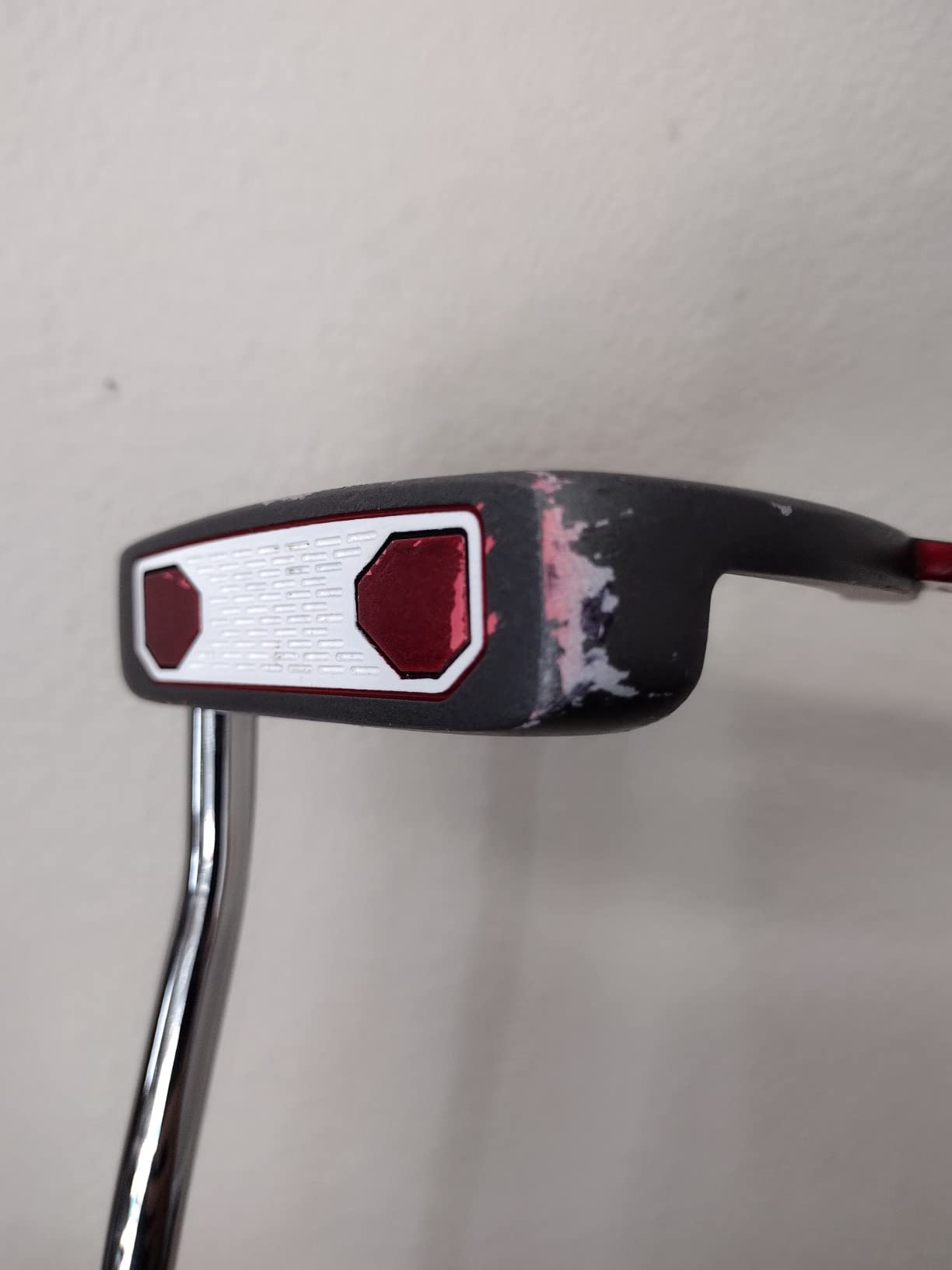
The soft grooved face insert gives you both the muted sound and the consistent roll that a bare entry-level face cannot. Many budget mallets save money precisely here, and this one does not.
Rear weighting is what keeps a mishit from sending the ball far off line. The more mass sits behind the strike point, the less the head rotates around it, and that is the difference between a tap-in and a three-putt on a bad contact.
Who the Powerbilt M900 suits
It suits a beginner whose miss is a pushed putt caused by early release. An offset shaft is a cheap structural fix for that error, and it costs less than upgrading to a higher-end offset putter after you have already diagnosed the problem.
It also suits a budget shopper who wants a real mallet head with a soft insert. Many entry-level mallets use a bare face, so getting insert feel at this price point is the distinguishing feature here.
Who should skip the Powerbilt M900
Skip it if appearance matters to you. This is an older design, and the head cover is sold separately, which means the club arrives in the bag with one more thing to buy before the first round.
Skip it if you play left-handed, since this is a right-handed model. And skip it if you have a strong arc stroke, because an offset double bend shaft is built for a straighter, pendulum motion rather than a loop.
What to Look for in a Beginner Golf Putter in 2026
Three things decide whether a putter suits you: head shape, balance, and length. Everything else on the spec sheet, from insert chemistry to sound engineering, is refinement. Get the first three right and a modest putter will outscore an expensive one that fits your setup badly.
Mallet vs mid-mallet vs blade: the simplest decision you will make
A high-MOI mallet is the most forgiving shape, and forgiveness is what a beginner needs most. Perimeter weighting keeps the head from twisting on mishits, so your misses lose less distance and less direction. If you take one thing from this guide, take this one.
A mid-mallet sits between the two, giving you some perimeter stability with a more traditional look. A blade is compact and fast through the ball, but it gives you almost no margin for error. Tour players use blades because they can center every strike. Beginners cannot, and that is the entire argument.
So do pros use blades or mallets? Both, and it has less to do with style than most debates suggest. Tour averages favor mallets by volume, but blades remain popular with players who want a faster head speed and a firmer contact. Neither fact transfers to a player still learning to control speed.
Face-balanced vs toe hang vs anti-twist: which balance matches your stroke
Face balance describes how the head is weighted. A face-balanced putter has most of its mass centered behind the face, so it resists opening and closing as you swing. A toe hang putter has weight toward the toe, which encourages a stroke that finishes with the toe flowing down the target line.
Anti-twist designs, like the PGM mallet on this list, are built to hold orientation through impact. They sit between the two traditional ideas and suit players who are not sure yet which way their stroke moves. For a beginner, that uncertainty is the normal condition.
Most golfers start somewhere between straight-back-and-through and a slight arc. That is a pendulum motion, and it pairs best with a face-balanced or center shafted putter. If you already know you loop the ball strongly in both directions, look at toe hang and armlock shafts instead.
Putter length by golfer height: get this before anything else
Length is the cheapest performance upgrade available to a beginner and the most commonly skipped. Far more golfers arrive with a putter that is too long than too short, and a putter that is too long crowds your setup and pushes the ball past the hole.
As a starting point, golfers under 5 foot 5 should look at 32 to 33 inches, golfers between 5 foot 5 and 5 foot 9 at 33 to 34 inches, golfers between 5 foot 9 and 6 foot 2 at 34 to 35 inches, and golfers over 6 foot 2 at 35 inches and above. Very tall players should search specifically for 36 inch and longer armlock or counter-balanced shafts, because most stock putters stop at 35.
Stand in your normal address position with the putter hanging from your fingers. If your arms feel like they are reaching, the putter is too long. If your elbows are flared out and your shoulders are hunched, it is too short. That check takes ten seconds and beats any spec sheet.
Milled face vs insert, and why loft matters
An insert is a softer material bonded into the center of the face, usually urethane. It makes impact quieter and more forgiving, and beginners generally prefer the feel. A milled face is machined from solid metal with grooves, which gives a firmer, more precise contact that skilled players use to control speed.
Loft is the angle of the face, and 3 to 4 degrees is standard because it launches the ball out of the turf and into a forward roll rather than a skid. Almost every putter on this list is 3 degrees, with the GoSports Classic at 3.5. You do not need to shop loft as a variable, which is a relief.
Lie angle is the one you should care about. Too upright and your putts miss to one side; too flat and they miss the other way. A stand-in check is worth more than any fitting session, and a putter that feels wrong in the hands is usually a length or lie problem rather than a quality problem.
Alignment aids that actually help a beginner
The alignment aids worth having are the ones you can see from your normal address position. Two white dots on either end of a line, like the Odyssey AI-One system, work because the ball sits inside a frame. A thick center line with two thinner support lines, like the Wilson Buckingham, works because it gives the eye more than one reference.
What does not help is a marking you have to study. A head covered in fine lines and gold markings does not make you straighter, it just gives you more to look at. Beginners need fewer visual inputs, not more, and r/golf threads on alignment aids consistently credit the simpler dot systems.
How to test a putter in a store before you buy it
Testing is where most shopping advice fails, because rolling one putt tells you nothing. Your real question is whether the next ten putts start on the same line, and that takes a repeatable series. Here is the protocol we use.
First, hit ten putts in a row and watch the dispersion, not the single best shot. Second, deliberately miss five putts on the toe and five on the heel and see how far the ball strays from your intended line. Third, stand in your normal setup and check the length and the lie. Fourth, roll it with a club you trust and compare. Fifth, ask about the return policy before you hand over anything.
If you get stuck because three putters all felt fine, that is a decision rule problem, not a shopping problem. Pick the one that stayed square over the widest range of miss locations, because that is the forgiveness you are actually buying.
Used putters, regripping, and what to skip
Used putters are a genuinely smart beginner option, and a cheap used putter with a fresh grip regularly out-performs a bargain-bin new one. The inspection checklist is short: check the face for grooves worn smooth, look for a bent shaft, confirm the head is not loose at the hosel, and check the sole for deep dings.
Budget a regrip. It is the cheapest performance upgrade in golf, and a fresh oversized grip on an older putter fixes two problems at once, grip feel and hand stability. Once you have a putter you like, replace the grip rather than replacing the putter.
What to avoid buying: a blade chosen for the look, a putter longer than your height chart says, anything with a gimmick you cannot explain to a playing partner, and a putter bought in a panic after one bad round. Two-way and ambidextrous designs are worth knowing about, since many entry putters only come in one handedness and that is a real problem for a large share of golfers.
Frequently Asked Questions
Is a blade or mallet putter better for a beginner?
A high-MOI mallet is better for almost every beginner, because its perimeter weighting resists twisting on off-center strikes and keeps bad contact on line and at speed. A blade is compact and fast, but it rewards centered contact, and new golfers miss the center of the face constantly. If you want the look of a blade, a blade-shaped head with a milled or grooved forgiving face is a reasonable compromise.
What style putter is most forgiving?
A high-MOI mallet head is the most forgiving style, followed by mid-mallets. Forgiveness comes from weight placed around the perimeter of the head, which raises its moment of inertia so the head resists twisting when you strike the toe or heel. Blades are the least forgiving because the compact head has almost no perimeter weighting and twists on nearly every off-center hit.
What is a good starter putter?
A good starter putter is a high-MOI mallet with a clear alignment aid, an offset or center shafted hosel, and a length matched to your height. The Orlimar Tangent T1 is the most-reviewed option in that category, while the GoSports Classic is a lower-cost ambidextrous choice for practice. Whatever you pick, buy the length first, since a poor fit costs more strokes than a weak head design.
How do I know what putter length I need?
Use your height as a starting point: under 5 foot 5 usually fits 32 to 33 inches, 5 foot 5 to 5 foot 9 fits 33 to 34, 5 foot 9 to 6 foot 2 fits 34 to 35, and over 6 foot 2 needs 35 inches or more. Then confirm by standing in your address position with the putter hanging from your fingers. Reaching means too long, flared elbows means too short.
What is face balance on a putter?
Face balance describes where the weight sits in the putter head. A face-balanced putter has mass centered behind the striking face, so it resists opening and closing during the stroke. A toe hang putter has mass toward the toe, which encourages a stroke that finishes with the toe down the target line. Anti-twist designs try to hold the face square through impact, which suits golfers who are not sure which way their stroke moves.
How much should a beginner spend on a putter?
Most beginners get more improvement per dollar from the mid tier than from the entry tier, and the top tier is where the returns fade. Spend on fit and forgiveness rather than on name, and reserve money for a regrip, which is the cheapest upgrade in golf. Remember that the same money also has to cover a set of beginner golf clubs, a golf bag, shoes, and a rangefinder, so keep the putter in proportion.
Your Next Step on the Green in 2026
The best golf putters for beginners share three traits: perimeter weighting, an alignment aid you can see, and a length that matches your height. Everything else is preference. Start with a forgiving mallet, get the fit right, and let practice do the rest.
Our pick for most beginners is the Orlimar Tangent T1, the most-reviewed forgiving mallet in the group. The GoSports Classic is the cheapest way to start putting today, and the Cleveland HB Soft 2 is the one r/golf keeps recommending when new golfers ask what to buy. If you are still building your first kit, our beginner club guide and rangefinder picks cover the rest of the bag.
Buy the length first, take a few dozen putts before you commit, and regrip later if the grip feels small. That sequence puts a 2026 beginner ahead of most golfers who upgrade clubs every season.