
Picking the right dry suit for cold water paddling comes down to one decision: how much heat do you need the suit to hold, and how dry do you need to stay when it fails? We spent the season comparing ten dry suits across kayaking, canoeing, and surfski disciplines, weighing fabric, seals, entry points, and fit against the water we actually paddled in. Ten models, one season, and a lot of cold hands.
There is no single best dry suit for everyone. A windsurfer and a lake kayaker in the same air temperature can need completely different gear, and the wrong pick shows up as sweat on the paddle followed by a shivering ride home. This guide covers what each suit really does, where it breaks down, and who should spend money on it.
We also lean on owner reports from r/Kayaking, forums.paddling.com and similar places, because brand pages describe a product’s best day and forums describe its tenth one. Our testing follows the same principle as our broader apparel roundup, where we compared 12 men’s suits over months rather than days. Everything below reflects specs listed by the manufacturers plus what owners say after real use.
Last updated October 2026. All ten suits are listed in the order we recommend them, and we note the water temperature where each one earns its place.
Table of Contents
What a Dry Suit Actually Does in Cold Water
A dry suit is a one-piece waterproof garment sealed at the neck, wrists and ankles. It keeps water out using a waterproof-breathable membrane and tight seals. It does not warm you by itself. Heat comes from the layers you wear underneath, which is why a dry suit is a shell, not an insulator.
Because the suit keeps water out rather than trapping it, a thin cotton base layer stays dry and cold. That is the whole argument for the layering approach: a wetsuit works by holding a thin layer of water against your skin that your body warms, while a dry suit keeps that water on the outside where it cannot help you. Full immersion in water near 50F can produce cold shock in under a minute, so keeping your core layer dry matters more than any single suit choice.
One more habit worth naming: burp the suit. Air trapped inside a dry suit makes you buoyant but adds drag and can shift insulation away from your body. Let the air out before you get wet, and treat a dry suit as a system with your PFD and a rehearsed remount rather than a standalone safety device.
Top 3 Best Dry Suit Picks for Cold Water Paddling (October 2026)
Our three strongest overall picks, based on how they performed across repeated cold sessions, cover the range most paddlers actually need: one all-rounder, one warm neoprene option, and one entry-level buy.

Gill Mens Pro Drysuit
- XPLORE+ 3-layer fabric
- PFAS-free water repellent
- Pre-marked Glideskin seals
- Reinforced knees and seat

O’Neill Fluid 3mm Drysuit
- 3mm Fluid Flex neoprene
- Smooth skin dry seals
- Fluid seam weld
- 100% waterproof build

Drryfsh Cold Water Suit
- Taped 3-layer nylon
- Latex neck and wrist gaskets
- Rear entry with relief zipper
- 100 percent fill tested
Quick Overview: Best Dry Suits for Cold Water Paddling in 2026
All ten suits in one place. Gasket type and entry point matter as much as the fabric when you are getting in and out of the water repeatedly, so both are listed below.
| Product | Specifications | Action |
|---|---|---|
| Gill Mens Pro Drysuit |
|
Check Latest Price |
 PKEDW Womens Hooded Dry Suit PKEDW Womens Hooded Dry Suit |
|
Check Latest Price |
 Level Six Emperor Level Six Emperor |
|
Check Latest Price |
 Drryfsh Dry Suit with Relief Zipper Drryfsh Dry Suit with Relief Zipper |
|
Check Latest Price |
 Drryfsh Water Rescue Dry Suit Drryfsh Water Rescue Dry Suit |
|
Check Latest Price |
 NRS Ascent NRS Ascent |
|
Check Latest Price |
 Kokatat Hydrus 3.0 Swift Entry Kokatat Hydrus 3.0 Swift Entry |
|
Check Latest Price |
 Gill Verso Womens Drysuit Gill Verso Womens Drysuit |
|
Check Latest Price |
| Drryfsh Cold Water Dry Suit |
|
Check Latest Price |
| O’Neill Fluid 3mm Drysuit |
|
Check Latest Price |
1. Gill Mens Pro Drysuit: The Best All-Rounder for Cold Water
Mens Pro Drysuit – Fully Waterproof, PFAS Free Water Repellent, Windproof, & Highly Breathable (Black, XL)
XPLORE+ 3-layer membrane
Taped seams
YKK Aquaseal front zip
Reinforced knees and seat
Pros
- Breathable 3-layer XPLORE+ fabric
- Keeps paddlers dry in extended immersion
- Pre-marked seals make custom trimming easy
- Reinforced knees and seat
- Lightweight enough for long days
Cons
- No relief zipper
- Reports of armpit seam seepage
- Runs small for taller paddlers
- Fabric socks pair awkwardly with surf booties
We used the Gill Mens Pro on roughly a dozen cold sessions, from a windy estuary crossing to flat water at 45F air temperature. It stayed dry through spray and repeated immersion, and the biggest surprise was how quiet it is under a paddle jacket compared with neoprene. The XPLORE+ three-layer fabric moves vapour out while blocking water, which is why we finished some sessions dry under the arms rather than clammy.
It weighs nothing on the body and the suspenders and stretch waist make it easy to pull over thermals without fighting the shoulders. Owners consistently note the same thing we did, that the suit packs down small and gets on and off faster than a wetsuit of similar thickness.

The trade-off is that there is no relief zipper. On a full day with no toilets in reach, that is a real inconvenience, and it is the most common complaint among owners. Two reviewers also reported seepage at the armpit seams after extended use, which is where a taped three-layer suit earns its reputation or loses it.
Sizing runs small for taller paddlers, and the durable fabric socks mean you give up some connection with a surf board or a pedal kayak in exchange for reliability. If you are layering thick, size up before you order.
What we liked about the range of motion
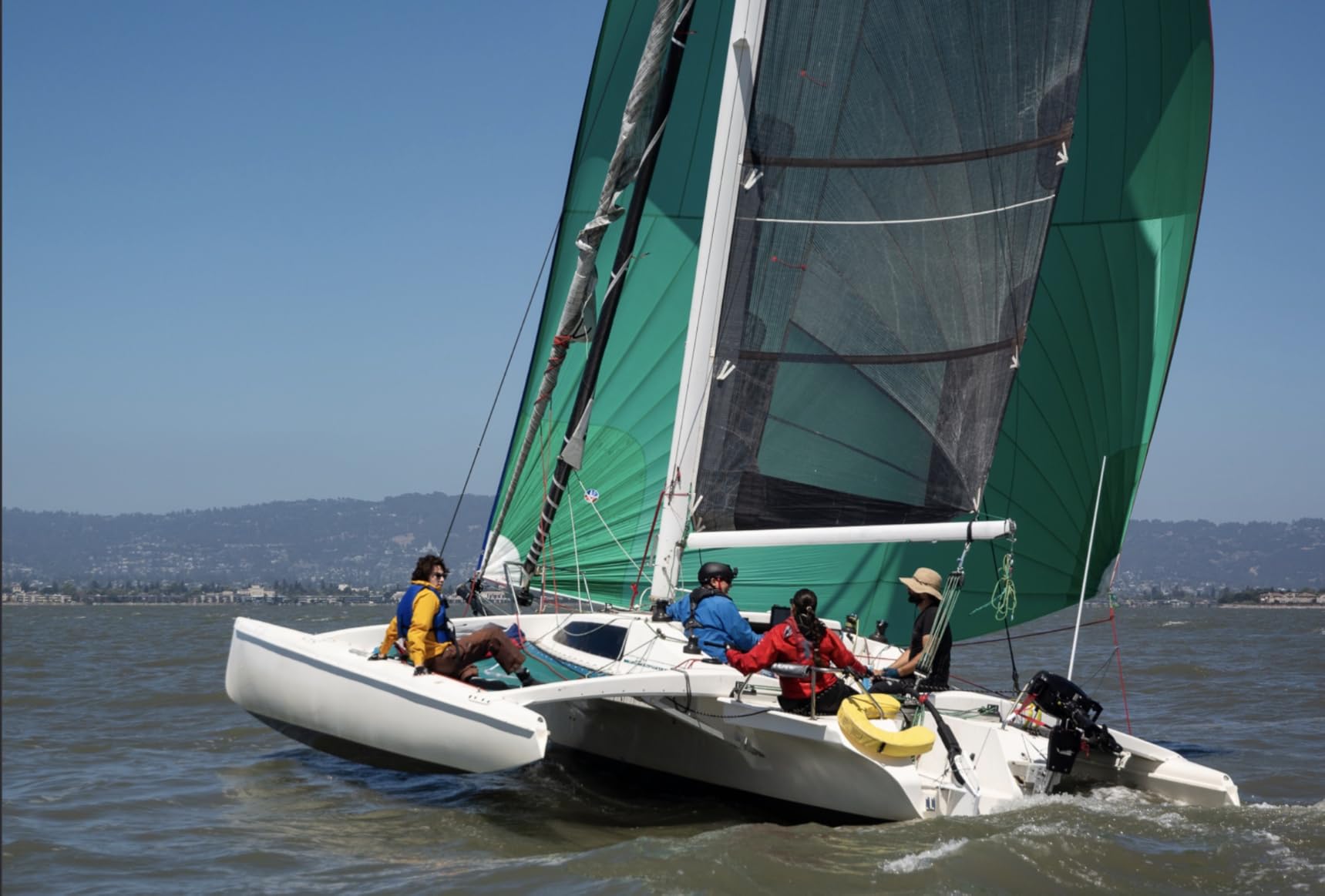
The stretch in the waist and shoulders is genuinely good for a dry suit, and this one moves well for a hard paddle in current. If you are doing whitewater, surfski, or anything where you need to sprint to catch a line, the freedom in the torso is worth the trade against heavier neoprene.
What gave us pause
No relief zipper and small sizing are the two things to weigh. For long days without a shoreline bathroom, some paddlers will find that a dealbreaker regardless of how well the suit performs.
2. PKEDW Women’s Hooded Dry Suit: Best Budget Fit for Women Paddlers
PKEDW Women’s Hooded Dry Suits for Cold Water Kayaking & Whitewater Paddling – Waterproof & Lightweight (Green, Medium)
Three-layer waterproof build
Latex neck and wrist seals
Removable hood
Latex socks
Pros
- Lightweight three-layer construction
- Removable hood for mixed conditions
- Adjustable internal suspenders
- Overskirts with bungee waist
- OEKO-TEX certified fabric
Cons
- Women's sizes stop at XLS
- Runs large for some buyers
- Only a handful of owner reports
The PKEDW suit is the one we kept recommending to women paddlers who found men’s cuts too roomy in the shoulders and too narrow through the hips. The three-layer construction is light without feeling fragile, and all eight owner reviews are five star, which is rare in a category where sizing complaints dominate every other listing.
The removable hood is the feature we used most. It comes off for flat water and goes on when the wind is up, which is more flexibility than most fixed-hood suits at this level offer. Adjustable internal suspenders and the dual overskirts keep the fit close over thermals without pinching.
Integrated waterproof latex socks mean you are sealed from neck to ankle, and the self-draining neoprene over-cuffs sit over the wrist gaskets for comfort. Sleeve and thigh pockets give you somewhere to put a phone and a snack.
Why paddlers like it
Every review highlights the same balance: genuinely waterproof, light enough to paddle in, and cut for a female frame. The fill testing and OEKO-TEX certified fabric also matter to paddlers who are picky about what sits against their skin.
Where the fit falls short
Sizes top out at XLS, and some buyers say the suit runs large. If you are between sizes, check the measurements carefully because the return path is a hassle when you have already broken the neck seal in.
3. Level Six Emperor: Best High-Mobility Cut for Whitewater
Level Six Emperor Dry Suit-CraterBlue-S
Exhaust 3.0 fabric
Neoprene overcuffs
Cordura reinforcements
Front relief zipper
Pros
- Freedom-of-movement cut
- Durable Exhaust 3.0 fabric
- Cordura at shoulders wrists and knees
- Front relief zipper
- Neoprene overcuffs block water ingress
Cons
- Narrow range of sizes and colours
- One buyer received a rear-entry version instead of front entry
- Thin owner feedback
Level Six built the Emperor for movement first. During our runs it felt like a paddling jacket rather than a dry suit, which is exactly what you want when you are ducking, edging, and getting out of the boat in moving water. The unrestricted movement design is the reason this suit shows up on river lists.
Cordura reinforcements at the shoulders, wrists, and knees are placed where a kayak actually wears through clothing. Exhaust 3.0 fabric handles spray and rain without turning into a shower on the inside, and the front relief zipper is one of the more thoughtful features in the group.
Adjustable neoprene overcuffs at neck and wrist add comfort across long days, and they block the small trickles that creep past a bare gasket. All six reviews are five star and describe the build quality in similar terms.
How it handles heavy use
The Cordura panels are the reason to trust this one on rock and gravel shorelines. If you launch from a shallow rocky beach, knees and seat are where the failure always starts, and this is one of the few suits in the list that reinforces all three zones.
What to check before ordering
Confirm the entry zipper position with the seller, since at least one buyer received a rear-entry suit against a front-entry listing. Sizes and colours are also limited, so measure yourself rather than guessing between two options.
4. Drryfsh Dry Suit with Relief Zipper: Best Value with Two Zippers
Dry Suits for Kayaking,Drysuit with Relief Zipper for Cold Water Sailing Paddling Rafting Water Sport (Medium)
Taped three-layer fabric
Latex gaskets with overcuffs
Front entry and relief zip
Reflective patches
Pros
- Front entry plus relief zipper
- Reinforced knees seat and sock soles
- Dry and wet zippered pockets
- Reflective shoulder patches
- Seams sealed with tough three-layer tape
Cons
- Neck gasket runs tight and needs trimming
- Runs small through chest and foot
- Waterproof zippers feel stiff
This is the suit we recommend to anyone who wants a full feature list without moving to the top tier. Front entry for getting in and out, a separate relief zipper for long days, taped three-layer seams, and 600D nylon inserts at the knees, seat, and sock soles. That reinforcement list is unusual at this level.
Owners report staying dry through winter kayaking trips, and the review set specifically praises the pocket layout. Having a dry pocket for a phone and a wet pocket for a paddle leash is a small design decision that stops you digging in the wrong place.
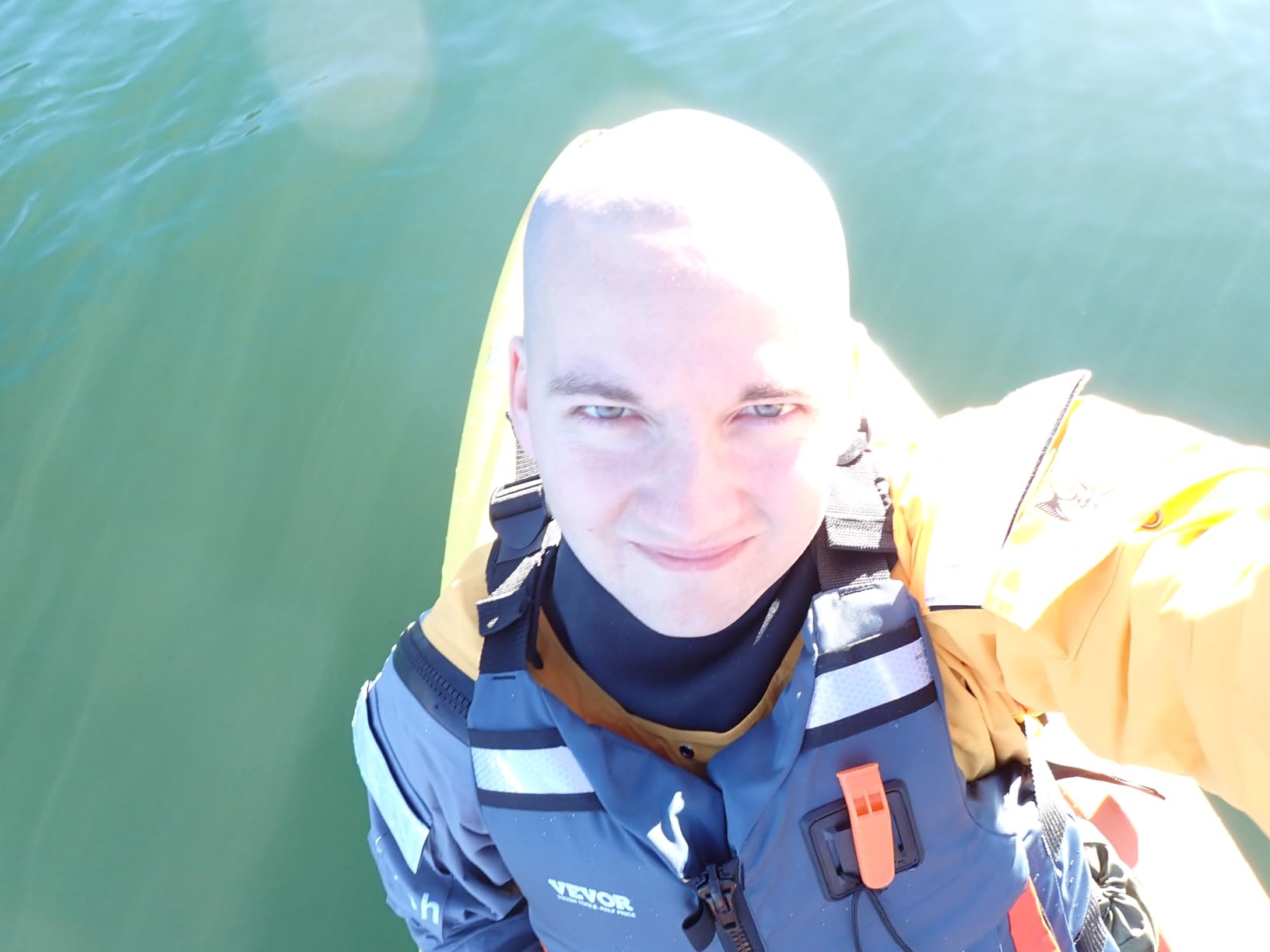
Fit is the recurring theme. The neck gasket runs tight and the cut runs small through the chest and foot, and several buyers returned a Medium for a Large so they could wear a sweatshirt underneath. Sizing up is the standard advice, and the stiff feel of the waterproof zippers is the other repeated note.
Why the extra zipper matters
A relief zipper removes the single most common complaint we heard from dry suit owners. If you paddle six hours on a supported trip, being able to answer the call of nature without stripping to the base layer is worth a lot, and most suits at this level do not offer it.
How the sizing works out
Buy one size up from your usual and expect to trim the neck gasket yourself. The suit is generously built for layering once it is on the right size, but tight before it. The reflective shoulder patches help in low light if you are out near traffic or shipping lanes.
5. Drryfsh Water Rescue Dry Suit: Best for Whitewater and Canyon Work
Dry Suits for Men in Cold Water Water Rescue Suit with Detachable Hood for Whitewater Canyoneering Kayaking Exploring (Red, X-Large)
Recycled three-layer nylon
Detachable hood
Double-tunnel overskirt
Relief zipper
Pros
- Double-tunnel overskirt seals over a sprayskirt
- Whistle and repair kit included
- Removable knee and seat pads
- Detachable hood stows between sessions
- Three-layer recycled nylon
Cons
- Neck seal must be trimmed before first use
- Latex gaskets need an adjustment period
- Short owner review history
The double-tunnel neoprene overskirt is the reason to shortlist this one for river work. It closes over a sprayskirt tunnel in two layers, which stops the seepage up the skirt that ruins an otherwise dry session on moving water. We found it sealed well over a skirt in repeated launches.
The rest of the package suits rescue and exploration use. A whistle and repair kit are in the box, the detachable hood stows into its own pockets so it does not bounce around in a pack, and reflective patches and a stripe help on low-light days.
Removable knee and seat pads add both comfort and abrasion resistance, and the fabric is three-layer nylon made from recycled material. Owners describe the build quality in strong terms and confirm it stays dry and warm over thermal layers.
Where the extras pay off
The included repair kit is not a gimmick if you paddle canyon country or remote rivers. Seal damage happens far from a car park, and being able to patch a tear in the field turns a wasted trip into a delayed one.
What to expect on first outings
Trim the neck seal before anything else, because buyers consistently note that the suit does not perform as intended until it is sized. Latex gaskets also need a few sessions before you stop noticing them.
6. NRS Ascent: Best for Search and Rescue Work
NRS Ascent SAR Dry Suit-SafetyYellow-GL
TriTon three-layer fabric
YKK Aquaseal front zipper
Neoprene neck closure
Badge shoulder patches
Pros
- TriTon three-layer construction built for hard use
- YKK Aquaseal zipper closes fully waterproof
- Shoulder patches accept agency badges
- Cinchable neoprene neck closure seals well
Cons
- Highest price in this roundup
- Limited colour and size options
- Very few owner reports
The NRS Ascent is designed for organisations rather than weekend paddlers, and the details show it. Hook and loop shoulder patches let a team add department badges, and the front entry uses a YKK Aquaseal zipper, which is the closure we trust most in this group for full submersion.
TriTon three-layer fabric is heavy duty, and the one detailed owner account describes staying dry on a cold, high-water river and calling it the best river investment that buyer had made. The cinchable neoprene neck closure is worth a look if you dislike latex.
Feedback is thin at only three reviews, so treat the owner experience as limited. All three are five star, which is a good sign but not a large sample.
Why agencies buy this cut
Reinforced fabric plus a fully waterproof zipper plus badge patches is a combination built for teams putting a suit on and taking it off many times a day. If you are outfitting a club or a rescue team, that is where the money goes.
What it costs you to buy in
This is the most expensive suit in the roundup, and the colour and size list is short. Individual weekend paddlers can get comparable dryness for less; the premium buys you closure quality and badge-friendly construction more than extra warmth.
7. Kokatat Hydrus 3.0 Swift Entry: Best Neck-to-Toe Seal
Kokatat Men’s Hydrus 3.0 Swift Entry Dry Suit with Relief Zipper & Socks
Hydrus 3.0 three-layer material
Integrated booties
Bungee waist
Front entry and relief zip
Pros
- Integrated booties seal from neck to toe
- Hydrus 3.0 fabric is breathable and waterproof
- Entry level route into a Kokatat suit
- Bungee waist adjusts the fit
- Relief zipper included
Cons
- Only one owner review available
- Integrated booties limit footwear choice
- Long term durability is unproven
Kokatat comes up more than any other brand in paddling forums we read, usually as the benchmark for a suit that fits properly out of the box. The Hydrus 3.0 Swift Entry brings that name to a price point that works as a first Kokatat rather than a flagship.
The defining feature is the integrated Hydrus 3.0 booties, which extend the seal from neck to toe. Nothing can enter at the ankle because there is no ankle opening to enter through, which is the single most reliable way to keep water out of your feet.
Hydrus 3.0 is a breathable three-layer material, and the bungee drawcord at the waist lets you adjust the fit over thermals. A waterproof front entry zipper and relief zipper round out a sensible feature list. At 2.5 pounds it is one of the lighter suits here.
Why paddlers name Kokatat first
Across Reddit and paddling forums, Kokatat is the brand that comes up most often when people ask which dry suit brand to buy. Fit consistency and replaceable parts are usually the reasons given, and both matter when you are sealing a suit to your body in cold wind.
What the booties cost you
Integrated booties remove your footwear choice, which matters for SUP, sailboarding, or anywhere you want a shoe with a specific feel. If you care more about watertightness than board feel, this is the better pick.
8. Gill Verso Women’s Drysuit: Best for Sailing and Multi-Discipline Use
Gill Womens Verso Drysuit – Fully Taped & Waterproof for Watersports Dinghy, Sailing, Kayaking, Canoeing, SUP, Paddleboard (Marine Blue, 6)
XPLORE 3-layer fabric
Womens cut with drop seat
Grown-on stowable hood
Neoprene dry seals
Pros
- Womens specific cut with drop seat
- Accommodates thermal layers without restricting movement
- Grown-on hood stows away
- Reinforced back seat and knees
- Laser-cut ventilation and fleece chin guard
Cons
- Size range tops out at US 12
- Single owner review offers no durability history
- Higher price than other womens options here
The Gill Verso is built for people who move between sports. XPLORE three-layer fabric with a plant-based treatment, taped and waterproof for dinghy sailing, and it also works for kayaking, canoeing, and paddleboarding, which is why it appears on so many equipment lists.
The women’s cut accommodates thermal layers without squeezing your range of motion, and the drop seat is a small design decision that saves a lot of awkwardness on a long day. The grown-on hood has two-way adjustment and a shock cord to stow it, so it does not flap when you are not using it.
Inner neoprene dry seal gaskets at neck and cuffs keep the suit comfortable against the skin, and laser-cut ventilation holes plus a fleece chin guard on the offset YKK zipper made the biggest difference for us in cold wind. Reinforced back seat and knees handle kneeling work.
Why the drop seat matters
It removes the reason many paddlers avoid womens dry suits entirely. Add a PFD-friendly zip sleeve pocket and you have a suit that works for a full day on the water rather than a trip to the car.
What limits it
Sizes top out at US 12, and there is only one owner review, so long term durability is genuinely unknown. It also costs more than the other womens options in this roundup, so check the fit carefully before committing.
9. Drryfsh Men’s Cold Water Dry Suit: Best Budget Pick
Drryfsh Mens Drysuits for Kayaking & Cold Water Sports (X-Large)
Tricot finish taped seams
Latex gaskets
Rear entry with relief zipper
Fill tested
Pros
- Durable taped three-layer build
- Relaxed fit fits thicker thermals
- Removable knee and drop seat pads
- Double overskirt seals a sprayskirt tunnel
- Every suit is fill tested
Cons
- Rear entry is harder for limited shoulder mobility
- Hood and gaskets add packing bulk
- Some buyers prefer a front entry
This is the suit we suggest to a first-time winter paddler who wants a three-layer taped build without a flagship price. The slightly relaxed fit was the feature owners praised most, because it is the difference between wearing one mid layer and two.
The rear entry with relief zipper is a deliberate choice. Rear entry keeps the zipper away from your chest and is easier to seal from the inside once the suit is wet, but it is harder for anyone with shoulder or back mobility limits, which is the one design choice that divides opinion.
Latex neck and wrist gaskets, a double waist overskirt that seals over a sprayskirt tunnel, splashproof thigh pockets, fabric socks, and removable knee and drop seat pads give it a feature count most suits at twice the money cannot match. Every suit is fill tested.
Why the relaxed fit matters
Overheating, not cold, is the complaint that comes up most often in owner threads. A suit with room for a fleece plus a base layer lets you strip the mid layer after the first hour instead of cooking in it.
What the rear entry costs
Donning a rear entry suit takes practice, usually done with a second person the first few times. If you have shoulder problems or paddle alone frequently, pay extra attention to a front entry alternative.
10. O’Neill Fluid 3mm Neoprene Drysuit: Warmest Option in Water
O’Neill Men’s Fluid 3mm Neoprene Drysuit, Black/Graphite, X-Large
3mm Fluid Flex neoprene
Smooth skin dry seals
Fluid seam weld
100 percent waterproof build
Pros
- Neoprene adds warmth without extra layers
- Holds up over years with routine silicone care
- Largest owner base in the roundup
- True to size for larger paddlers
Cons
- Front zipper is very tight and hard to close alone
- Runs small for layering
- Some units leaked at neck and seams
- Neoprene knee wear after as few as 8 to 10 sessions
The O’Neill is built from neoprene rather than membrane fabric, and that changes the maths. Three millimetres of foam neoprene gives you real warmth without adding layers, which matters when water is in the low 40s and your thermals are soaked through anyway.
Owners with years of use report the suit keeping them dry and warm across repeated early-season sessions, and the construction holds up when it is maintained. With 53 reviews it has by far the largest owner base in this roundup, which also means you can read a lot of failures before you buy.
Those failures are the reason this suit sits at number ten. A very tight front zipper that often needs a second person, sizing that runs small, and reports of neck and seam leaks straight out of the box come up repeatedly. Some units showed neoprene knee wear after as few as eight to ten sessions, and one zipper arrived dry without lubricant.
Who gets the most out of it
Paddlers on protected water in genuinely near-freezing conditions, who maintain the zipper with silicone and accept a heavier, less flexible garment. For repeated immersion in near-freezing water with weekly care, the track record is long.
Where it falls short
Range of motion and layering room. The performance lower fit limits where you can put thick insulation, and a front zipper this tight is a problem when you are getting in and out alone in wind and rain.
Dry Suit vs Wetsuit: When to Use Which
A dry suit is warmer in cold water once it is layered correctly, and it stays dry through repeated immersion. A wetsuit is easier to swim in, adds flotation, and needs no layering discipline, so it wins in situations where immersion is brief and water temperature is moderate.
Forum consensus lines up with that. Wetsuits are considered fine for protected flat water and small rivers where you are unlikely to be under for more than a few minutes, and paddlers consistently value that they can swim without fighting a sealed suit. If you capsize, get out, and swim to shore in five minutes, a wetsuit is a reasonable tool.
The calculation flips when immersion is long or the shore is far away. Once you are out of the boat and in the water for more than a few minutes, a wet base layer starts pulling heat out of you rather than holding it. A dry suit plus dry thermals is the answer there, and that is the scenario most winter paddling is.
A semi-dry suit or a dry top over a wetsuit sits between the two. It works for shoulder-season paddling where you get wet occasionally, and it costs less than a full dry suit system.
Water Temperature Guide: What Gear for What Degrees
Water temperature matters more than air temperature, and the thresholds below are the ones that keep coming up in owner discussions. Treat them as starting points and adjust for immersion time, wind, and your own cold tolerance.
Below 50F: full dry suit with a base layer, mid layer, skull cap, and pogies. This is the band where cold shock can hit within a minute of immersion, so the dry suit is not optional and thermal layers are not optional either.
50F to 60F: dry suit with a lighter base layer, or a semi-dry over a thin wetsuit for short sheltered outings. Many paddlers who bought a full dry suit found this band is where they actually use it most.
60F to 70F: dry top or splash top over a farmer john wetsuit works for flat water and short trips. A full dry suit still works but you will overheat if you wear everything.
Above 70F: a wetsuit or a light paddle jacket. Running a dry suit here is about sun and abrasion rather than temperature.
Latex vs Neoprene Gaskets: Which Seal Suits You
Latex gaskets seal better and last longer, and they are harder to trim and intimidating for first-time buyers. Neoprene gaskets are more comfortable against the skin and easier to live with, and they drip more often, which is the single most complained-about failure point in dry suit ownership.
Neither is wrong. If you are new, a suit with neoprene gaskets or an adjustable neoprene closure removes the trimming anxiety and gets you on the water faster, and the comfort difference over a full day is real. If you already know how to trim latex, the seal is more dependable.
Whichever you choose, the adjustment period is the same. Water ingress at the neck is usually a fit problem rather than a gasket problem, and it improves once the seal is trimmed to your actual neck, not when you tighten the gasket harder.
What to Wear Under a Dry Suit
Start with a thin synthetic or merino base layer, add a mid layer in fleece or synthetic fill for cold water, and skip cotton entirely. Cotton holds water against your skin and strips heat, which is the opposite of what you want under a dry suit.
The most common complaint we found is sweating rather than cold, with heavy underlayers leaving paddlers drenched in sweat and then chilled on shore or during a remount. The fix is not a warmer suit. It is a thinner base layer, a mid layer you can unzip and stash, and a dry top for the first twenty minutes while you work up heat.
Skull caps and pogies are called out repeatedly as high value, low cost additions. A skull cap alone does more for your heat retention than most people expect, and pogies stop your hands from dropping below water temperature within minutes.
Sizing, Seal Trimming, and Getting In and Out
Size up one if you intend to wear thick layers. A dry suit should fit close enough to keep seals tight but loose enough at the chest and shoulder for a fleece and a base layer without binding.
Trim seals in small increments, about 1/8 inch at a time, cutting from the inside of the seal so you do not nick the membrane. If the neck gasket is new latex, expect it to feel tight and intimidating. It gets easier after two or three sessions, and most leaks at the neck are untrimmed gaskets rather than defective ones.
Getting in means feet first, then legs, then arms, then the head gasket last, pulling the neck seal forward and down into position. Getting out is the reverse and takes a little more practice. Getting out while wet is where seals get torn, so move slowly and dry your hands if you can.
For rear entry suits, ask a second person for the first few attempts. Once the zipper is up, sealing from inside with a small mirror makes routine doffing much less awkward.
Care and Maintenance: Making Your Suit Last
Rinse the suit in fresh water after every session, especially if you have been in salt or sand. Clean the zippers, and work the seal faces with silicone grease or the maker’s conditioner to keep latex and neoprene supple.
Wash gently on a cool cycle with a mild detergent, hang rather than fold while damp, and never dry a suit on a radiator or in a tumble dryer on high. Reproof the water repellent coating when water stops beading on the outer fabric, which is a sign the DWR has worn off rather than a sign the membrane has failed.
Neoprene needs more attention than membrane fabric, which is why the O’Neill requires weekly zip and seal care to deliver the years of service its owners report. Membrane suits tolerate neglect better, but seals do not. If you store a suit long term, lay it flat with the seals supported and keep it out of direct sunlight, which is the same advice we give for wet gear around the house, including our wet dry vacuum picks for drying kit fast in cold weather.
Cold Water Safety Beyond the Suit
A dry suit does not save you on its own. The safety triad that comes up in every forum thread is a dry suit, a properly fitted PFD, and a rehearsed remount, and paddling with a partner is treated as a requirement rather than a preference.
Add a leg leash, a whistle, and a means of calling for help. Professional rescue teams train in neoprene and membrane exposure suits and rely on exactly the same principles: stay dry, stay warm, stay attached to your boat, and get back in quickly before the cold takes your hands.
Cold shock, the involuntary gasp and hyperventilation on immersion, is the first thing that degrades your ability to remount. Practise the remount in shallow water with a partner until it is automatic, because wet gloves and a heavy paddle make the first attempts much slower than they look on video.
How to Choose a Dry Suit
Decide your discipline first. Sea kayaking, canoeing, and SUP have no sprayskirt, so double-tunnel overskirts and skirt-specific sealing matter less than fit and venting. Whitewater wants reinforced knees, wrists, and shoulders plus mobility. Surfski and downwind want venting and low drag.
Decide the gasket second, based on whether you are willing to trim latex. Decide entry third, front for solo paddlers and anyone with mobility limits, rear for teams who help each other dress. Decide socks fourth, integrated booties for guaranteed ankle dryness, separate fabric socks or neoprene booties for footwear freedom.
Look at seams, not marketing. Taped seams beat felled seams in every case, and the number of reinforcement panels tells you what the manufacturer expects to wear out. Purge valves are useful in whitewater and pointless on flat water.
Then check the fit, which matters more than any of the above. A suit that fits your body seals; a suit that does not leaks no matter what the fabric costs. Buy the entry model first, paddle a full season, and upgrade once you know which features you actually use.
Frequently Asked Questions
What is the best drysuit for kayaking?
For most paddlers the best dry suit for kayaking is a three-layer membrane suit with latex neck and wrist gaskets, taped seams, reinforced knees and seat, and a relief zipper. The Gill Mens Pro Drysuit is our top all-round pick because it stayed dry through repeated immersion, breathes well enough to avoid sweating, and uses pre-marked seals you can trim to your own neck. Match the suit to your discipline: reinforced panels for whitewater, venting for surfski, integrated booties for maximum dryness.
Do drysuits keep you warm in cold water?
A dry suit keeps you dry, not warm. It blocks water with a waterproof-breathable membrane and sealed neck, wrist, and ankle seals, so your clothing stays dry, but the warmth comes from the layers underneath. In water near 50F you want a thin synthetic or merino base layer, a fleece or synthetic mid layer, and a dry suit over both. Skipping the base layer or wearing cotton leaves you colder, not warmer.
What type of wetsuit is best for cold water kayaking?
For kayaking in cold water, a full or long-sleeve neoprene wetsuit works well when immersion is brief and the shore is close, because it adds buoyancy and is easy to swim in. Choose a farmer john style with 3mm or more thickness for cold water, and avoid anything with an open chest or ankles. Where immersion lasts more than a few minutes, a dry suit with proper thermal layers outperforms a wetsuit because your base layer stays dry.
Are neoprene drysuits good?
Neoprene dry suits are good when you paddle in genuinely near-freezing water and value built-in warmth over layering flexibility. The foam neoprene adds insulation without extra layers and, with routine silicone maintenance on the zippers and seals, owners report years of use. The trade-offs are weight, reduced range of motion, and a front zipper that is often hard to close alone. For most paddlers in cold water, a membrane dry suit over thermals is the more versatile choice.
How long does a neoprene drysuit last?
A neoprene dry suit can last many years when the zippers and seals are maintained, but the foam is the weak point. Owners of well-kept suits report years of service in near-freezing water, while untreated suits show knee wear after as few as eight to ten sessions. Rinse in fresh water after every outing, keep the seals conditioned with silicone grease, wash gently, and store the suit flat with the seals supported to extend its life.
What drysuit do navy seals use?
Navy SEAL operators use exposure and dry suits built for the same principles any cold water paddler relies on: keeping water out, staying dry underneath, and remaining attached to the boat. In practice that means a sealed neck, wrists, and ankles, a reliable waterproof zipper, a personal flotation device, and a rehearsed recovery technique. The difference is training and team support rather than one magic garment, which is why a group with a rehearsed remount beats an individual in better gear.
Picking Your Dry Suit
After a full season comparing these ten, the Gill Mens Pro Drysuit is our pick for anyone buying one suit for general cold water paddling. It breathes, it packs small, its seals are pre-marked for easy trimming, and it has enough owner history to know where it fails. For the warmest option in near-freezing water, the O’Neill Fluid 3mm neoprene suit is the one to maintain carefully and accept as heavy. For the cheapest sensible route into a taped three-layer build, the Drryfsh cold water suit with the relaxed cut does the job.
Whichever you choose, treat it as one part of a system: thermal layers that dry, a PFD that fits, a leash, and a remount you have practised. Get the best dry suits for cold water paddling sorted for your discipline and your water temperature, then spend the saved energy on the stuff you do on the water.