
The best surfboards for beginners are long, wide, high-volume soft-top boards, and the Wavestorm 8ft Classic is the one most beginners should buy first. At 86 liters with a 200-pound capacity, a leash, three removable fins and a traction pad in the box, it gives a new surfer the buoyancy and stability needed to catch waves on the first session instead of the tenth. Below I break down eight beginner boards, from a full-size longboard to a 4ft 4 softboard for small kids, plus the sizing math that decides which one fits you.
Beginner boards are not glamorous, and that is the point. Every extra liter of foam is a wave you catch and a repetition you get to practise standing up on, and wave count is what actually builds skill. If you are starting from zero, our general beginner buying guides at Exponation follow the same rule we apply here: buy the version of the thing that removes friction, learn the skill, and upgrade later.
I spent weeks reading the review data on each of these boards and comparing dimensions, volume, stringer systems and fin setups side by side. I also pulled in what surfers say on r/BeginnerSurfers and r/surfing, where the same beginner mistakes come up every single year. What follows is the short answer first, then every board, then the sizing and construction detail that lets you pick without guessing.
Table of Contents
Top 3 Beginner Surfboard Picks (October 2026)
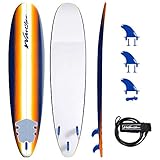
Wavestorm 8ft Classic
- 86 liters of volume
- 200 lb weight capacity
- Leash three fins and tail pad included
- EPS core with three stringers
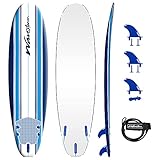
Wavestorm 7ft Classic
- 70 liters of volume
- Triple stringer EPS core
- Leash three fins and tail pad included

Thurso Surf 7ft Soft Top
- 210 lb weight capacity
- Three wood stringers
- Five year manufacturer warranty
The 8ft Classic takes the top spot because it is the highest-rated board here with the largest review base, and because 86 liters covers almost every adult body weight without asking the rider to fight the board. The 7ft Classic is the smarter choice for lighter adults and for anyone who needs to carry a board to a break that is not right at the beach. The Thurso Surf 7ft is the pick if weight capacity and warranty length matter more to you than refinement in the outline.
The Best Surfboards for Beginners in 2026 at a Glance
| Product | Specifications | Action |
|---|---|---|
| Wavestorm 8ft Classic Longboard |
|
Check Latest Price |
| Wavestorm Classic Soft Top 7ft |
|
Check Latest Price |
| Thurso Surf 7ft Soft Top Foam |
|
Check Latest Price |
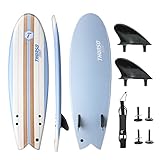 Thurso Surf Lancer 5’10 Fish Thurso Surf Lancer 5’10 Fish |
|
Check Latest Price |
 Rock-It Alberto 5ft6 Soft Top Rock-It Alberto 5ft6 Soft Top |
|
Check Latest Price |
 California Board Company 5ft8 Foam California Board Company 5ft8 Foam |
|
Check Latest Price |
 Wavestorm 5ft6 Foam Surfboard Wavestorm 5ft6 Foam Surfboard |
|
Check Latest Price |
 KONA 4ft 4 Beginner Soft Top KONA 4ft 4 Beginner Soft Top |
|
Check Latest Price |
Two things stand out in that table. First, every board is a soft-top built around a foam core, which is exactly what a beginner wants for safety and low weight. Second, the range of volume is enormous, from 39 liters on the Alberto up to 86 liters on the 8ft Classic, and that spread is really a spread of rider sizes rather than of skill levels.
What Makes a Good First Surfboard
Before comparing models, these are the five criteria that actually decide whether you catch waves or spend the session swimming. Ignore anything else on the spec sheet until these are settled.
Length: 7ft to 9ft for adults. Longer is more stable and paddles into waves earlier, which is what you want while your pop-up is still inconsistent.
Volume: Aim for at least 60 liters as an adult and at least 40 liters for a child. Volume is the single most important number on the whole board.
Construction: Soft-top EPS foam with a slick polyethylene bottom. It is light, forgiving and it will not hurt anyone in a crowded lineup.
Weight capacity: Check the stated limit and leave yourself a margin. Boards are not built to the exact edge of their rating.
Fins and leash included: Every board on this list ships with both, which removes a chunk of accessory shopping before your first session.
Everything else on a beginner board is secondary. Colorways, graphics, brand reputation and shaper names matter far less than whether the board floats high enough that you can stand up on it in waist-deep whitewater.
For the wider beginner buying approach, including accessories you will need on day one, we cover the same fundamentals in our beginner equipment guide.
1. Wavestorm 8ft Classic Longboard – Best Overall for Beginners
Wavestorm 8ft Classic Longboard Surfboard (Org Burst),
8ft x 22.5in x 3.25in
86 liters
11.5 lb board
200 lb capacity
Pros
- Catches small waves easily
- Soft deck and rails survive hard falls
- Light enough for one person to carry
- Leash fins and traction pad included
- Three stringer EPS core adds rigidity
Cons
- Narrower outline than a 9ft so balance work is required
- Soft-top build suits softer shoulder-high waves
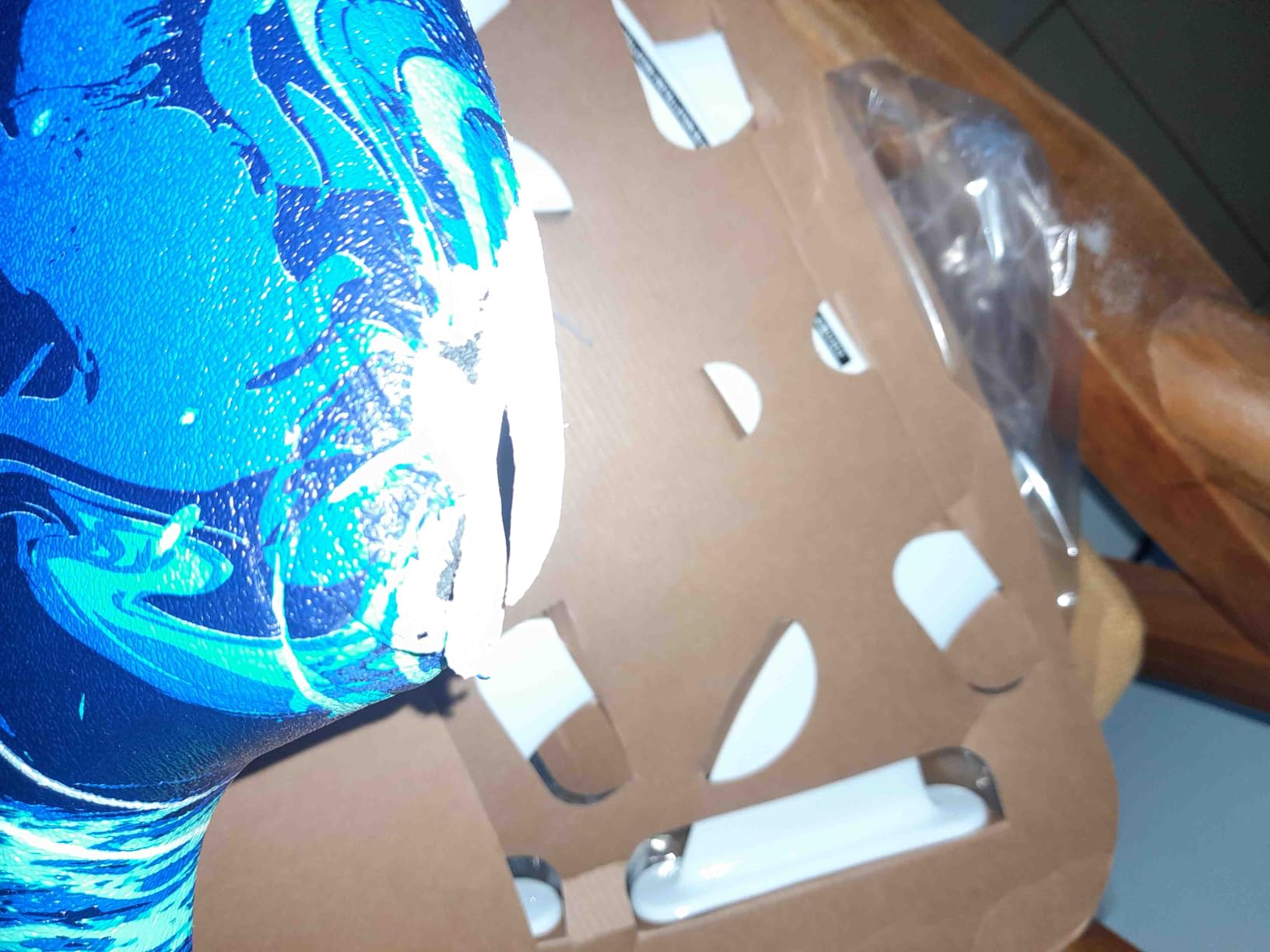
- Occasional reports of transit damage or bent noses
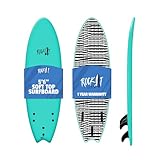
Out of the eight boards here, this is the one I keep coming back to, and the review numbers back it up with 296 ratings averaging 4.7 stars. The 8ft outline gives you a very wide platform from nose to tail, and at 86 liters the board holds so much of your weight above the water that catching a wave stops being a contest. Most first-timers on this board are standing up within a handful of sessions.
The construction matters more than the shape. The soft WBS-IXL top deck and rails mean that when you fall on it, you land on foam rather than on a hard rail, and the HDPE slick bottom keeps the whole thing light and fast in the water. The three-stringer EPS core is what separates this from a cheap unreinforced foamie, and reviewers repeatedly point out that the board survives being dropped in the back of a car week after week.
Everything you need to surf is in the box: board, ankle leash, three removable bolt-thru fins and a traction pad. That matters more than it sounds, because a beginner who has to source fins separately can lose a week before ever entering the water, and the difference between paddling on week one and week three is enormous for confidence.
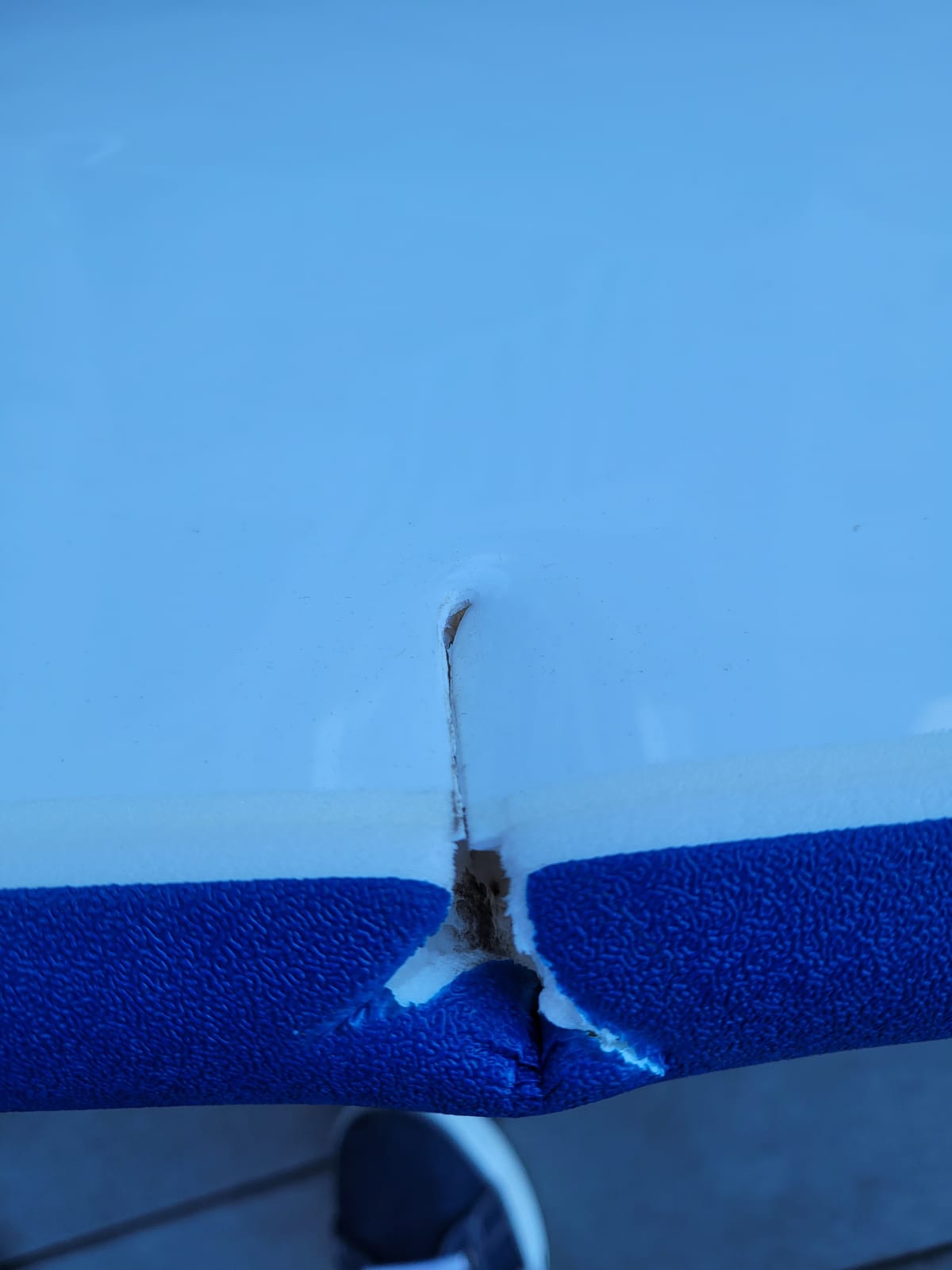
Buyer feedback does include a few complaints about receiving a damaged board or a bent nose, and some people feel the foam is softer than they expected for the money. Those are worth knowing about, but the overall sentiment is that this is a first board you can learn on and then pass on or resell without regret.
Who the 8ft Classic Suits Best
This is the board for a full-size adult who has never surfed, and for anyone between roughly 140 and 200 pounds. The stated 200-pound capacity is generous for a soft-top, and the width across the deck gives you a stable platform even in choppy whitewater on a beach break.
It also suits anyone who is a little anxious in the water, because the soft rails mean a wipeout costs you a sore shoulder rather than a cut. Parents buying one board for the whole family can start an adult on this one and move down to a smaller soft-top for kids later.
Where the 8ft Classic Falls Short
At 22.5 inches wide it is narrower than a 9ft longboard, so a complete beginner may find it slightly less wobbly than they expected. The soft-top build also has a ceiling: it performs best on smaller, softer shoulder-high waves and does not reward you the way a hard epoxy board would in steeper surf.
If you weigh over 200 pounds, this is not the right capacity and you should read the heavy-rider section below. If you are under about 120 pounds, 86 liters of foam will feel oversized and slow to turn, and a 7ft board is a better fit.
2. Wavestorm Classic Soft Top 7ft – Top Rated Longboard
Wavestorm – Classic Soft Top Foam 7ft Surfboard Surfboard for Beginners and All Surfing Levels Complete Set Includes Leash and Multiple Fins Heat Laminated, Blue Pinline (AZ22-WSSF700-PIN)
7ft x 22in x 3in
70 liters
10.2 lb board
Leash fins and tail pad included
Pros
- Stable forgiving platform for learners
- Complete set in the box
- Triple stringer EPS core resists flexing
- Handles small to medium surf
- UV inhibiting deck resists fading
Cons
- Soft-top build limits performance in steep waves
- Heavier than the 5ft options for small riders
When people ask whether 8ft or 7ft is better for a beginner, the honest answer is that the 7ft is the better board for a lot of people. At 70 liters it still gives you serious flotation and a wide, forgiving platform, but it is easier to carry, easier to fit in a car and much easier to turn once you do get moving.
Reviewers love that this board arrives complete, with leash, three fins and a tail pad included, and that the triple stringer system gives the foam core real rigidity compared to a bare foamy. The 4.5-inch triple fin set adds enough turning authority that a progressing surfer can start angling across the wave face rather than riding straight down the line.
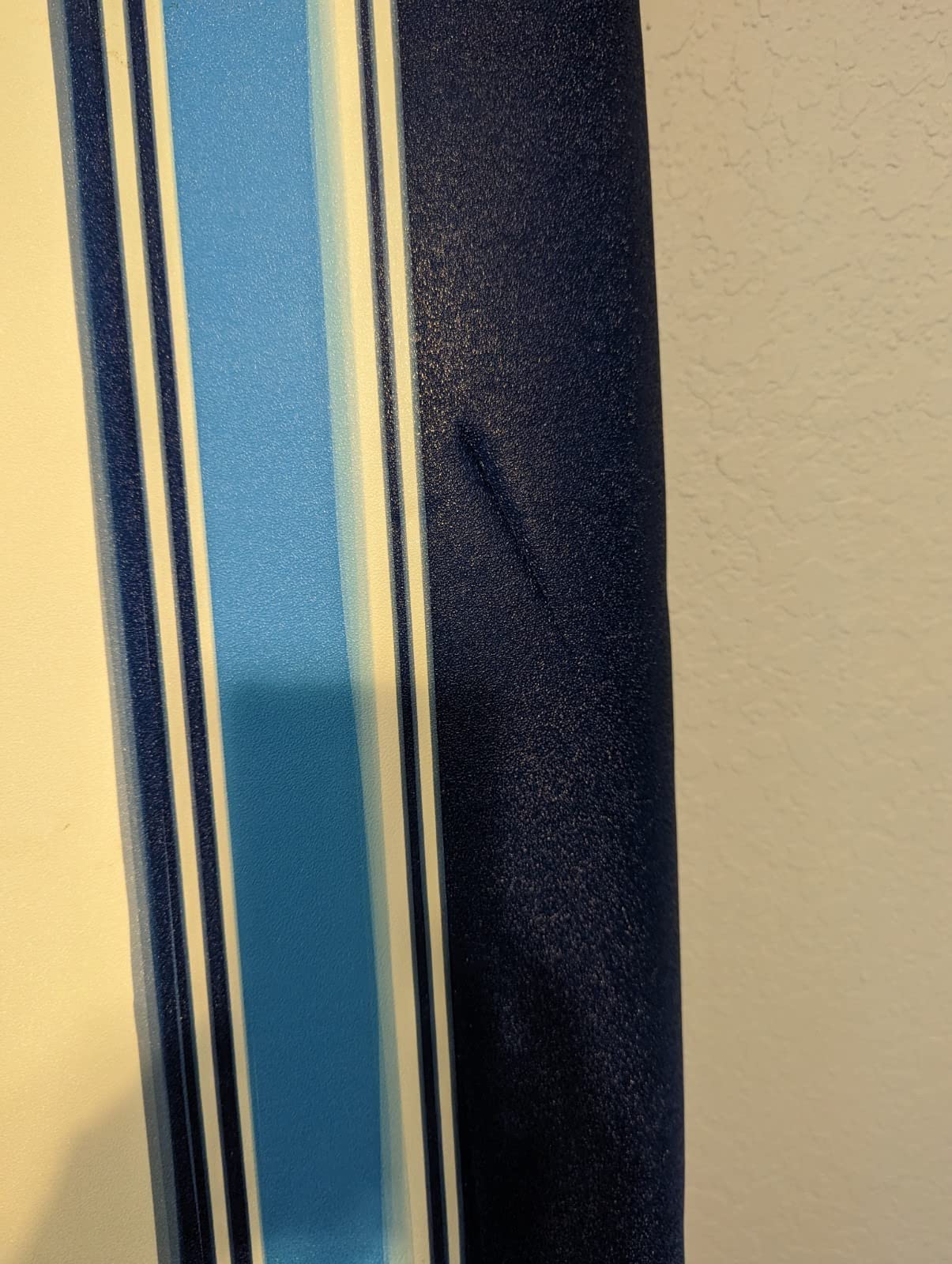
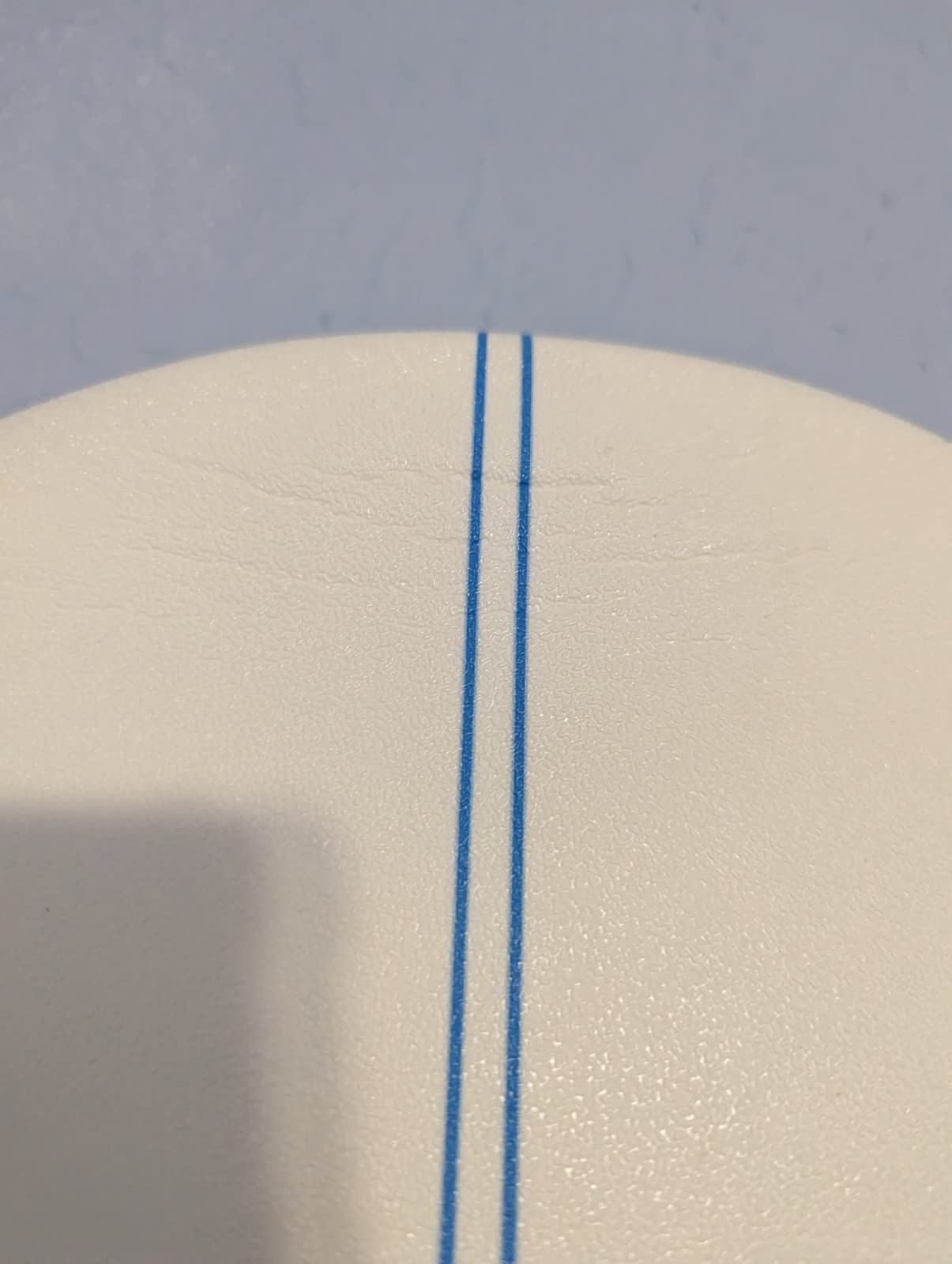
The UV-inhibiting deck graphic is a small but genuine quality detail. Beginner boards get left in hot car trunks and baking sand, and a deck that fades after one summer looks tired by the time you actually know how to surf.
Criticism is limited and mostly about wave range rather than quality. As a soft-top, it will not carve like a hard board in a hollow, dropping wave, and that is a fair trade for a learner who should not be dropping in on hollow waves yet anyway.
Who the 7ft Classic Suits Best
This is the right pick for a beginner who weighs roughly 120 to 175 pounds and wants a board that can grow with them a little. A 7ft is also the most common length we see rented at surf schools, so if you take lessons before buying, this is the size you will already have muscle memory for.
Teens and older kids moving up from a 5ft soft-top usually land here. The 70 liters is enough to catch a wave on a slow, small day without the board feeling like a boat under a very light rider.
Where the 7ft Classic Falls Short
It catches fewer waves than a longer board in very small surf, because there is less planing area to work with. On a dead-flat morning you may sit through more waves than you would on the 8ft Classic.
For riders over 200 pounds, 70 liters is not enough flotation. The board will still be ridden, but you will be fighting it every paddle, and a bigger board with more volume is a much better use of your first season.
3. Thurso Surf 7ft Soft Top Foam – Best Heavy-Rider Friendly Longboard
THURSO SURF Aero 7ft Soft Top Foam Surfboard for Beginner Adults and Kids Lightweight Shortboard for Surfing Beach Fun and Water Sports – Durable, Stable, and Easy to Ride for All Levels Surfers
96in x 22.8in x 2.75in
210 lb capacity
EPS core with three wood stringers
Five year warranty
Pros
- 210 lb capacity covers larger adults
- Stable forgiving platform
- Three wood stringers survive learning wipeouts
- Leash and textured tail pad included
- Also works for wake surfing
Cons
- Less responsive than a hard epoxy board
- Large volume feels sluggish in short steep waves
- A 4.3 average reflects a visible one-star share
This is the board to look at first if you are a larger adult, because the 210-pound weight capacity is the highest in this roundup. Larger beginners constantly report being unable to find a soft-top with enough volume, and this one is built for that body weight without becoming an unwieldy 10-foot gun.
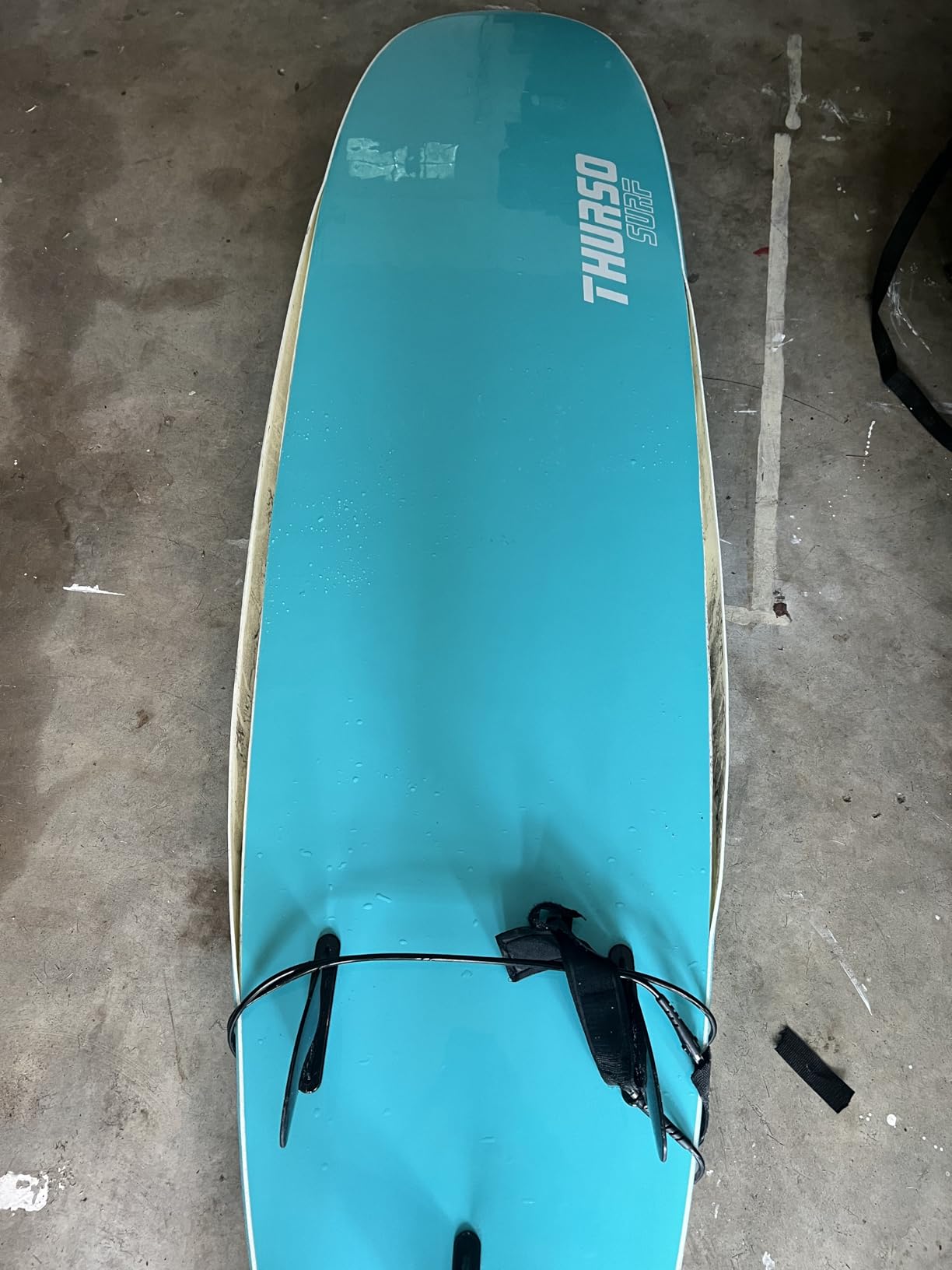
The build is sensible: an EPS foam core, a heat-laminated HDPE slick bottom for speed, an IXPE soft deck for grip, and three wood stringers running the length of the board for rigidity. That last detail is what separates it from the very cheapest soft-tops, and it is the reason reviewers describe it as durable enough for the knocks that come with learning.
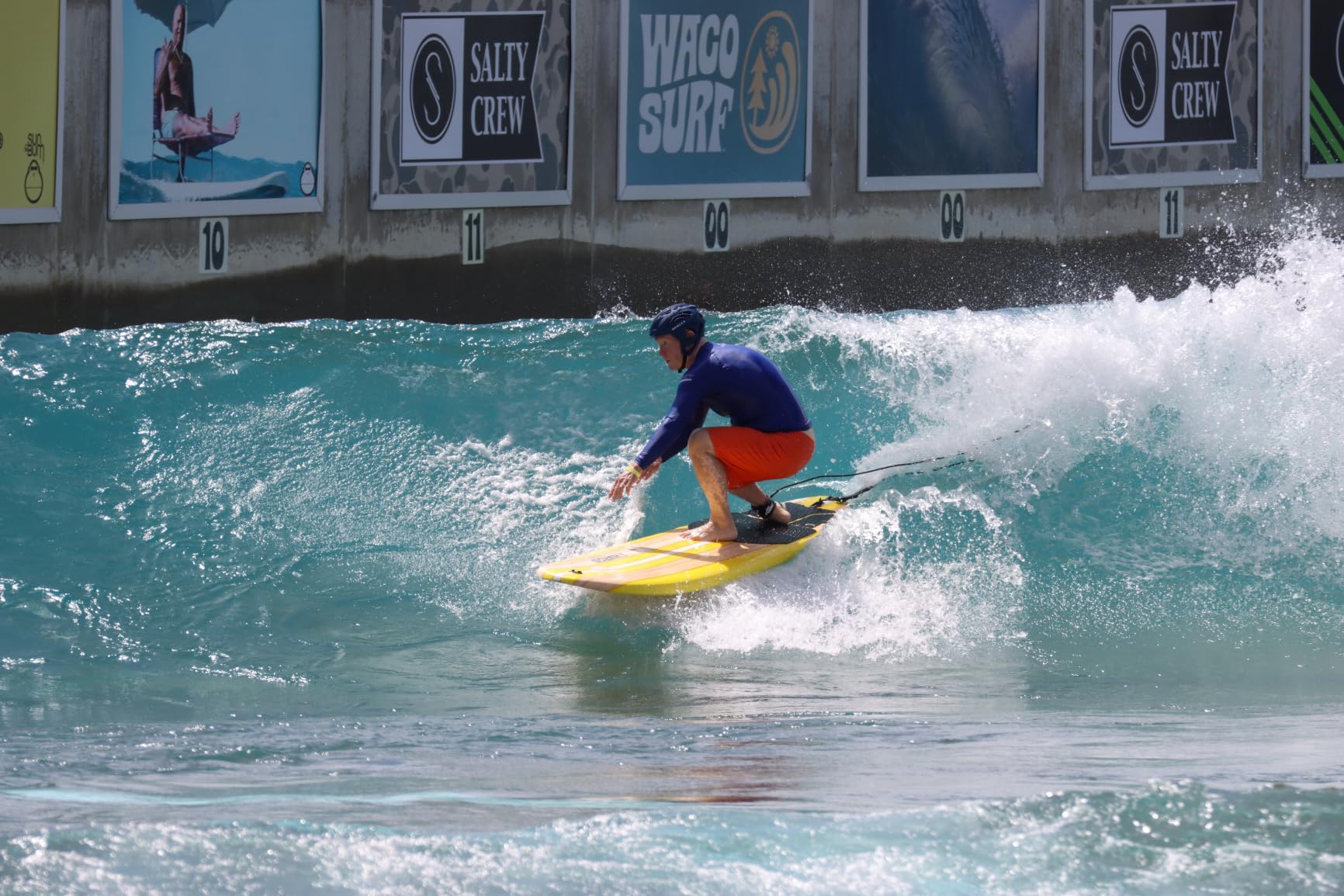
The five-year manufacturer warranty is unusual in this category and worth real attention. Beginner boards get bashed, dragged across car parks and dropped in sand, and a long warranty means one bad season is not a total loss.
The 4.3 average is pulled down by a meaningful share of one-star reviews, and reading them shows the pattern: most are people who bought it expecting performance rather than beginner stability. If your goal is catching waves safely, that is not a complaint that applies to you.
Who the Thurso 7ft Suits Best
Larger adults in the 180 to 210 pound range will find this is the easiest soft-top to actually paddle. Plenty of boards list a capacity they cannot deliver in practice, but the combination of volume in this shape and a stated 210-pound limit is unusually honest.
Families like it too, because the same board works for surfing, wake surfing and wakesurfing. If you want one purchase that serves several water sports rather than a dedicated surf-only purchase, that versatility is real.
Where the Thurso 7ft Falls Short
At 2.75 inches thick with a wide outline, the board is built for stability rather than agility. In short, steep waves it feels understeered, and a rider who is already surfing competently will find it quickly outgrows the shape.
For a very light rider, 210 pounds of capacity is more board than you need. You will paddle it but you will struggle to turn it, and the 5ft options further down this list are more fun at your weight.
4. Thurso Surf Lancer 5’10 Fish – Best for Small Weak Waves
THURSO SURF Lancer 5’10” Soft Top Foam Surfboard Fish Surf board for Kids & Adults Includes Twin Fins Double Swivel Leash EPS Core IXPE Deck HDPE Slick Bottom Non-Slip Deck Grip – Perfect for Surfing
5ft 10 x 20in x 2.75in
Twin fin setup
6 lb board weight
200 lb capacity
Pros
- Shorter and more maneuverable than a longboard
- Twin fin fish outline generates speed in small surf
- Only 6 lb so a child can carry it
- Double swivel leash adds safety
- 200 lb capacity covers a wide range of riders
Cons
- Less stable and catches fewer waves than an 8ft
- Best suited to smaller waves rather than powerful surf
The Lancer is the board to consider if your local break produces small, weak, slow waves and you are learning on them. A wider, flatter fish outline with a twin fin setup generates speed with very little wave energy behind it, which is a genuine advantage on a weak day when a longboard feels like it is being dragged through mud.
It is also one of the lightest full-length soft-tops here at 6 pounds, which matters if you are carrying it across sand, down a path or on a boardwalk. A child can realistically move this board alone, and the double-swivel leash with rail saver adds a bit of insurance in a crowded lineup.
Construction is the EPS foam core with an EPO body armor bonding system, a heat-laminated HDPE slick bottom and an IXPE deck, plus two wood stringers. In practice that gives you a soft, forgiving board with more turning response than the longboards above it.
Owners describe it as an affordable step-up board between a foamie and a proper shortboard. The honest limit is that a 5ft 10 is a harder platform to balance on than a 7ft or 8ft, so this suits someone who has already had a few sessions and understands the pop-up.

Who the Lancer Suits Best
This suits a beginner who is lighter than about 165 pounds, already has basic pop-up timing, and surfs somewhere with small or soft waves. It also works as a family second board for older kids moving up from a 5ft soft-top.
If you have access to waves that are frequently waist-high and hollow, this is not the board. The speed advantage disappears and you would be better served by something with more volume and more width.
Where the Lancer Falls Short
The main limitation is wave count. A shorter board catches fewer waves in small surf than a longboard does, and for a total beginner, wave count is what determines how quickly you learn.
The fish outline also does not handle a steep drop or a powerful beach break with any finesse. Reviewers who bought it for bigger conditions generally came back to report that it felt twitchy and under-composed.
5. Rock-It Alberto 5ft6 Soft Top – Best for Kids Learning to Surf
Rock-It Alberto 5ft6 Soft Top Surfboard, Surf Board for Kids, Tabla De Surf, Kids Surfboard, Surfing Board Designed for Beginners – Innovative Design for Safety & Easy to Paddle (Teal)
5ft 6 x 21in x 2.8in
39 liters
175 lb capacity
Three piece removable fins
Pros
- Soft top protects young surfers from injury
- 39 liters packed into a size a child can carry
- No-wax textured deck is ready to surf immediately
- Removable fins make transport simple
- One year warranty against defects
Cons
- 175 lb capacity is the lowest here
- Short length is less stable than a longboard
- 4.0 average hints at foam durability complaints
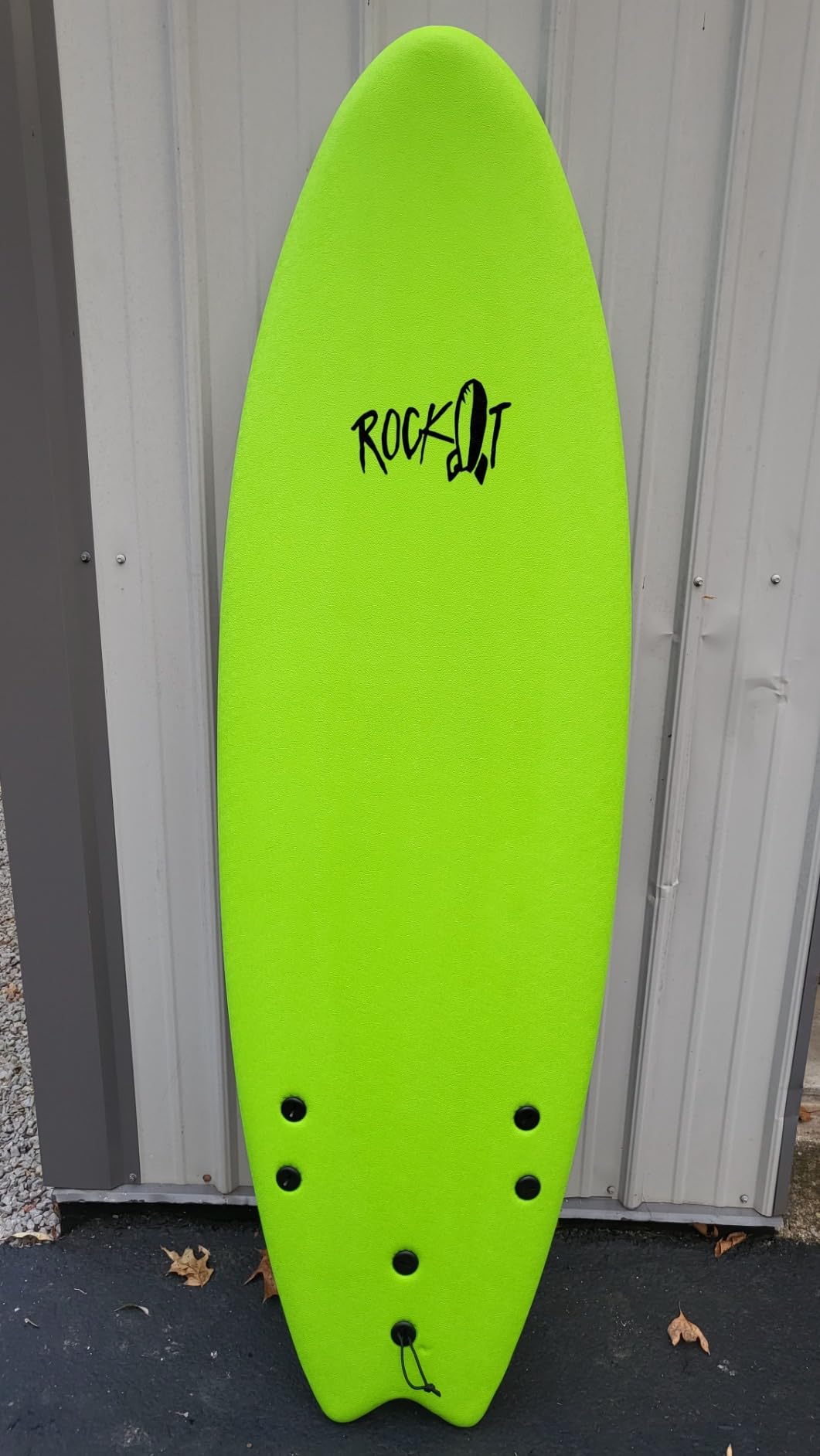
For a child aged roughly 6 to 12, the Alberto is a strong pick because it packs 39 liters of buoyancy into a 5ft 6 board a young surfer can actually pick up. That is the same general flotation an 8ft fiberglass board provides, in a package small enough to carry down to the water on your own.
The soft-top construction is the safety argument. A child learning to surf will fall onto the board constantly, and a soft deck and soft rails turn what would be an injury into a bump. The textured grip surface also means no wax is needed, so there is one less step to get wrong before the first session.
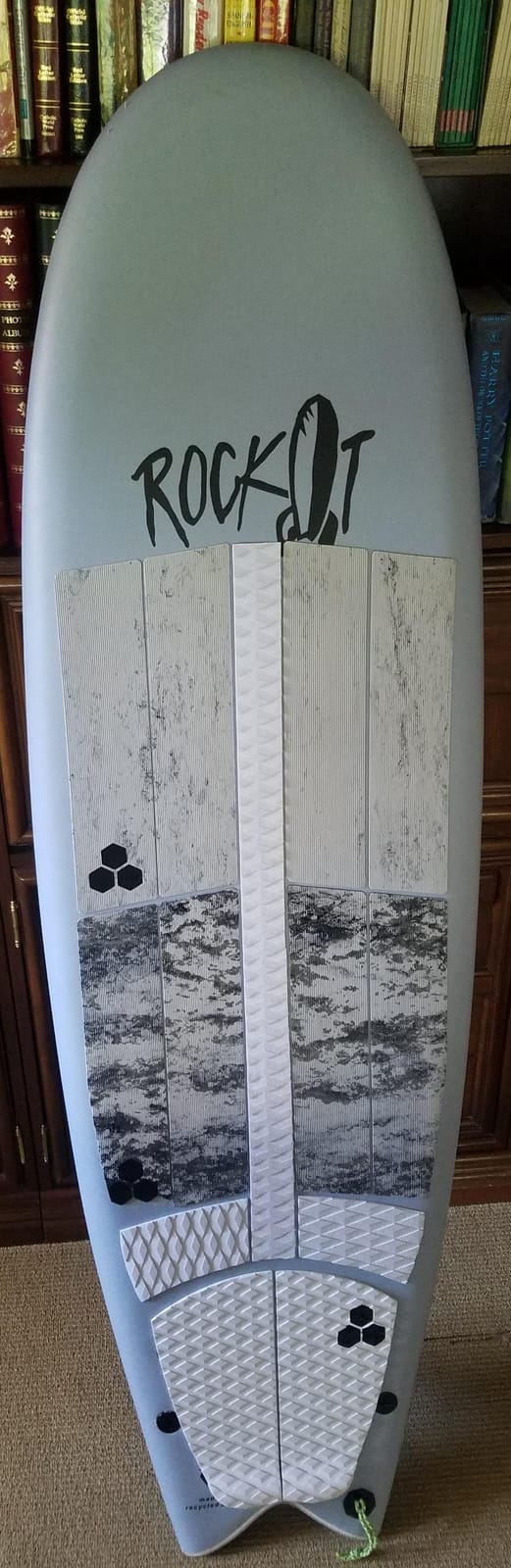
Several owners also report using it as an adult mid-length, which tells you how much flotation 39 liters actually provides. If you are an adult who can already pop up reliably, this board is genuinely usable and fun in small surf.
At 175 pounds it has the lowest capacity in this roundup, so parents of larger teens should look elsewhere. The 4.0 average is the lowest here, with one-star reviews concentrated on kids outgrowing the weight limit and on perceived foam durability over time.
Who the Alberto Suits Best
This is built for a child learning with a parent or instructor at the beach, in shallow-to-waist-deep water. At 7 pounds it is light enough for most 7 to 12 year olds to carry, and the removable three-piece fins mean it fits in a car boot without a roof rack.
It also works as a first board for an adult who already surfs and wants a cheap, forgiving board for bodyboarding or for playing in small waves without risking an expensive stick.
Where the Alberto Falls Short
The 175-pound limit is the hard stop. Once a young surfer passes that weight, the board is overloaded, the nose dives and the whole experience becomes frustrating rather than fun.
At 5ft 6 the platform is narrow and short, so a small adult will struggle to stand on it. The one-star share also points to foam durability, which is a realistic concern for a board that gets thrown in a car and dragged over sand every weekend.
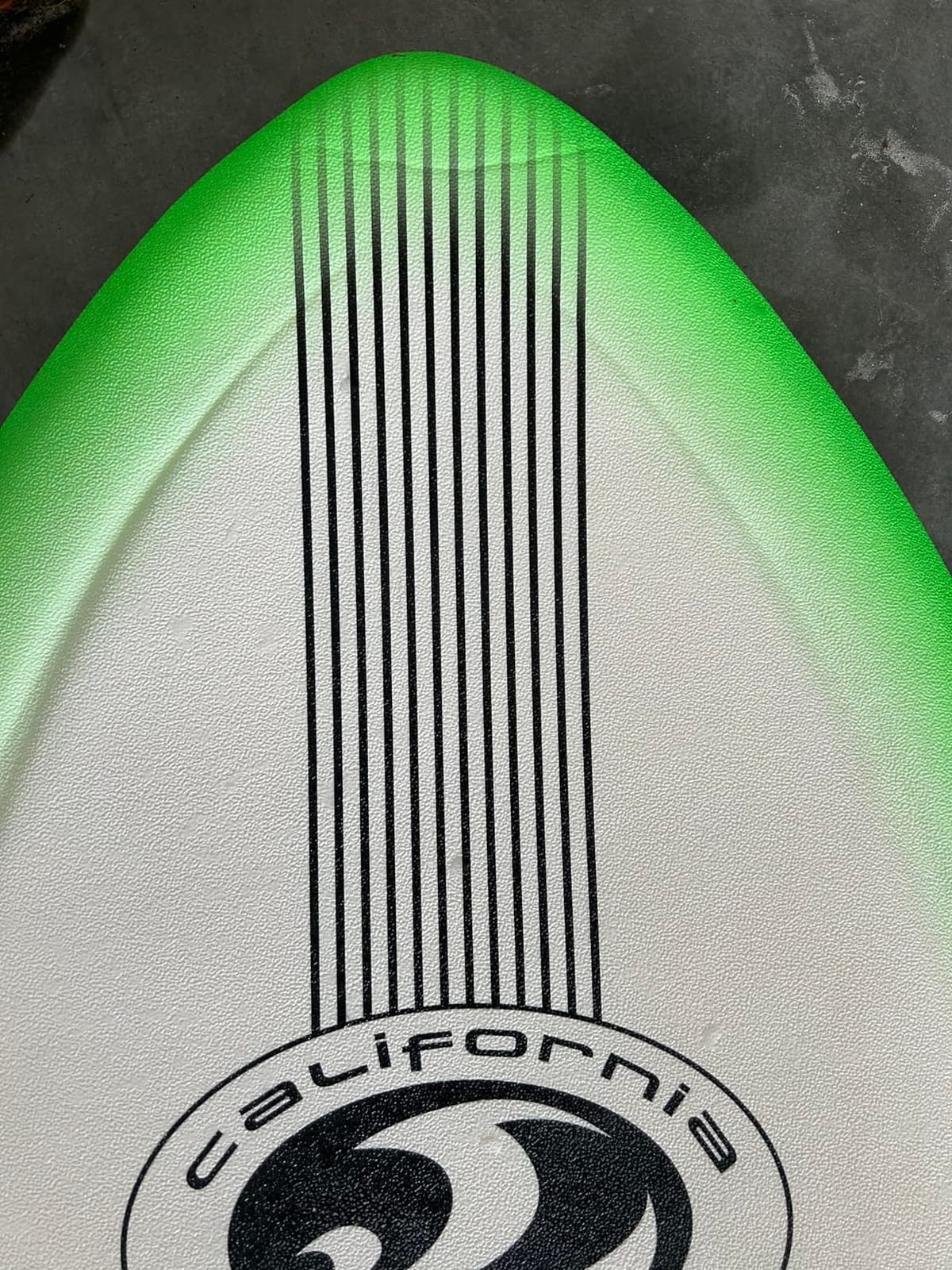
6. California Board Company 5’8 Foam Surfboard – Best for Pool Practice and Small Kids
California Board Company CBC Surfboard, 5-Feet x 8-Inch, Assorted
5ft 8 x 21.75in x 2.75in
High density EPS core
Attached traction pad
Leash and three fins included
Pros
- Only about 6 lb so small kids can carry it
- Floats well for pop-up practice in a pool
- Full graphic deck and bottom look better than most
- Leash fins and traction pad all included
- Affordable full soft-top setup
Cons
- Fins are thin and slightly sharp at the edges
- Turns very little and works best as a floater
- Too buoyant for a 120 lb adult to stand on
- Seam durability draws some complaints
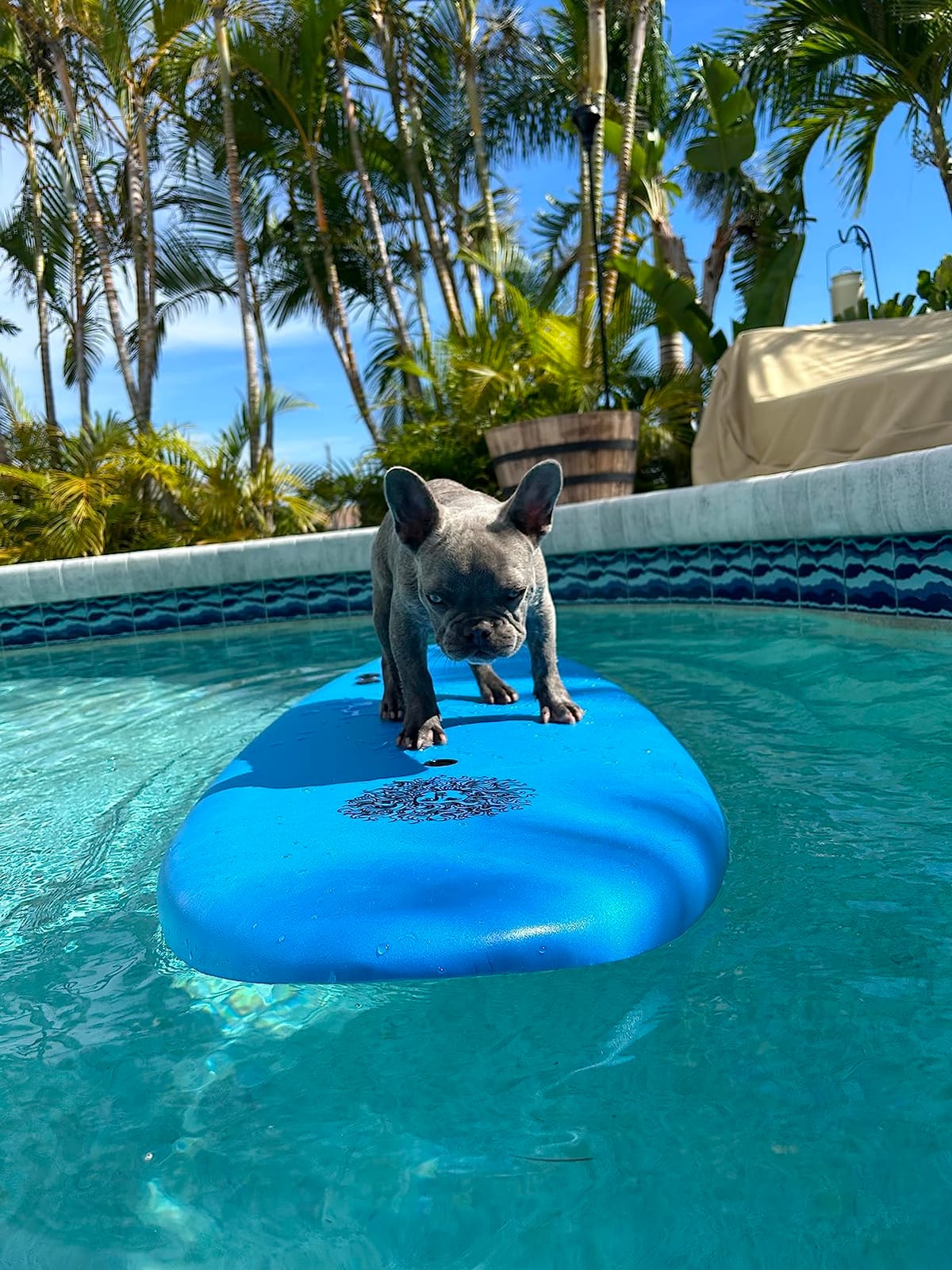
This is the board for the earliest stage of the learning curve: standing up in a swimming pool, in a lagoon or in very shallow flat water. At about 6 pounds with a high density EPS core, it floats cleanly and the attached traction pad gives your back foot something to grip while you practise the pop-up motion over and over.
It also comes fully kitted with leash, three fins and a pad, so the whole package is in the box. For a family buying a first surfboard for a young child who is not yet surfing real waves, that completeness is worth a lot.
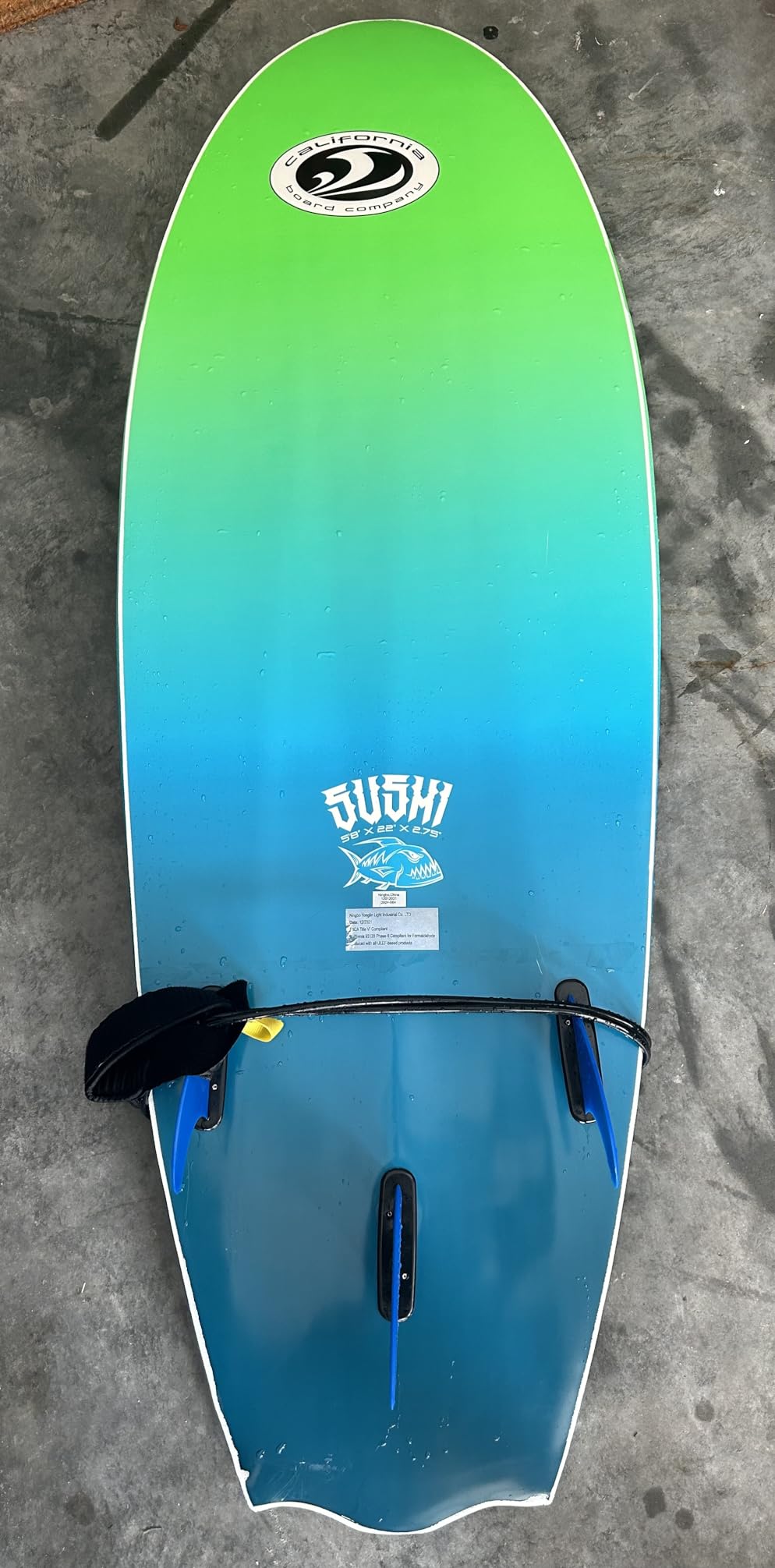
The reviews split cleanly by rider size. Parents and small kids rate it as a great stable first board, while larger adults find it so buoyant that they cannot stand on it properly. The full graphic on both deck and bottom is a small aesthetic win over the plain white decks most competitors ship.
Long-term owners from several seasons back still report the board holding together, so the construction holds up better than the 4.0 average suggests. The recurring quality notes are about the thin fins and the seams rather than the core itself.
Who the CBC 5’8 Suits Best
A young child roughly 4 to 10 years old, under about 120 pounds, learning pop-up technique in a pool or a very flat lagoon. It is also a practical first board to rent or borrow before committing to a bigger purchase.
Pool owners also use boards like this for balance training and for teaching a child the sequence of the pop-up before the water is ever involved. The traction pad and flat deck make that practice possible on a lawn or a poolside surface.
Where the CBC 5’8 Falls Short
It is not a wave-catching surfboard in any real sense. At 180 pounds of capacity and 5ft 8 long, an adult trying to catch an actual wave will spend the session bouncing over the top of it.
The fins are thin and can be sharp at the edges, so for a very young child it is worth filing them down or fitting softer fins. Buyers also report some creased noses and seams that look like they could separate, so inspect the board on arrival.
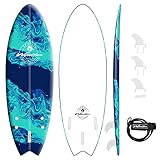
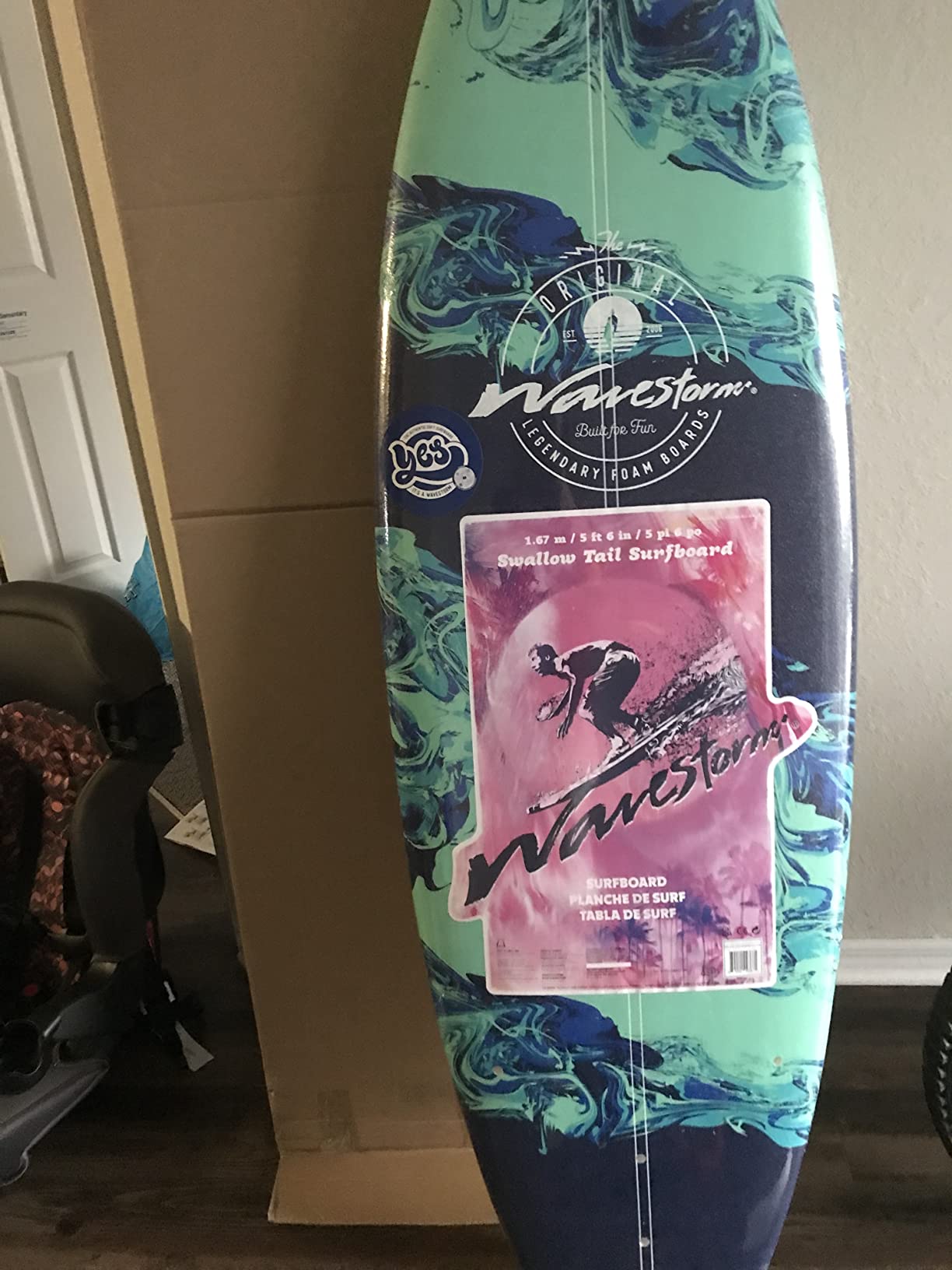
7. Wavestorm 5’6 Foam Surfboard – Best for Teens and Small Adults
Wavestorm -Soft Top Foam 5’6″ Surfboard/Fish Swallow Tail Surfboard for Beginners and All Surfing Levels Youth Complete Set Includes Leash and Multiple Fins, Blue Marble, (AZ22-WSSW560-BLU)
5ft 6 x 21in x 2.75in
42 liters of volume
Three epoxy set stringers
Leash and fin set included
Pros
- Very light and easy for a kid to carry
- Three epoxy set marine-ply stringers add real strength
- Catches small mushy waves easily
- A good bridge from longboard to shorter board
- Three color options available
Cons
- Not built for larger adults as pressure dents form
- 42 liters suits lighter riders and smaller surf
At 4.8 pounds, this is the lightest board in the roundup that is still a proper surfboard rather than a bodyboard. That combination makes it an excellent first board for a teen or a small adult who can already get up but needs something they can carry and control alone.
The detail that stands out is the stringer system. Three epoxy-set marine-ply stringers give the EPS core far more rigidity and impact resistance than a plain unreinforced foam board, and owners consistently point out that this is the reason it will not crack like a cheap foamy when it lands on a sandbar.
The HDPE high-impact bottom skin and the UV-inhibiting soft graphic deck are both practical choices. The bottom takes the abrasion of being dragged across a launch ramp, and the deck holds its color through a summer of being left in the sun.
At 4.6 stars across 52 ratings with roughly 80 percent five-star feedback, the sentiment is strongly positive, and the one limit reviewers keep returning to is rider weight. It is built for lighter riders in smaller surf, not for a 200-pound adult.
Who the Wavestorm 5’6 Suits Best
A teenager, or an adult under about 140 pounds, who wants a board that is easy to carry and good in small mushy waves. It works as a first board and as the natural next step after a 7ft longboard once you are turning reliably.
It is also a strong option for travel, because a 5ft 6 fits in a car without a roof rack and most airlines treat boards under a certain length as standard checked baggage. Transport is a real consideration for beginners and this board removes the problem entirely.
Where the Wavestorm 5’6 Falls Short
Heavier riders should not push this one. Reviewers report pressure dents forming under more weight, and a dented foam board changes how it floats and how it tracks.
In powerful or hollow surf it is out of its depth. The 42 liters gives you enough to get moving in small waves and not much margin beyond that, so it is a summer small-wave board rather than an all-round one.
8. KONA 4’4 Beginner Soft Top – Best Small Rider Multi-Use Board
KONA SURF CO. The 4-4 Surfboard for Beginners Kids and Adults – Soft Top Foam Surfboards for Beach – Surf as a Boogie Board Bodyboard or Softboard – Includes Fins and Leash in Grey sz:4ft 4in
4ft 4 x 19.5in x 2.5in
Polyester construction
Fins and leash included
Also a bodyboard
Pros
- Highest rated board in the roundup at 4.8 stars
- Compact size small children can carry
- Works as surfboard bodyboard or boogie board
- Soft top is safe for young riders
- Fins and leash included in the package
Cons
- Smallest board here so it suits shallow water more than real waves
- Review base is the thinnest at 31 ratings
This is the odd one out in the list, and that is exactly why it earns a place. At 4ft 4 with 19.5 inches of width, it is a compact soft-top that works as a surfboard, a bodyboard or a boogie board depending on what you want to do with it, and it carries the highest average rating of anything we looked at at 4.8 stars.
For a small child, the practical advantage is that they can pick it up, hold it and control it in shallow water without an adult carrying it. A 52-inch board is genuinely manageable for a 5 to 9 year old, and the soft polyester construction is safe to fall onto repeatedly.
Reviews describe it as an easy, safe entry board that children pick up quickly and can grow into, with satisfaction focused on the multi-purpose design. Fins and a leash are included, so the package is complete out of the box.
Be clear about what you are buying though. At 4ft 4 it is a shallow-water and beach-play board first and a wave-catching surfboard second. It will not hold a beginner standing through a real wave the way the 7ft and 8ft boards will.
Who the KONA 4’4 Suits Best
A parent looking for the cheapest, safest, easiest-to-carry first board for a young child learning in shallow water. It also works as a first board for an adult who wants a small board for bodyboarding in the surf rather than standing up on it.
If you are in a warm-water location or a lake with a gentle beach, it is a genuinely fun board. Multi-use value like this is hard to find elsewhere in the category, and buyers consistently mention that as the main reason they are happy with it.
Where the KONA 4’4 Falls Short
It is not long enough to catch many waves, and it will not paddle like a surfboard should. If the goal is progression toward surfing proper, this is a starting point for a child and not a destination.
Its review base is also the thinnest here at 31 ratings, so treat the 4.8 average as encouraging rather than conclusive. A generous return window gives you room to test it at the beach before committing.
Beginner Surfboard Buying Guide: Size, Volume and Board Types
Choosing between these eight boards comes down to your body weight, your local waves and how much you intend to carry the board. Here is the framework we use when someone in a surf shop asks us to make the decision for them.
How long should a beginner surfboard be?
For an adult, plan on 8ft if you weigh more than about 175 pounds, 7ft between roughly 120 and 175 pounds, and 5ft 6 to 5ft 10 if you are lighter than that or if you are buying for a child. Length is a proxy for volume and for paddling speed, and both matter more in your first year than shape or tail design.
For teenagers and kids the same rule applies by weight, not by age. A tall 12 year old can often ride a 7ft while a smaller 10 year old is happier on a 5ft 6, because the board is really being matched to how much board the rider can control.
How much volume do you need?
Volume is measured in liters and it is the number that actually determines buoyancy. The working ratio for a cautious beginner is roughly two liters of volume for every kilogram of body weight, dropping toward one and a half once you are confident and athletic. At 75 kilograms that works out to somewhere between 110 and 150 liters of ratio target, but in practice the real boards at that weight sit in the 70 to 86 liter range because the ratio assumes ideal conditions.
Use volume as a sanity check rather than a formula. If you are riding a 42-liter board and you weigh 150 pounds, you are under-floated and will struggle. If you are riding 86 liters at 100 pounds, you are over-floated and will find the board slow to turn.
Foam, soft-top epoxy or hard-top?
Every board in this roundup is a soft-top built around an EPS foam core with a slick polyethylene bottom, and for a complete beginner that is the correct choice. It is the lightest, safest and most forgiving construction, and it absorbs a wipeout rather than passing the impact on to you.
A hard-top epoxy board is faster, more responsive and looks more like a real surfboard, but it is harder to catch waves on and unforgiving when you fall. The standard progression is a soft-top for your first several months, then a soft-top epoxy or a hard longboard once you are catching waves consistently and riding down the line.
Why do experienced surfers skip soft tops in the lineup?
The answer is steering, not safety. Soft tops have no rails, so they generate very little lateral bite and slide sideways across the face instead of holding a line. In a crowded lineup where everyone is dropping in, a board that will not hold a direction is genuinely hard to control around other people.
That said, the criticism is mostly aimed at adults on a beginner board in a peak-hour crowd, not at the child learning to pop up in the whitewater. Most experienced surfers would rather share the water with a learner on a soft-top than with the same learner on a hard board they cannot control. Buy the soft-top, learn in the whitewater, and move up when the wave count justifies it.
Fin setups: thruster, 2+1 or single fin
All eight boards here come with a three-fin thruster set, and that is the right default. A thruster gives you drive and hold with fins of different sizes, which makes a small board easier to turn and keeps a longer board from feeling like it is slipping sideways.
A 2+1 setup uses two smaller side fins with one larger centre fin and produces a more drawn-out glide that suits longboards and more experienced riders. A single fin is the traditional longboard setup and is worth learning later, not first. None of these boards are sold without a usable fin set, so the decision is already made for you.
Boards for riders over 200 pounds
This is where beginners most often buy the wrong board, because they accept whatever size feels normal rather than accounting for their own weight. The honest options in this roundup are the Thurso Surf 7ft with its 210-pound capacity, and a longer 9ft or larger soft-top from a specialist if you are well above that.
Forums consistently advise riders over 220 pounds to look at 9ft-plus boards with 90 liters or more, and to expect that 9ft-plus options are much harder to track down than standard sizes. Whatever you choose, check the capacity rating and stay under it, because an overloaded foam board pearls on the take-off and you will not catch a wave all session.
How to inspect a used surfboard
Check the rails and nose first for cracks, compression lines or a soft dent, since foam deforms permanently and a dented board will not sit flat in the water. Next, press firmly on the deck between the stringers; any give that feels structural rather than springy is a waterlogged core.
Look at the bottom skin and fin boxes for cracks, delamination lifting at the edges, or a fin box that moves in its slot. Finally, check for a repaired ding that is leaking or has a different colour of glass or epoxy, and buy a board bag for it if the rails show impact history.
When to graduate off a foam board
Three concrete markers: you are catching more than about half the waves you paddle for, you can ride down the line with your weight over your front foot rather than sitting in a straight line, and your pop-up lands more than three times out of four without stepping back onto the tail.
When all three are true, the soft-top has done its job and a longer hard board or a soft-top epoxy is the natural next step. Most people reach that point somewhere between three and six months of regular sessions, and there is no rush if you are still enjoying the foam board.
Frequently Asked Questions
What is the best foam board for beginners?
The Wavestorm 8ft Classic is the best foam board for most beginners. It offers 86 liters of volume, a 200-pound weight capacity, a soft EPS core with a three-stringer system, and it includes a leash, three removable bolt-thru fins and a traction pad. Soft-top foam construction is safer than a hard board in crowded lineups and far more forgiving when you fall, which matters most in your first months of surfing.
What size surfboard is best for a beginner?
For an adult, an 8ft board around 80 to 86 liters suits riders up to about 200 pounds, while a 7ft board around 70 liters suits riders between roughly 120 and 175 pounds. A 5ft 6 to 5ft 10 board between 39 and 42 liters works for smaller adults, teens and children. Match the board to your body weight rather than your age, and stay under the stated capacity.
Is a 7 foot surfboard suitable for beginners?
Yes, a 7ft soft-top is an excellent beginner board and is the size most surf schools rent. The Wavestorm Classic 7ft carries 70 liters of volume, which gives you plenty of flotation and a wide, stable platform. A 7ft is easier to carry, easier to turn and more forgiving in the water than a shortboard, while a slightly larger board would catch a few more waves.
Which is better for beginners, an 8ft or 9ft surfboard?
An 9ft longboard is easier for a complete beginner because more length means more stability and earlier wave catching, but it is heavier and harder to carry. An 8ft soft-top such as the Wavestorm 8ft Classic is the better all-round compromise for most adults, offering 86 liters with a weight capacity of 200 pounds. Choose a 9ft or larger if you weigh over 200 pounds.
Why do experienced surfers skip soft tops in the lineup?
Soft tops have no sharp rails, so they generate little lateral bite and slide sideways rather than holding a direction. In a crowded peak-hour lineup that makes them hard to control around other surfers, so experienced surfers avoid them. Beginners face no such problem in whitewater, and most experienced surfers would rather share the water with a learner on a soft-top than on a hard board they cannot control.
Which Beginner Surfboard Should You Buy in 2026?
The best surfboards for beginners in 2026 are all soft-top EPS foam boards, and the differences between them come down to volume, weight capacity and how small you need the board to be. For most adults, start with the Wavestorm 8ft Classic: 86 liters, a 200-pound capacity, and everything you need in the box. If you are lighter than about 175 pounds, the 7ft Classic gives you the same stability in a board you can actually carry, and if you are over 200 pounds the Thurso Surf 7ft has the capacity to match you.
Whatever you pick, match it to your body weight, take a couple of lessons if you can, and give it a season before you decide it was the wrong board. Beginners who buy once and buy well tend to progress far faster than beginners who buy a shortboard because it looked more serious.