
Our best overall pick for the best wetsuits for cold water surfing is the O’Neill Epic 4/3mm Back Zip Full Wetsuit, which combines lightweight stretch, serious warmth in 50 to 55F water, and the largest review base of any suit we looked at. It is the one we would put on before a January session at a temperate break.
Cold water changes everything about wetsuit choice. In water below 60F, heat leaves your body far faster than it does on land, and a suit that works fine in August leaves you shivering in October. The difference between a 3/2mm and a 5/4mm is not a small upgrade; it is the difference between a 45 minute session and a two hour one.
We compared ten full suits built for cold and near-cold water, reading the specifications, the temperature ratings the manufacturers publish, and hundreds of buyer reviews that describe actual sessions rather than showroom photos. If you are still working out the basics, our broader wetsuit buying guide covers construction basics that apply to any water sport.
Table of Contents
Top 3 Picks for Cold Water Surfing in 2026
These three cover most cold-water surfers. The O’Neill is the safest all-round answer, the Owntop is the one to buy if thickness per dollar matters most, and the Hevto is the strongest budget route into a genuine 5/4.

O’Neill Epic 4/3mm Back Zip
- Warm in 50-55F water
- UltraFlex neoprene
- Glued and blindstitched seams

Owntop 5mm Full Wetsuit
- 5mm neoprene body
- Front YKK zipper
- GBS seams
- Snug ankle and wrist seals

Best Cold Water Wetsuits at a Glance (October 2026)
Every suit below sits in the 3mm to 7mm range, which is where cold water surfing happens. Read the temperature ratings as a starting point rather than a promise, since fit and session length shift the result more than any single number.
| Product | Specifications | Action |
|---|---|---|
| O’Neill Epic 4/3mm Back Zip |
|
Check Latest Price |
| Hevto 5/4/3/2mm SCR Full Suit |
|
Check Latest Price |
 Ho Stevie! 4/3mm Chest Zip Ho Stevie! 4/3mm Chest Zip |
|
Check Latest Price |
| Owntop 5mm Full Wetsuit |
|
Check Latest Price |
 Lemorecn 3mm Full Wetsuit Lemorecn 3mm Full Wetsuit |
|
Check Latest Price |
 Lansru 5mm SCR Neoprene Suit Lansru 5mm SCR Neoprene Suit |
|
Check Latest Price |
 WYYHAA 7mm Front Zip Full Suit WYYHAA 7mm Front Zip Full Suit |
|
Check Latest Price |
 Dark Lightning 3/2mm Full Suit Dark Lightning 3/2mm Full Suit |
|
Check Latest Price |
 O’Neill Reactor-2 3:2mm Women’s O’Neill Reactor-2 3:2mm Women’s |
|
Check Latest Price |
| O’Neill Epic 3:2mm Back Zip |
|
Check Latest Price |
What Thickness Do You Need? A Water Temperature Guide
Neoprene works by trapping a thin layer of water against your skin. Your body warms that layer, and the neoprene slows it down from cooling. Thickness decides how long that layer stays useful, which is why a suit is judged by how long you last rather than by how warm it feels in the car park.
Here is the band mapping that most cold-water surfers actually use, from mild to punishing:
60F to 70F (15C to 21C): a 3/2mm full suit. If you are a regular surfer in this range, a hood is optional and boots are usually overkill.
55F to 60F (13C to 15C): a 3mm or 4/3mm full suit, still without a hood. This is temperate water, and the 3/2mm suits on our list sit comfortably here.
50F to 55F (10C to 13C): a 4/3mm hooded full suit. A hood stops the single biggest leak of heat, which is out of your neck and head, and it changes how long you can stay out.
40F to 50F (4C to 10C): a 5/4mm or 5.5/4mm hooded full suit, with 5mm or 7mm booties. This is the band where most Pacific Northwest, Scottish, and Irish surfers spend winter.
Below 40F (below 4C): a 6/5/4mm or 7mm hooded full suit plus 7mm boots and gloves. Add a neoprene vest under the suit if you are surfing a long session, and treat a session as a two-way plan with a clear exit time.
Two details are worth adding. First, these are water temperatures, not air temperatures, and a windy 55F day with 50F water is far colder on the shoulders than a calm day of the same water temperature. Second, the ratings printed on a suit tend to describe comfortable water, not the point at which you start shivering.
1. O’Neill Epic 4/3mm Back Zip Full Wetsuit – Best Overall
O’Neill Men’s Epic 4:3mm Back Zip Full Wetsuit, Black 2, X-Large
4/3mm UltraFlex neoprene
Glued and blindstitched seams
Back zip
Krypto Armor knees
Pros
- Warm enough for 50-55F water
- Very flexible through the shoulders
- Armhole room for long paddles
- Krypto Armor knee pads grip the board
- True to the size chart
Cons
- Seams near the knee pads and arm pits can split after heavy seasons
- Neck velcro flap sticks to the neoprene inside
- Lower back runs short on broad frames
This is the suit we kept coming back to. The Epic 4/3 uses UltraFlex neoprene through the shoulders, arms and lower body, with Fluidflex Firewall panels across the chest and back, and it is the panel placement that makes the difference on a long paddle. Thick neoprene across the shoulders would kill your stroke; here the warmth sits where you need it and the stretch sits where you push.
Buyers describe it as warm enough for 50 to 55F water, and the specification sheet backs that up with a 4/3mm build, glued and blindstitched seams, a double super seal neck, and hand-cuff sleeve construction. That combination is what stops the suit from flushing during a long session, which is the failure mode most people blame on the wetsuit rather than on the fit.
The Krypto Armor knee pads are a surf-specific touch rather than a decoration. They add grip and abrasion resistance exactly where the board rubs, and reviewers single them out as a reason the suit holds together through repeated sessions. The corrosion-proof back zipper with a key pocket is a small thing that tells you the brand has thought about a full day at the beach.
Across 1195 ratings the suit sits at 4.5, which is the largest review base in our group, and that matters for a cold-water purchase. When something is used by surfers in 50F water, you want a large sample of people reporting on how it held up.
What water temperature suits the O’Neill Epic 4/3mm
This is a 50 to 55F suit, and buyers consistently report that range. Add a hood and you extend it usefully into the upper 40s, and the ankle and wrist seals help keep the flush down in a moving swell.
Below 45F, most surfers find a 4/3 runs out of margin quickly unless they add a vest and 5mm boots. The neoprene thickness is fixed; what changes is how long you can stay in it before the neck and head loss catches up.
Where the O’Neill Epic 4/3mm falls short
The most common complaint is durability at the seams around the knee pads and arm pits after a season or two of heavy use, so treat it as a suit you will resole or replace in a few years rather than a lifetime purchase. The neck velcro flap is also reported as very strong and prone to sticking to the neoprene inside the suit, which is irritating when you are changing in a car park in the rain.
Fit is a further caveat. The suit runs slightly short in the lower back for broad-shouldered wearers, so check that area specifically when you order. If your frame is wider than average, expect to size up or to confirm the measurement with the seller.
2. Hevto 5/4/3/2mm SCR Neoprene Full Suit – Best Value
Hevto Men Wetsuit 4/3mm Neoprene GBS Full Wet Suit in Cold Water Back Zip for Surfing Swimming Diving Kayak SUP (Men Blue, M)
Premium SCR neoprene
Sealed stitched seams
Back zip with flap
Reinforced knees
Pros
- Serious warmth for the tier
- Sealed seams limit water entry
- Back zip with flap eases entry
- Buoyancy makes floating effortless
Cons
- Reinforced knees add bulk where surfers need range of motion
- One listing covers several thicknesses so the wrong warmth is easy to buy
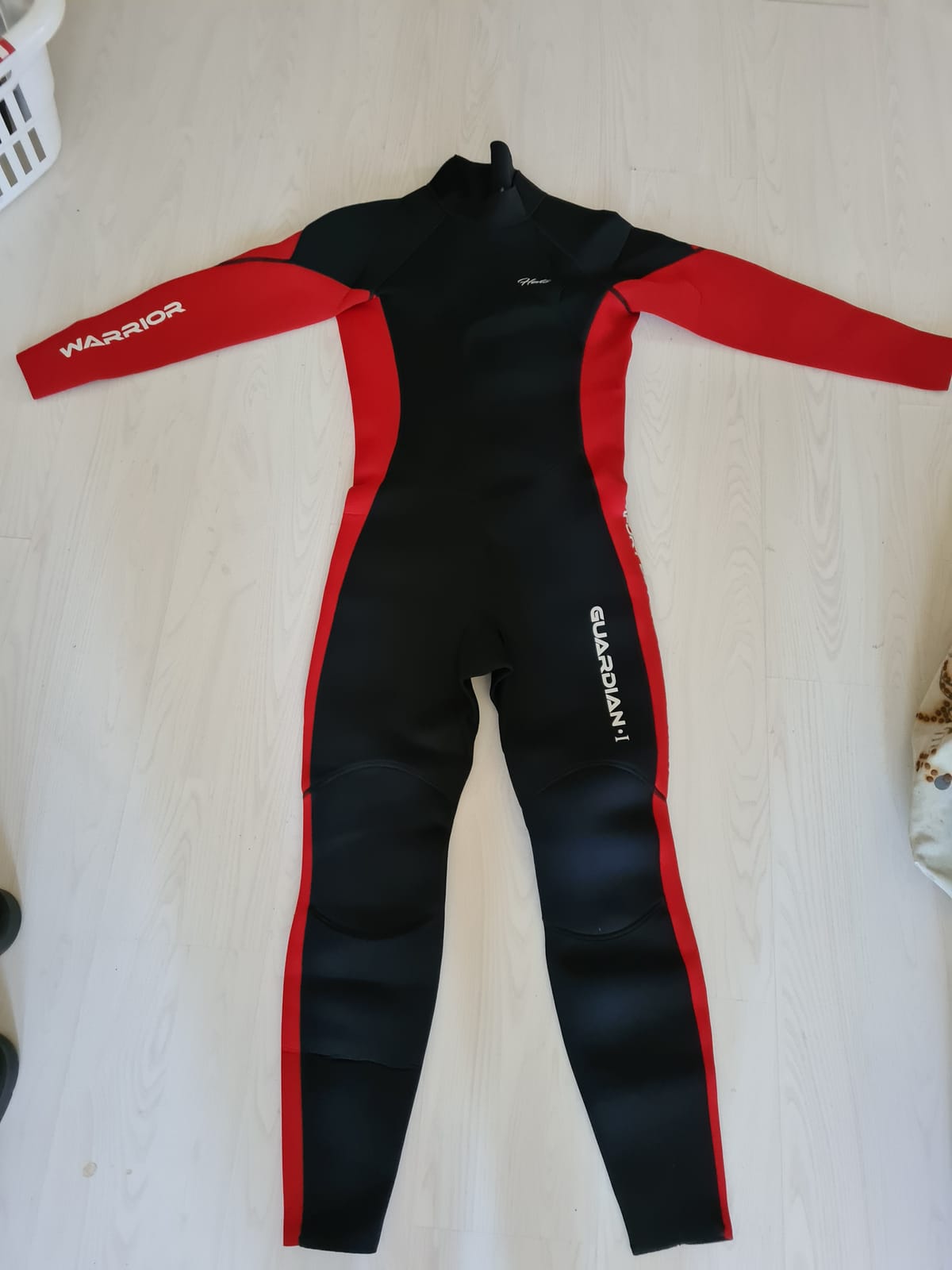
Hevto is the suit that answers the question surfers ask most on forums: what is a realistic option that will not leave you hypothermic. The SCR neoprene with super-stretch nylon gives you a real 5/4mm build with sealed, glued and blind-stitched seams, and at this tier that combination is unusual.
The back zipper with an upgraded puller and a flap closure does more work than it sounds. A back zip is harder to work than a chest or front zip, and the flap is what stops cold water tracking down your spine on a long paddle, which is a complaint we see repeatedly with unsealed zip-perf suits.
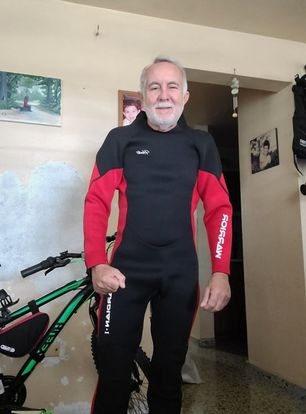
Buyers rate the warmth-to-cost balance highly at 4.5 across 288 ratings, and reviewers highlight the sealed seams and the smooth back zip as the two things that set it above cheaper 5/4 options. The extra buoyancy also gets a mention, which matters if you are surfing a smaller wave or sitting in a line-up for an hour.
The one thing to be careful about is the reinforced knees. They will protect the suit from board and rock abrasion, but they add bulk in precisely the area a surfer bends during the pop-up and the duck dive.
Is a 5/4mm suit warm enough for winter surfing
Yes, for the 40 to 50F band that defines most North Atlantic and Pacific Northwest winter. At 45F a good 5/4 with a hood and 5mm boots is a two hour suit for most surfers, and it is the tier where sessions start getting long enough to be worth the extra millimetres.
Below 40F the margin runs out. That is the point at which surfers move to a 6/5/4 or 7mm, and where a vest under the suit stops being optional.
Where the Hevto falls short
Check the thickness carefully before you order. The listing covers 3/2mm, 4/3mm and 5/4mm options, and it is easy to click through a season and end up with the wrong warmth level for your water. The reinforced knees are the other trade-off, since they limit the snap you get out of the lower body.
There is no integrated hood here, which is the single most noticeable omission for genuine cold water. You can add one, and for most surfers below 50F that is where the extra money is better spent anyway.
3. Ho Stevie! 4/3mm Chest Zip Surf Suit – Best for Chest Zip Surfers
Men’s Surfing Wetsuit – Chest Zip Fullsuit – Warm Superstretch 3/2mm or 4/3mm Neoprene w/GBS Seams (Black 4/3mm, S (Small))
Limestone-based SuperStretch neoprene
GBS taped seams
Chest zip
Rated to 51F
Pros
- Chest zip frees the shoulders better than a back zip
- SuperStretch neoprene resists arm fatigue
- GBS seams outperform flatlock
- Responsive small-brand customer service
Cons
- Neck and chest opening runs very tight
- Runs about an inch short for shorter riders
- Some reports of seam gaps and lingering odor
The chest zip is the reason to look at this suit. A chest zip moves the pull away from your spine and off the back of your neck, which frees the shoulder rotation that matters during a duck dive and a bottom turn, and it stops water running down your back when the zip does leak a little.
The neoprene is a limestone-based SuperStretch formula, stitched with blind-stitched, glued and taped GBS seams. That seam construction is the real differentiator at this level, because flatlock seams on cheaper suits push water through the stitch holes and leave you cold long before the neoprene gives up.
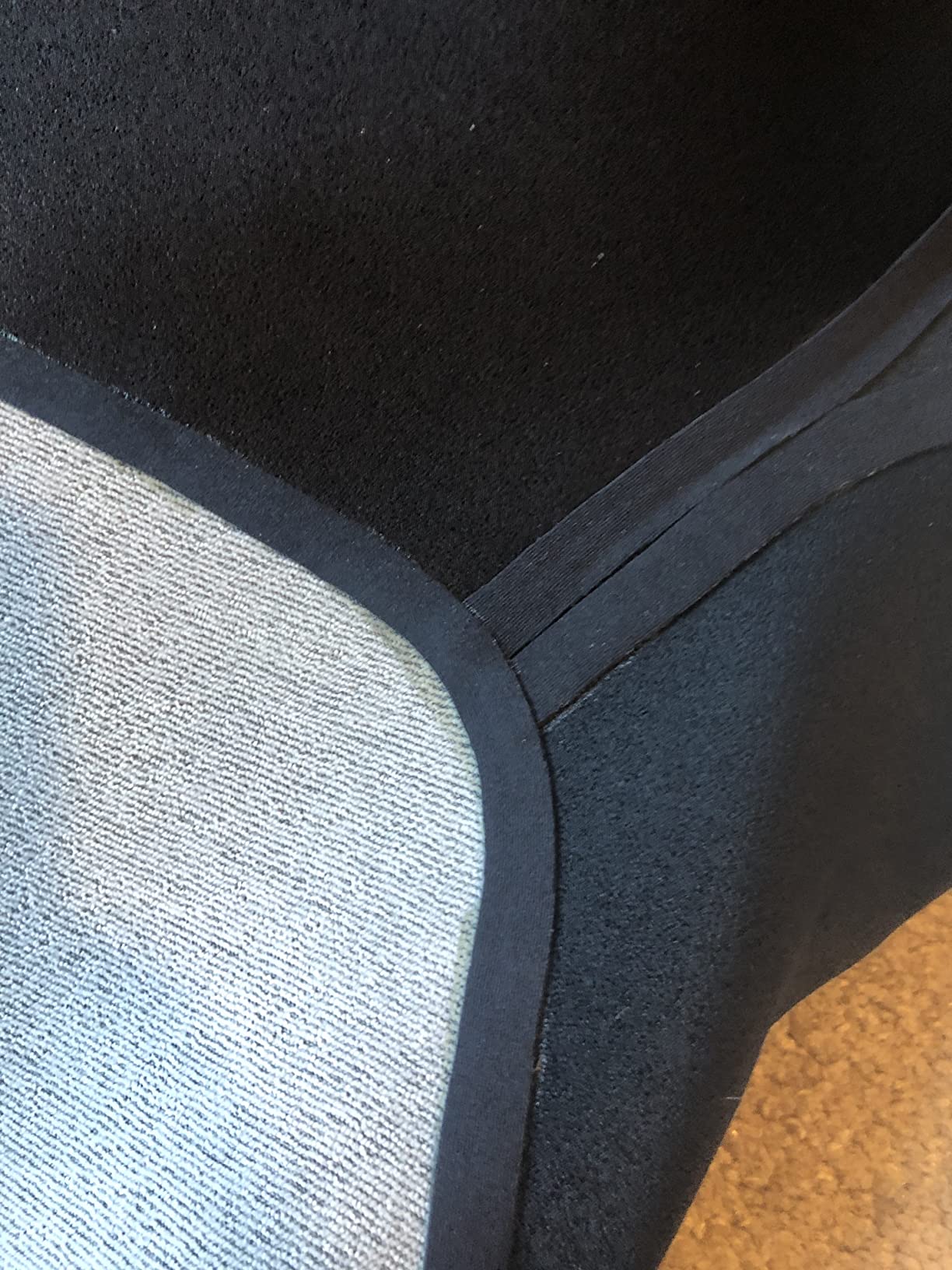
Buyers rate the warmth and flexibility at 4.2 across 107 ratings, and the manufacturer rates the 4/3mm version for water as cold as 51F, with the 3/2mm version rated for 56F and warmer. A key loop behind the chest zipper is a small quality-of-life touch for a car park key that is always wet.
Several reviewers also mention the customer service behind the brand as a genuine strength, with easy returns and replacements. For a suit bought in a size that runs small, that matters as much as the fabric.
Chest zip or back zip for cold water
A chest zip wins on shoulder mobility and stops water tracking down your back. The trade-off is entry: the opening sits in a colder, more exposed place, so a tight chest zip sends water straight to your sternum, and getting into one alone takes practice.
For most surfers who paddle hard, we would take the mobility. For anyone who struggles to get into a wet suit, a back zip with a long pull is simpler and warmer.
Where the Ho Stevie! falls short
The tight neck and chest zip is the most common complaint and appears in several reviews, with owners describing it as roughly a size smaller than expected. The suit also runs about an inch shorter in the body than the major brands, which pulls on the shoulders of shorter riders, so sizing up is the common fix.
There are also a few reports of seam stitching gaps and a lingering odor after use. With 107 ratings the sample is thinner than the leaders here, so treat the 4.2 as a reasonable read rather than a firm one.
4. Owntop 5mm Full Wetsuit – Best Budget Thick Suit
Owntop 5mm Wetsuit for Men Women, High Stretch Warmth Neoprene Suit
5mm neoprene body
4mm CR cuffs
GBS seams
Front YKK zipper
Rated to 50F
Pros
- Front zip is far easier to work than a back zip
- Real warmth for a 5mm at this tier
- Snug wrist and ankle cuffs cut water ingress
- Soft flexible neoprene that holds its seams
Cons
- Size chart runs small so most buyers size up
- Sleeves and legs run short on taller bodies
- Panel thickness is inconsistent in places
The Owntop is the one to buy when you want real millimetres for a small outlay. A 5mm neoprene body with 4mm CR neoprene cuffs and GBS seams is a serious cold-water specification, and the manufacturer rates it to 50F, which sits in the 5/4 band for practical purposes.
The front YKK zipper is the feature that surprised us most. Front entry on a 5mm suit is a real convenience, because the alternative is wrestling a thick suit over your shoulders while already wet, and it also means you can check the seal before you paddle rather than after.
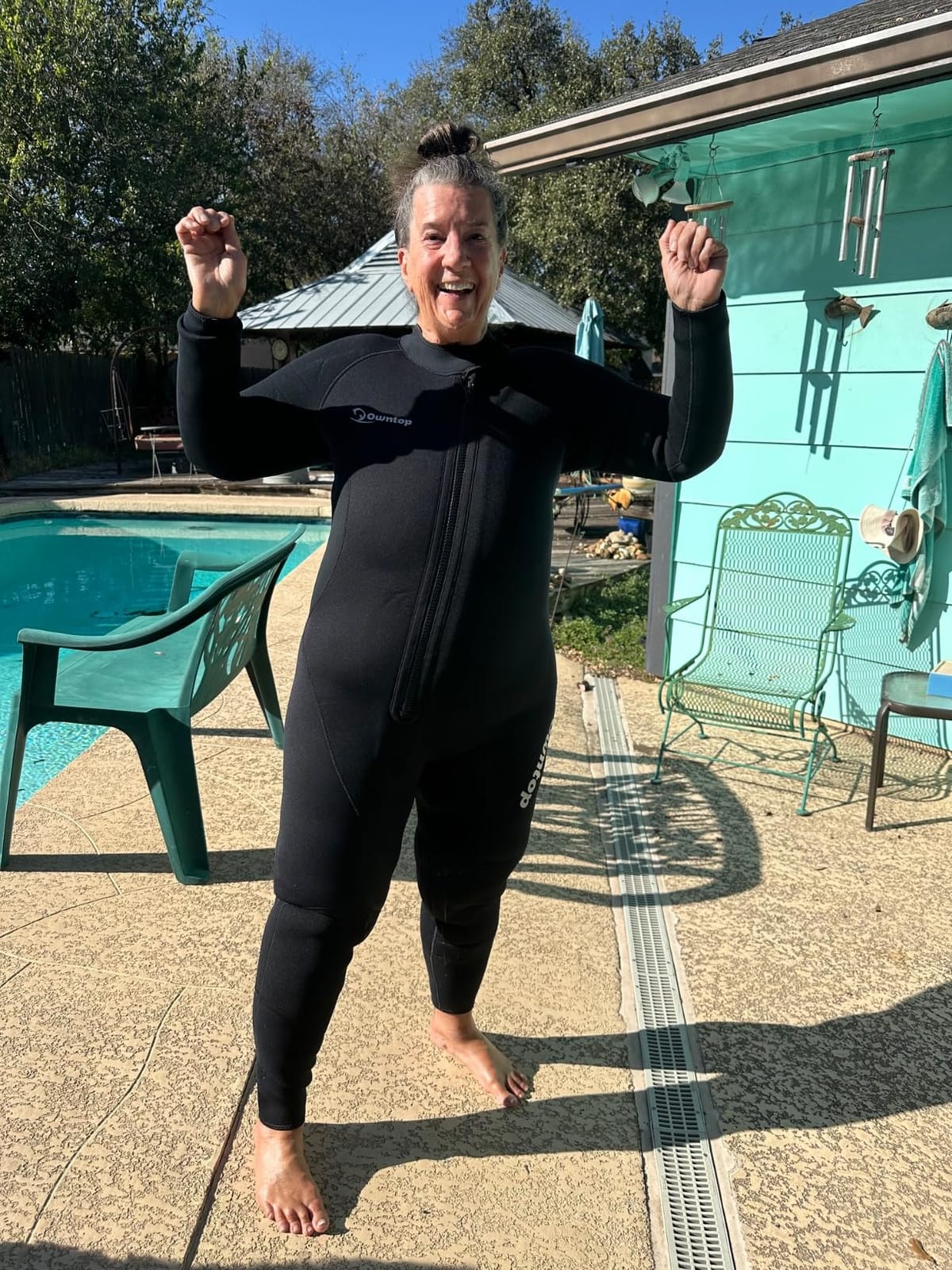
Buyers call it excellent value across 547 ratings at 4.2, and the UPF 50+ rating adds a benefit that matters for long summer sessions as well. The snug wrist and ankle closures are designed to limit water infiltration, which is the right approach for a suit in this temperature range.
Short-waisted and shorter buyers get specific praise for the leg length, which is unusual to see in a suit this thick. Whether that helps you depends on your proportions more than the brand chart.
Who the Owntop 5mm is built for
It suits surfers who paddle hard, sit in a cold line-up, and want a front zip they can manage alone. It is also a strong option for open-water swimmers and cold freshwater paddlers who need warmth more than a refined surf fit.
Add a hood and 5mm boots and it becomes a proper 45 to 50F suit, which is where the majority of winter sessions happen on the west coast of North America.
Where the Owntop 5mm falls short
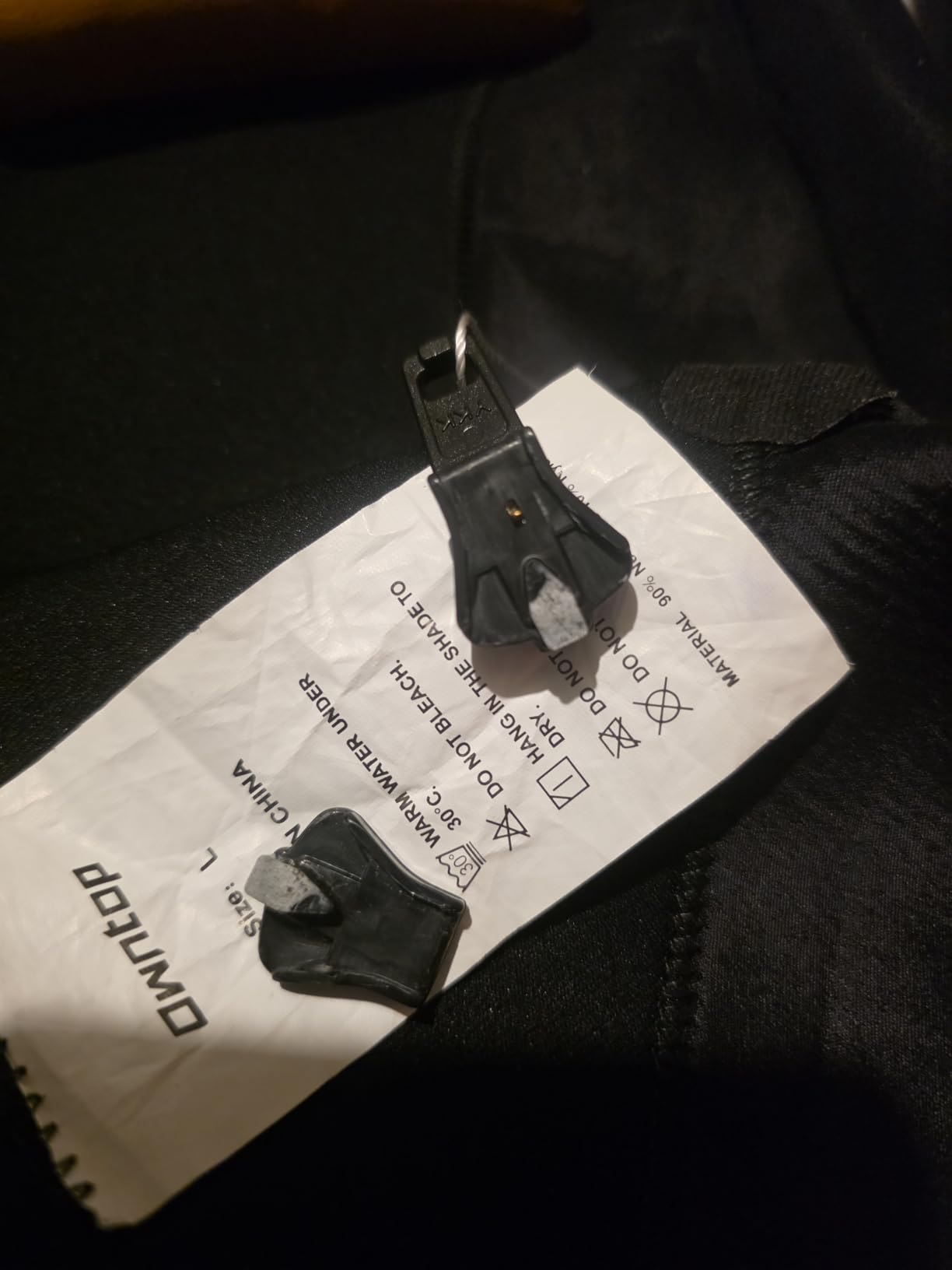
Sizing is the dominant theme in the reviews. The size chart is widely reported as running small, forcing many buyers up a size, and taller users report that the sleeves and legs come up short because the neoprene has limited lengthwise stretch. Measure arm and leg length, not just chest, before you order.
Some buyers also note inconsistent panel thickness and texture in places, which can feel uncomfortable against the skin. It is a fit and finish note rather than a functional failure, but it is the visible gap between this suit and a premium one.
5. Lemorecn 3mm Full Wetsuit – Best for Mild Water and Layering
Lemorecn Wetsuit Men 3/2mm Back Zip Full Wetsuits Black Blue(3031blackblue-L)
3mm neoprene body
2mm sleeves
Flatlock seams
Anti-abrasion knees
Rated to 55F
Pros
- Strong value for mild to cool water
- Flatlock seams sit flat and do not chafe
- Reinforced knees take board abrasion
- YKK 10 zipper with a long pull rope
Cons
- 2mm sleeves are thin in genuinely cold water
- Neoprene stretch is a step below premium brands
- Long sleeves on a 3mm body restrict colder sessions
The Lemorecn is not a deep winter suit, and treating it as one is the mistake that gets surfers cold. It is a 3mm full suit rated for 55F and warmer, which makes it a shoulder-season and layering piece, and a genuinely good one for the price.
The build is a 3mm neoprene body with a 3mm chest panel and 2mm sleeves, joined with flatlock seams. Flatlock is the lowest-cost seam type and it is comfortable, sitting flat against the skin, but it is also the seam type that lets the most water through, so it is the wrong choice for genuinely cold water.
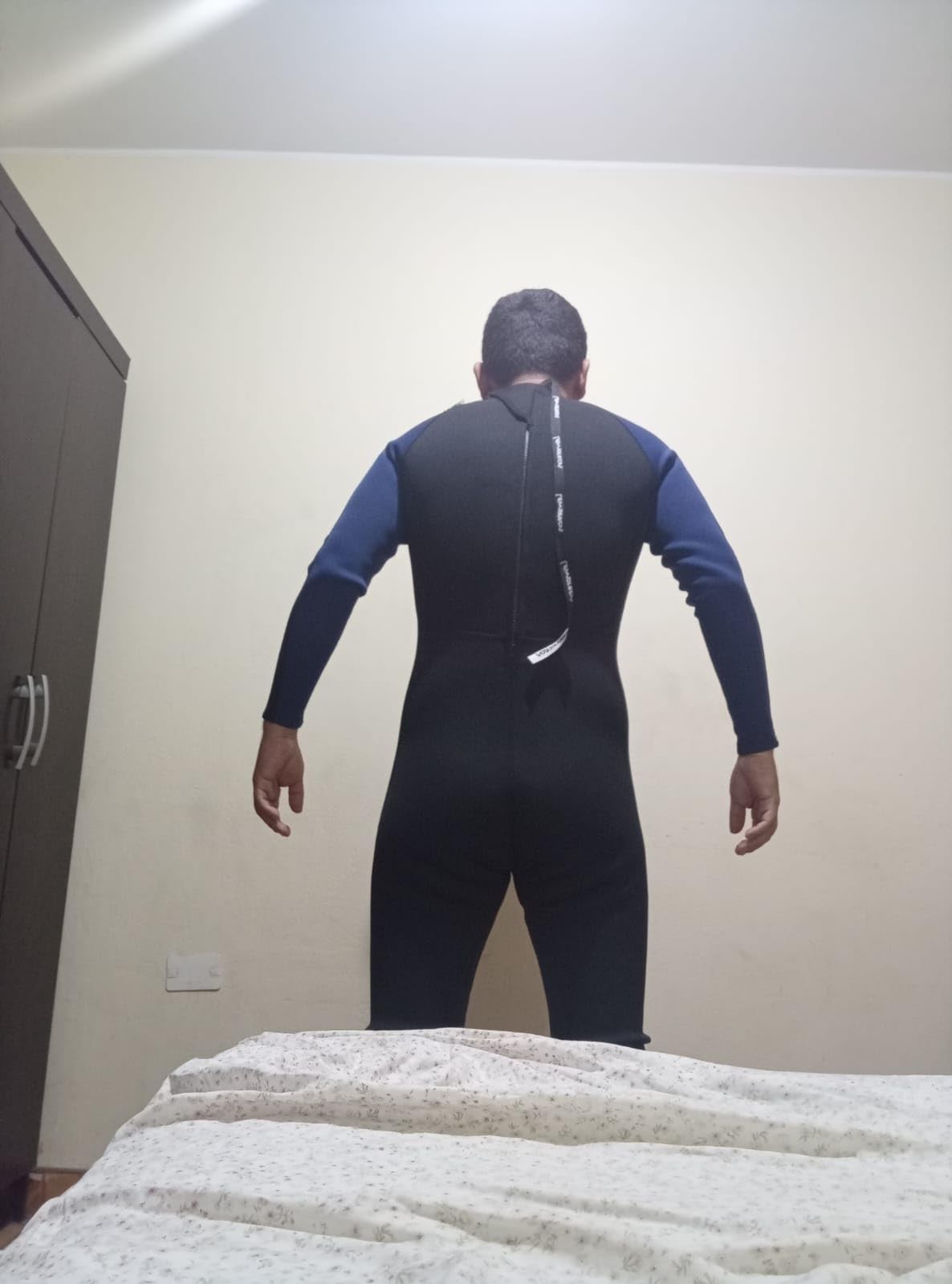
What reviewers consistently like is the anti-abrasion knee pads, the YKK 10# zipper with a long pull rope, and the fact that it packs down small for travel. The listing carries the top Best Sellers Rank in Full Wetsuits, and with 750 ratings at 4.4 the volume of buyer feedback is substantial.
The useful angle is layering. A 3mm full suit under a 5/4mm suit gives you a two-suit system for the same money as one premium suit, and the Lemorecn is a sensible base layer for exactly that reason.
When a 3mm suit is the right call
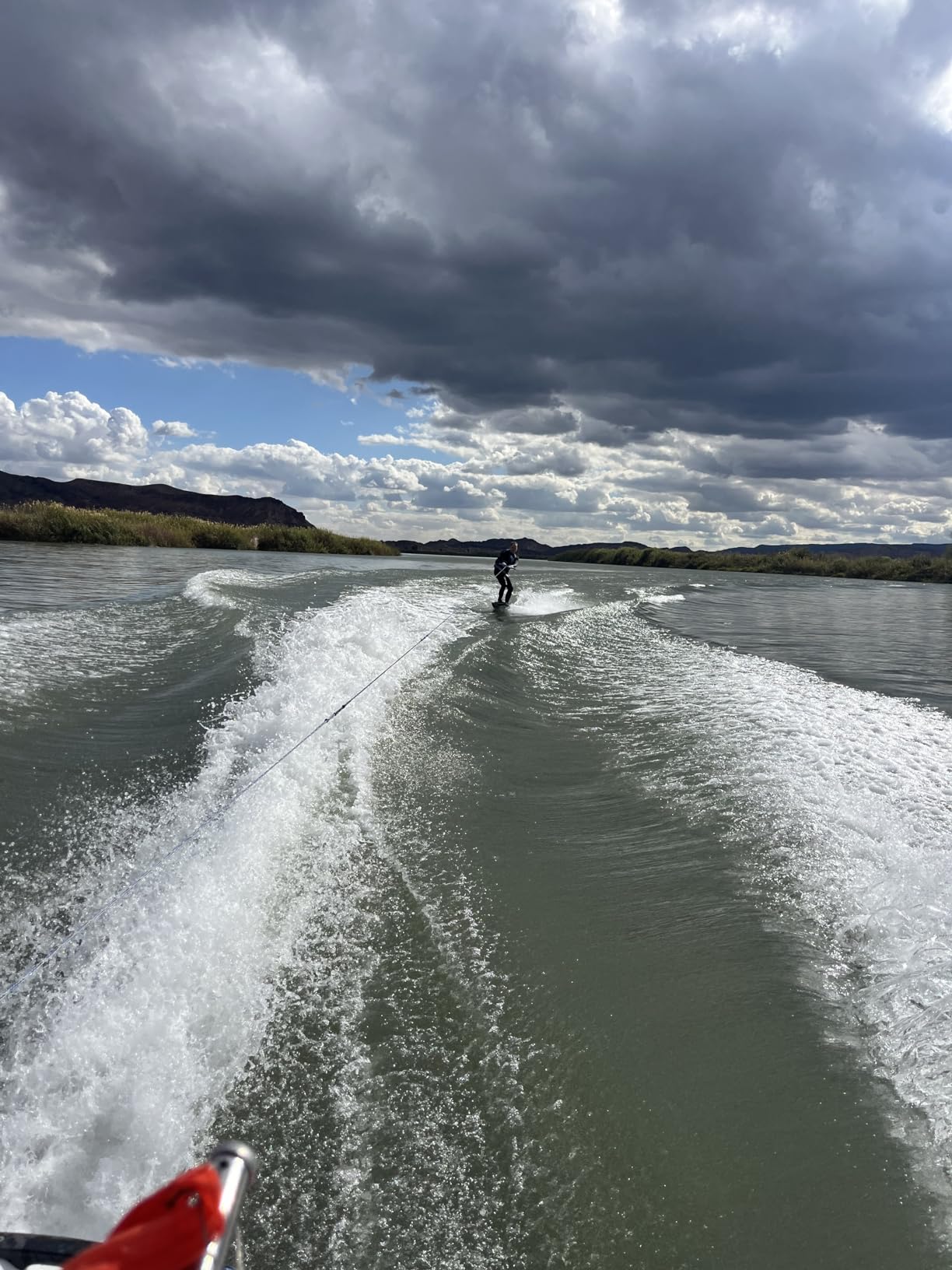
It is right at 55F and warmer, on a mild winter day, or as the inner layer of a two-suit system. For many surfers in the Pacific Northwest and the UK, the two-suit approach is how they get through January without a single very expensive purchase.
The 80% neoprene and 20% nylon construction also makes it lighter to carry than a thick suit, which matters if you are walking to a break in the cold.
Where the Lemorecn falls short
The 2mm sleeves are the honest limitation. They give less warmth in the arms and shoulders than the torso panel suggests, and arms and shoulders are exactly where you feel cold first during a paddle. In genuinely cold water, a long-sleeved 3mm suit can feel worse than a shorty because it traps the arms in thin neoprene without enough thickness to work.
The neoprene itself is a step below premium brands in stretch and feel. It is serviceable and soft, but if you are used to a high-stretch suit the difference is obvious in the first ten minutes.
6. Lansru 5mm SCR Neoprene Wetsuit – Best for Seamless Comfort
Lansru Men Wetsuit, 5/4 mm SCR Neoprene Wetsuits for Men,UPF 50+(M)
5mm SCR neoprene
4mm CR at neck and limbs
Seamless panels
Premium YKK front zip
Pros
- SCR neoprene stretches and warms better than common SBR
- Seamless neck and limb panels aid movement
- Skin-friendly patches reduce irritation
- Thickened knee pads protect on reef and board
Cons
- Fit runs snug so buyers size up
- New suits carry a strong neoprene smell for a few sessions
- Lining quality is a step below premium brands
The Lansru is built around SCR neoprene rather than the SBR rubber used in many budget suits, and that single material choice explains most of what reviewers like about it. SCR is more elastic and warmer at the same thickness, so a 5mm SCR suit behaves more like a thinner suit in terms of movement.
The seamless construction at the neck and limbs is the quiet feature here. Fewer seams means fewer cold spots and less chafing, and for a 5mm suit worn for hours, that is a real comfort difference rather than a marketing line.
There is 4mm high-elasticity CR neoprene at the neck and limbs, super-stretch yarn lining, skin-friendly patch design to reduce irritation, and thickened knee pads. The whole suit is OEKO-TEX Standard 100 certified, which matters if you are sensitive to the chemicals used in cheaper neoprene.
At 143 ratings and 4.2 the feedback is positive and consistent, centred on comfort rather than any major defect. UPF 50+ protection is also useful against sun, sea lice, and jellyfish.
Who the Lansru 5mm suits
It suits surfers who find thick suits uncomfortable, because SCR and seamless panels give back more mobility than a conventional 5mm at the same warmth. The skin-friendly lining also suits anyone who reacts to cheaper neoprene.
With a 5mm body and 4mm at the neck and limbs, it covers the 40 to 50F band well, and the front YKK zip makes solo entry straightforward.
Where the Lansru 5mm falls short
The fit runs snug, so buyers often need to size up, and the standard new-neoprene smell takes a few sessions to fade. The lining and neoprene quality are a clear step below premium brands, so you are paying for the material type rather than the finish.
It also has no integrated hood, which means below 45F you are adding one anyway. For surfers in the coldest water, that extra cost is worth building into the decision from the start.
7. WYYHAA 7mm Front Zip Full Body Suit – Best for Deep Cold
Wetsuits Men’s Ultra Stretch 7Mm Neoprene Full Suits Long Sleeve, Winter Warm Front Zip Full Body Diving Suit for Snorkeling Scuba Diving Swimming,4XL
7mm neoprene
4-thread flatlock seams
Front zipper
Wrist and ankle zippers
Pros
- The thickest neoprene in this group and the most built-in warmth
- Front zip plus wrist and ankle zips make solo donning easy
- Holds up to barnacle and rock abrasion over months
- Consistent fit across a wide size range
Cons
- Runs small and even sizing up can be difficult
- Hard to pull down over the shoulders when wet
- Arms and legs can run short in the largest sizes
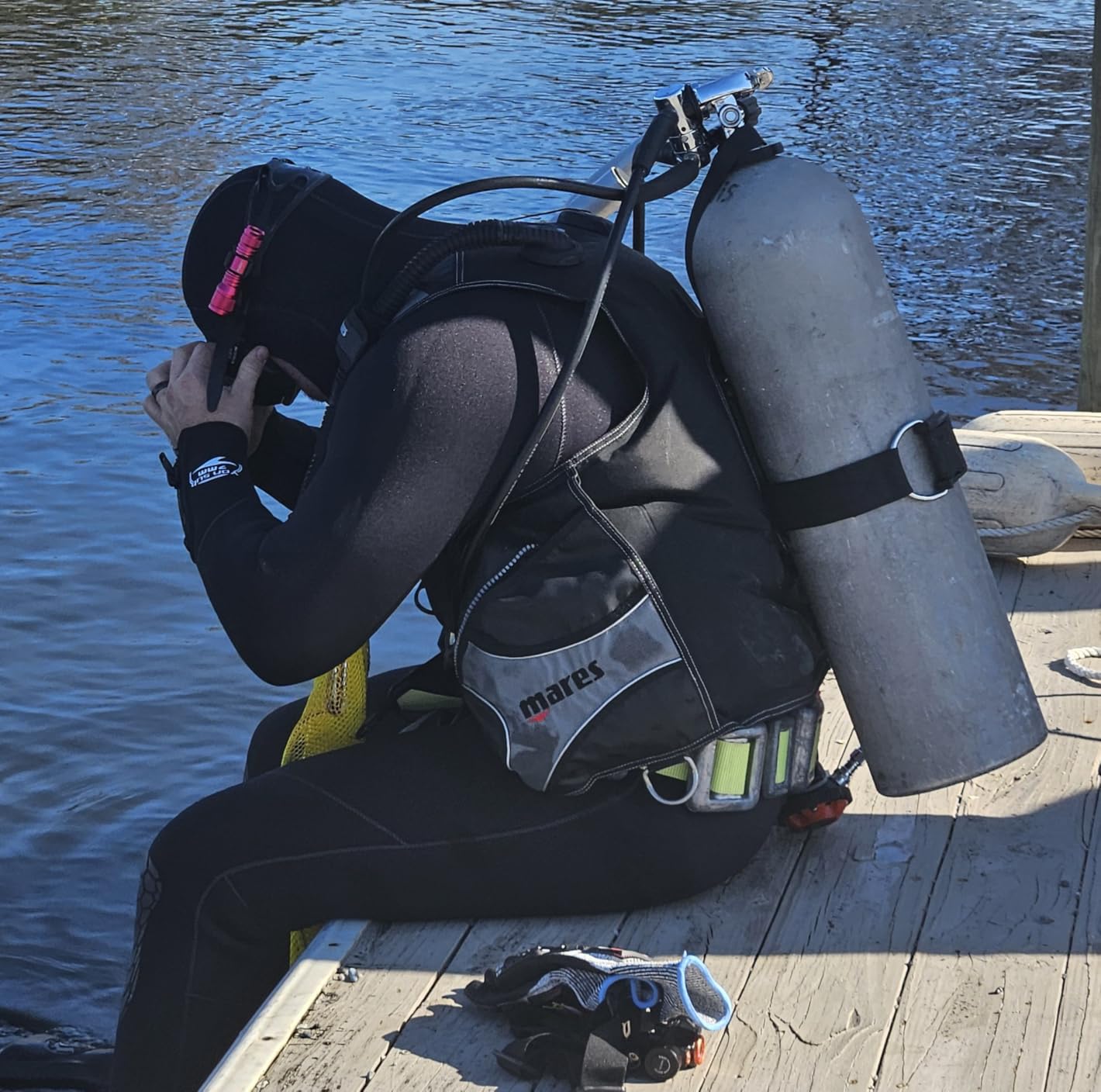
Seven millimetres is the thickest neoprene in this roundup, and it is the answer for genuinely cold freshwater and the lowest water temperatures we discuss here. Divers report multi-hour sessions in water in the 50s and 60sF with it, and cold freshwater surfers tend to rate it on how long it keeps them functional rather than how warm it feels on the beach.
The entry system is what separates it from most 7mm suits. Instead of a single back zipper, you get a front zipper with a long strap plus wrist and ankle zippers, which means you are not dragging a thick wet suit over your head and shoulders alone in freezing water. That is a safety feature as much as a comfort one.
The 4-thread flatlock stitching is designed to preserve neoprene stretch through the seams, and a UV protection coating layer adds a bonus for long sessions in bright low sun. Durability is a genuine strength, with reviewers reporting the suit holding up to barnacle and rock abrasion over months of regular use.
At 4.0 across 174 ratings it is the lowest-rated suit in the group, and the reason is fit rather than function. The warmth and the entry system do exactly what they claim.
How cold is too cold for a 7mm
Below 40F, a 7mm suit with a hood is the practical starting point for surfers who want to keep paddling. Cold freshwater surfers on lakes, and winter surfers in northern latitudes, generally treat it as the minimum rather than the maximum.
The specification is rated for water below 53.6F, which in practice means it covers the whole 40s and the 30s comfortably. Add 7mm boots and gloves, because hands and feet fail long before the torso does.
Where the WYYHAA 7mm falls short
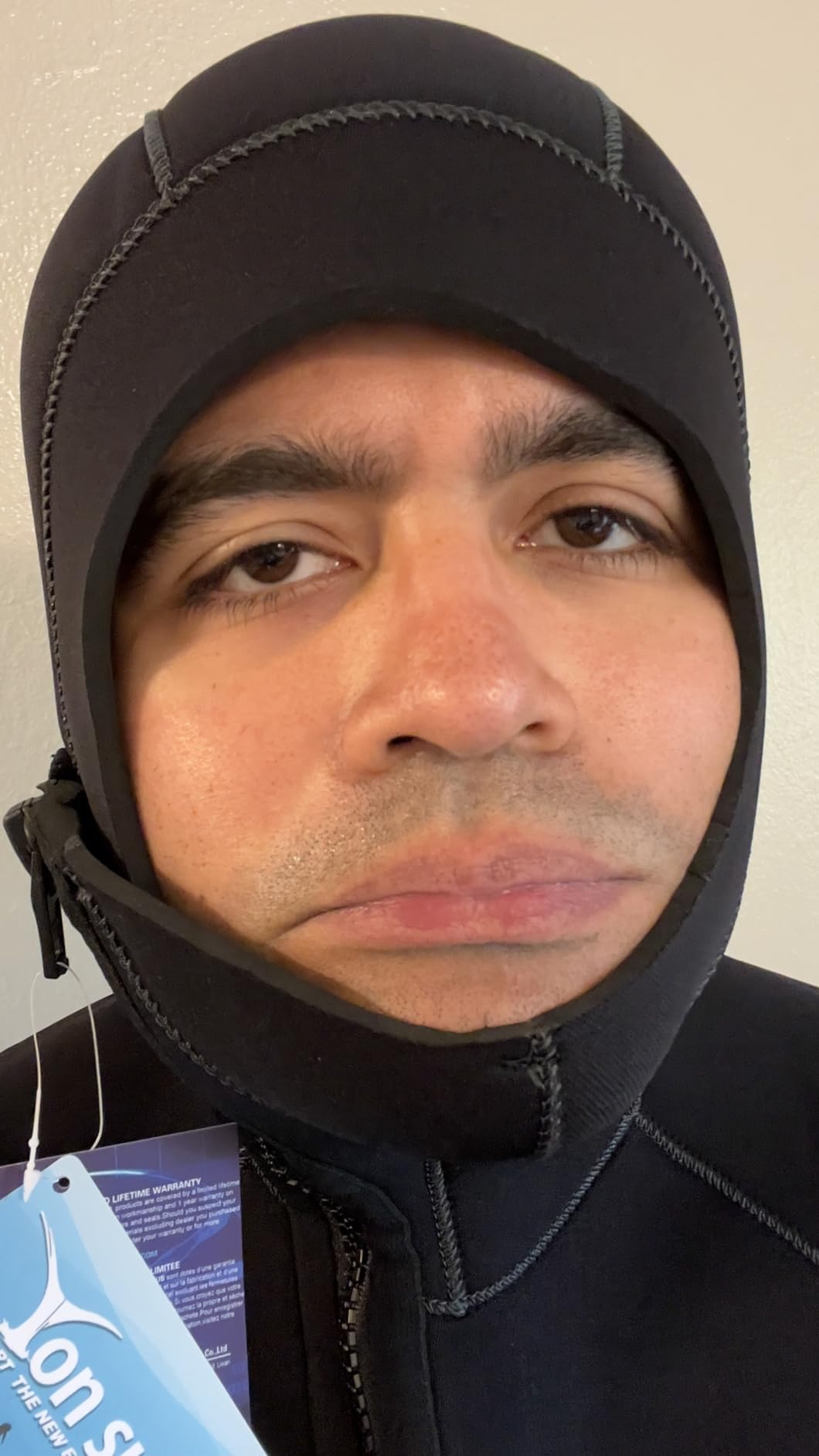
Sizing is the persistent problem, and it is severe enough to plan around. The suit runs small, and even sizing up two sizes can leave it hard to get on, which matters more here than on a 3/2mm because the neoprene is so thick. Follow the weight-first guidance in the listing rather than the height.
It is also difficult to pull down over the shoulders when wet, often needing help, and the arms and legs can run short in the largest sizes. Some reviewers find it restrictive compared with refined premium 7mm suits, and at this thickness a small fit error costs you a lot of session time.
8. Dark Lightning 3/2mm Full Wetsuit – Best for Everyday Surfing
Dark Lightning Full Body Wetsuits for Men,Wet Suit for Cold Water Swimming, Mens Diving Surfing Snorkeling Kayaking Triathlon Wetsuit, Black,3/2mm, Large
3/2mm stretch neoprene
Back zip with extended leash
Rated 58-68F
All-black styling
Pros
- Comfortable warmth for 58-68F water
- Back zip with an extended leash is simple and reliable
- Clean all-black styling suits any body type
- Mens and womens versions in the same family
Cons
- A 3/2mm will not carry you through cold water alone
- Back zip entry is less convenient than a front or chest zip
- Basic neoprene stretch
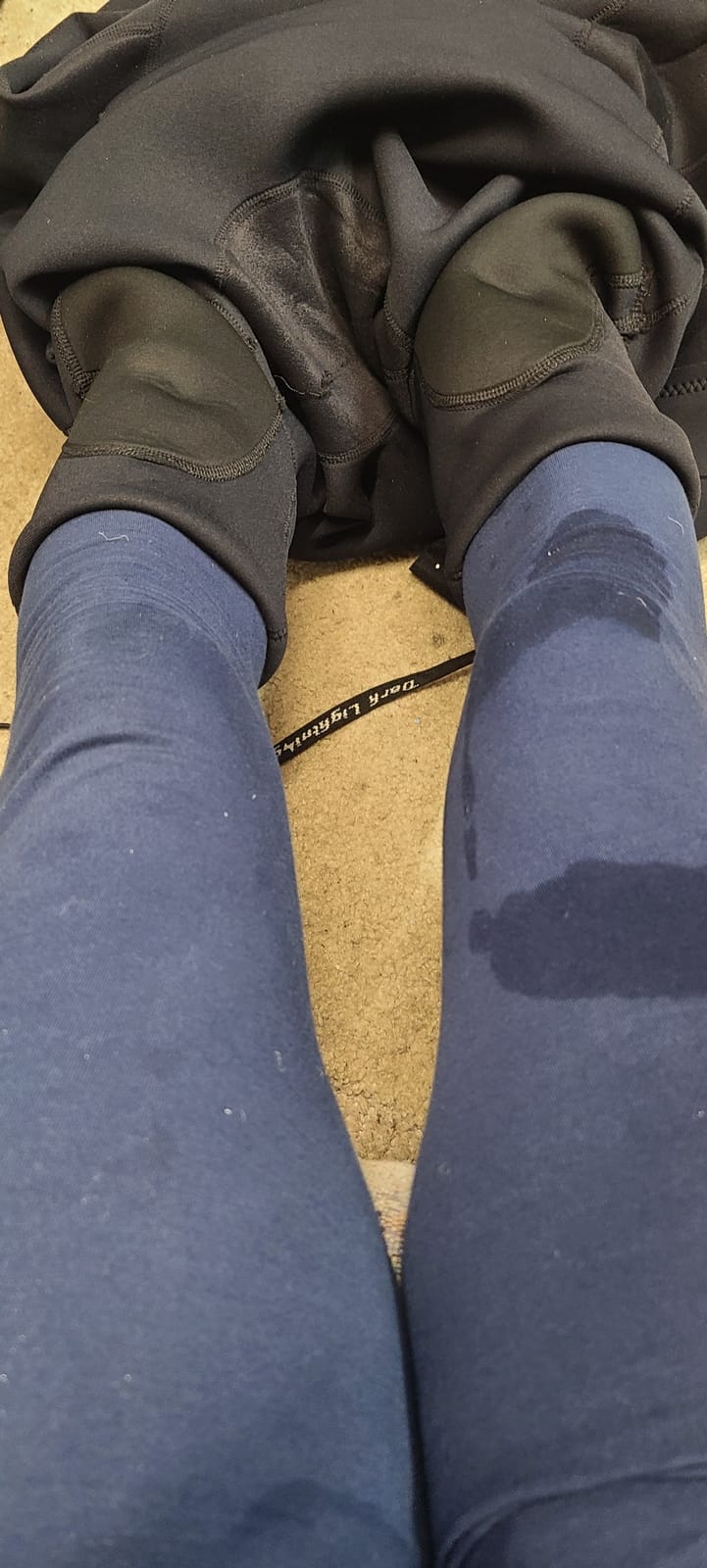
The Dark Lightning is a 3/2mm suit for 58 to 68F water, which covers most temperate surf breaks and a good part of the shoulder season. It is a clean, unremarkable daily suit, and that is exactly why it is on this list: it is the piece you wear on the days that are not winter.
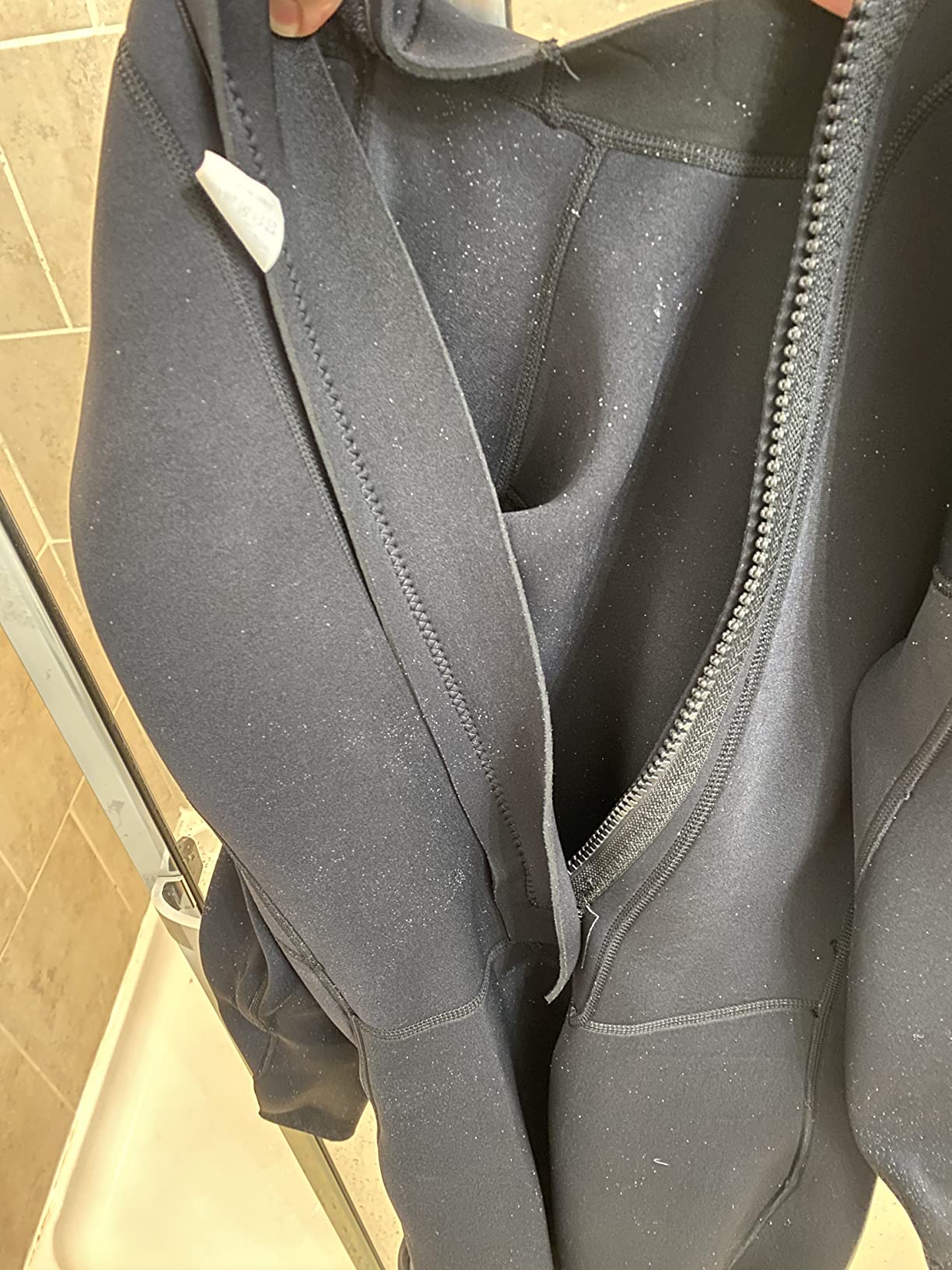
The construction is a high-elasticity 3/2mm neoprene with a traditional back zipper and an extended leash, plus all-black minimal branding. Nothing about it is exotic, and nothing about it gets in the way while you paddle.
Owners treat it as a solid, inexpensive full suit for mild to cool water, and the sizing chart has been updated based on customer feedback. With 316 ratings at 4.4, it sits comfortably in the middle of our group on satisfaction.
The brand runs men’s, women’s, and shorty variants in the same family, which is useful if you want a matching suit for a partner rather than a single cold-water purchase.
When a 3/2mm is the right suit
For 58F and warmer, it is a genuinely comfortable suit with no vest required. That range covers a lot of the year in the southern hemisphere and the milder months in the northern hemisphere.
It also works as the outer layer over a shorty for cold freshwater, and the shorty and full versions share the same sizing logic, so mixing them is straightforward.
Where the Dark Lightning falls short
A 3/2mm will not carry a surfer through genuinely cold water on its own, and buyers are clear about that. Back zip entry is less convenient than a front or chest zip, which is the usual trade-off for a simpler, cheaper design.
The neoprene stretch is basic compared with premium brands, so the suit is less forgiving during a long paddle. If your water drops below 55F for more than a few weeks a year, this is a layering piece rather than your winter suit.
9. O’Neill Reactor-2 3:2mm Women’s Back Zip Wetsuit – Best for Women’s Entry
O’Neill Women’s Reactor-2 3:2mm Back Zip Full Wetsuit, Black/Black, 10
3:2mm Ultra Stretch neoprene
Back zip with water-resistant closure
Smoothskin panels
Pros
- Soft neoprene feels comfortable from the first session
- Minimal seam placement reduces chafing
- Wind-resistant smoothskin adds warmth without bulk
- Backed by a one-year repair or replace warranty
Cons
- A 3:2mm needs layering in cold conditions
- Back zip is awkward to work when the suit is wet
- Some buyers report a loose fit across the small of the back
Women’s cold water coverage is thin in most roundups, so it is worth being specific here. The Reactor-2 is a 3:2mm back zip suit from an established surf brand, and it is a genuinely good first or second wetsuit rather than a scaled-down men’s pattern.
What makes it work is the panel layout. Seamless paddle zones with minimal seam placement cut down on chafing in exactly the areas that cause problems for longer sessions, and wind-resistant smoothskin panels add insulation without adding bulk under a wetsuit or a spring suit.
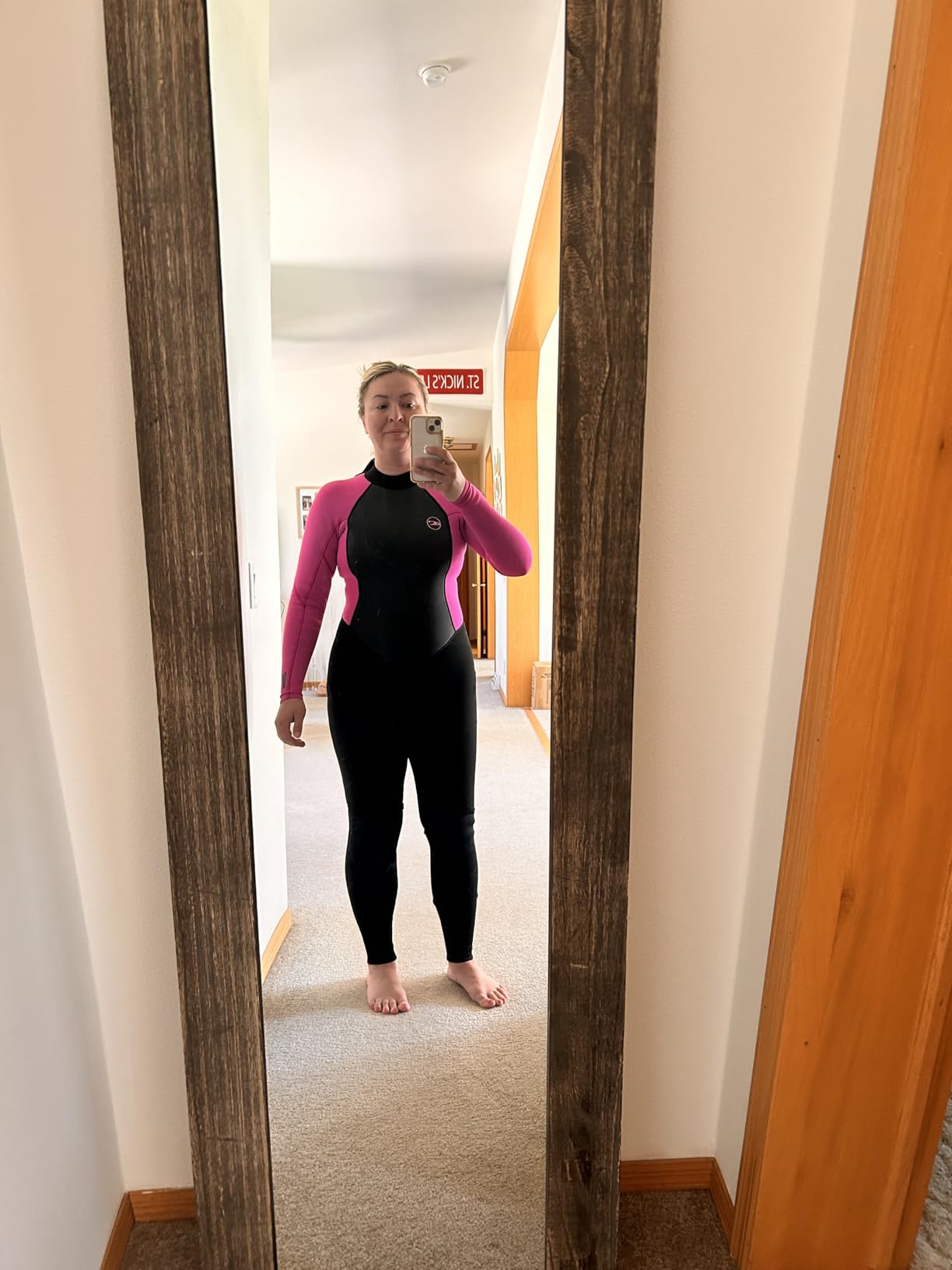
Reviewers rate the softness of the Ultra Stretch neoprene as the standout quality at 4.4 across 478 ratings, and the one-year repair-or-replace warranty from O’Neill is a meaningful difference in a segment where many suits carry no warranty at all.
The size 10 is specified for a 34 to 36 inch chest, a 29 to 30.5 inch waist, and a height of 5 foot 6 to 5 foot 8, which is the kind of detail worth measuring against before you order.
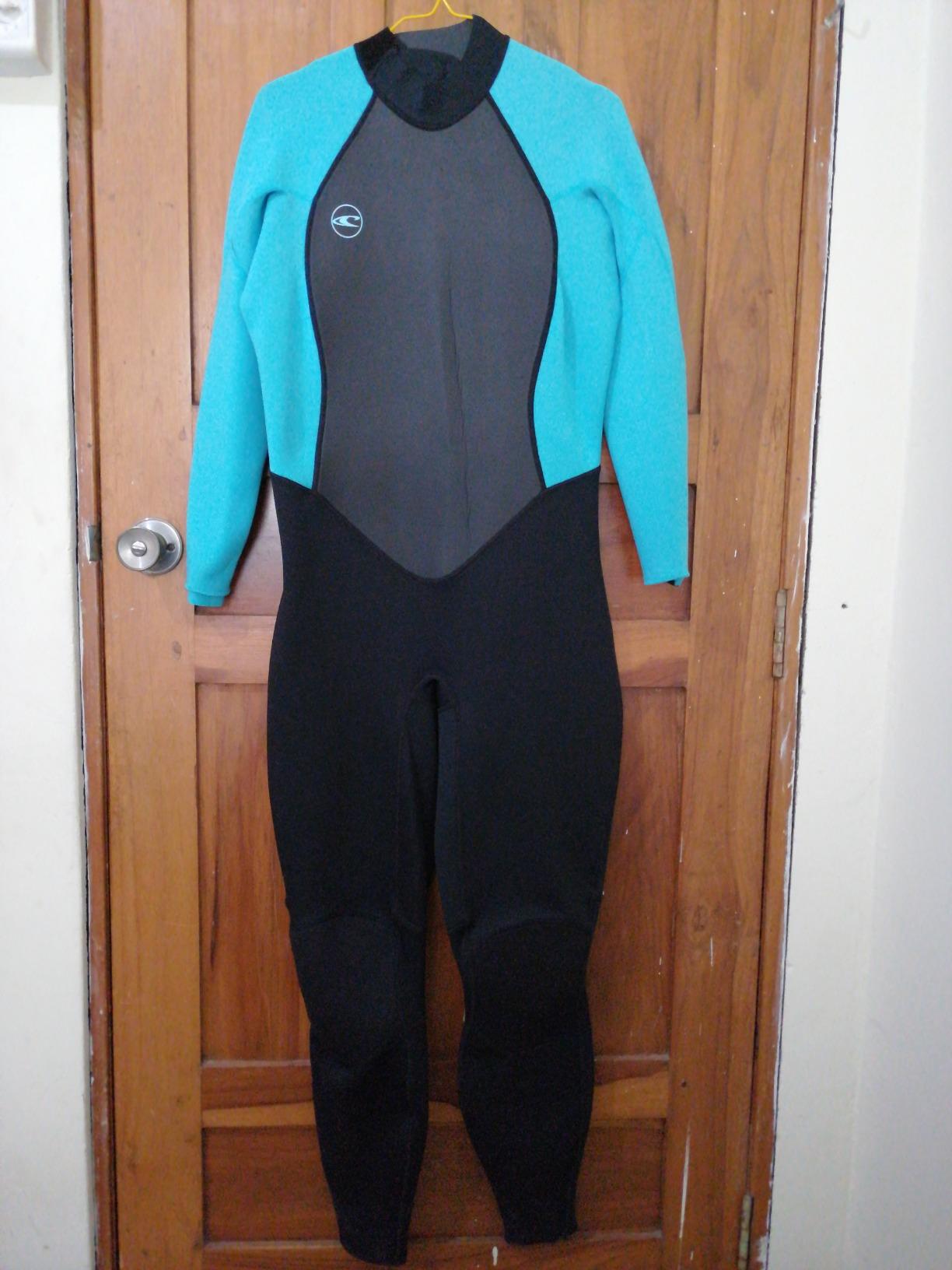
Is a wetsuit cut differently for women
Yes, and it is not only a size range. Womens patterns adjust the torso length and bust shaping so the suit does not ride up or gap when you move, which matters more in a thick suit than in a 3:2mm. A men’s suit in a larger size will fit a taller female surfer poorly through the chest and shoulders.
For cold water, the fit question is sharper still, because a gapping suit flushes cold water into the gap. If you can get a womens pattern to fit, it will hold warmth better than a stretched mens suit of the same thickness.
Where the Reactor-2 falls short
A 3:2mm is built for mild water, and it needs layering in cold conditions. That is the honest limit of the product, and for true winter surfing you would size up into a 4/3mm or 5/4mm womens pattern from the same brand.
The back zip is awkward to work alone once the suit is wet, and some buyers report a loose fit across the small of the back in the womens sizing, which is a flushing risk in cold water. Check that measurement specifically when you order.
10. O’Neill Epic 3:2mm Back Zip Full Wetsuit – Best for Seasonal Layering
O’Neill Men’s Epic 3:2mm Back Zip Full Wetsuit, Black 2, Medium
UltraFlex neoprene
Fluidflex Firewall panels
Glued and blindstitched seams
Back zip
Pros
- Very soft super-stretch neoprene that is easy to pull on
- Tailored fit does not push the stomach up
- Strong value for occasional cold-water days
- Fluidflex panels add wind protection
Cons
- Not built for daily year-round surfing
- Neck velcro catches and frays the lining over time
- Some orders arrive in a prior-season colorway
The Epic 3:2mm shares the construction language of the 4/3mm Epic at the front of this list, which means UltraFlex neoprene in the shoulders, arms and lower body, Fluidflex Firewall panels across the chest and back, and glued and blindstitched seams with a double super seal neck.
That makes it a strong seasonal piece. Owners rate it as an excellent value for occasional cold-water use, and the softness of the neoprene means it is easy to pull on and off, which is a genuine advantage when you are getting in and out of a thick suit on a cold beach.
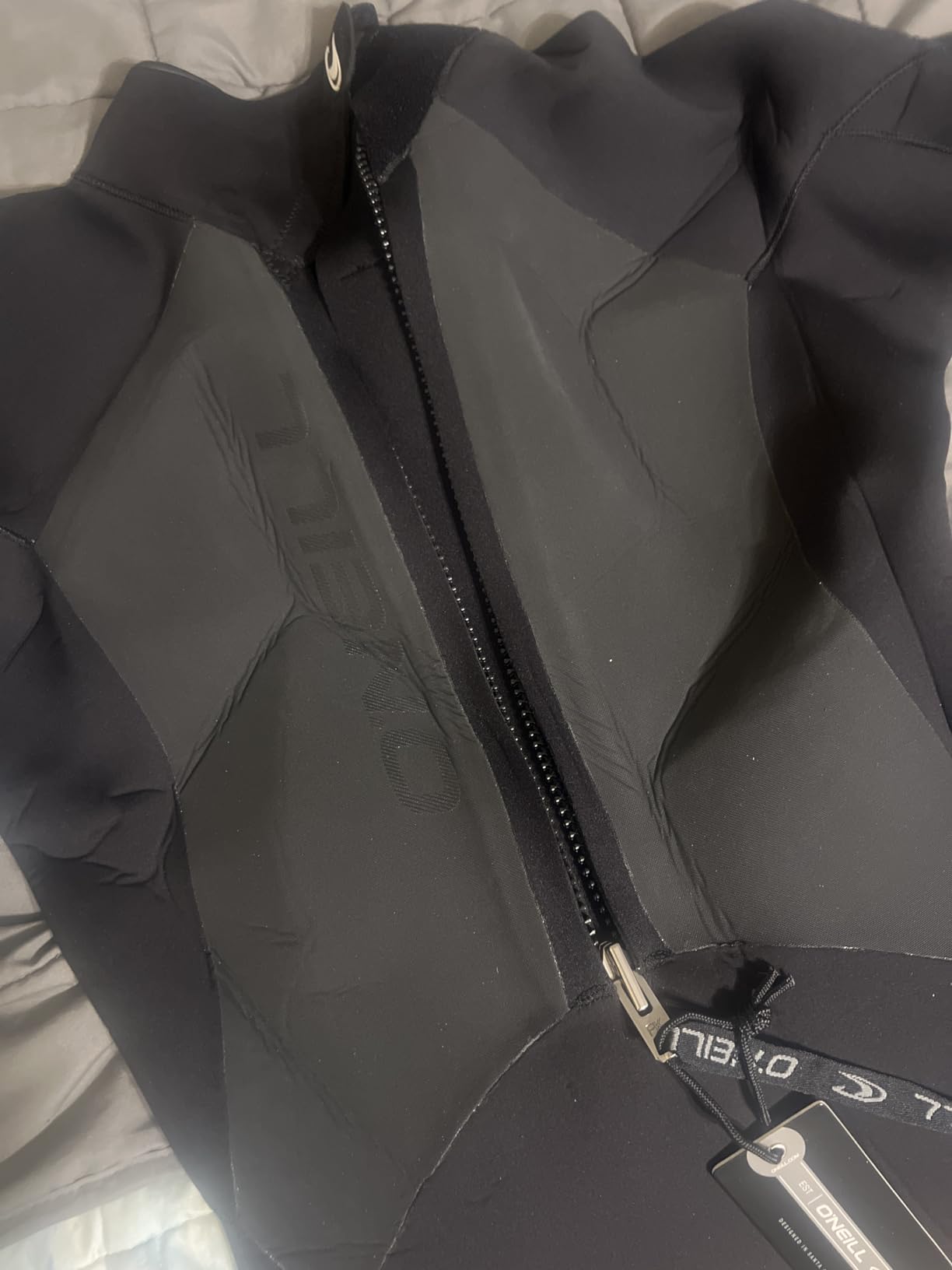
The tailored fit is another recurring theme, with reviewers noting that it sits comfortably without pushing the stomach up, which is a common problem with back zip suits in the 3:2 range. At 4.4 across 269 ratings it performs in line with the rest of the O’Neill group here.
Fluidflex Firewall panels add wind resistance across the core, and Krypto Armor knee pads and a corrosion-proof back zipper with a key pocket match the durability features of the thicker model.
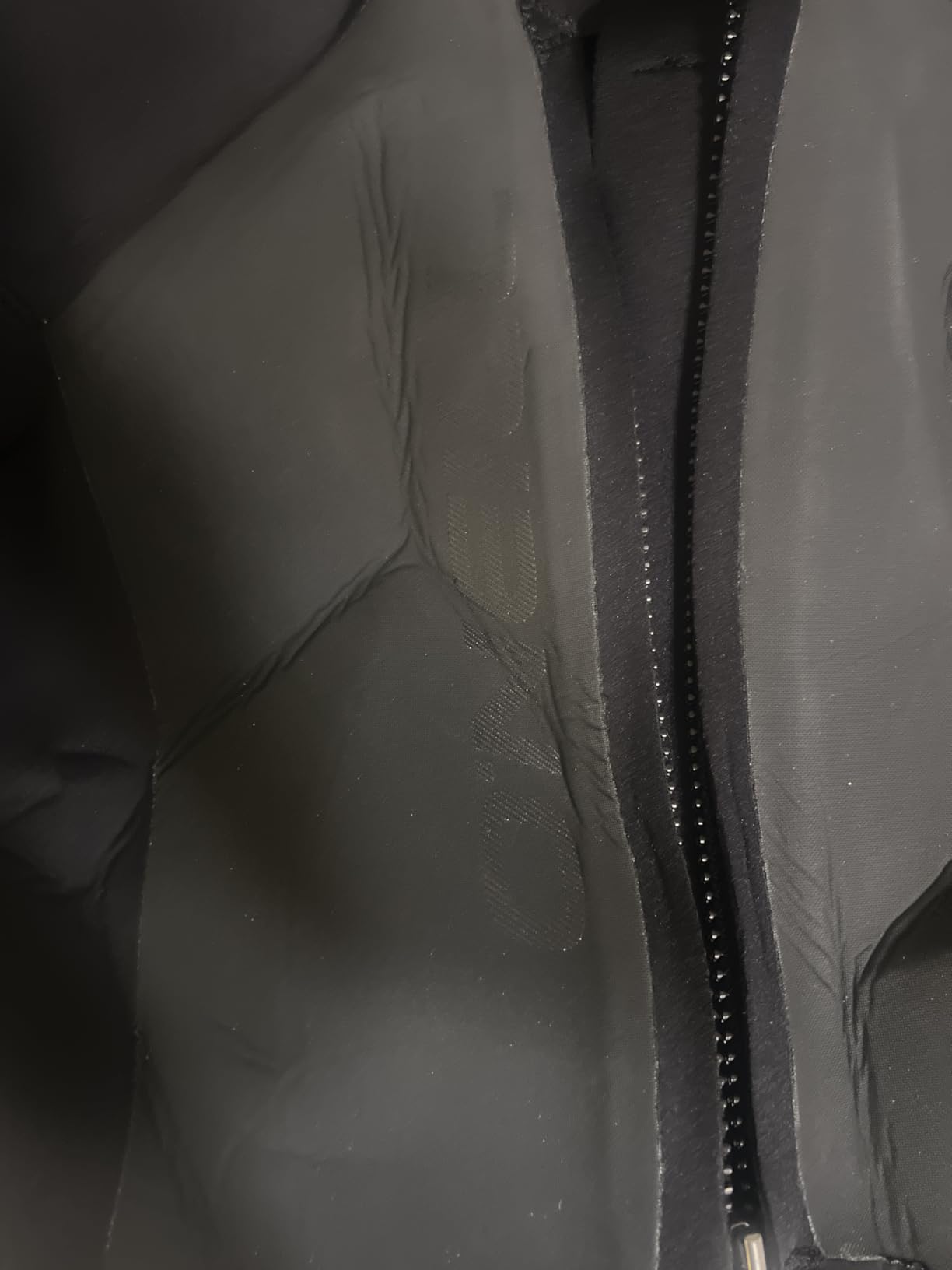
Is a 3:2mm enough for occasional winter surfing
For a handful of cold days a year, yes, particularly with a 4/3mm under it or a neoprene vest over the top. It is also the natural companion to the Epic 4/3mm if you surf at a break where the water swings between 50F and 62F across a season.
What it is not is a daily winter suit. The thickness simply is not there for sustained sessions in the low 50s.
Where the Epic 3:2mm falls short
Durability is the main limit, and reviewers are explicit that it is not built for daily year-round surfing. It is a suit for seasonal use, and treating it as a daily driver is how seams start to go early.
The neck velcro lining is also reported as catching and fraying the neoprene over time, which is the same recurring annoyance we see on the 4/3mm model. Some buyers received a prior-season colourway rather than the one pictured, so check what is actually in the box.
How to Choose a Cold Water Wetsuit
Every suit on this list is defensible, and the wrong one is easy to buy if you skip this process. Six steps get you to the right answer.
1. Measure the water, not the air. Find the water temperature at your break for the months you actually surf, not the annual average. Air temperature changes how you feel, but thickness is chosen against water. If you cannot find a local figure, ask other surfers at the break, which is also the most reliable source on fit.
2. Pick the thickness from the chart above. Choose for the coldest water you will realistically surf, not the average. A 4/3mm rated to 51F that is comfortable at 50F becomes a cold-water suit when the water drops to 45F, and a 5/4mm is the step that solves it.
3. Choose the neoprene. SCR is warmer and more elastic than the SBR rubber used in many budget suits, and limestone-based neoprene stretches well while staying durable. Premium Japanese neoprene from makers such as Yamamoto and Asahi is lighter and warmer still, and surfers who name those brands repeatedly in r/surfing threads usually mean less fatigue, not more raw insulation.
4. Choose the seams. Flatlock is the cheapest and most comfortable against the skin, but it lets water through the stitch holes. GBS, meaning glued and blind-stitched, is the practical cold-water standard because the glue seals the seam. Liquid-sealed and taped seams go further, and for a winter suit that is money well spent.
5. Choose the zip and the hood. Front and chest zips are easier to work and free the shoulders, while back zips are simpler and warmer at the entry point because the opening sits on your back. Below 50F, treat a hood as mandatory: the neck and head are the largest heat leak you will ever have.
6. Check the fit before you commit. A cold water suit must not gap. Try it on, or measure chest, waist, arm length, and leg length, and treat a snug suit as needing a size up in this group because most brands here run small. Manufacturers of premium neoprene also recommend sizing up more often than not, since a tight suit restricts the paddling that keeps you warm.
One question deserves its own answer, because it comes up constantly: is a modern suit actually warmer than the 15-year-old one it replaces? Modern neoprene is lighter and stretches better at the same thickness, which mostly buys you flexibility and a longer session rather than raw warmth. If your old suit was a 4/3 and the water is now colder, upgrade the thickness rather than expecting a new generation of fabric to do the work.
It is also worth knowing which brands you will not find on a general shopping list. In r/surfing threads on winter suits, Matuse, Feral, Patagonia, Moonsuits and Mollusk come up repeatedly as names surfers trust, and a commenter recommending a budget option pointed specifically at Mollusk. These are largely shop-direct and specialist lines, so if you want a 6/5/4 from one of them, expect to buy in person or through their own site.
Neoprene Jargon in Plain English
Wetsuit marketing is heavy with compound nouns, so here is what the terms actually mean when you are choosing a cold water suit.
SCR and SBR are the two rubber bases. SBR is the oil-based synthetic rubber used in most budget suits, and it is heavier and stiffer. SCR is the chloroprene rubber used in better suits, and it is more elastic and warmer at the same thickness. A 5mm SCR suit usually moves like a thinner suit, which is why the Lansru feels lighter than the Owntop despite the same millimetres.
Limestone-based neoprene uses calcium carbonate from limestone rather than petroleum, and it stretches further, feels smoother against the skin, and resists odours and breakdown better over time. The Ho Stevie! suit uses this type.
Japanese neoprene from makers such as Yamamoto and Asahi goes further, using a finer cell structure that makes the foam lighter and more flexible. The practical effect is a suit that is warmer for its thickness and easier to paddle in for hours, which is why surfers describe premium cold suits as warm and flexible rather than just thick.
Yulex is a plant-based rubber made from renewable and recycled materials, and it appears most often in Patagonia suits. It suits surfers who want lower impact, and the trade-off is that it is a different feel from conventional neoprene.
Technobutter, E5, Eco-Black Carbon, graphene linings are all branding for liners and compounds that add a thin layer at the skin to reduce heat transfer or add stretch. They help, and they are not a substitute for thickness. A thin suit with a good liner is still a thin suit in 40F water.
On forums, the recurring question is whether premium neoprene is worth paying two or three times more for. The honest answer is that you pay for a lighter suit that stays warm through a long session and lasts longer, not for a bigger jump in raw insulation. If you surf four or more times a week in winter, the cost per season is the number to compare, not the sticker price.
Cold Water Accessories: Hoods, Gloves and Booties
A good wetsuit leaks heat through the neck, the head, the hands, and the feet long before it fails through the torso. Accessories close those four gaps, and they are usually the highest-value upgrade in cold water surfing.
Hoods. Below 50F, treat a hood as mandatory rather than optional, which is the single most consistent piece of advice in cold water forums. As for thickness, match the hood roughly to the body: a 3mm or 5mm hood for a 5/4mm suit is a sensible pairing, and a 6/5/4 or 7mm suit benefits from a 5mm or 7mm hood. A hood that is too thin sits fine until you have been in the water for forty minutes, and then the head is what you feel.
Gloves. 5mm gloves are the practical winter choice for 40 to 50F water, with 7mm mitts for the coldest sessions. Your hands are needed for the paddle, so glove thickness is a direct trade against grip and feel, and 5mm is the balance most surfers land on.
Booties. Match the thickness to the suit, so 5mm booties with a 5/4mm and 7mm booties with a 6/5/4 or 7mm suit. Split-toe designs are worth the extra for feel on a surfboard, and surf-specific boot flex grooves are the difference between a boot that paddles quietly and one that splashes every stroke.
Under the suit. A neoprene vest under a full suit adds a meaningful amount of warmth in marginal water, and a merino or synthetic base layer over the top of a 4/3mm extends the range. Our guide to base layers for cold weather covers the material choices. The trade-off for layering is a two-piece entry, so it suits surfers who are not changing on a windy beach in the dark.
Whatever the suit, carry a change of warm layers and a dry towel, and set an exit time before you paddle out. Cold water is survivable when you plan for it and dangerous when you do not.
Wetsuit Care and Lifespan
A 5mm or 7mm suit is a significant purchase, and a few minutes of care after every session decides whether it lasts two seasons or five.
Rinse in fresh water. Rinse with cold fresh water straight away, especially in freshwater, where salt, algae and sand cut into the neoprene. Salt crystallises in the foam and dries out the material from the inside.
Dry in the shade. Hang the suit on a wide hanger, out of direct sun, with the zip open so air moves through the chest. A narrow hanger stretches the shoulders, which is exactly where a full suit fails, and direct sun cooks the foam and fades the panels unevenly.
Do not fold or crush. Never fold a wetsuit along a seam, and keep it off hot surfaces including a car dashboard or a radiator.
Repair early. A small tear or an opened seam is an easy fix with a repair kit, and gluing it properly beats a patch. Once a seam lets water through, that patch area loses heat for the rest of its life.
On when a 4/3mm is genuinely finished: the neoprene feels thin and pitted rather than soft, the seams are opening, or the suit has lost its stretch and no longer seals at the neck or ankles. At that point a 4/3mm cannot be rescued by a vest, and moving up to a 5/4mm is the fix, not more layers.
Frequently Asked Questions
What thickness wetsuit should I get for surfing?
Match the suit to the coldest water you will surf. A 3/2mm suits 60F and warmer, a 4/3mm suits 55F, a 4/3mm with a hood covers 50 to 55F, a 5/4mm covers 40 to 50F, and below 40F you want a 6/5/4 or 7mm plus 7mm boots and gloves.
What temperature is a 5/4mm wetsuit good for?
A 5/4mm full suit is built for water in the 40 to 50F band, which covers most North Atlantic, Pacific Northwest and Irish winter sessions. With a hood and 5mm or 7mm booties you extend into the upper 30s, and below 40F many surfers add a neoprene vest under the suit.
Why do you wear a wetsuit for surfing?
Water draws heat from your body far faster than air does, so a wetsuit slows that loss. Neoprene traps a thin layer of water against your skin, your body warms that layer, and the neoprene keeps it from cooling. Seams, hoods and zips decide how much of that warmth you keep.
What is the best wetsuit for winter surfing?
For most surfers in 50 to 55F water the O’Neill Epic 4/3mm Back Zip is the best all-round answer, with UltraFlex neoprene, glued and blindstitched seams and a large review base. Colder than that, move up in thickness: a 5/4mm such as the Owntop 5mm for 40 to 50F, or a 7mm with a hood below 40F.
How thick should my wetsuit hood be?
Match the hood to the suit rather than to the weather. A 3mm or 5mm hood pairs with a 5/4mm, and a 5mm or 7mm hood suits a 6/5/4 or 7mm. Below 50F a hood is not an optional accessory, because the neck and head are the largest heat loss a surfer has.
What is the best wetsuit for cold water swimming?
For open-water swimming the priorities are thickness, sealed seams and a hood rather than surf-specific patterning. A 5mm or 7mm full suit with GBS seams and 5mm to 7mm gloves covers most swimmers in cold freshwater, and a two-suit layering system works well in marginal water.
Conclusion: The Best Wetsuits for Cold Water Surfing in 2026
For the best wetsuits for cold water surfing this season, start with the O’Neill Epic 4/3mm Back Zip. It is the most reviewed suit in our group, it holds warmth in 50 to 55F water, and its UltraFlex panels keep your shoulders moving through a long paddle. It is the safest single answer for a temperate cold-water break.
If your water is colder, go thicker rather than adding layers. The Owntop 5mm covers 40 to 50F with a front zip that you can manage alone, the Hevto 5/4/3/2mm is the strongest value route into that tier, and the WYYHAA 7mm is the answer below 40F and in cold freshwater. For shoulder mobility specifically, the Ho Stevie! chest zip is the one to try on.
Whichever you choose, buy the thickness for the coldest water you will surf, add a hood below 50F, and check the fit before the first session. A suit that gaps will never keep you warm, no matter what the label says.