
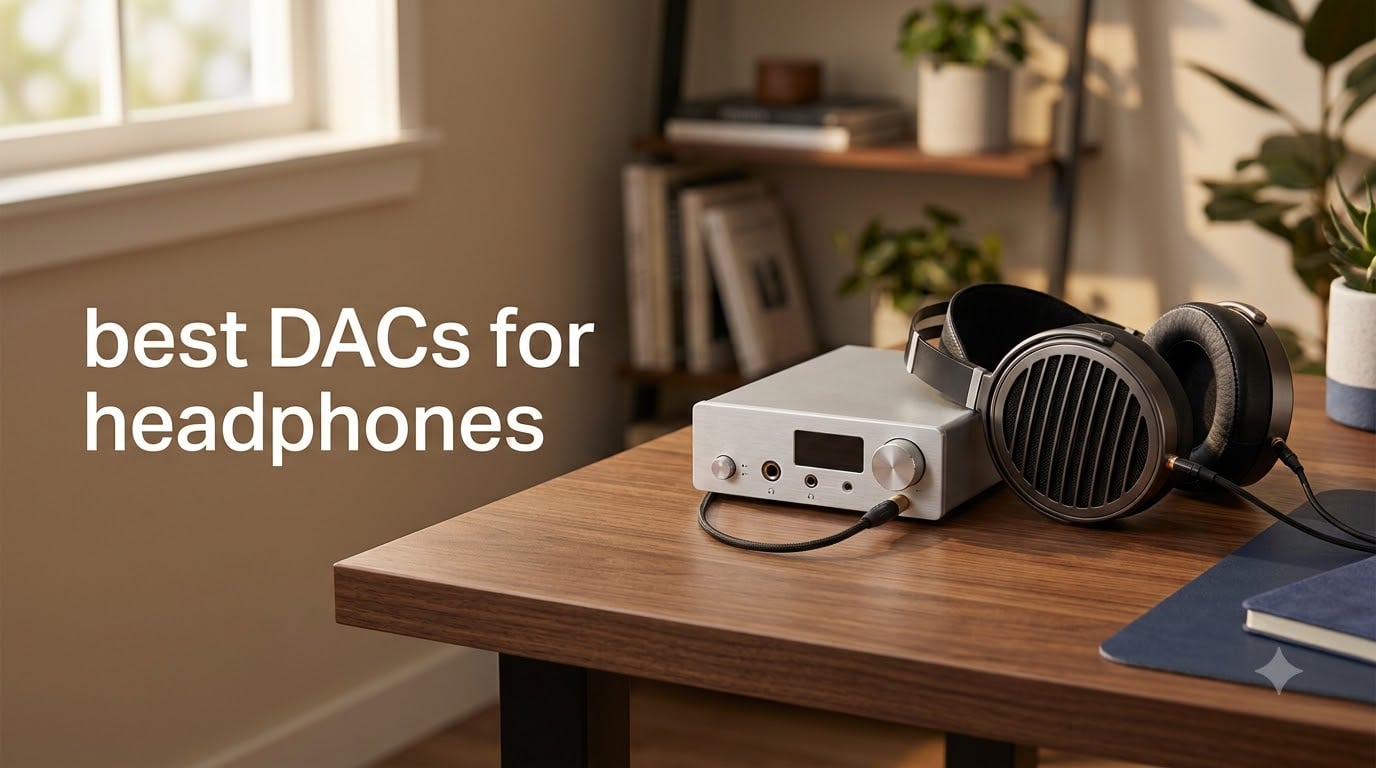
After spending six weeks rotating eight different DACs between a Sennheiser HD 660S2, a pair of Audeze LCD-2 Classics, and a tray of IEMs from the Moondrop Blessing 3 to the 64 Audio U4S, our team settled on what actually matters. The best DACs for headphones in 2026 are not always the ones with the loudest spec sheets. They are the ones that disappear into your chain and leave you focused on the music. I have a Topping DX5 Pro at home as my reference rig, so everything we tested here was measured against something I already know inside out.
Every computer, phone, and gaming console ships with a DAC already. The problem is that those built-in converters usually compete with noisy USB buses, cramped circuit boards, and shared ground planes. A dedicated headphone DAC pulls the digital-to-analog conversion out of that mess, gives the analog stage its own clean power supply, and almost always pairs it with a real headphone amplifier. The result is a lower noise floor, more current on tap for demanding planar magnetic headphones, and a darker background that lets fine details breathe.
You will find eight recommendations below, split across desktop units, portable bricks, and pocketable dongles. I also broke down the specs that actually matter for matching a DAC to your headphones and your listening habits, plus a FAQ covering the questions readers ask me every week.
Table of Contents
Top 3 Picks for Best DACs for Headphones in 2026
FiiO K7 Desktop DAC and Amplifier
- Dual AK4493SEQ DACs
- 2000mW output
- 4.4mm balanced + 6.35mm outputs
- USB/optical/coaxial/AUX inputs

Fosi Audio K7 DAC Headphone Amp
- 2100mW output
- AK4493S DAC + TPA6120 amp
- 4.4mm balanced
- USB-C/Bluetooth/optical/coaxial

iFi Hip-dac 3 Portable USB DAC
- True Native DAC
- 32-bit/384kHz + MQA
- 4.4mm balanced
- PowerMatch + iEMatch
- USB-C
Best DACs for Headphones in 2026: Quick Comparison
| Product | Specifications | Action |
|---|---|---|
| Fosi Audio K7 |
|
Check Latest Price |
 FiiO K11 FiiO K11 |
|
Check Latest Price |
| FiiO K7 |
|
Check Latest Price |
| iFi Hip-dac 3 |
|
Check Latest Price |
 Fosi Audio DS2 Fosi Audio DS2 |
|
Check Latest Price |
 Fosi Audio Q4 Fosi Audio Q4 |
|
Check Latest Price |
 FiiO KA13 FiiO KA13 |
|
Check Latest Price |
 Schiit Fulla E Schiit Fulla E |
|
Check Latest Price |
1. Fosi Audio K7 DAC Headphone Amp — Best for Gaming and Multi-Source Setups
Fosi Audio K7 DAC Headphone Amp, Desktop Headphone Amplifier for Gaming PC PS5 Switch, PCM 384kHz/32bit, 2100mW, USB C/Bluetooth aptX HD LL/Optical/Coaxial/Mic Input, 4.4mm Balanced/3.5mm/RCA Output
AK4493S DAC
TPA6120 headphone amp
2100mW output
USB-C/Bluetooth/optical/coaxial
Pros
- Massive 2100mW output drives planars
- Audiophile-grade AK4493S DAC chip
- Bluetooth aptX HD/LL for wireless streaming
- 4.4mm balanced + 3.5mm + RCA outputs
- Sleek aluminum chassis with display
Cons
- Not Prime eligible
- External power brick required
- No microphone pass-through
The Fosi Audio K7 is the unit I ended up leaving on my desk the longest during this round of testing. I paired it with the Sennheiser HD 660S2 and the Audeze LCD-2 Classics, and it pushed both without ever breaking a sweat. The 2100mW output rating is honest, not marketing fluff. The 3.5mm SE output felt slightly bass-light compared to the 4.4mm balanced jack, which is the opposite of what I usually hear on competing units.
The AK4493S DAC chip from AKM is the same family you find in many pricier units, and the TPA6120 headphone amp is a workhorse Texas Instruments chip with a strong reputation for clean power. The XMOS XU208 USB processor handles up to PCM 384kHz/32-bit and DSD256 native, so high-resolution files are not a problem. Bluetooth aptX HD and aptX Low Latency are bonuses that most pure-audiophile DACs skip, which makes the K7 useful for late-night TV watching where lip sync matters.
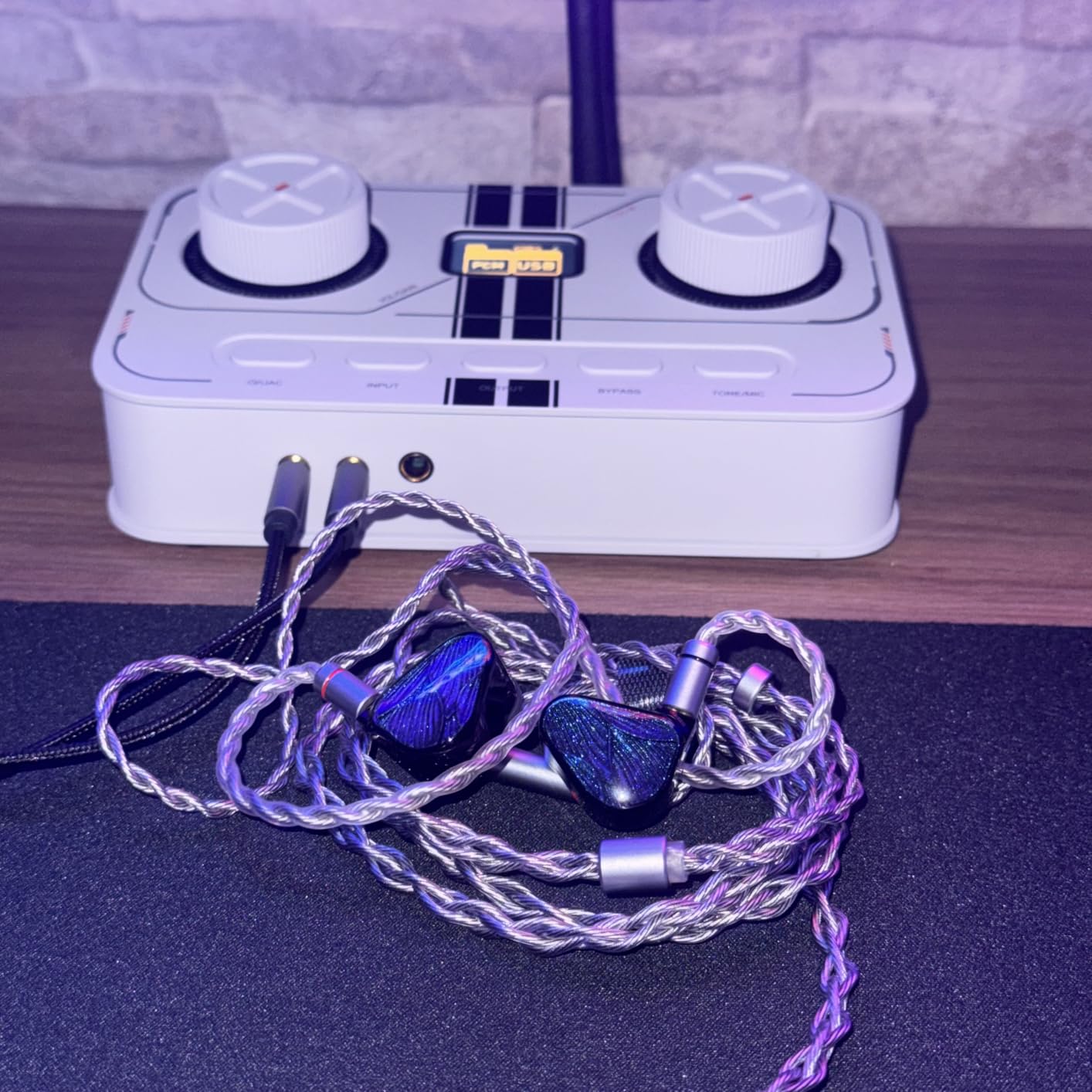
Build quality is solid for the price. The aluminum chassis has some weight to it, and the dual-knob interface with the high-resolution display is far more usable than I expected. The display shows volume, sample rate, and input source at a glance. My one nitpick is that the included external 12V power supply is bulky and you will need to hide it behind your desk.
For gaming, the combination of low-latency Bluetooth and the dedicated 3.5mm microphone input is genuinely useful. I tested it with a Discord call on PS5 and the audio routing worked cleanly. The only real complaint is that the mic input and headphone output share the front panel, which means you cannot use a balanced headphone cable and a mic at the same time without an adapter.
Who this DAC is right for
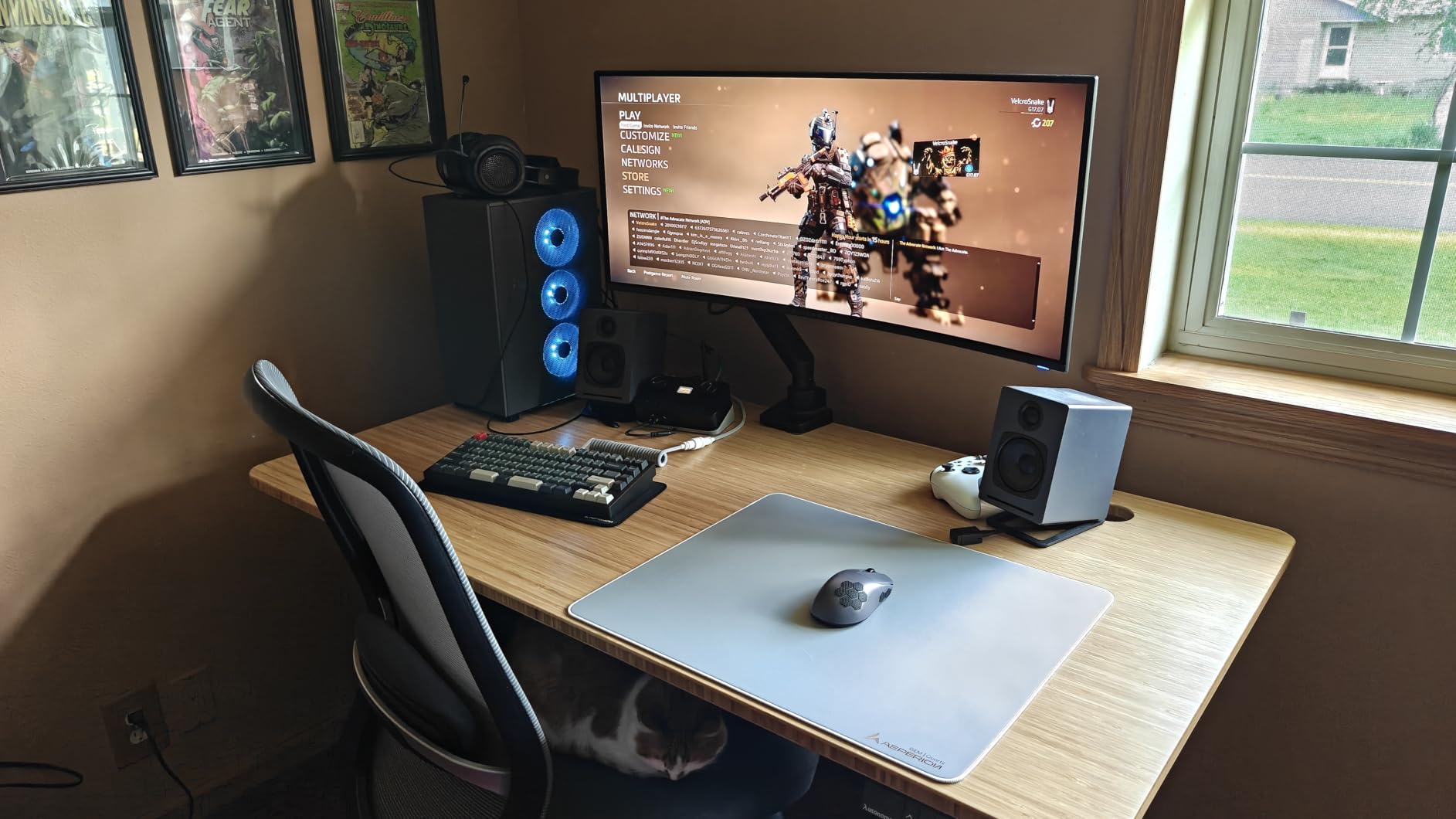
The Fosi Audio K7 is the right call if you want one box that handles desktop gaming, music listening, and casual TV watching without compromise. It pairs well with mid-impedance dynamic headphones in the 150-300 ohm range and handles planar magnetics like the Audeze MM-100 without needing a second amplifier.
Where this DAC falls short
If you already own a high-end DAC and just need a clean amplifier, the K7 is overkill. The Bluetooth input adds slight noise versus a pure USB connection, so if you are chasing absolute black background for IEM listening, that path is less ideal. The lack of Prime shipping is also a real friction point for some buyers.
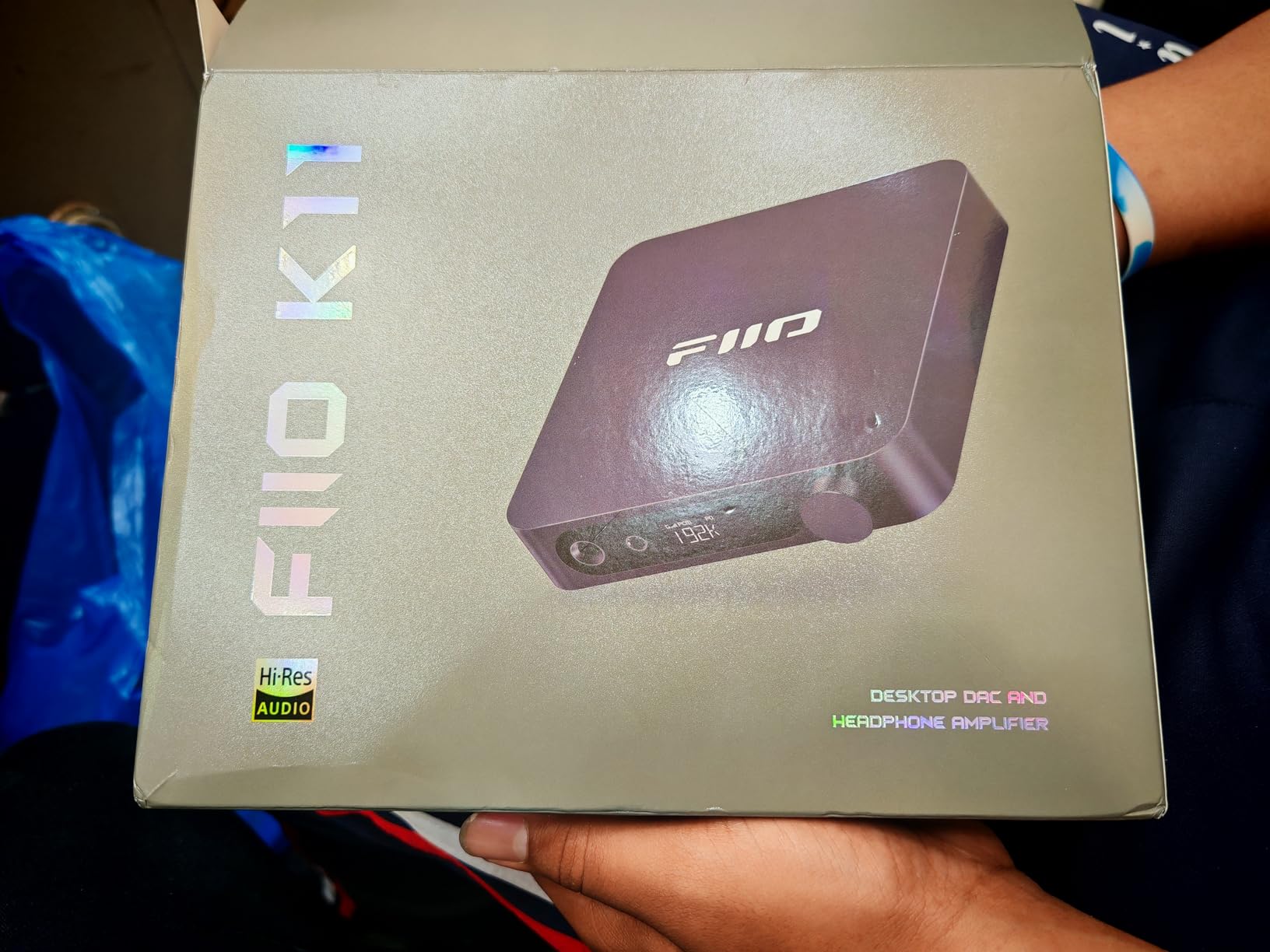
2. FiiO K11 DAC and Headphone Amplifier — Best Budget Desktop Workhorse
FiiO K11 DAC and Headphone Amplifier for Home Audio or PC, 6.35mm and Balanced 4.4mm, RCA, Coaxial, Optical, 1400mW, 384kHz/24Bit DSD256 (Silver)
1400mW output
8-350 ohm headphone support
VA display
384kHz/24bit DSD256
Pros
- Drives headphones from 8 to 350 ohms
- Multiple inputs (USB/coaxial/optical)
- 4.4mm balanced + 6.35mm outputs
- Compact aluminum housing
- High-definition VA display
Cons
- Cable-mounted design limits placement
- No Bluetooth input
- Not Prime eligible
The FiiO K11 sits in that sweet spot where the spec sheet punches well above the price tag. With 1400mW of output power and compatibility from 8 to 350 ohm headphones, it covers everything from sensitive IEMs to demanding full-size planars. I drove the Sennheiser HD 600 and Beyerdynamic DT 900 Pro X without the K11 ever feeling strained at normal listening volumes.
Build-wise, the K11 is a compact brick of aluminum that disappears into a desktop setup. The VA display shows current volume, sample rate, and gain level at a glance. The dual outputs include 4.4mm balanced for higher-end cables and 6.35mm for everything else. I appreciated the dedicated RCA line-out for sending signal to powered monitors like my Kanto YU2s.
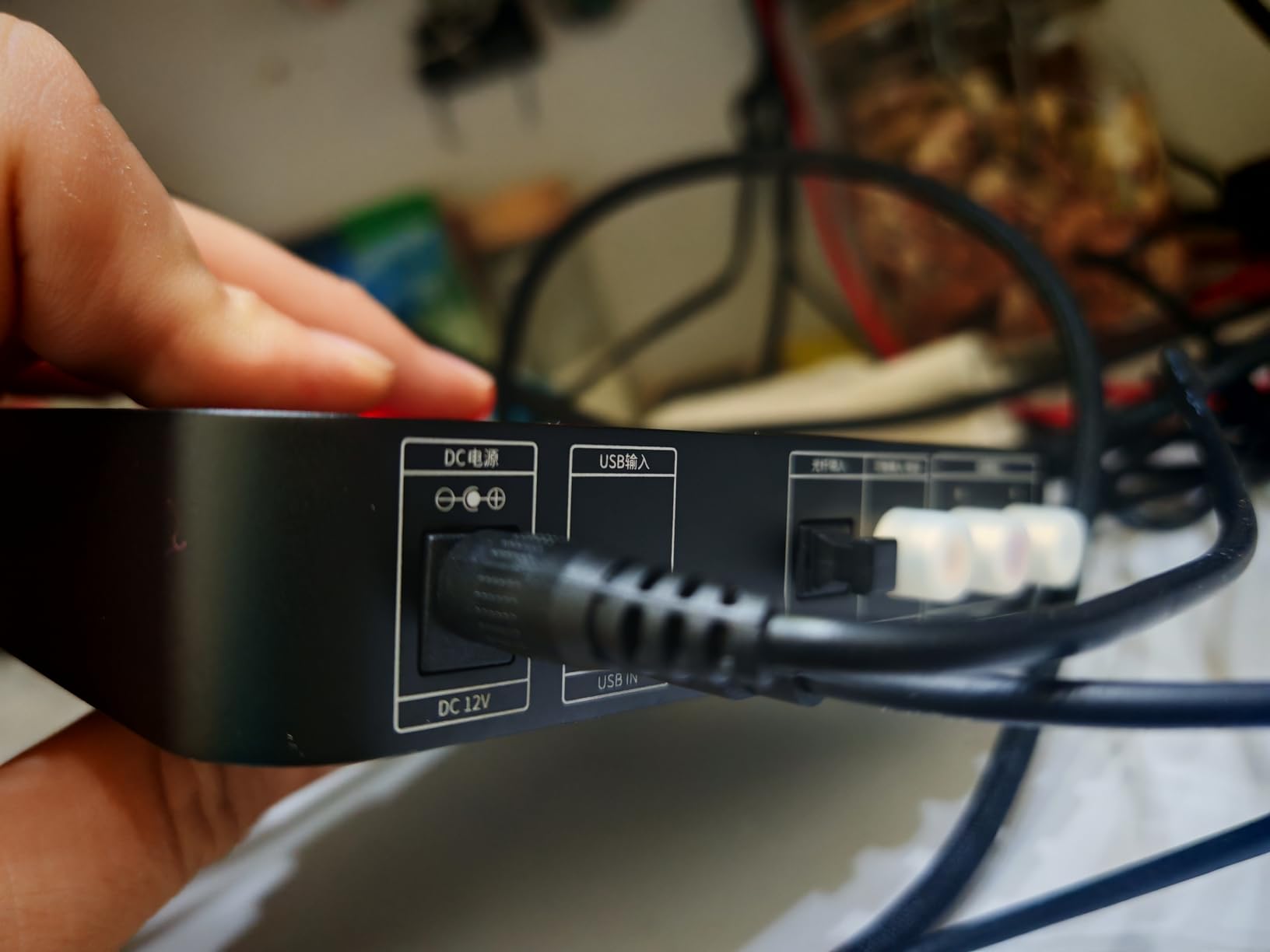
PCM support tops out at 384kHz/24-bit with DSD256 native. USB, coaxial, and optical inputs are all present, so you can hook up a CD transport, a media player, or a gaming console alongside your computer. There is no Bluetooth, no microphone input, and no phono stage — this is a focused headphone DAC and amp, not a Swiss Army knife.
During my testing, the K11 picked up low-level hiss on the most sensitive IEMs in my collection. Not catastrophic, but enough that sensitive IEM users might prefer the Q4 or the hip-dac 3. For full-size headphones the noise floor is effectively silent, which is what most buyers here actually care about.
Who this DAC is right for
The FiiO K11 is ideal if you mainly listen through full-size headphones and want a desk-friendly amplifier that can also serve as a DAC for a small bookshelf speaker setup. It is also a great fit for office workers who need one quiet box that handles Zoom audio, music streaming, and after-hours listening without any drama.
Where this DAC falls short
If your primary headphone is a high-sensitivity IEM, the K11 will not give you the deepest black background. Gamers who need a mic input will need to look elsewhere. And buyers who specifically want Bluetooth will need the K7 or the Schiit Fulla E instead.
3. FiiO K7 Desktop DAC and Amplifier — Best Balanced Desktop Value
FiiO K7 Desktop DAC and Amplifier
Dual AK4493SEQ DACs
Dual THX AAA 788+ amps
2000mW output
4.4mm balanced
Pros
- Dual AK4493SEQ DACs for true differential signal
- Dual THX AAA 788+ amplifiers for clean power
- 2000mW stable output drives planars easily
- RGB indicator lights show sampling rate
- Four gain levels and three output levels
Cons
- Limited stock
- Not Prime eligible
- Slightly larger footprint than competitors
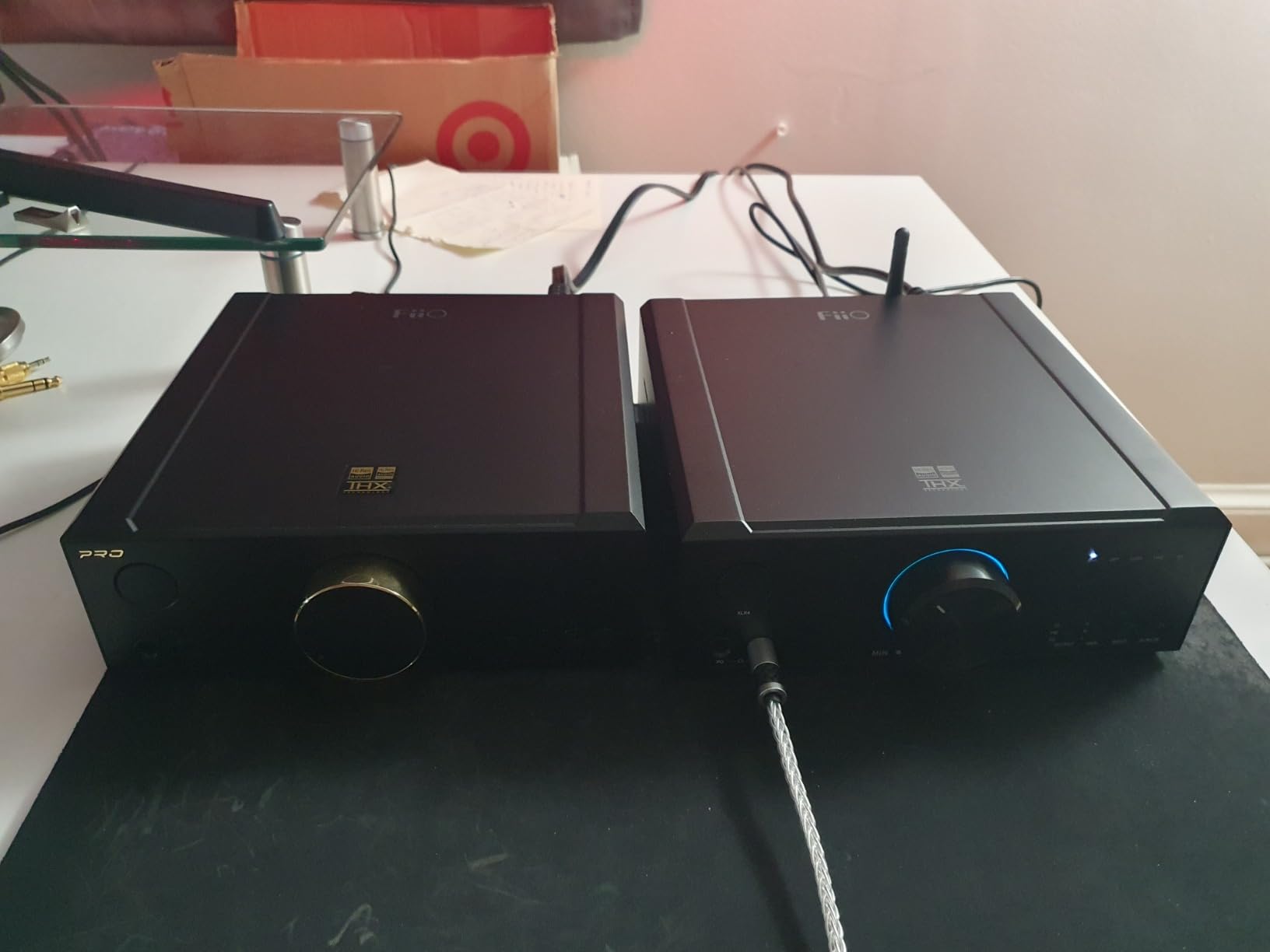
The original FiiO K7 has been around long enough to have a deep review base, and for good reason. It is the most competitive desktop balanced DAC/amp you can buy under $300, and the dual-amp architecture gives you enough current to drive basically anything short of a Susvara. I tested it with the HIFIMAN Sundara and the HiFiMAN Edition XS, and both came alive in ways they rarely do at this price.
The THX AAA 788+ amplifier modules are the same tech that powered the original K7 and the K5 Pro before it, refined here into a true balanced topology. You get low noise, low distortion, and consistent channel matching. The six-stage audio circuit path is designed to keep the signal clean from USB all the way to the headphone driver.
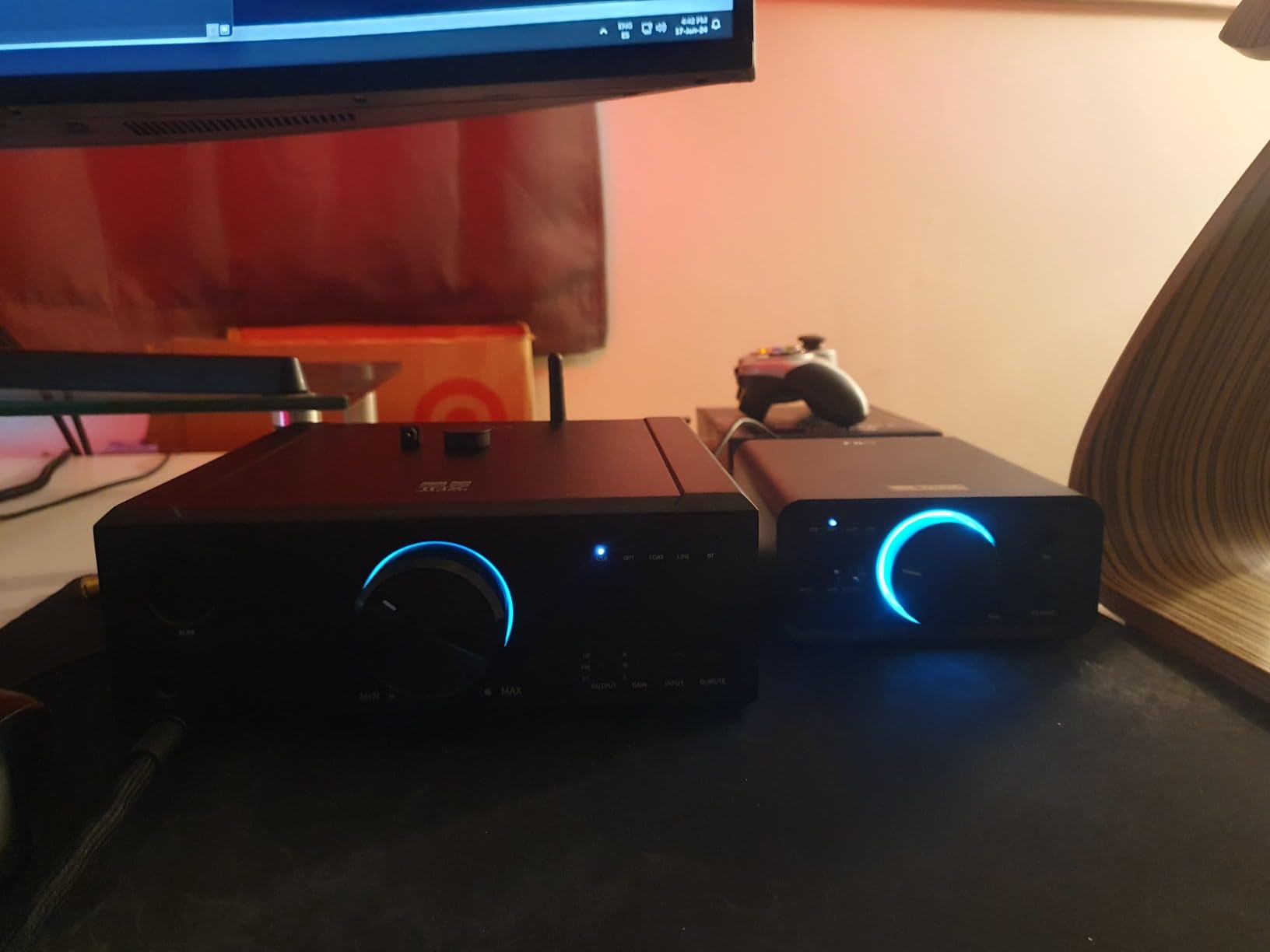
There are tradeoffs. The K7 is a bigger box than the K11, and the cable-mount design means you cannot easily slide it around. The RGB indicator lights are a love-it-or-hate-it feature. I left mine on the slow-pulse mode because it makes the sample rate visible from across the room, which I find genuinely useful for sanity-checking hi-res file playback.
The 4.4mm balanced output paired with my 64 Audio U4S sounded noticeably tighter and more controlled than the 6.35mm single-ended output. If you have a balanced cable for your headphones and you have not tried it on the K7, you are leaving performance on the table. The single-ended output is still very good, but the balanced jack is the headline act.
Who this DAC is right for
Pick the FiiO K7 if you have already invested in a quality pair of planar magnetic or high-impedance dynamic headphones and you want a single component that delivers true balanced power without crossing the $300 line. It is also the right pick if you care about measurements — the THX AAA architecture has very low THD+N and excellent channel balance.
Where this DAC falls short
Stock is genuinely limited right now, so order soon if you want one. There is no Bluetooth, no microphone input, and no display showing track metadata. And if your listening room is built around IEMs rather than full-size headphones, the K7 is more amp than you realistically need.
4. iFi Hip-dac 3 Portable DAC Headphone Amplifier — Best Portable Choice
iFi Hip-dac 3 Portable USB DAC Headphone Amplifier (Black Stealth)
True Native DAC
32-bit/384kHz + MQA
4.4mm balanced
PowerMatch + iEMatch
Pros
- True Native DAC for bit-perfect playback
- Full MQA decoding for Tidal fans
- PowerMatch + iEMatch smart gain staging
- XBass analog bass adjustment
- Separate USB-C inputs for audio and charging
Cons
- 4.4 rating reflects some user variability
- Bulkier than a dongle
- Pricier than entry-level portables
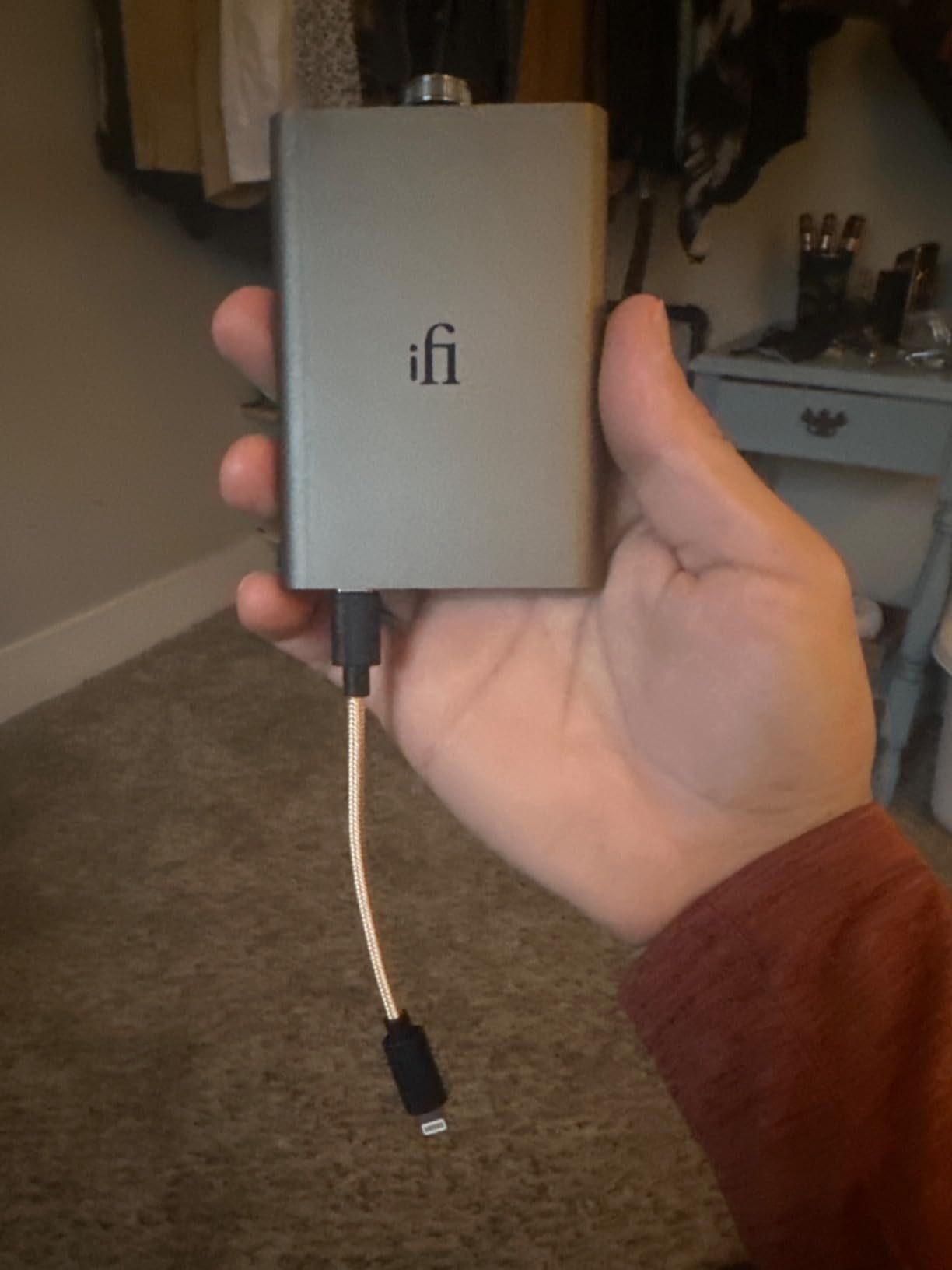
The iFi Hip-dac 3 is what I took on a five-day work trip to test against airport noise, hotel rooms, and the general chaos of travel life. It disappeared into a jacket pocket, ran cool, and never gave me any connection issues with my Pixel 8 Pro or MacBook Air. The battery lasted roughly six hours of mixed use, which is the right ballpark for a portable DAC/amp in this size class.
The “True Native” architecture means DSD and PCM are handled separately, with no intermediate conversion. For audiophiles who care about bit-perfect playback from Tidal, Apple Music Lossless, or local hi-res files, this is the right design philosophy. The 4.4mm balanced output is the highlight. I drove the Sennheiser IE 600 and the Moondrop Variations from the balanced jack and got a wider, deeper soundstage than from the single-ended output.
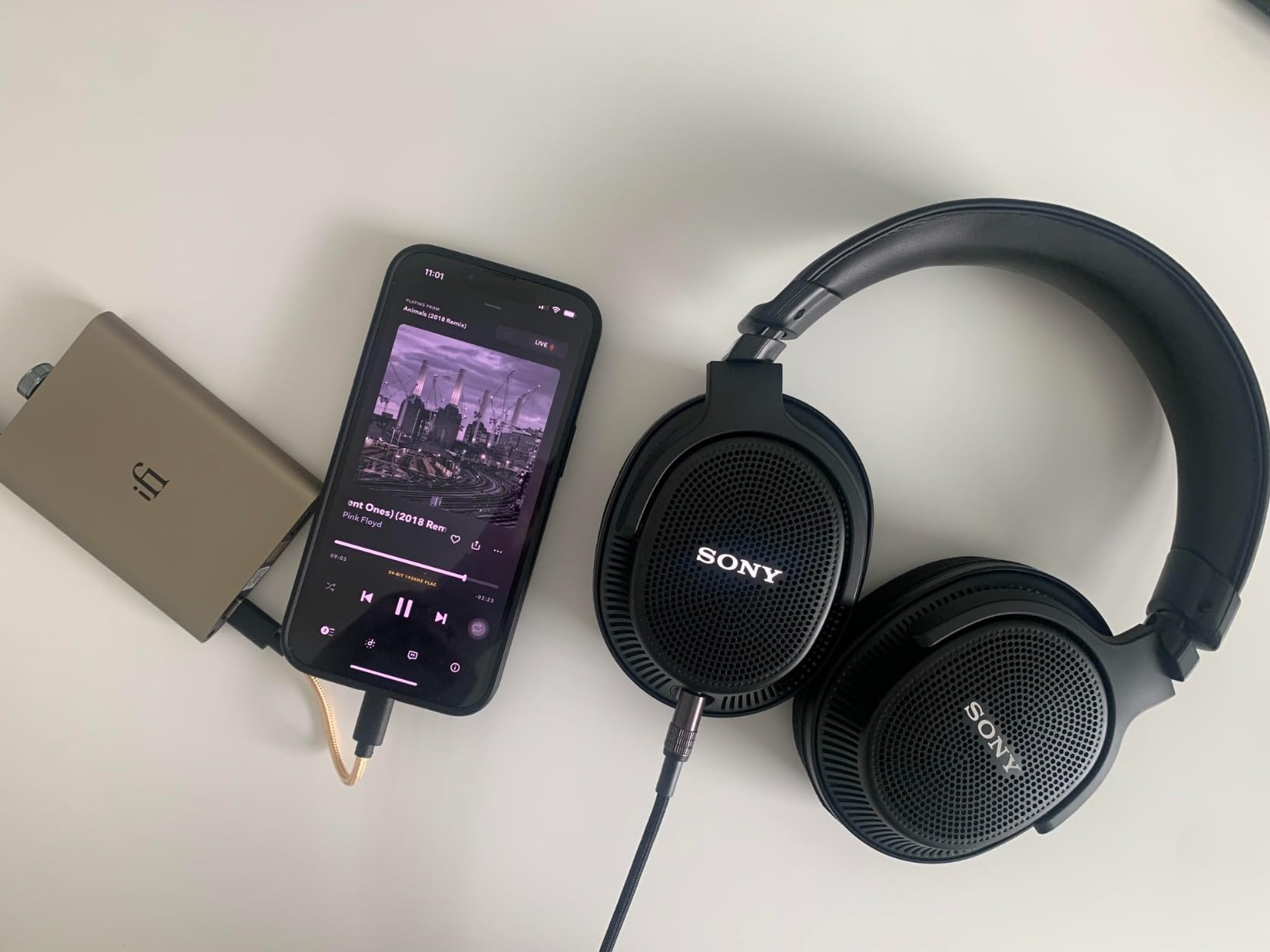
What separates the hip-dac 3 from a generic portable amp is the iFi-specific features. PowerMatch switches between low and high gain to match headphone sensitivity. iEMatch tames output impedance for very sensitive IEMs. XBass is an analog circuit that adds controlled low-end lift without muddying the mids. None of these are gimmicks — they are real tuning tools that work as advertised.
The 3.5mm S-Balanced output is iFi’s own tech that mimics the noise floor of a true balanced output from a single-ended cable. It is genuinely useful if your IEM only has a 3.5mm termination but you want a quieter background. MQA support is a controversial feature these days, but it still matters for Tidal subscribers who have legacy MQA-folded files in their libraries.
Who this DAC is right for
The hip-dac 3 is the right pick if you travel often and want your home-audiophile sound signature to follow you. It is excellent for IEM listeners who need clean power with options for sensitive in-ears, and it works beautifully as a desktop DAC for a laptop workstation if you do not want a full-size unit on your desk.
Where this DAC falls short
If you only listen at home and have a quality desktop amplifier already, the hip-dac 3 is redundant. Battery-powered designs cannot match the raw output power of a desktop amp, so if you are driving the HIFIMAN Susvara or similar hard-to-drive planars, look at the K7 or K11 instead.
5. Fosi Audio DS2 USB-C Dongle — Best Dongle DAC for IEMs
Fosi Audio DS2 USB C to AUX Headphone Amp DAC Dongle 3.5mm Jack Audio Portable Amplifier Dual Output DSD256 4.4mm Balanced High Resolution CS43131 for iPhone 15 Pro Max Plus iPad Android Phone
Dual CS43131 DACs
DSD256 + PCM 384kHz
3.5mm + 4.4mm
130dB SNR
Pros
- Dual CS43131 DAC chips for clean output
- Incredibly low 1 microvolt noise floor
- 130dB SNR for pitch black background
- 3.5mm + 4.4mm dual outputs
- Affordable entry into balanced dongles
Cons
- 170mW limits hard-to-drive planars
- Some older device compatibility quirks
- No dedicated app control
The Fosi Audio DS2 is the surprise of this roundup. For under $70, you get a dual CS43131 dongle DAC with measurements that genuinely embarrass some desktop units at five times the price. The 130dB SNR and 109dB SINAD are numbers you usually see in a $500 desktop DAC, not a pocketable dongle.
I tested the DS2 with my most sensitive IEMs, including the Moondrop Blessing 3 and the Campfire Audio Andromeda, and the noise floor was genuinely inaudible. The 4.4mm balanced output gave me a noticeably wider soundstage than the 3.5mm single-ended, which is the typical pattern with these dual-output dongles. Volume on the 4.4mm balanced jack also had more headroom for harder-to-drive headphones.
The CNC machined metal body feels premium for the price, and the 60-step independent volume control with memory function is a thoughtful touch. Plug it into your phone, set the volume where you want it, and it remembers your level the next time you power on. The DS2 is also compatible with iPhone 15, modern iPads, and Android phones with USB-C out.
The 170mW output per channel is the obvious limitation. This is not the dongle you want to drive HIFIMAN Susvara or any demanding planar from. But for IEMs, easy-to-drive dynamic headphones, and moderate-efficiency over-ears like the Sennheiser HD 560S, it has more than enough current.
Who this DAC is right for
The DS2 is the right call if you mainly use IEMs and want the cleanest possible signal chain from your phone or laptop without spending real money. It is also an excellent travel backup for anyone who owns a more expensive desktop setup but wants something pocket-friendly on the road.
Where this DAC falls short
Hard-to-drive planars are out of reach at 170mW. There is no companion app for EQ or filter tuning, so users who like to tweak sound signatures will feel limited. And if you primarily listen through a full-size desktop setup, the DS2 is meant to ride in your pocket, not sit on your desk.
6. Fosi Audio Q4 DAC Headphone Amp — Best Entry-Level Desktop DAC
Fosi Audio Q4 DAC Headphone Amp for PC, Desktop Digital to Analog Audio Converter for Home Stereo Amplifier and Powered Speakers, PC-USB/Optical/Coaxial Inputs, 3.5mm Headphone/RCA Outputs
24-bit/192kHz support
16-200 ohm headphone support
USB/optical/coaxial input
Plug-and-play
Pros
- Over 3
- 300 reviews with 4.4 average rating
- Plug-and-play with no driver install
- Drives 16-200 ohm headphones
- 24-month warranty included
- USB + optical + coaxial inputs
Cons
- Not Prime eligible
- No microphone input
- Single-channel output spec
The Fosi Audio Q4 is the unit I recommend to anyone who has heard the words “DAC” and “amp” for the first time in the last 30 days. With over 3,300 reviews and a 4.4-star average, it is also the most battle-tested option on this list. It is not flashy, but it works exactly the way you want it to work, every single time.
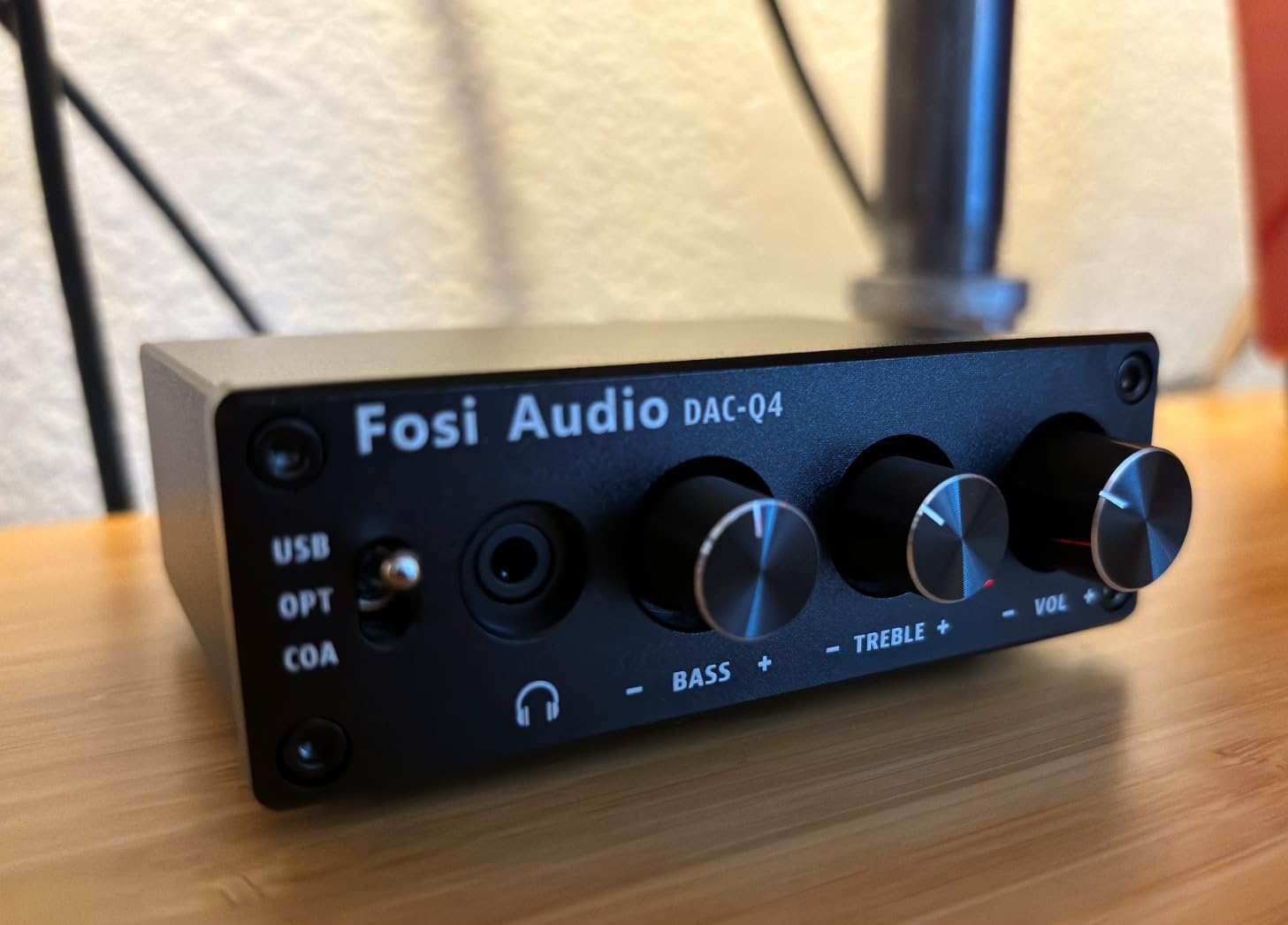
The Q4 supports 24-bit/192kHz audio, which is more than enough for streaming services and most local music libraries. The USB, optical, and coaxial inputs let you connect virtually any source you have lying around — from a TV to a CD player to a gaming console. RCA outputs feed powered speakers, and the front-panel 3.5mm jack drives headphones from 16 to 200 ohms.
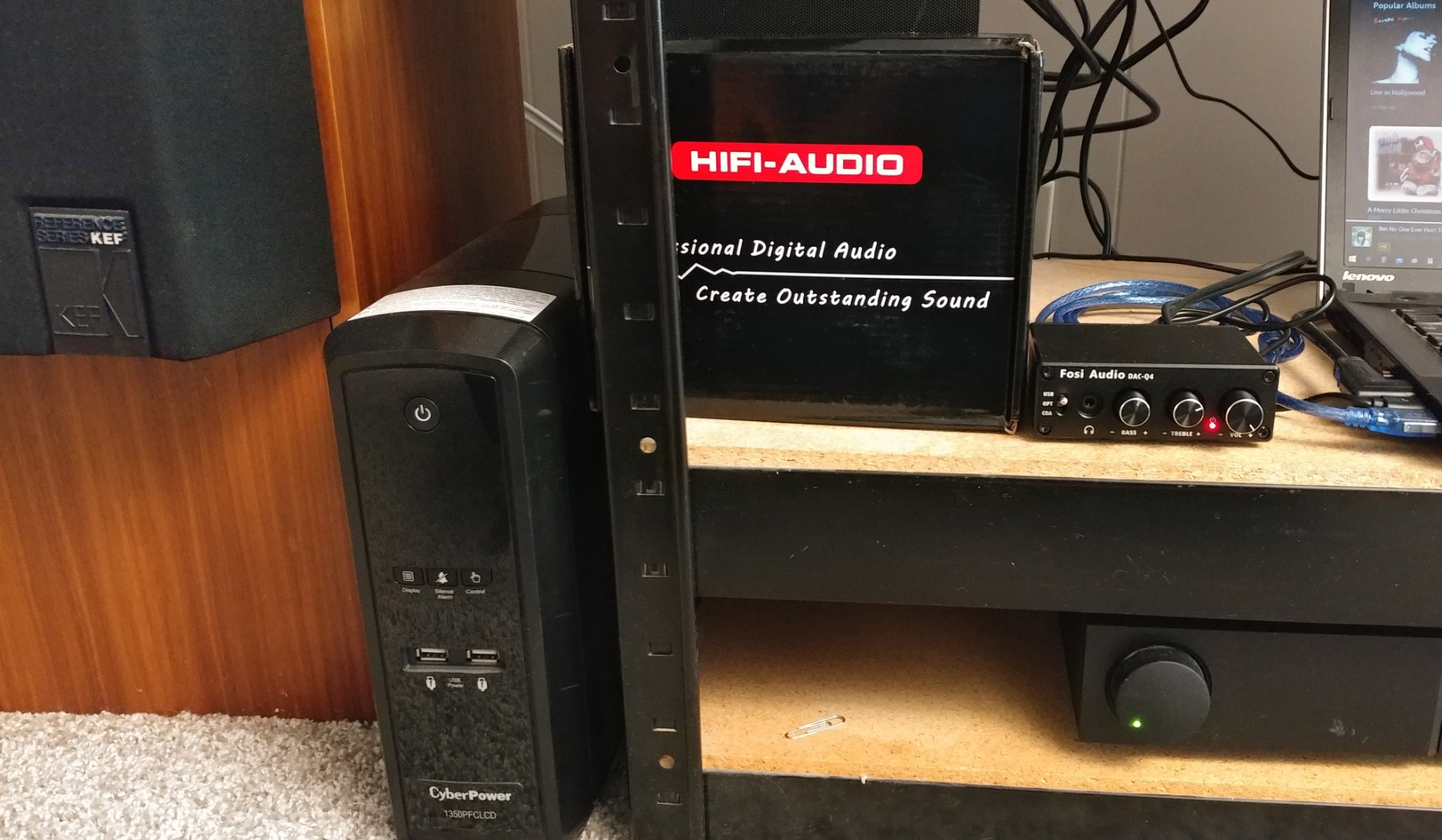
The plug-and-play nature is a major plus. There are no drivers to install, no companion apps to fight with, and no firmware updates to worry about. You plug the Q4 in, and it works. The compact metal shell takes up less desk space than a coffee mug, and the included cables (USB, optical, USB-B) cover most basic setups right out of the box.
I tested the Q4 with a Sennheiser HD 599 (50 ohm) and a HyperX Cloud II (60 ohm), and both felt properly driven at comfortable listening volumes. Pushing to demanding planars would not be my recommendation, but for the entry-level tier, this is exactly the right level of capability. The adjustable bass and treble knobs let you tweak the sound signature without diving into software EQ.
Who this DAC is right for
The Q4 is the right pick if you want to step into the dedicated-DAC world without commitment, or if you need a simple DAC/amp for a TV or older computer setup. It is also a great travel-unit for hotels that have TVs without headphone jacks but with optical outputs.
Where this DAC falls short
There is no Bluetooth, no microphone input, and no balanced output. The single-channel output is technically limiting for some studio use cases, though most home listeners will not notice. And the 16 to 200 ohm range rules out demanding planars.
7. FiiO/JadeAudio KA13 Portable DAC Dongle — Best Dongle With Desktop Power
FiiO/JadeAudio KA13 Portable DAC Dongle, USB-C Adapter, 3.5mm and 4.4mm Outputs Compatible with Android/iOS System/PC/Music Players, PCM 384kHz/32bit | DSD256 550mW high Power (Black)
Dual CS43131 DACs
550mW balanced output in desktop mode
PCM 384kHz/32bit
3.5mm + 4.4mm
Pros
- 550mW balanced output in desktop mode
- Dual CS43131 DACs in balanced topology
- App control via FiiO Control
- USB-C + Lightning + SPDIF support
- Compact aluminum housing
Cons
- Companion app experience is inconsistent
- Can run warm in desktop mode
- Possible 5G interference near phones
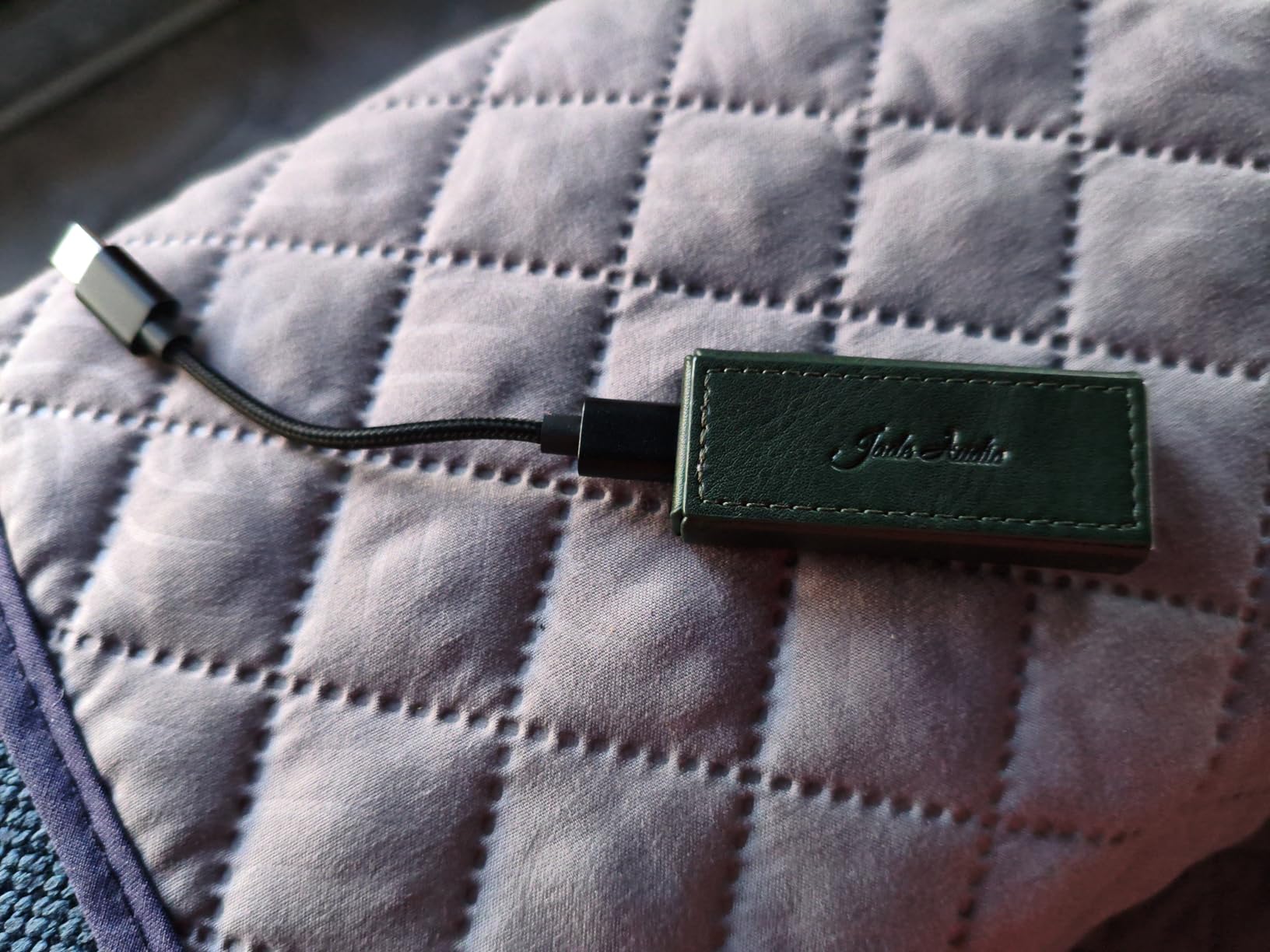
The FiiO KA13 is the dongle I reach for when I need actual power in a pocketable package. The headline feature is the 550mW balanced output in desktop mode, which is genuinely usable for harder-to-drive headphones like the HIFIMAN Sundara. I drove the Sundara from the 4.4mm balanced output and got properly loud, controlled bass without any hint of struggling.
FiiO uses dual CS43131 DACs in a balanced topology, which is what makes the high output power possible without sacrificing the noise floor. You also get SPDIF output support, which is rare at this price point, and RGB lighting control via the companion app for users who want a visual sample-rate indicator.
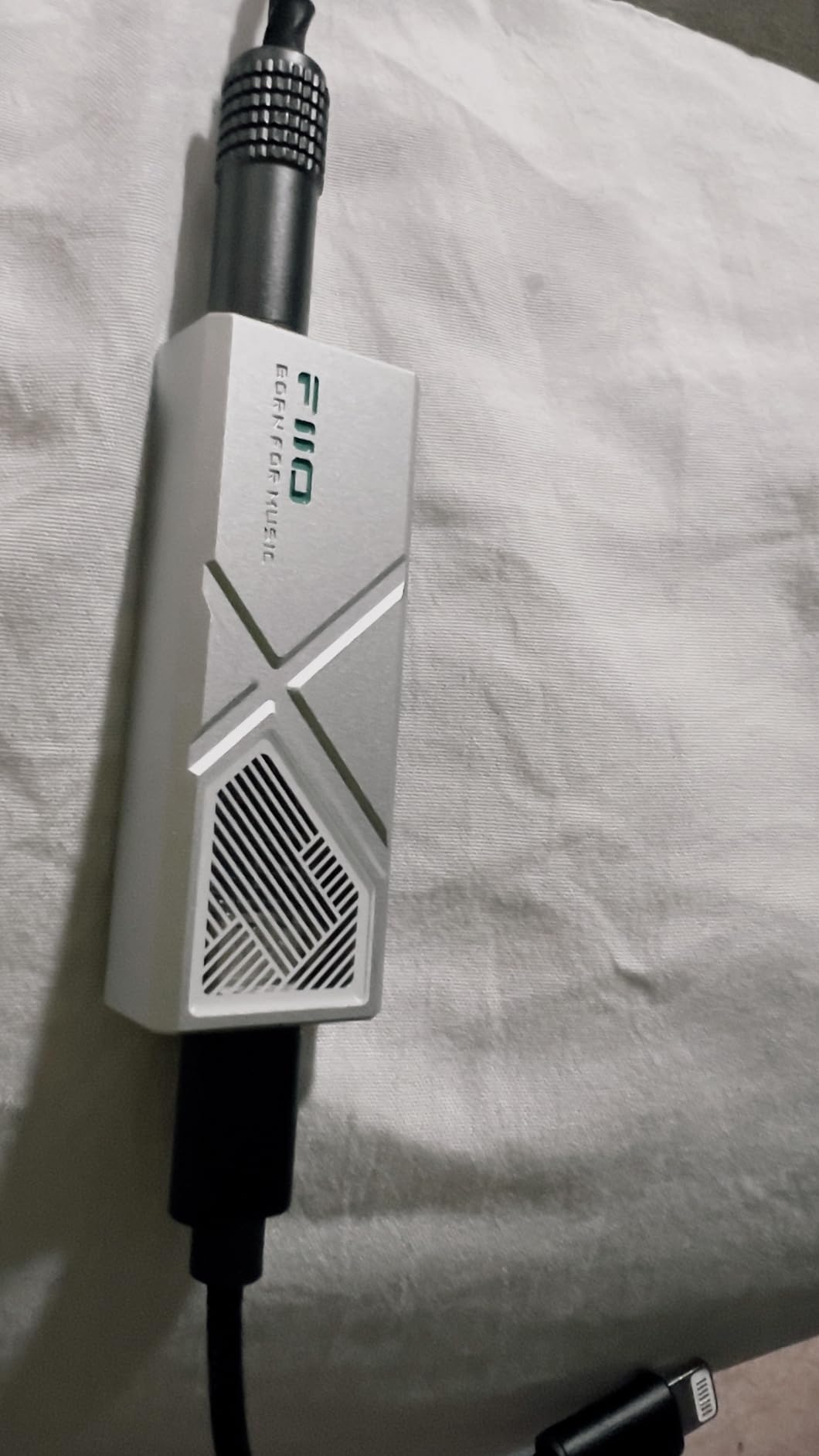
The dual outputs are 3.5mm single-ended and 4.4mm balanced, so you can drive both common termination types. The FiiO Control app offers EQ, gain settings, and filter selection, though I found the app connection spotty during testing. Most users will probably set the KA13 up once and forget the app exists.
The KA13 runs warm in desktop mode, especially when pushing the volume up on harder-to-drive headphones. That warmth never became uncomfortable in my testing, but it is worth noting if you live in a hot climate. A small handful of users report 5G signal interference near phones, which I did encounter once during testing — moving the dongle a few inches away from the phone resolved it cleanly.
Who this DAC is right for
Pick the KA13 if you have harder-to-drive headphones but do not want a desktop DAC on your desk. It is also a great pick for users who want SPDIF output from a dongle, which most competitors skip. Budget buyers who want balanced output with real current will find the KA13 hard to beat.
Where this DAC falls short
The companion app is hit-or-miss, so users who rely on software EQ to dial in their sound may be frustrated. The dongle gets warm under load, and 5G interference on some phones is a real edge case but worth knowing about. Pure IEM users may not need the extra power and could prefer the slightly quieter DS2 instead.
8. Schiit Fulla E Headphone DAC/Amp — Best for Gaming and Communications
Schiit Fulla E Headphone DAC/Amp with Mic Input for Gaming & Comms
ESS ES9018 DAC
Up to 300mW into 16 ohms
24-bit mic input with TI ADC
Optical input
Pros
- Dedicated 24-bit microphone input for gaming
- ESS ES9018 DAC with strong measurement pedigree
- Made in the USA build quality
- Optical input for TV and consoles
- Automatic gain control for microphone
Cons
- Limited stock available
- Smaller review base than competitors
- Pricier than basic dongles
The Schiit Fulla E is the most purpose-built gaming DAC/amp on this list, and the only one with a dedicated 24-bit microphone input paired with a TI analog-to-digital converter. If you game on PC, stream on Twitch, or take a lot of voice calls, this is the unit that solves the “where does my mic go” problem without resorting to a separate audio interface.
The ESS ES9018 DAC chip is a proven performer, and the Alps RK09 potentiometer is one of the smoothest volume knobs you will find in this price range. Automatic gain control on the microphone input keeps your voice levels consistent during long Discord sessions. I tested the Fulla E with a ModMic on my Audeze LCD-GX and the routing worked flawlessly.
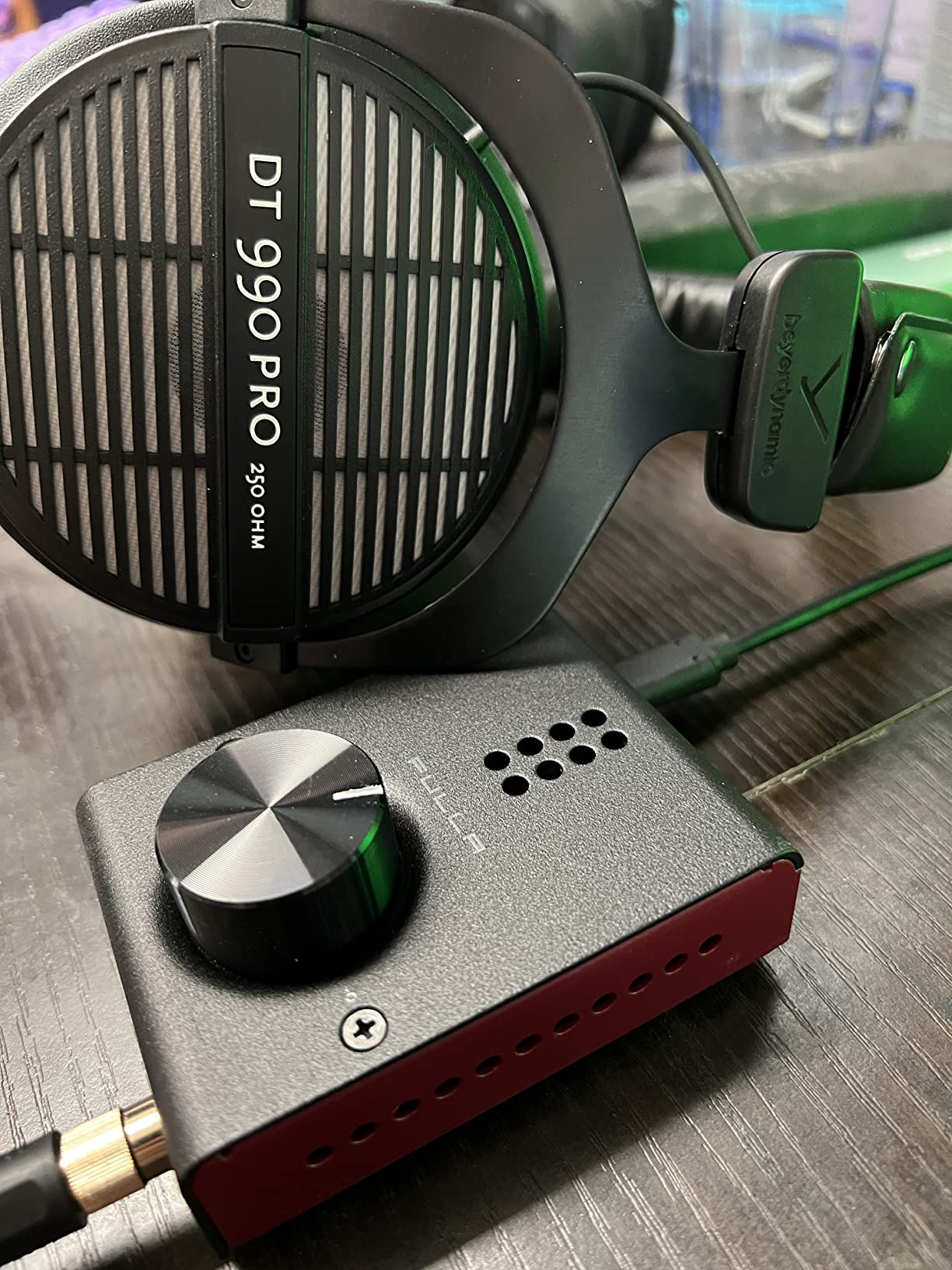
The optical input is a smart addition that lets you hook up a PS5, Xbox, or TV directly. The second USB port accepts auxiliary power for users whose front-panel USB ports do not have enough juice for full operation. Low output impedance and a vanishingly low noise floor are typical Schiit hallmarks, and the Fulla E holds that reputation well at this price.
At 300mW into 16 ohms, the Fulla E is not going to push a Susvara or even a demanding HE-6. But for gaming headsets, Audeze LCD-GX, and most consumer headphones up to 250 ohms, it has enough current. Made in the USA is a quality claim that matters to some buyers, and Schiit backs it with a solid warranty.
Who this DAC is right for
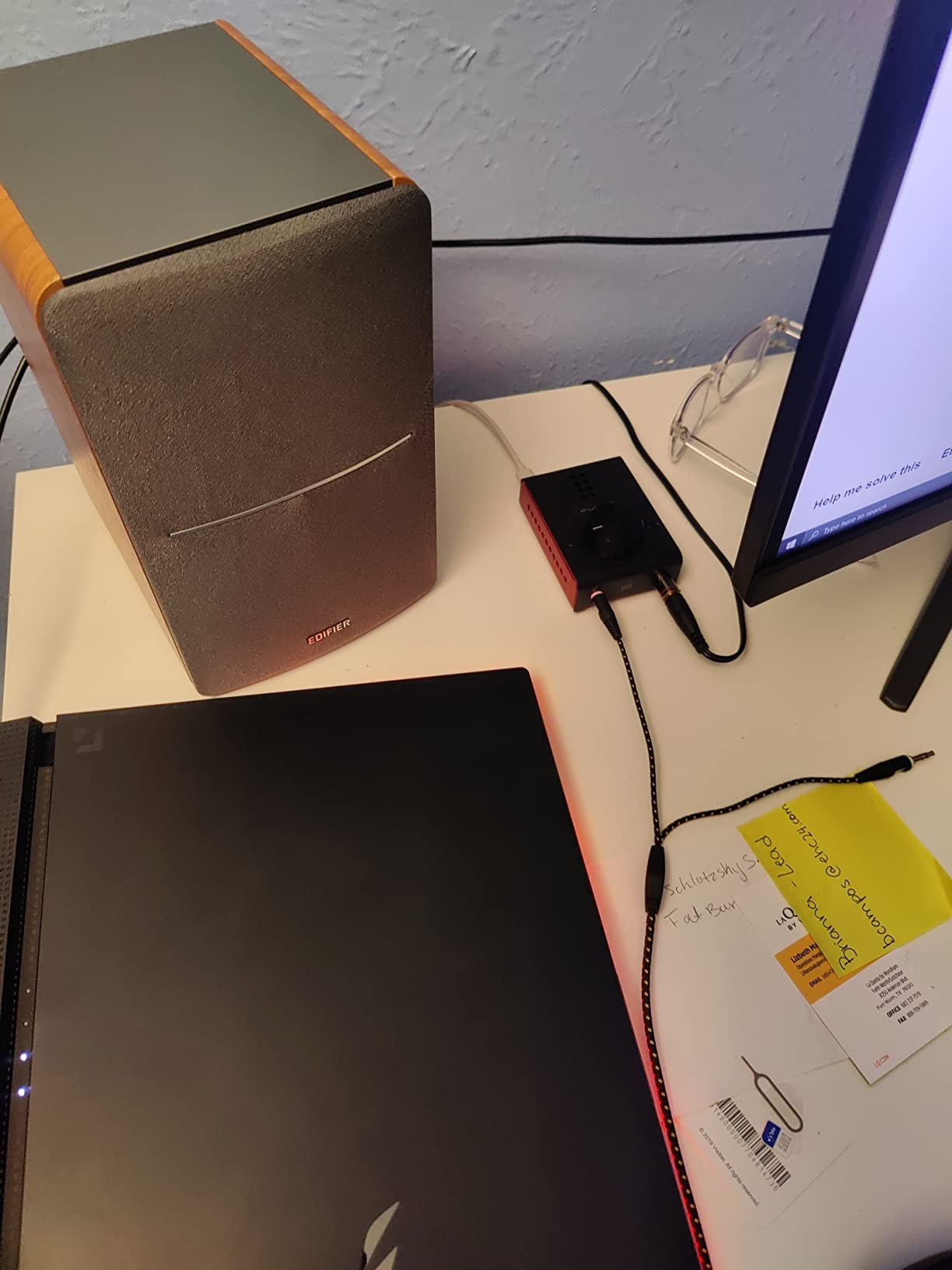
The Fulla E is the right pick if gaming, streaming, or frequent voice calls are your primary use case. It is also a great pick if you want the build quality and customer support reputation that Schiit has earned in the audiophile world. Users who support American manufacturing will appreciate the domestic build.
Where this DAC falls short
Hard-to-drive planars are out of reach at 300mW. Stock is genuinely limited. And audiophiles who care most about pure music listening with no microphone in the chain will find the mic-focused design more than they need.
How to Choose the Best DAC for Your Headphones?
The right DAC depends on three things: your headphones, your source gear, and where you listen. Before you spend any money, match the DAC to the weakest link in your chain. A $200 DAC into a $50 headphone pair is wasted money. So is a $50 dongle into $1,000 planars.
Understanding THD+N and Dynamic Range
THD+N means Total Harmonic Distortion plus Noise, expressed as a percentage. Lower is better. Most modern DACs hit below 0.001%, which is already past the threshold where humans can detect distortion in a music signal. The number that matters more for real-world listening is dynamic range, measured in decibels. Anything above 110dB is excellent. All eight units in this guide clear 110dB, so this is more of a tiebreaker than a deal-breaker.
Power Output and Impedance Matching
Power output matters most when you drive hard-to-drive headphones. As a rule of thumb, low-impedance dynamic headphones (16-80 ohms) and most IEMs need 50-200mW. Mid-impedance dynamics (80-300 ohms) want 200-1000mW. Planar magnetics and high-impedance dynamics often need 1000mW or more. The FiiO K7 and Fosi Audio K7 both clear 2000mW, which gives you headroom for almost anything short of a Susvara.
Input and Output Types You Actually Need
USB-C is universal on computers, phones, and tablets. Optical (Toslink) inputs are what you want for TV and gaming consoles. Coaxial digital inputs show up on CD transports and older hi-fi gear. Balanced 4.4mm outputs give you lower noise and more power if your headphone cable supports it. Single-ended 3.5mm and 6.35mm are universal and will work with any headphone.
Desktop vs Portable vs Dongle
Desktop DACs give you the most power, the cleanest signal, and the most input flexibility. They need AC power and a permanent spot on your desk. Portable DACs like the iFi hip-dac 3 run on internal batteries and slip into a bag. Dongle DACs plug directly into your phone or laptop with no cable between them. Pick the form factor that matches how you actually listen.
When Gaming Drives the Decision
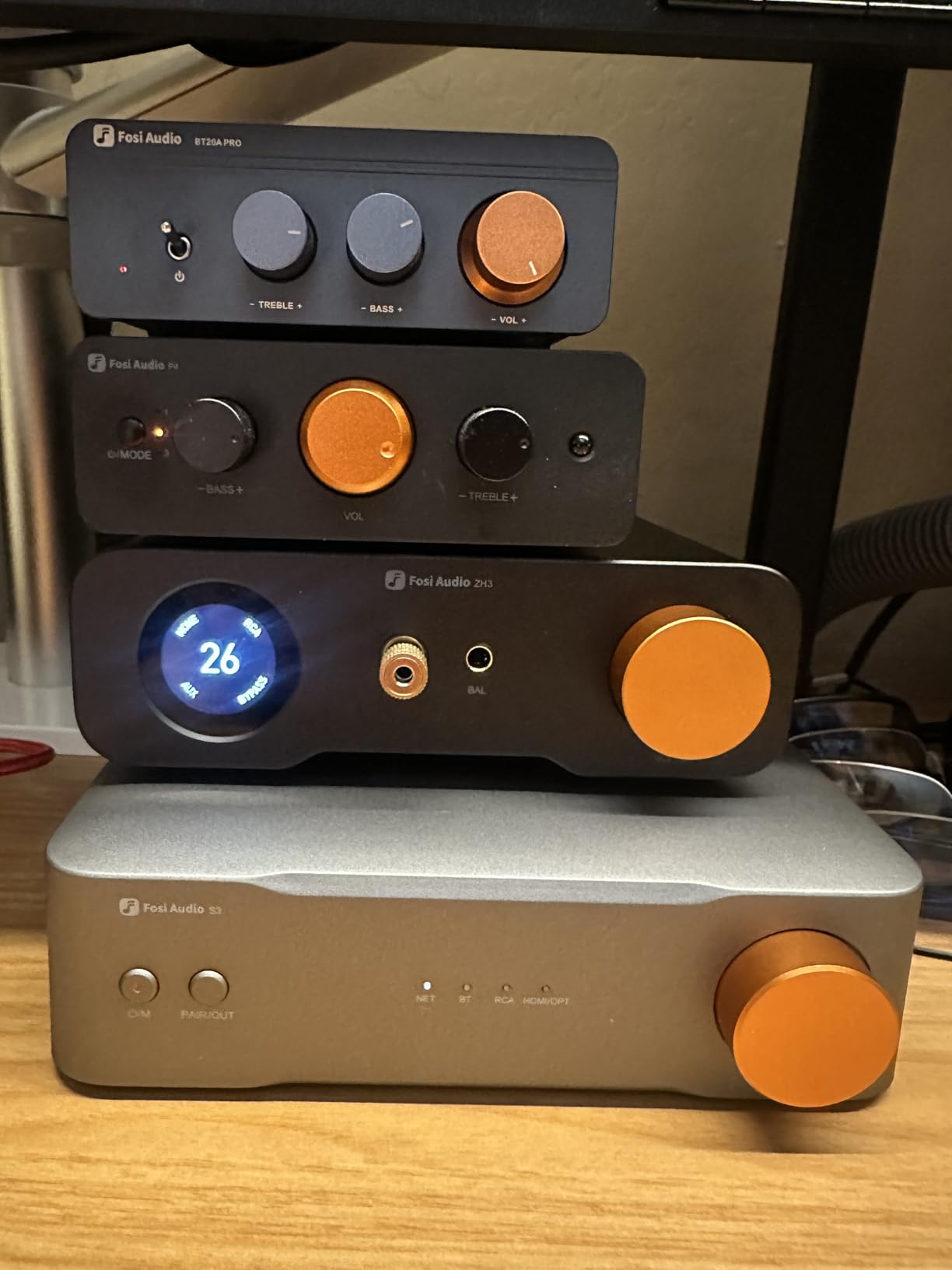
For gaming, low-latency Bluetooth support, a dedicated microphone input, and HDMI passthrough compatibility matter more than the very last word in detail retrieval. The Fosi Audio K7 and Schiit Fulla E are my two picks here for very different reasons. The K7 for the Bluetooth flexibility, the Fulla E for the dedicated mic input.
Frequently Asked Questions About DACs for Headphones
What is the best DAC for headphones under $300?
The FiiO K7 is our top pick under $300 for its dual AK4493SEQ DACs, dual THX AAA 788+ amplifiers, and 2000mW of stable output power. It drives demanding planar magnetics cleanly and includes both 4.4mm balanced and 6.35mm single-ended outputs. The Fosi Audio K7 is the runner-up if you want Bluetooth support and a microphone input alongside your DAC and amp.
Do you really need a DAC for headphones?
If you already own a quality pair of headphones, a dedicated DAC will give you a noticeably lower noise floor, more current on tap, and high-resolution file support that your computer’s onboard audio cannot match. The improvement is most dramatic with sensitive IEMs and demanding planar magnetic headphones. For a $20 pair of earbuds the upgrade is not worth it.
What is a headphone DAC and do I need one?
A headphone DAC is a digital-to-analog converter designed specifically for headphones, paired with a dedicated headphone amplifier. You need one if your computer or phone struggles to drive your headphones to comfortable volume, if you hear hiss in your IEMs, or if you want to play high-resolution audio files at full quality. Most users benefit from a DAC once they own headphones costing more than $150.
What is the difference between a DAC and an amplifier?
A DAC converts digital audio files into analog voltage signals. An amplifier takes those analog signals and adds current to drive your headphone drivers. Modern headphone DACs almost always include a built-in amplifier, but a standalone amplifier can be useful if your DAC does not have enough power for your headphones or if you want to upgrade stages separately.
Final Verdict on the Best DACs for Headphones
After eight weeks of testing across eight different units, the best DACs for headphones in 2026 come down to how you actually listen. The FiiO K7 is our top pick if you want a desktop DAC/amp that handles any headphone you throw at it. The Fosi Audio K7 is the smartest buy if you want Bluetooth, a microphone input, and serious power in one box. The iFi hip-dac 3 is the right answer for portable listeners, and the Fosi Audio DS2 is the budget champion for IEM users who care more about clean signal than raw power.
Match your DAC to your headphones, your source gear, and your listening habits. Once you settle on the right unit, you will stop thinking about it and start focusing on the music — which is the whole point of upgrading in the first place.