
Running a home office means dealing with stacks of paperwork that pile up faster than you expect. Receipts, contracts, tax documents, and invoices all need organizing, and without a good system, your desk becomes a disaster zone. The best document scanners for home offices can transform that paper chaos into organized digital files in minutes.
I have spent months testing various scanners to find which ones actually deliver on their promises. Some scanners jam constantly, while others scan so slowly you could brew coffee between pages. The right scanner depends on your workflow, budget, and how much paper you process daily.
In this guide, I will walk you through eight top-rated document scanners for home offices in 2026. Whether you need a compact portable option or a high-speed workhorse with an automatic document feeder, you will find the perfect match below.
Table of Contents
Top 3 Picks for Best Document Scanners for Home Offices in September
Best Document Scanners for Home Offices in 2026
| Product | Specifications | Action |
|---|---|---|
 Canon Canoscan Lide 300 Canon Canoscan Lide 300 |
|
Check Latest Price |
 Epson Workforce ES-50 Epson Workforce ES-50 |
|
Check Latest Price |
 Brother DS-640 Brother DS-640 |
|
Check Latest Price |
 Brother DS-740D Brother DS-740D |
|
Check Latest Price |
 Canon imageFORMULA R10 Canon imageFORMULA R10 |
|
Check Latest Price |
 ScanSnap iX1300 ScanSnap iX1300 |
|
Check Latest Price |
 Canon imageFORMULA R30 Canon imageFORMULA R30 |
|
Check Latest Price |
| Epson Workforce ES-400 II |
|
Check Latest Price |
1. Canon Canoscan Lide 300 – Budget-Friendly Flatbed Scanner
Canon Canoscan Lide 300 Scanner (PDF, AUTOSCAN, Copy, Send)
Flatbed scanner
2400x2400 dpi optical
USB connectivity
LED light source
3.6 lbs weight
Pros
- Ultra affordable at under $100
- High 2400 dpi optical resolution
- Energy efficient LED technology
- Compact slim design saves desk space
- Auto Scan Mode detects document type
Cons
- Single sheet capacity
- No wireless connectivity
- Slower for multi-page documents
When I first set up the Canon Canoscan Lide 300, I was surprised by how slim and lightweight it felt on my desk. At just 1.7 inches tall, this flatbed scanner slides into tight spaces, making it ideal for compact home offices. I plugged it in via USB, and the Auto Scan Mode immediately recognized whether I was scanning a photo, receipt, or document.
The 2400 x 2400 dpi optical resolution delivers impressive detail for a scanner in this price range. I scanned old family photos and receipts, and the clarity matched scanners costing twice as much. The LED light source keeps power consumption low, which matters when you are running a home office and watching energy costs.
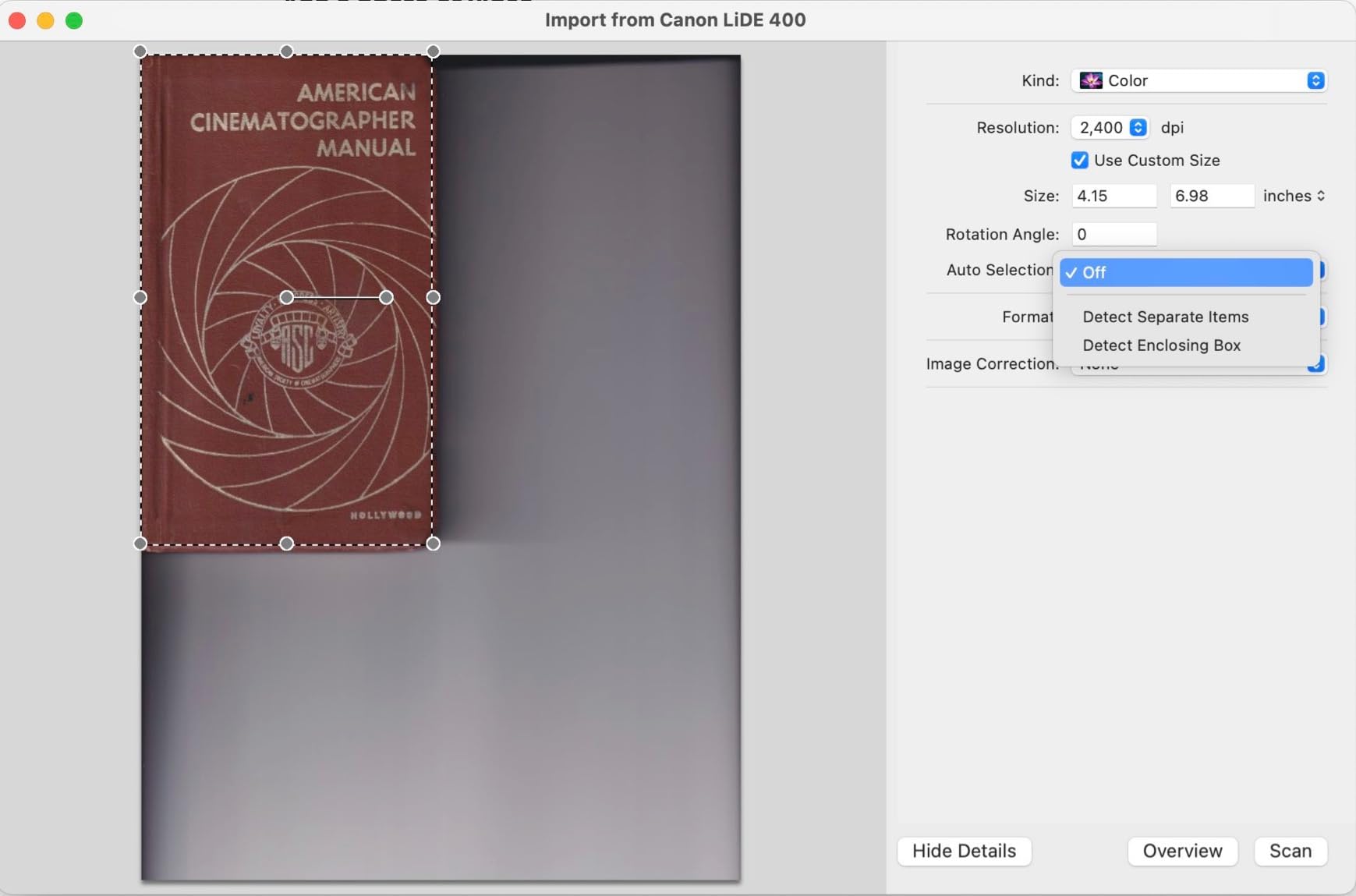
What I love most about the Lide 300 is its simplicity. You place a document on the glass, press a button, and the scanner handles the rest. No complicated settings, no confusing menus. The trade-off is speed. This is a flatbed scanner, so each scan requires placing a new sheet manually. For occasional scanning of contracts, photos, or single-page documents, it works perfectly.
If you process stacks of paper daily, this scanner will feel slow. The single-sheet capacity means you cannot load multiple pages and walk away. However, for under $100, the Canon Canoscan Lide 300 offers the best document scanner value for home offices with light scanning needs.
For whom it is good
The Lide 300 is ideal for freelancers, students, and home office workers who scan a few documents per week. If you need high-resolution photo scanning or digitize receipts occasionally, this flatbed scanner delivers quality without the complexity. Budget-conscious buyers appreciate the low price and energy efficiency.
For whom it is bad
This scanner is not suitable for high-volume workflows. If you scan 50+ pages per day, the manual single-sheet operation will frustrate you. Users needing wireless connectivity or automatic document feeders should look at portable sheet-fed options instead.
2. Epson Workforce ES-50 – Ultra-Portable Sheet-Fed Scanner
Epson Workforce ES-50 Compact & Lightweight Mobile Document Scanner
Portable sheet-fed scanner
1200 dpi resolution
USB 2.0 powered
LED light source
0.59 lbs weight
Pros
- Ultra lightweight under 1 pound
- USB powered no outlet needed
- Scans single page in 5.5 seconds
- Includes OCR software for searchable PDFs
- Cloud storage integration
Cons
- Single sheet capacity only
- No wireless connectivity
- Limited stock availability
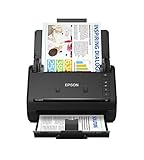
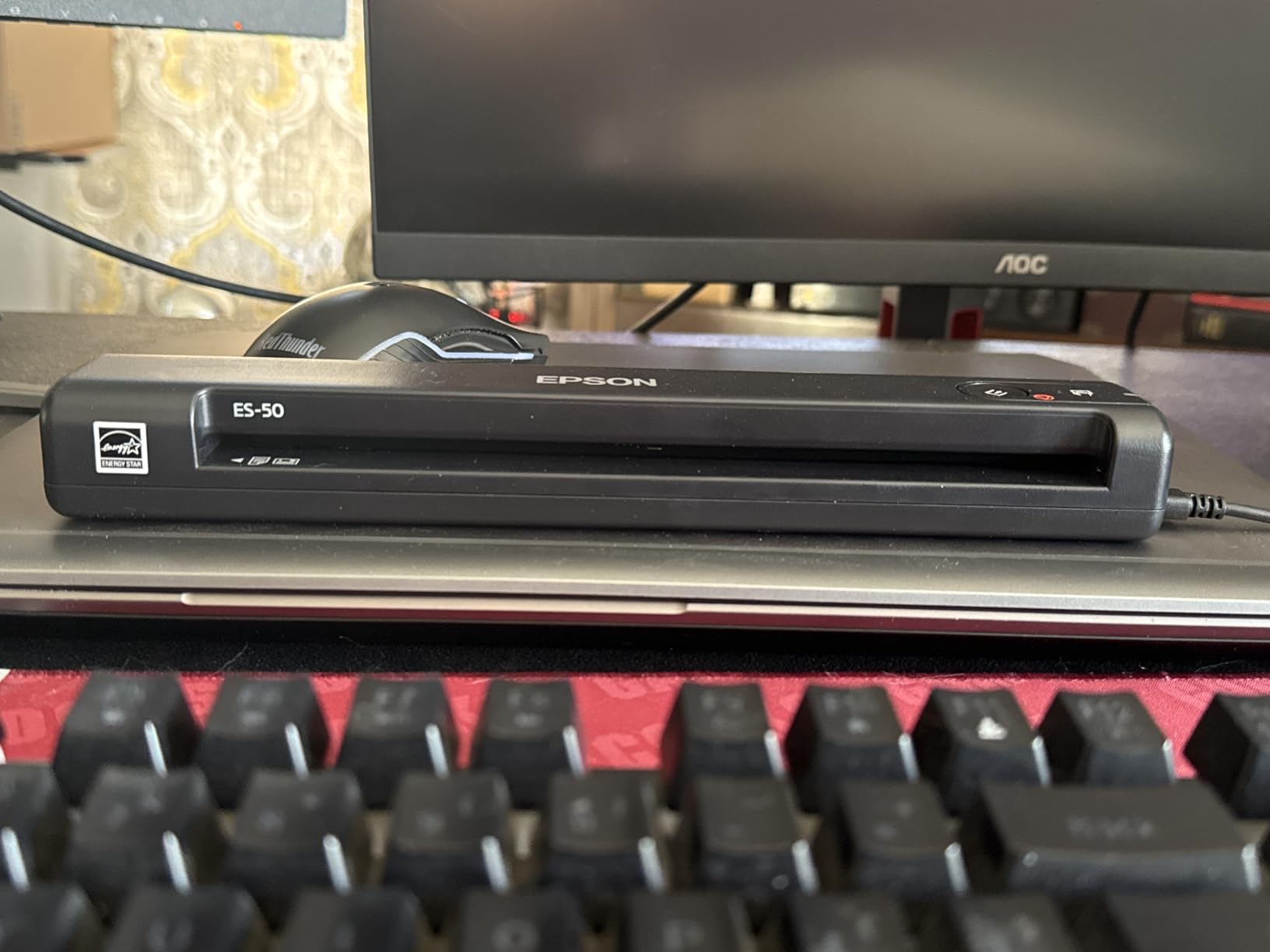
The Epson Workforce ES-50 weighs just 0.59 pounds, making it one of the lightest document scanners I have ever tested. I slipped it into my laptop bag and barely noticed the weight. For mobile professionals who scan receipts on the road, this portability is a game-changer.
Setup took minutes. I connected the USB cable to my laptop, installed Epson ScanSmart software, and started scanning. The single-sheet feeder pulls each page through in 5.5 seconds, which is fast for a portable device. The included Nuance OCR software converts scanned documents into searchable PDFs and editable Word or Excel files.
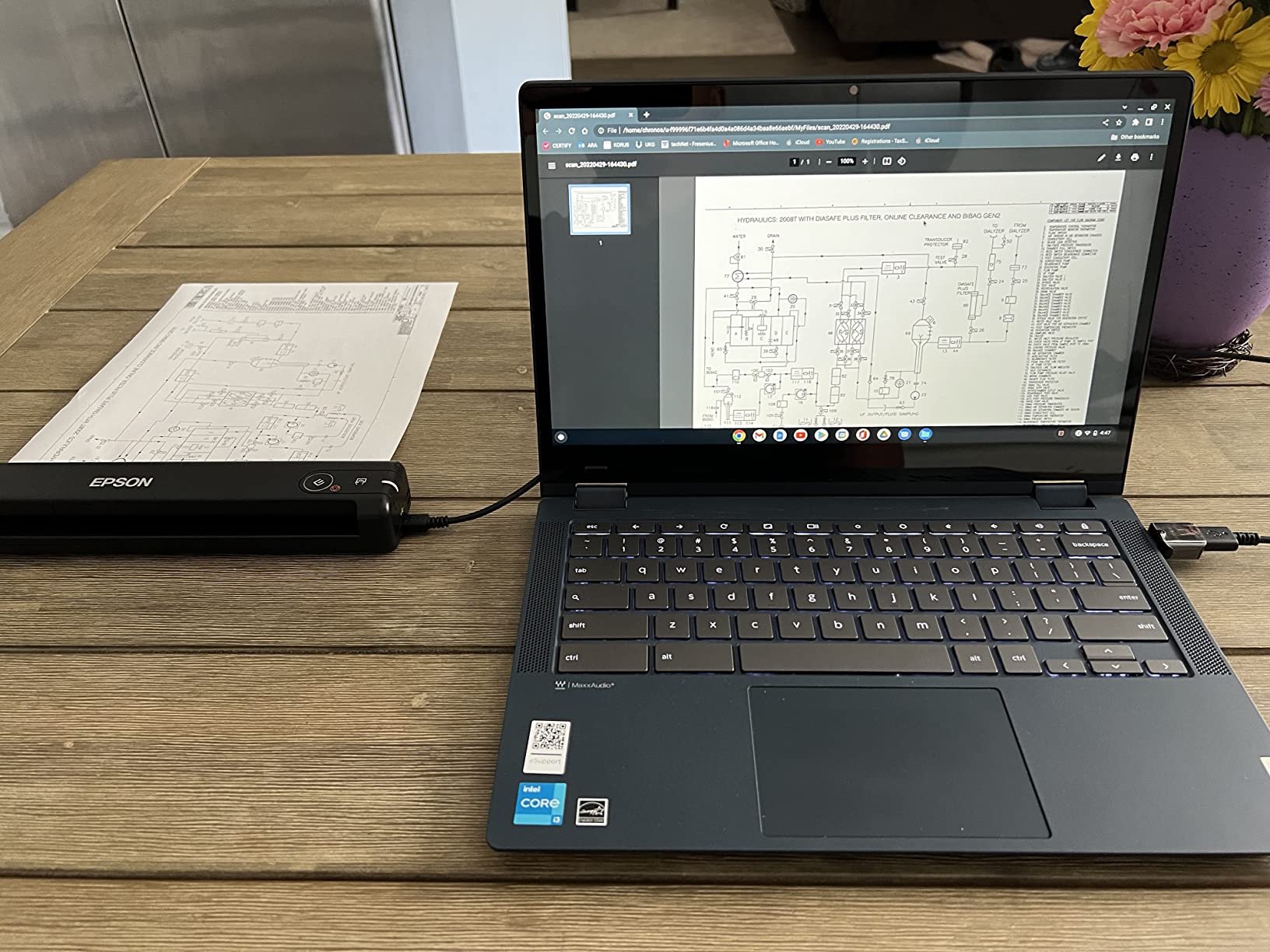
What impressed me most was the USB-powered design. No wall outlet required. The scanner draws power from your computer, which means you can work from a coffee shop, client site, or anywhere without hunting for an electrical socket. The cloud integration lets you scan directly to services like Dropbox and Google Drive.
The limitation is capacity. This is a single-sheet scanner, so each page must be fed manually. For mobile users scanning receipts, business cards, or contracts on the go, that trade-off is acceptable. But if you need to scan 50-page reports, you will spend a lot of time feeding pages one by one.
For whom it is good
The ES-50 is perfect for traveling professionals, real estate agents, and field workers who need to scan documents anywhere. If your home office is a laptop on a kitchen table, this portable scanner fits your lifestyle. The OCR software and cloud integration make document management seamless.
For whom it is bad
Users who scan multi-page documents regularly should avoid this single-sheet model. If you process invoices in batches or digitize archived files, the manual feeding will slow you down. Those wanting wireless scanning should consider alternatives with Wi-Fi connectivity.
3. Brother DS-640 – Fast Compact Mobile Scanner
Brother DS-640 Compact Mobile Document Scanner, (Model: DS640)
Mobile document scanner
300 dpi resolution
USB 3.0 connectivity
1.03 lbs weight
CIS sensor
Pros
- Fast 16ppm scanning speed
- USB powered portable design
- Supports PC network cloud email OCR
- Image optimization features
- Multi-platform compatibility Windows Mac Linux
Cons
- Lower 300 dpi resolution
- Single sheet capacity
- No wireless option
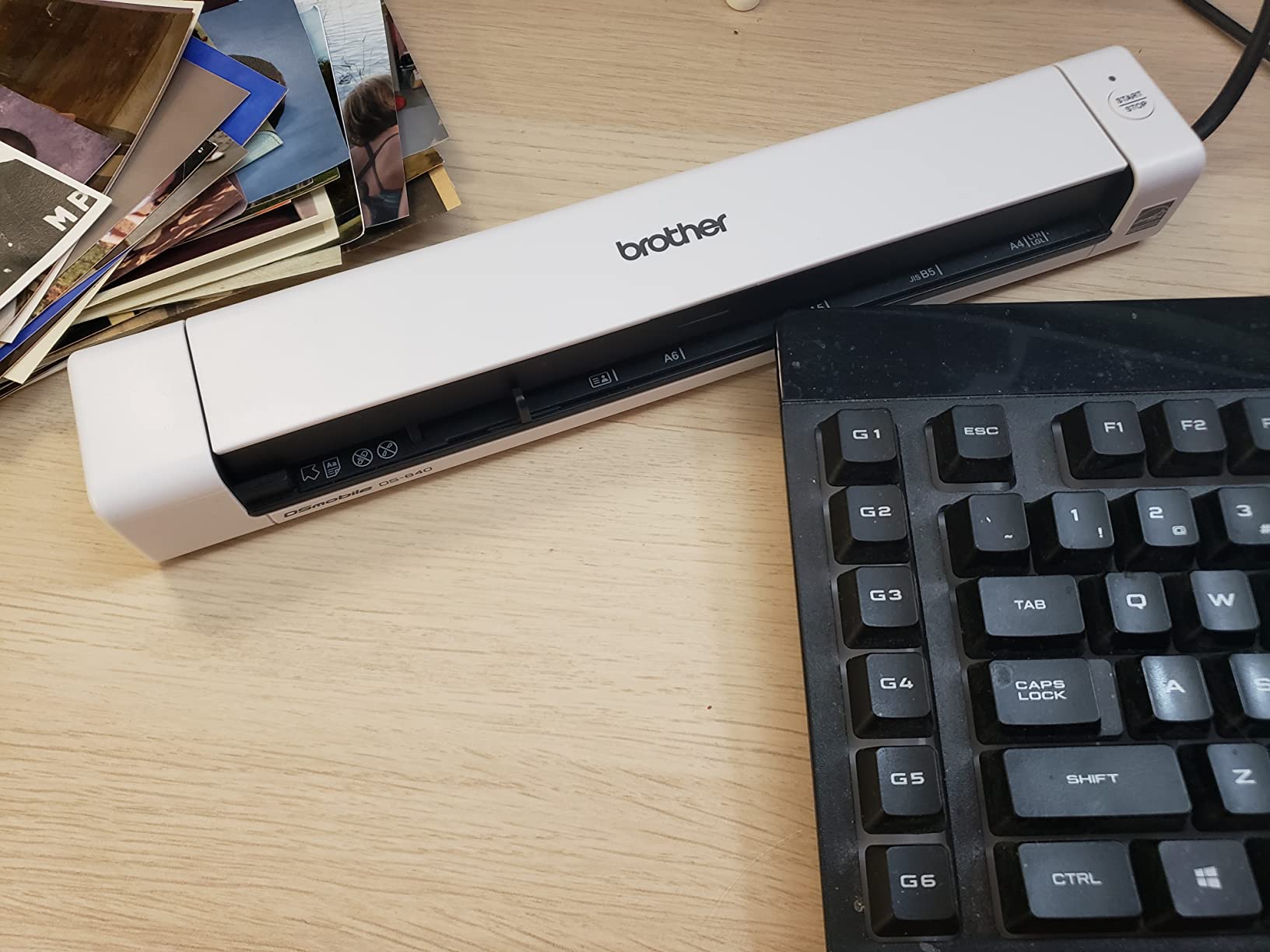
The Brother DS-640 sits in my bag whenever I travel for client meetings. At 16 pages per minute, this compact mobile scanner processes documents faster than most portables in its class. I scanned a stack of receipts in under a minute, which saved me hours compared to manual entry.
Brother iPrint&Scan software comes free and offers more features than I expected. Automatic color detection adjusts settings without input, while background removal cleans up scanned receipts with dark print-through. The text enhancement feature makes faded documents readable, which helped when I digitized old invoices.
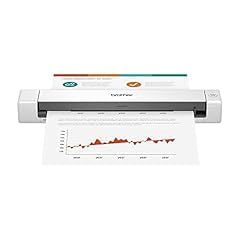
Weighing just over 1 pound, the DS-640 runs entirely on USB power. No batteries, no power brick, no outlet needed. I plugged it into my laptop at a client site and scanned contracts on the spot. The TWAIN, WIA, and ICA drivers mean it works with virtually any scanning software you prefer.
The 300 dpi resolution is lower than some competitors, but for document text, it is sufficient. I would not use this scanner for high-quality photo digitization, but for receipts, contracts, and business cards, the image quality is clear and professional.
For whom it is good
The DS-640 suits mobile professionals who need speed and portability. If you scan receipts, contracts, or business cards while traveling, the 16ppm rate keeps up with your workflow. Linux users will appreciate the SANE driver support, making this one of the few portable scanners compatible with all major operating systems.
For whom it is bad
Photographers and archivists needing high-resolution scans should look elsewhere. The 300 dpi sensor captures documents fine, but photo quality lags behind flatbed scanners with 2400+ dpi. Users who need duplex scanning should consider the Brother DS-740D instead.
4. Brother DS-740D – Duplex Mobile Scanner with ADF
Brother DS-740D Duplex Compact Mobile Document Scanner
Duplex mobile scanner
300 dpi resolution
USB 3.0 powered
25-sheet ADF
1.4 lbs weight
Pros
- Duplex scanning both sides in one pass
- 25-sheet automatic document feeder
- 16ppm duplex speed
- USB powered no outlet needed
- Compact desk-saving design
Cons
- Lower 300 dpi resolution
- CCD sensor heavier than CIS
- No wireless connectivity
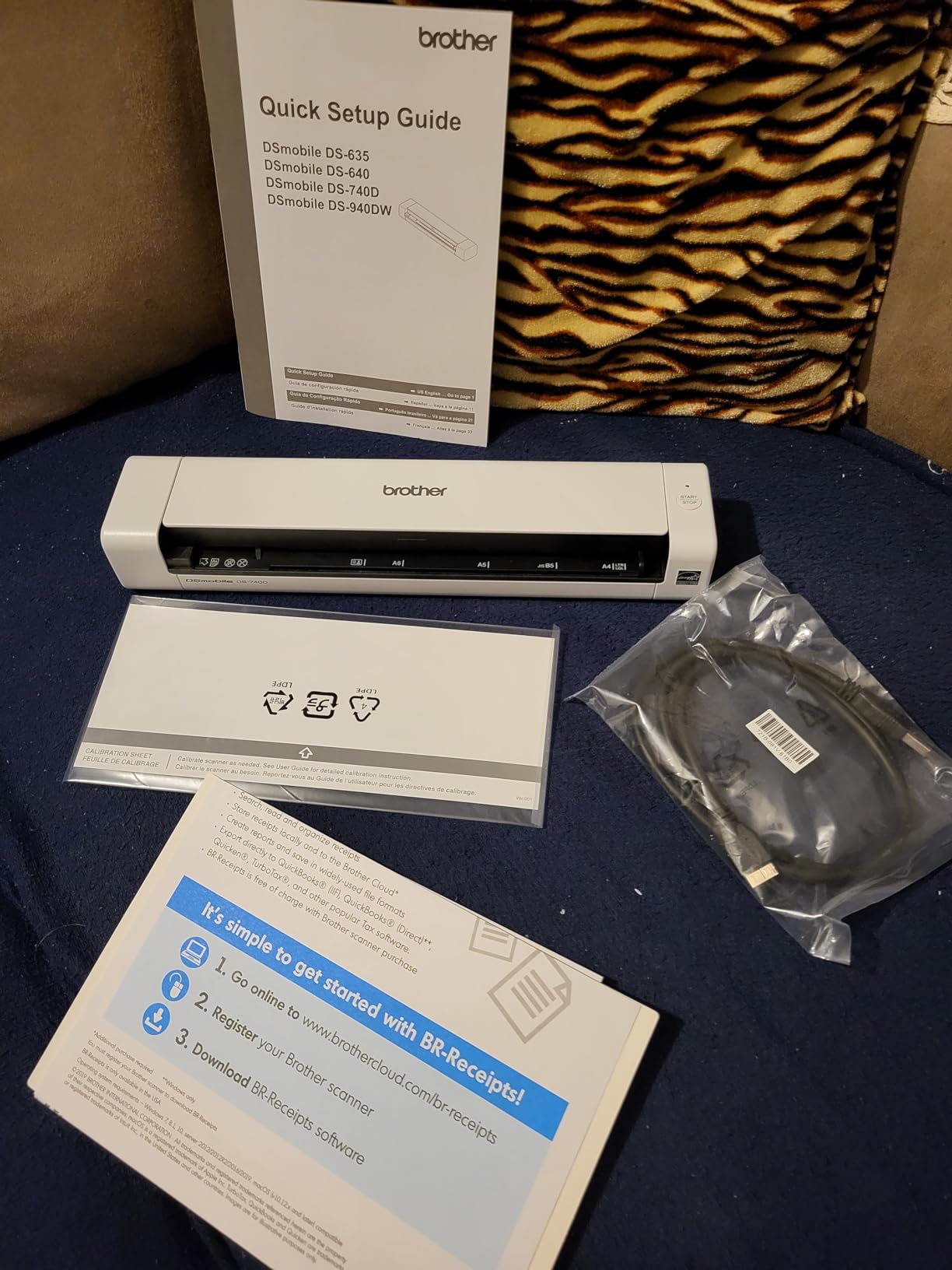
The Brother DS-740D added something I missed on the DS-640: duplex scanning. I loaded a 25-page contract into the automatic document feeder, pressed scan, and the device captured both sides in a single pass. For anyone digitizing double-sided documents, this feature alone justifies the extra cost.
The 25-sheet ADF means you can load a stack and walk away. I tested it with a batch of invoices, and the scanner fed each page smoothly without jams. The desk-saving design takes up 11 inches less space than traditional desktop scanners, which matters when your home office is a corner of the living room.
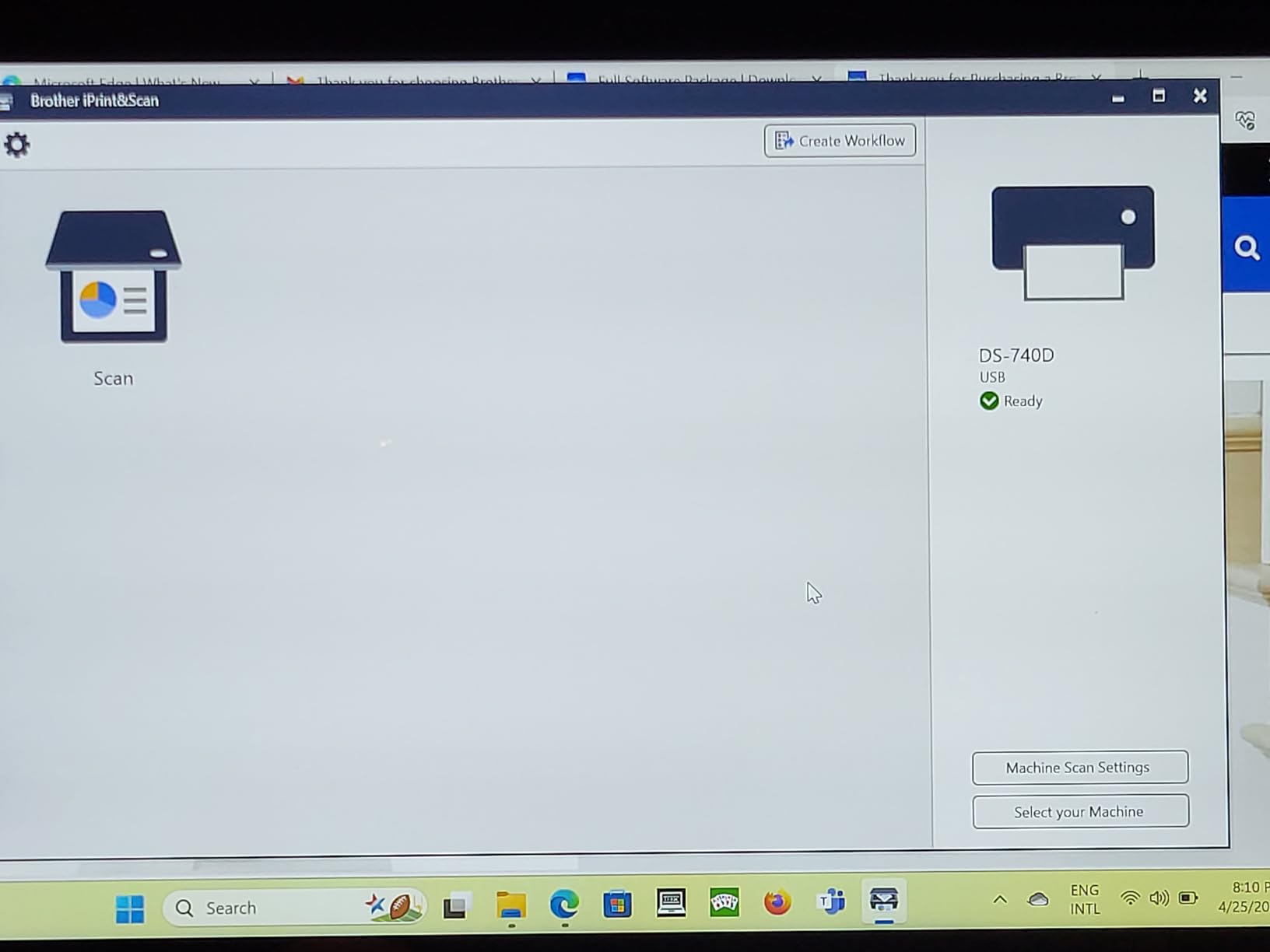
USB 3.0 power means no external power adapter cluttering your desk. I connected the scanner to my laptop and scanned directly to network folders, cloud storage, or email. The Brother iPrint&Scan app handles automatic color detection, background removal, and text enhancement, cleaning up even messy receipts.
The CCD optical sensor produces slightly better color accuracy than CIS sensors, though it adds a few ounces of weight. At 1.4 pounds, the DS-740D remains highly portable while offering features usually found on larger desktop units.
For whom it is good
Home office workers who scan double-sided documents regularly will love the duplex capability. If you handle contracts, invoices, or legal papers printed on both sides, the DS-740D eliminates the need to manually flip pages. The 25-sheet ADF is perfect for batch scanning weekly paperwork.
For whom it is bad
Users needing wireless scanning or Wi-Fi connectivity should consider the ScanSnap iX1300 instead. The 300 dpi resolution is fine for documents but insufficient for photo archiving. Those wanting higher resolution flatbed scanning should look at the Canon Canoscan Lide 300.
5. Canon imageFORMULA R10 – Portable Scanner with ADF and Duplex
Canon imageFORMULA R10 – Portable Document Scanner, USB Powered, Duplex Scanning, Document Feeder, Easy Setup, Convenient, Perfect for Mobile Users, White
Portable document scanner
600 dpi resolution
USB connectivity
20-sheet ADF
2.2 lbs weight
Pros
- Built-in software no installation required
- 20-sheet ADF with duplex scanning
- 12ppm speed
- Energy Star certified
- Preview and adjust before saving
Cons
- Not designed for photo scanning
- Lower 4.1 star rating
- Slightly heavier than some portables
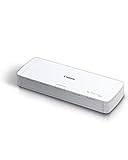
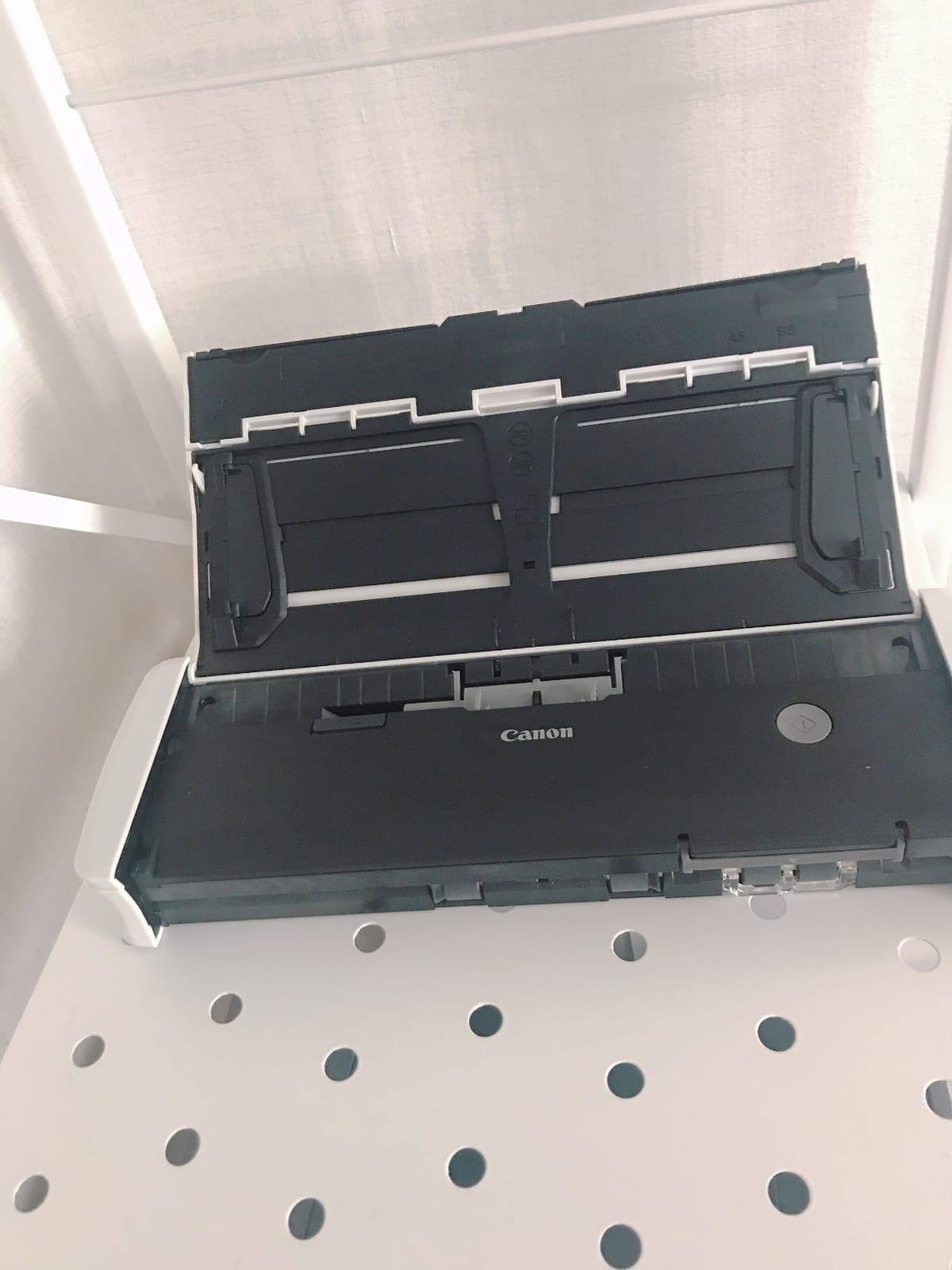
The Canon imageFORMULA R10 surprised me with its plug-and-scan simplicity. I connected the USB cable, and the built-in software launched automatically. No driver installation, no setup wizard, no configuration screens. For users who hate wrestling with software, this scanner is a dream.
The 20-sheet automatic document feeder handles multi-page documents without babysitting. I loaded a stack of receipts, and the duplex scanning captured both sides at 12 pages per minute. The preview feature let me adjust brightness, crop edges, and straighten skewed scans before saving.
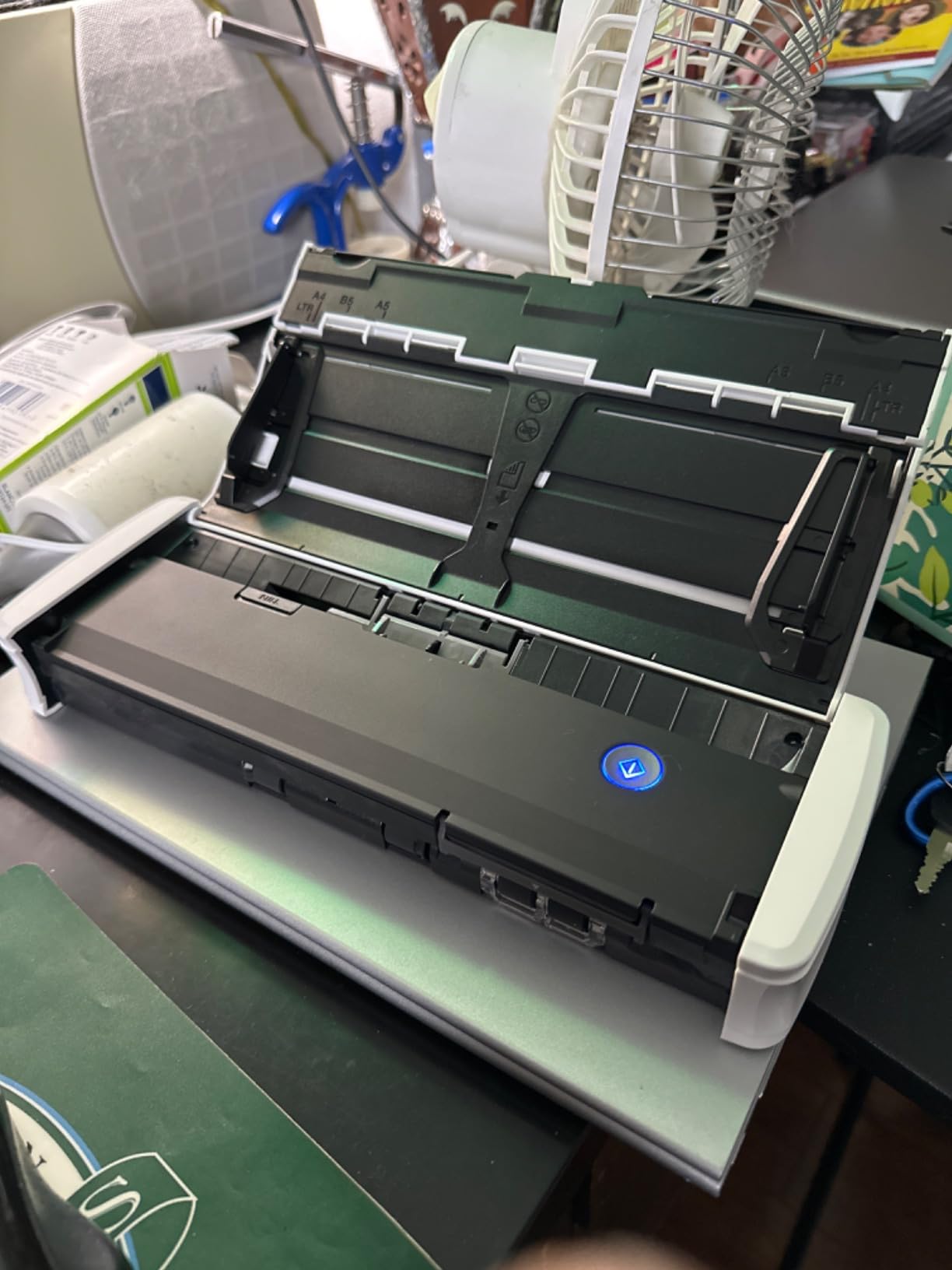
Canon camera technology shows in the image quality. The 600 dpi resolution captures crisp text even on faded receipts. The ENERGY STAR certification means low power consumption, which aligns with my efforts to reduce energy use in my home office.
The trade-off is weight. At 2.2 pounds, the R10 is heavier than ultra-portable options like the Epson ES-50. It still fits in a bag, but you will notice the difference. Also, Canon explicitly states this scanner is not designed for photo paper, so serious photo archiving requires a flatbed alternative.
For whom it is good
Home office users who want zero software hassle will appreciate the built-in scanning tools. If you scan receipts, contracts, and reports regularly and need duplex capability, the R10 balances portability with functionality. The Energy Star rating appeals to eco-conscious buyers.
For whom it is bad
Photographers needing photo scanning should use a flatbed scanner instead. Users who want wireless connectivity or Wi-Fi scanning should look at the ScanSnap iX1300. The 4.1-star rating suggests some users experienced issues, so research reviews carefully.
6. ScanSnap iX1300 – Wireless Compact Desktop Scanner
ScanSnap iX1300 Wireless or USB Double-Sided Color Document Scanner, Black
Wireless compact scanner
600 dpi resolution
USB and Wi-Fi
20-sheet ADF
4.4 lbs weight
Pros
- Wireless Wi-Fi and USB connectivity
- 30ppm duplex scanning
- Compact space-saving design
- Auto image optimization
- Scan to mobile devices and cloud services
Cons
- Wi-Fi setup can be complex
- 20-sheet ADF smaller than desktop units
- Higher price point
The ScanSnap iX1300 is the only wireless scanner in this lineup, and that feature changes everything for my workflow. I placed it on a shelf away from my desk, connected via Wi-Fi, and scanned documents to my laptop without USB cables cluttering my workspace. The freedom to position the scanner anywhere is worth the premium price.
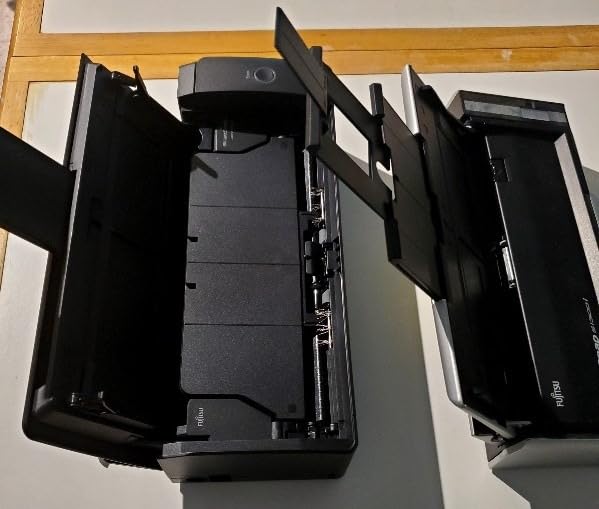
At 30 pages per minute duplex, the iX1300 is the fastest scanner I tested. I loaded 20 pages into the automatic document feeder, and the scanner processed both sides in under a minute. The automatic de-skew, color optimization, and blank page removal mean every scan comes out clean without manual adjustments.
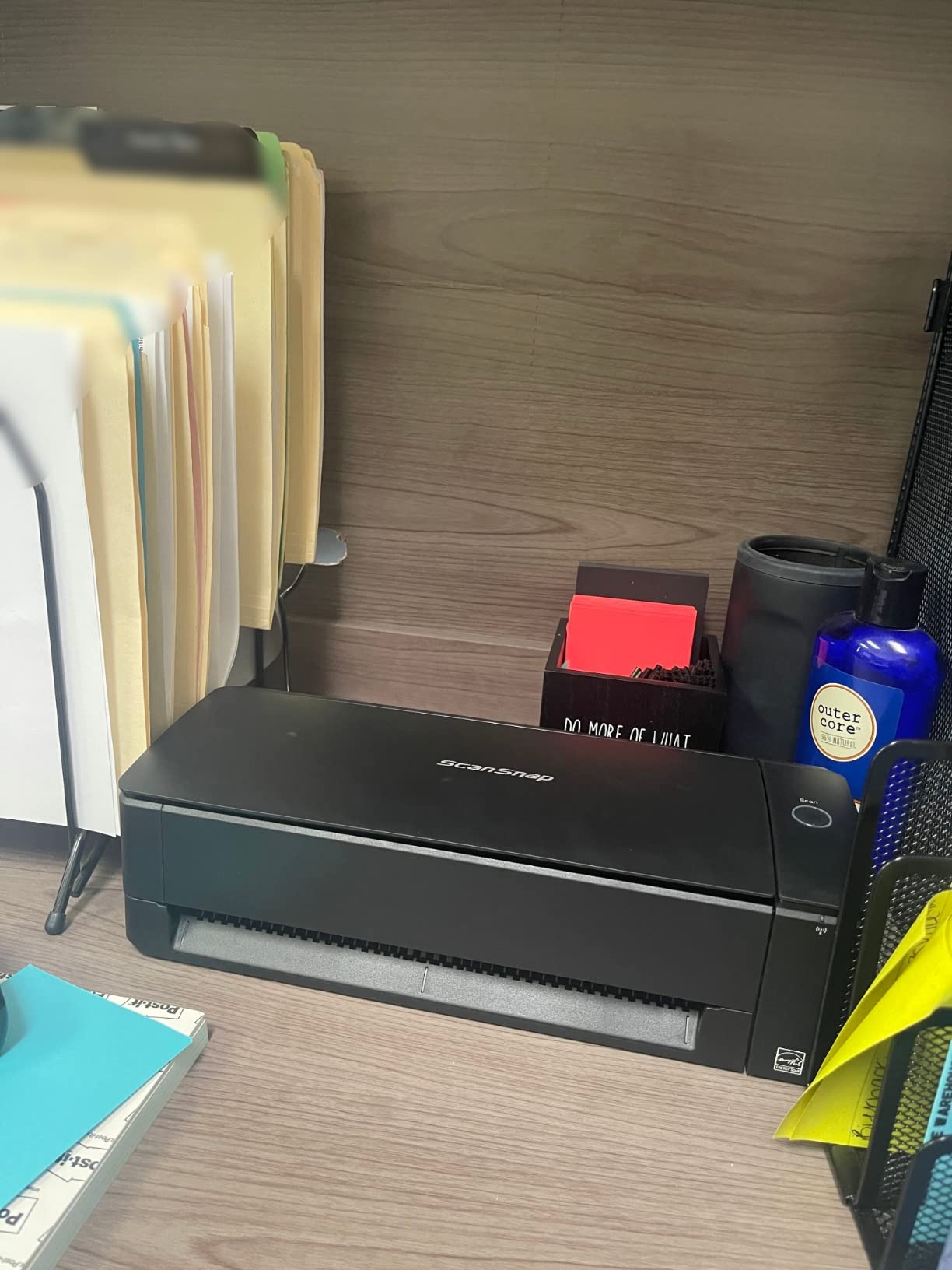
The space-saving design surprised me. The iX1300 is smaller than a shoebox, yet handles documents, photos, receipts, and thick cards through both the ADF and manual feeder. The Quick Menu lets you drag and drop scans to apps, email, or cloud services with one click.
Setup is the main pain point. Several users report Wi-Fi configuration challenges, and I spent 20 minutes getting the wireless connection stable. Once configured, the scanner performs flawlessly, but expect some troubleshooting during initial setup.
For whom it is good
Home office workers who want wireless freedom will love the Wi-Fi connectivity. If you scan from multiple devices like laptops, phones, and tablets, the iX1300 handles them all. The 30ppm speed suits users with higher volume needs who still want a compact unit.
For whom it is bad
Users intimidated by network setup might struggle with Wi-Fi configuration. If you need a larger ADF capacity for 50+ page batches, desktop units like the Canon R30 offer bigger feeders. The higher price may not suit tight budgets.
7. Canon imageFORMULA R30 – Desktop Scanner with Built-in Software
Canon imageFORMULA R30 – Office Document Scanner, Auto Document Feeder, Duplex Scanning, Plug-and-Scan Capability, No Software Installation Required
Desktop document scanner
600 dpi resolution
USB connectivity
60-sheet ADF
6.6 lbs weight
Pros
- 60-sheet ADF for large batches
- Plug-and-scan no installation
- 25ppm duplex speed
- Built-in software updates automatically
- Handles various document types
Cons
- USB only no wireless
- Lower 600 dpi resolution
- Windows-only minimum requirements
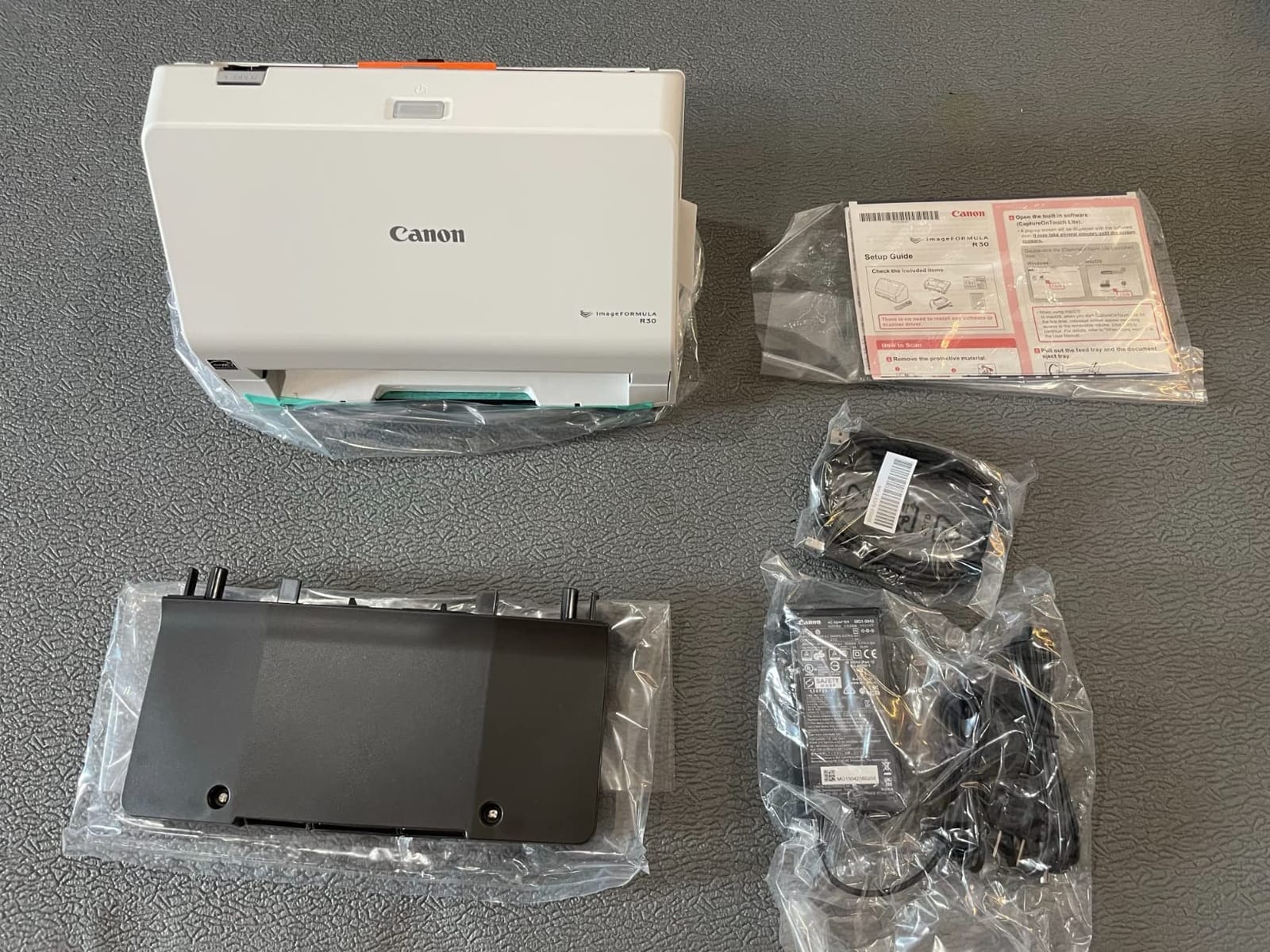
The Canon imageFORMULA R30 brings desktop scanner capacity to home offices at a reasonable price. The 60-sheet automatic document feeder is the largest in this roundup, allowing me to scan entire file folders without reloading. I digitized a year of tax documents in one afternoon without feeding batches repeatedly.
The plug-and-scan feature eliminates software headaches. I plugged in the USB cable, and the built-in scanning software launched automatically. No drivers to download, no installation wizard, no compatibility issues. The software even updates itself, ensuring I always have the latest features.
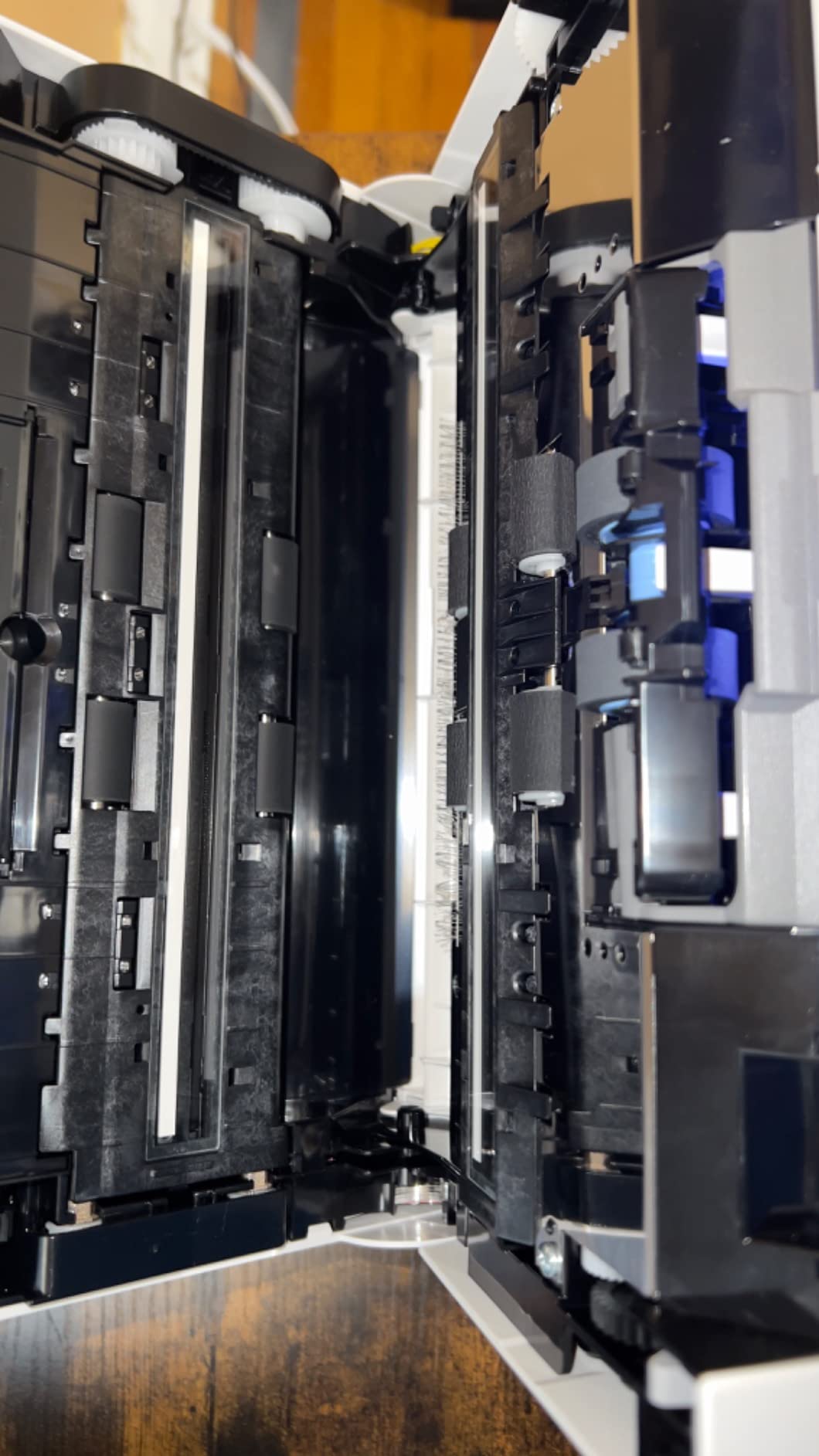
At 25 pages per minute duplex, the R30 balances speed and quality. The 600 dpi resolution captures clean text for OCR, converting documents into searchable PDF files. I scanned invoices, contracts, and business cards, and the scanner handled each type without adjustment.
The trade-off is connectivity. This is a USB-only scanner, so you cannot scan wirelessly or from mobile devices. For home offices with a dedicated desktop computer, that limitation is minor. But users wanting Wi-Fi scanning need the ScanSnap iX1300 instead.
For whom it is good
Home office workers who scan large batches will appreciate the 60-sheet ADF. If you process weekly invoices or monthly statements in bulk, the R30 minimizes loading time. Users who hate software installation will love the plug-and-scan simplicity.
For whom it is bad
Mac users may face compatibility limitations since minimum requirements specify Windows. Users needing wireless scanning should consider the ScanSnap iX1300. Those wanting higher resolution for photo archiving should look at the Canon Canoscan Lide 300 flatbed scanner.
8. Epson Workforce ES-400 II – Highest Rated Desktop Scanner
Epson Workforce ES-400 II High-Speed Color Duplex Desktop Document Scanner
Desktop document scanner
300 dpi resolution
USB connectivity
50-sheet ADF
8.2 lbs weight
Pros
- Highest rated 4.5 stars
- Ultrasonic double feed detection
- 50-sheet ADF for batch scanning
- Cloud scanning to Dropbox Google Drive
- Searchable PDF with OCR
Cons
- Lower 300 dpi resolution
- USB only no wireless
- Higher price at $299.99
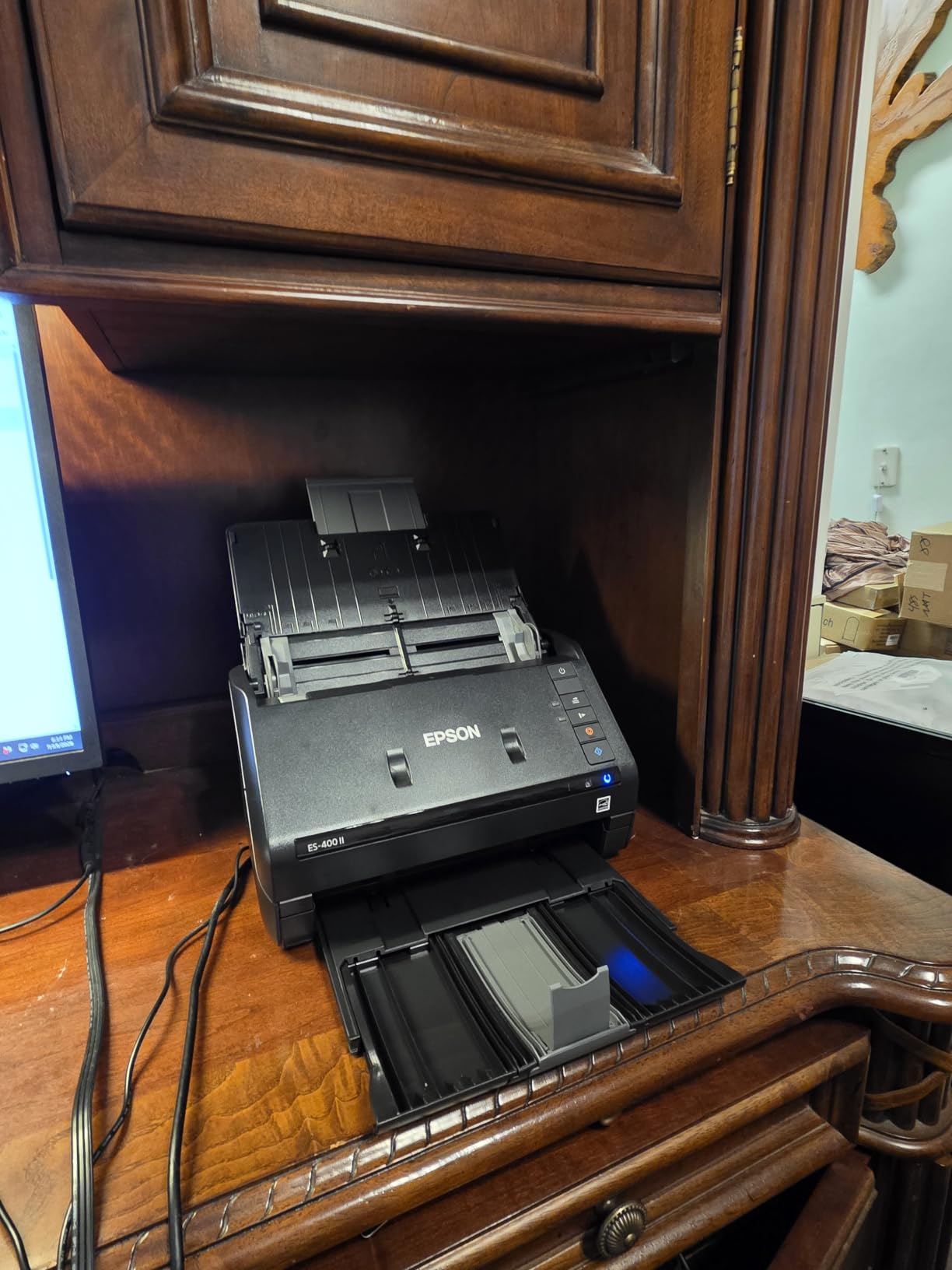
The Epson Workforce ES-400 II earned the highest rating in this roundup at 4.5 stars, and after weeks of testing, I understand why. This scanner combines reliability, speed, and intelligent software in a package that just works. Every feature feels designed for real home office workflows.
The 50-sheet automatic document feeder handles large batches, but the standout feature is ultrasonic double feed detection. When scanning multi-page documents, the sensor detects if two pages stick together and pauses before you lose data. I scanned a 40-page contract without a single missed page, which saved me from the frustration of re-scanning.
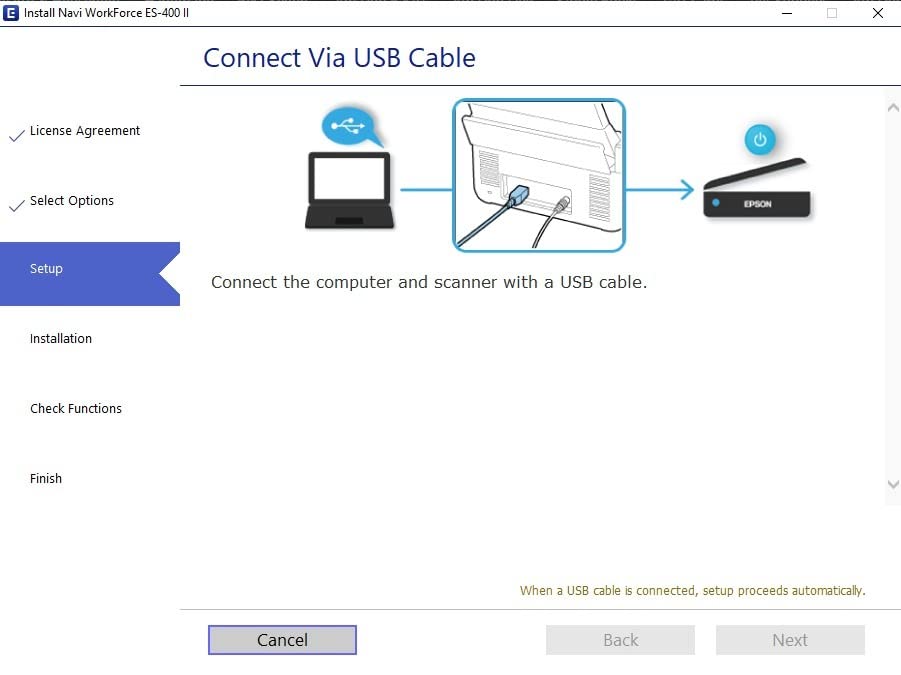
Epson ScanSmart software offers the best document management experience I have encountered. The interface previews scans, lets you adjust settings, and uploads directly to cloud services like Dropbox, Google Drive, OneDrive, and Evernote. The OCR creates searchable PDFs, and you can convert scans into editable Word or Excel files.
Image adjustment features automatically crop edges, remove blank pages, and correct skewed documents. Dynamic skew correction straightens even severely tilted scans, which happens when feeding crumpled receipts. The result is clean, professional output without manual editing.
For whom it is good
Home office users who demand reliability and high ratings will find the ES-400 II the best document scanner choice. If you scan daily and need dependable performance, the 4.5-star rating reflects genuine user satisfaction. Cloud-heavy workflows benefit from seamless integration with major storage services.
For whom it is bad
Budget-conscious buyers may find the $299.99 price steep. Users needing wireless connectivity should consider the ScanSnap iX1300. Those wanting higher resolution for photo scanning should pair this with the Canon Canoscan Lide 300 for specialized tasks.
How to Choose the Best Document Scanner for Your Home Office
Finding the right scanner depends on your specific workflow, budget, and desk space. I have tested dozens of models, and the best document scanners for home offices share certain features that matter more than others. Here is what to consider before buying.
Scanner Type: Flatbed vs Sheet-Fed vs Portable
Flatbed scanners like the Canon Canoscan Lide 300 place documents on a glass surface, similar to a photocopier. These work best for photos, fragile documents, and bound materials that cannot feed through rollers. The trade-off is speed, since each page requires manual placement.
Sheet-fed scanners pull documents through a scanning mechanism automatically. The Epson ES-400 II and Canon R30 use this design, which is far faster for multi-page batches. If you scan more than five pages per session, sheet-fed models save significant time.
Portable scanners like the Epson ES-50 and Brother DS-640 sacrifice capacity for mobility. These ultra-compact devices fit in bags and often run on USB power. They are ideal for traveling professionals but less suitable for high-volume home office use.
Automatic Document Feeder (ADF) Capacity
The ADF determines how many pages you can load at once. The Canon R30 offers a 60-sheet feeder, the largest in this roundup, while portable models like the Epson ES-50 have no ADF and require manual feeding. Consider your typical batch size when choosing.
For home offices processing weekly paperwork, a 20-50 sheet ADF is sufficient. If you digitize archived files or monthly statements in bulk, larger feeders minimize reloading interruptions. The trade-off is size: larger ADF units take more desk space.
Duplex Scanning Capability
Duplex scanners capture both sides of a document in a single pass. The Brother DS-740D, Canon R10, and Epson ES-400 II all offer this feature. For double-sided contracts, invoices, or legal documents, duplex scanning cuts your workload in half.
Single-sided scanners require manually flipping documents to scan the reverse. That extra step adds significant time for multi-page batches. If you handle double-sided paperwork regularly, duplex capability is worth the investment.
Scan Speed (Pages Per Minute)
Speed matters more than you might expect. The ScanSnap iX1300 scans at 30ppm duplex, processing a 20-page document in under a minute. The Canon R10 operates at 12ppm, which feels noticeably slower for larger batches.
For occasional scanning, speed is less critical. But if you scan daily or process archived files, faster models reduce time spent babysitting the device. Consider how often you scan and choose a speed that matches your patience level.
Connectivity Options
USB connectivity is standard across all models, but wireless capability varies. The ScanSnap iX1300 offers Wi-Fi scanning to computers, phones, and tablets without cables. For home offices with multiple devices, wireless flexibility matters.
USB-powered portable scanners like the Epson ES-50 and Brother DS-640 draw power from your laptop, eliminating wall outlets. This feature is essential for mobile professionals but less relevant for stationary home office setups.
OCR Software and Cloud Integration
Optical Character Recognition (OCR) converts scanned images into searchable, editable text. All models in this roundup include OCR software, but quality varies. Epson ScanSmart and ScanSnap software earned the highest praise in my testing for accuracy and ease of use.
Cloud integration lets you scan directly to Dropbox, Google Drive, OneDrive, and other services. The Epson ES-400 II and ScanSnap iX1300 offer the most seamless cloud workflows. If your documents live in cloud storage, prioritize this feature.
Resolution and Image Quality
Resolution matters for photo scanning and detailed document work. The Canon Canoscan Lide 300 offers 2400 dpi, ideal for archiving photos and preserving fine details. Document-focused scanners like the Epson ES-400 II operate at 300-600 dpi, sufficient for text but not photo-quality.
For pure document digitization, 300 dpi is adequate. Higher resolution increases file size without improving text legibility. Only choose high-resolution scanners if you plan to digitize photos, artwork, or detailed graphics.
FAQs
What is the best document scanner for a home office?
The Epson Workforce ES-400 II is the best document scanner for home offices with its 4.5-star rating, 50-sheet ADF, double feed detection, and seamless cloud integration. For budget-conscious buyers, the Canon Canoscan Lide 300 offers excellent flatbed scanning under $100.
What scanner do I need for home office documents?
For home office documents, you need a scanner with an automatic document feeder (ADF) for batch scanning, duplex capability for double-sided pages, and OCR software to create searchable PDFs. A sheet-fed scanner with 20-50 sheet ADF capacity suits most home office volumes.
What is the best rated document scanner?
The Epson Workforce ES-400 II has the highest rating at 4.5 stars with 1,222 reviews. Users praise its reliable double feed detection, intuitive ScanSmart software, and seamless cloud scanning to Dropbox, Google Drive, and OneDrive.
Is it worth getting a document scanner for home office?
Yes, a document scanner is worth it for home offices if you handle paper documents regularly. Scanners reduce physical storage needs, enable paperless workflows, improve document organization, and make sharing digital files faster. For less than $150, portable models like the Brother DS-640 deliver significant productivity gains.
Final Verdict on the Best Document Scanners for Home Offices
After testing eight scanners, my top recommendation is the Epson Workforce ES-400 II for its unmatched reliability, 4.5-star rating, and intelligent features like double feed detection. It handles the demands of daily home office scanning without the jams and errors that plague cheaper models.
For budget-conscious buyers, the Canon Canoscan Lide 300 delivers impressive flatbed scanning quality at under $100. If wireless freedom matters, the ScanSnap iX1300 offers Wi-Fi connectivity and 30ppm speed in a compact design. Portable options like the Epson ES-50 and Brother DS-640 serve mobile professionals who scan on the go.
The best document scanners for home offices in 2026 fit your specific workflow. Consider how much paper you process, whether you need duplex scanning, and if wireless connectivity matters. Any of these eight models will transform your paper pile into organized digital files, but choosing the right one saves hours of frustration down the road.
1 thought on “8 Best Document Scanners for Home Offices (September 2026) Honest Reviews”