

Wood dust is not the harmless sawdust it looks like. Fine particles from hardwoods, softwoods, and composite panel stock behave like a carcinogenic aerosol, and shops that run a table saw, planer, jointer, or belt sander without capture at the source force that dust into the breathing zone of whoever is standing there. OSHA and NIOSH both treat wood dust as a serious hazard, which is why a collector is the single highest-impact machine you can add to a small shop.
Here is the honest framing before we get into the list: a thousand dollars buys you an excellent collector and almost nothing left over. Ductwork, flexible hose, clamps, blast gates, and a mobile base live outside that ceiling, so the best dust collectors under 1000 dollars in this guide are picked on the strength of the machine itself, not on how much of your total system budget they consume. We rated airflow class, filtration micron rating, motor configuration, bag or canister capacity, and how the unit handles real chips, because those are the things you live with every day.
We compared ten collectors and extractors across four formats: rolling single-stage units, wall-mounted collectors, canister-filter machines, and cyclone separation. Four of the ten come in well under half the ceiling, which tells you something important about the format. A budget rolling collector plus a rigid cyclone separator is a genuinely competitive system now, and you do not need to spend the whole budget on one box to get clean air.
Table of Contents
Top 3 Picks for Best Dust Collectors Under 1000 Dollars In 2026
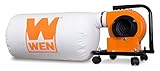
WEN DC3401 660 CFM Rolling Collector
- 5.7-amp motor with 6-inch impeller
- Up to 660 CFM airflow
- 12-gallon 5-micron bag
- Lockable swivel casters
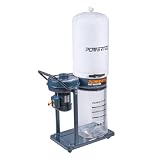
POWERTEC DC1081 800 CFM 1 HP
- 800 CFM airflow
- 1 micron filtration bag
- 120V/240V single phase 1 HP
- 15-1/4 x 25-1/2 inch castored base
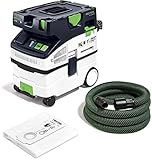
Festool CT Midi HEPA Extractor
- 130 CFM high-performance suction
- HEPA filtration with auto cleaning
- Bluetooth auto-start with battery tools
- 3.9 gallon container
The three machines above cover the realistic ways a sub-ceiling budget gets spent: a rolling collector for one or two machines, a higher-airflow unit with fine bag filtration, and a mobile extractor that follows the sander around. Each one earned its place on owner ratings and specification, not on brand familiarity.
All 10 Dust Collectors Under 1000 Dollars at a Glance (October 2026)
Before the individual write-ups, here is the whole field in one block. Every machine below sits inside the same budget band, and the airflow and filtration figures are as published by each manufacturer.
| Product | Specifications | Action |
|---|---|---|
| WEN DC3401 660 CFM Rolling Collector |
|
Check Latest Price |
 BUCKTOOL 750 CFM 1.2 HP Auto-Start BUCKTOOL 750 CFM 1.2 HP Auto-Start |
|
Check Latest Price |
 Shop Fox W1826 Wall Dust Collector Shop Fox W1826 Wall Dust Collector |
|
Check Latest Price |
| POWERTEC DC1081 800 CFM 1 HP |
|
Check Latest Price |
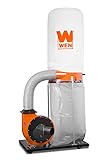 WEN DC1300 1300 CFM Collector WEN DC1300 1300 CFM Collector |
|
Check Latest Price |
 DEWALT 60V MAX Dust Extractor DEWALT 60V MAX Dust Extractor |
|
Check Latest Price |
| Festool CT Midi HEPA Extractor |
|
Check Latest Price |
 JET DC-1100VX-CK 1-1/2 HP JET DC-1100VX-CK 1-1/2 HP |
|
Check Latest Price |
 BUCKTOOL 550 CFM Wall-Mount Collector BUCKTOOL 550 CFM Wall-Mount Collector |
|
Check Latest Price |
 Mullet High-Speed Cyclone Separator Mullet High-Speed Cyclone Separator |
|
Check Latest Price |
1. WEN DC3401 660 CFM Rolling Collector: Best First Collector on the Market
WEN Woodworking Dust Collector, 5.7-Amp Motor with 12-Gallon Bag, Mobile Base, and Optional Wall Mount (DC3401)
5.7-amp brushed motor
6-inch impeller
Up to 660 CFM
12-gallon 5-micron bag
17 lb
Pros
- Most reviewed collector in this group
- Compact 34.25 x 13 x 14.2 inch footprint
- Lockable swivel casters and onboard handle
- Simple zippered bag emptying
Cons
- Bag clogs on fine planer dust without a separator
- Motor is loud in use
- Carbon bushings reportedly wear around 250 hours
This is the unit we recommend first, and the reason is ownership volume rather than spec-sheet superiority. It carries more owner ratings than anything else in the group, so its failure modes are well documented and its strengths well proven. In a garage shop with a table saw, a bandsaw, and a benchtop sander, 660 CFM through a 4-inch port does the job without any rewiring.
Owners describe it as a large step up from a canister vacuum at a similar class of spend. The 12-gallon bag unzips at the bottom so you empty it in place, and four lockable swivel casters plus an onboard handle make it easy to move to whichever machine is running.
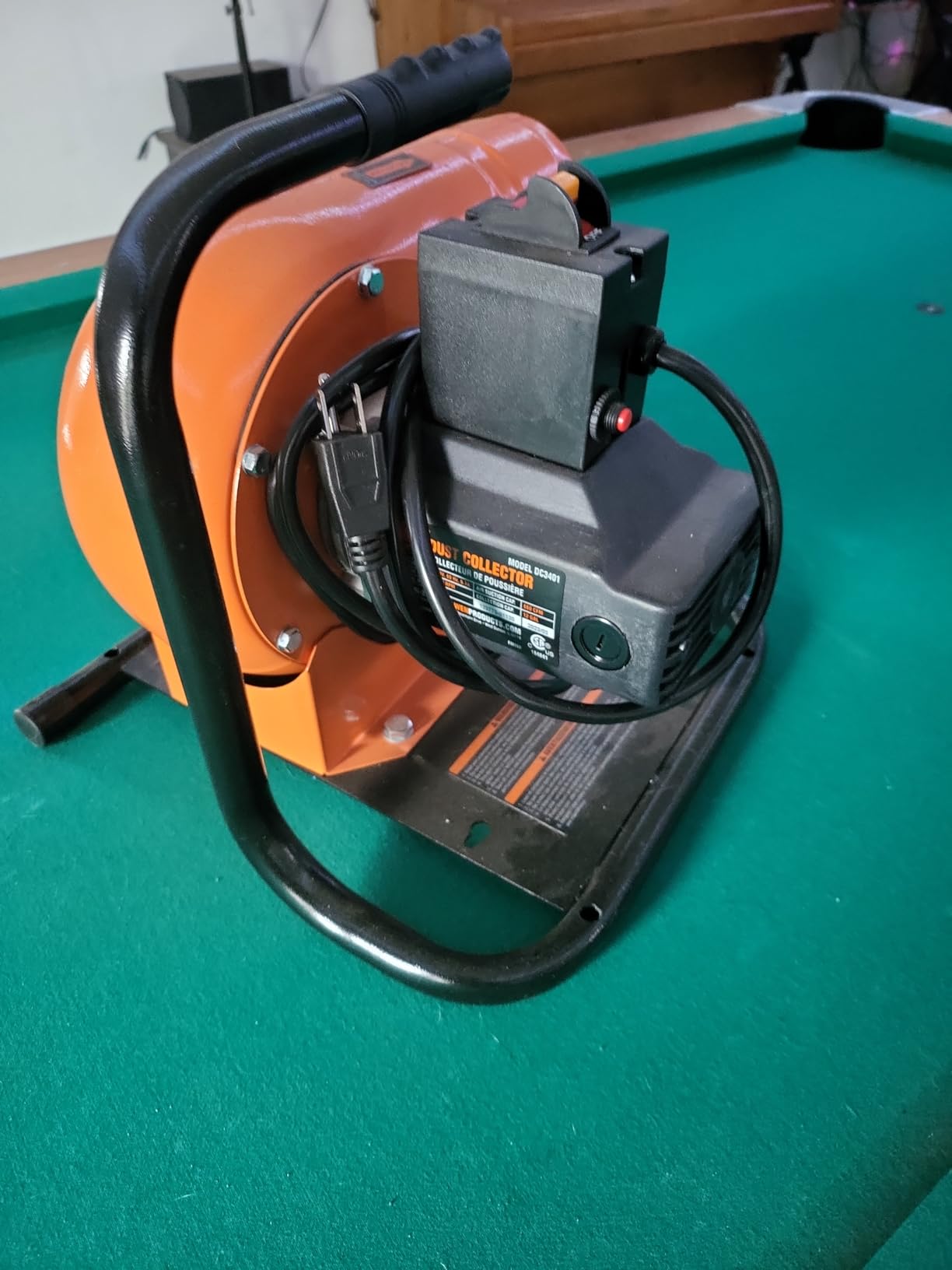
The 6-inch impeller driven by a 5.7-amp brushed motor produces the airflow figure and also the noise. Owners report it is noticeably louder than a collector with a smaller motor and a larger impeller, so plan for ear protection on long stretches. Two-year warranty coverage, a 660 CFM rating, and a 5-micron bag make this a solid foundation for a first unit.
The honest weakness is fine dust. Planer and jointer dust packs the inlet safety screen and the bag together, and suction falls off visibly within a short session. Owners work around this by removing the screen or by adding cyclone separation upstream, which is also why this machine works as a platform for a later upgrade. Do not expect it to handle MDF or plywood edge dust unchanged.
Who this collector suits
A hobbyist or serious beginner with a table saw and one or two other stationary machines, a shop measuring under roughly 1000 square feet, and a standard household circuit. It is also a sensible first machine for a classroom or shared space where one person is moving equipment between benches. If your priority is capturing bulk sawdust and chips at the source rather than filtering airborne fines, the throughput here is more than adequate.
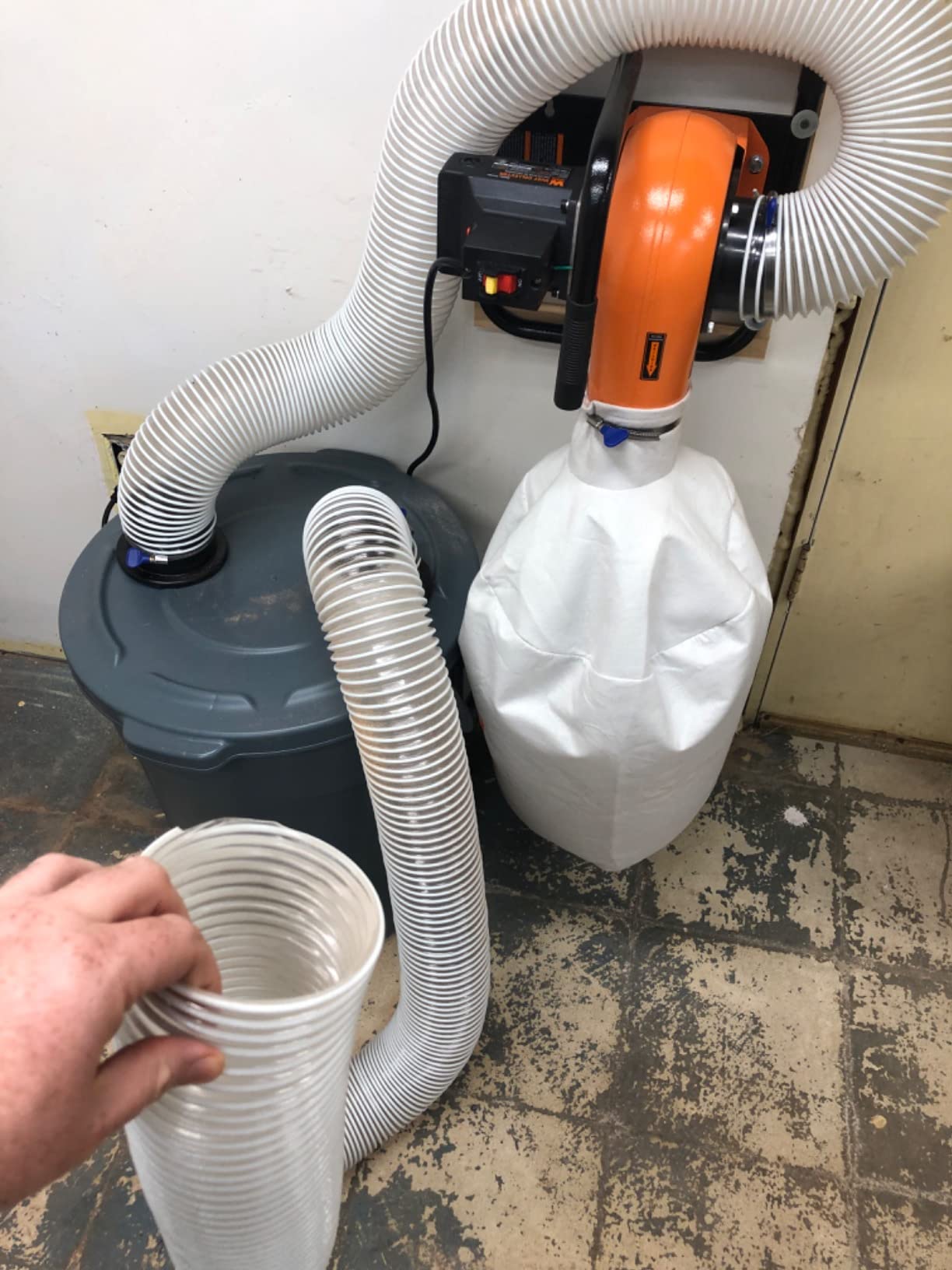
It also works well as a dedicated single-machine unit, plumbed to the saw with a short hose run and nothing else. Short runs preserve the airflow this motor generates, and the compact footprint means you can park it against a wall out of the walkway. The casters and handle are what make that arrangement realistic.
Who should skip it
Skip it if your work is dominated by planer, jointer, or wide-belt sander dust, where constant fine particulate is the problem rather than occasional chip bursts. The 5-micron bag and inlet screen will need attention far more often, and the brushed motor’s carbon bushing wear adds a service item you will not find on an induction or TEFC motor.
Also skip it if you need to run a full central system with three or four machines on blast gates. At 660 CFM this is a one-machine-at-a-time machine, and stretching duct runs to reach additional ports eats the airflow quickly. If you want to see how the other end of the market handles shop-wide collection, our best plasma cutters under 1000 guide follows the same shop-upgrade logic for a different tool category.
2. BUCKTOOL 750 CFM 1.2 HP Auto-Start: The One That Starts Itself
BUCKTOOL 750 CFM Auto-Start Dust Collector,1.2HP 13-Gallon Capacity
1.2 HP 120V at 3450 RPM
750 CFM rated
CSA listed at 6.5A full load
Auto-start tool outlet
Pros
- Auto-start outlet removes the second cord run
- 750 CFM from a 1.2 HP motor
- Hose and five reducers in the box
- Quick-release bag clasp
- Casters for mobile or fixed use
Cons
- 65-inch tall cabinet uses a lot of floor space
- 56 pounds is heavy to reposition
- Bag clamp can pinch fingers if handled carelessly
The defining feature here is the auto-start outlet on the machine. You plug a machine into the collector, and the blower fires when the tool draws current, so you stop walking back to switch things on. In practice that single convenience is what owners mention most often, because it removes the step that makes people skip collection entirely on a busy afternoon.
Airflow is a rated 750 CFM from a 1.2 HP single-phase motor running at 3450 RPM, drawing 6.5 amps at full load on 120 volts. That means it plugs into a normal household circuit with no panel work. The accessory bundle is unusually complete: five reducer pieces, a 5-foot section of 4-inch flexible hose, plastic and cloth lower bags, a 2-micron cloth upper bag, and the clamp.
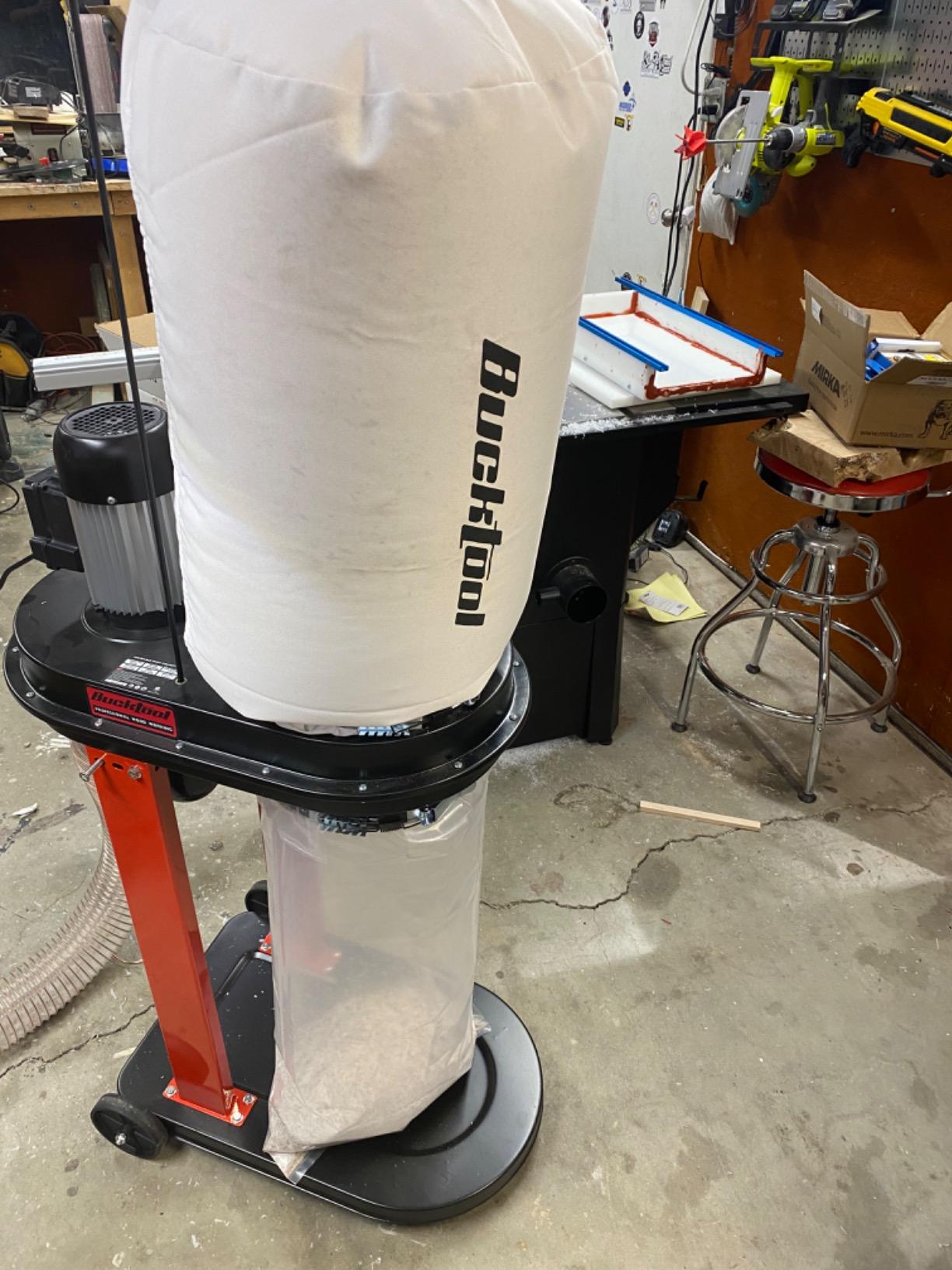
The filter arrangement is a two-part system, with a lower collection section and a 2-micron cloth upper bag doing the fine filtering. That second bag is the part people underrate, because it is what keeps the exhaust clean when the lower bag is filling with chips. Keeping both serviced on a normal schedule is simple with the quick-release clasp, which is the design detail the manufacturer got right.
The tradeoff is physical. The cabinet stands 65 inches tall and weighs 56 pounds, and at 29.53 by 20.19 inches it occupies a real footprint. It is built to be rolled on its caster base into position and then stay there, not shuttled across a shop every time the layout changes.
Who this collector suits
Anyone running a 120-volt-only shop who wants more airflow than a compact unit delivers and refuses to run a control cord. It is a good match for a garage shop with a table saw and a track saw, or a small shop that already plans to add a second machine soon. The included reducers mean you can adapt to different port diameters without a separate shopping trip.
It also suits buyers who want fine filtration without hunting for a canister system. The 2-micron cloth upper bag handles fine dust far better than a standard woven bag, and for sanding and surface work that difference shows up in how the shop air looks after a few hours.
Who should skip it
Skip it if floor space is the constraint. A 65-inch cabinet is taller than most workbenches, and in a small shop the height alone decides whether it fits near the machine it serves. Anyone planning to move the collector regularly should also look elsewhere, because 56 pounds plus a tall frame is awkward on casters.
Skip it if your plan is a wall-mounted or permanently ducted central system. This is a rolling single-stage design with one intake, and it does not have the port count or the bracket for that kind of installation.
3. Shop Fox W1826 Wall Collector: Quiet Airflow Without Floor Space
Shop Fox W1826 Wall Dust Collector, 2.5 Micron Filtration,White
1 HP 110V/220V single phase
537 CFM
7.2 inches of static pressure
4-inch intake
85 dB
Pros
- Frees up the entire floor footprint
- Quiet and low-pitched for its airflow
- Rewirable from 110V to 220V
- Bag window and bottom zipper for in-place emptying
Cons
- Inlet safety cage traps shavings on planer and jointer work
- Needs full 4-inch hose to keep suction up
- Exhaust port diameter is not published
- Shipping packaging often arrives dented
Wall-mounted collectors solve a problem that has nothing to do with suction: shops under about 1000 square feet run out of floor long before they run out of dust. The W1826 hangs on the wall at 19.5 by 18 by 44 inches and leaves the entire footprint below it free, which in a small shop is worth more than a few extra CFM.
Owners report better airflow and noticeably lower noise than a shop-vac setup of the same era, and 85 dB reflects that. The motor is 1 HP, single-phase, supplied prewired at 110V and 7 amps, and it can be rewired to 220V at 3.5 amps when you want it on a shop circuit. That flexibility is unusual in this class and it answers the plug-in-wherever question that comes up constantly in shop forums.
Rated suction is 537 CFM at 7.2 inches of static pressure through a 4-inch intake. Static pressure is the number that actually predicts whether the collector can pull through real ductwork, and 7.2 inches of water is enough to move air through a length of 4-inch hose plus a blast gate without collapsing. Filter type is listed as cloth at 2.5 micron, with a 2 cubic foot capacity.
The bag window is a small touch that matters more than it sounds. You can see how full the bag is without opening the housing, and the bottom zipper lets you empty into a bin in place instead of pulling a bag out over the floor. That is the difference between a wall unit you use and one you avoid.
Who this collector suits
Small shops where floor space is the binding constraint, and anyone who runs a sander or a table saw in a room that doubles as a workspace. It is a strong pairing for a jointer or a disc sander where chips arrive in modest volume and the priority is steady extraction without a cabinet in the walkway.
It also suits buyers who plan ahead on power. Being able to move from a 110V outlet today to a 220V circuit later means the collector does not become obsolete the day you upgrade your shop wiring, which is a common regret among owners of fixed-voltage machines.
Who should skip it
Skip it if planer or jointer shavings are your main dust load. The inlet safety cage is there to stop large material reaching the impeller, and it becomes a clog point when coarse shavings arrive in volume. Owners of this unit see it perform best on sanders, saws, and moderate chip loads rather than heavy stock removal.
Skip it if you expect to run long duct runs or step the hose down to 3 inches to reach a machine. Both kill the suction this motor has to give, and the exhaust port diameter is not published, which makes planning a recirculation or ducted return layout harder than it should be.
4. POWERTEC DC1081 800 CFM 1 HP: The Best Airflow-to-Filtration Balance
POWERTEC 1 HP Dust Collector with 1 Micron Dust Collector Bags and Mobile Base, Dust Collectors with 800 CFM for Woodworking Dust Collection System (DC1081)
800 CFM rated airflow
1 micron filtration bag
Single phase 120V/240V 1 HP at 3450 RPM
55 pounds
Pros
- 800 CFM with lower noise than most 1 HP units
- 1 micron bag is finer than typical 2.5 micron cloth
- Quick-release clamps speed up emptying
- Casters and a compact base
Cons
- Single bag with no second stage limits fine dust capacity
- Assembly instructions are thin for first-time builders
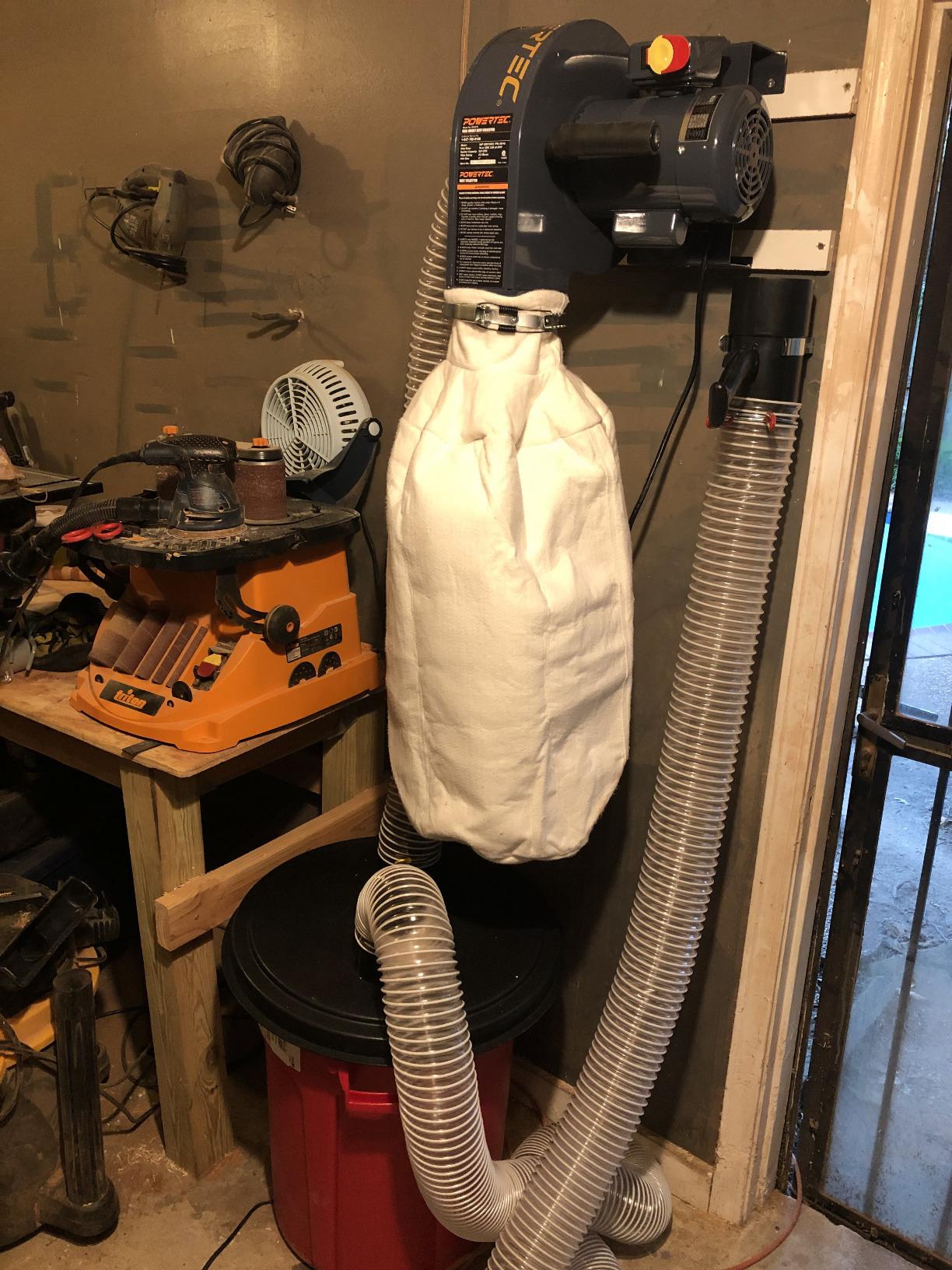
This is the machine we kept coming back to while comparing the field. It puts 800 CFM of rated airflow behind a 1-micron bag, which is finer than the cloth filtration most single-stage collectors ship with, and the motor is a single-phase 1 HP unit that runs on 120V or 240V. For a shop feeding one or two machines, that combination is hard to beat inside the ceiling.
Owners consistently highlight the airflow-to-noise ratio rather than raw power, and they treat the 1 micron bag as the reason the shop air stays clean during sanding sessions. The bag clamps are quick-release, so emptying does not involve wrestling a clamp with gloved hands, and the base at 15-1/4 by 25-1/2 inches carries casters for repositioning or centralizing under a duct run.
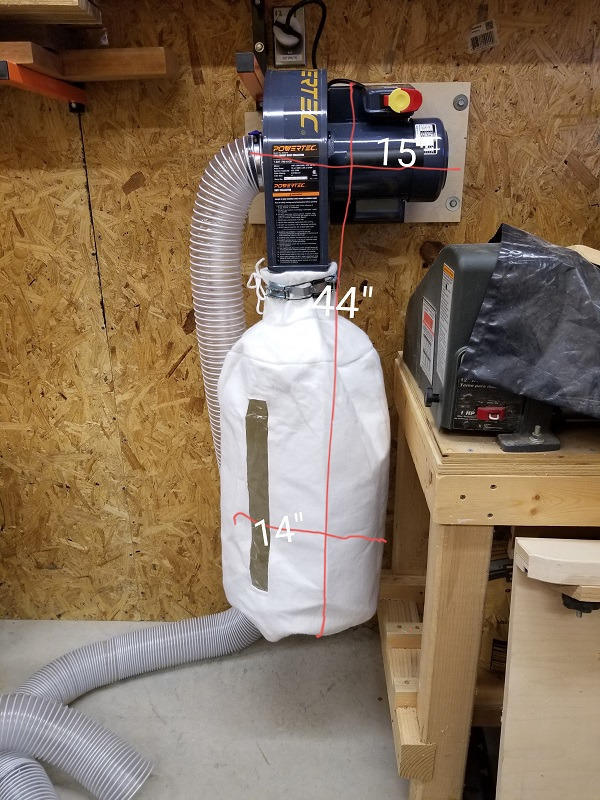
The motor runs at 3450 RPM, and that speed is the source of both the airflow figure and the low noise relative to its class. A direct-drive motor spinning fast tends to sound different from a slower, larger-impeller unit, and buyers tend to find it less fatiguing over a full afternoon. The 55-pound weight is manageable for a two-person lift and awkward for one person lifting it into a vehicle.
Being a single-stage design, everything that comes down the hose ends up at the bag, including the fines. That means the 1 micron bag loads faster than a coarser bag would, and you will empty it more often. The quick-release clamps make that routine bearable, but they do not remove it.
Who this collector suits
A small shop with a table saw plus a sander, or a jointer and a bandsaw, where fine dust matters as much as chips. The dual-voltage motor is the deciding factor for a lot of buyers: you can start on a household circuit and step up to 240V without replacing the machine when your shop wiring improves.
It also suits anyone who wants one collector to do several jobs rather than a dedicated unit per machine. At 800 CFM, short hose runs to two machines give you genuine flexibility, and the compact castored base means the layout is not permanent.
Who should skip it
Skip it if you generate heavy fine dust continuously, such as sanding MDF or doing a lot of router work on composite panels. A single bag with no pre-separation is the wrong architecture for that load, and you will be emptying it several times a shift. A two-stage or canister arrangement handles it with far less intervention.
Skip it if you are not comfortable with basic assembly. The included hardware and bags cover the build, but the instructions are minimal, and first-time builders report spending longer than expected putting it together. Read the manual before you start rather than discovering the sequence halfway through.
5. WEN DC1300 1300 CFM: The Most Airflow You Can Move in This Budget
WEN DC1300 1,300 CFM 14-Amp 5-Micron Woodworking Dust Collector with 50-Gallon Collection Bag and Mobile Base , Black
Up to 1,300 CFM
Dual 4-inch inlets
50-gallon vertical bag
14-amp motor with 10-inch impeller
Pros
- Highest rated airflow in this group
- Dual inlets run two tools at once
- 50-gallon bag empties infrequently
- Quiet for its airflow class
- Assembles without difficulty
Cons
- Bag support posts and upper arm feel light duty
- Upper bag arm height is not adjustable
- Some chips reported escaping the secondary port
If you run a table saw, airflow is the whole game, and this is the highest rated figure in the group by a wide margin. A 14-amp motor spins a 10-inch steel impeller to 3450 RPM and circulates up to 1,300 CFM, which is enough headroom to run duct runs to machines that sit across the shop without choking at the filter.
The dual 4-inch inlets are the feature that separates it from single-port designs. You can connect two tools at once, so a saw and a sander can share a run, and with a blast gate on each leg the collector becomes a small central system rather than a single-machine accessory. The 50-gallon vertical bag means you are not emptying it mid-session.
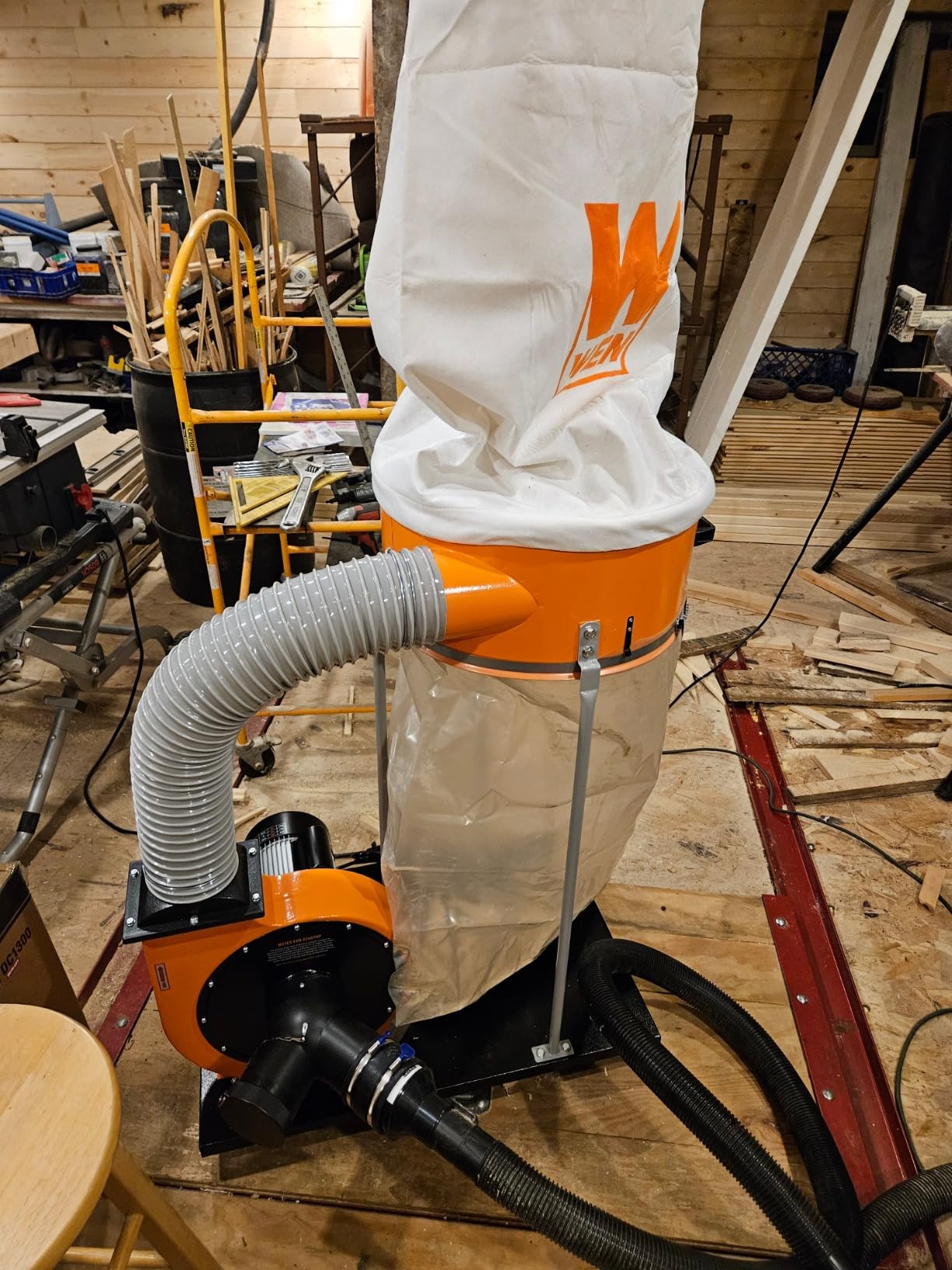
Owners treat this as a table saw and CNC machine companion, and the recurring theme is that it captures nearly all the bulk sawdust rather than letting fine dust billow behind the blade. The four swivel casters make it movable, and the unit is reported to be quiet for its class, which matters when the collector runs for the full duration of a cut.
The bag hardware is where the build quality shows its age. Owners report that the support posts and the upper bag arm feel light duty, and the bag loop can slip. The upper arm height is fixed, which collides with ductwork hung low in a shop with limited ceiling height, so measure before you commit to a layout.
Who this collector suits
Table saw owners first, especially anyone moving from a shop vacuum and tired of a cleanup routine after every cut. The 1,300 CFM rating and the 50-gallon bag mean the collector can be left running through a full production session without attention, and the dual inlets let you keep a second machine connected while you work on the first.
It also suits shops with awkward machine layouts. When the saw is not next to a wall, the extra airflow gives you the freedom to run a longer hose or a rigid duct and still have meaningful suction at the port. Four casters mean the whole thing can be repositioned when the layout changes.
Who should skip it
Skip it if your work is fine dust rather than bulk chips. A 5-micron cartridge and a 50-gallon bag built for volume will fill quickly with sanding fines, and emptying becomes a mid-project interruption. This machine is optimized for moving a lot of air and holding coarse debris, not for capturing airborne particulate.
Skip it if your shop has a low ceiling. The fixed upper bag arm height is a real constraint, and retrofitting it means modifying the frame. Also consider the 14-amp draw carefully on older residential circuits, since it shares a circuit with other shop loads more easily than a 7-amp unit does.
6. DEWALT 60V MAX Dust Extractor: Cordless Capture Without a Cord Run
DEWALT FLEXVOLT 60V MAX* Dust Extractor (DCV585B)
60V MAX battery power
125 CFM
HEPA filter with auto cleaning
Wireless tool control
20 lb
Pros
- No cord to trip over or route across the shop
- Automatic filter cleaning holds suction on long jobs
- Wireless tool control starts extraction with the tool
- Quiet at roughly 80 dB
- T-Stak stacking
Cons
- Filter cleaning pulses kill suction every 15 to 20 seconds
- Battery drains quickly on larger packs
- Small capacity for cleanup work
This is a different category of machine and we include it deliberately. A dust extractor is a handheld-class unit that plugs directly into a tool’s dust port and captures at the source, which solves a problem a stationary collector cannot: getting extraction to the tool when the tool moves around the shop or off site.
It runs on the 60V MAX battery platform, so there is no cord to route, no outlet to reach, and no duct to install. At 20 pounds it carries easily, and at roughly 80 dB it is quiet enough to work next to without shouting over it. The 8-foot anti-static hose with the AIRLOCK connection keeps the suction steady at the port, and the T-Stak footprint stacks with existing DEWALT storage.
The filtration is where it separates from a shop vacuum. It comes with HEPA filters and an automatic cleaning cycle that pulses the filters on a timer, which keeps suction from collapsing over a long job. Wireless tool control starts and stops extraction from the tool itself or from the included remote, so the extractor is on exactly when the tool is on and nothing else.
There is a real cost to that automatic cleaning. Every 15 to 20 seconds the cycle momentarily kills suction, which interrupts tools that need constant vacuum, such as a sander held against a workpiece. Battery runtime on larger packs is the second recurring complaint.
Capacity is 5 pounds, sized for tool dust rather than cleanup. Think of it as a capture-at-the-source device for a sander, router, or grinder, not as a shop vacuum for sweeping the floor. The 125 CFM figure is also well below a stationary collector, and that is the correct comparison before buying.
Who this extractor suits
Anyone who works away from a fixed station: a mobile woodworker, a job-site trim carpenter, or a shop where the sander moves between benches and the duct does not reach. Cordless power also makes it the easiest entry into dust capture for a rental space or a shared workshop where installing anything permanent is not realistic.
It suits users already invested in the 60V MAX platform, since the extractor stacks with tools and batteries they own. The HEPA filtration and automatic cleaning make it a good fit for anyone sensitive to airborne particulate who wants capture at the tool rather than in the room.
Who should skip it
Skip it if you need bulk chip and sawdust collection from stationary machines. At 125 CFM and 5 pounds of capacity, it has no chance against a table saw or a planer, and the filter cleaning pulse would stall the tools that need it most. This does not replace a collector, it complements one.
Skip it if your workflow cannot tolerate interrupted suction, and skip it if you do not want to add another battery platform to the shop. The extraction quality is excellent for its class, but the accessory ecosystem is brand-specific, which is a real consideration for anyone trying to keep one battery family in the shop.
7. Festool CT Midi HEPA: The Best Fine-Dust Capture in the Group
Festool 574837 Ct Midi I Hepa Bluetooth Dust Extractor
130 CFM suction
HEPA filtration
3.9 gallon container
1200 watts at 120V
Bluetooth auto-start
Pros
- Bluetooth auto-start guarantees extraction during sanding
- HEPA capture transforms shop air quality
- Much quieter and smaller than a shop vac
- Smooth anti-static hose resists catching
- Three-year warranty
Cons
- Highest spend in this group
- Some accessories only fit larger CT models
- 27mm hose needs adapters for other brands
Among the ten machines here, the CT Midi has the highest owner rating of any unit, and the reason is not subtle. It pairs HEPA-class filtration with Bluetooth auto-start, which means the extractor turns on with your battery pack and turns off when you put the sander down. Nobody has to think about it, and that is the difference between capture that happens and capture that is meant to happen.
The suction figure is 130 CFM from a 1200-watt motor on 120 volts, and the container holds 3.9 gallons. At 20 by 32 by 26 inches and 24.9 pounds it is small and light, and owners consistently describe it as much quieter than a typical shop vacuum. The smooth conical hose resists catching on workpiece edges, which prevents the leaks that show up when a ribbed hose kinks.
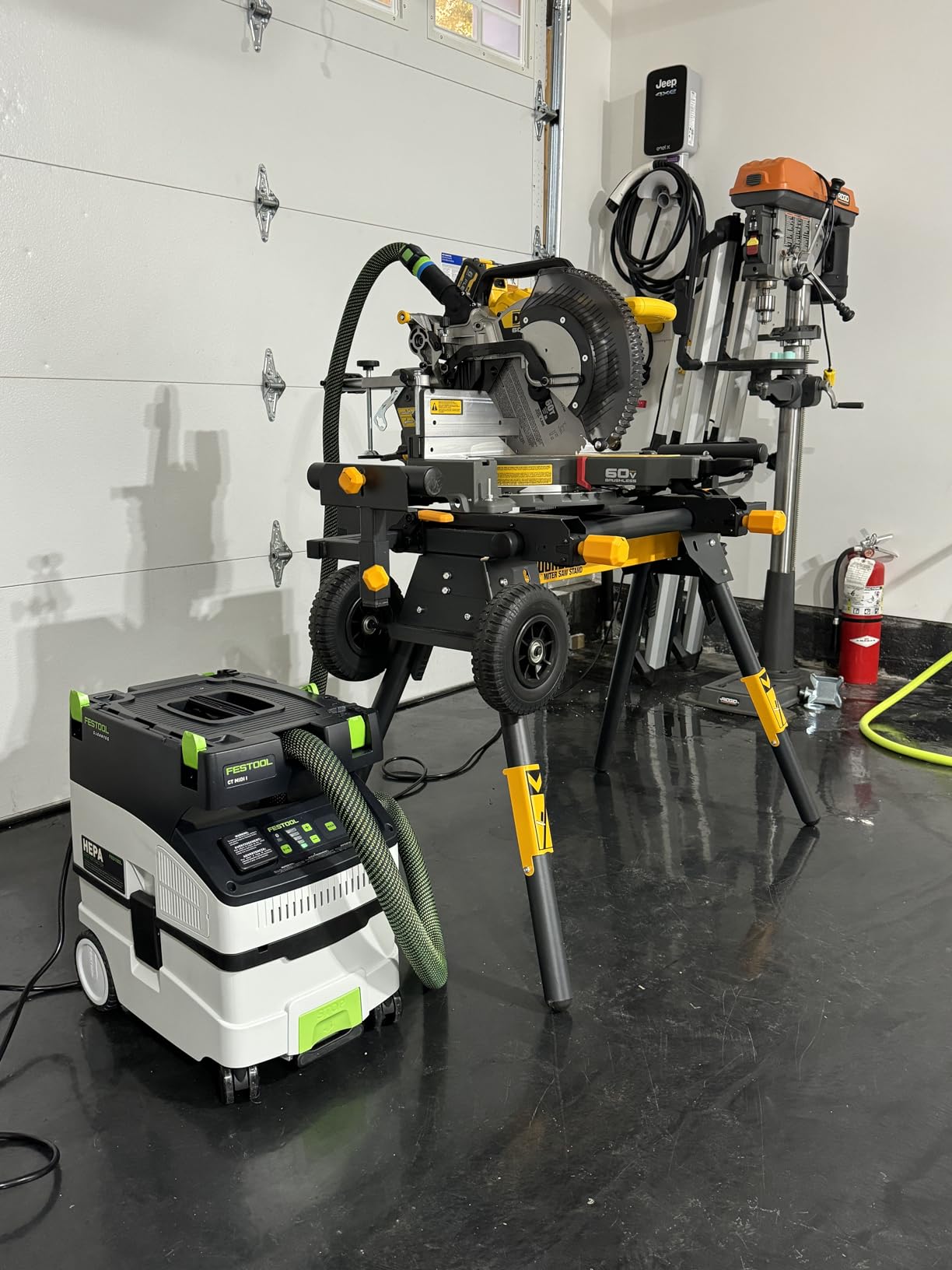
HEPA filtration is the headline for anyone sanding MDF, plywood, or finished surfaces where the airborne fraction is the problem rather than the chips. The filter system cleans itself automatically, and the difference in shop air during and after a sanding session is the thing owners most often describe in their own words as transformative. Touch controls and a remote keep operation simple, and the Sys-dock with T-Loc connects a systainer instantly.
The pipe in the design is at the joints. The included hose is 27mm, so connecting to a non-Festool machine means an adapter, and some accessories such as the hose boom, auxiliary bags, and gates only fit the larger CT models. Three years of warranty coverage is the longest here, which tells you something about expected service life.
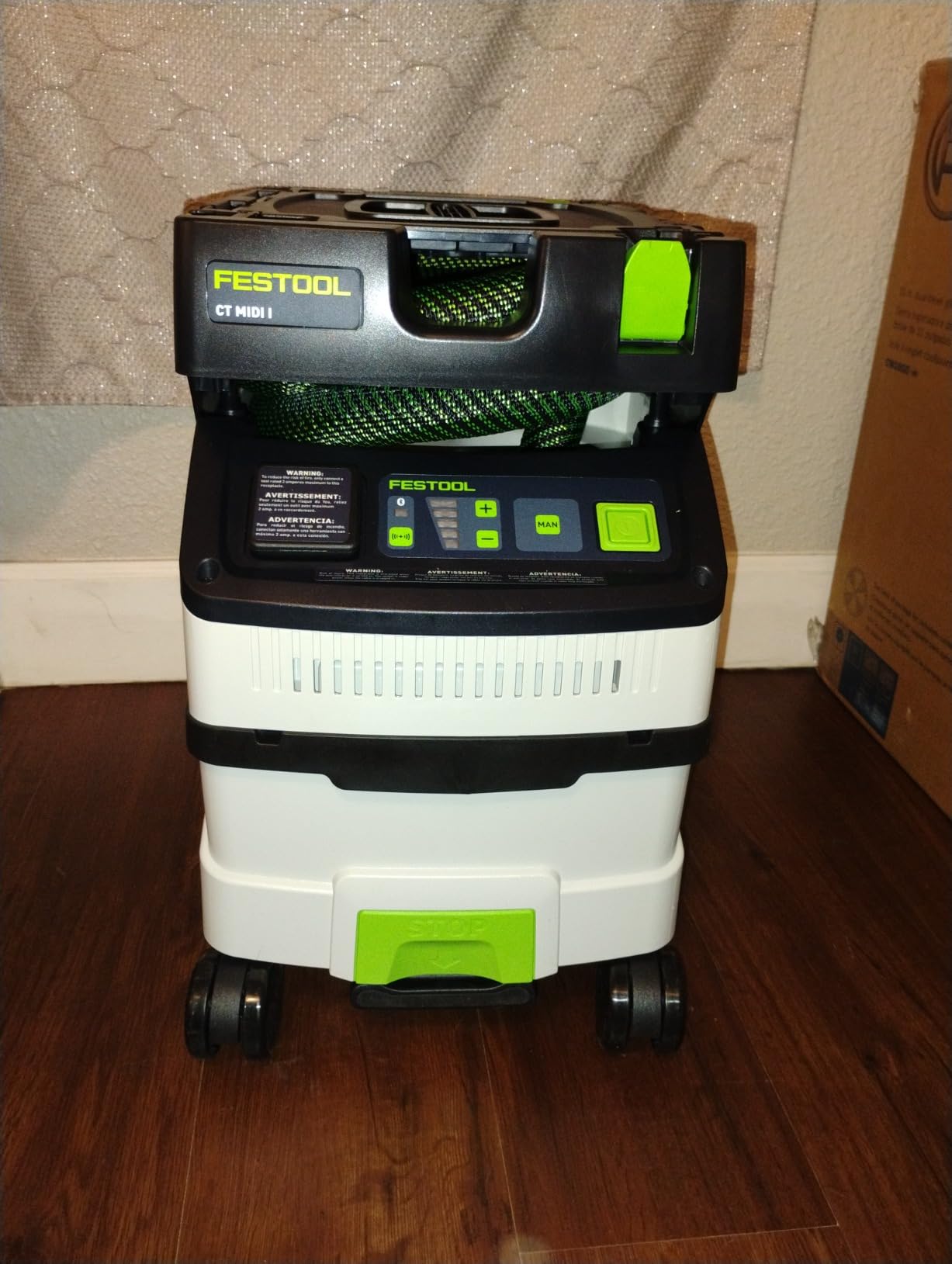
Who this extractor suits
Fine-dust heavy shops, particularly anyone working with MDF, plywood, or a lot of random-orbit and orbital sanding. It is the best choice in this group for airborne particulate specifically, because HEPA capture and automatic cleaning handle what a bag-based collector pushes back into the room.
It also suits existing Festool users, since the Bluetooth auto-start works with compatible battery packs and the systainer dock fits the storage they already have. For mobile or off-site work, the internal hose holder and the light weight make it the most transportable unit we looked at.
Who should skip it
Skip it if your shop’s problem is bulk chips from stationary machines. At 130 CFM and 3.9 gallons it is not a collector, and pairing it with a saw or planer would be a mismatch of purpose. It complements a collector rather than replacing one.
Skip it if you run non-Festool tools exclusively and are trying to minimize adapters and ecosystem friction. The spend is the highest here, and accessories add to it, so buyers who want one inexpensive machine for chip duty get more from a rolling collector further down the list.
8. JET DC-1100VX-CK 1-1/2 HP: Continuous-Duty Power with Canister Filtration
JET Vortex Cone Dust Collector with 2-Micron Canister Filter, 1-1/2 HP, 115/230V 1Ph (DC-1100VX-CK)
1-1/2 HP on 115/230V single phase
2-micron canister filter
Vortex Cone chip separation
Continuous duty TEFC motor
Pros
- Vortex Cone separates chips and packs the canister efficiently
- Continuous-duty enclosed fan-cooled motor
- 2-micron canister filters finer than cloth bags
- Includes casters
- hardware
- and five bags
Cons
- Most expensive collector in the roundup
- Heavy steel cabinet is not meant to be relocated
- Fine dust still reaches the canister over time
This is the closest thing in the field to a production-grade machine, and the specifications explain why. A 1-1/2 HP motor on 115/230V single phase, permanently lubricated, totally enclosed, and fan-cooled for continuous duty, paired with a 2-micron canister filter system. Owners describe it as the cleanest-running shop of the group, and the canister is the reason.
The Vortex Cone is the differentiator. Rather than dumping everything into the bag at once, the cone geometry spins the incoming stream so heavier chips separate and pack efficiently, which slows filter loading. That means you empty less often and the filter holds suction longer than a plain single-stage design with the same motor size. Quick-connect collection bags with an elastic band make changes fast.
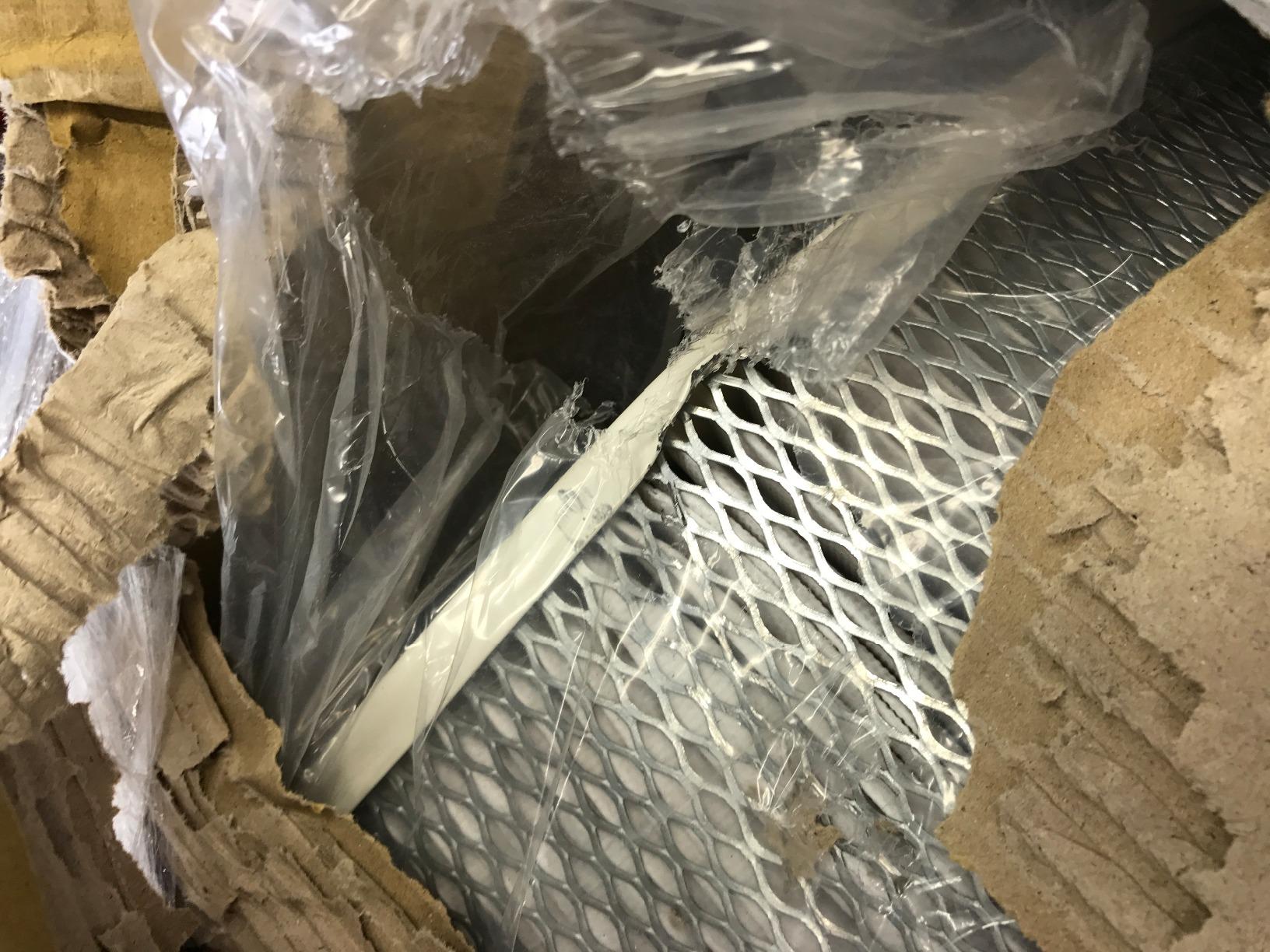
It is still a single-stage design, which JET describes as economical and quiet, and that is where the honesty has to come in. Fine dust does eventually reach the canister, so the filter needs maintenance on a schedule rather than never. The 80 dB rating sits at the quiet end of this group, and four casters are included for positioning, though the steel cabinet is heavy and not intended to be moved between locations.
The box includes the canister kit with a handle, the canister filter, a snap ring, five collector bags, and hardware. That matters if you are comparing total cost of ownership, because you are not buying filters and bags on day one. The five-year warranty, dropping to two years in commercial use, is the strongest coverage in the roundup.
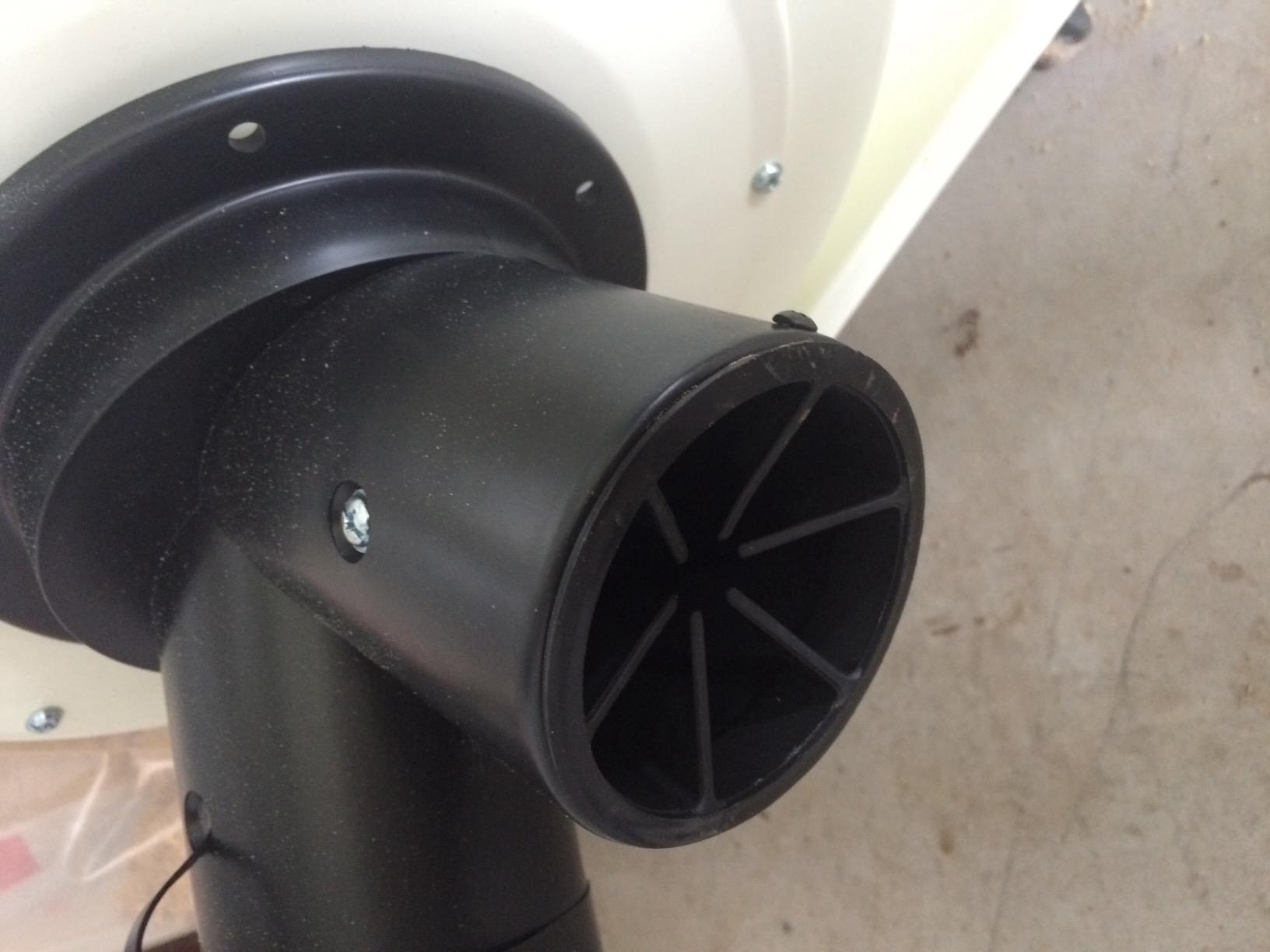
Who this collector suits
Shops that run machines hard and often: a planer, a jointer, a wide-belt sander, or a small production business doing repeat work every day. The continuous-duty motor is built for hours of running rather than intermittent bursts, and the canister filter keeps fine dust out of the shop in a way a cloth bag cannot.
It also suits buyers who want to own this once. The 115/230V single-phase configuration works on a household circuit or a shop circuit, the warranty runs five years, and the included consumables mean the first year of ownership is already covered. Anyone who values build quality over headline CFM will be satisfied here.
Who should skip it
Skip it if the ceiling is the whole constraint. This unit consumes most of the budget, and ductwork, hose, and blast gates still have to come out of the same household funds, so buying this machine first often means delaying the installation.
Skip it if you need a portable collector. The cabinet is built as a stationary machine on casters, not something to move between machines, and its weight makes that clear. A rolling unit lower on the list serves a mobile shop better, and a two-stage cyclone would extend canister life if you run one later.
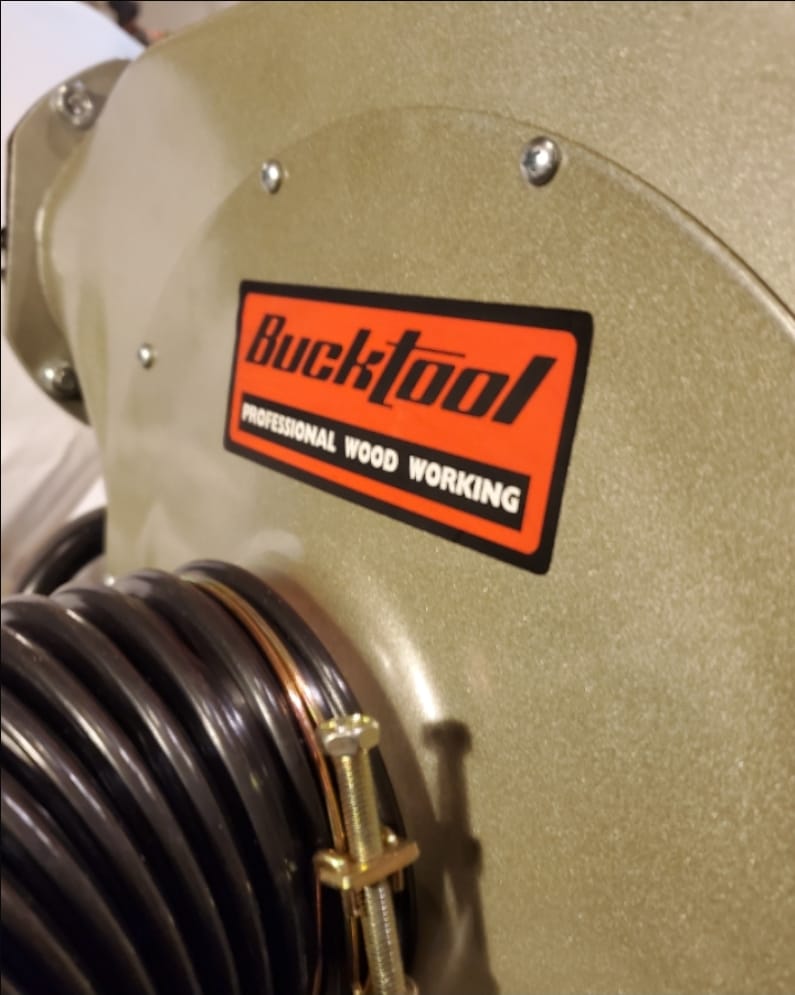
9. BUCKTOOL 550 CFM Wall-Mount: Remote Control on a Small Budget
BUCKTOOL 1HP 6.5AMP Wall-mount Dust Collector with Remote Control and 2-micron Dust Filter Bag 550CFM Air Flow DC30A-1
1 HP TEFC induction motor
550 CFM steel impeller
Wall-mount or braked casters
49-foot remote
Pros
- TEFC induction motor is quieter and needs no maintenance
- Mounts on the wall or rolls on braked casters
- 49-foot remote starts it from across the shop
- Strong airflow for its class
Cons
- 550 CFM is light for planer duty on long runs
- Wall mount needs solid stud anchoring
- 2-micron bag is a recommended add-on
This is the budget route into wall-mounted collection with remote operation, and the motor is the reason it is worth considering at all. A 1 HP TEFC induction motor is totally enclosed and fan-cooled, which means no brushes to wear and no lubrication schedule, and owners describe it as quieter and more durable than a typical brushless unit in the same class.
Airflow is 550 CFM through a steel impeller at 6.5 amps on 120 volts. The mounting is genuinely dual-purpose: it goes on the wall when floor space is short, or it rolls on braked casters when the layout changes. The 49-foot remote means you start and stop the collector from anywhere in the shop, which is the feature owners mention first.
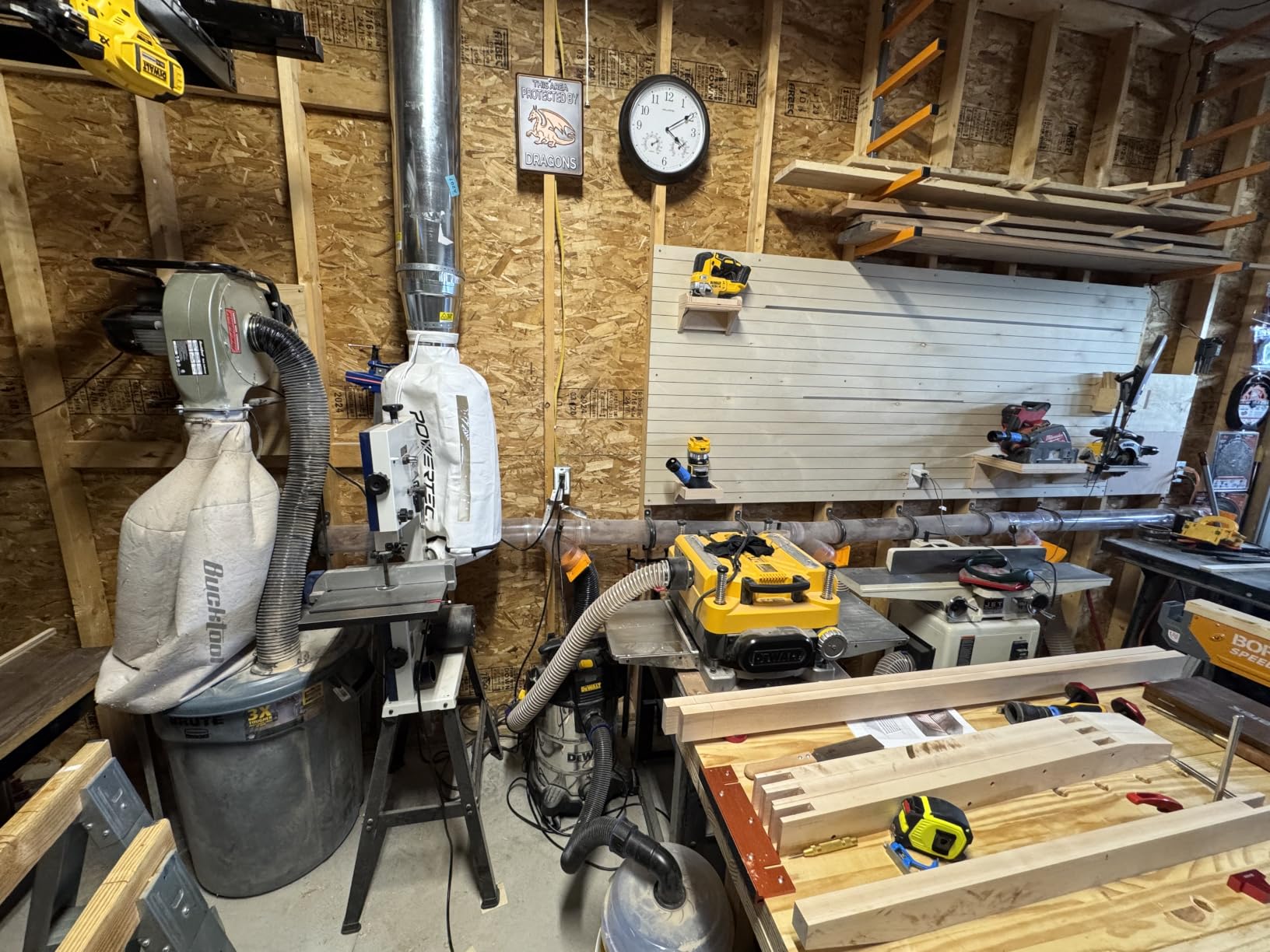
Be clear-eyed about the ceiling on this one. At 550 CFM it is the second-lightest airflow figure in the group, and that matters on planers and jointers where the demand is steady and high. Table saws, sanders, and jointers are well within reach, but planer work wants short hose runs to keep suction up.
Filtration is specified at a recommended pairing with a 2-micron bag rather than included hardware, so budget for that bag when you plan the purchase. At 43.1 pounds and 47.24 by 19.69 by 22.09 inches, the unit is light enough to reposition when it is on wheels and manageable when mounted. Solid stud anchoring matters for the wall configuration.
Who this collector suits
Budget buyers who want remote start and wall mounting without stepping up to a full-size wall collector, and shops that already own their ductwork. If you have rigid 4-inch runs and blast gates in place, this is a straightforward way to give them a dedicated collector without a large cabinet on the floor.
The induction motor also makes sense for anyone who dislikes brush-type motors. No consumable brushes, no maintenance schedule, and a quieter profile under load are all things that show up in long ownership rather than on a spec sheet.
Who should skip it
Skip it if planer work is central to your shop. 550 CFM with a long hose run is the exact scenario where suction disappoints, and forum discussion on budget collectors consistently points to planer duty as the place small units fall short. Buy airflow you will not have to apologise for.
Skip it if you are starting from bare concrete with no ductwork. This machine is a component, not a system, and the money saved on the collector is quickly spent on hose, fittings, and blast gates before you get any usable collection.
10. Mullet High-Speed Cyclone Separator: The Upgrade Any Shop Vac Can Use
Mullet Cyclone Dust Collector, High-Speed Separator for Shop Vac
Pre-separates over 99 percent of debris
Parabolic one-piece body
Rigid PVC connection
7.5 lb
Pros
- Keeps the vacuum filter clean so suction stays high
- Faster spin than improvised bucket cyclones
- Airtight rigid connection instead of bungee and tape
- Adapters fit almost any wet or dry vacuum
Cons
- Needs a rigid 4-inch PVC line built to spec
- It is a separator and not a powered collector
- Some dust still reaches the drum
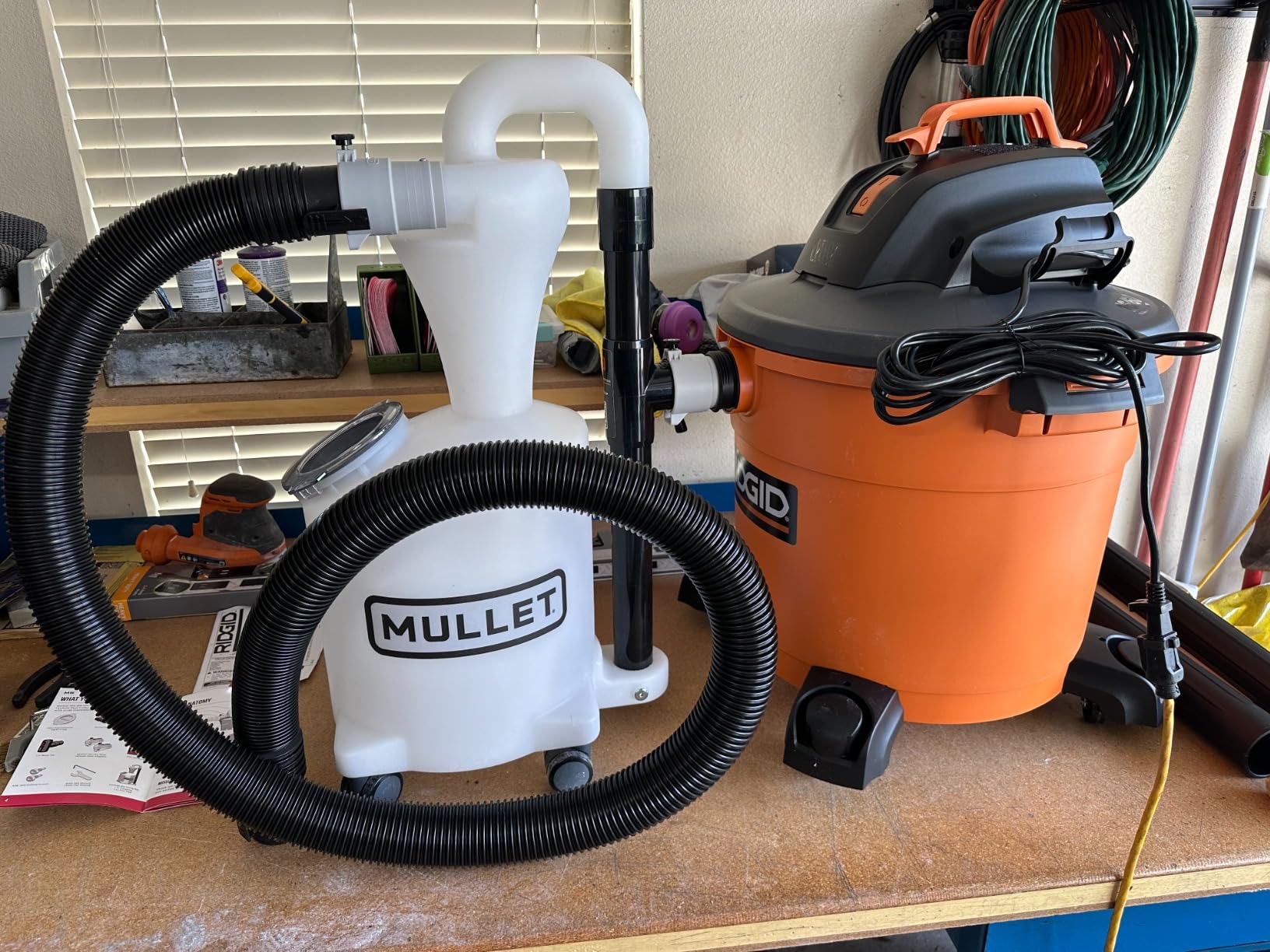
Do not skip this one because it is not a motor. The Mullet is a cyclone separator that bolts onto an existing wet or dry vacuum, and it has the second-highest owner rating in the group. Owners describe it as the cheapest durable retrofit that visibly fixes a problem every shop vacuum has, which is a filter that clogs until suction collapses.
The mechanism is straightforward. The parabolic one-piece body spins the airstream faster than the straight-wall cyclone-and-bucket designs people improvise from a trash can lid, so heavier debris drops out before it reaches the vacuum. The claim is that over 99 percent of debris is pre-separated, and the drum fills visibly while the vacuum filter stays clean. At 72 dB and 7.5 pounds, it is the quietest and lightest item in the roundup.
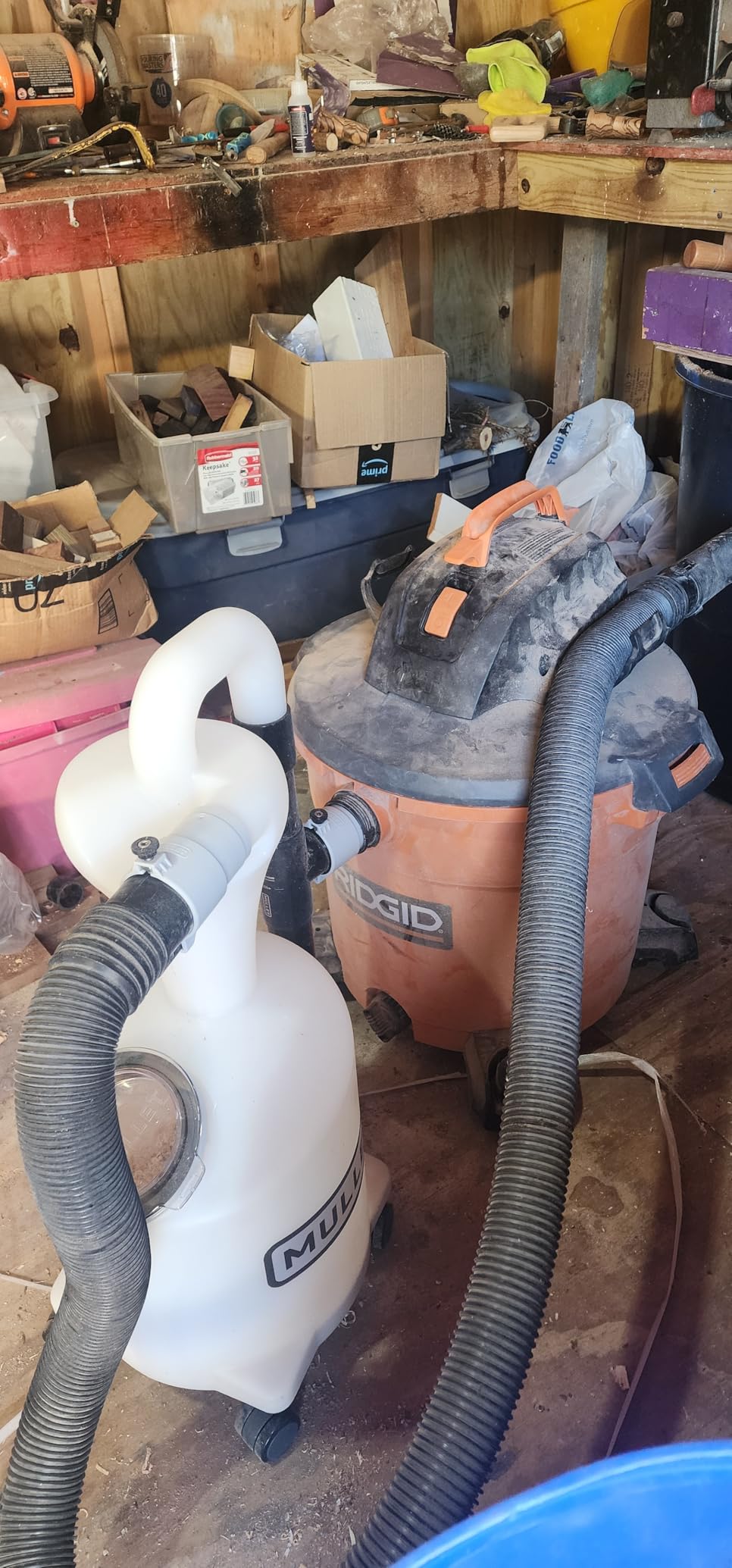
The rigid cut-to-fit PVC connection is a small design decision that matters enormously in daily use. The improvised alternative is a stack of bolt, bungee, and duct tape that leaks and comes apart, and this replaces all of it with a fixed, airtight joint. Included adapters cover virtually all wet and dry shop vacs and dust extractors, so it fits equipment you already own.
What it does not do is power anything. There is no motor, no bag, and no filter. You still need a vacuum or extractor upstream, and you still need to build a rigid 4-inch inlet line to spec. Some dust still ends up in the drum and has to be disposed of, and the system only works as well as the duct you build into it.
Who this separator suits
Shop owners who already own a capable vacuum or extractor and are frustrated by filter clogging on planer and sanding dust. It is the shortest path to cyclone-quality separation without buying a full two-stage collector, and it is a natural companion to the compact extractors earlier in this list.
It also suits anyone on a tight ceiling who wants the two-stage benefit on the cheap. A separator in front of a serviceable vacuum gives you a drum that empties in seconds and a filter that keeps working, which is the maintenance advantage people want from a cyclone without the floor space and the spend.
Who should skip it
Skip it if you are starting from nothing. Without a vacuum, a rigid 4-inch line, and clamps, this is an expensive decorative cylinder. Build the vacuum side first, then add separation.
Skip it if you want a one-machine collector with nothing to assemble. There is no motor here, no automatic emptying, and no remote, so anyone who wants a single box that does everything should look at a rolling collector instead. It is also a complement to a two-stage upgrade rather than a permanent endpoint for a production shop.
Buying Guide for Dust Collectors Under 1000 Dollars
What 1000 Dollars Actually Buys in a Dust Collector
A thousand dollars buys a machine with a real blower motor, a filtration stage better than a standard cloth bag, and enough construction to last a decade. In this roundup that range covers a 5.7-amp rolling unit with a 12-gallon bag, a 1 HP unit rated at 800 CFM with 1 micron filtration, and a 1-1/2 HP continuous-duty machine with a 2-micron canister. What it does not buy is a complete system.
Budget roughly in thirds. The collector takes one share, ductwork and hose take another, and fittings, blast gates, a mobile base, and clamps take the rest. If you skip the second and third shares, the collector is a very expensive box that collects chips in a pile. Buyers who get the most from a fixed ceiling are the ones who reserve budget for installation before they buy the machine.
Single-Stage vs. Two-Stage Cyclone: What Changes
A single-stage collector sends everything down the hose into a bag or canister. A two-stage cyclone spins the airstream first, drops heavy chips and sawdust into a drum, and sends only the fine fraction to the filter. The practical difference is filter life and bag changes, not raw suction.
For most sub-ceiling shops, single-stage is the right default because it costs less, runs quieter, and needs less floor space. Two-stage earns its cost when you shoot MDF, run a wide-belt sander, or produce fine dust every day, because the filter no longer sees the bulk of the debris. A cyclone separator in front of an existing vacuum, as covered above, is a cheap way to test whether two-stage behaviour is worth the money to you.
How Much Airflow Do You Actually Need?
Size the collector to the largest single machine, not to the sum of everything in the shop. A table saw with a 4-inch port, a benchtop planer, and a bandsaw are all within reach of a 550 to 800 CFM unit on short runs. Production-scale planers, wide-belt sanders, and multiple simultaneous machines push you toward 1,000 CFM and above, which is why the highest rated unit in this roundup exists.
Two rules keep small collectors from feeling weak. Keep hose runs short, and never step the duct down below 4 inches to reach a machine, because velocity collapses and chips settle in the line. Forum regulars agree on both points consistently, and it is the single most common reason people conclude a perfectly good collector is bad.
Why Manufacturer CFM Ratings Understate Real Airflow
Most airflow figures are measured at the blower with the filter removed, because that is the easiest laboratory condition. Attach a filter, route the air through real ductwork, and static pressure eats the rating. Expect the number on the box to be an optimistic ceiling rather than what arrives at a machine port.
This is why experienced buyers compare static pressure and impeller size rather than CFM alone, and why they discount a rating by a wide margin when sizing. It is also why the 7.2 inches of water published for the Shop Fox W1826 is more useful information than a headline CFM number on a competitor. Treat the published figure as a comparison tool between like models, not as a promise.
Beyond the Collector: Ductwork, Hose and Blast Gates
Flexible 4-inch hose is the most common run in small shops, and it is also the most common place to lose airflow. Rigid duct holds velocity better over long distances, so use hose for the last few feet to each machine and rigid or spiral duct for everything in between. Keep the total run short wherever the layout allows.
A blast gate per machine stops airflow to a tool that is not running, which means one collector can serve several machines without pulling air through dead branches. A remote control, either the built-in kind or a plug-in remote on the collector, saves the walk. Budget for Y and T fittings, clamps, and reducers before the machine arrives, because these small parts decide whether the system performs as advertised. Our guide to best gun safes under 1000 follows the same principle from a completely different corner of the shop, where the fittings you skip decide whether the box does its job.
120V vs. 240V and Single-Phase Power in a Home Shop
Almost everything in this roundup runs on single-phase power, which is what you want in a residential or garage shop. Three-phase-only motors are a dealbreaker without a three-phase service, and none of the ten units here require one.
Within single-phase, the practical question is amperage. Units drawing around 6.5 to 7 amps run on a standard 15 or 20-amp household circuit, while a 14-amp machine wants a dedicated circuit and careful load planning. Several units here are 120V/240V or 110V/220V capable, which means you can start on a household outlet and move to a shop circuit later without replacing the collector.
Frequently Asked Questions
What is the best and most affordable dust collector?
The best affordable choice in this range is a rolling single-stage collector with 600 to 800 CFM of rated airflow and a bag finer than 2.5 micron. Owners of that class report it handles a table saw, sander, or jointer on short hose runs without rewiring the shop. Spending below 300 dollars on a bare collector leaves nothing for hose and blast gates, which is why mid-range machines fit this ceiling better.
What is the most powerful dust collector available?
Within this budget the highest rated airflow belongs to a 1,300 CFM unit driven by a 14-amp motor with a 10-inch impeller and dual 4-inch inlets, which is enough to duct a table saw across a shop. The 1-1/2 HP canister-filter machine delivers less peak air but holds filtration far better on fine dust. Power and filtration are two different questions.
Which is the best dust collector for a small woodworking shop?
For a shop under about 1000 square feet with a table saw and one or two other machines, a 550 to 800 CFM rolling collector on casters is the best fit. The rolling base matters because small shops reconfigure their layouts, and short hose runs preserve more suction than a longer permanent duct run.
Are dust collectors worth the money?
Yes, if you run any stationary machine regularly, because they capture dust at the source before it reaches your breathing zone. The return shows up in cleanup time, in the shop air during sanding, and in how long a session lasts before you need a break. If you only use handheld tools, a vacuum with a drum separator handles the volume instead.
Do I need a dust collector for woodworking?
You need one for any table saw, planer, jointer, bandsaw, or wide-belt sander used regularly, since wood dust is a recognised carcinogen and both OSHA and NIOSH treat it as a serious exposure hazard. Capture at the machine is far more effective than cleaning the room afterwards. Handheld-only users can get adequate results from a shop vacuum.
What can I use instead of a dust collector?
A shop vacuum with a cyclone separator works well for a single machine and for a shop under 1000 square feet. A HEPA dust extractor is the better answer for fine dust from sanding and composite panels, and an air filtration unit handles airborne fines in the room but cannot replace capture at the port. Each covers part of the problem rather than all of it.
The Best Dust Collectors Under 1000 Dollars: Final Word
The WEN DC3401 takes our editor’s choice for the simple reason that it is the most reviewed collector in the group, and a machine with that much real-world use is the safest first purchase. The POWERTEC DC1081 is the better buy if you want more airflow and finer bag filtration, and the Festool CT Midi is the right answer when fine dust from sanding is the actual problem. For heavy production work, the JET DC-1100VX-CK is the machine you buy once.
Whichever you choose, protect the budget for ductwork, hose, clamps, and blast gates before the machine arrives, and keep the runs short. That discipline will matter more to how the system performs than another 100 CFM on a spec sheet. Check current pricing on each pick below, and measure your ceiling height and your longest hose run before you order.