

The best dust collectors for small shops are compact machines that trade raw horsepower for low static pressure and a footprint that fits beside a table saw instead of taking over the corner of the garage. For most single-bay shops, that means a 1 HP wall-mounted unit or a rolling collector running on a standard 120V circuit, rated somewhere between 500 and 800 CFM, feeding one machine at a time through a short 4-inch hose.
Three constraints shape everything in this roundup. Floor space decides whether you choose a wall bracket or casters, the electrical panel decides whether you can even consider a 240V motor, and the sheer volume of fine dust decides whether a bag alone will survive a season of use. Get those three right and the rest is hose diameter.
We compared ten products across powered collectors, wall-mount models, bucket-style cyclone separators and ambient air cleaners, and we read what owners actually say about filter life, noise in a small enclosed space and the hardware that arrives missing. A few of these products do not collect dust from a machine at all, and we say so plainly rather than pretending otherwise. If you are outfitting a garage or basement workshop, our shop LED lighting guide covers the other half of the lighting-and-airflow picture in the same room.
Table of Contents
Top 3 Picks for Best Dust Collectors for Small Shops (October 2026)
These three cover the widest range of small-shop situations: the strongest separation per unit of effort, the highest airflow in a rolling format, and the simplest way to extend the life of a shop vac you already own.

Dustopper PRO Separator
- 99.9% cyclone separation
- Fits 5-gallon pails
- Two sweep elbows included

All 10 Dust Collectors Compared at a Glance
This table lists every product covered below with the specs that actually change a buying decision. Note that four of the ten are separators or air cleaners rather than powered collectors, and their roles differ completely.
| Product | Specifications | Action |
|---|---|---|
| Dustopper PRO Dust Separator |
|
Check Latest Price |
 WEN DC3401 Rolling Dust Collector WEN DC3401 Rolling Dust Collector |
|
Check Latest Price |
| DEWALT 6 Gallon Dust Separator |
|
Check Latest Price |
 POWERTEC DC5371 Wall Mount Collector POWERTEC DC5371 Wall Mount Collector |
|
Check Latest Price |
 Shop Fox W1826 Wall Mount Collector Shop Fox W1826 Wall Mount Collector |
|
Check Latest Price |
 Oneida Dust Deputy Low-Pro Plus Oneida Dust Deputy Low-Pro Plus |
|
Check Latest Price |
 Mullet Cyclone Separator Mullet Cyclone Separator |
|
Check Latest Price |
 BUCKTOOL 750 CFM Auto-Start Collector BUCKTOOL 750 CFM Auto-Start Collector |
|
Check Latest Price |
 WEN DC1300 Two-Tool Collector WEN DC1300 Two-Tool Collector |
|
Check Latest Price |
 WEN 3410 Air Filtration System WEN 3410 Air Filtration System |
|
Check Latest Price |
Single-Stage vs Two-Stage Cyclone vs Air Cleaner
Most confusion in this category comes from three different machines sharing one shelf. These are the definitions worth reading before you buy anything.
Single-stage dust collector
A single-stage collector uses one filter or bag to do two jobs at once: separating debris from the airstream and cleaning the air. It is simple, cheap and compact, which makes it the natural fit for a small shop with one machine. The tradeoff is that chips reach the filter, the filter loads fast, and suction drops as it fills.
Two-stage cyclone collector
A two-stage cyclone spins the airstream to throw heavy chips and dust into a drum first, then routes only the fine fraction to the filter. The filter lasts much longer and airflow stays steadier through a long session, at the cost of a taller body, more floor space and a higher purchase. In a shop under about 150 square feet, a bucket-mounted cyclone in front of a shop or wall-mounted collector often delivers the same benefit for a fraction of the height.
Air filtration unit
An air filtration unit, sometimes called an air cleaner, pulls ambient air through a filter stack and recirculates it. It captures the fine dust already hanging in the room and reduces the haze you see in a light beam, but it does nothing for chips at the blade or the pile under the table saw. Ambient filtration complements source collection; it never replaces it.
Shop vac
A shop vac is a high-static-pressure, low-volume machine built for pickup, not for sustained airflow through ducting. It performs well on a handheld sander hose and poorly on a long run to a table saw, and its filter saturates quickly with fine wood dust. Pairing one with a cyclone separator is the cheapest way to get machine-quality separation out of hardware you may already own.
1. Dustopper PRO Dust Collector – Best Separation Per Unit of Effort
Dustopper PRO Dust Collector – 99.9% Efficiency Cyclone Dust Separator
99.9% cyclone separation
Fits 5-gallon pails
13 x 13 x 7 inch, 1.63 kg
Includes two sweep elbows
Pros
- Separates the large majority of sawdust and chips before they reach the vacuum filter
- Preinstalled EPDM gasket seals to any standard five-gallon pail
- No assembly required and easy to move between machines
- Clear body shows how full the bucket is
Cons
- Separation strength depends on a sufficiently powerful vacuum
- Needs a sturdier bucket than a standard home-center pail
- Included hose is short for larger vacuums
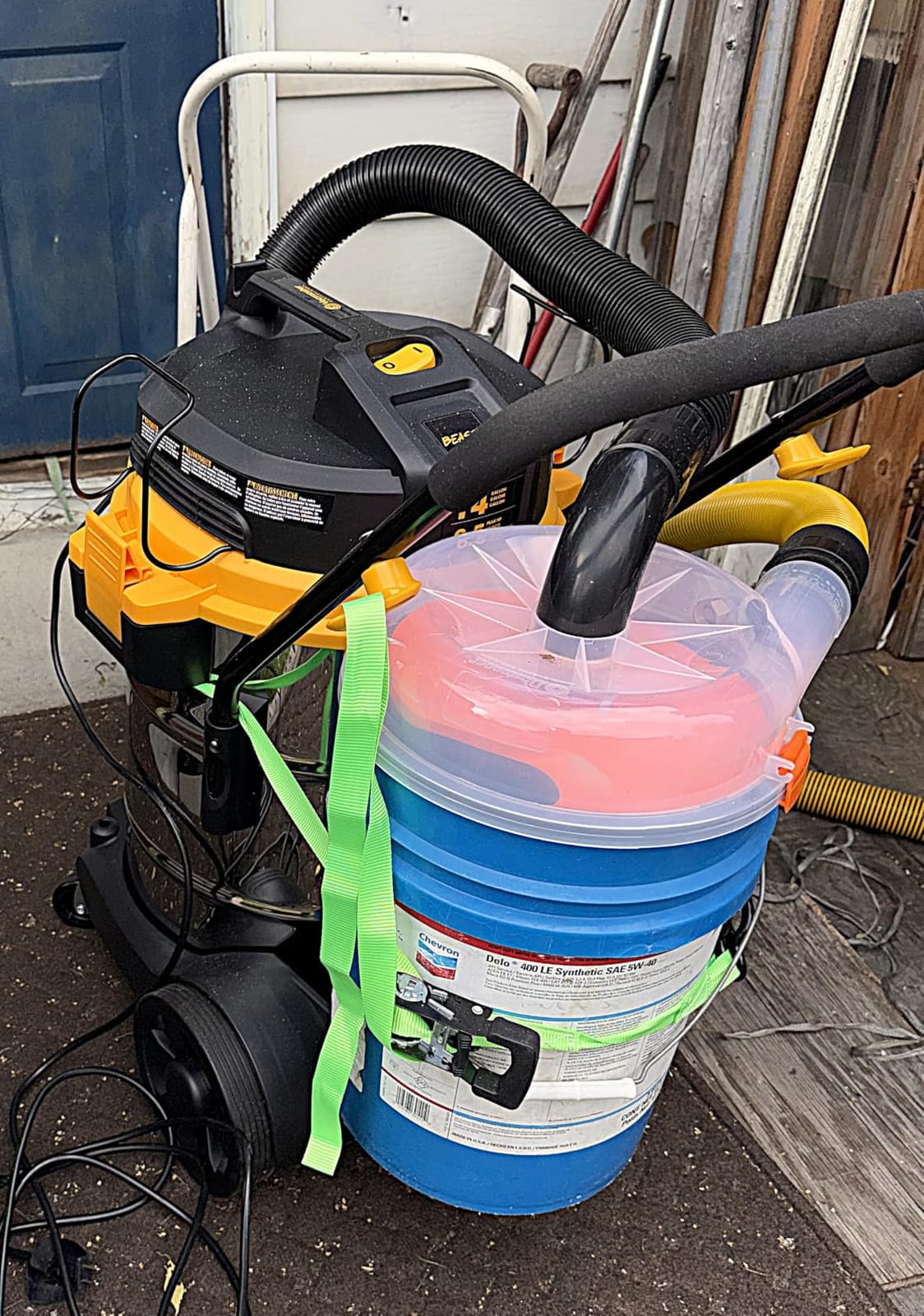
The Dustopper PRO is not a powered collector, and the first thing to understand is that this is a feature rather than a gap. It bolts to the lid of a five-gallon pail and uses the suction from a shop vac or dust extractor to spin chips out of the airstream before that debris ever reaches the filter. Owners across more than a thousand reviews report the same outcome: the vacuum bag fills with a modest amount of fine dust instead of a bucket of shavings.
What separates it from cheaper lid-style separators is the shape of the body. The instructions note that engineers of cyclone collectors know too much CFM can create eddy currents that lower separation efficiency, and this unit is tuned for separation rather than raw airflow. Two patented high-flow sweep elbows come in the kit, and the hollow-core EPDM gasket is preinstalled so the seal to the pail is leak-proof on first use.
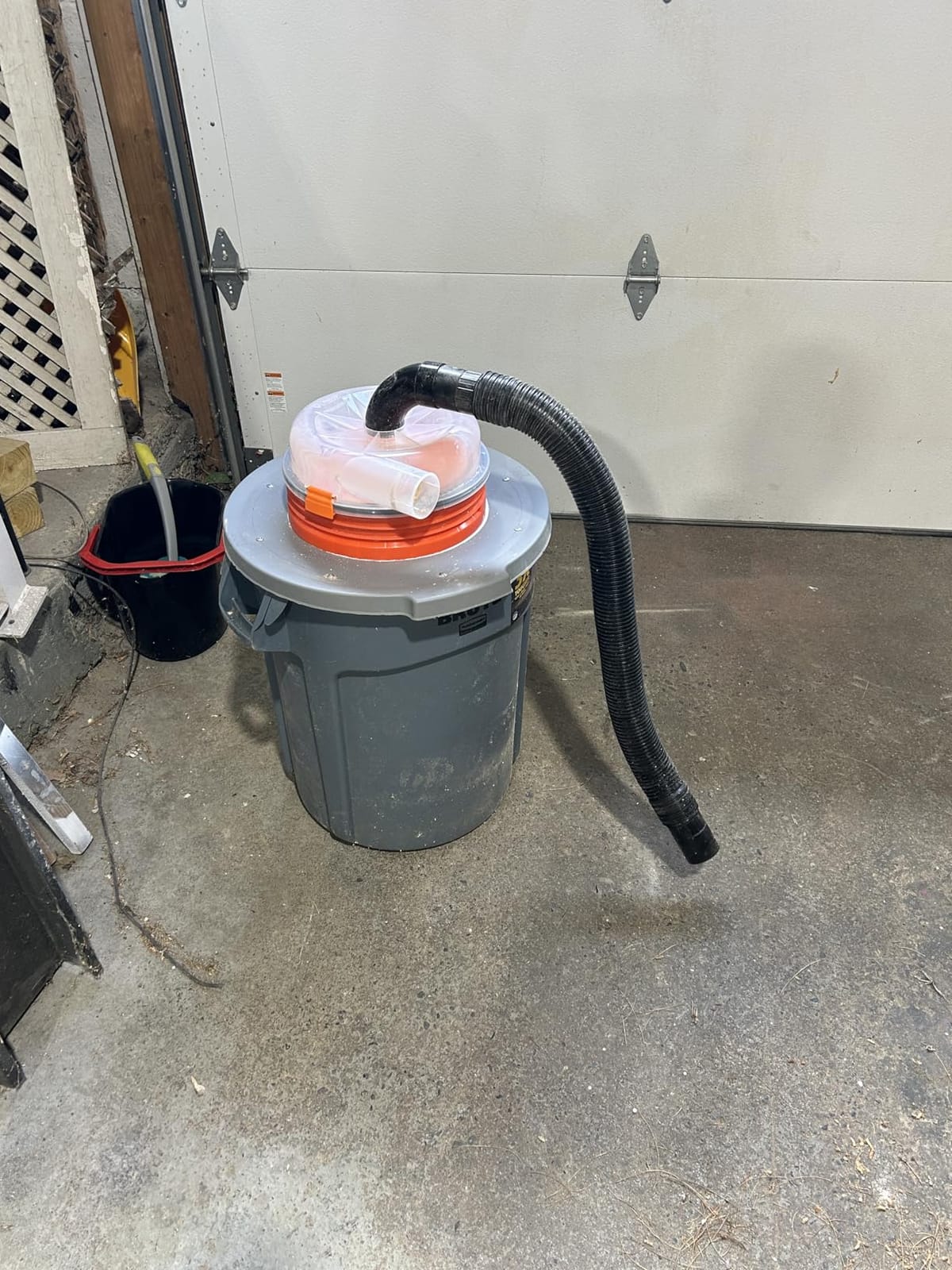
The independent testing cited in the listing was done by Aerodyne Environmental against fine sawdust, coarse sawdust and drywall powder, which is a broader test set than most separator listings bother with. The body is anti-static resin with a nominal wall thickness of 0.5 inches, which is roughly three times what a typical injection-molded lid uses, and it was made in the USA.
Owners repeatedly highlight one operating condition. This separator needs a vacuum with meaningful suction, and results fall off sharply with a weak unit. The work-around that shows up in reviews is simple: run a sturdier bucket than the flimsy pail from the hardware store, because a thin-walled bucket can flex under suction and break the seal.
For a small shop running one dusty machine at a time
This is the pick if you own a decent shop vac and want machine-level separation without giving up floor space. A one-car garage with a table saw and a track saw is the textbook case. Installation takes under a minute and the whole assembly lifts off and moves to the next machine when you switch tasks.
For someone who wants a self-contained collector
Skip it if you want a single unit that does everything, because this one is useless without a vacuum upstream. It also will not keep up with planer or jointer output on its own. In a shop under 100 square feet with no vacuum at all, the honest answer is that a small powered collector is the better purchase.
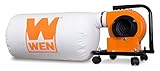
2. WEN DC3401 Rolling Collector – Best Value for Real Airflow
WEN Woodworking Dust Collector, 5.7-Amp Motor with 12-Gallon Bag, Mobile Base, and Optional Wall Mount (DC3401)
660 CFM airflow
12-gallon 5-micron bag
34.25 x 13 x 14.2 inch, 17 lb
4-inch dust port
Pros
- Moves far more air than a typical shop vac at a comparable price
- Lockable swivel casters make repositioning simple
- Large zippered bag is easy to remove and empty
- Works as a lower-cost alternative to a large 2 HP collector
Cons
- Not designed for large chips and planer dust without a cyclone upstream
- Some units arrive with a loose impeller retaining nut
- Reported by some owners to be louder than expected
A 5.7-amp brushed motor driving a 6-inch impeller produces up to 660 CFM in this unit, and that number is the reason to keep looking. Most shop vacs in the same general size class manage a fraction of that volume, and the difference shows up immediately in how much air a table saw blade pulls through its shroud.
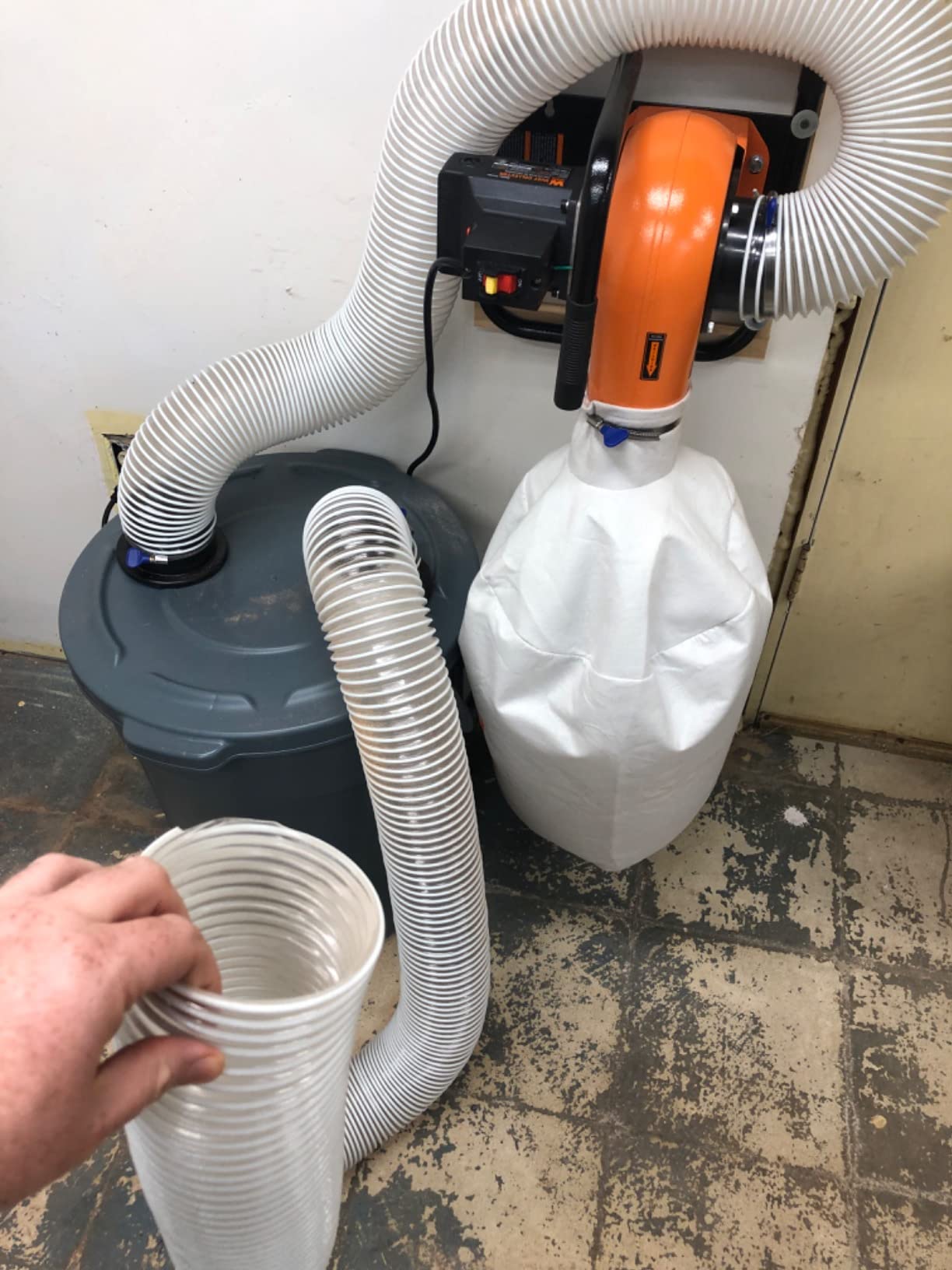
The body measures 34.25 by 13 by 14.2 inches and weighs 17 pounds, so it is a genuinely small object to own. It has four lockable swivel casters, an onboard carrying handle, and an optional wall mount if you would rather reclaim the floor. Dust leaves through a 12-gallon zippered 5-micron bag, and the whole thing is covered by a two-year warranty.
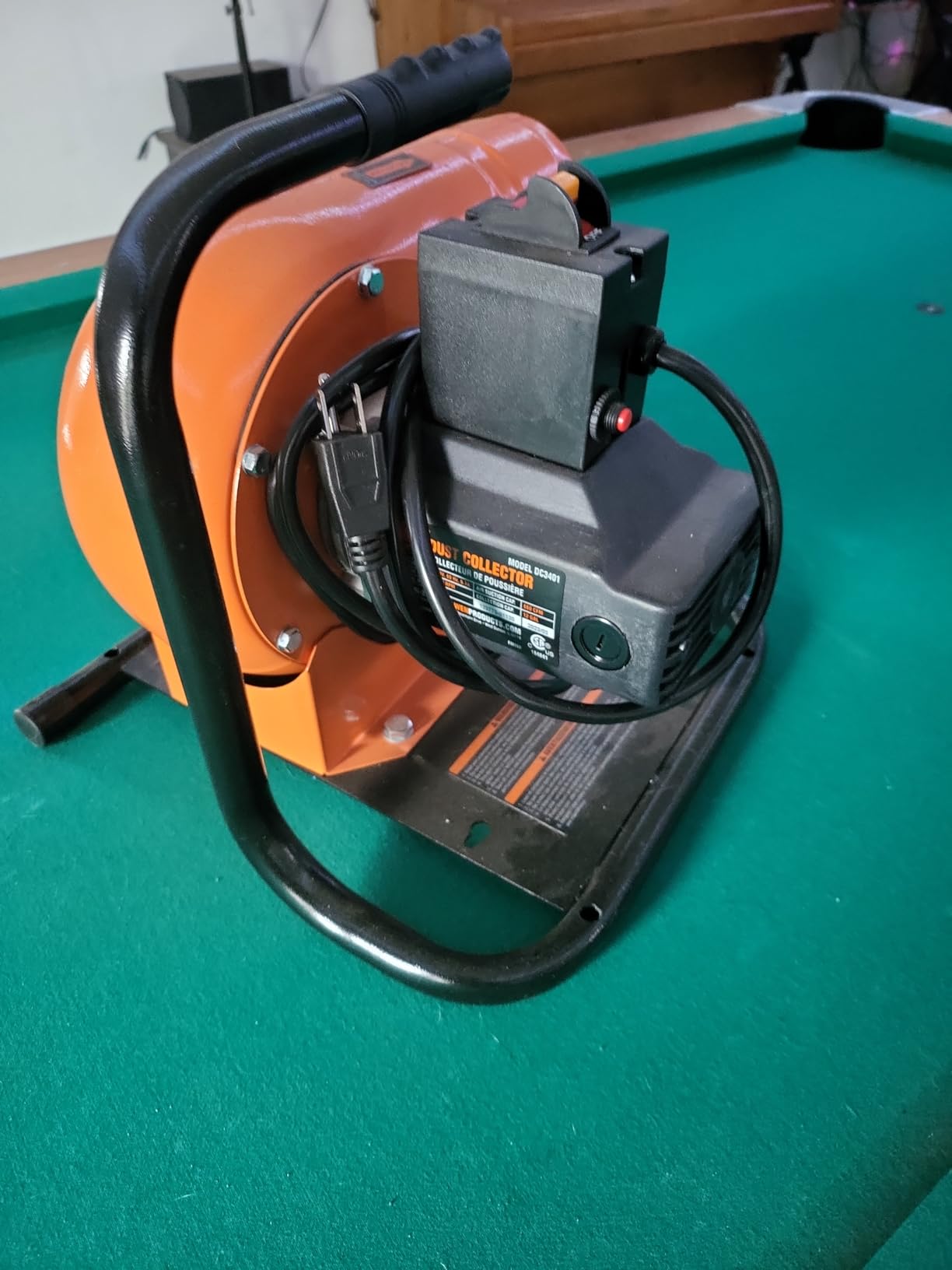
The honest limitation is that this is a single-stage design, so chips and planer dust go straight to the bag. Owners running a planer report rapid bag loading and the fix most of them adopt is adding a cyclone separator upstream, which is a straightforward addition when you already have a four-inch port to work from. The bag itself is a 5-micron unit, and upgrading to a 1-micron bag is the other common modification.
At a 4.1 average rating with 676 reviews, the star distribution explains the score: 9 percent of reviews are one-star. The complaints cluster around durability expectations and noise, with some owners reporting motor bearings needing attention after a few hundred hours. Owners also say it is audible outside the shop, which matters more in a basement setup than in a detached garage.
For one-car garages and basement workshops that need volume
Choose this when the binding problem is airflow rather than filtration. It handles a table saw, a bandsaw and a benchtop sander well, and the casters mean you can roll it out of the way instead of building a permanent station. A 4-inch inlet port also means fewer adapters than a unit with a smaller port.
For shops with heavy debris production or noise sensitivity
Pass if your main machine is a planer or a drum sander, since bag-only collection at that volume is a losing proposition. Also weigh twice if the collector will sit a few feet from where you need to hold a conversation, because a brushed motor at 660 CFM is not quiet. Anyone expecting a 1-micron dust stream will be disappointed by the standard bag.
3. DEWALT 6 Gallon Dust Separator – Most Versatile for Extending Any Shop Vac
DEWALT 6 Gallon Dust Separator for Wet/Dry Shop Vacuums,DXVCS002
Cyclonic separation
6-gallon poly bucket
15.9 x 15.9 x 31.4 inch, 12 lb
120V, three-year warranty
Pros
- Extends vacuum filter and bag life by capturing chips first
- Four-caster base makes the unit stable and easy to move
- Bucket is straightforward to empty
- Handles wet and dry debris including metal shavings
Cons
- Vacuum not included and must be purchased separately
- 6-gallon capacity fills quickly with heavy sawdust
- Port adapters may be needed to match specific hose sizes
The idea behind this separator is the same one behind the Dustopper, executed with a taller and more conventional geometry. Air enters at the top, spins around a cone, and drops chips and coarse dust into a six-gallon poly bucket below, leaving the vacuum to handle only the finer fraction. The result that reviewers care about is longer filter and bag life on the vacuum itself.
Port compatibility is the useful detail. The inlet accepts 1-7/8 inch or 2-1/2 inch hose, which covers most household and industrial wet/dry vacuums without a trip to the hardware store. A four-caster base keeps the assembly stable and easy to reposition, and the box includes the bucket, hose holder, lid, sealing strips, latches, handles, a length of hose and all caster hardware.
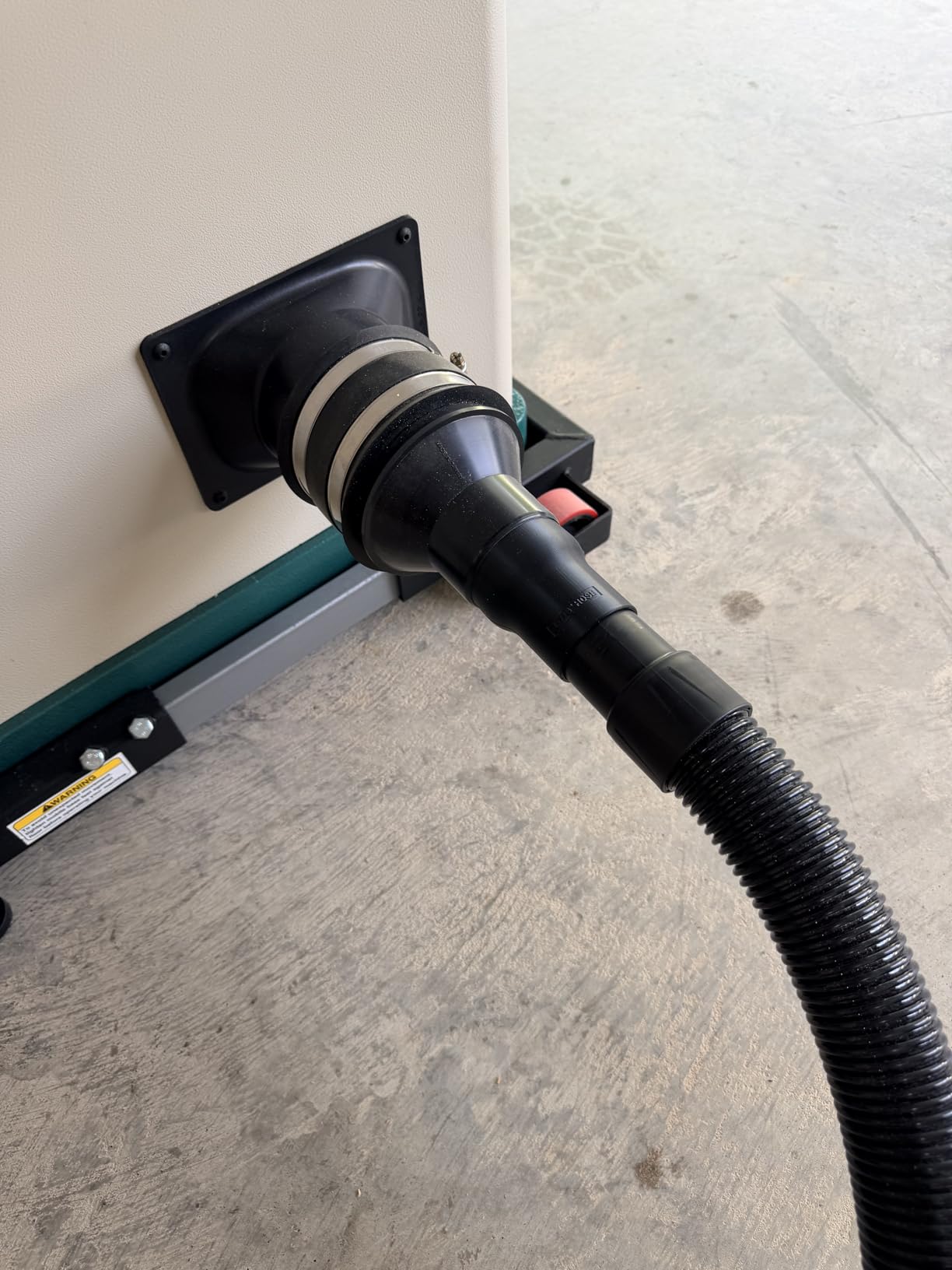
It runs on 120 volts and carries a three-year limited warranty, which is the longest coverage in this roundup. The build uses durable, heat-resistant materials with an anti-clogging design, and the manufacturer lists drywall dust, concrete dust, clay and silica dust, cooling ash, water and metal shavings among the debris it handles.
The consistent caveat in reviews is that no vacuum is included. That is not a flaw in a design sense, but it does mean the total cost of this path includes a wet/dry vacuum purchase if you do not already own one. A 6-gallon bucket also fills quickly under a table saw, so plan on emptying it mid-session rather than at the end of the day.
For hobbyists who already own a wet/dry vacuum
This is the sensible first purchase for a maker space or apartment workshop where buying a dedicated collector is premature. The caster base matters in a small room because you can move the separator to whichever tool is running. The three-year warranty also makes it an easy recommendation for someone unsure how committed they are to the hobby.
For shops that need to run two machines at once
It has no motor and no auto-start, so it only works when the vacuum is switched on. If your workload involves simultaneous capture from a table saw and a sander, look at a powered collector with a tool-activated outlet instead. Heavy jointer or planer output will also fill the six-gallon bucket faster than you expect.
4. POWERTEC DC5371 Wall Mount Collector – Best for 1-Micron Filtration
POWERTEC 1 HP, 560 CFM Wall Mount Dust Collector with 1 Micron Dust Collector Bags, Dust Collectors for Woodworking Dust Collection System (DC5371)
560 CFM at 3450 RPM
1-micron reusable bag
35.5 lb, wall mount
120V or 240V dual voltage
Pros
- Wall-mount format frees valuable floor space in a small shop
- 1-micron bag filters noticeably finer than a standard bag
- Bag window shows fill level and a bottom zipper empties it in place
- Dual-voltage motor gives installation flexibility
Cons
- Protective inlet grate collects debris and reduces efficiency if unchecked
- Rated for one machine at a time
- 80 dB is noticeable in an enclosed shop
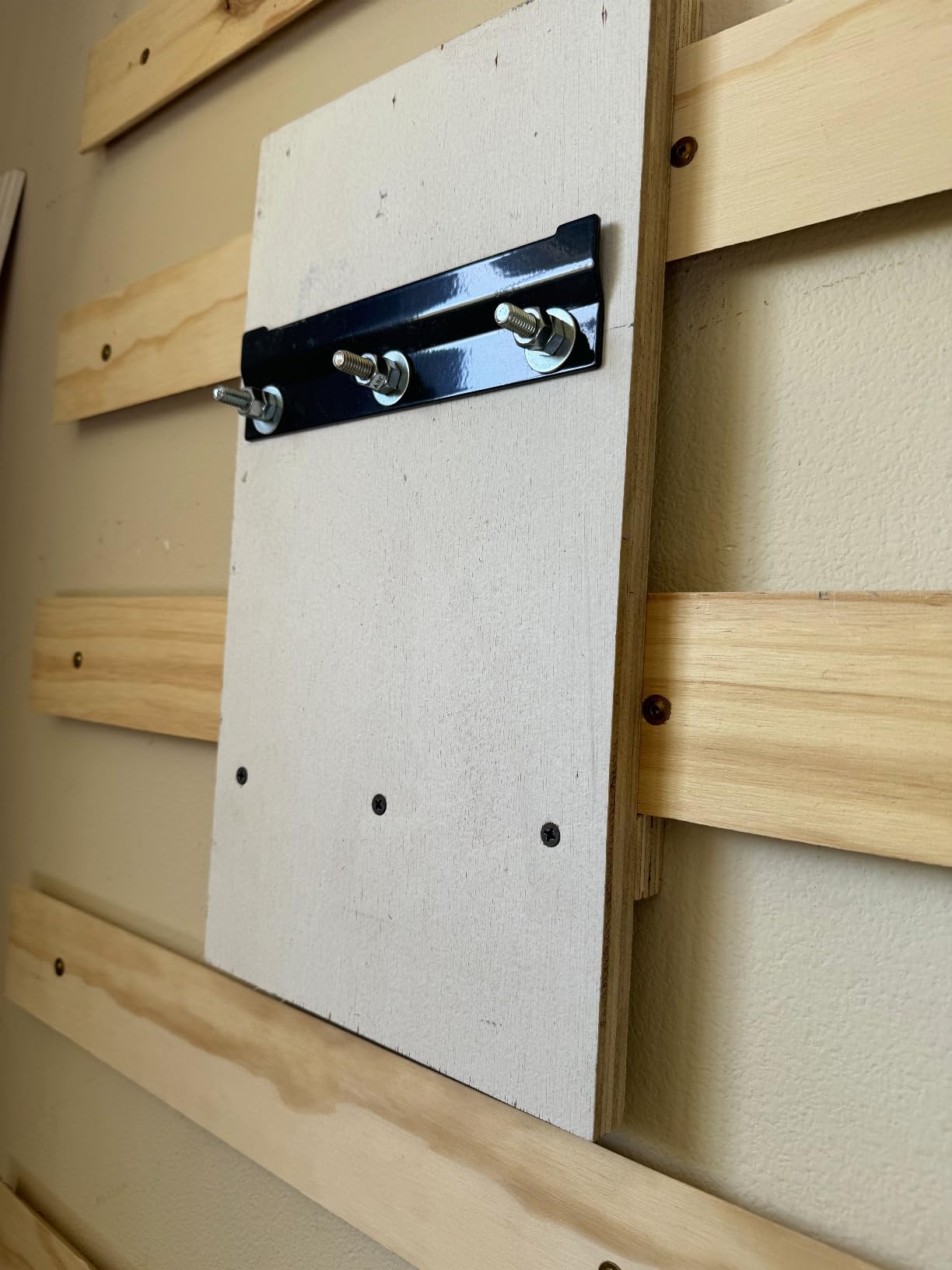
This is one of two wall-mounted powered collectors in the group, and it earns its place by solving the floor-space problem directly. At 35.5 pounds it hangs from a joist or a stud wall and leaves the entire footprint of a rolling unit free, which matters enormously in a single-bay garage where the saw, the bench and the door all compete for the same square footage.
The motor is a 1 HP induction unit rated at 3450 RPM that produces 560 CFM, and it runs on either 120V or 240V. At 120V it draws 12 amps, at 240V it draws 6, so a standard household circuit works but a dedicated one is preferable. The vortex base design is claimed to reduce airflow turbulence and improve efficiency by up to 10 percent over comparison models.
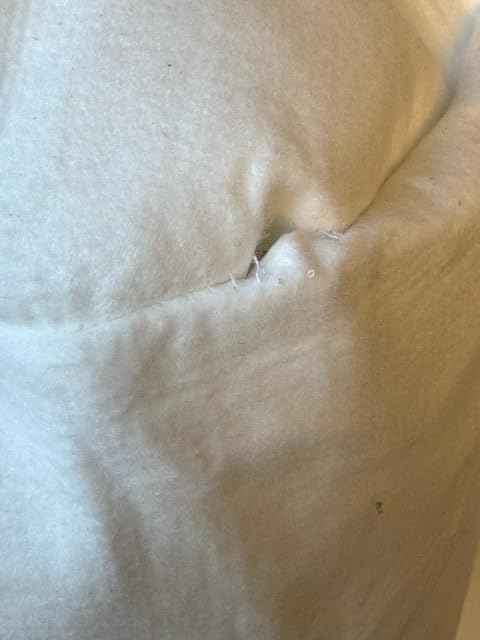
The bag is the differentiator. It is a reusable 1-micron unit with a built-in viewing window and a bottom disposal zipper, so you can see the fill level and empty it in place without climbing a ladder or pulling the whole collector down. That filtration level is finer than the 2.5-micron bag on the Shop Fox and the 5-micron bag on the rolling WEN unit.
Two setup points come directly from owner feedback. The 4-inch inlet has a protective grate that stops tools from reaching the impeller, and that grate collects debris and quietly reduces airflow unless you check and clean it. The stated noise level is 80 dB, and reviewers in enclosed spaces describe it as noticeable. A second caution is that at 560 CFM this is a one-machine-at-a-time collector.
For shops where floor space is the binding constraint
Pick this if a rolling collector simply will not fit or would block the only aisle. The wall bracket comes in the box, and the vertical orientation means the footprint is essentially zero. It suits a garage shop where the table saw sits center floor and everything else is against the walls.
For shops with a shared circuit or a tight ceiling
Think twice about the 12-amp draw at 120V if your table saw and collector will share an outlet. And if the joists overhead are light or spaced widely, check the framing before you commit, because mounting a 35.5-pound machine with a spinning impeller deserves solid support. Anyone wanting a two-machine setup should step up to a dual-inlet design.
5. Shop Fox W1826 Wall Mount Collector – Best Space Saver with Steel Construction
Shop Fox W1826 Wall Dust Collector, 2.5 Micron Filtration,White
537 CFM at 7.2 static pressure
1 HP prewired 110V
19.5 x 18 x 44 inch, over 50 lb
2.5-micron bag
Pros
- All-steel construction that feels far sturdier than the price suggests
- Wall mount saves floor space in tight shops
- Reported as lower-pitched and quieter than a shop vac setup
- Bag unzips at the bottom for in-place emptying
Cons
- Needs a full 4-inch hose run or performance drops sharply
- Inlet safety cage traps shavings and clogs with planer work
- Exhaust port inside diameter is not published
The Shop Fox W1826 is a 1 HP single-phase wall-mount collector that arrives prewired at 110V and can be rewired to 220V. Amp draw is 7A at 110V and 3.5A at 220V, which is easier on a household circuit than the POWERTEC’s 12 amps. Air suction is rated at 537 CFM against 7.2 inches of static pressure, and the intake is a standard 4-inch port.
At 19.5 by 18 by 44 inches and over 50 pounds, this is the most substantially built unit in the group, and long-term owners consistently single out the steel construction as feeling more rigid than the asking price suggests. The wall bracket uses a locking screw system rather than simple hooks, which matters when the unit is 44 inches tall and full of collected debris.
Almost every owner review stresses the same two setup rules. Keep the hose at 4 inches for the entire run, because stepping down to a smaller diameter early kills the airflow you paid for, and add an upstream cyclone or separator so planer and jointer shavings never reach the bag. The bag itself is 2.5 micron with a viewing window and a bottom zipper for in-place emptying.
The most common complaint is damage in transit. Owners report bent sheet metal and dented motor fan shrubs arriving from the factory, which is a packaging problem rather than a design fault, but it is frequent enough that you should inspect the unit before you hang it. A smaller irritant is that the exhaust port inside diameter is not published, so a fitting has to be fabricated.
For shops that want steel and 110V simplicity
This suits a one-car garage with a 15-amp circuit and a woodworker who plans to keep the collector for years. The lower amp draw at 110V is a real advantage over the 12-amp wall-mount alternative, and the all-steel body tolerates the knocks of a working shop better than a plastic-cased unit.
For anyone who cannot commit to a 4-inch hose
Pass if your only connection is a 2-1/2 inch shop vac hose, because the performance loss is immediate and owners describe it plainly. Also consider a separator if you plan to run a jointer, since the inlet safety cage is a documented clog point. Inspect the unit on arrival, because transit damage is the top complaint in the reviews.
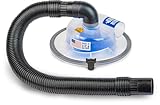
6. Oneida Dust Deputy Low-Pro Plus – Best for Under-Bench Mounting
Dust Deputy Low-Pro Plus Cyclone Dust Separator – Engineered High Flow Wet/Dry Vacuum Kit – Fits Standard 5 Gallon Buckets – 2.5″ Adapter & 3′ Hose – Made in USA
Low-profile cyclone lid
Fits 5-gallon buckets
Captures over 99.9% before the filter
2.5 inch hose, 3 ft length included
Pros
- Cyclone design delivers more airflow than comparable lid-style separators
- Locking latches and foam gasket create a reliable bucket seal
- Included hose and adapter kit removes the need to buy fittings separately
- Low profile works well under a bench or table saw
Cons
- Low-profile lid is more prone to tipping and needs a flat surface
- Some non-US vacuum hoses need an extra adapter for 2.25 inch ports
- Requires a separate five-gallon bucket
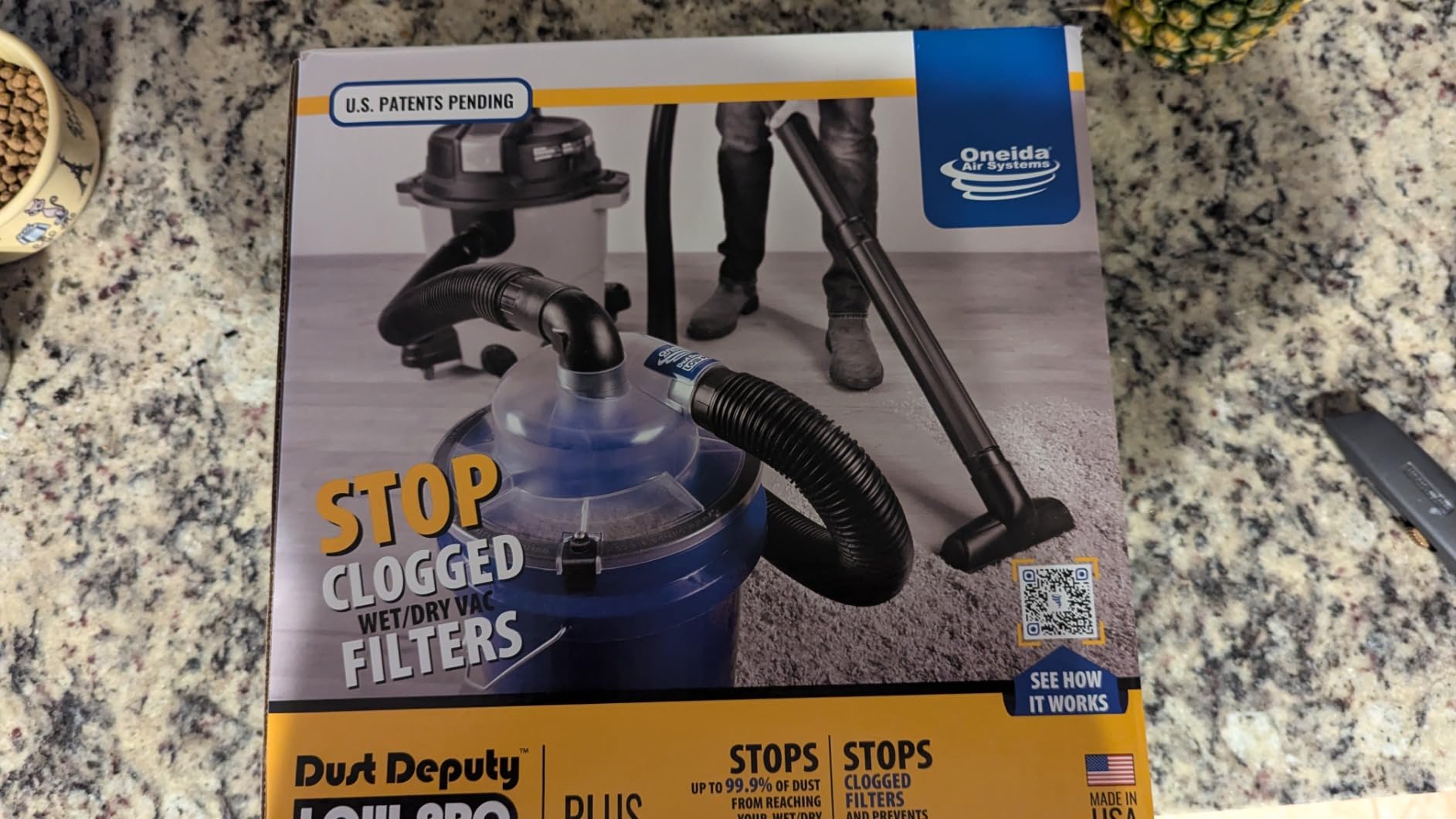
Oneida’s design decision here was to lower the cyclone instead of raising it. Rather than a tall cone sitting on top of the bucket, this is a low-profile lid that sits inside the rim, and that geometry is the reason the manufacturer claims better airflow and stability than standard lid-style separators. It is the shape you want when the separator has to live under a bench or inside a table saw cabinet.
The kit is unusually complete. You get the lid separator, locking bucket latches, a neoprene foam lid gasket, a three-foot length of highly flexible hose with swivel cuffs, and a 2.5-inch elbow adapter. The ports are 2.25 inches inside diameter and fit standard 2.5-inch wet/dry vacuum hoses, so in a US shop the connection is usually direct.
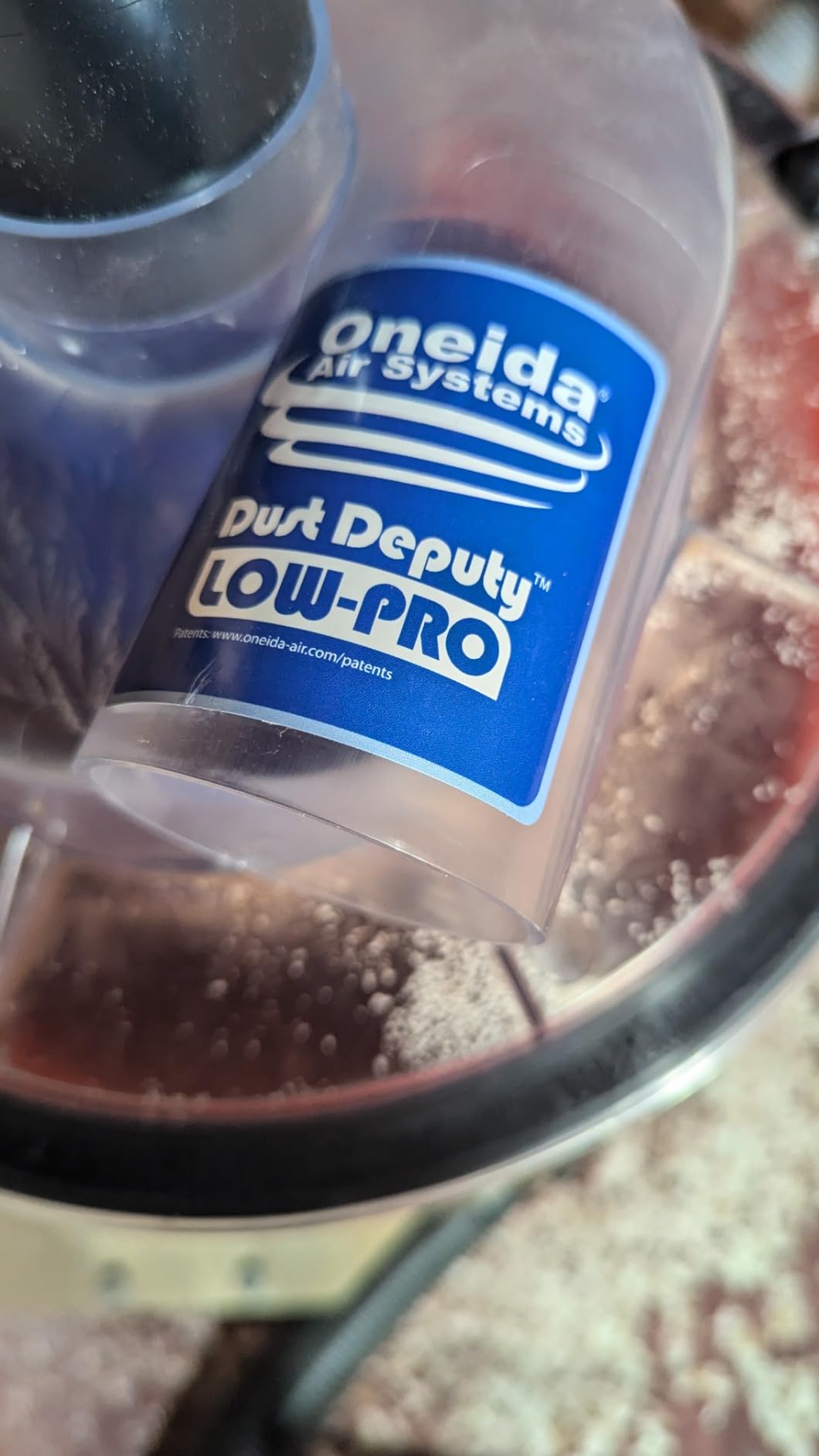
The claimed capture rate is over 99.9 percent of dust removed before it reaches the vacuum filter, which protects both the filter and the motor. Buyers report the practical effect clearly: the vacuum filter and bag stay noticeably cleaner over months of use, and the bucket is what fills instead.
Two conditions are worth planning for. A low-profile lid is more tippy than a tall cone, so it needs a genuinely flat surface to sit on, and you need your own five-gallon bucket because it is not included. If your vacuum hose is a non-US 2.25-inch fitting, an additional adapter is required. The review base of 270 is the second smallest here, so treat the long-term picture with some caution.
For shops where vertical space is the real limit
Choose this when a conventional separator would not fit under the machine. A basement workshop with a low joist ceiling is the clearest case, as is a benchtop setup where the vacuum lives on a shelf. The included hose and adapter kit also means one box covers the whole install for most people.
For heavy jointer and planer workloads
This is a shop vac accessory and it cannot substitute for a powered collector once you start producing real chip volume. It also will not help if your vacuum is undersized, since the separator draws its energy from that vacuum. Make sure the mounting surface is flat before you commit.
7. Mullet Cyclone Dust Collector – Best Airflow Gains Per Watt
Mullet Cyclone Dust Collector, High-Speed Separator for Shop Vac
Pre-separates over 99% of debris
Parabolic one-piece body
7.5 lb, 72 dB
Made in USA
Pros
- Rigid PVC port is far more airtight than bungee-cord or duct-tape bucket rigs
- Compact and light at 7.5 pounds so it is easy to carry between machines
- Adapters fit a wide range of wet/dry vacs
- Keeps vacuum filter and bag life much longer
Cons
- Mounting setup is sized around cut-to-fit PVC so a dry fit and some cutting are needed
- No powered motor so separation strength still depends on the vacuum
- Not a substitute for a full collector on planer or jointer duty
At 4.8 stars from 289 reviews with 88 percent of ratings at five stars, the Mullet has the highest average rating of anything in this roundup. The engineering claim behind that is shape. The body is a seamless parabolic cone rather than a straight-wall cylinder, and the manufacturer argues that a faster airstream means more debris falls out before the air reaches your filter.
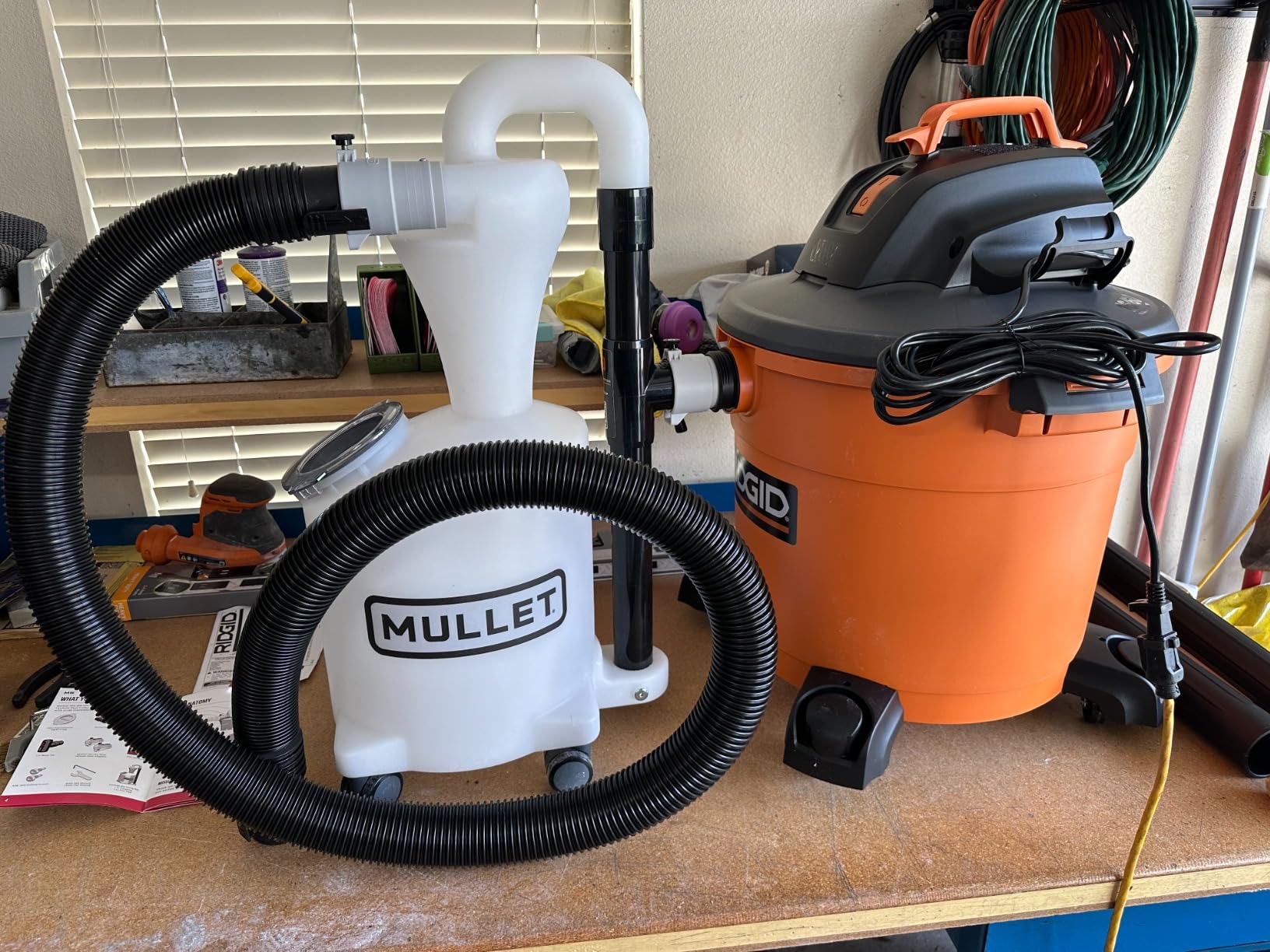
The connection is the other differentiator. Instead of a flexible hose arrangement improvised with bungee cords, bolts and duct tape, this uses a rigid cut-to-fit PVC port that forms a unified airtight connection. Two wet/dry vac hose adapters are included, and the fitting process is sized to standard shop vac hose diameters.
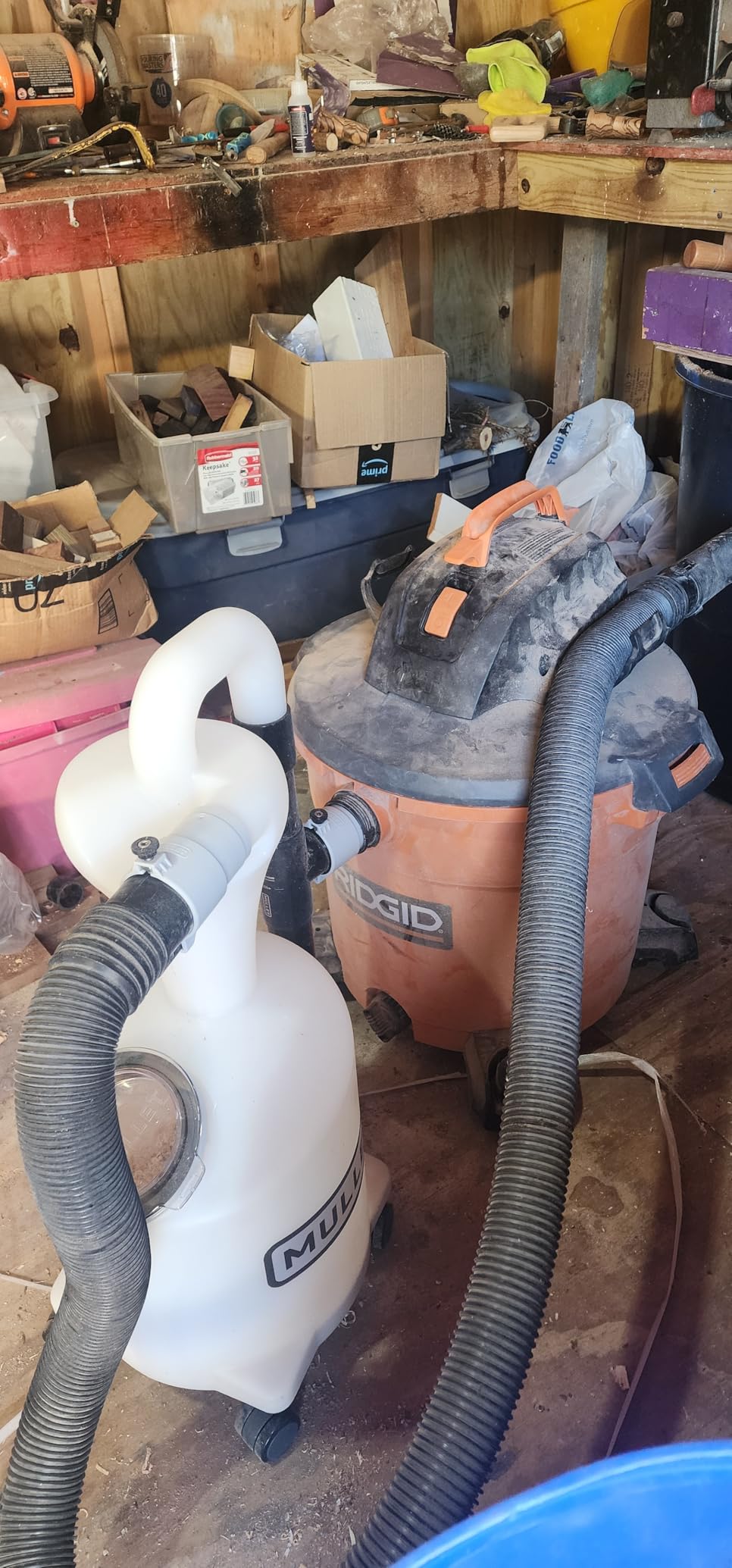
Reviewers credit two things specifically: the rigid connection and the speed of the parabolic body. Clean-air delivery to the vacuum means the vacuum filter and bag last much longer, which is where the real cost savings sit for anyone running a shop vac as their primary machine. At 7.5 pounds it is also the easiest unit here to carry between a table saw and a sander.
Be realistic about the setup day. This is a cut-to-fit install, so you measure, dry fit and cut before the connection is permanent. The sound level is listed at 72 dB, which is a function of the vacuum rather than the separator itself, and there is no motor here, so separation strength tracks whatever suction your vacuum produces.
For owners tired of leaking bucket rigs
Pick this if you have already built an improvised separator and watched air leak around the connections. The rigid PVC port solves that problem permanently, and the parabolic body is the better shape for capturing fines. It is also the most compact powered-free option by weight.
For a first-time install or a planer-heavy shop
Pass if you want something that drops on and works, because the cut-to-fit step adds a project to your afternoon. And no shop vac accessory, including this one, keeps up with sustained planer or jointer output. That workload needs a powered collector upstream of the tool.
8. BUCKTOOL 750 CFM Auto-Start Collector – Best for Tool-Activated Startup
BUCKTOOL 750 CFM Auto-Start Dust Collector,1.2HP 13-Gallon Capacity
750 CFM from a 1.2 HP motor
Auto-start outlet up to 7A
13-gallon capacity
56 lb, 29.53 x 20.19 x 65.01 inch
Pros
- 750 CFM from a 1.2 HP 120V motor is solid airflow for the class
- Auto-start outlet removes the need to reach for a second wall outlet
- Bags are quick to swap thanks to the clamp design
- Reducer set and hose included so it is usable out of the box
Cons
- Lowest average rating in this group with a higher one-star share
- Auto-start is limited to 7A connected tools
- Included plastic lower bag is often swapped for the cloth one
The auto-start feature is the reason to look at this collector. It has a powered outlet on the housing that switches the collector on when a connected tool is switched on, up to a 7A machine. In a cramped shop where the wall outlet is behind the table saw, removing the need to reach back and flip a switch is a real convenience gain every single time.
Airflow is 750 CFM from a 1.2 HP 120V motor running at 3450 RPM, drawing 6.5A at full load, and the unit is CSA listed. The collection side uses a 13-gallon capacity with a 2-micron cloth upper bag, and the bag clamp is a soft PET design intended not to cut your hands during changes, which is a thoughtful detail for a 56-pound machine.
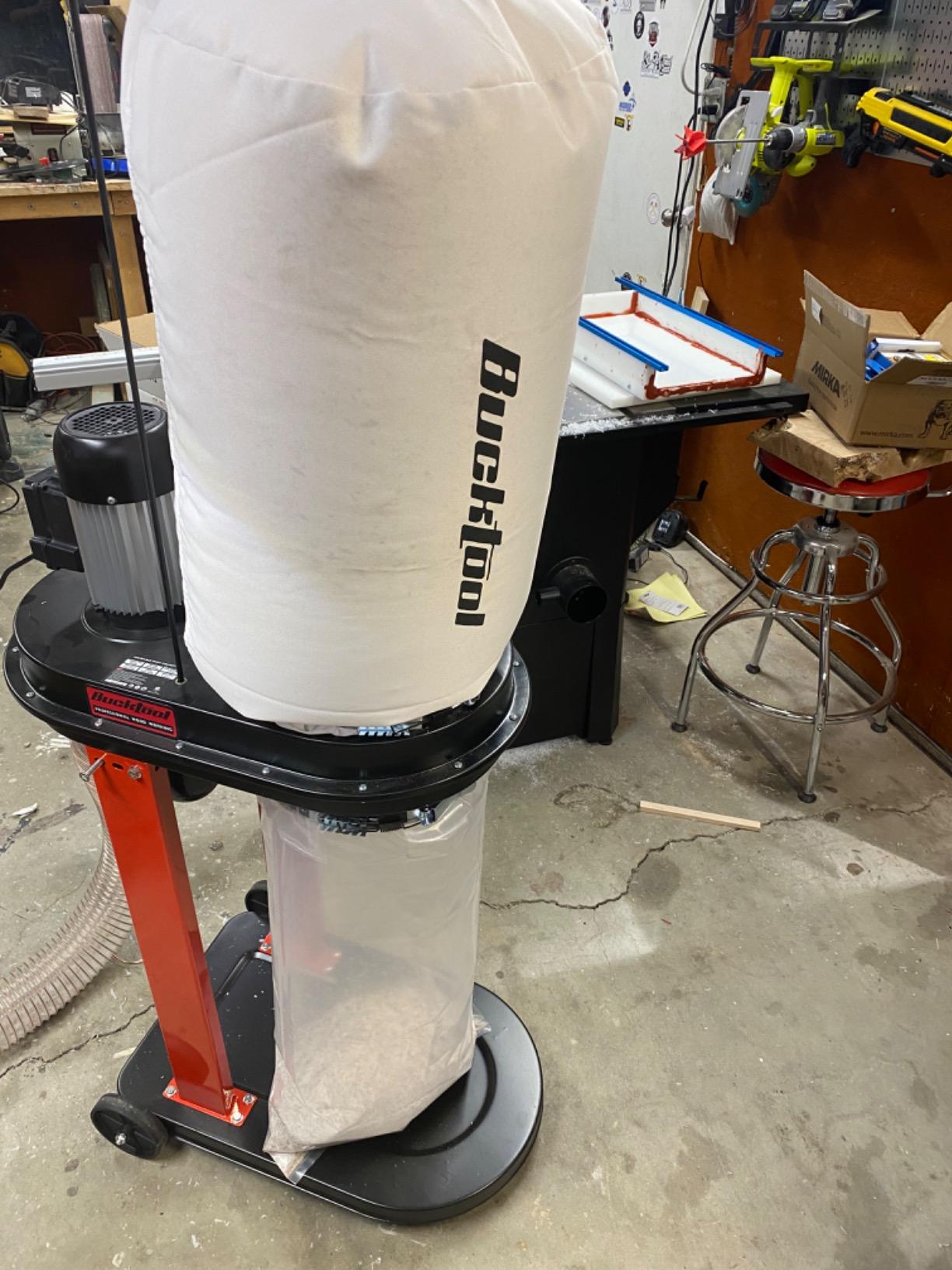
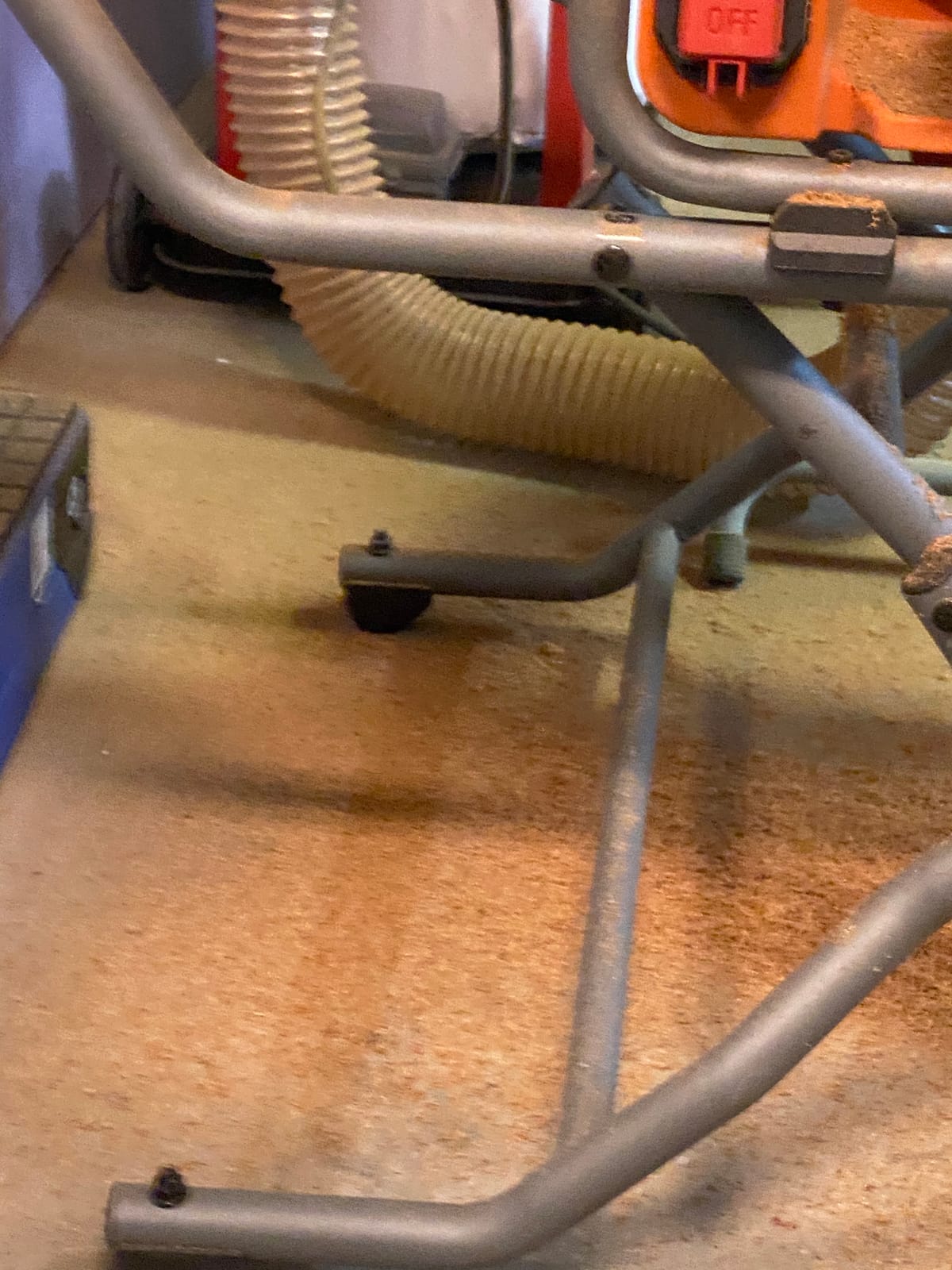
The base is the other flexible part. At 16-1/2 by 26-3/8 inches with casters, the same unit works as a portable collector you roll to the active machine or as a stationary unit you park and wall-mount later. The box includes a five-piece reducer set and a five-foot length of four-inch flexible hose.
At a 4.0 average with 204 reviews, this is the lowest-rated product here and it carries a 10 percent one-star share, which is worth weighing. Buyers report adequate airflow and genuinely like the auto-start, while the criticism centers on durability expectations at this tier and on the included plastic lower bag, which many replace with the cloth version.
For shops tired of manual switches
This fits a shop where you run several machines in rotation and forget to turn the collector off. The 7A auto-start limit covers most table saws, sanders and bandsaws, though it will not carry a large planer. The included hose and reducer set mean you can connect something on day one.
For tight spaces or planer duty
At 65 inches tall and 56 pounds, this is the largest collector in the group, which is the wrong profile for a small shop where floor space rules the decision. It also needs its own 120V circuit given the 6.5A motor draw plus the tool plugged into the outlet. Expect to upgrade the lower bag and set durability expectations accordingly.
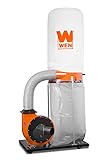
9. WEN DC1300 Collector – Best for Running Two Machines
WEN DC1300 1,300 CFM 14-Amp 5-Micron Woodworking Dust Collector with 50-Gallon Collection Bag and Mobile Base , Black
1,300 CFM airflow
14-amp motor, 10-inch steel impeller
Dual 4-inch inlets
50-gallon vertical bag
Pros
- Dual 4-inch inlets let two machines share one collector
- 50-gallon bag means very infrequent emptying
- Reported as noticeably quieter than running multiple shop vacs
- Moves far more air than a shop vac and cuts bag changes to once a month or two
Cons
- Bag support hook can let the fabric loop slip off
- Vertical housing and bag-arm height are not adjustable
- Supplied 5-micron bag and hardware are inconsistent on some variants
Everything about this collector is built around one idea: run two machines at once. At 1,300 CFM, it is the highest airflow figure anywhere in this roundup, driven by a 14-amp motor turning a 10-inch steel impeller up to 3450 RPM. The dual four-inch air inlets are the reason for that capacity, and they are what let a table saw and a sander share the same hose network.
Collection is handled by a vertical 50-gallon bag, and owners report that capacity is the difference between emptying once a month and emptying twice a week. The mobile base has four swivel casters, so you can roll it aside when it is not in use. Assembly is straightforward and hardware problems are not among the complaints in the reviews.
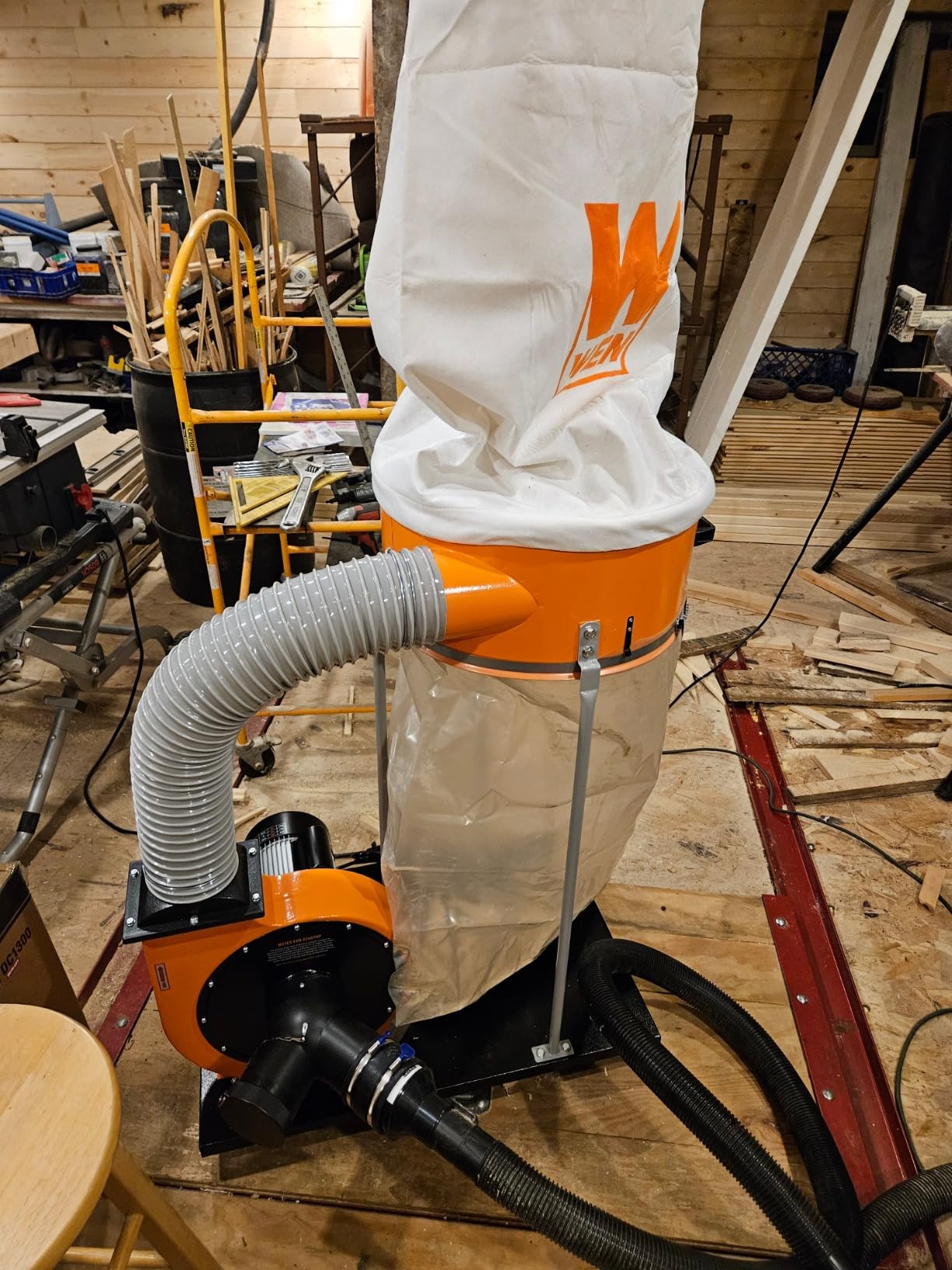
The 4.5 average from 233 reviews comes with 71 percent five-star ratings, and the strongest reports come from owners running CNCs, table saws and bandsaws who noticed a real drop in cleanup time. Several of those owners also report the unit being quieter than the shop-vac arrangement it replaced, which is a counterintuitive result that shows up more than once.
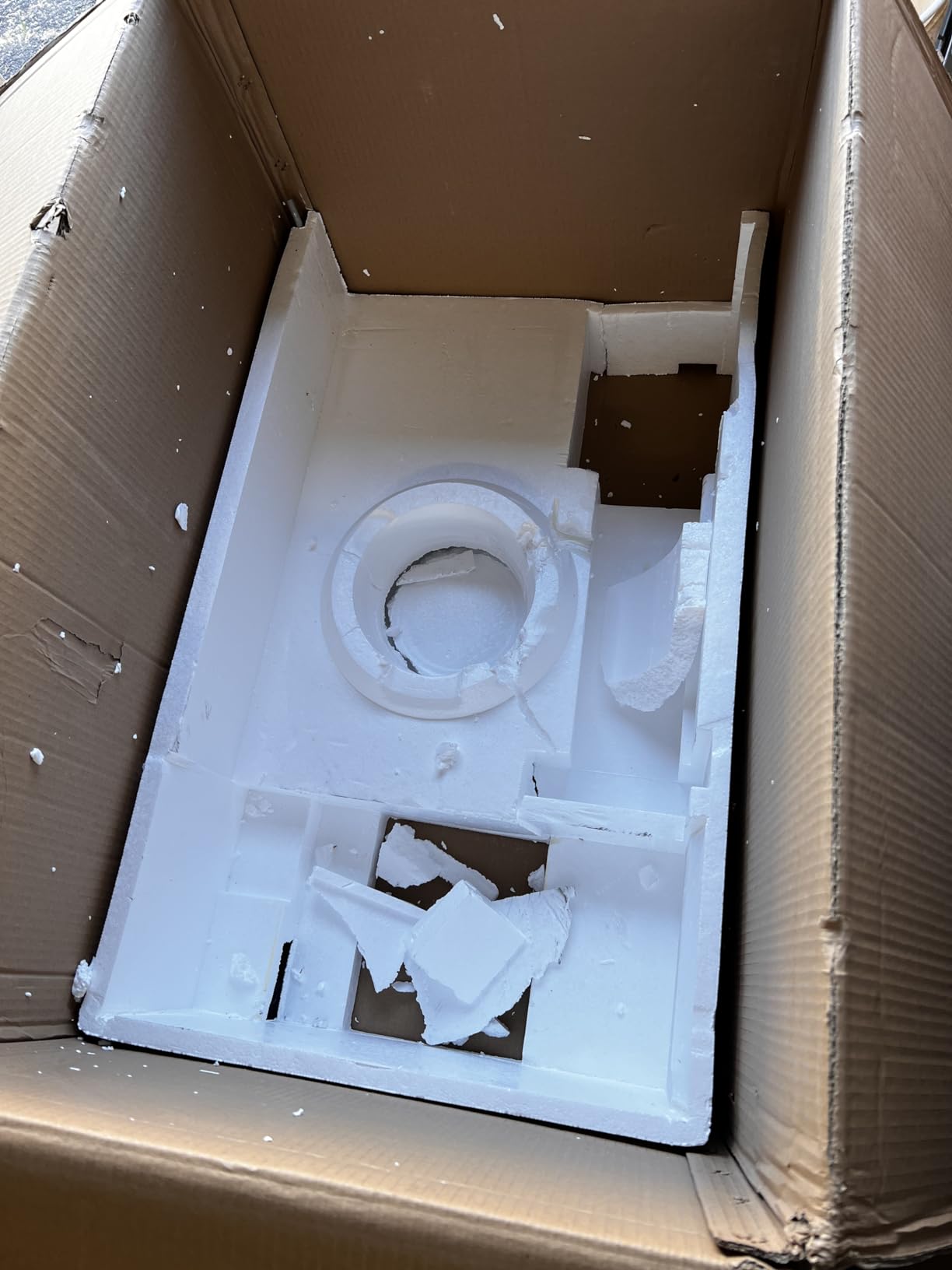
Owners running this in a real shop requested two changes. The bag support hook occasionally lets the fabric loop slip off, and the bag arm and housing height are not adjustable, which can be tight under low ductwork. A few fine particles also escape from the secondary port, and the instructions sequence the handle step after bag installation in a way reviewers find awkward.
For shops running a CNC and a saw at the same time
This is the pick when a second machine connection is a genuine requirement rather than a future goal. The 1,300 CFM rating means neither machine is starved, and the 50-gallon bag keeps the interruption to a minimum on a busy week. It also works well for anyone tired of coordinating a shop vac with tool startup.
For small shops on the space or power margins
Be careful here. A 14-amp motor needs a dedicated 120V circuit, and the 50-gallon vertical bag plus mobile base takes considerably more room than a wall-mounted 1 HP unit. If your shop is under about 200 square feet, the airflow is more than you need and the footprint is harder to justify.
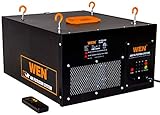
10. WEN 3410 Air Filtration System – Best for Ambient Dust, Not Source Capture
WEN 3410 3-Speed Remote-Controlled Air Filtration System (300/350/400 CFM), Basic w/ RF Remote (400 CFM) , Black
300/350/400 CFM three speed
1-micron filter plus 5-micron pre-filter
17 x 20.5 x 10 inch, 31 lb
50-60 dB, two-year warranty
Pros
- Largest review base in the roundup at more than 5600 reviews
- RF remote works through obstructions up to 26 feet away
- Three speeds plus a programmable timer make automation easy
- Quiet at 50-60 dB compared with most extraction equipment
Cons
- This is an air cleaner and does not capture chips at a machine
- Filter replacements are an ongoing consumable cost
- Sized for small shops rather than ducted whole-shop systems
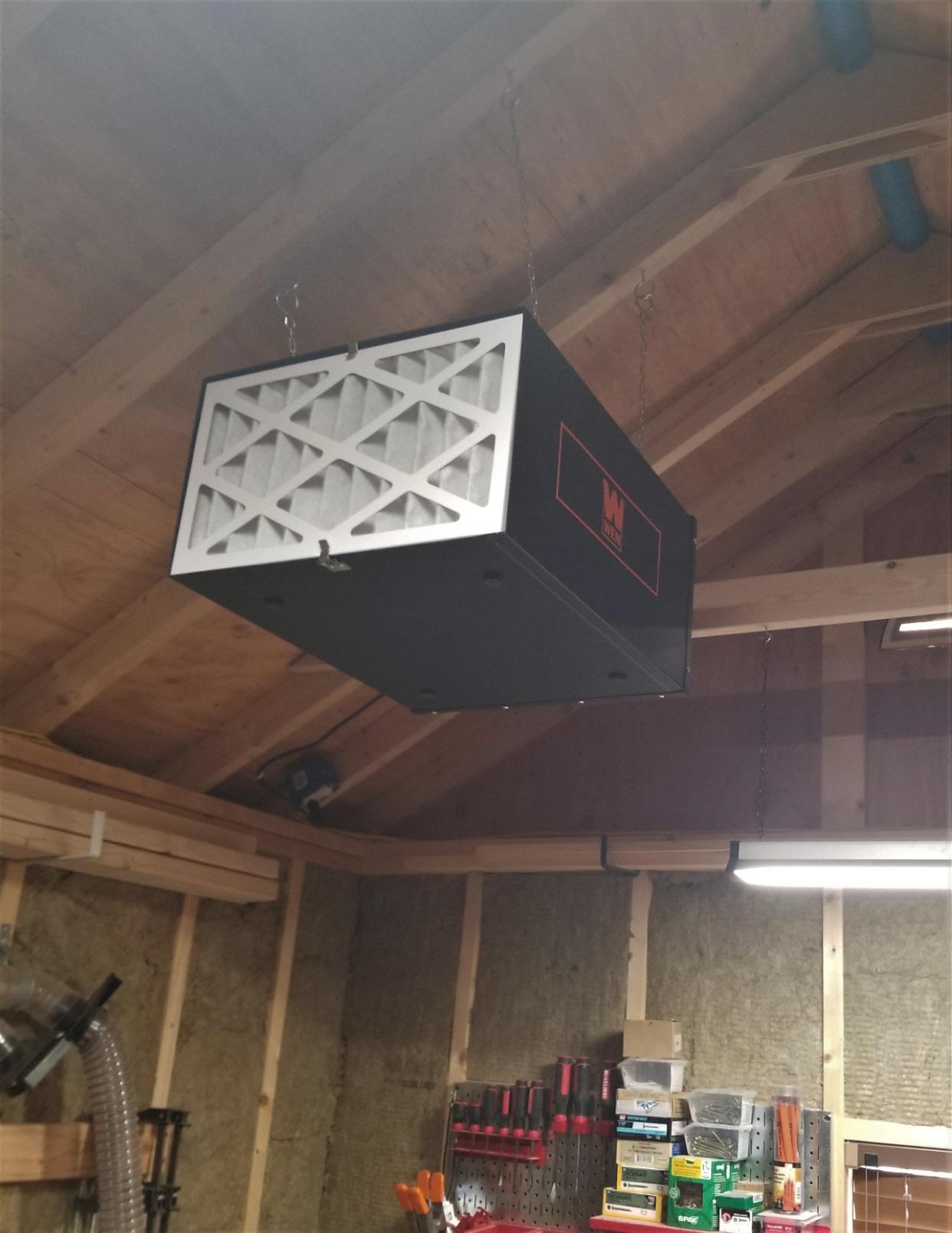
Start with the caveat, because it is the whole point of including this unit. The WEN 3410 is an air filtration system, not a dust collector. It pulls ambient air through a filter stack and recirculates it, which reduces the fine dust hanging in the room but captures nothing at the blade or under the table saw. If you have no source collection at all, this is a partial answer, not a solution.
With that understood, it is a good machine. Airflow is 300, 350 or 400 CFM across three speeds, it covers rooms up to 400 square feet, and it runs on 120V at 1 amp, which means you can put it on any outlet. The filter stack is a 5-micron pre-filter plus a 1-micron final filter, and both are replaceable.
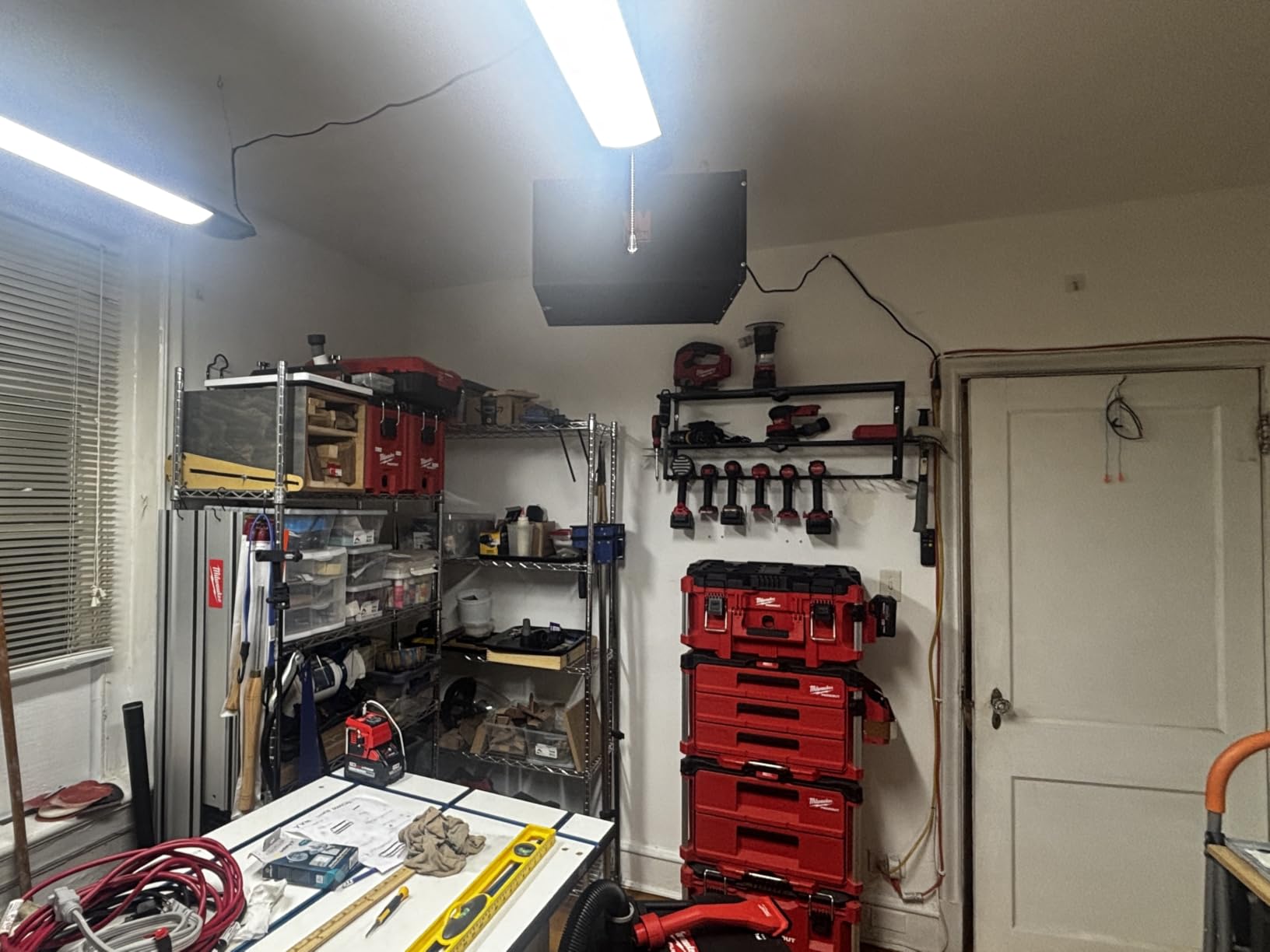
Controls are where this unit separates itself from cheaper air cleaners. The RF remote reaches 26 feet and works through an obstructed line of sight, so you can start it before you walk into the shop, and the programmable timer shuts it off after a set number of minutes. The 50-60 dB rating is the quietest figure in the roundup and matters enormously in a small enclosed room.
At 4.6 stars across more than 5,600 reviews, this is by a wide margin the most proven product here, and 77 percent of those ratings are five stars. The cost is recurring: both filter stages are consumables you replace on your own schedule, and that ongoing expense is a real part of the ownership math for a shop running it daily.
For a shop that already has source collection in place
Buy it as the second half of a system, not the first. A collector handling your table saw plus an air cleaner handling the ambient haze gives you both capture at the source and clean air in the room. The remote start and timer make it easy to run alongside a machine, and the low noise suits a basement or an apartment workshop.
For anyone expecting it to collect chips
Do not buy this as your primary dust control and expect chips to disappear. It will not attach to a table saw and it will not empty a drum, because it has no inlet for debris. At 400 CFM it is also sized for a small room rather than a ducted network, and the replacement filters are a recurring cost to budget for.
How to Size CFM for a Small Shop
Horsepower is the number shoppers fixate on, and it is the least useful one. Rated CFM assumes zero static pressure, which never happens once you add a hose, a blast gate and a machine inlet. Size by air changes per hour instead, then subtract a realistic allowance for duct losses.
The formula
Multiply the shop volume in cubic feet by the air changes per hour you want, then divide by 60. That gives you the CFM you need at the collector inlet. For woodworking, six to ten air changes per hour is the usual working range, with the lower end sufficient for a shop that runs one machine and the higher end appropriate when machines overlap.
A worked example for a 150 square foot garage
A single-bay garage at 150 square feet with 8-foot ceilings gives you 1,200 cubic feet of shop volume. At six air changes per hour, 1,200 multiplied by six equals 7,200, and divided by 60 that is 120 CFM as a bare minimum. Push to ten changes and you need 200 CFM. In practice, neither figure is what you buy, because you are sizing the airstream at the room, not the duct, and a 1 HP wall-mount collector in the 500-plus CFM class covers a shop this size with room to spare for one machine plus a separator.
A worked example for a 400 square foot shop
Double the footprint and you get 3,200 cubic feet at the same 8-foot ceiling. At eight air changes per hour, 3,200 multiplied by eight equals 25,600, divided by 60 for 427 CFM needed at the collector. That is the threshold where a single 1 HP unit starts to feel marginal, and where a collector in the 750 CFM class with a second inlet becomes a realistic choice for two machines.
Why ducting kills more airflow than horsepower does
A flex hose run of 10 feet with two elbows can cost you a large fraction of rated CFM, which is why a compact 1 HP unit regularly outperforms a 2 HP unit fed through a long improvised hose. Keep runs short, keep the diameter at 4 inches end to end, and use blast gates rather than wyes wherever a machine is not running. Planer and jointer output also demands more separation than a bag provides, so add a cyclone upstream before the fine dust reaches the filter.
Power, Ducting and Placement in a Small Shop
110V versus 240V
Three of the powered collectors here run at 120V: the WEN DC3401 at 5.7 amps, the Shop Fox W1826 at 7 amps, and the BUCKTOOL 750 CFM unit at 6.5 amps. Those all fit a standard household circuit alongside lighting. The POWERTEC DC5371 is the exception, drawing 12 amps at 120V, so it wants a dedicated circuit even though the wall mount makes it look like a small machine.
The WEN DC1300 draws 14 amps and should have a circuit to itself. If your shop has no 240V outlet and no appetite for running one, that rules out the 1,300 CFM option without any real loss in a small space, because the airflow that unit offers is far more than a 200 to 400 square foot shop can use.
Where the collector physically goes
Wall mounting is the defining choice in a small shop, and both wall-mount collectors here use a bracket with locking screws to carry well over 35 pounds. Before you drill, confirm the joists or studs are where you think they are and that the framing can carry a spinning impeller. A nearby wall makes the machine easy to reach for filter changes, which is the difference between a collector you maintain and one that quietly clogs.
Rolling casters work when the shop has a clear aisle and you want to move the collector between machines. Lockable swivel casters matter, because an unlocked 56-pound collector on a shop floor is a genuine hazard. Corner placement, at the end of the hose run rather than in the middle of the aisle, keeps both the duct short and the walkway open.
Lighting and airflow interact more than you would think
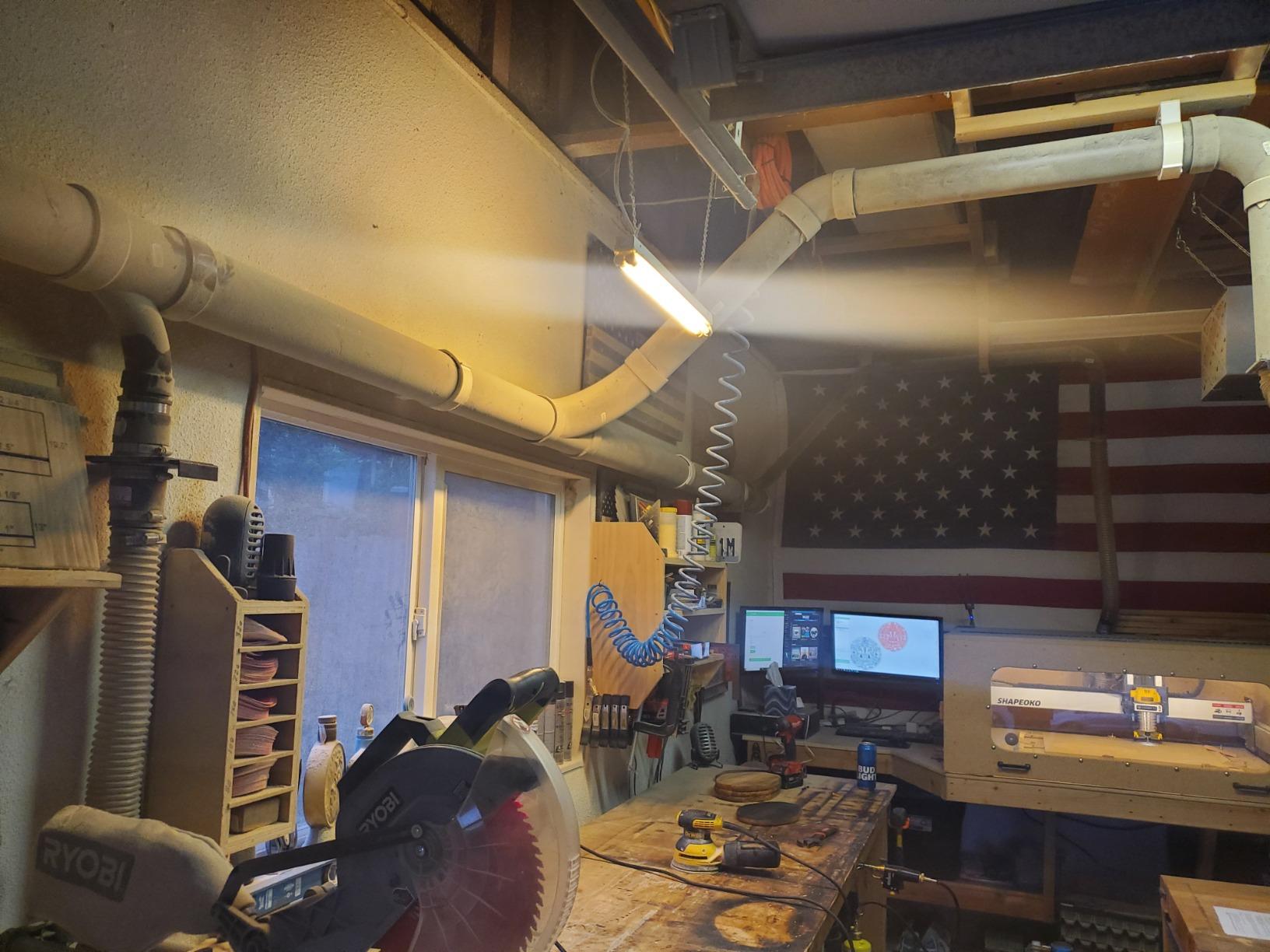
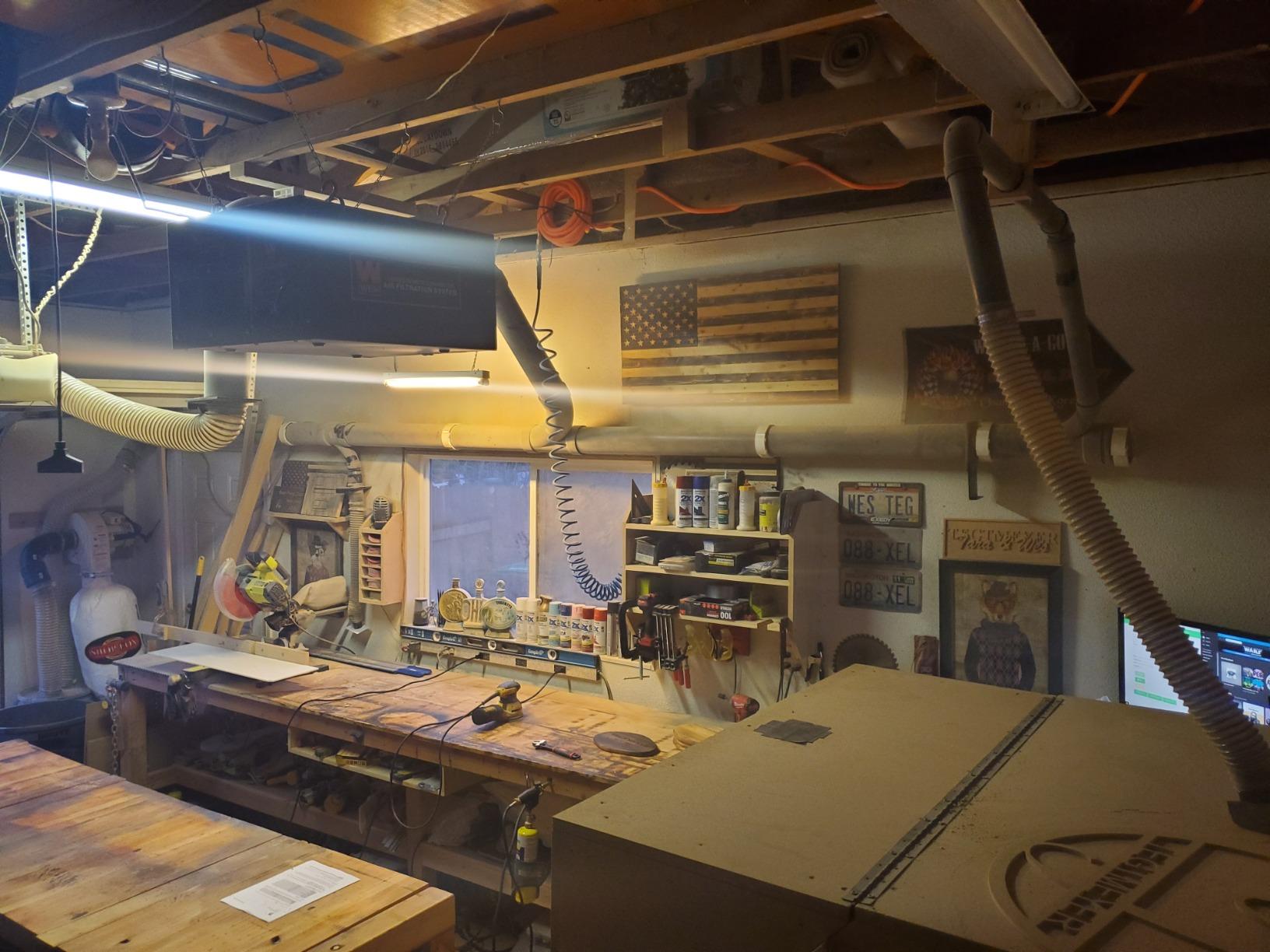
Fine dust shows up first in a light beam, which is why owners often notice dust problems right after installing better fixtures. Overhead lighting layout affects how much airborne dust you can see and how much settles on horizontal surfaces, and a room lit from several directions makes visual inspection of a filter window far easier. Our LED strip fixture guide for shops covers that side of the setup in more detail.
What to Skip in a Small Shop
Forum threads about small-shop dust collection are full of regret purchases, and the patterns repeat. These are the four things that come up most often as mistakes.
Oversized collectors. A 1,300 CFM unit in a 150 square foot garage is not an upgrade, it is a large object blocking your floor and a 14-amp circuit you may not have. The collectors that earn regret are almost always ones bought for a shop twice the size.
Long improvised duct runs. Rigid ducting routed around a shop with multiple elbows costs more airflow than a horsepower upgrade would buy. Shorter hose at full diameter beats a bigger machine every time.
Bag-only collection on chip-heavy machines. A planer or jointer feeding a single bag clogs the filter fast and the suction drops with it. The separator-first setup costs less than replacing bags on a schedule.
Air cleaners as a first purchase. An ambient unit is genuinely useful, but it collects nothing at the machine. Owners who buy one first usually end up buying a collector anyway, having spent the difference on filters in the interim.
Maintenance and Filter Life
Filter and bag replacement is the recurring cost that decides how long a collector is worth owning, and it scales with dust volume rather than with purchase price. A bag handling planer output in a one-car garage will be replaced several times a year, while the same bag on a once-a-month bandsaw may last a year.
Check the inlet grate or safety cage on the two wall-mounted collectors on a monthly basis. Owners on both wall-mount models specifically flag the grate as a clog point, and clearing it takes a minute. A separator upstream of the bag extends filter life more than any other single change you can make, because the bag never sees the chips.
On air filtration units, the pre-filter catches the coarse fraction and the 1-micron final stage does the fine work. Replace the pre-filter on a schedule and the final filter lasts considerably longer. For a garage that gets dusty with a lot of seasonal use, checking filters each spring and fall catches most problems before they become performance issues.
Frequently Asked Questions
What size dust collector do I need for a small shop?
For a single-bay garage of about 150 square feet, a 1 HP collector in the 500 to 750 CFM range is the sweet spot. The sizing rule is shop volume in cubic feet multiplied by 6 to 10 air changes per hour, divided by 60. A 150 square foot garage with 8-foot ceilings is 1200 cubic feet, which works out to 120 to 200 CFM at the room, and extra CFM gives you headroom for duct losses and a machine inlet.
Does a dust collector work better than a shop vac?
For sustained machine connection, yes. A dust collector moves far more air at lower static pressure than a shop vac, which is what you need to pull dust through a hose and a machine port. A shop vac is built for high suction and short handheld hoses. If you already own a shop vac, adding a cyclone separator is the cheapest way to get closer to collector performance.
Do I need a cyclone for a small shop?
Not always, but it is the single most effective upgrade. A cyclone throws chips into a drum so the filter only handles fine dust, which extends filter life and keeps airflow steady through a long session. In shops under about 150 square feet, a bucket-mounted separator in front of a compact collector often gives the same benefit without the height of a full two-stage unit.
Can I run a dust collector on a 110V circuit?
Most small-shop collectors are designed for it. The WEN DC3401 draws 5.7 amps, the Shop Fox W1826 draws 7 amps, and the BUCKTOOL 750 CFM unit draws 6.5 amps, all on 120V. The POWERTEC DC5371 also runs on 120V but at 12 amps, so it deserves a dedicated circuit. Higher airflow units like the WEN DC1300 pull 14 amps and should have a circuit to themselves.
How loud is a dust collector in a small shop?
Loud enough to matter, and the published figure is a fair guide. The POWERTEC DC5371 is rated at 80 dB and the Shop Fox W1826 at 85 dB, while the WEN 3410 air filtration unit runs at 50 to 60 dB. In an enclosed basement, anything above about 70 dB makes conversation hard, so place the collector as far from the bench as the hose run allows.
What is the best dust collection device for a small wood shop?
A compact 1 HP collector rated between 500 and 800 CFM, connected to one machine with a short 4-inch hose, is the right answer for most small wood shops. Add a cyclone separator upstream if you run a planer or jointer. Wall mounting is the deciding factor when floor space is tight, and a rolling base is better when you move between machines regularly.
Final Verdict by Shop Size
Under about 100 square feet, the best dust collectors for small shops are separators. The Dustopper PRO in front of a shop vac you already own costs little, needs no dedicated circuit and takes no floor space at all. Add the WEN 3410 air filtration unit later if airborne haze becomes a complaint.
Between 100 and 250 square feet, a wall-mounted 1 HP collector is the answer. The Shop Fox W1826 suits a 110V circuit and an all-steel build, while the POWERTEC DC5371 gives you 1-micron filtration if finer dust matters more to you than amp draw. Pair either with the Dustopper PRO or the Mullet if a planer enters the picture.
Above 250 square feet, or whenever two machines need to run together, move up to the 750 CFM class. The BUCKTOOL 750 CFM unit adds a tool-activated outlet that ends the switch-chasing, and the WEN DC1300 handles two machines at once with a 50-gallon bag. Pair either with an ambient air cleaner, and recheck your filter budget before the first heavy season.