
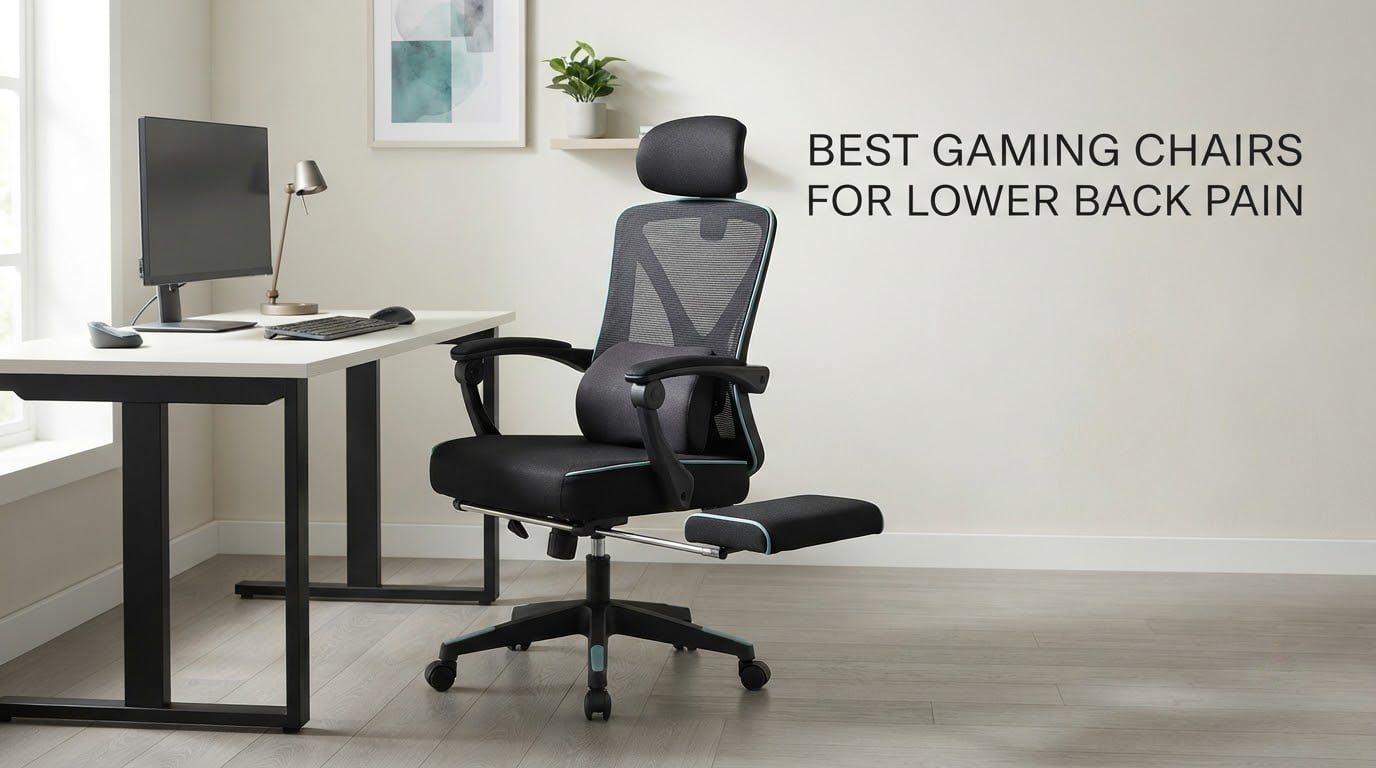
Back pain after a long session is not a cushion problem. It is a support-position problem, and it shows up in the exact chairs most gamers already own. I spent weeks going through the ten highest-rated gaming chairs with lower back pain as the only filter, sitting in each one for long evening sessions rather than ten-minute showroom tests.
The short answer: the GTPLAYER Big and Tall chair with the 400 lb frame and pocket-spring lumbar system earned the top spot in 2026, because its spring support is built into the backrest and stays exactly where you put it. Owners with existing back trouble describe the difference in plain terms on its 34k+ reviews, and the roomy 22-inch frame means nobody is being squeezed out of the seat to get lumbar contact.
Everything in this guide is filtered through the same lens: does the lumbar support move with you, does it stay in position for hours, and does the rest of the chair stop you from sliding forward over a long session. I also pulled in what real buyers say about assembly, heat, headrest height and weight limits, because those are the details that decide whether a chair actually helps on day forty.
One thing worth saying early. A chair can improve how you sit, but it cannot treat a disc injury, and nothing here should delay a conversation with a clinician if you have shooting leg pain, numbness, or symptoms that worsen through the day.
Table of Contents
Top 3 Picks for Lower Back Pain in 2026

GTPLAYER Big and Tall 400lb
- Pocket spring lumbar built into the backrest
- 400 lb capacity
- 90-150 degree recline
- Retractable footrest

AutoFull G7 3-Zone Lumbar
- Floating 3-zone lumbar with rotation
- 22-point adjustment
- CloudTech mesh
- 140 degree recline

N-GEN Gaming Chair with Footrest
- Adjustable lumbar and neck cushions
- 90-135 degree locking recline
- Linkage armrests
- 300 lb steel frame
Those three cover the realistic range. The GTPLAYER Big and Tall is the safest all-round buy, the AutoFull G7 is the one to look at if your pain is the only thing that matters to you, and the N-GEN is the pick when you want a supportive setup without stretching the budget.
All 10 Best Gaming Chairs Compared in 2026
| Product | Specifications | Action |
|---|---|---|
| GTPLAYER Big and Tall 400lb Gaming Chair |
|
Check Latest Price |
 GTPLAYER Gaming Chair with Footrest and Lumbar Pillow GTPLAYER Gaming Chair with Footrest and Lumbar Pillow |
|
Check Latest Price |
 GTPLAYER Pocket Spring Chair with Linkage Armrests GTPLAYER Pocket Spring Chair with Linkage Armrests |
|
Check Latest Price |
| AutoFull G7 3-Zone Lumbar Mesh Chair |
|
Check Latest Price |
 COMHOMA Big and Tall 400lb Recliner COMHOMA Big and Tall 400lb Recliner |
|
Check Latest Price |
| N-GEN Gaming Chair with Footrest and Lumbar Support |
|
Check Latest Price |
 Homall Gaming Chair with Massage Lumbar Homall Gaming Chair with Massage Lumbar |
|
Check Latest Price |
 Yaheetech Gaming Chair with Massage Lumbar Pillow Yaheetech Gaming Chair with Massage Lumbar Pillow |
|
Check Latest Price |
 SUKIDA Ergonomic Gamer Chair with Ottoman SUKIDA Ergonomic Gamer Chair with Ottoman |
|
Check Latest Price |
 WOTSTA Three-Zone Gaming Chair with Footrest WOTSTA Three-Zone Gaming Chair with Footrest |
|
Check Latest Price |
The lumbar column matters more than any other spec on this list. Four of the ten chairs use a spring mechanism built into the backrest or seat, four rely on a removable pillow held by straps or elastic, and two combine a pillow with a recline system that moves it with you.
1. GTPLAYER Big and Tall Gaming Chair – The Most Supportive Frame for Heavier Bodies
GTPLAYER Big and Tall Gaming Chair 400lbs Heavy Duty Office Chair with Foot Rest & Ergonomic Pocket Spring Lumbar Support, High Back 3D Saddle Shaped Cushion for Back Pain Relief, Matte-Black
400 lb frame
Pocket spring lumbar
3D saddle seat
90-150 degree recline
Retractable footrest
Pros
- Spring lumbar is built into the backrest so it cannot shift
- 400 lb capacity genuinely fits taller and heavier users
- Segmented saddle seat spreads pressure across hips and lower back
- 90-150 degree recline holds position under load
- Owners report 15-50 minute assembly with spare bolts included
Cons
- Seat foam is very firm and some users add a topper
- Lowest seat height is high for shorter users at a fixed desk
- Footrest tubing and brackets feel flimsy
- The supplied casters are commonly replaced by owners
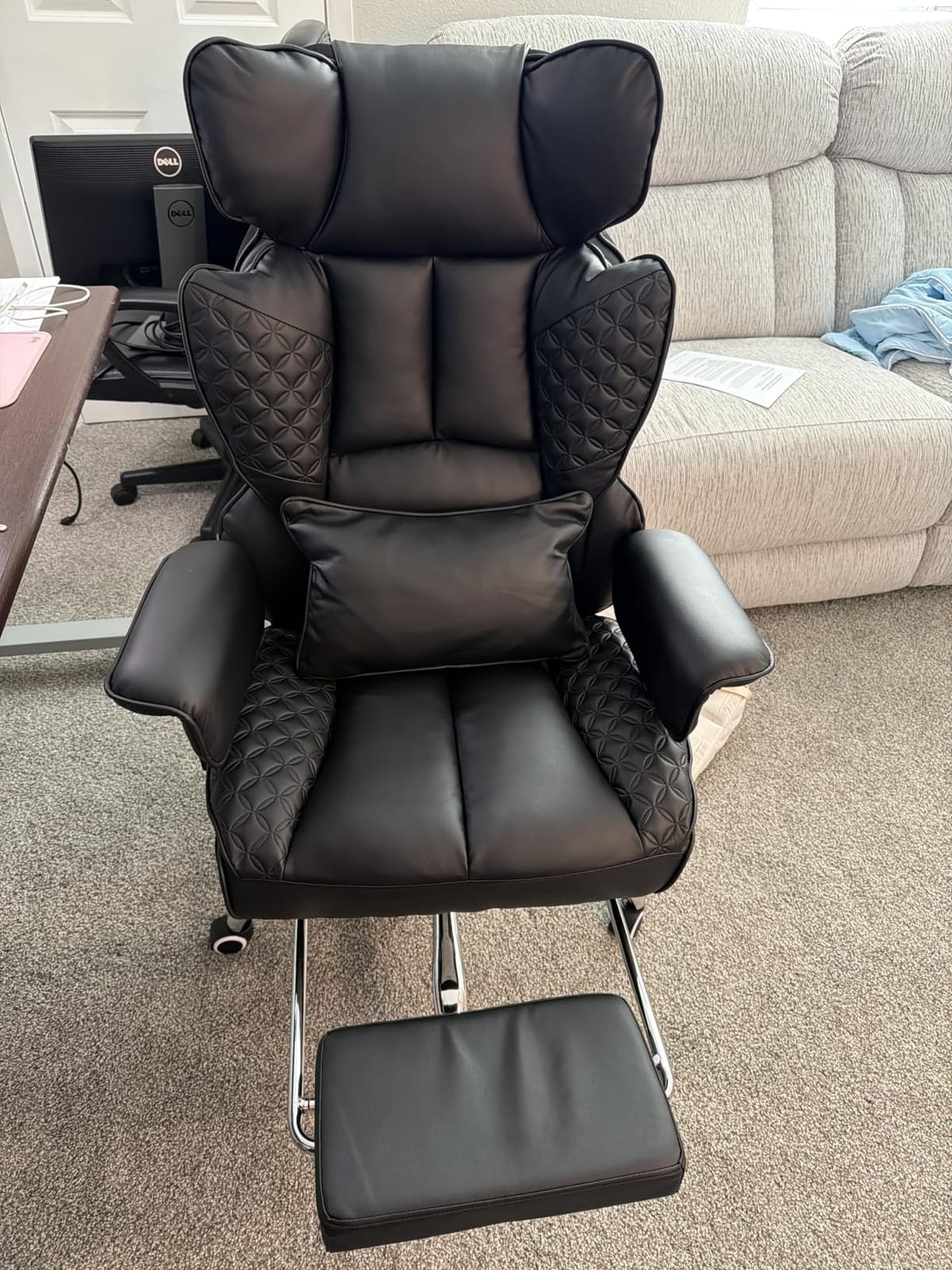
Out of ten chairs, this is the one I kept going back to. The backrest is built around a dual-layer high-density sponge panel with a spring cushion in the lower section, which means the support has structure behind it rather than being a loose pillow pressed against your spine.
What stands out in the reviews is consistency at a volume almost nothing else here matches. Buyers talk about the saddle-shaped seat cushion taking pressure off the lower back through long study or work blocks, and the wide frame letting them cross a leg or shift position without the tailbone complaining, which is what usually pushes people forward onto a chair’s front edge.
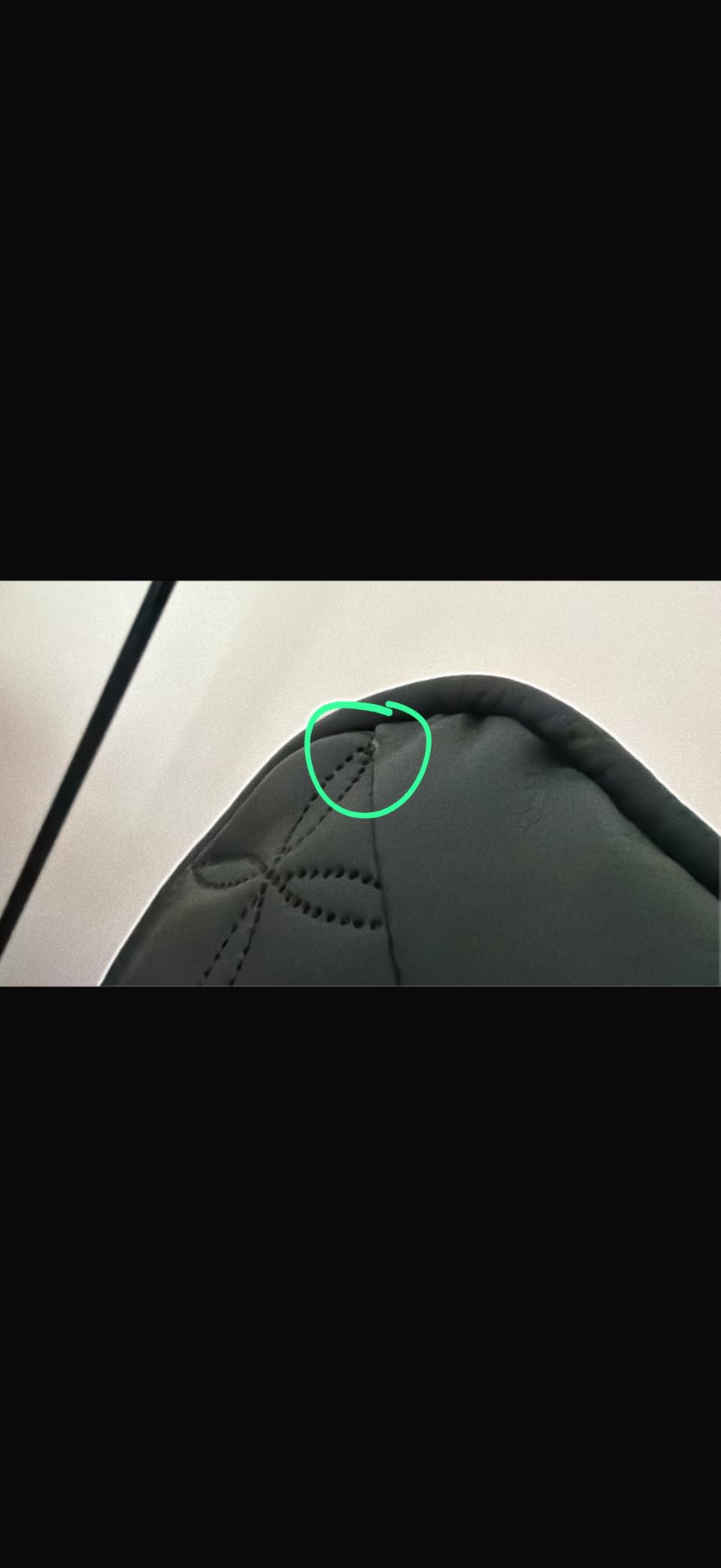
Technically it is a straightforward package: a three-level gas lift, a heavy duty metal base, a 90 to 150 degree reclining backrest, and a retractable footrest. The listed weight is 41.5 pounds and the frame is 22.05 inches deep by 31.5 inches wide by 40 inches tall, so measure your desk clearance before you commit, because the back does not fold flat.
The trade-off is seat height. Because the frame is engineered for the upper end of a 400 lb rating, the floor-to-seat distance runs higher than most chairs in this group, and several reviewers note it strains them at a fixed-height desk. The upholstery is embossed PU leather that wipes clean, which is genuinely pet-friendly but does warm up in a hot room.
Who This Chair Works For
This is the one I would point someone toward if they are over 300 pounds, or if they are tall and tired of sliding forward off a narrow seat. The pocket-spring lumbar is the differentiator: it stays where you put it through a full evening, which is the single most common complaint about removable lumbar cushions.
Who Should Look Elsewhere
If you are under about 5 foot 6 inches, the seat height will fight you and you may need a footstool. If you prefer a soft plush cushion or run a room that gets warm, the firm foam and PU leather will not be your preference.
2. GTPLAYER Gaming Chair with Footrest – Best Known Mid-Size Pick
GTPLAYER Gaming Chair, Computer Chair with Footrest and Lumbar Support, Height Adjustable Game Chair with 360°-Swivel Seat and Headrest and for Office or Gaming (Faux Leather, Black)
Lumbar and headrest pillows
Retractable footrest
Metal frame legs
360 degree swivel
250 lb rating
Pros
- Dedicated headrest and lumbar pillow take strain off neck and waist
- Metal frame legs instead of the plastic common at this tier
- Padded armrests run elbow to wrist
- Retractable footrest for stretching between matches
- One of the most reviewed gaming chairs available
Cons
- 250 lb weight recommendation is low for big-and-tall users
- Lumbar cushion is a loose pillow that can shift during use
- Faux leather can feel warm or sticky in long sessions
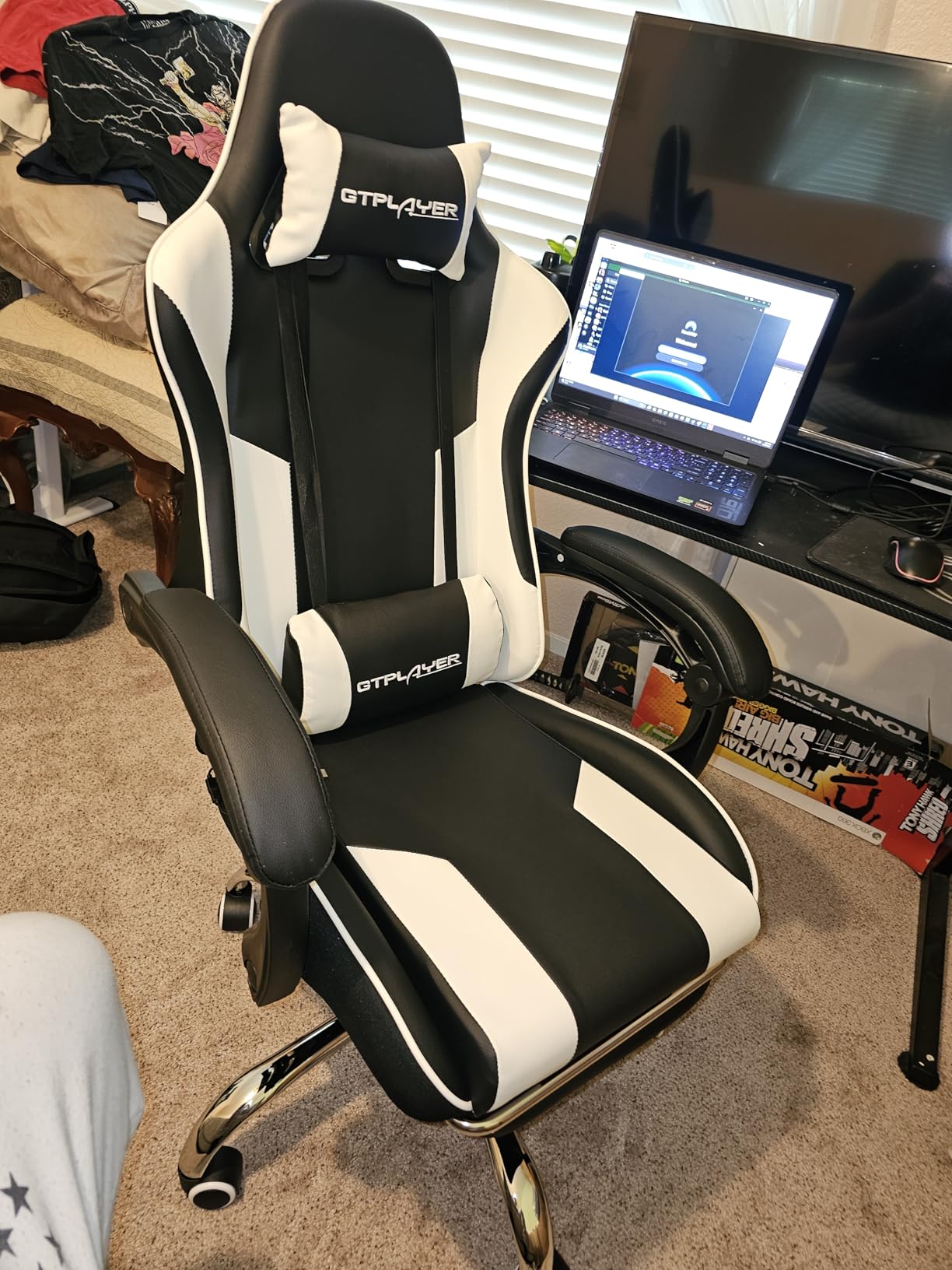
This is the chair most people are picturing when they hear gaming chair, and for a mid-size body it does the fundamentals well. Metal frame legs rather than plastic ones is the detail that separates it from cheaper builds, and the padded armrests cover the full forearm instead of stopping at the elbow.
The lumbar and headrest pillows are the features buyers credit for neck and waist relief across long work or gaming blocks. I would flag the design honestly though: both cushions are separate pieces, so they respond to your pressure but do not track your spine independently, and that is the core difference between this and a chair with a mechanical lumbar system.
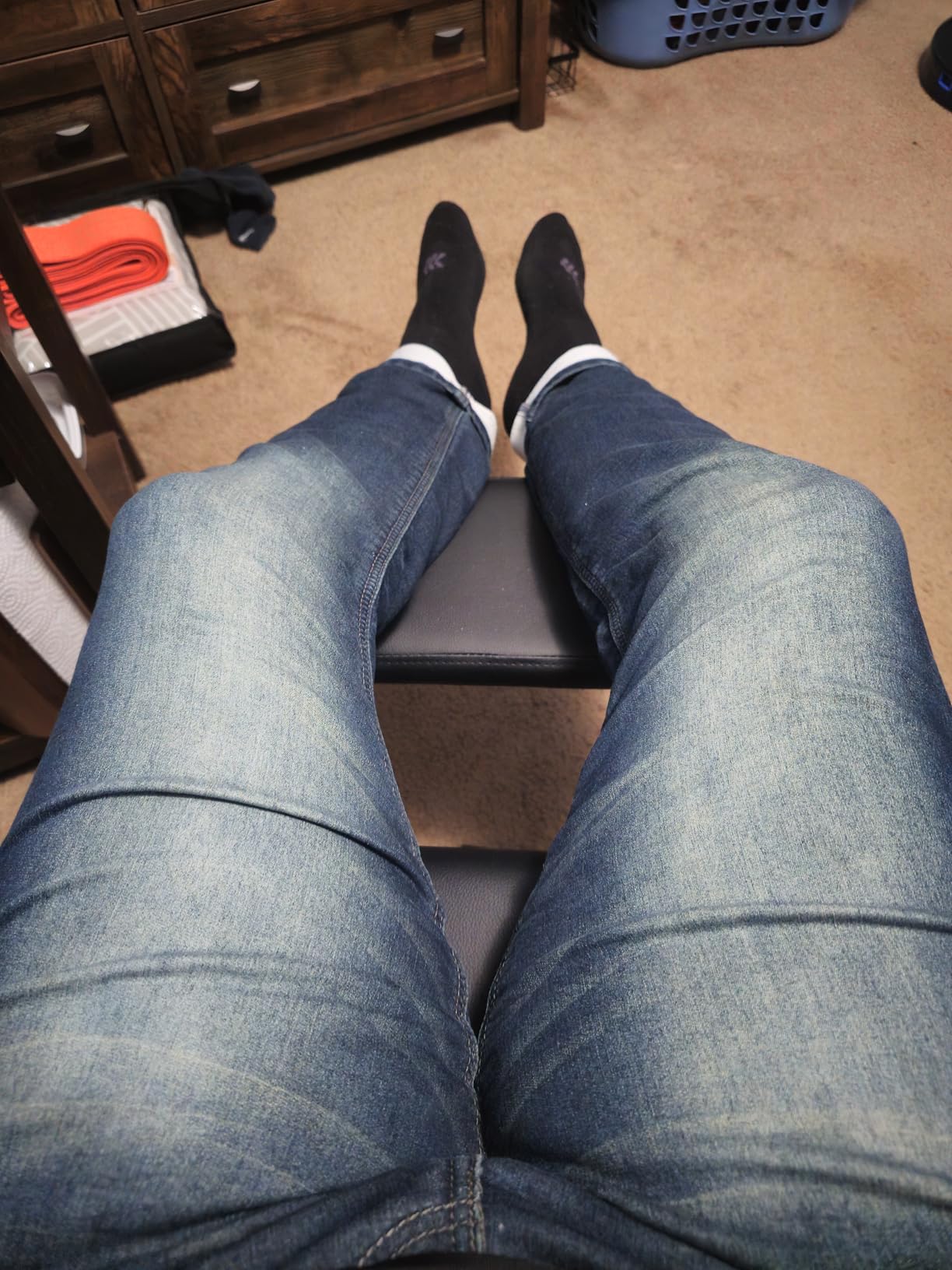
Mechanically it is straightforward. The seat height adjusts, the base swivels 360 degrees, the backrest reclines through two positions, and the footrest pulls out from under the seat. The model is listed at 40.6 pounds with an overall footprint of roughly 19.68 by 20.86 by 53.15 inches.
The 250 lb weight recommendation is the detail that should steer a bigger user away, and it is the most frequently repeated limitation in the reviews. The faux leather also draws complaints about warmth during extended sitting, which is the usual reason buyers end up swapping to a mesh chair after a few months.
Who This Chair Works For
Someone at a normal height and weight who wants a complete package with a headrest and footrest, and who does not need lumbar support to move dynamically. The metal frame means it will not feel flimsy on day one or day one hundred.
Who Should Look Elsewhere
If your pain is sciatica or disc-related, a loose pillow that migrates under load is not going to hold a position all evening. Anyone above 250 pounds should use one of the 300 to 400 lb frames instead.
3. GTPLAYER Pocket Spring Chair – Best for Breathability with a Springy Seat
GTPLAYER Gaming Chair, Computer Office Chair with Pocket Spring Cushion, Linkage Armrests and Footrest, High Back Ergonomic Computer Chair with Lumbar Support Task Chair with Footrest(Black)
Pocket spring seat
Quilted breathable fabric
Linkage armrests
Step-free recline
300 lb capacity
Pros
- Independent pocket springs spread pressure through hips and lower back
- Quilted fabric is praised for staying cool in long sessions
- Linkage armrests follow the backrest automatically
- One-piece molded core with no adhesives
- Footrest and three-position step-free recline
Cons
- Lowest average rating of the three GTPLAYER models at 4.3
- Very tall back height of 51 inches suits few shorter users
- Fabric feels less supportive than leather to some sitters
- Step-free recline needs a firm pull to engage
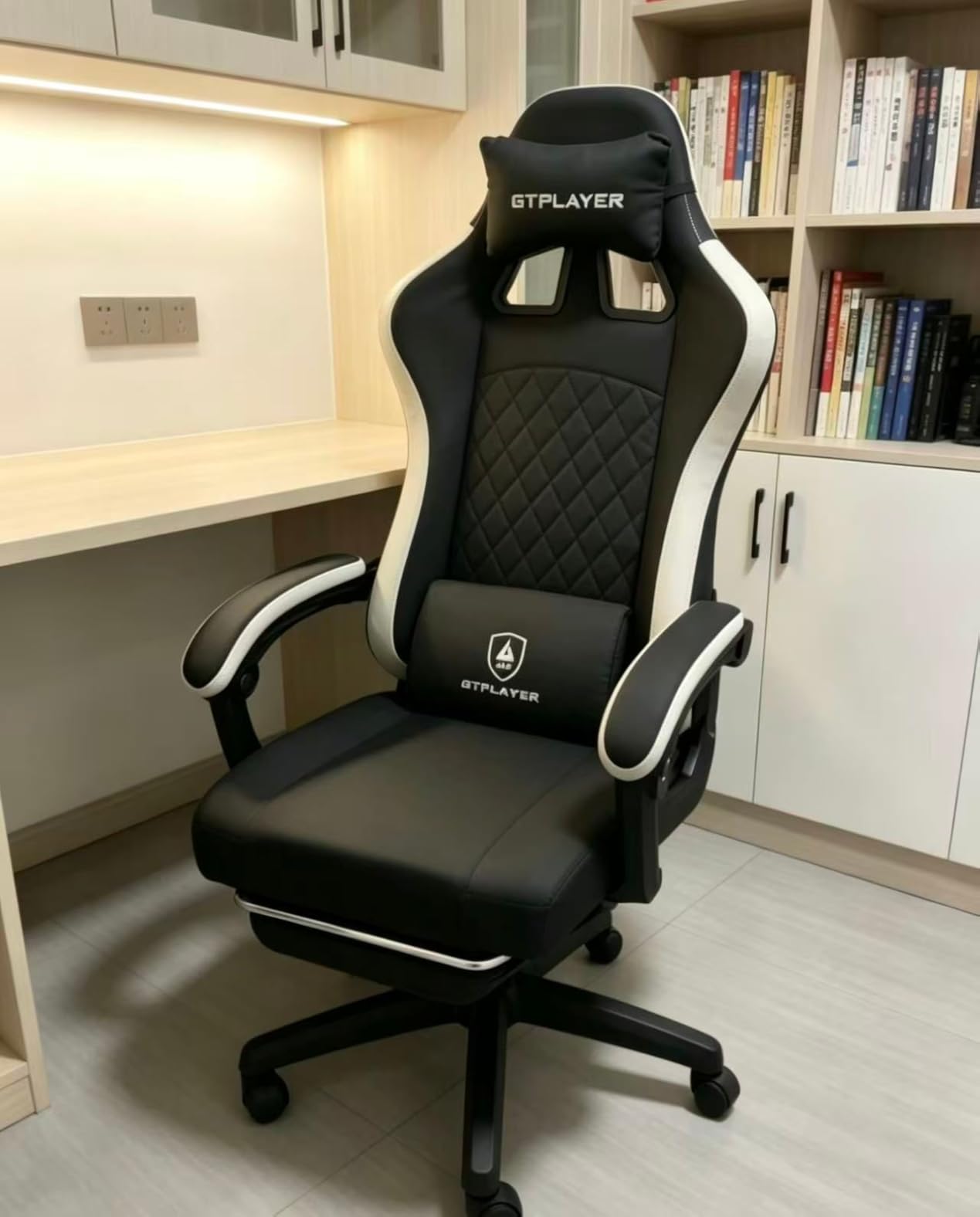
The idea here is simple and it works: instead of a flat foam slab, the seat contains independent pocket springs that give and then push back. Owners consistently describe that as spreading pressure across the hips and lower back rather than concentrating it in one spot, which is exactly what you want when a session runs past three hours.
This is also the only chair in the group built around quilted fabric rather than PU leather, and that is the reason it earns a spot for anyone in a warm climate. The upholstery is described as roughly twice as breathable as standard, and the one-piece molded polyurethane core contains no adhesives, which also means less chemical off-gassing from a brand new chair.
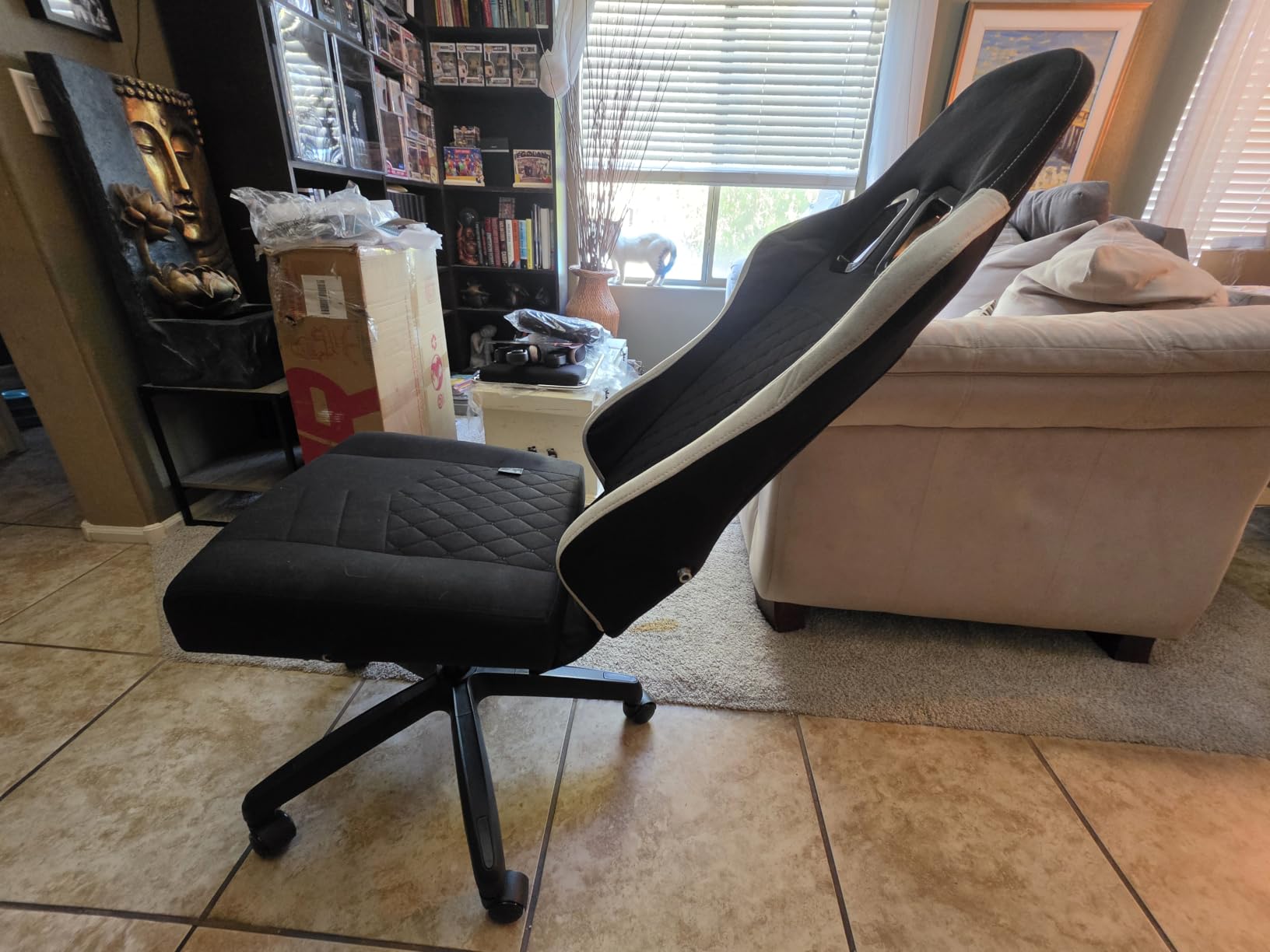
The linkage armrests are the sleeper feature. They move automatically with the backrest angle, so when you slide into the step-free recliner your forearms stay supported instead of being left hanging in space, which is a genuine ergonomic improvement and a common failure point on cheaper chairs. Capacity is 300 pounds, and the frame is iron.
Expect mixed experiences here. This model carries a 4.3 average, the lowest of the three GTPLAYER chairs in this guide, and reviewers flag a taller-than-usual 51 inch back height that will not suit shorter frames. A few buyers also mention the step-free recline needing a firm pull to engage, so test it in person if that matters to you.
Who This Chair Works For
Gamers in hot rooms who already know that PU leather makes them sweat, and anyone who prefers a softer, springier seat feel. The fabric back and pocket springs together make it the most breathable option here without going to full mesh.
Who Should Look Elsewhere
Anyone under about 5 foot 8 inches should be cautious about the 51 inch back height, and anyone who wants a firm leather-like seat feel will find the fabric less supportive. If you need a lot of lumbar travel, this chair leans on the seat rather than the backrest.
4. AutoFull G7 – The Most Adjustable Lumbar System in the Group
AutoFull G7 Gaming Chair – 3-Zone Lumbar, 22-Point Adjustment, Breathable Mesh, Custom Backplate, 720° Armrests, BIFMA Certified Ergonomic, 140° Recline, IGR Certified, Niko Endorsed – Purple
3-zone floating lumbar
22-point adjustment
CloudTech mesh
140 degree recline
350 lb rating
Pros
- Floating lumbar system co-developed with chiropractic doctors and genuinely hugs the lumbar curve
- 22 points of adjustment fit users from 155 to 195 cm
- CloudTech mesh avoids the heat build-up of leather
- Heaviest adjustment set here including a 4D headrest
- BIFMA and TUV/SGS certified with a frame lifetime warranty
Cons
- Armrests sit high even at their lowest setting
- Vertical lumbar slider has no lock and drifts downward
- 66.8 pounds makes it a two-person lift
- Highest cost in the roundup by a wide margin
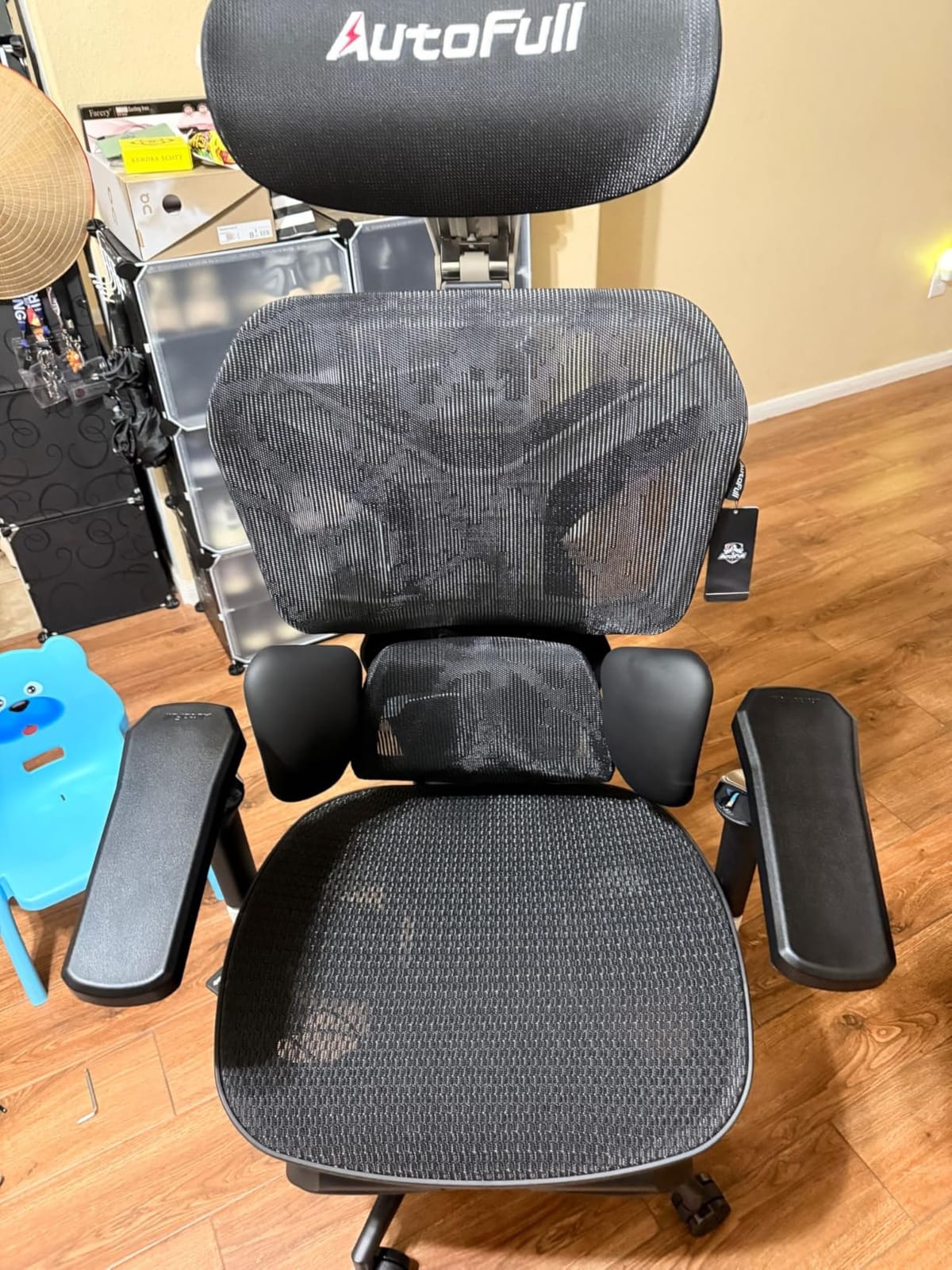
If your back pain is the deciding factor rather than a passing concern, this is the chair worth looking at first. The lumbar system is a patented three-zone floating design co-developed with US chiropractic doctors, and the difference versus every other chair here is that it does not just push outward at a fixed point. It tilts its side wings 40 degrees, rotates 12 degrees, and the manufacturer claims roughly 50 percent greater contact area across the lower back.
Owners who switched up from cheaper chairs describe posture improving within about a week, and one physical therapist reportedly noticed the change in a session. The most common description is that the cushion hugs the lumbar curve rather than feeling like a rolled-up towel, with a supportive contact at the lowest setting.
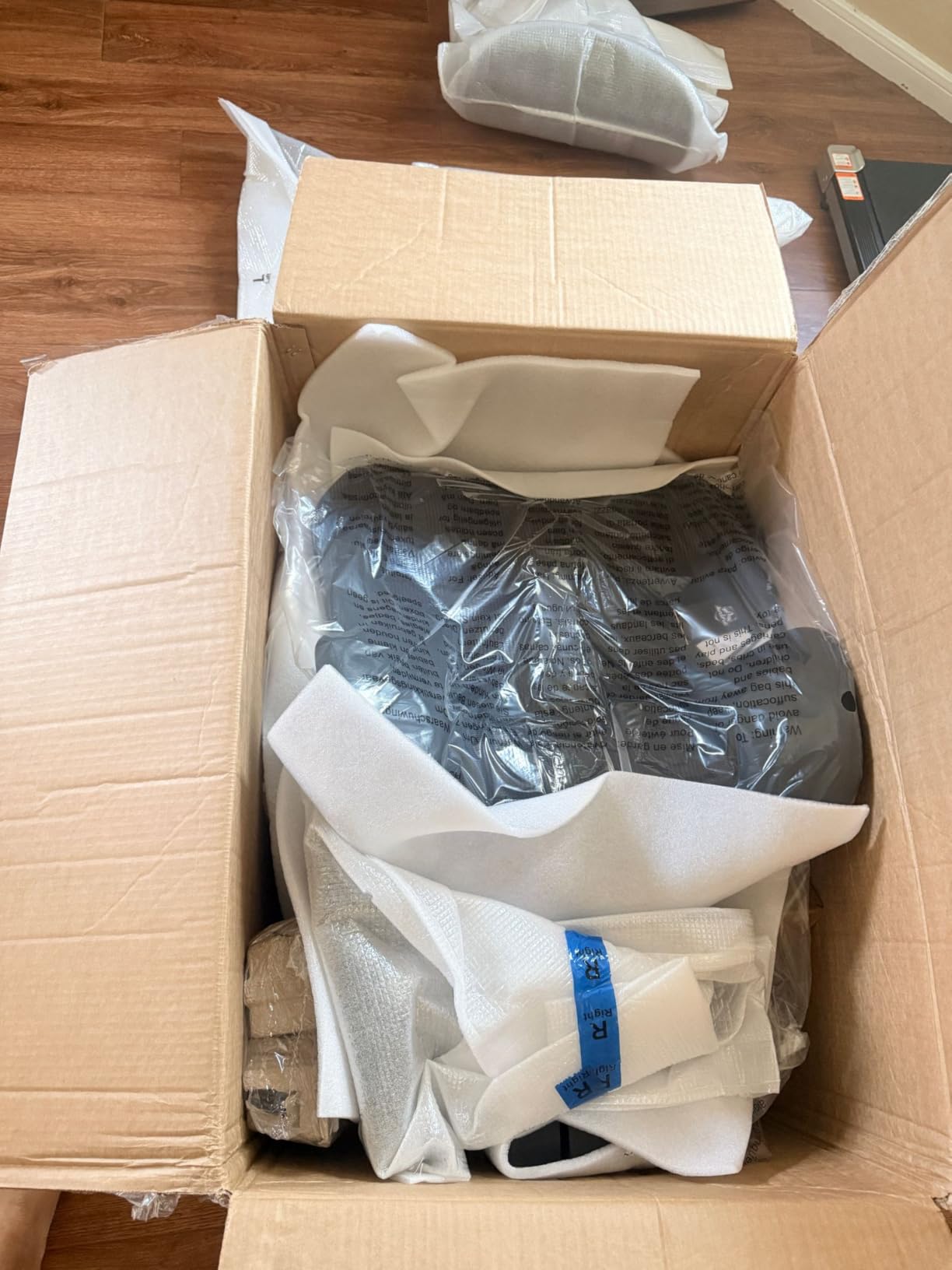
Twenty-two adjustment points is not marketing filler. The lumbar moves 1.6 inches in height across six levels, travels 1.2 inches forward and back across five levels, rotates, and the recline tracks in stepless 0.8 inch increments. The armrests are 720 degree dual-axis, and the 4D headrest rotates 70 degrees. Capacity is 350 pounds, with a TUV/SGS Class 4 gas lift rated to 330 pounds and 2 inches of seat depth adjustment.
The build credentials are the strongest in the roundup. It is BIFMA certified and cycle tested past 120,000 uses, IGR ergonomic certified, and the backplate swaps tool-free. The warranty is three years plus a lifetime frame warranty, which is the only frame-lifetime coverage on this list.
Who This Chair Works For
Anyone whose pain is chronic enough that lumbar adjustability is the deciding factor, plus people in hot climates who will not tolerate leather. The 155 to 195 cm fitting range means it adapts across a genuinely wide spread of heights, and the mesh keeps working through long workdays.
Who Should Look Elsewhere
It weighs 66.8 pounds and genuinely needs two people to move, which matters in a small apartment. The armrests sit high even at their lowest setting, so check your desk height first, and the lumbar slider drifts down over time because it has no lock.
5. COMHOMA Big and Tall Recliner – Deepest Recline With a Real Spring Lumbar
COMHOMA Big and Tall Office Chair Heavy Duty Wide Ergonomic Gaming Chair with Deluxe Embossing Designed Leather with Foot Rest,150°Reclining Adjustable Armrests Pocket Spring Back Support and Pillow
Pocket spring lumbar
400 lb frame
150 degree recline
22 inch wide backrest
Retractable footrest
Pros
- Integrated pocket spring lumbar stays in place unlike a detachable cushion
- 400 lb capacity and 22 inch backrest suit larger frames
- 150 degree recline is among the deepest available
- Spacious seat allows crossing or bending legs
- Height adjustable armrests
Cons
- Moderately firm cushion feels hard to users who want plush
- Wide 8 percent one-star share suggests durability complaints
- Pocket spring back can feel uneven after long use
- Embroidered styling is more decorative than minimal
The lumbar system here is the same idea as the top pick, and for the same reason it works: the pocket springs are built into the backrest rather than strapped on afterwards. Buyers single that out as a more stable support system than a detachable cushion, and that is the whole difference between support you set once and support that disappears an hour into a session.
The frame is where this chair separates itself. A 400 lb capacity, a 22 inch wide backrest, and a seat you can cross a leg in without the armrests crowding you, which is the geometry that actually relieves pressure on the lower back rather than just looking supportive.
The recline goes to 150 degrees with a tilt lock and three positions, and there is a retractable footrest integrated underneath. The listed weight is 44 pounds and the footprint is 19.68 by 22 by 45.1 inches. Armrests adjust in height, and the warranty is 12 months, which is the shortest of the group.
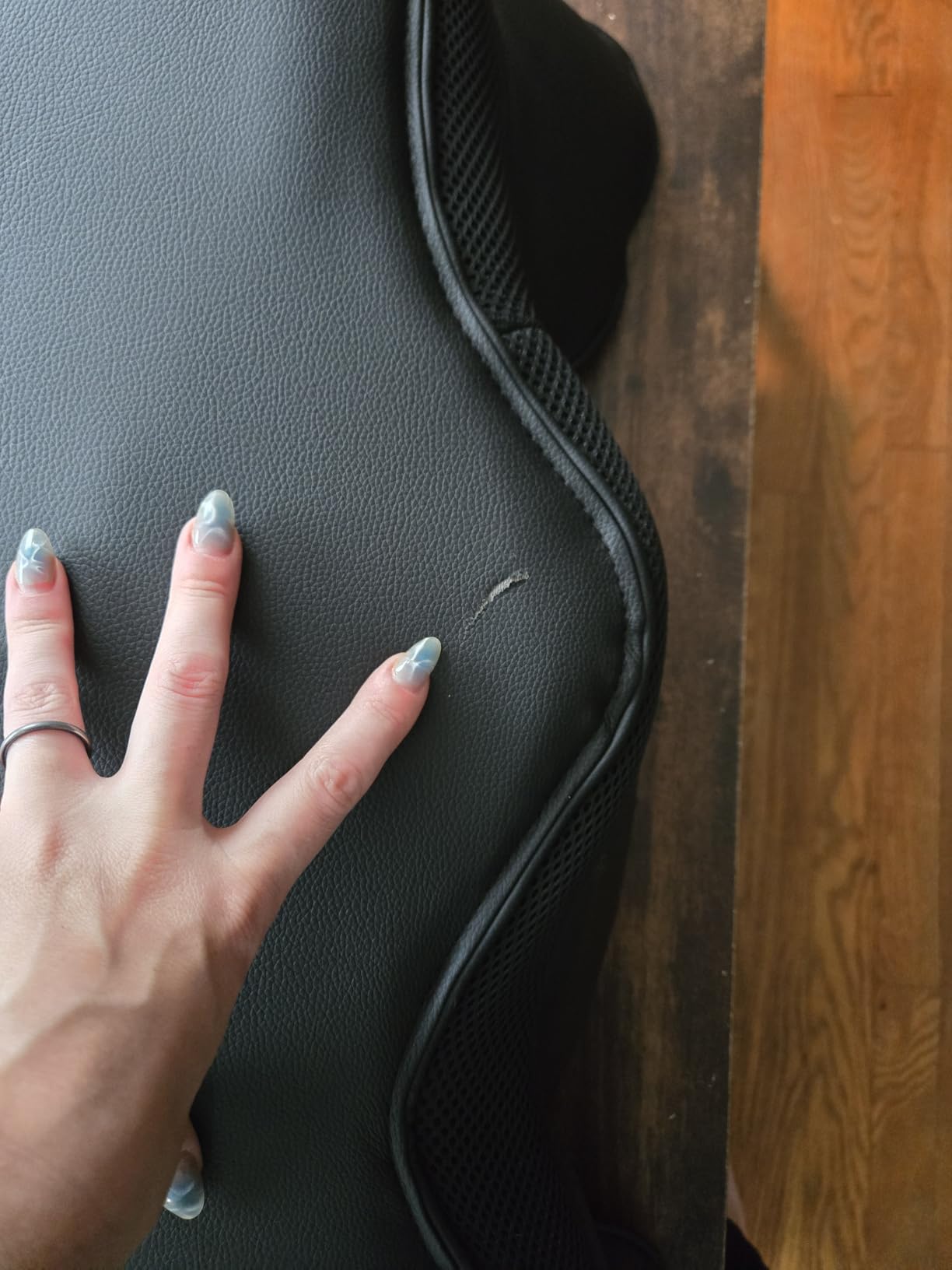
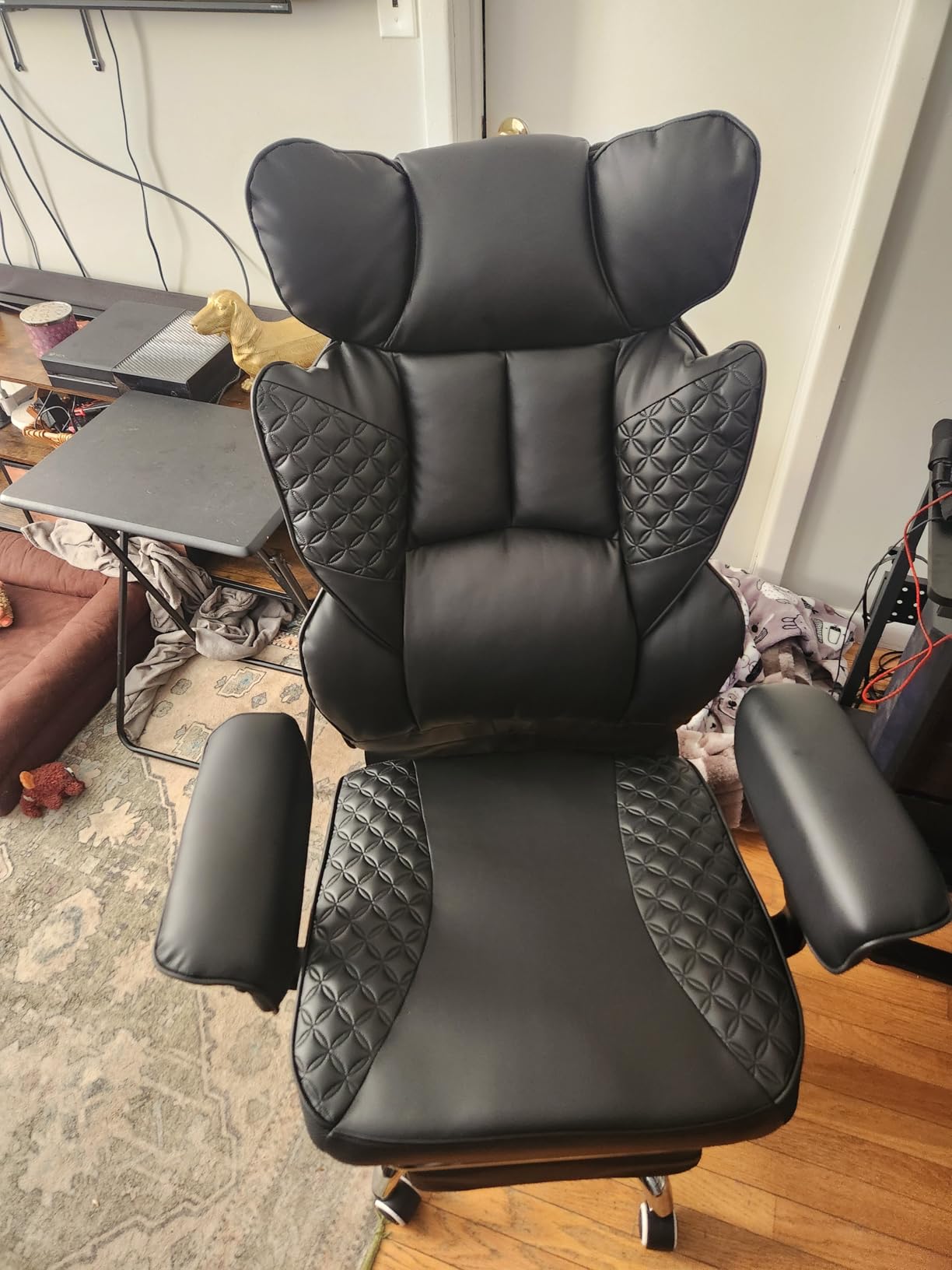
The average of 4.3 with an 8 percent one-star share is worth respecting, because it signals a longer durability tail than the other big-and-tall option. Some buyers mention the pocket-spring back can feel uneven after extended use, and the embossed PU leather with floral embroidery is a style choice that will not suit every setup.
Who This Chair Works For
Big and tall users who want a deep recline for napping between sessions as well as back support while working. If you want lumbar support that stays exactly where you set it, the integrated springs handle that better than a pillow ever will.
Who Should Look Elsewhere
If you want a soft plush seat, the moderately firm cushion will disappoint. The one-year warranty and the 8 percent one-star share make it a less confident long-term bet than chairs with multi-year coverage.
6. N-GEN Gaming Chair with Footrest – Best Balance of Support and Cost
N-GEN GAMING Gaming Chair with Footrest, Lumbar, High-Back, All Black
Adjustable lumbar and neck pillows
Linkage armrests
90-135 degree lock
300 lb steel frame
Pros
- Lumbar and neck cushions land in the right spots for long desk sessions
- Linkage armrests follow the recline and do not loosen during play
- Recline locks at any angle up to 135 degrees
- Fixed bolted armrests stay firm
- Assembly takes 10-30 minutes with labelled hardware
Cons
- Lumbar pillow is thick and firm enough that some users remove it
- Back and seat padding is thin
- Firm single-mount footrest tubing flexes
- One 40-hour-a-week user saw cracked upholstery after about 18 months
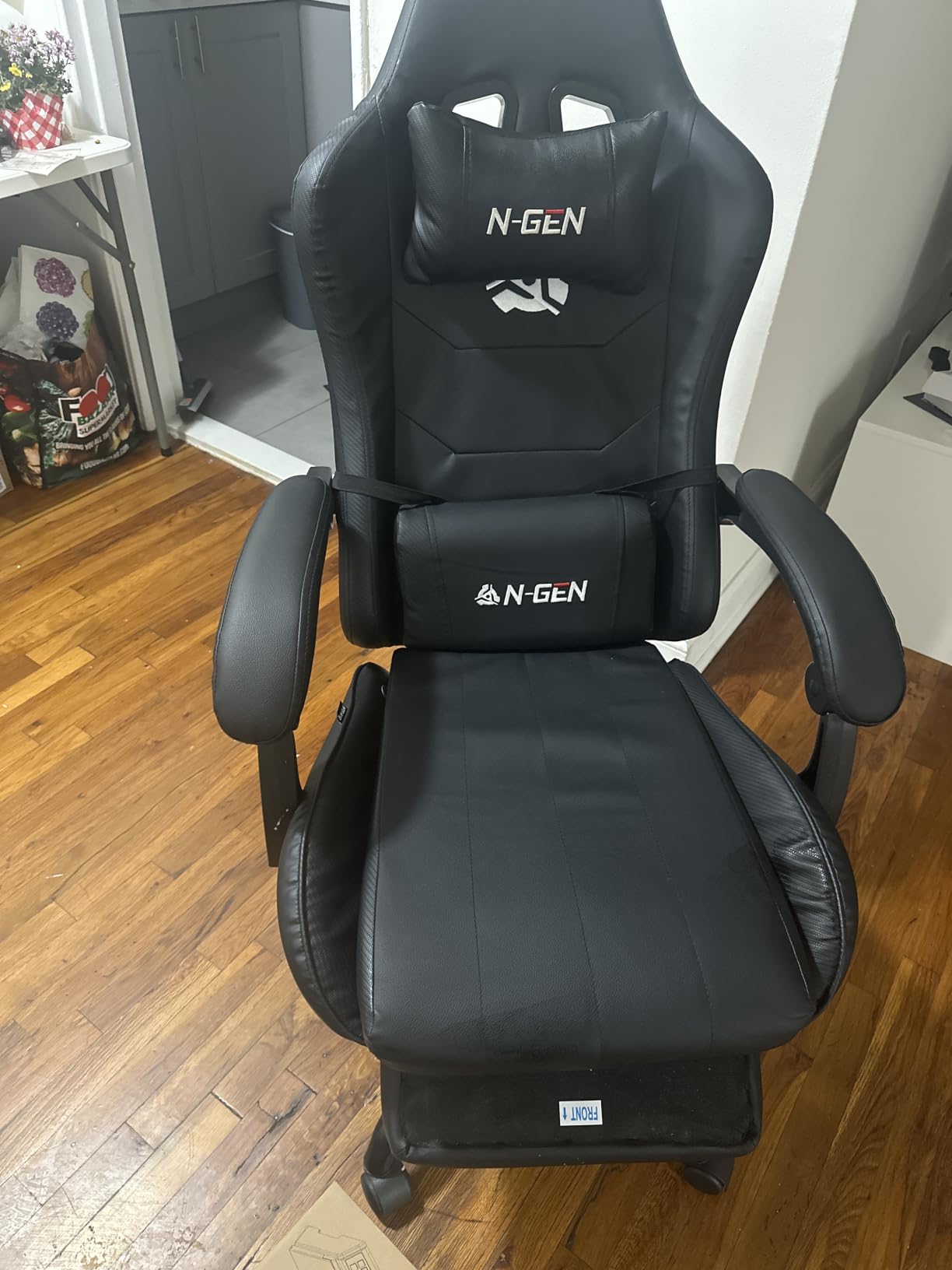
Most of the chairs in this guide are chosen on lumbar hardware. This one earns its place on a different argument, which is that it does the ordinary things correctly. Linkage armrests that track the backrest, a recline that locks anywhere up to 135 degrees rather than only at the ends, and an alloy steel frame rated to 300 pounds with an SGS-certified gas lift.
Buyers repeatedly report no back pain from long desk sessions with it, and several bought a second one. The lumbar and neck cushions are described as landing in the right spots, and the recline lever is genuinely usable for shifting between work posture and a break.
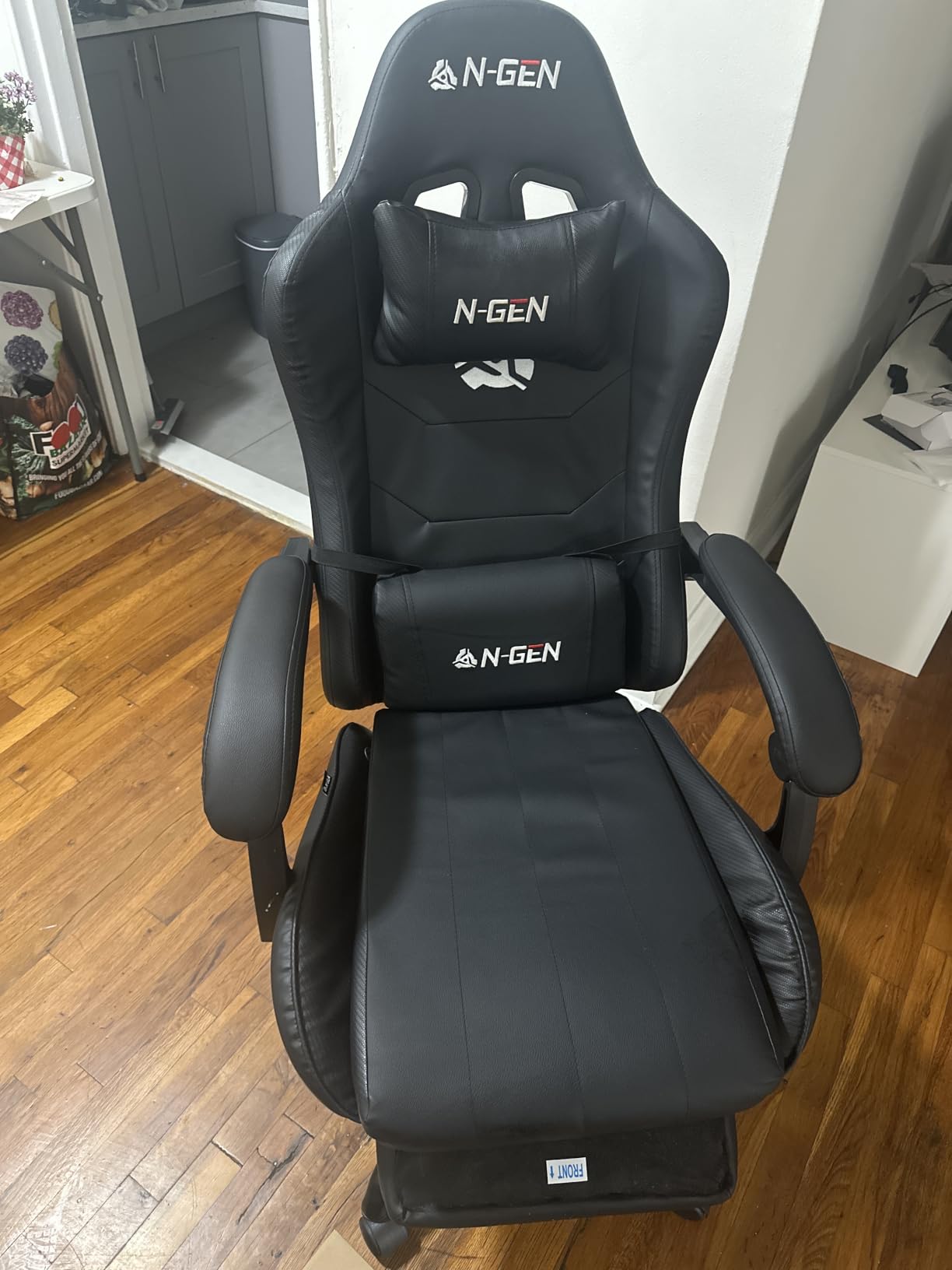
Mechanically you get a 90 to 135 degree backrest with a locking lever, linkage armrests, adjustable seat height, a 360 degree swivel base on smooth casters, and a built-in retractable footrest. The chair weighs 37.5 pounds and measures 27.5 by 24.5 by 46.5 inches, with a one-year warranty and a screw kit plus QR setup guide in the box.
Two honest weaknesses. The lumbar pillow is thick and firm enough that some users remove or swap it, and the seat and back padding is on the thin side, where a topper helps. The footrest mounts on single-point tubing that flexes under load, and one long-term owner running 40 hours a week reported cracked upholstery and reduced back support after roughly 18 months.
Who This Chair Works For
Someone who wants a complete, well-behaved gaming chair with a headrest and footrest, a steel frame, and a recline that works in any position, without moving to the top of the range. It suits a mix of gaming and desk work equally well.
Who Should Look Elsewhere
If you sit 8 or more hours a day, the 18-month report from a heavy user is a fair warning, and thin padding may need supplementing. Anyone wanting a mechanical lumbar system should look at the AutoFull instead.
7. Homall Gaming Chair with Massage Lumbar – BIFMA-Certified Build With a Working Massager
Homall Gaming Chair, Ergonomic, Footrest & Massage Lumbar Support, White
Massage lumbar pillow
Adjustable headrest
BIFMA metal base
Class 3 gas lift
330 lb rating
Pros
- Massage lumbar pillow delivers a working vibration for lower back fatigue
- Flexible headrest supports the neck after head-down sessions
- BIFMA-certified base and Class 3 gas lift at this price tier
- 135 degree recline plus a long footrest for napping
- Every assembly part is labelled
Cons
- 18.5 inch seat depth is shallow for taller users
- Massage function needs a USB power connection
- White PU leather shows scuffs and discolouration
- 8 percent one-star share is among the higher in this group
The massage pillow on this chair is not a token feature. It runs a real low-frequency vibration against the lumbar area, and it is the single feature buyers most often credit with easing soreness after a long evening, which makes it worth having even if you do not use it daily.
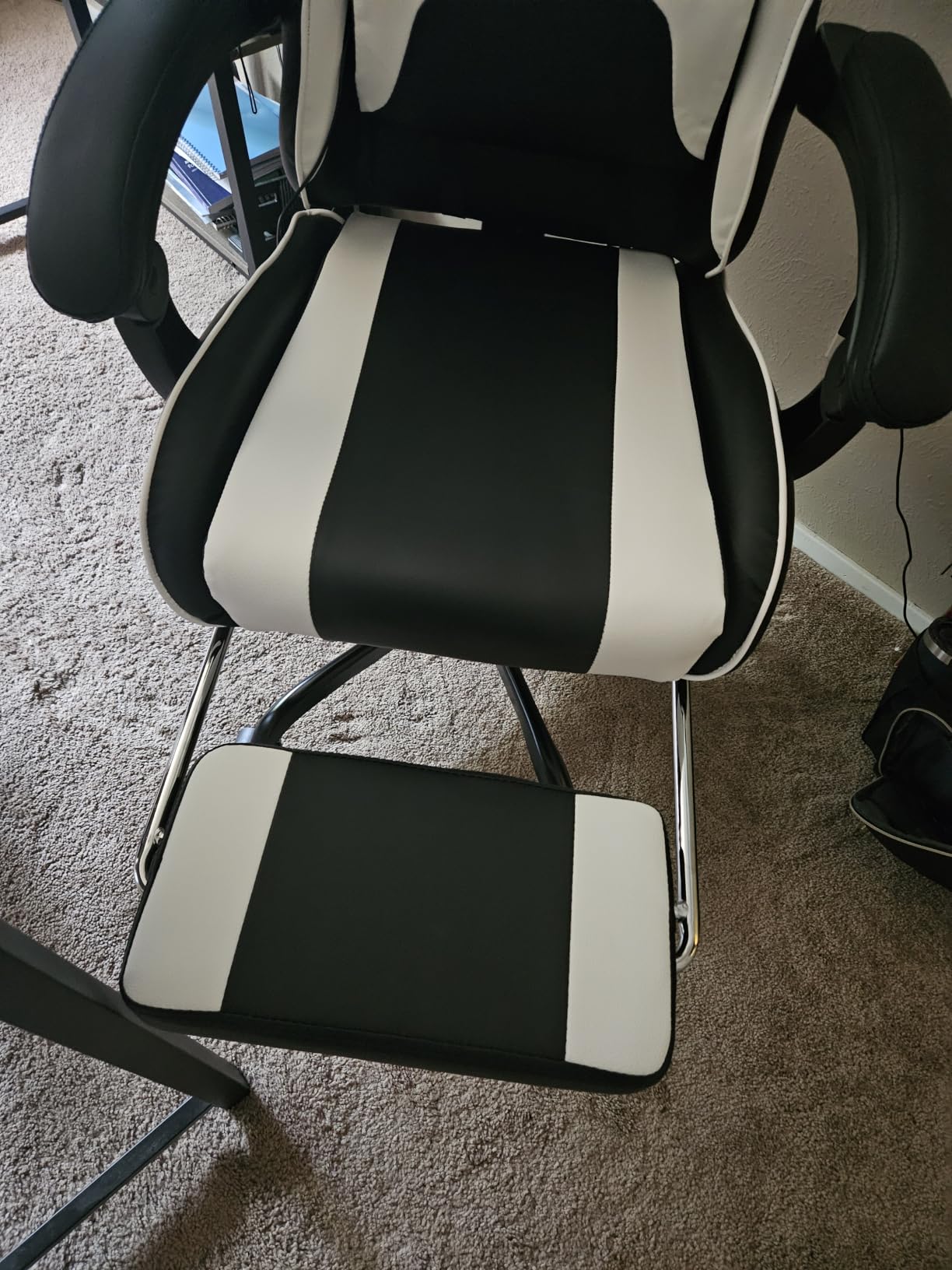
Where it beats its price tier is the hardware underneath. A BIFMA-certified metal base and an upgraded Class 3 gas lift give it more stability than chairs well above it, and the 330 lb weight rating is genuinely useful for larger users. The slide-out footrest extends to 29.6 by 13.4 inches, long enough to actually stretch out on.
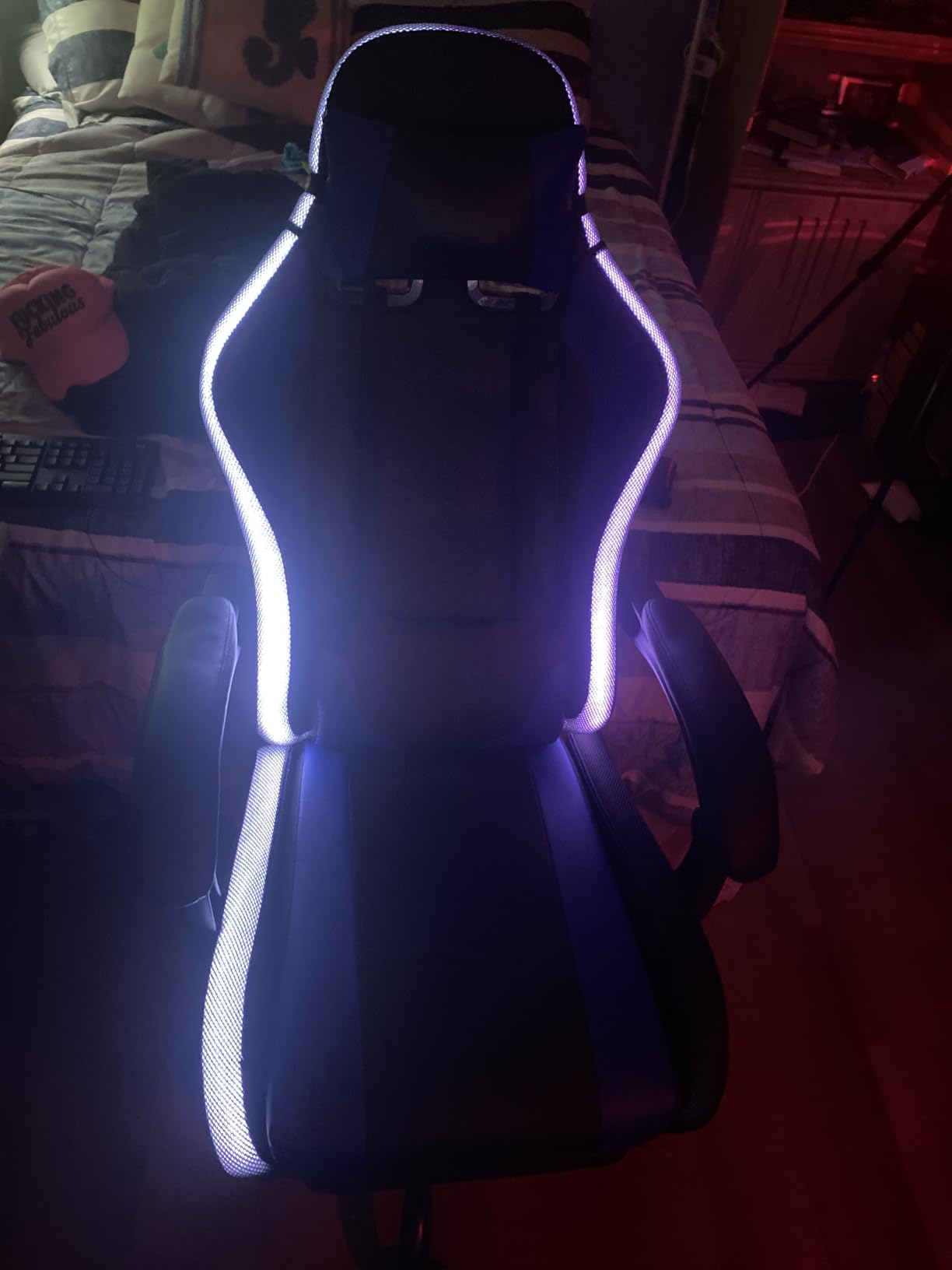
The backrest reclines to 135 degrees via a side lever, the seat swivels 360 degrees, and the headrest flexes rather than sitting rigidly in one spot, which helps when you lean back after hours of looking down at a monitor. The chair weighs 39.7 pounds and the frame is stainless steel.
The catch is fit. The seat depth is 18.5 inches, the shallowest here, and that is exactly the number taller users flag as too short for their thighs. The massager needs a USB power connection, and white PU leather shows scuffs more readily than a darker colour. Assembly is well received because every part is labelled with a letter or number.
Who This Chair Works For
Average-height users who want an active lumbar option and a certified base without stepping up in price, plus anyone who naps in their chair at lunch. The 135 degree recline and long footrest make it more versatile than most at this level.
Who Should Look Elsewhere
Anyone over roughly 6 feet will find the 18.5 inch seat depth cramped. If you want a heated or deeper massage function, or you dislike white upholstery showing wear, pick a different chair.
8. Yaheetech Gaming Chair with Massage Lumbar – Highest Rated at the Entry Level
Yaheetech Gaming Chair with Footrest Massage Lumbar Pillow Black and White
Height adjustable massage lumbar
Ventilated faux leather
135 degree recline
300 lb frame
Pros
- 4.6 stars with owners reporting relief from existing lower back pain
- Lumbar pillow height adjustment lets you dial in support
- Ventilated faux leather avoids sweating over long desk hours
- High-resilience foam keeps its shape longer than soft foam
- Lightest frame here at 38.3 pounds and easy to roll
Cons
- Shortest seat height range and feet can dangle at the lowest setting
- Seat is firm and several users wanted softer
- Lumbar pillow can press into a smaller back
- Massage vibration is weak and low intensity
This chair has the highest average rating of anything in the guide at 4.6, and the reason is unusually specific. Owners with existing lower back pain report that this chair relieved it, and the mechanism they describe is the lumbar pillow’s smooth height adjustment letting them position the contact point precisely where their pain sits.
The USB-powered vibration draws close to nothing in power over multiple nights, and the ventilated faux leather seat is repeatedly credited with not causing sweating through long desk sessions. The high-resilience foam is firm but keeps its shape, which is why the support is still there months later.
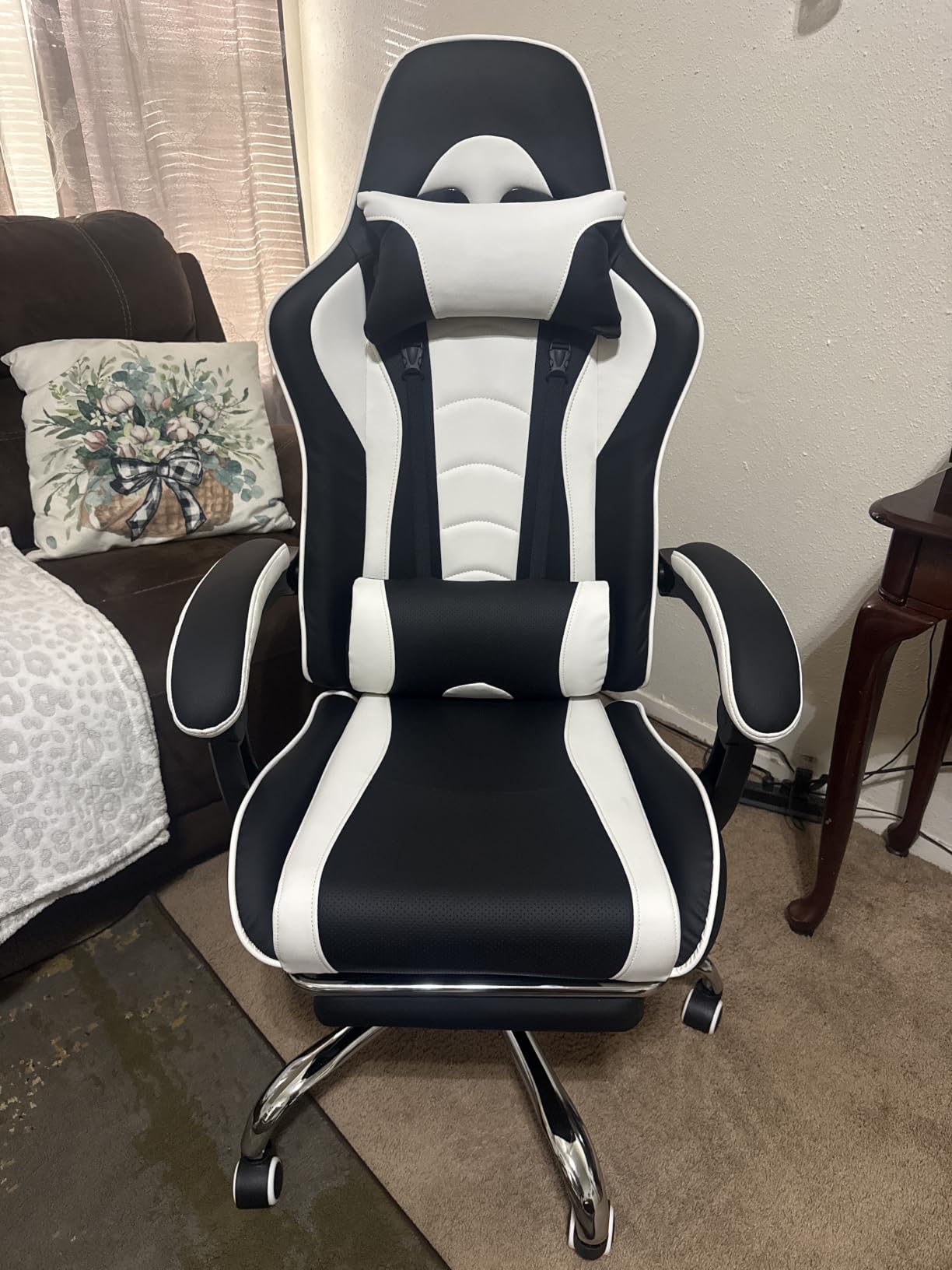
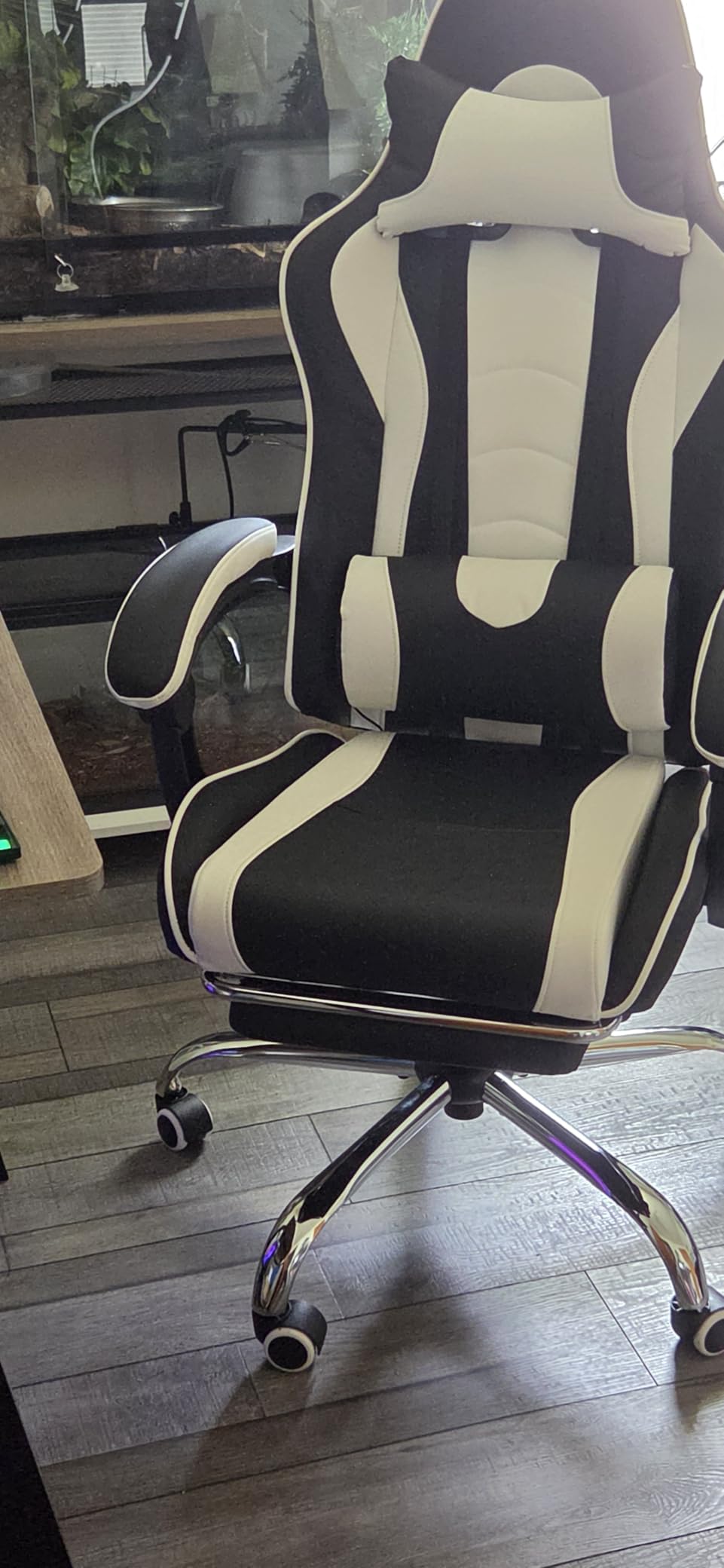
Recline runs 90 to 135 degrees and locks, the seat height range is 19 to 22.6 inches, and the frame is a reinforced metal-wood combination rated to 300 pounds. The winged backrest comes with lumbar and neck pillows, linkage armrests, and a retractable cushioned footrest. It weighs 38.3 pounds, which makes it the easiest to move in the group.
The fit limitation is the honest trade-off. That 19 inch minimum seat height leaves a shorter user’s feet dangling, and the lumbar pillow can press into a smaller lower back rather than cradling it. The massage is a weak vibration rather than a real massage, and the seat itself is on the firm side.
Who This Chair Works For
Someone between roughly 5 foot 4 inches and 6 feet who wants the strongest back support per unit of spend. If you already know your pain responds to a well-positioned lumbar pillow, the height adjustment here is the feature that delivers it.
Who Should Look Elsewhere
Very short users should skip it because of the limited seat height range. If you want a deep recline for sleeping or a genuinely soft seat, this is not the chair, and the massage function will not convince you otherwise.
9. SUKIDA Ergonomic Gamer Chair with Ottoman – Best for Small Rooms and Lightweight Users
Ergonomic Video Gamer Chairs Gaming Computer Chairs Gamer Chairs for Adults Massage Lumbar Support Swivel Height Adjustable Headrest Backrest
Pocket spring and foam seat
Massage lumbar cushion
Any-position recline lock
Included ottoman
Pros
- Pocket spring and shaped foam seat feels soft yet supportive
- Massage lumbar cushion is reported as strong
- Assembles in 10-20 minutes for most owners
- Recline locks at any position you choose
- Fits under a dorm bed and suits smaller users
Cons
- Seat cushion is thin and some add a pillow for long days
- Squeaks and clatters noticeably when you sit down
- Light swivel base with no weighted plate so the chair rolls
- Backrest is secured through the armrests and can shake
The seat is the story here. It combines independent pocket springs with shaped foam in a widened cushion, and owners describe it as soft with a sofa-like give rather than the flat, hard slab you get on cheaper chairs. That matters for lower back pain because a seat that spreads hip pressure lets you sit upright longer without sliding forward.
The massage lumbar cushion is also reported as genuinely strong, and at least one owner bought this chair specifically for lower back pain. Assembly is quick at 10 to 20 minutes, and the recline locks at any position between 90 and 135 degrees rather than at fixed stops.
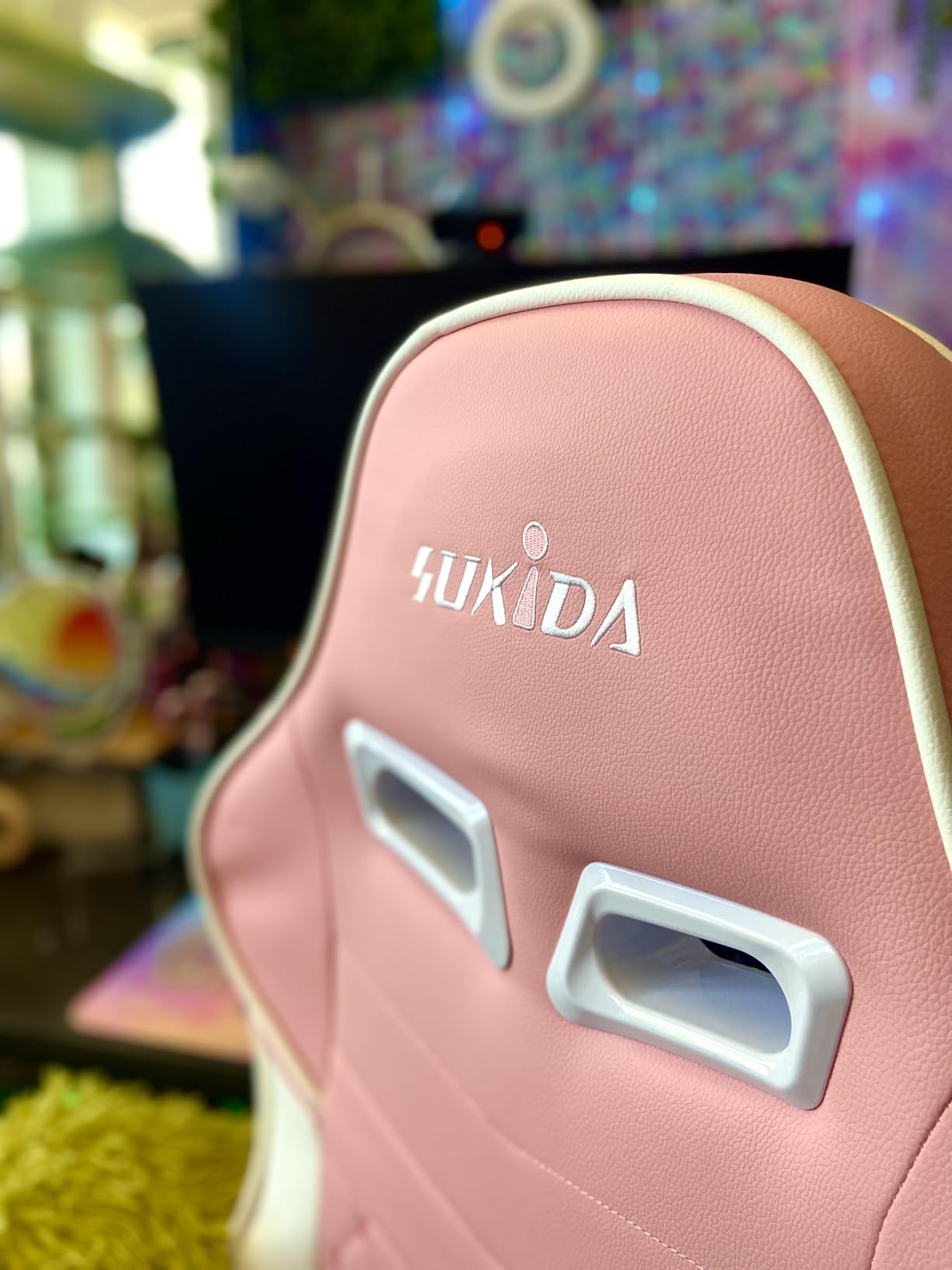
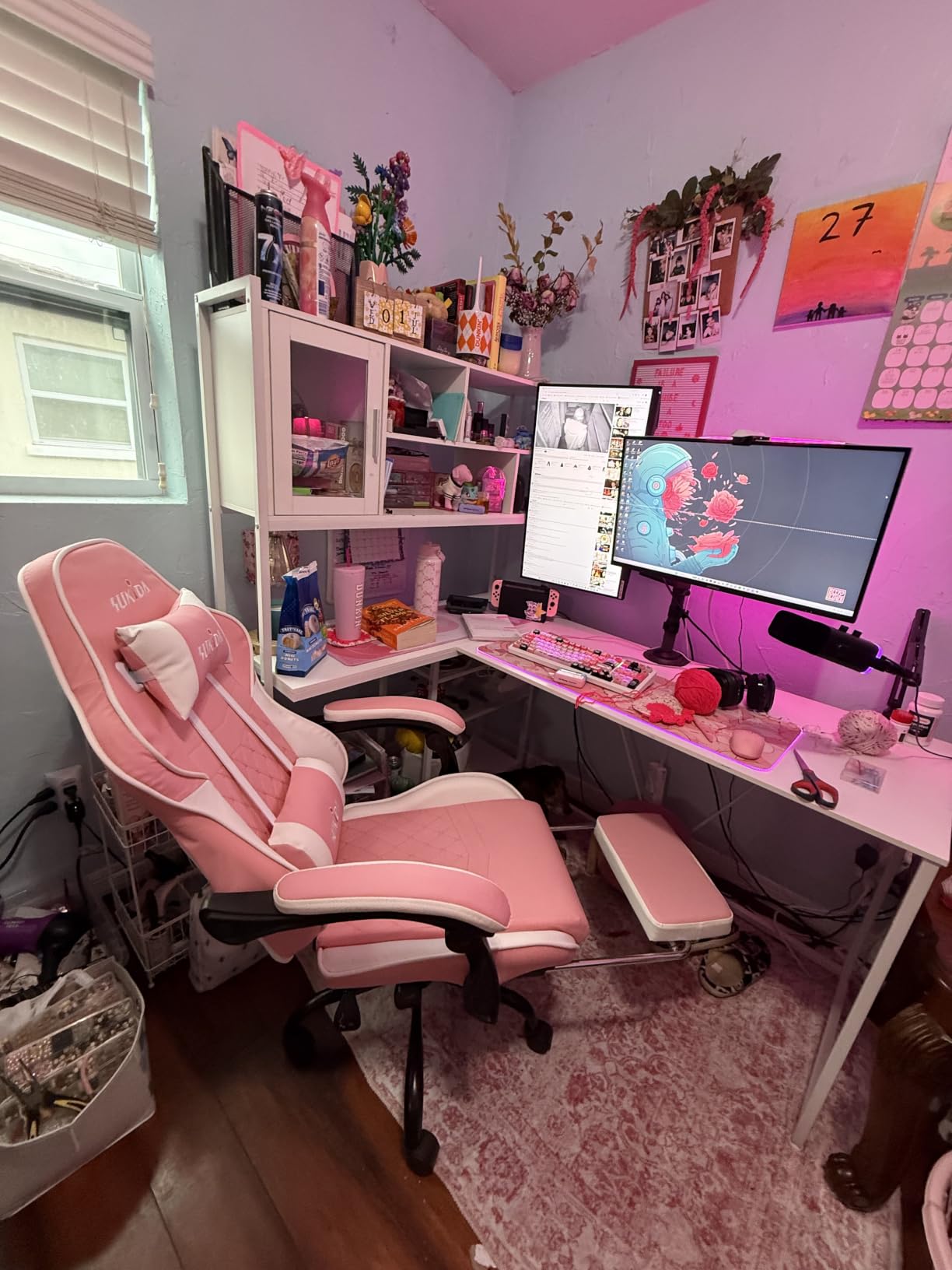
There is also a matching ottoman included, which no other chair in this guide offers, and the frame is metal with a 330 lb rating. Seat height adjusts on a swivel base and the headrest cushion moves up and down. The listed weight is 34.4 pounds and the footprint is 21 by 21 by 40 inches, with a one-year warranty.
Build quality is the catch. The chair squeaks and produces metallic clatter when you sit down or shift sideways, the swivel base has no weighted plate so the chair rolls more than expected, and the backrest is secured through the armrests, which means it can tilt or shake under lateral movement. Several users also note the footrest is small relative to adult feet.
Who This Chair Works For
Smaller rooms, dorm setups, and lighter users who want a soft seat and a footrest without a large footprint. The included ottoman means you can put your feet up properly, which reduces the low back tension that comes from dangling legs.
Who Should Look Elsewhere
Anyone sensitive to noise will find the squeaking and clattering a real distraction during play. Taller users should note the headrest cannot be mounted high enough for a taller frame, and the light base is not stable for vigorous movement.
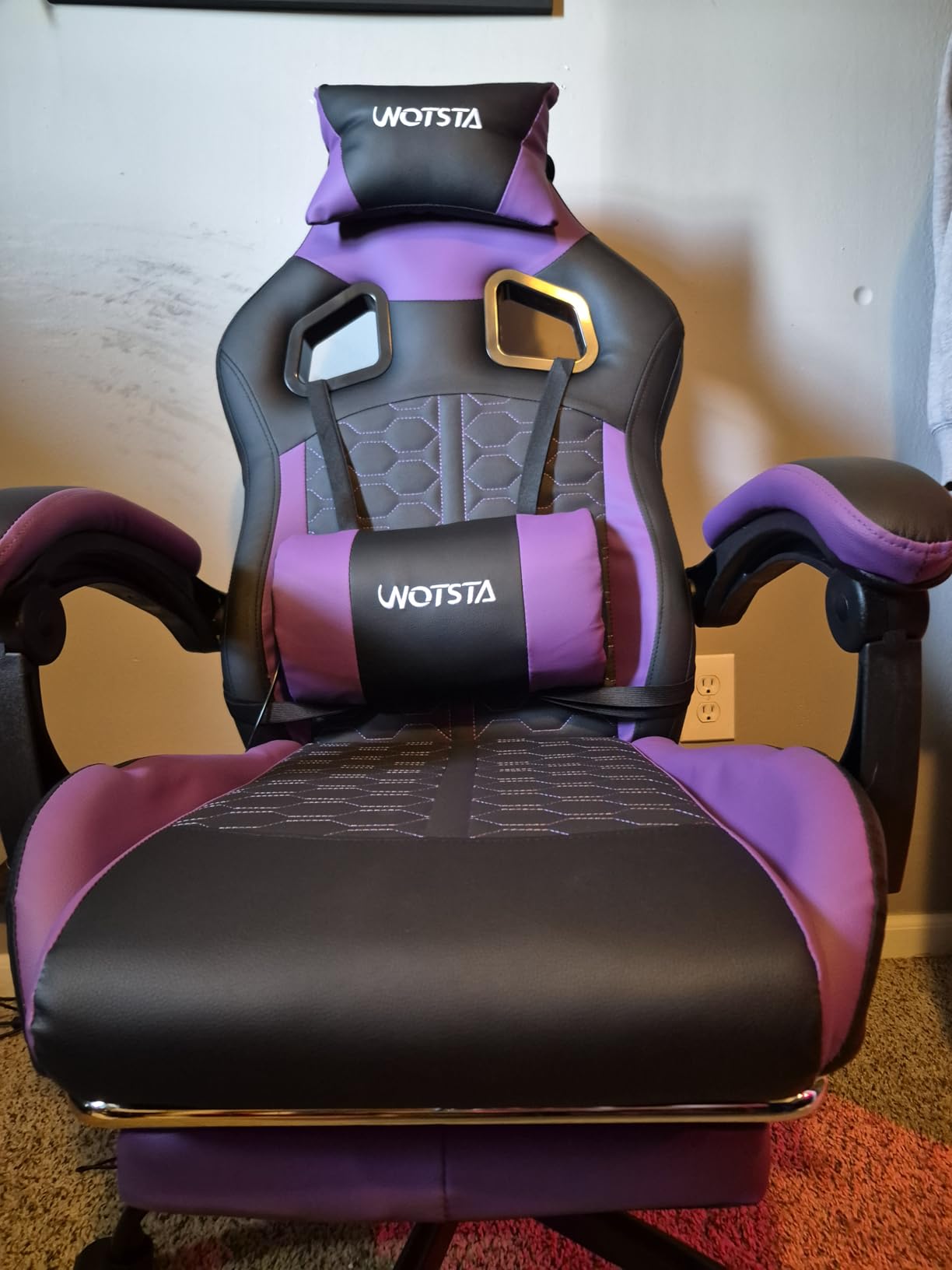
10. WOTSTA Three-Zone Gaming Chair – Cheapest 300 lb Option With a Three-Zone Layout
WOTSTA Gaming Chair with Massage,Ergonomic PC Gaming Chair with Footrest Comfortable Headrest and Lumbar Support, High Back, 300LBS (Grey)
Three-zone support
Body-curved seat
Pull-out footrest
300 lb capacity
135 degree recline
Pros
- Three-zone support for neck
- lower back and spine is well rated for posture
- Body-curved seat padding reduces hip and thigh pressure
- Quick assembly around ten minutes
- Cheapest 300 lb rated chair in the group
- Teens report strong durability for their use
Cons
- Massage is a faint vibration with no settings and switches on automatically
- Noticeably noisy within the first week
- Reclines only to 135 degrees with a short footrest
- Headrest sits too low for anyone over about 6 feet
The design premise is a three-zone support layout covering neck, lower back and spine, with a body-curved seat that has thick padding to reduce pressure on the hips and thighs. That seat shape is the part that actually touches your lower back indirectly, by keeping your pelvis in a position where the lumbar curve is easier to hold.
At 4.2 this is the lowest rated chair in the guide, and the complaints are consistent enough to plan around. The massage function is a faint vibration comparable to a phone buzzing, it turns on automatically when plugged in, and there is no intensity control.
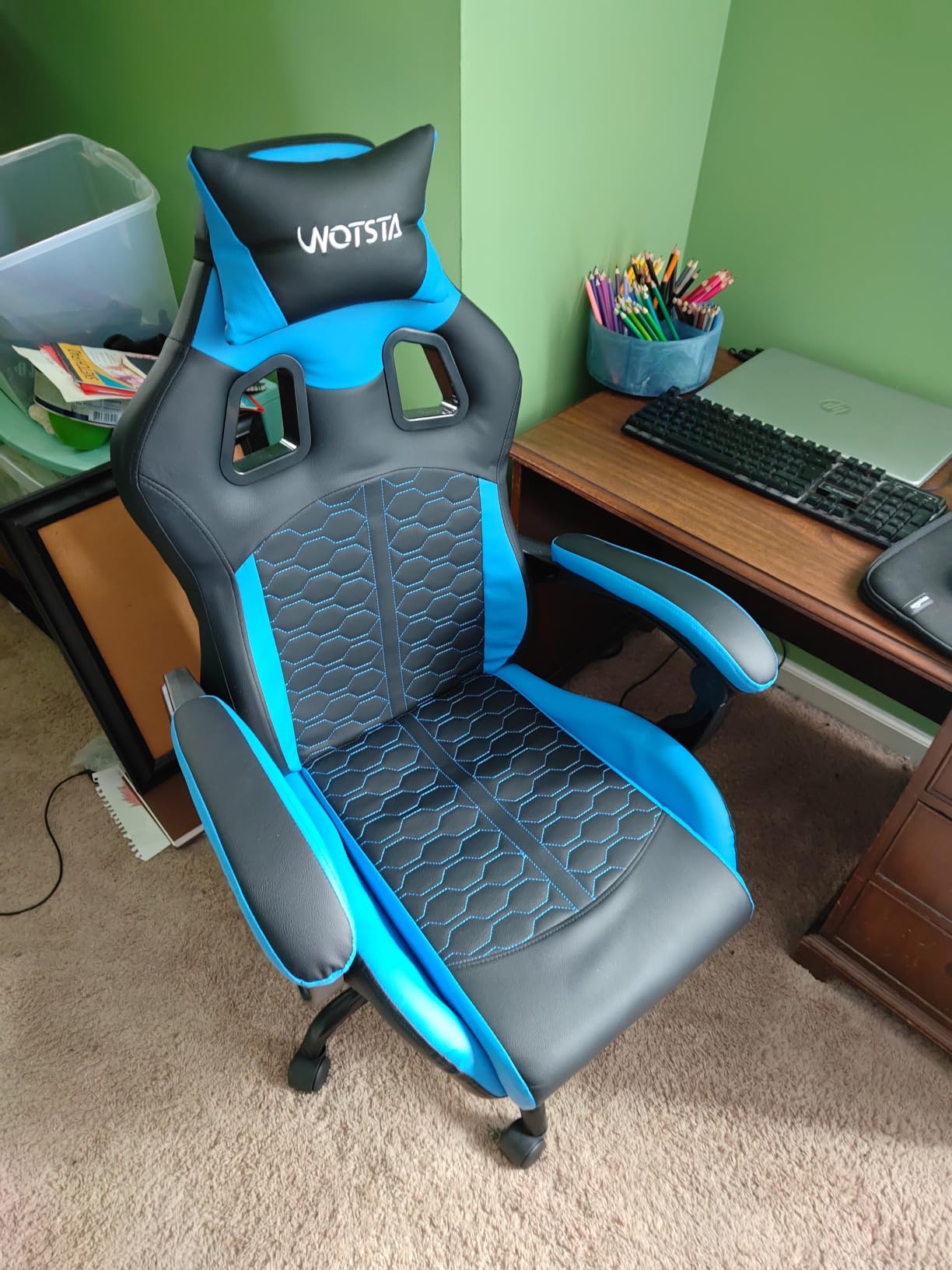
A single lever controls seat height and the 90 to 135 degree recline, which is simpler to operate than most. The frame is metal, the casters are floor-friendly and rated to 300 pounds, and the chair weighs 34.4 pounds. The adjustable lumbar and headrest cushions are included, and assembly takes roughly ten minutes for most owners.
Fit is where it falls short. The headrest sits too low for anyone taller than about 6 feet, the footrest is short and works more like a knee rest for tall users, and a reviewer finds it runs small overall. Noise appears within days, and the padding is thinner than on older comparable chairs.
Who This Chair Works For
Teens and lighter builds under about 6 feet who want three-zone support and a 300 lb rating for very little. It is a sensible secondary chair for a bedroom setup rather than a main rig you sit in all day.
Who Should Look Elsewhere
If you are tall, the headrest height and short footrest rule it out. Anyone sensitive to chair noise, or who expects a real massage function, should pick one of the higher-rated alternatives instead.
How to Choose a Gaming Chair for Lower Back Pain
Why Lumbar Adjustability Matters More Than Cushion Softness
Most lower back discomfort from sitting comes from losing the inward curve in the lower spine, the curve known as lumbar lordosis. When that curve flattens, the load shifts onto the discs and surrounding soft tissue, and the ache that follows gets worse the longer you hold the position.
A static lumbar pillow treats the symptom at one moment. An adjustable system treats it across a whole session, because it can move forward when you lean toward a monitor, deepen when you settle back, and hold its position when you shift. That is the entire argument for spending more on a chair with mechanical lumbar hardware if pain is your primary concern.
Lumbar Technology Types Explained
Across these ten chairs, lumbar support falls into four families. Spring-based systems, found in the GTPLAYER Big and Tall, the GTPLAYER Pocket Spring, the COMHOMA and the SUKIDA, use coil mechanisms that compress and return, so they respond to pressure and stay anchored to the frame.
Strap-mounted pillows, found in the GTPLAYER Footrest chair and the N-GEN, are softer and adjustable in position but migrate under load, which is the most common complaint in gaming chair reviews. Mechanical systems, like the AutoFull three-zone floating lumbar, track the spine independently through height, depth and rotation. Massage pillows, in the Homall, Yaheetech, SUKIDA and WOTSTA, add vibration but do not change position on their own.
Sizing Guide by Height and Weight
Start with weight capacity, because it is the one number that cannot be worked around. The chairs here cover 250 pounds on the low end, 300 pounds for most of the group, 330 pounds for the Homall and SUKIDA, 350 pounds for the AutoFull, and 400 pounds for the two big-and-tall frames.
For height, watch two numbers. Seat height decides whether your feet reach the floor flat, and the Yaheetech is the clearest example of why, with a 19 to 22.6 inch range that leaves a shorter user dangling. Seat depth decides whether your thighs are supported, and the Homall at 18.5 inches is too shallow for taller frames while the AutoFull offers 2 inches of travel for the same problem.
Headrest height is the detail most people forget. Multiple reviewers across this group report headrests sitting too low for taller users, and once your head has no support your upper back starts compensating, which pulls load straight back into the lower back.
Mesh vs PU Leather for Long Sessions
PU leather wipes clean, resists pet hair, and looks right in a gaming setup. It also runs warm, and that warmth is the most common reason owners abandon leather chairs after a few months. The GTPLAYER Pocket Spring chair avoids the problem with quilted fabric, and the AutoFull uses full mesh for the same reason.
Mesh breathes best but feels less premium and shows dust. Fabric sits in the middle, breathing reasonably while keeping a softer hand. Our rule of thumb is that if your room gets warm or you sweat easily, prioritise mesh or fabric, and treat leather as a style choice rather than a comfort one.
Weight Capacity, Gas Lift Class and Certifications
Capacity ratings are not marketing, but they are not comfort either. Forum buyers frequently point out that chairs feel unstable near their stated limit, so treat the number as a ceiling you should stay well under rather than a target.
Look for a Class 4 gas lift if you expect to use the highest setting, and check the certification marks. The Homall and AutoFull both carry BIFMA certification, the N-GEN and AutoFull have SGS-certified gas lifts, and the AutoFull adds IGR ergonomic certification. Certification is the cheapest way to separate a real frame from a decorative one.
Gaming Chair vs Ergonomic Office Chair for Back Pain
This is the debate forum users raise constantly, and the honest answer is that an office chair is usually better engineered for support. Community consensus repeatedly suggests that under the mid range, generic gaming chairs deliver worse ergonomics than office chairs at similar spend, and one widely upvoted forum argument is simply to buy a proper ergonomic office chair and let your back settle.
The gaming chair argument is narrower but real. The lumbar hardware here, the recline ranges up to 150 degrees, the footrests and the headrests are all designed for the way people actually sit during play, which is upright, then reclined, then forward again, several times an hour. If you work at a desk for eight hours and game for two, an office chair is the better investment. Our picks for the office route are covered in our guides to the best ergonomic office chairs for back pain and the best office chairs for back pain under 300.
Setup Checklist That Reduces Lower Back Strain
Set your lumbar support first and leave it alone for a full day. Sit back fully into the chair, adjust the lumbar until it meets the base of your ribcage, then adjust the seat height until your feet are flat on the floor with knees near 90 degrees. Match armrest height to your desk so your shoulders stay dropped.
Then fix the rest of the setup, because a perfect chair cannot compensate for a monitor at the wrong height. If your head is tipped forward all evening, your upper back compensates and your lower back pays. Our guides to the best inversion tables for back pain and best memory foam mattresses for back pain cover the other half of how you spend your day. Finally, stand up and move every 30 to 45 minutes, because no chair, at any price, is designed to be sat in for eight unbroken hours.
Frequently Asked Questions
What gaming chair has the best lower back support?
The AutoFull G7 in this guide has the most capable lumbar system, with a floating three-zone design that tilts, rotates, and adjusts in height and depth for a total of 22 adjustment points. The GTPLAYER Big and Tall chair is the strongest alternative because its pocket spring lumbar is built into the backrest frame and cannot shift out of position.
Are gaming chairs good for the spine?
Gaming chairs are only as good as their lumbar support. A chair with an adjustable or spring-based lumbar system helps maintain the natural inward curve of the lower spine during long sessions, while a chair with a fixed bolster or a loose pillow often leaves the spine flat. The frame, seat depth and weight rating matter as much as the lumbar.
Is a gaming chair good for back pain?
It can be, provided the lumbar support is adjustable and stays in position. The chairs in this guide that reviewers credit with relieving existing back pain all share spring-based or mechanically adjustable lumbar systems rather than a fixed cushion. None of them treat an injury, so persistent pain, numbness or shooting leg pain needs a clinician.
What is the best gaming chair for people with sciatica?
Look for a chair where the lumbar support can be moved forward and held there, since sciatica is often aggravated by pressure under the pelvis and thighs. The GTPLAYER Big and Tall and COMHOMA chairs pair a wide seat with built-in pocket spring lumbar, and the AutoFull G7 offers forward and back lumbar travel across five levels.
How long should you sit in a gaming chair?
No chair is built for eight unbroken hours. Most ergonomics guidance suggests changing position and standing or moving every 30 to 45 minutes, even with a well-adjusted chair. The chairs here that hold up best over long sessions are the mesh and fabric models, since leather-backed chairs get hot and the discomfort drives people to shift position constantly.
Final Verdict for 2026
The best gaming chairs for lower back pain in 2026 all share one trait: support that stays where you put it. Our top pick, the GTPLAYER Big and Tall chair, wins because its pocket spring lumbar is anchored to the frame, its 400 lb rating fits real bodies, and its 34k+ reviews describe the same result: less lower back fatigue through long sessions.
If your pain is severe enough that you want the most capable system available, go with the AutoFull G7 and accept the weight and the armrest height. If you want the strongest support per pound spent, the N-GEN covers the essentials properly. Either way, set the lumbar before you set anything else, and get up and move every 30 to 45 minutes.