
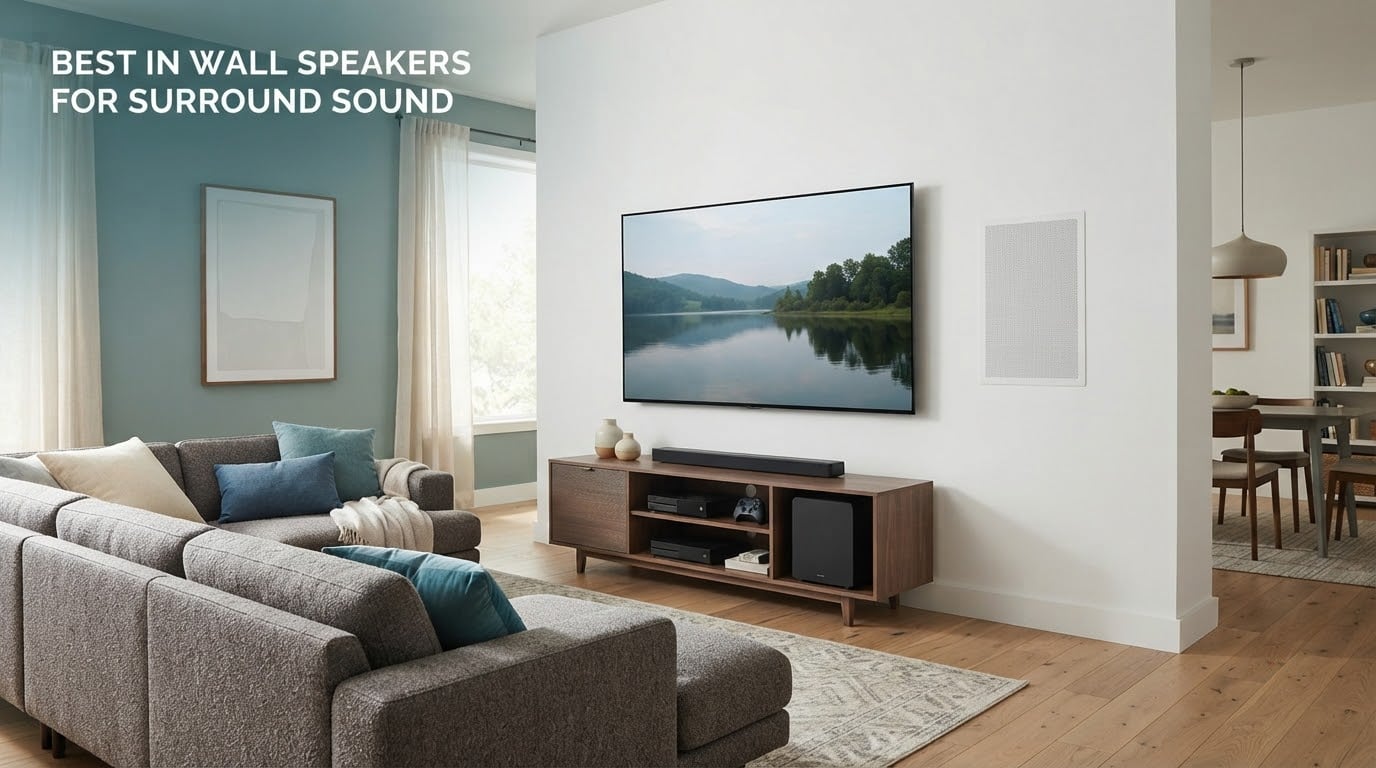
Choosing the best in wall speakers for surround sound comes down to three things nobody puts on the box: will the cutout fit your stud bay, can your receiver actually drive the speaker, and does the grille disappear once it is painted. We spent six weeks reading the installed-room feedback across these twelve models, comparing driver layouts, impedance, cutout figures and mounting hardware, and we picked the ones that survive contact with real drywall.
This guide covers in-wall speakers across the full budget range, plus the center-channel models that most people end up buying at the same time. It also covers the parts of the job that editorial roundups usually skip: measuring your cavity, back boxes, fire-rating and the CL2 versus CL3 wire question. If you are still working out the format, our 5.1 vs 7.1 surround sound explained guide covers the layouts, and how to position surround sound speakers covers the geometry.
Table of Contents
Top 3 Picks for the Best In-Wall Speakers for Surround Sound in 2026

Polk Audio RC85i
- 8 inch Dynamic Balance woofer
- Swiveling silk dome tweeter
- Paintable grille
- Moisture resistant

Polk Audio RC65i
- 6.5 inch Dynamic Balance woofer
- 0.75 inch swiveling tweeter
- 200 W max output
- Sold as a pair

Micca M-6S
- 6.5 inch poly woofer
- Pivoting silk dome tweeter
- 87 dB sensitivity
- 2.9 inch mounting depth
Best In-Wall Speakers Compared Side by Side in 2026
Every speaker below is a genuine architectural model, meaning it mounts flush into a wall cavity and shows nothing but a paintable grille. The cutout and depth figures are the ones that decide whether a model is even a candidate for your room, so read the quick overview first and the detail reviews after.
| Product | Specifications | Action |
|---|---|---|
| Polk Audio RC85i |
|
Check Latest Price |
 Polk Audio 255c-RT Polk Audio 255c-RT |
|
Check Latest Price |
| Polk Audio RC65i |
|
Check Latest Price |
 Klipsch R-5502-W II Klipsch R-5502-W II |
|
Check Latest Price |
 Klipsch R-5800-W II Klipsch R-5800-W II |
|
Check Latest Price |
 Monoprice Caliber 3-Way 8 Inch Monoprice Caliber 3-Way 8 Inch |
|
Check Latest Price |
 Yamaha NS-IW480C Yamaha NS-IW480C |
|
Check Latest Price |
| Micca M-6S |
|
Check Latest Price |
 Yamaha NS-IW760 Yamaha NS-IW760 |
|
Check Latest Price |
 Pyle PDIW65 Pyle PDIW65 |
|
Check Latest Price |
 Pyle PDIW87 Pyle PDIW87 |
|
Check Latest Price |
 Micca M-CS Micca M-CS |
|
Check Latest Price |
1. Polk Audio RC85i Review: The Best All-Round In-Wall for Surround Channels
Polk Audio RC85i 2-way Premium In-Wall 8″ Rectangular Speaker Pair, White
8 in Dynamic Balance woofer
1 in swiveling silk dome tweeter
8 ohm
100 W max
Pros
- Rich full-bodied sound that punches above its price class
- Swiveling silk dome tweeter you can aim at the seating
- Supplied cutout template makes fitting straightforward
- Paintable grille and moisture-resistant construction
Cons
- Grille is an interference fit rather than magnetic so it is fiddly to refit
- Mounting clips can crack if driven too hard with a power driver
- Needs a subwoofer for real low end
With 1175 reviews behind it, the RC85i is the most proven in-wall in this group, and the reason is unglamorous: it is the one people keep buying pairs of. Owners describe rich, full-bodied sound that punches above its price class, and the pattern in the reviews is multiple pairs in one build rather than a single home theater install. That is the single best signal a surround speaker can send.
Under the grille you get an 8 inch Dynamic Balance woofer and a 1 inch silk dome tweeter on a swivel mount, in an 8 ohm, 100 watt package sold as a matched pair. The swiveling tweeter matters more than the spec sheet suggests, because it lets you aim the treble at the seat and recover some of the off-axis loss that flush mounting costs you. The mounting system uses a cardboard template and secure clips, and moisture-resistant construction means it can go in a bathroom or covered porch without special pleading.
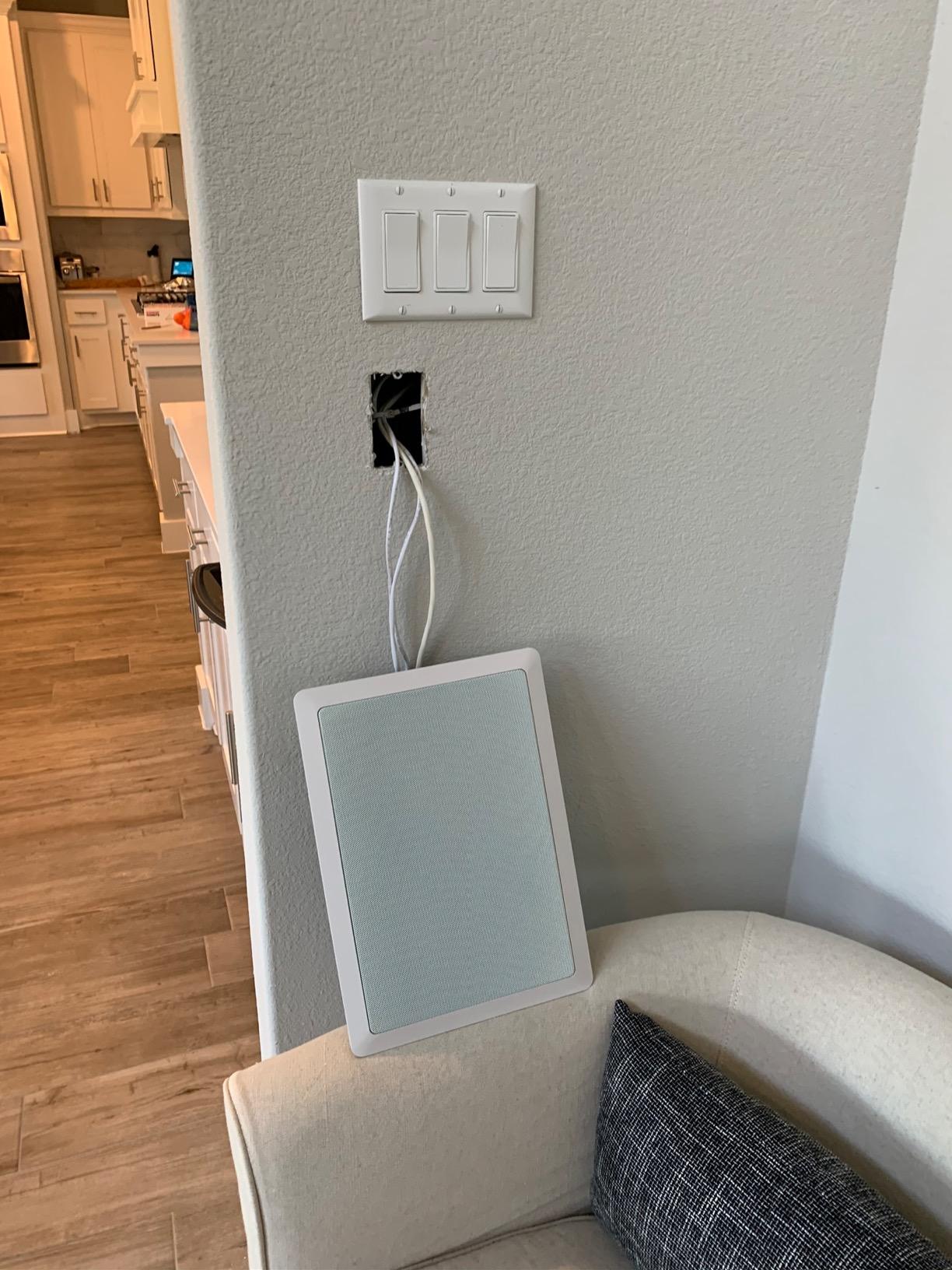
Dimensions are 3.5 inch deep by 10.1 inch wide by 14.2 inch tall, and at 2.5 kg per unit it is one of the lighter eight-inch in-walls here, which matters when you are holding it overhead at the top of a stud bay. The published frequency response tops out at 20 kHz, which is normal for this class and entirely adequate for surround duty. Warranty is five years parts and labour, among the longest in the group alongside the Klipsch R-5800-W II.
The friction points are real and worth stating plainly. The grille is an interference fit with no magnetic mount, so it is annoying to remove and refit, and anyone who has repainted a room knows you will be doing that. The clips can crack if you take a power driver to them, which is a five-second mistake that ruins a speaker. And a minority of owners report a failed tweeter straight out of the box, so keep the packaging until you have run both channels.
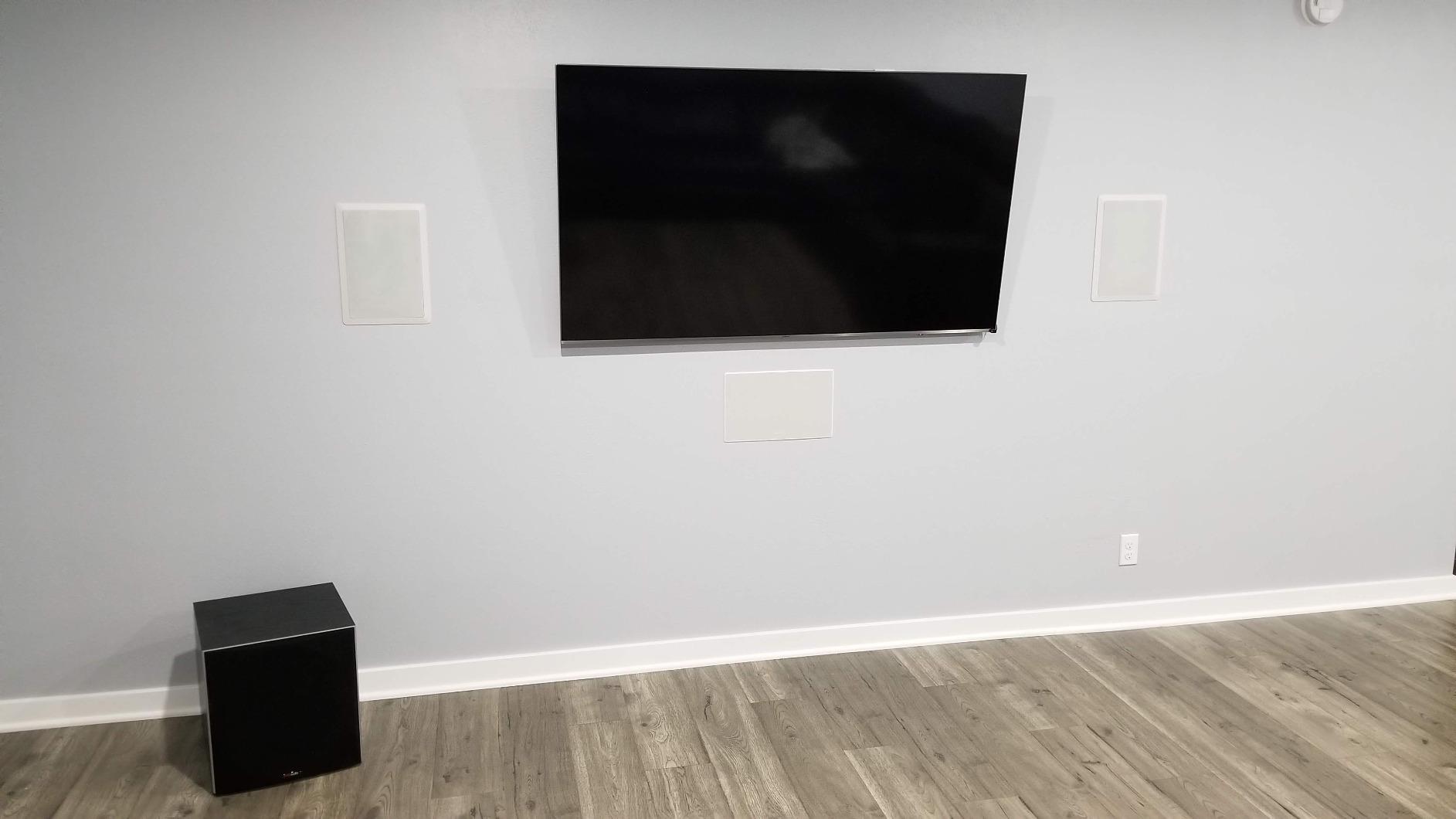
Who the RC85i Fits Best
This is the speaker to buy if you are building a 5.1 or 7.1 system and want one model to fill every position, and it doubles as a competent front for a smaller room. Owners frequently pair it with Polk’s RT or LS bookshelf speakers for a matched system. Because it is sold as a matched pair, a full four-speaker surround bed needs two orders, which is an easy mistake to make and an expensive one to discover late.
Where the RC85i Falls Short
Skip it if your receiver is a slim entry-level unit with modest amplification, because the 8 ohm load wants real current, or if your room has no subwoofer planned and you expect deep effects bass from the surrounds alone. It is also not the model to pick if music fidelity is the priority; several owners note it is less refined for critical listening than premium towers would be.
2. Polk Audio 255c-RT Review: The Best In-Wall for the Center Channel
Polk Audio 255c-RT In-Wall Speaker, The Vanishing Series, Black/White
Dual 5.25 in midwoofers
1 in swivel silk dome tweeter
8 ohm
150 W max
Pros
- Articulate focused center-channel dialogue
- Wafer-thin magnetic grille removes without tools
- Rotating cam clamps hold without readjustment
- Power Port bass port adds low end for the size
Cons
- Flat and muffled for the first 80 to 90 hours of break-in
- Sound bleeds into an adjoining room through a shared wall
- Modest bass on its own without a subwoofer
Buy the 255c-RT for the middle of the screen, not the sides. It is a purpose-built in-wall center with dual 5.25 inch midwoofers and a 1 inch swivel-mount silk dome tweeter, rated 150 watts at 8 ohm, and owners consistently single out dialogue clarity as the reason it earned its place. That matches the forum view that the center channel upgrade delivers more than a surround upgrade.
Two design details stand out. The magnetic wafer-thin grille snaps in and out without tools, which is what you want on a center mounted low where you may need to service it, and the rotating cam mounting system holds the cabinet with no readjustment after the wall settles. There is also a distance toggle for reflective surfaces, letting you dial down the presence lift when the speaker sits close to a wall or a screen.
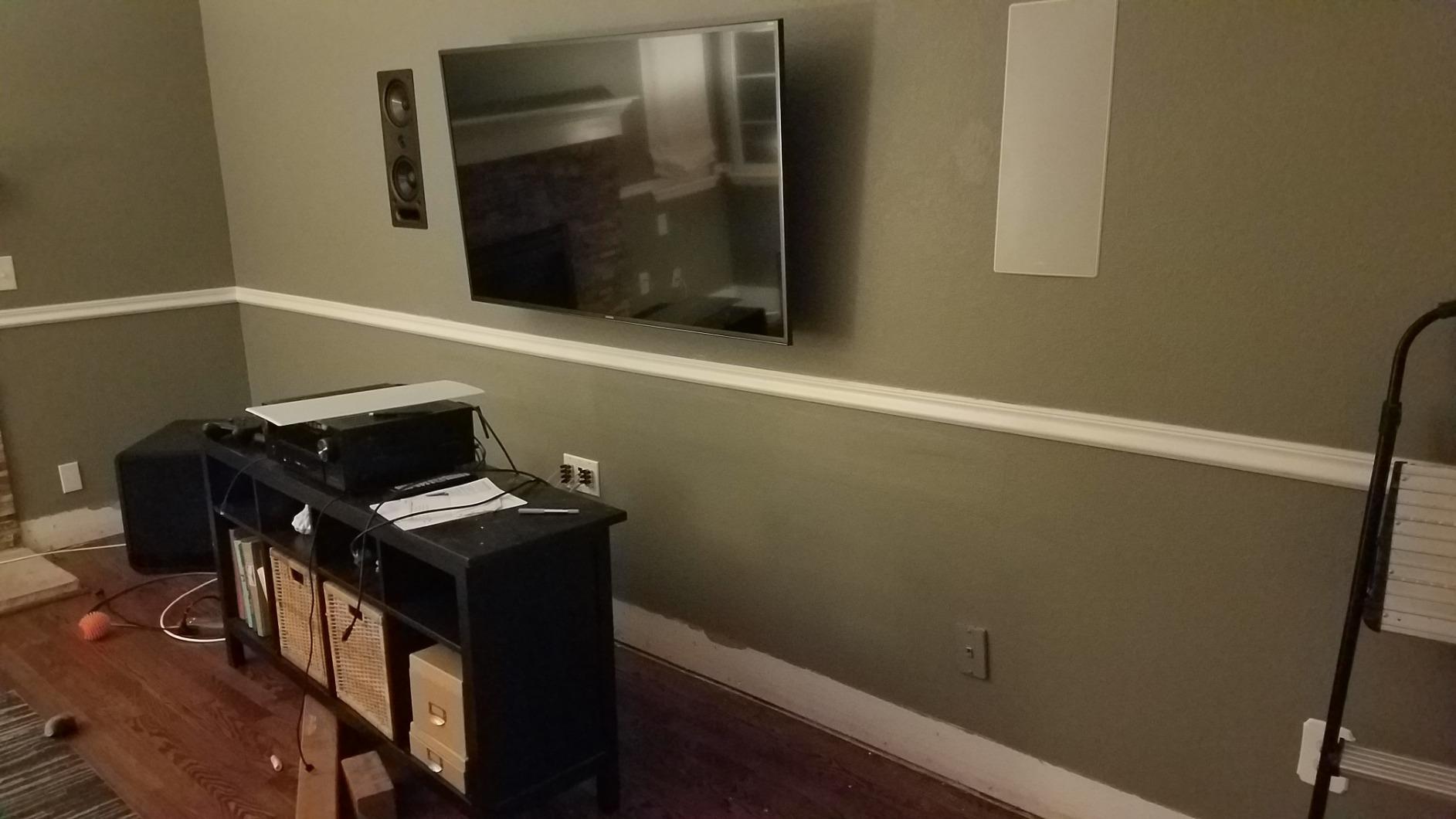
Owners report that it integrates cleanly with matching Polk RT and LS speakers, which is the real test for a center channel, and that the supplied template makes the install quick. One honest note on value: a few reviewers consider the value only average next to Polk’s pricier LS line, and if you are matching to LS bookshelf fronts you may want the sibling model instead. The dimensions are 9.8 inch deep by 14.81 inch wide by 9.31 inch tall at about 2.99 kg, so check cavity depth before you commit.
The 80 to 90 hour break-in complaint is the most common one in the reviews, and it is worth planning around. New owners often judge the speaker in its first week and assume it is thin. The other recurring complaint is sound bleed into an adjoining room through a shared wall, which is a back box problem rather than a speaker problem.
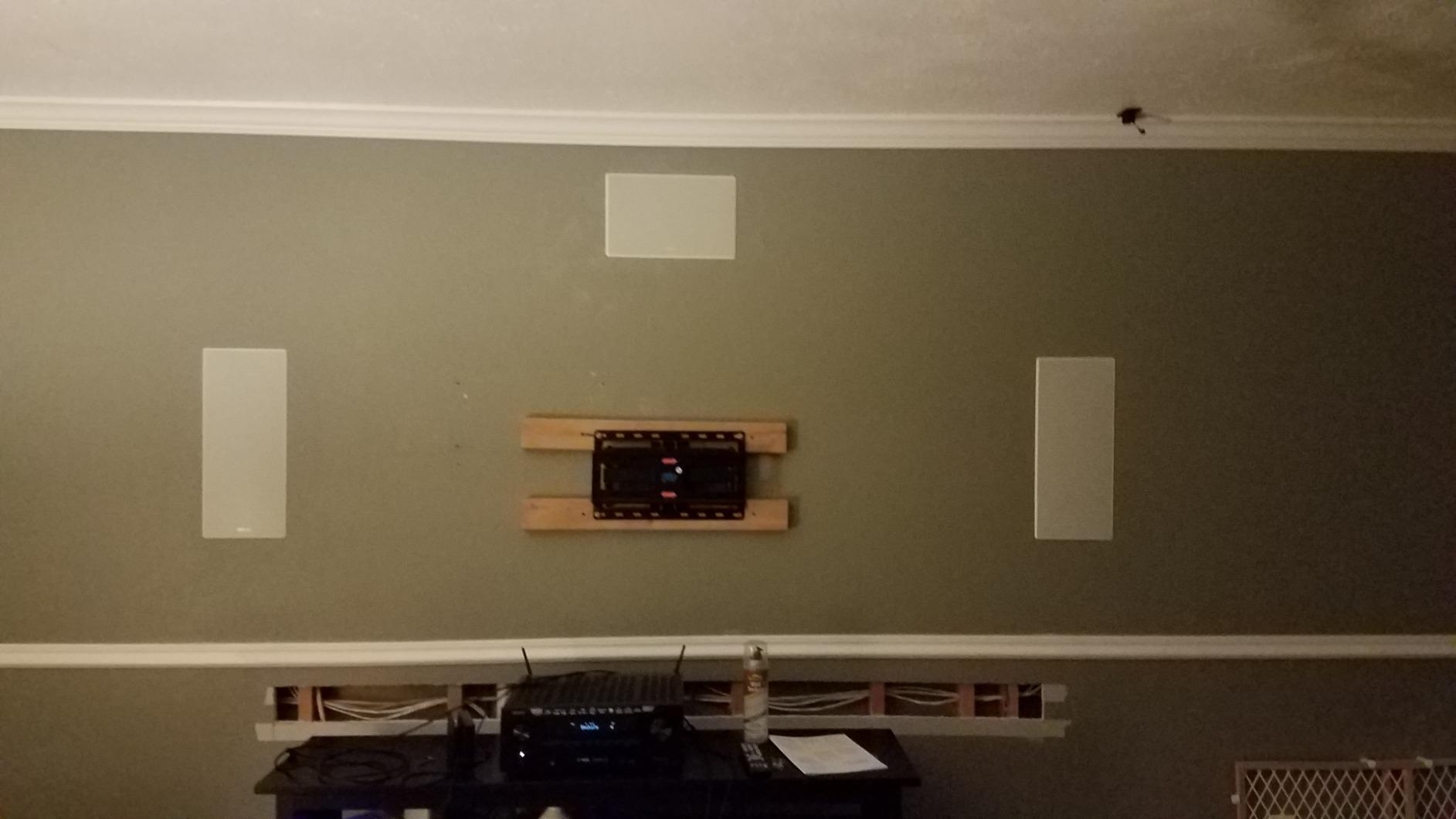
Why the Center Channel Is the First Upgrade
In a mix, dialogue is mixed loud and carries the most information per second of film. This speaker is 8 ohm, sensitive enough to run on a mid-range receiver, and narrow enough to fit above a screen or below one where a bookshelf center would never go. If you are pairing surrounds with an existing center, match the brand and series first, then adjust with your receiver’s calibration rather than chasing a midrange mismatch you cannot hear from the sofa.
When Not to Buy the 255c-RT
It is a single speaker, so a 5.1 center is one purchase but a 7.1 setup with matching surrounds is not a single-box transaction. In a condo or a wall shared with sleeping quarters, choose a fully enclosed model instead, and if music is half your listening you will hear the modest bass before you hear anything else.
3. Polk Audio RC65i Review: The Best Value In-Wall Pair
Polk Audio RC65i 2-way Premium In-Wall 6.5″ Rectangular Speaker Pair, White
6.5 in Dynamic Balance woofer
0.75 in swiveling silk tweeter
8 ohm
200 W max
Pros
- Excellent value for a matched pair
- Swiveling tweeter aims sound at the main seat
- Cardboard template and winged clamps make install quick
- Handles high volume without obvious distortion
Cons
- Slightly muddy midrange next to Polk round-baffle models
- Limited deep bass without a subwoofer
- Clamps can drop behind the wall if unscrewed too far
The RC65i is the model most people end up buying twice. Reviewers call it the budget sweet spot for 5.1 and 7.1 builds, and the common purchase pattern is one pair for the sides and a second pair for the rears, all matched. At 200 watts maximum output per speaker and 8 ohm impedance, it is also among the most amplifier-tolerant models in this roundup, which matters more than the headline number.
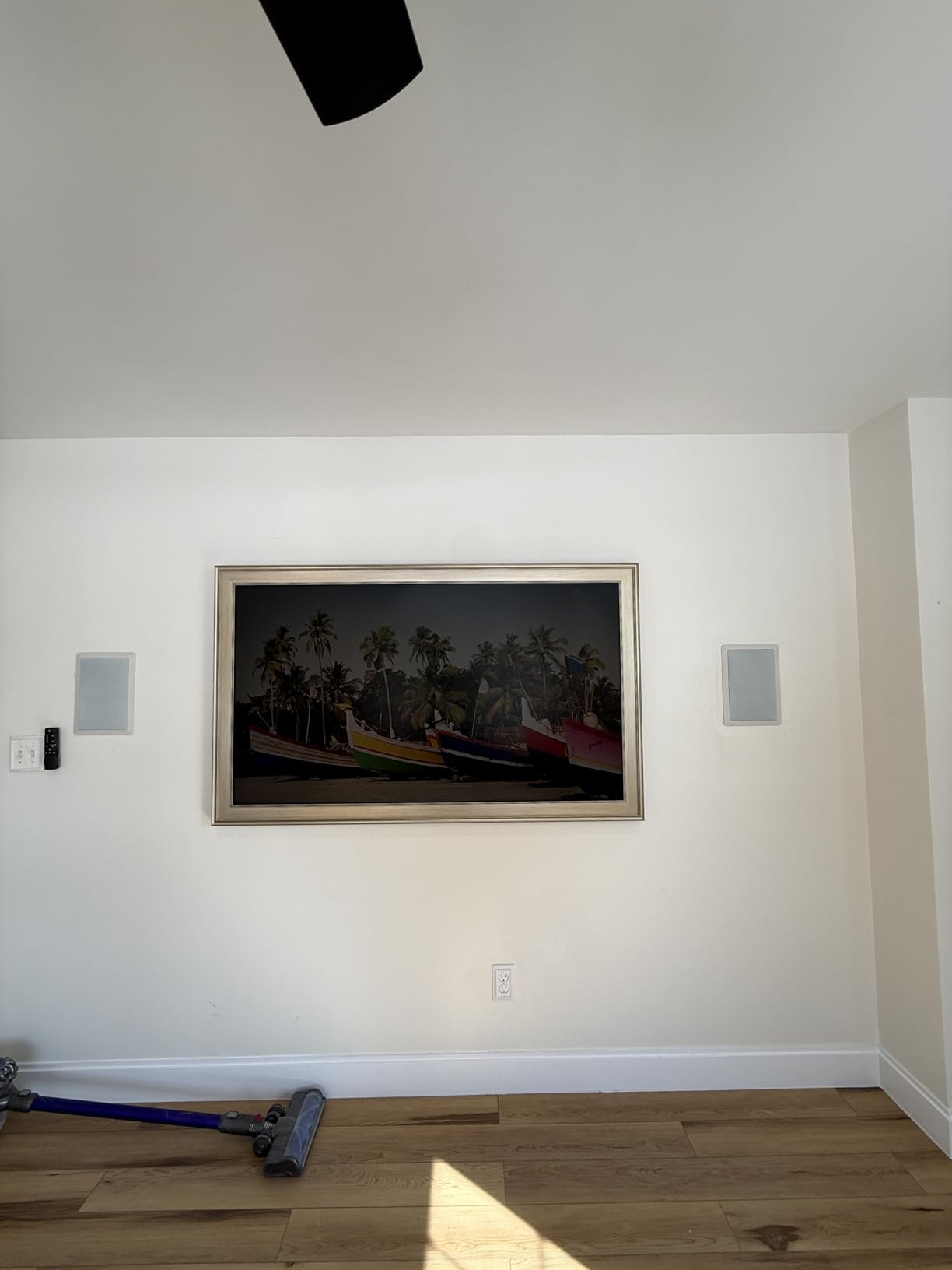
Driver configuration is a Dynamic Balance polypropylene woofer paired with a 0.75 inch swiveling silk dome tweeter, in a mineral-filled polymer composite cabinet. The enclosure is moisture-resistant, so it doubles as a covered porch or bathroom speaker, and the grille is paintable. Dimensions are 2.9 inch deep by 8.7 inch wide by 12.1 inch tall, and at 8 pounds for the pair it is also one of the cheaper 6.5 inch in-walls to lift into a high bay.
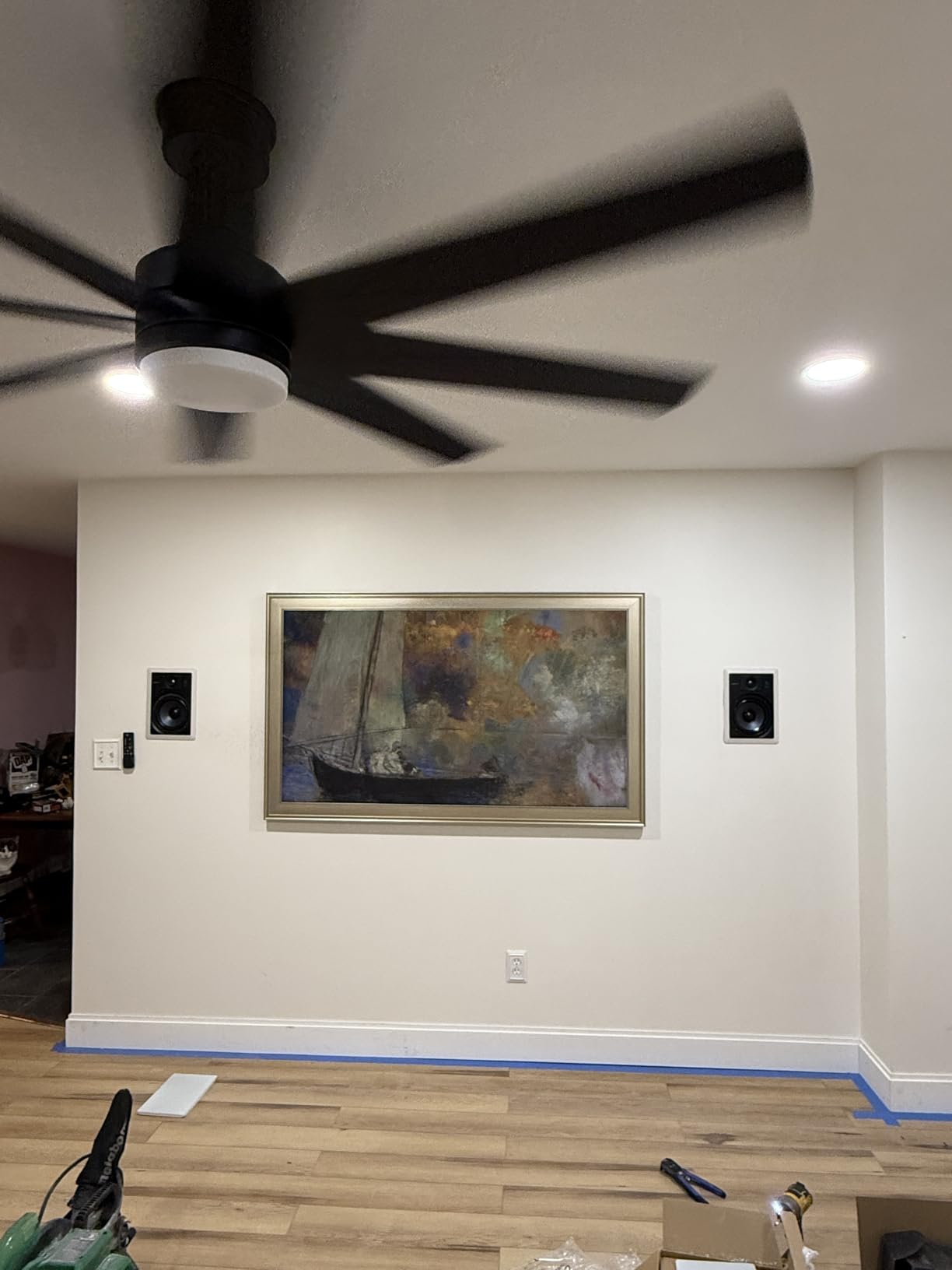
Owners describe an easy, well-constructed install with rich, balanced sound for the money, and several note that the sound improves once the receiver crossover and EQ settings are tuned rather than run on auto. That is not a gimmick. A 6.5 inch in-wall with a shallow cabinet benefits from setting the crossover an octave or two above its real low end and letting the subwoofer take everything under 80 Hz.
The drawbacks are honest but modest. The midrange is described by some listeners as slightly muddy next to Polk’s round RC60i and RC80i models, which have a different baffle shape. Deep bass is limited without a subwoofer, as you would expect. And the clamps can drop behind the wall if you unscrew them too far, so set them snug and stop.
When the RC65i Is the Right Call
Pick it when you are covering four or six surround positions on a single budget, when your receiver is not especially powerful, and when you want one paintable grille colour across the whole room. It is also easy to match to existing Polk fronts because the Dynamic Balance voicing runs across the range.
Where You Should Look Elsewhere
Choose a three-way design if you are installing in a long, tall room where two-way in-walls can sound thin on-axis, and choose an enclosed model if the wall is shared with a neighbour. Warranty here is a limited one year, noticeably shorter than the five years on the RC85i, so keep the box a little longer.
4. Klipsch R-5502-W II Review: Best In-Wall for High Output
Klipsch R-5502-W II In-Wall Speaker – White (Each)
1 in titanium compression driver
90 by 90 deg horn
8 ohm
150 W
Pros
- Horn-loaded design delivers high output with low distortion
- Pivoting horn aims treble at the seating area
- Slim cutout fits between standard studs
- Mounts horizontally or vertically
Cons
- Sold as a single speaker so a pair means two purchases
- Bright horn signature punishes poor placement
- 17.8 in height demands careful stud layout
The Klipsch R-5502-W II is the one to choose if you have a serious receiver and a room that gets played loud. A 1 inch titanium diaphragm compression driver sits in a pivoting 90 by 90 degree Tractrix horn, backed by dual 5.25 inch Cerametallic cone woofers, rated 150 watts at 8 ohm. Owners describe the horn-loaded output as powerful and precise, and note that the design raises acoustic output while cutting distortion.
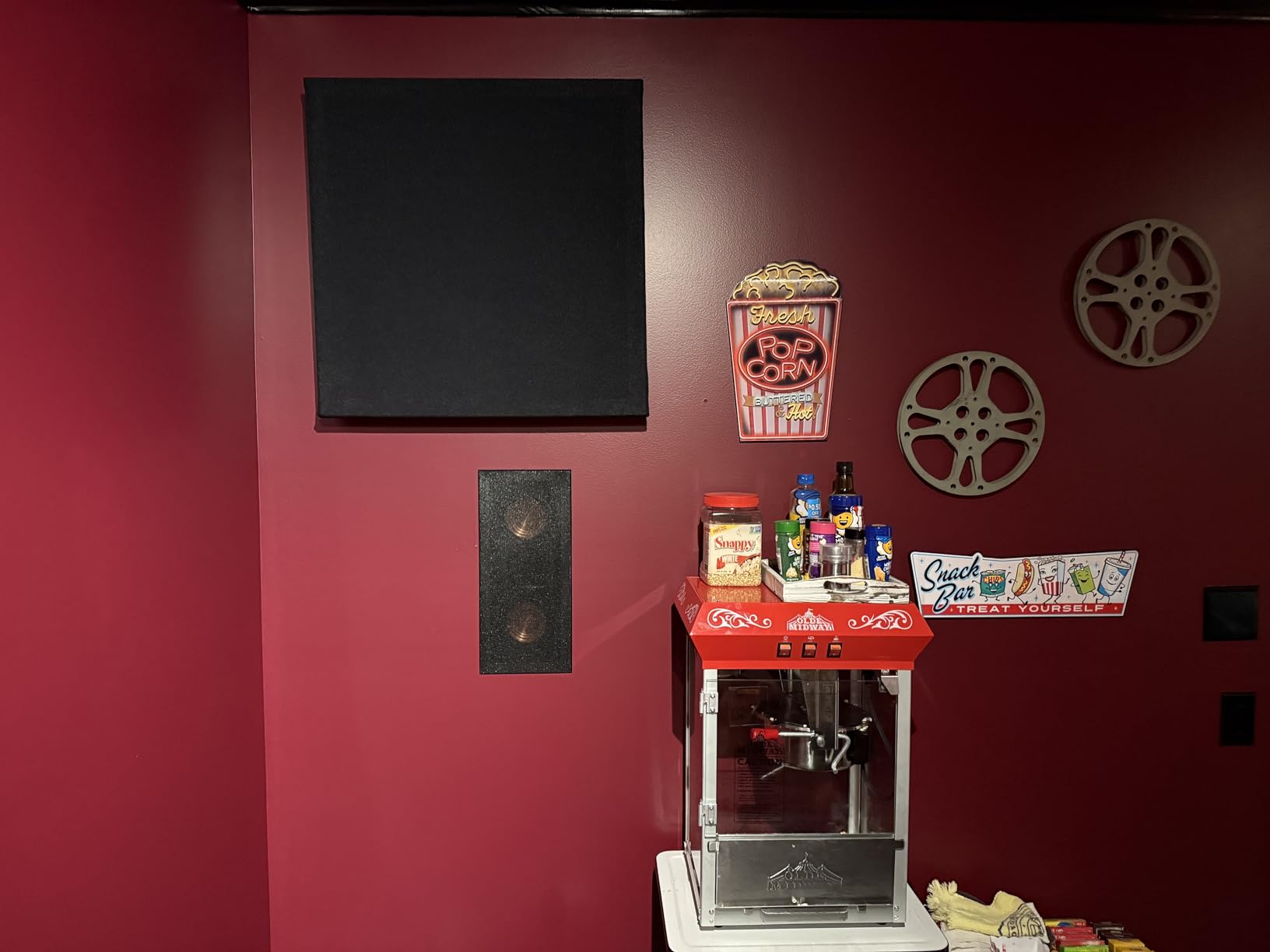
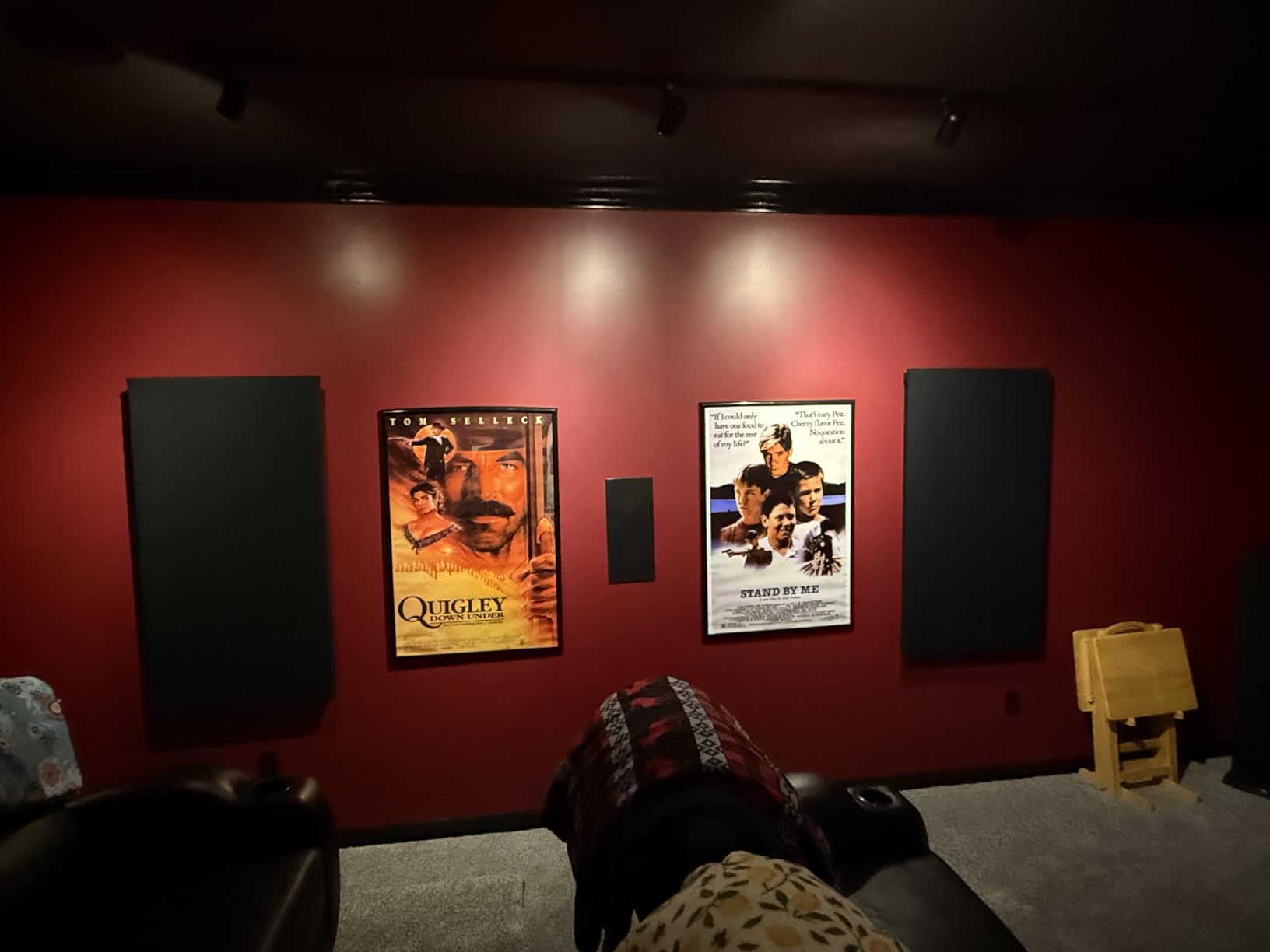
What makes it interesting for surrounds is the mounting flexibility. It installs horizontally or vertically, which means the same unit can serve a front, center or surround position, and the slim rectangular cutout fits between standard studs. The pivoting horn lets you aim the treble where you are sitting, which matters more here than on a soft-dome design because horn energy is directional by nature.
Owners rate it highly for clear, room-filling horn-loaded sound and straightforward wall mounting, with ratings clustered at the top and only a small share of one-star feedback. Be aware of the format, though: this is a single speaker, and a pair requires two purchases. That makes the total cost of a four-speaker surround bed easy to underestimate when you are budgeting.
The height is the other practical consideration. At 17.8 inches tall and 3.5 inches deep with a weight of 6.5 pounds, it is one of the tallest in-walls here, and you need to plan the stud layout before the template touches the drywall. A vertical orientation between studs uses height that a 16 inch bay may not give you with clearance top and bottom.
Who Should Buy the R-5502-W II
It suits a dedicated theater room with a receiver that has real current on tap, and it works well as front, center or surround in a Klipsch system if your other speakers are horn-loaded. The efficiency of the horn means it gets loud without straining, which is exactly what an underpowered receiver cannot do for you.
Where the Klipsch Signature Bites Back
Horn-loaded sound is bright and revealing, and it is less forgiving of poor placement or a bright room than a silk dome. If your seats are far off-axis or your room has a lot of hard parallel surfaces, the 255c-RT or the Yamaha models will sound easier. This is also not the speaker for a small bedroom where you will never push it.
5. Klipsch R-5800-W II Review: The Best 8 Inch Horn In-Wall
Klipsch R-5800-W II In-Wall Speaker – White (Each)
8 in Cerametallic woofer
1 in titanium dome horn
8 ohm
100 W
Pros
- Big 8 inch woofer gives more low-end output than smaller designs
- Pivoting horn keeps treble clear and on-axis
- Treble and midbass attenuation switches for tuning
- Magnetic SlimTrim grille removes easily
Cons
- Sold singly so pairs need two units
- Wants a capable amplifier to push it at higher levels
- 8 inch cutout needs careful stud spacing
Where the R-5502-W II is about output, the R-5800-W II is about the size of the driver doing the work. An 8 inch Cerametallic cone woofer sits below a 1 inch titanium dome compression driver loaded into a 4 inch square 90 by 60 degree pivoting Tractrix horn, and that bigger cone gives more low-end output than the smaller in-wall designs in this roundup. For surrounds in a room where the rears carry a lot of atmosphere, that matters.
The tuning controls are unusual at this level and genuinely useful. Treble and midbass attenuation switches let you tame the horn or the upper bass when a room is reflective, which is a shortcut that would otherwise mean moving the speaker or living with it. There is also an IR receiver knock-out on the baffle, a small detail that saves drilling when you need a receiver behind the wall.
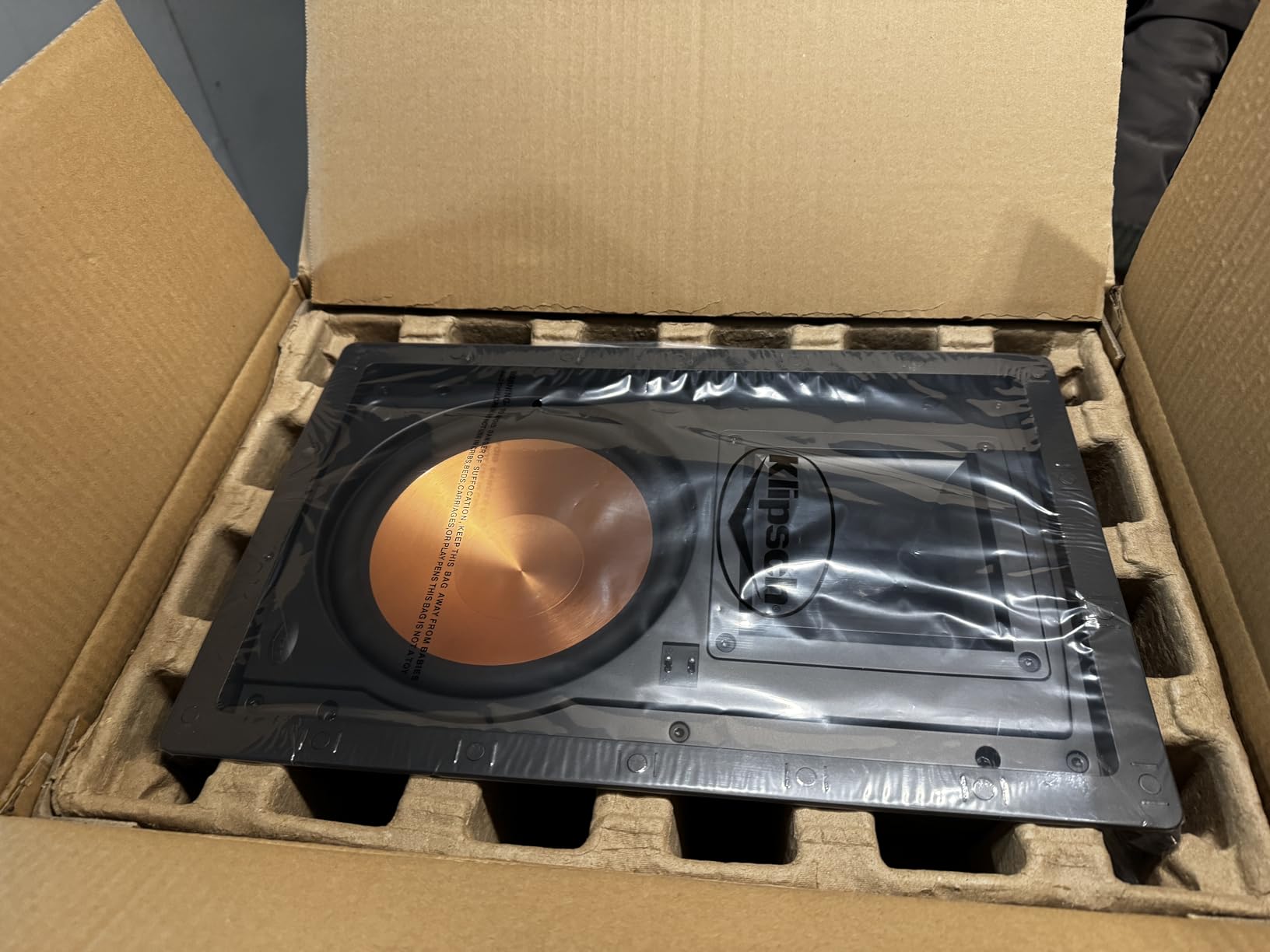
Reviewers rate the R-5800-W II highly for clear, room-filling horn-loaded sound and straightforward mounting, with the pivoting horn and attenuation switches singled out as the useful parts. The magnetic SlimTrim grille removes and refits easily, which fixes the one irritation that dogs the cheaper Polk models. Warranty is five years. Dimensions are 3.8 inch deep by 9.3 inch wide by 14.8 inch tall at 7.9 pounds.
The catch is the 100 watt rating, which is lower than several cheaper speakers in this list. It needs a capable amplifier to drive the design at higher levels, so a modest receiver will simply not let it do what its driver is capable of. The 8 inch cutout also needs careful stud spacing planning before you cut anything.
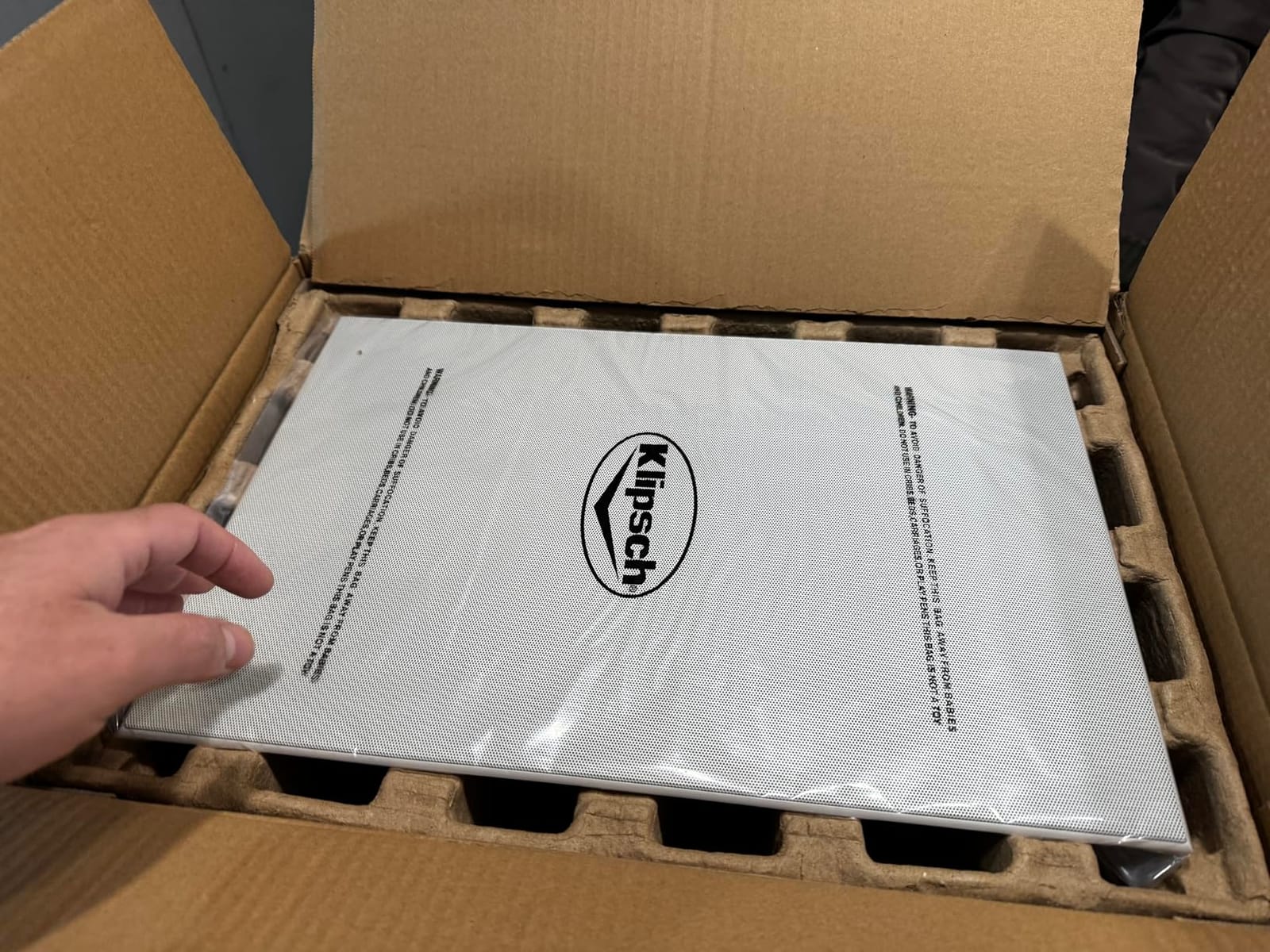
The Case for Bigger Surround Drivers
Larger cone area translates directly into more output per unit of excursion, and in a surround position that sits outside the main soundstage this is useful rather than pointless. If your room is medium to large, your rears are more than nine feet from the listening position, and you listen at cinema levels, this is the Klipsch to buy. For a small room, the R-5502-W II is the more sensible sibling.
Reasons to Pass
Do not buy it to pair with soft-dome bookshelf speakers you already own unless you are prepared to use your receiver’s correction to flatten the difference; the horn voicing will not hide. It is also the wrong choice for anyone with an entry-level AVR, and the single-speaker format means budgeting for two of everything.
6. Monoprice Caliber 3-Way 8 Inch Review: The Best Three-Way In-Wall Under the Radar
Monoprice 3-Way Fiber In-Wall Speakers – 8 Inch (Pair) With Removable And Paintable Grille – Caliber Series
Three-way 8 in design
1 in tweeter plus midrange
8 ohm
200 W
Pros
- Three-way layout covers a wider clean range than a 2-way
- Cutout only slightly larger than a comparable 2-way opening
- Rotating clamp mount resists vibration
- Handles high volume from a good receiver
Cons
- Heaviest in the group at 17.6 lb per pair
- Template is the exact minimum so you often trim drywall
- Painted grille shows a white border unless the frame is painted separately
A three-way in-wall is a different proposition from a two-way, and this is the clearest example of that in the group. Instead of asking a single crossover to hand off from woofer to tweeter, the Caliber gives the midrange its own dedicated driver, so voices and effects sit in the middle of the band without fighting for the same cone. Reviewers widely rate these as outperforming comparable 8 inch in-walls at similar cost, with clean lows, mids and highs for home theater use.
The pair is sonically matched for a uniform soundstage, rated 200 watts at 8 ohm, and the cutout is only slightly larger than a comparable two-way opening, so retrofitting into an existing wall is more realistic than the raw 10 by 14.1 inch outer dimension suggests. The rotating-clamp mount keeps the cabinet from vibrating or rattling against the drywall. Suitable from two-channel listening up to a 7.2 home theater system.
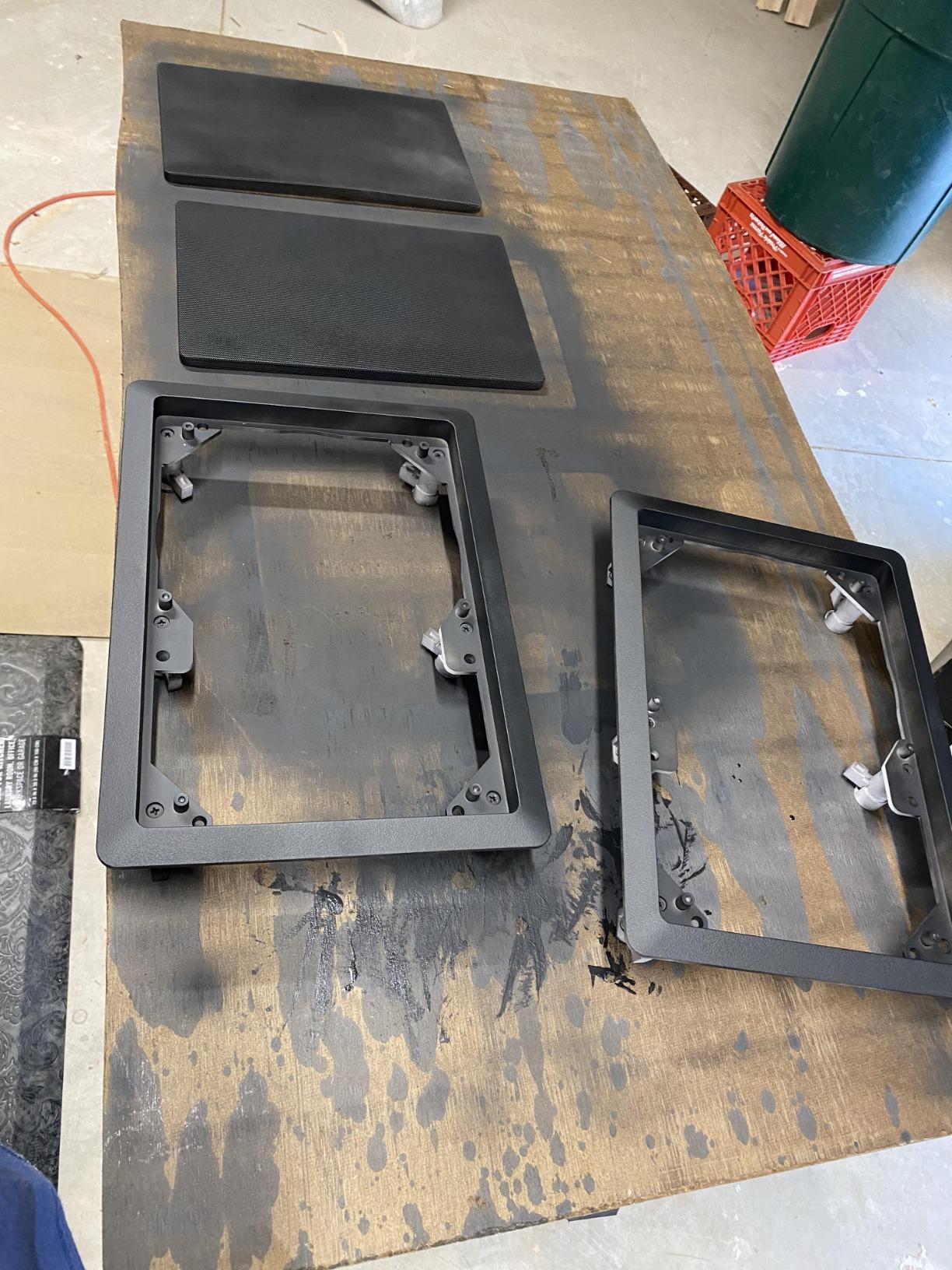
Installation is straightforward but the physical realities need planning. At 17.6 pounds for the pair, this is the heaviest speaker in the roundup, and awkward to hold in place while the clamps tighten. The template is the exact minimum, so you often trim more drywall than you hoped. And the removable paintable grille can be painted, but the frame has to be unbolted and painted separately or a white border stays around your work.
One more practical note on this pair: the mounting tabs can break if you drive them with a power screwdriver, which is a habit most of us have and most of us regret. Hand-tighten, then check the flange is flush. Warranty on this model is listed as none, so your retailer is the backstop here.
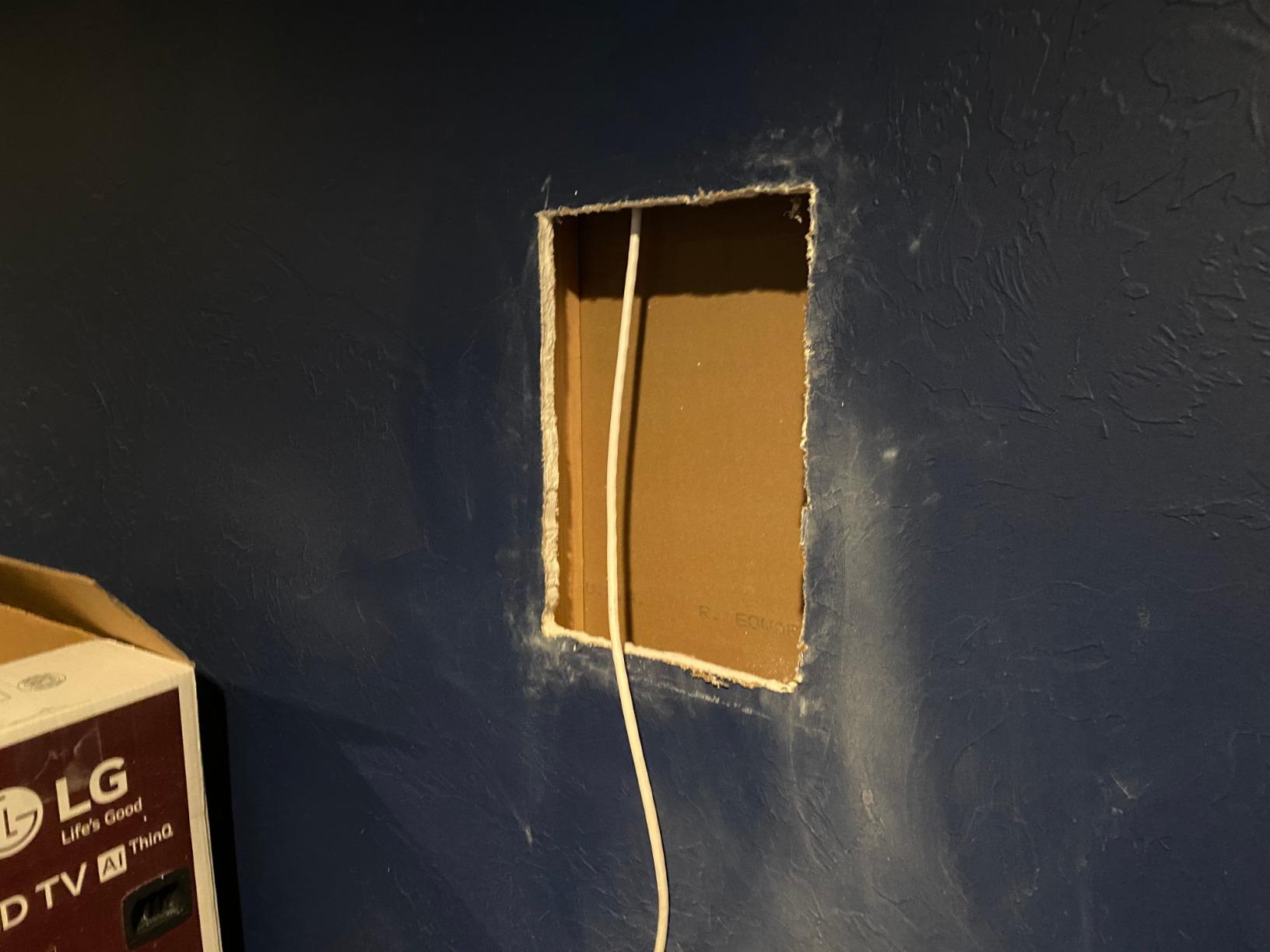
Why Three-Way Matters in a Long Room
Two-way in-walls are most vulnerable in large, reflective rooms where the crossover point sits in the middle of the critical vocal band. A dedicated midrange removes that compromise. If your room is tall, open-plan or has hard parallel walls, the extra driver earns its place, and 200 watts of headroom means it will not run out of gas on a decent AVR.
The Cost of the Extra Driver
Weight, depth and a large cutout are the trade-off. If your cavity is tight behind a stud, or you are working alone in a finished wall, the 17.6 pound pair is a genuine two-person job. Budget for a drywall repair and a second pair of hands, and remember that a product without a warranty deserves a slightly deeper unboxing check before the wall closes.
7. Yamaha NS-IW480C Review: Best In-Wall for Wide Dispersion
Yamaha NS-IW480C 8″ 3-Way in-Wall Speakers – Pair
8 in mica poly woofer
Dual 0.75 in dome tweeters
8 ohm
120 W
Pros
- Dual tweeters give wide even dispersion and airy highs
- Flush-mount grille snaps in without tools
- Rated to survive years of hard use
- Sold as a pair for a matched set
Cons
- Subwoofer needed for the deepest effects
- Sound bleeds behind the wall without added insulation
- Large cutout means checking stud layout first
The Yamaha NS-IW480C solves a problem in-wall speakers usually have: a narrow sweet spot. Instead of one tweeter, it uses dual 3/4 inch dome tweeters with Sound Max technology on a swivelling mount, and that two-tweeter arrangement is why owners single out the dispersion as the standout feature. In a wide room with off-centre seating, a single small tweeter gives you a hot spot and dead zones. This one does not.
Below the tweeters sits an 8 inch polypropylene mica cone woofer, rated 120 watts maximum input at 8 ohm. The response is flat-ish with clear mids and smooth bass for the class, and owners call it an outstanding balance of cost, quality and performance for both surround use and whole-house audio. The flush-mount cosmetic grille snaps in without tools, and the package contains two speakers.
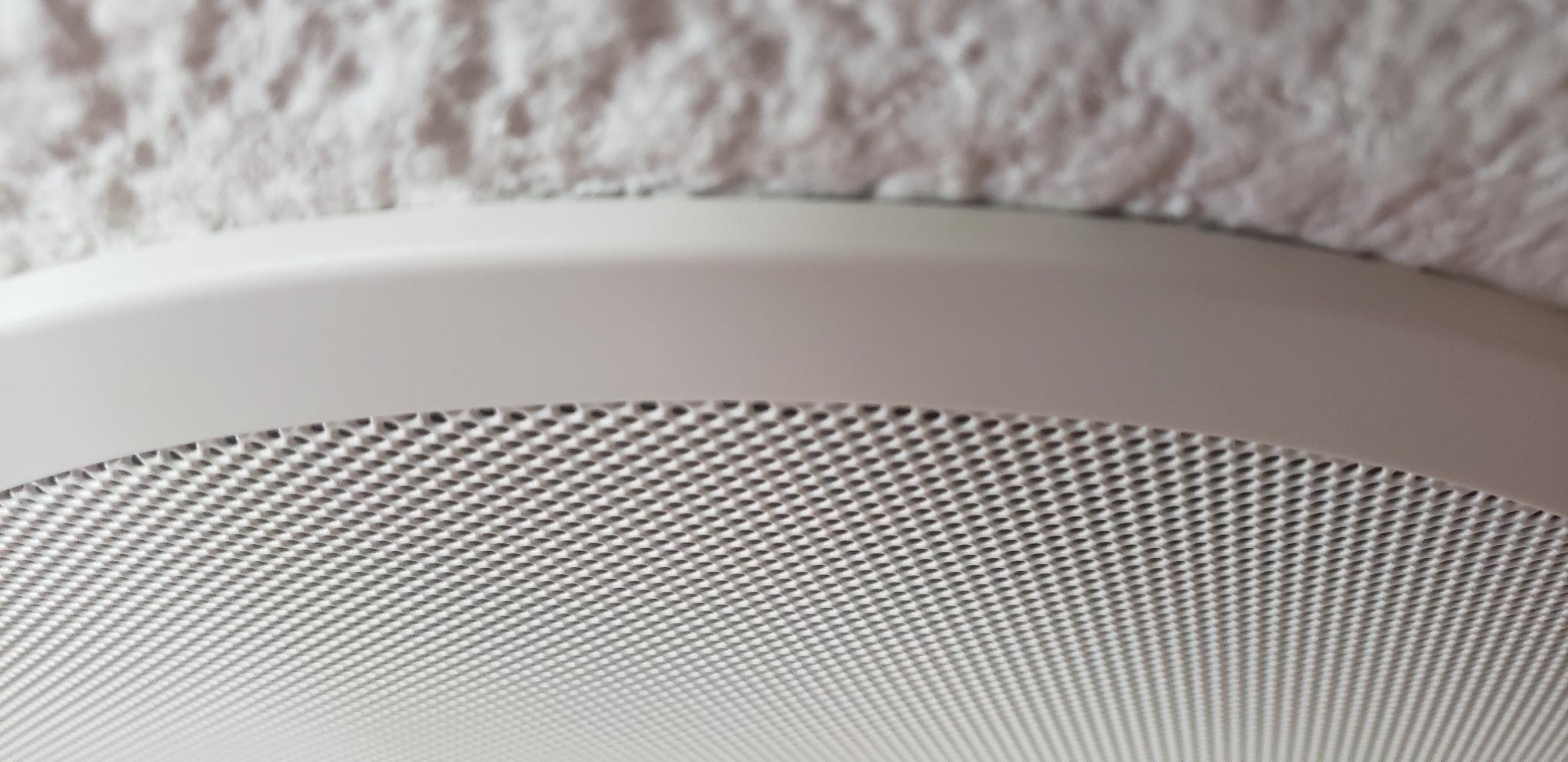
The three-way arrangement is why this model makes sense for irregular rooms. A dedicated midrange keeps effects from smearing, and the wide high-frequency spread means the rear image stays coherent even when only one of the pair is near the listener. Owners of this model report holding up to years of hard use on a 120 watt per channel receiver without failure, with a two year parts and labour warranty behind it.
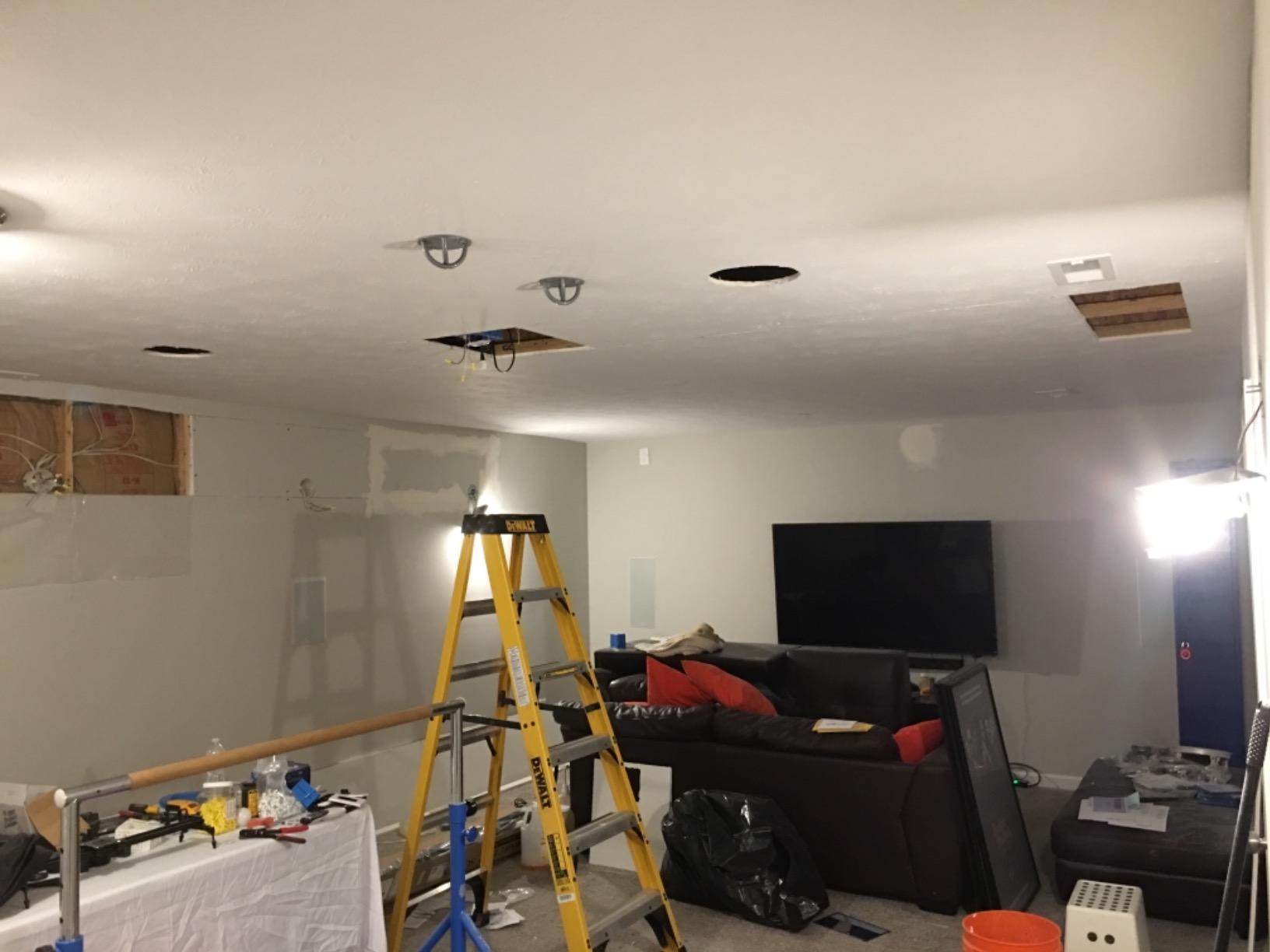
Two cautions come straight from the reviews. A subwoofer is needed for the deepest low-frequency effects, so do not expect this speaker to carry your bass. And sound can bleed into the space above or behind the install without added insulation, which several owners specifically recommend adding to the cavity. The mounting depth figure of 9-7/16 inch by 4-13/32 inch is also worth checking against your bay before you order.
Where Wide Dispersion Changes the Result
Dispersion is only interesting in rooms with bad seating geometry. If your main listening position is well centred, a conventional single-tweeter in-wall will sound fine. If you have a wide sectional, a window seat, or a room where the rears sit at very different distances from different seats, the dual tweeter layout does work that no amount of receiver EQ will replicate.
Buying It for the Wrong Reason
Do not choose this for deep bass or for a small room. An 8 inch woofer behind a flush grille in a 200 square foot room produces more low end than you can use, and the wide dispersion is wasted where everything is within two feet of the speakers. It is also worth remembering that the pair is sold together, which is convenient and removes any option of buying a single unit later.
8. Micca M-6S Review: The Best Budget In-Wall Speaker
Micca M-6S 6.5-Inch 2-Way in-Wall/Ceiling Speaker, Each, Paintable, White
6.5 in poly woofer
Pivoting 1 in silk tweeter
8 ohm
87 dB sens
Pros
- Smooth natural signature with full bass for the money
- Pivotable tweeter aims at the seating
- Built-in tabs grip drywall with no brackets
- Flush rimmed grille can be painted
Cons
- Sold as a single speaker so pairs need two purchases
- Limited output at high volume
- Not water resistant for direct outdoor exposure
The Micca M-6S is the answer for anyone who wants four surround channels without a large budget. Reviewers call it one of the best value in-wall options available, and many mix it with the larger Micca models across a whole 5.1 build. The high-excursion 6.5 inch poly woofer and pivoting 1 inch silk dome tweeter sit behind a 12dB crossover network that owners credit for a coherent upper-mid transition.
The published numbers are unusually helpful for planning. Outer dimensions are 8.7 inch wide by 12.1 inch tall, the cutout is 7.3 by 10.7, and mounting depth is only 2.9 inches, which makes it one of the easier models here to squeeze into a shallow cavity. Frequency response runs 50 Hz to 20 kHz at 87 dB sensitivity, and it handles 80 watts per speaker at 8 ohm.
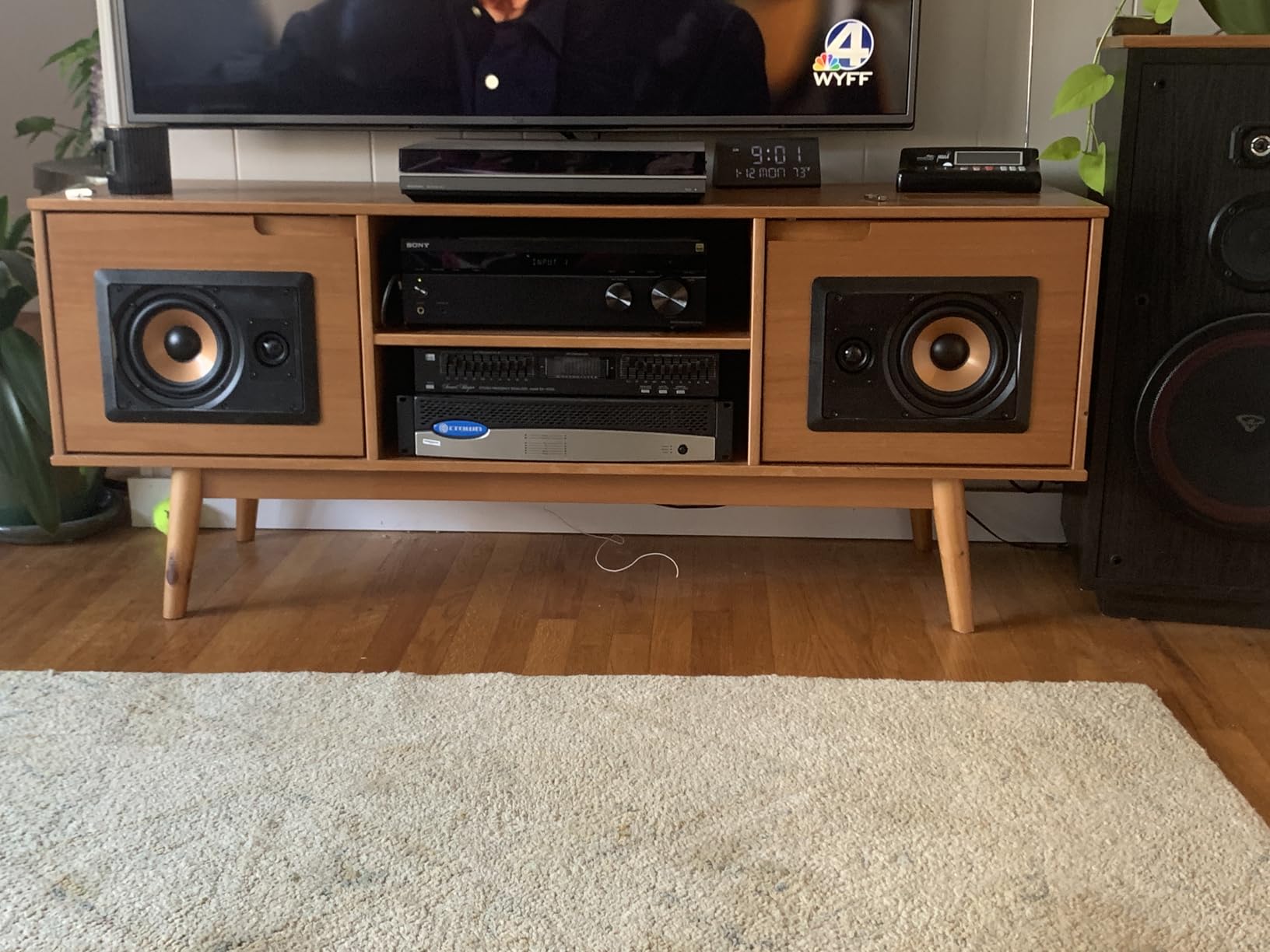
Installation is where this model separates itself from cheaper competitors. The built-in mounting tabs grip drywall directly, with no brackets, no box and no separate clamp hardware to lose inside the wall, and the rimmed grille sits nearly flush so it can be painted to disappear. Owners describe a smooth, natural signature with surprisingly full bass for a budget in-wall, though a subwoofer is commonly recommended for genuinely deep lows.
The limits are honest. It is a single speaker, so a pair means two purchases. Output drops off at high volume compared with the larger drivers in this roundup, which matters if you listen at cinema levels in a large room. And it is not water resistant, so keep it out of direct outdoor exposure even though the moulding would probably survive it.
Why This Is the Budget Pick Rather Than the Cheapest
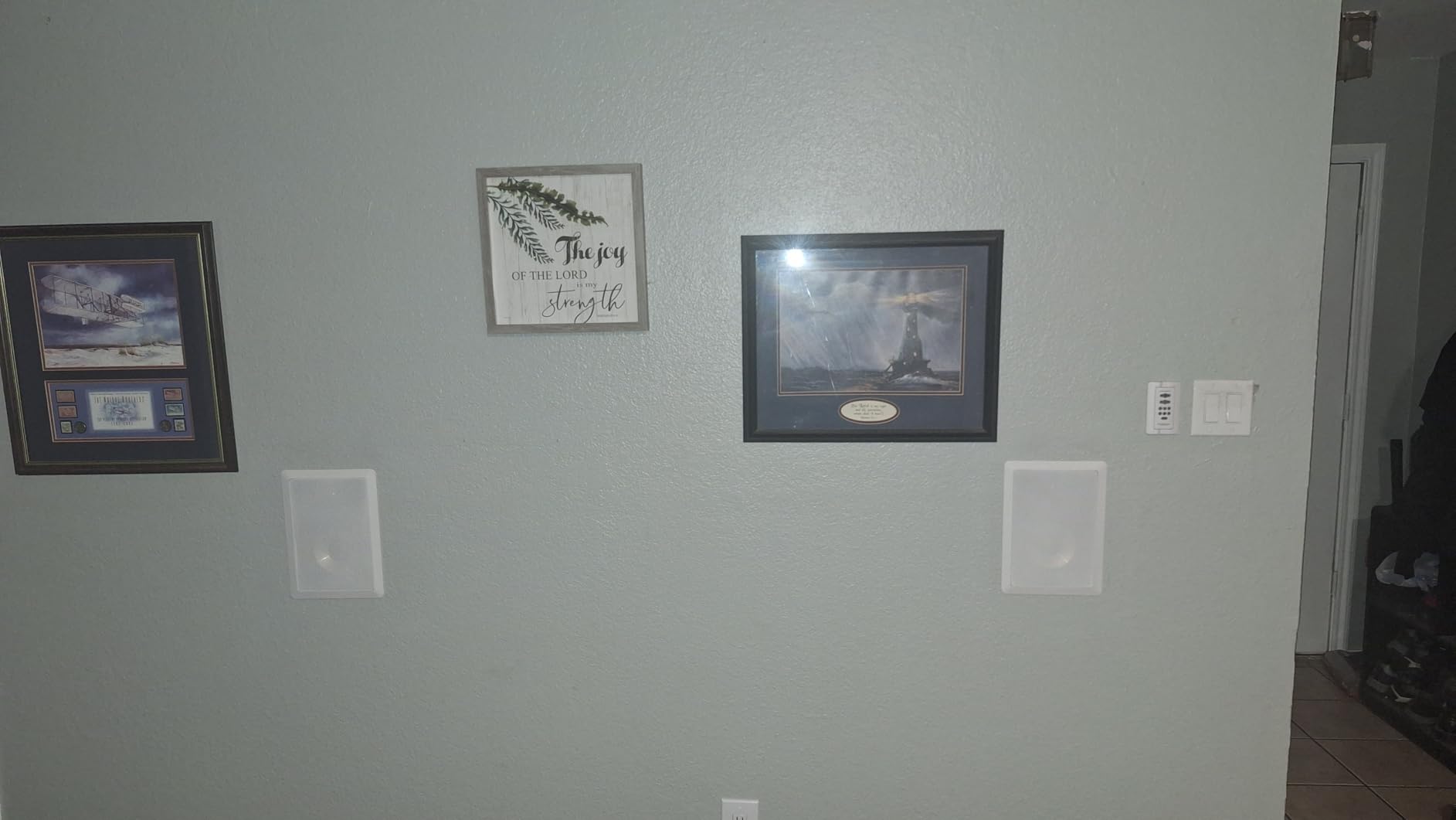
There are cheaper speakers on this list, but they trade away the things that decide whether an in-wall install goes smoothly: a pivoting tweeter, a 12dB crossover, a grille that sits flush, and mounting tabs that do not need a second person. The 2.9 inch mounting depth is the number that quietly makes this one of the most retrofit-friendly models here, and retrofit is where most people are.
When to Spend More Instead
Move up to the RC65i or the NS-IW480C if your room is over about 250 square feet, if you play at high volume, or if the surrounds are doing heavy lifting in a 7.1 setup with no Atmos layer. Those models give you more headroom and a wider soundstage. The M-6S is built for a bedroom, a den, or a modest living room where the rears are ambience rather than impact.
9. Yamaha NS-IW760 Review: The Best In-Wall for Painting Enthusiasts
YAMAHA NS-IW760 6.5″ 2-Way In-Wall Speaker System (White)
Dual 6.5 in woofers
1 in tweeter
6 ohm
88 dB sens
Pros
- Clear dialogue that holds up over movie effects
- Grille and frame both paintable with paint guards
- No distortion when the amp starts to clip
- Build looks more expensive than it is
Cons
- Cutout is wider than 16 in stud spacing when mounted horizontally
- Little bass alone so pair with a subwoofer
- Toggle clamps can be finicky in thick drywall
The NS-IW760 is the one to buy if the visible grille is going to bother you. Both the grille and the frame are paintable and the speaker comes with internal paint guards, which is the detail that separates a clean paint job from a speckled one. Owners report a fit and finish that looks like a far more expensive speaker, and dialogue that stays intelligible over movie effects.
Underneath it is a pair of 6.5 inch cone woofers with a 1 inch tweeter, rated 130 watts, with published frequency response of 50 Hz to 24,000 Hz at 88 dB sensitivity. The 6 ohm impedance is lower than the 8 ohm norm here, which actually helps a modest receiver, though it is the one figure you should confirm with your amplifier.
Owners rate this model as performing well beyond its price, particularly for center-channel duties, and report that it installs cleanly with the supplied template. They also note no distortion even when the amplifier starts to clip, which is a decent indicator that the drivers are not being pushed past their limits by a mid-range AVR. Warranty is two years on parts and labour.
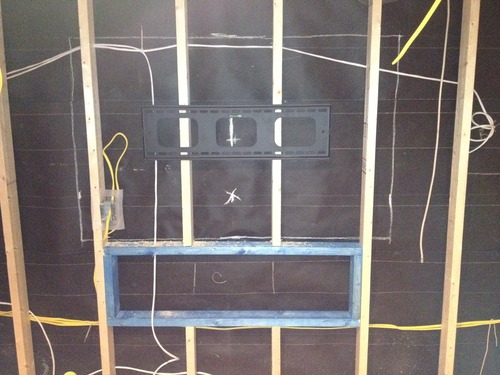
The practical caution that comes up most is stud spacing. The cutout is wider than 16 inches, so a horizontal install may require trimming a stud, and that turns a simple afternoon into a carpentry job. Bass on its own is limited, so pair it with a subwoofer. And the toggle clamps can be finicky in thicker commercial drywall, so test one before you commit to all four positions.
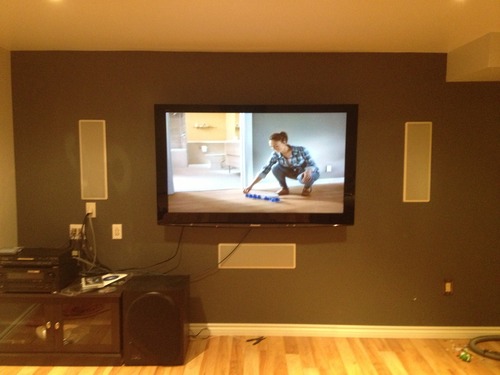
When a 6 Ohm Load Is an Advantage
Lower impedance means more current demand for the same volume, which is the opposite of what you want from an underpowered amplifier. But it also means each volt of amplifier output produces more movement, and several receivers that struggle with 8 ohm loads will drive a 6 ohm speaker without complaint. If your AVR is a step or two below the speakers you would otherwise buy, this is worth factoring in.
When the Width Becomes a Problem
Measure before you order, and measure the stud bay, not the drywall. A 23.4 inch tall vertical mount is easy, but the horizontal orientation people use for center-channel duty may not fit between 16 inch on-center studs. In a retrofit where you cannot cut a stud, treat that as a disqualifier and look at the Micca M-CS, which has the same issue, or a square 6.5 inch design like the Micca M-6S.
10. Pyle PDIW65 Review: A Reliable Low-Cost Pair for Rear Channels
Pyle Two Way Stereo Sound Speaker – Dual Professional Audio Speakers System – In Wall / In Ceiling White Mount Flush, 6.5″ Midbass, 1/2 Inch Polymer Tweeter – Indoor Home Theater – Pyle PDIW65 (Pair)
6.5 in midbass
0.5 in polymer tweeter
4 to 8 ohm
70 Hz to 20 kHz
Pros
- Punchy low end and clear highs per pair
- Spring-loaded quick-connect terminals
- Grille and frame can be painted
- Six wall clamps keep the speaker seated
Cons
- Small tweeter leaves the top end soft
- Listed as adjustable tweeter but it is fixed in practice
- Mounting clips can snap if over-tightened
The Pyle PDIW65 is a two-speaker pack with a 6.5 inch midbass driver and a 1/2 inch polymer tweeter, rated 200 watts peak and 100 watts RMS across a 4 to 8 ohm load. Reviewers treat the PDIW65 as a budget surround or whole-house speaker that punches above its class, and they install quickly with the supplied cut-out template. If the goal is a 5.1 system in a secondary room, the maths works out well.
Two practical conveniences stand out. The spring-loaded quick-connect speaker terminals mean no soldering and no screw terminals to strip, which speeds up a four-speaker install considerably. And there are six wall clamps rather than four, so the speaker stays seated even if one clip fails. The grille and frame can both be painted to blend with the wall.
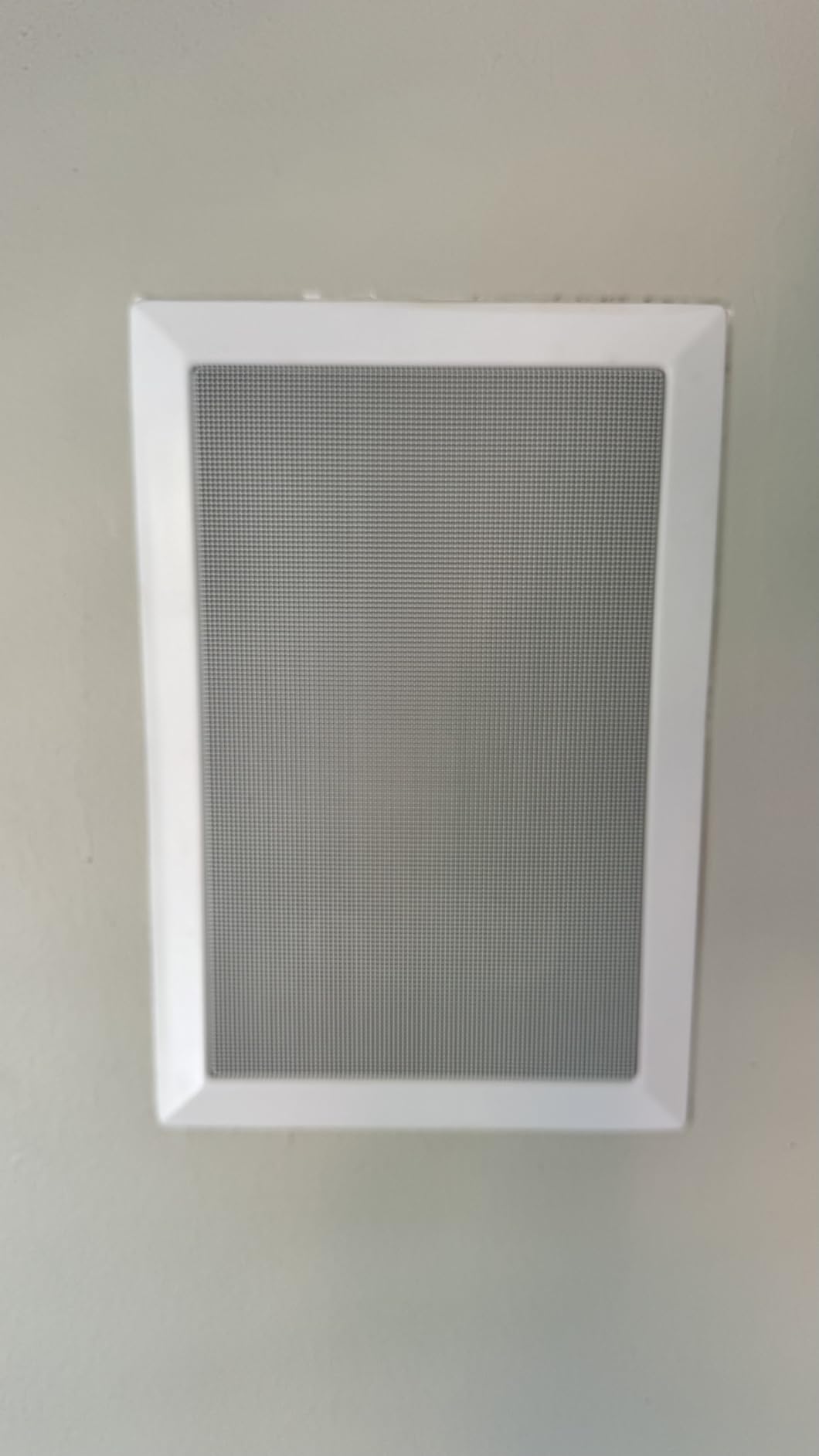
Frequency response is listed as 70 Hz to 20 kHz, which is narrower at both ends than most of the group and matches the smaller tweeter. It flush mounts into either a wall or a ceiling from the same cutout, and the pair is sold together, which removes the two-purchase problem that trips people up with the Klipsch and Micca singles.
The most frequent complaint in the reviews is the tweeter. It is small and slightly subdued, so the top end lacks real crispness, and the listing describes it as adjustable when in practice it is fixed. Second on the list is the mounting clips, which are brittle and can snap if over-tightened. Bass is also limited without a subwoofer or an EQ boost, and 4 to 8 ohm impedance means check your receiver’s floor.
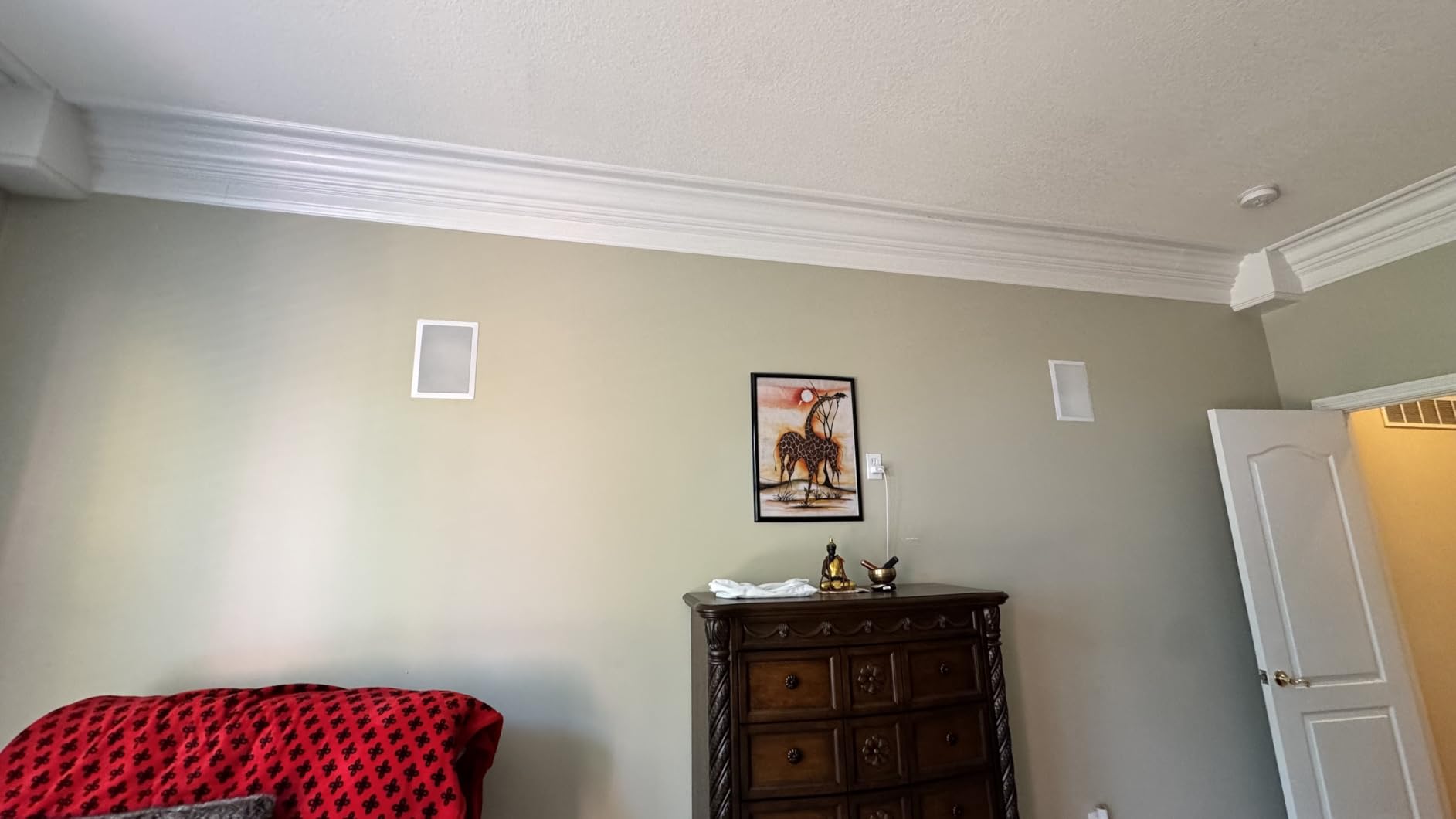
Where This Speaker Is Genuinely Enough
Surround channels in modern mixes carry ambience, off-screen action and crowd effects, and the ear is far more sensitive to timing and placement at the rear than to fine detail in those signals. That is the honest argument for a speaker like this: in a secondary room, at moderate volume, with a subwoofer handling everything below 70 Hz, most listeners would not be able to identify the difference. Whole-house background audio is an even easier job.
Where the Compromises Show
Sit in the primary seat of a dedicated theater, push it past seventy percent volume, and the soft top end becomes obvious on effects like glass and gunfire. If the room is shared with sleeping quarters, the open back means you will want acoustic insulation stuffed in the cavity. And never use a power driver on those clips, no matter how many you have to get through.
11. Pyle PDIW87 Review: The Best Enclosed In-Wall for Sound Isolation
Pyle Ceiling Wall Mount Enclosed Speaker – 400 Watt Stereo In-wall / In-ceiling 8″ Enclosed Full Range Deep Bass Speaker System – 50Hz-20kHz Frequency Response, 4-8 Ohm, Flush Mount – PDIW87 White
Enclosed 8 in back box
1 in titanium tweeter
4 to 8 ohm
400 W peak
Pros
- Enclosed back box stops sound bleeding into the next room
- Room-filling sound across several rooms
- Vented cabinet gives bass from a slim profile
- Handles loud playback without blowing out
Cons
- Plastic quarter-turn tabs are fragile and need pre-threading
- Grille fits loosely and is partly held by adhesive tape
- Bass-heavy with limited midrange detail
This is the model to reach for when sound leaking into the next room is a real constraint, and it is the only fully enclosed design in the whole roundup. An 8 inch long-throw woofer with a 1 inch titanium dome tweeter sits inside a vented cabinet, so the back of the speaker does not dump output behind the wall. Audiogon members strongly prefer fully enclosed in-wall designs over exposed-back models for exactly this reason, and in a condo or a terraced house it is not a nicety.
Power handling is listed at 400 watts peak across a 4 to 8 ohm load, with a 50 Hz to 20 kHz full-range response, and owners report handling loud playback without blowing out. The enclosure also means you can mount it without any cavity treatment at all, which is a meaningful saving in labour if you are paying an installer.

Owners generally like the sound quality, especially as rear surrounds or for distributed audio across several rooms, and they praise the enclosed back for room isolation. The included cut-out template plus the advice to pre-drill the clamps makes install fast, which is a workaround rather than a fix for the hardware but it works.
This is also the model with the widest rating spread in the group, with roughly one in ten one-star reviews. The complaints cluster around hardware: the plastic quarter-turn mounting tabs are fragile and must be pre-threaded or they snap, and the grille fits loosely, held partly by small pieces of adhesive tape. Sonically, it is described as bass-heavy with limited midrange detail, and some listeners find the enclosure boxy. The plastic cabinet can also vibrate at high volume, which is a real problem in a nearfield listening position.
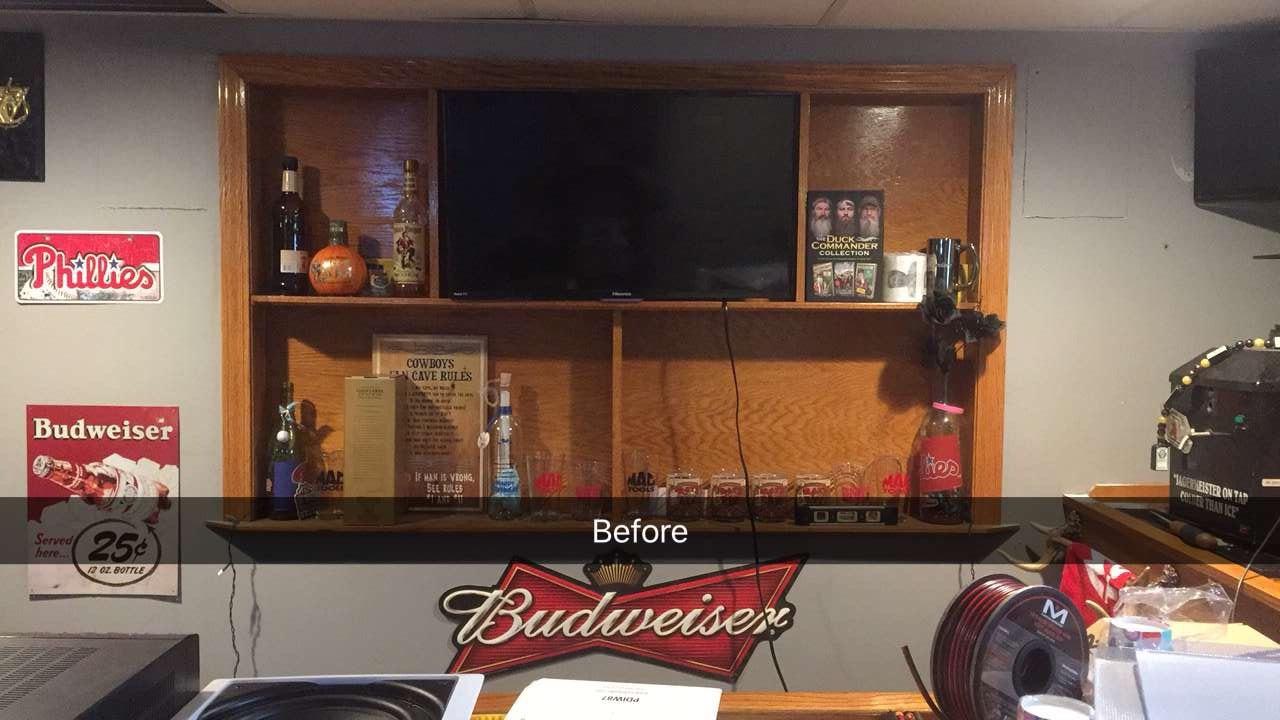
When Sound Isolation Is Worth the Compromises
If a bedroom, office or neighbour sits on the other side of the wall, an enclosed design removes an entire class of problems. Almost all open-back in-walls in this list can be treated with a fire-rated back box or a bag of insulation, but you are relying on the installer remembering to do it. This speaker solves it in the cabinet, and it is the reason it stays on this list despite the lowest rating here.
What the 4.1 Rating Is Telling You
Nearly five hundred reviews at 4.1 tells you the value is fine and the execution is not. The boxy character, the loose grille and the fragile tabs are manufacturing compromises, and they will show up in a room where the speakers sit close to your seat. Use it for rears, for secondary rooms, or anywhere the isolation matters more than the midrange detail. Do not build a front stage around it.
12. Micca M-CS Review: The Best Budget In-Wall Center Channel
Micca M-CS Dual 5.25-Inch in-Wall Center Channel Speaker, Each, White
Dual 5.25 in poly woofers
Pivoting 1 in silk tweeter
8 ohm
90 dB sens
Pros
- More low-end punch than a soundbar or small center
- Dialogue comes through crisp and clear
- Aims well from wall or ceiling placement
- Template and tabs make install quick
Cons
- Wide 13.8 in cutout can clash with 16 in on-center studs
- Sold as a single speaker so pairs need two units
- Needs a subwoofer for deep effects
The Micca M-CS is a dual 5.25 inch in-wall center that reviewers overwhelmingly rate as excellent value, with clear voice reproduction, sturdy construction and easy installation. Many owners pair it with Micca in-ceiling and in-wall units to build a complete 5.1 system, which makes it the natural companion to the M-6S in this roundup. Dialogue comes through crisp, and the extra low end is immediately obvious next to a soundbar.
It is rated 120 watts per speaker at 8 ohm with a published 90 dB sensitivity and response from 60 Hz to 20 kHz. The 12dB crossover network feeds a pivoting 1 inch silk dome tweeter between the two high-excursion poly woofers, and the unit can install horizontally as a center or vertically as a front or surround.
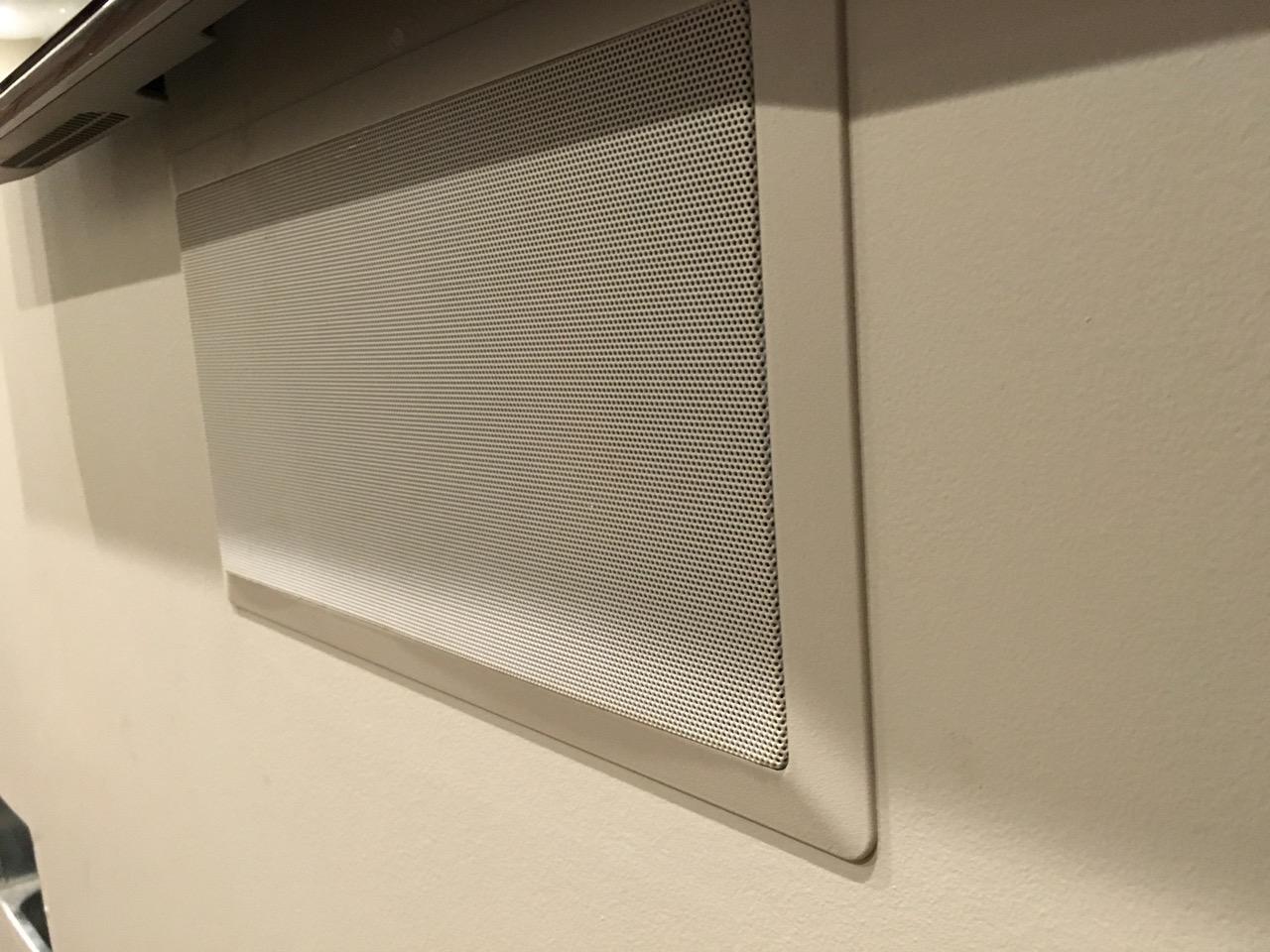
The mounting story is simple, which is why installs go quickly. Built-in tabs grip the drywall with no extra brackets, the included template sets the cutout, and the rimmed grille sits nearly flush and can be painted. Because the tweeter pivots, the same speaker works from a ceiling position as well as a wall position, which gives you flexibility if your screen wall is awkward.
The one practical problem that comes up repeatedly is stud spacing. The outer dimension is 15.4 inch wide by 8.3 inch tall and the cutout is 13.8 by 6.7, so a horizontal center mount sits just inside 16 inch on-center stud spacing. It fits on paper, but only if your studs are where the plans say they are. Also a single speaker, so a pair is two orders.
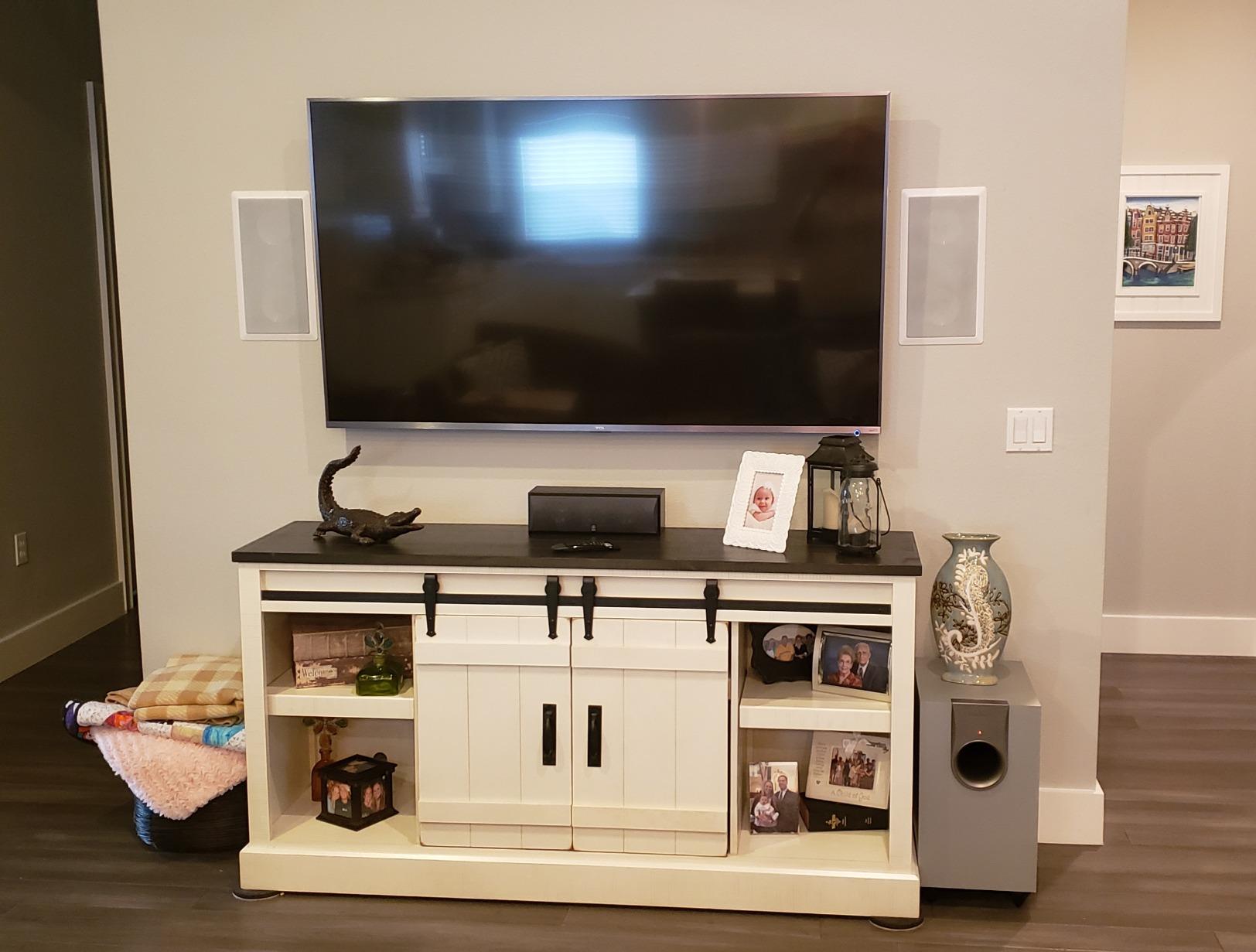
Why a Dual-Woofer Center Earns Its Cost
A center channel reproduces dialogue for the entire listening area, which is the hardest job in a surround mix and the one people listen to most. Two 5.25 inch woofers give it enough cone area to stay clean at higher levels than a single small driver, and at 90 dB sensitivity it will play without demanding much from your amplifier. If you are building a 5.1 on a budget, this is the speaker to spend on first.
The Vertical Option Nobody Uses
Because it installs vertically as a front or surround, you are not locked into a center position that your stud layout will not allow. A tall narrow cavity suits it well, and in a narrow room where the side walls are the only available surrounds, a matched pair of these reads better as a surround than most dedicated surround models. Warranty is a limited one year, so keep the packaging.
How to Measure Your In-Wall Cutout Before You Buy
This is the single most common in-wall buying mistake, and no competitor roundup covers it properly, so here is the process. You need three numbers, and only one of them is on the product page. Find a stud in the target bay with a stud finder, then measure the clear width between studs at three heights. Standard framing is 16 inches on center, which means a clear bay of about 14.5 inches, but renovations and additions vary.
Next, measure depth. Pick up a stud and check the cavity is at least as deep as the speaker’s published mounting depth plus clearance for the back box and the wire bend behind it. A 2.9 inch mounting depth fits almost anywhere, which is why the Micca M-6S is the easiest retrofit here, while a speaker with a 3.5 to 3.8 inch depth plus a back box needs a deeper bay or a flush-mount cavity. If you do not know the depth, look for a basement, closet or garage wall with exposed framing and compare.
Worked example. The Micca M-6S publishes a 7.3 by 10.7 inch cutout, which fits inside a 14.5 inch bay with room to spare in both directions. The Micca M-CS publishes a 13.8 by 6.7 inch cutout for horizontal use, which fits a 14.5 inch bay with 0.7 inches to spare, so it works on standard framing but leaves nothing for error. The Yamaha NS-IW760 is the case that fails: owners report its cutout is wider than 16 inch stud spacing in horizontal orientation, which means trimming a stud. Measure, then order.
Impedance, Sensitivity and Matching an Entry-Level Receiver
Nominal impedance tells you how hard the speaker asks the amplifier to work. Most of the models here are 8 ohm, the Yamaha NS-IW760 is 6 ohm, and the two Pyle models are listed as 4 to 8 ohm. An 8 ohm load is the safe default that essentially every receiver supports. A 6 ohm load asks for more current, and many amplifiers will run hot or protect themselves if you ignore the manual.
Sensitivity is the number most buyers skip and should not. It measures how loud the speaker plays per watt per metre. The Micca M-CS is listed at 90 dB, the Micca M-6S at 87 dB, and the Yamaha NS-IW760 at 88 dB. A 3 dB gap is audible as roughly half the amplifier power, so a 90 dB speaker on a modest receiver will play louder and cleaner than an 87 dB speaker on the same one.
The symptom of an underpowered receiver with these in-walls is a thin, muddy sound that gets worse as you turn it up, which is exactly the complaint forum users describe. If your AVR is a slim entry-level unit, either choose the highest sensitivity option available or lower the crossover point so the surrounds hand off earlier to the subwoofer. Running all of them flat to 40 Hz is asking a wall speaker to do a job it was not designed for.
Back Boxes, Fire-Rating and In-Wall Rated Wire
An open-back in-wall fires out of the front and dumps the rest of its energy into the wall cavity and, potentially, into the room next door. That is the sound bleed complaint that shows up in reviews of the 255c-RT, the NS-IW480C and the Pyle PDIW65. A back box is an enclosure that attaches behind the speaker, controls that rear output and keeps bass from exciting the studs.
Code matters here. In residential construction, penetrations through a firewall are typically required to use a fire-rated back box so the wall maintains its rating, and a multi-unit building will have stricter rules plus sound transmission requirements. Your installer or your local inspector will know which apply; the point is that a cheap open-back install without one is the most common way in-wall speakers get flagged in a condo.
For wire, use in-wall rated CL2 or CL3 speaker cable. CL2 is rated for general use in residential walls, while CL3 is the heavier jacket for commercial or institutional runs, and neither is subject to the same conduit requirements as standard jacket CL1.
For new construction, plan the run before the drywall goes on, leave a service loop behind each cutout, and consider conduit if you ever expect to change the layout. For retrofit, expect to fish wire through the cavity or patch the nearest accessible point, and our surround sound soundbar roundup covers the wireless route for anyone who cannot open a wall at all.
5.1 vs 7.1 vs Atmos Height Channels for In-Wall Builds
For most living rooms, 5.1 is the right answer. One pair of surrounds flanking the seating, a center above or below the screen, a subwoofer and the fronts gets you ninety percent of the benefit. Add rear back speakers only when the room is wide and deep enough that the side surrounds sit well forward of the seat, because a 7.1 layout that crams the rears beside your head is worse than 5.1.
Atmos height channels are where in-walls have a genuine advantage. Height speakers belong above or near the fronts and surrounds, angled downward, and a swiveling or pivoting tweeter is close to a requirement rather than a nicety. Every Klipsch, Micca, Polk and Monoprice in this list has one, which is a fair indicator of what these manufacturers think the channel is for.
Where to spend the money, in order: center channel first, then the subwoofer, then the surrounds. Multiple forum users make the same point independently, that surround quality matters less than expected in modern mixes while the center carries dialogue. If you are choosing between an expensive pair of in-walls for surrounds and a proper center plus a decent subwoofer for the same budget, take the second option. If your room is a rental or a flat, our wireless surround sound picks avoid the drilling entirely.
Frequently Asked Questions
Which speaker is best for surround sound?
For in-wall surrounds, the Polk Audio RC85i is the safest all-round pick, with an 8 inch woofer, a swiveling silk dome tweeter and the largest review base here. Forum consensus adds a caveat worth heeding: in-ceiling speakers are often the better rear position because they can be angled down at the listener, so in-walls win mainly where the ceiling is off limits or the rears must sit on side walls.
Do in-wall speakers sound better?
Not inherently. In-wall speakers do not out-perform good bookshelf speakers on sound quality, and in most modern surround mixes the difference is hard to detect. What they win is floor space, a clean flush appearance and true discrete rear channels instead of virtual processing. In-wall installs are also permanent, so they suit owners and renovators rather than renters.
What are the best wall-mounted speakers for home use?
For whole-house background audio, the Yamaha NS-IW480C is a strong pick because its dual tweeters spread sound evenly through a room rather than concentrating it. The Polk RC65i and the Micca M-6S cover the value end and both use moisture-resistant materials suited to kitchens, bathrooms and covered areas. For mounted-on-the-wall designs rather than flush in-wall, our surround sound speaker roundup compares the stand and bracket options separately.
What’s better, 5.1 or 7.1 surround?
For most living rooms, 5.1 wins because it is easier to place correctly. Add rear back speakers only when the room is wide and deep enough that the side surrounds sit well forward of the main seating, since surrounds beside your head sound worse than none at all. A 5.1.2 layout with in-wall height speakers angled down at the listener often gives more than 7.1 does in a normal room.
What are the best in-wall speakers for home theatres?
For a dedicated theater, the horn-loaded Klipsch R-5800-W II leads on output because its 8 inch Cerametallic woofer moves more air than smaller designs, and the pivoting Tractrix horn with treble and midbass attenuation switches lets you tune it to a reflective room. The Monoprice Caliber 3-Way pair is the pick for a large, hard-surfaced room because a dedicated midrange driver keeps voices clean. The Pyle PDIW87 is the one to choose when sound must not reach the next room.
What is the 83% rule for speakers?
The 83% rule is a guideline about speaker placement rather than a spec: roughly 83 percent of the perceived soundstage improvement comes from getting the speakers and the room right, with the remaining 17 percent coming from equipment. It is a rule of thumb, not a measurement, so treat it as a prompt to prioritise placement and room treatment over a more expensive speaker.
Do in-wall speakers need a back box?
Most do, and the reason is bass control plus sound isolation. Without one, an open-back in-wall dumps output into the wall cavity and can bleed into an adjoining room, which is the most common complaint in owner reviews of open-back models. A fire-rated back box is generally required where the wall is a rated assembly, and in a multi-unit building it is close to mandatory.
Conclusion
The best in wall speakers for surround sound in 2026 come down to your wall and your receiver, not the badge on the grille. The Polk Audio RC85i is our top pick because it is the most proven, ships as a matched pair, and gives you an aimable tweeter and a five year warranty at a price that leaves room for a proper center channel. Pair it with the Micca M-CS or the Polk 255c-RT at the front, add a subwoofer, and finish the room with a sub-budget pair like the Micca M-6S if the budget is tight.
Before any of it goes in the wall, measure your stud bays and your cavity depth, confirm the cutout fits, and decide on a back box and CL2 in-wall rated cable. Get those three things right and the install is straightforward. Get them wrong and the best in-wall speaker in the world will be sitting in a box in your garage. Measure first, then check current pricing on each model above.