
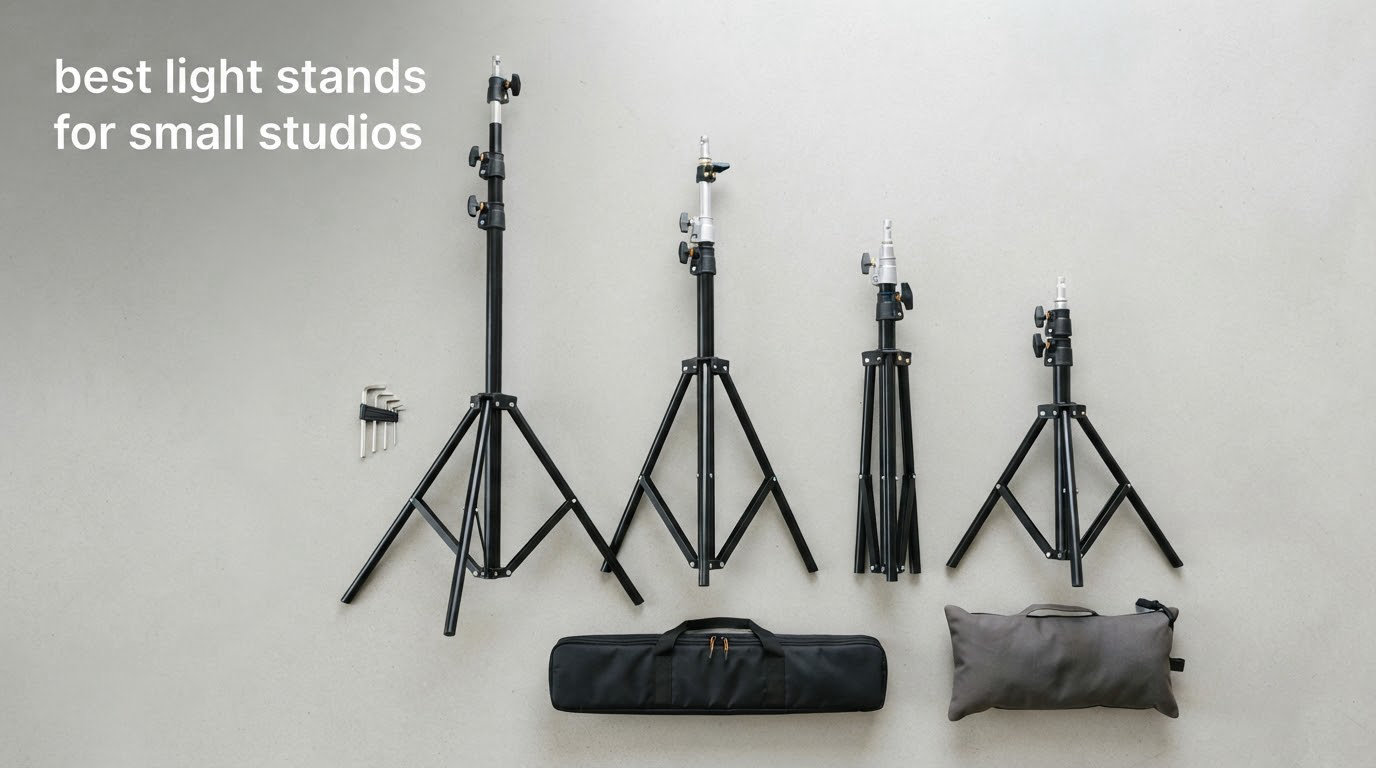
If you are lighting a small room and want the best light stands for small studios, the answer is not the heaviest stand on the market. It is a stand whose base diameter fits your floor plan, whose legs open without eating your only walkway, and whose rated load comfortably covers the weight of the light plus the modifier plus the adapter between them.
We spent weeks cycling eight stands through a spare-room studio, a corner of a garage and a rented shooting space, moving them in and out of a closet, and loading them with the kinds of gear a small studio actually uses: LED panels, ring lights, a couple of strobes with softboxes, reflectors and background rolls. The best light stands for photography guide covers the lights themselves, so this roundup stays focused on the stands holding them up.
The short version: the Amazon Basics 6.7-foot aluminium pair is the best light stand for most small studios, and the Neewer ST-190SS is the one to buy when your lights are heavy and your room is tight. The Manfrotto 1051BAC wins on compactness, the SmallRig boom stand wins when you need a light overhead without a second stand, and the Neewer rolling stainless model is the pick for heavy gear you do not want to carry across the room.
Two numbers matter more than any other spec on this list, and both come straight from the manufacturers. Rated maximum load is what the stand is tested to hold; your safe working load is no more than 40 to 50 percent of that figure, which is the practice long repeated on the Fred Miranda photography forums. Second, collapsed length decides whether the stand lives in a closet or behind the sofa.
Our testing was practical rather than laboratory work. We set each stand up repeatedly in the same spot to time it, loaded it with the modifier we owned, walked around it looking for wobble and play in the centre section, and measured the floor space its legs actually claimed. Last updated for October 2026.
Table of Contents
Top 3 Picks: Light Stand Picks for Small Studios in 2026
Three stands earn a place on the short list because they solve the small-room problem in different ways. The Amazon Basics pair is the general answer, the Neewer ST-190SS is the answer for heavy modifiers, and the Ulanzi TT43 is the answer when the whole kit has to fit in a bag.

Amazon Basics 6.7 ft Stand 2-Pack
- Two stands plus two cases
- 2.8 to 6.7 ft range
- Folds to 28.5 inches
- 7 lb load on the bottom section

Neewer ST-190SS Steel Stand
- 13.5 lb load rating
- Spring-loaded base
- 34 to 75 inch range
- 5/8 inch spigot plus 1/4 inch tip

Ulanzi TT43 Reversible Stand
- Reversible legs to 45 cm
- 840 g aluminium build
- 76 to 190 cm range
- Folds to 43 cm
One caution before you commit. The Manfrotto 1051BAC and the Ulanzi MT-89 both sit well below the load of a strobe with a large softbox, and neither belongs in a room where a falling modifier would land on furniture. We explain which rig each one suits in its own section.
Best Small Studio Light Stand Comparison in 2026
Every stand below appears here with its material, load rating, height range, collapsed length and own weight, so you can filter the field before reading the individual reviews. Features marked as air cushioned damp the descent of the centre column so a light does not slam down when you loosen a lock.
| Product | Specifications | Action |
|---|---|---|
| Amazon Basics 6.7 ft Aluminium Light Stand 2-Pack |
|
Check Latest Price |
 Ulanzi MT-89 Extendable Travel Light Stand Ulanzi MT-89 Extendable Travel Light Stand |
|
Check Latest Price |
 Neewer 20 inch Tabletop Light Stand 2-Pack Neewer 20 inch Tabletop Light Stand 2-Pack |
|
Check Latest Price |
 SmallRig 9.2 ft Air Cushioned Stand with Boom Arm SmallRig 9.2 ft Air Cushioned Stand with Boom Arm |
|
Check Latest Price |
 Neewer Stainless Steel Rolling Light Stand Neewer Stainless Steel Rolling Light Stand |
|
Check Latest Price |
| Ulanzi TT43 Reversible Aluminium Light Stand |
|
Check Latest Price |
| Neewer ST-190SS Stainless Steel Spring Load Stand |
|
Check Latest Price |
 Manfrotto 1051BAC Air Cushioned Mini Stand Manfrotto 1051BAC Air Cushioned Mini Stand |
|
Check Latest Price |
Two patterns stand out. Height and load do not move together: the Ulanzi MT-89 reaches nearly 79 inches with a 2.2 lb ceiling, while the Neewer rolling stand stops at 10 feet carrying 66 lb. And the shortest stand in the group, the Neewer tabletop pair, is also one of the least capable vertically, which is exactly why it exists as a separate category.
1. Amazon Basics 6.7 ft Aluminium Light Stand 2-Pack — Best Light Stand Overall for Small Studios
Amazon Basics Portable Aluminum Photography Light Stand Tripod with Case, Adjustable 2.8-6.7 Feet, Pack of 2, Black
Aluminium construction
2.8 to 6.7 ft adjustable
Folds to 28.5 inches
7 lb load on lowest section
Pros
- Two stands and two carrying cases in one pack
- Lightweight aluminium that one person can carry alone
- Wide 2.8 to 6.7 ft height range
- Folds small enough for a closet
- Works with strobes
- softboxes
- LED panels and ring lights
Cons
- Load drops to 1.1 lb on the top section
- Not water resistant for outdoor work
- Basic geared head with limited tilt control
This is the stand we kept reaching for. Over several weeks of lighting a spare room we set it up more times than any other model here, and the reason is dull but decisive: a two-pack means a spare while one stand is in the other room, and the included cases mean neither stand lives in a heap by the door. The rating of 4.5 across 12770 reviews is the largest review base in this roundup, and the feedback is consistent about what matters: light build, quick folding, two cases included.
The height range is the real headline for a small studio. At a 2.8-foot minimum it can sit low beside a product table, and at 6.7 feet it clears a subject seated on a chair without you craning the column halfway out.
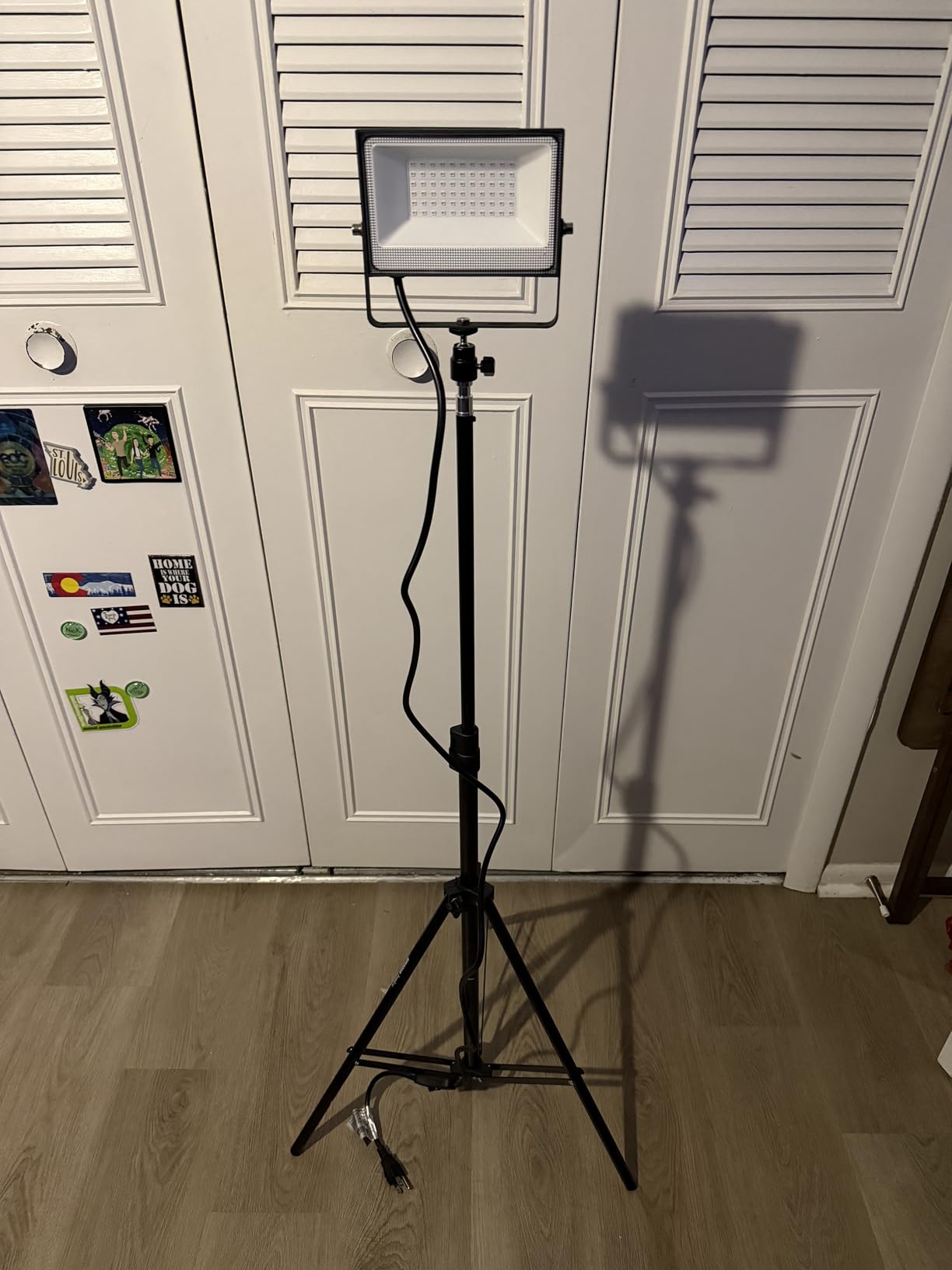
What you give up is load at height, and the manufacturer is honest about it. Capacity is stated from the bottom up: 7 pounds on the first section, 5.5 pounds on the second, and 1.1 pounds on the third. That third-section figure is the one to plan around, because a strobe with a 90 cm softbox and its bracket runs well past it.
Our practical rule with these stands is to extend the thickest section first and only add height once the load is off. The legs are aluminium with a black finish, each stand weighs about 938.9 g, and the geared head is a simple tilt mechanism rather than a full pan-tilt head, so plan your angles before you extend rather than fighting the knob at full height.
When this pair works in a small room
Two stands at 6.7 feet give you a key and a fill with a reflector held on the third, which is the setup most one-person studios need first. The 28.5-inch folded length means both fit on a top shelf or in the back of a wardrobe, which in a 6 by 6 foot room is a meaningful saving.
When it falls short
Push a heavy strobe and a large softbox onto the top section and you will feel movement in the centre column. The material is aluminium and not water resistant, so we would not leave one of these outdoors overnight in damp weather.
If your gear is heavier, the Neewer ST-190SS in review seven is the step up, and our general light stand guide covers the wider range of options beyond small rooms.
2. Ulanzi MT-89 Extendable Travel Light Stand — Best for Lightweight Travel Setups
ULANZI MT-89 Extendable Tripod Aluminum, 82″ Portable Adjustable Light Stand with 1/4″ Screw Quick Release, Camera Phone Tripod for Camera Video Light Smartphone, Lightweight for Travel,Up Load 2.2LBS
Aluminium alloy body
1.31 lb total weight
79 in extended, 15.16 in folded
2.2 lb load limit
Pros
- Lightest stand here at 1.31 lb
- Folds to 15.16 inches for backpack carry
- Red locking ring holds the legs steady
- Ball head tilts up to 180 degrees
- Works with lights
- phones and action cameras
Cons
- Rated only 2.2 lb when fully extended
- Wobbles with heavier gear at full height
- Ball head should stay upright at max extension
- Phone clamps and adapters not included
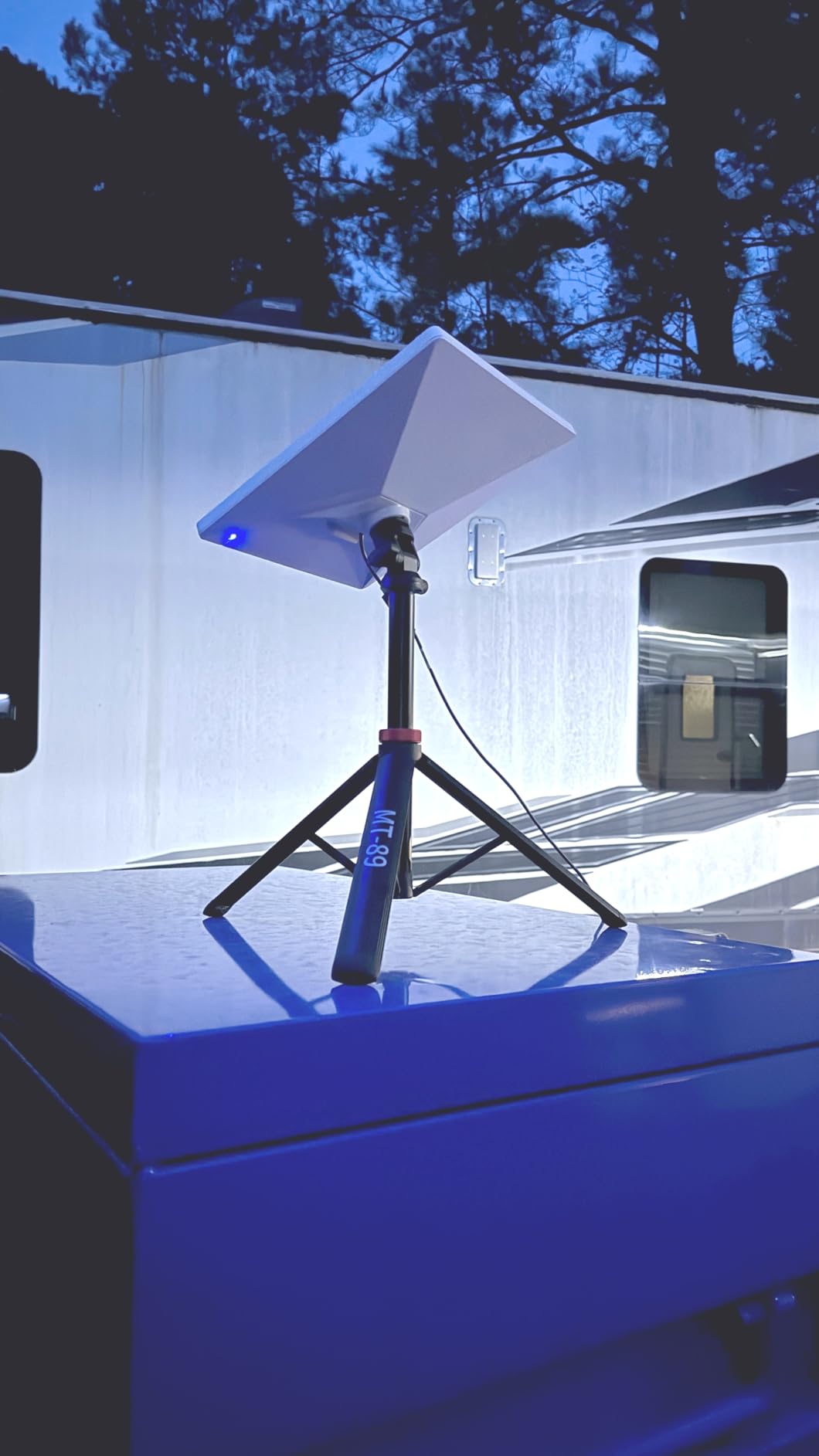
This is the smallest full-height stand in the roundup and the one we would put in a rucksack without thinking. At 1.31 lb and a folded height of 15.16 inches it disappears into a day bag, and the 1/4-inch quick-release plate on top means a small LED panel or a phone clamp drops straight on. The rating of 4.4 from 1149 reviews puts it in good company, and buyers consistently name the weight and the folded length as the reasons they bought it.
The design detail we liked most is the red locking ring around the leg sections. On stands this light the usual complaint is that the legs creep, and the ring gives you something to check with a glance from across the room.
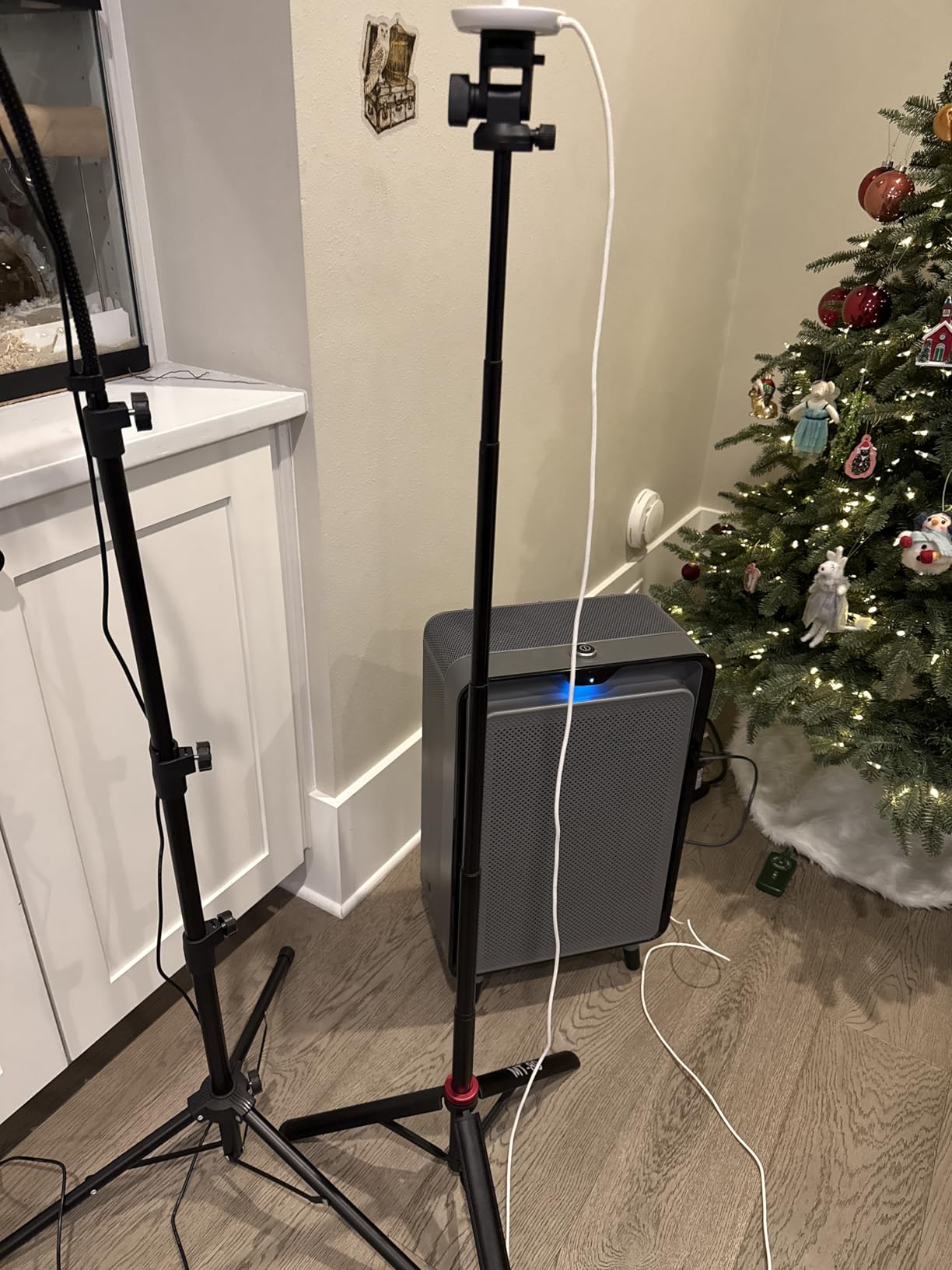
But read the warning before you extend it. Ulanzi states plainly that a video light or SLR camera over 2.2 pounds will cause wobble and instability when the tripod is fully extended, and at 79 inches there is a lot of extension to play with. This is a stand for fill lights, reflectors, small panels and phones, not for a strobe and modifier.
In our room, it worked well as a back corner fill positioned just under ceiling height, and poorly as a key light once we asked it to hold anything with real mass. The ball head rotates vertically up to 180 degrees, but the same warning applies: leave it upright at full extension. Phone clamps and GoPro adapters are not in the box, and the warranty runs 12 months.
When the MT-89 earns its place
On-location shoots, location interviews, and any room where the stand has to be carried up a staircase or moved between two setups without a dolly. It also works as a tabletop-adjacent stand for a phone or a small panel on a crowded desk.
When it is the wrong tool
Any rig where the modifier plus the light plus the bracket approaches 2.2 pounds, and any room with children or pets where a wobbling stand on full extension becomes a hazard. If you want a similar folded size with more load, the Manfrotto 1051BAC in review eight closes to 25-26 inches and carries 8 to 9 pounds.
3. Neewer 20 inch Tabletop Light Stand 2-Pack — Best for Tiny Desks and Product Work
NEEWER 50cm/20inch Aluminum Table Top Photography Backlight Stand, 2 Pack
Aluminium mini stand
20 in maximum height
2 kg load capacity
12.23 oz per stand
Pros
- Very small footprint for a cramped desk
- Two pack suits key and fill on a tabletop
- Quick shoe and lock speeds up setup
- Light at roughly 12 ounces per stand
- Polished aluminium finish
Cons
- 2 kg limit rules out heavy fixtures
- 20 inch height restricts lighting angles
- Tabletop scale only
- no floor-standing position
Table and tabletop light stands get treated as accessories rather than tools, and that is why this category is worth its own section. When your studio is a desk, a kitchen counter or a craft corner, a full-height stand is not a compact option, it is the wrong object entirely. The Neewer 20-inch pair gives you a genuine second and third light position in about 5 inches of vertical space.
The rating of 4.5 across 1466 reviews comes with consistent feedback: people like the compact size, the two-pack format, and the quick shoe and lock system that makes setup fast enough to leave the stands up between shots. Maximum height is 50 cm, or 20 inches, and each stand weighs about 12.23 ounces in aluminium.
Our table tests were the strongest results of the whole roundup. Two of these plus a white card reflector gave us a workable three-point setup for small products, and the polished finish stays out of frame when the stand appears in a reflection.
What fits on a tabletop stand
Small LED panels, backlights, ring lights of modest diameter, reflectors and card stock. With a 2 kg load capacity you can carry more than the 20-inch height suggests, but the ceiling here is height, not weight, and that is the limit you will hit first.
What does not fit
Any floor-standing plan, any head and shoulders portrait above about 20 inches, and any strobe with a modifier. If your key light needs to be above eye level, you need one of the floor stands in this roundup instead.
4. SmallRig 9.2 ft Light Stand With Boom Arm — Best All-in-One Stand for Overhead Light
SmallRig 9.2ft Light Stand with Boom Arm, Photography Lighting Tripod
Air cushioned column
94 to 280 cm height
Integrated boom arm
5 kg load limit
Pros
- Air cushioning stops sudden drops and pinched fingers
- Boom arm pivots and swivels 180 degrees with separate locks
- Locking grip survives repeated tightening
- Carries a full frame camera and zoom without wobble
- Folds to 94 cm yet reaches 280 cm
Cons
- Sandbag counterweight is a dated design
- Adjustment knob feels fragile to some users
- 6.6 lb is heavy for a portable stand
- Not water resistant
This is the stand that replaces two other stands in a small room, and that is why it earns its place despite a 4.8 rating from only 358 reviews. The boom arm swings a light out over a table or a subject, then folds back alongside the column when you are done, so you get the reach of a boom stand and the compact footprint of a plain tripod in one package.
Height runs from 94 cm to 280 cm, so it works from a low product angle up to just over 9 feet, and the folded length of 94 cm is genuinely small enough for a closet corner. The maximum load is 5 kg, or 11 pounds, and the stand weighs 6.6 pounds. The base uses an iron support bar 2.66 mm thick and 15 mm wide with nylon feet, and the legs spread up to 1.2 m.
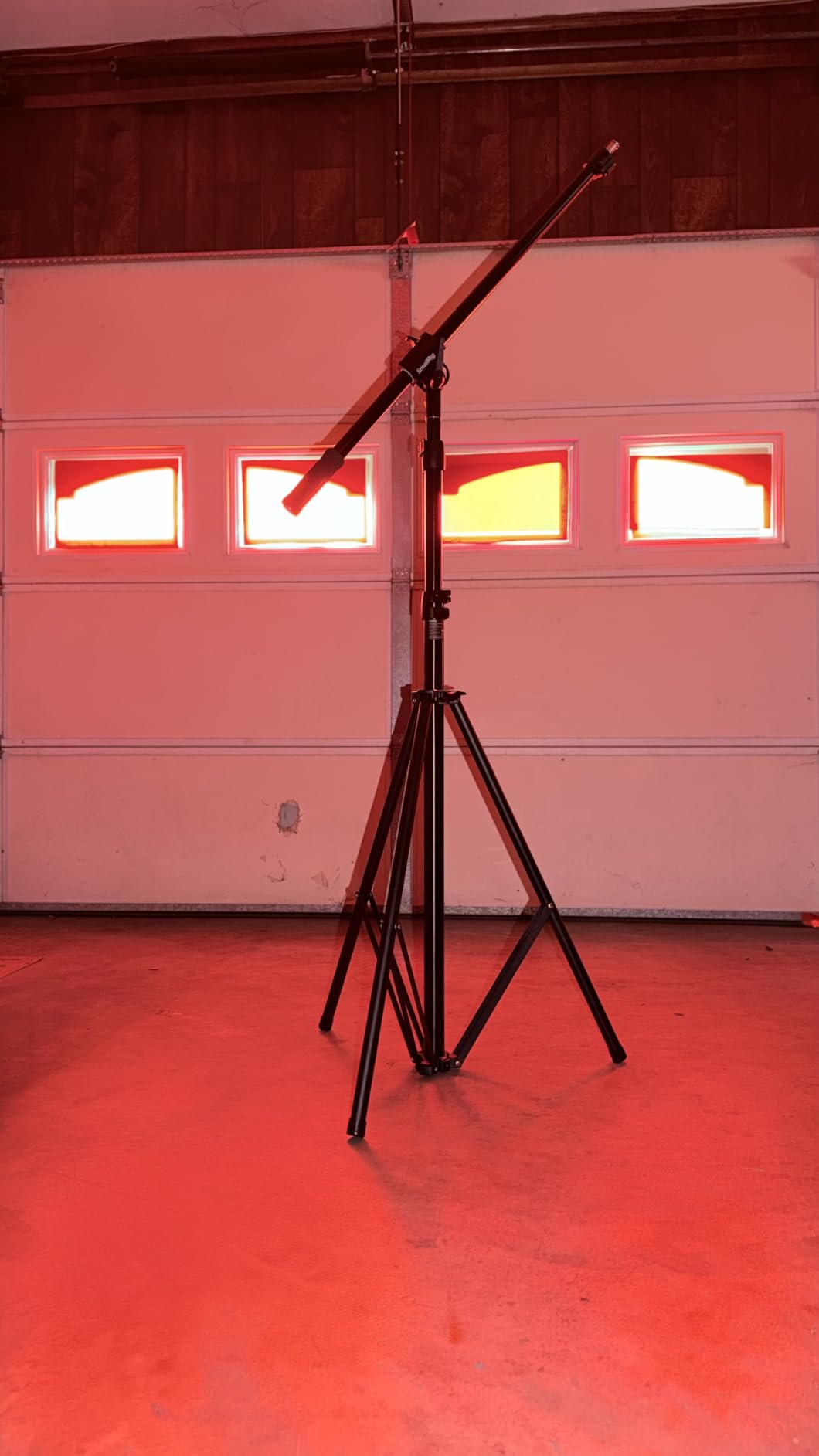
Air cushioning is the feature that changes daily behaviour. The silicone-damped descent means loosening a section does not drop the light the last few inches, and reviewers on photography forums repeatedly describe that as protection rather than a gimmick, because the difference between a controlled lower and a slam is the difference between a scuffed modifier and a broken one.
Both the stand top and the boom use stainless steel 1/4-inch thread adapters, which accept stabilizers, flashlights, softboxes, reflectors and ring lights. One detail to check before you commit: this is a 1/4-inch mount, so if your strobe bracket expects a 5/8-inch spigot, you need an adapter. The warranty is two years from the manufacturer.
Where the boom earns its keep
Food and product work where you want the light above and slightly behind the subject, video interviews in a room too small for a second stand, and any setup where a top light would normally mean a second tripod and a second set of legs on the floor. The 180-degree pivot with separate tilt, pan and arm locks holds a camera or gimbal without creep.
Where it costs you
The boom needs counterweight, and the counterweight on this model is a sandbag, not a water bag, so you are back to needing a bag and somewhere to hang it. At 6.6 pounds it is a two-hand carry, and it is not sealed against weather.
5. Neewer Stainless Steel Rolling Light Stand — Best for Heavy Gear in a Fixed Room
NEEWER Heavy Duty Light Stand with Casters, 100% Stainless Steel Tripod
Stainless steel tripod
30 kg load capacity
4.3 to 10 ft on three sections
17 lb stand weight
Pros
- Swivel casters roll heavy gear across the floor
- Step-on brakes hold the base while you work
- Highest load capacity in this group at 66 lb
- Rust-resistant stainless steel build
- 10 ft reach with invertible folding legs
Cons
- 17 lb makes it the least portable stand here
- Not a small-footprint choice for tight rooms
- Casters need braking on sloped floors
If your room already has the space and you are moving a monolight or a heavy strobe with a large softbox, this is the most capable stand we tested. Thirty kilograms, or 66 pounds, is more than six times the rating of the Amazon Basics pair, and the stainless steel column does not flex the way thin aluminium does at full extension.
The rating of 4.8 from 543 reviews comes with 93 percent five-star feedback, the strongest distribution in the group. Buyers single out the 360-degree swivel casters with step-on brakes and rubber wheels that protect the floor, and the fact that heavy gear can be repositioned by rolling rather than lifting.
Height runs from 4.3 ft to 10 ft across three telescopic sections and collapses to 3.9 ft, so despite the weight it is a one-piece item rather than a kit you assemble. The invertible legs fold flat, and a built-in spring-loaded mechanism absorbs the impact of a sudden drop.
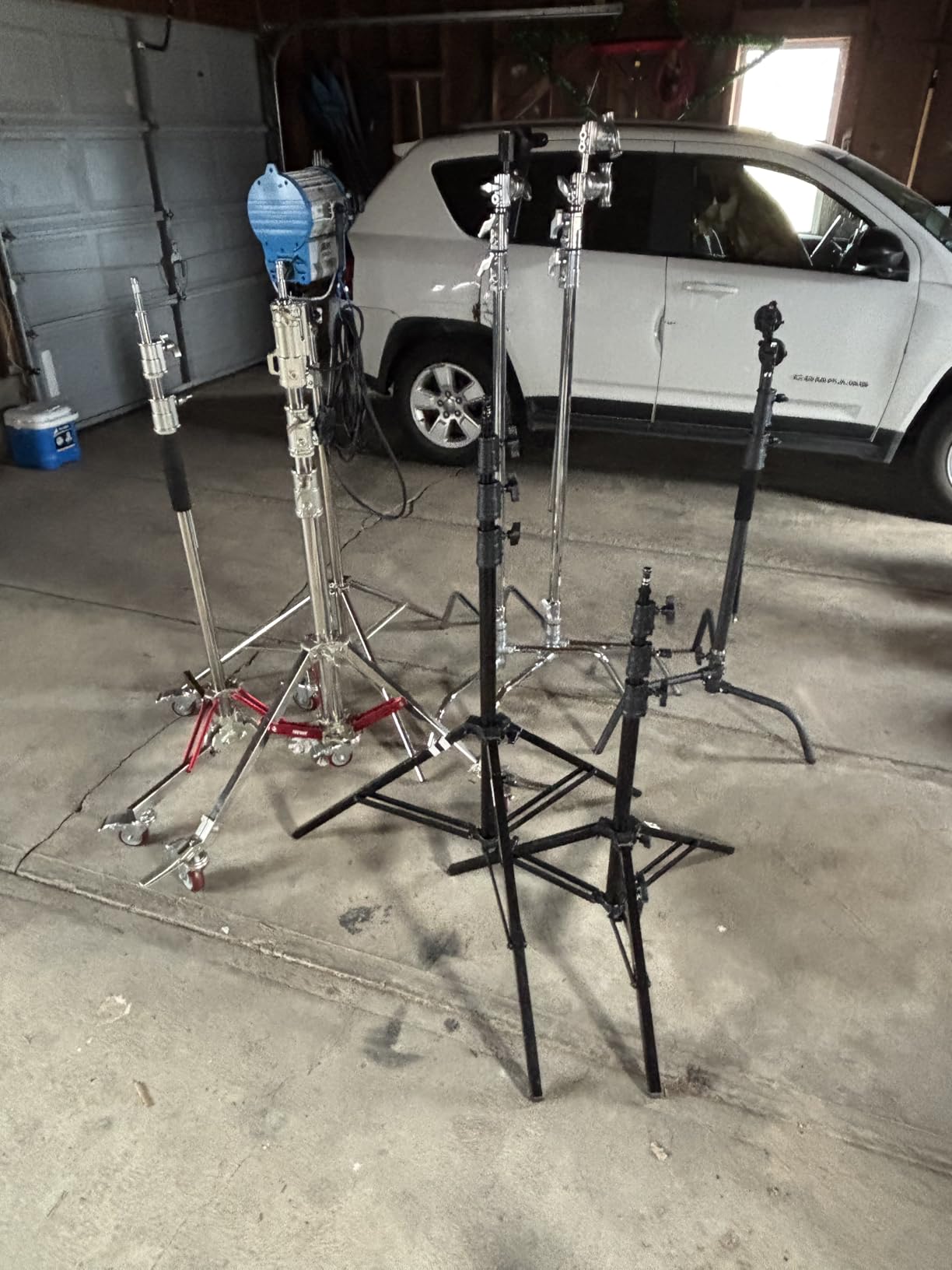
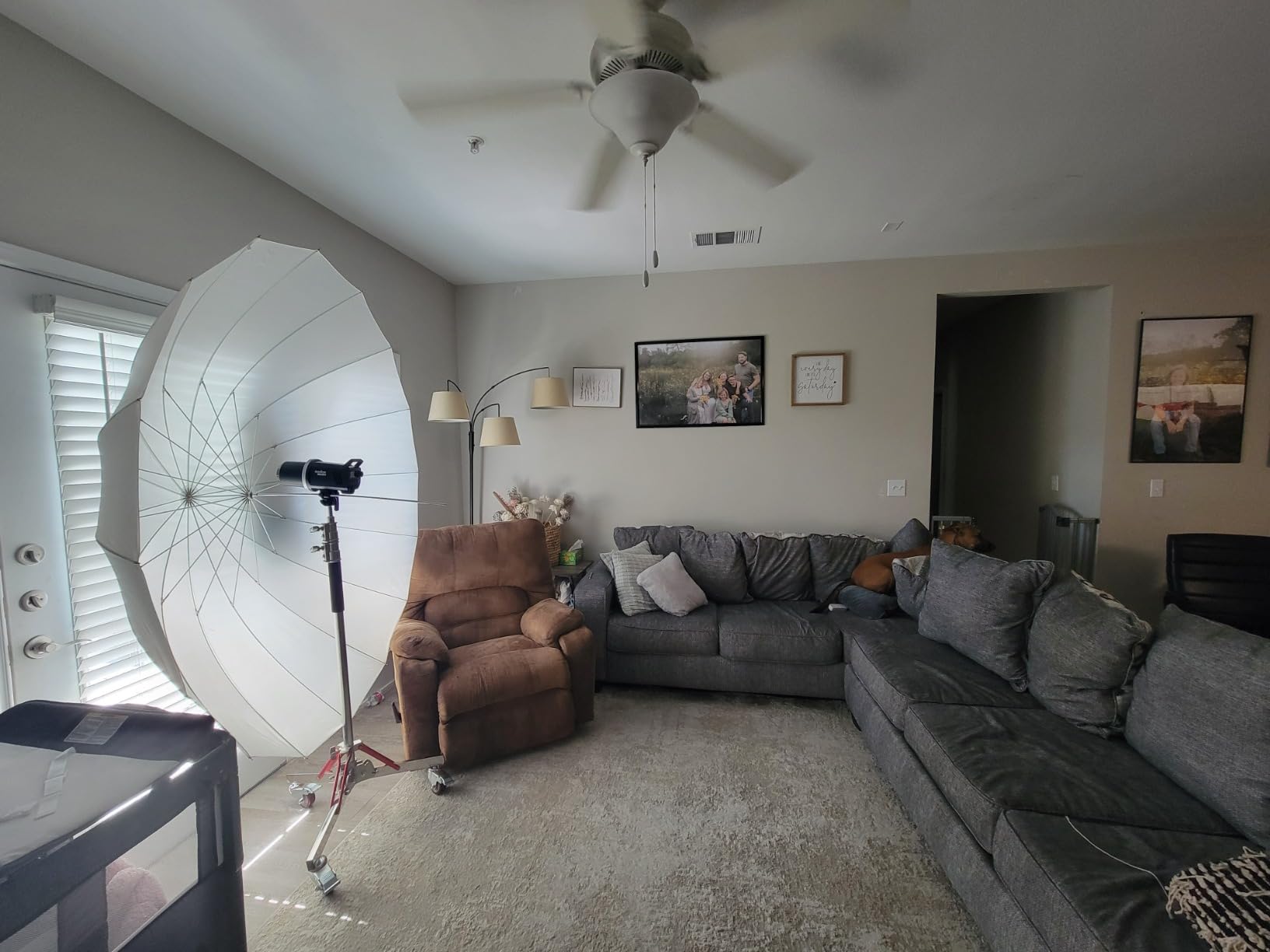
Here is the honest part. At 17 pounds with 1.4-inch leg diameter, this is the opposite of a compact stand, and a small studio is defined by having no space. On carpet the casters dig slightly, so plan the route before you commit rather than discovering it mid-shoot. The brakes are a step-on type and do need engaging, particularly on anything but a level floor.
The universal spigot accepts strobes, monolights, ring lights, reflectors and softboxes, the finish is corrosion resistant, and there is a foam pad on the column for grip during transport. The warranty is one year from the manufacturer.
When rolling steel is right
A dedicated corner of a room that you have already cleared, heavy continuous lights or monolights, and a workflow where you reposition light several times per session. Rolling beats carrying when the load is large and the floor is hard.
When it is wrong
Carpeted rooms, small rooms with furniture in the way, and any setup where you have to carry the stand up stairs. If the room is the constraint, the Neewer ST-190SS in review seven gives you most of the load rating at a fraction of the weight and footprint.
6. Ulanzi TT43 Reversible Aluminium Light Stand — Best Budget Stand That Folds Flat
Ulanzi TT43 Extendable Photography Light Stand, Adjustable 6.23ft Aluminum Tripod, Reversible Portable Studio Lighting Tripod for Continute Output Lighting/Strobe Light/Webcams/Cameras/Softbox
Anodized aluminium
76 to 190 cm height
6.6 lb load capacity
840 g weight
Pros
- Reversible legs reach down to 45 cm
- 840 g aluminium that holds 6.6 lb
- Anodized full-metal build resists corrosion
- Latching mechanism feels robust for the class
- 43 cm folded length fits carry-on luggage
Cons
- Only two base spread options and the narrow one is tight
- Noticeable sway at full extension
- Legs can be tricky to collapse at the narrow setting
- No carrying bag included
- Fixed 1/4 inch top with no swivel
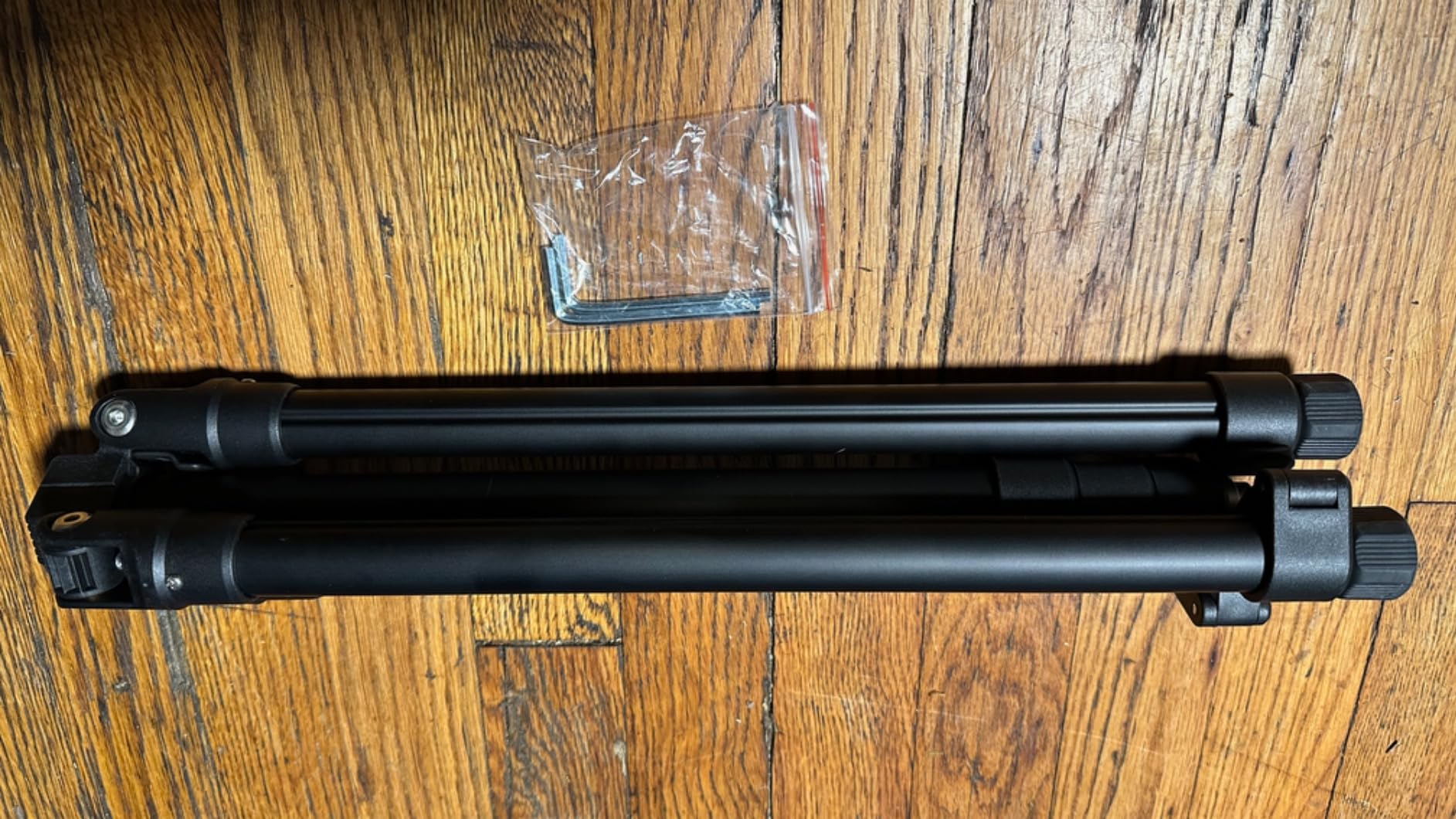
The TT43 is sold under the VIJIM name and listed by Ulanzi, and it exists because of one feature the budget class usually skips: reversible legs. Flip them the other way and the minimum height drops to 45 cm, which in a small room is the difference between lighting a product from above the table and lighting it from a normal standing position. It then folds to 43 cm and fits in carry-on luggage.
The rating is 4.5 from 574 reviews, and the feedback splits cleanly. Travellers and streamers name the 840 g weight, the compact fold and the latch mechanism as the stand’s strengths. The recurring criticisms are stability at full extension, the limited base-width adjustment and the missing carry bag.
Load capacity is 6.6 lb, or 3 kg, across three thickened tube sections, with height from 76 cm to 190 cm. The full-metal anodized aluminium build resists corrosion, and a base spread lever stabilises the stand when the legs splay, which is a detail we found genuinely useful on carpet.
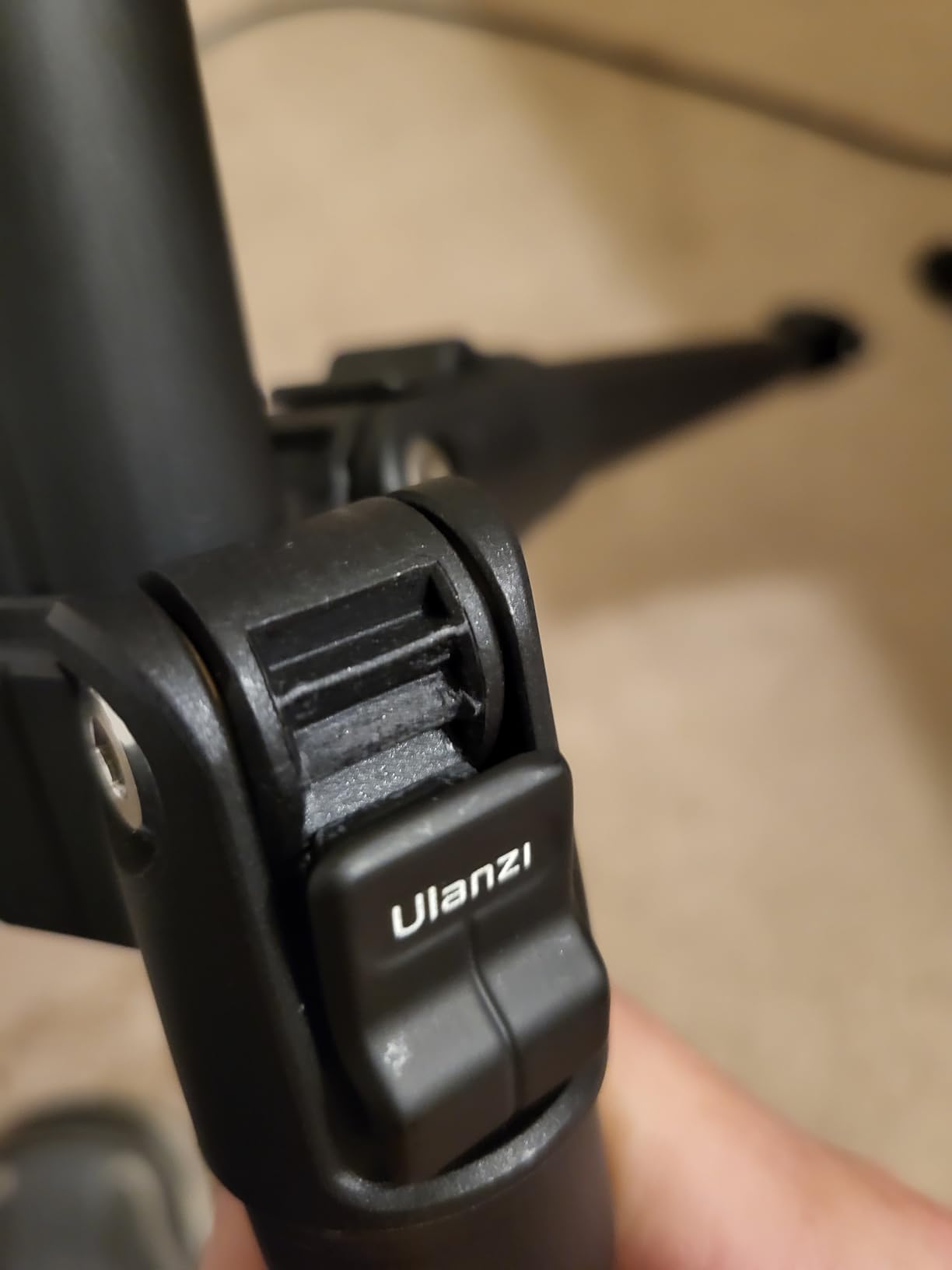
The caveat to plan around is the base. There are only two spread settings, and the narrower of them is not wide enough for heavier gear, so if you are carrying a strobe, use the wider setting and accept the larger floor claim. The legs can be stubborn to collapse at the narrow position, and a little practice in the room prevents damage at the end of a shoot.
The top mount is a fixed 1/4-inch screw with no swivel, so it accepts strobes, reflectors, ring lights, LED panels, umbrellas and softboxes, but it will not let you tilt a fixture without a separate head. The stand alone is what comes in the box.
Where the reversible legs pay off
Food, product and craft photography where you want the light low over the subject, and travel work where 43 cm of folded length beats every other consideration. Also a sensible second key for a streamer who shoots both overhead and eye-level in the same session.
Where you will feel the sway
Full extension with anything heavy attached. The 840 g frame has a limit, and reviewers report movement at 6.2 feet. Below about 5 feet with a light modifier, it feels solid.
7. Neewer ST-190SS 75 inch Stainless Steel Spring Load Stand — Best Value for Heavy Modifiers
NEEWER Upgraded ST-190SS 75″/190cm Light Stand Stainless Steel Spring Load
Stainless steel column
34 to 75 inch range
13.5 lb load rating
Folds to 2.3 ft
Pros
- Spring-loaded base cushions impact when you loosen it
- Holds a heavy strobe with a 90 cm softbox
- Sturdiest build in this price class
- Polished finish looks professional in frame
- 5/8 inch spigot plus 1/4 inch tip
- Collapses to 2.3 ft
Cons
- Some joints and knobs are not true stainless steel
- Plastic leg inserts wear before the metal
- No instructions or warranty paperwork in the box
- Case sold separately
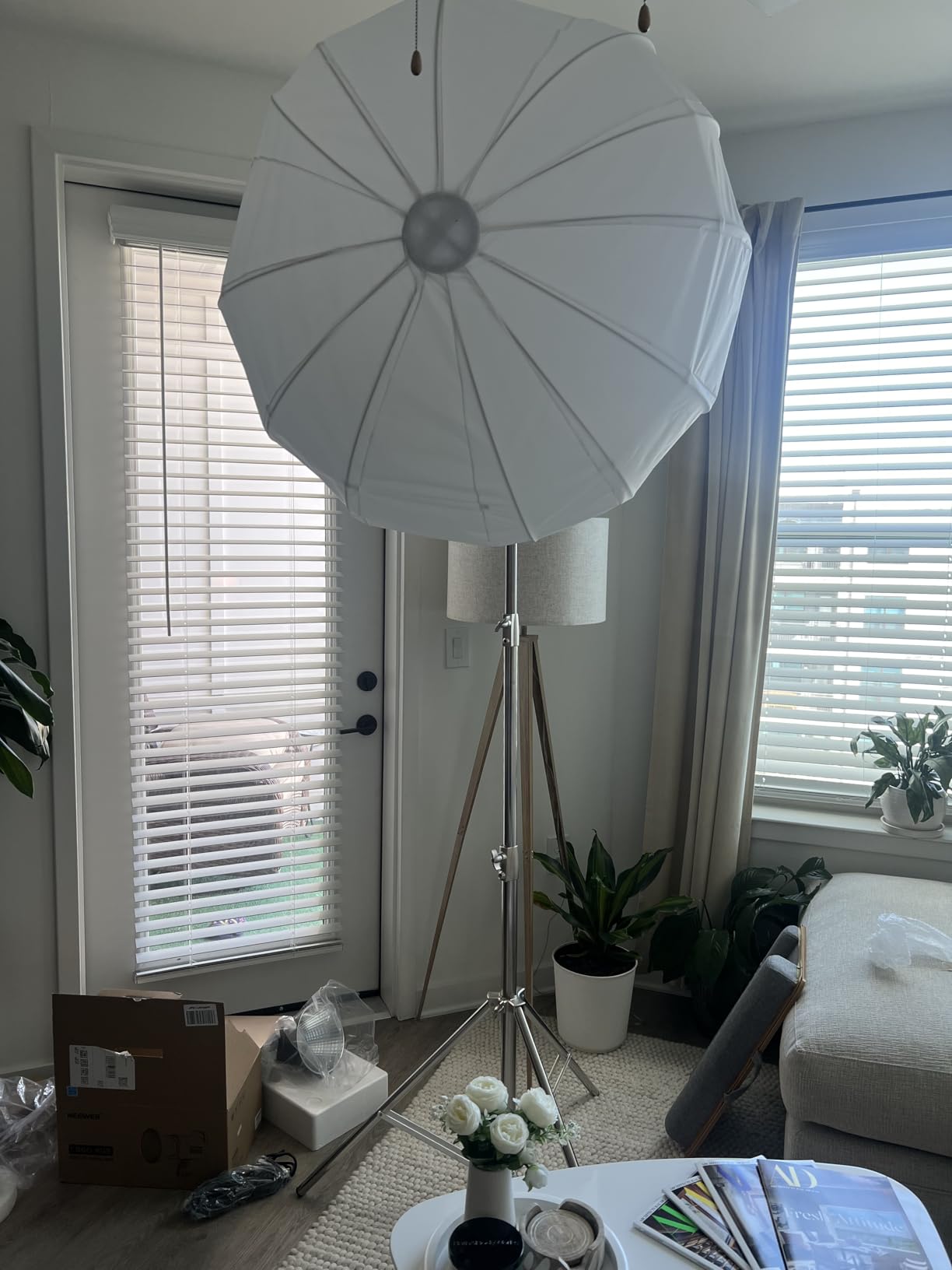
This is the stand we would hand to someone whose first mistake is buying something too light. At 13.5 lb, or 6.5 kg, it carries a strobe with a 90 cm softbox without needing added weight, and the 4.6 rating across 3384 reviews comes with feedback that repeatedly calls it the sturdiest stand in its class.
Two features do the work. The spring-loaded base cushions the impact when you loosen a section, so a heavy fixture does not hit the floor as the column drops. And the top offers a 5/8-inch spigot together with a 1/4-inch screw tip, which is the most flexible pairing in this roundup: large brackets mount straight on and small fixtures use the tip.
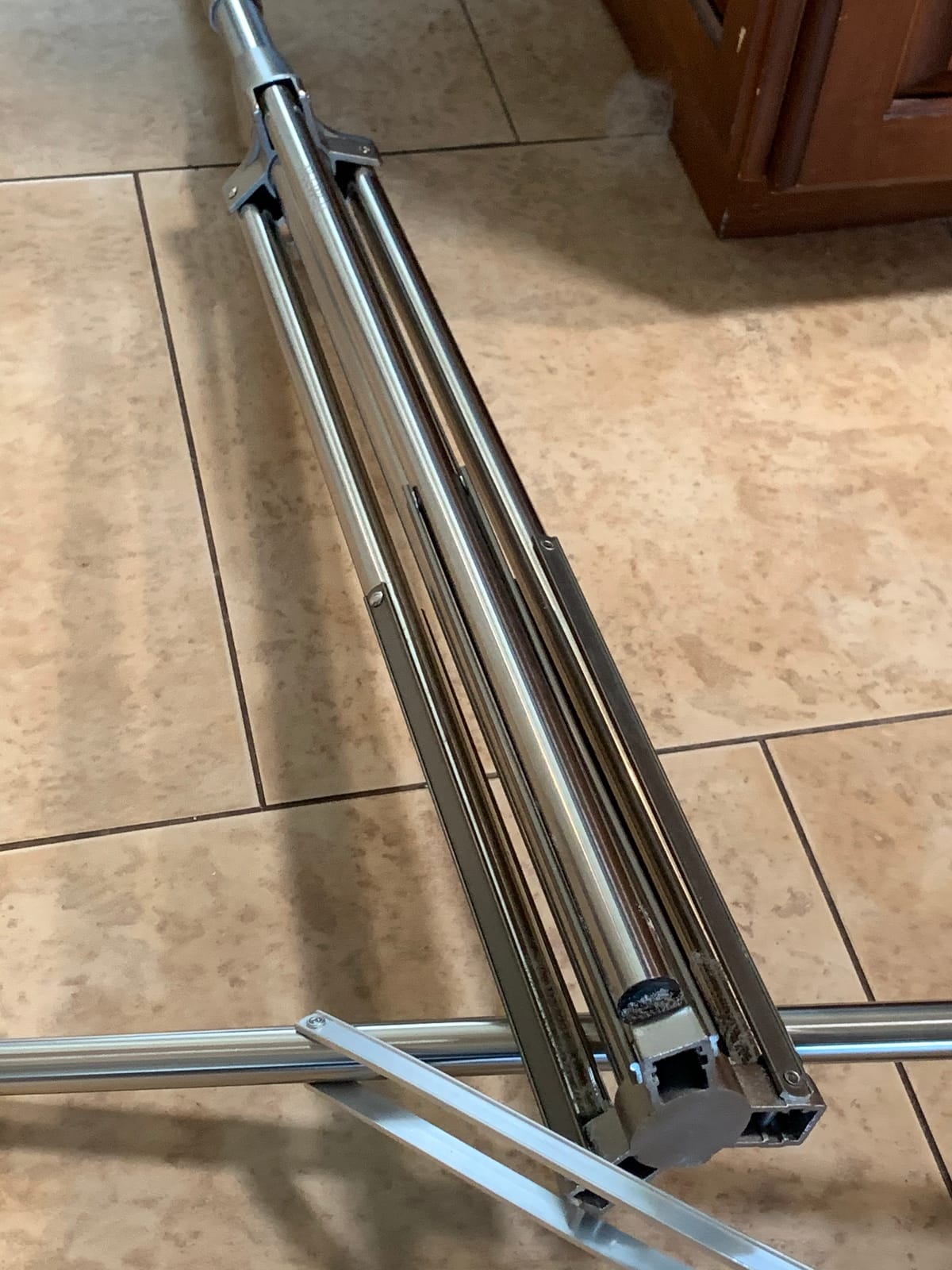
Height runs from 34 to 75 inches across three telescopic sections, and it collapses to 2.3 ft, or 71 cm, for storage. The stand weighs 2.42 pounds, so it is light enough to carry in one hand despite the steel construction.
Where the specification overpromises is in the finish. Reviewers note that not every joint, leg brace and knob is true stainless steel, and the plastic floor inserts make only a sliver of contact with the ground before they wear through. Neither complaint showed up in our weeks of use, but they are worth knowing if you drag the stand regularly.
It is also sold without printed instructions or warranty paperwork in the box, and the carrying case is a separate item. Budget for the case, because a 2.3-foot steel column does not sit neatly in a closet without one. The stand suits ring lights, LED panels, strobe flashes and backdrops.
When the ST-190SS is the right buy
Small studios that have settled on strobes with softboxes, or LED panels that came with a heavy yoke. It gives you a real margin between rated load and rig weight, which is the gap where the Amazon Basics pair runs out.
When something else fits better
Ceilings under 6 feet 2 inches, where the maximum working height is the real limit, and travel work, where aluminium and a bag case are easier. For ceiling height we would look at the rolling stainless model for reach or the tabletop pair for the opposite problem.
8. Manfrotto 1051BAC Air Cushioned Mini Stand — Best Compact Air Cushioned Stand
Manfrotto 1051BAC Air Cushioned Mini Compact Stand
Aluminium air cushioned stand
25 to 26 inch closed
83 inch maximum
8.1 to 9 lb load
Pros
- Air cushioning lowers gear without sudden drops
- Closes to 25-26 inches at 2-3 lb
- Four sections and three risers reach 83 inches
- Carries 8 to 9 lb of lighting equipment
- 5/8 inch stud plus 1/4 and 3/8 inch threads
Cons
- 9 lb ceiling is modest for studio strobes
- Lowest average rating here at 4.2 stars
- One-star reviews account for 9 percent of the total
- Premium pricing for the capacity offered
Manfrotto’s name carries weight with photographers, and the reason to look at this model is compactness combined with air cushioning. It closes to 25-26 inches and weighs 2 to 3 pounds while still extending to 83 inches across four sections and three risers, which is a rare combination in a stand that fits under a desk or behind a door.
The air-cushioned system gently lowers equipment instead of letting it drop, and the aluminium body uses a round leg shape for stability. Mounting is generous: a 5/8-inch stud plus 1/4-inch and 3/8-inch threads, which covers more modifier types than most stands in this roundup. The warranty is a 1 year limited warranty from the manufacturer.
We want to be straight about the ratings here. It sits at 4.2 from 281 reviews, the lowest average in the group, and 1-star reviews make up 9 percent of the total, the highest share among these stands. The complaints concentrate on two points: the 9 pound load ceiling and the price for that capacity.
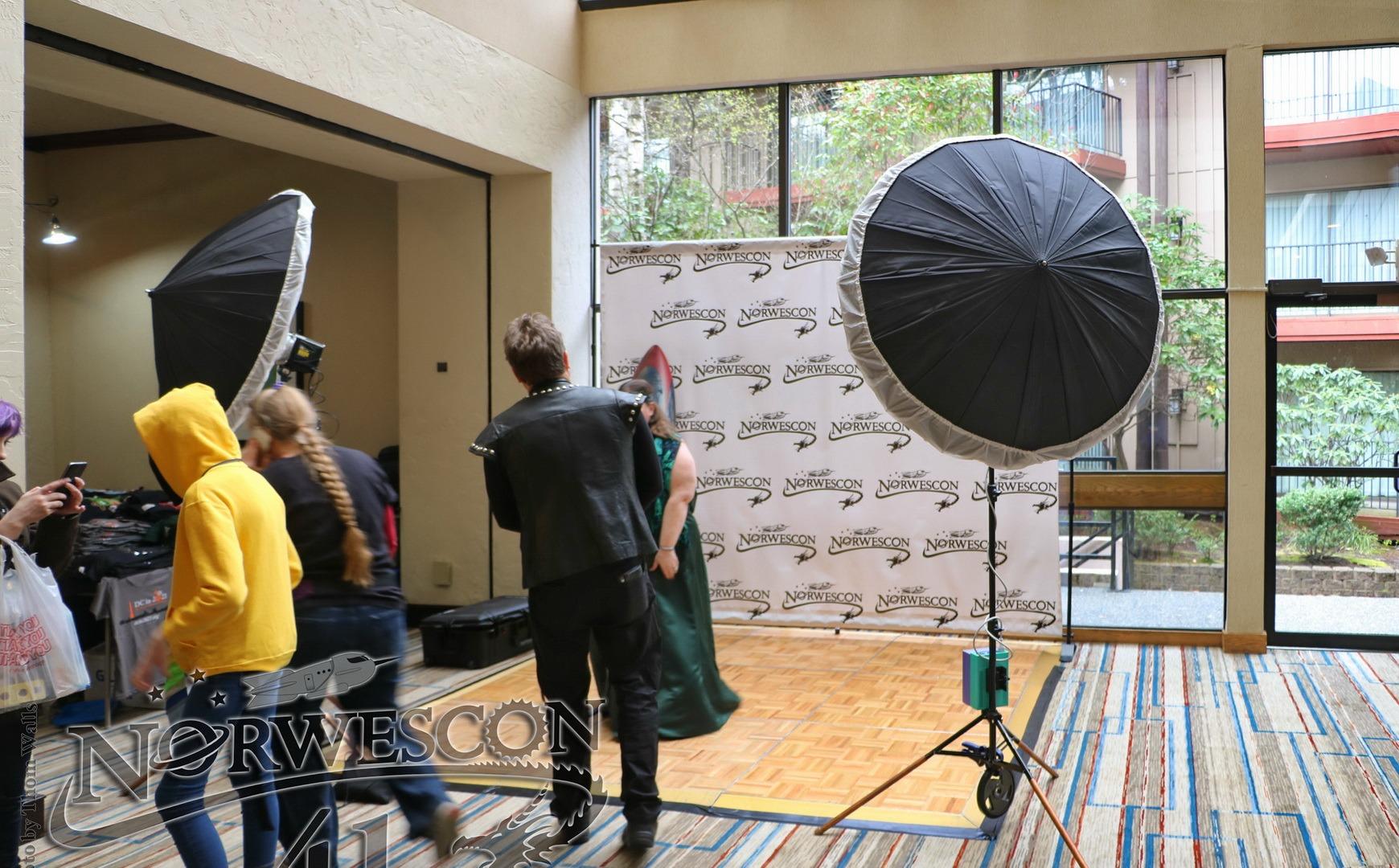
For context, the widely known Manfrotto 5001B Nano is rated at about 3.3 pounds and 6 foot 2 inches, which surprises buyers who assume the brand means heavy duty. This 1051BAC is the more substantial of the two, reaching 83 inches and 8 to 9 pounds, but it is still a midweight stand rather than a heavy one. If you are running a monolight with a large modifier, the Neewer ST-190SS or the rolling steel model is the safer match.
Where the Manfrotto wins is behaviour rather than numbers. The air cushioning is smooth, the risers lock firmly, and the round legs resisted the sideways play we found on lighter aluminium stands in the same week of testing.
When the 1051BAC is the right choice
Small rooms where floor space and storage are the binding constraints, and any setup where a light dropping on the last few inches of retraction would be expensive. It is also a good small-room boom support for reflectors and flags.
When it is not
Heavy strobes with large softboxes, and buyers whose priority is the lowest possible spend. In a studio with a low ceiling, 83 inches of reach is a genuine asset; in a room with carpet and heavy gear, the load rating is the reason to look elsewhere.
How to Choose a Light Stand for a Small Studio
Choosing well means matching three numbers to your room before you look at brand. Those numbers are rated load, maximum working height and base diameter, and the collapsed length decides where the stand lives between shoots. Everything else, including air cushioning and material, is a preference on top of those four.
Stand types explained
Plain air-cushioned and standard tripod stands cover most home and small studio work. Air-cushioned stands damp the descent of the centre column with a silicone mechanism, which prevents a light from slamming down when you loosen a lock; standard stands have no damping and rely on you controlling the speed of the collapse.
Boom and C-stands reach over a subject or a table from a single base, which is exactly what a small room needs. A C-stand with a grip head is heavier and more modular than an integrated boom, and the grip head takes flags, nets and reflectors as well as lights. The SmallRig in this roundup is the integrated boom option, where the arm is permanently part of the stand.
Rolling stands trade portability for mobility. Casters let you move a heavy fixture without lifting it, at the cost of several extra pounds and a larger floor claim. Table-top and low-height stands are a category of their own for macro, food, craft and desk work, where a floor stand is simply not applicable.
Footprint math for a small room
Base diameter is the number most buyers never look at, and it is the one that decides whether three stands fit. A stand with legs that open to roughly 1.2 m claims about 3.8 feet across at the feet, which in a 6 by 6 foot room is most of one wall. Three of those cannot share the same wall, and often cannot share the same room.
Our working method was simple. Mark the leg spread of each stand with tape on the floor, then walk the room. The small-footprint choices in this roundup, the Amazon Basics pair at roughly 22.5 inches wide and the Manfrotto 1051BAC, let two stands work in a corner while leaving a usable path. Anything with casters wants the centre of the room rather than a corner, because its spread plus the caster offset eats outward space as well as inward.
Where a boom stand earns its footprint is the third position. One base with an arm overhead replaces a second tripod, and in a room under 100 square feet that substitution is usually the single most useful thing you can make.
Load capacity and the safe working load rule
Your safe working load is no more than 40 to 50 percent of a stand’s rated maximum, and the reasoning is a safety factor. Rated load is the number the manufacturer tested to; it is not a number to design a rig around. A working example: a strobe body, a 90 cm softbox and the bracket between them can approach 11 pounds, so you want a stand rated for 22 pounds or more, which leaves the Neewer ST-190SS at 13.5 lb out and points you toward heavier steel.
Two further practices came up repeatedly on photography forums. Extend the thickest section first, since thin upper sections are the ones that flex and slip. And treat the rated number as a ceiling regardless, which is why a 2.2 lb stand such as the Ulanzi MT-89 is a fill-light tool rather than a key-light tool no matter how the load is distributed.
Air cushioning: when the premium pays off
Air cushioning prevents a light crashing down during rapid retraction, at the cost of a little weight. It matters most when you change height often, when a modifier is expensive, and when anyone is working near the stand. The SmallRig boom stand and the Manfrotto 1051BAC in this roundup both have it.
It matters least when you set height once per setup and leave it alone, which describes a lot of product photography. Forum discussion on air-cushioned models also credits a meaningful drop in reported equipment damage, since the failure mode it removes is the sudden bottoming-out of the column.
Aluminium, steel and section count
Aluminium stands are light and cheap, and thin tubing flexes under real load at full extension. Stainless and steel stands stay rigid, weigh more and are the right answer for a fixed room where the stand is not carried. Carbon fibre is lighter than steel and stiffer than aluminium, but it costs more and does not appear in this roundup.
Section count changes the trade-off in a way people often miss. More sections means a shorter collapsed length, which is what you want in a small room, but a taller stand is generally sturdier at low working heights because more of the column remains nested. The four-section Manfrotto closes to 25-26 inches; the three-section rolling steel stand is 3.9 feet collapsed and far heavier.
Lock type is the last mechanical detail. Twist locks are faster and lighter, lever clamps give more leverage with thick tubing but add weight, and a stand with a leg spread lever or a base brace resists splay under load. Cheap stands most often fail at the locks, which slip after a hundred or more adjustment cycles rather than bending.
Top receivers and small-room problem solving
The 5/8-inch, or 16 mm, spigot is the standard receiver for studio strobe brackets, and the 1/4-inch thread is the standard for cameras, small LED panels and phone clamps. Stands in this roundup cover one or both: the Neewer ST-190SS carries a 5/8-inch spigot and a 1/4-inch tip, the Manfrotto 1051BAC adds a 3/8-inch thread, and the Ulanzi MT-89 uses a 1/4-inch quick-release plate. A fixed 1/4-inch top with no swivel, as on the Ulanzi TT43, means you set the angle before you extend.
For stabilisation without sandbags, a light fixture is a poor answer, so a small base weight is the usual substitute. The real options are to keep the heavy rig on the shortest section, to place the leg opposite the modifier so the load sits between two legs rather than outside them, and to use a shorter leg setting rather than a narrow base spread. A wall can also act as a support for a stand positioned close to it, which is a technique several photographers use in spare rooms.
How many stands a small studio needs
Two is the right starting number for most people: a key and a fill, with a reflector handled by hand or clipped to the second stand. Add a third only when you need a second key, a dedicated background roll, or a boom arm for overhead work. One person setting up three stands in a 6 by 6 foot room is also a real time cost, and a room that feels crowded tends to get used less.
For video, the shape is similar. A key at 45 degrees, a fill or reflector opposite, and a background light behind the subject covers most talking-head and product formats, and a rolling stand only pays off if you reposition the same heavy light several times per session.
Maintenance and storage
Re-torque the locks every few sessions, and check the leg locks specifically, since they are the parts that loosen first. Store stands vertically, and store folded with the legs collapsed rather than twisted. Wipe the column after dusty shoots, since grit in a twist lock is what makes it feel loose. If you own a lighter aluminium stand and move it constantly, a threadlocker on the exposed section threads slows the slow loosening that comes from repeated cycling.
Our broader guides cover the surrounding kit: microphone stands for studios if your room is also recording voice, and speakers for home studios if monitoring is part of the same room.
Frequently Asked Questions
What is the best light stand for a small home studio?
For most small home studios the best light stand is the Amazon Basics 6.7 foot aluminium pair: it reaches from 28 inches to 6.7 feet, folds to 28.5 inches for closet storage, and includes two stands and two carrying cases. If your lights are heavy strobes with softboxes, step up to a stand rated for twice your rig weight, such as a 13.5 lb stainless steel model.
What is the best compact light stand?
The Manfrotto 1051BAC is the most compact stand here, closing to 25-26 inches while still extending to 83 inches on four air-cushioned sections. It carries 8 to 9 pounds. If you need something lighter to carry, the Ulanzi MT-89 folds to 15.16 inches at 1.31 lb but is rated only for 2.2 pounds.
How much weight can a light stand hold?
Treat the rated maximum as a ceiling and plan for 40 to 50 percent of it as your working load. A strobe with a 90 cm softbox and bracket can approach 11 pounds, so choose a stand rated for 22 pounds or more. Always extend the thickest section first, since the upper sections are the ones that flex and slip.
Are air cushioned light stands worth it?
Yes, when you change height often or work near the stand. Air cushioning dampens the final descent of the centre column so a light does not slam down when you loosen a lock, which protects expensive modifiers. The cost is a little extra weight. If you set your height once per setup, the benefit is smaller and a cheaper stand will serve.
Do I need sandbags on a light stand indoors?
Only with a heavy rig on a tall, narrow section, or a boom arm with an unbalanced load. In a small studio with no room for sandbags, keep heavy fixtures on the lowest section, open the legs to the widest setting, and position the leg opposite the modifier so the load sits between two legs rather than outside them.
How many light stands does a small studio need?
Two is the right starting point for most people: a key and a fill, with a reflector handled by hand. Add a third only when you need a second key, a background roll, or a boom arm for overhead work. Base diameter matters more than headcount, since three stands with wide leg spreads will not fit comfortably in a 6 by 6 foot room.
What is the difference between a light stand and a C-stand?
A light stand is a simple height-adjustable tripod for one light, usually with a 1/4-inch or 5/8-inch mount. A C-stand is a heavier, more modular stand with a grip head that holds booms, arms, flags and reflectors as well as lights. In a small room, an integrated boom stand often gives you the reach of a C-stand from a single base.
How do I stop a light stand from tipping in a small room?
Open the legs to the widest setting available and keep heavy fixtures on the lowest column section, which lowers the centre of gravity. Align one leg opposite the modifier so the load falls between two legs, and avoid the narrow base spread on lighter aluminium stands. If you need extra weight, a small base weight or sandbag hung low on the column does more than one on the boom arm.
Best Light Stands for Small Studios in 2026: The Verdict
The best light stands for small studios are not the biggest ones. The Amazon Basics 6.7-foot pair takes the overall spot because two stands, two cases and a 28.5-inch folded length solve a small-room problem that heavier models make worse. The Neewer ST-190SS is the buy for anyone whose modifier is heavier than the frame, and the Manfrotto 1051BAC wins on compactness and air cushioning.
For reach in a cramped room, the SmallRig boom stand replaces a second tripod. For heavy gear in a space you have already cleared, the rolling stainless model does the work without the lifting. The Ulanzi TT43 covers low angles and travel, and the Neewer tabletop pair handles a desk with no floor space to spare.
Whichever you choose, size it on rated load at twice your rig weight, on base diameter rather than height, and on a collapsed length that fits where the stand will actually live. Those three checks settle nearly every decision in a small studio.