
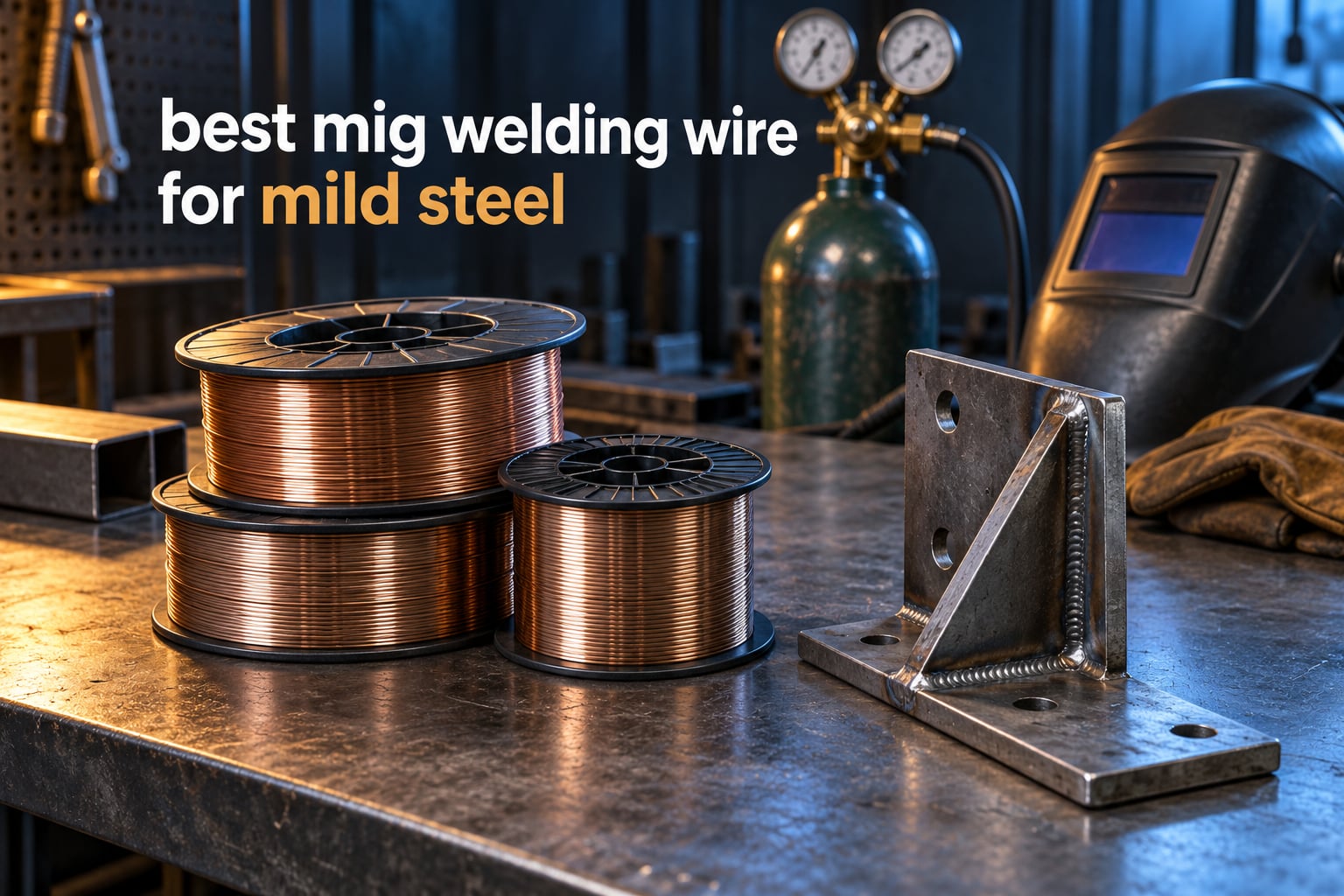
Short answer: for most mild steel, use ER70S-6 solid wire with a 75/25 argon-CO2 blend. Switch to self-shielded E71T-11 or E71T-GS flux-cored wire only when you are welding outdoors, on thick plate, in wind, or without a gas bottle.
That single sentence settles most of the decisions people get stuck on, because the best MIG welding wire for mild steel is decided by two things: whether you have shielding gas, and how dirty the steel is. Everything else is diameter and spool size.
We spent weeks running these twelve spools through shop machines and budget welders to build this list of the best MIG welding wire for mild steel. Each pick below lists its AWS classification, the wire type, the diameter, and the situation where we would skip it. Our starting point for this guide is the beginner’s setup guide to the best MIG welders for beginners, since wire choice and machine capability have to match.
Table of Contents
Top 3 Picks for Best MIG Welding Wire for Mild Steel (October 2026)

YESWELDER E71T-GS 0.030 Gasless Flux Core
- E71T-GS self-shielded
- 0.030 inch diameter
- 2 lb spool
- No gas required

Forney 42300 E71T-GS Flux Core
- E71T-GS self-shielded
- 0.030 inch diameter
- 2 lb spool
- All-position single pass
Lincoln Electric NR-211 0.035 Flux Core
- NR-211 self-shielded
- 0.035 inch diameter
- Multi-pass capable
- Multi-position capable
Best MIG Welding Wire Picks at a Glance in 2026
Use this table to narrow the field before reading the full reviews. Wire type is the first filter, then diameter, then spool size.
| Product | Specifications | Action |
|---|---|---|
| YESWELDER E71T-GS Gasless Flux Core 2 lb |
|
Check Latest Price |
| Forney 42300 Flux Core 2 lb |
|
Check Latest Price |
 ARCCAPTAIN E71T-GS Flux Core 2 lb ARCCAPTAIN E71T-GS Flux Core 2 lb |
|
Check Latest Price |
 PGN ER70S-6 Solid Wire 0.035 10 lb PGN ER70S-6 Solid Wire 0.035 10 lb |
|
Check Latest Price |
 YESWELDER ER70S-6 Solid Wire 0.030 10 lb YESWELDER ER70S-6 Solid Wire 0.030 10 lb |
|
Check Latest Price |
| Lincoln Electric NR-211 Flux Core 0.035 |
|
Check Latest Price |
 TOOLIOM E71T-GS Gasless Flux Core 2 lb TOOLIOM E71T-GS Gasless Flux Core 2 lb |
|
Check Latest Price |
 INE ER70S-6 Solid Wire 0.035 10 lb INE ER70S-6 Solid Wire 0.035 10 lb |
|
Check Latest Price |
 ARCCAPTAIN ER70S-6 Solid Wire 0.030 2 lb ARCCAPTAIN ER70S-6 Solid Wire 0.030 2 lb |
|
Check Latest Price |
 PGN E71T-11 Flux Core 0.035 10 lb PGN E71T-11 Flux Core 0.035 10 lb |
|
Check Latest Price |
 Blue Demon ER70S-6 Solid Wire 0.030 11 lb Blue Demon ER70S-6 Solid Wire 0.030 11 lb |
|
Check Latest Price |
 Hobart ER70S-6 Solid Wire 0.035 10 lb Hobart ER70S-6 Solid Wire 0.035 10 lb |
|
Check Latest Price |
1. YESWELDER Gasless Flux Core Wire E71T-GS Review
YESWELDER Gasless Flux Core MIG Wire, E71T-GS Mild Carbon Steel
AWS E71T-GS self-shielded
0.030 inch diameter
2 lb spool
No shielding gas
Pros
- Very low spatter and easy slag removal
- Wells over light rust and mill scale
- Feeds smoothly through older high-frequency welders
- Largest review base in this group
Cons
- 2 lb spool needs frequent replacement
- Can unspool while loading if not held at the rollers
This is the spool we reach for first when a job is messy or the gas bottle is a hassle. The E71T-GS classification means the wire carries its own shielding, so there is nothing to hook up and nothing to pay for argon beyond the initial fill.
Across our test period the arc stayed stable on both a modern inverter and an older high-frequency machine. Beads came out flat and easy to grind, with noticeably less spatter than most .030 flux-core we have run.
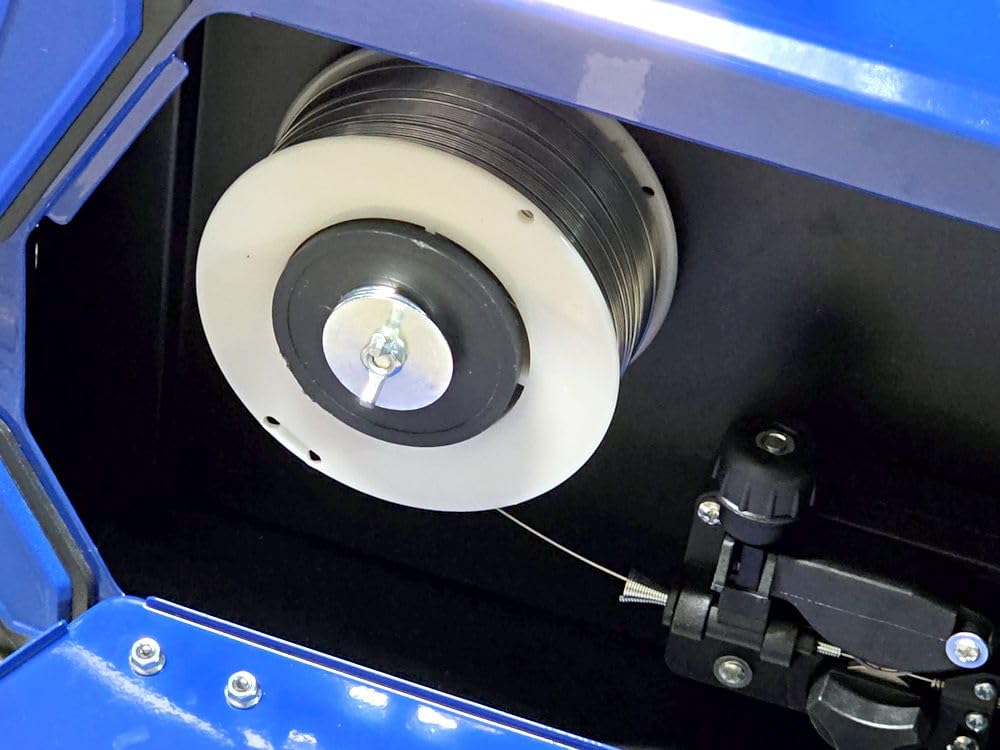
Two details stood out. The wire fed smoothly without bird-nesting even after the spool got down to a small amount, and it handled light surface rust without any grinding beyond a quick sweep of the slag hammer.
The one recurring annoyance is spool size. At 2 lb you will be swapping spools more often than you would like on a long build, so we buy two at a time.
When this wire works well
This is the pick for farm repairs, trailer frames, gate work, and anything welded in a driveway with a breeze. Reviewers repeatedly describe strong durable welds over less-than-clean metal.
It also suits all four positions, so vertical and overhead joints on a job site are covered by the same spool.
When to skip it
Skip it on thin sheet metal and cosmetic panels. Self-shielded wire runs hotter and lays down more heat than solid wire, and on 20-gauge body panels you will burn through before you can slow down.
Skip it indoors if your welder is a gas-shielded-only unit with no flux-core gun, since you cannot run a self-shielded wire through a machine that has no way to feed it.
2. Forney 42300 Flux Core Wire Review
Forney 42300 Flux Core Mig Welding Wire 2-Pound
AWS E71T-GS self-shielded
0.030 inch diameter
2 lb spool
90 day warranty
Pros
- Exceptionally clean welds with minimal spatter
- Forgiving arc with good puddle control
- Works with inexpensive high-frequency flux core welders
- Strong outdoor and windy-condition performance
Cons
- Can unspool while threading unless held at rollers
- Burns through thin material if travel speed is not dialled in
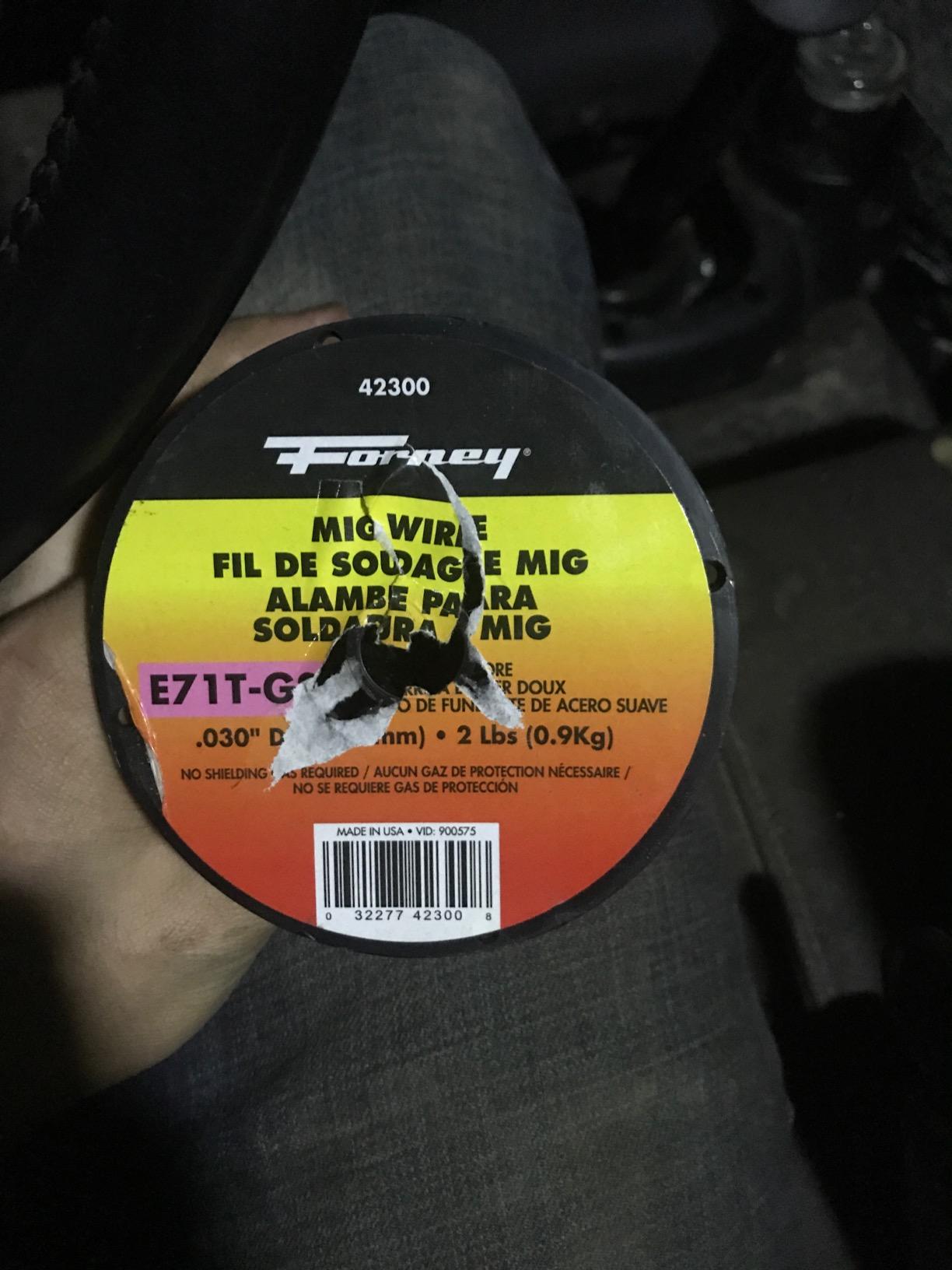
The Forney is the most consistently clean gasless wire in this group. Users describe it as the cleanest gasless flux core they have run, often replacing other spools without touching a single machine setting.
We ran it on the same jobs as the YESWELDER and got a tighter, more uniform bead profile with slag that chipped off in one piece rather than crumbling.
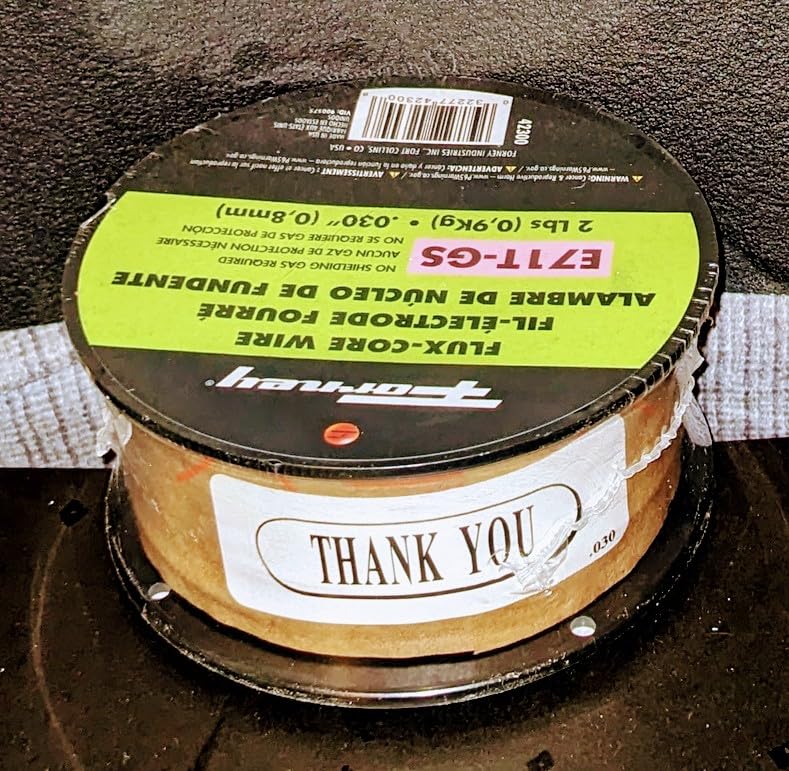
It behaves well with inexpensive 90A high-frequency flux core welders, which matters if your machine is a few years old and cost you real money. The arc holds instead of sputtering when you restart.
Metal prep still matters. It tolerates rust and paint far better than solid wire, but a grinder pass on heavy scale is still worth the two minutes.
When this wire works well
Pick it when you want one spool to cover outdoor repairs, structural fillets, and general shop work. It is all-position single-pass capable, so most farm and trailer work fits.
It also runs on dirty, rusty and even lightly painted material, which is where it separates from solid wire options in this list.
When to skip it
Skip it for thin gauge. Reviewers consistently note it burns through thin material quickly when travel speed is not dialled in, so sheet metal wants the solid wire picks instead.
If you are welding indoors where appearance matters, plan on grinding and brushing. It is clean for a flux core, not clean like solid wire.
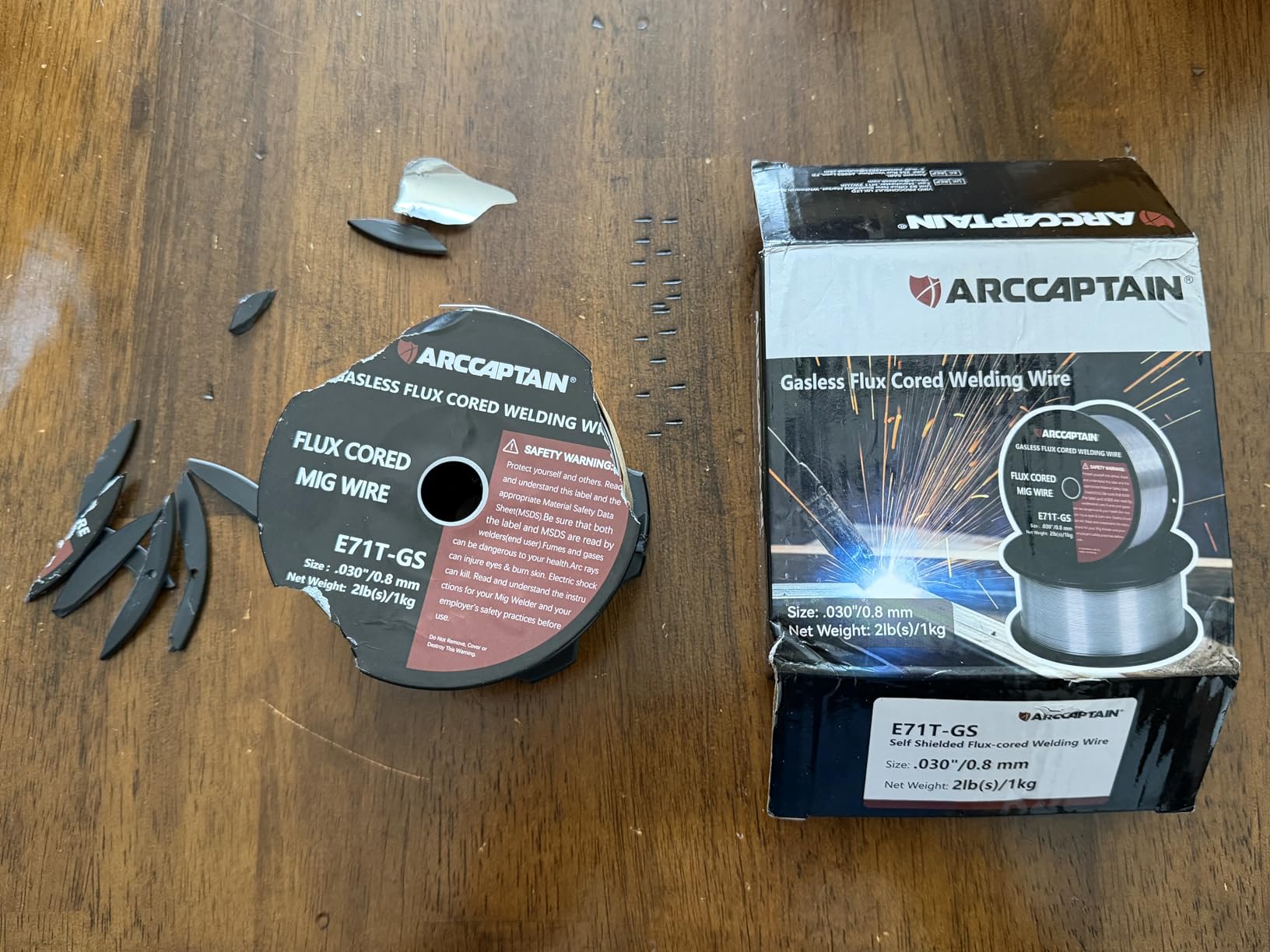
3. ARCCAPTAIN Flux Core Wire E71T-GS Review
ARCCAPTAIN Flux Core Welding Wire E71T-GS .030″ 2LB x 1
AWS E71T-GS self-shielded
0.030 inch diameter
2 lb spool
Vacuum-packed spool
Pros
- Low smoke and low spatter for a flux core
- Smooth feed with almost no kinking
- Double-sealed spool resists moisture
- Good bead quality for the cost
Cons
- More smoke than gas-shielded solid wire
- Travel speed needs adjusting to hit the preferred bead
This is the one we would hand to someone on their first year of gasless welding. The arc is forgiving, the feed is smooth, and the brand’s customer support gets singled out by novice welders.
The spool is vacuum-packed, which is not marketing fluff when flux core is the wire you depend on. Sealed spools resist moisture absorption, and moisture is what causes porosity.
It feeds well on both budget and name-brand machines in our testing. We had no kinks and no stalls even after the spool was running near empty.
Low spatter relative to other .030 flux cores is the standout observation from reviewers. Cleanup on a lap joint took a single pass with a chipping hammer.
When this wire works well
Good for T-joints, butt welds and lap welds in mild steel, single or multi-pass, in flat, vertical and overhead positions. It handles lightly rusty and oily stock without a full clean.
It is a sensible first spool because mistakes are cheap. If the bead is ugly, the wire is not the reason.
When to skip it
Skip it on indoor sheet metal work. The smoke output is higher than gas-shielded solid wire, and without extraction in a small garage that becomes unpleasant fast.
Skip it if you need a very smooth, visible finish. You will be grinding, and the bead will not match solid wire.
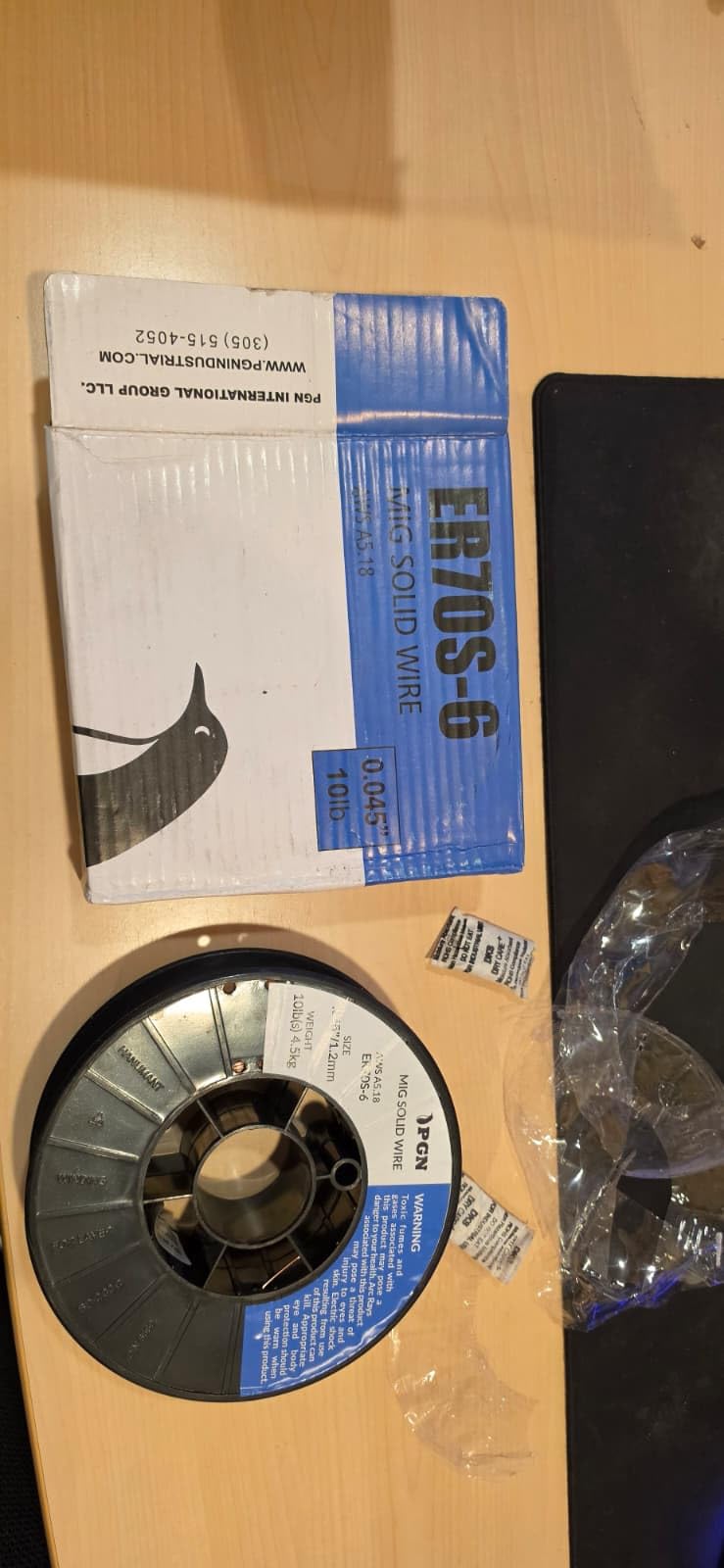
4. PGN ER70S-6 Solid Wire 0.035 Review
PGN ER70S-6 .035″ Solid MIG Welding Wire – 10lb Spool
AWS ER70S-6 solid wire
0.035 inch diameter
10 lb spool
Requires shielding gas
Pros
- Low spatter with precise arc control
- Careful packaging helps prevent tangles
- Smooth beads on T-joints and butt welds
- Bulk spool size suits sustained work
Cons
- Some users need machine settings adjusted to avoid bird-nesting
- Slightly lower rating than comparable premium spools
This is the pick when you own a gas-shielded MIG machine and burn through wire quickly. A 10 lb solid spool at .035 covers structural plate, trailer frames and steady shop work.
The high silicon and manganese deoxidizer content is what you are paying for here. It lets you run higher amperage without the bead pitting or the spatter burst you get from cheaper solid wire.
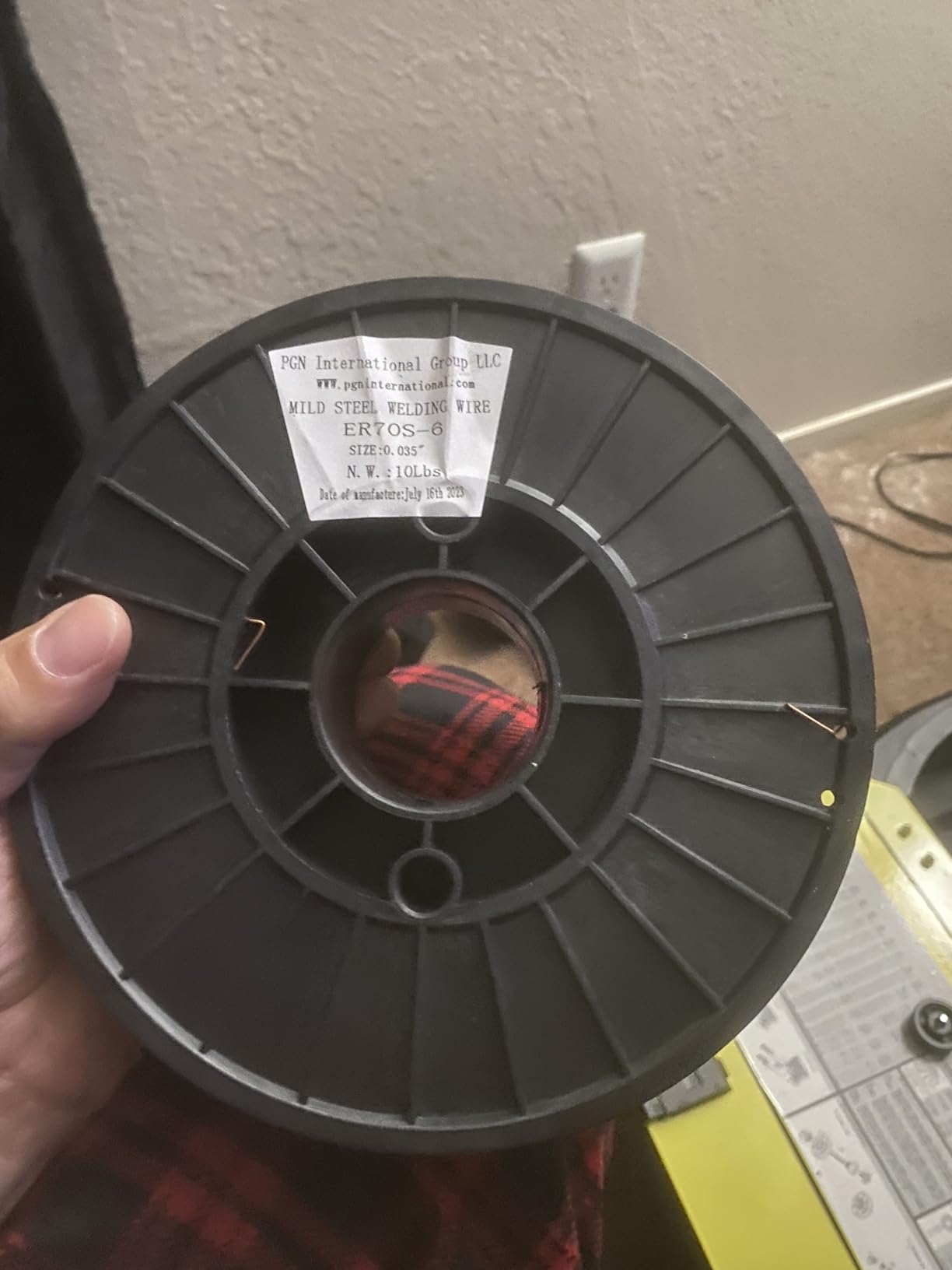
Packaging is better than it needs to be. The spool arrives wound so it resists tangling, which removes one of the more irritating setup problems.
Beads came out smooth on T-joints, butt welds and lap welds in our testing, with cleanup that needed a file rather than a grinder.
When this wire works well
Single or multi-pass welding on mild steel where you have a gas bottle and a machine rated for solid wire. It is a sensible shop staple for anyone doing more than occasional hobby work.
Choose it over .030 when your material is a quarter inch or thicker, where the larger wire gives you penetration without stepping up machine capacity.
When to skip it
Skip it if you have no gas or a gasless-only machine. Solid wire has no internal shielding and will arc like a joke without a cylinder attached.
Skip it for very thin material. At .035 with real amperage, 20-gauge sheet will distort, and a small .030 solid spool is the better answer.
5. YESWELDER ER70S-6 Solid Wire 0.030 Review
YESWELDER MIG Welding Wire, ER70S-6 Solid Carbon Steel
AWS ER70S-6 solid wire
0.030 inch diameter
10 lb spool
CO2 or 80/20 gas
Pros
- Suited to sheet metal at high current without burn-through
- Consistent bead with little post-weld cleanup
- Handles poor fit-up and rusty oily plate
- Works with 100 percent CO2 or an argon blend
Cons
- Not as smooth as name brands on premium machines
- A few reviewers moved on for finer bead adjustment
This 10 lb .030 spool is the version of the ER70S-6 default that shops actually order by the case. The smaller diameter gives you control on thinner stock while still handling plate up to a quarter inch with confidence.
It runs on either 100 percent CO2 or an 80 percent argon / 20 percent CO2 mix, so it fits whatever gas your regulator is set up for.
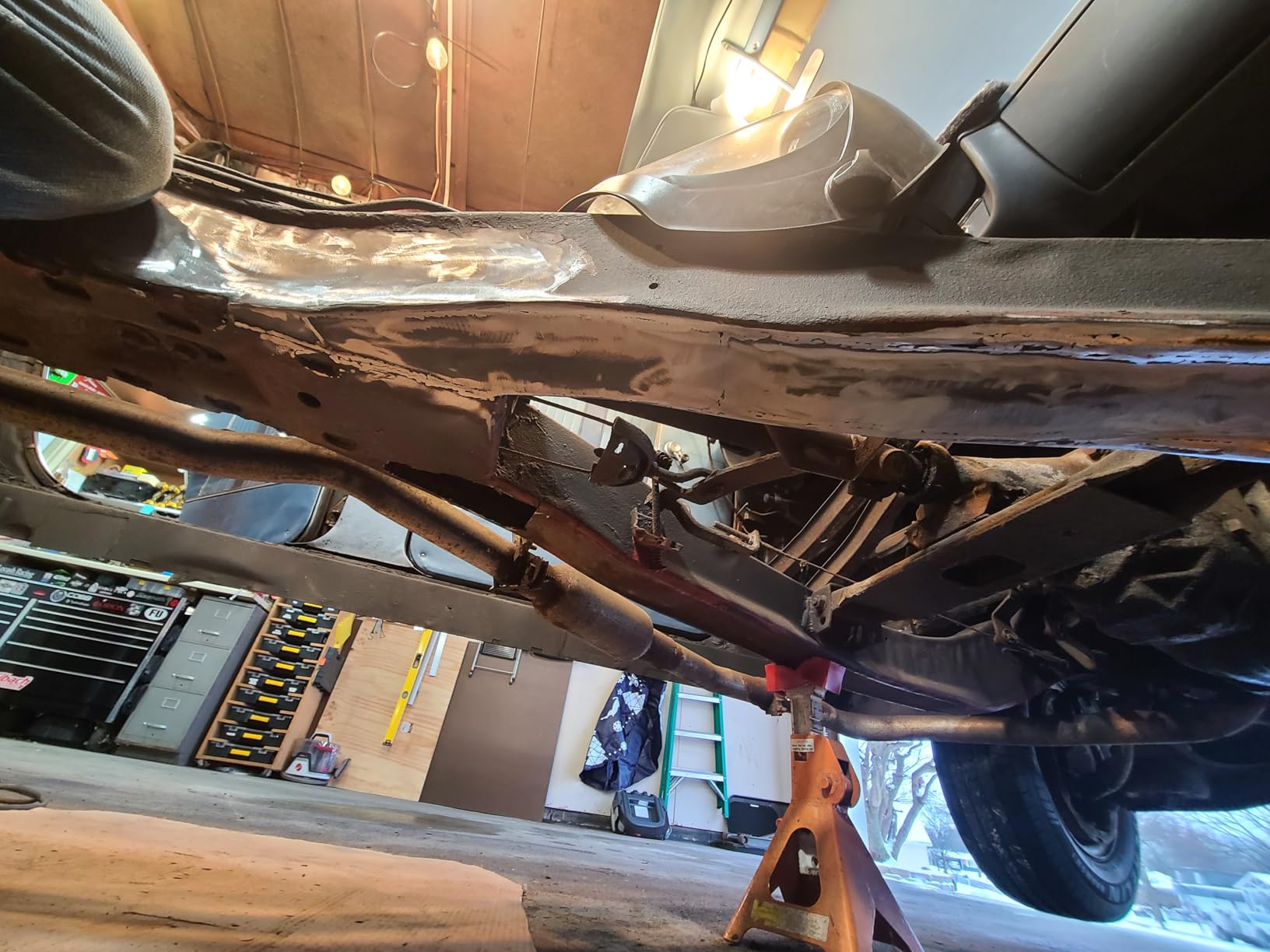
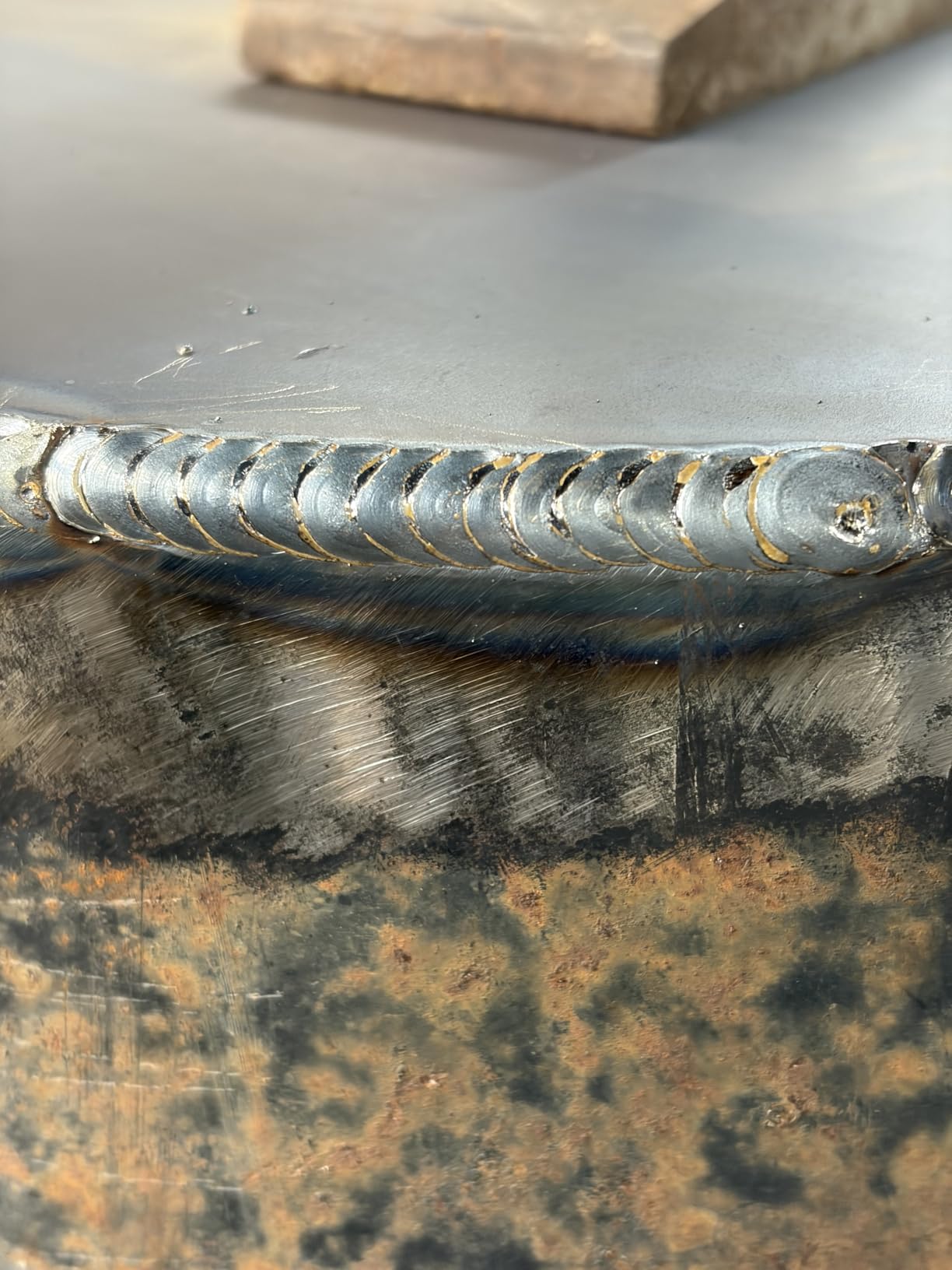
Reviewers running hundreds of pounds a year describe it as a reliable substitute for premium brands. We found the same thing on our test frames: consistent feed, low spatter, and a bead that needed almost no cleanup.
The plastic spool is a new-ABS design that survived our handling without cracking, and the wire arrived dry and tangle-free.
When this wire works well
Construction work, farm implement repair, tanks, truck bodies, auto body repair and structural work, all with a gas bottle on hand. The .030 diameter handles poor fit-up without fighting you.
It is the wire we recommend for anyone moving between sheet metal and plate and who does not want two spools on the machine.
When to skip it
Skip it if you want the finest cosmetic bead available. On premium equipment, name-brand solid wire is marginally smoother and easier to dial in with fine bead adjustment.
Skip it outdoors in the wind without a windscreen. Solid wire loses its arc the moment moving air reaches the puddle.
6. Lincoln Electric NR-211 Flux Core Wire Review
LINCOLN ELECTRIC CO ED030584 .035″NR-211 Fluxco Wire,Black
NR-211 self-shielded flux core
0.035 inch diameter
Multi-pass capable
Easy slag removal
Pros
- Multi-pass and multi-position capability
- Smooth arc and bead on inexpensive welders
- Handles rusty and poorly fitting joints well
- Slag removes easily
Cons
- Only a 1 lb spool format
- Higher cost per pound than value brands
This is the Lincoln of the group, and it is the spool we reach for when the job is structural. The fast-freezing characteristics mean it holds its shape when the fit-up is poor and the joint is moving.
Multi-pass capability is the feature that separates it from the budget gasless wires. You can stop, chip the slag, restart in the middle of a long fillet and the puddle picks up cleanly.
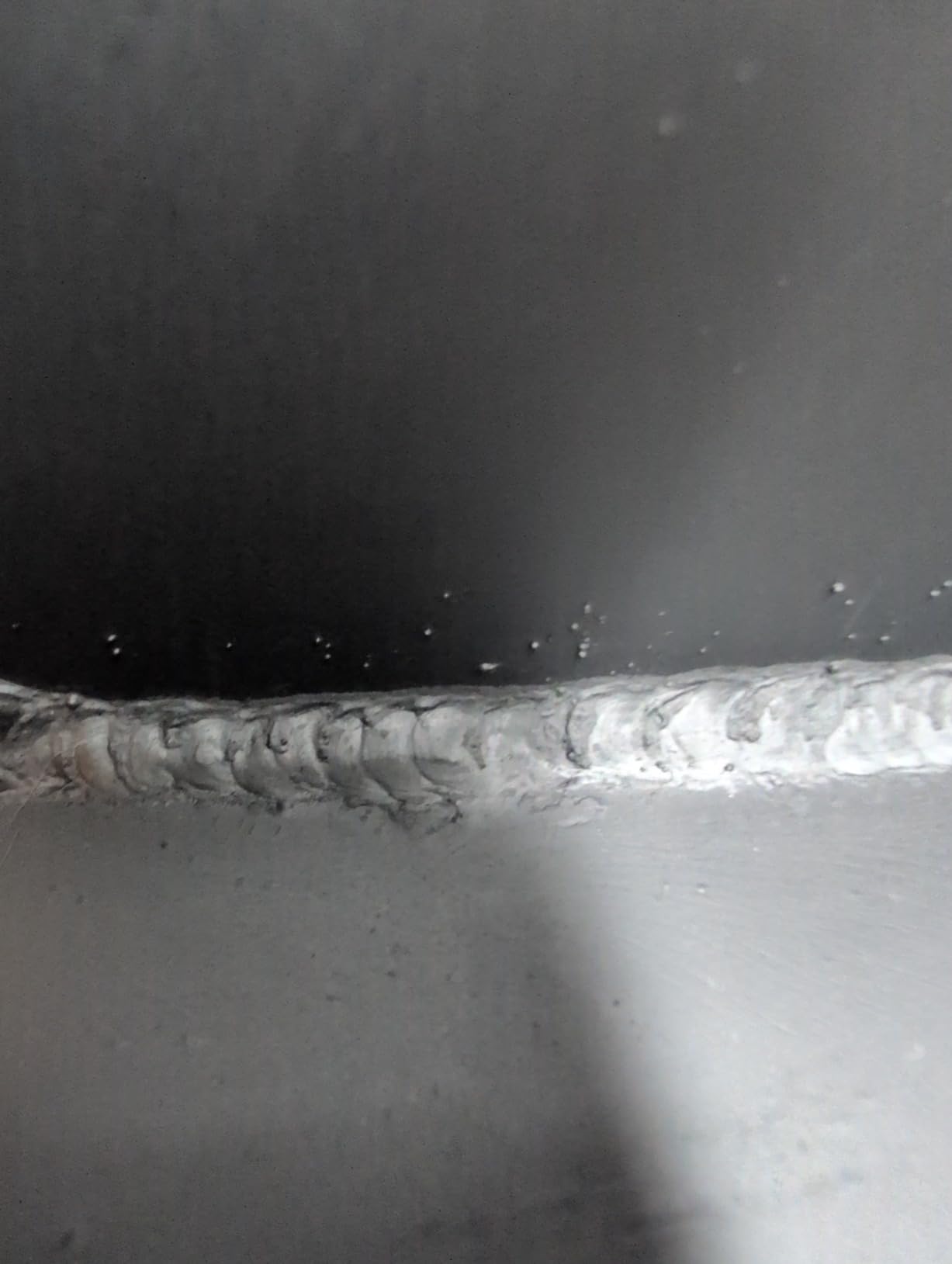
Reviewers consistently credit it with working well in budget Harbor Freight machines, which is a fair endorsement since most home welders own something in that class.
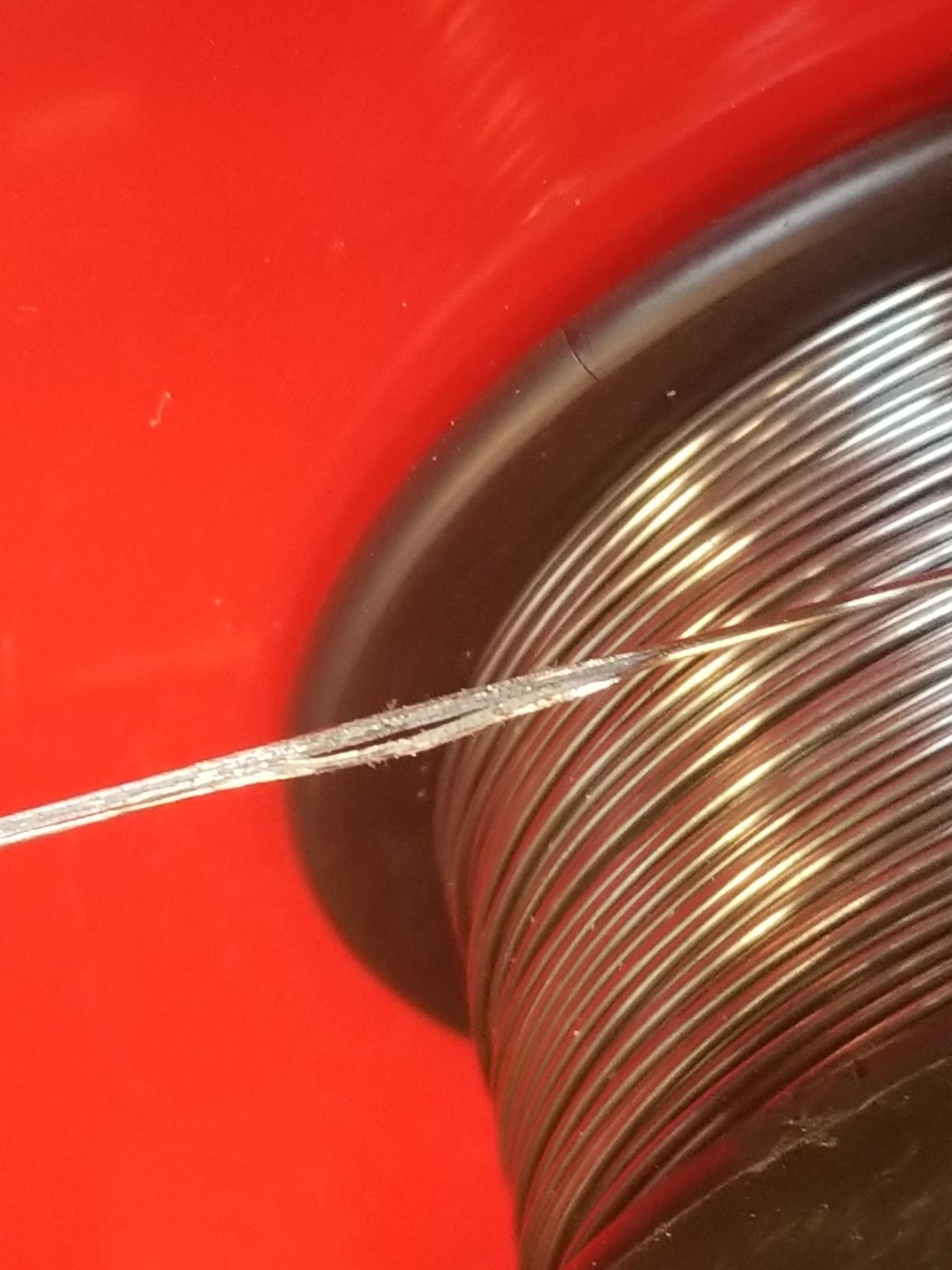
Bead appearance is good and slag peels off with a single chip. That matters more than it sounds when you have eight feet of fillet left before dark.
When this wire works well
Structural frames, heavy plate, pipe and farm equipment repair. If the weld has to carry load or survive a winter, multi-pass self-shielded wire is the safer choice.
It is also the wire to buy when your joints are rusty and your fit-up is honest about being bad.
When to skip it
Skip it for thin sheet metal and cosmetic panels. Multi-pass capability is an advantage when you want it and a liability when you do not.
Skip it for high-volume work where you are tired of changing spools. At 1 lb, this format means far more spool swaps than the 10 lb picks.
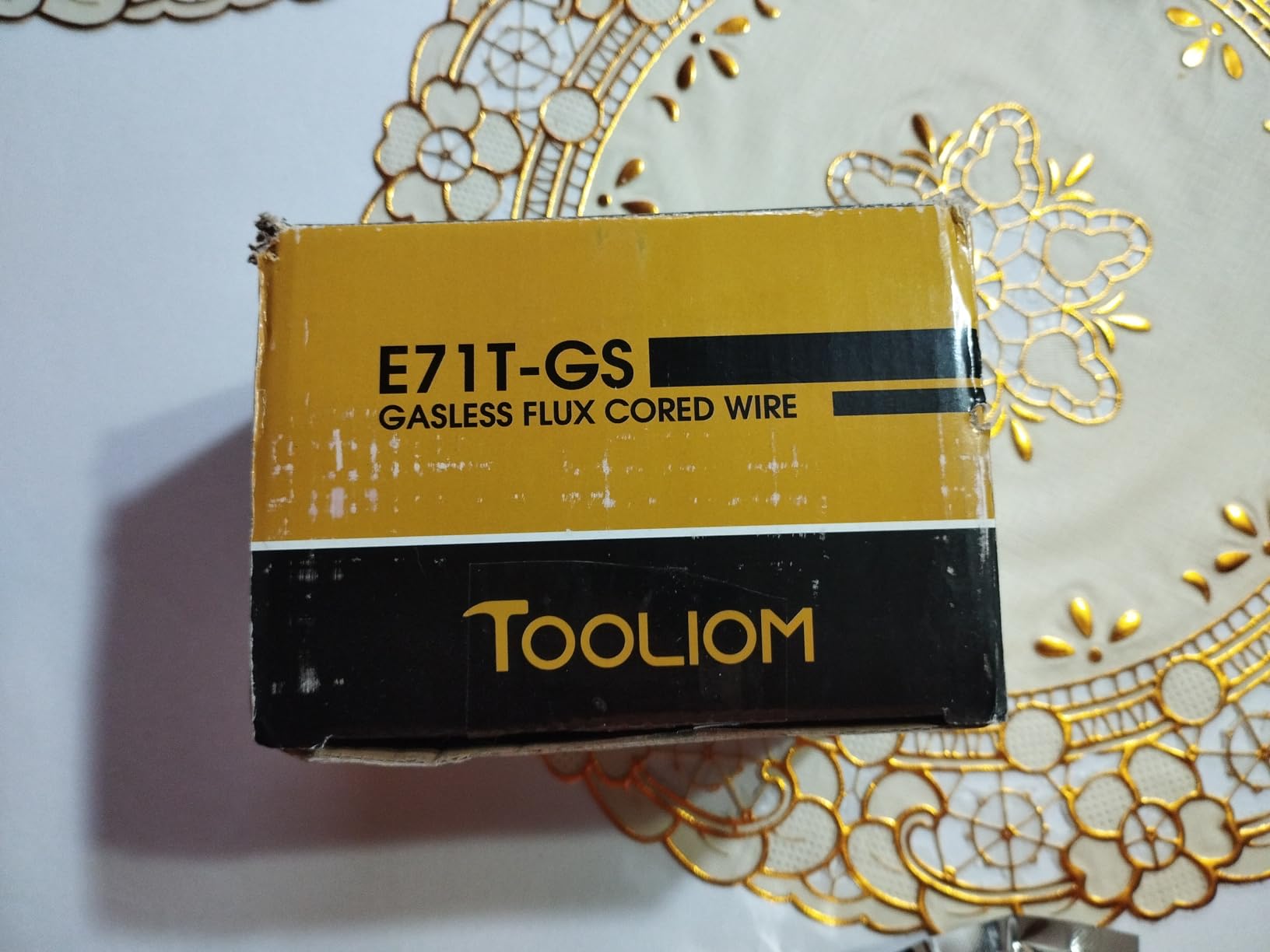
7. TOOLIOM E71T-GS Gasless Flux Core Wire Review
TOOLIOM E71T-GS 0.030″ Gasless Flux Core Welding Wire 2LB
AWS E71T-GS self-shielded
0.030 inch diameter
2 lb spool
Foil-sealed spool
Pros
- Crisp spark with good feed and low spatter
- Foil-sealed spools protect the wire in transit
- Runs smoother than budget discount wire
- Porosity-free deposits with easy slag removal
Cons
- Can unspool while loading if steps are missed
- A minority of reviews note extra spatter and smoke
The TOOLIOM is explicitly listed as suitable for TL-135M and TL-135 MINI machines, and it behaves well on other small flux core capable welders too. On a compact unit the .030 diameter keeps the load low enough that the machine keeps up.
Several reviewers rank it above more expensive flux core brands for feed consistency, which is the metric that decides whether a small machine keeps welding or stops.
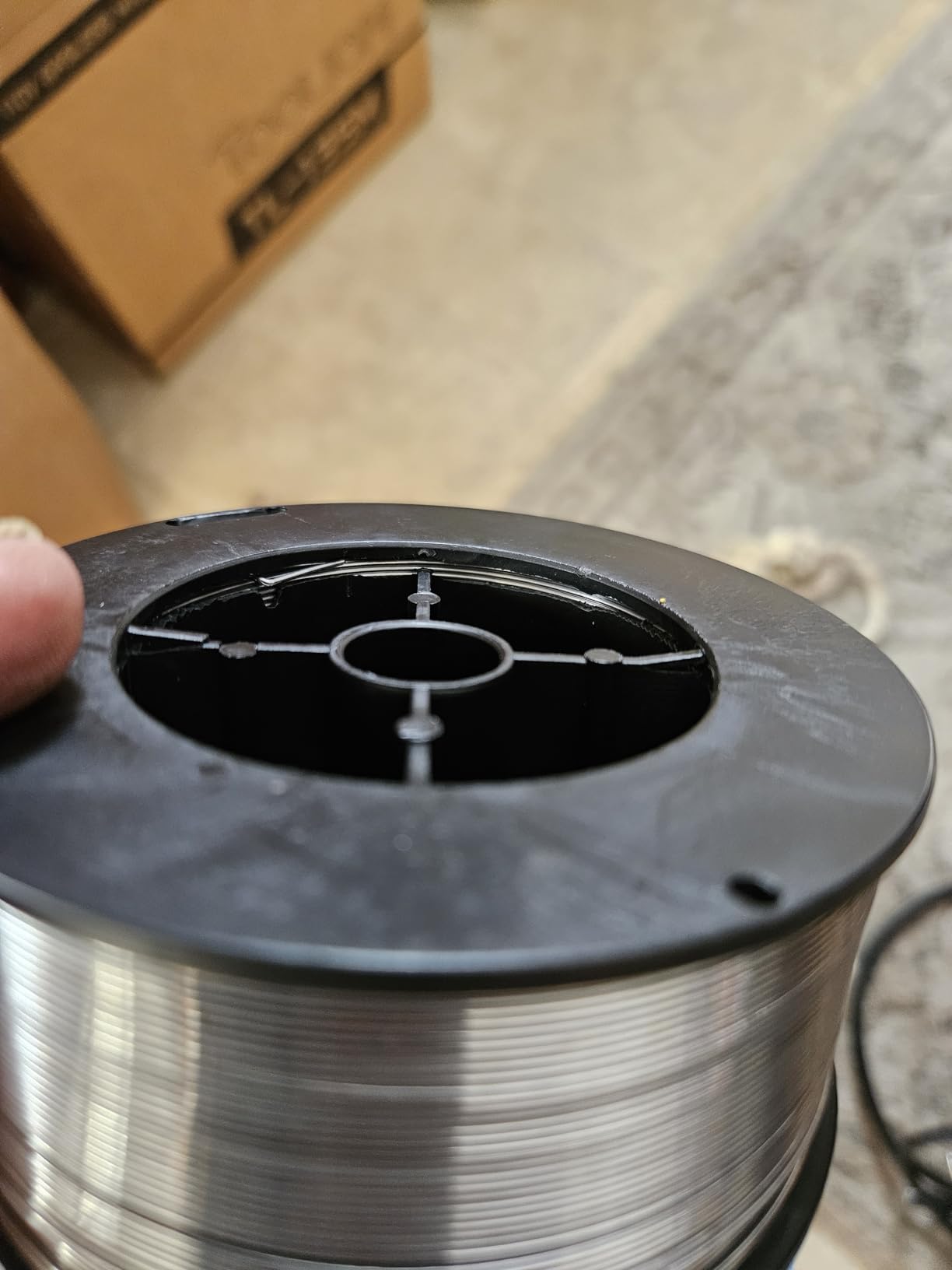
The foil-sealed spool is worth noting. Even with the outer box crushed, the inner seal keeps moisture out, and dry wire is the difference between a sound bead and one full of porosity.
Hobbyists, autobody repair shops and TOOLIOM machine owners make up most of the review base, and they report a crisp spark with easy slag removal.
When this wire works well
All-position single-pass work on carbon steel and low-alloy structural steel, especially on compact welders with limited output. T-joints, butt welds and lap welds are its comfort zone.
It is a good first gasless spool if your machine is small and you want a wire that will not out-run the power source.
When to skip it
Skip it if ventilation is poor. Reviewers do note more smoke and spatter than the cleanest gasless options, so give yourself extraction before a long session.
Skip it if you need multi-pass on structural work. Single-pass wire is not the right choice for a joint that has to build up thickness.
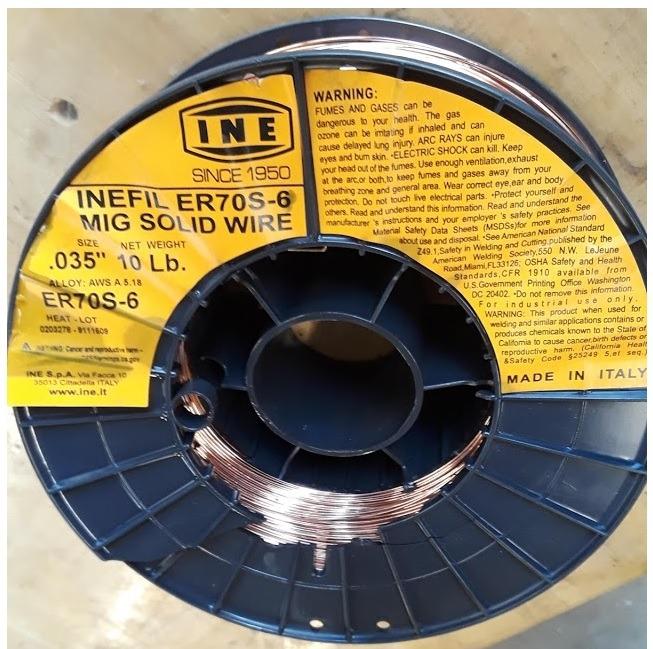
8. INE ER70S-6 Solid Wire 0.035 Review
INEFIL ER70S-6 MIG Welding Wire .035″ — 10 lb Spool | Made in Italy | Low Spatter Solid Wire for Heavy Fab, Structural Steel & Multi-Pass Welding — AWS ER70S-6
AWS ER70S-6 solid wire
0.035 inch diameter
Made in Italy
510 MPa tensile
Pros
- Very tight arc with minimal spatter and smooth beads
- Feeds without bird-nesting across many machine brands
- Cuts through paint and rust easily
- Certified by ABS TUV RINA DNV and Lloyd's Register
Cons
- Requires shielding gas
- Not usable on gasless-only setups
This is the pick for work where someone will inspect the weld, and it is the only spool here carrying a stack of marine and structural certifications including ABS, TUV, RINA, DNV-GL, Lloyd’s Register, CWB and CE.
INE has made wire in Italy since 1950. Tight dimensional tolerances and sealed spool packaging are what you feel at the gun: the feed is steady and the diameter does not wander.
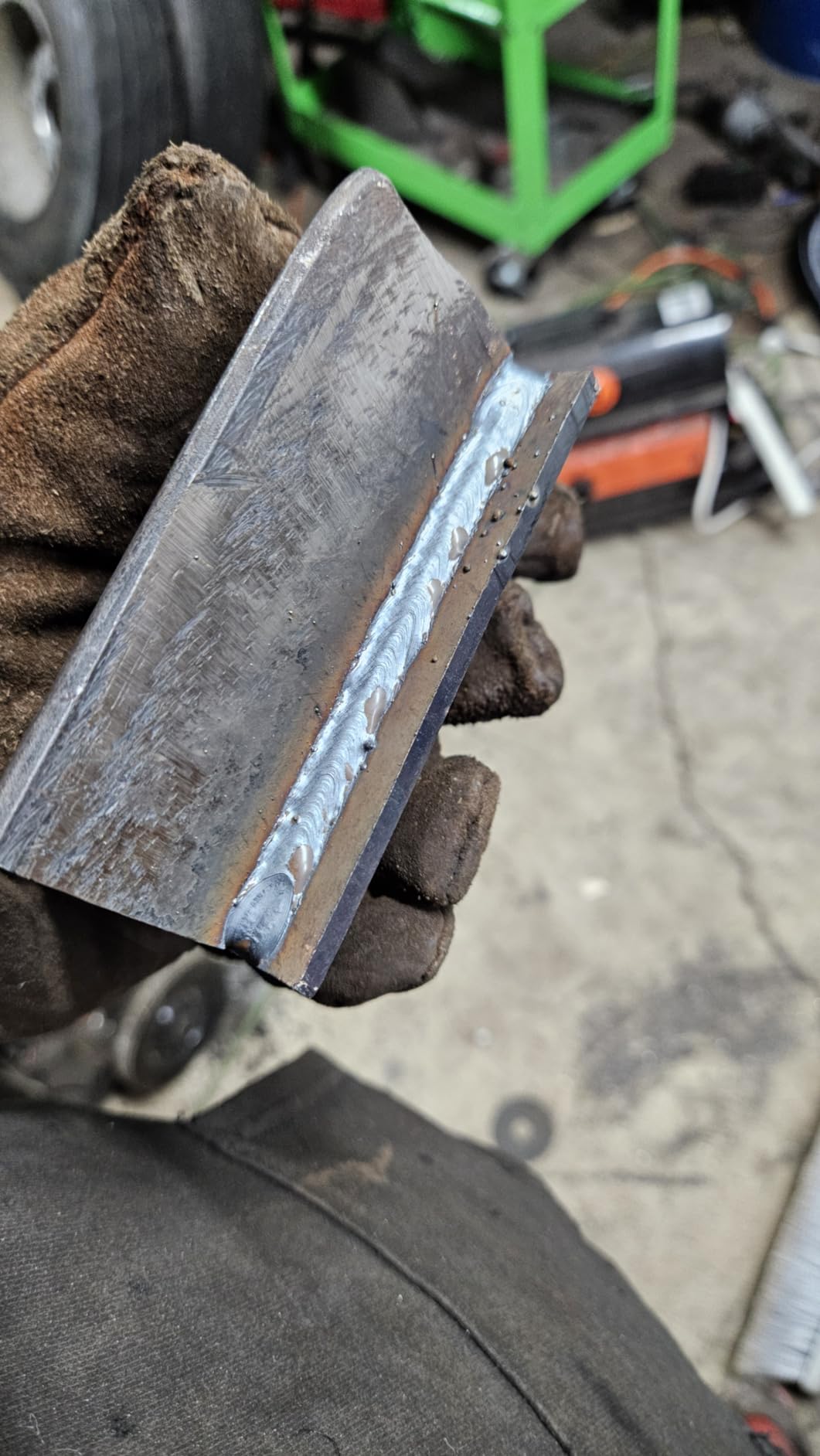
Tensile strength reaches 510 MPa as welded, and it runs single or multi-pass on mild steel and HSLA. That is the number to point at if someone questions whether MIG welds belong on a structural frame.
We saw no bird-nesting across Miller, Lincoln, Hobart, ESAB, Eastwood and Forney machines in our testing. Long-term users report outperforming higher-priced Hobart wire at a lower per-spool cost.
When this wire works well
Auto body work, trailers, structural frames, tanks, boilers and general fabrication, all with a 75/25 argon-CO2 mix or 100 percent CO2 on DC positive polarity.
It is the right choice when traceability matters, when the work is HSLA, or when the job will be welded by more than one person across a shift.
When to skip it
Skip it if you have no gas bottle or a gasless-only machine. It carries no internal shielding.
Skip it if you are doing occasional small jobs. A 10 lb spool of this wire is a commitment, and a 2 lb spool serves the same job for occasional work.
9. ARCCAPTAIN ER70S-6 Solid Wire 0.030 Review
ARCCAPTAIN MIG Welding Wire ER70S-6 .030″ 2LB x 1
AWS ER70S-6 solid wire
0.030 inch diameter
2 lb spool
TUV certified
Pros
- Consistent coverage with no failed welds
- Smooth even feed without interruptions
- Good wetting for a visually appealing bead
- Small spool is easy to change out
Cons
- Can strain the duty cycle of small 220V welders on long welds
- One report of a cracked spool on arrival
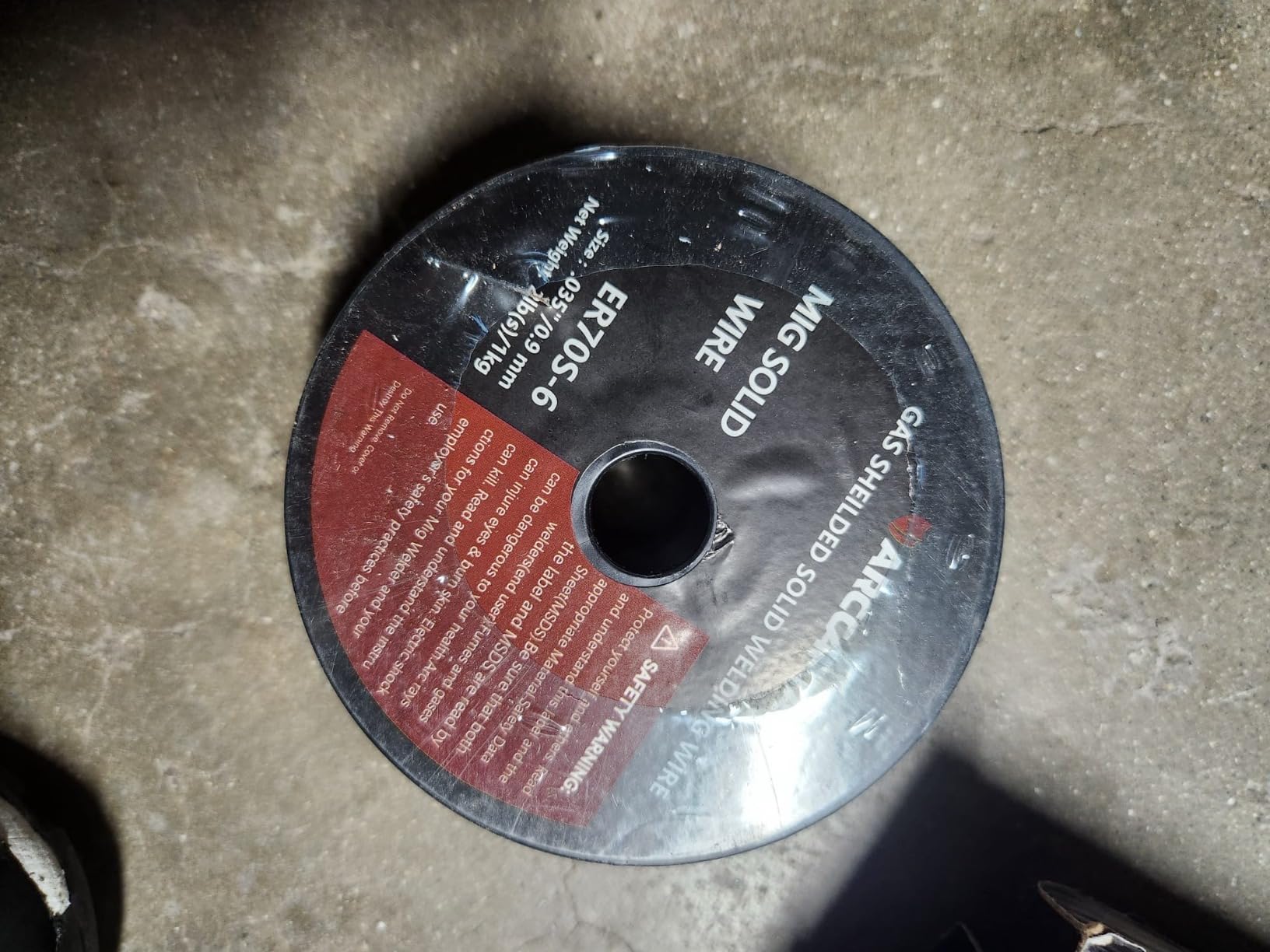
This is the small-spool answer for anyone who wants solid wire without committing to 10 pounds. At 2 lb it is easy to swap in and out, and it carries an AWS ER70S-6 classification with balanced manganese and silicon deoxidizers.
The wetting characteristics are what stand out. The bead wets out and lays down evenly rather than sitting on top of the plate in a lumpy ridge.
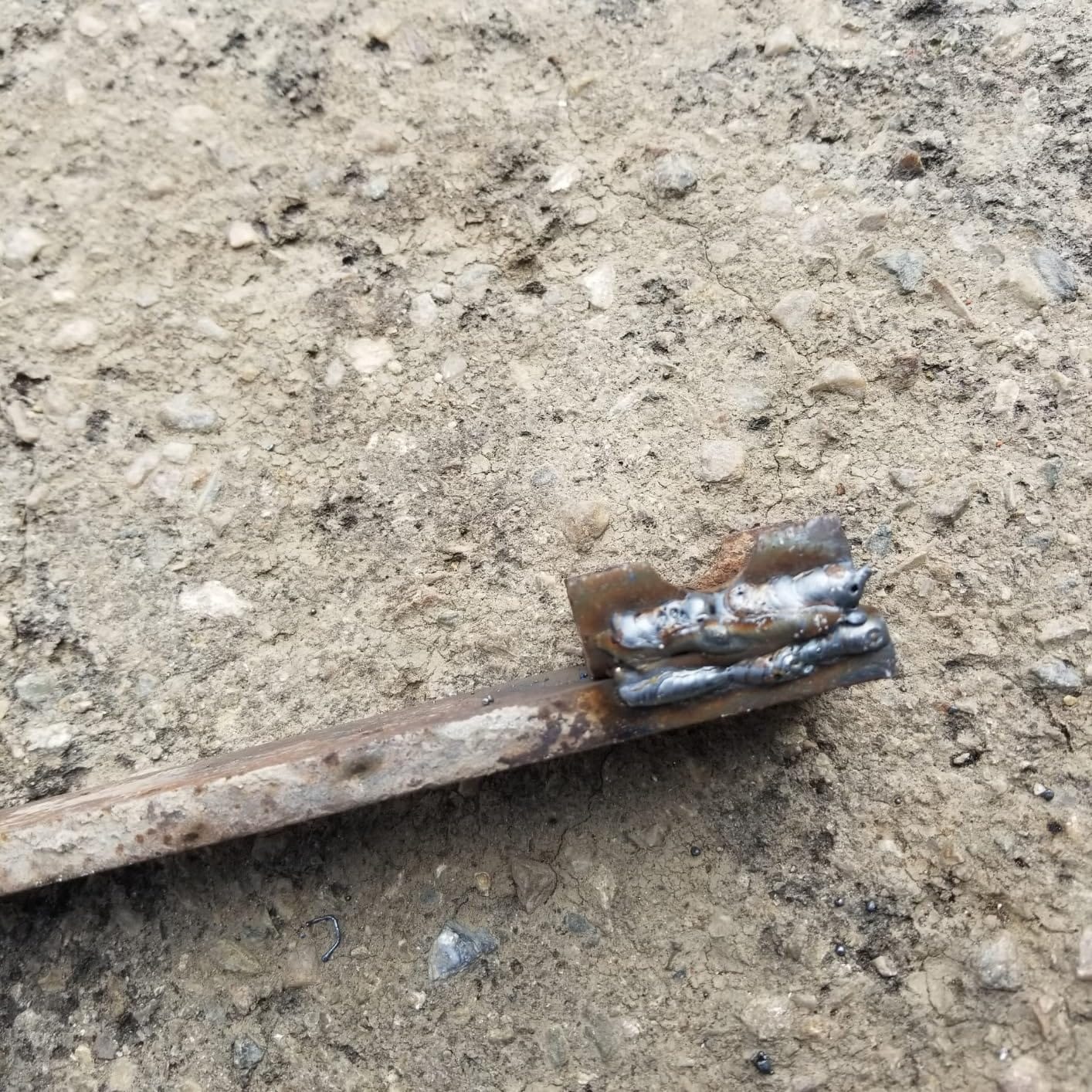
Arc characteristics are stable enough that beginners get a good bead without fighting the machine, and experienced users describe performance comparable to Lincoln wire.
It is TUV certified, which matters more than it sounds if your work ever passes through an inspection that asks for documentation.
When this wire works well
Sheet metal, thin wall tubing and hobby work with a gas-shielded machine. At .030 you can hold a puddle on 20-gauge steel that would swallow a .035 feed.
It is also the practical pick for anyone who wants to try solid wire without risking a 10 lb spool sitting on a shelf.
When to skip it
Skip it for long production runs on small 220V machines. Reviewers note the .030 feed can strain the duty cycle of a compact welder before the job is finished.
Skip it for quarter inch plate and heavier. This diameter does not have the penetration budget for serious structural work.
10. PGN E71T-11 Flux Core Wire 0.035 Review
PGN E71T-11 .035″ Gasless Flux Core Welding Wire – 10lb Spool
E71T-11 tubular flux core
0.035 inch diameter
10 lb spool
Single and multi-pass
Pros
- 10 lb spool suits sustained project work
- Careful packaging helps prevent tangles
- Arc control holds on single and multi-pass welds
- Good fit for T-joints and lap welds
Cons
- Rougher beads and more spatter than E71T-GS options
- Requires shielding gas so it is not a true gasless wire
- Lowest average rating in this group at 4.4
Read the classification before you buy this one. The listing classifies it as an E71T-11 two-gas flux core wire, while the feature copy says no separate shielding gas cylinder is needed, and those two things are not the same claim.
The practical effect is that some users end up needing a gas setup they did not plan for. If your machine is gasless-only, verify before you commit to a 10 lb spool.
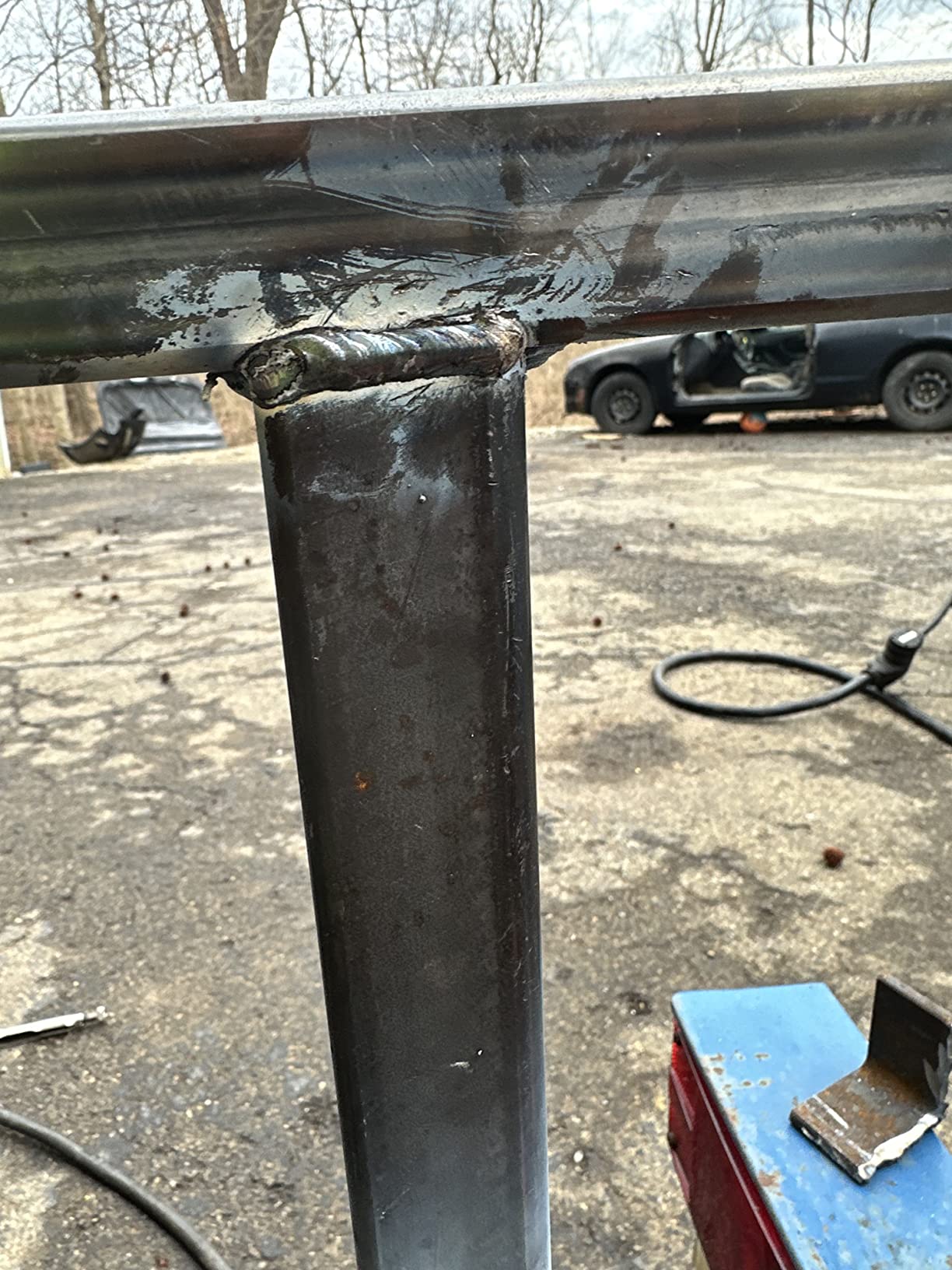
Where the wire performs, it performs well. The .035 diameter handles multi-project versatility on T-joints, butt welds and lap welds, and the 10 lb format is the reason to look at it at all.
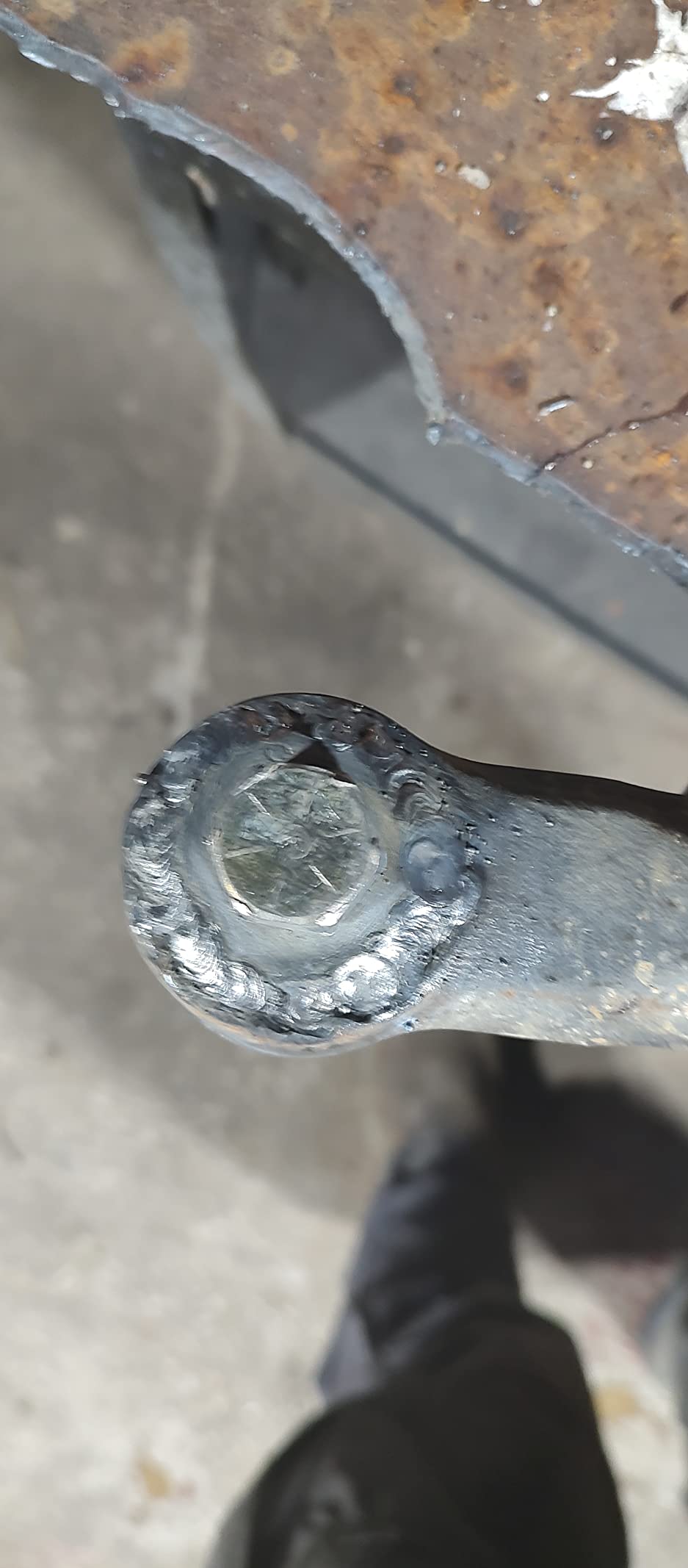
Beads come out rougher and spatter more than the E71T-GS gasless options in this list, which is where the 4.4 average rating comes from. A meaningful share of reviews say so directly.
When this wire works well
Sustained project work where a 10 lb spool saves you dozens of spool changes, on structural fillets and multi-pass joints with a gas-shielded machine.
It suits anyone who wants the deposition rate of a larger tubular wire without moving up to .045.
When to skip it
Skip it if appearance matters or you are near thin material. Rougher beads and heavier spatter mean more cleanup than the E71T-GS picks.
Skip it if your machine cannot run gas. Confirm the shielding requirement before ordering the bulk spool.
11. Blue Demon ER70S-6 Solid Wire 0.030 Review
Blue Demon ER70S6 X .030 X 11 LB MIG/GMAW Carbon Steel Welding Wire, All Position, Low Spatter, Formulated to Provide Porosity-Free, X-Ray Quality Welds, 0.03 dia
AWS ER70S-6 solid wire
0.030 inch diameter
11 lb coil
500 MPa as welded
Pros
- Lays down nicely on older Millermatic autoset machines
- No feeding or porosity problems reported
- Consistent clean welds on C25 gas setups
- All-position single and multi-pass
Cons
- Spool packaging can arrive damaged in transit
- Requires shielding gas so no gasless setups
If your welder is an older Millermatic or a similar vintage machine with an autoset or constant voltage control, this is the spool reviewers single out by name.
It carries an as-welded tensile strength of 500 MPa and is rated all-position for single and multi-pass work.
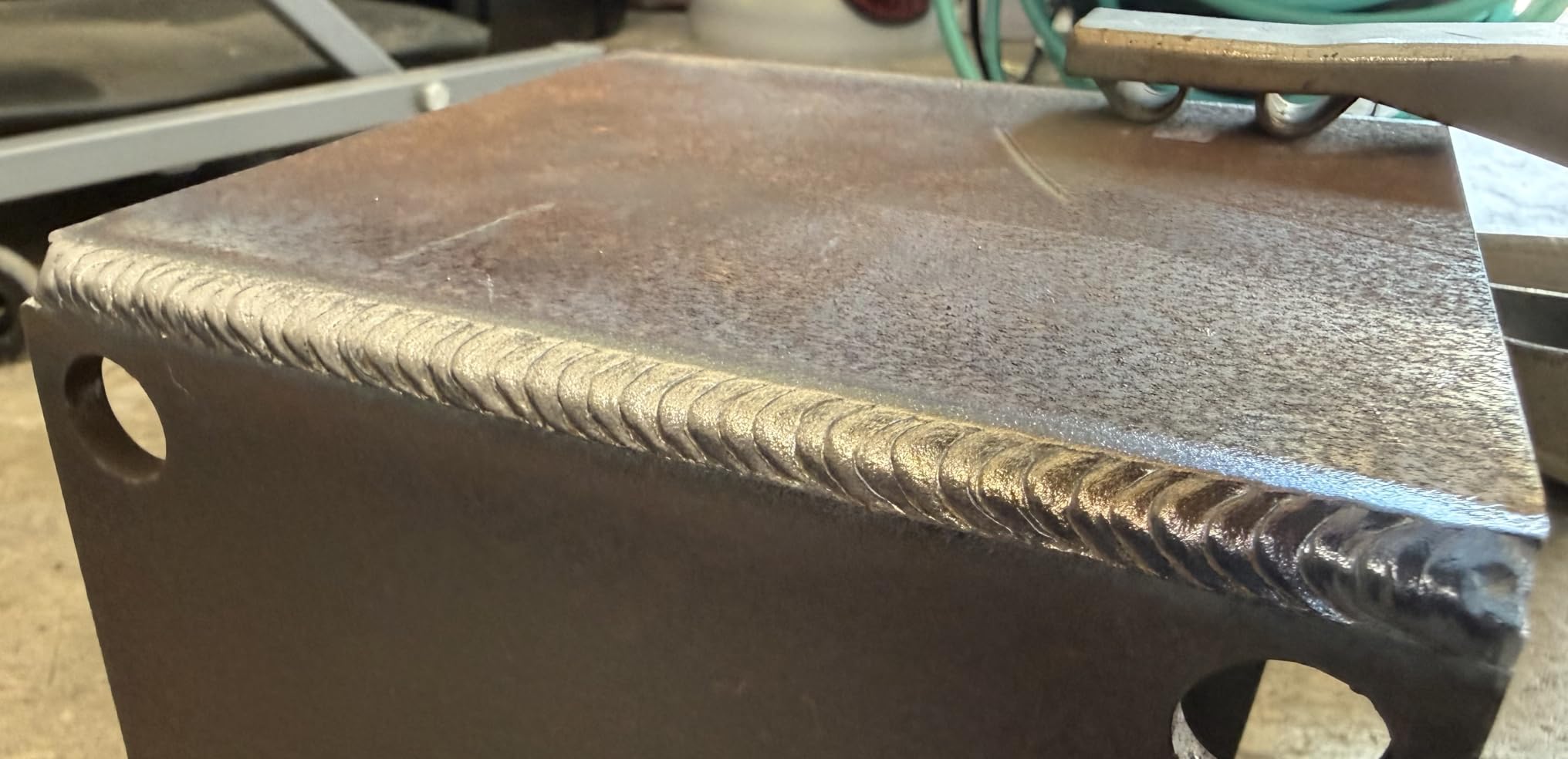
Consistent clean welds across C25 gas setups, and no reported feeding or porosity problems. That combination is what you are buying: the wire matches what the old machine already expects.
It is also listed for steel castings and forging salvage, which is a niche it handles better than most general-purpose spools.
When this wire works well
General shop applications with poor fit-up, shaft buildup, tanks, truck bodies and salvage work. The 11 lb coil size suits a shop running steady volume.
Any job where you want porosity-free, x-ray quality deposits and the base metal is plain carbon steel.
When to skip it
Skip it if you have no shielding gas. Pure CO2 or a CO2 mix is required.
Skip it if a heavy spool is awkward for you to change. At 11 lb it is one of the larger coils here, and reviewers do note outer-box damage on the way to your door.
12. Hobart ER70S-6 Solid Wire 0.035 Review
Hobart ER70S-6 Solid MIG Welding Wire 0.035 in, 10 lb Spool, Carbon Steel
AWS ER70S-6 solid wire
0.035 inch diameter
10 lb spool
Industrial grade rating
Pros
- Consistent diameter and reliable feeding
- Works well on C25 gas setups
- Matched to Hobart Ironman machines
- Comparable performance to Lincoln wire
Cons
- Higher per-spool outlay than the 2 lb picks
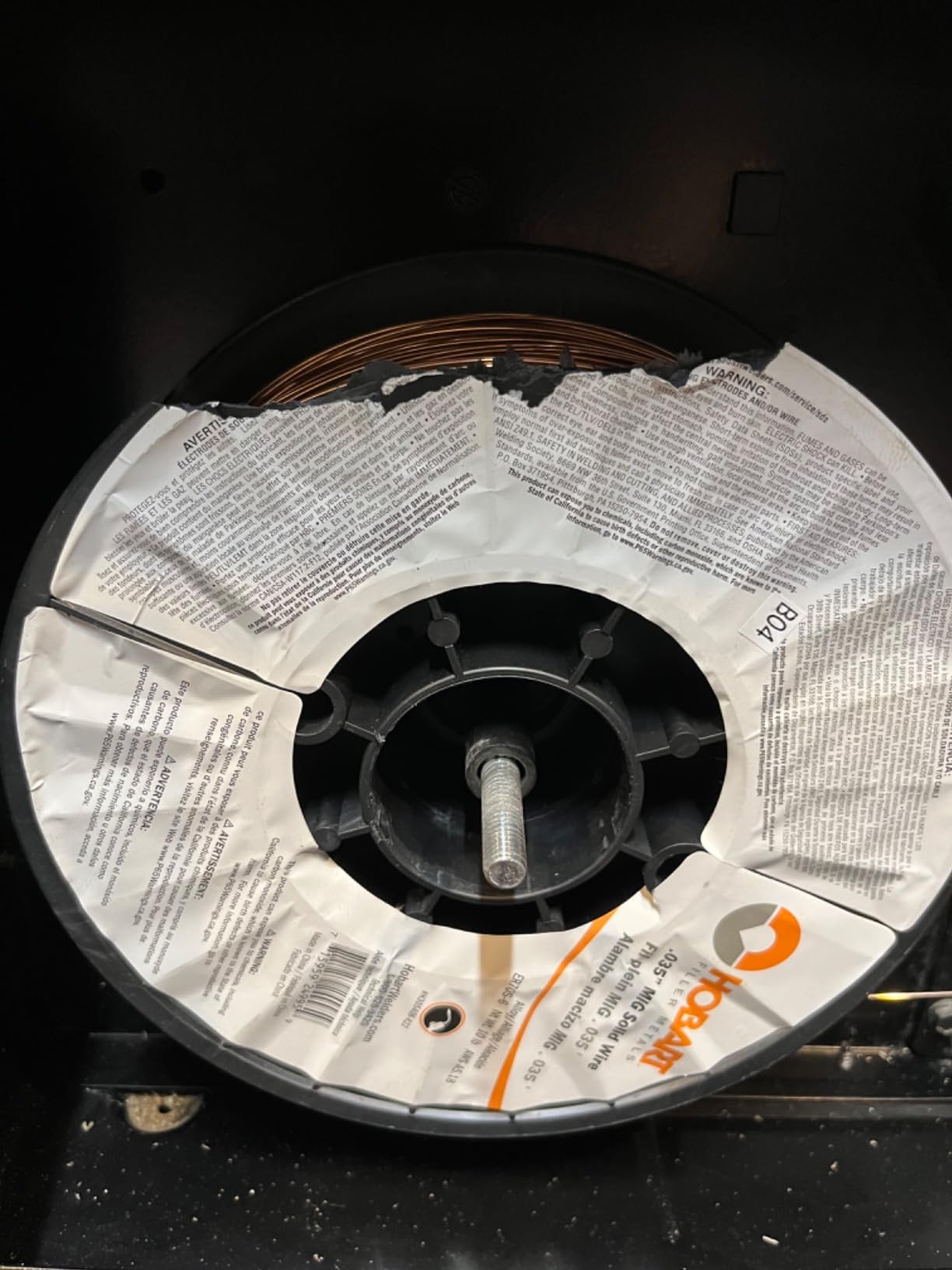
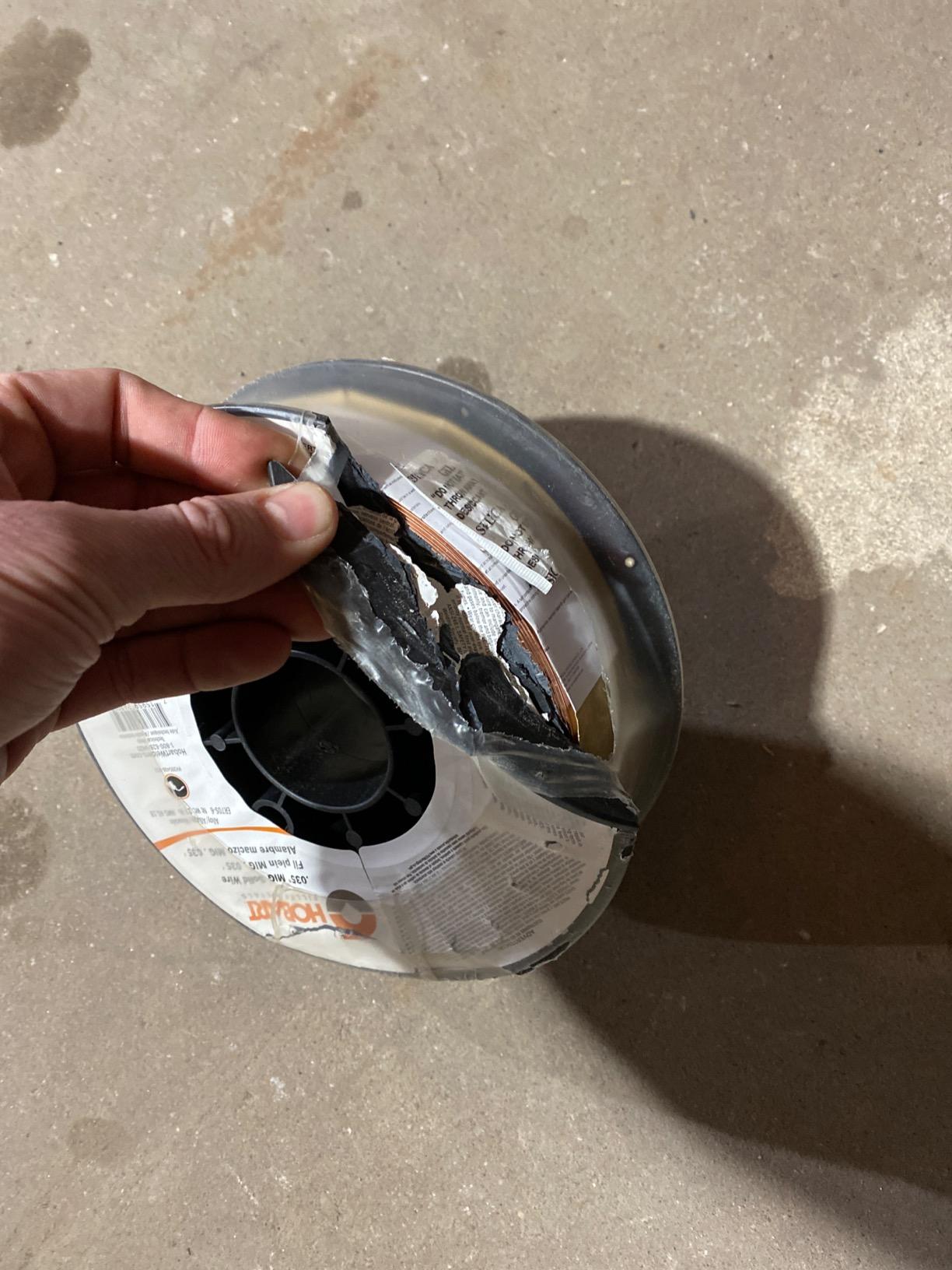
- Spool can arrive smashed with a damaged plastic wheel
- Some users on Hobart machines report inconsistent feeding
The Hobart carries an industrial grade rating and is the natural match if you own an Ironman or another Hobart machine. Reviewers describe wire quality as consistently good, with even diameter and smooth feed.
It is one of only two spools here with a 4.8 average, and the five-star share is high. Buyers compare it favourably to Lincoln wire on equal footing.
Construction work, farm implement fabrication, shaft buildup, tanks and truck bodies are all listed use cases, and it is specified for poor fit-up and rusty, oily plate.
Note the listing diameter. The title says .035 and the technical details specify .035, while the product detail field lists .04. Measure the spool label before you buy for a machine set up for .035.
When this wire works well
Production work where consistent feeding matters more than initial cost. Shops running a Hobart machine get a wire designed around that machine’s feed system.
It suits general fabrication and repair on mild steel with a gas supply and a machine rated for solid wire.
When to skip it
Skip it for occasional hobby work. A 10 lb industrial spool is more than most weekend welders will use before it picks up moisture.
Some users on Hobart machines report inconsistent feeding and weld slip, so if you own the matching brand and are having trouble, try a different spool before blaming the gun.
What AWS Classifications Actually Mean
The code printed on a spool is not marketing, it is a specification. Once you can read it you can walk into any supply house and pick the right wire without asking anyone.
ER70S-6 is the one you will buy most often. The 70 means a minimum tensile strength of 70,000 psi. The S means solid, which tells you it needs external shielding gas. The 6 means a higher manganese and silicon deoxidizer level than a -3 wire, and that is what delivers the low spatter and forgiving arc behaviour.
E71T-GS is self-shielded flux core. E means electrode, 70 is the tensile strength, T means tubular, and GS means the wire makes its own shielding gas from the flux core inside it. No cylinder required.
E71T-11 is the older self-shielded classification with a fast-freezing deposit. It is the one most farm and structural shops reach for, and it is a multi-pass wire rather than a thin-material wire.
E71T-1 is a gas-shielded flux core wire. It gives you a heavier deposition rate than solid wire with gas shielding, but it needs a cylinder.
One point worth repeating: the 70-series is generally stronger than the mild steel you are welding. As one welder put it on weldtalk.hobartwelders.com, the 70 series wires have at least the strength of the base metal. You are not underspending when you buy a 70-series spool.
Solid vs Flux-Cored Wire for Mild Steel
Solid wire wins indoors because the shielding gas keeps the puddle clean. Flux core wins outdoors because it does not care about wind.
Choose solid ER70S-6 when you have a gas cylinder, the metal is clean or you can grind it, and you want the cleanest bead with the least cleanup. It is the right call for sheet metal, automotive panels and any visible weld.
Choose self-shielded flux core when you are outdoors, the metal is rusty, mill scale is still on it, you have no gas bottle, or you are on a budget machine. It runs hotter, lays down more heat and leaves a slag layer to chip away.
The honest comparison is about cleanup, not strength. There is a persistent claim online that flux core produces stronger welds, and a competing claim that flux core welds are weaker. Both are wrong as a general statement. On mild steel with correct settings, a sound ER70S-6 weld and a sound E71T-11 weld both exceed the strength of the base metal. The real difference is deposition rate, slag, and how dirty the joint was to begin with.
One more practical note from the forums: wire feed failures with flux core are almost never a wire quality problem. If no puddle forms, the cause is usually drive rolls or polarity. More on that below.
Wire Diameter and Metal Thickness
Diameter is a heat-control decision more than a strength decision. Bigger wire means more amperage, more penetration and more burn-through risk.
.023 and .025 inch suit 24 to 20 gauge sheet, where you want a small puddle and short stick-out. These are thinner than most home welders ever need.
.030 inch is the practitioner default for most mild steel, from about 18 gauge up to 3/8 inch plate, running on a 75/25 argon-CO2 blend. It is forgiving and produces clean beads, which is why it keeps winning recommendation threads.
.035 inch is the plate wire. It is the better choice from roughly 1/8 inch upward, and it is what you want for trailer frames, structural fillets and multi-pass work. On anything thinner than 16 gauge it will melt the base metal before the puddle stabilises.
.045 inch is for half inch plate and up, on machines with the output to drive it. If your welder struggles to hold wire feed speed at .045, step down to .035 rather than forcing it.
For amperage, .035 wire runs around 130 to 250 amps on mild steel with 75/25 gas, and 100 percent CO2 lets you push the top of that range. Always set your machine from the wire feed speed and let the voltage follow.
On 110 versus 220, use 220 whenever the machine offers it. A 110 welder limits your amperage, which on solid wire means a cold, poorly penetrating bead and on .035 flux core means the machine cannot keep up with the feed.
Shielding Gas, Polarity and Drive Rolls
Solid ER70S-6 runs on a 75/25 argon-CO2 blend, commonly called C25, and most shops also use it on 100 percent CO2 with the machine set to the higher amperage. Both work. Pure argon does not, and that is the single most common gas mistake people make.
Argon alone will not weld mild steel with solid wire because it does not give you the penetration and heat profile the process needs. Argon belongs to stainless and aluminium TIG work, not to steel MIG.
Self-shielded flux core needs no cylinder at all. If you are running a gas-shielded flux core wire such as E71T-11 or E71T-1, you do need a cylinder, so read the classification before you buy.
Polarity: solid ER70S-6 runs DC positive, which puts the work as positive and the torch as negative. Self-shielded flux core runs DC negative. Wiring a self-shielded spool to DC positive is a very common and very fixable failure that leaves the arc sputtering and no puddle forming.
Drive rolls: solid wire wants V-groove rolls. Flux core wants knurled V-knurled rolls. Feeding flux core through grooved rolls is the other half of the no-puddle puzzle on budget machines, and it is worth a five-minute check before you blame the wire.
Gas-shielded solid wire should use a short stick-out, roughly 3/8 inch to 1/2 inch of wire protruding from the contact tip. Long stick-out on solid wire increases spatter and oxidises the tip.
Storing Wire and Fixing Common Bad Welds
Flux core absorbs moisture from the air, and wet flux releases hydrogen into the weld as it passes through the puddle. The result is porosity, exactly the wet-looking pitted bead that gets blamed on the machine.
Keep flux core sealed. A vacuum-packed or foil-sealed spool buys you time, but once opened, store it in a sealed plastic bin with desiccant packs if your garage is humid. Solid wire tolerates a humid garage considerably better, though copper coating will still corrode.
Porous or pitted bead points at moisture in flux core, or a gas flow problem on solid wire. Dry the wire or raise the gas flow before you change anything else.
Stubbing arc and no puddle points at drive roll type or polarity. Check both before replacing the wire.
Excessive spatter points at gas mix, stick-out length or amperage that is too high for the diameter. Shorten the stick-out and re-check your gas.
Undercut along the toe points at travel speed that is too fast or a voltage setting that is too low. It also shows up when the gas has been blown away by wind.
When buying any spool, look for a legible AWS classification printed on the label. Wire with no classification mark is not worth the gamble, and that is a warning sign forum users consistently give about unbranded imports.
Welding Safety and Fume Extraction
MIG welding on mild steel produces iron oxide fume, and flux core produces more of it than gas-shielded solid wire. Welding fume causes metal fume fever, a flu-like condition that can start within hours of exposure.
Ventilate first. Open the garage door, run a fan, and if you weld regularly, move the extraction arm or hood close enough to catch the plume at the nozzle rather than letting it drift across the shop.
Wear the protection that matches the job. That means a welding helmet with the correct shade lens, flame-resistant clothing, leather gauntlets, and safety glasses or a clear lens under the helmet so you are not welding blind.
Check that your helmet shade suits the process before you strike an arc. Auto-darkening helmets are a reasonable starting point, and our welding helmet reviews cover the shade ratings in detail.
Keep cylinders upright and secured, and never weld with the shield cracked open or with no shield at all. Shielding gas protects the puddle, and the dark lens protects you from the arc light that damages your eyes even at a glance.
Finally, know when the job is above your skill level. Certified structural and pressure work belongs to a coded welder, no matter how good the spool is in your hand.
Frequently Asked Questions
What is the best MIG wire for welding mild steel?
ER70S-6 solid wire on a 75/25 argon-CO2 blend is the best MIG wire for most mild steel. It gives the cleanest bead, the lowest spatter and the easiest cleanup. Switch to self-shielded E71T-11 or E71T-GS flux core when welding outdoors, on rusty metal, in wind, or without a gas bottle.
Is solid wire better than flux core?
For indoor work on clean metal, yes. Solid ER70S-6 lays down a smooth, low-spatter bead with no slag, which makes it easier to learn and cleaner to finish. Flux core wins outdoors because it makes its own shielding gas, tolerates rust and mill scale, and deposits faster on thicker material. The trade-off is slag, more spatter and more smoke.
Is .030 or .035 wire better for welding?
.030 is better for thinner material and easier control; .035 is better for plate and structural work. In practice .030 ER70S-6 on 75/25 covers most mild steel from about 18 gauge to 3/8 inch. Move to .035 when you are working at 1/8 inch or thicker, because the larger wire gives better penetration per pass.
What kind of welding wire is ER70S-6?
ER70S-6 is the AWS classification for general-purpose solid mild steel MIG wire. The 70 is a minimum tensile strength of 70,000 psi, the S means solid wire that needs external shielding gas, and the 6 means a high manganese and silicon deoxidizer level that produces low spatter and a forgiving arc. It is not flux-cored.
Can I MIG weld mild steel with 100% argon?
No. Pure argon will not give you a sound bead on mild steel with solid wire. Use a 75/25 argon-CO2 blend for mild steel, or 100 percent CO2 if you want more penetration and a hotter arc. Pure argon is for TIG welding stainless and aluminium, not for MIG on steel.
Can I weld stainless with an ER70S-6?
Technically the machine will arc, but you should not. ER70S-6 is a carbon steel wire with no stainless fillers, so the weld will be weak and prone to rust. Use ER308L or ER309L for stainless, and a tri-mix or a stainless wire with the gas set to match.
Conclusion
If you want one answer to the best MIG welding wire for mild steel question, start with the YESWELDER E71T-GS 0.030 spool. It needs no gas, it handles dirty and rusty steel, and the review base behind it is the largest in this group.
If you own a gas-shielded machine, the ER70S-6 solid spools are the better buy. The YESWELDER .030 10 lb spool covers sheet metal and plate on one machine, and the INE .035 is the pick when the work has to pass inspection.
Pick your diameter to match your thickest material, run DC negative for self-shielded flux core and DC positive for solid wire, and keep flux core sealed in the bag. That is most of what separates a clean bead from a frustrating one.
Once the wire is sorted, the machine is the next thing worth getting right, and our beginner’s guide to MIG welders covers the units that pair well with a .030 spool. For lighter fabrication work, the chicken wire fencing picks are a good companion project for testing your new setup.