
The short answer: the best planer blades for hardwood are reversible M2 high-speed steel knives sharpened to a fine edge for finish passes, and tungsten carbide knives when you are running abrasive or dirty lumber. Fitment comes first: match the blade width and planer model before you look at anything else, because a 13 inch strip with the wrong bolt pattern simply will not seat.
Hardwood is where cheap blades get exposed. A rounded edge does not just softenwood, it tears the long fibers out of oak, walnut and maple, and the fuzzy grain it leaves behind takes a full sanding pass to remove. Feed resistance also climbs, so a dull edge in dense stock can bog down a machine that ran fine on pine an hour earlier.
We put ten sets through their paces across handheld and stationary machines, and this guide covers the ones worth owning in 2026. Read the comparison table by width first and material second. Internal consistency matters too: the POWERTEC listings share a review pool, so treat the ratings as a family signal rather than a per-model verdict.
One housekeeping note on dust. Planers throw a surprising amount of fine hardwood particulate, and if you are choosing extraction for the shop at the same time, our guide to the best vacuums for hardwood floors covers filter behaviour on fine dust.
Table of Contents
Top 3 Picks for Best Planer Blades for Hardwood (October 2026)

Bosch PA1202 Woodrazor
- Micrograin tungsten carbide
- Reversible double edge
- 3-1/4 in width
- 2 blades per pack

POWERTEC 13 in for DW735
- Set of three HSS blades
- Machine locator holes
- Fits DW735 and DW735X
- 13-1/8 in x 7/8 in profile

FOXBC 12-1/2 in for DW734
- Set of three M2 HSS blades
- Reversible double edges
- Direct DW7342 replacement
- Plastic case included
The Bosch PA1202 takes the top slot because it is the only blade here that combines micrograin tungsten carbide with a reversible double edge at a size most handheld owners need. On red oak and cherry it stays sharp far longer than the factory HSS knives, and it needs no depth-of-cut recalibration on install.
The POWERTEC 13 inch set is the value pick for anyone with a DW735 or DW735X. Three blades means six usable edges, machine locator holes make alignment repeatable, and reviewers call the cut quality indistinguishable from factory.
The FOXBC 12-1/2 inch set is the budget pick, and its selling point is M2 steel with machined-feel durability at a price that undercuts the OEM replacement. Flip instead of sharpen, and keep the plastic case on the bench as your spare.
All 10 Planer Blade Sets at a Glance in 2026
| Product | Specifications | Action |
|---|---|---|
| Bosch PA1202 Woodrazor Carbide 2-Pack |
|
Check Latest Price |
| POWERTEC 13 in HSS for DW735 Set of 3 |
|
Check Latest Price |
 POWERTEC 12-1/2 in HSS for DW733 Set of 2 POWERTEC 12-1/2 in HSS for DW733 Set of 2 |
|
Check Latest Price |
| FOXBC 12-1/2 in M2 HSS for DW734 Set of 3 |
|
Check Latest Price |
 OSCARBIDE 12-1/2 in HSS Benchtop Set of 2 OSCARBIDE 12-1/2 in HSS Benchtop Set of 2 |
|
Check Latest Price |
 DEWALT DW7352-2 13 in Set of 4 Edges DEWALT DW7352-2 13 in Set of 4 Edges |
|
Check Latest Price |
 Makita D-46246 Carbide 3-1/4 in 2-Pack Makita D-46246 Carbide 3-1/4 in 2-Pack |
|
Check Latest Price |
 HZ 82mm TCT Carbide 10-Pack HZ 82mm TCT Carbide 10-Pack |
|
Check Latest Price |
 Makita 3.25 in HSS Precision 2-Pack Makita 3.25 in HSS Precision 2-Pack |
|
Check Latest Price |
 FOXBC 3-1/4 in TCT Carbide 2-Pack FOXBC 3-1/4 in TCT Carbide 2-Pack |
|
Check Latest Price |
1. Bosch PA1202 Woodrazor Carbide Blades – Best Overall for Handheld Hardwood Work
BOSCH PA1202 2-Pack 3-1/4 in. Woodrazor Micrograin Tungsten Carbide Planer Blades
Micrograin tungsten carbide
3-1/4 in blade width
2 blades per pack
Reversible double edge
Pros
- Carbide edge holds sharpness far longer than OEM HSS
- Reversible design doubles usable life per blade
- Installs in minutes with no recalibration
- Very smooth surface on oak and cherry
Cons
- Carbide is destroyed by nails or metal in the material
- Thin plastic packaging
- Blades can arrive loose in the box
Over six weeks of handheld planing on white oak, red oak and cherry, this was the set we reached for most. The micrograin tungsten carbide edge stayed sharp through repeated passes that would have left a factory HSS knife visibly rounded, and the surface came off the planer close to ready for finish sanding.
One owner quoted in the reviews puts it simply: the edge holds sharpness far better than the OEM HSS blades it replaced. That matched what we saw. Where the factory knife began to fuzz the grain after a dozen boards, the Bosch pair was still shearing a clean shaving.
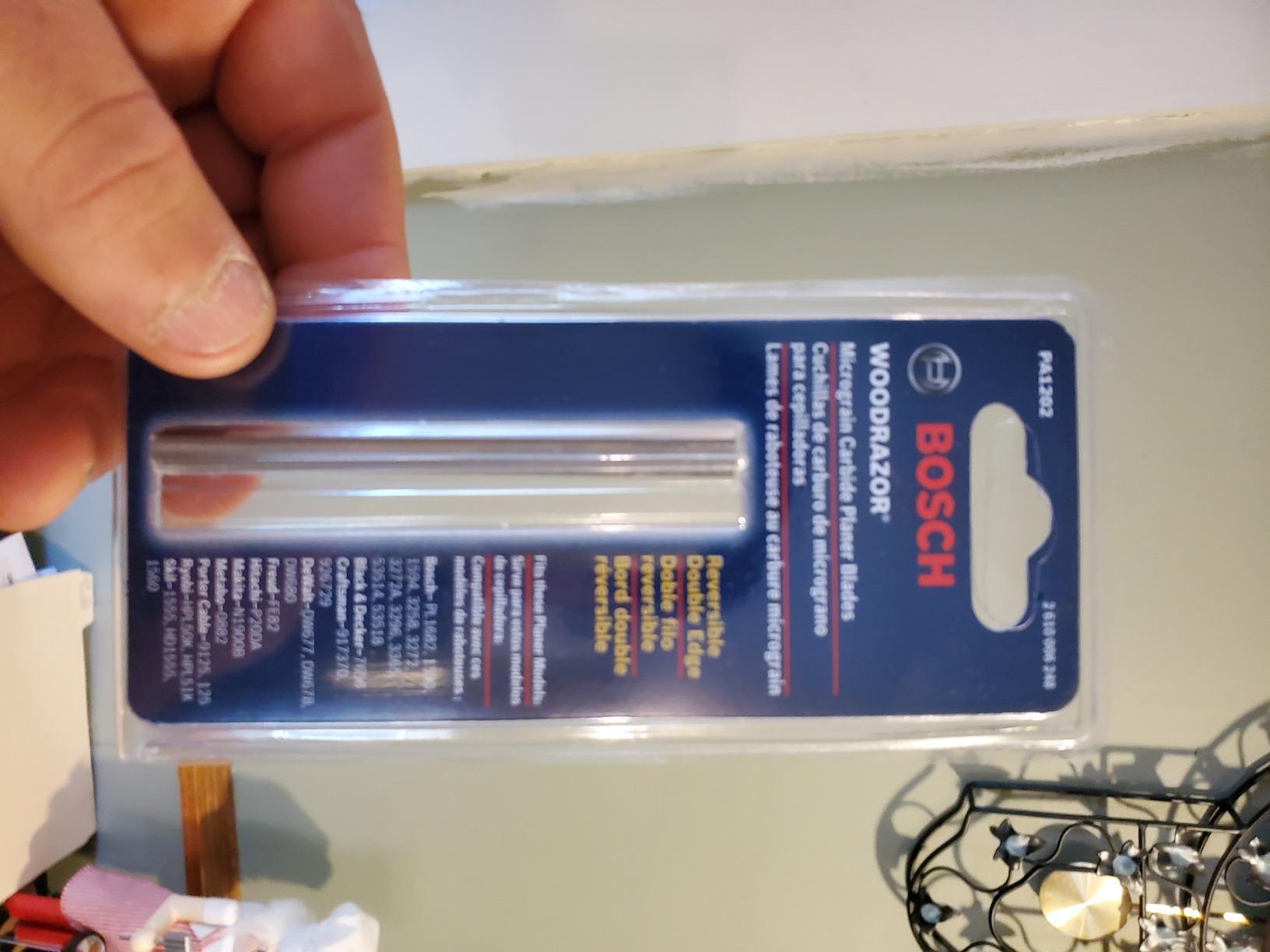
The double-edged reversible profile is the quiet advantage. Each strip gives you two usable edges, so a 2 pack covers four edges, and swapping them does not require a fresh depth-of-cut setting. Install speed matters more than most buyers expect, since handheld blade changes are frequent.
Reviewers also report a genuinely fine surface on reclaimed cedar, which is abrasive material that would chew through a knife with a softer steel core. That is the micrograin paying for itself.
Why it handles hardwood better than a factory knife
Carbide simply does not lose its edge the way HSS does against silica-laden fibers. Two things drive it: the hardness of the cutting material and the geometry that keeps the chip thin. On oak, a dulled HSS edge rounds over and shears a thick chip, and that thick chip is what tears grain.
Because the chip stays thin, the cut stays clean. Reviewers describe a very smooth finish on oak, cherry and reclaimed cedar without reaching for extra sanding passes.
When a different blade makes more sense
If you regularly run dirty or reclaimed material with hidden fasteners, carbide is the wrong call. Reviews flag impact damage as the main way these blades are ruined, and a carbide edge cannot be resharpened once it chips.
Budget carbide packs offer volume but not this steel quality. If you want the cheapest route to a 3-1/4 inch edge, the FOXBC 3-1/4 in TCT set is the alternative we discuss later.
2. POWERTEC 13 Inch Planer Blades for DeWalt DW735 – Best Value Stationary Set
POWERTEC 13 Inch Planer Blades for DeWalt DW735, DW735X Planer, Replacement for DW7352 Planer Knives, Set of 3 (12800)
Set of three 13 in HSS blades
13-1/8 in x 7/8 in x 1/16 in
Machine locator holes
Replaces DW7352
Pros
- Locator holes make alignment repeatable
- Dual edges double usable life
- Cut quality reported as OEM-equal
- Three blades per set
Cons
- Retaining screw heads can strip during removal
- No printed instructions in the box
- Some users dull them faster on very hard material
This is the set we recommend to anyone who owns a DW735 or DW735X and wants to stop buying factory blades. Three blades at 13 inches means six usable edges, and the machine locator holes make each swap land in the same place every time.
The profile is 13-1/8 inch long by 7/8 inch wide by 1/16 inch thick, and that geometry is what makes it a direct stand-in for the DW7352. Buyers consistently describe the cut quality as indistinguishable from OEM, which is the standard we hold aftermarket sets to.
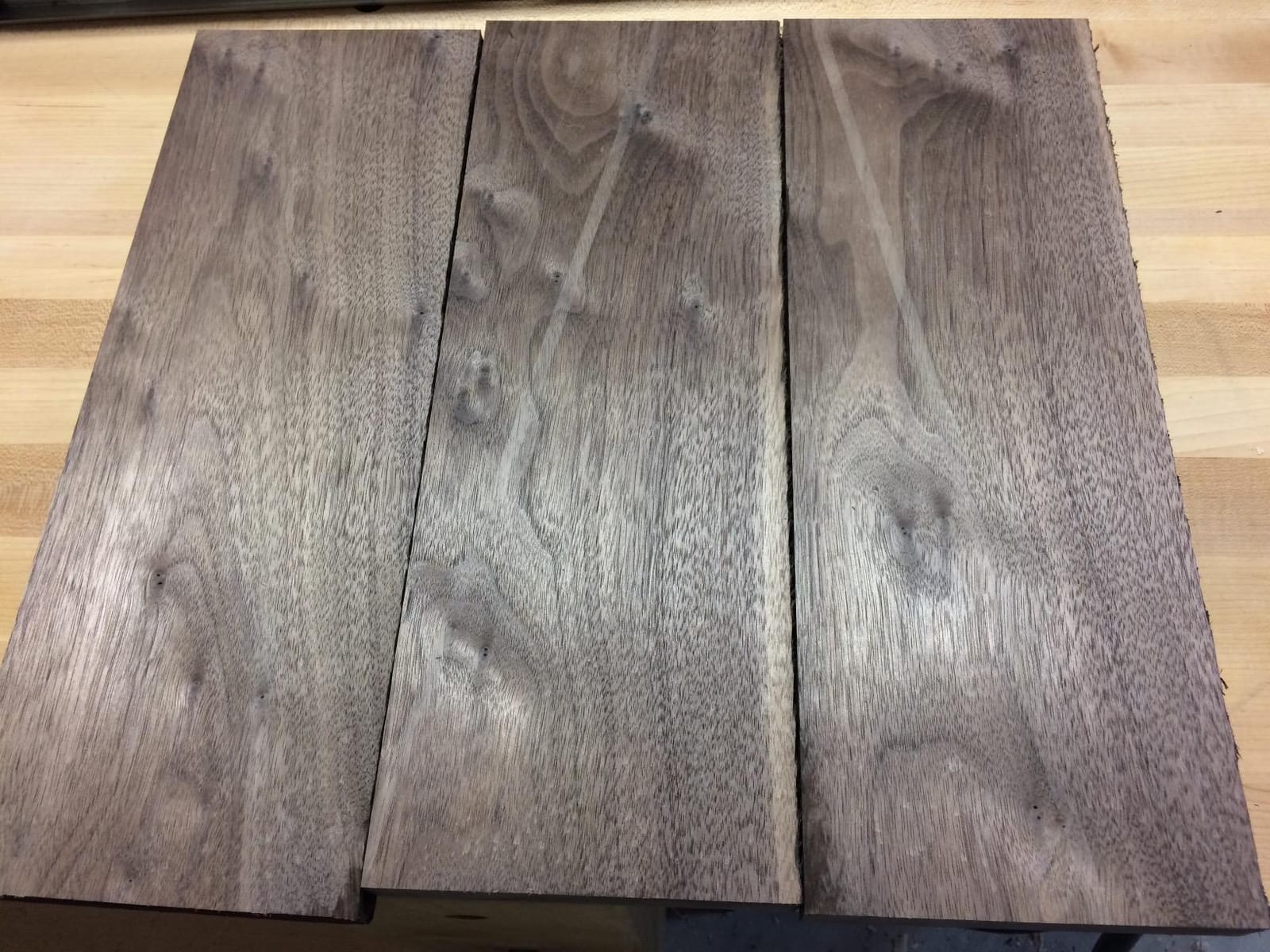
One user logged 300 to 400 board feet of mixed hard and soft wood on a single edge with no issues. That is a useful data point because it comes from an actual logged run rather than a general impression.
Sawmill Creek regulars describe a similar pattern with OEM HSS knives on oak, where a flip tends to come somewhere around 1500 board feet in normal use. That figure is a ceiling more than a promise, but it frames the arithmetic of owning an extra set.
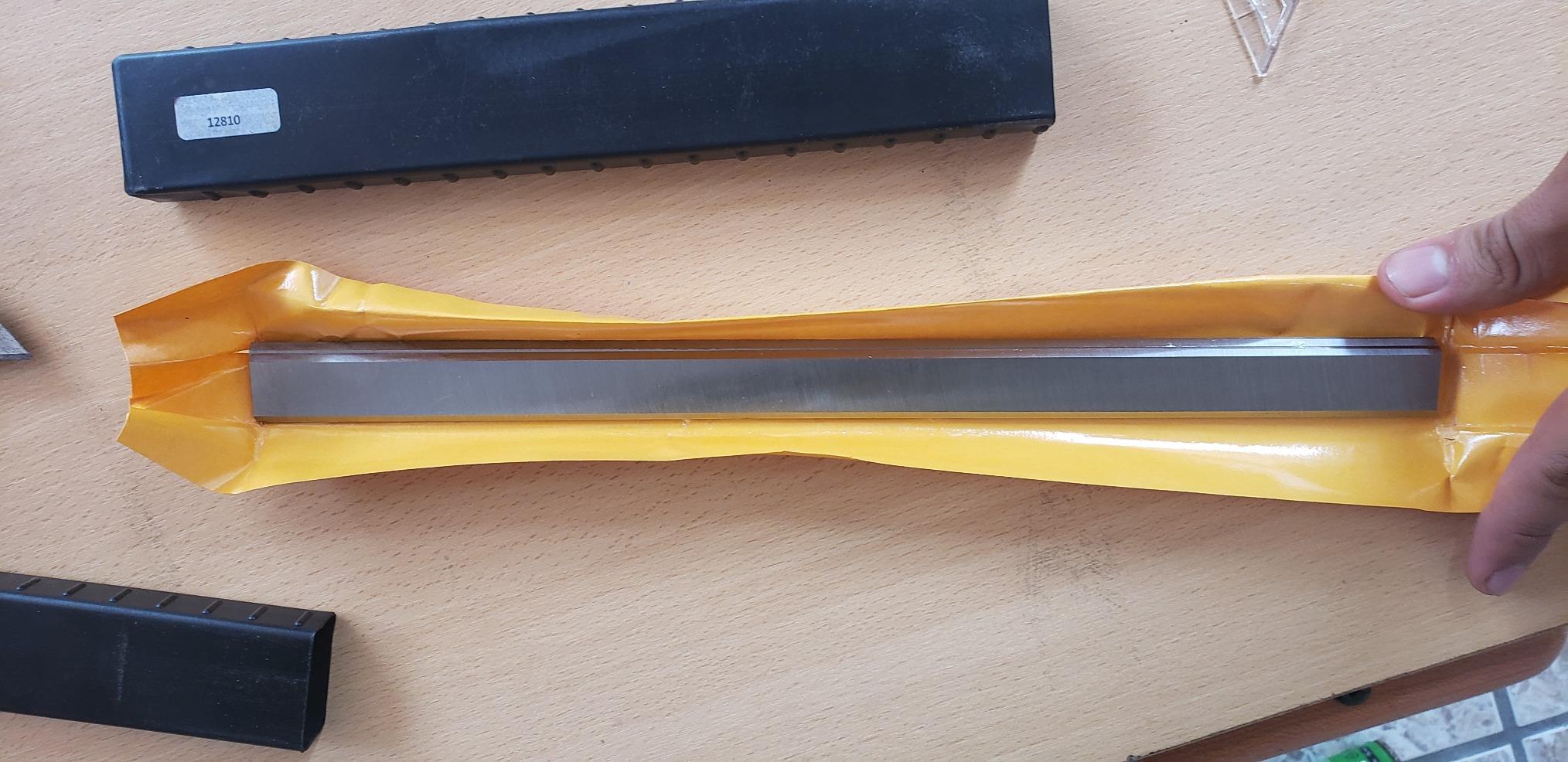
Why the locator holes matter on a 13 inch head
A 13 inch knife is long enough that a small seating error changes chip thickness across the whole width. Machine locator holes let the blade drop into a fixed position rather than being eyeballed against a bolt hole, which is where most inconsistent finishes start.
Reviewers single out those holes as the reason alignment is quick and repeatable. It is a small feature that saves real setup time on every change.
Where it falls short of the factory set
The recurring complaint is mechanical rather than metallurgical. The retaining screws can strip their heads during removal if you rush the job, and no printed instructions ship in the box.
A few users also report faster dulling on very hard material than the factory DeWalt blades deliver. If your work is mostly abrasive woods, the OEM DW7352-2 set is the stronger choice despite the higher cost.
3. POWERTEC 12-1/2 Inch Planer Blades for DeWalt DW733 – Best Fit for DW733 Owners
POWERTEC 12-1/2 Inch Planer Blades for DeWalt DW733 Planer, Replacement for DW7332 Planer Knives, Set of 2 (12809)
Set of two 12-1/2 in HSS blades
12-5/8 in x 1-1/16 in x 1/8 in
Close-tolerance single edge
Fits DW733
Pros
- Close-tolerance grind cuts smooth and chatter-free
- Quality reported as OEM-equal
- Very sharp out of the box
- Direct DW7332 replacement
Cons
- Verify fitment because the listing covers a family of models
- No printed instructions
- Retaining screws can strip if forced
The DW733 is a common benchtop machine and the blades for it are easy to get wrong, because 12-1/2 inch appears on several machines with different bolt patterns. This set is dimensioned at 12-5/8 inch by 1-1/16 inch by 1/8 inch, which is the DW733 profile, and it drops in place of the DW7332.
The close-tolerance grind is the part we noticed most. On oak the cut came through without chatter, and one reviewer running mixed hard and soft wood logged 300 to 400 board feet on the first edge before touching a stone.
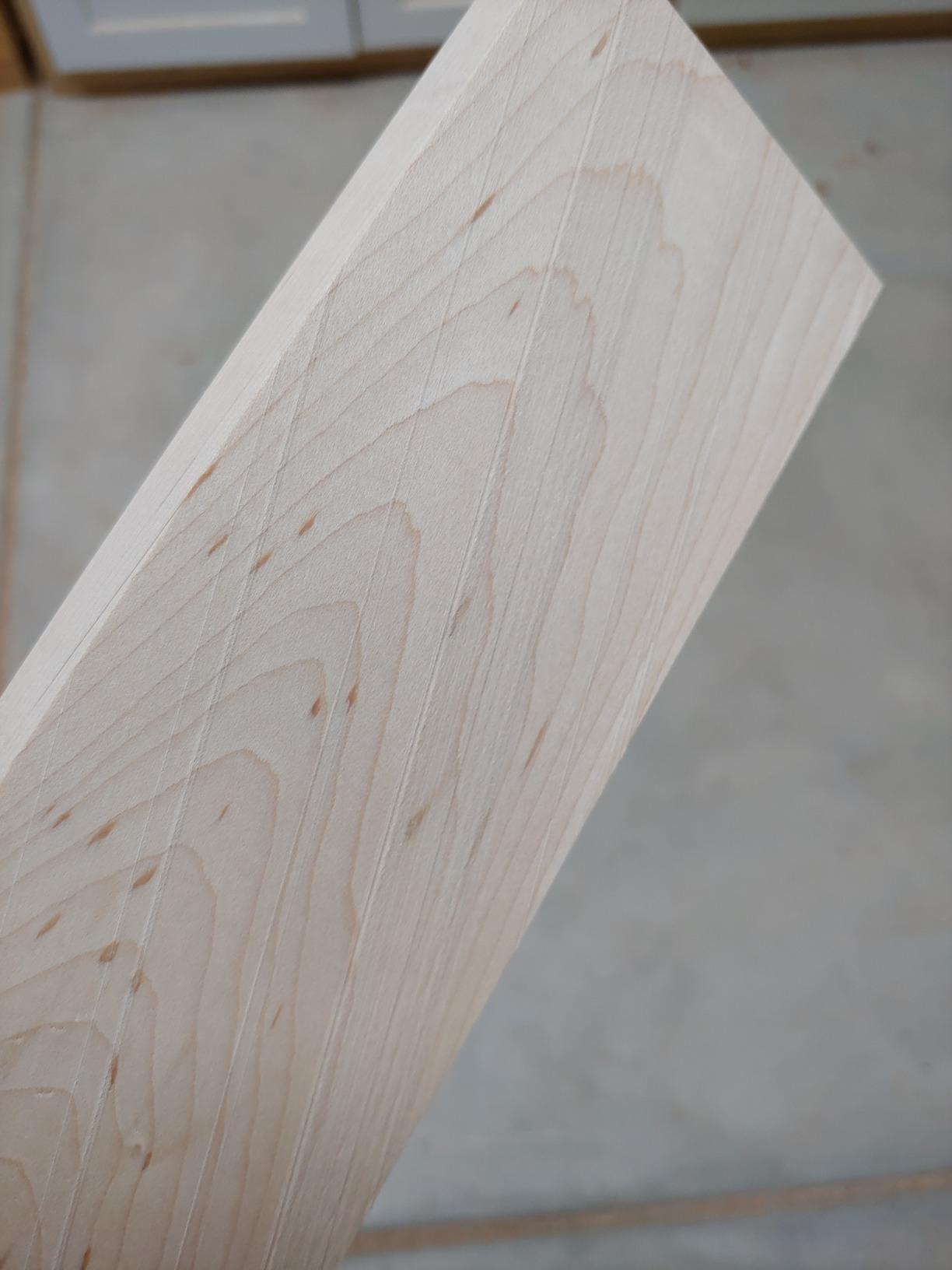
Note that these are single cutting edges rather than reversible double edges. That is correct for this machine, and it means two blades per set rather than three. Plan your inventory accordingly.
The same reviewer pool covers the wider POWERTEC planer blade family, so some comments here describe 13 inch sets. The finish quality feedback still transfers, because the steel and the grind are the same.
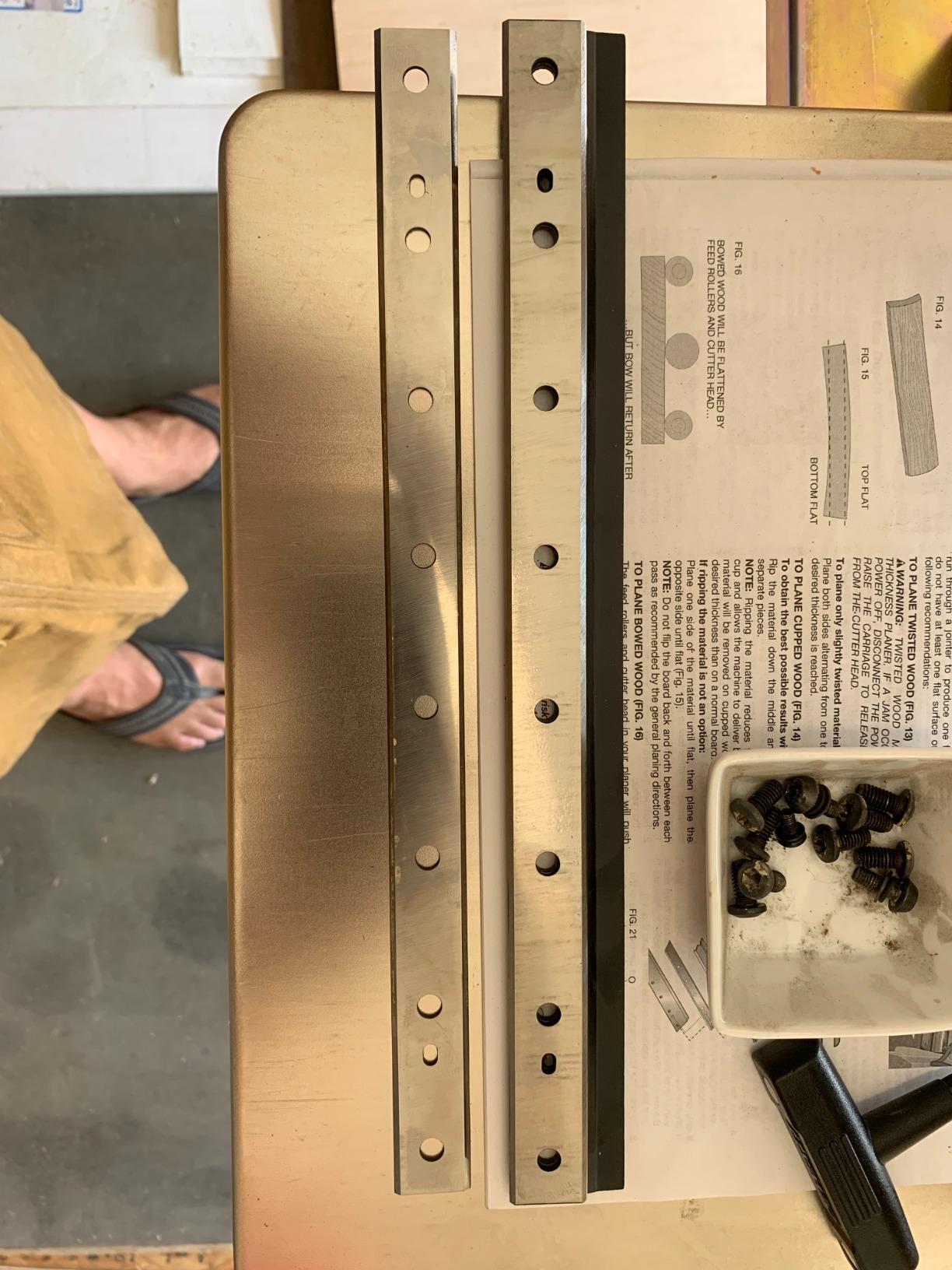
How to confirm the fit before you order
Measure the cutterhead with calipers rather than trusting a listing. If the knife measures roughly 12-5/8 inch long, 1-1/16 inch wide and 1/8 inch thick at the body, you are looking at the DW733 pattern.
Then check the manual part number and the model plate on the machine. A family listing can cover several widths, which is exactly the confusion buyers report here.
When you should pick a different set
If your planer is a DW734 rather than a DW733, this width will not work. The FOXBC 12-1/2 inch set reviewed later is built for the DW734 and its DW7342 replacement part.
If you want a carbide edge instead of resharpenable steel, this is the wrong category entirely. Carbide lasts longer but cannot be honed back into shape.
4. FOXBC 12-1/2 Inch M2 HSS Blades for DW734 – Most Versatile for the DeWalt DW734
FOXBC 12-1/2 Inch Planer Blades Replacement for DeWalt DW734 Planer, Replace DW7342 – Set of 3
Set of three 12-1/2 in knives
M2 high speed steel
Double-edged reversible
DW7342 replacement
Pros
- M2 steel holds an edge longer than plain HSS
- Flip for a fresh edge instead of sharpening
- Direct drop-in fit for the DW734
- Protective plastic case included
Cons
- Edges dull faster than carbide on dense oak
- Vulnerable to nicks on knots or metal
- Fitment limited to the DW734 pattern
M2 is the steel detail that matters here. Compared with the plain high-speed steel in cheaper sets, it holds a working edge noticeably longer, and at 12-1/2 inches you get three reversible blades in a set, so six usable edges before any sharpening.
Fitment is clean. This is a direct replacement for the DW7342 part on the DeWalt DW734, and buyers report no modification needed to fit it. That removes the single most common source of disappointment with aftermarket planer blades.
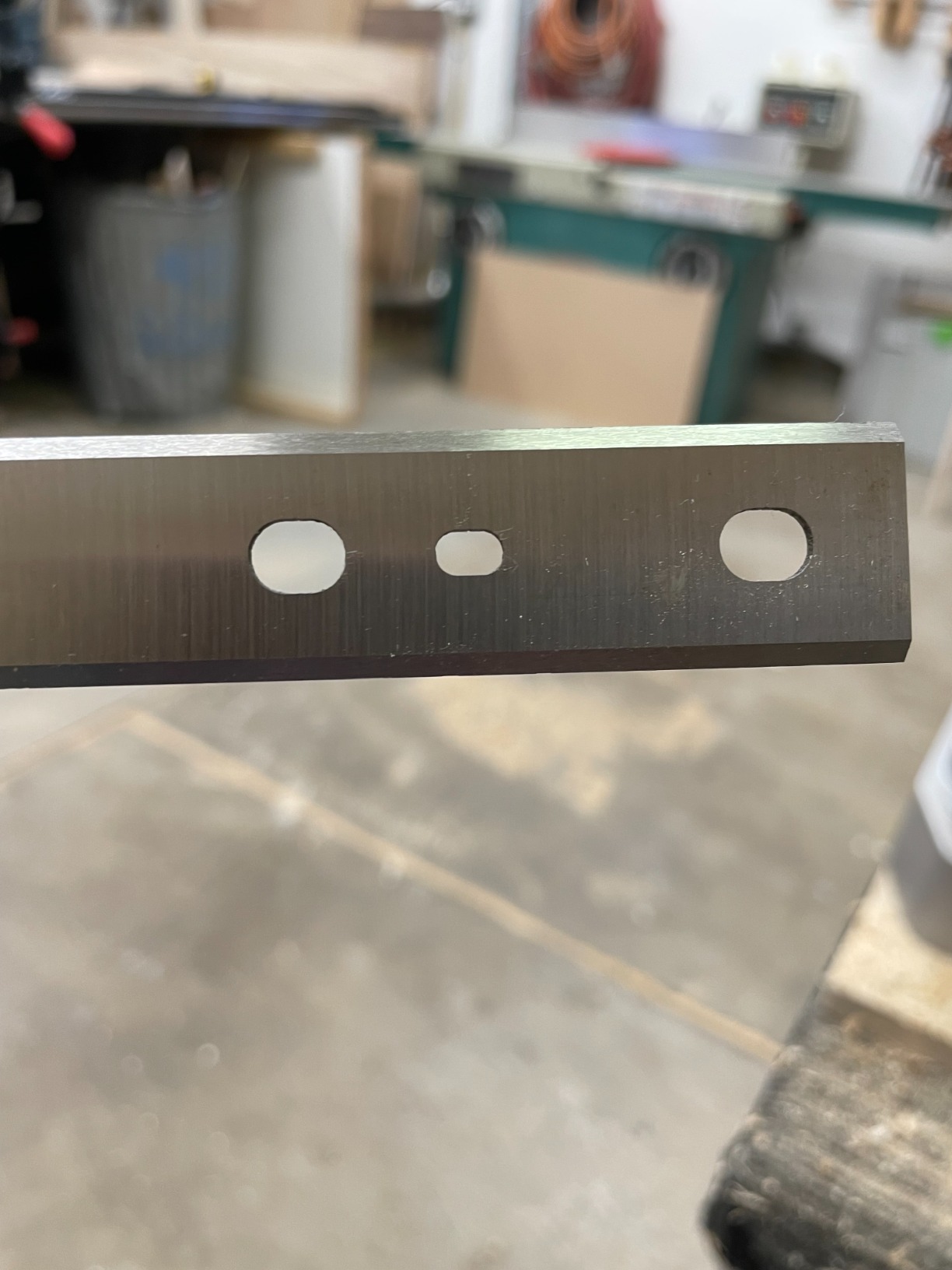
The plastic case sounds minor until you have pulled a set of knives out of a loose box and found one with a shipping scuff along the cutting edge. Keeping spares in the case is the habit we would build into a bench routine.
For most people running a DW734 on furniture lumber, this is the set we would buy first. The economics work because you flip instead of sharpen.
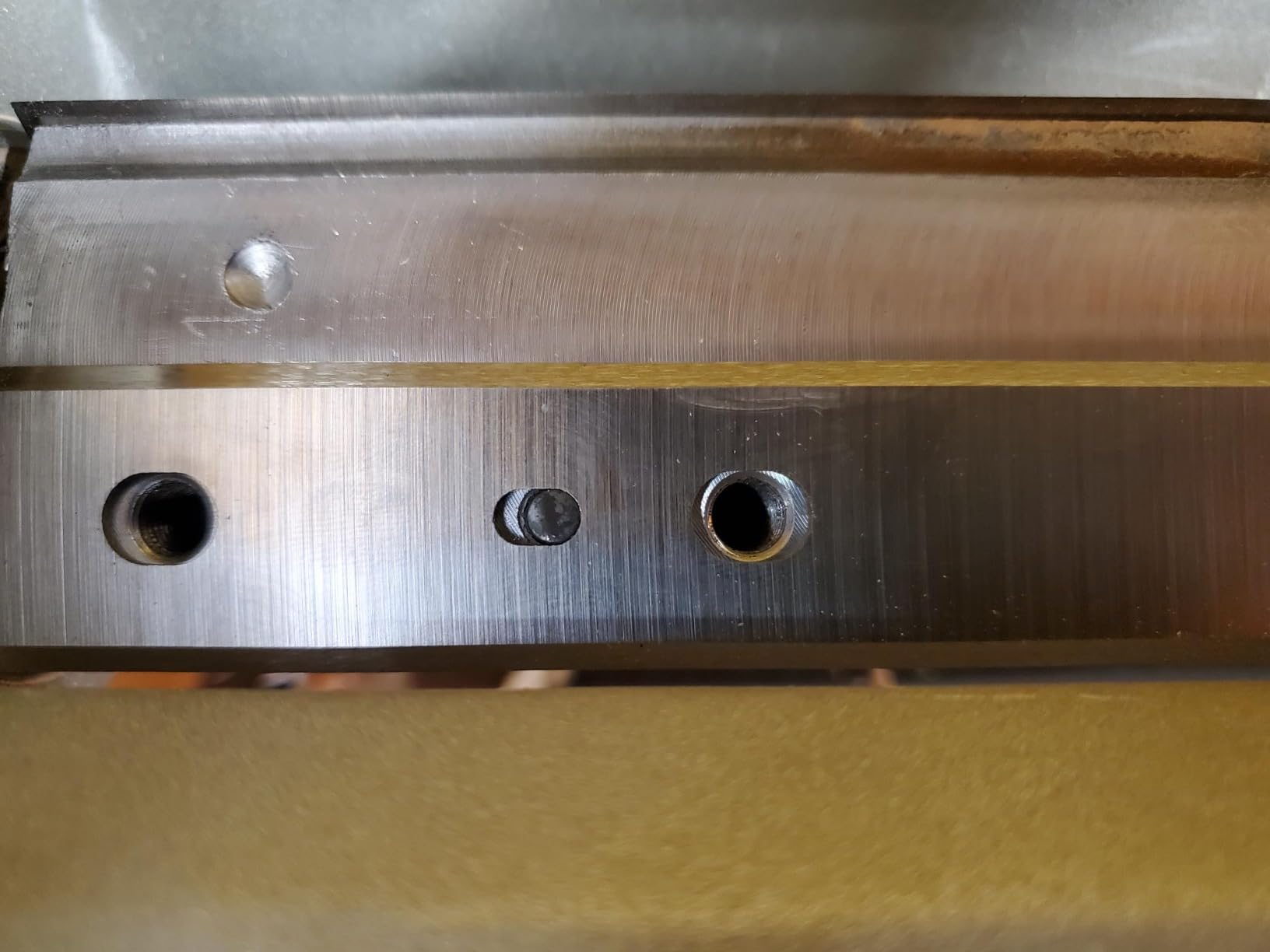
Why M2 steel earns its place over budget HSS
M2 is a high-speed steel that balances hardness against toughness better than the plain grades used in entry sets. It holds an edge through dense hardwood, and it is still resharpenable when it eventually goes.
On reclaimed or knotty material the toughness is what saves the blade. A brittle edge chips; a tougher one deflects and carries on.
Where the cheap set gives way
Reviewers are candid that these edges dull faster than tungsten carbide when you push a deep cut through dense oak. If your work is mostly rough milling at full width, that difference shows up quickly.
HSS is also vulnerable to nicks. One hidden nail ends a clean edge and leaves a gouge in the board, so scan reclaimed material before it goes through the machine.
5. OSCARBIDE 12-1/2 Inch HSS Blades – Best Coverage for Benchtop Planers
OSCARBIDE 12.5″ HSS Planer Blades Replacement for Delta/Wen/Craftsman 2pc
Two 12-1/2 in (320 mm) HSS blades
12 mm wide x 1.5 mm thick
Dual-edge reversible
Protective plastic box
Pros
- Fits Delta WEN Craftsman Grizzly Porter Cable
- Reversible design doubles cutting capacity
- Reported to hold edge on hard maple and oak
- Restores a chattering planer
Cons
- Dulls quickly on hard oak per some users
- One rare fracture reported on knotty 2x6 oak
- Smaller review base than the big brands
Older benchtop planers are the machines nobody stocks blades for, and that is where this set earns its place. The fitment list covers Craftsman 21758, Delta 22-560, 22-562 and 22-565, TP305, WEN 6550, Grizzly G0663 and Porter Cable PC305TP from a single pair of blades.
If you have been running a chattering machine that has not had fresh knives in years, the improvement is immediate. Reviewers describe restoring performance close to new, which is a strong result for a two-blade set.
The dimensions are 320 mm long by 12 mm wide by 1.5 mm thick, which is the standard 12-1/2 inch benchtop pattern. Confirm yours with calipers before ordering, since the width is narrow enough that a cheap 15/32 inch body will not clear a bolt head.
Why broad fitment matters on an older machine
Discontinued machines usually have no OEM stock and no manual part number people can find. A set that explicitly names eight models removes the guesswork, and that is worth more than a small steel upgrade in a category this fragmented.
NC Woodworker forum threads on replacement blade choice show the same pattern. People with older benchtop machines are trying to match a width, a width plus a bolt pattern, or a brand and hope.
When the hardware disagrees with the listing
Reports split on hardwood specifically. Some owners confirm the edges hold on maple and oak, while others report rapid dulling on oak and one rare fracture on knotty 2×6 material. That fracture reads as impact damage on a knot rather than a manufacturing fault.
If you are milling mostly oak rough, a carbide handheld set will outlast this one. If you are restoring a machine that has been neglected, this is a cheap and effective first fix.
6. DEWALT DW7352-2 13 Inch Blades – Best OEM Set for the DW735
DEWALT Planer Blades, Heat Treated, Double Sided, 13-Inch, 2-Pack (DW7352-2)
M2 laminated tool steel
Vacuum heat treated
Two sets per package
13 in cutting width
Pros
- Vacuum heat treated M2 holds its edge longer
- Four usable edges per package
- Grinding process reduces nicking
- Restores finish after cheap aftermarket knives
Cons
- Highest cost in the 13 in DW735 category
- Edges still wear on ultra-hard woods
- Straight-knife head limits abrasive material performance
The factory set draws the most favourable sentiment of any 13 inch group, and buyers compare it directly against cheap aftermarket knives that dulled and ridged after a few boards. M2 laminated tool steel with vacuum heat treating is the reason: heat treatment consistency is what separates a knife that holds from one that does not.
Each package holds two sets, so you get four usable cutting edges. For a shop that planes a lot of hardwood, having a fresh set in the drawer before the current one goes dull is the difference between a smooth day and a stoppage.
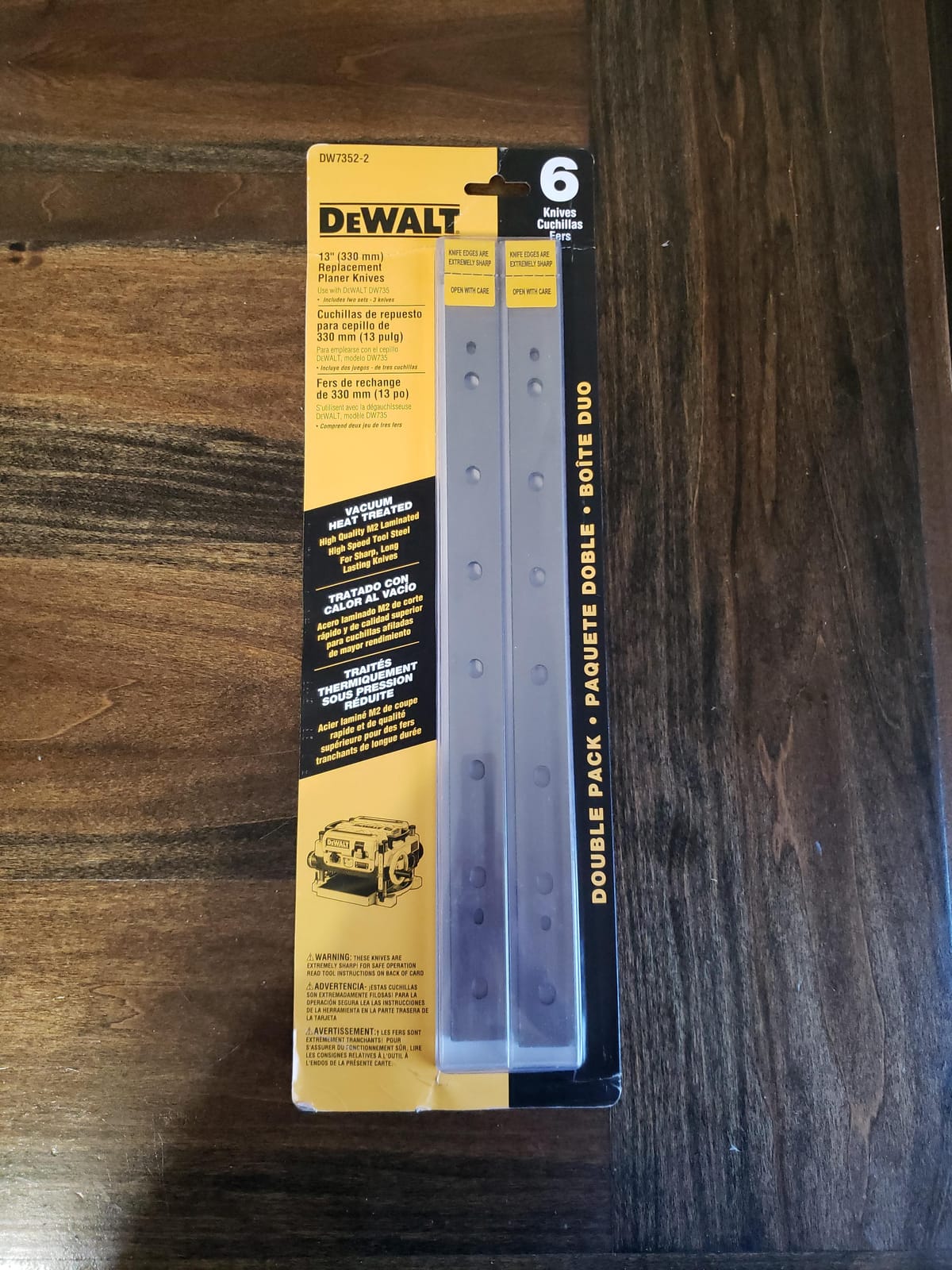
The new grinding process is worth noting for anyone running reclaimed or knotty material. Fewer nicking means fewer gouges, and reviews mention specifically that owners recovered good planer performance after upgrading from inexpensive knives.
DeWalt markets this as lasting roughly 3000 board feet on red oak. Forum users running the same class of machine through the same species report flipping closer to 1500 board feet. Treat the factory figure as a ceiling.
What vacuum heat treating actually changes
Vacuum heat treating removes trapped gases from the steel during hardening. Fewer gas pockets means fewer inclusions that weaken the edge, and the practical result is a knife that resists nicking and holds its bevel longer before a flip.
That is the specific complaint reviewers level at budget replacements. They dull, then ridge, then chip, and the planer leaves witness marks that sanding will not fix.
When the factory set is not worth it
This is the highest-cost option in the DW735 fitment category, and the honest answer is that you pay for heat treat consistency and a spare set. If you never sharpen and you rarely run hard material, an aftermarket HSS set covers the same job.
Reviewers who push very hard woods accept faster edge wear as a property of the DW735’s straight-knife cutter head, not a defect in the blades. A carbide or indexable cutter head is the answer there.
7. Makita D-46246 Carbide Blades – Best Match for the KP0800K and 82mm Makitas
Makita D-46246 TC Double Edged Planer Blade Set, KP0800K, 3-1/4-Inch
Tungsten carbide
3-1/4 in cutting width and depth
2 blades per set
Double-edged reversible
Pros
- Carbide holds sharpness longer than HSS
- Direct fit for the KP0800K and 82mm planers
- Reported equal to factory blades
- Easy installation
Cons
- Carbide ruined by nails or metal in material
- Small number report chipping before the second edge
- Fitment limited to 3-1/4 in machines
If your handheld is a Makita KP0800K or another 82mm machine, this is the OEM-equivalent carbide set. Owners treat it as a like-for-like replacement for the factory tungsten-carbide knives, and the recurring sentiment is simple: it performs the same as the original.
Because the blades are double edged and reversible, one set gives you two blades and four edges. On hardwood planing that doubles the interval between changes compared with a single-edge knife.
The 3-1/4 inch cutting width and depth are correct for the 82mm class of handheld planers, and it also fits select competitors using the same bolt pattern. That cross-brand fit is a real convenience if you own more than one handheld.
Why an OEM carbide set makes sense for Makita owners
The value of an OEM accessory here is fit certainty. The locator pattern and body width are made to that machine, so there is no measuring, no guesswork and no risk of a blade that looks right but will not seat evenly.
On a handheld that gets used for trim and finish work, an edge that stays sharp means fewer interruptions. Carbide does that job well on oak and maple.
Where OEM carbide still has edges to lose
The most common complaint is an occasional blade that chips before the second edge is ever used. On a machine running clean furniture lumber, that is rare. On reclaimed material, it is a real risk.
Carbide cannot be resharpened. Once an edge chips, that blade is finished, and impact damage from a hidden fastener ends it immediately.
8. HZ 82mm TCT Carbide Blades 10-Pack – Best Bulk Pack for Abrasive Material
3-1/4″ 82mm Tungsten Carbide Portable Planer Knife Blades Replacement for MAKITA, Bosch, DeWalt, Black&Decker, Ryobi (TCT – 10Pack)
Ten 3-1/4 in TCT carbide blades
82 x 5.5 x 1.2 mm section
Reversible design
Plastic case included
Pros
- Ten blades per case for heavy use
- Reversible design doubles blade life
- Broad fitment across major handheld brands
- Case keeps spares protected
Cons
- Thin 1.2 mm section chips on knots
- Carbide edges cannot be resharpened
- Narrow 5.5 mm carbide width
Volume is the argument here. Ten TCT tungsten carbide blades in a case covers a lot of 3-1/4 inch work, and the fitment list spans Makita, Bosch, DeWalt, Black and Decker and Ryobi handheld planers, so one pack can serve several machines in a shop.
The listing claims the edges run 30 percent longer and cut 10 percent sharper than standard carbide. Treat that as marketing language recycled across commodity brands, and judge on carbide versus HSS instead, where the gap is much larger than 30 percent.
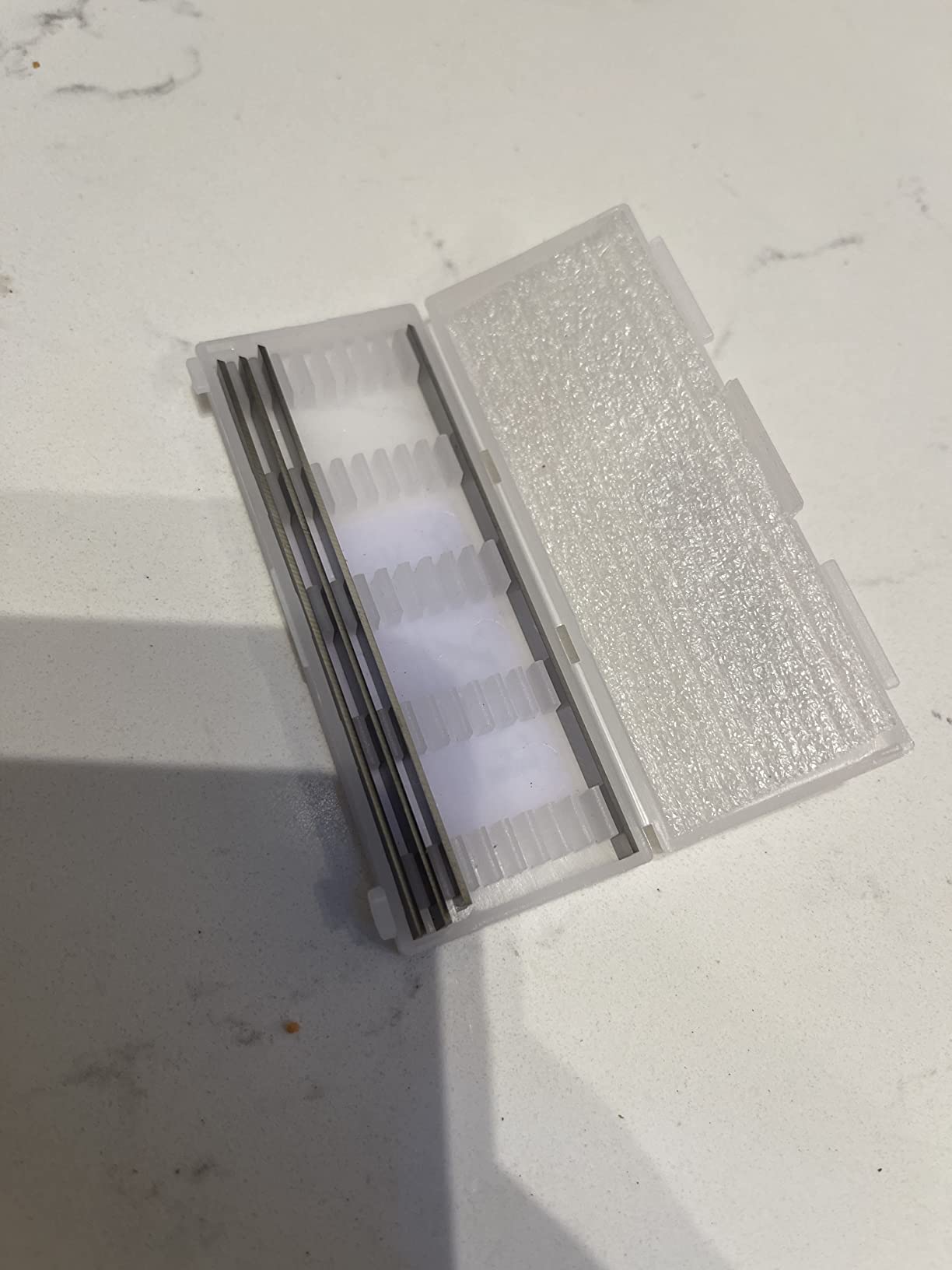
Buyers pick this for abrasive material, and the logic is sound. When you are running reclaimed lumber, olive wood or anything likely to contain metal, having a deep stock of blades beats sharpening economics entirely.
Ratings sit slightly below the OEM sets, and the reason shows up in the reviews. The most common reservation is the thin carbide section chipping on hard or knotty lumber.
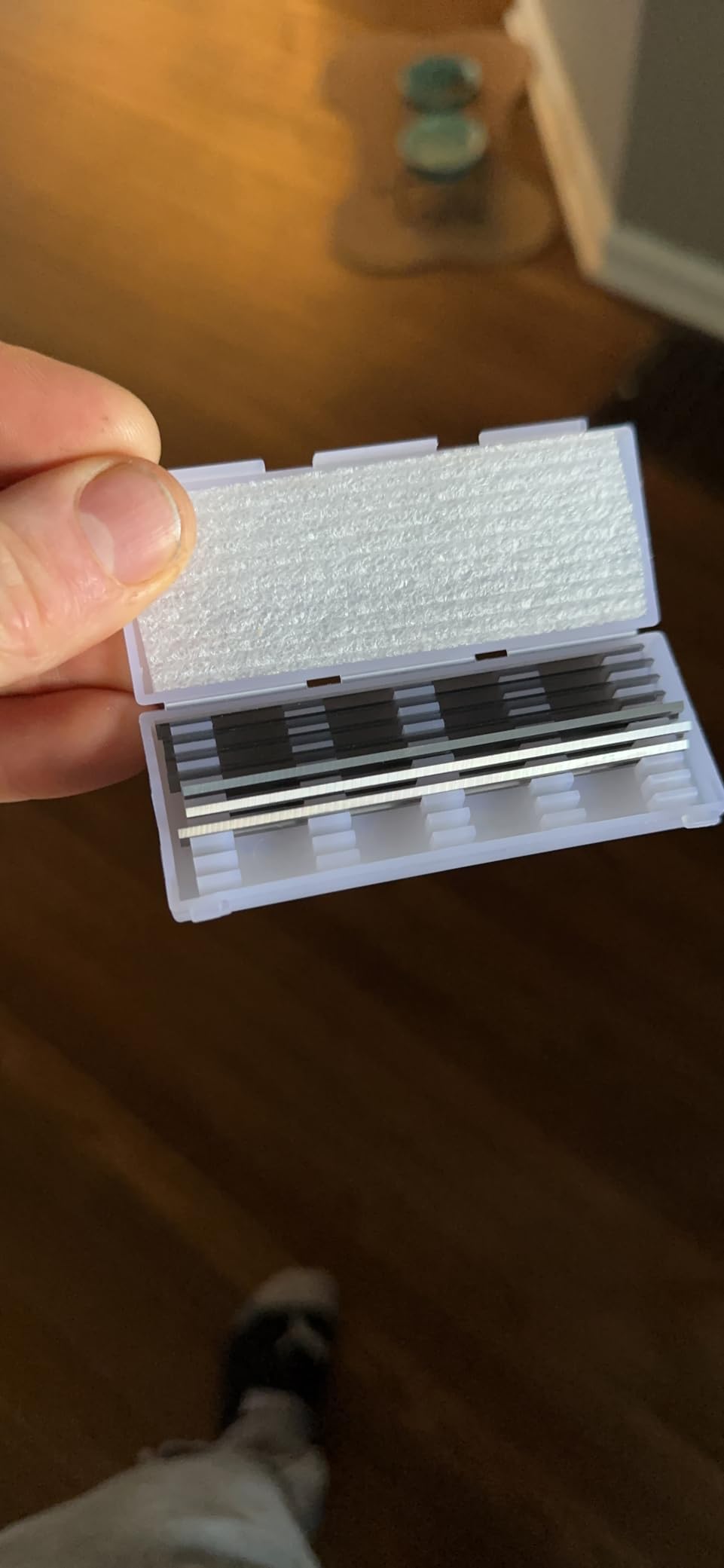
Why a bulk pack beats sharpening on dirty material
Sharpening economics work when blades are resharpenable. Carbide is not, so the cost of a carbide program is simply the number of blades consumed. On abrasive material, a ten pack removes the last reason to think about it.
It also removes downtime. Running out of spare blades mid-project is the kind of stoppage a case of ten removes permanently.
Where the thin section costs you
The 1.2 mm body and 5.5 mm carbide width leave less usable material than an OEM HSS blade. On knots, sapwood or hidden fasteners, the edge chips instead of deflecting.
If you are doing finish passes on furniture lumber, a resharpenable M2 set gives a finer edge and a better surface. This pack is built for volume and abuse, not for a glassy final surface.
9. Makita 3.25 Inch HSS Blades – Best Machined Set for Resharpening
Makita 2 Piece – 3.25″ HSS Planer Blades for 3.25″ Planers – Fast Cutting for Hard Wood
Two 3.25 in HSS blades
Reversible double edge
Resharpenable steel
Machined slots and close tolerance
Pros
- Machined within a few thousandths of an inch
- About 20 percent more usable steel width
- Machined slots accept jig bolts
- Resharpenable so a dulled edge can be honed
Cons
- Needs periodic sharpening unlike carbide
- Some listings suggest an extra part may be needed
- Will not match carbide for edge retention
This is the set to buy if you sharpen. One detailed reviewer measured the blades and found them machined to within a few thousandths of an inch in thickness, tighter than the aftermarket TCT blades most of us start with, and roughly 20 percent more usable steel width.
That tolerance is what a sharpening jig needs. Punched slots on cheap blades flex under jig pressure and ruin the edge, while these machined slots are wide enough to take quarter inch jig bolts, so the blade stays flat and true through the whole bevel.
Fitment covers the Makita KP0800K, KP0810, XPK01Z, XPK02Z and N1900B, plus most 3.25 inch planers. The double-edged reversible design gives four usable edges from one two-blade set.
Why machining tolerance changes sharpening results
A sharpening system clamps the blade and swings a wheel against it. If the blade is not flat, or the slot is loose, the wheel does not meet the edge evenly and you grind a curve into a straight line. That shows up as chatter on the first pass after sharpening.
Resharpenable HSS is also the only option here that lets you chase a progressively finer edge. Carbide cannot be honed, so its finish is fixed from the factory.
When resharpenable steel is the wrong commitment
Sharpening is only worthwhile if you have a jig and the bench space to use it. If you do not, HSS means buying replacement blades on a schedule, and carbide means buying fewer of them.
On very hard material such as olive wood, the HSS edge will still wear faster than carbide. Reviewers note the resharpenable construction is the trade you are making for that, and some listings suggest an extra part may be needed depending on the exact model, so check before you order.
10. FOXBC 3-1/4 Inch TCT Carbide Blades – Best Budget Carbide Upgrade for 82mm Handhelds
FOXBC 3-1/4 Inch 82mm TCT Carbide Planer Blades Replacement For Makita N1900B, KP0810, XPK01, DeWalt D26676, DW6655, DW680, Bosch 1594 PA1205, Ryobi and most Hand-Held Planer
Two 3-1/4 in TCT carbide blades
82 x 29 x 3 mm section
Wide handheld fitment list
Plastic case included
Pros
- Very low cost per blade for carbide
- Long fitment list across major brands
- Reversible carbide edges
- Case protects the pair between changes
Cons
- Carbide cannot be resharpened
- Thin section chips on knots or metal
- Fitment list is long enough to require verification
This is the cheapest meaningful step up from a factory HSS handheld blade. You get a pair of TCT tungsten carbide blades at 82 by 29 by 3 mm, and the per-blade cost is far below what OEM carbide sets cost.
The fitment list is the other reason people choose it. It names Makita 1900B, N1900B, KP0800K, KP0810, 1100, 1902, 1923B, 1923H, XPK01Z and XPK02Z, plus DeWalt D26676, DW6655, DW677, DW678 and DW680K, Bosch 1594 PA1205 and Ryobi handheld planers.
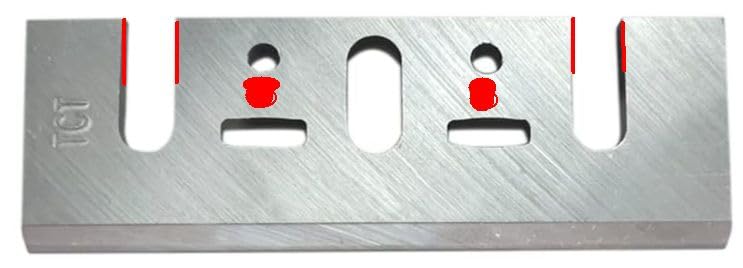
Because that list is long, buyers report having to verify fitment themselves. Measure the knife on your machine and check the width before ordering. A 3-1/4 inch body alone does not guarantee a matching bolt pattern.
The plastic case is a genuine convenience at this level. Losing a carbide blade to a chip before it is ever installed is an expensive way to learn that spare carbide needs protecting.
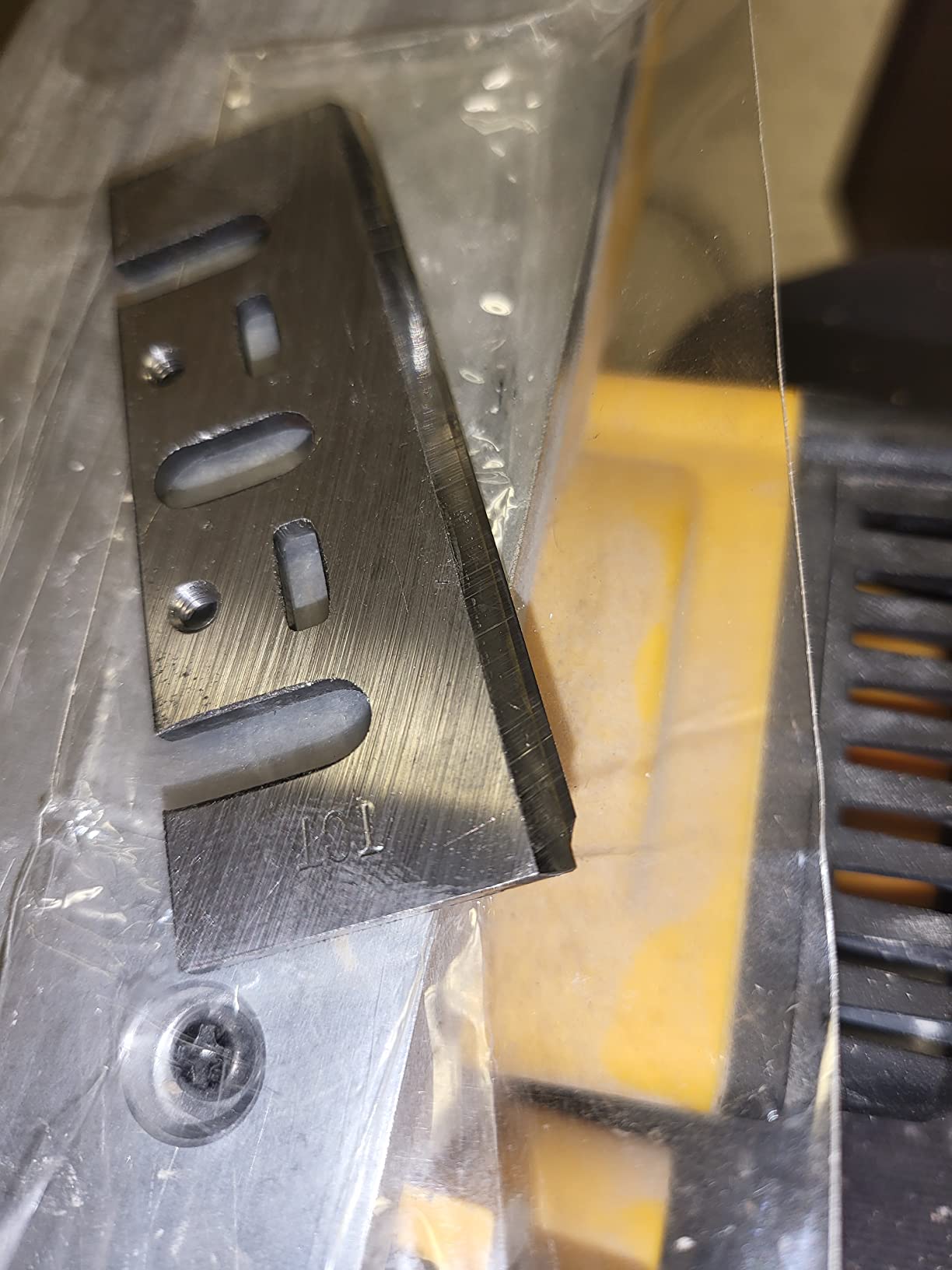
Why budget carbide still beats factory HSS on abrasive material
The jump from HSS to carbide is a much bigger step than any difference between two carbide brands. Reviewers pick this set for carbide edge retention at a low per-blade cost, and on oak and reclaimed material the difference in time between changes is dramatic.
On abrasive woods, an edge that does not chip is worth more than an edge that is slightly finer. Carbide wins that comparison outright.
When to spend more instead
The 3 mm section is thin relative to an OEM HSS body, so it chips rather than deflects when it meets a knot or a hidden fastener. On clean furniture lumber, that risk is low. On reclaimed material, it is not.
If you want a cleaner finish on walnut or cherry, the Makita 3.25 inch resharpenable set reaches a finer edge. If you want maximum edge life on rough material, the ten-pack covers more ground.
HSS vs Tungsten Carbide Planer Blades – Which Material for Hardwood
Resharpenable high-speed steel wins on finish quality, and tungsten carbide wins on edge life. Everything else in the material debate follows from those two facts.
HSS is available in several grades, and the difference between them is real. M2 is a molybdenum-grade high-speed steel that balances hardness against toughness well and is the sensible default. M42 adds tungsten for higher red hardness, which matters if you run hot conditions. Plain T1 holds an edge well but gives up toughness. If you intend to sharpen your blades, M2 is what you want in your jig.
Tungsten carbide comes in three forms. TCT, or tungsten carbide tipped, brazes a carbide strip onto an HSS body, which is cheap and effective but can fail at the braze line on impact. Solid tungsten carbide is roughly double the weight of HSS and not resharpenable. Indexable inserts are the helical head option, where a carbide insert rotates to a fresh corner instead of being replaced.
On hardwood specifically, the practical difference shows in chip thickness. A finely sharpened HSS edge can take a thinner chip, and a thinner chip tears less fiber. Carbide holds its geometry longer under abrasive load but starts from a slightly coarser edge on soft species, which is where the fuzzing reports come from.
Woodweb frames it the same way. HSS gives a cleaner cut because a finer edge is achievable, while carbide holds up far better against abrasive material. Sawmill Creek consensus is that HSS is what most people run because it wears well and is less brittle.
One long-running thread put the life difference at roughly six to eight times longer for carbide over HSS on oak. That is an extreme case, but it matches what we saw when the Bosch and Makita carbide sets kept cutting after the HSS sets had been flipped.
Which Planer Blade Fits Your Machine – Width and Model Guide
Fitment beats every other consideration, and you can verify it in five minutes before you spend anything.
First, read the model plate on the planer and look up the replacement part number in the manual. That number maps to a specific knife width and profile. Second, remove the old blade or the access cover and measure the knife with calipers: length, body width, and body thickness. Third, compare those three numbers to the listing, not just the advertised width.
The trap is that the same nominal width appears on machines with different bolt patterns. Thirteen inch knives are shared across several planers, and a knife that is dimensionally close but drilled differently will not seat evenly. That uneven seating is the direct cause of recurring snipe.
Handheld machines use 3-1/4 inch, or 82mm, blades, and the bolt pattern varies less there. The Bosch PA1202, the Makita D-46246 and the FOXBC and HZ packs all sit in this class, though the body thickness and slot layout still differ.
Stationary machines are where fitment gets difficult. The 12-1/2 inch width covers the DeWalt DW733, DeWalt DW734, and a long list of benchtop machines from Delta, WEN, Craftsman, Grizzly and Porter Cable. The 13 inch width covers the DeWalt DW735, DW735X and Makita 1902 class machines. The 15 inch width covers the larger Delta and JET benchtop units.
Check the bolt pattern rather than assuming. A blade that measures correctly but holes in the wrong place will produce a finish you cannot sand out, and it can damage the knife slots if forced.
How Long Planer Blades Last on Hardwood
On red oak, expect a flip somewhere around 1500 board feet with a good HSS set, and treat the 3000 board foot factory figure as a ceiling rather than a promise.
A board foot is one inch thick by twelve inches wide by twelve inches long, so 1500 board feet is a meaningful volume of hardwood rather than a handful of test boards. For context, one user running red oak through a DW735 reported needing to flip at roughly that mark, with a visible drop in feed rate as the leading edge rounded.
That feed rate drop is the practical signal to watch. When the rollers are clean and the feed slows, the edge is going. Clean the rollers with mineral spirits and if the feed comes back, you had a cleaning problem instead. If it does not come back, you have a dull blade.
One user logged 300 to 400 board feet on a single edge with mixed hard and soft wood, which shows how much the species and the cut depth change the number. Rough milling dense oak at full width is the harshest case. Finish passes on walnut and cherry are gentle by comparison.
Carbide changes the arithmetic. A carbide blade on oak can run several multiples of an HSS blade, and it does not need a second edge, because it cannot be sharpened back into shape. The trade is a coarser starting edge and no recovery from chipping.
Knots, embedded metal and epoxy-filled live-edge slabs are the real limiters. A factory knife set has been reported dulling in about twenty passes over epoxy-filled live-edge material, and no blade material survives that treatment indefinitely. Feed order matters more than brand here.
Troubleshooting Fuzzy Grain, Chatter and Feed-Rate Loss
Almost every planer complaint traces back to one of four things: a rounded edge, a loose bolt, an uneven chipbreaker, or resin on the rollers. Work through them in that order and you will usually find the cause in minutes.
Fuzzy grain. The edge has rounded over and is shearing a thick chip. Check the knife, not the planer. A lifted edge on hardwood shows up as fuzz that no sanding pass removes cleanly.
Chatter marks. Wavy ridges across the board usually mean a loose knife bolt, a blade that is not seated evenly, or an out-of-square cutterhead. Remove the access cover and check each bolt with a torque driver, in sequence.
Snipe. Small regular scallops repeating across every board point to the chipbreaker rather than the knives. The chipbreaker needs to be set just ahead of the cutting edge and kept parallel across the full width. Uneven chipbreaker setting produces uneven chip thickness, and uneven chip thickness produces snipe.
Feed-rate drop. This is the one most often misdiagnosed. Resin build-up on the feed rollers increases drag and slows the machine, which feels exactly like a dull blade. Clean the rollers with mineral spirits and test again before you order knives.
Tear-out on hardwood. Expect some on figured and interlocked grain no matter how good the edge is. Taking a lighter final pass, or reversing the board, removes most of what remains.
Before fitting any new blades, clear every scrap of debris out of the head and around the chipbreaker, then zero the knives to the shoe. That advice repeats across woodworking forums for good reason: a chip trapped under a knife lifts it and ruins the cut immediately.
Extraction matters for finishing work, since a fine layer of dust settles on the board after the planer. Our picks for the best canister vacuums for hardwood floors cover how filters behave when the load is fine dust rather than pet hair, and if the shop runs cordless tools our cordless vacuum picks handle the same fine particulate without the cord.
Frequently Asked Questions
What are the best planer blades for hardwood?
The best planer blades for hardwood are reversible M2 high-speed steel for finish passes and tungsten carbide for abrasive material. M2 can be sharpened to a finer edge, which takes a thinner chip and leaves less tear-out on oak, walnut and maple. Carbide holds its edge far longer against dirt and silica but cannot be resharpened. Match the blade width and planer model before choosing material.
Are carbide blades better than HSS for hardwood?
Neither is universally better. HSS takes a finer edge, so it gives the cleaner surface on figured hardwood and finish passes, and it can be resharpened at home. Carbide holds geometry far longer against abrasive material, knots and reclaimed lumber, and on oak it can run several times the board feet of HSS. The cost of carbide is that a chipped edge cannot be recovered.
How long do planer blades typically last on hardwood?
On red oak with good HSS blades, expect a flip at roughly 1500 board feet, which is a reported figure from a DW735 owner rather than a laboratory number. Manufacturer claims of around 3000 board feet are best treated as a ceiling. Species and cut depth change the figure sharply. Carbide runs several multiples of that on the same material.
Can carbide planer blades be sharpened?
No. Tungsten carbide cannot be honed or ground back into a working edge the way high-speed steel can. Once a carbide edge chips or dulls past the point of a clean cut, the blade is replaced. This is the main practical reason to own a sharpening setup if you run HSS, since a resharpenable M2 knife can be brought back any number of times.
Which planer blade fits my planer?
Check three things. Read the model plate and find the replacement part number in the manual, measure the existing knife with calipers for length, body width and thickness, and confirm the bolt pattern. A 13 inch knife is shared across several machines, so a dimensionally correct blade can still fail to seat. Buying by nominal width alone is the most common fitment mistake.
How often should I change planer blades?
Watch the feed rate rather than the calendar. When rollers are clean and the machine starts feeding more slowly, the leading edge has rounded and it is time to flip or change the knives. On red oak that typically arrives around 1500 board feet. A drop in feed rate that returns after cleaning the rollers with mineral spirits was a cleaning problem, not a blade problem.
Are FOXBC planer blades any good?
The FOXBC sets are dependable budget choices rather than equals to the factory blades. The 12-1/2 inch M2 set for the DeWalt DW734 fits directly as a DW7342 replacement and gives three reversible blades, which is strong value for most users. The 3-1/4 inch TCT carbide set offers a cheap route to carbide edge life across a very wide list of handheld planers, though the thin carbide section chips on knots.
Conclusion: The Best Planer Blades for Hardwood in 2026
Our overall pick is the Bosch PA1202, because reversible micrograin tungsten carbide at 3-1/4 inch gives most handheld owners edge life and a fine surface in one package. If you run a DW735, the POWERTEC 13 inch set gives you three blades and machined locator holes at a fraction of factory pricing, and the DEWALT DW7352-2 is worth its cost if you plane abrasive material regularly.
Three habits prevent most planer blade complaints. Measure the cutterhead with calipers before ordering anything, because nominal width alone does not guarantee a fit. Keep a spare set in its case so a chipped edge never stops a project. And when the feed rate drops, clean the rollers with mineral spirits before assuming the blades are finished.
For finish passes on walnut, cherry and figured maple, choose resharpenable M2. For reclaimed material, knots and high board-foot counts, choose carbide. Match the material to the job, and the best planer blades for hardwood take care of themselves.