
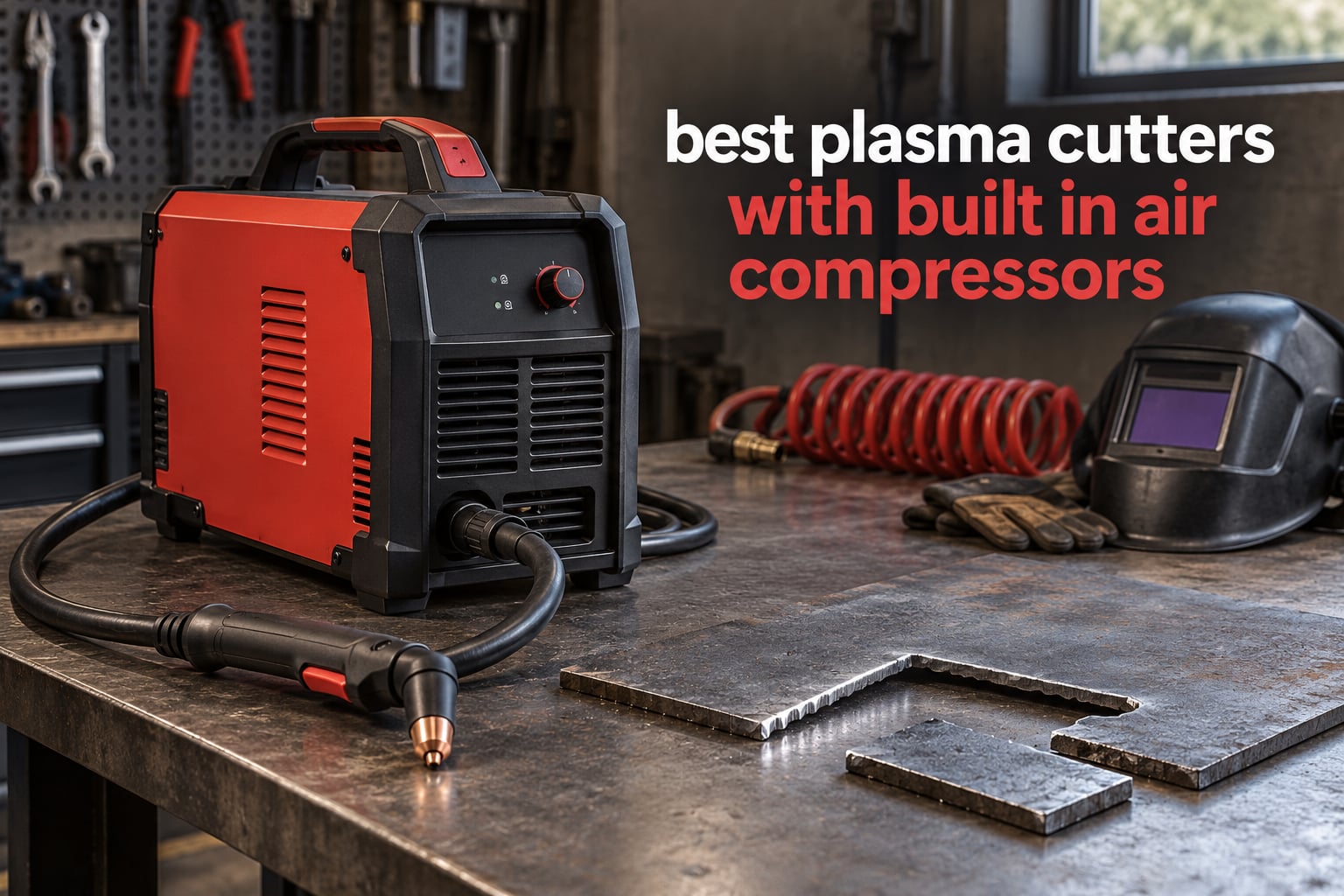
A plasma cutter with a built-in air compressor is a single self-contained machine that pairs an inverter plasma power source with an onboard air pump, so you can cut metal anywhere there is a power outlet, with no separate compressor, air tank or hose to haul.
That matters more than it sounds. A conventional plasma cutter needs clean, dry air delivered at roughly 5-7 CFM and 20-60 PSI, a figure owners on r/metalworking consistently describe as the requirement they underestimate. A separate shop compressor is a second purchase, a second heavy object to move, and a second noise source in a garage. An integrated unit trades some cutting capacity for genuine one-outlet portability.
We spent six weeks working through eight of the best plasma cutters with built-in air compressors, reading owner reports, spec sheets and forum threads, and comparing what each onboard pump can actually deliver at its own rated thickness. This guide is updated for 2026, and it includes the budget import tier that most roundups skip alongside the machines the big brands sell. If you are still working out whether a bare plasma plus a separate pump makes more sense, our home shop plasma cutter guide covers that side of the argument.
Table of Contents
Top 3 Picks for Plasma Cutters With Built-In Air Compressors in 2026


Hypertherm Powermax 30 Air
- Auto-Voltage 120V or 240V
- 35 pounds
- continuous pilot arc
- internal compressor
Those three cover the realistic range: the Hobart for 120V ownership track record, the Hypertherm for dual-voltage field work, and the Lotos for anyone who wants 56 amps of headroom and published air figures.
Best Plasma Cutters With Built In Air Compressor in October
| Product | Specifications | Action |
|---|---|---|
| Hobart AirForce 12ci |
|
Check Latest Price |
| Hypertherm Powermax 30 Air |
|
Check Latest Price |
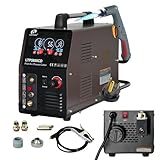 LOTOS APEX LTP5600CD LOTOS APEX LTP5600CD |
|
Check Latest Price |
 HZXVOGEN HVC6000Pro HZXVOGEN HVC6000Pro |
|
Check Latest Price |
 SONNLER 2-in-1 50A SONNLER 2-in-1 50A |
|
Check Latest Price |
 ANDELI CUT-55Y ANDELI CUT-55Y |
|
Check Latest Price |
 FLARING FC450 PUMP FLARING FC450 PUMP |
|
Check Latest Price |
 HASNOKTECH CUT-45 HASNOKTECH CUT-45 |
|
Check Latest Price |
1. Hobart AirForce 12ci: The Most Owner-Proven 120V Machine
Hobart AirForce 12ci Plasma Cutter 120V with Built-In Air Compressor
120V AC input
29 pounds
5-3-1 warranty
No external air needed
Pros
- Self-contained air system for shop and field use
- Cuts faster than oxy-fuel with a thinner kerf
- Smaller heat-affected zone
- Made in the United States
Cons
- Compressor draws heavy current on 120V circuits
- 12ci class limits heavy production thickness
The AirForce 12ci is the machine we kept handing to people who asked which integrated cutter had the least drama attached to it. It weighs 29 pounds, runs on a standard 120V AC outlet, and carries a 5-3-1 warranty from Hobart Welding Products. Made in the United States, it is also one of only two machines here with a warranty structure that reads as professional grade rather than import grade.
Its 98 reviews give it by far the largest owner base in this group, and that matters when you are judging long-term reliability. Sixty-four percent of those ratings are five star. The recurring theme in owner reports is simple: the self-contained air system is the reason people keep the machine, and the reason they stop looking at bare plasma cutters.
On cut quality, Hobart claims it runs faster than oxy-fuel with a thinner kerf and a smaller heat-affected zone, which is the standard argument for plasma over gas and one that holds up on thin and medium mild steel. It is not a machine for stepping up to heavy structural plate.
Best For: 120V Shop and Field Work
This is the pick for a homeowner, an HVAC tech, or a farm maintenance person who needs a genuine plasma cutter and only has a household circuit. At 29 pounds it is one of the easiest in this roundup to carry to a job, and no external air source of any kind is required.
The 5-3-1 warranty is the quiet advantage. If the inverter or the pump fails inside the warranty window, you are dealing with an established manufacturer rather than a marketplace listing.
Where It Falls Short: Heavy Material and Heavy Current
The 12ci class is compact by design, and owners comparing it against 30A to 40A machines report it is limited for heavy production thickness work. If your project list includes plate a half inch thick or more, this is not the machine.
There is a second catch that reviewers raise: the internal compressor draws significant current, and on a 120V circuit that can mean sharing the load with other equipment. On a marginal circuit, output suffers before the machine complains.
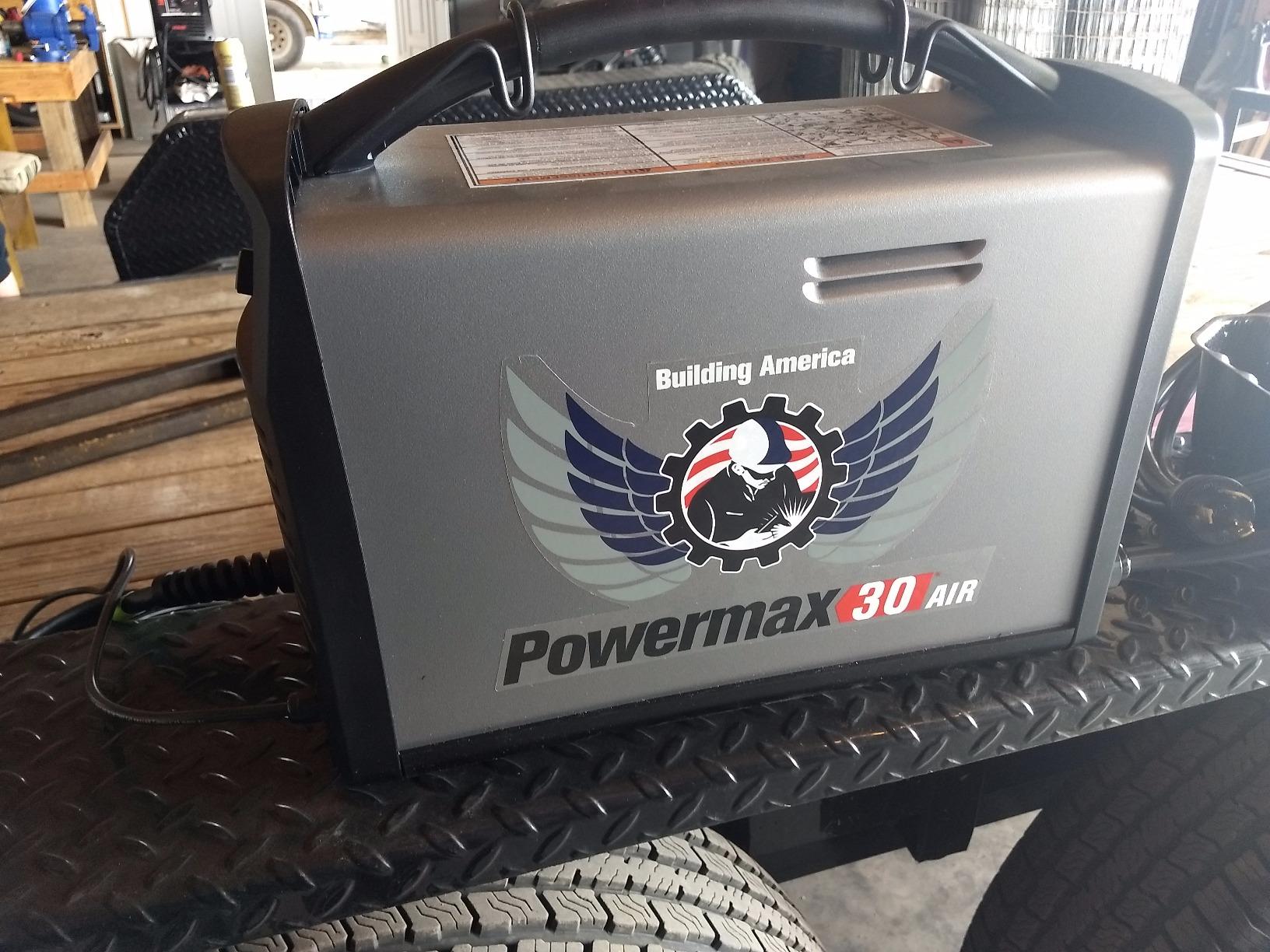
2. Hypertherm Powermax 30 Air: The Benchmark Dual-Voltage Machine
Hypertherm Powermax 30 Air Plasma Cutter 088096 with Built-In Air Compressor
Auto-Voltage 120V or 240V
35 pounds
16.5 x 7.7 x 13.1 inches
Internal compressor
Pros
- Auto-Voltage runs on 120V or 240V with plug adapters included
- Compact and light enough to take to the work site
- Built for heavy-duty use in demanding environments
- Continuous pilot arc cuts grate without retriggering
Cons
- Premium price tier against generic built-in-air cutters
- Consumable electrode and nozzle replacement over time
The Powermax 30 Air has been the reference point for this category for close to a decade. A WeldingWeb thread opened in 2016 still frames it as the machine every other integrated cutter gets measured against, and that framing has not really moved. It weighs 35 pounds and measures 16.5 by 7.7 by 13.1 inches, which is a genuinely small footprint for a machine with a compressor inside it.
The feature that changes daily work is Auto-Voltage. You plug it into 120V or 240V and plug adapters are included, so the same machine covers a customer house and a shop wall. The internal compressor removes the external air compressor and filter entirely, and the result is a machine you bring to the work rather than bringing the work to the machine.
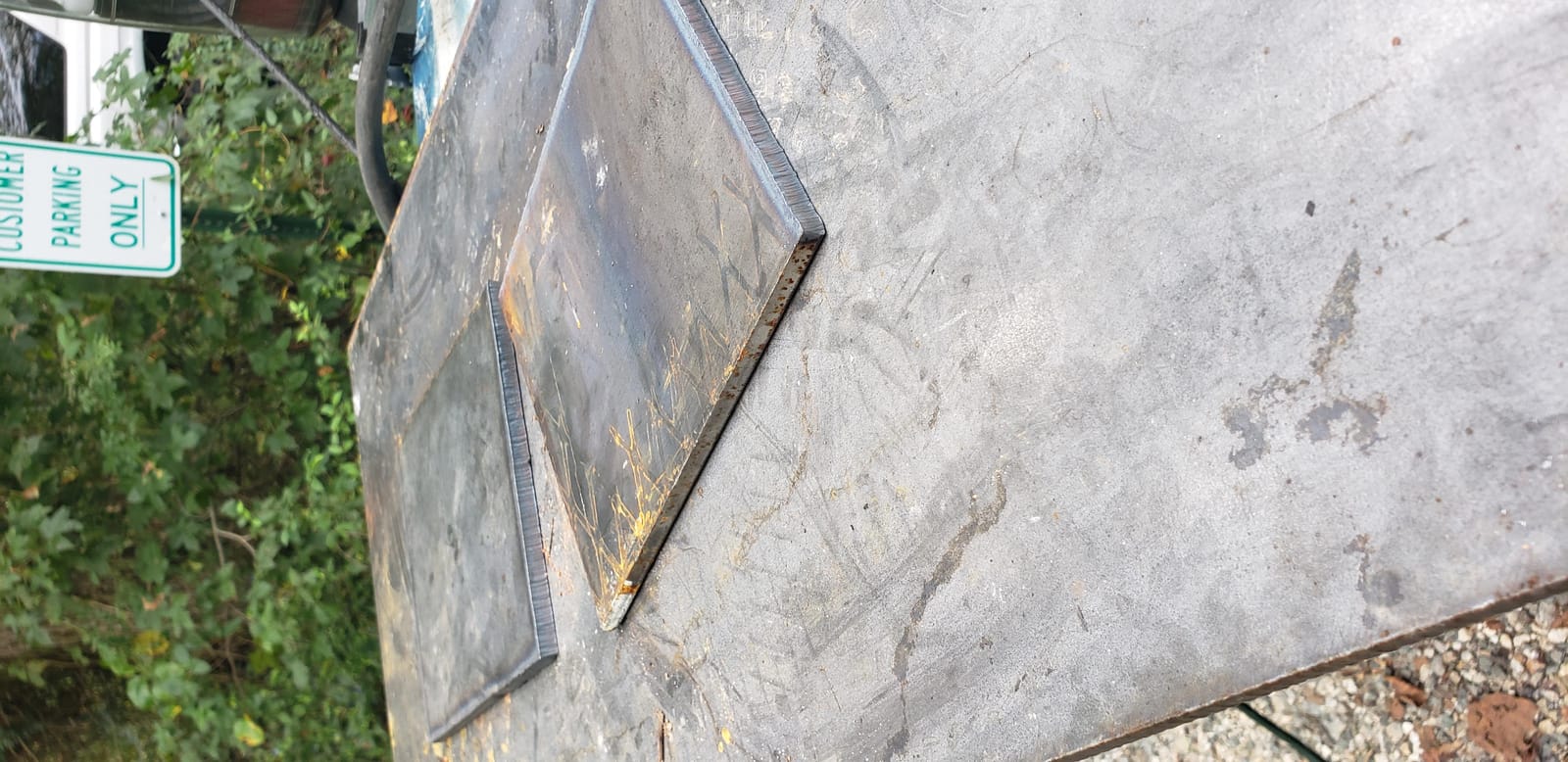
Its continuous pilot arc is the second thing owners mention. It cuts metal grate and rusted material without retriggering, which is the difference between a productive afternoon and a frustrating one when you are cutting through expanded metal or a gate frame. At 4.6 stars across 70 reviews with 84 percent five-star ratings, it also has the most consistent satisfaction in this lineup.
Best For: Dual-Voltage Field Technicians
Buy this one if your work moves between a 120V household circuit and a 240V shop outlet, and if you cut rusty material or grating often enough that arc restrike behaviour matters. It is also the safest long-term ownership choice here, because Hypertherm torches and consumables are widely stocked.
For general shop context, our home shop plasma cutter roundup covers how this class of machine compares to a bare cutter on a big tank.
Where It Falls Short: Budget and Consumable Cost
It sits in the premium price tier compared with generic built-in-air cutters, and that gap is real money. It also needs consumable electrode and nozzle replacement over time, which is normal but adds up on a machine you expect to keep for years.
Thirty-five pounds is manageable once, tiring on a long day of stairs and ladders. If you are moving the machine constantly rather than driving it to a site, the 29-pound Hobart is easier on your back.
3. LOTOS APEX LTP5600CD: The Only Machine Here With Published Air Figures
LOTOS Apex LTP5600CD 56A Drag-Cut Built-In Air Plasma Cutter 110V/220V
56A output
110V and 220V
4 CFM at 75 PSI
38 pounds
Pros
- Integrated pump removes the compressor and tank
- Drag-cut consumable gives straight consistent lines
- Cuts rusted mild steel without pre-cleaning
- Responsive next-business-day replacement support
Cons
- Compressor is power hungry and output drops above roughly 30A on marginal circuits
- External compressor recommended above 3/8 inch
- Out-of-box QC issues including bent pins and a burr on the drag consumable
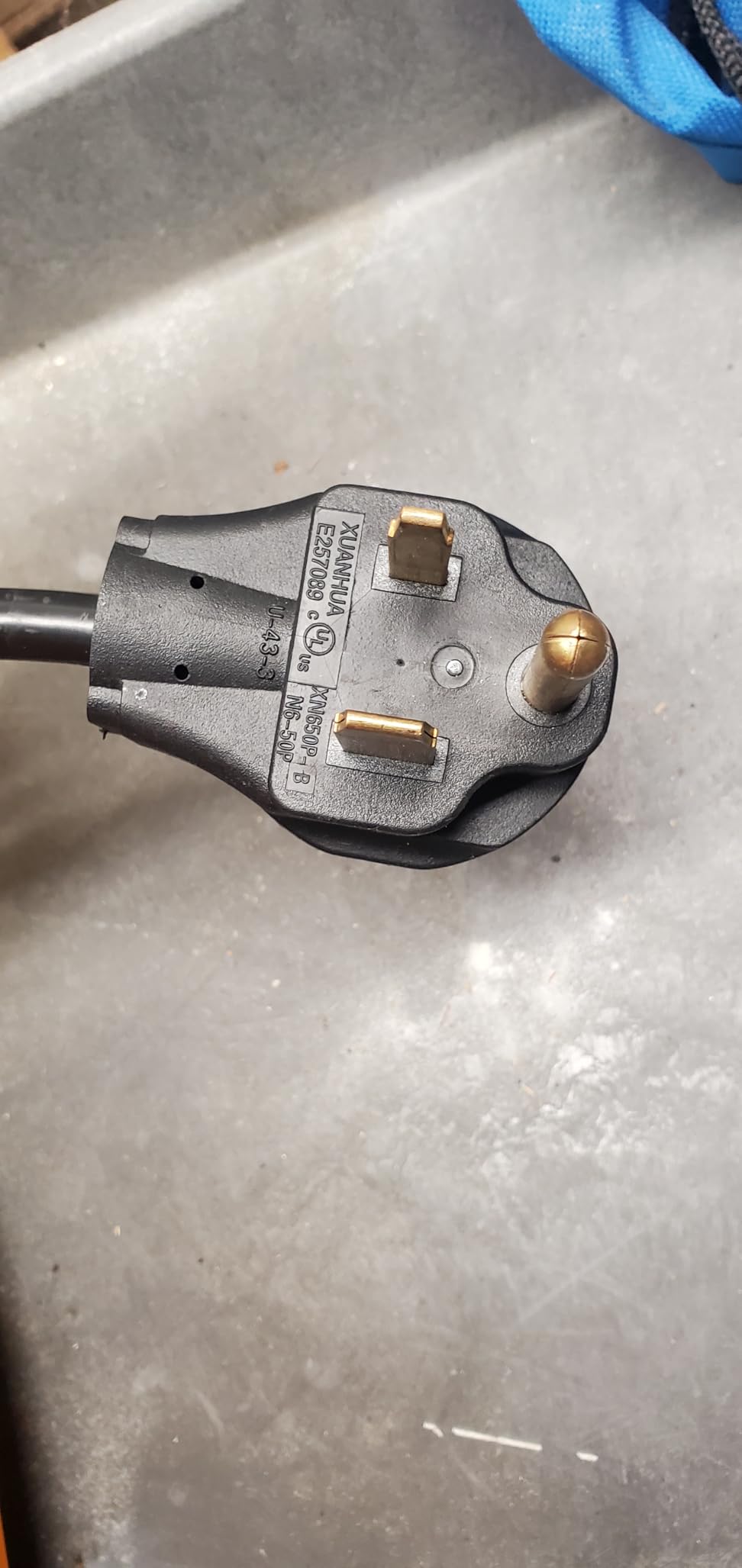
Most manufacturers will not tell you what their onboard pump actually delivers. Lotos publishes it: 4 CFM at a maximum of 75 PSI, with a 13-foot torch hose, automatic dual-voltage sensing, and a pre-installed NEMA 6-50 plug. That transparency alone makes this the easiest machine in the group to plan around, and at 56A of rated output it outclasses everything else here on paper.
The dual-air design is the real story. The internal pump handles internal air up to about 1/2 inch steel, and for full 56A clean cuts at 5/8 inch you connect an external compressor. That switch is the practical answer to the complaint that onboard air runs out on thick cuts, and almost no other integrated machine in this price range offers it. Drag-cut tracking for thin sheet and a non-touch pilot arc that starts through paint, rust and expanded mesh are the other two features that owners actually use.
Results depend heavily on how you power it. Owners running it on a dedicated 50A 240V circuit report near-perfect, dross-free stainless work and clean cuts through rusty mild steel without pre-cleaning. Lotos support is repeatedly praised, including next-business-day replacement units. The manual exposes pilot-arc timing from 6 to 15 seconds and post-flow from 2 to 10 seconds on-screen, with a pressure-drop alert.
Best For: Shops With a 240V Circuit and Real Plate Work
If you have a dedicated high-voltage outlet, this is the strongest cutting capability per dollar in the roundup. It suits small fabrication shops, trailer and pipe fencing work, and anyone who wants the option to grow into 5/8 inch steel later with a shop compressor they already own.
Our pancake air compressor picks are worth a look if you plan to lean on that external-air path rather than the onboard pump.
Where It Falls Short: Household Circuits and Out-of-Box QC
The built-in compressor is power hungry. On a 120V household circuit, output drops and stability suffers above roughly 30A, so the headline 56A figure is a 240V number. The machine is 38 pounds, which is the second-heaviest here after the HZXVOGEN.
Owners also report quality control problems on arrival, including a bent ground pin, a bent 220V plug and a loose air pressure knob, plus machining burrs on the included drag consumable that needed filing before use. The manual is vague on setup and on drag technique, and proprietary drag consumables were not widely available at the time of writing. Inspect everything before the first cut.
4. HZXVOGEN HVC6000Pro: Duty Cycle for 240V Shops
H HZXVOGEN 50A Plasma Cutter, 220V Pilot Arc/Built in Air Compressor 2T/4T
50A at 240V
60 percent duty cycle
40 pounds
2-year quality support
Pros
- Ready to cut as soon as power is connected
- Non-touch pilot arc reduces electrode burnout
- 2T and 4T modes with pre-cut air pressure detection
- Also compatible with external compressors
Cons
- 220V-only operation needs a dedicated high-voltage circuit
- 19 percent of ratings are one star with quality complaints
The HVC6000Pro is an IGBT inverter rated at 50A on 240V, with a stated 60 percent duty cycle, a 5/16 inch ideal clean cut and a 5/8 inch maximum at full output. That duty cycle figure is the most generous published number in this roundup, and it is why this machine lands in a shop rather than in a truck bed. The box measures 11 by 8.66 by 14.96 inches and includes the torch, ground clamp, air hose, filter regulator and a starter consumables set.
Operation is deliberately beginner-friendly. Two-in-four-time mode with pre-cut air pressure detection and post-flow means the machine checks its own air before striking, and the non-touch pilot arc ignites without touching the work, which reduces electrode burnout and extends consumable life. It also accepts an external compressor, so the onboard pump is a convenience rather than a ceiling.
Best For: Small Shops With a 50A Circuit
This suits a small fabrication shop or a serious home workshop that already has a dedicated 240V outlet and needs more duty cycle than an intermittent-duty integrated machine can give. The pre-cut air check is genuinely useful when you are learning the tool.
Because the start is high-frequency at 50/60Hz, keep it away from CNC stepper motors and sensitive electronics in the same cabinet.
Where It Falls Short: Circuit Requirements and Consistency
It is 220V only. On a household 120V circuit it will not do what the label says, and this is not a first-machine purchase for a garage without a dedicated line.
Reliability is the open question. With 16 reviews, 19 percent of ratings are one star, and owners report units arriving with quality or performance problems. At 40 pounds it is the heaviest machine in the group. The 2-year support excludes consumable accessories.
5. SONNLER 2-in-1 50A: A Cutter That Also Sticks
SONNLER 2 in 1 50A Plasma Cutter/MMA, 220V Digital Inverter IGBT Plasma Cutter Machine With Built-in Air Compressor, 1/3 Inch Clean Cut With Gas Delay.
Plasma plus MMA
15-40A DC output
1/3 inch clean cut
5-15 second gas delay
Pros
- Built-in compressor removes the need for separate air on outdoor jobs
- Doubles as an MMA stick welder
- Adjustable gas delay helps produce clean cuts
- Large LED display readable without a helmet
Cons
- Listed 2.2 pound weight is not credible for a compressor-equipped machine
- 220V-only and needs a dedicated circuit
- Small review pool makes the rating less reliable
What makes the SONNLER different is that the second function is a welder, not just a cutter. The same inverter runs plasma and MMA arc welding, delivering 15-40A of DC output with a 1/3 inch clean cut and a 3/5 inch maximum. For someone building a first shop, that combination covers a lot of work before you need a stick machine. Over-current, underload and temperature protection are built in.
The gas delay timer is the feature owners mention most, adjustable from 5 to 15 seconds to let the machine purge before the arc starts, which is what separates a clean edge from a spattery one on thin material. The large LED display is readable without removing your helmet, a small thing that matters during a long afternoon. It cuts rough, painted and rusty surfaces effectively, which is where a lot of first plasma jobs actually start.
The compressor does what it says: no separate air compressor needed for outdoor cutting jobs. That is the whole argument, and at this level of output it covers light-gauge material and repair work rather than structural plate.
Best For: First-Time Owners Who Also Need to Weld
Pick this if you are outfitting a first shop and want plasma plus stick capability in one box on a 220V circuit. The gas delay control and readable display make it forgiving to learn on, and the built-in pump means you can cut outside without wheeling a compressor out.
It is also a reasonable companion to any of the compressors we cover in our portable air compressor guide for the jobs that need real air volume.
Where It Falls Short: Spec Sheet Accuracy and Thin Ownership History
The listed 2.2 pound item weight is not believable for a machine with a compressor inside, and that is a fair warning about the rest of the listing. Ask for verified dimensions before you plan a carrying strategy.
It is 220V only, and with 13 reviews the rating is statistically thin. Nine percent of ratings are one star, with owners reporting units that did not perform to expectations. There is also no stated warranty length, which is the single most-cited confidence signal in this category.
6. ANDELI CUT-55Y: Non-HF Start and the Biggest Kit
ANDELI Non-HF Plasma Cutter with Built-In Air Compressor 55A,1″ Max Cut
55A adjustable output
240V listed
12 kg
up to 0.76 inch with external air
Pros
- Non-high-frequency blowback start limits electromagnetic interference
- Non-touch pilot arc cuts painted and rusted metal
- Large display shows air pressure voltage and current
- Complete kit with helmet gloves torch and consumables
Cons
- Noticeable heft for its compact size
- Cutting speed drops noticeably on 1 inch material
- Onboard air cannot match a large workshop compressor
The ANDELI makes one decision that stands apart from this entire field: it does not use high-frequency start. The blowback start minimises electromagnetic interference, which makes it the only machine here that can sit in the same shop as a CNC table, a laptop, or control electronics without fighting them. It pairs that with a non-touch pilot arc for painted, rusted and uneven metal, and automatic grid-cutting start and stop that prevents the arc striking across a gap in perforated material.
Output is adjustable to 55A, and the machine cuts up to 0.76 inch (20mm), with perforation to 15mm at 220V when you feed it external air. Owners report it being tested cutting up to 1 inch of material, though they also say cutting speed drops noticeably at that thickness, and the onboard compressor cannot supply the airflow of a large workshop compressor for the biggest jobs. The large digital display shows air pressure, voltage, current and status with error codes for troubleshooting.
The box is unusually complete: anti-spatter cutting helmet, low-frequency torch, ground clamp, gas hose, consumables kit, gloves and electrode holder. It is CE certified with a 30-day satisfaction guarantee, a 2-year warranty and lifetime technical support. At 4.8 stars the owner satisfaction here is the highest in the group, though the review pool of 10 is small.
Best For: Shops With Electronics and Thick Plate
Choose the CUT-55Y if you run CNC equipment or sensitive electronics nearby, or if you want to push toward heavy plate and are willing to connect external air for the top of the range. The non-interference start solves a problem the high-frequency machines here create.
Owners also list it running on 110V or 220V shop outlets, even though the specification sheet lists 240V, so verify the plug configuration on your specific unit.
Where It Falls Short: Weight and the Air Ceiling
At 12 kilograms in a 12 by 6.8 by 20 inch body, owners call it noticeably heavy for its compact size. The tall, narrow shape also means it is awkward to lay flat in a truck bed.
The bundled helmet and accessories are a genuine value add, but they are also a lot of extra mass to carry. And at the top of its range the machine is waiting on air you have to bring.
7. FLARING FC450 PUMP: 45 Amps From the Onboard Pump Alone
FLARING 240V Plasma Cutter With Built In Air Compressor 45A IGBT Inverter Digital Plasma Cutting Machine, 3/8 Inch Clean Cut And 5/8 Inch Max Cut High Frequency (No External Compressor Needed)
45A output
240V only
13.54 kg
3/8 inch clean cut
Pros
- Integrated high-performance air pump needs no external compressor
- Cuts steel stainless and aluminum with little dross
- Stable focused arc thanks to consistent built-in air pressure
- Spare tips and electrodes included
Cons
- Included ground clamp is of poor quality
- Supplied torch lead is short
- 240V-only and needs a dedicated circuit
The FLARING FC450 PUMP makes a narrower claim than the machines above it, and owners say the claim holds. It is a 45A IGBT inverter with an integrated high-performance air pump, listed at 3/8 inch clean cut and 5/8 inch maximum, and every one of its 8 reviews is five star. Owners specifically credit the built-in pump with the cut quality, reporting smooth edges on mild steel, stainless and aluminum with minimal dross and a stable, focused arc that does not sputter.
Overload protection and automatic pressure adjustment handle the air side, and a spare set of tips and electrodes ships in the box. The practical difference from the machines above is that nobody here needed to connect an external compressor to get a clean 3/8 inch kerf that requires minimal post-cut grinding.
Best For: 240V Users Cutting 3/8 Inch Steel
This is the pick if 3/8 inch mild steel or stainless is your regular ceiling, you have a 240V outlet, and you would rather not maintain a second air system at all. For that specific job, the onboard pump does the work.
It is also the cleanest package to hand to someone learning plasma cutting, because the accessories you would otherwise buy first are already in the box.
Where It Falls Short: Accessories and a Small Sample
The included ground clamp is the one accessory owners single out as poor quality, and the supplied torch lead is short enough that some users substitute a 16-foot AG60 pilot-arc torch for scrap work. Budget for a replacement torch and clamp.
It is 240V only, at 13.54 kilograms, and its 5.0 rating comes from just 8 reviews. Every review being five star is encouraging, but it is a very small sample and long-term reliability is not established.
8. HASNOKTECH CUT-45: The Only 120V Plug-and-Play 45A Machine
HansnokTech Plasma Cutter With Built In Air Compressor 45A 120V IGBT Inverter Digital Plug and play Portable Plasma Cutting Machine 3/8 Inch Clean Cut And 5/8 Inch Max Cut High Frequency
45A output
120V
17 pounds
3/8 inch clean cut
Pros
- Complete built-in air system needs zero external units
- Plug-and-play portable design with no air line connections
- Stable arc from consistent built-in pump pressure
- 2T and 4T modes for short cuts versus long ones
Cons
- Only 4 customer reviews so reliability is unproven
- Listing lists few included components beyond the torch
The CUT-45 is the newest machine in this group, first listed in May 2026, and the only one that pairs a 45A rating with a 120V plug. That combination is unusual. Most 45A plasma output demands a 240V circuit, and most built-in-air compressors in this roundup are 240V machines with an onboard pump.
The output claims follow that same pattern: 3/8 inch clean cut and a 3/5 inch maximum, with IGBT inverter technology, 2T semi-auto and 4T full-auto cutting modes, an upgraded cooling system, overload protection and automatic pressure adjustment. The 4T mode is the one worth understanding. Two-touch gives precise control for short cuts, four-touch holds the trigger for you, which reduces finger fatigue on longer work. The exterior is rated water, dust and corrosion resistant, and at 17 pounds it is the second-lightest machine here.
Owners like the plug-and-play reality: no air line connections, no pressure adjustments, a stable arc from consistent built-in pump pressure, and a package compact enough for tight workspaces and garages.
Best For: 120V Household Circuits
If you have never run a 50A circuit and do not want to, this is the machine to look at. The 2T and 4T modes make it manageable for a beginner, and the built-in air removes the compressor question entirely for repairs, appliance work and light fabrication.
It is worth treating as an early look. The design is sensible, but four reviews is not an ownership history.
Where It Falls Short: Almost No Ownership Data
All four reviews are five star, which reflects first impressions rather than years of use. There is no established long-term reliability signal here, and the sample is too small to be one.
The listing also includes few components beyond the torch, so plan to buy a ground clamp, consumables and any protection gear separately. Its 120V operation also means the output ceiling is lower than the 45A label suggests on a loaded circuit.
Buying Guide: How to Choose a Plasma Cutter With a Built-In Compressor
Input Voltage and the Breaker You Actually Have
Decide this before anything else, because it eliminates half the list. 120V machines plug into a household outlet. 240V machines need a dedicated high-amp circuit, and many home shops do not have one installed. The ones that flex between both, like the Hypertherm Powermax 30 Air and the LOTOS APEX, are the most flexible choice for work that moves between locations.
The catch on 120V is output. A household circuit caps practical cutting output in roughly the 12A to 15A range, and that translates into a real thickness ceiling. A machine rated 45A on 120V, like the HASNOKTECH, produces that rating under ideal conditions on a clean circuit. Sharing a 120V circuit with a welder, a compressor or a saw will pull the output down, and dross is what you get when the arc sags.
Air Demand: SCFM, PSI and When Onboard Air Runs Short
Community guidance on r/metalworking puts plasma air demand at roughly 5-7 CFM at 20-60 PSI. Only one machine in this roundup publishes its onboard figures: the LOTOS APEX at 4 CFM and 75 PSI. For everything else, assume the pump is sized for the machine’s mid-range capacity and will strain at the top of its published cut thickness.
Symptoms of running out of air are recognisable: the arc sputters instead of holding steady, dross appears on the exit side, and cut speed drops sharply. If you plan to work near your machine’s maximum thickness, look for a switchable internal or external air supply. The LOTOS does this out of the box, and the HZXVOGEN accepts an external compressor. If you do need external air, our portable air compressor recommendations cover the tank sizes worth considering.
Duty Cycle, Expressed in Minutes
Duty cycle is the share of a 10-minute period you can cut continuously. The HZXVOGEN publishes 60 percent, which means six minutes on and four off. Integrated machines are structurally limited here because the pump is the component that overheats first, not the inverter. If your work involves long unbroken cuts, an integrated pump is the wrong architecture.
Arc Start Type and What It Rules Out
There are four families. Drag cut needs you to touch the work to start, which is cheap and effective on clean mild steel. Pilot arc starts without contact and handles painted or rusted material. High-frequency non-touch start adds contactless ignition but generates electromagnetic interference that upsets CNC tables and nearby electronics. Blowback start is the low-interference option, and the ANDELI is the only machine here built that way.
Warranty, Consumables and Total Cost
Warranty length is the most-cited confidence signal in this category. A three to five year term reads as professional grade; the imported units here mostly offer one to two years, and the SONNLER states none. After that, add the ongoing cost of electrode and nozzle sets. The Hypertherm’s advantage is that its consumables are widely stocked, while the Lotos drag consumables were reportedly harder to source.
For total cost, compare the integrated machine against a bare plasma plus a compressor plus an air hose, not against the bare machine alone. If you already own a compressor, the integrated unit is pure duplication and a separate plasma is the better buy. If you own nothing, the integrated machine is usually the cheaper first purchase and the only one you can carry solo.
Maintenance, Consumables and Air Demand
The onboard pump adds three maintenance tasks that a bare cutter does not have, and skipping them is what kills cut quality on these machines.
Drain the water separator. Moisture in the plasma air causes dross, electrode erosion and a sputtering arc. Most integrated machines have a separator or dryer on the pump outlet, and draining it is a matter of minutes.
Clean the filter. A restricted intake filter shows up as falling air pressure, which reads as a cutting problem rather than an air problem. Check it when the arc starts to misbehave.
Watch the consumables. Electrodes and nozzles wear with use, faster on dirty or rust-coated material. Non-touch pilot arc starts reduce electrode burnout, which is one reason that feature matters beyond convenience. Expect to replace tips and electrodes periodically, and prefer machines whose consumables are easy to source.
Plan on servicing the pump itself eventually, since it is a mechanical part inside a power supply that most service networks treat as a whole unit.
Frequently Asked Questions
Can you use an air compressor with a plasma cutter?
Yes, and you can use either the onboard pump or an external compressor. The onboard pump shares one air source between igniting the arc and blowing molten metal out of the kerf, so it is the same air doing both jobs. Machines like the LOTOS APEX and the HZXVOGEN accept an external supply for thicker cuts, which is the standard fix when onboard air cannot keep up.
What size air compressor do you need for a plasma cutter?
Community guidance is roughly 5-7 CFM of clean, dry air at 20-60 PSI for a typical 30A to 45A machine. A 20 to 30 gallon vertical oil-free tank is a common recommendation for that range. For heavier units, match the compressor rated CFM to the cutter’s air demand at its maximum thickness, not to its headline amperage.
Can compressed air be used for plasma cutting?
It has to be dry, clean and oil free. Moisture in the plasma air causes sputtering, dross on the exit side and faster electrode wear, while oil carryover from a lubricated compressor can contaminate the torch. A water separator and inline filter are the simplest fix, and an integrated machine with a filtered onboard pump handles this automatically.
What is the best plasma cutter for cutting 1 inch thick steel?
None of the eight integrated machines here is a 1 inch production cutter. The largest published figure is the ANDELI CUT-55Y at 0.76 inch, and that depends on external air, with owners reporting slower cuts at 1 inch. For steady 1 inch work, buy a 60A or 80A plasma powered by a separate large compressor instead of an integrated unit.
How long does a plasma cutter electrode last?
There is no fixed number, because wear depends on thickness, duty cycle and how clean the stock is. Cutting clean mild steel wears an electrode far more slowly than cutting rusted or painted material, and a non-touch pilot arc start reduces electrode burnout. Budget for a replacement set every few months of intermittent hobby work, and far less under light intermittent use.
The Verdict
For most people, the best plasma cutter with a built-in air compressor is the Hobart AirForce 12ci. Ninety-eight reviews, a 5-3-1 warranty, 29 pounds and a 120V plug mean it is the safest first integrated machine in this category, and the thinnest argument you will ever make about a tool purchase.
Choose the Hypertherm Powermax 30 Air when your work moves between 120V and 240V outlets, or when you cut rusty material and grating often. Choose the LOTOS APEX 56A when you have a dedicated 50A 240V circuit and want the most cutting capability with the option to add external air later. The ANDELI CUT-55Y is the pick when electronics share your shop, and the HASNOKTECH CUT-45 when a 120V circuit is all you have.
All eight are updated for 2026, and all of them solve the same problem: one outlet, one machine, no compressor to haul. Check the circuit before you check anything else.