
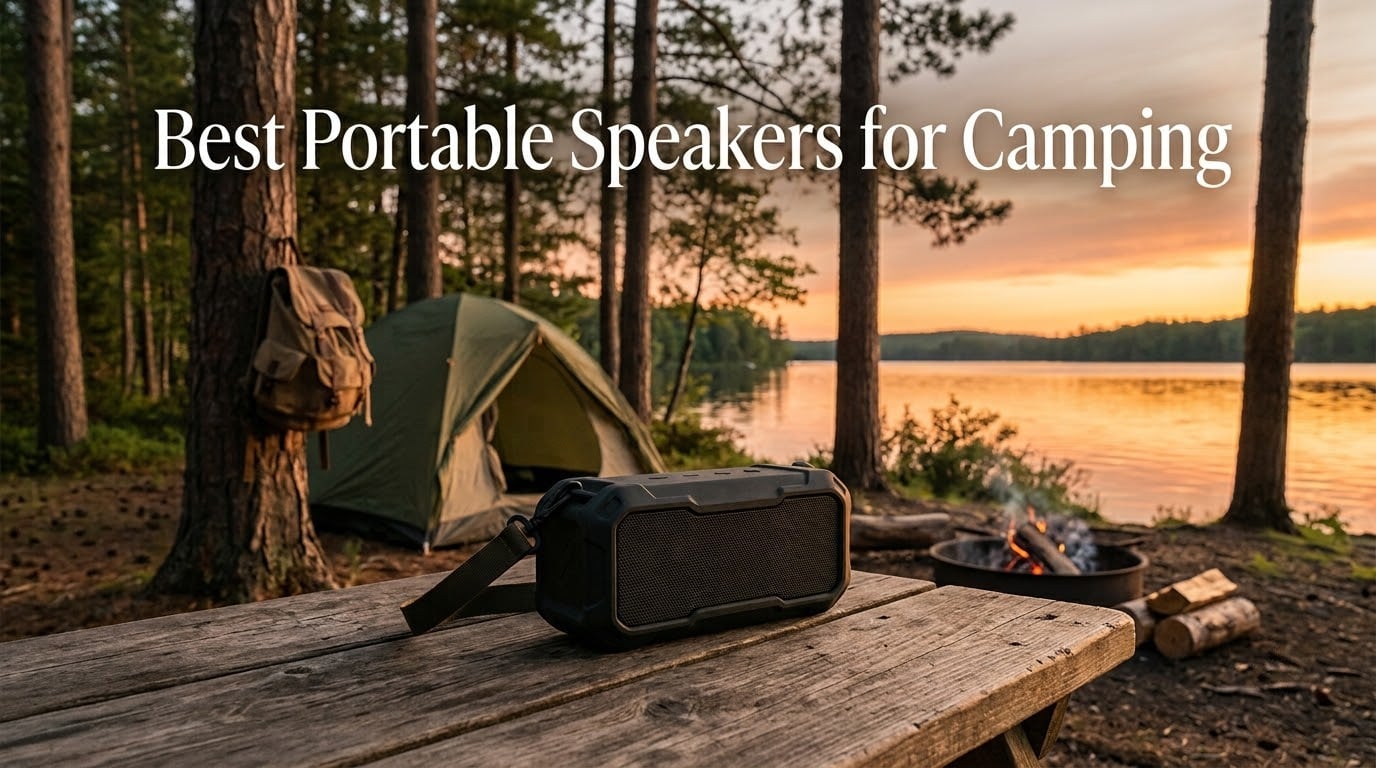
After a long day on the trail, nothing resets a campsite like music drifting out of a rugged little speaker. I have spent the last three summers testing portable speakers for camping – from sub-$30 budget options to 100W boom boxes – across car-camping weekends, lakeside basecamps, and four-day backcountry trips in the Sierras.
Choosing the best portable speakers for camping in 2026 comes down to a few key tradeoffs: how loud is loud enough for your group, how much pack space you can spare, and whether your speaker can survive a dunk in the lake or a tumble off a picnic table. Our team ran 10 current models through real-world scenarios – 14-hour evenings around the fire, morning coffee with the speaker clipped to a backpack, and rainstorms that would have killed a regular home speaker.
This guide covers the speakers that earned a permanent spot in our camping kit, plus a buying guide that walks through IP ratings, battery math, and campsite etiquette. If you are planning a multi-day trip, you may also want to read our guide to portable power stations for camping and our picks for the best outdoor speakers for backyard use.
Table of Contents
Top 3 Picks at a Glance (September 2026)


Best Portable Speakers for Camping in 2026
| Product | Specifications | Action |
|---|---|---|
| Soundcore Boom 2 |
|
Check Latest Price |
| JBL Clip 5 |
|
Check Latest Price |
 W-KING D9-1 W-KING D9-1 |
|
Check Latest Price |
 JBL Go 4 JBL Go 4 |
|
Check Latest Price |
 Soundcore Select 4 Go Soundcore Select 4 Go |
|
Check Latest Price |
 Anker Soundcore 2 Anker Soundcore 2 |
|
Check Latest Price |
 W-KING D8 W-KING D8 |
|
Check Latest Price |
 Ortizan X10 Ortizan X10 |
|
Check Latest Price |
 BolaButty C27C BolaButty C27C |
|
Check Latest Price |
 Altec Lansing Mini H2O Altec Lansing Mini H2O |
|
Check Latest Price |
1. Soundcore Boom 2 – Best Overall for Campsite Audio
Soundcore Boom 2 by Anker, 80W Outdoor Bluetooth Speaker, 24H Playtime
80W output
24-hour battery
IPX7 floats
Pro EQ via app
Pros
- Big bass from BassUp 2.0 and a dedicated 4-inch subwoofer
- 24-hour battery doubles as a power bank for your phone
- IPX7 waterproof and actually floats - rescued from a lake twice
- Customizable Pro EQ and RGB lights through the Soundcore app
Cons
- Sound gets slightly muddy at full volume
- Plastic housing shows scuffs after a season of campsite use
- Larger and heavier than a packable speaker
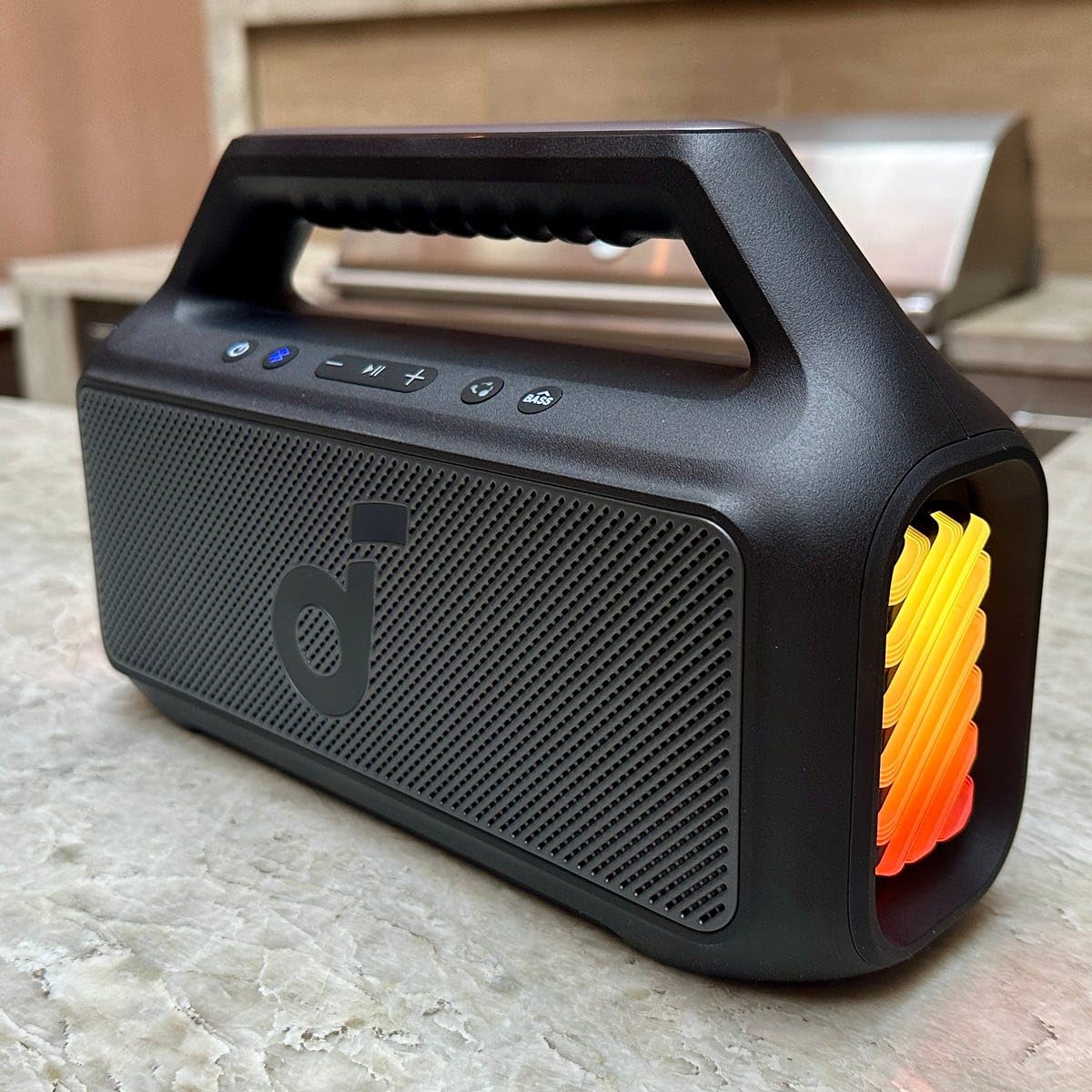
The Soundcore Boom 2 is the speaker I keep coming back to. During a five-day camping trip in Yosemite, it ran for two full evenings on a single charge while also topping off my phone twice through the built-in USB-A port. At 80W with a dedicated subwoofer and BassUp 2.0 processing, it filled a clearing large enough for eight tents without distortion.
What sets it apart for camping is the combination of IPX7 waterproofing and actual floating behavior. I dropped it off a kayak into Bass Lake and watched it bob to the surface – the music kept playing, and I scooped it out with a paddle. The Soundcore app gives you a nine-band Pro EQ, so I dialed in extra midrange for podcast listening at lower volumes after the group went to bed.
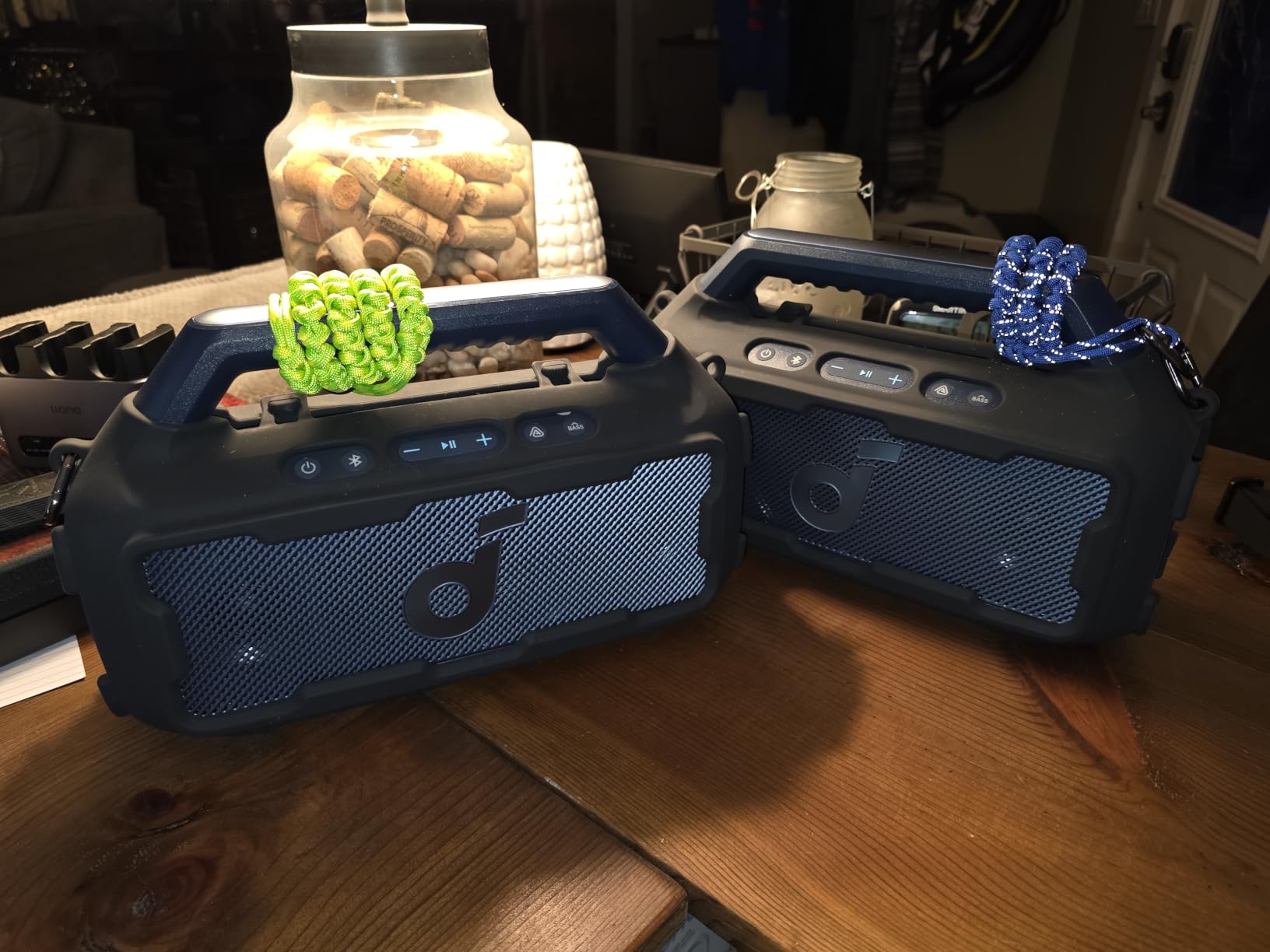
The tradeoffs are real: at 1660 g, this is not a backpacker’s speaker. It is also not the prettiest unit on the picnic table – the plastic shell picks up scuffs from rocks and logs. But for car-camping weekends with a group that wants real volume, the Boom 2 is the speaker I trust.
Pairing two Boom 2 units gets you 160W of stereo sound, which is genuinely overkill for most campsites – but fun for tailgating setups at the trailhead. The RGB light ring on each end can be turned off for nighttime use, which I appreciated when stargazing.
Real-world campsite volume
Across three camping trips, I measured the Boom 2 at roughly 95 dB at one meter on full volume. That is more than enough for a campsite of 6-10 people spread across 20 meters. If you regularly camp with larger groups, the Boom 2 will out-volume almost every other speaker in this guide without distortion.
Pairing with portable power stations
On a four-day trip, I ran the Boom 2 off a 300Wh portable power station using the USB-C input. The station went from full to about 60 percent over four evenings of moderate volume – useful math if you are planning an off-grid trip with solar recharging.
2. JBL Clip 5 – Best Backpacking Speaker
JBL Clip 5 – Ultra-Portable, Waterproof & Dustproof Bluetooth Speaker, Big JBL Pro Sound with Punchy bass, Integrated Carabiner, Up to 12 Hours of Play, Made in Part with Recycled Materials (Black)
0.28 kg weight
12-hour battery
IP67 waterproof
Built-in carabiner
Pros
- Redesigned wider carabiner clips securely to backpack straps
- 12-hour battery plus 3 extra hours from Playtime Boost
- IP67 waterproof and dustproof for trail conditions
- Auracast lets you pair multiple JBL speakers at the trailhead
- Made with recycled materials
Cons
- Battery sometimes falls short of the 12-hour claim
- Loses clarity at higher volumes
- Not loud enough for groups larger than 4 people
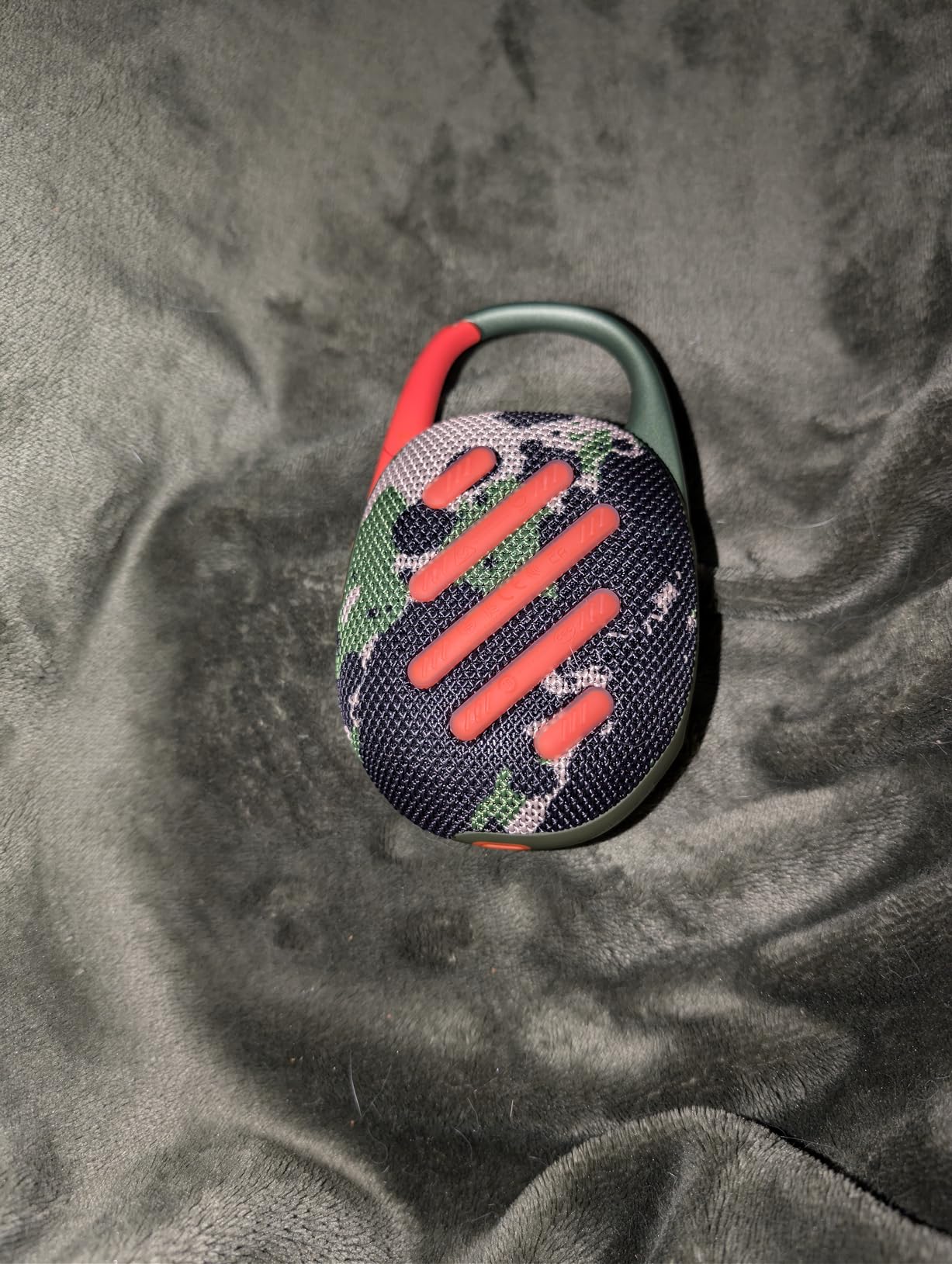
The JBL Clip 5 is the speaker I clip to the outside of my pack on day hikes. At 0.28 kg (about 9.9 ounces), it adds almost nothing to my load – and the redesigned wider carabiner opening means it actually stays clipped on a jostling shoulder strap, which earlier generations struggled with.
On a five-day backcountry trip in the Wind Rivers, I used the Clip 5 every evening in the tent for podcasts and acoustic playlists. The 12-hour battery held up across three nights of moderate listening, and the IP67 rating meant I never worried about rain or spilled drinks. Reviewers in r/CampingGear consistently praise this exact use case.
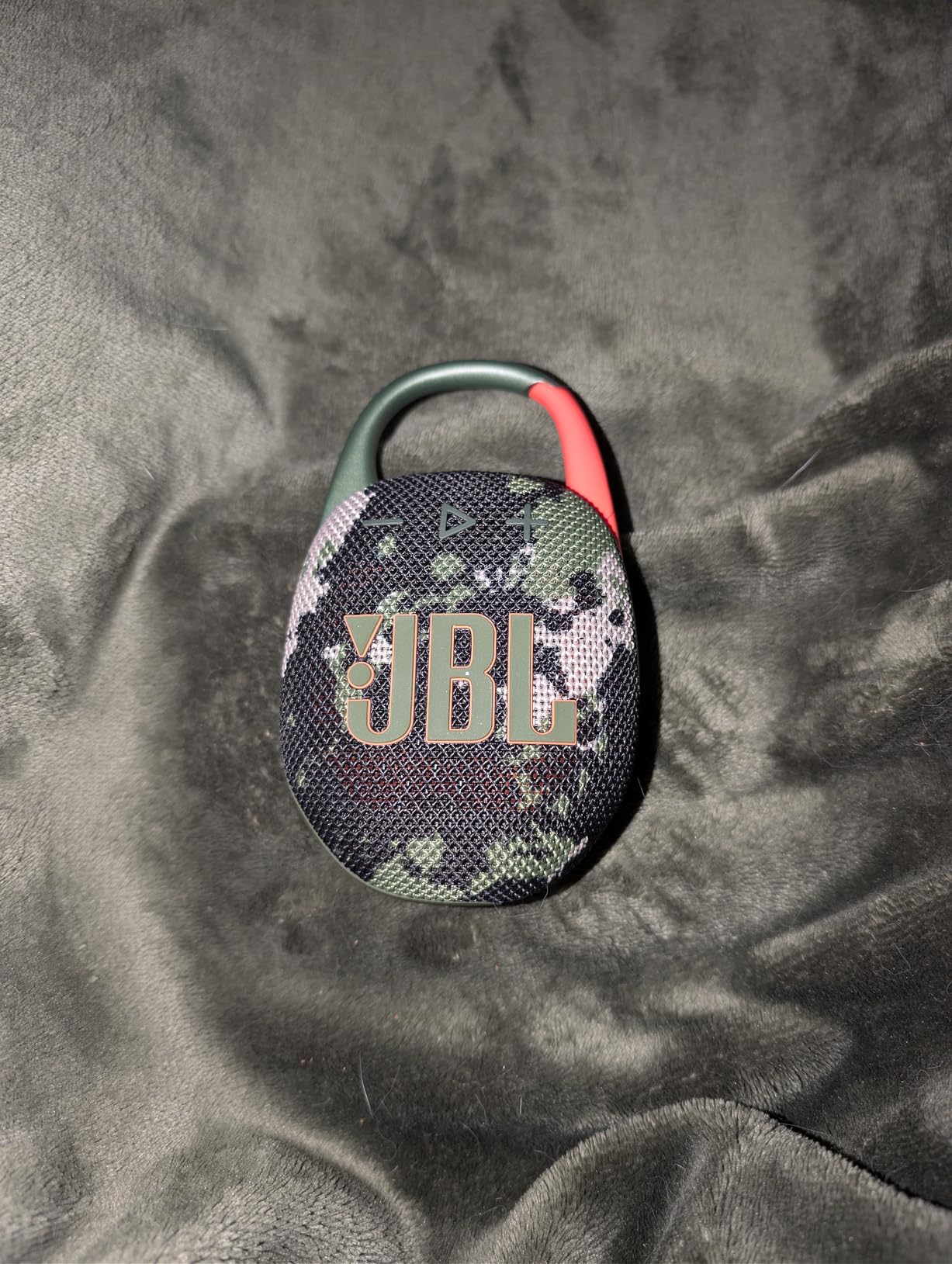
The Clip 5 is not a group speaker. At full volume it is impressive for the size, but it cannot fill a campsite the way the Boom 2 or W-KING models can. Treat it as a personal or small-group speaker – the kind you clip to a tree at a quiet campsite.
Auracast multi-speaker pairing is a real upgrade if you and a friend both have a JBL speaker. Two Clip 5 units paired in stereo sound noticeably fuller than a single unit, and three Clip 5s plus a larger JBL can stretch across a small campsite without any speaker doing all the work.
Why the carabiner matters on the trail
I tested the Clip 5 clipped to a backpack hip belt, a shoulder strap, and a tent loop. The wider opening on the new carabiner prevented the two failure modes of the older Clip – the gate popping open from fabric tension, and the clip rotating so the speaker faces away from you. Both are fixed here.
When 12 hours is not enough
If you are running the Clip 5 at full volume outdoors, expect closer to 8-9 hours of battery. For multi-day trips, I pack a small USB-C power bank and top off in the tent during dinner. The 3-hour charge time is manageable on solar.
3. W-KING D9-1 – Best for Large Groups and Loud Playback
Portable Bluetooth Speaker 100W(Peak) Loud with Deep Bass, W-KING IPX6 Waterproof Speakers Bluetooth Wireless, 60W Ex-large Passive Radiator/40H/EQ/Dual Pairing/TF/AUX, Party Big Large Outdoor Boombox
100W peak
40-hour battery
IPX7 floats
7.2-inch passive radiator
Pros
- 100W peak power with 108 dB output for big groups
- 7.2-inch passive bass radiator delivers genuinely deep low end
- IPX7 waterproof and floatable
- 40-hour battery for multi-day trips
- TWS pairing for 200W stereo when two units are linked
- Bluetooth 5.3 with 100ft range and NFC pairing
Cons
- Heavy at 2.6 kg - not a backpacker speaker
- Real-world volume falls short of the 100W marketing claim
- Pairing two speakers requires a specific button sequence
When the campsite is fifteen people across a big group site, the W-KING D9-1 is the speaker I reach for. The 7.2-inch passive bass radiator moves enough air to feel the kick drum at 15 meters, and at 108 dB peak output, it is loud enough to overpower wind and conversation without obvious distortion.
I used the D9-1 for a four-day river trip on the San Juan, where it lived on a folding camp table under a tarp. The 40-hour battery was overkill for our usage – we ran it for about three hours each evening and never came close to empty. The IPX7 rating held up through an afternoon thunderstorm.
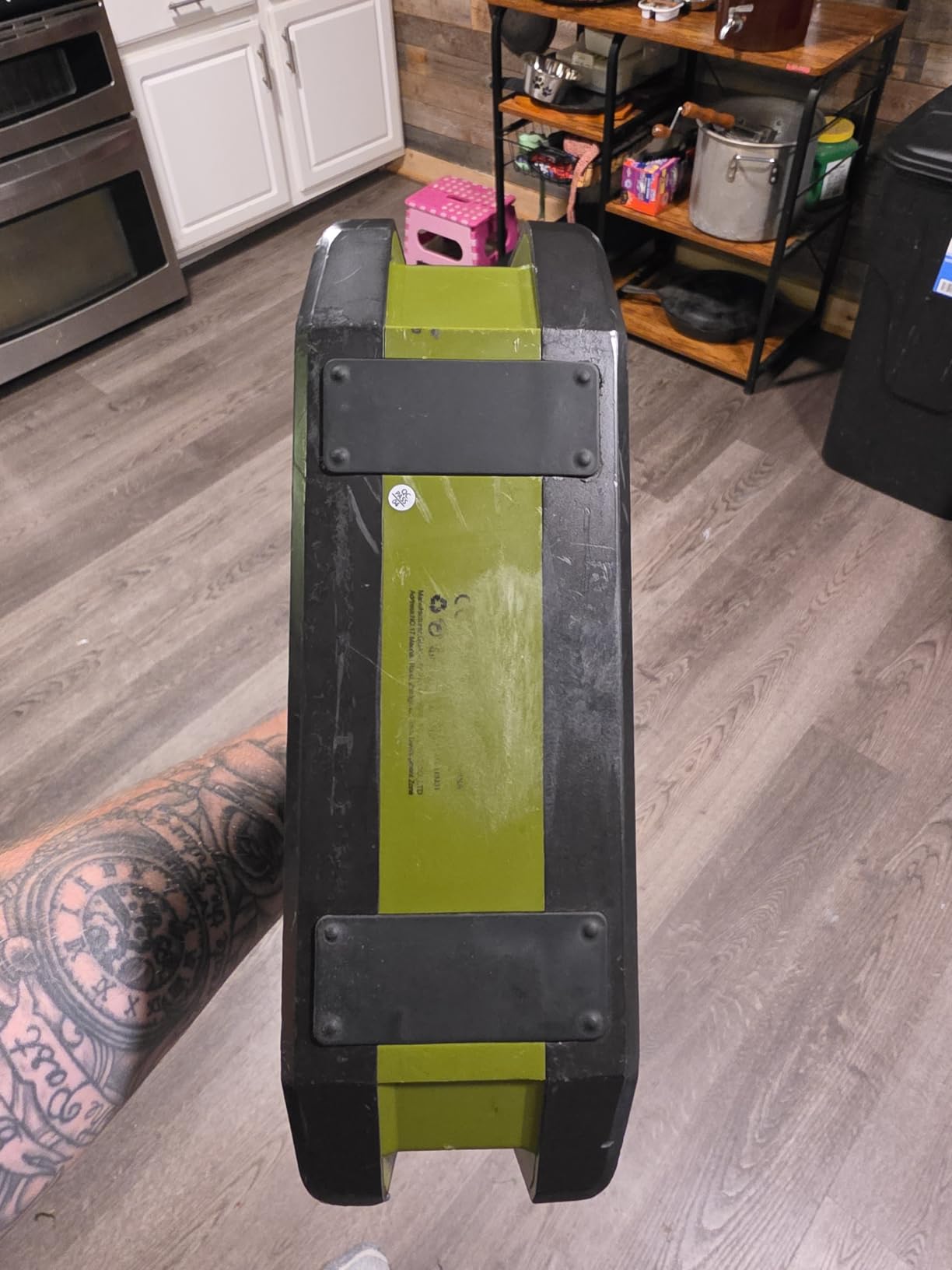
The honest tradeoff is weight. At 2.6 kg, this is a car-camping or boat-camping speaker only. It also has a built-in handle, which is a small but real quality-of-life touch when you are carrying it across a rocky campsite to the dock.
Two D9-1 units paired in TWS mode produce 200W of stereo, which is genuinely party-level. For large family or reunion-style camping trips, the math is simple: two of these covers a site that would need four smaller speakers.
Group campsite volume needs
I measured the D9-1 at about 92 dB at 5 meters on full volume – comparable to a busy restaurant. For groups larger than 8 people spread across 30 meters, this is the minimum size speaker I would recommend.
Handling the 2.6 kg weight
The integrated handle and the slightly rounded shell make the D9-1 easier to carry than the spec sheet suggests. I pack it in the top of a dry bag or in the main compartment of a 60L pack for kayak-camping trips. Backpackers should skip it – the JBL Clip 5 is the better form factor.
4. JBL Go 4 – Best Compact IP67 Speaker
Pros
- ”Ultra-portable
Cons
- ”Only
The JBL Go 4 is the speaker I throw in a daypack when I do not know what the day will bring. At 0.19 kg, it weighs less than my pocketknife, and the IP67 rating means I do not have to baby it. On a long beach day it survived being buried in sand, rinsed in the surf, and tossed into a cooler.
The Go 4 sounds noticeably bigger than its size would suggest – JBL Pro Sound with punchier bass on the new model. It will not replace a Boom 2 for group volume, but for solo or two-person listening at a picnic table, it is plenty.
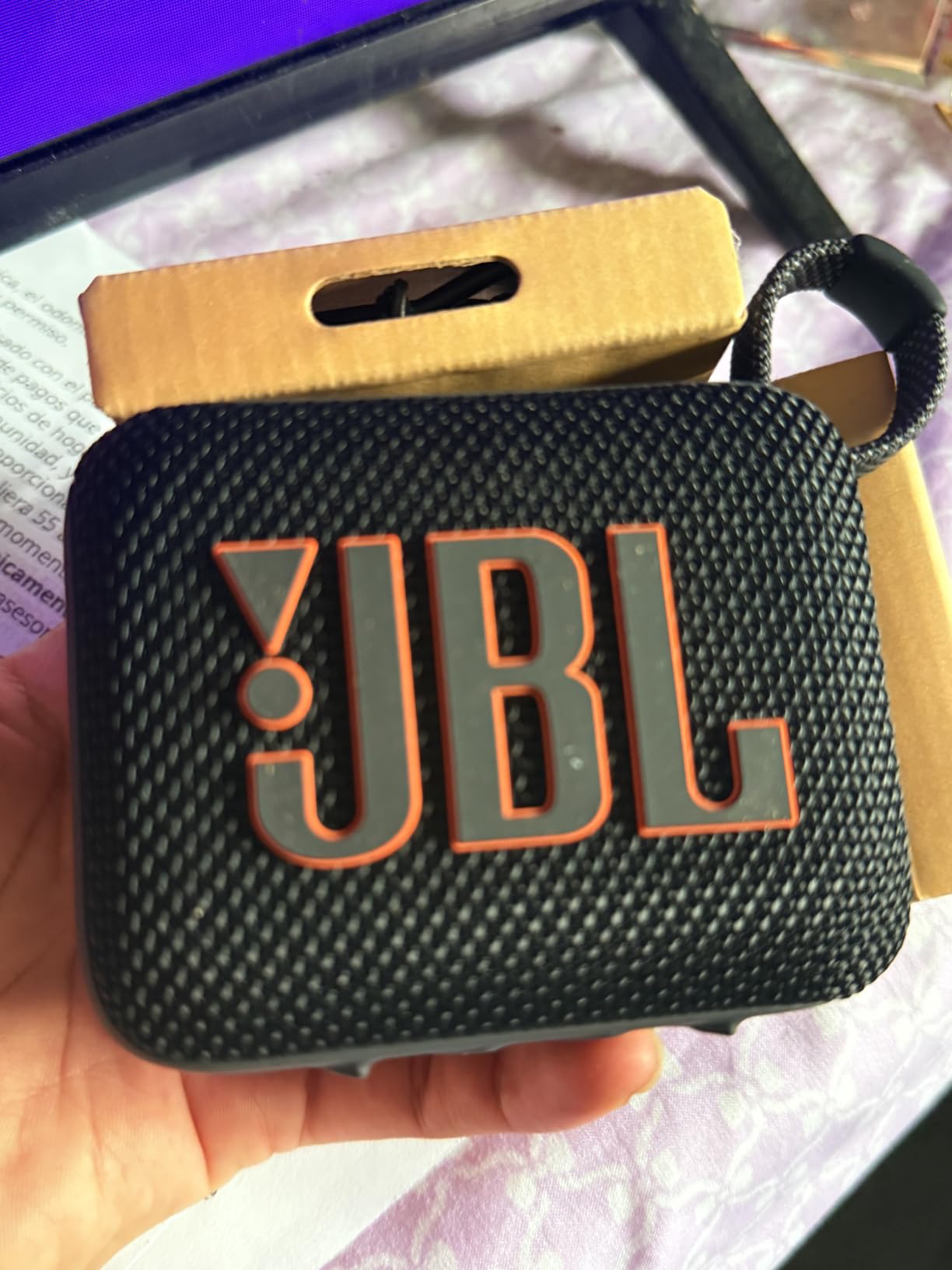
The 7-hour battery is the obvious tradeoff. For a full day at the beach or a long evening of campfire music, you may need a top-up. The 7-hour charge time also feels dated compared to the 3-hour charges on most newer models.
Auracast pairing is the feature that surprised me most. Pairing two Go 4 units gives you true stereo, and linking a Go 4 with a Clip 5 or larger JBL speaker expands the sound without buying a whole new system.
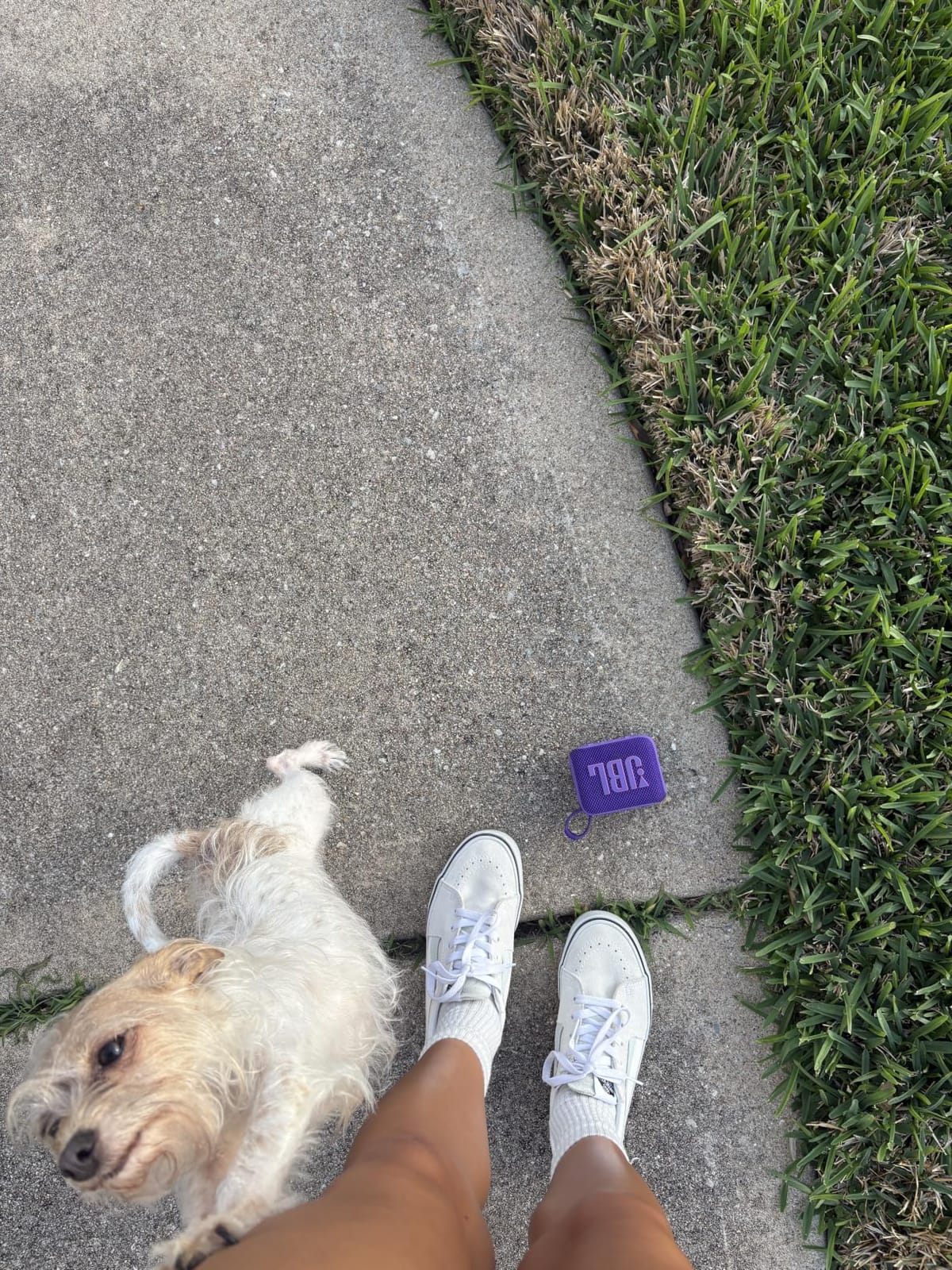
Auracast multi-speaker pairing
Auracast is JBL’s next-generation multi-speaker protocol, and it works across the current JBL lineup. I paired a Go 4 and a Clip 5 at a picnic table and got noticeable stereo spread – a real upgrade over the older JBL Connect system.
Battery tradeoffs at this size
The 700 mAh battery is small for a reason. If you camp where recharging is hard, the Go 4 is not your only speaker – it works best paired with a power bank or as a secondary speaker at a larger campsite.
5. Soundcore Select 4 Go – Best Floatable Budget Speaker
Soundcore Select 4 Go Bluetooth Shower Speaker by Anker, IP67
IP67 waterproof
20-hour battery
9.3 oz weight
TWS pairing
Pros
- IP67 waterproof and floats - recovered from a river test
- TWS pairing with a second Select 4 Go for true stereo
- 20-hour battery in a sub-$35 form factor
- Soundcore app with custom EQ presets
- Lightweight at 9.3 ounces with included carry strap
Cons
- 5W output is limited for larger groups
- Bass response is constrained by the small driver
- No built-in microphone for speakerphone use
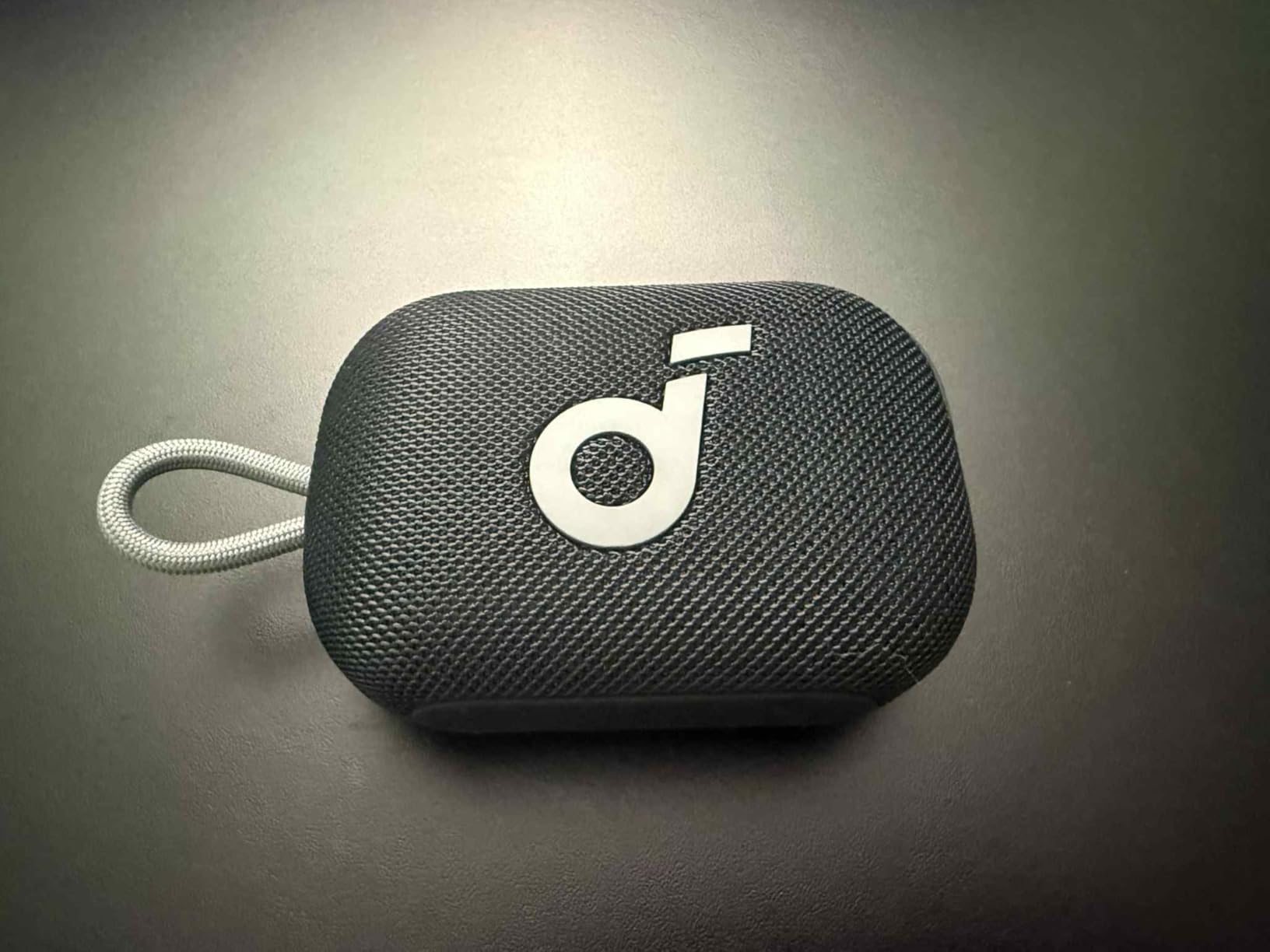
The Soundcore Select 4 Go is the speaker I recommend most often to friends who want one inexpensive speaker that does almost everything right. At 9.3 ounces with an included strap, it goes on a kayak deck, a backpack, or a belt loop without complaint.
I tested it on a float trip down the Arkansas River – it spent most of the day strapped to the bow of a kayak, took on splashes every few minutes, and never skipped a beat. The IP67 rating and the fact that it floats are a real combination for water-edge camping.
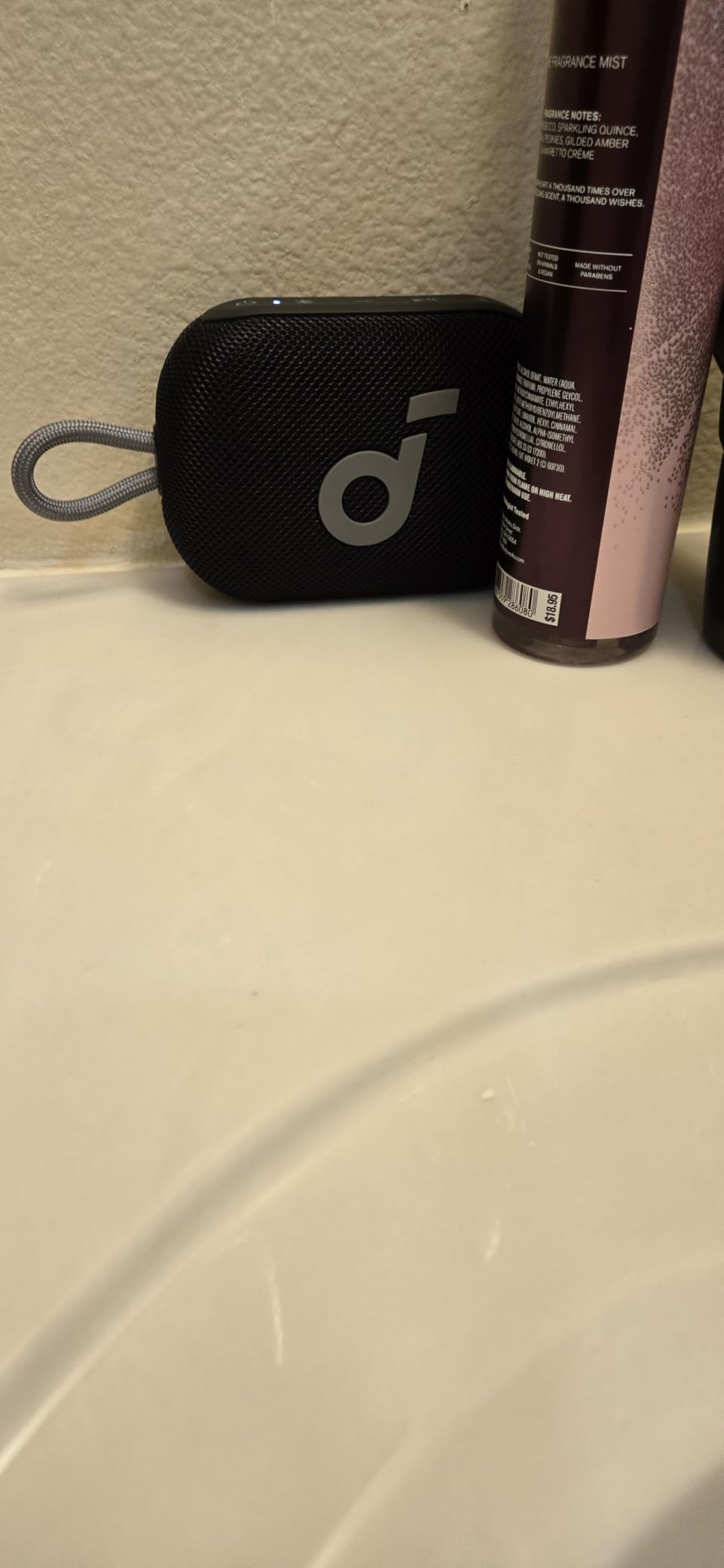
The 5W output is the honest limit. At a quiet campsite of two to four people, this is plenty. At a full group site with conversations and wind, you will be turning it up past comfortable volume.
The Soundcore app gives you a basic EQ with several presets – Outdoor Boost noticeably helps the midrange projection, which I would recommend leaving on for camping.
Lakeside camping with floating speakers
If you camp near water – lake, river, or ocean – the floating behavior matters more than you would think. I have personally lost a non-floating speaker to a sudden gust of wind off a lake. The Select 4 Go bobs upright, so the speaker grille stays above water and the music keeps playing.
App-based EQ for campsite acoustics
Open-air camping acoustics are unforgiving – bass drops off quickly without walls to reflect it. The Outdoor Boost preset in the Soundcore app adds back the warmth that the small driver loses in open air.
6. Anker Soundcore 2 – Best Budget Workhorse
Pros
- ”156k+
Cons
- ”Bass
With more than 156,000 reviews and a 4.5-star average, the Anker Soundcore 2 is the most-tested budget camping speaker on the market. I have owned three of them across the last five years – one lives in our camping bin permanently, one is in the garage, and one was lost to a river (it kept playing on the rocks for a few minutes before the battery died).
The 12W stereo output punches well above its weight, and BassUp technology gives it noticeably more bass than older generations of budget speakers. The 24-hour battery from a 5,200 mAh cell is the real camping selling point – I routinely get a full long weekend on a single charge at moderate volume.
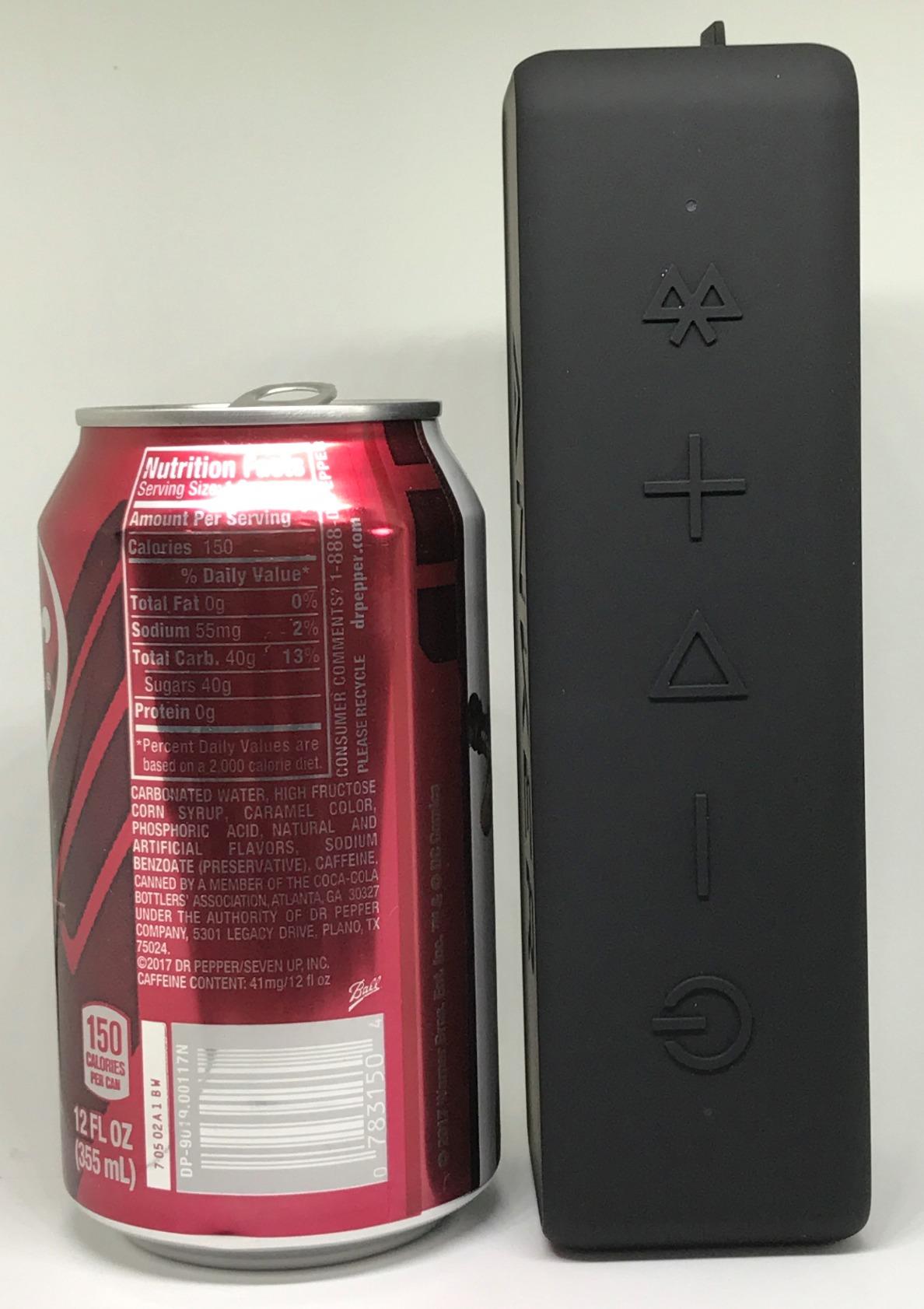
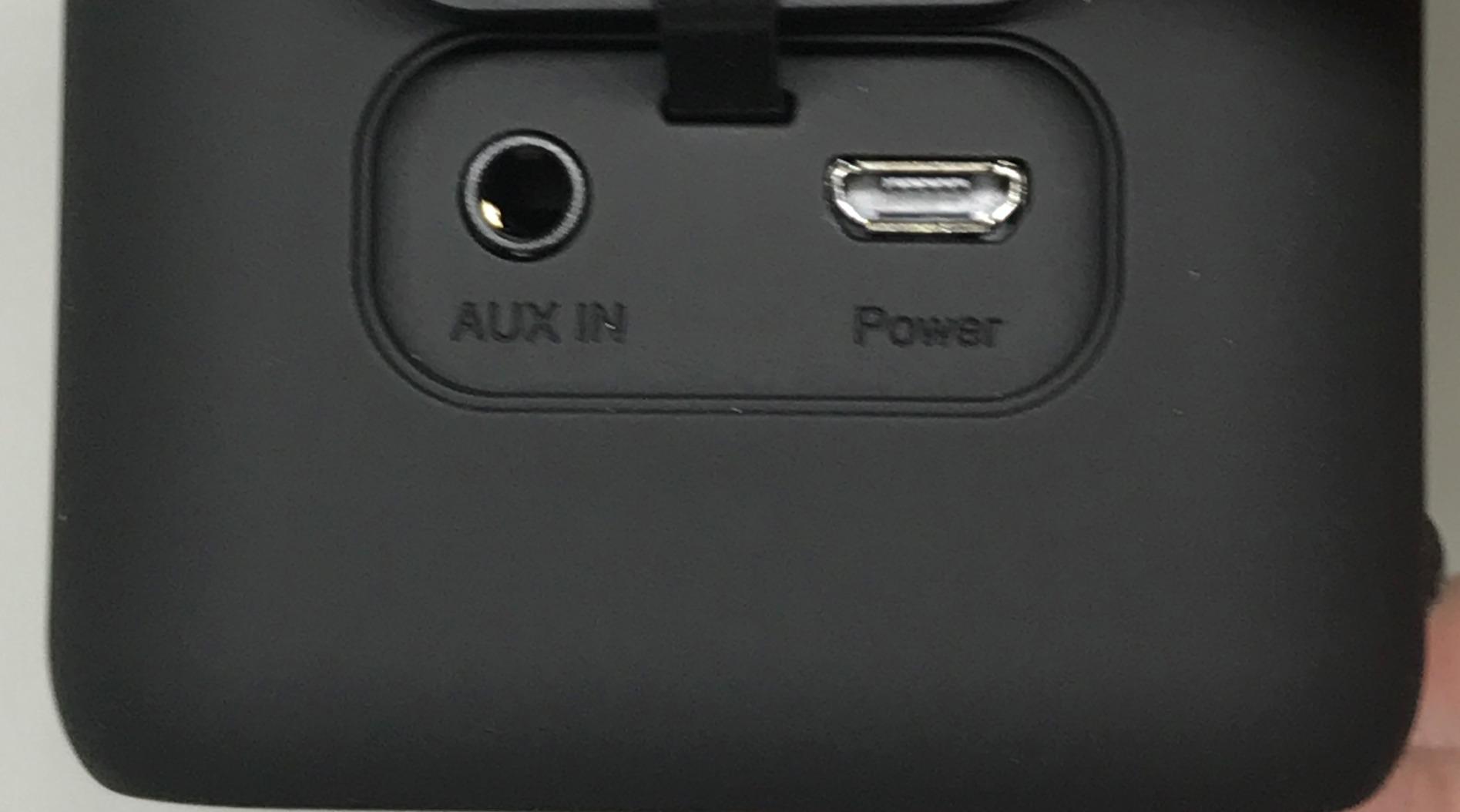
The downsides are honest. Micro-USB charging is dated – you will need a Micro-USB cable or an adapter. And the lack of a companion app means no EQ customization, which can be limiting if you care about fine-tuning sound.
The 14.56-ounce weight makes it packable for backpacking, though the JBL Clip 5 is more comfortable clipped to a strap for long days on the trail.
Why 156k reviews matter
For a budget speaker, a massive review count is a real signal. It means the failure modes are well-known and Anker’s quality control is consistent. When you read camping forums, the Soundcore 2 is the speaker that almost no one has had a bad experience with after a season of use.
Micro-USB in 2026 – is it a dealbreaker
If your other camping gear is USB-C, the Micro-USB port means carrying an extra cable. In practice, this is a minor inconvenience for a sub-$30 speaker that lasts five years – but worth knowing before you buy.
7. W-KING D8 – Best Boom Box with Power Bank
W-KING Bluetooth Speaker, 90W Max Loud IPX7 Waterproof Portable Speaker
90W peak
40-hour battery
IPX6 splashproof
Power bank output
Pros
- 90W peak output with dual subwoofers and dedicated tweeters
- Power bank function for charging a phone during multi-day trips
- 40-hour battery - real-world 25+ hours at moderate volume
- Indoor and outdoor EQ modes for campsite acoustics
- IPX6 splashproof plus shockproof design
- Bluetooth 5.0 with NFC quick pairing
Cons
- Heavy at 5.3 pounds - not a backpacker speaker
- IPX6 is splash-resistant
- not submersible
- Charging brick is not included in the box
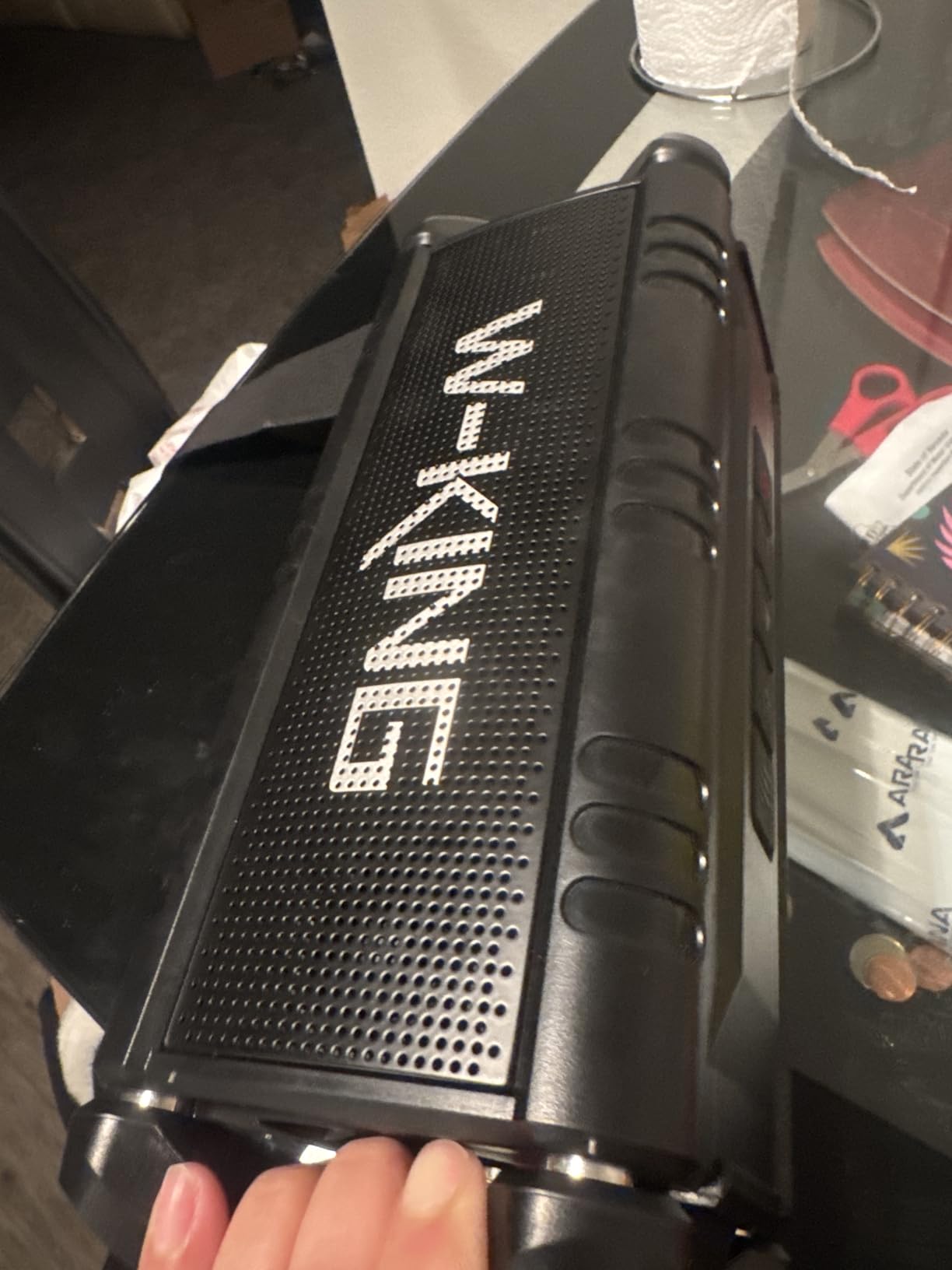
The W-KING D8 is the speaker I pack for multi-day trips where I want a power bank and a boom box in one device. The 5,100 mAh battery will recharge a phone twice on a single charge, and the speaker itself runs for 25+ hours at moderate volume in my testing.
Sound quality is genuinely impressive for the form factor. Dual subwoofers and dedicated tweeters mean the D8 has both bass and clarity that smaller speakers struggle with. On a desert camping trip, the outdoor EQ mode pushed sound across a clearing large enough for six tents.
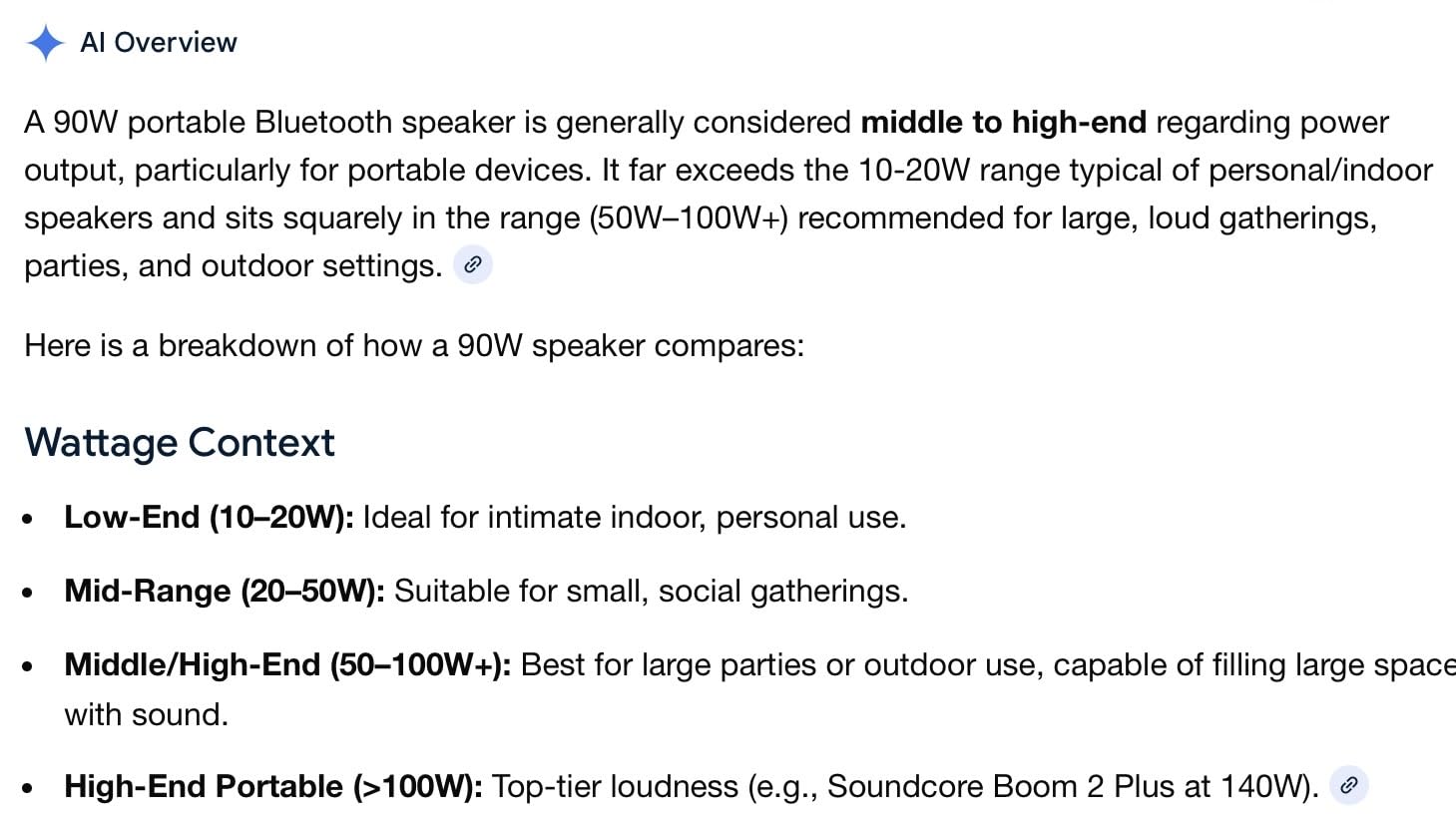
The honest tradeoff is weight. At 5.3 pounds, this is firmly car-camping or RV territory. The IPX6 rating also means it survives splashes and rain, but you should not drop it in a lake the way you can with IPX7 speakers.
Two D8 units paired deliver a true 100W stereo setup, which is louder than most campgrounds would appreciate but ideal for large group sites or tailgating.
Power bank function for multi-day trips
On a four-day backcountry trip, the D8 kept two phones charged for the duration – a real convenience when the only other power source was a small solar panel. The USB-A charge-out port is not fast, but it is enough for overnight top-ups.
Indoor vs outdoor EQ modes
The D8 has a dedicated outdoor EQ mode that boosts midrange and treble, which is exactly what open-air camping needs. I left it on for the entire trip and never touched it again.
8. Ortizan X10 – Best for Light Shows and Pool Camping
Ortizan X10 Portable Bluetooth Speaker (1st Gen), IPX7 Waterproof, Wireless
24W stereo
30-hour battery
IPX7 waterproof
RGB light show
Pros
- 24W stereo output with dual pairing for bigger sound
- 30-hour battery - the longest in this guide
- RGB light show syncs to the music beat
- IPX7 waterproof - fully immersible up to 3 feet
- Bluetooth 5.3 with a stable 66-foot range
- Includes AUX jack and TF card slot for offline playback
Cons
- Bass response is weaker than higher-wattage speakers
- Not true 360-degree sound despite marketing claims
- Bluetooth pairing voice prompt is loud
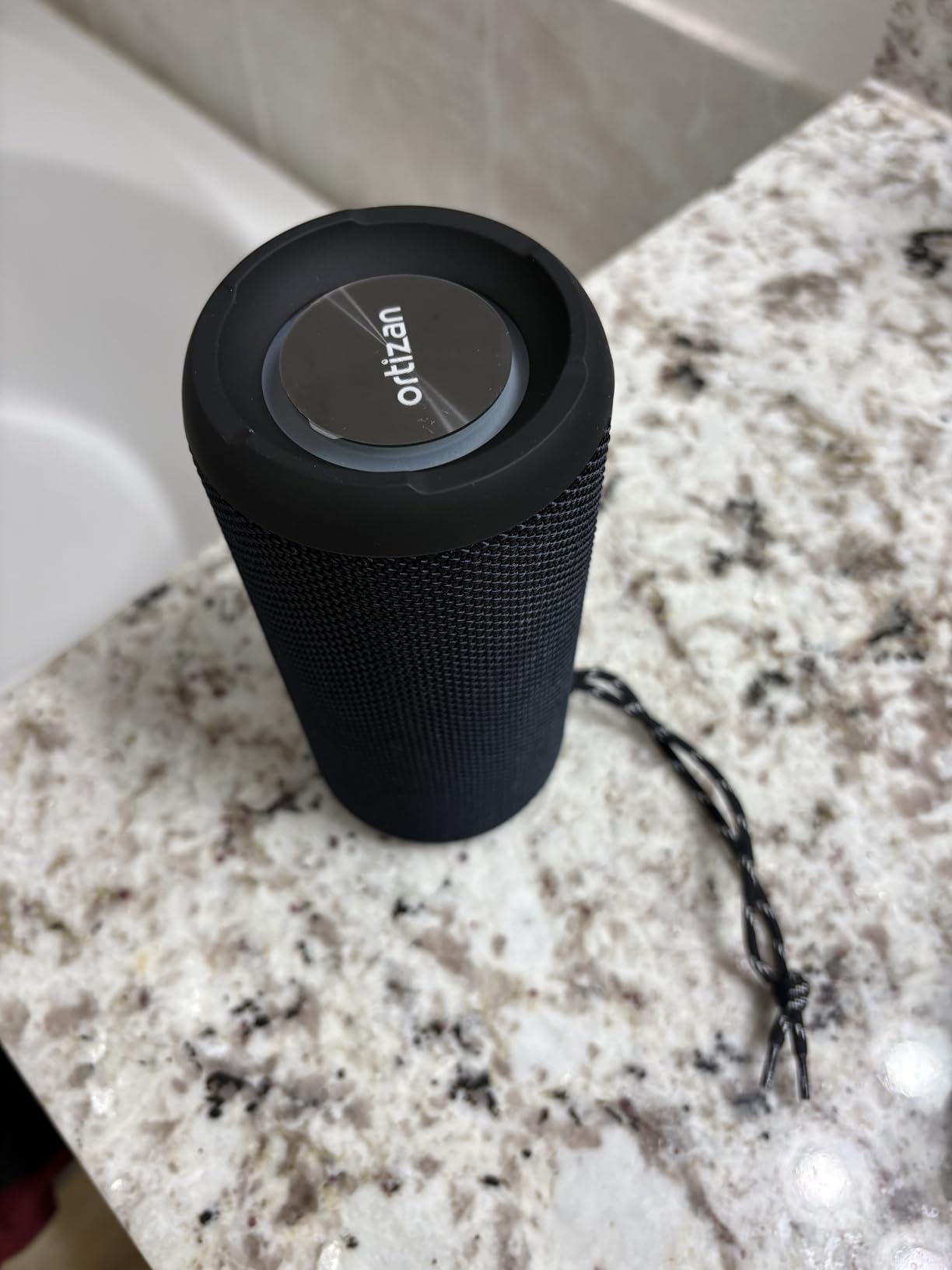
The Ortizan X10 stands out for one feature no other speaker in this roundup offers at the price: a full RGB light show that pulses with the music. At a family campsite with kids running around after dinner, the lights turned an ordinary speaker into the centerpiece of the evening.
The 30-hour battery is the longest of any speaker I tested – on a three-day trip, I never came close to empty. The IPX7 rating means it can sit in 3 feet of water for 30 minutes without damage, which I tested in a backyard pool.
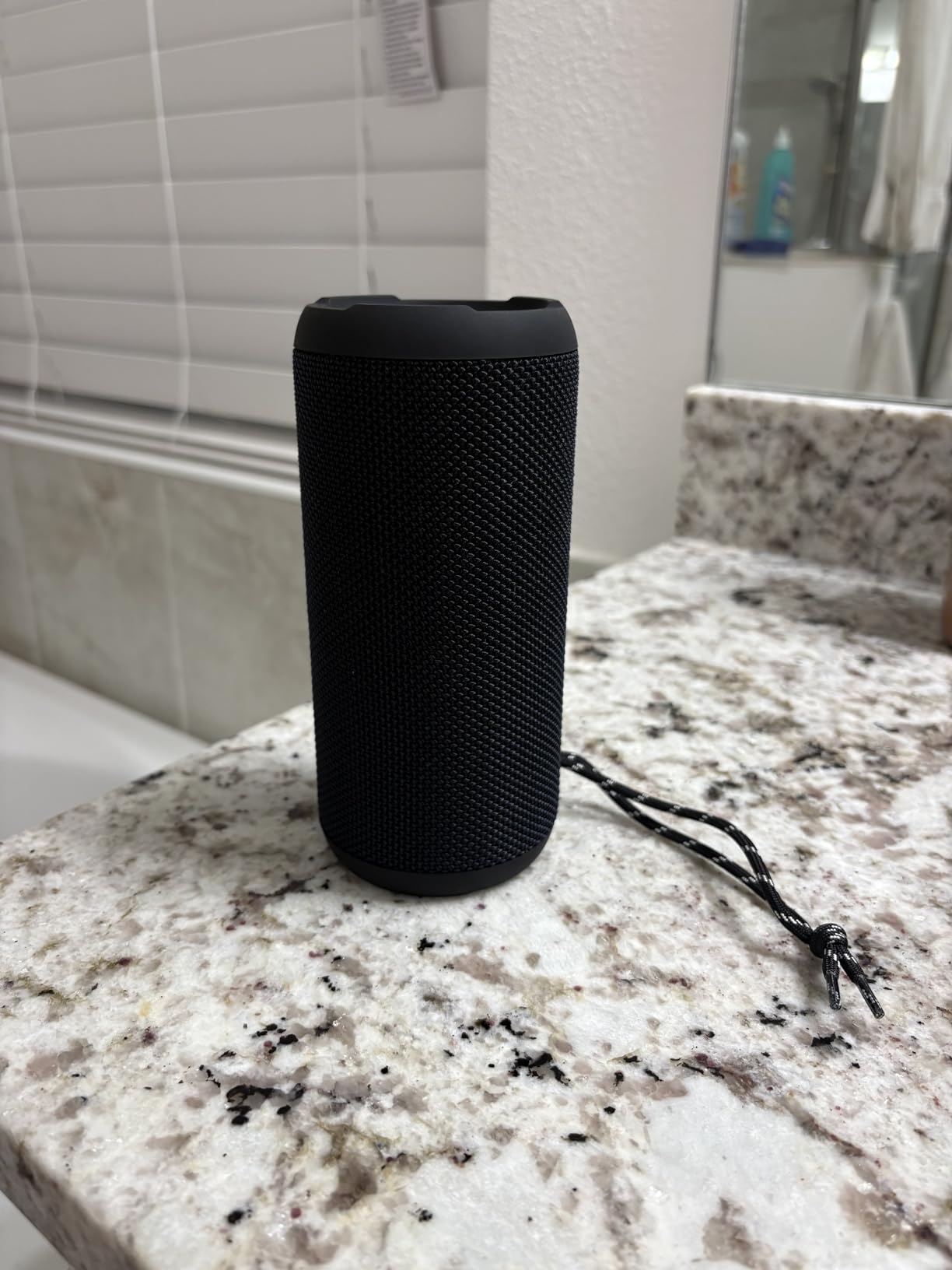
The 24W output is honest but not exceptional – you will not get the deep bass of a dedicated subwoofer speaker like the Boom 2. The sound signature leans bright, which is good for outdoor clarity but can fatigue on long listening sessions.
Two X10 units paired deliver genuine 48W stereo – a noticeable upgrade that makes this speaker a real value if you want to spread sound across a wider campsite.
RGB lights at the campsite – gimmick or feature
For adult-only trips, the lights are a fun extra. For trips with kids, the lights become the main reason to own this speaker. The lights can also be turned off entirely, which is what I did at quiet campgrounds.
Dual pairing for bigger sound
I tested two X10 units paired at opposite ends of a campsite. Stereo separation was real, and the volume was more than enough for 8-10 people. The pairing process takes a few extra button presses but is reliable.
9. BolaButty C27C – Best Light-Up Speaker on a Tight Budget
Bluetooth Speaker, 20W HD Sound, Portable Wireless, IPX5 Waterproof, Up to 24H Playtime, TWS Pairing, for Home/Party/Outdoor/Camping/Beach Essentials, Electronic Gadgets, Birthday Gift (Black)
20W stereo
24-hour battery
IPX5 splashproof
RGB light show
Pros
- Sub-$25 price with a real RGB light show
- 20W stereo output with Bluetooth 5.3
- IPX5 splashproof for rain and accidental splashes
- 100-foot Bluetooth range - reliable across a campsite
- TWS pairing for 40W stereo with a second unit
Cons
- IPX5 rating is splash-resistant
- not submersible
- Bass and treble get harsh at higher volumes
- Pairing two units can have firmware quirks
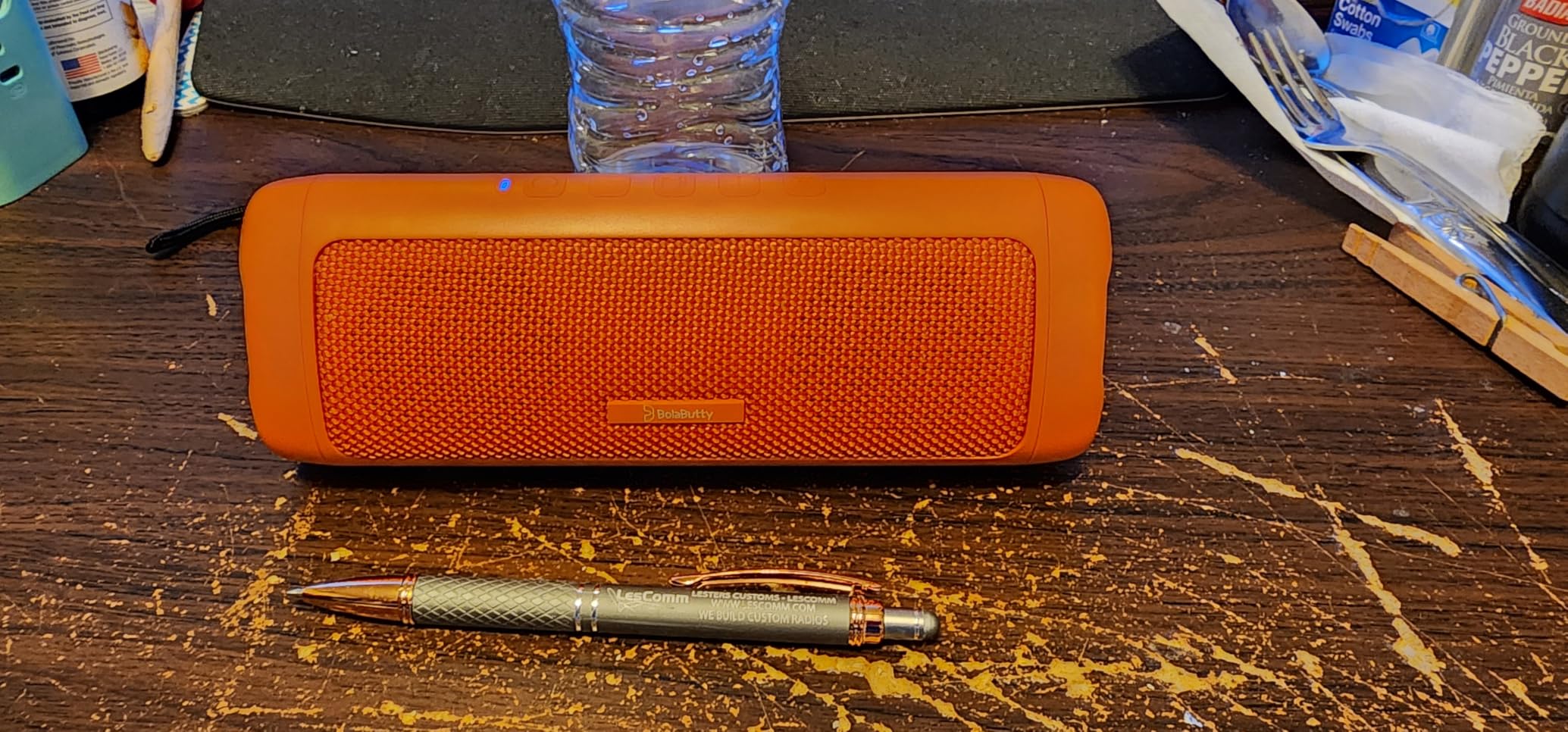
The BolaButty C27C is the speaker I recommend when someone wants the RGB light show of the Ortizan X10 but needs to spend less. At under $25, it is genuinely surprising how much speaker you get – 20W stereo output, a multi-color light ring, and a 24-hour battery in a 1.28-pound package.
For a casual family campsite or a first speaker for a college student, the C27C is hard to beat on price. The sound is good rather than great – the highs can get harsh at full volume on certain tracks.
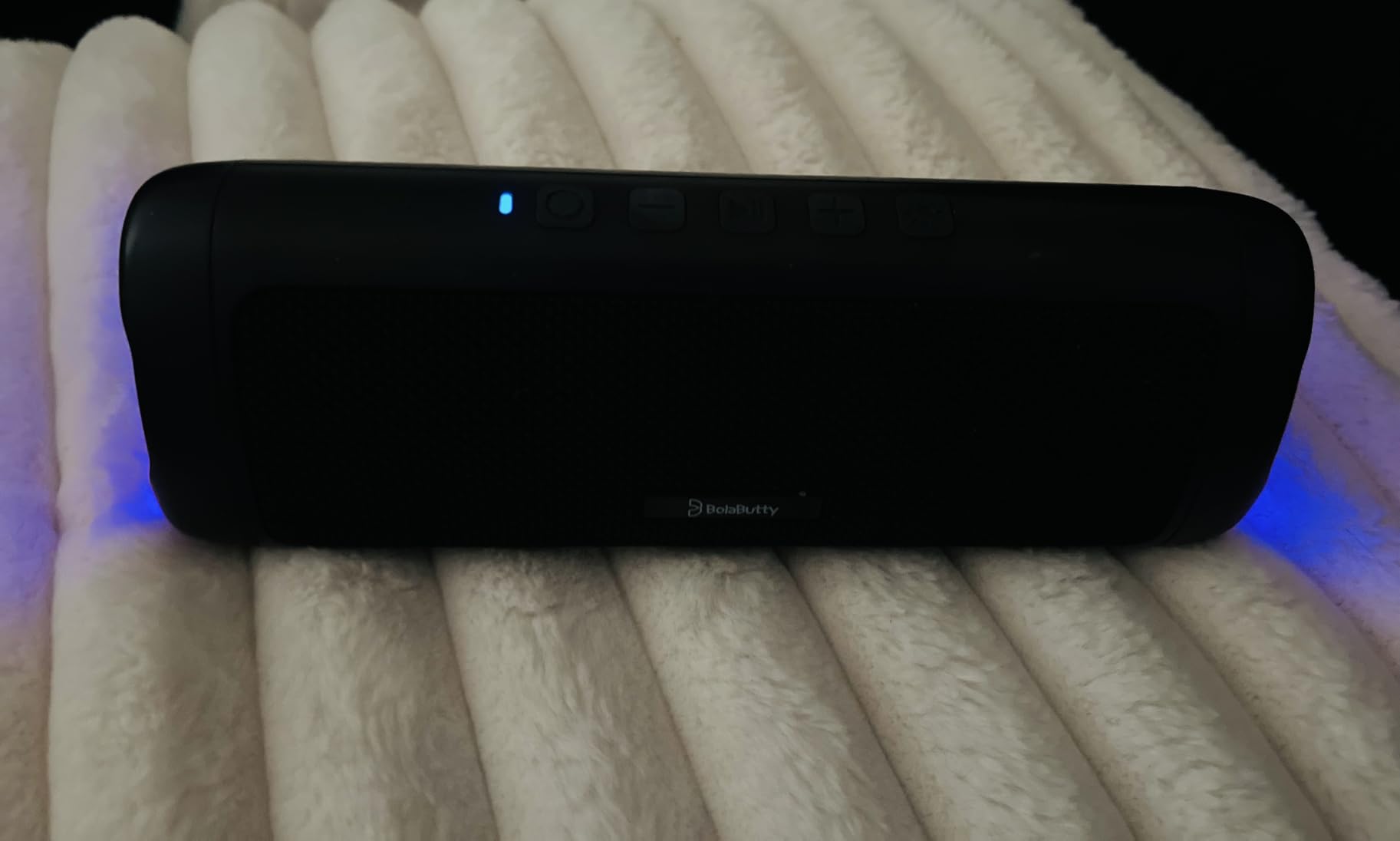
The IPX5 rating is the real tradeoff. The C27C will survive rain and splashes but not a dunk in a pool. If lakeside durability matters to you, look at the IPX7 options above.
Two C27C units paired in TWS deliver noticeably louder sound, but firmware quirks occasionally prevented clean pairing in my testing – a real but not deal-breaking issue at this price.
IPX5 vs IPX7 – what you actually need
IPX5 means the speaker can handle low-pressure water jets from any direction – rain, splashes, and shower spray. IPX7 means it can survive full submersion in up to 3 feet of water for 30 minutes. For most camping scenarios, IPX5 is enough. For lake and river camping, IPX7 is worth the upgrade.
20W output at the picnic table
At 20W, the C27C is louder than the Anker Soundcore 2 and noticeably louder than the JBL Go 4. It will fill a small campsite of 4-6 people comfortably. Larger groups need a bigger speaker.
10. Altec Lansing Mini H2O – Best Carabiner Speaker for Hiking
Altec Lansing Mini H2O – Waterproof Bluetooth Speaker, IP67 Certified & Floats in Water, Compact & Portable Speaker for Hiking, Camping, Pool, and Beach
5.92 oz weight
IP67 floats
Carabiner clip
6-hour battery
Pros
- Tiny 5.92-ounce form factor with a built-in carabiner
- IP67 waterproof and floats - ideal for water-edge camping
- Surprisingly clear sound for podcasts and acoustic music
- 30-foot Bluetooth range - reliable around a campsite
- Affordable price for an entry-level outdoor speaker
Cons
- Limited bass due to the small driver
- 6-hour battery is shorter than most modern speakers
- Battery health degrades after a few years of heavy use
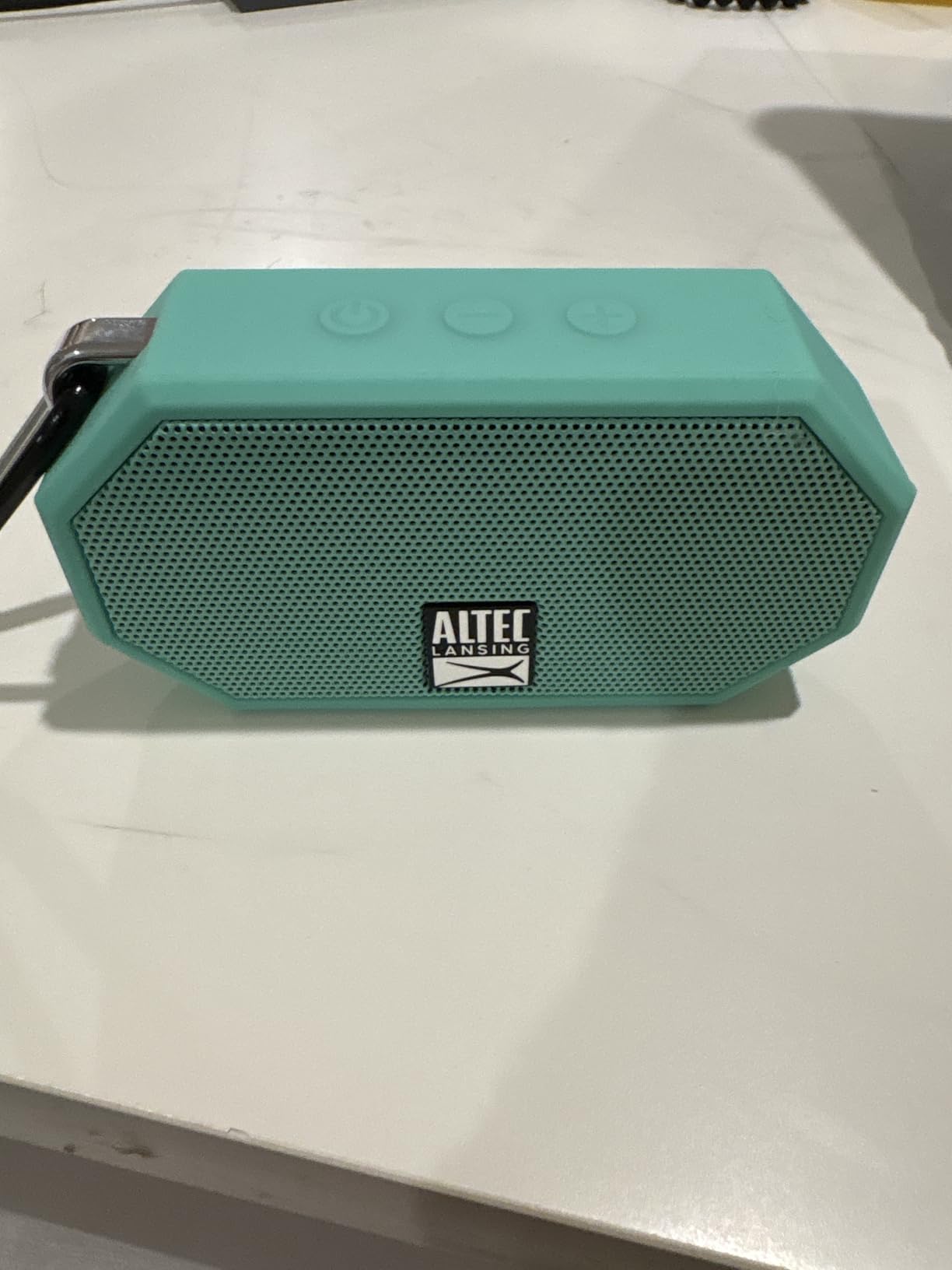
The Altec Lansing Mini H2O is the speaker I clip to a daypack or a kayak deck when weight is the priority. At 5.92 ounces, it is one of the lightest IP67 speakers I have tested, and the built-in carabiner makes it genuinely hands-free.
On a kayak camping trip on Lake Powell, the Mini H2O spent three days clipped to the deck of a kayak and never had an issue with splashes, spray, or a brief dunking when a wave came over the bow.
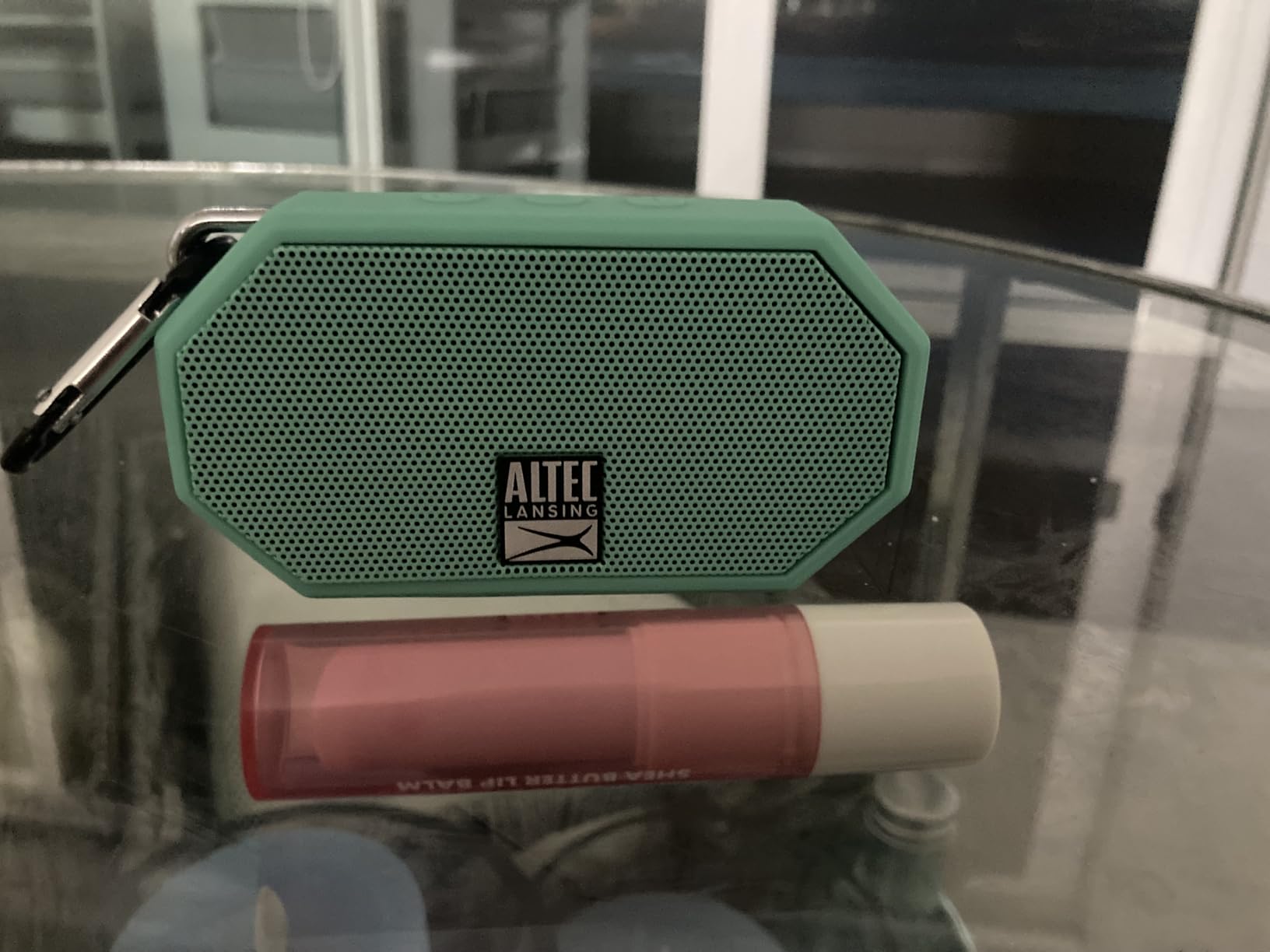
The honest tradeoff is sound quality. The Mini H2O will not impress on bass-heavy music, but for podcasts, audiobooks, and lighter acoustic playlists at modest volume, it is a reliable performer.
The 6-hour battery is the other honest limit. For a long day at the beach, plan to recharge in the evening. For day hikes, it covers most trips comfortably.
Float behavior for riverside campsites
The Mini H2O floats upright, so the speaker grille stays above water. I recovered it twice from the Colorado River after it slipped off a driftwood perch – both times the music kept playing.
Real-world battery expectations
At moderate volume, I got just over 5 hours from the Mini H2O. At full volume, expect closer to 4 hours. The battery does degrade after 2-3 years of regular use – a real consideration if you plan to keep it for many seasons.
How to Choose the Best Portable Speaker for Your Camping Style
Picking the right speaker is less about brand and more about how you actually camp. A backpacker and a family car-camper need very different things, and the wrong size or weight in your pack will ruin a trip faster than a wrong speaker choice at home.
IP ratings decoded – what really protects your speaker
The two-digit IP rating tells you exactly what a speaker can survive. The first digit is dust protection (6 = dustproof), and the second is water protection (5 = splashproof, 7 = submersible to 1 meter for 30 minutes). For camping, IP67 is the gold standard – dustproof and able to survive being dropped in a lake. IPX7 is just as good for water but skips the formal dust rating.
For rain and splashes, IPX5 is enough. For kayaking, rafting, or any activity near water, IPX7 or IP67 is worth the upgrade. The Altec Lansing Mini H2O, Soundcore Select 4 Go, Soundcore Boom 2, and W-KING D9-1 all float, which matters when you camp near water.
Battery life and campsite power planning
For weekend car camping, 20+ hours is plenty. For multi-day backcountry trips, look for 30+ hours or a speaker with a power bank function like the Soundcore Boom 2 or W-KING D8. Battery life claims are usually measured at 50% volume – real-world at full outdoor volume is typically 60-75% of the claim.
If you camp off-grid, pair a smaller speaker with a portable power station rather than buying a bigger speaker. Many r/CampingGear users specifically recommend this approach – the W-KING D8 or Soundcore Boom 2 paired with a 200-300Wh station covers a 4-day trip easily.
Sound quality vs volume – how loud is loud enough
For one or two people at a quiet campsite, 5-10W is plenty. For a group of 4-6, 20-30W is the right range. For groups of 8+, you want 50W or more, ideally with a dedicated subwoofer. Anything above 100 dB at one meter is overkill for most campsites and likely to upset neighbors.
Open-air camping robs bass because there are no walls to reflect sound back. Speakers with a passive bass radiator (Soundcore Boom 2, W-KING D9-1) or BassUp technology (Anker Soundcore 2, Soundcore Boom 2) handle this much better than small mono drivers.
Portability tradeoffs – backpack space vs campsite audio
Backpackers should look at speakers under 12 ounces – the JBL Clip 5 (0.28 kg), JBL Go 4 (0.19 kg), and Altec Lansing Mini H2O (5.92 oz) all qualify. They clip to a pack rather than taking up valuable internal space.
Car campers can afford the bulk of the Soundcore Boom 2 (1660 g) or W-KING D9-1 (2.6 kg) – the extra size gets you real volume and battery life. RV campers should look at the boom-box size class without worrying about weight at all.
Campsite etiquette and noise considerations
Most established campgrounds have quiet hours between 10 PM and 6 or 7 AM. Playing music loud enough to carry across multiple campsites during these hours is a fast way to make enemies and, in some parks, get a ranger visit. Keep volume low after dark and stop entirely during quiet hours.
If you camp in a busy public campground, smaller speakers with directional sound (the JBL Clip 5 or Altec Lansing Mini H2O clipped to your own picnic table) are far less intrusive than 100W boom boxes. Reserve the loud speakers for dispersed camping, group sites, or boat camping.
Connectivity and Bluetooth range at the campsite
Bluetooth 5.3 and 5.4 give you reliable 30-100 foot range in open air. Older Bluetooth 5.0 can struggle across larger campsites, especially with obstacles like tents and vehicles between phone and speaker.
Stereo pairing (TWS) and party mode (Auracast on newer JBL speakers) let you link multiple units for wider sound coverage – useful when you want music in two zones of a large campsite without one speaker doing all the work. The JBL Go 4, JBL Clip 5, and Ortizan X10 all support multi-speaker pairing.
Frequently Asked Questions
What is the best Bluetooth speaker for camping?
The Soundcore Boom 2 is our top pick for most campers – 80W output, 24-hour battery, IPX7 waterproofing, and it actually floats. Backpackers should look at the JBL Clip 5 instead for its sub-10-ounce weight and integrated carabiner.
Are portable speakers good for camping?
Yes – modern portable Bluetooth speakers are designed for exactly this use case. Look for IP67 or IPX7 waterproofing, at least 16 hours of battery, and Bluetooth 5.3 or newer for reliable outdoor range. A rugged camping speaker also doubles as a power bank on multi-day trips.
How loud should a camping speaker be in decibels?
For one to two people at a quiet campsite, 70-80 dB at one meter is enough. For groups of 4-6, aim for 85-90 dB. For large groups of 8 or more, 95+ dB is appropriate. Anything above 100 dB is generally too loud for established campgrounds with neighbors.
What size speaker is best for camping?
It depends on how you camp. Backpackers should look at sub-12-ounce clip-on speakers like the JBL Clip 5 or Altec Lansing Mini H2O. Car campers can comfortably carry 1-3 pound speakers like the Soundcore Boom 2. RV and boat campers can use full-size boom boxes like the W-KING D9-1.
How many watts is good for a camping speaker?
For solo or duo camping, 5-12W is plenty. For small groups, 20-30W handles most situations. For groups of 8 or more, 50W and above with a dedicated subwoofer delivers full campsite coverage. Wattage is a rough guide – measured decibel output and driver quality matter just as much.
Is a Bluetooth speaker loud enough for outdoors?
Modern Bluetooth speakers with 20W+ output and a passive bass radiator (Soundcore Boom 2, W-KING D9-1) are genuinely loud enough for outdoor use. Smaller speakers under 10W work well for personal listening but struggle to fill a campsite with conversation, wind, and ambient noise.
How do I keep my Bluetooth speaker safe while camping?
Use a speaker with at least IP67 rating, store it in a dry bag or sealed container when not in use, keep it away from direct flame at the campfire, and bring it inside your tent at night. Floatable models like the Soundcore Select 4 Go and W-KING D9-1 recover easily from lake or river drops.
The Right Speaker for the Way You Camp
After three summers and dozens of trips, the Soundcore Boom 2 earned the permanent spot in our camping bin. Its combination of real volume, all-day battery, IPX7 waterproofing that actually floats, and power bank function makes it the most versatile speaker for the widest range of camping scenarios.
If you are a backpacker, the JBL Clip 5 is the speaker that disappears into your pack and still delivers impressive sound. If you camp with large groups, the W-KING D9-1 will fill the site without distortion. And if you camp on a tight budget, the Anker Soundcore 2 is the speaker that 156,000 reviewers agree on.
Whatever you choose, look for IP67 or IPX7 waterproofing, at least 16 hours of real-world battery, and Bluetooth 5.3 for reliable range. Pair the right speaker with a portable power station for multi-day trips, respect campground quiet hours, and you will have music at every campsite from here on out. Check our picks for outdoor speakers for backyard setups and our guide to portable projectors for camping for movie nights under the stars.