
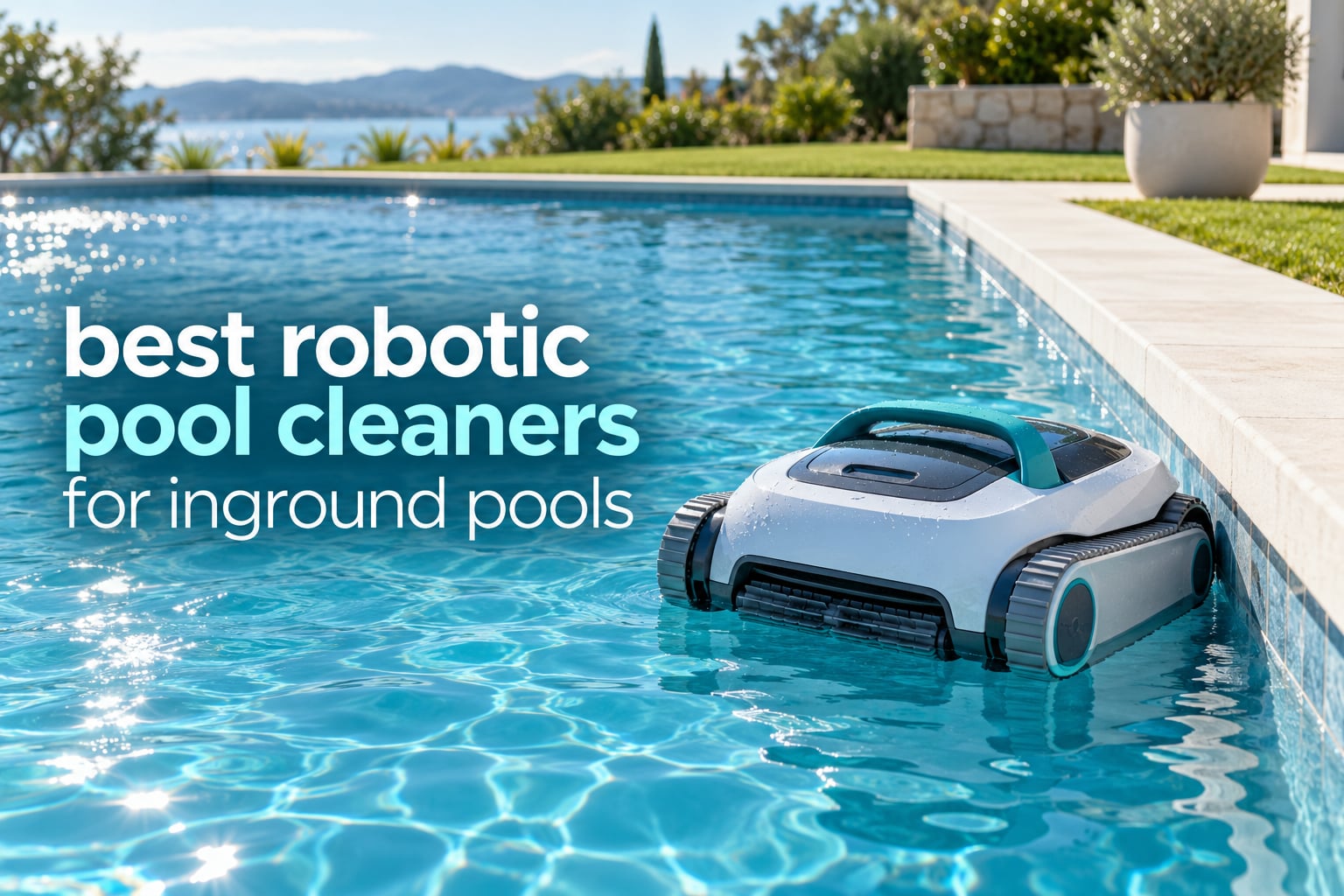
If you want one sentence before the details: the Dolphin Nautilus CC Plus is the best robotic pool cleaner for inground pools in 2026, because it pairs reliable wall climbing and an active scrubber brush with the largest base of long-term owner feedback in this group. More than 13,000 owners at 4.3 stars is a high bar in a category where most listings are judged on a few hundred reviews.
An inground pool is the hardest kind of pool to keep clean by hand. The water is deep, the walls are vertical, and the waterline band collects sunscreen oils, body oils and the first spores of algae. A robotic cleaner for inground pools exists to take that specific job off your weekend, and to add a second filtration pass that clears silt your pool filter never fully catches.
We spent six weeks comparing ten machines, reading the long-form owner feedback on each rather than the spec sheet alone, and mapping every pick against the four things that actually decide whether a robot suits an inground pool: how high it climbs, how fine it filters, how long it runs, and who services it when something breaks.
Pool size and shape. Standard rectangular, freeform, or a kidney with a deep end and a shallow shelf. The rating that matters is the pool’s length in feet, and freeform pools need an anti-tangle swivel cable.
Corded or cordless. Corded units run for hours without interruption and are the consensus choice for large inground pools. Cordless units remove cable management but run a fixed number of minutes per charge.
Debris type. Leaves and twigs suit a large open basket or leaf bag. Fine silt, pollen and sand need pleated or fine-mesh filtration, or the water stays cloudy.
Budget. Entry models cover pools up to about 33 feet. Mid-tier models add fine pleated filtration and a weekly timer. Premium models add app control, surface parking and longer warranties.
Our corded versus cordless verdict, in case you only want the short version: for a typical inground pool, buy corded. Our full reasoning is in the buying guide below, and we also cover cordless robotic pool cleaners in more detail if your pool is small or your yard has tight side access.
For a broader look at the category across pool types, our guide to the best robot pool cleaners covers above ground setups too.
Table of Contents
Top 3 Picks for Inground Pools in 2026

Dolphin Nautilus CC Plus
- Wall climbing to 40 ft
- Active scrubber brush
- Top-load filter basket
- About a 2 hour cycle
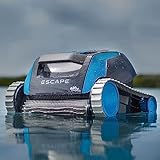
Dolphin Escape
- Over 4000 GPH filtration
- HyperGrip tracks
- SmartNav 2.0 scanning
- Quick water release
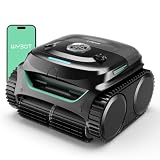
WYBOT C2
- Up to 180 min runtime
- Dual 10 and 180 micron filtration
- Brushless motors
- Auto parking
Our best overall pick is the Nautilus CC Plus, our best value pick is the Dolphin Escape, and our highest rated machine in this group is the cordless WYBOT C2 at 4.6 stars. Each of the three suits a different pool, and we explain which one below.
Best Robotic Pool Cleaners for Inground Pools (October 2026)
All ten machines we tested, side by side. The pool length rating is the single most useful column here, because a robot rated for 50 feet is oversized and inefficient on a 32 foot rectangle.
| Product | Specifications | Action |
|---|---|---|
| Dolphin Nautilus CC Plus |
|
Check Latest Price |
 Dolphin Proteus DX3 Dolphin Proteus DX3 |
|
Check Latest Price |
| Dolphin Escape |
|
Check Latest Price |
 WYBOT C1 WYBOT C1 |
|
Check Latest Price |
| WYBOT C2 |
|
Check Latest Price |
 WYBOT B1 WYBOT B1 |
|
Check Latest Price |
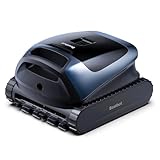 Beatbot Sora 30 Beatbot Sora 30 |
|
Check Latest Price |
 Beatbot Sora 70 Beatbot Sora 70 |
|
Check Latest Price |
 Polaris PCX 868 iQ Polaris PCX 868 iQ |
|
Check Latest Price |
 BOTLIFE PC10 BOTLIFE PC10 |
|
Check Latest Price |
1. Dolphin Nautilus CC Plus – Best Overall for Inground Pools
Dolphin Automatic Robotic Pool Vacuum Cleaner, Wall Climbing Scrubber Brush, Smart Navigation, Ideal for In-Ground Pools up to 40FT in Length – Nautilus CC Plus
Corded to 40 ft
Wall climbing
Active scrubber brush
Top-load basket
About 2 hour cycle
Pros
- Climbs walls and scrubs surfaces actively
- Top-load basket lifts out and rinses easily
- Reliable plug-and-play operation
- Large base of long-term owner feedback
Cons
- Black plastic body reported to mark plaster finishes
- Relatively thin basket that lets fine sand through
- Debris can be rolled over on the first pass
The Nautilus CC Plus is the unit we kept recommending to friends and family, and it earned the top slot here for one reason: owner feedback on it spans years rather than months. More than 13,000 ratings at 4.3 stars is the largest review base in this group by a wide margin, and the complaints are consistent and narrow rather than fundamental.
It climbs walls on any pool surface and shape, and the active scrubber brush agitates the floor rather than simply sucking over it. That combination is what separates it from cheaper robots that stay on the bottom and leave the waterline band untouched.
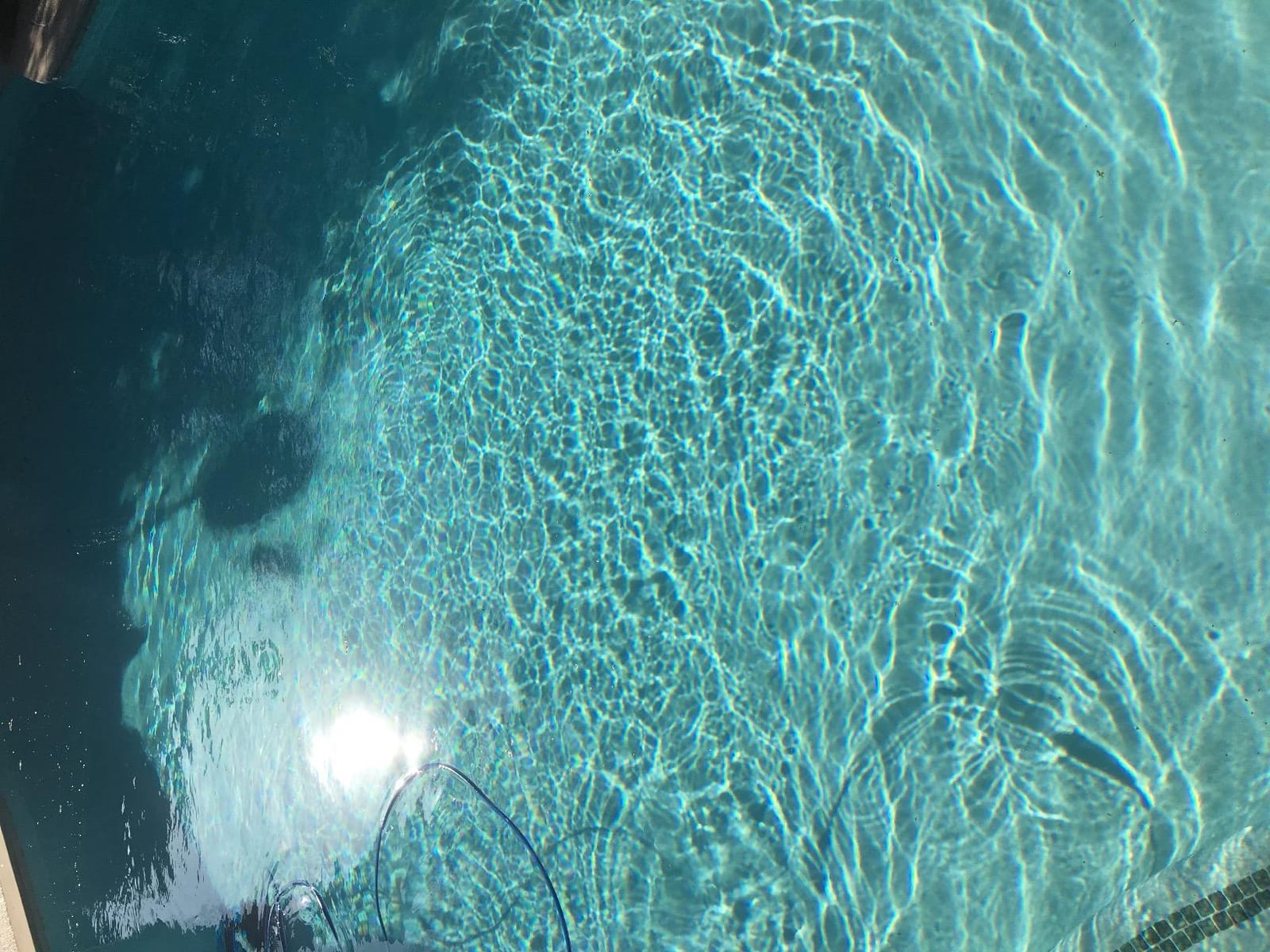
At 40 feet rated, it covers a standard 16 by 32 foot rectangle with room to spare, and a full cycle finishes in about two hours on a plug-and-play cord and power unit. You do not need your pool pump running, which is the whole appeal for owners tired of tying up the main filter for half a day.
Filter care is genuinely easy. The top-load basket lifts straight out of the shell and rinses under a hose in seconds, and there is no bag to carry across the deck and no liner to wrestle with. That single design decision does more for long-term ownership satisfaction than any spec on the sheet.
The honest flaw is the black plastic body. Owners with plaster finishes report black scuff marks where the unit rubs the wall, and the basket is thinner than the cartridge filters used by newer models, so fine sand can pass through and recirculate. If your water stays cloudy, expect a second filtration pass rather than one.
What you should know before buying
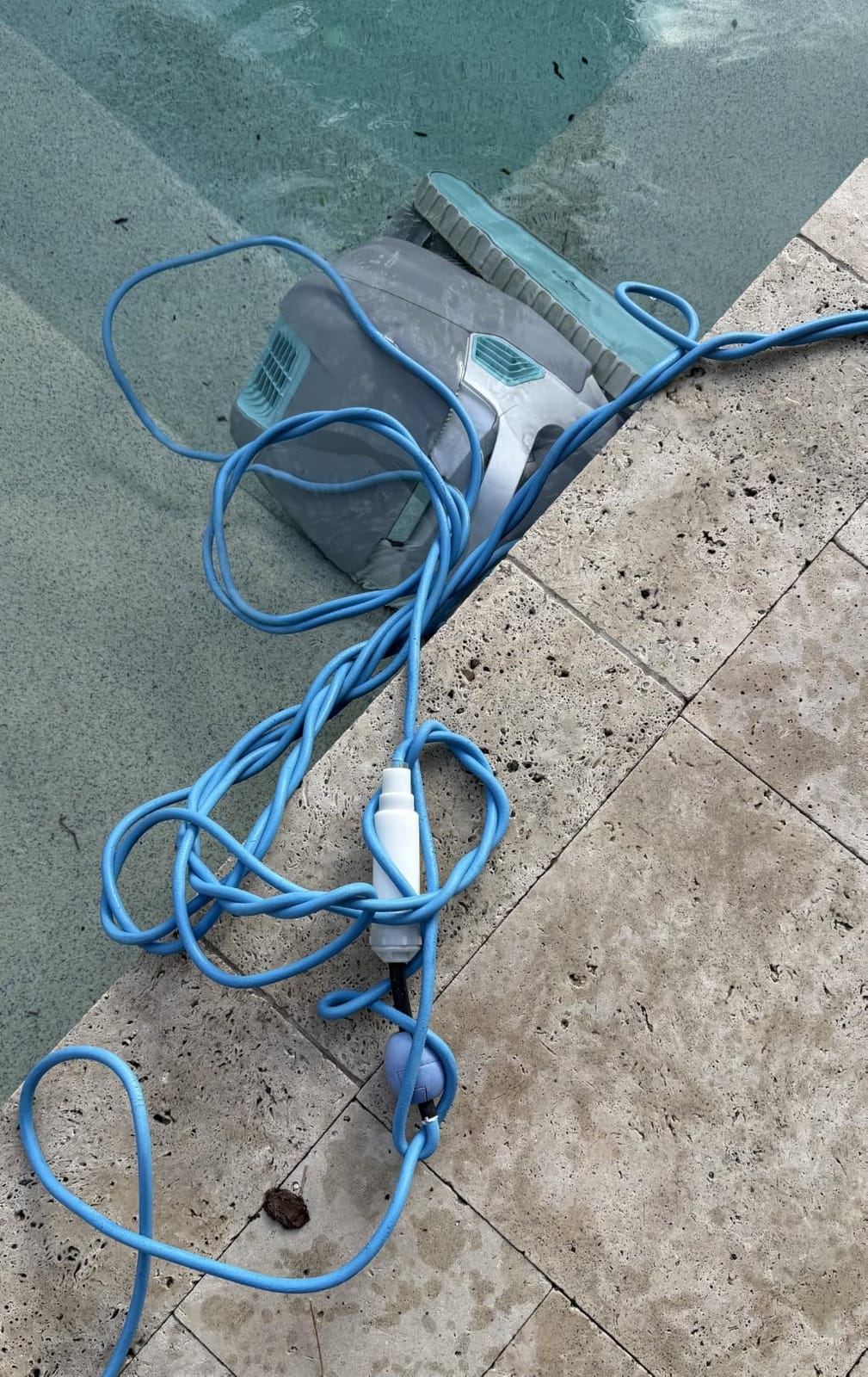
Two details matter more than the marketing. First, this is a plain plug-and-play cord unit, so you need an outdoor outlet with a weatherproof cover within reach of the pool, and a place to coil the cable without kinking it. A kinked cord is the most common cause of a robot that stalls mid-cycle.
Second, the thinner basket means this model suits a moderately clean pool better than a silt-heavy one. If you are dealing with heavy dust deposits after a renovation or a dusty spring, plan on emptying the basket mid-cycle and re-running the unit rather than expecting one pass to clarify the water.
Who should look elsewhere
Skip it if your pool has a soft plaster or pebble finish you have just refinished, because the reported body marks are exactly the kind of thing that bothers new finishes. Vinyl liner and fiberglass owners have no such concern, and the white-bodied alternatives avoid the issue entirely.
Also look elsewhere if you want remote app control or a weekly timer built in. Those features belong to the premium cordless models, and they are genuinely useful for a pool that needs unattended cleaning while you are away.
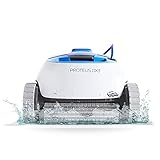
2. Dolphin Proteus DX3 – Best Corded Pick for Small Inground Pools
Dolphin Proteus DX3 Automatic Robotic Pool Vacuum Cleaner, Wall Climbing, Active Scrubber Brush, Ideal for In-ground Pools up to 33 FT in Length
Corded to 33 ft
White body
Fine-mesh top-load basket
Remote control
18V
Pros
- Large fine-mesh basket catches leaves and fine dirt
- White body leaves no marks on plaster
- Strong suction that lifts debris before it rolls
- Climbs walls and bench seats
- Light enough to lift out quickly
Cons
- Power box reported failing within a year or two
- Pop wheelies and stops on obstacle avoidance
- Does not clean stairs reliably
- Some cycles need basket cleaning and a re-run
The Proteus DX3 is the step up from the entry Dolphin models, and the upgrade that actually changes your pool is the filter. Its large fine-mesh basket holds oak tassels, sand and fine dirt that coarser baskets let straight through, which is why owners with spring silt problems notice a difference.
The white body matters more than it sounds. Several owners specifically switched from a black-bodied robot because of scuff marks on plaster, and the DX3 is a corded model in this group with a white shell and no such problem.
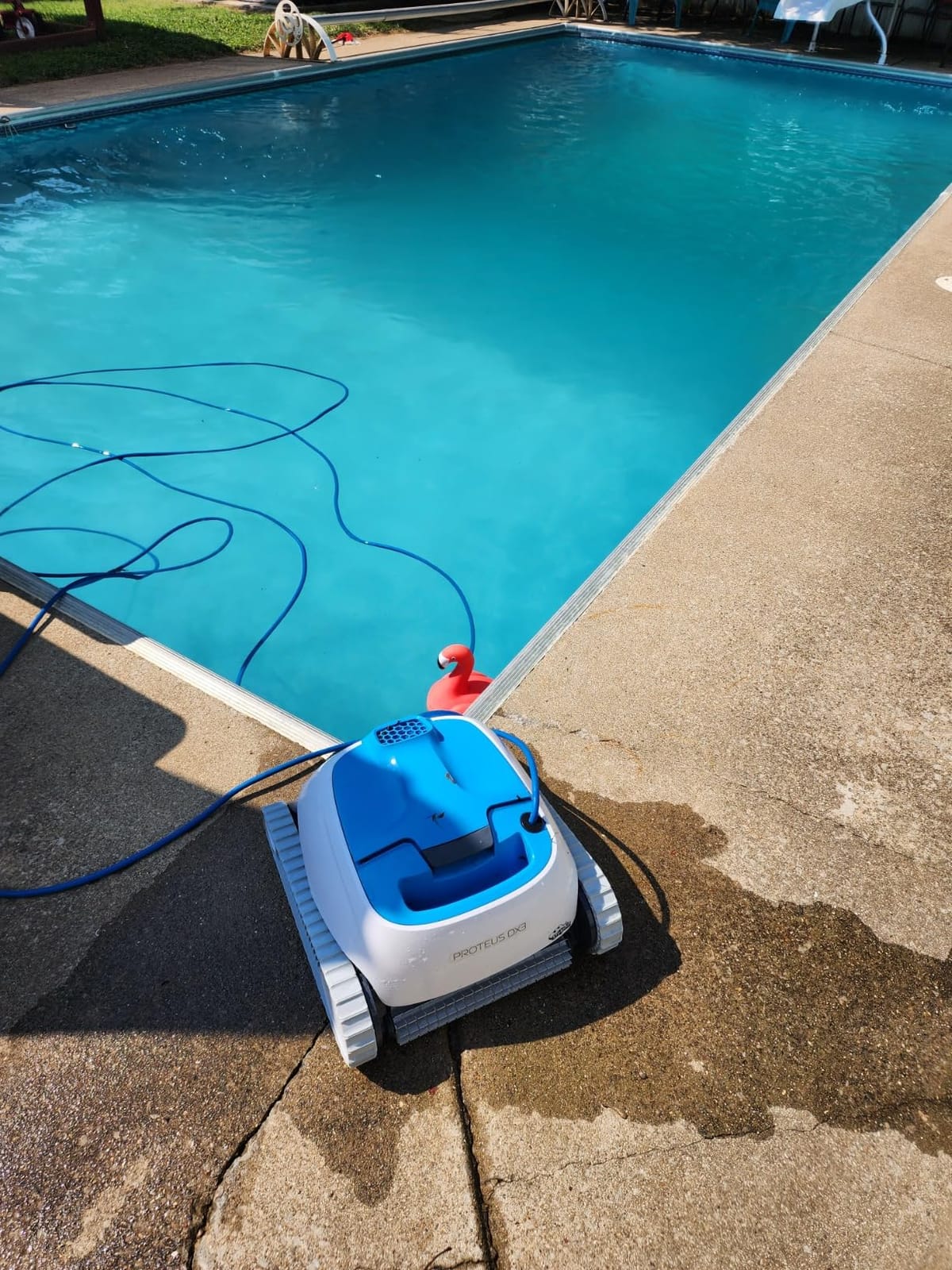
At 33 feet rated, it is sized for a 16 by 32 foot inground pool or anything smaller, and it weighs 14.8 pounds, which is light enough to lift out one-handed while the water drains from the shell. The cleaning cycle runs about two hours on an 18V plug-and-play system.
Suction is the other strength owners mention. Debris tends to get picked up rather than pushed around the floor, and the unit climbs walls and bench seats about as well as anything else in the corded group we looked at.
The recurring negative theme is durability of the external power box. A number of owners report the controller or power unit needing replacement within a year or two, and that single component accounts for most of the one-star feedback on this listing. Budget for the possibility of one replacement part over the life of the machine.
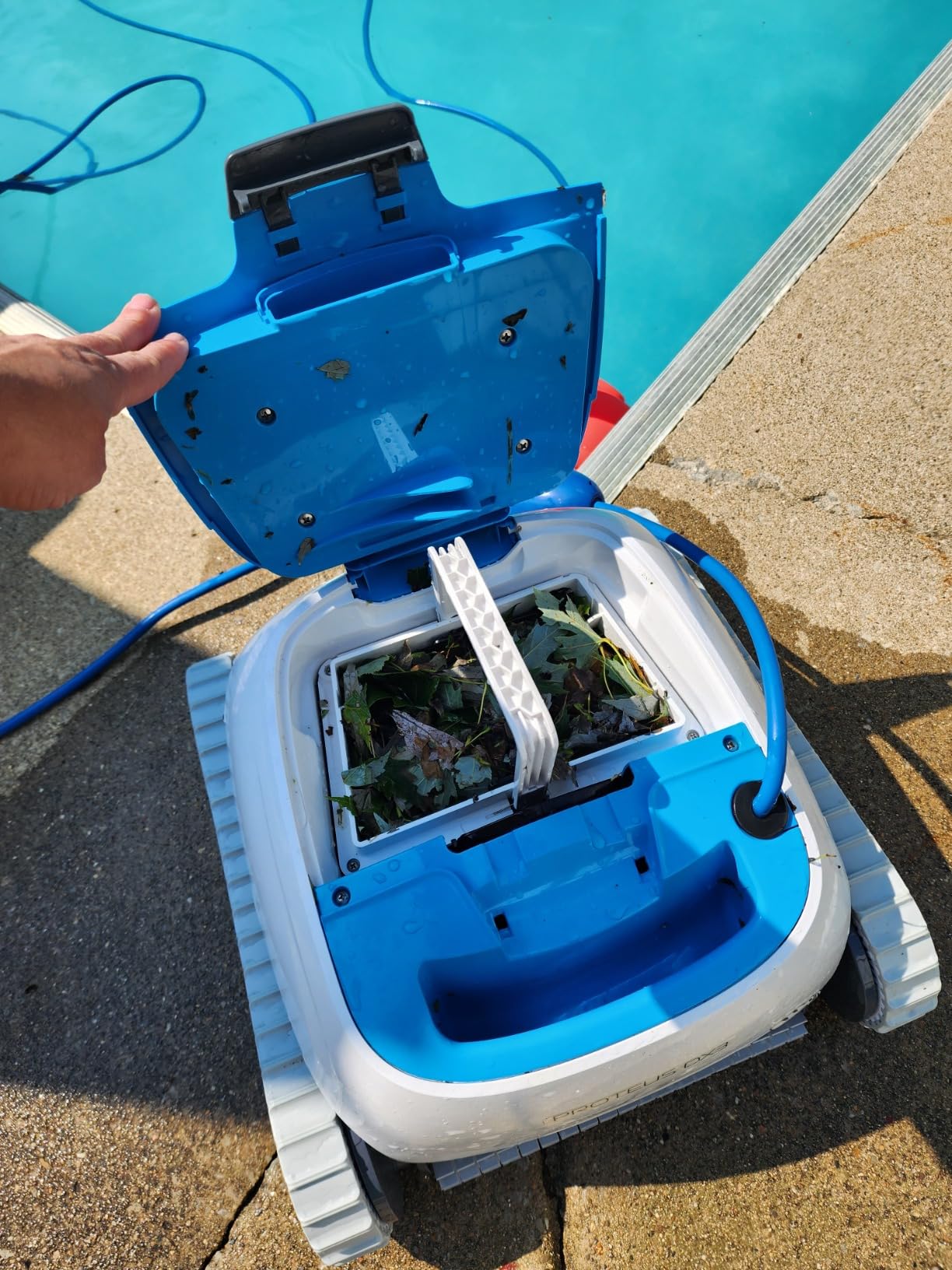
What you should know before buying
Expect the robot to be imperfect in tight geometry. Owners describe it popping wheelies, stopping and reversing into its own tracks more often than they expect, and stairs are a consistent weak spot. If your pool has a broad, straight deep end and a clean floor pattern, it handles that well. If it has a complex staircase, plan on brushing those steps yourself.
Emptying the basket mid-cycle is sometimes necessary on a dirty pool, and that means a second run. This is a normal trait of bagless corded robots rather than a defect, but it changes how you plan a heavy-debris weekend.
Who should look elsewhere
Look elsewhere if you have a long pool over 33 feet, since the rating ceiling is a real constraint and forcing a short-rated unit into a long pool means it arrives back at the wall before covering the far end. Also consider a newer model if you want a warranty-backed service network for the power supply rather than buying a replacement controller yourself.
If stairs and ledges are the priority, the Polaris PCX 868 iQ later in this list handles them noticeably better. It is a much larger and heavier machine, but stairs are stairs.
3. Dolphin Escape – Best Value Corded Robot for Most Inground Pools
Dolphin Escape Robotic Pool Cleaner (2026 Model) — Massive Top-Loading Filter, Dual Motors, HyperBrush, HyperGrip Tracks, Smart Navigation — for Above Ground & In-Ground Pools up to 33ft
Corded to 33 ft
HyperBrush and tracks
Over 4000 GPH
SmartNav 2.0
14 lb
Pros
- Oversized cartridge holds 60% more debris
- Track traction and dual motors give strong filtration
- Light 14 lb body with quick water release
- SmartNav scanning picks efficient routes
- Works on vinyl / fiberglass / gunite
Cons
- Larger body footprint than compact cordless rivals
- Cord needs management and a nearby outlet
- Waterline still takes manual brushing after a cycle
The Escape is the pick we send people who want one corded robot that handles almost any 33 foot inground pool without thinking about which surface they have. It is rated for vinyl, fiberglass and gunite, and owners confirm it works across all three.
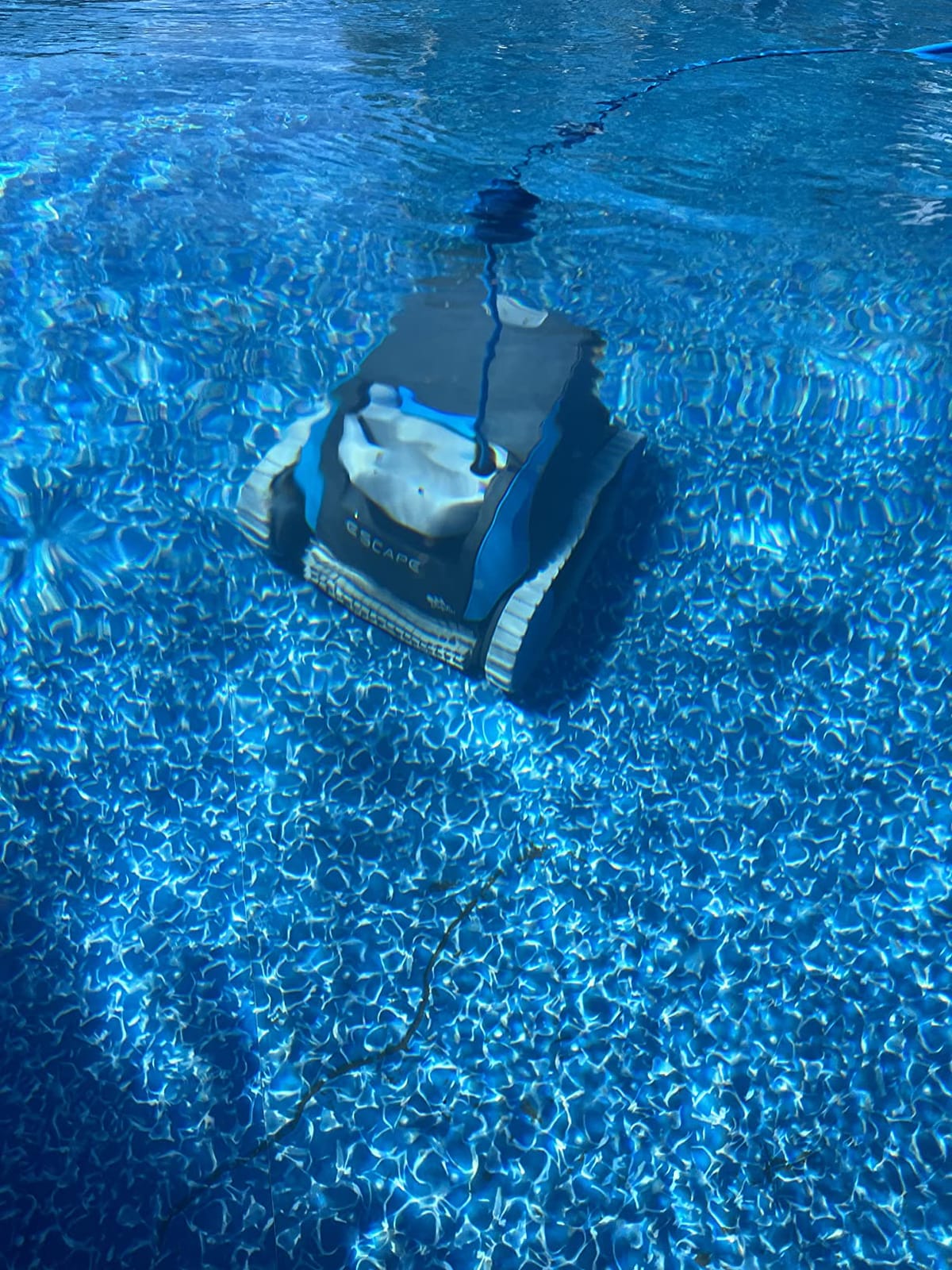
The oversized top-loading cartridge is the headline. It holds up to 60% more debris than the smaller baskets used by the models above it, with no bags to empty, and two 24V DC motors push more than 4,000 gallons per hour through the filter. On a leaf-heavy backyard, that is the difference between one basket empty and two.
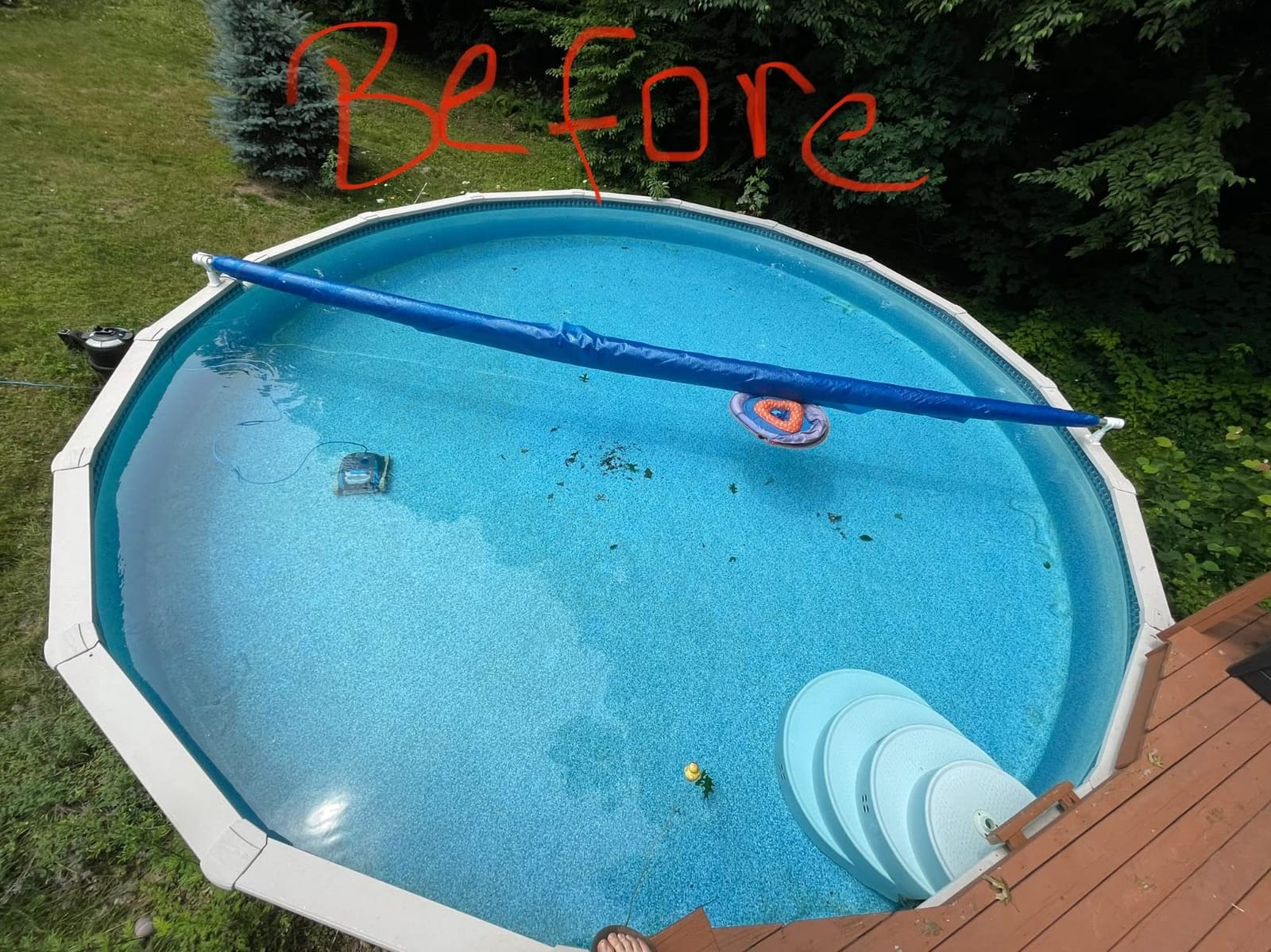
SmartNav 2.0 scanning navigation picks efficient routes around obstacles rather than wandering randomly, which cuts cycle time wasted on repeated passes. HyperGrip continuous tracks replace wheels, so there are no wheels to slip on a wet slope or catch on a liner seam.
At roughly 14 pounds with a quick water release, it is one of the easier corded machines here to lift out of the pool, which matters more than it sounds if you are over 50 and other robots here weigh 38 pounds. A full clean finishes in about two hours on a standard outlet.
The limits are shared by nearly every single-cycle corded robot. The waterline still needs an occasional manual brush, and the cord has to be coiled and stored between runs. If you want a set-it-and-forget weekend, a cordless model with surface parking may suit you better despite the shorter runtime.
What you should know before buying
Know the size ceiling. At 33 feet rated, this is a mid-size machine. A 40 by 20 foot pool with a deep end is at the top of its range, and a freeform pool with a long shallow shelf will use that headroom quickly. If your pool is 45 feet or longer, start with a 50 foot rated unit instead.
Also know that the filter is a cartridge, not a leaf bag. It is far better for fine debris and small grit than for a heavy overnight leaf drop, where the lid can close on a wet mat of oak leaves and you will need to clean it before the cycle restarts.
Who should look elsewhere
Look elsewhere if you have no outlet near the pool or you refuse to manage a cable. Corded robots out-pull cordless ones and run indefinitely, but that advantage is only worth something if you can live with the cable in a way that does not create tangles on freeform shapes.
Owners of pools above 33 feet, or those who want app-based scheduling, should step up to a premium cordless model or a 50 foot corded unit later in this list. For a small vinyl liner pool, the more compact picks here are worth a look too, and we cover the trade-offs in our above ground cleaner guide.
4. WYBOT C1 – Best Cordless Robot for Scheduled Cleaning
WYBOT C1 Cordless Robotic Pool Vacuum for Inground Pools, Professional
Cordless
160 min runtime
45 degree climb
Gyroscope paths
App scheduling
Pros
- Up to 160 minutes runtime on a 4-hour charge
- Triple motors climb to 45 degrees
- Gyroscope N-Path and S-Path navigation
- Covers 1618 sq ft and depths to 9.86 ft
- App control with scheduling
Cons
- Long recharge against a two-hour runtime
- No communication while submerged
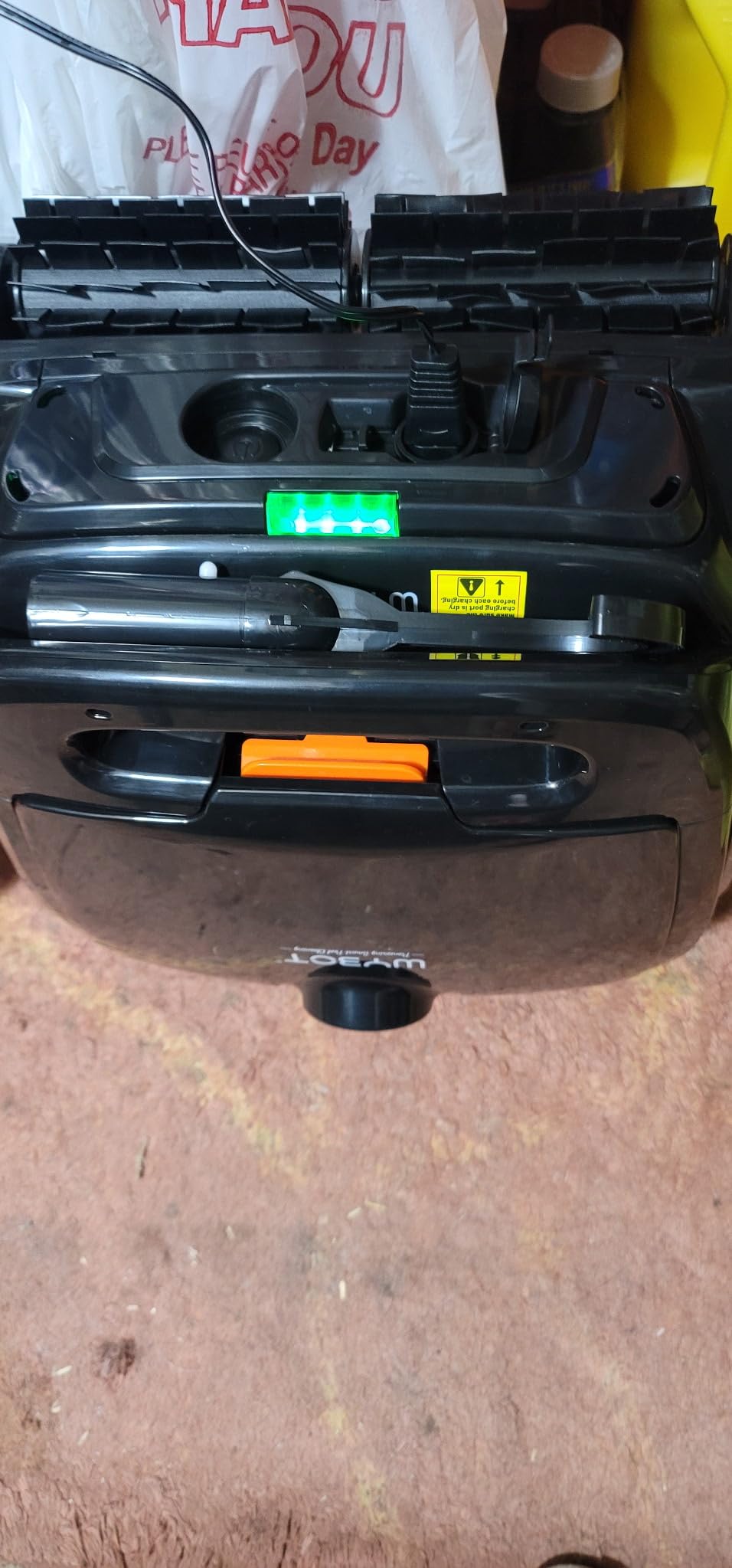
- Proprietary charging plug
- Can flip on Caribbean shelves and raised ledges
The WYBOT C1 is the cordless unit to buy if your main goal is automation, because it is one of the few in this group that schedules itself. You set timed cycles in the app before you leave, and it runs them without a cord to plug in or a return to the wall.
Navigation is the differentiator. A built-in gyroscope follows optimised N-Path and S-Path patterns rather than bouncing randomly, and owners consistently report more systematic coverage as a result. Triple motors climb slopes up to 45 degrees, a steeper rating than the budget cordless models here.
It is rated for pools up to 1,618 square feet and depths to 9.86 feet, and the 4-in-1 mode handles floor, walls, waterline and steps in one cycle. Runtime is up to 160 minutes, which is enough for a typical mid-size inground pool on floor and wall work.
App control adds five cleaning modes, scheduling and over-the-air firmware updates, and the filter basket pops straight out and rinses clean in under a minute. Owners also report strong pickup of leaves, sand, fine dust and pet hair, and note that the unit dives to the walls and waterline before parking at the pool edge when it finishes.
The recharge is the honest weakness. Charging takes roughly three to four hours, so the unit is busy about half the time, and there is no communication with it while submerged, meaning you must set a program before it launches. Some owners also report it getting stuck or flipping over on Caribbean shelves and raised ledges.
What you should know before buying
The proprietary charging plug is a small thing that irritates owners daily. Plan to keep the original dock or cable with the unit rather than relying on a generic USB charger, and store it somewhere it cannot be knocked off a wet patio edge.
Fine dust in liner wrinkles and divots still needs the occasional manual vacuum, because no robot reaches inside a floor wrinkle. On salt water pools, owners report good pickup but recommend rinsing the basket after every run to prevent salt crystallisation in the mesh.
Who should look elsewhere
Look elsewhere if your pool is large or very deep, since a 160 minute runtime on a floor-and-wall cycle can expire before a 35 foot pool is finished. In that case the Beatbot models later in this list are built for longer runs, and the corded picks simply do not stop.
Also consider a longer warranty route. A small group of owners report poor support experiences after a battery failure on this brand, so if dealer service matters to you, weigh that against the feature list before committing.
5. WYBOT C2 – Top Rated Cordless Robot for Finely Filtered Water
Wybot C2 Cordless Pool Vacuum for Inground Pools, Robotic Pool Cleaner
Cordless
Up to 180 min runtime
Dual 10 and 180 micron filter
Three brushless motors
Auto park
Pros
- Highest average rating in this group
- Dual 10 and 180 micron filtration
- Up to 180 minutes runtime on larger pools
- Three brushless motors for suction and climbing
- Auto parking makes retrieval easy
Cons
- Three and a half hour charge time
- Newer listing with a smaller review base
- Care instructions warn against sharp or abrasive surfaces
The C2 carries the highest average rating of any robot we compared, at 4.6 stars, with only 4% of ratings at one star. That distribution is unusual in a category where listings often carry a long tail of disappointed buyers, and it comes down to filtration specificity.
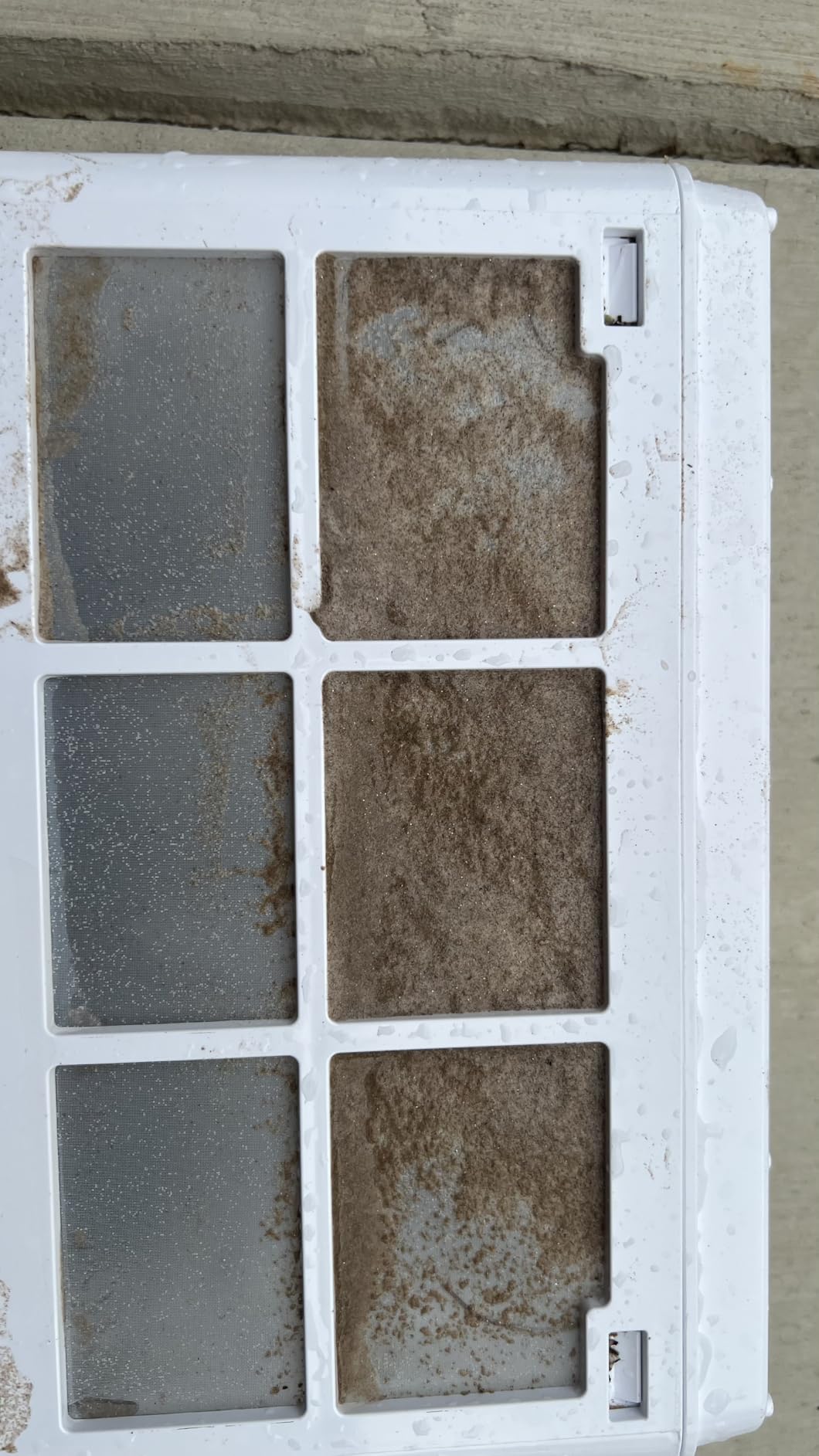
Dual filtration is the reason. A 10 micron ultra-fine filter sits alongside a 180 micron primary filter, so fine silt and dust are captured rather than pushed back into the water while leaves are still being picked up. If your pool clouds after rain or a windy week, that second filter stage is what does the work.
Runtime is up to 180 minutes across as much as 2,152 square feet per cycle, which gives it more headroom than the other compact cordless models here. Three brushless motors deliver the suction and the wall and step climbing, and owners report reliable performance on both.
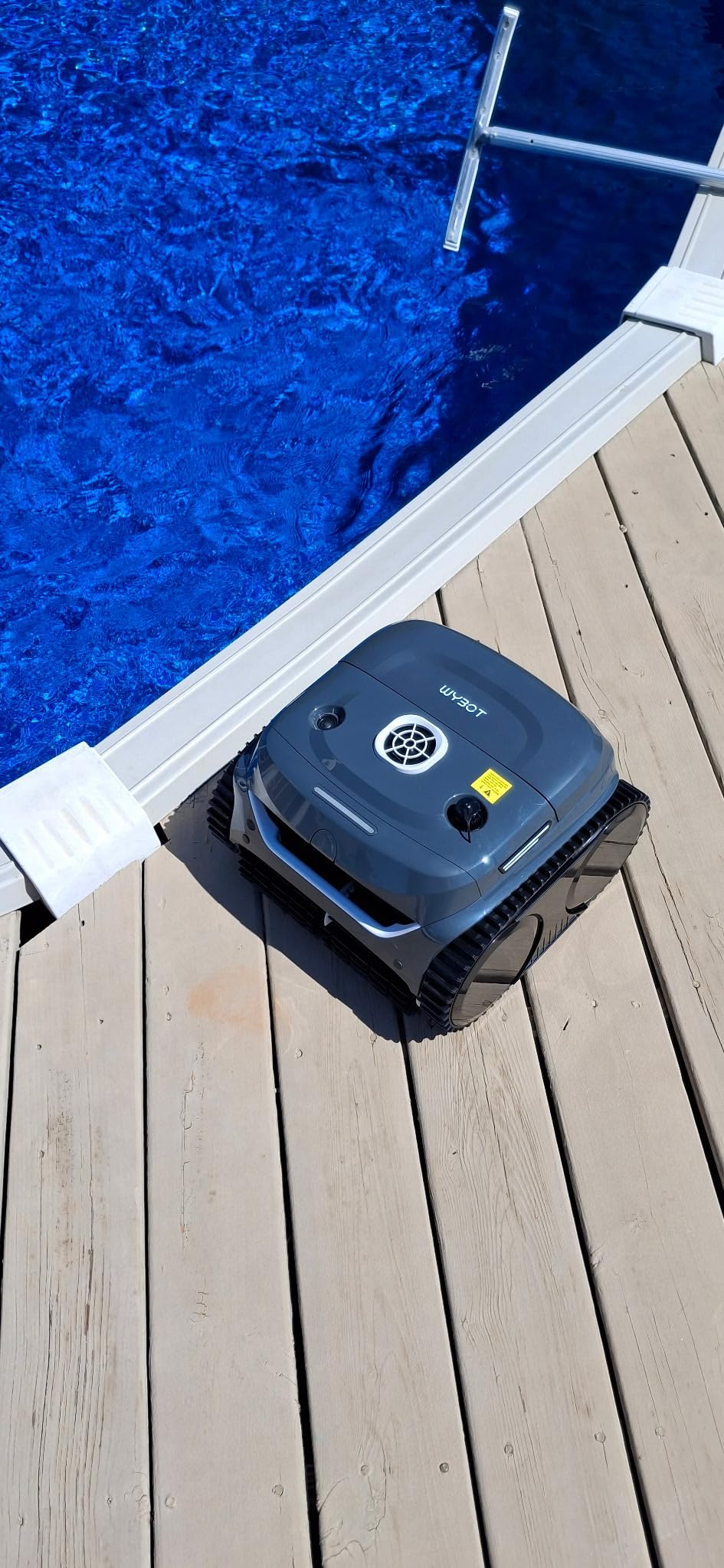
Seven cleaning modes and automatic docking at the pool edge when the cycle ends or the battery drops means you are not fishing for it with a pole. Owners single out the auto-park behaviour as the feature that makes a cordless robot genuinely liveable rather than a chore.
The trade-offs are the 3.5 hour charge time and the fact that this is a newer listing, so the owner feedback base is still growing compared with the long-running Dolphin models. Care instructions also warn against sharp or abrasive surfaces, which matters if you have a pebble or tile finish.
What you should know before buying
Size it against the square footage figure, not the pool length. At 2,152 square feet of coverage, this handles a large rectangle or a mid-size freeform, but running a wall and waterline cycle in a deep pool consumes runtime faster than a floor-only cycle, so budget for a second pass on the longest pools.
Rinse the fine filter after every run. A 10 micron element clogs faster than a coarse mesh, and a clogged filter is the single most common reason a cordless robot comes home having skipped a section of the pool.
Who should look elsewhere
Look elsewhere if you want a longer warranty and a longer track record of support, or if you own a large pool that needs more than three hours of cleaning per cycle. The Dolphin models have the deeper service network, and the Beatbot Sora units run considerably longer on a single charge.
Also weigh the review base honestly. A 4.6 average across a few hundred ratings is encouraging, but it is a thinner dataset than the 13,000-rating leader in this group, and new listings change as newer models arrive.
6. WYBOT B1 – Best Budget Cordless Pick for Lightweight Handling
WYBOT B1 Cordless Robotic Pool Vacuum Pool Cleaner Robot for Inground Pools
Cordless
14.3 lb body
Up to 120 min runtime
Pools to 1150 sq ft
App control
Pros
- A light 14.3 lb body that is easy to lift from the pool
- No cable tangling and instant start
- Quad-roller brushes loosen fine grit
- Glides over drains and uneven slopes
- Self-parks and the tray rinses in a minute
Cons
- Wall climbing stalls on curved transitions
- Stiff latch over the debris basket
- Navigation sometimes re-cleans or misses corners
- 120 minutes is tight for larger pools
The B1 sits at the entry point of this roundup and is the one we would hand to an owner who cannot comfortably lift a 38 pound machine out of a pool. At 14.3 pounds it is one of the lightest models we compared, and the compact body is a genuine accessibility feature rather than a spec-sheet detail.
Brush layout is the strength. Enhanced bottom roller brushes plus dual front side brushes give traction across the floor, along the edges and into corners, and owners report that they loosen fine grit rather than pushing it around. On sand and dust, that is exactly what you want.
It handles floor transitions well. Owners report it gliding over drains, seams, slopes and uneven floors without getting stuck or spinning its wheels, and it navigates steps without hanging up in most inground pools. Five cleaning modes, app scheduling and over-the-air updates are all included.
Coverage is specified for pools up to 1,150 square feet with up to 120 minutes of runtime, plus a one-hour Quick Clean mode for a top-up before a gathering. The top filter tray self-parks at the edge on low battery and rinses in under a minute.
Wall climbing is the weak point. Owners report the rear wheels staying on the floor at curved transitions, so the waterline is less reliable here than on the picks above it. A stiff latch over the debris basket is the other complaint, awkward to open with wet hands.
What you should know before buying
Match it to a small or mid-size inground pool. With 120 minutes of runtime and 1,150 square feet of coverage, this is a pool up to roughly 32 feet in a standard rectangle. Above that, a single cycle will not finish and you will be re-running it rather than cleaning once.
Heavy leaf loads and heavily soiled pools need a second pass, so if you have trees dropping in autumn, budget for two cycles per weekend. The lighter body is the reason it stays pleasant to use even when that happens.
Who should look elsewhere
Look elsewhere if waterline scrubbing is a priority or if you have deep-end walls with a pronounced curve, because that is where climbing stalls. The WYBOT C1 covers a larger area and climbs to 45 degrees, so it is the natural step up within the same brand.
Owners of large pools over 30,000 gallons should also consider how many cycles a weekend requires. A 120 minute runtime on a big pool becomes a chore, and one of the longer-running cordless models later in this list is the better fit.
7. Beatbot Sora 30 – Best Cordless Robot for Large Inground Pools
Beatbot Sora 30 Pool Vacuum, Floor & Wall & Waterline & Platform Cleaning, 6800GPH Power, Smart Parking, 300Min Runtime, 5L Capacity, for Above & In-Ground Pools 3229 sq.ft, Deep Blue
Cordless
Up to 5 hours runtime
6800 GPH suction
Surface parking
3229 sq ft
Pros
- Up to 5 hours of runtime per charge
- Surfacing and app retrieval avoid pole fishing
- Ultrasonic sensing cleans ledges to 8 inches
- 6800 GPH handles heavy leaf loads in one pass
- Large capacity reduces mid-cycle emptying
Cons
- Weighs 10.5 kg / heavier than the compact cordless picks
- 4.5 hour recharge is the longest here
- Newer brand with a smaller volume of owner reviews
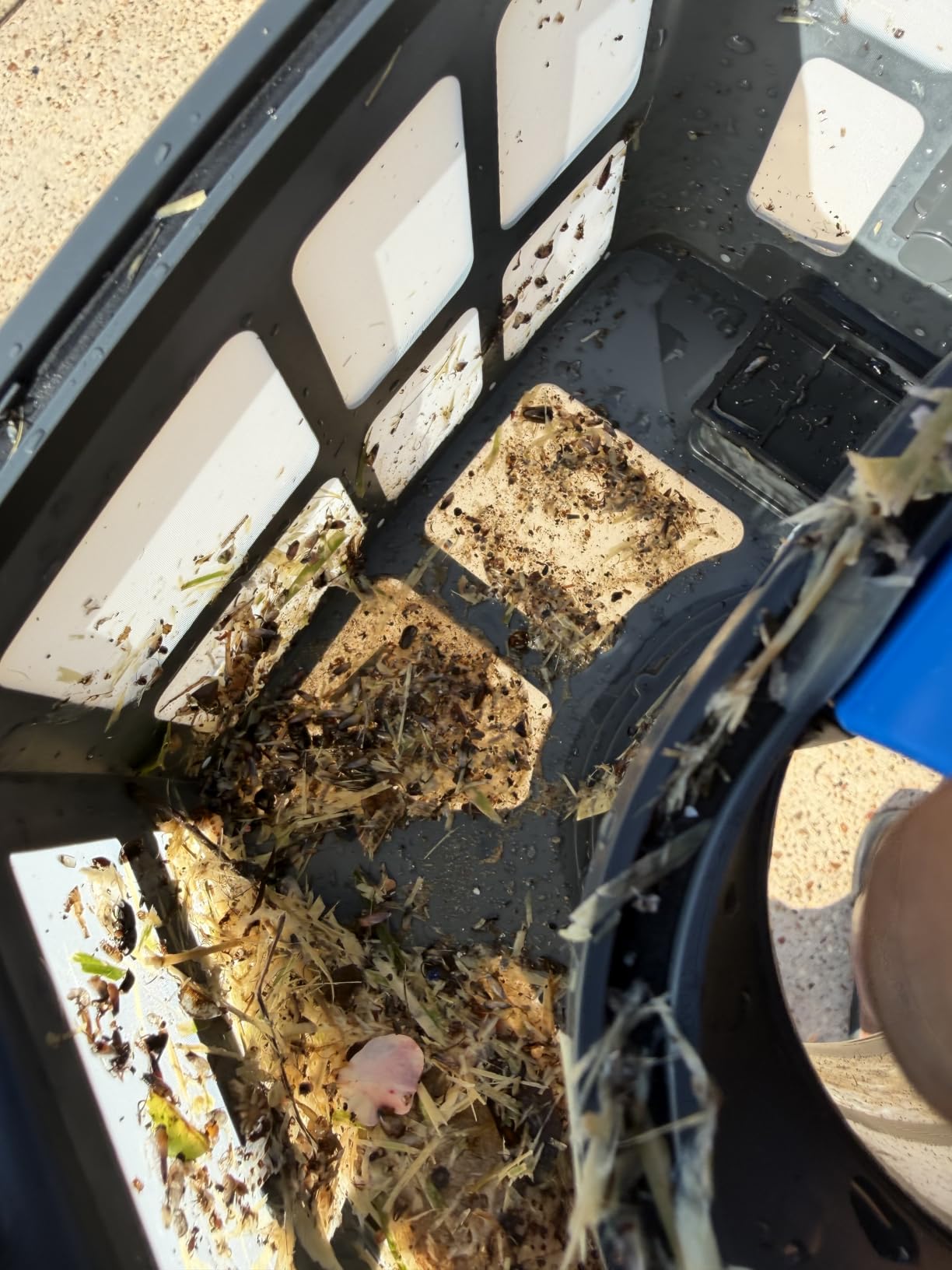
The Sora 30 is the cordless pick for a large pool, and the reason is arithmetic. Its 10,000 mAh battery delivers up to five hours of continuous floor cleaning covering as much as 3,229 square feet per charge, which is more than double the runtime of the 120 to 180 minute cordless machines listed below it.
The other thing that changes the experience is how it comes home. At the end of a cycle, or when the battery drops below 12%, it rises to the surface, parks at the pool edge, releases its internal water and stays floating for one-tap retrieval in the app. No pole, no wrestling a wet 23 pound machine over the coping.
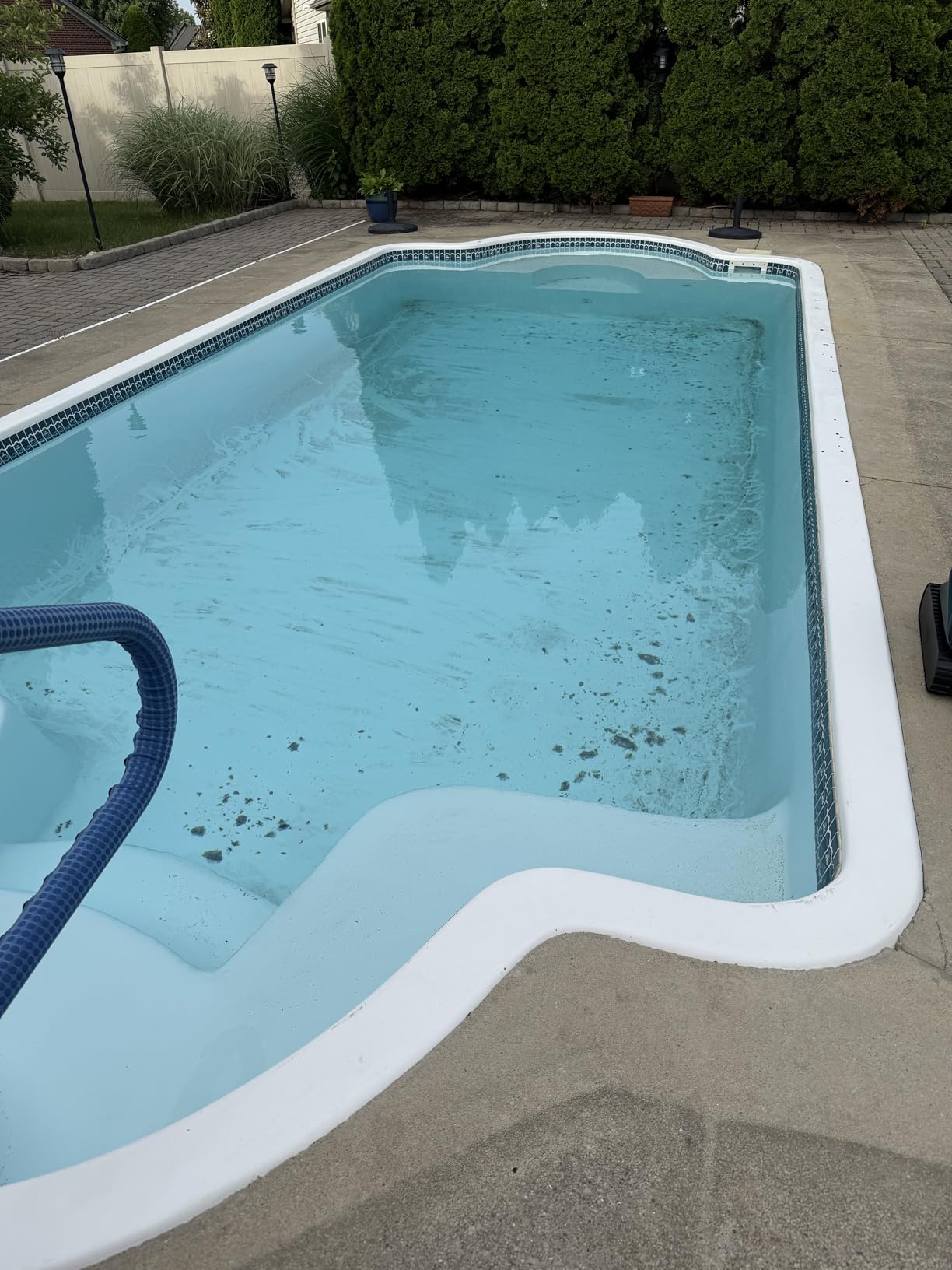
Suction is 6,800 GPH through a HydroBalance structure that owners report captures heavy debris in a single pass without clogging, and four-zone cleaning splits the job across floor, waterline, walls and platform. Ultrasonic sensors detect ledges, platforms and shallow water down to 8 inches, so sun shelves get cleaned rather than skipped.
Debris capacity is 4.5 litres rated at 5L, which is large enough that most owners are not emptying mid-cycle even in leaf season. The two-year warranty is shorter than the three years on the Sora 70, which is worth weighing against the runtime advantage. Owners most often cite the price gap as the reason they chose the smaller Sora 30 instead.
The trade-offs are weight and recharge. At 10.5 kg it carries more weight than the compact cordless picks, and the 4.5 hour charge ties for the longest in the group. Because the battery is rated at 10,000 mAh but the charger takes most of half a day to refill, your effective daily cleaning window is roughly half of what the runtime figure suggests.
What you should know before buying
Five hours of runtime is advertised for floor cleaning, and a wall and waterline cycle consumes power faster because the motors work against gravity. On a deep pool, treat the five-hour figure as a ceiling rather than a promise, and plan the cycle accordingly.
Surface parking assumes a calm pool surface. In windy conditions or with a lot of wake from swimmers, the unit may surface away from the wall, so keep the app retrieval routine rather than assuming it will always be waiting at the edge.
Who should look elsewhere
Look elsewhere if you need to retrieve the unit by hand regularly, or if a two-year warranty is too short for your taste. The Sora 70 later in this list adds surface debris cleaning, a larger canister and three years of protection, at the cost of more weight.
If you would rather have unlimited runtime than a long battery, a corded pick is the better answer for a large pool. Corded robots do not stop when a battery does, and the cable is a smaller problem than a machine that parks in the deep end.
8. Beatbot Sora 70 – Best Cordless Robot for Surface Debris and Shallow Shelves
Beatbot Sora 70 AI Navigation Pool Vacuum Robot Full-Coverage Pool Cleaning
Cordless
JetPulse surface jets
6800 GPH
6L canister
3 year protection
Pros
- Only cordless option here with dedicated water surface cleaning
- Park and tap-to-retrieve keeps a heavy unit afloat
- 6 litre canister holds a full day of collected debris
- 5 hour runtime for 3200 sq ft
- Three years of protection
Cons
- Most expensive machine in this roundup
- Weighs 22.9 lbs / heavier than the compact cordless picks
- 9 percent one-star feedback is the widest spread here
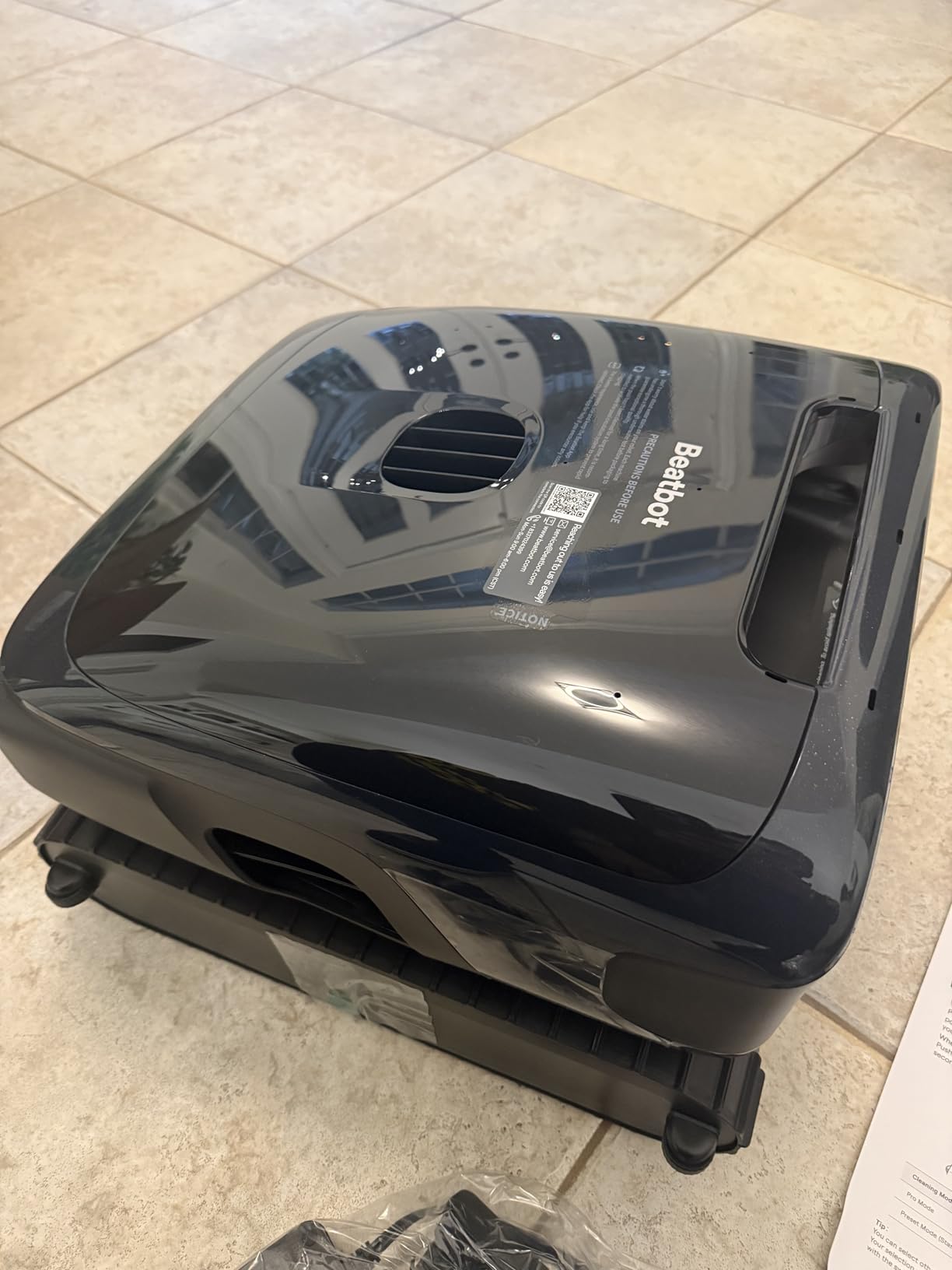
The Sora 70 is the only unit in this group that cleans the water surface itself, and that is a real difference rather than a marketing flourish. JetPulse uses dual water jets forming four streams to drive floating debris, pollen and leaf fragments into the suction inlet, which is exactly the material that makes a pool look dirty from the patio even when the floor is clean.
Coverage spans water surface, waterline, floor, walls and shallow areas down to 8 inches, so a sun shelf is a cleaning target rather than an obstacle. A 10,000 mAh battery runs up to five hours on floor cleaning across 3,200 square feet, with a 6 litre canister holding what it collects.
Smart surface parking repeats the retrieval trick from the Sora 30. The unit surfaces, parks at the edge, drains its internal water and stays afloat for one-tap app retrieval, which matters a great deal on a 22.9 pound machine.
Three years of protection is the longest warranty among the cordless options here, and for a battery-powered machine that is the component most likely to fail, that is the most useful of the three features to weigh.
The barriers are weight and rating spread. At 22.9 pounds this is the second-heaviest cordless machine in the roundup behind the 10.5 kg Sora 30, and at 9% one-star feedback it has the widest spread of ratings here.
What you should know before buying
Surface cleaning only helps if you give it a chance to run. Floating debris is easiest to gather in still water, so launching the unit while the pool is quiet will produce a very different result from launching it after an afternoon of swimming.
At 3,200 square feet of coverage, this is a large-pool machine. If your pool is small, you are paying for capacity and weight you will not use, and the Sora 30 or a compact WYBOT is a more sensible fit for the shape of the job.
Who should look elsewhere
Look elsewhere if lifting 22.9 pounds out of a pool is a problem. Even with the surface parking and drain behaviour, there will be days when you lift it manually, and the lighter corded and compact cordless options here are kinder to older backs.
Also look elsewhere if your pool is above ground. Despite the surface-cleaning sophistication, this is a machine sized and weighted for in-ground work, and above ground options are covered separately in our above ground cleaner guide.
9. Polaris PCX 868 iQ – Best Corded Robot for Stairs and Deep Debris
Polaris PCX 868 iQ Smart Robotic Pool Cleaner
Corded to 50 ft
Double Helix brushes
Easy Lift retrieval
iAquaLink app
38.8 lb
Pros
- Suction that owners rate above the rest of this group
- Tangency-resistant cord resists kinking
- Easy Lift climbs the wall and drains for one-handed removal
- Transparent filter window shows when it is full
- Handles stairs and raised ledges best here
Cons
- Does not map the pool and misses the floor-to-wall curve
- Cord is awkward to coil and store
- Included caddy feels cheap
- Heaviest machine here at 38.8 lbs
The Polaris PCX 868 iQ has the strongest suction in this group, and owners describe pulling out debris they could not see. Double Helix brushes use staggered rubber blades front and rear to agitate stuck-on dirt and channel it to the large inlet, which is why several owners report dramatic results when opening a pool in spring.
It is the only corded machine here rated for pools up to 50 feet, and owners rate its stair and ledge handling above everything else we compared. If your pool has a broad staircase, a deep-end wall and a large floor area, this is the machine built for that geometry.
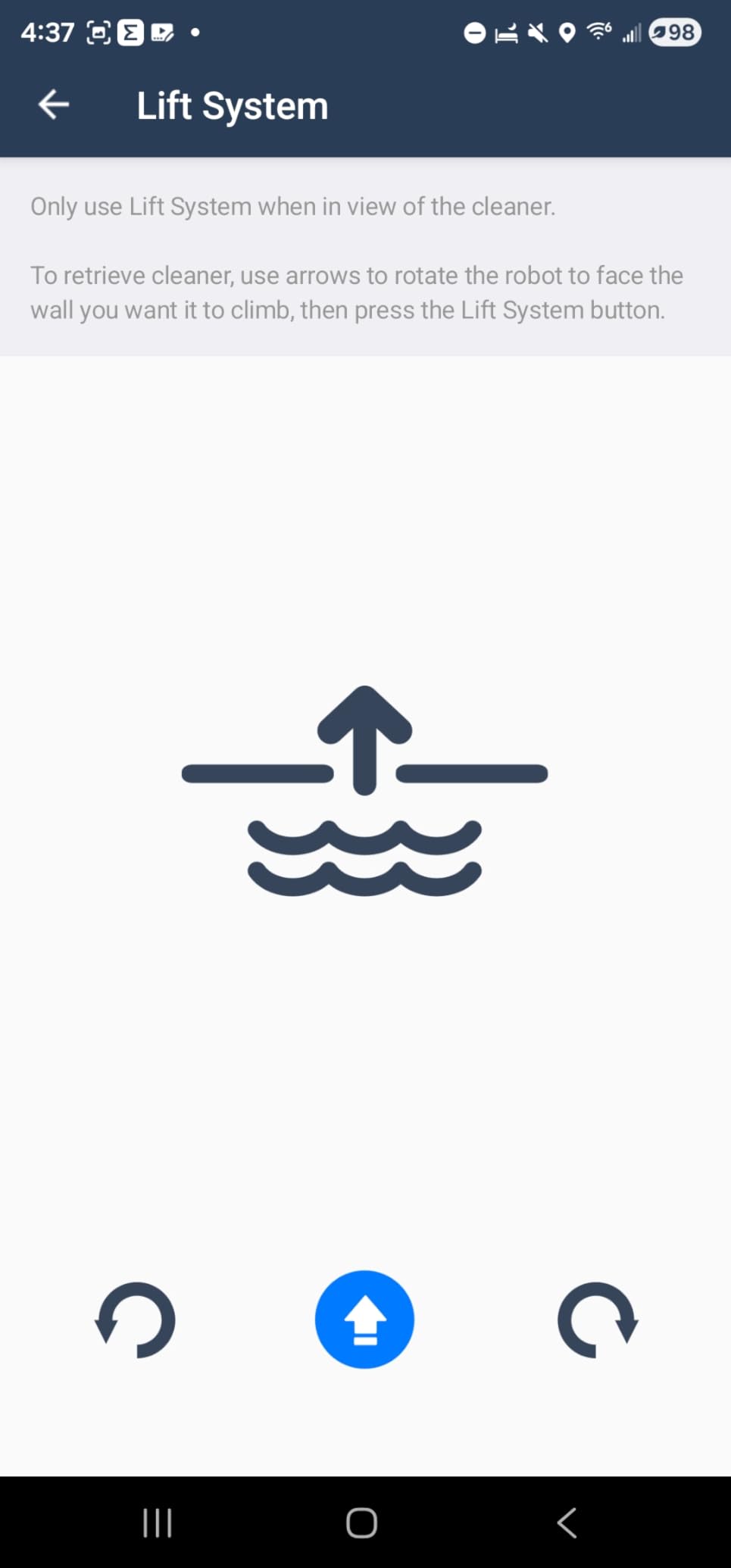
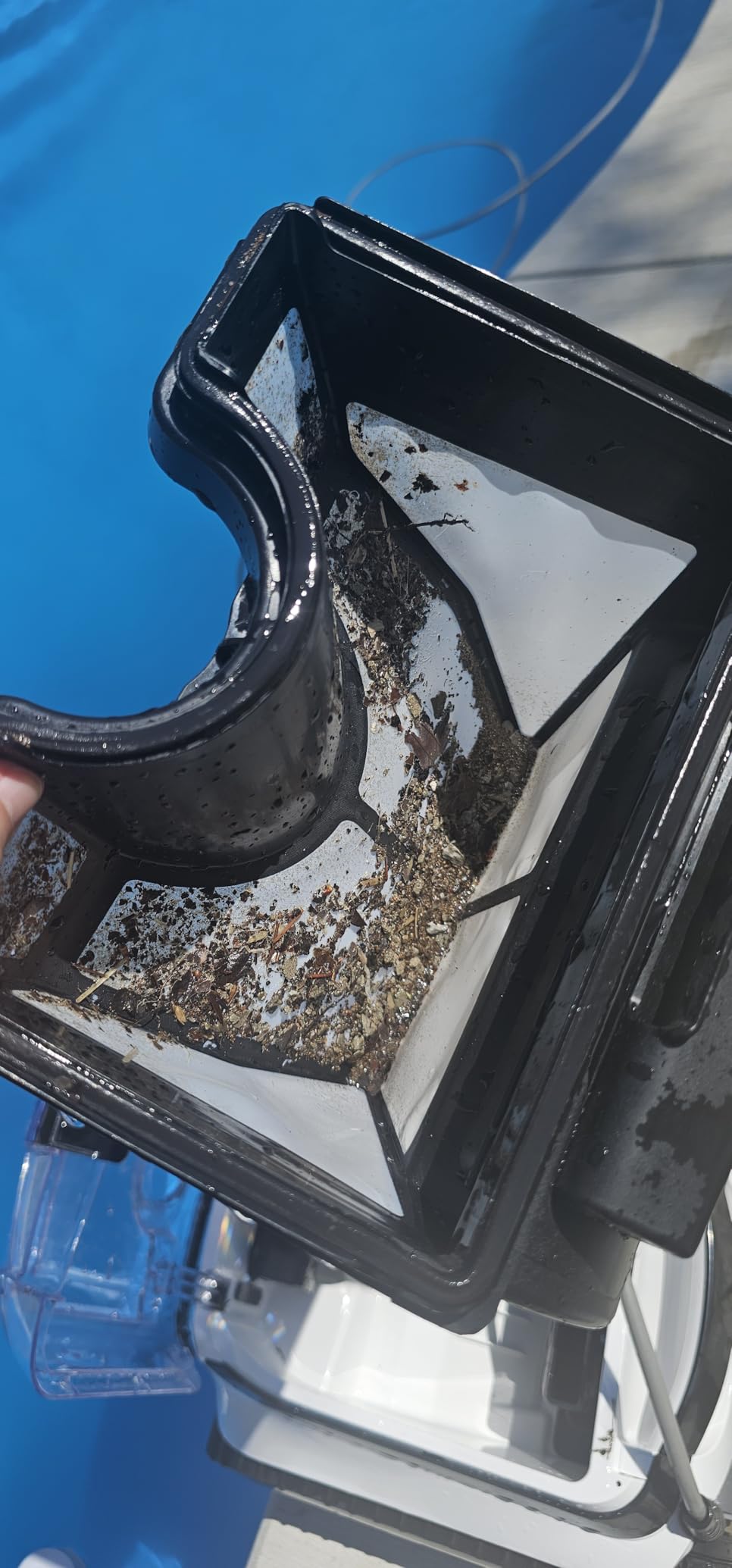
Two convenience features stand out. The Easy Lift system drives the unit to the waterline and rapidly evacuates the water so you can pull it out one-handed, and the filter canister has a transparent window that shows when it is full, so you shake and spray it out rather than guessing.
iAquaLink WiFi app control lets you start and stop cycles, view the cycle timer, choose a cleaning mode, use the phone as a remote control, trigger the lift system and reach troubleshooting from outside the pool area. A tangency-resistant cord is designed to lie on the pool surface without kinking, and a caddy cart is included.
The significant negative is navigation. Despite the iQ branding, it does not map the pool, and owners repeatedly report that it misses the floor-to-wall transition, leaving dirt on the curve that needs manual brushing. A small number of one-star reviews also report units failing immediately out of the box with a cord error code.
What you should know before buying
Weight is the fact that should shape your decision. At 38.8 pounds, this is the heaviest machine in the roundup, and the Easy Lift system exists specifically because of that. If you have any back, shoulder or mobility concerns, test lifting a comparable weight before ordering, and factor in getting it over the coping.
Expect to brush the floor-to-wall curve by hand. Without mapping, the unit works methodically but not intelligently, and the area it systematically misses is the area where algae and silt settle first. Budget ten minutes with a pool brush after each cycle.
Who should look elsewhere
Look elsewhere if you have a pool under 40 feet and care about coverage accuracy, because a mapped robot will reach the curve this one misses. The Dolphin picks in this roundup use scanning navigation, and for a standard rectangle that is the better trade.
Also look elsewhere if the included caddy feels too flimsy for you, or if you want remote start and monitoring that does not depend on an app connection to your home network. A long cord plus a wall outlet is a more reliable control method than Wi-Fi.
10. BOTLIFE PC10 – Best Cordless Robot for Fast Turnaround
BOTLIFE PC10 Cordless Robotic Pool Vacuum for Inground & Above Ground Pools
Cordless
2.5 hour recharge
5000 GPH
4L basket
30 degree slopes
Pros
- Shortest recharge here against a 120 minute runtime
- Full Pool / Floor Only / Wall Only modes
- S-Path and N-Path routing reduces repeated passes
- Top-load basket lifts out and hoses down
- Tracks handle transitions to 30 degree slopes
Cons
- Wall climbing limited to 30 degree slopes
- No app connectivity or remote scheduling
- Smallest review base of the cordless picks
- Suction trails the 6800 GPH cordless units
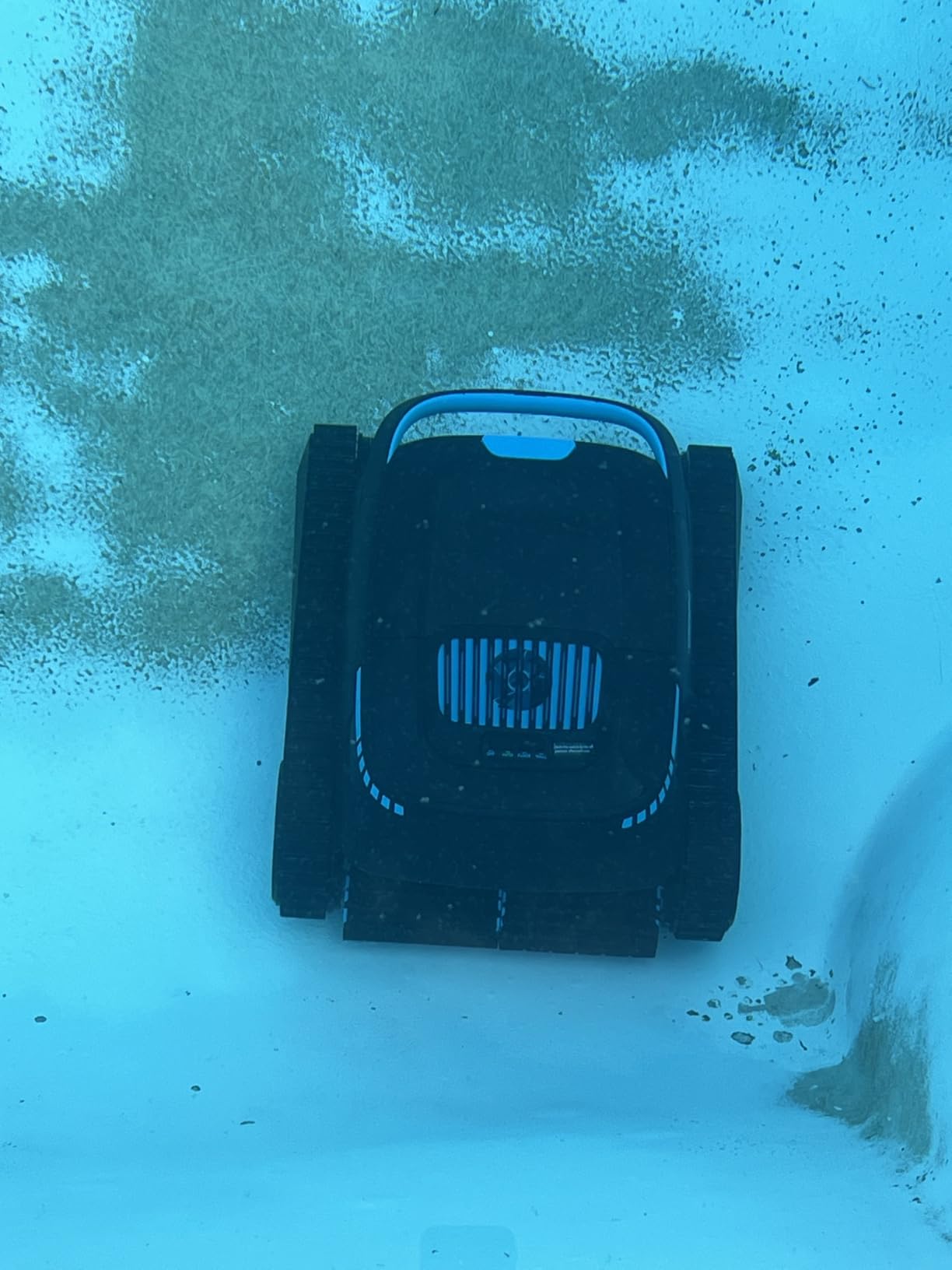
The PC10 is the cordless pick for anyone who wants more than one clean a day without waiting. A 2.5 hour recharge against a 120 minute runtime is the shortest turnaround in this group, which means you can run a clean before work and another in the evening instead of a single pass and a long wait.
Suction comes from dual drive motors, a dedicated pump and two active brushes for a stated 5,000 GPH, and the 4 litre top-load basket uses 150 micron mesh to contain dirt. The basket lifts straight out and rinses with a garden hose, which is a low-tech feature that owners clearly appreciate.
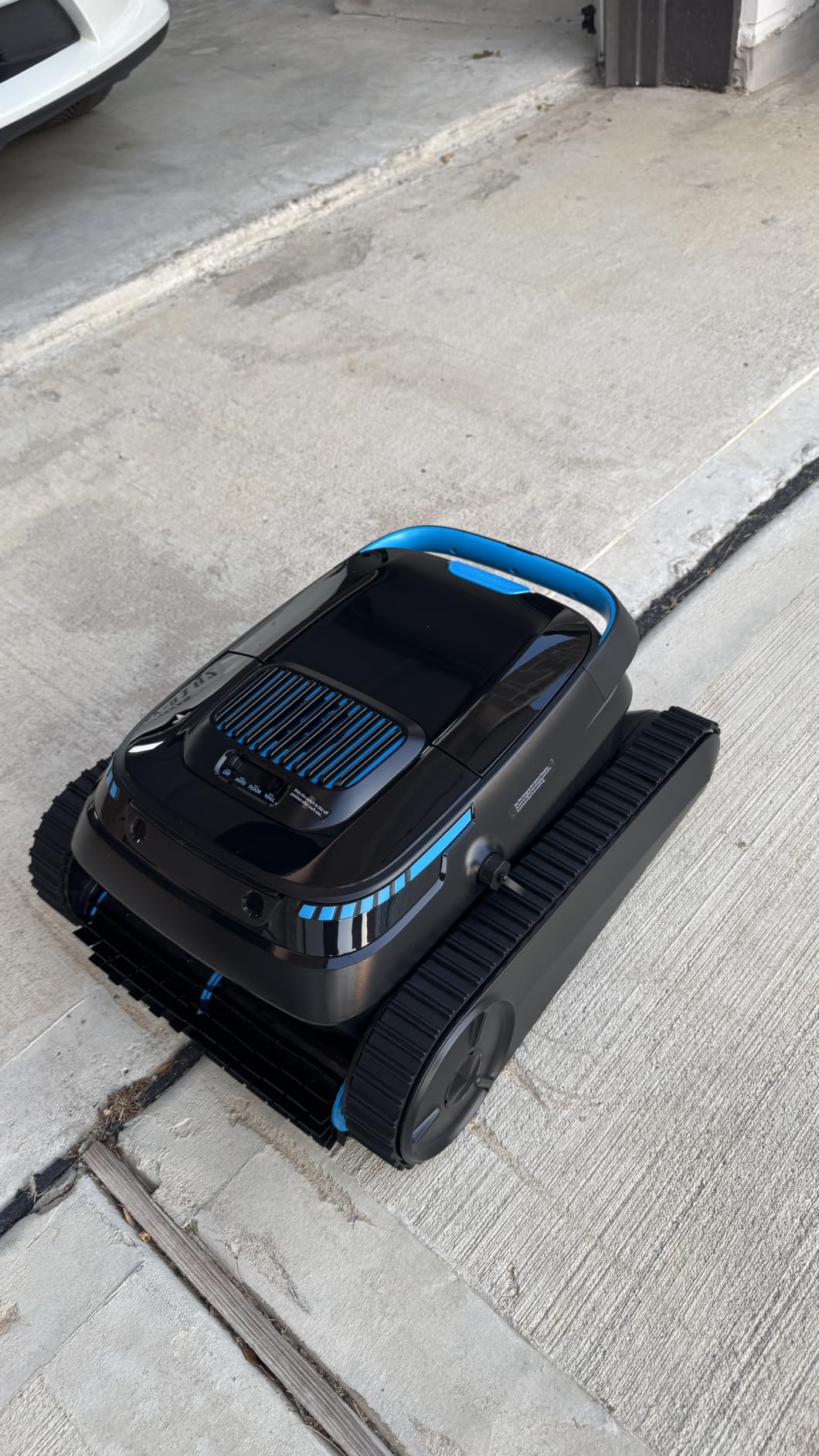
Navigation is straightforward. Smart S-Path routing covers the floor and N-Path handles the walls, high-grip tracks manage transitions and slopes up to 30 degrees, and three modes let you choose Full Pool, Floor Only or Wall Only rather than always paying for a complete cycle.
Coverage is specified for pools up to 1,830 square feet with a 5,200 mAh battery, and the unit self-parks near the pool edge with a hook for retrieval. Owner satisfaction is high, with 73% of ratings at five stars and only 4% at one star.
What you give up is clear. Suction is 5,000 GPH, below the 6,800 GPH quoted by the Beatbot models later in this list, there is no app connectivity at all so scheduling and mode changes are not remote, and wall climbing is limited to slopes up to 30 degrees. The review base is also a small one, so treat the rating with appropriate caution.
What you should know before buying
The lack of app control is the real decision point. There is no phone or Wi-Fi connection, so every cycle is launched from the unit itself. If you want a robot that cleans while you are at work without any involvement from you, this is not the machine, and the WYBOT models cover that need.
Mesh filtration at 150 microns is coarser than the 10 micron stage on the WYBOT C2, so this is a debris pick rather than a fine-silt pick. In a pool that clouds with dust, you may still want to run a finer filtration pass with a different unit.
Who should look elsewhere
Look elsewhere if you have a pool with steep walls or a raised ledge, because 30 degrees is a shallower climb rating than the 45 degree figure the WYBOT C1 claims. Deep-end transitions in a freeform pool are where that difference shows up first.
Owners of very dirty pools should also note the modest suction figure. For heavy leaf loads, the 6,800 GPH units later in this list clear more in a single pass, and for fine sand in a liner, a finer filter will do more than more power.
How to Choose a Robotic Pool Cleaner for Inground Pools
The difference between a robot you are happy with and one you regret is almost always a mismatch on one of five things: pool length, cord type, filtration, surface, or who handles warranty service. Work through these in order and the choice usually makes itself.
Match the pool length rating, not the gallons
Manufacturers rate robots by the maximum pool length in feet, typically 33, 40 or 50. That number assumes an average depth. A 38 foot pool that is 8 feet deep at one end holds far more water than a 33 foot shallow pool, and the robot spends its budget on volume rather than coverage.
As a rule of thumb, pools up to 33 feet suit the compact units, standard 32 to 40 foot inground pools suit the mid-size corded models, and anything over 40 feet or freeform with a wide shallow shelf should go to a 50 foot rated unit. Buying a 50 foot robot for a 30 foot pool wastes money and leaves debris behind.
Choose corded for large pools and cordless for convenience
Corded wins on suction and runtime because it never stops and never waits for a charge. That is why experienced owners on TroubleFreePool and r/swimmingpools repeatedly recommend corded wall-climbing units for leaf-heavy and silt-heavy inground pools, and why cordless is recommended mainly for cable management and small-pool convenience.
Cordless wins on everything else. No cable to tangle on a freeform shape, no outlet required, and on the newest units, surface parking that floats the machine at the edge for one-tap app retrieval. If your pool is under about 30 feet and you want unattended cleaning, cordless is the sensible answer.
One caution applies to the category as a whole. Consumer Product Safety Commission burn and fire hazard reporting around some cordless pool cleaners, including Aiper units, is documented in pool industry sources, and we would not treat an inflated runtime claim as proof of battery quality. Check whether the manufacturer publishes a battery cycle rating, and buy from a seller who will stand behind the unit.
Match filtration to the debris you actually have
Coarse mesh baskets capture leaves, twigs and larger grit. Fine mesh and pleated cartridges capture silt, pollen and sand. Pools that go cloudy after wind need the second type, and a leaf bag is the wrong tool for a pool near a dusty road or a construction site.
The practical test is a single pass on a dirty pool. If the water stays cloudy, the filter is too coarse for the debris, and no amount of extra runtime will fix it. Rinsing a fine element after every run also matters, because a clogged filter causes the robot to skip sections rather than slow down.
Check wall climbing, waterline and brush type against your surface
Gunite, concrete and plaster tolerate stiff brushes. Vinyl liner needs something softer, since owners report scuffing from mismatched brush types. Fiberglass and gelcoat sit in between. Tile waterlines need a dedicated scrubbing brush that stays in the band long enough to work.
Waterline cleaning is the feature most often overestimated. Only some of these machines actively scrub the band rather than brushing past it, and the ones that do will still need an occasional manual touch-up. Ask whether the robot’s wall rating is stated as a slope in degrees, because a 30 degree figure and a 45 degree figure describe very different machines on a curved deep-end wall.
Check warranty service before you check features
The most common complaint in pool owner forums has almost nothing to do with cleaning performance. Warranty service for major brands is frequently dealer-only, and local pool stores decline to service a robot that was not bought through them. This is a routine ownership cost, not a defect.
Buying from an authorised dealer or a certified open-box channel is the safest route for servicing, even when a marketplace listing looks more convenient. On TroubleFreePool, the long-running view is that Maytronics units are supported best because of the factory-certified dealer network, and that a three-year warranty is a useful proxy for manufacturer confidence in the machine.
Also factor in the running costs. Filter elements and cartridges are replaced every one to three seasons, a caddy and a power supply can be replaced once or twice over a robot’s life, and a corded robot draws electricity continuously while it runs. A cordless unit’s replacement battery is a much larger single expense than a filter element.
Frequently Asked Questions
Which pool robot is the most dependable?
Dependability in this category tracks warranty length and serviceability more than any feature. The Dolphin Nautilus CC Plus stands out because it has the largest base of long-term owner feedback in our group, with more than 13,000 ratings averaging 4.3 stars, and the wider factory-certified dealer network. Corded models also fail more predictably than cordless ones, because they have no battery to age out.
Is beatbot better than dolphin?
The short answer is no in both directions, and the two brands serve different needs. Dolphin models are corded, run indefinitely and have a deeper dealer service network. Beatbot models are cordless, run up to five hours per charge and can float at the surface for app retrieval. Choose Beatbot for convenience and surface debris cleaning, and Dolphin for suction, unlimited runtime and easier servicing.
Is Polaris or Dolphin better?
Dolphin is the safer default choice for most inground pools because its robots use scanning navigation, cover more common pool sizes and are supported by a wider certified dealer network. Polaris pulls more suction and handles stairs and large 50 foot pools better, which matters on deep, complex shapes. The Polaris also weighs 38.8 pounds, so lifting it out is a real consideration.
What is the average lifespan of a robotic pool cleaner?
A well-maintained robotic pool cleaner typically runs seven to ten years before a motor, drive belt or track assembly fails. Lifespan shortens sharply if the filter is never rinsed, if the unit runs with a damaged cable, or if a cordless battery is stored empty for months. Replacing a filter element every one to three seasons is the cheapest way to extend the life of the machine.
What are some common problems with robot pool cleaners?
The most common problems are a basket or filter that clogs mid-cycle and forces a restart, a cord that kinks and stalls the unit, robots that cannot climb walls and leave the waterline untouched, and units sold on marketplaces whose warranty service is refused by local dealers. Fine silt blowing through cheap mesh filters is the other common one, and it leaves the pool cloudy after every cycle.
Do robotic pool cleaners clean the waterline?
Most do the waterline, but not all do it well, and almost all need an occasional manual touch-up. The machines with an active scrubbing brush and a stated wall climbing angle in degrees scrub the band more effectively than floor-focused models. None of the ten we compared replace a ten-minute manual brush of a tile waterline, so plan on doing that occasionally.
What is a good robotic pool cleaner?
A good robotic pool cleaner for an inground pool does four things: climbs the walls reliably, scrubs the waterline with an active brush, filters finely enough for the debris your yard produces, and is supported by a dealer network that will honour its warranty. Add app control and a weekly timer if you need unattended cleaning, and match the rated pool length to your pool before anything else.
Conclusion: Our Final Verdict for 2026
The best robotic pool cleaners for inground pools in 2026 start with the Dolphin Nautilus CC Plus, which we would buy for the deepest, longest-lasting inground pools in a normal 16 by 32 foot shape, and the Dolphin Escape if you want more filtration capacity and lighter handling without moving up a tier.
Owners who want no cable should look at the WYBOT C2 for fine filtration and the highest rating in this group, the WYBOT C1 for scheduled app-driven cleaning, and the Beatbot Sora 30 or Sora 70 when the pool is large enough to need a five-hour runtime. The Polaris PCX 868 iQ earns its place for stairs, suction and pools up to 50 feet, while the WYBOT B1 and BOTLIFE PC10 cover the lighter and faster-turnaround ends of the budget range.
Whichever one you choose, buy it through a seller that will honour the warranty, and check the rated pool length against your own pool before you order. Pool lighting is the other upgrade most owners pair with an automation schedule, and our guide to the best pool lights for inground pools covers that side of the setup.