
A function generator is a bench instrument that produces repeating voltage waveforms — sine, square, triangle, pulse — at a frequency, amplitude and timing you dial in yourself, so you can inject a known signal into a circuit and watch how the circuit responds on an oscilloscope. That is the whole idea: known signal in, measured response out.
Along with a power supply and a multimeter, a function generator is one of the three instruments that turn a kitchen table into a real electronics lab. Our team compared the ten units below across sine bandwidth, channel count, sample rate, vertical resolution, modulation support and remote control, and we leaned on what buyers report after months on the bench rather than on the spec sheet alone.
One thing we check before naming any brand: many budget oscilloscopes ship with a built-in generator, and the recurring thread on r/AskElectronics is whether that is enough. We answer that below, because buying a standalone you do not need is the most common mistake in this category. If you want the short version for a 2026 home lab, the bench equipment checklist we keep for beginners covers the rest of the bench first.
Table of Contents
Top 3 Picks: Function Generator Picks for Home Labs in 2026
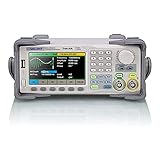
Siglent SDG2042X
- 40 MHz dual channel
- 16-bit resolution
- TrueArb waveforms
- Ethernet and USB remote control

Koolertron 15MHz DDS
- Dual-channel DDS at 200 MSa/s
- 14-bit resolution
- 99 stored setups
- Sweep up to 999.9 s

FNIRSI DSO-510
- Scope plus 50 kHz DDS output
- Handheld and battery powered
- One-key AUTO measure
- 2.8-inch display
Those three cover the realistic range of a home lab: a proper bench instrument with LAN automation, a feature-loaded budget DDS unit with the biggest review base in the lineup, and a handheld that does both jobs for people who work on cars and speakers.
Best Function Generators for Home Labs in 2026
| Product | Specifications | Action |
|---|---|---|
| Siglent SDG2042X |
|
Check Latest Price |
| Koolertron 15MHz DDS |
|
Check Latest Price |
| FNIRSI DSO-510 |
|
Check Latest Price |
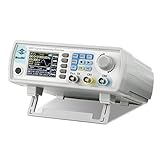 Seesii JDS6600 Seesii JDS6600 |
|
Check Latest Price |
 Hantek DSO2D15 Hantek DSO2D15 |
|
Check Latest Price |
 Siglent SDG810 Siglent SDG810 |
|
Check Latest Price |
 OWON DGE2070 OWON DGE2070 |
|
Check Latest Price |
 UNI-T UTG932E UNI-T UTG932E |
|
Check Latest Price |
 DOMINTY FY6900 DOMINTY FY6900 |
|
Check Latest Price |
 Goupchn PSG9060 Goupchn PSG9060 |
|
Check Latest Price |
Two of these are oscilloscopes with a generator built in, not standalone bench units. We keep them in the list because that pairing is a legitimate home lab answer, but we score them on the generator, not the scope.
Do You Even Need a Standalone Function Generator?
The honest answer: check your oscilloscope first, because there is a good chance you already own one. Plenty of scopes — including the Hantek DSO2D15 in this list — include an arbitrary waveform generator in the chassis, and for a first bench it covers sine, square and pulse injection fine.
What a built-in generator usually does not give you is a second independent channel, deep arbitrary waveform memory, real modulation depth, or a way to script the output over SCPI. Those four gaps are where a standalone unit starts earning its bench space.
The recurring forum complaint, from a long-running r/AskElectronics thread on combination units versus standalone instruments, is that budget scope generators are accurate for a look at a 1 kHz square but nothing more. If your work is filters, amplifiers, sensors or microcontroller timing, buy the standalone.
Our rule of thumb: if your projects stay under 100 kHz and involve one signal at a time, the built-in generator is enough. If you need two channels for a filter or quadrature work, deeper memory for custom shapes, or automated Bode plots, go standalone.
1. Siglent SDG2042X Function Generator: Our Overall Pick
Siglent Technologies SDG2042X Arbitrary Waveform Function-Generators, 40 MHz, Grey
40 MHz sine
Dual channel
16-bit resolution
USB and LAN
Pros
- Two independent channels with TrueArb waveform playback
- 16-bit vertical resolution keeps noise floor low for ADC injection
- Ethernet and USB make scripted Bode plots alongside a scope straightforward
- Quiet cooling and a chassis that feels like lab gear
Cons
- EasyWave waveform software is Windows only
- Manual barely explains DDS versus TrueArb mode
- Firmware blocks direct 1 percent duty cycle entry
This is the instrument we keep reaching for when a filter response needs two channels and the amplitude has to be trustworthy. The SDG2042X pairs 40 MHz of sine bandwidth with two fully independent channels, so you can drive a filter from one output and a reference clock from the other without swapping cables.
The 16-bit vertical resolution is the spec that matters more than the headline frequency for most home lab work. Injecting a low-noise sine into an ADC or an op-amp stage, quantization noise is what limits your measurement, not the 40 MHz ceiling.
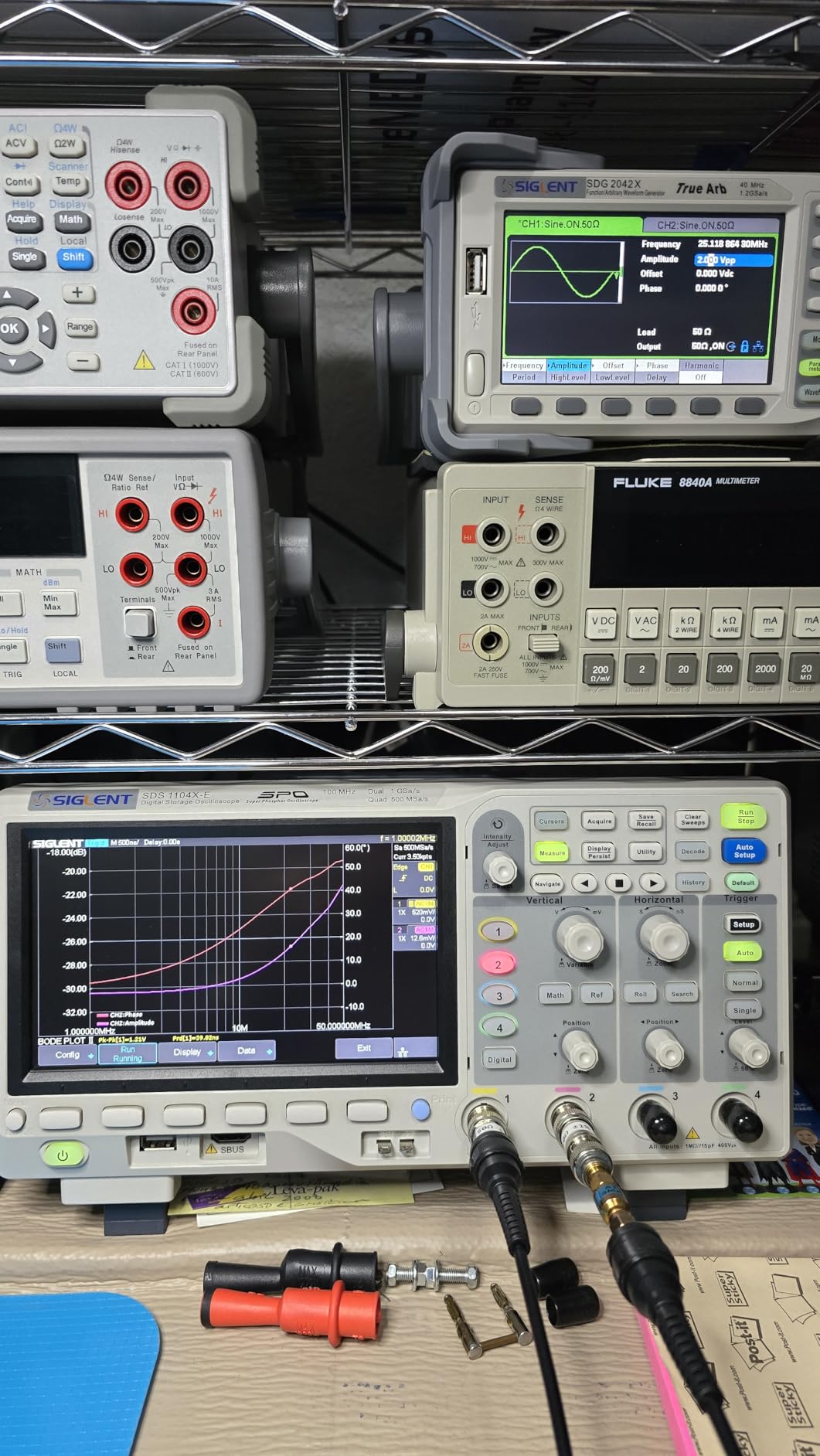
Reviewers on the EEVblog forums have long treated Siglent as the mid-market default, and the pattern holds: the hardware is capable and accurate while the complaints cluster around software and documentation. The LAN port is the quiet hero. Pair it with an oscilloscope over SCPI and you can sweep a filter and log gain against frequency without touching a knob.
Radio technicians like this unit for two-tone SSB work and IF injection, and it ships with reference waveforms that save time when you are characterising something unfamiliar. The screen is a proper touchscreen, which is rare at this level and genuinely useful when you want to check a waveform shape quickly.
Who the SDG2042X suits
It suits anyone doing two-channel work: op-amp filter characterisation, amplifier gain sweeps, sensor conditioning loops, or quadrature output for a stepper driver. The dual outputs plus 16-bit resolution make it the most capable unit here for precision signal injection.
It also suits anyone automating measurements. If you script in Python or LabVIEW and want a full Bode plot over Ethernet, this is the one in the list we would build that bench around.
When to skip the SDG2042X
Skip it if your work is under 5 MHz and single channel. You would be paying for a second output and a resolution you never read, and a budget DDS unit covers that ground with room to spare.
Also skip it if you build custom arbitrary shapes on anything other than Windows. The EasyWave editor is not the strong point of this unit, and buyers consistently report the on-screen preview disagreeing with what comes out of the BNC.
2. Koolertron 15MHz DDS Signal Generator: Best Value
Koolertron 15MHz DDS Signal Generator, Dual-Channel
15 MHz sine
Dual channel
14-bit
200 MSa/s
Pros
- Largest review base in this lineup with a 4.4 average
- Two channels with independently settable parameters
- 99 stored instrument states and 60 user waveform slots
- Linear sweep up to 999.9 s plus logarithmic sweep
- Frequency
- period and pulse width counters built in
Cons
- FPGA budget platform lacks the drive of bench instruments
- Display and controls are small for the chassis size
With 473 reviews behind it, this is the unit the forums describe as doing an absolutely amazing bunch of stuff for the money. Our experience matches that framing: the feature count per unit of spend is the highest in this list, and nothing else here stores 99 setups.
Dual-channel DDS at 200 MSa/s with 14-bit resolution is enough for filter response work well into the audio band, and the sweep up to 999.9 seconds is useful for slow thermal drift measurements. Frequency, period and both pulse width counters mean you do not need a separate counter for most bench work.
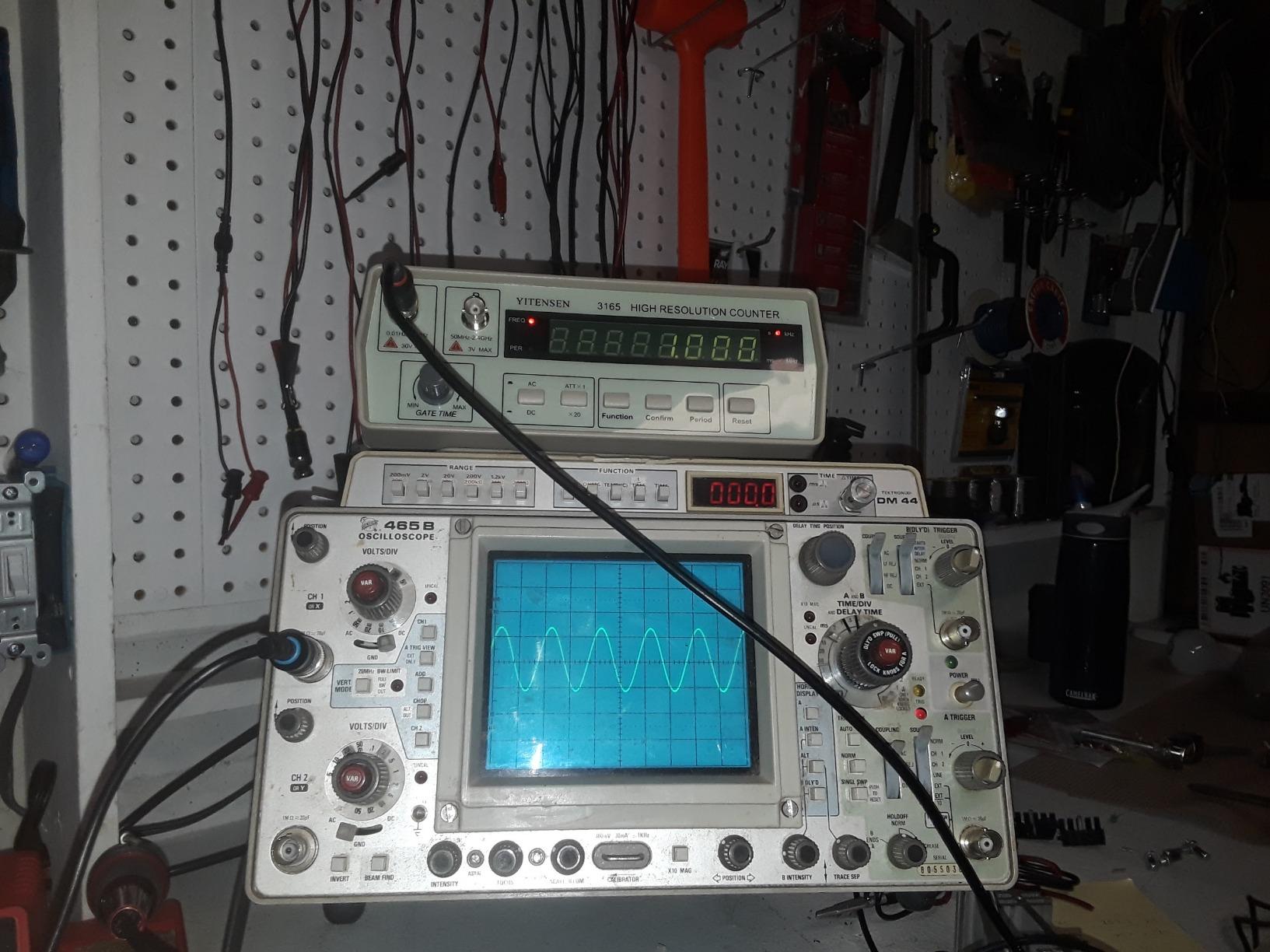
The same product family runs 15, 25, 30, 60 and 80 MHz versions, so the ceiling you pick is a budget decision rather than a platform decision. Buyers report that the crystal-referenced design holds frequency stability better than earlier budget DDS units were known for.
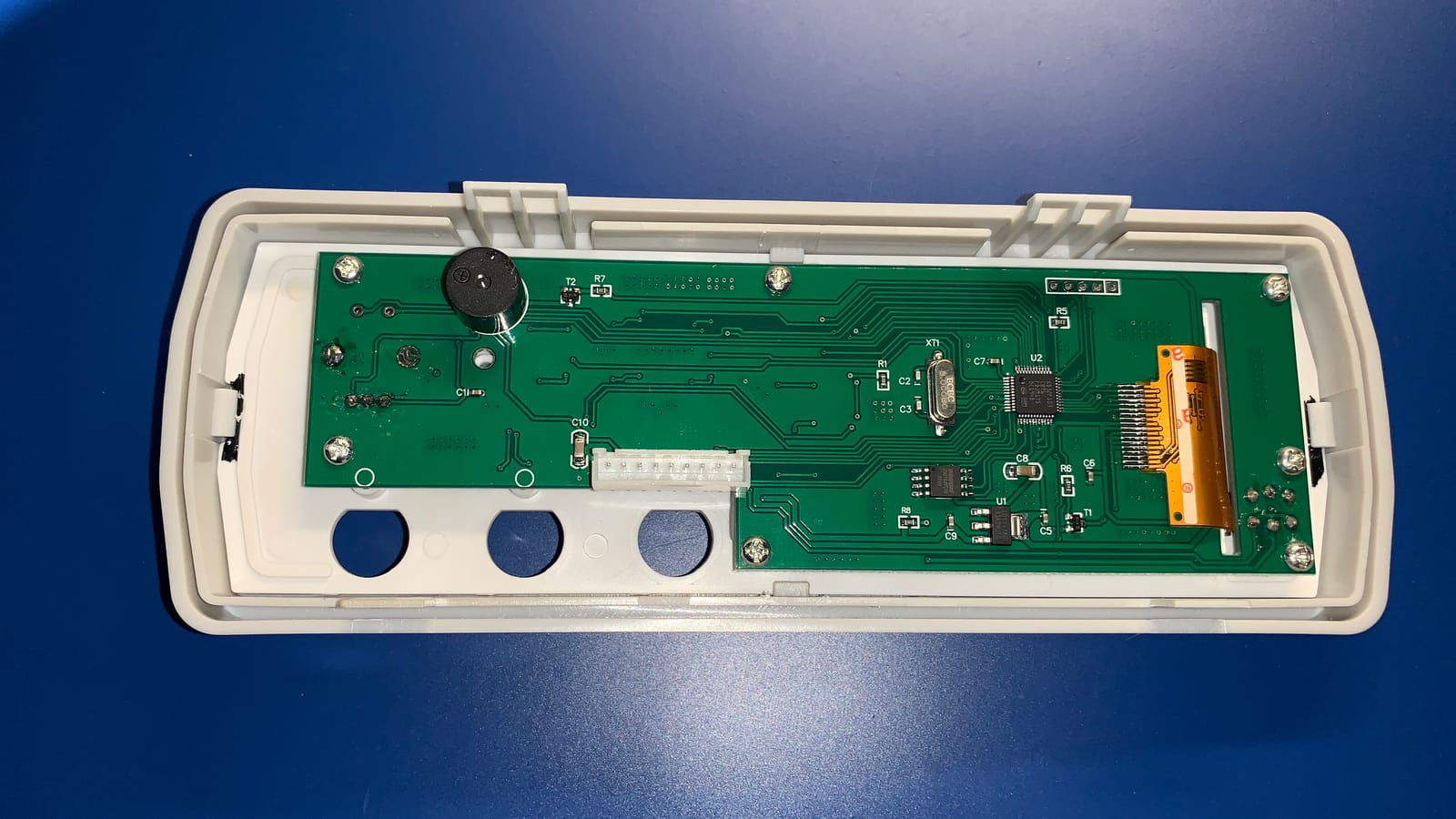
What you give up is drive and refinement. The outputs sag under load, the chassis feels light in the hand, and the controls are cramped relative to the box. For a learning bench or a student lab, none of that matters much.
Who the Koolertron suits
It suits students and first-time builders who want two channels and modulation-adjacent features without a big invoice. If your projects are audio, MCU timing, sensor loops and filter response below 15 MHz, it is the sweet spot.
It also suits anyone who repeats the same setups. Ninety-nine stored states means your go-to calibration rig is one button press rather than a rebuild.
When to skip the Koolertron
Skip it if you need low output noise into a sensitive amplifier. Budget DDS platforms run noisier than the bench units, and buyers consistently note the output level pulling down under load.
Skip it if you plan to script over SCPI from a PC. There is no documented remote interface in the platform, so automation is off the table.
3. FNIRSI DSO-510: Best Budget 2-in-1 Signal Generator
FNIRSI DSO-510 2-in-1 10MHz Handheld Oscilloscope DDS Signal Generator
10 MHz scope
50 kHz DDS output
Battery powered
2.8-inch LCD
Pros
- Working scope and generator in a pocket-sized handheld
- No mains ground reference so it is safe for floating automotive work
- Infinite afterglow catches transients a fast display would miss
- One-key AUTO makes measurement setup quick for beginners
Cons
- Generator output accurate only to about 50 kHz
- Voltage output noticeably off at higher setpoints
- Only one probe supported and the multiplier is not customisable
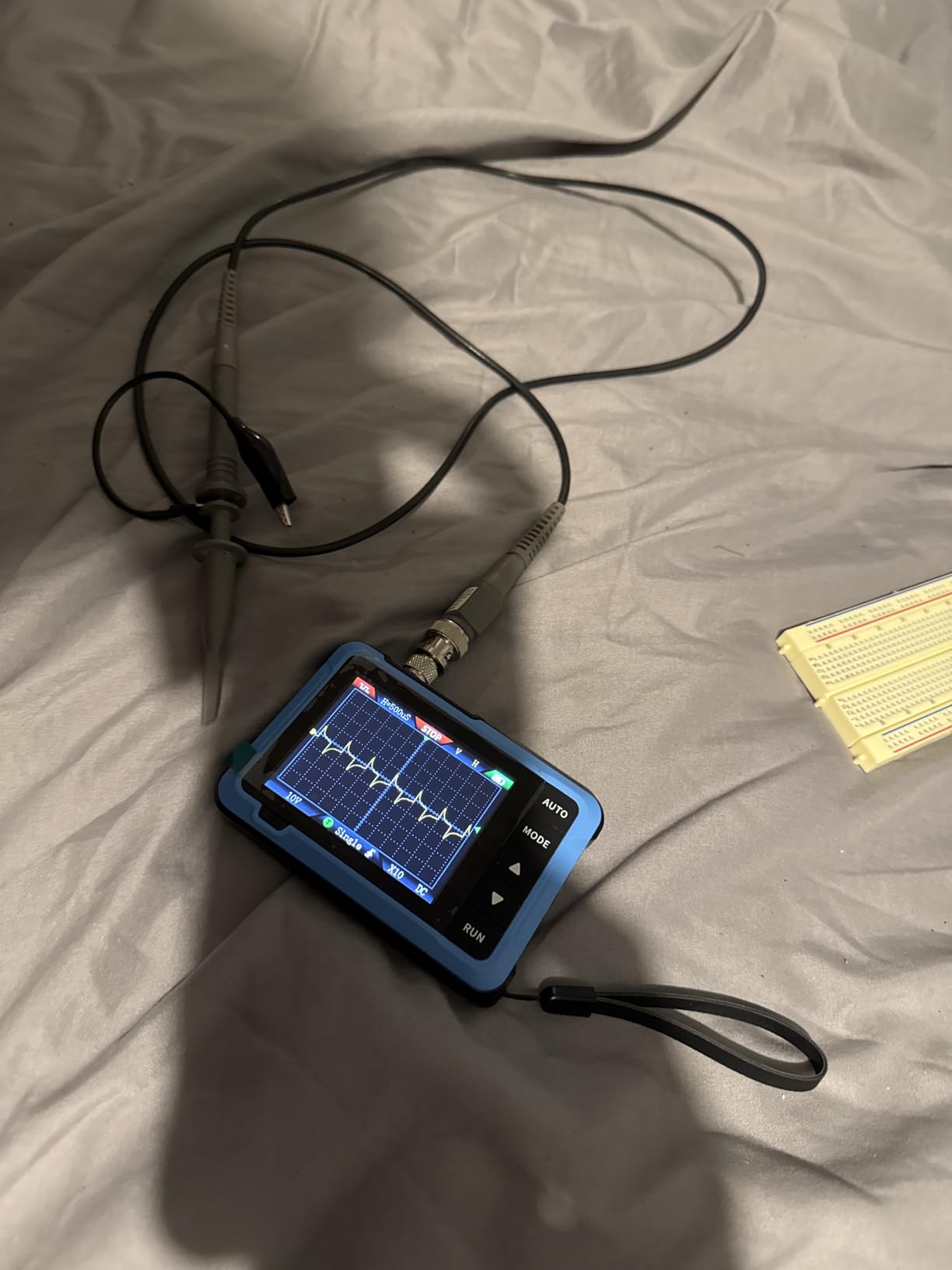
This is the one we recommend for anyone who works on cars, speakers or field repair rather than a desk. A 10 MHz scope at 48 MS/s with a 13-waveform DDS output in a battery-powered 14.1-ounce body covers an enormous amount of bench work for the least money here.
Battery operation is the underrated part. With no mains earth reference, the ground clip cannot give you a nasty surprise when you clip it to a vehicle chassis or an amplifier output, and that safety argument alone justifies it for automotive and floating measurements.
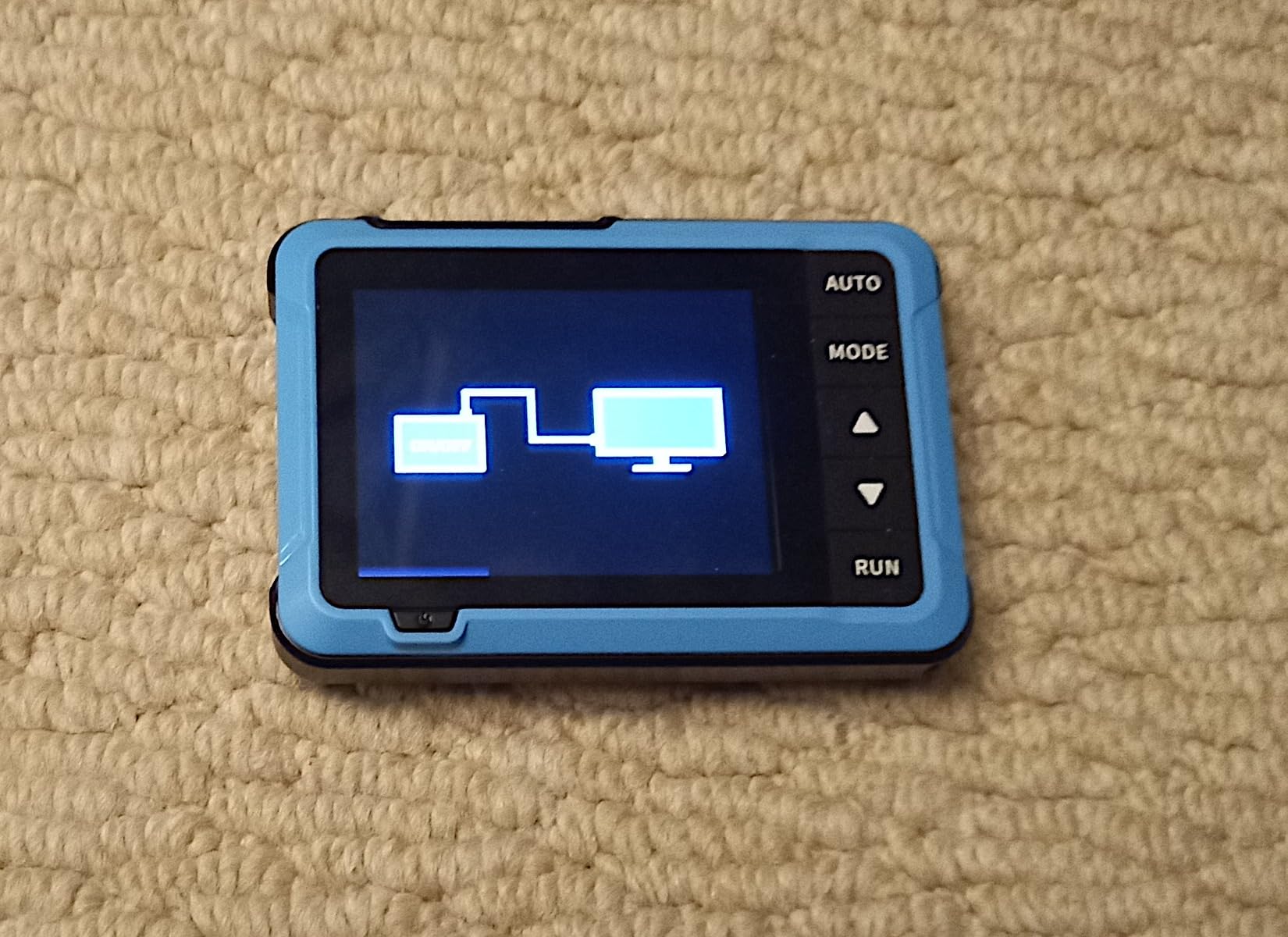
The limits are firm and worth stating plainly. The generator output tops out around 50 kHz, so it is an audio and MCU-timing source, not a filter response instrument. Buyers also report the voltage output reading low at higher setpoints — roughly 2.54 V p-p for a 3.0 V p-p setting — so calibrate your expectations against a meter once.
Returning to scope mode drops the generator frequency readout back to 1 kHz, and the menus take some learning. Neither is fatal, but budget an evening with the manual before you need the tool mid-project.
Who the DSO-510 suits
It suits car audio tuning, alternator and starter diagnosis, and any repair where mains-powered gear is awkward. It also suits a beginner who wants one device instead of two on a first shopping list.
If you are building a proper bench with a bench supply and a real scope, this is a companion rather than a replacement. Keep it in the drawer for field work.
When to skip the DSO-510
Skip it for filter characterisation, amplifier response work or anything above 50 kHz. That is the edge of its generator and the scope bandwidth is only 10 MHz with a single probe input.
Skip it if you need a second channel for comparison. One probe, one trace, no reference channel maths.
4. Seesii JDS6600 60MHz DDS Generator: Dual-Channel Budget Pick
Professional Upgraded DDS Signal Generator Counter, Seesii 60MHz LCD Display High Precision 200MSa/s Dual-Channel Arbitray Waveform Function Generator Frequency Meter
60 MHz sine
Dual channel
200 MSa/s
99 stored setups
Pros
- 60 MHz dual channel at 200 MSa/s with 0.1 percent stated precision
- Long-term owners report three-plus years of continuous use
- Counter reads accurately against a GPS-disciplined 10 MHz reference
- Sweep and pulse width measurement are both heavily used
Cons
- No start trigger output for sweep so a scope cannot sync to it
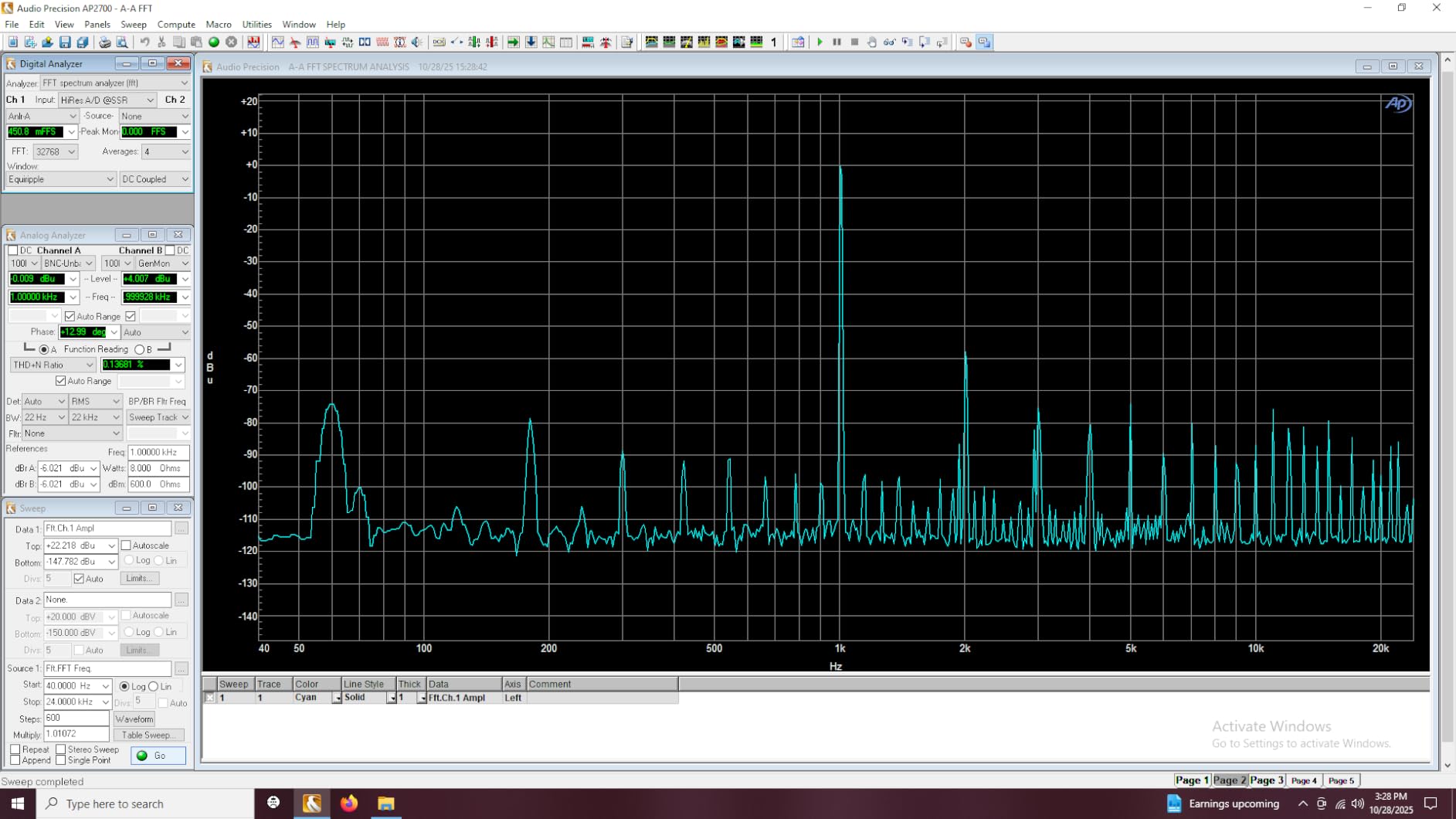
- Output noise is high enough to bother sensitive work
- Bundled power supply adds noise to readings
The JDS6600 is the unit we would pair with a mid-range scope for someone who wants 60 MHz of sine on two channels without stepping up a tier. Buyers with a decade of bench time behind it report no degradation, and the counter holds against a GPS-disciplined standard within its stated precision.
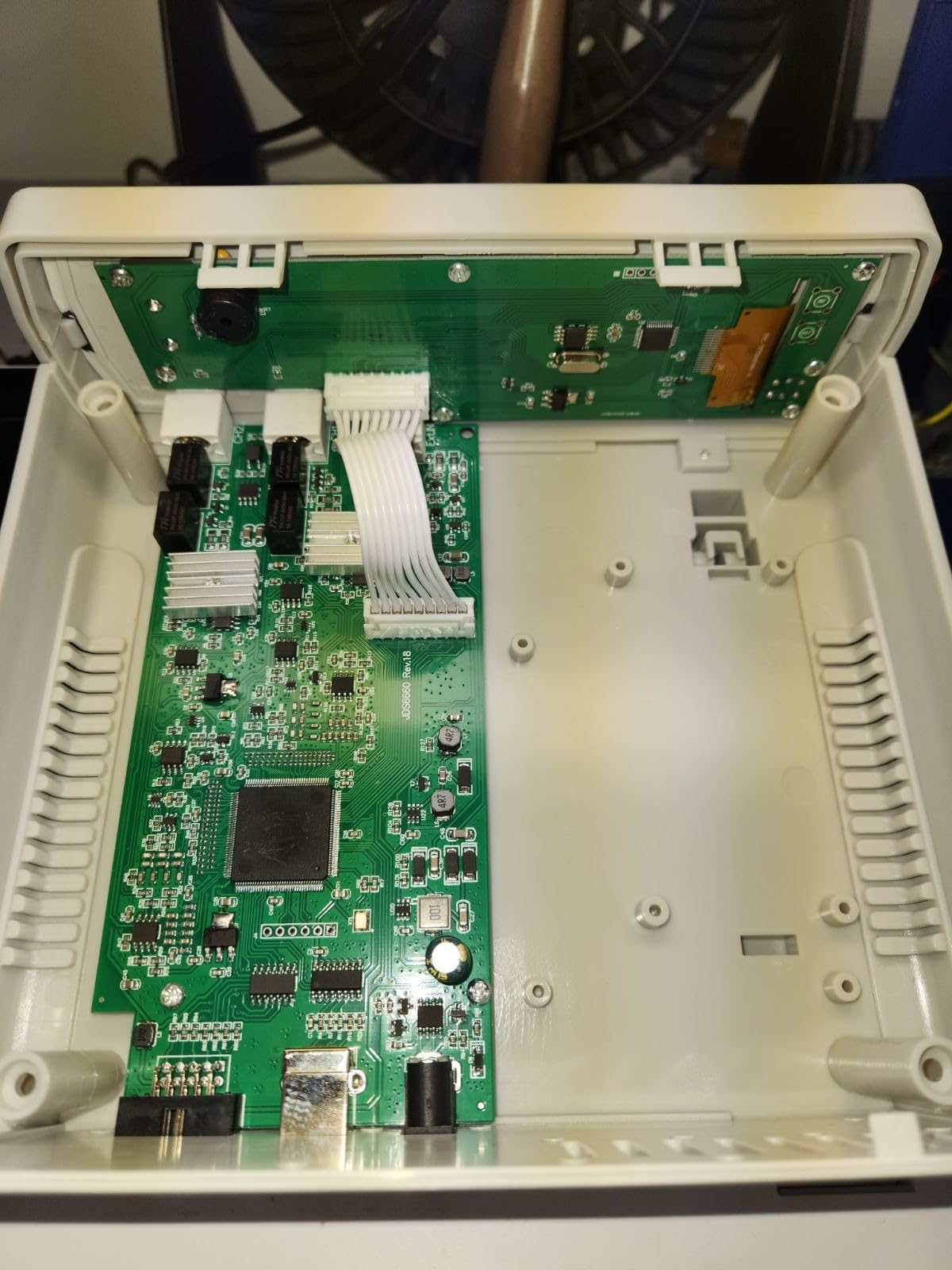
Dual-channel with independently adjustable duty cycle, 60 slots for user waveforms and a 20 V output ceiling cover more use cases than the price suggests. Sine output is clean and square transitions are in the region of 10 ns.
There is one hard limitation. There is no start or trigger output on sweep, so you cannot synchronise a scope to the sweep to plot filter response — the single most common job a home lab wants a sweep for. You can still sweep manually and read points.
Owners also report output noise, square wave overshoot on both edges, and a bundled power supply that injects noise into readings. For audio and low-sensitivity work that is fine; for a low-noise amplifier input it is not.
Who the Seesii suits
It suits anyone driving amplifiers, speakers, radio gear or motor control who wants two channels and 60 MHz on the bench. The long service life reported by owners makes it a safe second instrument for a lab that runs constantly.
It also suits a scope-synced workflow as a general-purpose source for everything except swept filter plots.
When to skip the JDS6600
Skip it if filter response is your main project. Without a sweep trigger output, the sweep feature cannot do the job it exists for on a benchtop instrument.
Skip it if your work is low-level audio or sensor conditioning. The output noise and the noisy bundled supply are the most cited complaints in the reviews.
5. Hantek DSO2D15: Best Oscilloscope With a Built-In Generator
Hantek DSO2D15 Digital Storage Oscilloscope 150MHz 1GSa/s 8M,2 Channel,2CH+1CH with Signal Source
150 MHz scope
1 GSa/s
8M memory
25 MHz built-in AWG
Pros
- 150 MHz bandwidth with 1 GSa/s and 8M memory depth
- Built-in 25 MHz arbitrary waveform generator with burst and modulation
- RS232 I2C SPI CAN and LIN decode is rare at this level
- Probes and connectors included in the box
Cons
- Built-in generator occasionally skips cycles and is not trustworthy for precision work
- No printed manual and thin documentation
- Shares a mains ground so floating work needs supply modification
If you have not bought a scope yet, this combination scope is the single instrument that gives you the most bench for the money. 150 MHz of bandwidth, 1 GSa/s sampling, 8M points of memory and two channels with independent knobs is a genuinely capable scope, and the 25 MHz built-in generator handles routine injection.
Protocol decode for RS232/UART, I2C, SPI, CAN and LIN is unusual below this level, and 32 automatic measurements with statistics save a lot of manual cursor work. Later examples also show the reliability complaints found in earlier reviews as resolved.
But we score this as a generator, and there the verdict is clear. Buyers report the built-in source occasionally skipping cycles, which makes it fine for a look at a signal and unsuitable for anything where the timing must be exact.
Who the Hantek DSO2D15 suits
It suits a first bench where one purchase should cover seeing and driving signals. If your work is MCU timing, UART and I2C debugging, or general repair, it is the most complete package available.
It also suits anyone who wants a scope now and plans to add a proper standalone generator later.
When to skip the DSO2D15
Skip it if precision output matters. A generator that skips cycles will quietly corrupt a measurement and cost you an afternoon of debugging the wrong circuit.
Skip it if you do floating measurements on mains-powered circuits without a battery-powered alternative. The shared ground is the same limitation that motivates the handheld approach.
6. Siglent SDG810 Function Generator: Best for Modulation Work
Siglent Technologies SDG810 Siglent Single Channel 10 mhz Bandwidth Signal Generator, Function Generator, Arbitrary Waveform Generator, 125 MSa/s Sampling Rate, Light Gray
10 MHz sine
Single channel
14-bit
125 MSa/s
Pros
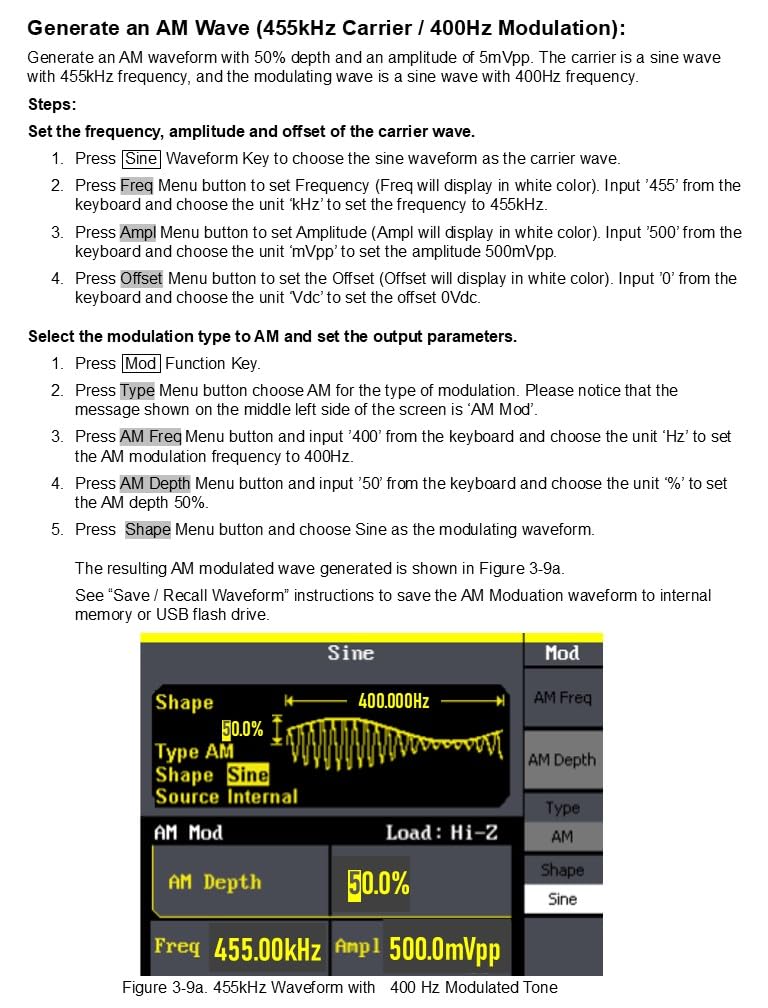
- Full modulation suite including AM DSB-AM FM PM FSK ASK and PWM
- Easy Pulse gives low jitter with fast edges
- 46 built-in arbitrary waveforms plus DC
- Users report frequency accuracy in the five-nines range
Cons
- Does not remember its last state after power cycling
- Basic analog waveforms show more distortion and noise than expected
- Single channel only with a small number of reported early failures
Nobody else in this lineup offers that modulation list at this level. AM, double-sideband AM, FM, PM, FSK, ASK and PWM on a single-channel 10 MHz source covers receiver alignment, envelope work and PWM motor testing in a single box.
The Easy Pulse engine produces low-jitter pulses with quick edges, and burst output can drive acoustic transducers for pulse-echo experiments. Forty-six built-in arbitrary waveforms plus DC means you rarely need a PC to shape a signal.
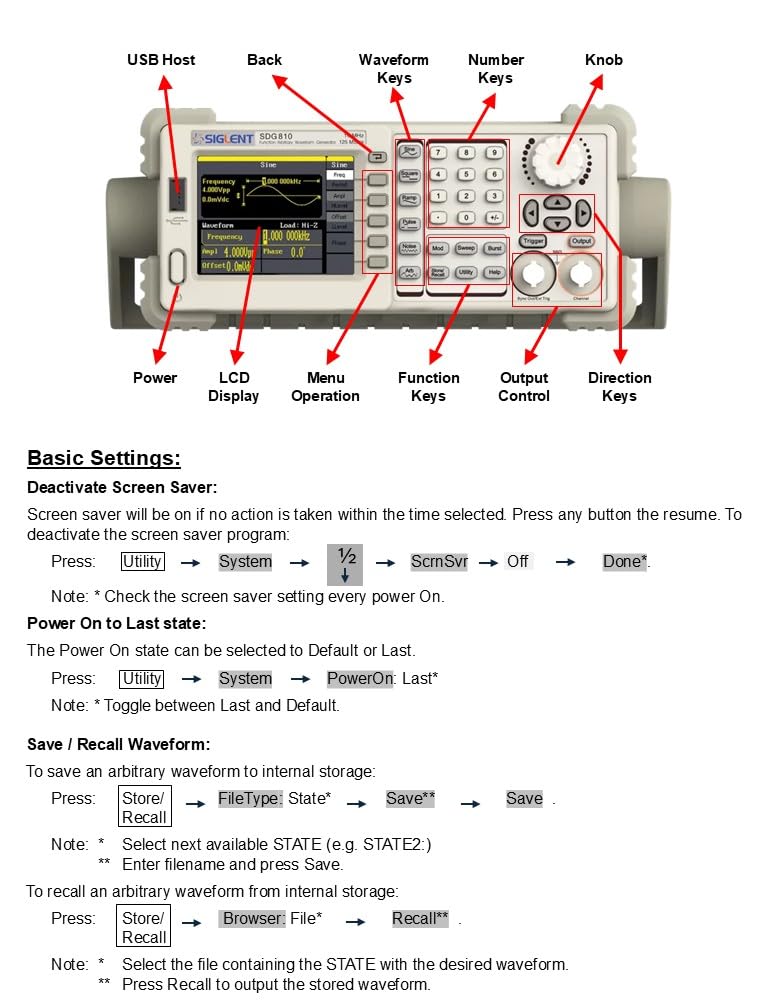
Owners use it for vintage radio alignment and audio repair at well below lab-grade pricing, and frequency accuracy is reported in the five-nines range. Setup store and recall is genuinely useful when you return to the same alignment repeatedly.
The catch is state retention. The unit does not remember its configuration after power cycling, so if you use it in bursts you will rebuild settings each session. Reviewers also note more distortion and noise on basic analog waveforms than the feature list suggests.
Who the SDG810 suits
It suits radio and audio repair benches where modulation types matter more than channel count. One channel is enough when you are aligning a receiver or injecting a PWM command into a motor driver.
It also suits anyone who wants burst mode, which is rare at this level and opens up transducer and pulsed-testing projects.
When to skip the SDG810
Skip it if you need two channels for comparison work. There is no second output, so quadrature and differential-style testing are out.
Skip it if you will leave it idle between sessions and expect it to come back ready. The lack of state memory is a genuine daily annoyance.
7. OWON DGE2070 Signal Generator: Best Portable Dual-Channel Unit
OWON DGE2070 70MHz Dual Channel Arbitrary Waveform Generator, 300MSa/s Sampling Rate, 14-Bit Resolution, 150 Built-in Waveforms, 3.6” LCD, Portable Signal Generator for Lab & Electronics Testing
70 MHz dual channel
300 MSa/s
14-bit
3.6-inch LCD
Pros
- 70 MHz dual channel at 300 MSa/s in a 1.85 pound body
- 150 built-in arbitrary waveforms on top of five standard shapes
- Crisp display with informative button markings
- Test leads ship in the box
Cons
- Accuracy reported lower than a comparable UNI-T instrument
- Level and amplitude control is awkward to adjust
- No printed manual and the documentation must be downloaded
The DGE2070 answers a question most lists skip: how do you get 70 MHz on two channels in something you can carry to a client bench? At 1.85 pounds with a 3.6-inch display it is the most portable real generator here, and 300 MSa/s with 14-bit resolution is a strong spec pair for the size.
Users who have used lab generators describe the menus as immediately familiar, which is not something we can say about every portable unit. AM, FM, PM and FSK modulation plus sweep and burst cover the mainstream use cases, and PC software remote control is included.
The recurring criticisms are specific and worth weighing. Accuracy is reported as lower than a comparable UNI-T instrument, the level and amplitude control is not user friendly, and the manual has to be downloaded and translated from the OWON site. The review base is short at 25, so treat the rating with appropriate caution.
Who the OWON suits
It suits people who work across sites or teach in multiple rooms and need real dual-channel bandwidth in a small box. The fast sine ceiling helps when you are aligning radio stages or clocking faster logic.
It also suits anyone who wants PC remote control without moving up a tier.
When to skip the DGE2070
Skip it if amplitude accuracy is the deciding factor on your bench. The comparison against the UNI-T in the reviews is the single most consistent negative comment.
Skip it if you dislike fiddly amplitude knobs. It is an odd control decision on an otherwise well-designed front panel.
8. UNI-T UTG932E Function Generator: Best Complete Box
UNI T UTG932E Function Generator Arbitrary Waveform Signal Generator
30 MHz dual channel
200 MSa/s
14-bit
Includes BNC leads
Pros
- BNC cables and a BNC-to-alligator lead ship in the box
- Dual channels with Ch1-Ch2 combining for differential signals
- Six modulation types plus 24 non-volatile waveform slots
- Built-in 6-digit frequency counter across 1 Hz to 30 MHz
Cons
- Switching supply noise and glitching when changing parameters
- Only 1.81 lb of mass for a unit often described as light duty
- One-star share of reviews among the highest here at 16 percent
The accessory bundle is the reason this unit is worth a look. It ships with BNC cables, a BNC-to-alligator lead, a power adapter, a paper manual and an eManual, which removes the single most common complaint about budget generators: arriving with nothing to connect it with.
Underneath, it is a 30 MHz dual channel with 200 MSa/s, 14-bit resolution and 1 Hz full-band frequency resolution. Ch1-Ch2 combining gives you differential-style signals from one box, and the six modulation types plus 24 non-volatile waveform slots cover normal bench needs.
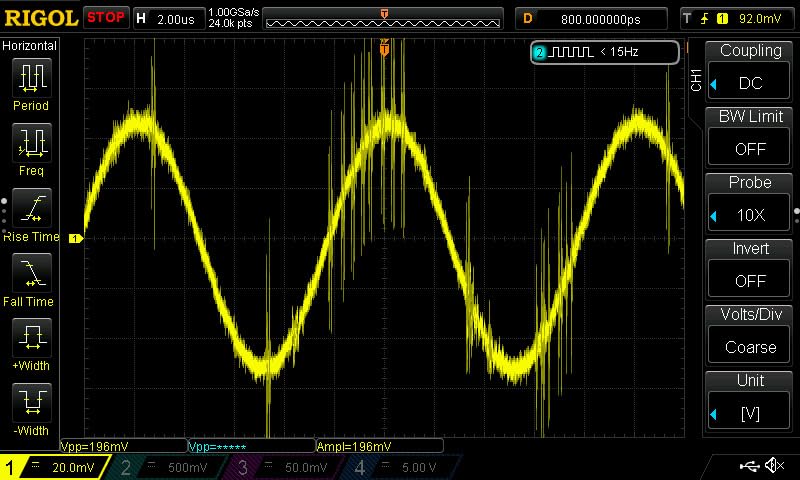
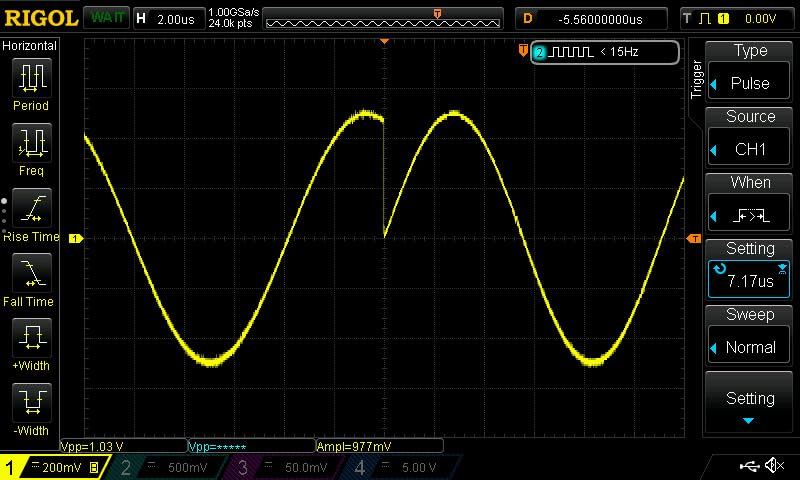
Two problems hold the rating down. Owners comparing it against the FY6900 report heavy switching-supply noise and glitching whenever frequency, amplitude or phase changes, which matters if you are watching a settled output. And with 16 percent of reviews at one star, some boxes failed with little response from the manufacturer.
The 1.81 pound weight is another tell. For a unit that sits on a bench driving things, a bit more mass would have made it feel less fragile.
Who the UTG932E suits
It suits a builder who wants everything in the box on day one. If accessory shopping is a friction point, this removes it entirely, which matters more than it sounds when you are trying to get a bench running.
It also suits ham radio alignment and pro audio work, which are the use cases the manufacturer names, with a frequency counter accurate enough to skip a separate purchase.
When to skip the UTG932E
Skip it if you work with low-level signals. Switching-supply noise leaking into the output is the most damaging issue for audio and sensor work, and it is not fixed by software.
Skip it if reliability history is your priority. The one-star share is the highest in this lineup, and the reported failures came with little response from the manufacturer.
9. DOMINTY FY6900 60MHz: Best for Student Labs
DOMINTY Function Generator AC100-240V FY6900 60MHz Double Channel DDS Function Arbitrary Waveform Signal Generator Frequency Meter 250MSa/s Sine Square/Triangle/Pulse/Sawtooth Wave/Staircase Wave
60 MHz dual channel
250 MSa/s
Frequency meter
Floating ground
Pros
- Dual channel 60 MHz at 250 MSa/s with a frequency meter and staircase waveform
- Floating ground output is safer for bench experiments
- No fan inside and newer revisions removed switching supply noise
- Popular with students doing physics and instrumentation labs
Cons
- Waveform restarts every time any control is turned
- Tiny hard-to-read display and an awkward encoder knob
- No trigger output in sweep mode so scope-synced plots are impossible
The FY6900 is the one we recommend for a shared teaching bench. Dual channel, 60 MHz, 250 MSa/s, an integrated frequency meter and a staircase waveform on top of the standard set is a lot of capability for a student budget, and it sits in the top 25 of Amazon’s function generator category.
Floating ground output means there is zero ohms between AC ground and the BNC shells, which makes it safer for the kind of experiment students improvise. Buyers who inspected the hardware also note the newer supply boards are cleaner than the original revisions, and there is no fan to wear out.
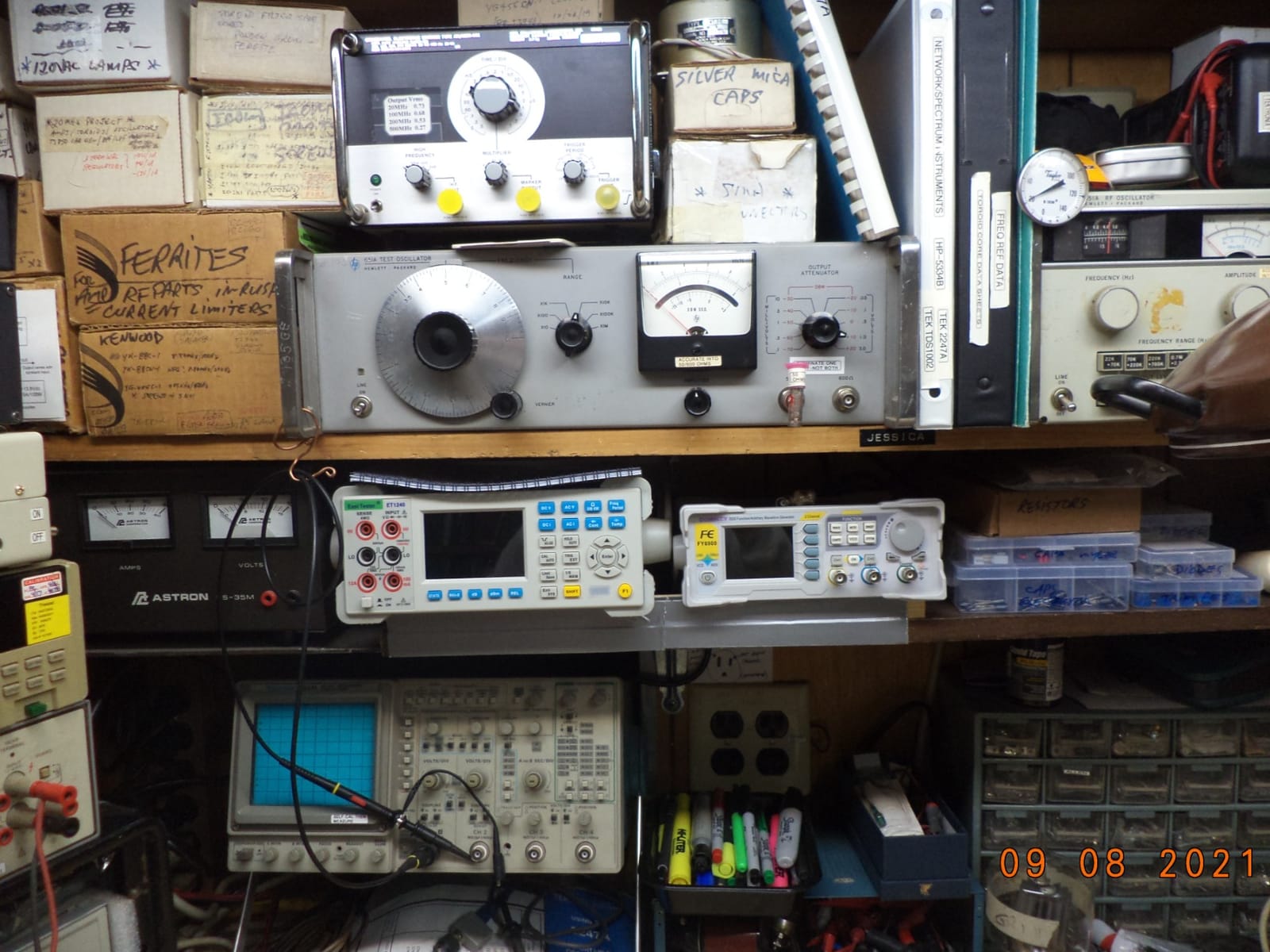
Ergonomics are the weak point. Every control change restarts the waveform, which is a reset rather than a glitch but behaves like one when you are mid-measurement. The display is small, the digits are hard to read, and enough owners have printed replacement encoder knobs to make it a known community fix.
Like the Seesii, it has no trigger output in sweep mode. Sweep is only useful when you can synchronise a scope to it, so treat the sweep feature as a convenience rather than a measurement tool here.
Who the FY6900 suits
It suits students and teachers who need two channels and 60 MHz without a lab invoice. The frequency meter removes one instrument from the shopping list, and the floating ground simplifies setup for inexperienced users.
It also suits anyone building a bench around learning rather than measurement, where ergonomics matter less than capability per pound.
When to skip the FY6900
Skip it if you take measurements seriously. The restart-on-every-input behaviour and the tiny display will slow you down more than any missing specification.
Skip it if you plan swept filter response work. No trigger output means the sweep cannot be synchronised to a scope.
10. Goupchn PSG9060: Programmable but Not Our First Buy
Goupchn 60MHz Dual Channel Programmable DDS Signal Generator
60 MHz dual channel
Programmable sequences
External voltage control
Pros
- Waveform
- output time and output order can be scripted for automated test runs
- Frequency
- amplitude and duty cycle can be swept by an external control voltage
- Phone app and PC software control with one-key firmware upgrade
- Leads and cables included in the package
Cons
- Lowest rating in this lineup at 3.8 stars
- Multiple owners report units that would not hold a set frequency
- Firmware updates failed on some examples and support went unanswered
The idea behind this unit is genuinely good. You can script output type, output time and output order so the generator runs a test sequence on its own, and frequency, amplitude and duty cycle can be swept by an external analog control voltage for industrial debugging work.
The box is complete too, with BNC-to-BNC and BNC-to-alligator leads, a USB data cable and a quick start manual. Dual-channel modulated output covers the mainstream cases and the phone app adds remote control on the bench.
What stops us recommending it is reliability. Several owners report examples that would not hold a frequency against a GPS-disciplined reference and instead counted down from the set value, which is a failure of the one job the instrument exists to do. Modulation also drops out when you switch to the main signal screen to adjust a setting.
Support is the second problem. Requests reportedly went to engineering with no response, firmware would not update on some units, and the programming software is hard to find after purchase. Several buyers switched to a different dual-channel unit after these problems.
Who the PSG9060 suits
It suits someone whose work genuinely needs scripted output sequences or external-voltage control and who is comfortable troubleshooting firmware themselves. The automation angle is real and no other unit here combines it with 60 MHz dual channel.
It also suits a builder who wants to experiment with voltage-controlled sweeping as a learning project.
When to skip the PSG9060
Skip it if the generator has to hold a frequency accurately, which is true of nearly all bench work. The reported drift is not a specification nuance, it is the core function failing.
Skip it if you need vendor support. With a 3.8 average and absent support, you are the last line of defence for firmware problems.
How to Choose a Function Generator for Your Home Lab
How much bandwidth do I actually need?
Match the bandwidth to the highest frequency in your project, then subtract: usable square and pulse output is always well below the headline sine number, which is the category’s most repeated complaint and the reason we would not buy on the headline figure alone.
Audio and DC work (20 Hz to 20 kHz): Anything above 1 MHz is wasted. The Koolertron 15 MHz, the Siglent SDG810 at 10 MHz and the handheld FNIRSI all cover this band fully.
MCU timing, sensor loops and op-amp stages (up to 1 MHz): 15 to 30 MHz of sine gives headroom for square wave edges, which are always slower than the sine rating. The UNI-T UTG932E at 30 MHz fits comfortably.
Filter and amplifier response work (up to 15 MHz): You want a fast sine plus usable square edges. The Seesii, the DOMINTY and the OWON at 70 MHz all land here.
Radio IF work and clocking fast logic (up to 40 MHz): The Siglent SDG2042X is the unit in this list we would put on that bench, and radio technicians single it out for two-tone and IF injection work.
Above 40 MHz: Out of scope for a home lab. RF signal generators and vector baseband sources are professional instruments, and buying one to satisfy a number on a spec sheet is how people waste money.
Channels: one or two?
Two channels change what you can measure, not just how many signals you can produce. The practical uses are driving a filter from one output while using the other as a reference clock, generating quadrature for stepper driver testing, and comparing two amplifier stages directly.
One channel is enough for a single amplifier sweep, sensor simulation, and MCU clock injection. If you cannot name the second signal you would generate, save the money.
Why your measured amplitude is half what you set
This is the number one beginner complaint on electronics forums and no competitor roundup explains it, so here it is. Function generators have a 50 ohm source impedance built in, and there are two different reference loads in play.
Into a high-impedance load — a scope input with its 1 MΩ impedance — the generator delivers approximately the amplitude you set. Into a 50 ohm load, the voltage divides evenly between the source impedance and the load, so a generator set to 10 V p-p delivers roughly 5 V p-p.
Amplitude also falls with frequency, because the output stage cannot swing as far at the top of its range. So if your set value and your scope reading disagree, check the load first and the frequency second before assuming the unit is faulty. Our guide to picking bench instruments that need extra accessories covers the related problem.
Accessories and total cost of ownership
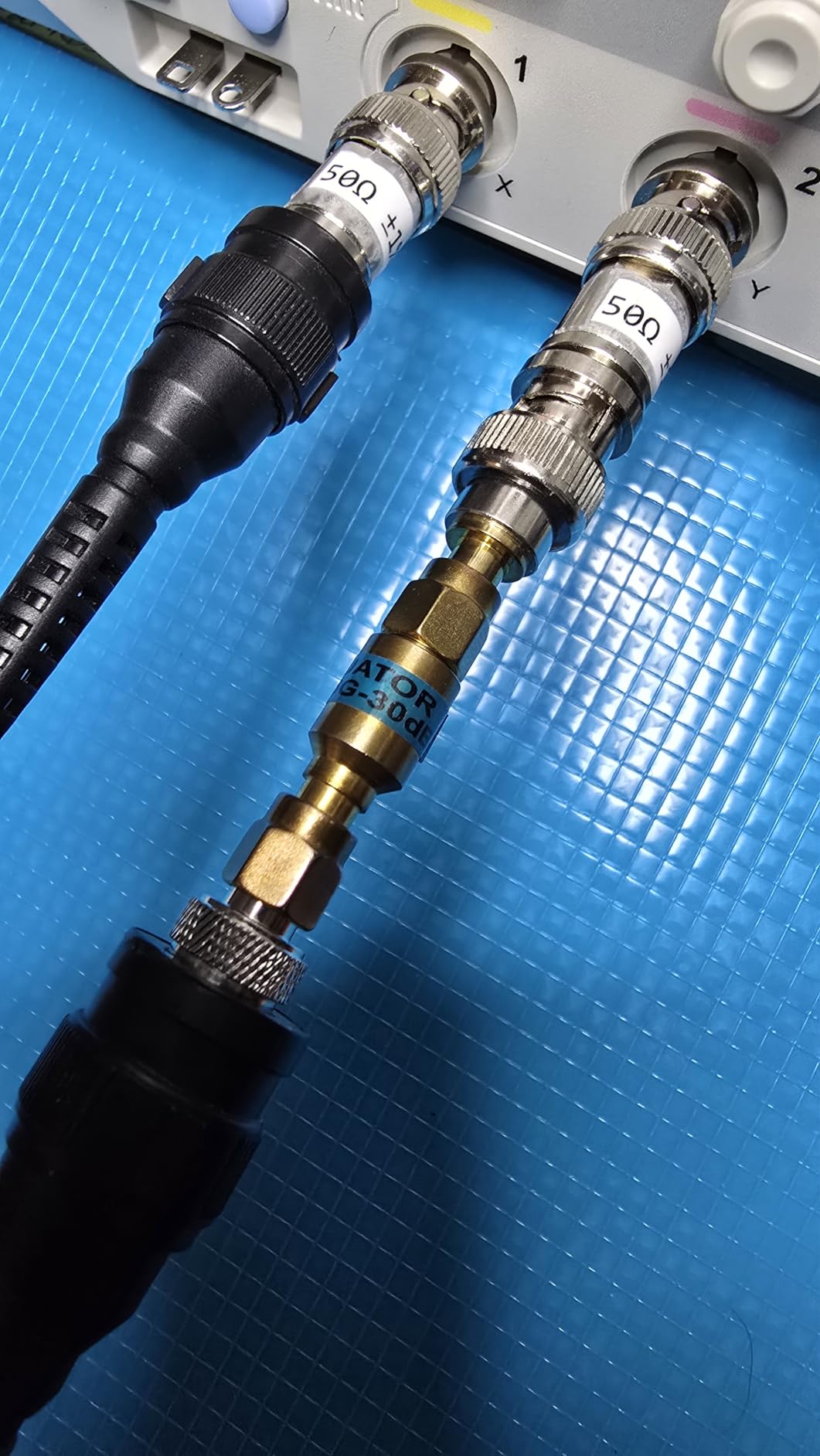
Most benchtop function generators ship with no leads at all. You will want at minimum two BNC-to-BNC coax cables, one BNC-to-alligator lead for clipping onto a breadboard or a component lead, and a set of 50 ohm terminators if you are working in RF.
The UNI-T UTG932E is one of the few units in this roundup that includes BNC cables, an alligator lead and a manual in the box. OWON, Goupchn and the DOMINTY also include at least some leads. For everything else, budget for the cable set before the instrument arrives, because a generator with no BNC cable is a very expensive paperweight.
What a home lab does not need
Skip RF signal generators above 100 MHz, vector I/Q baseband sources, and anything sold on traceable calibration certificates. Those serve compliance and RF product work, not a bench where you are debugging your own circuits.
Also skip buying the generator first. A bench supply and a decent multimeter do more for a beginner’s projects than a fast sine source does. If you are still assembling a bench, our first-kit priority guide covers the order that gets you measuring sooner.
Frequently Asked Questions
What is a function generator used for?
A function generator produces repeating voltage waveforms – sine, square, triangle and pulse – at a frequency and amplitude you set. You inject that known signal into a circuit under test and watch the response on an oscilloscope, which makes it the tool for filter response, amplifier gain, sensor simulation, ADC injection and microcontroller timing.
Is an oscilloscope the same as a waveform generator?
No. An oscilloscope measures and displays voltage over time; a function generator produces the signal. Many oscilloscopes include a built-in generator, which is usually fine below 100 kHz and single channel work, but lacks a second independent channel, deep waveform memory and remote control.
How much function generator bandwidth do I need?
Match it to the highest frequency in your project, not to the largest number available. Audio and microcontroller timing work needs a few MHz, filter and amplifier response work needs 15 to 40 MHz, and anything above 40 MHz is outside what a home lab normally uses.
Are cheap DDS function generators accurate enough?
For hobby and student work, generally yes. Budget DDS units do dual-channel work, modulation and sweep competently. For anything needing traceable calibration, low output noise, or verified frequency accuracy against a reference, choose a bench instrument from a brand with published documentation.
Why is my function generator output half the expected amplitude?
The output has a 50 ohm source impedance. Into a 50 ohm load the voltage divides between the source and the load, so a generator set to 10 V p-p delivers about 5 V p-p. Into a high-impedance scope input you get close to the set value, and amplitude falls further as frequency rises.
Do function generators come with test leads?
Most do not. A BNC-to-BNC cable and a BNC-to-alligator lead are the two you need on day one, and they are usually the most common accessory people forget to order. The UNI-T UTG932E in this roundup is one of the few that includes both in the box.
Which Function Generator Should You Buy in 2026?
If you want one answer for a home lab in 2026, the Siglent SDG2042X is our pick. Two independent channels, 16-bit vertical resolution and Ethernet remote control cover everything a hobby bench realistically asks of a signal source, and the review base is large enough that the weaknesses are documented rather than surprising.
Below it, the Koolertron 15 MHz is the strongest value in the lineup by feature count and review volume, and the FNIRSI DSO-510 is the right first purchase if you work away from a desk. The Siglent SDG810 wins for modulation, the OWON DGE2070 wins for portability, and the UNI-T UTG932E wins on what arrives in the box.
Before ordering anything, check whether your oscilloscope already has a built-in generator. If it does and your projects stay under 100 kHz on one channel, keep the money and read our guide to building out a bench one instrument at a time.