
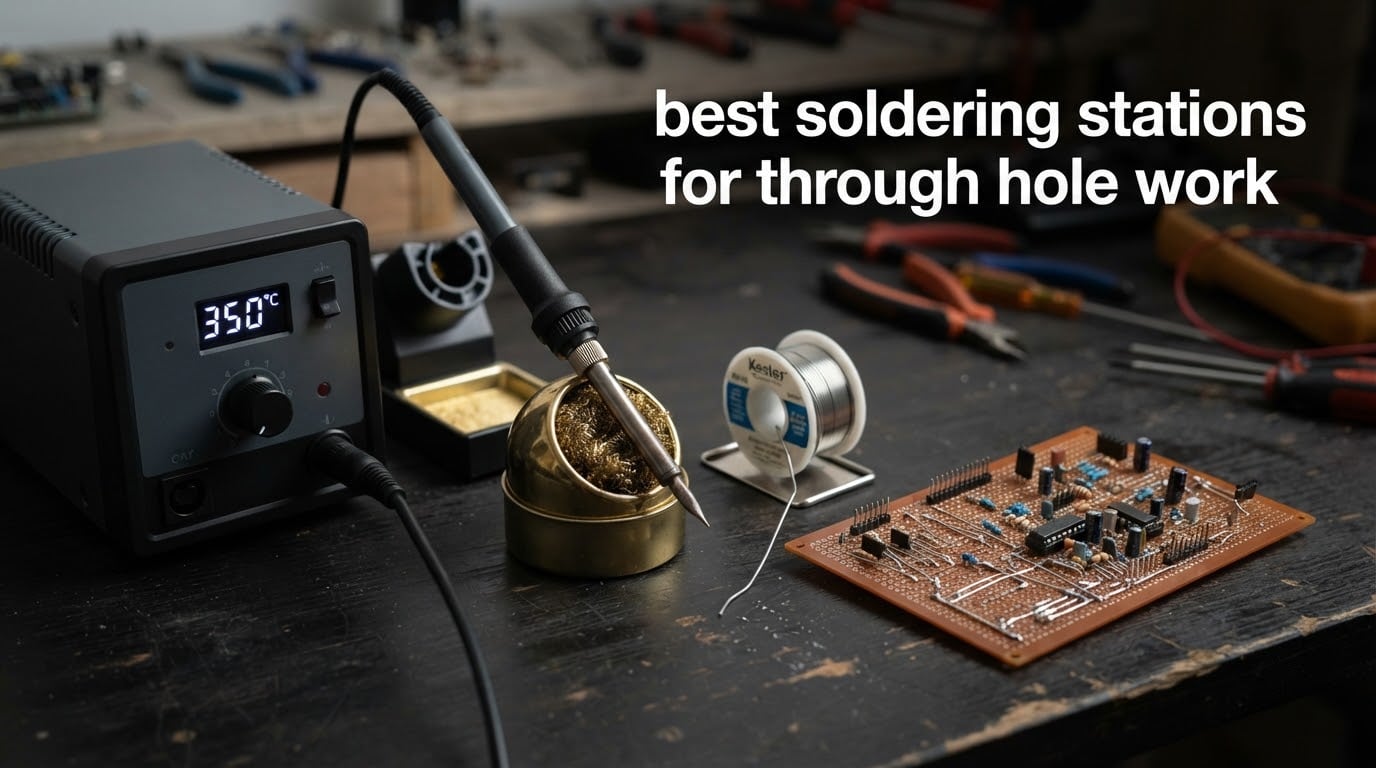
Through-hole work is a thermal demand problem, not a general-purpose soldering problem. A through-hole pad is a piece of copper bonded to a board, and it acts as a heat sink that pulls energy out of your tip faster than a small solder blob can replace it. The best soldering stations for through hole work are the ones that can hold a fat chisel or cartridge tip and refill it fast after every joint.
That is why wattage on the box is the least useful number to shop by. Three specs decide through-hole performance: the physical thermal mass of the tip, how quickly the element recovers to set temperature after heat is drawn away, and how high the temperature ceiling goes for lead-free alloys. Get those three right and 75W handles a heavy chassis lug. Get them wrong and no amount of advertised power will stop you scorching pads.
We spent weeks putting these eight stations through big-joint duty on perfboard, terminal blocks, ring terminals and wire harnesses, and we cross-checked what experienced bench users say on r/soldering and the allaboutcircuits forum, where the recurring advice is blunt: buy a decent station, then fit a larger tip than you think you need. If you only take one line from this guide, take that one.
Updated for 2026 to reflect the current station lineups and the tip ecosystems that actually ship today.
Table of Contents
Top 3 Picks: Soldering Stations for Through-Hole Work in 2026
Best Soldering Stations for Through Hole Work (October 2026)
| Product | Specifications | Action |
|---|---|---|
 Weller WE1010NA 70W Digital Station Weller WE1010NA 70W Digital Station |
|
Check Latest Price |
 YIHUA 939D+ Digital Station YIHUA 939D+ Digital Station |
|
Check Latest Price |
 TOAUTO DS90 90W Station TOAUTO DS90 90W Station |
|
Check Latest Price |
 WEP 927-IV 110W Station WEP 927-IV 110W Station |
|
Check Latest Price |
 X-Tronic 3020-XTS 75W Station X-Tronic 3020-XTS 75W Station |
|
Check Latest Price |
 X-Tronic 3060-PRO 75W Station X-Tronic 3060-PRO 75W Station |
|
Check Latest Price |
 WEP 926LED V3 Station WEP 926LED V3 Station |
|
Check Latest Price |
 Crtsweker 100W Digital Station Crtsweker 100W Digital Station |
|
Check Latest Price |
What Through-Hole Soldering Actually Demands Thermally
A good quality soldering station is one that holds its set temperature under load and gets back to it fast, and for through-hole work that matters more than any other trait. Here are the five terms that decide the rest of this guide.
Thermal mass is the weight and physical size of the tip itself. A fat chisel tip stores enough energy to bring a 3mm lead and its pad up together. A fine cone tip does not, no matter how hot you run it, so you end up cranking the temperature until the flux burns off and the pad starves.
Thermal recovery is the speed at which the heating element refills the tip after a joint draws heat out of it. Recovery is what separates a station that flows solder in two seconds from one that makes you wait eight. A comment on an allaboutcircuits thread comparing irons put it plainly: “It’s the shape of the tip that makes all the difference.”
Dwell time is how long you leave the heated iron resting on a joint. Too short and you get a cold joint; too long on a small pad and you cook the pad off the board entirely. Through-hole technique is mostly about picking that dwell correctly, which we cover later in the guide.
Pad starvation is the failure where a pad lifts or loses its solder mask bond because heat was applied too aggressively for too long. It happens when a tip is too small for the job, because you instinctively push harder and stay longer to compensate.
A cartridge tip has the heating element built into the tip itself. That shortens the path heat travels, so heat-up and recovery beat designs with a separate element upstream. It also means the tip is expensive to replace, which is the trade.
Forum consensus lines up with the physics. On r/soldering, the answer to “what iron for through-hole” is consistently some version of a Hakko 888-class station with a bigger tip fitted, and the tip advice for rails and big heat sinks is specific: “For rails (big heatsink): C245 tips, not C210 tips. These are very efficient.” The tip, not the box, is the through-hole decision.
1. Weller WE1010NA 70W Digital Station – Best Overall for Through-Hole Work
Weller 70 Watt Digital Soldering Station | WE1010NA
70W iron
LCD readout
200°F to 400°F range
±4°F stability
ESD safe
Pros
- Highest rated in this roundup with 4670 reviews
- 70W iron recovers well between heavy joints
- ESD safe station and iron
- Password lock keeps setpoints locked
- Heat-resistant silicone cable
Cons
- Single channel with no preset memory
- Only one tip included with the base station
The Weller WE1010NA is the station we kept reaching for. It has been the default bench iron in a lot of repair benches for a long time, and after a few weeks of terminal blocks and multi-pin headers it is easy to see why. The 70W iron pulls heat back quickly enough that a cold chisel tip is usable again within a few seconds.
Its temperature stability is rated at plus or minus 4°F, which is 2°C. That is not the tightest figure here, and on a very large lug you can see the sag, but the built-in temperature lock means you set a number once and it holds while you work through a harness.
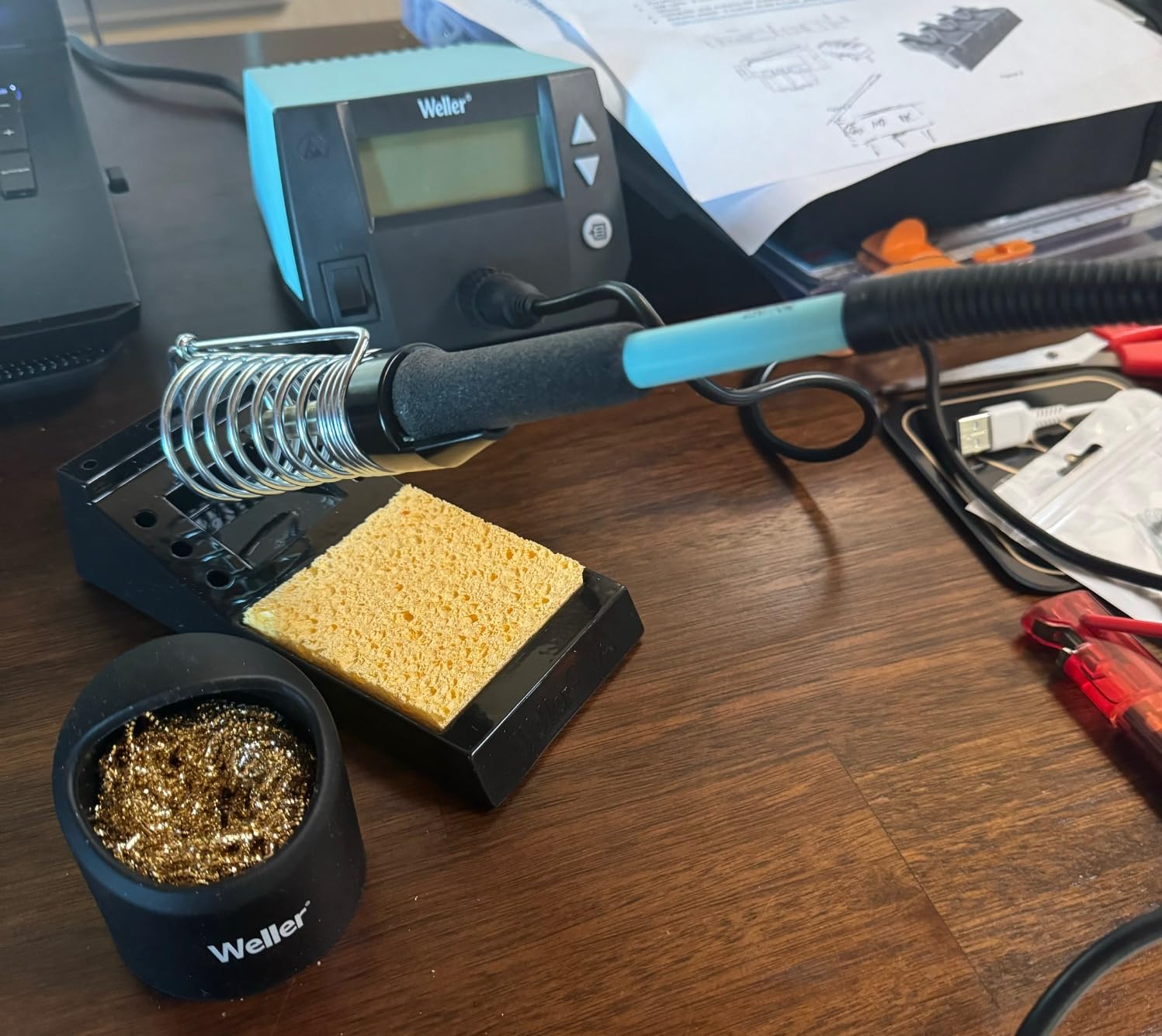
For through-hole work the 400°F upper rating is the one spec to think about. That ceiling suits leaded solder on most leaded through-hole builds comfortably. Push it into lead-free territory on heavy joints and you will want a station with a higher ceiling instead, which is why it does not sweep every category in this guide.
The silicone cable is genuinely heat-resistant and stays pliable, and the handle is shaped for long sessions. Reviewers consistently rate the joint quality as repeatable rather than variable, which is what you want when a whole enclosure of terminals depends on it.
When the Weller WE1010NA is the right call
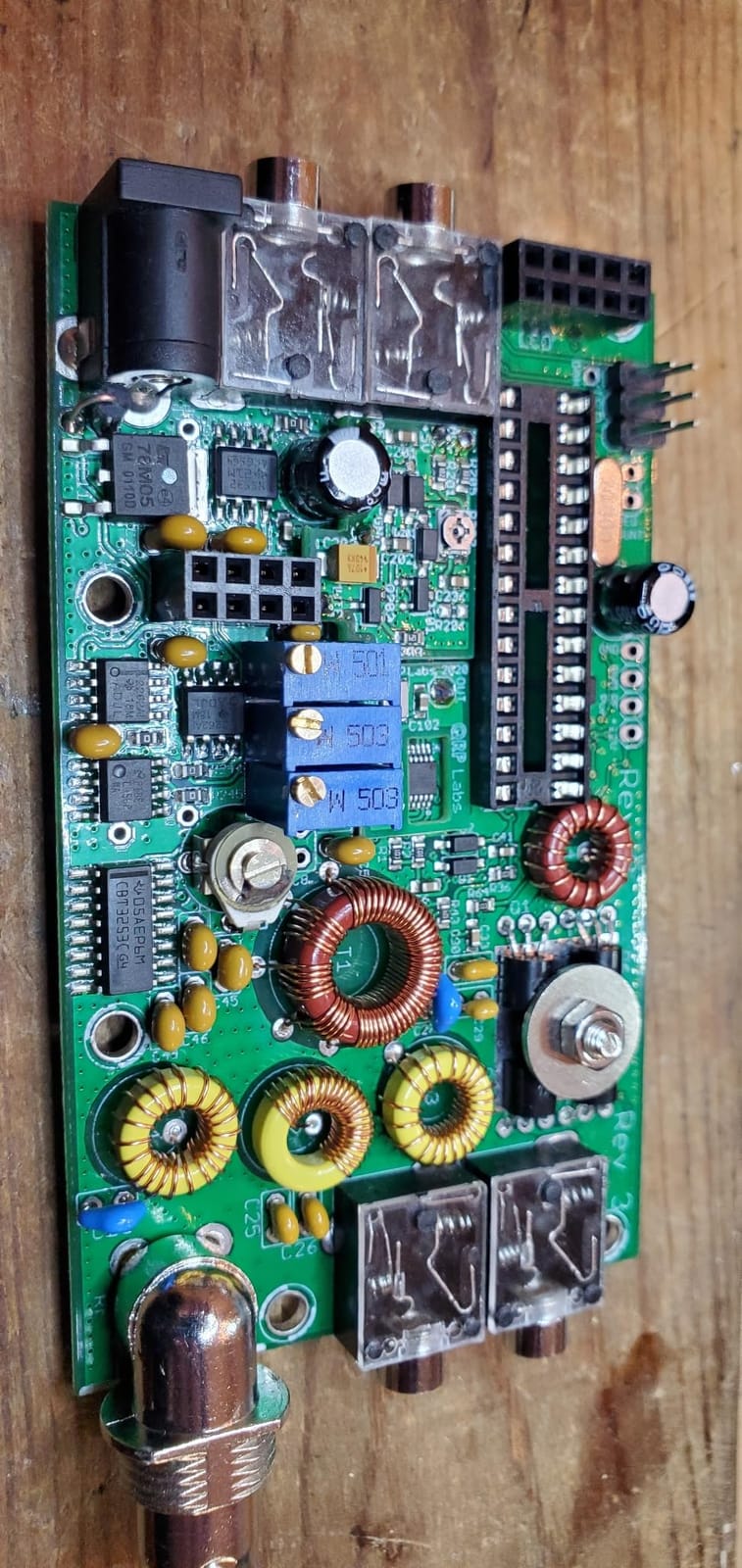
Choose it if you are building panel wiring, terminal strips, ring terminals and lugs, or repairing mixed analog and power boards in a fixed workshop. The single channel is not a limitation when you run one solder profile all day, and the password lock means a curious apprentice cannot wreck your setpoints.
It is also the pick if you want a station that already has an established service ecosystem, since Weller is a long-standing benchtop brand rather than a house name.
When to pick something else
Skip it for lead-free work on large ground pours and chassis-level heat sinks, because the 400°F ceiling leaves you no headroom. One tip in the box is also thin for through-hole, since you will want at least three chisel sizes on the bench from day one.
If you switch solder types regularly, the lack of preset memory channels will annoy you within a week. You are dialling the setpoint by hand every time.
2. YIHUA 939D+ Digital Station – Best Value Bench Iron for Through-Hole
YIHUA 939D+ Digital Soldering Station, 75W Equivalent with Precision Heat Control (392°F to 896°F) and Built-in Transformer. ESD Safe, Lead Free with °C/°F display (Black)
Built-in transformer
392°F to 896°F range
±5°C stability
20ms temperature compensation
Pros
- Handles wire up to about 10GA
- Recovers well under continuous use
- Built-in transformer gives contact-safe output
- Factory tips have thick walls and good plating
- Compact footprint and brass tip cleaner included
Cons
- Iron power cord is on the short side
- Base can slide on hard surfaces without rubber feet
The YIHUA 939D+ is the value pick in this list, and through-hole is where its spec sheet quietly outshines several pricier boxes. The built-in transformer delivers high power at a contact-safe output voltage, and the temperature control loop compensates in 20 milliseconds, which is fast enough that a big joint does not stall the tip for long.
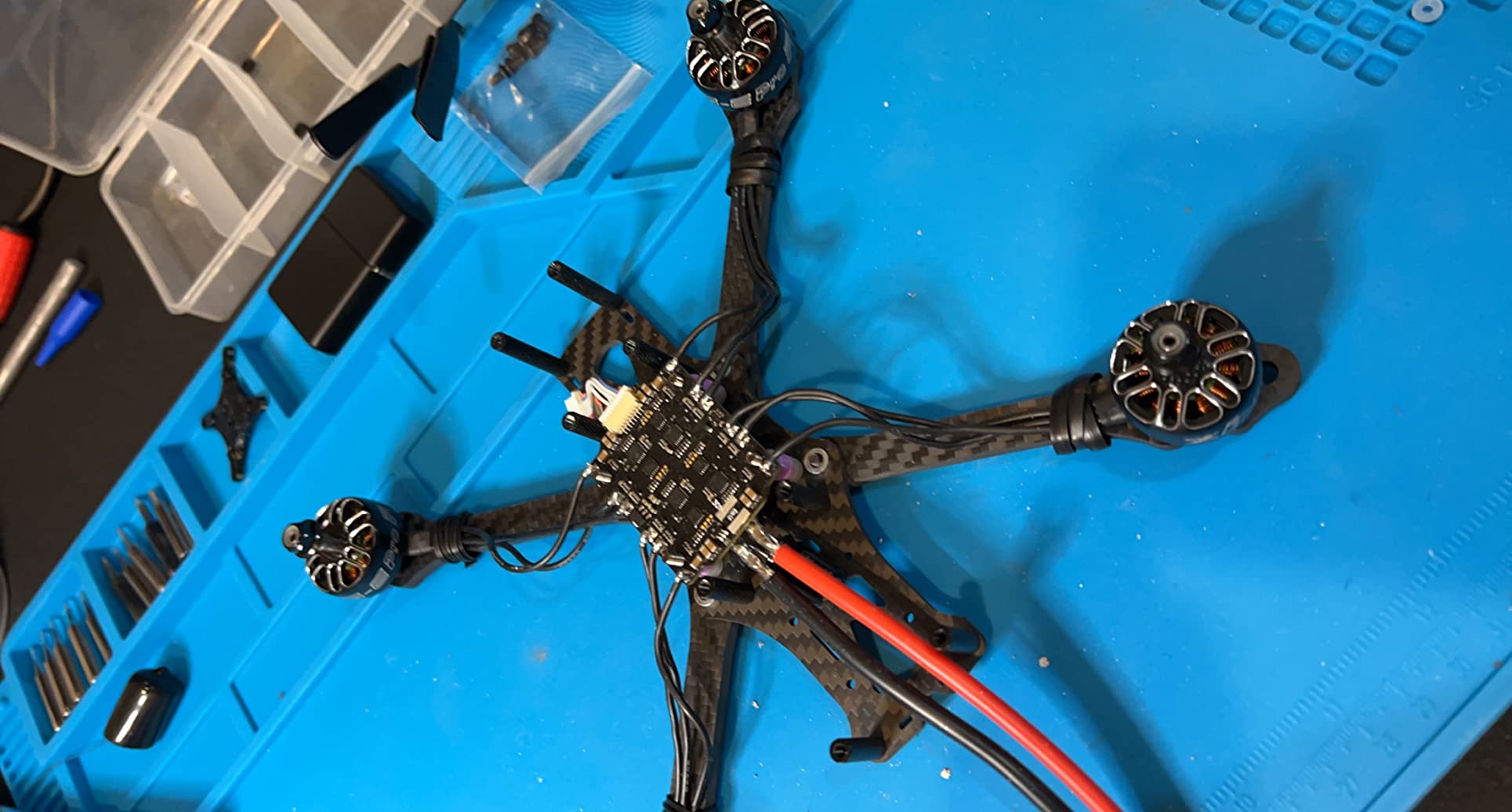
Reviewers specifically mention wire up to about 10GA, which covers chassis wiring and thicker harnesses. That claim comes from people who used it, not from the listing, and it lines up with the 120W figure in the specifications.
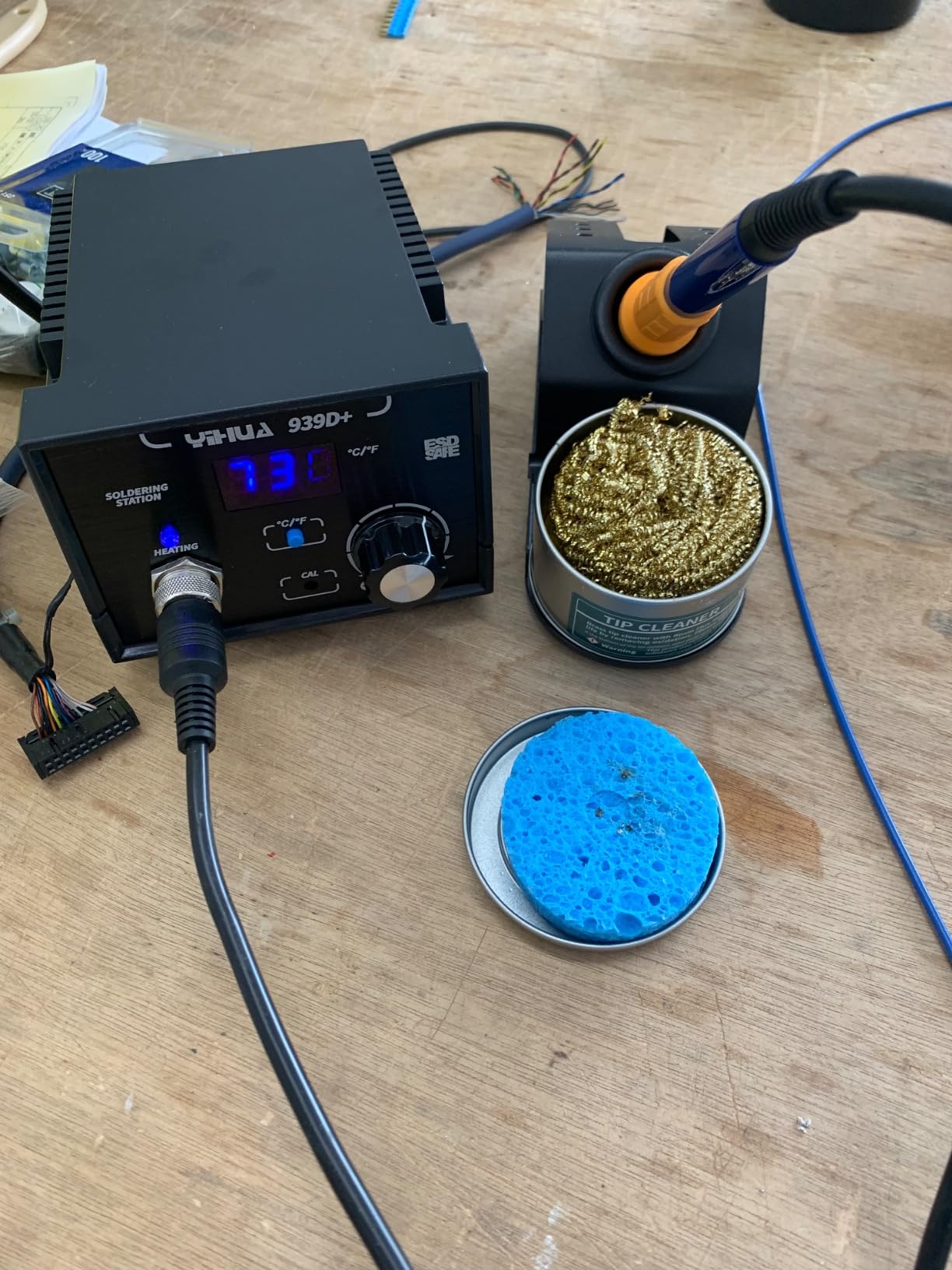
The 392°F to 896°F range is the widest working span on this list, and the top of that range is what makes it useful for lead-free through-hole. Combined with a chisel tip, it will flow lead-free solder on a multi-pin connector without you fighting the ceiling.
Owners also point out that the factory tips have thicker walls and better plating than typical aftermarket replacements, which matters because a thin-walled chisel tip is exactly the thing that collapses on a big joint.
When the YIHUA 939D+ is the right call
It suits a hobby desk that occasionally takes on serious through-hole jobs, or a small shop that needs a second bench station. The compact 5.4 by 4.4 by 3.6 inch footprint leaves room for the iron holder and a sponge on a crowded bench.
Choose it when you work lead-free at all, because the 896°F ceiling is genuinely useful and the transformer architecture gives it the headroom to recover.
When to pick something else
It is a 110V US design, so outside North America you are looking at a different unit entirely. The short iron cord and the sliding base are small annoyances that show up when you are reaching across a large chassis.
Some owners report a handle cracking over long-term use, and the base fuse is internal, so a blown fuse means opening the case. Neither is a dealbreaker at this level, but neither is something a professional bench absorbs gracefully.
3. TOAUTO DS90 90W Station – Most Versatile for Through-Hole Joints
TOAUTO DS90 Soldering Station-°F & °C Dual Digital Display Soldering Iron Station Kit,90W Soldering Iron,302℉- 842℉ Temperature, Anti-Static & Grounding Wire, Auto Standby & Sleep,5 Solder Tips, Blue
90W ceramic heating core
150°C to 450°C range
2°C stability
LED dual display
Pros
- Reaches 590°F in about five seconds
- Handles XT90 and EC5 connectors on 10AWG wire
- Auto standby at 10 minutes and sleep at 20
- Temperature lock holds setpoint for repeated joints
- 13-in-1 kit with five extra tips
Cons
- Lightweight plastic casing
- Readout tracks heater temperature rather than tip temperature
The TOAUTO DS90 punches above its class for one specific reason: a 90W ceramic heating core that reaches 590°F in about five seconds. Fast heat-up matters on through-hole because you are constantly re-docking the iron, and a station that is ready instantly keeps your hands moving across a board of headers.
Reviewers report it handling thick joints such as XT90 and EC5 connectors on 10AWG wire. Those are big barrel joints with substantial copper mass, and getting one of them properly wetted usually needs more tip mass than people expect.
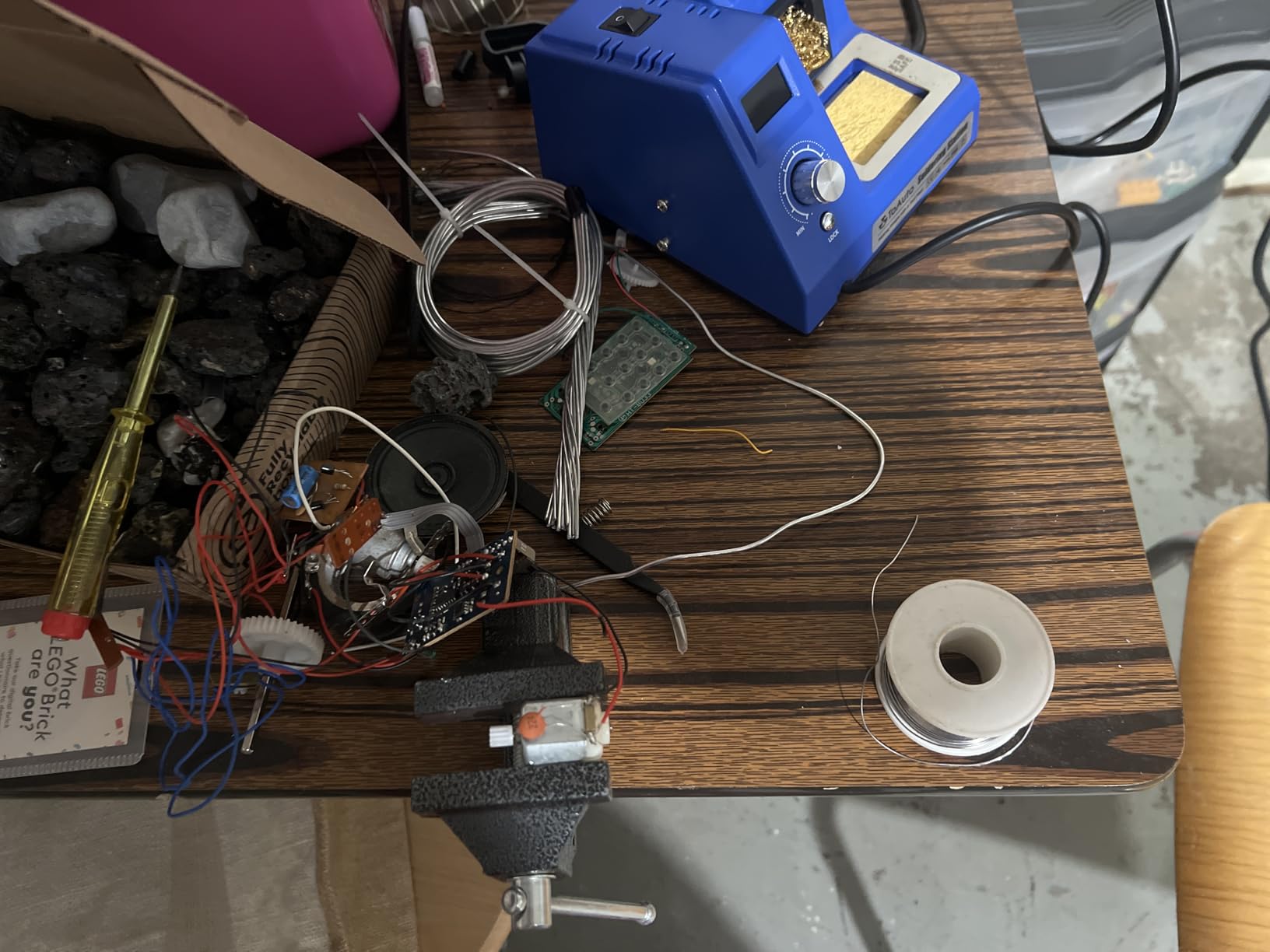
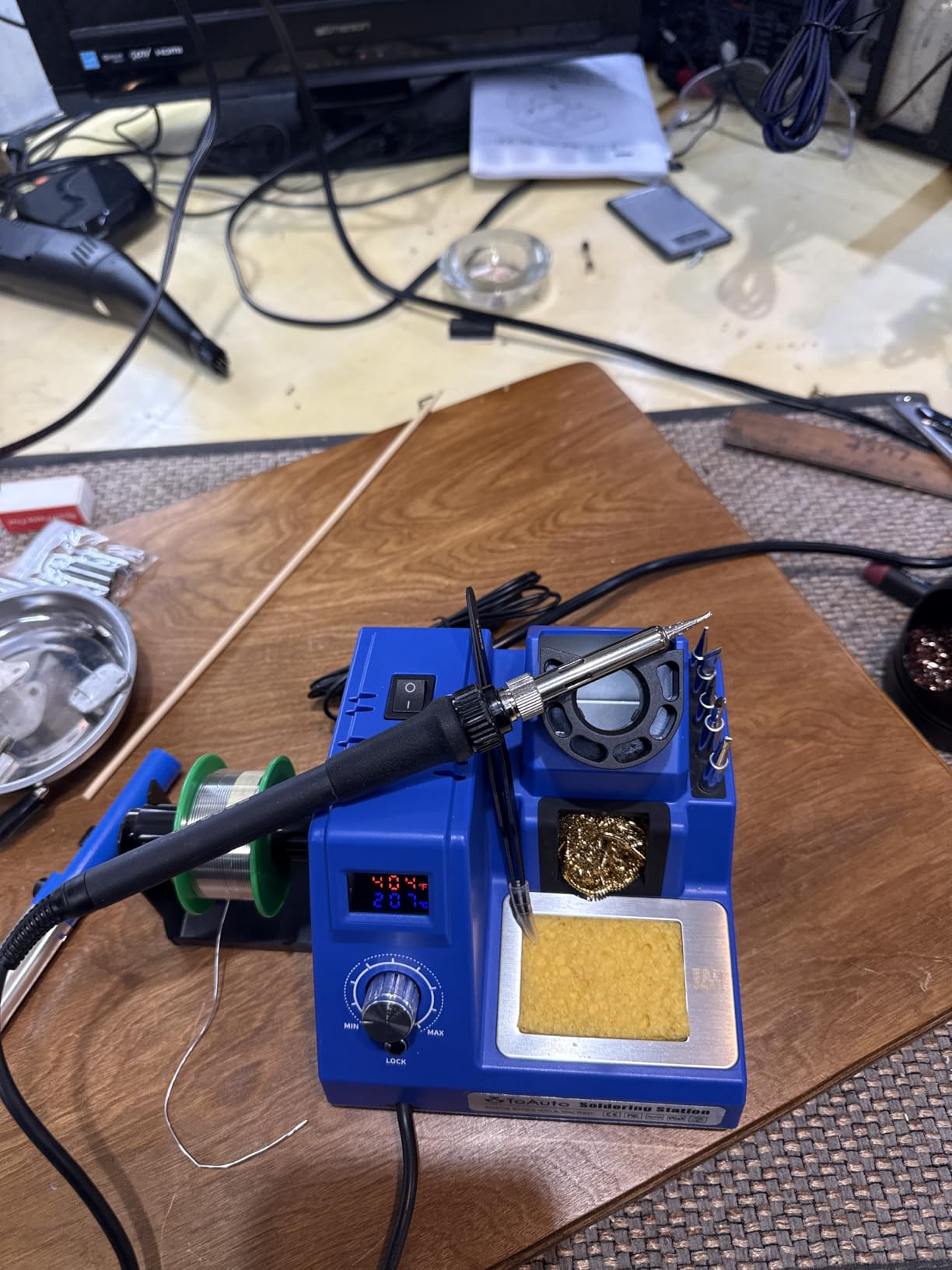
The dual digital display showing set temperature in both °F and °C at once is more useful than it sounds when you are switching between a leaded profile and a lead-free one mid-session. The temperature lock function keeps the setpoint from drifting when you bump the iron against a holder.
Its 150°C to 450°C range covers leaded work at the low end and lead-free at the upper end, with plenty of room in between for lead-free joints that want a little extra push.
When the TOAUTO DS90 is the right call
Pick it if your through-hole work is connector-heavy rather than thermal-heavy. Terminal blocks, bullet connectors, XT90 and EC5 joints, and perfboard headers all benefit from the quick recovery and the included five spare tips, which cover a decent range of chisel sizes.
For a student bench or a shared workshop, auto standby at 10 minutes and sleep at 20 minutes keep tip wear down without anyone thinking about it.
When to pick something else
The readout measures heater temperature rather than tip temperature, so it lags after switch-on and dips while a big joint pulls heat. If you calibrate by the number on screen, that reading will mislead you.
The plastic casing feels light in the hand, and the stiff cord is shorter than you would like when the work sits at the edge of a bench. The included brass wool is reported by some buyers to be brass-coated steel rather than true brass.
4. WEP 927-IV 110W Station – Best for Wire Harnesses and Repeated Joints
WEP 927-IV Soldering Station Kit High-Power 110W with 3 Preset Channels, Sleep Mode, LED Magnifier, 5 Extra Iron Tips, Tip Cleaner, 2 Helping Hands, Tip Storage Slots, Lead-free Solder Wire, Tweezers
110W heating element
194°F to 896°F range
3 preset channels
Dual set and actual readout
Pros
- 110W element heats up fast for its class
- Three preset channels cut reconfiguration
- LED magnifier helps in tight spots
- Sleep timer adjustable 0 to 99 minutes
- Integrated helping hands and tip storage
Cons
- Uses WEP 1400 tips only
- Small footprint packs accessories tightly
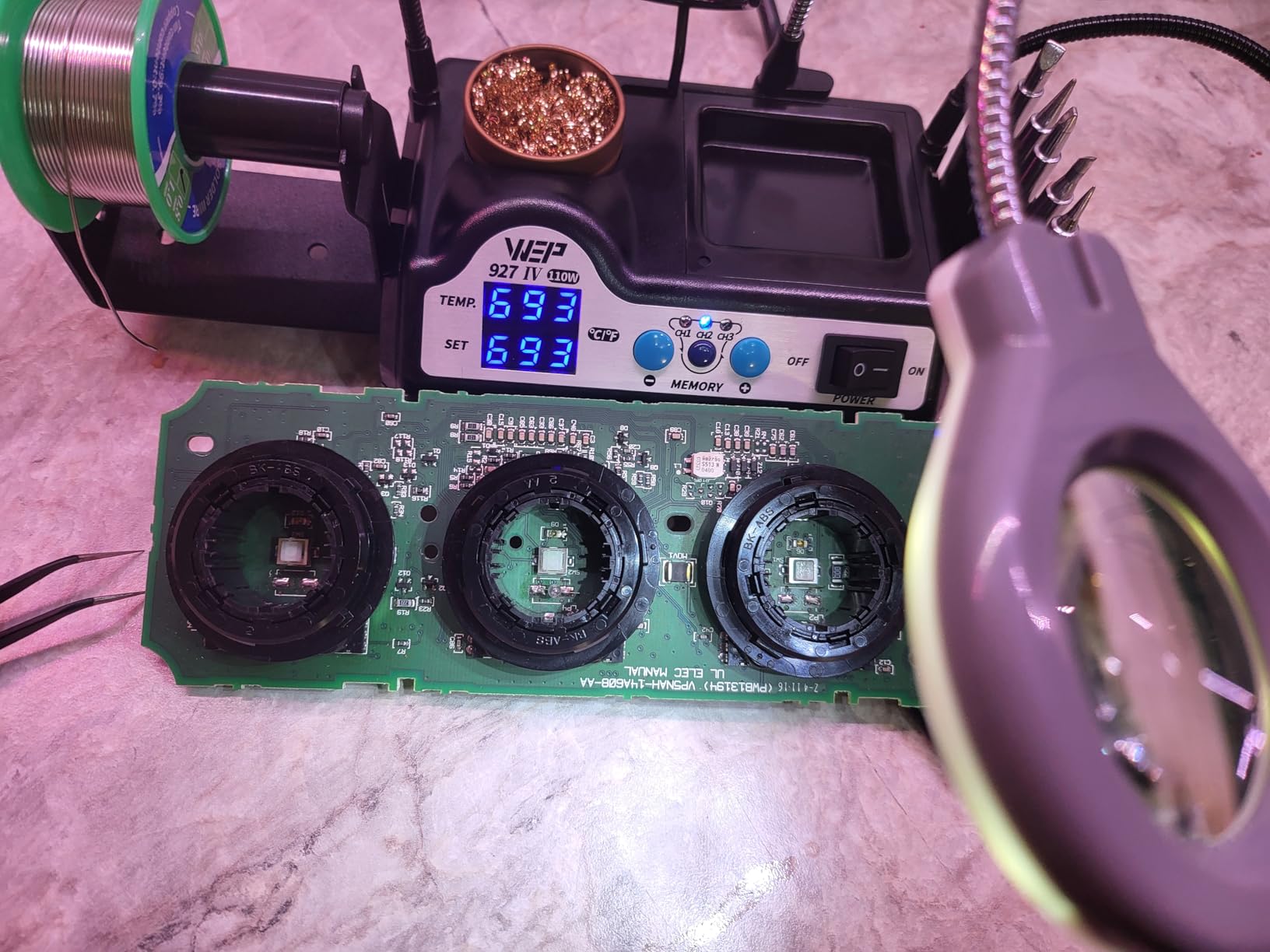
Wire harness work is repetitive, and the WEP 927-IV is built around that. Three preset temperature channels let you store a leaded profile, a lead-free profile and a high-temp profile, then switch with one button instead of turning a knob between every joint.
The 110W heating element is the largest in this roundup, and that headroom shows up on the thick wire you find in automotive and chassis harnesses. The double numerical display showing set and actual temperature at the same time is the feature we appreciated most, because you can see recovery happen.
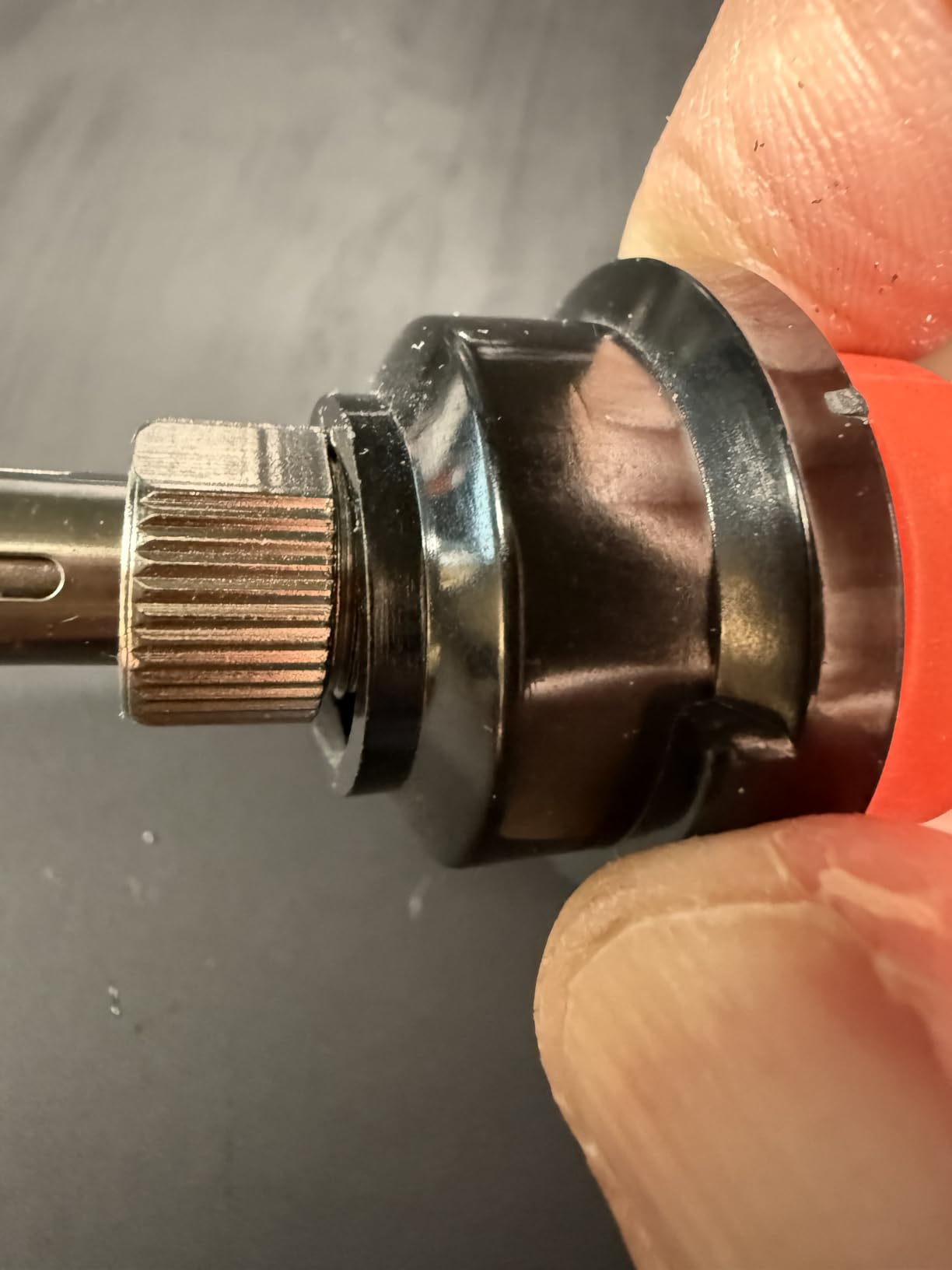
Its range of 194°F to 896°F covers 90°C to 480°C, which is wide enough for leaded, lead-free and any thermoplastic insulation you need to keep away from the joint.
The integrated layout is genuinely useful at a crowded bench: an iron holder, tip cleaner, solder wire dispenser, helping hands, LED magnifier and tip storage all live in the station body, so there is one object to move rather than seven. If your bench lighting is flickering rather than dim, our guide to why LED lights flicker is worth reading before you blame the magnifier.
When the WEP 927-IV is the right call
It suits anyone doing long runs of similar through-hole joints: harness builders, panel assemblers, and people populating perfboard with headers and terminal strips. The LED magnifier earns its place when you are looking into a dense board through a gap too tight for your eyes alone.
The sleep timer adjustable from 0 to 99 minutes is longer than most competing kits offer, which matters if you step away mid-project and want the element protected without losing your tip.
When to pick something else
It runs on WEP 1400 tips only, so the tip ecosystem is narrower than the mainstream systems. If you already own tips from another brand, they will not fit.
The small footprint means everything is packed tight, and that layout is not to everyone’s taste. If you prefer a separate iron holder and a clean bench, this is the wrong shape.
5. X-Tronic 3020-XTS 75W Station – Best for Heavy Wire and Large Terminals
The Original X-Tronic 3020-XTS • 75W Soldering Iron Station Kit • 2 Helping Hands • Silicone Tool Mat • 5 Extra Tips • 50g Roll of Solder • Brass Sponge • Cleaning Flux • C/F Conversion • Auto Sleep!
75W station
392°F to 896°F range
2°C stability
Heats in under 30 seconds
Pros
- Power headroom for large terminals and 12ga wire
- Heats 200°C to 480°C in under 30 seconds
- 40-inch cord with virtually no memory
- Three year warranty from a US brand
- Multiple owners report eight years of service
Cons
- Temperature knob is too sensitive for precise setpoints
- Base is light and slides when handling the iron
The X-Tronic 3020-XTS is the one in this group that owners describe in terms of decades rather than years. Several reviewers report eight years of continuous service from a single unit, and technicians with decades of bench experience compare it favourably against Weller and Hakko for heavy through-hole work.
Owners consistently praise the power headroom for large terminals and heavy wire such as 12ga. That is the category where tip mass decides everything, and the included 75W station driving a 60W iron leaves enough reserve to keep the temperature up during a long dwell on a big lug.
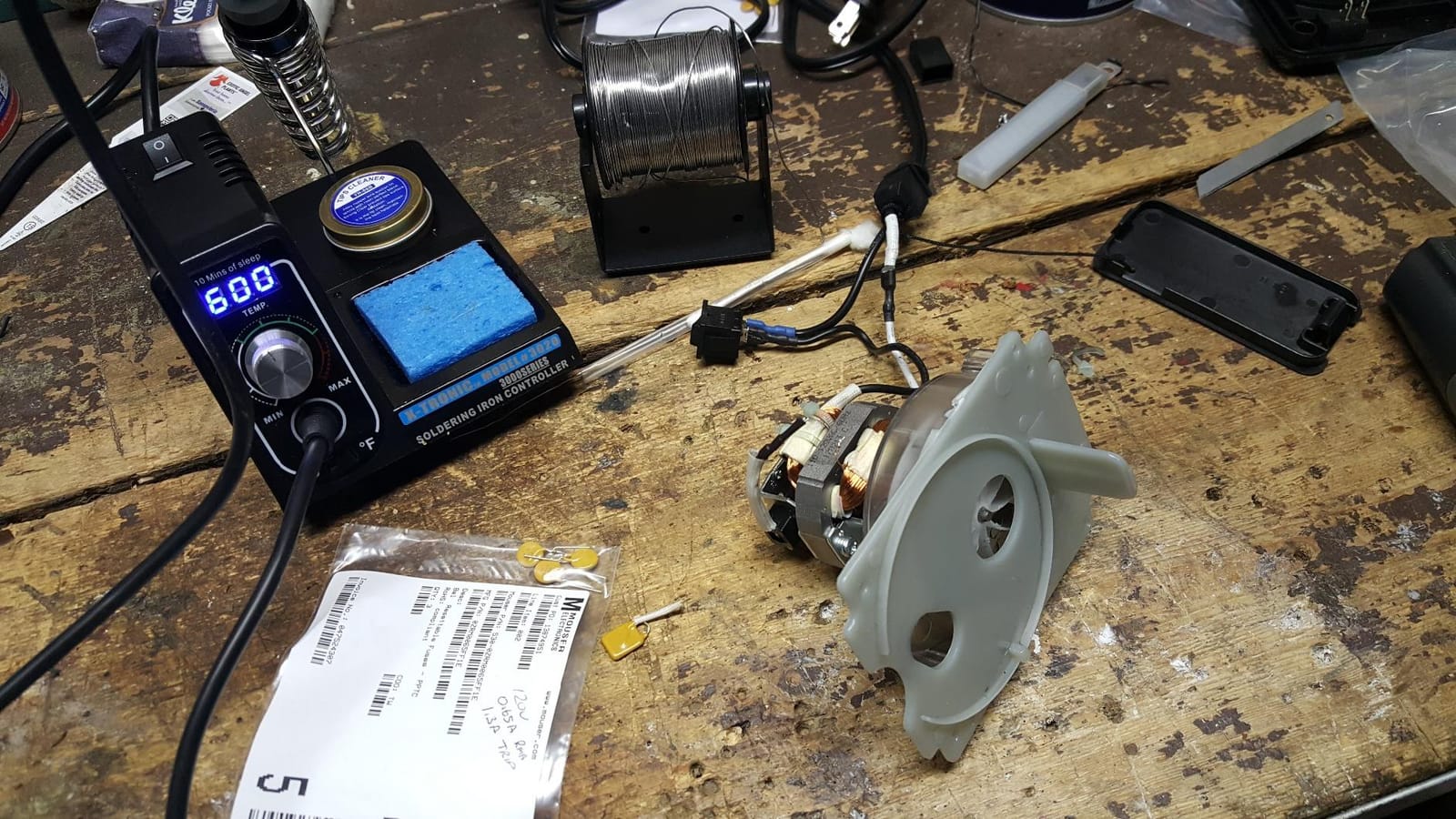
Heat-up from 200°C to 480°C takes under 30 seconds with 2°C stability, and the 40-inch silicone cord is described as virtually memory-free, which means it stays where you put it instead of coiling back over the bench.
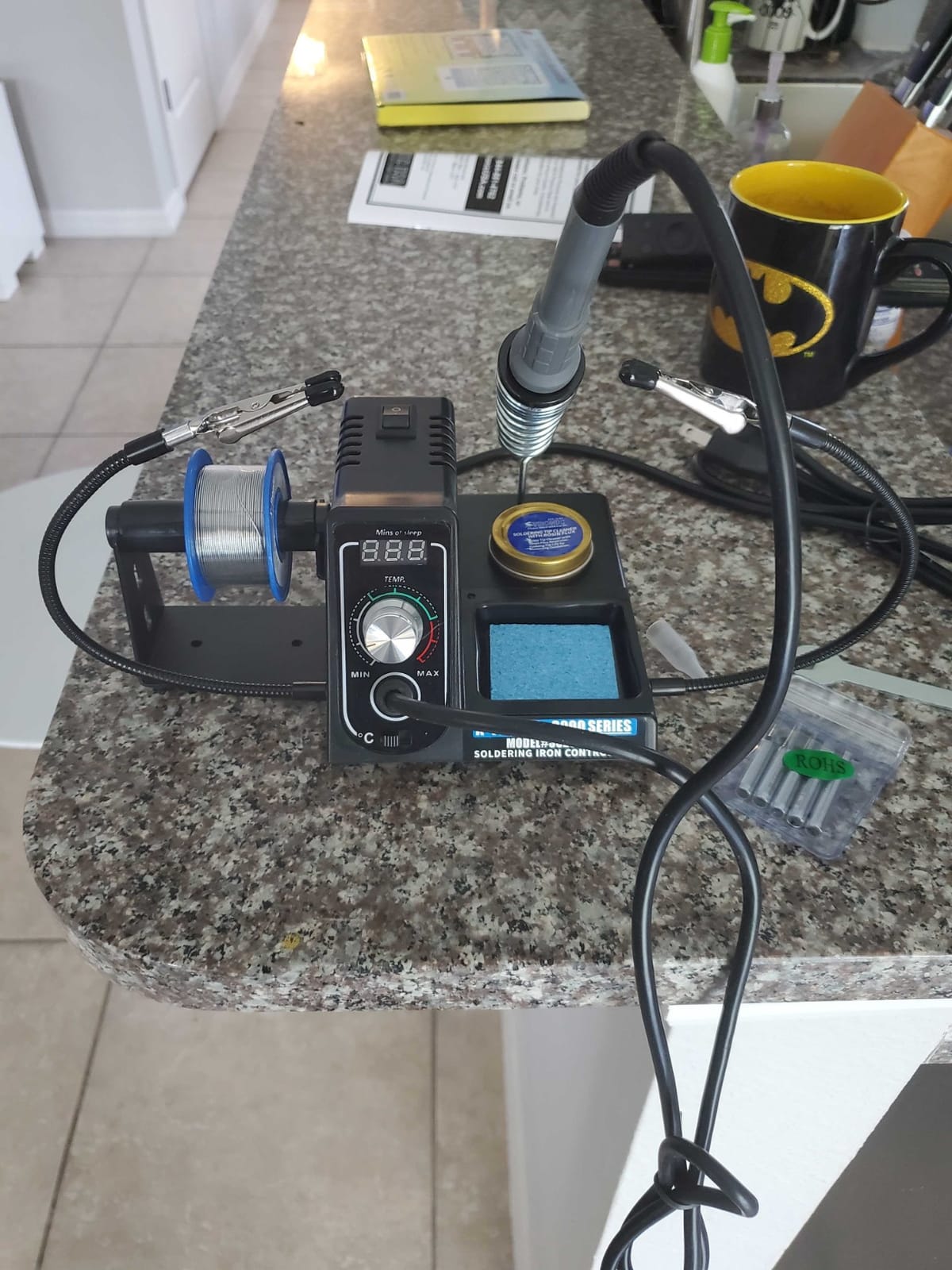
The kit is unusually complete for a station at this level: two helping hands, a silicone tool mat, five extra tips, a solder roll holder, 50g of lead-free solder, and both a brass sponge with cleaning flux and a wet sponge.
When the X-Tronic 3020-XTS is the right call
It fits installers and electricians doing panel and terminal work, and anyone who wants one station to last a career. The three-year warranty and lifetime technician support from a Nebraska-based company reduce the risk on a long-term purchase.
It is also a sensible first serious station if you are moving past a pencil iron, because the accessory bundle means you can start soldering through-hole the same day it arrives.
When to pick something else
The temperature control knob is more sensitive than most people like, so dialing in a precise setpoint takes practice. The base is light and can slide when you lift the iron away from a big joint, which is a real annoyance on a large chassis.
The heating element is not tool-swappable because the iron is wired directly into the base. If the iron fails, the base goes with it.
6. X-Tronic 3060-PRO 75W Station – Best for Repeat Through-Hole Assembly
X-Tronic 3060-PRO • 75W Soldering Iron Station Kit • 5 Extra Tips • Mini Mag Lamp • 4 Helping Hands • Solder Sucker • Tweezers • 50g Solder • Brass Sponge w/Flux • Sleep Func, °C/°F, 3 Temp Presets!
60W iron
90°C to 480°C range
±2.0°C static stability
3 presets and calibration
Pros
- Three preset memory functions plus calibration
- Dual panels show set and actual temperature
- ESD safe with grounding wire for PCB work
- Complete kit with mini mag lamp and four helping hands
- Adjustable sleep timer at 0
- 5
- 10 or 30 minutes
Cons
- Iron is wired into the base rather than swappable
- 110V only with no 220V version
The 3060-PRO is the 3020-XTS with more memory and more monitoring, and for repetitive through-hole assembly that is exactly what you want. Three preset memory functions plus a digital calibration function let you define solder profiles and trust them across sessions instead of re-tuning a knob every morning.
The dual control panels showing set and real temperature side by side are the feature that tells the truth about recovery on a big joint. Watching the actual temperature sag as you settle a large lug into a pad, then recover, is how you learn to size tips properly.
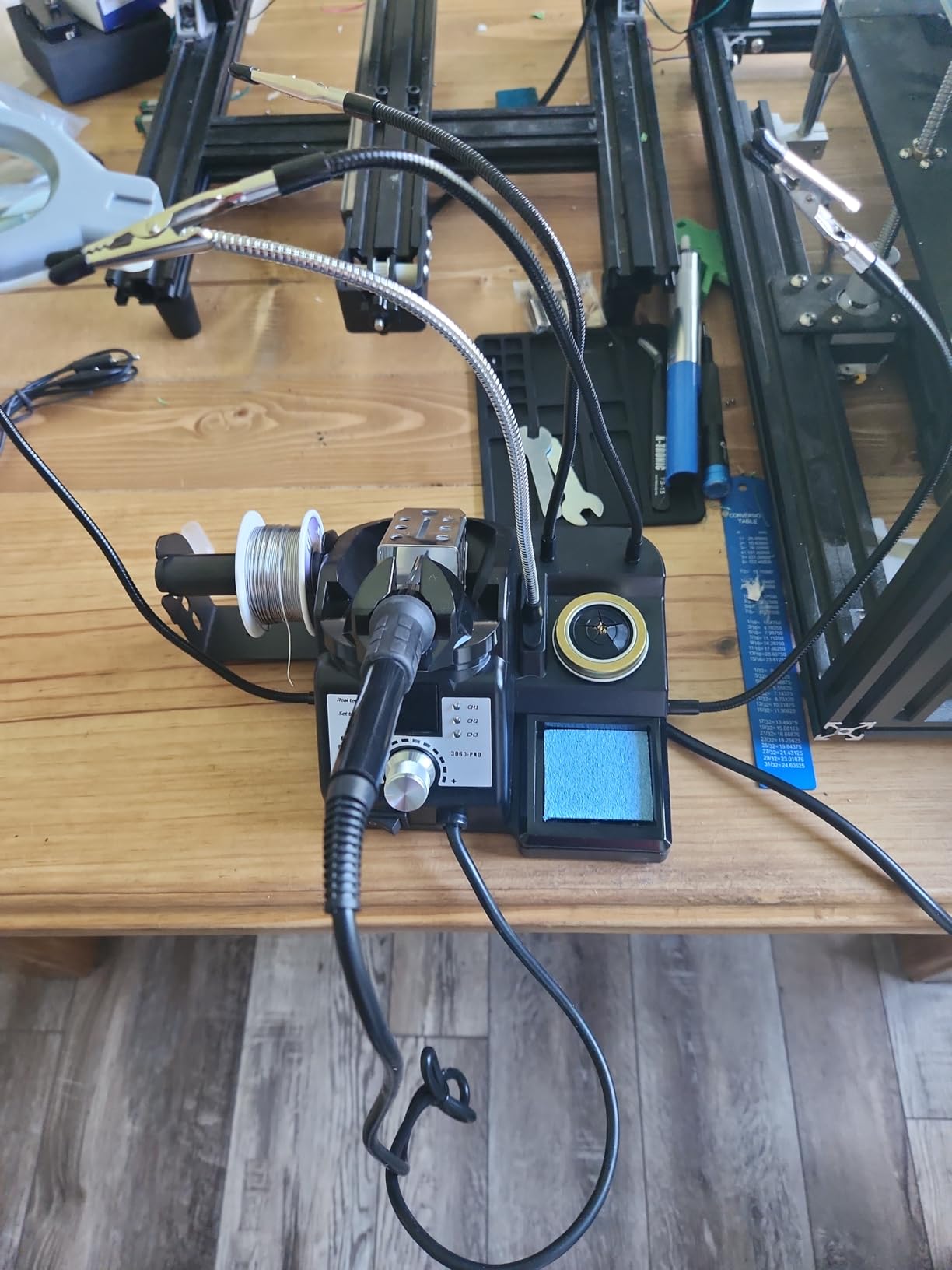
The 60W iron covers 90°C to 480°C with static stability of plus or minus 2.0°C, and the range ceiling at 480°C is enough for lead-free through-hole without pushing the station past its comfort zone.
It is also ESD safe with an anti-static design and an included grounding wire, which matters as soon as you start placing sensitive parts nearby while a big joint is still hot on the same bench.
When the X-Tronic 3060-PRO is the right call
Pick it for production-adjacent hobby work and small-batch assembly: repeated identical through-hole joints, cable ends, connector housings, panel wiring runs. Presets plus calibration mean the twentieth board comes out the same as the first.
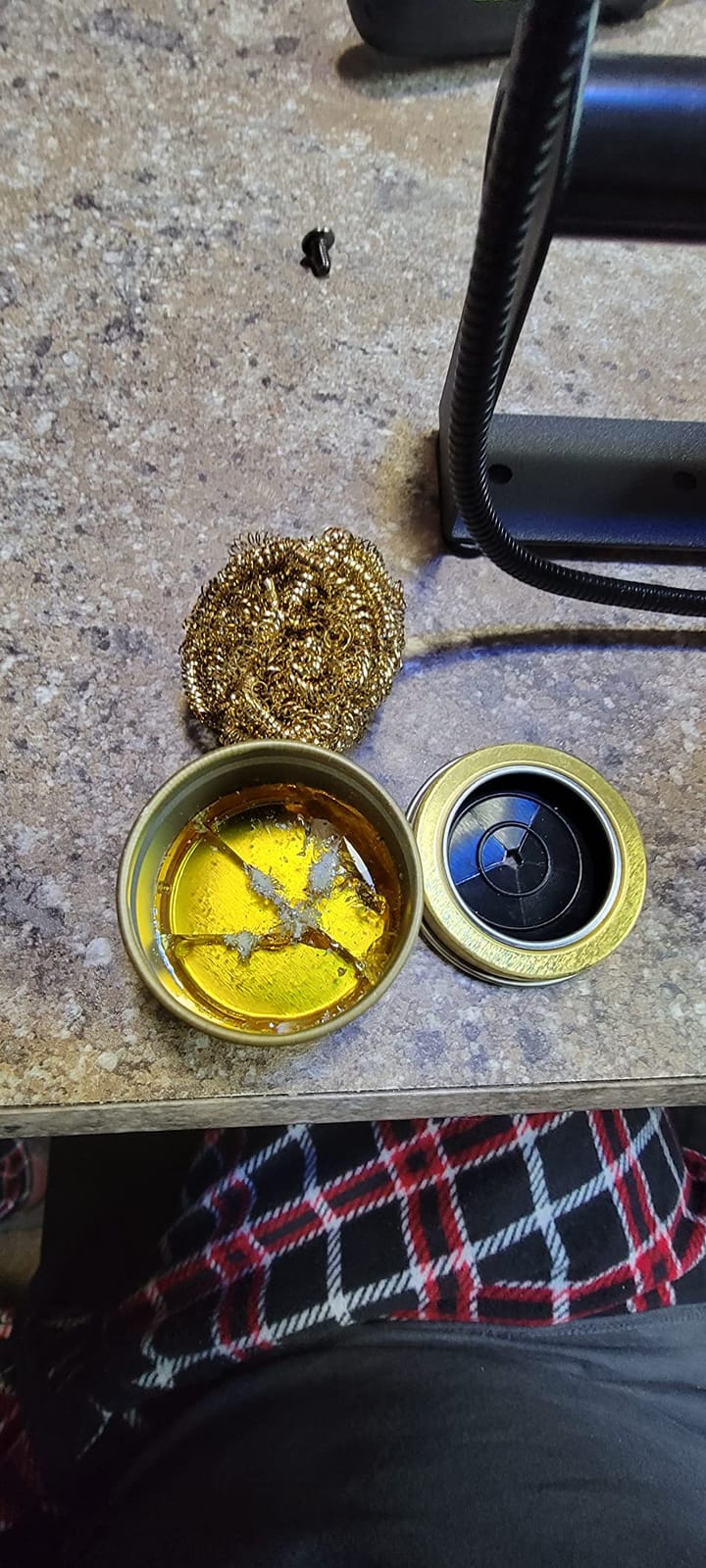
The accessory kit is the most complete in this roundup, with a mini magnifying lamp, four helping hands, a solder sucker, tweezers, 50g of solder, a brass sponge with flux, a wet sponge and a 57-inch silicone iron cord.
When to pick something else
It is the priciest X-Tronic option here, and if you solder one board a month that money buys more tips elsewhere. The dual panels and preset system are more complexity than a beginner strictly needs.
It is 110V only, there is no 220V version, and the iron is wired into the base rather than field-swappable.
7. WEP 926LED V3 Station – Best Starter Bench Station for Through-Hole
WEP 926LED V3 Soldering Station 130W MAX Soldering Iron Kit with Solder Wire, 5 Soldering Tips, Tweezers, Solder Sucker, Tip Cleaner, Temperature Control, Sleep Mode, C-F Conversion
PID microcontroller
392°F to 896°F range
Integrated iron holder
Sleep mode
Pros
- Digital temperature control at a low entry cost
- Built-in iron holder saves desk space
- Long cords reach work away from the bench
- LED display has an indicator dot that clears at setpoint
- Handles 12-gauge wire for hobby RC work
Cons
- Cheap-feeling plastic construction
- Tip cleaner is copper rather than brass
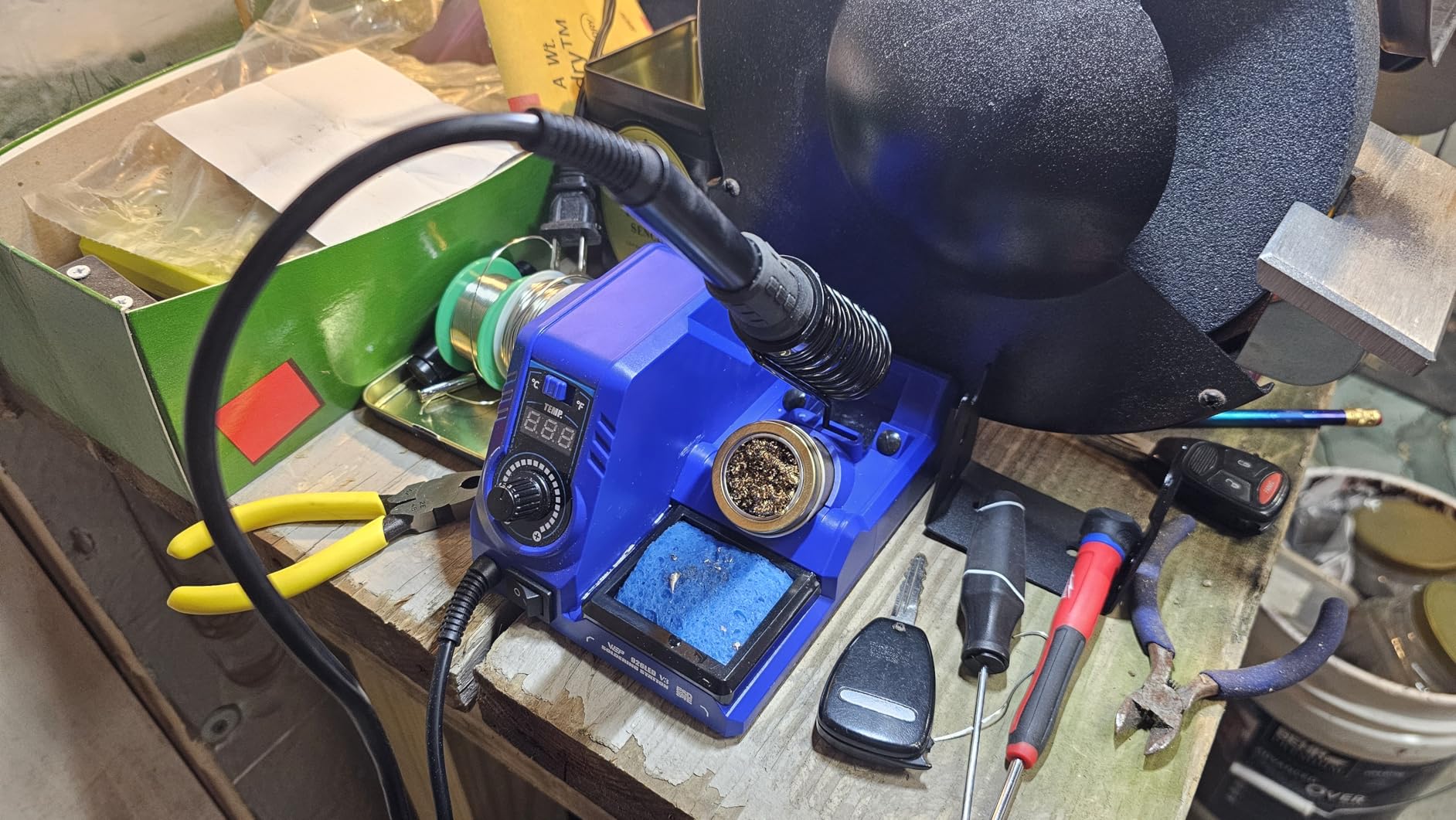
The WEP 926LED V3 is the station to buy if you are moving from a bare pencil iron to a real bench setup without spending much. A built-in PID microcontroller regulates the tip at the set temperature across a 392°F to 896°F range, which is a genuine step up from a fixed-wattage plug-in iron.
The integrated iron holder is the detail that wins over most competitors at this level. It is moulded into the station body along with a solder spool holder, wet sponge holder and tip cleaner holder, so the whole thing is one object with a very small footprint.
Long cords are reported as a genuine plus, because through-hole work often happens away from the desk centre: inside a chassis, under a panel, or at the far end of a large project board.
Reviewers mention handling 12-gauge wire for hobby RC work, and the bright LED display with an indicator dot that clears when the tip reaches setpoint is more useful than it sounds when you are new to temperature-controlled work.
When the WEP 926LED V3 is the right call
It suits a first through-hole build, a classroom bench, or anyone who wants temperature control without a large footprint. Sleep mode drops the iron to a low idling temperature after ten minutes, which extends tip and element life if you forget to switch off.
The kit also includes five extra tips, solder wire, tweezers, a desoldering pump and a solder wire dispenser, so you have the basics without a second order.
When to pick something else
The plastic construction feels cheap in the hand, and that matters if you move the station around. One owner reported the temperature readout throwing an S-E fault under tip pressure after a few months, which is not a common failure but it is worth knowing about.
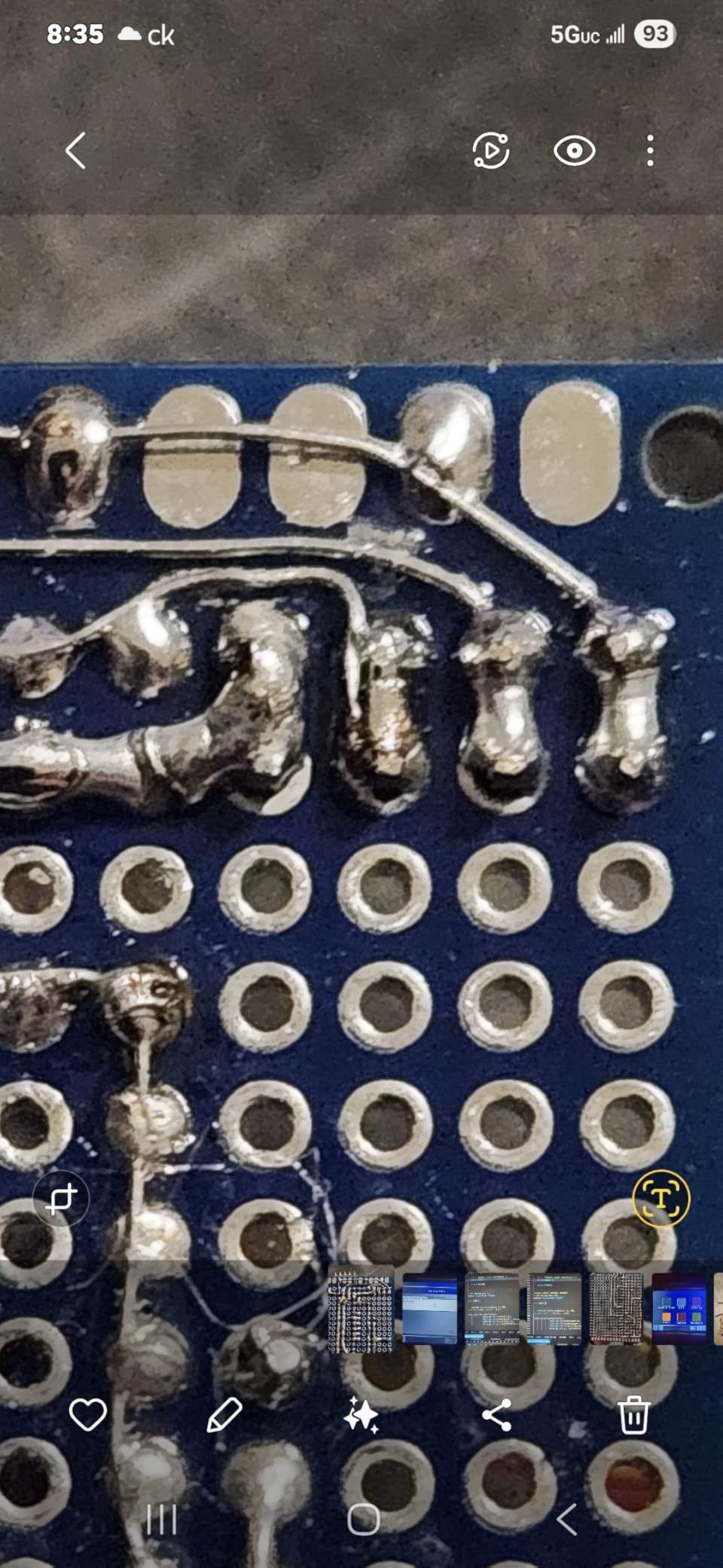
The included tip cleaner is copper rather than brass, so it will wear faster than a proper brass wool. Sleep timing is also described inconsistently across reports, at ten or twenty minutes.
8. Crtsweker 100W Digital Station – Best for Thick Wire on a Budget
Soldering Station, 100W Digital Display Soldering Iron Station Kit with 2 Helping Hands, 356°F – 896°F, Auto Sleep, °C/°F Conversion, Solder Wire, Tips, Stand, Pump, Tweezers, Tip Cleaner, Green
100W digital output
180°C to 480°C range
Temperature calibration
Sleep timer 0 to 600 seconds
Pros
- 100W output with fast heat-up
- Calibration function for accurate control
- Steel pipe handle with four cooling vents
- Compact design saves workbench space
- Kit includes two helping hands and full tool set
Cons
- Generic unbranded presentation with little published detail
- Sleep timer maximum of 600 seconds is short
The Crtsweker 100W station puts more raw power on the bench than anything cheaper in this guide. For thick wire, ring terminals on heavy gauge, and chassis lugs, the extra headroom means a chisel tip can sit on a big joint long enough to wet the whole thing without the tip stalling.
The temperature calibration function is a rarity at this level and worth calling out. It lets you correct for tip or ambient differences so your setpoints stay repeatable between projects, which is the same idea the pricier X-Tronic 3060-PRO offers through its preset memory.
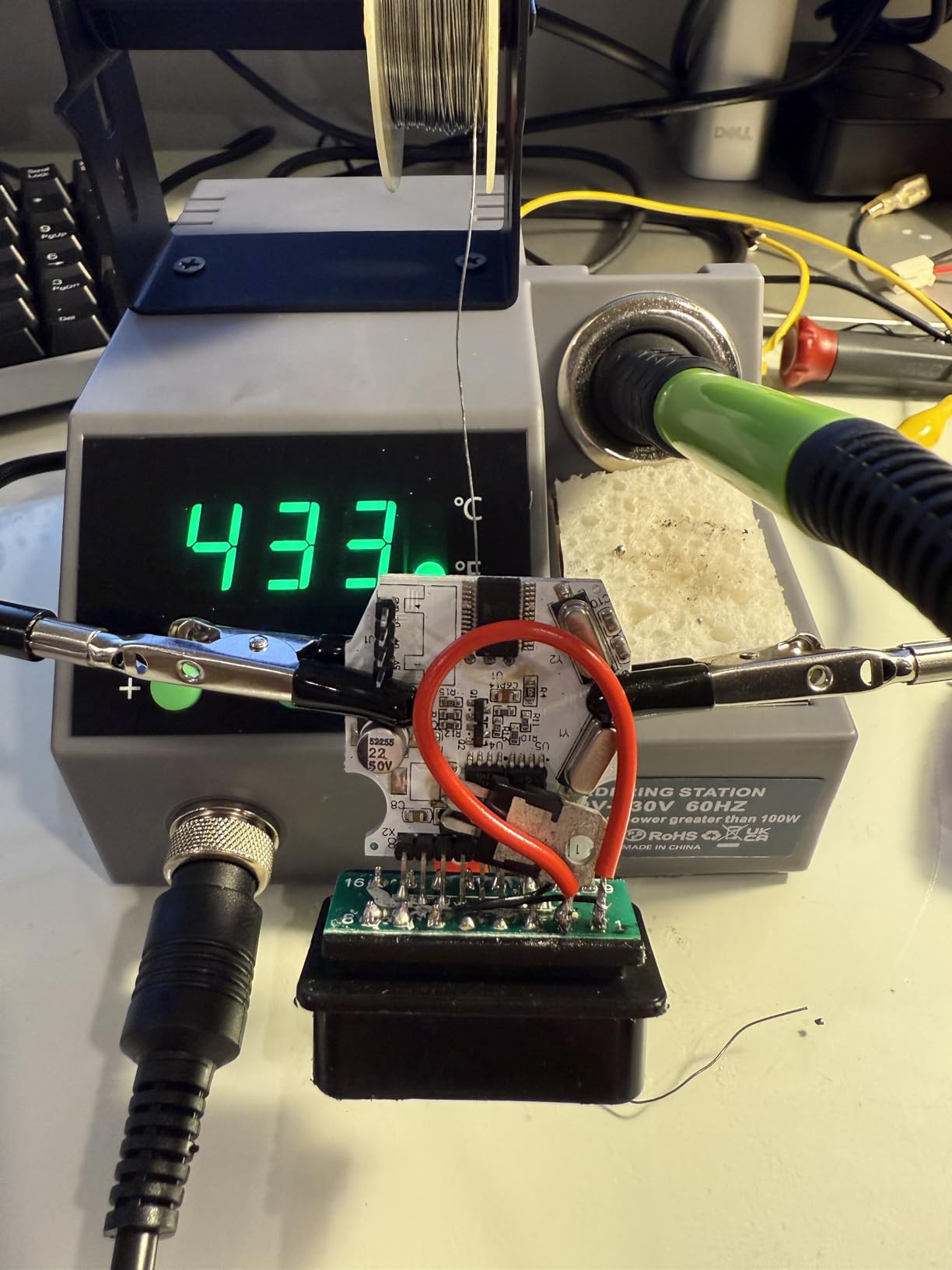
The upgraded steel pipe handle with four cooling vents is a sensible design choice for through-hole work specifically. Between joints your hand is gripping a hot iron, and the vents move heat away from your fingers faster than a solid handle does.
The silicone sheathing on the handle and the 180°C to 480°C range cover both leaded and lead-free work, and the compact body leaves bench space for the accessory kit that ships with it.
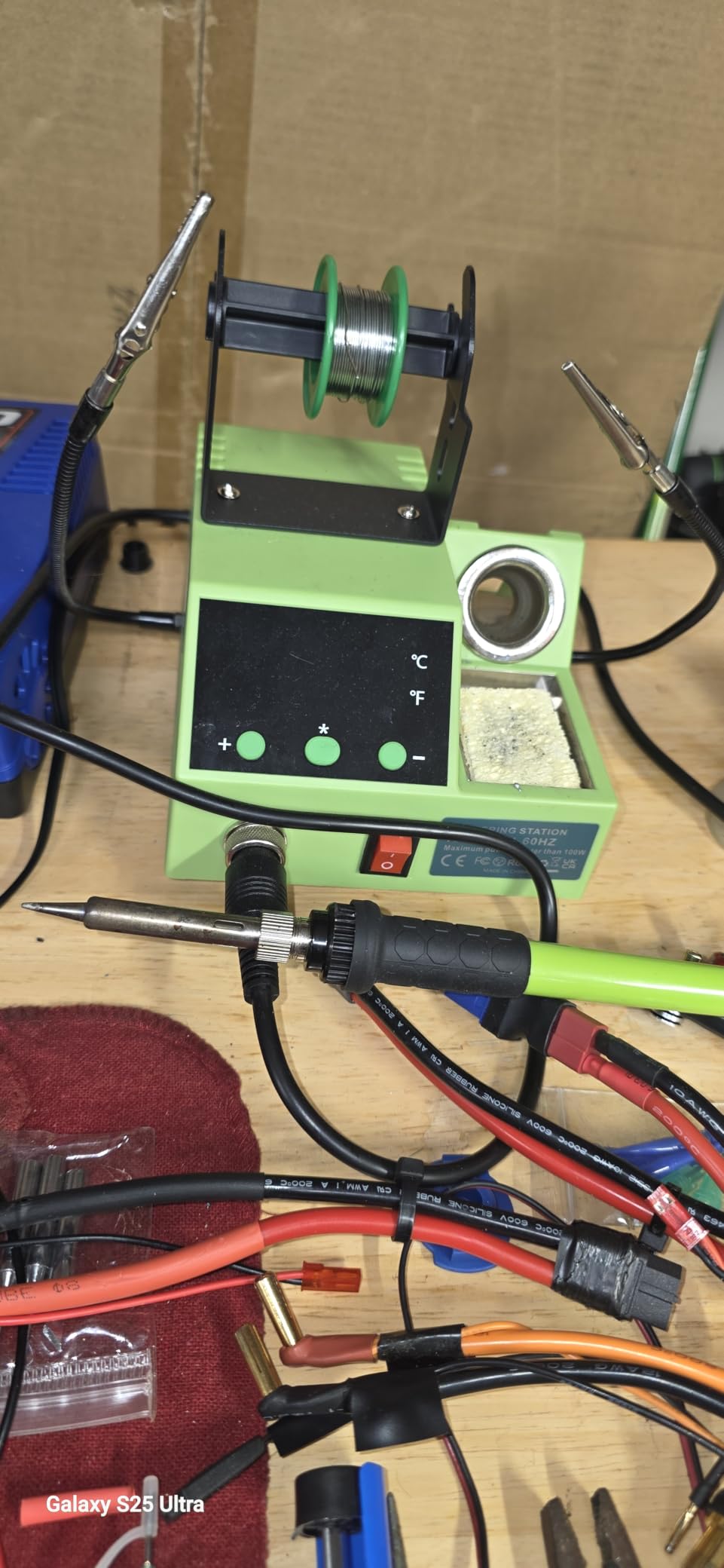
When the Crtsweker 100W is the right call
It fits automotive, marine and appliance repair where thick conductor and lugs are the norm, or any bench where power headroom matters more than refinement. The kit includes two helping hands, a solder wire dispenser, sponge, tip cleaner, five tips, elbow tweezers and a solder sucker.
The calibration function makes it a reasonable second station if your main bench is already calibrated and you want a matching profile on a second bench.
When to pick something else
The presentation is unbranded and the published specification detail is thin, so you are buying on the numbers rather than on support. No warranty terms are stated in the listing, which is a real difference from the brands above it in this guide.
The sleep timer tops out at 600 seconds, which is short for a long through-hole session where you step away for fifteen minutes. The cord is also shorter than some competing kits.
Hakko vs Weller for Through-Hole Work
Hakko is generally considered the better through-hole iron, mainly because its T18 tip ecosystem includes the fat chisel and knife shapes that large joints need, and those tips are cheap and easy to swap. Weller is the safer all-round buy: the WE1010NA has the highest rating in this roundup, tight temperature lock and excellent joint repeatability, but it costs more and its 400°F ceiling is not enough for lead-free on big ground pours.
The distinction is really about the tip ecosystem rather than the electronics. The Hakko T18 line covers a wider spread of chisel diameters, so upgrading to a bigger tip later is trivial. Weller’s ETA tips are excellent and widely stocked, but the station is single-channel, so switching profiles means turning a knob.
If you already own one brand’s tips, stay with it. Both of these stations do through-hole work well, and neither rescues a joint made with a tip that is too small for the lead you are soldering.
Worth noting for anyone reading forum threads while researching: several experienced users on r/soldering name the Hakko FX-888D as the safe default for through-hole and recommend fitting a larger tip, while value-focused posters point to the Geeboon TC22 and the Atten ST-862D. Neither of those three models is in this roundup, so treat them as names to research separately rather than as tested picks here.
How to Solder a Through-Hole Joint Without Lifting a Pad
Most through-hole failures are technique, not equipment. With the right station and the right tip, follow this order and you will not see pad lift.
Fit the biggest tip that fits the pad. A chisel tip whose width is close to the pad diameter heats the whole joint at once. Fine conical tips on through-hole leads are the single most common cause of long dwell times.
Set the temperature for the solder, not the iron. Leaded rosin-core solder flows at 315°F to 340°C. Lead-free needs 350°C to 370°C. A good quality station holds either of those within a couple of degrees.
Apply flux to the pad first. Fresh flux is what lets the solder wet the joint instead of beading up. Through-hole work benefits from more flux than people expect.
Heat the joint, not the solder. Touch the tip to the pad and the lead together, then feed solder into the far side of the joint. Never push the solder blob into an iron that is melting it by itself; that is how you get a cold joint with a shiny top.
Dwell until the solder flows on its own. Two to four seconds on a small lead, longer on a heat sink. The moment solder collapses into the barrel and the shine goes matte, the joint is done.
Heat the whole joint on big connectors. For multi-pin headers and terminal blocks, work the tip along the entire row so every pin reaches temperature together. Heating one lead at a time is what starves the other pads.
Pull the iron away, then the component. If you move the lead while the solder is still fluid you get a lifted pad. Support the body, wait a beat, then let go.
Inspect and clean. A proper through-hole joint is a slightly concave fillet, shiny and smooth. Anything dull, blobby or with a visible gap to the lead needs reheating with fresh flux.
If a pad lifts, stop. Reheating the same joint will take the trace with it. Melt the solder, clean the copper, and either build up the pad with fresh solder or jump the component to a neighbouring pad.
How to Choose a Soldering Station for Through Hole Work
Start with tip system, not wattage. The tip ecosystem decides whether you can grow into bigger through-hole work later. Systems like the Hakko T18 and the JBC standard cartridge line cover a wide range of chisel and knife shapes, which is why forum advice keeps pointing at cartridge tips for rails and heat sinks. Budget stations often lock you to one proprietary tip shape with limited sizes.
Recovery beats headline wattage. A 90W station driving a 60W iron can beat a 120W station with a badly designed element, because what matters is how quickly the tip refills after a joint pulls heat out. Watch the actual temperature readout under load if the station has one, which is the only honest way to judge this.
Check the temperature ceiling against your solder. Anything topping out at 400°F limits you to leaded work on heavy joints. For lead-free through-hole you want 480°C or more, and that ceiling is what separates the YIHUA 939D+ and the WEP kits from the Weller WE1010NA.
Budget for tips. Through-hole work wants at least three chisel sizes and one knife tip on the bench from the start, plus a brass tip cleaner. Cheap replacement tips have thin walls, and a thin-walled chisel collapses on a big joint. A station that costs less and ships with a poor tip can cost more over a year.
Do not skip ESD safety. Any bench that also handles microcontrollers, CMOS parts or phone boards needs an ESD-safe station. Several picks here include a grounding wire and anti-static design, which is worth more than it sounds when a static event takes out a board next to your solder pot.
Think about the whole bench, not just the station. A fume extraction setup matters more than most people expect on long sessions with rosin flux, and good lighting is what lets you see a cold joint at all. Our guide to the best lighting for workshops covers that end of the bench, and helping hands, a solder sucker, desoldering braid and brass wool fill out the rest of the kit.
Consider the iron before the base. If your work is field service or repair kits, a smart pencil iron that runs from USB-C power may serve you better than a bench station, though you give up sustained power for large joints. For a fixed bench soldering thick wire, the base units in this guide are the right shape.
Set up your ergonomics early. Long through-hole sessions are repetitive, and a light base that slides when you lift the iron is an annoyance that compounds. A silicone cord that stays where you put it, and a handle that does not heat up in your grip, are small features that matter by hour three.
Frequently Asked Questions
Which soldering station is best for through hole work?
For most benches the Weller WE1010NA is the best all-round choice, with the highest rating in our roundup and excellent temperature lock. The YIHUA 939D+ is the better value pick and has a higher temperature ceiling for lead-free work, while the X-Tronic 3020-XTS suits heavy wire and 12ga terminals.
Which is better, Hakko or Weller?
Hakko is generally considered better for through-hole work because its T18 tip ecosystem covers the fat chisel and knife shapes large joints need. Weller is the safer all-round buy with tight temperature control and repeatable joints, but it costs more and its 400°F ceiling limits lead-free work on big joints.
What wattage soldering iron do I need for through hole work?
Around 70W to 90W at the iron is enough for most through-hole work, including terminal blocks and 10ga wire, provided the tip is a fat chisel rather than a fine cone. Recovery speed matters more than headline wattage, and large heat sinks want a cartridge tip with the heater built in.
What tip should I use for through hole soldering?
Use a chisel tip whose width is close to the diameter of the pad, so the whole joint heats at once. A knife tip suits dense multi-pin headers, and a fine conical tip is only for very small leads. On big rails and heat sinks, a large cartridge tip is the usual recommendation.
What temperature should I solder through hole components at?
Use 315°F to 340°C for leaded rosin-core solder and 350°C to 370°C for lead-free solder. Add a little more for large heat sinks and chassis lugs, and lower it for small signal leads, since a too-high temperature is what burns off flux and lifts pads.
Which Soldering Station Should You Buy for Through Hole Work?
If you want one answer, buy the Weller WE1010NA. Its 4.7-star rating across 4,670 reviews, 70W iron and temperature lock make it the most dependable station in this roundup for the terminal blocks, ring terminals and headers that make up most through-hole work.
Buy the YIHUA 939D+ instead if you work lead-free solder or want more temperature range per dollar, and the Crtsweker 100W if your joints are genuinely heavy and thick wire is the norm. For repeat batches of identical joints, the X-Tronic 3060-PRO presets will save you more time than any wattage difference.
And whatever you choose, buy a fat chisel tip before you build anything. The best soldering stations for through hole work in 2026 all share the same limit: the tip decides the joint, not the box. Good luck with the build.