
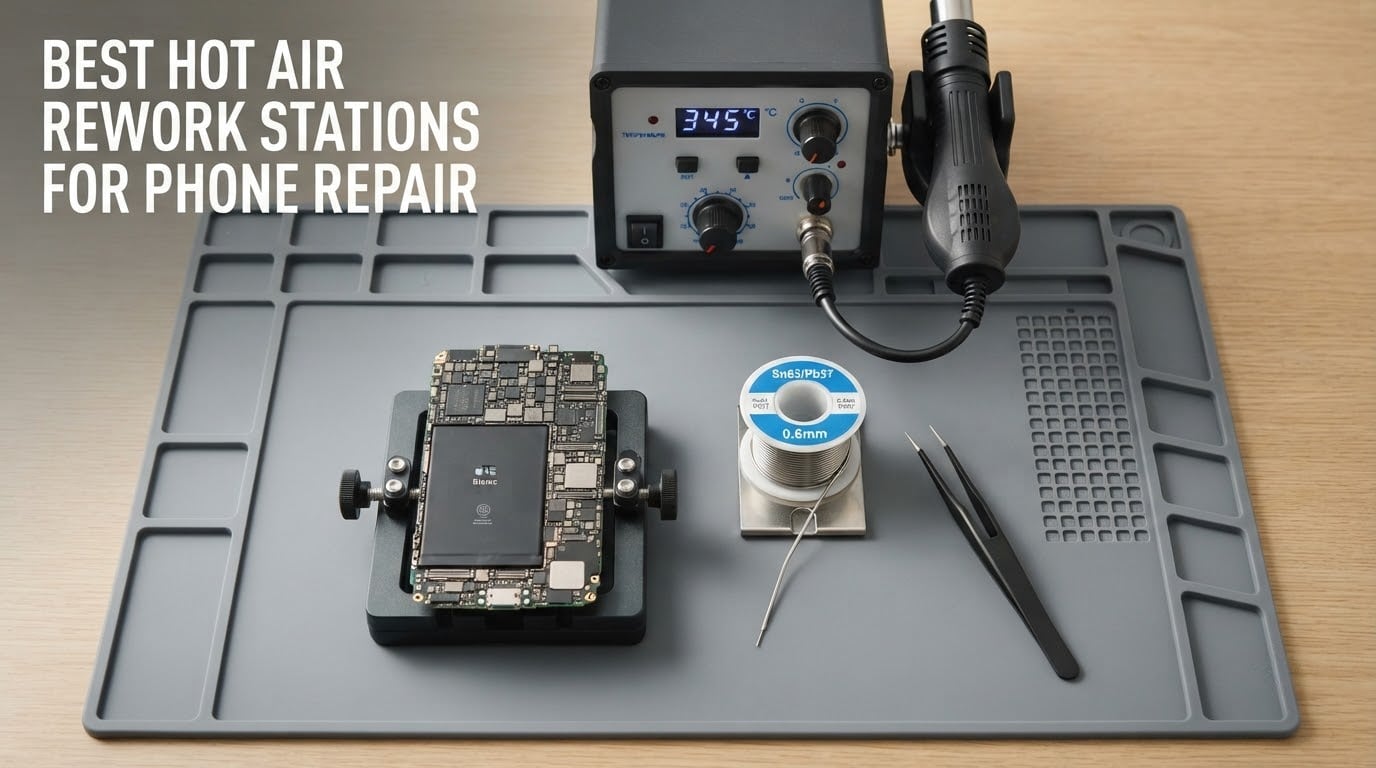
A hot air rework station is a temperature-controlled bench tool that blows heated air through a nozzle so you can melt solder without touching the joint. For phone repair it is the single most useful piece of heat equipment you can own, because it is how you separate a laminated display, pull a USB-C charging port, strip a shield can, and replace a chip without cooking its neighbors. A plain heat gun can warm a board, but it has no closed-loop temperature control and no calibrated airflow, and on a phone that is the difference between a clean job and a lifted pad.
The stations on this list are all current 110V US-market models, because that is what a majority of buyers in this country actually end up with. I went through ten of them, read the spec sheets against the owner reviews, and sorted out which ones earn a place on a phone bench. Everything here is a station you can power on a US bench, not a grey-market 220V import, and not a bare heat gun with a temperature dial bolted on.
Three things decide whether a station belongs on a phone bench: how well the temperature holds once the airflow is dialed in, how smoothly the air volume steps down at the low end, and whether replacement nozzles and heating elements are actually available. Wattage on the box is the least interesting number of the lot. We will get into all of that below, but first here is the short version of who should buy what.
If you want the full bench picture rather than just the station, our hot air brush roundup covers the smaller heat tools that live alongside one of these on a repair bench.
Table of Contents
Top 3 Picks: Hot Air Rework Stations for Phone Repair (October 2026)
The three picks below cover the realistic buying decision for almost everyone: a well-rounded all-rounder, the highest rated station in the group, and the one that adds board-level test gear to the box.

YIHUA 8786D I
- 2-in-1 iron and hot air
- 740W output
- PID temperature control
- ESD safe
- fail-safe airflow cut-off
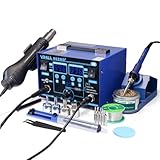
YIHUA 862BD+
- Highest rating in group
- Three digital displays
- Detachable wands
- 0-99 minute sleep mode
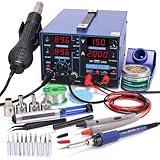
YIHUA 853D 2A USB
- Built-in DC power supply
- 5V USB test port
- 120 L/min air volume
- PID on both sections
Best Hot Air Rework Stations for Phone Repair in 2026
Here is the whole lineup on one screen, with the specification that matters most for each unit listed first. Every one of these is 110V rated.
| Product | Specifications | Action |
|---|---|---|
| YIHUA 8786D I |
|
Check Latest Price |
| YIHUA 862BD+ |
|
Check Latest Price |
| YIHUA 853D 2A USB |
|
Check Latest Price |
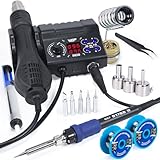 WEP 882D WEP 882D |
|
Check Latest Price |
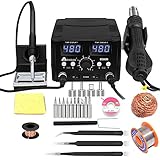 MYPOUOS 8588D SET1 MYPOUOS 8588D SET1 |
|
Check Latest Price |
 TXINLEI 8586 TXINLEI 8586 |
|
Check Latest Price |
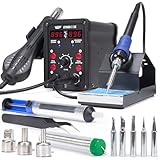 WEP 8786D-I SE WEP 8786D-I SE |
|
Check Latest Price |
 LRT 8858 LRT 8858 |
|
Check Latest Price |
 WEP 8858-V WEP 8858-V |
|
Check Latest Price |
 Beaiguna 2 in 1 Kit Beaiguna 2 in 1 Kit |
|
Check Latest Price |
1. YIHUA 8786D I – Best All-Rounder for Phone Repair
YIHUA 8786D I 2 in 1 Hot Air Rework and Soldering Iron Station with 10 Solder Iron Tips, 4 Hot Air Nozzles, °F /°C, Cool/Hot Air Conversion and Sleep Function
740 watts
110V US plug
2-in-1 iron and hot air
200 C to 896 F
ESD safe
Pros
- Dual display 2-in-1 covers iron and hot air in one box
- PID control with fast temperature compensation
- ESD safe design
- Fail-safe cuts power if airflow stops
- Ten iron tips and four nozzles included
Cons
- Heating element is not calibrated on arrival
- Included tips are the first thing most owners replace
- Airflow is not as finely stepped as a dedicated rework station
I keep the YIHUA 8786D I on my main bench because it removes a decision. The soldering iron and the hot air gun share one chassis, one power lead, and one bench footprint, so there is no second box to find space for on an already crowded repair bench. The dual display is genuinely useful: iron temperature on one side, hot air on the other, and both readable at a glance while a board is on the fixture.
On phone work the hot air side does what it needs to. The fail-safe cut-off is a small detail that matters more than it sounds, because a blocked or failed blower on a handheld gun can cook its own element within minutes if nobody is watching. Temperature control is PID based with fast compensation, and the printed range runs from a 200 C low mark up to 896 F.
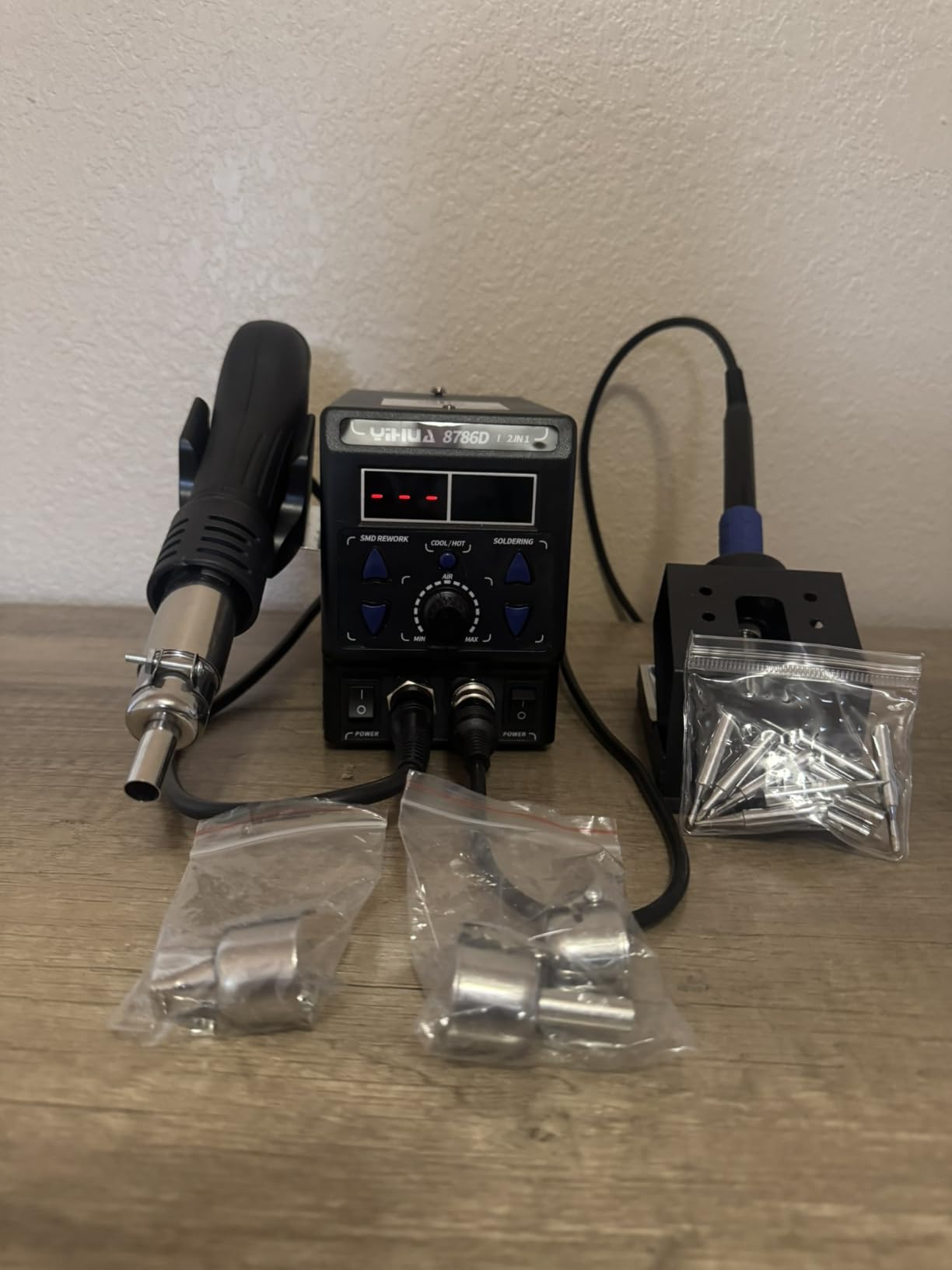
Owner reviews across a large sample describe fast heat-up and stable control for SMD rework, with a minority reporting early defects on the iron or hot air handle. The most common practical complaint is not performance but accessories: the supplied iron tips are serviceable rather than good, and many owners replace them within the first few months of daily work.
Parts availability is one of the stronger points here. YIHUA replacement parts are easy to source, which turns a budget station into a long-term bench tool rather than something that ends up on a shelf when the heater fails.
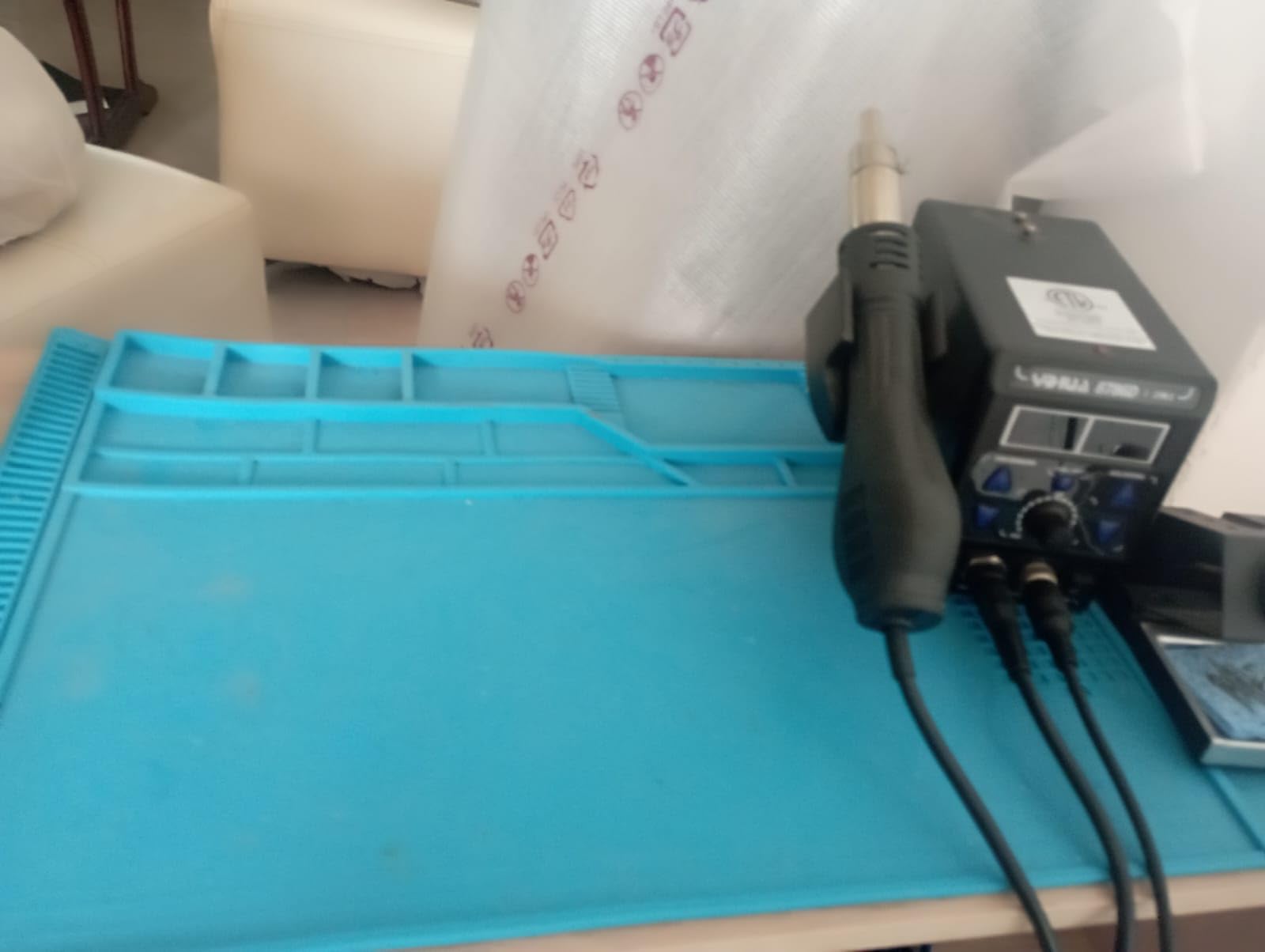
What it handles well on a phone bench
Screen and digitizer separation, back glass softening, shield can removal, USB-C port desoldering, and lead-free rework on 0402 passives all fall comfortably inside what this box can do. For a technician doing a mixed workload of glass work and board-level repair, the built-in iron saves a second purchase and a second power switch.
The ESD safe design matters more than most spec sheets admit, because a phone mainboard carries sensitive RF and memory chips that fail silently from a static event rather than visibly.
Where it falls short
The element is not calibrated out of the box, so verify it with a thermocouple probe or an external thermometer before you run customer work. Treat the displayed number as a set point rather than a measurement until you have confirmed the offset yourself.
Airflow resolution is coarser than what you get on a dedicated rework station, which means fine work near plastic connectors takes more patient hand movement and more masking rather than simply turning the dial down.
2. YIHUA 862BD+ – Highest Rated Station in the Group
YIHUA 862BD+ SMD ESD Safe 2 in 1 Soldering Iron Hot Air Rework Station °F /°C with Multiple Functions
750 watts
110V
ETL certified 2-in-1
75W iron at 392-896F
PID cycling every 20 ms
Pros
- Highest average rating in this roundup
- Reaches working temperature in about 30 seconds
- Three displays show iron temp air temp and air volume
- Detachable wands keep replacement cost low
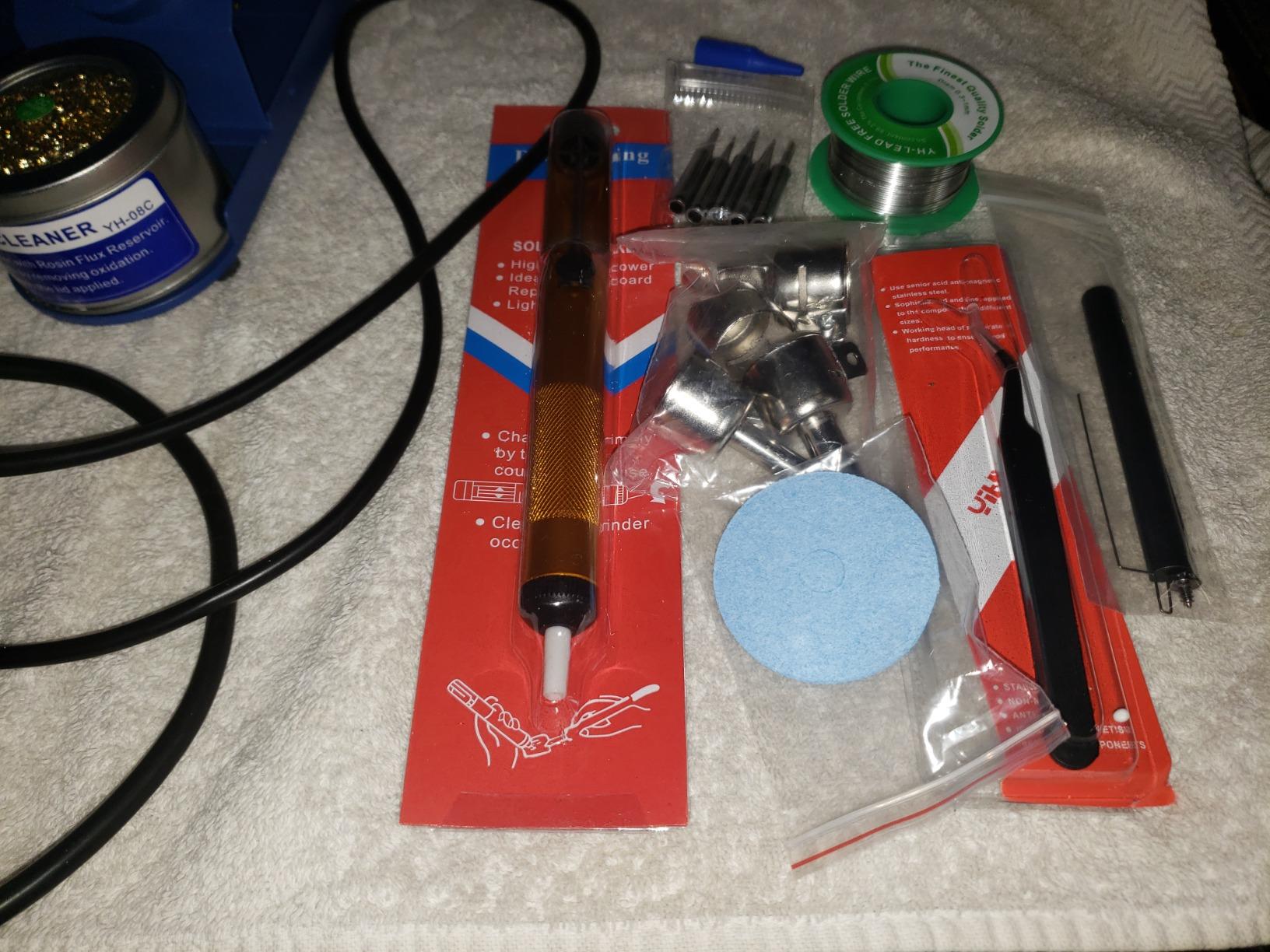
- Full accessory kit in the box
Cons
- Element reads a few degrees low before calibration
- First-use tip pre-heating and tinning is required
- Small multi-pin connectors on the handle can bend
The 862BD+ posts the highest average rating of any station on this list, and the reasons owners give line up with what the spec sheet promises. It heats to working temperature in roughly half a minute, which sounds ordinary until you have waited three minutes for a station to recover between two consecutive IC removals on a customer job.
Three digital displays is the detail I would not give up. Iron temperature, hot air temperature, and simulated air volume are all visible at once, so you can confirm that your airflow change actually registered before you commit the heat. That matters on phone boards more than on laptops, where the surface area is large and forgiving.
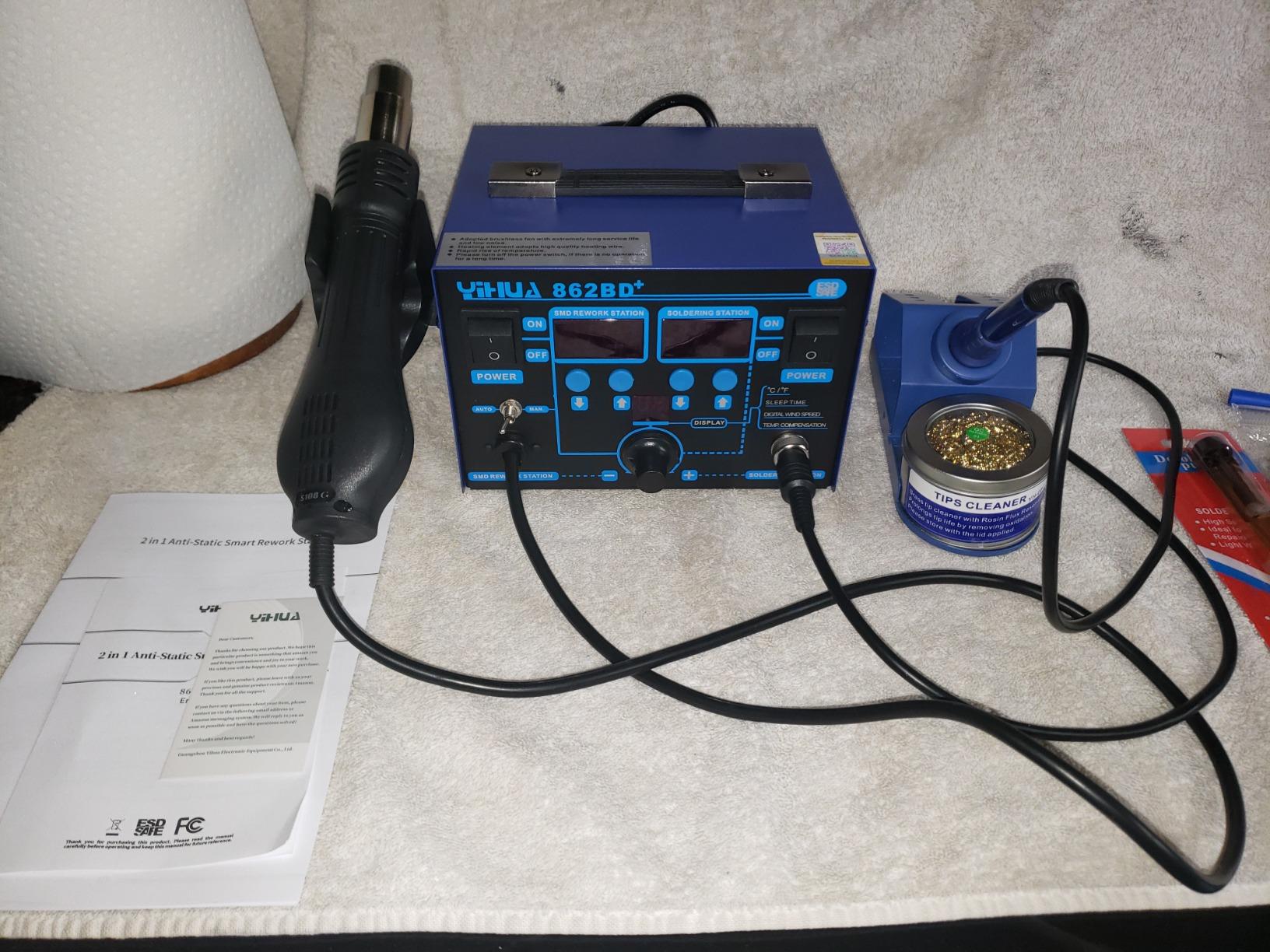
Long-term owners report years of continuous service across phone, amplifier, and computer repair, and repeatedly single out the brand’s replacement parts service as a reason they stayed with the model. Owners with electronics experience describe the PID loop as cycling every 20 milliseconds, which is the mechanism behind the steady temperature readings people notice once they stop comparing it to a cheap station.
The 75W iron covers 392 to 896 F, and the sleep mode is adjustable anywhere from 0 to 99 minutes. A long sleep setting is useful if your day is glass work with occasional board jobs, since the iron and gun both cool down instead of sitting at temperature between them.
What it handles well on a phone bench
Everything from digitizer separation to power management IC replacement. The three-display layout means you are less likely to accidentally sit on a 400 C set point with full airflow while a nearby connector softens, which is a real failure mode on laminated display assemblies.
Detachable hot air wand and iron are the underrated feature here. When a handle eventually fails you replace a wand, not a station, and that changes the long-term cost of ownership completely.
Where it falls short
The heating element is not calibrated on arrival and reads a few degrees low, so budget twenty minutes with a probe before the first real job. Tips also need a proper pre-heat and tinning cycle before they hold stable long-run temperatures.
The small multi-pin connectors where the handpiece leads meet the body can bend if forced, so treat the wand as pluggable rather than permanent and never lever on the pins to free it.
3. YIHUA 853D 2A USB – Best for Board-Level Work With a Bench Supply
YIHUA 853D 2A USB SMD Hot Air Rework Soldering Iron Station, DC Power Supply 0-15V 0-2A with 5V USB Charging Port and 35 Volt DC Voltage Test Meter
DC supply 0-15V 0-2A
35V voltmeter mode
5V USB test port
120 L/min air volume
110V
Pros
- Only station here with a built-in DC supply and voltmeter
- USB port lets you test a device while powered
- 120 L/min air volume for fast recovery
- PID stabilization on both sections
- Sleep mode and auto shut-down protect element life
Cons
- Largest bench footprint of the group
- Awkward tab-and-nut nozzle clamp
- Short wand and power leads
- Some copies arrive with a faulty iron or fan motor
This is the only station in the roundup that doubles as a bench power supply, and that is the whole reason to consider it. It outputs 0 to 15 V at 0 to 2 A for powering a board, or switches to a 0 to 35 V measurement mode for reading rails on a dead phone. The 5V USB port lets you bring up a device while it is still connected, which turns a static diagnosis into a live one.
That capability changes how you work. Current-draw testing on a charging circuit, rail checks on a mainboard that will not power on, and boot-log diagnosis all become possible at the bench rather than at a separate supply station across the room.
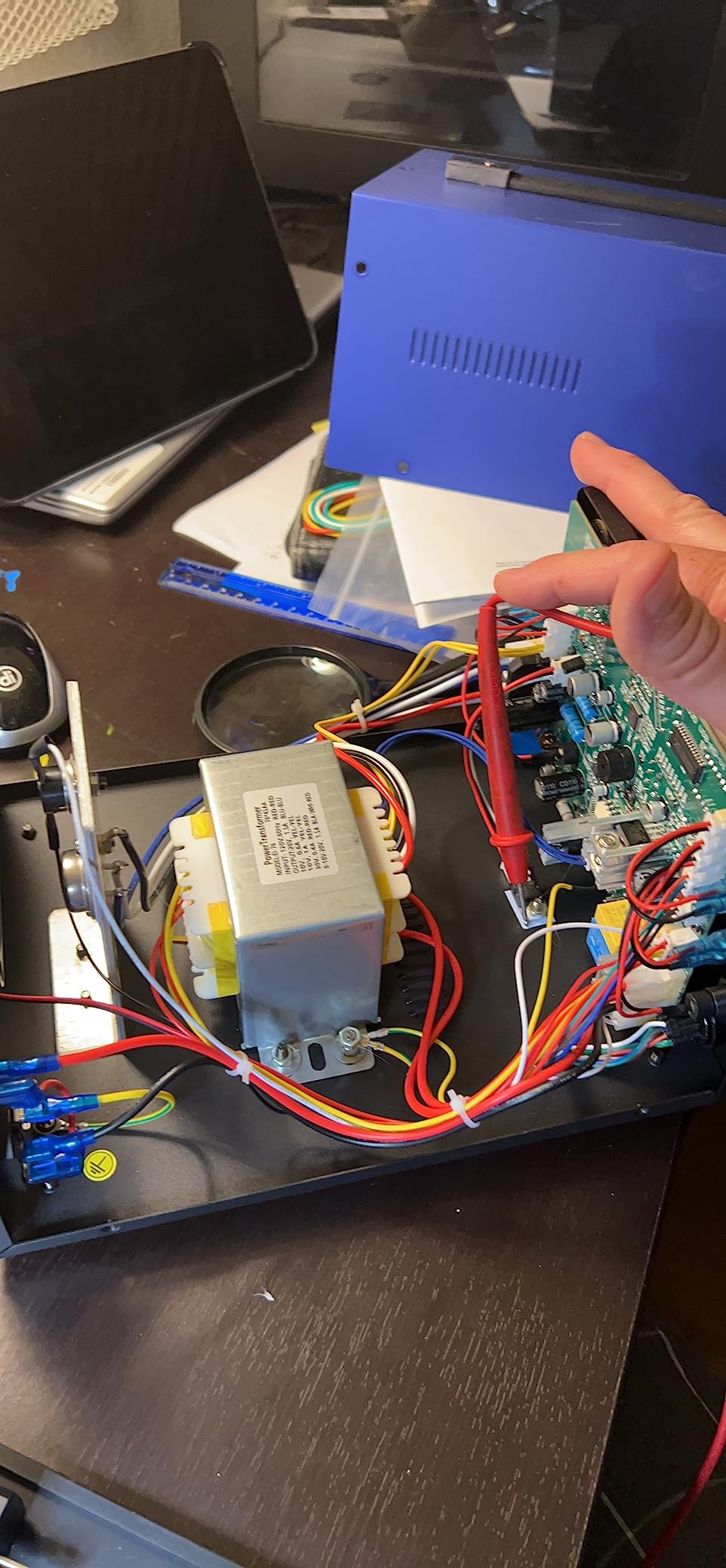
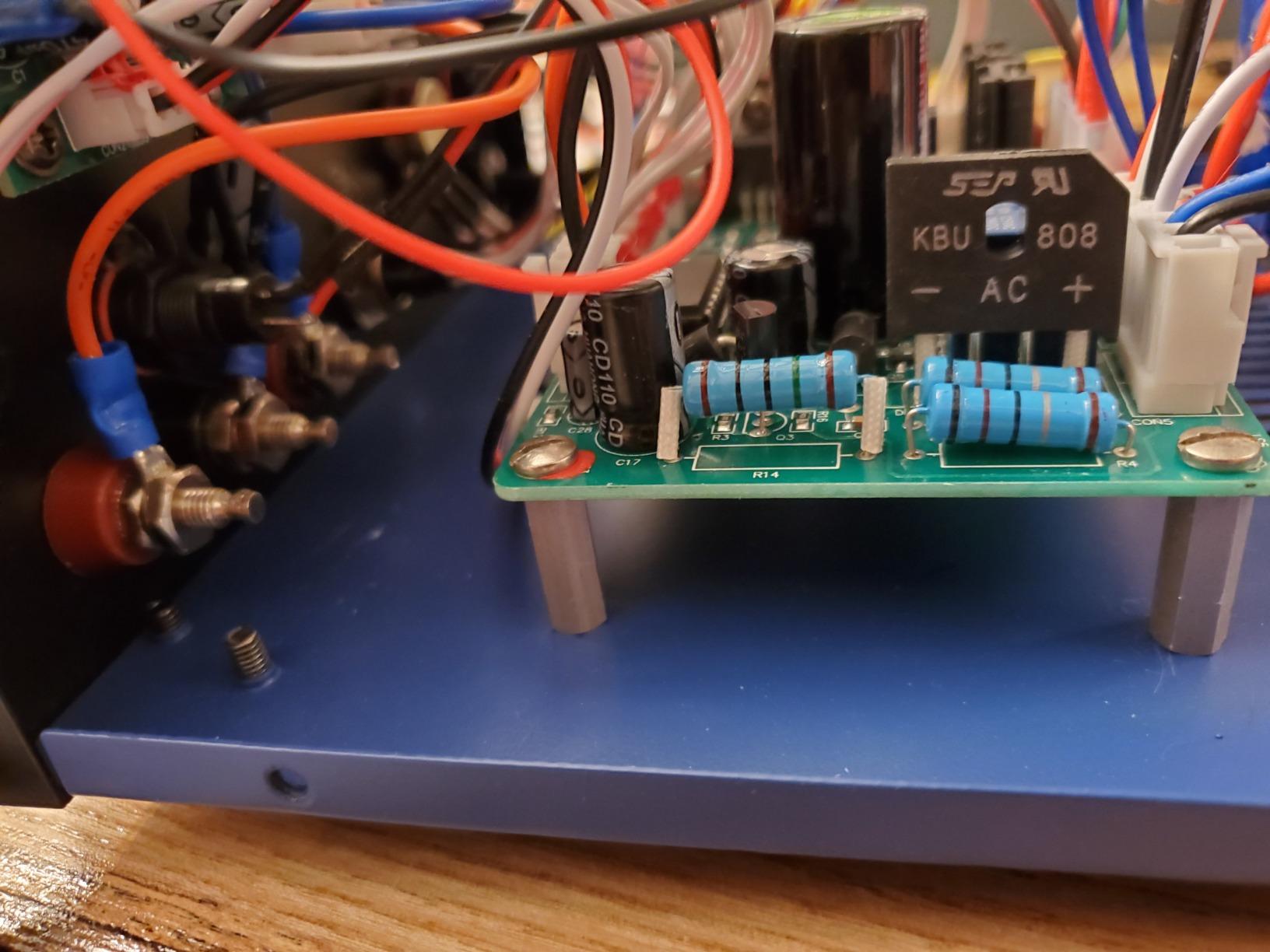
Experienced owners rate the rework performance highly and confirm the DC output is accurate, and some report working down to 0201 parts under a microscope. Hot air volume reaches 120 L/min, and the PID loop runs on both the iron and the hot air section, so the two halves of the station track each other rather than drifting apart.
The dominant negative theme in reviews is build consistency on arrival. Faulty irons and fan motors show up often enough that reviewers advise buying from a seller with easy returns. The good news is that YIHUA’s replacement service resolves those quickly when it happens.
What it handles well on a phone bench
Any job where you need both heat and measurement: UWB chip replacement for phantom battery drain, charging IC work, rail diagnosis on a board that draws no current, and shield can removal for chip-level inspection. The 120 L/min ceiling also recovers temperature fast after you pull the gun off a cold board.
Sleep mode and automatic shut-down protect both the element and the tips, which matters if you are running a long day of mixed glass and board work.
Where it falls short
It is the largest box here, and that footprint is a real cost on a small bench where a microscope, preheater, and board holder already compete for space.
The nozzle clamp uses a tab-and-nut arrangement that is awkward to tighten one-handed, and the wand and power leads are shorter than you would like. Inspect the unit on arrival if you care about a fast replacement path.
4. WEP 882D – Best for a First Phone Repair Bench
WEP 882D Soldering Iron Station 2-IN-1 SMD Hot Air Rework Station with 2 Spools of Solder Wire, 5 Soldering Tips, 3 Hot Air Nozzles, Brass Wool Tip Cleaner, Tweezers, Desoldering pump
750 watts
110V
2-in-1
PID plus calibration function
3.54 x 5.9 x 2.28 inches
Pros
- Compact 2-in-1 with separate LED readouts
- Calibration function for temperature accuracy
- Two spools of solder and a fuller tip set than most kits
- Sleep standby and auto shutdown extend element life
- Strong sales rank showing broad adoption
Cons
- Entry design has no DC supply for board work
- Hot air gun is not calibrated as tightly as a dedicated rework model
- Nozzle count is small for the range of phone packages
The WEP 882D is the pick for someone building a first phone repair bench and wants one box that covers both jobs. It runs a PID program across the iron and the hot air gun, and it is one of the few units at this level with a calibration function, which means you can correct temperature offset yourself instead of trusting the display.
That calibration function is the reason I rate it above other budget 2-in-1s. Forums are full of technicians warning that budget stations read well off actual temperature, and having a built-in way to dial that in changes the tool from a guess into a measurement.
Reviews are consistently positive on value, describing a capable unit for hobby and light professional phone and PCB repair. The most common caveats relate to the light-duty build quality of the bundled accessories rather than to the heating or control systems, which is the right place for a kit like this to fall short.
Sleep mode for the iron, standby mode for the hot air gun, auto shutdown, and degree conversion all run from the front panel, and at 1.1 kg it is easy to move if you want to take the whole bench to a different table.
What it handles well on a phone bench
Screen separation, shield can lifting, connector replacement, and general lead-free rework across a busy first bench. Iron range covers 392 to 896 F and hot air covers 212 to 896 F, so the full phone temperature envelope is available from one unit.
The calibration function is the feature to learn first. Run a probe check on day one, save the offset, and your rework becomes repeatable.
Where it falls short
It is an entry-level two-in-one, so there is no DC supply for voltage work on a board. If your diagnosis path runs through current draw rather than through heat, this is the wrong tool for that half of the job.
The hot air gun is not calibrated as tightly as a dedicated rework station, and the three supplied nozzles will run out quickly once you start working a range of package sizes.
5. MYPOUOS 8588D SET1 – Best for a Station You Keep for Years
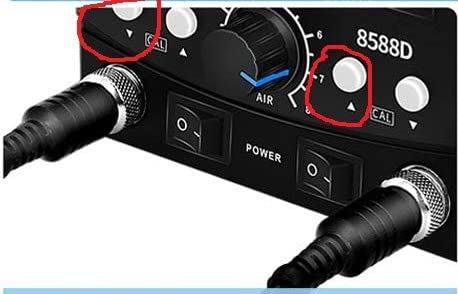
MYPOUOS 2 IN 1 750W LED Digital Soldering Station Hot Air Gun Rework Station Electric Soldering Iron For Phone PCB IC SMD BGA Welding SET 110V (8588D SET1)
750 watts
110V 60Hz
100-480C at plus or minus 2C
Ceramic core element
2.6 kg
Pros
- Ceramic core heater runs more consistently than mica core budget units
- Reaches usable temperature in about 10 seconds from cold
- Reported to last four plus years of regular use
- Very complete 19-piece accessory kit
- Ground-corrected internal wiring
Cons
- Blue LED readout is hard to read in direct light
- Sleep mode on the iron cannot be disabled
- No master power switch
- Calibration needs internal pot adjustment with a probe
The heater is the reason to look at this one. It uses a ceramic core element rather than the mica core found in most generic 858D-pattern sets, and owners who have compared the two consistently rate the ceramic heater as more consistent in how it runs temperature. It also has ground-corrected internal wiring, which is a genuine difference from the unbranded versions of the same design.
Owners report reaching usable soldering temperature in about ten seconds from cold and describe units that have lasted four-plus years of regular use. For a bench that is going to see daily work, that durability matters more than any feature on the panel.
The 100 to 480 C range with a plus or minus 2 C setting tolerance covers leaded and lead-free phone work in one pass, and the accessory kit is the most complete in the group: ten tips, four nozzles, tweezers, an IC puller, solder wire, and a suction tin wire tool.
Criticism concentrates on the display readability, the immovable sleep mode, and the quality of the bundled consumables. In bright bench lighting the blue LED readout is genuinely harder to read than a white or green display, which is a real issue for a technician working under a magnifier lamp.
What it handles well on a phone bench
High-volume board work and any job where you are cycling between a shield can, a connector, and a passive in the same hour. The fast heat-up and consistent element keep the rhythm of a busy repair counter intact.
Handle induction means the iron and gun activate on lift and shut down when returned to the stand, so the element is not sitting hot while you are working under a microscope on something else.
Where it falls short
There is no master power switch. If your shop rules require a single point of isolation for the bench, plan on a switched power bar.
Calibration requires opening the case and adjusting internal pots with a temperature probe, so this is not a beginner-friendly unit to dial in. The bundled tips, wick, and cleaning accessories are also low quality and wear out quickly.
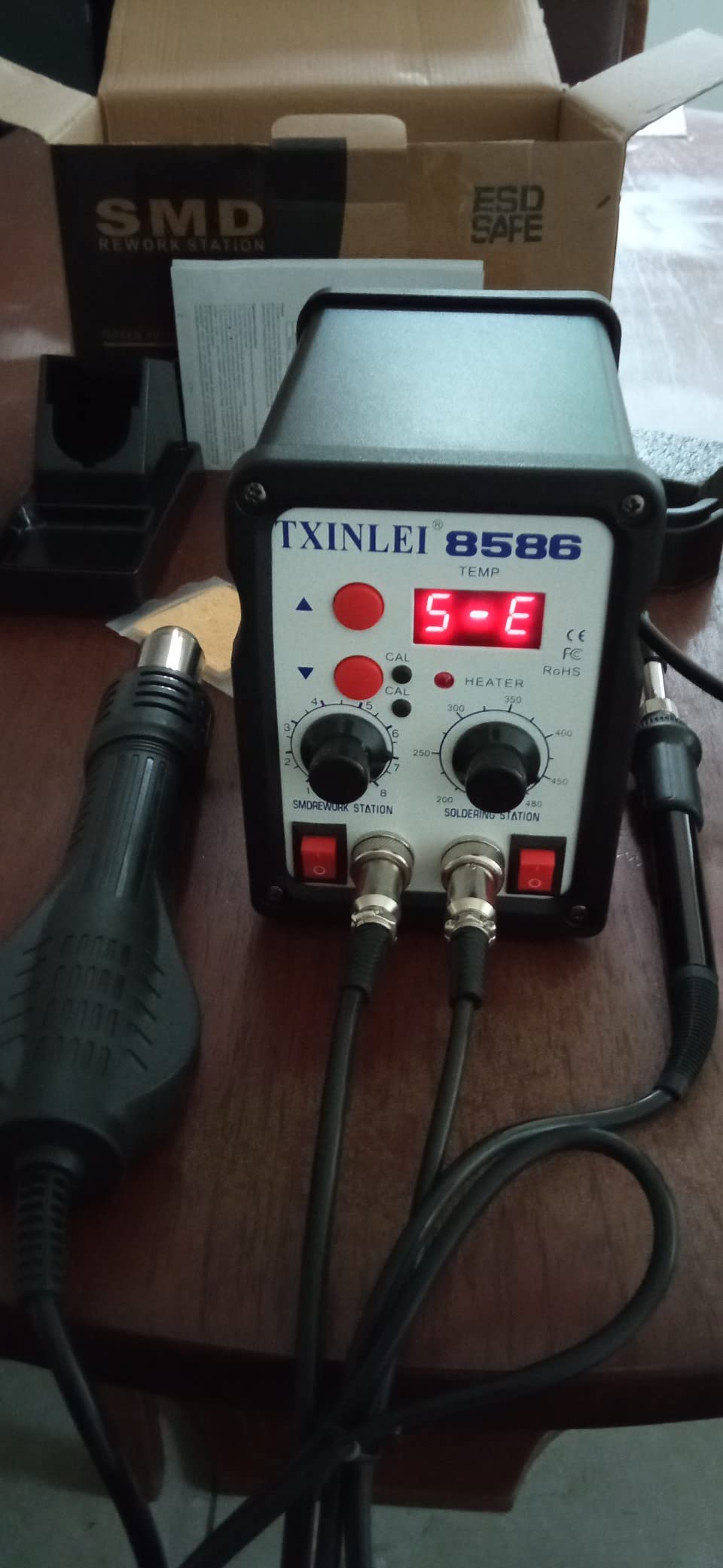
6. TXINLEI 8586 – Best for Large Packages and BGA Work
TXINLEI 8586 110V Solder Station, 2 in 1 Digital Display SMD Hot Air Rework Station and Soldering Iron, 12pcs Different Soldering Tips, Tweezers,Desoldering Pump,700W 480℃
100-480C range
1C temperature stability
110V
Handle induction start stop
19-in-1 kit
Pros
- Spare iron and hot air heating elements included in the box
- Handles SOIC CHIP QFP PLCC and BGA packages
- Digital temperature is quick and easy to set
- Nozzles seat snugly and air runs until the element cools
- Compact two-in-one saves bench space
Cons
- Iron gets hot enough to melt solder at the lowest setting
- Blower runs until the element drops to 100C after holstering
- Ceramic iron element sits loose in the shaft
- Manual and calibration instructions are unclear
Where most of these stations limit themselves to phone-sized packages, the 8586 is listed for SOIC, CHIP, QFP, PLCC, and BGA work, and owners report using it for video processor reballing. If you move between phones and consoles, or you take on laptop boards, that package coverage is the differentiator.
Two spare heating elements come in the box, one for the iron and one for the hot air gun. That is unusual at this level and it means the most common catastrophic failure on a budget station, a dead heater, does not end your ownership experience.
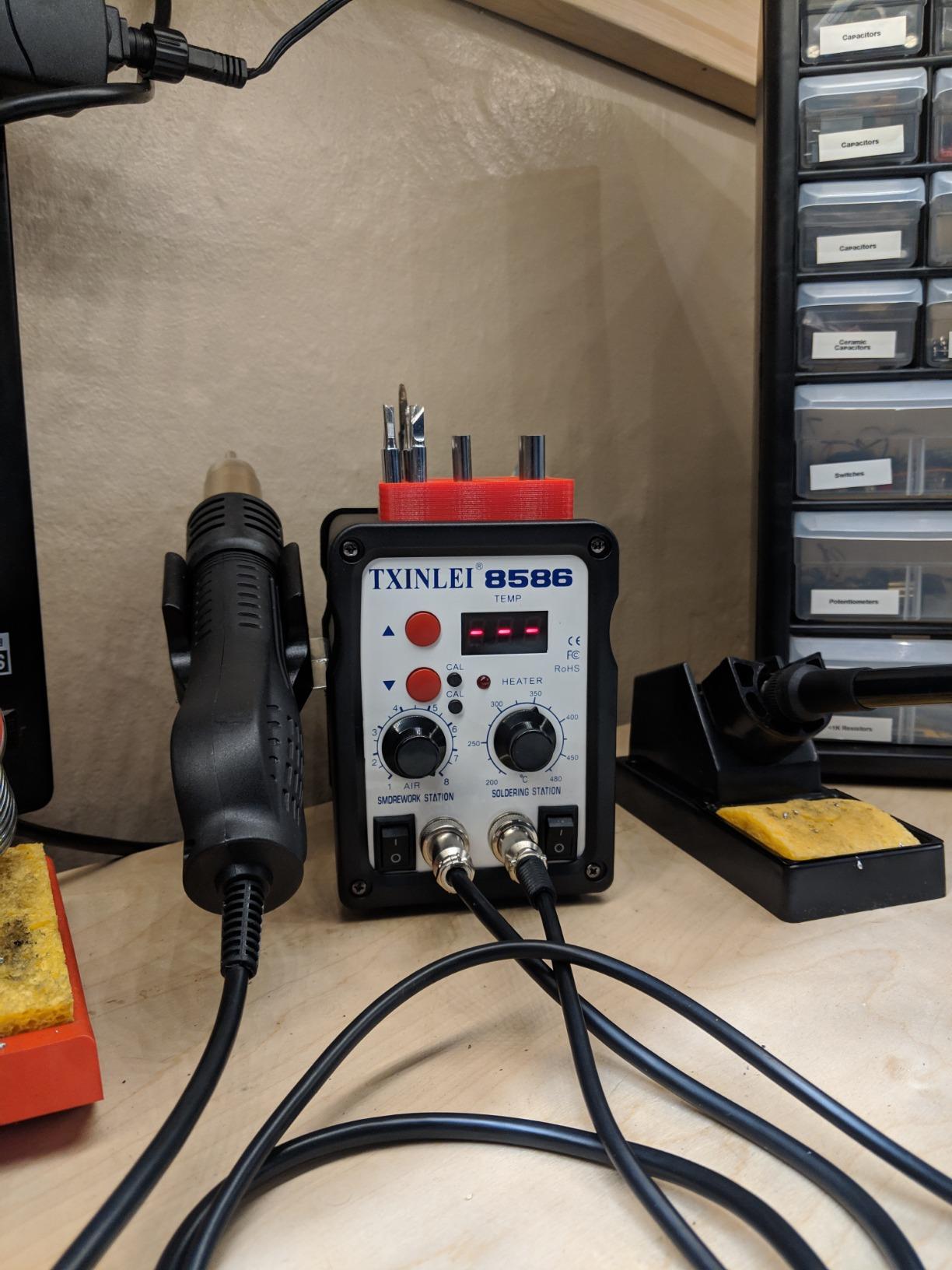
Reported temperature stability is 1 C across a 100 to 480 C range, and owners describe the hot air melting silver solder from a cold start in about 20 seconds. Handle induction sensing starts the tool on lift and stops it in the cradle, which protects the element between jobs.
Nearly every longer review flags the documentation and the iron element fit as the weak points, and several note that the unit needs calibration pot adjustment rather than offering out-of-box temperature accuracy. Some included tips are the wrong diameter and do not heat properly.
What it handles well on a phone bench
Large packages and higher pin counts, plus any repair where you might need to move off a phone and onto a console board in the same session. The kit includes BGA tools, a desoldering pump, and two pairs of tweezers, which covers most of a bench drawer.
Because the air continues to flow until the element cools, you get a proper cool-down without babysitting a switch.
Where it falls short
The soldering iron still gets hot enough to melt solder at its lowest setting, so you use the power switch rather than trusting the dial. The blower also keeps running after you holster the gun until the element drops to 100 C, which is noisy on a quiet bench.
The ceramic iron element sits loose in the shaft and does not reach full tip depth, which slows heat-up relative to a Hakko-class iron. Budget extra time for first-use calibration and read the manual carefully before trusting either reading.
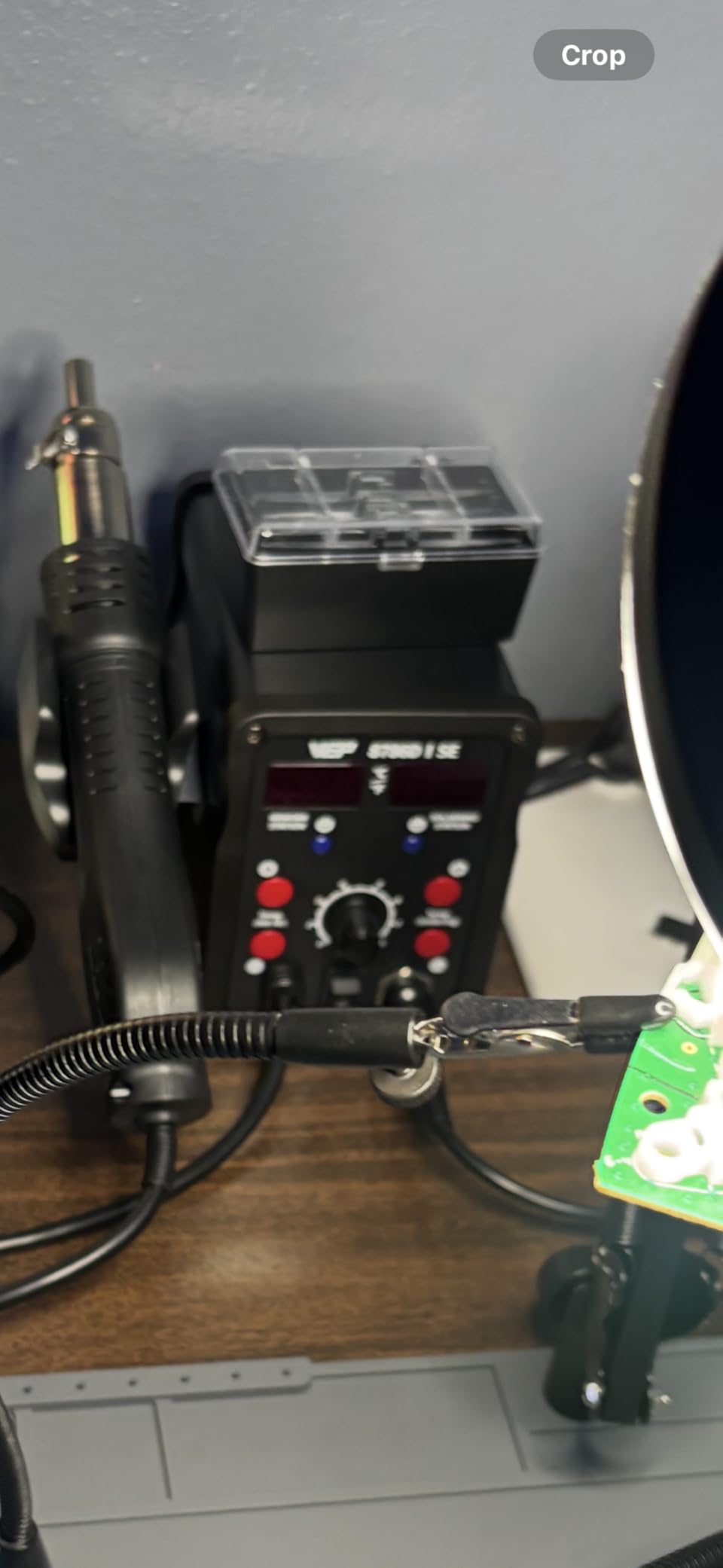
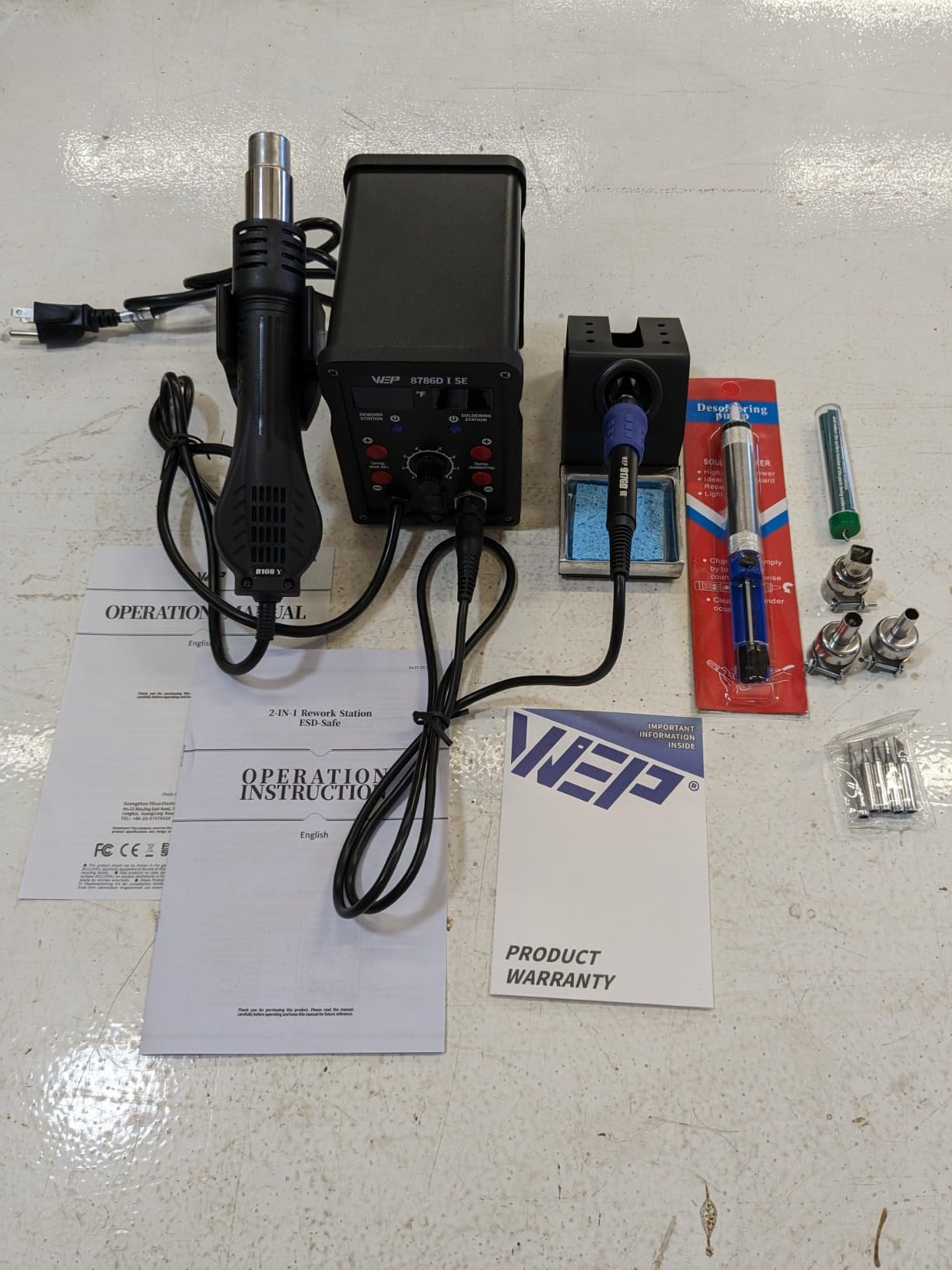
7. WEP 8786D-I SE – Best for a Technician Who Moves Between Benches
WEP 8786D-I SE Hot Air Soldering Iron Station Kit 2-IN-1 for Rework, Desoldering with Lead-Free Solder Wire, 5 Soldering Tips, 3 Hot Air Nozzles,Tweezers, Desoldering Pump
110V
1.69 kg
2-in-1
PID stabilization
392-896F iron and 212-896F hot air
Pros
- Light compact and sturdy at 1.69 kg
- Fast heat-up with steady temperature control
- Owners report successful eMMC removal from phone boards
- Air volume adjustment prevents small parts blowing off early
- Standby cooling and sleep mode reduce element wear
Cons
- Poor thermal contact between element and shaft on some copies
- Iron struggles with large components even at max temperature
- Not suited to high-volume professional desoldering
- Some tips do not fit the storage rack
The 8786D-I SE is the one I would put in a case for field or shop-to-shop work. At 1.69 kg with the hot air gun, iron, and controller in one box, it is light enough to carry and compact enough to set up on whatever table is in front of you.
Owners report pulling eMMC storage off a phone board with it, which is one of the harder removals on a modern mainboard because the package sits close to other thermally sensitive components. That is a better result than the spec sheet alone would predict.
The airflow adjustment is what keeps that job clean. Being able to bring the volume down before the solder is fully molten means small SMD parts stay put instead of launching off the board, which is the most common self-inflicted error on a phone bench.
Standby cooling drops the hot air side to 212 F in the holder and the iron has a 10-minute sleep mode, so a packed day of back-to-back appointments does not cook the element between jobs.
What it handles well on a phone bench
Light to medium board work, storage and shield chip removal, connector swaps, and general lead-free rework on a phone mainboard. The 212 to 896 F hot air range covers the full envelope you need for display separation as well as chip work.
It is also a good travel option, since one box means no separate iron to lose in transit and no second power supply to find at the destination.
Where it falls short
Some have poor thermal contact between the heating element and the iron shaft, which weakens heat transfer. Owners suggest thermal compound in the tip bore as a workaround, and the iron struggles with larger components and big copper areas even at maximum temperature.
This is not a high-volume professional desoldering machine. A few supplied tips do not fit the storage rack, and on at least one copy a heat gun clamp nut was not properly tapped.
8. LRT 8858 – Budget Pick for Chip Removal and Heat Shrink
LRT 8858 Hot Air Rework Station, Digital Heat Gun for SMD Repair
680 watts
110V AC
100-500C range
F1 to F10 stepped airflow
Hot air only
Pros
- Ten discrete airflow levels give finer control than a continuous dial
- Sleep mode cools the element automatically in the holder
- Compact controller suits small benches
- Six nozzle sizes from 3mm to 10mm
- Microprocessor digital temperature control
Cons
- Hot air only with no soldering iron included
- Airflow is stepped rather than continuously adjustable
- Weaker than PID-loop stations on high pin-count packages
The LRT 8858 is a hot air gun and a controller, with no soldering iron, and that single fact defines where it fits. If you already own an iron and want a dedicated heat source for chip removal, heat shrink, and preheating jobs, this is a clean way to add one without buying a second full station.
The stepped airflow from F1 to F10 is the part I would actually argue for. A dial gives you an unknown position between two points, while ten labeled positions mean you can tell a colleague, and tell yourself six months from now, exactly what airflow a given package needed.
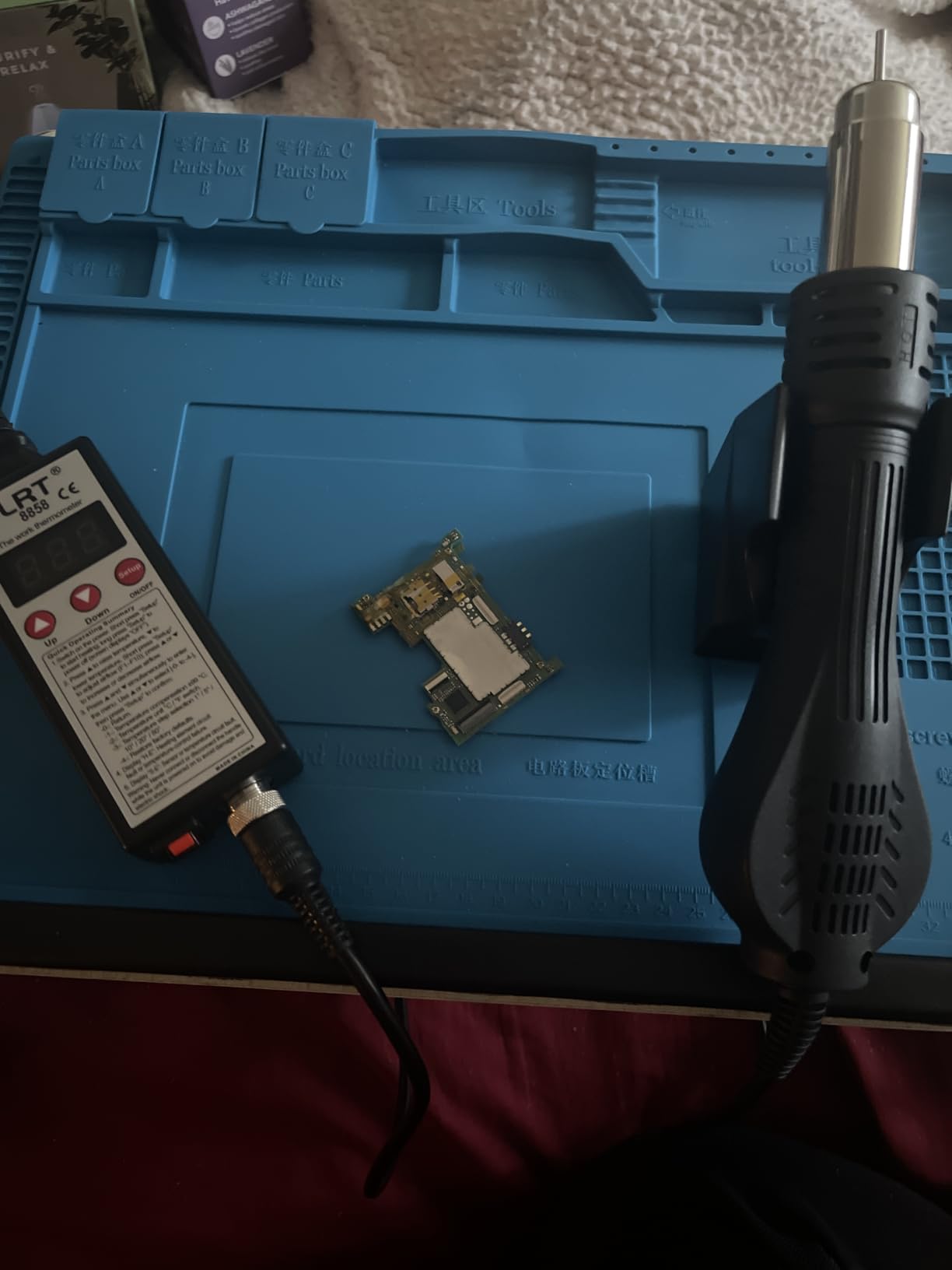
Owners treat it as a capable budget heat gun for chip removal, heat shrink, and general SMD rework, and are satisfied with the stepped airflow and the sleep mode cooling. Six precision nozzles from 3mm up to 10mm cover fine SMD work through to larger packages, and anti-static tweezers and an IC extractor come in the box.
At 0.7 kg with a compact controller, it is the easiest unit here to keep on a small table or carry to a shared workspace. The 100 to 500 C microprocessor range covers leaded and lead-free work alike.
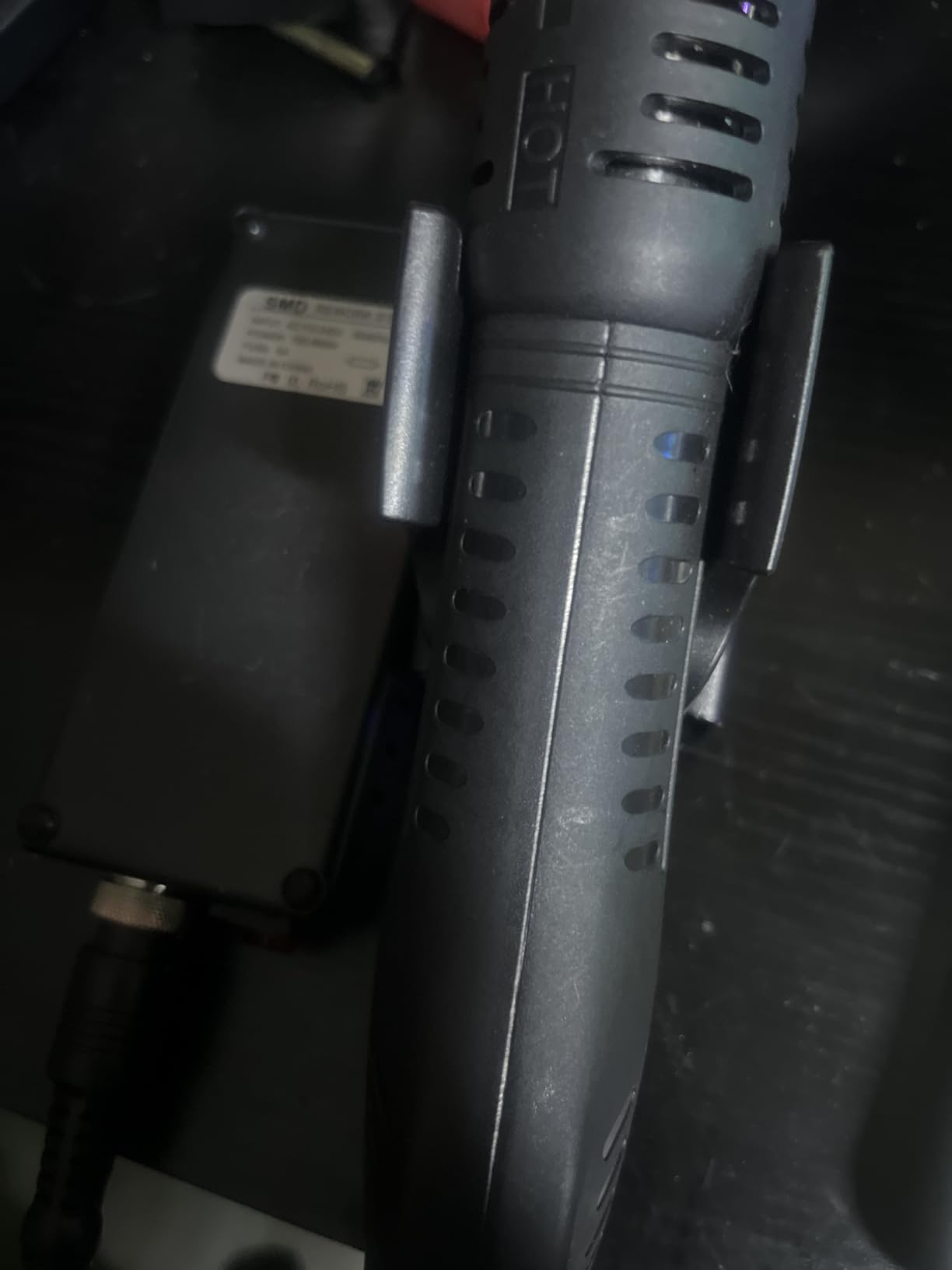
What it handles well on a phone bench
Chip removal, heat shrink tubing, and adhesive softening. The lower nozzle sizes are useful for pulling small packages without a blast of air over adjacent components, and sleep mode protects the element when the gun sits in its holder between jobs.
For a learner building skills, a dedicated hot air tool with a simple panel is easier to reason about than a full combo station with a dozen settings.
Where it falls short
There is no soldering iron in the package, so you need a separate one for through-hole work and for tinning leads. If you are buying your first bench tool, this is an incomplete purchase.
It is less capable on high pin-count packages and dense boards than a station with a true PID loop, and the stepped airflow means there is no fine adjustment between two levels.
9. WEP 8858-V – Best for a Tiny Bench or Shared Workspace
WEP 8858-V Hot Air Rework Station Kit with Compact Size, Integrated Nozzle Holder, 3 Nozzles, 2 Tweezers, Adjustable Temperature& Air Volume, PID Program, °C/°F Conversion and More
3.5 x 4.6 x 2.4 inches
LCD display
PID program
Calibration function
110V
Pros
- Smallest footprint of the full-size stations with integrated holders
- Air volume on a dedicated panel knob
- PID program holds consistent temperature
- Digital calibration and degree conversion included
- Hot air fail-safe protection
Cons
- Hot air only with no soldering iron
- only three extra nozzles included
- Stated wattage is far below the 700-750W two-in-1 models
The 8858-V solves a problem the bigger combos do not: bench space. The controller measures 3.5 by 4.6 by 2.4 inches, and the hot air gun holder plus nozzle holder are built into the unit rather than bolted to a separate stand. That is a real saving on a table already carrying a microscope, a preheater, and a board holder.
The PID program continuously monitors temperature and adjusts power to hold the set point, and the air volume sits on a dedicated panel knob instead of inside a menu. On a small box with a small display, those two choices matter more than they would on a full-size station.
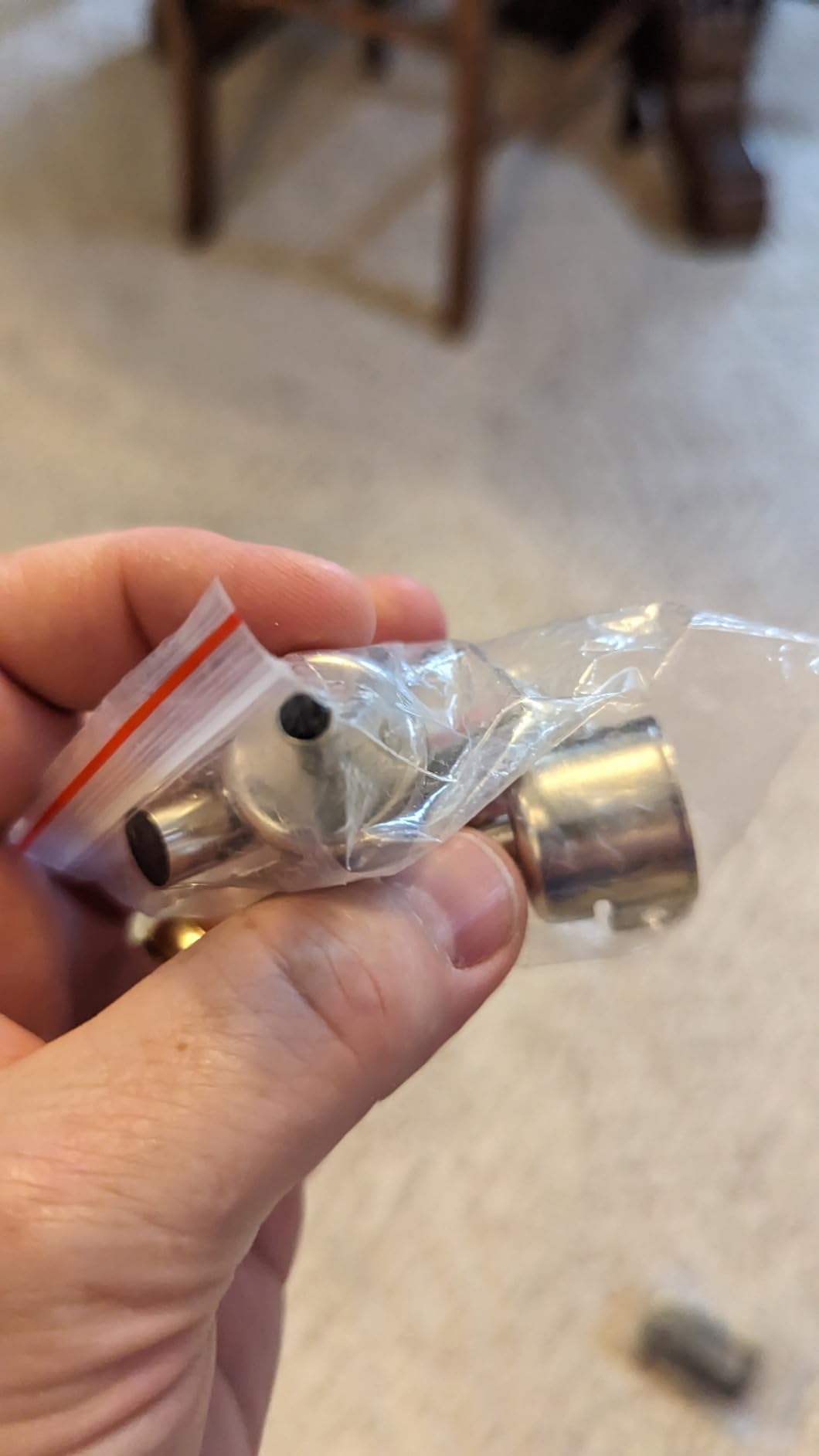
Buyers focused on bench space rate this highly, with the integrated holders, the single-knob air control, and the PID stability as the recurring highlights. Digital temperature calibration and degree conversion give you usable control in a box this size, and the hot air fail-safe cuts in if airflow stops.
Feedback is thinner than for the two-in-1 models simply because fewer people own one, and the main caveat is that it is a hot air gun only, so most owners pair it with a separate iron.
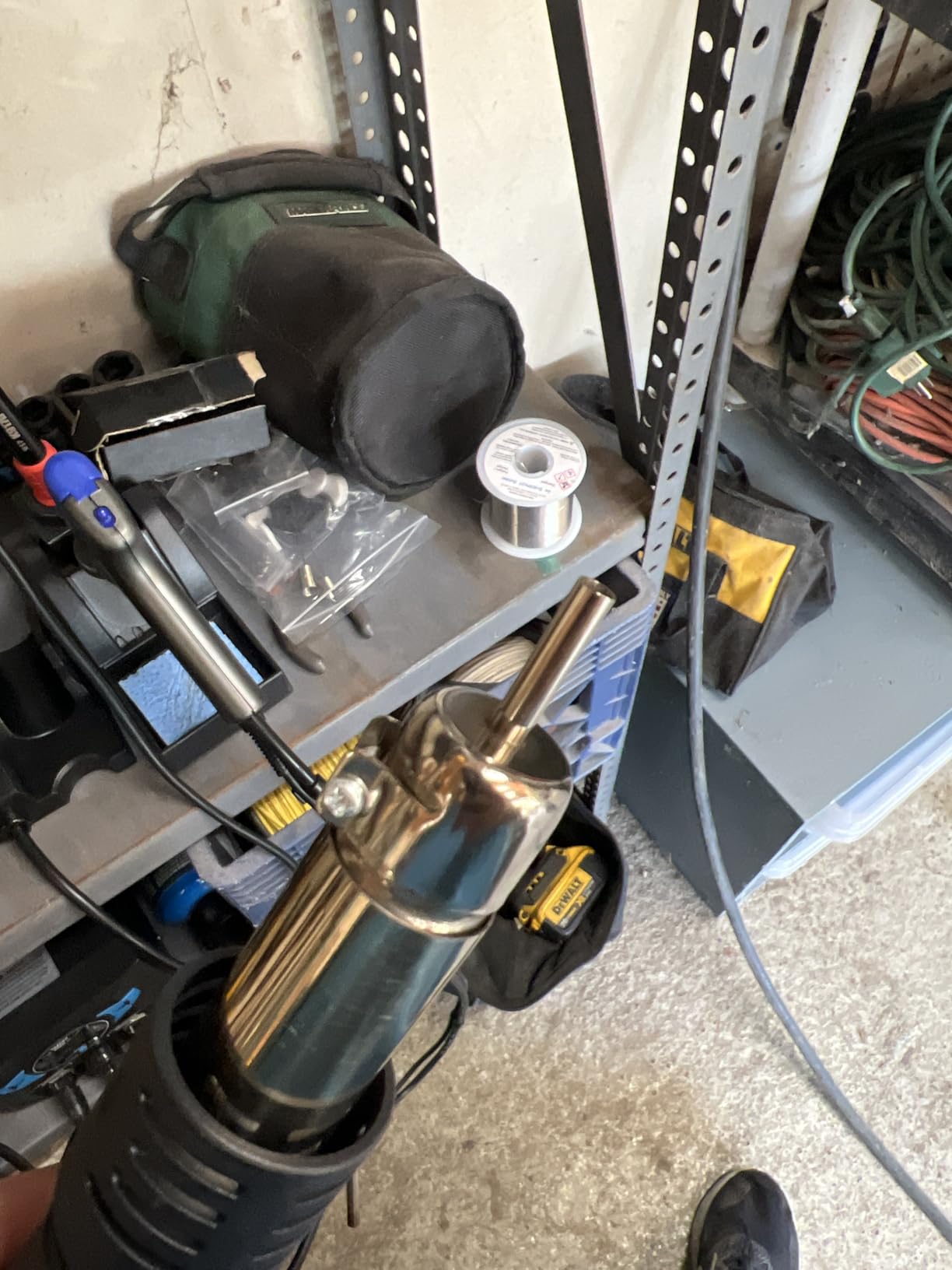
What it handles well on a phone bench
Display separation, shield can lifting, and small package removal on a bench where footprint is the constraint. The LCD readout stays visible in a way smaller blue LED panels do not, and calibration is a front-panel operation.
It is also a sensible second station for a shop that already owns a combo unit, giving you two hot air guns so a screen job and a board job can run at once.
Where it falls short
No soldering iron is included, so a first-time buyer needs a second purchase. Just three extra nozzles come with it, which will not cover the range of packages on a working phone bench.
Its stated wattage is far below the 700 to 750W two-in-1 models, though published wattage across brands is measured inconsistently and is not a like-for-like comparison. Judge it on its PID behavior and your own probe readings instead.
10. Beaiguna 2 in 1 Kit – Best Starter Kit on a Tight Budget
Beaiguna 2 in 1 Hot Air Rework Soldering Iron Station Kit, Precision Circuit Board Soldering Gun Kit, Rapid Heat up Solder Station, Upgrade Dual System Independent Control, Auto Sleep & Calibration
700 watts
110V
2-in-1 with dual switches
392-896F iron
212-896F hot air
Pros
- Two working tools in one compact body
- 700W with a pure copper transformer
- Independent switches for iron and hot air
- Auto sleep and temperature auto-calibration
- Marked for phone computer and appliance repair
Cons
- Display reports hot air temperature only
- Iron temperature is set on a knob scale
- Iron accuracy depends on the manual calibration step
- Bundled tips and accessories are entry-level
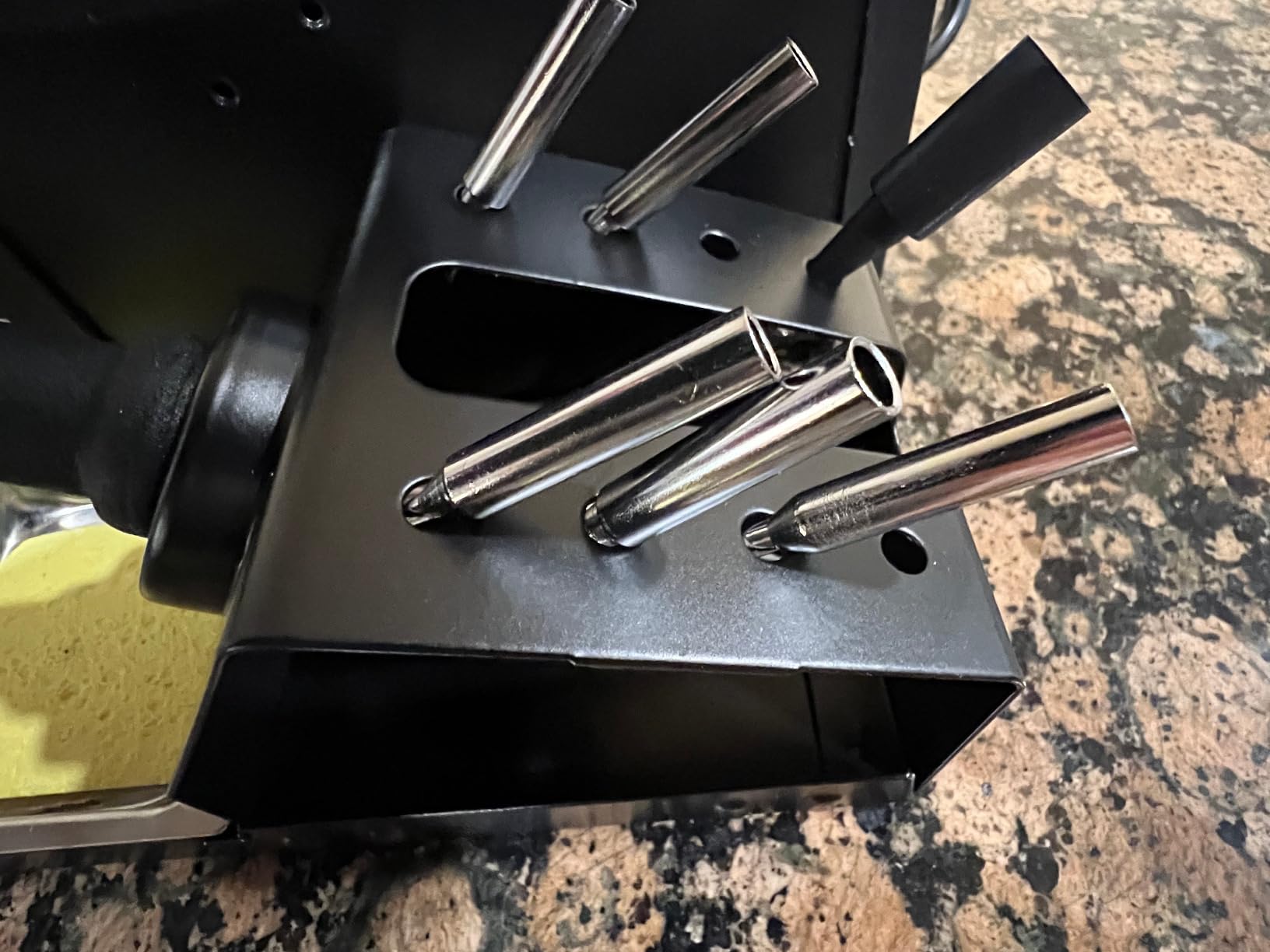
The Beaiguna is the honest budget option. It is a 2-in-1 with 700W of output through a pure copper transformer, independent switches for the iron and the hot air gun, and enough in the box, including three nozzles, five tips, solder wire, a desoldering pump, and tweezers, to start work without a second purchase.
The design detail worth knowing before you buy is that the digital display shows hot air gun temperature only. The iron is set on a knob scale and confirmed through the calibration port on the control panel, so you are running a digital reading on one half of the station and a calibrated guess on the other.
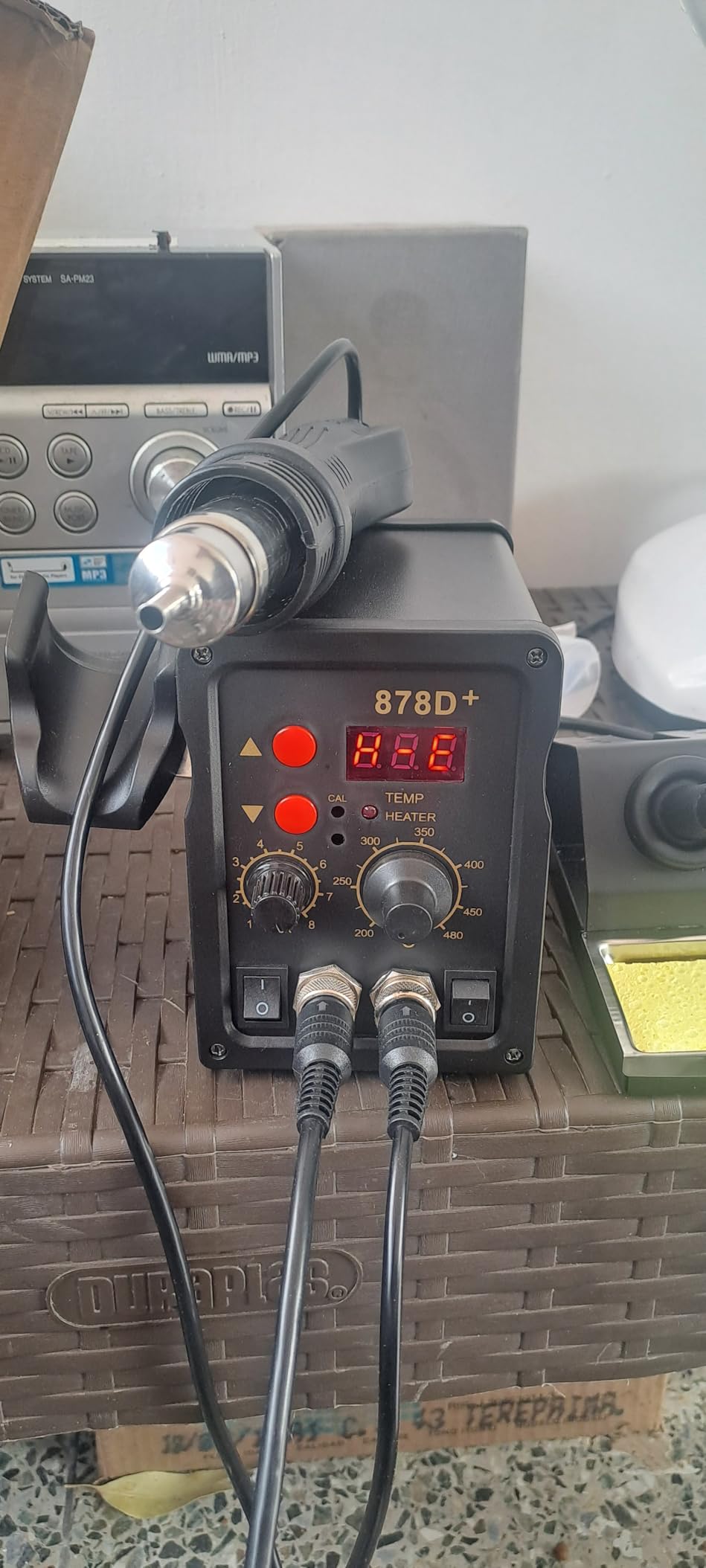
Owners largely accept this as a capable entry bench for phone and board repair, but satisfaction runs below the YIHUA and WEP models in this roundup. The rating spread shows a meaningful share of one-star reviews, and the display limitation is the most frequently cited frustration, because users have to lean on the calibration procedure to keep the iron honest.
Auto sleep and auto-calibration are both present, along with degree conversion, so the tools needed to correct the readings are included even if the default experience is not as polished.
What it handles well on a phone bench
General phone, computer, and appliance repair at an entry level. Independent dual switches mean you can leave one side idle while working the other, which is convenient when you are alternating between glass work and board repair in the same session.
For a technician who is still learning, having both tools on one panel with straightforward calibration is easier to reason about than a feature-dense station.
Where it falls short
The display reports hot air temperature only, so iron temperature is set blind on a knob scale. Run the calibration procedure before customer work or you will be guessing at the iron.
The bundled tips and accessories are entry-level, and this is the lowest-rated unit in the roundup, so expect more variability in build consistency than the YIHUA and WEP models.
Hot Air Station vs Heat Gun vs Soldering Iron vs Preheater
A temperature-controlled hot air rework station is the right answer for removing and replacing surface-mount parts, and a plain heat gun is not a substitute. The heat gun heats a large area at once with no closed-loop control and no calibrated airflow, which on a phone board means collateral damage to adjacent parts and plastic connectors as often as it means a clean removal.
That answer comes up in almost every repair forum, and the consensus in r/soldering threads is blunt: get a temperature-controlled station, because it will do everything a heat gun does and adds control you cannot get any other way. The same community repeatedly argues that a well-controlled lower-power unit beats a high-wattage unit with poor control, which is why wattage ranks last on our list of criteria.
Each tool has a distinct job, and using the wrong one is how boards get damaged.
The soldering iron is for through-hole work, through-hole pins, connectors, and tinning. It is precise but it touches one point at a time, so it cannot heat all the pads on a multi-pin IC evenly. That is what makes a soldering iron the wrong tool for chip removal and the right tool for soldering a USB-C port’s through-hole tabs once the shield is off.
The hot air station heats many pads at once, which is exactly what you need for a 20-pin or larger package, but it heats whatever is in the path. A phone board packs heat-sensitive plastic connectors right next to the chip you are removing, so preheating and shielding are part of the job rather than optional extras.
A preheater is not a removal tool at all. It heats the underside of the board gently to slow the rate at which the board itself heats up, which reduces warping and thermal shock on a multilayer mainboard. Most technicians running regular phone work add one within a few months of buying a station, and it is the single best answer to a board that will not come free on the first pass.
Reflow ovens and full BGA rework systems are the next tier up. They earn their cost when you are doing batch work or reballing, not for single-component phone repair, and a dedicated hot air station remains the tool you reach for daily. More on the rest of the bench below.
The Specs That Actually Matter
Temperature control and airflow resolution come first, and they are not the same as wattage. Published wattage across these brands is measured inconsistently, and more comparable-looking boxes each state a different figure. Judge control quality by holding the set point under load and by how smoothly the air volume steps down, not by the number on the box.
Look for a real PID loop and a calibration function. Owners across the forums report budget stations displaying readings well away from actual air temperature at the nozzle, and the fix is a thermocouple probe on day one. Stations with a calibration port let you correct that in minutes; stations without one mean opening the case and adjusting internal pots with a probe.
Nozzle ecosystem decides how long the tool stays useful. A station whose nozzles are easy to replace, in sizes from 3mm up to 30mm or more, will follow you from 0402 passives to a large package. A station that ships three nozzles and a proprietary clamp will frustrate you within a month of doing real work.
Safety features are non-negotiable on a phone bench. Fail-safe airflow cut-off stops heating when the blower stalls, sleep and standby modes protect the element between jobs, and auto shut-down on power down avoids cooking a nozzle left in a holder. Every unit here has some combination of these, and the ones with all three are the ones that survive a busy day.
Finally, check the voltage and the plug before anything else. All ten stations on this list are 110V US-rated, which removes the single most common disappointment in this category, and a US plug with a US warranty is a real difference in a field where grey imports are widespread.
Phone Repair Settings: Temperature and Nozzle Reference
Nozzle size and airflow settings matter more than the temperature number most people dial in first. Match the nozzle to the package so the hot spot covers the whole component with a little margin, then set airflow low enough that the part does not move before the solder lets go.
For 0201 and 0402 passives, use the smallest nozzle in the kit and the lowest airflow that still moves heat. Neighboring parts blow off board when airflow is high while the solder is still solid, and this is the most common self-inflicted damage on a first rework job.
For shield can removal, size the nozzle to the can footprint and keep the airflow moderate. Shield cans are thin and springy, and an oversized nozzle with full airflow will send one across the bench.
For lead-free rework, plan on a higher set point than you would for a tin-lead board. Lead-free alloys need more heat and more dwell time, and the airflow should be set so the solder melts before the neighbouring plastic softens.
For display and back glass work, treat the temperature as a tool rather than a target. Work in short passes and lift a corner to check progress instead of holding one set point on a sealed laminate until something gives.
For any dense or multilayer mainboard, add bottom preheat before you add top temperature. If the board cools faster than you can work it, you will keep re-heating the same area and eventually delaminate rather than release the part.
Screen Separators and Back Glass Removal
Screen separation is the most common hot air job on a phone bench and the one most badly covered by generic station guides. It is also the job where a cheap station is most likely to cost you a customer, because the failure is visible and total.
The core technique is short, repeated passes rather than one long blast. Work the edge of the glass with the nozzle held close, count a few seconds, move on, and come back around. Adhesive releases gradually and the risk of thermal shock on the display panel rises sharply if you hold one spot.
Mask the display face with protective film or tape before you heat the edge, and protect the battery area from direct heat. A swollen or thermally stressed battery under a sealed laminate is a safety issue, not just a cosmetic one.
Keep the nozzle moving and keep your distance consistent. Inconsistent distance means inconsistent heat, and a station with a steady air volume makes that far easier to repeat than one where airflow changes unpredictably between settings.
Our phone tripod roundup covers the other half of this job, since filming a separation pass at magnification is how most technicians learn to read the adhesive as it gives.
If you work under a magnifier lamp all day, the lighting on your bench is as much a part of the job as the station. Our bench lighting guide covers the color temperature and shadow issues that come with close work on small parts.
Bench Setup: What Else You Need
A station alone will get you through basic glass and connector work. A complete phone bench needs a preheater, a microscope, an ESD mat and wrist strap, fume extraction, and a small supply of consumables, and each of those solves a specific failure rather than a vague risk.
The preheater is the highest-value addition. It holds the underside of a mainboard at a stable temperature so the board itself does not absorb the whole thermal shock of a top-side reflow, which is what causes pad lifting on multilayer boards.
A stereo microscope is what separates guessing from rework. Most chip-level phone work involves 0201 passives, fine-pitch pads, and bond wires that you cannot evaluate by eye at a normal viewing distance, even with excellent eyesight.
ESD protection is a mat and a wrist strap, and they are not optional on a phone mainboard. RF and memory chips fail silently from static events, so a damaged board looks like a pre-existing fault rather than a handling mistake.
Fume extraction matters more than people expect. Flux smoke from lead-free rework is an irritant that accumulates at bench level where you are leaning in over the work, and a small extraction fan pointed at the station is inexpensive insurance.
Consumables are the boring part that quietly determines quality: good flux, solder wick in a couple of widths, Kapton tape for shielding, and low-melt alloy for drag soldering. Buying these once properly saves more rework than any station upgrade will.
110V vs 220V Sourcing Notes for US Buyers
Every station on this list is 110V and US-plug rated, which is not a given in this category. Many stations of the same nominal model are manufactured in 220V-only versions for other markets, and importing one means it will not run on US mains without a step-down transformer that adds bulk and heat.
Voltage capability is a real conflict in this product category. Some higher-output models are made as 110V only, and some budget imports are 220V only, so read the plate rather than the listing title. A station that arrives unable to power on is a dead purchase, and grey imports frequently carry no warranty path at all.
Counterfeit or half-price listings are the other risk. If a station is priced far below the rest of the market for the same model, the heater, thermocouple, or pump is usually the part that has been changed, and those are the parts that determine whether your temperature display means anything.
Spare parts availability is worth checking before you buy rather than after. A cheap station with no obtainable replacement nozzles or heating elements becomes a doorstop the first time the heater fails, and this is a much more common complaint than outright breakage.
Warranty support through a US seller is the practical tiebreaker. It does not change the station’s performance, but it changes how quickly you get back to work when a unit arrives with a faulty fan motor or a cold element.
Frequently Asked Questions
What is the best heating machine for mobile phone repairing?
A temperature-controlled hot air rework station is the best heating machine for phone repair. A plain heat gun cannot hold a set temperature or control airflow, so it will soften nearby connectors and plastic while it tries to release a part. Look for a PID-controlled station with adjustable airflow and a calibration function.
Which hot air rework station is the best?
For most phone benches the YIHUA 8786D I is the strongest all-rounder, pairing a soldering iron and a hot air gun with ESD-safe construction and a fail-safe airflow cut-off in one box. The YIHUA 862BD+ holds the highest rating in our roundup thanks to its three-display layout and detachable wands.
What is the best heat gun for mobile repairing?
A dedicated temperature-controlled hot air gun, such as the LRT 8858 or the WEP 8858-V, is a better tool than a hardware-store heat gun. A heat gun heats a large uncontrolled area, and on a phone board that damages neighbouring parts. A rework gun gives you a set temperature, labeled airflow positions, and a nozzle that focuses the heat.
Can a heat gun replace a hot air rework station?
For heat shrink tubing and adhesive softening, a heat gun is fine. For removing or replacing surface-mount components on a phone board, it is not. Repair forum consensus is consistent on this: a temperature-controlled station does everything a heat gun does, with the control needed to avoid collateral damage.
Do I need a preheater for phone motherboard repair?
Yes, as soon as you do regular board-level work. A preheater holds the underside of the board at a stable temperature so the board does not absorb the entire thermal shock of a top-side reflow. Without it, repeated reheating of a multilayer mainboard is the most common cause of lifted pads.
What temperature should I set for lead-free solder on a phone board?
Lead-free alloys need a higher set point and more dwell time than tin-lead, so expect to work well above the melting point of an sn63pb37 board rather than at it. Add bottom preheat, keep airflow low enough that neighbouring parts stay put, and confirm your displayed temperature with a probe, because budget stations can read off actual.
What size nozzle do I need for removing an IC?
Size the nozzle so the hot spot covers the whole package with a small margin, which means a larger nozzle for a large multi-pin IC and a small one for 0201 or 0402 passives. Oversizing the nozzle on a shield can will send it across the bench, and undersizing on a large package leaves the outer pads unheated.
Why are my 0402 resistors blowing off the board?
Usually the airflow is too high while the solder is still solid, so the part moves before the joint releases. Drop to a lower airflow setting, use the smallest nozzle available, work in short passes, and mask adjacent components with Kapton tape so a lifted part does not end up somewhere inside the phone.
Which Hot Air Rework Station Should You Buy?
The YIHUA 8786D I is our pick as the best hot air rework station for phone repair overall, because it puts a soldering iron, a hot air gun, ESD protection, and a fail-safe airflow cut-off in one box with the largest owner base in this roundup. If you want the smoothest temperature behavior and the most information on screen while you work, the YIHUA 862BD+ is the better tool and the highest rated of the ten.
Match the rest to your workload. If your diagnosis runs through current draw and rail measurement rather than heat, take the YIHUA 853D 2A USB for its built-in DC supply and USB test port. If bench space is the constraint, the WEP 8858-V is the smallest unit here with a real PID loop and a front-panel air knob. If you are moving between tables or job sites, the WEP 8786D-I SE packs the most capability per kilogram.
For a first bench on a tight budget, the WEP 882D is the pick, since its calibration function is the feature that separates a usable station from a guessing game. The LRT 8858 and the WEP 8858-V make sense only if you already own an iron, and the Beaiguna is the option for a learner who wants both tools cheaply and is willing to calibrate the iron before every serious job.
Whatever you choose, verify the temperature with a probe before you touch a customer’s board, add a preheater once you start regular chip work, and pick up a wider nozzle set than the one in the box. Those three habits will protect more boards in 2026 than the tier of station you bought.