
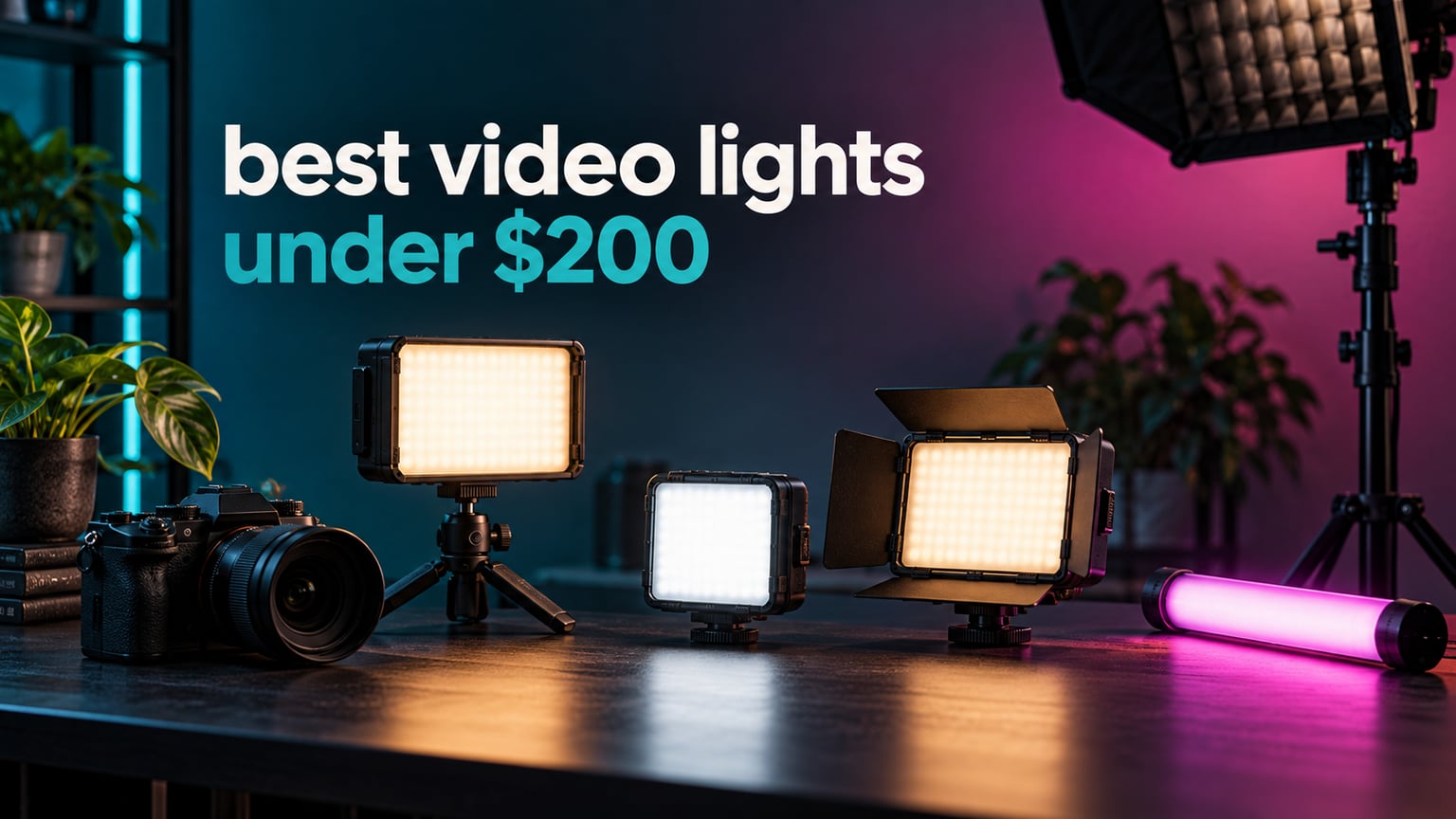
A good budget light for video recording is a bi-color LED panel with a published CRI figure of 95 or higher, adjustable color temperature and real dimming control. Under 200 dollars, the Neewer 660 two-pack is the pick we keep coming back to: two 40W panels, 3200K-5600K, CRI 96+, up to 3300 lux at 1 meter, and two stands in the box.
Ten lights made the final cut. That number is not arbitrary. It is enough to cover every job a sub-200 dollar kit actually gets asked to do, from a bedroom talking-head setup to a location shoot with no power outlet, and it is enough that you can compare them instead of guessing.
Here is the honest part first. Every competing roundup on this topic publishes a spec table with holes in it, prices that drift, and picks that quietly sit above the stated ceiling. We kept the ceiling at 200 dollars and checked it against the listings at the time of writing. Prices move constantly, so the buttons below are the only place to confirm a number on the day you read this.
We also did not test these units on a set with a color meter. What follows is built from manufacturer specifications cross-checked against thousands of owner reviews, including the measured numbers owners publish themselves. Where a spec and the measured reality disagree, we tell you. That is more useful to you than a rating we cannot back up, and it is more honest than the alternatives.
If you want the wider field, we have covered the best LED video lights overall and the best LED panel lights for video production separately. This page is strictly the sub-200 tier.
Table of Contents
Top 3 Picks for the Best Video Lights Under $200 (October 2026)

NEEWER 660 Bi-Color 2-Pack Kit
- Two 40W panels at CRI 96+
- 3200K-5600K with 0-100% dimming
- Up to 3300 lux at 1 meter
- Two 26 to 75 inch stands
- diffusers and barn doors included

ULANZI VL49 RGB Video Light
- Full 0-359 degree RGB hue control
- 2500K-9000K range with LCD readout
- 800 lux at 0.5m from 60 LED beads
- 2000mAh USB-C battery
- magnetic back and 3 cold shoes

NiceVeedi 2-Pack Studio Light Kit
- Two 15W panels with 356 beads at CRI 97+
- Three fixed color temperatures: 2800K
- 4800K
- 6500K
- 10-100% dimming with remote control
- Two tripods and phone holders included
The Neewer 660 two-pack wins because it is the only kit here that solves the two biggest problems at once: it gives you two lights to actually build a key and a fill with, and it includes stands good enough to get you started on day one. The Ulanzi VL49 wins on flexibility per dollar and carries the largest review base on this list. The NiceVeedi kit is the cheapest complete two-light setup and the only one with three preset color temperatures out of the box.
Best Video Lights Under $200 in 2026
| Product | Specifications | Action |
|---|---|---|
| NEEWER 660 Bi-Color 2-Pack Kit |
|
Check Latest Price |
| ULANZI VL49 RGB Video Light |
|
Check Latest Price |
| NiceVeedi 2-Pack Studio Light Kit |
|
Check Latest Price |
 NEEWER 480 Bi-Color 2-Pack Kit NEEWER 480 Bi-Color 2-Pack Kit |
|
Check Latest Price |
 amaran Ace 25c RGBWW Pocket Light amaran Ace 25c RGBWW Pocket Light |
|
Check Latest Price |
 VILTROX L116T 15W LED Panel VILTROX L116T 15W LED Panel |
|
Check Latest Price |
 RaLeno 13 inch Soft Light Panel RaLeno 13 inch Soft Light Panel |
|
Check Latest Price |
 RaLeno 9 inch LED Video Light RaLeno 9 inch LED Video Light |
|
Check Latest Price |
 NEEWER TL20C RGB Light Wand NEEWER TL20C RGB Light Wand |
|
Check Latest Price |
 GVM 480 App Control 2-Pack GVM 480 App Control 2-Pack |
|
Check Latest Price |
How We Picked: What We Checked and What We Did Not
We built this list around a simple rule: a light had to publish a color rendering index figure and a color temperature range that we could verify against owner feedback. That single filter removes a surprising number of budget lights, because plenty of them never state CRI at all and are resold as if they were 95-plus units.
Second, we required a mounting solution that is not a toy. A light that only threads onto a 1/4-20 screw with no stand, clamp or bracket included forces a second purchase that quietly blows the budget. Several products here include a mini stand or a cold shoe for that reason.
Third, we weighted review volume heavily, because a light with 8000 owner reviews has a known failure pattern and a light with 176 has an unknown one. That does not mean the smaller-reviewed light is worse, but we would rather tell you where the uncertainty sits.
What we did not do: we did not run these through a Sekonic meter, and we are not going to imply otherwise. Where owners have published their own measurements, we quote them and attribute them as measured rather than advertised. If a spec sheet says one thing and owners consistently report another, that gap is the most useful thing on this page.
1. NEEWER 660 Bi-Color 2-Pack Kit: The Best Video Lights Under 200 Dollars Overall
NEEWER 2 Pack Bi Color 660 LED Video Light and Stand Kit, 3200-5600K
Two 40W panels
3200K-5600K, CRI 96+
3300 lux at 1m
Stands, diffusers, barn doors
Pros
- Two full-size panels so you can build a real key and fill
- CRI 96+ with passive aluminum cooling and no fan
- 3300 lux at 1 meter is enough output for a small room
- On-board LCD shows brightness
- color temperature and battery status
- AC or NP-F550/NP-F970 battery power for cordless work
Cons
- Barn doors can collide with the U bracket at certain tilt angles
- The LCD is small and there is no numeric Kelvin readout
- Included tripods are light and some owners report wobble
Each panel carries 330 warm and 330 cool white LEDs at 40W, and that is where the value lives. A single panel of this size is a legitimate key light for a talking head at arm’s length, and owning two means you can put one high on the fill side and drop the other to about a quarter brightness behind a diffuser.
What owners consistently praise is the absence of a fan. The housing is aluminum with passive heat dissipation, so there is nothing humming under your dialogue audio. For anyone recording voiceover on a boom mic in the same room, that is not a minor detail.
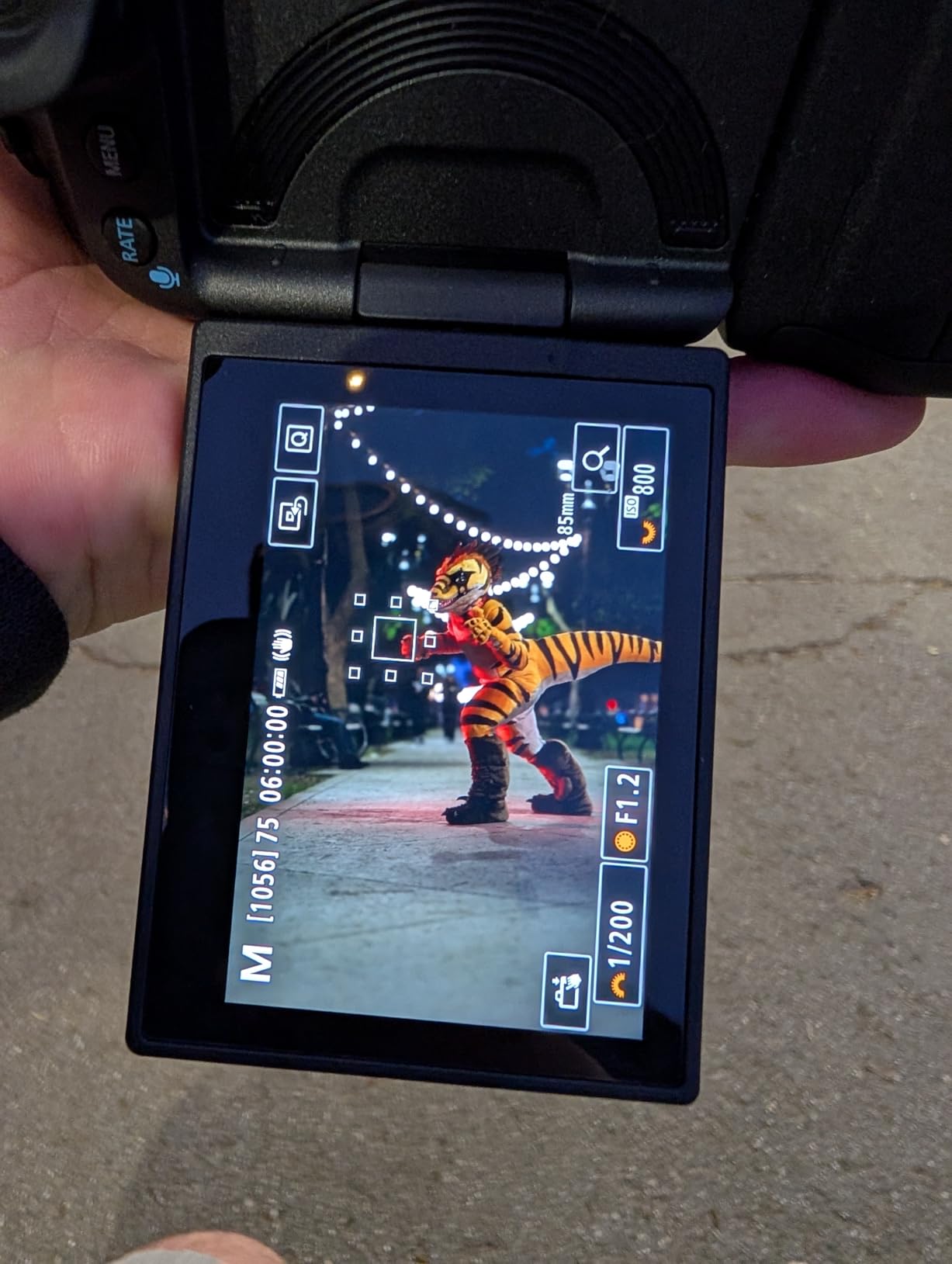
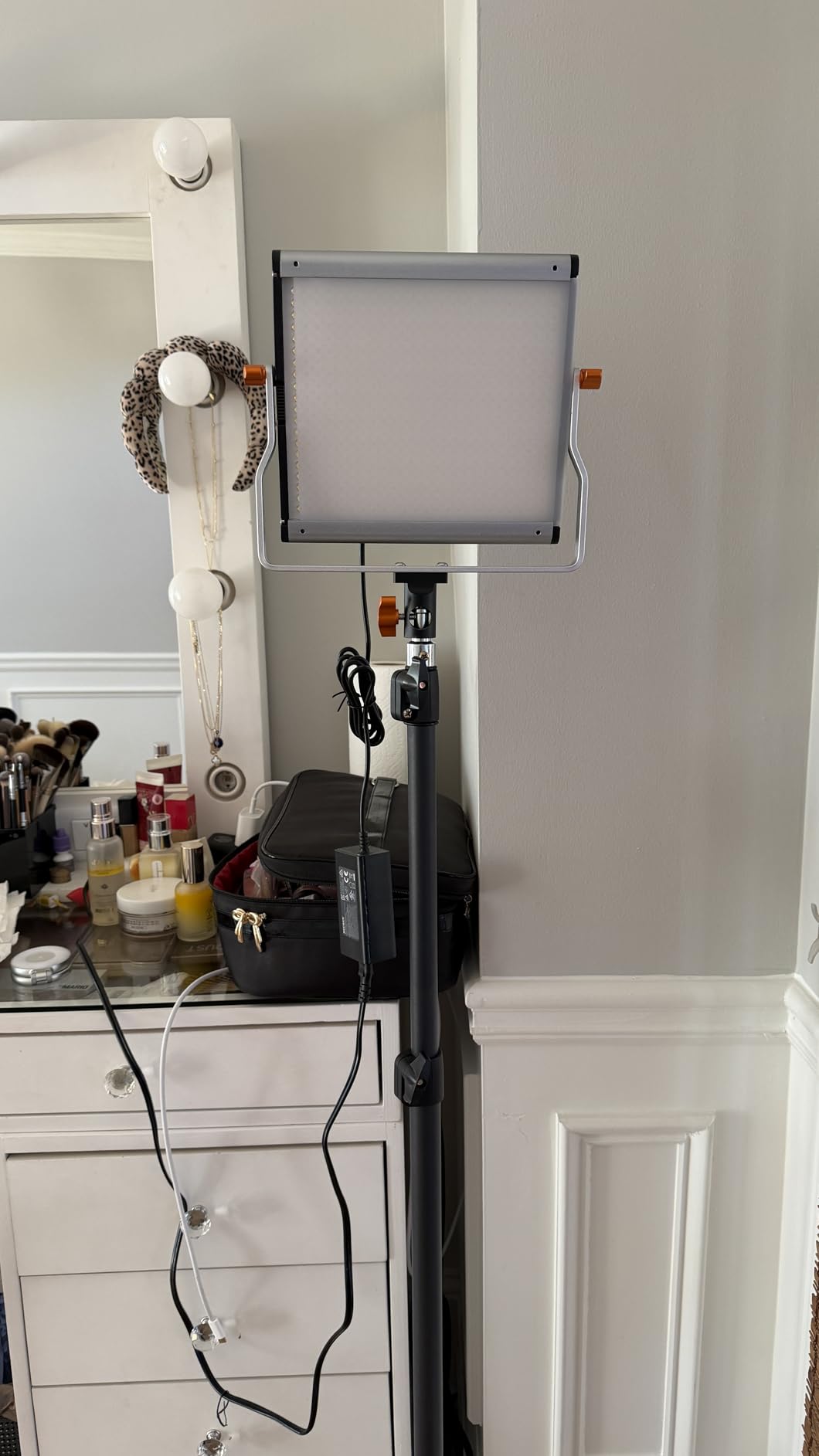
The barn doors are metal and genuinely shape the beam rather than just being decoration, and the U bracket tilts through 360 degrees. Power comes from the AC adapter or from NP-F550 or NP-F970 batteries, though batteries are not included, which means a cordless shoot costs you extra and that extra comes out of the same 200 dollar ceiling.
The honest weaknesses are all small-part issues. The barn doors do clip the bracket at some angles, which owners working fast have to plan around. The LCD is genuinely too small to read a color temperature value at a glance, and there is no numeric Kelvin readout at all, so matching a mixed-temperature room means eyeballing or using a meter.
Several long-term owners report years of heavy weekly use without failure, which is a stronger durability signal than any warranty line. The included soft diffusers and two carrying bags mean the whole thing fits in a car without a custom case.
Who the Neewer 660 two-pack suits
This is the kit for the bedroom or spare-room creator who is done fighting a single light and wants a proper two-source setup immediately. Two panels, two stands, two diffusers and two barn doors means you can build a key and fill on day one and still have a spare panel for hair light or product shots.
It also handles the small-room problem better than anything else on this list, because you can put the fill panel close to the subject and low rather than trying to rig a large soft source in a space that does not have it.
Where it falls short
If you shoot on location with no access to mains power, the missing batteries are a real cost. If you need precise Kelvin matching across a multi-camera setup, the lack of a numeric readout makes that guesswork rather than measurement.
And if your only goal is lighting a face two feet from the lens, 40W per panel is a lot of light you will immediately dim, at which point the smaller and cheaper options below make more sense.
2. ULANZI VL49 RGB Video Light: Budget Pick for Accents and Close-Up Fill
ULANZI VL49 RGB Video Lights LED Camera Light with 3 Cold Shoe & 1/4 Screw
60 LED beads at CRI 95+
RGB hue 0-359 degrees
2500K-9000K with LCD
800 lux at 0.5m
Pros
- Most color control per dollar on this list
- 8000+ owner reviews
- the largest review base we found
- Magnetic back plus three cold shoe mounts and a 1/4 screw
- USB-C rechargeable and usable while charging
- Pocket size at 66 x 80 x 30mm
Cons
- Advertised 2500K-9000K range measures closer to 3400K-6900K
- About 2 hours at max brightness
- Limited throw
- so it is a close-range light only
- Plastic build at this price
Sixty high color-rendering LED beads, a 120-degree beam angle, 800 lux at half a meter and full 0-359 degree hue control in a body the size of a deck of cards. That is the whole proposition, and at this price point it is genuinely hard to argue with.
The mounting is where this one separates itself from other pocket lights. Three cold shoe mounts plus a standard 1/4 screw means you can stack two or three of them into a small panel array, and the magnetic back sticks to metal surfaces for instant placement on a fridge, a shelf or a rig. Buyers build multi-light walls out of these constantly.
The most useful thing on this page for anyone considering this light is the color temperature discrepancy. The listing claims 2500K to 9000K, and owners measuring with a meter consistently land somewhere around 3400K to 6900K. Several have published their own calibration charts to compensate. If your lighting plan depends on dialing an exact 3000K, this light will not do it accurately.
Runtime is about two hours at maximum brightness and up to ten hours dimmed down, with roughly a two-hour charge over USB-C. It will run while charging, which is the feature that rescues it for longer sessions.
Owners use it for macro work, product photography, vlogs, interviews and as a rim or accent source, and they accept the framing. This is a utility light, not a studio light, and treating it as a key across a room is where people get disappointed.
Who the Ulanzi VL49 suits
Travel and vlogging shooters who want color control without carrying a second battery system. It weighs 100 grams, charges over USB-C and mounts three different ways. For accent lighting, background color and close-up fill it is the most capable tool per dollar here.
It is also the best streaming and gaming accent light on the list, because hue control lets you match a channel theme rather than settling for warm or cool white.
Where it falls short
Do not buy it to light a subject from across a room. Eight hundred lux at half a meter is a close-range figure, and the throw drops off quickly past arm’s length. The plastic build also feels like what it is at this price, so do not drop it off a rig.
And plan around the color temperature gap. If accurate Kelvin matters more to your shot than color saturation, look at the bi-color panels instead.
3. NiceVeedi 2-Pack Studio Light Kit: Best Budget Starter Kit
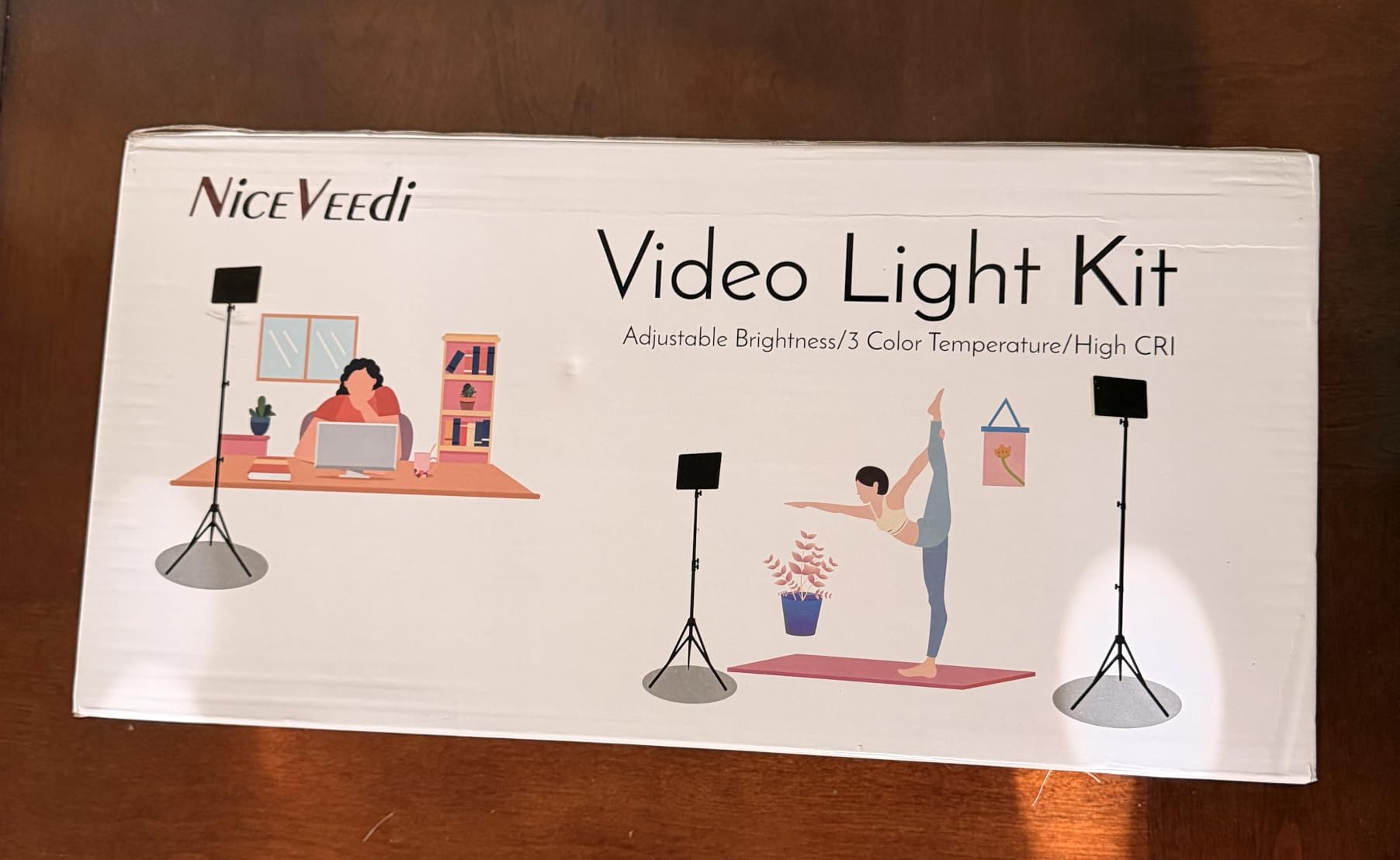
2-Pack LED Video Light Kit, NiceVeedi Studio Light, 2800-6500K Dimmable Photography Lighting Kit with Tripod Stand&Phone Holder, 73″ Stream Light for Video Recording, Game Streaming, YouTube
Two 15W panels, 356 beads
CRI 97+
2800K, 4800K and 6500K presets
10-100% dimming
Pros
- Cheapest complete two-light setup with stands in the box
- CRI 97+ is the highest published figure on this list
- Thickened diffusion shell gives genuinely soft output for the money
- USB-C power works from a power bank
- laptop or phone
- Lightweight at 3.7 pounds and quick to assemble
Cons
- No AC adapter included in the USB-C version
- tripod legs do not adjust individually
- Highest 1-star review share of any kit here at 8%
- Some units report a panel powering off randomly
Two 15W panels, 356 LED beads between them, three preset color temperatures and a stated CRI of 97+. That is a spec sheet most twice-the-cost kits cannot match, and the diffusion shell is thick enough that the output is soft rather than harsh.
The three presets are 2800K, 4800K and 6500K, which is a real limitation compared with the continuous sliders on the Neewer and RaLeno panels. You get warm, neutral and daylight and nothing between. For most indoor setups that covers you. For matching a specific window light, it does not.
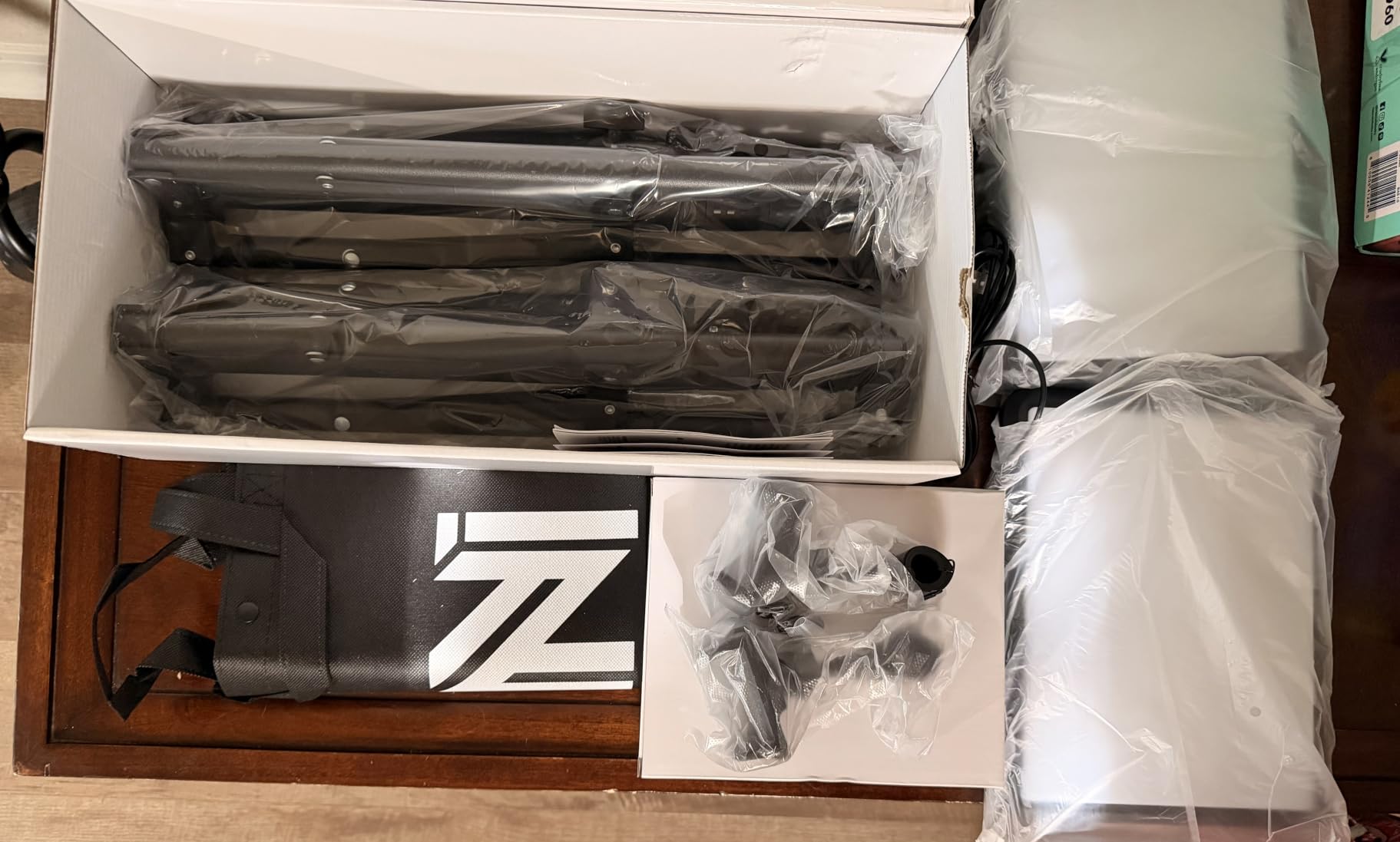
Brightness runs 10-100% through the remote control included in the box, which is a nicer interface than fumbling with small buttons on the panel itself. Each panel tilts 180 degrees on a 1/4-20 thread, and the tripods extend to 60 inches with the listing noting up to 73.
The 4.3 average is the lowest on this list, and the reason is not light quality. Owners overwhelmingly describe the light as soft, even and easy to dim. The complaints cluster on accessories: the USB-C version ships without a wall adapter, the tripod legs do not adjust individually, and a small share of buyers report a panel switching off on its own.
At 8% one-star reviews, this kit has more quality-control variance than the others. That is not a dealbreaker for a first setup, but if you are buying this as a backup light for paid work, the Neewer or GVM packs are tighter.
Who the NiceVeedi kit suits
A first-time creator setting up a streaming desk or a video-call corner. You get two lights, two tripods, phone holders, a remote and a storage bag, and you can be recording the same day. Running the panels from a laptop or power bank keeps the desk clear of cables.
It is also the best value here for lighting two people in a small room, since one panel per person at low brightness flatters skin better than one bright panel and a lot of guessing.
Where it falls short
The missing AC adapter is the practical trap. You need a 5V 2A source, and a weak wall charger or an underpowered power bank will cause problems that look like panel failure. Buy a proper adapter.
And the fixed legs on the tripods make precise placement awkward in a tight space, since you cannot shorten one leg to fit between a desk and a wall.
4. NEEWER 480 Bi-Color 2-Pack Kit: Best for a Home Studio With Carrying Cases
Neewer 2 Packs Dimmable Bi Color 480 LED Video Light Kit, 3200~5600K CRI 96+ LED Panel with U Bracket, 75 inches Tripod Light Stand for YouTube Recording Studio Photography Streaming Key Lighting
Two 480-LED panels
CRI 96+, 3200K-5600K
0-100% dimming via knobs
Includes two carrying cases
Pros
- Independent brightness and color temperature knobs on each panel
- White diffuser included softens a fairly beamy output
- Two telescopic stands from 3 to 6.2 feet
- Two carrying cases make transport genuinely easy
- Panels run cool through long sessions with flicker-free dimming
Cons
- Daylight end measures closer to 5220K than the advertised 5600K
- AC adapter cord is too short for a fully extended stand
- U bracket adapter screws strip easily
- Barn doors are not included and must be bought separately
This is the more compact sibling of the 660 kit, and in some ways it is the more thoughtful design. Each panel has 240 white and 240 yellow LEDs, separate control knobs for brightness and color temperature, and a white diffuser in the box. Crucially, the two panels are independently adjustable, so you can run one warm and one cool and let white balance sit where it should.
A professional cinematographer’s measured review of this kit reported good output in limited spaces, flicker-free dimming and correct CRI performance, with two findings worth repeating: the daylight end of the range lands nearer 5220K than the advertised 5600K, and the raw output is beamy enough that the included diffuser is not optional.
The panels fold down small enough for most lighting cases, and each one ships with its own carrying case. That is a bigger deal than it sounds if you are moving between a home studio and a rented space regularly, and it is a genuine advantage over the 660 kit in terms of packing efficiency.
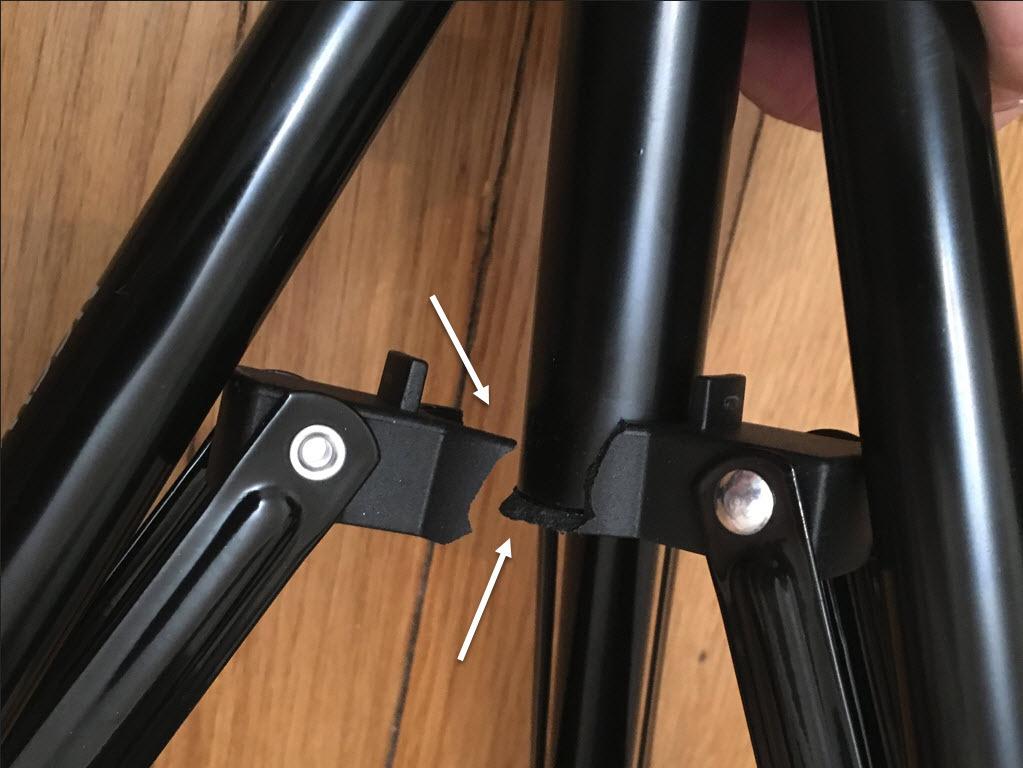
Power is AC or NP-F series batteries, again sold separately. What disappoints owners most often is mundane: the power cord on the adapter brick is too short to reach once the stand is fully extended, and the U-bracket adapters have cheap threads that strip if overtightened.
Barn doors are not included, which is the one spec-sheet omission that would bother us if the 660 kit were not already solving that problem. Budget for a pair if you need spill control, and factor it against the ceiling.
Who the Neewer 480 kit suits
Anyone building a dedicated room rather than a corner. Two independent controls, soft diffusers, adjustable stands and a carrying case per light make this the tidiest permanent home-studio kit here. Color-critical work, product photography and makeup content all benefit from the CRI 96+ claim holding up in practice.
It is also a strong second-light purchase. If you already have one source and want a matching fill, buying a second identical panel is cheaper than replacing what you own.
Where it falls short
The measured color temperature gap matters if you shoot mixed-temperature interiors and grade afterward, since you are starting about 200K short of the daylight spec. The short adapter cord and the flimssy bracket adapters are the two things to fix with your own gear rather than live with.
And without barn doors, spill control is entirely dependent on the diffuser and your framing.
5. amaran Ace 25c RGBWW Pocket Light: Best Pocket Light With Real Color Control
Amaran Ace 25c RGBWW LED Video Light Pocket Creator Light
32W Boost RGBWW
5908 lux at 0.5m
2300K-10000K with green-magenta
4500mAh, app control
Pros
- Genuinely bright for its size
- with 5908 lux at half a meter in Boost Mode
- Green-magenta correction at this price is rare and useful for matching
- Charges from 0 to 90% in 40 minutes and runs while plugged in
- Strong built-in magnets and a screen with custom shortcut buttons
- Includes a dome diffuser and a cold shoe adapter
Cons
- The Ace Lock cold shoe mount does not properly engage
- Internal battery cannot be replaced
- about 70 minutes in Standard Mode
- Best on close subjects
- weak as a solo key in a larger space
- Cooling fan can be audible
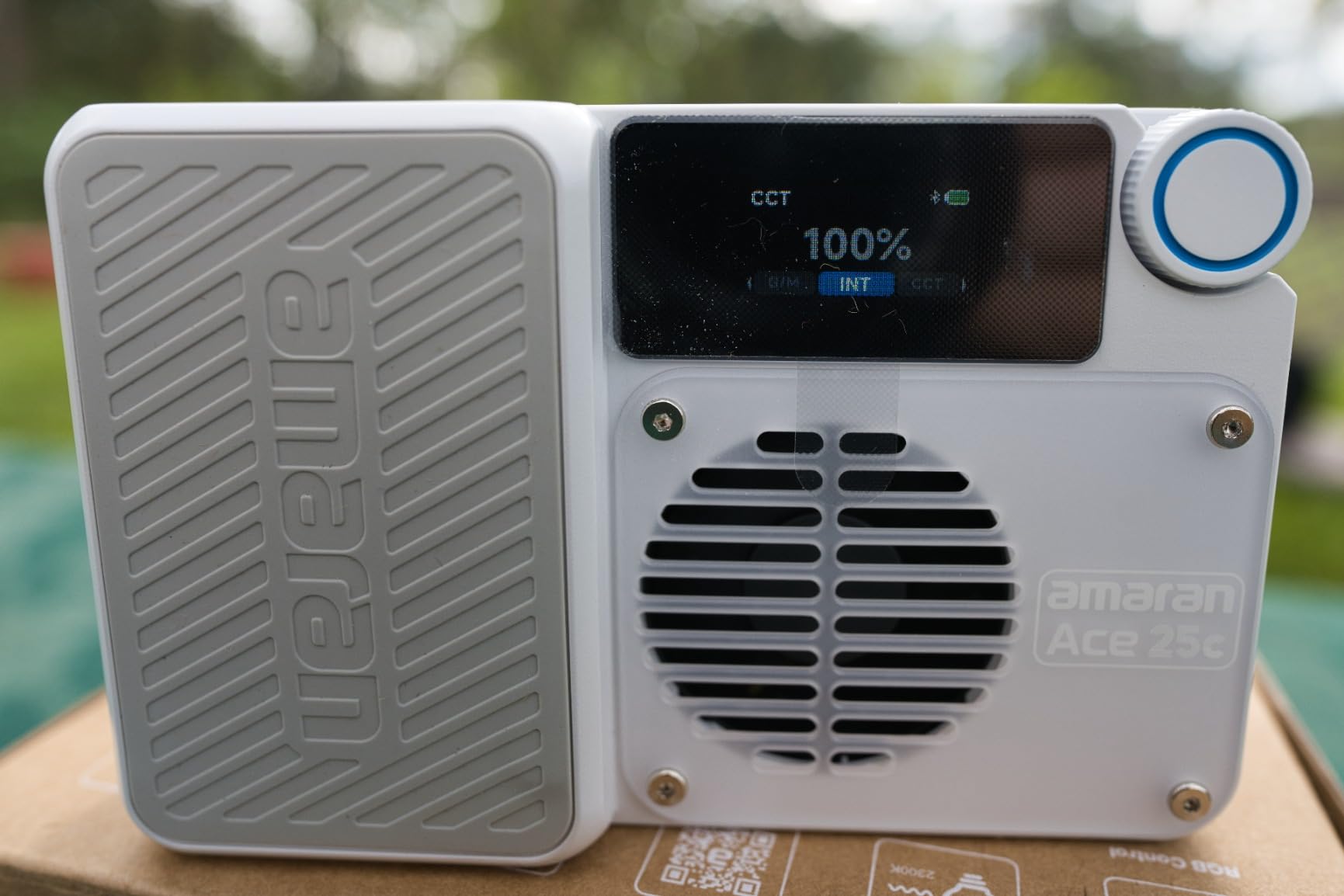
The Ace 25c is the only light in this roundup with 2300K to 10000K plus green-magenta correction, and that combination is what makes it interesting. Green-magenta lets you correct the color cast of an LED key in a room you cannot control, which is a real broadcast-style tool on a light this small.
Output is the surprise. 5908 lux at half a meter at 4300K, and 1171 lux at 5600K, is more than any other pocket light here. In Boost Mode it reaches 32W. Owners report using it as a key for a small subject at close range, not just as a fill.
Runtime is where the trade-off appears. The 4500mAh battery gives up to 4 hours 40 minutes in Silent Mode but only about 70 minutes in Standard Mode. The mode split is essentially a brightness-versus-endurance choice, and you will make that call on every shoot.
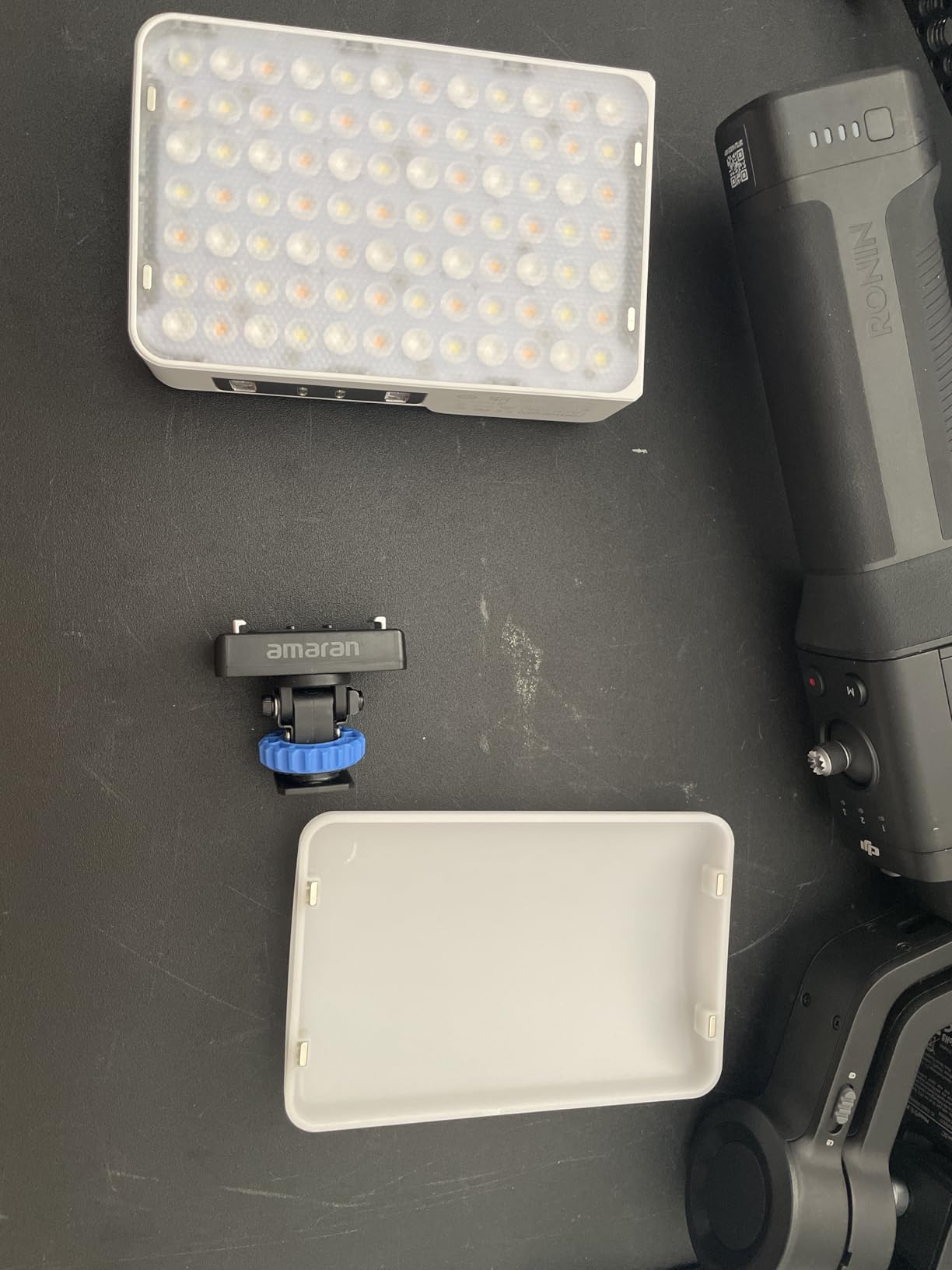
The most-cited flaw is the Ace Lock quick-release mount. Reviewers say the cold shoe adapter does not properly hook on and the unit is effectively held by the magnet alone. That is a genuine safety concern for anything above a desk, so plan to use the magnet on vertical surfaces and something else overhead.
At 176 reviews, this has the smallest sample on the list by a wide margin. Owners rate it as the best value pocket light available and note it competes with models costing considerably more, but we are working with less history here than with anything else we picked.
Who the amaran Ace 25c suits
A creator who already has a key light and needs a second source that is genuinely bright, controllable and small. It also works as an on-camera light, and the Ace Lock mount plus cold shoe adapter make it flexible enough for handheld and rig work.
Documentary and location shooters will appreciate the 40-minute charge cycle, which is fast enough to top up between setups, and the option to run it plugged in indefinitely.
Where it falls short
The internal non-replaceable battery is the main compromise. Seventy minutes in Standard Mode means you either plan around charging or buy a second unit, and reviewers suggest exactly that for anyone using multiples.
Also be honest about the Boost Mode framing. The step from 25W to 32W is largely a marketing number rather than a practical difference you will notice on camera, and the audible cooling fan matters if you are recording dialogue in the same room.
6. VILTROX L116T 15W LED Panel: Best Thin On-Camera Light
VILTROX 15W LED Video Light Panel, 3300K-5600K On Camera Light, Super Thin
15W bi-color panel
3300K-5600K
2cm thin, 260g
Honeycomb diffuser, hot shoe
Pros
- Exceptionally wide and soft beam for its size thanks to the honeycomb diffuser
- Only 2cm thick and 260g
- so it disappears into a camera bag
- Removable NP-F550 battery plus external DC input
- unusual at this price
- Flicker-free when dimmed
- verified on mirrorless bodies with silent shutter
- Settings memory means it powers on where you left it
Cons
- Removable battery gives only about 1.75 hours at full output
- Far too weak to replace a speedlight at any real distance
- A few users report batteries cutting out randomly
- Some units ship without a battery charger
The headline number here is 2 centimeters thick and 260 grams. That is thinner than most phones in a case, and it is the reason this light has stayed relevant when bulkier panels have come and gone.
The honeycomb diffuser surface gives an unusually wide, soft beam for a panel this size, and owners repeatedly note that it is easy on the eyes when used close to a subject. Brightness 20-100% and color temperature 3300K-5600K on a single dial, with a one-button mode switch between the two. Settings memory means it powers on exactly where you last set it.
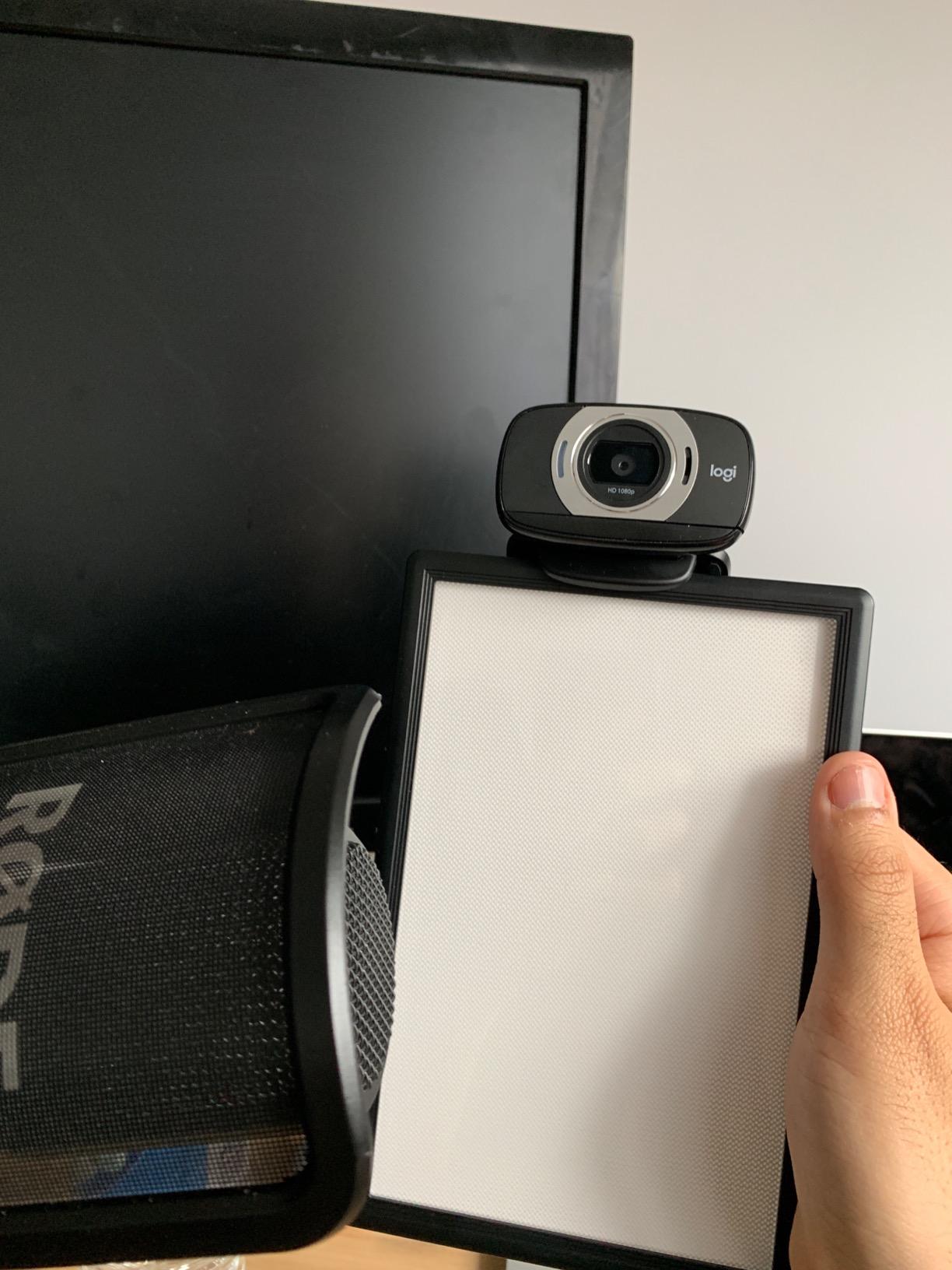
The design decision we like most is the removable NP-F550 battery. Most competitors at this size use an internal cell, which means a dead light is a dead light. This one takes standard batteries or external DC power, so you can carry spares or run it from a power source indefinitely.
Dimming has been verified flicker-free by owners on mirrorless bodies using silent shutter modes, which is a real-world test rather than a bench claim. If flicker is the thing that has bitten you before, that is worth knowing.
The limitation is honest and unavoidable: roughly 1.75 hours at full output from a removable battery, and not enough output to substitute for a speedlight at any meaningful distance. This is an on-camera and close-fill light. Owners commonly describe it as a cheaper, more capable alternative to the Aputure AL-M9 class of light, which is a fair comparison.
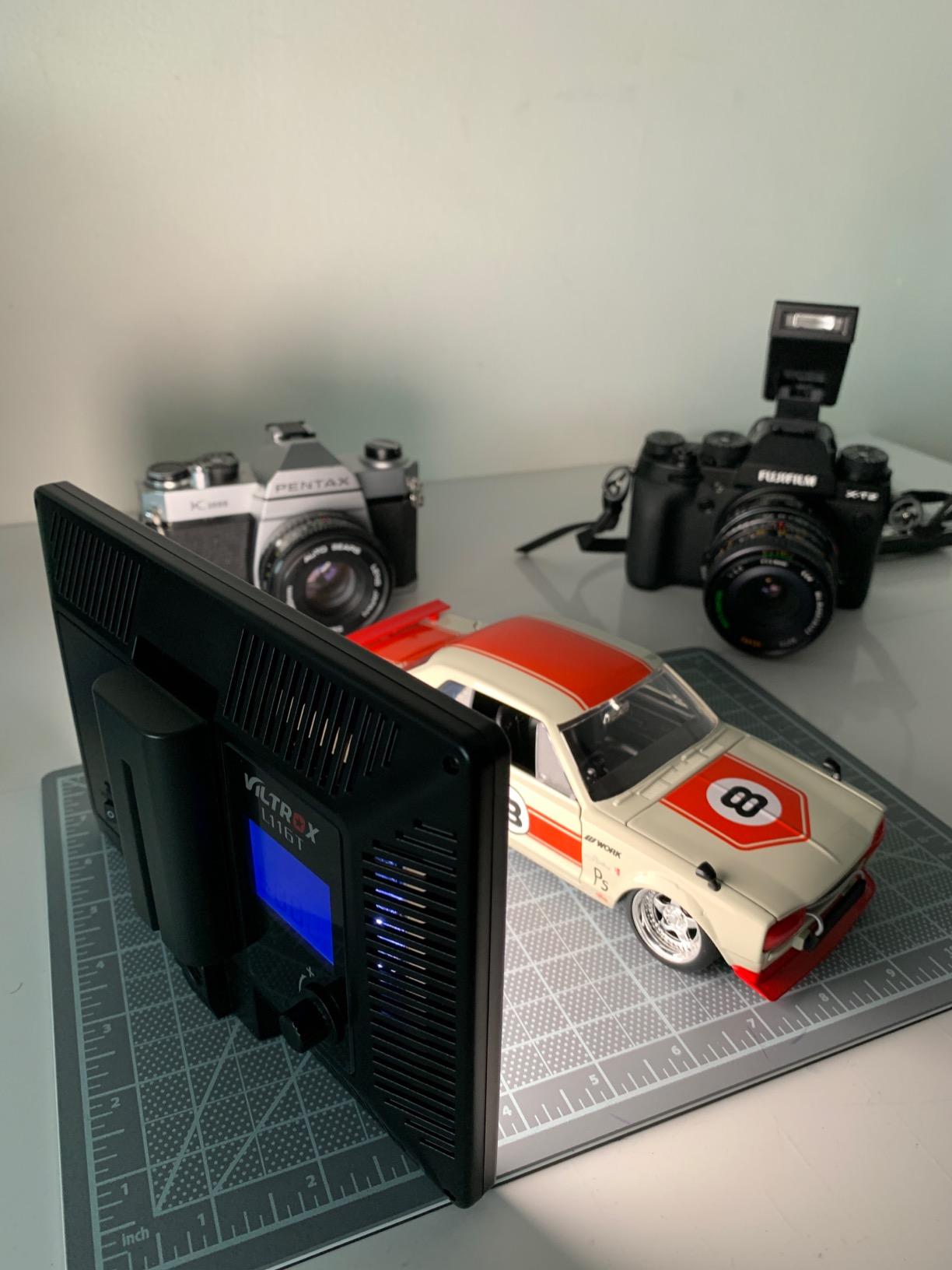
Who the Viltrox L116T suits
Anyone who already shoots with a mirrorless or DSLR body and wants a light that mounts on the hot shoe and disappears between shots. Documentary and travel shooters carry two or three of these as supplemental sources despite the short battery, precisely because the weight is negligible.
It also works as a small soft source for interviews, where a wide, forgiving panel close to the subject is more useful than a hard and powerful one further away.
Where it falls short
The 3300K floor is warmer-narrow than the RaLeno and amaran options, so you cannot dial in a deep warm accent. Output is genuinely low compared with the Neewer 660, and pairing it as a key would leave you pushing ISO.
Check that a battery and a charger are in the box, since a few units ship without the charger. The 7.56 by 5.04 inch face is also large enough to upset balance on a long lens, so test it on your specific body.
7. RaLeno 13 inch Soft Light Panel: Best Cordless Fill and Hair Light
RALENO 13″ LED Video Soft Light Panel with Desk Stand
19.5W soft panel
650 lux/m
CRI 95+, 2500K-6500K
8000mAh battery
Pros
- Very soft
- even output with no visible hot spots
- 8000mAh battery gives long runtime at moderate brightness and runs while charging
- Built-in diffuser means nothing extra to buy
- Only 1 inch thick at 2.4 lb so it mounts on handles and clamps
- HD LCD shows exact brightness and color temperature
- 1/4 mount and 180 degree tilt for flexible positioning
Cons
- Proprietary power adapter instead of USB-C
- Brightness adjustment steps rather than smooths
- Plastic mounting screw can crack under load
- Not bright enough to be a sole light outdoors
An 8000mAh battery is the number that sets this panel apart. Several long-form owner reviews describe building complete three-point rigs with no power cables, no sandbags and no ceiling rigging, which is exactly the small-room scenario most of our readers are working in.
The diffusion is built in across 192 LED beads with a stated CRI above 95, and the panel is described by owners as soft, even and hot-spot free. One measured test shows usable exposure at 50% brightness at one foot, which tells you this is a close-work light rather than a room light.
Runtime is about 90 minutes at maximum power, considerably longer at moderate brightness, and it will operate while charging. That makes it the easiest panel here to run for a full interview without planning around a wall outlet.
Color temperature spans 2500K to 6500K across the bead array, and the HD LCD reads out your exact settings rather than leaving you estimating. The panel is 1 inch thick, weighs 2.4 pounds and includes a desk stand that adjusts from 6.42 to 10.16 inches, plus a cold shoe and a 1/4 mount with 180 degree tilt.
The complaints are hardware-level rather than light-level. It uses a proprietary wall adapter instead of USB-C, so you need the included one and cannot borrow a cable from anything else in your bag. Dimming steps rather than glides, and the plastic screw underneath can crack if you mount it vertically or under load, so do not hang real weight off it.
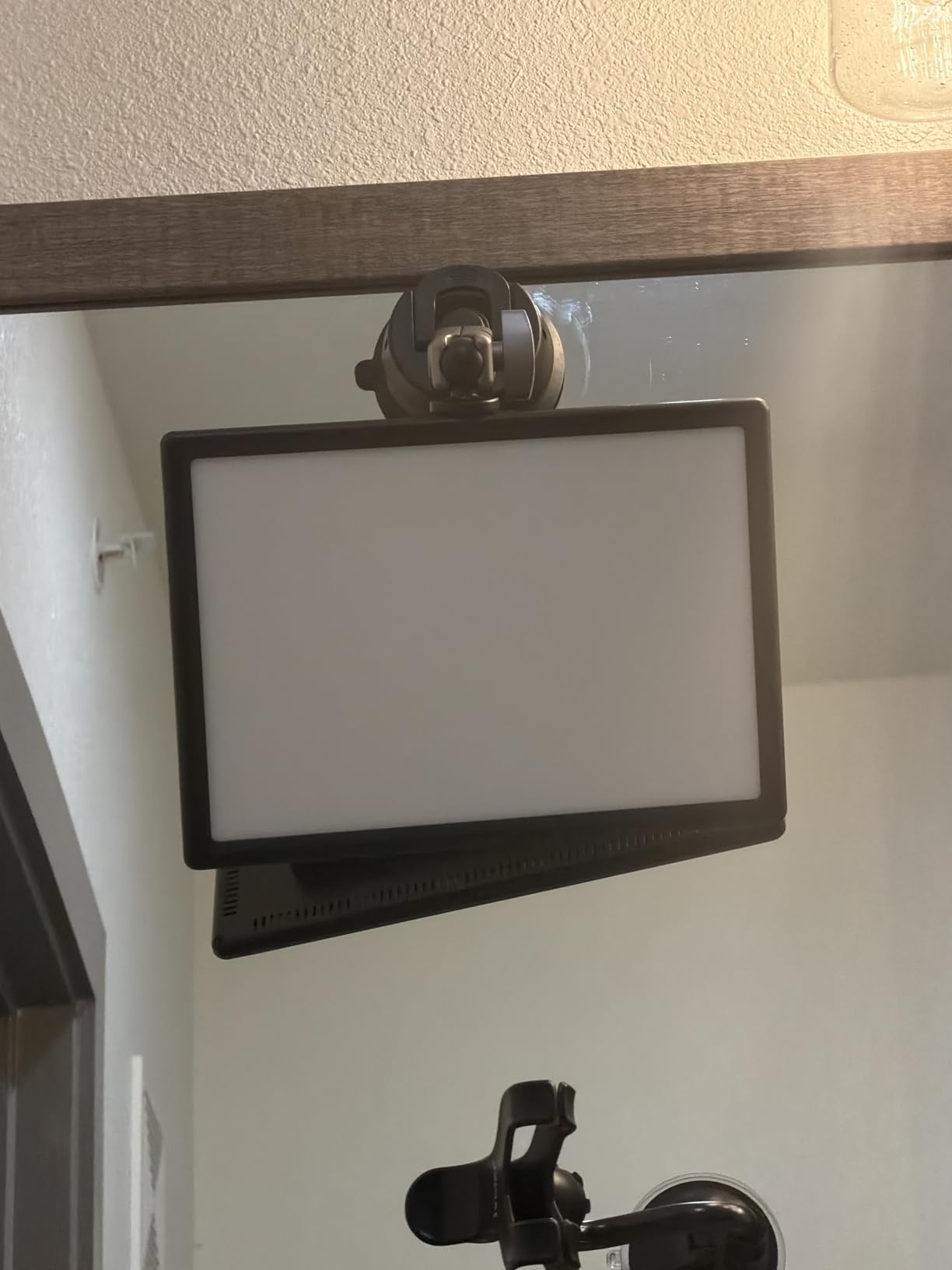
Who the RaLeno 13 inch panel suits
Anyone shooting in a room with no rigging options. This panel is the best balance of size, softness and battery on the list, and at 2.4 pounds it clamps to a desk, a camera handle or a light stand without ceremony.
Fill and hair light are its natural roles. Aimed behind the subject at low brightness it separates them from the background cleanly, and paired with a brighter key it completes a three-point setup with no cables at all.
Where it falls short
650 lux per meter is not a lot, and owners are clear that it is not a sole light for large or outdoor setups. For a bedroom studio at arm’s length it is fine; for a living room with a subject six feet away it is not.
Buy a spare adapter if the original is lost, and avoid loading the mount screw. The stepping dimming is also worth knowing about if you fade a light up during a take rather than setting it before rolling.
8. RaLeno 9 inch LED Video Light: Best Compact Battery Light for Travel
RALENO 9″ LED Video Light, 2500K-6500K Camera Light with Desk Stand
12W edge-lit panel
600 lux at 0.5m
4000mAh, 80 minutes
Mini stand and cold shoe
Pros
- Edge-lit design with four-layer diffusers gives soft output without glare
- Thin and light enough to disappear into a camera bag
- 4000mAh battery and USB-C
- usable while charging
- Brightness and color temperature both adjust in 1% increments
- Mini stand and cold shoe make it work for calls
- handheld and on-camera use
- Battery indicator on the back of the panel
Cons
- Battery drains faster than the quoted 80 minutes at high output
- May flicker at 95-100% brightness on a low battery
- Included ball head and hot shoe plate are thin and do not hold position
- Included charging cable is only about 12 inches
- Confusing power on/off instructions
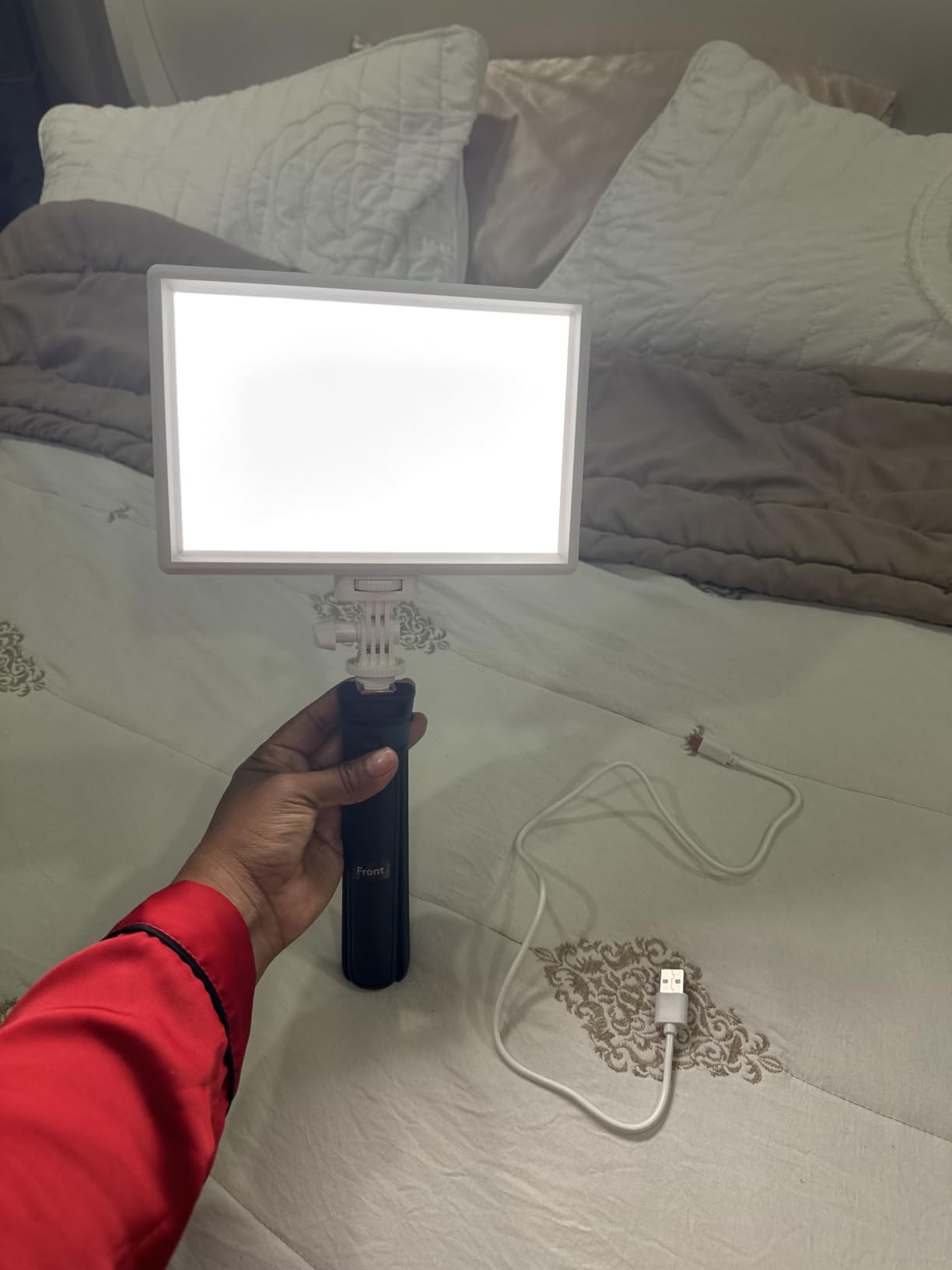
Edge-lit technology with four-layer diffusers is the interesting part. Instead of an array of bare emitters behind a sheet, the light spreads through the panel edges, which is why owners report even, glare-free output rather than the hotspot pattern common to cheaper panels.
Both controls move in 1% increments. That sounds minor until you have tried to match a specific Kelvin on a light with 10 steps, and it is a real advantage over the coarser interfaces elsewhere in this price range. A 9-inch LCD shows the settings, and a 116-bead array runs 2500K to 6500K at 12W and 600 lux at half a meter.
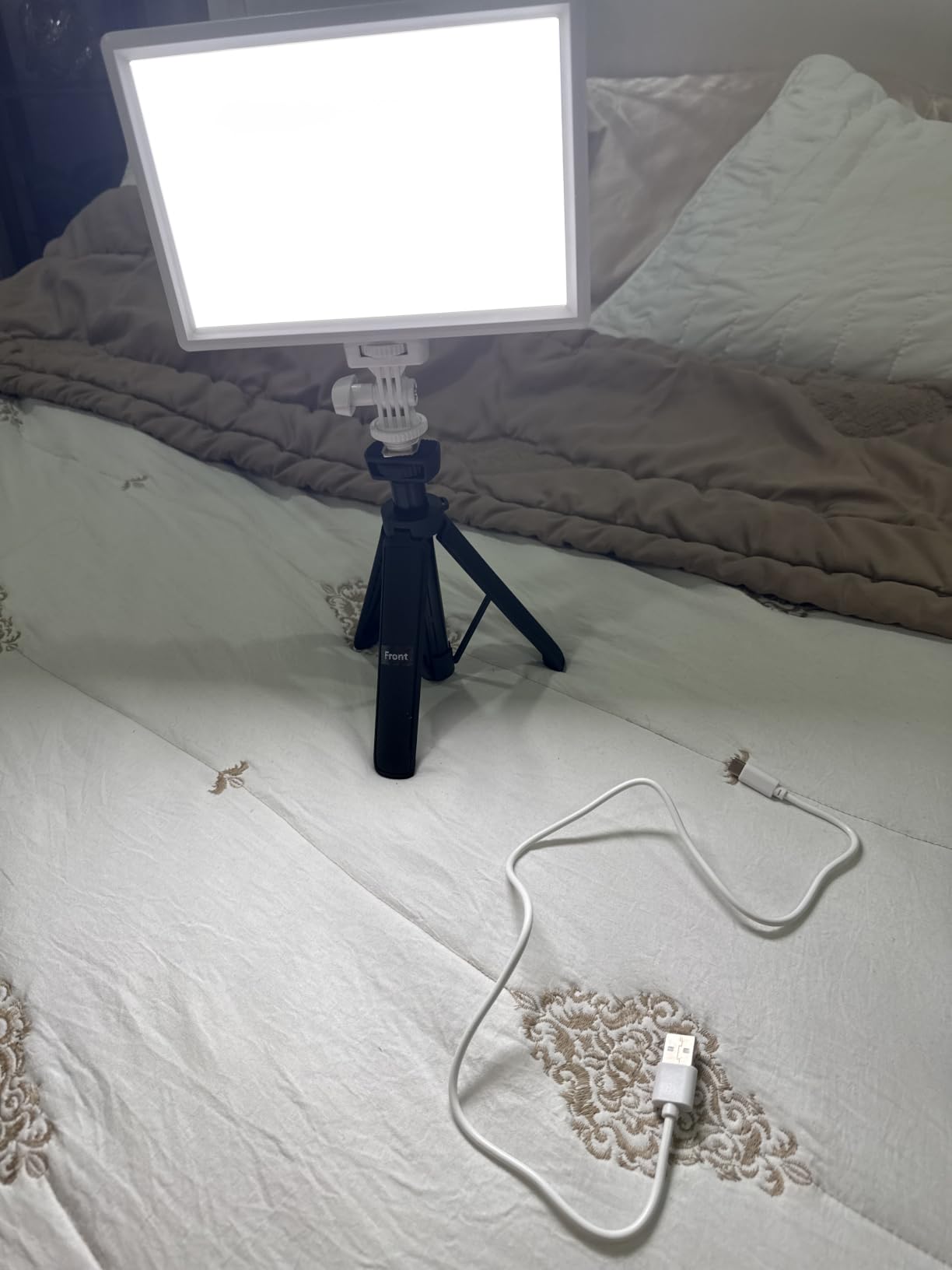
The 4000mAh battery is larger than most competitors at this size, and owners report photographers replacing two larger studio lights with these for event and wedding work, running them from a USB power bank for effectively unlimited runtime. That power bank trick is the real answer to the runtime ceiling.
The problems cluster in the small parts. The included ball head and hot shoe plate are thin and do not hold position on a flash mount, so budget to replace the plate. The charging cable is about 12 inches, which is rarely enough. And there are reports of flicker at 95-100% brightness once the battery is low, which is a specific condition worth knowing about if you shoot long takes on battery.
Runtime also disappoints against the 80 minute claim at high output, though most complaints frame this as a value complaint rather than a defect. Some long-term owners report needing to glue the base back together after heavy use, so treat the stand as semi-permanent.
Who the RaLeno 9 inch light suits
Travel and event shooters who need cordless light and carry everything themselves. At 388 grams with a built-in battery, it is one panel instead of a light plus a battery system, and the mini stand covers desktop and on-camera use without a separate accessory.
It is also a good video-call and streaming light where you want fine-grained brightness control, since the 1% steps let you match screen brightness rather than approximating it.
Where it falls short
The hot shoe plate is the weak link and the first thing to replace. Low-battery flicker at maximum output is a real limitation for long takes, and the runtime falls short of the quoted figure when you are pushing it.
And 12W is genuinely modest. Treat it as a close-range fill and accent source, and if you need a key at a distance, look at the 40W panels instead.
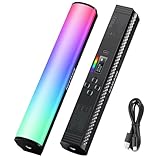
9. NEEWER TL20C RGB Light Wand: Best RGB Accent and Background Light
NEEWER TL20C RGB Light Wand Magnetic Handheld Photography Video Light Stick
10W RGBWW tube, 195 LEDs
730 lux at 0.5m, CRI 95+
2500K-8500K with green-magenta
17 scene effects
Pros
- Tube form factor packs trivially and is easy to hand-hold
- Magnetic sides plus 1/4 inch threads at both ends
- Accurate neutral output across the range with green-magenta correction
- 17 editable scene effects for fast mood changes
- USB-C PD charging
- 0-100% in about 110 minutes
- Neutral white balance compares favorably to cheaper tubes
Cons
- Short throw
- so it works on close subjects only
- Magnets are not strong enough to stack wands unaided
- On-body buttons are fiddly
- so the app is the easier control route
- Battery is average and drains faster at full brightness
- Included diffusion sheet mostly reduces output
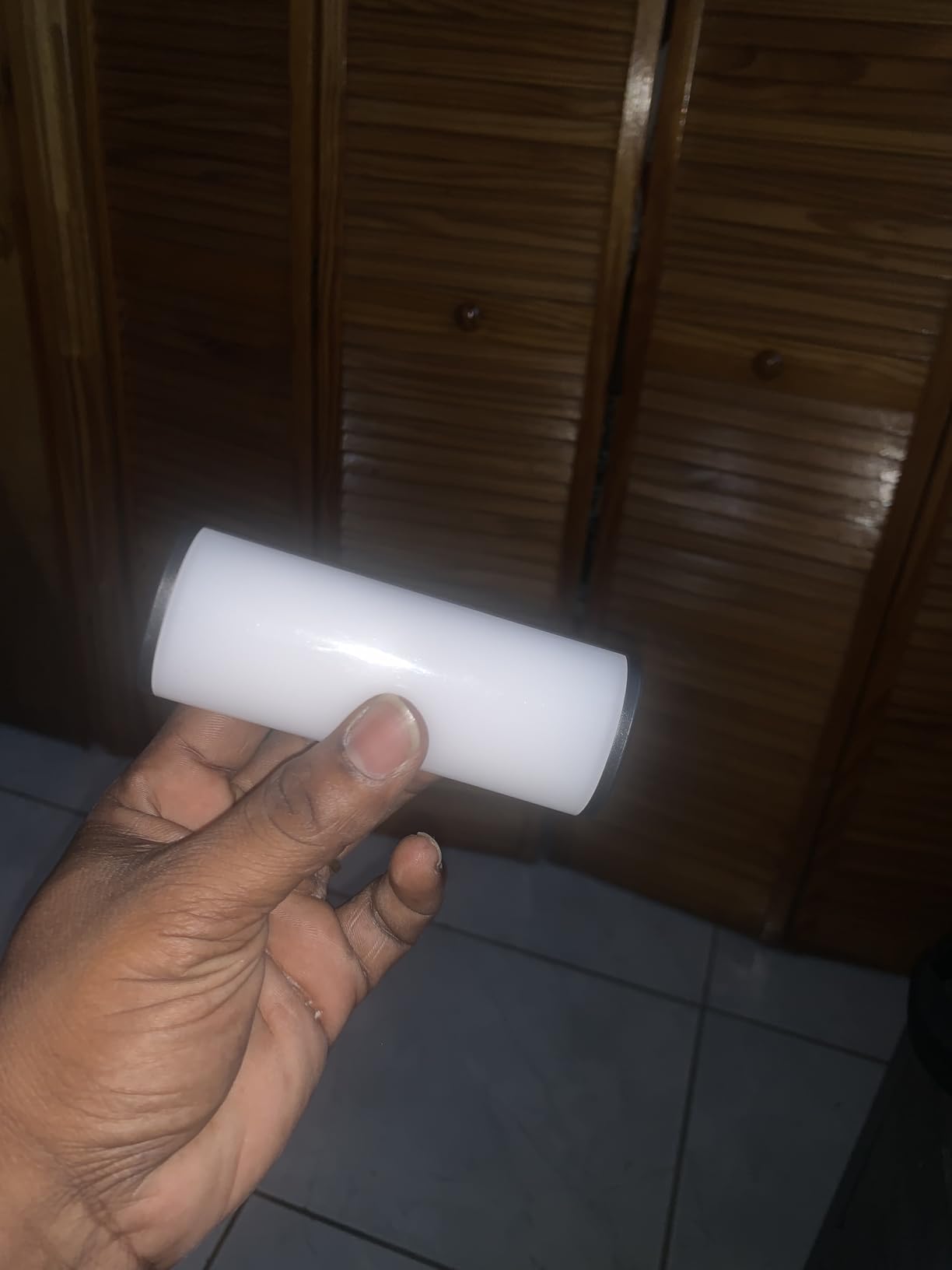
The wand shape is not a gimmick. A 9-inch tube is the easiest light in this entire roundup to hold in one hand, slide behind a subject, or lay flat against a background to wash it. At 270 grams it disappears into a bag pocket.
Output is 730 lux at half a meter from 195 LEDs at 10W, with CRI 95+ and a flicker-free claim. In HSI mode you get 360 degrees of hue with 0-100% brightness and saturation control, plus 17 scene effects you can edit rather than accept as fixed presets.
The more useful mode for most people is CCT. It runs 2500K to 8500K with 0-100% dimming and green-magenta correction, and detailed reviewers single out the accuracy of neutral output across 2500K to 7500K as the standout. Several owners report replacing cheaper RGB tubes that skewed magenta, which is a common and annoying failure in this category.
Mounting is genuinely flexible: 1/4-inch threaded holes on both ends plus magnetic sides means tripod, desktop stand, overhead and low-angle positions all work without adapters. The 2550mAh battery gives up to 140 minutes at full brightness and charges over USB-C PD in about 110 minutes, running while plugged in.
What you give up is throw. This is a close-subject, fill and accent light by design, and the magnets are not strong enough to reliably stack multiple wands on their own. Several owners build multi-light backgrounds anyway, using stands or adhesive rather than relying on magnet-to-magnet contact.
Who the Neewer TL20C suits
Streamers and short-form creators building colored backgrounds. The hue control plus scene effects let you match a channel palette or create a distinct look for a title sequence, which a bi-color panel cannot do at all.
It is equally good as a handheld practical for narrative work, since holding a small light close to a subject gives you a motivated source you can move between shots. If you have read our best RGB video lights guide, this is the compact end of that category.
Where it falls short
Do not try to light a subject from across a room with it. The on-body buttons are fiddly enough that you will end up using the app, which means a phone in your hand during a take. And the included diffusion sheet mostly just costs you output, so skip it.
Battery life is average at best, so plan on charging between setups rather than shooting a full day on one charge.
10. GVM 480 App Control 2-Pack: Best for Remote App Control Over Ceiling Panels
GVM 2 Pack LED Video Lighting Kits with APP Control, Bi-Color Variable 2300K~6800K with Digital Display Brightness of 10~100% for Video Photography, CRI97+ TLCI97 Led Video Light Panel +Barndoor
Two 30W, 480-LED panels
CRI 97+ and TLCI 97+
2300K-6800K with app control
Pros
- Widest continuous color temperature range here at 2300K-6800K
- CRI 97+ and TLCI 97+ are the highest paired figures on the list
- App control is genuinely useful for panels mounted on a ceiling grid
- Passive aluminum housing runs cool with no fan
- About 1 kg per light makes them easy to move
- Soft filters and barn doors included
Cons
- Each panel draws only about 30W
- so output is modest
- App requires leaving home Wi-Fi and controls one panel at a time out of the box
- App instructions are thin and the app has persistent quirks
- Build quality feels less premium than the spec sheet implies
- Diffuser slot cannot hold a diffuser and a gel at the same time
The 2300K to 6800K range is the widest continuous span of any light here, and pairing CRI 97+ with TLCI 97+ is the strongest color accuracy claim on this list. If your work is color-critical, those two numbers matter more than output.
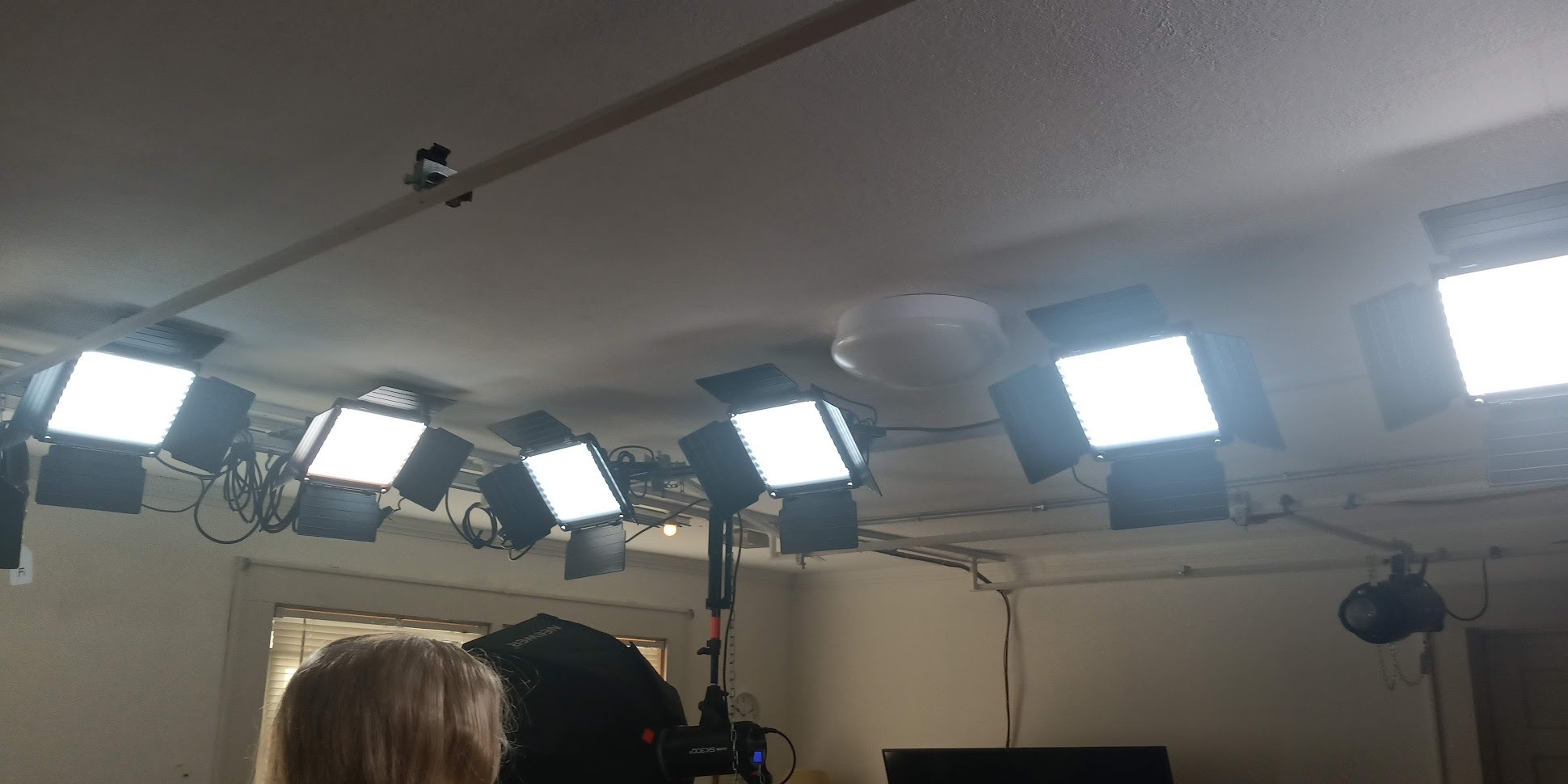
App control over Bluetooth is the reason to choose this over the other 480-LED kits. Once a panel is on a ceiling grid or behind a set piece, getting to its physical controls is the hard part. Reviewers building studio setups specifically describe this as the feature that makes the panels manageable at height.
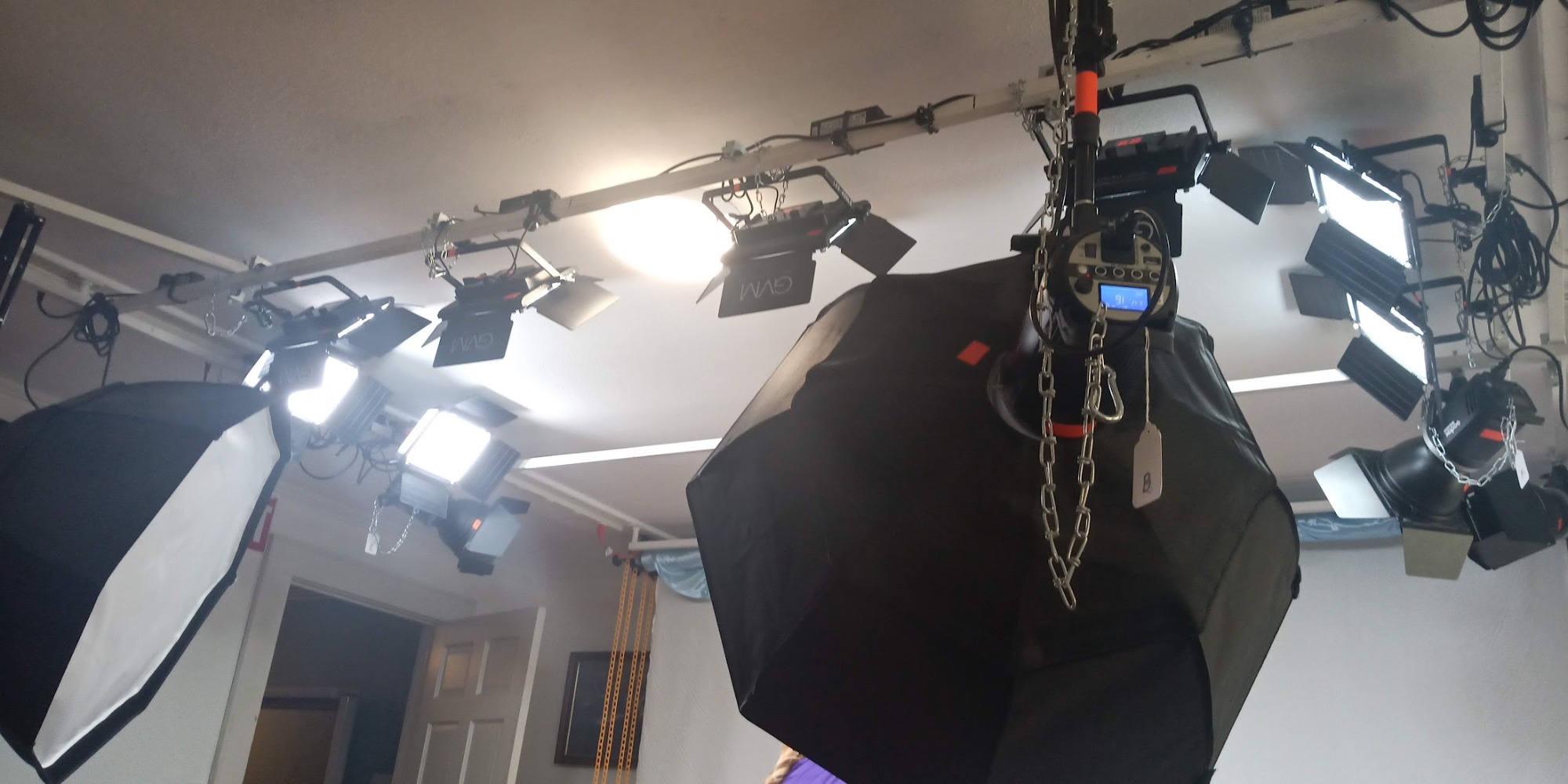
The app is also where the friction lives, and it is significant. It requires your phone to drop off home Wi-Fi to connect, you need to rename each unit, and out of the box it controls one panel at a time. Reviewers publish detailed workarounds, and GVM’s replacement service is specifically praised when a panel arrives faulty, which is worth knowing.
On output, be clear-eyed. Each panel draws about 30W, and owners describe the light as soft, even and pleasant but not especially bright. One owner running seven together before a table scene was properly lit is the honest benchmark here, and that is a real constraint for anyone expecting a single panel to key a room.
Passive aluminum housing means no fan noise, and the panels weigh about 1 kg each. The included soft filters, barn doors, two light stands and a carry bag make it a complete kit, and the listed warranty is 180 days through the package, with one year stated on the unit.
Who the GVM 480 two-pack suits
Anyone lighting a small studio where panels end up mounted high or out of reach and wants to adjust them from a phone. The color accuracy figures make it a sensible choice for product work and for anyone grading carefully, provided you are building the rig from multiple units.
It is also a good match for an existing setup rather than a first one. Owners mostly add these alongside lights they already own, which is how the modest per-panel output stops mattering.
Where it falls short
The app setup friction is real and not going away, so budget time for it before your first shoot. At 30W per panel, expecting one unit to key a room is the mistake that generates most of the one-star sentiment.
Build quality also reads as a step below what the specification sheet implies, and the thin plastic diffuser slot cannot accept a diffuser and a colored gel at the same time, so pick one per panel.
How to Choose the Best Video Lights Under 200 Dollars
Start with the role, not the light. Every good lighting decision starts by asking what job the light has to do: key, fill, back, accent or practical. Once you know that, most of the specifications stop mattering and the ones that do become obvious.
A key light does the modeling on your subject’s face, so it needs to be soft, dimmable and bright enough for the distance you are working at. A fill light drops the shadow side down by a stop or two, so it needs control and low output more than power. A back or rim light separates the subject from the background, so throw matters more than softness. An accent or practical light only has to look good on camera, which is where RGB earns its place.
The classic three-point setup is key, fill and back. Place the key about 45 degrees off the camera axis and slightly above eye level. Put the fill on the opposite side, closer to the lens and dimmer, at around a third of the key’s brightness. Put the back light behind the subject aimed at the background or the subject’s shoulder, high and pointing down.
The trap with two identical panels in a kit is assuming the box decides your setup. It does not. One panel becomes the key, the other becomes the fill, and the fill is always dimmer. If you leave them at the same brightness you have built a flat, shadowless image, which is the single most common beginner lighting mistake.
CRI and TLCI: the number that decides skin tones
CRI, the color rendering index, measures how faithfully a light reproduces the colors of objects compared with a reference source. A score of 100 is perfect. For video work on skin tones and product colors, 95 or above is the practical threshold, and below 90 you will start to see dull reds and shifted skin tones that no amount of grading fully rescues.
TLCI is the television-oriented sibling, measured on a similar scale and weighted for skin reproduction. It is less commonly printed on budget lights, so treat its absence as neutral rather than negative. On this list the GVM 480 pack is the only one publishing both, at CRI 97+ and TLCI 97+.
Here is the honest limit of that number. Published CRI is a lab figure, and lab figures are measured under ideal conditions at a specific color temperature, so real measured performance frequently lands lower. In this roundup, owners of a popular bi-color panel elsewhere in this price band report measuring roughly 92 against an advertised 96, and still consider it usable for narrative and documentary work. A stated 95 that measures 92 is fine. An unstated figure is not, because you have no idea what you are getting.
Color temperature in Kelvin, in plain English
Kelvin describes the color of the light, from warm to cool. Around 2700K is a warm candle-like amber, good for cozy interiors and skin-friendly warmth. 3200K is tungsten, the classic warm-white of household bulbs and most interview lighting. 4300K sits near neutral and is often the most flattering for mixed indoor light. 5600K is overcast daylight and 6500K is full sun, both of which read as neutral white on camera.
Continuous sliders let you match a room’s existing light, which is the single most useful thing a bi-color panel does. A light with only three fixed presets, like the NiceVeedi kit, gives you warm, neutral and daylight and nothing between, so you are grading around a gap rather than matching it.
Green-magenta correction, found on the amaran Ace 25c and the Neewer TL20C, is the next level up. It lets you pull a light that is too green or too magenta back toward neutral without changing the Kelvin value, which matters when you are matching LED office lighting or cheap fixtures you cannot change.
Brightness: why the number on the box rarely helps
Lux figures are only comparable at the same distance and the same color temperature. A light quoted at 800 lux at 0.5 meters is not close to one quoted at 3300 lux at 1 meter, even though both are just numbers. Check the distance before you compare anything.
More useful is the shape of the light. A panel throws a wide, even wash and is forgiving. A COB monolight throws a narrow, intense beam that is harder to control but far brighter per watt. Neither is better; they are different tools, and the wrong one for the job is why people conclude a light is too dim.
Also look at whether brightness is stepped or continuous. A 1% increment dial, as on the RaLeno 9 inch panel, is meaningfully better than coarse 10% steps when you are trying to match existing room light. If flicker is a worry for you, our guide on stopping LED lights from flickering covers the diagnosis.
Power and battery: cordless versus studio
Decide this before you buy, because it eliminates half the list. If you shoot in one room near a wall, mains power is cheaper, brighter and simpler. If you shoot on location, battery capacity is a hard requirement and output is something you compromise on instead.
Battery capacity on this list ranges widely: 2000mAh in the Ulanzi VL49, 2550mAh in the Neewer TL20C, 4000mAh in the RaLeno 9 inch, 4500mAh in the amaran Ace 25c and 8000mAh in the RaLeno 13 inch panel. Runtime claims run from 70 minutes at full output to 4 hours 40 minutes in a low-brightness mode.
The practical fix that owners keep rediscovering is a USB power bank. Several of these panels run while charging, and reviewers report effectively unlimited runtime that way. The exception is the RaLeno 13 inch panel, which uses a proprietary adapter rather than USB-C.
For panels that take removable batteries, remember NP-F550 and NP-F970 batteries are not included with any kit here. Add them to your budget before you commit, because that money comes straight out of the ceiling.
Mounts, modifiers and the small room problem
A 1/4-20 thread is the universal mounting standard on this list and fits nearly everything. Cold shoe mounts suit cameras, and hot shoe plates let a panel ride on a body, though the plates bundled with the cheaper kits are thin and wobble, so replace them.
If your room is a bedroom or a small office, modifiers are a physical problem, not a shopping decision. Large softboxes need distance from the subject to work, and a boom needs space to swing. Our practical advice is to diffuse at the source instead: the white diffusers included with the Neewer kits and the four-layer diffusion in the RaLeno 9 inch panel soften output without needing anywhere to put a box.
Light stands are the hidden budget item. Owners consistently describe included stands as functional but light and tip-prone, and recommend budgeting roughly 30 to 40 dollars for a pair of sturdier ones plus sandbags. That is a safety issue as much as a quality one. If your budget is already committed to the light, buy one good stand rather than two mediocre ones.
Flicker and dimming behaviour at low brightness
Budget panels often dim using pulse width modulation, which cycles the light rapidly rather than reducing its current. At higher brightness settings the cycle is fast enough to be invisible. Dimmed down, some panels produce visible flicker and banding on camera, and a rolling shutter will pick it up as horizontal bands that no amount of color correction fixes.
You cannot diagnose this by eye, which is exactly why buyers get caught out. Look for flicker-free claims and, better, owner reports of flicker-free dimming verified on camera. In this roundup, the Neewer 480 kit and the Viltrox L116T have the clearest owner-verified flicker-free dimming, while the RaLeno 9 inch is reported to flicker at 95-100% brightness on a low battery.
For a full breakdown of the causes and fixes, our LED flicker guide walks through shutter speed, frame rate and the specific panel behaviours involved.
Neewer versus Godox and other brand questions
Neewer is, by volume, the most recommended brand in low-budget filmmaking communities, and the 660 and 480 kits on this list have the largest review bases of anything we considered. The recurring caveat is not performance but the included accessories, specifically the stands. Community consensus treats Neewer as the cheaper entry point with adequate output, and the durability reports we found on the 660 are long and positive.
Godox is widely regarded in the same communities as the more reliable and expandable system, with better build quality and a broader modifier ecosystem, which is why a Godox monolight holds its value as your kit grows. We did not include one here because the monolight class sits above this price ceiling at the point where the ecosystem advantage starts to matter.
The rest of this list splits by purpose rather than by reputation. Ulanzi dominates on portable color control, GVM on app-driven studio panels and published TLCI, VILTROX on thin on-camera design, amaran on pocket brightness and green-magenta control, and RaLeno on battery capacity at small sizes.
On longevity, the useful signal is owner reports rather than warranty length. Panels with fanless aluminum housings, which covers the Neewer and GVM units here, tend to accumulate better long-term reports than units with small plastic housings and active cooling. That is a trend across the reviews, not a guarantee for any individual unit.
What to avoid under this budget
Lights with no published CRI. You are paying for a claim you cannot check. If a listing does not state a number, assume it is below 95.
Color temperature ranges that reviewers have measured and disproved. The Ulanzi VL49 is a good product that advertises 2500K-9000K and measures nearer 3400K-6900K. That is a disclosure gap, and it matters more for the plan you make than the difference itself.
Flimsy included tripods sold as part of a kit, then quietly budgeted for a second purchase. Either choose a kit with better stands or accept that you will replace them and allocate that money up front.
RGB tubes bought as a primary source. They are excellent as accents and background washes and frustrating as key lights, because you end up fighting a color you did not want. Only the Neewer TL20C on this list publishes a wide enough bi-color range, with green-magenta correction, to work as a neutral source.
Boost-mode marketing. The step from 25W to 32W on the amaran Ace 25c is largely a number. Judge pocket lights on their standard mode output and their runtime instead.
Finally, do not spend the whole ceiling on the light. A diffuser sheet and a reflector change how a budget light looks more than a step up in light does, and a pair of decent stands is a safety requirement rather than a luxury.
Frequently Asked Questions
What is a good budget light for video recording?
A bi-color LED panel with a published CRI of 95 or higher, adjustable color temperature between roughly 3200K and 5600K, and smooth dimming is the best budget choice. Under 200 dollars, the NEEWER 660 two-pack is our pick because it includes two 40W panels, stands, diffusers and barn doors, giving you a usable key and fill immediately.
What are the best affordable video lights?
For a complete setup, two mid-size bi-color panels cover the most ground. The NEEWER 660 and NEEWER 480 two-packs both reach CRI 96+ and include stands. For portable color work, the ULANZI VL49 gives full RGB hue control. For battery-powered close work, the RaLeno 13 inch panel carries an 8000mAh cell for around 90 minutes at full output.
Is Neewer or Godox better?
Neewer is the more common choice in budget filmmaking communities, offering CRI 96+ panels at lower cost, and the 660 kit has thousands of long-term owner reports. Godox is generally regarded as the more durable, expandable system with better build quality and a broader modifier range, though its monolights sit above this price ceiling. For a first two-light kit, Neewer wins on value.
Is Neewer a good brand for lights, and how long do they last?
Neewer lights are considered good value rather than premium, and the specific panels on this list carry CRI 96+ claims backed by thousands of reviews. Long-term owners of the 660 kit report years of heavy weekly use without failure. A one-year manufacturer warranty is standard, so the practical answer is that these are built for a creator’s working life, not for heavy commercial rigging.
Do I need softboxes for video lighting?
Not at this budget, and not in a small room. A softbox needs distance from the subject to work, which most bedroom and office setups cannot provide. The white diffusers included with the Neewer kits and the built-in multi-layer diffusion in the RaLeno panels soften output at the source instead, and that is usually enough for interviews and talking heads.
How many lights do I need for video?
One light is enough for a talking head if it is soft, bright and placed about 45 degrees off the camera axis. Two give you a key and a fill, with the fill dimmed to roughly a third of the key to avoid a flat, shadowless look. Three adds a back light to separate the subject from the background, which is the standard three-point setup.
The Verdict: Which Video Light Should You Buy
The NEEWER 660 two-pack is the best video light under 200 dollars, and the reason is simple: it is the only kit here that gives you two genuinely capable panels, stands, diffusers and barn doors within the ceiling. Two 40W sources at CRI 96+ with no fan and 3300 lux at 1 meter is a working studio, not a starter prop.
If your budget is smaller or your shooting is mobile, the math changes. The Ulanzi VL49 is the most capable portable light we found and has the largest owner base of any product here. The amaran Ace 25c is the brightest pocket option and the only one with green-magenta correction at this level. The Viltrox L116T is the one to mount on the camera itself.
Whatever you choose, reserve part of the budget for stands and diffusion, keep batteries in your cost calculation if the lights take them, and check flicker behaviour on camera rather than trusting a listing. Those three steps prevent most of the disappointment people report with budget lighting. Our 2026 picks are all verified at or under the ceiling, and the price buttons above will confirm current numbers on the day you buy.
Once your lighting is sorted, you will want to think about the rest of the signal chain. We have covered capture cards under 200 dollars for streaming setups, and the LED panel lights guide goes deeper on panel selection if you want to go past this budget.