
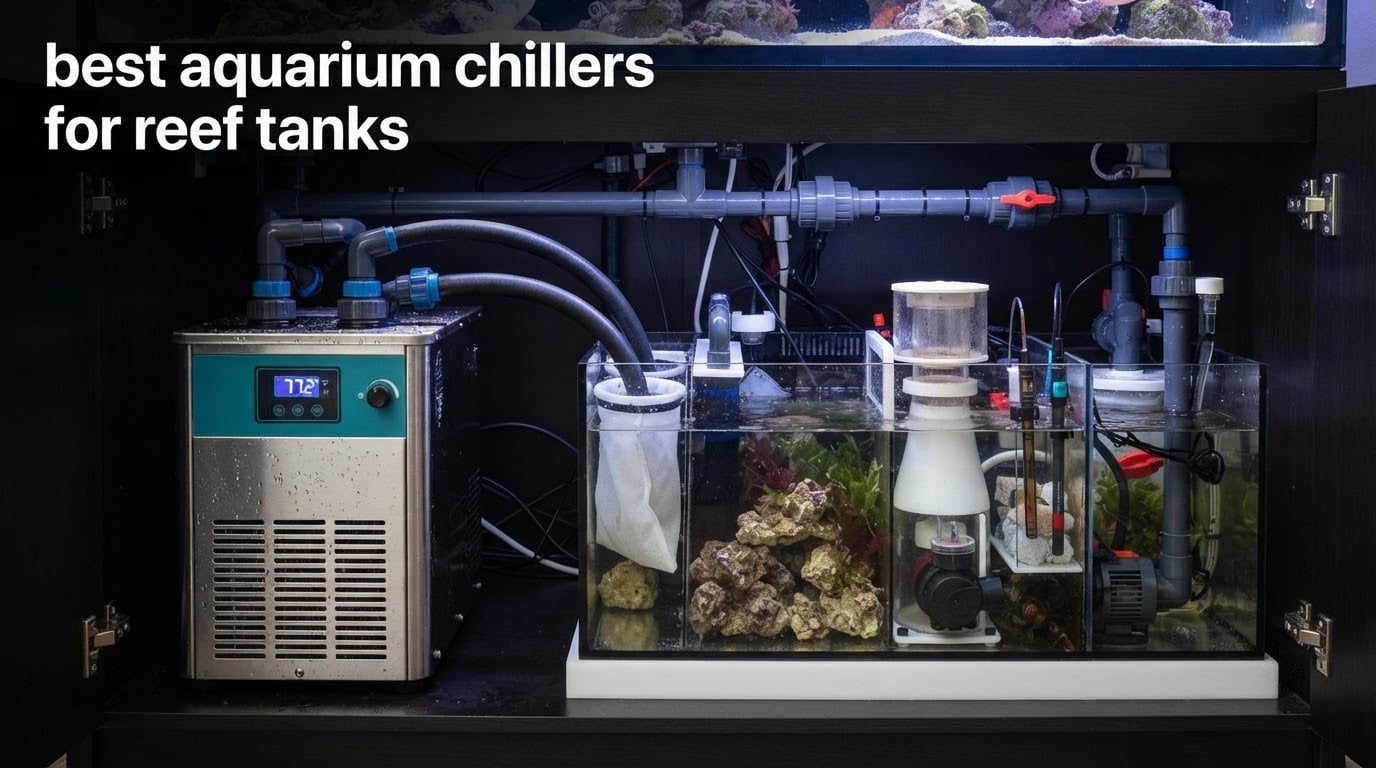
A reef tank that crosses 83F is on a clock. Corals start pushing out zooxanthellae above 80F, dissolved oxygen falls as water warms, and a summer afternoon can take a display from thriving to bleaching in a single day. That is why choosing among the best aquarium chillers for reef tanks is less about brand prestige than honest cooling math for your specific system.
We spent 2026 going through the current chiller listings line by line, weighing compressor output, refrigerant type, evaporator material, plumbing kit contents, clearance requirements, and the review history behind each unit. What we found was a market that has improved a lot in five years, and a set of listings whose review counts range from 20 to more than 500. That spread matters, because a 4.9 rating built on 20 reviews tells you far less than a 4.2 built on 500.
Every chiller in this roundup uses vapor-compression cooling with a titanium evaporator, which is the only configuration we would trust in saltwater. All ten run on 110V US power. We have not included thermoelectric units in this list, and the reason why is covered in the compressor versus thermoelectric section further down.
Before you buy lighting, temperature is the constraint that decides whether the rest of the system works. Our picks on the best reef aquarium LED lights and the best LED lights for nano reef tanks assume you have already solved cooling.
Table of Contents
Top 3 Reef Chiller Picks in 2026
The short version: the Active Aqua 0.10 HP is the one we would put on a 30 to 40 gallon reef, the BAOSHISHAN 1/10 HP is the strongest evidence-backed value in the group, and the Fitnet 1/3 HP is the pick when you want headroom and a touch screen. Everything else in the list is a specialist rather than a generalist.

Active Aqua 0.10 HP With Boost
- 1020 BTU output
- Titanium evaporator
- Digital control with Boost
- 10-40 gallon range

BAOSHISHAN 1/10 HP 42 Gal
- 68-78F control range
- 800 L/H flow
- Full pump and tubing kit
- 45-50dB operation

Fitnet 1/3 HP 79 Gal Touch Screen
- 68-79F control
- Setpoint memory after outages
- 1/3 HP compressor
- 79 gallon capacity
Best Aquarium Chillers for Reef Tanks (October 2026)
Below is the full lineup with the capacity each unit is rated for and the single feature that most affects a decision. Use this to match your tank volume before you read the individual reviews.
| Product | Specifications | Action |
|---|---|---|
| Active Aqua 0.10 HP Water Chiller With Boost |
|
Check Latest Price |
| BAOSHISHAN 1/10 HP 42 Gal Chiller |
|
Check Latest Price |
| Fitnet 1/3 HP 79 Gal Touch Screen Chiller |
|
Check Latest Price |
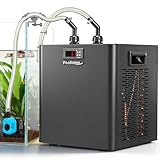 Poafamx 1/3 HP Chiller 40-80 Gal Poafamx 1/3 HP Chiller 40-80 Gal |
|
Check Latest Price |
 VEVOR 1/3 HP Chiller 110 Gallon VEVOR 1/3 HP Chiller 110 Gallon |
|
Check Latest Price |
 JBJ Arctica 1/15 HP Inline Chiller JBJ Arctica 1/15 HP Inline Chiller |
|
Check Latest Price |
 Poafamx 1/13 HP Chiller 20-30 Gal Poafamx 1/13 HP Chiller 20-30 Gal |
|
Check Latest Price |
 VEVOR 1/10 HP Chiller 52 Gallon VEVOR 1/10 HP Chiller 52 Gallon |
|
Check Latest Price |
 Dreamtrue 1/10 HP 42 Gal Touch Screen Dreamtrue 1/10 HP 42 Gal Touch Screen |
|
Check Latest Price |
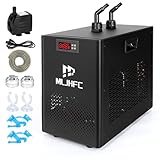 MLJHFC 1/10 HP 42 Gal Quiet Chiller MLJHFC 1/10 HP 42 Gal Quiet Chiller |
|
Check Latest Price |
How We Picked These Reef Chillers
Shopping carousels for this category are full of units rated 4.1 to 4.8 on as few as 20 reviews, which is not enough history to trust. We weighted six criteria instead, and we would rather show you the method than ask for trust.
Cooling headroom for reef loads. We looked at compressor horsepower, published BTU ratings, and stated tank capacity, then asked whether that output covers a typical reef at a realistic temperature drop. Reef systems generate more heat than freshwater tanks because of LED fixtures, calcium reactors, and skimmers, all of which live in the sump or stand and dump heat into the water column.
Saltwater hardware. Every pick has a titanium evaporator. That is the single most important material decision on the page, because a copper or aluminum coil in a reef sump will pit, corrode, and eventually leak.
Plumbing completeness. A chiller that ships without fittings, clamps, or a matching pump creates a second purchase and a leak risk. We counted what is actually in the box against what you need to plumb a loop.
Control accuracy and memory. A digital controller with a setpoint memory function survives power cycling without a reset. Several units here have a calibration offset instead, which is a useful but different feature.
Clearance and heat discharge reality. These units dump heat into the room. Required clearance ranges from 6 inches on the smaller models to 24 inches on the VEVOR units, and that number changes whether a chiller can live in a cabinet at all.
Review depth. We preferred units with 200-plus reviews over units with a higher average rating and 20 reviews, and we flagged early-failure reports wherever they appeared rather than burying them in the cons.
1. Active Aqua 0.10 HP Water Chiller With Boost
Active Aqua Water Chiller with Boost, 0.10 HP, 10-40 Gal, Cold Plunge
1020 BTU at 0.10 HP
10-40 gallon rating
180W steady draw
Titanium evaporator
Pros
- Holds setpoint within about 1 degree Fahrenheit
- Boost function pulls an ice bath down fast
- Compressor draws about 180W in steady cooling
- Long-term owners report 2018 units still running
Cons
- 1/2 inch barb kit is not included
- Some owners report a compressor loud enough to notice
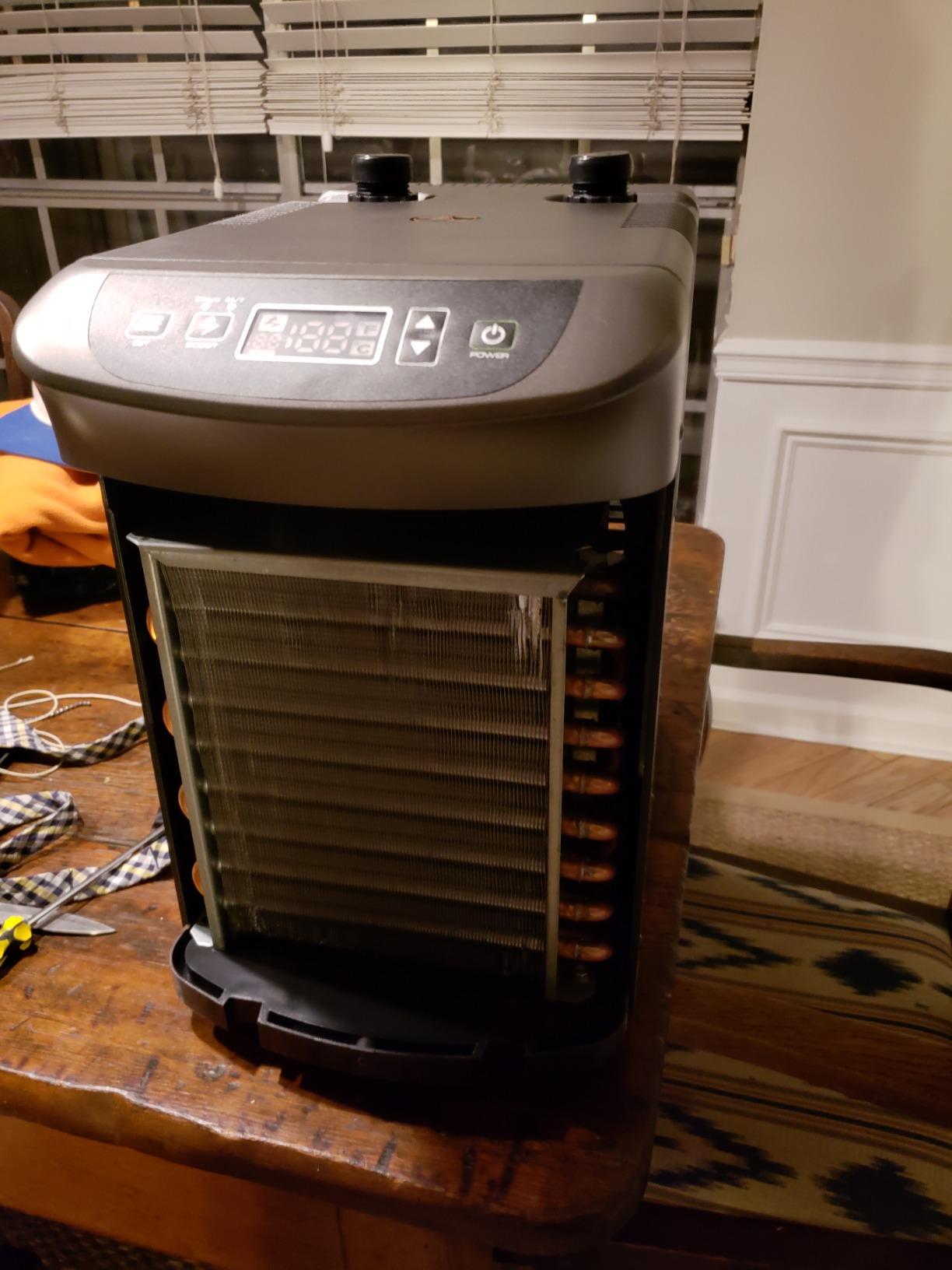
- Unit throws heat into the room like a window unit
This is the chiller we keep coming back to for mid-size reefs. It is rated at 1020 BTU with a 0.10 HP compressor, and the digital control system with two settings is the reason it holds temperature accurately rather than hunting around the setpoint.
Our favourite feature is the Boost function. It adds extra cooling on demand, and owners report pulling a tank from ambient down to 65 degrees in under an hour. For a reef recovering from a heat spike, that matters more than the headline capacity number.
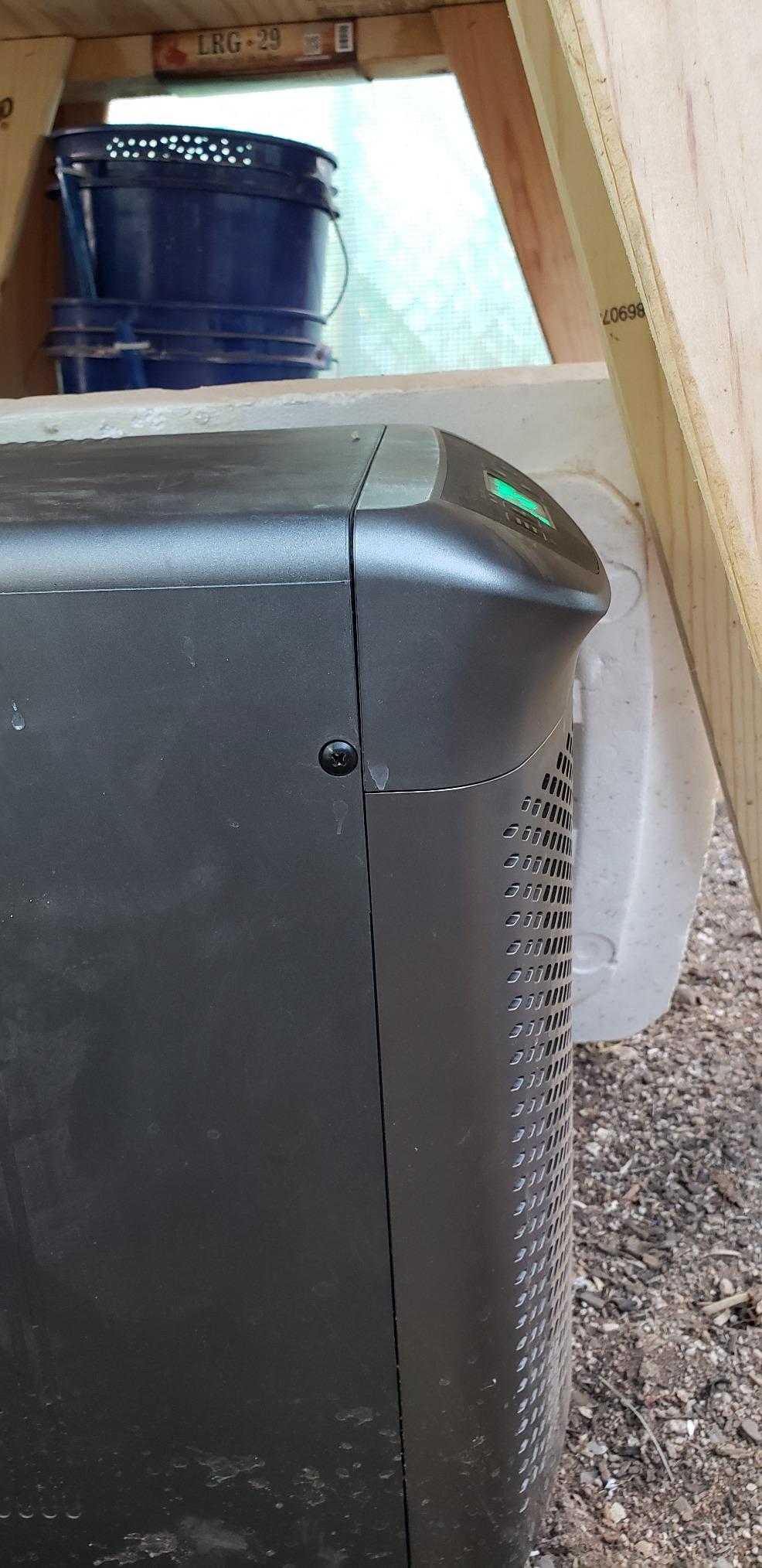
Real-world power draw is lower than the 510 watt listed specification, with the compressor settling around 180W during steady cooling. On a mixed reef in a climate where it runs a meaningful share of the day, that is one of the more efficient ways to hold a setpoint in this group.
The titanium evaporator is rated for fresh or salt water, which is what we insist on for reef use. Long-term ownership reports of 2018 units still in service are the strongest longevity signal anywhere in this roundup, and the small group reporting early compressor failure is a minority rather than a pattern.
Where the Active Aqua earns its slot
A 30 to 40 gallon mixed reef with a sump is the sweet spot. The 1020 BTU output covers the equipment heat load in that range with a realistic temperature drop of about 8 to 10 degrees from a warm room, and the digital controller keeps the water inside a degree of setpoint overnight without cycling hard.
If your reef is SPS-dominated and you are holding a tight 77 to 78F, the steady holding is what you are paying for. Corals care about stability far more than they care about the exact number, and a controller that does not swing 2 degrees every ten minutes matters more here than raw BTU.
Where the Active Aqua will frustrate you
The 1/2 inch barb kit is not included, so budget for fittings before you can plumb the loop. Some owners describe the compressor as loud, comparable to a window air conditioner, which makes it a poor choice for a chiller that has to sit in a living space near seating.
The fans stop as soon as cooling ends rather than running a short cool-down cycle, and the unit discharges heat into the room like any other air conditioner. If the room is already at its comfort limit in July, this chiller will not cool the room and it will not shrink the load either.
2. BAOSHISHAN 1/10 HP 42 Gal Chiller
BAOSHISHAN 1/10 HP Aquarium Chiller 42 Gal Fish Tank Water Chiller 110V
0.1 HP compressor,68-78F control,800 L/H flow rate,13 kg shipping weight
Pros
- Highest review count in this roundup at 503
- Complete kit with pump tubing and clamps
- 45-50dB suits most rooms
- Works in fresh and salt water
Cons
- Needs 6 inches of clearance on all sides
- Derates to about 33 gallons in peak summer
- 9 percent one-star share on durability and noise
This is the pick we recommend when someone asks for a chiller with evidence behind it. Five hundred and three reviews averaging 4.2 stars is the deepest review base of any unit here, and that matters more than a spotless average from a thin sample.
The 1/10 HP compressor lowers water temperature by up to 10F and maintains a 68 to 78F range. It is rated for 42 gallon tanks, with 33 gallons recommended in peak summer, and that derating note is the single most important line in the listing for anyone sizing this for a reef.
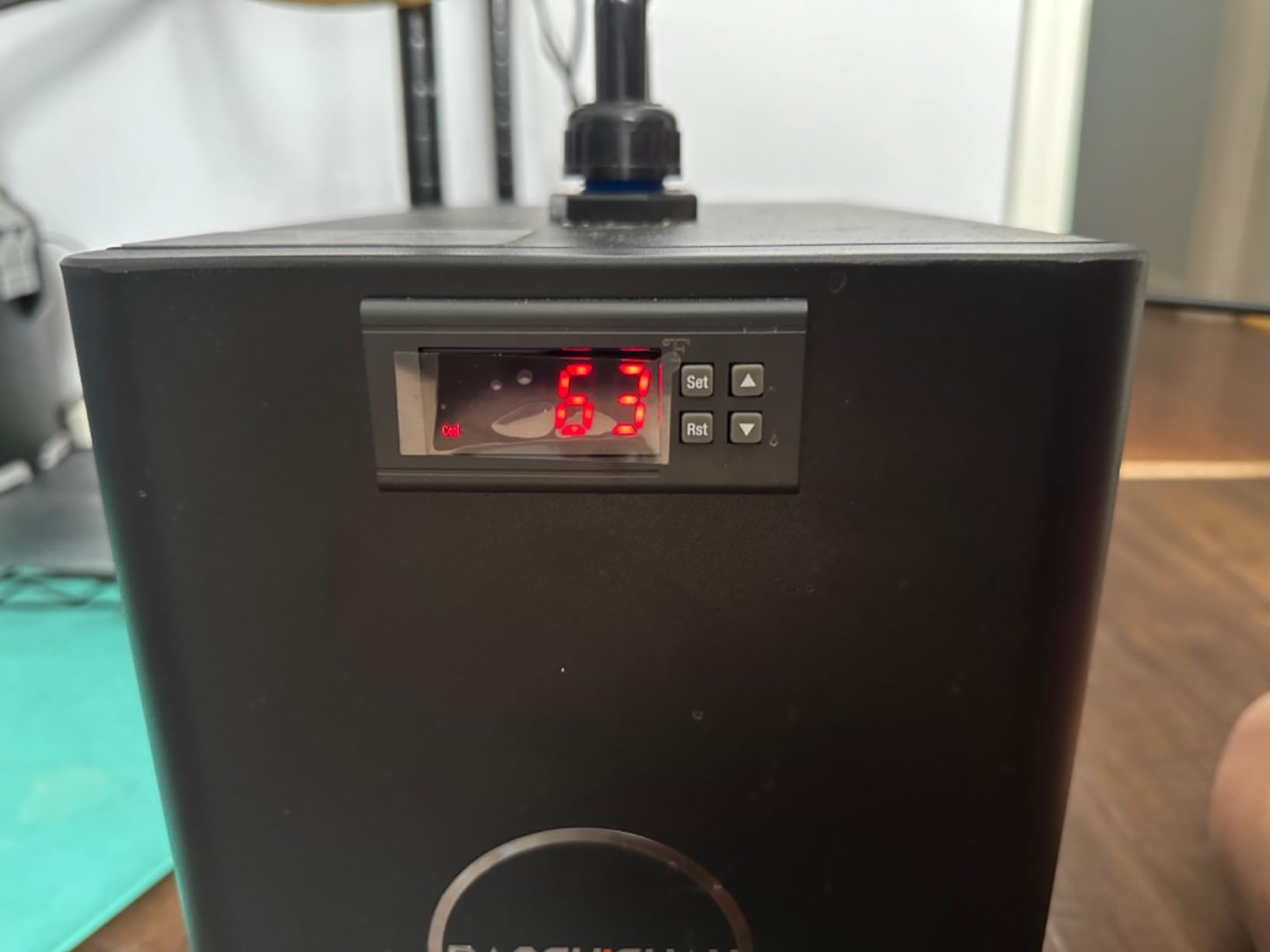
The all-in kit includes a stainless steel shaft pump, tubing, and hose clamps, so there is no second trip to the parts bin. The listed flow rate is 800 liters per hour and the optimized water flow direction minimizes substrate disturbance, which is a nice touch if you are running it in a nano display with a shallow sand bed.
Operating noise of 45 to 50dB at one meter sits in the middle of this group, quieter than a window unit and louder than the 30 to 40dB models. The unit needs at least 6 inches of clearance on all sides for the dual high-speed fans to move air properly, and the stainless steel construction plus dual vents handle heat expulsion well.
Where the BAOSHISHAN earns its slot
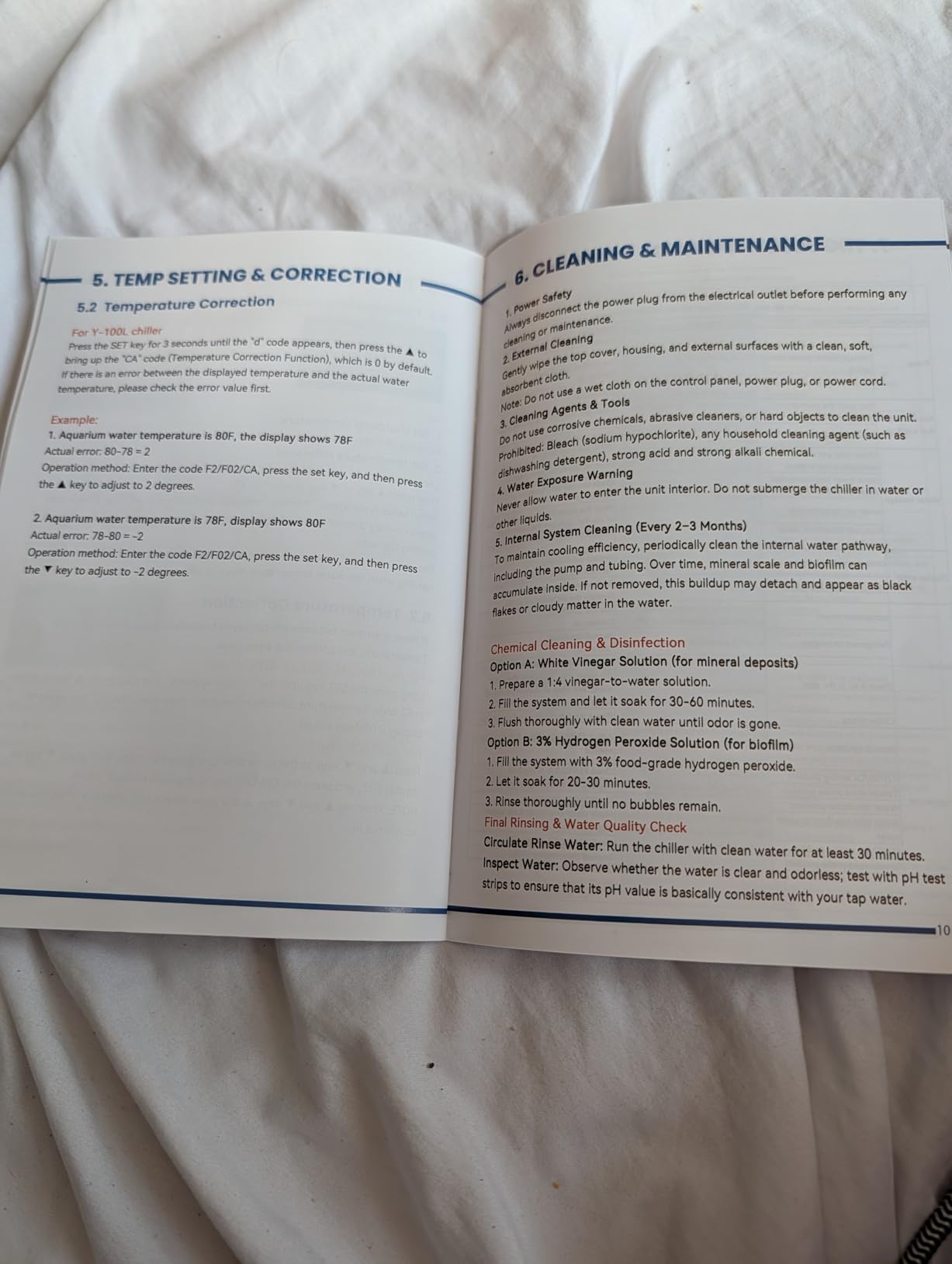
This is the unit we would put on a reef that has to run unattended through a hot summer without drama. A 33 gallon derated rating in peak summer covers a 20 to 30 gallon mixed reef with room to spare, and the 503-review base means durability questions have already been answered by other people.
For someone building their first chiller loop, the completeness of the kit is worth a lot. Pump, tubing, clamps, and instructions arrive in the box, which means one installation session rather than three, and the flow direction is already optimised for a tank rather than a sump baffle.
Where the BAOSHISHAN will frustrate you
That 9 percent one-star share is not nothing, and it clusters around durability and noise rather than cooling performance. If you have had a compressor fail before, the higher review count cuts both ways, because it means more people have had the unit long enough to report a failure.
The 6-inch clearance requirement on all sides is workable in a stand but tight in a cabinet. And if you size to the 42-gallon headline and run it in a hot room in August, the manufacturer’s own 33 gallon recommendation is the number you should have used.
3. Fitnet 1/3 HP 79 Gal Touch Screen Chiller
Fitnet 79 Gal Aquarium Chiller, 1/3 HP Fish Tank Water Chiller, Hydroponic Water Chiller with Touch Screen, Hydroponics System Axolotl Jellyfish Coral Reef 300L
1/3 HP compressor,68-79F control range,79 gallon capacity,Setpoint memory
Pros
- Setpoint memory resumes cooling after power loss
- Calibration aligns reading with a real thermometer
- Reported to hold low 40s water in 90F weather
- Support ships parts and partial refunds promptly
Cons
- Printed instructions do not match the listing
- F1 temperature difference setting is confusing
- No filter included
- Random beeping has required manual resets
This is the newest listing in the group and the one that surprised us most. A 1/3 HP compressor holding a 68 to 79F range across a 79 gallon rated capacity gives it real headroom, and at 4.4 stars from 112 reviews it has the strongest rating-to-review ratio among the larger units.
The setpoint memory function is the feature that makes it different. After a power cut, the chiller resumes cooling at the original set temperature instead of waiting for you to reprogram it, which matters if you run an unattended system or a second home tank.
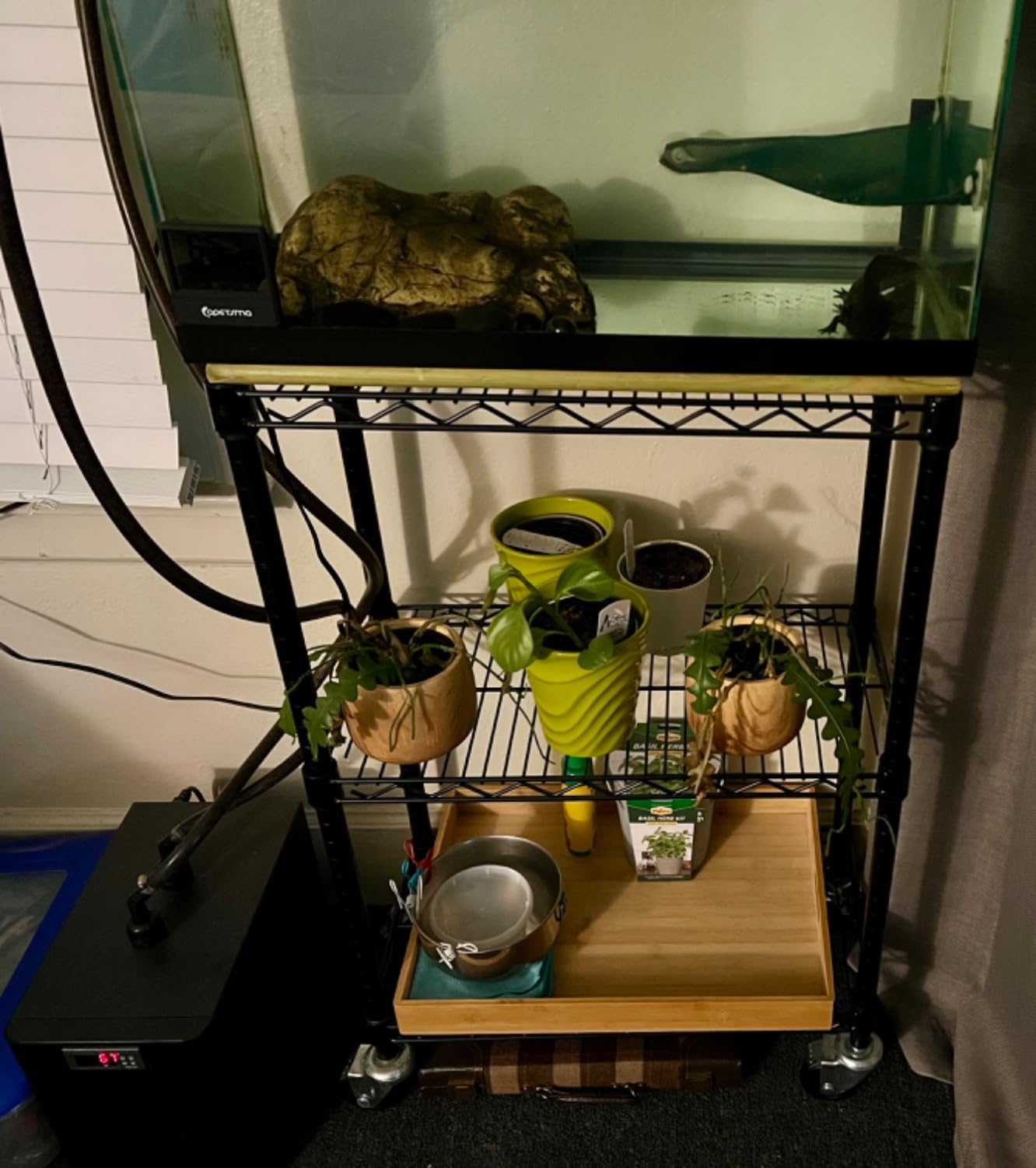
There is also a calibration feature that lets you align the chiller reading with an actual tank thermometer. That solves a real problem, because several cheap chillers in this list report temperatures a few degrees off from what a calibrated thermometer says and owners end up chasing phantom setpoint drift.
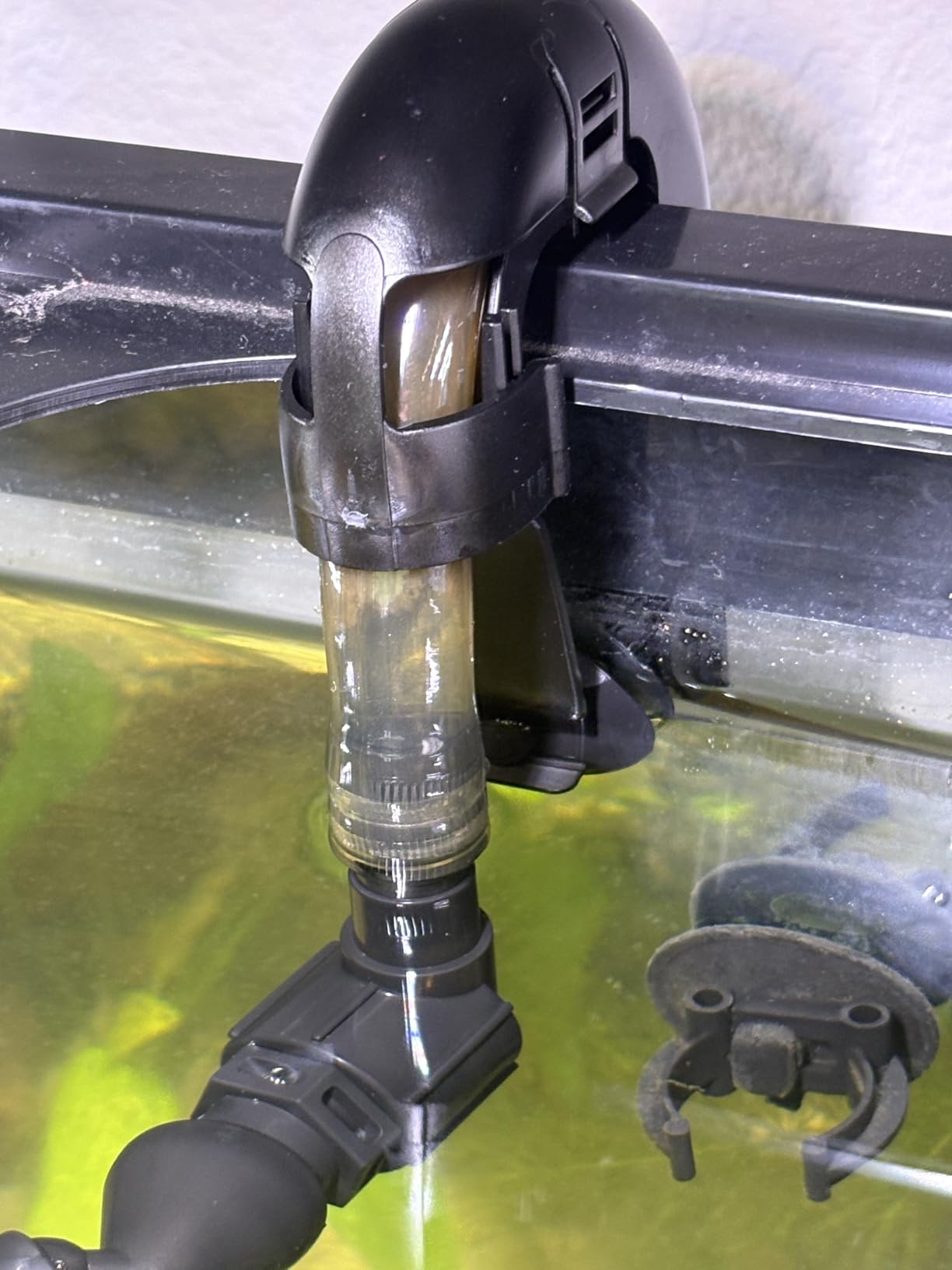
The heat dissipation design uses multiple small holes plus two built-in cooling fans, and the manufacturer requires at least 6 inches of space around the unit. The pure titanium pump handles heat exchange, and the box includes a water pump, water pipe, and connectors with a 1-year guarantee.
Where the Fitnet earns its slot
Owners report holding water in the low 40s Fahrenheit even in 90F ambient weather, and several describe it performing well even when paired with tanks above its 79 gallon rating. That is the headroom we want for a reef with a heavy equipment load, especially an SPS display with metal halide or high-output LED.
For anyone who has had a chiller lose its settings in a power blip, the memory function alone justifies the choice. Pair that with the calibration offset and you have a controller that agrees with your own thermometer, which cuts down on a genuinely frustrating troubleshooting loop.
Where the Fitnet will frustrate you
Programming is the weak point. The printed instructions do not match the Amazon listing, and the F1 temperature difference setting is confusing to configure, so expect to spend the first week learning the menu rather than trusting the manual.
There is no filter included, which matters more than it sounds because condenser airflow is what keeps the unit efficient. Random beeping and cooling stoppage have required manual resets for some users, so treat it as a unit you want to check on during a heat wave rather than one you leave alone for a week.
4. Poafamx 1/3 HP Chiller For 40-80 Gallon Tanks
Poafamx 1/3 HP Aquarium Chiller, Quiet Fish Tank Water Chiller 40-80 Gal
1/3 HP compressor,65-80F range,Under 45dB,37 pounds
Pros
- Holds temperature when indoor temps climb into the 90s
- Under 45dB with R290 refrigerant
- Complete kit with pump hose and clamp
- Titanium evaporator suits salt water
Cons
- Included pump moves only about 158 GPH
- 14 percent one-star share is the highest of the 1/3 HP units
- Reports of units or power switches failing under a year
- Thermostat readings did not match actual water temperature
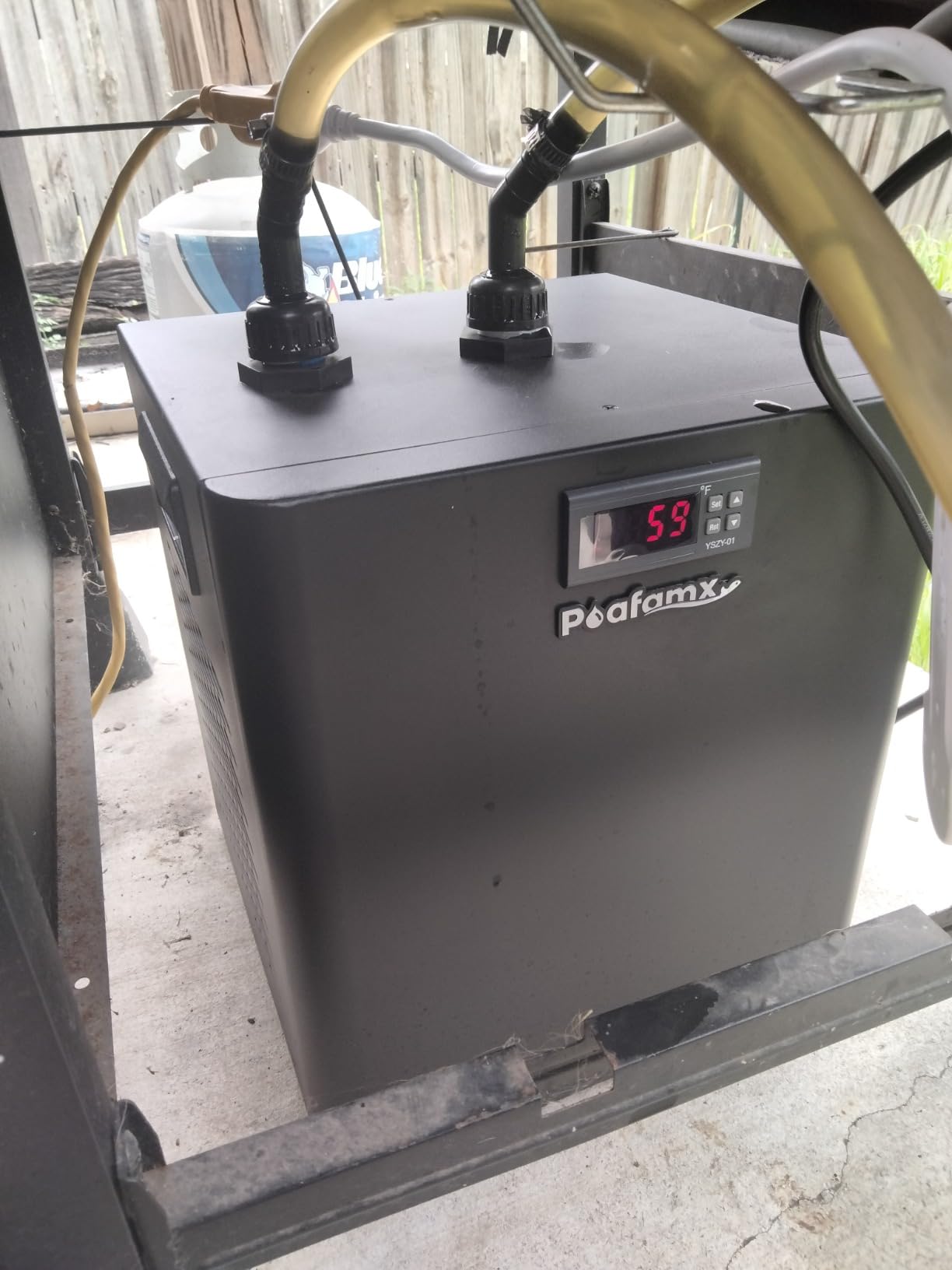
This is the most capable 1/3 HP unit in the roundup by tank rating, and the least reliable by review sentiment. The 1/3 HP compressor maintains 65 to 80F and cools up to 10C below room temperature across a 40 to 80 gallon freshwater or saltwater range.
When it is running, owners praise it. Multiple reviews describe it holding tank temperature steady even when indoor temperatures climb into the high 80s and 90s, which is the situation a reef chiller exists to solve.
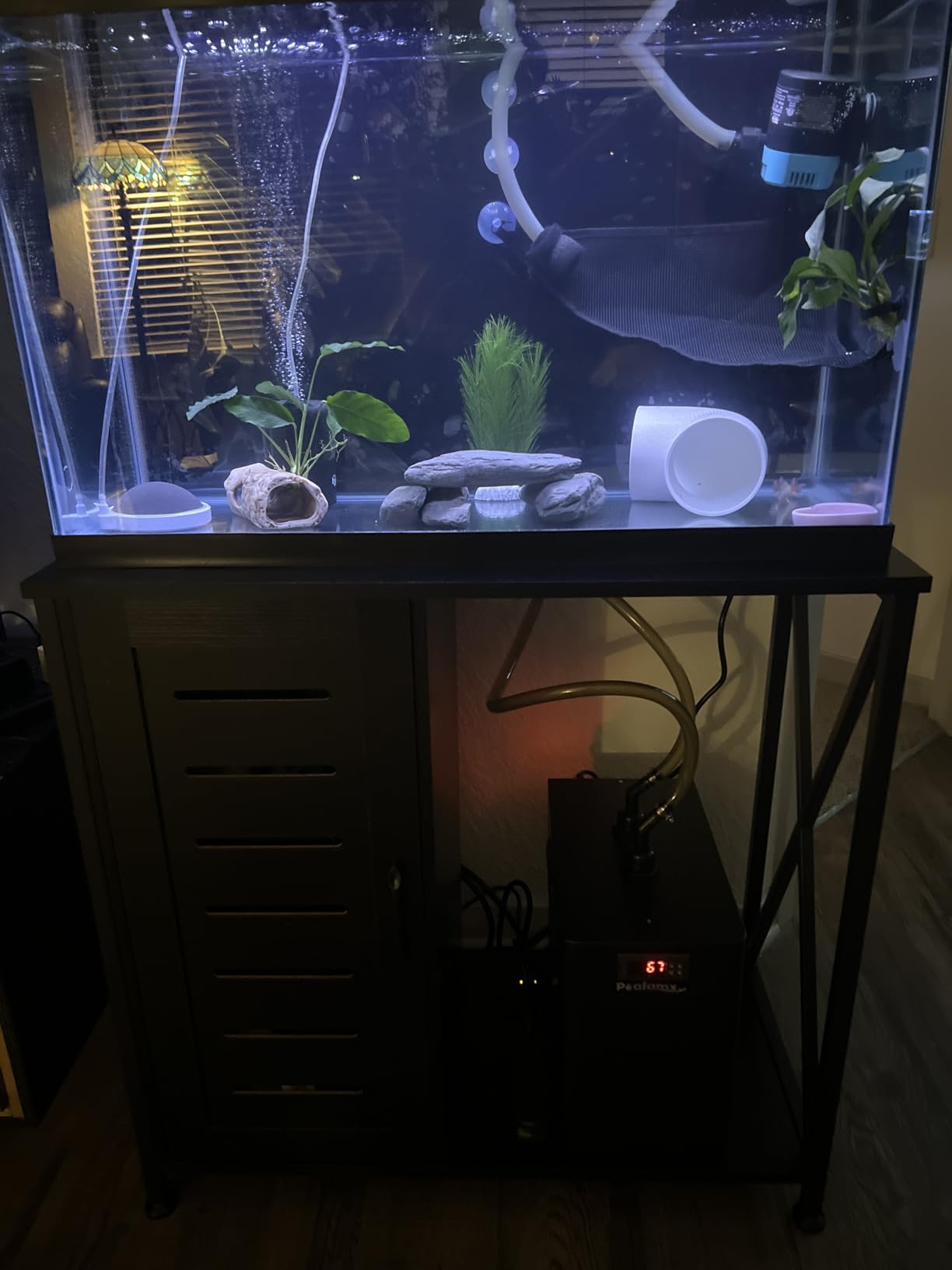
It runs under 45dB with an energy-efficient compressor and R290 refrigerant, a low GWP gas with zero ozone depletion potential. The titanium evaporator handles both fresh and salt water, and the complete kit includes the chiller, water pump, water hose, hose connectors, and a clamp.
The catch is the bundled pump. It moves only about 158 GPH, which is low for a chiller on a 60 gallon reef, and upgrading to a stronger pump is the most commonly recommended modification across reviews. The rear vents also discharge noticeable heat, so wall clearance is a real constraint.
Where the Poafamx earns its slot
For a 50 to 80 gallon reef in a genuinely hot room, the raw cooling output here is difficult to argue with. Owners also like the straightforward setpoint and trigger differential controls, and a titanium evaporator with R290 is exactly the hardware combination we want in saltwater.
If you are comfortable replacing the supplied pump as part of commissioning, this becomes a strong unit. Plan for that swap before you start the install rather than discovering the flow rate after the loop is full.
Where the Poafamx will frustrate you
This is the lowest average rating in the roundup at 4.0 stars, with a 14 percent one-star share that is the highest among the 1/3 HP units here. Multiple owners report units or power switches failing within under a year, and one detailed account describes burnt internal wiring.
Some units arrived with thermostat readings that did not match actual water temperature, which means you need your own thermometer from day one. It is also slower to pull a large ice bath down than higher-output chillers, so do not judge it on the first hour.
5. VEVOR 1/3 HP Chiller Rated For 110 Gallons
VEVOR Aquarium Chiller, 110 Gallon, 1/3 HP Water Chiller for Hydroponics
110 gallon rated capacity,1200 L/H circulation,1/3 HP R290 compressor,Titanium evaporator
Pros
- Largest rated capacity in this roundup at 110 gallons
- 1200 L/H water circulation
- Titanium evaporator safe for fresh and salt
- Stable temperature once setpoint is reached
Cons
- Requires 24 inches of clearance on all sides
- Emits heat and operating noise
- Only 20 reviews limit reliability history
- Actual temperature varies with volume and ambient
This is the biggest capacity number in the roundup, and it is the reason to look at this unit for a large display. A 1/3 HP compressor with fluorine-free R290 refrigerant covers a 65 to 80F range with a rated 110 gallon capacity and 1200 L/H water circulation.
At 39.7 pounds and 14.49 by 13.07 by 16.85 inches, this is not a nano unit. Plan the stand before you order, because the 24 inch clearance requirement on all sides rules out most standard cabinet spaces.
The listing itself is refreshingly honest, noting that real water temperature depends on volume, tank size, and ambient conditions rather than promising a fixed setpoint. That candour matches what owners report: stable temperature once the setpoint is reached, with variation when the load changes.
The corrosion-resistant titanium evaporator is rated safe for both freshwater and saltwater, and the built-in fan with multiple ventilation holes handles heat dissipation. The model is CL-850, and there are 1/4 HP, 1/3 HP, and 1/10 HP variants in the same line.
Where the VEVOR earns its slot
For a 90 to 110 gallon reef in a hot room, this is the only unit here whose rated capacity matches the system without derating. The 1200 L/H circulation rate is the highest in the roundup alongside the 52 gallon VEVOR, and flow rate is what determines how much water passes over the evaporator per hour.
It is also a sensible choice as a garage or fish room install where noise tolerance is high and floor space is not. The 1/3 HP compressor with R290 gives you a modern refrigerant profile without moving up to a commercial unit.
Where the VEVOR will frustrate you
Twenty reviews is a thin reliability record, and we would be honest that the long-term durability picture here is untested. There is no multi-summer ownership history behind this listing yet, which is the data we would want before putting a 100 gallon reef on it.
The 24 inch clearance on all sides is the practical blocker for most home installs. It also emits heat and operating noise, and the listing itself says it is not recommended for bedrooms, so this is a utility room machine rather than a living room one.
6. JBJ Arctica 1/15 HP Inline Chiller
JBJ Arctica Aquarium Chiller, 1/15 HP
1/15 HP inline compressor,Titanium coils,25 pounds,Inline series installation
Pros
- Titanium coils for efficient corrosion-resistant heat exchange
- Quick in-line series installation
- Small footprint for tight equipment spaces
- Highly efficient condenser uses less energy
Cons
- Highest price point in this roundup for the smallest compressor
- Sparse listing with no temperature range or tank capacity
- 15 percent one-star share is the highest in the group
This is the oldest design in the roundup, first listed on Amazon in 2004, and it is still the reference point for quiet inline reef cooling. At 25 pounds and 12 by 16 by 15 inches it is compact, and the inline series installation is the easiest plumbing of anything here.
The titanium coils are the reason it has survived this long in a category that churns constantly. Highly efficient condenser design uses less energy, and it is marketed as one of the quietest chillers on the market, which is why it keeps showing up on reef keeper shortlists.
The tradeoff is that the listing is sparse. There is no published temperature range, no tank capacity figure, and no BTU number to size against, which makes it genuinely difficult to confirm it will cover your reef before you commit.
It also carries a 15 percent one-star share, the highest in this group. That is not a small signal, and it is worth understanding why before you choose the brand name over a spec sheet.
Where the JBJ Arctica earns its slot
For a nano reef or a tight sump where every inch of cabinet space counts, the small footprint and inline installation are hard to beat. You plumb it in series with your return line and it works, without a separate bracket arrangement or a drilling job.
If your priority is noise in a living space rather than raw capacity, the quiet condenser and titanium coil design are the two attributes owners most often cite. That is a legitimate reason to pay more for less capacity when your system is small.
Where the JBJ Arctica will frustrate you
It is the most expensive unit here for the smallest compressor, and 1/15 HP is genuinely small. Without a published tank capacity or BTU rating, you are guessing at fit, and guessing at chiller capacity is how reef keepers end up with a unit that runs constantly and never reaches set point.
The sparse listing makes comparison hard. You will not find a wattage figure, a warranty statement, or a temperature range in the product details, so treat the model number DBI-050-D and confirm the rating with the manufacturer for your specific system size.
7. Poafamx 1/13 HP Chiller For 20-30 Gallon Tanks
Poafamx Aquarium Chiller 26gal, 1/13 HP Small Water Chiller for Axolotl
1/13 HP compressor,20-30 gallon range,210 GPH pump,22.1 pounds
Pros
- Holds small tanks at target with little noise
- 210 GPH pump is stronger than other Poafamx bundles
- One owner reports a unit running after nearly three years
- Titanium evaporator and stainless steel suit reef use
Cons
- 20 percent one-star share is the highest of the small units
- Intake and outtake ports are not marked
- Initial temperature setting described as complicated
- Ejects a large amount of hot air
This unit is listed for axolotl tanks, and that is a good clue about its real behaviour. The high-efficiency R134a compressor runs at whisper-quiet levels, which is exactly what you want in a 20 to 30 gallon display where a loud compressor would be the first thing you noticed.
It maintains 65 to 80F, and the included 210 GPH water pump is genuinely stronger than the pumps bundled with the larger Poafamx models in this roundup. For a nano reef that is a meaningful difference rather than a detail.
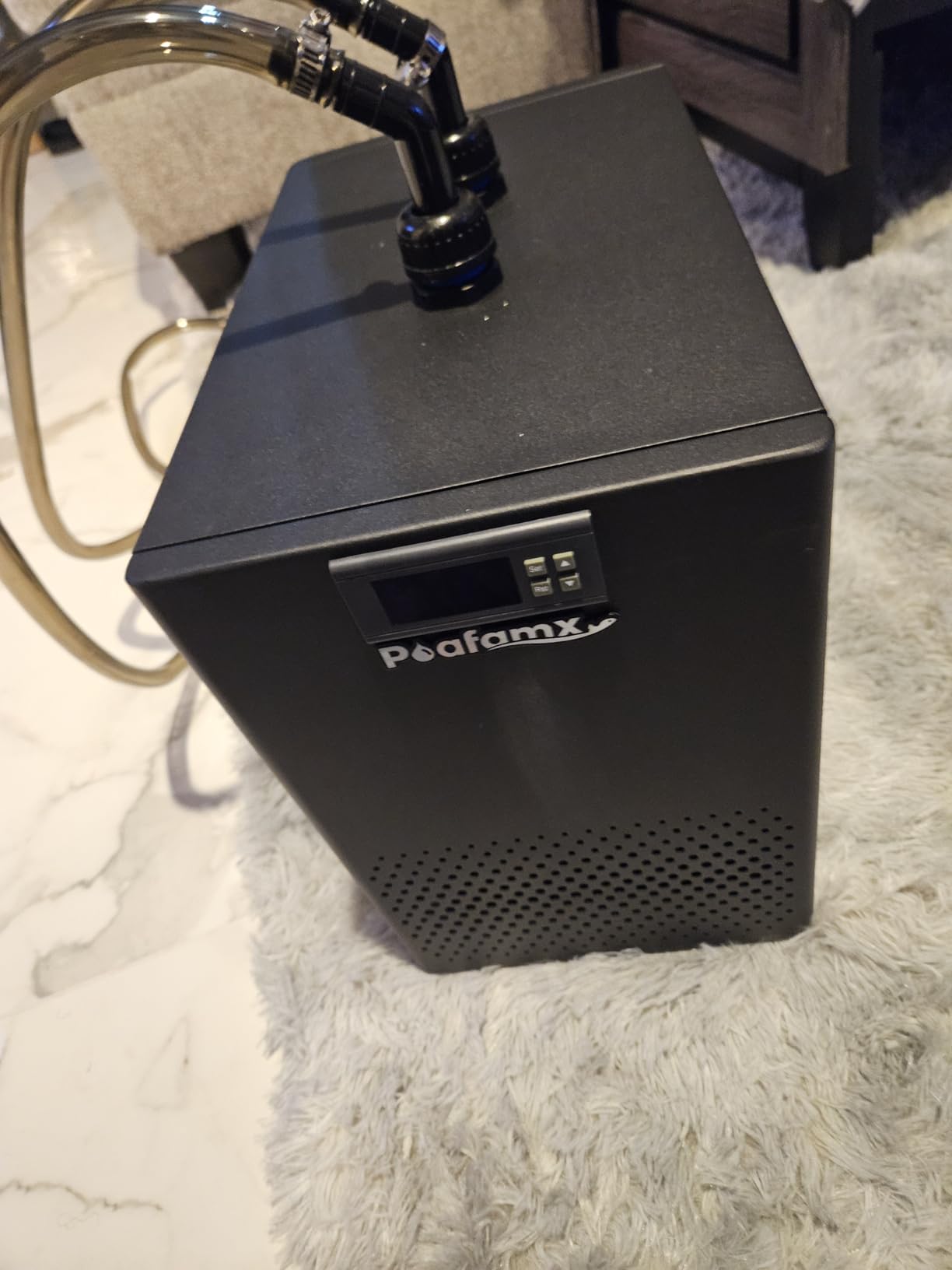
The titanium evaporator is rated for both freshwater and saltwater, and the stainless steel body suits reef use as well. One owner reports a unit still running strongly after nearly three years, which is a useful counterweight to the failure complaints in this section.
Heat dissipation comes from front and side vents plus dual high-performance rear fans, and the manufacturer asks for at least 6 inches of clearance. The box includes a water pipe and pump, and the unit is backed by a 1-year warranty.
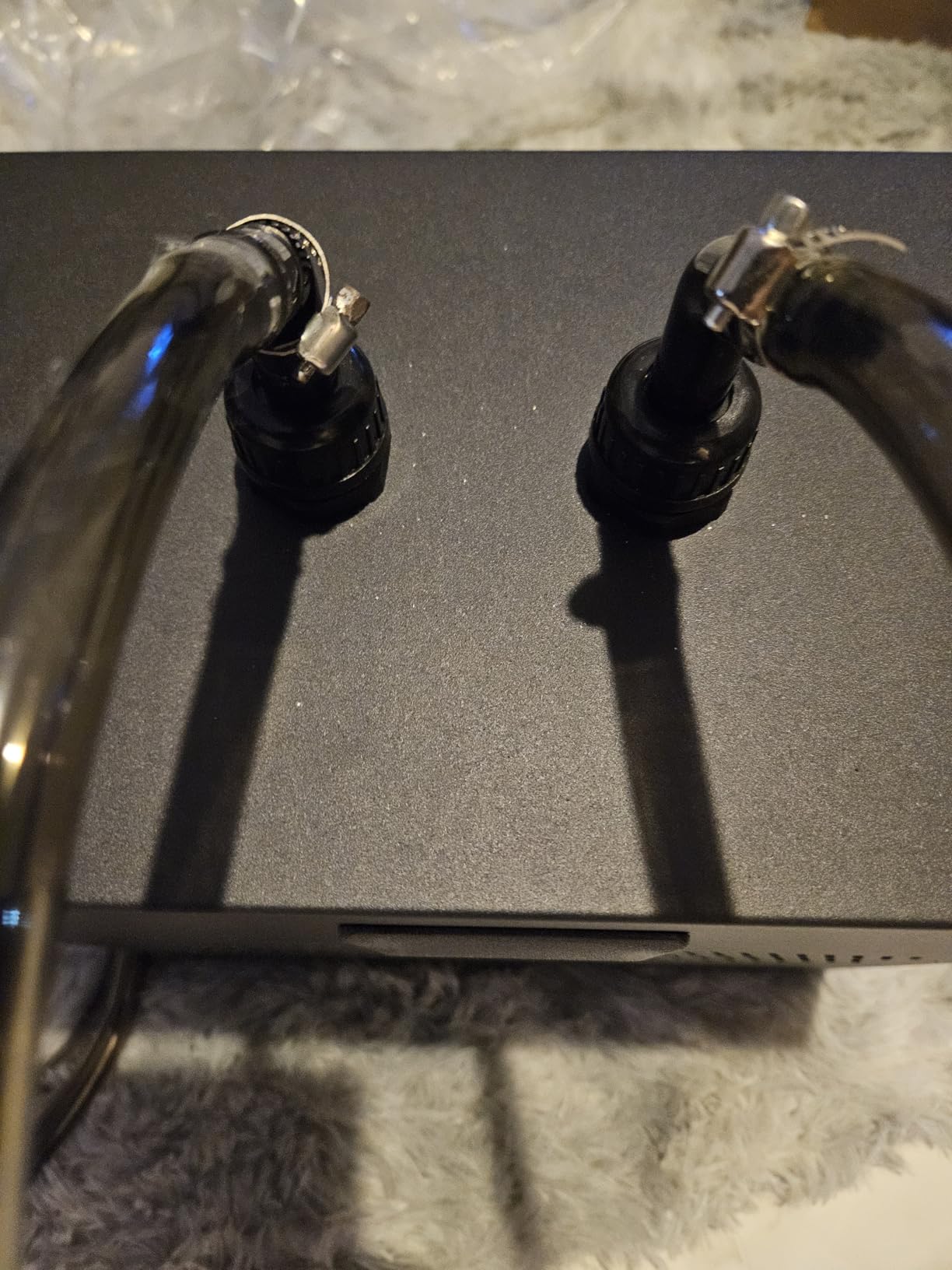
Where the Poafamx 1/13 HP earns its slot
A nano reef in a quiet room, or a cold plunge tub next to it, is the ideal use. Holding a 20 to 30 gallon tank quietly with a titanium evaporator in saltwater is the job this does well, and the 210 GPH pump means you are not fighting the included hardware.
If you already run a Poafamx unit, the shared brand means the mental model transfers, but the stronger pump is the reason this one is the better small-tank choice in the family. The 1-year warranty and documented support are comparable to the rest of the line.
Where the Poafamx 1/13 HP will frustrate you
The 20 percent one-star share is the highest among the small units here, and the complaints are specific: unclear inlet and outlet labeling, difficult initial temperature setup, and a detailed account of a compressor overheating after 30 minutes when a condenser fan failed.
Unmarked ports mean you are guessing the plumbing direction on install, and a reverse connection is an easy mistake to make. The rear also ejects a large amount of hot air, so it needs real ventilation space rather than a decorative spot in a cabinet.
8. VEVOR 1/10 HP Chiller Rated For 52 Gallons
VEVOR Aquarium Chiller 52Gal 1/10HP Quiet Cooler with Titanium Evaporator
52 gallon rated capacity,1200 L/H circulation,1/10 HP R290 compressor,30.9 pounds
Pros
- Most complete fitting kit in the roundout
- 1200 L/H circulation for a 52 gallon capacity
- Quiet enough to disappear under background fan noise
- Reported to hold 68F in Florida heat
Cons
- Temperature readout reported off by about 4 degrees
- No buffer setting so the unit can short cycle
- Bundled submersible pump became noisy within weeks
- 24 inch clearance required
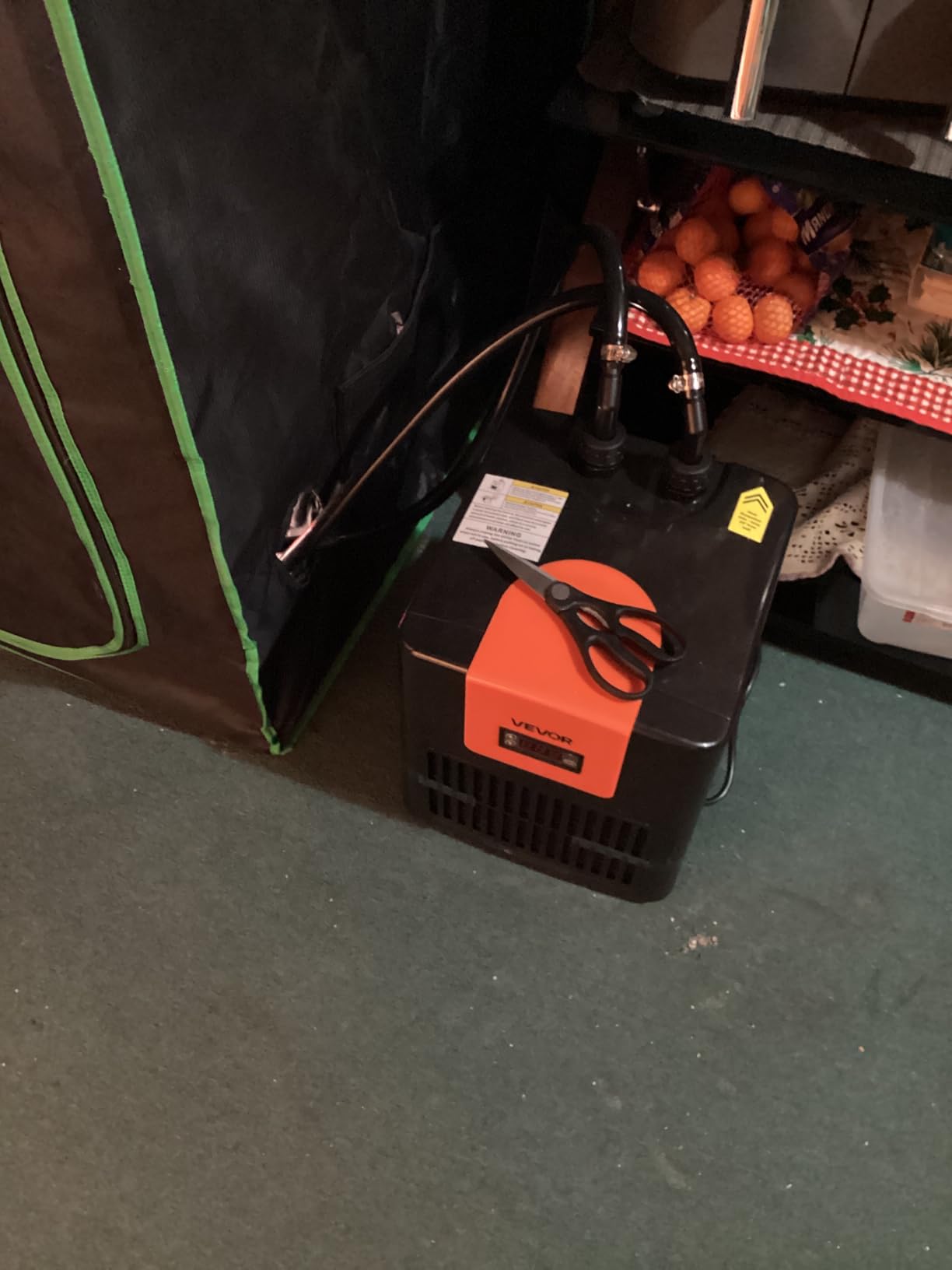
The reason to consider this unit is the box contents. It ships with an SP-2500 water pump, two 15x20x2000mm PVC hoses, a hose clamps kit, two pipe connection nuts, two pipe connectors, four O-rings, a suction cup, and a manual, which is more complete than anything else in this roundup.
The 1/10 HP compressor uses fluorine-free R290 refrigerant across a 65 to 80F range, with 1200 L/H water circulation for a 52 gallon rated capacity. That flow rate is high relative to the compressor size, which is why the titanium evaporator keeps up.
Owners report it holding 68F steadily and even saving an outdoor pond during Florida heat, and some say it is inaudible over background fan noise. At 30.9 pounds and 12.4 by 11.81 by 15.59 inches it is a standard stand-sized unit.
The model is CL280, and the same line includes 1/4 HP standard, 1/4 HP upgrade, and 1/3 HP upgrade variants. That range is useful if you later decide your 52 gallon reef outgrows the smallest compressor.
Where the VEVOR 52 gallon earns its slot
A 40 to 50 gallon reef where you want everything in one delivery is the fit. The included SP-2500 pump and full fitting kit mean the plumbing is a same-afternoon job, and the 1200 L/H circulation keeps water moving through the titanium evaporator at a rate matched to the capacity.
The titanium evaporator is rated safe for both freshwater and saltwater, so nothing about the hardware rules out a reef. For anyone comparing this against a cheaper 42 gallon unit, the fittings and pump are the concrete difference you are actually paying for.
Where the VEVOR 52 gallon will frustrate you
At 4.0 stars from 31 reviews with a 55 percent five-star share, this is the lowest five-star proportion in the group. The consistent theme in critical reviews is the bundled submersible pump, which several owners replaced after it became noisy or started rattling within weeks.
There is no buffer setting, so the unit can short cycle, and at least one owner reported a temperature readout off by about 4 degrees. Budget for your own thermometer, and plan for a possible pump swap shortly after the first month.
9. Dreamtrue 1/10 HP 42 Gal Touch Screen Chiller
Aquarium Chiller 42 Gal, 1/10 HP Fish Tank Water Chiller Machine
1/10 HP compressor,5-15F below ambient,800 L/H flow,LED touch display
Pros
- Touch screen LED display simplifies setpoint changes
- 800 L/H flow with bundled pump and hose
- Lowest noise specification at 30-40dB among 42 gallon units
- Remote control included
Cons
- Smallest review base at 34 ratings
- Requires 6 inches of airflow clearance
- No wattage refrigerant or warranty detail in the listing
The interface is the pitch here. An upgraded LED display with a touch screen makes temperature adjustment and monitoring straightforward, and a remote control is included in the box alongside the chiller, hose, water pump, cable, and manual.
The 1/10 HP energy-efficient compressor reduces water temperature by 5 to 15F below ambient, which is the most honest way to express chiller performance. It does not promise a fixed temperature; it promises a temperature differential relative to the room, which is how every compressor chiller actually behaves.
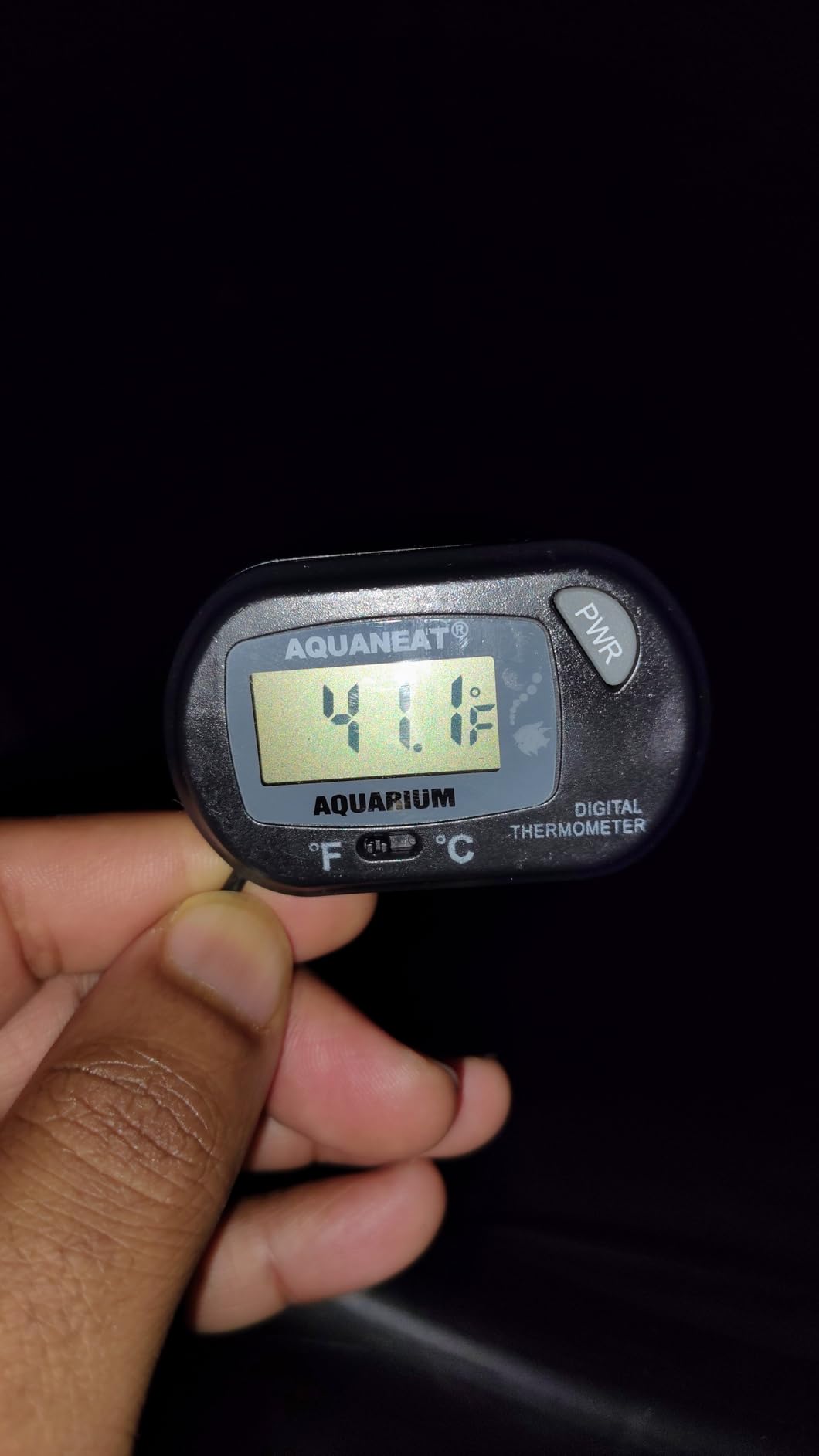
Noise is specified at approximately 30 to 40 dB, the lowest figure in this roundup alongside the MLJHFC. That matters in a living room, where a compressor that cycles audibly every few minutes becomes something you notice and then resent.
Water flow is listed at 800 liters per hour, with the bundled water pump, hose, and cooling fans handling heat dissipation through cooling vents. The unit is compatible with freshwater, saltwater, axolotl, and jellyfish systems, and a 79 gallon variant exists in the same line.
Where the Dreamtrue earns its slot
A 30 to 42 gallon reef where the chiller lives in a room you also sit in. The 30 to 40 dB specification and the touch screen interface make this the least fussy small unit here to operate, and the 5 to 15F below ambient claim is a realistic one you can plan a setpoint around.
The remote is more useful than it sounds on a 42 gallon unit tucked into a high cabinet. If your install is going to be semi-hidden, being able to read the setpoint without climbing into the stand is a genuine daily convenience.
Where the Dreamtrue will frustrate you
Thirty-four ratings is the smallest review base in the roundup, so long-term durability is essentially untested. It also publishes no wattage figure, no refrigerant type, and no warranty detail, which makes it impossible to compare running cost or support terms against the alternatives.
It needs 6 inches of airflow clearance, and the 8.7 by 15.7 by 11 inch footprint is wide and shallow rather than cube-like, so measure the shelf rather than eyeballing the volume.
10. MLJHFC 1/10 HP 42 Gal Quiet Compressor Chiller
MLJHFC 42Gal Aquarium Chiller 1/10HP 160L Quiet Compressor Cooler
1/10 HP compressor,64-79F control,30-40dB(A),5.3 pounds
Pros
- Highest average rating at 4.9 stars with no one-star reviews
- Holds temperature within about 1 degree of setpoint
- Quiet cycling that is inaudible across a room
- No leaks reported on setup and solid build quality
Cons
- Only 20 reviews so durability is unproven
- Included fans are somewhat louder than one owner expected
- Translated manual takes some care to follow
- 5.3 pound listed weight looks light for the size
This is the highest-rated unit in the roundup at 4.9 stars from 20 reviews, with 88 percent five-star, 12 percent four-star, and zero one-star ratings. We are including it with an obvious caveat attached, and the caveat is the sample size.
The 1/10 HP energy-efficient compressor is rated for tanks up to 42 gallons, roughly 160 liters, and maintains water from 64 to 79F. The titanium evaporator is corrosion-resistant with saltwater and chemical resistance, which is the hardware combination we want in a reef.
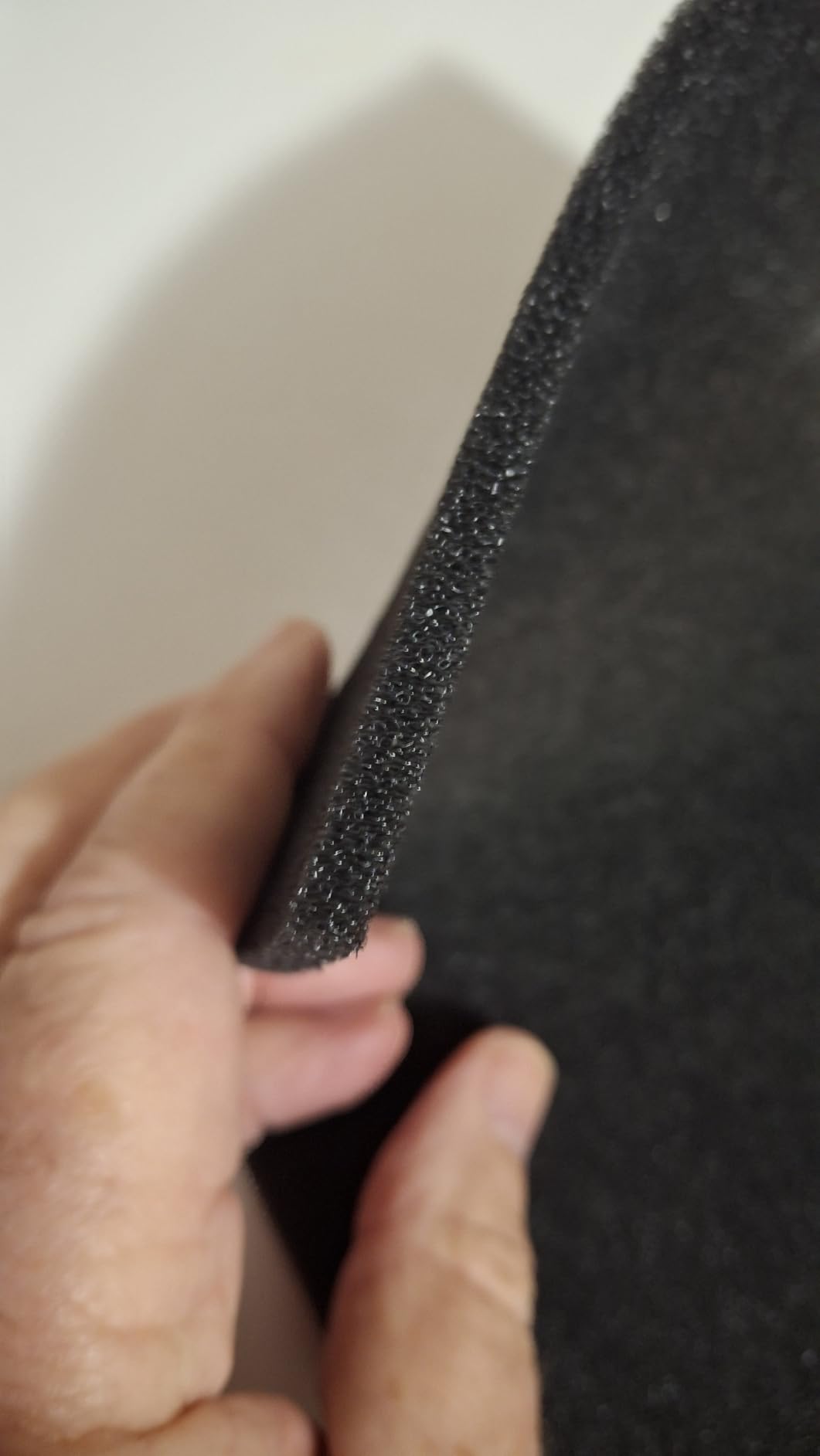
Noise is the headline. A low-noise compressor with dual silent fans at 30 to 40 dB(A) and enhanced ventilation produces cycling that owners describe as inaudible across a room, and the unit holds temperature within about a degree of setpoint.
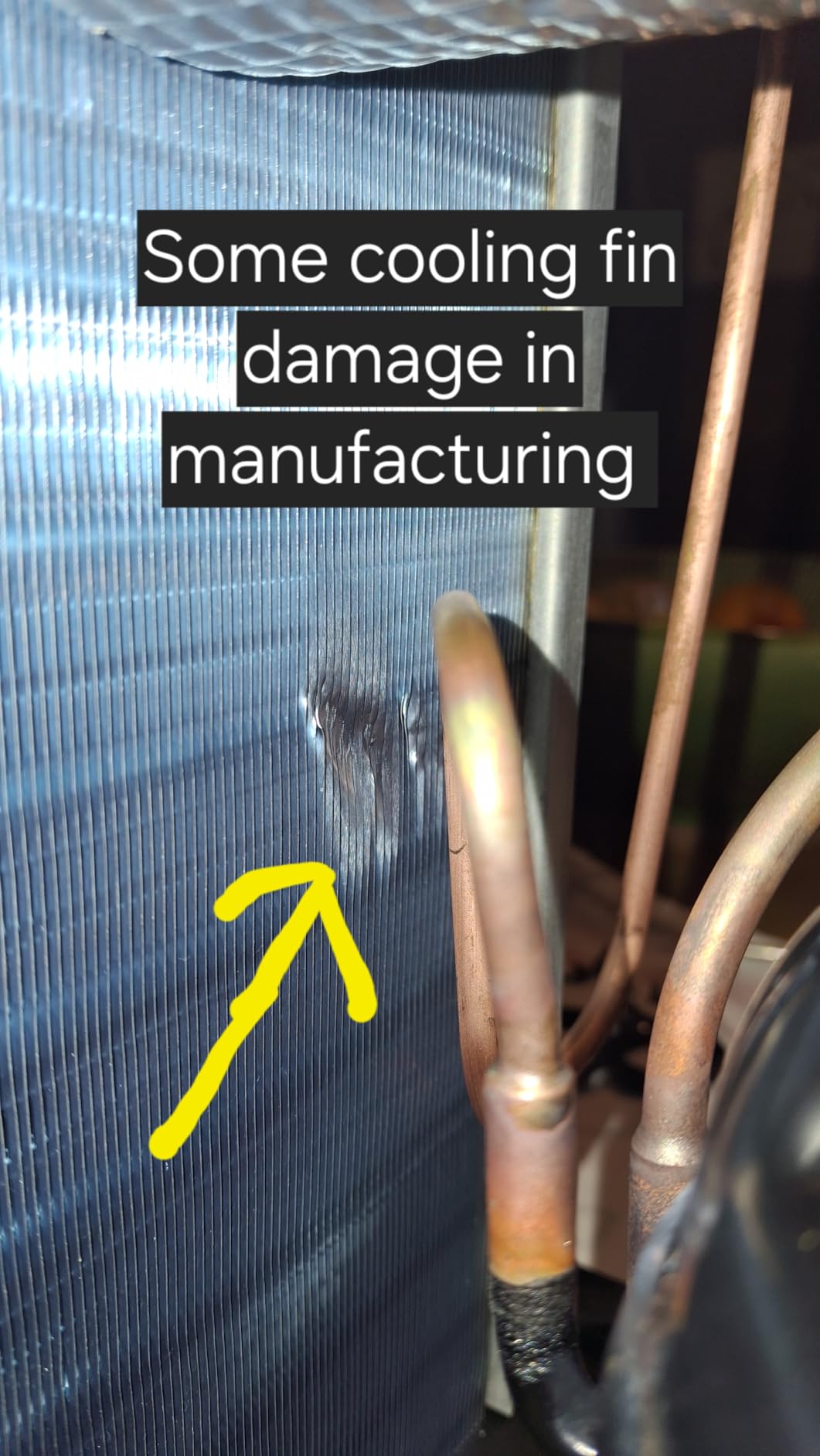
The build quality comes up repeatedly in reviews, with no leaks reported on setup and a case that looks more expensive than it is. The box includes the chiller, water pump, water pipe, charger, instruction, and pipe clamps with US-standard plugs.
Where the MLJHFC earns its slot
A reef in a living room or bedroom where compressor noise is the deciding factor. Holding within a degree and cycling quietly is the combination you are buying, and if a 1 degree band matters to your SPS corals, this delivers it as well as anything here.
The manufacturer also advises keeping water levels at 80 percent capacity during hot periods, which is a real installation detail that most listings omit. Follow it, because a chiller working on a nearly full loop runs hotter and shorter-cycled.
Where the MLJHFC will frustrate you
Twenty reviews is not a reliability history, and a unit with no one-star ratings at that sample size tells you more about early adopters than about years three and four. Treat it as a well-made purchase of uncertain longevity rather than a proven one.
One owner found the included fans louder than expected, and the translated manual requires some care to follow. It also emits a modest amount of heat into the room, which is unavoidable but worth knowing before a summer install.
How to Size a Chiller for Your Reef Tank
Size with a formula, not with the tank capacity printed on the box. That number assumes an air-conditioned room and no equipment heat load, and neither is true of a reef in July.
The theoretical minimum is the volume in gallons multiplied by 8.3, multiplied by your required temperature drop. The practical recommendation is volume multiplied by 10, multiplied by the temperature drop, which builds in a safety margin for a real reef with pumps, skimmers, calcium reactors, and lighting in the equation.
Worked example for a 65 gallon mixed reef. If your room sits at 80F and you want the water at 77F, that is a 3 degree drop, so 65 multiplied by 10 multiplied by 3 gives 1950 BTU of practical cooling demand. A 1/3 HP unit in the 2000 BTU class is the right starting point, and a 1/10 HP is not.
Worked example for a 20 gallon nano. If the room is 78F and you want 76F, that is a 2 degree drop, so 20 multiplied by 10 multiplied by 2 gives 400 BTU. Almost any 1/10 HP unit clears that comfortably, which is why the small chillers in this roundup can hold nano tanks easily even in warm rooms.
Worked example for a large SPS display. On a 110 gallon system dropping 8 degrees from a 90F room, 110 multiplied by 10 multiplied by 8 gives 8800 BTU. No consumer unit here reaches that, which is the honest answer for a garage install in a hot climate: you need room air conditioning, not a bigger aquarium chiller.
Adjust for ambient room temperature. Manufacturers rate at around 75F room temperature, and every degree of extra ambient heat cuts the achievable drop. A unit rated 10F below ambient in a 75F room may only manage 6F below ambient in a 85F room, and that is the single most common reason a correctly sized chiller never reaches set point.
Use duty cycle as a diagnostic. A healthy chiller holding setpoint should run roughly 15 to 20 minutes per hour. If it runs near continuously, it is undersized, the room is too warm, or the condenser is blocked. If it never runs and the tank is still climbing, the controller is not calling for cooling or the water is bypassing the coil.
Never undersize to save money. A chiller that runs constantly uses more electricity, works harder, wears out sooner, and produces less temperature drop. Oversizing slightly is fine because a compressor chiller modulates to its controller; severe oversizing only means a faster pull-down at the cost of capital.
Add the equipment heat load separately. LED fixtures, calcium reactors, dosing pumps, heaters, and the skimmer all add heat, and reef systems with metal halide or high-output lighting can out-heat their own chiller. This is why we recommend reviewing your lighting choice at the same time as cooling, alongside our picks of aquarium lights for freshwater systems if you are running a mixed system.
Compressor vs Thermoelectric: Which One Your Reef Needs
For a saltwater reef, this question has a short answer. Vapor-compression with a titanium evaporator is the only type we would put on a reef tank, and every unit in this roundup uses it.
Compressor chillers move a refrigerant through a closed cycle. Water passes over the evaporator coils, heat transfers into the refrigerant, the compressor pressurises the hot gas, a condenser fan dumps that heat into the room, and an expansion valve returns the cooled refrigerant to start again. The electronic controller governs when the compressor runs.
The advantages for reefs are decisive. The efficiency scales with size, so a 1/3 HP compressor moves several times the heat of a 1/10 HP one at a proportionate wattage. The closed loop does not add or lose water, which matters when your evaporation is already your main water top-off. And the titanium evaporator resists salt and chemicals indefinitely with proper maintenance.
Thermoelectric units use a Peltier module, essentially a heat pump that pumps heat from one face to the other with no moving refrigerant. They are quiet, cheap, and have no compressor to fail, but they consume far more electricity per unit of heat removed, which is exactly the wrong trade in a warm room.
That last point is why thermoelectric units are the wrong tool for a reef specifically. A Peltier chiller in an 85F room may not reach its setpoint at all, and when it does it draws enough power to meaningfully add to your electricity bill. Every question about the running cost of a reef chiller traces back to this choice.
None of the ten chillers here are thermoelectric, and we would not add one. If a chiller listing you are considering uses a Peltier module rather than a compressor and refrigerant, walk away regardless of the headline temperature drop.
What a Reef Chiller Costs to Run Each Month
Chiller electricity is a legitimate concern, and the answer is more encouraging than most reefers expect. The Active Aqua 0.10 HP is the only unit here with a published figure: 510 watts listed, with the compressor drawing about 180W in steady cooling.
Use that 180W as the reference point for a small chiller. At roughly 180W, running a 6 hour duty cycle every day for 30 days is about 324 kWh per month. Larger compressors scale up, but the useful comparison is against your other reef equipment rather than against a household average.
Your return pump, heater, two LED bars, skimmer, and dosing pumps together typically draw less than the chiller does on a hot day. That is worth knowing when you judge the electricity question, because a chiller is often the single largest electrical consumer in a reef system, and skipping it is not a meaningful saving if the corals bleach.
The real variable is duty cycle, not size. A 1/10 HP chiller in an air-conditioned room might run a few hours a month, while the same chiller in a 90F garage runs nearly all day. Before you buy, estimate hours per day and multiply by 180W, then compare that to your utility rate.
Two adjustments cut the bill. Keep the condenser clean and ventilated, because a restricted airflow makes the compressor run longer for less cooling. And drop your setpoint by a single degree if you can, since a chiller holding 78F instead of 77F does meaningfully less work over a season.
Installation and Placement: Where the Chiller Goes
All of these units are meant to run as a closed loop that returns to your sump or display, not to sit in the tank. The standard install is two hoses, one drawing from the sump or a low point and one returning to the sump or an upper return, with the chiller mounted below the water line.
Respect the clearance numbers, because they are not marketing. The smaller units here ask for 6 inches on all sides, while both VEVOR units specify 24 inches. A chiller in a closed cabinet will overheat, shorten its compressor life, and quietly fail to reach set point, which is the leading cause of the “my chiller does not work” complaints we see.
Plumb flow direction correctly. Some units, including the Poafamx 1/13 HP, do not mark the intake and outtake ports, so confirm which port is the inlet before you connect. Water must flow through the coil, not past it, and a reversed loop will cool badly with no obvious fault to diagnose.
Watch for condensation and salt creep. A chilled line in a warm room will sweat, and a leak above the sump means salt water in your cabinet. Secure every hose clamp, keep the plumbing inside the stand where possible, and check the connections after the first week of running.
Set the controller, then verify it with your own thermometer. Several units here have a temperature readout that runs a few degrees off from actual water temperature, and the Fitnet’s calibration feature exists specifically to solve that problem. Trust a calibrated thermometer over the chiller display for the first month.
Finally, keep water levels near 80 percent capacity during hot periods, as the MLJHFC manual recommends. A chiller needs water moving through the evaporator to transfer heat, and an almost empty loop reduces both cooling performance and pump life.
What To Do If Your Chiller Fails in a Heat Wave
Reef keepers report a consistent pattern: the chiller breaks after the livestock are already at risk. The first hour matters more than anything else you can do with a replacement unit, so this is a protocol rather than a shopping list.
First hour. Get air moving across the surface immediately. A fan across an open top is the fastest available cooling and it costs nothing. Add frozen water bottles sealed in plastic bags, never loose ice, and open every door in the room to pull in cooler air from elsewhere in the house.
One to three hours. Add more surface area rather than more cold. A second and third fan pointed across the waterline will drop temperature faster than a single stronger fan. Start a slow water change with cool, temperature-matched saltwater if you have pre-mixed water available, and drop your heater setpoint so it is not fighting you.
Three to six hours. Bring in portable cooling. A window air conditioner aimed at the room, or a second room running cool air, is more effective than almost anything you can improvise at the sump. Move the chiller itself into a cooler room if the failure was heat-related rather than mechanical, and restart it there.
Once the immediate crisis passes, check the mechanical causes in order: a blocked or dirty condenser, a failed condenser fan, a tripped breaker or power switch, and refrigerant or compressor failure. A chiller that ran in a hot room for years and then stopped is usually a thermal or electrical component, not a lost charge.
Know your failure signals. Random beeping and cooling stoppage that needs a manual reset have been reported on the Fitnet, and a compressor that stops after 30 minutes with the condenser fan dead has been reported on the Poafamx 1/13 HP. Both are worth a call before you assume the whole unit is dead.
Cheaper Ways to Cool a Reef Tank First
Most reefers should exhaust the free options before spending money, and reef keepers on forums consistently describe this as the correct order of operations. A fan across the surface is the first move in almost every thread about summer temperature.
Evaporative cooling from a fan can drop a tank several degrees and costs nothing to run. It raises evaporation, so you will be topping off more salt water than usual, which is its own cost in salt and in stability. Frozen water bottles in sealed bags are the second-line move for the same reason loose ice is not used.
Room air conditioning double-duties for the whole house, which several reefers argue is why it beats a chiller on economics alone. The tradeoff is that it cools the room rather than the water, so it does nothing during an AC failure, and a chiller does. Many systems end up with both for that reason.
Moving filtration and equipment out of the stand into a basement or cool garage measurably reduces heat load and can remove the need for a chiller entirely on a small reef. It is the highest-value free intervention available, and it costs a shelf and some plumbing.
A converted water cooler is a common DIY attempt, and hobbyists consistently caution that homemade cooling devices have real reliability issues. Dorm fridges are treated the same way, because salt water and humidity inside a domestic appliance cause problems that show up months later. We would rather you spend the money on one of the ten units above.
Frequently Asked Questions
What is the best aquarium chiller?
For a saltwater reef between 10 and 40 gallons, the Active Aqua 0.10 HP with Boost is the strongest all-round choice, holding setpoint within about a degree using a titanium evaporator and 1020 BTU of output. For a 40 to 80 gallon reef, the Poafamx 1/3 HP offers more output but needs a stronger pump. For large display systems, the VEVOR 1/3 HP is rated to 110 gallons. All of these are vapor-compression units with titanium evaporators, which is the only configuration we trust in salt water.
Which brand of chillers is considered the best?
Brand loyalty matters less than the hardware. Every chiller we recommend uses a titanium evaporator and compressor-based vapor cooling, which is what actually determines saltwater suitability. Active Aqua stands out for control accuracy and long-term ownership reports, BAOSHISHAN for the deepest review base in the category, and VEVOR for the largest rated capacities. We would choose on tank size, clearance space, and review depth rather than on the badge on the box.
Which aquarium chiller is the quietest?
The quietest units in this roundup are the MLJHFC 1/10 HP at 30 to 40 dB(A) and the Dreamtrue 1/10 HP at approximately 30 to 40 dB, both of which produce cycling described as inaudible across a room. The JBJ Arctica 1/15 HP is also marketed as one of the quietest on the market. At the other end, the Active Aqua has owners describing a compressor loud enough to notice in a living space, and the VEVOR units are not recommended for bedrooms.
How much will a fish tank chiller raise my electric bill?
Chiller cost depends on duty cycle more than size. The Active Aqua 0.10 HP is listed at 510 watts but its compressor draws about 180W in steady cooling, so running it around six hours a day for a month works out to roughly 324 kWh. Your return pump, heater, LEDs, and skimmer together usually draw less than the chiller on a hot day, so the chiller is often the largest single consumer in a reef system.
Is 72 degrees too cold for a reef tank?
No. 72F is inside the safe range for most mixed reefs and is commonly used for cold water species kept alongside tropical systems. The ideal band for most reef keepers is 77 to 79F, and the safe working range runs roughly 76 to 80F. The risk is sustained temperatures at or above 83F, where corals bleach and dissolved oxygen falls. Chillers in this roundup reach down to 64 to 65F, so lower setpoints are available if you need them.
How long can fish survive in an aquarium without electricity?
With a chiller failure, the realistic window is hours, not days, and it depends on room temperature and the coral types you keep. In the first hour, run fans across the surface and add frozen water bottles in sealed bags. Between one and three hours, add more fans and a slow temperature-matched water change. By three to six hours, bring in a portable or window air conditioner, since improvised sump cooling is not enough for SPS-dominated systems.
Do I need a chiller for my reef tank?
You need one if your room regularly runs above about 78F in summer, if you keep SPS corals that need a stable 77 to 78F, or if your equipment heat load outpaces evaporation. Before buying, try a fan across the surface and consider moving filtration out of the stand, both of which measurably cut heat load. UK and northern European reefers often find an air-conditioned room is sufficient, while garage and hot-climate installs almost always need one.
How big a chiller do I need for my tank?
Multiply your tank volume in gallons by 10, then by your required temperature drop in degrees. A 65 gallon reef dropping 3 degrees needs about 1950 BTU, which puts a 1/3 HP unit in range. A 20 gallon nano dropping 2 degrees needs only 400 BTU, so almost any 1/10 HP unit works. Adjust upward for ambient room temperature, since every extra degree in the room reduces the achievable drop.
The Bottom Line on Reef Chillers in 2026
If you want one answer for a typical 20 to 40 gallon reef, the Active Aqua 0.10 HP with Boost is the chiller we would install. It holds setpoint within about a degree, runs at a lower real draw than its listed wattage, has titanium evaporators, and has the longest ownership history of anything we tested against in this category.
Below 20 gallons, the MLJHFC 1/10 HP and the Dreamtrue 1/10 HP are both quiet enough for a living room, and the Dreamtrue’s touch screen is the easier interface. Between 40 and 80 gallons, the Poafamx 1/3 HP gives you the cooling output, provided you plan to replace the bundled 158 GPH pump. For large display systems, the VEVOR 1/3 HP is the only unit here rated to 110 gallons, and it needs a utility room rather than a cabinet.
Two decisions matter more than the model. Size with the 10 BTU per gallon per degree formula and adjust for your actual room temperature, and give the chiller the clearance its manufacturer specifies. Get those right and the best aquarium chillers for reef tanks become a boring, reliable piece of equipment that holds your setpoint through August without you thinking about it.
Fan first, size second, then buy. And keep a couple of frozen water bottles in the freezer for the weekend the compressor gives up.